


Abstract
This research explored the performance of steel fiber concrete-filled stainless-steel tube columns stiffened with embedded carbon steel T-sections with various steel fiber ratios under biaxial bending conditions. A numerical parametric analysis was adopted, using finite element modeling with Abaqus CAE/2021 to evaluate the effects of the fiber ratio (ranging from 0% to 1.5%) on the load-bearing capacity and deflection behavior of columns. In addition, the compressive strength of concrete ranged between 45 and 65 MPa. An increase in the fiber ratio led to a substantial improvement in the ultimate load-bearing capacity (up to 24%), a reduction in deflection (of approximately 49%), and an improvement in column ductility, which were obtained at 1.25% fiber content. The addition of steel fibers enhanced column performance, and energy absorption improved by up to 27% compared to specimens without steel fibers. Experimental validation demonstrated improved accuracy in terms of behavior and predicted models. The conclusions of this work provide valuable design insights enabling the adaptation of the overall column system under complex loading scenarios.
1. Introduction
The presence of steel fibers in concrete columns stiffened with embedded structural steel results in enhancements in the ultimate axial compressive load and performance of these composite structures. This has been experimentally studied and validated by Zhang and Teng [1] and Zhao and Han [2].
Concrete composite columns consist of encased steel stiffened with embedded steel of various structural shapes inside a concrete column. This composite structure leads to a reduction in the required cross-sectional area and enhancements in the load-carrying capacity and performance of columns, as well as their seismic resistance. Due to these advantages, such composite columns are widely used in high-rise buildings [3].
Barros and Figueiras [4] and Wu and Chen [5] showed that the presence of steel fibers in concrete columns leads to enhancements in their behavior, such as the delayed onset of cracking and improved crack resistance, ductility, and toughness. Moreover, the presence of GFRP I sections embedded in composite columns leads to improvements in performance, including their load-carrying capacity, ductility, and initial stiffness, as demonstrated by Allawi et al. [6].
In addition, in previous studies conducted from 2020 to 2025, it was observed that concrete columns consisting of steel fibers and embedded steel of various structural shapes exhibited enhancements in ultimate load-carrying capacity, initial stiffness, ductility, and toughness, as well as in the performance of the column during the loading stage. Zhang et al. [7] and Hameed et al. [8] note that the presence of steel fibers and embedded steel in concrete columns results in a high-performance building system.
In 2020, Zhang et al. [7] investigated the influence of the fiber shape and dosage. The authors found that corrugated and hooked-end fibers were the most effective in enhancing the compressive, tensile, and flexural strength of concrete. The compressive strength increased by up to 24% and the splitting tensile strength by up to 122% as the fiber content rose from 0.5% to 2%.
Embedded steel tubes in RC columns were studied by Hameed et al. in 2021 [8]. The authors illustrated that embedding steel tubes (structural shapes) at the center of the RC column significantly improved its strength (up to 59% increase), ductility, and energy absorption under eccentric loading. The improvement was proportional to the hollow ratio and tube size.
Mathew and Narayanan (2021) [3] conducted an experimental study on the behavior of steel fiber-reinforced concrete-encased steel composite columns subjected to combined axial and lateral cyclic loading. It was concluded that the use of steel fibers in composite columns led to improved ductility, toughness, and lateral load-carrying capacities, in addition to reducing the detail and area of steel reinforcement required.
Meanwhile, in 2021, Minelli and Plizzari [9] investigated the use of steel fibers instead of steel reinforcement in a high-strength concrete-encased steel column. They showed equivalent performance to columns with steel reinforcement. Moreover, Minelli and Plizzari observed that the use of hooked and straight steel fibers led to a reduction in and control of the propagation of cracks and enhancements in the ultimate axial compressive load and moment capacity, in addition to improvements in the overall performance of the column.
Consistent with the above, the study by Allawi et al. [10] found that concrete–steel plate composite walls exhibited higher axial strength and improved deformation characteristics, validating the effectiveness of the adopted composite configuration.
Recently, several innovative studies have investigated novel cross-sectional configurations consisting of concrete-filled steel tube (CFST) systems. Ran et al. (2024) [11] conducted experimental and numerical analyses on the local stability of laser-welded stainless-steel T-section stub columns, highlighting that the current American and European standards yielded conservative predictions due to their neglect of strain hardening effects, while the continuous strength method provided more accurate design recommendations.
Wu et al. (2024) [12] further examined the compressive capacity of cruciform-shaped CFST stub columns through combined testing and finite element modeling. Their findings revealed that the American standard produced conservative estimates, the Chinese code lacked consistency, and the European code offered the most reliable predictions for such cruciform-shaped systems.
Moreover, Wu et al. (2024) [13] investigated L-shaped CFST stub columns, showing that this novel geometry enhanced the confinement efficiency of the steel tube to the concrete infill. Their design evaluation demonstrated that ANSI/AISC 360 ensured safety and enabled accurate predictions, whereas EN 1994-1-1 and GB 50936 led to the under- or overestimation of compression resistance.
Despite the above advancements, limited studies have addressed the effects of the fiber content. The present study aimed to numerically investigate the structural performance of such columns, focusing on optimal fiber ratios (ranging from 0.5% to 1.5%) and evaluating the overall performance through verified FE models.
Slender columns that have exceeded the limit of the length-to-cross-sectional area ratio represent a common issue in engineering practice. Solutions such as lateral bracing and increasing section dimensions in such columns are not always acceptable due to architectural concerns. Concrete-filled steel tubes can be used to resolve such issues; however, in some cases—e.g., when the slenderness ratio is considerably higher than the acceptable limit—a modification to the CFST might be required. This study presents a new method to decrease the slenderness ratio by changing the properties of the concrete material used within the section. Although steel fibers have been used in the past to overcome this issue, there is still a gap in our understanding of the behavior of such composite columns when optimizing the ratio of steel fibers. In this study, finite element models were built to investigate the effects of different steel fiber ratios. A validation model was also implemented based on the work conducted by Tokgoz et al. [14] in 2021.
2. Experimental and Numerical Methodology
2.1. Specimen Description
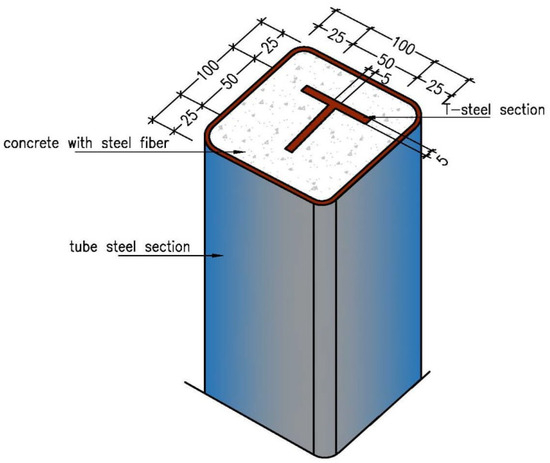
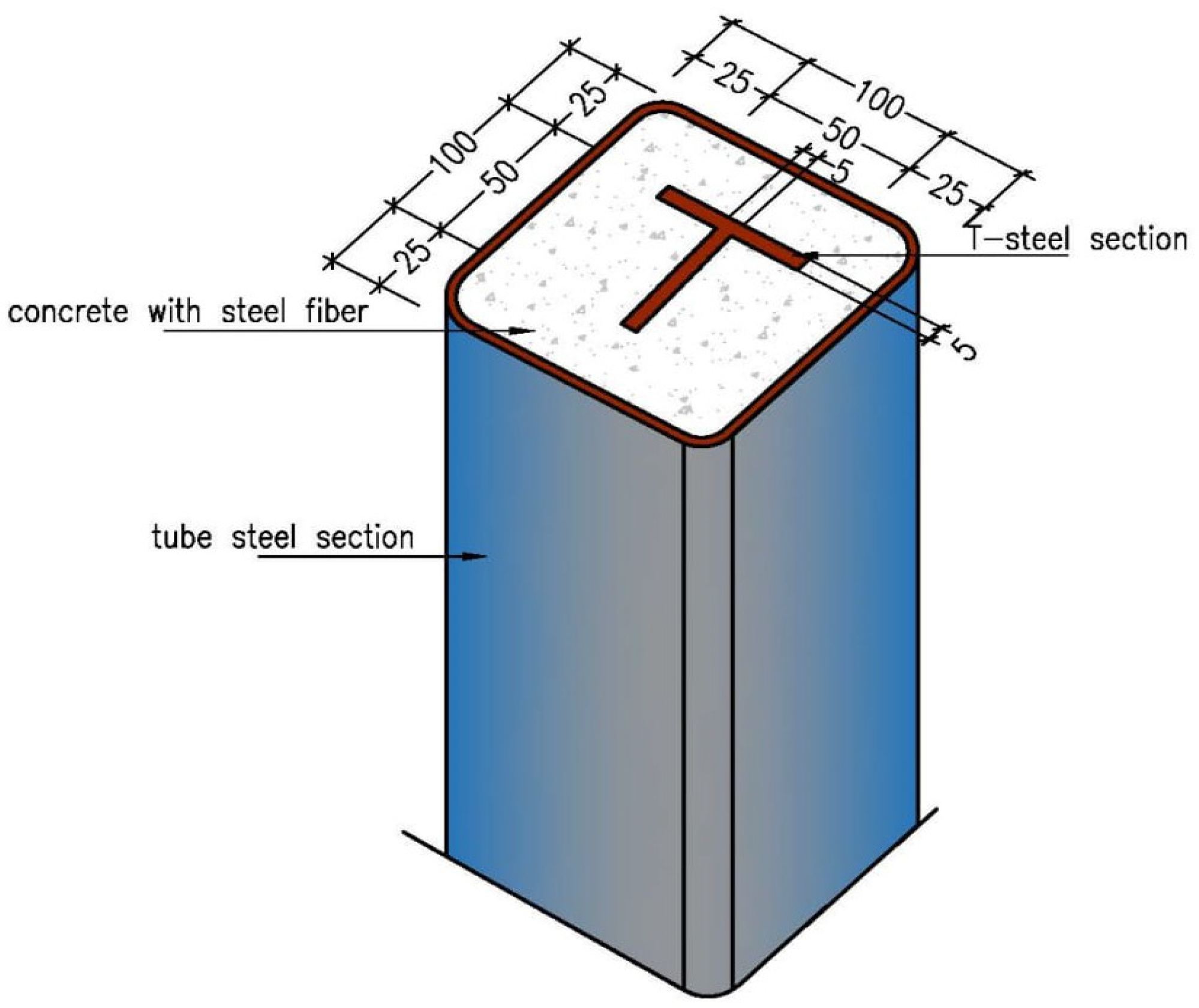
This section describes the finite element (FE) models developed in the present numerical study using Abaqus CAE/2021. First, this research aimed to evaluate the experimental work conducted by Tokgoz et al. [14] in 2021. An FE model of a steel fiber concrete-filled stainless-steel tube column stiffened with an embedded carbon steel T-section (CFSST) was created, with the dimensions illustrated in Figure 1. The reference column (CFSST-55-SF-2) used for validation consisted of a square steel tube with outer dimensions of 100 × 100 mm, a thickness of 3 mm, and a total column length of 1250 mm, as well as an embedded carbon steel T-section with flange and web thicknesses of 5 mm, as shown in Figure 1.
Figure 1.
Geometrical configuration of the studied CFSST column, which was experimentally tested by and adapted from Tokgoz et al. [14].
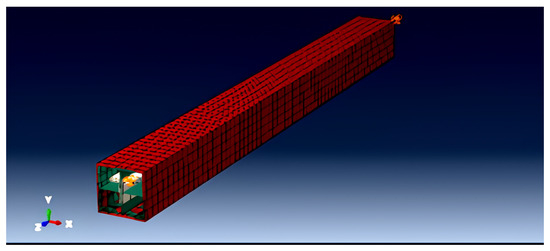
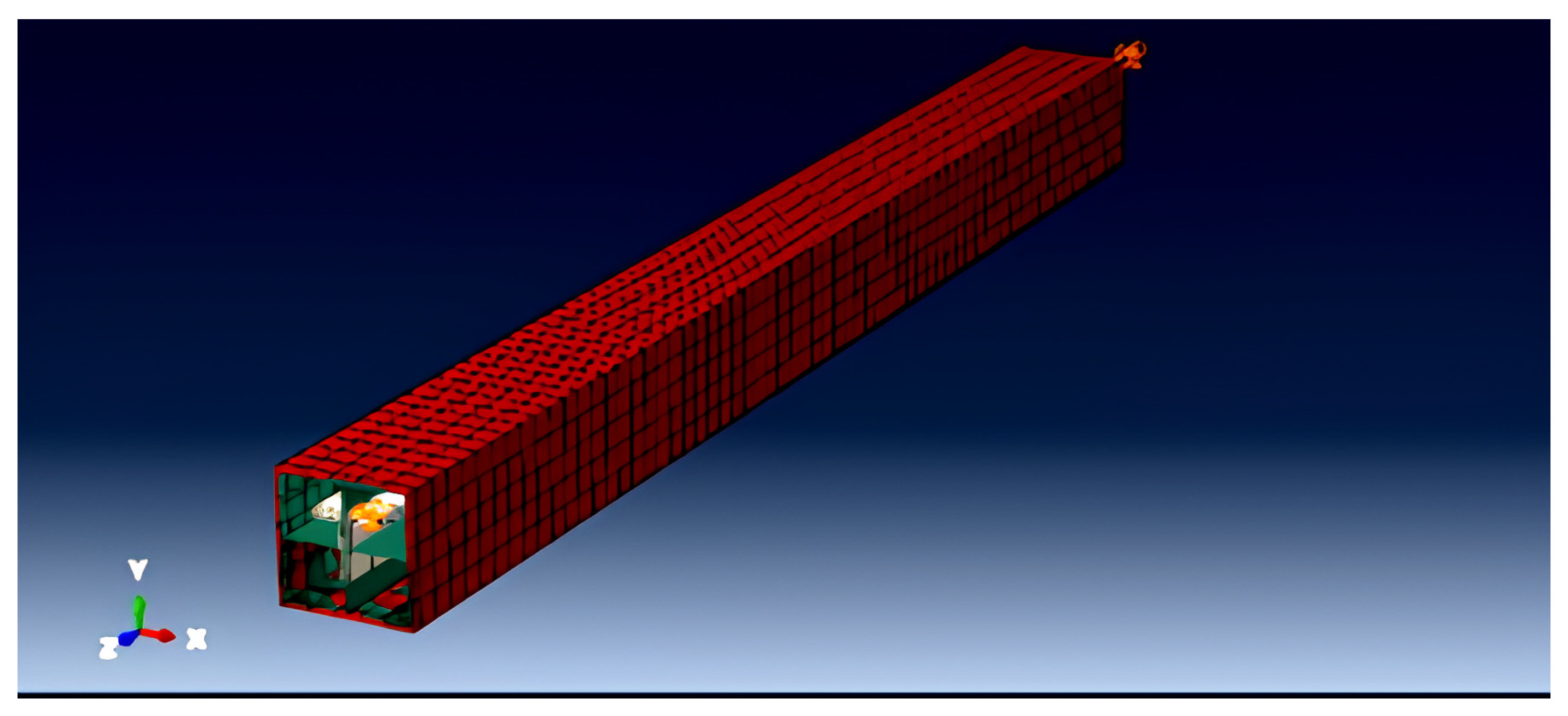
A 3D FE model was constructed using the Abaqus CAE/2021 software with the loading and boundary conditions represented in Figure 2. The boundary conditions for the CFSST column involved pin-ended columns on both sides.
Figure 2.
The 3D finite element model of the tested column, developed using Abaqus CAE/2021.
2.2. Material Properties
2.2.1. Material Properties of Stainless-Steel Tube and Embedded Carbon Steel T-Section
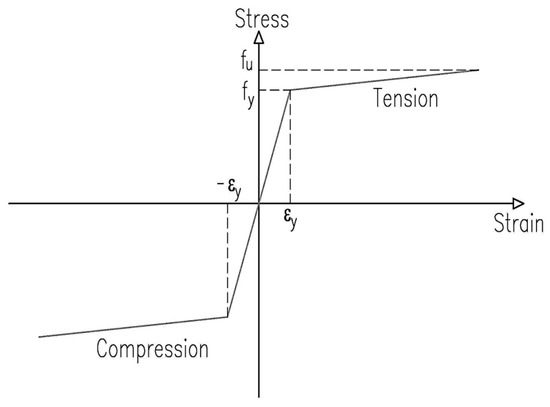
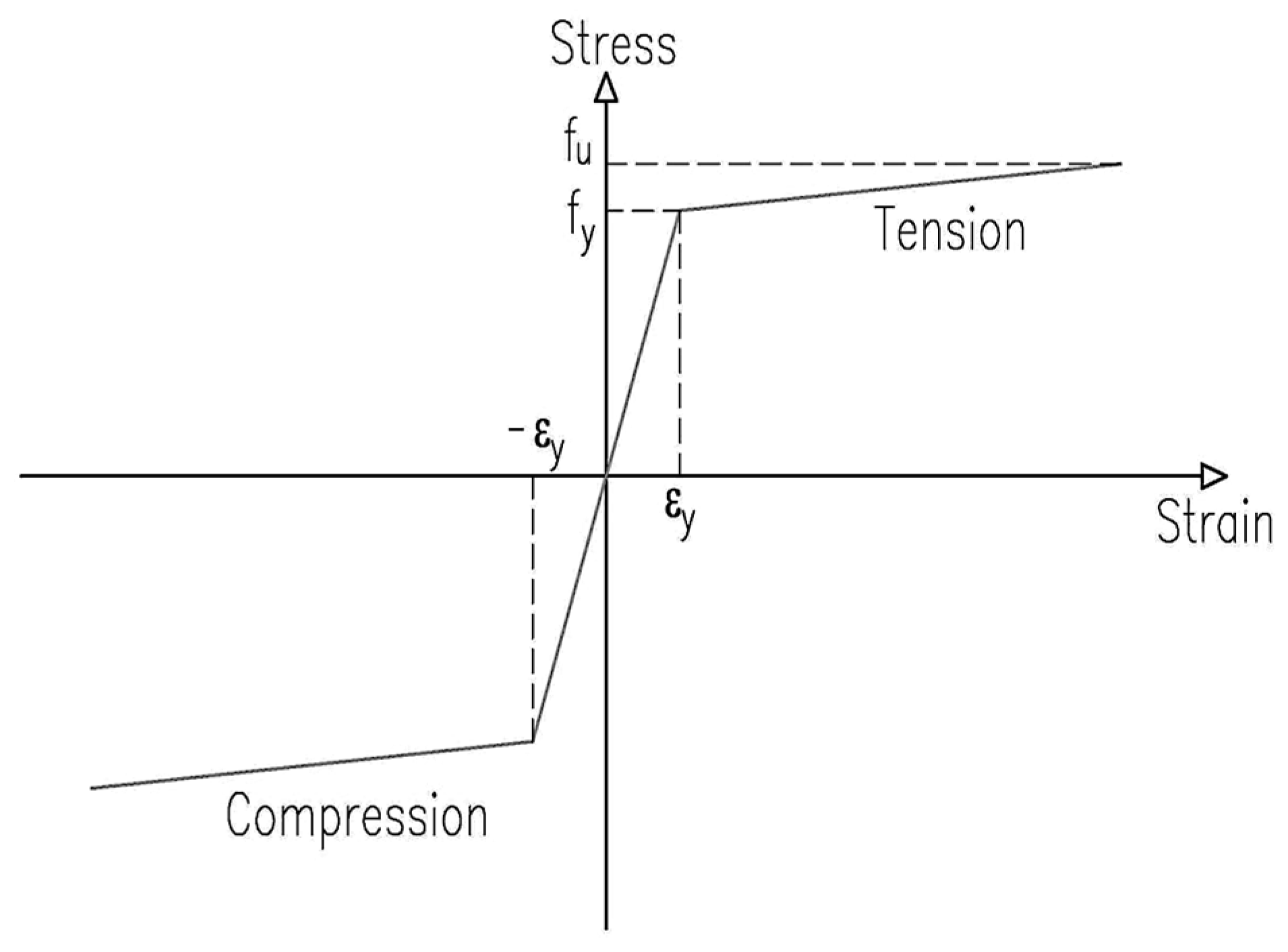
The constitutive model of the steel tube and carbon steel T-section was based on a trilinear stress–strain relationship, consistent with the material modeling approach in Abaqus CAE/2021 [15] and as shown in Figure 3. The elastic–isotropic option was employed to identify the Poisson ratio and elastic modulus, while the plastic–isotropic option was applied to define the plastic strain values and yield strength. Table 1 presents the material properties of the outer jacket comprising the stainless-steel tube and the embedded carbon steel T-section. It should be noted that these materials were modeled and represented as an elastic–plastic bilinear model with isotropic hardening.
Figure 3.
The constitutive model of the stress–strain relationship of the stainless-steel tube and carbon steel T-section, adapted from the Abaqus documentation [15].
Table 1.
Material properties of stainless-steel tube and embedded carbon steel T-section.
2.2.2. Material Properties of Steel Fiber-Reinforced Concrete (FRC)
In this section, the constitutive model adopted to simulate the steel fiber-reinforced concrete (FRC) within the concrete damage plasticity (CDP) framework is presented. This model captures the nonlinear response, damage evolution, and post-cracking behavior of FRC under both compression and tension.
The nonlinear behavior of the FRC core was simulated through the CDP model available in Abaqus CAE/2021 [15], which was originally proposed by Lubliner et al. [16] and later extended by Lee and Fenves [17]. This constitutive framework incorporates scalar damage variables ( and ( to describe stiffness degradation under tensile and compressive loading, respectively. The general stress–strain relationship is given as follows:
Here, is the elastic stiffness matrix, () is the total strain, and () is the plastic strain tensor. The inelastic and cracking strains were defined following the Abaqus CDP formulation and the approach of Grassl and Jirásek [18]:
In the tension regime, the post-cracking response was implemented using a displacement-based softening law consistent with the fib Model Code 2010 [19], where crack opening () is related to the equivalent cracking strain, as described by Bažant and Oh [20]. Here, () is the characteristic length of the finite element, which was automatically calculated in Abaqus to ensure mesh objectivity:
The tensile softening behavior of FRC was represented through a bilinear stress–crack opening relationship, calibrated using the residual flexural strength () and () obtained from EN-14651 [21] bending tests, as expressed by Barros and Figueiras [4]:
Here, () is the tensile strength, () is equal to (0.5 mm), and () is equal to (2.5 mm).
Meanwhile, regarding compression, a modified Hognestad-type [22] parabolic curve was adopted to represent the ascending branch up to the compressive strength (), followed by a smooth descending branch to simulate post-peak softening and confinement effects due to the fibers and steel casing. The compressive damage () was tabulated as a function of the inelastic strain, following the work of Menétrey and Willam [23]. The inelastic strain for compression was determined as shown in Equation (8):
Furthermore, the constitutive model of steel fiber concrete was defined using the concrete damage plasticity (CDP) model, which is one of the most effective and widely adopted constitutive frameworks for the simulation of this material. The CDP model enables the reliable simulation of the nonlinear performance of steel fiber concrete by accounting for the improved tensile resistance and post-cracking strength provided by steel fibers, as demonstrated by Barros and Figueiras [4] and later by Wu and Chen [5].
In this study, the analysis was conducted using a static, general step with displacement-controlled loading. The CDP model parameters were as follows: dilation angle = 35°, eccentricity = 0.1, / = 1.16, K = 0.667, and viscosity = 0.00001.
It is worth noting that although steel fibers may influence the compressive strength of concrete, this effect was implicitly incorporated through the tensile and post-cracking constitutive behavior defined within the concrete damage plasticity (CDP) model. In the parametric analysis, the concrete compressive strength was kept constant within each strength group, while the steel fiber ratio was varied independently. This modeling strategy ensured clear decoupling between the effects of the compressive strength and the steel fiber contribution.
2.3. Mesh
The FE model was developed using 3D solid elements (C3D8R) with reduced integration. A mesh sensitivity analysis was performed, and an optimal element size of 25 mm was selected to balance accuracy and computational efficiency. The mesh was refined in areas expected to exhibit high stress gradients, particularly near the steel–concrete interface and loading zones.
Solid elements were adopted for both the steel tube and the embedded steel section to ensure the accurate simulation of three-dimensional stress transfer and interactions with the concrete core. In addition, solid elements were chosen to mimic the conditions of the previous experimental work. The T-section was welded in multiple areas with the steel tube; therefore, shell elements may not have accurately predicted the behavior.
The total number of finite elements applied using Abaqus CAE/2021 [15] in each model was approximately 30,000, depending on the geometry and mesh refinement. The boundary conditions were defined as pinned at both ends of the column (with all translational degrees of freedom restrained at the base (U1, U2, U3 = 0) and rotations allowed except around the longitudinal axis), allowing rotation but restricting displacement. The failure mode and ultimate load were determined based on the cracking and crushing indicators from the CDP model.
The interaction between the steel tube, T-section, and concrete was modeled using embedded location constraints in Abaqus CAE/2021 [15], assuming a perfect bond. No relative slip was allowed on the interface.
2.4. Validation of Finite Elements
The results derived from the developed finite element (FE) models were validated against experimental data reported by Tokgoz et al. [14]. The FE model (CFSST-55-SF-2) was configured with identical parameters and material properties to the corresponding experimentally tested column (CFSSTCC-II-1-SF). This experimental column featured a steel fiber ratio of 0.75%, concrete compressive strength of 55 MPa, and load eccentricity of 55 mm in both the x and y directions.
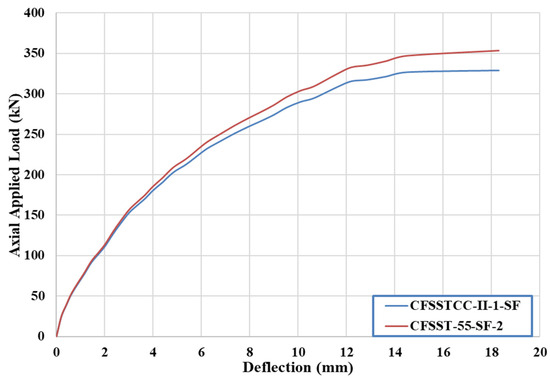
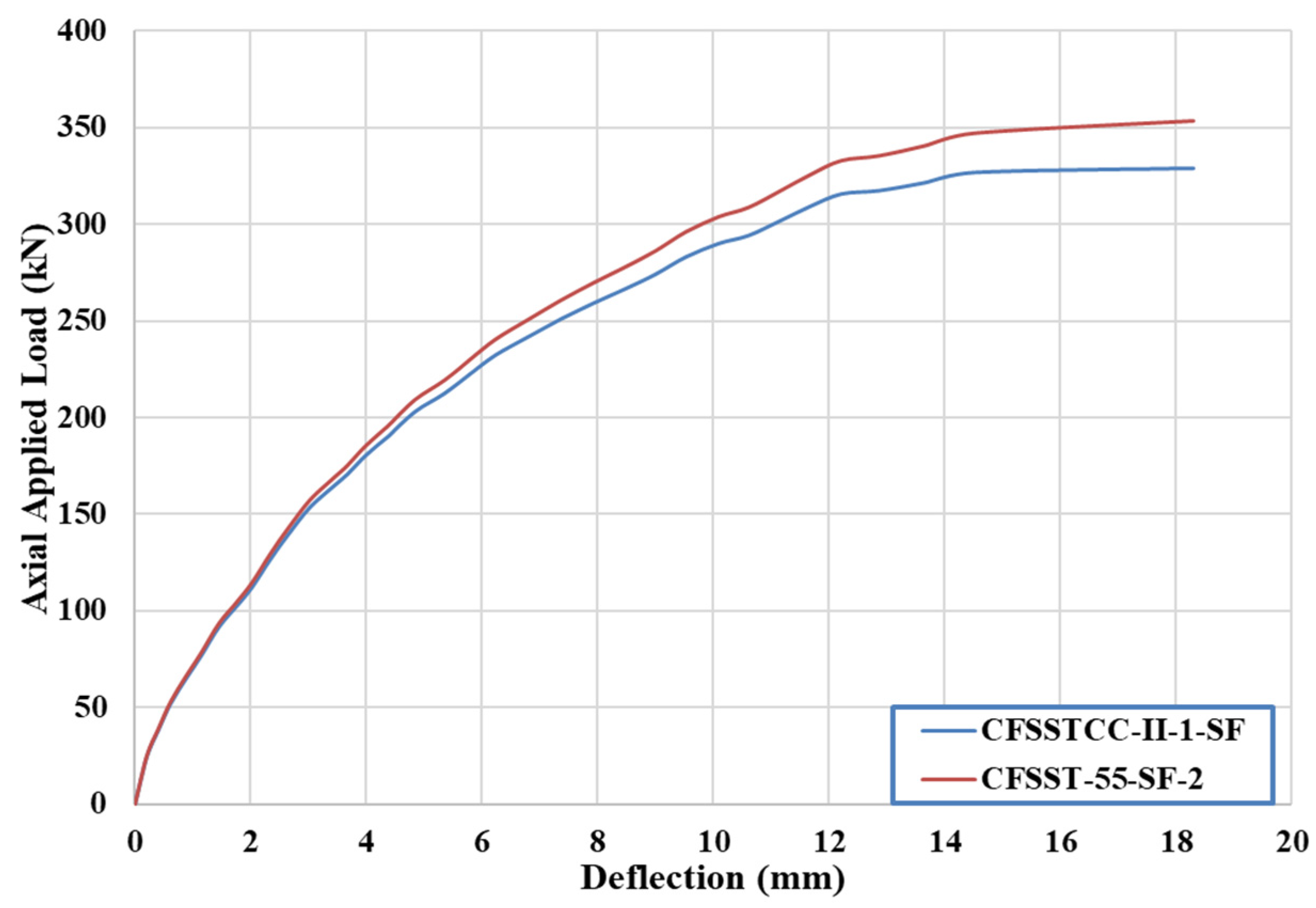
Figure 4 presents a comparison of the load–midspan deflection relationships obtained from the simulated finite element (FE) model and the experimental results. The results obtained from finite element modeling matched the experimental results; they were approximately 7% higher than the experimental findings. This level of matching is acceptable, and the model can be adopted for further parametric studies of CFSST columns subjected to biaxial loading. It should be noted that although good agreement was observed between the experimental and FE results, a slight difference in deflection at the same axial load level was found. This could have been due to several factors, such as the material constitutive models, the criteria for bonding between the stainless steel and concrete, or the representation of the boundary conditions in the FE model.
Figure 4.
Comparison of the load–deflection relationship between the finite element model and the tested experimental specimens.
The finite element model obtained using Abaqus CAE/2021 exhibited close agreement with the experimental findings, with a validation error of approximately 7% in terms of the ultimate axial load. This confirms the reliability of the proposed model under biaxial bending conditions.
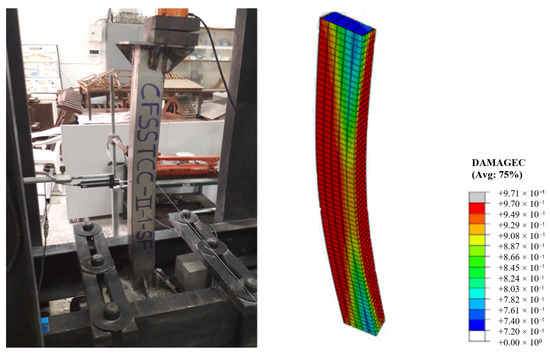
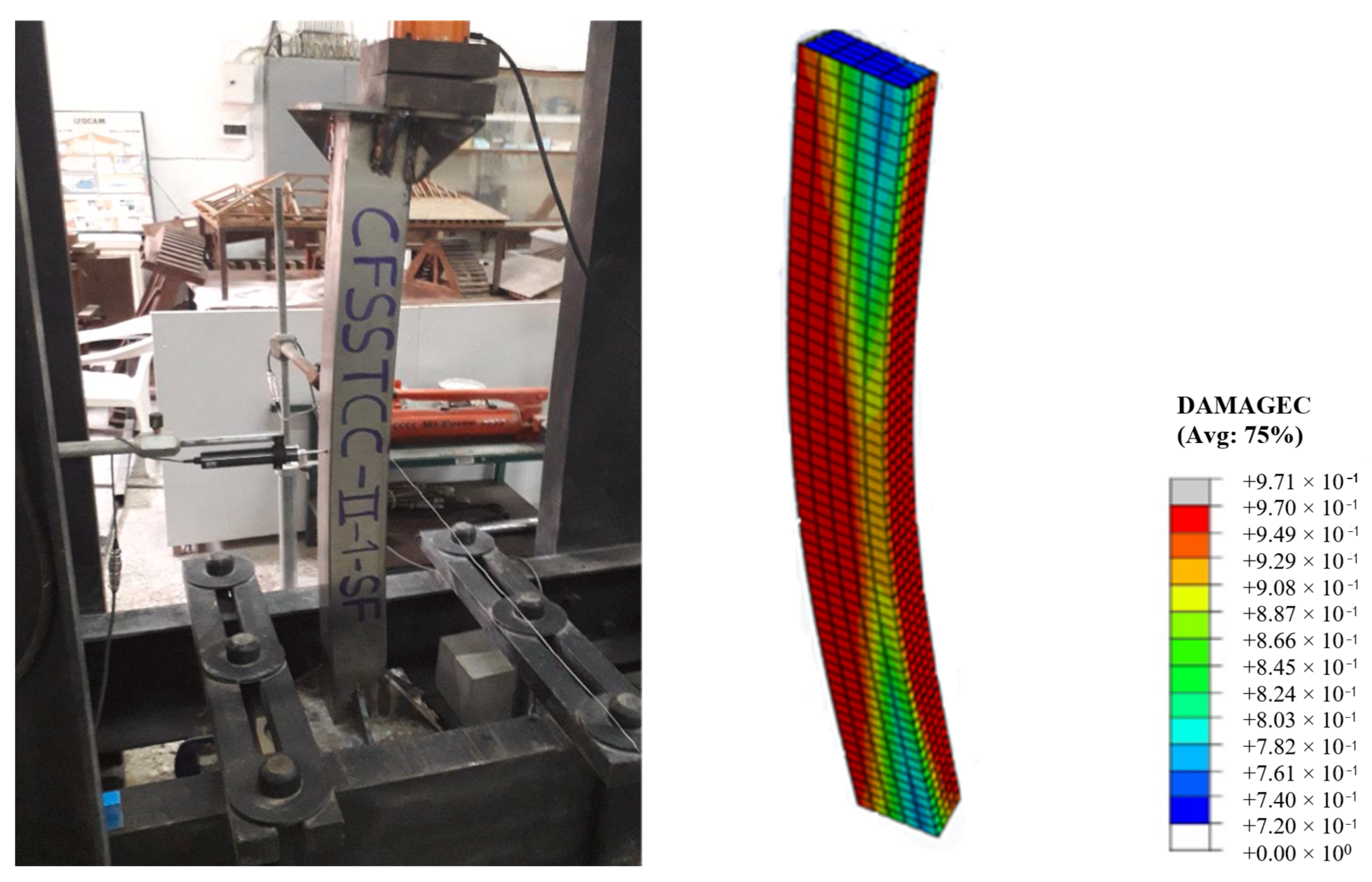
Figure 5 presents a direct comparison of the failure modes obtained from the experimental study and the FE analysis of the tested experimental column (i.e., specimen CFSSTCC-II-1-SF). Global buckling could be clearly observed in the mid-height region of the column, indicating the onset of instability under the applied axial load. The FE model successfully replicated this global buckling, with the deformation shape closely matching that observed in the experimental work by Tokgoz et al. [14]. As a result, it can again be concluded that the experimental findings and the FE analysis exhibited good agreement; this confirms that the FE model can accurately capture the buckling pattern and damage localization. This agreement also validates the reliability of the FE model for use in further parametric studies.
Figure 5.
Comparison of failure modes between the finite element model and the tested experimental specimens.
2.5. Parametric Study
A series of finite element (FE) models of concrete-filled steel tube (CFSST) columns were developed to investigate parameters that had not been studied experimentally or numerically. This parametric study was divided into two main stages. The first stage focused on the influence of the cylindrical concrete compressive strength () within the square stainless-steel tube, with selected values of 45, 55, and 65 MPa. The second stage explored the effects of varying steel fiber ratios, ranging from 0.5% to 1.5%. It should be noted that all simulated specimens, load eccentricities (, ), material properties, and details of the steel tube and carbon T-section, as well as the column length and support conditions, were kept consistent. Table 2 provides a summary of the tested parametric specimens.
Table 2.
Description of tested parametric specimens.
3. Results and Discussion
In this section, a computational-based discussion of the influence of two key parameters—the concrete compressive strength and the steel fiber ratio—on the structural performance of CFSST columns is presented. The analysis focuses on two main behavioral indicators: the peak load capacity and deflection. Simulations were carried out using Abaqus CAE/2021 [15] and developed with structural analysis software to evaluate and compare the effects under controlled conditions.
The steel area ratio and strength significantly influenced the load-bearing capacity by enhancing confinement, delaying local buckling, and improving composite action. In the study, these parameters were kept constant to isolate the effects of the steel fiber content and concrete compressive strength. Nevertheless, their mechanical contributions were inherently reflected in the observed enhancements in the stiffness and ultimate strength of the composite columns.
3.1. Effects of Concrete Compressive Strength
3.1.1. Load–Displacement Behavior and Failure Mode
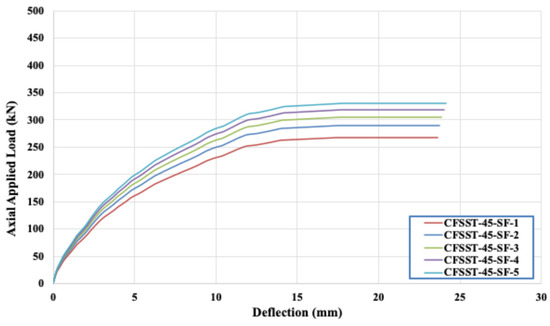
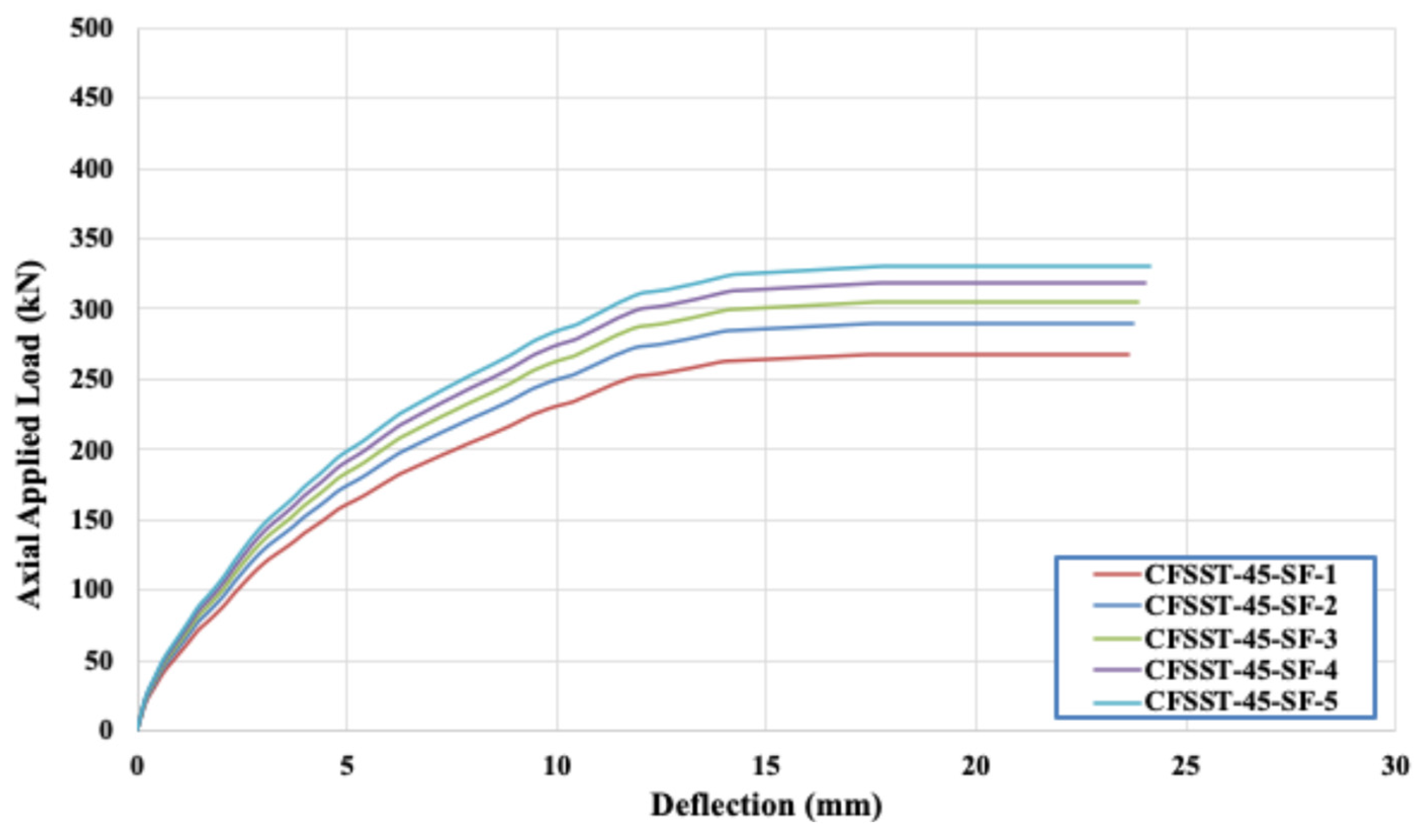
The relationship between the axial compressive load and the midspan deflection response in the CFSST columns is illustrated in Figure 6, showing the concrete compressive strength at 45 MPa across different steel fiber ratios ranging from 0.50% to 1.50%.
Figure 6.
Comparison of the load–deflection relationship in the tested column for concrete compressive strength of 45 MPa.
It can be observed that the initial portion of the load–deflection curve is marginally affected; in the elastic range, stiffness is controlled by the elastic modulus of the concrete steel tube and carbon T-section assembly and not by individual steel fibers. Conversely, an almost linear enhancement in the ultimate load capacity is observed with increasing steel fiber ratios. Specifically, ultimate load increases of approximately 9%, 14%, 19%, and 24% were recorded for specimens CFSST-45-SF-2, CFSST-45-SF-3, CFSST-45-SF-4, and CFSST-45-SF-5, respectively, when compared to the baseline specimen with a steel fiber ratio of 0.5%.
However, a substantial reduction in deflection was observed for these columns. Deflection decreased by approximately 35%, 40%, 47%, and 49% for specimens CFSST-45-SF-2, CFSST-45-SF-3, CFSST-45-SF-4, and CFSST-45-SF-5, respectively, when compared to the baseline specimen (CFSST-45SF-1). These percentages were calculated at the ultimate load level achieved by the column with a 0.5% steel fiber ratio.
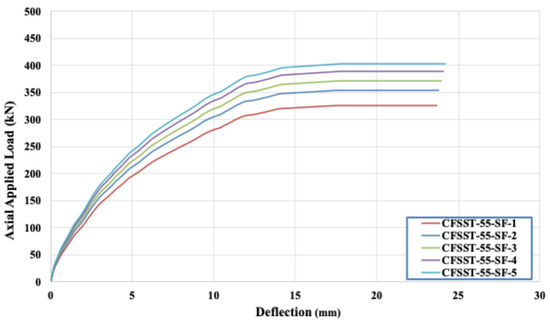
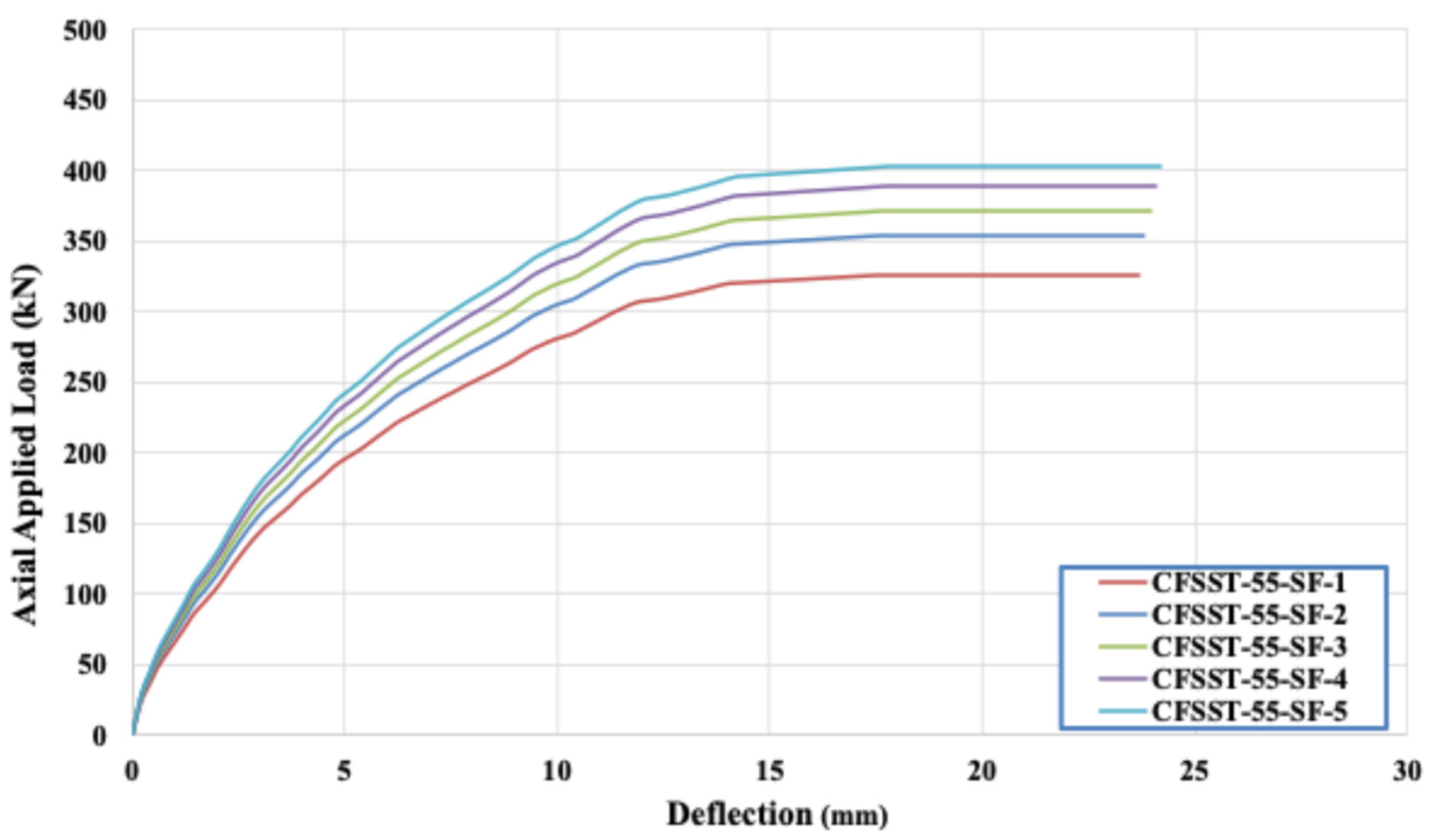
Figure 7 illustrates the relationship between the axial compressive load and midspan deflection response in the CFSST columns when the concrete compressive strength was 55 MPa, and the steel fiber ratio rose from 0.50% to 1.50%. As shown in this figure, for specimens CFSST-55-SF-2, CFSST-55-SF-3, CFSST-55-SF-4, and CFSST-55-SF-5, the ultimate load increased by approximately 8%, 13%, 18%, and 23%, respectively, when compared to the baseline specimen CFSST-55-SF-1, which had a steel fiber ratio of 0.5%. Concurrently, at the ultimate load level of the column with a 0.5% steel fiber ratio, the midspan deflection decreased by approximately 34%, 39%, 46%, and 49%, respectively.
Figure 7.
Comparison of the load–deflection relationship of the tested column for concrete compressive strength of 55 MPa.
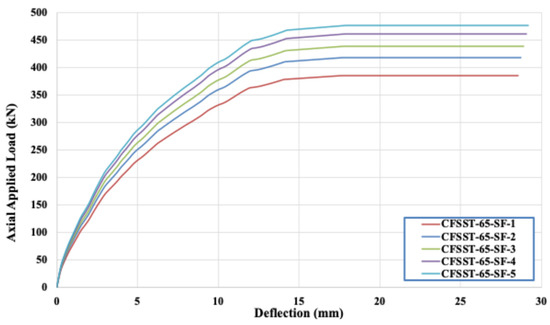
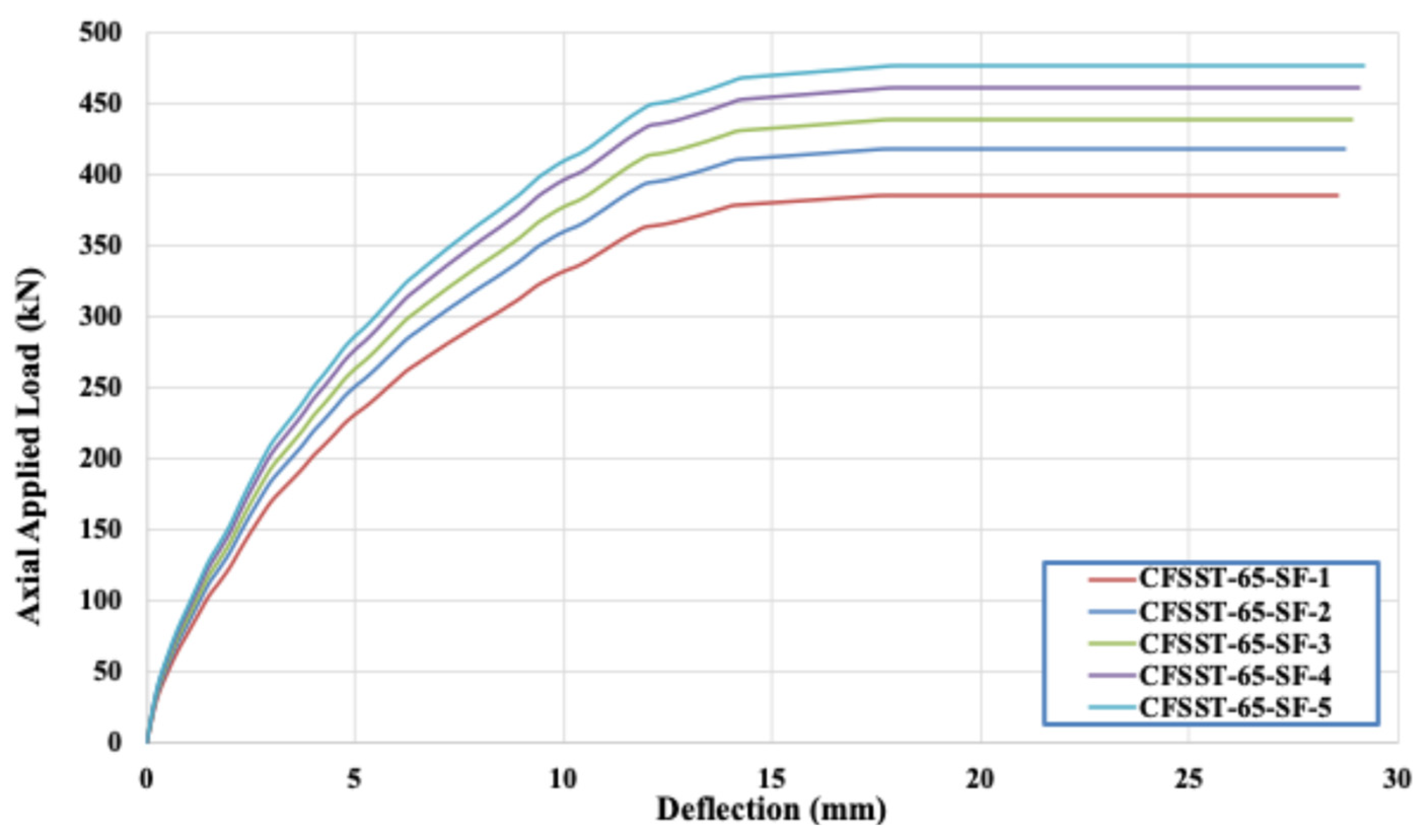
Finally, the increase in ultimate load was approximately 7, 13, 18, and 22% for specimens CFSST-55SF-2, CFSST-55-SF-3, CFSST-55-SF-4, and CFSST-55-SF-5, respectively, compared with the baseline specimen (CFSST-55-SF-1). However, the percentage decrease in midspan deflection was 32, 38, 43, and 47%, respectively, at the same load level of the column with a steel fiber ratio equal to 0.5%. Figure 8 presents the relationship between the axial compressive load and the midspan deflection response in the CFSST columns when the concrete compressive strength was 65 MPa, and the steel fiber ratio rose from 0.50% to 1.50%.
Figure 8.
Comparison of the load–deflection relationship in the tested column for concrete compressive strength of 65 MPa.
The numerical results indicate that the failure of the CFSST column is governed by a combination of concrete crushing in the compression zone and local buckling of the stainless-steel tube near the mid-height. The damage contours from the concrete damage plasticity model reveal progressive cracking followed by localized crushing, while the steel tube provides confinement that delays instability. These failure characteristics were consistently observed across different steel fiber ratios and concrete strengths.
Table 3 summarizes the key results discussed in this section (and displayed in Figure 6, Figure 7 and Figure 8), highlighting the influence of varying the steel fiber ratio on the structural performance of the tested columns. It can be observed that higher quantities of steel fiber (i.e., larger than 1.25%) are most suitable for performance-critical applications where energy absorption and serviceability control are prioritized over raw strength gains.
Table 3.
Summary of effects of concrete compressive strength on ultimate load, deflection, and strength reduction.
3.1.2. Initial Stiffness and Energy Absorption
A noticeable rise in initial stiffness was observed as the concrete compressive strength rose from 45 MPa to 55 MPa and 65 MPa, as reflected by the steeper initial slope in the load–displacement curves. This increase led to enhanced stiffness at the early loading stage (in the elastic range). The initial stiffness at the higher compressive strength of 65 MPa exceeded that at the compressive strength of 45 MPa by 20–25%, indicating that the increase in stiffness is largely governed by the composite section’s strength rather than the steel fiber content when is kept constant.
Beyond the elastic range, the energy absorption capacity (i.e., the area under the load–deflection curve up to failure) also increased with the concrete strength. Specimens with = 55 MPa and = 65 MPa sustained higher loads over comparable deflection ranges, resulting in improved toughness. However, the post-peak ductility demonstrated a marginal change, as the higher-strength concrete tended to exhibit more rapidly localized cracks once the peak stress was exceeded. This behavior suggests that an increase in compressive strength enhances energy absorption primarily through higher load levels, but it might slightly reduce the deformation capacity due to a more brittle matrix response. Table 4 summarizes the key results discussed in this section, highlighting the influence of varying the steel fiber ratio on the structural performance of the tested columns.
Table 4.
Summary of effects of concrete compressive strength on initial stiffness and energy absorption.
3.2. Effects of Steel Fiber Ratio
3.2.1. Influence of Fiber Ratio on Load–Displacement Response
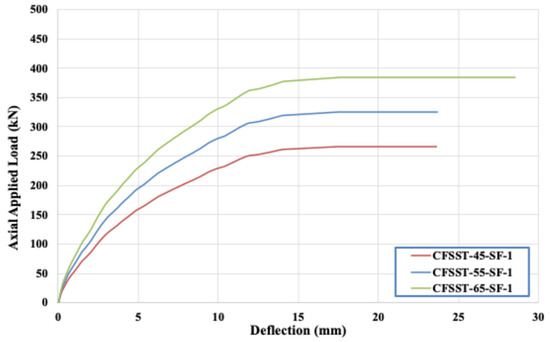
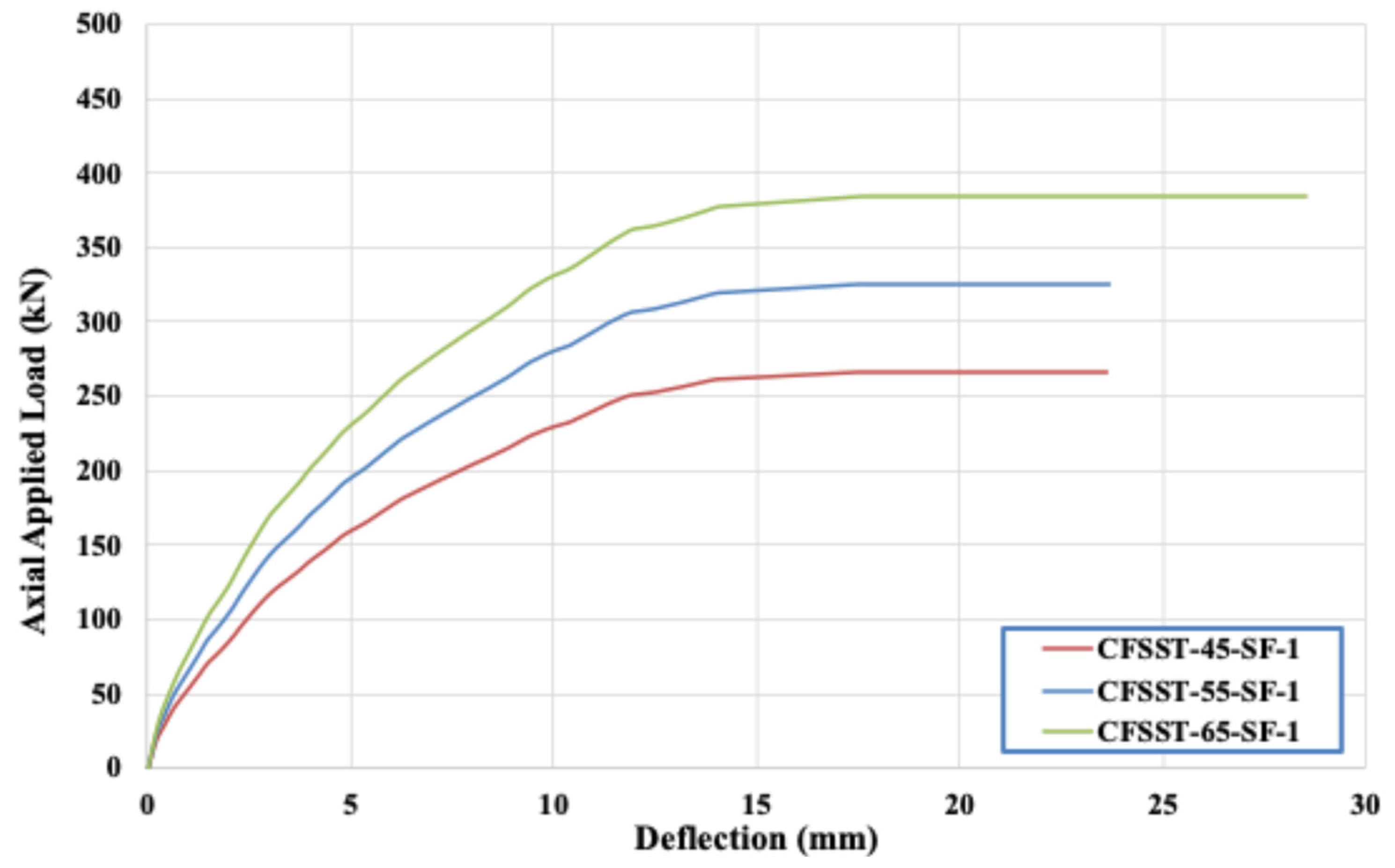
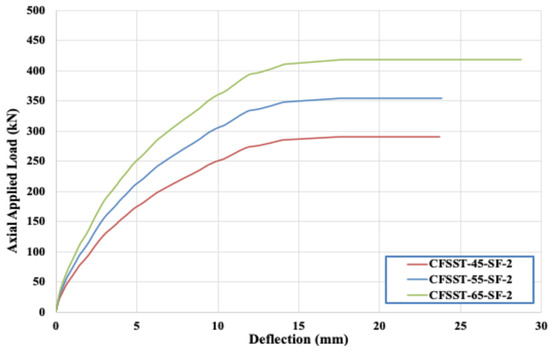
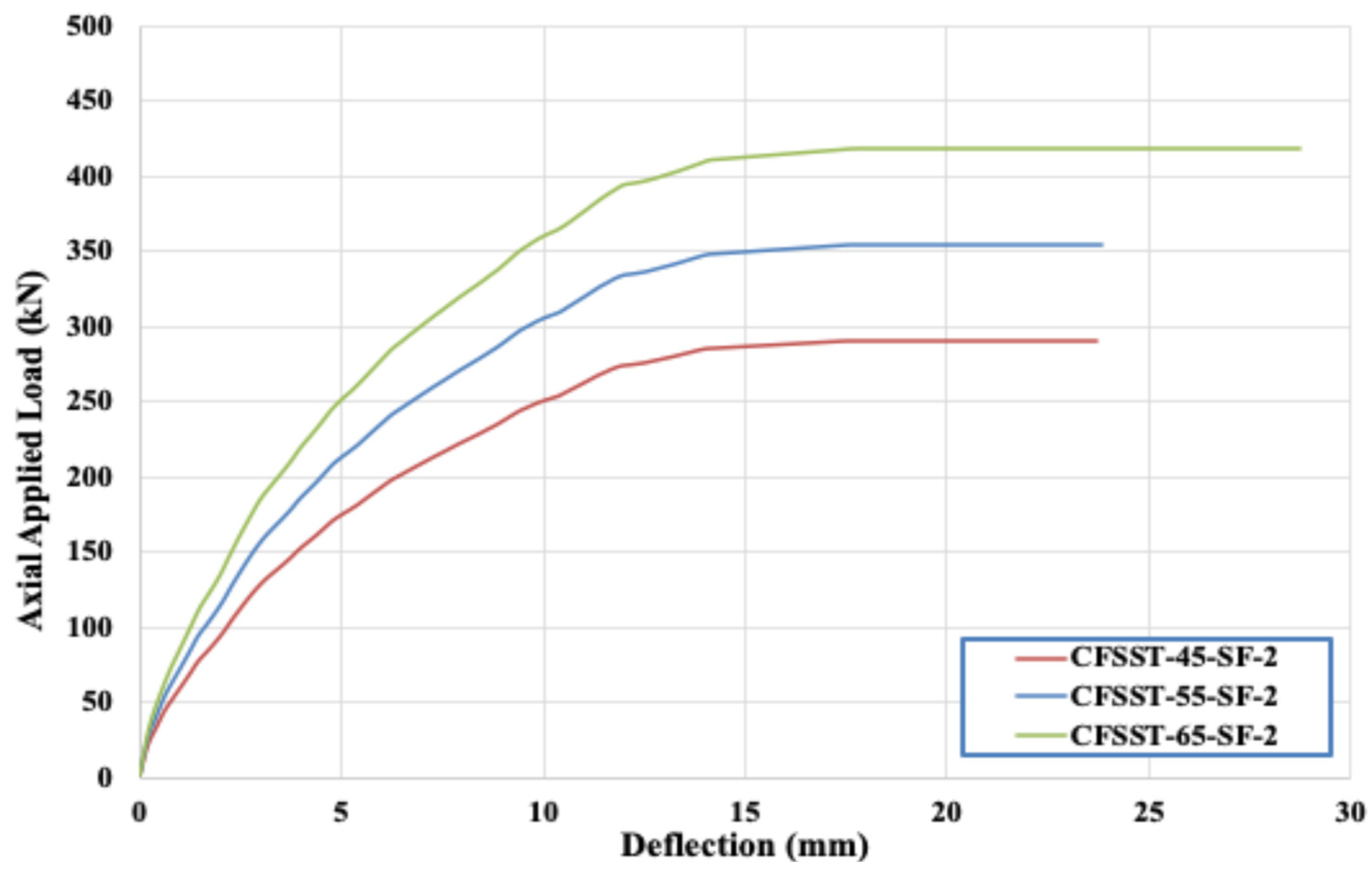
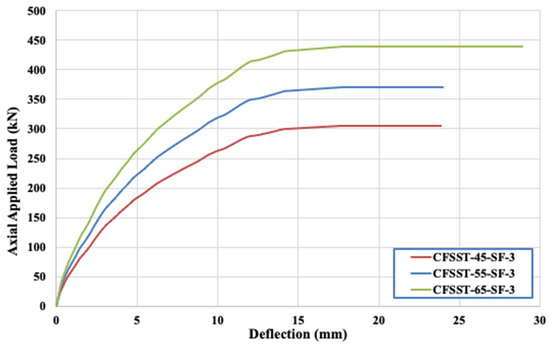
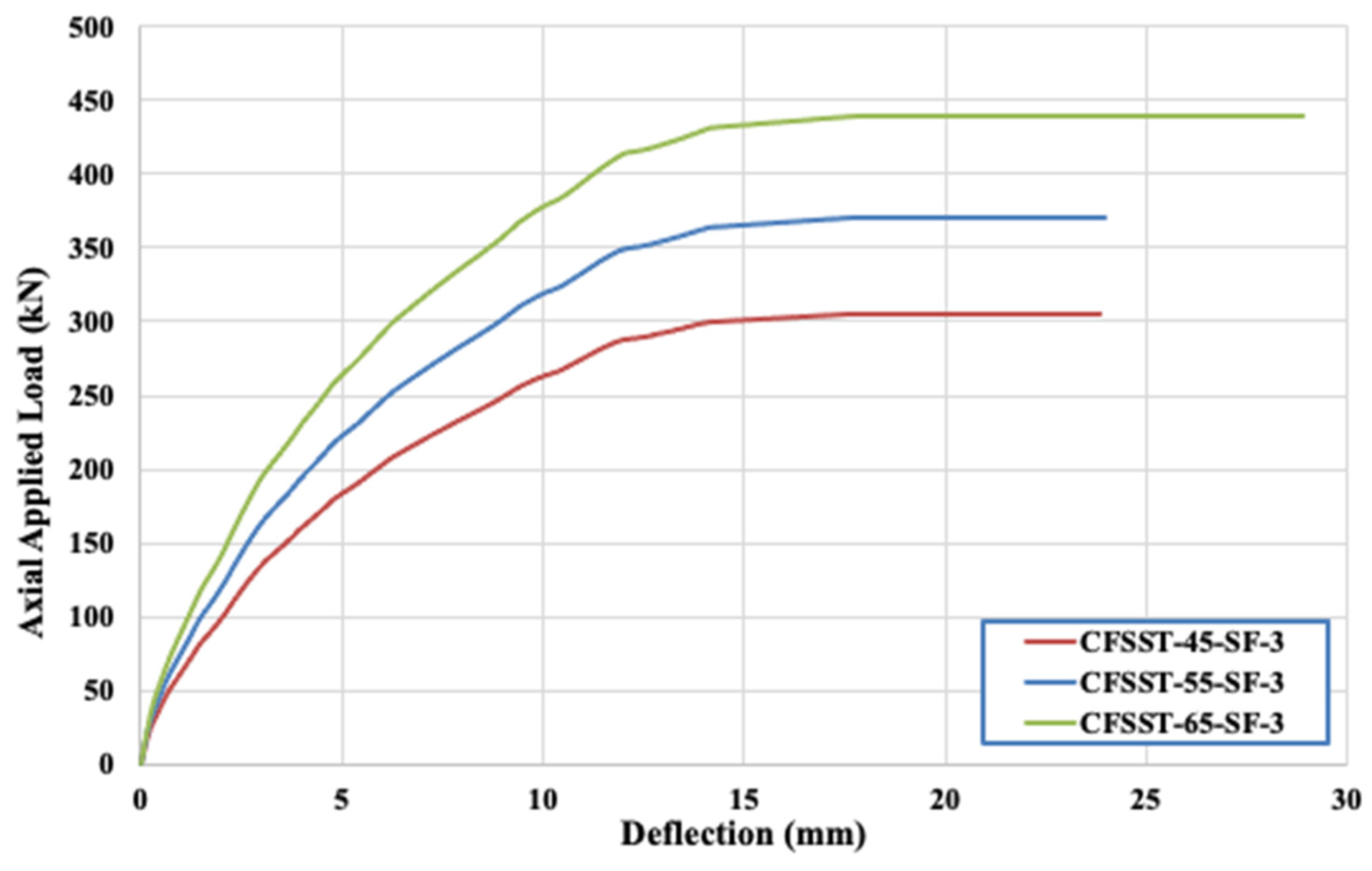
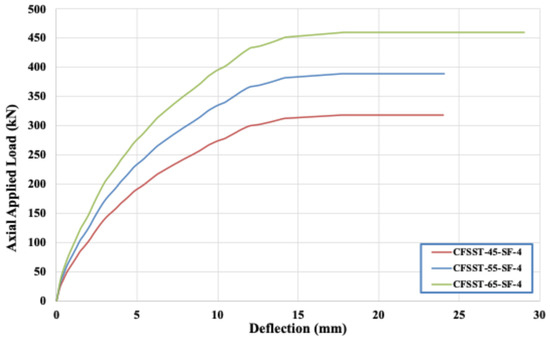
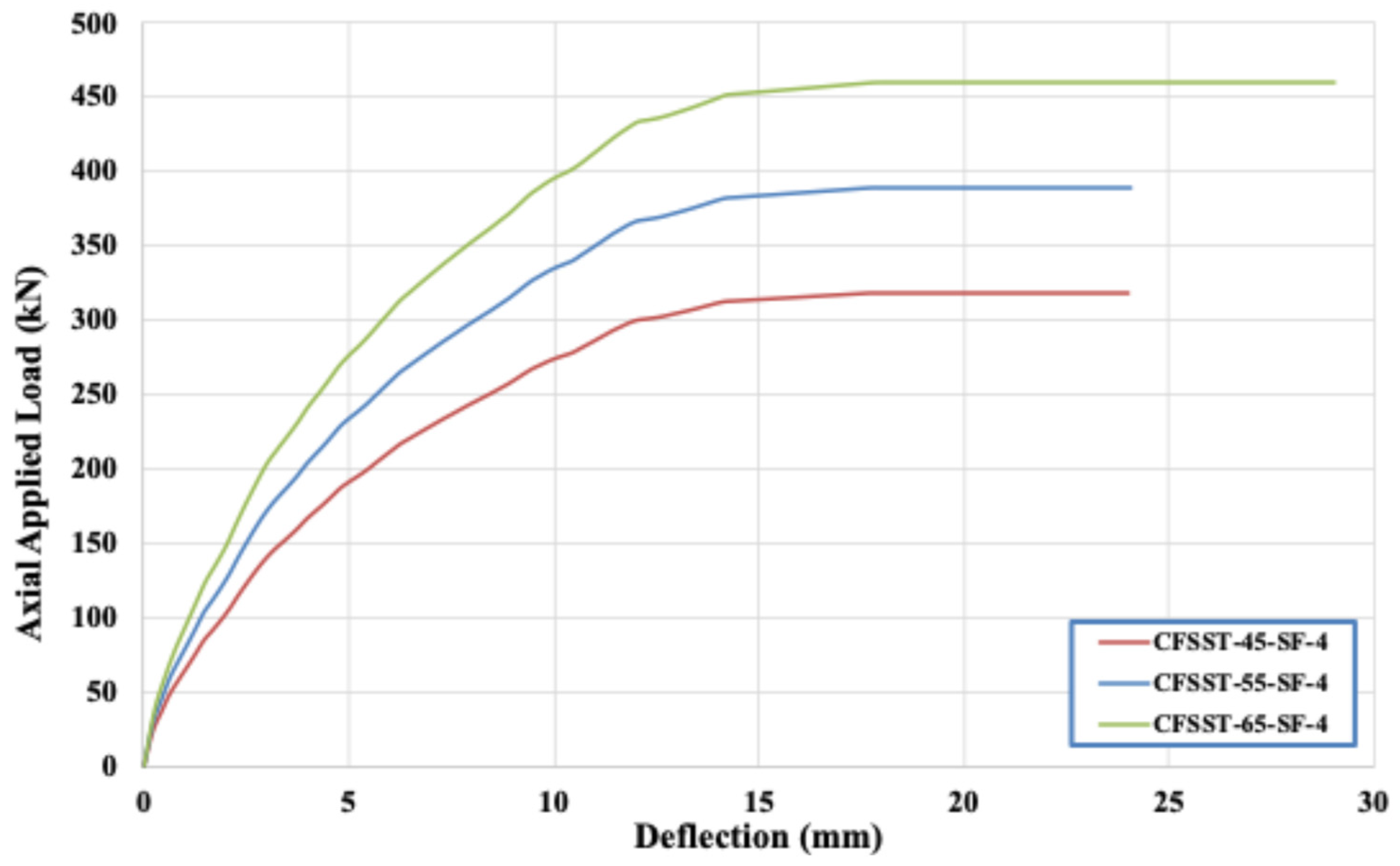
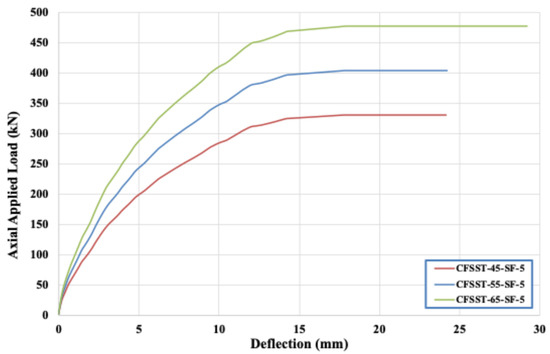
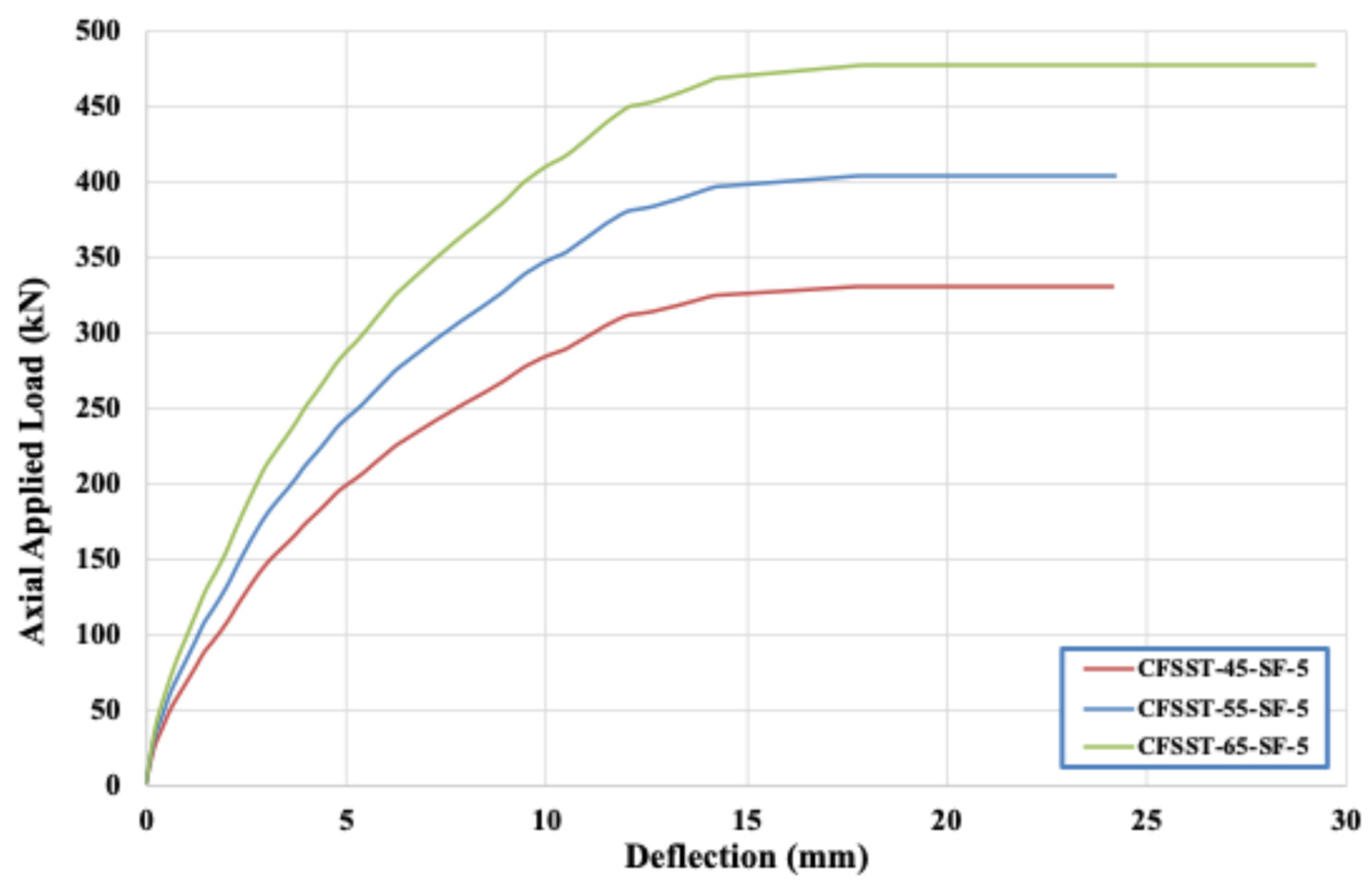
Maintaining the steel fiber ratio served to isolate the effects of the concrete compressive strength on the overall performance. Figure 9, Figure 10, Figure 11, Figure 12 and Figure 13 demonstrate the applied axial load and midspan deflection curves of the tested CFSST column with a fixed steel fiber ratio. It can be observed that, when the concrete compressive strength increased but the steel fiber ratio remained constant, the ultimate load-carrying capacity increased. Increasing steel fiber ratios, ranging from 0.5% to 1.5%, led to an improvement in the ultimate axial load capacity of approximately 22% as the concrete compressive strength increased from 45 to 55 MPa at the same steel fiber ratio. However, the enhancement was approximately 44% when the concrete compressive strength rose from 55 MPa to 65 MPa. It can be concluded that the presence of steel fibers led to a delay in initial cracking, an increase in the ultimate axial load-carrying capacity, and the enhanced performance of the tested column.
Figure 9.
Applied axial load vs. midspan deflection curves of the tested column at a steel fiber ratio of 0.5%.
Figure 10.
Applied axial load vs. midspan deflection curves of the tested column at a steel fiber ratio of 0.75%.
Figure 11.
Applied axial load vs. midspan deflection curves of the tested column at a steel fiber ratio of 1.0%.
Figure 12.
Applied axial load vs. midspan deflection curves of the tested column at a steel fiber ratio of 1.25%.
Figure 13.
Applied axial load vs. midspan deflection curves of the tested column at a steel fiber ratio of 1.50%.
Table 5 summarizes the key results discussed in this section, highlighting the influence of varying concrete compressive strength on the structural performance of the tested columns.
Table 5.
Summary of the effects of the steel fiber ratio on the ultimate load and deflection.
3.2.2. Initial Stiffness and Energy Absorption
Next, the influence of the concrete compressive strength on the overall structural response at a fixed fiber volume was systematically investigated using three strength levels: 45 MPa, 55 MPa, and 65 MPa. As expected, increasing compressive strength led to a progressive enhancement in the ultimate load capacity and initial stiffness, reflecting the higher elastic modulus and improved matrix integrity associated with stronger concretes. The specimen with compressive strength equal to 65 MPa exhibited the highest stiffness and load-carrying capacity, achieving an approximately 20–25% higher ultimate load capacity compared to the 45 MPa specimen.
The initial stiffness increased almost linearly with the compressive strength, confirming that the elastic response is primarily governed by the matrix modulus rather than the fiber network, which remained unchanged in this study. This behavior indicates that, at a constant steel fiber ratio, the early loading regime is dominated by the intrinsic properties of the concrete.
Regarding energy absorption, the total area under the load–displacement curve also increased with the concrete strength, mainly due to higher peak load levels rather than extended post-peak deformation. Table 6 summarizes the key results discussed in this section, highlighting the influence of varying compressive strength on the structural performance of the tested columns.
Table 6.
Summary of the effects of the steel fiber ratio on the initial stiffness and energy absorption.
Compared to previous studies on CFSST columns, in the present work, embedded carbon T-sections and varying steel fiber content were introduced under biaxial loading, providing deeper insights into composite behavior beyond axial performance. Beyond the quantitative results presented above, the underlying mechanical mechanisms governing the observed behavior can be further interpreted.
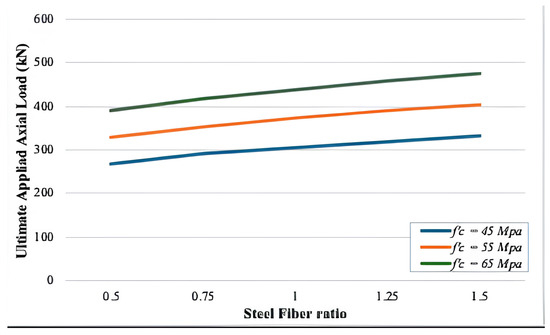
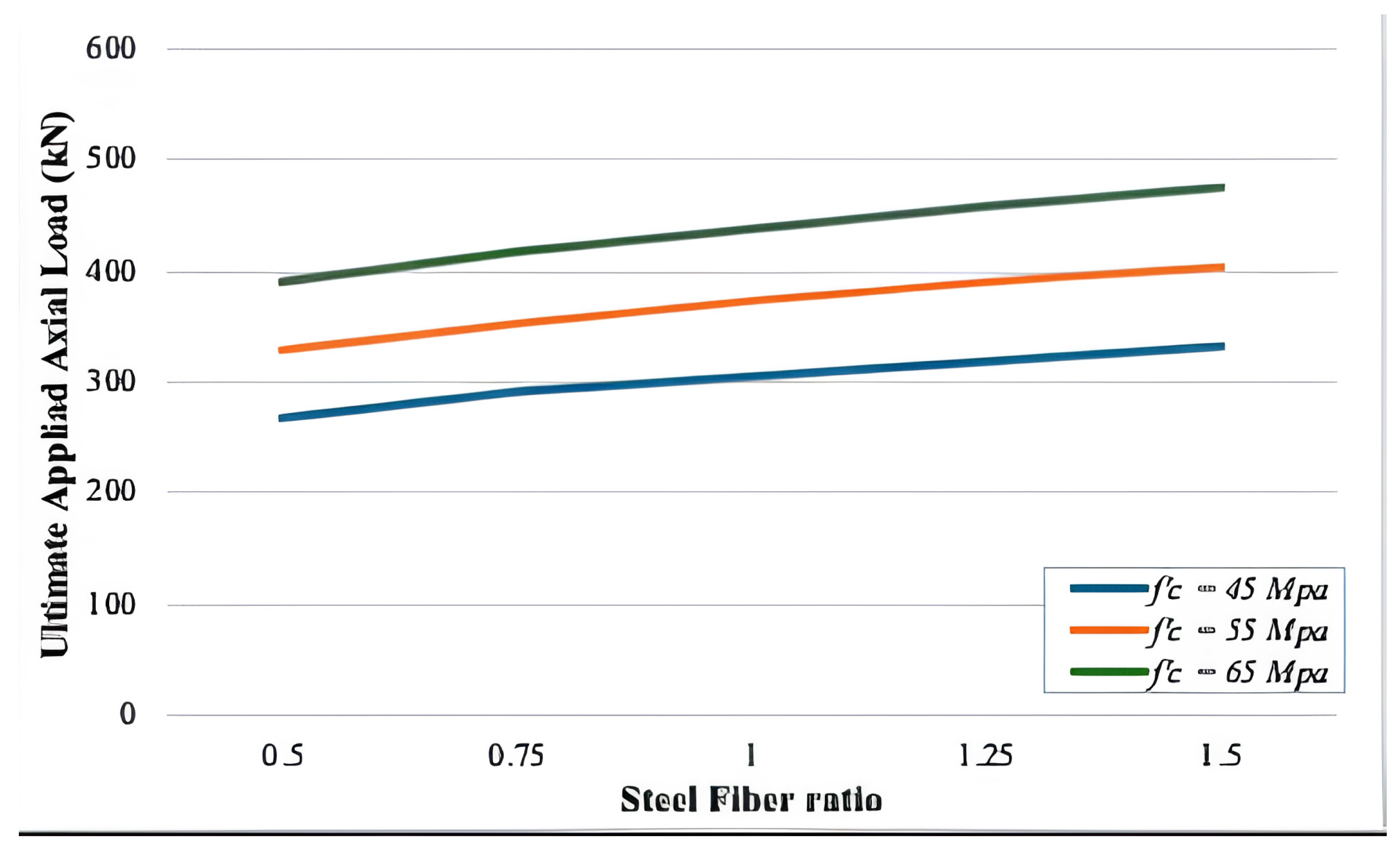
Finally, to further illustrate the influence of differing carbon steel fiber ratios and concrete compressive strength on the ultimate applied axial load-carrying capacity of the specimens, Figure 14 presents the variation in the ultimate load with the steel fiber ratio for different compressive concrete strengths.
Figure 14.
Variation in the ultimate load with the steel fiber ratio and concrete compressive strength.
From the figure, it can be observed that an increase in steel fiber content leads to an improvement in the ultimate load for all concrete compressive strengths. In addition, it is shown that, for columns with higher concrete strength (i.e., for concrete with 65 MPa), a high ultimate load-carrying capacity occurs for any steel fiber ratio compared to the same specimen with concrete strength of 45 MPa or 55 MPa. As a result, it can be concluded that the concrete strength is still a dominant parameter regarding the ultimate load-carrying capacity.
Furthermore, from the figure, it can be observed that the relationship between the carbon steel fiber ratio and the ultimate applied axial load is approximately linear.
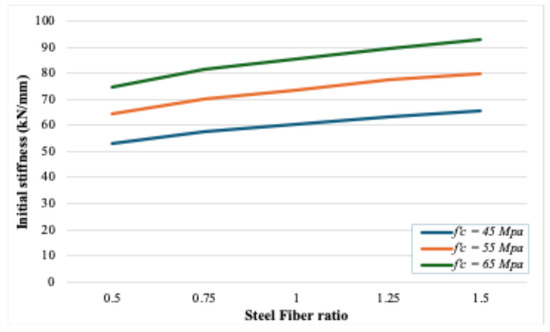
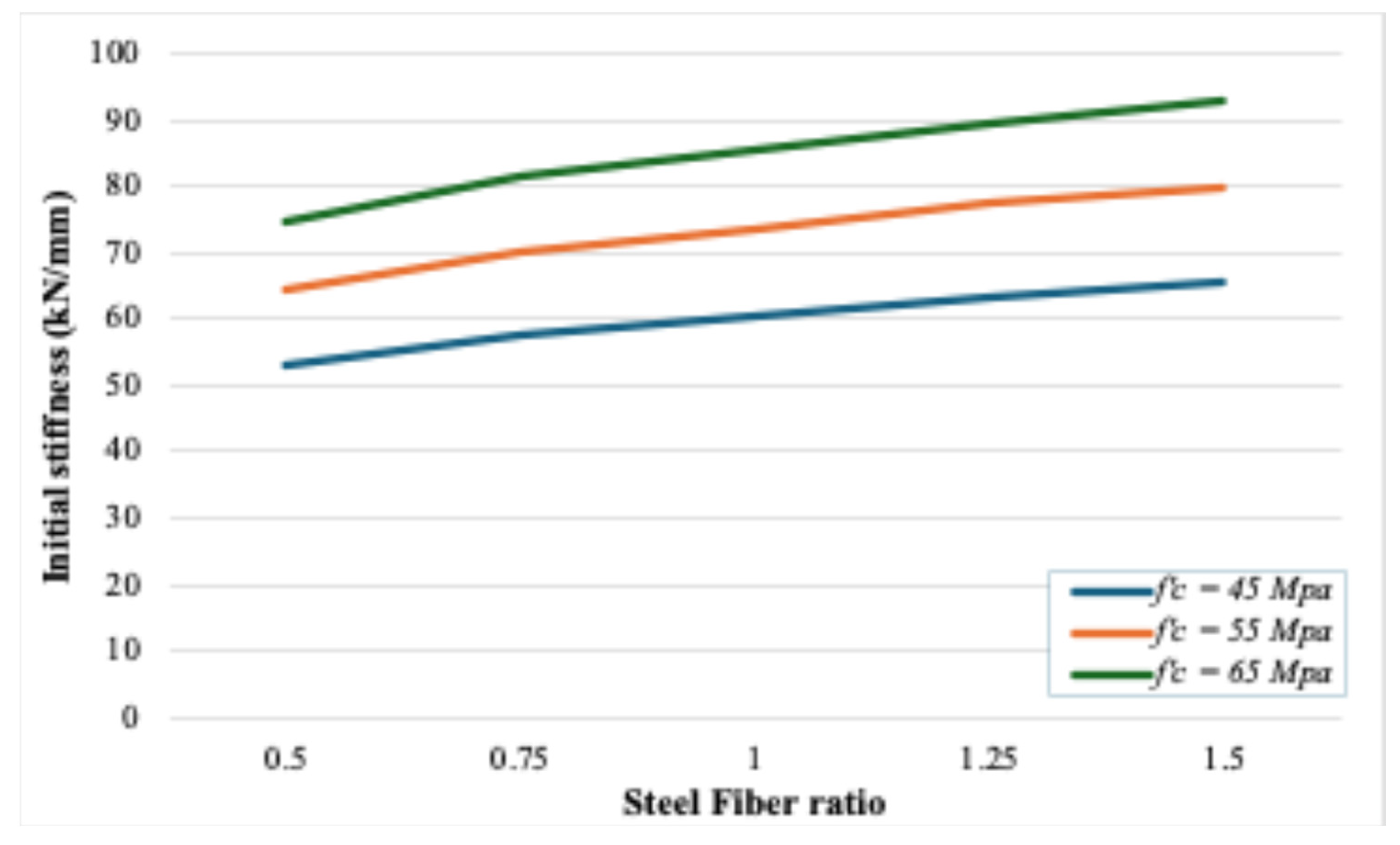
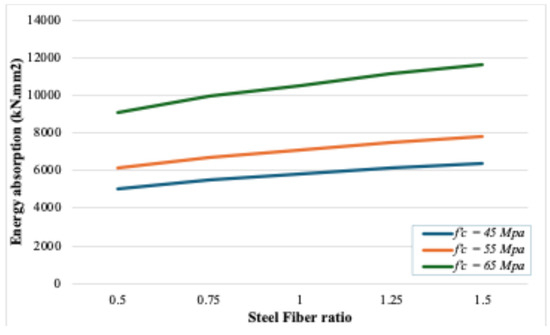
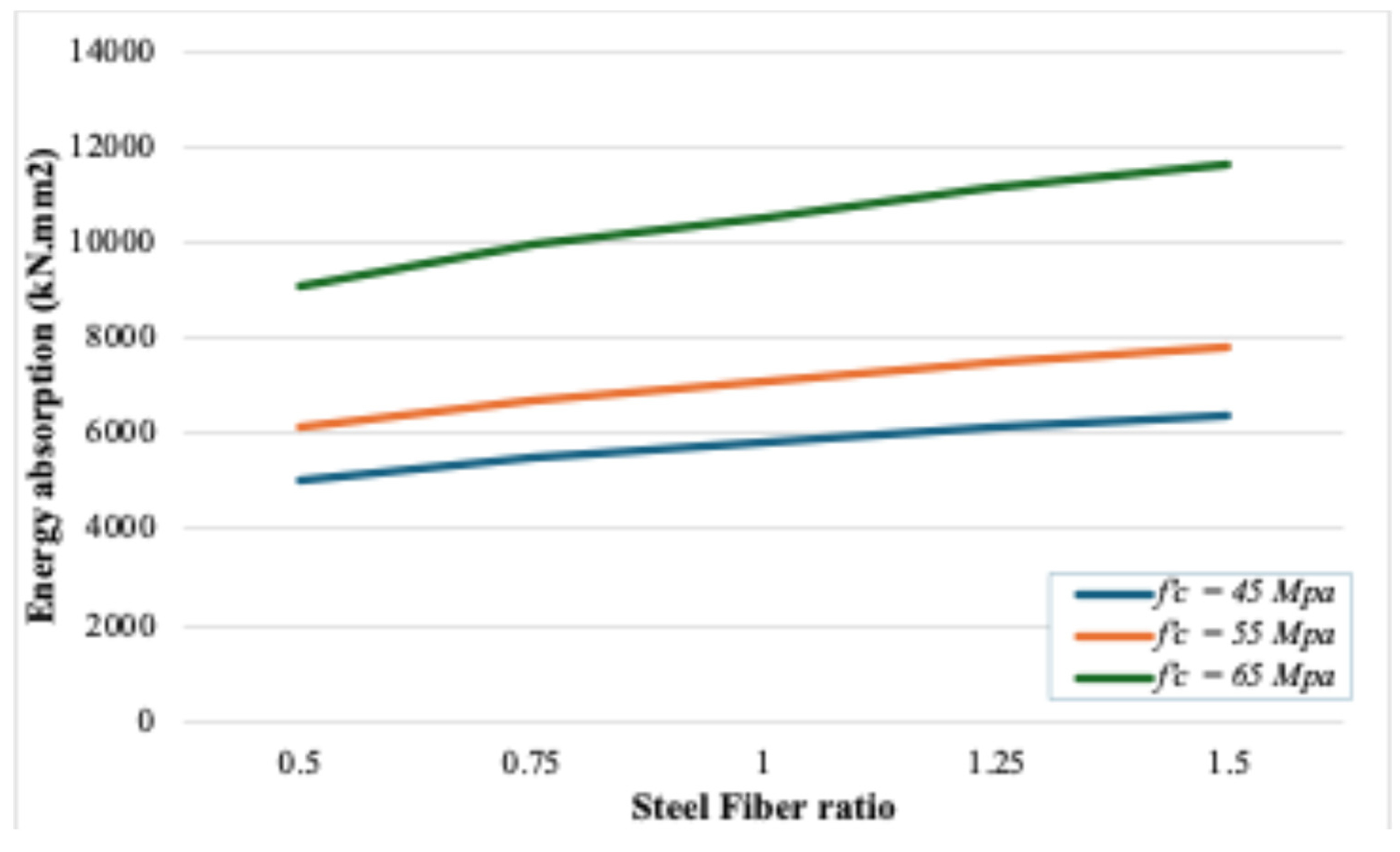
Moreover, Figure 15 and Figure 16 illustrate the variations in the initial stiffness and energy absorption with the carbon steel fiber content for different concrete strengths. From Figure 15, it can be observed that an increase in the steel fiber ratio from 0.5% to 1.5% leads to an improvement in initial stiffness for all concrete compressive strengths. This observation indicates the ability of carbon steel fibers to restrain crack initiation and improve internal stress redistribution.
Figure 15.
Variation in initial stiffness with the steel fiber ratio and concrete compressive strength.
Figure 16.
Variation in energy absorption with the steel fiber ratio and concrete compressive strength.
However, as shown in Figure 16, as the steel fiber ratio increased, the energy absorption increased markedly, especially for columns with higher concrete compressive strength. From these findings, it can be concluded that the presence of steel fibers in such columns leads to enhancements in ductility and performance when subjected to biaxial compressive loading. In addition, columns with higher concrete compressive strength (e.g., concrete compressive strength equal to 65 MPa) exhibit higher initial stiffness and energy absorption than those with concrete compressive strength of 55 MPa or 45 MPa. Thus, the combined improvement in initial stiffness and energy absorption demonstrates the synergistic effect of steel fibers and concrete compressive strength on the overall structural performance of columns.
4. Conclusions
The present study focused on the performance of composite columns, which are widely used in high-rise buildings and industrial structures. In such columns, the ultimate strength, initial stiffness, and energy absorption are critical, particularly under complex loading scenarios. The finite element analysis confirmed that the presence of steel fibers and increasing concrete compressive strength resulted in an enhancement in the ultimate axial load-carrying capacity of the studied columns. From the results, the following conclusions can be derived:
- A good correlation was observed between the numerical and experimental results, indicating that the Abaqus CAE/2021 simulation outcomes were relatively consistent with experimental data. This agreement extends to the ultimate load, midspan deflection, and stress distribution.
- The presence of steel fibers demonstrably enhanced the ultimate load capacity and post-cracking resistance of the columns, leading to improved ductility and energy absorption.
- An increase in concrete compressive strength led to enhancements in the ultimate load-carrying capacity and overall performance of steel fiber concrete-filled stainless-steel tube column stiffened with an embedded carbon steel T-section.
- The presence of 1.25% steel fibers led to an increase of up to 24% in the ultimate load capacity compared to the column without fibers, while the midspan deflection was reduced by approximately 54%. Increasing the concrete strength from 45 MPa to 65 MPa improved the load capacity by more than 44%, demonstrating the combined benefit of using high-strength concrete and optimal fiber content.
Future studies could explore the performance of CFSST columns under different eccentric loading conditions, high-temperature scenarios, or dynamic impacts. In addition, experimental validation for a wider range of fiber content and different cross-sectional configurations could enhance the generalizability of the present results.
Author Contributions
Conceptualization, H.K.M.; methodology, M.R.K.; software, M.A.G.; validation, A.A.A.; formal analysis, A.A.-M.; investigation, T.H.I.; writing—original draft preparation, H.K.M.; writing—review and editing, A.A.-M.; supervision, A.A.A. All authors have read and agreed to the published version of the manuscript.
Funding
This research received no external funding. The APC was funded by the authors.
Data Availability Statement
The data supporting the findings of this study are available from the corresponding author upon reasonable request.
Conflicts of Interest
The authors declare no conflict of interest.
References
- Zhang, J.; Teng, J.G. Behavior of Steel Fiber Reinforced Concrete-Filled Steel Tube Columns with Embedded Structural Shapes. Eng. Struct. 2015, 100, 345–356. [Google Scholar] [CrossRef] [Scilit]
- Zhao, X.-L.; Han, L.-H. Behavior of Steel Fiber Reinforced Concrete-Filled Steel Tubular Columns with Embedded Steel Shapes. J. Struct. Eng. 2012, 138, 1234–1245. [Google Scholar] [CrossRef] [Scilit]
- Mathew, S.; Narayanan, N.I. Steel Fiber Reinforced Concrete Encased Steel Composite Columns Subjected to Combined Axial and Lateral Cyclic Loading. Int. J. Eng. Res. Technol. 2021, 10, 495–499. [Google Scholar] [CrossRef]
- Barros, J.A.O.; Figueiras, J.A. Modeling the behavior of steel fiber reinforced concrete. Comput. Struct. 1999, 71, 703–716. [Google Scholar]
- Wu, Y.; Chen, Z. Modeling of steel fiber reinforced concrete using a damage plasticity model in finite element analysis. Cem. Concr. Compos. 2009, 31, 479–485. [Google Scholar] [CrossRef] [Scilit]
- Allawi, A.; Ahmed, H.S.; Hindi, R. A Numerical Study of Concrete Composite Circular Columns encased with GFRP I-Section using the Finite Element Method. Eng. Technol. Appl. Sci. Res. 2025, 15, 19478–19483. [Google Scholar] [CrossRef] [Scilit]
- Zhang, L.; Zhao, J.; Fan, C.; Wang, Z. Effect of Surface Shape and Content of Steel Fiber on Mechanical Properties of Concrete. Adv. Civ. Eng. 2020, 2020, 8834507. [Google Scholar] [CrossRef] [Scilit]
- Hameed, M.H.; Al-Ahmed, A.H.A.; Abbas, Z. Experimental Investigation of Reinforced Concrete Columns with Steel Embedded Tubes. Key Eng. Mater. 2021, 878, 134. [Google Scholar] [CrossRef] [Scilit]
- Minelli, M.; Plizzari, G. Steel fibers for replacing minimum reinforcement in beams under torsion. Mater. Struct. 2021, 54, 34. [Google Scholar] [CrossRef] [Scilit]
- Abbas, J.L.; Allawi, A.A. Experimental and numerical investigations of composite concrete–steel plate shear walls subjected to axial load. Civ. Eng. J. 2019, 5, 2402–2422. [Google Scholar] [CrossRef] [Scilit]
- Ran, H.; Ma, J.; Chen, X.; Sun, Y.; Gkantou, M.; McCrum, D. Local Stability of LaserWelded Stainless-Steel T-Section Stub Columns. J. Struct. Eng. 2024, 150, 04024062. [Google Scholar] [CrossRef] [Scilit]
- Wu, L.; Han, G.; Oluwadahunsi, S.; Sun, Y. Compressive capacity of cruciform-shaped concrete- filled steel tubes. Structures 2024, 69, 107592. [Google Scholar] [CrossRef] [Scilit]
- Wu, L.; Han, G.; Di Sarno, L.; Chen, X.; Sun, Y. Experimental and numerical analysis of L-shaped concrete-filled steel tube stub columns. Structures 2024, 69, 107351. [Google Scholar] [CrossRef] [Scilit]
- Tokgoz, S.; Dundar, C.; Karaahmetli, S.; Ozel, R. Research on concrete-filled stainless steel tubular composite columns. Structures 2021, 33, 703–719. [Google Scholar] [CrossRef] [Scilit]
- Lee, J.; Fenves, G.L. Plastic-damage model for cyclic loading of concrete structures. J. Eng. Mech. 1998, 124, 892–900. [Google Scholar] [CrossRef] [Scilit]
- Dassault Systèmes. SIMULIA Abaqus 2021 Licensed Programs Specifications; Dassault Systèmes: Vélizy-Villacoublay, France, 2021. [Google Scholar]
- Lubliner, J.; Oliver, J.; Oller, S.; Onate, E. A plastic-damage model for concrete. Int. J. Solids Struct. 1989, 25, 299–326. [Google Scholar] [CrossRef] [Scilit]
- Grassl, P.; Jirásek, M. Damage-plastic model for concrete failure. Int. J. Solids Struct. 2006, 43, 7166–7196. [Google Scholar] [CrossRef] [Scilit]
- Fib Model Code 2010; International Federation for Structural Concrete: Lausanne, Switzerland, 2010; Volume 1.
- Bažant, Z.P.; Oh, B.H. Crack band theory for fracture of concrete. Matériaux et Constr. 1983, 16, 155–177. [Google Scholar] [CrossRef] [Scilit]
- EN-14651; Test Method for Metallic Fiber Concrete—Measuring the Flexural Tensile Strength (Limit of Proportionality, Residual). CEN: Brussels, Belgium, 2005.
- Hognestad, E. Study of Combined Bending and Axial Load in Reinforced Concrete Members; University of Illinois at Urbana Champaign, College of Engineering. Engineering Experiment Station: Champaign, IL, USA, 1951; No. 399. [Google Scholar]
- Menetrey, P.; Willam, K.J. Triaxial failure criterion for concrete and its generalization. Struct. J. 1995, 92, 311–318. [Google Scholar] [CrossRef] [Scilit]

Disclaimer/Publisher’s Note: The statements, opinions and data contained in all publications are solely those of the individual author(s) and contributor(s) and not of MDPI and/or the editor(s). MDPI and/or the editor(s) disclaim responsibility for any injury to people or property resulting from any ideas, methods, instructions or products referred to in the content. |
© 2026 by the authors. Licensee MDPI, Basel, Switzerland. This article is an open access article distributed under the terms and conditions of the Creative Commons Attribution (CC BY) license.