Multi-Scale Investigation of Fracture Behavior of Polypropylene Fiber-Reinforced Concrete Segment During Bending Test



Abstract
1. Introduction
2. Materials and Experiment
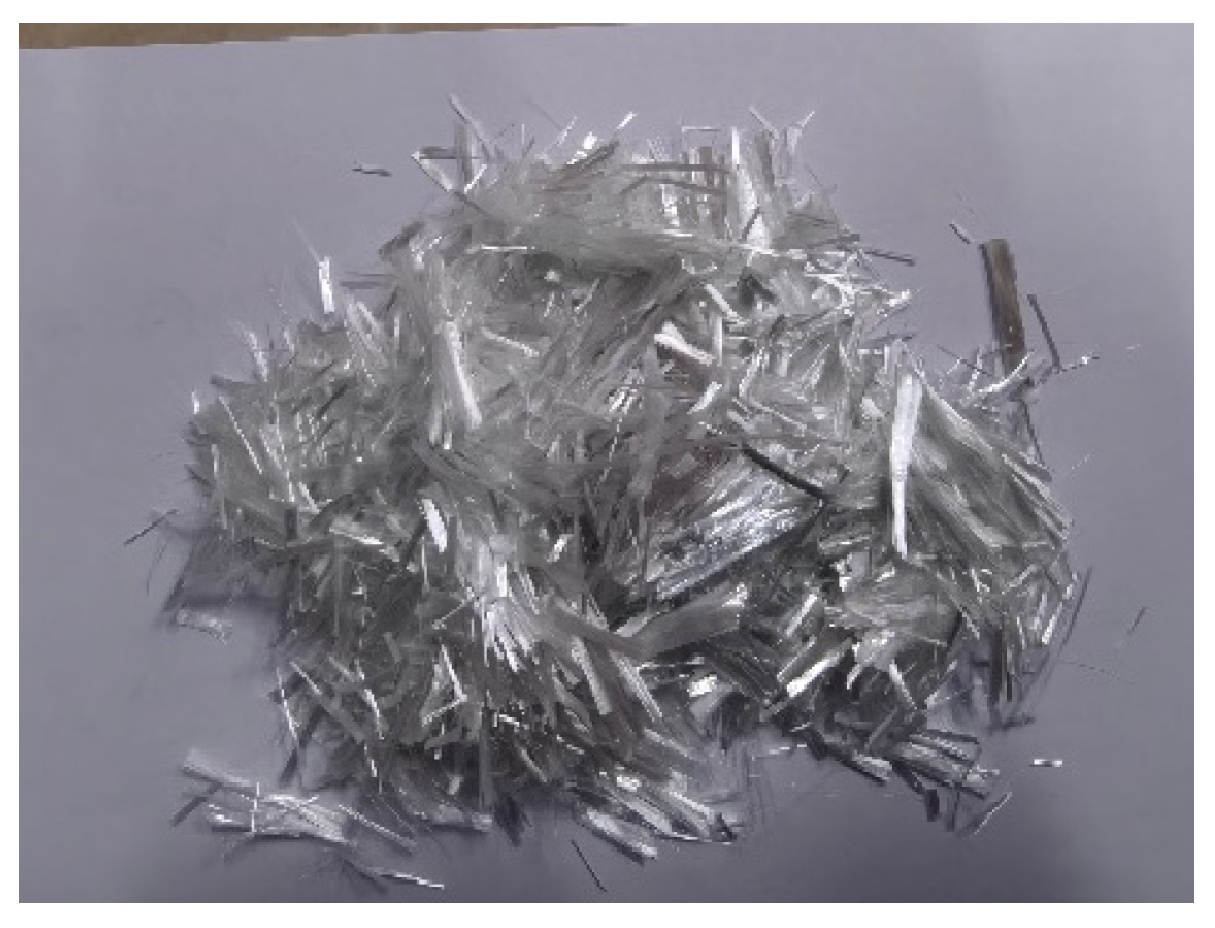
2.1. Materials
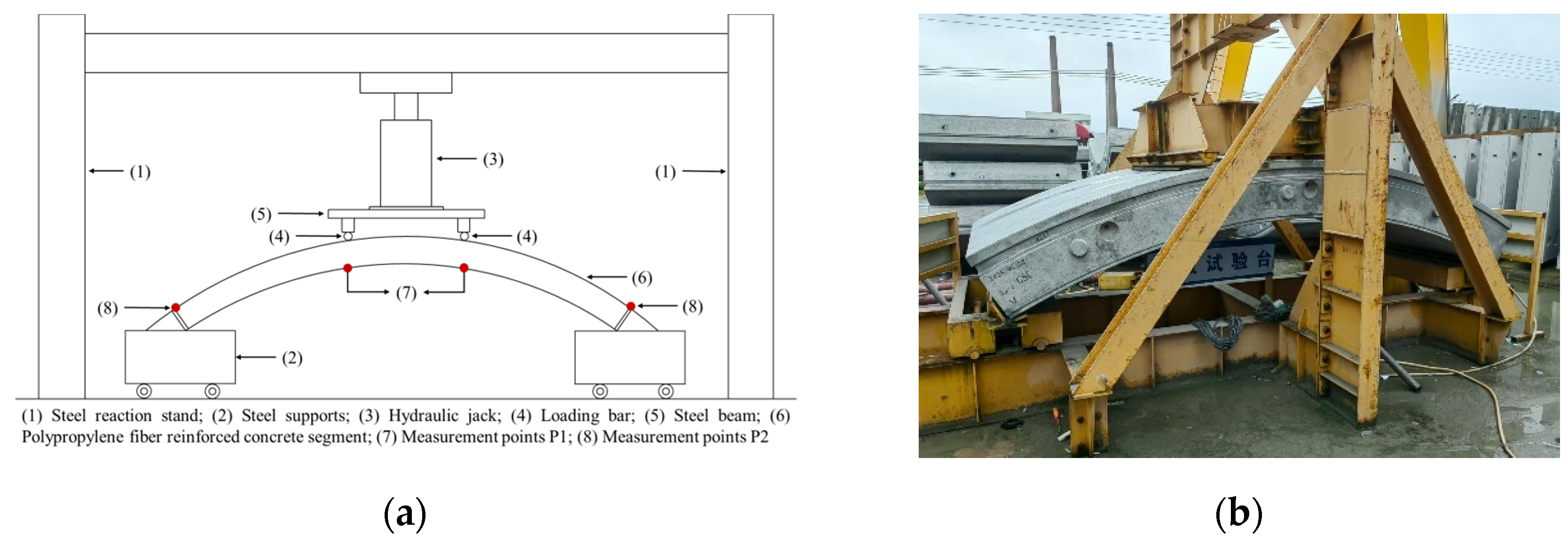
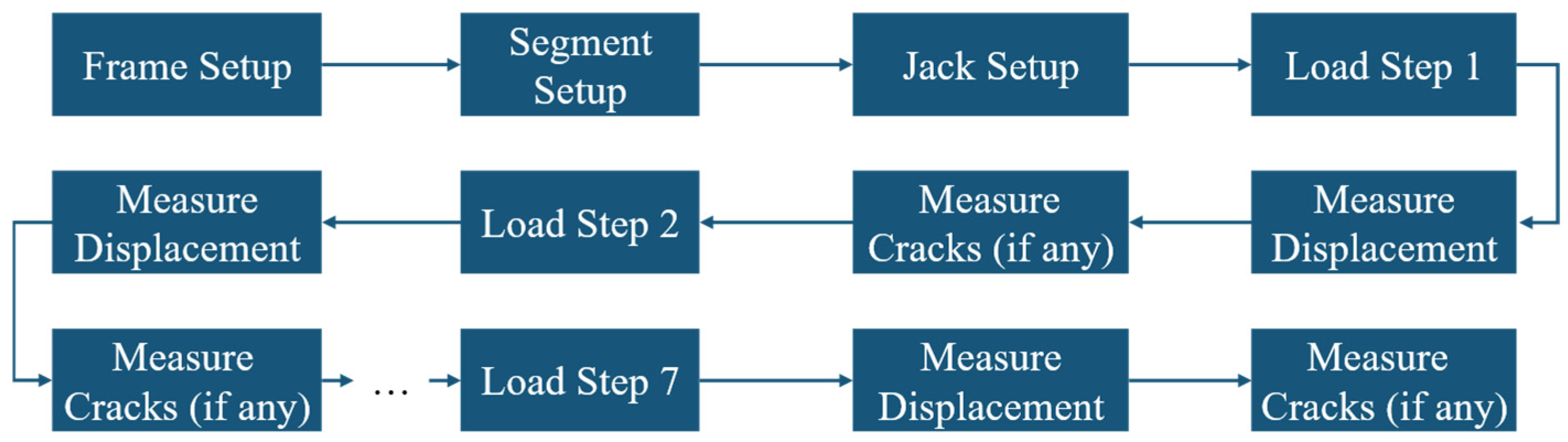
2.2. Bending Test
3. Model Development
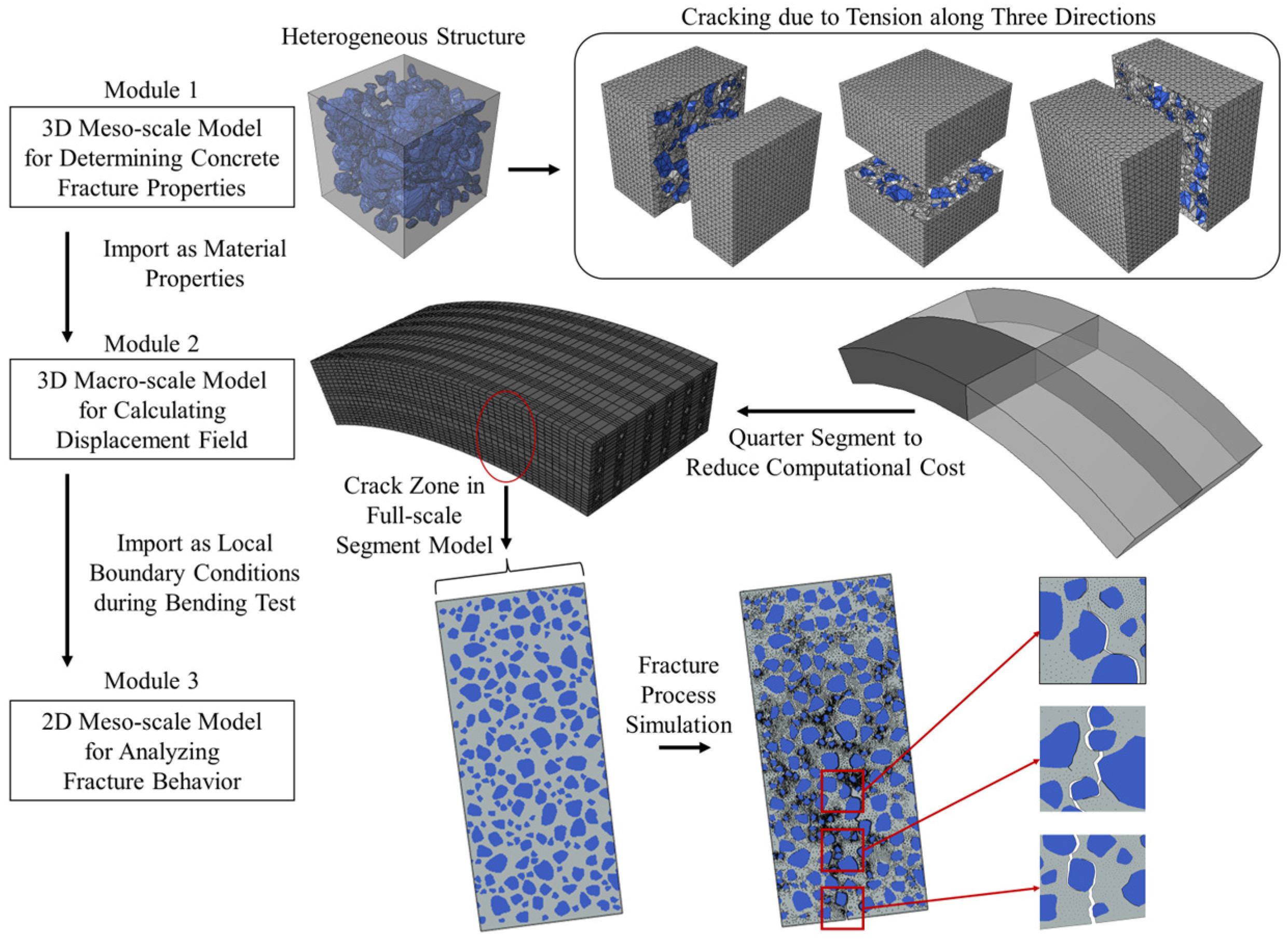
3.1. General Framework of Multi-Scale Modeling
- (1)
- Module 1 contained a series of 3D meso-scale finite element models of cubic concrete specimens. These models considered the heterogeneous structures of concrete and the fracture properties of cement mortar and ITZ with different contents of polypropylene fibers. The overall fracture properties of PFRC were determined through tensile fracture simulations and were then exported as necessary input parameters for Module 2.
- (2)
- In Module 2, a 3D finite element model of concrete segment was developed to simulate the bending test. To reduce computational costs, a quarter segment with principal reinforcement was modeled instead of the whole segment, and symmetric boundary conditions were set where necessary. In this concrete segment model, the concrete material was treated as a homogeneous material, without considering the distribution of aggregates in the cement mortar. Therefore, this 3D concrete segment model was classified as a macro-scale model. The fracture properties of the PFRC were obtained from the simulations of Module 1. During the simulation of the bending test, the concrete segment model deformed as the load increased. Then cracks initiated and propagated upwards from the segment bottom. The nodal displacements near the major crack were extracted and then imported to Module 3 for further analysis.
- (3)
- The role of Module 3 was to investigate the fracture propagation behavior inside the internal structure of the PFRC segment during the bending test. Unlike Modules 1 and 2, finite element models in Module 3 were developed based on a 2D meso-structure of concrete. The reason for using 2D models stemmed from two major considerations. The first was to reduce computational costs. The model size in Module 3 should cover the length of the major crack, which would result in a relatively larger size and more aggregates compared to Module 1. Using 3D models could introduce an excessive number of meshes, thereby imposing a significant burden on numerical calculations. The second consideration was that 2D models could present crack propagation paths much more clearly than the 3D model; thus, extensive studies simulated the fracture behavior of concrete material based on 2D finite element models [16]. In this study, the local cross-section near the major crack determined by Module 2 was extracted and modeled as heterogeneous structures containing aggregates and mortar. The nodal displacements at the boundaries of these cross-sections were also extracted from Module 2 and were then used as boundary conditions for the 2D models in Module 3. Finally, the local fracture behavior of the PFRC segment was analyzed by Module 3 from a meso-scale perspective.
3.2. Meso-Scale Modeling of Concrete
- (1)
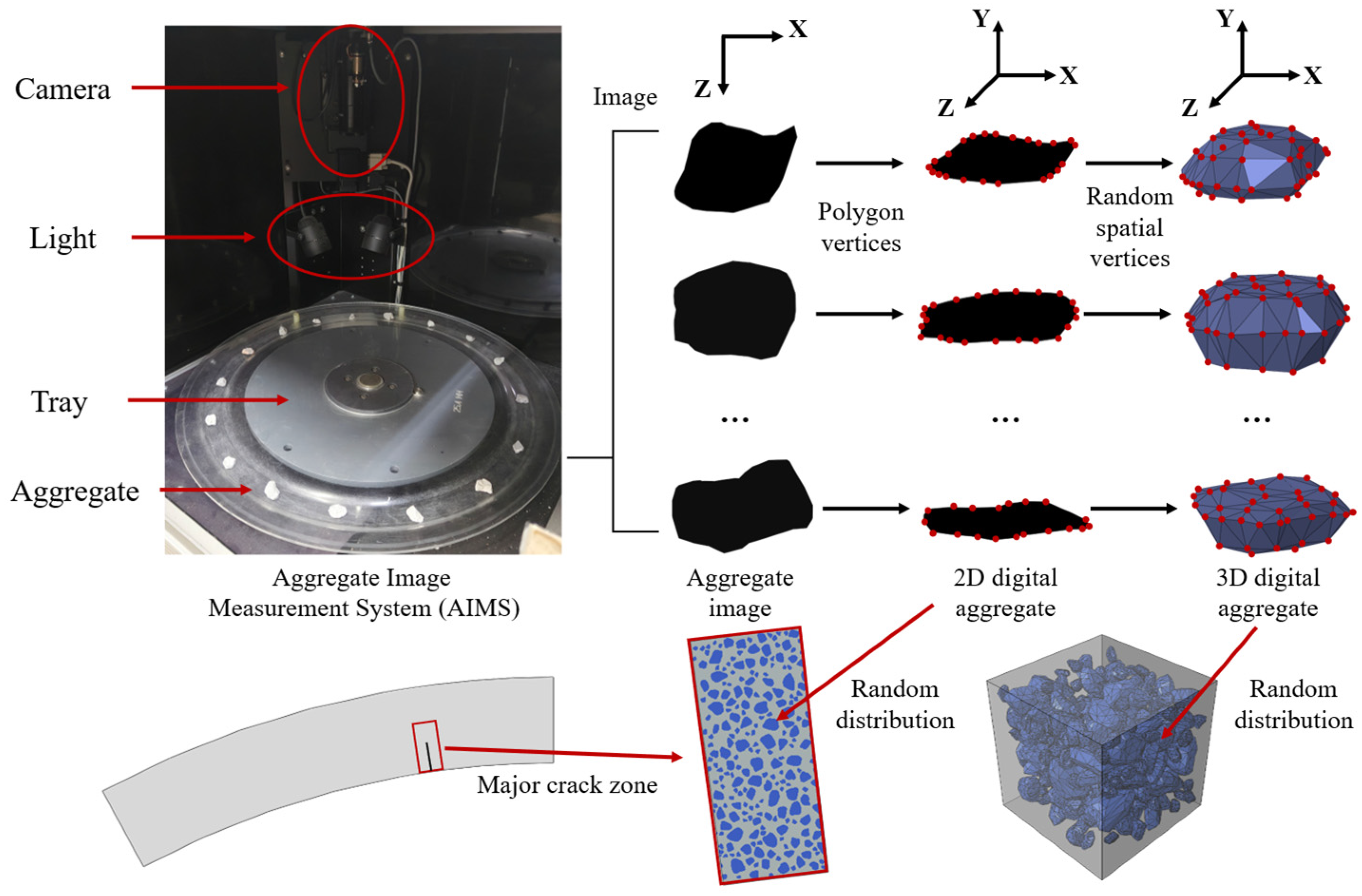
- Aggregate geometry collection
- (2)
- 2D digital aggregate generation
- (3)
- 3D digital aggregate generation
- (4)
- Concrete model generation
3.3. Finite Element Model Development
3.3.1. Meso-Scale Model for Simulating Direct Tension
- (1)
- Model size and mesh properties
- (2)
- Loading and boundary conditions
- (3)
- Material properties
3.3.2. Macro-Scale Model for Simulating Bending Test
- (1)
- Model size and mesh properties
- (2)
- Loading and boundary conditions
- (3)
- Material properties
3.3.3. Meso-Scale Model for Analyzing Fracture Behavior
- (1)
- Model size, mesh and material properties
- (2)
- Boundary conditions
4. Model Validation
5. Analysis and Discussion
5.1. Effect of Polypropylene Fiber on Macro-Scale Fracture Behavior of Concrete Segment
5.2. Effect of Polypropylene Fiber on Meso-Scale Fracture Behavior of Concrete Segment
5.2.1. Effect of Polypropylene Fiber on Crack Propagation
5.2.2. Effect of Polypropylene Fiber on Stiffness Degradation
5.2.3. Effect of Polypropylene Fiber on Degradation of ITZ and Mortar
6. Conclusions
- (1)
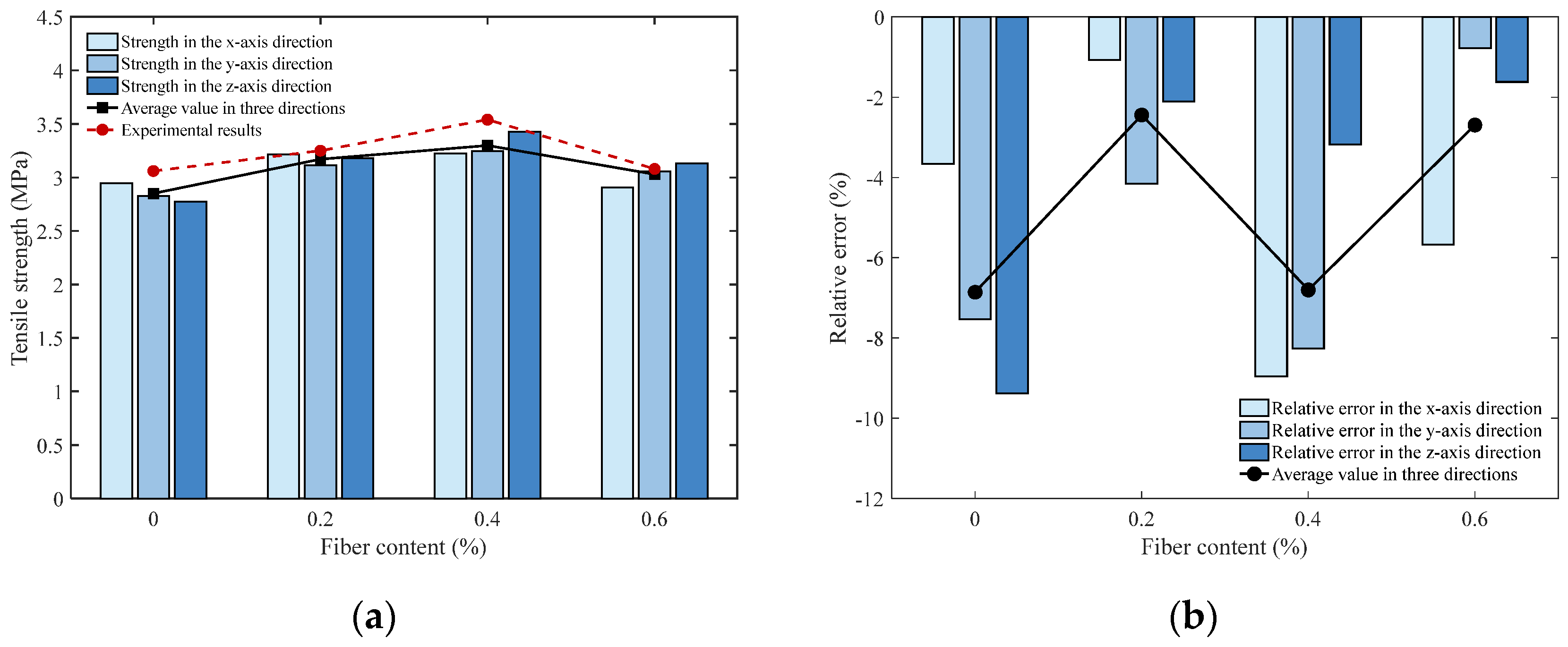
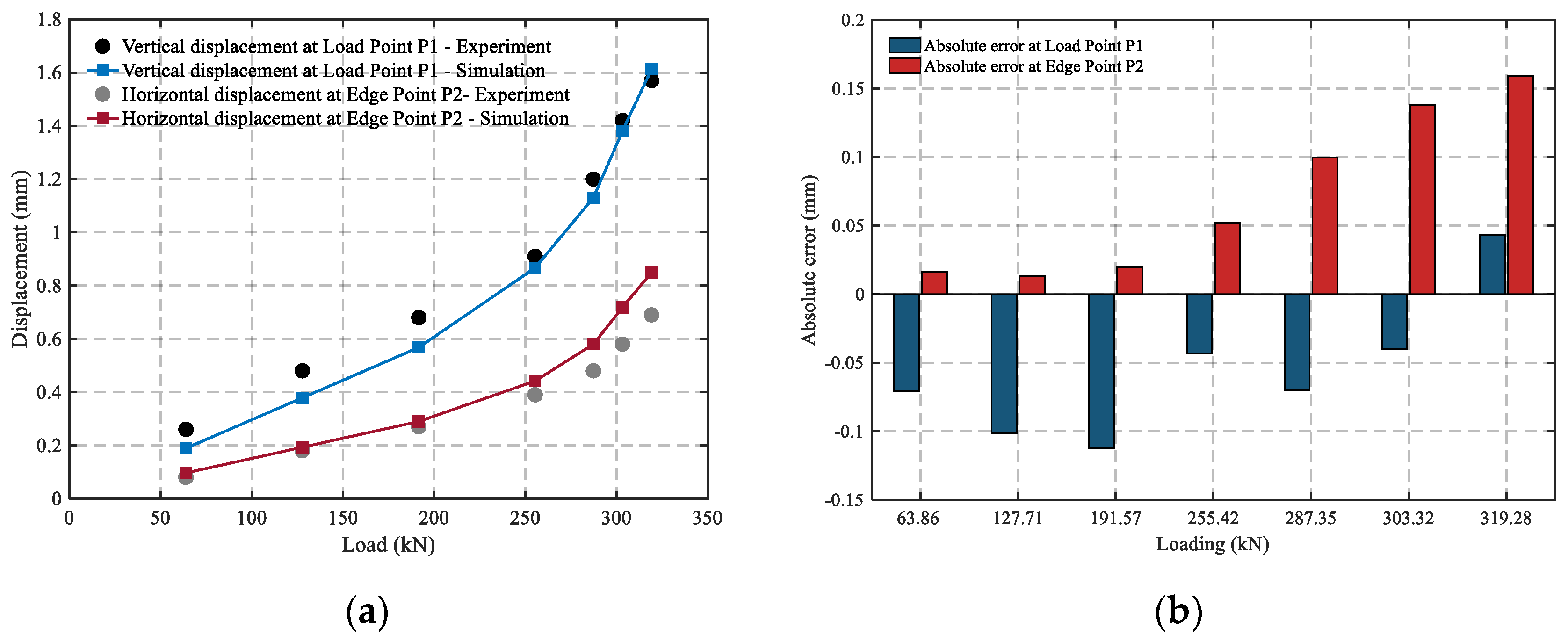
- The meso-scale module of the framework reproduced the experimentally observed tensile strength of PFRC, with an average relative error below 7% and a maximum error below 10%, providing reliable fracture-related inputs for subsequent analyses. The macro-scale module captured the global deformation response of the PFRC segment during the full-scale bending test. The maximum absolute differences between the simulated and measured displacements were 0.11 mm at the load point and 0.16 mm at the edge point. Overall, the accuracy of the proposed multi-scale modeling framework is acceptable.
- (2)
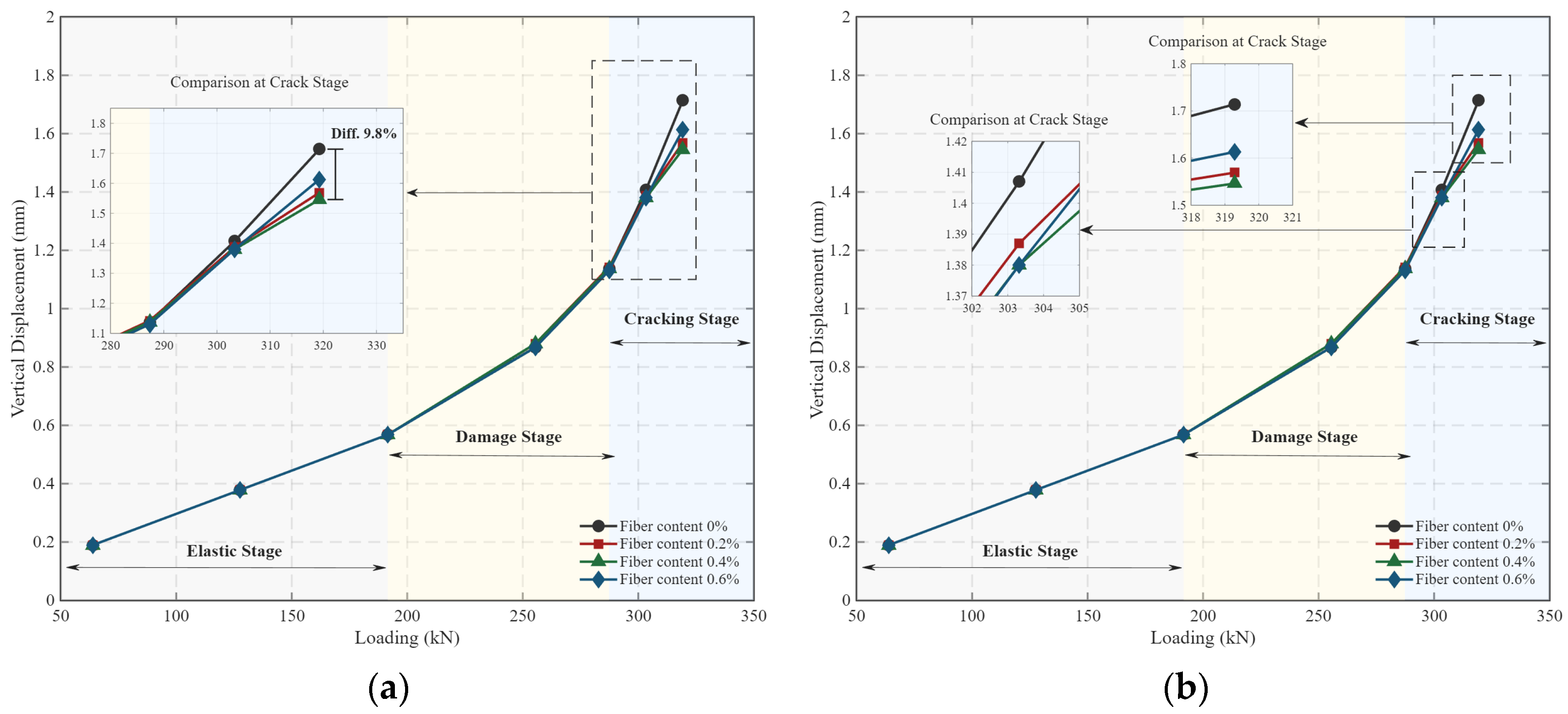
- The PFRC segment response under incremental bending showed three stages: elastic, damage, and cracking. At the design load, 0.4% fibers yielded the smallest deformation, reducing vertical displacement at the load point by 9.8% and horizontal displacement at the edge point by 2.9% compared to the fiber-free case. Increasing fiber content to 0.6% increased displacement, confirming a non-monotonic benefit and an optimal dosage around 0.4%.
- (3)
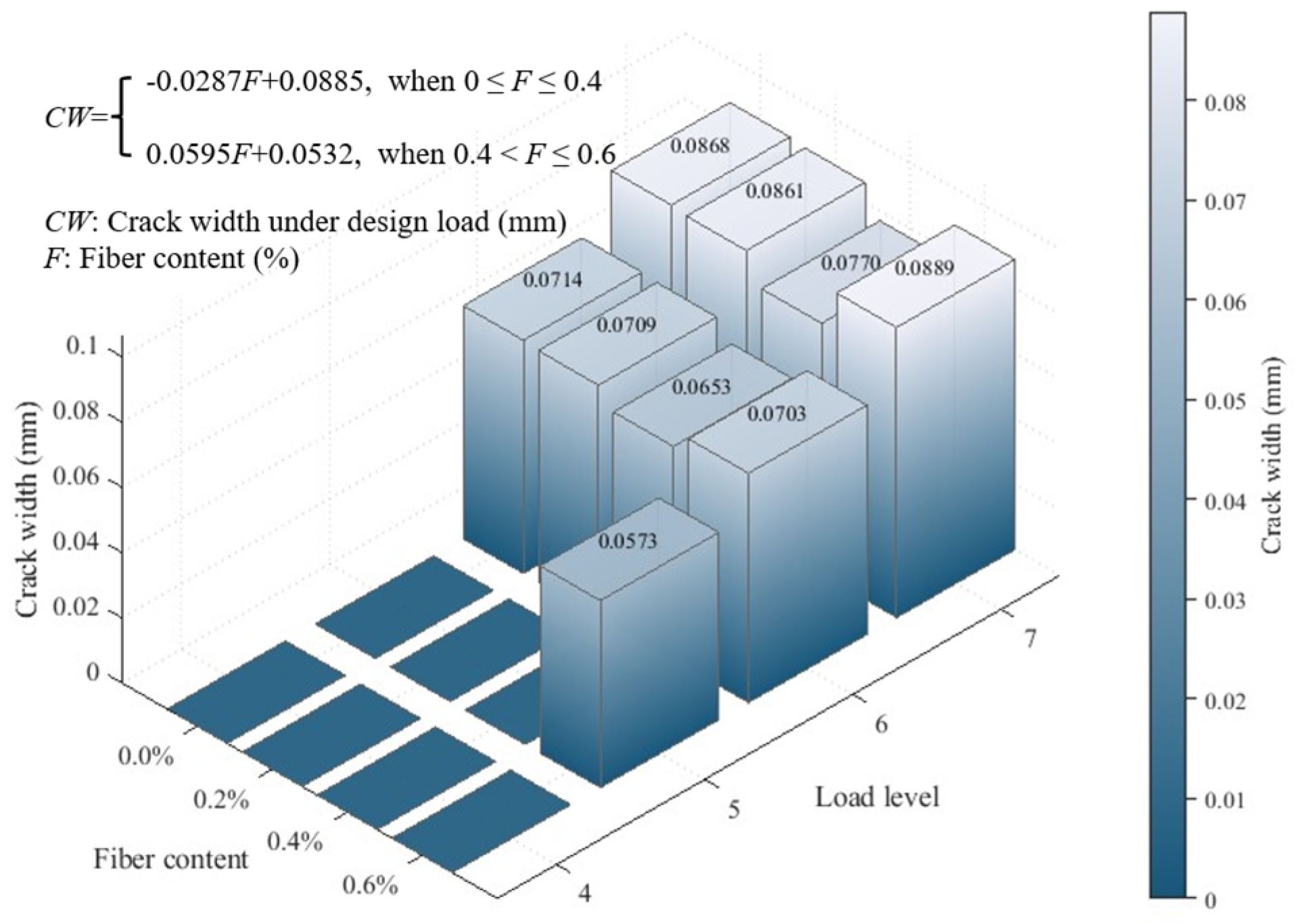
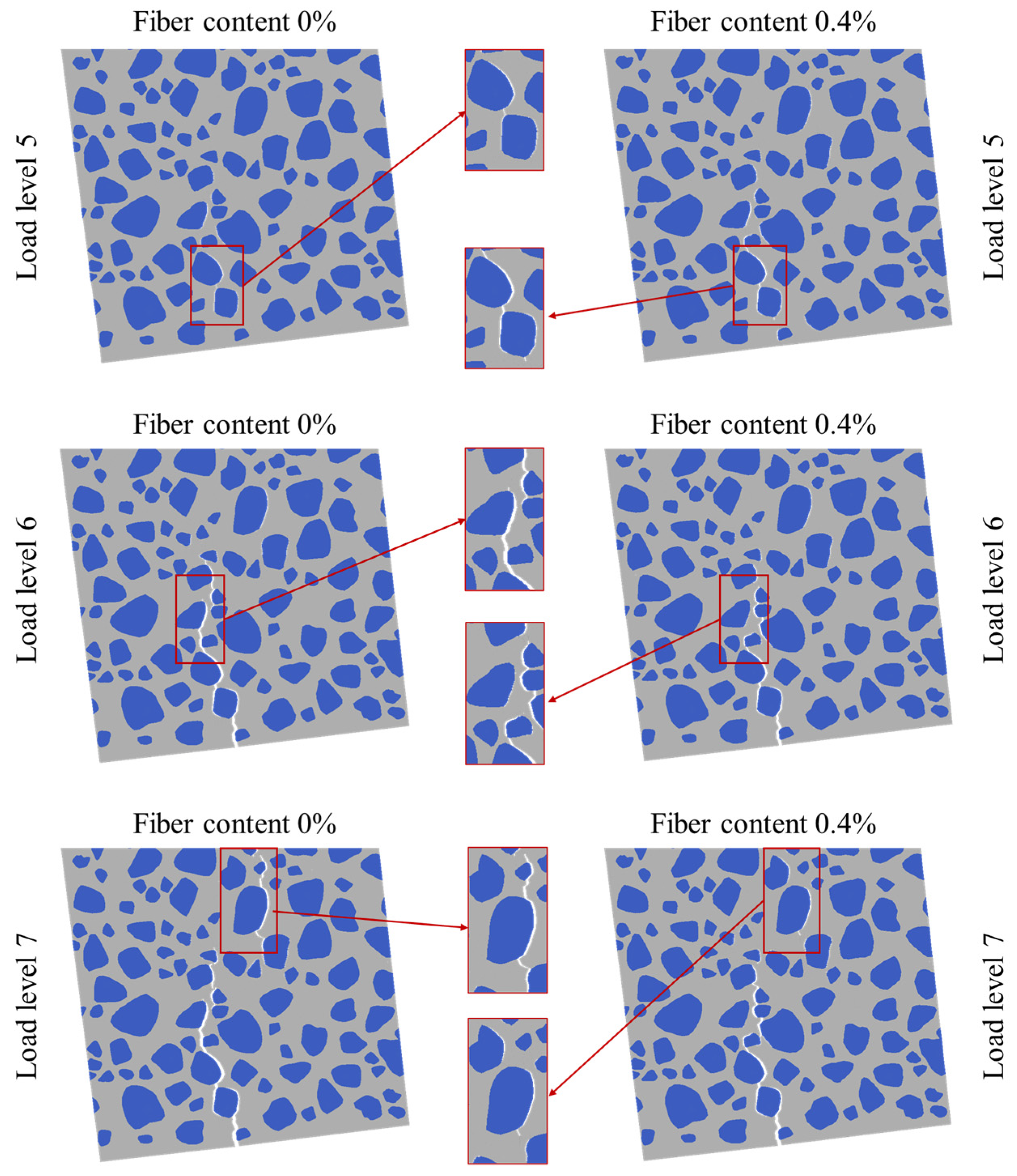
- The meso-scale results show that polypropylene fibers markedly affect crack initiation and internal crack connectivity. At the design load, a fiber content of 0.4% reduced the bottom crack width from 0.0868 mm to 0.0770 mm (−11.29%). Although fiber incorporation may locally promote ITZ cracking due to reduced mortar–aggregate bonding, the strengthened mortar matrix at an appropriate dosage effectively suppresses crack penetration through the mortar and limits the development of continuous, connected crack networks.
- (4)
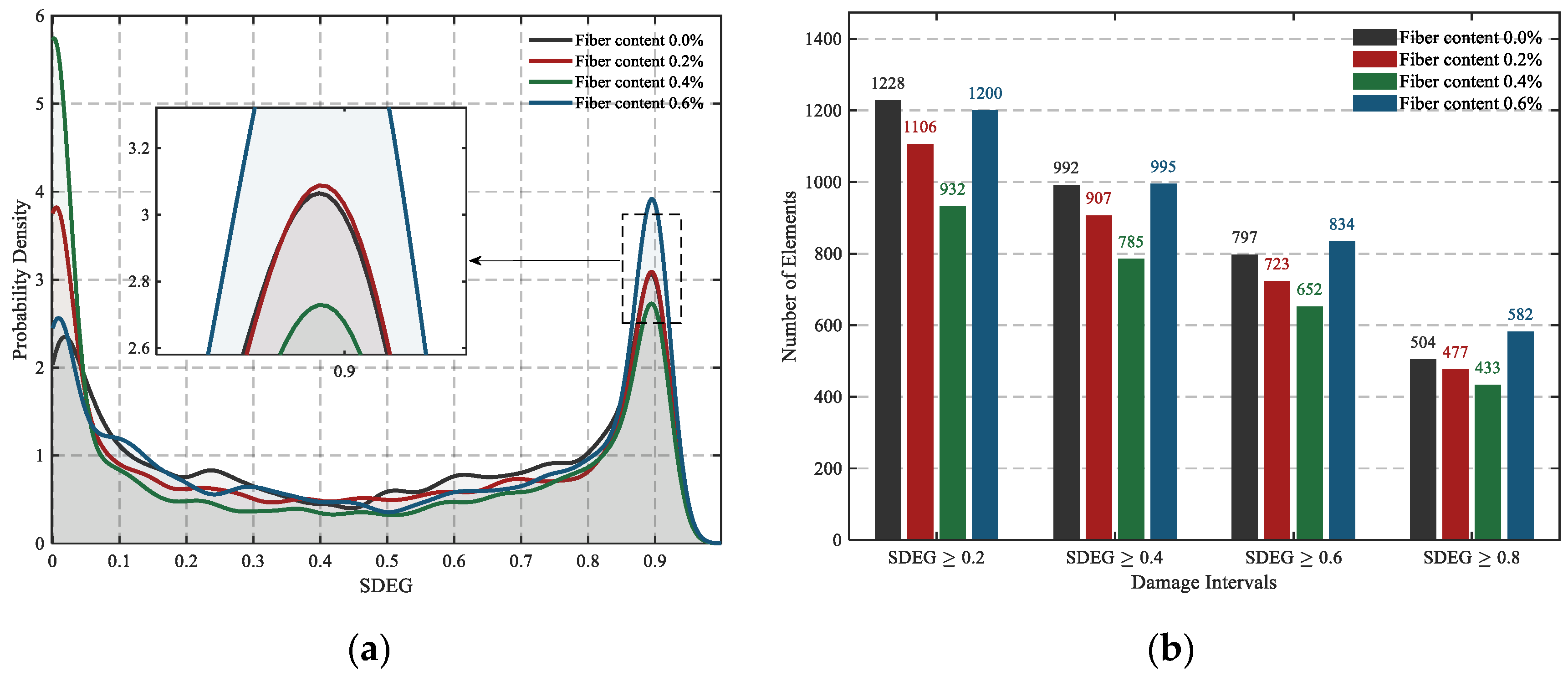
- The SDEG-based meso-scale statistics at the design load show that polypropylene fibers can effectively mitigate stiffness degradation up to an optimal dosage of 0.4%, as reflected by a higher fraction of nearly undamaged elements, a lower fraction of near-failed elements, and consistently reduced counts of damaged elements above multiple SDEG thresholds. When the fiber content increases to 0.6%, the number of severely degraded elements rises markedly (especially for SDEG > 0.6), indicating aggravated damage and confirming a non-monotonic fiber benefit.
- (5)
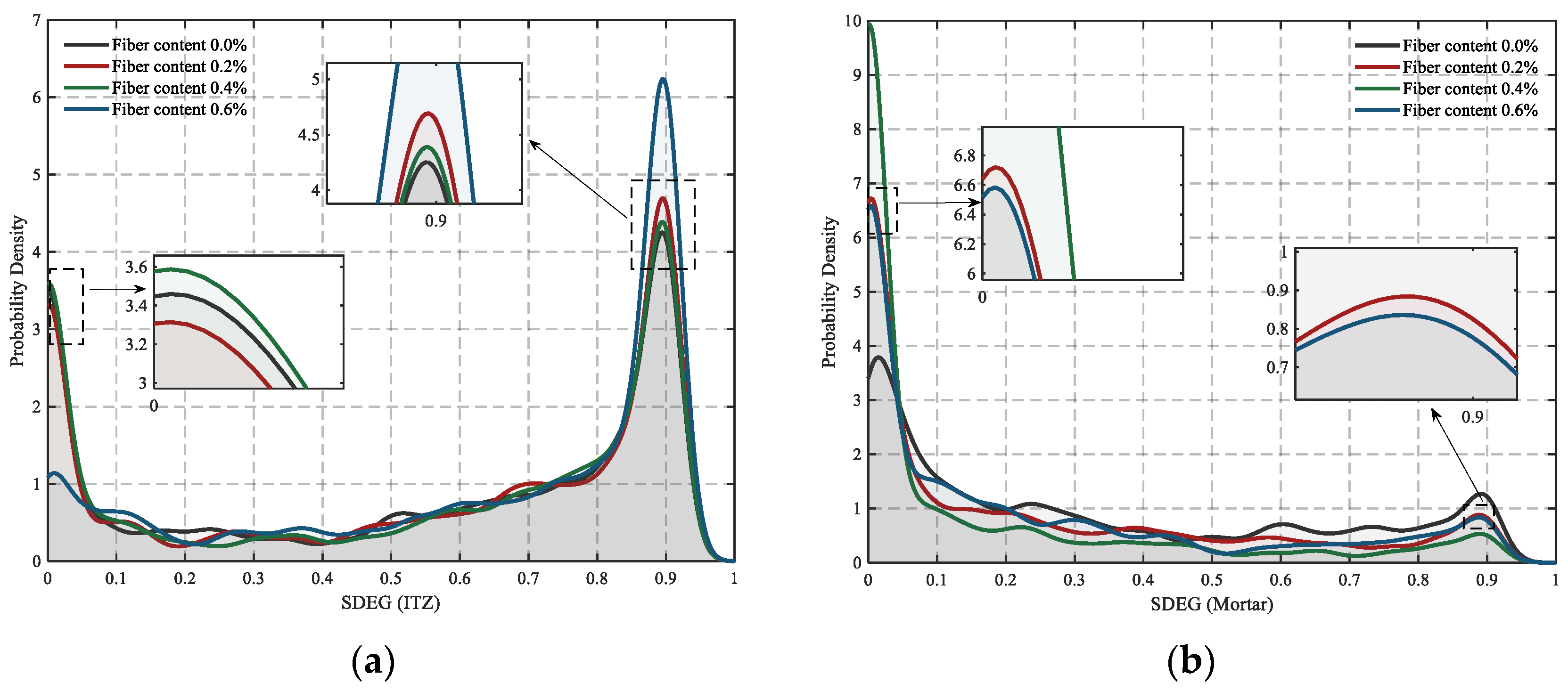
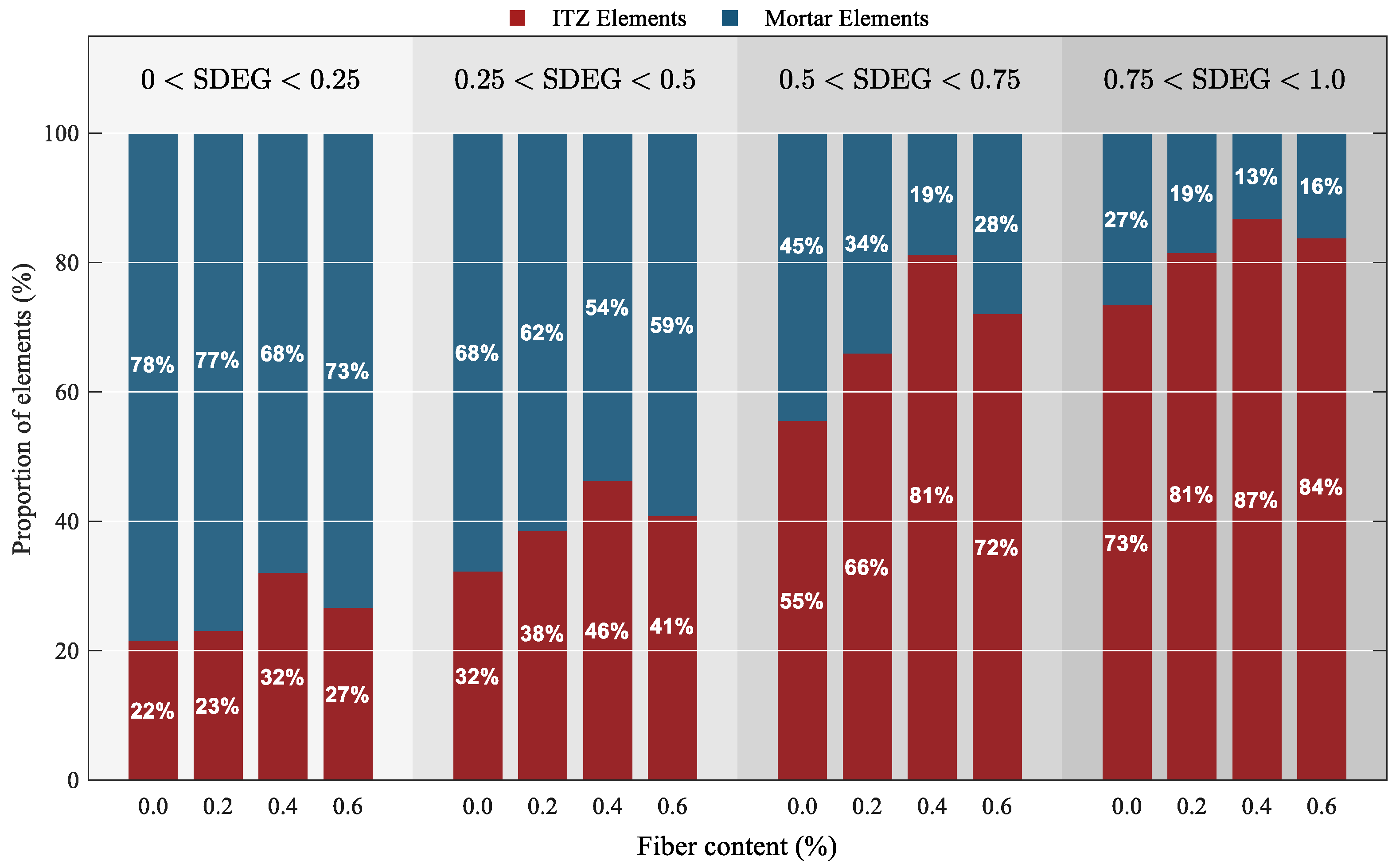
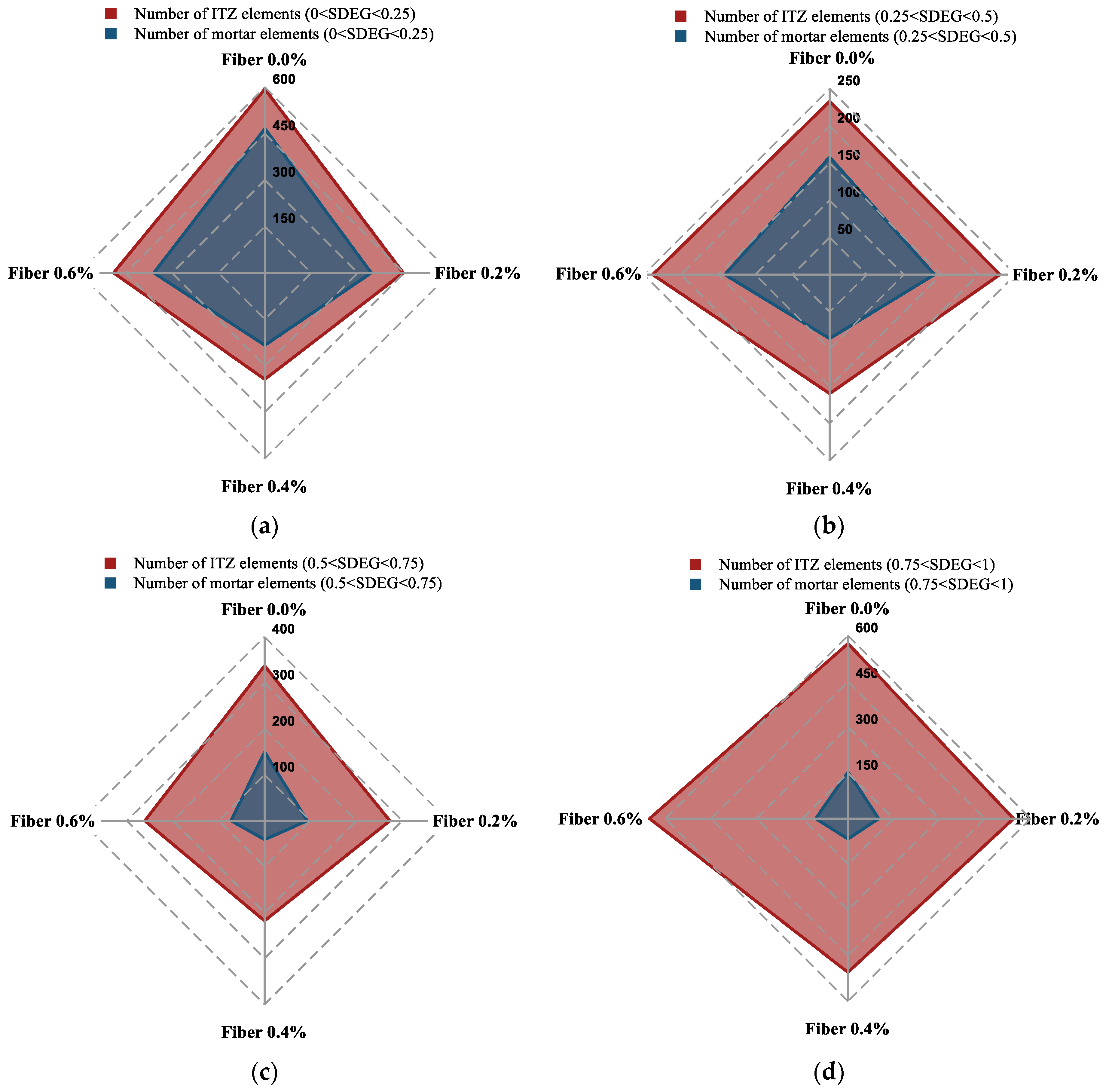
- The SDEG statistics evaluated separately for the ITZ and mortar at the design load reveal that the ITZ undergoes more severe and more abrupt stiffness degradation than the mortar matrix. The ITZ exhibits a pronounced high-damage peak near the failure threshold, whereas a more gradual degradation process is observed for mortar. Moreover, mortar dominates the low-damage ranges, while ITZ dominates the high-damage ranges, confirming the ITZ as the governing weak link in the bending-induced fracture of PFRC segments. Therefore, further enhancement of the overall crack resistance of PFRC segments may require strategies aimed at strengthening the ITZ.
Author Contributions
Funding
Data Availability Statement
Conflicts of Interest
Abbreviations
| FRC | fiber-reinforced concrete |
| PFRC | polypropylene fiber-reinforced concrete |
References
- Shan, Y.; Wang, G.; Lin, W.; Zhou, S.; Rackwitz, F. Analytical solution of the evolution of railway subgrade settlement induced by shield tunnelling beneath considering soil stress release. Tunn. Undergr. Space Technol. 2025, 162, 106607. [Google Scholar] [CrossRef]
- Bao, X.; Li, Y.; Zhang, X.; Wu, X.; Chen, X. Mechanical behaviors of hybrid fiber-rebar reinforced concrete lining under ground surcharge loads-3D numerical simulation combined with full-scale test. Eng. Struct. 2025, 334, 120257. [Google Scholar] [CrossRef]
- Banthia, N.; Majdzadeh, F.; Wu, J.; Bindiganavile, V. Fiber synergy in hybrid fiber reinforced concrete (HyFRC) in flexure and direct shear. Cem. Concr. Compos. 2014, 48, 91–97. [Google Scholar] [CrossRef]
- Zeng, J.J.; Zeng, W.B.; Ye, Y.Y.; Liao, J.J.; Zhuge, Y.; Fan, T.H. Flexural behavior of FRP grid reinforced ultra-high-performance concrete composite plates with different types of fibers. Eng. Struct. 2022, 272, 115020. [Google Scholar] [CrossRef]
- Sun, H.Q.; Zeng, J.J.; Hong, G.Y.; Zhuge, Y.; Liu, Y.; Zhang, Y. 3D-printed functionally graded concrete plates: Concept and bending behavior. Eng. Struct. 2025, 327, 119551. [Google Scholar] [CrossRef]
- Ozdemir, A.; Bozyigit, B.; Demircan, R.K.; Mercimek, O.; Çelik, D.N.; Akkaya, S.T.; Kaplan, G. Innovative solutions on ductility and bearing capacity: Strengthening flexural performance of reinforced concrete beams with recycled face mask fibers. Constr. Build. Mater. 2025, 458, 139717. [Google Scholar] [CrossRef]
- Ozdemir, A. Investigation of the dynamic characterization of traditional and modern building materials using an impact excitation test. Buildings 2025, 15, 2682. [Google Scholar] [CrossRef]
- Valverde-Burneo, D.; García-Troncoso, N.; Segura, I. Influence of material and design parameters on the mechanical performance and specific energy absorption of auxetic HPCC. Constr. Build. Mater. 2025, 505, 144778. [Google Scholar] [CrossRef]
- Cui, T.; Ning, B.; Shi, X.; Li, J. Flexural fatigue behavior of hybrid steel-polypropylene fiber reinforced high-strength lightweight aggregate concrete. Constr. Build. Mater. 2023, 377, 131079. [Google Scholar] [CrossRef]
- Kamisetty, A.; Gandhi, I.S.R.; Kumar, A. Development of dry-cast segmental retaining wall units using fly ash and polypropylene fiber-based foam concrete. J. Build. Eng. 2025, 101, 111844. [Google Scholar] [CrossRef]
- Hrabová, K.; Láník, J.; Lehner, P. Study of the mechanical and fracture properties of lightweight concrete with various combinations of polypropylene fibers. Materials 2026, 19, 611. [Google Scholar] [CrossRef]
- Mawlod, A.O.; Bzeni, D.K.H.A. Experimental and numerical investigation of fiber-reinforced slag-based geopolymer precast tunnel lining segment. Struct. Eng. Mech. 2024, 89, 47–59. [Google Scholar] [CrossRef]
- Wei, X.; Qin, Z.; Wang, S.; Ma, S.; Shi, M.; Fa, J.; Li, G. Experimental study on dynamic impact mechanical properties and fracture resistance mechanism of polypropylene fiber reinforced concrete. J. Build. Eng. 2025, 112, 113654. [Google Scholar] [CrossRef]
- Zhang, P.; Li, Q. Effect of polypropylene fiber on fracture properties of high-performance concrete composites. Sci. Eng. Compos. Mater. 2012, 19, 407–414. [Google Scholar] [CrossRef]
- Zhu, H.; Han, B.; Zhang, N. Effect of polypropylene fiber content on compressive and flexural performance of recycled concrete. J. Phys. Conf. Ser. 2020, 1605, 012146. [Google Scholar] [CrossRef]
- Wang, H.; He, X.; Zhou, M.; Wei, B.; Wu, W.; Zhou, G.; He, J. A study on the tensile fracture behavior of polypropylene fiber reinforced concrete based on a microscale model. Constr. Build. Mater. 2024, 417, 135291. [Google Scholar] [CrossRef]
- Wu, H.; Zhang, J.; Chen, Y.; Jiang, R.; Zhu, Z.; Li, P. Stress-strain behavior and failure criterion study of polypropylene fiber reinforced recycled aggregate concrete under triaxial stress state. Constr. Build. Mater. 2024, 448, 138185. [Google Scholar] [CrossRef]
- Yao, X.; Han, Y.; Shen, L.; Zhu, D. Experimental study on the effect of polypropylene fiber on compressive strength and fracture properties of high-strength concrete after elevated temperatures. J. Build. Eng. 2024, 86, 108860. [Google Scholar] [CrossRef]
- Wu, H.; Zhang, J.; Chen, Y.; Jiang, R.; Zhu, Z.; Li, P. Study of mechanical and fracture properties of concrete with different lengths of polypropylene fibers. Buildings 2025, 15, 3041. [Google Scholar] [CrossRef]
- Li, D.; Ding, Y.; Aguiar, J.B. Performance of hybrid fiber reinforced concrete (HyFRC) in tunnel segment: Full-scale tests under thrust and flexural loads. Constr. Build. Mater. 2025, 492, 142871. [Google Scholar] [CrossRef]
- Ouyang, Z.; Zheng, H.; Patmanidis, C.; Naito, C.; Quiel, S.; Mooney, M. Full-scale testing of precast tunnel lining segments under thrust jack loading: Design limits and ultimate response. Tunn. Undergr. Space Technol. 2023, 142, 105446. [Google Scholar] [CrossRef]
- Zong, G.; Wang, Y.; Wang, Y.; Ren, Z. Test research on residual mechanical properties of fiber-reinforced concrete segments after high temperature. Materials 2024, 17, 1418. [Google Scholar] [CrossRef]
- Wei, G.; Feng, F.; Huang, S.; Xu, T.; Zhu, J.; Wang, X.; Zhu, C. Full-scale loading test for shield tunnel segments: Load-bearing performance and failure patterns of lining structures. Undergr. Space 2025, 20, 197–217. [Google Scholar] [CrossRef]
- Wei, G.; Zhou, X.; Wang, Q.; Yao, Z.; Wu, Y.; Feng, S. Full-scale test and numerical simulation of reinforcement under ultimate load conditions. Eur. J. Environ. Civ. Eng. 2024, 28, 795–821. [Google Scholar] [CrossRef]
- Zhang, X.; Jin, H.; Yu, S.; Bi, X.; Zhou, S. Analysis of bending deflection of tunnel segment under load- and corrosion-induced cracks by improved XFEM. Eng. Fail. Anal. 2022, 140, 106576. [Google Scholar] [CrossRef]
- Xu, M.; Chen, D.; Zhong, G.; Liu, C.; Li, H.; Zhang, Z. Effects of jack thrust on the damage of segment lining structure during shield machine tunnelling. Buildings 2023, 13, 2274. [Google Scholar] [CrossRef]
- Wang, M.; Dong, Y.; Yu, L.; Fang, L.; Wang, X.; Liu, D. Experimental and numerical researches of precast segment under radial dislocation conditions. Tunn. Undergr. Space Technol. 2019, 92, 103055. [Google Scholar] [CrossRef]
- Feng, H.; Ye, F.; Jiang, Y.; Wang, J.; Wen, X.; Fang, Q. Effect of rolling angle on segment cracking and damage of shield tunnel—Field investigation and modelling. Eng. Fail. Anal. 2022, 140, 106584. [Google Scholar] [CrossRef]
- Liu, T.; Zhang, S.; Yu, K.; Liu, H. Tunnel lining segment deformation and cracking mechanisms during tunneling in complex mixed grounds with the combined mining and shield tunneling method. KSCE J. Civ. Eng. 2023, 27, 399–416. [Google Scholar] [CrossRef]
- Liu, C.; Peng, Z.; Cui, J.; Huang, X.; Li, Y.; Chen, W. Development of crack and damage in shield tunnel lining under seismic loading: Refined 3D finite element modelling and analyses. Thin-Walled Struct. 2023, 185, 110647. [Google Scholar] [CrossRef]
- Huang, K.; Sun, Y.; Cui, H.; Chen, X.; Zhang, D.; Huang, B.; Huang, Z.; Gan, B. Analysis of bearing capacity characteristics and resilience enhancement mechanism in shield tunnel segments based on fracture energy and modulus degradation. Tunn. Undergr. Space Technol. 2026, 167, 106952. [Google Scholar] [CrossRef]
- Sharghi, M.; Jeong, H.; Afshin, H. Evaluation of environmental and economic compatibility of different types of segment linings based on the structural performance with some aggravating factors. Tunn. Undergr. Space Technol. 2024, 144, 105567. [Google Scholar] [CrossRef]
- Zhou, M.; He, X.; Wang, H.; Wu, C.; Wei, B.; Li, Y. 3D mesoscale discrete element modelling of hybrid fiber-reinforced concrete. Constr. Build. Mater. 2024, 447, 138006. [Google Scholar] [CrossRef]
- de Andrade, G.G.; de Figueiredo, A.D.; Galobardes, I.; da Silva, M.A.A.P.; de la Fuente, A.; Bitencourt, L.A.G., Jr. Experimental and numerical investigation of flexural behavior of precast tunnel segments with hybrid reinforcement. Tunn. Undergr. Space Technol. 2024, 154, 106094. [Google Scholar] [CrossRef]
- Zhou, M.; He, X.; Wang, H.; Wu, W.; He, J.; Wu, C. Experimental study of mechanism properties of interfacial transition zones in steel fiber reinforced concrete. Case Stud. Constr. Mater. 2024, 20, e02954. [Google Scholar] [CrossRef]
- Ge, L.; Chen, J.F. Meso-scale fracture analysis of concrete based on phase-field theory and cohesive zone method. Eng. Fail. Anal. 2025, 179, 109684. [Google Scholar] [CrossRef]
- Chen, Q.; Zhang, J.; Wang, Z.; Zhao, T.; Wang, Z. A review of the interfacial transition zones in concrete: Identification, physical characteristics, and mechanical properties. Eng. Fract. Mech. 2024, 300, 109979. [Google Scholar] [CrossRef]
- Yu, S.; Chen, J.; Wang, H.; Xie, Q. Multi-scale characterization and modeling of concrete permeability containing recycled steel slag aggregate. Constr. Build. Mater. 2024, 436, 137018. [Google Scholar] [CrossRef]
- Tian, Z.; Ji, H.; Tian, Y.; Ye, H. Quantifying anisotropic chloride diffusion coefficients of interfacial transition zone in concrete. Cem. Concr. Compos. 2025, 163, 160199. [Google Scholar] [CrossRef]







| Cement | Water | Sand | Coarse Aggregate | Fly Ash | Water Reducer |
|---|---|---|---|---|---|
| 336 | 134 | 650 | 1207 | 84 | 8.4 |
| Length (mm) | Diameter (μm) | Tensile Strength (MPa) | Density (g/cm3) | Elastic Modulus (MPa) | Elongation (%) |
|---|---|---|---|---|---|
| 19 | 43.6 | 346 | 0.91 | 3800 | 16 |
| Fiber Content (%) | Tensile Strength (MPa) | Fracture Energy (N/mm) | ||
|---|---|---|---|---|
| Mortar | ITZ | Mortar | ITZ | |
| 0 | 4.02 | 2.32 | 0.169 | 0.049 |
| 0.2 | 4.4 | 2.15 | 0.199 | 0.038 |
| 0.4 | 4.9 | 2.02 | 0.28 | 0.029 |
| 0.6 | 4.45 | 1.78 | 0.319 | 0.019 |
Disclaimer/Publisher’s Note: The statements, opinions and data contained in all publications are solely those of the individual author(s) and contributor(s) and not of MDPI and/or the editor(s). MDPI and/or the editor(s) disclaim responsibility for any injury to people or property resulting from any ideas, methods, instructions or products referred to in the content. |
© 2026 by the authors. Licensee MDPI, Basel, Switzerland. This article is an open access article distributed under the terms and conditions of the Creative Commons Attribution (CC BY) license.
Share and Cite
Hu, Y.; Qiao, S.; Wang, Y.; Chen, J. Multi-Scale Investigation of Fracture Behavior of Polypropylene Fiber-Reinforced Concrete Segment During Bending Test. Buildings 2026, 16, 1060. https://doi.org/10.3390/buildings16051060
Hu Y, Qiao S, Wang Y, Chen J. Multi-Scale Investigation of Fracture Behavior of Polypropylene Fiber-Reinforced Concrete Segment During Bending Test. Buildings. 2026; 16(5):1060. https://doi.org/10.3390/buildings16051060
Chicago/Turabian StyleHu, Yao, Shifan Qiao, Yaqiang Wang, and Jiaqi Chen. 2026. "Multi-Scale Investigation of Fracture Behavior of Polypropylene Fiber-Reinforced Concrete Segment During Bending Test" Buildings 16, no. 5: 1060. https://doi.org/10.3390/buildings16051060
APA StyleHu, Y., Qiao, S., Wang, Y., & Chen, J. (2026). Multi-Scale Investigation of Fracture Behavior of Polypropylene Fiber-Reinforced Concrete Segment During Bending Test. Buildings, 16(5), 1060. https://doi.org/10.3390/buildings16051060