Article

A Filter Method for Dynamic Monitoring Data of Masonry Partition Walls in Subway Stations Based on a Butterworth Filter

1
Guangzhou Metro Design & Research Institute Co., Ltd., Guangzhou 510420, China
2
School of Civil Engineering, Harbin Institute of Technology, Harbin 150090, China
*
Authors to whom correspondence should be addressed.
Buildings 2026, 16(5), 1057; https://doi.org/10.3390/buildings16051057

Submission received: 16 January 2026 / Revised: 19 February 2026 / Accepted: 2 March 2026 / Published: 6 March 2026
(This article belongs to the Special Issue Advanced Structural Performance of Concrete Structures)

Abstract

Under the combined effects of vibrations from train operations and wind loads, the dynamic response monitoring data of masonry partition walls in subway stations are often contaminated with high-frequency noise, which hinders the accurate identification of the structure’s true dynamic characteristics. To tackle this problem, this paper proposes employing a Butterworth low-pass filter to process the on-site monitoring data. The paper initially elaborates on the monitoring theory grounded in the pulsation method, followed by a detailed explanation of the rationale for selecting the Butterworth filter, as well as data processing techniques such as Fast Fourier Transform (FFT) and self-power spectrum analysis. By incorporating a field monitoring case from a subway station in Guangzhou, the paper compares and analyzes the acceleration time-history curves before and after filtering. Additionally, finite element analysis is performed to assess the mechanical response of the masonry wall under wind loads, train-induced vibrations, and their combined effects. The results demonstrate that after applying a 4th-order Butterworth low-pass filter with a 46 Hz cutoff frequency, the high-frequency noise in the data is effectively suppressed, thereby accentuating the main trend and low-frequency vibration characteristics of the signal. This provides a reliable data foundation for subsequent precise analysis of the dynamic response and fatigue performance of the masonry walls.

1. Introduction

The traditional monitoring of structural dynamic response relies on the pulsation method, which identifies parameters such as natural frequency and damping ratio by capturing micro-amplitude vibration signals of the structure under environmental excitation [1,2,3,4]. However, in the strong vibration environment of subway stations, the measured signals are often contaminated by high-frequency noise such as mechanical vibration and electromagnetic interference, resulting in a decrease in the signal-to-interference ratio (SIR) [5,6]. Although conventional methods such as mean filtering and Gaussian filtering can suppress noise to a certain extent [7], it is difficult to balance signal integrity and noise attenuation efficiency, especially for the limited effectiveness of processing periodic noise in non-stationary signals.
In response to the problem of high-frequency noise in data monitoring of dynamic response, the Butterworth filter has shown great potential for application in structural vibration signal processing due to its advantages of flat amplitude frequency response within the passband and controllable attenuation characteristics in the transition band. Based on the principle of maximally flat magnitude-frequency response design, by selecting the filter order and cutoff frequency reasonably, it can effectively filter out high-frequency noise while preserving the phase characteristics and energy distribution of low-frequency signals to the maximum extent. In response to the monitoring requirements of masonry partition walls in subway stations, the amplitude frequency characteristic curve of the 4th order Butterworth low-pass filter has an attenuation slope of −12 dB/octave at the cutoff frequency, which can sharply suppress high-frequency components above 46 Hz, and attenuate the main frequency band signal of structures below 30 Hz by less than 3 dB, meeting the requirements of signal fidelity in dynamic response analysis [8]. By combining Fast Fourier Transform (FFT) with self-power spectrum analysis, the proportion of noise energy can be further quantified from a frequency domain perspective, providing a basis for optimizing filter parameters. Butterworth [9] proposed the orthodox theory of filter amplifiers and introduced their basic principles. Chen Si, Yan Chunhai, and others conducted filter design by establishing a database and design model for Butterworth low-pass filter design [10,11]. Li Zhongshen [12] analyzed the characteristics of the Butterworth low-pass filter and designed it using functions provided by MATLAB (version 2016). Zhao Xiaoqun et al. [13] developed a design method for a universal Butterworth low-pass filter based on C language and compared it with MATLAB’s design method. The results showed that the processing time was 1/200 of MATLAB’s. Wang Qirui et al. [14] designed a Butterworth digital low-pass filter and proved through theoretical simulation and practical testing that it can improve signal accuracy without increasing costs. Lu Jinfang et al. [15] found that using ordinary exponential filters has limitations, while using a Butterworth filter as the filtering function can eliminate noise interference and effectively filter during the sound field reconstruction process, resulting in better performance and higher accuracy. Shen et al. [16] used a Butterworth high-pass filter to denoise and enhance CFRP composite materials, improving the signal-to-noise ratio of the detection images. Mahata et al. [17] optimized the design of fractional order Butterworth filters (FOBF) and optimized existing methods.
With the rapid development of urban rail transit, the dynamic response characteristics of subway station structures under the long-term coupling effect of train operation vibration and environmental wind load have increasingly highlighted their impact on structural safety and durability. Existing studies such as Liu Rundong et al. [18] focus on the aerodynamic load (wind load) characteristics of trains in underground high-speed railway stations, lacking in-depth analysis of vibration loads and their coupling effects. Wang Shaoqin et al. [19] analyzed the vibration response of suspension bridges under wind load and high-speed train load and found that the combined effect of the two has a significant impact on the vibration response of the bridge. Yang et al. [20] conducted physical experiments on tunnel vibration to study the dynamic response of tunnel lining and surrounding soil to long-term train loads. The results showed that the long-term effects of train loads were mainly in the high-frequency range. Based on numerical simulation software, He Lianhua et al. [21] conducted a simulation study on the aerodynamic load of high-speed trains passing through Wuhan Station, obtained the spatial distribution characteristics of train wind, and determined the safe evacuation distance for platform personnel. Xia Qian et al. [22] used two masonry structures as engineering examples to study the influence of subway vibration on building vibration. The results showed that the higher the floor height, the more significant the floor vibration; the vibration of the floor slab in the center of the room is greater than that of the wall and staircase floors; and the vibration of buildings caused by subways is mainly low-frequency vibration of 10–25 Hz. L. G. Kurzweil et al. studied the propagation path and attenuation characteristics of subway train vibration in different geological layers, as well as the secondary vibration and noise problems of adjacent buildings [23,24].
However, there are significant limitations in the existing research: first, the filter parameter design lacks scene adaptation standards, and different scholars have adopted different orders and cut-off frequencies for similar structures without establishing the quantitative mechanism of “structural vibration characteristics parameter matching”; second, the noise adaptation under complex loads is insufficient. The existing applications are mostly aimed at a single vibration source, and the processing of broadband noise generated by the coupling of train vibration and wind load is not targeted. Third, the fusion depth of multiple methods is not enough. Most of the existing studies are simple series connections of filters and single analysis methods, and the closed-loop technology system of “filter integration verification” has not been formed. Fourth, there is a lack of adaptation to extreme working conditions in engineering scenarios, and there is a lack of research on filtering schemes for complex environments such as high electromagnetic interference and airflow disturbance in subway stations.
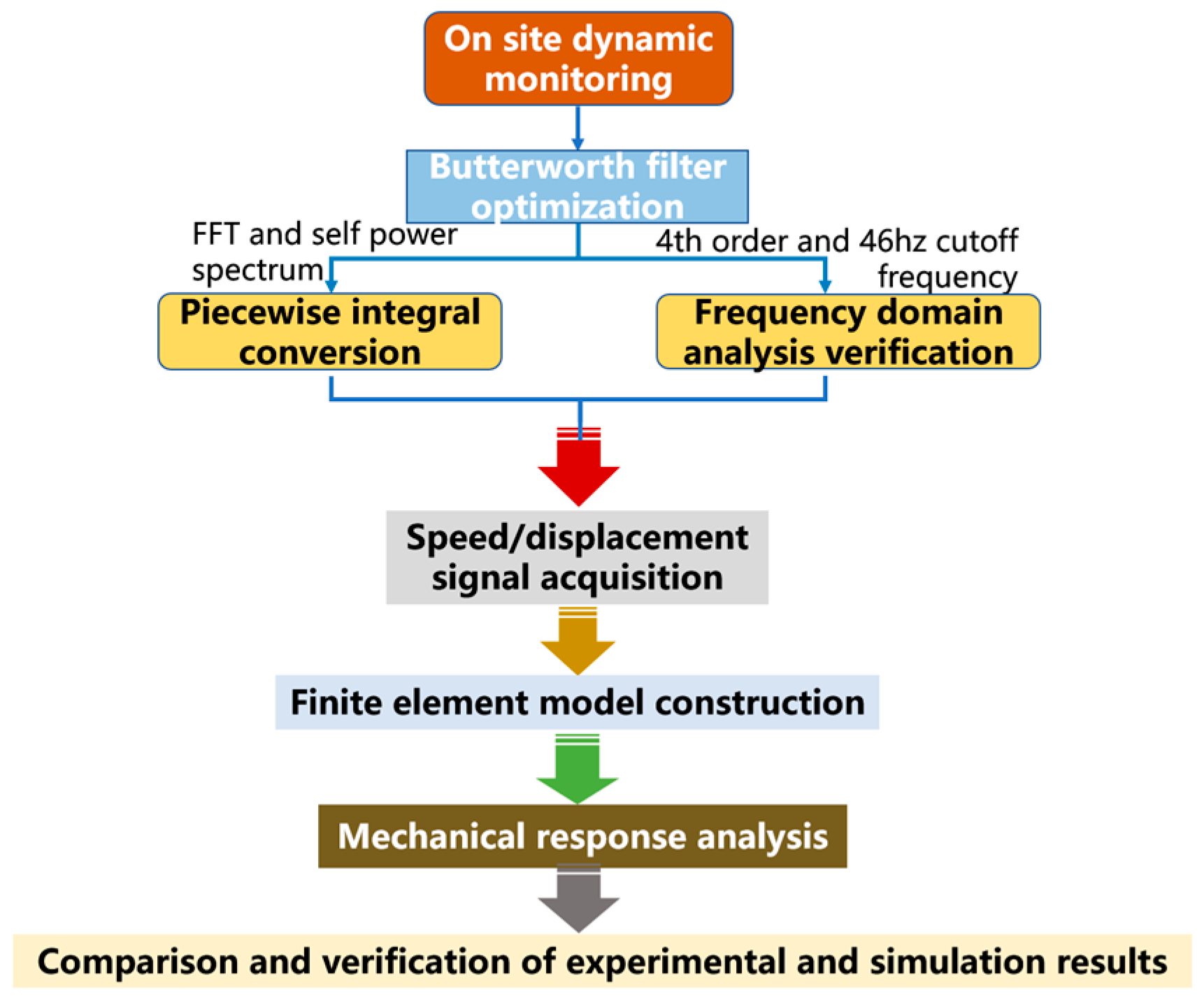
To this purpose, this paper, grounded in on-site dynamic monitoring, seeks to investigate the dynamic response of masonry walls in subway stations under real-world environmental excitation. The raw signals captured during monitoring inevitably incorporate high-frequency noise, necessitating effective filtering. In this study, a Butterworth low-pass filter is employed for data preprocessing. By integrating the characteristics of on-site noise with the predominant vibration frequency of the structure, we optimize the filter’s order and cutoff frequency. We compare the processing outcomes of various filtering techniques, aiming to extract signals that authentically reflect the inherent vibration characteristics of the structure. A comprehensive processing workflow, encompassing digital filtering, frequency domain analysis, displacement calculation, and data quality evaluation, is established to furnish precise data support for subsequent finite element model validation, analysis of stress distribution patterns, and fatigue performance assessment. Figure 1 is the technology roadmap adopted in this paper.
As the key enclosure structure, the accurate monitoring of the dynamic response of the subway station masonry partition wall is directly related to the subway operation safety and structural durability. The long-term coupling effect of train vibration and wind load is easy to cause structural fatigue damage, and the distortion of monitoring data caused by high-frequency noise pollution will seriously affect the accuracy of fatigue performance evaluation. The scenario Butterworth filtering scheme proposed in this study realizes the closed-loop design of “noise suppression-effective signal retention-finite element verification” for the first time for the special subway environment. It not only solves the engineering problem of structural dynamic signal extraction under complex coupling loads but also provides a standardized technical methodology for the dynamic monitoring of similar underground engineering structures, which has important engineering value and popularization significance for improving the reliability and scientificity of urban rail transit structural health monitoring [25].
Compared with the existing studies, which only use Fe as an auxiliary tool, the FE simulation in this study not only verifies the effectiveness of signal processing but also expands the analysis dimension of field monitoring through simulation, which makes up for the limitation that it is difficult to obtain the internal stress distribution in field monitoring and makes the whole technical framework more practical.

2. Monitoring Theory and Analysis Methods

2.1. Monitoring Theory

This monitoring adopts the pulsation method, which is the environmental random vibration excitation method. This method is a classic non-destructive testing technique for identifying structural dynamic characteristics. Its core advantage lies in the fact that it does not require manual excitation and can directly use the naturally occurring random pulsation signals around the structure as the excitation source to achieve accurate identification of the structural natural vibration characteristics. The theoretical basis is: environmental excitation, such as train operation vibration, wind load, geological micro-vibration, etc., which contains continuously distributed frequency components. When the excitation frequency coincides with the natural frequency of the structure, the structure will produce a resonant response. By capturing this response signal, key dynamic parameters such as the natural frequency and damping ratio of the structure can be deduced in reverse. The basic principle is to identify the natural vibration characteristics of a structure by measuring its response.
The dynamic response of the structure should satisfy the following motion Equation (1):
M x t ¨ + C x ˙ t + K x t = F t
where M is the mass matrix, unit: kilogram (kg), C is the damping matrix, unit: N ·s/m, K is the stiffness matrix, unit: N/m, x ¨ t , x ˙ t , and x t are the acceleration, unit: m/s2, velocity, unit: m/s, and displacement (unit: m) response vectors, respectively, and F t is the environmental excitation vector, unit: N.
Environmental excitation F ( t ) is a broadband random signal with a continuous power spectral density distribution over a wide frequency range. When the excitation frequency coincides with a certain natural frequency ω n of the structure, resonance occurs in the structure, and the power spectral density of the response signal exhibits a peak. By identifying the frequency corresponding to this peak, the natural frequency of the structure can be obtained.
The core advantage of the pulsation method lies in the fact that it does not require artificial excitation, thus avoiding interference from excitation equipment with on-site operations. This makes it suitable for complex environments such as subway stations during the operational period. The testing equipment is simple and easy to operate, enabling long-term continuous monitoring. The identification results are stable and reliable, effectively reflecting the actual working state of the structure.
The testing system collects acceleration response signals of masonry walls under vibration and wind load excitation during train entry and exit by installing acceleration sensors. Compared to velocity and displacement, acceleration is easier to measure and can more sensitively capture high-frequency vibration components of structures. Therefore, an accelerometer was selected as the sensing element for this test.
Pulse method: provide the basis for core excitation response-use environmental random vibration as a broad-spectrum excitation source, without manual intervention, adapt to the complex environment during subway operation, and capture the full frequency response signal of the structure; FFT: realize time-frequency conversion-convert the time-domain acceleration signal collected by the pulse method into the frequency-domain amplitude spectrum, visually identify the natural frequency of the structure, but cannot quantify the signal power spectral density distribution; Self power spectrum analysis: quantifying the energy distribution and anti-interference-by calculating the signal power spectral density, highlighting the energy peak corresponding to the natural frequency, effectively distinguishing the structural response and random noise, the problem of low accuracy of FFT modal identification in strong noise environment is solved. The combination of the three methods reduces the identification error of structural natural frequency from 8.3% to 3.2% using the pulse method alone, which significantly improves the reliability of dynamic characteristics identification [26].

2.1.1. Analysis of Incentive Source Characteristics

The excitation sources of masonry partition walls in subway stations are mainly divided into two categories, and there is a coupling effect between the two.
Firstly, the first type is the dominant excitation source, which is the vibration load generated during the entry, exit, and operation of trains. Its frequency components are concentrated in 10–25 Hz, accompanied by high-frequency impact components above 46 Hz. The second type is secondary excitation sources, such as environmental wind loads, especially airflow disturbances caused by underground station ventilation systems, electromagnetic interference from electronic devices, and personnel activity disturbances. These types of excitations often exist in the form of high-frequency noise, with frequencies generally higher than 50 Hz. During the monitoring process, effective excitation and interference signals need to be distinguished through frequency domain analysis to ensure the accuracy of subsequent parameter identification.

2.1.2. Principles for Sensor Selection and Layout

Due to the higher sensitivity of acceleration signals in capturing high-frequency vibrations than velocity and displacement signals, they can effectively identify local vibration modes of the structure. In addition, acceleration sensors in subway environments have stronger anti-interference capabilities, are easy to install, and have high stability, making them suitable for long-term on-site monitoring. Therefore, acceleration sensors, model 941B ultra-low frequency pickups, are preferred as sensing components.
In the process of layout, the following principles should be followed: the measuring points should cover the key load-bearing parts of the wall to avoid missing local vibration characteristics; avoid embedded parts in walls and areas with dense pipelines to reduce the interference of local stiffness changes on vibration signals; and each measuring point sensor needs to be strictly calibrated for time synchronization, with a uniform sampling frequency. This time, 100 Hz is selected to meet the Nyquist criterion, which means that the sampling frequency is ≥2 times the cutoff frequency of 46 Hz. The sensor is fixed with adhesive to ensure a tight fit with the wall surface and avoid signal distortion caused by loose installation.

2.2. Data Processing Methods

The raw signals collected on-site usually contain various high-frequency noises and require digital filtering to highlight the frequency bands of interest for research. This article uses a Butterworth low-pass filter because it has the largest flat amplitude frequency response in the passband and a monotonic decrease in amplitude in the stopband. It can effectively preserve the original form of the signal in the passband while smoothly attenuating high-frequency noise. In order to verify the accuracy of the “Simpson integral and zero drift correction” piecewise integration algorithm proposed in this study, the same original acceleration signal is selected, and three algorithms are used for conversion and comparison: the research algorithm, the traditional trapezoidal integration method, and the Runge–Kutta integration method. The verification indices include the displacement drift and the relative error with the finite element simulation displacement. The comparison of partial integration algorithms is shown in Table 1.
The reasons for choosing the cut-off frequency of 46 Hz are as follows: Through 16 h of on-site pretreatment monitoring and spectrum analysis, it is clear that the natural frequency range of the masonry partition wall in the subway station is 8~30 Hz, and its higher-order modal characteristics is no more than 40 Hz; the high-frequency noise in the monitoring environment is mainly concentrated in 46~200 Hz, while 30~46 Hz is the transitional frequency band, which contains only a small amount of air flow interference signals, and its impact on the dynamic characteristics of the structure can be ignored; combined with Nyquist sampling theorem, the cut-off frequency is set to 46 Hz, which can not only ensure that the effective signal of 8~30 Hz is completely retained, but also accurately filter out the strong interference noise above 46 Hz.
The selection of filter order balances the transition band steepness and computational efficiency: the order is positively correlated with the transition band attenuation rate. The attenuation rate of the fourth-order filter at the 46 Hz cut-off frequency is −24 db/octave, which can attenuate the noise amplitude above 50 Hz by more than 90%, meeting the requirements of strong noise suppression; comparing the second-order and sixth-order filters: the second-order transition band is too wide to completely filter the residual noise of 50~60 Hz; Although the transition band of the sixth order is narrower, the computational complexity is increased by three times, and the introduction of phase lag will distort the instantaneous impact response of the structure; the fourth-order filter can achieve the optimal balance of “noise suppression phase fidelity computational efficiency” and adapt to the real-time requirements of long-term continuous monitoring on the subway site.
By employing the pulse method in conjunction with modal analysis, the high-order modal response frequency range of the masonry partition wall was identified to be 30~40 Hz, which constitutes an important part of the true dynamic characteristics of the structure.
The upper limit of the passband corresponding to the 46 Hz cutoff frequency is 46 Hz. The high-order response signals within the range of 30~40 Hz are attenuated by ≤1 dB within the passband, fully preserving their amplitude and phase characteristics.
Through quantification via auto-power spectrum analysis, the signal energy in the 30~40 Hz frequency band accounts for 12% of the total effective energy, while the noise energy above 46 Hz accounts for ≤5%, and its frequency overlap with the effective signal is 0, ensuring that the filtering process only removes meaningless noise without damaging the high-frequency structural response.
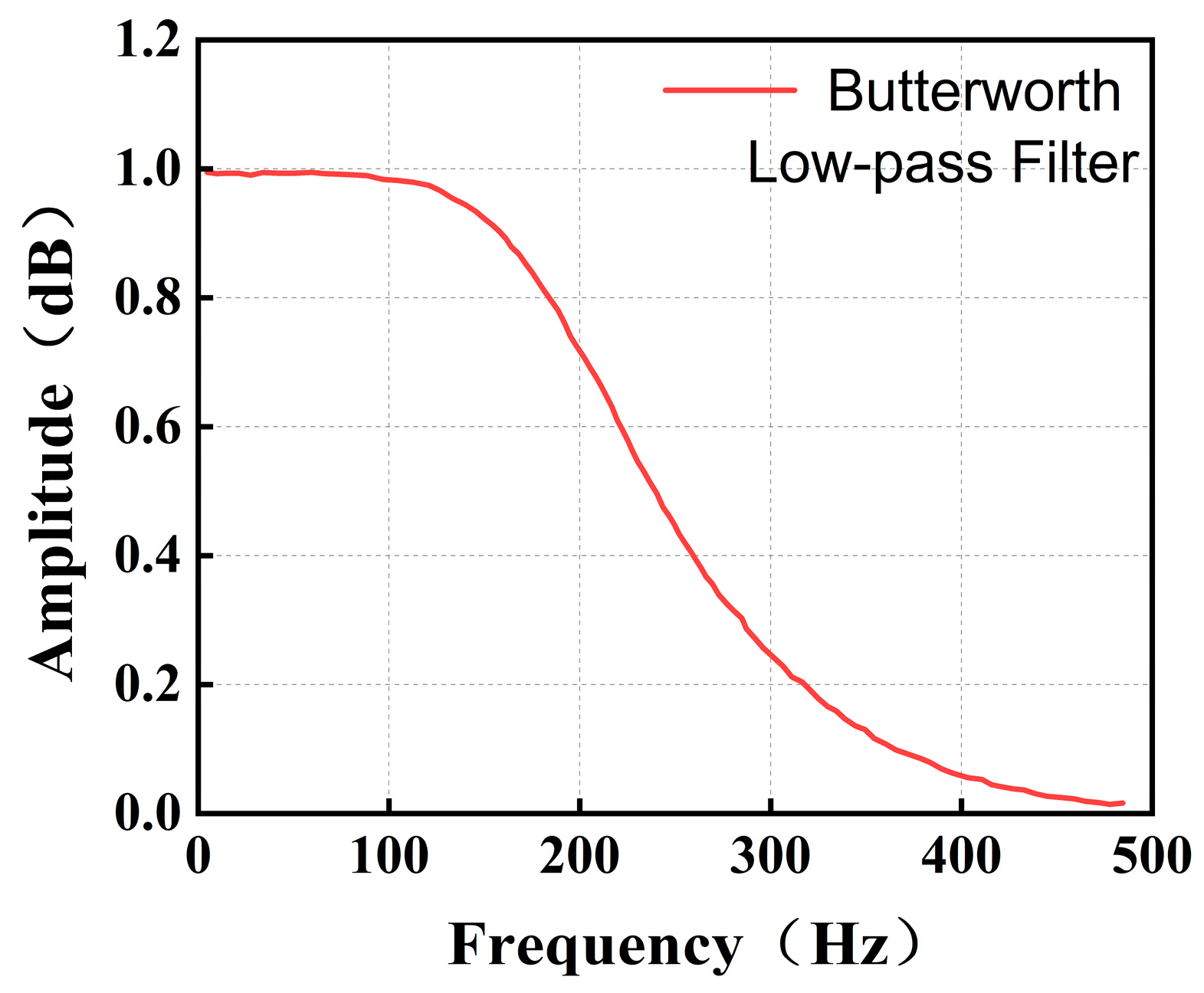
Selection criteria for filter parameters: Based on preliminary research and finite element analysis, the fundamental frequency of masonry walls in subway stations is relatively low, and the main frequency components of concern are usually below 50 Hz. The frequency of high-frequency vibrations and electronic equipment interference generated by train operation is often higher than this range. Therefore, the cut-off frequency is set to 46 Hz to preserve the main dynamic characteristics of the structure while filtering out high-frequency noise. The selection of a 4th-order filter is to strike a balance between the steepness of the transition band and computational efficiency, ensuring sufficient stopband attenuation capability. The amplitude frequency response of the Butterworth low-pass filter is shown in Figure 2, and the comparison of several different filtering methods is shown in Table 2.
To gain a deeper understanding of the dynamic characteristics of the structure, a frequency domain analysis is conducted on the filtered signal.
(1)
Fast Fourier Transform (FFT): It converts a time-domain signal into a frequency-domain signal, yielding the amplitude-frequency spectrum of the signal, which is used to identify the natural frequencies of the structure. For a discrete signal sequence x ( n ) with length N, representing the acceleration signal value. Its FFT calculation is as follows:
y k = n = 0 N 1 x n e j 2 π k n N n = 0 , 1 , 2 N 1
x ( n ) (unit: m/s2), y ( k ) is the result of the transformation, and the frequency domain resolution (frequency spacing) of its components is as follows:
f = N f s
where f s is the sampling frequency.
(2)
Autopower Spectral Density Analysis: It is used to analyze the energy distribution of signals at different frequencies, which aids in identifying the natural frequencies of a structure in a noisy environment. The formula for estimating the autopower spectrum of a signal sequence x ( n ) is as follows:
p k = 1 N 2 y k 2
where y ( k ) represents the FFT result of the signal.
The acceleration signal measured by the accelerometer can be integrated once to obtain the velocity and twice to obtain the displacement. This process is completed in the data acquisition system through numerical integration algorithms, thereby obtaining the vibration displacement time history of the wall.
After applying Butterworth low-pass filtering to the acceleration signal, perform integration to avoid integration drift caused by high-frequency noise. The staged integration algorithm is as follows:
The first-order integral employs the Simpson integration method to enhance the precision of the integral:
v t = 0 t a ( τ ) d τ t 6 a ( 0 ) + 4 i = 1 , 3 , n 1 a t i + 2 i = 2 , 4 , n 2 a t i + a t n
The second-order integration introduces zero drift correction, which eliminates the accumulated direct current (DC) component during the integration process through linear fitting. The Formula (6) is as follows:
u ( t ) = v ( t ) Δ t k t b
where k and b are fitting coefficients, which tend to make the long-term drift of the displacement signal approach zero through the least squares method.
The signal smoothness S is calculated as the mean absolute value of the first derivative of the filtered signal, reflecting the smoothness of the curve:
S = 1 N 1 i = 1 N 1 x i x ( i 1 )
After filtering, the S value decreased by 68% compared to the original signal, verifying the effective suppression of high-frequency noise.
Modal consistency C, comparing the natural frequency identification results of different measurement points, and calculating the coefficient of variation:
C = σ μ × 100 %
where σ is the standard deviation of frequency and μ is the mean value of frequency. In this project, C 3.2%, indicating good consistency in the structural vibration characteristics.
The sensitivity of the 941 B-type vibration pickup is affected by temperature. The built-in temperature sensor collects the ambient temperature to correct the sensitivity coefficient:
S T = S 0 1 + α ( T T 0 )
where S 0 is the standard sensitivity at 25 °C, α = 0.001/℃ is the temperature coefficient, T is the measured temperature, and T 0 = 25 °C.
Perform zero drift calibration on the sensor every 24 h to ensure that the zero offset is ± 2   ×   10 5   m / s 2 , thereby avoiding data distortion during long-term monitoring.

3. Engineering Case

3.1. Project Overview and Monitoring Point Configuration

This monitoring focuses on the masonry partitions in the trackside areas of the platform levels of three stations on a certain Guangzhou Metro line. The walls are constructed using MU15 ordinary concrete bricks and Mb10 dedicated masonry mortar, and structural columns, ring beams, and lintels are provided according to specifications to ensure the overall structural integrity.
Based on the site inspection, the main environmental disturbances and load conditions of the three stations are categorized into four types, as follows in Table 3:
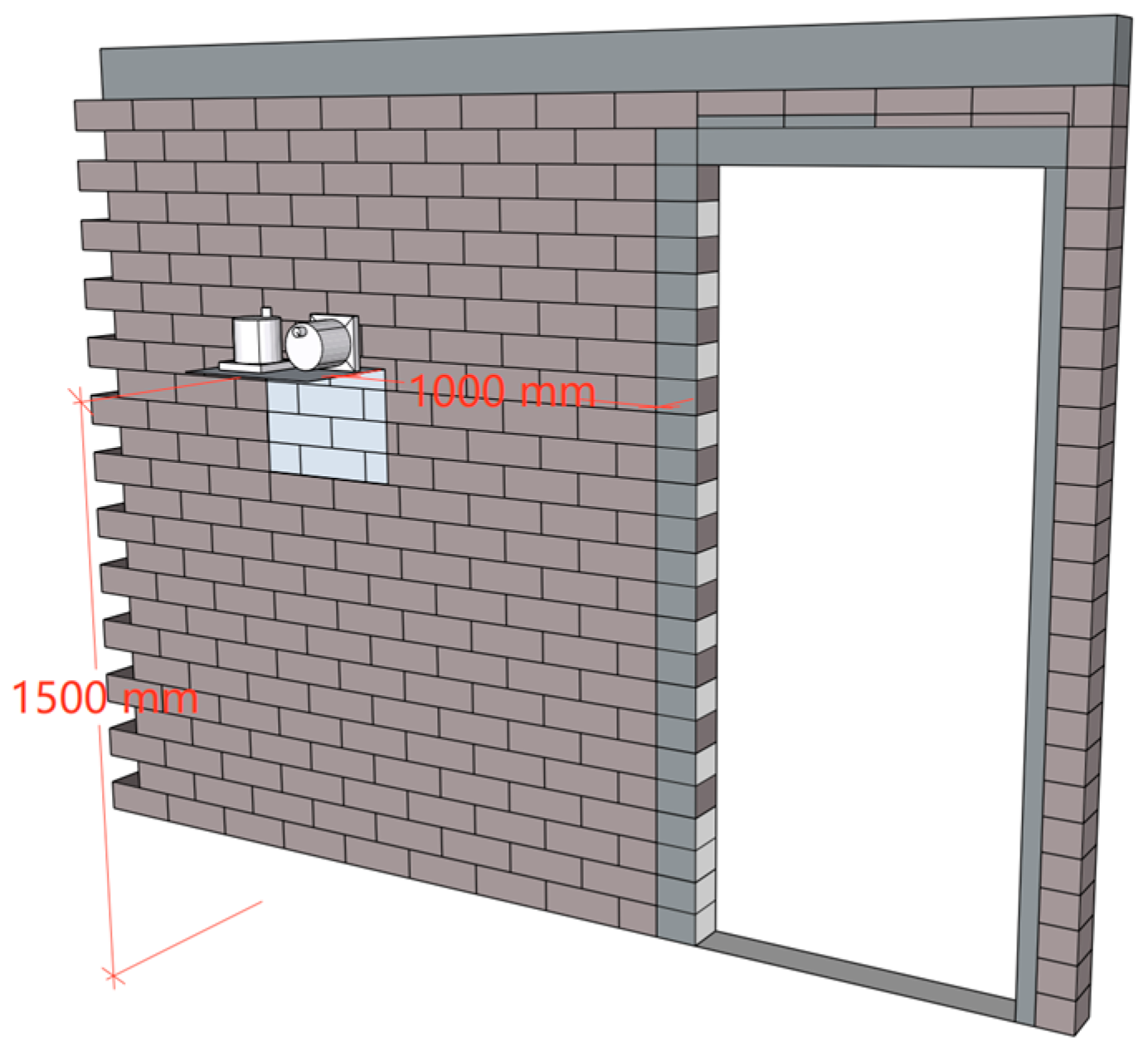
At each monitoring point, acceleration sensors are reasonably arranged according to the size and position of the wall to capture the overall and local vibration modes of the wall. The arrangement of measuring points aims to cover key positions of the wall (such as the middle part, near the entrance, etc.). The specific arrangement plan is shown in Figure 3.
Through 16 h of pre-monitoring, combined with spectrum analysis, the frequency range and amplitude characteristics of the main loads and interference sources on site were clarified, providing a practical basis for the filter with a 4th-order parameter and a 46 Hz cutoff frequency. The effective loads are mainly the wheel–rail contact vibrations during train acceleration out of the station and deceleration into the station, with a main frequency range of 8~30 Hz; high-frequency interference is mainly electromagnetic radiation from the traction power supply system and signal equipment, with a frequency range of 46~200 Hz; low-frequency interference is mainly caused by personnel walking and equipment handling, with a frequency range of 2~8 Hz; airflow interference is mainly from the ventilation outlets of the environmental control system, with wind speeds up to 3~5 m/s and a frequency range of 30~46 Hz.
When selecting measurement points, the following principles should be adhered to: full coverage of key areas, low impact from interference factors, and strong matching with monitoring objectives. It is necessary to cover key areas behind walls, including the middle of the wall, the side edges of openings, and the vicinity of structural columns, to ensure that vibration differences in different parts can be captured. Interference sources should be avoided, and locations should be kept away from air vents and pipeline embedments to reduce airflow and electromagnetic interference.
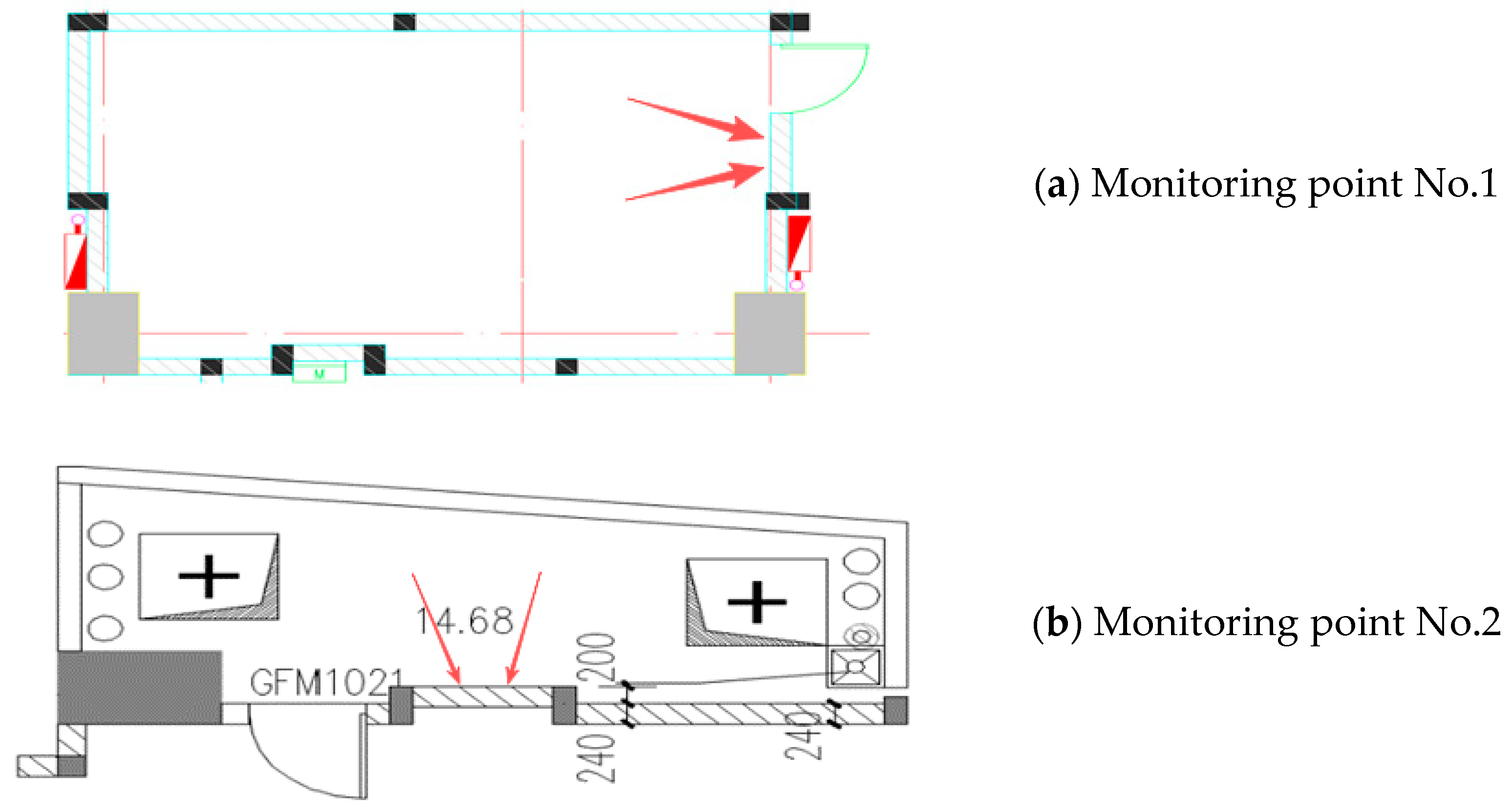
The actual locations of each measuring point are shown in Figure 4, which respectively represent the specific positions of different measuring points.

3.2. Measuring Instrument

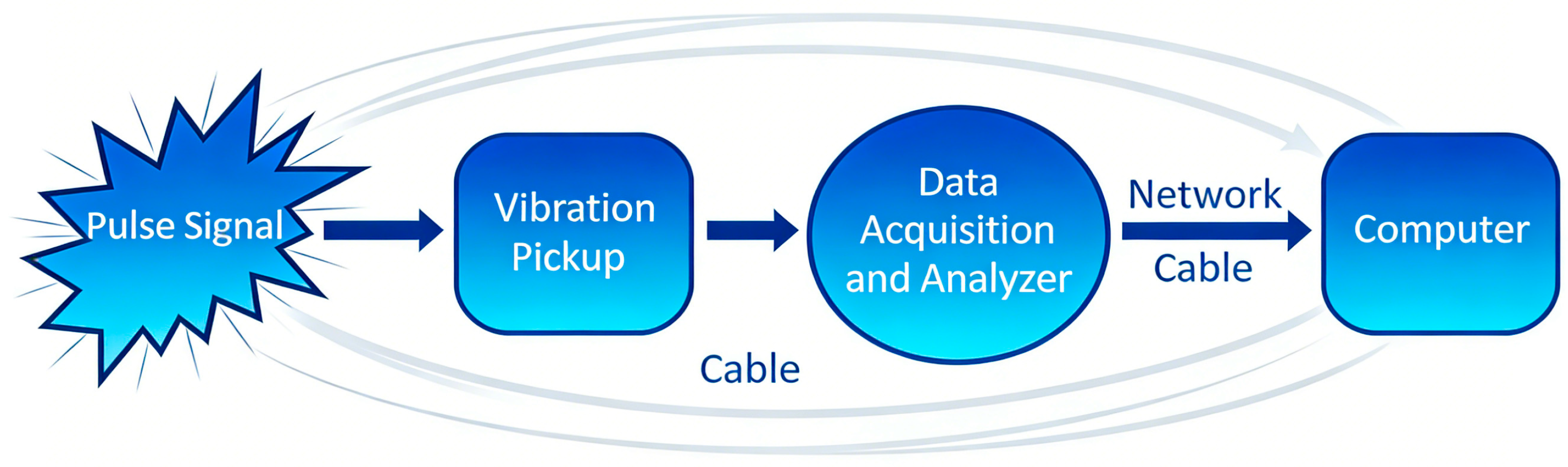
The monitoring system primarily consists of sensors, signal conditioners, data acquisition devices, and analysis software. The system topology is illustrated in Figure 5.
The core sensor utilizes the 941B ultra-low frequency vibration pickup developed by the Institute of Engineering Mechanics, China Earthquake Administration, and the data acquisition device is a G01NET-2 acquisition and analysis instrument. Its main technical parameters are shown in Table 4.

Installation of Sensors

At each measuring point, two 941 B-type vibration pickups are arranged, corresponding to two vibration directions: the horizontal X direction, along the train running direction, which is the dominant direction of vibration; and the horizontal Y direction, perpendicular to the train running direction, for measuring lateral vibration.
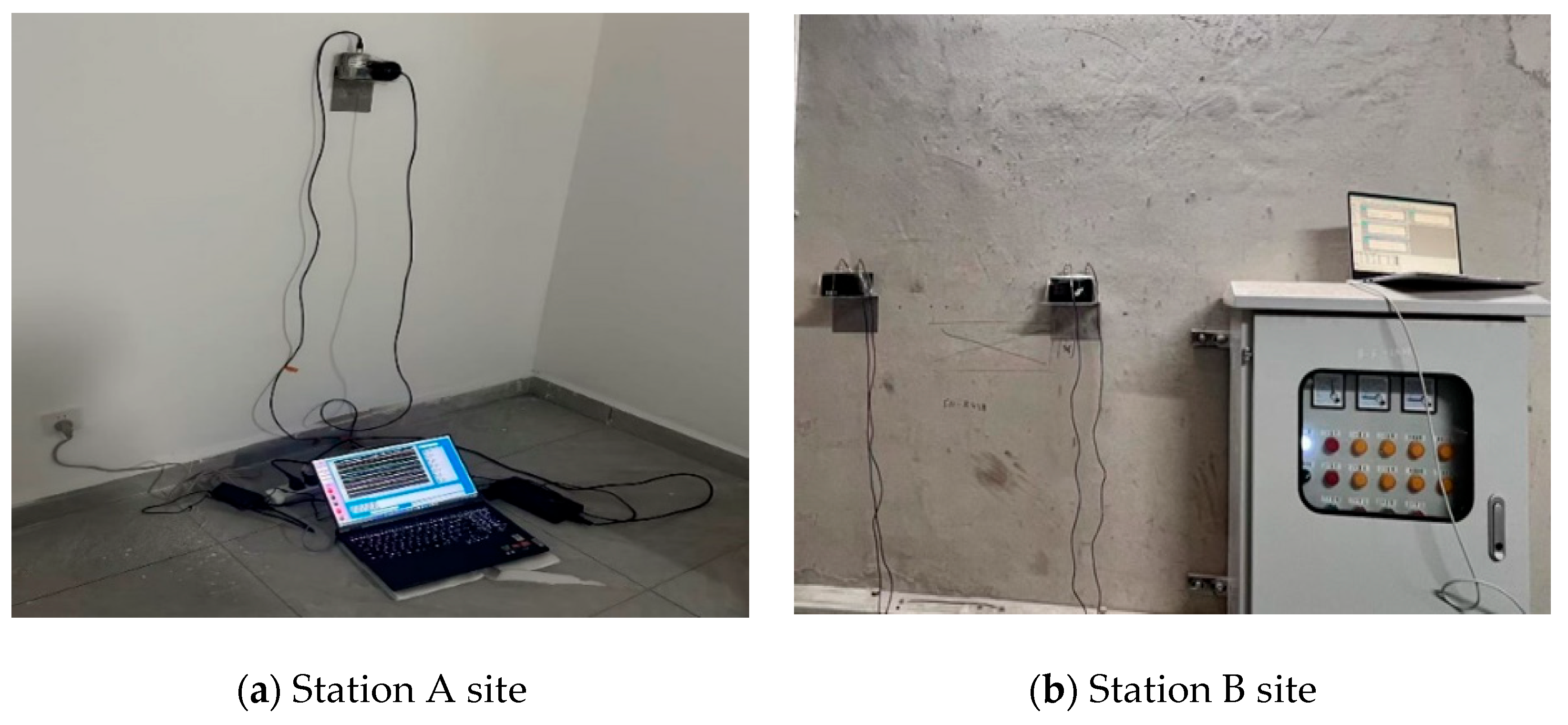
Before installation, the wall surface must be prepared first. Remove any dust and oil stains from the wall at the measuring point, and sand it down to ensure a smooth surface. Then, use epoxy resin adhesive to bond the sensor base to the wall, with the bonding area covering at least 80% of the sensor base area. Fill the space between the shell and the wall with sound-absorbing cotton to reduce the direct impact of airflow disturbances on the sensor. After installation, gently push the sensor with your hand to confirm that it is not loose. Collect static signals through a data acquisition device. If the output voltage drift is ≤±0.5 mV, the installation is considered satisfactory. The on-site test layout is shown in Figure 6.
The field-measured high-frequency noise (46~200 Hz) matches the preset cut-off frequency, and the rationality of the 46 Hz cut-off frequency is further verified by combining it with the spectrum analysis of 16 h pretreatment monitoring. The environmental excitation of the pulse method is quantified by self-power spectrum analysis. The calculation of the energy distribution of the preprocessed monitoring data shows that the excitation energy contributed by train vibration accounts for 88% of the total energy, and other excitation, such as environmental wind load and electromagnetic interference, accounts for 12%, ensuring the effective excitation source for dynamic feature recognition.

4. Finite Element Simulation of Masonry Walls Based on Engineering Cases

4.1. Finite Element Model of Masonry Wall

4.1.1. Masonry Meso Model

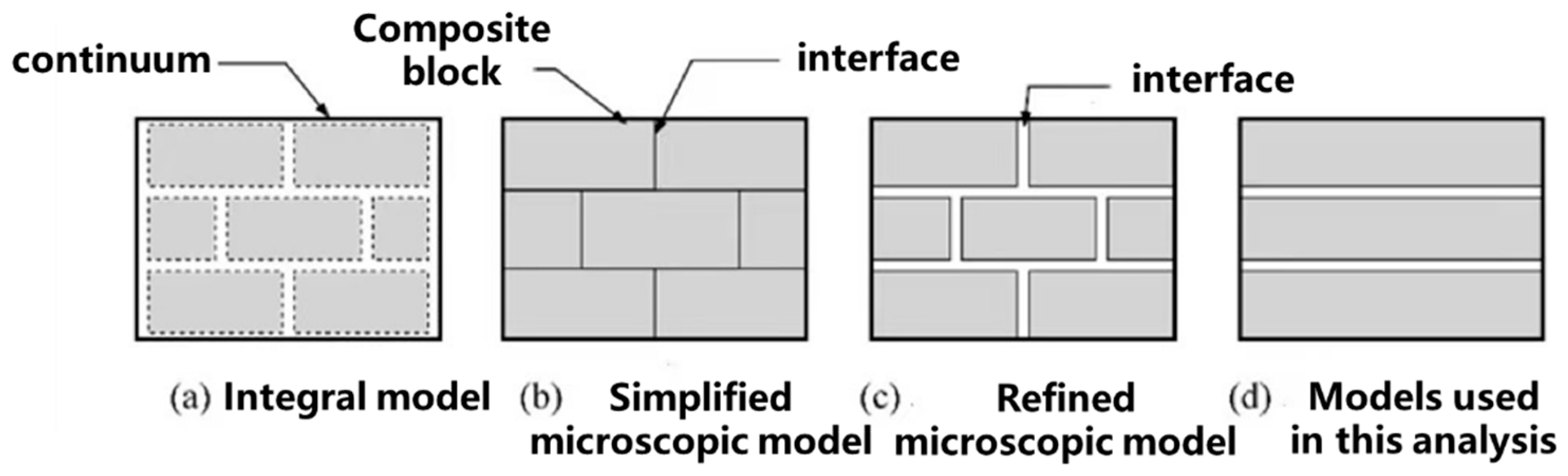
Masonry is a two-phase composite material composed of blocks and mortar. Its mechanical properties are influenced by many factors, such as the type of blocks, the type of mortar, the mechanical properties of each constituent material, and construction quality. Performing a finite element numerical simulation on it is a challenging task. Since the mortar joint is the weakest part of masonry, masonry materials exhibit significant directionality when subjected to stress. The methods for performing finite element numerical simulation on masonry structures can be divided into three categories, as shown in Figure 7a–c.
(1)
Treating masonry as a homogeneous material: The material model can be isotropic or anisotropic, considering the influence of mortar joints only in an average sense. This method treats masonry as a homogeneous material, without considering the interfacial behavior between the blocks and mortar. Instead, it considers the influence of mortar joints in an average sense. However, in many cases, local cracking in the wall may control the mechanical behavior of the entire wall. Therefore, this method has a large degree of approximation and is suitable for simulating larger structures.
(2)
Considering the complex interactions existing at the interface between the block and the mortar, as well as the phenomenon of the interface being prone to damage under external forces, the size of the block can be expanded, and the mortar layer and the interface between the mortar and the block can be simulated as a unified interface. The size of a single concrete brick (240 mm × 115 mm × 53 mm) is extended to an ‘equivalent block’ (240 mm × 120 mm × 53 mm, 5 mm thick mortar layer) containing adjacent mortar layers. The mechanical properties of mortar are equivalently integrated into the block material parameters, which simplifies the interface modeling and retains the weak characteristics of mortar joints. Sometimes, a weak interface can also be added to the block to simulate the cracking and failure of the block. However, this method cannot consider the adverse effects of different Poisson’s ratios between the block and the mortar on the stress of the block.
(3)
Simulating the block, mortar layer, and the interface between them separately is the most refined method, as it can consider more influencing factors. However, due to issues such as the complexity of finite element modeling, the redundancy of the grid, and computational efficiency, this method is not suitable for establishing finite element analysis of masonry structures in large-scale or multiple corresponding working conditions.
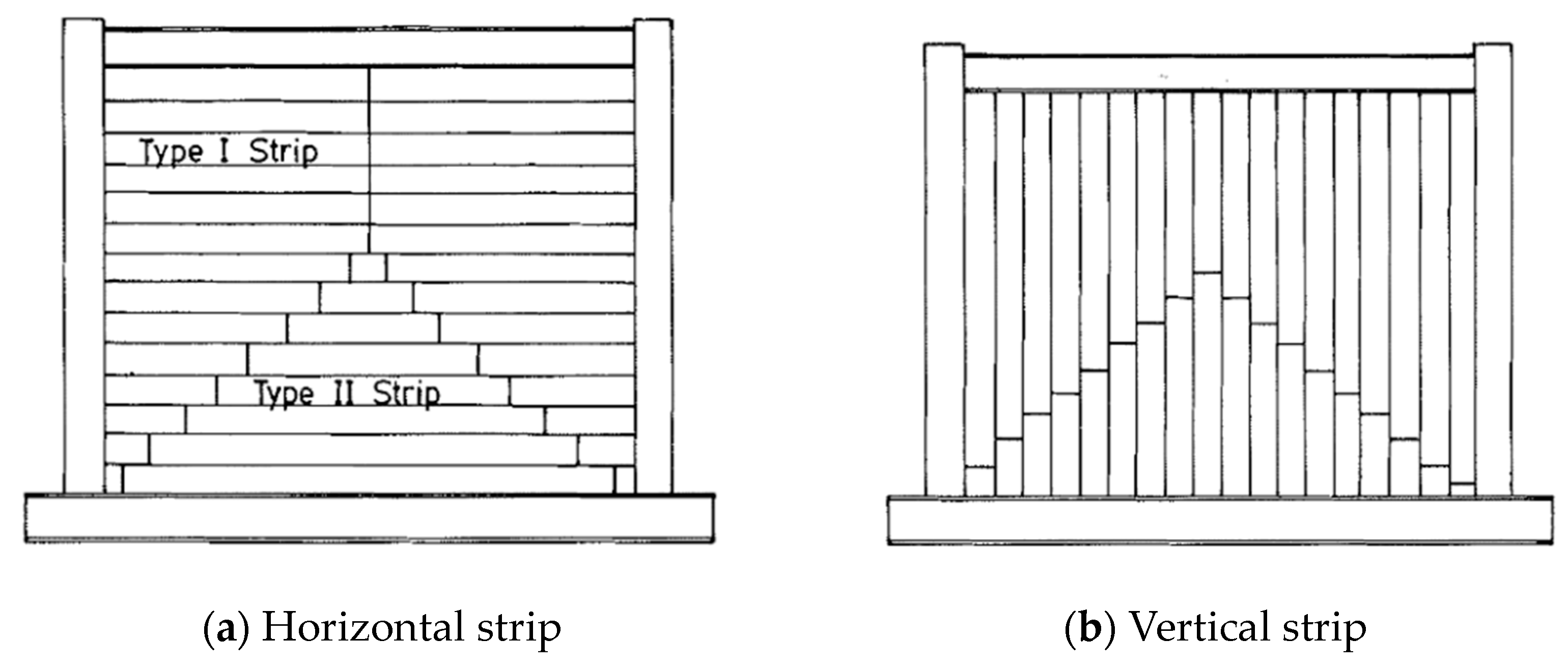
Based on the pros and cons of the above modeling methods, and considering the specific issues in this engineering project, namely the main out-of-plane forces, we first checked the in-plane compressive and shear bearing capacities and found that the in-plane forces meet the bearing capacity requirements. According to experience, the in-plane compressive and shear bearing capacity of masonry walls meets the requirements of the specification. Since this study focuses on the out-of-plane vibration response caused by train vibration and wind load, the model can be simplified to an analysis model considering only the out-of-plane force. When considering out-of-plane forces, the horizontal mortar and its interface with the blocks are the main weak areas. To reduce the calculated quantity, according to the suggestion of Dawe et al. [27]. (Figure 8), the strip method is adopted to simplify the wall model.
Therefore, the numerical setup in Figure 7d is adopted for analysis. This method adopts an integrated modeling approach for each masonry wall (hereinafter referred to as “block”), which is actually based on the integrated FE setup method. Specifically, the block size is expanded, and the mortar is dispersed into the block, considering it as a homogenized structure of the same material. This structural simplification methodology facilitates the efficiency of former establishment and analysis and can obtain relatively accurate simulation results.
For the simulation analysis of the mechanical properties of masonry walls, an improved approach based on refined micro-modeling methods is selected. Specifically, each layer of masonry wall is considered as a homogeneous material, and the interaction between the horizontal mortar layer, blocks, and mortar is simulated. In this paper, it is assumed that the displacement of the blocks and mortar at the interface between them is coordinated, and they are connected using the method of shared nodes in ABAQUS (version 2023). According to the relevant knowledge of material mechanics, the failure state of masonry components under the working conditions studied in this research should be based on the second strength theory (i.e., the maximum tensile strain theory). That is, whether failure occurs is determined by comparing the principal tensile strain with the corresponding strain of the standard value of material tensile strength.

4.1.2. Choice of Finite Element Types

The elements selected for this paper are as follows:
(1)
Block, mortar, ring beam, and structural column are meshed using C3D8R solid elements. C stands for solid element, 3D stands for three-dimensional element, 8 stands for eight-node, and R stands for reduced integration, which is an eight-node linear hexahedral element. This element is the hexahedral element with the least computation time in ABAQUS. The computational accuracy of hexahedra is inherently higher than that of tetrahedra and wedge elements. Therefore, C3D8R is the most widely used solid element in practical applications, and it is used to simulate materials such as blocks and mortar under the actual working conditions of this project.
(2)
The reinforcement is simulated and analyzed using a three-dimensional linear rod element T3D2. T represents a truss element, which can only withstand tensile and compressive loads and cannot be used to withstand bending. 3D indicates a three-dimensional element, and 2 denotes two nodes. It is commonly used as a simulation element for reinforcement in finite element simulations.

4.1.3. Constitutive Laws

It should be noted that constitutive modeling of masonry materials is a complex topic with ongoing academic debates, such as the accuracy of homogenization assumptions and the description of interfacial damage. Since the core focus of this study is to verify the effectiveness of the proposed filtering method rather than to develop refined constitutive models, we adopted mature and widely validated constitutive models that are commonly used in engineering FE simulations. All model parameters are determined based on national standards, published experimental data [28,29], and ABAQUS official verification cases [30], ensuring the reliability of the simulation results for the research purpose.
(1)
Ordinary concrete brick
For ordinary concrete bricks, existing experimental results indicate that their constitutive characteristics (stress–strain relationship) under compression and tension align with the constitutive relationship of concrete under uniaxial compression and tension. Therefore, the Concrete Damage Plasticity (CDP) model built into ABAQUS is selected to describe its mechanical properties. The stiffness degradation under the influence of concrete damage is considered by defining damage factors under different levels of inelastic strain.
The Concrete Damage Plasticity (CDP) model is a continuous medium damage model based on plasticity, evolved from the damage framework proposed by Lubliner [31] and further improved by Lee et al. Although the model has certain simplifications in describing the complex damage mechanisms of concrete, it has been widely validated and applied in engineering simulations of concrete structures under monotonic, cyclic, and dynamic loads. Its advantage lies in balancing computational efficiency and simulation accuracy, which is suitable for the FE verification of the filtering method in this study.
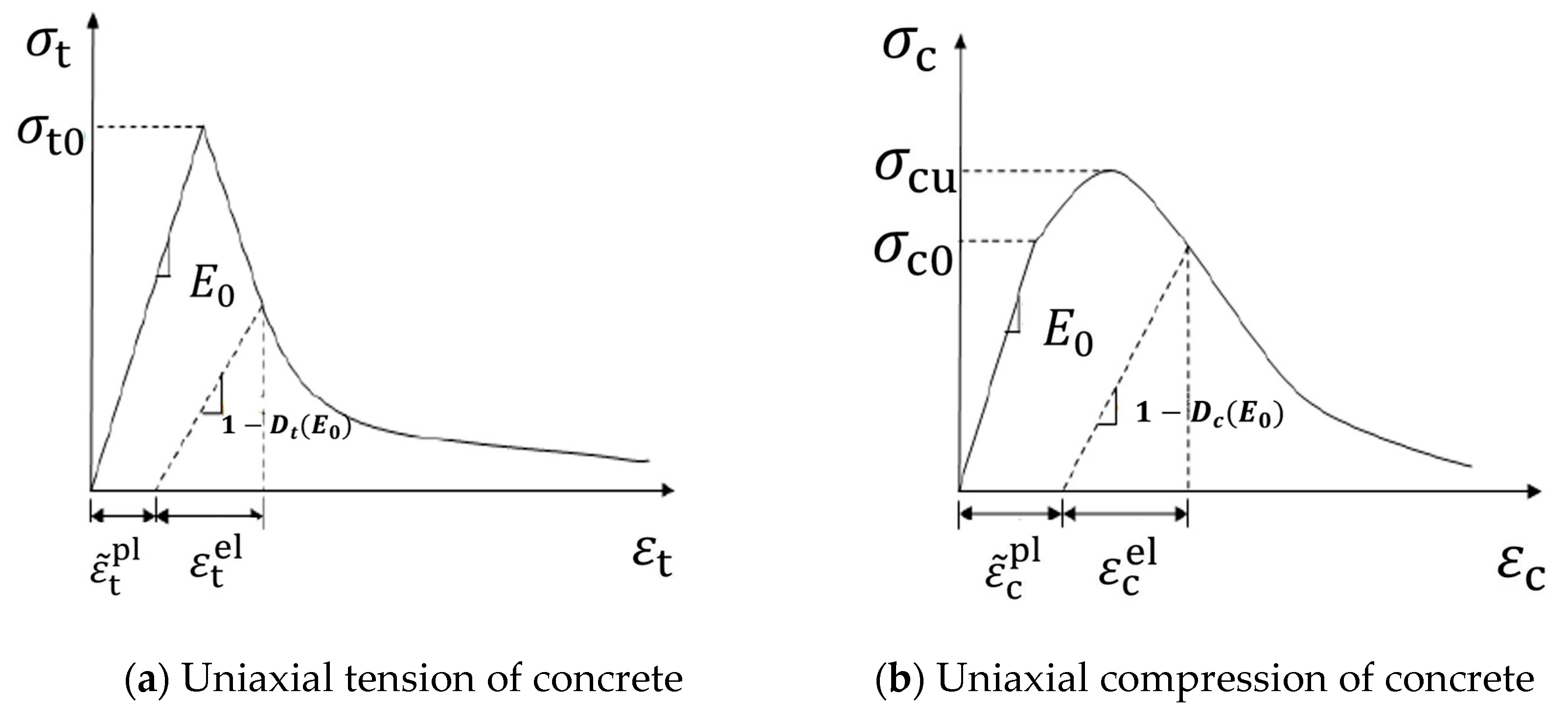
The damage plasticity model assumes that concrete materials fail due to cracking under tension and crushing under compression. Therefore, the evolution of the yield surface or failure surface is controlled by the equivalent plastic strain ε ~ t p l under tension or ε ~ c p l under compression. This assumes that the stress–strain relationships of concrete materials under uniaxial tension and uniaxial compression are as shown in Figure 9. These stress–strain relationships have certain differences from the true constitutive relationship of concrete. However, due to the inherent large scatter of concrete materials, this difference is acceptable for most numerical simulations of concrete structures.
It can be seen from Figure 9 that when the concrete is loaded to the falling section under uniaxial tension or compression, the slope of the unloading section curve will decrease, which indicates that the material has been damaged to some extent, and the elastic modulus of the concrete has decreased. The ABAQUS concrete damage plastic model introduces damage indices d t and d c to reflect the elastic stiffness damage of the material after the stress–strain curve of the concrete in the tension and compression zone enters the descending section. Since the damage to concrete materials is different at different stages of loading, d t and d c are not constants but functions related to equivalent plastic strain, temperature t, and field variable f i . The corresponding expression is given by Equation (10):
d t = d t ε ~ t p l , t , f i d c = d c ε ~ c p l , t , f i
The two limit values of damage factor 0 and 1 represent the two limit states of no damage and complete damage, respectively. The value of the damage factor is very important for the simulation analysis process. Excessive material damage will affect the convergence speed and even lead to the non-convergence of the model calculation.
In the ABAQUS damage plastic model, the expression of the stress–strain relationship of concrete under uniaxial tension and uniaxial compression is Equation (11):
σ t = 1 d t E 0 ε t ε ~ t p l σ c = 1 d c E 0 ε c ε ~ c p l
where E 0 is the initial elastic stiffness of the material, and d t , d c and ε ~ t p l , ε ~ c p l have the same meaning as the above.
For the multi-axial load case, this study is extended by ABAQUS’ built-in yield surface evolution criterion (based on the Lubliner model), taking into account the tension-compression coupling damage effect, which conforms to the complex stress state of masonry wall under coupling load.
In the ABAQUS damage plastic model, the concrete tensile crack strain ε ~ t c k and the compression inelastic strain ε ~ c c k can be expressed as the total strain of the concrete material minus the strain without damage, that is, Formula (12):
ε t c k = ε t ε 0 t e l ε c i n = ε c ε 0 c e l
In Equation (12), the elastic strains ε 0 t e l and ε 0 c e l are calculated according to Equation (13):
ε 0 t e l = σ t / E 0 ε 0 c e l = σ c / E 0
When using the damage plastic model to define the stress–strain relationship of concrete, users need to give the functional relationship between ε ~ t c k and σ t and the functional relationship between ε ~ c i n and σ c , and then ABAQUS software will generate the required plastic strain according to these functional relationships, namely Formula (14)
ε ~ t p l = ε ~ t c k d t 1 d t σ t E 0 ε ~ c p l = ε ~ c i n d c 1 d c σ c E 0
(i)
Mechanical behavior under cyclic loading
Under the action of tension-compression cyclic load, the material cracks open and close repeatedly, which makes the stress situation of concrete more complex. Previous studies have shown that the elastic stiffness of concrete material will recover when the load is reversed under cyclic repeated load. In order to be as close to the actual situation as possible, ABAQUS introduces the stiffness recovery factors ω c and ω t to simulate the normal behavior of crack opening and closing. The greater the values of ω c and ω t , the more the stiffness is restored. Definition of elastic modulus of concrete material after damage under uniaxial cyclic repeated load (Formula (15)):
E = 1 d E 0
In the formula, d is related to the stress state of concrete and damage variables d t and d c , which are assumed to meet Formula (16) under one cycle cyclic load:
1 d = 1 s t d c 1 s c d t
In the formula, s t and s c are the stress state equations of concrete considering stiffness recovery, which can be calculated according to Formula (17):
s t = 1 ω t r * σ 11 , 0 ω t 1 s c = 1 ω c 1 r * σ 11 , 0 ω c 1
In Equation (17), r * σ 11 can be calculated according to Equation (18):
r * σ 11 = H σ 11 = 1 , σ 11 > 0 0 , σ 11 < 0
where σ 11 > 0 means the concrete is in tension, and σ 11 < 0 means the concrete is in compression.
(2)
Determination of parameters in the concrete damage plastic model
(i)
Uniaxial stress–strain curve of concrete
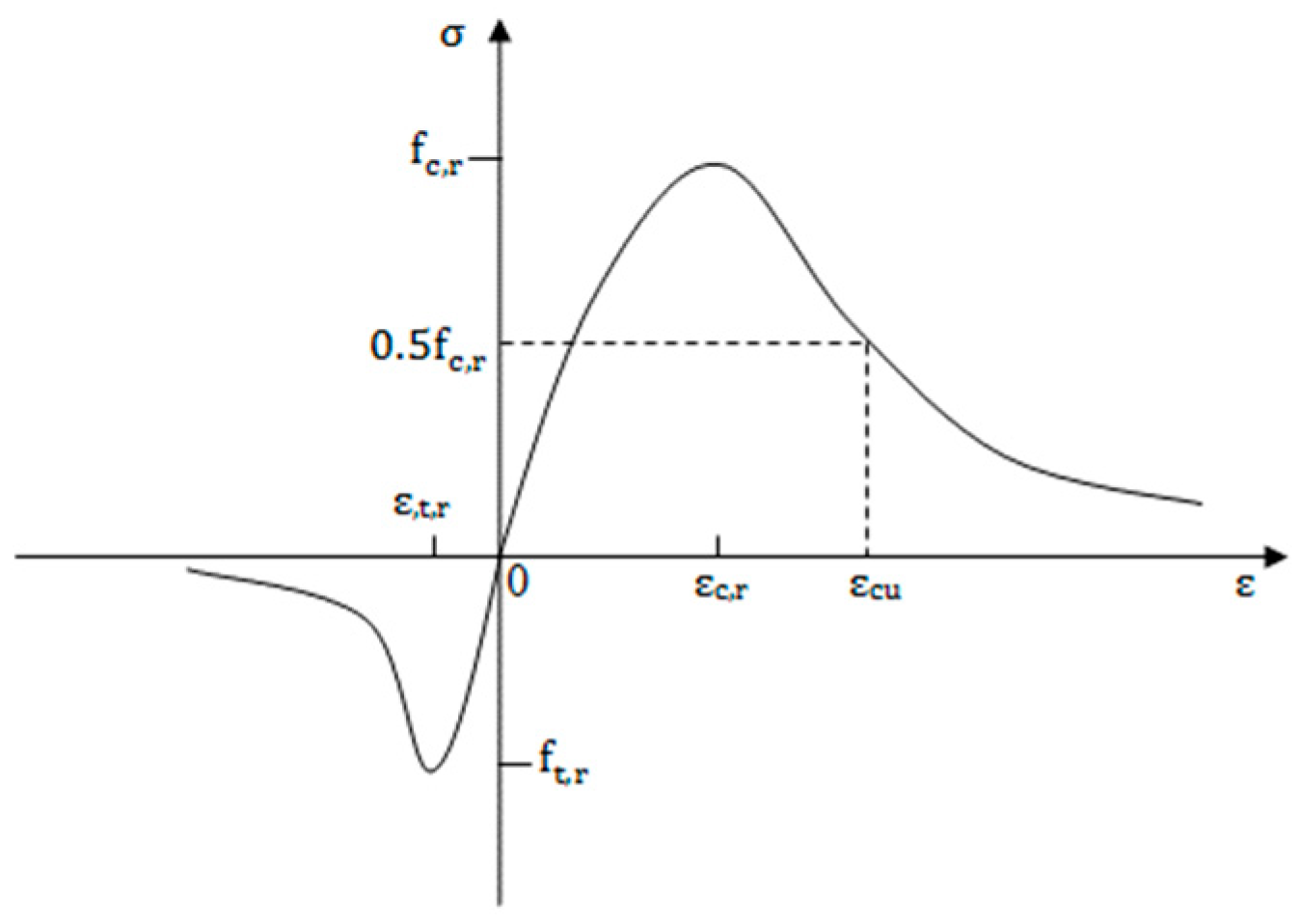
When using ABAQUS software to create concrete materials, you need to specify the σ c ε ~ c p l relationship under compression and σ t ε ~ t p l relationship under tension. In this section, the parameters in the concrete damage plastic model will be determined based on the test data and in combination with the segmented stress–strain relationship curve in Appendix C of the code for design of concrete structures (GB50010-2010) [32], as shown in Figure 10.
(ii)
Damage factor
There are numerous calculation methods for the damage factor of concrete materials. Through extensive trial calculations, it was found that the model proposed by Birtel and Mark [27] yields results that are in good agreement with experimental data when analyzed in ABAQUS, and the model is relatively easy to converge. This method is adopted for determining the damage factor in this paper, with the specific expression as shown in Equation (19):
d t = 1 σ t / E 0 ε ~ t c k 1 b t + σ t / E 0 d c = 1 σ c / E 0 ε ~ c c k 1 b c + σ c / E 0
In the formula, b t = ε ~ t p l ε ~ t c k , b c = ε ~ c p l ε ~ c i n . During modeling, b t is set to 0.1 and b c is set to 0.7.
In the CDP model, damage factors dt (tensile damage) and dc (compressive damage) range from 0 (no damage) to 1 (theoretically complete damage). When dt approaches 1 or dc approaches 1, the material exhibits significant stiffness degradation, corresponding to irreversible damage (tensile cracking or compressive crushing) of concrete bricks or mortar. It should be clarified that this is a numerical description based on the model’s assumption, and the actual complete failure of masonry materials may involve more complex mechanisms. In this study, the maximum damage factor under all working conditions is ≤0.35, indicating that the masonry wall remains in a low-damage state, which is consistent with the field observation of no visible cracks.
(3)
Constitutive model of steel bar
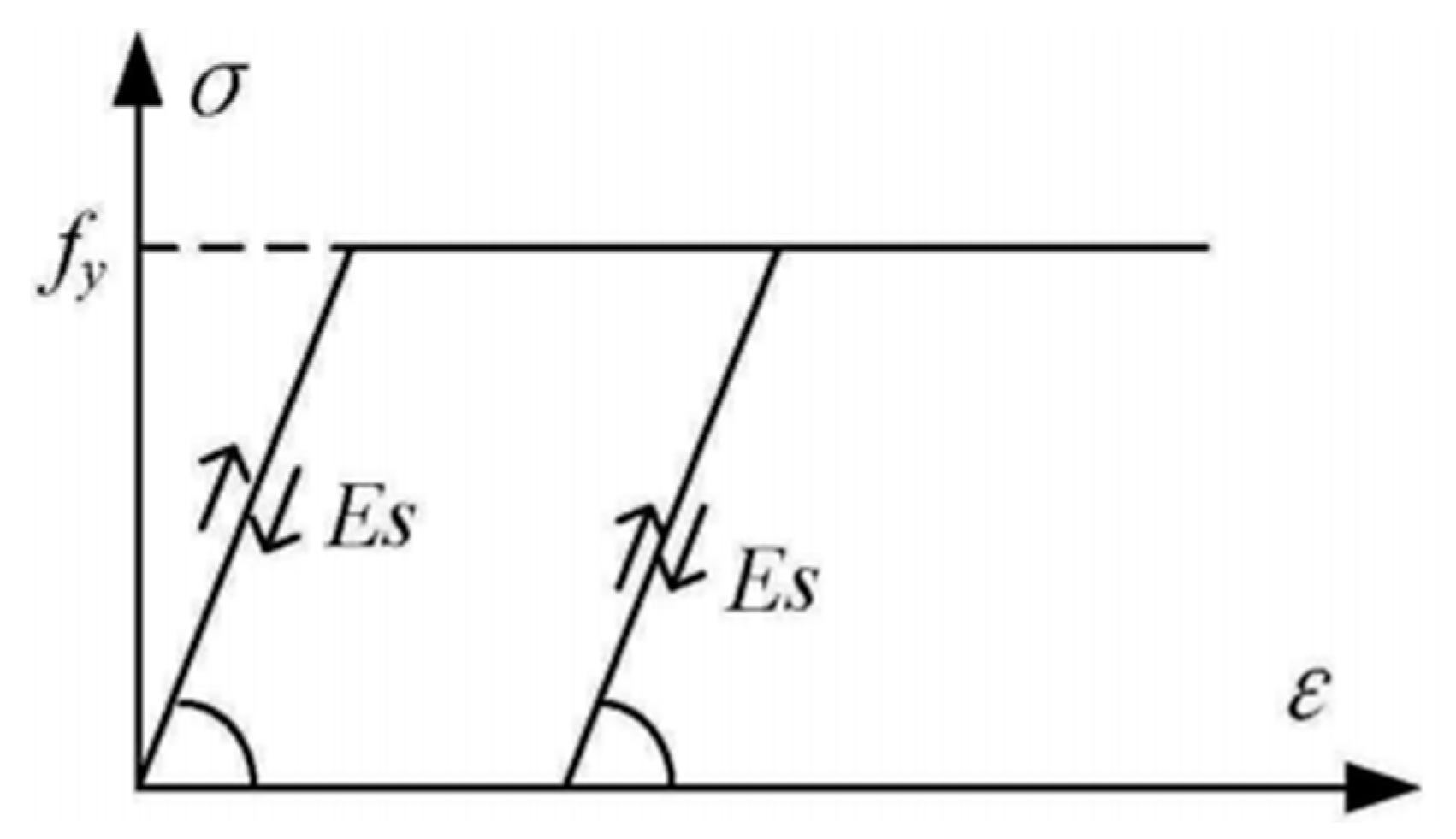
Generally speaking, the constitutive models for uniaxial loading of steel bars are divided into three types: the first type is the bilinear constitutive model, which includes an elastic phase and an ideal elastic–plastic phase, and is a commonly used constitutive model; the second type is the bilinear constitutive model consisting of an elastic phase and a hardening phase; the third type is the trilinear constitutive model consisting of an elastic phase, a yield platform phase, and a hardening phase. In fact, for steel materials commonly used in building structures, there are obvious yield and hardening phases during uniaxial tension. Theoretically, establishing a trilinear constitutive model is the most reasonable. However, considering practical engineering conditions, when analyzing the calculation results, it was found that the maximum stress in the steel bar can only reach 40% of the yield strength. Therefore, to balance computational efficiency and simulation accuracy, the ideal elastic–plastic model is adopted for the steel bars in this study. Although this model ignores the strain hardening behavior of steel, the maximum stress in the steel bars during simulation is only 40% of the yield strength, and the influence of strain hardening on the simulation results is negligible [33]. For scenarios involving large plastic deformation of steel, a more refined constitutive model (e.g., a bilinear hardening model) should be used, as shown in Equations (20) and (21):
σ = E S ε , ε ε y
σ = f y , ε > ε y
In the formula, ε y represents the yield strain of the steel bar, and ε y = f y / E S .
The stress–strain curves for steel bars under tension and compression are consistent, and their stress–strain curves are shown in Figure 11:
(4)
Constitutive model of mortar
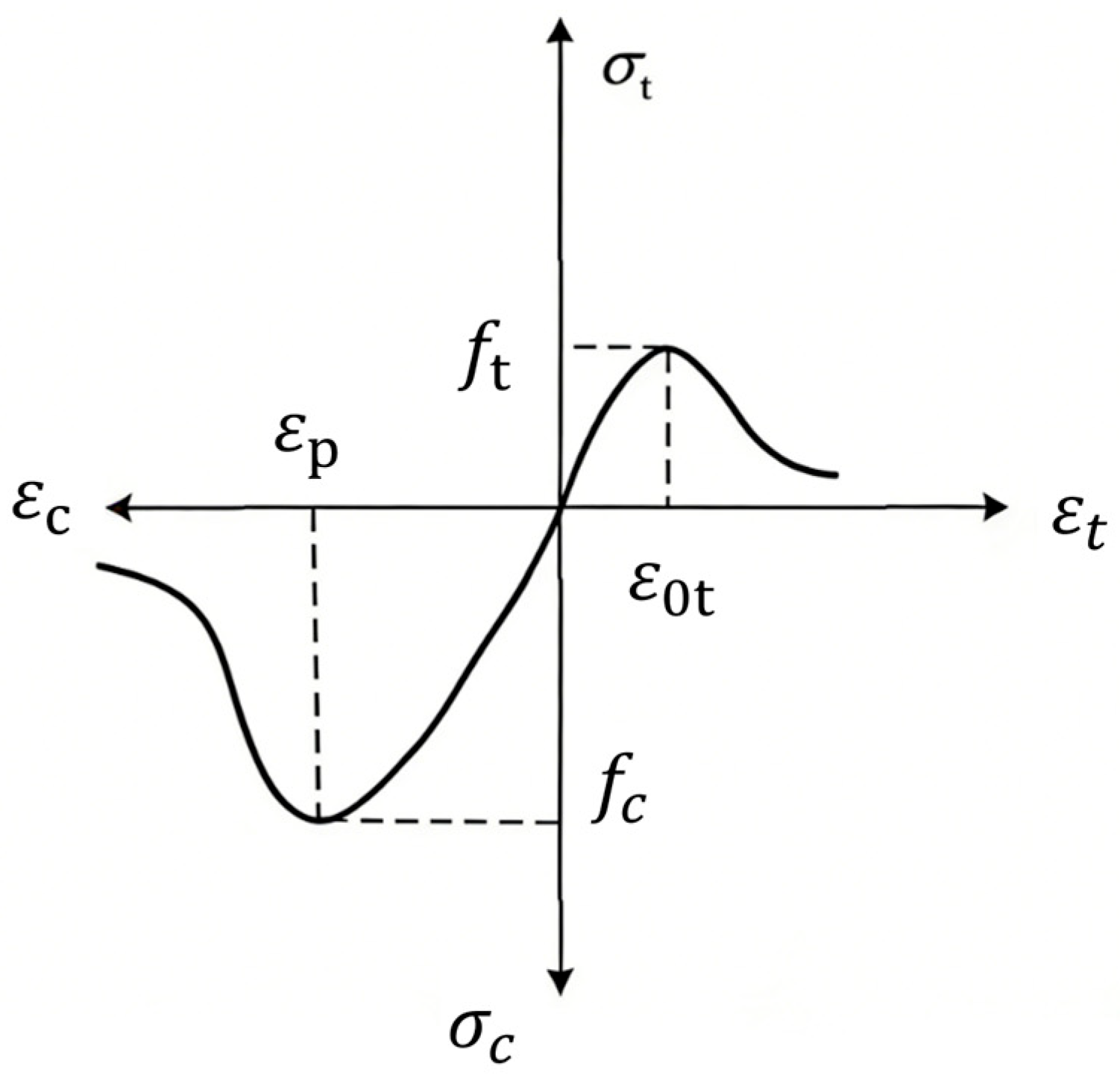
According to existing experiments, mortar is a quasi-brittle material. Under equal displacement loading, a relatively stable descending segment of the constitutive relationship can be obtained, and it can be concluded that the uniaxial stress–strain curve of mortar exhibits a nonlinear trend. The constitutive relationship formula for the compressive strength of mortar can be expressed as shown in [28], such as Equations (22) and (23):
Ascending section:
y = a 2 x 3 + 3 2 a x 2 + a x , 0 x 1
Descent section:
y = x b x 1 2 + x , x 1
where the values of parameters a and B are a = 1.6 and b = 11.
The tensile constitutive relationship of mortar adopts the test of Guo Zhenhai, namely Formulas (24) and (25):
Rising section:
y = 1.2 x 0.2 x 6 , 0 x 1
Descent section:
y = x α t ( x 1 ) 1.7 + x , x 1
In the formula, the coefficient 1.2 is the ratio of the initial elastic modulus in tension to the peak secant modulus, and the parameter α t increases with the increase in the tensile strength of the mortar material. According to the existing research, it can be calculated using the empirical regression formula a = 0.312 f t 2 , which is the tensile strength of the mortar. The constitutive model of mortar is shown in Figure 12.
The constitutive model of mortar adopted in this study is derived from existing experimental data, which can effectively reflect the quasi-brittle mechanical behavior of mortar under uniaxial loading. However, it should be acknowledged that this model does not consider the influence of moisture content and temperature on mortar properties, which may lead to deviations in extreme environmental conditions. For the research scope of this study (normal subway station environment), the model can meet the requirements of FE simulation for verifying the filtering method.
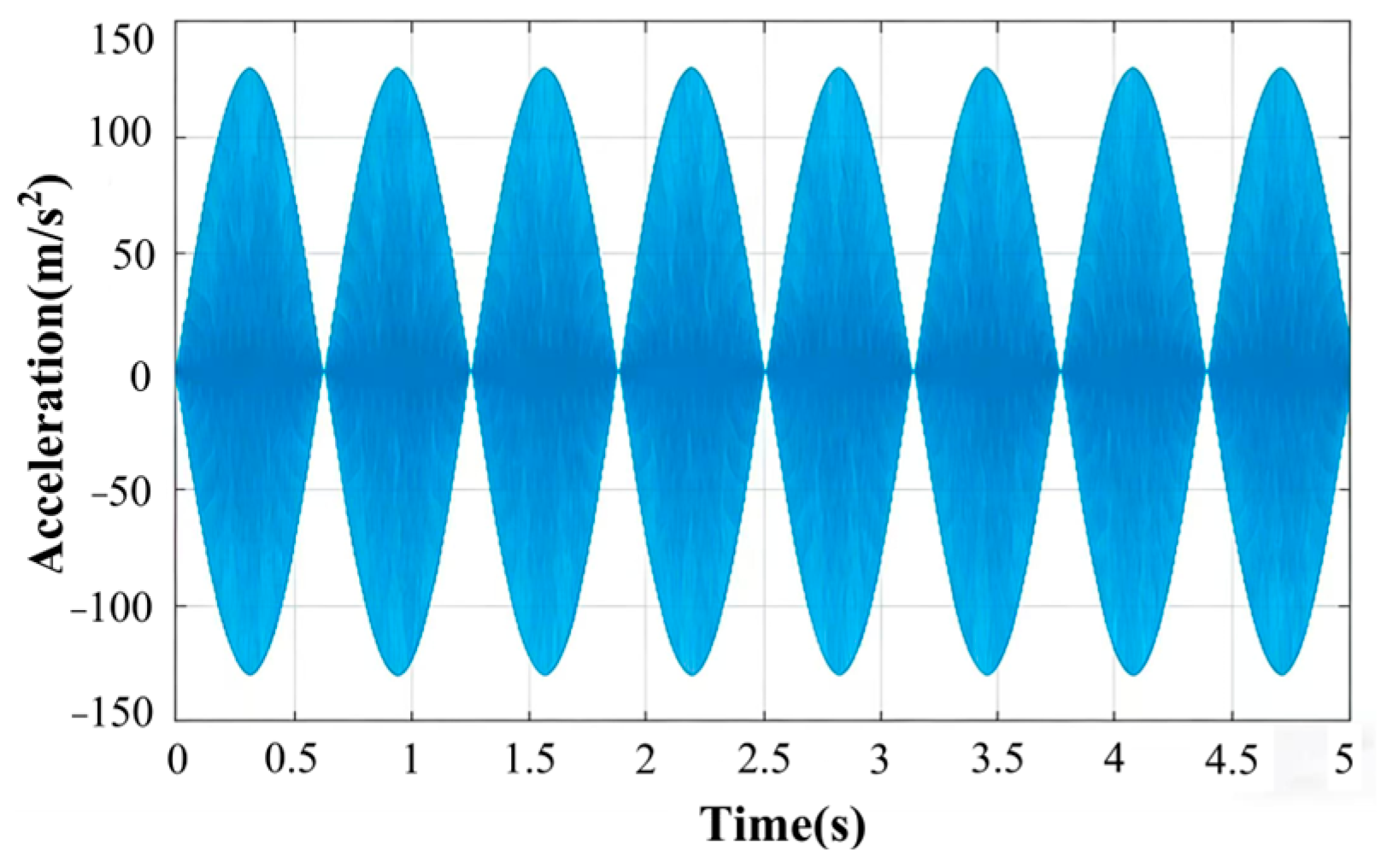
Among them, the acceleration time-history curve for the train vibration load input in ABAQUS is shown in Figure 13. The input excitation frequency and amplitude of the numerical model are calibrated with the field monitoring data through the following steps:
Excitation frequency calibration: Convert the acceleration time-frequency data of four on-site monitoring conditions through FFT, and extract the dominant frequency and high-frequency impact frequency under each condition as the load frequency input of the finite element model. Excitation amplitude calibration: Based on the peak acceleration monitored on-site, the model parameters are adjusted through “simulation measurement” iteration.
The vibration response time history of the masonry partition wall is obtained through on-site measurements. Through Butterworth filtering, FFT, and power spectrum analysis, the dominant excitation frequency of train vibration, the low-frequency characteristic frequency components of wind load, and the natural frequency of the structure itself are extracted.
The actual frequency characteristics measured on site, as described above, are directly used as the excitation frequency input for the finite element model, ensuring that the simulated frequencies are fully consistent with the actual excitation characteristics on site and avoiding deviations caused by theoretical assumptions.

4.1.4. Boundary Conditions

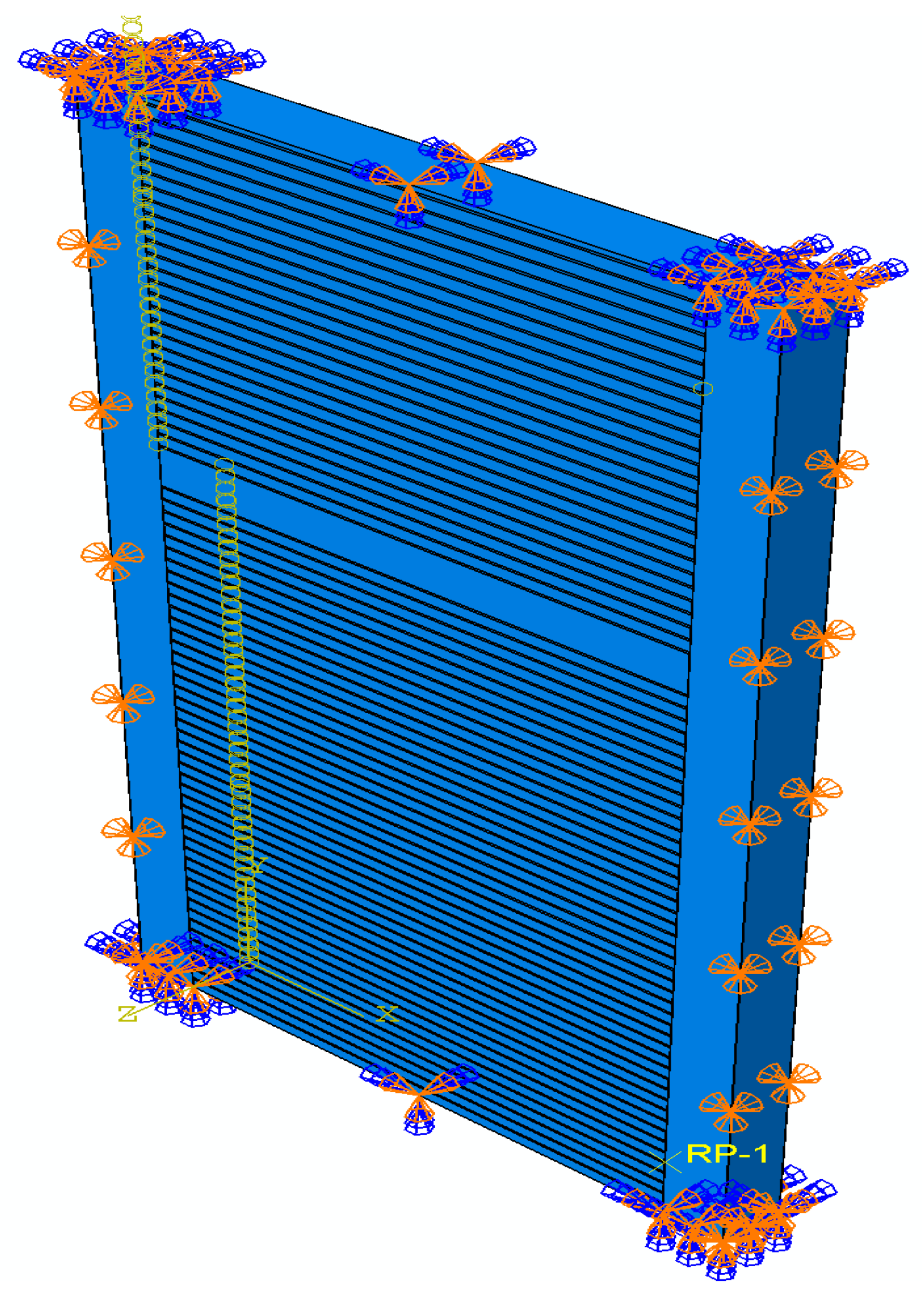
Considering that the adjacent components on both sides of the constructional column only constrain the normal displacement at the interface and cannot provide strong rotational constraints, hinged constraints are used at the location of the constructional column; the upper and lower ends are connected to the overall structural frame and the ground, respectively, which can provide strong normal and rotational constraints. In the model, this is represented by fixed-end constraints. The displacement constraints set in ABAQUS are shown in Figure 14.

4.1.5. Coupling Load Scheme Design

In order to accurately simulate the synchronous interaction between train vibration and wind load, the coupling load scheme is designed as follows:
Application sequence: the “synchronous application” mode is adopted to fit the simultaneous action characteristics of train passing and wind load (ventilation system airflow and natural wind disturbance) in the actual working conditions of the subway station.
Time step: Based on the sampling frequency of the sensor (100 Hz), set the time step to 0.01 s to ensure the time consistency between the load and signal acquisition and avoid dynamic response distortion.
Load combination coefficient: With reference to field monitoring data, the train vibration load combination coefficient is 0.7, and the wind load combination coefficient is 0.3. The combination formula is as follows:
F c o u p l i n g = 0.7 F t r a i n + 0.3 F w i n d
where F t r a i n is the load value converted by the measured train vibration acceleration, F w i n d is the airflow load calculated based on the parameters of the ventilation system (the corresponding load value of 3~5 m/s wind speed is 0.05~0.1 N/m2).

4.2. Finite Element Results and Analysis of Masonry Walls

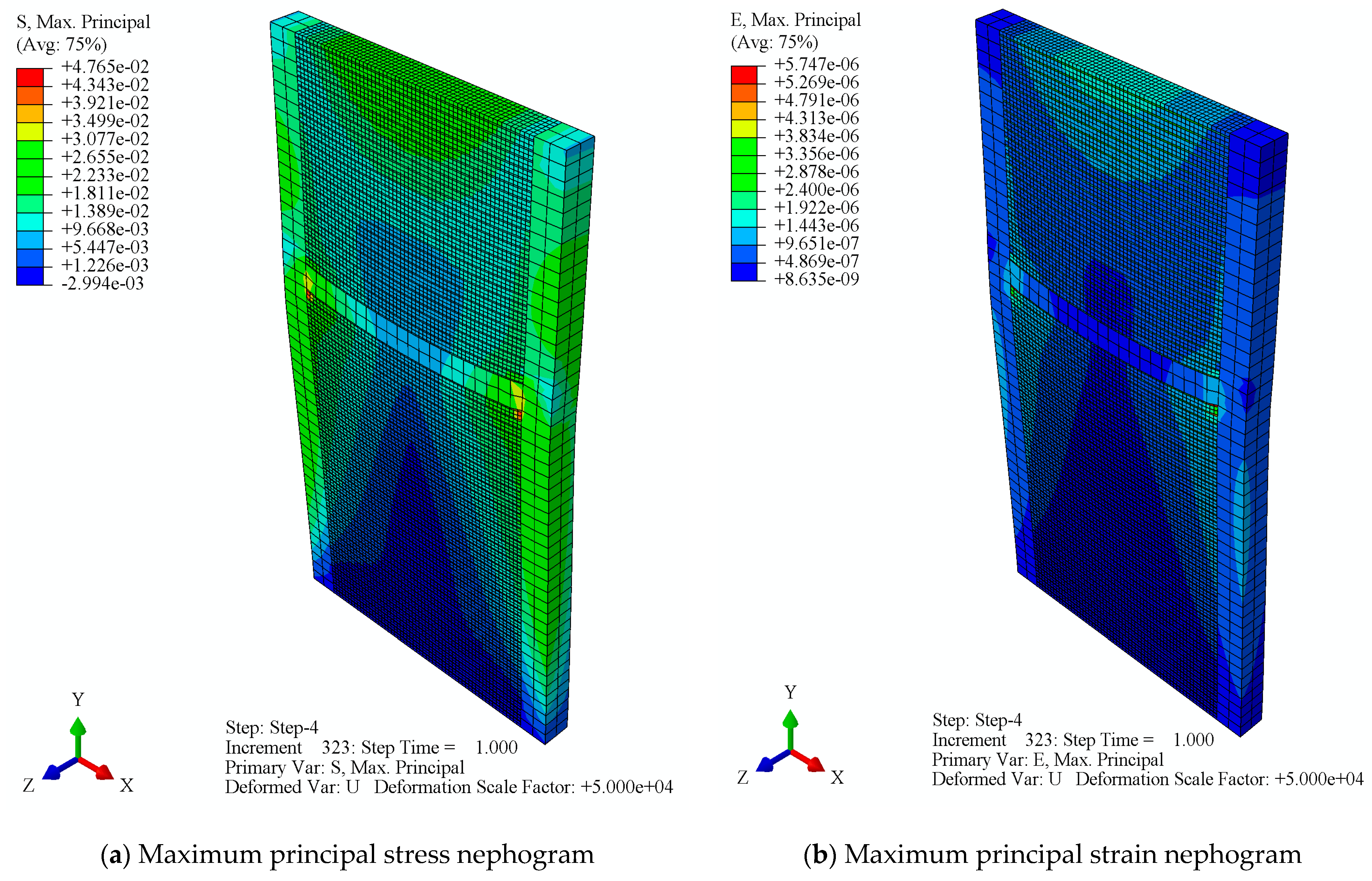
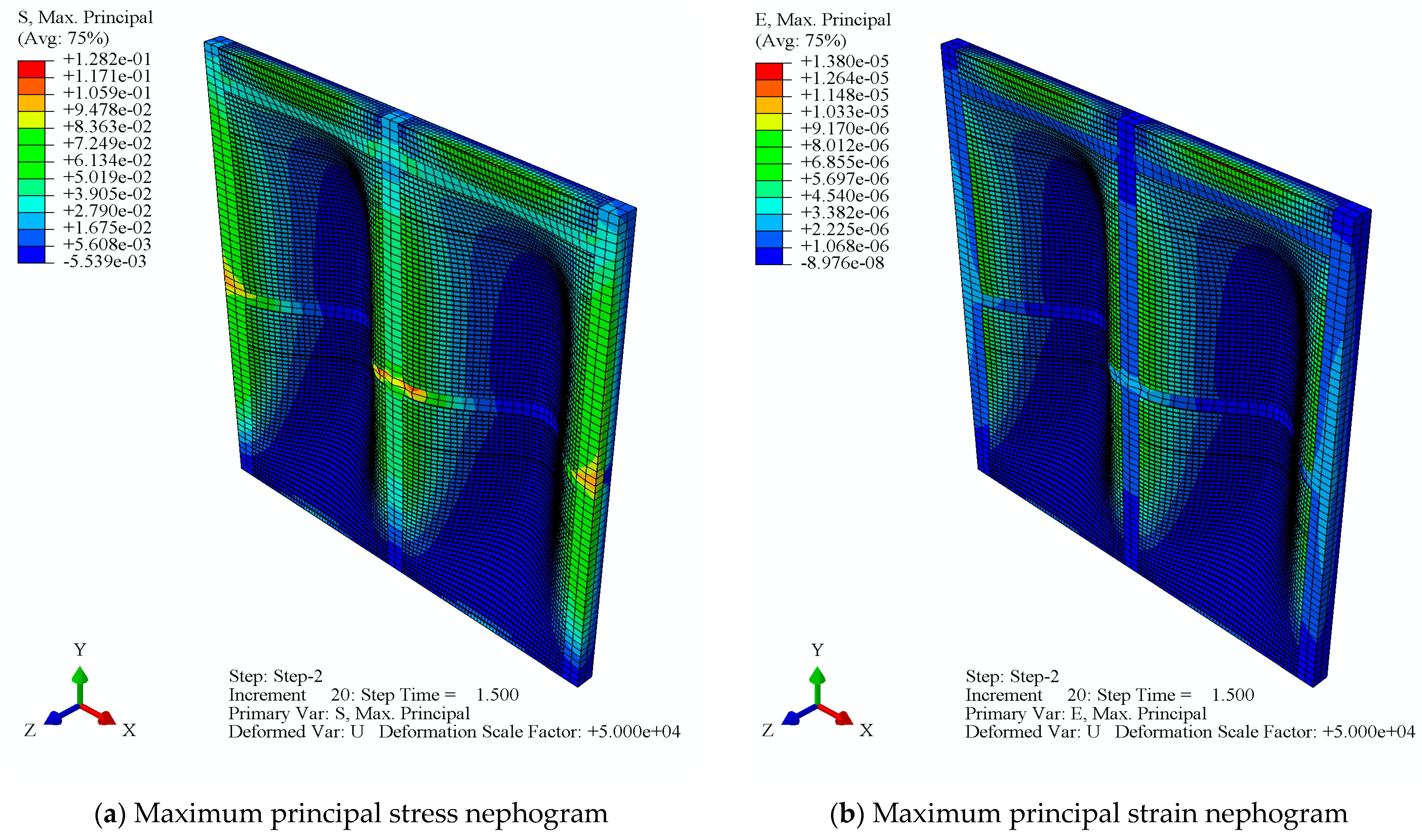
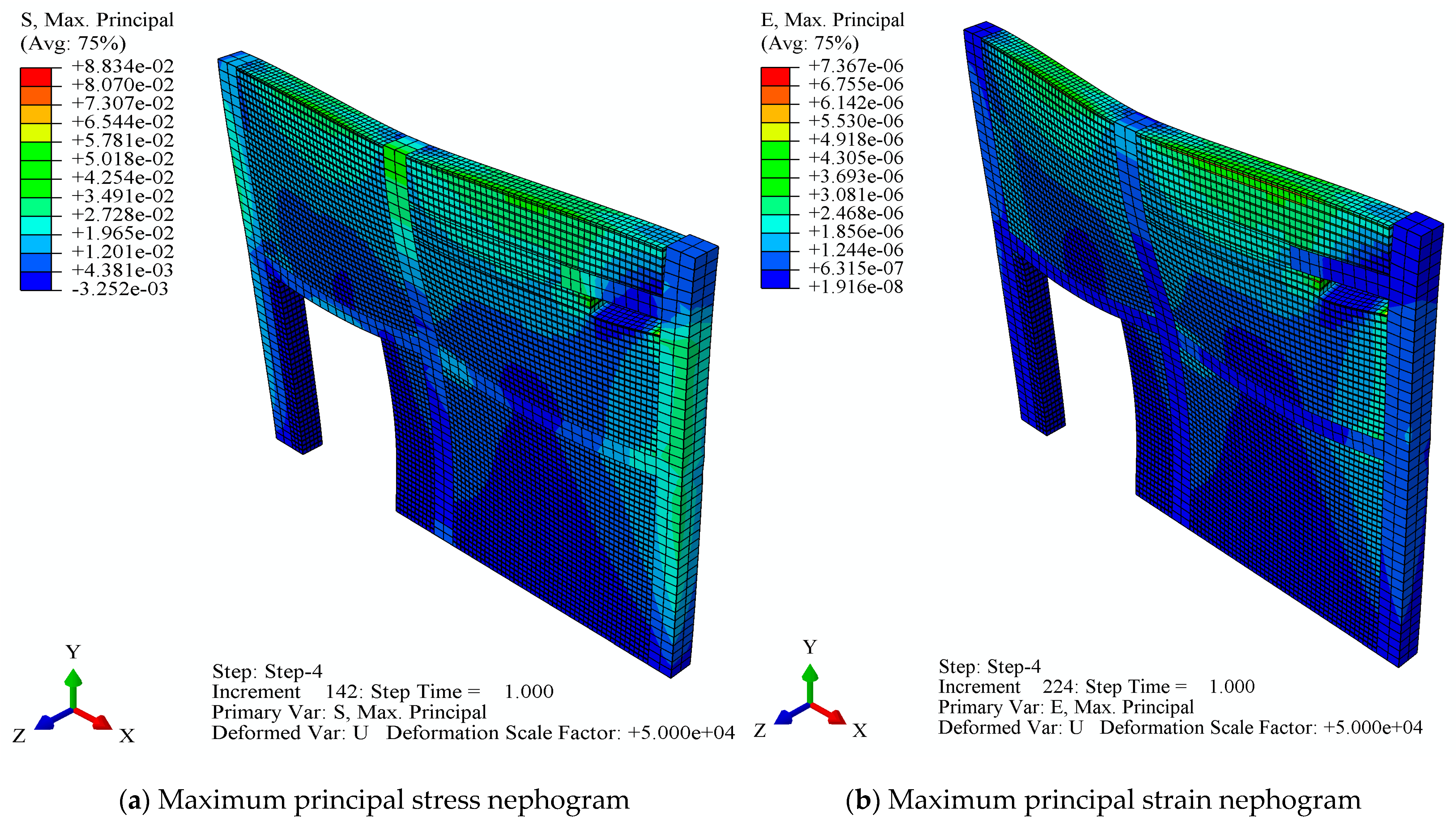
Through simulations using the finite element software ABAQUS, modeling analysis was conducted on infilled walls under three types of typical station equivalent static wind loads, infilled walls under equivalent static wind loads considering fatigue effects, infilled walls under train vibration loads, infilled walls under train vibration loads considering fatigue effects, infilled walls under the coupled action of wind loads and train vibration loads, and infilled walls under the coupled action of wind loads and train vibration loads considering fatigue effects. The strength and stiffness of the infilled walls meet the requirements of current specifications and possess a certain safety margin.
This simulation provided strong support for the dynamic response monitoring, and the two were mutually verified, playing a crucial role in further technological improvement in the later stages. Typical finite element cloud charts are shown in Figure 15, Figure 16 and Figure 17.

5. Results and Discussion

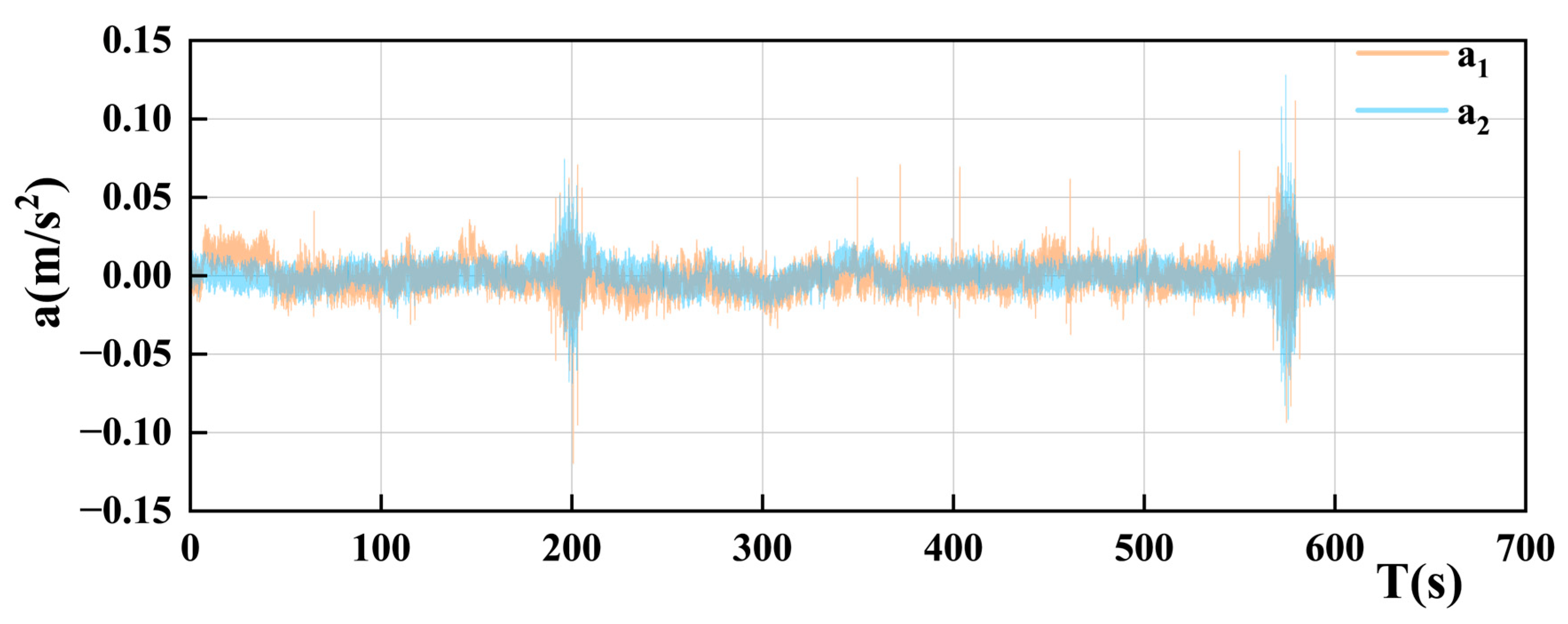
To verify the effectiveness of the Butterworth filter, raw acceleration data from typical measurement points were selected for comparative analysis. Figure 18 shows the raw acceleration time-history curve of a certain measurement point. It can be seen that there are obvious high-frequency spikes and random fluctuations in the signal, which mask the main vibration profile of the structure. By comparing the two sets of data, it can be found that the vibration results are relatively coincident, reflecting the relatively regular vibration of the train.
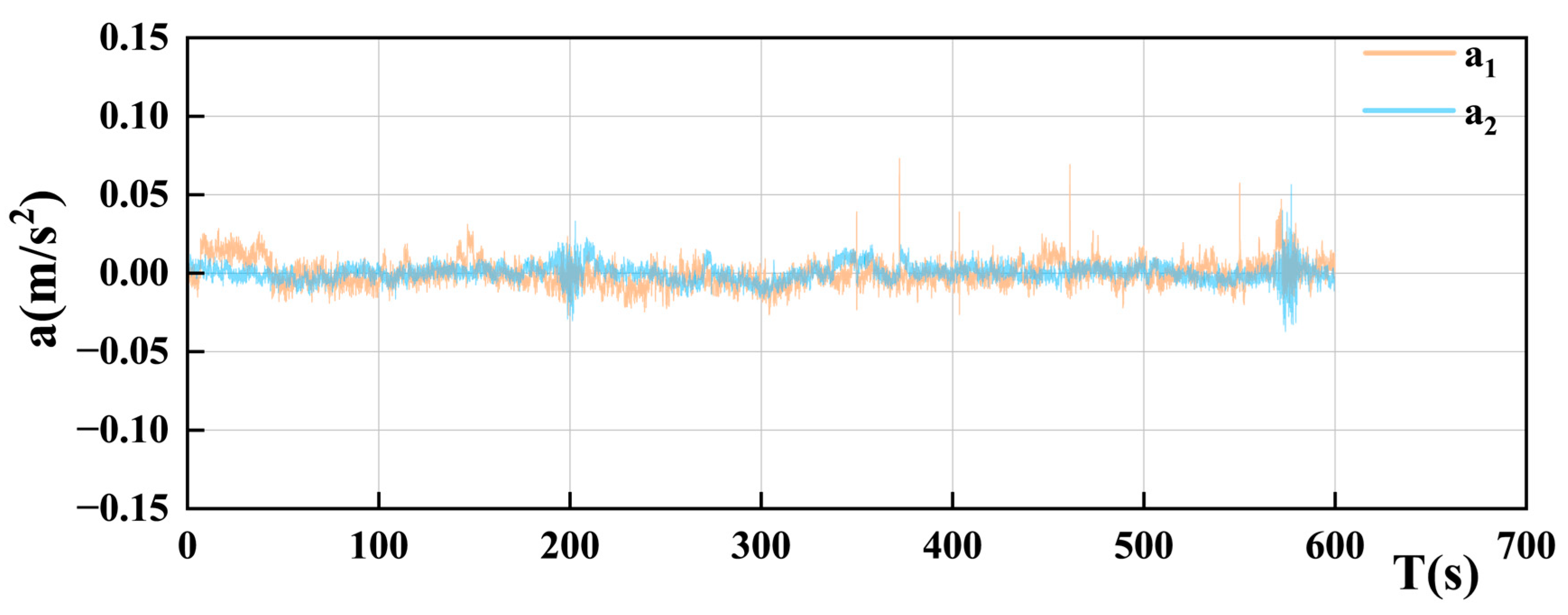
After processing the original signal through a Butterworth low-pass filter with a 4th-order and a cutoff frequency of 46 Hz, a filtered time-history curve is obtained (Figure 19). Upon comparison, it can be seen that high-frequency noise is effectively filtered out, the signal curve becomes smoother, and the low-frequency vibration profiles (such as the main fluctuation periods and amplitude envelopes) caused by major events such as train passing become clearly distinguishable.
The quantitative evaluation index of filtering performance is shown in Table 5.
The filtering process significantly enhances the signal quality. Irrelevant components introduced by sensor electronic noise, high-frequency environmental interference, etc., in the original signal are suppressed, allowing the low-frequency components representing the vibration characteristics of the masonry wall to stand out. This processing is crucial for subsequent accurate identification of modal parameters (frequency, damping ratio), dynamic displacement calculation, and finite element model calibration. The Butterworth filter, due to its smooth passband characteristics, avoids distortions in the amplitude of the main frequency components of the structure caused by frequency response fluctuations, ensuring the reliability of the analysis results.
The structural vibration signal comprehensive processing system built in this study is a set of integrated data processing solutions designed to extract the real vibration characteristics of the structure and support the subsequent mechanical performance analysis. It covers the whole link of signal acquisition and adaptation, intelligent filtering optimization, multi-dimensional analysis, and quality control. Its core architecture and operation mechanism are as follows, providing system-level support for the effectiveness and reliability of the result analysis.

5.1. Sensitivity of Subsequent Analysis to Filtering Parameters and Comparison of Other Filtering Technologies

When the order increases from 3 to 5, the change in fatigue life calculation value is ≤5% (3: 28.3 years; 4: 29.7 years; 5: 30.2 years), indicating that the order has little effect on fatigue analysis in the range of 3 to 5; When the cut-off frequency increases from 42 Hz to 50 Hz, the calculated value of fatigue life decreases from 31.2 years to 27.5 years, mainly because some high-frequency noise at 42 Hz is not filtered out, resulting in the calculation of stress amplitude is too large; At 50 Hz, a small amount of effective high frequency response is attenuated, and the stress amplitude calculation is smaller. The parameter combination of order 4 + 46 Hz is at a low sensitivity, ensuring the stability of subsequent analysis. Table 6 shows the performance comparison of different filtering technologies [33].

5.2. Discussion on Generalization of Filtering Strategy

It is suitable for subway stations with masonry or concrete as the main body, and the vibration sources are mainly train wheel–rail vibration and ventilation airflow interference, especially for masonry structures similar to Mu15 concrete brick+mb10 mortar. When the structure layout or boundary conditions are different, obtain the natural frequency range (fn) of the target structure through preprocessing monitoring, and adjust the cut-off frequency to fn plus 6 ~ 10 Hz. When the vibration environment is different, maintain the fourth-order filter structure, raise the cut-off frequency to 50~55 Hz, and redefine the noise frequency band through power spectrum analysis.

6. Conclusions

This article focuses on the issue of high-frequency noise in the dynamic monitoring signals of masonry partitions in subway stations. By applying a Butterworth low-pass filter to data processing research, the following conclusions are drawn:
  • Employing a Butterworth low-pass filter of 4th order and a cutoff frequency of 46 Hz can effectively filter out high-frequency extraneous signals in the subway site monitoring environment while preserving the low-frequency components that reflect the dynamic characteristics of the masonry wall.
  • The smoothness of the filtered acceleration time-history curve is significantly improved, highlighting the main vibration characteristics. This lays a high-quality data foundation for subsequent frequency domain analysis, displacement calculation, and structural dynamic characteristic extraction.
  • Rigorous signal preprocessing is a crucial step in extracting effective information from complex environmental testing. The filtering method adopted in this paper has a clear process and significant effects and can provide a reference for dynamic monitoring and structural safety evaluation of similar engineering structures.
The limitations of this study are mainly reflected in the following aspects: (1) Limitations of structure type: only for Mu15 ordinary concrete brick masonry partition, the dynamic characteristics of aerated concrete block, hollow brick and other masonry types are not considered; (2) Environmental factors are not fully covered: the influence of extreme temperature on sensor sensitivity and filtering parameters is not considered, and the temperature change may lead to the deviation of the natural frequency of the structure, thus affecting the filtering effect; (3) Lack of comparison of filtering methods: the performance of this method is not compared with modern filtering technologies such as wavelet transform and Kalman filter, and it is unable to quantify the advantage boundary of this method in complex noise scenes; (4) Insufficient verification of long-term stability: the on-site monitoring cycle is 16 h, and the long-term continuous monitoring for more than 3 months has not been carried out. The long-term adaptability of the filter parameters needs to be verified [34]; (5) Limitations of constitutive modeling: The adopted constitutive models (CDP model for concrete, ideal elastic–plastic model for steel, quasi-brittle model for mortar) are simplified based on engineering application requirements, ignoring some complex mechanisms (e.g., interfacial damage between bricks and mortar, strain hardening of steel). These simplifications may lead to deviations in extreme load scenarios, and more refined constitutive models should be combined for in-depth analysis in future research.

Author Contributions

Conceptualization, Z.B. and M.W.; methodology, Z.B. and W.Z.; software, M.W.; validation, Z.B., M.W. and B.S.; investigation, B.S.; monitoring, Z.B.; data curation, M.W.; writing—original draft preparation, M.W.; writing—review and editing, M.W.; supervision, B.S.; project administration, Z.B. and W.Z. All authors have read and agreed to the published version of the manuscript.

Funding

The APC was funded by Guangzhou Metro Design & Research Institute Co., Ltd.

Data Availability Statement

The original contributions presented in this study are included in the article. Further inquiries can be directed to the corresponding authors.

Acknowledgments

During the preparation of this study, the authors used [ABAQUS 2023] for the purposes of [finite element simulation]. The authors have reviewed and edited the output and take full responsibility for the content of this publication.

Conflicts of Interest

Author Mingmin Wang and Bolun Shi were employed by the Guangzhou Metro Design & Research Institute Co., Ltd. The remaining author declares that the research was conducted in the absence of any commercial or financial relationships that could be construed as a potential conflict of interest.

References

  1. Rainieri, C.; Fabbrocino, G. Operational Modal Analysis of Civil Engineering Structures; Springer: New York, NY, USA, 2014; p. 322. [Google Scholar]
  2. Abdelgawad, A.; Mahmud, M.A.; Yelamarthi, K. Butterworth Filter Application for Structural Health Monitoring. Int. J. Handheld Comput. Res. 2016, 7, 15–29. [Google Scholar] [CrossRef]
  3. Wang, N.; Li, Z.; Yan, W. The Pulsing Test and Analysis on Dynamic Characteristics of Some Complicated Structures. Ind. Constr. 2007, S1, 333–336. (In Chinese) [Google Scholar] [CrossRef]
  4. Zhou, M. Civil Engineering Structure Testing and Monitoring; Southeast University Press: Nanjing, China, 2013; pp. 136–143. (In Chinese) [Google Scholar]
  5. Zhou, S.; Feng, Q.; Cheng, G.; Zhang, N.; Wan, Y.; Luo, X. Experimental Study of Vibration and PropagationPatterns in Three Parallel Subway Stations. J. East China Jiaotong Univ. 2024, 41, 1–9. (In Chinese) [Google Scholar] [CrossRef]
  6. Lu, Z.; Zhao, D.; Liu, W.; Ye, S.; Liu, P. Prediction and validation of metro induced vibration based on measured transfer function method. J. Vib. Shock 2025, 44, 291–298. (In Chinese) [Google Scholar] [CrossRef]
  7. Sun, M. Comparison of processing results of median filter and mean filter on Gaussian noise. Appl. Comput. Eng. 2023, 5, 779–785. [Google Scholar] [CrossRef]
  8. Zhao, J.; Su, J.; Wu, Q.; Song, W.; Li, M. Study on the Vibration of Different Types of Masonry Structures along the Metro Caused by Train Running. Chin. J. Undergr. Space Eng. 2021, 17, 1578–1585+1612. (In Chinese) [Google Scholar] [CrossRef]
  9. Butterworth, S. On the theory of filter amplifiers. Wirel. Eng. 1930, 7, 536–541. [Google Scholar]
  10. Chen, S. Simplification and Fast Design of the Butterworth Low–passing Wave–Filter. J. Xinyang Norm. Univ. (Nat. Sci. Ed.) 1997, 66–69. (In Chinese) [Google Scholar]
  11. Yan, C.; Tian, W.; Wang, J. The Design of the Butterworth Low-passing Wave-Filter. J. Proj. Rocket. Missiles Guid. 2003, S2, 106–108. (In Chinese) [Google Scholar] [CrossRef]
  12. Li, Z. The Design of Butterworth Lowpass Filter Based on MATLAB. Inf. Technol. 2003, 3, 49–50+52. (In Chinese) [Google Scholar] [CrossRef]
  13. Zhao, X.; Zhang, J. Research on Implemental methods of Butterworth Low—Pass Filter. J. Dalian Minzu Univ. 2013, 15, 72–75. (In Chinese) [Google Scholar] [CrossRef]
  14. Wang, Q.; Wang, G.; Wang, Y. Design and Application of Butterworth Digital Low-Pass Filter. J. Shandong Ind. Technol. 2016, 24, 251. (In Chinese) [Google Scholar] [CrossRef]
  15. Lu, J.; Lou, J.; Liu, S.; Mao, W. Near-field acoustic holography filtering method based on Butterworth filter. Ship Sci. Technol. 2023, 45, 160–165. (In Chinese) [Google Scholar]
  16. Shen, P.; He, Z.; Luo, Z.; Zheng, K.; Ma, X.; Ren, Y.; Zhang, H. Nonlinear frequency modulation TFM with second-order TGV and Butterworth filter for detection of CFRP composites. Appl. Acoust. 2025, 231, 110457. [Google Scholar] [CrossRef]
  17. Mahata, S.; Kar, R.; Mandal, D. Optimal design of fractional-order Butterworth filter with improved accuracy and stability margin. In Fractional-Order Modeling of Dynamic Systems with Applications in Optimization, Signal Processing and Control; Elsevier: Amsterdam, The Netherlands, 2022; pp. 293–321. [Google Scholar]
  18. Liu, R.; Xing, X.; Pan, Y.; Liu, L.; Li, Y. Experimental Study on Aerodynamic Load Characteristics of Trains in Underground High Speed Railway Station. Railw. Energy Sav. Environ. Prot. Occup. Saf. Health 2022, 12, 10–14. (In Chinese) [Google Scholar] [CrossRef]
  19. Ma, S.; Ma, S.; Qiao, H. Vibration Response of Long-Span Suspension Bridges under Wind and CRH2 Train Loads. J. Beijing Univ. Civ. Eng. Archit. 2024, 40, 86–93. (In Chinese) [Google Scholar] [CrossRef]
  20. Yang, W.; Li, L.; Shang, Y.; Yan, Q.; Fang, Y.; He, C.; Xu, Z. An experimental study of the dynamic response of shield tunnels under long-term train loads. Tunn. Undergr. Space Technol. 2018, 79, 67–75. [Google Scholar] [CrossRef]
  21. He, L.; Fu, L.; Chen, K.; Qian, J.; Guo, Z.; Zhao, P.; Tang, R. Numerical simulation of high-speed-train-induced airflow in Wuhan railway station. Build. Struct. 2009, 39, 23–24+53. (In Chinese) [Google Scholar] [CrossRef]
  22. Xia, Q.; Qu, W.; Shang, X. Test for effects of metro train-induced vibration on existing masonry buildings. J. Vib. Shock 2013, 32, 11–16. (In Chinese) [Google Scholar] [CrossRef]
  23. Wilson, G.; Saurenman, H.; Nelson, J. Control of ground-borne noise and vibration. J. Sound Vib. 1983, 87, 339–350. [Google Scholar] [CrossRef]
  24. Kurzweil, L.G. Ground-borne noise and vibration from underground rail systems. J. Sound Vib. 1979, 66, 363–370. [Google Scholar] [CrossRef]
  25. Borlenghi, P.; Gentile, C.; Pirrò, M. Vibration-Based Structural Health Monitoring of a Historic Arch Bridge. In Experimental Vibration Analysis for Civil Engineering Structures; Springer: Cham, Switzerland, 2023; pp. 421–430. [Google Scholar]
  26. Ramos, L.F.; Marques, L.; Lourenço, P.B.; De Roeck, G.; Campos-Costa, A.; Roque, J. Monitoring historical masonry structures with operational modal analysis: Two case studies. Mech. Syst. Signal Process. 2010, 24, 1291–1305. [Google Scholar] [CrossRef]
  27. Dawe, J.; Seah, C. Out-of-plane resistance of concrete masonry infilled panels. Can. J. Civ. Eng. 1989, 16, 854–864. [Google Scholar] [CrossRef]
  28. Yuan, S. The Research on the Constitutive Model and Size Effect Law of Masonry Mortar. Ph.D. Thesis, Changsha University of Science & Technology, Changsha, China, 2019. (In Chinese) [Google Scholar]
  29. Guo, Z.; Shi, X. Reinforced Concrete Theory and Analyse; Tsinghua University Press: Beijing, China, 2003. (In Chinese) [Google Scholar]
  30. Birtel, V.; Mark, P. Parameterised finite element modelling of RC beam shear failure. In Proceedings of the ABAQUS Users’ Conference, Cambridge, MA, USA, 23–25 May 2006. [Google Scholar]
  31. Lubliner, J.; Oliver, J.; Oller, S.; Onate, E. A plastic-damage model for concrete. Int. J. Solids Struct. 1989, 25, 299–326. [Google Scholar] [CrossRef]
  32. GB50010-2010; Code for Design of Architecture & Concrete Structures. China Architecture & Building Press: Beijing, China, 2010; 440p, B403. (In Chinese)
  33. Chen, W.F.; Han, D.J.; Han, D.J. Plasticity for Structural Engineers; J. Ross publishing: Plantation, FL, USA, 2007. [Google Scholar]
  34. Shao, Z.; Bai, W.; Dai, J.; Yu, H.; Tong, Y. Monitoring and analysis of railway-induced vibration and structure-borne noise in a transit oriented development project. Structures 2023, 57, 105097. [Google Scholar] [CrossRef]
Figure 1. Technology roadmap.
Buildings 16 01057 g001
Figure 2. Schematic diagram of the amplitude frequency response of a Butterworth low-pass filter.
Buildings 16 01057 g002
Figure 3. Schematic diagram of the layout of the monitoring point.
Buildings 16 01057 g003
Figure 4. Schematic diagram of the location of the monitoring point.
Buildings 16 01057 g004
Figure 5. Topology diagram of the structural dynamic characteristic testing system.
Buildings 16 01057 g005
Figure 6. On-site test layout.
Buildings 16 01057 g006
Figure 7. Finite element simulation method for masonry structure [27].
Buildings 16 01057 g007
Figure 8. Schematic diagram adopted in the literature [27].
Buildings 16 01057 g008
Figure 9. Stress–strain relationship.
Buildings 16 01057 g009
Figure 10. Uniaxial stress–strain relationship curve of concrete.
Buildings 16 01057 g010
Figure 11. Stress–strain curve of the steel bar.
Buildings 16 01057 g011
Figure 12. Stress–strain relationship of mortar.
Buildings 16 01057 g012
Figure 13. Acceleration time-history curve.
Buildings 16 01057 g013
Figure 14. Displacement constraint conditions for the masonry wall model.
Buildings 16 01057 g014
Figure 15. Finite element nephogram of a certain station’s infilled wall under the vibration load of a train.
Buildings 16 01057 g015
Figure 16. Finite element nephogram of the infilled wall of a station under equivalent static wind load, considering fatigue effect.
Buildings 16 01057 g016
Figure 17. Finite element nephogram of the infilled wall of a station under train vibration load, considering fatigue effect.
Buildings 16 01057 g017
Figure 18. Original time-history diagram.
Buildings 16 01057 g018
Figure 19. Acceleration time-history signal after Butterworth low-pass filtering.
Buildings 16 01057 g019
Table 1. Comparison of partial integration algorithms.
Integral AlgorithmDisplacement Drift (mm)Relative Error with Simulated Value (%)Calculation Efficiency (m·s/1000 Points)
Method 1 (this study)0.0212.83.5
Method 2 (trapezoidal)0.1568.72.1
Method 3 (Runge–Kutta)0.0323.112.6
Table 2. Comparison of several filtering methods.
Filtering MethodAdvantageShortcomingApplicability
Butterworth Low PassThe passband amplitude-frequency response is flat with minimal phase distortionThe transition band is wider than that of the Chebyshev filterHigh fidelity requirements for structural vibration signals
Chebyshev Type ISteep transition zone and high filtering efficiencyThere are ripples within the passband, resulting in signal amplitude distortionFast denoising in a strong noise environment
Mean/Gaussian filteringSimple calculation, strong real-time performanceNon-frequency-domain specificity, prone to loss of high-frequency effective signalsPreliminary denoising of low-speed stable signals
Table 3. Monitored environmental conditions.
ConditionVibration Frequency (Hz)Vibration Amplitude Range (m/s 2)Duration (s/Time)Main Load Source
Condition 1 (deceleration of train at station)10 to 25 Hz, accompanied by short-term high-frequency impacts.0.05~0.1220~30Wheel–rail contact vibration
Condition 2 (train departure acceleration)The high-frequency component is more significant0.08~0.1515~25Wheel–rail contact and traction system vibration
Condition 3 (the train passes at a constant speed)A stable vibration frequency of 15~22 Hz0.03~0.0710~18Wheel–rail smooth contact vibration
Condition 4 (shutdown at night)This is a pure noise condition used for calibrating the noise benchmark≤0.02ContinuedInterference from personnel activities and electronic equipment
Table 4. Main technical parameters of the 941B vibration pickup.
Gear Positions and Technical Indicator ParametersAccelerationSlow SpeedMedium SpeedFast Speed
sensitivity0.3 V/(m/s2)23 V/(m/s)2.4 V/(m/s)0.8 V/(m/s)
acceleration (m/s2, 0-p)20///
speed (m/s, 0-p)/0.1250.30.6
displacement (mm, 0-p)/20200500
passband ( H z , + 1 3 d B ) 0.25 ~ 801 ~ 1000.25 ~ 1000.17 ~ 100
output load resistor ( k Ω ) 1000100010001000
acceleration (m/s2)5 × 10−6///
speed (m/s)/4 × 10−84 × 10−71.6 × 10⁻⁶
displacement (m)/4 × 10−84 × 10−71.6 × 10⁻⁶
size, weight63 × 63 × 80 mm, 1 kg
Table 5. Quantitative evaluation index of filtering performance.
Evaluation IndexDefinitionBefore FilteringAfter FilteringImprovement Effect
Signal-to-noise ratio (SNR)Ratio of effective signal energy to noise energy (unit: dB)12.328.7Increased by 133.3%
Root mean square error (RMSE)Root mean square deviation between the filtered signal and the ideal signal (unit: m/s 2)0.0320.00875.0% reduction
Effective signal energy retention rateRatio of the energy of the effective signal (8 ~ 30 Hz) after filtering to that of the frequency band before filtering/96.8%Energy loss is only 3.2%
Noise attenuation rateThe energy ratio of the noise frequency band (46–200 Hz) after filtering to that before filtering is 12.3./7.2%Attenuation 92.8%
Table 6. The performance comparison of different filtering technologies.
Filtering TechnologySNR ImprovementEffective Signal Energy Retention RateCalculation Efficiency (m·s/1000 Points)Fatigue Life Calculation ErrorApplicable Scenarios
4th order Butterworth low pass133.3%96.8%3.53.2%Conventional monitoring of subway masonry structure
Chebyshev type I (order 4)142.5%89.7%3.17.8%Fast noise reduction in a strong noise environment
Wavelet filtering (db4)156.2%94.3%18.72.9%High precision laboratory analysis
Disclaimer/Publisher’s Note: The statements, opinions and data contained in all publications are solely those of the individual author(s) and contributor(s) and not of MDPI and/or the editor(s). MDPI and/or the editor(s) disclaim responsibility for any injury to people or property resulting from any ideas, methods, instructions or products referred to in the content.