


Abstract
To study the anchoring performance of a self-drilling anchor in sandy gravel strata, the influence of different anchoring lengths on the ultimate pull-out resistance of the self-drilling anchor was carried out through field tests, and the load-displacement curve was obtained. Based on this, combined with the indoor grouting test, an indoor orthogonal test scheme in line with the construction technology of the self-drilling anchor was designed, and the effects of different fine particle proportions, grouting pressures, and water-cement ratios on the pull-out peak, ultimate displacement, anchor diameter, and equivalent bond strength were analyzed. The results indicate a critical value of the self-drilling anchor in the sandy gravel strata. In the field test and indoor test, the failure mode of the bolt is the failure of the interface between the anchor body and the soil, and the trend of the load-displacement curve of the bolt is the same. Through an orthogonal test, it was found that the proportion of fine particles has the greatest influence on the anchorage performance of the self-drilling bolt. With the increase in the proportion of fine particles, the peak value of pull-out decreases, indicating that the self-drilling bolt exhibits better anchorage performance in soft soil layers, such as sandy gravel strata.
1. Introduction
As China accelerates its urban underground space development, a proliferation of deep excavation projects has been observed, with a significant portion involving excavation through sandy gravel strata [1,2]. The sandy gravel strata are a heterogeneous and loose rock-soil mixture, consisting of high-strength rock blocks of varying sizes and soil with lower strength. Currently, soil nailing and anchor bracing are two of the commonly used support methods in foundation pit engineering. However, due to the characteristics of sandy gravel strata, which are prone to hole collapse and difficult to form, engineering accidents such as hole collapse and drill jamming often occur during the construction process. Therefore, in sandy gravel strata, the casing-protected drilling method is widely adopted to maintain borehole stability. Despite its extensive application, this construction technique exhibits relatively low efficiency. In gravel-rich zones, drilling penetration rates cannot be guaranteed, and severe drill bit wear is frequently observed [3,4]. Self-drilling anchor bolt is a support method that integrates drilling, grouting, anchoring, and other functions, which can effectively solve the construction problems of difficult drilling and easy collapse in sand gravel strata [5]. Compared with the casing wall protection drilling process, it eliminates the step of casing wall protection, greatly improving construction efficiency and saving construction costs. Self-drilling anchor bolts are frequently used in tunnel support and rehabilitation due to their convenient installation process and ability to effectively address installation challenges in complex geological conditions [6,7].
Dmitriy Chernyatin et al. [8] investigated the load-bearing performance and soil interaction mechanisms of self-drilling hollow anchor bolts of different lengths in sandy soils, providing experimental evidence for the estimation of bearing capacity in the design of long anchor bolts. Li Jinkui [9] investigated the anchoring performance of self-drilling anchor bolts in highly weathered dolomite, clarified their anchoring mechanism and optimal support parameters in such geological conditions, and provided theoretical and technical support for similar slope reinforcement projects. Li Ya Chuan [10] solved practical problems such as hole diameter reduction and hole collapse in sandy gravel strata at the construction site through self-drilling anchor rod anchoring technology. Wu Hong Fu [11] conducted a post-anchoring deformation monitoring of foundation pits using self-drilling anchor rods, revealing that their pull-out bearing capacity in gravel soil strata exceeded that of conventional anchor rods by 15%, while concurrently achieving significant construction period reduction. Chen Xiang Lin et al. [12] conducted field experiments to analyze the anchoring performance of self-drilling anchor rods, focusing on ultimate pull-out capacity and load-displacement curve characterization. In summary, current research on self-drilling anchor rods predominantly emphasizes engineering applications and in-situ testing, with limited detailed investigation into anchoring performance mechanisms and parameter sensitivity. Moreover, at present, the indoor test research on anchor bolt anchorage mostly focuses on prefabricated anchor solids, which are then put into the soil for curing and pulling. Xiong Liang Xiao et al. [13] conducted indoor model experiments and systematically studied the influence of anchor rod arrangement on the deformation and deformation characteristics of specimens by precast casting anchor bodies with molds. Xu Xin et al. [14] conducted laboratory experiments using prefabricated resin-grouted anchor ends, combined with numerical simulations, to investigate the surrounding rock response under the action of a single end-anchored prestressed anchor rod. Tao Wen Bin et al. [15] designed an orthogonal experimental scheme through an indoor anchor rod. Zhou Zheng [16] investigated the one-dimensional fracturing grouting behavior in soil through theoretical modeling and laboratory experiments, analyzing the influence of grout yield strength. Cheng Shao Zhen [17] utilized a novel experimental setup to study the fracture propagation patterns during fracturing grouting in clay, focusing on the effects of grouting pressure.
In summary, due to the unique construction process of self-drilling anchor rods, the morphology of the anchorage body remains unpredictable, rendering prefabricated rod-based laboratory testing infeasible. This study focuses on the Luoyang sandy gravel strata, conducting field experiments at a foundation pit project in Luoyang to investigate the influence of varying anchorage lengths on the anchoring performance of self-drilling anchors. Based on these findings, an orthogonal laboratory experimental design was developed, incorporating soil grouting tests to simulate field installation conditions. The study systematically analyzes the effects of grouting pressure, fine particle content in sandy gravel, and water-cement ratio on the peak pull-out capacity, anchorage body diameter, and equivalent bond strength of the anchors. These findings have significant implications for promoting the application of self-drilling anchors in sandy gravel strata, providing valuable guidance for engineering design practices.
2. Analysis of On-Site Test Results
2.1. Project Overview
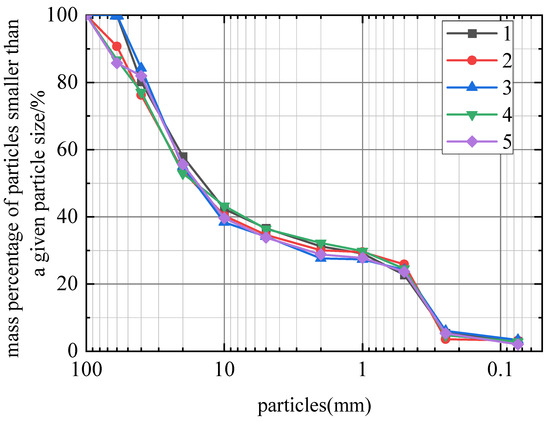
The test site was located at a foundation pit project in Luoyang New District. The foundation pit is roughly L-shaped, and the excavation depth is about 9.1 m to 10.1 m. The drilling position of the test anchor rod is located in gravel strata, mixed with some loess-like silty clay. The diameter of the gravel is generally 2–10 cm, with a maximum of 25 cm. The gravel strata have not yet been exposed, with a maximum exposed thickness of 16.1 m, an internal friction angle of 30°, a cohesion of 0 kPa, a weight of 20 KN/m3, and an ultimate bonding strength qsk of 0.08 Mpa. Five soil samples were collected for sieve analysis, with detailed parameters presented in Table 1. The grad curve of the gravel strata is shown in Figure 1 [18].
Table 1.
Grain size gradation test results.
Figure 1.
Undisturbed particle size gradation curve.
2.2. Experimental Materials and Equipment
The self-drilling anchor bolts used in this test were HER38N type (Φ38 mm), manufactured by Luoyang Heng Nuo Anchoring Technology Co., Ltd. The bolt bodies feature standard connection threads and were fabricated from heavy-wall seamless steel tubes with an 8 mm wall thickness. The yield force was 450 kN, the tensile strength was 550 kN, and the elongation was 8%. The drill bit was a ball-tooth all-steel drill bit; the connecting sleeve and the rod hade the same strength, and the cement was composite Portland cement P·C 42.5 produced by Tong Li.
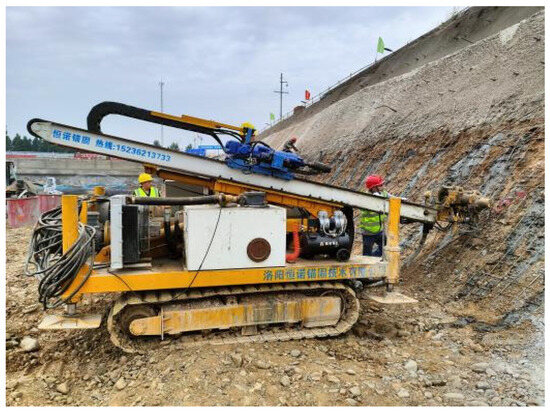
The drilling equipment used in the experiment is a dedicated self-drilling anchor rod drilling machine, which can simultaneously complete the two steps of self-drilling anchor rod drilling and grouting, as shown in Figure 2. The pull-out testing apparatus consists of a QF-100t hydraulic jack, a JCQ-503A static load tester, and a displacement transducer with a measurement range of 0–50 mm. The QF-100t hydraulic jack is produced by Taizhou Lefeng Hydraulic Machinery Manufacturing Co., Ltd., and the JCQ-503A static load testing machine is produced by Xuzhou Jianke Instrument Co., Ltd.
Figure 2.
Self-drilling anchor drilling equipment.
2.3. Experimental Plan
This field test comprised nine anchor bolts with lengths of 3 m, 4 m, 5 m, and 7 m. The grout mixture maintained a water-cement ratio of 0.6, with grouting conducted under 0.3 MPa injection pressure. Following natural curing for 28 days post drilling and grouting operations, pull-out tests were performed to determine the ultimate pull-out bearing capacity.
The pull-out test was conducted using a single-cycle loading protocol, with failure criteria determined in accordance with the Technical Specification for Retaining and Protection of Building Foundation Excavations (JGJ120-2012) [19].
2.4. Analysis of Test Results
A total of nine sets of valid results were obtained from the in situ tests, with the test outcomes summarized in Table 2 [20]. Given that the strata into which the test anchor bolts were drilled contained a certain depth of loess-like silty clay interbedded within the gravel strata, to analyze the ultimate pull-out bearing capacity of the anchor bolts in the gravel strata, anchor bolts No. 3-4, which were entirely situated within the clay layer, were selected. Using Equation (1), the ultimate bond strength in the clay was calculated to be 40 kPa. Subsequently, the ultimate pull-out bearing capacity of the self-drilling anchor bolts in the gravel strata was determined through Equation (2).
In the equation, Pk represents the standard value of the ultimate pull-out bearing capacity of the anchor bolt; d denotes the diameter of the anchor-solid; qsk signifies the standard value of the ultimate bond strength between the anchor-solid and the soil mass; la indicates the anchorage length of the anchor bolt; Pgravel, Pclay and Ptotal represent the ultimate pull-out bearing capacities of the anchor bolt in the gravel strata, clay strata, and both strata, respectively.
Table 2.
Summary of the results of the field test.
As indicated in Table 2, the ultimate pull-out capacity of anchor bolts in sandy gravel strata generally increases with anchorage length, though not in a strictly linear manner. When the anchorage length increases from 1.34 m to 2.25 m, the ultimate tensile strength increases from 54 kN to 165 kN, with a 68% increase in length and a 206% increase in tensile strength. When the anchorage length increased from 2.25 m to 3.75 m and 5.65 m, the ultimate tensile strength increased from 165 kN to 187 kN and 207 kN, with an increase length of 67% and 151%, and tensile strength growth of 13% and 25%. Therefore, for self-drilling anchors in sandy gravel strata, the anchorage length significantly influences the ultimate pull-out capacity when less than 2.25 m, while the impact of additional anchorage length gradually diminishes beyond this threshold.
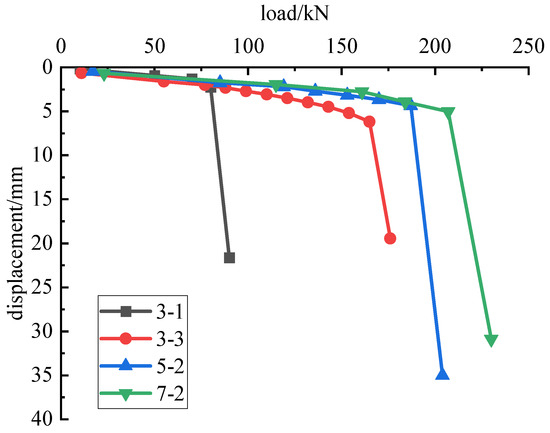
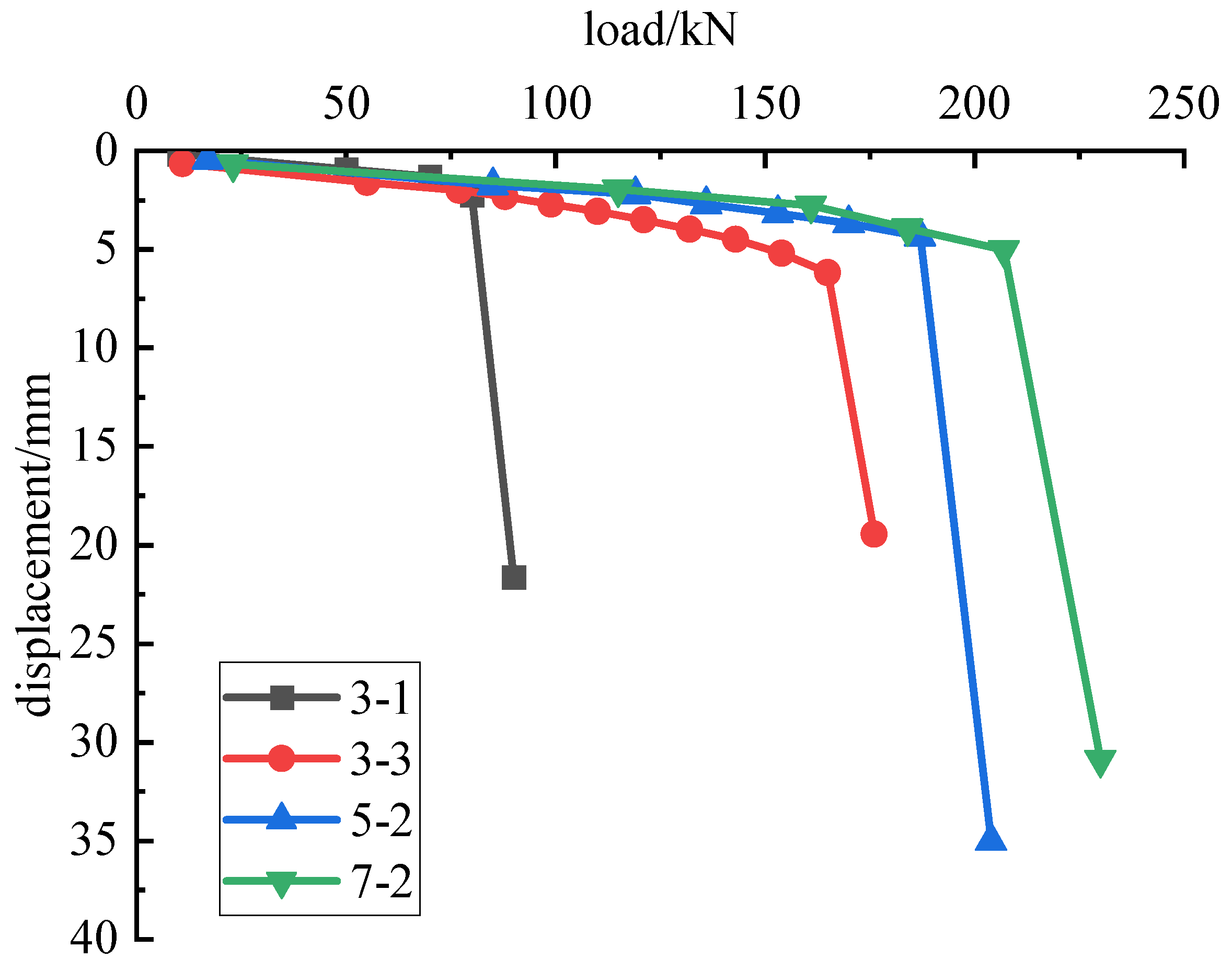
The load-displacement curves of anchor bolts macroscopically reflect the load transfer characteristics and failure patterns under varying pull-out forces. Four anchor bolts entirely embedded in gravel strata (designated as 3-1, 3-3, 5-2, and 7-2; see Figure 3) were selected for analysis. As shown in Figure 3, the load-displacement curves of these four self-drilling anchors exhibit similar patterns: quasi-linear behavior before reaching ultimate load capacity without fulfilling failure criteria, followed by abrupt displacement increase and distinct inflection points upon ultimate load attainment.
Figure 3.
Field test load-displacement curve.
This trend occurs because, during the initial loading phase, the bond strength at the anchor-soil interface primarily restricts anchor displacement, resulting in minimal displacements for all four bolts. As the applied load exceeds the interface bond capacity, localized relative slippage initiates between the anchor and soil, causing bond strength degradation. At this stage, the mechanical interlock between anchor thread and cement grout becomes dominant, inducing curve inflection while maintaining quasi-linear behavior with limited displacement. Upon reaching the ultimate pull-out capacity, a distinct inflection point appears on the load-displacement curve. Subsequent load increase triggers pull-out failure, characterized by an abrupt displacement surge and marked curve drop.
3. Indoor Tests
3.1. Experimental Materials and Equipment
The anchor rod used in this indoor test is the same model as the anchor rod used in the field test, which is a HER38N anchor rod with a diameter of 38 mm, The anchor rod is produced by Luoyang Hengnuo Anchor Technology Co., Ltd., China. The sandy gravel soil used in the test was sampled from the actual experimental site. The cement was Tong Li-produced Portland composite cement P·C 42.5.
The test equipment comprised grouting equipment, pull-out testing apparatus, and data acquisition systems.
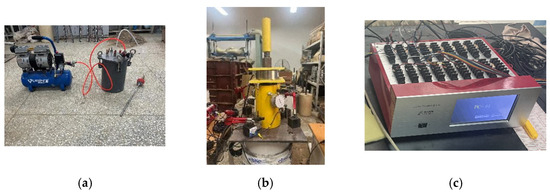
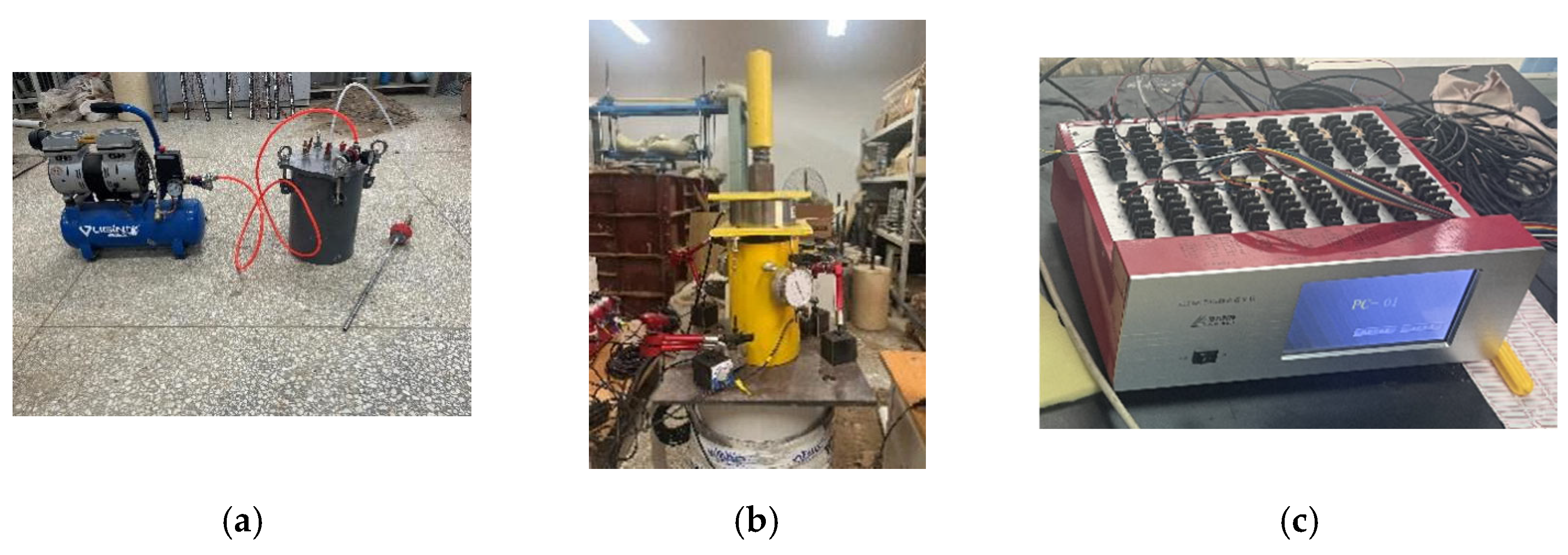
The grouting equipment primarily consists of an air compressor, pressure vessel, and grout outlet pipe, as illustrated in Figure 4a [18]. The air compressor provides a maximum pressure of 0.6 MPa with adjustable output via a control valve. The pressure vessel has an 8 L capacity and can withstand a maximum working pressure of 0.8 MPa. During operation, compressed air from the compressor enters the vessel through a pressure gauge, and once the internal pressure reaches the test requirement, the outlet valve is opened to discharge the grout at the desired pressure, which can be precisely controlled by adjusting the valve on the pressure gauge. The outlet pipe measures 580 mm in length and is connected to an 8 mm outer-diameter PTFE tube from the pressure vessel.
Figure 4.
Indoor test equipment: (a) grouting equipment; (b) pulling equipment; (c) data collection equipment.
The pull-out testing equipment primarily consists of a hydraulic jack and a manual pump. The hydraulic jack, model RCH-60100, is capable of providing a maximum load of 600 KN with a maximum working stroke of 100 mm. The RCH-60100 hydraulic jack is produced by Shanghai Yiying Machinery Co., Ltd., China. The manual pump is matched with the jack. The assembly method is shown in Figure 4b [18]. The load is applied using a manual pump, and the load of the jack is applied to the anchor rod through the reaction force provided by the pressure plate to achieve an upward pulling force. When the anchor rod undergoes upward displacement, the displacement is measured by a dial gauge and a displacement sensor.
The data acquisition system comprises a pressure transducer (50 T capacity), two dial gauges, two draw-wire displacement transducers, and a static strain gauge (model XL2101B5G) with dedicated data acquisition and analysis software, the static strain gauge (model XL2101B5G) is produced by Beijing Jinyang Wanda Technology Co., Ltd., China. As illustrated in Figure 4c, this configuration enables the continuous recording of load data from the pressure transducer and displacement data from both the dial gauges and draw-wire transducers during pull-out testing.
3.2. Preparation of Test Specimens
In the indoor pull-out test of anchor rods, scholars such as Xu Xin [14] used prefabricated anchor bodies to make specimens—that is, using molds to combine cement mortar with the rod body as a whole. This method can effectively simulate the construction process of drilling holes first, then placing anchor rods, and finally grouting ordinary anchor rods. However, since the drilling and grouting processes are concurrent in self-drilling anchors, the laboratory pull-out tests for self-drilling anchors adopted a modified specimen preparation method. By integrating insights from indoor soil grouting experiments, the researchers first injected grout into the prepared soil mass and promptly inserted the anchor rod to replicate the simultaneous drilling-grouting effect observed in field operations.
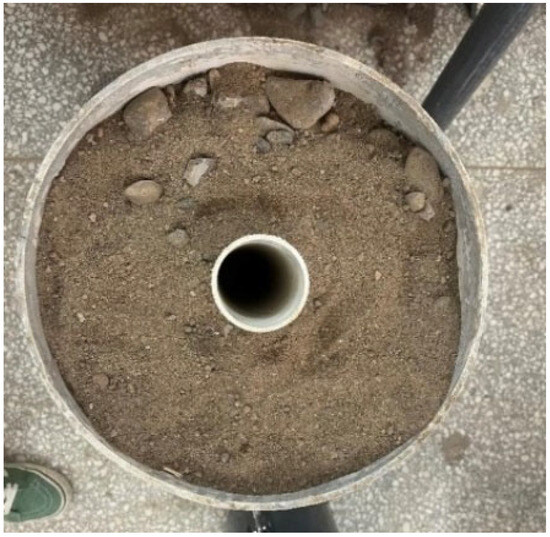
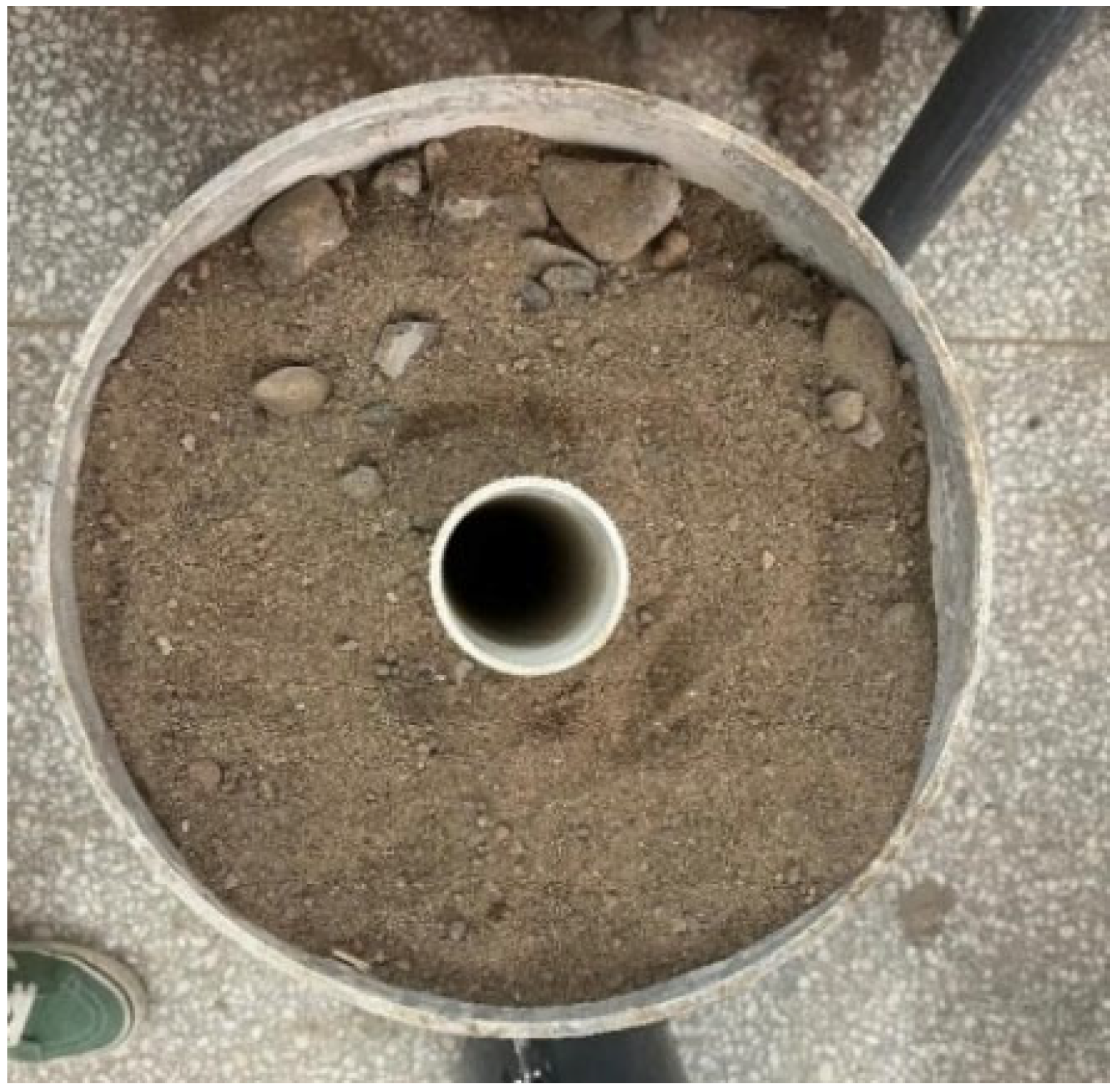
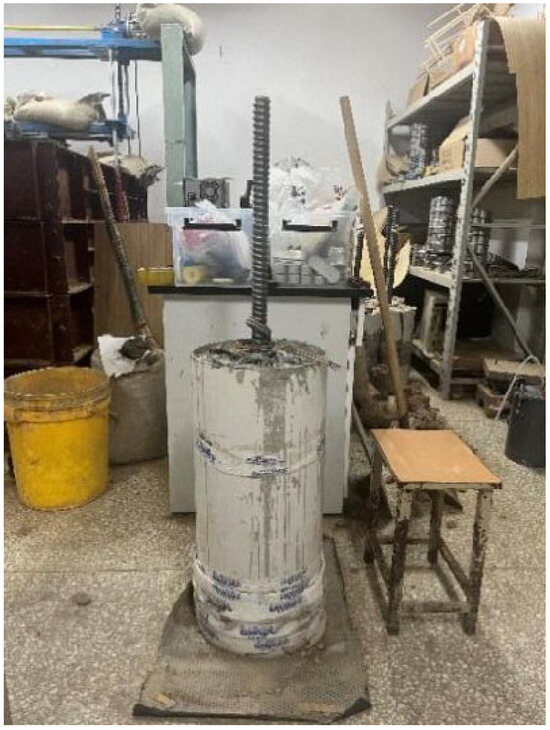
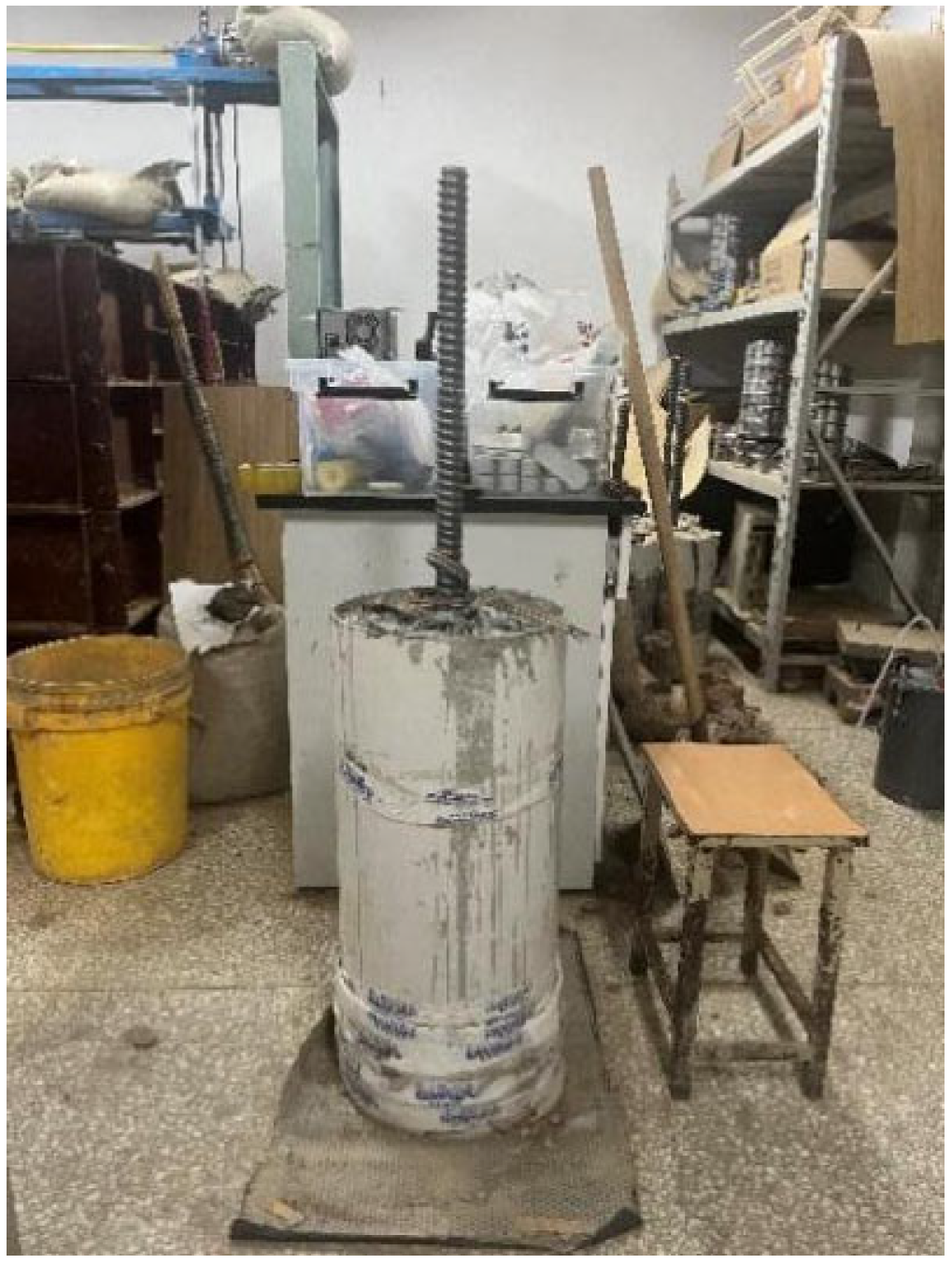
The specimen mold was a PVC pipe measuring 31 cm in diameter and 70 cm in height. During specimen preparation, a 15 cm-thick layer of sandy gravel soil was first compacted at the mold bottom. A 66 mm-diameter PVC pipe was then centrally placed as a grouting tube to simulate the borehole created by a 76 mm self-drilling anchor bit in soil strata. The annular space between the two PVC pipes was subsequently backfilled with soil, with the soil mass controlled by calculating the bulk density and mold volume, as shown in Figure 5 [18]. After soil placement, cement grout was injected under varying pressures using grouting equipment. Upon grout completion, the anchor rod was centrally inserted into the grouting tube, which was then extracted, finalizing the specimen casting. After 28 days of curing, pull-out tests were conducted.
Figure 5.
Filling completed.
Due to the excessive particle size variation in the field-collected sandy gravel soil samples, with large particles being difficult to fit into the mold, the graded scaling method via equal-volume substitution was employed to adjust the original gradation. This method primarily involves proportionally replacing particles within a range between the maximum particle size and 5 mm in the laboratory soil samples. After substitution, while maintaining the same mass proportions of particles larger than 5 mm and smaller than 5 mm, the distribution of large particles becomes more uniform, resulting in soil specimens that better represent actual engineering site conditions [21,22]. The computational expression is shown in Equation (3).
where is the content of large particle size particles after equal replacement, is the content of particles with a particle size greater than 5 mm, represents the percentage content of a specific particle group i in the original gradation, where the particle size is greater than 5 mm but does not exceed the permitted maximum particle size and is the content of oversized particles in the original gradation. Here it is 60 mm.
As shown in Figure 2 above, the average mass proportion of particles smaller than 5 mm in the field-collected sandy gravel soil samples is approximately 35%. Based on the particle size distribution curve of the second group of soil samples, the maximum particle size taken from the on-site soil sample can reach 100 mm. However, in the screening test of the second group of soil samples, particles with a particle size range of 60 mm to 100 mm only account for 9.25%. To minimize the impact of gradation scaling on the permeability properties of sandy gravel soil, the maximum particle size was controlled at 60 mm, with particles in the original gradation range of 60–100 mm being equally replaced by 5–60 mm fractions on a mass basis.
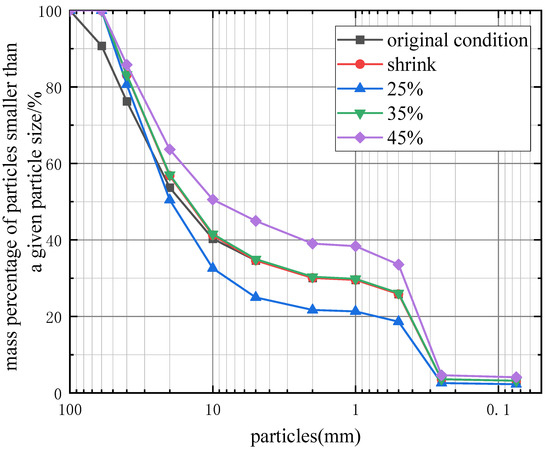
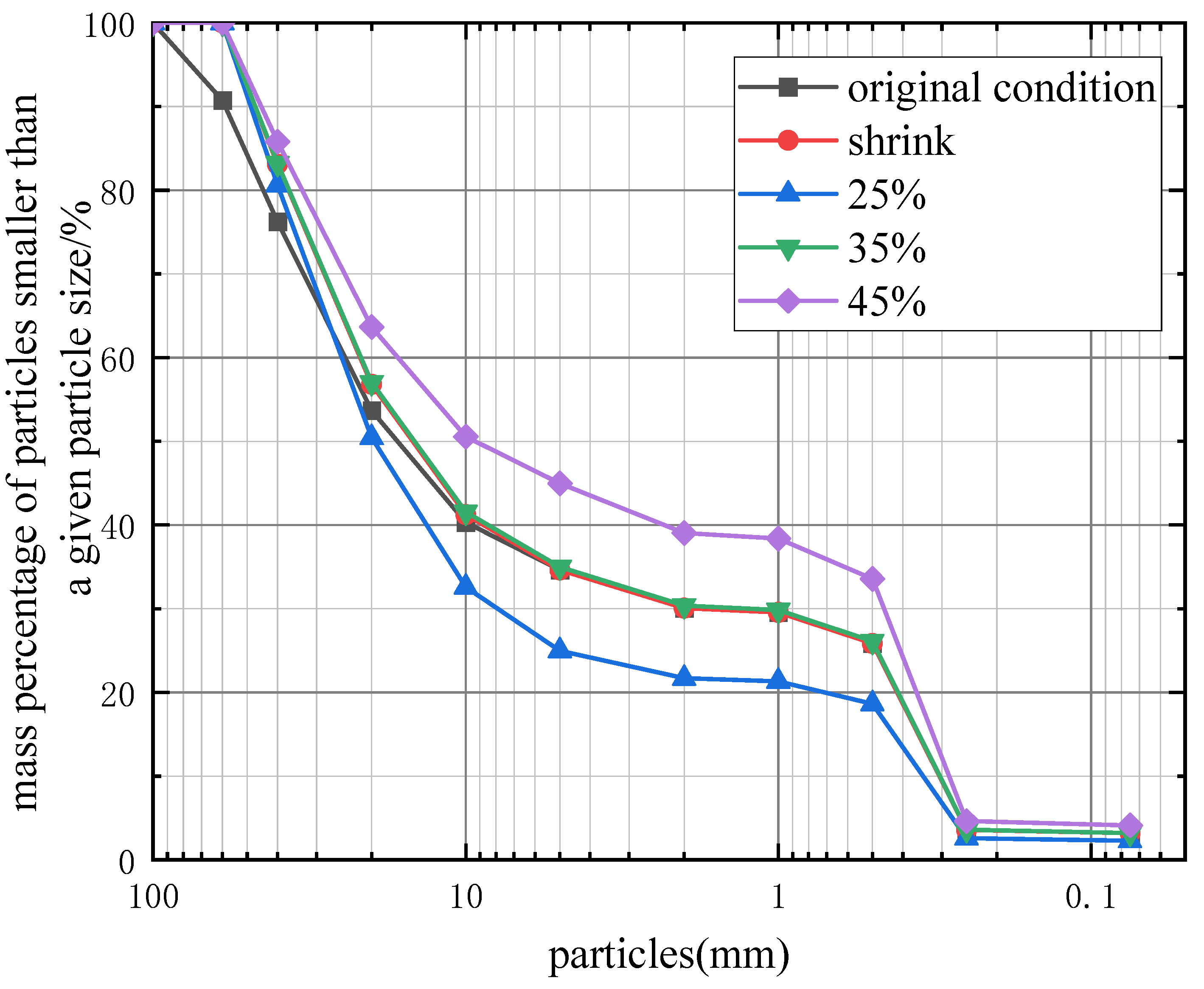
In this indoor experiment, the proportion of fine particles was used as the independent variable—that is, the mass proportion of particles with a particle size of less than 5 mm. Three different soil samples with different proportions of fine particles were prepared based on the grading curve of the second group of soil samples after shrinkage for comparative analysis. After scaling, the fine particle content in the second soil sample group was 34.64%. For this test, three levels of fine particle proportion were set at 25%, 35%, and 45%. The scaled soil particle size distributions and the size distribution data for the three independent variables are presented in Table 3 [18], with corresponding grain size distribution curves shown in Figure 6 [18].
Table 3.
Particle size distributions of scaled soil specimens and three independent variables.
Figure 6.
Particle size distribution curves for scaled soil specimens and laboratory test samples.
Yang Ren Kai et al. [23] conducted grouting experiments in indoor sand and gravel strata, assuming that the slurry diffuses uniformly in the formation, and controlled the grouting volume using a single hole. Therefore, during the grouting process of the test specimen in this experiment, the calculation expression for the grouting amount is shown in Equation (4):
where is the grouting diffusion radius, is the grouting section length, is the porosity of the soil layer, and is the grouting loss coefficient.
After grouting is completed, the anchor rod is quickly inserted and cured for 28 days before conducting an anchor rod pull-out test. The complete specimen is shown in Figure 7 [18].
Figure 7.
Pouring completed.
3.3. Experimental Plan
This study employs an orthogonal experimental design comprising nine test groups, with an anchor bolt bonding length fixed at 500 mm. The experimental investigation focuses on three variables: grouting pressure, water–cement ratio, and fine particle content in soil. Assuming no interaction effects among these factors, the experiments are arranged using a three level, three factor orthogonal table (L9(33)). Test specimens are named sequentially as “Fine Particle Content-Grouting Pressure-Water-Cement Ratio”(see Table 4 [18]). For laboratory pull-out testing, a stepwise loading method is adopted, with incremental loads applied as follows: 0 → 5 → 10 → 15 → 20 → 25 → 30 KN, etc., until specimen failure. Observation periods and failure criteria align with field testing protocols, judged in accordance with the Technical Specification for Retaining and Protection of Building Foundation Excavations (JGJ120-2012) [19].
Table 4.
Indoor orthogonal test scheme.
4. Analysis of Laboratory Test Results
4.1. Analysis of Test Results
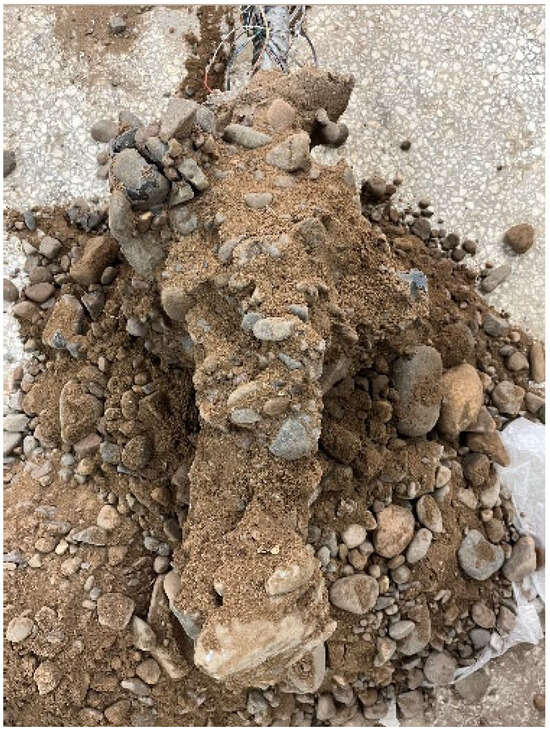
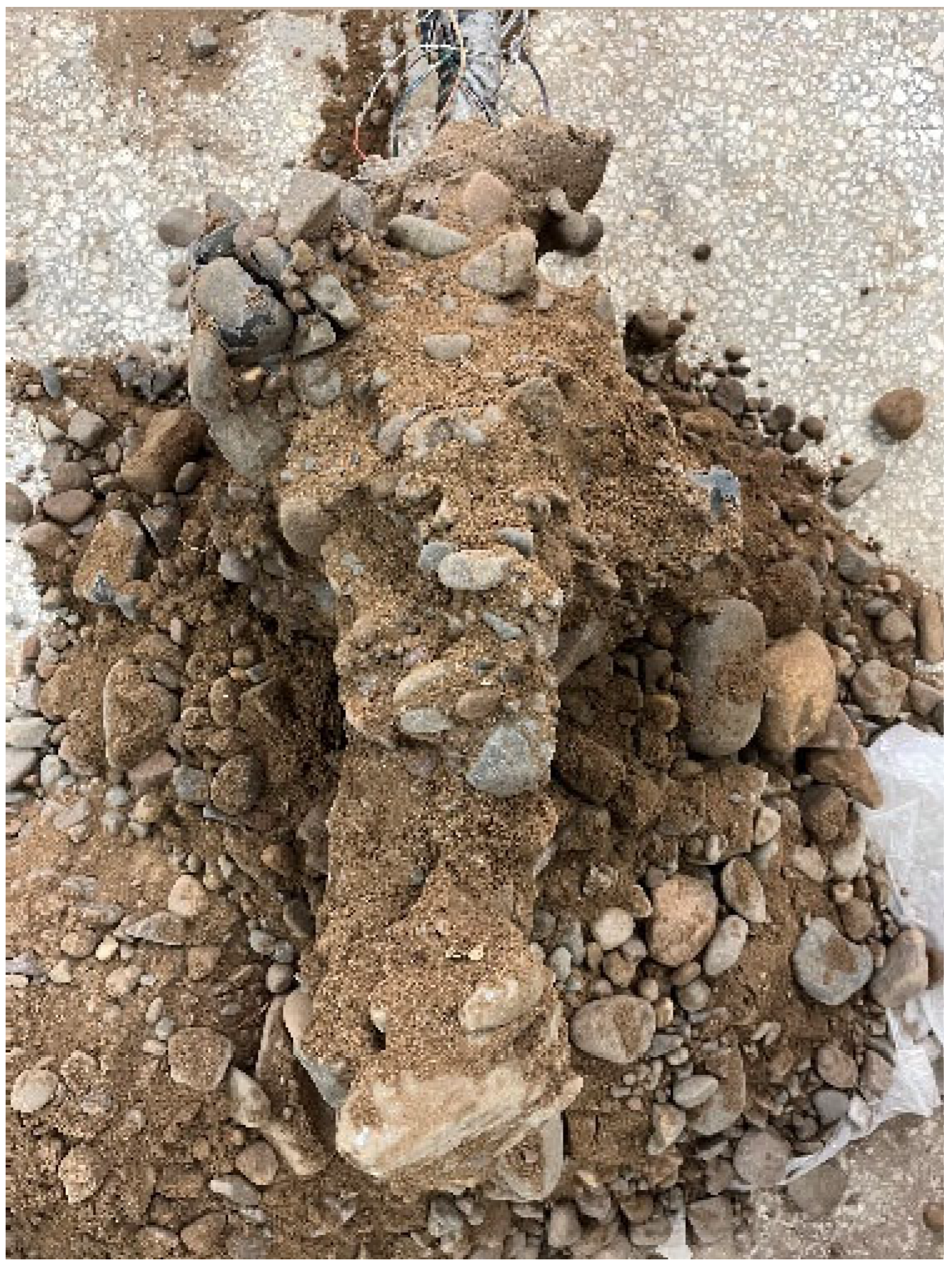
Scholars such as You Zhi Jia [24] proposed that the bearing capacity of anchor bolt mainly depends on the failure mode of the anchor body, and there are four main types of anchor body failure mode: fracture of anchor rod body, sliding failure between anchor rod body and anchor body, sliding failure between anchor body and soil, and failure of rock and soil mass. The primary failure mode manifests as slippage between the anchor body and soil mass, with specimens exhibiting larger stress diffusion ranges showing fragmentation of the anchor body. The overall anchor body presents an inverted conical shape, as illustrated in Figure 8 [18].
Figure 8.
Morphology of the anchor body after the pull-out test of the specimen.
As shown in Table 5 [18], a total of nine sets of valid data were obtained from this laboratory test. After completion of the pull-out tests, the specimens were disassembled to measure the anchor body diameters. The average bond strength of the anchor bolts was calculated using Equation (3), yielding a minimum average bond strength of 0.119 MPa, which exceeds the site-recommended value of 0.11 MPa. According to the test results, all anchor bodies exhibited varying degrees of fragmentation upon pull-out termination, with more severe edge damage observed in anchor bodies with larger diameters. Consequently, the accurate calculation of the effective anchorage range could not be determined. However, there was no significant damage to the anchor body within the grouting pipe range. Therefore, the concept of equivalent bonding strength was proposed, which was calculated based on the anchoring range of a 66 mm diameter grouting pipe, and the data results were analyzed based on the equivalent bonding strength in the future. By calculating the equivalent bond strength through Equation (5), the minimum value obtained is 0.174 MPa, which is greater than the recommended value for the site. The results indicate that self-drilling anchor bolts demonstrate superior anchoring performance in sandy gravel strata. Furthermore, the average bond strength increases with decreasing fine particle content in the soil matrix.
where Pgravel is the maximum load capacity of the anchor bolt/KN, d is the anchor diameter/mm, lgravel is the anchor length/m, and τ is the bond strength at the interface between the anchor body and sandy gravel soil/MPa.
Table 5.
Results of indoor test data.
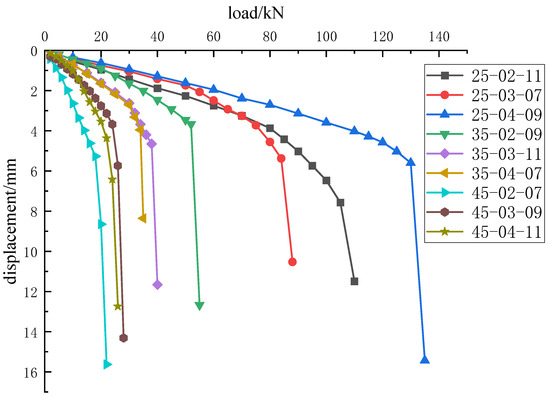
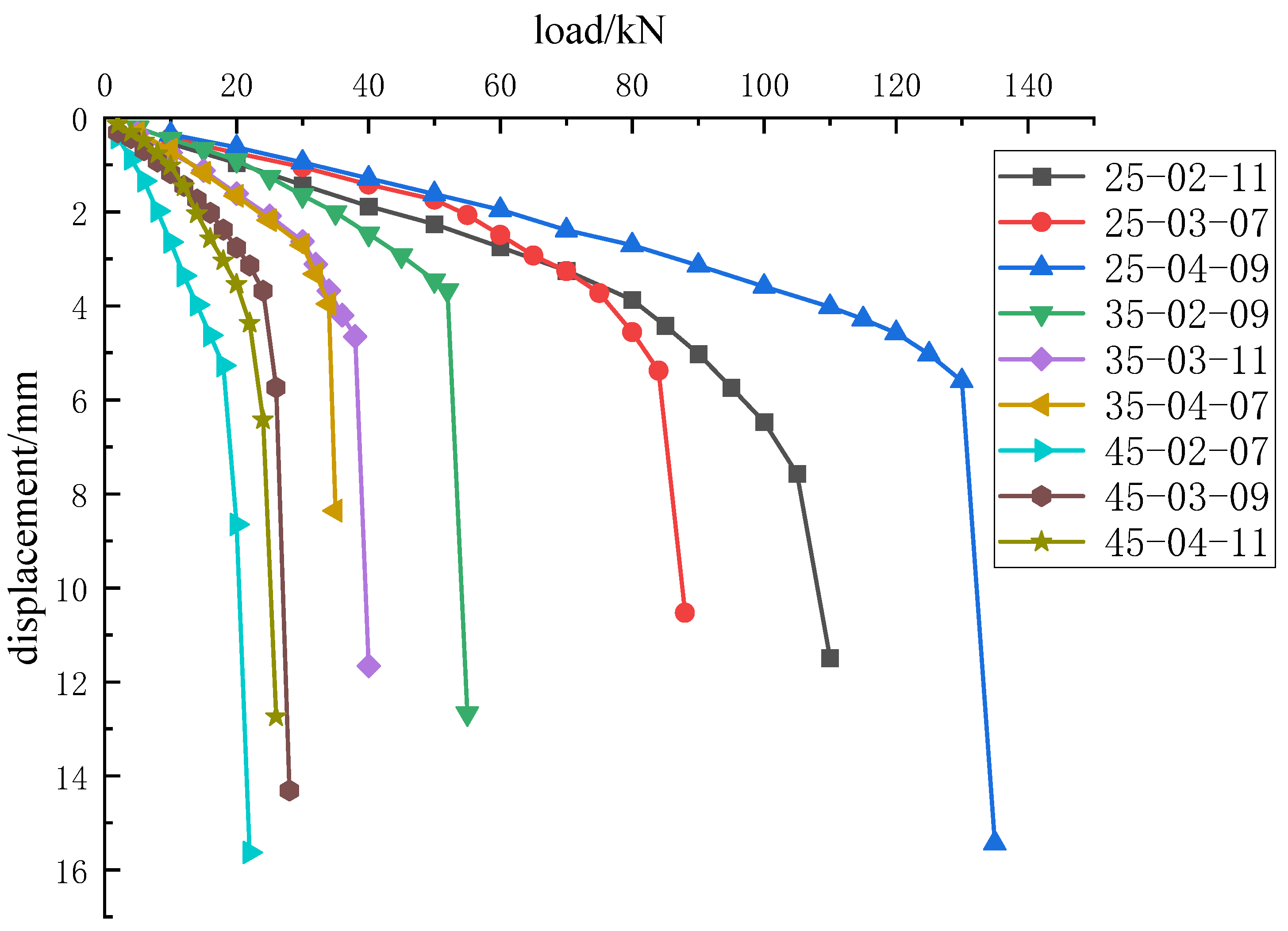
As illustrated in Figure 9 [18], the load-displacement curve patterns obtained from nine sets of laboratory anchor bolt tests exhibit identical trends to those from field experiments. Both demonstrate near-linear behavior before reaching ultimate load capacity. However, at the ultimate load point, no abrupt displacement jump occurs; instead, the load remains constant while displacement continues to increase. This phenomenon defines the corresponding load value as the peak pull-out force.
Figure 9.
Load-displacement curves from laboratory testing.
The underlying causes of this observed trend align with those identified in field experiments. However, due to the limited anchor bond length of 500 mm in laboratory tests, the interfacial bond strength between the grouted body and test soil significantly underperforms compared to field conditions. This disparity results in persistent relative sliding at the interface throughout the pull-out process. Upon reaching ultimate load capacity, while the bond strength of the grouted body becomes insufficient to resist the pull-out force, the applied load has not yet attained the failure strength of the anchorage system. Consequently, uniform outward displacement of the entire grouted body occurs, manifesting as a continued displacement increase without corresponding load escalation.
4.2. Range Analysis
Through range analysis, the influence sequence of each factor on the peak pull-out force, ultimate displacement, anchor-solid diameter, and equivalent bond strength can be determined, as shown in Table 6 [18]. denotes the sum of experimental results corresponding to the i-th level of each factor; represents the average value of experimental results corresponding to the i-th level of a specific factor; represents the difference between the maximum and minimum average test outcomes across all levels of the factor.
Table 6.
Pull-out peak range analysis of the bolts.
Through range analysis of laboratory test results for self-drilling anchors, the primary-secondary influence sequence of each factor on individual outcomes was determined. For peak pull-out force and equivalent bond strength, the factor hierarchy is fine particle proportion > water-cement ratio > grouting pressure. For ultimate displacement and anchorage body diameter, the influence sequence is fine particle proportion > grouting pressure > water-cement ratio.
4.3. Analysis of Variance
Building upon the range analysis, further investigation into the significance levels of each factor was conducted through analysis of variance, as detailed in Table 7 [18]. In this orthogonal experimental design, all factors maintained two degrees of freedom. By selecting significance levels of α = 0.01 and α = 0.1, the calculated statistics Fi for each factor were compared against critical values F1−α to determine their statistical significance on peak pull-out force, ultimate displacement, anchorage body diameter, and equivalent bond strength.
Table 7.
Analysis of variance for peak pull-out force of anchor bolts.
As shown in Table 7, the proportion of fine particles exhibits highly significant effects on the peak pull-out force, anchorage body diameter, and equivalent bond strength, while demonstrating a significant effect on the ultimate displacement. These findings indicate that self-drilling anchors achieve superior anchorage performance in soil layers with lower fine particle content. In contrast, the grouting pressure shows a significant influence only on the anchorage body diameter, with non-significant effects observed for the other parameters. This indicates that controlling grouting pressure only has a significant impact on the size of the anchor body, and the effect on improving the anchoring performance of self-drilling anchor rods is not very significant. The water-cement ratio demonstrated significant effects on the peak pull-out force, anchorage body diameter, and equivalent bond strength, while exhibiting a non-significant influence on ultimate displacement. This discrepancy is likely attributed to variations in interfacial strength between the grouted anchorage body and the surrounding soil under different water-cement ratio conditions. By optimizing the water-cement ratio, the interfacial bond strength can be enhanced, thereby improving the anchorage performance of self-drilling anchors.
The consistency between the primary-secondary factor ranking derived from the analysis of variance and that obtained via range analysis validates the scientific robustness of the factorial effects on peak pull-out force, ultimate displacement, anchorage body diameter, and equivalent bond strength, as well as the accuracy of their statistical significance assessments. Notably, the fine particle proportion emerged as the most influential factor in this experimental system, with lower values correlating with enhanced anchorage performance of self-drilling anchors. This finding suggests that in heterogeneous soil strata characterized by uneven particle distribution, self-drilling anchors demonstrate superior support capacity.
4.4. Variable Sensitivity Analysis
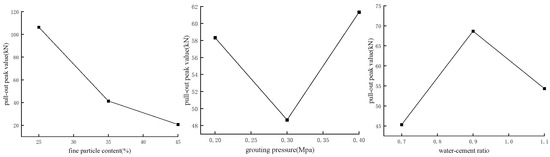
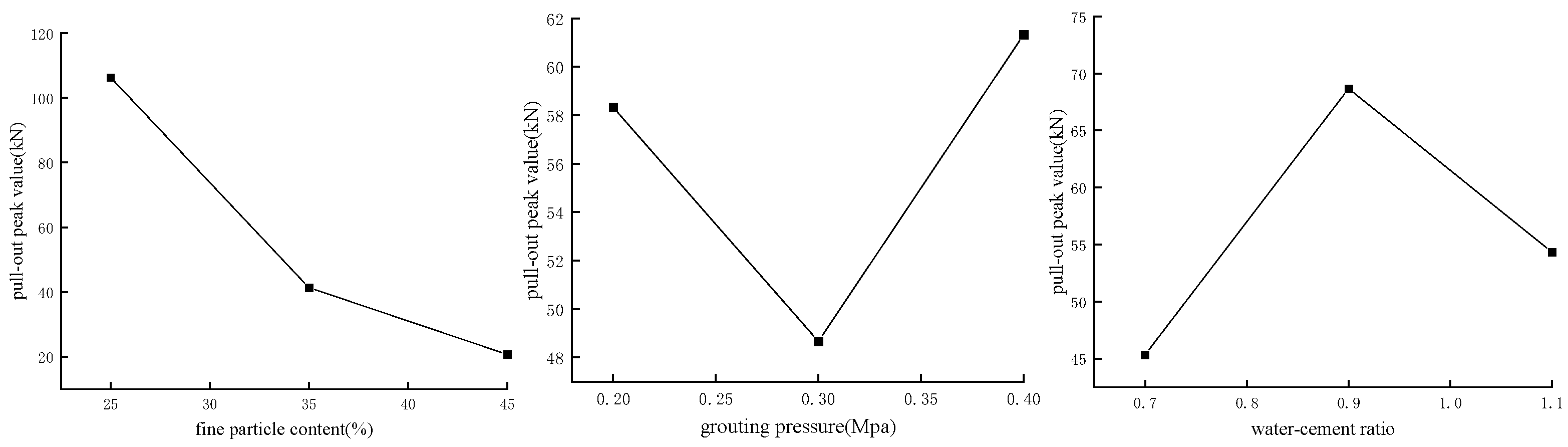
The predominant failure mode observed in this experimental study was interfacial slip failure between the anchorage body and surrounding soil. Consequently, in-depth investigation of the mechanical parameters governing the anchorage-soil interface holds significant importance for enhancing the anchorage performance of self-drilling anchors and establishing standardized design protocols. Through a comprehensive comparison of experimental results, a sensitivity analysis of factor impacts on peak pull-out force was conducted based on the range analysis data from Table 6. This approach enables a more intuitive visualization of the influence trends for each factor, as illustrated in Figure 10 [18].
Figure 10.
Sensitivity analysis of factor impacts on peak pull-out force.
As shown in Figure 9, the peak pull-out force is influenced by fine particle content, grouting pressure, and water-cement ratio. Grouting Pressure: This initially decreases and then increases with elevated grouting pressure. Water-Cement Ratio: Similar to the anchorage length in field tests, a critical threshold exists. Within this threshold, the peak pull-out force increases with rising water-cement ratio, while it decreases beyond the critical value.
Notably, the fine particle content exhibits the most pronounced influence on peak pull-out force. When fine particle proportion is relatively low, the soil matrix demonstrates higher porosity, enabling more uniform grout diffusion with an extended penetration range. This enhances the contact area between the anchor body and soil, thereby increasing pull-out resistance. Conversely, with elevated fine particle content, soil porosity decreases, while the heterogeneous distribution of gravel particles in sand gravel strata obstructs grout flow. Non-uniform grout penetration occurs at the same elevation, resulting in irregular interfacial bond strength. Once a localized failure initiates at the interface, it accelerates the catastrophic failure of the entire anchorage system.
5. Conclusions
Through field experiments, this study investigated the influence of varying anchorage lengths on the load-displacement curves of self-drilling anchors in sand gravel strata. Based on these findings, orthogonal laboratory tests were conducted to examine the effects of fine particle content, grouting pressure, and water-cement ratio, as follows:
(1) Self-drilling anchors exhibit a critical anchorage length. When the anchorage length is below this critical threshold, it significantly influences the pull-out capacity; conversely, when exceeding the critical value, the marginal effect of anchorage length on pull-out resistance diminishes substantially. Therefore, in engineering practice, an optimal anchorage length can be selected to achieve cost-effective construction while ensuring the desired anchorage performance.
(2) Through on-site and indoor tests, it was found that the failure of self-drilling anchor bolts is mainly due to the interface damage between the anchor body and the soil, and a load displacement curve with the same trend was obtained. The load-displacement curve exhibits a quasi-linear behavior before reaching the peak pull-out force. During this phase, although the displacement increment at each loading stage progressively increases, the failure criterion is not yet met, resulting in non-linear curve progression until the ultimate load capacity is attained. At this point, a sudden displacement surge occurs, accompanied by a distinct inflection point on the curve.
(3) The primary-secondary order of influence of orthogonal test factors on the peak pull-out force and equivalent bond strength is as follows: fine particle proportion > water-cement ratio > grouting pressure. For ultimate displacement and anchor-solid diameter, the order is as follows: fine particle proportion > grouting pressure > water-cement ratio. By optimizing the water-cement ratio and grouting pressure for sandy gravel soil layers with different particle size gradations, the anchorage stability of self-drilling anchors in sandy gravel strata can be maximally enhanced.
(4) The peak pull-out force decreases with an increase in the fine particle proportion. It initially decreases and then increases with rising grouting pressure. For the water-cement ratio, a critical threshold exists: within the critical range, the peak pull-out force increases with higher water-cement ratios; beyond this threshold, it decreases as the water-cement ratio continues to rise.
Author Contributions
Conceptualization and Funding acquisition, F.L.; Formal analysis and Writing—review and editing, K.L.; Investigation and data curation, M.Z.; project administration and writing—original draft, X.G.; resources and supervision, C.W.; validation, X.C.; visualization, Y.Z.; All authors have read and agreed to the published version of the manuscript.
Funding
This research was funded by the National Natural Science Foundation of China (grant number 52104082).
Data Availability Statement
The data used to support the findings of this study are available from the corresponding author upon request.
Acknowledgments
We gratefully acknowledge the experimental facilities provided by the Civil Engineering Laboratory of Henan University of Science and Technology.
Conflicts of Interest
All authors declare that the research was conducted in the absence of any commercial or financial relationships that could be construed as a potential conflict of interest.
References
- Sun, Y.; Zhao, Y.; Zhang, D. Surface subsidence of pit-in-pit foundation in sand–cobble stratum in the Beijing area. Proc. Inst. Civ. Eng. -Ground Improv. 2019, 172, 96–107. [Google Scholar] [CrossRef] [Scilit]
- Huang, J.; Xu, P.; Huang, Z. Settlement Analysis of Mud-Water Shield Passing Full-Face Water-Rich Sand and Cobble Stratum Under Luo River. Geotech. Geol. Eng. 2023, 42, 535–542. [Google Scholar] [CrossRef] [Scilit]
- Song, X.; Tan, Y.; Liu, J.; Liu, Y.; Ma, G. Mesoscopic mechanisms of collaborative working of composite soil nail-anchor supporting wall subjected to tension. Chin. J. Rock Mech. Eng. 2019, 38, 591–605. [Google Scholar]
- Zhang, S.; Yu, Z.; Liu, K. Instability analysis and reinforcement treatment of a soft soil foundation pit with composite soil nailing wall support structure. Build. Struct. 2022, 52, 2419–2422. [Google Scholar]
- Ma, Y.; Xiong, H.; Wang, C.; Fu, Y.; Kong, G. Application of Self-drilling Anchor in Foundation Excavation with Deep Filling Soil. Constr. Technol. 2020, 49, 171–173. [Google Scholar]
- Huang, Z.; Zeng, N.; Zhang, D.; Argyroudis, S.; Mitoulis, S.-A. Resilience Models for Tunnel Recovery After Earthquakes. Engineering 2025, 54, 320–345. [Google Scholar] [CrossRef] [Scilit]
- Knox, G.; Hadjigeorgiou, J. Performance of Conventional and Energy-Absorbing Self-Drilling Hollow Core Rockbolts Under Controlled Laboratory Conditions. Rock Mech. Rock Eng. 2023, 56, 4363–4378. [Google Scholar] [CrossRef] [Scilit]
- Chernyatin, D.; Kharichkin, A.; Galimov, I. Interaction of loaded anchor models using self-drilling bars of different lengths with soil. Int. J. Phys. Model. Geotech. 2026, 26, 1–11. [Google Scholar] [CrossRef] [Scilit]
- Li, J.; Zhang, X.; Li, G. Research on the Self-Drilling Anchor Pull-Out Test Model and the Stability of an Anchored Slope. Appl. Sci. 2025, 15, 5132. [Google Scholar] [CrossRef] [Scilit]
- Li, Y. Application on Self-drilling Anchor in Slope of Sand and Gravel Layer. Site Investig. Sci. Technol. 2012, 24–25, 29. [Google Scholar] [CrossRef]
- Wu, H. Analysis of self-drilling anchor technique in deep foundation pit support of a site in the mountainous area of southern Anhui Province. Nonferrous Met. Abstr. 2023, 38, 79–82. [Google Scholar]
- Chen, X.; Gao, X.; Song, Y.; Yang, H.; Zhao, M.; Wang, C. Field test study on anchoring performance of self-drilling anchor bolt in sandy cobble stratum. Archit. Technol. 2024, 55, 464–467. [Google Scholar]
- Xiong, L.; Yu, L. Analyses of uniaxial compressive mechanical properties and anisotropic characteristics of anchored rock mass. Hydrogeol. Eng. Geol. 2018, 45, 52–58. [Google Scholar]
- Zi, X.; Wang, B.; Yu, W.; Zhong, G. Distribution Characteristics of Prestressed Field of End-Anchored Bolts. Tunn. Constr. 2023, 43, 1750–1759. [Google Scholar]
- Tao, W.; Wu, P.; Chen, T.; Xie, C.; Zhao, H.; Tang, B.; Li, F. Experimental research on optimization of anchorage bearing characteristics based on bolt pull-out test. Coal Sci. Technol. 2022, 50, 10–19. [Google Scholar]
- Zhuo, Z.; Rentai, L. Theoretical and experimental study on one dimensional fracture grouting in soil medium. Sādhanā 2020, 45. [Google Scholar] [CrossRef] [Scilit]
- Cheng, S.; Yang, F.; Dai, Y.; Yang, Z.; Shi, Y. An Experimental Research on Crack Propagation Regularity During Fracture Grouting. IOP Conf. Ser. Earth Environ. Sci. 2021, 651, 032047. [Google Scholar] [CrossRef] [Scilit]
- Gao, X.; Zhao, M.; Wang, C.; Chen, X.; Zhang, Y. Study on the Influencing Factors of Grouting Anchorage for Self-Drilling Bolts in Sandy Pebble Strata. Appl. Sci. 2025, 15. [Google Scholar] [CrossRef] [Scilit]
- JGJ 120-2012; Technical Specification for Retaining and Protection of Building Foundation Excavations. China Building Industry Press: Beijing, China, 2012.
- Chen, X. Study on the Anchoring Performance and Load Transfer Mechanism of Self-Drilling Anchors in Sand and Pebble Formations. Master’s Thesis, Henan University of Science and Technology, Luoyang, China, 2024. [Google Scholar]
- Yin, J. Study on Rheological Properties of Sandy Cobbly Soil and Its Application. Master’s Thesis, Central South University, Changsha, China, 2014. [Google Scholar]
- Huang, X.; Zheng, Z.; Feng, C.; Luo, X. Test Analysis and Study on Groutability of Sandy Cobble Stratum. Hunan Hydro Power 2023, 42–45. Available online: http://223.220.252.164:888/KCMS/detail/detail.aspx?filename=HNSL202301008&dbcode=CJFD&dbname=CJFD2023 (accessed on 14 January 2026).
- Yang, R.; Zhang, S.; Liu, J.; Tao, H.; Tian, H. Application Research on Polymer Material Grouting in Loose Sand Soil Reinforcement. China Munic. Eng. 2021, 95–97+114. [Google Scholar] [CrossRef]
- You, Z.; Fu, H.; You, C.; Zhang, J.; Shao, H.; Bi, D.; Shi, J. Stress transfer mechanism of soil anchor body. Rock Soil Mech. 2018, 39, 85–92+102. [Google Scholar]
- Zhao, N.; Tao, W.; Shen, R.; Hu, Y.; Li, H.; Tang, B. Study on numerical simulation test of bolt pull-out. Fujian Build. Mater. 2024, 10–13. Available online: https://qikan.cqvip.com/Qikan/Article/Detail?id=7111386966&from=Qikan_Search_Index (accessed on 14 January 2026).
- Qu, H.; Liu, Z.; Chen, S.; Wang, L.; Huang, W. Study on the Effect of Rock Bolting Parameters on Rock Explosion Prevention. Chin. J. Undergr. Space Eng. 2023, 19, 326–333+342. [Google Scholar]

Disclaimer/Publisher’s Note: The statements, opinions and data contained in all publications are solely those of the individual author(s) and contributor(s) and not of MDPI and/or the editor(s). MDPI and/or the editor(s) disclaim responsibility for any injury to people or property resulting from any ideas, methods, instructions or products referred to in the content. |
© 2026 by the authors. Licensee MDPI, Basel, Switzerland. This article is an open access article distributed under the terms and conditions of the Creative Commons Attribution (CC BY) license.