Influence of Fines Content and Particle Shape on Limiting Void Ratios of Sand Mixtures: DEM and AI Approaches



Abstract
1. Introduction
2. Research Methods
2.1. Experimental Program
2.2. Simulation of Minimum and Maximum Void Ratios
2.3. Validation of Contact Model Parameters
2.4. Particle Morphology Parameters
3. Results
3.1. Minimum and Maximum Void Ratios
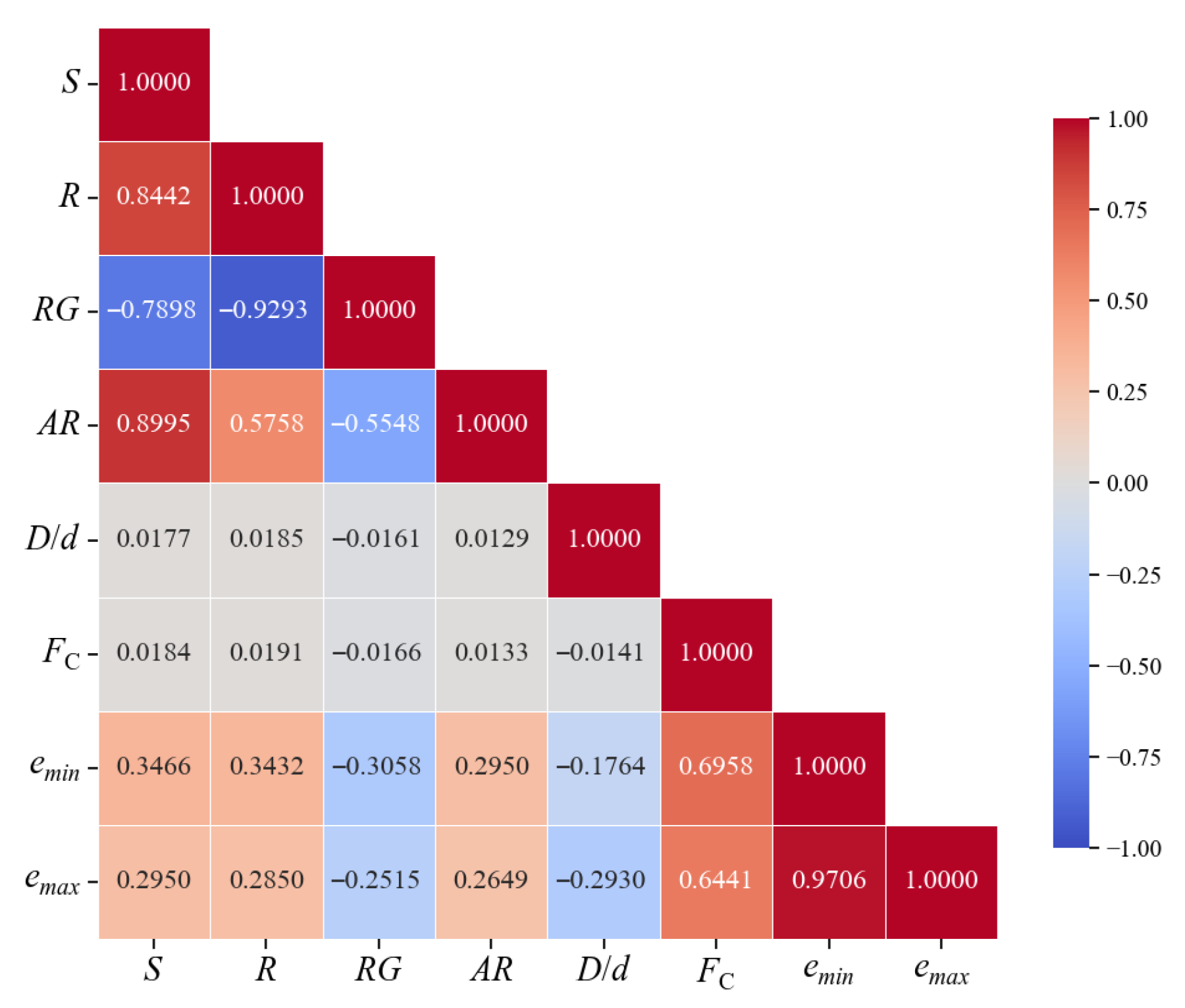
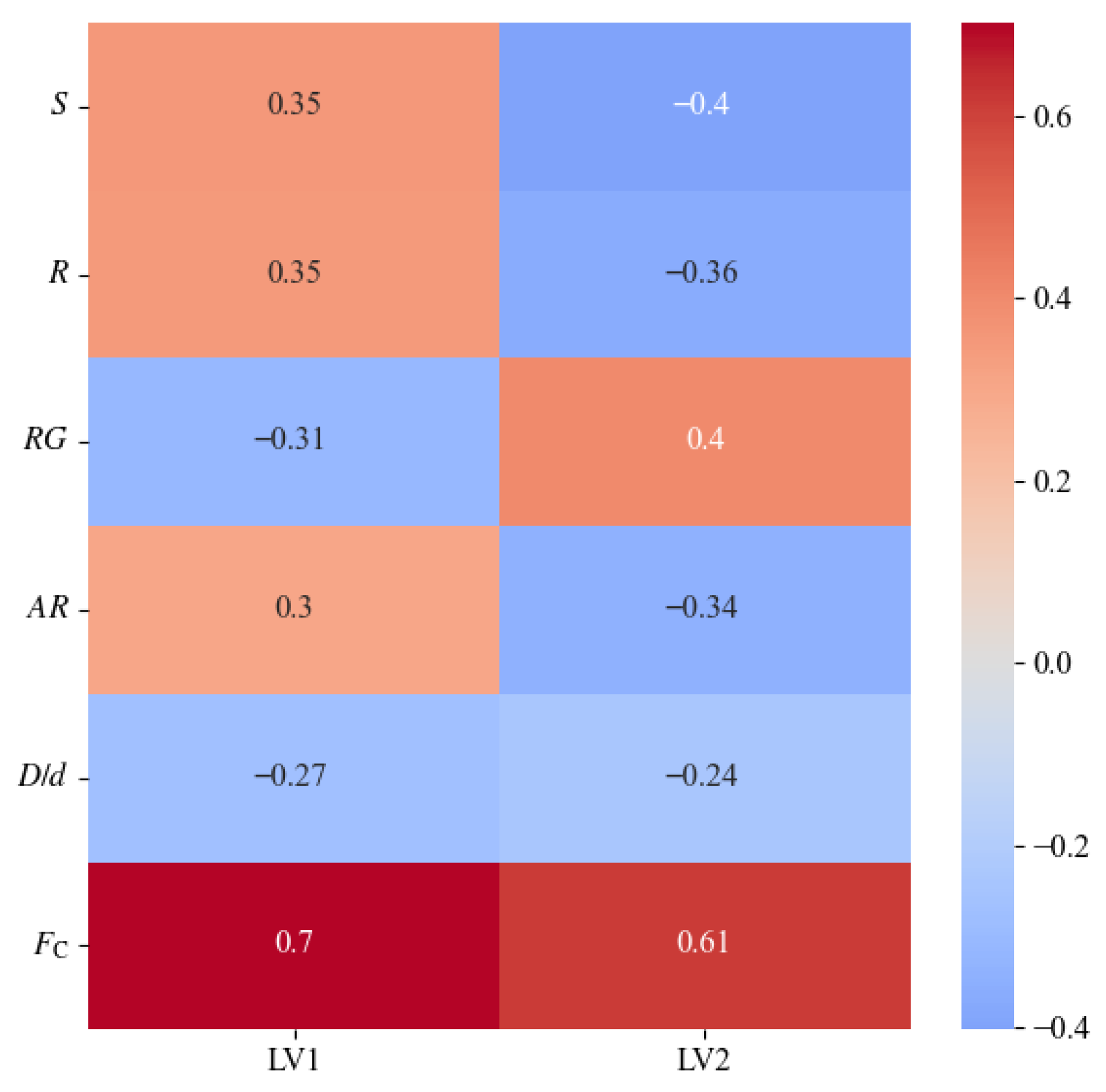
3.2. Pearson Correlation Coefficient Analysis and PLS Analysis
3.2.1. Pearson Correlation Analysis
3.2.2. Partial Least Squares Analysis (PLS)
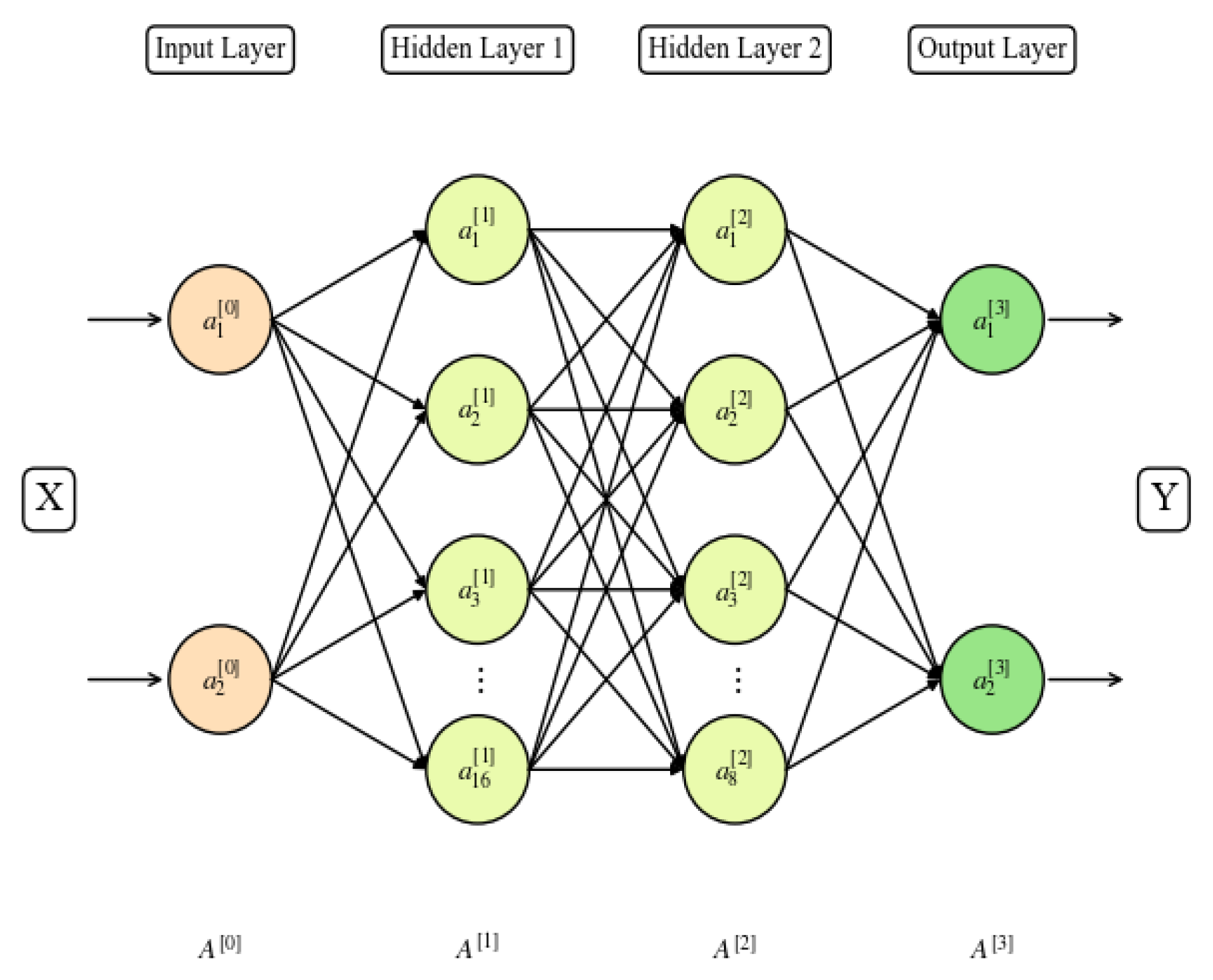
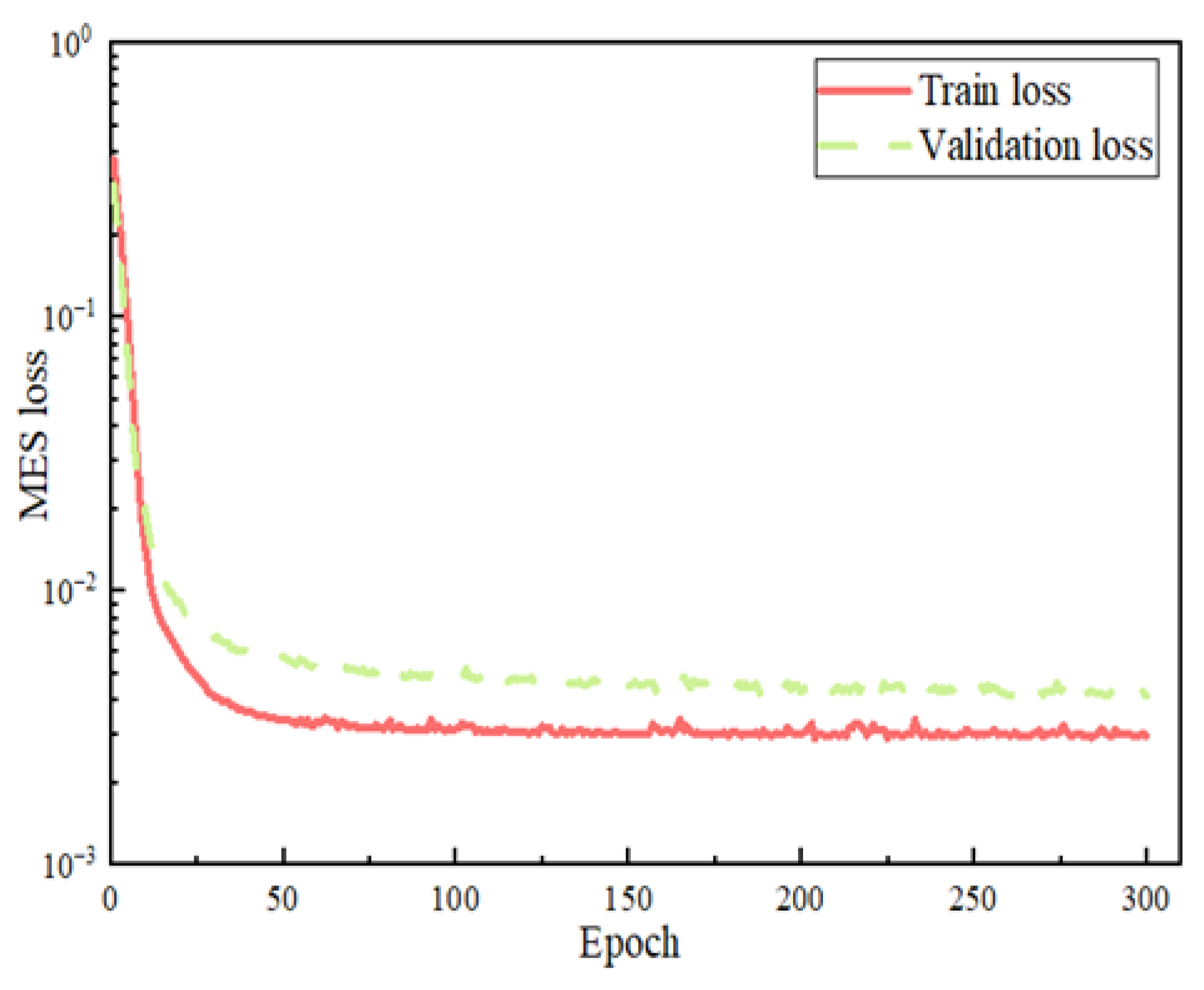
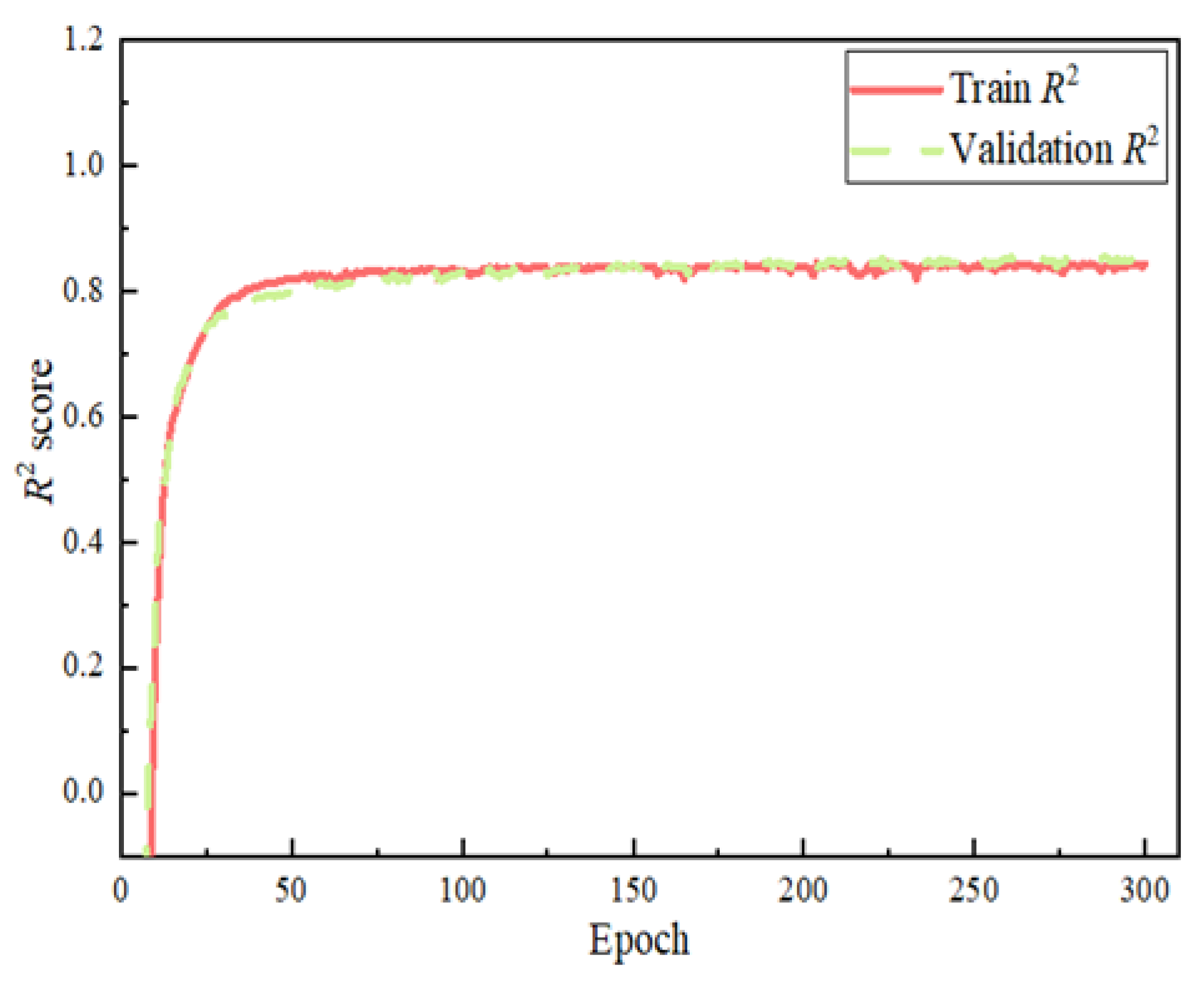
3.3. Fully Connected Neural Network
4. Discussion
4.1. Comparison with Classical and Recent Studies
4.2. Practical Applicability and Relation to Standard Methods
5. Conclusions
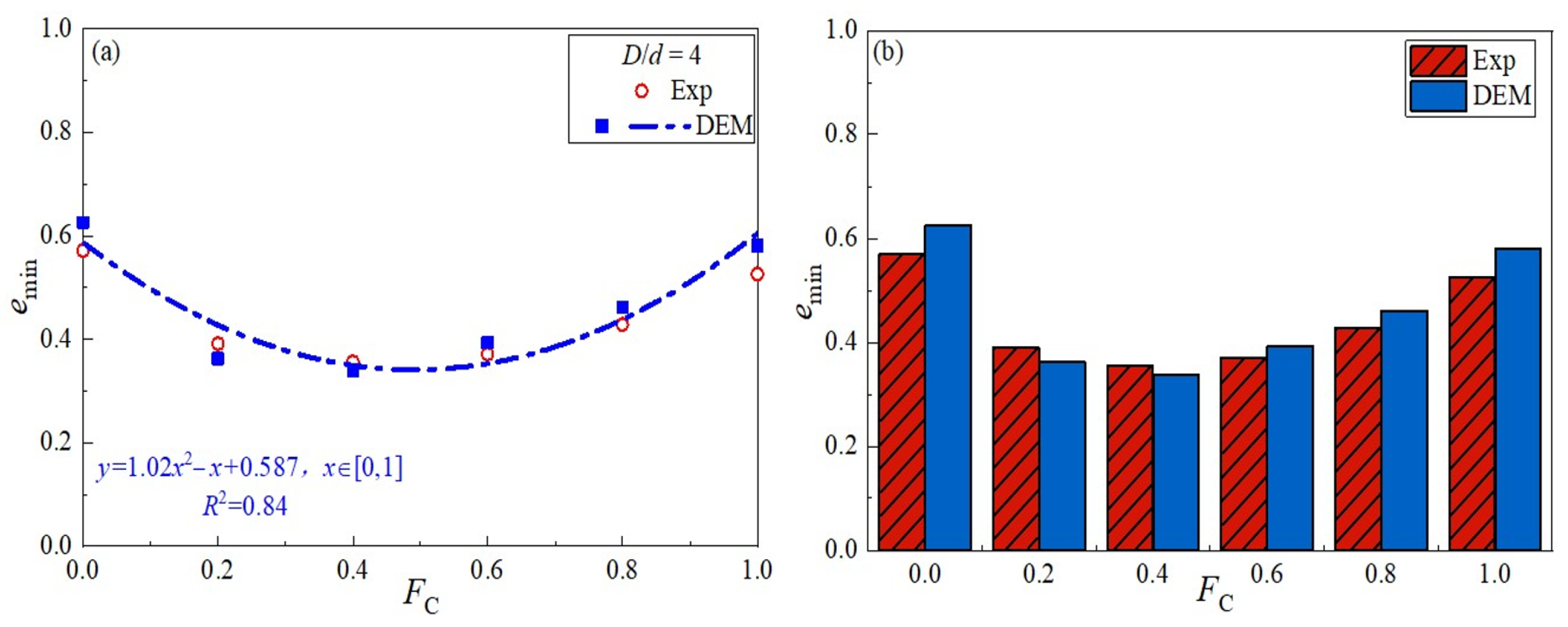
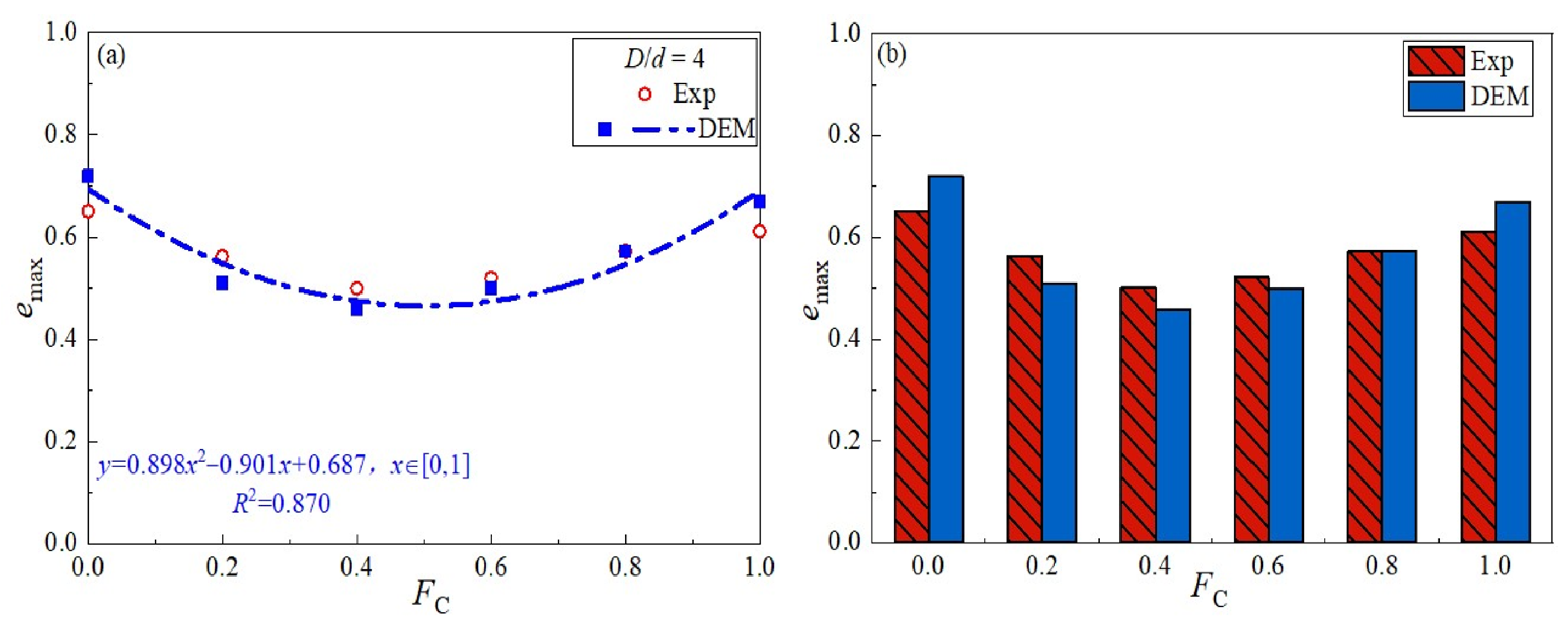
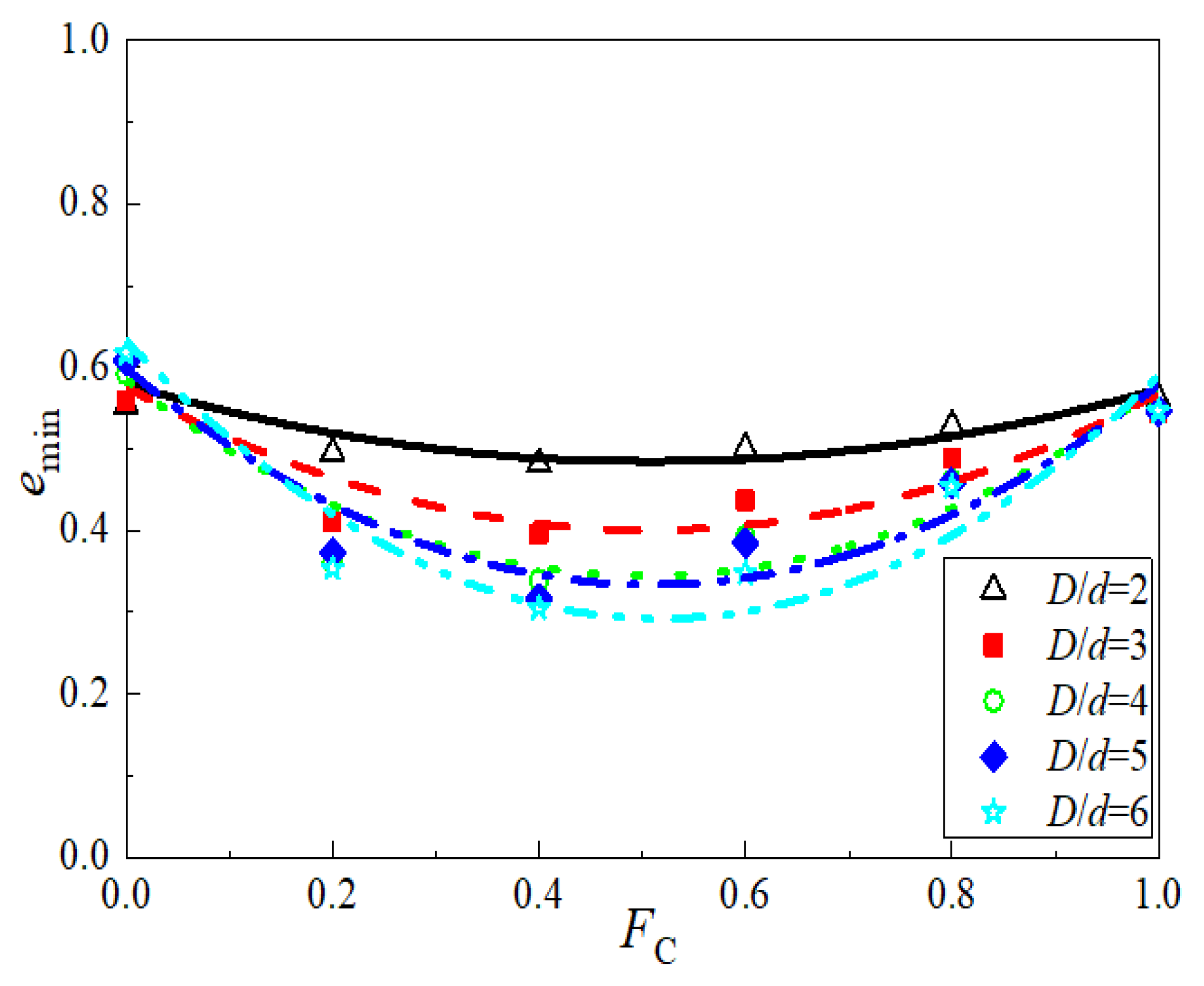
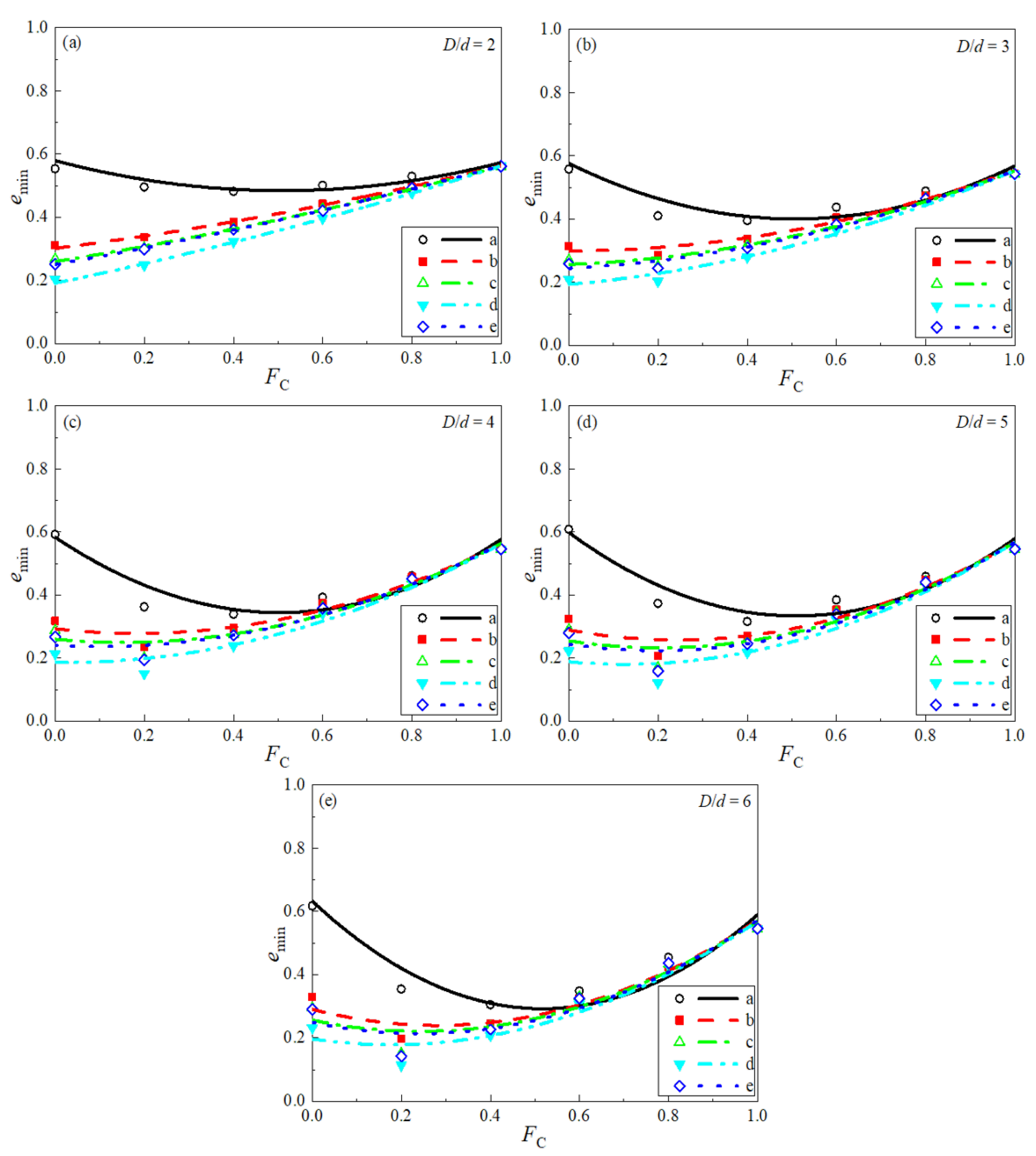
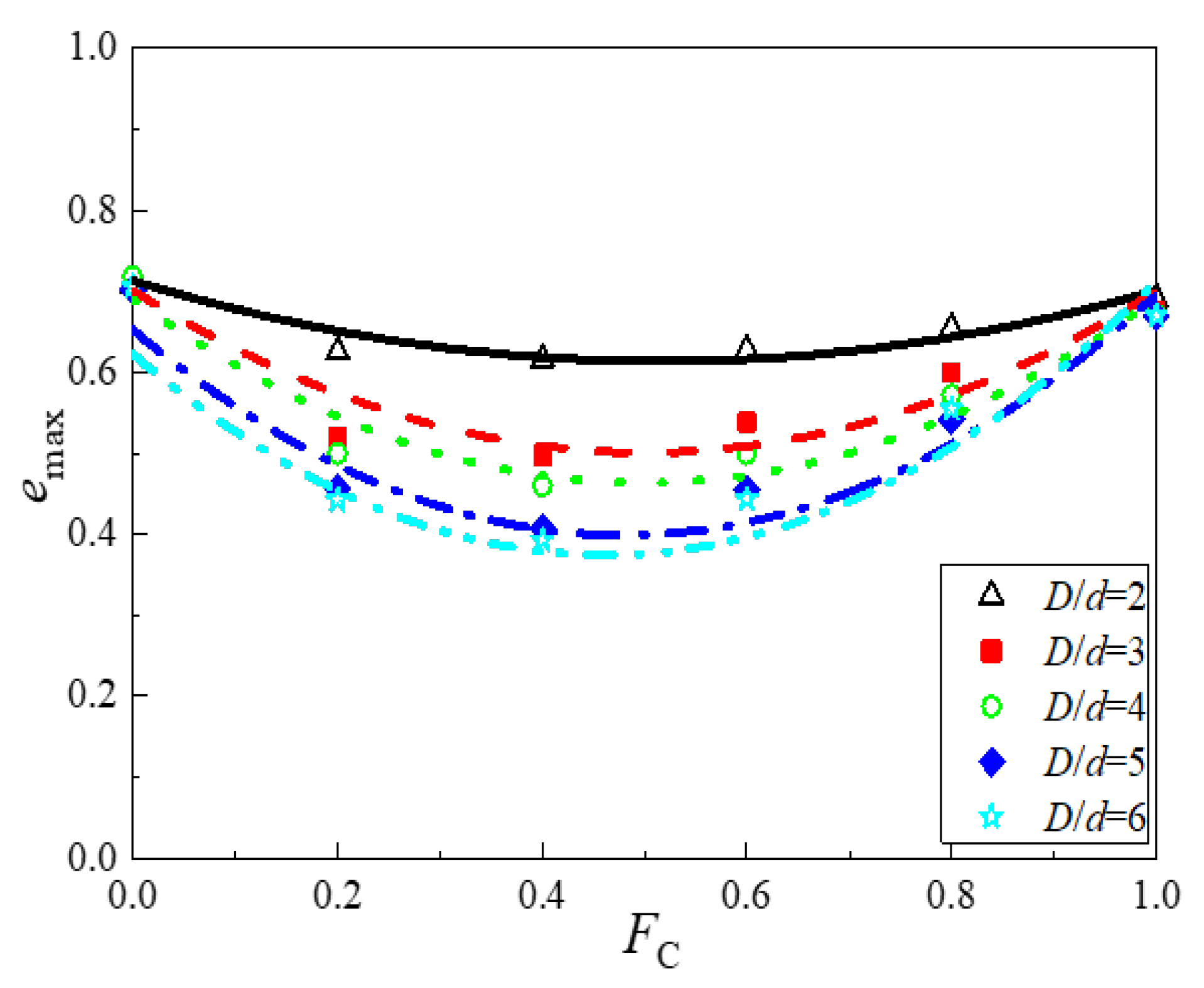
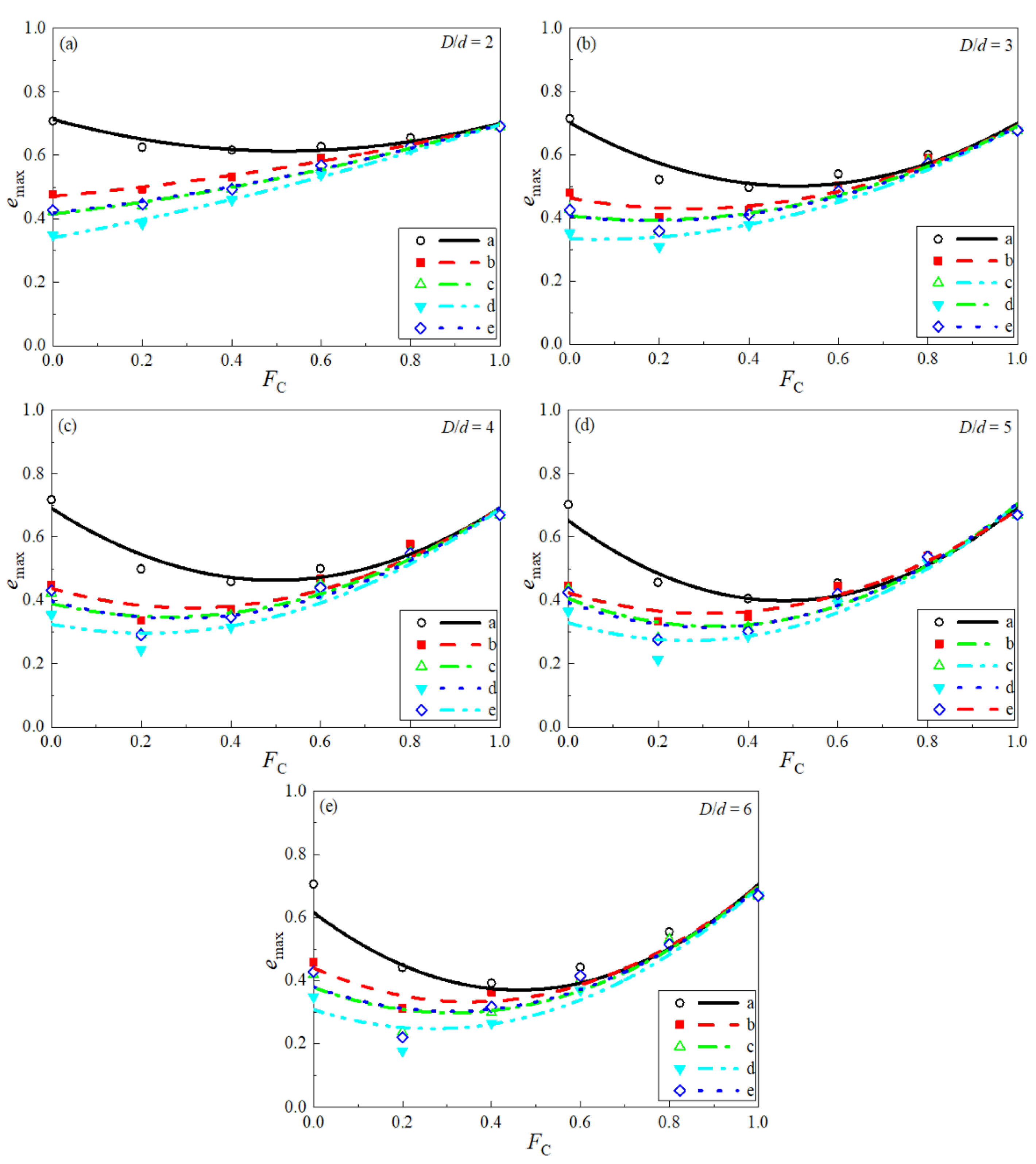
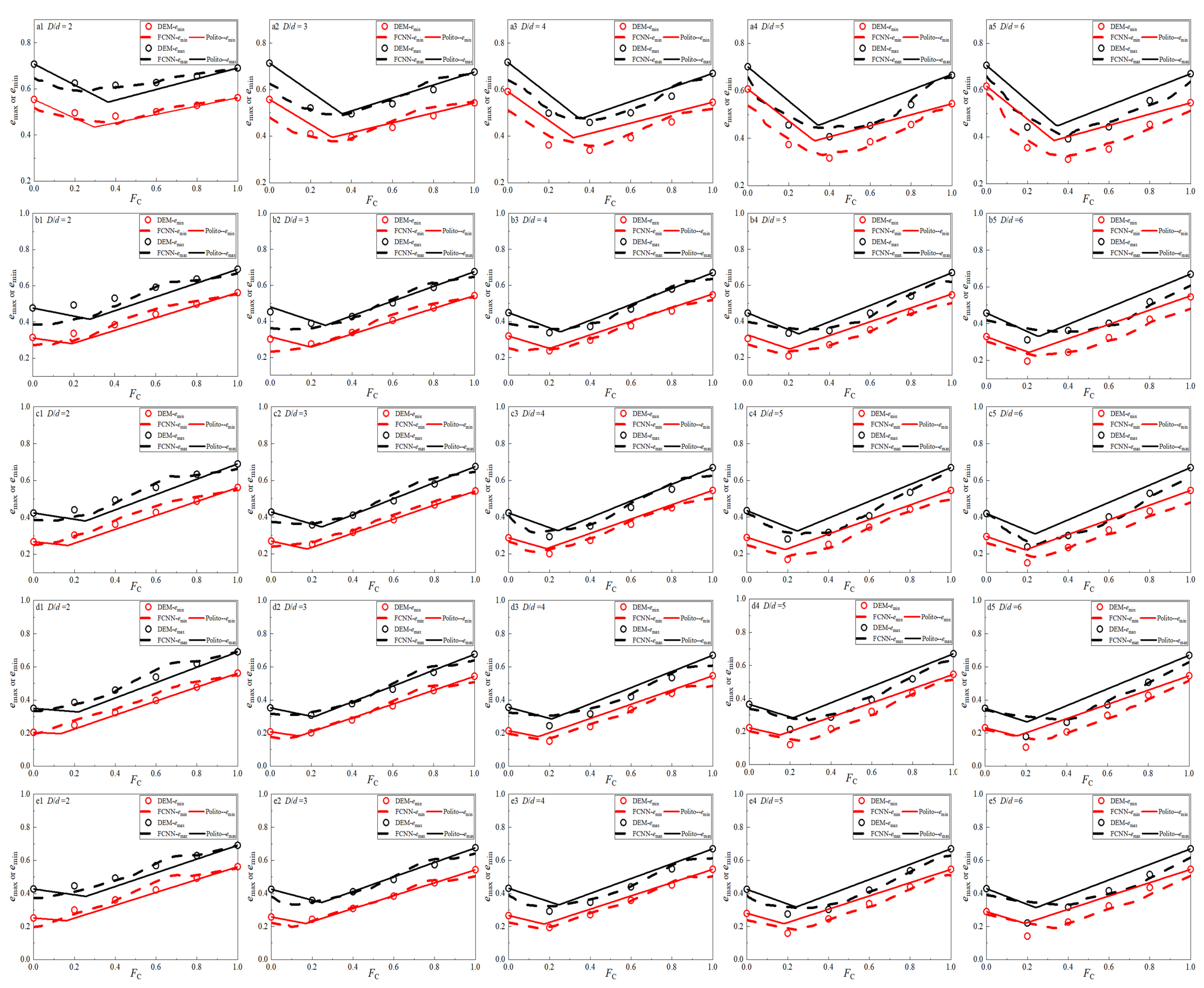
- For mixtures with D/d > 2, both emin and emax exhibit a clear non-monotonic evolution with increasing fines content, characterized by an initial decrease, a minimum at a transitional fines content, and a subsequent increase. Furthermore, the results reveal that the critical transitional fines content varies with morphology, specifically with particle shape and size ratio. This finding provides new insight into the variability of packing transitions in sand–fines mixtures and explains the inconsistencies observed in traditional empirical correlations.
- Through partial least squares (PLS) analysis, these coupled effects were distilled into a reduced set of latent variables, clarifying the relative contributions of grading and morphology while preserving the essential micromechanical trends. This provides a more physically interpretable framework for understanding void ratio limits beyond traditional empirical correlations.
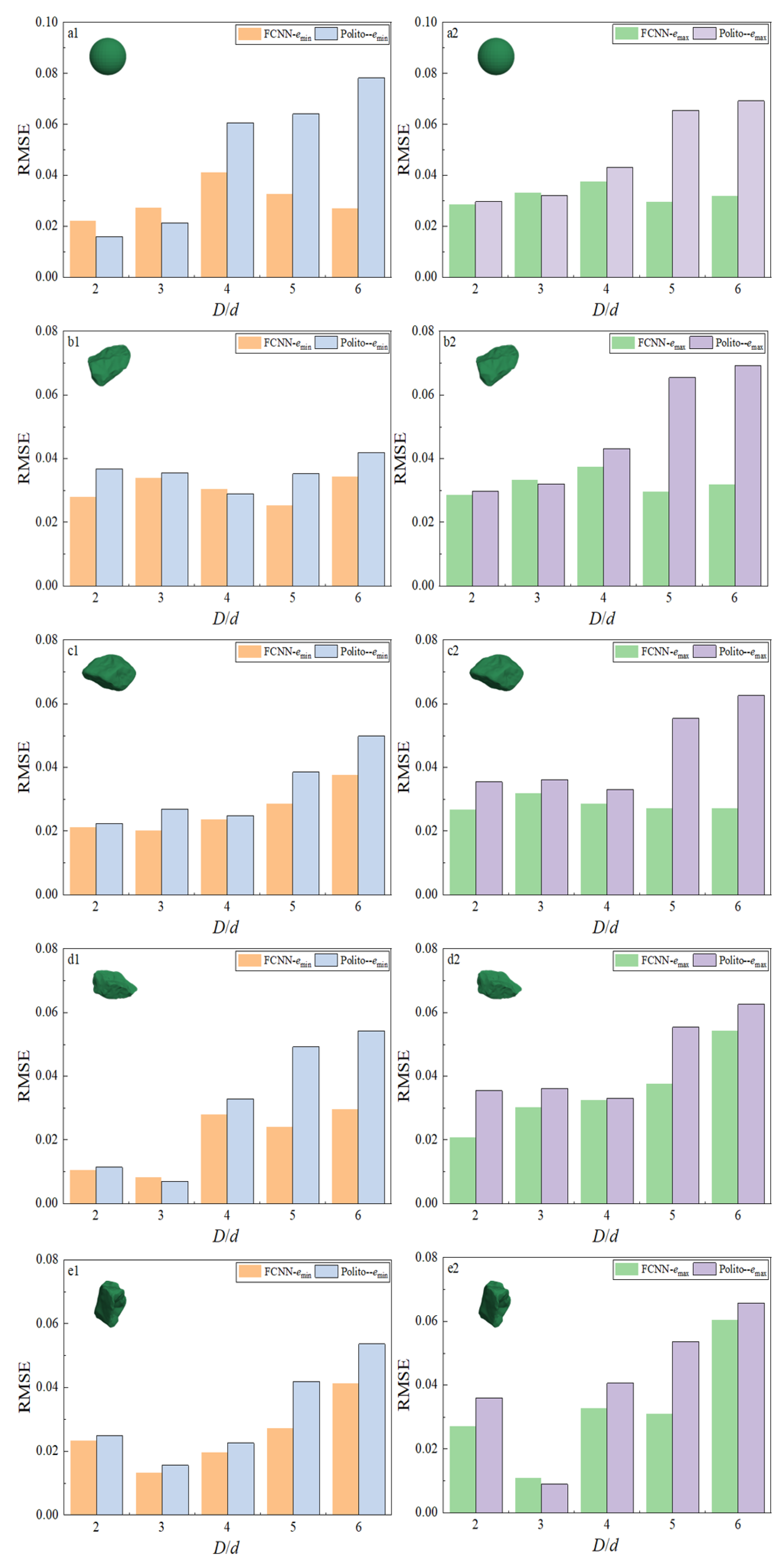
- By integrating DEM-derived data with a fully connected neural network (FCNN), the study demonstrates that the limiting void ratios of sand–fines mixtures can be reliably predicted as target variables rather than prescribed constants. Compared with conventional empirical models, the proposed DEM-AI approach exhibits improved accuracy and robustness across a wide range of fines contents, particle size ratios, and particle shapes. This highlights a shift from empirical estimation toward data-driven, morphology-informed prediction of fundamental packing parameters.
Author Contributions
Funding
Data Availability Statement
Conflicts of Interest
References
- Cubrinovski, M.; Ishihara, K. Maximum and Minimum Void Ratio Characteristics of Sands. Soils Found. 2002, 42, 65–78. [Google Scholar] [CrossRef] [Scilit]
- Rahman, M.M.; Lo, S.R.; Baki, M.A.L. Equivalent Granular State Parameter and Undrained Behaviour of Sand–Fines Mixtures. Acta Geotech. 2011, 6, 183–194. [Google Scholar] [CrossRef] [Scilit]
- Thevanayagam, S.; Shenthan, T.; Mohan, S.; Liang, J. Undrained Fragility of Clean Sands, Silty Sands, and Sandy Silts. J. Geotech. Geoenviron. Eng. 2002, 128, 849–859. [Google Scholar] [CrossRef] [Scilit]
- Lade, P.V.; Yamamuro, J.A.; Bopp, P.A. Significance of Particle Crushing in Granular Materials. J. Geotech. Geoenviron. Eng. 1996, 122, 309–316. [Google Scholar] [CrossRef] [Scilit]
- Kaothon, P.; Lee, S.-H.; Choi, Y.-T.; Yune, C.-Y. The Effect of Fines Content on Compressional Behavior When Using Sand–Kaolinite Mixtures as Embankment Materials. Appl. Sci. 2022, 12, 6050. [Google Scholar] [CrossRef] [Scilit]
- Cheng, K.; Zhang, Y. A Cyclic Resistance Ratio Model of Sand-Fines Mixtures Based on Cyclic Triaxial Test. Geotech. Geol. Eng. 2024, 42, 1021–1033. [Google Scholar] [CrossRef] [Scilit]
- Zhu, Z.; Zhang, F.; Dupla, J.-C.; Canou, J.; Foerster, E. Investigation on the Undrained Shear Strength of Loose Sand with Added Materials at Various Mean Diameter Ratios. Soil Dyn. Earthq. Eng. 2020, 137, 106276. [Google Scholar] [CrossRef] [Scilit]
- Zhao, J.; Zhu, Z.; Liu, J.; Zhong, H. Damping Ratio of Sand Containing Fine Particles in Cyclic Triaxial Liquefaction Tests. Appl. Sci. 2023, 13, 4833. [Google Scholar] [CrossRef] [Scilit]
- Zhao, J.; Zhu, Z.; Zhang, D.; Wang, H.; Li, X. Assessment of Fabric Characteristics with the Development of Sand Liquefaction in Cyclic Triaxial Tests: A DEM Study. Soil Dyn. Earthq. Eng. 2024, 176, 108343. [Google Scholar] [CrossRef] [Scilit]
- Li, X.; Lu, Y.; Qian, G.; Yang, H.; Yu, H.; Wang, H.; Zhu, Z. A New Index for Estimating the Improved Depth of Dynamic Compaction. Int. J. Geomech. 2024, 24, 06023027. [Google Scholar] [CrossRef] [Scilit]
- Li, X.; Liu, Y.; Qian, G.; Liu, X.; Wang, H.; Yin, G. Numerical Investigation into Particle Crushing Effects on the Shear Behavior of Gravel. Geomech. Eng. 2023, 35, 209–219. [Google Scholar] [CrossRef]
- Yu, A.-B. DEM—An Effective Method for Particle Scale Research of Particulate Matter. In Proceedings of the Discrete Element Methods; American Society of Civil Engineers, Santa Fe, NM, USA, 27 August 2002; American Society of Civil Engineers: New York, NY, USA, 2002; pp. 17–22. [Google Scholar]
- Voivret, C.; Radjaï, F.; Delenne, J.-Y.; El Youssoufi, M.S. Space-Filling Properties of Polydisperse Granular Media. Phys. Rev. E 2007, 76, 021301. [Google Scholar] [CrossRef] [Scilit] [PubMed]
- Zhong, H.; Zhu, Z.; Zhao, J.; Wei, L.; Zhang, Y.; Li, J.; Wang, J.; Yao, W. Influence of Fine Content and Mean Diameter Ratio on the Minimum and Maximum Void Ratios of Sand–Fine Mixtures: A Discrete Element Method Study. Buildings 2024, 14, 2877. [Google Scholar] [CrossRef] [Scilit]
- Kodicherla, S.P.K.; Gong, G.; Wilkinson, S. Exploring the Relationship between Particle Shape and Critical State Parameters for Granular Materials Using DEM. SN Appl. Sci. 2020, 2, 2128. [Google Scholar] [CrossRef] [Scilit]
- Lei, H.; Chen, Z.; Kang, X. Examination of Particle Shape on the Shear Behaviours of Granules Using 3D Printed Soil. Eur. J. Environ. Civ. Eng. 2022, 26, 4200–4219. [Google Scholar] [CrossRef] [Scilit]
- Xu, Z.; Xu, N.; Wang, H. Effects of Particle Shapes and Sizes on the Minimum Void Ratios of Sand. Adv. Civ. Eng. 2019, 2019, 5732656. [Google Scholar] [CrossRef] [Scilit]
- Humphres, H.W. A Method for Controlling Compaction Of Granular Materials. In Highway Research Board Bulletin; National Research Council: Washington, DC, USA, 1957; pp. 41–47. [Google Scholar]
- Patra, C.; Sivakugan, N.; Das, B.; Rout, S. Correlations for Relative Density of Clean Sand with Median Grain Size and Compaction Energy. Int. J. Geotech. Eng. 2010, 4, 195–203. [Google Scholar] [CrossRef] [Scilit]
- Youd, T.L. Factors Controlling Maximum and Minimum Densities of Sands. In Proceedings of the Evaluation of Relative Density and Its Role in Geotechnical Projects Involving Cohesionless Soils; ASTM STP 523; ASTM: West Conshohocken, PA, USA, 1973; pp. 98–112. [Google Scholar]
- Riquelme, J.; Dorador, L. Methodology to Determine Maximum and Minimum Void Index in Coarse Granular Soils from Small-Scale Tests Correlations. In Proceedings of the GeoShanghai International Conference 2018, Shanghai, China, 27–30 May 2018. [Google Scholar]
- Chang, C.S.; Wang, J.-Y.; Ge, L. Modeling of Minimum Void Ratio for Sand–Silt Mixtures. Eng. Geol. 2015, 196, 293–304. [Google Scholar] [CrossRef] [Scilit]
- Chang, C.S.; Wang, J.Y.; Ge, L. Maximum and Minimum Void Ratios for Sand-Silt Mixtures. Eng. Geol. 2016, 211, 7–18. [Google Scholar] [CrossRef] [Scilit]
- Polito, C.P. Correlations for Estimating Coefficients for the Prediction of Maximum and Minimum Index Void Ratios for Mixtures of Sand and Non-Plastic Silt. Geotechnics 2023, 3, 1033–1046. [Google Scholar] [CrossRef] [Scilit]
- Zhu, Z.; Zhang, F.; Peng, Q.; Dupla, J.-C.; Canou, J.; Cumunel, G.; Foerster, E. Effect of the Loading Frequency on the Sand Liquefaction Behaviour in Cyclic Triaxial Tests. Soil Dyn. Earthq. Eng. 2021, 147, 106779. [Google Scholar] [CrossRef] [Scilit]
- Zhu, Z.; Zhang, F.; Dupla, J.-C.; Canou, J.; Foerster, E.; Peng, Q. Assessment of Tamping-Based Specimen Preparation Methods on Static Liquefaction of Loose Silty Sand. Soil Dyn. Earthq. Eng. 2021, 143, 106592. [Google Scholar] [CrossRef] [Scilit]
- GB/T 50123; Standard for Soil Test Method. China Planning Press: Beijing, China, 2015.
- Hu, Z.; Zhang, J.; Tan, X.; Yang, H. Modeling of the Particle Abrasion Process and a Discrete Element Method Study of Its Shape Effect. Materials 2024, 17, 3947. [Google Scholar] [CrossRef] [Scilit]
- Qu, T.; Feng, Y.T.; Zhao, T.; Wang, M. Calibration of Linear Contact Stiffnesses in Discrete Element Models Using a Hybrid Analytical-Computational Framework. Powder Technol. 2019, 356, 795–807. [Google Scholar] [CrossRef] [Scilit]
- Zhao, Z.; Wu, M.; Jiang, X. A Review of Contact Models’ Properties for Discrete Element Simulation in Agricultural Engineering. Agriculture 2024, 14, 238. [Google Scholar] [CrossRef] [Scilit]
- Ai, J.; Chen, J.-F.; Rotter, J.M.; Ooi, J.Y. Assessment of Rolling Resistance Models in Discrete Element Simulations. Powder Technol. 2011, 206, 269–282. [Google Scholar] [CrossRef] [Scilit]
- Kuhn, M.R.; Suzuki, K.; Daouadji, A. Linear-Frictional Contact Model for 3D Discrete Element Simulations of Granular Systems. Int. J. Numer. Methods Eng. 2020, 121, 560–569. [Google Scholar] [CrossRef] [Scilit]
- Wang, Z.-Y.; Fang, Y.-F.; Feng, W.-Q.; Tian, X.-J.; Lin, J.-F. Comparative Study on Particle Size Effect of Crushable Granular Soils through DEM Simulations. Lithosphere 2022, 2021, 1608454. [Google Scholar] [CrossRef] [Scilit]
- Shi, D.; Cao, D.; Xue, J.; Deng, Y.; Liang, Y. DEM Studies on the Effect of Particle Breakage on the Critical State Behaviours of Granular Soils under Undrained Shear Conditions. Acta Geotech. 2022, 17, 4865–4885. [Google Scholar] [CrossRef] [Scilit]
- Nakata, Y.; Kato, Y.; Hyodo, M.; Hyde, A.F.L.; Murata, H. One-Dimensional Compression Behaviour of Uniformly Graded Sand Related to Single Particle Crushing Strength. Soils Found. 2001, 41, 39–51. [Google Scholar] [CrossRef] [Scilit]
- Cho, G.-C.; Dodds, J.; Santamarina, J.C. Particle Shape Effects on Packing Density, Stiffness, and Strength: Natural and Crushed Sands. J. Geotech. Geoenviron. Eng. 2006, 132, 591–602. [Google Scholar] [CrossRef] [Scilit]
- Mitchell, J.K.; Soga, K. Fundamentals of Soil Behavior, 3rd ed.; John Wiley & Sons, Inc.: Hoboken, NJ, USA, 2005. [Google Scholar]
- Barrett, P.J. The Shape of Rock Particles, a Critical Review. Sedimentology 1980, 27, 291–303. [Google Scholar] [CrossRef] [Scilit]
- Su, D.; Wang, X.; Yang, H.W.; Hong, C. Roughness Analysis of General-Shape Particles, from 2D Closed Outlines to 3D Closed Surfaces. Powder Technol. 2019, 356, 423–438. [Google Scholar] [CrossRef] [Scilit]
- Altuhafi, F.; O’Sullivan, C.; Cavarretta, I. Analysis of an Image-Based Method to Quantify the Size and Shape of Sand Particles. J. Geotech. Geoenviron. Eng. 2013, 139, 1290–1307. [Google Scholar] [CrossRef] [Scilit]
- Akoglu, H. User’s Guide to Correlation Coefficients. Turk. J. Emerg. Med. 2018, 18, 91–93. [Google Scholar] [CrossRef] [Scilit] [PubMed]
- Zinzendoff Okwonu, F.; Laro Asaju, B.; Irimisose Arunaye, F. Breakdown Analysis of Pearson Correlation Coefficient and Robust Correlation Methods. IOP Conf. Ser. Mater. Sci. Eng. 2020, 917, 012065. [Google Scholar] [CrossRef] [Scilit]
- Rosipal, R.; Krämer, N. Overview and Recent Advances in Partial Least Squares. In Subspace, Latent Structure and Feature Selection; Saunders, C., Grobelnik, M., Gunn, S., Shawe-Taylor, J., Eds.; Lecture Notes in Computer Science; Springer: Berlin/Heidelberg, Germany, 2006; Volume 3940, pp. 34–51. [Google Scholar]
- Geladi, P.; Kowalski, B.R. Partial Least-Squares Regression: A Tutorial. Anal. Chim. Acta 1986, 185, 1–17. [Google Scholar] [CrossRef] [Scilit]
- Hair, J.F. (Ed.) A Primer on Partial Least Squares Structural Equation Modeling (PLS-SEM), 2nd ed.; Sage: Thousand Oaks, CA, USA, 2017. [Google Scholar]
- Scabini, L.F.S.; Bruno, O.M. Structure and Performance of Fully Connected Neural Networks: Emerging Complex Network Properties. Phys. A Stat. Mech. Its Appl. 2023, 615, 128585. [Google Scholar] [CrossRef] [Scilit]
- Hanin, B. Random Fully Connected Neural Networks as Perturbatively Solvable Hierarchies. J. Mach. Learn. Res. 2024, 25, 1–58. [Google Scholar] [CrossRef] [Scilit]
- Jagtap, A.D.; Kawaguchi, K.; Karniadakis, G.E. Adaptive Activation Functions Accelerate Convergence in Deep and Physics-Informed Neural Networks. J. Comput. Phys. 2020, 404, 109136. [Google Scholar] [CrossRef] [Scilit]
- Agostinelli, F.; Hoffman, M.; Sadowski, P.; Baldi, P. Learning Activation Functions to Improve Deep Neural Networks. In Proceedings of the International Conference on Learning Representations (ICLR 2015), Workshop Track, San Diego, CA, USA, 7–9 May 2015. [Google Scholar]
- Polito, C.P. Models for Estimating Coefficients for the Prediction of Maximum and Minimum Index Void Ratios for Mixtures of Sand and Non-Plastic Silt. Preprints 2023. [Google Scholar] [CrossRef] [Scilit]
- Wang, Y.; Ho, K.C. An Asymptotically Efficient Estimator in Closed-Form for 3-D AOA Localization Using a Sensor Network. IEEE Trans. Wirel. Commun. 2015, 14, 6524–6535. [Google Scholar] [CrossRef] [Scilit]
- Nguyen, H.-H.-D.; Nguyen, T.-N.; Phan, T.-A.-T.; Huynh, N.-T.; Huynh, Q.-D.; Trieu, T.-T. Explainable Artificial Intelligence Model for the Prediction of Undrained Shear Strength. Theor. Appl. Mech. Lett. 2025, 15, 100578. [Google Scholar] [CrossRef] [Scilit]
- Ebrahim, K.; Abdelkader, E.M.; Zayed, T.; Meguid, M.A. A Deep Learning-Based Model for Endorsing Predictive Accuracies of Landslide Prediction: Insights into Soil Moisture Dynamics. Geoenviron. Disasters 2025, 12, 36. [Google Scholar] [CrossRef] [Scilit]
- Zeng, T.; Wu, X.; Lai, Y.; Wu, L.; Glade, T.; Yin, K.; Peduto, D. Assessing Soil Thickness and Distribution in Subtropical Typhoon Areas: An Integration of Advanced Geomorphological Surveys and Ensemble Learning Approaches. Geoenviron. Disasters 2025, 12, 31. [Google Scholar] [CrossRef] [Scilit]



| Parameter | Particle–Particle | Particle–Facet | Unity | |
|---|---|---|---|---|
| Linear Group | ||||
| Effective Modulus | E* | 1.0 × 10⁸ | 1.0 × 10⁸ | Pa |
| Normal-to-Shear Stiffness Ratio | κ* | 2.0 | 2.0 | - |
| Friction Coefficient | μ | 0.2 | 0.0 | - |
| Dashpot Group | ||||
| Normal Critical Damping Ratio | βn | 0.2 | 0.2 | - |
| Shear Critical Damping Ratio | βs | 0.2 | 0.2 | - |
| Dashpot Mode | Md | 3.0 | 3.0 | - |
| Particle Shape | ||||
|---|---|---|---|---|
| Particle Type | S | R | RG | AR |
| a | 1 | 1 | 0 | 1 |
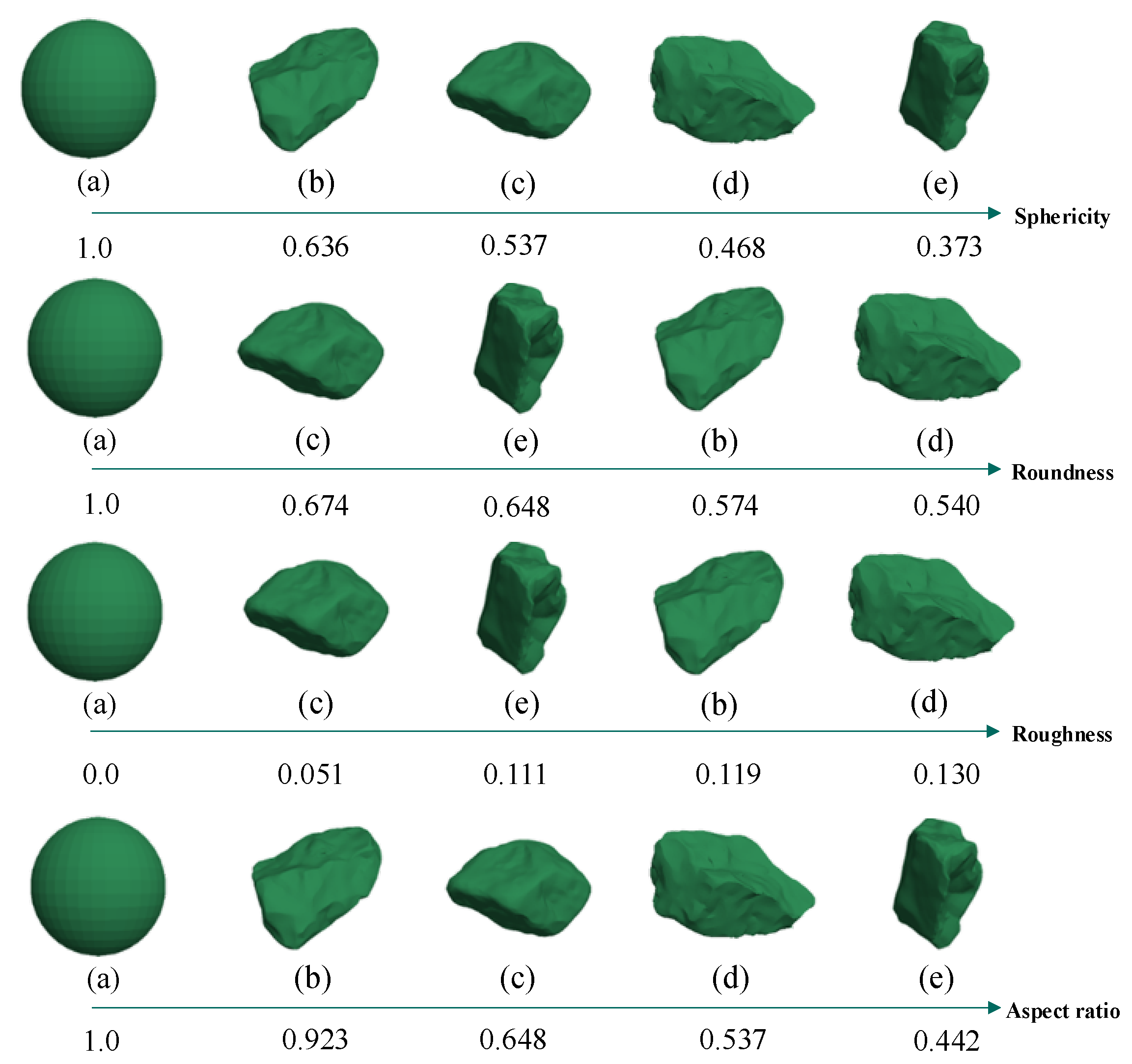
| b | 0.636 | 0.574 | 0.119 | 0.923 |
| c | 0.537 | 0.674 | 0.051 | 0.648 |
| d | 0.468 | 0.540 | 0.130 | 0.537 |
| e | 0.373 | 0.648 | 0.111 | 0.442 |
| D/d | Particle | Fitting Function (y = ax2 + bx + c) | R2 |
|---|---|---|---|
| 2 | a | y = 0.367x2 − 0.373x + 0.579 | 0.798 |
| b | y = 0.083x2 + 0.178x + 0.302 | 0.998 | |
| c | y = 0.075x2 + 0.227x + 0.260 | 0.999 | |
| d | y = 0.078x2 + 0.293x + 0.191 | 0.993 | |
| e | y = 0.067x2 + 0.245x + 0.251 | 0.999 | |
| 3 | a | y = 0.687x2 − 0.695x + 0.576 | 0.809 |
| b | y = 0.250x2 + 0.005x + 0.299 | 0.956 | |
| c | y = 0.236x2 + 0.060x + 0.256 | 0.971 | |
| d | y = 0.234x2 + 0.127x + 0.193 | 0.977 | |
| e | y = 0.234x2 + 0.075x + 0.244 | 0.973 | |
| 4 | a | y = 0.942x2 − 0.949x + 0.584 | 0.796 |
| b | y = 0.425x2 − 0.156x + 0.293 | 0.911 | |
| c | y = 0.437x2 − 0.133x + 0.260 | 0.907 | |
| d | y = 0.395x2 − 0.019x + 0.187 | 0.938 | |
| e | y = 0.402x2 − 0.080x + 0.241 | 0.925 | |
| 5 | a | y = 1.020x2 − 1.034x + 0.598 | 0.784 |
| b | y = 0.543x2 − 0.264x + 0.289 | 0.858 | |
| c | y = 0.526x2 − 0.213x + 0.255 | 0.873 | |
| d | y = 0.505x2 − 0.126x + 0.188 | 0.908 | |
| e | y = 0.532x2 − 0.208x + 0.244 | 0.876 | |
| 6 | a | y = 1.273x2 − 1.316x + 0.632 | 0.790 |
| b | y = 0.645x2 − 0.362x + 0.290 | 0.840 | |
| c | y = 0.608x2 − 0.294x + 0.256 | 0.856 | |
| d | y = 0.577x2 − 0.204x + 0.196 | 0.903 | |
| e | y = 0.622x2 − 0.299x + 0.249 | 0.855 |
| D/d | Particle | Fitting Function (y = ax2 + bx + c) | R2 |
|---|---|---|---|
| 2 | a | y = 0.374x2 − 0.386x + 0.713 | 0.831 |
| b | y = 0.099x2 + 0.124x + 0.472 | 0.989 | |
| c | y = 0.123x2 + 0.160x + 0.416 | 0.987 | |
| d | y = 0.091x2 + 0.264x + 0.341 | 0.993 | |
| e | y = 0.121x2 + 0.157x + 0.420 | 0.987 | |
| 3 | a | y = 0.799x2 − 0.800x + 0.702 | 0.812 |
| b | y = 0.485x2 − 0.257x + 0.463 | 0.929 | |
| c | y = 0.393x2 − 0.095x + 0.391 | 0.960 | |
| d | y = 0.503x2 − 0.181x + 0.371 | 0.927 | |
| e | y = 0.400x2 − 0.104x + 0.390 | 0.969 | |
| 4 | a | y = 0.912x2 − 0.911x + 0.691 | 0.846 |
| b | y = 0.656x2 − 0.403x + 0.439 | 0.888 | |
| c | y = 0.625x2 − 0.323x + 0.390 | 0.888 | |
| d | y = 0.606x2 − 0.325x + 0.317 | 0.938 | |
| e | y = 0.679x2 − 0.385x + 0.398 | 0.891 | |
| 5 | a | y = 1.099x2 − 1.055x + 0.652 | 0.793 |
| b | y = 0.852x2 − 0.608x + 0.462 | 0.874 | |
| c | y = 0.843x2 − 0.544x + 0.406 | 0.923 | |
| d | y = 0.802x2 − 0.428x + 0.330 | 0.92 | |
| e | y = 0.821x2 − 0.508x + 0.393 | 0.911 | |
| 6 | a | y = 1.15x2 − 1.066x + 0.617 | 0.772 |
| b | y = 0.875x2 − 0.615x + 0.441 | 0.830 | |
| c | y = 0.838x2 − 0.520x + 0.379 | 0.872 | |
| d | y = 0.835x2 − 0.450x + 0.309 | 0.901 | |
| e | y = 0.816x2 − 0.503x + 0.381 | 0.815 |
Disclaimer/Publisher’s Note: The statements, opinions and data contained in all publications are solely those of the individual author(s) and contributor(s) and not of MDPI and/or the editor(s). MDPI and/or the editor(s) disclaim responsibility for any injury to people or property resulting from any ideas, methods, instructions or products referred to in the content. |
© 2026 by the authors. Licensee MDPI, Basel, Switzerland. This article is an open access article distributed under the terms and conditions of the Creative Commons Attribution (CC BY) license.
Share and Cite
Tang, W.; Zhu, X.; Zhu, Z.; Zhong, H.; Zhang, X. Influence of Fines Content and Particle Shape on Limiting Void Ratios of Sand Mixtures: DEM and AI Approaches. Buildings 2026, 16, 661. https://doi.org/10.3390/buildings16030661
Tang W, Zhu X, Zhu Z, Zhong H, Zhang X. Influence of Fines Content and Particle Shape on Limiting Void Ratios of Sand Mixtures: DEM and AI Approaches. Buildings. 2026; 16(3):661. https://doi.org/10.3390/buildings16030661
Chicago/Turabian StyleTang, Weichao, Xiaoli Zhu, Zhehao Zhu, Huaqiao Zhong, and Xiufeng Zhang. 2026. "Influence of Fines Content and Particle Shape on Limiting Void Ratios of Sand Mixtures: DEM and AI Approaches" Buildings 16, no. 3: 661. https://doi.org/10.3390/buildings16030661
APA StyleTang, W., Zhu, X., Zhu, Z., Zhong, H., & Zhang, X. (2026). Influence of Fines Content and Particle Shape on Limiting Void Ratios of Sand Mixtures: DEM and AI Approaches. Buildings, 16(3), 661. https://doi.org/10.3390/buildings16030661