1. Introduction
The United Nations “World Urbanization Prospects: The 2018 Revision” report predicts that by 2050, the global urbanization rate will reach 68% [
1]. The accelerated pace of global urbanization has brought unprecedented opportunities while simultaneously triggering severe environmental challenges, with the urban heat island (UHI) effect being among the most prominent [
2]. Characterized by significantly higher temperatures in urban cores compared to surrounding rural areas, UHI results primarily from the high solar absorptivity of built surfaces, concentrated anthropogenic heat emissions, and the widespread loss of natural vegetation [
3]. This intensified heating poses serious threats to public health by increasing the incidence and mortality of heat-related illnesses, elevating building energy demand for cooling [
4], and exacerbating air pollution [
5], thereby challenging the stability of urban ecosystems [
6]. Consequently, within the broader context of global climate change, mitigating the UHI effect and building climate-resilient cities have become urgent priorities intersecting urban planning, landscape management, and public health.
In response to these challenges, nature-based solutions (NbS) have emerged as a prominent strategy, with the systematic planning and optimization of urban blue-green infrastructure (UBGI) being widely advocated for climate adaptation and enhanced urban livability [
7]. UBGI constitutes a strategically designed network of natural and semi-natural spaces—such as parks, forests, greenways, rivers, and wetlands—that delivers multiple ecosystem services (ES). Among these, regulating services represent a significant proportion (approximately 60.6%) of the documented benefits [
8]. Notably, local climate regulation—which accounts for roughly 36% of the research focus within this category—proves especially effective in directly counteracting urban heat island (UHI) effects [
9]. Through mechanisms including evapotranspiration and shading, well-designed blue-green spaces can lower surrounding temperatures by 2–9 °C, forming localized “cool islands” that play a central role in urban heat mitigation strategies [
2].
Extensive empirical research substantiates the significant cooling capacity of UBGI. Urban parks, for instance, typically generate a “Park Cool Island” (PCI) effect, with cooling magnitudes of several degrees Celsius often extending hundreds of meters beyond their boundaries [
10]. Comparative studies reveal variability among blue-green space types: research in Nepal’s Kathmandu Valley found urban forests are most effective (cooling up to 1.2 °C), followed by parks (0.9 °C) and ponds (0.85 °C) [
11]. Similar patterns are observed across Chinese cities: green spaces in Beijing showed an average cooling intensity of about 1.7 °C within an influence range of approximately 100 m [
12]; in Xi’an, a study of 36 green spaces reported an average cooling of 1.17 °C extending 169.43 m [
13]; while in Changchun, the average cooling intensity reached 4.18 °C over 173.95 m [
14]. Water bodies also contribute significantly, with summer cooling in Beijing averaging 4.94 °C over 247 m [
15]. Further research distinguishes between static water bodies (e.g., lakes, wetlands) and dynamic ones (e.g., urban rivers). The continuous flow of rivers facilitates more efficient water–air heat exchange and evaporation, preventing localized overheating; on average, river temperatures are approximately 1 °C cooler than still water surfaces [
16]. Moreover, compared to the patchy distribution of lakes, the linear structure of rivers can help channel cooler rural air into urban cores, effectively disrupting the urban heat island continuum [
17]. Beyond these major spaces, distributed elements like green roofs effectively reduce surface temperatures and lower building energy consumption [
18], and street greenery enhances pedestrian thermal comfort [
19]. Collectively, this body of work provides a robust scientific foundation confirming that the development and strategic optimization of UBGI is an effective approach for alleviating urban thermal stress.
Research on the cooling performance of UBGI has identified a range of influencing factors, which can be systematically categorized into intrinsic landscape characteristics and the external urban matrix [
20]. The intrinsic characteristics are often analyzed through the lenses of composition, configuration, and three-dimensional (3D) structure. Compositionally, the type of vegetation is fundamental. A study in Leipzig, Germany, found that a park with 61% tree cover remained 1.06 °C cooler than its surroundings during heatwaves, whereas a grass-dominated park became a daytime heat source. This highlights the decisive role of vegetation type in microclimate regulation, with tree-dominated structures generally providing stronger daytime cooling due to more effective shading [
21]. Further evidence from Kolkata, India, underscores the importance of integrated blue-green design. The adjacency of water bodies and vegetation enhances local humidity and evaporative cooling, creating a synergistic effect superior to standalone green spaces. Such blue-green systems can achieve a park cooling efficiency (PCE) as high as 2.87, with cooling influence extending 210–240 m beyond the park boundary [
22]. Configurationally, scale, shape, and connectivity are key. While larger green spaces generally exhibit greater cooling intensity and influence distance [
23,
24,
25], strategically distributed networks of smaller patches can sometimes provide more equitable urban cooling coverage than a single large park [
26]. The shape complexity of a green space affects its energy exchange with the surroundings, and the spatial connectivity of the green infrastructure network is crucial for guiding ventilation and transporting cool air over larger areas [
27]. Structurally, three-dimensional metrics such as Canopy Density, Leaf Area Index, and 3D Green Volume are recognized as superior predictors of cooling performance compared to two-dimensional area measures, as they directly capture vegetation’s capacity for shading and transpiration [
28]. Finally, the efficacy of these intrinsic characteristics is significantly modulated by the external urban matrix. For instance, while parks within high-density built-up areas may show pronounced cooling, their effect is often spatially constrained due to limited airflow [
29]. Broader urban-rural land-use patterns [
30] and the specific density and morphology of surrounding buildings further exert complex, often nonlinear influences on the formation and diffusion of cool islands [
13].
Despite the breadth of knowledge confirming UBGI’s cooling effects and their influencing factors, critical research gaps persist that hinder the translation of these insights into actionable planning and design. First, while extensive research has focused on large, compact green patches like urban parks [
21,
25], linear blue-green spaces—such as riparian corridors—remain understudied. These linear elements are vital for ecological connectivity and are often the most feasible green intervention in land-scarce, high-density urban cores. Second, existing studies are characterized by a lack of quantitative, design-oriented thresholds. General recommendations like “increase green cover” are insufficient for precise decision-making where trade-offs between costs, space, and multiple benefits are required [
27]. Third, the cooling performance arises from nonlinear interactions among multiple landscape factors [
31], a complexity that traditional analytical methods often fail to disentangle systematically.
To address these gaps, this study develops a practitioner-oriented framework that links the quantification of ecosystem services with actionable design insights. Focusing on linear blue-green infrastructure in a representative urbanizing context (Zhengdong New District, Zhengzhou), the research is structured around four objectives: (1) to quantify the cooling performance (intensity and distance) of riparian corridors using integrated remote sensing and geospatial data; (2) to identify the key landscape drivers and their relative importance through a Boosted Regression Tree (BRT) model; (3) to reveal the nonlinear relationships between these drivers and cooling effects, thereby determining ecological thresholds for optimal thermal performance; and (4) to translate these quantitative findings into evidence-based guidelines for climate-adaptive design and sustainably built environmental management. By doing so, this study provides a transferable analytical framework that transforms empirical insights into clear, actionable design parameters—offering planners, landscape architects, and urban designers a science-based tool to enhance climate resilience within constrained urban landscapes.
2. Materials and Methods
2.1. Study Area
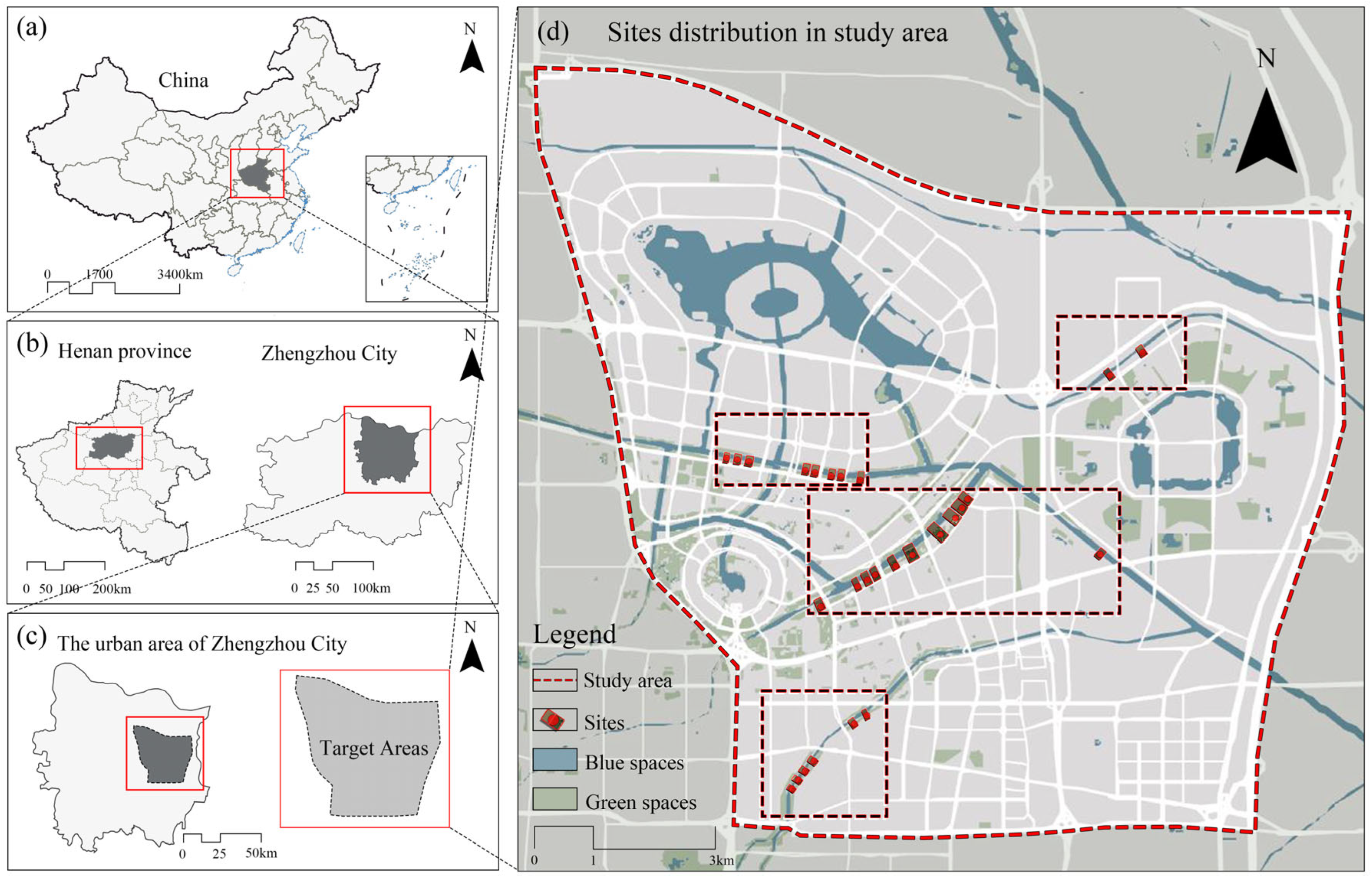
Based on its unique urban development context and representative blue-green infrastructure, Zhengdong New District in Zhengzhou City, Henan Province (112°42′–114°14′ E, 34°58′–36°16′ N) was selected as the case study area (
Figure 1a–c). Zhengzhou has a temperate continental monsoon climate characterized by hot, relatively humid summers and cold, dry winters. As a landmark project of China’s rapid urbanization in the early 21st century, the district covers approximately 370 km
2 and has undergone a pronounced land-use transition from agricultural and aquacultural uses to a modern urban center integrating financial, commercial, residential, and cultural functions. Its planning emphasizes ecological principles, featuring a structurally coherent blue-green network anchored by an artificial “Ruyi-shaped” water system that interconnects rivers, lakes, parks, and greenways. Nevertheless, intensive development has also led to notable urban heat island effects. This combination of a planned, integrated blue-green network and rapid urban growth makes Zhengdong New District a compelling living laboratory for investigating the cooling performance of linear blue-green spaces and their interaction with the built environment.
Within this area, 27 representative linear blue-green sites—river corridors and associated riparian green spaces—were selected for detailed analysis (
Figure 1d,
Appendix A). Site selection followed four criteria: (1) homogeneity of the immediate surrounding environment, (2) absence of large blue-green interventions within the defined buffer zones, (3) high representativeness within the district’s blue-green network, and (4) frequent public use, ensuring relevance to urban planning and management practices.
2.2. Data Sources and Preprocessing
This study integrates multi-source data, including remote sensing imagery, high-resolution geospatial data, and field survey data, as detailed below:
Remote Sensing Data: Landsat 8 OLI/TIRS satellite imagery provided by the U.S. Geological Survey (USGS) was selected. To ensure data representativeness, a cloud-free (<5% cloud cover) image from 22 May 2020 (the date was determined in accordance with the standard “GB/T 42074-2022 Division of climatic seasons [
32]”) was acquired for Land Surface Temperature (LST) retrieval. Preprocessing steps included radiometric calibration, atmospheric correction (using the FLAASH model), and geometric correction to mitigate sensor and atmospheric disturbances.
Geospatial Data: High-resolution satellite imagery from 2022 (Google Earth, resolution < 1 m) was used for visual interpretation and fine-scale classification of land cover types (e.g., water bodies, trees, shrubs, grassland) within the study area. This classification provided the basis for subsequent calculation of landscape metrics.
Field Survey Data: Field investigations were conducted at the 27 sampling sites in May 2022. The primary objectives were to validate the accuracy of the land cover classification and to collect parameters not directly obtainable from remote sensing, such as Canopy Density, trees’ and shrubs’ Green Volume, density of the shrubs along the river. These data support the estimation of key landscape factors, including three-dimensional Green Volume.
2.3. Quantification of Cooling Performance
Land Surface Temperature (LST), which directly characterizes the thermal environment at the Earth’s surface and is widely used in urban heat island studies, served as the core metric for assessing the cooling performance of blue-green infrastructure.
2.3.1. Land Surface Temperature Retrieval
LST was retrieved from the ENVI (5.3) preprocessed Landsat 8 imagery using the Radiative Transfer Equation (RTE) method [
33], chosen for its physical robustness and high accuracy. The key steps involved: (1) calculating the Normalized Difference Vegetation Index (NDVI) from OLI bands to estimate land surface emissivity; and (2) applying atmospheric correction parameters (obtained from NASA’s Atmospheric Correction Parameter Calculator) to the thermal infrared data of TIRS Band 10 to compute the final LST value for each pixel.
The algorithm is as follows (Equation (1)):
where
TS = LST,
B(TS) = the luminance of the thermal radiation from a blackbody, and
K1,
K2 = the calibration constant (
K1 = 774.89 W·m
−2·sr
−1·μm
−1,
K2 = 1321.08 K).
The parameters in the equation are determined according to the following computational formula:
Vegetation Index (NDVI) and vegetation coverage (
Fv); (Equation (2)):
where
Fv = vegetation coverage. NDVI = Normalized Difference Vegetation Index. NDVl
soil = NDVI value of the area not covered by vegetation. NDVI
veg = NDVI value of the area entirely covered by vegetation.
Fv reflects the degree of vegetation aggregation. It varies from −1.0 to +1.0. A higher value indicates a greater degree of aggregation.
Specific surface emissivity (
ε) (Equation (3)):
where
ε = surface-specific emissivity.
Blackbody radiation brightness (
B(Ts)) Equation (4)):
where
B(Ts) = the luminance of the thermal radiation from a blackbody, as derived from Planck’s law.
Lλ = thermal infrared radiation brightness.
L↑ = thermal infrared radiation emitted upward by the atmosphere itself.
L↓ = heat exchange energy between the atmosphere and the ground.
τ = attenuation of thermal infrared radiation as it passes through the atmosphere.
ε = surface-specific emissivity.
2.3.2. Cooling Metrics
Following established frameworks that quantify cooling through intensity, distance, gradient, and efficiency [
34], this study defines two core metrics for evaluation:
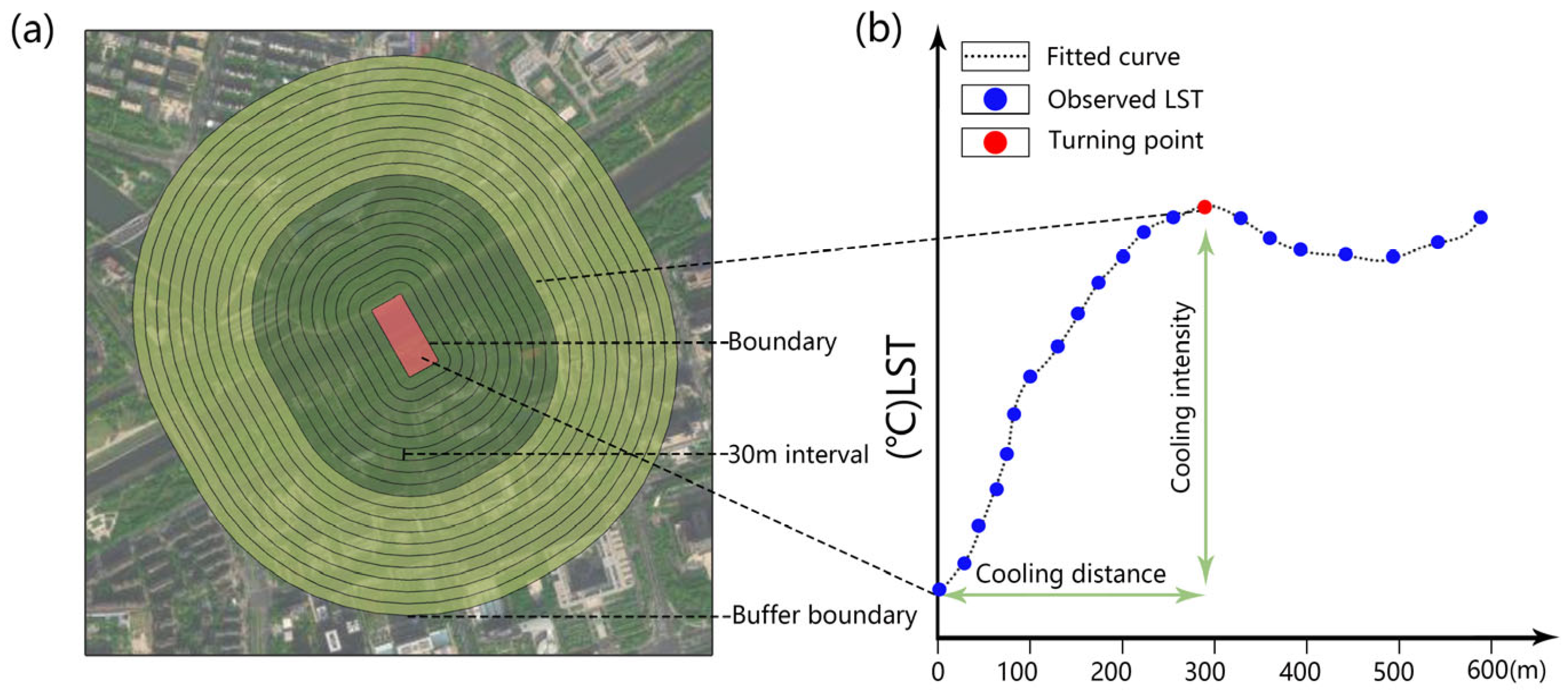
Blue-Green Space Cooling Intensity (BGCI): Defined as the temperature difference between a reference point and the interior of a blue-green space (°C). It is calculated as BGCI =
LSTref −
LSTbgi, where
LSTbgi is the mean LST of all pixels within a given site, and
LSTref is the mean LST of impervious surface pixels within a 500 m external buffer (excluding other blue-green areas) (
Figure 2).
Blue-Green Space Cooling Distance (BGCD): Defined as the horizontal distance (m) from the site boundary to the point where the cooling effect diminishes. This was determined via multi-ring buffer analysis: creating consecutive 30 m (one-pixel) buffers outward from each site boundary, plotting the mean LST for each buffer ring against distance, and identifying the distance at which the LST curve stabilizes or inflects as the BGCD.
2.4. Extraction of Landscape Driving Factors
To identify the potential predictors of cooling performance (BGCI and BGCD), multiple landscape factors were quantified based on high-resolution image interpretation and field survey data (
Table 1). The extracted drivers encompass three key dimensions: vegetation structure and composition, corridor morphology, and blue-green spatial pattern.
2.5. Statistical Analysis
To investigate the complex effects of landscape factors on cooling performance, a two-stage analytical approach was adopted.
First, Pearson correlation analysis (conducted in SPSS 27.0) was used to assess the relationships between the nine landscape factors and the cooling metrics (BGCI and BGCD). Factors showing significant correlations (p < 0.05) were identified as key contributors and selected for further mechanistic modeling.
Subsequently, a Boosted Regression Tree (BRT) model was employed for in-depth analysis. BRT is a powerful machine learning technique that integrates regression trees with boosting, offering several advantages: (1) it captures nonlinear relationships and variable interactions without prior assumptions; (2) it is robust to outliers and data distribution; (3) it mitigates overfitting through stochastic subsampling; and (4) it quantifies the relative importance of predictors and visualizes their marginal effects via partial dependence plots (PDPs). The BRT model was particularly suitable for this study as our primary objective was to unravel the complex, often nonlinear, influences of multiple landscape drivers on cooling effects and to identify potential ecological thresholds—a task for which BRT’s ability to model interactions and provide interpretable visual outputs is ideally suited.
The BRT model was implemented in R studio using the dismo package. BGCI and BGCD were set as response variables, with the significantly correlated landscape factors as predictors. Key parameters were set as follows: tree complexity = 5, bag fraction = 0.8, learning rate = 0.01, and family = “gaussian”. The model was trained using 10-fold cross-validation to ensure robustness and generalizability.
From the fitted model, the relative importance of each predictor was extracted to identify the key drivers. Partial dependence plots were then generated for these critical factors to visualize their nonlinear relationships with the cooling effects, enabling the detection of potential ecological thresholds—points where the cooling response changes notably or approaches saturation.
3. Results
3.1. Land Surface Temperature Distribution
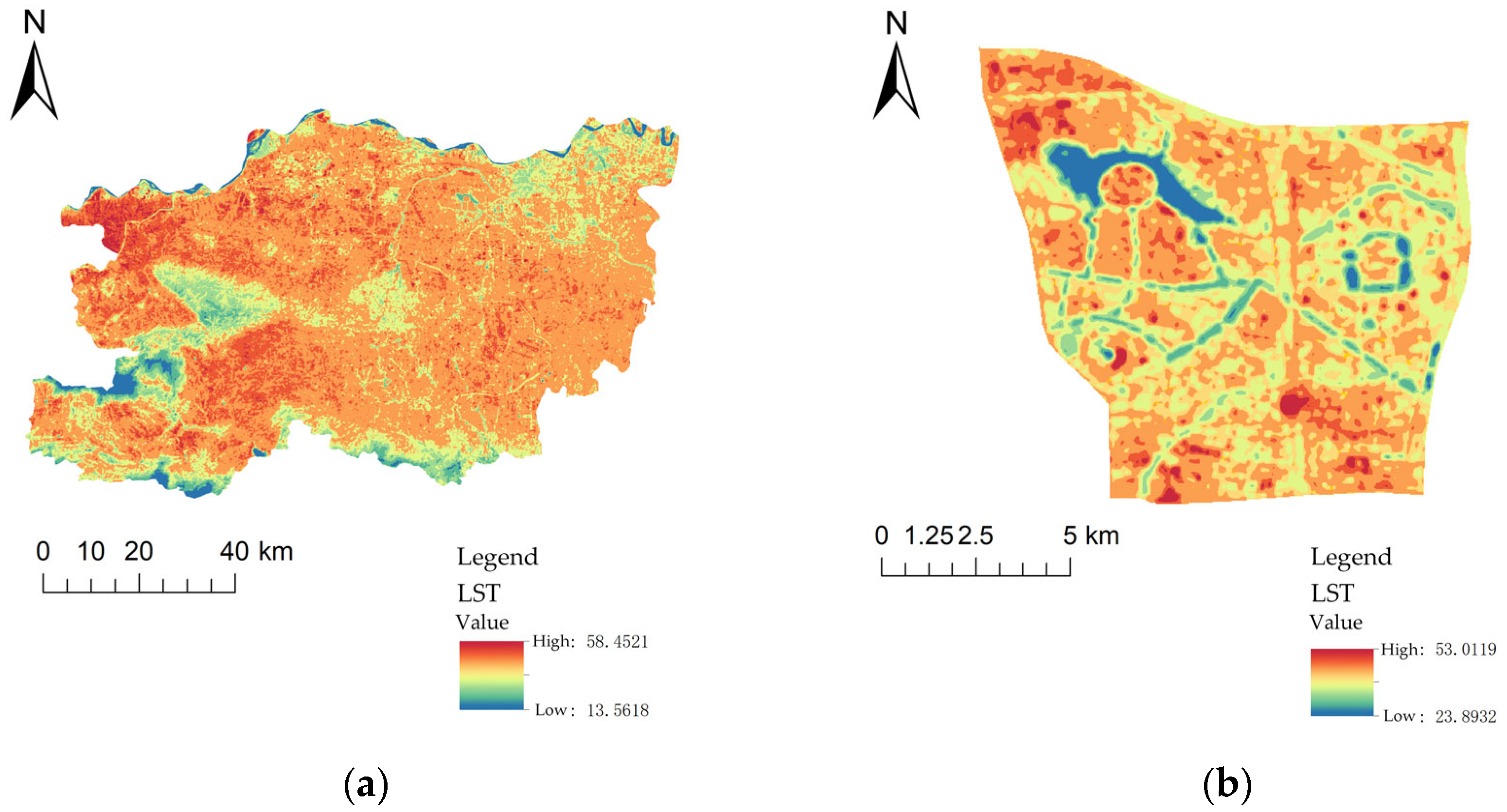
The Land Surface Temperature (LST) distribution for the study area was derived by applying the retrieval results to the Zhengzhou region (
Figure 3a) and extracting the corresponding spatial extent (
Figure 3b). Within the study area, the mean LST was 36.94 °C, with a maximum of 53.01 °C and a minimum of 23.89 °C, resulting in a considerable thermal amplitude of 29.12 °C.
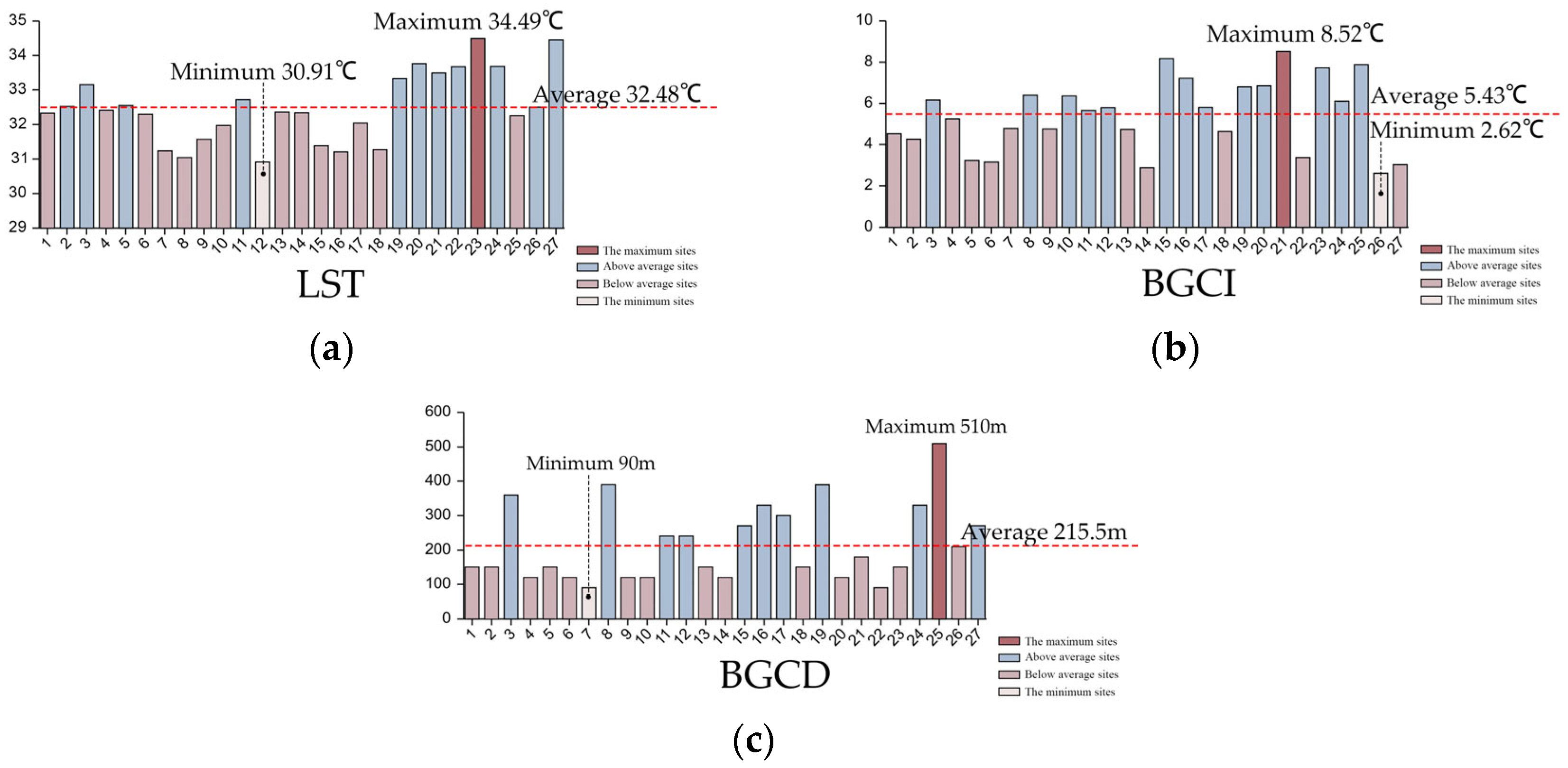
The Land Surface Temperature (LST) across the 27 study sites (for detailed data see
Supplementary Table S1) ranged from 30.91 to 34.49 °C, with a mean of 32.48 °C (
Figure 4a). The derived cooling metrics showed substantial variation: Blue-Green Space Cooling Intensity (BGCI) ranged from 2.62 to 8.52 °C (mean = 5.43 °C,
Figure 4b), and Blue-Green Space Cooling Distance (BGCD) ranged from 90 to 510 m (mean = 215.56 m,
Figure 4c).
Based on LST data from the sites and their surrounding buffers, BGCI and BGCD were calculated for each plot (see
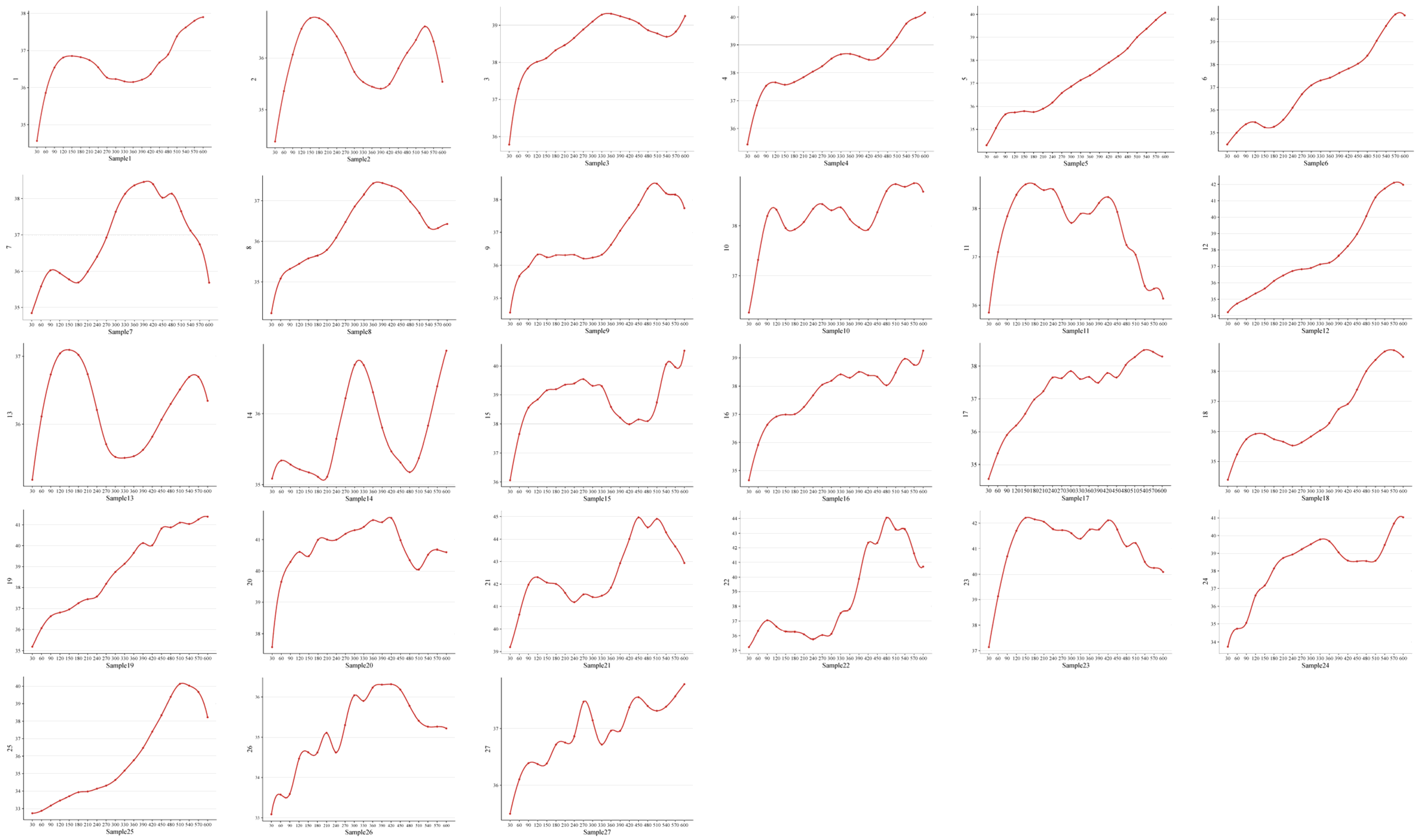
Supplementary Table S2). Visualization of the distance–LST profiles (
Figure 5) reveals a common cooling pattern: the mean LST in the buffer zone initially increases with distance from the green space edge until reaching a distinct threshold, after which it either declines or stabilizes. This confirms that the cooling influence of linear blue-green infrastructure operates within a finite range, marked by a clear distance threshold.
3.2. Key Factors Influencing Cooling Performance
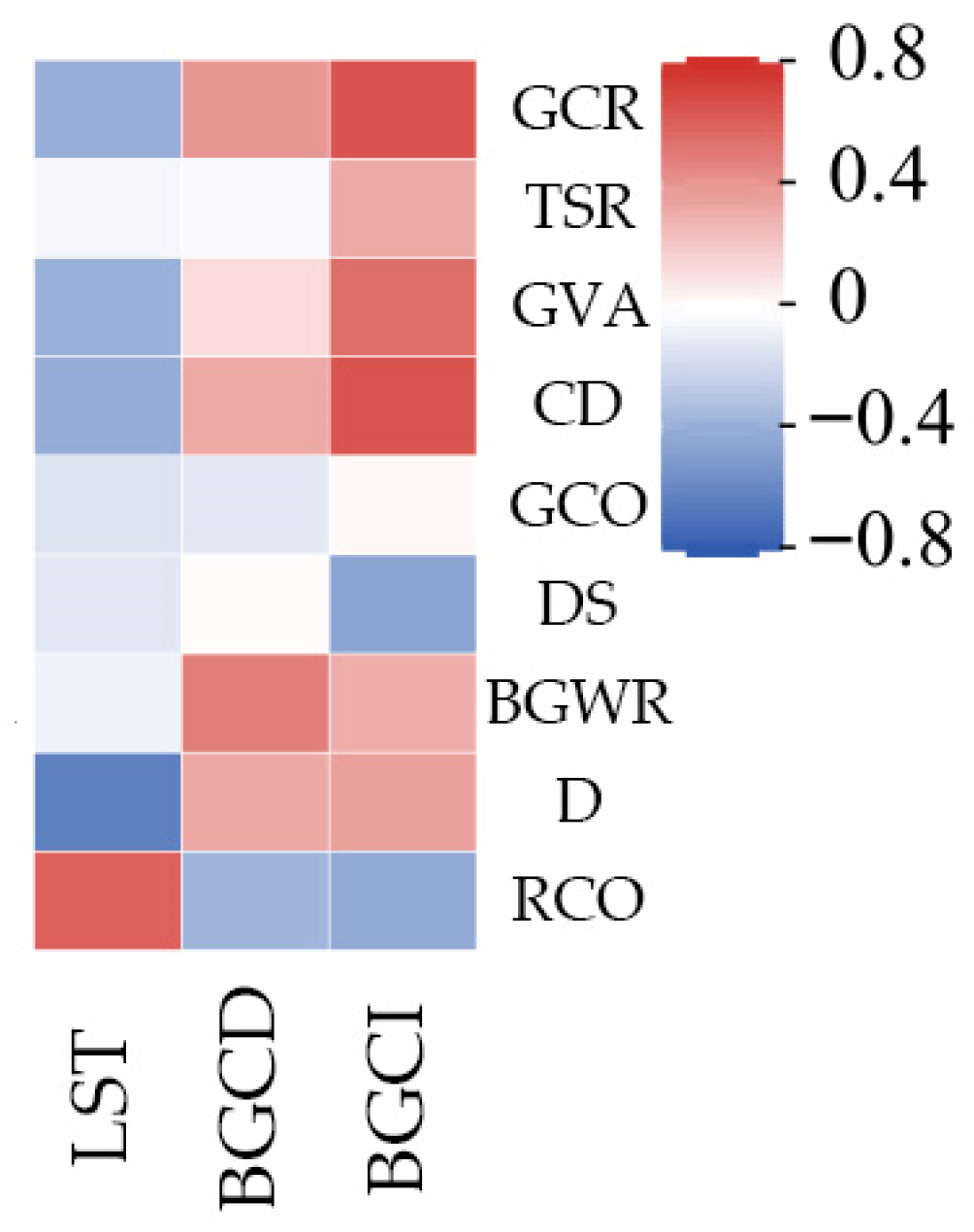
Pearson correlation analysis was conducted to examine the relationships between the cooling metrics (LST, BGCI, BGCD) and the nine candidate landscape drivers (
Figure 6).
LST showed a significant positive correlation with River Corridor Openness (RCO) (R = 0.613, p < 0.01). It was negatively correlated with all other factors, with significant negative correlations observed for Green Cover Ratio (GCR), 3D Green Volume per Area (GVA), Canopy Density (CD), and Distance to Riverbank (D) (R = −0.394, −0.385, −0.401, p < 0.05; R = −0.617 for D, p < 0.01).
BGCI exhibited significant positive correlations with GCR, GVA, and CD (R = 0.666, 0.570, 0.661, p < 0.01), and a positive correlation with D (R = 0.368, p < 0.05). In contrast, Riverside Shrub Density (DS) and RCO were significantly negatively correlated with BGCI (R = −0.447, −0.416, p < 0.05).
BGCD was significantly positively correlated only with GCR and Blue-Green Width Ratio (BGWR) (R = 0.406, 0.501, p < 0.05). Its correlations with other factors were not statistically significant.
3.3. Relative Importance and Thresholds of Key Drivers
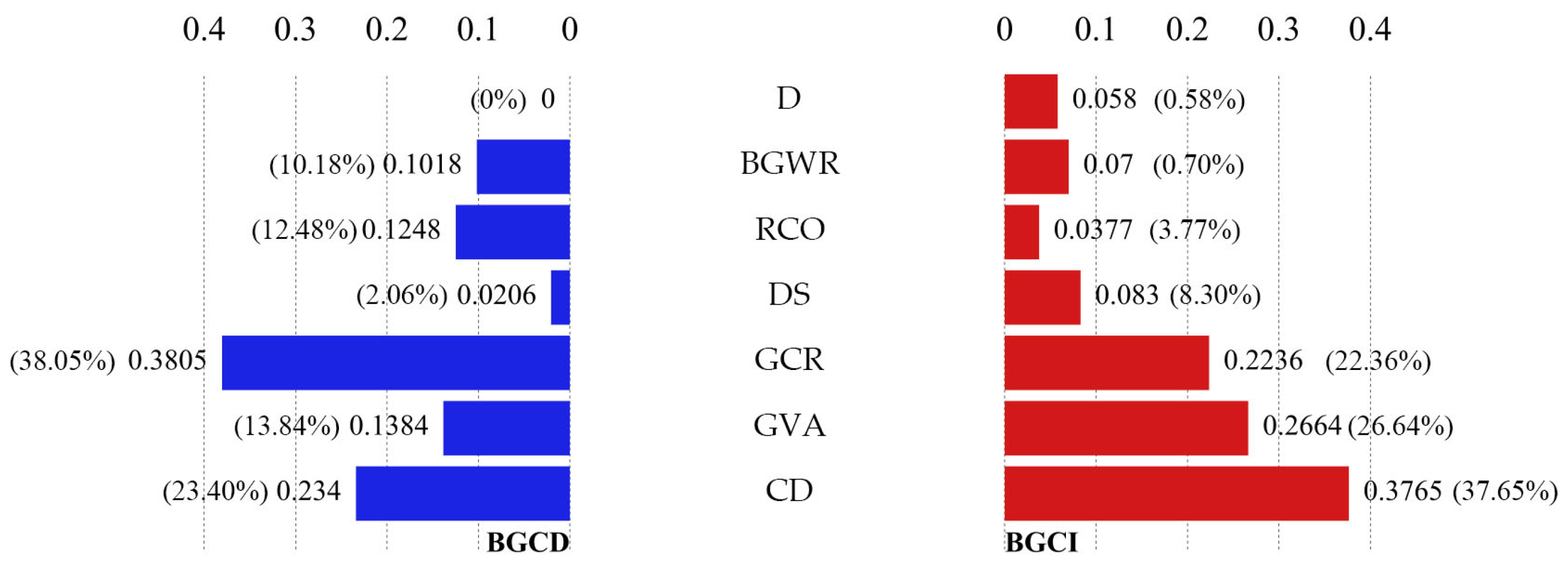
A Boosted Regression Tree (BRT) model was employed to quantify the nonlinear relationships and relative importance of the significant drivers identified above (GCR, GVA, CD, DS, D, BGWR, RCO) on BGCI and BGCD (
Figure 7).
Relative Contribution to BGCI: Canopy Density (CD) was the most influential factor (37.65%), followed by 3D Green Volume per Area (GVA, 26.24%) and Green Cover Ratio (GCR, 22.36%). The remaining factors (DS, RCO, BGWR, D) collectively contributed less than 14%.
Relative Contribution to BGCD: Green Cover Ratio (GCR) was the dominant driver (38.05%), followed by CD (23.40%) and GVA (13.84%). Blue-Green Width Ratio (BGWR) and RCO also showed notable contributions (10.18% and 12.48%, respectively).
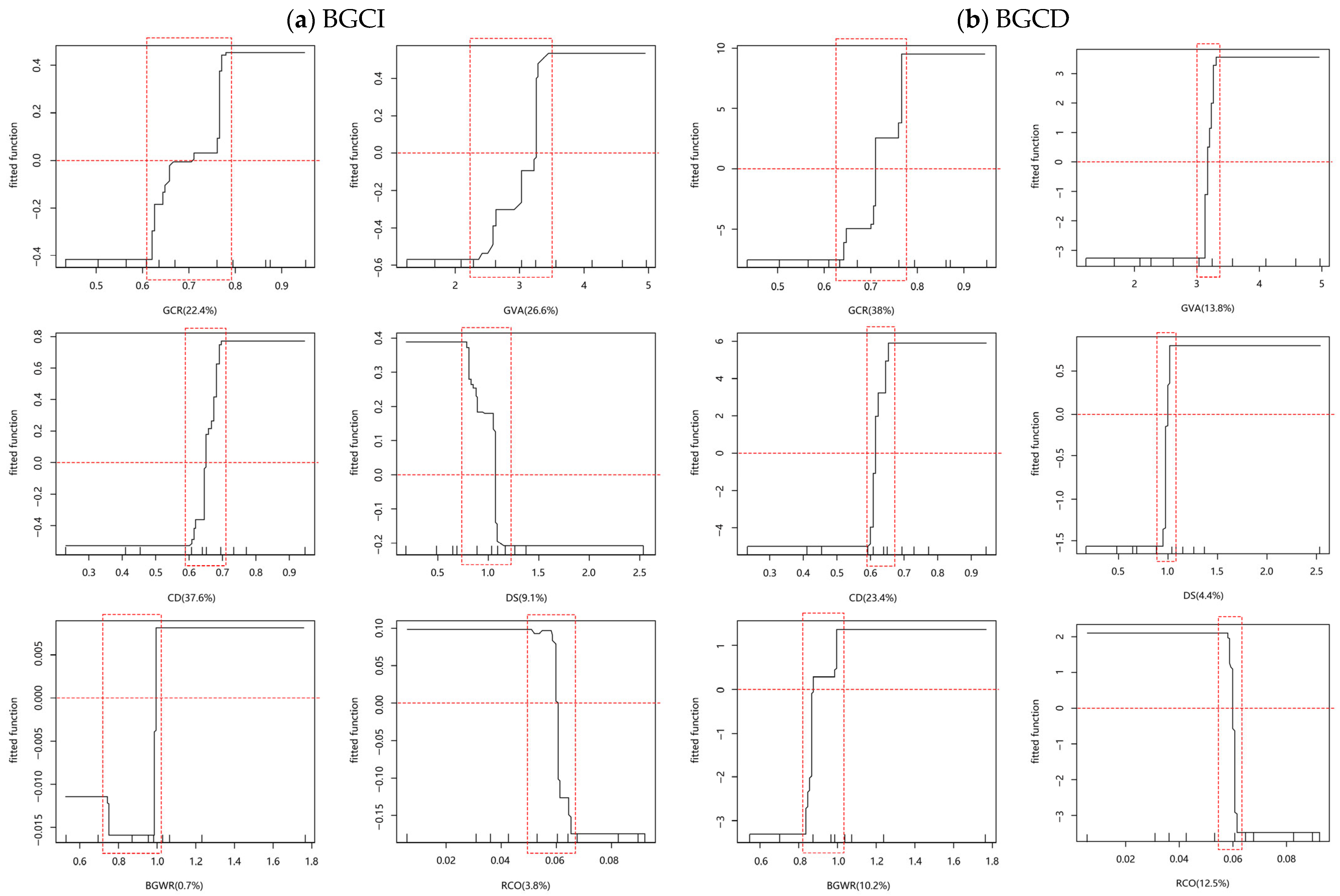
The partial dependence plots (PDPs) derived from the BRT model revealed the nonlinear marginal effects and critical thresholds of these key drivers (
Figure 8). The key thresholds were determined from the PDP curves through a systematic procedure based on the shape of each curve. First, the overall monotonicity of the curve was assessed. For a monotonically increasing curve, the zero point on the y-axis (i.e., the zero-contribution baseline) was identified. Within the interval above this baseline, the key threshold was defined as the value at which the curve’s slope approached zero, indicating a plateau in the marginal effect. For a monotonically decreasing curve, the threshold was taken as the value at the intersection of the curve and the zero-contribution baseline. In cases where the curve did not cross the baseline (i.e., the marginal effect remained entirely positive or negative), the threshold was identified directly as the value at which the curve transitioned from a phase of pronounced change to a stabilized state. The core logic of this approach is to detect the turning points where the marginal effect shifts sign or stabilizes, thereby identifying performance boundaries that are interpretable and relevant for feature selection or design guidance.
For BGCI: The positive effect of GCR plateaued after reaching approximately 0.77. GVA showed the strongest positive effect within the range of 3.2–3.4 m3/m2. CD began its positive contribution at 0.65 and reached an optimum near 0.7. DS contributed most at 0.8 m3/m, with effects turning negative beyond 1.1 m3/m.
For BGCD: The positive effect of GCR peaked around 0.77. GVA most strongly promoted BGCD at 3.4 m3/m2. The contribution of CD increased within 0.61–0.66, peaking near 0.66. BGWR showed a transition from negative to positive influence at a threshold of 0.86, stabilizing when the ratio approached 1. The contribution of River Corridor Openness (RCO) to the cooling distance (BGCD) peaks at 0.058.
4. Discussion
This empirical study establishes a quantitative, design-oriented framework for assessing the cooling performance of linear blue-green infrastructure in high-density urban environments. Using 27 riparian corridor sites in Zhengzhou’s Zhengdong New District as a case study, we quantified a significant “cool island” effect (
Figure 4,
Table S1) with an average cooling intensity (BGCI) of 5.43 °C extending over 215.56 m (BGCD). Beyond confirming this regulatory capacity, our core contribution lies in unpacking its dominant biophysical drivers and, most pivotally, translating these mechanisms into a set of quantitative ecological thresholds for precision planning.
4.1. Morphological Advantage and Cooling Efficacy of Linear Corridors
The results confirm the potent cooling role of linear blue-green spaces. Their performance notably exceeds that reported for typical urban parks in Zhengzhou (average cooling intensity ~3.01 °C, distance ~133.95 m) [
35]. This disparity highlights the importance of spatial morphology. The elongated form of corridors provides a higher edge-to-area ratio, which may enhance thermal exchange with adjacent built-up areas and facilitate the channeling of cool air, effectively acting as “ventilation corridors.” This function aligns with findings from other metropolises like Shanghai and Suzhou [
36,
37], underscoring the strategic value of linear networks in mitigating urban heat at a city scale.
4.2. The Dominance of Three-Dimensional Vegetation Structure
Mechanistic analysis via the Boosted Regression Tree (BRT) model reveals that cooling intensity is predominantly governed by vegetation structure and composition, far outweighing the influence of spatial patterns. Three factors—Canopy Density (CD, 37.65%), 3D Green Volume per Area (GVA, 26.24%), and the Green Cover Ratio (GCR, 22.36%)—collectively explained over 86% of the variation in BGCI. This robustly supports the growing consensus that the three-dimensional attributes of vegetation form the primary physical basis for cooling, rather than two-dimensional green coverage [
2,
38,
39,
40]. Dense canopies offer direct shading to reduce radiant heat gain [
38], while greater Green Volume enhances transpirational cooling through increased leaf area [
2]. Consequently, optimizing climate regulation necessitates a paradigm shift from pursuing a “green area” to enhancing “three-dimensional green quality,” prioritizing multi-layered vegetation structures with substantial tree cover.
Notably, the contribution of distance to the riverbank (D) was negligible (0.58%) in our context. This stands in contrast to studies of large water bodies (e.g., wide rivers, lakes) where distance is a key predictive factor [
39,
40]. This divergence highlights the critical scale and context dependency of cooling mechanisms. Within narrow, land-constrained urban riparian corridors, the influence of water is pervasive, minimizing internal microclimatic gradients. This finding cautions against the mechanical application of general rules and underscores the need for planning strategies attuned to the specific type and scale of blue-green infrastructure.
4.3. From Mechanism to Implementation: Quantitative Thresholds for Climate-Adaptive Design
A central applied contribution of this study is the identification of quantitative, design-oriented thresholds where the marginal cooling benefit of key drivers peaks or plateaus. We identified, for instance, that the cooling benefit stabilizes when the GCR reaches ~77% and the CD reaches 0.7. Similarly, optimal performance is associated with a Blue-Green Width Ratio (BGWR) close to 1:1. These thresholds enable a critical transition from qualitative guidelines to evidence-based, performance-driven design.
These findings provide actionable levers for climate-adaptive urban planning:
For Design Specification: Thresholds can be codified into performance-based standards (e.g., “canopy density in riparian greenways shall be around 0.7”) for planning guidelines and design review.
For Spatial Configuration: The optimal BGWR (~1:1) indicates a balanced configuration that leverages both evaporative cooling from water and shading from vegetation.
For Multi-Objective Management: Identifying saturation points allows for intelligent trade-offs. Once optimal structural metrics are achieved, space can be reallocated to other uses (e.g., recreation) without significantly compromising cooling performance.
In summary, this study bridges ecosystem service science [
7,
8] and urban planning practice [
41] by converting complex ecological processes into clear, spatially explicit design parameters. It demonstrates that by precisely optimizing vegetation structure and blue-green configuration, the climate regulation services of urban green infrastructure can be maximized, offering a robust, science-based pathway toward climate-resilient urban development.
4.4. Limitations and Pathways for Integrated Urban Ecology
While this study provides a quantitative framework for optimizing the cooling performance of linear blue-green infrastructure, its findings are context-dependent and point toward essential avenues for future research to enhance their robustness and applicability.
First, the ecological thresholds identified here are empirically derived from a single urban region (Zhengzhou) under a temperate continental monsoon climate and represent summer conditions. This leaves open questions regarding their transferability to cities in different climatic zones (e.g., tropical or arid regions) and their stability across seasons and diurnal cycles. Furthermore, the resilience of these cooling services under intensifying extreme climate events, such as prolonged heatwaves or droughts, remains to be evaluated [
21,
31]. Future work should therefore prioritize cross-city comparative studies and long-term monitoring to test the generalizability of the proposed thresholds. Such efforts will be crucial for developing a more universally applicable, climate-adaptive set of design standards.
We emphasize, however, that the core methodological framework developed in this study—integrating geospatial analysis of thermal performance with Boosted Regression Tree (BRT) modeling to identify key drivers and ecological thresholds—is inherently transferable. The analytical logic (quantifying cooling effect, identifying dominant structural drivers, and establishing localized performance thresholds) can be applied to other forms of urban green infrastructure (UGI) beyond riparian corridors. For cities with limited riparian environments, the framework can be adapted to evaluate linear systems such as greenways, street tree networks, or urban parks, where the “blue” component may be absent or redefined. In coastal cities, the approach remains highly relevant but would require contextual adaptation—for instance, by incorporating factors like prevailing wind directions and sea breeze effects into the model to account for distinct microclimatic interactions. While the specific numerical thresholds (e.g., BGWR ≈ 1:1) are unique to our case, the scientific workflow provides a generalizable template. The primary requirement for application elsewhere is local calibration with city-specific data to derive optimized thresholds for different UGI types and climatic contexts.
Second, our analysis focused on the climate regulation service (cooling), yet urban blue-green infrastructure is inherently multifunctional. Real-world planning requires navigating synergies and trade-offs among a suite of ecosystem services—including stormwater management, air purification, biodiversity support, and cultural recreation—while mitigating potential disservices (e.g., allergen pollen, maintenance costs, or perceived safety issues in densely vegetated areas) [
42,
43]. A critical next step is to adopt an integrated ecosystem service assessment framework that models how the key drivers identified here (e.g., Canopy Density, 3D Green Volume) simultaneously affect multiple socio-ecological outcomes. This research must also engage directly with dimensions of environmental justice. By integrating socio-economic data with ecological models, future studies can assess whether the cooling benefits of green infrastructure are equitably distributed across communities, ensuring that climate adaptation strategies contribute to inclusive and sustainable urban development [
44].
5. Conclusions
This study developed a science-based, practitioner-oriented framework to quantify the cooling performance of urban riparian green corridors and translate ecological mechanisms into actionable design parameters. Focusing on a representative rapidly urbanizing area, we confirmed the significant cooling island effect of linear blue-green infrastructure, with an average intensity of 5.43 °C extending over 215 m.
The core theoretical contribution lies in shifting the understanding of cooling drivers from two-dimensional area to three-dimensional structure. The Boosted Regression Tree model identified Canopy Density (CD), 3D Green Volume per Area (GVA), and the Green Cover Ratio (GCR) as the dominant factors, collectively explaining over 86% of the variation in cooling intensity. This underscores that vegetation structural quality is more critical than mere green coverage for climate regulation.
The principal applied contribution is the identification of quantitative ecological thresholds for optimal performance. Key design benchmarks include a Green Cover Ratio (GCR) that attains 77%, a Canopy Density (CD) maintained at 0.7, and a Blue-Green Width Ratio (BGWR) that approximates 1:1. These thresholds mark saturation points where further investment yields diminishing returns, enabling planners to optimize limited urban space efficiently.
By converting complex biophysical processes into a set of clear spatial parameters—such as specific Canopy Density targets and configuration ratios—this research provides a direct bridge between ecosystem science and climate-adaptive urban design. It offers a replicable methodology and evidence-based benchmarks for planners, landscape architects, and urban managers seeking to enhance thermal resilience through targeted green infrastructure optimization, demonstrating that precision in ecological design is essential for building sustainable and climate-resilient cities.




 ,
,