Article

Long-Term Field Measurement and Analysis of Wind Characteristics for a Supertall Building Under Construction: The Case of Shanghai

1
Department of Civil Engineering, Dalian University of Technology, Dalian 116024, China
2
Shanghai Construction No. 5 (Group) Co., Ltd., Shanghai 200333, China
*
Author to whom correspondence should be addressed.
Buildings 2026, 16(3), 645; https://doi.org/10.3390/buildings16030645
Submission received: 18 December 2025 / Revised: 15 January 2026 / Accepted: 26 January 2026 / Published: 4 February 2026

Abstract

With the rapid development of mega-cities, clarifying the wind field characteristics of high-density urban areas is crucial for the accurate assessment of wind loads on newly built or temporary structures. Taking the high-density urban area of Shanghai as a case study, this research utilizes long-term wind field monitoring data obtained from a super high-rise building under construction. Statistical methods are employed to analyze the mean wind and fluctuating wind characteristics of such sites. The results indicate the following: the mean wind direction distribution is generally consistent with code statistics, with dominant wind directions varying significantly by season; the mean wind profile exponent at the site is 0.39, which is slightly higher than the reference value for Terrain Category D specified in codes; turbulence intensity tends to stabilize as wind speed increases, and the ratio of along-wind to cross-wind turbulence intensity is 1:0.59, which is slightly lower than the code-suggested value and shows a significant positive correlation with the gust factor. The mean peak factor is 2.52, while the mean longitudinal and lateral turbulence integral length scales are 118 m and 45 m, respectively. For strong wind samples, the longitudinal wind spectrum agrees well with the Davenport spectrum, whereas the lateral power spectrum correlates well with the Von Karman spectrum. This study provides a scientific basis and data support for wind load calculation and structural safety assessment in Shanghai and other high-density cities.

1. Introduction

As building heights and forms become increasingly complex, the significance of wind loads in structural safety control continues to grow. Current wind-resistant design for supertall buildings mainly relies on the generic wind-field parameters and empirical equations provided in existing codes [1,2,3]. These values are mostly based on large-scale regional statistical averages. They typically do not account for the effects of local urban building clusters and terrain on the three-dimensional wind field, and, therefore, inevitably deviate from the actual on-site wind conditions. Field measurements can provide refined wind-field parameters and correct the biases of code estimates, offering a reliable basis for numerical simulation, wind-resistant design, and construction safety. They are a direct and authoritative means to understand the mechanisms of wind loading and structural dynamic response and to validate experimental methods and theoretical models [4].
To date, field measurement studies of wind fields have largely focused on typhoons in coastal areas [5,6] or special wind fields under complex terrain conditions [7,8], while measurements oriented to buildings themselves are relatively scarce; a large portion of the existing work has concentrated on long-span bridges [9,10]. In the field of supertall buildings, early studies such as Dalgliesh et al. [11,12,13] carried out large-full scale measurements on multiple high-rise buildings and compared them with wind-tunnel tests; Rathbun’s [14] full-scale measurements on the Empire State Building provided statistical characteristics such as mean surface pressure, fluctuating pressure, gust factors, and peak pressures. In recent years, Li et al. [15,16,17] and others have conducted wind-field measurements on multiple supertall buildings. Shen et al. [18] studied the wind-pressure characteristics of supertall coastal buildings in Xiamen under typhoon conditions, while Xu [19] investigated those of the Diwang Building in Shenzhen. Their work collectively reveals the fluctuation characteristics of high-altitude winds. Fu et al. [20] compared measured data from CITIC Plaza in Guangzhou and a supertall building in Shenzhen to investigate boundary-layer wind characteristics around buildings and their effects on structures.
However, most of the above measurements were deployed at fixed observation points on meteorological towers or building tops. While the obtained wind-field characteristics can be used as design references, they provide limited guidance for construction-stage safety. During construction, in addition to the wind resistance of the main structure, the wind safety of construction equipment such as tower cranes, construction hoists, and temporary steel platforms must also be considered. With ongoing urbanization and scarce land, new supertall buildings are being constructed worldwide, yet the full-scale measurements of tall buildings are still insufficient [19]. In particular, continuous monitoring data collected throughout the construction period are even scarcer. Previous studies [4] have indicated that wind parameters measured on the main building structure may not adequately represent the safety requirements of temporary facilities. Kang [4] collected and analyzed wind speed samples on the building steel platform for a duration of 4 h, but this was not sufficient to represent the wind field characteristics throughout the entire construction period.
To address this gap, this study selects the central urban area of Shanghai as a typical high-density urban area for research and presents a long-term wind speed monitoring study of a supertall building under construction in Xuhui District, Shanghai, China. Based on multi-point, long-term time-series observational data, the spatiotemporal characteristics of the wind field during the construction period are systematically analyzed. The study aims to provide new reference data on wind characteristics for wind load assessment and the wind safety of temporary facilities during the construction phase.

2. Data Collection

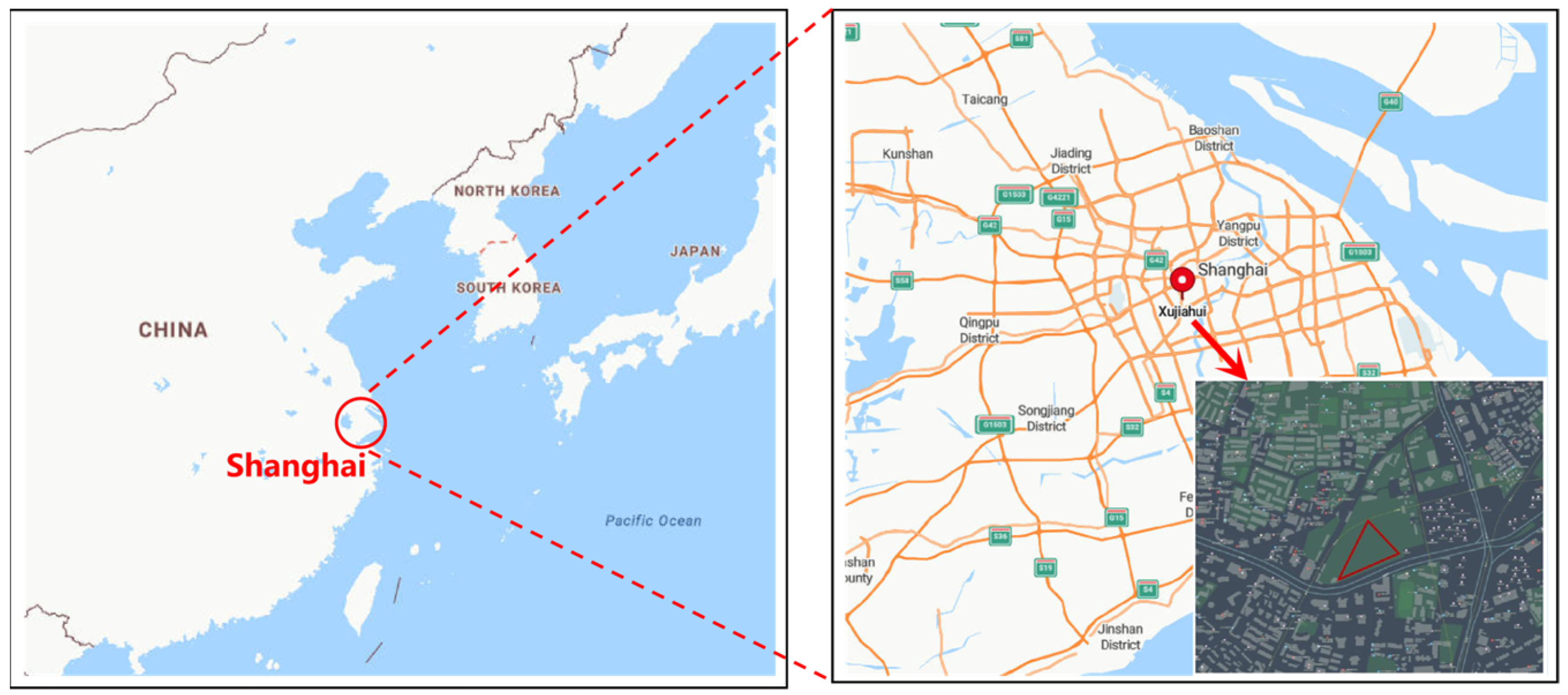
The target structure is a 370 m super-high-rise tower under construction in Xuhui District, Shanghai, adopting a frame-core tube structural system. The geographical location of the target construction site is shown in Figure 1.
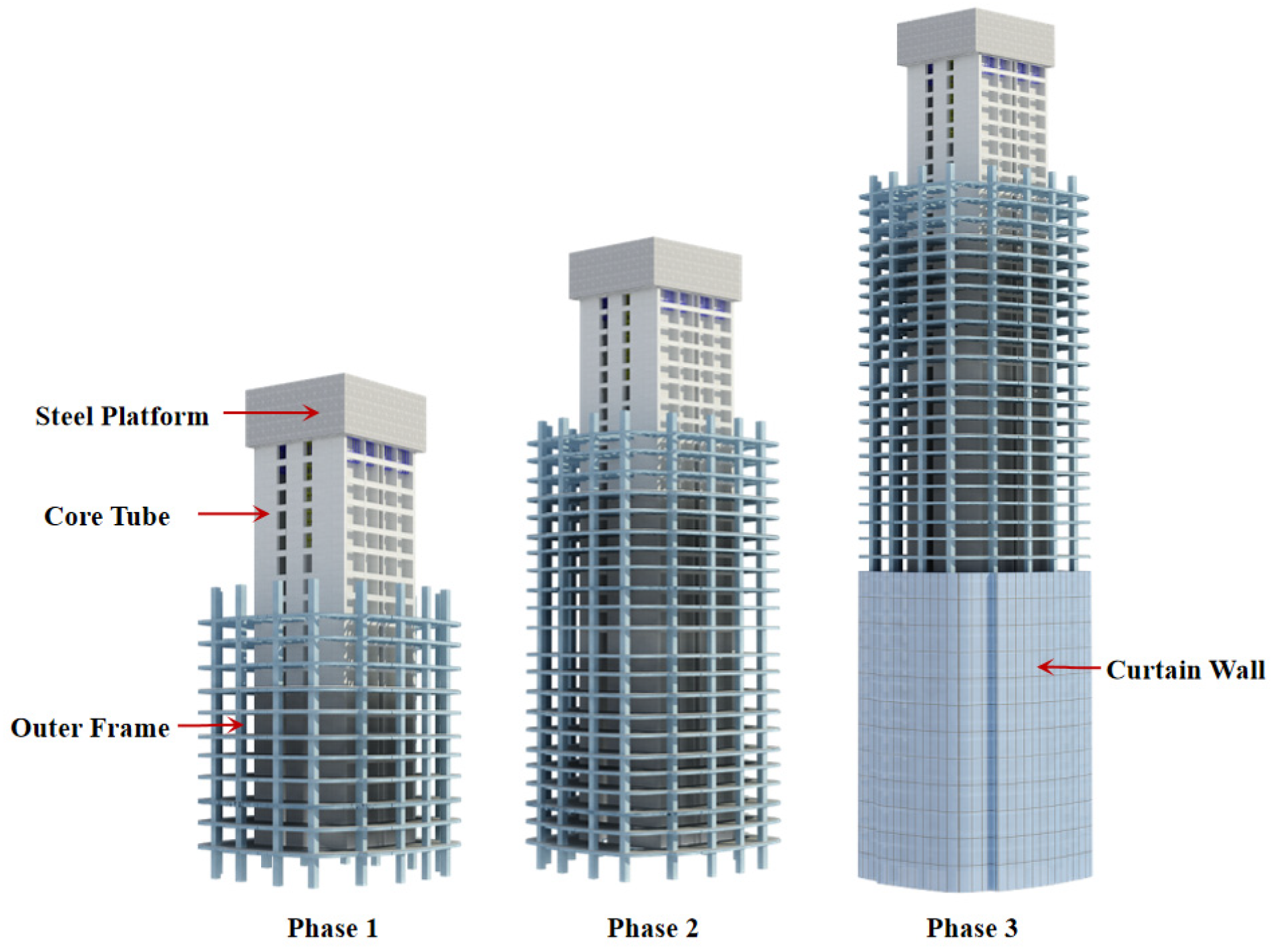
The building comprises six underground floors and 70 stories above ground. The peripheral frame primarily consists of steel-reinforced concrete (SRC) frame columns, steel frame beams, and belt trusses, while the core is an SRC structure. The core tube is constructed in advance using a steel platform system, which provides vertical access channels and structural support for subsequent work. After the core tube leads the construction by several floors, the construction of the outer frame begins. Therefore, during the construction phase and assuming no structural setbacks, the building’s structural profile typically exhibits one of two forms: a coexistence of the core tube and the outer frame, or a coexistence of the core tube, the outer frame, and the curtain wall. The evolution of building form is shown in Figure 2.
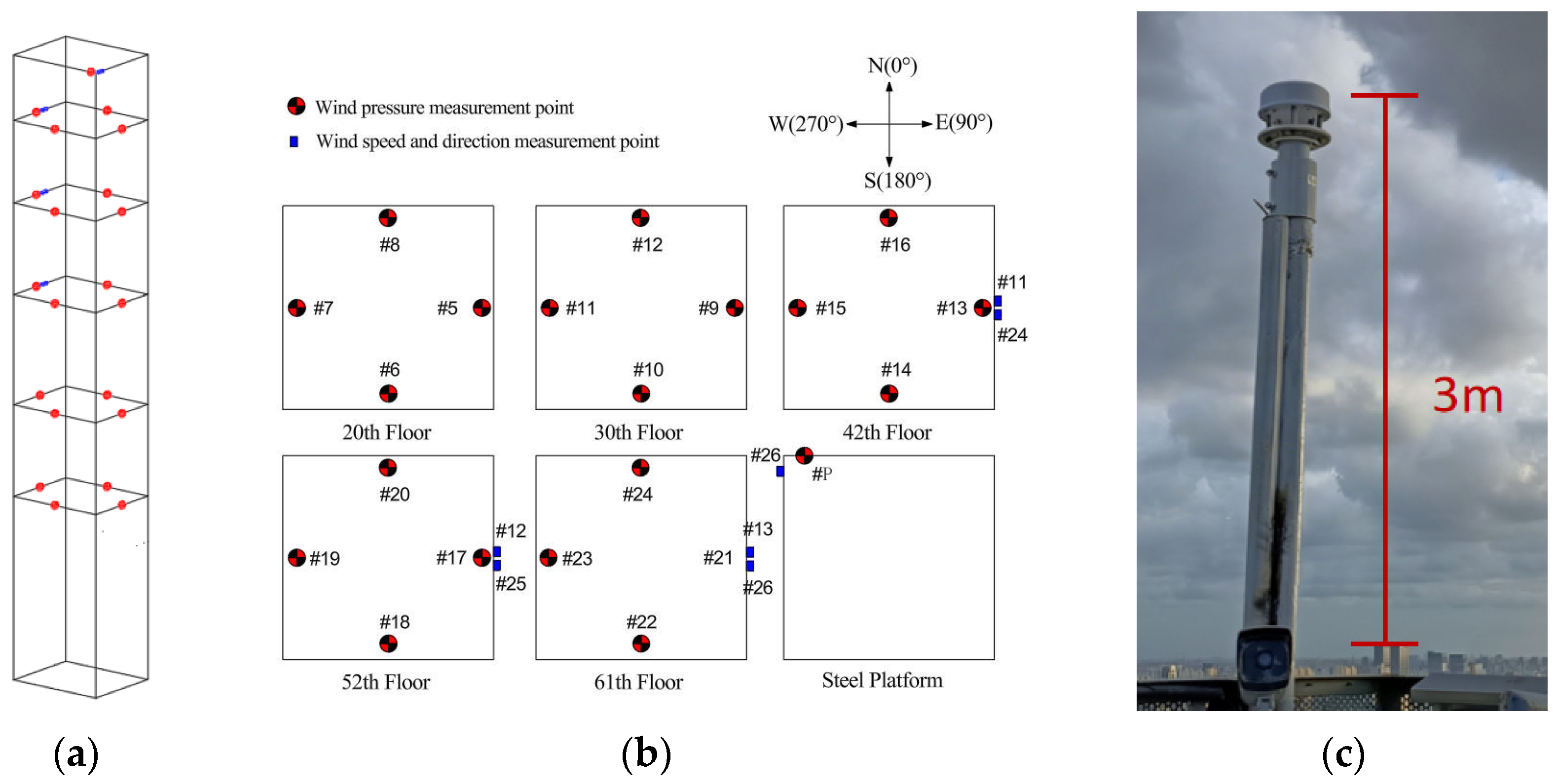
The layout of wind pressure and wind speed/direction monitoring points on the structure is shown in Figure 3.
Points #11, #12, and #13 are mechanical anemometers, while points #24, #25, and #26 are ultrasonic anemometers. Monitoring point #26 is a long-term monitoring station. It is fixed to the corner of the tower’s steel construction platform via a steel pipe, extending approximately 3 m beyond the platform. The station rises synchronously with the platform to analyze the long-term wind field characteristics around the building. In accordance with the Shanghai Engineering Construction Standard “Standard for Meteorological Parameters of Building Wind Environment,” [21] monitoring points are installed every 10 stories along the height on the eastern side of the building (aligned with Shanghai’s prevailing wind direction) to capture variations in the wind profile. However, due to the impact of curtain wall installation, anemometers at lower levels became unable to collect data after the curtain walls were erected. Consequently, synchronous measurements are limited to a maximum of three floors at any given time.
Due to the insufficient sampling accuracy of the mechanical anemometers, this study exclusively analyzes data obtained from the ultrasonic anemometers. The ultrasonic anemometer used in this study was set to a sampling frequency of 1 Hz. The wind speed measurement range is 0–60 m/s with an accuracy of ±0.5 m/s, and the wind direction measurement range is 0–360° with an accuracy of ±3°, where 0° represents true north. The instruments operated in an all-weather mode throughout the monitoring period from October 2021 to November 2023. On-site complex and dynamic construction activities may lead to obstruction or collision with monitoring equipment, resulting in data anomalies or gaps. During the data preprocessing stage, the measured data were first divided into 10 min samples, each containing 600 data points. Outliers in wind speed within each sample were then identified and removed using the 3-sigma criterion, in addition to the exclusion of physically implausible negative values. Subsequently, samples with a valid data completeness rate below 95% or a wind direction standard deviation exceeding 10 degrees were discarded. Finally, linear interpolation was applied to fill minor gaps in the retained valid samples [22].

3. Average Wind Characteristics

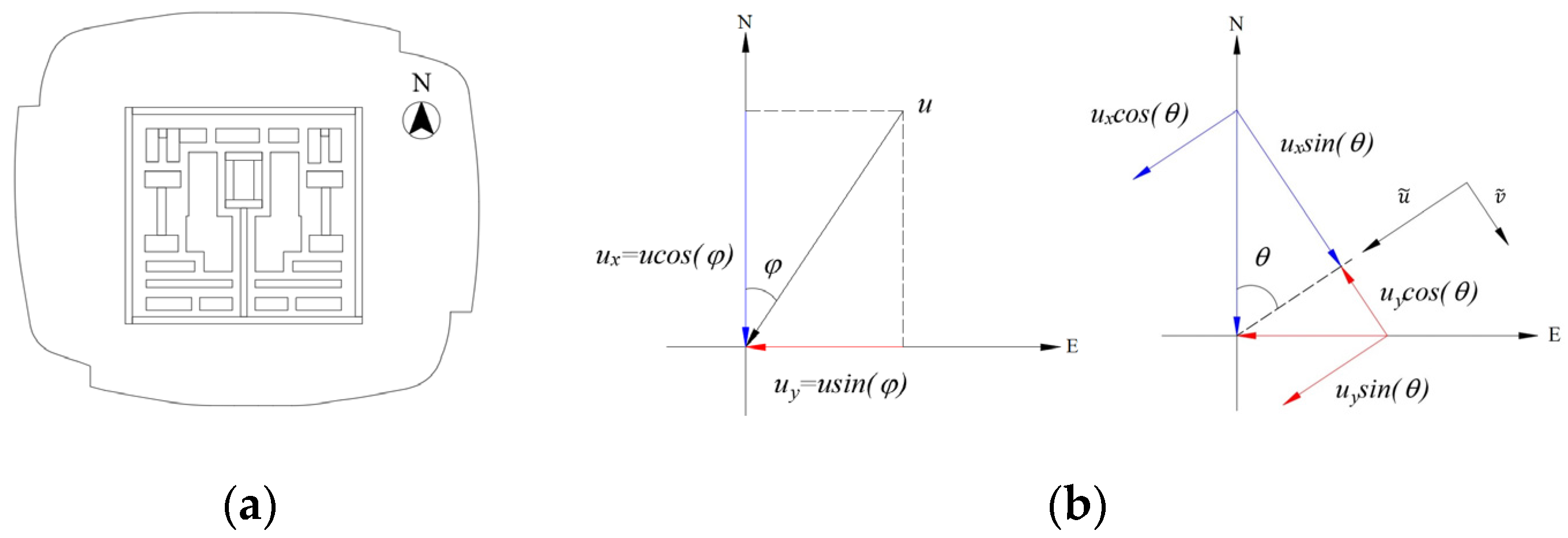
In modern wind engineering, the instantaneous wind speed output from an anemometer is typically decomposed into long-period mean wind and short-period fluctuating wind using the “vector method” [19]. In this context, the mean wind is treated as a static action, while only the dynamic effect of the fluctuating wind is considered. Prior to this decomposition, it is essential to determine the fundamental averaging time for the mean wind speed. Different choices of this averaging time for the same wind speed dataset will result in different wind characteristic parameters. Various countries have different standards for this fundamental averaging time. For instance, most countries, including China [1] and Japan [3], specify it as 10 min, whereas the United States [2] uses 3 s. In this study, a 10 min averaging time is adopted. The building plan and the schematic diagram of wind speed decomposition are shown in Figure 4.
The monitored instantaneous wind speed is decomposed within a Cartesian co-ordinate system into its components in the x (positive north direction) and y (positive west direction) directions:
u x ( t ) = u ( t ) cos φ ( t )
u y ( t ) = u ( t ) sin φ ( t )
where u ( t ) represents the instantaneous wind speed; φ ( t ) represents the instantaneous wind direction angle, with the positive north direction as 0 and the clockwise direction as the positive direction; u x ( t ) and   u y ( t ) denote the components of the instantaneous wind speed in the x and y directions, respectively.
The average wind speed U and average wind direction angle θ are as follows:
U = ( u ¯ x ) 2 + ( u ¯ y ) 2
θ = a r c c o s u ¯ x U
where u ¯ x and u ¯ y are the mean values of u x ( t ) and u y ( t ) under the basic time interval, respectively.

3.1. Monitoring Wind Frequency Statistics

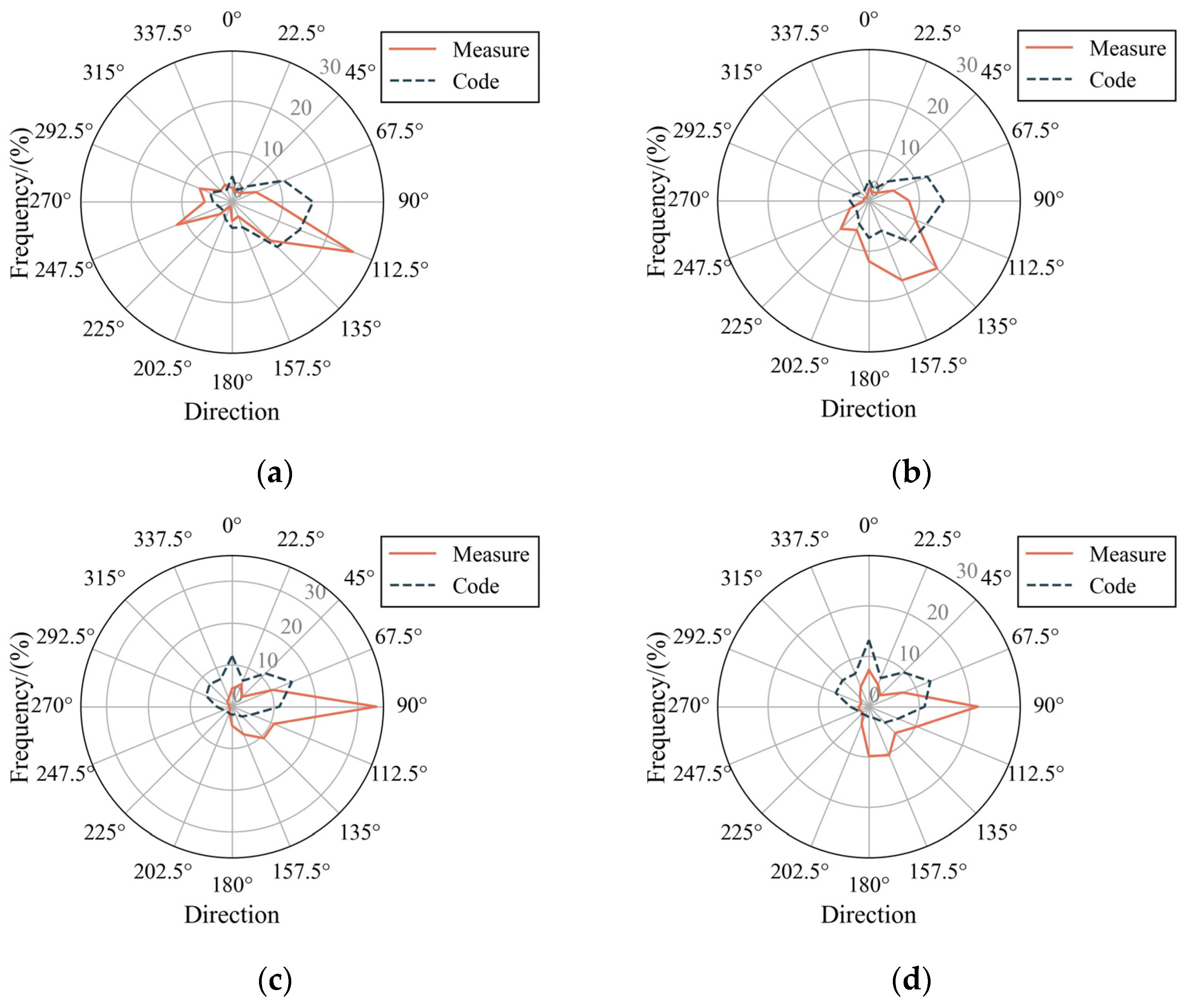
The monitoring results were averaged over a 10 min interval to obtain the mean wind speed and mean wind direction. According to the classification of wind environment meteorological monitoring [21], Xuhui District is categorized within the central urban climate zone. Therefore, observation data from the Minhang National Meteorological Observatory were used. Wind rose diagrams were plotted based on both the monitoring results and the standard data, as shown in Figure 5.
From Figure 5, it can be seen that the shapes of the two wind roses generally match, with the predominant wind directions falling between 67.5° and 135°. However, there exist certain discrepancies in the predominant wind directions: the deviation is 45° in summer, while, for other seasons, the deviation is around 22.5°. The primary reason for these differences is the limited sample size. The standard wind rose is derived from long-term, multi-year continuous statistical data, whereas the monitoring period in this study was only 2 years. After excluding missing and abnormal samples, the dataset essentially covers only one annual cycle, which introduces some randomness.
Therefore, it can be concluded that the current observational results conform to the basic wind direction patterns of the central urban area of Shanghai.

3.2. Wind Profile Fitting

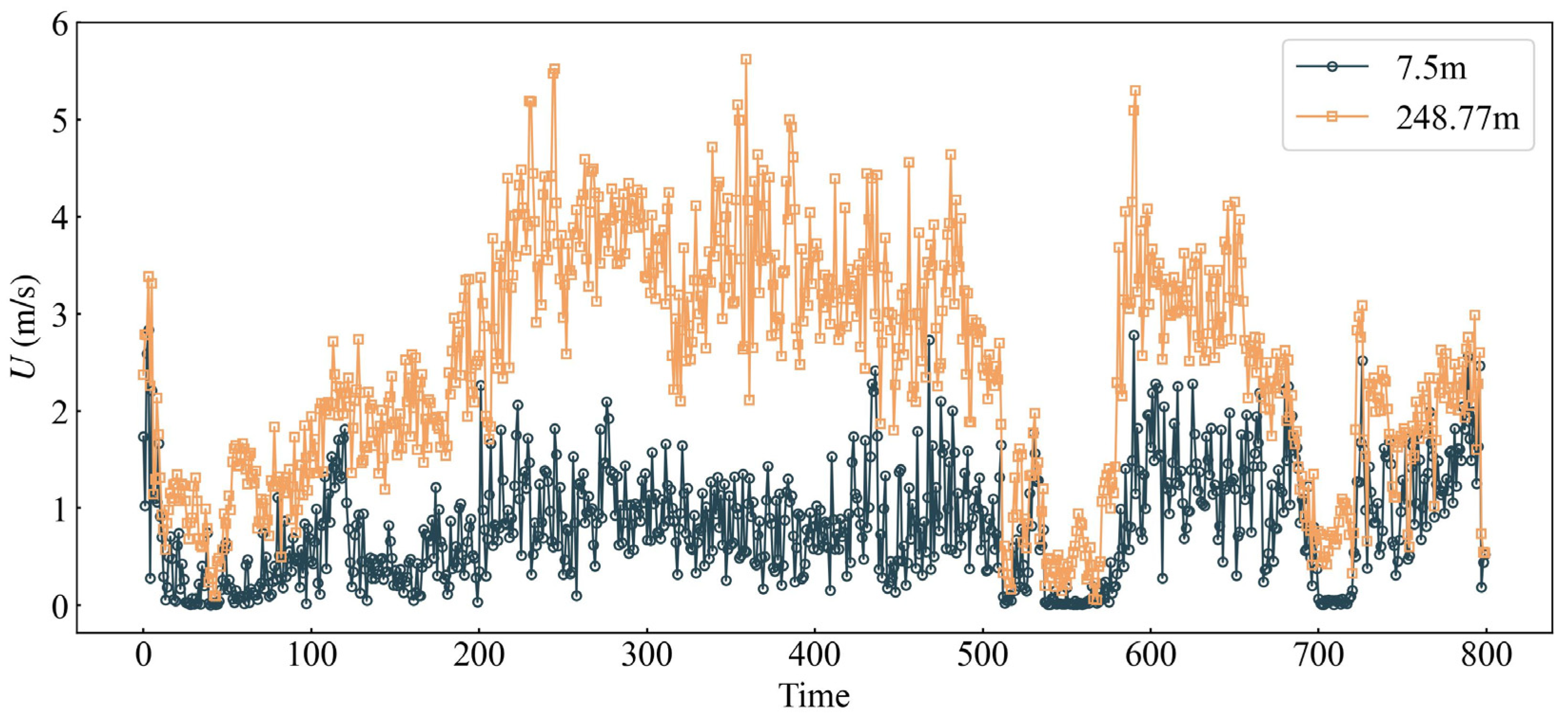
Surface roughness reduces near-surface horizontal wind speed, and this effect diminishes with increasing height [23]. The power law is commonly used to fit measured wind speeds to obtain the along-wind speed profile exponent, which then allows estimation of wind speeds at other heights from surface observations [24]. The choice of surface roughness has a significant impact on building wind load calculations. As noted above, the wind parameters in current codes are mostly regional statistical averages; however, with ongoing urbanization the surface roughness has changed substantially, so directly using code values is neither accurate nor sufficiently detailed. Therefore, measured wind profiles are essential for wind-resistant building design. In open areas, wind speed gradients with height can be obtained from meteorological masts, but such experiments are usually not feasible in densely built urban cores. In this study, the wind data from the mid-floor measurement points were significantly affected by interference from the building itself. Therefore, in order to obtain a more accurate wind profile exponent, the calculation is based on the ground observation data and the simultaneous wind speed at the top of the building. The rooftop measurement point is the steel platform described above, and the ground sensors are located in an open area within the building site at a height of 7.5 m. Due to interference from construction activities, the ground-level measurement period lasted for only about 1 week. At this time, the steel platform was at a height of 248.77 m. A comparison of the data from the two heights is shown in Figure 6.
The power law equation was used to fit each dataset:
v z = v 0 ( z / z 0 ) α
where z   is the target height; v z is the mean wind speed at height z ; z 0   is the reference height; v 0 is the mean wind speed at the reference height; α is the wind profile exponent.
Since this study has measurements at only two heights, the exponent α can be obtained directly by substituting into the power-law equation. Fitting analysis was performed using the 10 min average wind speeds measured simultaneously at the rooftop ( v z ) and ground level ( v 0 ). First, calculate the value of α for each sample, and, then, take the arithmetic mean to obtain the average wind profile exponent α ¯ . The calculation equation is as follows:
α i = l n ( v z , i / v 0 , i ) l n ( z / z 0 )
α ¯ = 1 N i = 1 N α i
where N   is the total number of samples.
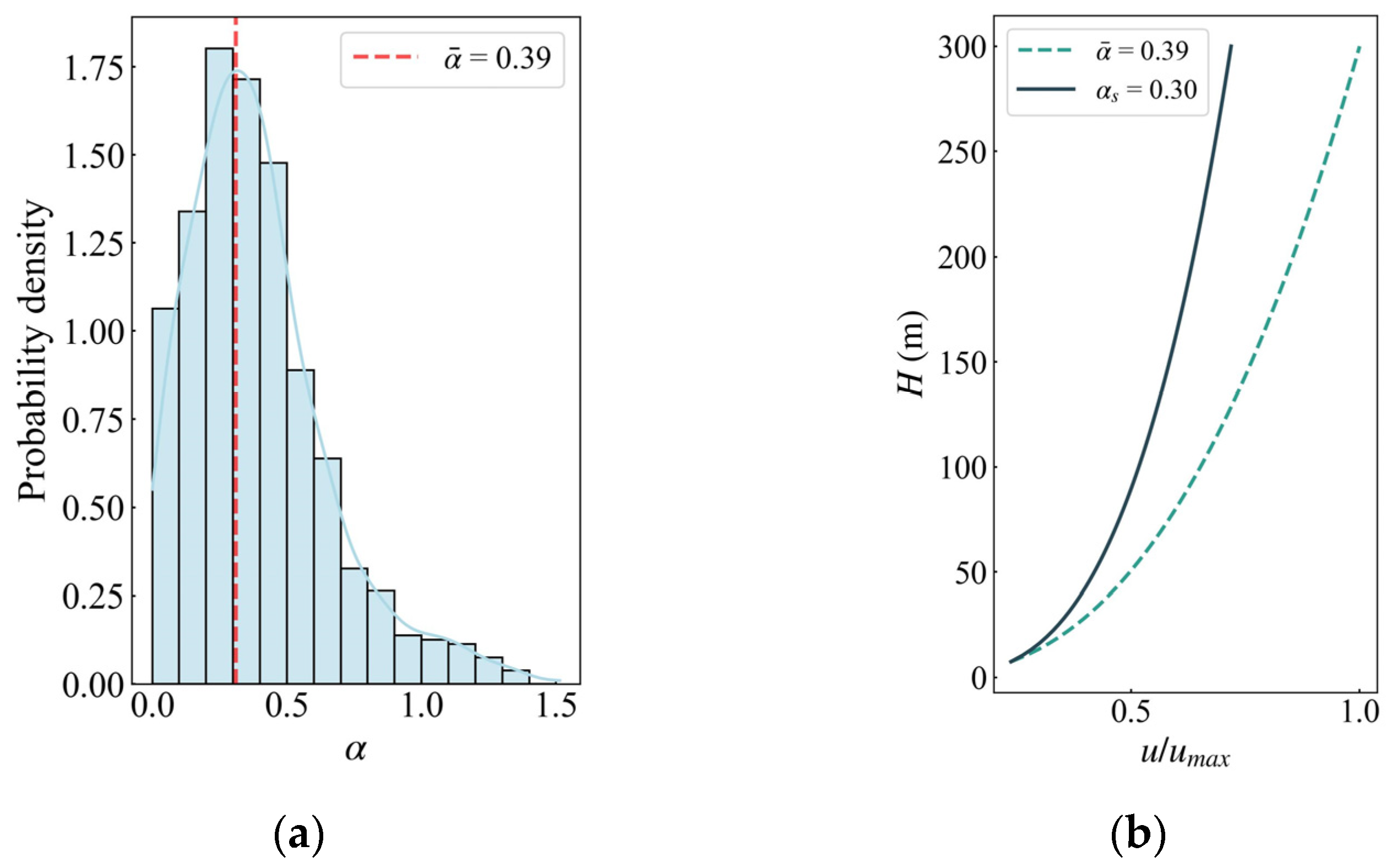
The distribution of the wind profile exponent and the average fitting curve are shown in Figure 7.
It can be seen from Figure 7 that the calculated results for a fall within the range of 0 to 1.5. The average value is 0.39, which is higher than the code value of 0.3 ( α s ) for Terrain Category D. This indicates that using the code-specified values in the study area may underestimate the increase in wind speed with height, thereby affecting the wind load assessment for the building.

4. Analysis of Pulsating Wind Characteristics

4.1. Turbulence Intensity

Fluctuating wind speed is a manifestation of wind dynamic characteristics, reflecting the turbulence and randomness of wind speed. Commonly used parameters to characterize it include turbulence intensity, gust factor, and fluctuating wind speed spectrum. Among these, turbulence intensity and gust factor are important parameters describing atmospheric turbulence. Turbulence intensity reflects the overall fluctuating strength of the incoming flow, while the gust factor indicates the variation characteristics of local fluctuating strength. Both turbulence intensity and gust factor serve as key parameters for describing the turbulent characteristics of fluctuating wind and are essential considerations in structural wind resistance design.
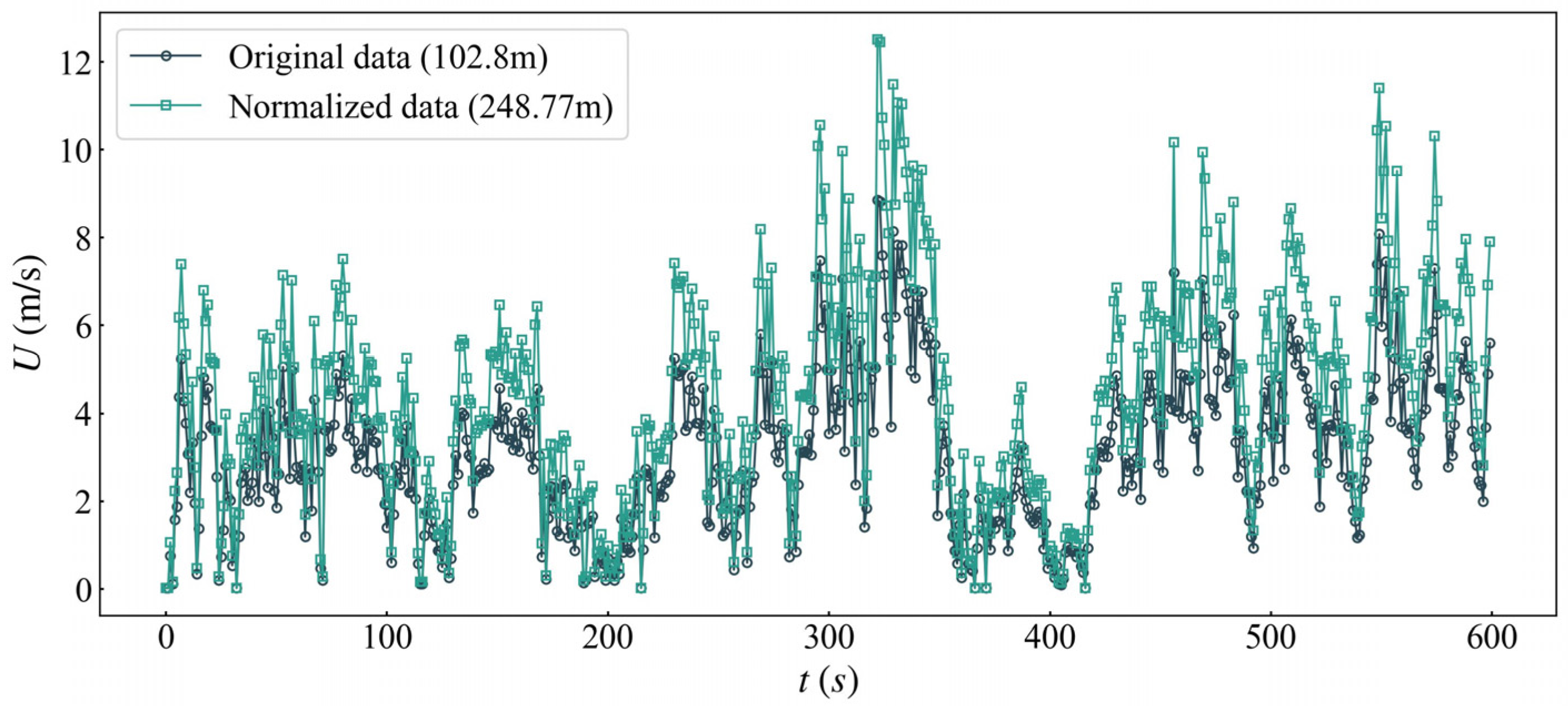
To eliminate calculation errors caused by height differences and ensure that all data meet the same statistical reference, the measured data at various heights on the steel platform were normalized to the same height (248.77 m) using Equation (5) before calculating the fluctuating wind characteristics, where v 0 is the original wind speed, z 0 is the original height, v z is the normalized wind speed, z is 248.77 m, and α adopts the value of 0.39 calculated in Section 3.2. The wind speed time history samples before and after normalization are shown in Figure 8.
By projecting the instantaneous wind speeds u x ( t ) and u y ( t ) obtained after decomposing the measured data onto the directions parallel and perpendicular to the average wind speed, the longitudinal pulsation component u ~ ( t ) and the lateral pulsation component v ~ ( t ) can be obtained:
u ~ ( t ) = u x ( t ) cos θ + u y ( t ) sin θ U
v ~ ( t ) = u x ( t ) sin θ + u y ( t ) cos θ
Turbulence intensity is defined as the ratio of the standard deviation of the fluctuating wind speed over a certain averaging period to the horizontal mean wind speed:
I u = σ u U
I v = σ v U
where I u and I v are the longitudinal and lateral turbulence intensities, respectively; σ u and σ v are the standard deviations of the longitudinal and lateral fluctuating wind speeds.
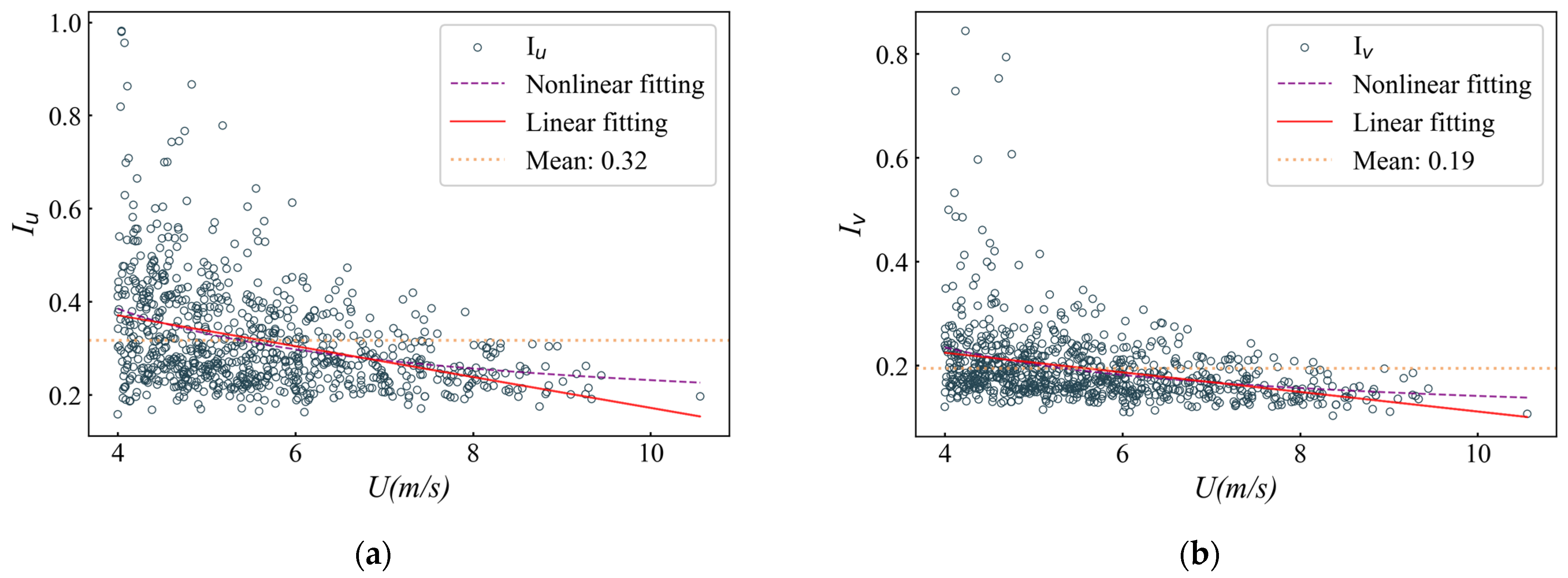
Zhang [25] points out that turbulence intensity and gust factor are influenced by the magnitude of wind speed, and turbulence intensity should be measured during strong wind conditions. According to the calculation equation, as the mean wind speed approaches zero, turbulence intensity tends to infinity; thus, turbulence intensity calculated for low wind speed samples is meaningless. Figure 9 shows the variation of longitudinal and transverse turbulence intensities with mean wind speed.
To ensure the reliability of samples, a truncation was applied at a mean wind speed of 4 m/s. From Figure 9, the average longitudinal turbulence intensity is 0.32, and the average transverse turbulence intensity is 0.19, with a ratio of approximately 1:0.6.
To better represent the relationship between turbulence intensity and mean wind speed, both the equation given by Ishizaki [26] and a linear function were used for fitting, as follows:
I u = a u ln U
I v = a v ln U
The fitting curve is shown in Figure 9. The nonlinear fitting parameters a u and a v were determined to be 0.53 and 0.33, respectively. Based on the least squares method, linear fitting was performed to correlate turbulence intensity with average wind speed. The results are presented in Equations (14) and (15):
I u = 0.03 U + 0.5
I v = 0.02 U + 0.3
As can be clearly observed from the figure, the two fitting curves are essentially consistent in the low wind speed range. The longitudinal turbulence intensity exhibits significantly higher dispersion compared to the transverse one. Both turbulence intensities decrease with increasing wind speed, showing greater variability at low wind speeds and tending to stabilize as wind speed increases.

4.2. Gust Factor

The gust factor is defined as the maximum value of the average instantaneous wind speed within a certain duration (typically 3 s) divided by the average wind speed [27]:
G u ( t g ) = 1 + m a x ( u ( t g ) ¯ ) U
G v ( t g ) = m a x ( v ( t g ) ¯ ) U
where m a x ( u ( t g ) ¯ ) and m a x ( v ( t g ) ¯ ) represent the maximum average wind speed in the along-wind and cross-wind directions within the time interval of t g , respectively.
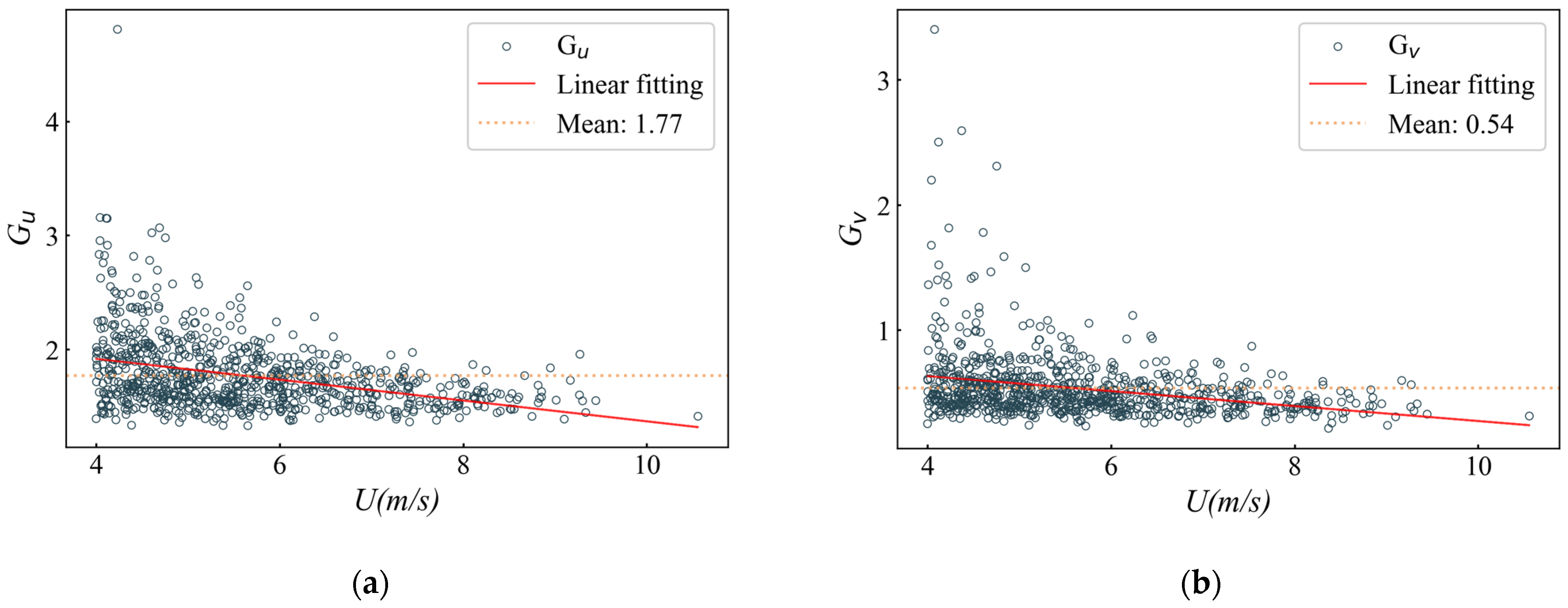
Figure 10 shows the variation of the gust factor with the average wind speed and the corresponding linear fitting curve.
The gust factor exhibits a distribution pattern similar to that of turbulence intensity, both decreasing as the average wind speed increases. It is discrete in the low wind speed range and tends to stabilize as the wind speed increases. From Figure 10, it can be seen that the average value of the longitudinal gust factor is 1.77 and the average value of the lateral gust factor is 0.54, with a ratio of 1:0.31. The linear fitting results are given by Equations (18) and (19):
G u = 0.09 U + 2.28
G v = 0.06 U + 0.87
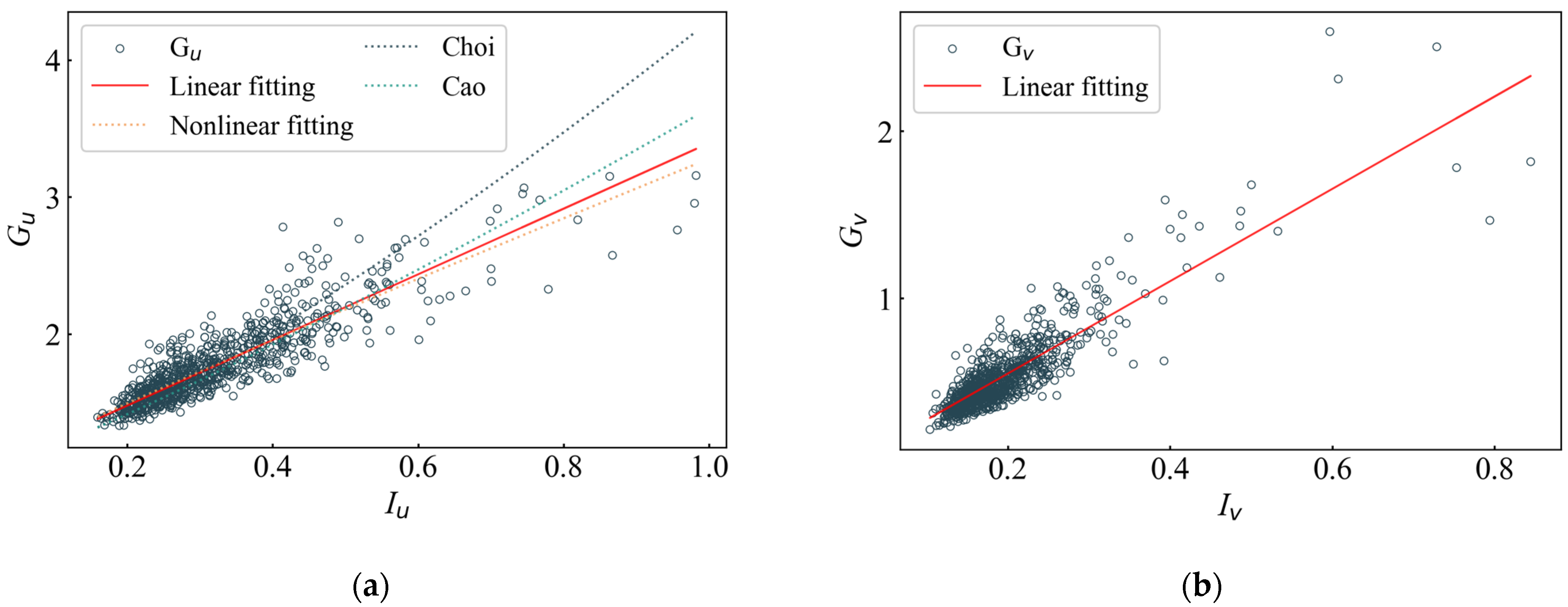
Many scholars have conducted research indicating that there is a close correlation between turbulence intensity and gust factor, and they have provided fitting equations for both. Harstveit [28] and Ishizaki [26] presented linear fitting equations for longitudinal and lateral gust factors in relation to turbulence intensity, while Choi [29] and Cao [30] also provided nonlinear empirical expressions based on their own research results. The equations are as follows:
k u = G u 1 I u
k v = G v I v
G u = 1 + a I u b ln ( T / t g )
where k u , k v , a , and b are fitting parameters; T represents the wind speed time series. In this study, a 10 min interval was adopted; t g represents the duration of the gust, and it is set to 3 s.
Figure 11 shows the relationship between turbulence intensity and gust factor, along with their corresponding fitting curves.
It can be clearly observed from Figure 11 that the gust factor in both directions is positively correlated with turbulence intensity, and their values tend to become more dispersed as wind speed increases. According to the least squares fitting results, the parameters for the linear fitting are k u = 2.34 , R 2 = 0.79 and k v = 2.76 , R 2 = 0.77 , while the nonlinear parameters are a = 0.43 and b = 0.95 . The two fitted curves in the along-wind direction are nearly identical, and the linear fitting parameters in both directions are also close to each other. Overall, the three fitting curves effectively represent the variation trends of the gust factor with turbulence intensity. For the nonlinear fitting parameters, Choi recommends values of a = 0.62 and b = 1.27, while Cao suggests a = 0.5 and b = 1.15 . Due to differences in geographical location and wind speed samples, the parameter values fitted in this study are slightly smaller compared to the values reported by Choi and Cao. However, the fitted curves are relatively close, both demonstrating a significant positive correlation between the gust factor and turbulence intensity.
To provide a clearer illustration of the fluctuating wind characteristics in this study, the turbulence intensity and gust factor were compared with measured results under different terrain conditions reported in the literature. This comparison aims to explore the similarities and differences in observational results under varying topographies and wind speed conditions. The results are summarized in Table 1.
It can be seen that the longitudinal turbulence intensity and gust factor measured in this study are larger than those reported in other studies, with values close to those obtained by Wang et al. [32] from wind data measured along the Shanghai coast. However, the wind field parameters measured on supertall buildings in urban Shanghai reported by Wu [34] differ significantly from the results of this study.

4.3. Peak Factor

The peak factor is a representation of the instantaneous intensity of fluctuating wind speed [27]. The calculation equation is as follows:
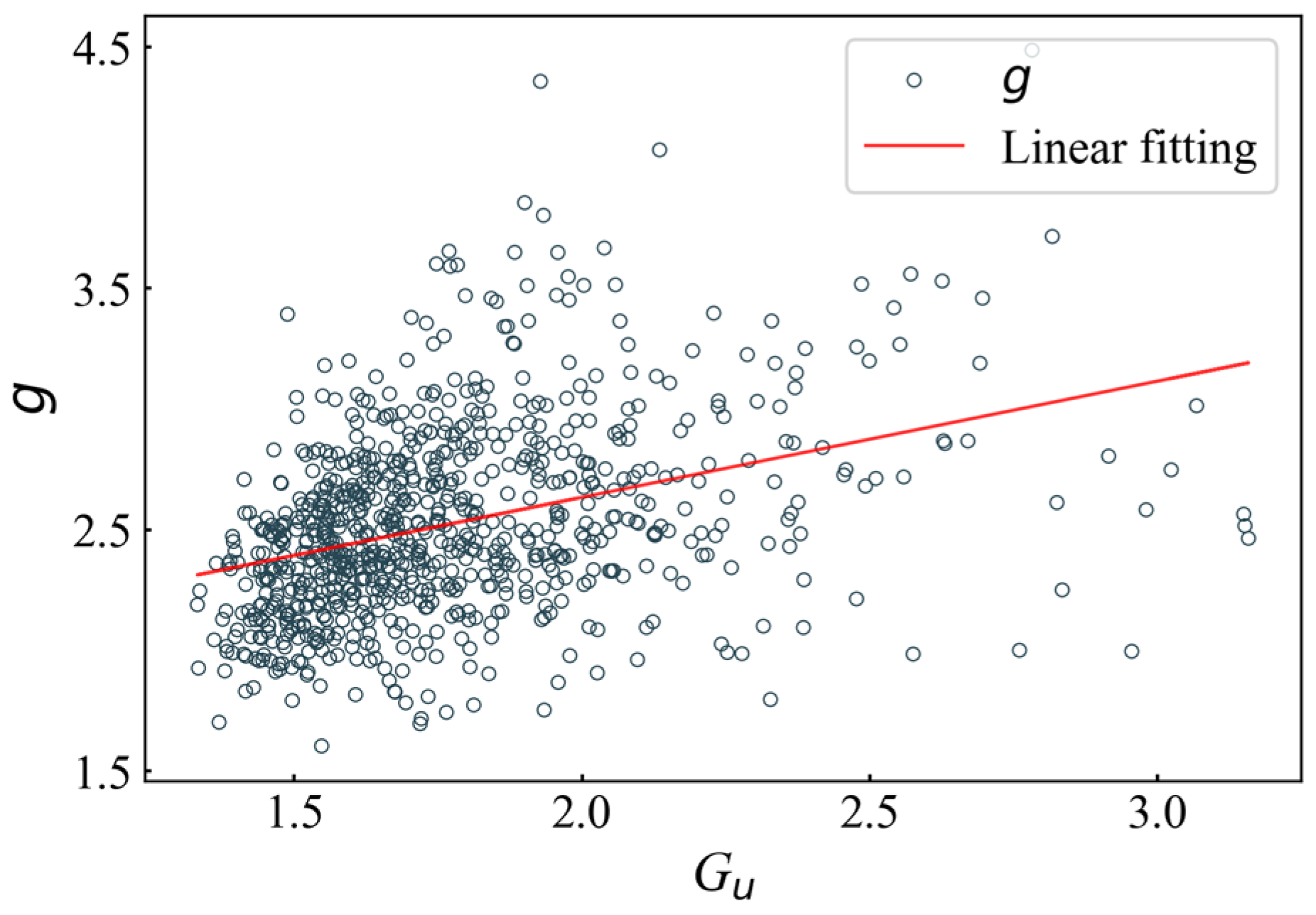
g = ( U t g U ) / σ u
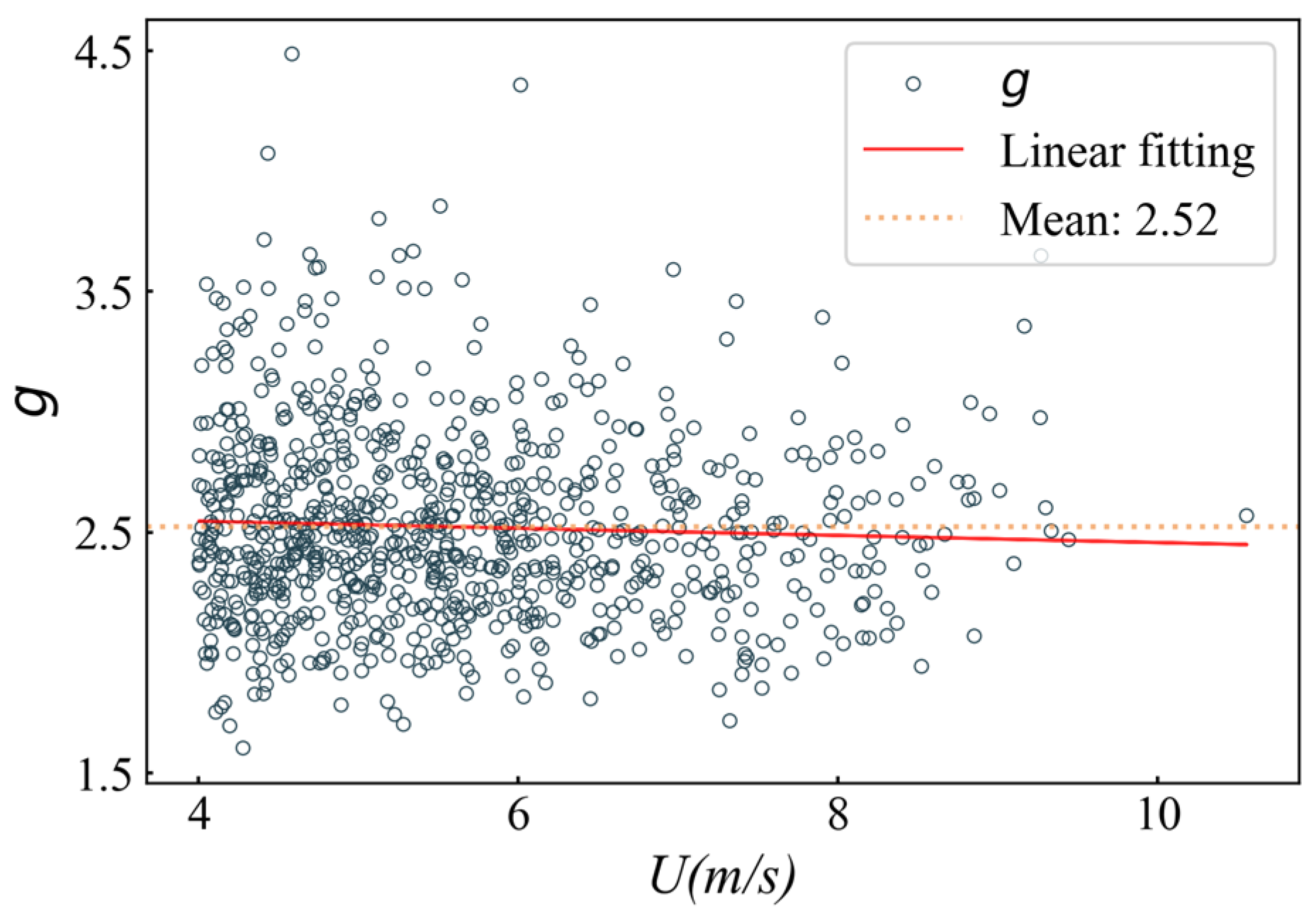
where U t g represents the maximum mean wind speed during the gust duration (3 s). By calculating according to the equation, the average value of the peak factor is 2.52. Figure 12 and Figure 13 show the variation of the peak factor with the mean wind speed and the gust factor, respectively.
Their fitted linear equations are as follows:
g = 0.01 U + 2.61
g = 0.48 G u + 1.67
From Figure 12 and Figure 13, it can be seen that the linear fitting curve of the gust factor and the average wind speed is basically consistent with the mean line, and the gust factor does not significantly change with the average wind speed. While the relationship diagram between the peak factor and the gust factor is similar to that of turbulence intensity. The peak factor increases with the increase of the gust factor, and, as a whole, it tends from aggregation to dispersion.

4.4. Turbulent Integral Scale

The turbulent integral scale is a key indicator for evaluating the characteristics of pulsating wind. The actual wind speed at a given point can be attributed to the combined effect of the mean wind speed and a series of superimposed vortices. The turbulent integral scale is a measurement of the average size of these vortices. Since the size of the vortices determines the spatial interaction range of the pulsating wind, the turbulent integral scale is closely related to the spatial correlation within the turbulent field. The calculation of the turbulent integral scale can adopt the Taylor [35] assumption of integrating the autocorrelation function, referring to the research results of Flay [36]:
L u x = u ¯ σ u 2 0 0.05 σ u 2 R u ( τ ) d τ
L v x = u ¯ σ v 2 0 0.05 σ v 2 R v ( τ ) d τ
where R u ( τ ) represent the longitudinal autocovariance functions and R v ( τ ) represent the lateral turbulent autocovariance functions, and τ denotes the time lag.
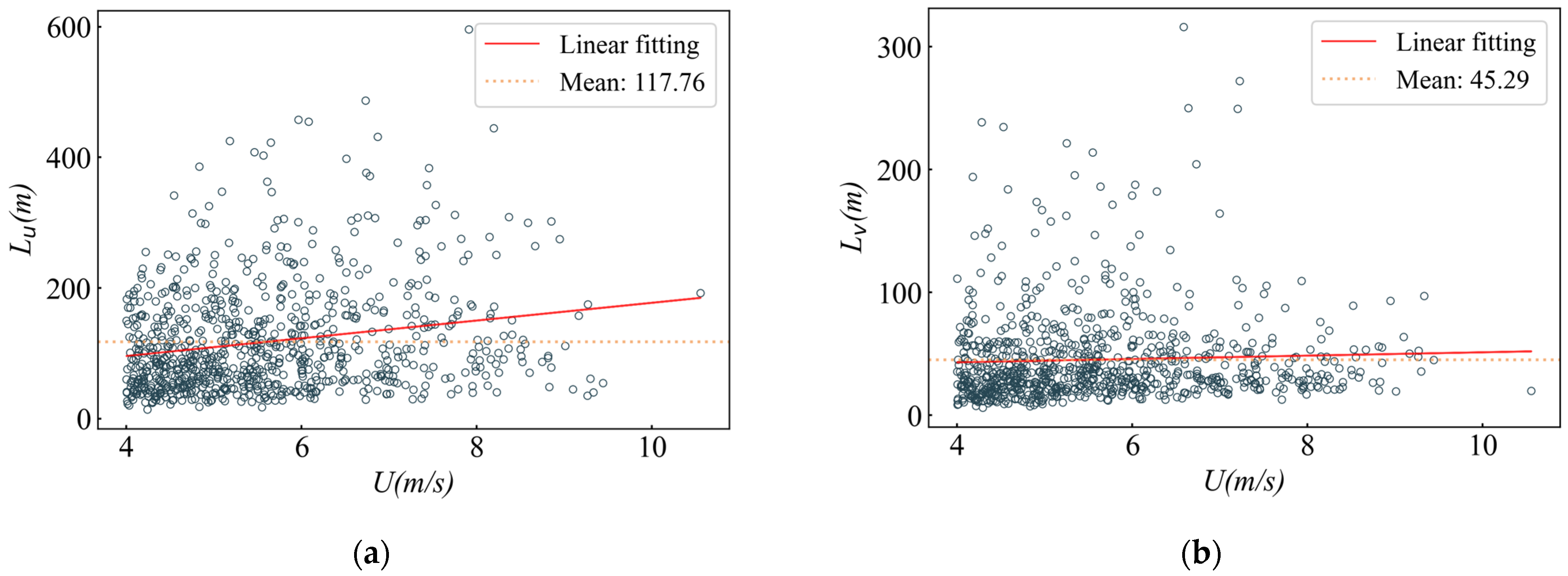
Figure 14 shows the variation of the turbulent integral scales in both directions with respect to the mean wind speed.
As observed from Figure 14, the average longitudinal turbulent integral scale is 117.76 m, and the average lateral scale is 45.29 m, with a ratio of approximately 1:0.38. The linear fitting equations for both directions are as follows:
L u = 13.58 U + 41.60
L v = 1.36 U + 37.65
From the fitting results, it can be seen that the longitudinal turbulent integral scale exhibits a positive correlation with the average wind speed, while the lateral turbulent integral scale shows little dependence on the average wind speed.

4.5. Pulse Wind Power Spectrum

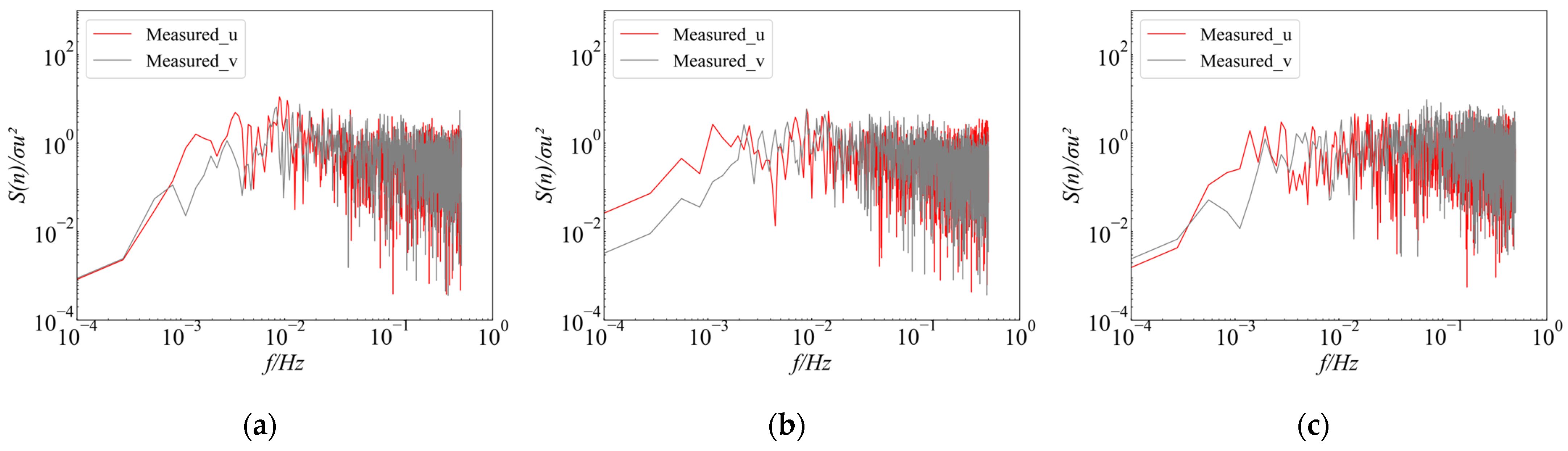
The pulsating wind speed spectrum is used to describe the distribution of turbulent energy in the frequency domain and can be obtained through the fast Fourier transform [27,37]. To more comprehensively represent the wind spectrum of the measured data, one sample is selected from each of the wind speed segments of 4–5 m/s, 6–7 m/s, and above 8 m/s for analysis. Due to the low sampling frequency of the wind data in this study, when selecting samples, a continuous 1 h period, that is, six 10 min intervals, is chosen as one sample for the actual pulsating power spectrum analysis. The measured spectra in the three wind speed segments, in both the horizontal and lateral directions, are shown in Figure 15. The red curve represents the longitudinal power spectral density curve.
As can be seen from Figure 15, in the low-frequency band, the longitudinal power spectral density function is slightly greater than the transverse, while, in the high-frequency band, the two directions are basically the same.
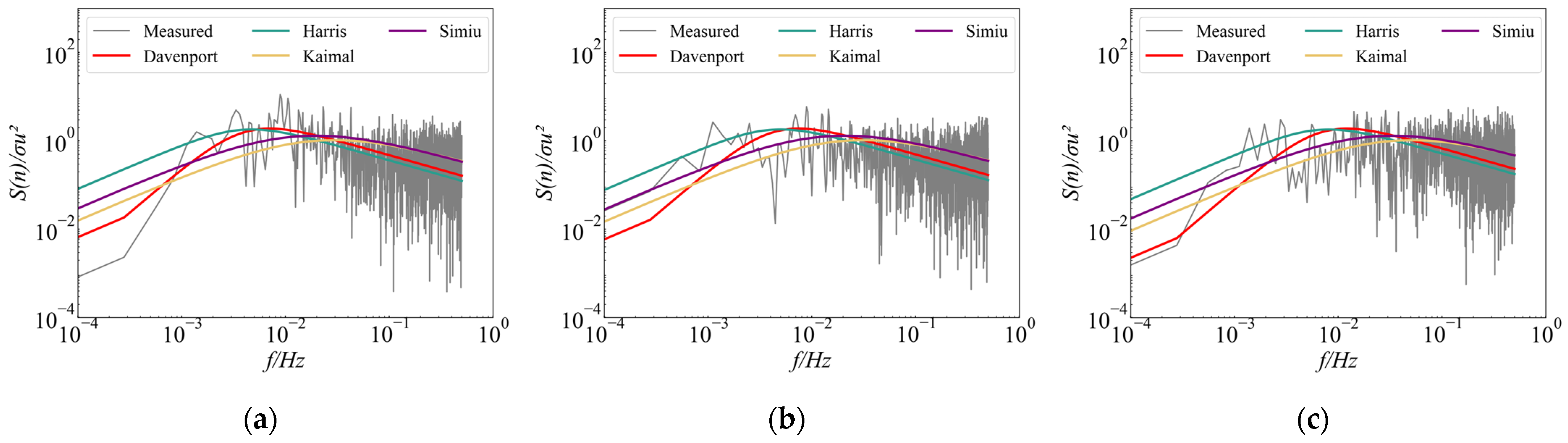
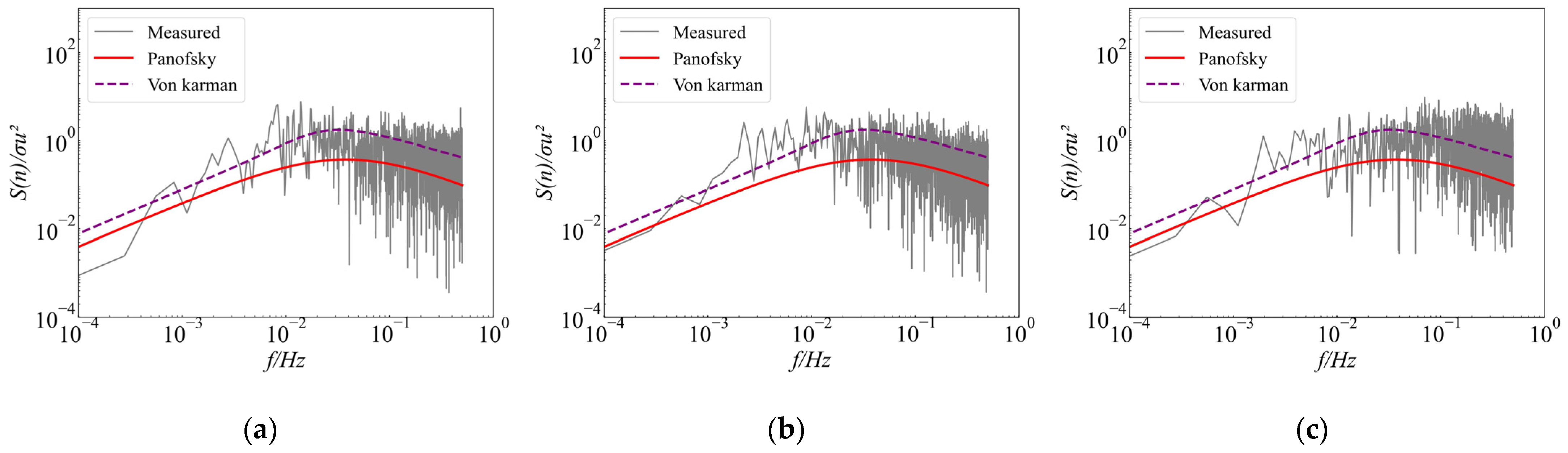
By comparing the measured wind spectra with the empirical wind spectra, the empirical equations for the longitudinal pulsating wind spectrum include Davenport, Harris, Kaimal, and Simiu, while the empirical equations for the transverse wind spectrum include Panofsky and Von Karman [38]. Figure 16 and Figure 17 respectively show the comparison of the longitudinal and transverse measured wind spectra with the above empirical wind spectra.
It can be seen from Figure 16 and Figure 17 that the longitudinal wind spectrum is in good agreement with the Davenport and Harris spectra in the high-frequency band; in the low-frequency band, the 4 m/s sample is significantly lower than the empirical wind spectrum, the 6 m/s sample has a measured wind spectrum that is relatively close to the Simiu empirical spectrum, and the 8 m/s sample is relatively close to the Davenport spectrum. The lateral power spectrum correlates well with the Von Karman spectrum.

5. Conclusions

This study conducted a systematic analysis of long-term wind field monitoring data for a supertall building under construction in Shanghai and arrived at the following conclusions:
The measured mean wind direction aligns essentially with standard references, corresponding to the dominant wind pattern in Shanghai’s central urban area. The calculated mean wind profile exponent is 0.39, which is higher than the standard value for Terrain Category D. This indicates that the current code-specified wind profile may not be applicable in rapidly developing high-density urban cores, and should be revised based on field measurements to enhance the reliability of wind-resistant design.
The measured average turbulence intensities in the longitudinal and lateral directions are 0.32 and 0.19, respectively, with corresponding average gust factors of 1.77 and 0.54. These values are higher than those recommended in current codes and reported in most existing studies, and they exhibit a strong positive correlation. This indicates particularly intense wind fluctuations in this area, necessitating increased attention to wind-induced dynamic effects when assessing cladding structures and temporary facilities.
The measured mean peak factor is 2.52, and the average turbulence integral scales in the longitudinal and lateral directions are 118 m and 45 m, respectively. These parameters provide essential inputs for estimating extreme wind pressures and assessing wind-induced dynamic responses during the construction phase.
The measured longitudinal power spectrum shows good agreement with the Simiu and Davenport spectra in the low-frequency range, while aligning more closely with the Davenport and Harris spectra at high frequencies. The lateral power spectrum correlates well with the Von Karman spectrum, which differs from the unified spectrum model recommended in current design codes. Therefore, for wind-resistant design in Shanghai’s central urban area, the selection of spectrum models should be guided by wind direction and, based on the findings of this study, better aligned with actual measured conditions.

Author Contributions

Conceptualization, F.P.; methodology, Z.H.; formal analysis, Z.H.; investigation, Z.Z. and D.X.; resources, F.P.; writing—original draft preparation, F.P.; writing—review and editing, F.P.; visualization, J.Z.; supervision, Z.H.; project administration, Z.H. All authors have read and agreed to the published version of the manuscript.

Funding

This research was funded by National Natural Science Foundation of China (grant number 52078105); Project of Shanghai Construction Group, China (grant number 22JCSF-05).

Data Availability Statement

The data that support the findings of this study are available from the corresponding author upon reasonable request. The data are not publicly available due to privacy.

Conflicts of Interest

Authors Feng Pan, Zhimin Zhang, Jintao Zhang and Dawei Xu are employed by the Shanghai Construction No. 5 (Group) Co., Ltd. The remaining author declares that the research was conducted in the absence of any commercial or financial relationships that could be construed as a potential conflict of interest.

References

  1. GB50009-2012; Load Code for the Design of Building Structures. China Architecture & Building Press: Beijing, China, 2012.
  2. ASCE/SEI 7-16; Minimum Design Loads and Associated Criteria for Buildings and Other Structures. American Society of Civil Engineers: Reston, VA, USA, 2017.
  3. AIJ-2015; Recommendations for Loads on Building-Wind Loads. Architectural Institute of Japan: Tokyo, Japan, 2015.
  4. Qiang, K. Effect of Wind Load on Design and Construction of 530m Super-Tall Tower of Tianjin CTF Financial Center. Master’s Thesis, Xi’an University of Architecture and Technology, Xi’an, China, 2017. [Google Scholar]
  5. Liu, M.; Liu, K.; Wang, Z.; Zhang, C.; Xie, Z. Field measurement study on typhoon wind characteristics during strong wind periods. J. Wind Eng. Ind. Aerodyn. 2025, 265, 106158. [Google Scholar] [CrossRef]
  6. He, J.Y.; Chan, P.W.; Li, Q.S.; Li, L.; Zhang, L.; Yang, H. Observations of wind and turbulence structures of Super Typhoons Hato and Mangkhut over land from a 356 m high meteorological tower. Atmos. Res. 2022, 265, 105910. [Google Scholar] [CrossRef]
  7. Jiang, F.; Zhang, M.; Li, Y.; Zhang, J.; Qin, J.; Wu, L. Field measurement study of wind characteristics in mountain terrain: Focusing on sudden intense winds. J. Wind Eng. Ind. Aerodyn. 2021, 218, 104781. [Google Scholar] [CrossRef]
  8. He, Y.C.; Chan, P.W.; Li, Q.S. Wind characteristics over different terrains. J. Wind Eng. Ind. Aerodyn. 2013, 120, 51–69. [Google Scholar] [CrossRef]
  9. Hui, M.C.H.; Larsen, A.; Xiang, H.F. Wind turbulence characteristics study at the Stonecutters Bridge site: Part II: Wind power spectra, integral length scales and coherences. J. Wind Eng. Ind. Aerodyn. 2009, 97, 48–59. [Google Scholar] [CrossRef]
  10. Hui, M.C.H.; Larsen, A.; Xiang, H.F. Wind turbulence characteristics study at the Stonecutters Bridge site: Part I—Mean wind and turbulence intensities. J. Wind Eng. Ind. Aerodyn. 2009, 97, 22–36. [Google Scholar] [CrossRef]
  11. Dalgliesh, W.A.; Wright, W.; Schriever, W.R. Wind pressure measurements on a full-scale high-rise office building. In Proceedings of the International Research Seminar on Wind Effects on Buildings and Structures, Ottawa, ON, Canada, 11–15 September 1967; Volume 1, pp. 167–200. [Google Scholar]
  12. Dalgliesh, W.A. Experiences with wind pressure measurements on a full-scale building. In Proceedings of the Technical Meeting Concerning Wind Loads on Buildings and Structures, Gaithersburg, MD, USA, 27–28 January 1969; pp. 61–71. [Google Scholar]
  13. Dalgliesh, W.A. Comparison of Model Full-scale Wind Pressures on a High-rise Building. J. Wind. Eng. Ind. Aerodyn. 1975, 1, 55–56. [Google Scholar] [CrossRef]
  14. Rathbun, J.C. Wind forces on a tall building. Trans. Am. Soc. Civ. Eng. 1940, 105, 1–41. [Google Scholar] [CrossRef]
  15. Li, Q.S.; Xiao, Y.Q.; Wong, C.K.; Jeary, A. Field measurements of typhoon effects on a super tall building. Eng. Struct. 2004, 26, 233–244. [Google Scholar] [CrossRef]
  16. Li, Q.S.; Wu, J.R.; Liang, S.G.; Xiao, Y.; Wong, C. Full-scale measurements and numerical evaluation of wind-induced vibration of a 63-story reinforced concrete tall building. Eng. Struct. 2004, 26, 1779–1794. [Google Scholar] [CrossRef]
  17. Li, Q.S.; Xiao, Y.Q.; Wong, C.K. Full-scale monitoring of typhoon effects on super tall buildings. J. Fluids Struct. 2005, 20, 697–717. [Google Scholar] [CrossRef]
  18. Shi, W.; Li, Z.; Luo, D.; Zhang, C.; Liang, X. Field measurements of boundary layer wind field and wind pressure characteristics of a super-tall building on coast of the Xiamen City during passage of typhoon Megi. J. Build. Struct. 2012, 33, 1–9. [Google Scholar]
  19. Xu, Y.L.; Zhan, S. Field measurements of Di Wang Tower during Typhoon York. J. Wind Eng. Ind. Aerodyn. 2001, 89, 73–93. [Google Scholar] [CrossRef]
  20. Fu, J.Y.; Li, Q.S.; Wu, J.R.; Xiao, Y.Q.; Song, L.L. Field measurements of boundary layer wind characteristics and wind-induced responses of super-tall buildings. J. Wind Eng. Ind. Aerodyn. 2008, 96, 1332–1358. [Google Scholar] [CrossRef]
  21. Committee of Editors. Standards for Meteorological Parameters of Building Wind Environment: Architectural Design; Tongji University Press: Shanghai, China, 2022. [Google Scholar]
  22. Lin, L.; Chen, K.; Xia, D.; Wang, H.; Hu, H.; He, F. Analysis on the wind characteristics under typhoon climate at the southeast coast of China. J. Wind Eng. Ind. Aerodyn. 2018, 182, 37–48. [Google Scholar] [CrossRef]
  23. Li, Y.; Toamura, Y.; Shen, Z. Simulation of wind profiles in wind tunnel tests and analysis of near-flow field characteristics. Acta Aerodyn. Sin. 2005, 23, 7. [Google Scholar]
  24. Pu, O.; Yuan, B.; Li, Z.; Bao, T.; Chen, Z.; Yang, L.; Qin, H.; Li, Z. Research on the characteristics of urban building cluster wind field based on UAV wind measurement. Buildings 2023, 13, 3109. [Google Scholar] [CrossRef]
  25. Zhang, X. Structural Wind Engineering: Theory, Codes and Practice; China Architecture & Building Press: Beijing, China, 2006. [Google Scholar]
  26. Ishizaki, H. Wind profiles, turbulence intensities and gust factors for design in typhoon-prone regions. J. Wind. Eng. Ind. Aerodyn. 1983, 13, 55–66. [Google Scholar] [CrossRef]
  27. Wang, X.; Yao, Z.; Guo, Y.; Li, Y. Analysis of the near-ground wind field characteristics during typhoon soulik. Appl. Sci. 2024, 14, 4001. [Google Scholar] [CrossRef]
  28. Harstveit, K. Full scale measurements of gust factors and turbulence intensity, and their relations in hilly terrain. J. Wind Eng. Ind. Aerodyn. 1996, 61, 195–205. [Google Scholar] [CrossRef]
  29. Choi, C.-C. Wind Loading in Hong Kong: Commentary on the Code of Practice on Wind Effects Hong Kong, 1983; Hong Kong Institution of Engineers: Hong Kong, China, 1984. [Google Scholar]
  30. Cao, S.; Tamura, Y.; Kikuchi, N.; Saito, M.; Nakayama, I.; Matsuzaki, Y. Wind characteristics of a strong typhoon. J. Wind Eng. Ind. Aerodyn. 2009, 97, 11–21. [Google Scholar] [CrossRef]
  31. Zou, Y.; Kang, X.; Zhou, S.; He, X.; Wang, Z. Field measurement study of wind field characteristics at a bridge site in a high-altitude deep-cut canyon. Eng. Mech. 2023, 40, 11. [Google Scholar]
  32. Wang, X.; Huang, P.; Dai, Y.; Gu, M. Comparison study on wind characteristics under typhoon and normal climate conditions in Shanghai area. J. Build. Struct. 2015, 36, 93–98. [Google Scholar]
  33. Lou, W.; Zhou, W.; Liu, J.; Liang, M.; Cai, K.; Huang, M. Wind field measurements in the Tibetan Plateau and the study of nonstationary wind characteristics. J. Southeast Univ. (Nat. Sci. Ed.) 2023, 53, 575–584. [Google Scholar]
  34. Wu, Z.; Zhao, L.; Zhu, L. Analysis of normal climate condition wind characteristics for the filed of shanghai world financial center project. J. Struct. Engineers. 2009, 25, 98–103. [Google Scholar]
  35. Simiu, E.; Scanlan, R.-H. Wind Effects on Structures: Fundamentals and Applications to Design; John Wiley & Sons: Hoboken, NJ, USA, 1996. [Google Scholar]
  36. Flay, R.-G.-J.; Stevenson, D.-C. Integral Length Scales in Strong Winds Below 20 m. J. Wind. Eng. Ind. Aerodyn. 1988, 28, 21–30. [Google Scholar] [CrossRef]
  37. Xie, W.; Li, Z.; Du, W.; Fu, X. Coupling Vibration Characteristics and Wind-Induced Responses of Large-Span Transmission Lines Under Multi-Dimensional Wind. Buildings 2024, 14, 3462. [Google Scholar] [CrossRef]
  38. JTG/T 3360-01-2018; Wind-Resistant Design Specification for Highway Bridges. China Communications Press: Beijing, China, 2018.
Figure 1. Location map of the target building.
Buildings 16 00645 g001
Figure 2. The graphical evolution of building form.
Buildings 16 00645 g002
Figure 3. Layout of monitoring equipment: (a) measurement point layout (elevation); (b) measurement point layout (plan); (c) anemorumbometer.
Buildings 16 00645 g003
Figure 4. A photo of (a) building floor plan; (b) wind speed decomposition diagram.
Buildings 16 00645 g004
Figure 5. Comparison of wind rose maps for each season: (a) spring; (b) summer; (c) autumn; (d) winter.
Buildings 16 00645 g005
Figure 6. Simultaneous average wind speeds at different heights.
Buildings 16 00645 g006
Figure 7. The calculated value of α: (a) histogram of α values; (b) mean-fitted α-profile curve.
Buildings 16 00645 g007
Figure 8. Comparison of wind speed time history samples before and after normalization.
Buildings 16 00645 g008
Figure 9. Turbulence intensity varies with the average wind speed: (a) longitudinal turbulence intensity; (b) transverse turbulence intensity.
Buildings 16 00645 g009
Figure 10. Variation of gust factor with average wind speed: (a) longitudinal gust factor; (b) transverse gust factor.
Buildings 16 00645 g010
Figure 11. Relationship between gust factor and turbulence intensity: (a) longitudinal; (b) transverse.
Buildings 16 00645 g011
Figure 12. Peak factor varies with average wind speed.
Buildings 16 00645 g012
Figure 13. Peak factor varies with gust factor.
Buildings 16 00645 g013
Figure 14. Turbulent integral scale varies with the average wind speed: (a) longitudinal; (b) transverse.
Buildings 16 00645 g014
Figure 15. Power spectrum of measured fluctuating wind speed under different average wind speeds: (a) 4 m/s; (b) 6 m/s; (c) 8 m/s.
Buildings 16 00645 g015
Figure 16. Comparison of measured longitudinal power spectrum under different wind speeds with the theoretical spectrum: (a) 4 m/s; (b) 6 m/s; (c) 8 m/s.
Buildings 16 00645 g016
Figure 17. Comparison of measured crosswind power spectrum under different wind speeds with the theoretical spectrum: (a) 4 m/s; (b) 6 m/s; (c) 8 m/s.
Buildings 16 00645 g017
Table 1. Comparison of research results for different wind characteristic parameters.
Data Sources I u I v G u G v I u : I v G u : G v RegionTerrain
This Paper0.320.191.770.541:0.601:0.31ShanghaiDowntown
Zou [31]0.170.121.380.301:0.711:0.22/Gorge
Wang [32]0.280.211.640.461:0.751:0.28ShanghaiCoast
Lou [33]0.250.231.600.511:0.931:0.32XizangHigh land
Wu [34]0.230.111.340.241:0.481:0.18ShanghaiDowntown
Disclaimer/Publisher’s Note: The statements, opinions and data contained in all publications are solely those of the individual author(s) and contributor(s) and not of MDPI and/or the editor(s). MDPI and/or the editor(s) disclaim responsibility for any injury to people or property resulting from any ideas, methods, instructions or products referred to in the content.