1. Introduction
The historical evolution of social housing in Europe mirrors broader shifts in welfare policy, spatial equity, and architectural thought [
1]. Originating in the early twentieth century as a material arm of the welfare state, public housing was conceived not only to provide affordable dwellings but also to advance an urban ideal of collective well-being and modernization [
2]. After World War II, this agenda intensified: European cities became key testing grounds for large-scale estates as welfare infrastructure and as modernist instruments of social reconstruction [
3]. Initially framed as progressive solutions, promoting social equality, hygiene, and collective life, many estates later followed uneven trajectories shaped by economic restructuring, demographic change, and welfare retrenchment [
4]. As a result, developments once associated with architectural innovation increasingly acquired stigmatized reputations, becoming publicly framed as spaces of isolation, decline, or socio-spatial marginality [
5].
In postwar Italy, the rapid expansion of edilizia residenziale pubblica (ERP) from the 1940s to the 1980s reflected both the urgency of reconstruction and a belief that modern architecture could help produce a new social order [
6]. Milan, Italy’s leading industrial metropolis, became a primary arena for this ambition, as demographic pressure and housing scarcity after the war drove sustained state-led housing delivery and large-estate development [
7,
8,
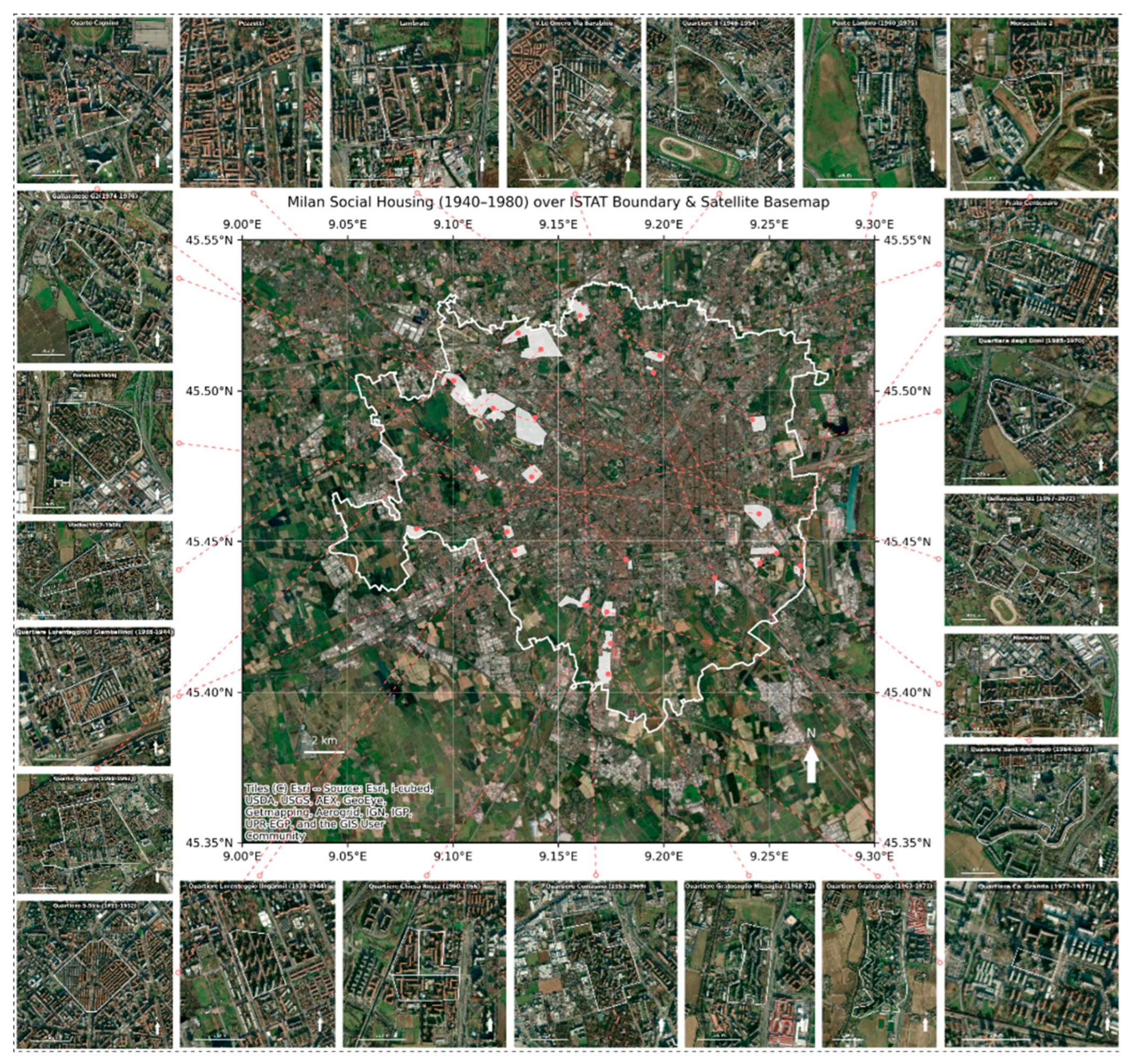
9]. Within the broader European trajectory of postwar estate-building, Milan also stands out as a significant laboratory in which public programmes moved from INA-Casa neighbourhoods in the 1950s to later modernist districts such as QT8, Gallaratese, and Gratosoglio, translating planning ideology into built form at scale [
10]. These ERP estates embodied confidence in rationalist design, functional efficiency, and collective facilities as organizers of everyday life, while their later trajectories became intertwined with patterns of socio-spatial division, governance challenges, and reputational decline [
11,
12]. Yet despite their enduring centrality in Milan’s urban fabric and social history, how these estates are perceived, evaluated, and remembered in contemporary public discourse remains insufficiently understood.
Existing research has provided rich accounts of postwar social housing estates from architectural history, design theory, and policy perspectives, increasingly treating their transformation as a major field of debate across multiple disciplines [
13,
14]. Within this body of work, studies have examined typological innovation and planning ideology in the production of postwar estates, together with the welfare-state logics and housing policy arrangements that underpinned their delivery [
15]. They have also traced subsequent trajectories of decline and urban decline-driven socio-spatial division, as well as processes of regeneration, poverty and ethnic segregation, and broader policy challenges affecting large estates across Europe. Finally, this literature highlights institutional restructuring and paradigm shifts in social housing governance under welfare-state transformation. Research in urban sociology has further highlighted how stigma, reputational dynamics, and “social mix” policies influence contemporary outcomes and public understandings of postwar estates across Europe [
16,
17]. At the national and local levels, research has detailed how housing policy arrangements [
18], welfare restructuring [
19], and service provision shape the governance context in which estates are maintained, interpreted, and targeted for intervention [
20,
21]. However, the prevailing emphasis on expert accounts and official metrics leaves comparatively less room for a key dimension: how public perception is produced in everyday experience and public narration, where evaluative judgements emerge through encounters and affect, and are amplified through circulating, place-anchored stories that sediment into reputation over time [
22].
Digital platforms provide a new opportunity to observe such narratives at scale [
23]. Google Maps reviews provide short, situated accounts linked to specific locations within and around housing estates; because they are not residents-only and often describe facilities, services, and public spaces, they can be treated as place-anchored public narratives [
24]. In urban and heritage studies, NLP has been widely used to extract sentiment and thematic structures from large volumes of reviews, particularly for parks (
Table 1) [
25,
26], streets and tourism or heritage settings [
27]. By contrast, comparable review-based, NLP-enabled evidence remains limited in social housing research. As a result, the public image of postwar housing estates, including the recurrent themes and symbolic frames through which they are narrated, is still more often inferred from expert and policy accounts than traced empirically from everyday digital discourse.
Urban “memory” is understood here not as private nostalgia but as a collective, socially mediated process through which places acquire durable public meanings [
30,
31,
32]. It is closely tied to morphology, since urban form provides the spatial cues and recurring settings through which memories are anchored and contested over time [
33]. Memory thus links built form to interpretation, while meaning refers to the relatively stable narrative frames and labels through which places are publicly understood within specific historical contexts [
34]. From this perspective, Milan’s postwar ERP estates can be approached as both modernist morphologies and mnemonic landscapes.
Accordingly, this study draws on platform-based narratives to examine how everyday evaluations consolidate into shared framings, providing an empirical lens on the evolving memory and meaning of modernist social housing. Google Maps reviews are treated as place-anchored public narratives generated through encounters by both residents and non-residents, rather than as residents-only testimony. In this paper, ERP estates denote postwar public social housing communities in Milan as the primary unit of analysis; district refers to the community-scale level for comparative interpretation; and places within ERP estates are the review-anchored locations, including formal public facilities and informally named service-oriented or residential places.
Building on these definitions, the study addresses three questions: (1) how are ERP estates and their internal places evaluated in sentiment and emotional tone; (2) what recurring themes and symbolic framings structure these narratives; and (3) how do these patterned evaluations accumulate into a collective, evolving memory of Milan’s postwar social housing. Methodologically, we combine NLP-based sentiment and thematic analysis with interpretive reading to offer a citizen-centered perspective that complements expert-led architectural and policy assessments.
4. Discussion
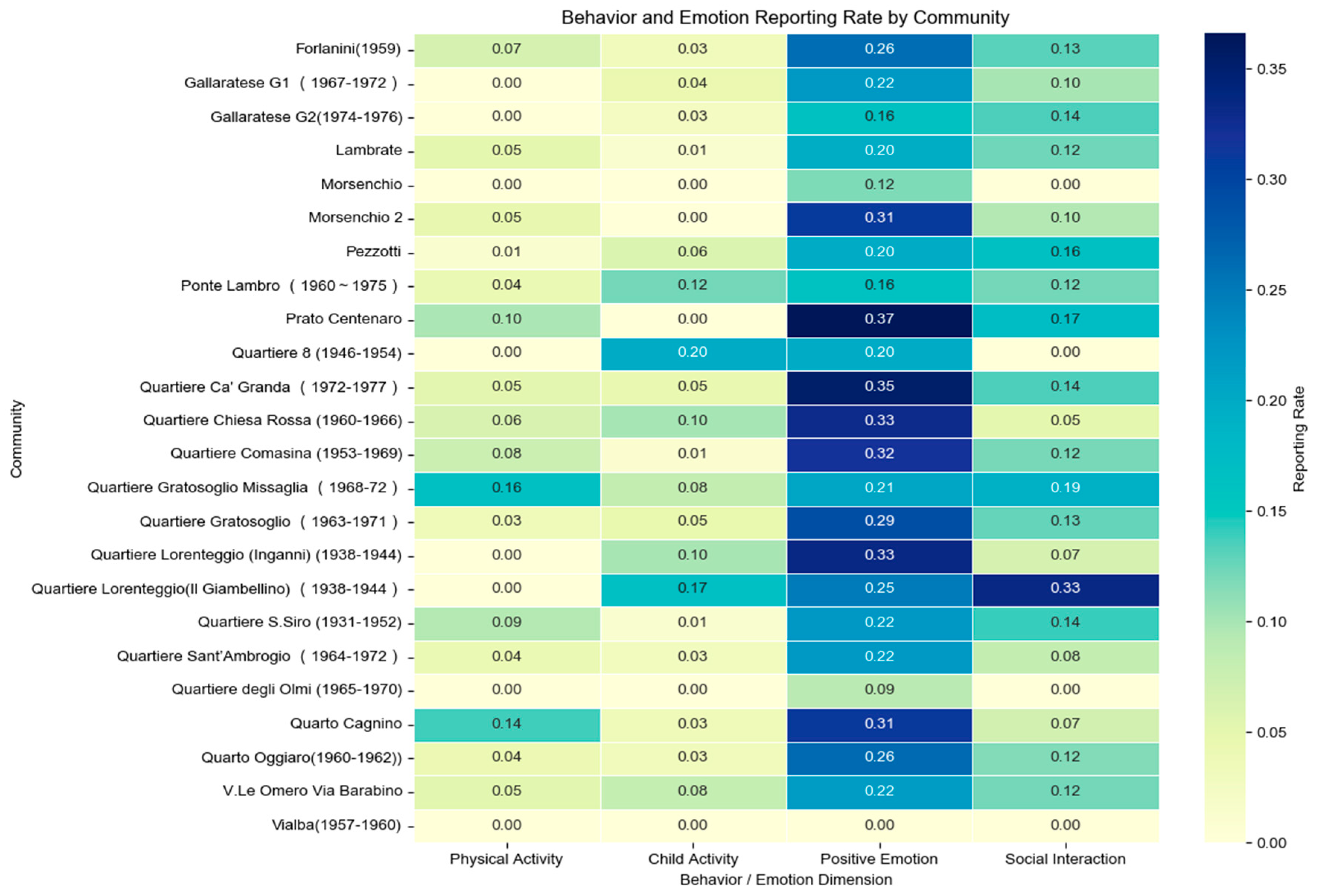
Public perceptions of Milan’s postwar ERP estates reveal a persistent gap between everyday activity and emotional evaluation. Across many communities, strong affective tones coexist with limited reported use, while in others routine activity unfolds without corresponding symbolic attachment. This divergence raises a broader question: how do collective memory and lived experience interact in shaping the perceived quality of social housing environments beyond their physical form.
4.1. Commentary as Memory: What the Public Remembers
The cluster analysis indicates that Milan’s ERP estates are embedded in distinct and heterogeneous structures of public memory that cannot be reduced to physical form or spatial typology alone. Rather than reflecting morphology or scale, these memory regimes emerge from the long term interplay of everyday routines, family networks, demographic trajectories, and symbolic narratives that accumulate over time. As a result, collective memory within ERP housing is neither uniform nor spatially deterministic, but socially constructed and unevenly distributed across estates.
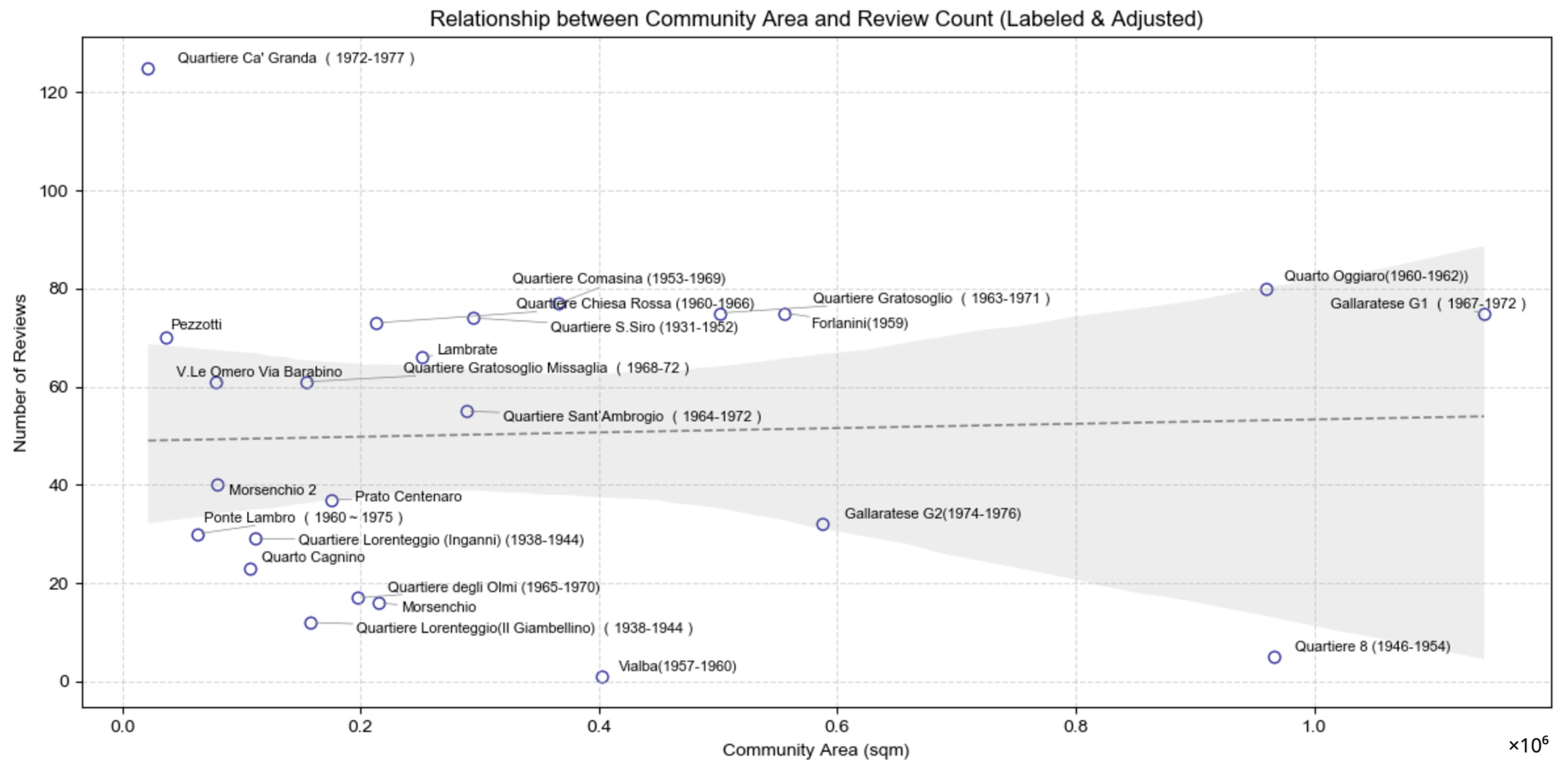
Patterns of engagement in user commentary further suggest that public perception is shaped less by physical size than by broader socio-spatial conditions, such as historical identity, functional mix, and urban integration. Consistent with prior studies of online review data, evaluative intensity aligns more closely with symbolic meaning and lived experience than with absolute spatial extent, indicating that review activity reflects perceived relevance rather than spatial magnitude.
Across the ERP system, distinct memory–behavior configurations become apparent. Some estates sustain routine use with limited emotional or symbolic attachment, functioning primarily as spaces of passage and accessibility. Others are strongly anchored in family and household-based memory, where intergenerational routines dominate public narratives. In historically prominent estates, symbolic reputation persists despite limited contemporary engagement, suggesting an increasingly archival form of social memory sustained through discourse rather than practice. Finally, certain communities display a nostalgic yet low activity profile, in which positive emotional tone endures even as everyday engagement declines.
These differentiated memory–behavior configurations challenge the long-standing planning assumption that ERP estates constitute a homogeneous housing category. Even estates with comparable typologies or adjacent locations may diverge substantially in their positions within the collective memory landscape, illustrating that public meaning is shaped less by physical layout than by socially constructed narratives and lived experience. The significance of ERP environments thus resides not only in architectural form, but in the ways residents and users remember, interpret, and reframe everyday life over time.
4.2. Statistical Validation of Memory Behavior Pattern
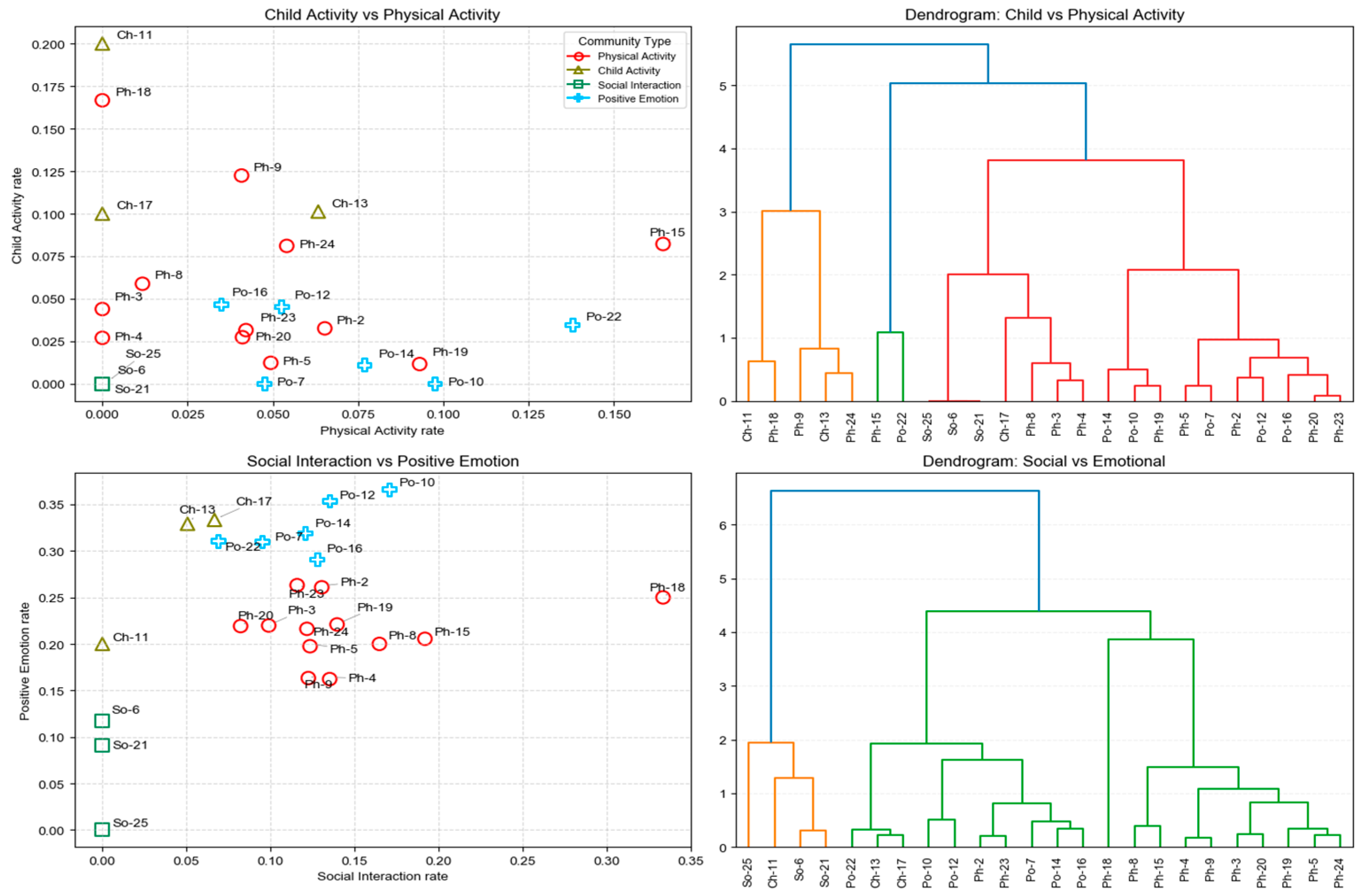
Using the four thematic dimensions, the cluster analysis identifies four perception-based ERP estate types that represent different alignments between everyday practice and collective memory (
Table 5 and
Table A4). Rather than simply separating communities by activity intensity, the typology distinguishes how emotional tone, social framing, and family-related routines combine into recognizable narrative regimes.
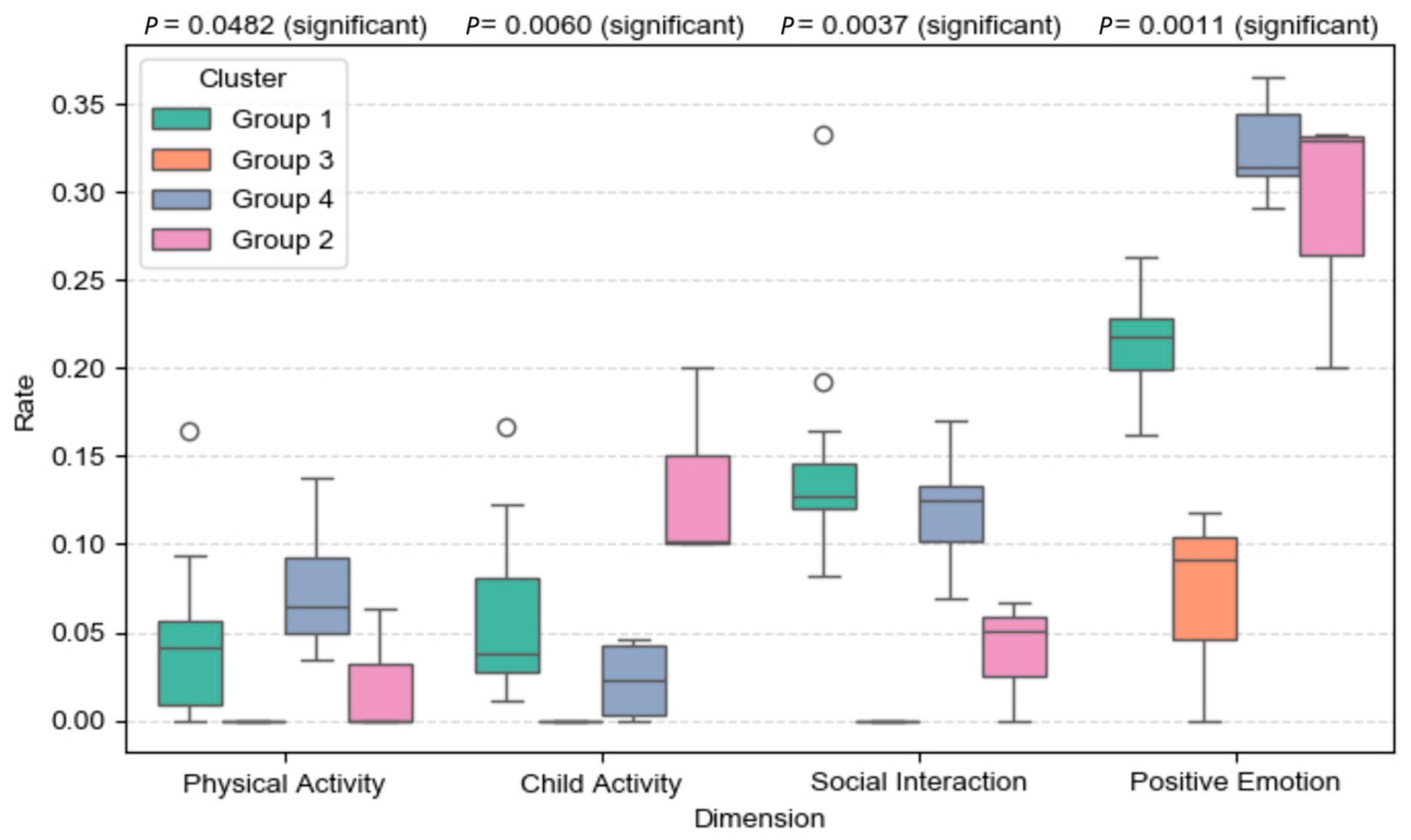
Between-group tests (
Figure 7) confirm that these regimes are meaningfully differentiated. Emotional and social indicators show the clearest contrasts across clusters, while Child Activity specifically characterizes the family-oriented type, consistent with place-attachment research linking intergenerational routines to durable emotional associations [
56,
58]. By contrast, Physical Activity varies only weakly, suggesting that basic mobility is a shared baseline rather than a key discriminator of perceived place meaning. The results also highlight a recurrent mismatch between symbolic reputation and reported everyday engagement in some historically prominent estates, echoing broader discussions of stigma, demographic change, and governance pressures in public housing contexts [
69,
70]. Finally, the presence of high positive emotion alongside limited behavioral reporting in low-activity estates is consistent with selective or retrospective place memory, where attachment persists through nostalgia and remembered life-course experience [
71,
72].
The statistical validation strengthens the interpretation that ERP estate perception is shaped less by generic physical behavior than by affective resonance and social narratives, reinforcing the need for evaluation and renewal approaches that integrate emotional and relational dimensions alongside morphological conditions.
4.3. Interpreting Review Heterogeneity and Temporal Robustness
An important interpretative issue in this study concerns the heterogeneity of review targets within Milan’s ERP estates. Google Maps reviews refer not only to formally designated public spaces, but also to a wide range of informal micro-places and everyday service interfaces embedded in the residential fabric (see
Table A5). This reflects how ERP environments are experienced as integrated everyday settings rather than as collections of discrete facilities.
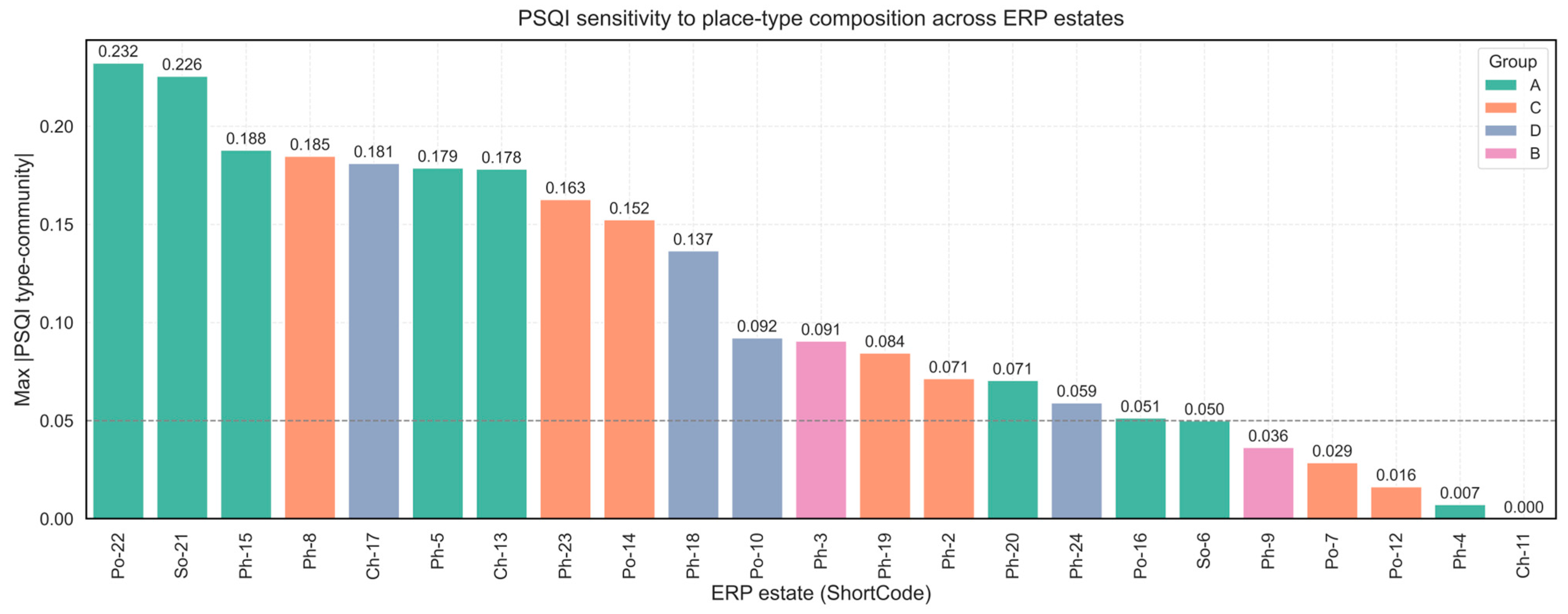
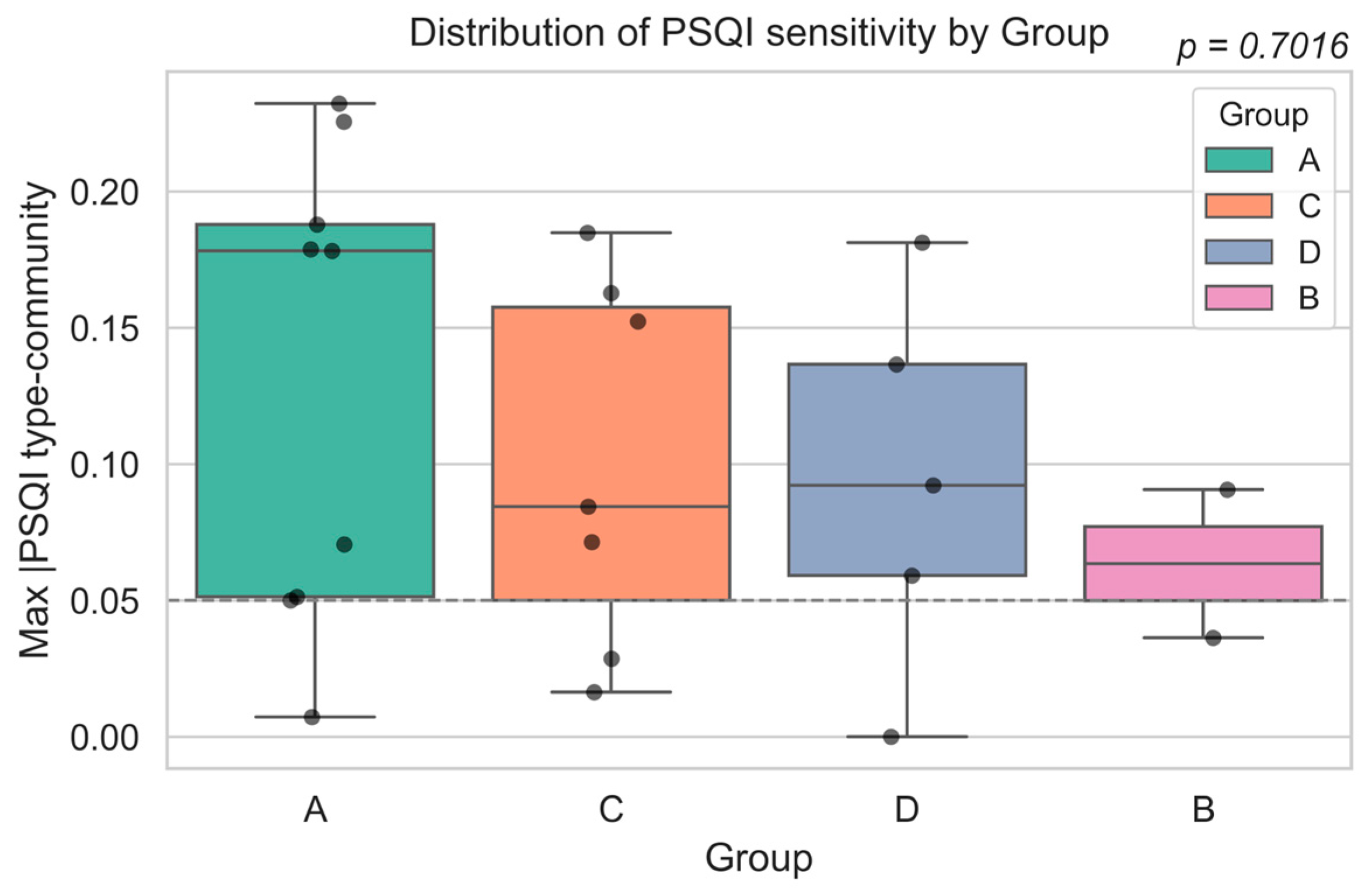
Empirical tests suggest that this heterogeneity does not substantially bias perceptual evaluation at the community scale. Across most estates, differences between place-type-specific PSQI values and community-level scores remain limited, indicating that perceived public space quality is relatively stable despite variation in review targets. Although a small number of districts show higher sensitivity to specific place types, these cases remain context-specific and do not form a systematic pattern across memory–behavior groups. This finding supports the interpretation of PSQI as a neighborhood-scale perceptual indicator, grounded in distributed everyday experience rather than in evaluations of single facility categories.
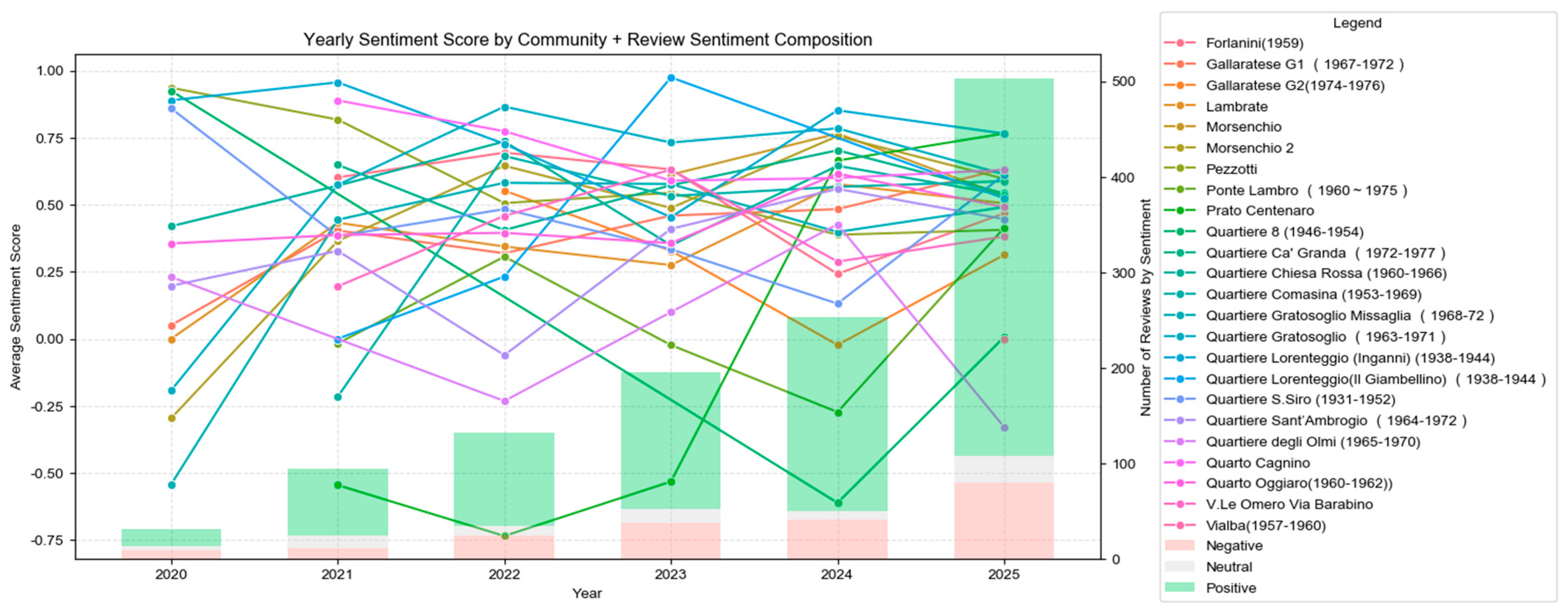
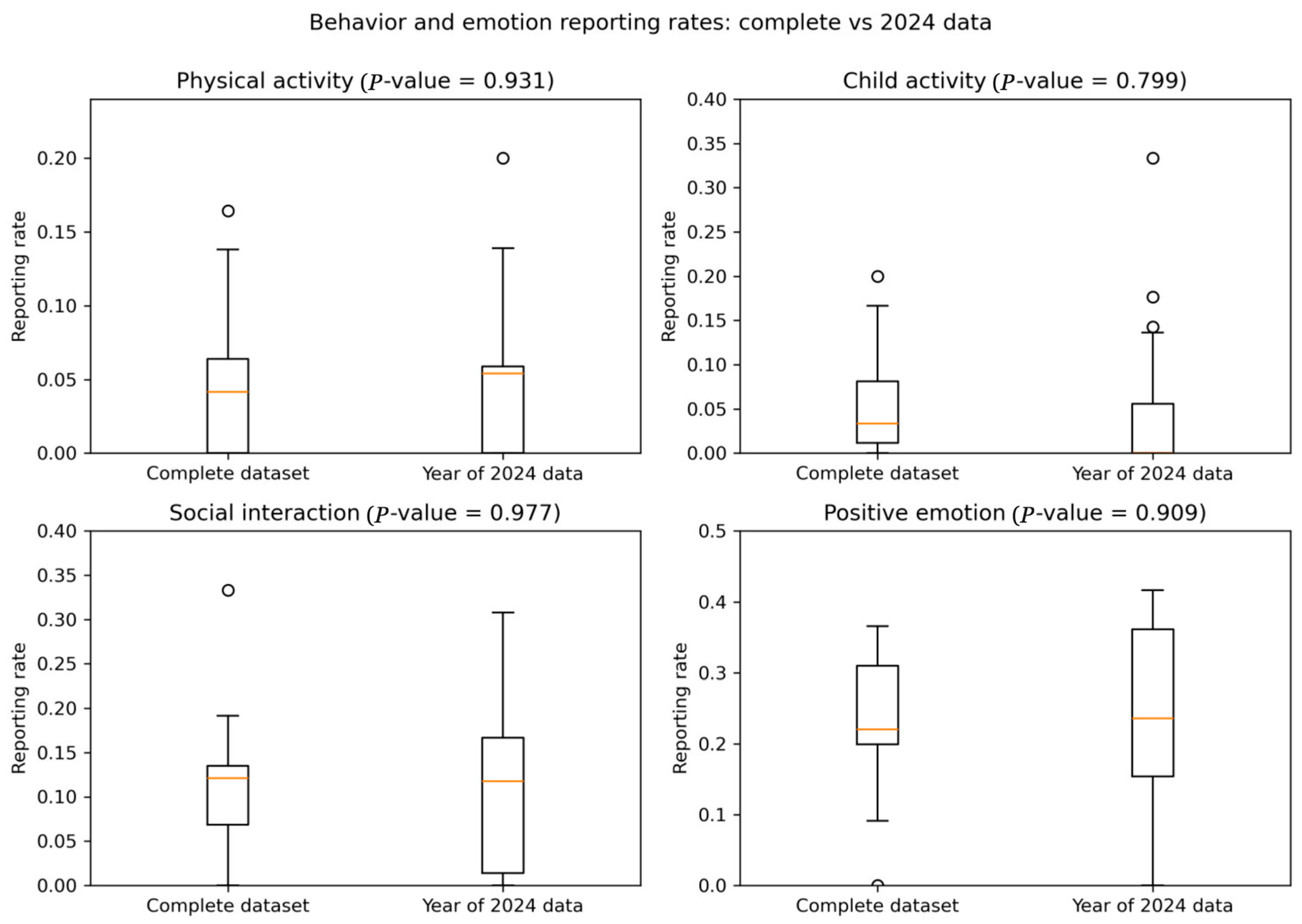
Temporal robustness tests further support this interpretation. Comparisons between the full multi year dataset and a single year subset reveal highly consistent behavioral and emotional reporting patterns, indicating that the identified configurations reflect longer-term characteristics of ERP estates rather than short-lived events or episodic fluctuations in online activity.
Taken as a whole, the robustness and sensitivity analyses highlight both the limitations and the strengths of review-based data. While individual comments are heterogeneous in target and timing, their aggregation reveals enduring patterns of perception that are meaningful at the neighborhood scale. This reinforces the value of digital commentary as a complementary source for understanding how public space quality and collective memory are experienced in postwar social housing environments.
4.4. Implications for Community Renewal and Management
The differentiated perception patterns identified in this study suggest that ERP estate renewal should move beyond uniform, typology-based approaches. Communities with strong emotional resonance but limited activity may warrant light, conservation-oriented interventions that protect symbolic value, while behaviourally active yet emotionally neutral estates may require programmes that strengthen social interaction rather than physical redesign. Likewise, family-oriented clusters indicate the need for child-friendly infrastructure, whereas socially detached estates highlight deficits in community facilities or neighbourhood services. These targeted responses align intervention priorities with the lived experience reflected in public commentary.
At the planning level, the stability of perceptual signals across years demonstrates that user-generated reviews can function as a complementary diagnostic tool, useful for detecting slow-moving changes in attachment, satisfaction, or perceived social vitality. While such data must be interpreted cautiously due to sampling bias, its integration with field surveys and demographic information can help planning agencies identify emerging problems earlier and allocate resources more precisely. Rather than replacing conventional methods, online commentary expands the evidence base for understanding how ERP environments are experienced and valued by residents.
5. Conclusions
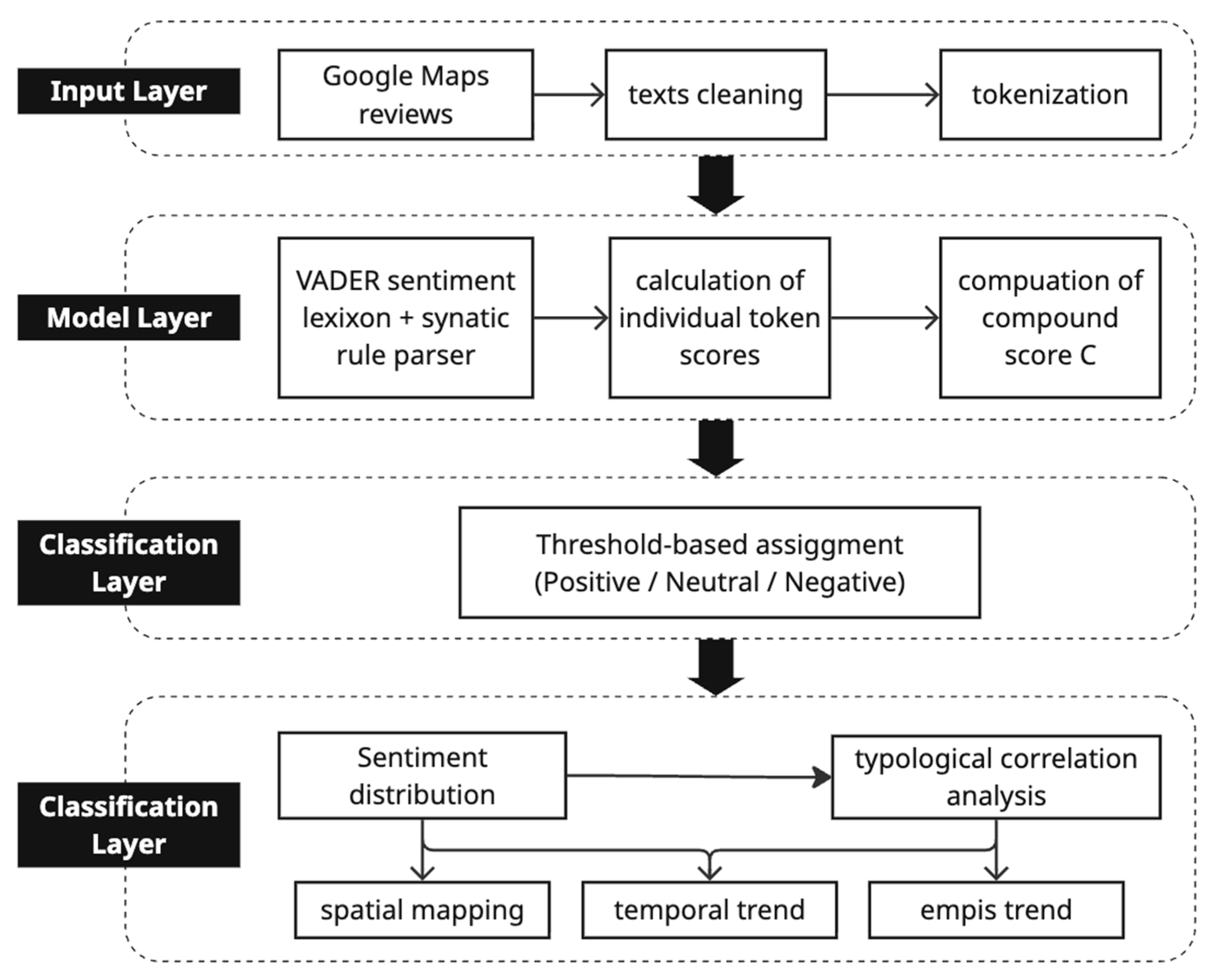
This study develops a computational framework to analyse publicly expressed perception and memory of Milan’s postwar Edilizia Residenziale Pubblica (ERP) estates using geo-referenced Google Maps reviews. By extracting behavioural and emotional indicators from user-generated text, the analysis identified four distinct perception patterns, demonstrating that ERP estates are experienced and remembered in heterogeneous ways that extend beyond their physical form. Methodologically, the study shows that unstructured online commentary can be converted into interpretable indicators through thematic tagging, sentiment analysis, and clustering. Temporal robustness tests further indicate that these perceptual patterns are consistent across years.
Milan’s ERP estates are perceived, narrated, and remembered in public discourse through patterns that make “sentiment” interpretable against identifiable architectural and urban characteristics rather than as a standalone emotional score. Emotional tone and social framing differentiate estates more clearly than routine physical activity, and the empirical results point to three linked conclusions.
Perception differs by construction period and morphological logic. Earlier estates, more often linked to courtyard-based or spatially legible neighborhood structures, show more consistently positive evaluations. Later open-block modernist developments show more polarized narratives, with positive remarks co-occurring with recurrent references to neglect, insecurity, and social detachment. The contrast points to the role of spatial legibility, enclosure, and the perceived manageability of shared spaces in shaping affective judgement.
Estate scale does not provide a sufficient explanation for evaluation or engagement. Review volume shows only a weak relationship with community area. Sentiment does not follow a simple small-versus-large gradient. Several mid-sized estates attract disproportionately high attention and clearer reputational framing, while some larger estates receive fewer comments or display volatile trajectories. Public judgement appears more sensitive to everyday conditions that are repeatedly encountered and narrated, especially visible maintenance, safety cues, and the quality of service-oriented micro-places embedded in the residential fabric.
Collective memory forms through recurring narrative signatures that exceed routine activity accounts. The cluster typology indicates that Positive Emotion and Social Interaction separate estates more strongly than Physical Activity. Attachment, sociability, and reputation dominate public narration more than reported use intensity alone. Repeated evaluations sediment into recognizable memory patterns: functional but weakly attached places; family-anchored memories; reputation-driven identities with limited everyday practice; nostalgic positivity alongside low reported activity. Sentiment reads as a socially mediated interpretation of spatial form, management conditions, and reputational trajectories.
Several limitations should be noted. First, Google Maps reviews are self-selected and not resident only, which may introduce participation bias [
73]; therefore, the results reflect publicly expressed perception and are interpreted at the ERP estate scale rather than as individual attitudes [
74]. Second, sentiment analysis relies on automated Italian–English translation, which can dilute affective nuance and add uncertainty for a subset of reviews [
75,
76]. Future work should validate these findings using Italian-language sentiment models and a targeted human annotated sample [
77,
78]. Despite these constraints, the approach demonstrates the value of perception-based evidence for understanding and guiding ERP estate renewal and management.