


Abstract
Duplex stainless steel (S22053) is increasingly favoured in construction and marine engineering due to its superior corrosion resistance, toughness, and high strength-to-weight ratio. This study presents a comprehensive investigation into the mechanical behaviour of duplex stainless steel under both monotonic and cyclic loading. First, monotonic behaviour is characterized, and the applicability of existing constitutive models is verified. Addressing the complexity of parameter identification for the cyclic constitutive model, a genetic algorithm (GA)-based calibration framework for the Chaboche model is proposed. This approach overcomes the subjectivity and inefficiency of traditional manual fitting. The proposed method is validated against experimental hysteresis curves, demonstrating high accuracy and providing a reliable basis for the seismic design of duplex stainless steel structures.
1. Introduction
Stainless steel is renowned for its exceptional corrosion resistance, durability, ductility, and fire resistance, in addition to its environmental sustainability and aesthetic appeal [1]. As a superior structural material, it has seen widespread adoption in the construction industry, particularly in structures exposed to harsh external environments [2]. Duplex stainless steel contains both austenite and ferrite phases in its microstructure. This dual-phase structure imparts the excellent toughness of austenite, as well as the high strength and crack resistance of ferrite. Compared to the commonly used austenitic stainless steels in building structures, duplex stainless steel S22053 exhibits higher yield and tensile strengths [3]. This increased strength enables designers to use thinner plates to achieve the same load-bearing capacity, providing advantages in structural lightweighting and cost savings, which makes it highly promising for future applications. Researchers have conducted both experimental and theoretical studies on the mechanical properties of stainless steel components [4,5,6,7,8,9,10,11,12,13], joint mechanics [14,15], and the seismic performance of frames [16,17].
Under seismic loading, steel structural components, particularly energy-dissipating elements, are typically subjected to large cyclic loads. Characterized by short durations, a limited number of hysteresis cycles, and substantial plastic deformation, this loading condition is often classified as ultra-low-cycle loading. Structural components resist seismic actions primarily through the elasto-plastic hysteretic behaviour, which differs markedly from its behaviour under monotonic loading. Consequently, many researchers have conducted elasto-plastic fatigue tests on stainless steel to investigate its cyclic response under various loading protocols [18,19,20]. To capture the true dynamic response of structures under seismic excitation, shaking-table experiments or elasto-plastic time-history analyses are commonly employed. However, because shaking-table tests are costly and allow only limited loading conditions, elasto-plastic time-history simulations have become a more practical and widely adopted approach in engineering design. In numerical simulations, accurately representing the cyclic constitutive model is essential for ensuring the reliability and precision of the results.
Stainless steel exhibits pronounced cyclic strengthening and a distinct Bauschinger effect under repeated loading. To accurately capture its cyclic elasto-plastic stress–strain behaviour, several factors must be considered, including the yield criterion, flow rule, and hardening model. An elasto-plastic cyclic constitutive model incorporating combined hardening rules can reasonably describe the stress–strain response of metals subjected to cyclic loading. The Chaboche model, introduced by Lemaitre and Chaboche, is widely used in structural engineering to characterize the nonlinear mechanical behaviour of steel [21,22]. This model has been implemented in the finite element software ABAQUS and is extensively employed in numerical simulations [23].
In recent years, many researchers have investigated the application of the Chaboche model to the stress–strain relationships of stainless steel under various loading protocols and plate thicknesses, calibrating the model parameters using experimental data [18,24,25,26,27,28]. The calibration of the Chaboche model is influenced by factors such as plate thickness, material batch, and loading protocol. Due to the high cost of extensive cyclic testing and the labour-intensive process of parameter calibration, the efficiency of engineering simulations and designs is significantly reduced. To address this challenge, the primary goal of this study is to reduce the computational cost associated with calibrating cyclic constitutive model parameters, enhance efficiency, and propose a novel calibration method based on intelligent computing techniques.
In recent years, various artificial intelligence–based optimization techniques have been introduced to improve the efficiency and objectivity of constitutive model parameter calibration. Particle swarm optimization (PSO) [29,30], genetic algorithms (GA) [31], global optimization approaches [32], and neural network (NN)-based methods [33] have been widely applied in this context. For example, Smith et al. [29] employed PSO to calibrate cyclic constitutive model parameters for ASTM A572 [34] Grade 50 structural steel, demonstrating improved agreement with experimental hysteresis responses. Pandey et al. [31] used genetic algorithms to optimize cyclic constitutive models for different engineering materials, showing that GA can reasonably predict both stress–strain responses and strain amplitudes. Among these methods, genetic algorithms are particularly well suited for calibrating cyclic constitutive models with strong nonlinearity and multiple coupled parameters, due to their global search capability and reduced dependence on initial parameter guesses. Therefore, a GA-based optimization framework is adopted in this study to calibrate the parameters of the Chaboche constitutive model for S22053 duplex stainless steel.
This study initially investigates the material behaviour of duplex stainless steel S22053 through monotonic tensile tests, followed by the calibration of the R-R-O and N-R-O models [35,36,37,38,39,40] to evaluate their applicability and accuracy. Furthermore, cyclic loading tests are conducted on S22053 to examine its stress–strain behaviour under various loading protocols. Additionally, a novel parameter calibration method for the Chaboche model, based on genetic algorithm optimization, is proposed. This method enhances calibration efficiency using cyclic test data, and its accuracy and computational performance are verified against experimental results.
2. Mechanical Behaviour and Constitutive Model of Duplex Stainless Steel Under Monotonic Loading
2.1. Tensile Tests and Results Analysis
This study begins with an experimental analysis of the monotonic mechanical properties of domestically produced duplex stainless steel EN 1.4462 (ASTM 2205, S22053) [41,42], focusing on the yield stress, ultimate tensile stress, and the tensile and fracture characteristics of the material. Dog-bone-shaped specimens with plate thicknesses of 6 mm, 8 mm, 10 mm, 12 mm, and 16 mm were selected, with two repetitions for each plate thickness to examine performance variations among materials of different thicknesses. The specimens were cut along the rolling direction. The measured thickness and width of the gauge length are listed in Table 1. The tests adhered to the specifications outlined in “Tensile Test of Metallic Materials-Part 1: Room Temperature Testing Methods” (GB/T 228.1-2010) [43], and the monotonic tensile tests were performed using a Zwick/Roell Z100 electronic universal testing machine (ZwickRoell, Ulm, Germany).
Table 1.
Material properties of monotonic coupon test.
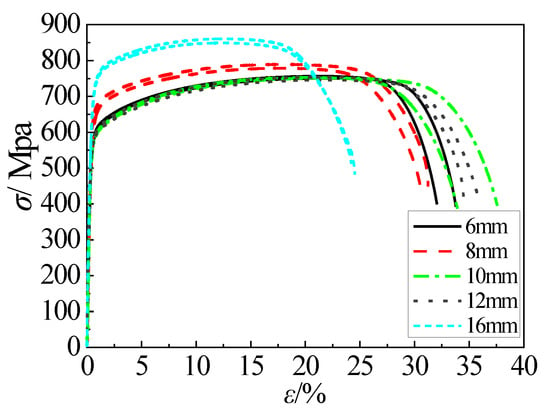
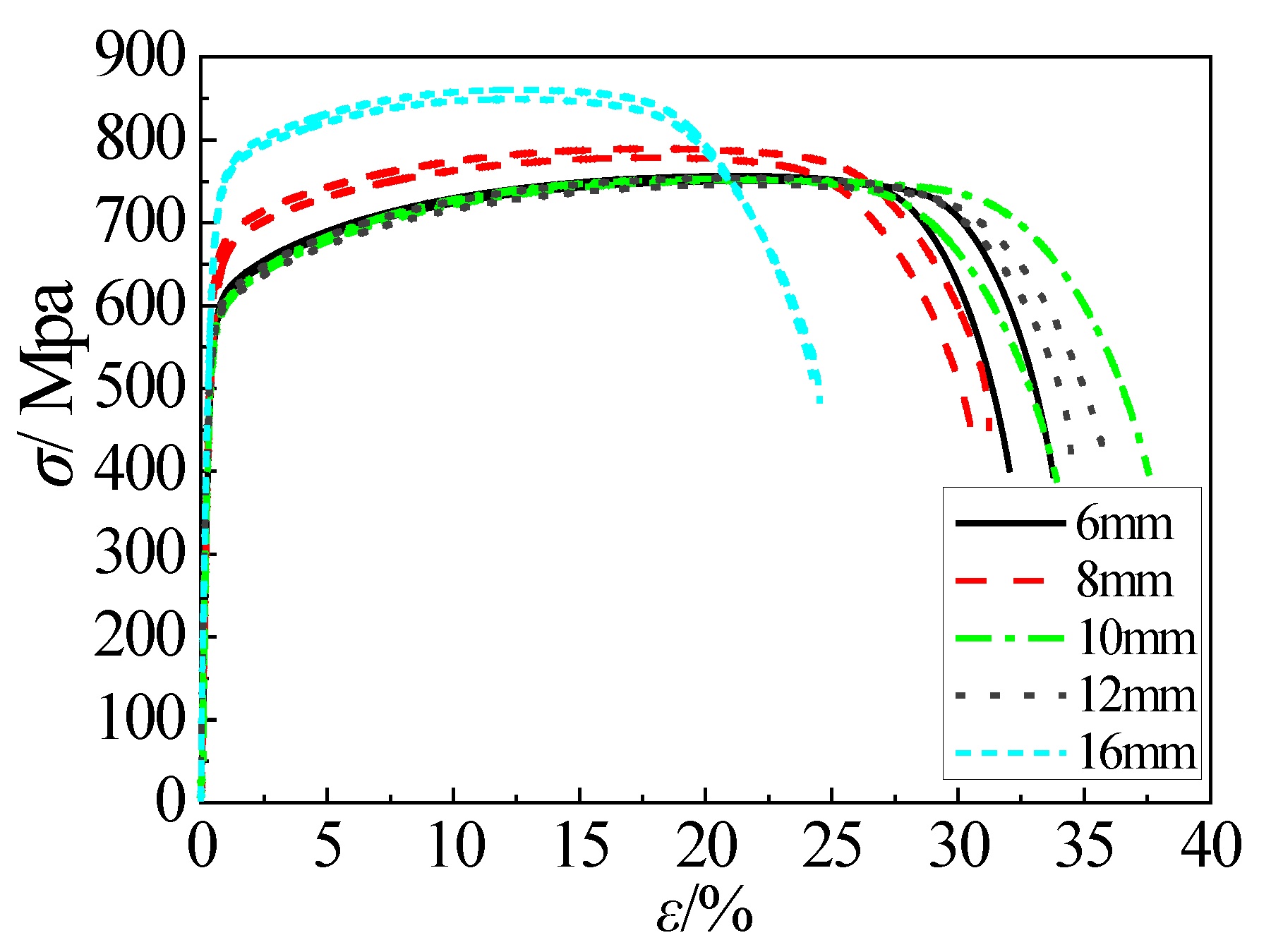
Upon analysing the experimental results, it is evident that all monotonic tensile specimens exhibited necking and fracture in the gauge length. Figure 1 shows the stress–strain curves obtained from the experiments, which reveal that the stainless steel demonstrates significant nonlinear material behaviour without a yield plateau. Key mechanical properties were extracted from the curves, as shown in Table 1, including the elastic modulus E0, ultimate tensile stress σu, stress σ0.2 and strain ε0.2 at 0.2% plastic strain, ultimate strain εu, and fracture strain A. The elastic modulus of the specimens ranged from 173 GPa to 210 GPa, while the ultimate tensile stress ranged from 751 MPa to 860 MPa, with the 16 mm thick specimen exhibiting the highest ultimate tensile stress. The ultimate strain ranged from 12.5% to 22.4%, and the fracture strain ranged from 24% to 35.7%, with the 16 mm thick specimen showing the lowest ultimate and fracture strains. The S22053 stainless steel plates used in this study meet the material property requirements of GB/T 4237-2015 “Hot-rolled Stainless Steel Plates and Strips” [44] in terms of material properties, and the obtained experimental data are reliable for fitting the constitutive model parameters.
Figure 1.
Measured monotonic stress–strain curves of stainless steel.
2.2. Calibration of Monotonic Constitutive Model Parameters
Establishing a constitutive model that accurately describes and predicts the stress–strain behaviour is crucial for numerical simulations and structural design, as it forms the foundation for rational optimization in design. Currently, the most widely used and well-recognized constitutive model is the two-stage model proposed by Ramberg and Osgood, and subsequently refined by several researchers (hereafter referred to as the R-R-O model) [35,36,37,38,39], with the fundamental equation given in Equation (1).
where n is the strain hardening exponent, m is the second strain hardening exponent, and E0.2 is the tangent modulus at the 0.2% proof stress.
The model has been widely validated and demonstrates good accuracy across the entire strain range. However, studies have shown that it tends to overestimate the stress variation in the small strain range and fails to accurately predict the stress–strain behaviour under compression. Consequently, Chen et al. [40] proposed a new constitutive model (hereinafter referred to as the N-R-O model), which features simpler parameters, higher computational efficiency, and greater accuracy compared to the R-R-O model. The specific equation is given in Equation (2).
where Hq represents the initial hardening modulus in the hardening stage, and Vq represents the rate of degradation of the hardening modulus with increasing plastic strain.
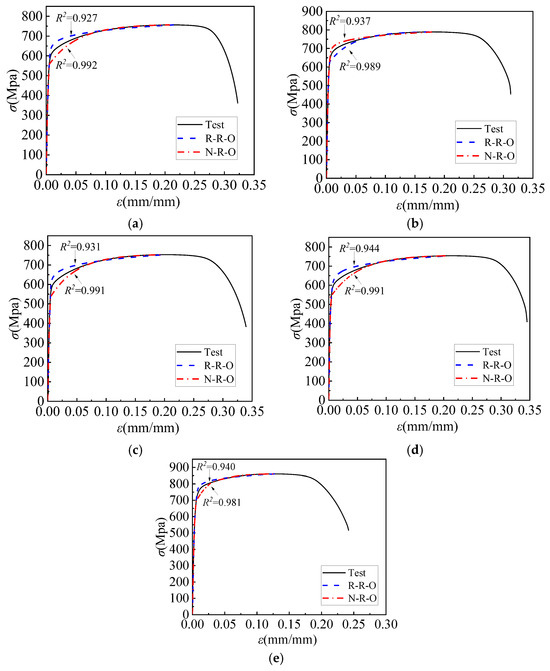
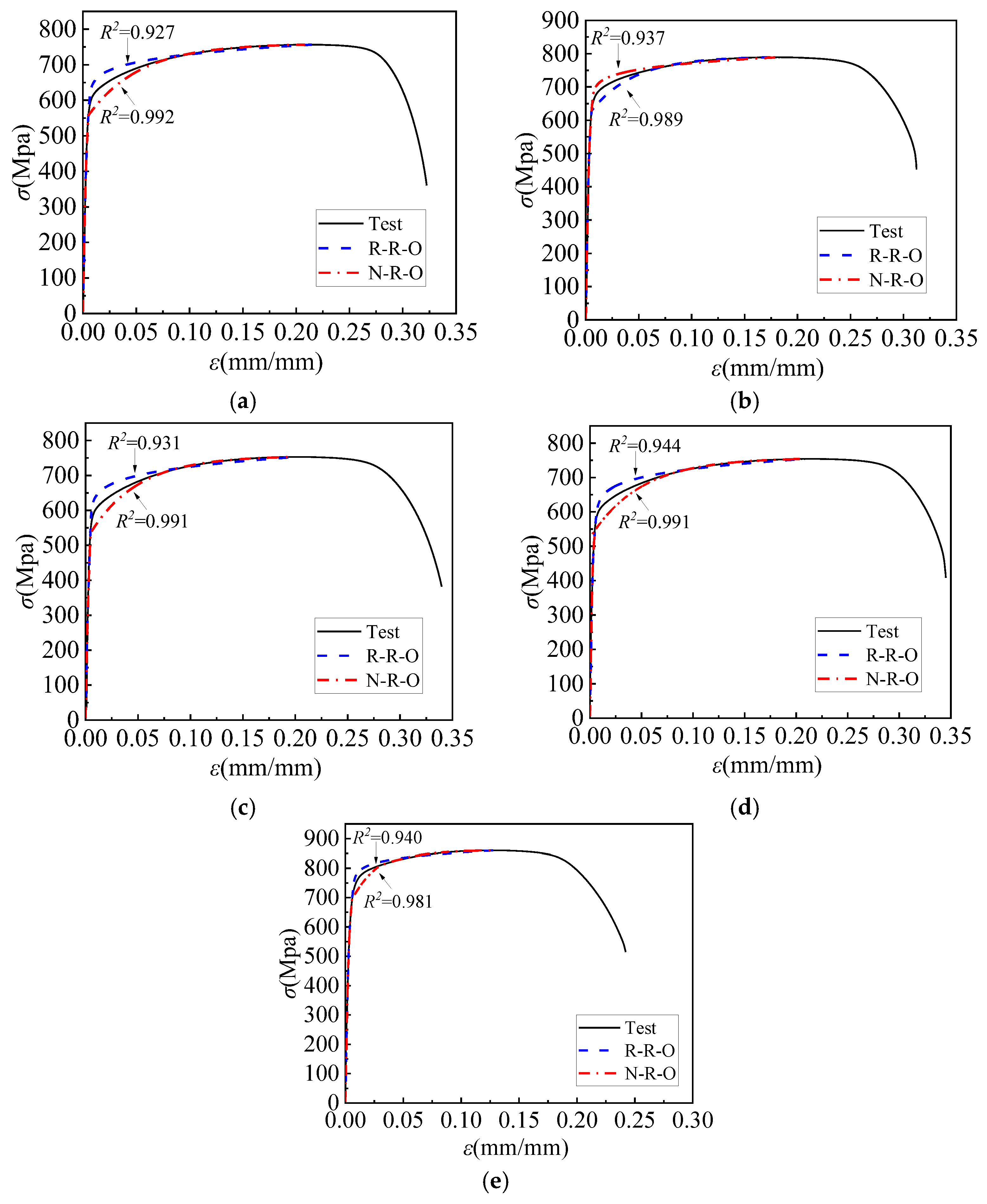
The stress–strain curves obtained from the experiments were fitted using the two models mentioned above, and the fitting results are shown in Figure 2 and Table 2. The parameter n of the R-R-O model ranges from 2.11 to 7.95, with an average value of 5.20; the parameter m ranges from 5.29 to 7.41, with an average value of 6.03, and the coefficients of variation (COV) for both parameters are within a reasonable range. For the N-R-O model, the parameter Hq ranges from 4025.87 to 7822.17, with an average value of 5103.74; the parameter Vq ranges from 20.36 to 40.21, with an average value of 25.72. The calibrated N-R-O model parameters for S22053 duplex stainless steel obtained from the monotonic loading tests were further examined by comparison with the parameter ranges reported in the original study by Chen et al. [40]. It is observed that the values of the hardening-related parameters Hq and Vq identified in this study fall well within the ranges suggested in the original research. This consistency demonstrates that the N-R-O constitutive model remains applicable for S22053 duplex stainless steel. It is observed that the parameters for the 16 mm thick specimen are approximately 7000, significantly higher than those for the other plate thicknesses (ranging from 4000 to 5000). This is due to the more pronounced material inhomogeneity in thicker steel plates, which in turn affects the ductility. The strain hardening characteristics become more significant, leading to poorer plastic deformation. Consequently, the stress–strain curve for thicker steel plates is more rounded in the hardening phase compared to thinner plates, ultimately resulting in higher values of the initial elastic modulus Eq and the rate of elastic modulus degradation Vq for the thicker material in the N-R-O model. Additionally, the goodness of fit (R2) for both models was calculated, as shown in Table 2. The analysis results indicate that both models exhibit high fitting accuracy, but the N-R-O model provides better accuracy compared to the R-R-O model and offers a more conservative description across the entire strain range. Therefore, the N-R-O model is more advantageous for describing the monotonic stress–strain behaviour of duplex stainless steel.
Figure 2.
Comparison of fitting results from the two models with experimental curves. (a) 6 mm; (b) 8 mm; (c) 10 mm; (d) 12 mm; (e) 16 mm.
Table 2.
Parameter Fitting Results for the R-R-O and N-R-O Models.
3. Mechanical Behaviour and Constitutive Model Under Cyclic Loading
3.1. Cyclic Loading Tests and Results Analysis
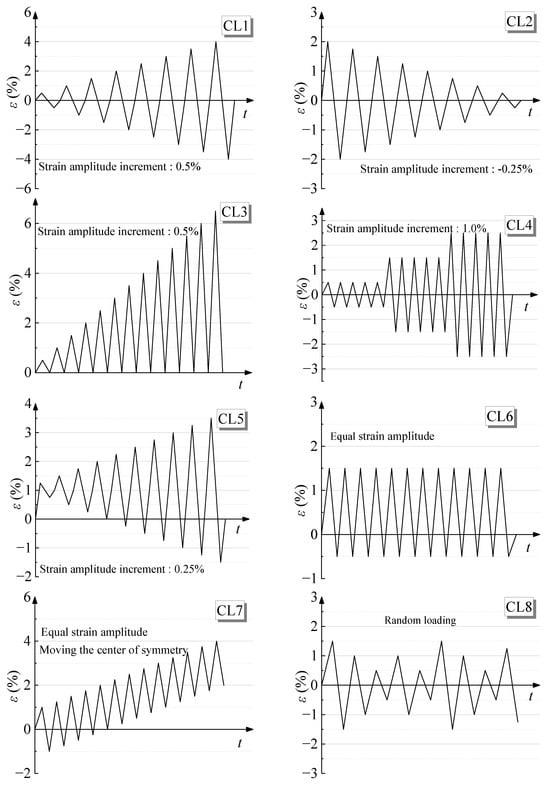
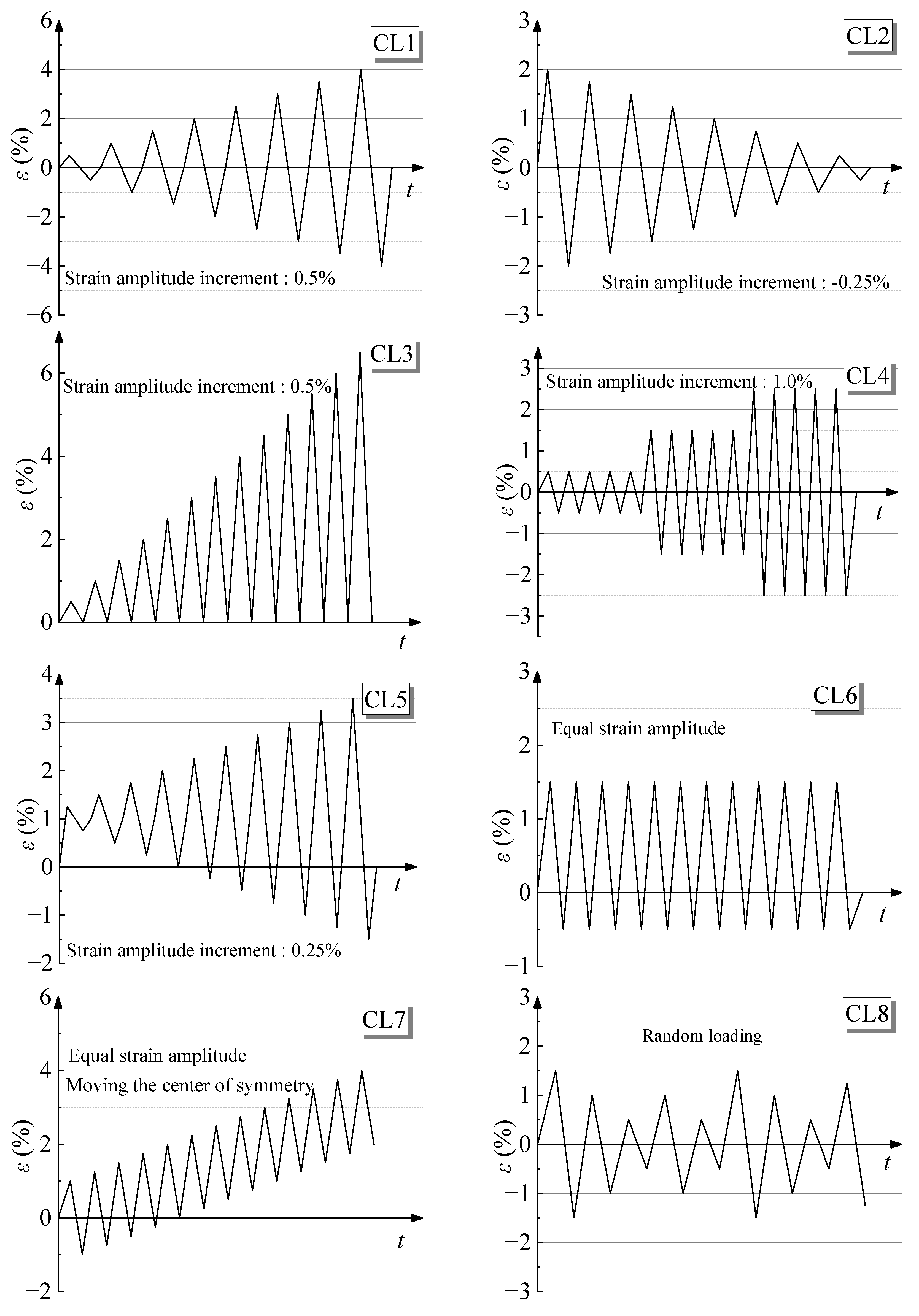
Cyclic loading tests were conducted to investigate the mechanical response of duplex stainless steel S22053 under seismic conditions. These tests were performed using a universal testing machine capable of both static and dynamic loading, employing strain control throughout the entire process. The true response of structures under seismic loading is not constant, and the deformations experienced by the material are complex and difficult to measure. Therefore, a variety of loading protocols were designed to simulate seismic responses as comprehensively as possible. These loading protocols typically influence the cyclic hardening behavior of the material through both strain amplitude and loading sequence. In this study, eight distinct loading protocols were designed based on the relevant specifications, including both constant and variable amplitude loading, with strain amplitudes ranging from 2% to 6% and different loading sequences, as shown in Figure 3. These protocols were specifically designed to accurately capture the cyclic response of S22053 duplex stainless steel under cyclic loading. The loading protocols assigned to each specimen are listed in Table 3. For example, in specimen 2205-6-1, “2205” refers to the S22053 stainless steel material, “6” indicates that the specimen was cut from a 6 mm thick plate, and “1” represents the sequence number of the specimen from this plate thickness.
Figure 3.
Cyclic loading protocols.
Table 3.
Specimens and loading protocol allocation.
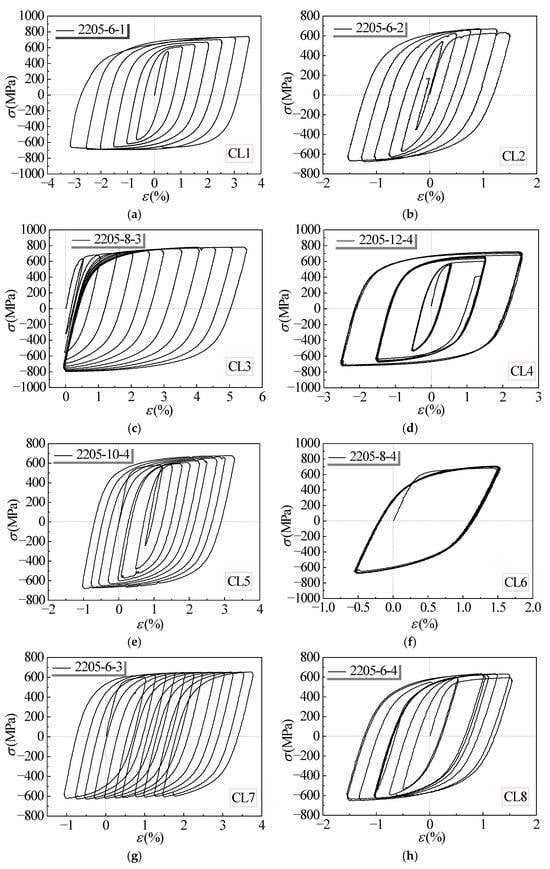
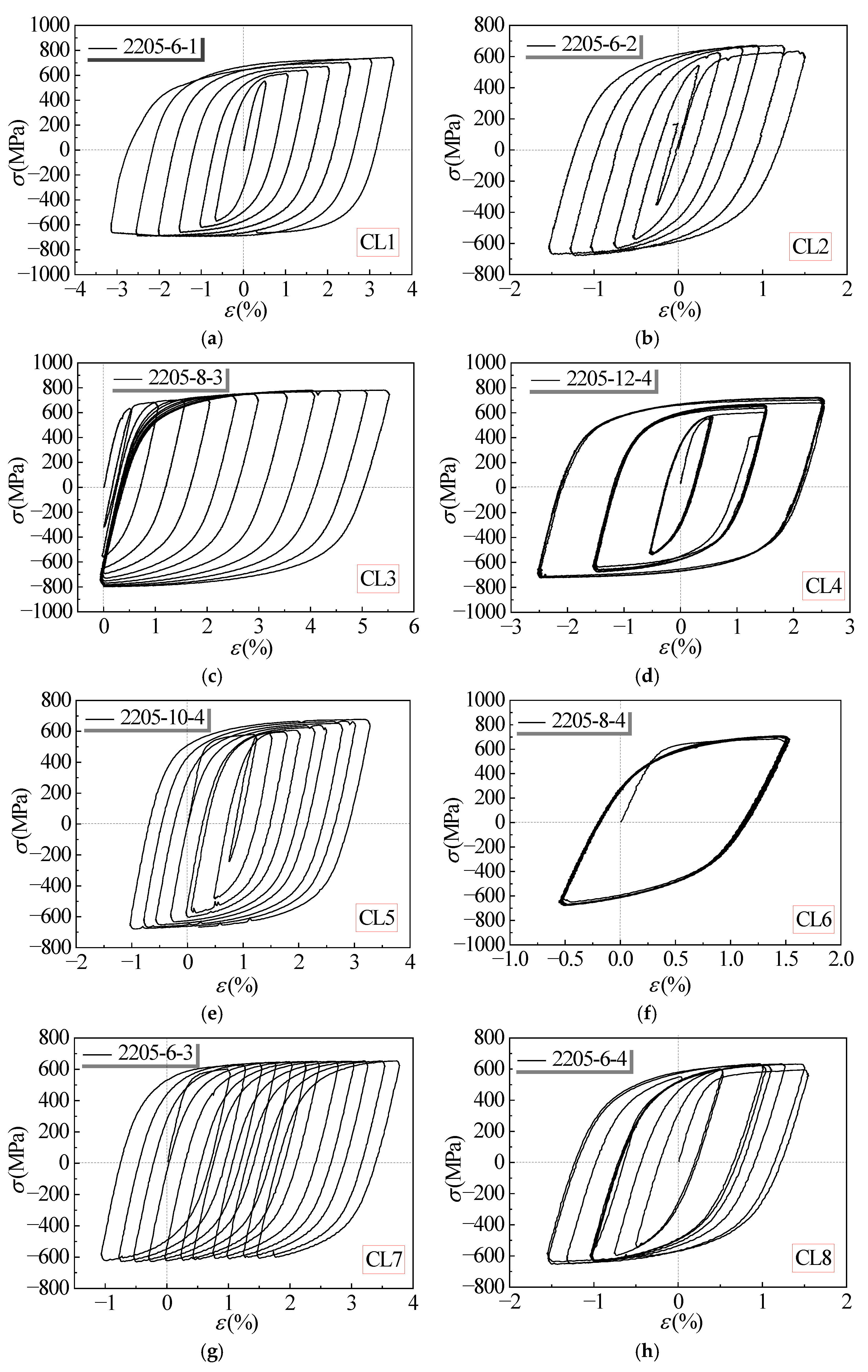
The stress–strain curves obtained from the cyclic loading tests are shown in Figure 4. As observed in Figure 4, the hysteresis loops of S22053 stainless steel under different loading protocols are well-defined, indicating excellent energy dissipation capacity. As the strain amplitude increases, the range of plastic strain also expands, and the hysteresis behaviour exhibits characteristics of both isotropic and kinematic hardening. Additionally, the loading history has a significant impact on the hysteresis behaviour of the material. At the same strain amplitude, the ultimate strength varies, meaning that the hysteresis loops do not overlap, demonstrating a certain degree of cyclic hardening.
Figure 4.
Hysteresis curves. (a) 2205-6-1 (CL1); (b) 2205-6-2(CL2); (c) 2205-8-3(CL3); (d) 2205-12-4 (CL4); (e) 2205-10-4(CL5); (f) 2205-8-4(CL6); (g) 2205-6-3 (CL7); (h) 2205-6-4 (CL8).
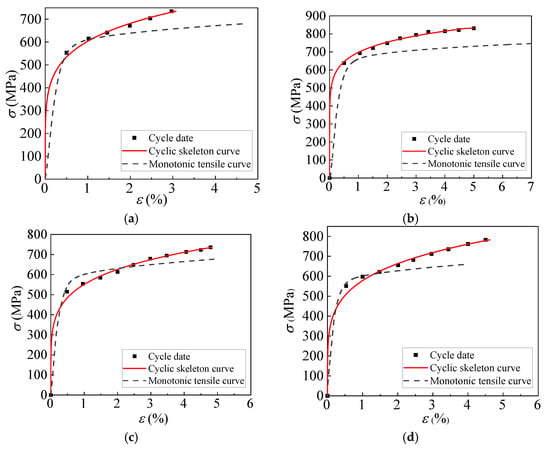
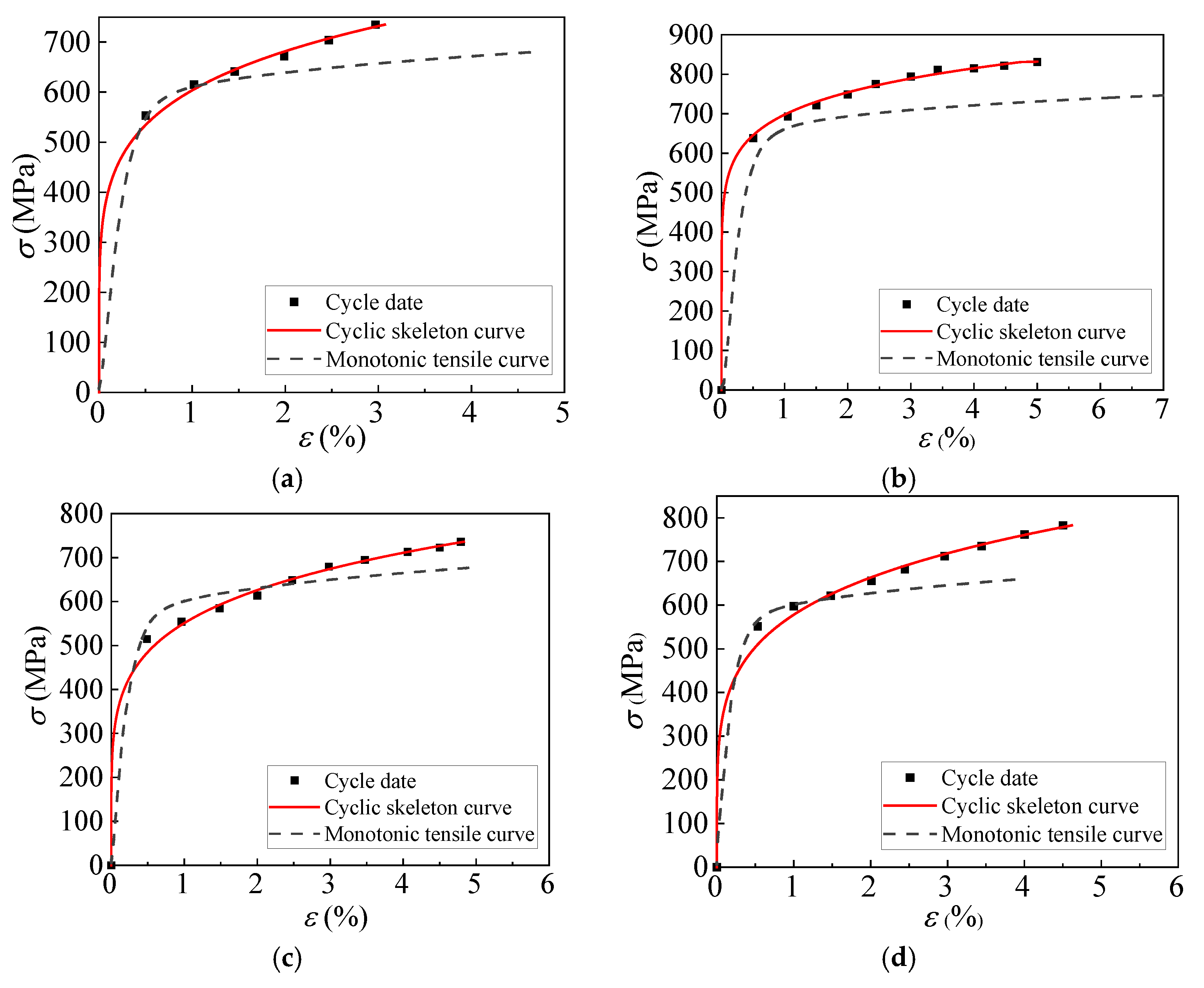
Additionally, the skeleton curve was extracted from the cyclic loading data. This curve reflects the material’s response under cyclic loading and can be compared with the monotonic tensile curve. The Ramberg-Osgood model was employed to fit the cyclic loading skeleton curve, as shown in Equation (3).
where Δε represents the strain amplitude, Δσ denotes the stabilized stress amplitude, n′ is the cyclic hardening index, and K′ is the cyclic hardening coefficient. The parameters of the skeleton curve, derived from the experimental data, are presented in Table 4. A comparison between the fitted cyclic skeleton curve and the monotonic tensile curve is shown in Figure 5. The results indicate that the Ramberg-Osgood model accurately characterizes the skeleton curve of duplex stainless steel S22053 under cyclic loading. Furthermore, a clear difference is observed between the monotonic tensile curve and the cyclic skeleton curve. As the strain amplitude increases, the stress at the same strain is significantly higher for the cyclic skeleton curve compared to the monotonic tensile curve, demonstrating a distinct cyclic hardening behaviour.
Table 4.
Parameters of the cyclic skeleton curves.
Figure 5.
Cyclic skeleton curves. (a) 2205-6-1; (b) 2205-8-1; (c) 2205-10-1; (d) 2205-12-1.
3.2. Calibration of Chaboche Cyclic Constitutive Model Parameters Based on the Genetic Algorithm Optimization Method
The Chaboche Cyclic Constitutive Model consists of two components: nonlinear kinematic hardening and isotropic hardening. The kinematic hardening component describes the movement of the yield surface in response to changes in the stress path during cyclic loading, represented by the shift in back stress. The isotropic hardening component accounts for the change in the material’s yield strength due to accumulated plastic deformation, with the size of the yield surface varying as a function of the equivalent plastic strain. The combination of these two hardening mechanisms enables the model to more accurately capture the evolution of nonlinear material behaviour in metals during repeated loading and unloading cycles.
The isotropic hardening component of the Chaboche model defines the variation in the yield surface size through a functional relationship between the yield surface and equivalent plastic strain, as shown in Equation (4).
where represents the initial yield surface size, Q∞ is the maximum change in yield surface size, and biso indicates the rate of change in yield surface size with plastic strain development.
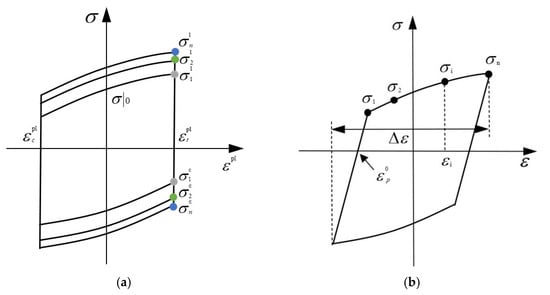
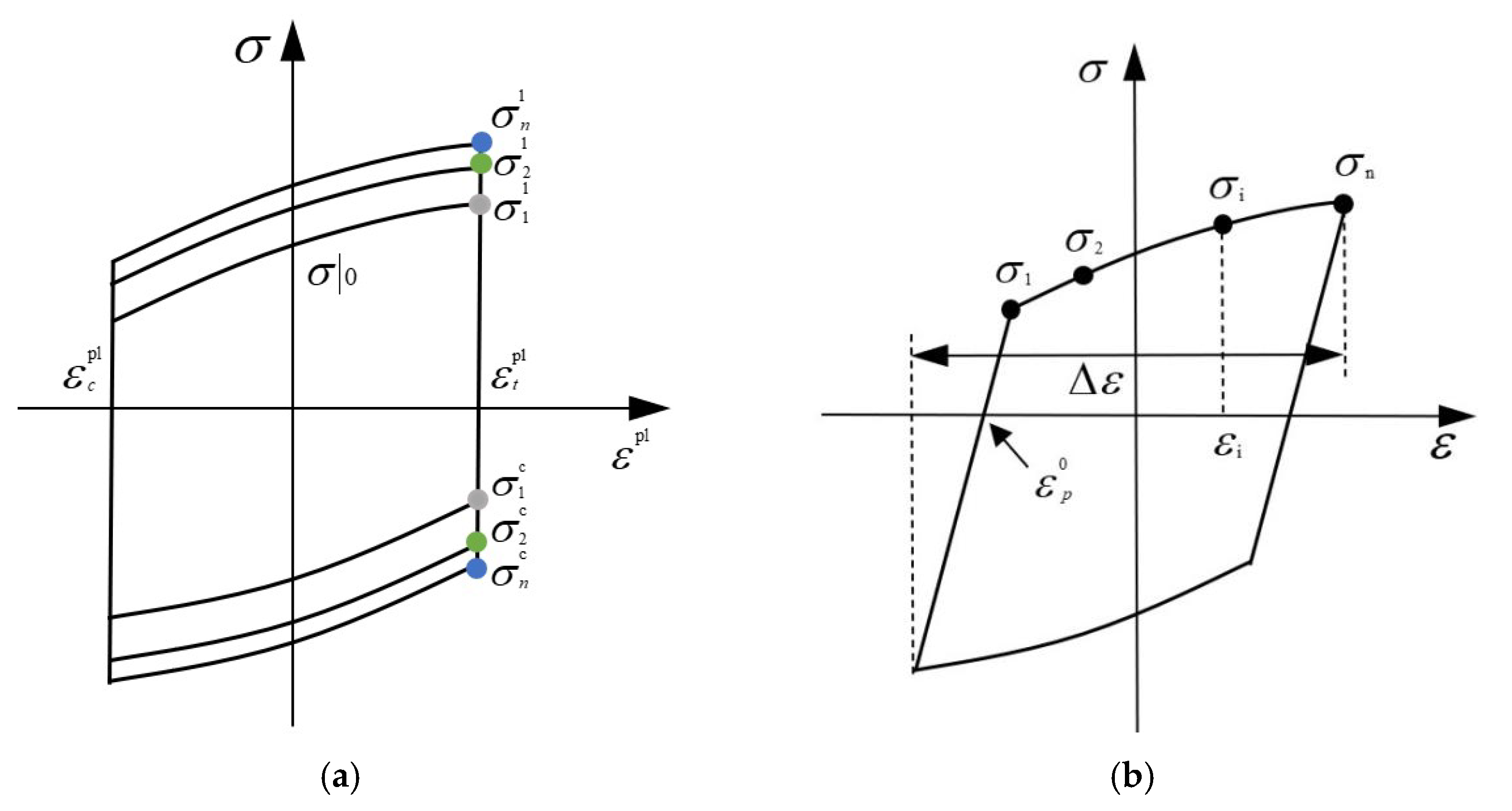
The ABAQUS 2021 user manual provides a commonly used method for calibrating the parameters of the Chaboche Cyclic Constitutive Model [45]. The calibration diagram for the isotropic hardening parameters is shown in Figure 6a.
Figure 6.
Schematic diagram of Chaboche parameter calibration. (a) isotropic hardening parameter calibration; (b) kinematic hardening parameter calibration.
denotes the size of the yield surface in the i-th cycle, which can be calculated using Equation (5).
where and represent the upper and lower stresses at the ends of the elastic segment in the i-th cycle, respectively.
The equivalent plastic strain corresponding to can be calculated using Equation (6).
The plastic strain amplitude can be calculated using the following equation.
Equations (5)–(7) can be used to calculate the values of the data points (,), which represent the dependent and independent variables in Equation (4). Using the obtained data points, the isotropic hardening parameters and can be fitted.
The kinematic hardening component defines the evolution of the back stress. When the hysteresis loop reaches a stable shape, the back stress α and plastic strain are related by the following function.
where is the k-th back stress on the hysteresis loop, is the k-th back stress at the first data point, is the initial creepage strengthening modulus, and is the rate of change in back stress with the increase in plastic strain. In this paper, two back stress was used to calibrate the model.
The ABAQUS user manual provides a method for calibrating the kinematic hardening parameters, as shown in Figure 6. First, stable hysteresis loops are determined based on experimental data. For variable amplitude loading, it is difficult to achieve a stable hysteresis loop, and the last loop can be taken as the stable hysteresis loop. Then, the data points (,) used to fit the kinematic hardening parameters and are determined using Equations (10) and (11).
where represents the plastic strain at the i-th data point on the stable hysteresis loop, and is the back stress component at the i-th point. After obtaining the data points, the kinematic hardening parameters are fitted in ABAQUS using the option
*PLASTIC, HARDENING = COMBINED, DATA TYPE = STABILIZED.
The calibration process for the Chaboche Cyclic Constitutive Model parameters using the method outlined above is cumbersome and requires substantial computational effort, particularly for parameter calibration under variable amplitude loading conditions. Additionally, the parameters calibrated through this method often require further adjustments for certain curves before they can be used in numerical simulations and calculations. To address these challenges, this study proposes a parameter calibration method for the Chaboche cyclic constitutive model based on genetic algorithm optimization. This approach not only streamlines the calibration process but also improves its accuracy.
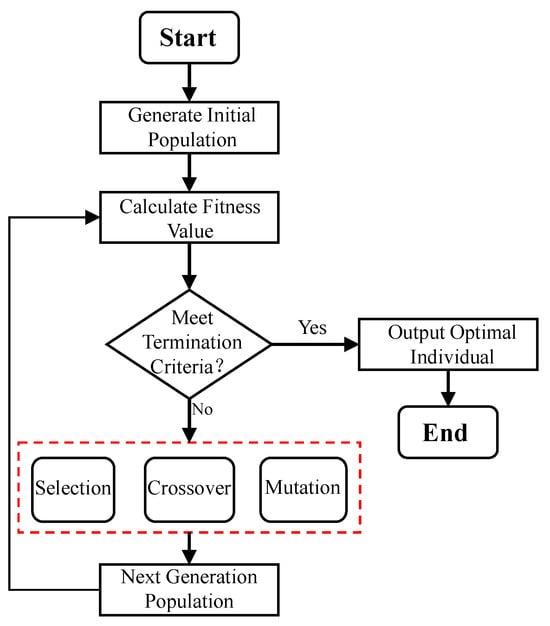
Genetic algorithms are widely used artificial intelligence techniques that optimize solutions by simulating natural evolutionary processes. These algorithms are extensively applied to solve complex problems. The core concept is to mimic biological processes such as reproduction, mutation, and natural selection, gradually searching for the optimal solution in the search space. Key steps in the process include selection, crossover, mutation, and inheritance [46]. The detailed process of the genetic algorithm is illustrated in Figure 7.
Figure 7.
Flow chart of the genetic algorithm principle.
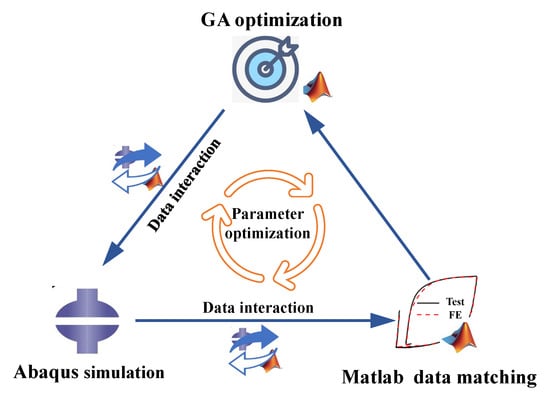
The specific steps of the genetic algorithm-based calibration method for the Chaboche cyclic constitutive model parameters are as follows: First, determine the size of the yield surface based on experimental results; second, estimate the range of model parameters based on experimental data and existing literature; third, define the objective function for parameter optimization; and finally, perform the parameter optimization to obtain the optimal model material parameters. A schematic of the parameter optimization process is shown in Figure 8.
Figure 8.
Schematic of the parameter optimization process.
First, the framework for the genetic algorithm optimization is established, which involves determining the optimization parameters and the objective function. ABAQUS finite element software is then used to simulate cyclic loading, following the same loading protocol as the experimental setup, using the Chaboche cyclic constitutive model. In ABAQUS, the model is constructed based on the dimensions of the specimen’s gauge section. The linear reduced integration element C3D8R is used, with a mesh size of 0.5 mm. Boundary conditions are applied such that one end is fixed (U1 = U2 = U3 = UR1 = UR2 = UR3 = 0), while displacement loading is applied to the other end. The finite element results are compared with experimental data through data interaction with MATLAB R2025a software. Subsequently, the genetic algorithm is applied to perform global optimization within the defined parameter range. The optimized parameter values are then passed back to ABAQUS for further simulation through data interaction. This iterative process continues until the optimal parameters are determined.
Based on the research by Ning et al. [47], it is recommended to set the initial yield surface size to 0.75σ0.01. The objective function used for parameter optimization in this study is as follows.
where and represent the experimental stress value and the finite element simulation stress value at the i-th data point, respectively. The objective function F is defined as the minimum sum of the differences between the experimental and finite element simulation stress values for all data points.
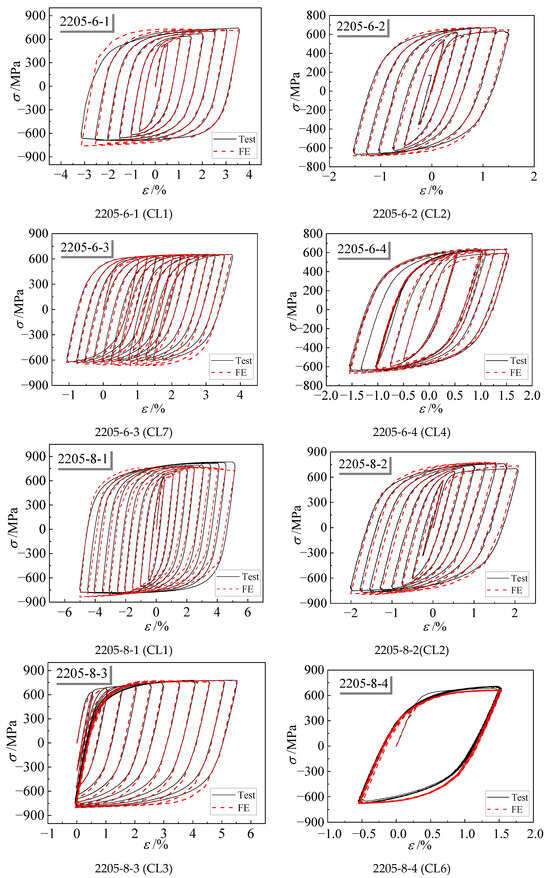
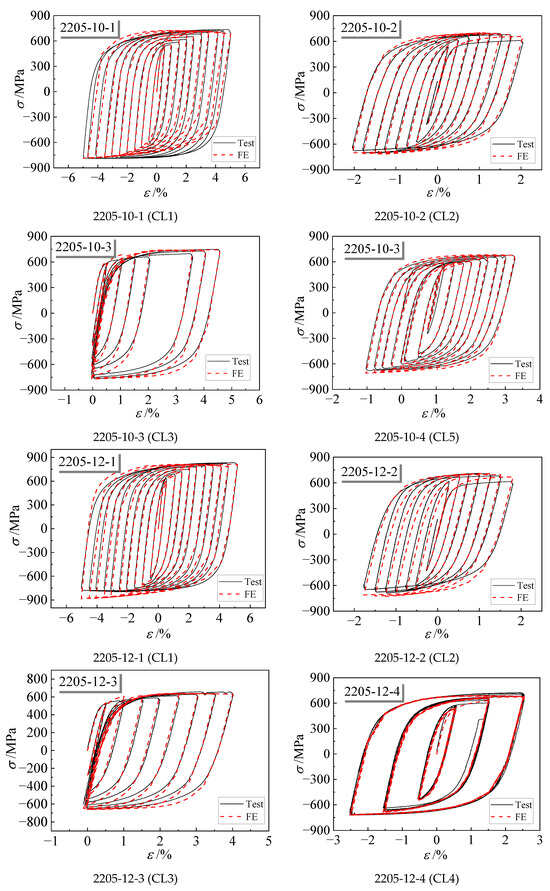
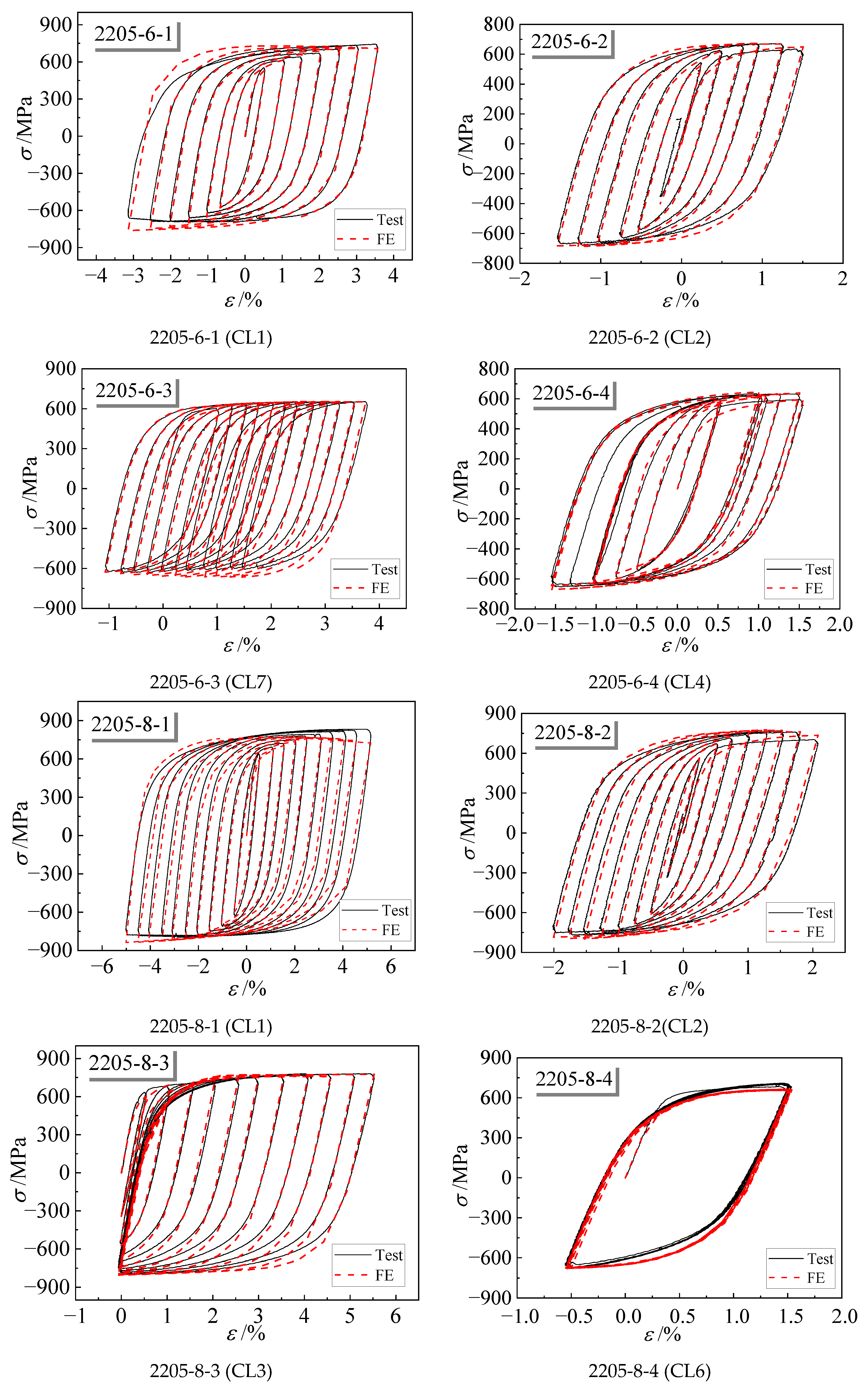
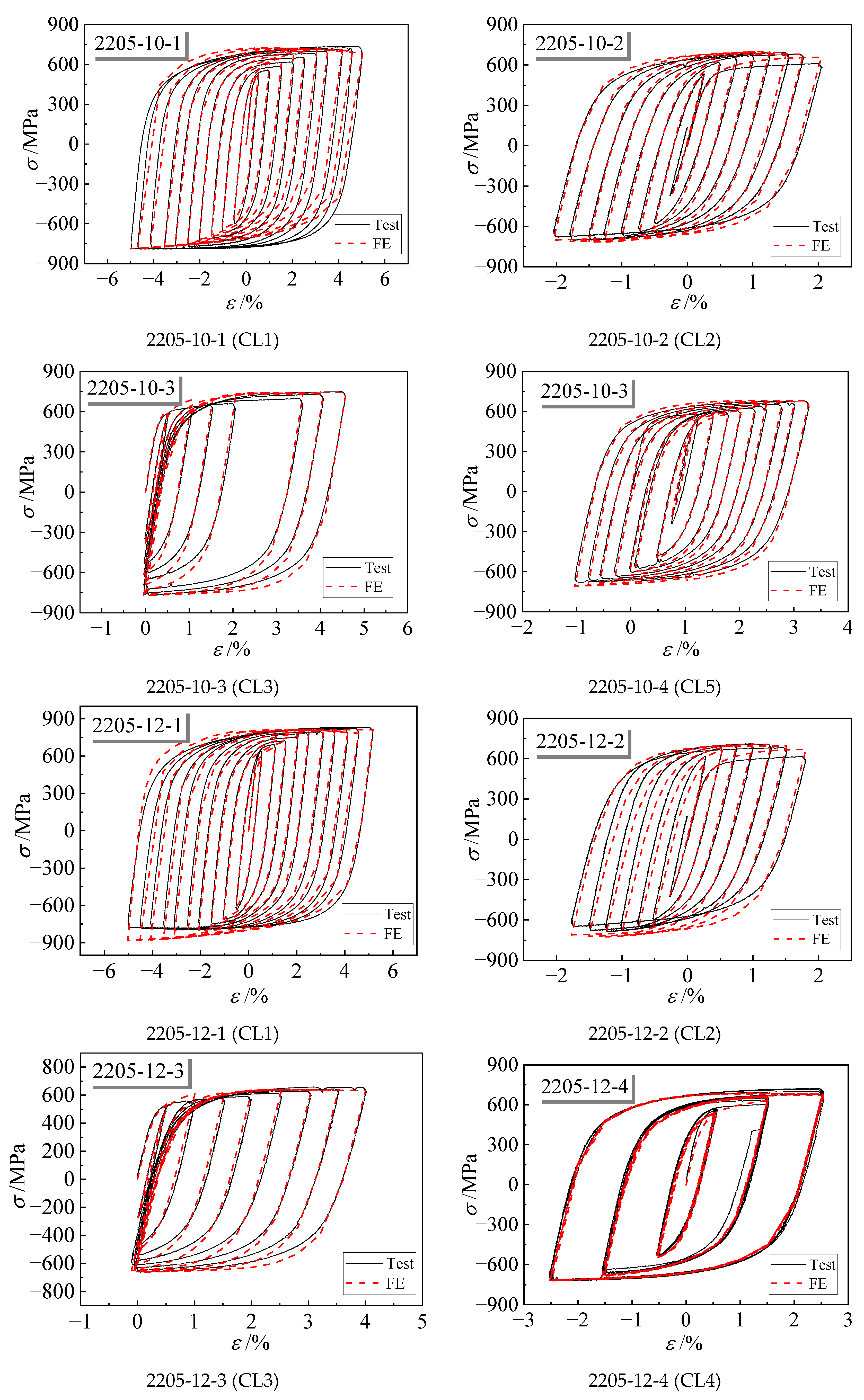
The Chaboche cyclic constitutive model parameters, calibrated using the genetic algorithm optimization method, are presented in Table 5. Finite element simulations were conducted in ABAQUS using the calibrated parameters, and the comparison between the experimental and simulation curves is shown in Figure 9. As shown in Figure 9, the simulation results using the calibrated model parameters closely match the experimental data. The genetic algorithm-based calibration method for the Chaboche cyclic constitutive model effectively and consistently captures the hysteresis behaviour of duplex stainless steel S22053 under various loading conditions. Furthermore, as shown in Table 5, the calibrated hardening parameters exhibit significant dispersion, highlighting the substantial influence of plate thickness and loading protocol on the results.
Table 5.
Parameters of Chaboche model.
Figure 9.
Comparison of hysteresis curves between experimental and finite element results.
4. Conclusions
This study systematically investigates the mechanical behaviour of duplex stainless steel under both monotonic tensile and cyclic loading conditions, utilizing both experimental and numerical simulation methods. The primary objective is to simplify the parameter calibration process for cyclic constitutive model, thereby improving computational efficiency and accuracy. Ultimately, this work provides an effective approach for the numerical simulation of the seismic performance of stainless steel structures. The main findings are summarized as follows:
- (1)
- Monotonic tensile tests reveal that duplex stainless steel exhibits significant nonlinear stress–strain behaviour under different plate thicknesses.
- (2)
- Through the calibration of experimental data using the R-R-O and N-R-O models, it is found that the N-R-O model offers superior accuracy in describing the monotonic stress-strain behaviour of this material. It provides more conservative and reliable predictions across the entire strain range, making it the preferred choice for monotonic constitutive modelling.
- (3)
- Cyclic loading tests demonstrate that duplex stainless steel possesses stable hysteresis loops and excellent energy dissipation capacity under various loading protocols. The material exhibits distinct isotropic and kinematic hardening characteristics, with the loading history significantly influencing its hysteretic behaviour.
- (4)
- To address the complexity and high computational cost of calibrating the Chaboche cyclic constitutive model, an optimized calibration method based on a genetic algorithm (GA) is proposed. Finite element simulations verify that this method efficiently and accurately identifies model parameters, showing excellent agreement with experimental data.
Author Contributions
Writing—original draft preparation, validation, formal analysis, L.C.; writing—review and editing, methodology, software, K.N. All authors have read and agreed to the published version of the manuscript.
Funding
This research received no external funding.
Data Availability Statement
The original contributions presented in this study are included in the article. Further inquiries can be directed to the corresponding author.
Conflicts of Interest
The authors declare no conflicts of interest.
References
- Baddoo, N.R. Stainless steel in construction: A review of research, applications, challenges and opportunities. J. Constr. Steel Res. 2008, 64, 1199–1206. [Google Scholar] [CrossRef] [Scilit]
- Gardner, L. The use of stainless steel in structures. Prog. Struct. Eng. Mater. 2005, 7, 45–55. [Google Scholar] [CrossRef] [Scilit]
- Knyazeva, M.; Pohl, M. Duplex steels: Part I: Genesis, formation, structure. Metallogr. Microstruct. Anal. 2013, 2, 113–121. [Google Scholar] [CrossRef] [Scilit]
- Fang, C.; Zhou, F.; Luo, C. Cold-formed stainless steel RHSs/SHSs under combined compression and cyclic bending. J. Constr. Steel Res. 2018, 141, 9–22. [Google Scholar] [CrossRef] [Scilit]
- Ning, K.Y.; Yang, L.; Ban, H.Y.; Sun, Y.N. Experimental and numerical studies on hysteretic behaviour of stainless steel welded box-section columns. Thin-Walled Struct. 2019, 136, 280–291. [Google Scholar] [CrossRef] [Scilit]
- Wang, Y.Q.; Ting, C.; Shi, Y.J. Experimental study on constitutive relationship in austenitic stainless steel under cyclic loading. J. Southeast Univ. (Nat. Sci. Ed.) 2012, 42, 1175–1179. [Google Scholar]
- Kim, R.H.; Kim, T.S.; Im, S.H.; Xi, Y.P. Hysteretic behavior comparison of austenitic and lean duplex stainless steel square hollow section members under cyclic axial loading. Eng. Struct. 2021, 237, 112227. [Google Scholar] [CrossRef] [Scilit]
- Ning, K.Y.; Yang, L.; Ban, H.Y. Seismic performance of welded stainless steel H-section columns under cyclic horizontal loading. J. Struct. Eng. 2021, 147, 04021016. [Google Scholar] [CrossRef] [Scilit]
- Chen, Y.; Zhou, F.; Zhang, R.; Cai, Y.C. Experimental study on seismic behavior of welded H-section stainless steel beam-columns. Eng. Struct. 2022, 259, 114105. [Google Scholar] [CrossRef] [Scilit]
- González-de-León, I.; Arrayago, I.; Real, E.; Nastri, E. Rotation capacity of cold-formed stainless steel RHS beams under cyclic loading. J. Constr. Steel Res. 2022, 192, 107199. [Google Scholar] [CrossRef] [Scilit]
- Lai, B.L.; Li, Y.R.; Wang, G.Y.; Mo, Z.; Mensinger, M.; Fan, S.G. Buckling behavior of UHPC filled stainless steel tubular columns subjected to eccentric compression. Constr. Build. Mater. 2026, 50, 144965. [Google Scholar] [CrossRef] [Scilit]
- Lai, B.L.; Li, Y.R.; Zhao, J.H. Experimental study on the interfacial bond behavior of UHPC filled circular stainless steel tubes. J. Constr. Steel Res. 2025, 224, 109172. [Google Scholar] [CrossRef] [Scilit]
- Lai, B.L.; Li, Y.R.; Becque, J. Axial compressive behavior of circular stainless steel tube confined UHPC stub columns under monotonic and cyclic loading. Thin-Walled Struct. 2025, 208, 112830. [Google Scholar] [CrossRef] [Scilit]
- Bu, Y.D.; Wang, Y.Q.; Zhao, Y.P. Study of stainless steel bolted extended end-plate joints under seismic loading. Thin-Walled Struct. 2019, 144, 106255. [Google Scholar] [CrossRef] [Scilit]
- Gao, J.D.; Du, X.X.; Yuan, H.X.; Theofanous, M. Hysteretic performance of stainless steel double extended end-plate beam-to-column joints subject to cyclic loading. Thin-Walled Struct. 2021, 164, 107787. [Google Scholar] [CrossRef] [Scilit]
- Zheng, B.F.; Wu, B.C.; Zhang, M.Y.; Wang, J.C.; Shu, G.P.; Jiang, Q.L. Pseudo-static test on stainless steel frame with high-strength bolted extended endplate joint. J. Constr. Steel Res. 2023, 207, 107980. [Google Scholar] [CrossRef] [Scilit]
- Ning, K.Y.; Yang, L.; Ma, Y.F.; Fan, J.W. Experimental study on seismic performance of stainless steel full-scale frames: Global response. J. Constr. Steel Res. 2024, 217, 108658. [Google Scholar] [CrossRef] [Scilit]
- Nip, K.H.; Gardner, L.; Davies, C.M. Extremely low cycle fatigue tests on structural carbon steel and stainless steel. J. Constr. Steel Res. 2010, 66, 96–110. [Google Scholar] [CrossRef] [Scilit]
- Ye, D.; Matsuoka, S.; Nagashima, N.; Suzuki, N. The low-cycle fatigue, deformation and final fracture behaviour of an austenitic stainless steel. Mater. Sci. Eng. A 2006, 415, 104–117. [Google Scholar] [CrossRef] [Scilit]
- Ding, K.; Tang, Z.; He, X.; Wang, X.; He, J. Low cycle fatigue characteristics and life prediction of 316LN austenitic stainless steel. Prog. Nat. Sci. Mater. Int. 2024, 34, 1194–1206. [Google Scholar] [CrossRef] [Scilit]
- Chaboche, J.L. Time independent constitutive theories for cyclic plasticity. Int. J. Plast. 1986, 2, 149–188. [Google Scholar] [CrossRef] [Scilit]
- Lemaitre, J.; Chaboche, J.L. Mechanics of Solid Material; Cambridge University Press: Cambridge, UK, 1990. [Google Scholar]
- ABAQUS. ABAQUS Analysis User’s Guide (Version 6.13); Dassault Systèmes Simulia Corp.: Providence, RI, USA, 2013. [Google Scholar]
- Zhou, F.; Lu, L. Experimental study on hysteretic behavior of structural stainless steels under cyclic loading. J. Constr. Steel Res. 2016, 122, 94–109. [Google Scholar] [CrossRef] [Scilit]
- Chang, X.; Yang, L.; Zong, L.; Zhao, M.H.; Yin, F. Study on cyclic constitutive model and ultra low cycle fracture prediction model of duplex stainless steel. J. Constr. Steel Res. 2019, 152, 105–116. [Google Scholar] [CrossRef] [Scilit]
- Zhang, S.; Zhou, F.; Cheng, J.; Li, H.T.; Rong, R. Experimental study on cyclic hardening characteristics of structural stainless steels. J. Constr. Steel Res. 2022, 191, 107196. [Google Scholar] [CrossRef] [Scilit]
- Chen, L.; Yao, X.J.; Sun, Z.G.; Wang, D.S. Study seismic performance of duplex stainless steel under large strain amplitude by cyclic loading test. J. Constr. Steel Res. 2022, 194, 107332. [Google Scholar] [CrossRef] [Scilit]
- Wang, J.C.; Shu, G.P.; Xiu, X.; Dong, S.T.; Zheng, B.F. Study on mechanical properties of high strength sorbite stainless steel S600E under monotonic and cyclic loadings. Structures 2021, 34, 2665–2678. [Google Scholar] [CrossRef] [Scilit]
- Smith, C.; Amit, K.; Gregory, D. Calibration of continuum cyclic constitutive models for structural steel using particle swarm optimization. J. Eng. Mech. 2017, 143, 04017012. [Google Scholar] [CrossRef] [Scilit]
- Knabe, T.; Datcheva, M.; Lahmer, T.; Cotecchia, F.; Schanz, T. Identification of constitutive parameters of soil using an optimization strategy and statistical analysis. Comput. Geotech. 2013, 49, 143–157. [Google Scholar] [CrossRef] [Scilit]
- Pandey, A.; Litton, B.; Gaur, V. Identification and optimization of material constitutive equations using genetic algorithms. Eng. Appl. Artif. Intell. 2024, 128, 107534. [Google Scholar] [CrossRef] [Scilit]
- Li, Y.; He, J.; Gu, B.; Li, S. Identification of advanced constitutive model parameters through global optimization approach for DP780 steel sheet. Procedia Eng. 2017, 207, 125–130. [Google Scholar] [CrossRef] [Scilit]
- Obrzud, R.F.; Vulliet, L.; Truty, A. Optimization framework for calibration of constitutive models enhanced by neural networks. Int. J. Numer. Anal. Methods Geomech. 2009, 33, 71–94. [Google Scholar] [CrossRef] [Scilit]
- ASTM A572/A572M-21; Standard Specification for High-Strength Low-Alloy Columbium-Vanadium Structural Steel. ASTM International: West Conshohocken, PA, USA, 2021.
- Ramberg, W.; Osgood, W.R. Description of Stress-Strain Curves by Three Parameters; Technical Note No. 902; National Advisory Committee for Aeronautics: Washington, DC, USA, 1943.
- Hill, H. Determination of Stress-Strain Relations from “Offset” Yield Strength Values; National Advisory Committee for Aeronautics: Washington, DC, USA, 1944.
- Olsson, A. Stainless Steel Plasticity: Material Modelling and Structural Applications. Ph.D. Thesis, Luleå Tekniska Universitet, Luleå, Sweden, 2001. [Google Scholar]
- Mirambell, E.; Real, E. On the calculation of deflections in structural stainless steel beams: An experimental and numerical investigation. J. Constr. Steel Res. 2000, 54, 109–133. [Google Scholar] [CrossRef] [Scilit]
- Rasmussen, K.J. Full-range stress–strain curves for stainless steel alloys. J. Constr. Steel Res. 2003, 59, 47–61. [Google Scholar] [CrossRef] [Scilit]
- Chen, L.; Yang, L.; Ning, K.Y. A new two-stage constitutive model for characterizing stainless steel stress-strain curves. J. Constr. Steel Res. 2025, 228, 109428. [Google Scholar] [CrossRef] [Scilit]
- EN 10088-2:2014; Stainless Steels—Part 2: Technical Delivery Conditions for Sheet/Plate and Strip of Corrosion-Resisting Steels. European Committee for Standardization (CEN): Brussels, Belgium, 2014.
- ASTM A264/A264M-19; Standard Specification for Stainless Chromium-Nickel Steel-Clad Plate. ASTM International: West Conshohocken, PA, USA, 2019.
- GB/T228.1-2010; MetallicMaterials-TensileTesting-Part1: Method of Test at Room Temperature. Standardization Administration of China: Beijing, China, 2010. (In Chinese)
- GB/T 4237-2015; Hot-Rolled Stainless Steel Plates and Strips. Standardization Administration of China: Beijing, China, 2015. (In Chinese)
- ABAQUS. Analysis User’s Manual I–V. Version 6.7; ABAQUS, Inc.: Palo Alto, CA, USA; Dassault Systems: Vélizy-Villacoublay, France, 2007. [Google Scholar]
- Alhijawi, B.; Awajan, A. Genetic algorithms: Theory, genetic operators, solutions, and applications. Evol. Intell. 2024, 17, 1245–1256. [Google Scholar] [CrossRef] [Scilit]
- Ning, K.Y.; Yang, L.; Zhao, O. Advanced cyclic constitutive model and parameter calibration method for austenitic stainless steel. J. Constr. Steel Res. 2024, 222, 108981. [Google Scholar] [CrossRef] [Scilit]

Disclaimer/Publisher’s Note: The statements, opinions and data contained in all publications are solely those of the individual author(s) and contributor(s) and not of MDPI and/or the editor(s). MDPI and/or the editor(s) disclaim responsibility for any injury to people or property resulting from any ideas, methods, instructions or products referred to in the content. |
© 2026 by the authors. Licensee MDPI, Basel, Switzerland. This article is an open access article distributed under the terms and conditions of the Creative Commons Attribution (CC BY) license.