Article

Experimental Study on Axial Compressive Behavior of the BFRP-Confined Timber Columns with and Without Knots


1
School of Civil Engineering, Central South University of Forestry and Technology, Changsha 410004, China
2
Chenzhou Company, Hunan Provincial Tobacco Company, Chenzhou 424200, China
3
School of Civil Engineering, Central South University, Changsha 410075, China
*
Author to whom correspondence should be addressed.
Buildings 2026, 16(2), 457; https://doi.org/10.3390/buildings16020457
Submission received: 24 November 2025 / Revised: 1 January 2026 / Accepted: 16 January 2026 / Published: 22 January 2026
(This article belongs to the Special Issue Seismic Performance of Seismic-Resilient Structures)

Abstract

Timber has gained popularity in the construction industry in recent years due to its low carbon footprint, favorable seismic performance, and esthetic appeal. However, due to the size limit and inevitable natural defects such as knots in the lumber, the axial capacity of timber columns might be insufficient. Therefore, wrapping the timber column with basalt fiber-reinforced polymers (BFRPs), which is an environmentally sustainable material, to improve the load-carrying capacity has been a promising technology. While existing research mostly focuses on defect-free specimens, this study investigates the effects of knots on the structural performance of timber columns wrapped by BFRP. Axial compressive tests were carried out on timber columns, i.e., Douglas fir (knot-free) and camphor pine (with knots), wrapped by BFRP. The results showed that the load-carrying capacity, stiffness, and ductility can be significantly enhanced by the BFRP wrapping. The failure mode of the Douglas fir specimens transitioned from timber crushing failure to shear failure, while the camphor pine specimens failed around the knot area, and the failure mode changed from overall bending to BFRP rupture when the three layers of BFRP were employed. Furthermore, compared to knot-free columns, those specimens containing knots exhibited greater variability in load capacity and recorded a higher percentage increase in strength after reinforcement by BFRP. Based on the test results, three prediction models of the compressive strength of the BFRP-wrapped Douglas fir and camphor pine columns are presented.

1. Introduction

Global warming is mainly caused by excessive carbon emissions from human activities, which has been a serious challenge to the Earth. Among many others, the carbon emission in the construction industry, mostly in the production of construction materials such as cement and steel, contributes to 30% of the total. Therefore, reducing carbon emissions in the construction industry, especially by using sustainable construction materials, is considered one of the most effective approaches to slow down global warming. Compared to concrete and steel, timber is a negative-carbon-emission construction material as it has the ability to store carbon in the production process, which makes it a promising construction material in constructing structural components such as columns around the world [1]. However, as a natural material, timber has a limited section size; thus, the axial compressive capacity is significantly constrained. Moreover, the commonly observed initial imperfections, such as knots, result in a 30% lower ultimate load capacity and a 60% lower stiffness of timber columns, compared to the knot-free ones [2]. Therefore, reinforcing timber columns to improve the axial compression capacity has been a research focus.
Owing to advantages such as their light weight, high strength, flexibility of design, and excellent durability, fiber-reinforced polymers (FRPs), such as CFRP (carbon FRP), GFRP (glass FRP), BFRP (basalt FRP), and AFRP (aramid FRP), have been widely used for structural reinforcement in recent decades [3]. Existing studies have shown that wrapping reinforced concrete columns with FRP can remarkably improve the ultimate load capacity, ultimate deformation capacity, ductility, and energy absorption of concrete columns [4,5,6,7,8,9,10]. Such improvement in the structural performance is also observed in timber columns reinforced by FRP [11,12].
Plevris et al. [13] found that even a very small amount of fiber-composite wrapping could lead to significant enhancement of the mechanical behavior in the column. Najm et al. [14] investigated the timber column made of poplar wood reinforced by FRP and found that FRP reinforcement increases the axial compressive strength and stiffness of the timber column. Zhang et al. [15] and Cai et al. [16] wrapped the timber columns with artificial cracks with FRP and found that FRP can effectively restrain the crack opening, and the load capacity of the reinforced columns was comparable to that of the ones without cracks. O’Callaghan [17] investigated the effects of FRP wrapping on the axial compressive behavior of timber columns. The results showed that FRP reinforcement improved strength, stiffness, and post-peak behaviors. In addition, the overall compressive behavior became more uniform. Wang et al. [18] showed that the ultimate load capacity, ductility, and the axial compressive elastic modulus of glue-laminated timber and cross-laminated timber columns improved by increasing the number of FRP layers. Cui et al. [19] studied the influence of FRP on the axial compressive performance of thin-walled timber columns. The results showed that with an increase in FRP layers, the compressive strength and stiffness improved, and the failure mode transformed from section buckling to crushing failure.
Previous researchers have also investigated the effect of FRP types on the improvement of timber columns [20,21]. Among these FRPs, BFRP is considered an environmentally friendly material as the fibers can be sourced from molten volcanic rock, which is abundant. At the same time, it possesses the advantages of nontoxicity, excellent fatigue, and thermal resistance. Therefore, it has been an effective and promising material in the construction industry. Dong et al. [22] investigated the axial compressive behavior of square timber columns reinforced by three different types of FRPs. The results showed that the columns reinforced by BFRP have the highest load capacity, while their ductility is lower than that of the ones reinforced by CFRP and AFRP. De la Rosa et al. [23] studied the compressive behavior of timber columns reinforced by BFRP and CFRP. Their tests showed that BFRP-reinforced columns have a higher ultimate strength but lower elastic modulus than their counterparts. The number of FRP layers is another factor influencing the structural performance of the reinforced timber columns [24].
While most of the existing studies focus on timber columns without knots, only a few studies reported the effect of knots on the structural performance of timber columns. Qiao et al. [25] investigated the compressive behavior of square-timber-filled steel tube (TFST) columns with different FRP layers and knot conditions. The results showed that the presence of knots reduced column strength and ductility for both the timber and TFST specimens. Li et al. [2] investigated the compressive properties of timber columns with various FRP confinement and knot conditions. The results showed that FRP wrapping can restore the load capacity and stiffness of the knotted columns. However, the effect of the number of FRP layers on the FRP-wrapped timber columns with knots is not yet clear. Against this background, this paper conducted a series of axial compressive tests of timber columns with and without natural knots wrapped with different layers of BFRP. The failure modes, load capacity, deformation capacity, ductility, and stiffness were then analyzed to reveal the effects of FRP layers and knot conditions on timber column performance. Compressive strength prediction models based on the test results are presented at the end.

2. Materials and Methods

2.1. Material Properties

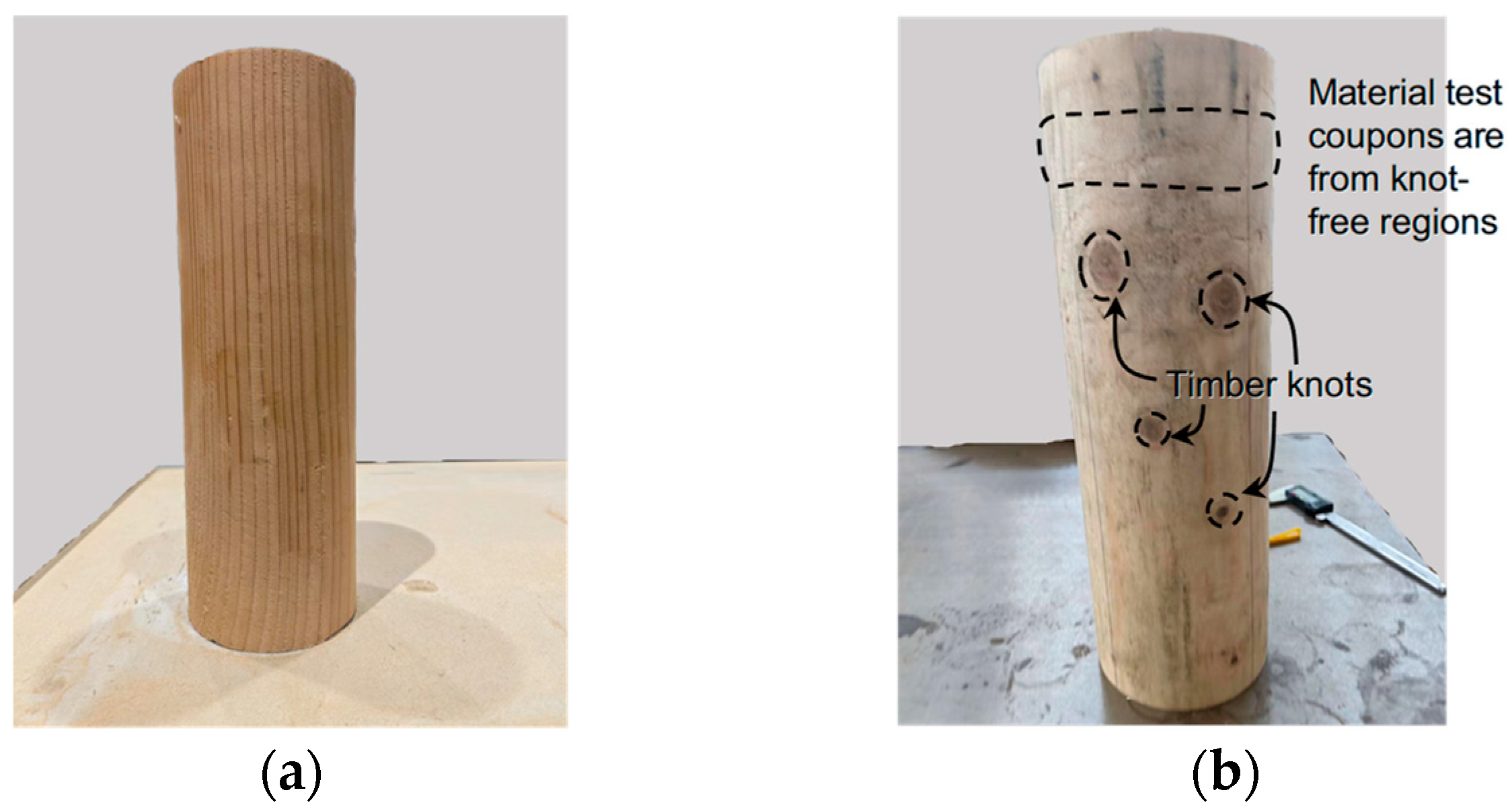
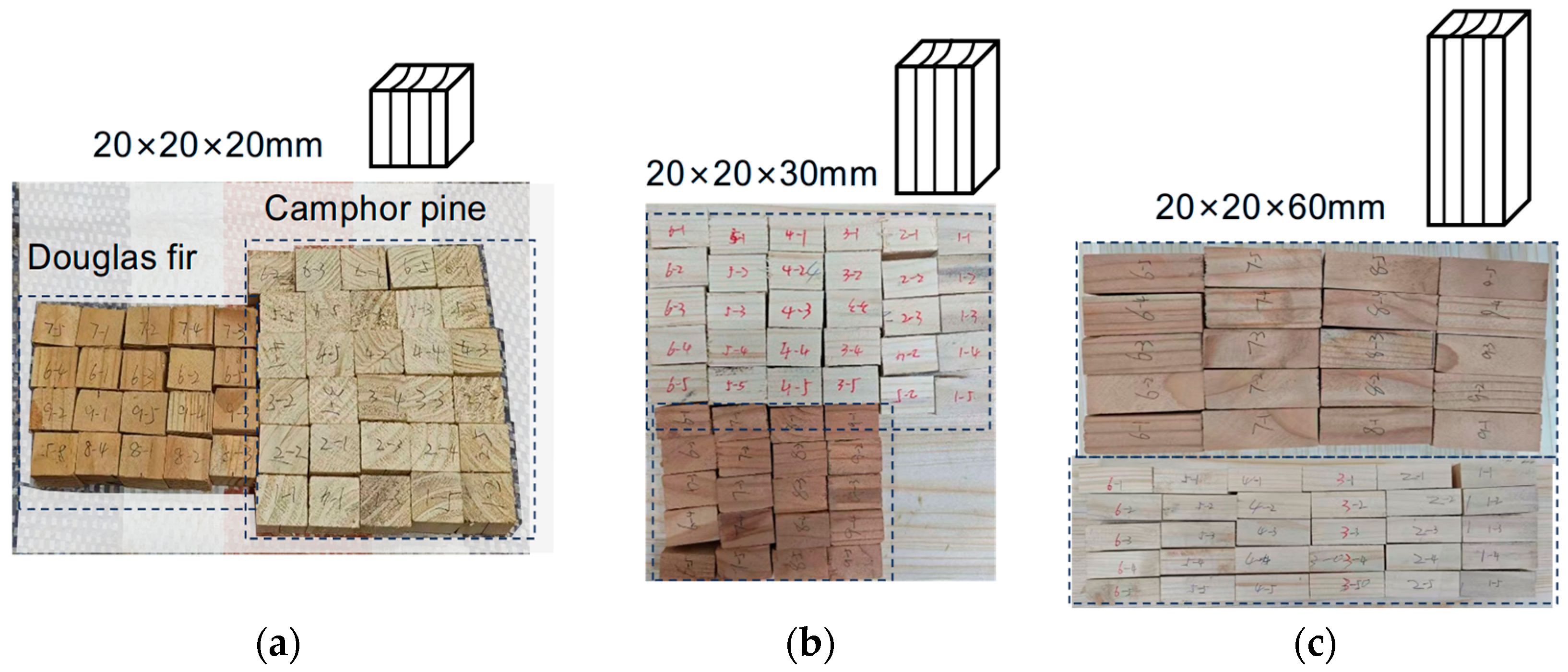
In this study, Douglas fir was selected to represent the knot-free timber columns, while camphor pine was chosen to represent those that contain knots (as shown in Figure 1). Table 1 lists the compressive strength, elastic modulus, and moisture content of the tested timber specimens. Among them, the compressive strength and elastic modulus parallel to the timber grain were measured according to GB/T 1927.11 [26] and GB/T 15777 [27], respectively, and the moisture content was tested according to GB/T 1927.4 [28] (Figure 2). It should be noted that the samples for material tests were cut from knot-free regions in camphor pine columns. The mechanical properties of unidirectional BFRP (400 g/m2, supplied by ANJIE Composite Material Co., Ltd., Haining, China) are summarized in Table 2. Among these, the tensile properties were tested in accordance with ASTM D3039 [29], while the ultimate elongation was provided by the manufacturer, and the average BFRP thickness was measured at three positions of the specimens by a caliper. A two-part adhesive CFSR-A/B provided by TJ Carbon Composite Co., Ltd., Tianjin, China, with components A and B mixed at a 2:1 weight ratio, was used in this study. The mechanical properties of the cured epoxy, as provided by the manufacturer, are listed in Table 3.

2.2. Experimental Specimens

To investigate the effects of timber knots and the number of BFRP layers on the mechanical properties of reinforced circular timber columns, eight groups of specimens (with three replicate specimens in each group) were prepared and tested. As listed in Table 4, the specimens were named as follows: DF and CP stand for Douglas fir and camphor pine, respectively; UR and BR stand for unreinforced specimens and BFRP-reinforced specimens, respectively; TC stands for timber columns; and the last number stands for the number of BFRP layers. To avoid buckling failure, a slenderness ratio of 12 was selected according to ASTM D198 [30] and GB/T 50329 [31]. Consequently, Douglas fir specimens with a diameter of 100 mm were cut to a height of 300 mm, and camphor pine specimens with a diameter of 150 mm were cut to a height of 450 mm. It should be noted that the diameters of the Douglas fir and camphor pine specimens are different because the specimens were prepared using accessible commercial timber products. Reducing the diameter of the camphor pine column to 100 mm could increase the bias of the test results due to material property variance in the radius direction. In addition, the mechanical performance of the specimen will be assessed in terms of strength, such that the effect of different areas can be minimized.
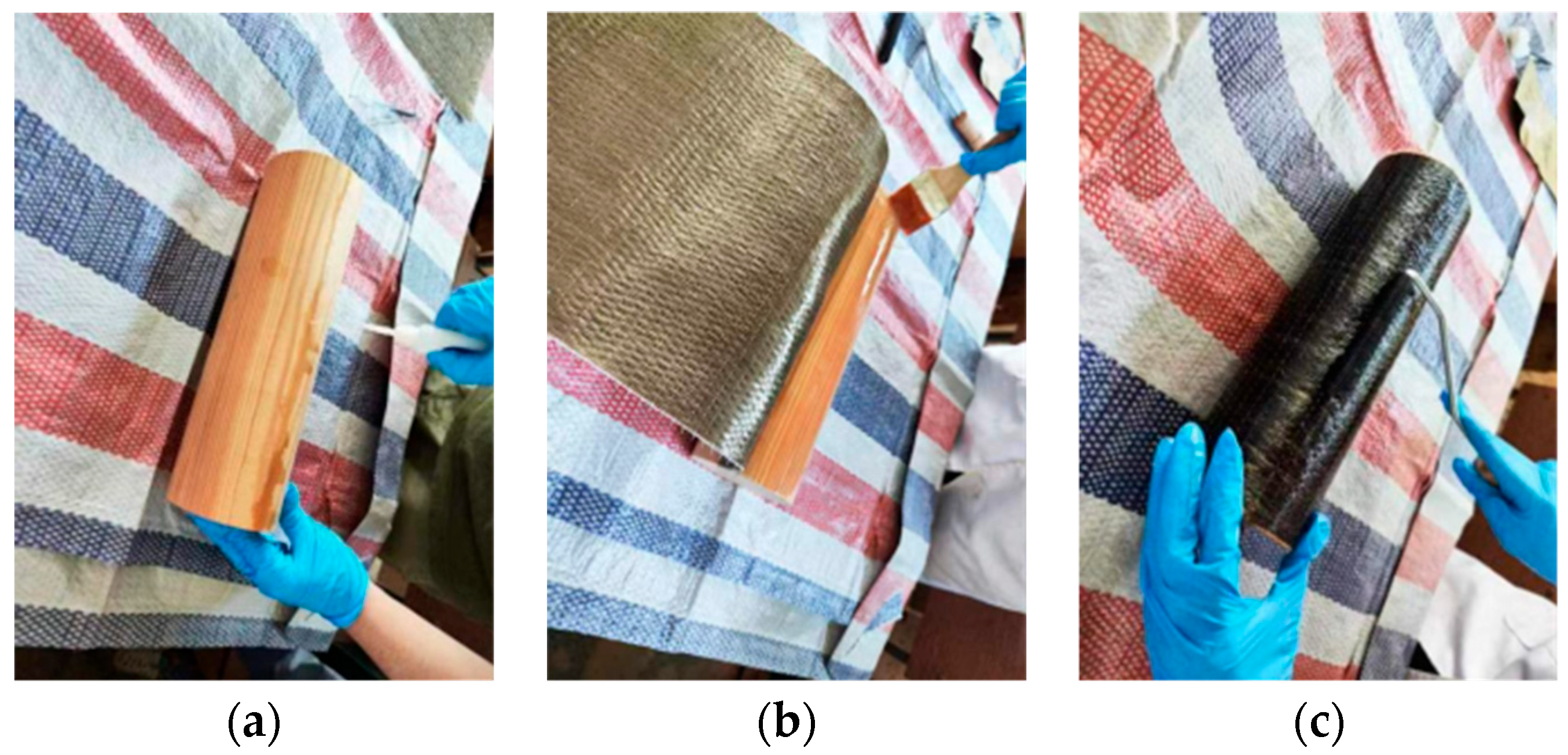
Reinforced specimens were manufactured by bonding the BFRP fabric on the timber surface with epoxy resin, as shown in Figure 3. Before applying the BFRP fabric, the surfaces of the timber columns were polished with sandpaper and cleaned with acetone. Then, the epoxy resin was applied to the timber surface with a brush, and the BFRP fabric was rolled around the column. The overlapped length at the end was the diameter of the timber cylinders. The air bubbles and excessive adhesive in the saturated BFRP were removed by a metal roller and a plastic spatula. All reinforced specimens were cured at room temperature for at least 7 days before the test. An additional 50 mm width BFRP layer was applied at the top and bottom ends of the specimen to avoid the localized crushing failure at the loading surface.

2.3. Test Setup and Instrumentations

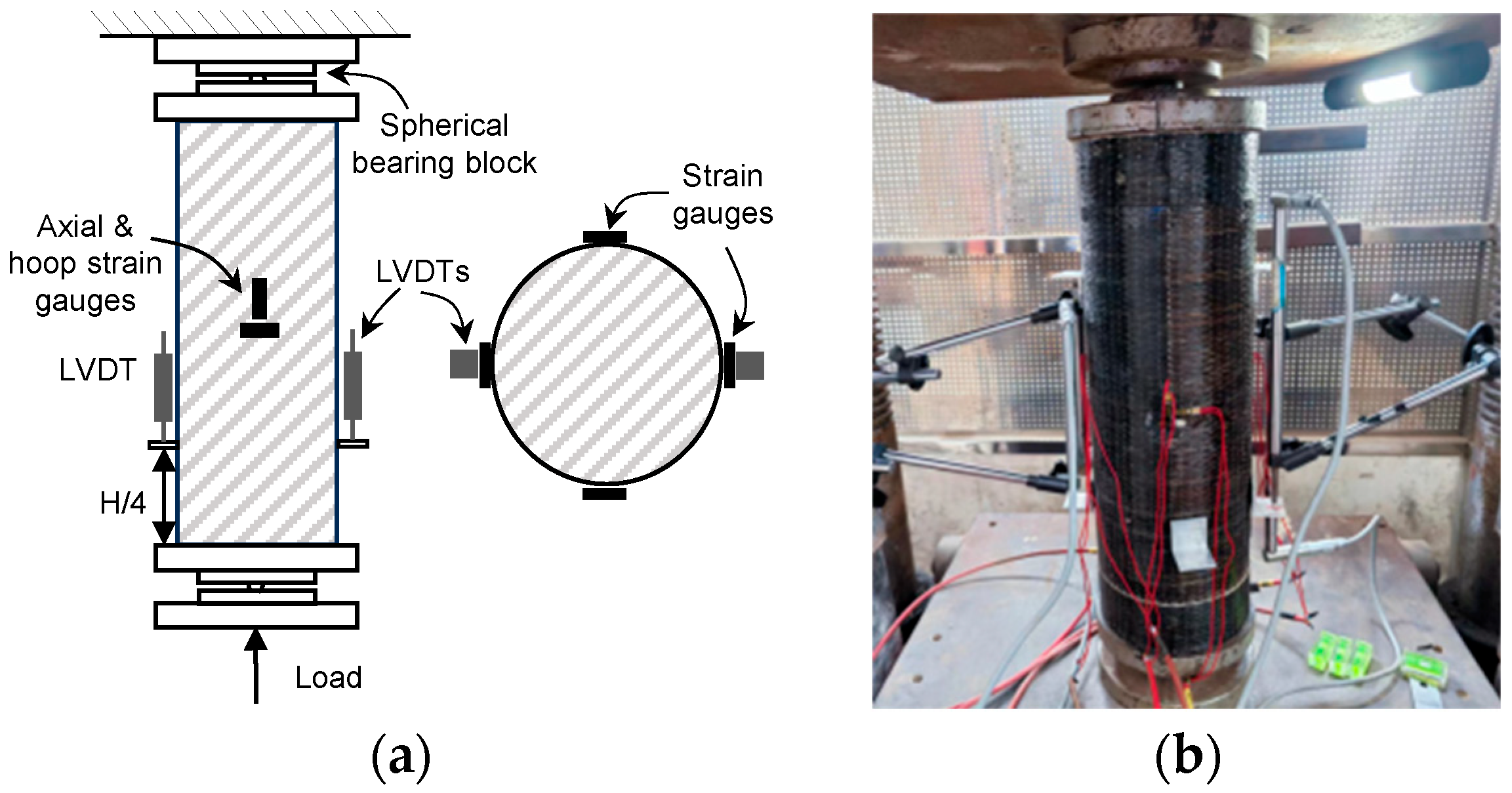
Figure 4 illustrates the test setup and instrumentation. The tests were carried out on a 2000 kN universal testing machine supplied by Hualong Test Instruments Co., Ltd., Shanghai, China, with data acquisition performed using the NI9215 module supplied by National Instruments Corp, Austin, TX, USA. The spherical bearing blocks were used at the top and bottom of the specimen to ensure axial compression. Four strain gauges (120 Ω , supplied by Yiyang Heshan District Guangce Electronics Co., Ltd., Yiyang, China) were placed at 90-degree intervals within the middle-height section to measure the strains in axial and hoop directions. The axial deformation of the columns was measured by two linear variable displacement transducers (LVDTs, WA50 module, supplied by HBM, Darmstadt, Germany) placed at 1/4 height from the bottom. Before the test, preloading was applied to the specimens at a rate of 0.5 mm/min until the load reached 10% of the estimated load capacity to ensure a tight contact between the steel plates and specimens. Then, a displacement-controlled load was applied at a rate of 0.2 mm/min according to GB/T 50329 [31] until the load dropped to approximately 70% of the maximum load or excessive deformation was observed.

3. Results and Discussions

3.1. Failure Mode

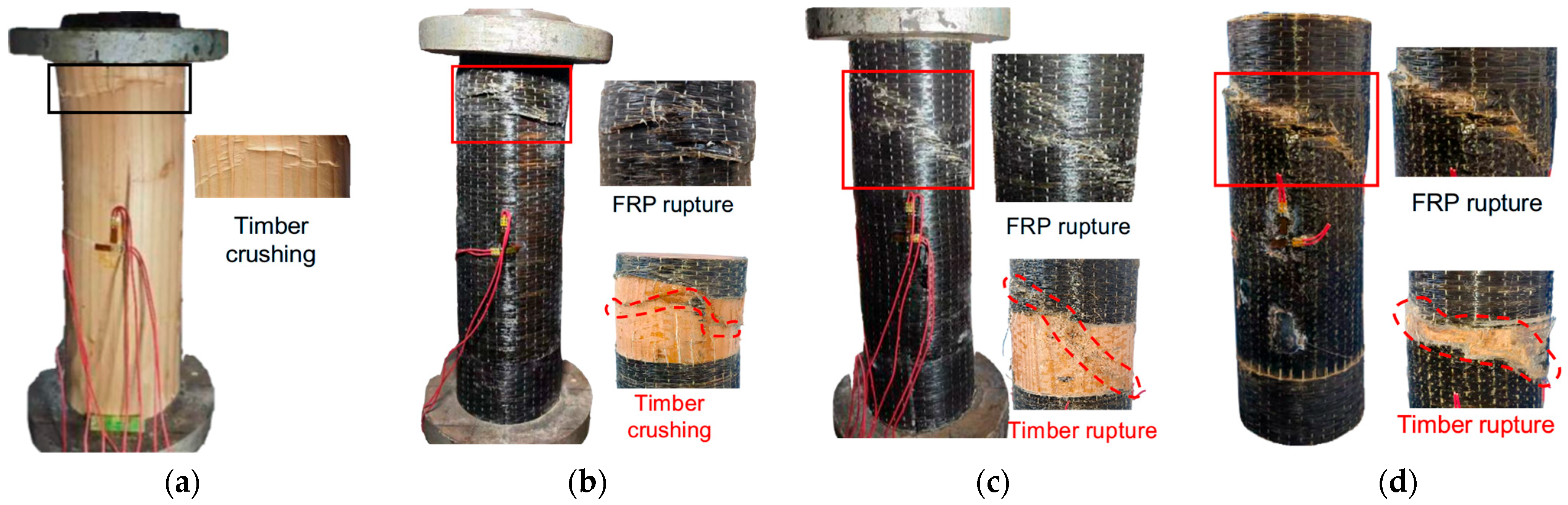
The typical failure modes of the Douglas fir specimens are shown in Figure 5. For most of the Douglas fir specimens, regardless of whether they were unreinforced or reinforced by BFRP wrapping, no obvious damage was observed at the initial stage, and a slight sound caused by timber cracking was heard when the load approached roughly 80% of the peak load. As the displacement increased, more timber cracking sounds were heard before terminating the test. For the unreinforced specimens, the dominant failure mode is the timber crushing close to one end of the specimen (Figure 5a). For the timber columns reinforced by one-layer BFRP, rupture of the laminate, as well as the timber crushing failure, was observed close to either end of the specimen (Figure 5b). As the number of BFRP layers increased to two and three, the failed specimen exhibited an inclined rupture band developed from the edge of the reinforced end towards the middle height of the specimen (Figure 5c,d), and no timber crushing near specimen ends, as observed in the unreinforced and one-layer-reinforced specimens, was found. A possible reason for this change could be that when thicker BFRP fabric was used, the timber compressive failure was avoided due to the confinement provided by the wrapped BFRP. As such, shear failure would occur prior to the crushing failure.
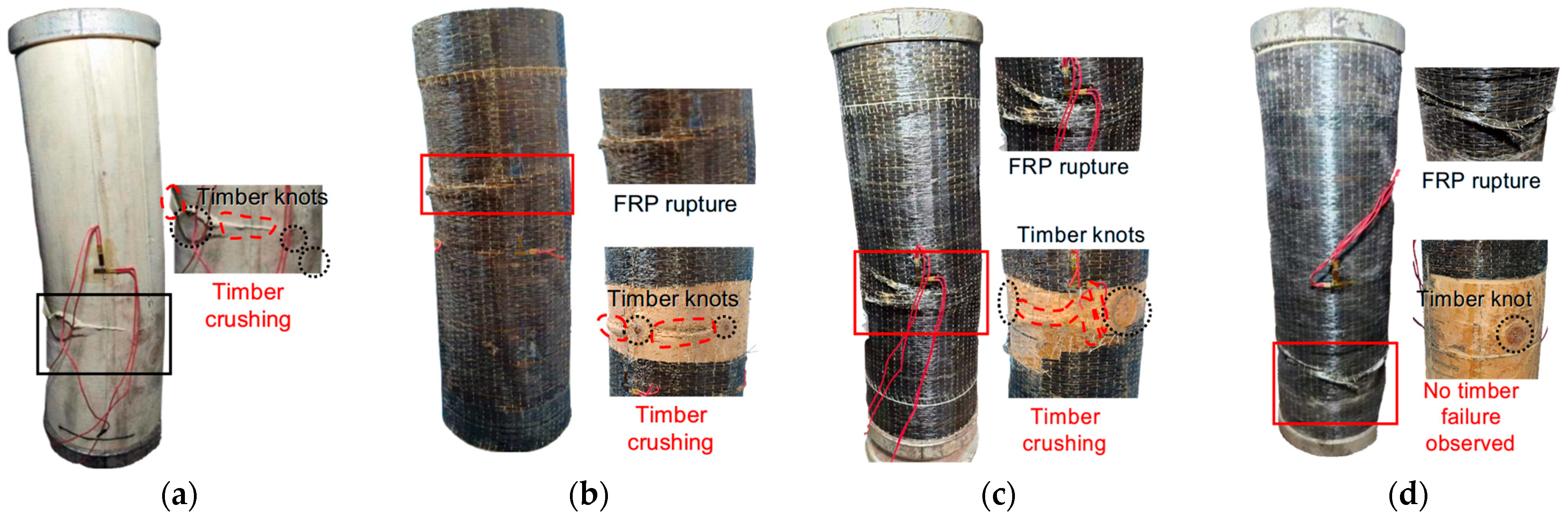
Figure 6 depicts the typical failure modes of the specimens made from camphor pine. In both the unreinforced and reinforced specimens, timber crack sounds were heard from an early stage of the test, but no visual damage was observed before the peak load. In the unreinforced specimens, timber crushing was observed near the knots at peak load (Figure 6a), followed by a decrease in the load, while in the reinforced specimens, regardless of the number of BFRP layers, FRP rupture was observed near the timber knots after the peak load (Figure 6b–d). Furthermore, before the end of the tests, overall column bending and timber crushing, both initiated from the region close to timber knots, were observed in all the camphor pine specimens except for specimen CP-BRTC3, as shown in Figure 6. Such failure is most likely to happen, as the timber around knots is more vulnerable with lower mechanical properties than the other part of the column. Thus, localized crushing is prone to happen in this region. As a result, larger deformations in this region led to overall bending of the columns when there was no confinement or low confinement provided by the BFRP, while in specimen CP-BRTC3, better constraints were provided by the BFRP, and timber crushing was avoided. Thus, the aforementioned bending deformation was also mitigated, and only BFRP rupture was observed beside the knots. Therefore, it can be concluded that the FRP reinforcement did not change the failure zone due to the inherent stress concentration in the knot region. However, the overall failure modes and the failure process have changed.

3.2. Axial Load–Deformation Relationship

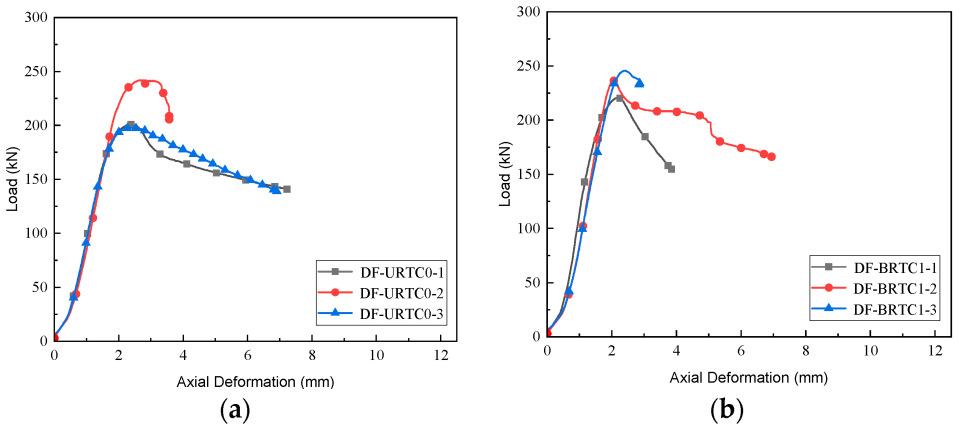
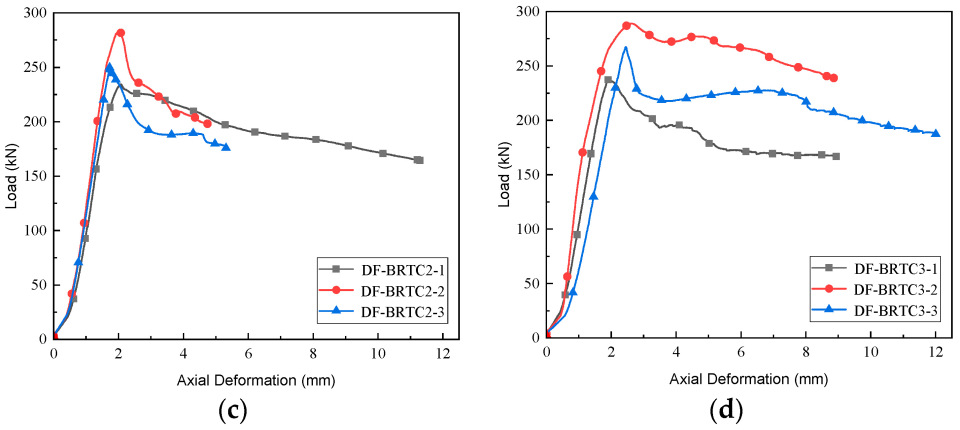
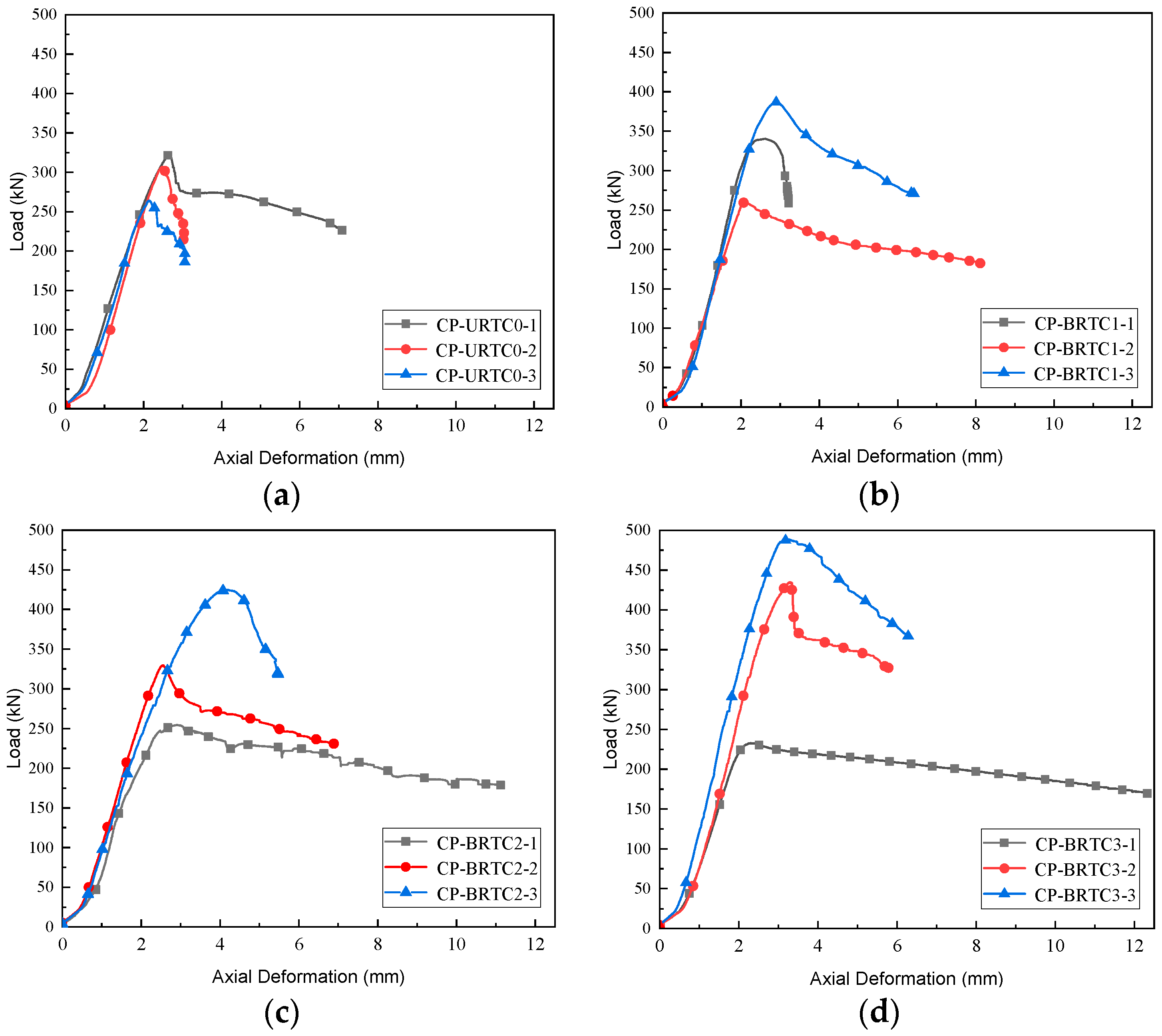
Figure 7 and Figure 8 show the axial load–deformation curves of the specimens (preloading excluded). In these curves, the load was read from the testing machine, and the axial deformation was the average value of two LVDTs in each specimen. It should be noted that the curve for specimen DF-BRTC1-3 is not complete as LVDTs dropped off during the test.
Overall, there are four stages in the load–displacement curves, i.e., the initial deformation stage, elastic stage, elastic–plastic stage, and post-peak stage. The initial deformation stage was observed in all the specimens at the beginning of the test, during which the load increased linearly and slowly with displacement. The compressive stiffness at this stage is smaller than that of the subsequent elastic stage, which can be attributed to the compression of space between timber fibers (within the timber column) under the initial loading. Such a phenomenon has also been observed in previous studies [32]. The initial deformation stage stopped at a very low load (about 20 kN), and then the compressive stiffness increased with an obvious turning point, which was defined as the beginning of the elastic stage. At the elastic stage, the load increased almost linearly with axial deformation, and the elastic stage lasted until the load was about 80% of the peak load in all the specimens. After that, the load started increasing nonlinearly with the deformation, and low cracking sounds indicating that minor cracks happened in the specimen were heard at this stage. After the peak load, a sudden drop in the force was observed in most of the Douglas fir specimens before a moderate decrease, while in camphor pine specimens, the load decreased sharply in the unreinforced and one-layer BFRP-reinforced specimens, but a more gradual decrease was observed in the two- and three-layer BFRP-reinforced specimens.

3.3. Ultimate Load Capacity and Ultimate Deformation

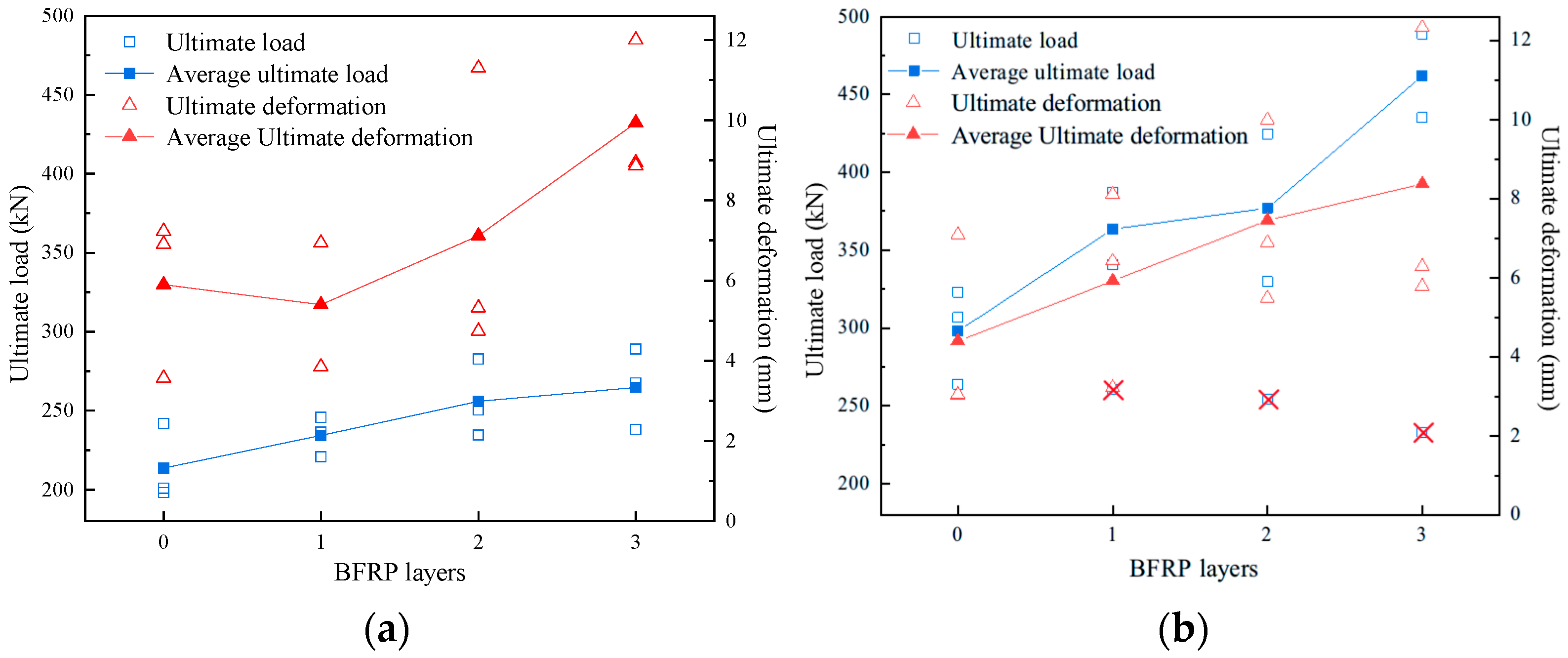
To further evaluate the effect of BFRP wrapping and timber knots on the load-carrying capacity and ultimate deformation of timber columns, the ultimate load P u and deformation Δ u of each specimen are compared in Figure 9. Detailed data can be found in Table 5. It is obvious that for both the Douglas fir and camphor pine specimens, reinforcing the timber columns using BFRP fabric can effectively increase the ultimate load capacity, and it increases with the number of BFRP layers. Specifically, for the Douglas fir specimens, the ultimate load capacities are 9.7%, 19.8%, and 24.0% higher than the unreinforced specimens when using one to three layers of BFRP fabric (Figure 9a). Similarly, the camphor pine specimens showed 10.5%, 12.8%, and 29.4% higher load capacity when one, two, and three layers of BFRP wrapping were used. However, it should be noted that the coefficient of variation (i.e., COV = σ/μ) of the BFRP-reinforced camphor pine column specimens was much higher than the other specimen groups, because the load-carrying capacities of CP-BRTC1-2, CP-BRTC2-1, and CP-BRTC3-1 were much lower than those of other reinforced and even the unreinforced specimens. This happened because there was a significantly larger knot in each of these specimens that reduced the load-capacity too much to be restored by the BFRP wrapping. If these outliers are excluded, the load capacities of specimens with one-, two-, and three-layer-reinforced camphor pine specimens are 22.04%, 26.50%, and 54.90% higher than their unreinforced counterpart, showing a better reinforcement rate than the Douglas fir specimens (Figure 9b). Nevertheless, specimens with significantly lower load-carrying capacity, on the other hand, indicate the adverse effect of the knot on the ultimate load of the timber columns. However, the effect of the knot size and location on the mechanical performance of the timber column is not within the scope of this study. In addition, the ultimate deformation of the specimens increased overall with BFRP layers, though with the exception of the one-layer-reinforced Douglas fir specimen. Such an exception could be attributed to significant material variance.

3.4. Timber Material Utilization Rate

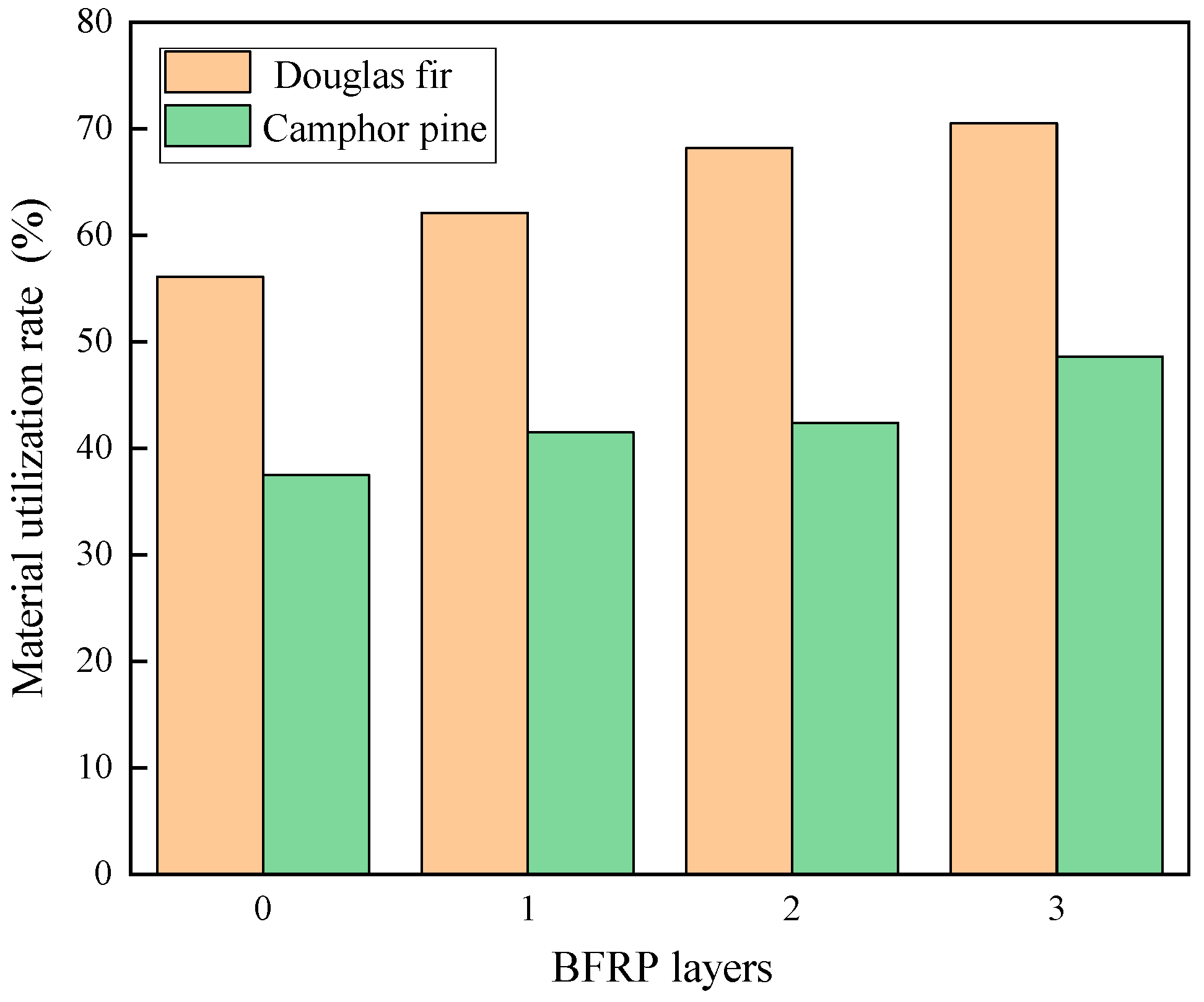
Table 5 lists the timber material utilization rate, which is defined as the ratio between the nominal strength of the specimens and the compressive strength of timber material as listed in Table 1. The nominal strength is calculated as f = P u /A, in which P u is the actual ultimate load, and A is the cross-sectional area. A comparison of the material utilization rate is presented in Figure 10. It can be seen that the material utilization rates of Douglas fir specimens were higher than those of the camphor pine specimens, though the value of the material utilization rate increased in both types of timber after BFRP wrapping. Specifically, for the unreinforced specimens, the timber material utilization rates were 56.1% and 37.5% for the Douglas fir and camphor pine specimens, respectively. After the BFRP wrapping, the rates increased to 62.1–70.5% and 41.5–48.6% for the two timber types, respectively. These clear trends demonstrated that (a) knots in the timber columns decreased the material utilization efficiency and (b) BFRP wrapping can effectively increase the utilization rate for all of the columns, especially for the knot-free ones (Douglas fir).

3.5. Axial Stiffness and Ductility

The axial stiffness K of the specimens was calculated by using the load–deformation curve in the range of 40% and 60% of the load peak. The calculated results and their average values ( K ¯ ) are presented in Table 6. For the Douglas fir columns, the axial stiffness first increases when the number of BFRP layers is less than two and then decreases when three layers of BFRP are used, while for the camphor pine timber specimens, wrapping one and three layers of BFRP leads to increases of 17.7% and 16.2% in the axial stiffness. Unexpectedly, specimens with two-layer BFRP wrapping exhibited a 6.8% decrease. Such an exception might be attributed to the variance of the material properties.
The ductility coefficient ( μ Δ ) defined by Equation (1) is used to describe the ductility of the specimens.
μ Δ = Δ m Δ y
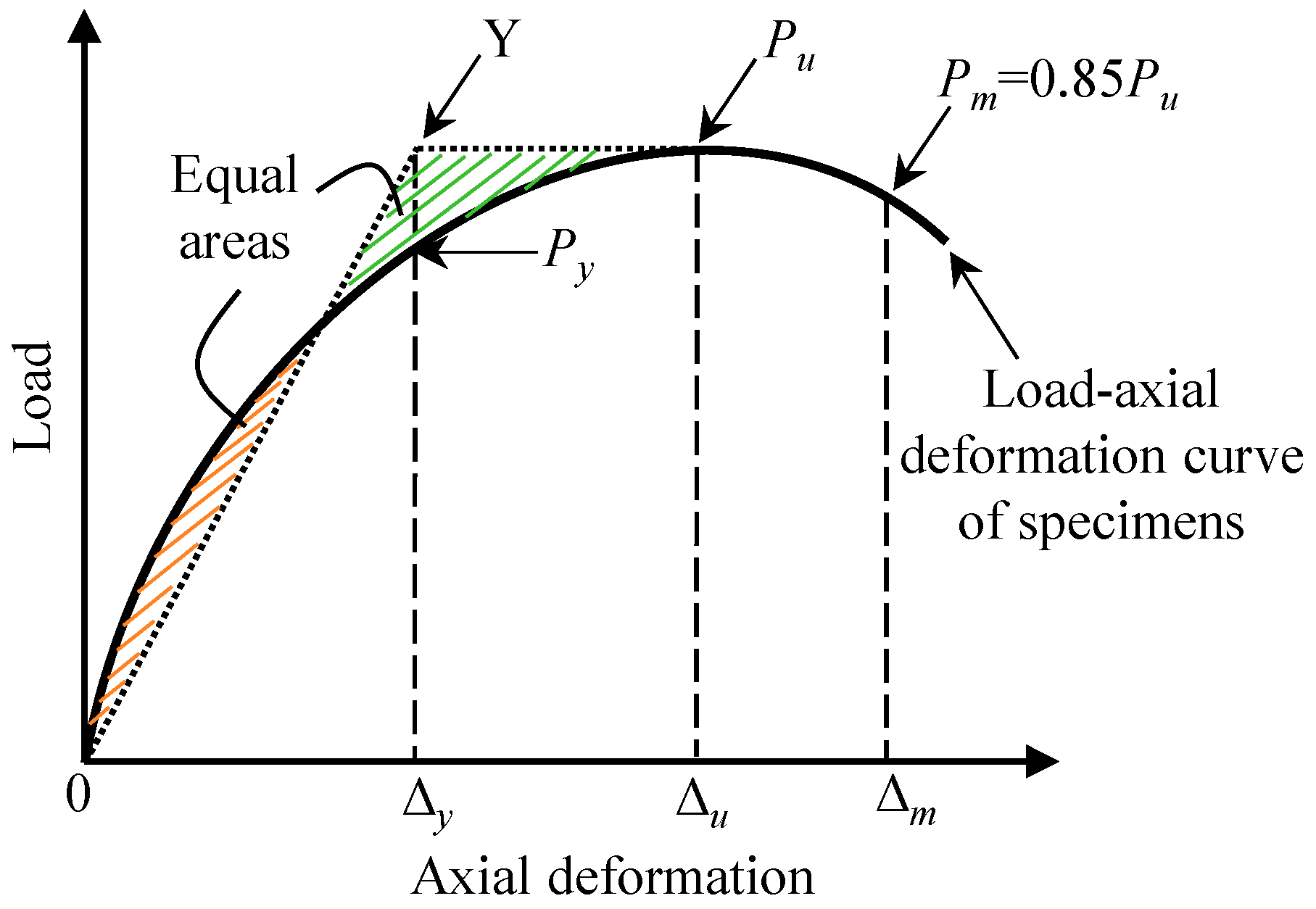
Here, Δ m is the axial deformation when the load drops to 85% of the peak load P u , and Δ y is the nominal yield deformation, calculated using the equivalent elastic–plastic energy method [33], as illustrated in Figure 11. In Figure 11, Δ u is the axial deformation at peak load P u . A horizontal dotted line is drawn from the peak point of the load-axial deformation curve of the specimens, another oblique dotted line is drawn from the origin and intersect with the horizontal line at point Y, when the two enclosed areas between the dotted lines and load-axial deformation curve (i.e. the green and orange hatched zones) equal to each other, the deformation at Y is defined as the nominal yield deformation Δ y , the load at Δ y is defined as yield load P y .
Table 6. Axial stiffness and ductility coefficient of the specimens.
Specimen ID K , kN/mm K ¯ , kN/mm Δ K ¯  1, % μ Δ μ Δ ¯ Δ μ Δ ¯  2, %
DF-URTC0-1145.44156.25-1.631.75-
DF-URTC0-2147.881.43
DF-URTC0-3145.422.20
DF-BRTC1-1187.94176.7320.81.461.9310.3
DF-BRTC1-2185.062.41
DF-BRTC1-3157.19-
DF-BRTC2-1187.15200.9937.42.462.0316.0
DF-BRTC2-2224.961.70
DF-BRTC2-3190.871.93
DF-BRTC3-1175.47182.9528.11.682.1824.6
DF-BRTC3-2214.553.71
DF-BRTC3-3158.841.15
CP-URTC0-1150.22164.42-1.151.17-
CP-URTC0-2180.361.12
CP-URTC0-3162.671.22
CP-BRTC1-1214.73189.6017.21.221.4826.5
CP-BRTC1-2155.091.81
CP-BRTC1-3198.981.41
CP-BRTC2-1136.64154.54-6.82.001.5532.5
CP-BRTC2-2156.311.34
CP-BRTC2-3170.671.32
CP-BRTC3-1154.41188.7716.63.482.0474.4
CP-BRTC3-2203.401.07
CP-BRTC3-3208.491.57
1  Δ K ¯ represents the rate of increase in the average axial stiffness K ¯ of the confined specimens compared to the unconfined specimens. 2  Δ μ Δ ¯ represents the rate of increase in the average ductility coefficient μ Δ ¯ of the confined specimens compared to the unconfined specimens.
Figure 11. Illustration of equivalent elastic–plastic energy method for specimen ductility.
Buildings 16 00457 g011
The results are also listed in Table 6. The ductility of the Douglas fir specimens was generally better than that of the camphor specimens, e.g., the average ductility coefficient μ Δ ¯   of the DF-URTC0 group is 50.3% higher than that of the CP-URTC0 group, indicating that the timber knots had a significant effect on the ductility of the specimens. The one-, two-, and three-layer-reinforced Douglas fir specimens recorded 10.3%, 16.0%, and 24.6% higher average ductility coefficients than the unreinforced specimen, and for the camphor pine specimens, these figures were 26.5%, 32.5%, and 74.4%, respectively. In addition, the ductility increased with BFRP layers, and the camphor pine specimens present higher increasing rates than Douglas fir specimens. The above increase in ductility indicates that the reinforced specimens had enhanced post-peak behavior compared to unreinforced ones. The BFRP effectively restrained the brittle failure by timber knots, thus improving the ductility.

3.6. Load–Strain Relationship

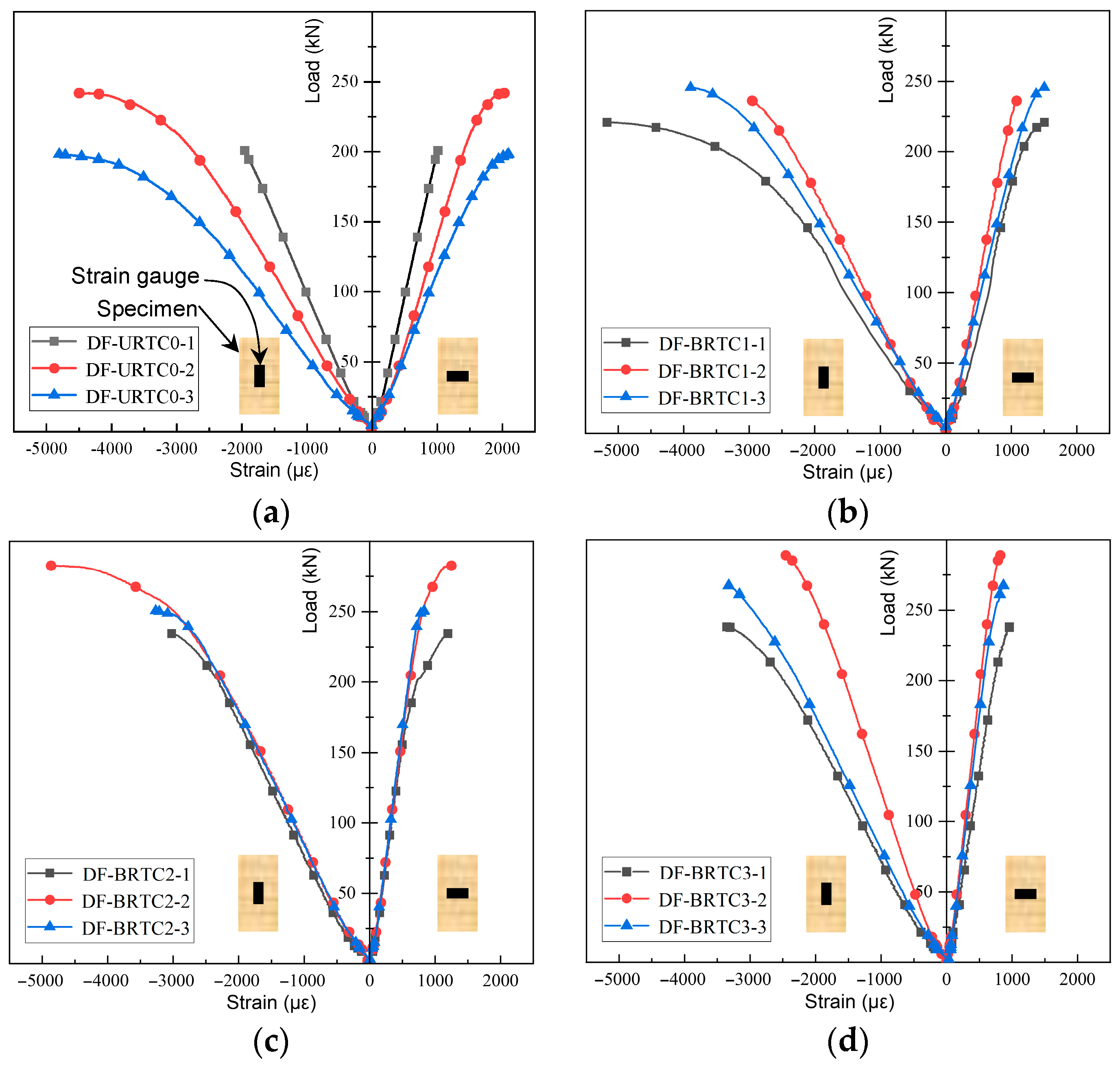
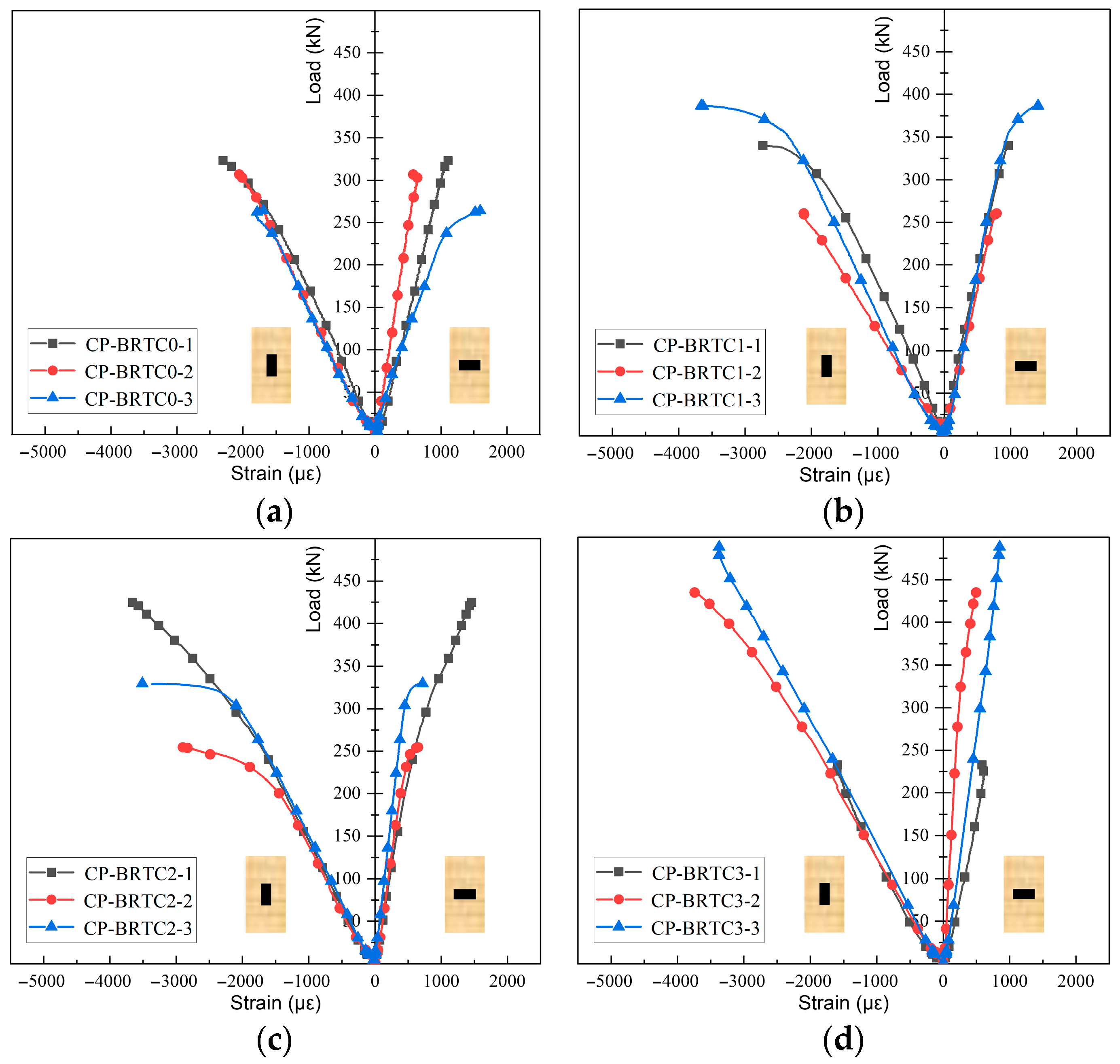
The load–average strain curves of the Douglas fir and camphor pine specimens before peak load are shown in Figure 12 and Figure 13, respectively. In both figures, the positive and negative values are the average readings from the four strain gauges in hoop and axial directions, respectively. Generally, a good consistency can be observed in the tested specimens. It can be observed that in both Douglas fir and camphor pine specimens, when the number of BFRP layers is less than three, an evident change in the slope of the force–axial strain curve can be observed. When three layers of BFRP are used, an almost linear relation can be found between the local axial strain and the applied force. The above behavior could be attributed to the less timber compression benefiting from the higher confining pressure when thicker BFRP wrapping was employed.
Furthermore, the load–axial strain slope of the reinforced specimens is higher overall than that of the unreinforced specimens, and it slightly increases with BFRP layers, indicating that the stiffness of the load–axial strain curves was enhanced after BFRP reinforcement. However, such behavior is not observed in the camphor pine specimens. Regarding the strain hoop direction, both Douglas fir and camphor pine specimens exhibited decreasing strain values with the BFRP layers, as a thicker wrapping provides higher confining stiffness.

4. Prediction Models of Compressive Strength

In previous studies on FRP-confined concrete columns, the lateral confinement has been recognized as a key factor in enhancing the column’s axial compression performance. Analytical models predicting the ultimate strength of the confined concrete columns based on the unconfined strength and FRP lateral pressure have been proposed, and some of them have been proven to be effective for the FRP-confined timber columns as well. In this section, three simplified models were chosen to predict the ultimate strength of FRP-confined timber beams: model I as a linear function of FRP ultimate confining strength f l (see Equation (2)) proposed by Richart [34], and model II and model III as power functions of f l proposed by Toutanji [35] and Cai [36], respectively. The three models are listed in Equations (3)–(5).
f l = 2 f F R P t f n f D = 2 E f ε f t f n f D
Model   I :   f c c f c 0 1 = a 1 f l f c 0
Model   II :   f c c f c 0 1 = b 1 f l f c 0 b 2
Model   III :   f c c f c 0 1 = c 1 f l f c 0 1 / 2 + c 2 f l f c 0
Here, f c c is the compressive strength of reinforced columns, and f c 0 is the compressive strength of unreinforced columns. In this study, f c c and f c 0 are defined as the nominal strength of the specimens, listed as f   in Table 5, and a 1 , b 1 , b 2 , c 1 , and c 2 are the coefficients related to the confinement conditions. E f is the elastic modulus of the FRP fiber, ε f is the actual rupture strain of FRP, t f is the thickness of the single-layer FRP fabric, n f is the number of the FRP layers, and D is the diameter of the columns. In this study, E f , ε f , and t f are listed in Table 2, n f is defined as 1–3, and D is listed in Table 5.
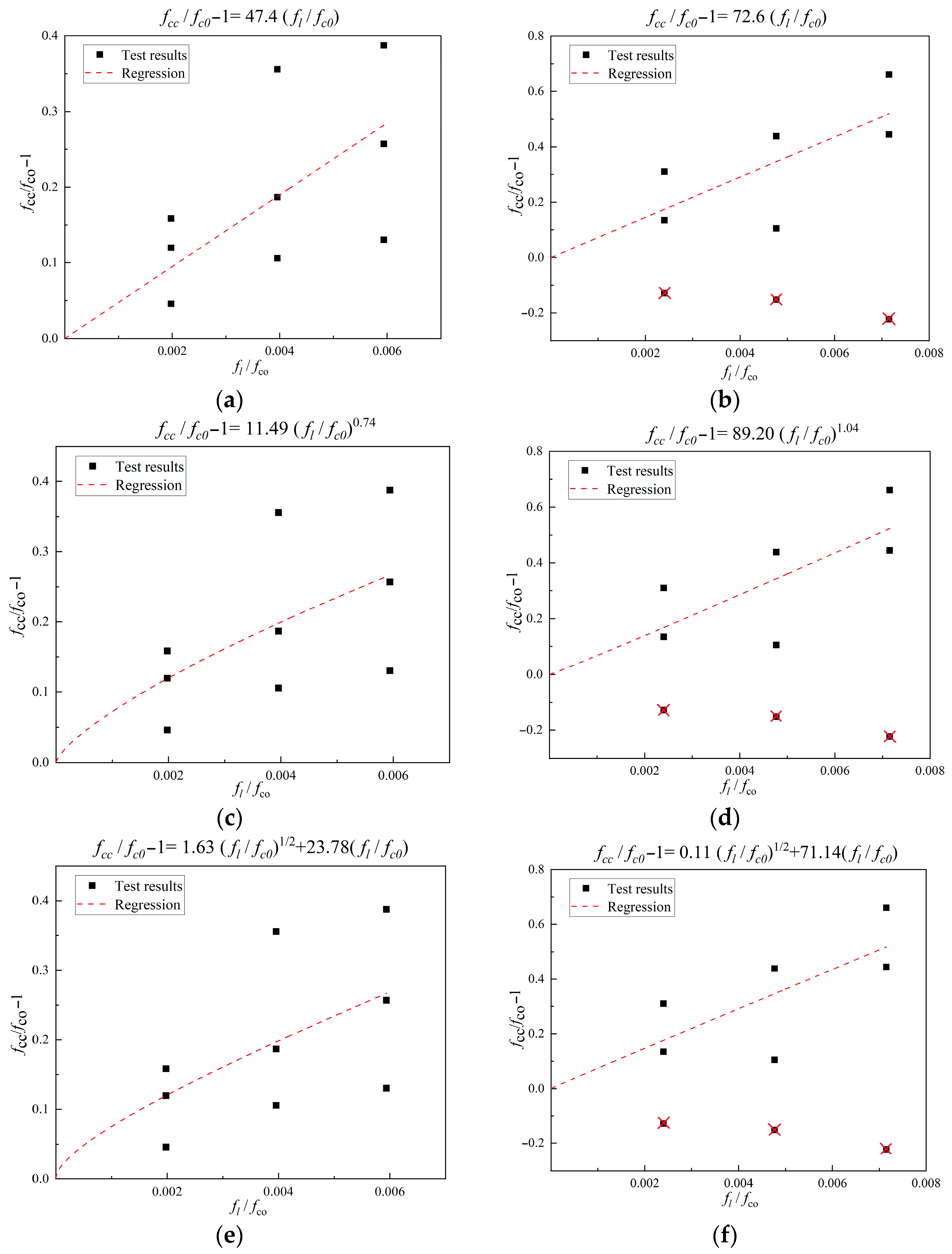
Analogous to the above prediction models for FRP-confined concrete cylinders, the tested data of the compressive specimens are illustrated and fitted to the three models as shown in Figure 14. As mentioned in Section 3.3, the tested data of the camphor pine specimens with abnormally low load capacities were excluded when fitting the curves.
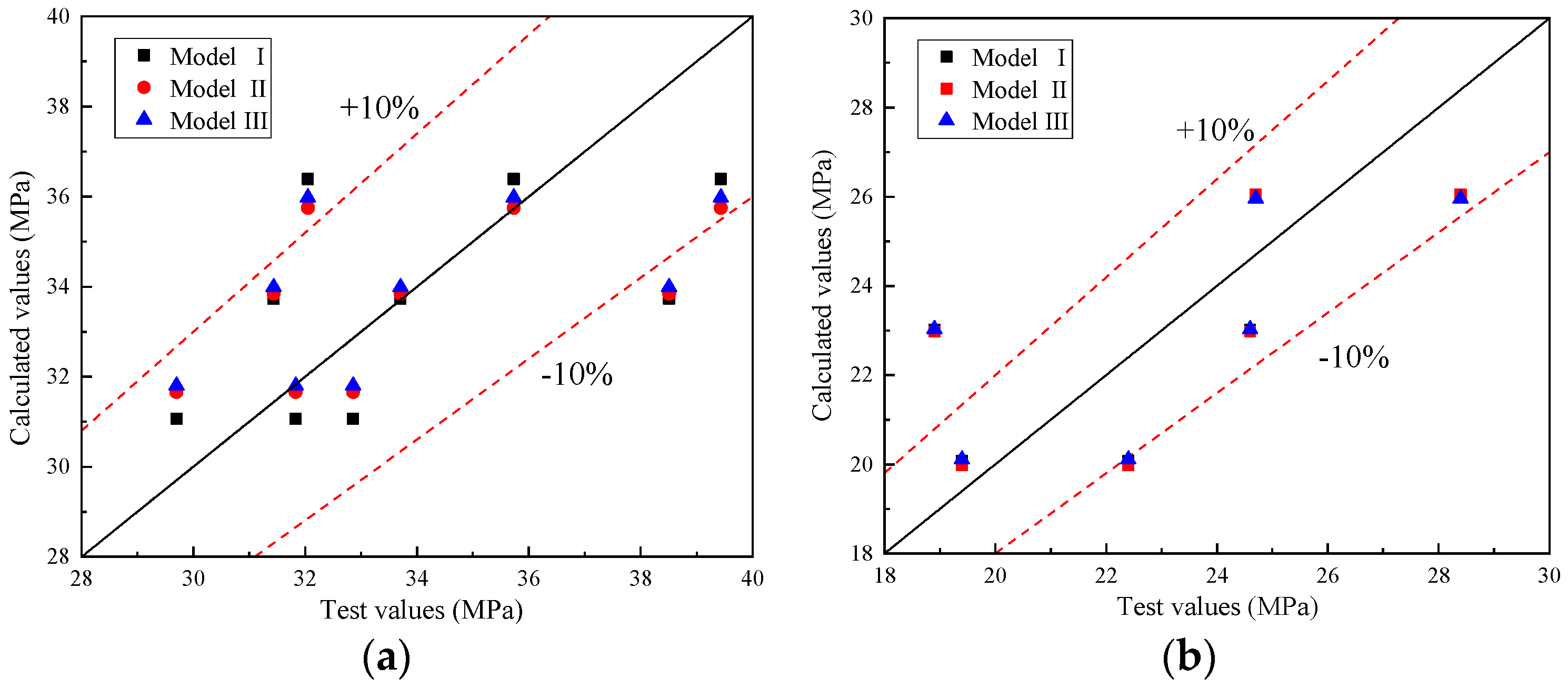
The ultimate compressive strength of FRP-reinforced Douglas fir and camphor pine specimens was calculated using the predictive equations, and the comparison of the calculated and test results for f c c are shown in Figure 15. The predictive error between the calculated and test results of f c c was mostly within 10%. Therefore, overall, the three models showed good accuracy. Specifically, for Douglas fir specimens, model I had higher and lower predictions than the other two models for the three- and one-layer-reinforced specimens, respectively. Additionally, the predictive error of model I was, overall, slightly higher than that of the other models, which was due to the linear fitting curve in model I. For camphor specimens, the predictions from the three models were very close.

5. Conclusions

In this study, four groups of specimens made of Douglas fir and camphor pine timber and varying numbers of BFRP layers were tested to investigate the influence of knots on the compressive behavior of BFRP-reinforced timber columns. Key aspects such as failure modes, load-bearing and deformation capacities, material utilization rates, axial stiffness, and ductility were analyzed and compared. Three analytical models for FRP-confined concrete columns were used to predict the load capacity of the tested specimens. Based on this, the following conclusions can be drawn:
  • Wrapping the timber column will change the failure mode of the timber column. Specifically, for the knot-free ones, the failure changed from timber crushing to the combined timber crushing and FRP rupture when one layer of BFRP was used. If two or more layers of BFRP were used, timber rupture in shear failure could be observed. For timber columns with knots, failure always initiated in regions around the knots. When three layers of BFRP were used, timber crushing failure was prevented, and only BFRP rupture occurred.
  • Overall, an increasing number of BFRP layers can increase both the load-carrying capacity and ultimate deformation when one to three layers of BFRP are used. Compared to their unreinforced counterparts, the load-carrying capacity of BFRP-wrapped Douglas fir (knot-free) and camphor pine (with knots) specimens increased by up to 29.4% and 24.0%, respectively. However, the presence of knots resulted in a significant variance in the load capacity. Meanwhile, the ultimate deformation improved by as much as 90.7% for specimens with knots and 68.3% for those without.
  • BFRP wrapping can effectively enhance the material utilization rate and ductility of the timber columns, particularly for specimens containing knots, while for the knot-free timber columns, a more pronounced improvement in the axial stiffness was recorded. These results demonstrate that BFRP reinforcement can serve as an effective method for improving the structural performance of timber columns with and without natural knots.
  • Both linear and power functions provided reasonably accurate predictions for the tested columns in this study, with most of the predictive errors between the calculated and test results being within 10%.
  • It should be noted that this study focuses on the effect of the timber knots on the behavior of short timber columns. More research on the quantitative effect of the knot type, size, and position, along with the column height, the behavior of slender timber columns with knots, and the knot type, will be conducted in the future.

Author Contributions

Conceptualization, Y.O. and L.Y.; methodology, Y.O. and L.Y.; formal analysis, C.T. and L.Y.; writing—original draft preparation, C.T.; writing—review and editing, Y.O., H.Z. and Y.F.; visualization, C.T.; supervision, Y.O., H.Z. and Y.F.; funding acquisition, Y.O. All authors have read and agreed to the published version of the manuscript.

Funding

This research was funded by the National Natural Science Foundation of China, grant number 52578263, and the Provincial Natural Science Foundation of Hunan, grant number 2023JJ41052.

Data Availability Statement

The raw data supporting the conclusions of this article will be provided by the authors upon request.

Conflicts of Interest

The author Le Yan was a postgraduate student of Central South University of Foresty and Technology, and he is employed by the Chenzhou Company, Hunan Provincial Tobacco Company. The remaining authors declare that the research was conducted in the absence of any commercial or financial relationships that could be construed as a potential conflict of interest.

Abbreviations

The following abbreviations are used in this manuscript:
FRPFiber-reinforced polymer
TFSTTimber-filled steel tube
LVDTLinear variable displacement transducer
COVCoefficient of variation

References

  1. Gu, C.; Gu, H.; Gong, M.; Blackadar, J.; Zahabi, N. Comparison of using two LCA software programs to assess the environmental impacts of two institutional buildings. J. Sustain. Struct. 2024, 4, 1. [Google Scholar]
  2. Li, L.; Dong, J.; Wang, Q.; Yuan, S. Failure mechanism of timber column confined with FRP under the effect of fracture texture. Ind. Constr. 2014, 44, 25–29. [Google Scholar]
  3. Khaled, S.; András, L. Strengthening Timber Structural Members with CFRP and GFRP: A State-of-the-Art Review. Polymers 2022, 14, 2381. [Google Scholar] [CrossRef]
  4. Mirmiran, A.; Shahawy, M. Dilation characteristics of confined concrete. Mech. Cohesive-Frict. Mater. Int. J. Exp. Model. Comput. Mater. Struct. 1997, 2, 237–249. [Google Scholar]
  5. Mirmiran, A.; Shahawy, M.; Samaan, M.; Echary, H.E.; Mastrapa, J.C.; Pico, O. Effect of column parameters on FRP-confined concrete. J. Compos. Constr. 1998, 2, 175–185. [Google Scholar] [CrossRef]
  6. Samaan, M.; Mirmiran, A.; Shahawy, M. Model of concrete confined by fiber composites. J. Struct. Eng. 1998, 124, 1025–1031. [Google Scholar] [CrossRef]
  7. Shahawy, M.; Mirmiran, A.; Beitelman, T. Tests and modeling of carbon-wrapped concrete columns. Compos. Part B Eng. 2000, 31, 471–480. [Google Scholar] [CrossRef]
  8. Lai, B.-L.; Li, Y.-R.; Becque, J.; Zheng, Y.-Y.; Fan, S.-G. Axial compressive behavior of circular stainless steel tube confined UHPC stub columns under monotonic and cyclic loading. Thin-Walled Struct. 2025, 208, 112830. [Google Scholar]
  9. Lai, B.-L.; Li, Y.-R.; Jin, L.; Fan, S.-G. Experimental study on the compressive behavior of UHPC filled stainless steel tubes subjected to monotonic and cyclic loading. Constr. Build. Mater. 2024, 449, 138301. [Google Scholar] [CrossRef]
  10. Cascardi, A.; Verre, S.; Ombres, L.; Aiello, M.A. Carbon Fabric Reinforced Cementitious Mortar confinement of concrete cylinders: The matrix effect for multi-ply wrapping. Compos. Struct. 2024, 332, 117919. [Google Scholar] [CrossRef]
  11. Chang, W.-S. Repair and reinforcement of timber columns and shear walls—A review. Constr. Build. Mater. 2015, 97, 14–24. [Google Scholar]
  12. Gezer, H.; Aydemir, B. The effect of the wrapped carbon fiber reinforced polymer material on fir and pine woods. Mater. Des. 2010, 31, 3564–3567. [Google Scholar] [CrossRef]
  13. Plevris, N.; Triantafillou, T.C. FRP-reinforced wood as structural material. J. Mater. Civ. Eng. 1992, 4, 300–317. [Google Scholar] [CrossRef]
  14. Najm, H.; Secaras, J.; Balaguru, P. Compression tests of circular timber column confined with carbon fibers using inorganic matrix. J. Mater. Civ. Eng. 2007, 19, 198–204. [Google Scholar] [CrossRef]
  15. Zhang, W.; Song, X.; Gu, X.; Tang, H. Compressive behavior of longitudinally cracked timber columns retrofitted using FRP sheets. J. Struct. Eng. 2012, 138, 90–98. [Google Scholar] [CrossRef]
  16. Cai, Y.J.; Zhang, W.; Zhang, W.P. Experimental study on eccentric compression behavior of timber columns with longitudinal cracks strengthened by CFRP sheets. Adv. Mater. Res. 2012, 446, 3132–3136. [Google Scholar]
  17. O’Callaghan, R.; Lacroix, D.; Kim, K. Experimental investigation of the compressive behaviour of GFRP wrapped spruce-pine-fir square timber columns. Eng. Struct. 2022, 252, 113618. [Google Scholar] [CrossRef]
  18. Wang, L.; Shi, F.; Zhao, M.; Wang, B.J.; Li, H.; Zou, X.; Du, H. Axial compressive behavior of FRP-confined laminated timber columns. Arch. Civ. Mech. Eng. 2023, 24, 28. [Google Scholar] [CrossRef]
  19. Cui, W.; Fernando, D.; Heitzmann, M.; Gattas, J.M. Manufacture and structural performance of modular hybrid FRP-timber thin-walled columns. Compos. Struct. 2020, 260, 113506. [Google Scholar] [CrossRef]
  20. Taheri, F.; Nagaraj, M.; Cheraghi, N. FRP-reinforced glulaminated columns. FRP Int. 2005, 2, 10–12. [Google Scholar]
  21. Li, L.-J.; Zeng, L.; Xu, S.-D.; Guo, Y.-C. Experimental study on axial compressive behavior of hybrid FRP confined concrete columns. Comput. Concr. Int. J. 2017, 19, 395–404. [Google Scholar]
  22. Dong, J.; Jia, P.; Yuan, S.; Wang, Q. Compressive behaviours of square timber columns reinforced by partial wrapping of FRP sheets. Mater. Res. Innov. 2015, 19, S1-465–S1-468. [Google Scholar] [CrossRef]
  23. de la Rosa, P.; González, M.d.l.N.; Prieto, M.I.; Gómez, E. Compressive behavior of pieces of wood reinforced with fabrics composed of carbon fiber and basalt fiber. Appl. Sci. 2021, 11, 2460. [Google Scholar] [CrossRef]
  24. Kim, K.-H.E.; Andrawes, B. Compression behavior of FRP strengthened bridge timber piles subjected to accelerated aging. Constr. Build. Mater. 2016, 124, 177–185. [Google Scholar] [CrossRef]
  25. Qiao, Q.; Yang, Z.; Mou, B. Experimental study on axial compressive behavior of CFRP confined square timber filled steel tube stub columns. Structures 2020, 24, 823–834. [Google Scholar] [CrossRef]
  26. GB/T 1927.11-2021; Test Methods for Physical and Mechanical Properties of Small Clear Wood Specimens—Part 11: Determination of Ultimate Stress in Compression Parallel to Grain. State Administration for Market Regulation, Standardization Administration of China: Beijing, China, 2021.
  27. GB/T 15777-2017; Method for Determination of Modulus of Elasticity in Compression Parallel to Grain of Wood. General Administration of Quality Supervision, Inspection and Quarantine of the People’s Republic of China, Standardiza-tion Administration of China: Beijing, China, 2017.
  28. GB/T 1927.4-2021; Test Methods for Physical and Mechanical Properties of Small Clear Wood Specimens—Part 4: Determination of Moisture Content. State Administration for Market Regulation, Standardization Administration of China: Beijing, China, 2021.
  29. ASTM D3039/D3039M−17; Standard Test Method for Tensile Properties of Polymer Matrix Composite Materials. ASTM International: West Conshohocken, PA, USA, 2017.
  30. ASTM D198−22a; Standard Test Methods of Static Tests of Lumber in Structural Sizes. ASTM International: West Conshohocken, PA, USA, 2022.
  31. GB/T 50329-2022; Standard for Test Methods of Timber Structures. Ministry of Housing and Urban-Rural Development of the People’s Republic of China, State Administration for Market Regulation: Beijing, China, 2022.
  32. Xu, J.; Jiang, S.; Ge, Z. Study on axial compression performance of palm-tenon spliced timber columns reinforced with BFRP sheets. J. Build. Struct. 2024, 45, 197–207. [Google Scholar]
  33. Park, R. Evaluation of ductility of structures and structural assemblages from laboratory testing. Bull. New Zealand Soc. Earthq. Eng. 1989, 22, 155–166. [Google Scholar] [CrossRef]
  34. Richart, F.E.; Brandtzæg, A.; Brown, R.L. The Failure of Plain and Spirally Reinforced Concrete in Compression; University of Illinois: Champaign, IL, USA, 1929. [Google Scholar]
  35. Toutanji, H. Stress-strain characteristics of concrete columns externally confined with advanced fiber composite sheets. Mater. J. 1999, 96, 397–404. [Google Scholar]
  36. Cai, S.; Jiao, Z. Behavior and ultimate strength of short concrete-filled steel tubular columns. J. Build. Struct. 1984, 5, 13–29. [Google Scholar]
Figure 1. Timber columns with different knot conditions: (a) Douglas fir (knot-free); (b) camphor pine (with knots).
Buildings 16 00457 g001
Figure 2. (a) Moisture test sample; (b) compressive strength in the direction parallel to the grain direction; (c) elastic moduli under compression in the direction parallel to the grain direction.
Buildings 16 00457 g002
Figure 3. Fabrication of the reinforced specimens: (a) polish and clean the timber surface; (b) apply the resin and roll the BFRP to the timber column; and (c) extrude excessive adhesive.
Buildings 16 00457 g003
Figure 4. Test setup and instrumentation: (a) schematic diagram; (b) a photo during the test.
Buildings 16 00457 g004
Figure 5. Typical failure modes of Douglas fir specimens: (a) unreinforced specimens; (bd) one-, two-, and three-layer-reinforced specimens, respectively.
Buildings 16 00457 g005
Figure 6. Typical failure modes of camphor pine specimens: (a) unreinforced specimens; (bd) one-, two-, and three-layer-reinforced specimens, respectively.
Buildings 16 00457 g006
Figure 7. Load–deformation curve of Douglas fir specimens: (a) DF-URTC0; (b) DF-BRTC1; (c) DF-BRTC2; and (d) DF-BRTC3.
Buildings 16 00457 g007aBuildings 16 00457 g007b
Figure 8. Load–deformation curve of camphor pine specimen: (a) CP-URTC0; (b) CP-BRTC1; (c) CP-BRTC2; and (d) CP-BRTC3.
Buildings 16 00457 g008
Figure 9. Average ultimate load and deformation of (a) Douglas fir specimens and (b) camphor pine specimens (the outliers are excluded from statistical analysis).
Buildings 16 00457 g009
Figure 10. Timber material utilization rate of the specimens.
Buildings 16 00457 g010
Figure 12. Load–strain curves of Douglas fir specimens: (a) DF-URTC0; (b) DF-BRTC1; (c) DF-BRTC2; and (d) DF-BRTC3.
Buildings 16 00457 g012
Figure 13. Load–strain curves of camphor pine specimens: (a) CP-URTC0; (b) CP-BRTC1; (c) CP-BRTC2; and (d) CP-BRTC3.
Buildings 16 00457 g013
Figure 14. Fitting results of the tested specimens: (a) model I for Douglas fir; (b) model I for camphor pine; (c) model II for Douglas fir; (d) model II for camphor pine; (e) model III for Douglas fir; and (f) model III for camphor pine. In (b,d,f), the red crosses represent that the dots were excluded at the fitting curve.
Buildings 16 00457 g014
Figure 15. Comparison of the calculated and tested specimen nominal strengths of (a) Douglas fir specimens and (b) camphor pine specimens.
Buildings 16 00457 g015
Table 1. Physical and mechanical properties of timber.
Timber TypeMoisture Content, %Compressive Strength, MPaCompressive Elastic Modulus, GPa
Douglas fir10.2850.7012.36
Camphor pine10.1245.6011.18
Table 2. Mechanical properties of BFRP.
MaterialTensile Strength, MPaTensile Elastic Modulus, GPa Rupture   Strain ,   μ ε Ultimate Elongation, %Thickness, mm
BFRP378.0020.1018,5881.610.40
Table 3. Mechanical properties of epoxy.
MaterialTensile Strength, MPaTensile Elastic Modulus, GPa Rupture   Strain ,   μ ε Compressive Strength, MPaUltimate Elongation, %
Epoxy60.903.7090.889.52.00
Table 4. Details of the test specimens.
Timber TypeSpecimen IDDiameter, mmHeight, mmBFRP Layer
Douglas firDF-URTC01003000
DF-BRTC11003001
DF-BRTC21003002
DF-BRTC31003003
Camphor pineCP-URTC01504500
CP-BRTC11504501
CP-BRTC21504502
CP-BRTC31504503
Table 5. Ultimate load, deformation, and material utilization results of the specimens.
Specimen ID P u , kN P u ¯ , kN (COV, %) Δ P ¯ , % Δ u , mm Δ u ¯ , mm (COV, %) Δ Δ u ¯ , %Column Nominal Strength f, MPaTimber Compressive Strength, MPaAverage Material Utilization Rate, %
DF-URTC0-1200.9213.6
(9.4)
- 17.235.90
(28.0)
-26.850.756.1
DF-URTC0-2241.93.5732.0
DF-URTC0-3198.16.9126.5
DF-BRTC1-1220.7234.3
(4.4)
9.73.855.40
(28.6)
-8.529.762.1
DF-BRTC1-2236.46.9431.8
DF-BRTC1-3245.7-32.9
DF-BRTC2-1234.5255.3
(7.8)
19.811.307.12
(41.6)
20.731.468.2
DF-BRTC2-2282.64.7438.5
DF-BRTC2-3250.55.3233.7
DF-BRTC3-1238.1264.8
(7.9)
24.08.949.93
(14.7)
68.332.170.5
DF-BRTC3-2289.08.8639.4
DF-BRTC3-3267.412.0035.7
CP-URTC0-1323.1298.0
(8.3)
-7.094.39
(43.6)
-18.545.637.5
CP-URTC0-2306.83.0217.8
CP-URTC0-3264.13.0515.0
CP-BRTC1-1340.4329.4
(15.8)
10.53.225.92
(34.3)
34.919.441.5
CP-BRTC1-2260.78.1114.9
CP-BRTC1-3387.06.4222.4
CP-BRTC2-1254.4336.2
(20.7)
12.89.997.45
(25.3)
69.714.542.4
CP-BRTC2-2329.56.8918.9
CP-BRTC2-3424.75.4824.6
CP-BRTC3-1232.9385.5
(28.6)
29.412.338.37
(36.6)
90.713.348.6
CP-BRTC3-2435.05.7824.7
CP-BRTC3-3488.76.2828.4
1 “-“ in Table 5 and Table 6 represents there is no increase in this data compared to the unreinforced specimen.
Disclaimer/Publisher’s Note: The statements, opinions and data contained in all publications are solely those of the individual author(s) and contributor(s) and not of MDPI and/or the editor(s). MDPI and/or the editor(s) disclaim responsibility for any injury to people or property resulting from any ideas, methods, instructions or products referred to in the content.