Towards Carbon-Negative Concrete Using Low-Carbon Binders and Carbonated Recycled Aggregates: MAA-Based Mix Design Optimization, Carbon Emission and Cost Assessment


 ,
, 
Abstract
1. Introduction
2. Materials and Test Methods
2.1. Raw Materials
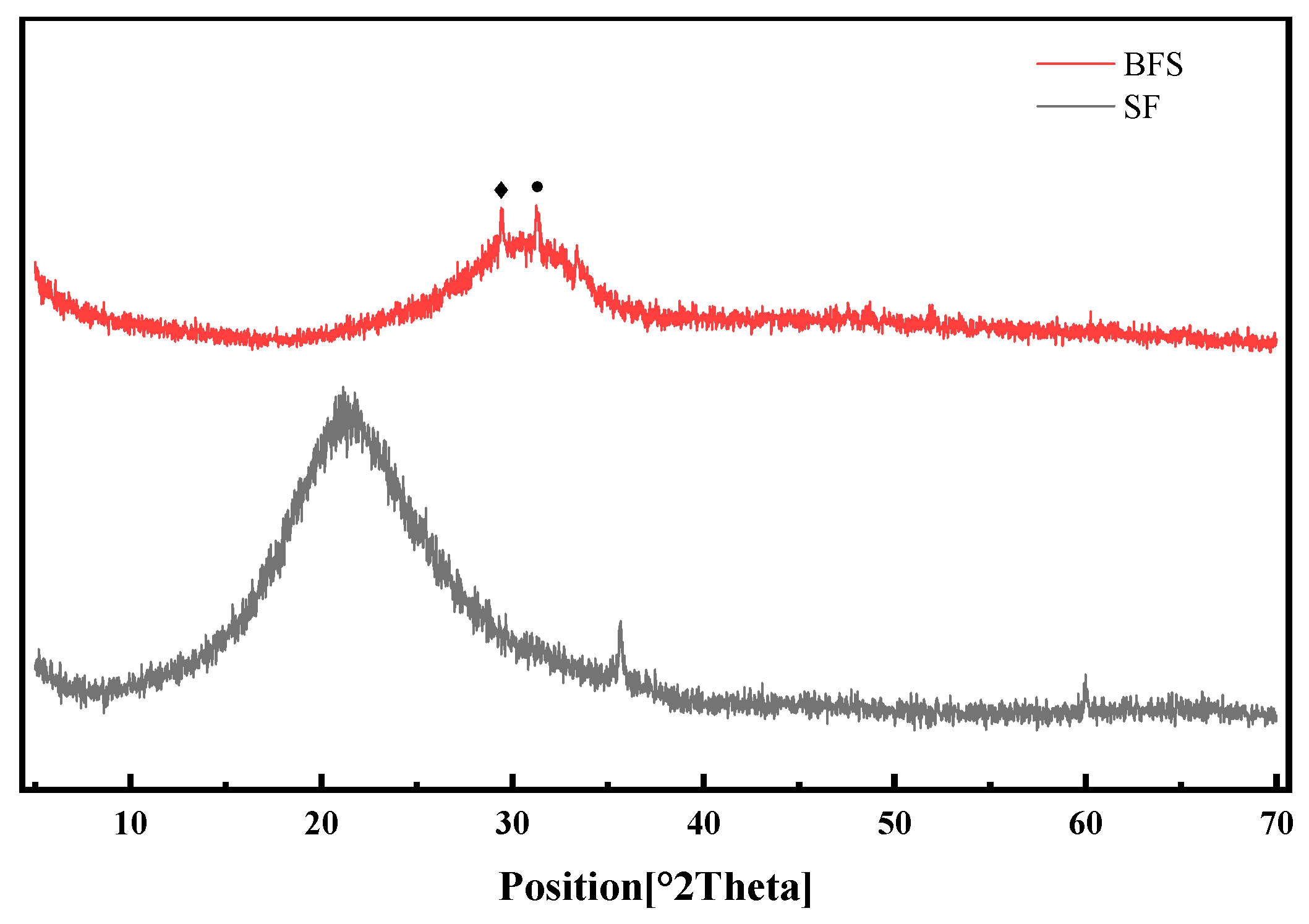
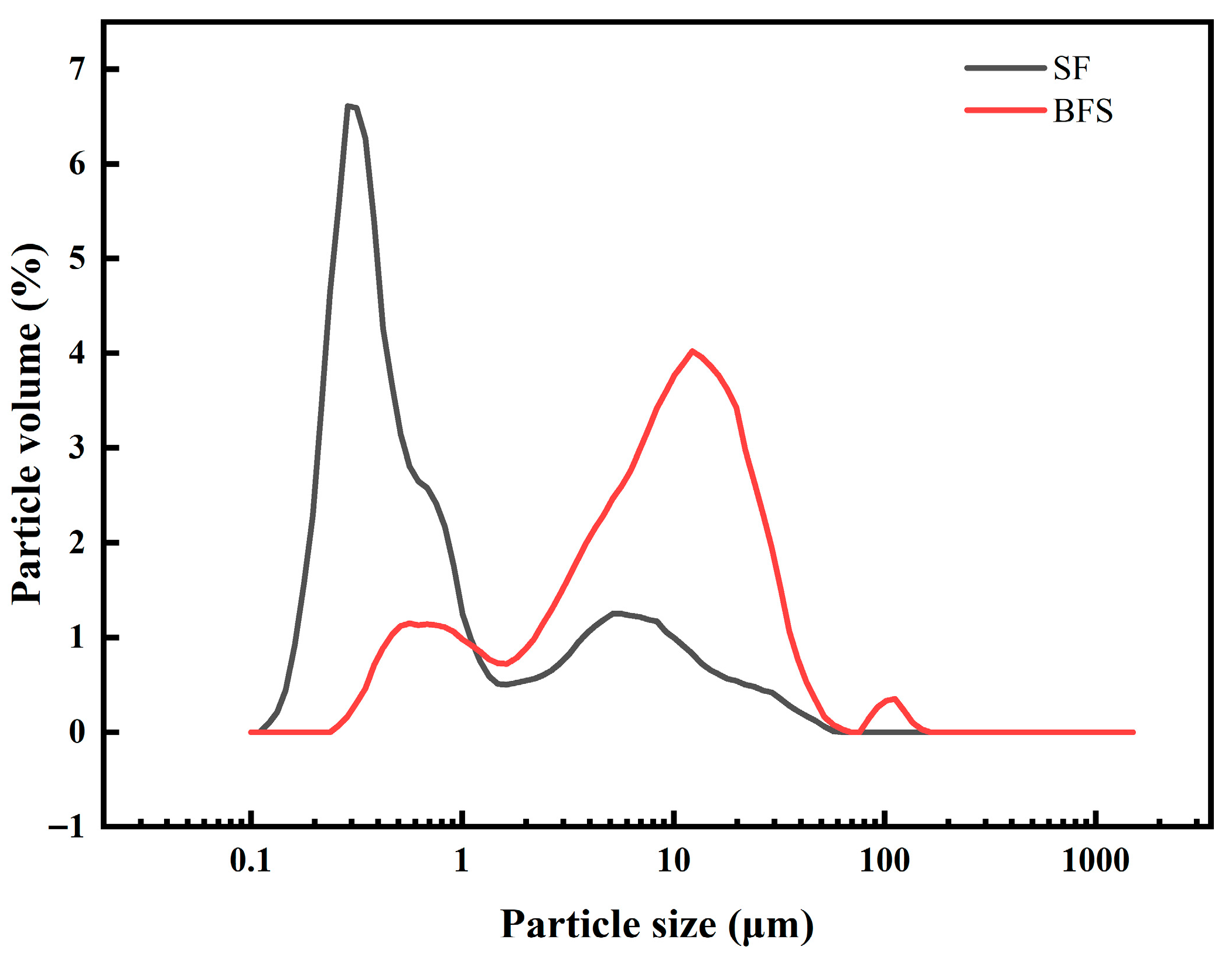
2.1.1. Low-Carbon Binders
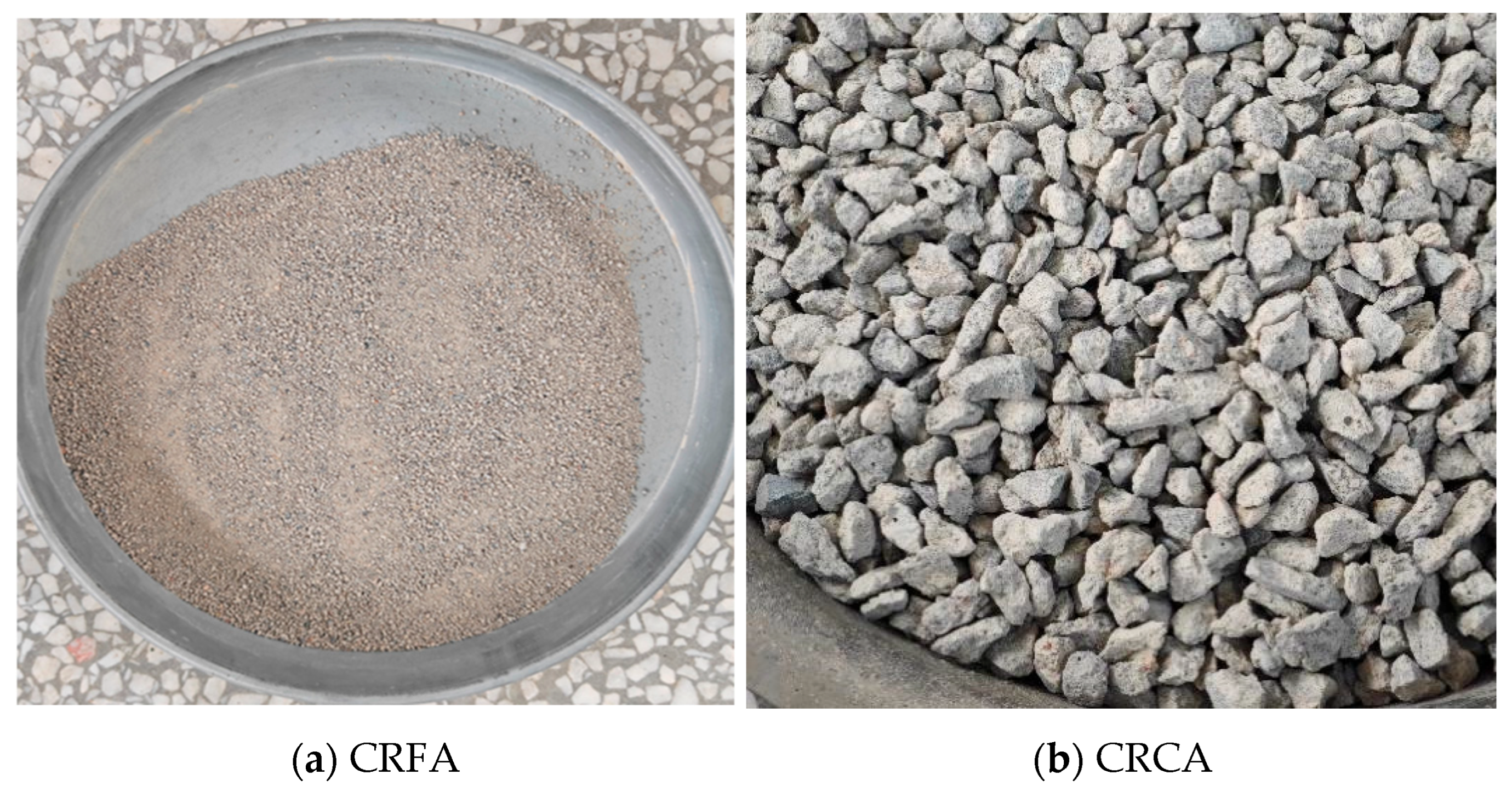
2.1.2. Fine Aggregates
2.1.3. Coarse Aggregates
2.1.4. Water and Chemical Additives
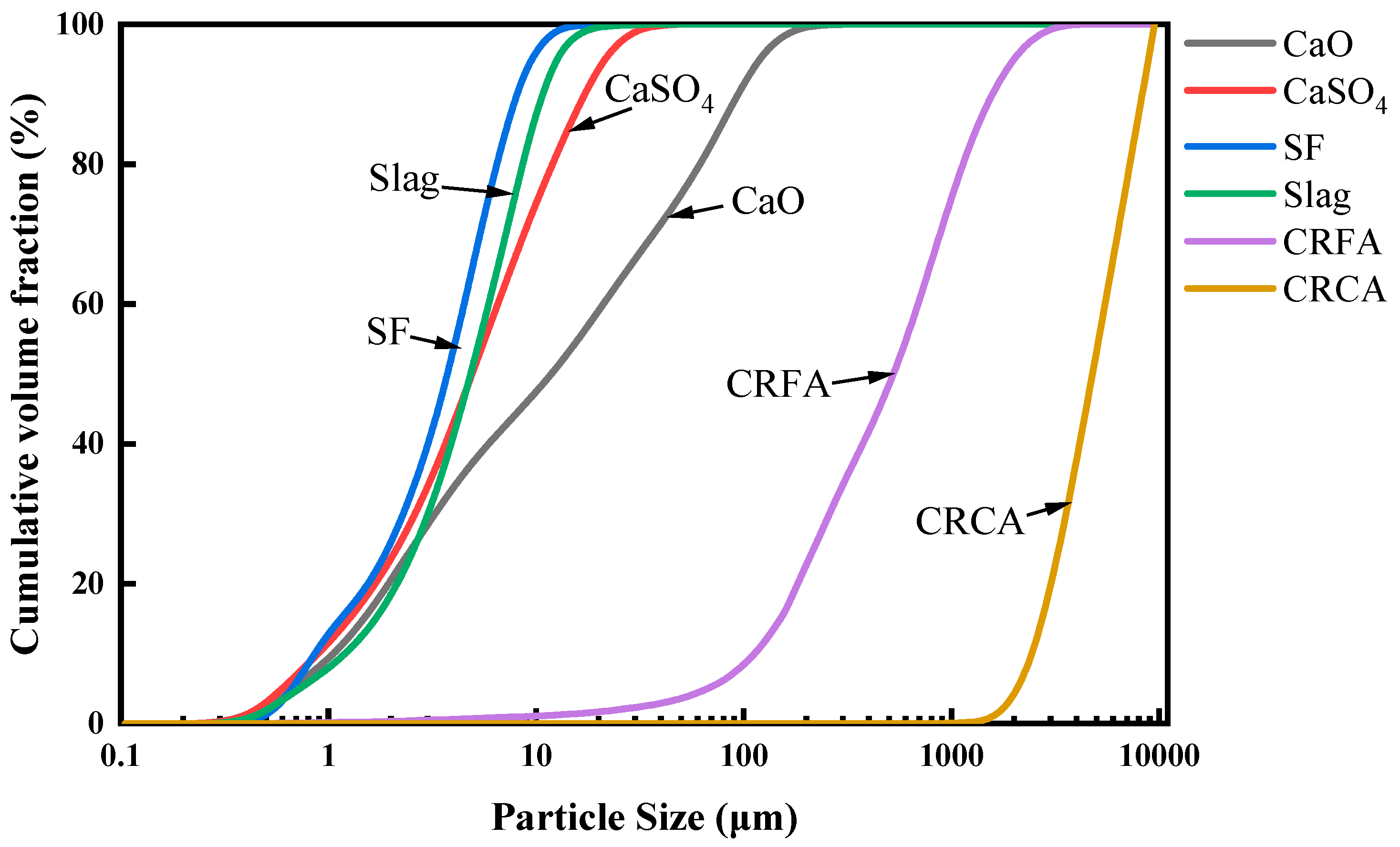
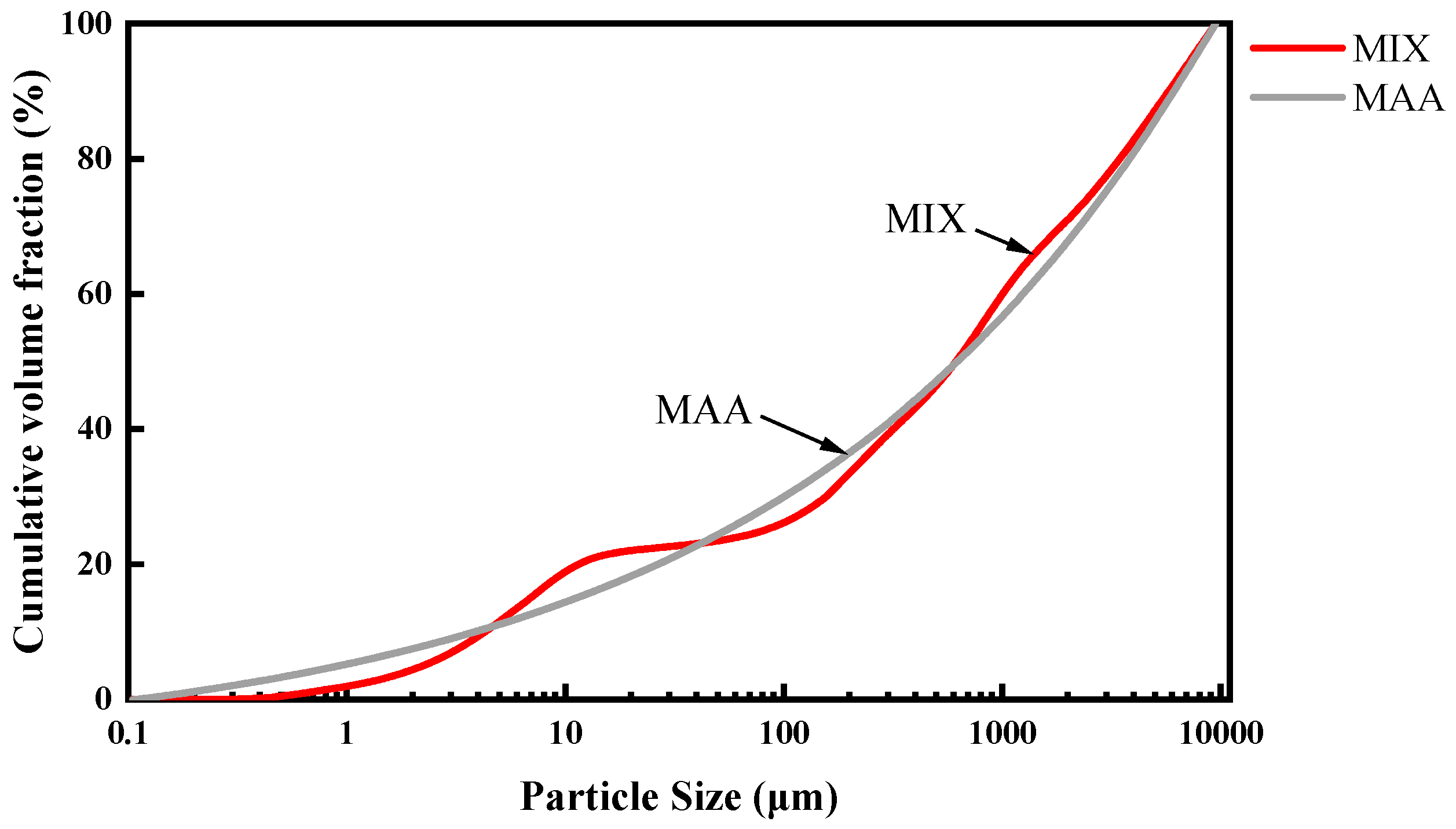
2.2. Raw Material Particle Size Distribution and Mixing Ratio
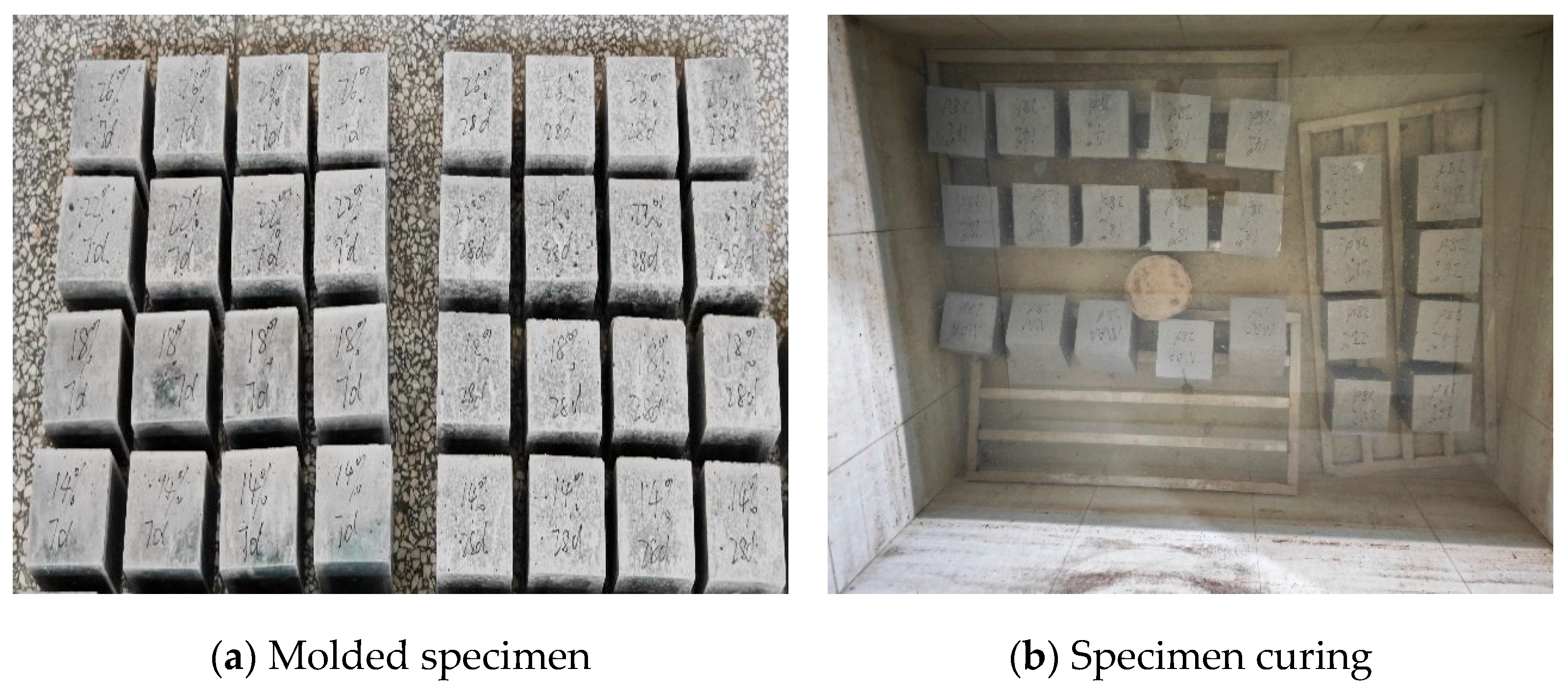
2.3. Specimen Preparation and Molding
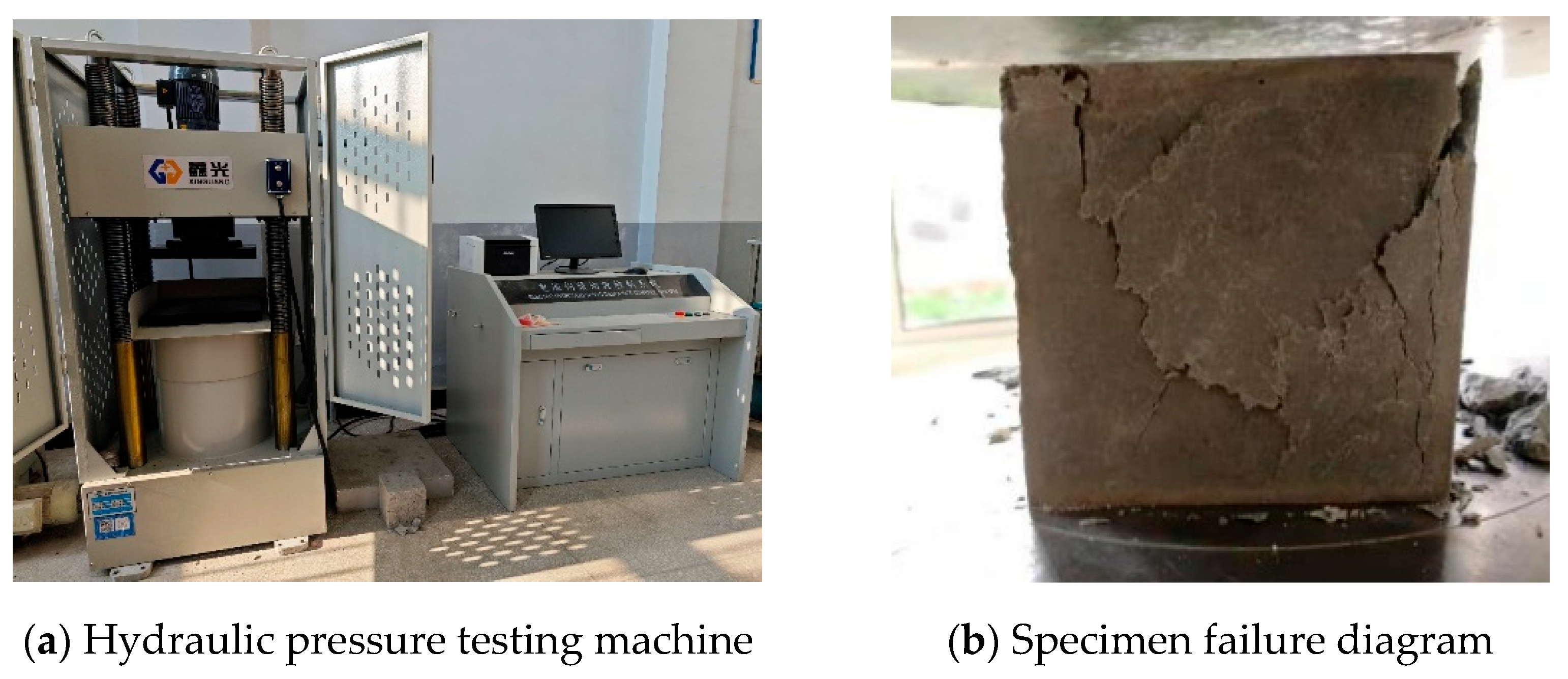
2.4. Compressive Strength Test
3. Experimental Results and Discussion
3.1. Mix Design Based on the MAA Model
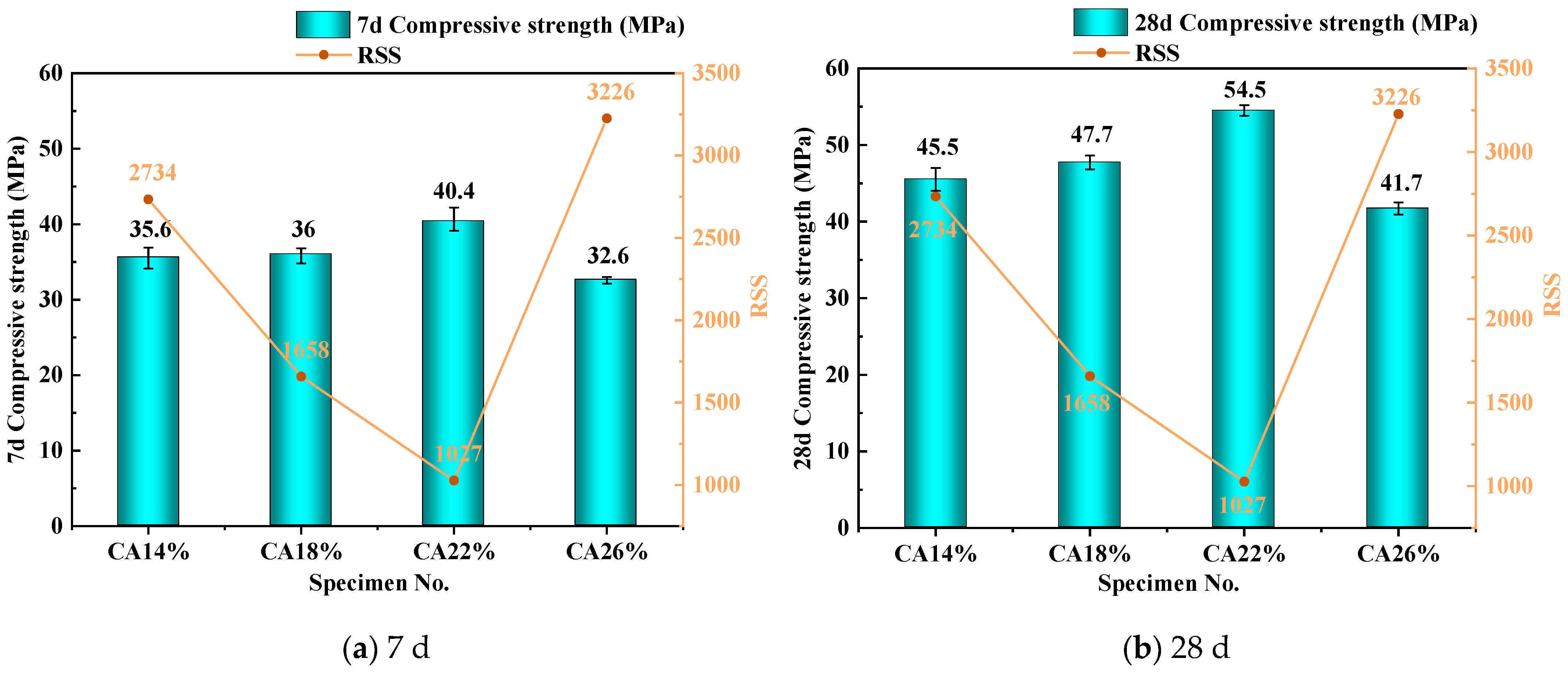
3.2. Design Mix Proportion Strength Verification
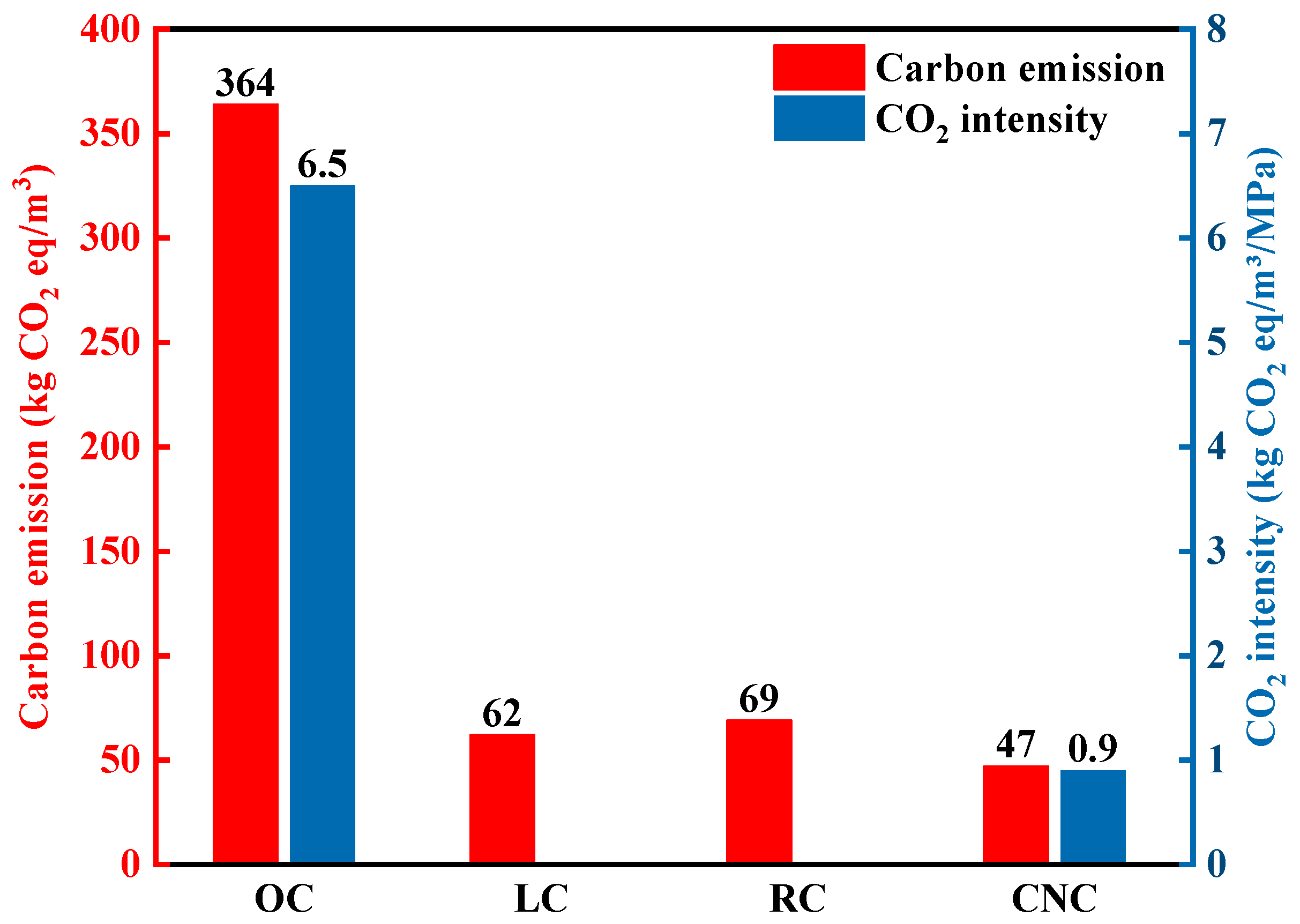
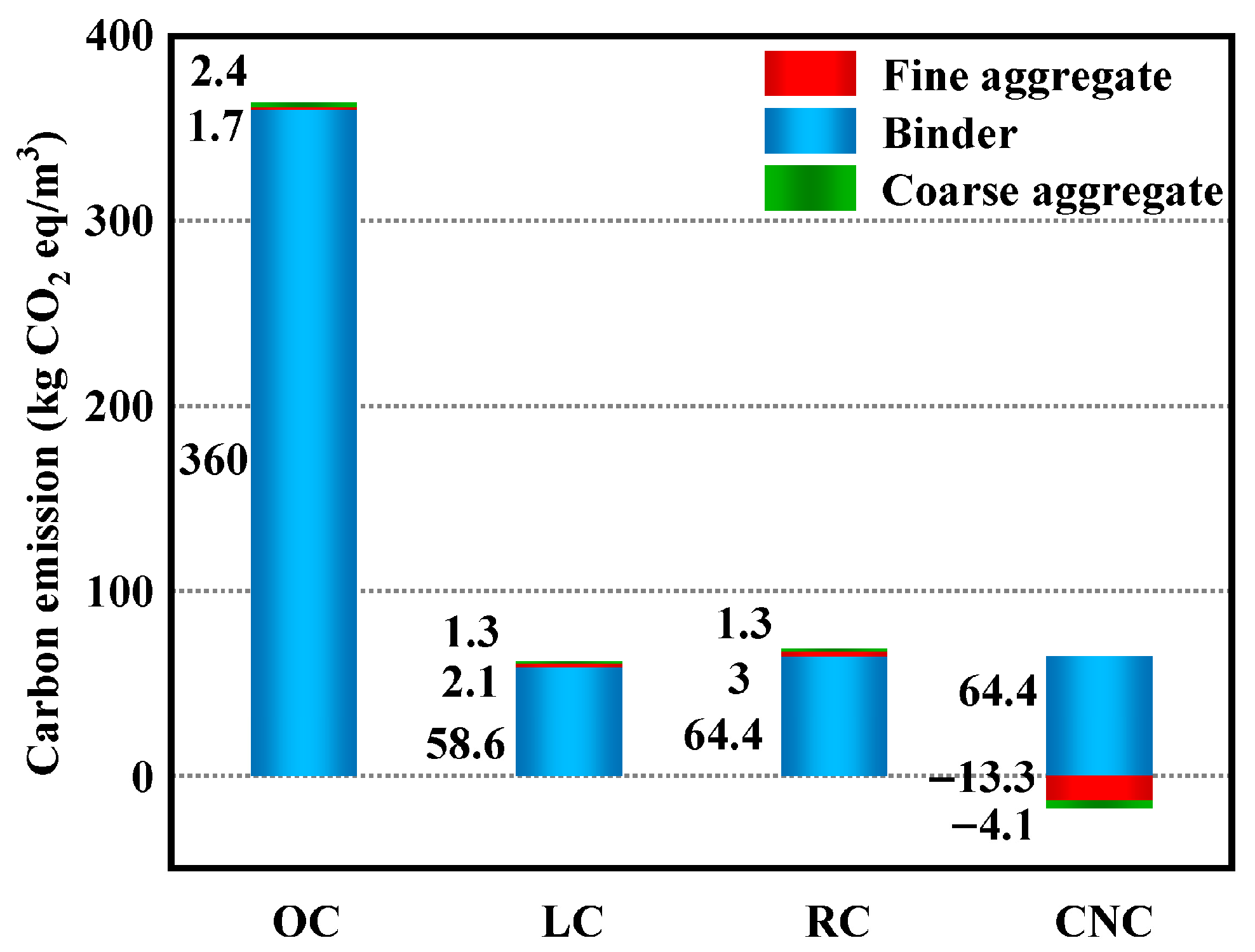
3.3. Carbon Emission Analysis
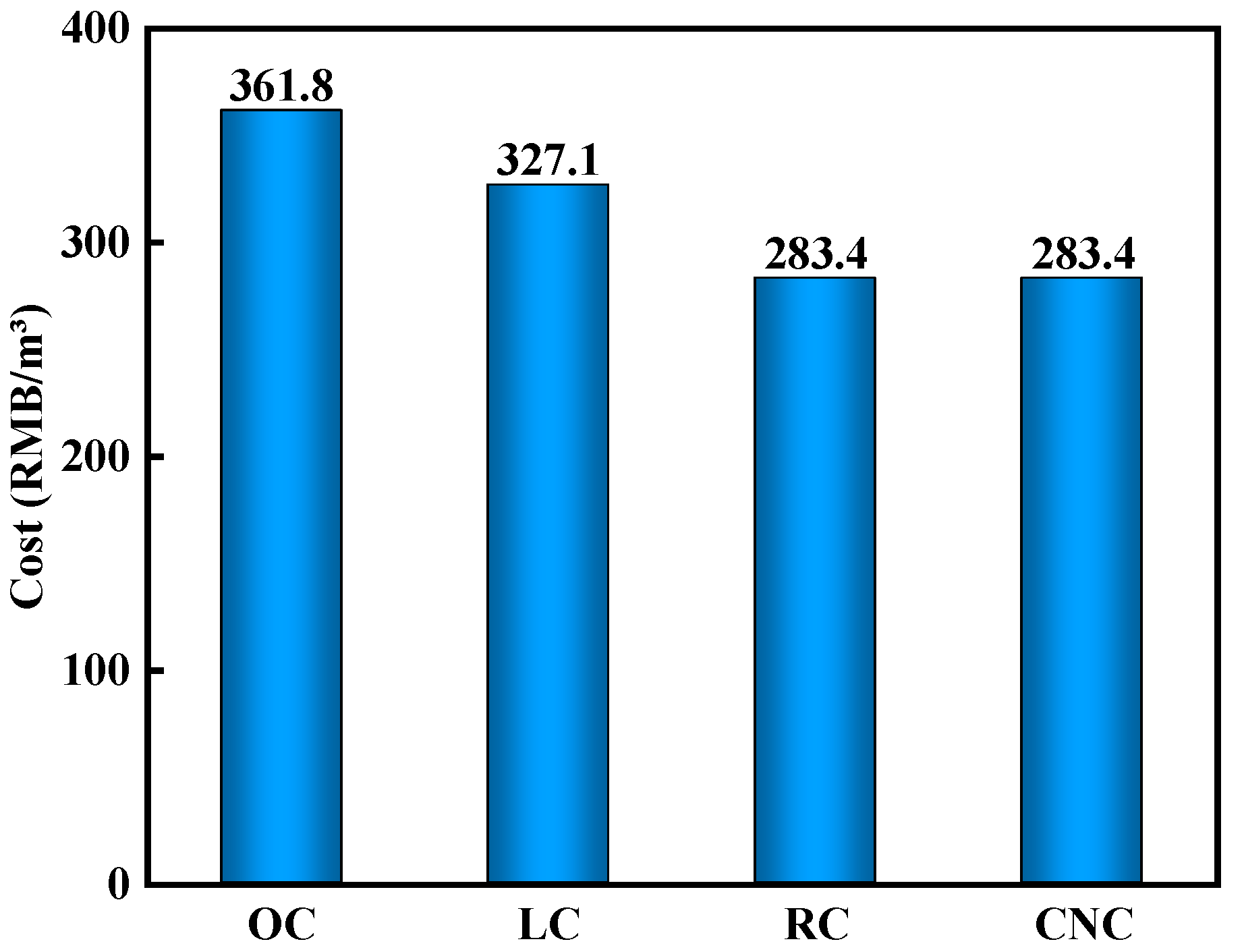
3.4. Cost Analysis
4. Conclusions
- (1)
- MAA-Based Mix Optimization: The optimization results based on the MAA model indicate that a 22%CRCA minimizes the RSS value of the mixture and yields the best compressive strength. Compared with concrete containing 14%CRCA, the 22%CRCA exhibited increases in 7-day and 28-day compressive strength of 13.5% and 19.8%, respectively, demonstrating the effectiveness and applicability of the MAA model in CNC mix proportioning.
- (2)
- Carbon Emission Reduction: CNC, prepared using low-carbon binders derived from industrial by-products and carbonated recycled aggregates capable of CO2 absorption, exhibited significantly reduced carbon emissions during production. Compared with OC, CNC achieved an 87.1% reduction in carbon emissions and an 86.2% reduction in CO2 intensity, highlighting its substantial advantage in carbon mitigation.
- (3)
- Economic Performance: Since CNC incorporates low-carbon binders and recycled aggregates, both of which are less expensive than OPC and natural aggregates, the production cost is considerably reduced. The unit cost of producing 1 m3 of RC and CNC decreased by 48.1% and 13.4% compared with OC and LC, respectively, indicating strong economic viability.
Author Contributions
Funding
Data Availability Statement
Conflicts of Interest
Abbreviations
| CNC | Carbon-Negative Concrete |
| OC | Ordinary Concrete |
| RC | Recycled Concrete |
| CRA | Carbonated Recycled Aggregate |
| LC | Low-Carbon Concrete |
| OPC | Ordinary Portland Cement |
| BFS | Blast Furnace Slag |
| SF | Silica Fume |
| NCA | Natural Coarse Aggregate |
| NFA | Natural Fine Aggregate |
| RCA | Recycled Concrete Aggregate |
| RFA | Recycled Fine Aggregate |
| CRCA | Carbonated Recycled Coarse Aggregate |
| CRFA | Carbonated Recycled Fine Aggregate |
| MAA | Modified Andreasen–Andersen |
| RSS | Residual Sum of Squares |
| TSMA | Two-Stage Mixing Approach |
| LCA | Life Cycle Carbon Assessment |
| RMB | Renminbi (Chinese Yuan) |
References
- Golafshani, E.M.; Behnood, A.; Kim, T.; Ngo, T.; Kashani, A. A framework for low-carbon mix design of recycled aggregate concrete with supplementary cementitious materials using machine learning and optimization algorithms. Structures 2024, 61, 106143. [Google Scholar] [CrossRef]
- Liu, J.; Li, J. Economic benefit analysis of the carbon potential of construction waste resource management based on a simulation of carbon trading policy. Environ. Sci. Pollut. Res. 2023, 30, 85986–86009. [Google Scholar] [CrossRef] [PubMed]
- Liao, G.; Xu, L.; Zhang, F.; Wang, D. A novel carbon-negative mortar: Mechanical properties, microstructure, and carbon emissions. Constr. Build. Mater. 2025, 492, 143089. [Google Scholar] [CrossRef]
- Zhang, J.; Cui, K.; Chang, J. Development of a low-carbon cementitious materials: A new carbonation hardened ternesite-belite binder. Constr. Build. Mater. 2025, 492, 142895. [Google Scholar] [CrossRef]
- Liu, W.; Liu, X.; Zhang, L.; Wan, Y.; Li, H.; Jiao, X. Rheology, mechanics, microstructure and durability of low-carbon cementitious materials based on circulating fluidized bed fly ash: A comprehensive review. Constr. Build. Mater. 2024, 411, 134688. [Google Scholar] [CrossRef]
- Ahmad, M.R.; Fernàndez-Jimenez, A.; Chen, B.; Leng, Z.; Dai, J.G. Low-carbon cementitious materials: Scale-up potential, environmental impact and barriers. Constr. Build. Mater. 2024, 455, 139087. [Google Scholar] [CrossRef]
- Liao, G.; Noguchi, T. Effect of CaO-Al2O3-SiO2 molar ratio on compressive strength, reaction products, and strength prediction model of CaO-activated materials. Case Stud. Constr. Mater. 2025, 22, e04580. [Google Scholar] [CrossRef]
- Liao, G.; Wang, D.; Wang, W.; He, Y. Microstructure, strength development mechanism, and CO2 emission analyses of alkali-activated fly ash-slag mortars. J. Clean. Prod. 2024, 442, 141116. [Google Scholar] [CrossRef]
- Liao, G.; Chen, S.; Xu, L.; Aslani, F. High-Strength Low-Carbon Cementitious Materials: CaO-CaSO4-CaCl2–Activated Slag at Ambient Temperature. J. Mater. Civ. Eng. 2026, 38, 04025545. [Google Scholar] [CrossRef]
- Trivedi, S.S.; Ansari, F.; Das, B.B.; Barbhuiya, S. Effect of CO2 curing on phase compositions of nano silica blended cementitious mortar partially replaced with carbonated recycled fine aggregates. Constr. Build. Mater. 2025, 491, 142789. [Google Scholar] [CrossRef]
- Ma, M.; Chen, M.; Zhang, T. Research on the mechanical properties and microstructure of low-carbon ultra-high performance concrete using carbonated recycled fine aggregate. Constr. Build. Mater. 2025, 491, 142762. [Google Scholar] [CrossRef]
- Xu, S.; Wang, J. Study on decarbonization trajectories and policy implications for China: A comparative analysis of carbon peak nations. PLoS ONE 2024, 19, e0308394. [Google Scholar] [CrossRef] [PubMed]
- Khadim, N.; Agliata, R.; Han, Q.; Mollo, L. From circularity to sustainability: Advancing the whole building circularity indicator with Life Cycle Assessment (WBCI-LCA). Build. Environ. 2025, 269, 112413. [Google Scholar] [CrossRef]
- Feret, R. Sur la compacité des mortiers hydrauliques. In Annales des Ponts et Chaussées. Mémoires et Documents; C. Dunod: Malakoff, France, 1892; Volume 4, pp. 5–164. [Google Scholar]
- Fuller, W.B.; Thompson, S.E. The Laws of Proportioning Concrete. Trans. Am. Soc. Civ. Eng. 1907, 59, 67–143. [Google Scholar] [CrossRef]
- Hwang, C.-L.; Bui, L.A.-T.; Chen, C.-T. Application of Fuller’s ideal curve and error function to making high performance concrete using rice husk ash. Comput. Concr. 2012, 10, 631–647. [Google Scholar] [CrossRef]
- Wen, D.; Wei, D.; Wu, L.; Ren, G. Research on Mix Design and Characteristics of UHPC Matrix Mixture Based on MAA Model. J. Build. Mater. 2022, 25, 693–699. [Google Scholar] [CrossRef]
- Yum, W.S.; Yu, J.; Jeon, D.; Song, H.; Sim, S.; Kim, D.H.; Oh, J.E. Mechanical and Durability Properties of Cementless Concretes Made Using Three Types of CaO-Activated GGBFS Binders. Materials 2021, 15, 271. [Google Scholar] [CrossRef]
- Yoon, S.; Park, H.; Yum, W.S.; Suh, J.I.; Oh, J.E. Influence of Calcium Sulfate Type on Evolution of Reaction Products and Strength in NaOH- and CaO-Activated Ground Granulated Blast-Furnace Slag. Appl. Sci. 2018, 8, 2500. [Google Scholar] [CrossRef]
- Zhang, J.; Shi, C.; Li, Y.; Pan, X.; Poon, C.-S.; Xie, Z. Influence of carbonated recycled concrete aggregate on properties of cement mortar. Constr. Build. Mater. 2015, 98, 1–7. [Google Scholar] [CrossRef]
- GB/T 14684-2022; Sand for Construction. Chinese Standard Press: Beijing, China, 2022.
- Kaliyavaradhan, S.K.; Ling, T.-C. Potential of CO2 sequestration through construction and demolition (C&D) waste—An overview. J. CO2 Util. 2017, 20, 234–242. [Google Scholar] [CrossRef]
- GB 8076-2008; Concrete Admixtures. China National Standardization Administration Committee: Beijing, China, 2008.
- JGJ 55-2011; Specification for Mix Proportion Design of Ordinary Concrete. Industry Standard of the People’s Republic of China: Beijing, China, 2011.
- GB/T 50081-2019; Standard for Test Methods of Concrete Physical and Mechanical Properties. Ministry of Housing and Urban-rural Development of the People’s Republic of China: Beijing, China, 2019.
- Brouwers, H.J.H.; Radix, H.J. Self-Compacting Concrete: Theoretical and experimental study. Cem. Concr. Res. 2005, 35, 2116–2136. [Google Scholar] [CrossRef]
- Yu, Z.; Shi, C.; Khayat, K.H. PRO 42: 1st International RILEM Symposium on Design, Performance and Use of Self-Consolidating Concrete—SCC’2005, China; RILEM Publications: Champs-sur-Marne, France, 2005. [Google Scholar]
- Hunger, M. An Integral Design Concept for Ecological Self-Compacting Concrete. Ph.D. Thesis, Technische Universiteit Eindhoven, Eindhoven, The Netherlands, 2010. [Google Scholar] [CrossRef]
- Bian, C.; Zhao, C.; Huang, W.; Guo, J. Effect of coarse aggregates and hybrid fibers on mechanical properties of ultra high performance concrete. Chin. J. Eng. 2024, 46, 536–546. [Google Scholar] [CrossRef]
- Wu, F.; Xu, L.; Chi, Y.; Zeng, Y.; Deng, F.; Chen, Q. Compressive and flexural properties of ultra-high performance fiber-reinforced cementitious composite: The effect of coarse aggregate. Compos. Struct. 2020, 236, 111810. [Google Scholar] [CrossRef]
- Liu, S.; Feng, W. Mechanical properties and durability of ultra- high performance concrete containing coarse aggregate. Concrete 2024, 12, 138–144. [Google Scholar] [CrossRef]
- Xiao, J.; Zhang, H.; Tang, Y.; Deng, Q.; Wang, D.; Poon, C. Fully utilizing carbonated recycled aggregates in concrete: Strength, drying shrinkage and carbon emissions analysis. J. Clean. Prod. 2022, 377, 134520. [Google Scholar] [CrossRef]
- Ababneh, A.; Matalkah, F.; Aqel, R. Synthesis of kaolin-based alkali-activated cement: Carbon footprint, cost and energy assessment. J. Mater. Res. Technol. 2020, 9, 8367–8378. [Google Scholar] [CrossRef]
- Industrial Development Administration, Ministry of Economic Affairs. Carbon Footprint Emission Coefficient of Domestically Used Basic Raw Materials; Taiwan Ministry of Economic Affairs: Taipei, China, 2025.
- Meddah, M.S.; Ismail, M.A.; El-Gamal, S.; Fitriani, H. Performances evaluation of binary concrete designed with silica fume and metakaolin. Constr. Build. Mater. 2018, 166, 400–412. [Google Scholar] [CrossRef]
- Habert, G.; de Lacaillerie, J.B.D.; Roussel, N. An environmental evaluation of geopolymer based concrete production: Reviewing current research trends. J. Clean. Prod. 2011, 19, 1229–1238. [Google Scholar] [CrossRef]
- GB/T 51336-2018; Standard for Seismic Design of Underground Structures. Ministry of Housing and Urban-Rural Development of the People’s Republic of China: Beijing, China, 2018.
- Moghadam, A.S.; Omidinasab, F.; Goodarzi, S.M. Characterization of concrete containing RCA and GGBFS: Mechanical, microstructural and environmental properties. Constr. Build. Mater. 2021, 289, 123134. [Google Scholar] [CrossRef]
- Wang, C.; Wang, P.; Zhang, M. Resource recycling sustainability assessment in ready-mixed concrete manufactured on energy consumption and environmental safety in China. Environ. Sci. Pollut. Res. 2021, 28, 19521–19529. [Google Scholar] [CrossRef]
- Fenner, A.E.; Kibert, C.J.; Woo, J.; Morque, S.; Razkenari, M.; Hakim, H.; Lu, X. The carbon footprint of buildings: A review of methodologies and applications. Renew. Sustain. Energy Rev. 2018, 94, 1142–1152. [Google Scholar] [CrossRef]
- Huang, C.; Wu, Q.; Jiang, H.; Huang, L.; Fu, S.; You, Y. Research on the Influence of Steam Curing System on the Mechanical Properties and Microstructure of Concrete. Highway 2025, 70, 385–389. [Google Scholar]



| Test Items (%) | Flowability Ratio | 7-Day Activity Index | 28-Day Activity Index | Loss on Ignition | Moisture Content |
|---|---|---|---|---|---|
| Standard values | ≥95 | ≥95 | ≥105 | ≤1.0 | ≤1.0 |
| Measured value | 102 | 98 | 109 | 0.96 | 0.4 |
| Test Items (%) | Total Alkali Content | 7-Day Activity Index | Chlorine Content | Water Demand Ratio | Loss on Ignition |
|---|---|---|---|---|---|
| Standard values | ≤1.5 | ≥105 | ≤0.1 | ≤125 | ≤4.0 |
| Measured value | 0.6 | 128 | 0.01 | 106 | 2.6 |
| Oxide (wt. %) | SiO2 | Al2O3 | CaO | Fe2O3 | MgO | P2O5 | SO3 | Na2O | K2O | TiO2 | Others |
|---|---|---|---|---|---|---|---|---|---|---|---|
| SF | 97.37 | 0.20 | 0.57 | 0.04 | 0.51 | 0.12 | 0.82 | 0.06 | 0.29 | - | 0.01 |
| BFS | 28.12 | 15.26 | 42.4 | 0.46 | 8.37 | 0.02 | 2.50 | 0.52 | 0.41 | 1.23 | 0.69 |
| Sieve Size (mm) | 0 | 0.15 | 0.3 | 0.6 | 1.18 | 2.36 | 4.75 |
|---|---|---|---|---|---|---|---|
| CRFA | 15.7 | 34.8 | 52.3 | 84 | 99.3 | 99.79 | 99.94 |
| Aggregate | Fineness Modulus | Crushing Value (%) | Apparent Density (kg/m3) | Water Absorption (%) | Moisture Content (%) |
|---|---|---|---|---|---|
| CRFA | 3.4 | 35.75 | 2301 | 10.94 | 5.37 |
| Sieve Size (mm) | 2.36 | 4.75 | 9.5 | 16 | 19 | 26.5 | 31.5 |
|---|---|---|---|---|---|---|---|
| CRCA | 50 | 99 | 100 | 100 | 100 | 100 | 100 |
| Aggregate | Crushing Value (%) | Apparent Density (kg/m3) | Water Absorption (%) | Moisture Content (%) |
|---|---|---|---|---|
| CRCA | 12.3 | 2667 | 5.09 | 3.07 |
| CRCA Dosage | Water/Binder Ratio | Sand/Binder Ratio | CRFA | CRCA | Water | SP | RSS |
|---|---|---|---|---|---|---|---|
| CA14% | 0.4 | 1.5 | 918 | 373 | 244.8 | 1% | 2734 |
| CA18% | 0.4 | 1.5 | 875 | 480 | 233.6 | 1% | 1658 |
| CA22% | 0.4 | 1.5 | 833 | 587 | 222 | 1% | 1027 |
| CA26% | 0.4 | 1.5 | 790 | 693 | 210.8 | 1% | 3226 |
| Materials | Slag | CaSO4 | CaCl2 | CaO | SF | W | CRFA | CRCA |
|---|---|---|---|---|---|---|---|---|
| Volume (m3) | 0.142 | 0.016 | 0.013 | 0.013 | 0.013 | 0.222 | 0.362 | 0.22 |
| Mass (kg) | 416.3 | 41.6 | 27.8 | 41.6 | 27.8 | 222 | 832.6 | 586.7 |
| Raw Materials | Carbon Emission Factor | Unit | Reference |
|---|---|---|---|
| CaO | 0.540 | kg CO2 eq/kg | A. Ababneh et al. [33] |
| CaCl2 | 0.420 | kg CO2 eq/kg | I.D.A. [34] |
| CaSO4 | 0.350 | kg CO2 eq/kg | I.D.A. [34] |
| SF | 0.028 | kg CO2 eq/kg | M.S. Meddah et al. [35] |
| BFS | 0.022 | kg CO2 eq/kg | G. Habert et al. [36] |
| OPC | 0.735 | kg CO2 eq/kg | GB/T 51336-2018 [37] |
| Water reducer | 1.064 | kg CO2 eq/kg | Moghadam et al. [38] |
| CRFA | −0.016 | kg CO2 eq/kg | Xiao et al. [32] |
| CRCA | −0.007 | kg CO2 eq/kg | |
| RFA | 3.678 | kg CO2 eq/t | |
| RCA | 2.328 | kg CO2 eq/t | |
| NFA | 2.510 | kg CO2 eq/t | |
| NCA | 2.180 | kg CO2 eq/t | |
| Mix | 1.667 | kg CO2 eq/m3 | Wang et al. [39] |
| Raw Material | Unit Price (RMB/t) | Raw Material | Unit Price (RMB/t) |
|---|---|---|---|
| CaO | 450~650 | RFA (CRFA) | 20~40 |
| CaCl2 | 900~1200 | RCA (CRCA) | 40~70 |
| CaSO4 | 200~500 | NFA | 40~160 |
| SF | 500~900 | NCA | 50~100 |
| BFS | 240~300 | Water reducer | 2000~3400 |
| OPC | 400~450 |
Disclaimer/Publisher’s Note: The statements, opinions and data contained in all publications are solely those of the individual author(s) and contributor(s) and not of MDPI and/or the editor(s). MDPI and/or the editor(s) disclaim responsibility for any injury to people or property resulting from any ideas, methods, instructions or products referred to in the content. |
© 2026 by the authors. Licensee MDPI, Basel, Switzerland. This article is an open access article distributed under the terms and conditions of the Creative Commons Attribution (CC BY) license.
Share and Cite
Lin, W.; Liao, G.; Xu, L.; Wang, G.; Peng, C.; Zhang, Y.; Wang, D. Towards Carbon-Negative Concrete Using Low-Carbon Binders and Carbonated Recycled Aggregates: MAA-Based Mix Design Optimization, Carbon Emission and Cost Assessment. Buildings 2026, 16, 462. https://doi.org/10.3390/buildings16020462
Lin W, Liao G, Xu L, Wang G, Peng C, Zhang Y, Wang D. Towards Carbon-Negative Concrete Using Low-Carbon Binders and Carbonated Recycled Aggregates: MAA-Based Mix Design Optimization, Carbon Emission and Cost Assessment. Buildings. 2026; 16(2):462. https://doi.org/10.3390/buildings16020462
Chicago/Turabian StyleLin, Wen, Gaoyu Liao, Lixiang Xu, Guanghui Wang, Chucai Peng, Yueran Zhang, and Dianchao Wang. 2026. "Towards Carbon-Negative Concrete Using Low-Carbon Binders and Carbonated Recycled Aggregates: MAA-Based Mix Design Optimization, Carbon Emission and Cost Assessment" Buildings 16, no. 2: 462. https://doi.org/10.3390/buildings16020462
APA StyleLin, W., Liao, G., Xu, L., Wang, G., Peng, C., Zhang, Y., & Wang, D. (2026). Towards Carbon-Negative Concrete Using Low-Carbon Binders and Carbonated Recycled Aggregates: MAA-Based Mix Design Optimization, Carbon Emission and Cost Assessment. Buildings, 16(2), 462. https://doi.org/10.3390/buildings16020462