1. Introduction
With the continuous advancement of oil and gas development and underground energy exploitation, densely distributed multi-well systems have become increasingly common in modern oilfields [
1,
2,
3]. To improve production efficiency and accommodate land-use constraints, adjacent wells are often constructed with relatively small center-to-center spacing. Under such conditions, oil well casings are subjected to various dynamic loads, including earthquakes, blasting vibrations, reservoir-induced seismicity, and long-term cyclic excitations that may induce cumulative fatigue damage [
4]. Engineering observations indicate that seismic loading can exacerbate casing deformation, cement sheath debonding, and localized near-surface damage, risks that are further amplified in closely spaced well arrangements. Therefore, understanding the seismic response characteristics and interaction mechanisms of adjacent well casings is critical for ensuring well integrity and seismic safety in clustered well field developments [
5].
Under strong ground motion, neighboring wells alter the propagation and redistribution of seismic energy within the surrounding soil–casing system [
6,
7,
8]. Wave interactions, including reflection, superposition, and stress redistribution, may induce localized soil strain concentration, casing ovalization, and cement sheath degradation [
9]. These effects threaten the performance of individual wells and increase the overall instability risk of clustered well systems. Consequently, elucidating the dynamic response characteristics and spatial coupling behavior of adjacent wells under varying spacing conditions is essential for improving seismic design strategies and optimizing well field layouts [
10,
11].
Previous studies have primarily focused on single wells or simplified group-well configurations, examining the influence of incident wave direction, soil nonlinearity, casing stiffness, and boundary conditions using finite element or discrete element methods [
12,
13]. While these investigations provide valuable insight into soil–structure interaction, the mutual influence between closely spaced wells is often overlooked. In particular, spacing-dependent dynamic coupling induced by seismic wavefield interaction remains poorly quantified. Overall, existing research indicates that seismic loading causes significant casing deformation and stress concentration, with soil–structure interaction playing a key role in governing dynamic response [
14,
15,
16].
Recent advances in dynamic simulation techniques highlight that reduced spacing between adjacent wells can induce strong wavefield interaction and structural coupling. Such coupling may lead to localized displacement amplification, increased strain energy accumulation [
17,
18], and elevated bending demands, accelerating potential damage evolution. As a result, inter-well spacing emerges as a critical geometric parameter controlling the intensity of dynamic interaction, and understanding its influence on seismic energy propagation and attenuation is fundamental to assessing the stability of clustered well systems [
19,
20].
Conventional seismic design approaches often assume that neighboring underground elements respond independently [
21,
22,
23]. This assumption is invalid for dense well arrays, where stress transmission and energy reflection at casing–soil interfaces can trigger secondary vibrations and coupled responses. With the increasing scale and density of oil, gas, and geothermal well fields, such interactions are expected to intensify, necessitating systematic numerical investigation of spacing-dependent seismic responses to guide well field design, casing selection, and risk mitigation.
Despite extensive studies on the seismic responses of individual well casings, the dynamic interaction mechanisms between adjacent casings with reduced spacing remain insufficiently understood. In particular, how spacing-dependent soil–structure interaction alters seismic wave propagation, stress transfer, and response amplification has not yet been clearly quantified.
The primary objective of this study is to systematically investigate the seismic dynamic coupling behavior of adjacent oil well casings with different inter-well spacings, with an emphasis on clarifying the causal relationship between reduced spacing, soil-mediated wavefield interaction, and amplified structural responses. To achieve this objective, a three-dimensional nonlinear finite element framework is established, in which the surrounding soil, the casing, the cement sheath, and their interfaces are explicitly modeled to capture seismic wave propagation and inter-well coupling through the soil medium.
The main contributions of this study are threefold: (i) to reveal the spacing-dependent dynamic coupling characteristics of adjacent well casings under seismic excitation; (ii) to elucidate the role of soil-mediated wave interference in amplifying both displacement and shear stress responses; and (iii) to provide quantitative insights that may inform seismic-resistant design and spacing optimization of multi-well systems in seismic regions.
The remainder of this paper is organized as follows.
Section 2 presents the theoretical background and the three-dimensional nonlinear finite element modeling framework, including the soil–structure interaction formulation and numerical implementation.
Section 3 describes the seismic input, numerical settings, and model verification.
Section 4 discusses the seismic response characteristics of adjacent well casings with different inter-well spacings based on displacement and stress analyses. Finally,
Section 5 summarizes the main findings and engineering implications of this study.
2. Mechanical Model and Theoretical Basis
Under seismic excitation, the geological medium surrounding adjacent oil well casings—including both the production and outer casings—undergoes intense dynamic disturbances, resulting in pronounced soil–structure interaction (SSI) between the casing system and the surrounding soil. Such interaction directly influences lateral deformation, structural stability, and overall integrity of the casings. To accurately capture the dynamic response of adjacent well systems under seismic loading, a three-dimensional finite element model of the coupled casing–cement sheath–soil system is established. The beam-on-elastic-foundation theory is introduced as a conceptual framework, while the interaction among the casing, cement sheath, and surrounding soil is modeled numerically using a three-dimensional finite element approach with contact elements. The contact behavior between the casing and cement sheath is simulated using the Goodman contact model, a classical interface formulation widely adopted in geotechnical and structural contact analyses and implemented as a standard option in the GTS NX platform.
2.1. Theory of Elastic Foundation Beam (Winkler Model)
Section 2.1 presents the theoretical background of soil–structure interaction (SSI) models commonly used to interpret the seismic response of embedded structural systems. These conceptual models are introduced to provide physical insight into load transfer mechanisms between the soil and well casing, rather than to represent the actual numerical formulation adopted in this study.
To provide a theoretical interpretation of the lateral deformation behavior of well casings embedded in soil under seismic loading, the casing–cement system can be conceptually idealized as a beam resting on an elastic foundation. The Winkler beam-on-elastic-foundation model is introduced as a simplified framework to describe the interaction mechanism between the casing system and the surrounding soil, in which the soil reaction is assumed to be proportional to the local lateral displacement of the casing. It should be noted that this formulation is intended for physical interpretation and qualitative understanding of soil–structure interaction mechanisms, rather than being directly employed as the computational model in the present simulations. In this study, the theoretical formulation serves as a conceptual basis for understanding the lateral stiffness contribution of the surrounding soil, while the seismic response of the adjacent well system is evaluated using a three-dimensional nonlinear finite element approach. It should be noted that the Winkler-type representation is employed herein solely as a conceptual reference for understanding soil reaction mechanisms. The seismic responses reported in this study are obtained from a three-dimensional nonlinear finite element model rather than from simplified beam-on-elastic-foundation formulations.
The theoretical formulation adopted in this study is based on the classical soil–structure interaction theory for slender structural elements embedded in an elastic medium. Similar formulations have been widely applied to analyze the dynamic response of piles, underground pipelines, and well casings subjected to seismic excitation. The governing equations employed herein are consistent with the beam-on-elastic-foundation framework and its extensions to dynamic loading conditions, as established in foundational studies by Winkler and further developed by Hetényi and Gazetas [
24,
25].
The dynamic equilibrium equation in the time domain is expressed as follows:
where
—transverse displacement (m);
—mass per unit length (kg/m); =ρₛA (ρₛ is the density of the casing material, A is the cross-sectional area of the casing);
—viscous damping per unit length (N·s/m);
—Young’s modulus (Pa);
—I is the second moment of area (m4); EI is the flexural rigidity (Nm2);
—Winkler foundation stiffness per unit length;
—external load per unit length (including equivalent seismic inertial loads, N/m).
2.2. Soil-Structure Interaction Theory (SSI)
Section 2.2 presents the three-dimensional nonlinear finite element implementation of the soil–structure interaction (SSI) system adopted in this study. Unlike simplified analytical SSI models, such as beam-on-elastic-foundation formulations, the present approach explicitly discretizes the surrounding soil continuum, well casings, cement sheath, and their interfaces within a fully coupled three-dimensional finite element framework. This numerical formulation allows seismic wave propagation, stress redistribution, and dynamic interaction between adjacent wells to be directly simulated, rather than being implicitly represented through idealized springs or boundary conditions.
In the adopted model, the surrounding soil, cement sheath, and steel casing are all treated as deformable continua. Stress and deformation are transferred among these components through their shared boundaries, enabling two-way coupling between soil response and structural deformation. During seismic excitation, casing motion induces stress redistribution in the surrounding soil, while soil inertia and stiffness, in turn, influence the dynamic response of the casing system. Such bidirectional interaction is essential for capturing realistic SSI effects, particularly when the characteristic dimensions of the well system are comparable to the dominant wavelength of seismic motion.
The mechanical behavior at the casing–cement–soil interfaces is represented using Goodman contact elements. These contact elements allow relative slip and separation while transmitting compressive and shear stresses, thereby accounting for nonlinear interface behavior under strong seismic loading. The use of the Goodman contact model avoids the unrealistic constraint of perfect bonding, which would artificially enforce deformation compatibility and underestimate stress redistribution and energy dissipation at the interfaces. By permitting controlled relative displacement and stress transfer, the Goodman model provides a physically reasonable representation of interface behavior and plays a critical role in accurately capturing SSI and inter-well interaction mechanisms.
Dynamic coupling between adjacent well casings is naturally captured through the shared soil domain. Seismic waves propagate through the soil medium and interact with multiple casings, allowing vibration energy and stress disturbances generated by one well to be transmitted to neighboring wells. Consequently, spacing-dependent interaction effects arise directly from soil-mediated wave propagation and stress redistribution, without the need for additional coupling assumptions or empirical interaction coefficients. To investigate these effects, three center-to-center casing spacings (5 m, 7.5 m, and 10 m) are considered in the numerical simulations.
It should be emphasized that the Winkler beam-on-elastic-foundation model is not employed in the numerical computation. Instead, it is introduced solely as a conceptual reference to aid interpretation of soil–casing interaction mechanisms, while all seismic response analyses are conducted using the fully coupled three-dimensional finite element SSI formulation described above.
2.3. Seismic Wave Input and Analysis Method
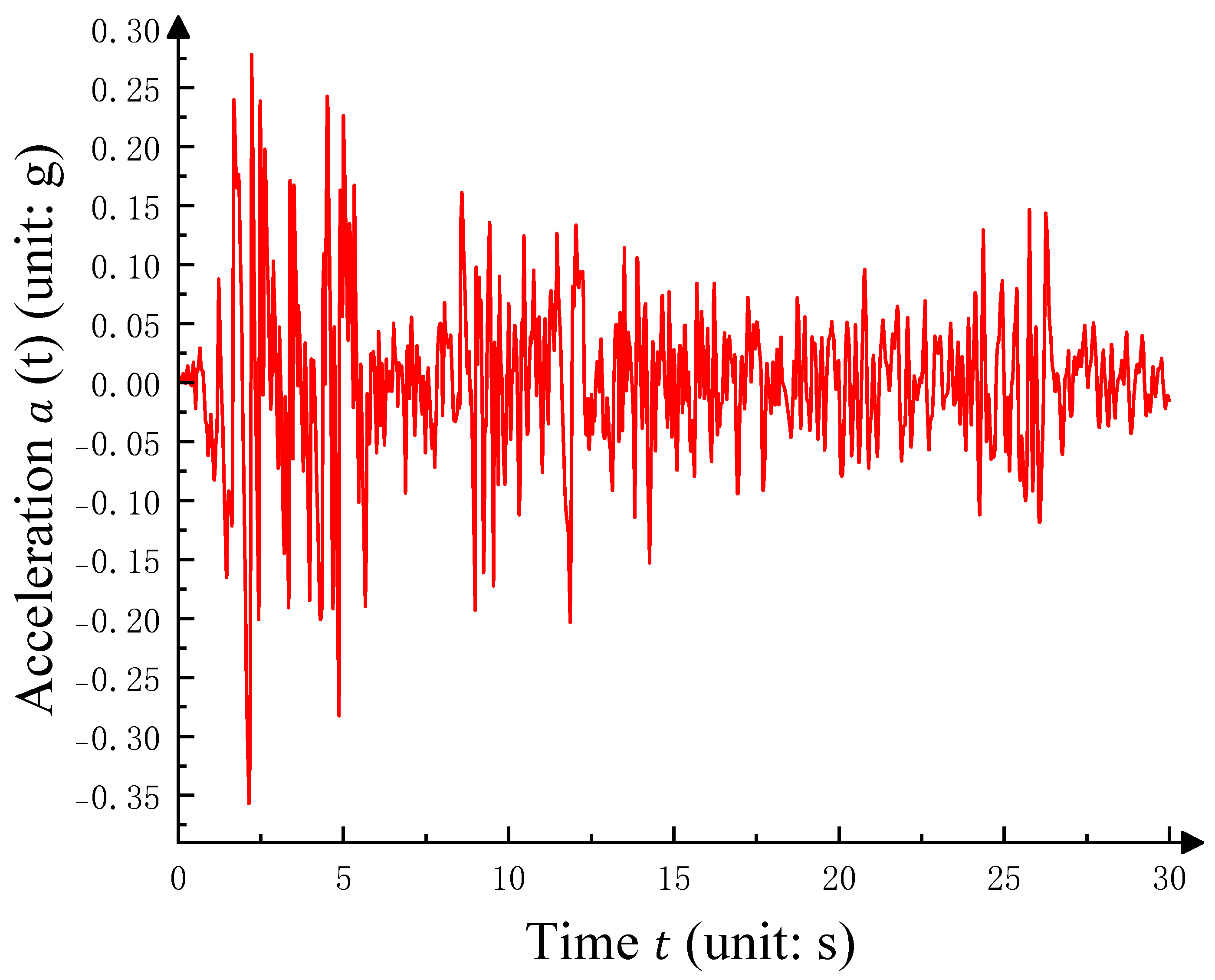
The 1940 El Centro earthquake ground motion [
26], a widely used benchmark record obtained from a publicly available strong-motion database (
Figure 1), was adopted as the seismic input in this study. The horizontal X-direction component was selected and scaled to a peak ground acceleration (PGA) of 0.4 g, representing a strong seismic excitation level commonly considered in seismic response analyses of underground and energy-related engineering structures. The ground motion was applied at the model base in the form of an acceleration time history using the dynamic analysis module of GTS NX (MIDAS IT, version 2022). Free-field boundary conditions were imposed on the lateral boundaries to simulate seismic wave propagation in an infinite soil medium.
A nonlinear time-history analysis based on an explicit time integration scheme was employed to simulate the seismic response of the coupled soil–casing system. The explicit formulation is particularly suitable for the present problem, which involves a large three-dimensional soil domain, nonlinear constitutive behavior of the soil, nonlinear contact behavior at the casing–cement–soil interfaces, and complex dynamic coupling between adjacent well casings. Compared with implicit schemes, the explicit approach avoids global stiffness matrix iterations and associated convergence difficulties, thereby providing improved numerical robustness and computational efficiency for strongly nonlinear soil–structure interaction problems under seismic loading.
In the explicit integration framework implemented in GTS NX, numerical stability is ensured when the time step is smaller than the critical time increment governed by the smallest element size and the wave propagation velocity of the materials. In this study, the total analysis duration was set to 30 s with a uniform time step of 0.02 s. This time step satisfies the stability requirement of the explicit algorithm and provides sufficient temporal resolution to capture the dominant frequency content of the input ground motion. Verification analyses confirmed that the selected time step yields stable and convergent dynamic responses without noticeable numerical dispersion, while maintaining acceptable computational efficiency for the large-scale three-dimensional model. Nonlinear effects arising from material constitutive behavior and interface contact were automatically captured within the explicit solution procedure, enabling accurate simulation of transient seismic wave propagation and inter-well dynamic interaction.
3. Establishment of Numerical Model
3.1. Geometric Models and Modeling Ideas
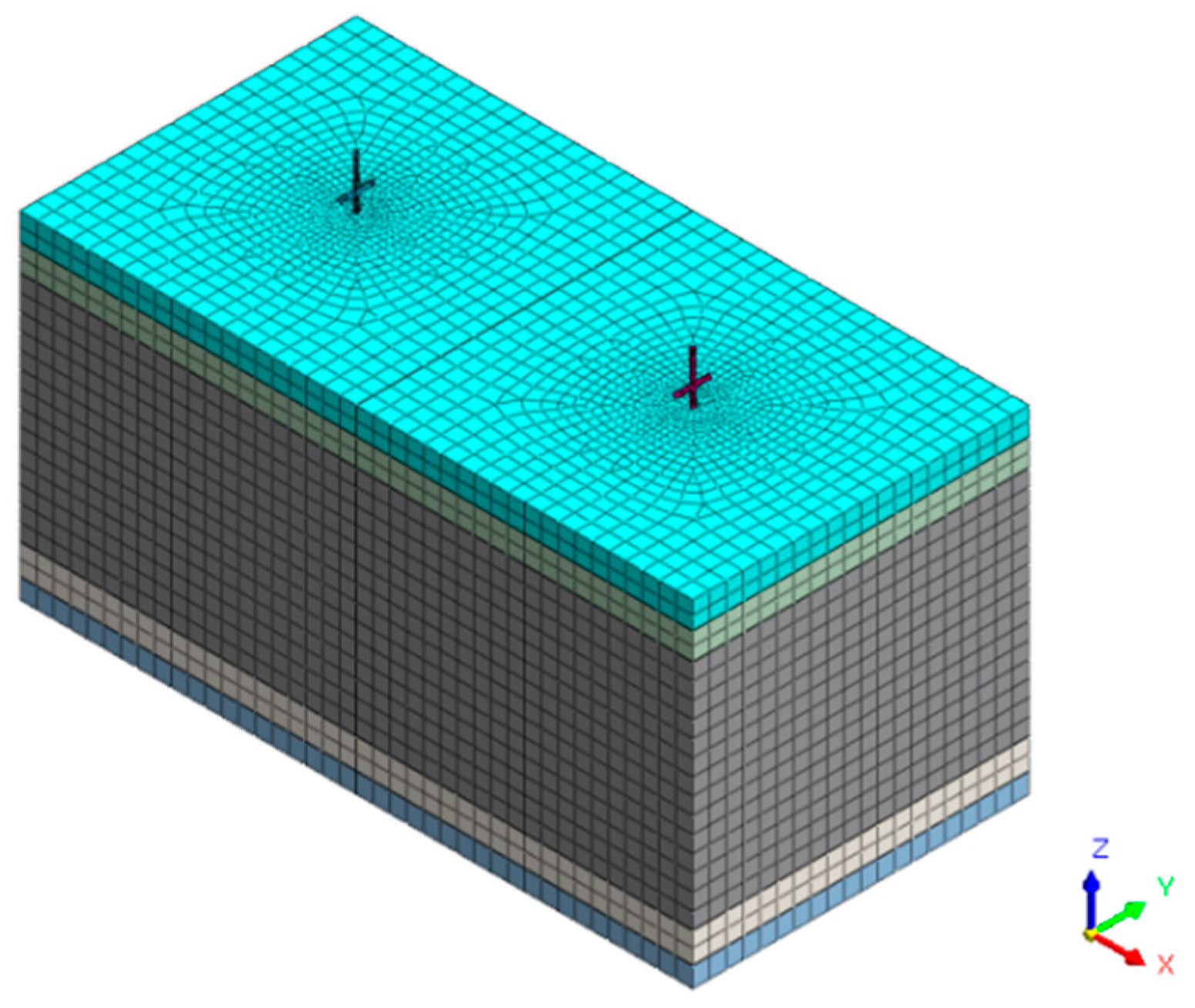
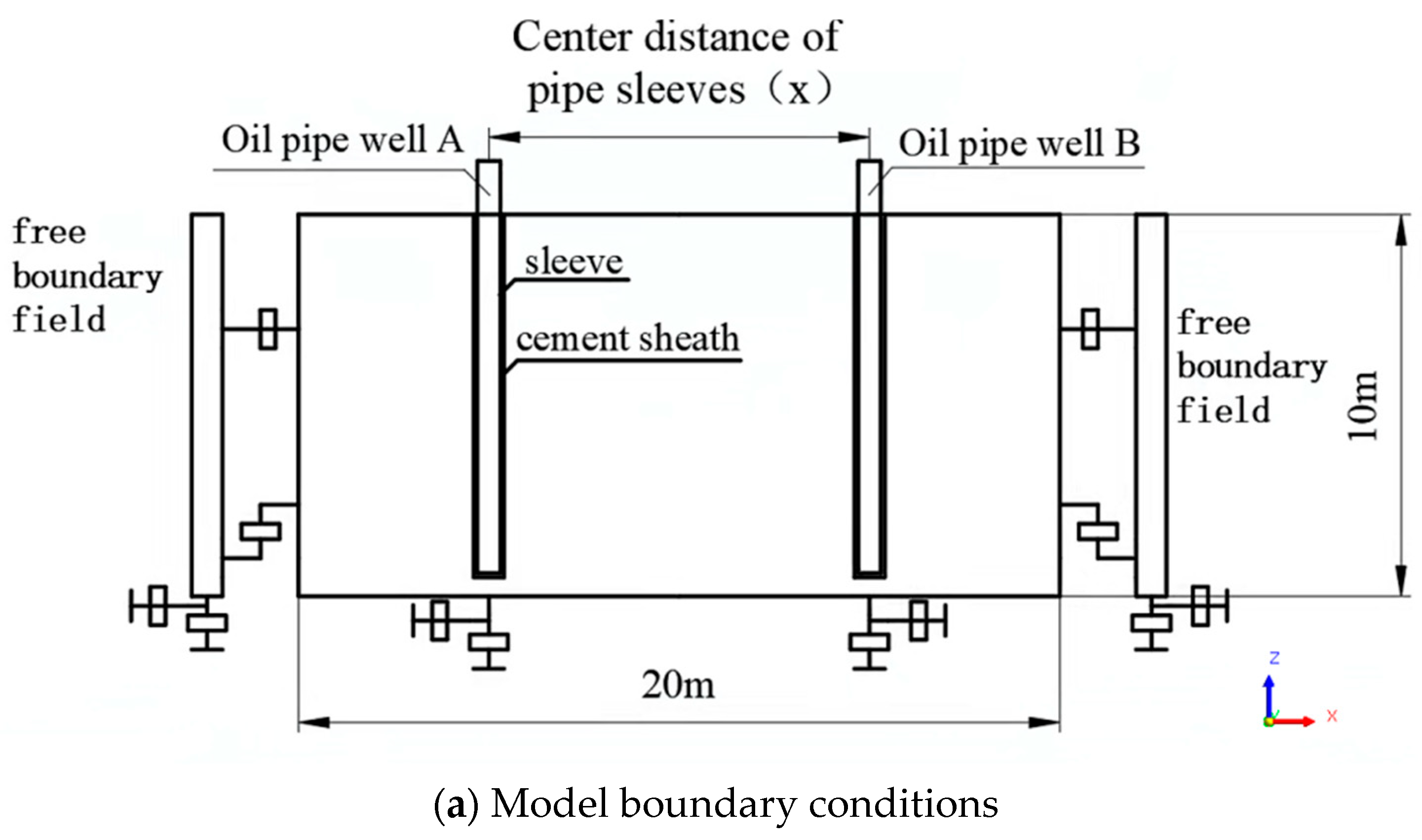
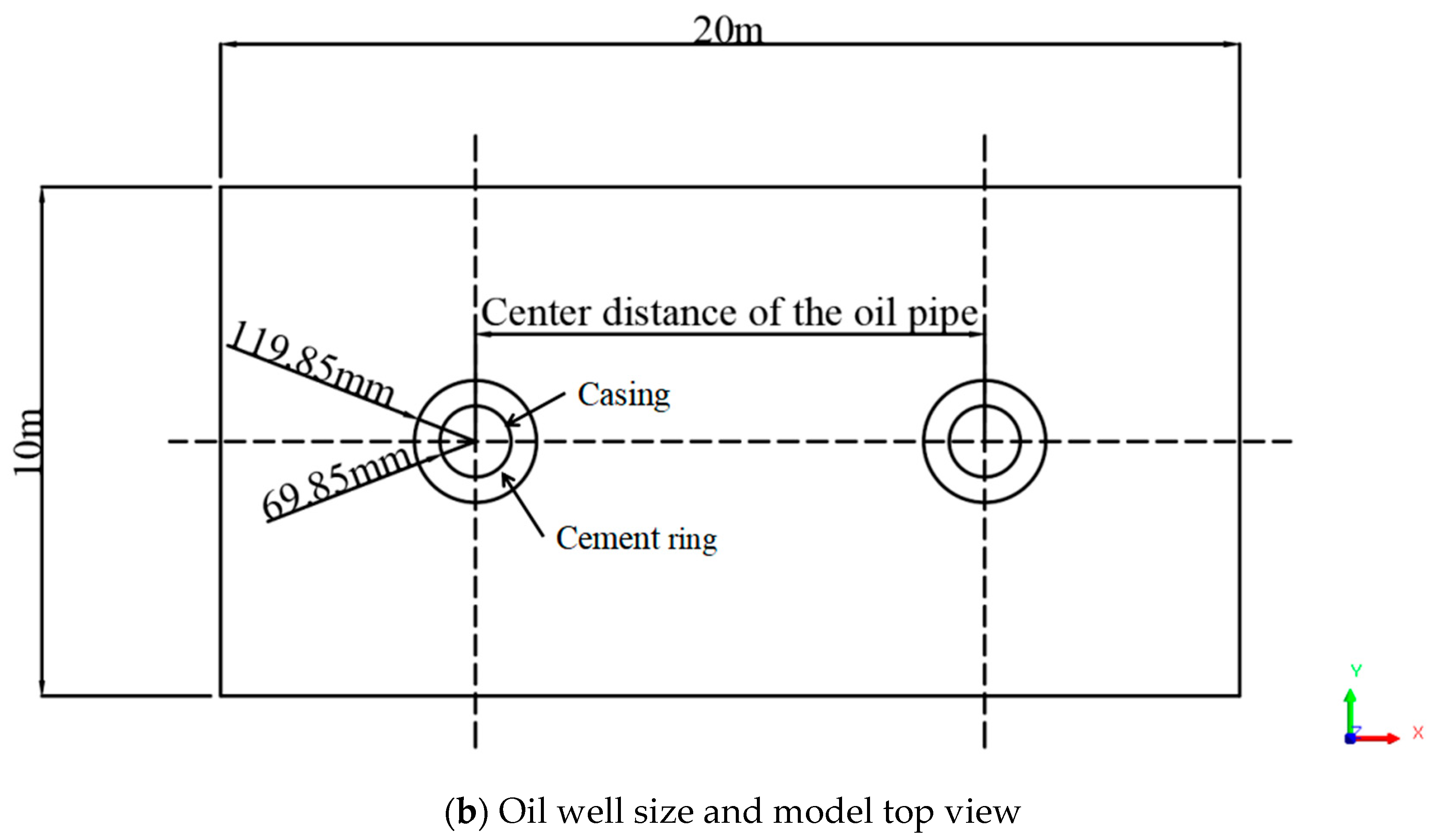
The investigated system consists of a representative dual-well configuration embedded in a layered soil medium, as illustrated in the numerical model schematic. Each well comprises a production casing surrounded by a cement sheath, which provides structural support and ensures mechanical coupling between the casing and the surrounding soil. The casing serves as the primary load-bearing tubular component, while the cement sheath transfers stresses and deformations between the casing and the formation. The wellhead is located at the ground surface and connects the subsurface well structure to the superstructure. In this study, “adjacent wells” refer to two parallel vertical wells with a prescribed center-to-center spacing, sharing the same soil domain and subjected to identical seismic excitation (
Figure 2a).
To investigate the seismic dynamic response of adjacent well casings, a three-dimensional finite element model was established using the commercial software Midas GTS NX. The model explicitly represents the production casing, cement sheath, and surrounding soil as deformable continua, allowing soil–structure interaction and inter-well dynamic coupling to be directly captured. A full-scale (1:1) model was adopted, with the casings penetrating the soil to a depth of 10 m. To ensure computational efficiency while preserving the essential physical mechanisms, the following assumptions were made: (i) the production casing is idealized as a cylindrical solid body; (ii) the surrounding soil is modeled as a homogeneous and isotropic continuum; and (iii) Goodman interface elements are introduced between the casing and cement sheath to simulate shear-slip and bond–slip behavior under seismic loading.
The cement sheath is described using a modified Mohr–Coulomb constitutive model as an engineering-equivalent representation of its mechanical behavior. Although the cement sheath is a quasi-brittle material, the modified Mohr–Coulomb model is widely adopted in numerical analyses to approximate its elastic–plastic response and strength characteristics in a simplified manner. This modeling strategy ensures a consistent treatment of material nonlinearity within the coupled casing–cement–soil system, while the focus of the present study remains on comparative seismic response characteristics and spacing-dependent interaction effects rather than on detailed fracture or failure mechanisms of the cement sheath.
The computational soil domain was defined as a rectangular block measuring 20 m × 10 m × 10 m, which is sufficiently large relative to the well geometry and inter-well spacing to minimize boundary effects. The bottom boundary was fully constrained to represent the underlying stable stratum, while free-field boundary conditions were imposed on the lateral boundaries to simulate wave radiation in an infinite soil medium and to reduce artificial wave reflections (
Figure 2b).
A nonlinear explicit time-history analysis was performed using the dynamic analysis module of GTS NX. The seismic response was solved using a central-difference explicit time integration scheme, which is conditionally stable and particularly suitable for large-scale three-dimensional soil–structure interaction problems involving strong material nonlinearity and interface contact behavior. The seismic excitation was applied at the model base in the form of acceleration time history. A uniform time step of 0.02 s was adopted, satisfying the stability requirement of the explicit algorithm based on the smallest element size and wave propagation velocity in the model, while ensuring adequate temporal resolution of the dominant frequency content of the input ground motion. Nonlinear soil behavior and interface contact nonlinearity were automatically captured within the explicit solution framework without iterative convergence procedures.
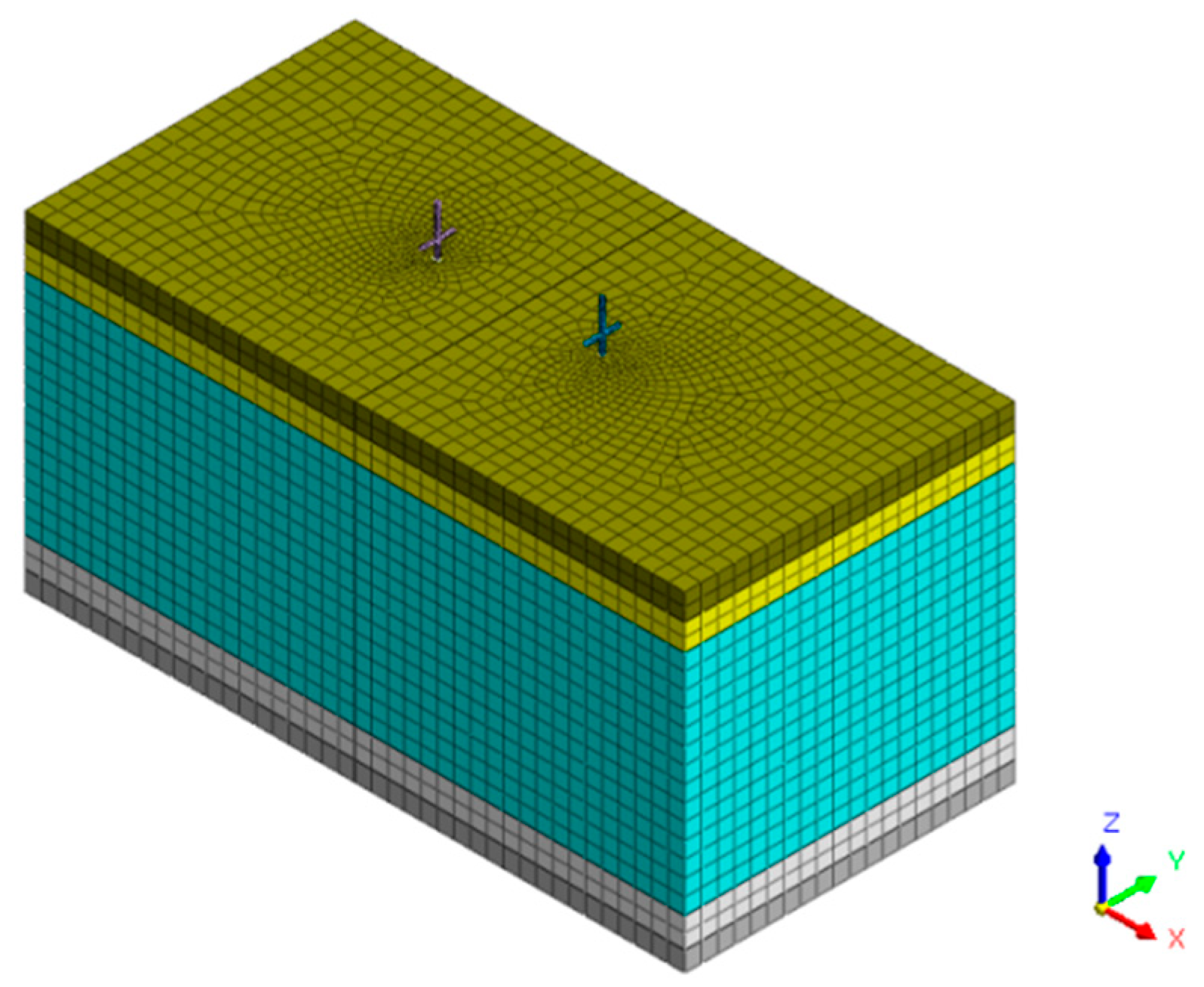
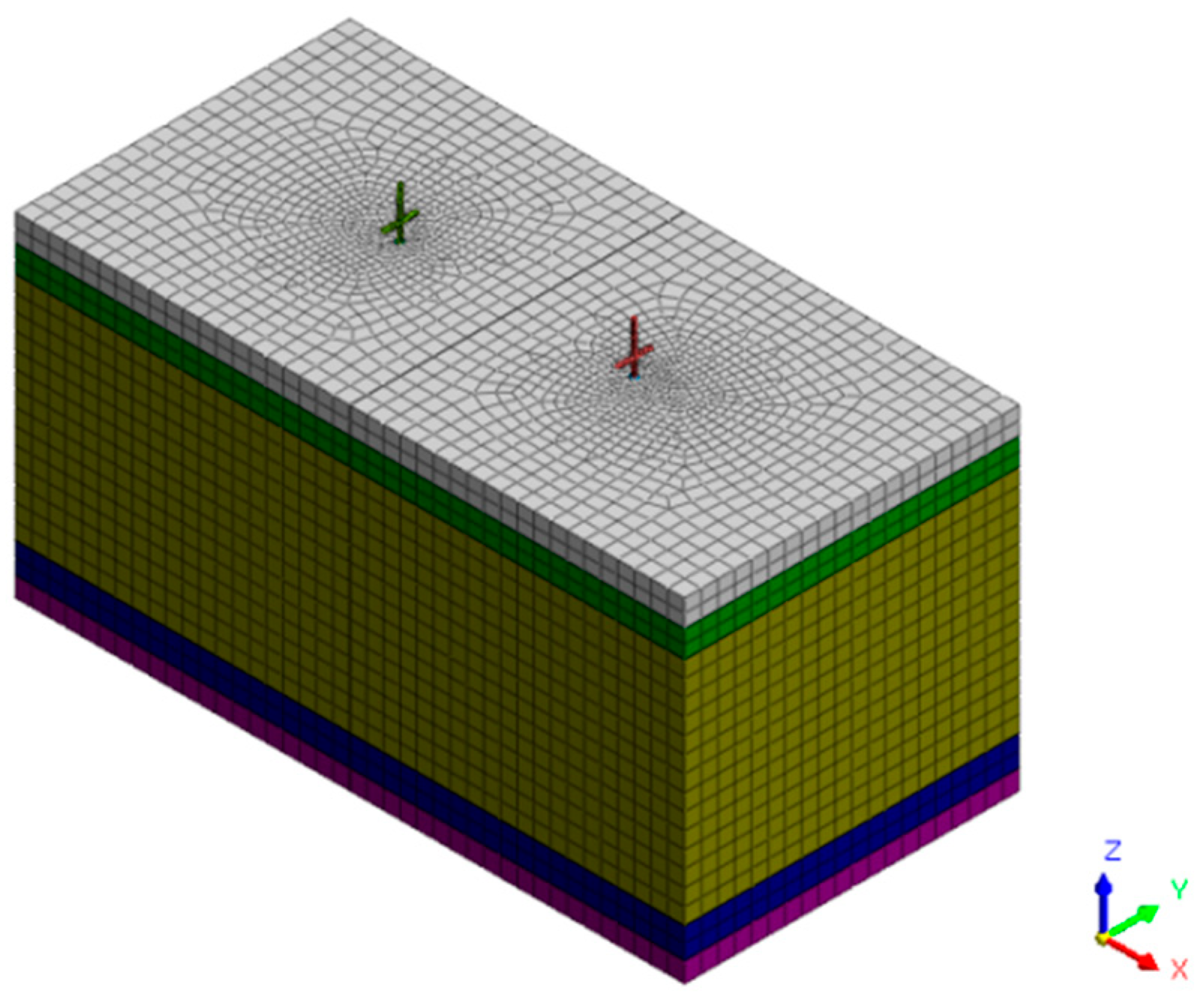
Three inter-well spacings (center-to-center distances) of 5 m (Case 1,
Figure 3), 7.5 m (Case 2,
Figure 4), and 10 m (Case 3,
Figure 5) were examined to systematically investigate the influence of spacing on the mutual dynamic interaction between adjacent well casings. These spacing values fall within the typical range of densely developed oilfields and enable a systematic assessment of seismic interaction effects, spanning from strong coupling at narrow spacing to relatively weak interference at larger spacing.
In the numerical simulations, the overall size of the soil domain was kept constant across different spacing cases to ensure consistency of the computational framework. The selected domain dimensions are sufficiently large relative to the well spacing, minimizing the influence of artificial boundaries on the near-field dynamic response of the casing–soil system. Consequently, the observed differences in seismic response can be primarily attributed to inter-well interaction effects rather than boundary-induced artifacts.
All components of the numerical model were discretized using three-dimensional solid elements. The surrounding soil, cement sheath, and casing were modeled as continuum solid elements, while zero-thickness interface elements were employed at the casing–cement sheath interface to simulate contact and slip behavior. A locally refined mesh was applied in the vicinity of the well casings and the inter-well region to accurately capture stress and deformation gradients, whereas a relatively coarser mesh was used in the far-field soil domain to improve computational efficiency. A basic mesh sensitivity check was performed by comparing displacement responses at representative monitoring points, and the selected mesh density was found to provide stable and convergent results.
The seismic input motion was applied at the bottom boundary of the soil domain in the horizontal direction, while free-field boundary conditions were imposed on the lateral boundaries to minimize artificial wave reflections and ensure realistic propagation of seismic waves within the soil–casing system.
3.2. Soil and Structural Material Parameters
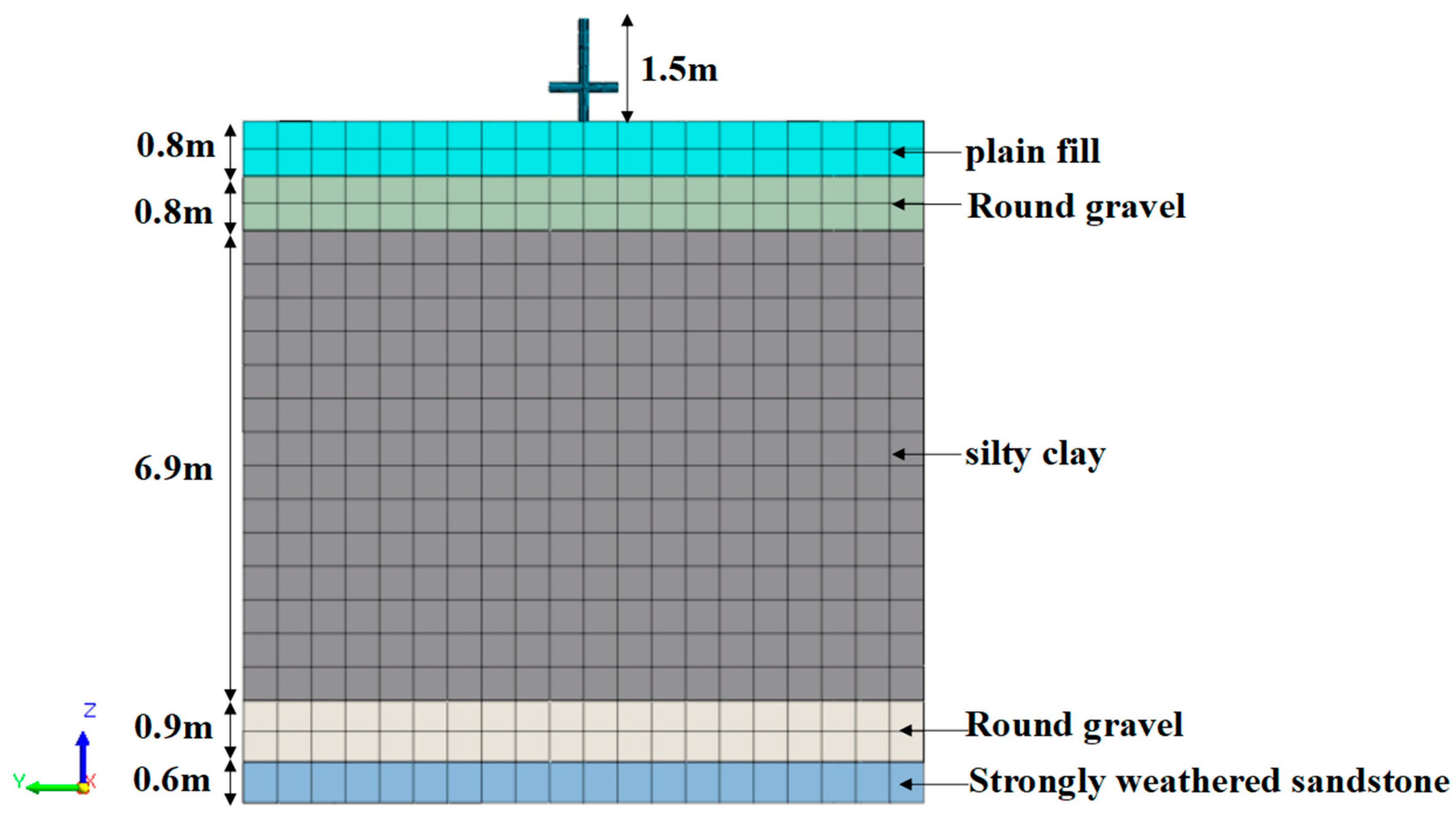
The soil stratigraphy and material parameters adopted in this study were established based on a representative onshore oil well engineering project in Shaanxi Province, China [
27]. According to the documented site investigation, the soil profile was subdivided into five typical strata, including plain fill, round gravel, silty clay, round gravel, and strongly weathered sandstone. This layered configuration reflects common geological conditions encountered in oilfield regions of Northwest China and provides a realistic basis for simulating seismic wave propagation and soil–structure interaction (
Figure 6).
The physical and mechanical parameters of each soil layer, summarized in
Table 1, were directly adopted from the referenced engineering study and include density, elastic modulus, Poisson’s ratio, cohesion, and internal friction angle. These parameters were obtained from in situ tests and laboratory investigations reported in the source study and have been widely used in numerical analyses of underground and geotechnical structures in similar geological settings [
27]. Therefore, the adopted soil properties are considered representative and appropriate for seismic response analysis of oil well systems.
The mechanical properties of the well casing and cement sheath, as listed in
Table 2, were selected to be consistent with standard steel casing and oil-well cement materials reported in the same engineering background [
27]. The casing was modeled using a von Mises elastoplastic constitutive model to capture potential yielding under strong seismic loading, while the cement sheath was described using the modified Mohr–Coulomb model to reflect its brittle–frictional behavior. This constitutive selection is consistent with common practice in numerical simulations of casing–cement–soil systems and ensures mechanical compatibility among model components.
To realistically represent interaction behavior at material interfaces, a Goodman contact model with zero thickness and zero mass was introduced at the casing–cement and cement–soil interfaces, with parameters summarized in
Table 3. The interface stiffness and strength parameters were selected according to the same referenced engineering study [
27], allowing relative slip, separation, and nonlinear stress transfer under seismic excitation. This treatment avoids the unrealistic assumption of perfect bonding and enables more accurate simulation of stress redistribution and energy dissipation at the interfaces, which is essential for capturing spacing-dependent inter-well coupling effects.
The inter-well spacings considered in this study (5 m, 7.5 m, and 10 m) were selected based on typical well layout arrangements adopted in the referenced oilfield project [
27]. These spacings represent closely spaced multi-well configurations commonly used to improve production efficiency and land utilization. Incorporating these spacing values into the numerical model provides a practical and engineering-relevant basis for investigating spacing-dependent seismic interaction mechanisms between adjacent wells.
4. Numerical Results and Analysis
4.1. Layout of Measuring Points and Setting of Working Conditions
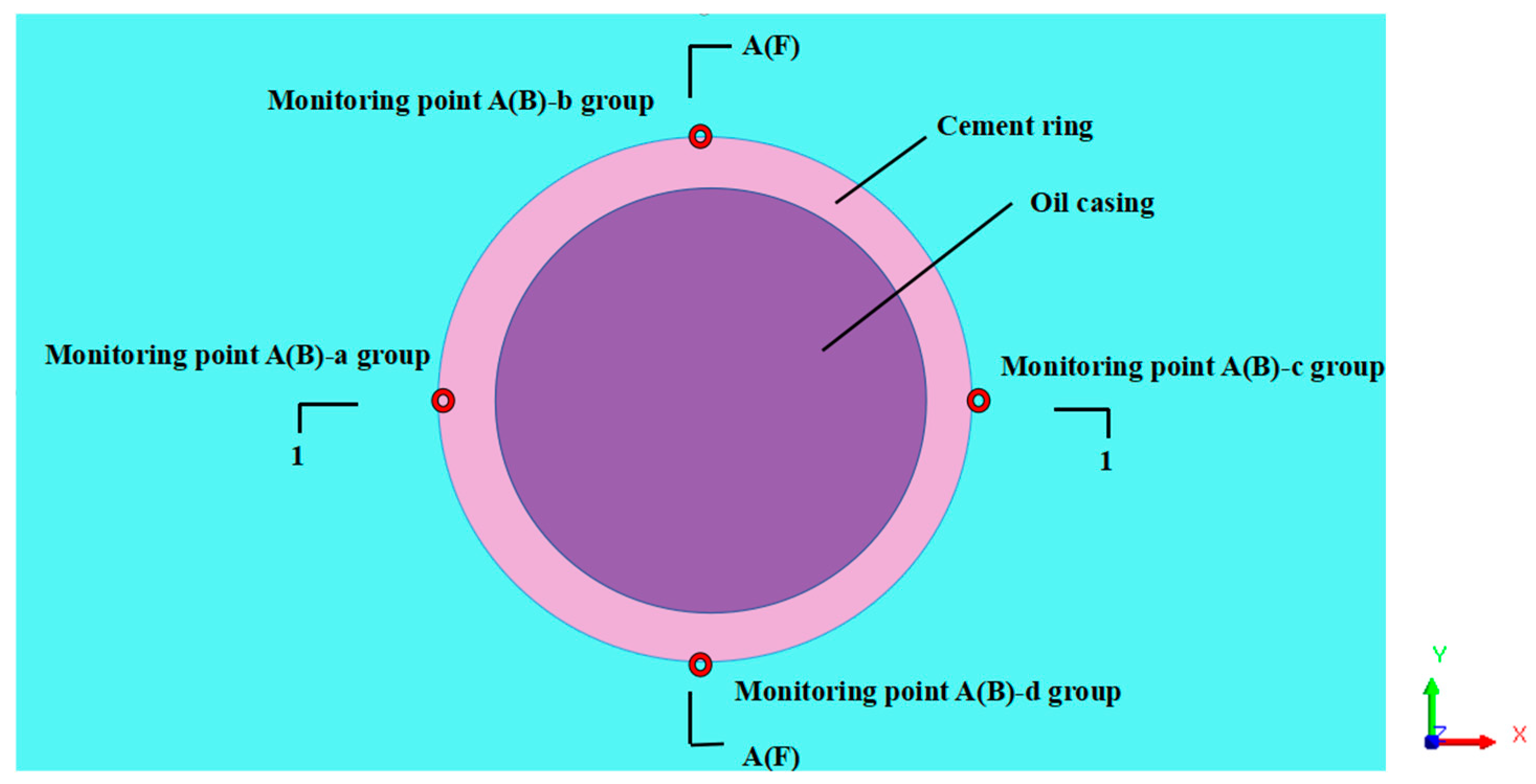
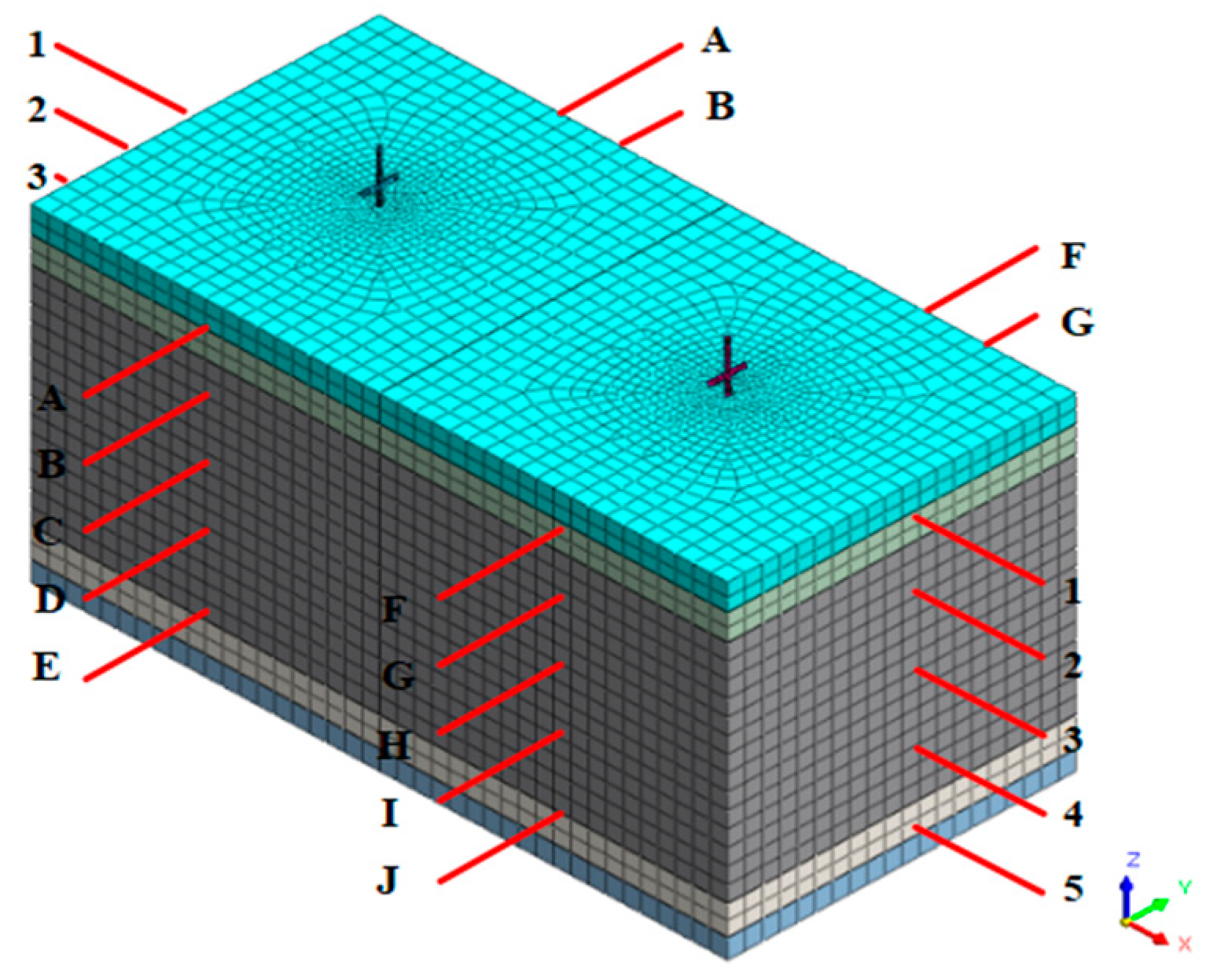
To investigate the seismic dynamic response of the well casings, two adjacent wells, denoted as Casing A and Casing B, were instrumented with monitoring points distributed along their external surfaces. For each casing, four circumferential monitoring lines, labeled a–d, were defined (
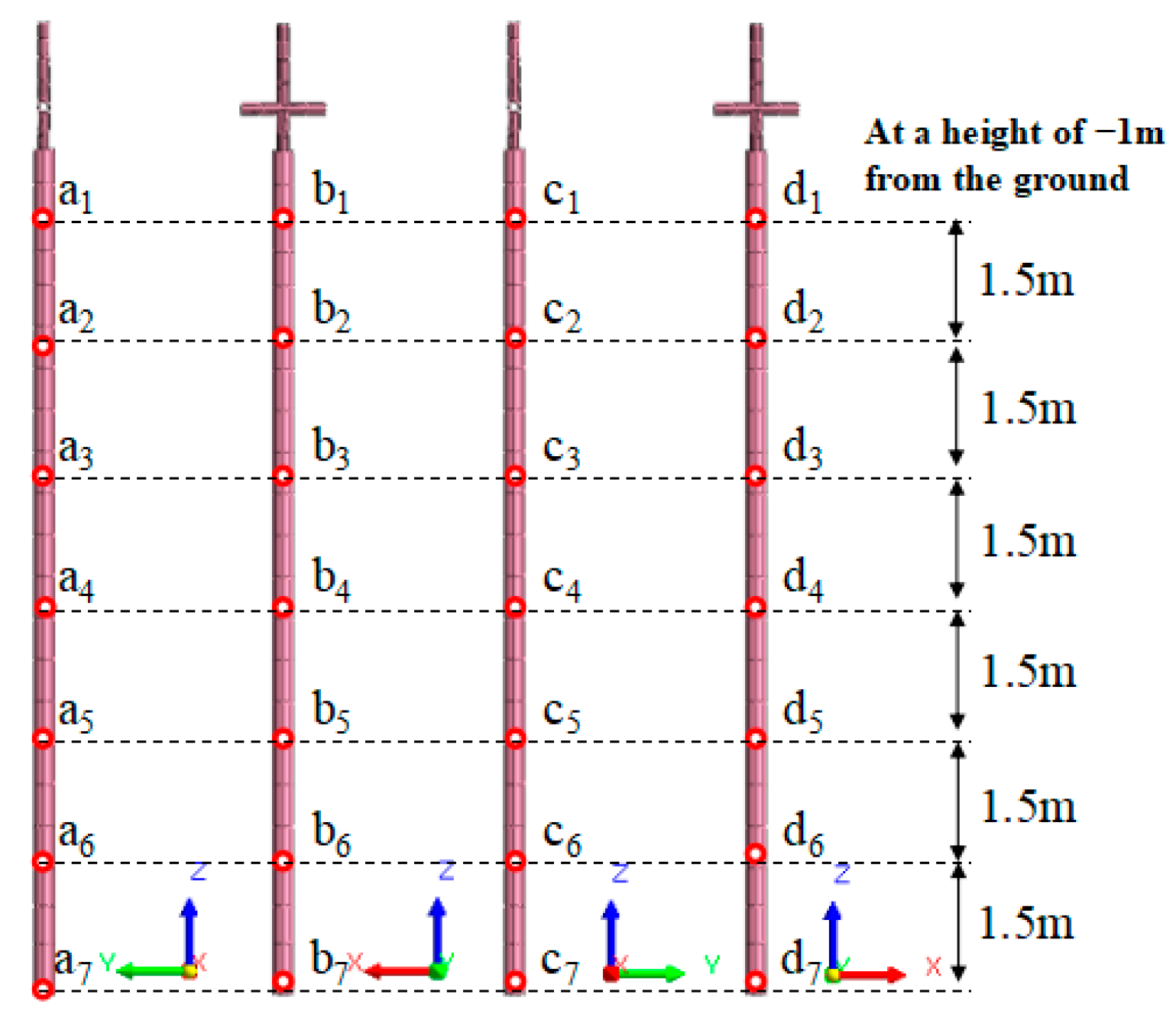
Figure 7). Along each circumferential line, 28 monitoring points were uniformly arranged in the vertical (Z) direction (
Figure 8), enabling systematic capture of both circumferential and depth-dependent displacement responses during seismic excitation.
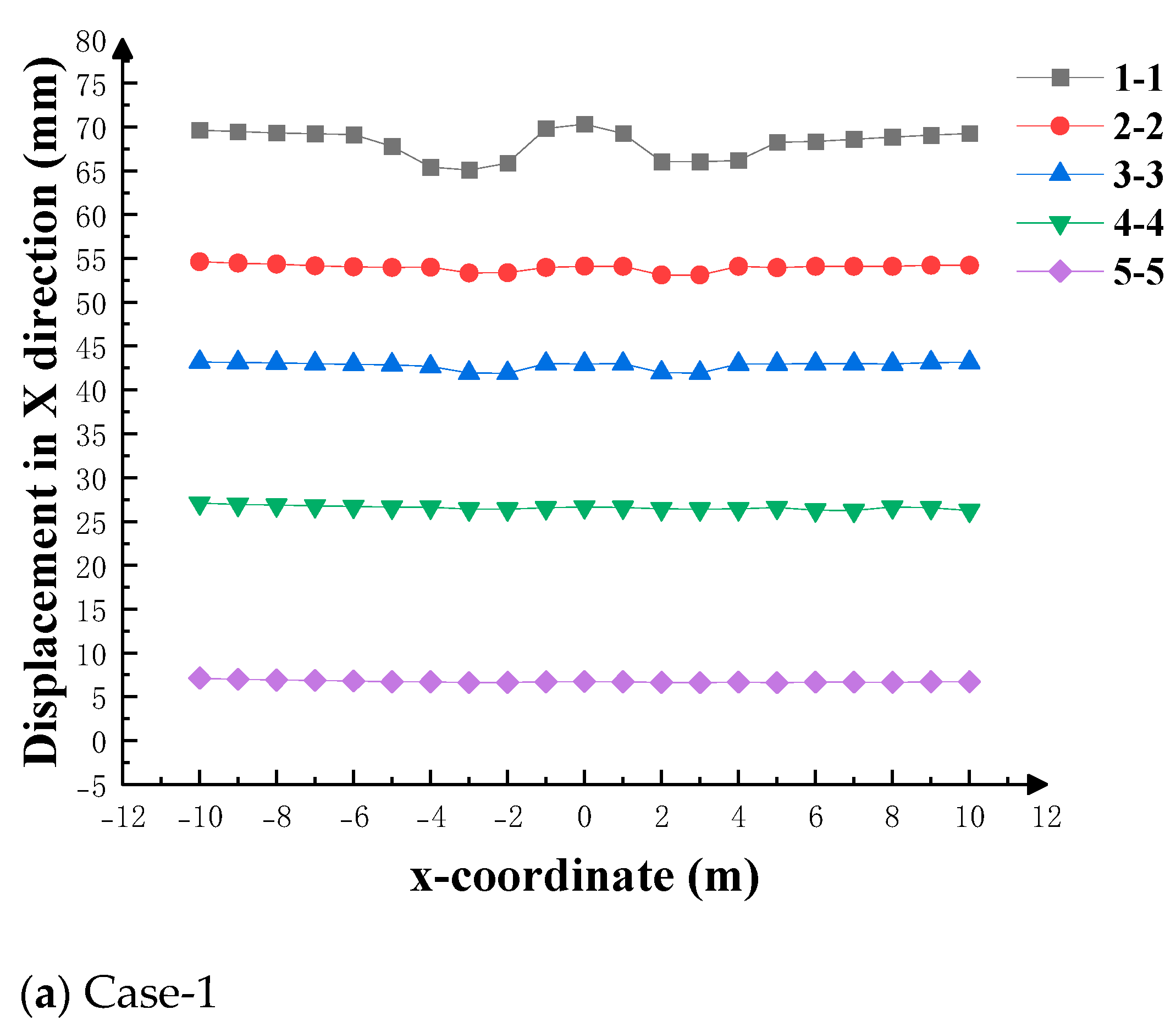
In addition, a series of representative cross-sectional planes was defined within the numerical domain to characterize the spatial variation in casing–soil interaction. Specifically, five sections parallel to the X-axis (1-1 to 5-5) and ten sections parallel to the Y-axis (A-A to J-J) were established, as illustrated in
Figure 9. Monitoring points located on these sections were used to record displacement responses during seismic loading, providing supplementary information for interpreting the spatial distribution of dynamic responses within the coupled casing–soil system. This monitoring configuration ensures sufficient spatial resolution while maintaining computational efficiency.
4.2. Characteristics of Displacement Distribution Along Depth
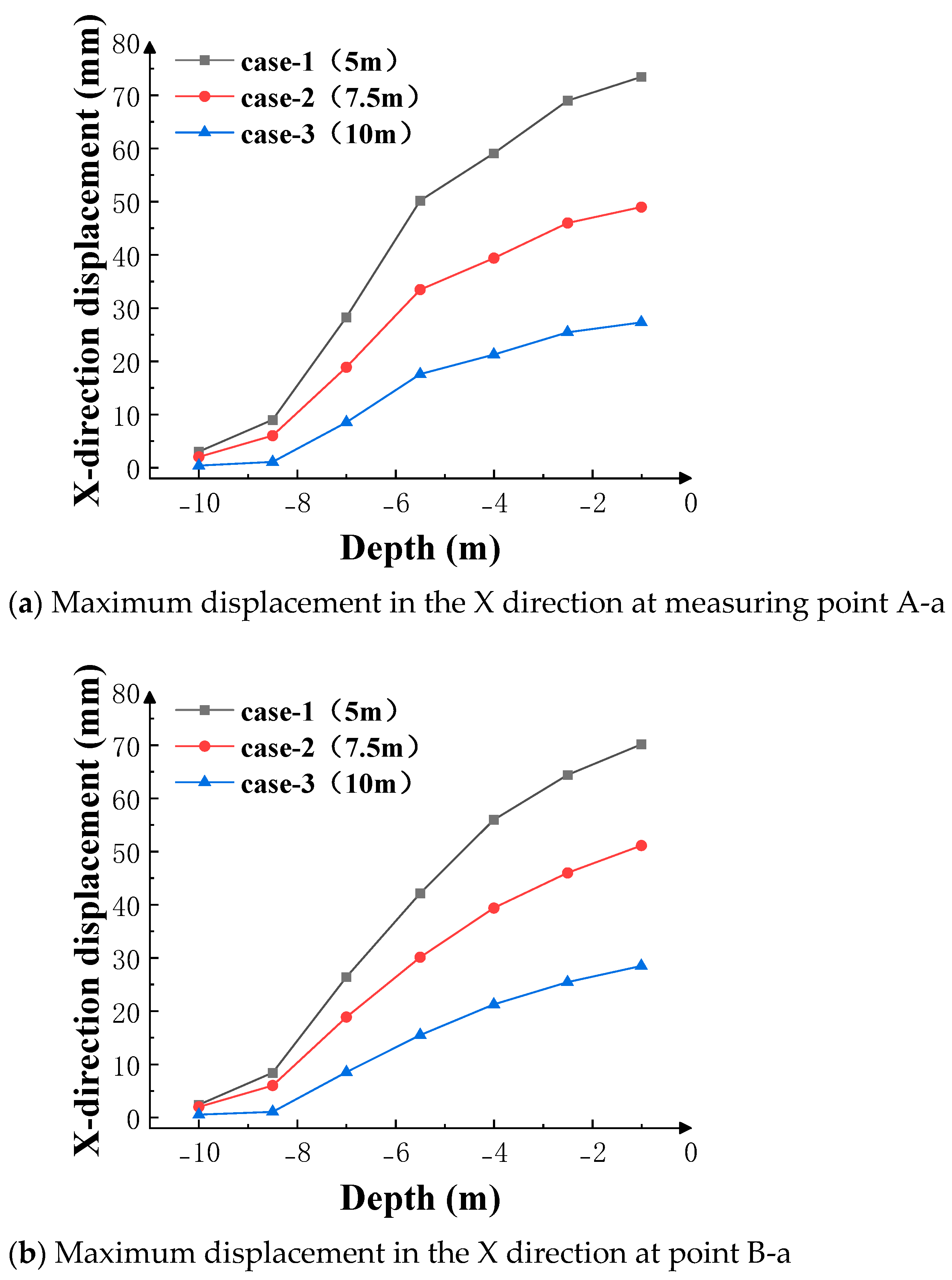
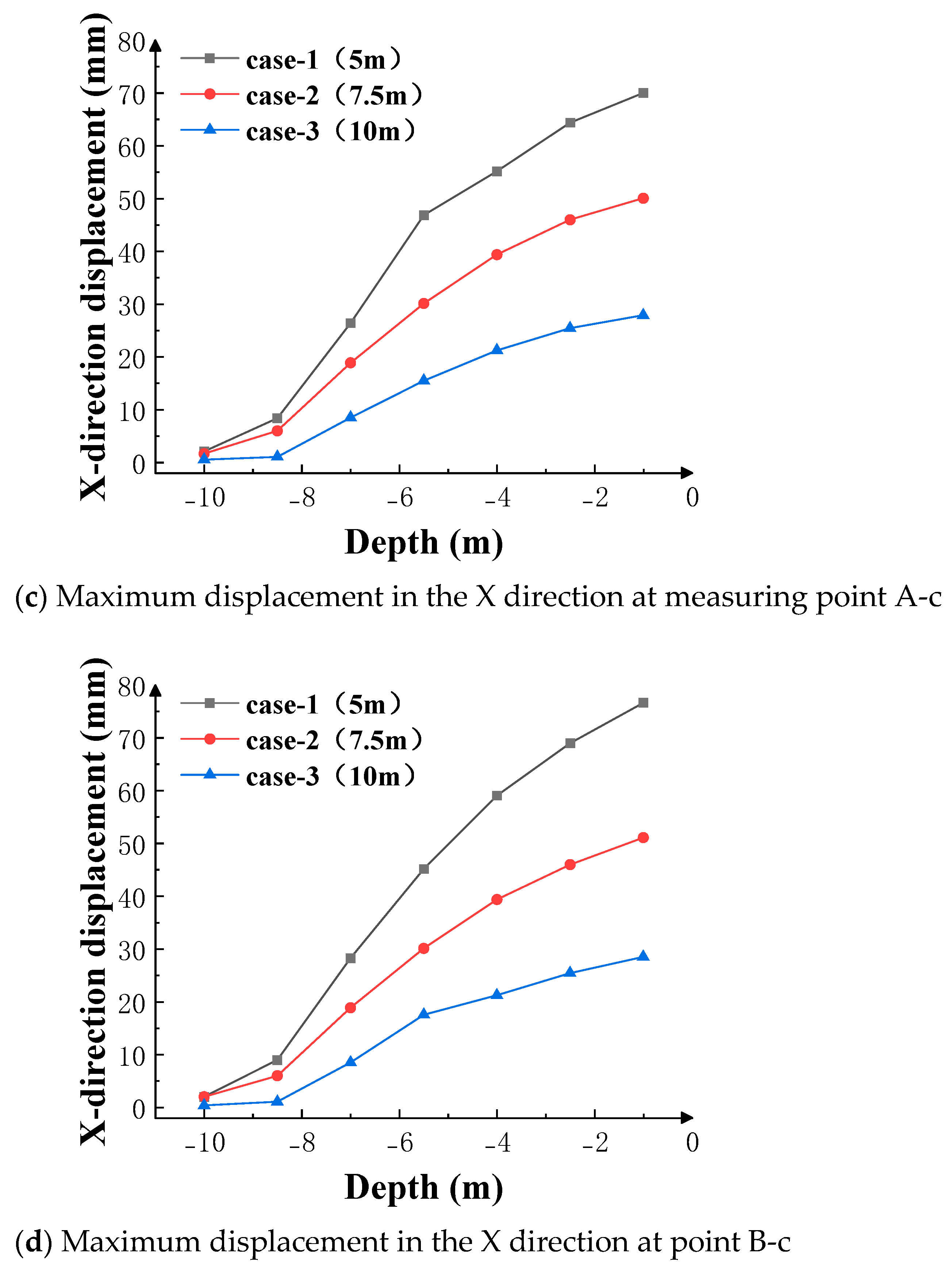
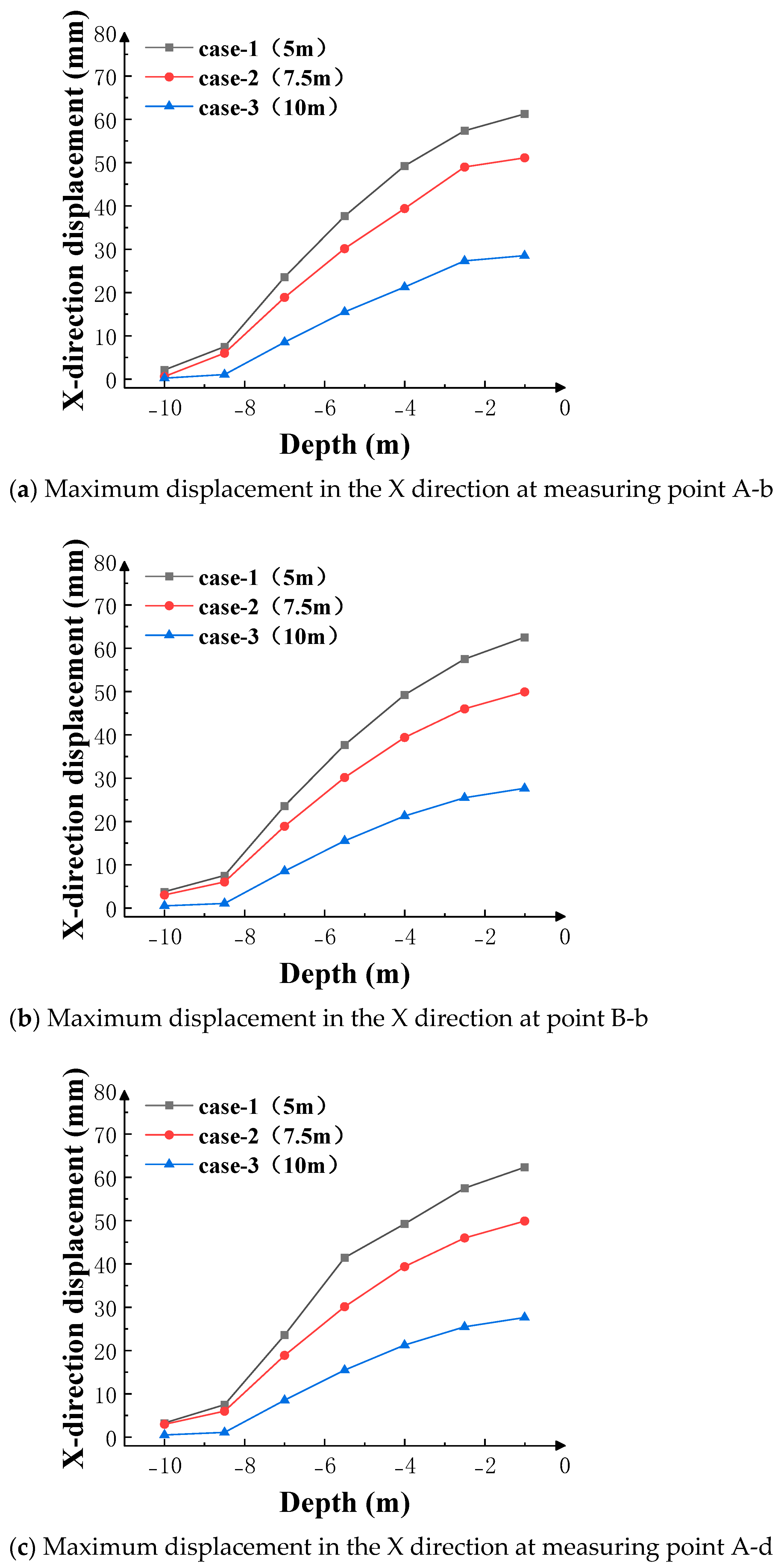
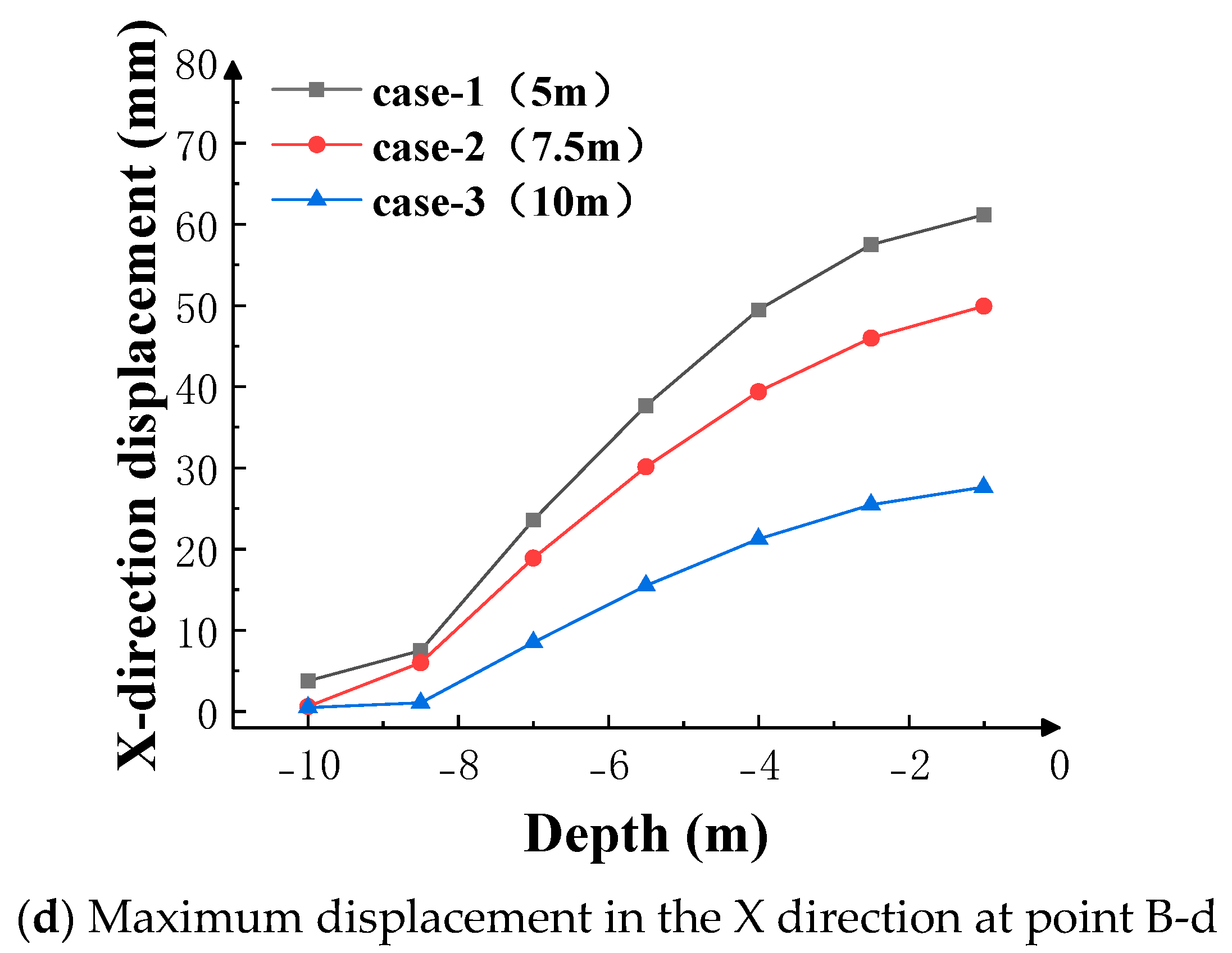
To further investigate the seismic response characteristics of the surrounding soil in a dual-well configuration, monitoring points were arranged along the well centerline and its parallel side lines. The maximum X-direction displacements along the central lines (A-c and B-a) and the side lines (A-b, B-b, A-d, and B-d) were analyzed and compared. The results indicate that the spatial distribution of soil displacement exhibits a generally regular and symmetric pattern.
The X-direction displacement decreases with increasing depth, showing a clear attenuation trend along the vertical direction (
Figure 10). The shallow soil layer (0–4 m) experiences the largest displacement amplitudes, attributed to the combined effects of seismic excitation and local structural disturbance induced by the presence of the wells. With increasing depth, enhanced soil stiffness and confinement lead to a gradual reduction and stabilization of displacements in the deeper zone (>8 m), suggesting that the near-surface region is more sensitive to seismic loading and well-induced effects.
Comparisons among different monitoring lines show that the maximum X-direction displacements along the central lines (A-c and B-a) are consistently larger than those observed along the side lines (A-b, B-b, A-d, and B-d) (
Figure 11). This difference reflects the combined influence of seismic wave propagation direction and the interaction between adjacent wells mediated through the surrounding soil. While the soil located between the two wells is more susceptible to interaction effects, the side regions are primarily influenced by local disturbance associated with individual wells, resulting in relatively smaller displacement responses.
Overall, these results indicate that the influence of the dual-well configuration on soil displacement is spatially concentrated near the inter-well region, whereas lateral attenuation remains evident away from the well axis.
Furthermore, the four lateral measuring lines (A-b and B-b, A-d and B-d) exhibited a pronounced symmetric response pattern. The differences in X-direction displacement between each pair of symmetric lines at the same depth were minimal—less than 3 mm—indicating that the dual-well configuration and applied loading conditions were highly symmetrical in the horizontal direction. The deformation field of the surrounding soil remained uniformly distributed, which confirmed the rationality of the model setup and the appropriateness of the boundary conditions. This symmetric response further verified the stable and consistent dynamic behavior of the dual-well system under seismic excitation.
Based on the combined results presented in
Figure 10 and
Figure 11, the displacement responses of the surrounding soil exhibit consistent spatial trends across different monitoring lines. Specifically, larger X-direction displacements are generally observed in the central region between the two wells, while comparatively smaller responses occur along the side regions. In addition, displacement amplitudes tend to decrease with increasing depth, indicating a clear attenuation effect along the vertical direction.
It should be noted that this displacement pattern reflects the overall response characteristics under the considered seismic input and inter-well spacing conditions, rather than representing a universal behavior applicable to all configurations. The observed trends are consistently manifested across the examined spacing cases, although the magnitude of displacement varies with well spacing. These results demonstrate the spatially non-uniform nature of seismic response in adjacent well systems and highlight the importance of considering both circumferential location and depth when evaluating inter-well interaction effects.
4.3. Depth-Dependent S-max Shear Response Under Seismic Excitation: Effects of Inter-Well Spacing
To further elucidate the mechanical mechanism of inter-well interaction under seismic excitation, the depth-dependent distribution of maximum shear stress (S-max shear) was examined along representative monitoring lines.
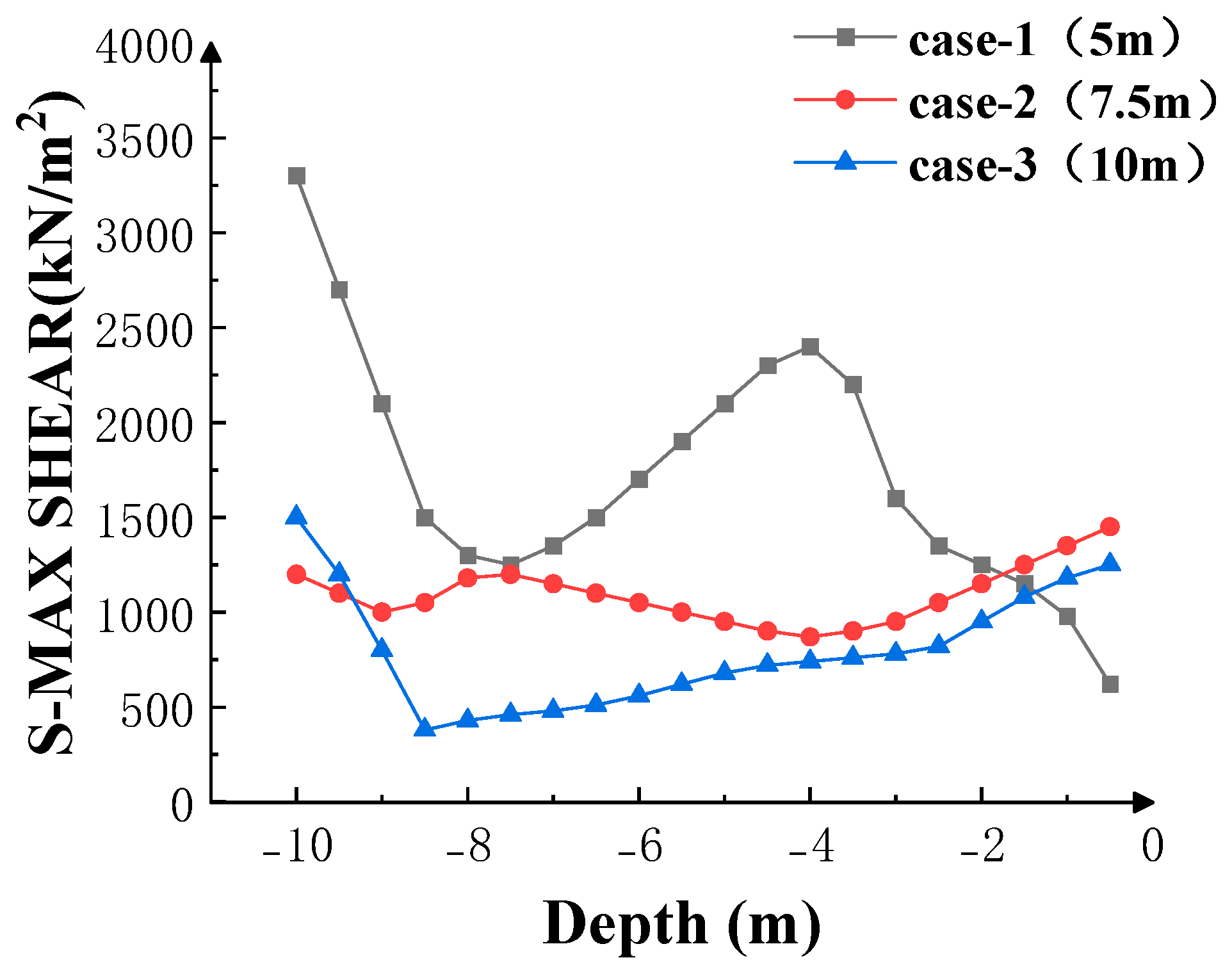
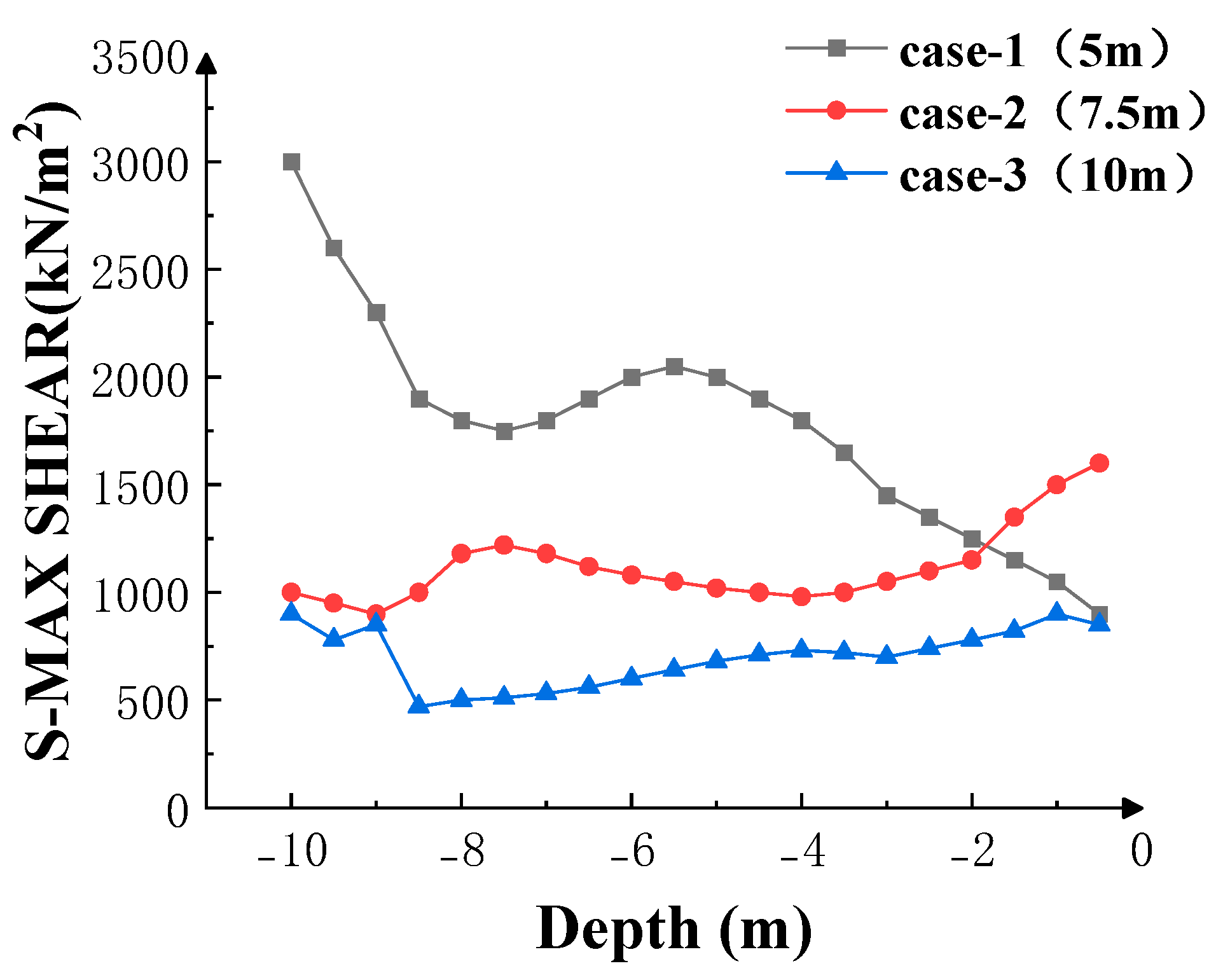
Figure 12 illustrates the variation in S-max shear with depth along the central monitoring line (A-c), where the inter-well dynamic coupling is expected to be most pronounced. For comparison,
Figure 13 presents the corresponding stress distribution along a non-central monitoring line, where the influence of inter-well interaction is relatively weaker.
As shown in
Figure 12, the depth-dependent evolution of S-max shear along the central line exhibits a clear sensitivity to inter-well spacing; however, the spacing effect is not uniform over the entire depth range. In the shallow zone (approximately −0.5 m to −2 m), the shear stress levels associated with different spacings are relatively close, and the 5 m spacing case does not exhibit a dominant stress peak. This behavior indicates that, in the near-surface region, the stress response is primarily governed by direct seismic wave input and limited soil confinement, while inter-well coupling effects remain secondary.
With increasing depth (approximately −2 m to −6 m), the S-max shear generally decreases for all spacing cases, reflecting seismic wave attenuation and enhanced confinement of the surrounding soil. In this intermediate depth range, the differences among the three spacing scenarios remain moderate, suggesting that inter-well interaction is partially suppressed by energy dissipation within the soil mass.
In the deeper zone (below approximately −8 m), a distinct spacing-dependent divergence in shear stress response becomes evident. The 5 m spacing case exhibits a pronounced increase in S-max shear compared with the 7.5 m and 10 m cases, indicating a stronger dynamic coupling effect between adjacent wells. This stress amplification is attributed to the combined effects of increased soil confinement, wave reflection, and stiffness contrast near the bottom region, which promote stress accumulation even though displacement amplitudes continue to attenuate with depth. In contrast, the 10 m spacing case consistently shows the lowest stress levels, approaching the response characteristics of an isolated single well.
Figure 13 presents the shear stress distribution along the non-central monitoring line. Compared with the central line, the overall magnitude of S-max shear is noticeably lower, and the differences among the three spacing cases are significantly reduced. Although a similar depth-dependent trend—namely, a decrease in stress at intermediate depths followed by a mild increase at greater depths—can still be observed, the stress amplification in the deep zone is much weaker. This comparison confirms that the pronounced stress concentration observed along the central line is primarily induced by soil-mediated inter-well dynamic interaction rather than by the incident seismic wave alone.
Overall, the stress response analysis demonstrates that reduced inter-well spacing does not uniformly amplify shear stress over the entire depth range, but instead significantly intensifies stress concentration in the deeper confined zone of the central inter-well region. While displacement responses characterize deformation patterns, the shear stress results provide complementary evidence of nonlinear dynamic coupling, wave interference, and energy redistribution within the soil–casing system. These findings further highlight inter-well spacing as a critical parameter governing seismic-induced stress concentration and potential damage risk in clustered well configurations.
4.4. The Influence Pattern of Well Spacing on Dynamic Response
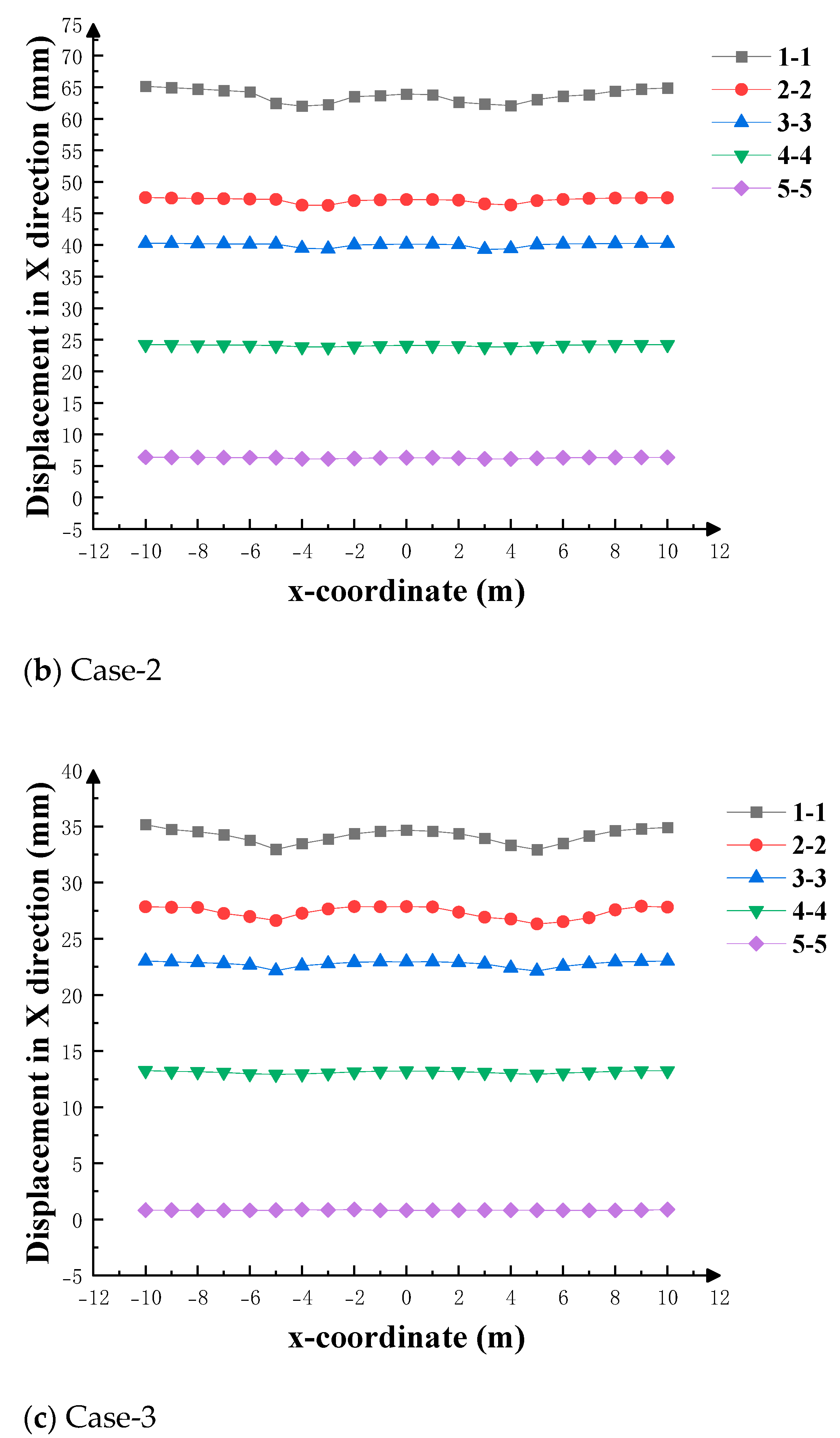
To investigate the influence of inter-well spacing on seismic response characteristics, the maximum horizontal displacements along the X-axis were extracted at six depths below the ground surface: 1 m (monitoring point 1-1), 3.5 m (2-2), 5 m (3-3), 6.5 m (4-4), 8 m (5-5), and 9.5 m (6-6).
Figure 14 illustrates the displacement distribution patterns under three spacing conditions—5 m, 7.5 m, and 10 m. The results showed that a smaller inter-well spacing produced a markedly greater displacement response in the shallow zone (1–3.5 m), revealing a pronounced inter-well amplification effect.
For the 5 m spacing case, the maximum horizontal displacement reached approximately 69.63 mm at a depth of 1 m and remained high at 3.5 m (54.61 mm) before gradually decreasing to 6.7 mm at 9.5 m depth. In contrast, for the 7.5 m spacing, the shallow displacement decreased to 65.13 mm, whereas for the 10 m spacing, the peak displacement further reduced to 35.16 mm, accompanied by a gentler attenuation trend along depth (
Figure 14). These results indicated that a smaller spacing enhanced the dynamic coupling between the well casings and the surrounding soil, intensifying the reflection and interference of seismic waves within the inter-well region and consequently amplifying horizontal displacement.
Moreover, the vertical variation exhibited a consistent attenuation of displacement with increasing depth across all spacing cases, indicating that seismic energy dissipated rapidly in the deeper layers, where inter-well interaction became limited. When the spacing increased from 5 m to 10 m, the peak displacement in the shallow zone (1–3.5 m) decreased by approximately 45–50%, whereas the reduction in the deep zone (>8 m) was less than 15%. This demonstrated that the amplification effect was predominantly concentrated within the shallow strata and the upper sections of the well casings.
The underlying mechanism could be attributed to the formation of a partially confined wave-propagation channel when the wells were closely spaced. Multiple reflections and interferences of seismic waves occurred within the inter-well gap, resulting in localized accumulation of strain energy density. As the spacing increased, these interference effects weakened, allowing seismic energy to dissipate more uniformly. Therefore, inter-well spacing represented a key geometric parameter governing the intensity and significance of the seismic amplification effect in clustered well systems, which should be carefully considered in well field layout and seismic design.
In addition to peak displacement distributions, the dynamic response characteristics were further analyzed through time–displacement histories extracted at representative depths along the casing. The results indicate that the maximum lateral displacements consistently occur near the peak ground acceleration of the input motion, confirming that the identified peak responses are governed by seismic excitation rather than numerical artifacts. Moreover, although the primary focus is on displacement responses, the corresponding stress and strain levels within the casing–cement–soil system exhibit consistent spatial trends, with larger deformation demands observed in regions experiencing amplified inter-well interaction effects. These observations further support the reliability of the displacement-based evaluation adopted in this study.
Although displacement is used as the primary indicator to characterize spacing-dependent dynamic behavior, stress and strain responses were also examined to aid the interpretation of nonlinear interaction effects. The spatial distribution of stress and strain aligns with the displacement amplification observed in closely spaced well configurations, indicating increased mechanical demand in the inter-well region. Therefore, the displacement-based analysis provides a representative and effective measure for evaluating the relative intensity of seismic interaction between adjacent wells under the considered conditions.
5. Conclusions
Based on three-dimensional nonlinear finite element simulations incorporating soil–structure interaction, the seismic dynamic responses of adjacent oil well casings with center-to-center spacings of 5 m, 7.5 m, and 10 m were systematically investigated. By combining displacement-based and stress-based response analyses, the spacing-dependent inter-well dynamic interaction mechanisms were clarified. The main conclusions can be summarized as follows:
(1) Depth-dependent attenuation of displacement and shallow concentration of deformation.
The horizontal displacement responses of both the well casings and the surrounding soil exhibit a clear attenuation trend with increasing depth. The shallow strata (approximately 0–4 m) experience the most significant deformation due to strong coupling between the incident seismic wavefield and the casing–soil system. Below approximately 8 m depth, displacement responses gradually stabilize, indicating that inter-well dynamic interaction is primarily concentrated in the near-surface soil layers.
(2) Pronounced inter-well amplification under reduced spacing.
Inter-well spacing has a dominant influence on seismic response amplification. When the spacing is reduced to 5 m, shallow horizontal displacements increase by approximately 70% compared with those observed at 10 m spacing. This amplification is attributed to multiple wave reflections and constructive interference within the narrow inter-well zone, which promote localized seismic energy accumulation. As spacing increases, wave interference effects weaken, and the system response progressively approaches that of an isolated single-well configuration.
(3) Spatial distribution characteristics and symmetry of displacement response.
Symmetric monitoring points exhibit highly consistent displacement responses, confirming the geometric and mechanical symmetry of the numerical model and boundary conditions. The displacement field displays a distinct spatial pattern characterized by a “strong response in the center and a weaker response on both sides,” indicating that dynamic effects are most pronounced along the central inter-well axis and attenuate laterally toward the outer regions.
(4) Spacing-dependent shear stress concentration and deep stress amplification.
To further elucidate the mechanical mechanisms of inter-well interaction, the depth-dependent distribution of maximum shear stress (S-max shear) was analyzed. Along the central monitoring line (A-c), where inter-well coupling is strongest, the shear stress exhibits a clear dependence on inter-well spacing. For all spacing cases, shear stress generally decreases from the near-surface region to intermediate depths, followed by a gradual increase in the deeper zone. Notably, the 5 m spacing case consistently produces the highest shear stress levels throughout the depth range, demonstrating intensified dynamic coupling and stress transfer between adjacent wells.
In contrast, stress responses along non-central monitoring lines are significantly lower, and the differences among spacing cases are reduced. Although similar depth-dependent trends are observed, stress amplification in these regions is much weaker, confirming that the pronounced shear stress concentration along the central line is primarily induced by inter-well dynamic interaction rather than by the incident seismic wave alone.
(5) Implications for nonlinear SSI behavior and seismic design of clustered wells.
The combined displacement and shear stress analyses reveal that reduced inter-well spacing not only amplifies deformation but also intensifies stress concentration within the surrounding soil, particularly in the central coupling zone between adjacent wells. Importantly, the observed increase in deep shear stress despite attenuating displacement highlights that displacement alone is insufficient to characterize seismic damage potential. Instead, stress-based indicators provide critical insight into nonlinear SSI effects, energy redistribution, and potential damage mechanisms. These findings emphasize that inter-well spacing is a key geometric parameter governing both deformation and stress responses and should be carefully considered in seismic-resistant design and spacing optimization of clustered well systems.
6. Limitations
Several limitations of this study should be noted. Although a three-dimensional nonlinear finite element model incorporating soil–structure interaction and interface nonlinearity was developed, the results have not yet been validated against field observations or experimental data and therefore mainly provide comparative and mechanistic insights into spacing-dependent inter-well seismic interaction. In addition, the seismic input was limited to a single horizontal ground motion record scaled to a PGA of 0.4 g, and multi-directional or site-specific seismic effects were not considered. Finally, the analysis focused on three representative inter-well spacings (5 m, 7.5 m, and 10 m) to capture the essential coupling behavior of closely spaced wells; extension to a wider range of spacings and loading conditions will be addressed in future work.
Author Contributions
Funding acquisition, formal analysis, validation, supervision, methodology, M.C.; methodology, software, K.D.; data curation, formal analysis, W.L.; formal analysis, data curation, Y.H.; writing—original draft, writing—review and editing, Z.L.; writing—original draft, writing—review and editing, software, supervision, Y.L.; formal analysis, supervision, data curation, methodology, Z.Q. All authors have read and agreed to the published version of the manuscript.
Funding
This research was funded by The Key Laboratory of Well Stability and Fluid & Rock Mechanics in Oil and Gas Reservoir of Shaanxi Province, Xi’an Shiyou University, grant number WSFRM20200102001. The APC was funded by The Key Laboratory of Well Stability and Fluid & Rock Mechanics in Oil and Gas Reservoir of Shaanxi Province, Xi’an Shiyou University (WSFRM20200102001).
Data Availability Statement
All data supporting the findings of this study are fully presented within the main text of the manuscript, and no additional supplementary datasets are associated with this work.
Conflicts of Interest
Authors Minjing Chen, Yang Liu and Zhan Qu were employed by The Key Laboratory of Well Stability and Fluid & Rock Mechanics in Oil and Gas Reservoir of Shaanxi Province, Xi’an Shiyou University. The remaining authors declare that the research was conducted in the absence of any commercial or financial relationships that could be construed as a potential conflict of interest. The funders had no role in the design of the study; in the collection, analyses or interpretation of data; in the writing of the manuscript; or in the decision to publish the results.
References
- Zhang, L.; Wang, B.; Hu, M.; Shi, X.; Yang, L.; Zhou, F. Research Progress on Optimization Methods of Platform Well Fracturing in Unconventional Reservoirs. Processes 2025, 13, 1887. [Google Scholar] [CrossRef]
- Alsubaih, A.A.S.; Sepehrnoori, K.; Delshad, M.; Alsaedi, A. A Comprehensive review of well integrity challenges and digital twin applications across conventional, unconventional, and storage wells. Energies 2025, 18, 4757. [Google Scholar] [CrossRef]
- Longde, S.; Caineng, Z.; Ailin, J.; Yunsheng, W.; Rukai, Z.; Songtao, W.; Zhi, G. Development characteristics and orientation of tight oil and gas in China. Pet. Explor. Dev. 2019, 46, 1073–1087. [Google Scholar] [CrossRef]
- Yucel, G.; Talaslioglu, T. Incomplete-type welding imperfection on fatigue assessment of tubular T-joints. Rev. Constr. 2025, 24, 89–99. [Google Scholar]
- Lackey, G.; Dilmore, R.M. NETL Well Integrity Workshop: Identifying Well Integrity Research Needs for Subsurface Energy Infrastructure; National Energy Technology Laboratory (NETL): Pittsburgh, PA, USA; Morgantown, WV, USA, 2021.
- Kc, S.B.; Zhang, L.; Wang, G. Ground-Motion Modification by Soil, Structures, and Topography: A Review of Soil Structure Interaction (SSI) and Its Multi-Scale Extensions. Buildings 2025, 15, 4170. [Google Scholar]
- Sathuvalli, U.B.; Suryanarayana, P. Structural-casing/soil interaction effects on wellhead motion. SPE Drill. Complet. 2016, 31, 273–285. [Google Scholar] [CrossRef]
- Elgamal, A.; Lai, T.; Yang, Z.; He, L. Dynamic soil properties, seismic downhole arrays and applications in practice. In Proceedings of the 4th International Conference on Recent Advances in Geotechnical Earthquake Engineering and Soil Dynamics, San Diego, CA, USA, 28 March 2001. [Google Scholar]
- Wu, X. Experimental and Theoretical Approaches for Integrety Evaluation of Wellbore Cement Sheath; Cuvillier Verlag: Göttingen, Germany, 2024. [Google Scholar]
- Peterie, S.; Ivanov, J.; Miller, R.; Livers, A.; Bennett, B.; Brooks, B.; Fontana, J.; Judy, B.; Morton, S.; Nelson, R. Passive Seismic Characterization of High Priority Salt Jugs, Barton Well Field, Hutchinson, Kansas. Available online: https://www.kgs.ku.edu/Publications/OFR/2015/KGS_OFR_2015-28.pdf (accessed on 10 December 2025).
- Huseynli, S.; De Luca, F.; Karamitros, D. Review of Dynamic Soil-Structure Interaction Models; Springer Nature: Cham, Switzerland, 2024. [Google Scholar]
- González Acosta, J.L.; Van Den Eijnden, A.P.; Hicks, M.A. Tied Free-Field boundaries to enhance numerical accuracy of earthquake simulations. Front. Built Environ. 2025, 11, 1567604. [Google Scholar] [CrossRef]
- Bain Christopher, A.; O’rourke Thomas, D.; Bray Jonathan, D. Pipeline Response to Seismic Displacement at Balboa Boulevard during the 1994 Northridge Earthquake. J. Geotech. Geoenviron. Eng. 2024, 150, 04023139. [Google Scholar] [CrossRef]
- Lu, H.; Xi, D.; Qin, G. Environmental risk of oil pipeline accidents. Sci. Total Environ. 2023, 874, 162386. [Google Scholar] [CrossRef] [PubMed]
- Hindy, A.; Novak, M. Earthquake response of underground pipelines. Earthq. Eng. Struct. Dyn. 1979, 7, 451–476. [Google Scholar] [CrossRef]
- O’rourke, T.; Jung, J.; Argyrou, C. Underground pipeline response to earthquake-induced ground deformation. Soil Dyn. Earthq. Eng. 2016, 91, 272–283. [Google Scholar] [CrossRef]
- Jing, H.; Huang, L.; Liu, H.; Jiang, W.; Deng, Q.; Niu, R. A Proposal for Rapid Assessment of Long-Distance Oil and Gas Pipelines After Earthquakes. Appl. Sci. 2025, 15, 3595. [Google Scholar] [CrossRef]
- Choudhury, D.; Chaudhuri, C.H. A critical review on performance of buried pipeline subjected to pipe bursting and earthquake induced permanent ground deformation. Soil Dyn. Earthq. Eng. 2023, 173, 108152. [Google Scholar] [CrossRef]
- Pan, H.; Li, H.-N.; Li, C.; Tian, L. Parametric study on seismic behaviors of a buried pipeline subjected to underground spatially correlated earthquake motions. J. Earthq. Eng. 2022, 26, 6329–6351. [Google Scholar] [CrossRef]
- Dulger, M.; Kilic, H. Investigation of Earthquake-Induced Pipe Damage in Liquefiable Soils. Appl. Sci. 2024, 14, 4599. [Google Scholar] [CrossRef]
- Ma, T.; Chen, P.; Zhao, J. Overview on vertical and directional drilling technologies for the exploration and exploitation of deep petroleum resources. Geomech. Geophys. Geo-Energy Geo-Resour. 2016, 2, 365–395. [Google Scholar] [CrossRef]
- Wang, Y.; Li, L.; Ju, Y. Stratal movement and microseismic events induced by multi-well hydrofracturing under varying well spacings and initiation sequences. Eng. Comput. 2023, 40, 1921–1946. [Google Scholar] [CrossRef]
- Tan, X.X.; Xiao, S.B.; Yang, Y.; Khakzad, N.; Reniers, G.; Chen, C. An agent-based resilience model of oil tank farms exposed to earthquakes. Reliab. Eng. Syst. Saf. 2024, 247, 12. [Google Scholar] [CrossRef]
- Kokavessis, N.K.; Anagnostidis, G.S. Finite element modeling of buried pipelines subjected to seismic loads: Soil structure interaction using contact elements. In Proceedings of the ASME Pressure Vessels and Piping Conference, Vancouver, BC, Canada, 23–27 July 2006. [Google Scholar]
- Li, F.; Liu, Y.; Xu, H.; Tang, F.; Han, L.; Yang, S. Damage simulation of casing-cement interface of wellbore structure under non-uniform formation stress. Geomech. Energy Environ. 2025, 44, 100747. [Google Scholar] [CrossRef]
- Orabi, I.I.; Ahmadi, G. Horizontal-Vertical Response Spectra for El Centro (1940) Earthquake; Department of Mechanical and Industrial Engineering, Clarkson University: Potsdam, NY, USA, 1985. [Google Scholar]
- Liu, Y.; Liu, H.; He, J.; Fan, L.; Chu, F. Dynamic Response Analysis of Oil Well Casing under Seismic Loading. J. Earthq. Eng. 2025, 47, 309–318. [Google Scholar]
| Disclaimer/Publisher’s Note: The statements, opinions and data contained in all publications are solely those of the individual author(s) and contributor(s) and not of MDPI and/or the editor(s). MDPI and/or the editor(s) disclaim responsibility for any injury to people or property resulting from any ideas, methods, instructions or products referred to in the content. |