Article

Analysis of Flexural Performance and Crack Width Prediction Models of UHPC Composite Slabs

1
Guangxi Key Laboratory of Green Building Materials and Construction Industrialization, Guilin University of Technology, Guilin 541004, China
2
School of Civil Engineering, Guilin University of Technology, Guilin 541004, China
3
Nanning College of Technology, Guilin 541006, China
4
Guilin University of Electronic Technology, Guilin 541004, China
*
Authors to whom correspondence should be addressed.
Buildings 2026, 16(2), 411; https://doi.org/10.3390/buildings16020411

Submission received: 19 December 2025 / Revised: 13 January 2026 / Accepted: 15 January 2026 / Published: 19 January 2026
(This article belongs to the Special Issue High-Performance Steel–Concrete Composite/Hybrid Structures)

Abstract

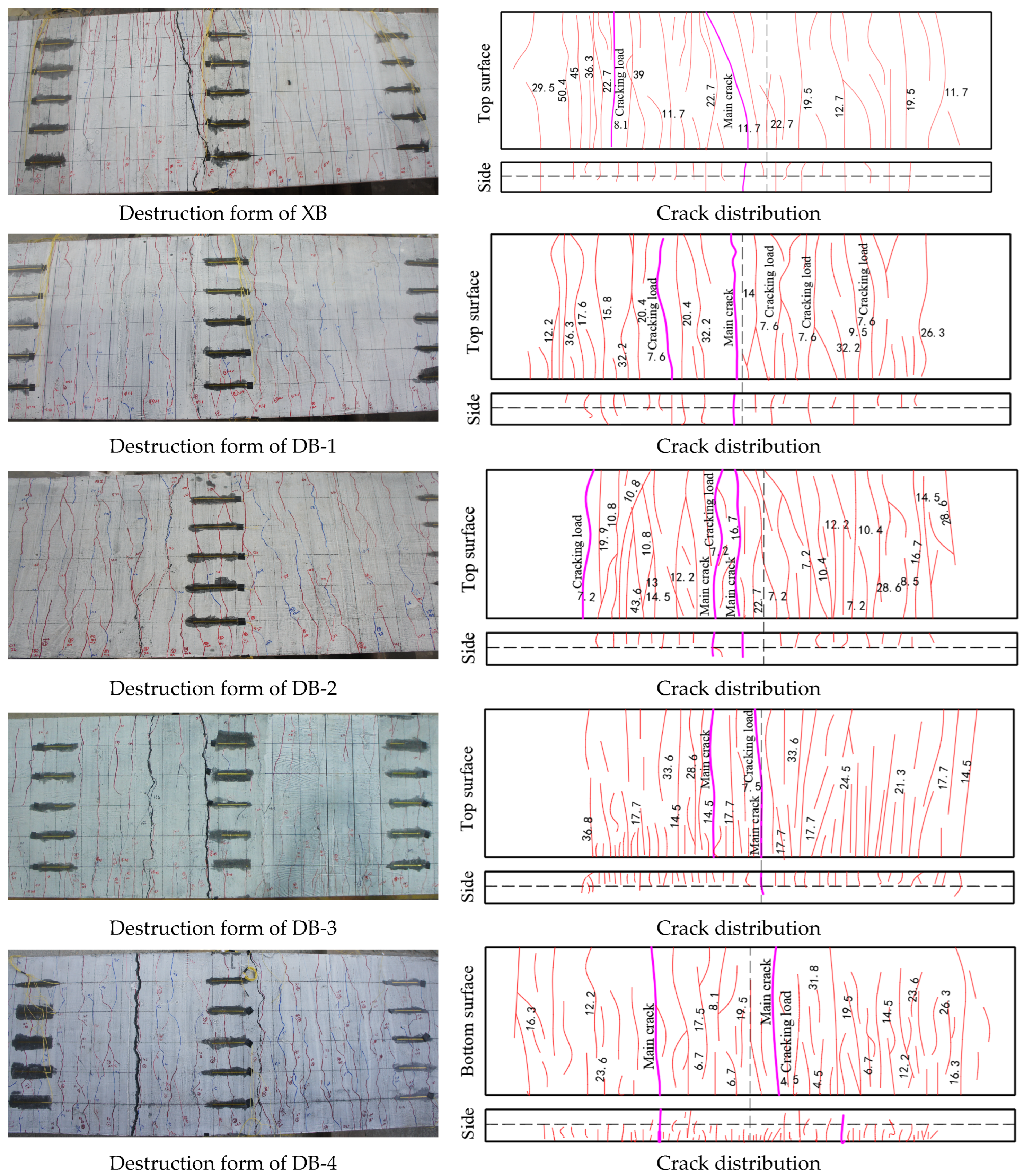
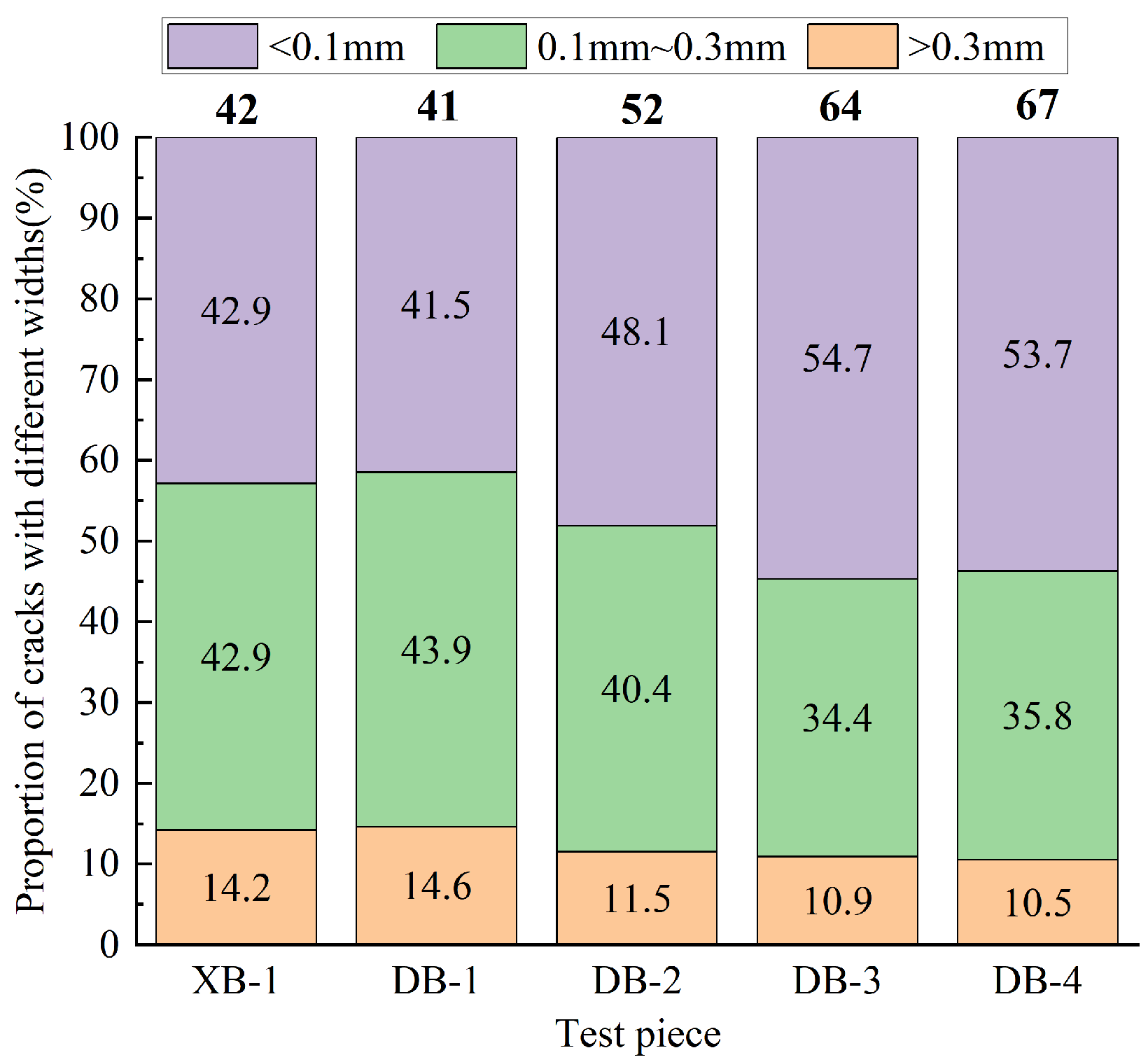
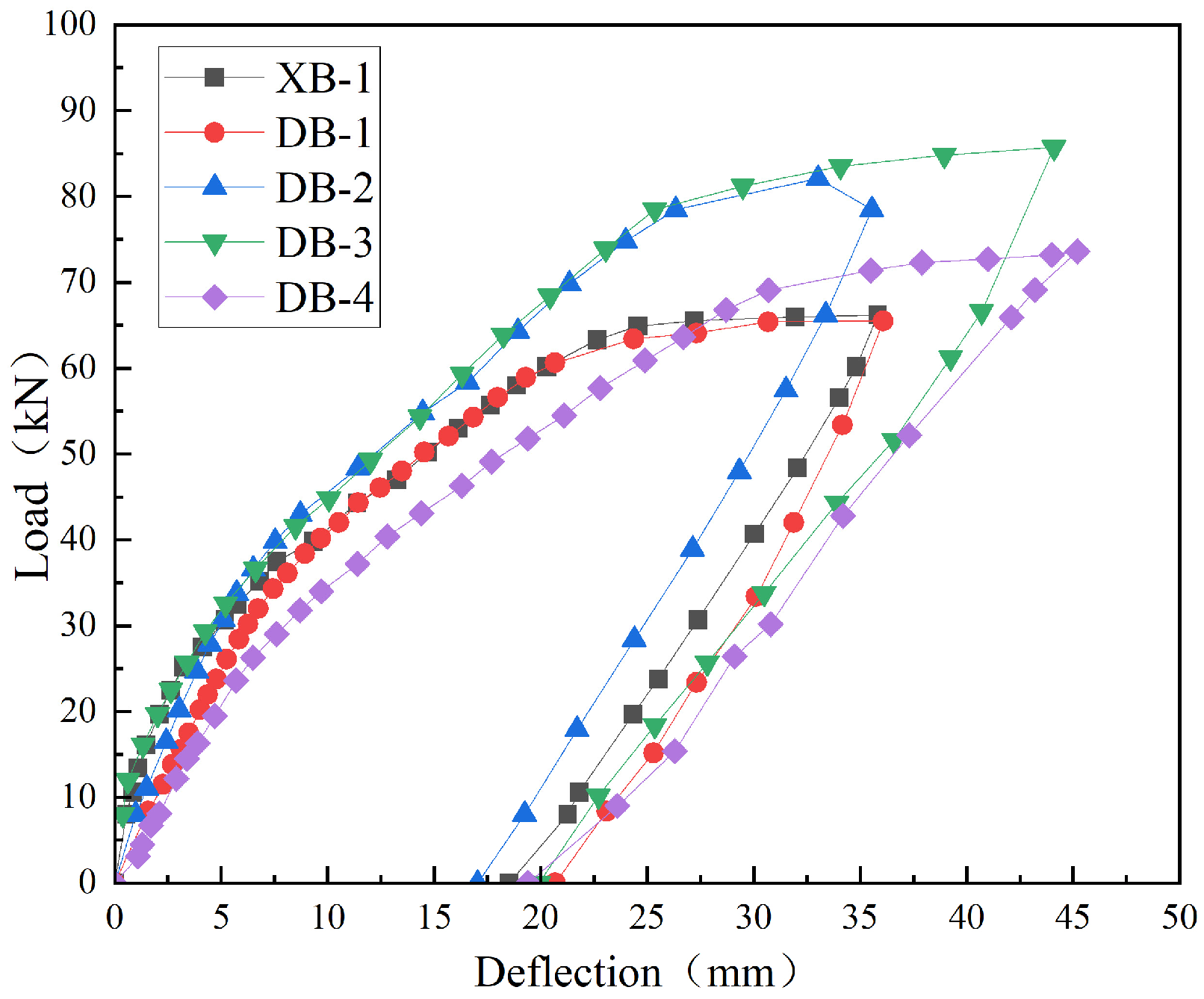
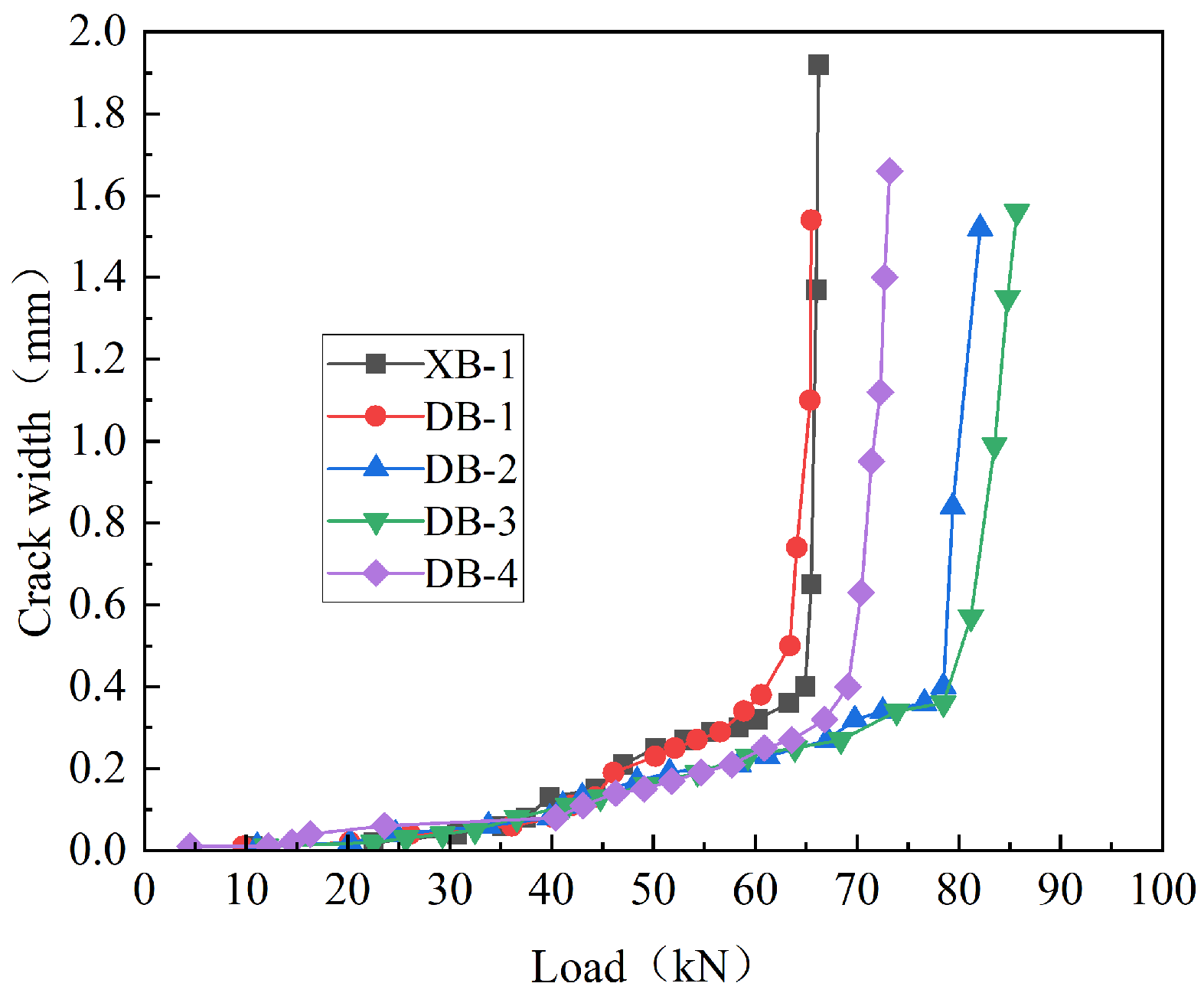
To study the crack resistance of UHPC precast composite slabs, this paper conducts flexural performance tests on one UHPC monolithic slab and four UHPC precast composite slabs, investigating the influence of structural form, loading method, and shear reinforcement on the failure mode and crack resistance of UHPC precast composite slabs. The test results showed that UHPC precast composite slabs do not experience shear failure along the composite interface. They exhibit extensive microcracks and do not fail due to the immediate appearance of a single wide crack, demonstrating good plasticity and toughness. The cracking load of the monolithic slab is 6.6% to 12.5% higher than that of the composite slabs. However, the yield load and ultimate load of composite slabs equipped with shear reinforcement are 19.5% to 26.5% and 24.5% to 29.5% higher than those of the monolithic slab, respectively. These composite slabs are also characterized by extensive, dense microcracks with high quantity, small width, small spacing, short length, and dense distribution. Shear reinforcement can effectively improve the bearing capacity and crack resistance of UHPC precast composite slabs, with truss reinforcement showing a better effect in enhancing bearing capacity and inhibiting cracks. The comparison between positive and reverse loading methods better explains the “strain lag” of concrete and “stress advance” of reinforcement in composite slabs. Based on the section internal force equilibrium and the bond stress transfer principle between reinforcement and concrete, considering the enhancement effect of UHPC on bond stress, the calculation formulas for average crack spacing and maximum crack width in existing codes are modified. The calculated values are in good agreement with the test results.
Keywords: ultra-high performance concrete; composite slabs; crack resistance performance; crack width ultra-high performance concrete; composite slabs; crack resistance performance; crack width