1. Introduction
Industrial heritage has gained increasing global recognition since UNESCO and TICCIH established international frameworks for its documentation and conservation [
1,
2,
3]. As material evidence of industrialization, industrial heritage embodies multiple dimensions of value, including historical evolution, technological innovation, cultural identity, and industrial landscapes [
4,
5,
6,
7]. The development of evaluation methods has gradually progressed from single-building assessments to factory complexes and, more recently, to large-scale industrial cultural landscapes [
8,
9,
10]. This shift reflects a broader understanding that industrial heritage cannot be adequately interpreted at a single spatial scale; instead, a multi-scalar perspective is essential for revealing the complex interactions between architectural artifacts, production systems, and territorial industrial structures. At the same time, the adaptive reuse of industrial heritage is increasingly viewed as a low-carbon strategy for the built environment, capable of reducing demolition waste, conserving embedded energy, and extending the life cycle of existing buildings. Accordingly, value assessment becomes a necessary precursor for determining which heritage assets offer the greatest potential for sustainable transformation.
Railways have historically functioned as the backbone of industrialization by reshaping production geography, enabling long-distance logistics, and supporting the emergence of new forms of industrial space. As linear infrastructures, they structure industrial development through a distinctive “point–line–surface” pattern, connecting industrial nodes while simultaneously producing continuous industrial territories. International experiences—including the United Kingdom’s railway heritage landscapes, Germany’s Ruhr industrial route, and several industrial belts in Eastern Europe—demonstrate that railway-driven industrialization often results in coherent linear cultural heritage systems characterized by spatial continuity, strong node connectivity, and layered temporal development [
11,
12,
13,
14,
15,
16]. These features require analytical frameworks that capture both micro-scale architectural heritage and macro-scale industrial territorial structures.
From a theoretical perspective, linear cultural heritage provides an important conceptual bridge between industrial heritage and territorial-scale cultural landscapes. Unlike conventional industrial heritage studies that primarily focus on individual factories or isolated industrial districts, the linear cultural heritage framework emphasizes continuity, connectivity, and systemic relationships shaped by infrastructure such as railways, canals, or production corridors. In railway-driven industrial regions, industrial facilities were not established as independent entities but were spatially organized along linear transport networks, forming interconnected production systems with shared logistics, labor flows, and functional hierarchies. As a result, the heritage value of such industrial sites cannot be fully understood without considering their position, role, and interaction within a linear spatial structure.
In China, the study of railway-related industrial heritage has advanced through research on the Beijing–Zhangjiakou Railway, the China–Vietnam Railway, the industrial cities of Northeast China, and emerging coastal industrial heritage corridors [
17,
18,
19,
20,
21]. Existing literature concentrates on heritage identification, urban regeneration, adaptive reuse of factory sites, and industrial typology studies. However, most studies remain fragmented and site-based, lacking a systematic examination of railway-driven industrial systems. In particular, the Guanzhong Section of the Longhai Railway—one of the key industrial backbones of Northwest China—has yet to undergo a comprehensive and structured heritage evaluation. The Guanzhong region itself, located in the heart of the Wei River Basin, has long served as a historical, cultural, and industrial core of Shaanxi Province, China, making its railway-linked industrial heritage especially significant for understanding broader regional development trajectories.
Several gaps remain within current scholarships. First, the identification of industrial heritage along the Longhai Railway (Guanzhong Section) is incomplete, with records scattered across local gazetteers, archives, and inconsistent field surveys. Second, existing research seldom provides an integrated assessment across different spatial scales, especially the coordinated evaluation of individual buildings and factory complexes. Third, few studies examine the spatial logic of railway-driven industrialization, which shaped both the distribution of factories and the structure of industrial landscapes. Fourth, the absence of industry-level case validation limits the applicability of existing evaluation frameworks, making it difficult to verify their effectiveness within specific industrial systems.
To address these issues, this study proposes three research questions: (1) What are the characteristics, categories, and spatial distribution patterns of industrial heritage along the Longhai Railway (Guanzhong Section)? (2) How can a multi-scalar value assessment system be applied to conduct an empirical evaluation of textile industrial heritage and reveal its value structure within a linear cultural heritage context? (3) How can the resulting value patterns inform sustainable and low-carbon strategies for industrial heritage conservation and adaptive reuse?
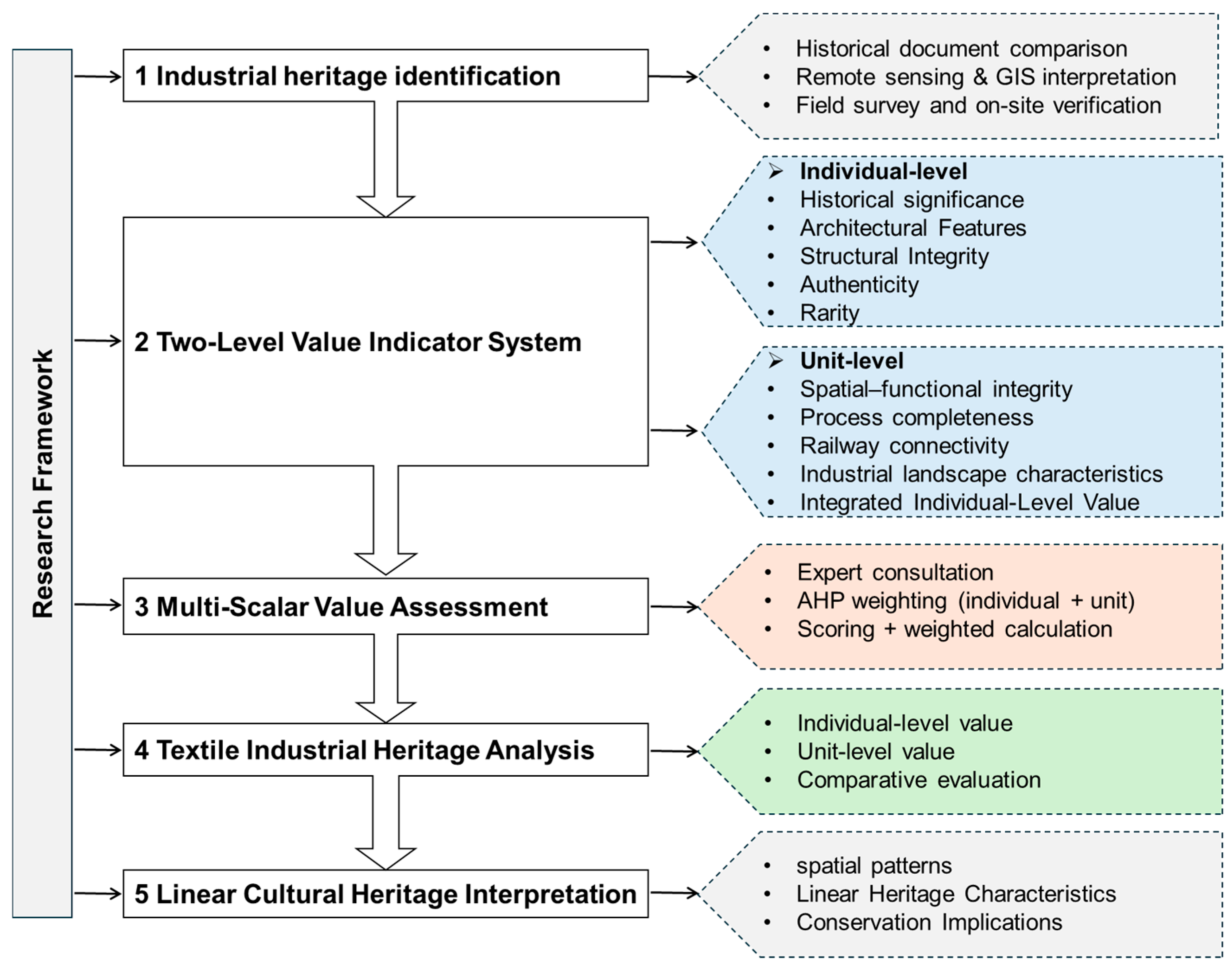
To answer these questions, this study develops a methodological framework integrating heritage identification, conceptual model construction, indicator system development, AHP-based weighting, individual-to-unit value aggregation, and comprehensive evaluation of representative textile-industrial heritage sites. The framework proceeds through several stages: identifying industrial heritage, defining two-level value structures, establishing and weighting indices, constructing evaluation models, applying them to textile industrial heritage, and finally interpreting the results through the lens of linear cultural heritage (
Figure 1). This integrative approach enables a deeper understanding of the industrial heritage system shaped by the Longhai Railway and provides methodological support for future conservation and reuse efforts.
2. Methodology
2.1. Data and Survey Methods
A multi-source research strategy integrating documentary evidence, spatial analysis, and field investigation was adopted to systematically identify industrial heritage along the Guanzhong Section of the Longhai Railway. Historical documents—including local chronicles, factory records, industrial yearbooks, statistical materials, and governmental archives—were used to reconstruct the temporal evolution, industrial functions, and spatial extent of each heritage site. These documentary sources provide essential historical grounding for constructing the heritage inventory.
Spatial data analysis employed high-resolution satellite imagery, historical aerial photographs, cadastral maps, and land-use datasets to identify factory boundaries, building layouts, railway sidings, loading yards, power systems, and auxiliary facilities. GIS-based distribution further enabled verification of the correspondence between historical layouts and current physical remains.
Complementing the documentary and spatial investigations, field surveys were conducted to verify authenticity, assess preservation status, and document the architectural and functional characteristics of individual buildings and structures. On-site recording included photographic documentation, architectural sketches, material inspection, and standardized survey forms. The triangulation of multiple data sources ensures the reliability and completeness of the heritage identification process, laying the foundation for subsequent value evaluation.
2.2. Study Area and Objects
The study area encompasses the Guanzhong Section of the Longhai Railway, extending across the industrial corridor formed by the cities of Baoji, Xianyang, Xi’an, and Weinan. As one of China’s major east–west trunk lines, the Longhai Railway historically played a crucial role in shaping the industrial geography of the Guanzhong region. Numerous factories were deliberately established along or adjacent to the railway to take advantage of its logistical capacity, resulting in a distinctive pattern of railway-dependent industrial development.
Two categories of heritage objects were defined to support multi-scalar evaluation. At the unit level, industrial heritage is represented by factory complexes composed of production spaces, storage facilities, power and transport systems, administrative buildings, worker housing, and public service buildings. At the individual level, the internal components of these complexes were classified into six types of buildings and structures: factory workshops (FW), warehouses (WH), office buildings (OF), residential buildings (RE), public buildings (PB), and structures (ST) such as chimneys, water towers, cooling towers, substations, elevated conveyors, and other non-building industrial infrastructure.
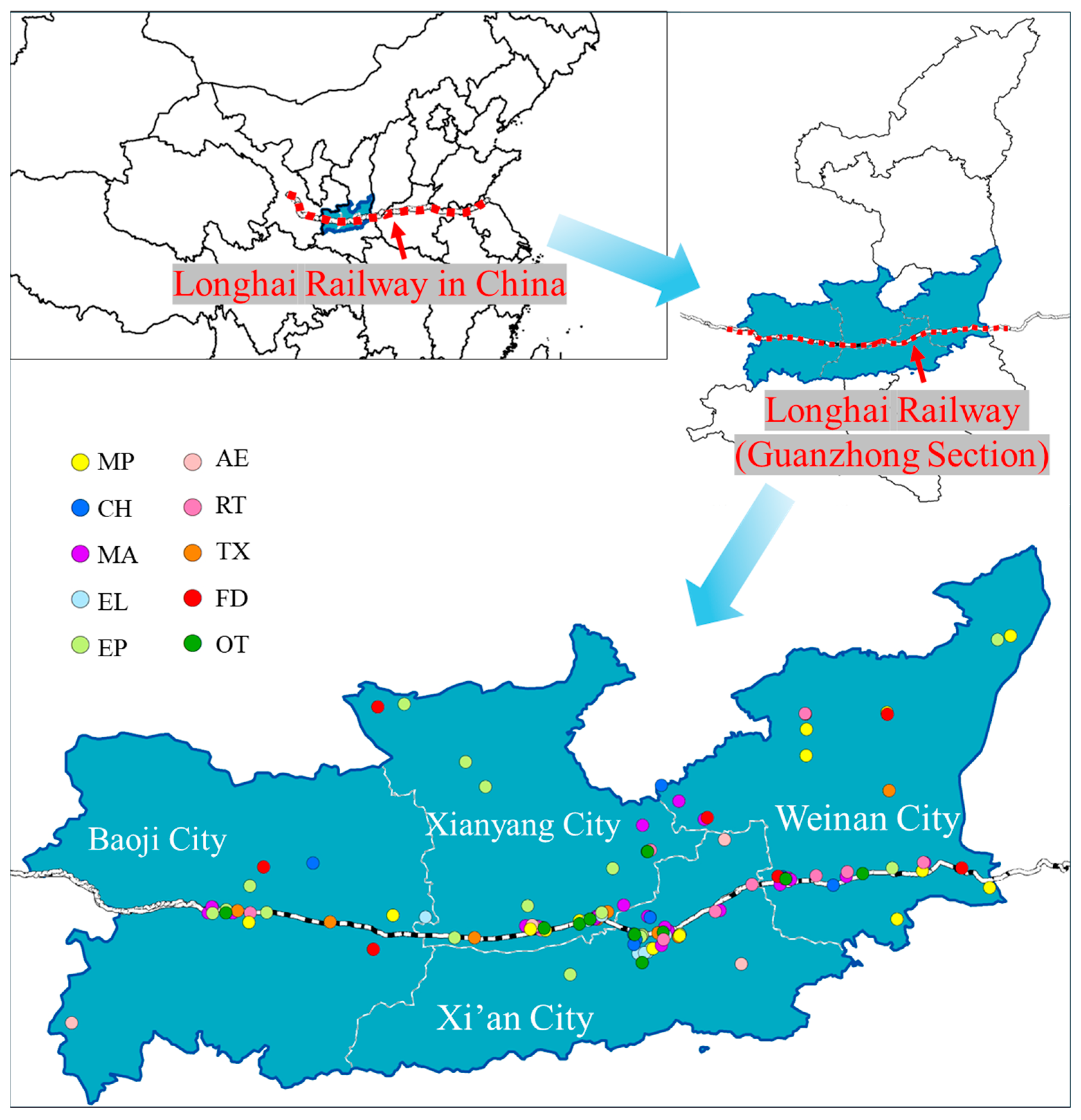
A total of 148 industrial heritage units belonging to ten industrial categories were identified along the Guanzhong Section of the Longhai Railway. The industrial heritage classification adopted in this study is derived from a synthesis of internationally recognized frameworks, including the TICCIH Industrial Heritage Classification System, together with the official industrial heritage categorization used in China. Specifically, industrial heritage units were classified according to their historically dominant industrial function during the main period of operation, as identified through archival documents, factory records, and field surveys. For sites characterized by multiple industrial functions, the primary production activity that structured the spatial layout and overall production system of the unit was adopted as the classification criterion. The types and quantities of the identified industrial heritage units are summarized in
Table 1. The spatial distribution of these heritage sites, highlighting their strong alignment with the railway line, is illustrated in
Figure 2, while
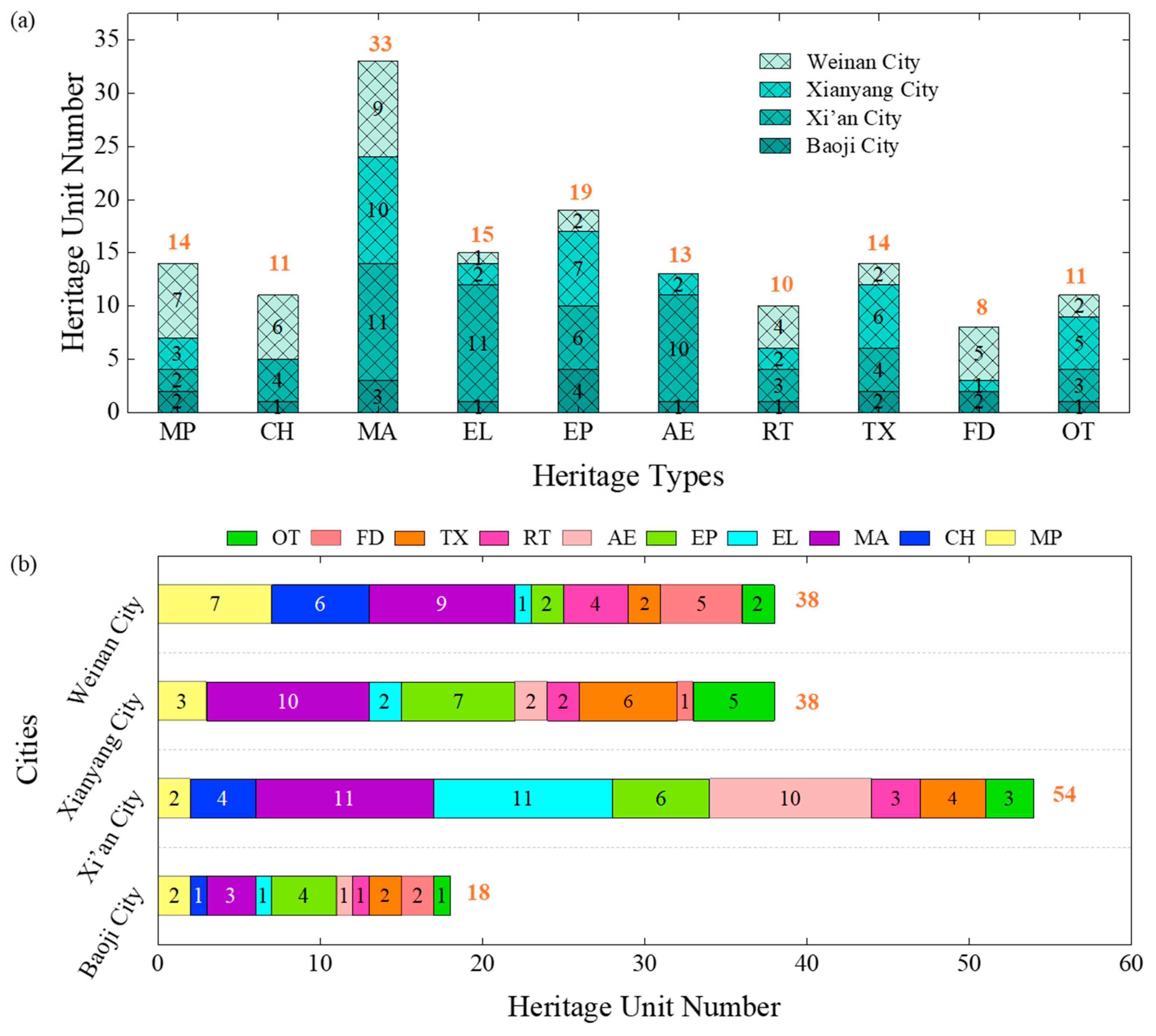
Figure 3 further presents the typological composition and quantitative distribution of industrial heritage along the Guanzhong Section of the Longhai Railway.
First, in terms of industrial categories, the Machinery Industry (MA), Electric Power Industry (EP), Electronics Industry (EL), and Textile Industry (TX) account for the largest proportions. This pattern reflects the long-standing industrial specialization of the Guanzhong region, particularly in machinery manufacturing, power generation and transmission, electronics production, and textile processing. Second, notable differences emerge among cities: Baoji, Xi’an, and Xianyang exhibit a more diversified industrial structure, whereas Weinan contains fewer units but displays a relatively balanced distribution across categories. These characteristics indicate that industrial heritage along the Guanzhong Section is not sporadically distributed; rather, it forms a coherent cluster of industrial sites aligned with the railway axis, revealing the spatial scale and organizational logic of historical industrial development in the region. Considering the representativeness, numerical scale, average distribution, and strong railway dependence of textile industrial heritage within the Guanzhong Section, this study selects 14 textile industrial heritage units as the evaluation objects for subsequent analysis.
2.3. Characteristics and Representativeness of Textile Industrial Heritage
Within the overall industrial heritage system along the Longhai Railway (Guanzhong Section), textile industrial heritage constitutes one of the most prominent and structurally complete groups. Historically, textile factories were among the earliest and most intensively developed industrial sectors in the Guanzhong region, and their production processes—ranging from spinning and weaving to dyeing and finishing—were closely tied to the railway-based logistics system. Raw materials such as cotton and chemical dyes were transported into the region primarily by rail, while finished products were likewise shipped out along the same corridor. As a result, textile factories tend to be located in close proximity to railway stations, sidings, or freight yards, forming a spatial pattern that clearly reflects railway-driven industrialization.
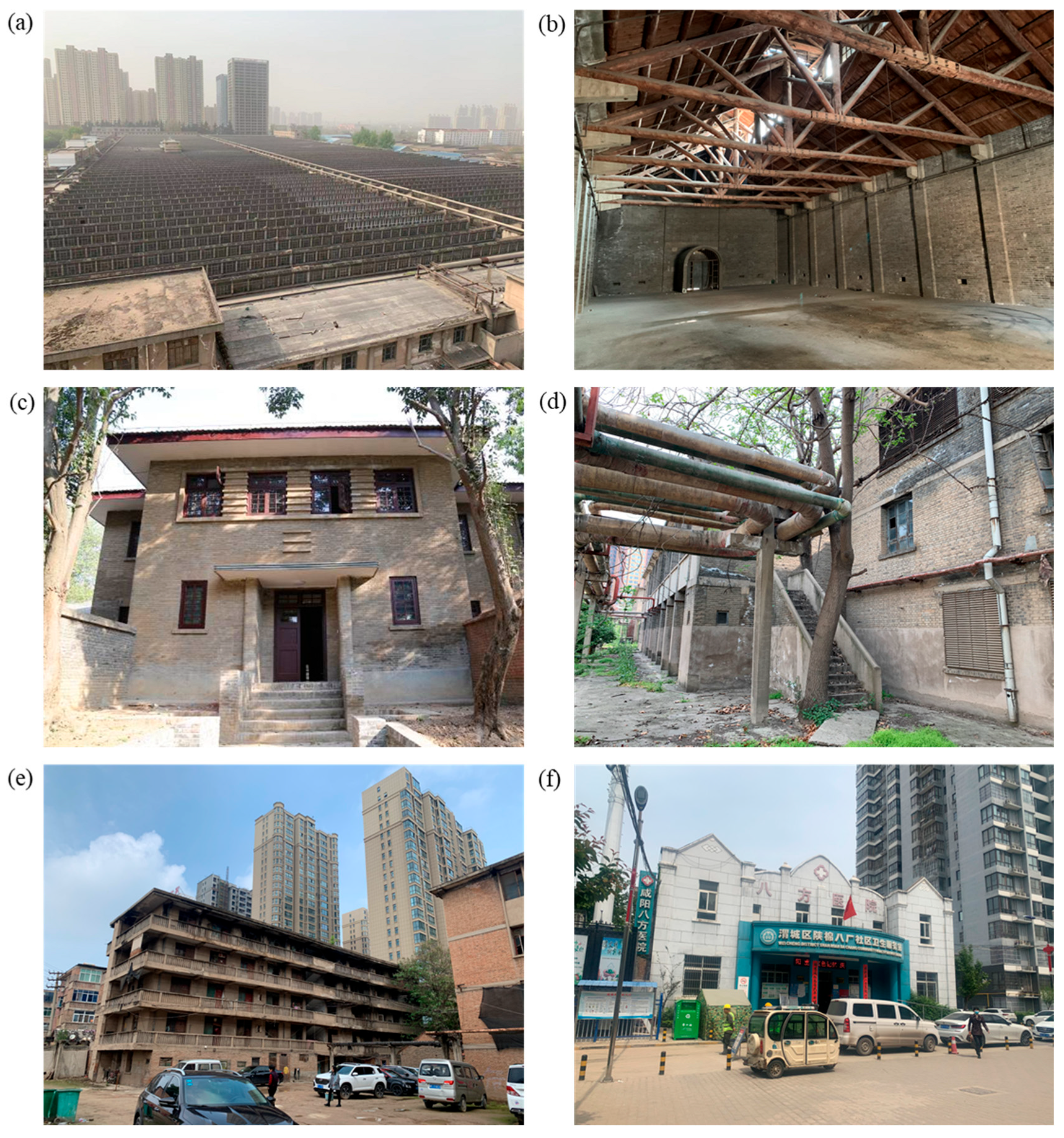
From the perspective of heritage morphology, the fourteen textile industrial heritage units (TX1–TX14) within the study area generally retain relatively complete internal structural configurations. Each unit is composed of multiple categories of individual elements, including workshops, warehouses, office buildings, residential buildings, public buildings, and various industrial structures (such as chimneys, water towers, and power-related facilities) (
Figure 4). The combination and quantity of these six types vary across different textile factories, but together they reveal coherent production chains and functional zoning within each unit (
Table 2). In addition, many textile factories retain legible factory layouts, standardized building types, and recognizable industrial skylines, which facilitates both micro-scale (individual-level) and macro-scale (unit-level) evaluation. Overall, the selection of textile industrial heritage units was guided by quantitative suitability, including sample size adequacy, spatial continuity, structural comparability, and value-level coverage, rather than by qualitative representativeness alone.
2.4. Construction of the Evaluation Model
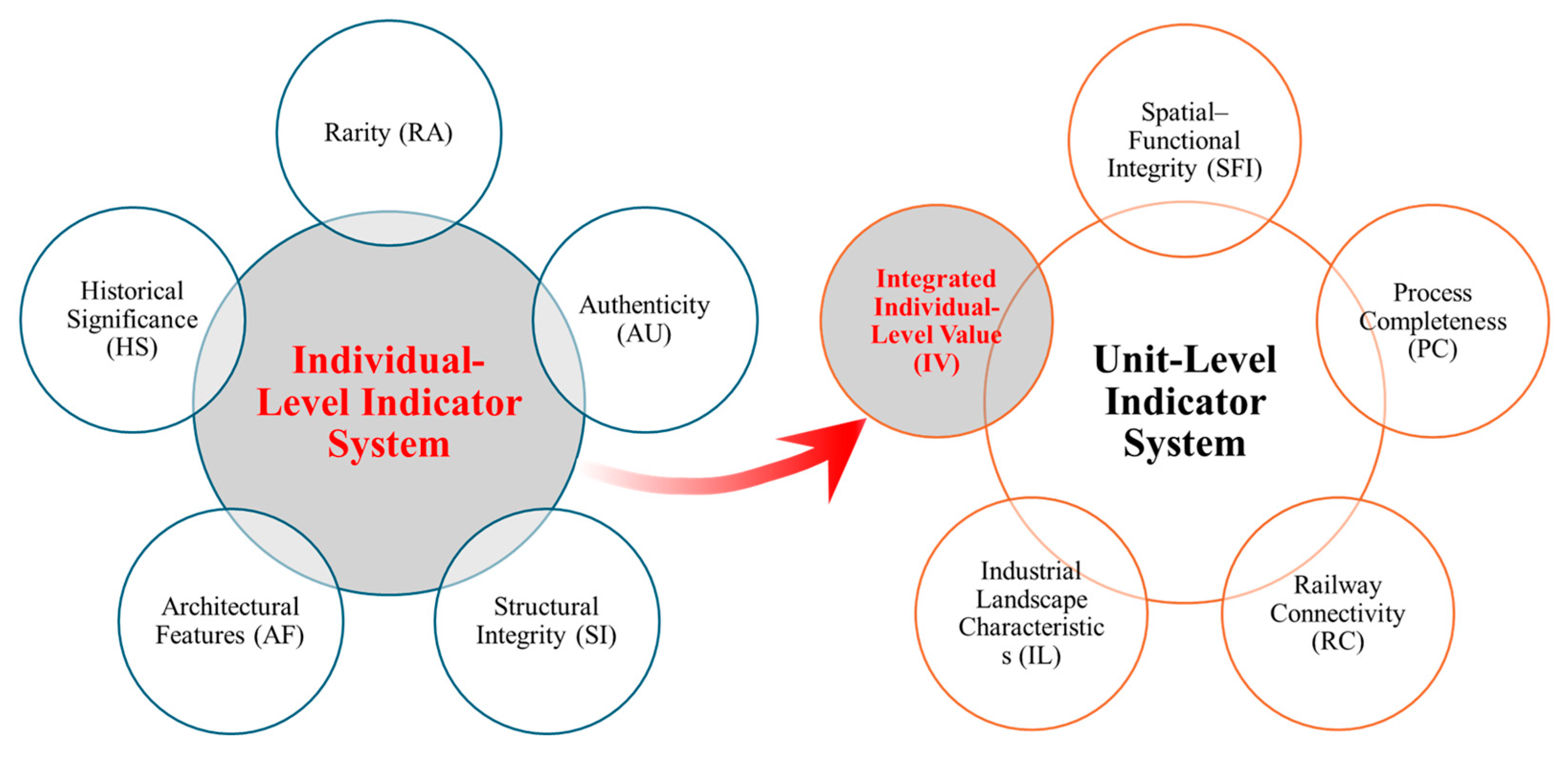
The construction of the value assessment model follows the intrinsic multi-scalar structure of industrial heritage. Industrial heritage sites along the Longhai Railway (Guanzhong Section) exhibit a clear hierarchical composition: on the one hand, individual buildings and structures (e.g., workshops, warehouses, chimneys, offices, dormitories) constitute the material carriers of industrial production; on the other hand, heritage units—entire factory complexes—represent integrated technological, spatial, and logistic systems shaped by railway-driven industrialization. A single-scale evaluation is therefore insufficient for capturing the complexity of industrial heritage within a linear cultural landscape. To address this, a two-level value assessment model was developed, consisting of Individual-Level indices and Unit-Level indices (
Figure 5).
At the Individual Level, the model focuses on the intrinsic characteristics of each building or structure, emphasizing historical significance, architectural–structural attributes, technological and engineering features, authenticity, and rarity. These five dimensions correspond to the core value determinants recommended by UNESCO and TICCIH for the assessment of industrial built heritage. They reflect the micro-scale significance of industrial components and allow for a fine-grained differentiation between diverse types of individual elements.
At the Unit Level, the model shifts toward the systemic value of industrial complexes as functional and spatial entities. This level accounts for the coherence of internal production systems, the degree of association with the railway network, the integrity of spatial–functional organization, and the overall industrial landscape characteristics. Importantly, the Unit-Level model also incorporates the Integrated Individual-Level Value (IV), which aggregates the quality and quantity of individual elements within each unit. This ensures that heritage units are evaluated not merely by expert scoring at the macro scale, but also by the structural composition of their micro-scale components.
The relationship between the two levels is therefore cascading and integrative. Individual elements generate their own value scores, which are subsequently combined—according to expert-derived type weights reflecting the relative importance of six building/structure categories—into the IV index. This IV indicator becomes one of the five Unit-Level indices, linking micro- and macro-scale value determinants within a unified evaluation framework. This design ensures consistency with the character of railway-based industrial systems, where production units are composed of multiple interdependent structures whose collective history and functional logic exceed the sum of individual parts.
Table 3 and
Table 4 present the complete indicator systems for the two levels. Each table includes (i) indicator names, (ii) definitions for operational assessment, and (iii) the final AHP-derived weight results obtained from the expert survey described in
Section 2.5.
2.5. Weight Calculation Using the Analytic Hierarchy Process (AHP)
After establishing the two-level value assessment framework for industrial heritage, a quantitative evaluation model was developed to obtain comparable value scores at both the individual and unit levels. The model consists of three main components: the determination of indicator weights using the Analytic Hierarchy Process (AHP), the calculation of value scores for individual elements, and the aggregation of individual values into unit-level heritage values, taking into account both the distribution and the relative importance of six building types.
2.5.1. Aggregation of Expert Judgments
To reduce subjectivity in assigning indicator importance, AHP surveys were conducted among 48 experts with backgrounds in industrial heritage conservation, architecture, railway engineering, and urban planning. The expert sample shows a balanced and diverse structure. Among the participants, 32 were male (67%) and 16 were female (33%). In terms of age distribution, 17% were aged 18–29, 23% were aged 30–39, 46% were aged 40–49, and 14% were aged over 50, indicating a predominance of mid-career professionals with substantial practical experience. Regarding educational background, 38% held a bachelor’s degree, 35% a master’s degree, and 27% a doctoral degree. With respect to institutional affiliation, 46% of the experts were from architectural and planning design firms, 27% from universities, 17% from governmental agencies, and 10% from real estate development organizations.
For each weighting task—namely the individual-level indicators, the unit-level indicators, and the weights of individual building types—each expert
provided a pairwise comparison matrix
where
represents the relative importance of indicator
over indicator
according to the Saaty 1–9 scale and its reciprocals.
The individual matrices were then aggregated into a group judgment matrix
using the geometric mean method recommended by Saaty for group decision-making. For each element, the aggregated value is given by
This procedure was applied independently to the individual-level indicator set
(
), the unit-level indicator set
(
), and the six building types
(
). The aggregated group judgment matrices for the individual-level indicators, unit-level indicators, and building-type weights are reported in
Supplementary Material Text S1.
2.5.2. Derivation of Indicator Weights by AHP
For each aggregated group matrix
, the corresponding weight vector
was derived using the eigenvector method. The principal eigenvector satisfies
where
is the maximum eigenvalue of
. The resulting eigenvector was then normalized so that
To verify the logical coherence of expert judgments, consistency analysis was conducted for each group matrix. The consistency index (
CI) was computed as
and the consistency ratio (
CR) was defined as
where
is the random index corresponding to the matrix order
. A matrix is considered to have acceptable consistency when
All three group matrices (individual-level indicators, unit-level indicators, and building-type weights) satisfied this requirement, and the resulting weight vectors were adopted for subsequent evaluation.
Accordingly, three sets of normalized weights were obtained. At the individual level, the weight vector
corresponds to Historical Significance (HS), Architectural Features (AF), Structural Integrity (SI), Authenticity (AU), and Rarity (RA). At the unit level, the weight vector
corresponds to Spatial–Functional Integrity (SFI), Process Completeness (PC), Railway Connectivity (RC), Industrial Landscape Characteristics (IL), and the Integrated Individual-Level Value (IV). The weights for the six building types are written as
where FW, WH, ST, OF, PB, and RE denote workshops (factory buildings), warehouses, structures (e.g., chimneys, water towers, power facilities), office buildings, public buildings, and residential buildings, respectively. Expert consultation yielded the following normalized type weights:
.
2.5.3. Value Calculation for Individual Elements
At the individual level, each building or structure
is evaluated using the five individual-level indicators. Let
denote the score of element
on indicator
(HS, AF, SI, AU, RA), obtained from field survey and expert interpretation on an ordinal scale (e.g., 0–5). The indicator score vector of element
can be written as
The comprehensive individual value
of element
is then computed as a weighted sum:
This yields a scalar value for each individual element, reflecting its combined historical, architectural, technological, authenticity, and rarity attributes within the industrial heritage system. The results at the individual level are presented in
Table 3.
2.5.4. Aggregation of Individual Values Within Each Unit
Each industrial heritage unit (for example, a textile mill complex) contains multiple individual elements belonging to different types. To embed micro-scale information into the unit-level assessment while respecting the structural composition of each complex, the individual values are aggregated using the building-type weights .
Let
denote the set of all individual elements in unit
, and
denote the subset of elements of type
, where
The number of type-
elements in unit
is
. For each element
, its individual value
is given by Equation (12). The type-weighted sum of individual values for unit
is then expressed as
To ensure comparability across units with different sizes and compositions, an effective type-weighted count is defined as
The integrated individual-level value of unit
, which serves as the
IV indicator at the unit scale, is then calculated by
This formulation simultaneously accounts for the quality of individual elements (through ), the quantitative composition of different building types within each unit (through ), and the relative importance of these types in the industrial heritage complex (through ). The values for all 14 textile industrial heritage units along the Guanzhong Section were obtained from the field survey.
2.5.5. Unit-Level Heritage Value Calculation
At the unit level, each industrial heritage unit
is evaluated using five indicators: Spatial–Functional Integrity (SFI), Process Completeness (PC), Railway Connectivity (RC), Industrial Landscape Characteristics (IL), and the Integrated Individual-Level Value (IV). Let
denote the vector of unit-level indicator scores for unit
, where
is provided by Equation (16), and the other components are obtained from expert scoring and field-based assessment.
Given the unit-level weight vector
, the comprehensive value of unit
is computed as
where
. The resulting value
provides a scalar measure of the overall heritage significance of each industrial unit, integrating micro-scale (building/structure) characteristics and macro-scale attributes related to function, process, and railway connectivity within a unified linear cultural heritage perspective. The results at the unit level are presented in
Table 4.
2.6. Scoring System for Individual-Level and Unit-Level Indicators
Following the determination of indicator weights through the AHP procedure, a unified scoring system was established to evaluate both individual elements and industrial heritage units. Although the two levels contain different sets of indicators, their scoring adopts a consistent logic to ensure comparability and coherence throughout the entire evaluation framework. To enhance the transparency and reproducibility of the scoring procedure, all individual-level and unit-level indicators were evaluated by a single trained researcher following a standardized scoring manual. The use of a single-rater approach was intended to ensure internal consistency across all assessed units and buildings, given the large sample size and the need for uniform interpretation of evaluation criteria. To mitigate subjectivity, the scoring process was conducted through iterative calibration, including repeated checks on selected samples and cross-verification using field records, historical documents, and archival materials. All indicators requiring manual scoring—regardless of level—are assessed using a standardized ordinal scale ranging from 0 to 5, as shown in
Table S1. This unified scale provides an operational foundation for quantifying heritage attributes prior to weighted aggregation.
At the individual level, each building or structure previously identified—across the six types of workshops, warehouses, office buildings, residential buildings, public buildings, and industrial structures—is assessed according to the five indicators defined in
Section 2.4. The assigned scores reflect observable historical, architectural, technological, and material characteristics based on field investigation and archival interpretation (
Table S2). These scores constitute the vector
, which is subsequently incorporated into Equation (12) to compute the comprehensive individual value
using the AHP-derived indicator weights. No further normalization is required, as all elements are evaluated under the same scoring framework.
At the unit level, four indicators—spatial–functional integrity, process completeness, railway connectivity, and industrial landscape characteristics—are evaluated using the same scoring scale shown in
Table S1. The fifth indicator, integrated individual-level value (IV), is not manually scored but directly calculated using Equation (16) based on the individual-level results and the type-weighted composition of each industrial heritage unit. This calculated IV value serves as the mechanism through which micro-level assessments are incorporated into the unit-level framework. The complete unit-level indicator vector
is then combined with the corresponding AHP weights via Equation (18) to obtain the final comprehensive unit value
(
Table S3).
3. Results and Discussion
3.1. Textual Industrial Heritage Units: Quantity and Typological Characteristics
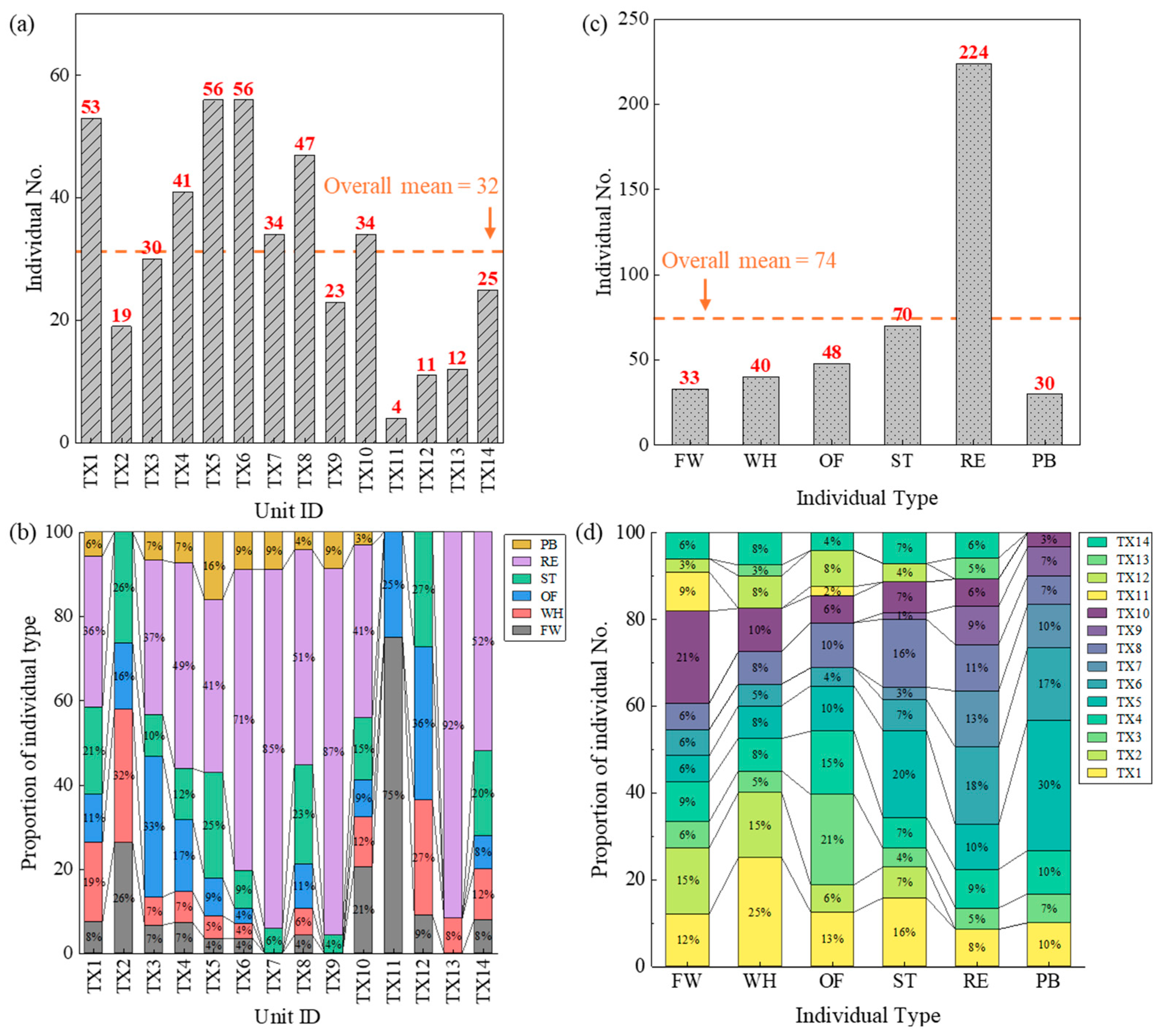
The fourteen textile industrial heritage units along the Guanzhong Section of the Longhai Railway contain a large number of individual buildings and structures, with significant variation in overall quantity. Large-scale factories—such as TX1, TX5, and TX6—retain more than 50 individual elements, whereas several smaller or heavily altered sites preserve fewer than ten (
Figure 6a). This variation reflects marked differences in historical production capacity, factory expansion trajectories, spatial organization, and current preservation conditions.
In terms of typological composition, the textile heritage exhibits a combination of structural consistency and internal diversity. In most factory complexes, structures (ST) and residential buildings (RE) constitute the largest share of individual elements (
Figure 6b–d). This is primarily due to the textile industry’s heavy reliance on power facilities, water-supply systems, and extensive worker housing. However, numerical dominance does not correspond directly to value contribution. In contrast, factory workshops (FW), warehouses (WH), and office buildings (OF)—although fewer in number—tend to possess greater architectural volume, higher structural complexity, and a closer relationship with core industrial processes. These characteristics make them more influential within the overall value assessment, which is also reflected in the higher type weights assigned to FW, WH, and OF in the evaluation model (
βFW,
βWH,
βOF).
Overall, the quantity and typological composition of individual elements reveal a pattern of “structural similarity with significant proportional variability.” These differences not only illuminate the historical development, production organization, and socio-spatial characteristics of each textile enterprise but also directly influence the integrated individual-level value (IVᵤ) at the unit scale.
3.2. Individual-Level Value Assessment
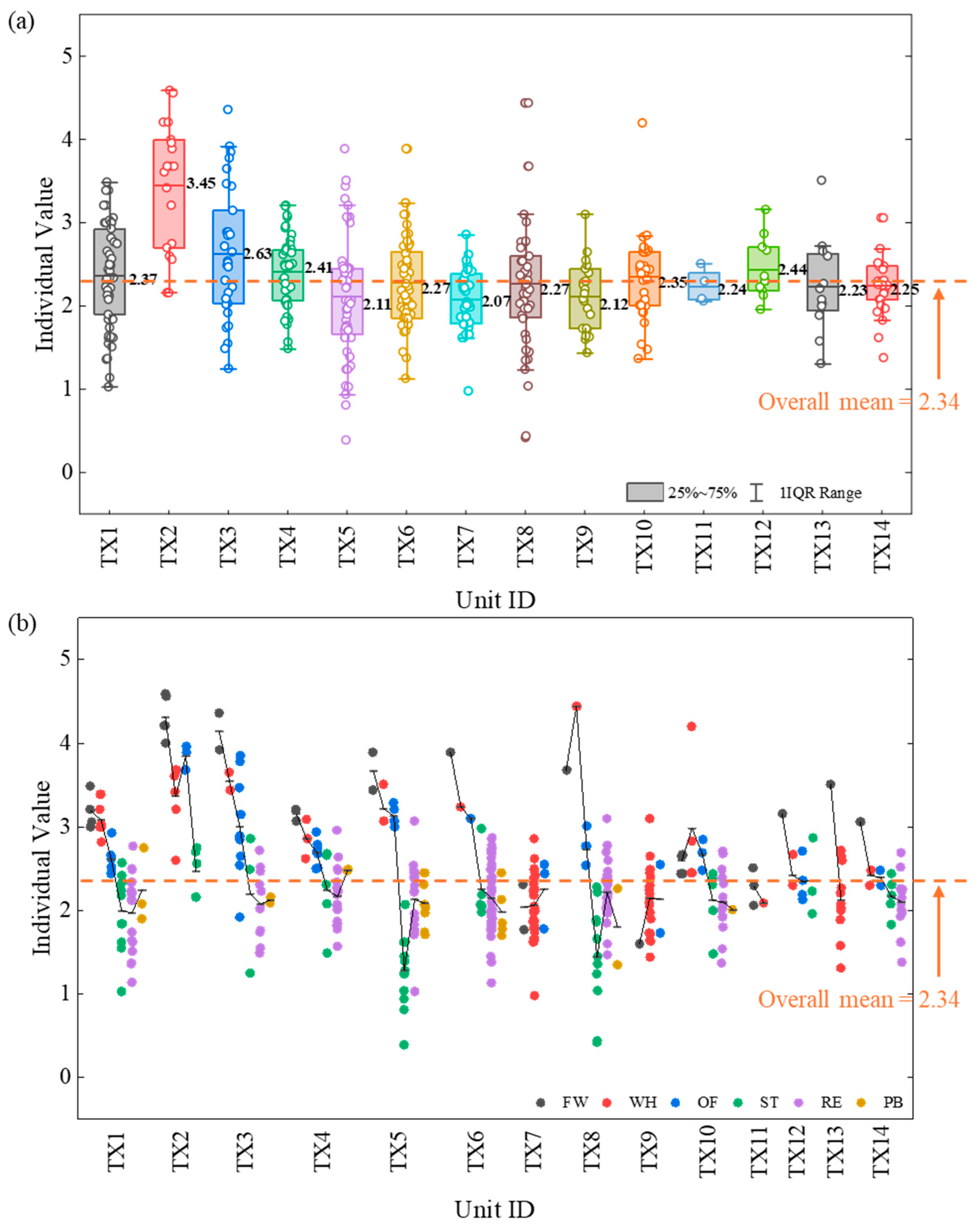
Figure 7 illustrates the overall distribution of individual-level values for all buildings and structures within the fourteen textile industrial heritage units. The box-and-whisker plot in
Figure 7a demonstrates that the average individual value varies considerably across units, revealing significant differences in the historical integrity and architectural quality of their surviving components. Unit TX2 exhibits the highest mean score (3.45), indicating the preservation of several well-constructed and historically significant buildings. Other units such as TX3 (2.63), TX4 (2.41), TX12 (2.44), and TX1 (2.37) also show relatively strong performance. By contrast, units including TX5 (2.11), TX7 (2.07), and TX9 (2.12) display lower mean values, suggesting a prevalence of more ordinary, altered, or less technologically significant structures. High-value outliers appear in units TX2, TX3, TX8, and TX10, reflecting the presence of particularly representative buildings—often major factory halls, technologically advanced structures, or rare early-period constructions. Conversely, the lowest-scoring individuals are concentrated in units such as TX5 and TX8, largely corresponding to deteriorated auxiliary structures or heavily modified residential buildings that retain limited heritage attributes.
Figure 7b further disaggregates the value distribution by building type and reveals a consistent pattern across all heritage units: the highest-value individuals are predominantly factory buildings (FW) and warehouses (WH), whereas lower-value individuals are mainly structures (ST) and residential buildings (RE). Although
Section 3.1 has shown that structures and residential buildings constitute the largest share of building counts in most units, their contribution to overall heritage value remains limited due to their relatively simple forms, low technological content, and weak association with core production processes. In contrast, factory and warehouse buildings—despite being fewer in number—exhibit complex structural systems, clear technological logic, and strong historical significance, and therefore consistently receive higher value scores.
This divergence demonstrates an important structural characteristic of textile industrial heritage: the quantity of surviving buildings does not correspond to their contribution to overall heritage value. Residential and infrastructural elements are numerous but contribute modestly, whereas factory and warehouse buildings—though fewer—play a disproportionately large role in shaping the heritage significance of each unit. This asymmetry validates the incorporation of type-specific weights (βₜ) in the evaluation model, ensuring that the assessment reflects the functional hierarchy intrinsic to historical industrial systems.
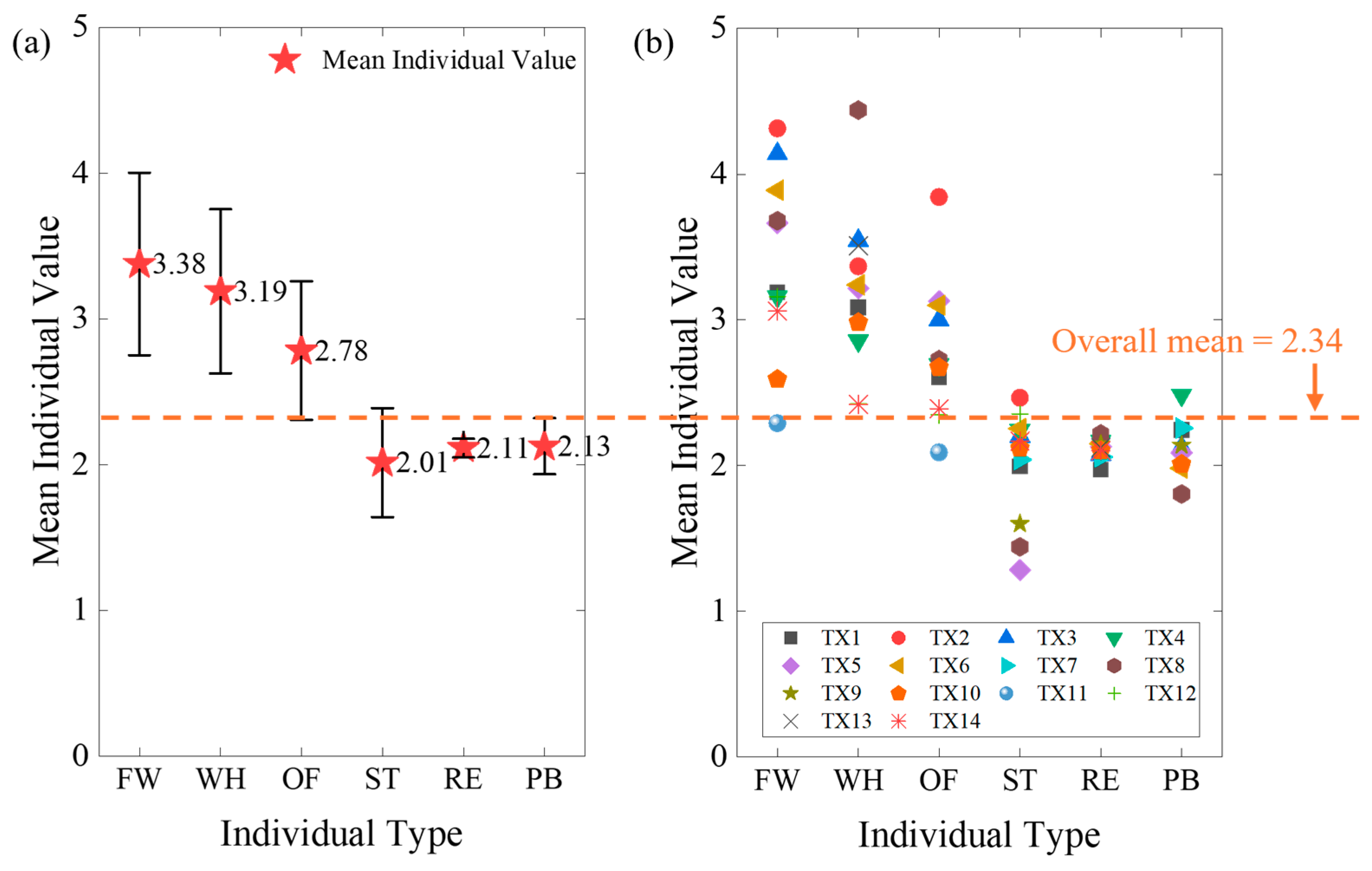
To further examine value differentiation among building types,
Figure 8 summarizes the mean individual values across all units. As shown in
Figure 8a, factory buildings (FW) and warehouses (WH) achieve the highest average scores, followed by office buildings (OF) and public buildings (PB). Structures (ST) and residential buildings (RE) consistently occupy the lower end of the spectrum. This hierarchy reflects the spatial and functional organization of textile industrial complexes, where production and management spaces embody greater technological, historical, and architectural significance.
Figure 8b extends this analysis to the unit level, illustrating the mean value of each building type across all heritage units. Notably, while certain units show strong performance in specific categories, they do not necessarily rank highly across all types. This indicates that high-value buildings are not concentrated in just a few units; instead, they are widely distributed across different complexes and building types. Each unit thus exhibits distinct strengths within its building composition, highlighting differentiated preservation patterns and revealing the diverse architectural and functional attributes embedded in textile industrial heritage.
Taken together, the individual-level results reveal two key insights. First, heritage units demonstrate substantial internal variability in the value distribution of their buildings, reflecting differences in historical development trajectories, construction quality, and preservation conditions. Second, the relationship between quantity and value is structurally imbalanced: building types that are most numerous do not necessarily embody the highest levels of heritage significance. This underscores the necessity of adopting a multi-dimensional evaluation approach—one that integrates value scores, building-type composition, and weight differentiation—to reveal the true cultural and technological significance of industrial heritage.
3.3. Unit-Level Value Assessment
Table 5 summarizes the performance of all fourteen textile industrial heritage units across the five unit-level indicators—Spatial–Functional Integrity (SFI), Process Completeness (PC), Railway Connectivity (RC), Industrial Landscape Characteristics (IL), and the Integrated Individual-Level Value (IV).
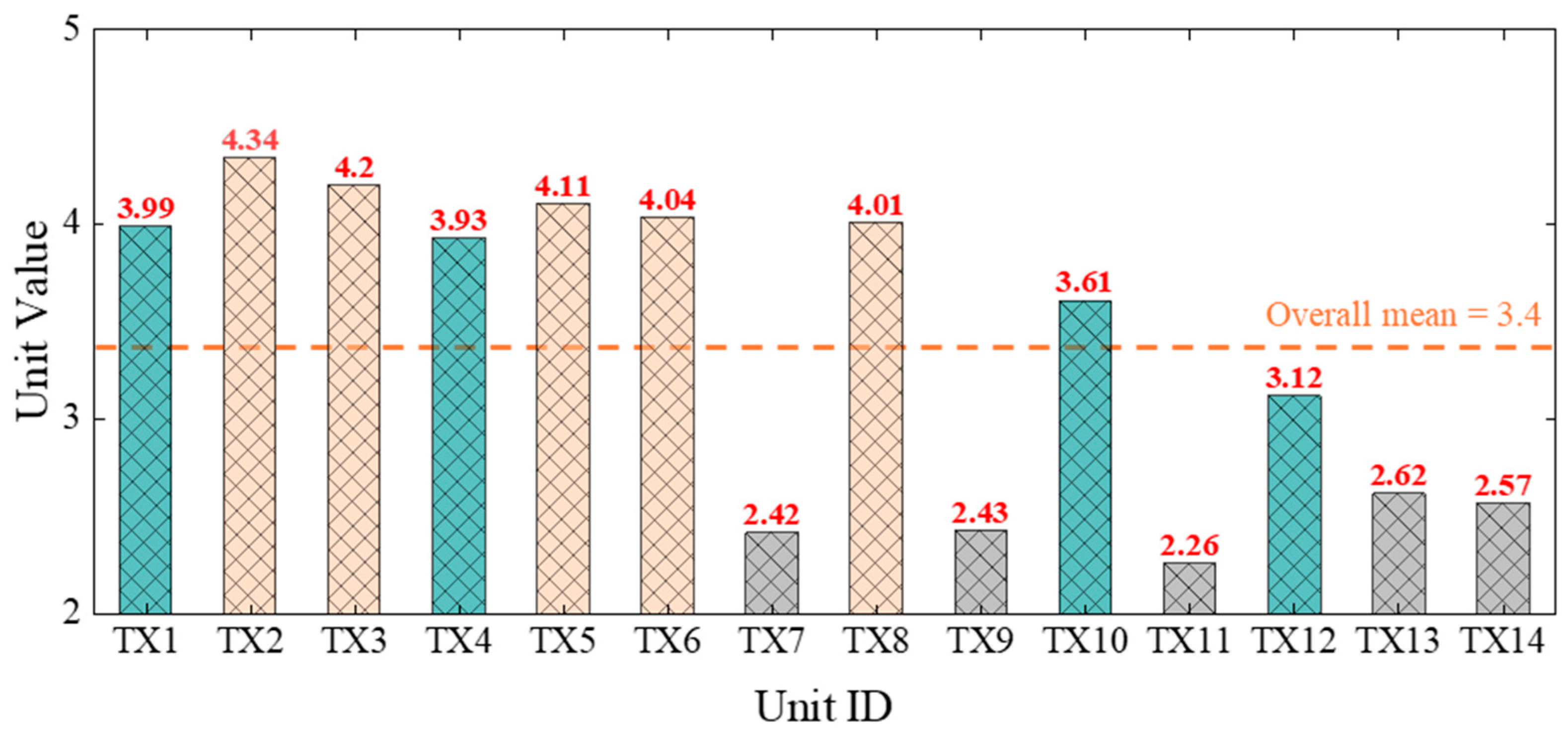
Figure 9 presents the comprehensive value scores derived from the weighted evaluation model. The distribution forms three approximate value ranges: units scoring ≥ 4.0 include TX2, TX3, TX5, TX6, and TX8; units with scores between 3.0 and 4.0 include TX1, TX4, TX10, and TX12; while those scoring below 3.0 comprise TX7, TX9, TX11, TX13, and TX14.
The high-value units—TX2, TX3, TX5, TX6, and TX8—demonstrate consistently strong performance across multiple indicators. They typically preserve coherent spatial–functional configurations, retain identifiable production chains, and maintain clear historical relevance to railway transport. Their industrial landscapes remain legible, and the IV values reveal a substantial presence of high-value buildings such as factory halls and warehouses. These elements together form relatively complete and recognizable industrial systems, explaining their position at the top of the evaluation spectrum.
Units within the intermediate range, namely TX1, TX4, TX10, and TX12, exhibit a more mixed pattern of preservation and transformation. While they no longer maintain the full structural integrity of the higher-value group, they still retain meaningful industrial fragments and selected production-related buildings. Their industrial landscapes demonstrate partial continuity, and their IV values reflect a combination of medium- and high-value individual structures. These units represent transitional cases, where essential components of industrial heritage remain identifiable despite varying degrees of modification.
In contrast, the lower-value units—TX7, TX9, TX11, TX13, and TX14—show evidence of substantial structural fragmentation and historical discontinuity. Spatial frameworks have been heavily altered or disrupted, original production systems are no longer legible, and railway-related components have been diminished or lost. The industrial landscapes of these units lack coherent visual identity, and their IV scores are generally constrained by the predominance of low-value structures such as residences or minor infrastructural elements. Consequently, these units occupy the lower end of the heritage value spectrum, reflecting cumulative impacts of redevelopment, demolition, or functional obsolescence.
Overall, the distribution of unit-level values reveals a continuous gradient, illustrating the varied preservation trajectories of textile industrial complexes along the Guanzhong section of the Longhai Railway. This gradient highlights the importance of integrating both micro-scale (individual buildings) and macro-scale (system-level integrity) perspectives when interpreting the cultural significance of industrial heritage.
3.4. Spatial Patterns of Heritage Value
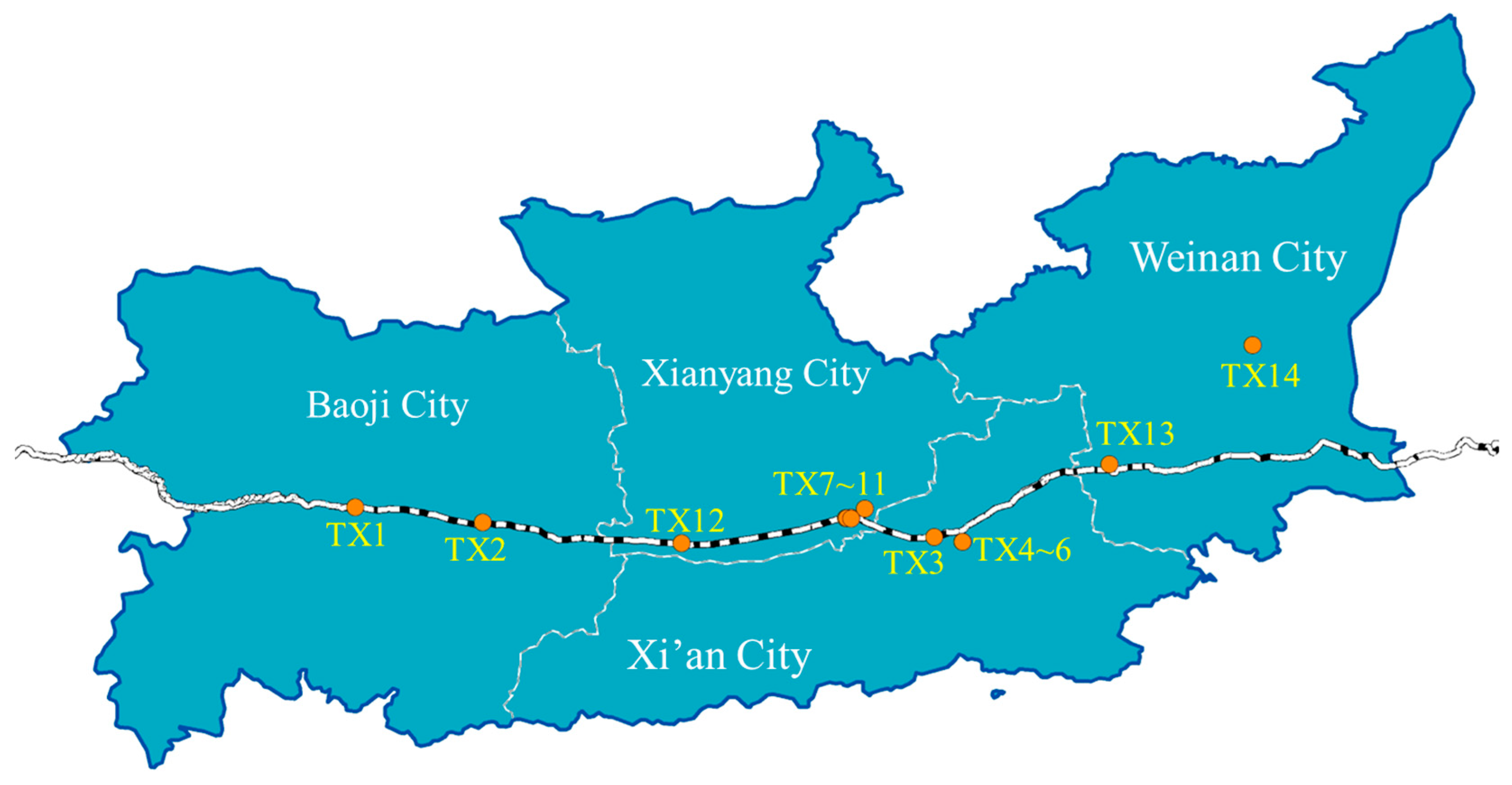
The comprehensive value scores of the fourteen textile industrial heritage units along the Guanzhong Section of the Longhai Railway demonstrate a pronounced spatial structure closely aligned with the historical morphology of the Baoji–Xi’an–Xianyang–Weinan industrial corridor. Although all units were evaluated using the same assessment framework and weighting model, the resulting value distribution is far from random; rather, it is strongly influenced by the hierarchical structure of railway nodes, the configuration of historical industrial clusters, and the intensity of urban redevelopment across different regions (
Figure 10).
At the western end of the corridor, Units TX1 and TX2 are located in Baoji, a city that has served as a major industrial base in western China since the mid-20th century. Baoji has long maintained strong industrial foundations in textiles, machinery, and defense manufacturing, with the Longhai Railway playing a decisive logistical role. The high comprehensive scores of TX1 and especially TX2 reflect the preservation of coherent factory layouts, direct connectivity to the railway trunk line, and relatively intact industrial building ensembles. These characteristics contribute to their strong systemic integrity and spatial continuity.
Moving eastward, Units TX3 through TX6 are concentrated in the “Textile City” area of eastern Xi’an, historically one of the most significant textile industrial clusters in northwestern China. Large-scale spinning, dyeing, and finishing factories were densely arranged along the railway, forming an industry-oriented linear industrial belt. Evaluation results indicate that most units in this zone fall within the high or upper-middle value range. This is attributable to the clarity of railway sidings, well-preserved spatial structures, the abundance of high-value buildings (especially factory buildings and warehouses), and the strong continuity of the industrial landscape. Despite the impacts of urban redevelopment, the core spatial logic—linking railway infrastructure with production and residential zones—remains legible, making the Xi’an Textile City area the most structurally coherent segment of the Guanzhong industrial heritage corridor.
Units TX7 through TX12 belong to Xianyang and its peripheral counties. Units TX7 to TX11, located within the old urban district along the main railway line, generally exhibit lower or mid-low values due to extensive redevelopment. Many factory complexes have been demolished, fragmented, or repurposed, leading to a deterioration of spatial integrity, process continuity, and the readability of industrial landscapes. In contrast, Unit TX12 in Wugong County—although situated outside the core urban zone—retains a relatively complete factory layout and preserved production structures, resulting in higher scores than several older urban units. This reflects a typical pattern of county-level textile factories extending outward from metropolitan nodes while still maintaining railway dependence.
In the eastern section of the corridor, Units TX13 and TX14 are located in Weinan and surrounding counties. TX13 remains connected to the main railway line but is relatively small in scale with moderate preservation conditions, resulting in limited overall value. TX14, served only by a branch railway and located farther from the trunk line, shows low value levels, reflecting its weaker industrial scale, lower historical significance, and marginal logistical connections.
Overall, the spatial distribution of heritage value displays a clear gradient: high-value units anchor the corridor at major railway nodes (Baoji and Xi’an), mid-value units occupy intermediate locations (Xianyang), and lower-value units cluster in peripheral county areas with weaker railway logistics. This spatial logic not only illustrates the historical evolution of the textile industry but also highlights the ways in which linear transport infrastructure continues to shape industrial heritage structures across the region.
3.5. Linear Cultural Heritage Characteristics and Low-Carbon Conservation Implications
The foregoing spatial analysis reveals that the textile industrial heritage system along the Guanzhong Section exhibits key characteristics of a linear cultural heritage. First, the fourteen units form a continuous linear sequence along the railway trunk line, creating a spatially extended linear cultural heritage system with both temporal depth and geographic continuity. These heritage units are not isolated factory sites; rather, they constitute an interconnected system organized and sustained by the railway as a linear infrastructural framework. Second, the linear cultural heritage system shows a distinct hierarchical node structure: Baoji and Xi’an Textile City serve as high-value core nodes, Xianyang represents an intermediate zone influenced significantly by urban transformation, and peripheral county locations (e.g., Weinan and Wugong) function as lower-value terminal nodes. This pattern reflects a structural gradient of diminishing industrial strength and preservation integrity along the railway axis.
These linear cultural heritage characteristics offer significant implications for conservation and adaptive reuse. For high-value units such as TX2, TX3, TX5, and TX6, system-oriented conservation strategies should be adopted. These units typically retain large-scale factory workshops and warehouses with high structural integrity and substantial embodied material investment, making them particularly suitable for adaptive reuse with minimal structural intervention. Priority should be given to preserving industrial landscape integrity, safeguarding representative factory and warehouse buildings, and maintaining the spatial relationship between the heritage units and the railway system. Where appropriate, adaptive reuse projects—such as industrial museums, cultural parks, or interpretation districts—can reinforce public visibility while minimizing new construction, thereby reducing carbon emissions associated with material production and large-scale redevelopment.
For mid-value units, a reinforcement-oriented conservation approach within the linear cultural heritage framework is recommended. Through targeted restoration, spatial continuity enhancement, and industrial landscape re-articulation, these units can regain partial legibility and contribute meaningfully to the broader linear cultural heritage system. Many of these units are located in zones experiencing rapid urban redevelopment, where selective reinforcement offers a balance between heritage retention and development demand. Such preservation-led reinforcement also avoids carbon-intensive demolition–reconstruction cycles, helping maintain both heritage value and environmental efficiency.
For lower-value county-level units, flexible conservation strategies should be applied. In peripheral county-level contexts, where industrial functions have largely declined and redevelopment resources are limited, lightweight and non-material-intensive strategies help retain industrial memory without imposing excessive economic or environmental burdens. Rather than aiming for full-scale preservation, efforts may focus on retaining key characteristic structures, establishing interpretive signage systems, or employing digital heritage recording to document industrial memory. Even when physical integrity is limited, these sites occupy important positions within the linear narrative of the linear cultural heritage system and should remain present as part of the overall heritage sequence.
In conclusion, integrating a linear cultural heritage perspective with low-carbon renewal principles shifts industrial heritage conservation from isolated, site-specific actions toward a systemic, linear cultural heritage-based strategy. This approach emphasizes adaptive reuse, lifecycle extension, and coordinated preservation along existing railway infrastructure. Linking quantitative value assessments with spatial pattern interpretation therefore enables more nuanced, multi-scalar, and carbon-conscious conservation pathways for the Guanzhong Section. The west–east value gradient identified along the linear cultural heritage sequence reflects not only heritage preservation conditions but also long-term differences in industrial foundation, urban expansion intensity, and post-industrial economic transition. The findings offer not only a methodological foundation for evaluating railway-driven industrial heritage but also a strategic basis for promoting sustainable, low-carbon regeneration along the Longhai Railway.
4. Conclusions
This study developed a two-level value assessment framework—comprising individual-level and unit-level evaluations—to systematically examine the fourteen textile industrial heritage units along the Guanzhong Section of the Longhai Railway. By integrating individual scoring, type-weighted aggregation, unit-level evaluation, and spatial pattern interpretation under a linear cultural heritage perspective, the study reveals the structural logic, spatial distribution patterns, and conservation significance of railway-driven textile industrial heritage.
At the individual level, the results demonstrate a pronounced asymmetry between the quantity of surviving buildings and their actual heritage contribution. Although structures (ST) and residential buildings (RE) constitute the largest share of individual elements in most factory complexes, their value scores are consistently low due to their simple forms, limited technological content, and weaker association with core production processes. In contrast, factory workshops (FW), warehouses (WH), and office buildings (OF)—despite being fewer in number—achieve significantly higher scores owing to their complex structural systems, clear technological functions, and strong historical relevance. This inverse relationship between quantity and value validates the incorporation of type-specific weights (βₜ) in the assessment model and indicates that the key heritage value of textile industrial complexes is primarily carried by production- and management-related buildings.
At the unit level, the integrated results of SFI, PC, RC, IL, and IV reveal a clear stratified structure. High-value units such as TX2, TX3, TX5, TX6, and TX8 exhibit strong spatial–functional integrity, readable production chains, robust railway connectivity, coherent industrial landscapes, and a high proportion of high-value individual buildings. Mid-value units—including TX1, TX4, TX10, and TX12—have undergone varying degrees of transformation but still retain essential industrial components and partial landscape continuity. Low-value units such as TX7, TX9, TX11, TX13, and TX14 show extensive fragmentation, diminished process readability, and weakened railway associations, resulting in comparatively low composite values.
In the spatial dimension, the distribution of heritage value exhibits a pronounced gradient aligned with the historical Baoji–Xi’an–Xianyang–Weinan industrial belt and the hierarchical structure of the Longhai Railway. High-value units cluster around core railway nodes such as Baoji and Xi’an, where early industrial foundations were strong, railway logistics were central, and industrial landscapes remain relatively intact. Units in Xianyang show declining values due to intense urban redevelopment, while county-level units in Wugong and Weinan display lower overall values due to their smaller industrial scale, reduced railway significance, and limited preservation. This spatial gradient confirms that industrial heritage value is not merely a site-specific phenomenon but a manifestation of a linear cultural process jointly shaped by material remains, production systems, and railway transport.
Beyond the heritage value patterns identified in this study, the results also offer important implications for sustainable and low-carbon strategies for industrial heritage conservation and adaptive reuse. The clear differentiation of value across building types and factory units provides a quantitative basis for prioritizing conservation efforts, enabling resources to be directed toward high-value structures where retention yields the greatest cultural and environmental benefit. In particular, preserving factory workshops and warehouses—buildings with substantial embodied carbon and strong historical significance—avoids the carbon emissions associated with demolition and new construction, aligning heritage conservation with low-carbon development goals. At the unit scale, the spatial gradient revealed along the railway corridor suggests differentiated renewal pathways: core high-value nodes are suitable for adaptive reuse through functional upgrading and integrated regeneration, whereas mid- and low-value units may adopt lighter, incremental, or digital documentation strategies that minimize material intervention. Together, these findings demonstrate that value-based conservation not only supports cultural significance but also provides a structured foundation for low-carbon decision-making in the sustainable transformation of industrial heritage along the Longhai Railway. Future research may integrate socioeconomic data, community engagement, or risk modeling to further develop dynamic conservation and sustainable regeneration strategies for linear industrial heritage systems.
Several limitations of this study should be acknowledged. First, the empirical analysis is based on a single industrial sector (textile industry) and a specific railway segment, which may limit the direct applicability of the results to other industrial types or non-linear industrial contexts. Second, although a standardized scoring manual and AHP-based weighting were employed to enhance transparency and consistency, the evaluation inevitably involves expert judgment and field interpretation, which may introduce a degree of subjectivity. Finally, the proposed framework focuses primarily on heritage value characteristics and does not explicitly incorporate socioeconomic performance or post-reuse outcomes. These limitations point to future research directions, including cross-industry validation, multi-rater calibration, and the integration of social and environmental performance indicators.