Article

The Effect of Local Supplementary Cementitious Materials on the Cracking Sensitivity of Cement-Based Materials Under an Arid Climate: A Case Study Using Djebel Béchar Limestone


1
FIMAS Laboratory, Civil Engineering Department, Tahri Mohamed University of Béchar, Bechar 08000, Algeria
2
LGCE Laboratory, Djillali Liabes University of Sidi Bel Abbes, Sidi Bel Abbes 22000, Algeria
*
Author to whom correspondence should be addressed.
Buildings 2026, 16(17), 3517; https://doi.org/10.3390/buildings16173517
Submission received: 14 May 2026 / Revised: 8 July 2026 / Accepted: 11 August 2026 / Published: 3 September 2026
(This article belongs to the Section Building Materials, and Repair & Renovation)

Abstract

Early-age cracking severely limits concrete durability in hot, arid environments due to rapid plastic and drying shrinkage. This study evaluates the cracking sensitivity of cement-based materials incorporating four local supplementary cementitious materials (SCMs): limestone filler from Djebel Béchar, natural pozzolan, silica fume, and gypsum under simulated arid conditions (55 °C, 12% relative humidity, 10 km/h wind). Using a custom climatic chamber, prismatic cement-grout specimens with internal restraints were tested. SCMs were evaluated at substitution rates of 2% to 8%. Limestone was further tested at higher rates (up to 40%) and in binary combinations. Findings were validated using micro-concrete with limestone substitutions (0–35%) combined with 4% natural pozzolan. Cracking sensitivity was assessed using maximum crack width and a cracking index, along with setting times and mechanical strengths. Results indicate that limestone filler demonstrated the most favourable performance. A 4% limestone substitution yielded a single crack with a maximum width of 0.1 mm, while an 8% substitution resulted in five cracks of about 0.2 mm. The optimal cracking index was achieved at a 35% limestone substitution rate, which also successfully extended initial and final setting times. While binary SCM combinations significantly reduced cracking compared to the unsubstituted reference, they did not outperform the optimal 35% single limestone substitution. Furthermore, the 28-day compressive and flexural tensile strengths of the micro-concrete were effectively maintained at up to 35% limestone combined with 4% pozzolan. Overall, these preliminary findings demonstrate that crushed limestone fines from Djebel Béchar are highly promising as partial cement replacements to improve concrete durability in arid climates. Further durability assessments and statistical validation are recommended to confirm these benefits for practical field applications.

1. Introduction

Early-age cracking in concrete structures is a long-standing durability concern. Restrained volume changes generate tensile stresses that, once they exceed the tensile capacity of the immature matrix, trigger cracks that propagate through the cover zone, accelerating carbonation, chloride ingress, and reinforcement corrosion [1,2,3]. The problem is especially acute in slabs, bridge decks, nuclear containment structures, and tunnel linings, where crack widths must be controlled to preserve serviceability and tightness. Volumetric changes arise from thermal gradients, chemical and autogenous shrinkage, and plastic shrinkage in hot, dry environments, which dominate at very early ages when the material has little or no tensile capacity [4,5].
Several test methods have been developed to quantify the tendency of cementitious materials to crack under restrained shrinkage. The ring test is widely used for its simplicity and ability to discriminate among mixtures using a single cracking age and stress rate [6,7]. The cracking frame more closely simulates the restraint imposed by adjacent structural elements [8]. Fracture-energy approaches based on three-point bending characterise the material’s resistance to crack propagation [9]. Plate tests, linear restrained tests, and instrumented prismatic moulds with internal restraint complete this methodological toolkit [10,11]. Bentz reviewed standardised methods for shrinkage measurement, identifying ASTM C1608 for chemical shrinkage and volumetric or linear procedures for autogenous shrinkage, with the linear method preferred to minimise experimental artefacts; a closely related procedure has been standardised in Japan by Tazawa [12,13].
In addition to shrinkage measurement, numerous studies have explored the relationship between cracking and material composition. Samouh integrated free, drying, autogenous, and restrained shrinkage measurements on self-compacting concretes, demonstrating that viscoelastic behaviour determines cracking age [14]. Laurence examined restrained shrinkage in thin concrete repairs, combining in situ measurements with numerical modelling of drying-induced cracking [15]. Ienny et al. introduced an annular restrained-shrinkage bench with a double closed-loop control system, emphasising the significance of creep in alleviating early-age tensile stresses in high-performance concrete [16]. Østergaard conducted experimental and numerical investigations of early-age fracture mechanics [17], while Menu et al. showed that mineral additives such as silica fume and fly ash, despite improving mechanical properties, can decrease stress relaxation and thereby increase the cracking sensitivity of shotcrete [18]. At the structural level, Liu et al. developed a multi-field coupling model incorporating the degree of hydration to predict cracking risk and proposed three mitigation strategies [19]. Dong et al. compared circular and elliptical rings, finding that thin elliptical rings reduce test duration by increasing stress concentration, whereas thick rings display a cracking mechanism governed by non-uniform internal moisture [20]. Additional recent studies have focused on crack-width control in precast joints and thermal anti-cracking safety in concrete dams [21,22].
The influence of supplementary cementitious materials (SCMs), including limestone filler, natural pozzolan, silica fume, fly ash, slag, and gypsum, on early-age cracking has been widely studied, with results that are often contradictory. SCMs can reduce cement consumption, CO2 emissions, and natural resource depletion, and may also refine the pore structure and limit drying shrinkage through filler or pozzolanic effects [23,24]. Conversely, certain SCMs, particularly silica fume, may increase autogenous shrinkage or decrease stress relaxation, potentially leading to greater early-age cracking [18]. The overall impact depends on the specific SCM type, dosage, and curing conditions and cannot be generalised across different local sources without targeted experimental validation.
Recent studies on Algerian and Maghreb SCMs have highlighted the potential of locally available mineral additions to reduce both the carbon footprint and the cost of structural concrete. Kenai and co-workers have demonstrated that crushed limestone fines and natural pozzolan from Algerian quarries can partially replace clinker without compromising 28-day strength when proper curing is ensured [25]. Bouasker et al. reported that limestone substitution at 15–25% improves the workability and durability of self-compacting concrete under semi-arid Mediterranean conditions [26]. However, the specific question of how local SCMs interact with the severe plastic-shrinkage conditions encountered in the Saharan and pre-Saharan climates of southern Algeria, where temperatures regularly exceed 45 °C, relative humidity is below 20%, and wind velocities reach 10–15 km/h, has received limited attention to date [27,28]. Southern Algeria offers a particularly demanding environment for concrete: the Saharan and pre-Saharan climate combines high air temperature (above 45 °C in summer), very low relative humidity (often below 15%), and strong winds, which together promote severe plastic and drying shrinkage within the first hours after casting. At the same time, the region produces substantial quantities of crushed limestone by-products from the Djebel Béchar quarries, as well as natural pozzolan from northern Algerian deposits, both of which could partially replace imported or energy-intensive cement. Despite this potential, the cracking behaviour of cement-based materials incorporating these local SCMs has received limited attention under conditions representative of the Algerian arid climate.
The present case study addresses this gap through an experimental investigation conducted in a custom climatic chamber that reproduces arid-climate exposure (55 °C, 12% RH, 10 km/h wind). The specific objectives are: (i) to quantify the effect of four SCMs (limestone, natural pozzolan, silica fume, gypsum) on the cracking sensitivity of fluid cement grouts at low substitution rates (2–8%); (ii) to identify the optimal limestone content at high replacement rates (10–40%); (iii) to evaluate the effect of limestone substitution on setting times; (iv) to investigate binary SCM combinations based on 35% limestone; and (v) to verify the transferability of the findings at the micro-concrete scale by measuring compressive and flexural tensile strengths at 28 days. The outcomes are intended to support the practical use of local by-products as partial cement replacements in concrete applications in arid climates.

2. Materials and Methods

2.1. Cement and Supplementary Cementitious Materials

Two types of Portland cement, both compliant with EN 197-1, were utilised in this study [29]. CEM I 42.5 cement (sourced from GICA, Béchar, Algeria)was employed as the reference binder for cement grouts in the cracking-sensitivity test (Section 2.2, Section 3.1, Section 3.2, Section 3.3, Section 3.4 and Section 3.5). CEM II/A 42.5 L/R cement (sourced from GICA, Béchar, Algeria)was used as the reference binder for micro-concretes in the transferability study (Section 2.3 and Section 3.6). The selection of two cement types corresponds to the dual objectives of the experimental campaign. CEM I serves as a clinker-only reference for rigorous cracking screening, while CEM II/A was chosen for micro-concrete applications because it aligns with current Algerian construction practices. Four supplementary cementitious materials (SCMs) were examined: (i) limestone filler, a by-product of rock-crushing operations at the Djebel Béchar quarries in southwestern Algeria, (ii) natural pozzolan from Beni Saf, (iii) condensed silica fume, and (iv) gypsum. The physical characteristics of the three primary SCMs are presented in Table 1 and Table 2.

2.2. Cement Grout Composition

The cracking-sensitivity test employed cement grouts rather than normal-consistency pastes. The water-to-binder ratio was set above standard consistency (w/c = 0.26, as determined by EN 196-3 [30] for the reference cement), resulting in a mix sufficiently fluid to permit crack development and measurement. Following preliminary tests, the water-to-binder ratio for all mixes was fixed at 0.35. This adjustment maintained adequate fluidity in the prismatic moulds while enabling the formation of measurable shrinkage cracks under accelerated conditions in the climatic chamber.
Twenty grout formulations were prepared and organised into four series, each comprising five mixes (Table 2). Each series included a reference grout containing only CEM I 42.5 and four binary grouts, in which cement was partially replaced by limestone filler, natural pozzolan, silica fume, or gypsum at substitution rates of 2, 4, 6, and 8 percent by mass of the total binder. All four series utilised the same reference grout (cement = 1500 kg/m3; water = 525 kg/m3) and identical water content. The total binder content was maintained at 1500 kg/m3 for all 20 mixes. This methodology ensured that the comparison isolated the effect of supplementary cementitious material (SCM) substitution from variations in paste volume or binder dosage (Table 3).
A subsequent experimental program examined limestone at increased substitution rates of 10, 20, 35, and 40 percent by mass of the total binder. The total binder content (1500 kg/m3), water content (525 kg/m3), and water-to-binder ratio (0.35) remained constant throughout. Additionally, four binary grout mixtures containing 35 percent limestone were produced by incorporating a secondary supplementary cementitious material (SCM) at low dosages: 2 percent gypsum, 2 percent pozzolan, 4 percent pozzolan, or 2 percent silica fume, each calculated as a mass fraction of the total binder (Table 4).

2.3. Micro-Concrete Composition

To assess the applicability of the findings to concrete-scale specimens, a series of micro-concretes was prepared using a single crushed-stone aggregate fraction of 3/8 mm and natural sand. The selection of a small maximum aggregate size, instead of a conventional 0/15 or 0/20 graded skeleton, was determined by the limited dimensions of the prismatic specimens and the requirement to maintain matrix homogeneity during the cracking sensitivity test.
Four micro-concrete mixes were evaluated (Table 5): a reference mix containing CEM II/A 42.5 as the sole binder, and three ternary mixes in which cement was partially replaced by limestone filler at 15, 25, or 35% by mass of total binder, along with a fixed pozzolan dosage of approximately 4% of total binder. Pozzolan was incorporated only in the limestone-substituted mixes, based on the favourable binary combination identified at the grout scale (Section 3.5). The total binder content was maintained at 450 kg/m3, as were the water content (176 kg/m3), crushed sand content (657 kg/m3 from Djebel Béchar), and gravel content (1072 kg/m3 of crushed 3/8 mm aggregate from Djebel Béchar). A polycarboxylate-based acrylic copolymer superplasticiser (Sika ViscoCrete® TEMPO-12, Sika El Djazair, Les Eucalyptus, Algeria) was added at a dosage of 6.6 kg/m3, corresponding to approximately 1.5% of the total binder mass, to ensure workable consistency at the relatively low water-to-binder ratio of w/b = 0.4 (Table 5, Figure 1).

2.4. Climatic Chamber and Cracking Sensitivity Test

Experimental studies rely on various cracking devices, most of which are passive: cracking is induced in a mould using notches or width reductions. The material is subjected to intense drying, achieved by applying air circulation or high temperatures to the concrete surface to simulate real-world conditions. This intense drying accelerates shrinkage, allowing researchers to study concrete behaviour under extreme conditions [2].
Cracking sensitivity was assessed in a purpose-built climatic chamber with internal dimensions of 1.8 × 1.0 × 0.8 m3, developed for a previous project. Hot and dry conditions representative of the Algerian Saharan climate were maintained by two thermostatically controlled electrical heating elements, which provided an air temperature of 55 °C, a relative humidity of approximately 12%, and a wind velocity of 10 km/h, generated by a low-speed axial fan. These conditions were selected to reproduce, in an accelerated and reproducible manner, the worst-case summer climate of southern Algeria. Béchar weather records (Office National de la Météorologie, Algeria) report mean daily maximum temperatures above 42 °C in July with peaks up to 48 °C, mean relative humidity below 18%, and average wind velocities of 12–15 km/h. The chamber set-points (55 °C, 12% RH, 10 km/h wind), therefore, correspond to a slightly more severe envelope than the field extremes, which is appropriate for a discriminating accelerated screening test rather than a real-time simulation [4,5]. The substitution rates were chosen on a rational basis: the low-dosage range 2–8% covers the typical interground limestone content of CEM II/A-L cements [23], while the high-dosage range 10–40% covers the limit accepted by current low-CO2 cements (LC3, CEM II/C-M, CEM VI) and brackets the optimum reported in the literature for limestone–cement systems [24,28]. The four SCMs (limestone, natural pozzolan, silica fume, gypsum) were selected to represent the principal mineral additions available locally in southwestern Algeria and to cover the main mechanistic families: filler/nucleating (limestone), pozzolanic (natural pozzolan, silica fume), and sulphate regulator (gypsum). The internal-restraint configuration using four 25 mm glass balls in a 40 × 40 × 160 mm prism is intentionally a screening method that localises crack initiation and amplifies the discrimination between SCMs; it is not a direct simulation of restraint in field slabs or repair overlays. Validation by a standardised method, such as the ring test (ASTM C1581), is identified as a future direction for work.
Cracking-sensitivity specimens consisted of prismatic moulds with internal dimensions of 40 × 40 × 160 mm. Four glass balls of 25 mm diameter were embedded in each specimen at regularly spaced positions as internal restraints that concentrate tensile stresses and localise crack initiation (Figure 2). After casting, specimens were kept in their moulds in the climatic chamber for 24 h. Three specimens per formulation were tested to assess repeatability. Crack widths were measured at the end of the exposure period using a graduated magnifier with 0.05 mm resolution. The cracking index Ic was defined as the width-weighted average crack opening, computed using Equation (1):
Ic = Σ (wi × ni)/Σ ni

2.5. Setting Time and Mechanical Strength

The initial and final setting times of the cement grouts were measured at 55 °C using the Vicat needle apparatus (EN 196-3) [30]. Next, the 1-day compressive strength of these grouts was measured on half-prisms (from 40 × 40 × 160 mm specimens) after conducting a 3-point flexural test (EN 196-1) [31]. For the micro-concretes, the 28-day flexural tensile strength was determined from 3-point bending tests on prism specimens (EN 196-1), followed by compressive strength measurements on the two resulting half-prisms. At least three specimens per formulation and age were tested, and all reported values are arithmetic means. All tests were performed in accordance with the relevant European standards (EN 196-1; EN 196-3; EN 12390-3; EN 12390-6) [30,31,32,33]. The relative experimental uncertainty, evaluated in accordance with the precision and reproducibility limits specified by these standards, was estimated at ±5% for compressive strength measurements (per EN 196-1), ±0.05 mm (instrument resolution of the graduated magnifier) for crack-width measurements and for the cracking index Ic, and ±5% for setting times determined by the Vicat needle test. All measured values fell within the acceptable tolerance ranges defined by the corresponding standards. A formal statistical inferential analysis (ANOVA) was not performed due to the limited number of replicate specimens per formulation; the comparative claims reported in this study should therefore be regarded as descriptive trends rather than statistically significant differences. A larger replicate count, combined with proper statistical analysis, is identified as a necessary step for future work.

3. Results

Concrete experiences volumetric contraction, which, when restrained, leads to cracking. In arid climates, this contraction is primarily governed by plastic and drying shrinkage. The relationship between shrinkage and cracking is described in the literature through the concept of deformation capacity, defined as the maximum tensile strain that fresh concrete can withstand. Cracking occurs when restrained shrinkage surpasses this strain threshold [2]. Plastic shrinkage refers to the contraction of concrete during the plastic phase due to drying, which develops when surface water evaporation exceeds the supply of bleed water. The plastic phase spans from mixing to the onset of setting, during which concrete lacks significant cohesion. Because the onset of setting is difficult to determine, plastic shrinkage measurements in the literature often include the total contraction that occurs during setting [2].

3.1. Effect of SCM Type on Cracking Sensitivity at Low Substitution Rates

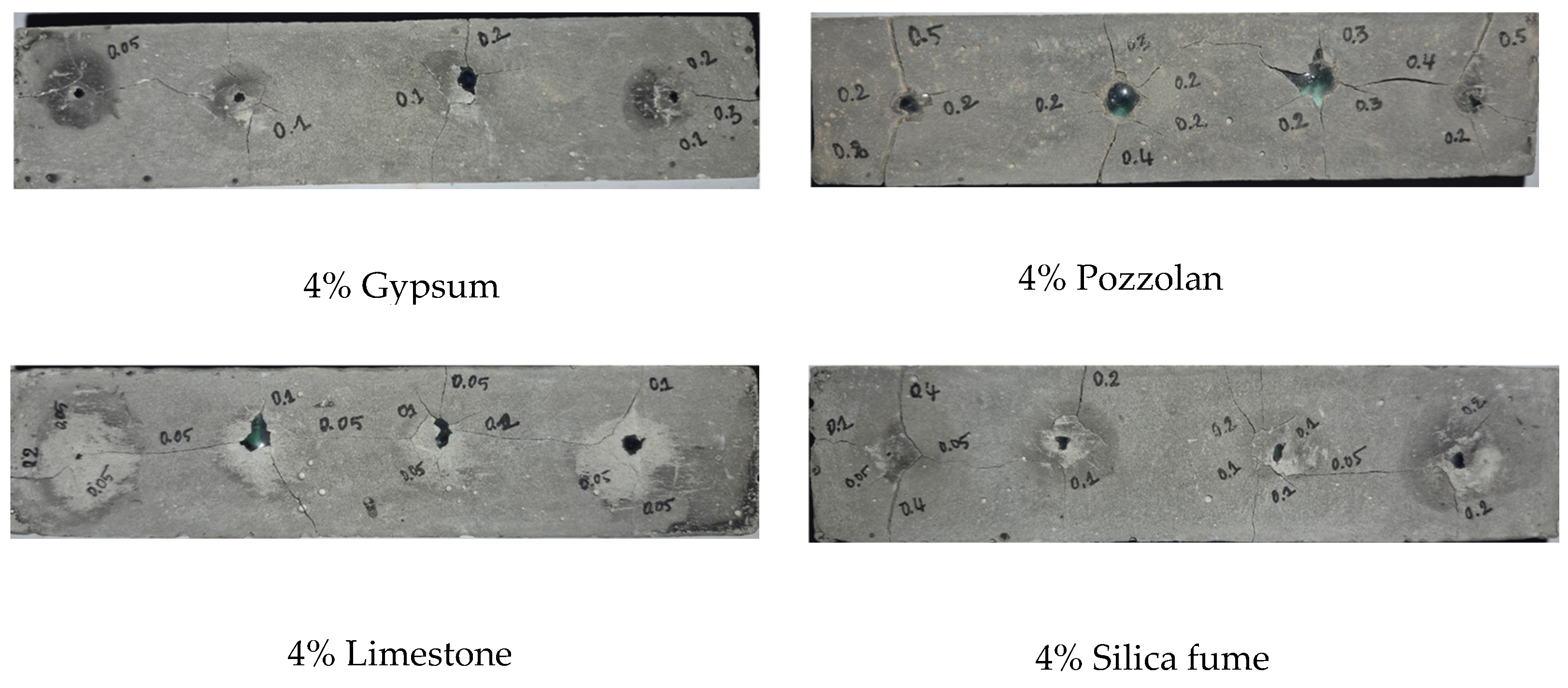
To quantify the effect of SCM type and dosage on cracking sensitivity, the cement was partially replaced with pozzolan, gypsum, silica fume, or limestone at substitution rates of 2, 4, 6, and 8% by mass of the total binder. Figure 3 illustrates the cracking pattern of cement grouts incorporating 4% of each SCM after exposure to an accelerated-drying environment.
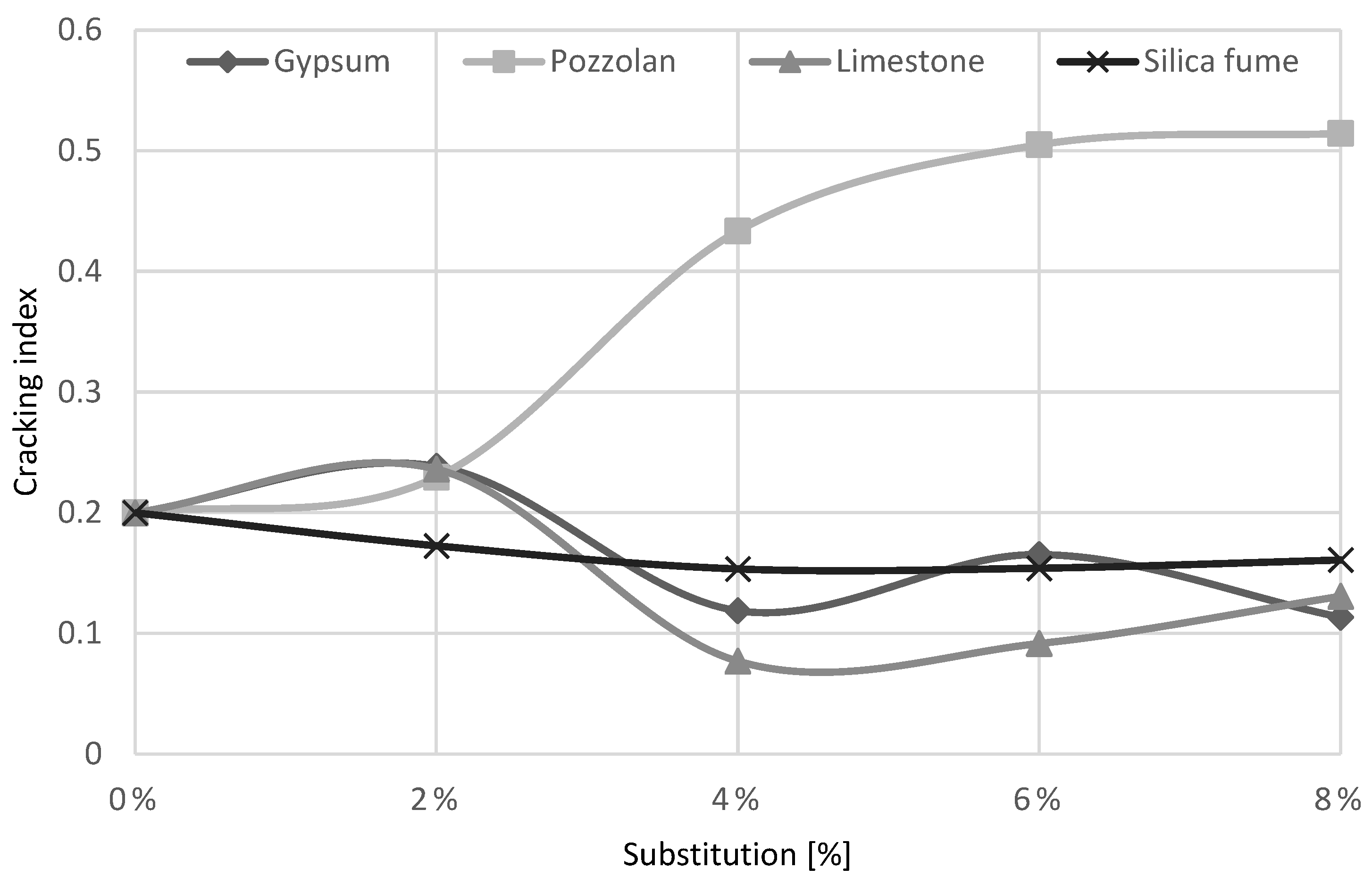
Figure 4 illustrates that adding gypsum enhances the performance of the cement paste by regularising its setting, thereby reducing the maximum crack thickness. The addition of gypsum thus improves the behaviour of the cement paste by regularising its behaviour, resulting in a thinner maximum crack.
The data indicate that increasing the substitution percentage leads to a corresponding rise in maximum crack thickness, reaching 0.7 mm at 8% substitution. This trend is attributed to two combined mechanisms: (i) the higher water demand of pozzolan particles, which intensifies plastic shrinkage at the surface of the specimens, and (ii) the slow kinetics of the pozzolanic reaction, which delivers no early-age strengthening to counterbalance shrinkage-induced tensile stresses [23,28].
With silica fume, the maximum crack width also increased with dosage but remained lower than with natural pozzolan across the same range, reaching approximately 0.2 mm at 8% substitution (Figure 3). Silica fume’s high specific surface area increases water demand and promotes autogenous shrinkage through self-desiccation; these effects are partly offset by its rapid pozzolanic reaction, which densifies the matrix and increases its tensile capacity [18].
In contrast, limestone substitution exhibited the most favourable behaviour of the four SCMs tested. The maximum crack width decreased with increasing dosage, reaching approximately 0.1 mm at 4% (one crack) and 0.2 mm at 8% substitution (five cracks). This reduction is mainly attributable to the setting-retarding effect of limestone filler, which extends the duration of the plastic phase, and to the nucleation effect on C-S-H formation that refines the pore structure [23,24].

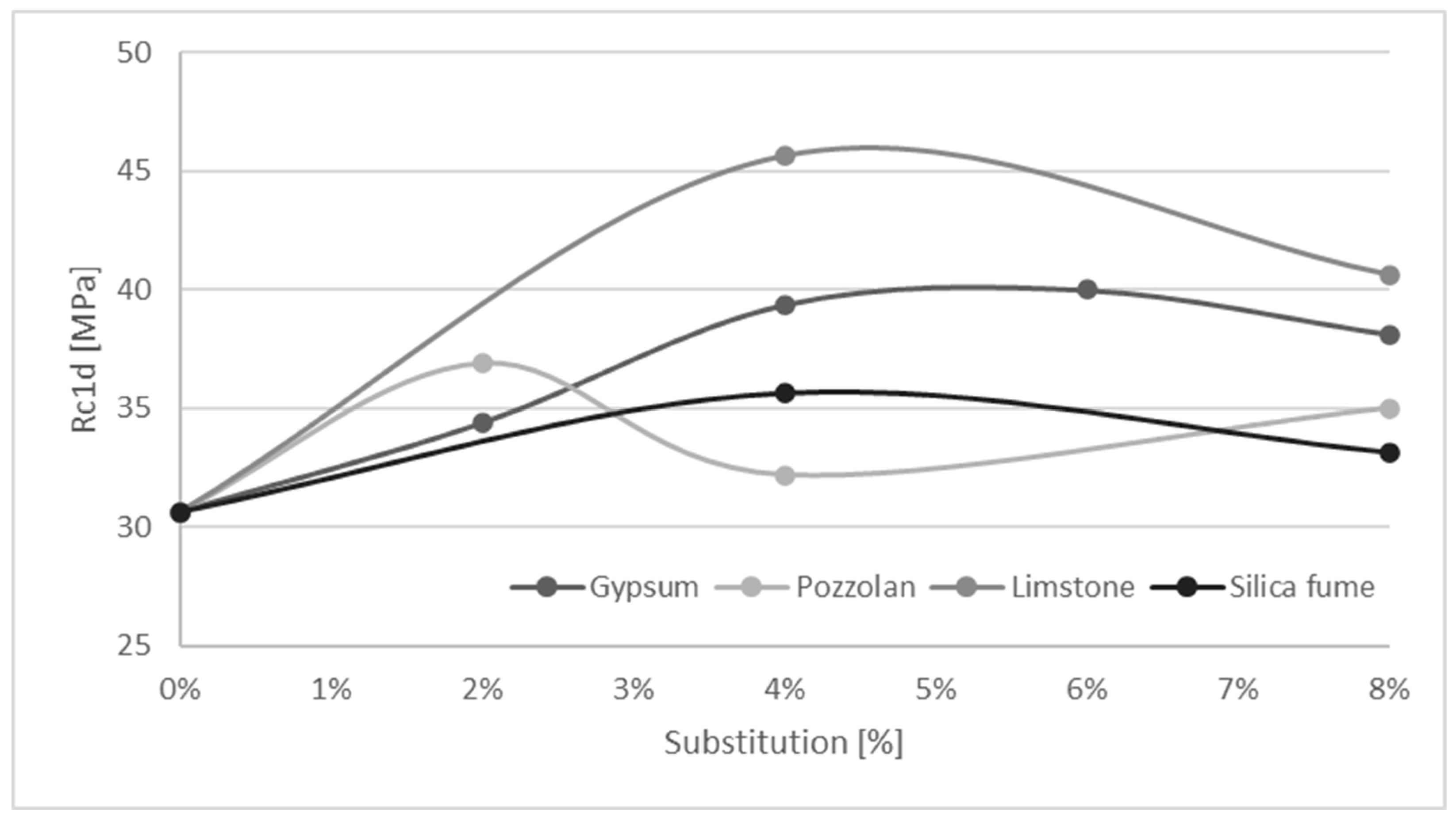
3.2. Effect of SCMs on the 1-Day Compressive Strength of Grouts

Figure 5 illustrates the 1-day compressive strength of grouts as a function of the substitution rate for each supplementary cementitious material (SCM). Among the four SCMs evaluated, limestone-blended grouts exhibited the highest 1-day strength. In contrast, grouts incorporating silica fume exhibited lower 1-day strength, whereas pozzolan- and gypsum-blended grouts showed similar strength trends.

3.3. Effect of High Limestone Substitution Rates on Cracking Sensitivity

The limestone used in this study is a by-product of rock-crushing quarries in Djebel Béchar, representing a local industrial by-product. Consequently, investigating the effects of increasing the proportion of this material in granular mixtures is necessary.
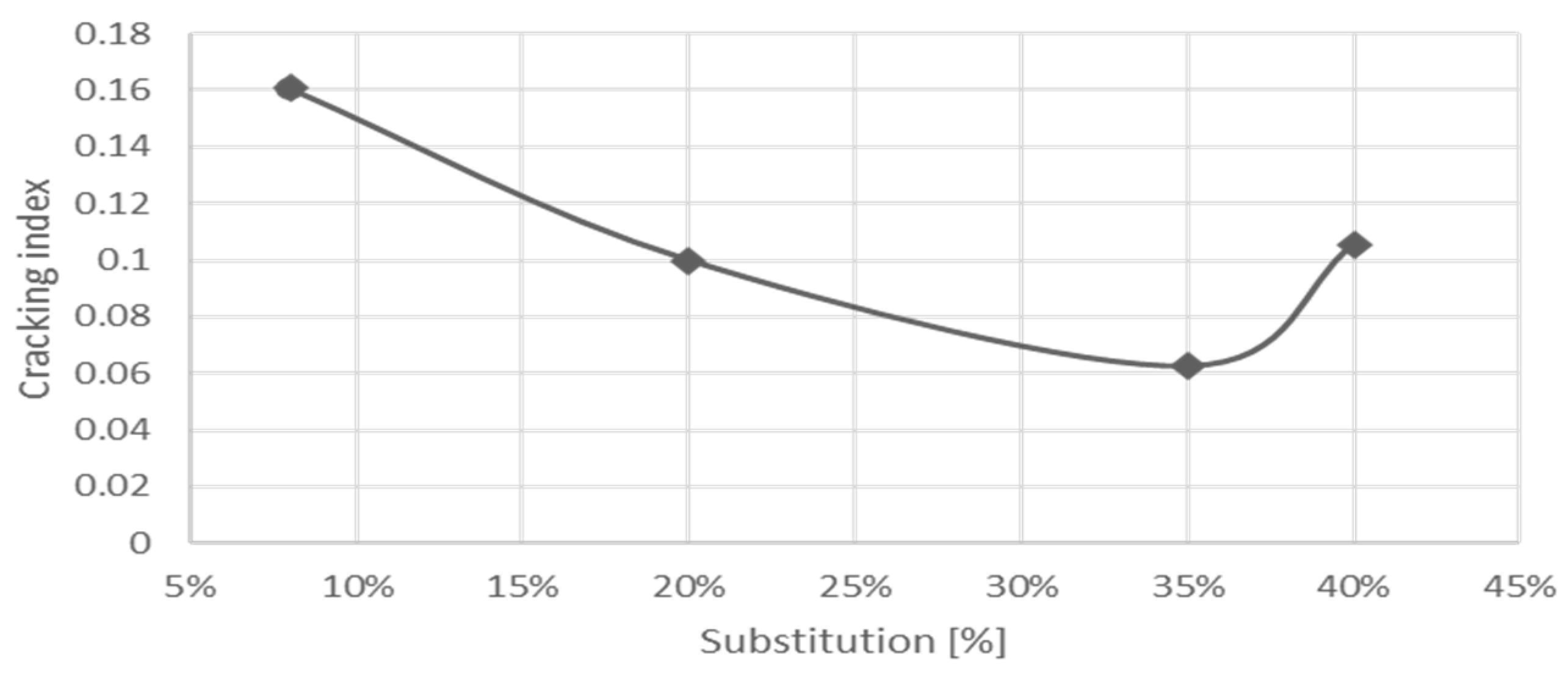
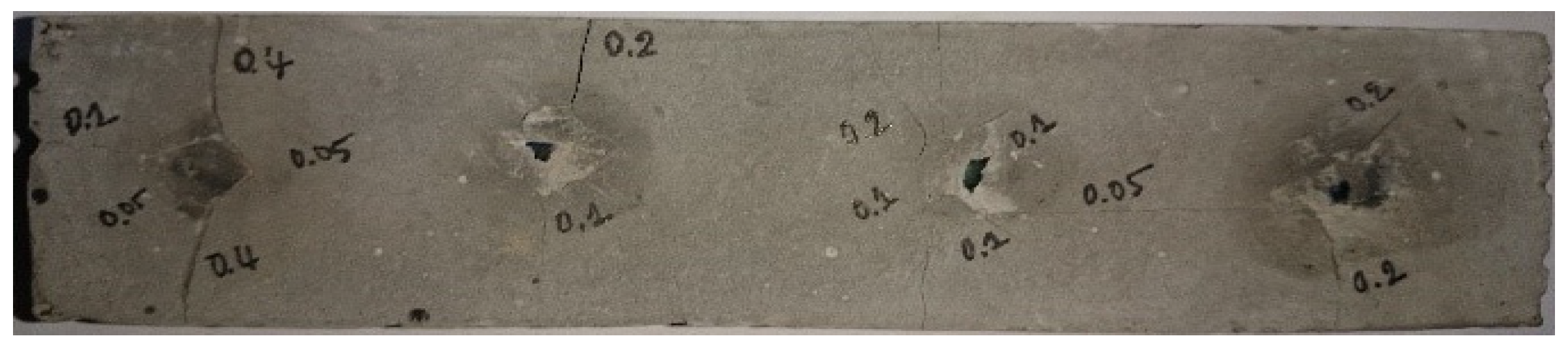
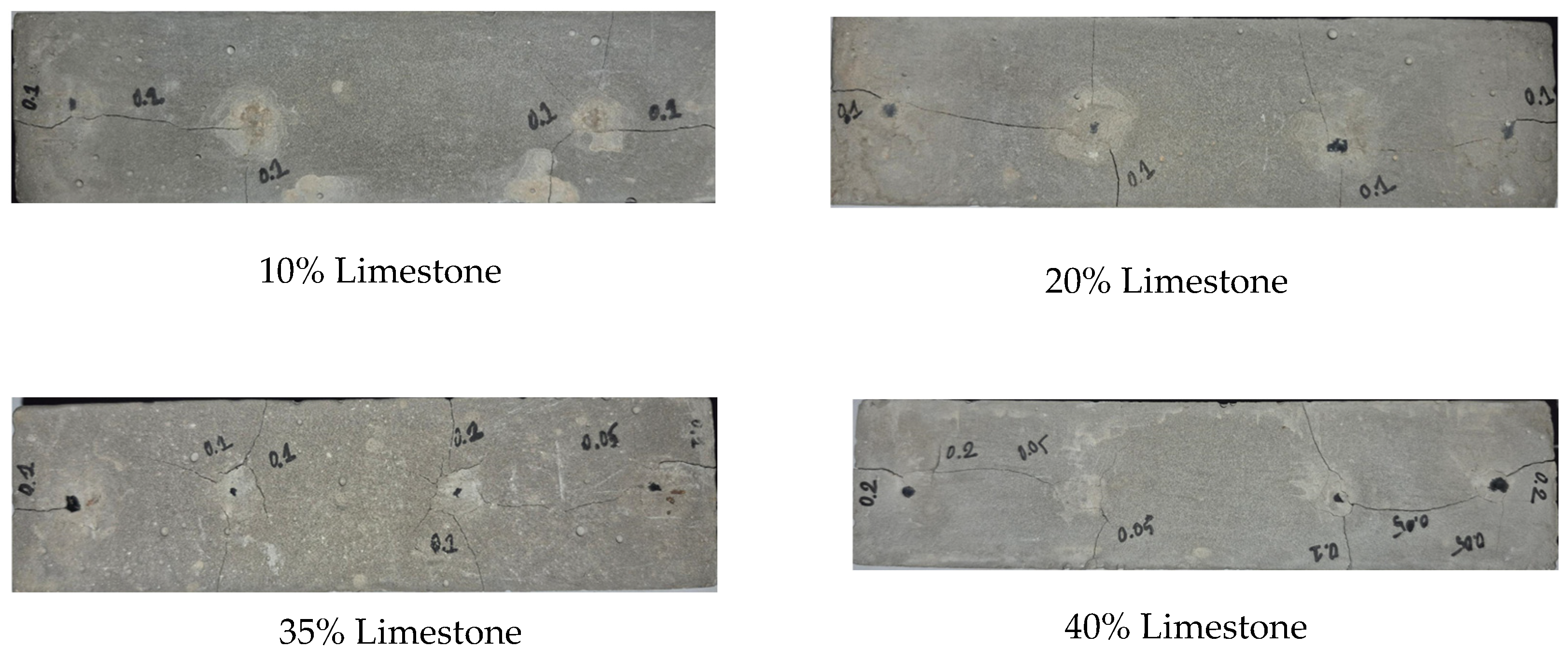
Given that limestone exhibited the most favourable performance at low substitution rates, higher substitution rates were examined to identify the optimal replacement level. Building on the previous analysis, Figure 6 presents the cracking patterns of grouts containing 10, 20, 35, and 40% limestone, while Figure 7 displays the corresponding cracking index, Ic, as a function of substitution rate.
The figure above clearly shows that increasing the limestone substitution rate reduces plastic shrinkage cracking. This improvement is most effective at an optimal substitution level of 35%. However, when the limestone percentage exceeds this level, cracking increases.
Increasing the limestone content systematically reduced cracking up to an optimal substitution rate of 35%. At 40% substitution, cracking increased. Consequently, the Ic versus substitution-rate curve reached its minimum at 35%.

3.4. Effect of High Limestone Substitution on Setting Time

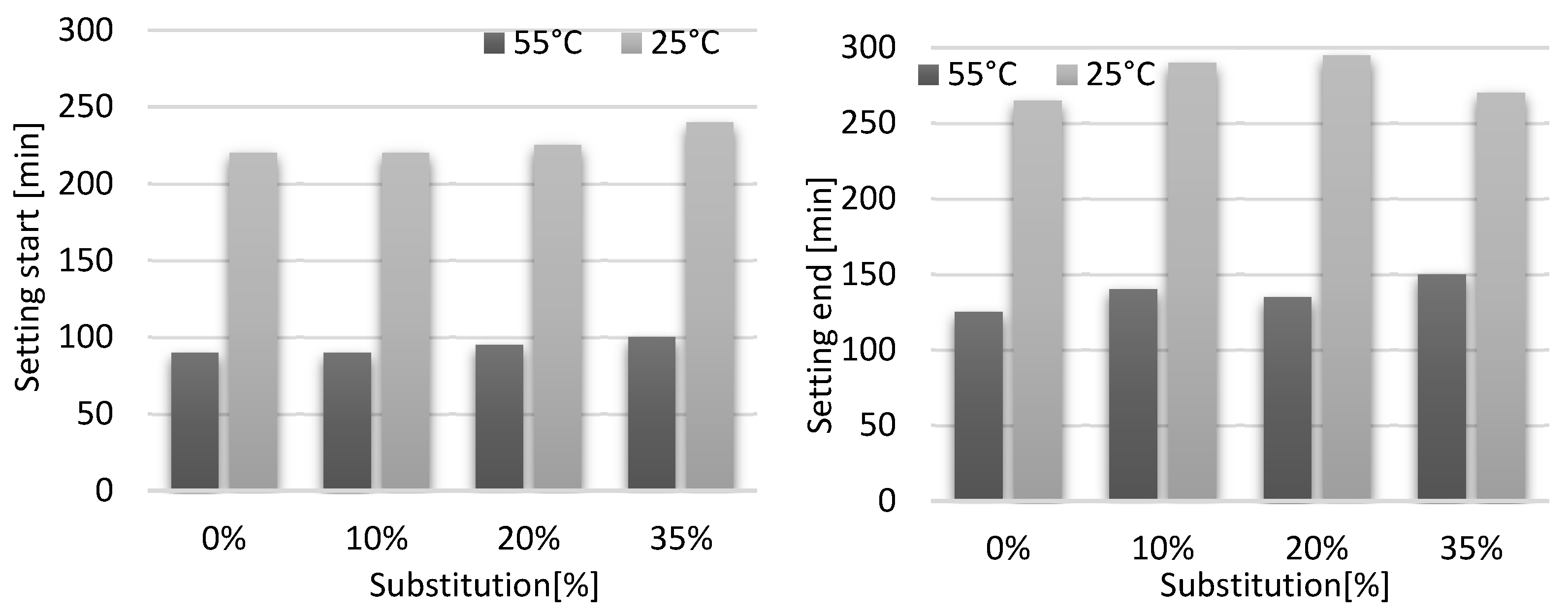
Figure 8 demonstrates that increasing limestone substitution progressively extends both initial and final setting times at 55 °C. This retardation is attributed to a reduction in the fraction of reactive clinker phases per unit volume of grout. The observed decrease in cracking, as reported in Section 3.3, can be explained by the longer plastic phase, which enables the grout to accommodate drying-induced volume changes before significant stiffness develops. However, when the limestone content exceeds 35%, the cement fraction is insufficient to develop adequate tensile capacity by the time stresses arise, as indicated by the rebound of Ic at 35% in Figure 8. Based on these findings, Section 3.5 examines whether adding a second supplementary cementitious material (SCM) at a low dosage can further reduce cracking when combined with the optimal 35% limestone content.

3.5. Effect of Binary SCM Combinations on Cracking Sensitivity

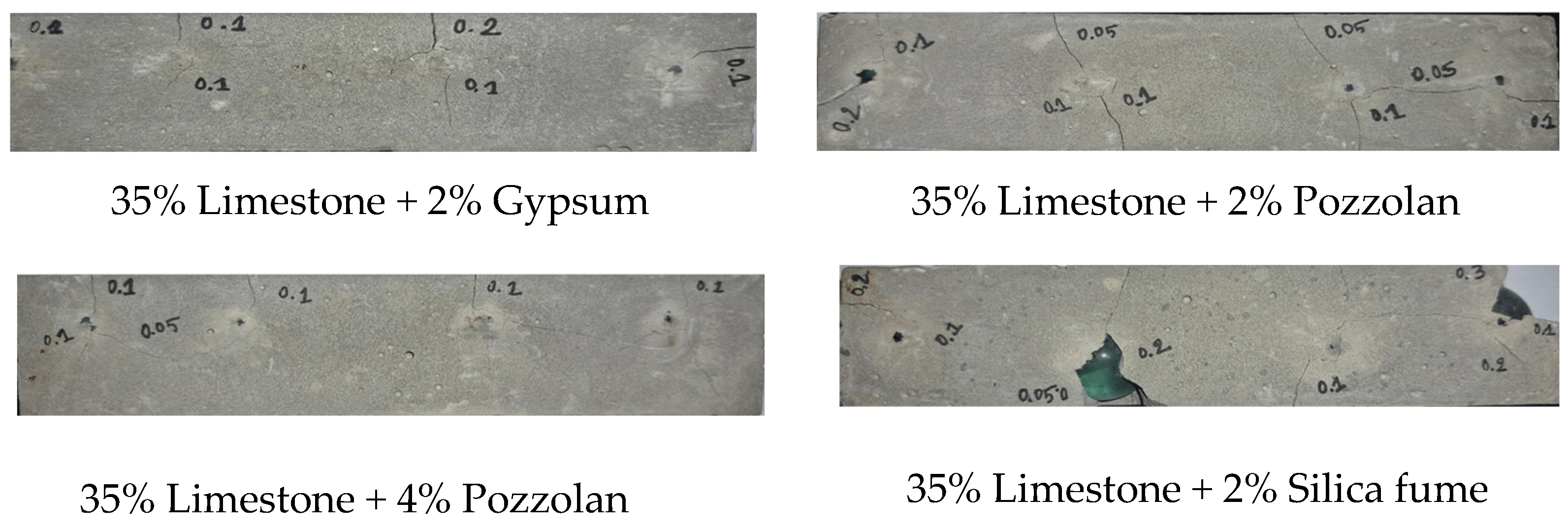
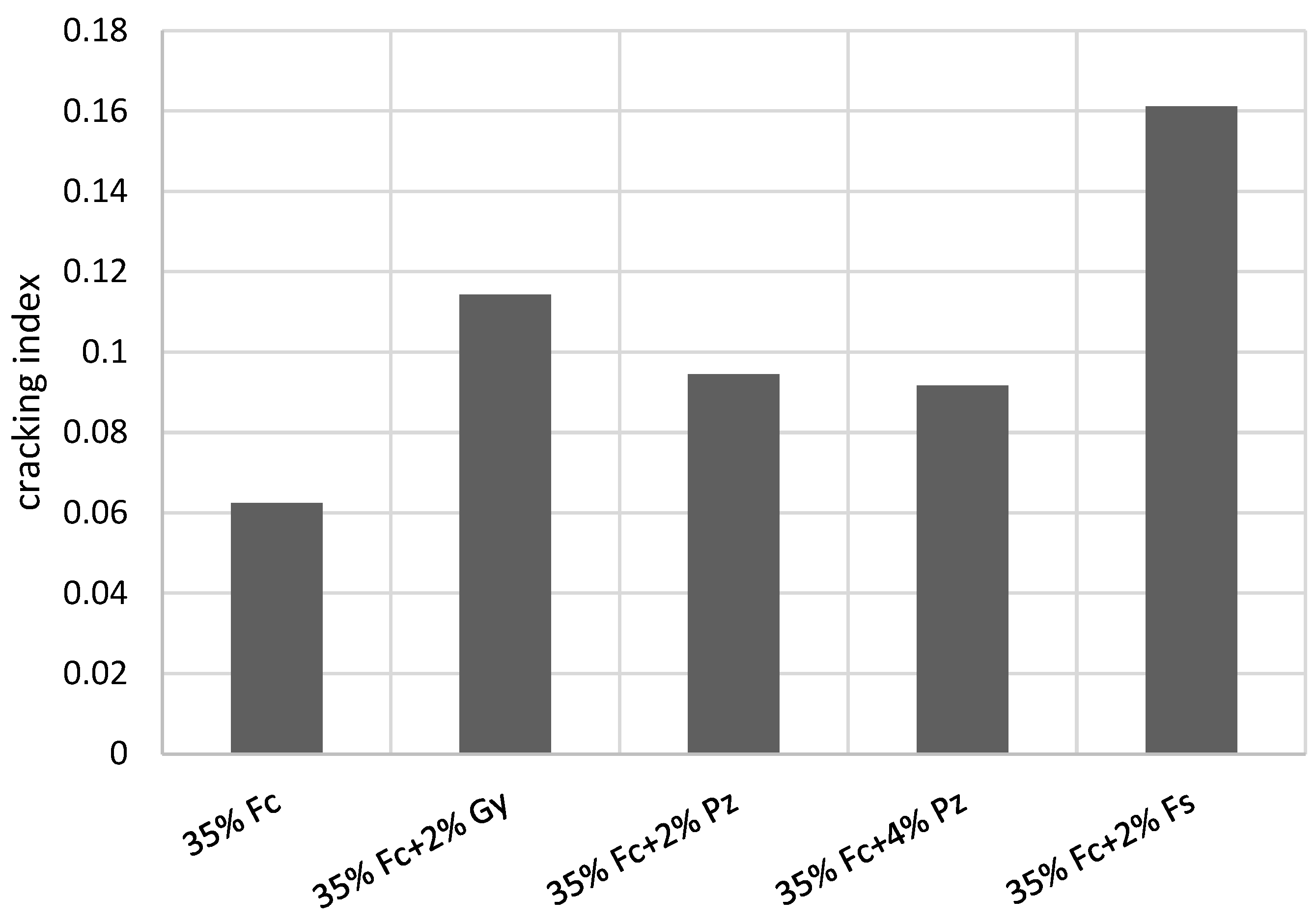
Based on the optimal 35% limestone content identified in Section 3.3, four binary combinations were tested. In each case, a second supplementary cementitious material was added at a low dosage with the 35% limestone: 2% gypsum, 2% pozzolan, 4% pozzolan, or 2% silica fume (Figure 9 and Figure 10). All four binary mixtures showed substantially lower cracking intensity than the reference grout without supplementary cementitious materials. However, compared to the single-substitution grout with 35% limestone, the cracking index Ic and maximum crack values for the binary mixes were similar to or slightly higher than those of the single-substitution grout (Figure 9 and Figure 10). Because this study used a descriptive approach with limited replicates and no formal statistical analysis, these results are presented as qualitative trends rather than statistically validated differences. These findings indicate that, within the tested dosage range, the optimal single SCM substitution at 35% limestone already provides the most favourable cracking response. Adding a second SCM at a low dosage does not further reduce cracking sensitivity under the current accelerated arid-climate conditions. However, the use of a second SCM in a binary formulation should not be dismissed solely on the basis of cracking performance. Since the cracking resistance of the binary mixes is comparable to that of the 35% limestone reference, the binary formulation maintains similar mechanical properties while offering additional environmental and economic benefits. Each percentage of clinker substitution proportionally reduces embodied CO2 and lowers binder costs, especially when using locally available, low-cost SCMs such as natural pozzolan or gypsum. From an eco-efficiency perspective, binary formulations remain promising for low-carbon blended cements in arid-climate construction, provided the selected combination is experimentally validated for the specific SCM sources at each location. This finding has practical implications. Ternary blends should not be adopted indiscriminately, and binary combinations should be experimentally evaluated for each local SCM source.

3.6. Application at the Micro-Concrete Scale

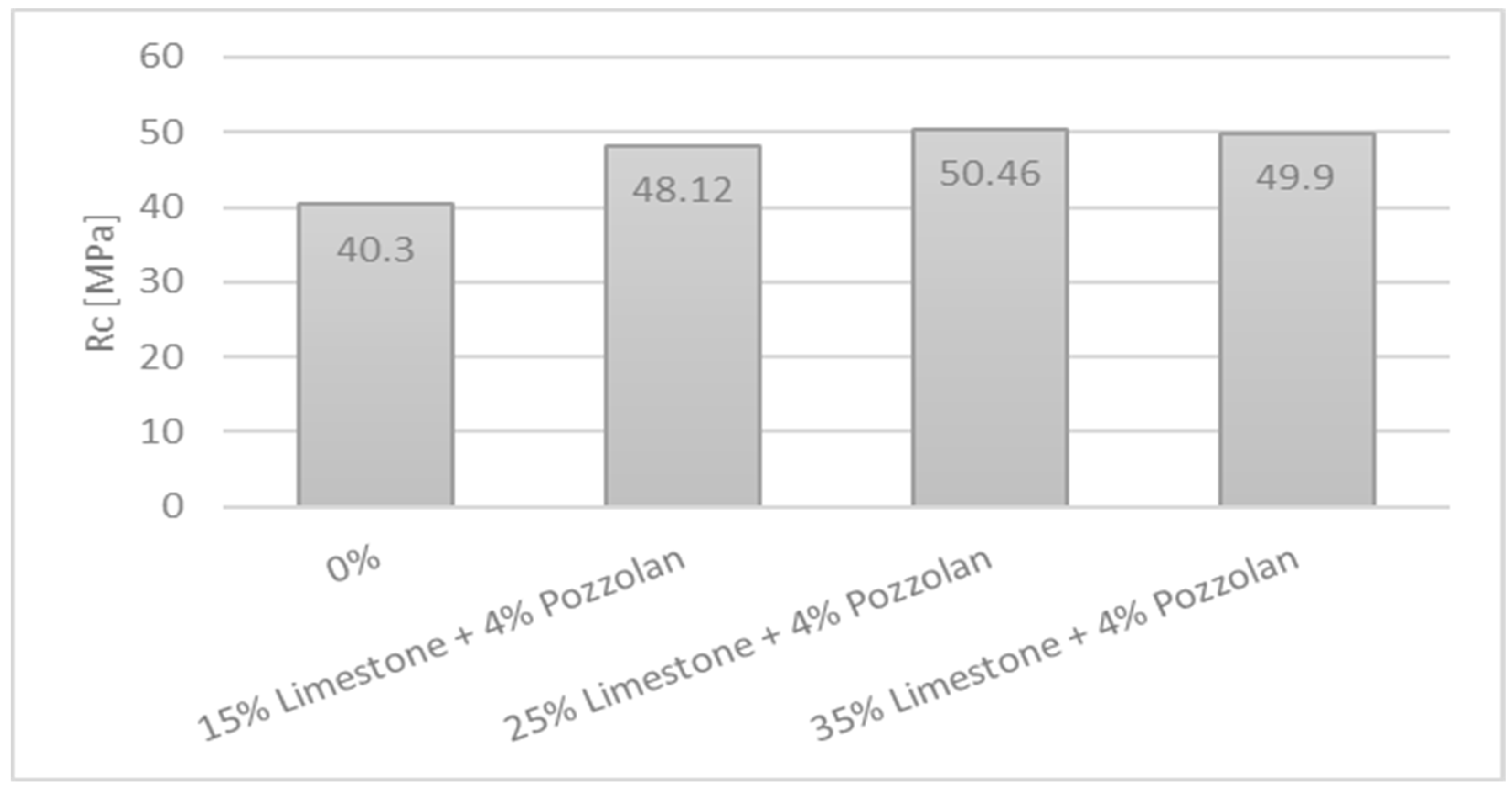
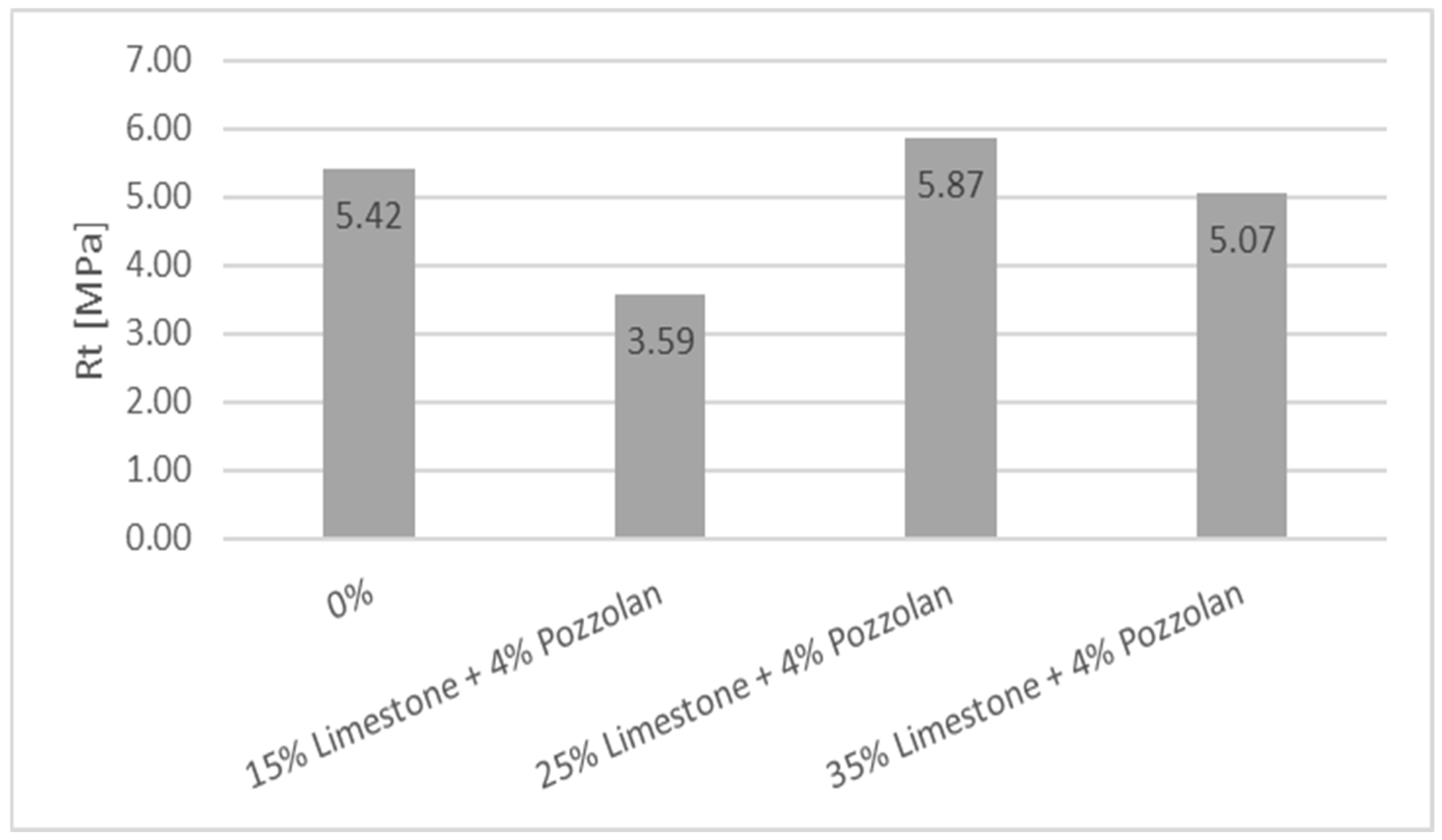
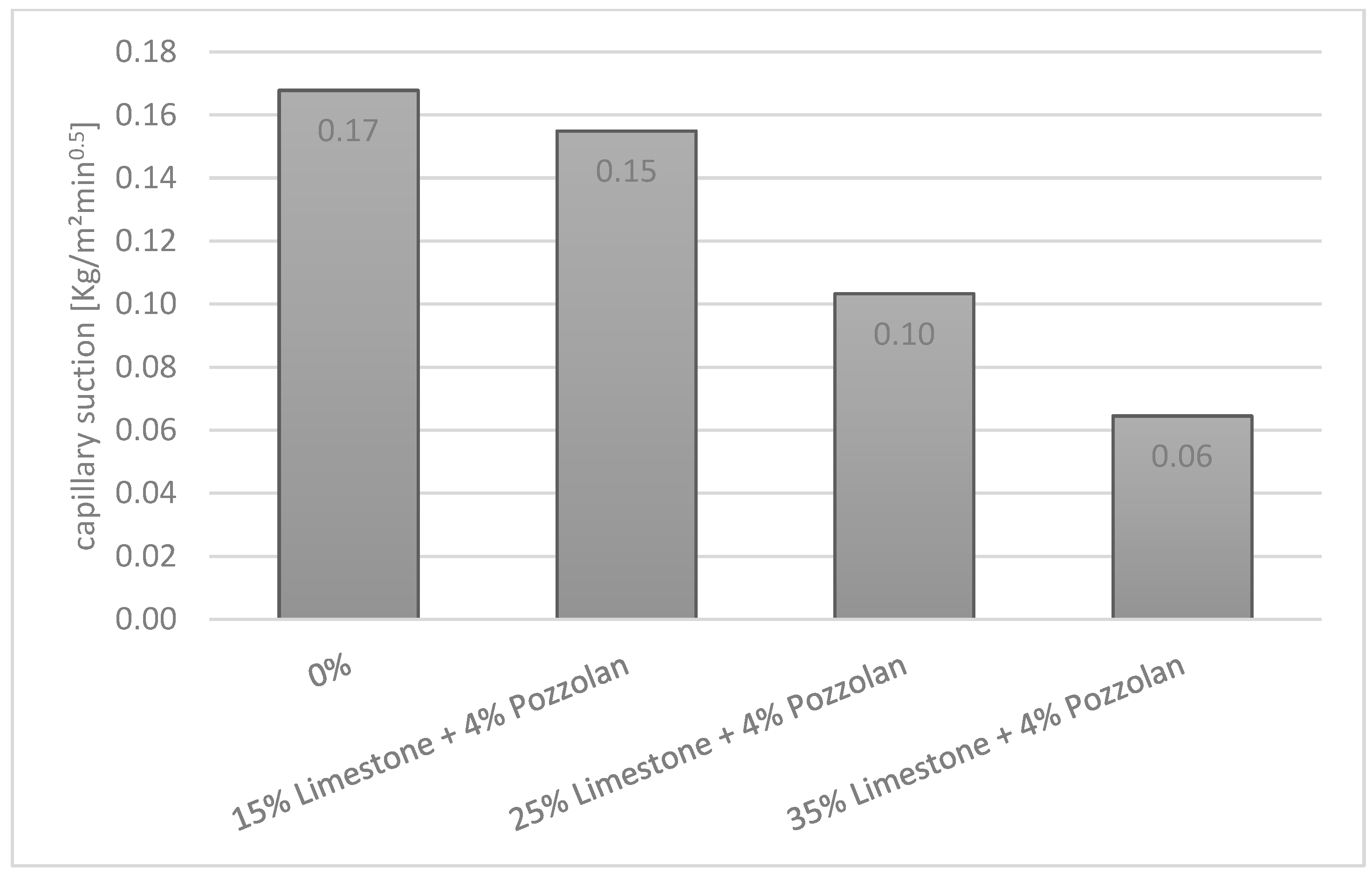
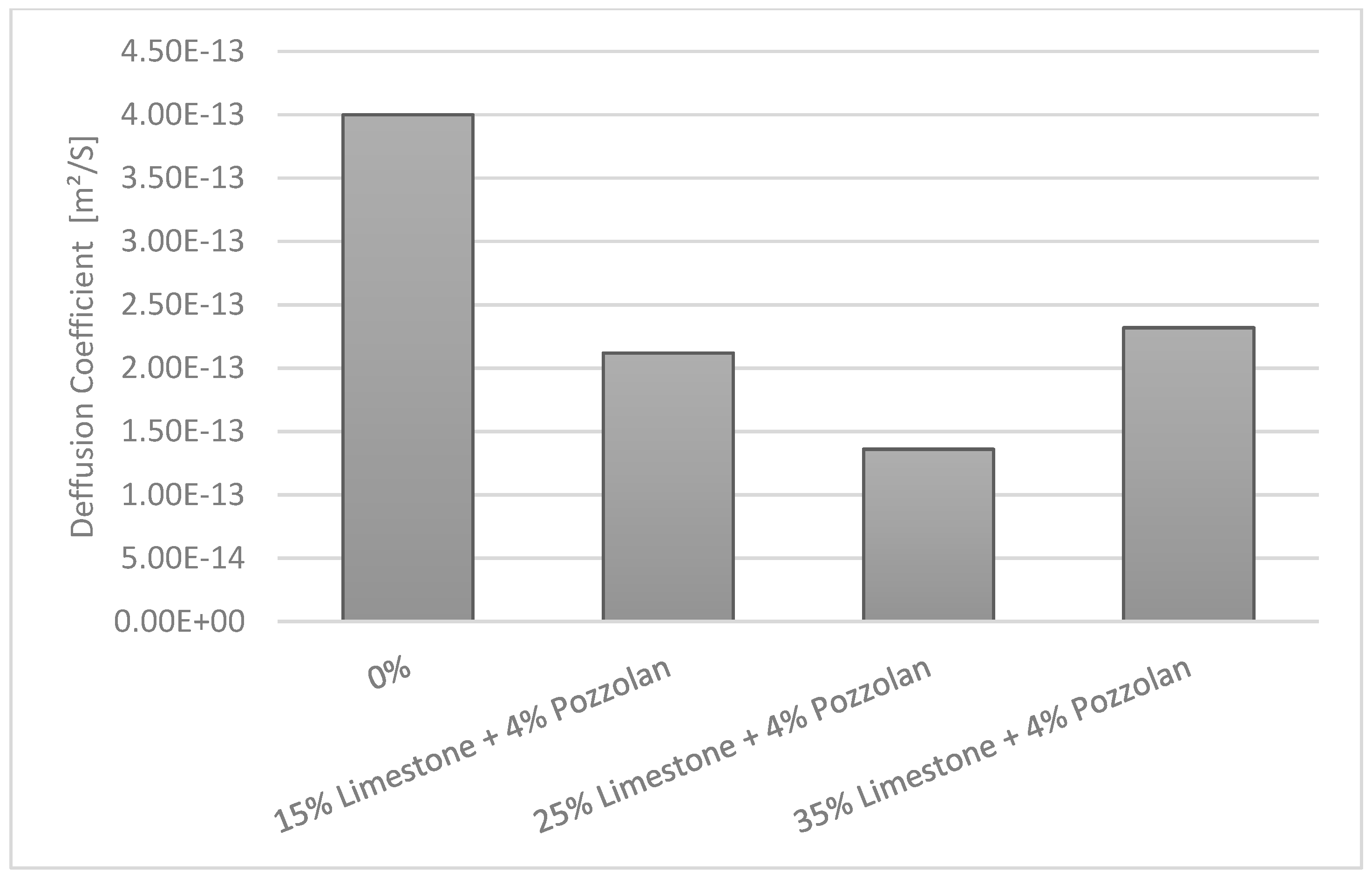
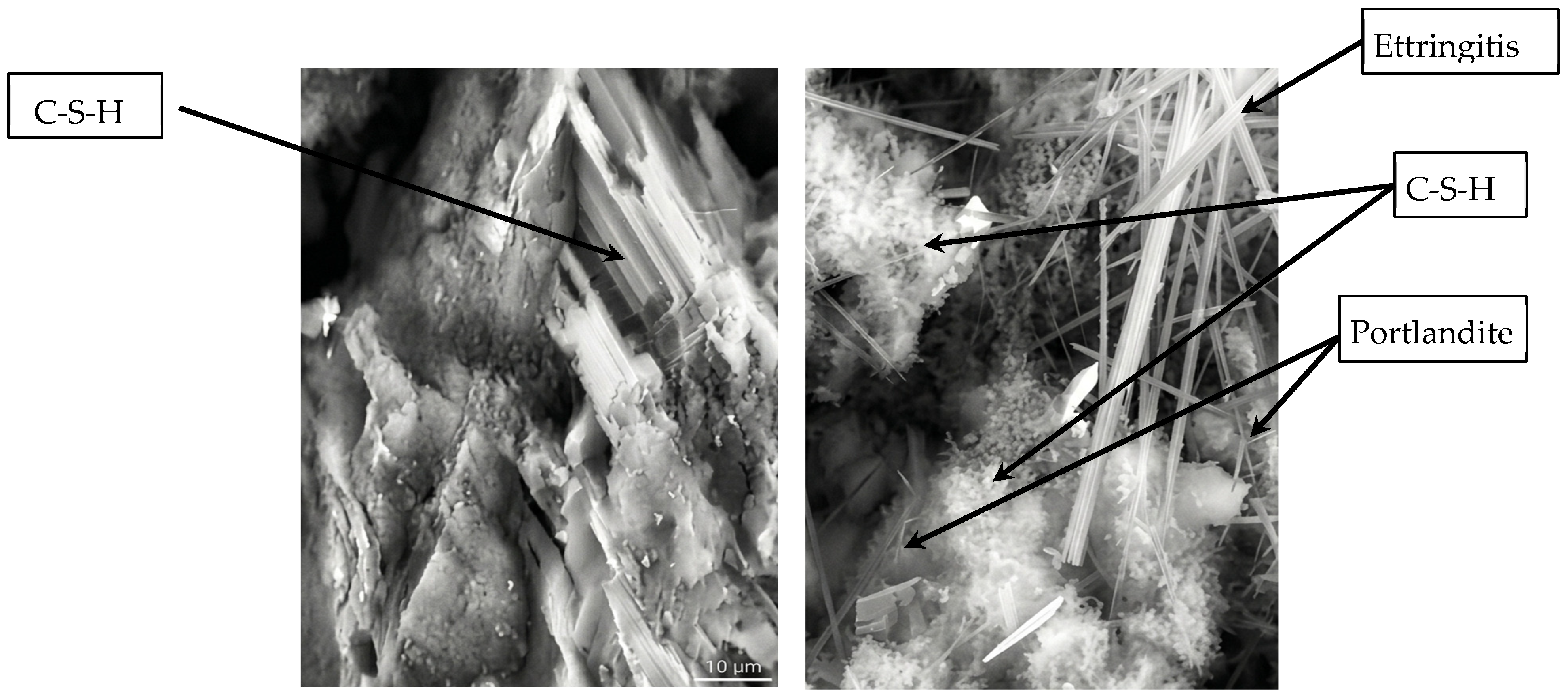
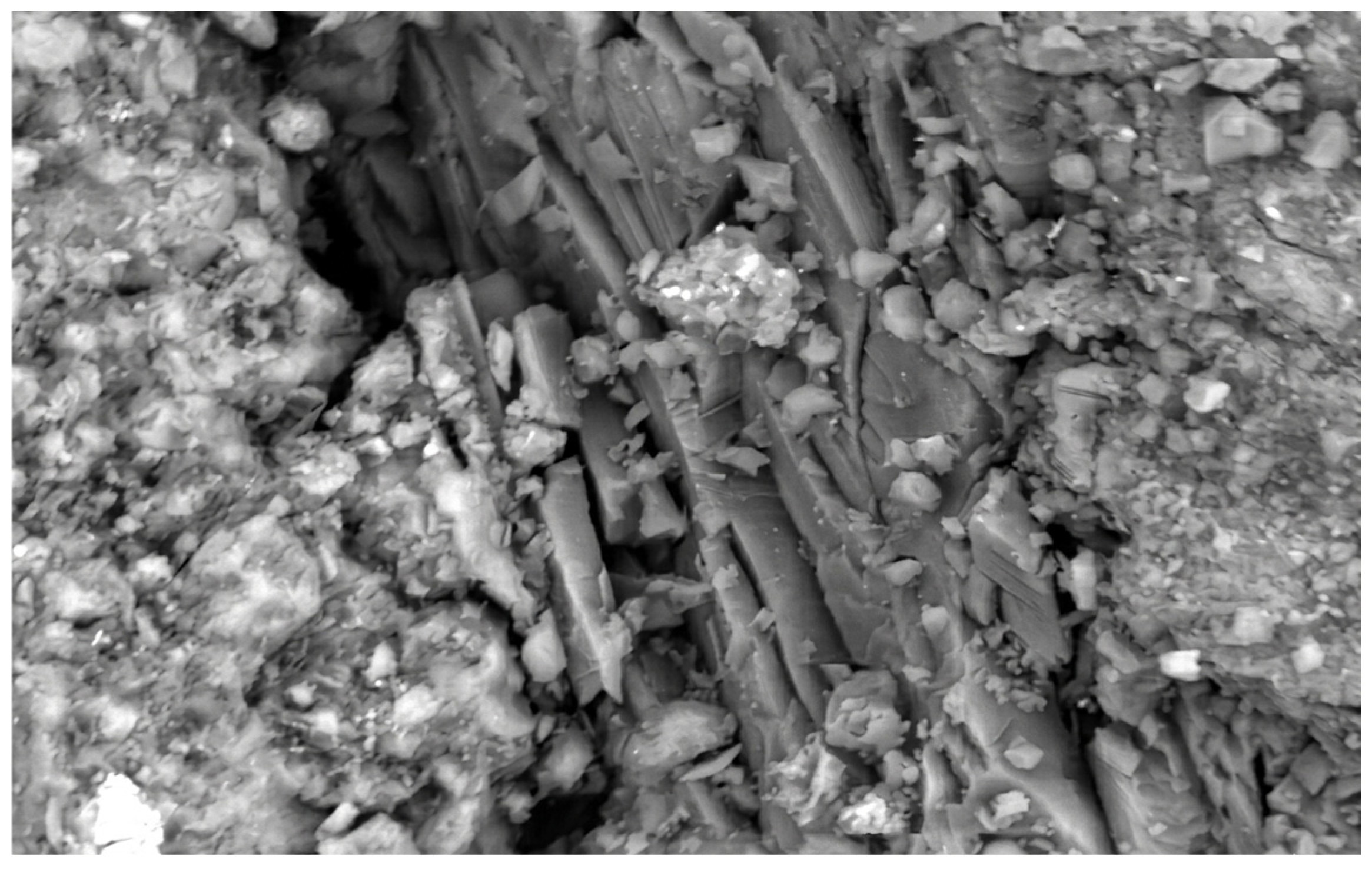
To assess the applicability of the findings to concrete, four micro-concrete mixes were prepared with limestone substitution rates of 0, 15, 25, and 35% (Table 3). The 28-day compressive strength (Figure 11) varied by less than 10% between the reference and the 35% limestone mix. Similarly, flexural tensile strength at 28 days (Figure 12) was not diminished by limestone substitution. A slight increase of approximately 23% was observed at the optimal substitution rate of 35%. In addition to mechanical strength, two durability indicators were measured on the micro-concretes. The capillary suction coefficient (Figure 13) decreased with increasing limestone content, with the lowest value recorded at the 35% substitution level. This reduction is consistent with the refinement of the pore network induced by the filler and nucleation effects of limestone, in agreement with the C-S-H densification mechanism reported by Lothenbach et al. and Antoni et al. The chloride diffusion coefficient (Figure 14) followed the same trend, decreasing from the reference to the 35% limestone mix [23,34]. These transport-property indicators, although not exhaustive, are recognised as early indicators of long-term durability under aggressive environments and complement the mechanical strength results, offer complementary experimental routes for further investigation of the materials studied here. Scanning electron microscopy (SEM) observations confirmed these macroscopic trends. The reference micro-concrete (Figure 15) exhibits a relatively heterogeneous matrix in which large portlandite (Ca(OH)2) crystals are visible together with needle-like ettringite formations in pores. In contrast, the 35% limestone micro-concrete (Figure 16) shows a denser, more homogeneous C-S-H phase with fewer voids and reduced portlandite content. This microstructural densification is consistent with the nucleation effect of limestone particles on C-S-H precipitation and with the formation of mono- and hemicarboaluminates from the reaction between calcite and aluminate phases of the cement, as previously described by Matschei et al. [35]. Recent studies further confirm and refine these mechanisms: Tang et al. demonstrated the synergistic effect of nano-C-S-H seeding and calcium sulfoaluminate cement on early hydration and pore-structure optimisation [21]; Luan et al. reported that the combined action of ultrafine slag and limestone in UHPC promotes monocarboaluminate formation and pore-structure refinement [22]; Sun, Zunino and Scrivener documented the hydration and phase assemblage of limestone-calcined-clay cements with reduced clinker content [23]; and Li et al. showed that limestone-calcined-clay cements provide superior chloride resistance through pore-structure refinement and carboaluminate-induced chloride binding [24]. These recent findings support the interpretation that the limestone-driven nucleation and carboaluminate stabilisation mechanisms reported in the present case study extend to a broader family of limestone-based blended cements.

4. Discussion

The findings underscore the significant influence of the type and dosage of supplementary cementitious materials (SCMs) on the cracking sensitivity of cement-based materials in arid climates. Of the four SCMs evaluated, limestone filler consistently demonstrated the most advantageous performance. Notably, a substantial reduction in maximum crack width was observed at low substitution rates, with the lowest cracking index recorded at 35% substitution. This outcome can be attributed to two mechanisms reported in the literature [23,24]. The first involves chemical retardation of cement hydration, which prolongs the plastic phase and enables the grout to accommodate early drying strains before significant stiffness develops. The second mechanism is the nucleation effect of limestone particles on calcium silicate hydrate (C-S-H) precipitation, which refines the pore structure and may decrease shrinkage driven by capillary pressure.
From a thermodynamic standpoint, the beneficial effect of limestone on cement hydration arises from the well-documented reaction of calcium carbonate with the aluminate phases of cement, which stabilises ettringite at the expense of monosulphate and leads to the formation of mono- and hemicarboaluminate hydrates [23,28,34]. These additional hydrates contribute to pore-network refinement and total hydrate volume, partly compensating for the dilution of clinker [23,28]. The combined nucleation effect of limestone particles on C-S-H precipitation—reported by Lothenbach et al. and Antoni et al. accelerates early-age C-S-H formation on the filler surface and refines the capillary pore structure, which directly explains the reduction in capillary suction (Figure 14) and chloride diffusion (Figure 15) observed in the present study [23,28]. The SEM observations (Figure 15 and Figure 16) further support this mechanism by showing reduced portlandite content and densified C-S-H morphology in the 35% limestone mix. Importantly, an alternative interpretation of the rebound observed at 40% limestone must be acknowledged: at this substitution rate, the effective water-to-clinker ratio reaches 525/(1500 × 0.60) ≈ 0.58, which alone can explain the renewed cracking through the simple dilution of clinker, independently of any complex interaction of mechanisms. The non-monotonic trend at higher limestone substitution rates, with optimal performance at 35% followed by increased cracking at 40%, reflects the interplay between two opposing effects. Below the optimal substitution, the retarding and nucleation effects are predominant. Above this threshold, the progressive dilution of reactive cement reduces the grout’s tensile capacity as drying stresses develop, resulting in renewed cracking. This pattern is consistent with mechanical test results, where both initial and final setting times increase beyond 35% substitution (Figure 8), accompanied by worsening cracking. Consequently, the extended plastic phase observed in setting-time tests does not offset the reduced mechanical capacity as drying-induced stresses develop.
The differing responses of pozzolan and silica fume at low substitution rates further corroborate this mechanistic understanding. Both SCMs increased the maximum crack width with increasing dosage, primarily due to their higher water demand, which increases plastic shrinkage. For silica fume, enhanced autogenous shrinkage due to self-desiccation also contributed, consistent with the findings of Menu et al. [18]. Although the rapid pozzolanic reaction of silica fume mitigates these effects at later ages, it does not prevent early-age cracking under the accelerated drying conditions used in this study. The moderating effect of gypsum on setting, achieved through sulphate regulation of C3A hydration, restricts the development of stiffness during the most critical period and accounts for its moderate efficacy in limiting cracking.
Binary combinations incorporating 35% limestone with a secondary SCM resulted in further reductions in cracking. These findings suggest that the extension of the plastic phase provided by limestone operates synergistically with the densifying effects of pozzolan or silica fume, without diminishing the overall benefits. This synergy holds practical engineering significance, enabling the development of ternary blends tailored for arid-climate concreting applications that demand both crack control and enhanced durability.
At the micro-concrete scale, the preservation of compressive and flexural tensile strengths at 28 days, even with up to 35% limestone substitution, confirms that the cracking benefits identified at the grout scale do not come at the expense of mechanical performance within the tested range. Limestone fines react to a limited extent with the cement paste, strengthening the interfacial transition zone relative to fully inert siliceous aggregates, which may explain the slight increase in tensile strength observed at the optimal content.
Limitations of the present case study should be acknowledged. First, the chemical and mineralogical characterisation of the local SCMs (XRF, XRD, particle-size distribution) was outside the scope of this preliminary investigation, but is required for a comprehensive description. Second, the accelerated exposure conditions (55 °C, 12% RH, 10 km/h wind) cannot fully capture long-term durability behaviour; therefore, this should be assessed through complementary tests on chloride ingress, carbonation, and freeze–thaw resistance. Third, although the number of specimens per formulation is sufficient for trend identification, future work would benefit from an increased number of replicates and a formal statistical analysis (ANOVA).
From an engineering standpoint, the measured crack widths can be referenced to existing serviceability and durability limits for reinforced concrete. Eurocode 2 (EN 1992-1-1) recommends a maximum crack width wmax = 0.30 mm for ordinary reinforced concrete in dry or moderately humid environments, and wmax = 0.20 mm under aggressive exposure (chloride-rich or marine) [36]. ACI 224R-01 recommends a tolerable crack width range of 0.10–0.41 mm depending on the exposure class [37]. The crack widths measured in the present study on cement-grout prisms (0.1–0.7 mm depending on the SCM and dosage) bracket these limits, with the optimal 35% limestone configuration producing crack widths consistently below the serviceability threshold of 0.20 mm. However, it must be emphasised that the present accelerated test on small grout prisms is a comparative screening method and not a direct prediction of field crack widths in concrete structures, which depend on the aggregate skeleton, reinforcement layout, geometry, and external restraint. The findings of this study should therefore be regarded as a relative ranking of local SCMs and as a basis for selecting formulations to be assessed at the full concrete and structural scales in subsequent work.
Limitations of the study. This case study has several limitations that should be acknowledged. (i) The cracking-sensitivity test uses four 25 mm glass balls as internal restraints in a 40 × 40 × 160 mm prism; this geometry concentrates tensile stresses around rigid inclusions and is therefore a comparative screening method that does not directly reproduce the macroscopic restraint conditions of slabs, repair overlays, or full structural elements [Patent: I. A. BELLA et al. title: Evaluation of Shrinkage by Crack Sensitivity using Glass Bills No. 11719, 2021]. A direct comparison with the standardised ring test (ASTM C1581) is recommended for future validation. (ii) The chemical, mineralogical and granulometric characterisation of the natural pozzolan, silica fume, and gypsum was not performed in-house; their characteristics were taken from the literature on Algerian and international SCMs. (iii) The water-to-binder ratio of the grouts was fixed at 0.35 without superplasticiser, which means that fresh-state rheology may vary slightly across SCMs of different water demands. (iv) The internal humidity of the specimens was not monitored during the cracking test. (v) The micro-concrete experimental design uses CEM II/A-L (which already contains some interground limestone) as the reference cement, and the limestone-substituted mixes contain an additional 4% natural pozzolan: the maintenance of 28-day mechanical properties therefore reflects the combined effect of limestone and pozzolan addition rather than that of limestone alone. (vi) The age of first crack was not recorded; only the final crack pattern after 24 h of exposure was measured. (vii) The number of replicate specimens (three per formulation) is insufficient for a formal ANOVA, and reported differences should be interpreted as descriptive trends. These limitations do not invalidate the comparative ranking established in this study but rather define the scope within which the findings should be interpreted and outline a programme of complementary tests for subsequent investigations.

5. Conclusions

This case study assessed the cracking sensitivity and mechanical behaviour of cement-based materials incorporating four local supplementary cementitious materials: limestone, natural pozzolan, silica fume, and gypsum. The evaluation was performed under accelerated arid-climate conditions (55 °C, 12% relative humidity, 10 km/h wind). The results indicate that at low substitution rates (2–8% by mass), limestone demonstrated the most favourable performance, reducing the maximum crack width to approximately 0.1 mm at 4% and 0.2 mm at 8% replacement. Gypsum also limits cracking by regulating the setting time. In contrast, pozzolan and silica fume increased cracking at higher dosages.
(1)
At higher substitution rates (10–40%), limestone exhibited optimal performance at a content of 35%, where the cracking index Ic reached its minimum.
(2)
Limestone substitution progressively extended both initial and final setting times at 55 °C, which directly correlated with reduced cracking sensitivity.
(3)
Binary combinations incorporating 35% limestone with a second supplementary cementitious material further reduced cracking. Among these, the optimal combination produced the lowest maximum crack width.
(4)
At the micro-concrete scale, these trends persisted, with 28-day compressive and flexural tensile strengths remaining essentially unchanged for limestone contents up to 35%.
(5)
These preliminary findings support the further investigation of Djebel Béchar crushed-limestone fines, a local by-product of rock-crushing operations, as a candidate partial cement replacement (up to 35% by mass) for arid-climate concrete formulations. Full validation, however, requires complementary durability tests (carbonation, chloride ingress, freeze–thaw resistance) and a statistical analysis on a larger replicate population.
Future research should examine the chemical and mineralogical characterisation of local limestone and pozzolan, as well as the effect of limestone substitution on durability indicators such as chloride ingress, carbonation, and freeze–thaw resistance. Further studies should also extend binary supplementary cementitious material screening to ternary combinations, including fly ash or blast-furnace slag, and conduct a life-cycle assessment to quantify the environmental benefits of Djebel Béchar limestone substitution at the regional scale.

6. Patents

Patent No 11719, dated 14 June 2021, title: Evaluation of Shrinkage by Crack Sensitivity using Glass Bills.

Author Contributions

Conceptualisation, I.A.B.; methodology, I.A.B.; investigation, I.A.B. and A.B.; data curation, I.A.B. and A.B.; writing—original draft preparation, I.A.B.; writing—review and editing, N.B. and A.B.; supervision, A.A. and N.B.; project administration, N.B. All authors have read and agreed to the published version of the manuscript.

Funding

This research received no external funding.

Data Availability Statement

The experimental data supporting the findings of this study are available from the corresponding author upon reasonable request.

Acknowledgments

The authors gratefully acknowledge the FIMAS Laboratory at TAHRI, Mohamed University of Béchar, and the LGCE Laboratory at Djillali Liabes University of Sidi Bel Abbes for providing experimental facilities The authors also sincerely thank Groupe Industriel Ciments d’Algérie (GICA, Béchar, Algeria) and Sika El Djazaïr for providing product samples. During the preparation of this manuscript, the authors used Claude (Anthropic) for language editing and structural review. The authors have reviewed and edited the output and take full responsibility for the content of this publication.

Conflicts of Interest

The authors declare no conflicts of interest.

Abbreviations

The following abbreviations are used in this manuscript:
IcCrack index
SCMSupplementary cement materials

References

  1. Mehta, P.K.; Monteiro, P.J.M. Concrete: Microstructure, Properties, and Materials, 4th ed.; McGraw-Hill: New York, NY, USA, 2014. [Google Scholar]
  2. Turcry, P. Shrinkage and Cracking of Self-Compacting Concrete: Influence of Formulation. Ph.D. Dissertation, École Centrale de Nantes/Université de Nantes, Nantes, France, 2003. [Google Scholar]
  3. Xu, Z.; Hanžič, L.; Asche, H.; Karlovšek, J. Large ring test for evaluation of restrained shrinkage cracking: Calibration and experimental trial. Adv. Civ. Eng. 2024, 2024, 6698625. [Google Scholar] [CrossRef] [Scilit]
  4. ASTM C1581/C1581M-18a; Standard Test Method for Determining Age at Cracking and Induced Tensile Stress Characteristics of Mortar and Concrete Under Restrained Shrinkage. ASTM International: West Conshohocken, PA, USA, 2018.
  5. Lim, D.K.; Choi, M.S. Shrinkage and crack characteristics of filling materials for precast member joints under various restraint conditions. Adv. Concr. Constr. 2022, 14, 139–151. [Google Scholar] [CrossRef]
  6. Kagimoto, H.; Yasuda, Y.; Kawamura, M. Mechanisms of ASR surface cracking in a massive concrete cylinder. Adv. Concr. Constr. 2015, 3, 39–54. [Google Scholar] [CrossRef] [Scilit]
  7. Shima, C.; Lee, C. Crack-width control of precast deck loop joints for continuous steel-concrete composite girder bridges. Adv. Concr. Constr. 2020, 10, 21–34. [Google Scholar] [CrossRef]
  8. Bentz, D.P. Early-Age Cracking Review: Mechanisms, Material Properties, and Mitigation Strategies; Report CBP-TR-2009-002-C3; Savannah River National Laboratory: Aiken, SC, USA, 2009. [Google Scholar]
  9. Tazawa, E. (Ed.) Autogenous Shrinkage of Concrete; E & FN Spon/Japan Concrete Institute: London, UK, 1999. [Google Scholar]
  10. Samouh, H. Evaluation of the Cracking Sensitivity of Self-Compacting Concretes: Contribution of Viscoelastic Behaviour Analysis. In Proceedings of the Prix Jeunes Chercheurs René Houpert, Anglet, France, 27–29 May 2015. [Google Scholar]
  11. Laurence, O. Cracking Due to Restrained Shrinkage in Thin Concrete Repairs: Combined Contributions of Experimentation and Modelling. Ph.D. Dissertation, Laval University/École Nationale des Ponts et Chaussées, Quebec, QC, Canada, 2001. [Google Scholar]
  12. Ienny, P.; Messan, A.; Brun-Buisson, C.; Couturier, P.; Slangen, P.; Wienin, J.S. Development of a restrained-shrinkage test bench: Relationship between formulation and early-age cracking of concrete. In Proceedings of the 19e Congrès Français de Mécanique, Marseille, France, 24–28 August 2009. [Google Scholar]
  13. Østergaard, L. Early-Age Fracture Mechanics and Cracking of Concrete: Experiments and Modelling. Ph.D. Dissertation, Technical University of Denmark, Lyngby, Denmark, 2003. [Google Scholar]
  14. Menu, B.; Pépin Beaudet, A.; Jolin, M.; Bissonnette, B.; Molez, L. Quantitative evaluation of the cracking sensitivity of sprayed concrete using the annular restricted shrinkage test. In Proceedings of the 19th Scientific Conference of the Francophone Group, Anglet, France, 5–6 July 2018. [Google Scholar]
  15. Liu, J.; Tian, Q.; Wang, Y.; Li, H.; Xu, W. Evaluation method and mitigation strategies for shrinkage cracking of modern concrete. Engineering 2021, 7, 348–357. [Google Scholar] [CrossRef] [Scilit]
  16. Dong, W.; Zhou, X.; Wu, Z.; Kastiukas, G. Effects of specimen size on assessment of shrinkage cracking of concrete via elliptical rings: Thin vs. thick. Comput. Struct. 2016, 174, 66–78. [Google Scholar] [CrossRef] [Scilit]
  17. Rozière, E.; Granger, S.; Turcry, P.; Loukili, A. Influence of paste volume on shrinkage cracking and fracture properties of self-compacting concrete. Cem. Concr. Compos. 2007, 29, 626–636. [Google Scholar] [CrossRef] [Scilit]
  18. Fan, Q.; Ning, Z.; Lin, P.; Chen, W.; Li, G. Real thermal anti-cracking safety evaluation method for concrete dams considering spatio-temporal characteristics. Adv. Concr. Constr. 2025, 19, 321–334. [Google Scholar] [CrossRef]
  19. Lothenbach, B.; Le Saout, G.; Gallucci, E.; Scrivener, K. Influence of limestone on the hydration of Portland cements. Cem. Concr. Res. 2008, 38, 848–860. [Google Scholar] [CrossRef] [Scilit]
  20. Scrivener, K.L.; John, V.M.; Gartner, E.M. Eco-efficient cements: Potential, economically viable solutions for a low-CO2 cement-based materials industry. Cem. Concr. Res. 2018, 114, 2–26. [Google Scholar] [CrossRef] [Scilit]
  21. Tang, R.; Sun, D.; Wang, Z.; Wang, Z.; Cui, S.; Ma, W.; Lan, M. Synergistic Effect and Mechanism of Nano-C-S-H Seed and Calcium Sulfoaluminate Cement on the Early Mechanical Properties of Portland Cement. Materials 2023, 16, 1575. [Google Scholar] [CrossRef] [Scilit] [PubMed]
  22. Luan, C.; Yang, Q.; Lin, X.; Gao, X.; Cheng, H.; Huang, Y.; Du, P.; Zhou, Z.; Wang, J. The Synergistic Effects of Ultrafine Slag Powder and Limestone on the Rheology Behavior, Microstructure, and Fractal Features of Ultra-High Performance Concrete (UHPC). Materials 2023, 16, 2281. [Google Scholar] [CrossRef] [Scilit] [PubMed]
  23. Sun, J.; Zunino, F.; Scrivener, K. Hydration and phase assemblage of limestone calcined clay cements (LC3) with clinker content below 50%. Cem. Concr. Res. 2024, 177, 107417. [Google Scholar] [CrossRef] [Scilit]
  24. Li, Y.; Miao, L.; Dong, Z.; Jin, Y.; Liu, W.; Gao, F.; Li, Y. Carbonation and Chloride Resistance Characteristics of Self-Developed Limestone Calcined Clay Cement (LC3) Derived from Excavated Spoil. Materials 2025, 18, 2546. [Google Scholar] [CrossRef] [Scilit] [PubMed]
  25. Ghrici, M.; Kenai, S.; Said-Mansour, M. Mechanical properties and durability of mortar and concrete containing natural pozzolana and limestone blended cements. Cem. Concr. Compos. 2007, 29, 542–549. [Google Scholar] [CrossRef] [Scilit]
  26. Bouasker, M.; Mounanga, P.; Turcry, P.; Loukili, A.; Khelidj, A. Chemical shrinkage of cement pastes and mortars at very early age: Effect of limestone filler and granular inclusions. Cem. Concr. Compos. 2008, 30, 13–22. [Google Scholar] [CrossRef] [Scilit]
  27. Ghrici, M.; Kenai, S.; Meziane, E. Mechanical and durability properties of cement mortar with Algerian natural pozzolana. J. Mater. Sci. 2006, 41, 6965–6972. [Google Scholar] [CrossRef] [Scilit]
  28. Menadi, B.; Kenai, S.; Khatib, J.; Aït-Mokhtar, A. Strength and durability of concrete incorporating crushed limestone sand. Constr. Build. Mater. 2009, 23, 625–633. [Google Scholar] [CrossRef] [Scilit]
  29. EN 197-1:2011; Cement—Part 1: Composition, Specifications and Conformity Criteria for Common Cements. European Committee for Standardization: Brussels, Belgium, 2011.
  30. EN 196-3:2016; Methods of Testing Cement—Part 3: Determination of Setting Times and Soundness. European Committee for Standardization: Brussels, Belgium, 2016.
  31. EN 196-1:2016; Methods of Testing Cement—Part 1: Determination of Strength. European Committee for Standardization: Brussels, Belgium, 2016.
  32. EN 12390-3:2019; Testing Hardened Concrete—Part 3: Compressive Strength of Test Specimens. European Committee for Standardization: Brussels, Belgium, 2019.
  33. EN 12390-6:2009; Testing Hardened Concrete—Part 6: Tensile Splitting Strength of Test Specimens. European Committee for Standardization: Brussels, Belgium, 2009.
  34. Antoni, M.; Rossen, J.; Martirena, F.; Scrivener, K. Cement substitution by a combination of metakaolin and limestone. Cem. Concr. Res. 2012, 42, 1579–1589. [Google Scholar] [CrossRef] [Scilit]
  35. Matschei, T.; Lothenbach, B.; Glasser, F.P. The role of calcium carbonate in cement hydration. Cem. Concr. Res. 2007, 37, 551–558. [Google Scholar] [CrossRef] [Scilit]
  36. EN 1992-1-1:2004; (Eurocode 2): Design of Concrete Structures—Part 1-1: General Rules and Rules for Buildings. European Committee for Standardization: Brussels, Belgium, 2004.
  37. ACI Committee 224. ACI 224R-01: Control of Cracking in Concrete Structures; American Concrete Institute: Farmington Hills, MI, USA, 2001. [Google Scholar]
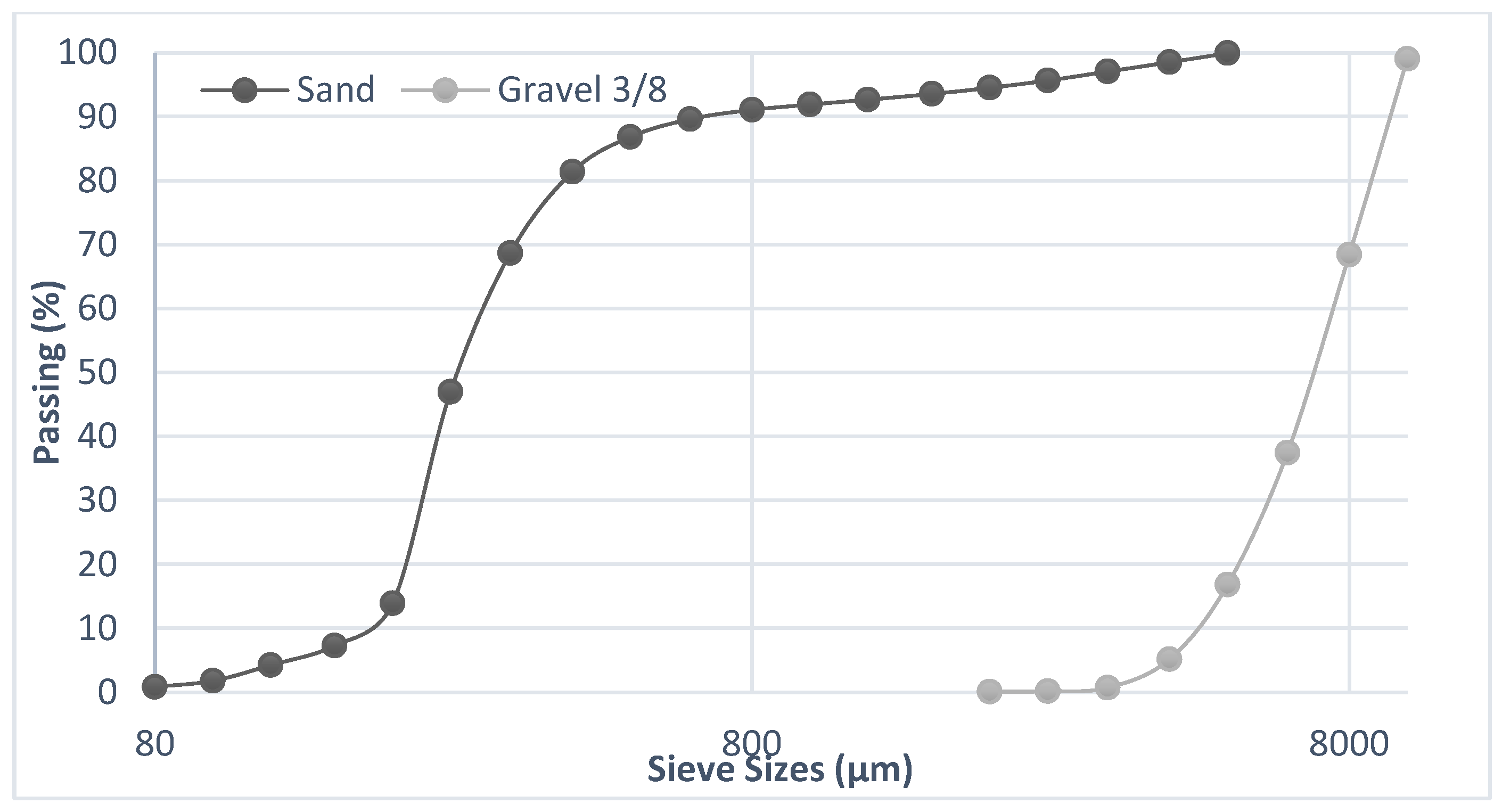
Figure 1. The cumulative sieving curve of micro-concrete composition. LS = limestone filler; PZ = pozzolan; SP = superplasticiser.
Buildings 16 03517 g001
Figure 2. Sensitivity to cracking as a function of ball diameter.
Buildings 16 03517 g002
Figure 3. Cracking pattern of cement grouts incorporating 4% of each SCM (gypsum, pozzolan, silica fume, limestone).
Buildings 16 03517 g003
Figure 4. Cracking index as a function of cement based on SCM substitution rate (2, 4, 6, 8% by mass).
Buildings 16 03517 g004
Figure 5. One-day compressive strength of cement grouts as a function of the substitution rate of SCMs.
Buildings 16 03517 g005
Figure 6. Sensitivity to cracking of cement grouts based on limestone addition.
Buildings 16 03517 g006
Figure 7. Variation of the cracking index as a function of the percentage of substitution by limestone.
Buildings 16 03517 g007
Figure 8. The variation in start and end times of setting at temperatures of 55 °C and 25 °C as a function of the percentage of substitution by limestone addition.
Buildings 16 03517 g008
Figure 9. Cracking pattern of cement grouts incorporating 35% limestone combined with 2% gypsum, 2% silica fume or 2% pozzolan.
Buildings 16 03517 g009
Figure 10. Variation of the cracking index as a function of the percentage of substitution by limestone with gypsum, silica fume or pozzolan.
Buildings 16 03517 g010
Figure 11. Compressive strength of micro-concrete as a function of limestone substitution rate (0, 15, 25, 35%).
Buildings 16 03517 g011
Figure 12. Flexural tensile strength of micro-concrete as a function of limestone substitution rate (0, 15, 25, 35%).
Buildings 16 03517 g012
Figure 13. Capillary suction of micro-concrete as a function of limestone substitution rate (0, 15, 25, 35%).
Buildings 16 03517 g013
Figure 14. Diffusion coefficient of micro-concrete as a function of limestone substitution rate (0, 15, 25, 35%).
Buildings 16 03517 g014
Figure 15. SEM microstructure of the reference micro-concrete (0% limestone) at 10 µm.
Buildings 16 03517 g015
Figure 16. SEM microstructure of a 35% limestone substitution at 20 µm.
Buildings 16 03517 g016
Table 1. Physical characteristics of the supplementary cementitious materials used.
Specific Gravity [kg/m3]Bulk Density [kg/m3]Blaine Fineness [cm2/g]
Limestone26701420903
Pozzolan25709804326
Silica fume22404002300
Table 2. XRF characterisations of Limestone.
Element% MassOxide% Mass
B0.359B2O31.1573
C12.8CO247.4368
F0.255//
Na0.0944Na2O0.1272
Mg1.49MgO2.4624
Al3.1Al2O35.8582
Si7.89SiO216.8883
P0.0202P2O50.0464
S0.0665SO30.166
Cl0.0121//
K0.59K2O0.7109
Ca16.7CaO23.3531
Ti0.123TiO20.2058
Cr0.0042Cr2O30.0061
Mn0.0205MnO0.0264
Fe0.851Fe2O31.2162
Ni0.0029NiO0.0037
Cu0.0011CuO0.0014
Zn0.0038ZnO0.0047
Rb0.0029Rb2O0.0032
Sr0.0489SrO0.0578
Y0.0003Y2O30.0004
Nb0.0007Nb2O50.001
Table 3. Mix proportions of the cement grouts used in the cracking sensitivity test.
SCM TypeSubst. Rate (% by Mass)Cement (kg/m3)SCM (kg/m3)Water (kg/m3)w/b
(CEM I only)0150005250.35
Limestone filler21470305250.35
41440605250.35
61410905250.35
813801205250.35
Natural pozzolan21470305250.35
41440605250.35
61410905250.35
813801205250.35
Silica fume21470305250.35
41440605250.35
61410905250.35
813801205250.35
Gypsum21470305250.35
41440605250.35
61410905250.35
813801205250.35
Table 4. Mixes of the cement grout in proportions based on the binary substitution used in the cracking sensitivity test.
SCM TypeSubst. Rate (% by Mass)Cement (kg/m3)SCM (kg/m3)Water (kg/m3)w/b
(CEM I only)0150005250.35
Limestone filler1013501505250.35
2012003005250.35
359755255250.35
409006005250.35
35% LS + 2% gypsum35 + 2945525 + 305250.35
35% LS + 2% pozzolan35 + 2945525 + 305250.35
35% LS + 4% pozzolan35 + 4915525 + 605250.35
35% LS + 2% silica fume35 + 2945525 + 305250.35
Table 5. Mix proportions of the micro-concretes used in the transferability study.
LS (%)PZ (%)Cement (kg/m3)LS (kg/m3)PZ (kg/m3)Water (kg/m3)Sand 0/3 (kg/m3)SP (kg/m3)Gravel 3/8 (kg/m3)
0045000176657.036.61071.95
154364.967.517.6176657.036.61071.95
254319.9112.517.6176657.036.61071.95
354274.9157.517.6176657.036.61071.95
Disclaimer/Publisher’s Note: The statements, opinions and data contained in all publications are solely those of the individual author(s) and contributor(s) and not of MDPI and/or the editor(s). MDPI and/or the editor(s) disclaim responsibility for any injury to people or property resulting from any ideas, methods, instructions or products referred to in the content.