How Does Sense of Place Serve Architectural Heritage Conservation and Development? A Scoping Review and Implementation Framework


Abstract
1. Introduction
2. Materials and Methods
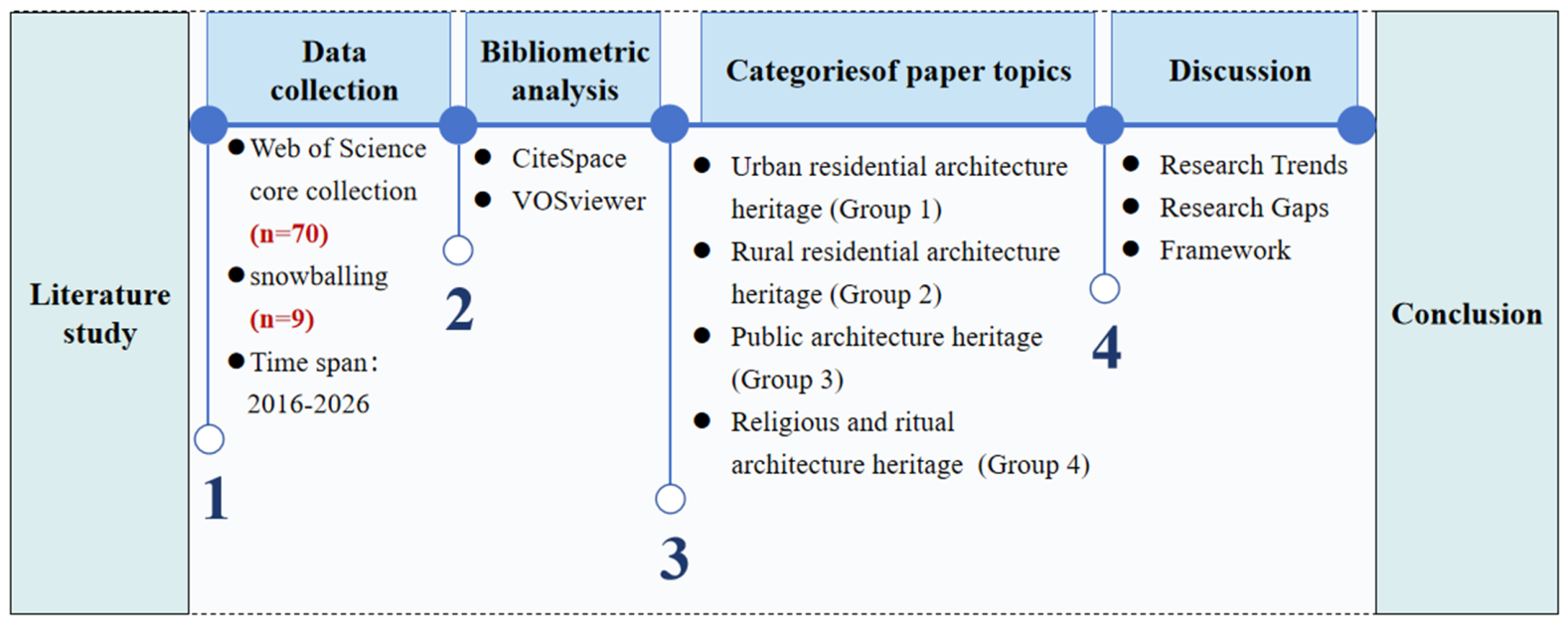
2.1. Data Collection
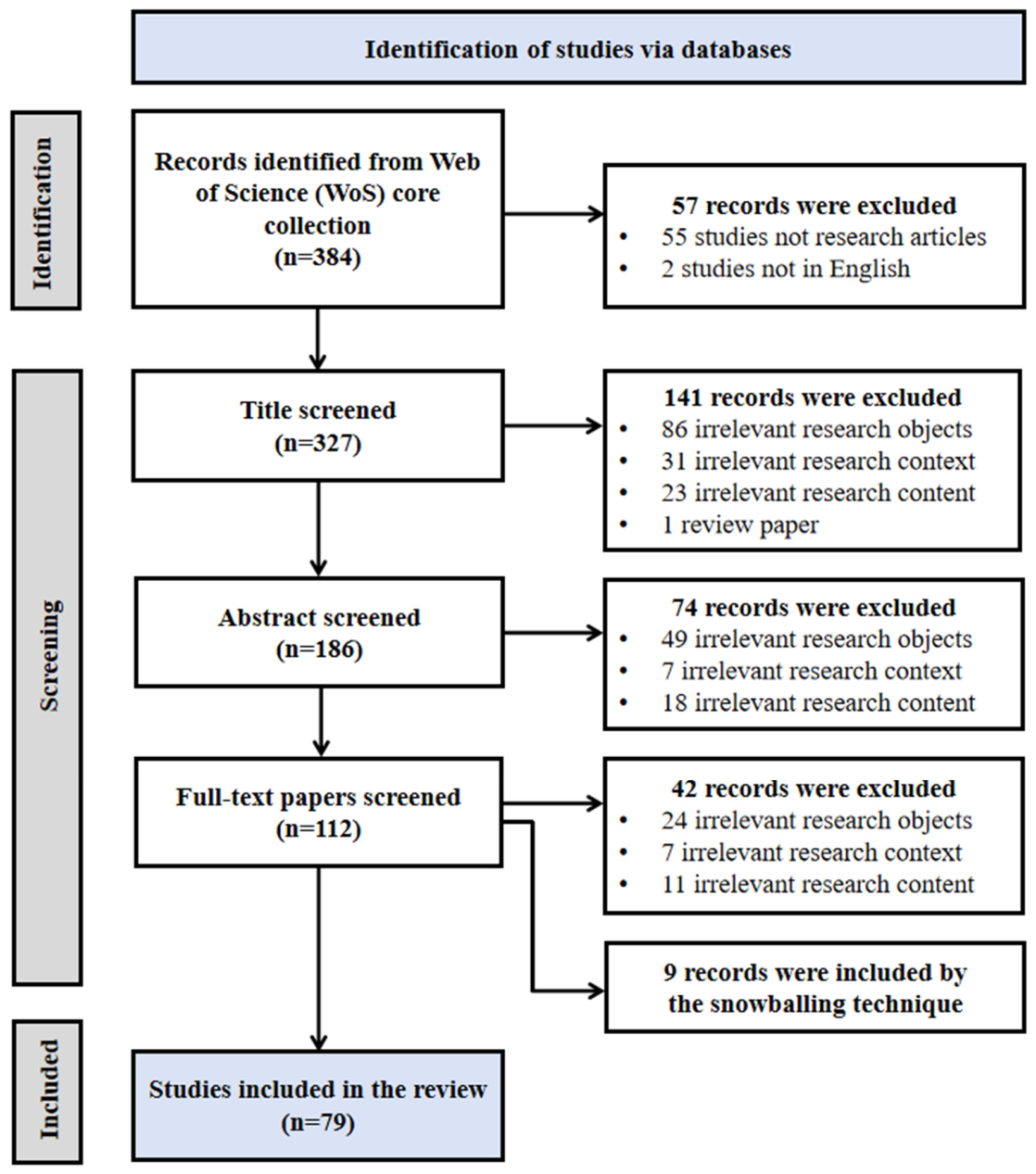
2.2. Literature Inclusion and Exclusion
2.3. Data Extraction
2.4. Bibliometric Analysis by VOSviewer and CiteSpace
2.5. Literature Classification and Narrative Synthesis
3. Results
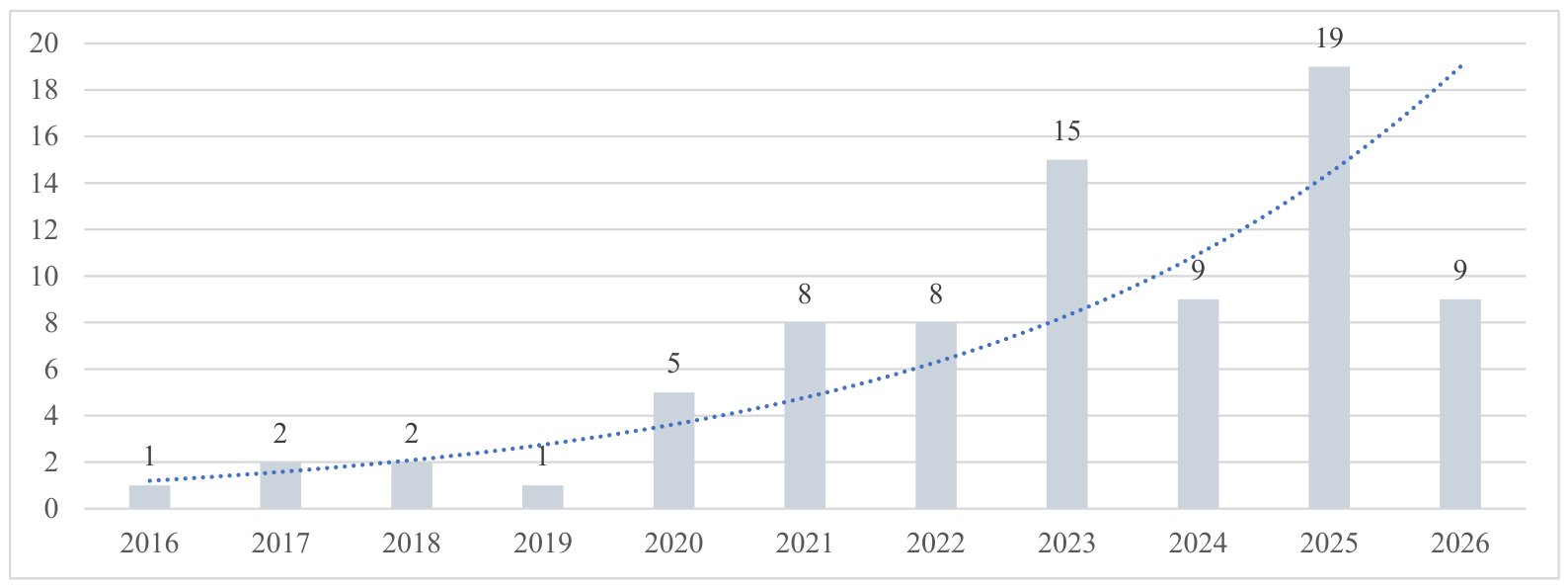
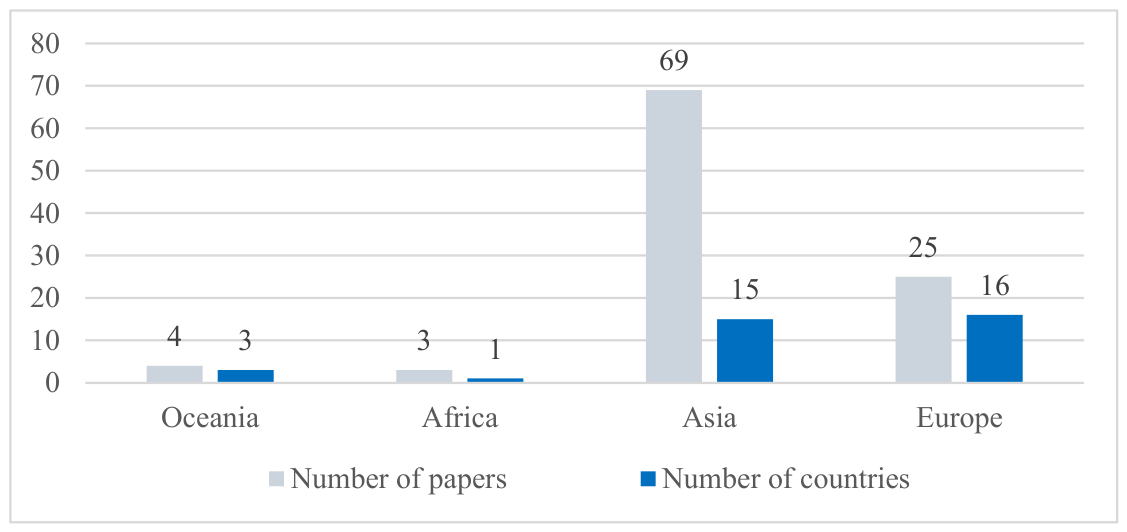
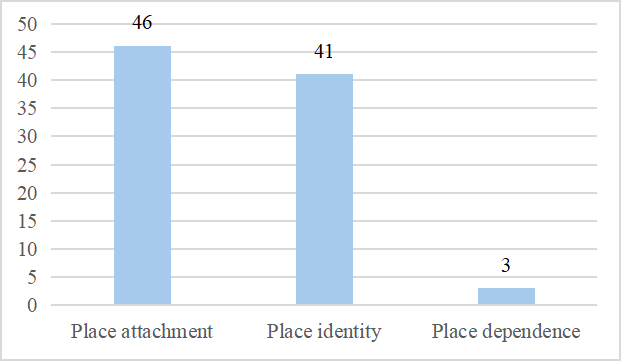
3.1. General Characteristics
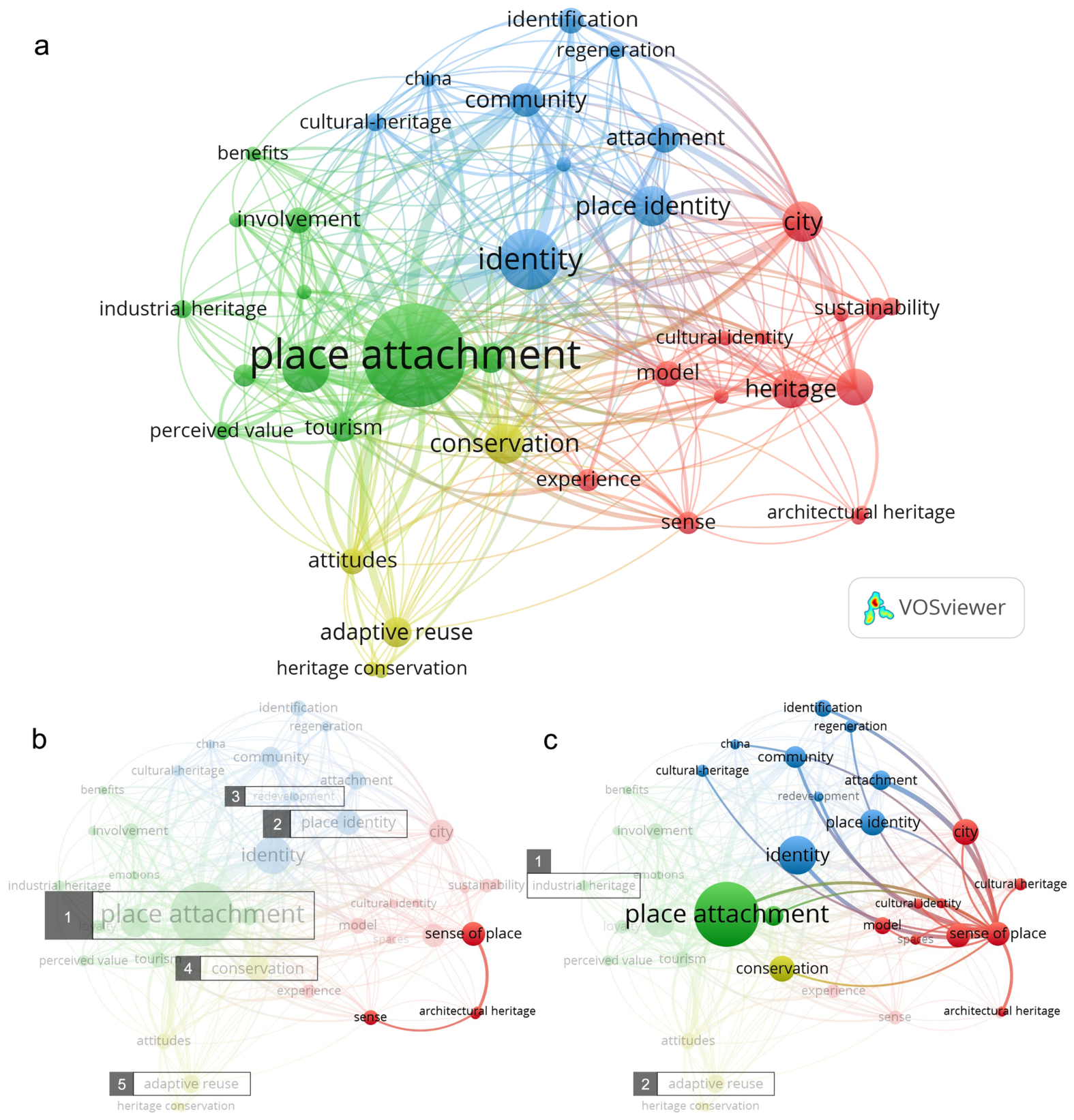
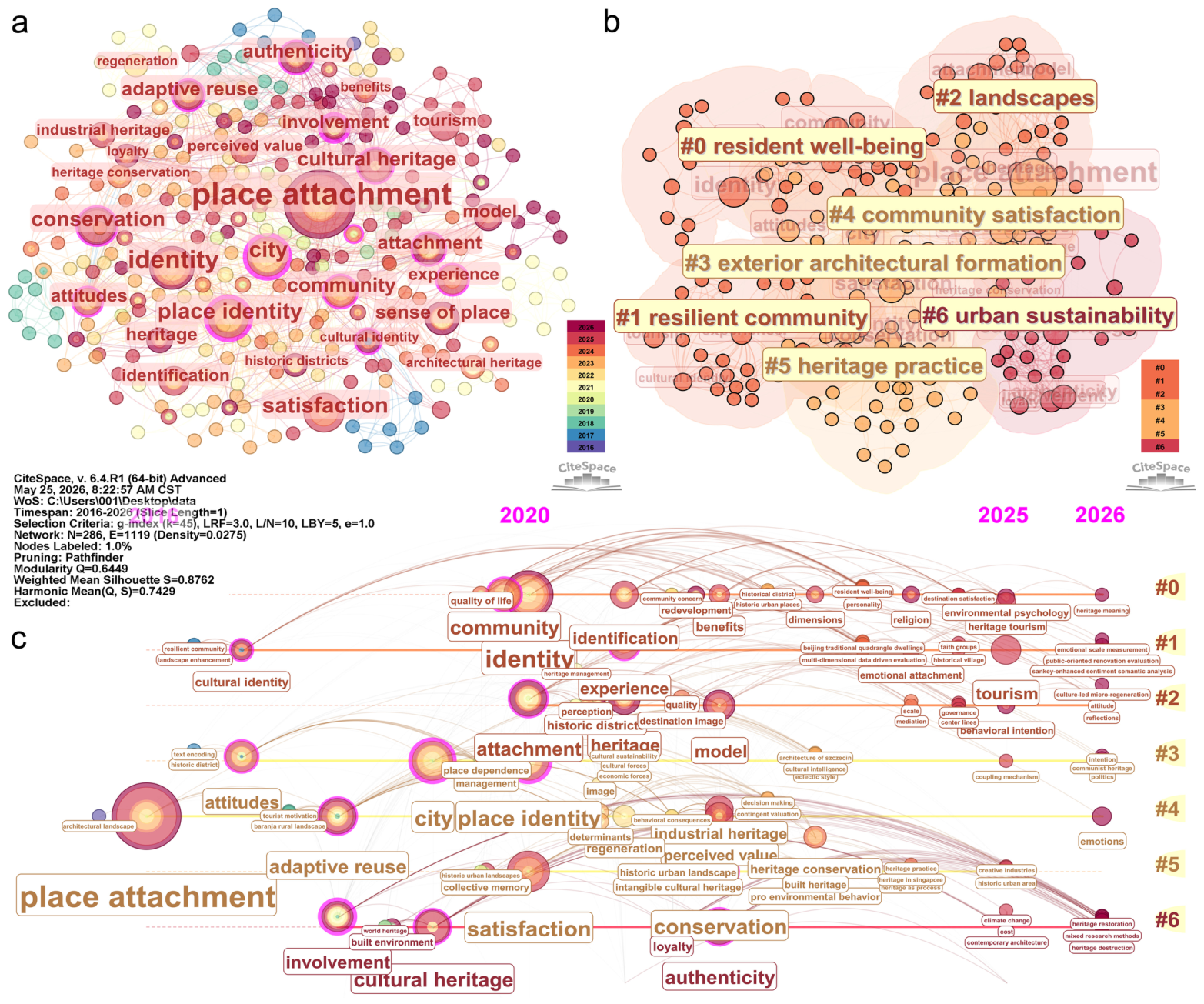
3.2. Mapping Research Hotspots, Trends, and Gaps with CiteSpace and VOSviewer
3.3. The Sense of Place in Urban Residential Architectural Heritage (Group 1)
3.4. The Sense of Place in Rural Residential Architectural Heritage (Group 2)
3.5. The Sense of Place in Public Architectural Heritage (Group 3)
3.6. The Sense of Place in Religious and Ritual Architectural Heritage (Group 4)
4. Discussion
4.1. Current Research Trends of Sense of Place in AHCD
4.2. Research Gaps of Sense of Place in AHCD
4.3. Characteristics of Sense of Place in Different Types of Architectural Heritage
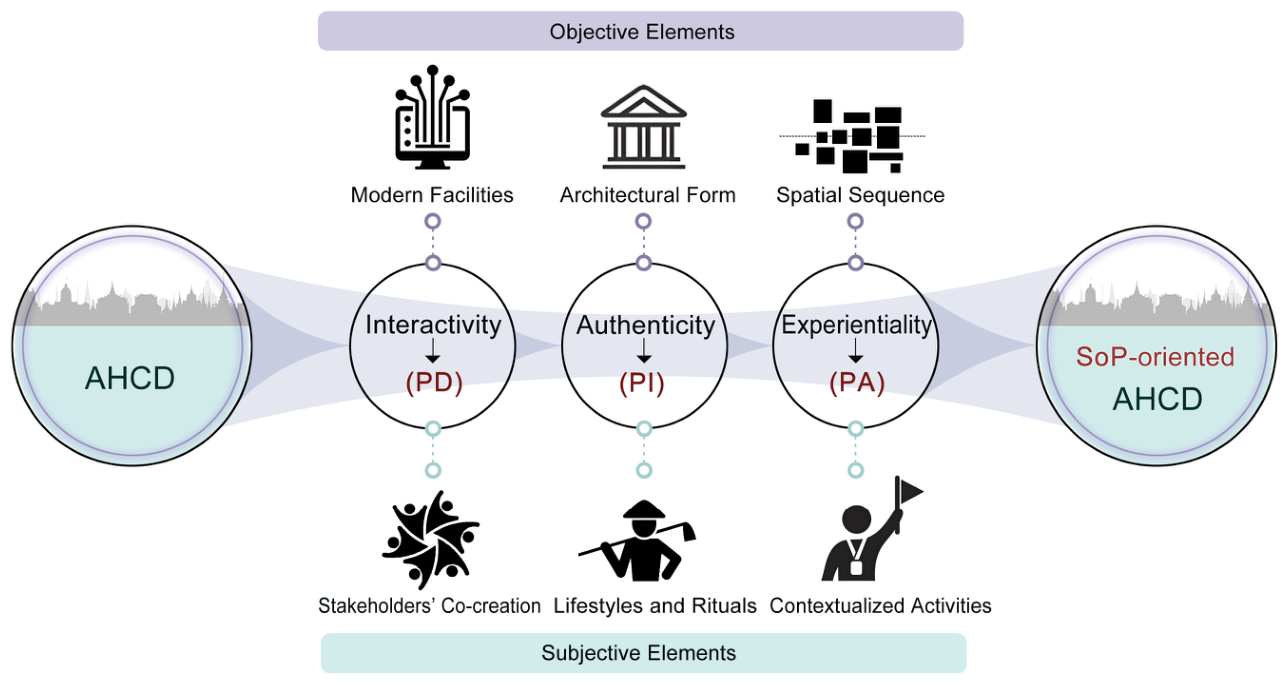
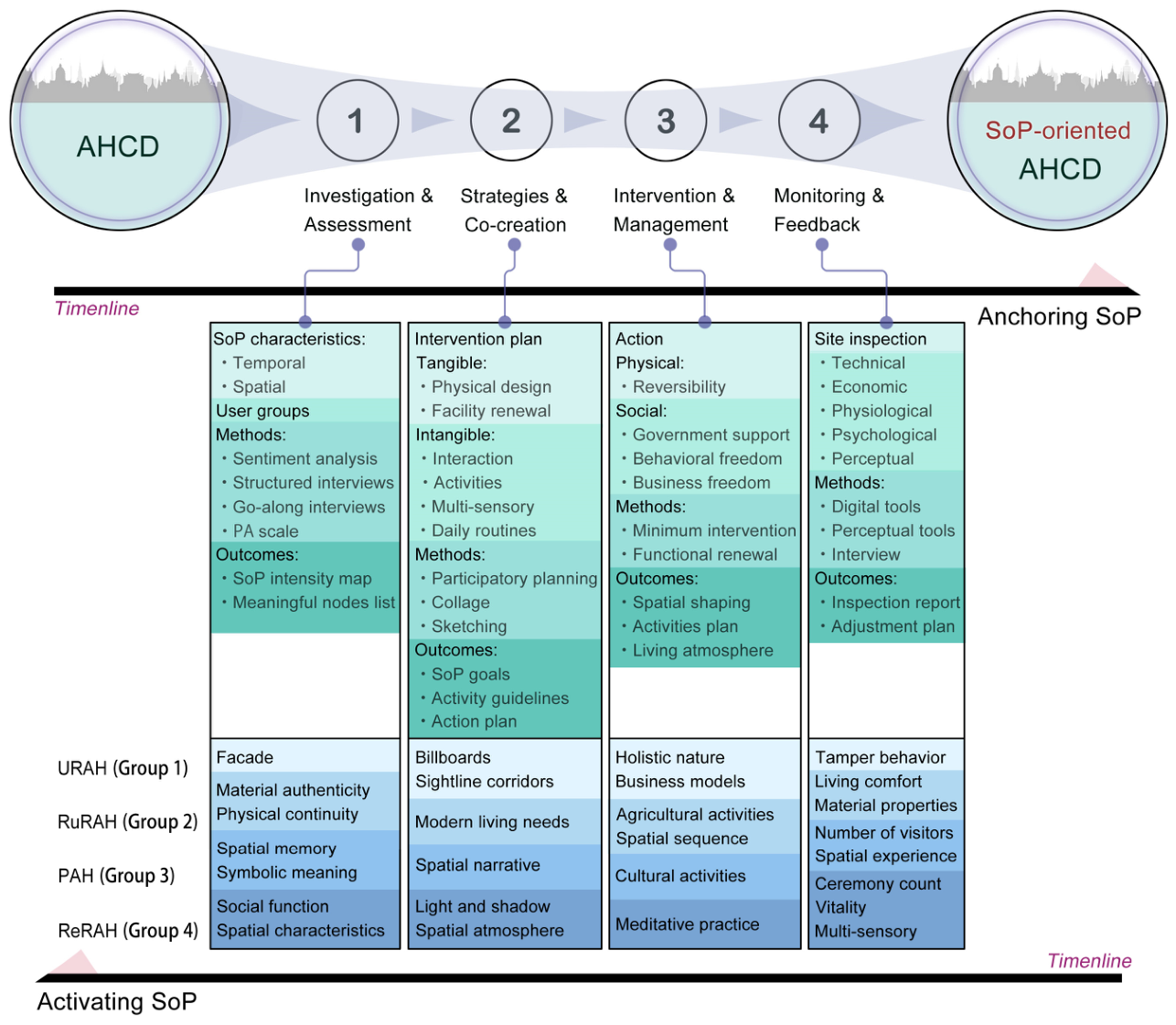
4.4. The Implementation Framework for Integrating Sense of Place into AHCD
4.4.1. Investigation and Assessment
4.4.2. Strategies and Co-Creation
4.4.3. Intervention and Management
4.4.4. Monitoring and Feedback
4.5. Limitations
5. Conclusions
Supplementary Materials
Author Contributions
Funding
Data Availability Statement
Acknowledgments
Conflicts of Interest
References
- Fang, Q.; Ko, W. Beyond Satisfaction: Authenticity, Attachment, and Engagement in Shaping Revisit Intention of Palace Museum Visitors. Sustainability 2025, 17, 8803. [Google Scholar] [CrossRef]
- Ali, S.A. The Contributions of Traditional Architecture to Sense of Place: A Study of the Traditional Hotels of Fremantle. Ph.D. Thesis, Curtin University, Singapore, 2019. [Google Scholar]
- Elyasi, S.; Yamaçlı, R. Architectural sustainability with cultural heritage values. Cult. Herit. Sci. 2023, 4, 55–61. [Google Scholar] [CrossRef]
- Lidelöw, S.; Örn, T.; Luciani, A.; Rizzo, A. Energy-efficiency measures for heritage buildings: A literature review. Sustain. Cities Soc. 2019, 45, 231–242. [Google Scholar] [CrossRef]
- Arfa, F.H.; Lubelli, B.; Quist, W.; Zijlstra, H. A model of the adaptive reuse process of heritage buildings: Validation on four cases in the Netherlands. Des. Stud. 2024, 91–92, 101252. [Google Scholar] [CrossRef]
- Li, K.; Du, B.; Li, D.; Liu, Z.; Zhang, X.; Kim, H. Machine Learning in Architectural Heritage Conservation: A Systematic Review and Thematic Synthesis of Applications, Challenges, and Future Directions. Buildings 2026, 16, 2745. [Google Scholar] [CrossRef]
- Lin, X.; Zhang, Y.; Wu, Y.; Yang, Y.; Yang, W. A Bibliometric Review of Chinese Traditional Defensive Settlement Heritage. Buildings 2024, 14, 3107. [Google Scholar] [CrossRef]
- Wu, Y.; Chen, Z.; Lin, X.; Tu, X. A Visual Analysis and Review of Chinese Qilou Architectural Heritage Based on CiteSpace. Buildings 2025, 15, 1638. [Google Scholar] [CrossRef]
- Kelly, D.; Koo, H.J. Challenges managing large historic building renovations: Lessons learned from Detroit, Michigan. J. Constr. Eng. Manag. 2024, 150, 05023015. [Google Scholar] [CrossRef]
- Zhang, X.; Ren, Y.; Lv, J.; Geng, Y.; Su, C.; Ma, R. Morphological Evolution and Socio-Cultural Transformation in Historic Urban Areas: A Historic Urban Landscape Approach from Luoyang, China. Buildings 2025, 15, 1373. [Google Scholar] [CrossRef]
- Stober, D.; Brkanić, I.; Lončar, L. The preferences of residents and tourists for culturaland architectural heritage in a rural landscape:The case of Zlatna Greda, Croatia. Morav. Geogr. Rep. 2018, 26, 285–297. [Google Scholar] [CrossRef]
- Liu, J.; Zhu, Y.; Liu, J.; Wang, P. Unraveling Tourist Behavioral Intentions in Historic Urban Built Environment: The Mediating Role of Perceived Value via SOR Model in Macau’s Heritage Sites. Buildings 2025, 15, 2316. [Google Scholar] [CrossRef]
- Feng, D.; Chiou, S.-c.; Wang, F. On the Sustainability of Local Cultural Heritage Based on the Landscape Narrative: A Case Study of Historic Site of Qing Yan Yuan, China. Sustainability 2021, 13, 2831. [Google Scholar] [CrossRef]
- Yuxin, F.; Jianpeng, Q.; Xiaoyu, L.; Yunxia, T.; Weilong, M. Exploring the influence of historical storytelling on cultural heritage tourists’ revisit intention: A case study of the Mogao Grottoes in Dunhuang. PLoS ONE 2024, 19, e0307869. [Google Scholar] [CrossRef] [PubMed]
- Chen, H.; Yang, Y.; Zhao, D.; Zhang, L.; Tang, Z.; Tian, J.; Shen, T.; Yin, Y. Social Cluster and Heritage Memory: A Study on the Space Perception of Zhaozhou Basin Horse Caravan Vernacular Architecture. Buildings 2024, 14, 2405. [Google Scholar] [CrossRef]
- Jorgensen, B.S.; Stedman, R.C. Sense of Place as an Attitude: Lakeshore Owners Attitudes Toward Their Properties. J. Environ. Psychol. 2001, 21, 233–248. [Google Scholar] [CrossRef]
- Shamai, S. Sense of place: An empirical measurement. Geoforum 1991, 22, 347–358. [Google Scholar] [CrossRef]
- Norberg-Schulz, C. Genius Loci: Towards a Phenomenology of Architecture; Rizzoli: New York, NY, USA, 1980; Volume 17, pp. 22–23. [Google Scholar]
- Petrušonis, V. Conditions for a Dialogue of Local Community and Genius Loci. Archit. Urban Plan. 2018, 14, 70–74. [Google Scholar] [CrossRef]
- Vecco, M. Genius loci as a meta-concept. J. Cult. Herit. 2020, 41, 225–231. [Google Scholar] [CrossRef]
- Stedman, R.C. Subjectivity and social-ecological systems: A rigidity trap (and sense of place as a way out). Sustain. Sci. 2016, 11, 891–901. [Google Scholar] [CrossRef]
- Gottwald, S.; Albert, C.; Fagerholm, N. Combining sense of place theory with the ecosystem services concept: Empirical insights and reflections from a participatory mapping study. Landsc. Ecol. 2022, 37, 633–655. [Google Scholar] [CrossRef]
- Kádár, B.; Klaniczay, J. Branding Built Heritage through Cultural Urban Festivals: An Instagram Analysis Related to Sustainable Co-Creation, in Budapest. Sustainability 2022, 14, 5020. [Google Scholar] [CrossRef]
- Pearson, D.; Gorman, J. Acknowledging Landscape Connection: Using Sense of Place and Cultural and Customary Landscape Management to Enhance Landscape Ecological Theoretical Frameworks. Land 2023, 12, 729. [Google Scholar] [CrossRef]
- Bahauddin, A.; Prihatmanti, R.; Putri, S.A. ‘Sense of Place’ on Sacred Cultural and Architectural Heritage: St. Peter’s Church of Melaka. Interiority 2022, 5, 53–74. [Google Scholar] [CrossRef]
- Zhu, Y.; Han, G.; Zhuang, J.; Wang, M. Authenticity and place attachment as dual pathways for sustainable tourism in the historic Quanzhou West Street, China. Sci. Rep. 2025, 15, 44980. [Google Scholar] [CrossRef] [PubMed]
- Bo, L.; Abdul Rani, M.F. The Value of Current Sense of Place in Architectural Heritage Studies: A Systematic Review. Buildings 2025, 15, 903. [Google Scholar] [CrossRef]
- Clemente, M.; Salvati, L. ‘Interrupted’ Landscapes: Post-Earthquake Reconstruction in between Urban Renewal and Social Identity of Local Communities. Sustainability 2017, 9, 2015. [Google Scholar] [CrossRef]
- Safarkhani, M. Space to Place, Housing to Home: A Systematic Review of Sense of Place in Housing Studies. Sustainability 2025, 17, 6842. [Google Scholar] [CrossRef]
- Kim, K.; Kang, J.-Y.; Hwang, C. Identifying Indicators Contributing to the Social Vulnerability Index via a Scoping Review. Land 2025, 14, 263. [Google Scholar] [CrossRef]
- Wohlin, C. Guidelines for snowballing in systematic literature studies and a replication in software engineering. In Proceedings of the 18th International Conference on Evaluation and Assessment in Software Engineering; ACM: New York, NY, USA, 2014; pp. 1–10. [Google Scholar]
- Rahil, N.R.M.; Ghani, M.Z.A.; Sarkom, Y. Architectural heritage values and sense of place of Kampung Morten, Melaka. Plan. Malays. J. 2020, 18, 33–46. [Google Scholar] [CrossRef]
- Altman, I.; Low, S.M. Place Attachment; Springer Science & Business Media: New York, NY, USA, 2012; Volume 12. [Google Scholar]
- Williams, D.R.; Patterson, M.E.; Roggenbuck, J.W.; Watson, A.E. Beyond the commodity metaphor: Examining emotional and symbolic attachment to place. Leis. Sci. 1992, 14, 29–46. [Google Scholar] [CrossRef]
- Scannell, L.; Gifford, R. Defining place attachment: A tripartite organizing framework. J. Environ. Psychol. 2010, 30, 1–10. [Google Scholar] [CrossRef]
- Proshansky, H.M. The City and Self-Identity. Environ. Behav. 1978, 10, 147–169. [Google Scholar] [CrossRef]
- Proshansky, H.M.; Fabian, A.K.; Kaminoff, R. Place-identity: Physical world socialization of the self. J. Environ. Psychol. 1983, 3, 57–83. [Google Scholar] [CrossRef]
- Raymond, C.M.; Kyttä, M.; Stedman, R. Sense of Place, Fast and Slow: The Potential Contributions of Affordance Theory to Sense of Place. Front. Psychol. 2017, 8, 1674. [Google Scholar] [CrossRef] [PubMed]
- Kyle, G.; Graefe, A.; Manning, R. Testing the dimensionality of place attachment in recreational settings. Environ. Behav. 2005, 37, 153–177. [Google Scholar] [CrossRef]
- Stedman, R.C. Is it really just a social construction?: The contribution of the physical environment to sense of place. Soc. Nat. Resour. 2003, 16, 671–685. [Google Scholar] [CrossRef]
- Raymond, C.M.; Manzo, L.C.; Williams, D.R.; Di Masso, A.; von Wirth, T. Changing Senses of Place: Navigating Global Challenges; Cambridge University Press: Cambridge, UK, 2021. [Google Scholar]
- Tricco, A.C.; Lillie, E.; Zarin, W.; O’Brien, K.K.; Colquhoun, H.; Levac, D.; Moher, D.; Peters, M.D.J.; Horsley, T.; Weeks, L.; et al. PRISMA Extension for Scoping Reviews (PRISMA-ScR): Checklist and Explanation. Ann. Intern. Med. 2018, 169, 467–473. [Google Scholar] [CrossRef] [PubMed]
- Chen, C. Science Mapping: A Systematic Review of the Literature. J. Data Inf. Sci. 2017, 2, 1–40. [Google Scholar] [CrossRef]
- van Eck, N.J.; Waltman, L. Software survey: VOSviewer, a computer program for bibliometric mapping. Scientometrics 2010, 84, 523–538. [Google Scholar] [CrossRef] [PubMed]
- Zupic, I.; Čater, T. Bibliometric methods in management and organization. Organ. Res. Methods 2015, 18, 429–472. [Google Scholar]
- Horlings, L. Politics of connectivity: The relevance of place-based approaches to support sustainable development and the governance of nature and landscape. In The SAGE Handbook of Nature; SAGE Publications Inc.: Newbury Park, CA, USA, 2018; pp. 304–324. [Google Scholar]
- Calvo, M.; De Rosa, A. Design for social sustainability. A reflection on the role of the physical realm in facilitating community co-design. Des. J. 2017, 20, S1705–S1724. [Google Scholar] [CrossRef]
- Zhao, X.; Leng, T.; Wang, Y.; Chao, S. An enlightening sacrifice: Discovering an anonymous building on the campus of Nanjing University in China. J. Asian Archit. Build. Eng. 2022, 22, 875–895. [Google Scholar] [CrossRef]
- Zou, M.; Bahauddin, A. The Creation of “Sacred Place” through the “Sense of Place” of the Daci’en Wooden Buddhist Temple, Xi’an, China. Buildings 2024, 14, 481. [Google Scholar] [CrossRef]
- Popay, J.; Roberts, H.; Sowden, A.; Petticrew, M.; Arai, L.; Rodgers, M.; Britten, N.; Roen, K.; Duffy, S. Guidance on the Conduct of Narrative Synthesis in Systematic Reviews; Version 1, b92; Lancaster University: Lancaster, UK, 2006. [Google Scholar]
- Chizzoniti, D.G.; Lolli, T. Urban Morphology, Identity, Heritage, and Reconstruction Processes in Middle East Post-War Scenarios: The Case of Mosul Old City. Land 2023, 12, 2140. [Google Scholar] [CrossRef]
- Du, J.; Yu, Z.; Cheng, S.; Li, L.; Miao, C. Exploring the role of government-driven culture-led micro-regeneration in shaping the sense of place within urban historic districts in China. Cities 2026, 169, 106575. [Google Scholar] [CrossRef]
- Zhu, X.; Chiou, S.-C. A Study on the Sustainable Development of Historic District Landscapes Based on Place Attachment among Tourists: A Case Study of Taiping Old Street, Taiwan. Sustainability 2022, 14, 11755. [Google Scholar] [CrossRef]
- Zwain, A.; Bahauddin, A. Malacca’s “Straits Chinese traditional courtyard eclectic style shophouses”: Facades’ architectural design elements through place identity. J. Cult. Herit. Manag. Sustain. Dev. 2021, 13, 837–855. [Google Scholar] [CrossRef]
- Liao, W.; Liu, P.; Chen, Z.; Liu, S. Investigating impacts of renovated exteriors in historic districts on visitor vitality through space syntax reflection. npj Herit. Sci. 2025, 13, 336. [Google Scholar] [CrossRef]
- Masuwan, K.; Lertwattanaruk, P. Incorporating Form-Based Codes into the Design-Based Approach to Historic Building Conservation in Phuket, Thailand. Sustainability 2020, 12, 3859. [Google Scholar] [CrossRef]
- Ertürk, S.F.; Kerestecioğlu, S.F. Scenario-based urban regeneration through a contextual approach: Insights from the Antalya Haşim İşcan neighbourhood. J. Asian Archit. Build. Eng. 2026, 1–38. [Google Scholar] [CrossRef]
- Zhang, J.; Li, Q.; Liu, X. Research on the Complex Mechanism of Placeness, Sense of Place, and Satisfaction of Historical and Cultural Blocks in Beijing’s Old City Based on Structural Equation Model. Complexity 2021, 2021, 6673158. [Google Scholar] [CrossRef]
- Farhad, S.; Maghsoodi Tilaki, M.J.; Hedayati Marzbali, M.J. Architectural identity and place attachment in historic neighbourhoods: An empirical study in Sanandaj, Iran. J. Place Manag. Dev. 2021, 14, 148–162. [Google Scholar]
- Dai, L.; Wang, S.; Xu, J.; Wan, L.; Wu, B. Qualitative Analysis of Residents′ Perceptions of Tourism Impacts on Historic Districts: A Case Study of Nanluoguxiang in Beijing, China. J. Asian Archit. Build. Eng. 2018, 16, 107–114. [Google Scholar] [CrossRef]
- Maghsoodi Tilaki, M.J.; Farhad, S. Revitalising historic fabrics: The influence of identity and community belonging. Geogr. Res. 2025, 63, 573–593. [Google Scholar] [CrossRef]
- Fouad, S.S.; Sharaf Eldin, S. Public Perception Influence on the Reshaping Urban Heritage: A Case Study of Port Said Historic Quarters. Space Cult. 2021, 26, 579–597. [Google Scholar] [CrossRef]
- Wang, Y. Exploring multiple dimensions of attachment to historic urban places, a case study of Edinburgh, Scotland. Int. J. Herit. Stud. 2023, 29, 428–440. [Google Scholar] [CrossRef]
- Li, H.; Chen, J.; Ikebe, K.; Kinoshita, T. Survey of Residents of Historic Cities Willingness to Pay for a Cultural Heritage Conservation Project: The Contribution of Heritage Awareness. Land 2023, 12, 2058. [Google Scholar] [CrossRef]
- Skataric, G.; Spalevic, V.; Popovic, S.; Perosevic, N.; Novicevic, R. The Vernacular and Rural Houses of Agrarian Areas in the Zeta Region, Montenegro. Agriculture 2021, 11, 717. [Google Scholar] [CrossRef]
- Ho, J.T.-w. Emergent place-identity: Place activation through the architectural restoration of a small Hakka household in the Hong Kong countryside. Built Herit. 2024, 8, 7. [Google Scholar] [CrossRef]
- Chang, X.; Li, Z. Tourists’ Perceived Restoration of Chinese Rural Cultural Memory Space. Sustainability 2022, 14, 14825. [Google Scholar] [CrossRef]
- Mashary Alnaim, M.; Abdullah Alnaim, M. The restorative role of traditional architecture: Psychological well-being in heritage spaces. Ain Shams Eng. J. 2026, 17, 104146. [Google Scholar] [CrossRef]
- Jin, M.; Cao, J.; Zhao, H.; Li, Z. Effects of living environment quality on cultural heritage responsibility behaviors of residents in traditional villages: A case study from Hangzhou, China. Front. Psychol. 2025, 16, 1600506. [Google Scholar] [CrossRef] [PubMed]
- Chiang, Y.-C. Adaptive reuse of a military dependents’ village in Taipei: Integrating living heritage with Net Zero urban regeneration through creative industries. J. Asian Archit. Build. Eng. 2025, 1–16. [Google Scholar] [CrossRef]
- Zhang, R. A Multi-Dimensional Data-Driven Study on the Emotional Attachment Characteristics of the Renovation of Beijing Traditional Quadrangles. Buildings 2024, 14, 2075. [Google Scholar] [CrossRef]
- Durukan, A.; Ertaş Beşir, Ş.; Koç Altuntaş, S.; Açıkel, M. Evaluation of Sustainability Principles in Adaptable Re-Functioning: Traditional Residences in Demirel Complex. Sustainability 2021, 13, 2514. [Google Scholar] [CrossRef]
- Jiang, Y.; Duan, J.; Zhang, Y. The spontaneous spatial restructuring of traditional village based on an analysis of social relationship: A case in Fuling, Fujian China. Habitat Int. 2025, 157, 103309. [Google Scholar] [CrossRef]
- Rong, W.; Bahauddin, A. Heritage and Rehabilitation Strategies for Confucian Courtyard Architecture: A Case Study in Liaocheng, China. Buildings 2023, 13, 599. [Google Scholar] [CrossRef]
- Cai, S.; Hu, Y.; He, J.; Li, K. The impact of embodied cognition on place attachment and supportive behavior toward historic buildings in heritage sites: Exploring the moderating role of resident identity climate. Front. Psychol. 2025, 16, 1702052. [Google Scholar] [CrossRef] [PubMed]
- Lei, H.; Zhou, Y. Conducting Heritage Tourism-Led Urban Renewal in Chinese Historical and Cultural Urban Spaces: A Case Study of Datong. Land 2022, 11, 2122. [Google Scholar] [CrossRef]
- Thirumaran, K.; Mohammadi, Z.; Azzali, S.; Eijdenberg, E.L.; Donough-Tan, G. Transformed landscapes, tourist sentiments: The place making narrative of a luxury heritage hotel in Singapore. J. Herit. Tour. 2023, 18, 243–264. [Google Scholar] [CrossRef]
- Shi, J.; Tian, L. The Psychological Resonance of Place: Spatial Narratives and Identity in the Historical Educational Landscapes of Rongxiang, China. Integr. Psychol. Behav. Sci. 2025, 59, 49. [Google Scholar] [CrossRef] [PubMed]
- Zou, Y.; Yang, Y.; Li, Y.; Liao, J.; Xiao, H. How do tourists’ heritage spatial perceptions affect place identity? A case study of Quanzhou, China. J. Hosp. Tour. Manag. 2023, 55, 460–470. [Google Scholar] [CrossRef]
- Hussein, F.; Stephens, J.; Tiwari, R. Cultural Memories and Sense of Place in Historic Urban Landscapes: The Case of Masrah Al Salam, the Demolished Theatre Context in Alexandria, Egypt. Land 2020, 9, 264. [Google Scholar] [CrossRef]
- Fu, Y.; Dong, W. How perceived value, environmental awareness, and social identity shape public support for industrial heritage: The mediating role of place attachment. Front. Psychol. 2025, 16, 1645646. [Google Scholar] [CrossRef] [PubMed]
- Abukarki, H.J.; Uzunahmet, H.A.; Onur, Z. The Influence of Place Attachment on Heritage Discourse in Contemporary Places: A Case Study of Jordanian Byzantine Mosaics. Sustainability 2023, 15, 8395. [Google Scholar] [CrossRef]
- Bal, W.; Czalczynska-Podolska, M.; Nieścior, M. The Importance of Architectural Icons of the City of Szczecin for the Transformation of Landscape Identity and Promotion of the City’s Image. Sustainability 2023, 15, 8648. [Google Scholar] [CrossRef]
- Popović, T.; Marić, J.; Vaništa Lazarević, E. Reshaping approaches of architectural heritage devastated through bombing: Case study of Generalštab, Belgrade. Urban Des. Int. 2020, 26, 296–309. [Google Scholar] [CrossRef]
- Fogarasi, B.; Dobai, A.M.; Tóth-Varga, V.; Dúll, A. From predicament to reconnection: Stakeholder perspectives on the revitalization of a historic church building. Int. J. Herit. Stud. 2026, 32, 1097–1129. [Google Scholar] [CrossRef]
- Feng, J.; Bahauddin, A.; Miao, J. Sense of Place and Sacred Places: A Phenomenological Study of Ancestral Hall Spatial Narratives—The Shike Ancestral Hall, En Village, Guangdong. Buildings 2025, 15, 470. [Google Scholar] [CrossRef]
- Beekers, D. The matter of home: Repurposed churches, heritage and belonging in Amsterdam. Cult. Stud. 2024, 38, 839–864. [Google Scholar] [CrossRef]
- Janowski, M.; Janowska, A.; Nadolny, A.; Mohammadi, M. Architecture of Polish Tatars—Local Identity and Heritage. Int. J. Conserv. Sci. 2023, 14, 231–250. [Google Scholar] [CrossRef]
- Janisio-Pawłowska, D. Contemporary Parish Churches as Spatial Dominants and Elements of Young Cultural Heritage in the Urban Structure: The Case of Szczecin in the Context of Sustainable Development and the Protection of Urban and Cultural Heritage. Sustainability 2025, 17, 6648. [Google Scholar] [CrossRef]
- Gatiso, T.T.; Greenhalgh, S.; Korovulavula, I.; Fong, T.; Radikedike, R.P. Climate change-induced relocation dilemma between preserving cultural heritage and embracing modern infrastructure: Insights from Fijian coastal villages. Clim. Change 2025, 178, 131. [Google Scholar] [CrossRef]
- Tao, H.; Wen, Y.; Liu, M.; Wu, Y. Industrial Heritage Protection from the Perspective of Spatial Narrative. Land 2025, 14, 1105. [Google Scholar] [CrossRef]
- Wang, M.; Lee, H.S.; Chen, W.Q. The impact of cultural tourism experience on cultural identity: A case study of Mazu culture. PLoS ONE 2026, 21, e0346153. [Google Scholar] [CrossRef] [PubMed]
- Gamper-Rabindran, S.; Ash, J. “Farming the sun” or “coal legacy”? Social perspectives on solar energy projects in Appalachia. Energy Res. Soc. Sci. 2024, 117, 103656. [Google Scholar] [CrossRef]
- Lu, X.; Tan, D.; Zhou, Y.; Xie, Y.; Chen, Z. Traditional village perception and protection behavior: The mediating role of local identity and the impact of different population differences. J. Asian Archit. Build. Eng. 2024, 24, 5104–5121. [Google Scholar] [CrossRef]
- Kasemets, K.J. Stewardship and everyday governance: Managing materialities in a south-eastern village community, Estonia. Sociol. Rural. 2024, 64, 104–125. [Google Scholar]
- Zhang, J.; Xu, S.; Aoki, N. Contradictions of indigenous cognition and heritage evaluation under political transformations in a working-class community in Tianjin, China. Cities 2023, 132, 104031. [Google Scholar] [CrossRef]
- Xu, X.; Xue, D.; Huang, G. The Effects of Residents’ Sense of Place on Their Willingness to Support Urban Renewal: A Case Study of Century-Old East Street Renewal Project in Shaoguan, China. Sustainability 2022, 14, 1385. [Google Scholar] [CrossRef]
- Shen, J.; Chou, R.-J. Cultural Landscape Development Integrated with Rural Revitalization: A Case Study of Songkou Ancient Town. Land 2021, 10, 406. [Google Scholar] [CrossRef]
- Bujanda Miguel, M. The notion of place in conservation of architectural landscapes. J. Archit. Conserv. 2017, 22, 222–230. [Google Scholar] [CrossRef]
- Ding, L.; Zheng, G. Understanding Digital Sense of Place in Living Heritage Streets Through Multimodal Social Media Analysis: A Case Study of Songyang’s Ming–Qing Old Street. Sustainability 2026, 18, 3250. [Google Scholar] [CrossRef]
- Fan, J.; Li, K.; Gu, T. Landscape character assessment of urban historical and cultural blocks and landscape design for place attachment enhancement—A case study of Sanxuejie Historical and Cultural Block in Xi’an, China. J. Asian Archit. Build. Eng. 2025, 25, 3761–3779. [Google Scholar] [CrossRef]
- Chan, S.H.G.; Lee, W.H.H.; Tang, B.M.; Chen, Z. Legacy of culture heritage building revitalization: Place attachment and culture identity. Front. Psychol. 2023, 14, 1314223. [Google Scholar] [CrossRef] [PubMed]
- Zhang, S.-N.; Zhou, Y.; Ruan, W.-Q. Will tourists avoid visiting destinations with heritage destruction? J. Sustain. Tour. 2026, 1–33. [Google Scholar] [CrossRef]
- Cai, X.; He, J.; Liu, M.; Morrision, A.M.; Wu, Y. Building rural public cultural spaces for enhanced well-being: Evidence from China. Local Environ. 2024, 29, 540–564. [Google Scholar] [CrossRef]
- Wang, J.; Yang, Z.; Lei, Y.; Peng, T.; Long, T.; Liu, J.; Li, H.; Yang, J.; Lu, M. What Creates Unsafe Feelings in Rural Landscapes: A Study of Perceived Safety Based on Facial Expression Recognition. Land 2025, 14, 575. [Google Scholar] [CrossRef]
- Zhao, B.; Feng, J.; Sun, Y.; Chang, X.; Shaw, S.L. Neural sensing: Toward a new approach to understanding emotional responses to place. Trans. GIS 2024, 28, 2463–2475. [Google Scholar] [CrossRef]





| Representative Literature | Time Span | Number of Included Studies | AHCD Focus | Literature Categorization Frameworks | Practical Sense of Place Application for AHCD | Site Context |
|---|---|---|---|---|---|---|
| (Bo & Rani, 2025) [27] | 2020–2024 | 23 | Yes | Subjective perception dimensions (cognitive, emotional, dynamic) | No | Mainly in cities |
| (Safarkhani, 2025) [29] | 2006–2024 | 10 | No | Tripartite model of sense of place (place identity, place attachment, place dependence; subgroup:cognitive, affective, conative) | No | Urban and rural areas |
| This study | 2016–2026 | 79 | Yes | Dominant social functions of architectural heritage (urban residential, rural residential, public, religious and ritual) | Yes | Urban and rural areas |
| Literature Classification | Paper Count | Proportion | Paper Numbers (From Supplementary Materials Table S2) | Concepts or Methods Used |
|---|---|---|---|---|
| Urban residential (Group 1) | 30 | 37.97% | 3, 6, 9, 11, 12, 14, 15, 17, 22, 24, 29, 32, 33, 36, 38, 40, 42, 43, 44, 53, 54, 55, 56, 58, 60, 61, 65, 75, 76, 77 | Authenticity theory; heritage tourism; resilient community theory |
| Rural residential (Group 2) | 13 | 16.46% | 2, 5, 7, 8, 10, 13, 21, 25, 50, 64, 67, 68, 70 | Embodied cognition; behavioral intention; attitude-behavior theory |
| Public (Group 3) | 21 | 26.58% | 1, 4, 16, 18, 20, 23, 26, 27, 28, 31, 34, 35, 37, 46, 48, 49, 52, 57, 62, 66, 71 | Landscape narrative theory; place making |
| Religious and ritual (Group 4) | 15 | 18.99% | 19, 30, 39, 41, 45, 47, 51, 59, 63, 69, 72, 73, 74, 78, 79 | Space production theory; sacred building |
Disclaimer/Publisher’s Note: The statements, opinions and data contained in all publications are solely those of the individual author(s) and contributor(s) and not of MDPI and/or the editor(s). MDPI and/or the editor(s) disclaim responsibility for any injury to people or property resulting from any ideas, methods, instructions or products referred to in the content. |
© 2026 by the authors. Licensee MDPI, Basel, Switzerland. This article is an open access article distributed under the terms and conditions of the Creative Commons Attribution (CC BY) license.
Share and Cite
Li, S.; Wu, L.; Li, Y. How Does Sense of Place Serve Architectural Heritage Conservation and Development? A Scoping Review and Implementation Framework. Buildings 2026, 16, 3010. https://doi.org/10.3390/buildings16153010
Li S, Wu L, Li Y. How Does Sense of Place Serve Architectural Heritage Conservation and Development? A Scoping Review and Implementation Framework. Buildings. 2026; 16(15):3010. https://doi.org/10.3390/buildings16153010
Chicago/Turabian StyleLi, Shu, Liyue Wu, and Yanjun Li. 2026. "How Does Sense of Place Serve Architectural Heritage Conservation and Development? A Scoping Review and Implementation Framework" Buildings 16, no. 15: 3010. https://doi.org/10.3390/buildings16153010
APA StyleLi, S., Wu, L., & Li, Y. (2026). How Does Sense of Place Serve Architectural Heritage Conservation and Development? A Scoping Review and Implementation Framework. Buildings, 16(15), 3010. https://doi.org/10.3390/buildings16153010