1. Introduction
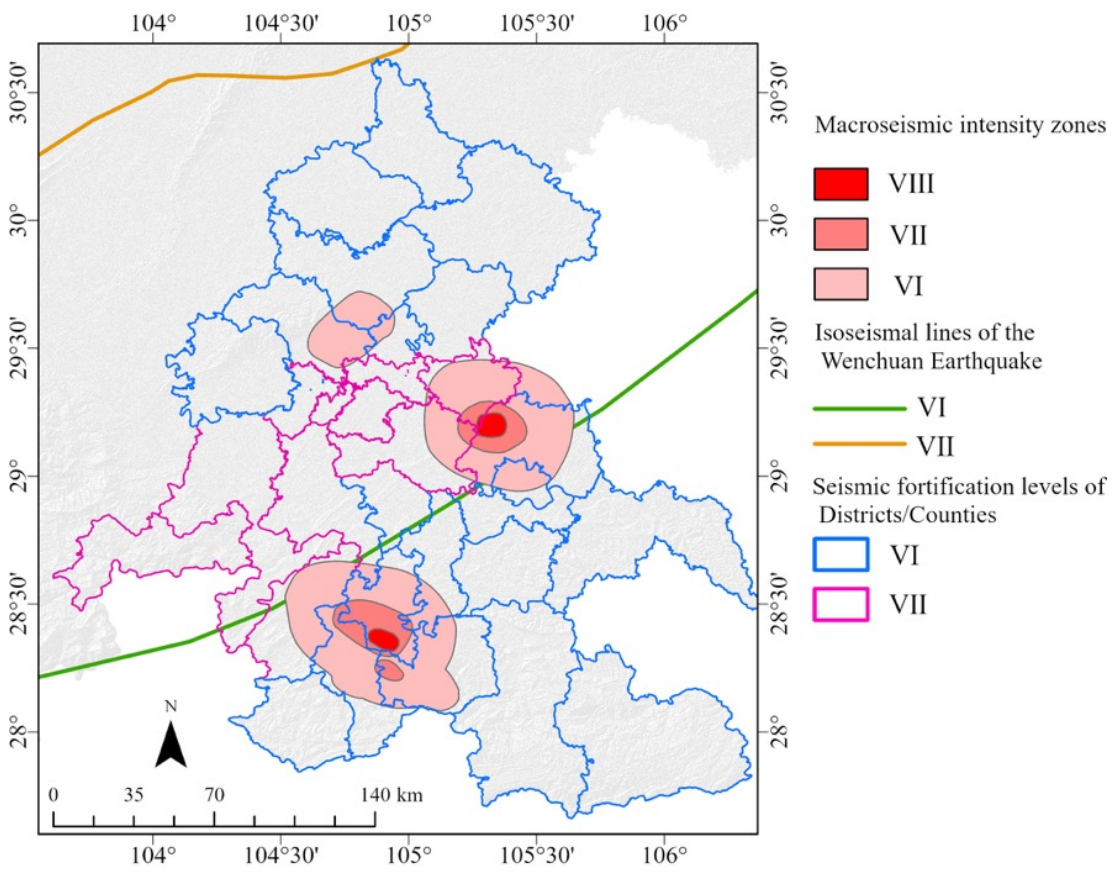
Earthquakes are the most destructive natural disaster, posing severe threats to human life, property, and the stable development of society and the economy. Although Sichuan Province is located in a high-seismicity zone in western China, its eastern region lies within the stable Yangtze Block, where historically moderate-to-strong earthquake activity has been relatively weak. In particular, the southeastern part of Sichuan has long been considered a region of low seismic activity. Consequently, the seismic fortification standards in this area have generally been at moderate to low levels, with basic design intensities ranging from VI to VII on the seismic intensity scale [
1]. In both urban and rural areas, especially in vast rural regions, brick masonry buildings and older brick-wood buildings, which are forms of construction with relatively poor seismic performance, have been widely adopted. From the perspective of regional seismic safety planning, in areas with infrequent, low-intensity earthquakes, aligning building seismic resistance with actual seismic risk is a reasonable and cost-effective technical strategy. In other words, the seismic fortification objectives for buildings should not be set to blindly pursue excessively high standards; rather, they should be scientifically established based on the characteristics of the regional seismic environment to achieve an optimal balance between safety and resource allocation. Therefore, the historically low seismic capacity of buildings in southern Sichuan can be regarded as reasonable and grounded in the local context.
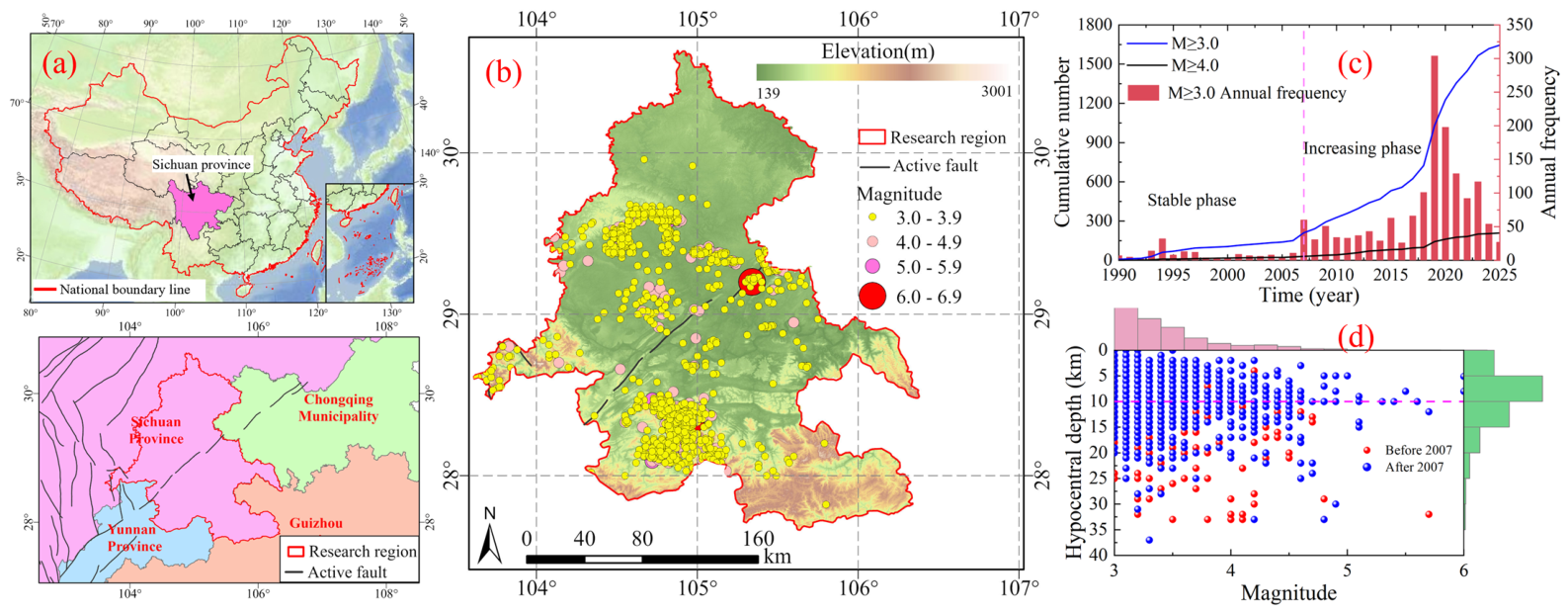
Recently, seismic activity in southern Sichuan has increased notably in both frequency and magnitude, primarily driven by anthropogenic industrial activities [
2]. A series of notable earthquakes has occurred, exemplified by the Ms 6.0 earthquakes in Changning in 2019 and in Luxian in 2021, which caused widespread social impacts and substantial material losses. These events signify a major shift in the region’s seismic risk characteristics. Consequently, the area has transformed from a region with relatively stable seismic risk into one characterized by dynamically changing risk, thereby posing unprecedented challenges to traditional disaster prevention and mitigation systems. Against this backdrop, a systematic review and analysis of the seismic hazard characteristics in southern Sichuan is urgently needed to accurately assess current earthquake risks and formulate targeted disaster prevention and mitigation strategies.
Field investigations of earthquake damage are among the most direct and reliable research methods for elucidating the mechanisms of structural seismic damage and assessing the seismic performance of regional buildings. These investigations play an irreplaceable and crucial role in post-earthquake safety assessments and scientific research, with the collected damage data serving as the fundamental basis for developing targeted engineering reinforcement measures and regional disaster prevention and mitigation strategies [
3]. The earthquake that struck L’Aquila on 6 April 2009, underscored the significant vulnerability of churches. Lagomarsino [
4] conducted damage assessments of over 700 churches to identify collapse mechanisms across various architectural components. Subsequently, Longobardi et al. [
5] investigated 23 churches affected by the 2012 Emilia-Romagna earthquake in Italy. They compared actual seismic damage with three distinct methods: simplified mechanical models, the observations documented in the AeDES form, and dynamic analysis. This comparison aimed to evaluate the reliability of these methods for rapidly estimating the degree of seismic damage in churches. On 25 April 2015, a Mw 8.1 earthquake struck near Pokhara, Nepal. Liu et al. [
6] conducted an in-depth investigation into the seismic damage of various engineering structures in Nepal, where they analyzed seismic damage in typical frame and masonry buildings, including the causes of that damage. Recommendations for strengthening measures and suggestions for post-earthquake reconstruction were also provided. On 24 January 2020, a Mw 6.8 earthquake occurred in the Sivrice district of Elazığ Province, Turkey, resulting in the collapse or severe damage of numerous buildings. Caglar et al. [
7] studied the structural damage in different building types and identified several structural deficiencies and errors. On 12 November 2017, a Mw 7.3 earthquake struck the city of Sarpol-e Zahab in Iran. Khanmohammadi et al. [
3] conducted a comprehensive and detailed investigation of more than 81 damaged steel structures and reinforced concrete buildings. The study provided an extensive explanation of various structural and non-structural damage and classified the buildings into five damage states based on the severity, extent, and type of steel structure damage, as well as the observed residual drift. A new damage index was also proposed. On 23 November 2022, a Mw 5.9 earthquake struck Düzce-Gölyaka in northwestern Turkey, severely damaging or destroying numerous buildings in rural areas. The damage sustained by masonry structures was classified and evaluated by Dedeoğlu et al. [
8]. Based on the damage categories identified within the study area, reinforcement techniques were proposed to improve the seismic performance of existing brick-concrete buildings with low resistance. On 6 February 2023, two strong earthquakes with Mw 7.7 and Mw 7.6 occurred in Kahramanmaraş, Turkey, resulting in widespread building collapse and damage, and causing more than 50,000 fatalities. Damcı et al. [
9] conducted extensive field reconnaissance and observations in the affected areas immediately following the earthquakes. Detailed damage assessments were performed for various structural types in consideration of the recorded ground motions. Although peak ground accelerations exceeding the design limits were recorded at certain locations, pervasive structural deficiencies were identified as the primary cause of collapse and damage, a finding further corroborated by the field investigations of Avğın et al. [
10]. Similarly, Kırtel et al. [
11] focused on the damage characteristics and underlying causes in industrial buildings with different support systems. It was emphasized that improving the quality of construction materials, ensuring compliance with steel reinforcement ductility requirements, and implementing strict quality control during the production phase are urgent measures for reducing seismic risk. Subsequently, Toprak et al. [
12] and Akinci et al. [
13] also analyzed the causes of structural damage, the influence of high acceleration values, surface deformations, and lifeline system performance. On 5 September 2022, a Ms 6.8 earthquake struck Luding County in Sichuan Province, China. Bai et al. [
14] examined seven base-isolated buildings in the affected areas, providing detailed descriptions of the damage levels and investigating the factors influencing the observed performance. Recommendations were proposed to address the pressing challenges in the development and application of base-isolation techniques for building structures.
With the transformation of southern Sichuan from a region with historically low seismicity to one frequently affected by moderate to strong earthquakes, the area has rapidly emerged as a focal point for research in both geological and engineering disciplines. Several key findings have been accumulated through the study of multiple representative seismic events. Existing research can be categorized into two main directions. The first focuses on investigating earthquake-generating mechanisms. Geologists have employed techniques such as focal mechanism solution analysis and relocated aftershock sequences to elucidate the intrinsic links between industrial activities and fault activation. These efforts aim to reassess the upper limits of regional seismic hazard and refine existing conceptual models. The second direction emphasizes the analysis of building seismic damage. Engineers have conducted systematic post-earthquake damage surveys to examine the characteristics and vulnerabilities of various structural types. The findings provide essential evidence for evaluating regional seismic performance and the resilience of the built environment. For instance, following the Junlian Ms4.9 earthquake of 28 January 2017, Xiao et al. [
15] conducted a preliminary analysis of the regional geological environment, focal mechanism solutions, and aftershock sequences to explore the distribution characteristics of seismic damage and the underlying damage mechanisms. Then, they summarized the seismic damage characteristics of various building types in the affected area and found that most buildings were masonry structures with severe damage. Based on a post-earthquake damage survey following the 17 June 2019 Changning Ms 6.0 earthquake, Yang et al. [
16] observed that buildings that were designed and constructed to meet code standards typically sustained little to no damage to their primary structural members under seismic loading. However, non-structural components such as infill walls and ceilings exhibited significant damage, which contributed to the loss of the building’s functionality. Furthermore, structural measures significantly improved the seismic performance of brick-concrete residential buildings; the presence of tie beams and structural columns was found to greatly reduce seismic damage. This issue was also formally addressed by Pan et al. [
17] in their survey, finding that masonry structures, owing to a lack of proper seismic design and effective seismic-resistant measures, suffered the most severe damage in this earthquake, making them the primary cause of casualties. After the 16 September 2021, Ms 6.0 earthquake in Luxian, Pan et al. [
18] conducted a detailed seismic damage survey of buildings in the affected villages and towns. They summarized the typical seismic damage characteristics of brick-wood, masonry, and reinforced concrete frame structures, revealing that the proportion of severe damage to brick-wood structures was four times that in frame structures. Additionally, the number of collapsed brick-wood structures was seven times higher than that of masonry structures, while no collapses were observed in frame structures.
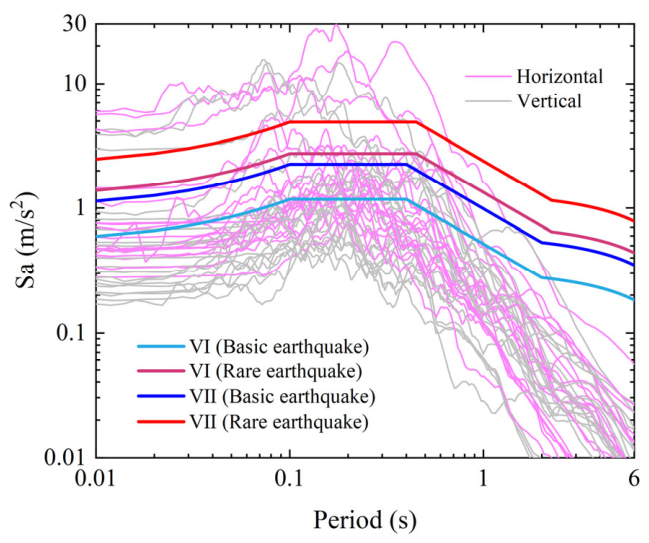
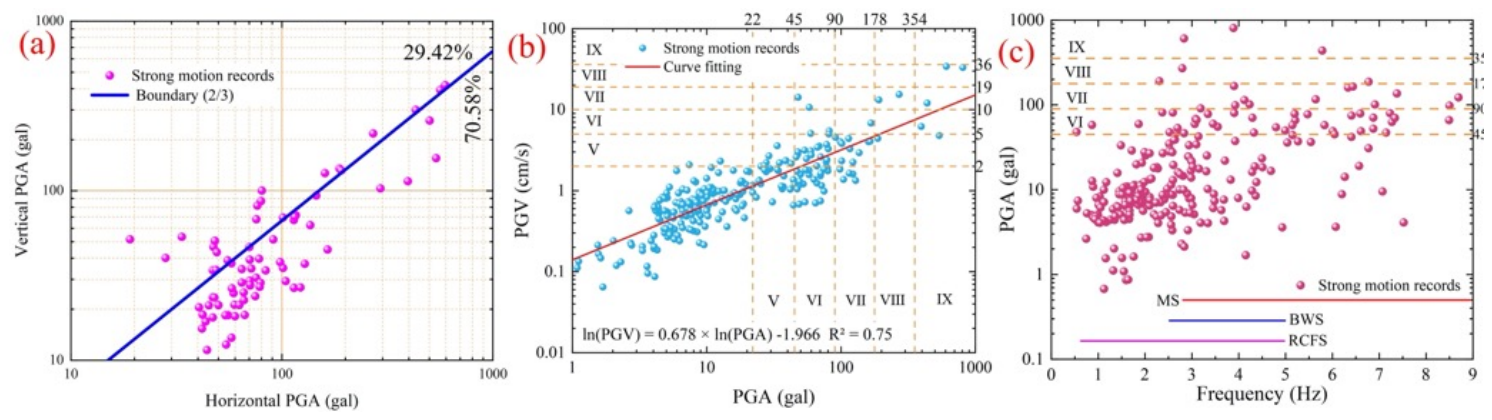
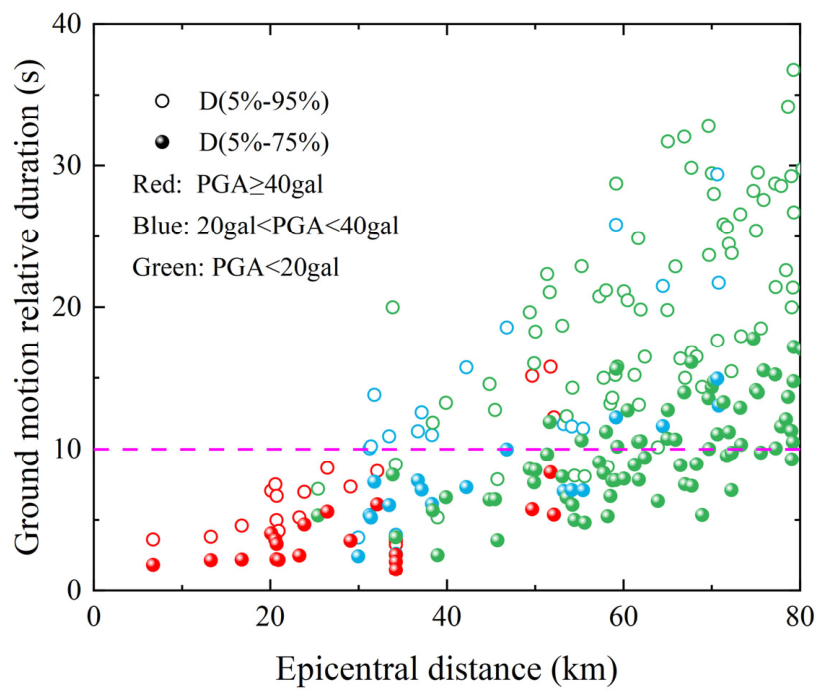
Numerous studies have examined earthquake damage to buildings in southern Sichuan, but these analyses typically focus on individual seismic events or provide in-depth investigations of specific structural types. There is a lack of systematic integration of common seismic damage patterns, failure mechanisms, and their roles within the entire disaster chain across multiple earthquakes at a regional scale. Furthermore, the proposed disaster mitigation and reinforcement measures are often generalized and lack practical, actionable solutions. As a result, current research does not provide a comprehensive framework for optimizing disaster prevention strategies in the face of new seismic risks. This paper systematically investigates the seismic characteristics, damage patterns, and mitigation strategies for the southern Sichuan region. The study begins by analyzing the characteristics of regional seismicity and strong ground motion, elucidating their dynamic effects on engineering structures. A comparative analysis between the findings and the current seismic design code reveals that the code provisions for both the basic seismic intensity and the vertical peak ground acceleration are non-conservative, with insufficient safety margins. Meanwhile, the paper focuses on the seismic performance and failure mechanisms of typical building typologies, specifically brick masonry and brick-wood structures, identifies the mechanical weak links of each structural type, and thus provides a basis for subsequent seismic retrofitting strategies. It further explores the impacts of seismic geological hazards, damage characteristics of lifeline infrastructure systems, and the disaster models related to casualties. This further clarifies the local disaster characteristics and helps identify the priority tasks for current risk prevention efforts. Finally, through a systematic analysis of the seismic damage chain, this paper proposes seismic reinforcement strategies and regional resilience-based disaster prevention plans for existing buildings in southern Sichuan, taking into account structural vulnerability, key factors for human safety, and economic feasibility. These measures provide scientific foundations and practical support for enhancing the region’s seismic disaster prevention and resilience capabilities.
3. Damage Analysis of Typical Building Structures
After every destructive earthquake, the Sichuan Earthquake Agency promptly dispatches specialized earthquake engineering personnel to form a field investigation team. This team is tasked with conducting damage assessments and evaluating macroseismic intensity in the impacted areas. The authors’ team has actively participated in this mission multiple times, adhering strictly to the relevant technical guidelines. Detailed damage assessments were performed, with a particular focus on typical building structural types within the study area. A summary of the basic information for each typology is presented in
Table 1. The various seismic damage phenomena observed at the site are described in detail below.
3.1. Reinforced Concrete Structures
Reinforced concrete structures experience relatively less overall damage during earthquakes. Among the damaged buildings, mid-and low-rise frame structures are predominant, while high-rise buildings such as shear wall structures and frame-shear wall structures are less commonly affected. This is primarily because high-rise residential buildings are typically located in urban areas, which are farther from the epicenter, and the energy carried by long-period seismic waves is relatively low there. Furthermore, these structures exhibit excellent seismic resistance, resulting in few instances of damage. Damage to such buildings has only been observed in a few instances, such as during the Ms 6.0 earthquake in Changning.
3.1.1. Beam-Column Joint Damage
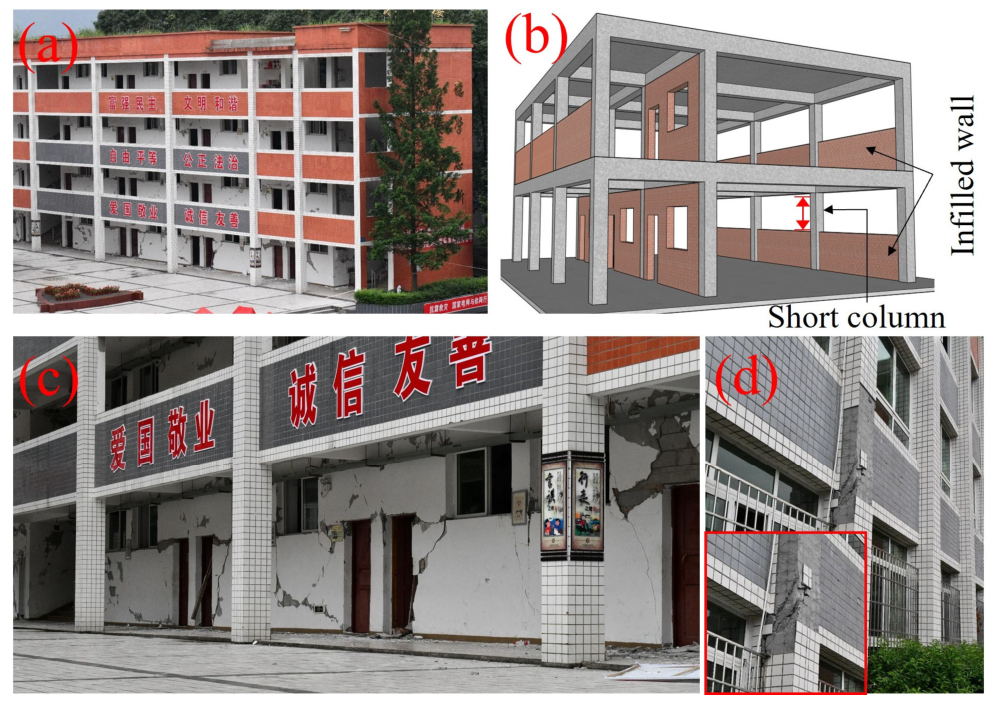
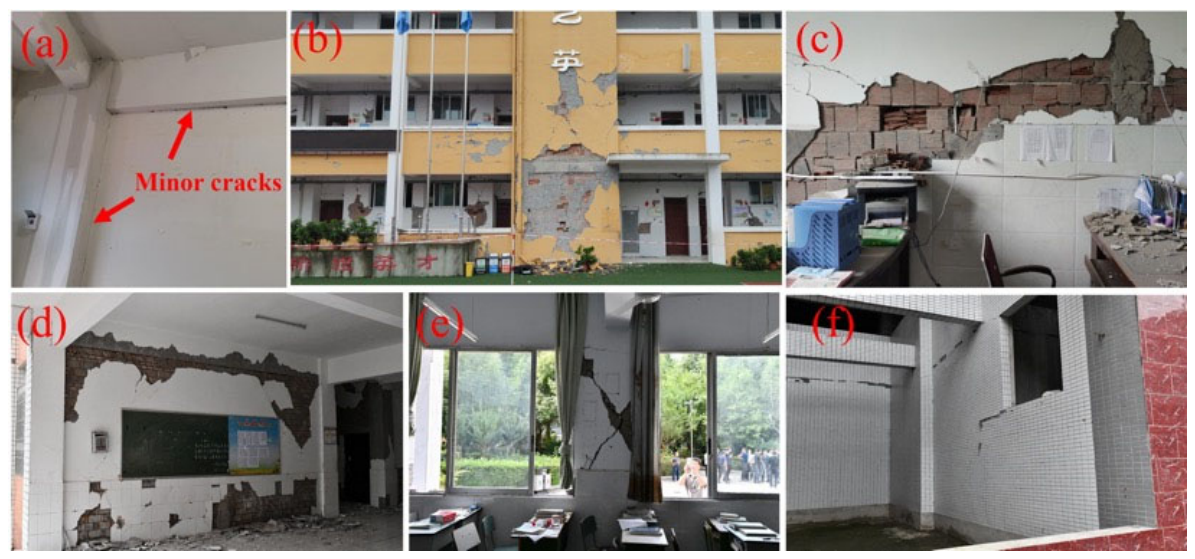
Because the maximum earthquake magnitude in the southern Sichuan region did not exceed Ms 6.0, strong ground shaking was observed only locally in small areas. Consequently, the number of collected cases of beam-column joint damage was limited, and the overall seismic damage was relatively mild. However, in school buildings, a particular frame structure with a distinctive layout exhibited significant damage to its columns. The typical feature of such buildings lies in the arrangement of the main frame and infill walls (
Figure 6a,b). Along the short-axis direction of the structure, the column lines are often asymmetrically arranged over two spans: one span is relatively large and functions as a classroom, while the other span is smaller and serves as a corridor. In the corridor area, the ground floor is usually free of enclosing walls, creating a relatively open space. In contrast, the upper floors are equipped with walls approximately 1.2 m high, which also serve as railings. On the sides of the classrooms, conventional-height infill walls are provided, with openings incorporated for doors and windows. This asymmetric arrangement of infill walls leads to significant differences in the constraint conditions of columns at various locations, which in turn results in markedly different actual stress states. As a consequence, the frame columns at the front remain undamaged, while the infill walls suffer extensive damage (
Figure 6c). Conversely, the walls at the rear remain intact, but shear diagonal cracks appear in the frame columns (
Figure 6d). The mechanical behavior of columns in different positions within this structural configuration has been extensively investigated in recent years [
27,
28,
29]. Both shaking table experiments and in situ monitoring of existing buildings have shown that under seismic action, shear forces are highly concentrated in columns constrained by infill walls. The shear forces experienced by these columns can reach three to five times those of columns without infill wall constraints. Regarding mechanical performance, columns without infill wall constraints exhibit lower load-bearing capacity but demonstrate greater deformation ability and ductility; conversely, columns constrained by infill walls possess higher stiffness and load-bearing capacity, while their deformation capacity and ductility are relatively limited. It is noteworthy that when constrained columns are damaged, the structure has often already begun to deteriorate and may even be at risk of collapse. At this stage, unconstrained components typically have not reached their ultimate displacement, and their actual ductility may be lower than that of the constrained columns. This phenomenon indicates that unreasonable structural layouts and internal force distributions prevent effective collaborative action among components, thereby restricting the full utilization of material properties. In summary, even under moderate-intensity earthquakes, irregularities in structural configuration can remain a critical factor affecting seismic performance. Therefore, buildings of this structural type should receive careful consideration. Measures such as the installation of dampers are recommended to improve the structural stress response and adjust the internal force distribution, thereby preventing structural damage and protecting the safety of students and staff.
3.1.2. Infill Wall Damage
In frame structures, the failure of infill walls is often more common than that of beam-column joints. When the seismic intensity is low, cracks tend to form at the junctions between infill walls and the frame beams and columns (
Figure 7a). These interfaces typically rely solely on mortar for connection, which has a low bond strength and is prone to separation under structural deformation. Additionally, infill walls often exhibit diagonal cracks or form intersecting fine cracks due to repeated seismic actions (
Figure 7b). As non-load-bearing components, most infill walls are constructed with hollow bricks to control construction costs. These materials are brittle and weak, making them prone to crushing during strong seismic motions. Once a porous brick wall cracks, its stiffness rapidly decreases, leading to poor deformation capacity. Initial cracks tend to expand quickly, resulting in a higher risk of wall instability or even collapse (
Figure 7c). In contrast, solid brick infill walls, with higher compressive and shear strengths, exhibit better overall integrity and can more effectively resist seismic forces, resulting in relatively less severe damage (
Figure 7d). However, the stronger overall integrity of solid brick walls may have an adverse effect: their restraining effect on the frame beams limits beam deformation, obstructing the formation of the strong column-weak beam mechanism, potentially causing brittle shear failure of the frame columns. Another common issue is the improper design of door and window openings, leading to short-column effects around the openings, which can result in shear failure during an earthquake (
Figure 7e). Compared to frame structures, the seismic damage in high-rise shear wall structures is generally less severe, with fewer instances of damage. Fine cracks may form at the junctions between the infill walls and beams or columns, but the walls typically do not suffer severe damage, usually only showing the detachment of exterior finishes such as tiles (
Figure 7f).
3.2. Brick Masonry Structures
Brick masonry structures are the most widespread type of building in southern Sichuan, found in both rural and urban areas. However, significant differences exist in the seismic performance and failure modes of masonry structures in urban and rural areas, influenced by construction standards, economic conditions, and technological levels. In urban areas, masonry structures are predominantly reinforced, with horizontal tie bars, tie columns, and ring beams incorporated into the walls. This configuration significantly enhances their integrity and ductility, providing them with strong seismic resistance. In contrast, rural areas typically employ unreinforced brick masonry structures. These buildings are often constructed by local craftsmen based on experience, lacking formal design and seismic-resistant measures. The brick masonry materials used have low strength, and the mortar bond is weak, leading to poor overall structural integrity and limited deformation capacity. As a result, under the same seismic forces, reinforced masonry buildings in urban areas generally sustain less damage. In contrast, unreinforced masonry buildings in rural areas tend to exhibit more complex and severe failure modes, making them the primary type of construction responsible for earthquake damage and casualties.
3.2.1. Wall Damage
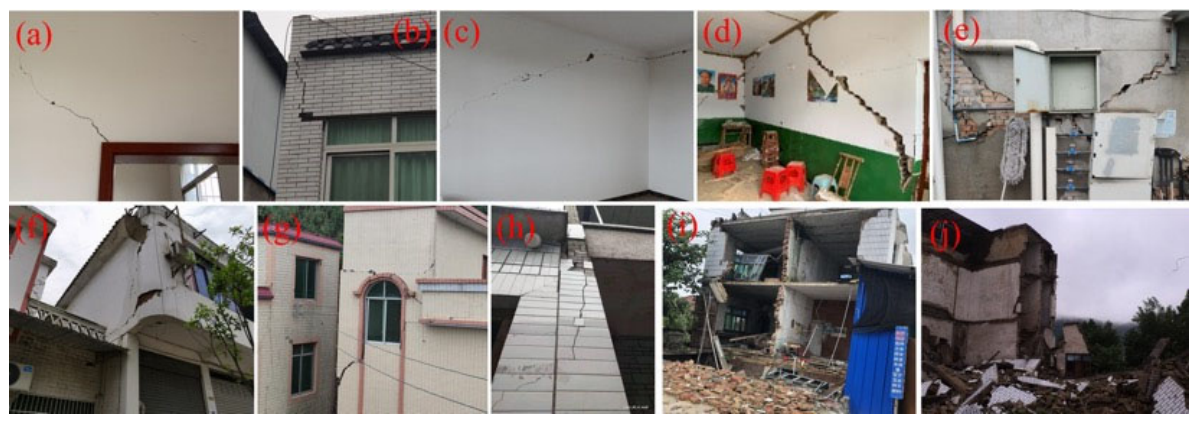
As critical components of masonry structures, walls bear all vertical and horizontal loads. Under seismic forces, the failure modes of these walls are complex and varied, often exhibiting the most severe damage. In areas with larger openings, such as doors and windows, sudden changes in cross-section and stiffness discontinuities tend to create significant stress concentrations, leading to diagonal cracks (
Figure 8a,b). These cracks are common even in low-intensity seismic zones, such as those with a seismic intensity of VI. The damage to the main load-bearing walls is progressive: in the initial stages, it typically manifests as slight diagonal cracks on the interior wall surfaces (
Figure 8c). As the seismic forces persist, these cracks rapidly expand, eventually traversing the entire wall (
Figure 8d). When seismic intensity is high, crack widths increase significantly, causing a dramatic reduction in the wall’s load-bearing capacity and ultimately leading to a complete loss of its structural function. Moreover, under repeated seismic actions, the walls often develop intersecting diagonal cracks (
Figure 8e). The formation mechanisms of unidirectional diagonal cracks and bidirectional intersecting cracks are closely related to the seismic event’s progression. Typically, unidirectional diagonal cracks appear when the wall first experiences seismic forces, compromising its overall integrity. If subsequent seismic forces are not strong, or if the wall damage is so severe that it can no longer transfer loads, bidirectional intersecting cracks may not develop further. The corners of buildings are also highly susceptible to seismic damage due to stress concentration (
Figure 8f). If irregular structures, such as protruding attics, are present at the corners, the damage in these areas is exacerbated by whip-lash or torsional effects (
Figure 8g). In urban areas, due to limited space, it is common for two buildings to be constructed closely together with differing floor heights. This height discrepancy can lead to relative displacement or collisions during an earthquake, further aggravating wall cracking (
Figure 8h). Additionally, in rural self-built buildings, the lack of proper regulation often results in weak wall connections or insufficient mortar strength. These deficiencies further undermine the structural integrity, making the walls more prone to localized collapse during seismic events (
Figure 8i). In cases of extremely strong seismic forces, this can even lead to the structure’s complete collapse (
Figure 8j).
3.2.2. Floor or Roof Damage
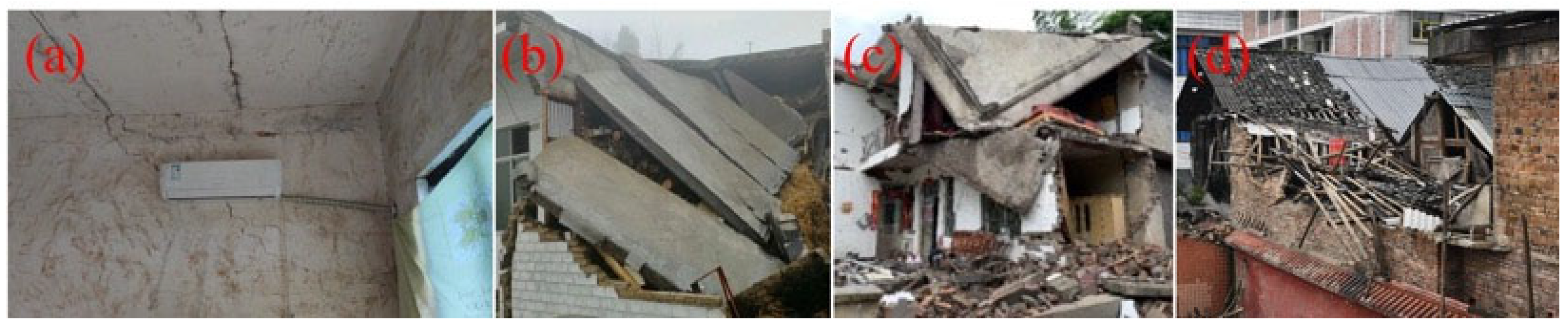
The floor or roof of masonry structures is primarily constructed using reinforced concrete precast panels and cast-in-place slabs. However, precast panels are more susceptible to damage during earthquakes due to unreliable connections between panels and inherent deficiencies in their overall integrity. Typical seismic damage manifests as longitudinal cracks along the joints between panels (
Figure 9a). When the displacement between the panels becomes excessive, the precast panels may even detach from the wall support and fall (
Figure 9b). In contrast, cast-in-place slabs, which have superior overall integrity, exhibit significantly better seismic performance. Even if damaged due to the collapse of the supporting walls, they generally only experience localized bending or cracking, rather than completely disintegrating as with precast panels (
Figure 9c). This allows them to maintain some degree of structural integrity. In addition to the aforementioned roof types, wooden truss roofs are also relatively common. These roofs typically feature a pitched design, with the trusses directly resting on the walls, and lack effective anchorage connections. This non-rigid connection makes it difficult for the roof and walls to work together cohesively, and the walls’ compressive stability is insufficient. The lateral stiffness of these walls is much lower than that of concrete-roofed buildings, resulting in poorer overall structural integrity. In general, the displacement at the top floor during an earthquake is the greatest, and due to the absence of reliable connections in wooden roofs, misalignment and detachment are more likely to occur, potentially leading to catastrophic loss of structural integrity in severe cases (
Figure 9d).
3.2.3. Staircase Damage
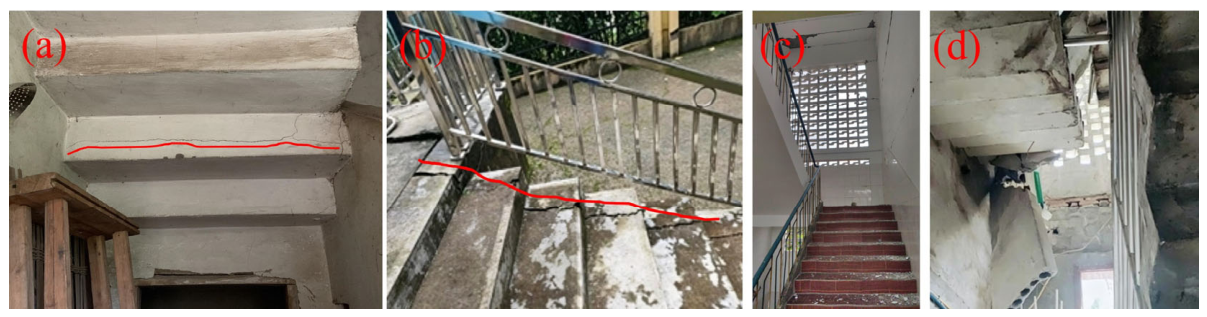
The staircase, as a vertical connection passage within a building, is typically not considered a primary load-bearing component during the design phase. However, under seismic forces, the staircase may actually assume a lateral support function. In masonry structures, staircases are generally embedded within the walls, and their failure modes are primarily characterized by transverse or longitudinal force-induced damage.
Figure 10 illustrates a range of typical failure modes of staircases. In the structural system, the staircase serves as a continuous opening within the floor slab, which significantly weakens the horizontal stiffness of that region, creating a vulnerable structural layer. The large lateral forces generated by an earthquake, during transmission, are forced to reroute and redistribute due to the presence of the opening, ultimately concentrating around the walls adjacent to the staircase. Furthermore, the embedded stair segments work in tandem with the walls, functioning as a rigid lever to transfer the forces borne by the staircase to the walls, which can cause severe damage due to overloading. In cases of strong seismic action, some staircases may fracture under repeated tensile and compressive forces or, due to platform displacement, may collapse completely.
3.2.4. Foundation and Substructure Damage
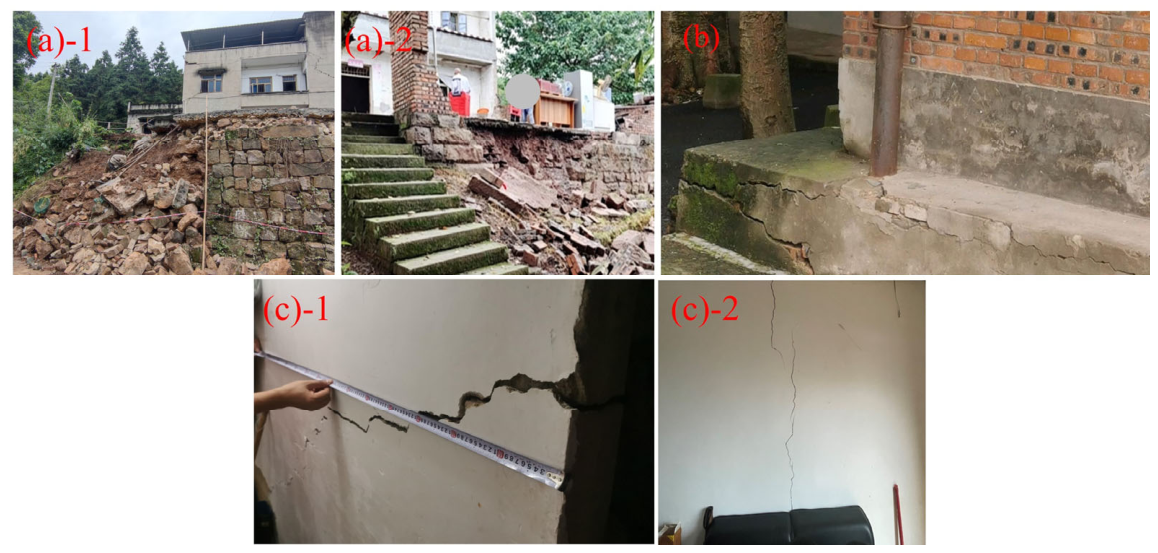
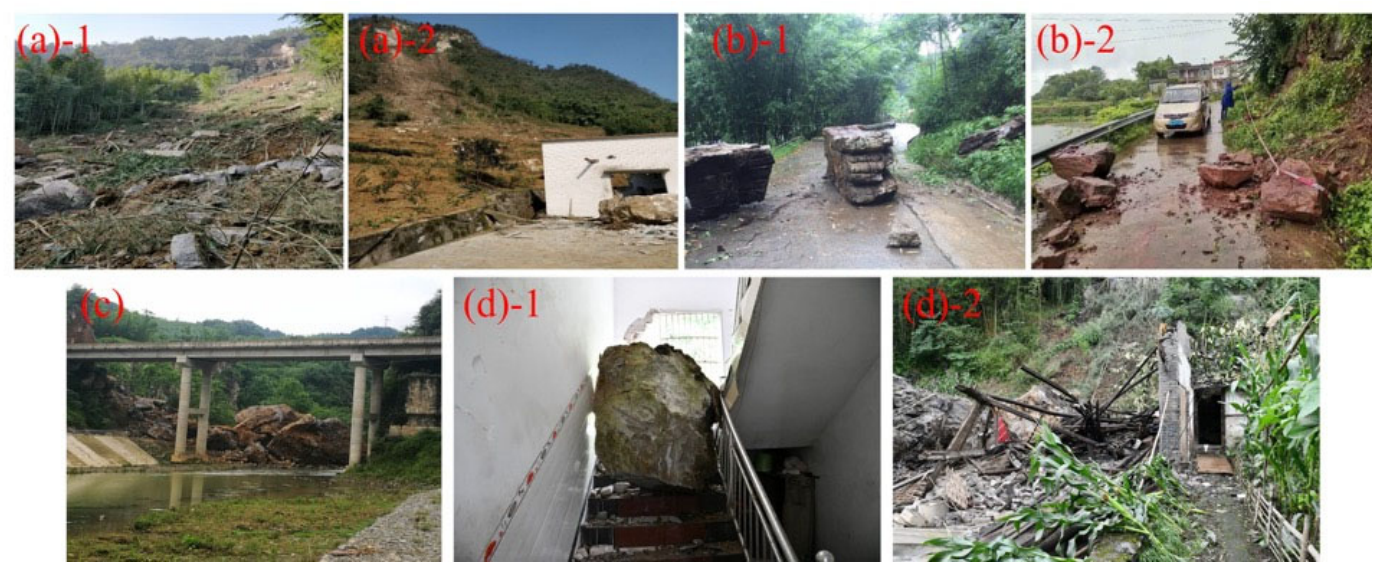
The southern Sichuan region is characterized by hilly terrain with significant topographical variations. Before constructing buildings, the site typically requires excavation and leveling. To create a flat foundation, a common practice is to build retaining walls along the edges of the leveled area using stone blocks or bricks. However, due to construction irregularities, two typical issues often arise during this process: first, the site leveling is often insufficient, resulting in inadequate compaction of the foundation soil; second, the stone blocks used for the retaining structures are typically laid without proper bonding or interlocking measures, relying instead on dry-stacking or simple piling methods. Under seismic forces, these rudimentary retaining walls are unable to resist the lateral pressure from the soil behind them due to insufficient friction between the blocks and poor overall integrity. As a result, they partially collapse. Furthermore, because the foundation soil is not sufficiently compacted, uneven settlement is likely to occur under the combined effects of vibration and rainwater infiltration, leading to potential site instability. Currently, such damage is primarily observed at the edges of the courtyards in front of buildings (
Figure 11(a)-1,(a)-2). Although these issues do not pose an immediate threat to the buildings’ structural safety, they pose potential risks to future use. Additionally, seismic activity may cause uneven settlement of the foundation, resulting in additional internal forces within the building’s upper structure (
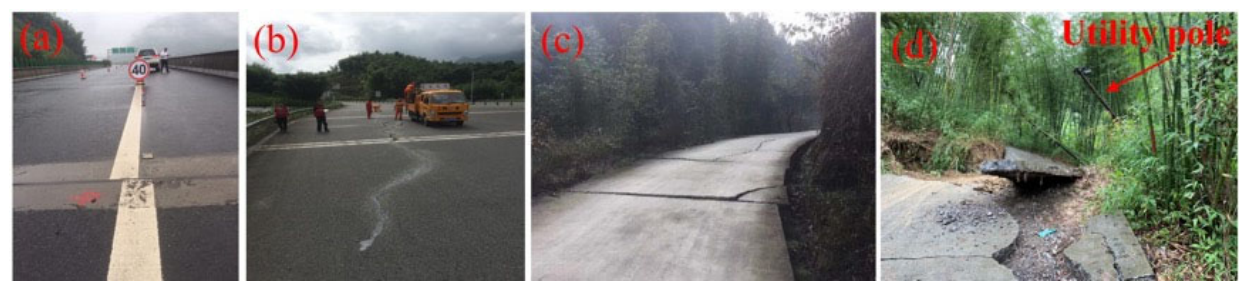
Figure 11b). When the tensile strength of the masonry walls is insufficient to resist the resulting tensile stresses, diagonal or vertical cracks may form in local sections of the walls (
Figure 11(c)-1,(c)-2). This phenomenon highlights that in seismic assessments of hilly areas, the stability of the site and the reliability of the retaining structures should receive equal attention alongside the assessment of the building itself.
3.2.5. Non-Structural Components Damage
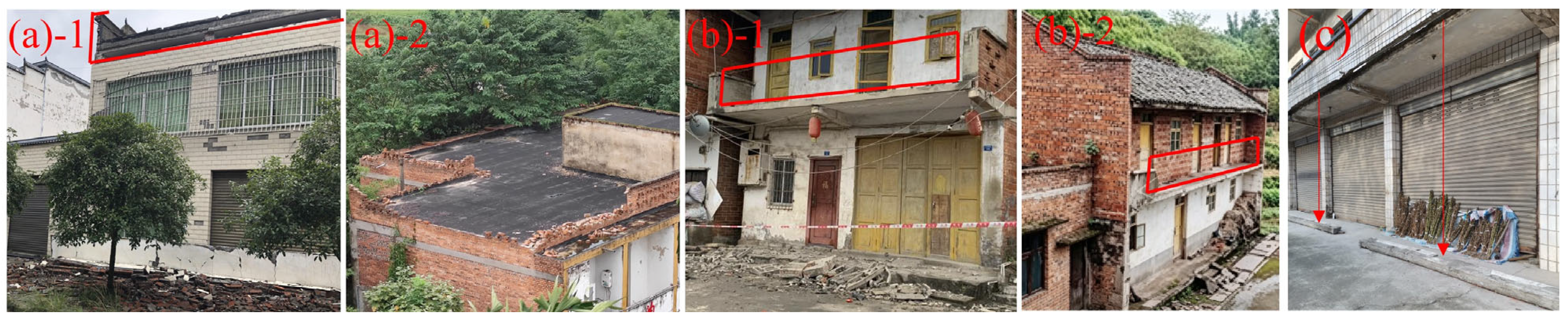
In masonry structures, the failure of auxiliary components typically manifests as damage to the parapet walls and corridor railings, as shown in
Figure 12. These two types of seismic damage are frequently observed in southern Sichuan, and their failure mechanisms and causes are highly similar. On the one hand, a lack of reliable connections between the walls and the main structure compromises structural integrity. On the other hand, the relatively loose construction of the walls themselves results in poor overall stability, making them highly prone to collapse under the horizontal forces induced by an earthquake. Such failures not only severely affect the safety of the structure but also expose critical issues in the design and construction quality control of connection systems. Particularly concerning is the fact that the collapse of these walls often occurs at the building’s exit, a critical area for outdoor evacuation and emergency exit, which significantly increases the risk of injury and fatalities.
3.3. Simple Building Structures
Simple building structures typically refer to buildings constructed from locally sourced or minimally processed materials, relying on traditional construction methods and experience. These structures generally exhibit weak seismic resistance, as was particularly evident during past seismic events. In southern Sichuan, these building types are primarily brick-wood and earthen structures. These structures are predominantly concentrated in rural areas, with most built in earlier periods and lacking adequate seismic design principles and structural measures. Brick-wood structures are widely constructed and used, with load-bearing brick walls, wood floors and roof systems. These buildings typically have one to two stories. Earthen structures, on the other hand, use rammed earth walls as the primary load-bearing system, with the roof supported by wooden frames. Such buildings are mostly single-story buildings, with relatively few still in existence today. They are commonly found in remote villages or used as auxiliary buildings.
3.3.1. Brick-Wood Structures
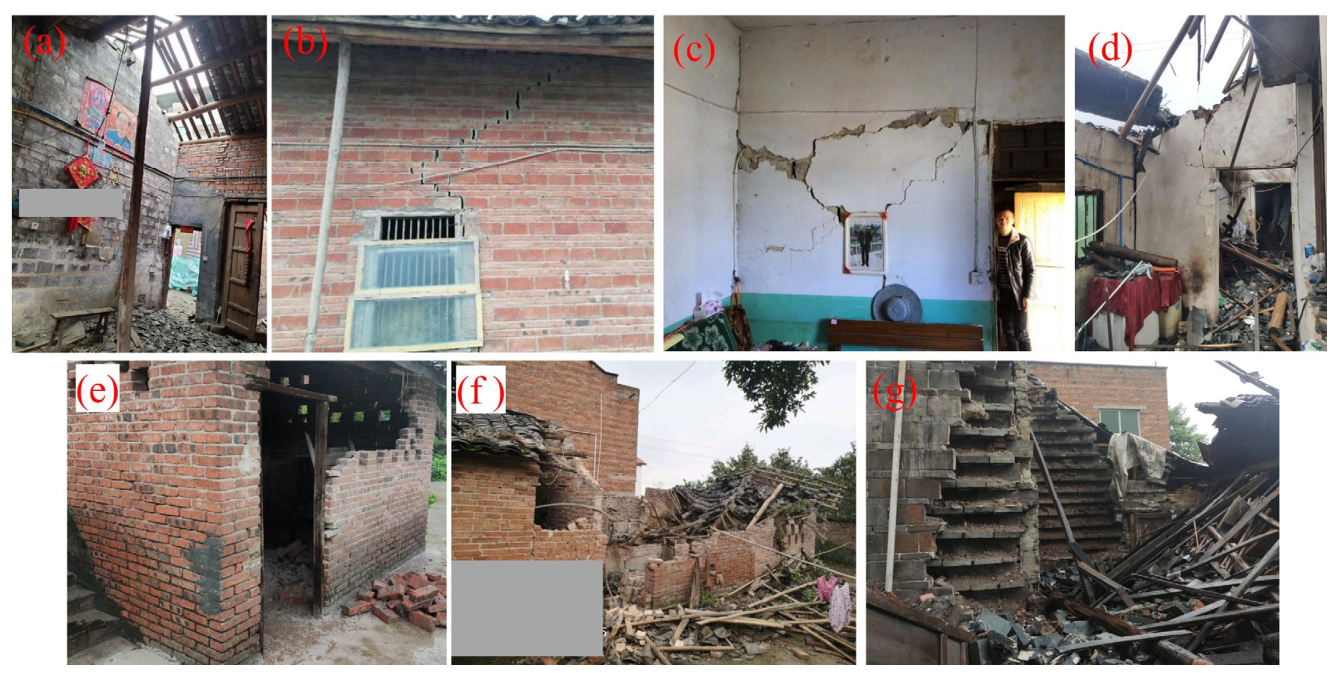
Brick-wood structures are highly vulnerable to damage under seismic forces, with the primary failure mechanisms observed in the roof system, load-bearing walls, and overall structural integrity. The roof trusses in these buildings typically consist of a pitched wooden framework, with tiles secured solely by friction and lacking effective fastening mechanisms. Consequently, even in low-intensity seismic zones, roof deformations and inertial forces can readily cause large-scale tile displacement, resulting in both property damage and potential risks to the safety of evacuees (
Figure 13a). The load-bearing brick walls serve as the sole components resisting lateral forces; however, many of these buildings were constructed in earlier periods, using bricks with low tensile and shear strength, while low-strength mortars, such as lime-mixed mud, were commonly employed. As a result, the brick exhibits poor tensile and shear performance, with failure modes typically appearing as stepped cracks along mortar joints (
Figure 13b). Under seismic loading, diagonal or horizontal shear cracks frequently develop in walls, particularly in areas of stress concentration around door and window openings (
Figure 13b,c). Furthermore, a lack of reliable connections between the walls and timber trusses is prevalent. During an earthquake, significant relative displacement between the brick walls and timber trusses can easily cause the trusses to slide off the walls (
Figure 13d). In addition, these buildings are generally single-story, with wall thicknesses often limited to 120 mm, resulting in a severe deficiency in lateral stiffness and stability. Under intense vibrations, localized wall collapses (
Figure 13e), such as crushing at door and window openings, can trigger a chain reaction of failures, ultimately compromising the overall integrity of the building (
Figure 13f). Additionally, some early buildings used hollow-core walls to reduce material costs (
Figure 13g), which substantially weakened the effective load-bearing cross-section. The weak mortar bond between the bricks also facilitates relative sliding, significantly reducing the seismic load-bearing capacity and overall integrity of these walls. Therefore, hollow-core walls are highly susceptible to rapid and severe damage or collapse during seismic events.
3.3.2. Rammed Earth Structures
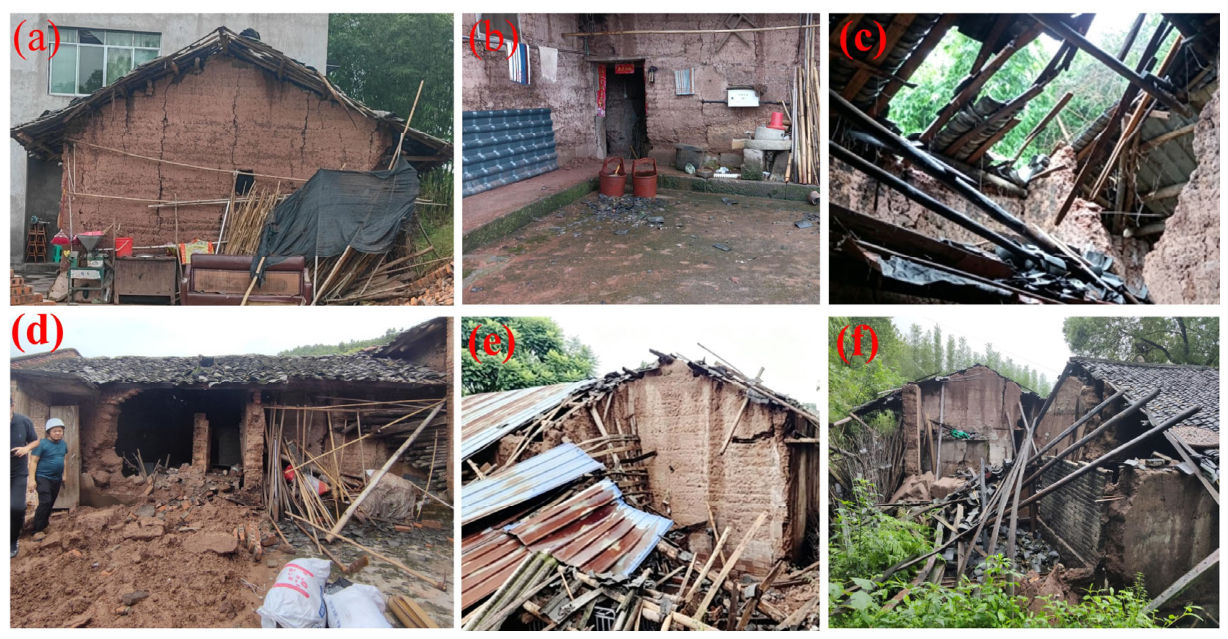
Despite the distinct differences in building materials between rammed earth structures and brick-wood structures, their relatively simple load-bearing systems result in similar overall stress behavior. Consequently, the seismic damage characteristics of both structure types exhibit certain similarities. Rammed earth structures, predominantly constructed in earlier periods, with origins dating back to around the 1960s, exhibit significant material aging. As a result, many pre-existing cracks are evident before seismic events (
Figure 14a). Under seismic forces, these existing cracks are prone to further extension and widening, thereby exacerbating the overall structural damage. Similar to brick-wood structures, rammed earth buildings also commonly experience tile displacement in low-intensity seismic zones (
Figure 14b). Furthermore, the timber frames in these structures often suffer from material decay, joint loosening, and other related issues due to their age, significantly compromising their load-bearing capacity and seismic resilience. During seismic events, the timber frames are susceptible to localized fractures or even complete collapse (
Figure 14c). As the intensity of seismic motion increases, the walls often experience localized or widespread collapse (
Figure 14d), leading to the loss of lateral support for the timber frame, ultimately resulting in severe structural damage or complete collapse of the entire structure (
Figure 14e,f).
3.4. Additional Damage
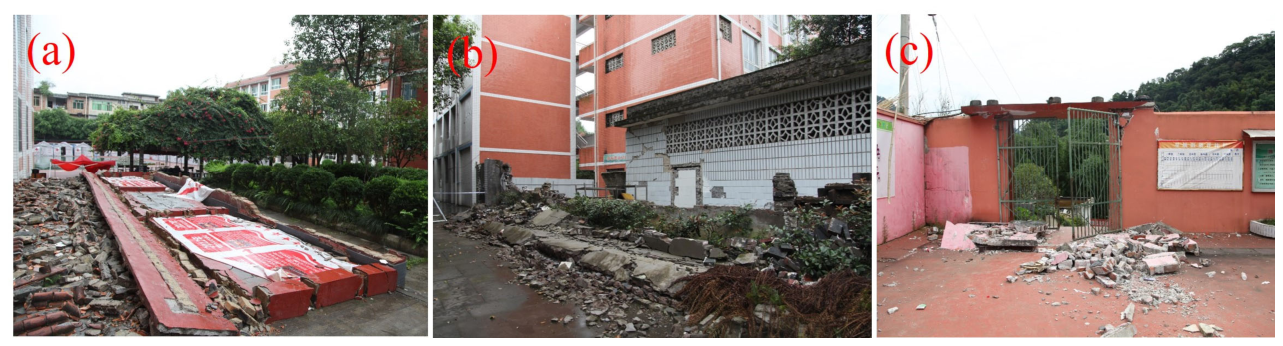
In seismic disasters, isolated non-structural components or auxiliary facilities, in addition to buildings, bear a significantly high risk of collapse. Common examples include display walls, fences, and billboards, as shown in
Figure 15. Due to their typically auxiliary functions, these components often receive insufficient attention in structural design, resulting in weak connections to the foundation that lack the necessary anchorage and ties. From a structural mechanics perspective, such walls typically exhibit a tall, narrow, and flat geometry, which results in insufficient out-of-plane stiffness. When the direction of seismic motion is perpendicular to the plane of the wall, the inertial forces can induce substantial oscillatory vibrations of the wall around its base. Should the seismic forces exceed the wall’s overturning resistance, there is a high likelihood of out-of-plane instability, ultimately leading to total overturning or fracture collapse.
5. Retrofitting and Remedial Measures for Existing Buildings
Based on the comprehensive analysis of seismic damage presented above, it can be concluded that the destruction of housing in rural areas is a primary cause of casualties and economic losses. While seismic geological disasters may trigger severe secondary disasters, their broad impact and inherently unpredictable nature make comprehensive prevention and control measures impractical. Therefore, enhancing the seismic performance of residential structures and improving their resilience through effective reinforcement and renovation has become a critical strategy for mitigating losses from seismic disasters. In southern Sichuan, a significant inventory of brick masonry and brick-wood structures exists, with these buildings exhibiting particularly pronounced damage during past seismic events, resulting in notable casualties and economic impact. In contrast, frame structures demonstrate superior seismic resilience, while earthen structures, due to their limited prevalence and tendency to be abandoned, represent a smaller proportion of the overall damage during seismic incidents. Given the structural similarities between brick-wood and brick masonry buildings, many reinforcement measures applicable to one type can be adapted for the other. This paper primarily focuses on brick masonry structures, systematically exploring suitable seismic reinforcement and renovation approaches for such rural residences.
The current overall goal of seismic design standards in China is to ensure that minor earthquakes do not cause damage, moderate earthquakes can be repaired, and major earthquakes do not lead to building collapse. For brick masonry structures, effective seismic design measures are essential in ensuring that significant earthquakes do not cause structural failure. This principle has been sufficiently demonstrated in newly constructed buildings over recent years. However, rural areas face challenges imposed by economic constraints, varying technical capacities, insufficient construction management, and lax government regulation. As a result, many pre-2010 buildings exhibit intrinsic defects, such as inadequate seismic construction and substandard material strength. These conditions make it difficult for such buildings to meet the current seismic retrofitting standards. Therefore, this paper proposes phased reinforcement targets applicable to rural brick masonry buildings. It aims to ensure that when subjected to earthquakes with intensities lower than the basic seismic design level (minor earthquakes), these structures will incur minimal damage and maintain their intended functionality. Furthermore, when exposed to seismic events at the basic design intensity (moderate earthquakes), the buildings’ main structural components should not sustain severe damage, and the protective systems should not undergo significant collapse. Moreover, the reinforcement and renovation of rural houses must consider technical feasibility, economic viability, and ease of construction. The goal is to achieve effective seismic resistance within a controllable budget while minimizing disruption to the residents’ daily lives and maximizing the potential for broader application. Currently, there are three primary methods for the seismic reinforcement of buildings: the first involves enhancing the seismic performance of individual structural members; the second focuses on improving the overall integrity of existing structures; and the third utilizes special equipment to reduce the seismic forces exerted on the structure. Each of these reinforcement strategies encompasses a variety of specific techniques and methods, thereby providing a rich array of technical options. The following sections will systematically review and consolidate appropriate reinforcement methods for rural brick masonry structures, emphasizing the selection of measures that are straightforward to implement, cost-effective, and easily executable, aiming to provide practical references for earthquake disaster prevention in rural areas.
5.1. Enhancing Structural Integrity
In rural areas, brick masonry structures are generally constructed without ring beams or tie columns. Additionally, the floors are often constructed with precast reinforced concrete slabs that lack effective inter-slab anchorage. As a result, these structures tend to exhibit a relatively loose overall configuration, with poor spatial cooperative performance and significantly inadequate structural integrity. Therefore, enhancing the overall performance of such structures is critical to improving their seismic resistance and ensuring the safety of people and property.
5.1.1. Adding Ring Beams and Tie Columns
Ring beams and tie columns, while not the primary lateral load-resisting components in masonry structures, serve as essential seismic detailing measures. Their function lies in effectively confining the masonry, enhancing structural integrity, and promoting spatial coordination, thereby playing a significant role in improving the overall seismic performance of buildings. For rural brick-concrete buildings in southern Sichuan, typically two to three stories high and located in regions with seismic fortification intensities of VI–VII, according to the Code for Design of Masonry Structures (GB50003 2011) [
35] and the Code for Seismic Strengthening Design of Masonry Structures (GB50702 2011) [
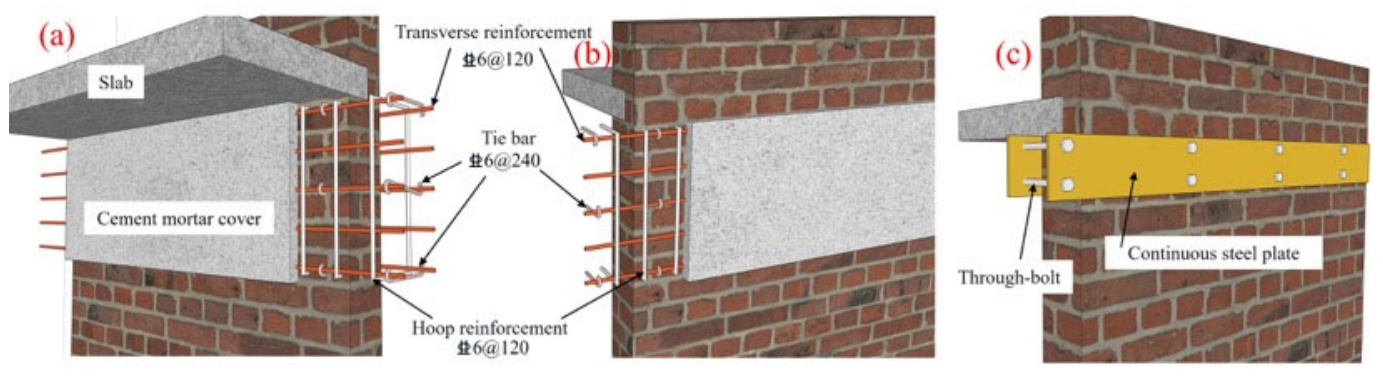
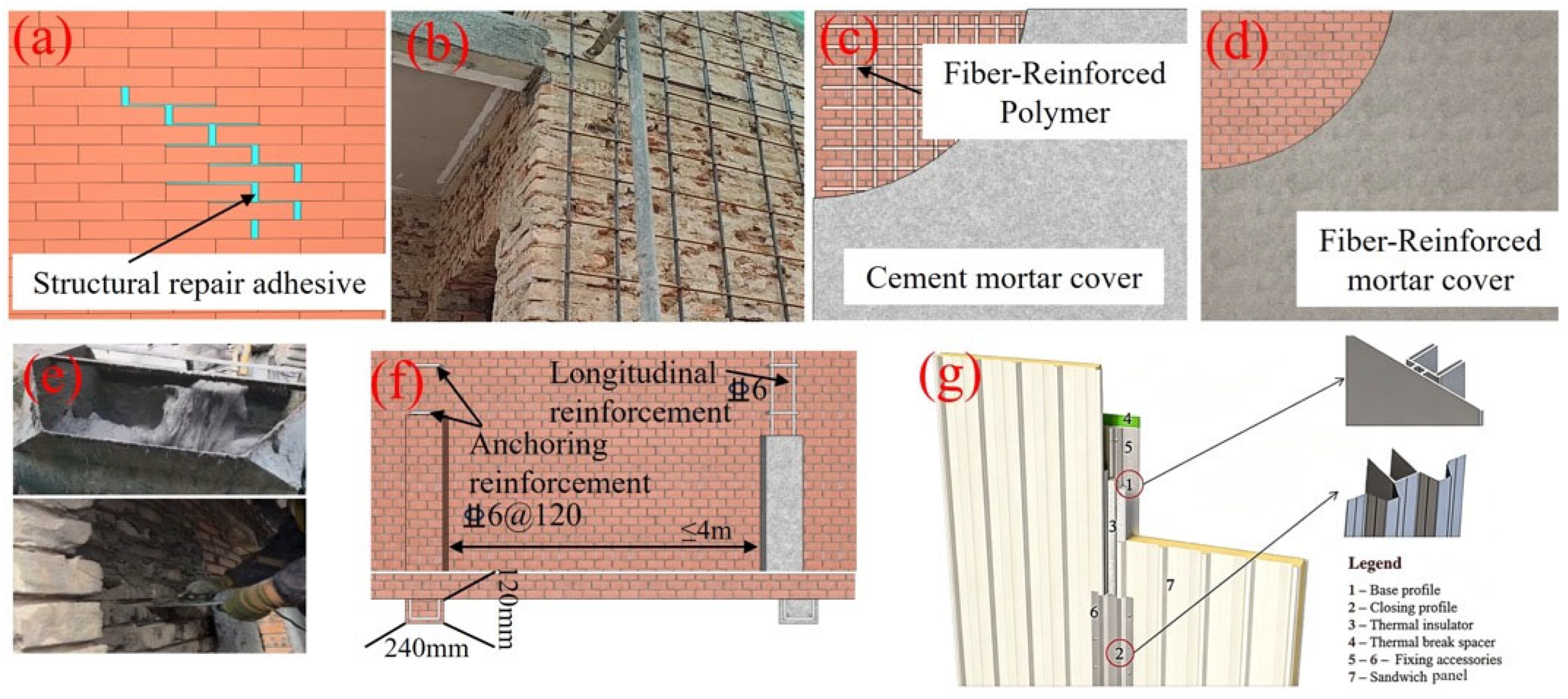
36], tie columns should be installed at critical locations, including the four corners of exterior walls, intersections of longitudinal and transverse walls, and corners of stairwells. Closed ring beams are also required at the roof level and at each floor level. Based on the current code framework and prevailing practices in seismic retrofitting, this study summarizes several practical, readily implementable structural reinforcement techniques. For installing additional ring beams, a commonly used method is to place continuous longitudinal reinforcement along one or both sides (typically the exterior side) of the wall at the bottom of the floor slabs. These bars are secured with stirrups and anchoring ties, then covered with an outer layer of cement mortar or fine-aggregate concrete to form a reinforced mortar band. Alternatively, an equivalent ring beam system can be constructed by anchoring steel plate strips on both sides of the wall and connecting them with high-strength through-bolts, thereby forming a confinement mechanism with similar restraining effects. The addition of tie columns follows a similar design principle. To accommodate on-site construction conditions, steel plate reinforcement components may be employed as substitutes for conventional reinforced concrete columns. The diameters, spacing, and detailed configurations of the reinforcement bars used in the aforementioned techniques are clearly shown in
Figure 18 and
Figure 19, providing concrete technical references for engineering implementation.
5.1.2. Strengthening Precast Slab Floors
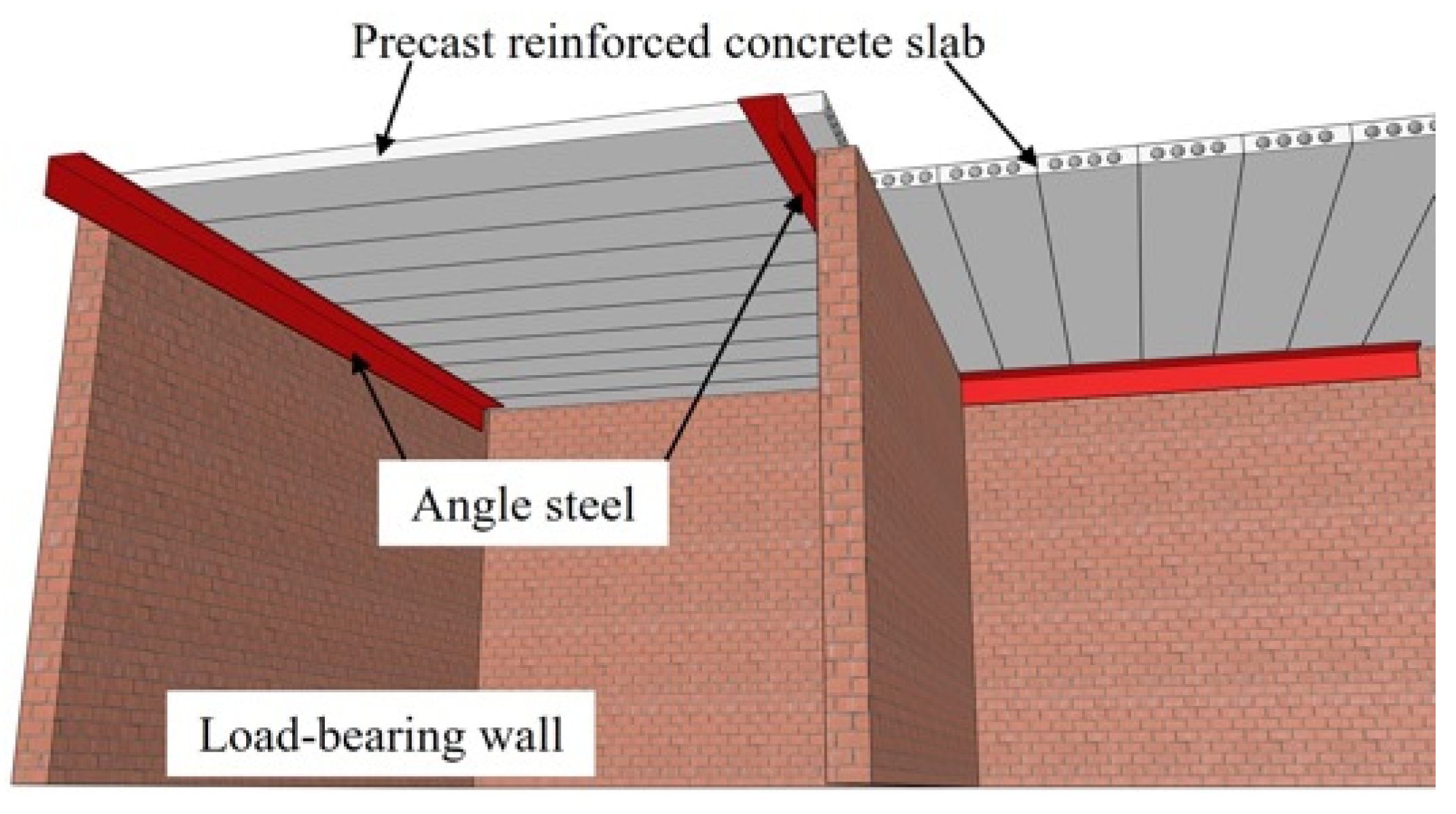
The primary seismic vulnerability in precast slab floor systems lies in the insufficient effective bearing length at the supports and the lack of reliable anchorage between the slabs and the supporting structures. Under seismic loading, such structural deficiencies can easily lead to slab dislodgement or collapse, potentially triggering a progressive failure cascade, including wall instability and subsequent collapse. Therefore, the reinforcement of precast slab floors must address two key aspects: integrating discrete precast units into a unified structural system to improve in-plane stiffness and overall integrity, and strengthening the connection between slab ends and supporting walls to ensure effective load transfer and more uniform internal force distribution, thereby preventing wall damage due to localized stress concentrations. To achieve both effective reinforcement and construction simplicity, the use of angle steel connectors, based on engineering judgment, represents a practical and efficient method. A schematic representation of the slab reinforcement approach is shown in
Figure 20. Specifically, angle steel plates are installed at the vertical support interface between the precast slabs and the wall, serving both to extend the bearing length and to ensure structural continuity. During construction, these steel plates must be securely anchored to both the wall and the slab to establish an effective load-transfer path. On the wall side, high-performance structural adhesives or mechanical anchors may be used to secure the steel plate. On the slab side, however, drilling is not recommended due to internal voids in the precast elements. Instead, non-destructive bonding methods, such as structural adhesive, are preferred to ensure safe and reliable connections. It should be noted that this reinforcement measure is specifically intended for slab end supports. Steel connectors are typically unnecessary along the slab sides running parallel to the wall, to avoid imposing redundant constraints and further simplify construction.
5.1.3. Reinforcing Wood Roof Structures
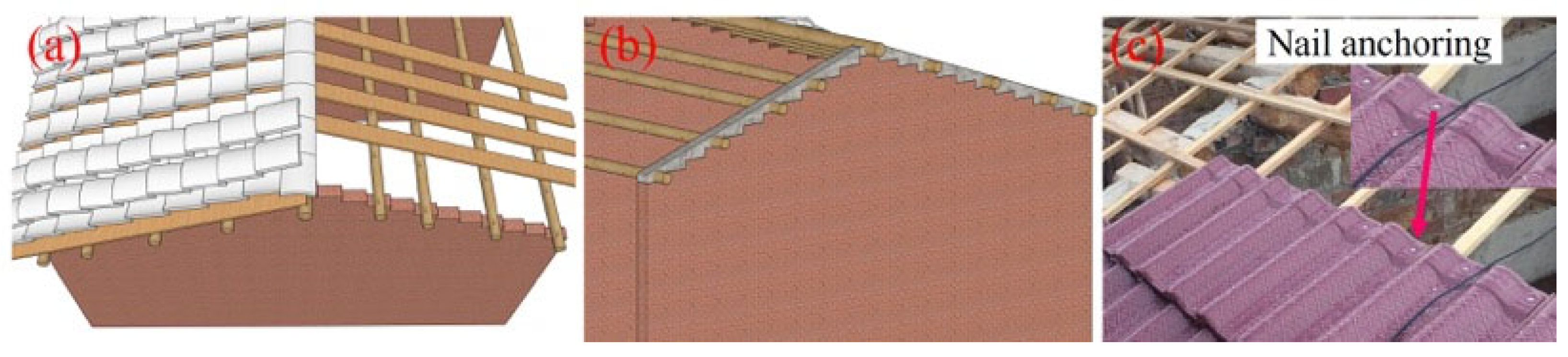
The traditional wooden roof system, characterized by joint connections made through mortise and tenon or simple nails, generally exhibits poor overall integrity. Under seismic forces, components are prone to misalignment, loosening, and even the collapse of the roof trusses. This not only poses a direct safety risk but may also inflict significant damage to the underlying walls. Therefore, the core objective of reinforcing wooden roofs is to strengthen the connections between various roof components and ensure reliable anchoring of the roof structure to the walls. This will transform the roof into a cohesive unit with sufficient rigidity and stability, enabling it to effectively transfer and distribute horizontal forces during an earthquake, thereby preventing localized instability and subsequent progressive failure. Before 2000, the construction method of wooden roofs typically involved placing wooden beams directly on top of the walls, with wooden purlins laid across the beams. Roof tiles were stacked in layers atop the purlins, and stability was mainly maintained through the weight of the tiles and friction between the contact surfaces (
Figure 21a). Based on the seismic damage observed in existing wooden roof trusses, the primary modes of failure can be categorized into two types: first, the sliding off of roof tiles; second, the overall detachment of the roof truss from the walls. As these buildings were constructed many years ago, overly complex reinforcement techniques, while effective, present challenges such as high costs and excessive intervention with the original structure. Based on previous applications, at the junction between the wooden beams and the walls, cement mortar or fine aggregate concrete can be poured to form a localized embedded node (
Figure 21b). This approach not only enhances the connection performance between the wooden beams and the walls, making it less prone to relative slippage or detachment under horizontal forces, but also, due to the relatively low weight of traditional wooden roof structures, results in smaller inertial forces during an earthquake. The localized strengthening at these junctions significantly enhances the overall resistance to collapse. Upgrading the traditional tile system to a modern glazed tile system is another effective measure to improve roof integrity and prevent tiles from being dislodged during seismic events. Glazed tiles have larger surface areas, providing better friction, and most of them are designed with pre-drilled nail holes or claw teeth on the underside. During construction, the tiles are not simply stacked but fixed directly to the rafters with galvanized copper wire or stainless steel nails, creating a secure bond that makes the tiles an integral part of the roof structure (
Figure 21c) rather than merely resting on top. Additionally, the interlocking seams between the tiles are precisely designed, allowing for better engagement. This method has been widely applied in both new construction and renovation projects, offering both technical feasibility and ease of construction. Of course, the aforementioned reinforcement measures assume that the wooden beams possess sufficient load-bearing capacity. If the wooden beams show significant signs of decay, insect damage, or severe degradation of mechanical properties, they must be replaced or locally reinforced before proceeding with further strengthening; otherwise, the reinforcement will not achieve the desired results.
5.1.4. Strengthening Secondary Components
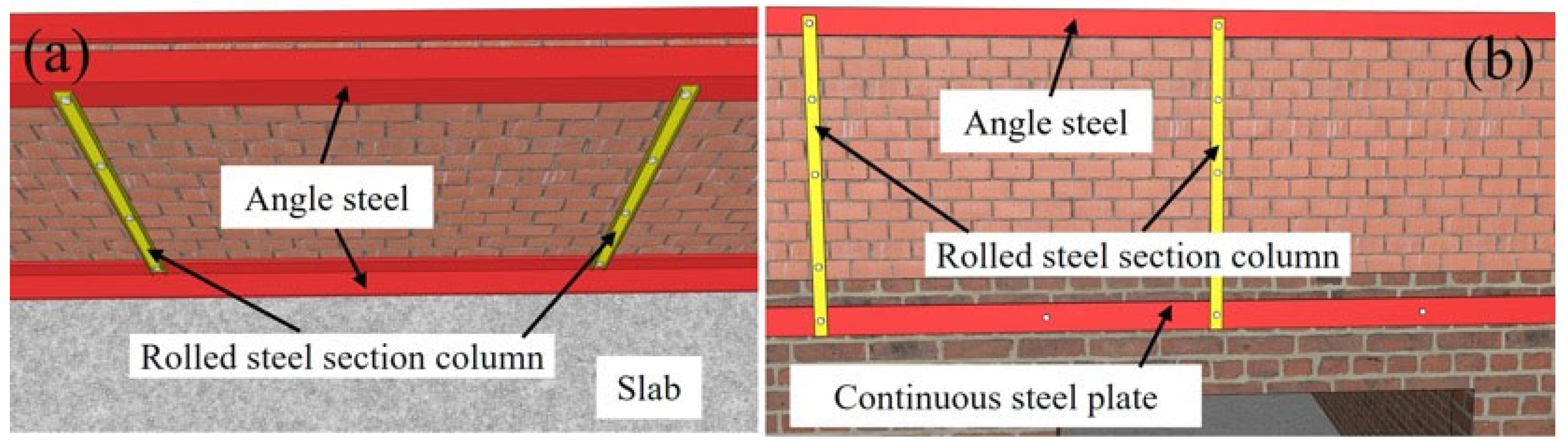
The parapet wall, serving as a low boundary on the roof perimeter of a building, has a relatively high center of gravity and is weakly connected to the underlying structural elements. Under seismic forces, it is highly susceptible to cracking, tilting, or even complete collapse. This not only poses an immediate risk of falling debris causing secondary injuries, but may also compromise the structural integrity of the lower walls or the roof edge due to the impacts of the parapet wall’s collapse. Therefore, the primary objective of reinforcing the parapet wall is to enhance its stability and ensure a reliable anchorage with the underlying roof structure or main walls, thereby resisting overturning and sliding during seismic events. According to applicable building codes, parapet walls should incorporate tie columns to improve seismic performance; however, many rural residences in southern Sichuan lack these essential components. As a practical solution informed by an engineering practice perspective, a reinforcement method employing a composite structure of steel plates is proposed to simulate the function of structural columns (
Figure 22). The specific procedure is as follows: continuous angle steel should be installed at both ends of the parapet wall and at the junction with the roof. Additionally, continuous steel plates should be arranged along the external face of the load-bearing walls below the parapet wall and anchored to the wall with bolts. Vertical steel columns should connect the continuous sections, with these columns further anchored within the wall using through-bolts. This system not only achieves structural integrity for the parapet wall itself, but also establishes a reliable connection with the roof and wall through the steel connection system. Consequently, this effectively prevents independent tilting or large-scale collapse of the parapet wall during seismic events, significantly enhancing its seismic safety performance.
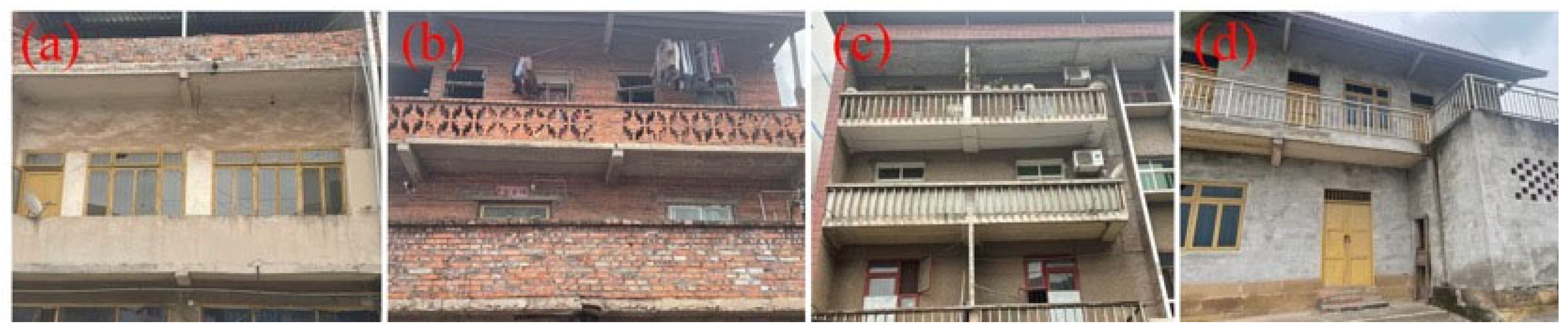
Railings that exhibit the same failure mechanisms as parapet walls pose significant challenges to overall reinforcement due to their diverse styles, some of which feature openwork designs (
Figure 23b,c). These characteristics render them particularly susceptible to overturning, fracturing, and falling during seismic events, which can result in personal injury. Therefore, priority should be given to renovation or replacement strategies. The specific approach involves removing the existing heavy masonry or concrete railings and replacing them with lighter, more ductile stainless steel or lightweight steel railings (
Figure 23d). New railing posts should be securely anchored to the underlying walkway beams or walls at both ends and at midpoints, using embedded steel plates or chemical anchor bolts. This modification not only significantly reduces the vertical load imposed by the railings, but also fundamentally eliminates the risk of collapse associated with the original railings.
5.2. Improving Wall Load-Bearing Capacity
The walls, as the only structural components in masonry structures that bear both vertical loads and lateral seismic forces, play a crucial role in determining the building’s overall safety and durability. However, some existing walls suffer from reduced shear strength, inadequate integrity, and crack propagation due to factors such as degraded mortar bonding, material aging, structural defects, or long-term environmental exposure. These issues severely impair the structure’s seismic performance and safety reserves. A more critical concern is that the thickness of existing walls in many buildings is generally quite thin, with most walls being 180 mm thick and some even as thin as 120 mm, which is significantly below the current minimum thickness requirement of 240 mm specified in the building codes. Therefore, conducting systematic inspections and effectively reinforcing the walls have become key measures to enhance the building’s seismic capacity and ensure its safety. Given that numerous codes and studies have systematically addressed wall reinforcement techniques, several simple, fast, and cost-effective methods are summarized below. Wall crack repair is a technique that involves pressure grouting or stitching existing cracks to restore the continuity and overall load-bearing capacity of the wall (
Figure 24a). Bidirectional reinforced mortar surface treatment is a method in which a steel mesh is applied to the wall surface, followed by spraying high-performance mortar to create a composite load-bearing surface. This approach significantly enhances the wall’s shear and bending capacity and has already been implemented in the region (
Figure 24b). It is worth noting that traditional reinforced mesh mortar coatings, which require a relatively thick layer to adequately protect the reinforcement, are gradually being replaced by lighter, thinner, high-performance reinforcement methods. With advances in materials technology, the application of carbon fiber-reinforced polymer sheets has become increasingly widespread [
37,
38]. This method involves adhering carbon fiber fabric or plates to the wall surface (
Figure 24c), leveraging their high strength, lightweight, and corrosion-resistant properties to effectively constrain wall deformation, improve shear strength, and significantly enhance the wall’s energy dissipation and ductility under cyclic loads. This technique is easy to apply, has minimal impact on the original structure, and is particularly suited for spaces with limited access or for rapid construction. If the wall’s quality is not severely compromised, it is also possible to spray fiber-reinforced mortar directly onto the surface without the need for fiber materials (
Figure 24d). This low-cost and easy-to-construct method is also very popular in the local area (
Figure 24e). Another traditional and effective reinforcement method involves adding buttresses to the external wall (
Figure 24f). By placing buttresses at weakened sections or corners and securely anchoring them to the original wall with anchor bars, this method can significantly improve the wall’s lateral stiffness and stability, effectively preventing out-of-plane instability and enhancing overall seismic resistance. In addition to traditional brick buttresses, reinforced concrete buttresses can also be used. Vertical reinforcement bars are placed at the anchor bars, and concrete is poured to form an integral system. This not only significantly increases the wall’s load-bearing capacity, but also allows the vertical reinforcement bars to contribute to shear resistance, providing a constraining and strengthening effect similar to that of structural columns. The above methods can be reasonably selected and combined based on the current state of the structure, seismic demands, and construction conditions to ensure that the reinforcement measures work synergistically with the existing structure, ultimately achieving a systematic improvement in structural safety and seismic performance. In addition to the aforementioned methods, some research teams abroad have also achieved notable results. For example, Formisano and Longobardi [
39] developed an innovative solution that combines metal exoskeletons with insulation panels to enhance seismic resistance while reducing thermal dispersion. This method has been widely adopted in Europe.
5.3. Optimizing Vertical Load-Resisting Systems
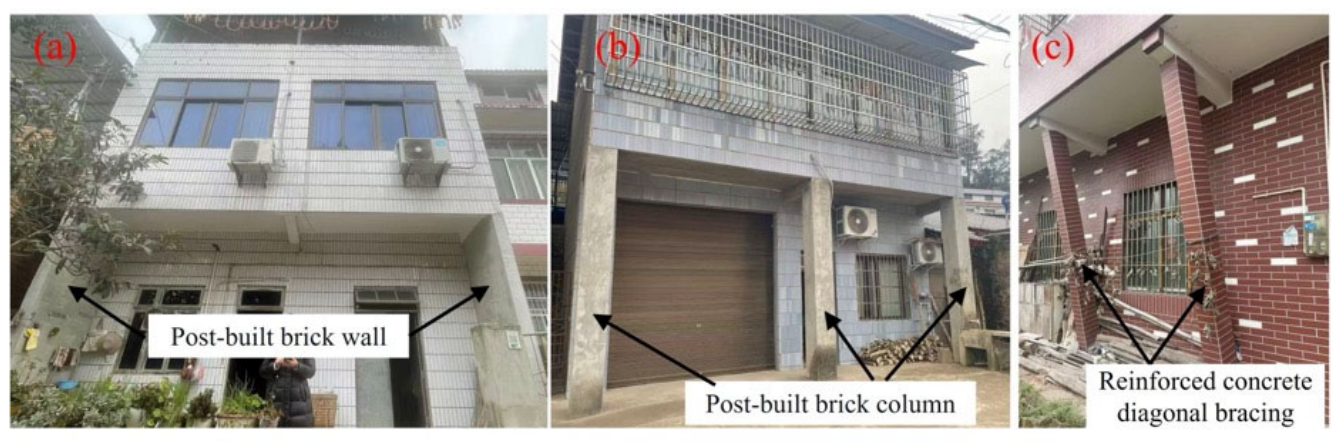
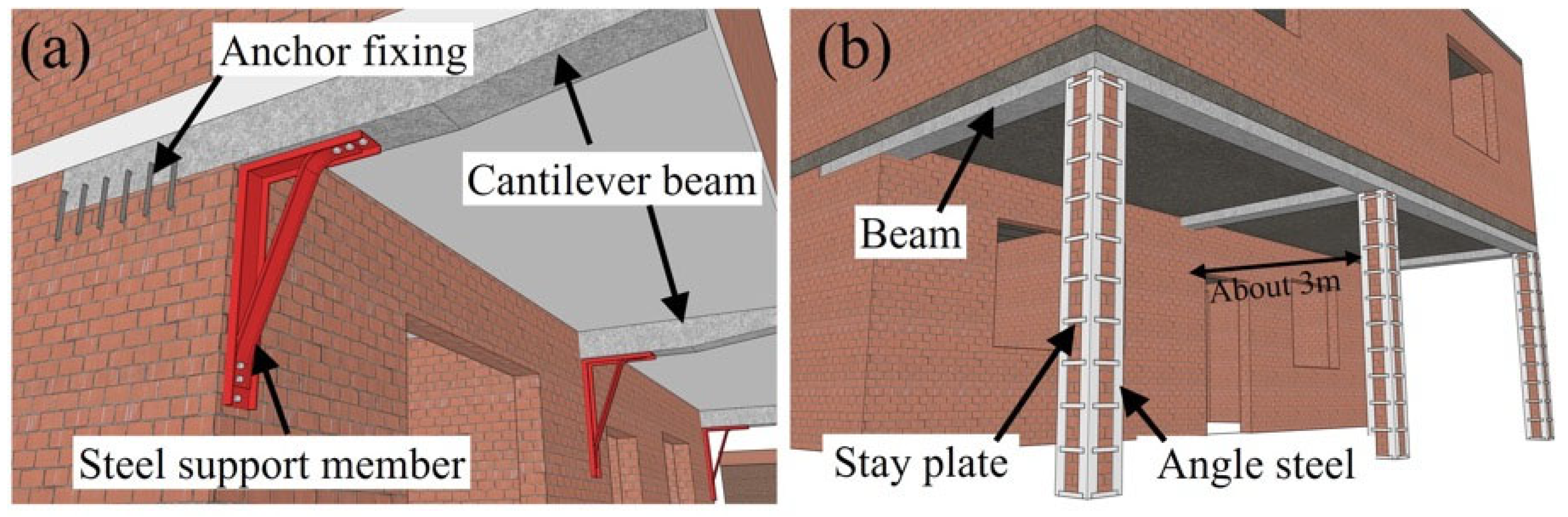
When buildings exhibit irregular geometric shapes or an uneven distribution of stiffness and mass centers, significant eccentric torsional effects can occur under seismic actions. This exacerbates localized stress concentrations within walls, potentially leading to severe structural damage. Such issues are particularly prevalent in brick-concrete structures in southern Sichuan, where cantilevered structures are commonly found on the second floor and above. This design introduces abrupt changes in vertical stiffness and discontinuities in the center of mass, resulting in the connections between the first and second-floor walls becoming weak points in terms of seismic resistance. These areas are prone to cracking or even localized collapse during an earthquake. To address these safety concerns, some residents have implemented various rudimentary reinforcement measures. These measures primarily include constructing additional brick walls on both sides of the cantilevered sections to enhance lateral support or installing brick columns at the junctions of cantilever beams to provide localized support (
Figure 25a,b). However, only a small number of buildings incorporate diagonal bracing under each cantilever beam at the time of construction, with the opposite ends anchored to the foundation (
Figure 25c). This configuration enables a more direct transfer of vertical loads to the foundation, effectively alleviating the forces and eccentricity associated with the cantilevered sections. Nevertheless, these diagonal braces hinder movement in certain areas, often relegating lower spaces to storage.
Based on engineering experience, this paper proposes a composite reinforcement strategy that combines active load reduction with anchorage enhancement (
Figure 26a). First, diagonal steel braces are installed beneath the cantilevered section. This configuration not only significantly shortens the effective span of the cantilever beam, but more importantly, diverts a portion of the cantilever load directly to the underlying main structure. Second, high-strength anchorages are installed at the fixed end of the cantilever beam to provide a rigid connection to the rear wall, thereby resisting the uplift force induced by the cantilever moment and ensuring joint integrity. This method effectively suppresses excessive deflection and warping of the cantilever beam under vertical loads and seismic excitation, thereby enhancing its load-bearing capacity, stiffness, and overall seismic performance. In addition to vertical irregularities caused by cantilevered components, another common form of structural irregularity is observed when the ground floor of a building is recessed by approximately one bay in depth. In such configurations, the beam ends of the recessed walls are supported by brick columns that lack internal reinforcement (
Figure 26b). This structure differs from the condition illustrated in
Figure 25b in that the brick columns here serve as non-structural supplementary members. Even in the absence of these columns, the structure remains stable under gravity loads. However, in the latter case, where the cantilever span extends approximately three meters, the brick columns are essential for carrying the primary vertical loads. Under normal service conditions, these brick columns are subjected mainly to axial compression and generally maintain structural safety. Nevertheless, during seismic events, significant differential shear deformation may occur between the walls and the brick columns, potentially leading to brittle failure due to the inadequate shear capacity of the unreinforced masonry. To mitigate this risk, it is recommended that steel angle bars be installed at the four corners of each brick column and connected into an integrated system with batten plates. This combined wrapping reinforcement method can effectively improve the stiffness, ductility, and deformation compatibility of the columns, thereby enhancing their seismic performance.
6. Practical Implications for Disaster Risk Reduction
Based on a systematic analysis of the complete disaster chain, covering seismic frequency, ground motion intensity, structural damage, secondary geological hazards, lifeline performance, and casualty outcomes, this research provides a holistic view of earthquake disaster features in southern Sichuan. The analytical framework established provides a multidimensional and comprehensive scientific basis for regional disaster prevention and mitigation. Specifically, the research findings can be translated into practical applications and decision support through the following pathways. In disaster prevention planning, understanding the distribution and building characteristics of various structural types in the region, along with their typical damage patterns, enables an initial estimate of the potential damage levels. This enables local authorities to delineate high-risk zones and establish priority rankings for seismic retrofitting based on structural typology and spatial distribution. Moreover, the retrofitting measures proposed in this study can be directly applied to these priority areas. These analyses provide a clear foundation for the rational allocation of disaster prevention resources in the medium- and long-term, ensuring that limited resources are channeled to the buildings most in need of strengthening. For emergency response, the cascading relationships between ground motion, building damage, lifeline disruptions, and casualties are elucidated. These relationships provide scientific support for local governments to optimize post-earthquake rapid assessment procedures and also facilitate the pre-deployment of emergency response teams and supplies. Together, these efforts contribute to the formulation of more efficient emergency plans. For post-disaster recovery and reconstruction, this study establishes a correlation between typical building damage patterns and reinforcement measures. This provides a technical reference for safety assessments, repairability evaluations, and reconstruction planning. As a result, the economic efficiency and timeliness of recovery efforts can be improved. Finally, it is worth noting that cases in which the vertical PGA exceeds two-thirds of the horizontal PGA are not uncommon in the study region. However, the current seismic design code does not adequately address such conditions, and its relevant provisions appear non-conservative. Therefore, it is recommended that the code be revised to adopt a higher design value for vertical seismic action to more accurately reflect the actual characteristics of ground motion, thereby enhancing the reliability and safety of seismic structural design.
In summary, this paper systematically characterizes the earthquake disaster chain in southern Sichuan. It also translates scientific findings into practical tools and decision support to enhance regional seismic resilience and disaster prevention capacity.