Potential Energy Risks of High-Efficiency Dwellings: Lessons from Four Contemporary Rural Housing Cases in Scotland


Abstract
1. Introduction
1.1. Energy Resources and Supply
1.2. Fuel Poverty
1.3. Carbon and Environment
1.3.1. Carbon Policy and Social Status
1.3.2. Paying for Emissions Reductions
1.4. Theoretically Potential Energy Risks Associated with Energy-Efficient Housing
2. Materials and Methods
2.1. Case Study and POE
2.2. Data Integration
3. Results
3.1. Potential Energy Risks in the Environmental Dimension
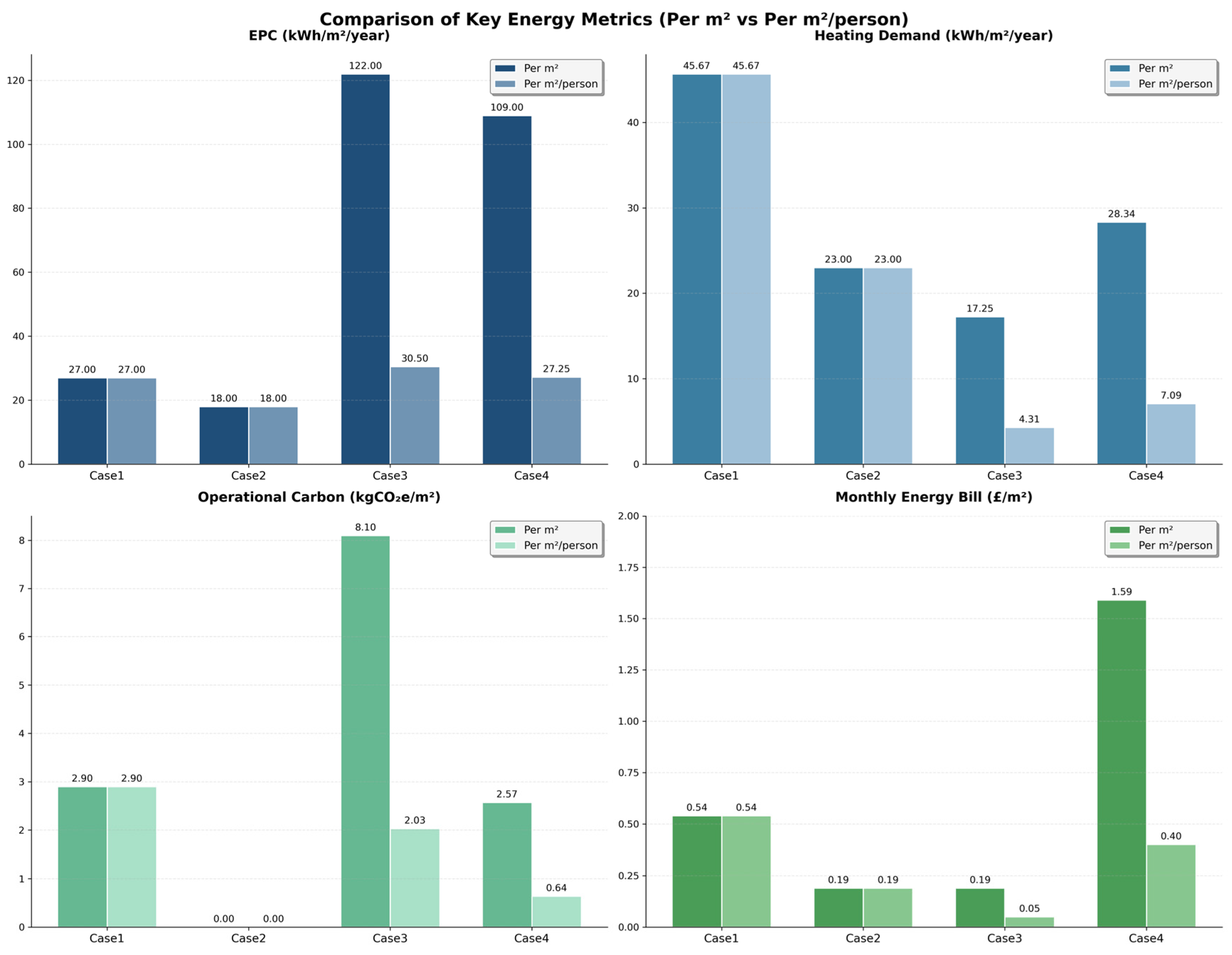
3.1.1. Fabric-First or Size-First? An Excessively Large per Capita Housing Area May Have a More Direct Impact on Energy Consumption
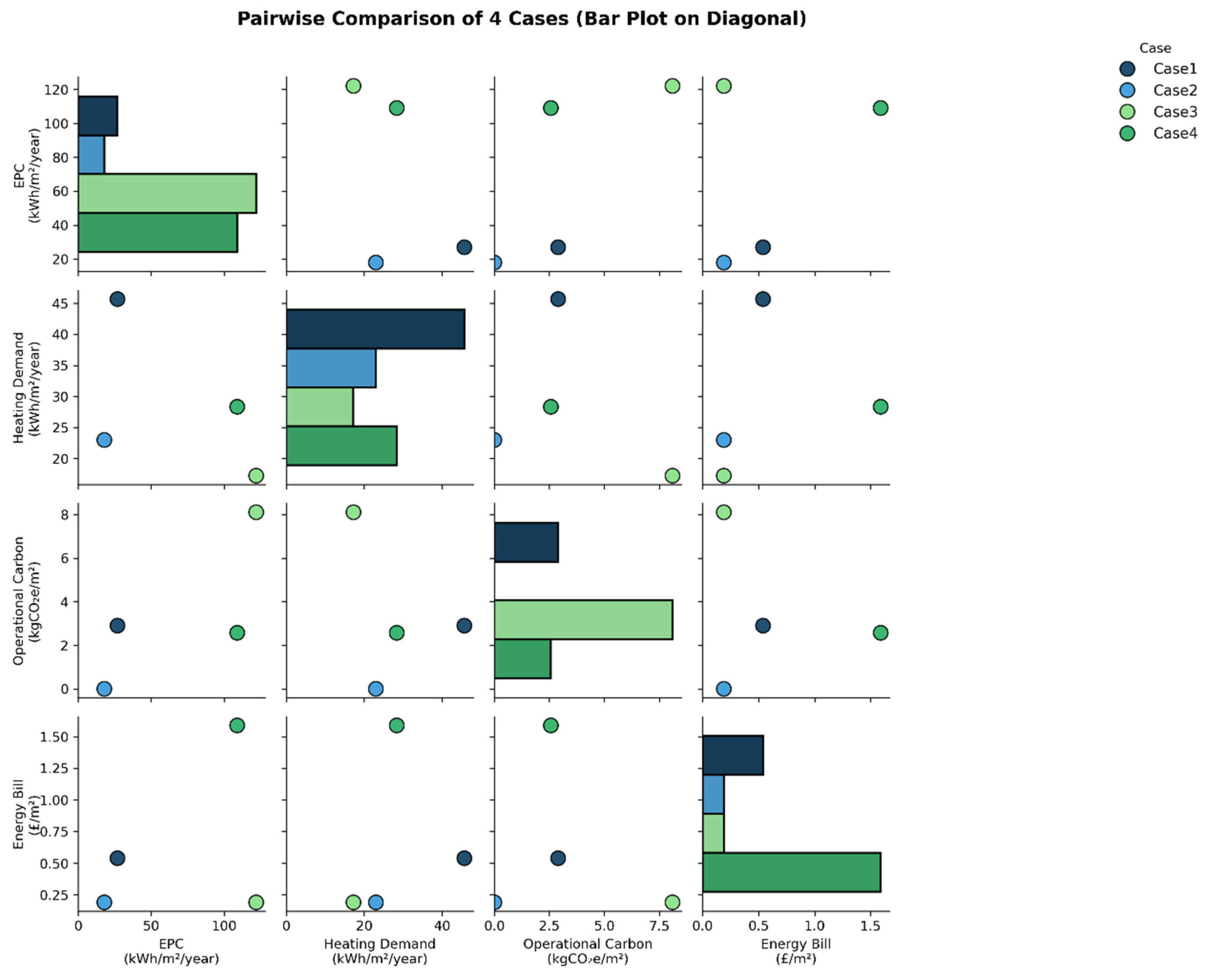
3.1.2. Single-Dimensional Indicators Are Partial and Misleading in Assessing Performance
Limitations of EPC Indicators
Heating Demand Is Decoupled from Operational Total Primary Energy Consumption and Carbon Emissions
A Holistic Evaluation Framework Is Needed
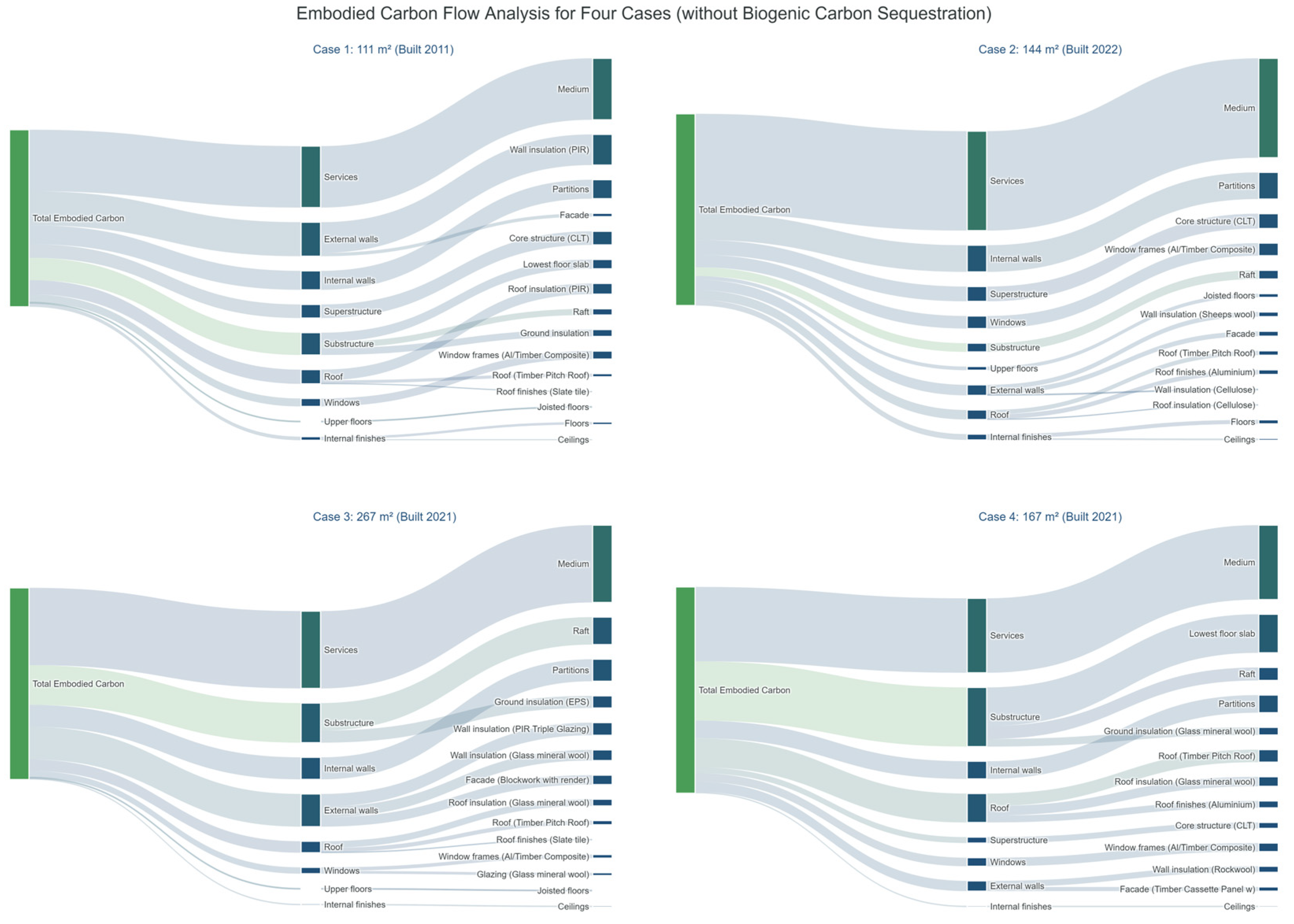
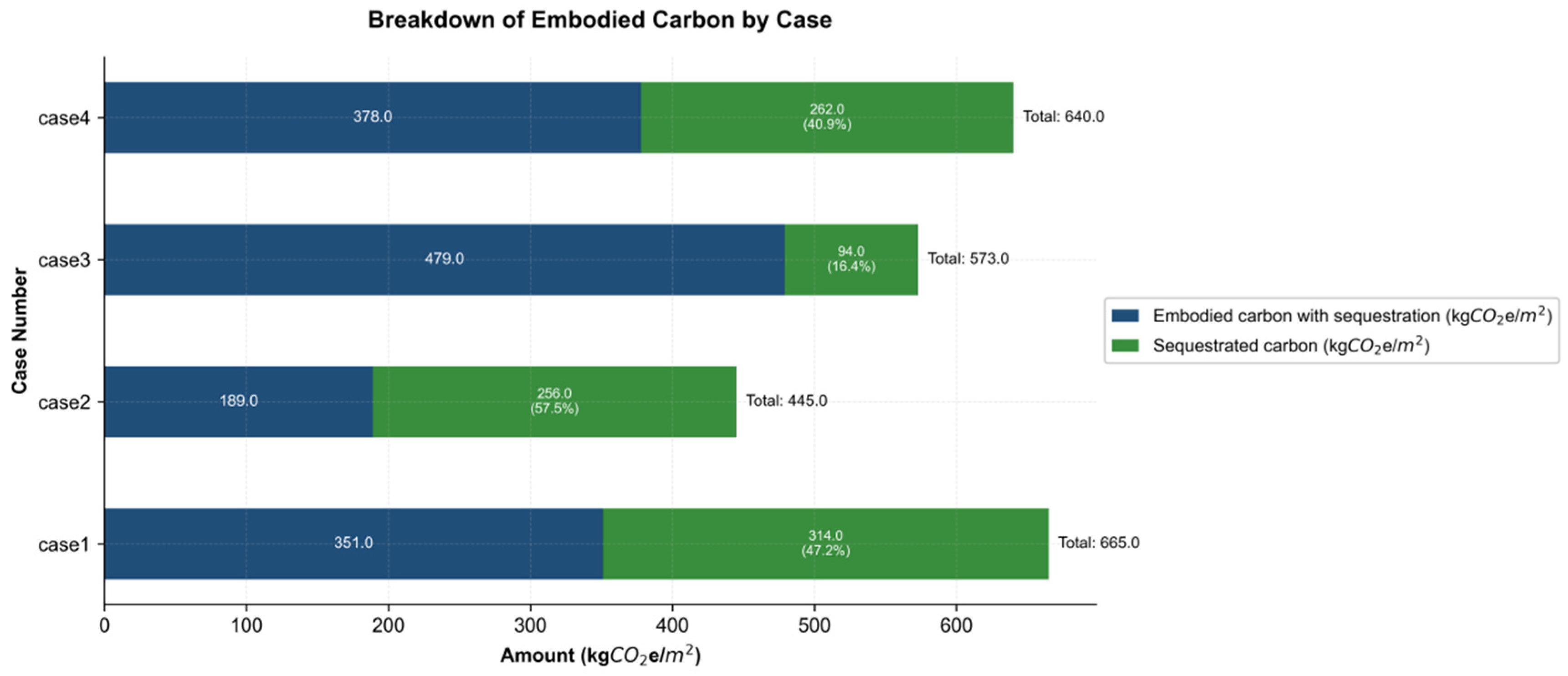
3.1.3. The Implicit Carbon Emissions of Housing Materials Are Constrained by the Dual Complexity of Both Subjective and Objective Factors
Objective Constraints: Non-Substitutable High-Carbon Materials Based on Functional Necessity
Subjective Constraints: Ethical Priorities Driving Sustainable Material Choices
Subjective Constraints: Insufficient Budget as a Barrier to Low-Carbon Choices
3.2. Potential Energy Risks in the Socio-Economic Dimension
3.2.1. Energy Resilience Deficiencies in Single-Source Rural Residential Energy Systems
3.2.2. Internal Factors and External Factors Jointly Contribute to the Complexity and Uncertainty of Fuel Poverty
3.2.3. Energy Conservation and Emission Reduction Become Contradictory Rather than Unified in Housing Investment with a Limited Budget
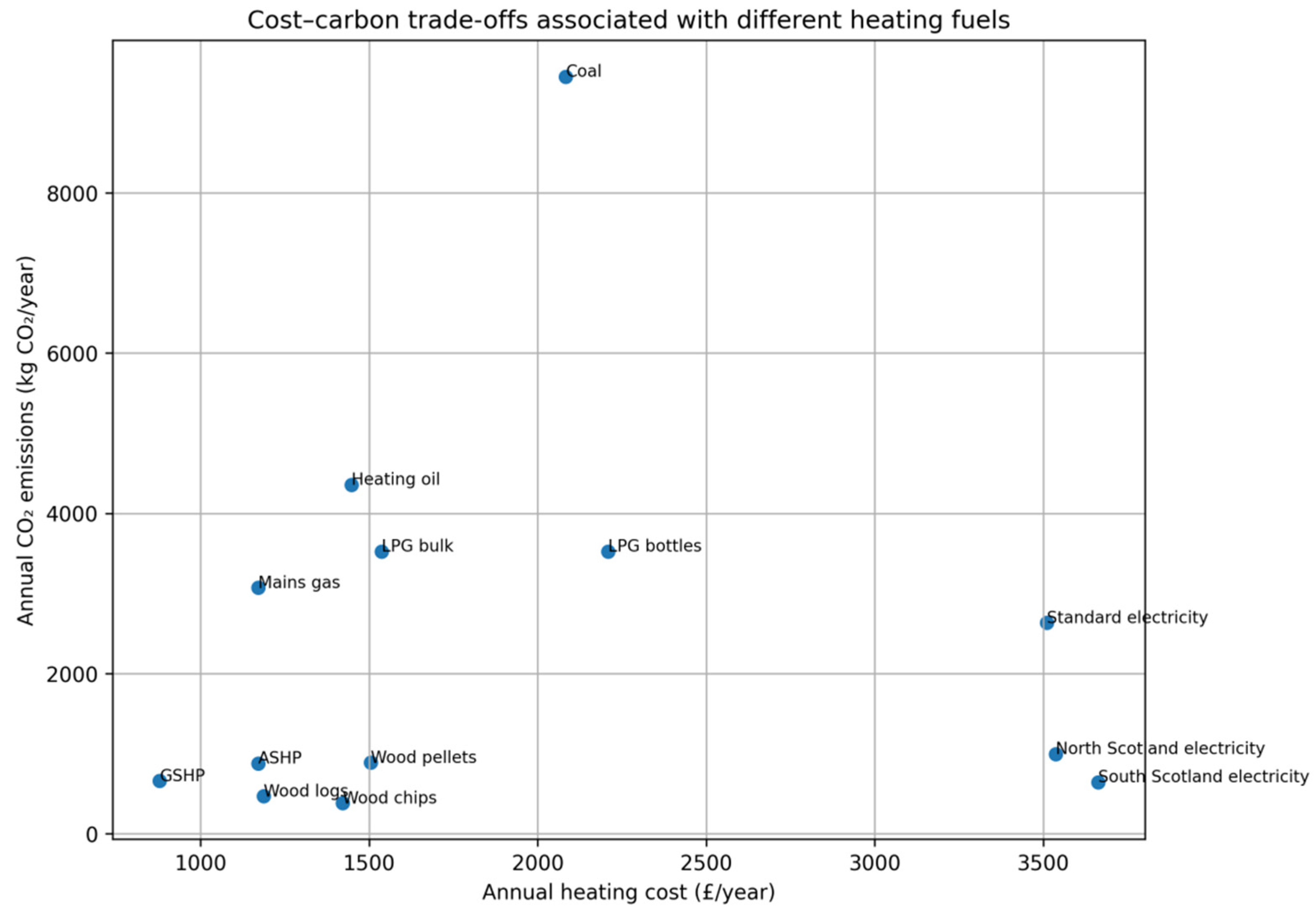
- Natural gas is the most economical fossil fuel with the lowest CO2 emissions, while coal is the least advantageous fuel due to its low efficiency, high carbon emission factor and expensive price.
- Using natural gas as a reference, both LPG (Bulk) and heating oil are competitive to a certain extent, and efficiency will be further improved with the upgrade of boilers.
- The UK standard electricity carbon emission factor is almost the same as natural gas. However, its cost of nearly three times that of natural gas makes electric heating uncompetitive.
- Electric heating in Scotland is different from other parts of the UK. Due to Scotland’s ultra-high proportion of low-carbon electricity supply, electric heating systems have the advantage of low carbon emissions compared to the gas grid, but the cost is still not as advantageous or even higher.
- Even at only 70% efficiency, wood biomass still has the triple advantages of fuel price, low carbon emissions, and suitability for off-grid households.
- Both ASHPs and GSHPs are driven by electricity, and their carbon emissions are dependent on power sources. Heat pumps rely on their high coefficient of performance (COP) to achieve electric heating at an affordable price.
- Electric boiler heating systems outside Scotland will pay for emission reductions nearly 17 times more than in the north of Scotland and nearly 21 times more than in the south of Scotland. There is therefore reason to believe that areas of the UK outside of Scotland are not suitable for electric heating, and that the development of low-carbon electricity in Scotland will play an important role in decarbonizing the future heating system.
- Compared with other low-carbon heating systems, even high-efficiency electric heating in Scotland is not economical. Its carbon reduction cost per ton is about 2–3 times that of GSHP, and 4–5 times that of biomass boilers and ASHP.
- Although GSHPs have the lowest operating costs, their prohibitive installation costs and the additional conditions of outdoor space prevent them from being a priority. While the funds can provide some subsidies to vulnerable groups, the remaining loans may be one to two years’ income for many families in remote rural areas.
- Biomass originally had the same advantages as ASHP. However, with the ban on biomass and subsidies for ASHP, ASHP has become the most advantageous heating system under the premise of meeting the conditions of use, especially for households that cannot be connected to the main gas network or heat network.
4. Discussion
4.1. Systemic Mechanisms Behind the High-Efficiency Paradox
4.1.1. Increasing Efficiency May Intensify Socio-Technical Dependency
4.1.2. Urban-Centric, Metric Lock-In of Performance Gaps
4.1.3. Path Dependency in Rural Scottish Energy and Housing Models
4.2. Effective Paths to Mitigate Energy Risks of High-Efficiency Dwellings in Rural Scotland
4.2.1. Optimizing Rural Energy Systems and Improving Design–Infrastructure Compatibility
4.2.2. Refine Low-Carbon Policies Through Place-Sensitive and Flexible Transitions
4.2.3. Addressing the High-Efficiency Paradox Through Socio-Economic and Spatial Considerations
4.2.4. Establish a Comprehensive and Adaptive Decision-Support Framework
5. Conclusions
Author Contributions
Funding
Data Availability Statement
Acknowledgments
Conflicts of Interest
References
- Harris, P.G. COP26: The Eternally Weak Pulse of Climate Diplomacy, and What Needs to Change. PLoS Clim. 2022, 1, e0000019. [Google Scholar] [CrossRef]
- Scottish Government. Rural Scotland: Key Facts 2021; Scottish Government: Edinburgh, UK, 2021. Available online: https://www.gov.scot/publications/rural-scotland-key-facts-2021/pages/2/ (accessed on 1 October 2023).
- Kelly, S.; Crawford-Brown, D.; Pollitt, M.G. Building Performance Evaluation and Certification in the UK: Is SAP Fit for Purpose? Renew. Sustain. Energy Rev. 2012, 16, 6861–6878. [Google Scholar] [CrossRef]
- Caird, J.B. The Making of the Scottish Rural Landscape. Scott. Geogr. Mag. 1964, 80, 72–80. [Google Scholar] [CrossRef]
- Valley, M. Geology of Scotland; Oliver and Boyd: Edinburgh, UK, 1929. [Google Scholar]
- Martyn. The Climatology of Scotland—Four Seasons in One Day? Scottish Flood Forecasting Service. Available online: https://floodforecastingservice.net/2015/05/11/the-climatology-of-scotland-four-seasons-in-one-day/ (accessed on 28 October 2025).
- Foster, J.; Sharpe, T.; Poston, A.; Morgan, C.; Musau, F. Scottish Passive House: Insights into Environmental Conditions in Monitored Passive Houses. Sustainability 2016, 8, 412. [Google Scholar] [CrossRef]
- Baker, K.J.; Mould, R.; Stewart, F.; Restrick, S.; Melone, H.; Atterson, B. Never Try and Face the Journey Alone: Exploring the Face-to-Face Advocacy Needs of Fuel Poor Householders in the United Kingdom. Energy Res. Soc. Sci. 2019, 51, 210–219. [Google Scholar]
- Rennie, F.; Billing, S.-L. Changing community perceptions of sustainable rural development in Scotland. J. Rural Community Dev. 2015, 10, 35–46. [Google Scholar]
- Serin, B.; Kintrea, K.; Gibb, K. Social Housing in Scotland; UK Collaborative Centre For Housing Evidence: Glasgow, UK, 2018. [Google Scholar] [CrossRef]
- Wood, G.; Baker, K. (Eds.) A Critical Review of Scottish Renewable and Low Carbon Energy Policy; Springer International Publishing: Cham, Switzerland, 2017. [Google Scholar] [CrossRef]
- Scottish Government. Delivering Net Zero for Scotland’s Buildings—Heat in Buildings Bill: Consultation; Scottish Government: Edinburgh, UK, 2023. Available online: https://www.gov.scot/publications/delivering-net-zero-scotlands-buildings-consultation-proposals-heat-buildings-bill/pages/5/ (accessed on 25 September 2024).
- Scottish Natural Heritage. Annual Report and Accounts 2019/20; Scottish Natural Heritage: Edinburgh, UK, 2020. Available online: https://www.nature.scot/sites/default/files/2023-07/Annual%20Report%20and%20Accounts%20-%202019-20.pdf (accessed on 27 May 2021).
- Scottish Government. Heat in Buildings Strategy—Achieving Net Zero Emissions in Scotland’s Buildings; Scottish Government: Edinburgh, UK, 2021. Available online: https://www.gov.scot/publications/heat-buildings-strategy-achieving-net-zero-emissions-scotlands-buildings/pages/2/ (accessed on 24 August 2022).
- Billy, B. Scottish and UK Governments Have No Records on Commercial Peat Digging. Available online: https://theferret.scot/peat-digging-records/ (accessed on 9 May 2024).
- Scottish Energy Statistics Hub. Scottish Energy Statistics, 2021. Available online: https://scotland.shinyapps.io/Energy/?Section=WholeSystem&Chart=EnConsumption (accessed on 13 September 2023).
- Bridge, G.; Bouzarovski, S.; Bradshaw, M.; Eyre, N. Geographies of Energy Transition: Space, Place and the Low-Carbon Economy. Energy Policy 2013, 53, 331–340. [Google Scholar] [CrossRef]
- Scottish Government. Scottish House Condition Survey: 2022 Key Findings; Scottish Government: Edinburgh, UK, 2023. Available online: https://www.gov.scot/publications/scottish-house-condition-survey-2022-key-findings/ (accessed on 22 May 2024).
- Markantoni, M.; Woolvin, M. The Role of Rural Communities in the Transition to a Low-Carbon Scotland: A Review. Local Environ. 2015, 20, 202–219. [Google Scholar] [CrossRef]
- Curl, A.; Kearns, A. Housing Improvements, Fuel Payment Difficulties and Mental Health in Deprived Communities. Int. J. Hous. Policy 2017, 17, 417–443. [Google Scholar] [CrossRef]
- McCullough, K.L. Resolving the ‘Highland Problem’: The Highlands and Islands of Scotland and the European Union. Local Econ. J. Local Econ. Policy Unit 2018, 33, 421–437. [Google Scholar] [CrossRef]
- Mould, R.; Baker, K.; Emmanuel, R. Behind the definition of fuel poverty: Understanding differences between the fuel spend of rural and urban homes. Queen’s Political Rev. 2014, 2, 7–24. [Google Scholar]
- The National. Cost of Living Crisis Means Higher Energy Bills for Rural Scotland. 2023. Available online: https://www.thenational.scot/news/23353644.cost-living-crisis-means-higher-energy-bills-rural-scotland/ (accessed on 20 September 2023).
- Big Issue. What’s It Like Living in Rural Scotland During the Cost of Living Crisis? Available online: https://www.bigissue.com/news/social-justice/rural-communities-scotland-suffering-cost-of-living-crisis/ (accessed on 20 September 2023).
- Mould, R.; Baker, K.J. Uncovering Hidden Geographies and Socio-Economic Influences on Fuel Poverty Using Household Fuel Spend Data: A Meso-Scale Study in Scotland. Indoor Built Environ. 2017, 26, 914–936. [Google Scholar] [CrossRef]
- Bryan, A.; Ellen, J.; Hirsch, D.; Padley, M. The Cost of Remoteness: Reflecting Higher Living Costs in Remote Rural Scotland When Measuring Fuel Poverty: 2022 Update; Centre for Research in Social Policy Loughborough University: Leicestershire, UK, 2024. [Google Scholar]
- Scottish Government. New Build Heat Standard: Factsheet; Scottish Government: Edinburgh, UK, 2024. Available online: https://www.gov.scot/publications/new-build-heat-standard-factsheet/ (accessed on 13 April 2024).
- Organ, S. Minimum Energy Efficiency—Is the Energy Performance Certificate a Suitable Foundation? Int. J. Build. Pathol. Adapt. 2021, 39, 581–601. [Google Scholar] [CrossRef]
- Torcellini, P.; Pless, S.; Deru, M.; Crawley, D. Zero Energy Buildings: A Critical Look at the Definition; National Renewable Energy Lab. (NREL): Golden, CO, USA, 2006. Available online: https://www.osti.gov/biblio/883663 (accessed on 3 November 2025).
- Rosenow, J.; Lowes, R.; Broad, O.; Hawker, G.; Wu, J.; Qadrdan, M.; Gross, R. The Pathway to Net Zero Heating in the UK; UK Energy Research Centre (UKERC): London, UK, 2020. [Google Scholar]
- Dowson, M.; Poole, A.; Harrison, D.; Susman, G. Domestic UK Retrofit Challenge: Barriers, Incentives and Current Performance Leading into the Green Deal. Energy Policy 2012, 50, 294–305. [Google Scholar] [CrossRef]
- Energy Saving Trust. Renewable Heat in Scotland, 2020 [Report]; Energy Saving Trust: London, UK, 2021; Available online: https://energysavingtrust.org.uk/report/renewable-heat-in-scotland-2020/ (accessed on 25 September 2024).
- Estiri, H. A Structural Equation Model of Energy Consumption in the United States: Untangling the Complexity of per-Capita Residential Energy Use. Energy Res. Soc. Sci. 2015, 6, 109–120. [Google Scholar] [CrossRef]
- McCord, M.; Haran, M.; Davis, P.; McCord, J. Energy Performance Certificates and House Prices: A Quantile Regression Approach. J. Eur. Real Estate Res. 2020, 13, 409–434. [Google Scholar] [CrossRef]
- Guy, S.; Farmer, G. Reinterpreting Sustainable Architecture: The Place of Technology. J. Archit. Educ. 2001, 54, 140–148. [Google Scholar] [CrossRef]
- AgileBuddy. Octopus Electricity Tracker. Available online: https://agilebuddy.uk/historic/tracker/electricity/2018?utm_source=chatgpt.com (accessed on 27 July 2025).
- Burford, N.; Pearson, A. Ultra-low-energy perspectives for regional Scottish dwellings. Intell. Build. Int. 2013, 5, 221–250. [Google Scholar] [CrossRef]
- Scottish Government. The Government’s Standard Assessment Procedure for Energy Rating of Dwellings; Version 10.2 (14 March 2025). Available online: https://bregroup.com/documents/d/bre-group/sap-10-2-14-03-2025/ (accessed on 18 May 2025).
- Energy Review. Average Gas and Electricity Bill for a Two-Bed House. Available online: https://www.energy-review.co.uk/guides/average-gas-and-electricity-bill-for-a-two-bed-house/ (accessed on 18 May 2025).
- Ofgem. Energy Price Cap Explained. Available online: https://www.ofgem.gov.uk/information-consumers/energy-advice-households/energy-price-cap-explained/ (accessed on 18 May 2025).
- Yin, R.K. Case Study Research: Design and Methods, 4th ed.; SAGE Publications: Thousand Oaks, CA, USA, 2009. [Google Scholar]
- Sharpe, T.; Morgan, C.; Shearer, D. Towards Low Carbon Homes—Measured Performance of Four Passivhaus Projects in Scotland. In Proceedings of the EuroSun 2014 Conference; International Solar Energy Society (ISES): Freiburg im Breisgau, Germany, 2014; pp. 1–10. [Google Scholar] [CrossRef]
- Terry, N.; Galvin, R. How do heat demand and energy consumption change when households transition from gas boilers to heat pumps in the UK? Energy Build. 2023, 292, 113183. [Google Scholar] [CrossRef]
- Reed, R.; Bilos, A.; Wilkinson, S.J.; Schulte, K.-W. An International Comparison of International Sustainable Building Tools; IDEAS Working Paper Series from RePEc; European Real Estate Society (ERES): Amsterdam, The Netherlands, 2009. [Google Scholar]




| Energy Risk Manifestations | Potential Formation Causes | References |
|---|---|---|
| Actual energy consumption far exceeds designed values (performance gap) | Overestimation of building performance in design; mismatch between SAP calculation and real occupant behaviour; poor construction quality and air tightness; occupant inexperience with new systems | [11,12,22,25,26,28] |
| Unstable and/or unaffordable energy supply | Weak grid capacity in remote areas; high cost of grid connection; lack of district heating; lack of mains gas access; low household income | [2,11,12,17,19,20,21,24] |
| High cost of low-carbon heating equipment | High upfront cost of renewable heating systems; high installation cost | [23,32] |
| Inconsistency between renewable electricity and renewable heating | Electricity decarbonises rapidly, but heating still relies on fossil fuels; limited renewable heat penetration | [11,16] |
| Difficulty in achieving real-world carbon reduction targets | High embedded carbon; performance gap; unsuitable energy source choices | [13,17,31] |
| Local Council | Ownership Type | Household Structure | Interviewee | Housing Type | House Age | |
|---|---|---|---|---|---|---|
| Case 1 | Aberdeenshire | Private | Living alone | House owner (self-occupant) | Detached | 2011 |
| Case 2 | Moray | Social | Living alone | Tenant | Flat (4 studio) | 2022 |
| Case 3 | Dumfries & Galloway | Social | Young couple with 1–2 children | Architect. Trust Manager 1 | Flat (3 units) | 2021 |
| Case 4 | Shetland Islands | Private | Young couple with 3 children | House owner (self-occupant) | Detached | 2021 |
| Diagram | Data Needed | Indicator | Definition | Source |
|---|---|---|---|---|
 | Basic housing information: total floors, floor area, door and window dimensions, etc. Housing energy efficiency parameters | Heating demand (kWh/m2·yr) | Annual energy required to maintain indoor thermal comfort, reflecting the intrinsic thermal performance of the building envelope and ventilation losses | Field work, Documents, SAP Data (UK EPC Database); OpenStudio |
 | Directly used data | Primary energy demand (EPC) (kWh/m2·yr) | Standardised estimate of total building energy demand under SAP assumptions, including space heating, DHW and auxiliary loads | SAP Data (UK EPC Database) |
 | Directly used data | Household energy use (kWh) | Actual delivered energy consumed by occupants during operation | Field work |
 | Energy consumption and energy types, Materials and quantities of each component of the house | Operational carbon emissions (kgCO2e/year) | Carbon emissions associated with energy use during building operation | Field work; Calculated from energy use and emission factors; FCBS CARBON Calculation |
| Embodied carbon emissions (kgCO2e) | Greenhouse gas emissions arising from material production and construction processes |
| Cases | National Grid | Mains Gas | Main Heating | Hot Water | Resilience Mechanism |
|---|---|---|---|---|---|
| Case 1 | On-grid | Without | Wood-burning stove | Solar heating panels + Electric heater | Wood stove and solar heating panels |
| Case 2 | On-grid | Without | District heating system (DHS) | DHS | Dual grid (microgrid + national grid) |
| Case 3 | On-grid | Without | ASHP (radiators) | ASHP (water tank) + Electric heater | None |
| Case 4 | On-grid | Without | ASHP (underground heating) | ASHP (water tank) + Electric heater | Wood stove and gas hob |
| Case 1 | Case 2 | Case 3 | Case 4 | |
|---|---|---|---|---|
| Primary energy indicator (EPC) (kWh/m2/year) | 27 | 18 | 122 | 109 |
| Heating demand (Openstudio) (kWh/m2/year) | 45.67 | 23 | 17.25 | 28.34 |
| Monthly average energy bill (£) | Approximately £60 per month (wood biomass spending unclear) | Approximately £80 per month | Up to £50 | Approximately £270 per month (wood biomass spending unclear) |
| Floor area (m2) | 111 | 432 (4 studios) | 270 (3 units) | 170 |
| Total floor | 2 | 2 | 2 | 1 |
| Construction cost total price (£) | 185,000 | 500,000 | 518,000 | 285,000 |
| Energy system costs (£) (estimates) | 13,000 | 52,800 | 32,400 | 24,500 |
| Energy system investment pressure | None | None (the maintenance costs are borne by the tenants) | None (assuming responsibility by the trust) | Yes |
| Energy use behaviour | Strong energy-saving awareness | Weak energy-saving awareness | Rising energy-saving awareness and backed by ultra-high energy efficiency | Higher awareness of energy saving |
| Potential FP | None | Almost no | None | Potential risk |
| Gas (Efficiency from 90 to 94%) | Oil (Efficiency from 87 to 97%) | Electric (99.8%) | ||||
|---|---|---|---|---|---|---|
| Exc. Installation * | Inc. Installation * | Exc. Installation * | Inc. Installation * | Exc. Installation * | Inc. Installation * | |
| Combi | 500–2000 | 1500–3500 | 1900–3700 | 3200–5500 | 1150–2370 | 1950–3670 |
| System boiler | 500–2500 | 1700–3600 | 1100–3180 | 2400–4980 | 600–2000 | 1400–3300 |
| Regular boiler | 500–3500 | 1700–3000 | 1300–2700 | 2600–4450 | 500–900 | 1300–2200 |
| Exc. Installation | Inc. Installation | |||||
| Biomass boiler | 7000–15,000 | 10,000–18,000 | ||||
| ASHP | 7000–13,000 | 8000–18,000 | ||||
| GSHP (vertical) | 17,000–30,000 | 19,000–45,000 | ||||
| GSHP (horizontal) | More than 30,000 | More than 45,000 | ||||
| Electricity (The UK Average Standard) | Electricity (North Scotland Standard) | Electricity (South Scotland Standard) | Biomass (Wood Pellets) | ASHP (Scotland Power) | GSHP (Scotland Power) | |
|---|---|---|---|---|---|---|
| 20 years CO2 Emissions difference (tonne) | 1.95 | 34.71 | 41.73 | 40.82 | 37.05 | 41.44 |
| 20 years bill difference (£) | −49,400 | −52,465.4 | −49,938.2 | −2600 | −2600 | 3250 |
| Cost of boiler or pump for reducing emissions (£) | 20 | 20 | 20 | −9373.4 | −8373.4 | −27,373.4 |
| Carbon value (£/tonne/20 years) | −25,323.07 | −1510.96 | −1196.22 | −293.32 | −296.17 | −582.13 |
Disclaimer/Publisher’s Note: The statements, opinions and data contained in all publications are solely those of the individual author(s) and contributor(s) and not of MDPI and/or the editor(s). MDPI and/or the editor(s) disclaim responsibility for any injury to people or property resulting from any ideas, methods, instructions or products referred to in the content. |
© 2026 by the authors. Licensee MDPI, Basel, Switzerland. This article is an open access article distributed under the terms and conditions of the Creative Commons Attribution (CC BY) license.
Share and Cite
Fang, W.; Brennan, J. Potential Energy Risks of High-Efficiency Dwellings: Lessons from Four Contemporary Rural Housing Cases in Scotland. Buildings 2026, 16, 2523. https://doi.org/10.3390/buildings16132523
Fang W, Brennan J. Potential Energy Risks of High-Efficiency Dwellings: Lessons from Four Contemporary Rural Housing Cases in Scotland. Buildings. 2026; 16(13):2523. https://doi.org/10.3390/buildings16132523
Chicago/Turabian StyleFang, Wenbo, and John Brennan. 2026. "Potential Energy Risks of High-Efficiency Dwellings: Lessons from Four Contemporary Rural Housing Cases in Scotland" Buildings 16, no. 13: 2523. https://doi.org/10.3390/buildings16132523
APA StyleFang, W., & Brennan, J. (2026). Potential Energy Risks of High-Efficiency Dwellings: Lessons from Four Contemporary Rural Housing Cases in Scotland. Buildings, 16(13), 2523. https://doi.org/10.3390/buildings16132523