Article

Deformation-Based Protective Performance Assessment of the Entrance-Side Front Wall of a Double-Door-Type RC Covered Artillery Position Under Frontal Standoff Blast Loading


Department of Architectural Engineering, Keimyung University, Daegu 42601, Republic of Korea
*
Author to whom correspondence should be addressed.
Buildings 2026, 16(12), 2382; https://doi.org/10.3390/buildings16122382 (registering DOI)
Submission received: 17 April 2026 / Revised: 29 May 2026 / Accepted: 10 June 2026 / Published: 15 June 2026
(This article belongs to the Section Building Structures)

Abstract

Verification of the blast resistance capacity of military protective structures is generally conducted through experimental testing; however, repeated experiments are limited due to spatial, temporal, economic, and safety constraints. Accordingly, this study evaluated the global deformation-based protective performance of the entrance-side front wall of a covered artillery position (double-door type) using three-dimensional numerical analysis based on ANSYS AUTODYN. The blast scenario was defined as a frontal standoff blast using a 00.0 kg TNT-equivalent charge, corresponding to a 000 kg class munition with a charge-to-weight ratio of 00%, at a standoff distance of 0.0 m. A coupled fluid–structure interaction analysis was applied to consider the interaction between the blast pressure transmission medium and the reinforced concrete structure. The entrance-side front wall surrounding the double-door opening was selected as the primary evaluation member because it is directly exposed to the incoming blast wave and forms part of the entrance zone of the facility. The analysis results showed that the maximum wall-applied reflected pressure was 1487.6 kPa at approximately 5.8 ms, and the maximum front-wall displacement was 0.505 mm at approximately 7.0 ms. The support rotation angle calculated from the maximum displacement was 0.012° based on a wall height of 2.3 m, which was within the elastic design limit of 0–2° specified in UFC 3-340-02. Therefore, under the specified numerical scenario, the entrance-side front wall was assessed to remain within the Protection Level A limit based on the UFC support rotation criterion. (The standoff distance and TNT charge weight are masked under the restriction on disclosure due to military secrets).

1. Introduction

1.1. Research Background

In the modern battlefield environment, key firepower assets such as self-propelled artillery are pivotal elements that determine the offensive capability of friendly forces; however, paradoxically, they become the primary targets of destruction by enemy preemptive strikes and precision-guided weapons. With the advancement of weapon systems, it has become difficult to guarantee survivability solely through the conventional strategy of securing mobility. Accordingly, the strategic importance of constructing protective facilities such as covered artillery positions to maintain the sustained operational capability of firepower assets has increased. The required performance of protective facilities should not be determined solely by the allowable stress of structural members, but should be established within the military decision-making process that considers operational objectives, enemy threats, support capability of friendly forces, available time, and civil and operational environmental factors together [1]. Corrugated steel structures, which have traditionally been widely used for artillery position construction, have advantages in terms of constructability and economic efficiency; however, problems such as difficulties in long-term maintenance and deterioration of structural stability in the case of construction defects have been continuously raised. In particular, when the backfill soil supporting the structure is directly impacted under blast loading conditions, there is concern that the protective performance may deteriorate rapidly [2]. On the other hand, Reinforced Concrete (RC) structures provide inherently high stiffness and reliability through high-performance concrete mix technology and precise reinforcement detailing, and they have advantages in that they exhibit superior resistance to instantaneous high-energy blast pressure. Blast-resistant design is not simply an approach of increasing member thickness but has the characteristics of performance-based design that jointly accounts for the pressure–time history of the blast wave, the function of the structure, stiffness and ductility, and protection objectives. Therefore, when designing reinforced concrete for protective structures, focusing solely on material strength is insufficient. A robust design must integrate an analysis of dynamic response characteristics alongside a detailed evaluation of both localized effects and overall structural performance [3,4,5,6]. Accordingly, this study aims to examine the protective capacity of reinforced concrete covered artillery positions, the necessity of which has recently been reconsidered, particularly focusing on the double-door configuration, which has high structural complexity. In a double-door-type covered artillery position, the entrance-side wall is not merely an exterior structural member but a mission-critical zone. It governs the ingress and egress of the self-propelled artillery system, emergency withdrawal, recovery operation, and fire-and-displace capability under counter-artillery threats. Therefore, excessive deformation or local damage around the entrance-side front wall may directly reduce operational availability, even when global collapse of the facility does not occur.
Although previous studies have provided important numerical and design-oriented insights into artillery fighting positions and reinforced concrete protective structures under blast loading, relatively limited attention has been given to the double-door-type covered artillery position and its entrance-side front wall. In such a structure, the entrance-side wall surrounding the double-door opening is not only a primary blast-exposed member under a frontal threat condition but also a mission-critical zone related to ingress, egress, emergency withdrawal, recovery operation, and operational availability of the artillery system. Therefore, a focused three-dimensional assessment of this member is required to understand its spatial blast response and deformation-based protective performance.

1.2. Purpose of This Study

The purpose of this study is to numerically evaluate the global deformation-based protective performance of the entrance-side front wall using a hydrocode-based fluid–structure interaction model and the UFC 3-340-02 support rotation criterion [7]. First, a three-dimensional numerical simulation using ANSYS AUTODYN(R18.2) is conducted to evaluate the structural response under the selected frontal standoff blast scenario, and a coupled analysis considering fluid–structure interaction (FSI) among the atmosphere, ground, and the structure is applied. This is intended to compensate for the overestimation error of blast pressure that may occur in conventional uncoupled analysis, which assumes the structure to be a rigid body, and to analyze the load transfer mechanism based on actual physical phenomena. The maximum displacement and support rotation angle obtained from the numerical analysis were compared with the allowable limits specified in UFC 3-340-02 to assess whether the analyzed front wall remained within the elastic design range. Therefore, this study aims to provide numerical reference data for the criteria-based assessment of the analyzed entrance-side front wall in military protective facilities where experimental testing is limited. Also, the scope of this study is limited to the member-level assessment of the entrance-side front wall under the specified frontal standoff blast scenario. This study does not intend to provide a complete member-by-member verification of the entire facility, including the side walls, roof slab, and double-door leaf system. It should be noted that the AUTODYN model was not directly validated against full-scale blast-test data or a separate benchmark case for the same structural configuration. Therefore, the present study is treated as a criteria-based numerical assessment of the entrance-side front wall rather than as a fully validated prediction of field behavior.
The main contribution of this study can be summarized in two aspects. First, the study focuses on the entrance-side front wall of a double-door-type RC covered artillery position as the primary evaluation member under a frontal standoff blast scenario. This member was selected because it is directly exposed to the incoming blast wave and forms part of the entrance zone of the facility. Second, the study establishes a criteria-based numerical assessment procedure in which a three-dimensional coupled Euler–Lagrange analysis is used to obtain the blast pressure propagation and global deformation response of the front wall, and the protective performance of the analyzed front wall is quantitatively assessed using the support rotation angle criterion specified in UFC 3-340-02. Pressure history, displacement, velocity, and acceleration are used to interpret the dynamic response, whereas the support rotation angle is used as the primary index for determining whether the analyzed wall remains within the elastic design limit.

2. Theoretical Background and Protective Performance Criteria

2.1. Characteristics of Blast Load and Equation of State

2.1.1. Physical Definition of Blast Load

An explosion refers to a phenomenon in which stored energy is released within an extremely short period of time through the rapid chemical reaction of an explosive, causing high-temperature and high-pressure gases to expand. The shock wave generated in this process propagates through the atmosphere at a speed faster than that of sound, and when it comes into contact with the structure’s exterior, it forms reflected pressure and exerts a powerful dynamic impact force distinct from static loading [8]. Blast loading is marked by a sudden surge to maximum pressure, followed by a decaying exponential decay, and the accurate estimation of this pressure–time history constitutes the most fundamental step in the response analysis of protective structures. In practice, the empirical relations developed by Kingery and Bulmash are most widely used to estimate free-field incident pressure, reflected pressure, positive phase duration, and impulse, and these relations are in effect treated as the standard reference for blast load prediction under surface-burst conditions [9]. In addition, procedures for converting these blast parameters into structural design loads have been systematically established in previous research [10]. In the present study, these established blast-load concepts were used to define and interpret the numerical blast scenario. However, no separate quantitative benchmark comparison with Kingery–Bulmash pressure–time parameters was performed; therefore, the numerical model should not be regarded as independently validated by this empirical formulation.

2.1.2. Equations of State for Different Media (Ideal Gas and JWL)

In order to physically simulate an explosion phenomenon in numerical analysis, it is essential to define the equations of state, which describe the relationships among pressure, volume, and energy for each medium. To simulate blast wave propagation, the Ideal Gas law was implemented to characterize the air medium, while the detonation characteristics of TNT were governed by the Jones–Wilkins–Lee (JWL) formulation [11]. The JWL equation is capable of precisely describing the energy in both high- and low-pressure regions generated during the expansion process of detonation products, and is therefore standardly used in hydrocode analysis to simulate the pressure–time history of blast waves [12].

2.2. Basic Concepts of Protective Performance Evaluation

Protective performance evaluation begins with the determination of the required level of protection, which represents the design blast load that the target structure must resist. In military facilities, this process corresponds to estimating the destructive capability of a bomb or artillery projectile. Conceptually, it is determined by the combination of the explosive power and the stand-off gap from the target. After the required level of protection is determined, the corresponding impact condition is applied to the target structure. The structural response under the given loading condition is then calculated and subsequently compared with several levels of plastic deformation limits to verify the protective performance.

2.2.1. Blast Wave Phenomenon

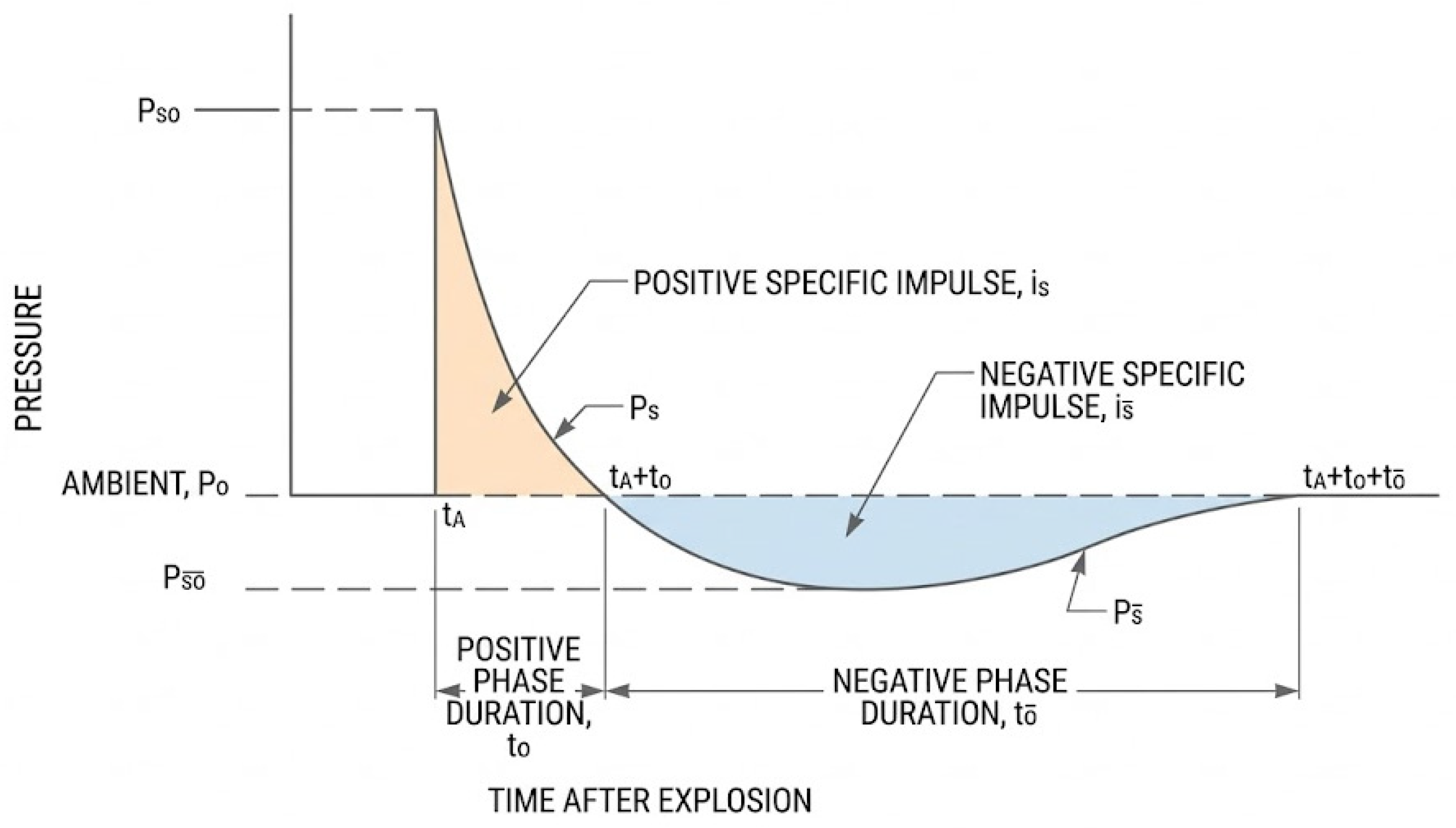
The instantaneous release of a substantial magnitude of energy during a detonation induces an abrupt pressure rise at the blast source, resulting in the spherical propagation of a shock wave in all directions. As illustrated in Figure 1, a discrete point in space undergoes an impulsive pressure transition from ambient conditions to the maximum incident magnitude the moment the blast shock front arrives at t A , subsequently exhibiting a gradual dissipation phase.
After reaching the peak value, the pressure decreases and returns to the atmospheric pressure level at time t 0 , forming the positive phase. Subsequently, the pressure keeps decreasing to a level below atmospheric pressure for a duration of t O - , after which it recovers to the atmospheric pressure level at time t 0 + t O - . This stage is referred to as the negative phase, after which the blast wave gradually dissipates. The maximum suction pressure, denoted as P s 0 , represents the highest magnitude reached during the negative phase of the blast wave. On a pressure–time history, the blast wave impulse is quantified by the respective areas enclosed within the positive and negative phases.
Unlike the blast wave generated by pressure differences, the maximum acting pressure caused by the movement of gas particles generated during the explosion is called the maximum dynamic pressure, which is distinguished from the blast wave pressure. When the shock front contacts the surface of an object, the incident wave is reflected, resulting in an increase in both pressure and impulse. The magnitude of the maximum reflected pressure is determined by the incident pressure, the angle of incidence, and the size of the reflecting surface.

2.2.2. Loads Acting Inside and Outside Buildings

The characteristics of blast waves can be explained in relation to the standoff distance and the characteristics of the building. The characteristics of a building are defined by the manner in which the blast wave interacts with structural members. For example, the negative phase of a blast wave has little effect on the front surface of a building but acts as a suction force on the opposite side. In addition, complex building geometries influence the reflection patterns and arrival times of blast waves, resulting in complicated pressure distributions around the structure.

2.2.3. Scaled Distance

The destructive power of an explosion is primarily governed by the explosive charge weight of the explosive medium. However, the actual pressure reaching a structure is greatly influenced by the distance from the explosion source. To estimate blast pressure using the relationship between the explosive charge weight and the distance, the scaled distance shown in Equation (1) is commonly used [13].
Z = R W 1 / 3
where
  • Z: Scaled distance m / k g 1 / 3
  • R: Distance from the explosion center m
  • W: Explosive charge weight in TNT equivalent k g
The scaled distance indicates the combined effect of standoff distance R and TNT-equivalent charge mass W on blast demand. A decrease in R or an increase in W reduces the scaled distance and may increase the blast pressure, impulse, displacement, and support rotation angle. In this study, this relationship is used only for qualitative interpretation of the selected baseline scenario; quantitative parametric analysis with different R and W values was not performed.
In this study, W represents the TNT-equivalent explosive charge mass rather than the total mass of the munition. The selected threat was a 000 kg class munition with a charge-to-weight ratio of 00%.

2.3. Fluid–Structure Interaction Analysis

In order to precisely analyze the complex physical responses that occur when the blast wave and acting loads defined in Section 2.2 encounter an actual structure, this study adopts a coupled analysis method that simultaneously calculates fluid and solid domains.
Since the response analysis of a structure subjected to blast loading involves the simultaneous occurrence of pressure wave propagation and large structural deformation within an extremely short time (on the order of milliseconds), the fluid–structure interaction (FSI) theory that considers the mutual influence between the fluid and the structure must necessarily be applied. In a typical uncoupled simulation, the pressure is first derived based on a rigid-body assumption; this calculated force is then applied to the model in a one-way interaction to analyze its response. However, this approach cannot reflect the diffraction of the pressure wave or the pressure reduction effects caused by structural deformation during an actual explosion and therefore tends to overestimate the blast pressure. To compensate for this limitation, this study applied a coupled analysis technique that links the Euler mesh, which describes the fluid domain (air and explosive), and the Lagrange mesh, which describes the solid structure (reinforced concrete), in real time. In this method, at every time step, the blast pressure calculated in the Euler domain is transferred as a load to the surface of the Lagrange structural body, and simultaneously the displacement and velocity responses generated in the structure are fed back to the Euler domain to recalculate the flow and pressure distribution of the fluid. This numerical approach enables the interaction between blast-wave propagation and structural motion to be considered for structures with openings and complex geometries such as the covered artillery position (double-door type). Nevertheless, because the present model was not directly validated against experimental data or a separate benchmark simulation, the results should be interpreted as numerical estimates of the structural response under the specified modeling assumptions [14]. Experimental and numerical research has verified the capability of numerical methods for assessing the blast resistance of structural members [15,16,17,18]. In the present study, the three-dimensional blast process and structural response were represented using a coupled Euler–Lagrange formulation. The air and TNT explosive were modeled in the Eulerian domain to simulate blast-wave generation and spatial propagation, while the reinforced concrete structure was modeled in the Lagrangian domain to calculate structural deformation. The pressure generated in the Eulerian domain was transferred to the structural surface through fluid–structure coupling, and the corresponding displacement, velocity, acceleration, and support rotation response of the entrance-side front wall were calculated.

2.4. Dynamic Material Models and Equation-of-State Definitions

2.4.1. Nonlinear Dynamic Model of Concrete

Concrete subjected to blast loading experiences rapid pressure increase and volumetric compression. In hydrocode-based numerical analysis, this behavior can be represented using an equation-of-state approach that defines the pressure–density response of the material under high-pressure dynamic loading [19]. In this study, the concrete material was defined using a P-alpha porous equation of state combined with a Polynomial solid equation of state. The P-alpha equation of state was used to describe the compaction behavior of porous concrete. In this formulation, the porosity parameter α represents the ratio between the specific volume of the porous material and that of the fully compacted solid material [20]. As the concrete is compressed under blast loading, the pores gradually collapse and α approaches unity, representing the transition toward a compacted solid state.
The Polynomial solid equation of state was used to define the pressure–compression response of the compacted concrete phase [19]. This formulation describes the pressure response as a function of material compression and internal energy and is suitable for representing the nonlinear hydrostatic response of concrete under high-pressure loading. The corresponding concrete input parameters are summarized in Section 3.2.

2.4.2. Dynamic Material Definition of Reinforcement Steel

Reinforcing bars embedded in concrete play a role in absorbing energy through ductile behavior under extreme loading conditions. To simulate the dynamic behavior of reinforcing steel, the Johnson–Cook model, which can effectively describe large deformation and high strain-rate effects, is used. The flow stress of the material is expressed in this model as a function of strain, strain rate, and temperature thereby accurately reproducing the plastic deformation and strain hardening of reinforcing bars occurring during blast loading. This behavior becomes a key factor in evaluating the ultimate collapse resistance of the structural system [21].

2.5. Criteria and Indicators for Protective Performance Evaluation

2.5.1. Regulations of the UFC 3-340-02

To establish an objective basis for the safety evaluation of protective structures, this study synthesizes the technical criteria of the US Unified Facilities Criteria (UFC 3-340-02) and the ROK Defense Military Facility Criteria (DMFC 5-60-30) [22]. While UFC 3-340-02 provides the primary quantitative thresholds for support rotation angles to define structural response, the specific ‘Protection Grades’ (A, B, and C) and associated ‘Damage Aspects’ (such as micro-cracking or crushing) are defined in accordance with DMFC standards to meet operational requirements. Under this integrated framework, the allowable rotation angles are categorized to ensure structural integrity and continuous mission capability. For instance, Grade A is mapped to the elastic design range (0~2°), where only micro-cracks are permitted, ensuring the facility remains fully functional after a blast event.

2.5.2. Performance Evaluation Based on Support Rotation Angle (θ) and Displacement Ductility

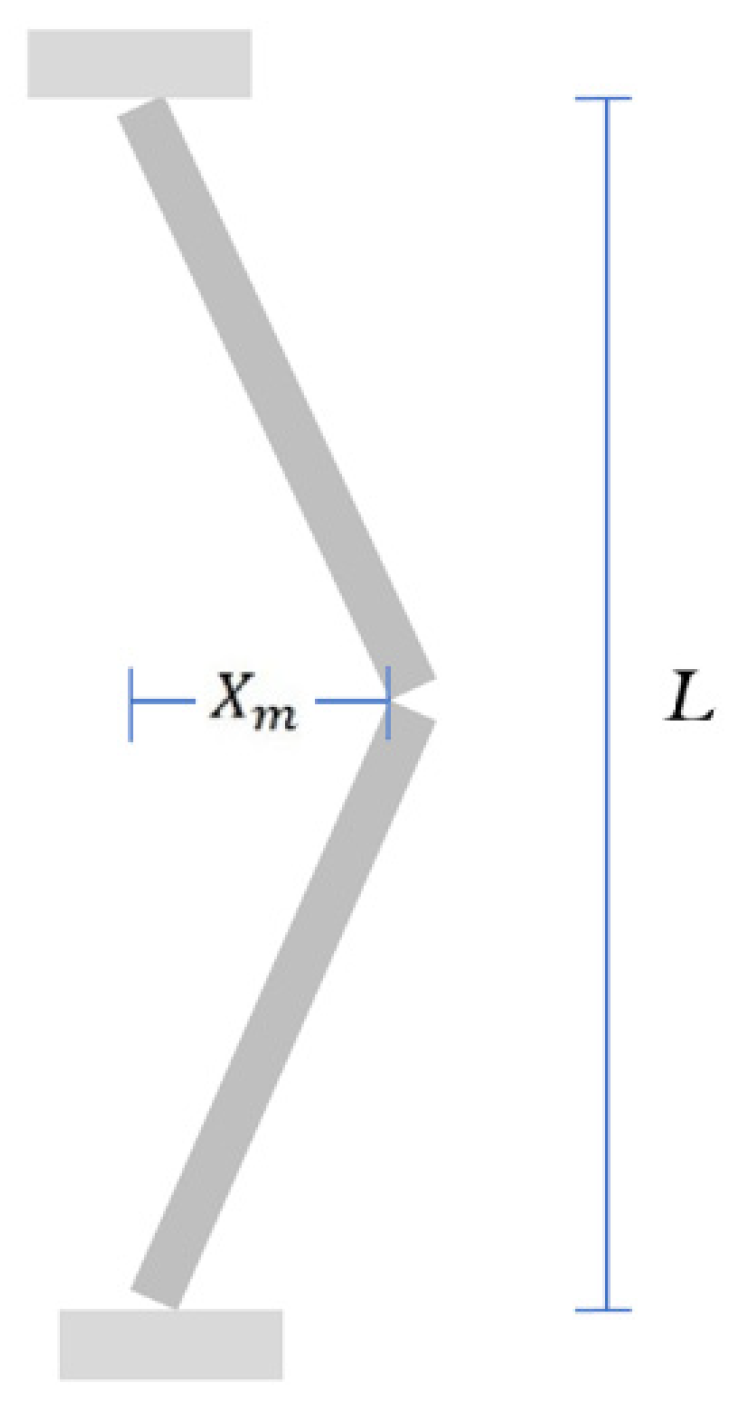
Generally, the requisite performance for each protection grade is governed by the ductility ratios and angular rotation limits at the supports as specified in the Unified Facilities Criteria. The permissible thresholds for support rotation angles across various protection levels, specifically for brittle materials like concrete, are detailed in Table 1. This angle represents the maximum support rotation angle of a member subjected to blast loading and is defined by Equation (2) as follows. Here, Xm represents the maximum displacement.
θ = tan 1 ( 2 X m L )
As illustrated in Figure 2, the displacement ductility (μ) representing the energy absorption capacity of a structure is calculated as the maximum-to-yield displacement ratio and it is used as a key index for evaluating the nonlinear dynamic response of a structure [23]. The displacement ductility is defined by Equation (3) as follows. Here, Xe represents the elastic limit displacement of the structure.
μ = Xm/Xe
The support rotation angle and displacement ductility are not merely calculation indices but practical performance indicators that connect the level of local damage and nonlinear response margin that protective structures can allow under blast loading. In general, support rotation angle is widely used for brittle or semi-brittle members such as reinforced concrete, whereas displacement ductility ratio is widely used for more ductile members or systems, and this distinction is consistently used in protective structure design literature [9,10]. In order to satisfy the protective performance requirement, these criteria must be met by both the rotation angle and the structural members’ deformation caused by blast loading. However, brittle materials such as reinforced concrete generally use rotation ductility, while ductile materials such as steel use displacement ductility as the evaluation criterion.

3. Protective Performance Evaluation Simulation

This study performed a three-dimensional numerical simulation to evaluate the global deformation-based response of the entrance-side front wall of the covered artillery position (double-door type) under the specified frontal standoff blast scenario. Since the physical phenomenon of an explosion involves extremely high pressure and large deformation occurring within a very short time, a hydrocode-based analysis environment capable of appropriately simulating such phenomena was established and a realistic scenario was applied.

3.1. Simulation Overview and 3D Geometry Modeling

To evaluate the protective performance of the double-door type covered artillery position, a three-dimensional numerical analysis using ANSYS AUTODYN(R18.2) was conducted.
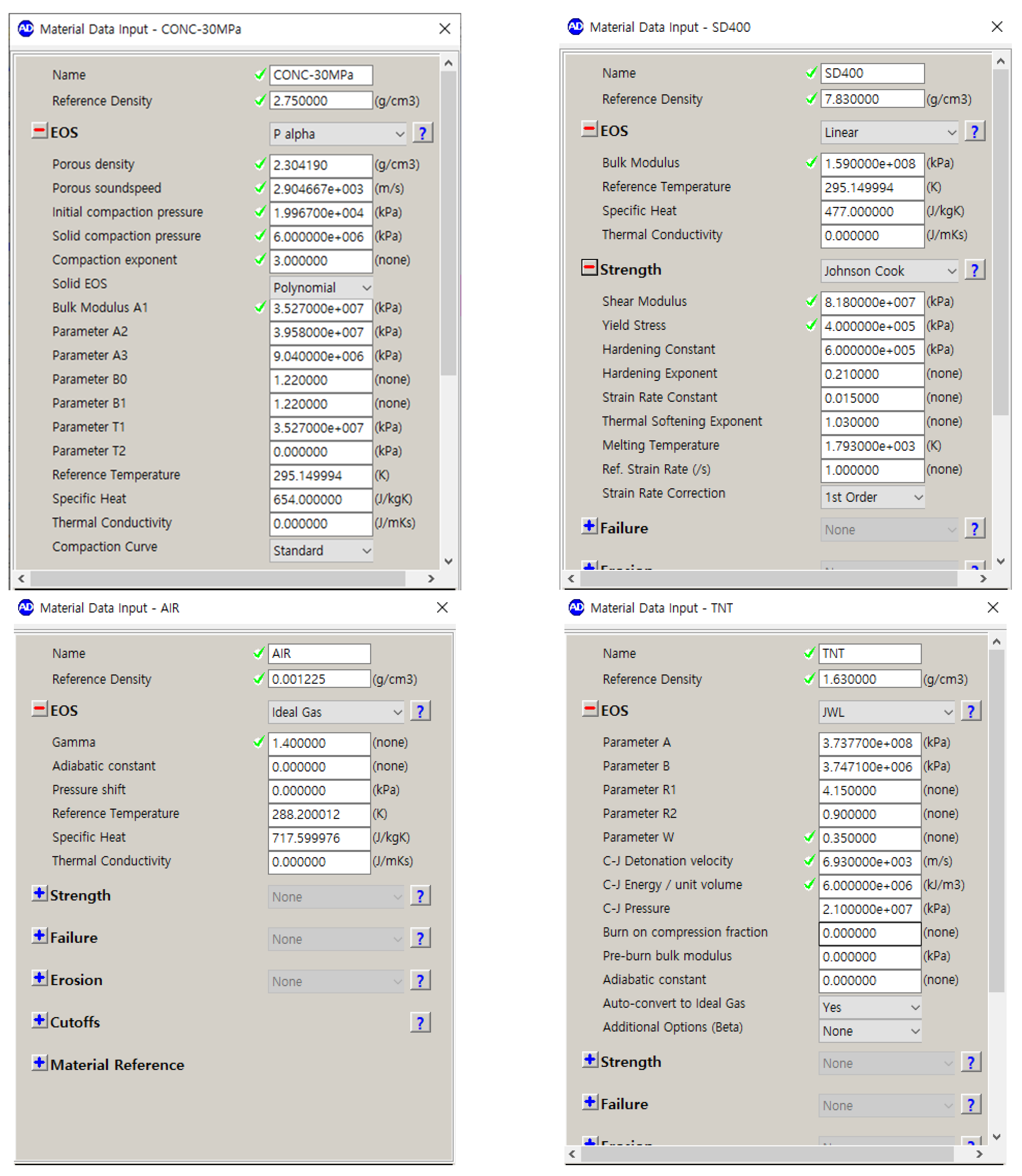
The three-dimensional geometry was retained to account for the finite width, height, wall thickness, and entrance-side configuration of the covered artillery position. Unlike a two-dimensional idealization, the present model allows the blast wave to interact with the actual front-wall surface in three dimensions and enables the evaluation of spatial pressure distribution and location-dependent structural response. The geometric specifications of the target structure applied in this analysis, the material strength, and the general conditions of the blast loading used to verify the protective performance level are demonstrated in Table 2. To improve the transparency and reproducibility of the numerical model, the AUTODYN material input parameters used for concrete, reinforcement steel, air, and TNT are presented in Figure 3. The concrete material was defined using a P-alpha porous equation of state combined with a Polynomial solid equation of state. The reinforcement steel was modeled using the Johnson–Cook strength model with the material parameters assigned for SD400 reinforcement. The air domain was defined using the Ideal Gas equation of state, and the TNT explosive was defined using the JWL equation of state. The numerical model was adjusted to the actual analysis conditions by reflecting the three-dimensional geometry of the covered artillery position, the 600 mm thick entrance-side front wall, the reinforcement information, and the AUTODYN material input parameters for concrete, reinforcement steel, air, and TNT. The corresponding material properties and blast-loading conditions are summarized in Table 2 and Figure 3.
As indicated in Table 2, the target structure is a reinforced concrete structure with dimensions of 53.0 m in width, 24.0 m in depth, and 7.75 m in height, and it contains an internal space for the operation of self-propelled artillery as well as a double-door opening configuration. In this study, the entrance-side front wall surrounding the double-door opening was selected as the main analysis target. This member was selected because it directly receives the incoming blast wave under the specified frontal standoff blast scenario and because the entrance zone is critical for the ingress, egress, emergency withdrawal, and recovery operation of the artillery system. Therefore, the present analysis focuses on the front-wall response rather than on the complete dynamic response of all structural components. To secure the accuracy of the analysis, a high-fidelity analysis model was constructed that includes not only the external geometry of the structure but also the internal reinforcement details.
The three-dimensional geometry was retained in the numerical model to capture the spatial characteristics of blast-wave propagation and the corresponding front-wall response. A two-dimensional idealization would require simplification of the finite-width wall, double-door opening, wall edges, and localized explosive source into a plane section. In contrast, the present three-dimensional model allows the nonuniform pressure distribution and location-dependent response histories of the entrance-side front wall to be evaluated. The reinforcing bars placed inside the concrete play an important role in resisting tensile forces generated by blast-induced deformation and in contributing to the flexural resistance of the reinforced concrete wall. Therefore, the diameter and spacing of the reinforcing bars specified in the design drawings were reflected in the numerical model, and the reinforcement was modeled in the Lagrange domain.
For computational efficiency in the three-dimensional coupled Euler–Lagrange analysis, the reinforcement layout and some member details were idealized to represent the global deformation response of the entrance-side front wall. However, a separate sensitivity study on reinforcement spacing modification and member idealization was not conducted. Therefore, their possible influence on local stress distribution, reinforcement-level response, maximum displacement, and support rotation angle is acknowledged as a modeling limitation. In the present model, the reinforcement and concrete were treated using a fully bonded assumption; thus, the model was intended to evaluate the global deformation response of the entrance-side front wall rather than to explicitly simulate local bond-slip behavior or reinforcement pull-out.

3.2. Dynamic Material Models and Material Property Definition

To define the concrete response under blast loading, the concrete members were modeled using a P-alpha porous equation of state combined with a Polynomial solid equation of state. The P-alpha equation of state represents the volumetric compaction behavior of porous concrete under high-pressure dynamic loading, while the Polynomial solid equation of state defines the nonlinear pressure–compression response of the compacted concrete phase. The concrete material properties were specified based on the design compressive strength of 30 MPa and the corresponding AUTODYN material input data.
To evaluate the mechanical response of steel reinforcement within a three-dimensional stress environment, the Johnson–Cook constitutive relation was applied. This approach effectively accounts for the structural performance of internal rebar when exposed to extreme strains, rapid loading, and thermal softening [21]. This material definition was used to represent the contribution of reinforcement to the global deformation response of the entrance-side front wall within the assumptions of the numerical model. In addition, the Ideal Gas equation of state was implemented to define the air serving as the explosion medium, whereas the detonation characteristics of the TNT high explosive were governed by the JWL (Jones–Wilkins–Lee) formulation to accurately compute the gas expansion pressure from the initial detonation stage through its propagation in the atmosphere.
AUTODYN has been widely used for blast and impact simulations because it supports Eulerian, Lagrangian, and coupled Euler–Lagrange formulations for problems involving shock-wave propagation and fluid–structure interaction. In AUTODYN, equation-of-state models define the relationship between hydrostatic pressure, density or specific volume, and internal energy, which is essential for simulating high-pressure blast phenomena. The present model used the Ideal Gas EOS for air, the JWL EOS for TNT detonation products, and a P-alpha EOS combined with a Polynomial Solid EOS for concrete. Previous blast studies have compared AUTODYN predictions with experimental measurements and reported reasonable agreement in pressure histories and blast-wave propagation behavior. Nevertheless, the present model was not directly validated against full-scale blast-test data for the same covered artillery position. Therefore, the results are interpreted as criteria-based numerical response estimates obtained under the stated modeling assumptions.

3.3. Fluid–Structure Coupling (FSI) and Mesh Optimization

In this simulation, the air and TNT explosive were modeled in the Eulerian domain consisting of a spatially fixed mesh, while the reinforced concrete structure was modeled in the Lagrangian domain in which the mesh moves together with the material. In this coupled model, the blast wave was generated and propagated in the Eulerian air domain, and the reinforced concrete wall response was calculated in the Lagrangian structural domain. The coupling algorithm transferred the time-dependent pressure acting on the wall surface to the structural model, enabling the simultaneous calculation of pressure propagation and structural deformation during the blast event [24]. This approach was adopted to overcome the limitations of conventional analysis methods that assume the structure to be a rigid body and to identify a more realistic load transfer mechanism [25]. The numerical mesh was refined near the explosive source and the entrance-side front wall to reduce numerical dissipation of the blast pressure while maintaining computational efficiency [26]. However, a separate mesh convergence or sensitivity analysis was not conducted in this study. Therefore, the possible influence of mesh density on the predicted peak pressure, displacement, and local response is acknowledged as a limitation. However, a separate mesh convergence or sensitivity analysis was not conducted in this study. Therefore, the possible influence of mesh density on the predicted peak pressure, displacement, and local response is acknowledged as a limitation.
In particular, to mitigate numerical dissipation of the peak blast pressure, a dense mesh was arranged near the explosive and on the surface of the front wall. At the outer boundary of the Euler domain, a Flow-out condition was assigned to prevent reflection of the pressure wave and to simulate an infinite atmospheric space. The foundation of the structure was assigned a Fixed Support condition, in which all degrees of freedom were constrained to represent the assumed support condition at the ground interface.

3.4. Explosion Scenario and Data Measurement Plan

The simulation scenario was defined as the selected baseline condition for assessing Protection Level A under the considered operational environment. Specifically, the main analysis scenario was defined as a frontal standoff blast condition in which the explosive source was positioned normal to the center of the entrance-side front wall at a standoff distance of 0.0 m. The explosive charge was modeled as a 00.0 kg TNT-equivalent mass, corresponding to a 000 kg class munition with a charge-to-weight ratio of 00%. This loading configuration was selected to evaluate the response of the entrance-side front wall, which is the primary exposed member under the frontal threat condition. The side walls, roof slab, and double-door leaf system were not separately evaluated in this scenario. This condition was treated as the single baseline frontal standoff blast scenario in the present study. Additional numerical cases with different TNT-equivalent charge masses, standoff distances, contact blast conditions, or repeated blast loading were not conducted. Therefore, the results should be interpreted as the response of the entrance-side front wall under the specified baseline scenario rather than as a parametric evaluation of blast-load variability.
To accurately collect the dynamic response of the structure, multiple gauges were strategically arranged at major locations. Pressure sensors were installed on the front face of the entrance-side wall to measure the wall-applied reflected pressure history at the structural surface. In addition, displacement, velocity, and acceleration sensors were placed on the rear surface and inside the structure to record the wall response from 0 ms to 50 ms at intervals of 0.001 ms. In particular, for the calculation of the support rotation angle (θ), which is the key index for performance evaluation, gauges were densely arranged near the expected maximum displacement location and the support region to secure the fundamental data for analysis.

3.5. Modeling

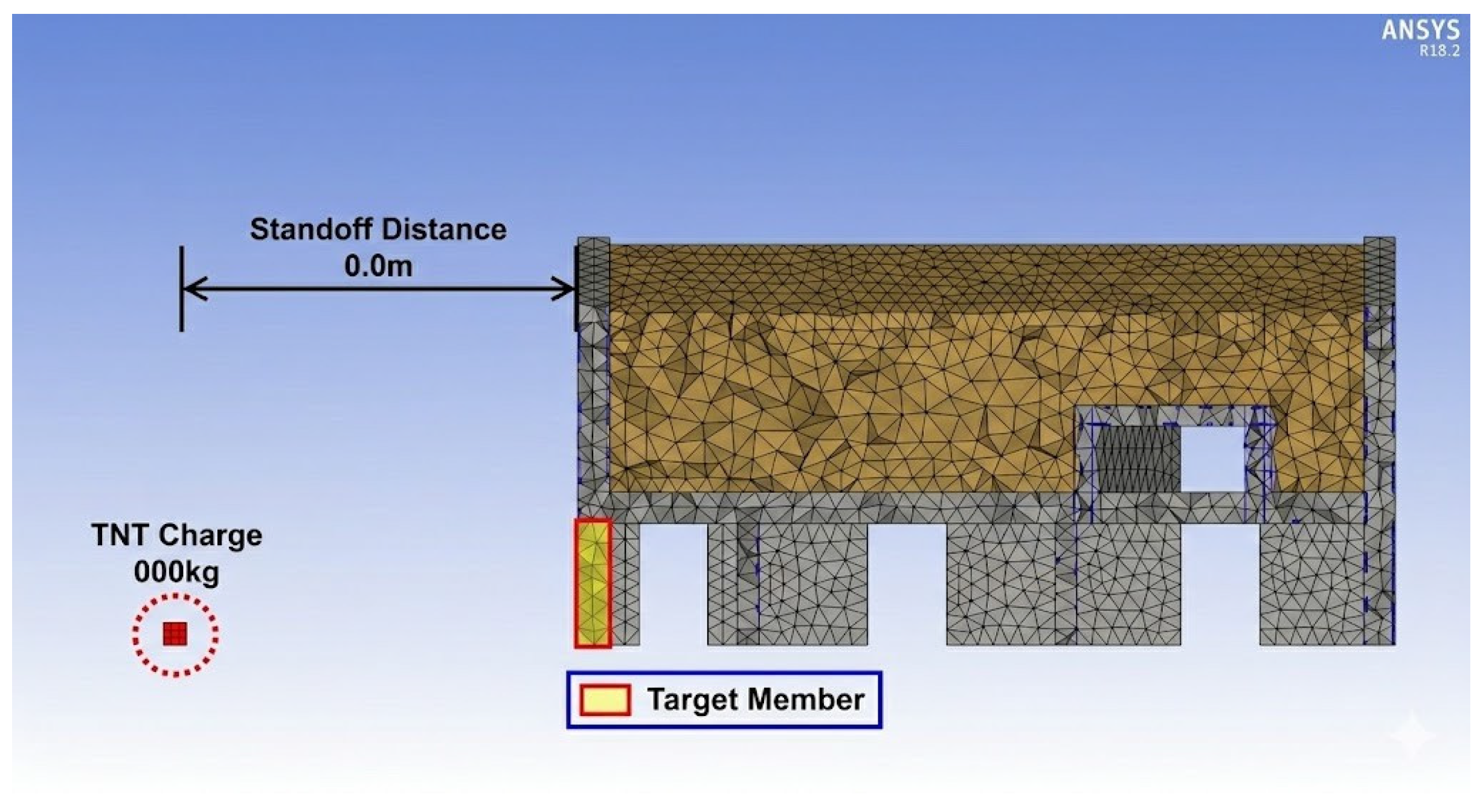
Considering the influence of the structure and ground, as well as the analysis conditions, the modeling was carried out as shown in Figure 4. For a conservative evaluation, the front wall of the covered artillery position (double-door type) (THK = 600 mm) was identified as the critical structural element for evaluation. To optimize the analysis time, the reinforcement spacing and cross-sectional area of the structural members were modified, and the reinforcement amount for each member was maintained the same while reducing the number of Linebodies, thereby achieving modeling optimization.
A fixed support condition was applied at the foundation of the structure. The interaction between concrete and reinforcement was modeled using a fully bonded assumption, in which relative slip between reinforcement and concrete was not explicitly considered. These assumptions were adopted for the global deformation-based assessment of the entrance-side front wall. It should be noted that the fixed support condition and fully bonded reinforcement assumption may reduce the calculated displacement compared with models that consider foundation flexibility or bond-slip behavior.
Material properties were input using AUTODYN(R18.2), and the boundary conditions of the foundation and air layer were defined. For the boundary condition of the atmosphere, Flow-out was assigned to the five faces except for the bottom surface, and the ground-interfacing bottom surface was modeled as a rigid reflective boundary.
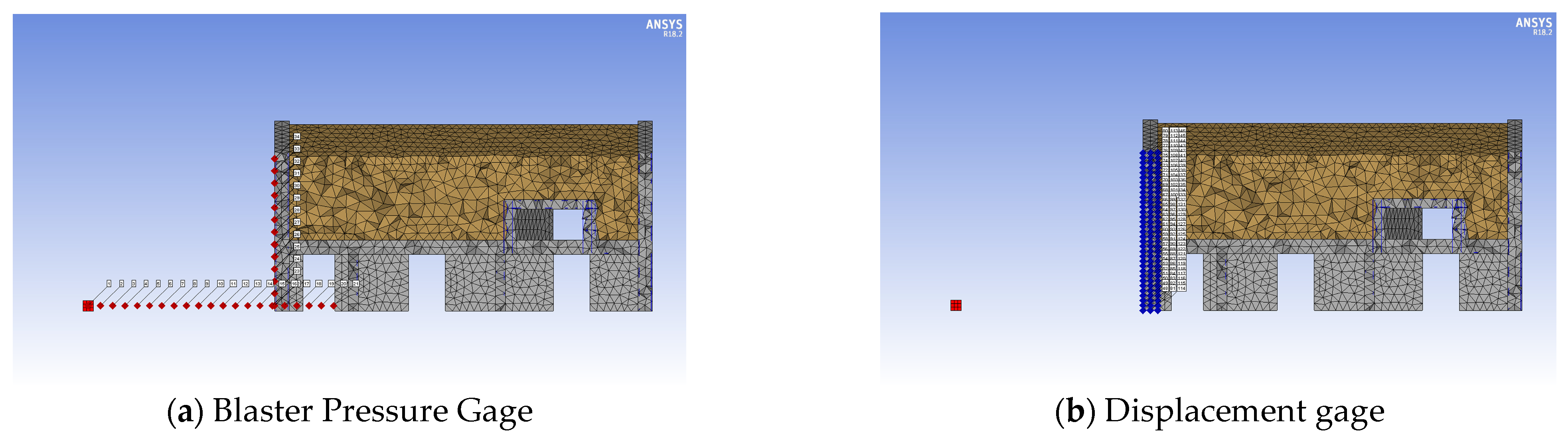
A total of 146 gauges were used to measure blast pressure, displacement, velocity, and acceleration, and the analysis was performed as shown in Figure 4. Under the protection grade A loading condition, the standoff distance was 0.0 m, and the explosive load used was a 000 kg class bomb with a charge ratio of about 00%. The location where the 0.0 m standoff distance was applied corresponds to the position of the front wall of the covered artillery position (double-door type). As shown in Figure 5a,b, gauges were arranged at intervals of 200 mm on the outer, middle, and inner regions of the front wall of the covered artillery position (double-door type). In the structure, displacement, velocity, and acceleration were measured, and in the air layer the blast pressure from the explosive to the front wall of the covered artillery position was measured at 500 mm intervals.

4. Numerical Analysis Results

4.1. Analysis of Blast Pressure Propagation and Wall Acting Load

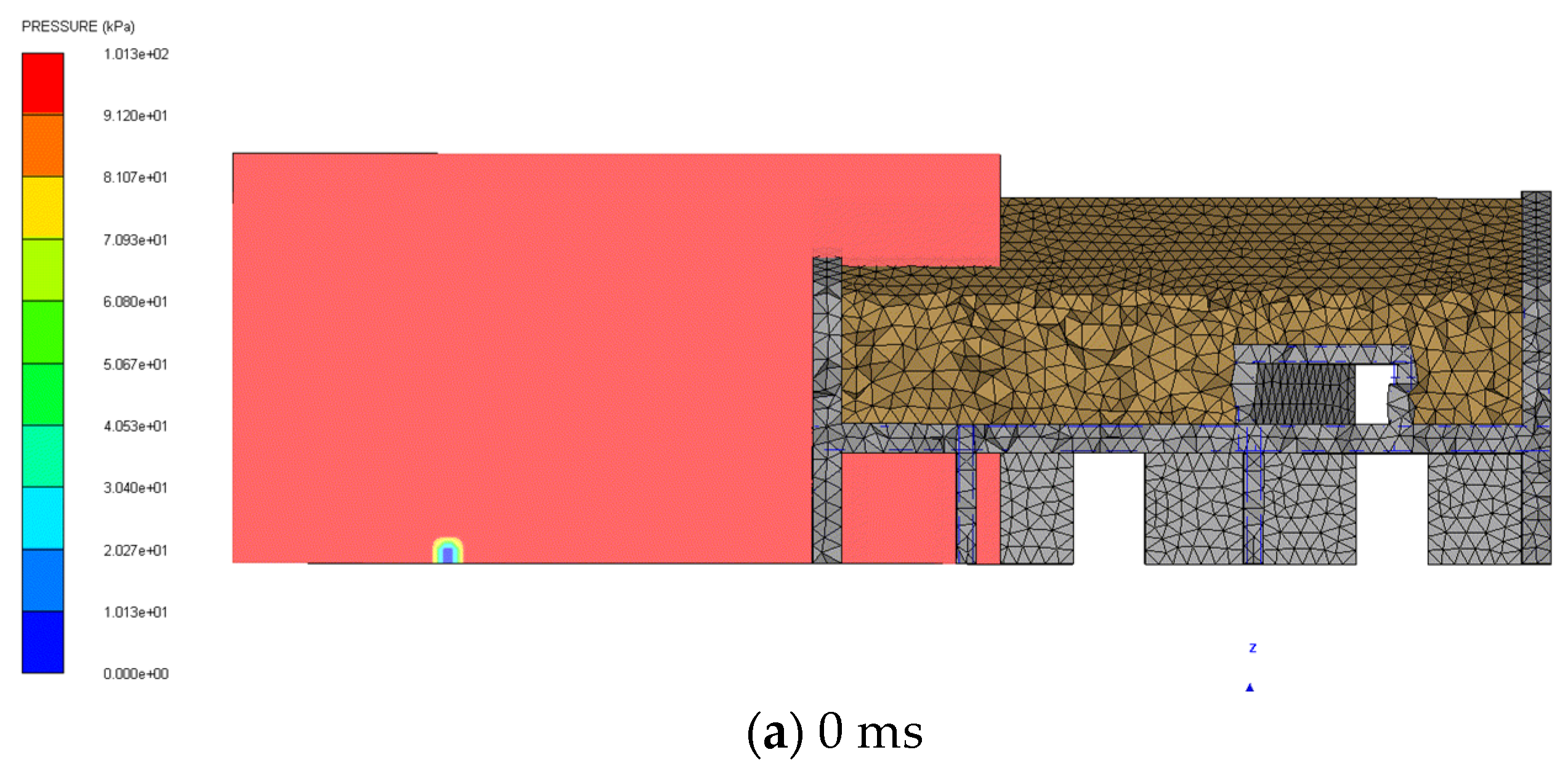
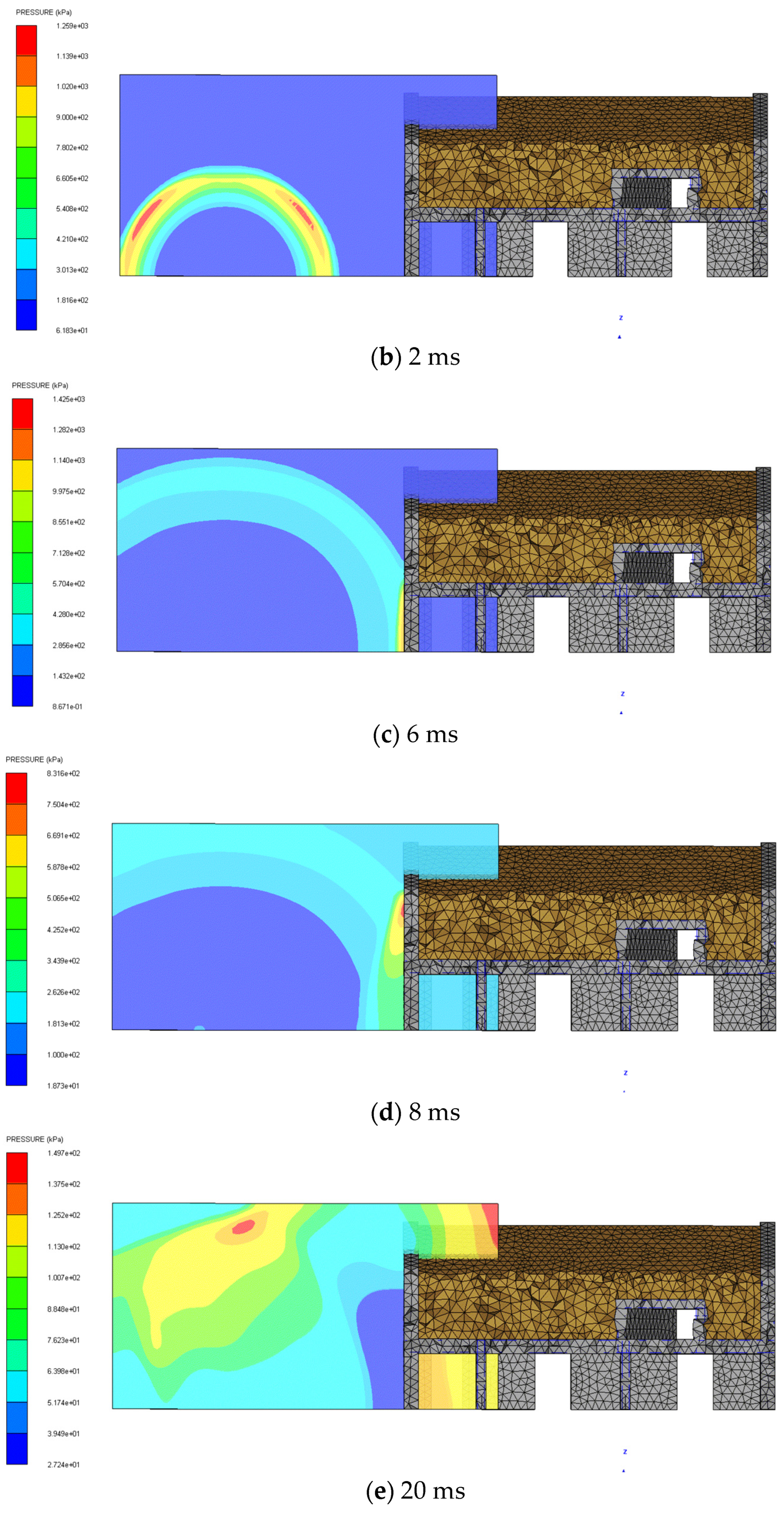
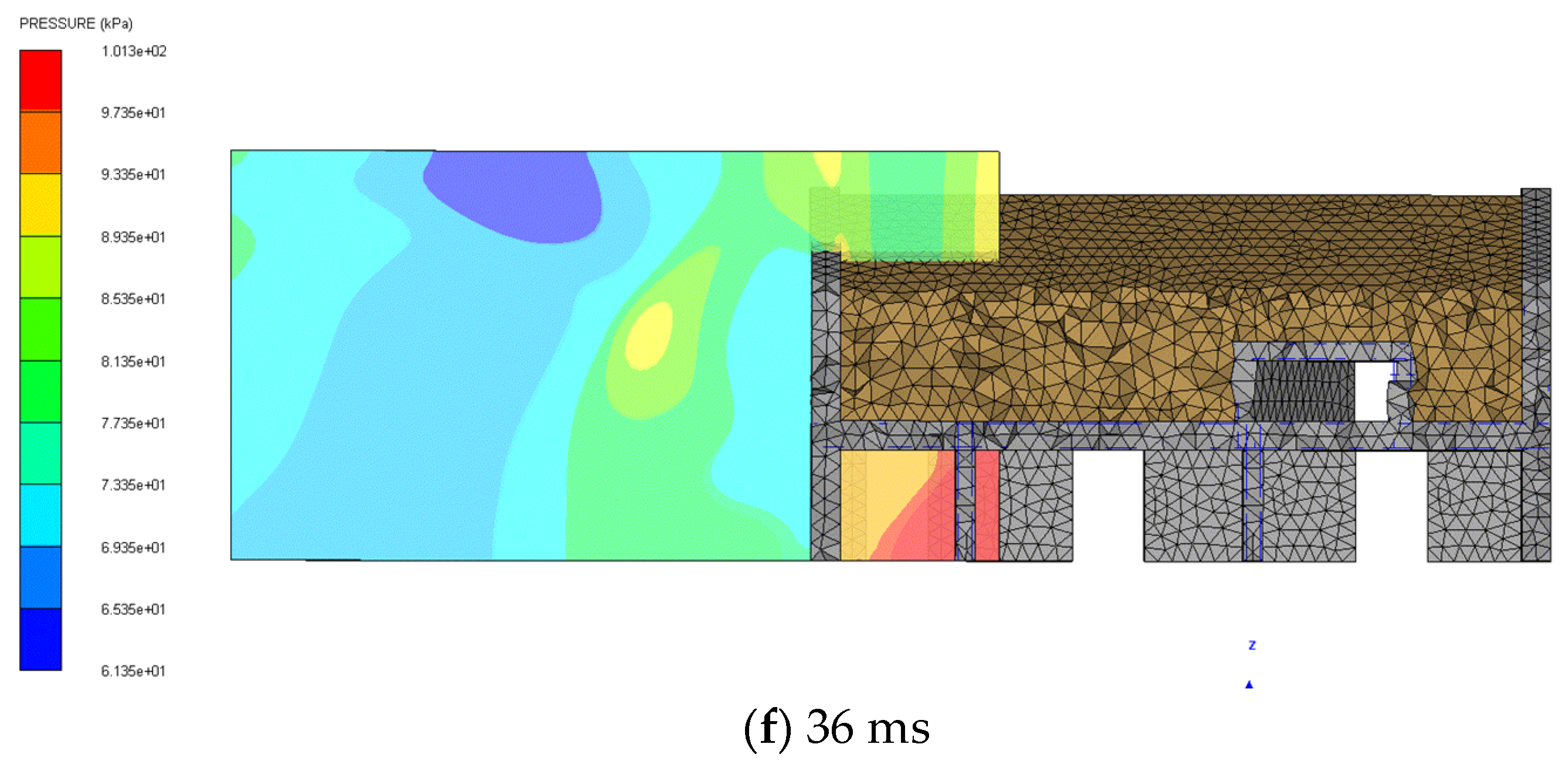
As a result of analyzing the pressure propagation pattern caused by the frontal standoff blast of a 00.0 kg TNT-equivalent explosive charge at 2 ms intervals for a total duration of 40 ms, it was found that immediately after the explosion, the shock wave expanded in a spherical shape and directly impacted the entrance-side front wall (Figure 6). According to the numerical analysis results, the maximum reflected pressure was detected at the central region of the wall closest to the explosion source, which is the result of the incident pressure in the atmosphere being amplified several times as it collided with the exterior wall of the structure. Examining the pressure distribution contour according to the time history, a typical characteristic of blast loading was observed in which the pressure rapidly decreases after the arrival of the first incident shock wave.
In particular, owing to the geometric configuration of the covered artillery position, the pressure wave experienced diffraction and interference near the wall edges and openings, resulting in a complex pressure distribution. These pressure-contour results indicate that the blast load was spatially distributed over the entrance-side front wall rather than being applied as a uniform two-dimensional load. This spatially varying pressure distribution is a key feature that can be evaluated using the three-dimensional model. The result showed that the blast pressure was concentrated on the entrance-side front wall, which was directly exposed to the incoming pressure wave under the selected frontal standoff blast scenario. This supports the selection of the entrance-side front wall as the primary evaluation member for the present scenario. However, this result should not be interpreted as excluding the possible criticality of other components under different blast directions or loading conditions.
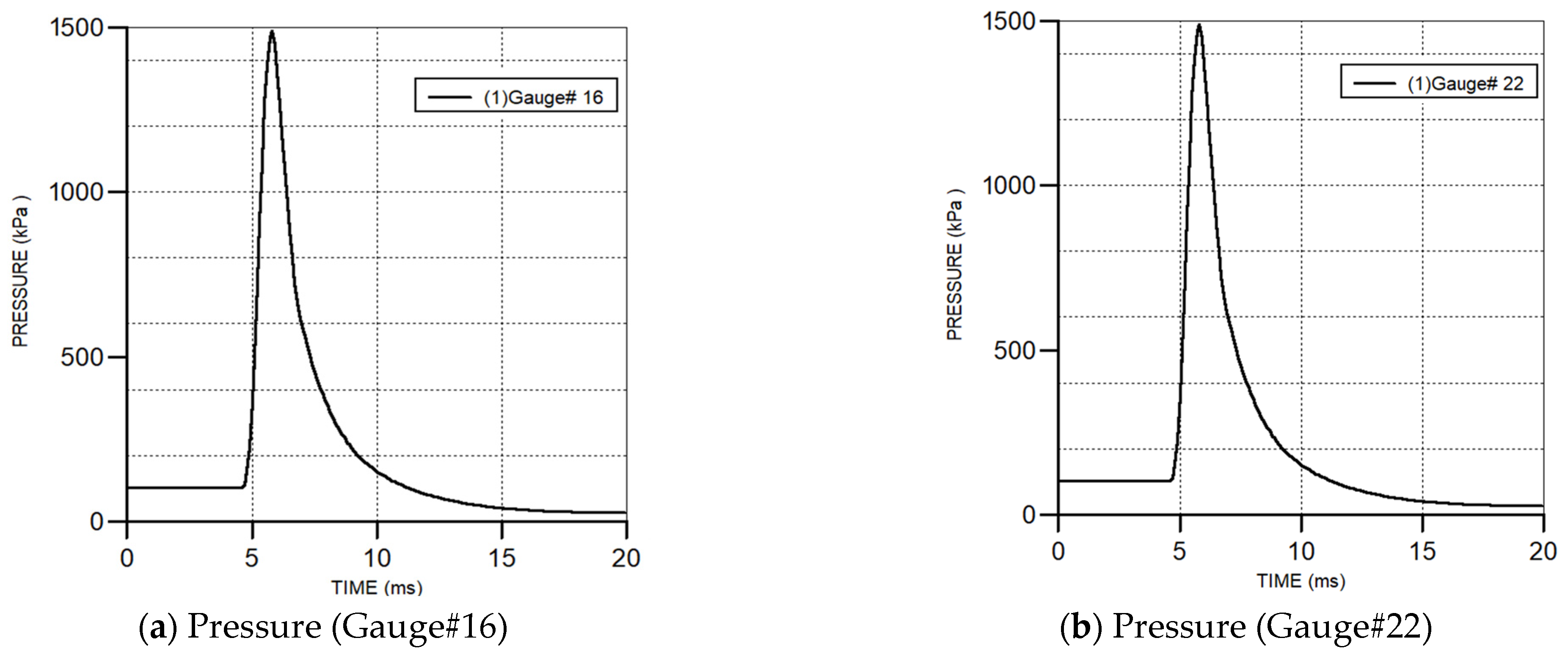
From the analysis conducted at 2 ms increments over a duration of 40 ms, both the positive and negative phases of the blast wave were identified, and the maximum blast pressure was transmitted to the wall at approximately 5.8 ms. The reported maximum pressure of 1487.6 kPa represents the wall-applied reflected pressure measured at the entrance-side front-wall surface in the coupled Euler–Lagrange analysis, rather than the free-field incident pressure. Table 3 summarizes the simulation results, including the maximum positive pressure, maximum negative pressure, and the maximum displacement of the analyzed wall located near the explosion point. Table 3 summarizes the simulation results, including the maximum positive pressure, maximum negative pressure, and the maximum displacement of the analyzed wall located near the explosion point.
It should be noted that the maximum pressure represents a transient peak value at the front-wall region and does not correspond to a sustained uniform static pressure acting over the entire wall surface. The subsequent wall displacement response is influenced by the time history of the pressure pulse, impulse, spatial pressure distribution, and the dynamic stiffness of the structural member.
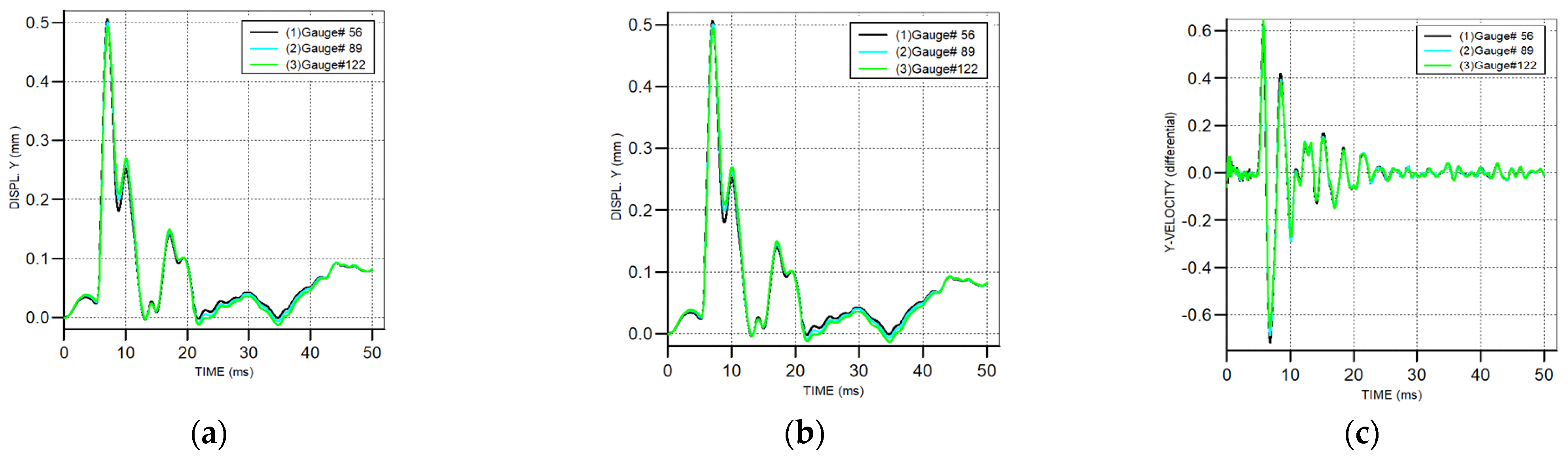
Figure 7 presents the time-history of the blast pressure measured in the air layer, showing the dynamic pressure response reaching the structure over time. Specifically, Figure 7a displays the pressure profile at Gauge# 16, and Figure 8b shows the pressure profile at Gauge# 22. Figure 8 shows the structural response in terms of displacement (a), velocity (b), and acceleration (c). The pressure-contour results show the three-dimensional propagation of the blast wave from the explosive source toward the entrance-side front wall. The reflected pressure was not treated as a uniform static load; instead, the time-dependent and spatially varying pressure field obtained from the Eulerian domain was coupled with the Lagrangian structural model. This enabled the calculation of the corresponding global deformation response of the front wall.

4.2. Dynamic Response Characteristics of the Structure

To analyze the dynamic response of the front wall, which directly receives the blast load, displacement, velocity, and acceleration data were extracted from the major gauge points. According to the analysis results, the wall began dynamic deformation accompanied by slight vibration immediately after the blast impact and reached the maximum response value within a very short time.
The maximum displacement measured at the center of the entrance-side front wall was 0.505 mm. This value represents the global dynamic displacement response obtained within the assumptions of the present AUTODYN model. Although the peak reflected pressure reached 1487.6 kPa, the calculated displacement was governed not only by the peak pressure but also by the short duration of the blast pressure pulse, the spatial pressure distribution, the flexural stiffness of the 600 mm thick reinforced concrete wall, the fixed support condition, and the fully bonded reinforcement assumption. Therefore, the displacement result should be interpreted as a numerical global response indicator of the analyzed front wall rather than as a directly validated field displacement or a local damage measure.
In addition, analysis of the displacement time-history graph showed that after reaching the maximum displacement, the structure rapidly returned without significant residual displacement. This suggests that the structure behaves within a stable elastic range rather than a plastic deformation region under the blast loading.

4.3. Calculation of Support Rotation Angle and Evaluation of Protective Performance

To evaluate the protective performance of the entrance-side front wall, the support rotation angle (θ) was calculated according to Equation (1) based on the maximum front-wall displacement obtained from the numerical analysis. The support rotation angle was calculated through the geometric relationship between the effective span of the member and the maximum dynamic displacement. Under the specified frontal standoff blast scenario of this study, the final support rotation angle was calculated as 0.012°, and it was compared with the evaluation index of UFC 3-340-02, which is the official design criterion presented previously. According to this criterion, a support rotation angle of 2° was used as the deformation-based limit for evaluating the elastic response level of reinforced concrete members.
The result of 0.012° corresponds to approximately 0.6% of the allowable limit. This indicates that, within the assumptions of the present fully bonded numerical model, the analyzed entrance-side front wall remained within the UFC elastic design limit under the specified frontal standoff blast scenario. However, this result should not be interpreted as a complete local damage or post-blast serviceability assessment. Cracking, spalling, scabbing, reinforcement yielding, residual deformation, and the possible increase in deformation due to bond-slip or bond degradation between concrete and reinforcement were not quantitatively evaluated in the present study.

5. Conclusions

5.1. Summary of Research Results

In this study, the global deformation-based protective performance of the entrance-side front wall of a covered artillery position (double-door type) was numerically evaluated using a three-dimensional hydrocode-based fluid–structure interaction analysis. Since numerical analysis of explosions involves problems of large deformation occurring within a very short period of time, the Coupled Analysis method was applied instead of conventional static and dynamic numerical analysis. In this approach, the air acting as the medium for transmitting blast pressure was modeled concurrently, and both the blast loading and structural response were evaluated simultaneously through fluid–structure interaction analysis. A 3D modeling and simulation was performed using ANSYS AUTODYN(R18.2), and it was determined whether the protective performance requirements specified in the UFC 3-340-02 were met. The entrance-side front wall surrounding the double-door opening was designated as the primary subject of investigation because it directly receives the incoming blast wave under the specified frontal standoff blast scenario and because the entrance zone is critical for the operational availability of the artillery system. To enhance computational efficiency, the reinforcement spacing and cross-sectional area of the structural members were modified while maintaining the same reinforcement quantity for each member, and the number of Linebodies was reduced to optimize the modeling. The structural deformation caused by blast pressure was investigated for both positive and negative pressure conditions. Based on the analysis results, the maximum blast pressure was measured as 1487.6 kPa, and the maximum displacement of the front wall (THK. 600 mm) of the covered artillery position (double-door type) was 0.505 mm. The support rotation angle corresponding to the maximum deformation of the front wall was calculated as 0.012°. Given that the support rotation angle of the entrance-side front wall under the 00.0 kg TNT-equivalent frontal standoff blast scenario at a distance of 0.0 m was calculated as 0.012°, which is far below the 2° limit specified in UFC 3-340-02, the analyzed front wall was assessed to remain within the elastic design range.

5.2. Significance and Contribution of the Study

This study has important academic significance in that it verified the validity of an advanced numerical simulation methodology for performance verification of military protective facilities where experimental testing is practically impossible. In particular, beyond the limitations of conventional static analysis or simple dynamic analysis, the Euler–Lagrange coupled analysis technique, which exchanges the propagation of blast pressure and structural deformation in real time, was applied, thereby significantly improving the precision of protective performance evaluation.
From the perspective of technical contribution, the analysis quantitatively showed that the entrance-side front wall recorded small global deformation responses, with a maximum displacement of 0.505 mm and a support rotation angle of 0.012°, under the specified 00.0 kg TNT-equivalent frontal standoff blast scenario.
This corresponds to approximately 0.6% of the allowable limit of 2° specified in UFC 3-340-02, indicating that the analyzed entrance-side front wall satisfies the elastic design limit for the specified numerical scenario. These results provide an objective technical basis for ensuring the survivability of key firepower assets in military operational environments and can serve as important benchmarking data when designing similar types of protective structures or reassessing the protection level of existing facilities. In addition, by avoiding excessively conservative design and inducing optimized design based on actual physical behavior, it is expected that both efficient execution of defense budgets and structural safety can be achieved simultaneously. The proposed assessment procedure can be extended to other military protective structures by redefining the structural geometry, material input data, reinforcement details, boundary conditions, and blast loading scenario. For existing facilities requiring retrofit assessment, the procedure may be used to compare the response before and after strengthening measures, such as wall thickening, reinforcement addition, opening reinforcement, or door-frame strengthening. In this sense, the contribution of this study lies in providing a criteria-based numerical assessment framework rather than design values that can be directly transferred to other structures.

5.3. Limitations and Future Work

The present study has several limitations. First, the AUTODYN model was not directly validated against full-scale blast-test data or a separate benchmark case for the same structural configuration. Future studies should include full-scale or reduced-scale blast tests, recognized benchmark simulations, and mesh sensitivity analyses to quantitatively verify the accuracy of the predicted blast pressure, wall displacement, and support rotation angle. In particular, a formal mesh convergence study should be performed to quantify the influence of mesh density on the calculated pressure, displacement, and support rotation angle.
Second, the analysis was limited to the entrance-side front wall under a single frontal standoff blast scenario with a 00.0 kg TNT-equivalent charge at a standoff distance of 0.0 m. The side walls, roof slab, joints, rear wall, and double-door leaf system were not separately evaluated. In addition, parametric cases involving different charge masses, standoff distances, contact blast conditions, or repeated blast loading were not considered. Thus, the results should be interpreted as a scenario-specific front-wall assessment rather than as a complete facility-level safety-margin evaluation.
Third, the protective performance was evaluated mainly using maximum displacement and the UFC 3-340-02 support rotation criterion. Detailed local damage indicators, including cracking, spalling, scabbing, reinforcement yielding, residual deformation, and post-blast serviceability, were not quantitatively evaluated. The interaction between concrete and reinforcement was modeled using a fully bonded assumption, and bond-slip, bond degradation, and reinforcement pull-out were not explicitly considered.
Finally, reinforcement layout, member details, boundary conditions, material stiffness assumptions, damping, and mesh density may influence the calculated response. However, separate sensitivity studies for these modeling assumptions were not conducted. Future studies should include experimental or benchmark validation, mesh and modeling sensitivity analyses, bond-slip modeling, local damage assessment, and parametric simulations for different blast scenarios and retrofit conditions.

Author Contributions

Conceptualization, S.A.; Methodology, S.A.; Software, S.L.; Validation, S.A. and S.L.; Formal Analysis, S.A.; Investigation, S.A.; Resources, S.L.; Data Curation, S.A.; Writing—Original Draft Preparation, S.A.; Writing—Review and Editing, S.L.; Visualization, S.A.; Supervision, S.L. All authors have read and agreed to the published version of the manuscript.

Funding

This research received no external funding.

Data Availability Statement

The original contributions presented in this study are included in the article; however, specific parameters such as the standoff distance and TNT charge weight have been redacted due to restrictions on disclosure due to military secrets. Further inquiries and requests for detailed data can be directed to the corresponding author.

Conflicts of Interest

The authors declare no conflicts of interest.

References

  1. Department of the Army. ADP 5-0 the Operation Process. 2019. Available online: https://irp.fas.org/doddir/army/adp5_0.pdf (accessed on 15 April 2026).
  2. El-Taher, M. The Effect of Wall and Backfill Soil Deterioration on Corrugated Metal Culvert Stability. Ph.D. Dissertation, Queen’s University, Ottawa, ON, Canada, 2009. [Google Scholar]
  3. Ngo, T.; Mendis, P.; Gupta, A.; Ramsay, J. Blast loading and blast effects on structures-An overview. Electron. J. Struct. Eng. 2007, 7, 76–91. [Google Scholar] [CrossRef]
  4. Krauthammer, T. Modern Protective Structures; CRC Press: Boca Raton, FL, USA, 2008. [Google Scholar]
  5. Dusenberry, D.O. (Ed.) Handbook for Blast-Resistant Design of Buildings; John Wiley & Sons, Inc.: New York, NY, USA, 2010. [Google Scholar]
  6. Draganić, H.; Gazić, G.; Varevac, D. Experimental investigation of design and retrofit methods for blast load mitigation—A state-of-the-art review. Eng. Struct. 2019, 190, 189–209. [Google Scholar] [CrossRef]
  7. US Army Corps of Engineers; Naval Facilities Engineering Command (Eds.) UFC-3-340-02; Design of Structures to Resist the Effects of Accidental Explosions. Air Force Civil Engineer Support Agency, Dept of the Army and Defense Special Weapons Agency: Washington, DC, USA, 2008. Available online: https://www.wbdg.org/FFC/DOD/UFC/ARCHIVES/ufc_3_340_02.pdf (accessed on 8 June 2026).
  8. Baker, W.E. Explosions in Air; University of Texas Press: Austin, TX, USA, 1973. [Google Scholar]
  9. Kingery, C.N.; Bulmash, G. ARBRL-TR-02555; Airblast Parameters from TNT Spherical Air Burst and Hemispherical Surface Burst. US Army Armament Research and Development Center, BRL: Aberdeen Proving Ground, MD, USA, 1984; p. 124.
  10. Karlos, V.; Solomos, G. Calculation of Blast Loads for Application to Structural Components; JRC Technical Report; European Union: Luxembourg, 2013. [Google Scholar]
  11. Lee, E.L.; Hornig, H.C.; Kury, J.W. Adiabatic Expansion of High Explosive Detonation Products; Lawrence Radiation Laboratory, University of California: Livermore, CA, USA, 1968. [Google Scholar]
  12. Zheng, C.; Kong, X.S.; Wu, W.G.; Xu, S.X.; Guan, Z.W. Experimental and numerical studies on the dynamic response of steel plates subjected to confined blast loading. Int. J. Impact Eng. 2018, 113, 144–160. [Google Scholar] [CrossRef]
  13. UFC 3-340-02; Structures to Resist the Effects of Accidental Explosion with Change 2. Unified Facilities Criteria (UFC) 3-340-02; U.S. Department of Defense: Washington, DC, USA, 2008; pp. 45–46.
  14. Fallon, C.; McShane, G.J. Fluid-structure interactions for the air blast loading of elastomer-coated concrete. Int. J. Solids Struct. 2019, 168, 138–152. [Google Scholar] [CrossRef]
  15. Wang, W.; Zhang, D.; Lu, F.; Wang, S.-C.; Tang, F. Experimental study and numerical simulation of the damage mode of a square reinforced concrete slab under close-in explosion. Eng. Fail. Anal. 2013, 27, 41–51. [Google Scholar] [CrossRef]
  16. Li, J.; Wu, C.; Hao, H. An experimental and numerical study of reinforced ultra-high performance concrete slabs under blast loads. Mater. Des. 2015, 82, 64–76. [Google Scholar] [CrossRef]
  17. Guo, Y.L.; Zhou, P.; Wang, M.Z.; Pi, Y.L.; Bradford, M.A.; Tong, J.Z. Experimental and numerical studies of hysteretic response of triple-truss-confined buckling-restrained braces. Eng. Struct. 2017, 148, 157–174. [Google Scholar] [CrossRef]
  18. Su, Q.; Wu, H.; Sun, H.S.; Fang, Q. Experimental and numerical studies on dynamic behavior of reinforced UHPC panel under medium-range explosions. Int. J. Impact Eng. 2021, 148, 103761. [Google Scholar] [CrossRef]
  19. Wang, Z.H.; Wen, H.M.; Li, X.H.; Hu, J.B. On the equation of state for concrete-like materials. J. Build. Eng. 2022, 61, 105262. [Google Scholar] [CrossRef]
  20. Wang, Z.H.; Wen, H.M. A modified p∼ α equation of state for concrete-like materials. J. Build. Eng. 2023, 67, 106017. [Google Scholar] [CrossRef]
  21. Johnson, G.R.; Cook, W.H. A Constitutive Model and Data for Metals Subjected to Large Strains, High Strain Rates and High Temperatures. In Proceedings of the 7th International Symposium on Ballistics, The Hague, The Netherlands, 19–21 April 1983. [Google Scholar]
  22. Ministry of National Defense. DMFC 5-60-30; Standards for National Defense and Military Facilities; Design Guide for Ammunition Storage. Ministry of National Defense: Seoul, Republic of Korea, 2011.
  23. Biggs, J.M. Introduction to Structural Dynamics; McGraw-Hill College: New York, NY, USA, 1964. [Google Scholar]
  24. Century Dynamics. AUTODYN Theory Manual, Revision 4.3; Century Dynamics Inc.: San Ramon, CA, USA, 2005. [Google Scholar]
  25. Teich, M.; Gebbeken, N. Aerodynamic damping and fluid-structure interaction of blast loaded flexible structures. Trans. State Art. Sci. Eng. 2011, 82, 491–496. [Google Scholar]
  26. Shi, Y.; Li, Z.; Hao, H. Mesh size effect in numerical simulation of blast wave propagation and interaction with structures. Trans. Tianjin Univ. 2008, 14, 396–402. [Google Scholar] [CrossRef]
Figure 1. Pressure–time variation for a free-air burst.
Buildings 16 02382 g001
Figure 2. Maximum Support Rotation Angle of a Straight Member.
Buildings 16 02382 g002
Figure 3. The detailed AUTODYN input parameters corresponding to the material models.
Buildings 16 02382 g003
Figure 4. Structural configuration and explosive charge location.
Buildings 16 02382 g004
Figure 5. Gauge locations for measuring blast pressure and displacement: (a) Blaster pressure gauge (indicated by red symbols and numbers 1–25); (b) Displacement gauge (indicated by blue symbols).
Buildings 16 02382 g005
Figure 6. Blast Load Contour.
Buildings 16 02382 g006aBuildings 16 02382 g006bBuildings 16 02382 g006c
Figure 7. Blast Output Graph.
Buildings 16 02382 g007
Figure 8. Wall Output Graph. (a) Displacement Y (Gauge #56, 89, 122); (b) Velocity Y (Gauge #56, 89, 122); (c) Acceleration Y (Gauge #56, 89, 122).
Buildings 16 02382 g008
Table 1. The protective performance criteria specified in UFC 3-340-02.
Protection GradeDesign MethodDamage CharacteristicsMaximum Support
Rotation Angle
AElastic designOccurrence of micro-cracks0~2°
BElasto-plastic designCracking or crushing2~6°
CPlastic designSeparation of concrete from reinforcement6~12°
Table 2. General conditions of the target structure and blast loading.
CategorySpecifications and Conditions
ConcreteCompressive Strength30 MPa
Elastic Modulus28,000 MPa
Poisson’s ratio0.19
Bulk Modulus35.27 GPa
Density2.75 g/cm3
RebarYield StrengthSD400
Elastic Modulus232,800 MPa
Poisson’s ratio0.28
Density7.83 g/cm3
Bulk modulus1.59 × 108 kPa
Shear modulus8.18 × 107 kPa
DiameterHD13, HD16, HD19
StructureWidth53.0 m
Length24.0 m
Height7.75 m
Thickness of Wall600 mm
AirDensity1.225 kg/m3
Gamma1.40
Initial Internal Energy206,800 kJ/kg
TNTDensity1.630
Detonation velocity6.93 × 103 m/s
Energy/unit volume6.00 × 106 kJ/m3
Pressure7.00 × 107 kPa
Table 3. Summary of Simulation Results.
ParameterOccurrence TimePeak ValueGauge Location
Positive Pressure5.8 ms1487.6 kPaGauge#16, #22 (Air)
Negative Pressure20.0 ms27.2 kPa
(1 atm = 101.325 kPa)
Gauge#16, #22 (Air)
Displacement Y
Positive Pressure
(RW3, THK. 600 mm)
7.0 ms0.505 mmGauge#56, 89, 122
(Con`c)
Displacement Y
Negative Pressure
(RW3, THK. 600 mm)
34.7 ms−0.013 mmGauge#56, 89, 122
(Con`c)
Disclaimer/Publisher’s Note: The statements, opinions and data contained in all publications are solely those of the individual author(s) and contributor(s) and not of MDPI and/or the editor(s). MDPI and/or the editor(s) disclaim responsibility for any injury to people or property resulting from any ideas, methods, instructions or products referred to in the content.