1. Introduction
Reinforced concrete deep beams are structural elements in which the shear span-to-effective depth ratio (a/d) is generally less than 2.0 or the clear span does not exceed four times the beam depth (ln < 4 h), and in which the load-transfer mechanism cannot be explained by the Bernoulli–Euler hypothesis that plane sections remain plane after deformation [
1,
2,
3]. Unlike conventional slender beams, load transfer in these elements occurs through arch action, characterized by the formation of a direct compression strut between the loading point and the support region [
4,
5,
6]. Therefore, deep beams are widely used in structural regions where high shear forces and short load-transfer paths are dominant, such as transfer floors, bridge piers, industrial structures, and coupling beams in shear wall systems [
1,
2]. However, the transition from deep beam behavior to slender beam behavior is gradual rather than abrupt. Kani [
7] identified the region immediately above this limit as a critical range representing the transition from deep beam behavior to slender beam behavior, in which a significant reduction in shear strength occurs. Therefore, understanding how the load-transfer mechanism changes at different shear span-to-effective depth ratios is important, particularly for evaluating the structural behavior of reinforced concrete beams containing discontinuities.
In recent years, studies in the field of construction materials have increasingly focused on sustainable and low-carbon cementitious systems [
8,
9], while the safe and functional use of existing reinforced concrete structures throughout their service life has remained an important engineering issue. In this context, post-installed openings may be required in the webs of existing reinforced concrete beams to accommodate mechanical, electrical, and plumbing systems. Such openings create geometric discontinuities in the load-transfer path, leading to stress concentrations, changes in crack development, stiffness reduction, and loss of load-carrying capacity [
10].
The first comprehensive studies on reinforced concrete beams with web openings were reviewed by Mansur and Tan [
10], who emphasized that the effect of openings on beam behavior is closely related to opening size, opening location, and the load-transfer path. Subsequent experimental and numerical studies investigated the effects of web openings on the load-carrying capacity, cracking load, stiffness, deflection behavior, and failure mechanism of reinforced concrete beams by considering different parameters. With respect to opening size, previous studies reported that increasing the opening ratio, opening height, or opening diameter led to significant reductions in load-carrying capacity, shear capacity, and stiffness, whereas beams with smaller openings could exhibit behavior closer to that of reference beams [
11,
12,
13,
14,
15,
16]. Studies on opening location showed that openings located in shear-critical regions, near supports, or along the diagonal load-transfer path had more pronounced effects on capacity reduction, inclined crack development, and failure mode [
17,
18,
19,
20].
In addition, studies considering the a/d ratio, opening size, and opening location together have shown that openings located in the shear region may increase stress concentration, reduce load-carrying capacity, and lead to earlier damage development [
21,
22]. Similarly, studies focusing on opening depth, opening length, and small circular opening arrangements have indicated that opening dimensions and arrangement affect both shear and flexural behavior, and that crack development, failure mode, and arch action may vary depending on the opening geometry [
23,
24,
25]. Furthermore, various experimental and numerical studies have shown that the size, geometry, and location of web openings can significantly affect stress distribution, crack development, stiffness, load-transfer mechanism, and damage behavior in beams [
26,
27,
28,
29,
30,
31]. Taken together, these studies indicate that the effect of web openings should be evaluated not only in terms of opening size, but also together with opening location within the load-transfer mechanism, opening geometry, and the behavioral regime of the beam.
In addition to experimental and numerical studies, strut-and-tie model (STM)-based predictive approaches for reinforced concrete beams with web openings have also been discussed in the literature. STM is an idealized modeling approach that represents the internal force flow in regions with nonlinear stress distribution through compression struts, tension ties, and nodal zones. Therefore, STM provides an important theoretical framework, particularly for interpreting discontinuities around web openings and in deep beams, where load transfer occurs through short and direct compression fields. In beams with web openings, the opening may interrupt the diagonal compression field and cause the load-transfer path to be redistributed around the opening region. Kong and Sharp [
32] proposed an early load-path idealization for deep beams with openings, assuming that the load is transferred around the opening through upper and lower paths. Almeida and Oliveira Pinto [
33] and Chen et al. [
34] showed that determining the STM configuration for deep beams with openings may be complex and that different modeling approaches may show varying levels of agreement with experimental results. Abbood [
35] emphasized that selecting an appropriate STM configuration for deep beams with openings may involve uncertainties and that a direct or unified modeling approach remains limited.
Current reinforced concrete design codes, such as ACI 318-19 [
1], Eurocode 2 [
36], and CSA A23.3 [
37], provide general provisions for flexure, shear, minimum reinforcement, detailing, and anchorage in conventional beams. These documents also provide an STM-based evaluation framework for deep beams and regions with discontinuities. Such provisions provide a useful background for generally interpreting the geometric discontinuities caused by openings and the associated changes in the load-transfer mechanism. However, current design codes do not define a direct capacity equation for circular web openings created by core drilling after concrete hardening. This limitation becomes more evident, particularly when opening diameter, opening location, local reinforcement discontinuity, and boundary conditions must be considered together. Mabrouk et al. [
38] also stated that the design of deep beams with openings is a complex problem and that direct guidance for these members remains limited in current design codes. This situation highlights the importance of considering opening diameter, opening location, local reinforcement discontinuity, and boundary conditions together in existing reinforced concrete beams with post-installed web openings.
Although extensive studies are available in the literature on reinforced concrete beams with web openings, a considerable number of these studies formed the openings before concrete casting by using polystyrene foam blocks or PVC pipes [
39,
40,
41,
42]. In this approach, reinforcement continuity around the opening is generally preserved, whereas in existing reinforced concrete structures, post-installed openings created by core drilling may cause not only section loss but also local reinforcement discontinuity due to the interruption of stirrup legs and horizontal web reinforcement passing through the opening region. Al-Mahbashi et al. [
43] drew attention to the structural risks associated with post-installed openings in existing structures; however, in that study, the openings were formed during the concrete casting stage. Özkılıç et al. [
44] investigated the shear and bending performances of reinforced concrete beams with different sizes of circular openings and created the openings by core drilling; however, local reinforcement discontinuity associated with the core-drilling process was not considered as a separate variable in that study. In addition, most studies in the literature have focused on simply supported systems [
11,
12,
13,
14,
15,
16,
17,
18,
19,
20,
21,
22,
23,
24,
25,
26,
27,
28,
29,
30,
31,
32,
33,
34,
35,
36,
37,
38,
39,
40,
41,
42,
43,
44,
45,
46,
47,
48,
49,
50], which represent the restrained-end behavior observed in actual reinforced concrete frame systems only to a limited extent. Studies on continuous deep beams have shown that moment distribution, crack development, and the load-transfer mechanism may differ from those of simply supported beams [
51,
52,
53]. Therefore, experimental studies investigating the effect of circular web openings created by core drilling after concrete hardening on the behavior of restrained-end reinforced concrete beams under different a/d ratios remain limited.
This study presents a comprehensive experimental investigation conducted on full-scale (1:1) reinforced concrete beams with fixed-ended boundary conditions to address the methodological shortcomings identified in the literature. As an original aspect of the study, circular openings in the beam webs were created by core drilling after concrete hardening rather than before concrete casting. During this process, the stirrups and horizontal web reinforcement passing through the opening region were cut, whereas the main tensile and compression longitudinal bars were preserved and maintained their continuity. In this way, the local reinforcement discontinuity that may occur in field applications due to post-installed openings, together with the associated behavioral changes, was experimentally represented. The scope of the study was not limited to deep beam behavior alone. Instead, the effect of beam slenderness on opening sensitivity was systematically investigated for a/d ratios of 1.25, 1.75, and 2.25. In this context, the openings were located in the shear span region and the midspan region. These openings were introduced to investigate the effect of different opening diameters on beam behavior and were comparatively evaluated in beams with different a/d ratios in terms of load-carrying capacity, crack development, failure mode, and energy dissipation capacity. In this respect, considering boundary conditions representative of beam–column connection regions in existing reinforced concrete structures, this study provides experimental data on the realistic case of post-installed web openings required for mechanical, electrical, and plumbing systems and offers a practical basis for evaluating the effects of opening diameter, opening location, a/d ratio, and restrained-end conditions on beam behavior.
2. Experimental Program
The main parameters investigated in this study were the shear span-to-effective depth ratio (a/d), opening diameter, and opening location. The test beams were divided into three groups according to the a/d ratio, and in each group, specimens with openings located at midspan and in the shear span, together with one reference specimen, were tested. The openings in the shear span region were symmetrically located at the midpoint of the region between the support and the loading point. A total of 21 reinforced concrete beams were tested in the experimental program. The geometric properties, reinforcement layouts, and experimental procedure of the test beams are presented in detail in the following sections.
2.1. Test Specimens
All specimens were produced at full scale (1:1) to represent actual structural applications. For all reinforced concrete beams produced within the scope of the experimental program, the total length (L), beam depth (h), effective depth (d), and beam width (b) were kept constant at 3500 mm, 600 mm, 560 mm, and 250 mm respectively.
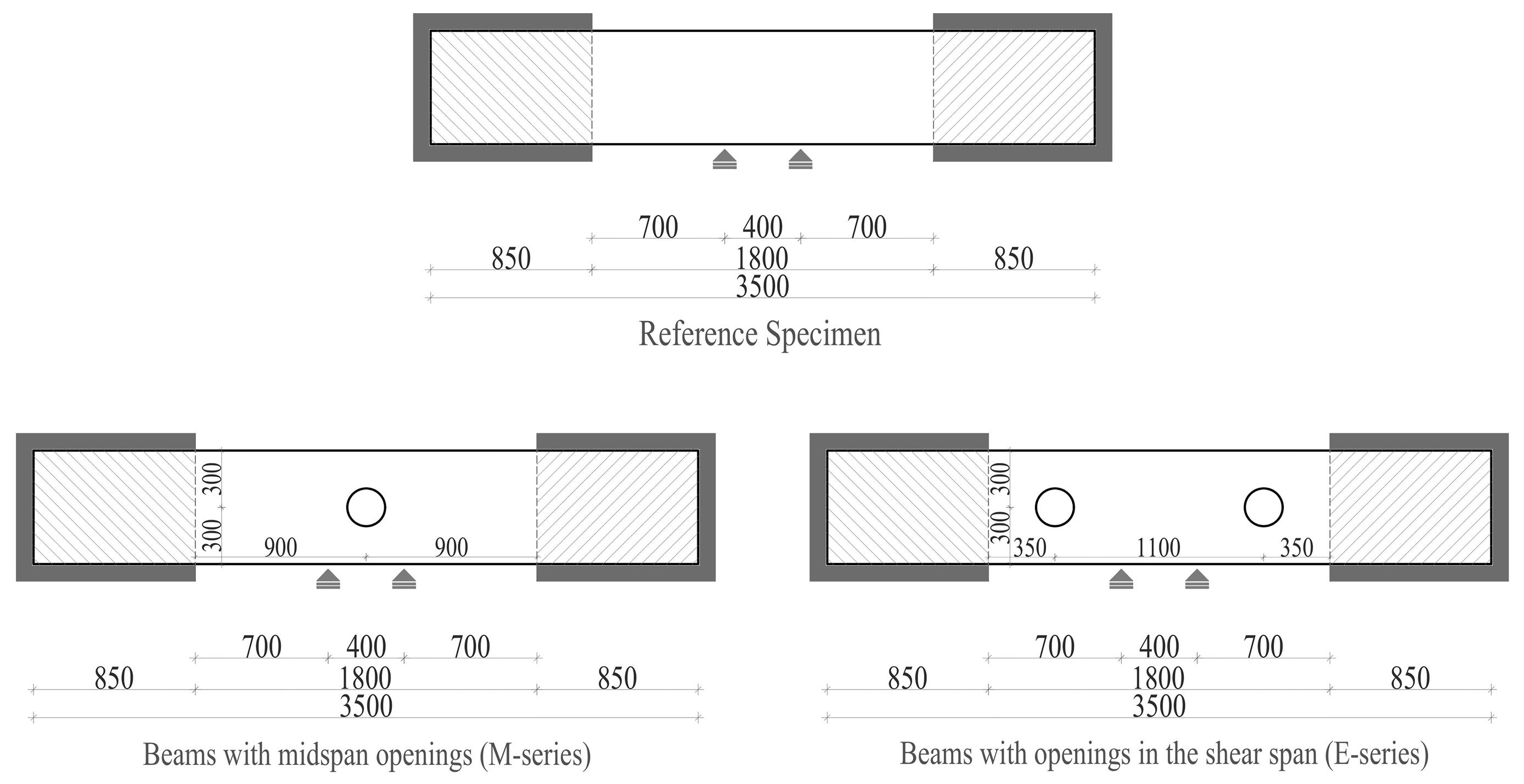
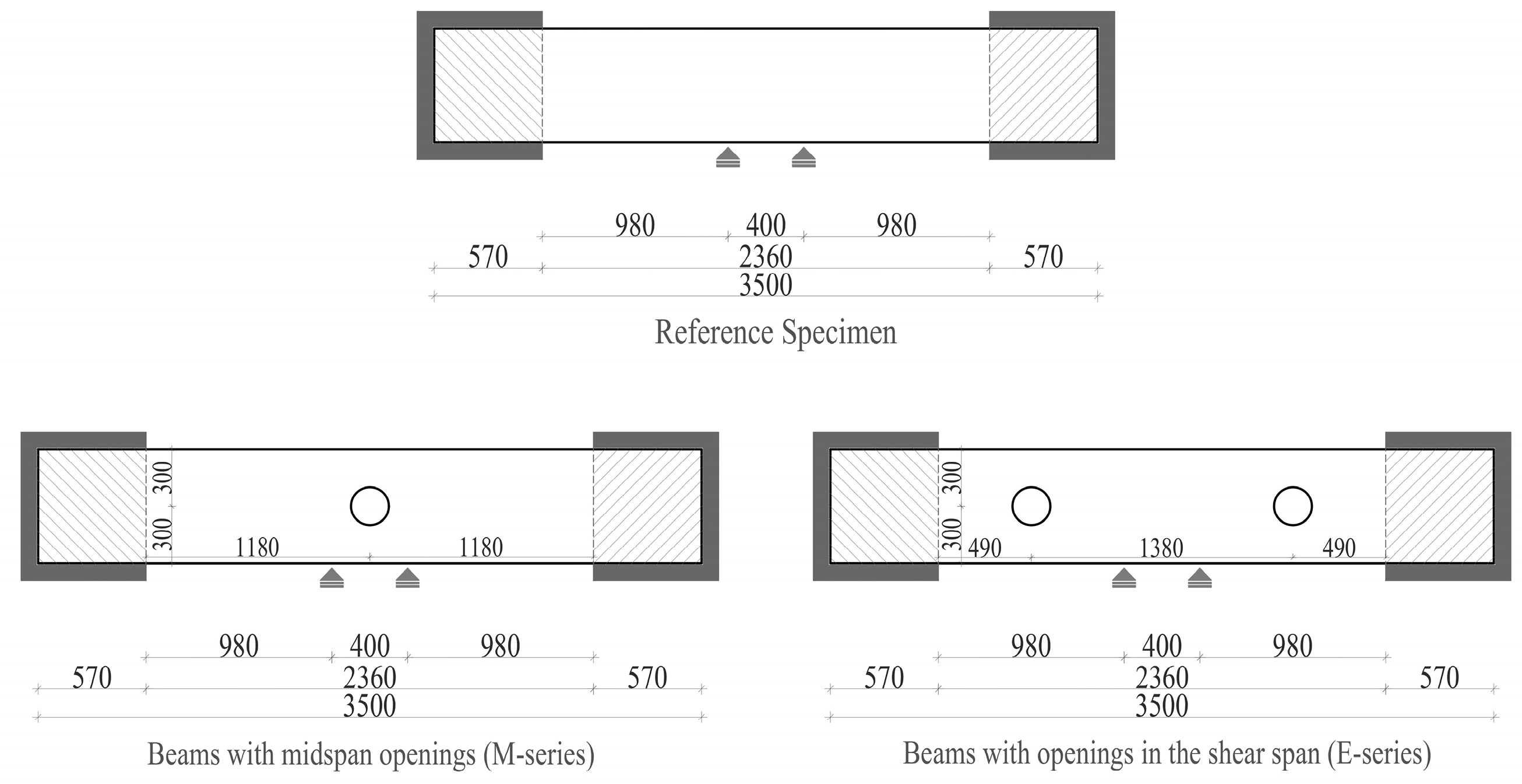
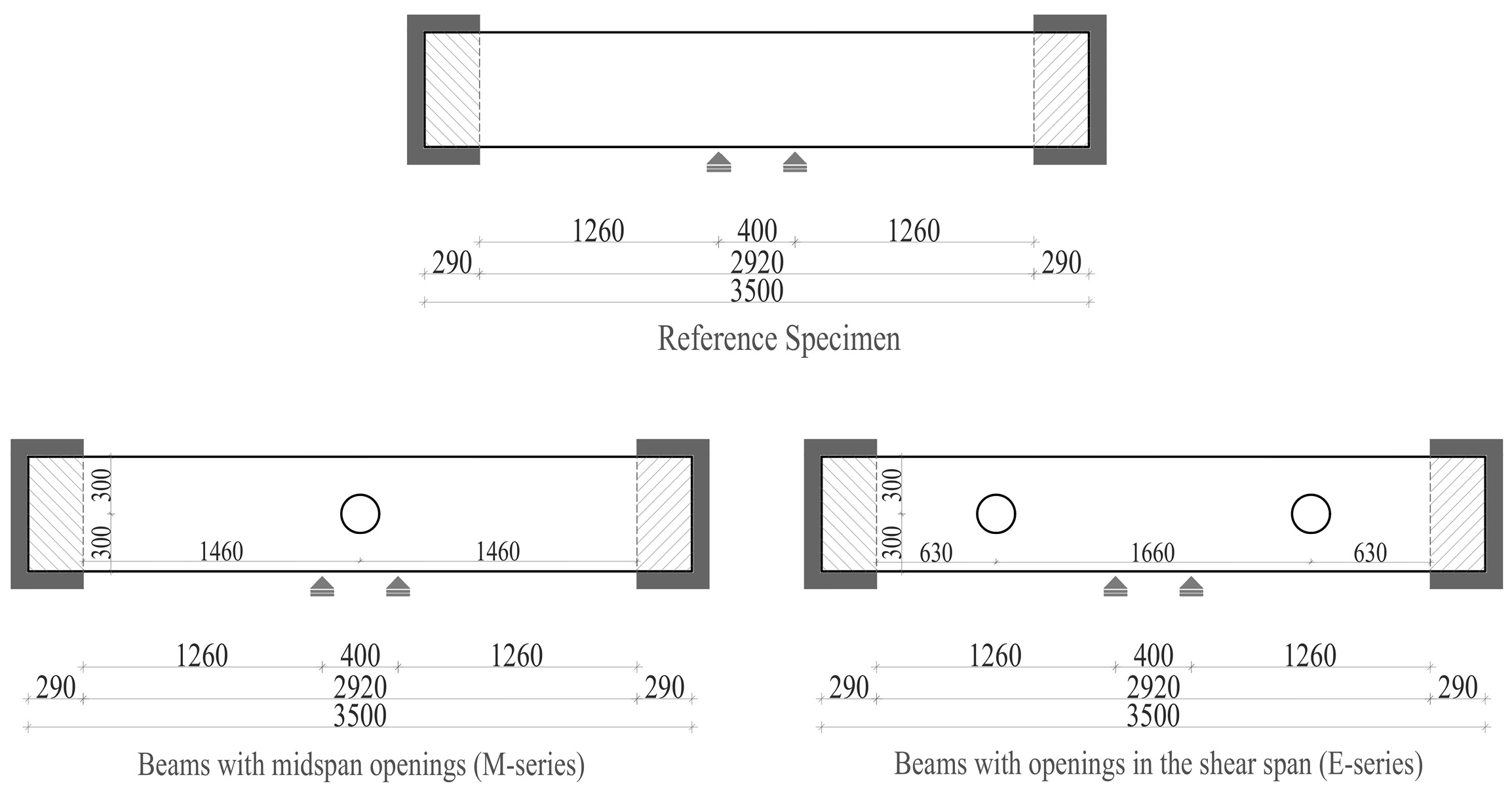
One of the main parameters affecting beam behavior was the shear span-to-effective depth ratio (a/d), which was considered at three different values in this study: 1.25, 1.75, and 2.25. These different a/d ratios were obtained by moving the supports along the beam without changing the total beam length or cross-sectional dimensions. In this arrangement, the two loading points were kept fixed in the central region of the beam, and the 400 mm distance between the loading points remained the same for all specimens. Thus, for different a/d ratios, the shear span (a), defined as the distance between the support and the nearest loading point, and the clear span between the two supports (Lnet) varied. In this study, Lnet refers to the clear distance between the two supports. The geometric properties, a/d ratios, and opening parameters of the specimens are summarized in
Table 1.
The other main variables investigated in the experimental study were the diameter and location of the openings formed in the beam webs. In each a/d group, the opening arrangement and opening diameters were kept identical. In this context, the openings were created by core drilling after concrete hardening and were located at midspan and at the midpoint of the shear span between the support and the loading point.
The opening diameters were selected as 100 mm, 200 mm, and 300 mm for each location, and thus the effects of opening diameter and opening location on beam behavior were comparatively investigated for different a/d ratios. For each a/d ratio, a total of seven beams, including one reference specimen, were designed, and thus the experimental program consisted of 21 reinforced concrete beams in total.
In the specimen coding system, the prefix DB (Deep Beam) was used for specimens with a/d = 1.25 and 1.75, whereas the prefix B (Beam) was used for specimens with a/d = 2.25. The number following this abbreviation denotes the a/d ratio. The letters E and M indicate that the opening is located in the shear span region and the midspan region, respectively. The letter R denotes the reference specimen, whereas the numerical values indicate the opening diameter (mm). The specimen details and designations are summarized in
Table 1.
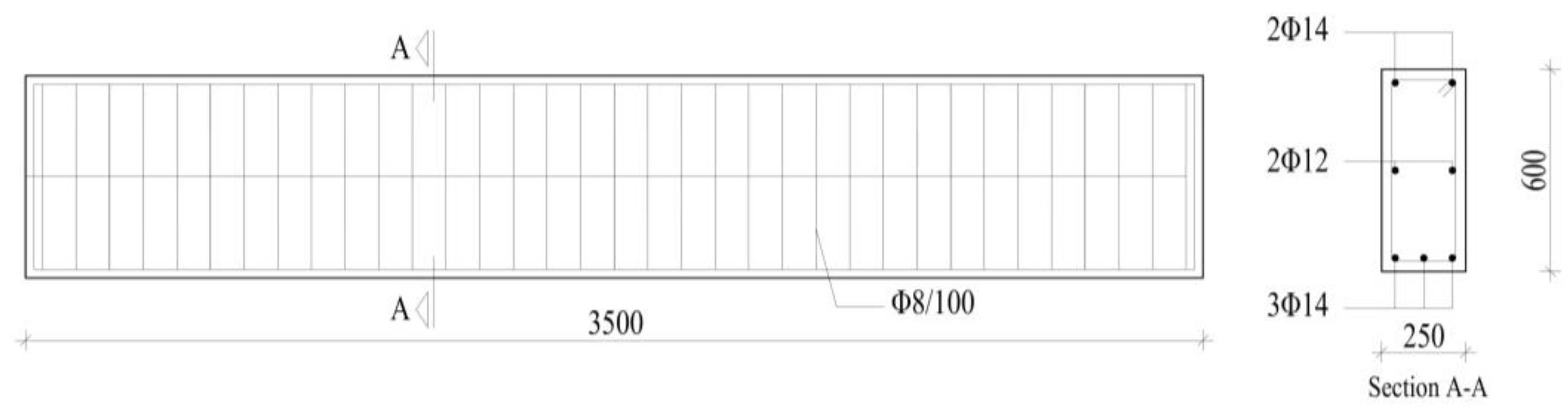
The reinforcement configuration was kept the same for all specimens. As longitudinal reinforcement, 3Ø14 tensile bars were used in the bottom region and 2Ø14 compression bars were used in the top region. In addition, 2Ø12 continuous longitudinal web reinforcement bars were placed in the beam web. The transverse reinforcement consisted of two-legged stirrups spaced at Ø8/100 mm. In the design of the specimens, the target concrete class was C25, and the reinforcing steel grade was selected as B420C. The area of the bottom tensile reinforcement was calculated as
mm
2 for 3Ø14 bars. Considering the section width of
mm and the effective depth of
mm, the longitudinal reinforcement ratio was obtained as
. According to the minimum flexural reinforcement expression given in ACI 318-19, taking
MPa for C25 concrete and
MPa for B420C reinforcing steel, the relationship
was used. Accordingly,
and
were obtained. Therefore, the minimum reinforcement ratio according to ACI 318-19 was approximately
. Based on this evaluation, the value of
used in this study was considered to represent a near-minimum longitudinal reinforcement level according to the ACI 318-19 minimum flexural reinforcement expression. The reinforcement details of the beams are presented in
Figure 1.
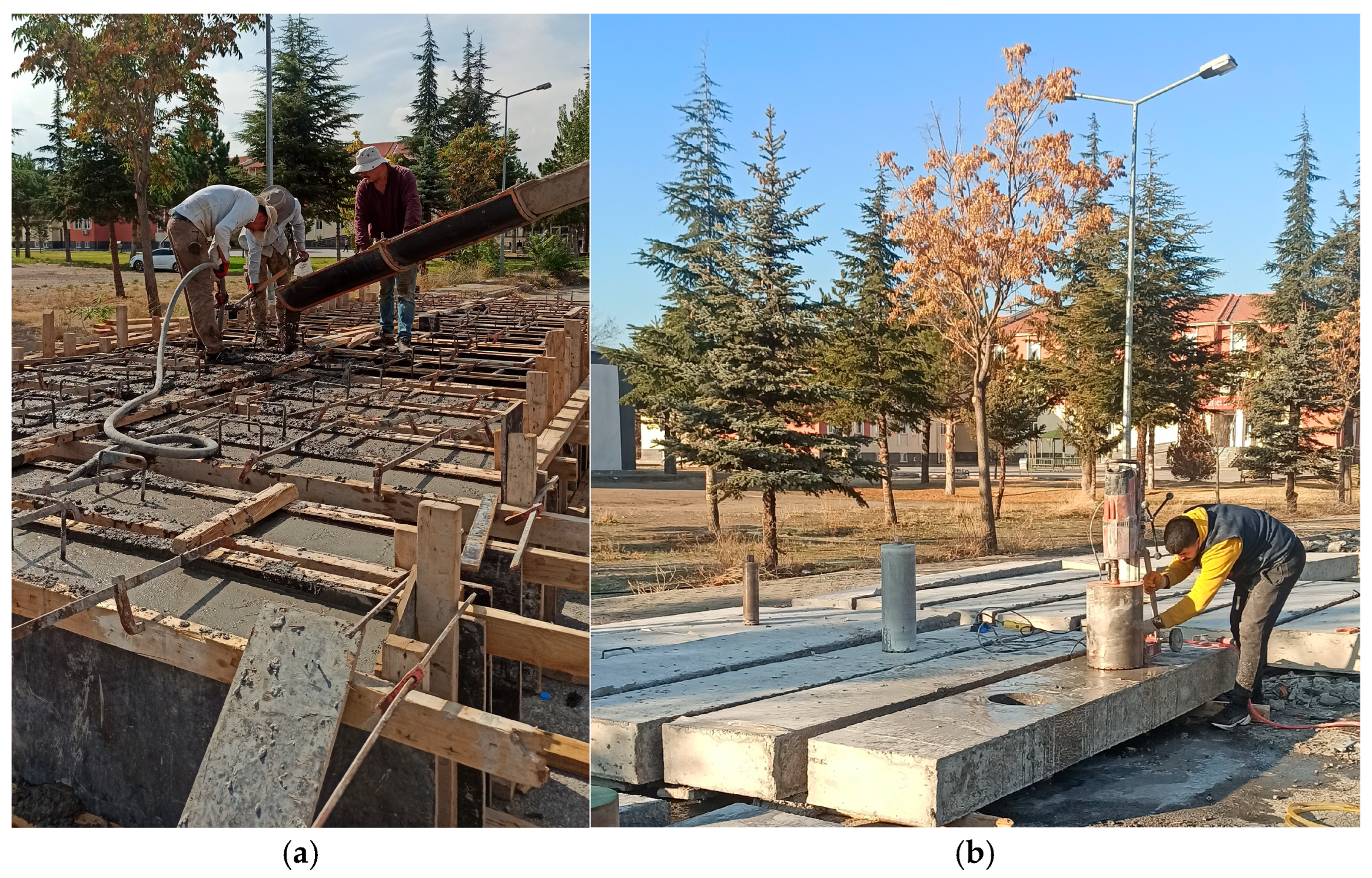
Ready-mix concrete was used for all specimens produced in the experimental study. The 28-day compressive strength of the concrete was determined as 25.7 MPa based on tests carried out on standard 150 × 300 mm cylinder specimens taken during casting [
54]. Images related to the specimen fabrication process are presented in
Figure 2a.
In this study, the openings in the beam webs were created by core drilling after the concrete curing process was completed. During the core-drilling process, the number of reinforcement elements cut in the beam varied depending on the opening diameter. For openings with the same diameter, the number of reinforcement elements interrupted was the same for the midspan and shear span locations. The exact numbers of horizontal web reinforcement bars and vertical stirrup legs cut during core drilling are presented in
Table 2. The main tensile and compression longitudinal bars were not cut and maintained their continuity. Therefore, the local reinforcement discontinuity caused by the core-drilling process was limited to the horizontal web reinforcement bars and vertical stirrup legs passing through the opening region. In this way, both section loss and local reinforcement discontinuity associated with post-installed openings in existing reinforced concrete beams were included in the scope of the experimental investigation. The formation of the openings by core drilling is shown in
Figure 2b.
2.2. Test Configuration
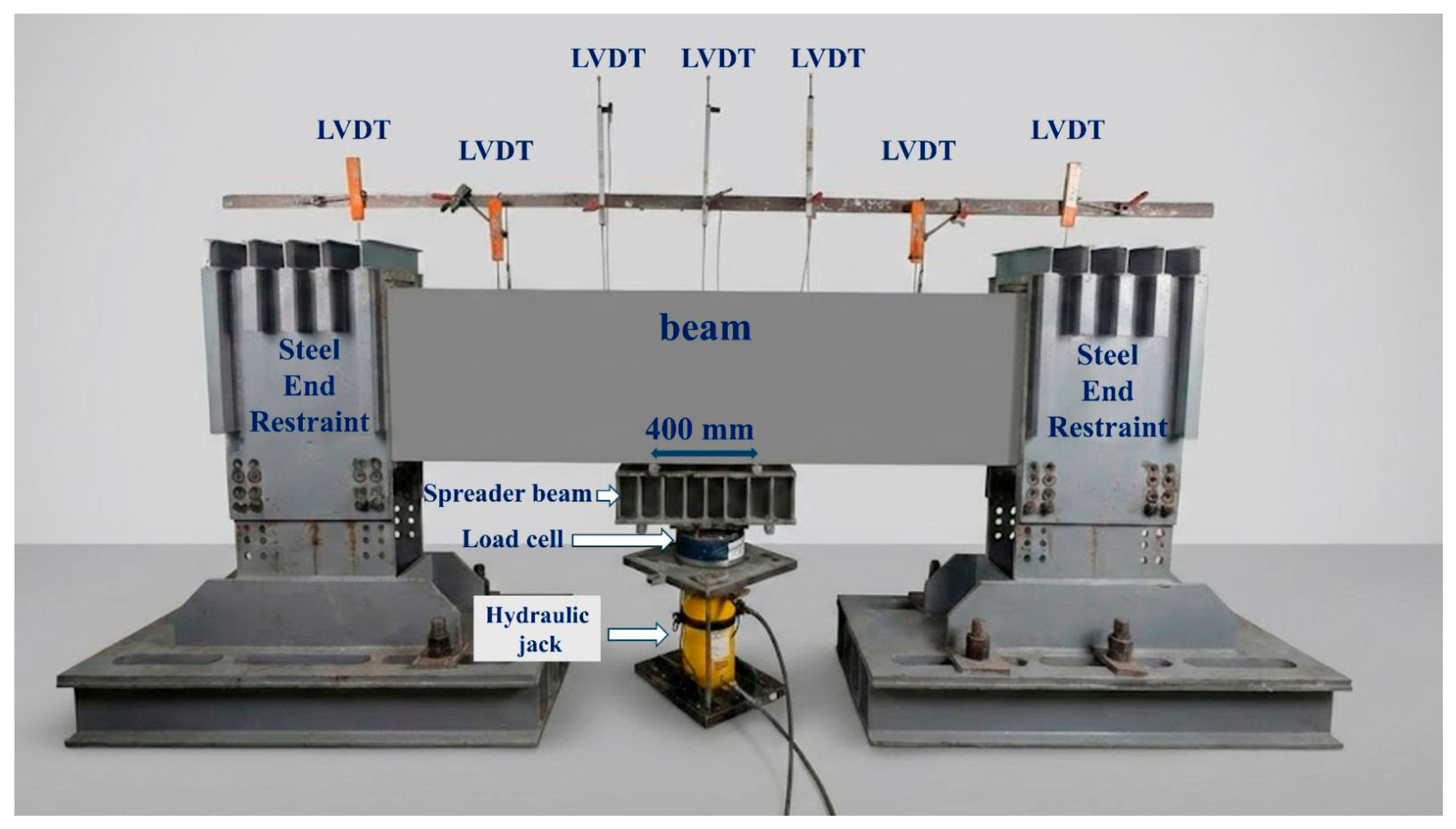
In this study, all beams were tested under boundary conditions in which end rotations were significantly restrained and configured to represent fixed-ended behavior. These boundary conditions were provided by rigid steel support systems located at both ends of the beams and anchored to the rigid laboratory floor. These steel systems enclosed the beam ends, significantly restrained the end rotations that could occur during loading, and thus established boundary conditions that were clearly different from those of conventional simply supported systems.
The steel restraint systems were connected to the rigid supporting elements below by means of bolts, and the rotational movements that could occur at the beam ends under loading were effectively prevented. In addition, the steel restraint elements also limited the out-of-plane movements of the beams, thereby ensuring the stability of the tests.
The beams were tested under a four-point bending setup. This loading configuration was selected to create a defined shear span between the support and the loading point and to obtain a constant moment region between the two loading points. The total length of the test specimens was kept constant at 3500 mm, and different a/d ratios were obtained by changing the support positions along the beam. The distance between the loading plates was 400 mm. Since the load was applied from below, the specimens were placed in the test setup with the tensile reinforcement at the top and the compression reinforcement at the bottom. In the experimental study, all specimens were tested under monotonic displacement-controlled loading. The load was applied from below by means of a hydraulic jack and transferred to the beam through steel loading plates. The loading process was controlled through vertical displacement. In this context, the tests were performed at a constant displacement rate of 1 mm/min, and the applied load and displacement were continuously recorded throughout the tests.
To monitor the deformation behavior of the beams under loading, LVDTs were installed to measure the maximum midspan deflection and the displacements at selected points along the span. Despite the different clear spans, the LVDT arrangement was kept consistent with respect to the supports and loading points. The test setup is shown in
Figure 3. The specimen arrangement within the test setup and the opening locations for each beam series are presented in
Figure 4,
Figure 5 and
Figure 6. In the experimental study, the measurement system was based on the applied load and LVDT measurements to evaluate the global structural behavior of reinforced concrete beams with post-installed circular openings. In this context, the maximum load-carrying capacity, displacement capacity, stiffness-related behavior, and energy dissipation capacity were evaluated from the load–displacement curves. In addition, crack development, failure modes, and post-test visual damage observations were considered in the experimental interpretation.
The visual representation of the experimental setup presented in
Figure 3 was generated using Google Gemini based on the actual test setup used in this study. The generated output was reviewed and edited by the authors to ensure consistency with the actual test setup. The tool was used only for visual representation and not for experimental design, data analysis, or interpretation of the results.
3. Test Results and Discussion
3.1. Crack Patterns and Failure Modes
In this section, the crack development and failure modes observed in the test specimens were evaluated by considering the variables of a/d ratio, opening location, and opening diameter. When interpreting the observed damage patterns, the overall stability of the test setup during loading was also considered. During the tests, no significant support slip or visible loss of restraint in the end restraint system was observed among the different a/d series. In addition, the displacement values obtained from the LVDTs located near the support regions remained negligible, indicating that the steel end restraint system functioned in accordance with the intended restraint condition throughout the tests.
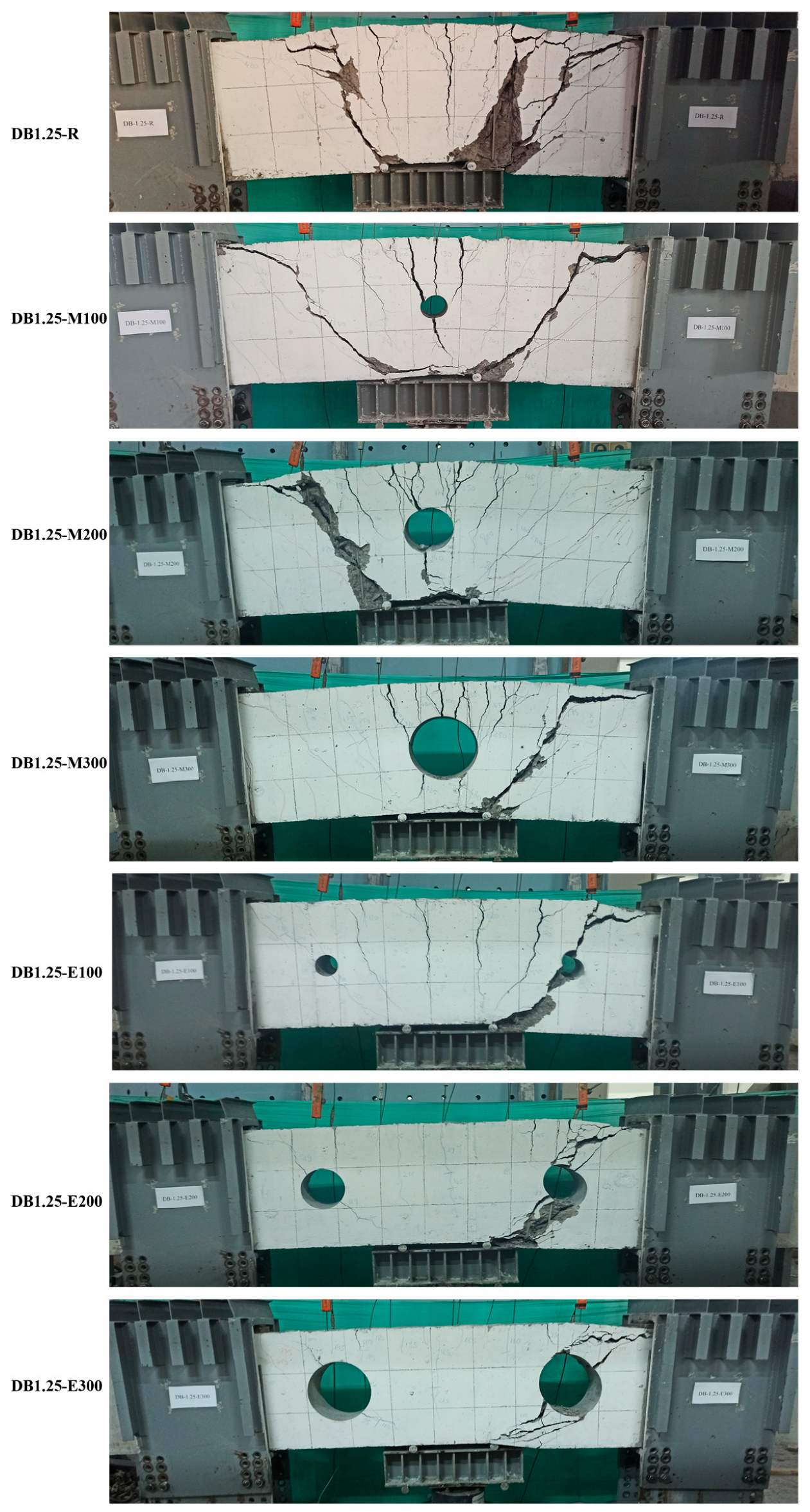
The crack patterns and failure modes of the beams with a/d = 1.25 are presented in
Figure 7. When the failure behavior of the specimens with a/d = 1.25 was examined, the reference specimen (DB1.25-R) exhibited a typical shear failure, characterized by a pronounced diagonal crack between the loading point and the support and negative moment cracks over the support, indicating the development of near-fixed support conditions. In specimens DB1.25-E100 and DB1.25-E200, which contained openings in the critical shear span, the main shear crack was observed to propagate through the opening, indicating that the continuity of the compression strut was adversely affected by the opening and that the reinforcement discontinuity created during the core-drilling process may have weakened crack control. A clearly brittle shear failure was also observed in specimen DB1.25-E300, which had the largest opening diameter in this region. In contrast, in the M-series specimens, where the openings were located in the midspan region dominated by moment effects, the main damage generally concentrated in the shear span regardless of the presence of the opening; however, in large-opening specimens such as DB1.25-M300, the crack tips were observed to deviate toward the opening perimeter due to stress concentrations.
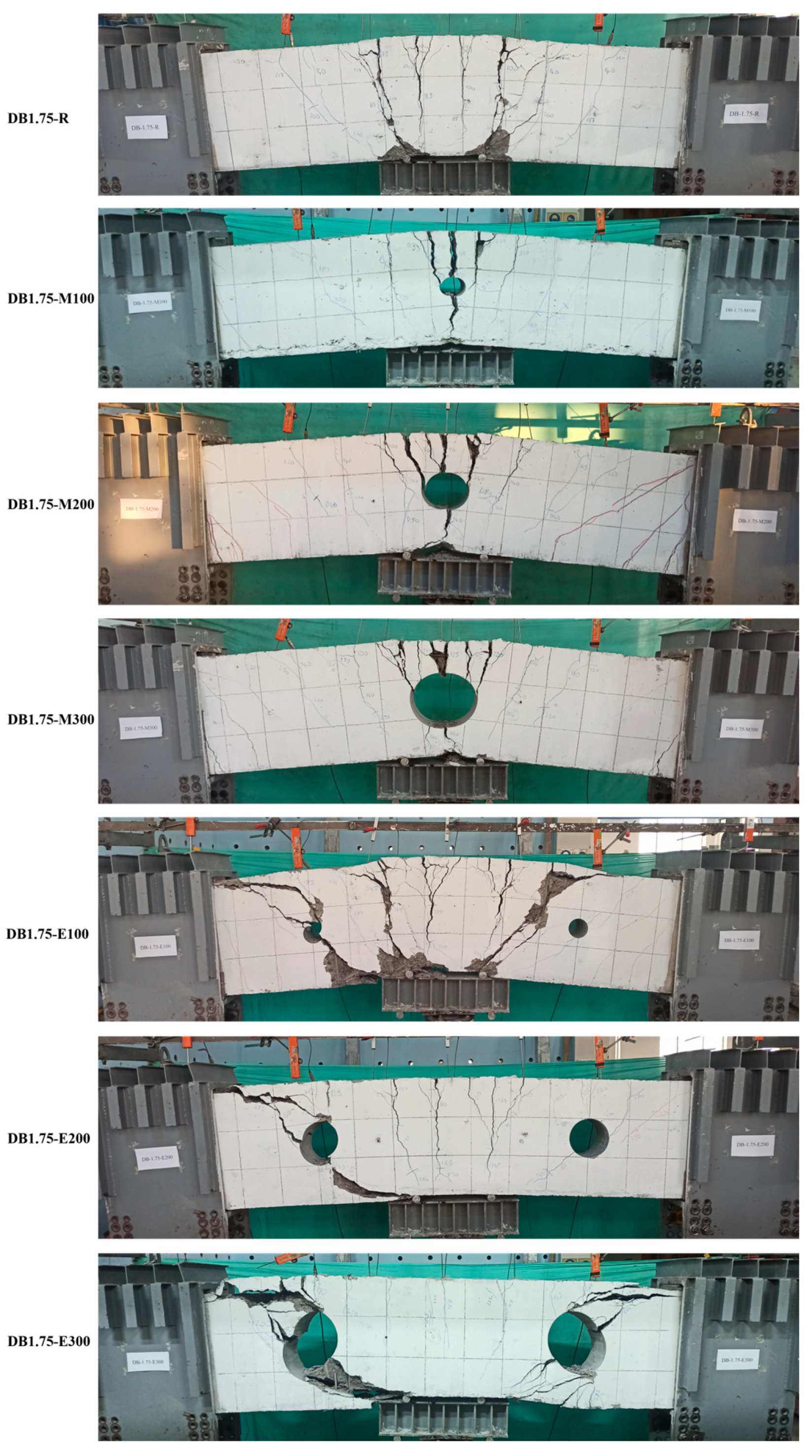
The crack patterns and failure modes of the beams with a/d = 1.75 at the ultimate stage are shown in
Figure 8. The reference specimen (DB1.75-R) exhibited a more inclined and distributed crack pattern compared to the 1.25 series, indicating that the behavior shifted toward a transition region in which flexural effects became more pronounced rather than being dominated solely by shear action. In the specimens with openings in the shear span (E-series), cracks initiated beneath the loading point and concentrated directly around the opening. Although flexure-related cracks were also observed in specimens DB1.75-E100 and DB1.75-E200, the final failure occurred as shear failure. As the opening diameter reached 300 mm (DB1.75-E300), the prominence of flexural effects decreased, and the specimen exhibited brittle shear failure. In the specimens with openings in the midspan region (M-series), crack development was influenced by both shear and flexural effects. The presence of openings caused the cracks to deviate toward the opening perimeter and led to the concentration of crack propagation in this region. This observation indicates that openings can affect crack development not only in the shear span but also in the midspan region and can lead to significant changes in crack distribution.
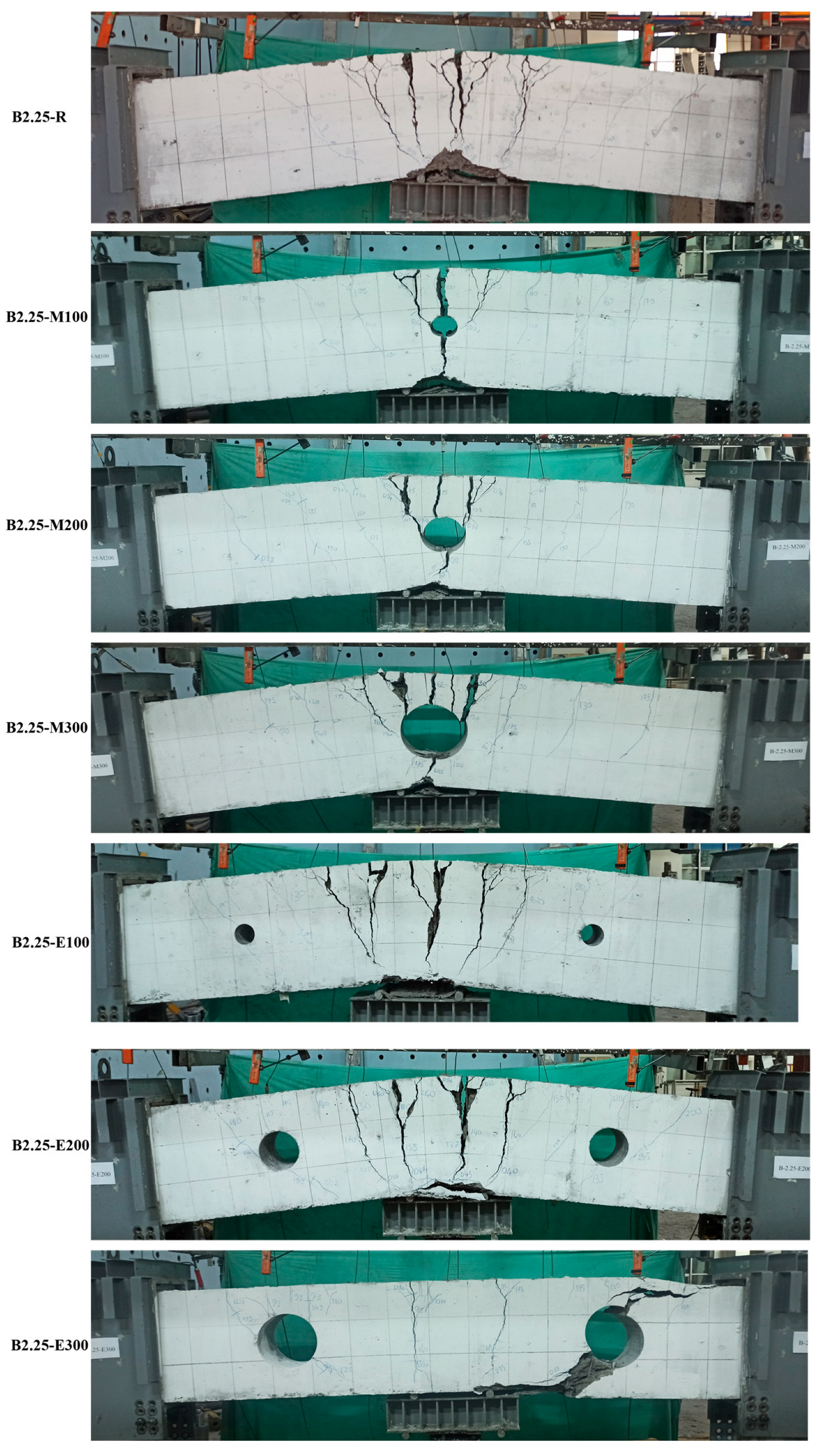
The crack patterns and failure modes at the ultimate stage of the beams with a/d = 2.25 are presented in
Figure 9. As the a/d ratio reached this level, it was observed that the reference beam (B2.25-R) shifted from the deep beam mechanism dominated by shear action to slender beam behavior and that the load transfer mechanism transformed into one in which flexural effects became more dominant. In the specimens with openings in the shear span, B2.25-E100 and B2.25-E200, failure occurred through a mechanism dominated by flexural behavior. This differed from the shear failure observed in specimens with the same opening diameter but lower a/d ratios (1.25 and 1.75). Nevertheless, when the opening diameter reached 300 mm, shear failure re-emerged in specimen B2.25-E300. In the M-series specimens with openings in the midspan region, flexure-dominated behavior was observed, and the cracks were observed to concentrate around the openings.
3.2. Load–Displacement Curves
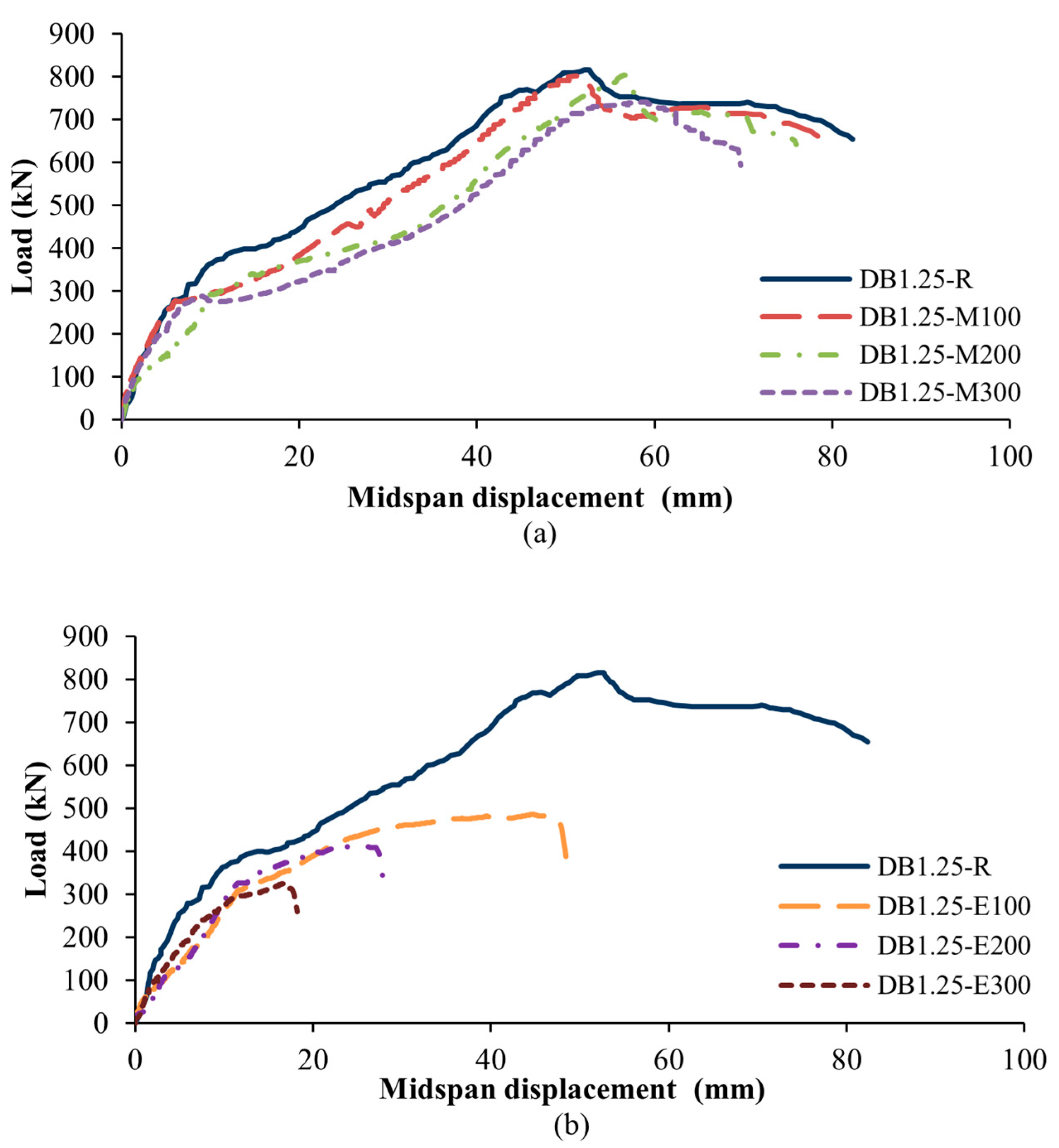
The load–displacement curves of the specimens with a/d = 1.25 are presented in
Figure 10, and the main test results are summarized in
Table 3. The curves were terminated at 85% of the maximum load. The reference specimen (DB1.25-R) reached a load-carrying capacity of 815.24 kN at a displacement of 52.05 mm. It was observed that the effect of the openings located in the midspan region remained limited. For openings up to 200 mm in diameter (DB1.25-M100 and DB1.25-M200), the capacity loss remained negligible at approximately 1.5%, whereas this value reached 9.17% for the largest opening diameter of 300 mm (DB1.25-M300). In contrast, the openings located in the shear span caused significant reductions in load-carrying capacity and stiffness. The capacity losses of specimens DB1.25-E100, DB1.25-E200, and DB1.25-E300 were determined as 40.42%, 49.42%, and 60.16%, respectively. In addition, the displacement at maximum load decreased significantly with increasing opening diameter; the displacement recorded for the reference specimen decreased from 52.05 mm to 16.74 mm in specimen DB1.25-E300. This indicates that large openings in the shear span increased the tendency toward brittle behavior. The energy dissipation capacity was calculated as the area under the load–displacement curve from the beginning of loading to the point at which the load decreased to 85% of the maximum load. The reduction in energy dissipation capacity was considerably greater than the reduction in load-carrying capacity. While the decreases ranged from 10.57% to 32.32% in the M-series, they reached 63.64% to 91.55% in the E-series. In particular, the approximately 91.55% reduction in the energy dissipation capacity of specimen DB1.25-E300 indicates that the system exhibited markedly brittle behavior.
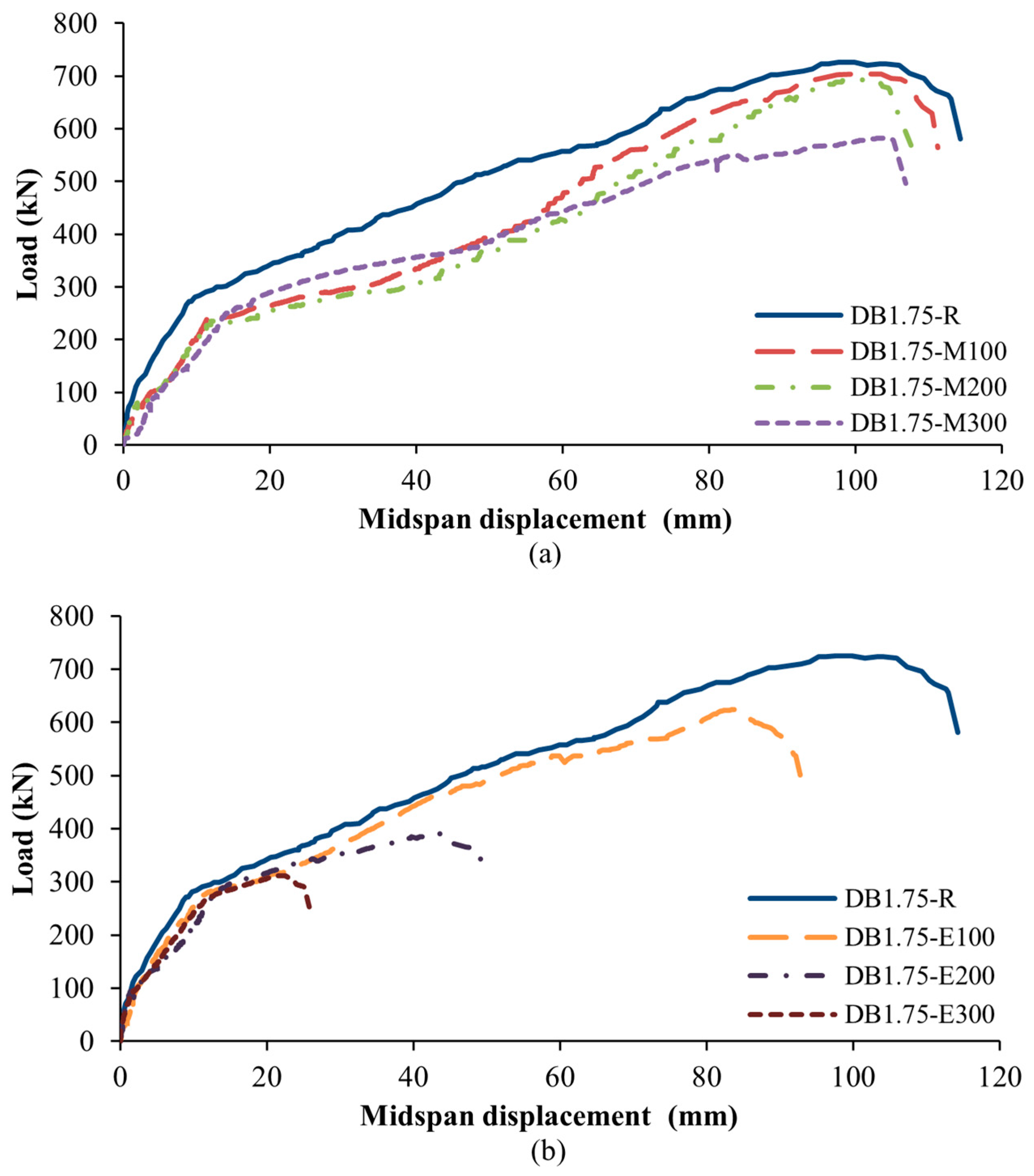
The load–displacement curves of the specimens with a/d = 1.75 are presented in
Figure 11, and the main test results are summarized in
Table 3. The reference specimen (DB1.75-R) reached a load-carrying capacity of 725.33 kN at a displacement of 97.58 mm. In this series, the effect of openings located in the midspan region became more pronounced. The 300 mm opening (DB1.75-M300) reduced the load-carrying capacity by 19.68%, showing a more pronounced effect compared to the a/d = 1.25 series. This is associated with the increasing significance of flexural effects as the span increases. The openings in the shear span also caused significant reductions in load-carrying capacity and ductility in this series. In specimen DB1.75-E300, the load-carrying capacity decreased by 56.98% to 312.06 kN, while the displacement at maximum load decreased from 97.58 mm to 22.47 mm. These results indicate that, even as the a/d ratio increases, large openings in the shear span continue to have an adverse effect on system behavior. When the energy dissipation capacity was examined, a reduction of 16.38–28.24% was observed in the M-series, whereas this value increased from 31.67% to 89.78% in the E-series. This indicates that openings located in the shear span are decisive for the ductility of the system.
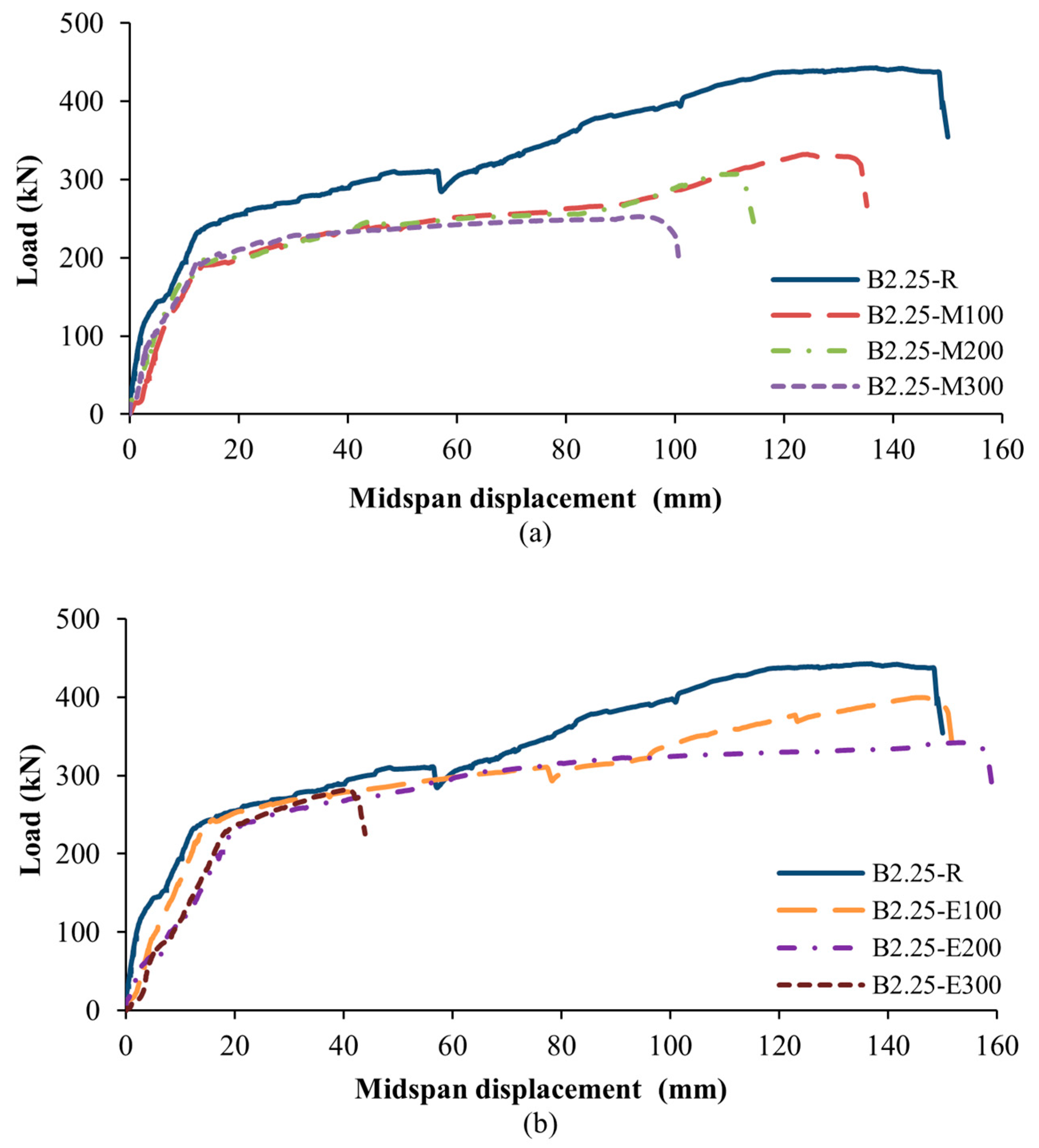
The load–displacement curves of the specimens with a/d = 2.25 are presented in
Figure 12, and the main test results are summarized in
Table 3. At this level, beam behavior was observed to shift toward flexure-dominated behavior. Openings located in the midspan region became the most critical source of weakness in this series. In specimen B2.25-M300, the load-carrying capacity loss reached 42.96%, producing a more pronounced effect than that of the opening in the shear span with the same diameter (36.35%). This indicates that, as the a/d ratio increased, the midspan region became structurally more influential. In contrast, the effect of openings in the shear span decreased in this series. In particular, the load-carrying capacity loss remained at only 9.78% in specimen B2.25-E100. This is associated with the increased shear span length and the change in the load transfer mechanism. In terms of load-carrying capacity reduction, it was observed that the critical opening location shifted from the shear span toward the midspan region as the a/d ratio increased. However, when the energy dissipation capacity was considered, the loss reached 82.84% in specimen B2.25-E300. This indicates that 300 mm openings, corresponding to approximately half of the section depth, may disrupt the load transfer mechanisms and lead to sudden and brittle failures even in systems in which flexural behavior is dominant.
In addition, although the increase in the Pmax/δPmax ratio given in
Table 3 does not show a systematic trend for all specimens, it becomes more pronounced, particularly in specimens with 200 mm and 300 mm diameter openings located in the shear span (E200 and E300). This is associated not with a real increase in stiffness, but rather with the limitation of the displacement at maximum load in these specimens. In other words, the increase in the P
max/δ
Pmax ratio reflects not an increase in structural stiffness, but a restriction in deformation capacity prior to maximum load and the development of a more brittle behavioral tendency.
3.3. Effects of Opening Location and Size at Different a/d Ratios
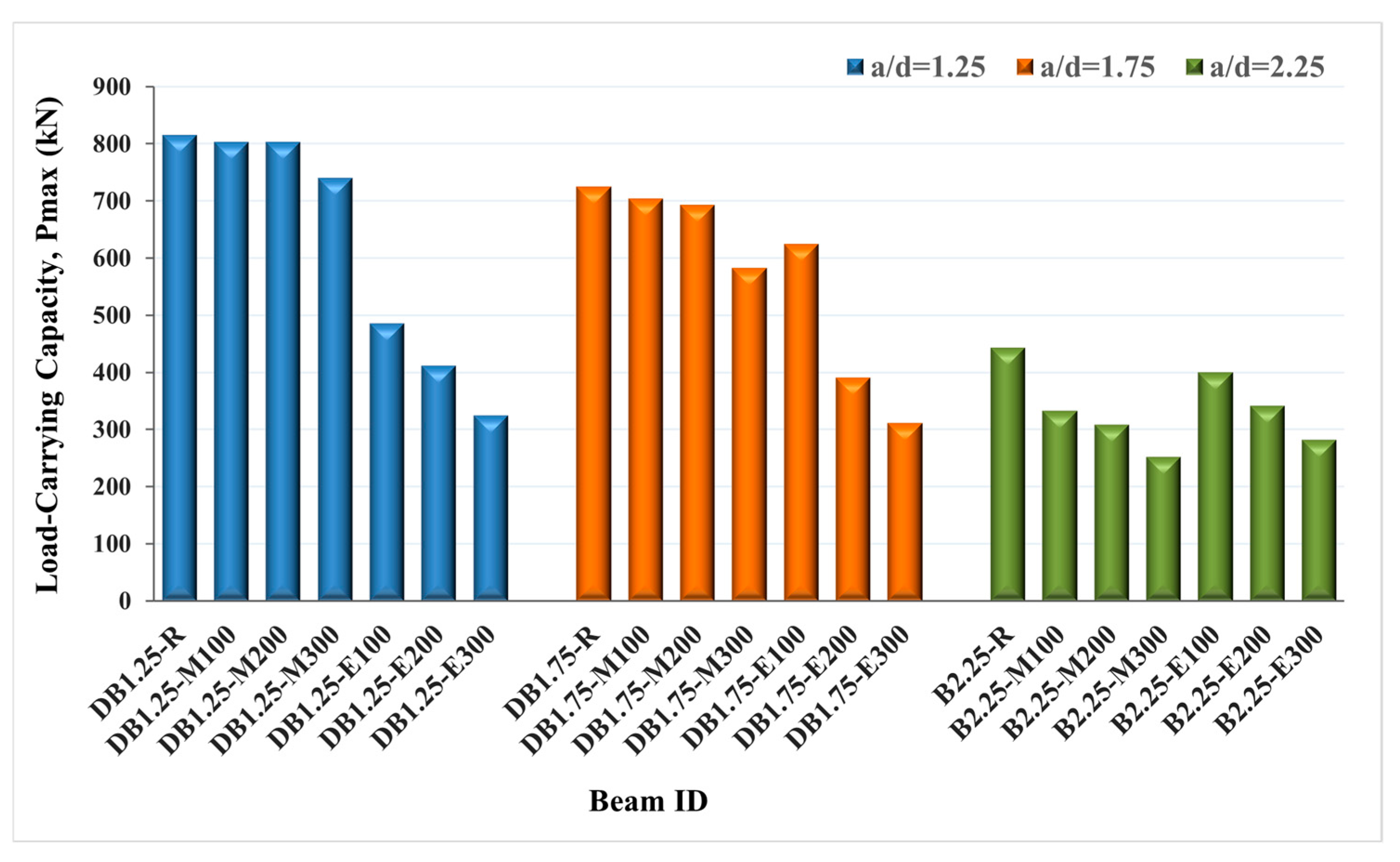
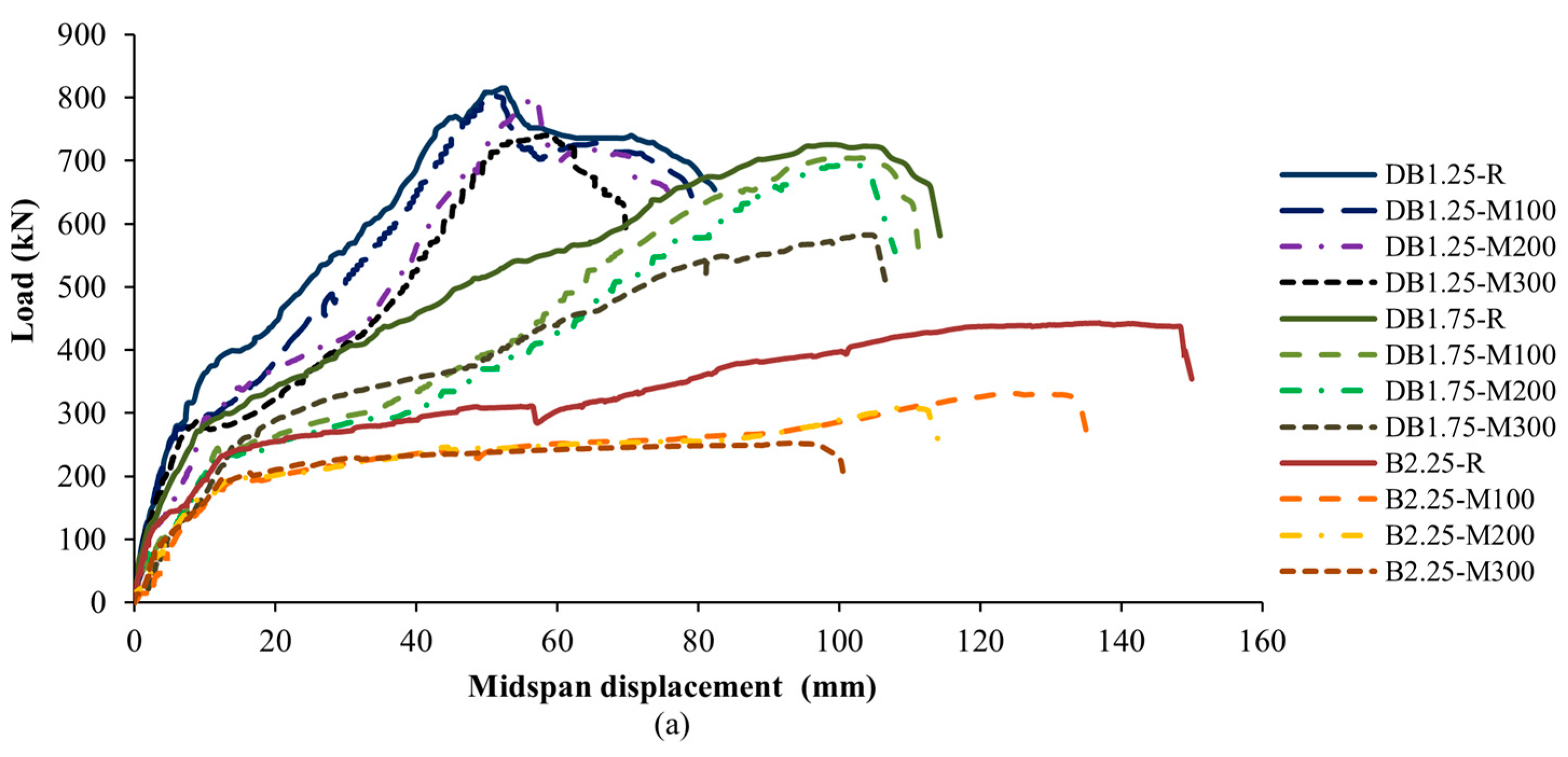
The overall effects of the a/d ratio, opening location, and opening diameter on the structural response are evaluated together in this section. The main test results are summarized in
Table 3, and to facilitate visual comparison, the corresponding maximum load-carrying capacity (Pmax) values are graphically presented in
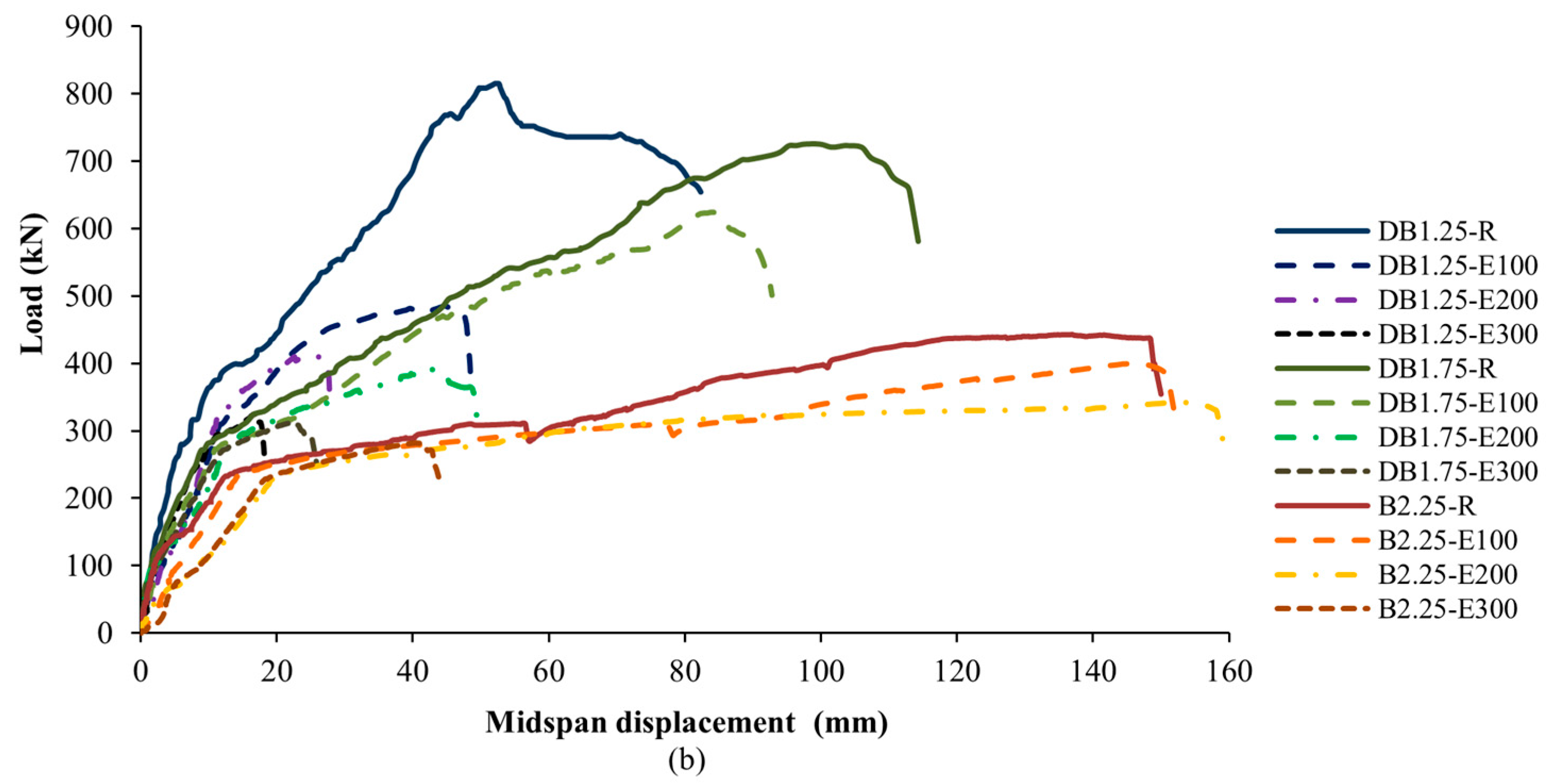
Figure 13. In addition, the load–displacement curves of all specimens are presented in
Figure 14. When the specimens with different a/d ratios are evaluated together, it is observed that the reduction in load-carrying capacity and the loss in energy dissipation capacity exhibit a nonlinear trend as the opening diameter increases from 100 mm to 300 mm. It was determined that both opening sensitivity and the critical damage region changed significantly as the a/d ratio increased. This change became more pronounced, particularly in the effect of openings located in the midspan region on load-carrying capacity.
In the a/d = 1.25 and 1.75 series, the reduction in load-carrying capacity remained limited for 100 mm and 200 mm diameter openings located in the midspan region, with the decrease remaining below 5%. In contrast, in the a/d = 2.25 series, the effect of openings at the same location became significantly more pronounced, and the load-carrying capacity loss reached approximately 25% for the 100 mm diameter opening. This indicates that the influence of the midspan region on structural behavior increases as the a/d ratio increases.
In the a/d = 1.25 series, where deep beam behavior was dominant, the influence of the midspan region on the load-carrying mechanism remained limited because load transfer occurred predominantly through the compression strut mechanism. Therefore, even a large opening with a diameter of 300 mm caused only a 9.17% reduction in load-carrying capacity. However, as the a/d ratio increased to 1.75, this loss increased to 19.68% due to the increasing influence of flexural effects; in the a/d = 2.25 series, where flexural behavior was dominant, it reached the highest level at 42.96%. These findings indicate that the midspan region becomes structurally more influential as the a/d ratio increases.
In contrast, the effect of openings located in the shear span exhibited an opposite trend depending on the a/d ratio. In the a/d = 1.25 series, because the compression strut had a steeper geometry and the load transfer path was shorter, the openings in the shear span more adversely affected the load transfer mechanism and caused significant reductions in load-carrying capacity, reaching up to 60.16%. However, as the a/d ratio increased and the load transfer mechanism shifted toward one in which flexural effects became more dominant, the relative effect of the openings in the shear span decreased, and the load-carrying capacity loss reached 36.35% in the a/d = 2.25 series.
The average Pmax values given in
Table 3 were calculated for specimens within the same a/d ratio and the same opening location. However, these values should not be interpreted as statistical averages obtained from repeated tests, since repeated specimens with identical properties were not tested in this study. Each specimen represents a different experimental configuration in terms of opening diameter, opening location, and a/d ratio. Therefore, the reported average values are descriptive group averages used only to compare the effect of different opening diameters on the load-carrying capacity within the same group.
To support the specimen-based evaluation and to present the general trend in a more summarized form, the average Pmax values calculated for the same a/d ratio and the same opening location were also evaluated. In this context, for the a/d = 1.25 series, the average Pmax value of the specimens with midspan openings was obtained as 782.20 kN, whereas this value decreased to 407.63 kN for the specimens with shear-span openings. These values correspond to average capacity reductions of approximately 4.05% and 50.00%, respectively, compared with the reference specimen. A similar trend was observed in the a/d = 1.75 series; the average Pmax value was determined as 659.72 kN for the specimens with midspan openings and 442.44 kN for the specimens with shear-span openings. These values indicate average capacity reductions of approximately 9.05% and 39.00%, respectively. In contrast, the trend changed in the a/d = 2.25 series. In this series, the average Pmax value of the specimens with midspan openings was obtained as 297.90 kN, whereas the average Pmax value of the specimens with shear-span openings was 341.20 kN. The corresponding average capacity reductions were approximately 32.75% and 22.98%, respectively. These results indicate that openings located in the shear span had a more pronounced adverse effect on the load-carrying capacity in the a/d = 1.25 and 1.75 series, whereas the effect of midspan openings became more influential in the a/d = 2.25 series.
The initial stiffness (Ki) was determined as the slope of the first stable linear portion of the load–displacement curve. To minimize the possible effects of contact settlement, seating, and measurement stabilization at the beginning of loading, irregular data at very low load levels were excluded from the calculation. In this context, the Ki values were calculated using the load–displacement data within the selected linear region for each specimen and are presented in
Table 3. As shown by the comparison of the reference specimens, the initial stiffness decreased with increasing a/d ratio. The initial stiffness values calculated for specimens DB1.25-R, DB1.75-R, and B2.25-R were 59.21, 51.17, and 40.39 kN/mm, respectively. This behavior can be associated with the increasing dominance of flexural behavior as the a/d ratio increases. For the specimens with openings, the initial stiffness values were generally lower than those of the corresponding reference specimens with the same a/d ratio. In the a/d = 1.25 series, the effect of midspan openings on initial stiffness remained limited, whereas shear-span openings caused a more pronounced stiffness reduction. This behavior can be explained by the fact that, at low a/d ratios, load transfer occurs mainly through the diagonal compression strut mechanism; therefore, openings located in the shear span region disturb the main load-transfer path more directly. In the a/d = 1.75 series, both midspan and shear-span openings caused reductions in initial stiffness. However, the effect of shear-span openings was generally more pronounced. This can be associated with the combined influence of shear and flexural effects at an a/d ratio of 1.75. In the a/d = 2.25 series, all specimens with openings exhibited a clear reduction in initial stiffness compared with the reference specimen.
When the energy dissipation capacity was evaluated with respect to opening location, it was observed that, in the a/d = 1.25 and 1.75 series, openings in the shear span caused greater energy losses than those located in the midspan region. However, this trend changed in the a/d = 2.25 series, and the openings located in the midspan region, particularly those in the M-series, led to more pronounced energy losses. Nevertheless, for the largest opening in the shear span (E300), the loss in energy dissipation capacity again reached the highest level.
When the failure modes were examined, all beams in the a/d = 1.25 series exhibited shear failure. In the a/d = 1.75 series, specimens with openings in the midspan region showed behavior influenced by both shear and flexural effects, whereas specimens with openings in the shear span exhibited shear failure. In the a/d = 2.25 series, flexural failure was observed in specimens with openings in the midspan region, while specimens with openings in the shear span exhibited shear-flexural failure, and the specimen containing a 300 mm diameter opening, corresponding to approximately half of the section depth, exhibited shear failure.