1. Introduction
The optimization of energy consumption in buildings is a central element of the European climate protection and sustainability strategy. Positive energy buildings (PEBs), which generate more energy on an annual basis than they consume, are considered a promising approach to significantly reducing both final energy demand and CO2 emissions in the building sector. A key prerequisite for the successful operation of such buildings is efficient energy management that integrates renewable generation, as well as thermal and electrical energy storage systems. Control strategies play a decisive role in this context, as they strongly influence how effectively energy flows from photovoltaic (PV) systems, heat pumps, and storage units are utilized.
The recent revisions of the Energy Performance of Buildings Directive (EPBD) [
1] and the Energy Efficiency Directive (EED) [
2] introduce new requirements and objectives for the European building stock. In addition to structural efficiency measures, they emphasize the development of emission-free buildings and districts. This highlights the relevance of PEBs and expands the focus toward positive energy districts (PEDs), which aim to integrate energy efficiency, flexibility, and renewable generation at the district level. Several studies [
3,
4,
5] have already called for an adaptation of the EPBD, arguing that earlier versions were incomplete and restrictive, preventing the full potential of PEBs and PEDs from being leveraged in the short term.
The concepts of zero emission neighborhoods, sustainable plus-energy neighborhoods, and PEDs have been discussed extensively in the literature, predominantly from an energy and emission perspective [
6]. However, the definitions of the three concepts are not clearly specified within the EPBD and are debated across several studies. Key aspects of the discussion include the role and meaning of PED definitions, virtual and geographical boundaries, requirements for energy efficiency and flexibility, the involvement of different stakeholder groups, assessment approaches, and insights into realized PED projects [
7,
8,
9,
10,
11]. These definitions influence how projects are classified and whether they qualify as PEDs. Nonetheless, the implementation of PEDs in Europe is still at an early stage, with most initiatives representing pilot projects.
A major topic in current research concerns the technical and economic integration of thermal and electrical storage potentials (e.g., thermal energy storage (TES), building thermal mass, or seasonal storage systems like borehole fields) to better utilize renewable energy. Studies show that multi-criteria optimization approaches and modern modeling and simulation tools offer significant potential for reducing energy consumption and shifting peak loads. At the same time, the transfer of these findings into robust, practical control solutions remains challenging, and user-friendly tools beyond regulatory standard approaches are still lacking. The study presented in [
12] demonstrates substantial potential for annual energy savings and peak load shifting through integrated system optimization, while also emphasizing the need for more advanced and accessible tools to promote widespread adoption. In addition, the use of digital twins and building information modeling (BIM)-based approaches for forecasting, system analysis, and operational optimization is gaining importance. One study [
13] discusses the foundations of BIM and digital twin technology and their application to building energy optimization. It is expected that advancements in building energy analysis and machine learning technologies will improve forecasting accuracy, enhance energy efficiency, and support management processes.
While predictive control strategies often demonstrate substantial benefits in simulation studies, only a limited number of empirical investigations have examined these strategies in real building operation over extended periods. As a result, evidence is lacking on how effectively different control strategies perform in real PEBs, particularly those with already high baseline efficiencies. Open research questions include the achievable improvements in supply cover factor (SCF) and load cover factor (LCF), impacts on heat supply efficiency, and the role of storage integration under real-world conditions with imperfect forecasts. Numerous studies [
14,
15,
16,
17] have investigated model predictive control (MPC) strategies for heatpump-based building energy systems, reporting operating cost savings in the range of 6–30% and increases in PV direct consumption of up to 30%. A simulation study [
14] demonstrated cost savings of 6–11% for constant electricity prices and up to 16% for variable electricity prices when comparing MPC to a default rule-based controller. In addition to economic benefits, MPC can significantly enhance the utilization of locally generated PV electricity.
Another simulation study [
15] showed in an annual simulation study that targeted MPC control of a heat pump can increase PV direct consumption in a single-family house by up to 30%. Similarly, this simulation study [
16] found that applying MPC to heat pump systems leads to a substantial reduction in PV feed-in, with reported decreases of up to 88%. Their study further indicates that, under flexible electricity market conditions in Finland, energy cost reductions of up to 25% can be achieved compared to rule-based control strategies. Another simulation study [
17] reported maximum cost savings of 24% for a single-family house in Luxembourg when MPC was combined with market-based variable electricity prices.
Beyond simulation studies, a limited number of experimental and field implementations of MPC have been reported. In an office building [
18], a nonlinear MPC maintained comparable or improved thermal comfort while reducing energy costs by over 30% compared to the reference control. A study [
19] presents a case example of a retail building in the United Kingdom in which a generalized MPC framework for heating, ventilation and air conditioning (HVAC) was implemented. While the results indicate performance improvement potential, the achieved reduction in operating costs was only 1.7% over two months. In contrast to the comparatively high modeling and implementation effort required for MPC, simplified predictive control approaches offer a lower-complexity alternative while still achieving relevant performance improvements. However, studies on such approaches remain scarce. A simulation study [
20] presented a predictive control algorithm developed within a Swedish research project, demonstrating annual energy savings of approximately 10% in single-family houses by forecasting and exploiting solar energy gains.
In contrast to previous studies that predominantly rely on simulations or focus on isolated MPC implementations in real operation, this paper provides a systematic empirical evaluation of advanced control strategies by combining long-term monitoring, annual simulations, and hardware-in-the-loop (HiL) experiments within the same plus-energy building context. By investigating a highly energy-efficient residential system with already high baseline performance, the study enables a differentiated assessment of marginal performance gains, efficiency trade-offs, robustness, and practical limitations of predictive and rule-based control strategies under real-world operating conditions. In particular, only a few long-term field studies quantitatively analyze the trade-off between increased LCF and seasonal performance factor (SPF) and operating costs, or assess how effectively available thermal storage options such as thermal energy storage (TES), thermal building mass (tbm), and battery systems are utilized in practice.
This paper contributes to closing this gap by presenting a four-year monitoring study and a comprehensive comparison of control strategies applied to a plus-energy terraced housing complex, as follows: (i) a conventional heat-controlled strategy (HC), (ii) a PV-controlled (PVC), and (iii) predictive control strategies, namely simple predictive control (SPC) and MPC. The objective is to quantify their impact on PV utilization, operating costs, system efficiency, and robustness. By integrating long-term monitoring data with detailed dynamic simulations and HiL experiments, the study provides both quantitative performance indicators and practical insights for the operation of PEBs and positive energy districts (PEDs).
2. Materials and Methods
2.1. Case Study Building and Energy System
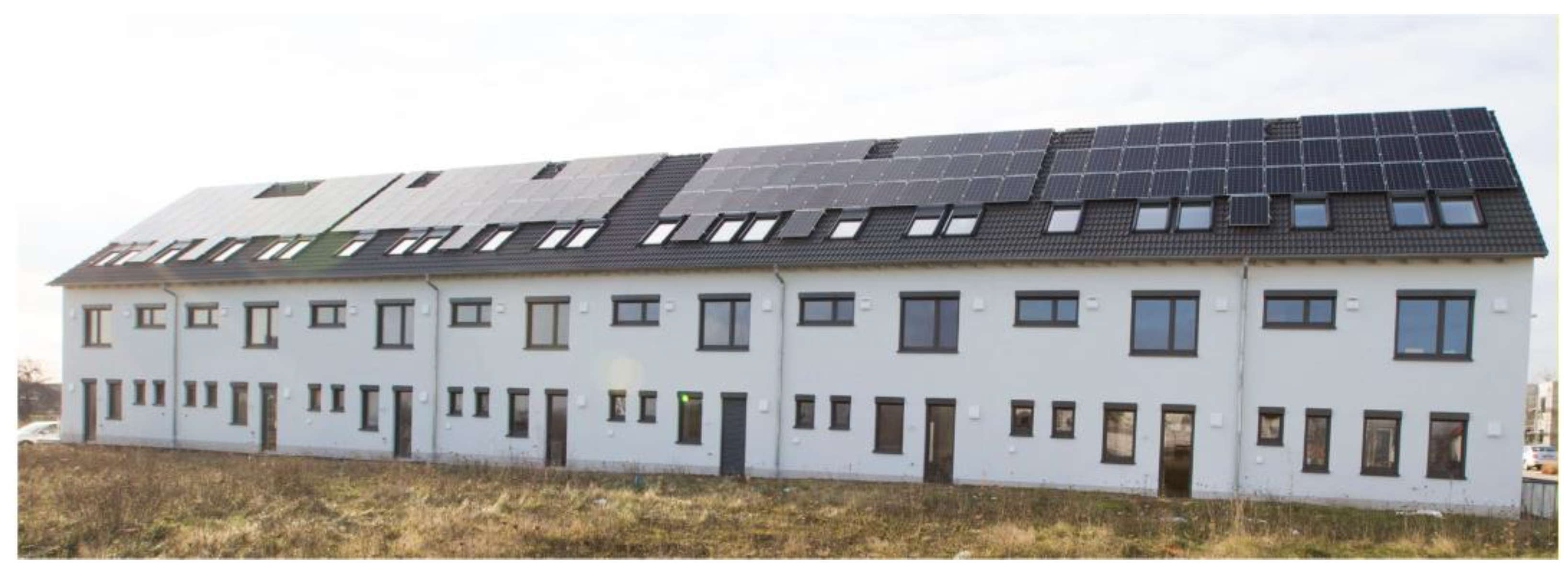
The case study examines a terraced housing complex with eight residential units in Herzogenaurach, Germany, designed as a highly energy-efficient plus-energy building (shown in
Figure 1). The energy system integrates PV, heat pumps, and various thermal (TES and thermal building mass (tbm)) and electrical energy storage systems. An overarching energy management system enables the evaluation of different control strategies. Overall, the energy system aims to maximize the share of demand met by local renewable generation while ensuring a highly efficient heat supply.
The building envelope is highly insulated, with exterior wall U-values between 0.13 W/(m2K) and 0.18 W/(m2K) and triple-glazed windows (Ug ≈ 0.7–0.8 W/(m2K)). This low-loss envelope forms the basis for reduced heating loads and supports the plus-energy performance of the complex. A PV system with a peak capacity of 88 kWp and east–west orientation is the main renewable energy source and supplies both household electricity and the electrical demand of the heat pumps.
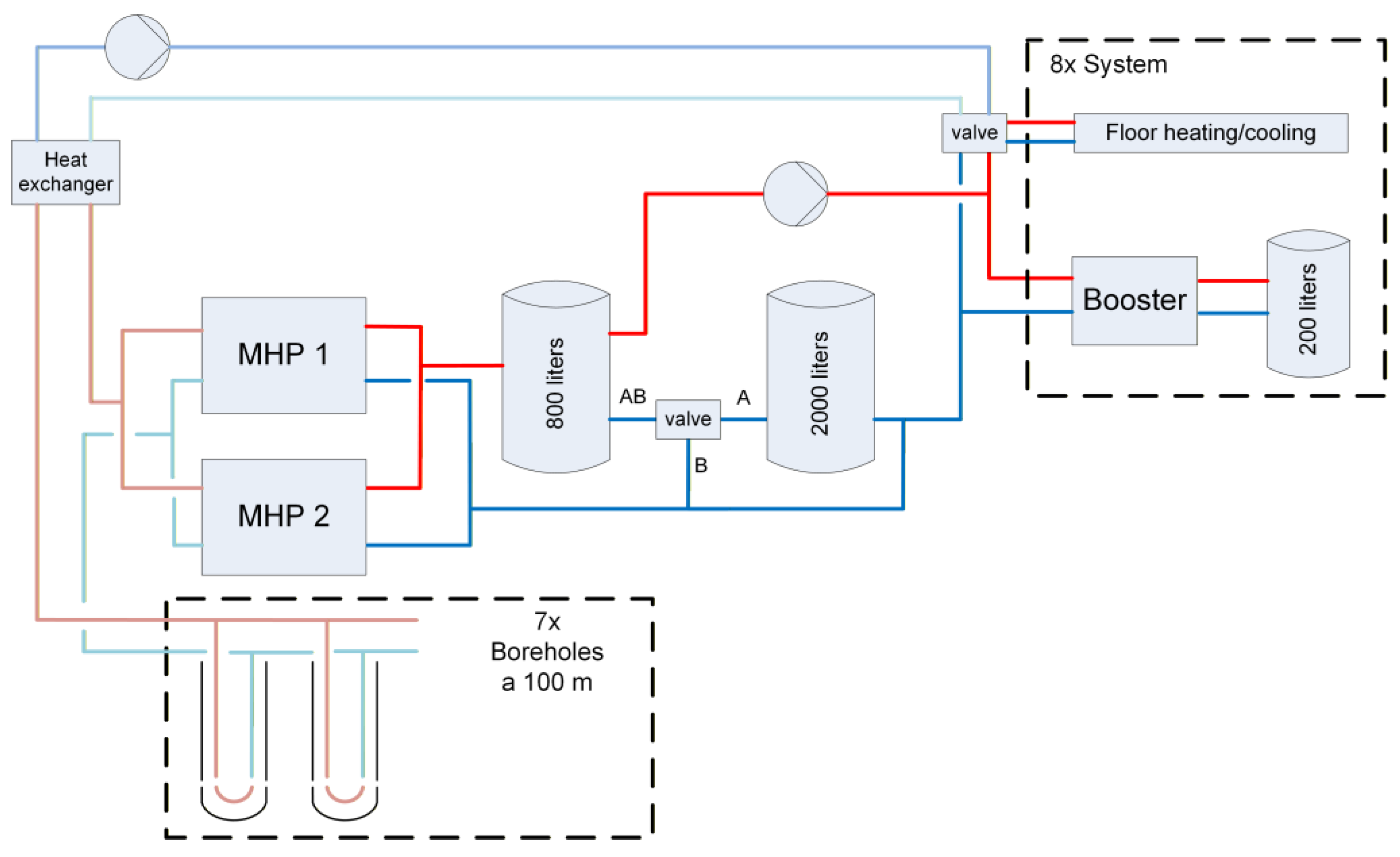
Space heating is provided by two central ground-source heat pumps (17 kW
th each), which are connected to a borehole field. In addition, the borehole field enables free cooling during summer periods. The central heating system is based on modulating heat pumps (MHPs), which can continuously adjust their thermal output to the current heating demand and operating conditions. The concept of the shared energy system is shown in
Figure 2.
Domestic hot water (DHW) is prepared decentralized by DHW heat pumps (Booster) in each dwelling, which helps to avoid peak loads in the central system and reduces the thermal demand on the main heat pumps by lowering the supply temperature. In contrast, higher temperatures are always required for DHW preparation, decentralizing its supply improves efficiency, avoids elevated central supply temperatures, and reduces distribution losses while enabling flexible, demand-driven generation.
Multiple storage components provide thermal flexibility, including two TES in the heating circuit, eight DHW tanks, and the tbm. This combination enables load shifting and supports the integration of PV surplus into thermal generation. A battery energy storage system with a capacity of 40 kWhel complements the system.
Through the combination of efficient heat pump technology, extensive PV generation, and thermal and electrical storage systems, the energy system serves as an effective real-world laboratory for evaluating different control strategies in terms of PV integration, energy efficiency, and operating costs. In particular, the system architecture allows for a systematic analysis of how conventional, PV-controlled, and predictive control approaches influence renewable energy utilization and the overall operation of a plus-energy building.
2.2. Monitoring Setup and Data Collection
An extensive monitoring system has been in operation since April 2018, recording electrical and thermal powers, energy flows, temperatures, operating states of the heat pumps, battery state of charge (SOC) and indoor temperatures in selected zones. The monitoring period considered in this paper covers entirely the years 2019 to 2022. Data are acquired in short time intervals and aggregated to 15 min and hourly values for analysis. The monitoring data are stored centrally in an SQL database and undergo plausibility checks and filtering to exclude commissioning phases, sensor faults, or incomplete data segments. Only periods with complete and reliable data coverage are considered in the analysis.
Electrical variables include the power and energy flows of the central MHPs, the decentralized Booster for DHW preparation, household electricity consumption, PV generation, battery charging and discharging power, grid import, and grid feed-in. Thermal variables comprise supply and return temperatures of the heating system, TES temperatures at multiple vertical levels, DHW storage temperatures, borehole source temperatures, and selected room air temperatures. In addition, thermal energy flows are recorded, including the heat extracted from the ground source and the heat delivered on the heating side of the MHPs and Booster, as well as the thermal energy supplied to each dwelling for space heating and DHW preparation. Installed single temperature sensors are Pt100. Thermal energy flow meters are equipped with Pt500 temperature sensors, have a measuring range of 2–180 °C, offer accuracy exceeding the requirements of EN 1434 [
21], and are calibrated. Depending on the installation location (MHP, each house), they have a standard flow rate of 1.5 m
3/h, 2.5 m
3/h, or 15 m
3/h. Weather data, such as outdoor air temperature and solar irradiance, are recorded on-site as well. The weather forecast for outdoor air temperature and solar irradiance is provided by a system provider in the field of energy management (efr GmbH, Munich, Germany) and is available online in hourly intervals for the subsequent 48 h. It is updated every 4 h.
2.3. Simulation and Predictive Models
Different modeling approaches represent the energy system with varying levels of detail, leading to different abstractions of component behavior and system dynamics. This raises the question of whether simplified models are sufficiently accurate for performance assessment and control-oriented applications. Nonlinear models reproduce the system behavior and the underlying physical processes with high accuracy, but their complexity makes them difficult to implement and only partly suitable for use in optimization algorithms. In contrast, simplified linear models can be integrated much more easily into optimization routines but raise the question of whether they can represent the real system dynamics adequately.
To further support the implementation of the different modeling approaches and to clearly define the thermodynamic relationships used within the simulations, the underlying heat pump equations applied in this paper are presented in the following section.
Electrical power
in Equation (1) and thermal power
in Equation (2) of MHP are represented by a polynomial model, as in Type 4010 in TRNSYS (Version 18) [
22]. Due to a lack of modulating simulation models for heat pumps in TRNSYS, the existing TRNSYS Type 401 [
23] was extended by normalized inverter frequency (modulation speed) and validated for modeling the MHP.
where
and
represents the coefficients,
the inlet temperature of the evaporator,
the outlet temperature of the condenser and
the normalized inverter frequency (modulation speed).
Electrical power
in Equation (3) and thermal power
in Equation (4) of MHP are represented by a characteristic curve, which is used in PV control. Depending on the control strategy, electrical power or thermal power is defined by PV power or thermal load.
where
pi and
qi represent the constant coefficients of the polynomial.
For the implementation of MPC using a mixed-integer linear programming (MILP) formulation, all component models must be linear. Therefore, the MHP model is represented by a set of discrete operating points, between which linear interpolation is applied to approximate the modulation behavior within the MILP framework. In this work, an MILP-based MPC is implemented in MATLAB (Version R2020a) [
24] using GUROBI (Version 8) [
25] with a Special Ordered Set (SOS) formulation. The SOS approach enables interpolation between predefined operating points of the MHP, allowing their polynomial performance characteristics to be represented for B5/W35. Consequently, the MHP’s thermal capacity ranges from 4.8 kW
th to 18.1 kW
th and the electrical power from 1.0 kW
el to 4.7 kW
el. The genetic algorithm (GA)-based MPC uses the MHP model from Equations (1) and (2) and the TES model from Equation (5), as it is able to handle nonlinear programming.
A stratified TES model is given in Equation (5) [
26]. As the TES is stated as the main storage component in the heating system, its energy balance can be calculated as a function of the heat pump heating capacity
, the space heating load
and the storage ambient heat losses
.
where
CS is the storage capacity,
N the number of thermal layers and
TS the temperature of each layer. The TES is assumed to be fully mixed (no stratification). Thus, it is represented as one single energy node.
In TRNSYS, Type 534 [
27] without a heat exchanger is used for modeling TES. This Type also calculates according to Equation (5) but also considers mixing heat transfer between nodes. The two model variants were investigated, differing in model structure, level of detail and solution methods, and are shown in
Table 1.
Annual system simulations are carried out for all model variants considering measured time series data for PV generation, building heating load and source load of the decentralized Booster. A battery storage system was not considered. The heat pump operation was controlled in PVC mode. Model performance was evaluated based on SCF, LCF, SPF electrical consumption of the MHPs and operating costs.
Short-term forecasts of the thermal building load and household electricity demand were generated using recurrent neural networks (RNNs) implemented in Python (Version 8) [
28] with the TensorFlow library [
29]. Both models were trained on 15 months of monitoring data from the terraced housing complex and produced 24 h forecasts with a temporal resolution of 15 min. The RNN used for thermal load prediction consists of three hidden layers with 1024, 64 and 32 neurons, respectively. Input features include date and time information (month, day, hour), outdoor air temperature and horizontal solar irradiance. The RNN for household electricity demand consists of two hidden layers with 128 neurons each. The input variables include date and time information (month, day, hour), outdoor air temperature, and global horizontal irradiance, as well as historical load values from the previous day and the previous week.
2.4. Control Strategies
Four main control strategies are considered in this study:
Conventional operation where the central heat pumps charge the TES according to a heating curve and temperature set-points derived from outdoor temperature and time schedules. The focus is on thermal comfort and efficient heat pump operation, without explicit consideration of PV generation.
A rule-based strategy that increases the charging of the TES when PV surplus is available. The storage temperature set-points are raised (e.g., up to 35–60 °C) to shift electrical heat pump operation to periods of high PV generation. This strategy can also activate the building thermal mass by temporarily increasing indoor temperature set-points during PV surplus.
A predictive, rule-based strategy that uses forecasts of PV generation and thermal and electrical loads to schedule heat pump and storage operation. SPC aims to shift operation into periods of high PV availability while limiting excessive storage temperature levels and avoiding significant efficiency penalties.
An optimization-based predictive control strategy that uses dynamic models of heat pumps, TES and battery, combined with forecasts of weather, PV generation and loads. MPC determines optimal control trajectories (e.g., SOC, power of MHPs) over a finite prediction horizon, subject to comfort and technical constraints. Two MPC implementations were developed: a MILP approach based on simplified linear models, and a genetic algorithm (GA) approach using more detailed nonlinear models. Both variants were tested in simulation. Additionally, the MILP-based MPC was implemented in HiL experiments.
The objective function J is defined as the total operating costs associated with the electrical energy consumption of the building and its energy systems. It includes the electricity consumption of the households, the MHPs and the Booster. The costs depend on the source from which the electrical energy is drawn, namely, grid electricity Eel,grid, on-site PV generation , or the battery system . In addition, a bonus term is included for the electrical energy fed into the grid , reflecting the remuneration for PV export.
Accordingly, the objective function can be expressed conceptually in Equation (6) as
where
c represents the respective costs for grid, PV and battery electricity, and denotes the feed-in tariff applied to exported PV energy. The MPC minimizes
J over the prediction horizon by optimally scheduling MHPs and booster operation, thermal storage charging and discharging, and battery use, while meeting comfort and technical constraints.
The optimization method is realized in MATLAB and the set-points will be transferred via an SQL database to the heat pumps by the energy management system [
30]. While PVC reacts to PV availability through rule-based adjustments of storage set-points, MPC employs forecast-driven optimization to schedule heat pump and TES operation more systematically.
2.5. Boundary Conditions in Simulation
2.5.1. Boundary Conditions in Simulation of Different Storage Options
The first simulation study for analyzing different storage options was carried out in TRNSYS. The aim was to analyze the annual system behavior under realistic operating conditions. The model representation of the central MHPs was implemented using Type 4010, which internally applies the characteristic-curve formulations corresponding to Equations (1) and (2). The stratified TES was modeled using Type 534. The simulation was driven exclusively by measured boundary conditions from 2019, including PV generation, space-heating load, DHW demand, household electricity demand, borehole outlet temperature, and meteorological data. These inputs ensured that the dynamic interaction between generation, storage and demand was evaluated under realistic operating profiles.
2.5.2. Boundary Conditions of General Comparison of the Control Strategies
The simulation of general comparison of the control strategies was implemented in MATLAB. The heat pump model follows the characteristic-curve formulations presented in Equations (3) and (4) for HC, PVC and SPC, while the thermal energy storage is represented by the energy-node model given in Equation (5). In MPC simulation, the MHPs are represented by operating points and interpolation. Thermal losses of both the buffer and domestic hot-water storage tanks were derived from an insulation U-value of 0.3 W/(m2·K) and, in addition, the buffer storage tank was represented through a combination of constant and state-dependent loss components, resulting in an effective overall loss factor of 3.66%. Temperature constraints were imposed as follows: 32 °C to 46 °C for the buffer storage and 45 °C to 60 °C for the hot-water storage. The battery efficiency was set to 80%, based on monitoring data. As boundary conditions, the simulation used measured 15 min time series from the year 2020, including PV generation, thermal space-heating load, domestic hot-water load and household electricity demand.
2.5.3. Boundary Conditions in Simulation of Influence of Thermal Building Mass
To assess the potential of the building thermal mass as an additional storage option for PV surplus energy, a dedicated simulation study was carried out using TRNSYS. The simulation focuses on the activation of the thermal mass by temporarily increasing the room temperature set-points during periods of PV surplus generation. This approach allows thermal energy to be stored within the building structure and released later, thereby reducing grid electricity consumption.
Two representative buildings of the terraced house complex—a corner house (CH) and a middle house (MH)—were modeled in detail. Each building was represented room-by-room with multiple thermal zones and an explicitly modeled floor-heating system embedded in a concrete screed layer. The building model accounts for room-specific orientations, floor areas, and window areas, which determine the magnitude of solar heat gains. Living rooms with an area of 41 m2 feature multiple window orientations with west-facing glazing up to 6.8 m2 and east-facing areas of 1.8 m2, while additional south-facing glazing of about 2.1 m2 is present only in the CH. Bedrooms with an area of 21 m2 exhibit smaller window surfaces, primarily west-facing of 3.6 m2, with additional south-facing glazing of up to 1.5 m2 also present only in the CH, resulting in different solar gains and room-specific thermal responses. The buildings are characterized by a high thermal mass and a very well-insulated envelope with U-values of approximately 0.13 W/(m2·K). To realistically represent dynamic building behavior, mechanical ventilation with heat recovery of 60%, including additional heat losses through infiltration and window airing, was included. In addition, window shading depending on solar irradiance of the respective orientation and controlled by a threshold of 160 W/m2, including a hysteresis of 40 W/m2 and a g-value of 0.25, was included. Internal loads from occupants are represented by a presence profile with 60 W per person and a profile of household electricity. Both profiles are time-dependent, reflecting typical residential occupancy patterns. During daytime hours, internal loads from occupants and equipment are assigned to the living room, representing the primary occupied space. During nighttime hours, the internal load profile is redistributed to the bedrooms, reflecting occupancy during nighttime periods. This approach allows a realistic spatial and temporal representation of internal heat gains.
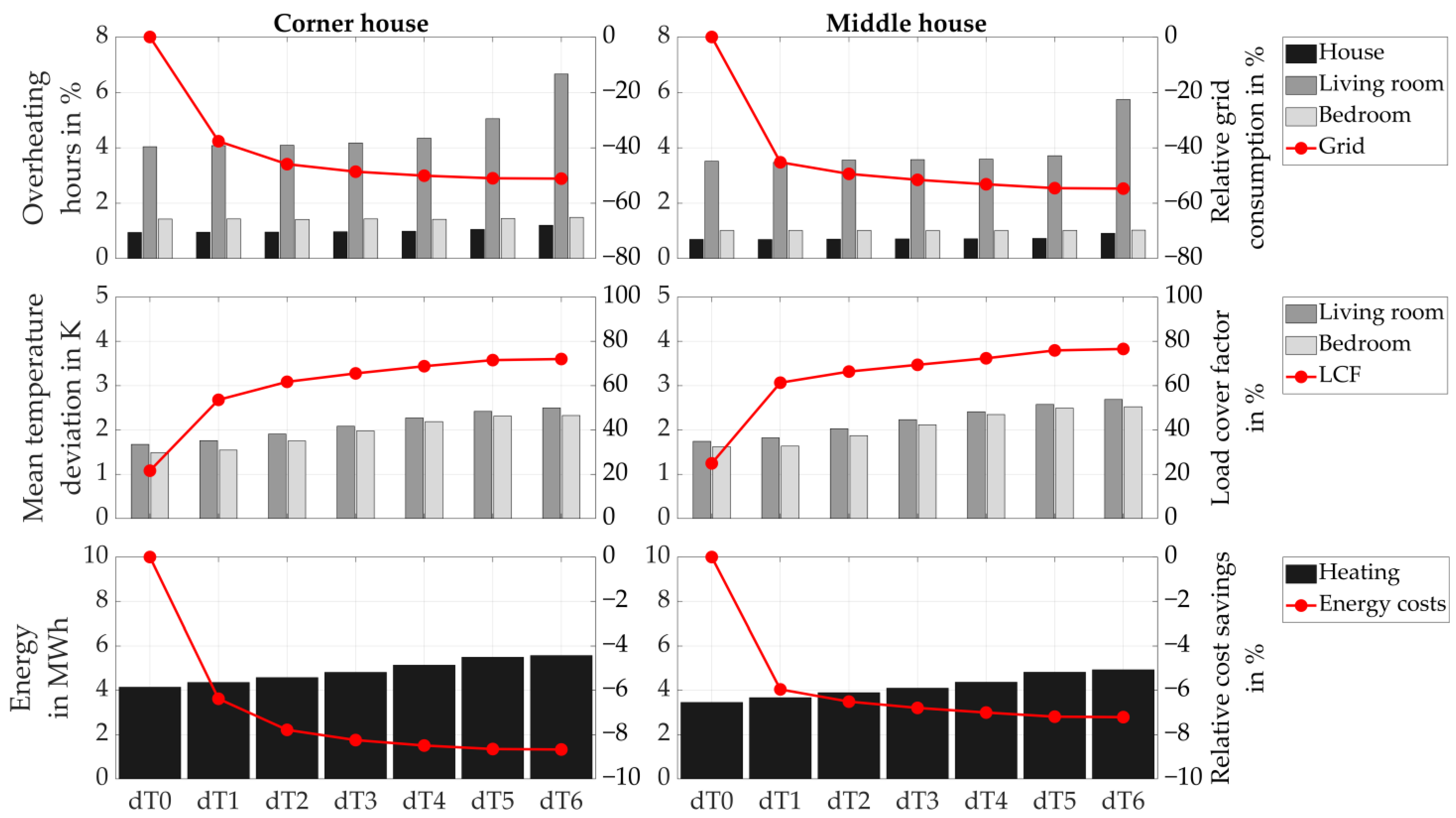
The thermal mass activation strategy was implemented by increasing the room temperature set-points from a base value of 20 °C (24 °C in bathrooms) by increments of 1 K up to a maximum of 6 K whenever a predefined PV surplus threshold was exceeded. This results in seven activation variants, denoted as dT0 to dT6, where dT0 represents the reference case without set-point increase, while dT1–dT6 correspond to temperature increases in steps of 1 K up to a maximum of 6 K.
To avoid conflicts between overheating protection and thermal mass activation, the upper temperature limits were adapted accordingly. Boundary and initial conditions were derived from measured building data, and weather input was taken from the German Weather Service. Annual simulations were performed with a time resolution of 15 min. A full description can be found in [
31].
2.6. Hardware-in-the-Loop Test Bench
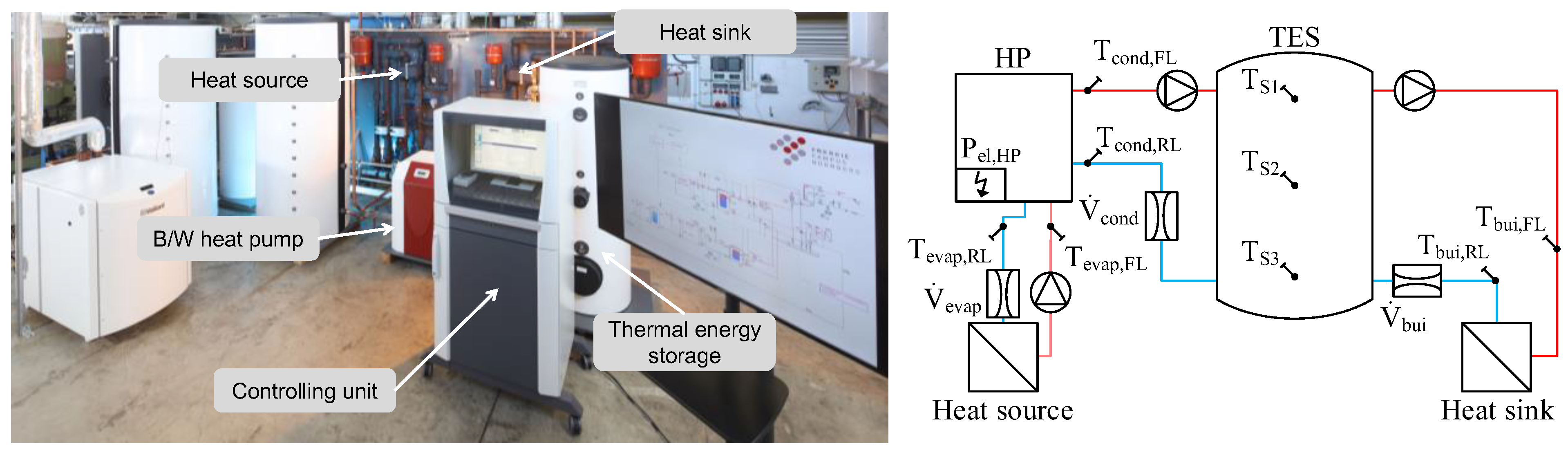
A HiL test bench is used to investigate a heat pump heating system under realistic, defined, and reproducible laboratory conditions. The experimental setup combines a brine-to-water heat pump with a nominal heating capacity of 10.9 kW
th and an electrical power consumption of 2.2 kW
el at operating point B0/W35 with a 500 L TES and a battery energy storage providing 8.64 kWh
el of usable capacity and up to 6 kW
el charging and discharging power. The HiL, as well as the hydraulic and sensor schematic, is shown in
Figure 3.
Electrical power consumption, thermal output, battery charging and discharging power, as well as mass flow rates and temperature profiles are recorded using precise sensors and high-resolution energy meters and meet the requirements of DIN EN 14511-3 [
32]. Temperature measurements are conducted using Pt100-4L sensors (Class AA according to DIN EN 60751) with a basic tolerance of ±(0.1 + 0.0017·|T|) K. For differential temperature measurements, sensor pairs are used with a pairing tolerance of lower than ±0.05 K. Volume flow is measured using electromagnetic flow meters (OPTIFLUX 2100 C, KROHNE Messtechnik GmbH, Duisburg, Germany) with an accuracy of <0.5% of the measured value for flow rates above 1.5 m
3/h. Electrical energy consumption is measured using three-phase direct energy meters (EM2289, Gossen Metrawatt GmbH, Nuremberg, Germany), complying with MID Class B, with an accuracy of ±1% for active power according to the European Measuring Instruments Directive 2014/32/EU (MID).
The hydraulic configuration of the test bench allows for a separate evaluation of the space heating demand and the thermal energy supplied to the storage tank. The real thermal and electrical dynamics of the components—including storage inertia, compressor behavior, and thermal losses—are fully preserved, reflecting the physical boundary conditions under which the MPC strategy must operate. A full description of the HiL can be found in [
33].
The HiL setup enables the coupling of real system physics with simulated boundary conditions for load, PV generation, and operating scenarios. This allows the controller’s behavior to be tested under a wide range of conditions while avoiding the risks associated with intervening in an actual building system. The combination of physical components, detailed sensor instrumentation, and flexibly adjustable input signals makes the HiL test bench a central tool for the experimental evaluation of MPC strategies in heat pump heating systems.
While the HiL setup preserves the physical dynamics of the heat pump, thermal storage, and control interfaces, it intentionally represents a reduced system scope compared to the full monitored building in
Section 2.1. In particular, domestic hot water demand and building-level thermal interactions are excluded. The HiL experiments therefore aim to isolate control-system behavior under controlled and reproducible conditions rather than to replicate the complete residential energy system in all aspects.
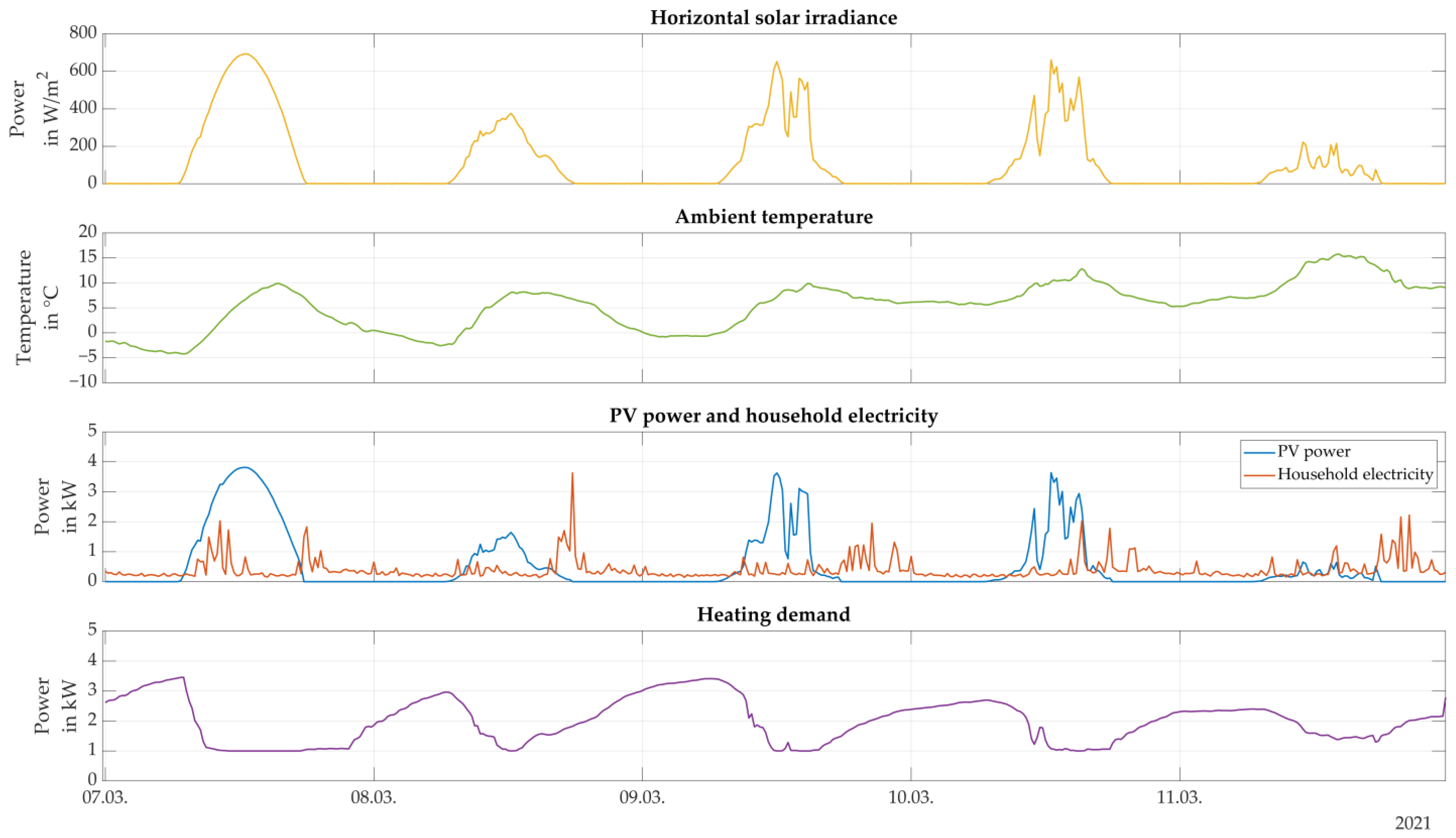
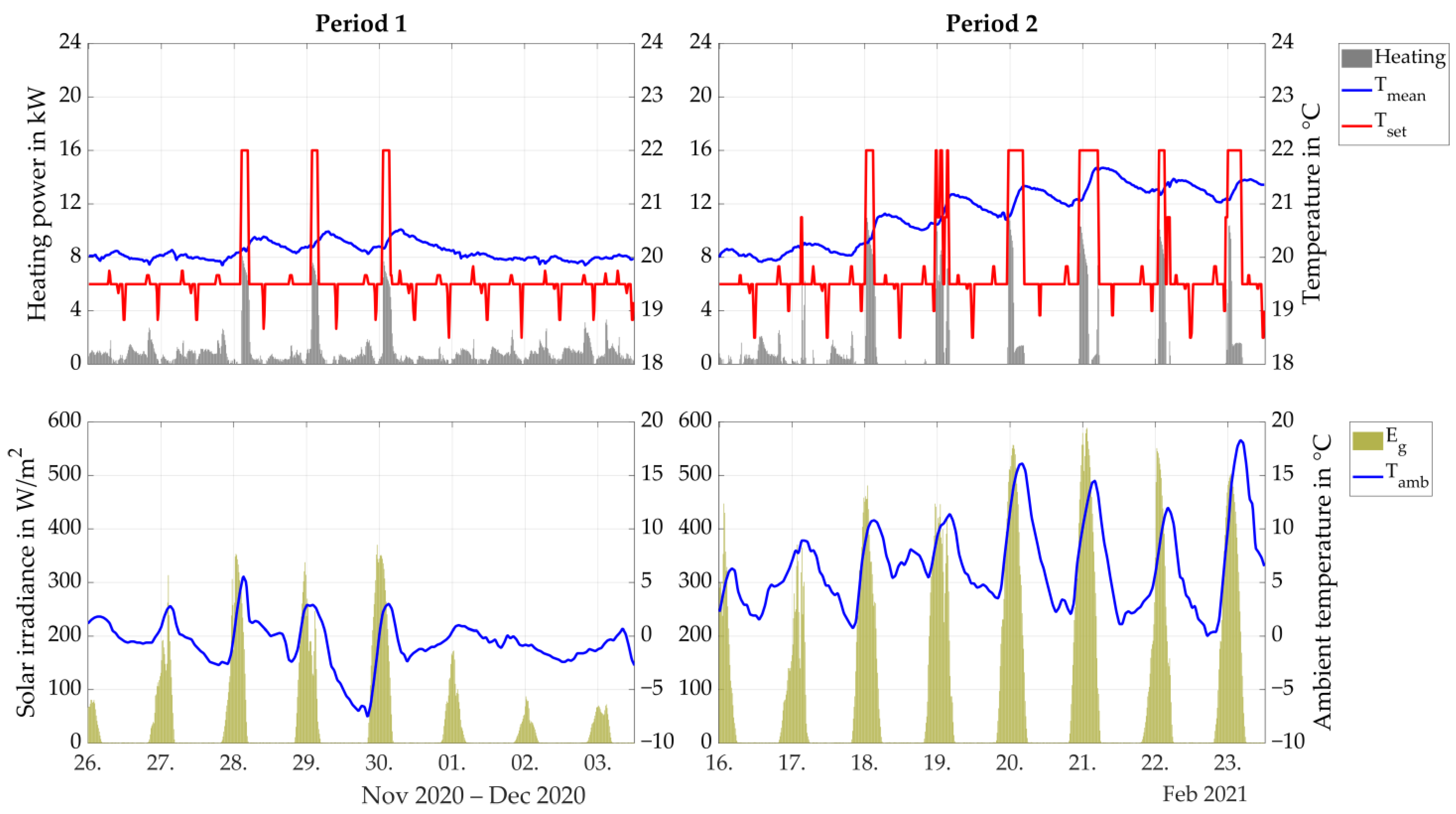
As a validation step, a simulation study was carried out in MATLAB and compared with the HiL measurements. This study examined three control strategies: HC, PVC and MPC. Within the HiL experiments, the thermal and electrical boundary conditions are defined by externally provided load and generation profiles in order to reproduce realistic operating conditions for the heat pump system and are shown in
Figure 4. The space-heating load is derived from dynamic building simulations of a single-family house. As a basic system and building concept and heating system described in IEA, SHC Task 32 by Heimrath and Haller [
34] is used and adapted to the HiL test bench configuration. The simulated building represents a highly energy-efficient residential standard comparable to the monitored terraced house complex. The building was deliberately selected as a generic reference case to define a transferable and broadly applicable control approach rather than representing a direct one-to-one model of the investigated terraced house complex. DHW demand is not explicitly considered in the HiL study and is therefore excluded from the thermal load signal.
The household electricity demand is represented by a measured residential load profile obtained from the monitored terraced house complex. It includes a characteristic baseload with superimposed peak loads occurring mainly during morning and evening hours.
The PV generation profile is generated based on measured solar irradiance data from the same terraced house complex and represents a rooftop PV system with an area of 40 m
2, which results in a peak power of approximately 5 kWp. The PV load is calculated in accordance with an isotropic sky model [
35] and on the basis of the horizontal solar irradiance, the PV area (40 m
2), the inclination angle (60°, c.f. the slope of the roof of the reference building) and the efficiency of the PV modules (17.9%) and inverter (95.0%).
An MPC-MILP optimization algorithm is used [
36], which is based on the simplified system simulation model. The heat pump is represented by one operating point only (B10/W40, 12.94 kW
th, 2.45 kW
el). The TES model is shown in Equation (5). The MPC is realized in MATLAB. The operating limits are defined by a minimal and maximal storage temperature of 25 °C and 45 °C, respectively, as well as by the complete cover of the thermal and electrical load. The cost function is shown in Equation (6). The optimization horizon is set to 24 h with an optimization time step and optimization interval of 15 min for both. Thus, every 15 min, the MPC is restarted with new initial boundary conditions to generate the subsequent control sequence. As the optimization horizon is set to 24 h and the weather profiles provide a five-day period of data, the experiments and simulations can only last four consecutive days (96 h).
2.7. Key Performance Indicators
The assessment of the four control strategies—HC, PVC, SPC and MPC—is based on a set of quantitative key performance indicators (KPIs). These indicators are applied consistently across monitoring data, annual simulations, and HiL experiments. All KPI definitions correspond to common performance metrics for heat pump-based PEBs.
Energy-related KPIs:
Supply cover factor (SCF): Share of on-site PV generation consumed within the building.
Load cover factor (LCF): Fraction of total electrical demand covered by local PV generation (direct use + battery discharge).
Seasonal performance factor (SPF): Ratio of delivered thermal energy to electrical input of the heat pumps.
Total electricity consumption: Sum of electricity used by central heat pumps, booster heat pumps, household loads, and auxiliary systems.
Comfort-related KPIs:
Overheating hours: Number of hours during which the room temperature exceeds 26 °C, according to EN ISO 7730 [
37], category II in summer, which defines comfort limits of 24.5 ± 1.5 °C.
Mean temperature deviations: Deviation from the minimum comfort room temperature of 20 °C, according to EN ISO 7730, category II in winter, which defines comfort limits of 22.0 ± 2.0 °C.
Economic KPIs:
Annual energy costs: energy costs for the energy system, including electrical effort of all heat pumps and household electricity. Tariff costs are shown in
Table 2.
Annuity: Life-cycle cost over 30-year horizon, derived from investment, replacement and operational costs using the annuity method of depreciation in accordance with VDI 2067 [
38]. The interest factor for capital-related costs is 1.5%, the price change factor for energy costs is 2.0% and for maintenance 1.0%. Investment costs for PV and battery storage from 2017 (year of construction) as well as boundary conditions for the calculation of operation-related costs are shown in
Table 3. Investment costs for the implementation of control strategies are neglected. In the annuity calculation, the PV feed-in remuneration is assumed to be fixed over a period of 20 years and is therefore not subject to any price escalation or de-escalation. Consequently, revenues from PV feed-in are considered only for the first 20 years of the 30-year horizon. Negative values describe costs, while positive values describe a bonus.
4. Discussion
The presented results provide important insights into the practical performance of advanced control strategies in highly energy-efficient plus-energy residential buildings.
First, the simulation and HiL validation of the models demonstrate that both detailed nonlinear models and simplified linear models can reproduce the real heat pump system very accurately. The small deviations confirm the suitability of the simplified models for use in optimization-based control strategies, while the detailed MATLAB models and the TRNSYS model offer high physical fidelity and are well suited for analysis and comparison. The RNN-based short-term forecasts show an accuracy level that is comparable to values reported in the literature [
40,
41] and can be regarded as sufficient for predictive control applications in residential buildings.
Unlike many simulation-based studies, the investigated terraced housing complex already exhibits a high baseline performance under conventional HC. Consequently, the absolute improvement potential of more advanced control strategies is inherently limited and significantly smaller.
The results of this study can be directly contextualized with previous research on MPC strategies for heat pump-driven buildings, as discussed in the introduction. Numerous simulation-based studies report operating cost reductions in the range of 10–30% and increases in SCF of up to 30% when MPC is applied, particularly under idealized conditions with perfect forecasts and full system controllability. While such improvements are reproduced in this work under idealized simulation conditions, the combined simulation, monitoring and HiL analysis reveals important limitations when transferring these concepts to real plus-energy buildings.
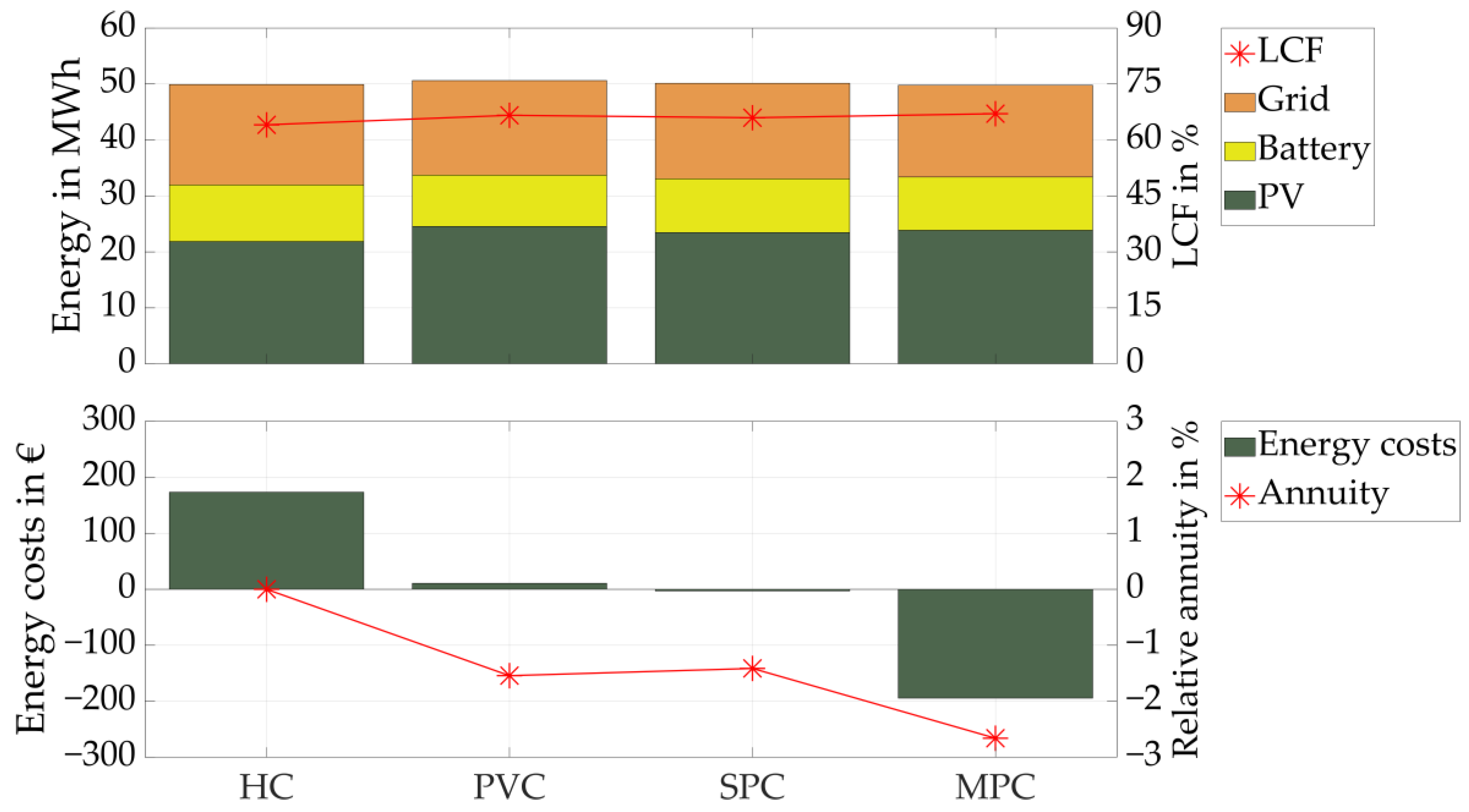
Under idealized assumptions, the simulation results show that MPC increases LCF by four percentage points and reduces operating costs by up to 212%, primarily due to generally low baseline energy costs under HC operation. This relative value is higher within the range reported in the literature [
14,
15,
16,
17] and highlights the theoretical potential of MPC for optimally scheduling heat pump operation and thermal storage charging.
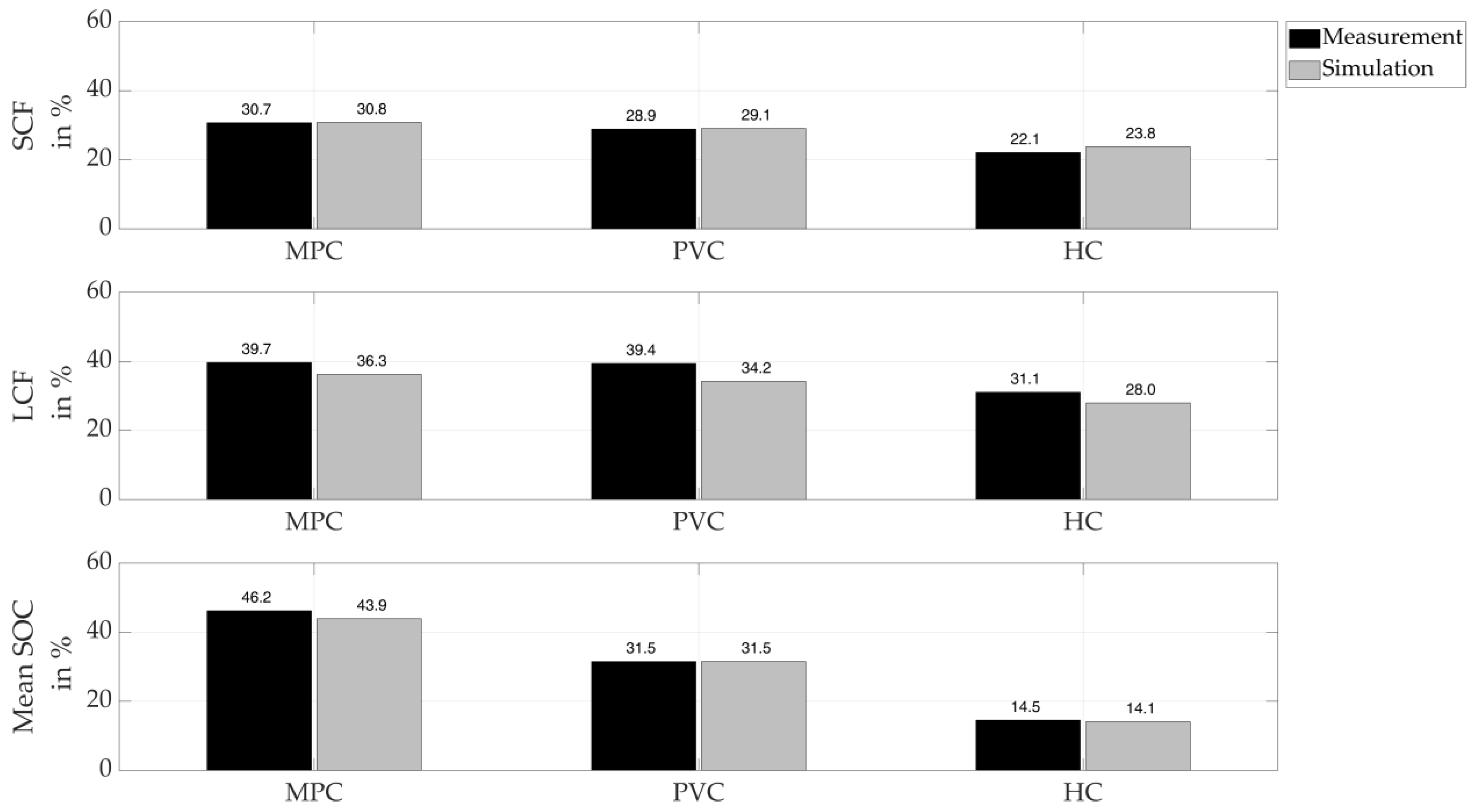
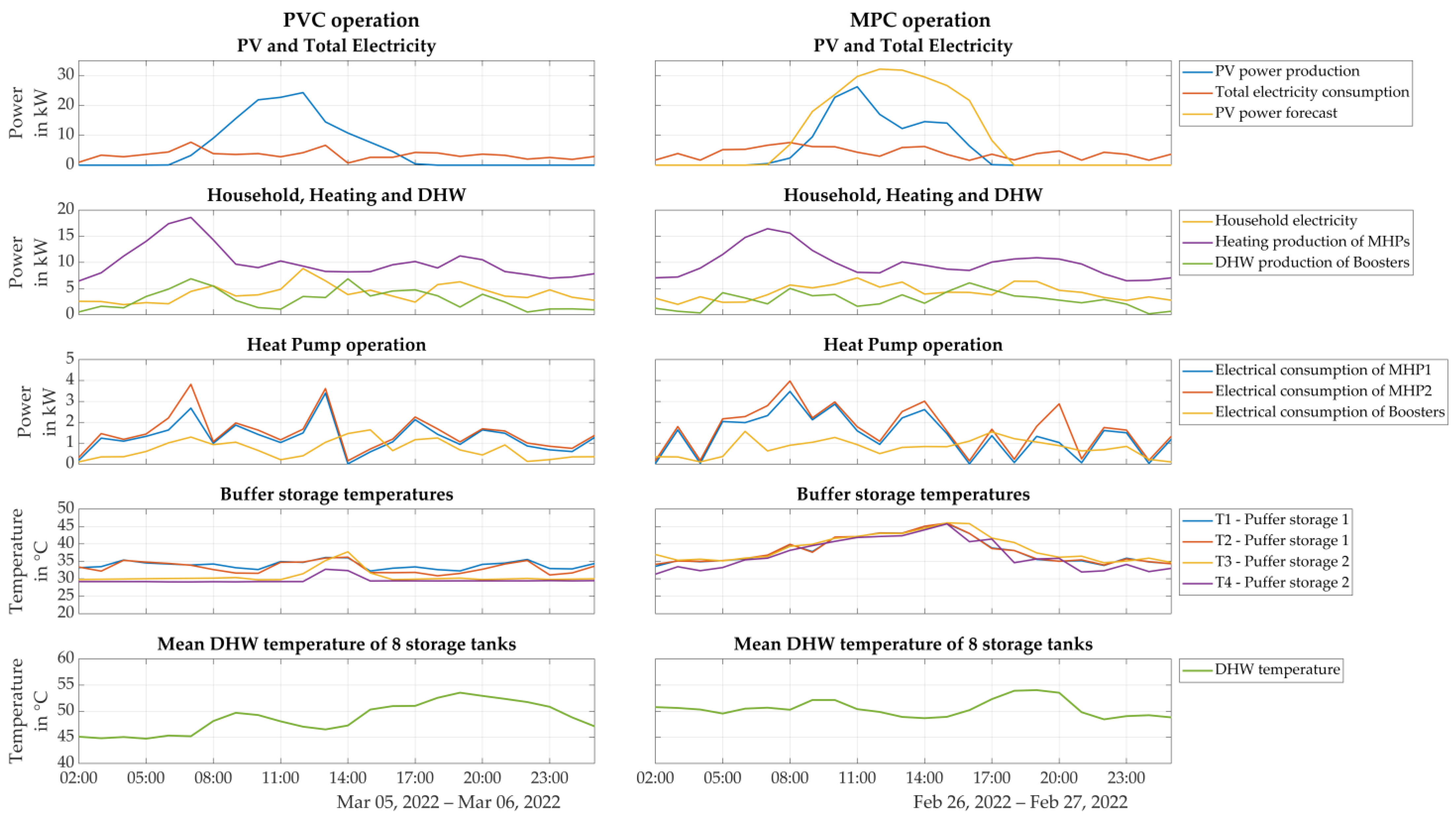
However, the HiL experiments and long-term monitoring demonstrate that this potential is only partially realized in practice. Although MPC achieves the highest measured SCF (30.7%) and the highest mean thermal storage utilization (SOC of 46.2%), the real-world operation exhibits 15–20% lower heat pump efficiencies and markedly higher operating costs than predicted by optimization results. These deviations are significantly larger than those reported in many purely simulation-based studies [
14,
15,
16,
17]. They are caused by forecasting inaccuracies, as well as by the limited controllability of commercially available heat pump systems, which typically accept temperature set-points rather than direct power commands. Consequently, the optimized power profiles cannot be implemented exactly. The monitoring results show that forecast quality is not merely a secondary disruptive factor but a critical performance factor for predictive control. Deviations in forecasts of thermal and electrical load, as well as PV generation, directly affect the temporal coordination of heat pump operation with PV availability and storage temperatures.
These findings help to explain the discrepancy between the large MPC benefits reported in simulation studies [
14,
15,
16,
17] and the more moderate performance gains observed in field and HiL experiments. Similar trends are reported in experimental MPC studies for office [
19] and residential buildings [
20], where improved thermal comfort and energy flexibility are achieved, but economic benefits are reduced once realistic forecast errors and actuator constraints are taken into account. The present results reinforce the conclusion that forecast quality and actuator controllability are critical enablers for MPC performance.
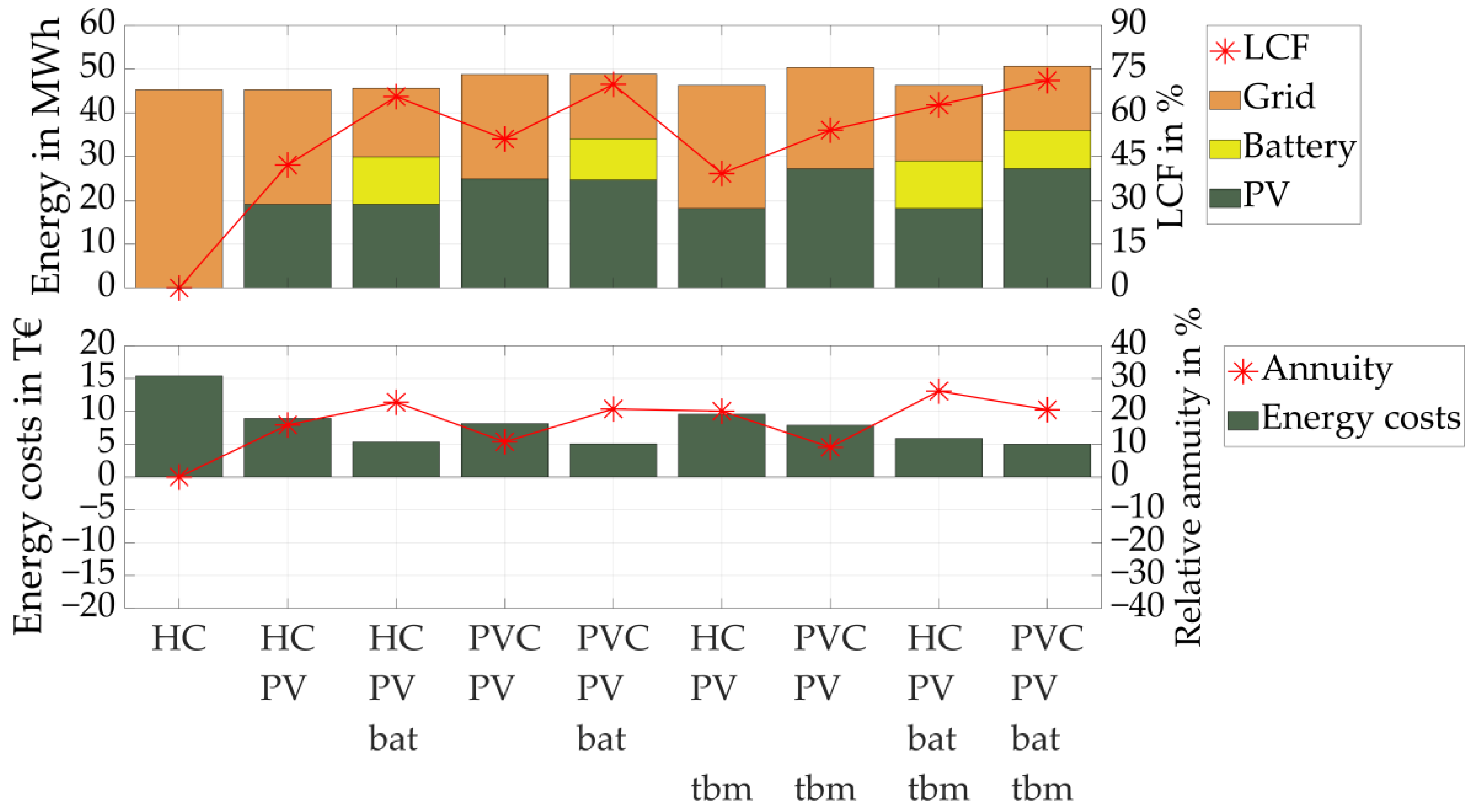
The results further show that the performance gains achieved by the PVC compared to HC are more limited than often suggested in simulation-based studies. In the annual simulation analysis, switching from HC to PVC increases the LCF to an absolute improvement of 4–15 percentage points, depending on the storage options. In terms of annuity, PVC yields only a moderate reduction of total life-cycle costs of approximately 1–8 percentage points compared to HC, depending on the storage options.
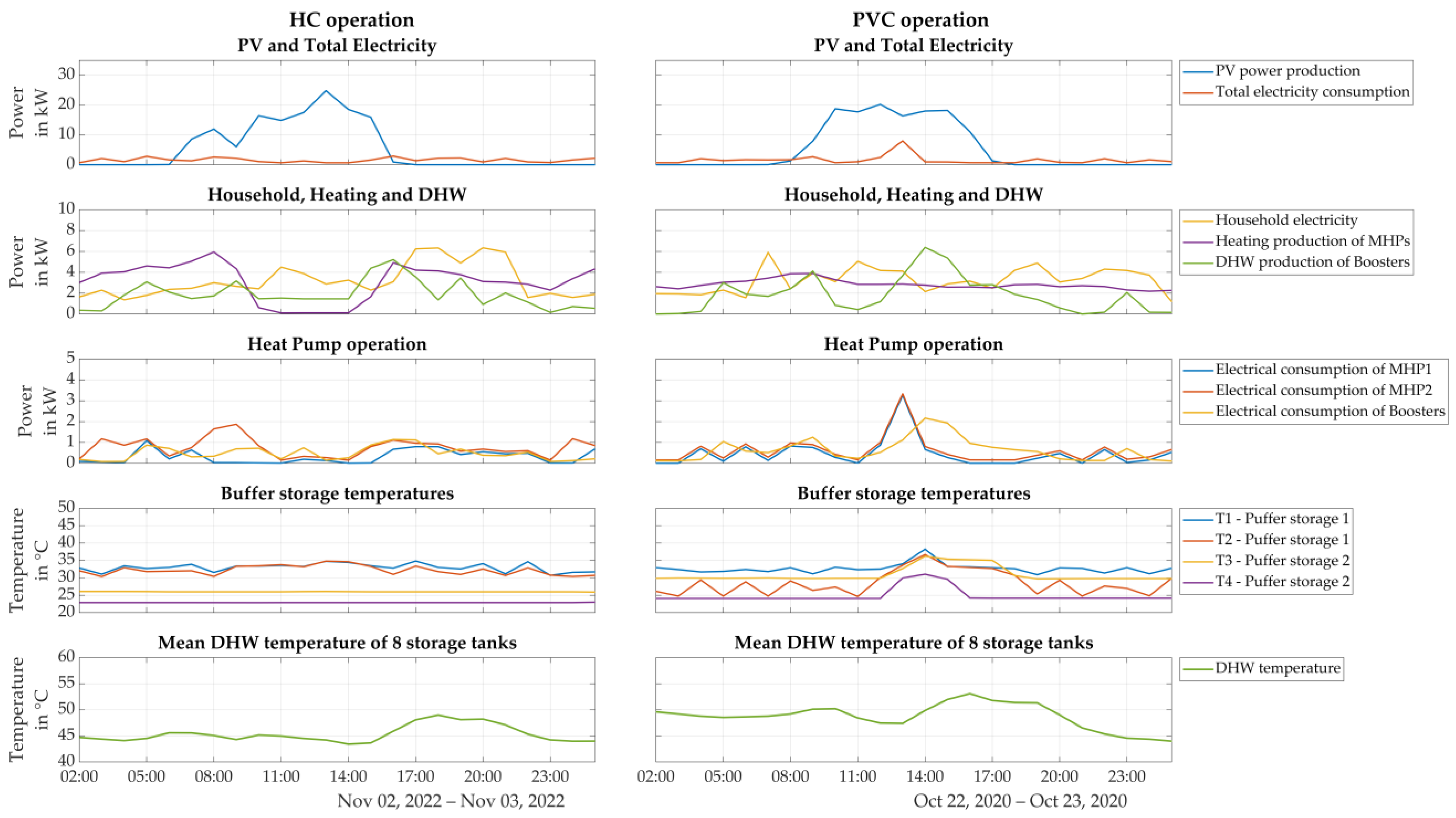
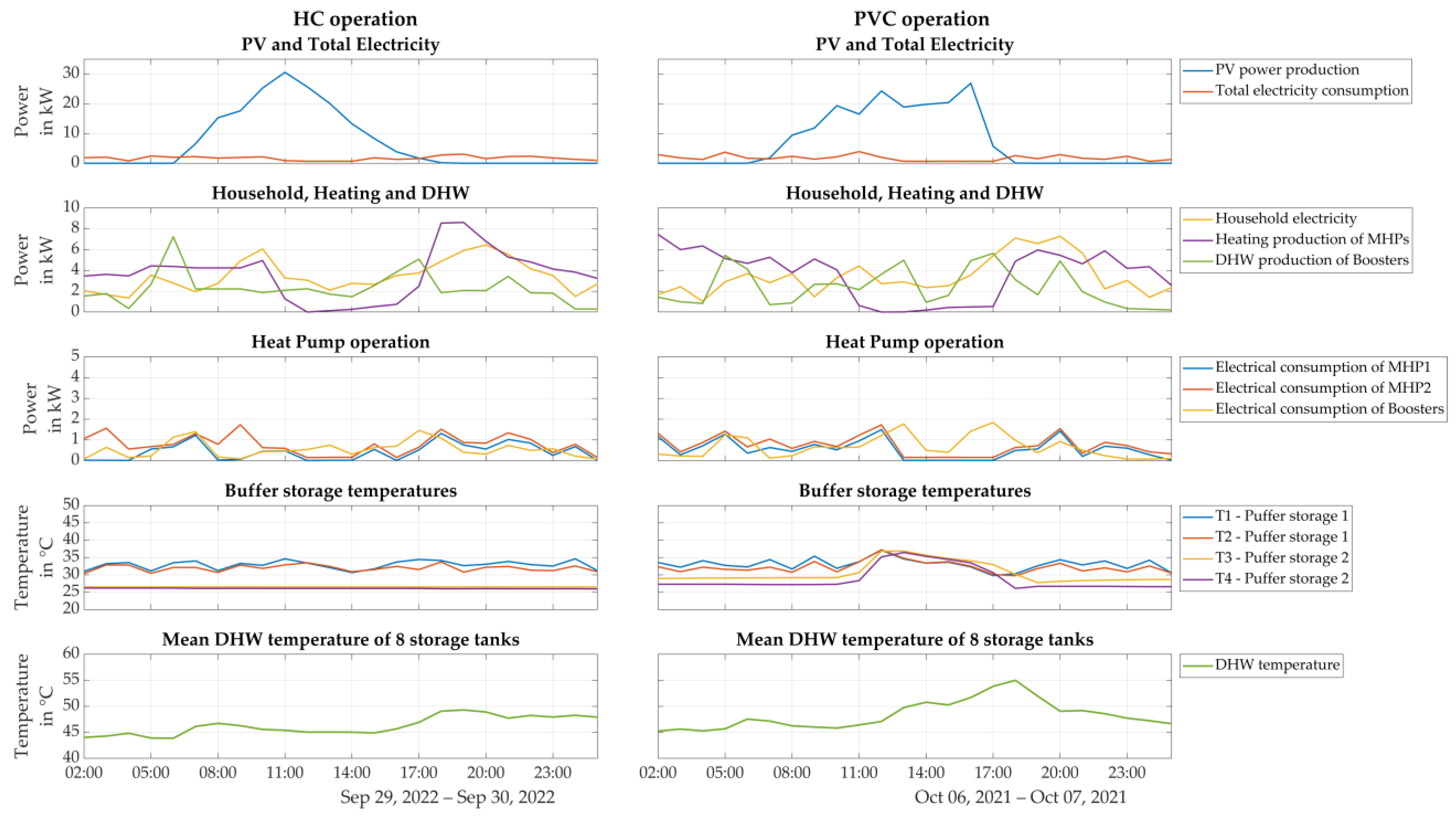
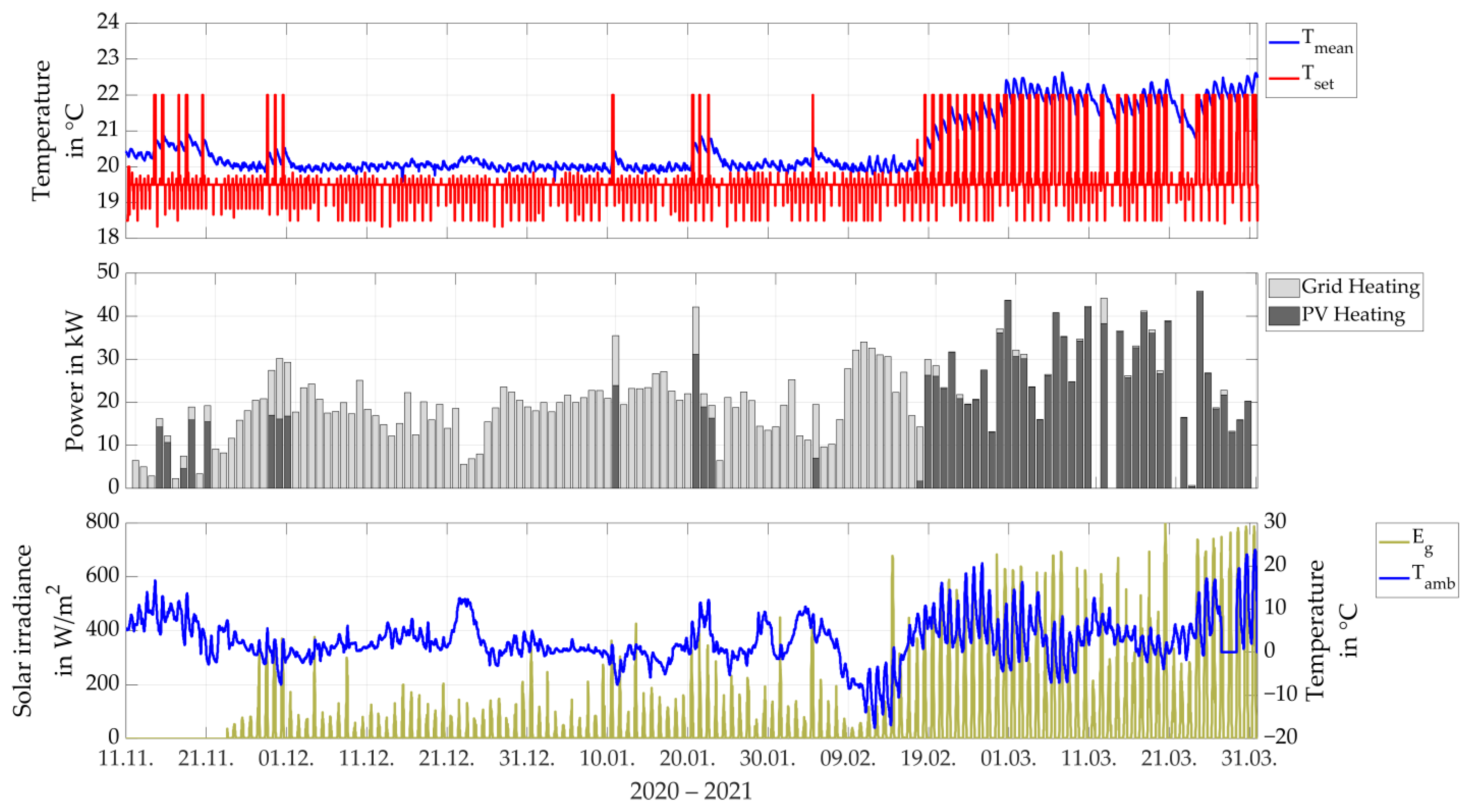
The limitations of PVC become even more apparent in on-site operation. In the monitored 24 h comparison periods, PVC improves the LCF relative to HC by 9.5 percentage points in the first period but only by 1.9 percentage points in the second period, despite comparable PV availability. This strong variability indicates that the effectiveness of PVC is highly dependent on the temporal distribution of the heating load. When heating demand coincides with PV-rich hours, PVC can increase direct PV utilization; however, when heating demand during midday is low or absent, the impact of PVC becomes marginal. While PVC can be considered a simple and robust strategy for increasing PV utilization without forecasts, its effectiveness is strongly constrained by load timing, storage losses and reduced SPF. This trade-off illustrates that maximizing PV utilization through increased storage charging or extended heat pump operation during PV-rich periods inevitably leads to higher mean operating temperatures, partial efficiency losses and lower SPF. Consequently, control strategies must be evaluated based on multiple performance indicators rather than optimization toward a single metric such as SCF or LCF.
In contrast, the results for PVC and tbm activation show that simpler and more robust control concepts can already capture a large share of the attainable benefits in highly energy-efficient plus-energy buildings. Both simulation and on-site operation show that moderate increases of indoor temperature set-points (dT2) during periods of PV availability can significantly improve PV utilization. In simulation, PVC increases LCF by strategically shifting heat pump operation into PV-rich periods, while tbm activation achieves substantial increases in LCF (from ~20–25% to more than 45–60%) and reductions in grid-supplied heating energy of nearly 50% at comparable comfort levels. The comfort results indicate that moderate set-point increases (dT2–dT3) remain mainly (96%) within the comfort limits in summer, defined by EN ISO 7730, Category II, and lead to a predicted percentage of dissatisfied under 10%, while higher activation levels lead to increased deviations from the standard. The results also indicate that the effectiveness of tbm activation is dependent on the underlying control strategy. While tbm activation can reduce annuities by up to 12 percentage points under PVC, the reduction under HC is only 4%. In real-life implementation, the tbm-activated house reaches a high LCF of 46.6%. From an economic perspective, the increased utilization of locally generated PV electricity compensates a large share of the additional heating demand. As shown by the comparison with reference houses at similar comfort levels, higher LCF allows the operating costs of the thermally activated building to be reduced (20.7%), even when absolute heating energy consumption is higher. These effects are achieved without the need for complex optimization algorithms or high-quality forecasts. However, the impact of tbm activation on the overall energy system could not be fully assessed in the real-world implementation, as only two of the eight residential units participated in a continuous activation of tbm.
Table 9 provides a structured overview of the relative strengths and limitations of the investigated control strategies across simulation, HiL, and monitoring environments, facilitating a concise comparison of performance, robustness, and implementation effort.
Despite the comprehensive analysis combining simulation, HiL experiments and long-term monitoring, several limitations must be considered when interpreting the results. The study is based on a single-site case study with a specific system configuration and user behavior, which may limit the direct transferability of the findings to other building types, climate conditions, or operational settings. In addition, the activation of the tbm was implemented only in a subset of the residential units, which restricts the assessment of its impact on the overall system performance. Nevertheless, the results provide robust insights into the relative performance of control strategies in highly energy-efficient building systems. Future work should therefore focus on extending the analysis to a wider range of buildings and operating conditions, improving forecast models, and investigating control strategies at the district scale. Furthermore, future work should particularly focus on the integration of dynamic electricity pricing, as variable tariffs are increasingly available and characterized by growing price spreads, offering significant additional flexibility and economic optimization potential for control strategies under real market conditions.
Overall, the discussion of the results relative to the existing MPC literature [
14,
15,
16,
17,
18,
19,
20] suggests that while MPC remains a powerful approach under favorable and well-controlled conditions, its additional value over robust rule-based strategies diminishes in highly energy-efficient plus-energy buildings. In such systems, the marginal gains of MPC must be carefully weighed against the increased implementation effort, forecast dependency and robustness requirements. A combination of simple PV-oriented control concepts with selective activation of passive storage options, such as tbm, may therefore represent a more practical and resilient pathway for many real-world applications. However, in the simulation study, the resulting annuity savings remain moderate, with a maximum of 12%, as system efficiency decreases due to higher storage temperature levels and high investment costs for PV plant and battery storage. Nevertheless, the relatively attractive PV feed-in tariff enables an economically viable deployment of the PV system and battery storage.
5. Conclusions
This study presents a comprehensive comparison of heat-controlled (HC), PV-controlled PVC), and both predictive control strategies (SPC and MPC) for a highly energy-efficient plus-energy terraced housing complex based on annual simulations, long-term monitoring, and hardware-in-the-loop (HiL) experiments.
The results show that the baseline HC operation already achieves a high level of performance, with an LCF of approximately 66% and SPF of the central heat pumps of about 5.8, leaving limited additional improvement potential for advanced control strategies. PVC increases PV utilization by shifting heat pump operation into PV-rich periods, leading to increases in the LCF by up to 4–15 percentage points in simulation, and in daily monitoring comparisons, up to 1.1 and 9.5 percentage points. However, this comes at the cost of elevated storage temperatures and efficiency reductions for the heat pumps, resulting in an SPF of 4.8 in simulations.
Predictive control strategies achieve the highest operational performance under idealized conditions. Simulation results show that MPC increases LCF by up to four percentage points and reduces operating costs by up to 212%, assuming perfect forecasts and full controllability of the heat pump system. HiL experiments show that MPC increases LCF to 39.7%, compared to 39.4% for PVC and 31.1% for HC. At the same time, real-world MPC operation exhibits reductions in heat pump efficiency of 15–20% and operating-cost deviations of 40–50% relative to optimization results, primarily due to forecast uncertainty and limited controllability of commercial heat pump systems.
The activation of building thermal mass proves to be a robust complementary flexibility option. Simulation results show that a moderate room set-point increase of about 2 K increases LCF from approximately 20–25% to more than 55–60%, while reducing grid-supplied heating energy by nearly 50% and maintaining acceptable comfort levels. Higher set-point increases result in diminishing energetic benefits and noticeable comfort degradation. Monitoring results confirm a substantial increase in LCF; however, they also show that absolute heating energy demand can increase, with economic benefits arising primarily from higher LCF rather than from reduced total heating energy.
Overall, the results indicate that in highly energy-efficient plus-energy buildings, simple and transparent control strategies combined with selective thermal mass activation can already capture a large share of the achievable flexibility potential. While MPC offers additional benefits under favorable conditions, its practical deployment requires high-quality forecasts, improved actuator controllability, and robust safety concepts to justify the added complexity in real operation.