1. Introduction
Airports are complex facilities that represent large energy consumers. In the context of decarbonisation targets by 2050 under the flagship initiative of the European Green Deal, this category of consumers is being considered, with significant research being carried out in recent years on various approaches, considering both energy consumers and energy sources as research directions through benchmarking, modelling, and simulations [
1]. For example, an energy performance analysis was conducted using the measured data of 30 airport terminals located across North America to propose benchmark metrics [
2]. Another relevant research direction is related to the investigation of the use of renewable energy sources in airports to significantly cover the energy demand, such as the development of a new holistic energy system and green fuels for Vancouver Airport in Canada, a study developed by Khalil and Dincer [
3], or the investigation of the use of geothermal energy at Makedonia Airport [
4].
The significant impact of terminal buildings on the distribution of energy consumption within an airport is notable. For example, at the Seve Ballesteros-Santander airport in Spain, the energy consumption within the terminal represents 76.62% of the airport’s energy consumption [
1] and includes the HVAC, lighting, and Information and Communication Technologies (ICT) as part of the landside energy consumption of the airport. The rest of the reported energy consumption is associated with the airside, such as airfield lighting, radio navigation systems, and other consumers.
In addition, considering a commonly used benchmark worldwide, such as the Energy Use Intensity (EUI) [kWh/m
2∙year] which measures the energy consumption level related to the building’s gross area [
1], a significant variation in terms of energy profiles for the same building typology (airport terminals) was identified. A broad range of terminals located on the North American continent reported EUI values between 359.61 and 801.24 kWh/m
2·yr for the time horizon 2012 [
2] and values between 459.20 and 1010.39 kWh/m
2·yr for 2003 [
3]. Although the reports did not reveal distinct patterns of energy use, the variations in the EUI can be attributed to factors such as building geometry, space type, operational practices, and the business model of each airport terminal building. Regarding the European data, Greek airport terminals reported a value of 234 kWh/m
2∙year, averaged over a 4-year period (1995–1998), considering 29 Hellenic airports [
4]. For Stavanger Airport, located in Norway, the range was between 355 and 399 kWh/m
2·yr, as collected for the years 2010–2015 [
5]. Notably, for the latter, the reported data refer to the entire facility, which includes the terminal building, firefighting station, car park, helicopter terminal, and runway lighting.
Data from China in recent years have been reported for more than 20 airport terminals [
6], with an average consumption of 230.0 kWh/m
2∙year for terminals located in hot summer and cold winter areas, with an average of 220.5 kWh/m
2∙year for cold areas and 151.1 kWh/m
2∙year for temperate areas. For the Hong Kong International Airport, the range was 371 and 379 kWh/m
2∙year, as collected for the terminal buildings only, for the years 2010–2015 [
5].
The decarbonization objective of the aviation industry targets two major areas. One is related to the transportation component, with aviation currently contributing 13.9% of transport emissions in the EU, making it the second-largest source after road transport [
7] from the total of approximately 25% represented by the transport sector in Europe [
8]. The key decarbonization goals for European aviation by 2050 rely on emission reductions for aircraft and engine technologies (27%), alternative fuels and sustainable energy (56%), economic measures (12%), and air traffic management (ATM) and aircraft operations (6%) [
9]. The other is associated with the construction sector, with buildings responsible for approximately 34% of the GHG emissions in Europe for the time horizon 2005–2022 [
10] and counting the airport terminals as a specific building typology associated with the aviation industry. In this regard, the decarbonisation targets associated with the construction sector are whole-life carbon reduction, tackling both operational and embodied emissions. Furthermore, the Zero Emission Building (ZEB) concept is expected to be mandatory in Europe by 2030 for deep renovations, and existing buildings should be transformed into zero-emission buildings by 2050 [
11].
Building energy modelling is crucial for achieving ZEBs. Beyond their widespread use to assist in the design or operation of buildings [
12,
13], energy simulations are commonly used to facilitate investment decisions and reduce the energy consumption in the operation of the respective building. They also quantitatively evaluate and forecast the impact of implementing various technologies in relation to energy savings and the reduction in CO
2 emissions. In addition to traditional approaches based on building energy simulations, research has explored the integration of innovative methods, such as the dynamic coupling of building energy simulations with computational fluid dynamics [
14] or artificial neural networks applications for building’s heat loss predictions, as part of the energy demand calculation [
15,
16]. Bourdeau et al. [
17] investigated machine learning approaches in relation to building energy consumption and forecasting.
However, the significant variation in energy consumption for this particular building typology leads to the technical limitation of approaching the energy simulation of an airport terminal from a standardised perspective. Laaroussi et al. [
18] identified that for the residential sector one of the significant factors is the occupant behaviour, which is considered with stochastic nature because the behaviour of each person is independent and random, and not fixed by any determined equation or rule. Airport terminals are another category of buildings sensitive to this particular aspect, as studied by Xianliang et al. [
19]. The dynamics of building occupants (the stochastic nature of occupant behaviour) require significant resources for energy modelling, as well as detailed input data for the construction of the passenger pattern into the building energy model, data which may not be available. In addition, according to [
20], behavioural patterns are largely transitional for terminals. Behavioural patterns in arrival terminals are largely transitional, as passengers move through processes such as disembarkation, immigration, baggage claim, and customs clearance, followed by dispersal toward ground transport or connecting flights. These activities are inherently sequential and time-sensitive, producing fluid rather than stable behavioural routines. In addition, the multiple functions within the terminal (passenger transit areas, shops, offices, luggage handling areas, or security areas) with different thermal regimes (commonly with different thermostat setpoints), and different operating hours for the various building functions, etc., add significant complexity to the input assumptions for energy simulations.
Therefore, for accurate and relevant predictions of energy savings and CO2 emission reduction, assuming the implementation of dedicated solutions as an important part of the path to decarbonising airport terminals, the need for a specific approach to energy simulations is identified.
Given the multitude of variables that can influence the energy consumption of a terminal, it is necessary and technically appropriate to calibrate the model by considering the actual energy consumption history of the building. Model calibration is relevant and significant in assessing the impact of the implementation of measures and the energy and CO2 emissions savings they can produce.
The approach of model calibration was already considered in the energy modelling of an airport terminal application [
21]. However, this model considered only the air conditioning system within the terminal, being limited in relation to the energy consumption of the terminal of multiple consumer types.
The research question investigated is how a calibration methodology based on real operational energy consumption data can improve the accuracy and robustness of energy performance modelling in airport terminal buildings. This approach comes as an alternative to energy assessment under standard design conditions, which is currently mandatory in several countries, including Romania [
22].
Thus, identifying a need and certain current limits, the objectives of this research are set as follows:
- ○
to better understand and identify particularities from the energy assessment perspective for critical facilities, particularly terminals of existing airports.
- ○
to develop a calibration framework for the energy simulation model, considering the particularities of terminals as building use. The proposed calibration framework is expected to allow accurate forecasting of energy savings and CO2 emissions prior to the implementation of dedicated solutions for energy consumption reduction and decarbonisation.
- ○
to substantiate an optimisation pathway using the calibrated model for the renovation design process.
2. Methodology
The framework methodology used mainly follows the model developed within the OLGA project, funded by the European Commission under the HORIZON 2020 programme, with a particular focus on energy modelling, considering the complexity of the building typology.
The undertaken methodology consists of four major steps: (i) extensive data collection regarding the existing building and the building site; (ii) hourly dynamic simulation using, for example, the energy simulation engine Energy Plus v. 9.4, through the graphical user interface Design Builder v. 7.3.0.046; (iii) a two-stage model development consisting of developing an initial data-supported model using the collected data in the energy model (first stage): the technical characteristics of construction materials for the building envelope elements (such as material type, thickness, and thermal conductivity) and the technical specifications of HVAC, DHW, and lighting equipment that actually serve the building, followed by the calibration of the initial model (second stage), based upon monitored data, and (iv) using the calibrated building energy simulation model to accurately predict the effect of implementing potential technical measures to increase the energy performance of the terminal.
2.1. Data Collection
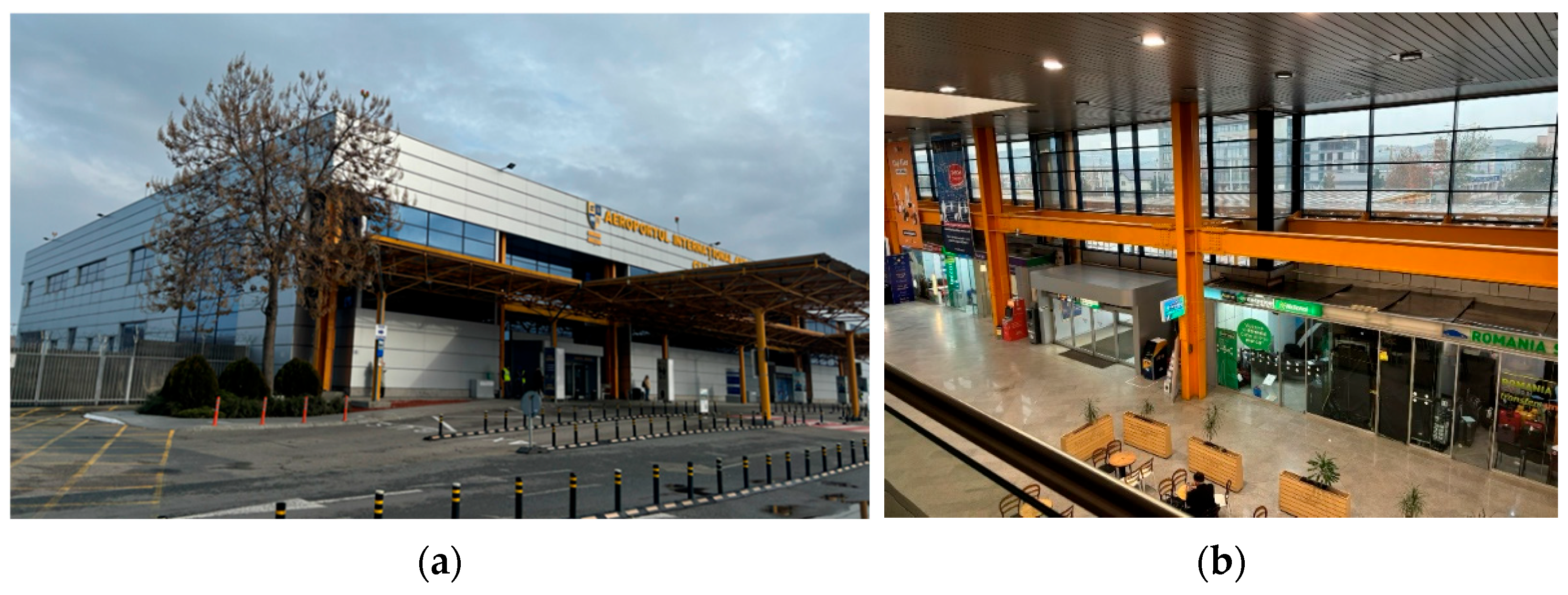
Considering that the studied airport is functional, the International Airport “Avram Iancu” of Cluj-Napoca is the second largest in Romania, and one of the terminals was selected for the current study, namely the Arrivals Terminal, as can be seen in
Figure 1.
Extensive data collection was undertaken, which refers to both building-specific data and building site-related data. The collected data categories and subcategories are presented in
Table 1.
Regarding more detailed data inputs,
Table 2 presents the technical specifications of the building envelope and equipment collected and introduced in the first stage of the dynamic energy calculation model.
Furthermore, the data collected for the ventilation system were introduced in the first stage of the energy calculation model, considering the technical specification categories listed in
Table 3.
2.2. Energy Simulation
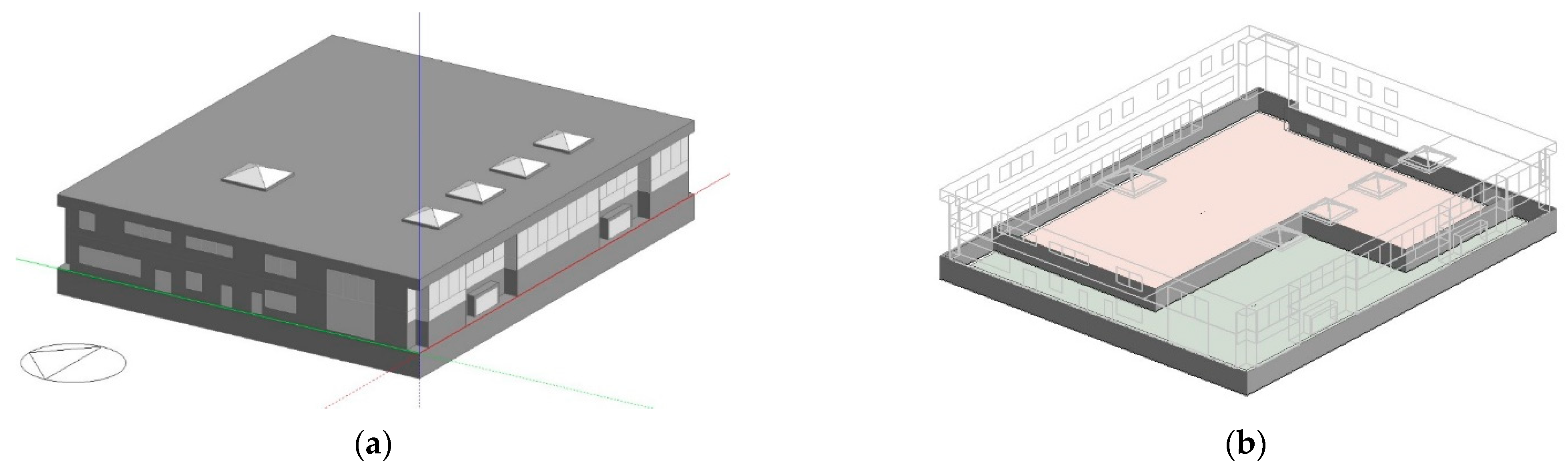
The geometrical modelling of the building was undertaken based on AutoCAD files, which were provided by the airport representatives. The 3D digital model was developed in the software Design Builder v. 7.3.0.046, as can be seen in
Figure 2. The Gross Floor Area (GFA) of the terminal is 10,602 sqm.
The model was divided into four thermal zones, considering the following principles: the zones are divided based on levels and use; adjacent rooms are grouped into one zone if they have similar use and similar occupancy scenarios; and the open floors of a mezzanine level are combined with the similar zones of the level below.
As the first stage of model development, an initial model was developed to calculate the energy consumption of the following utilities: heating, cooling, domestic hot water, mechanical ventilation, and lighting. From the beginning the characteristics of the construction and technical equipment serving the building were introduced into the model.
However, considering important variables with a high level of uncertainty (such as occupant behaviour and dynamics in a terminal, e.g., the occupant distribution model in relation with to luggage handling in an arrivals terminal), fine-tuning of the model using historical thermal and electrical energy consumption is considered. Therefore, the calibration of the initial model based on the monitored data was substantiated as the final model development, as follows.
2.3. Data-Supported and Calibrated Model
2.3.1. Scenario Definition
As the first modelling step, an initial occupancy scenario was used, using preliminary input data regarding the activity: occupancy, heating and cooling setpoints, office equipment, and process, which are parameters that influence the result of the heat balance for determining the heating and cooling yearly energy demand, as shown in
Table 4.
Regarding the facility equipment, in this stage the real characteristics of the existing equipment serving the building for the provision of the main utilities (heating, DHW, cooling, mechanical ventilation and lighting) were introduced, thus practically substantiating a data-based model. The technical specifications introduced refer to boiler yields—for heating and DHW, chiller efficiency (ESEER), mechanical ventilation characteristics for each of the six air handling units (AHUs)—supplied/evacuated flows, heat recovery efficiency and electrical inputs related to fan operation, as well as the power density for lighting—considering each zone, as shown in
Table 5.
2.3.2. Scenario Calibration
Furthermore, as a second modelling step, to improve the initial data-based model in relation to the real energy consumption profile, a calibration approach was considered for each calculation zone. The calibration specifically refers to the input data types: internal gains due to occupancy, based on the building’s occupancy history, and to different indoor processes and office equipment (such as computers for the office zone, conveyor belts functioning for the passenger zone, air curtains located at the outdoor doors in the passenger zone, circulation pumps located in the heating substation of the terminal, etc.), based on BMS monitoring, as well as to the heating and cooling setpoints actually used in the terminal, as received from the technical staff as inputs.
The occupancy history collected (the monthly traffic and the daily average of disembarked passengers collected—values collected for one year), as well as the number of employees of companies operating within the terminal perimeter and the number of staff members working in the terminal, were introduced into the calculation model as density of people [people/m2], for each calculation zone.
The monitored electrical energy consumption through the BMS by certain consumer categories was introduced into the modelling for each calculation zone, as internal gains required to perform the energy balance for the thermal energy demand calculation for heating and cooling in the energy simulation and/or as facility equipment-related electricity consumption. Another parameter to be adjusted against the initial inputs from the first-stage approach is the heating setpoint. Thus, values of 21 °C for the passenger areas, 22 °C for office areas and 20 °C for luggage and other areas were introduced in the model, as effectively used in the building being collected from the technical staff representatives. These values are in accordance with other research undertaken related to satisfaction based on thermal levels at the airport in Chengdu, China, with a 95.8% acceptation with comfort zone ranges from 19.2 to 23.1 °C during winter and 23.9 to 27.3 °C during summer [
25].
Table 6 provides a selection of input data used for the calibration of the initial data-based model into the building-model obtained based on the analysis of data collected regarding the daily passenger flow history, number of staff members, setpoint temperatures, etc. The input variables subsequently modified in this iteration of the simulation are marked in bold in the table.
Other types of real data used are various types of indoor located electricity consumers, which are further considered as internal gains in the building’s heat balance to determine the hourly heat demand for heating and cooling in the energy model. The auxiliary energy input values were calculated based on the yearly monitored electricity data by category. For example, for Zone 1, the value (in [W/m2]) is calculated from the electrical consumption monitored for the conveyor belts, air curtains functioning, auxiliary electrical component of the mechanical ventilation, and the circulation pumps in the heating substation related to the terminal. The monitored energy consumption (in [kWh/year]) was divided by the number of operating hours of the zone, which for Zone 1 was 6935 h/year and by the surface area of the zone, which for Zone 1 was 3981 m2. The obtained results are further used as both internal gains corresponding values, being introduced in the model as annual constant averages, and are also used to calculate the electricity consumption associated with these consumers within the simulation.
Furthermore, methane gas and electricity consumption history were collected for the Arrivals Terminal, for several years, and an analysis of these consumptions was undertaken.
2.3.3. Main Challenges and Constraints in Calibrating the Building Energy Model for the Arrivals Terminal in Cluj-Napoca
Monthly methane gas consumption and thermal energy consumption for 2021. First, heating and hot water for consumption are provided by the thermal power plant, which serves the following buildings and building bodies: Arrivals Terminal body and Departures Terminal body—together as the 1st building, Electrical Power Plant and Thermal Power Plant—as the 2nd building (these two buildings represent the so-called New Airport), and another distinct building, the so-called Old Airport, as the 3rd building, currently used as a restaurant for the airport employees. For all these buildings, there is a single methane gas metre, C3. There is no other type of metering (e.g., flow metres) that separates methane gas consumption at the terminal level.
Second, in 2024, the Departures Terminal was extended, from a GFA of 14,420 m2 to a GFA of 21,621 m2. Regarding calibration, this aspect implies that the methane gas consumption history can be considered up to and including 2023. Nevertheless, for calibration the fuel history was used for 2021.
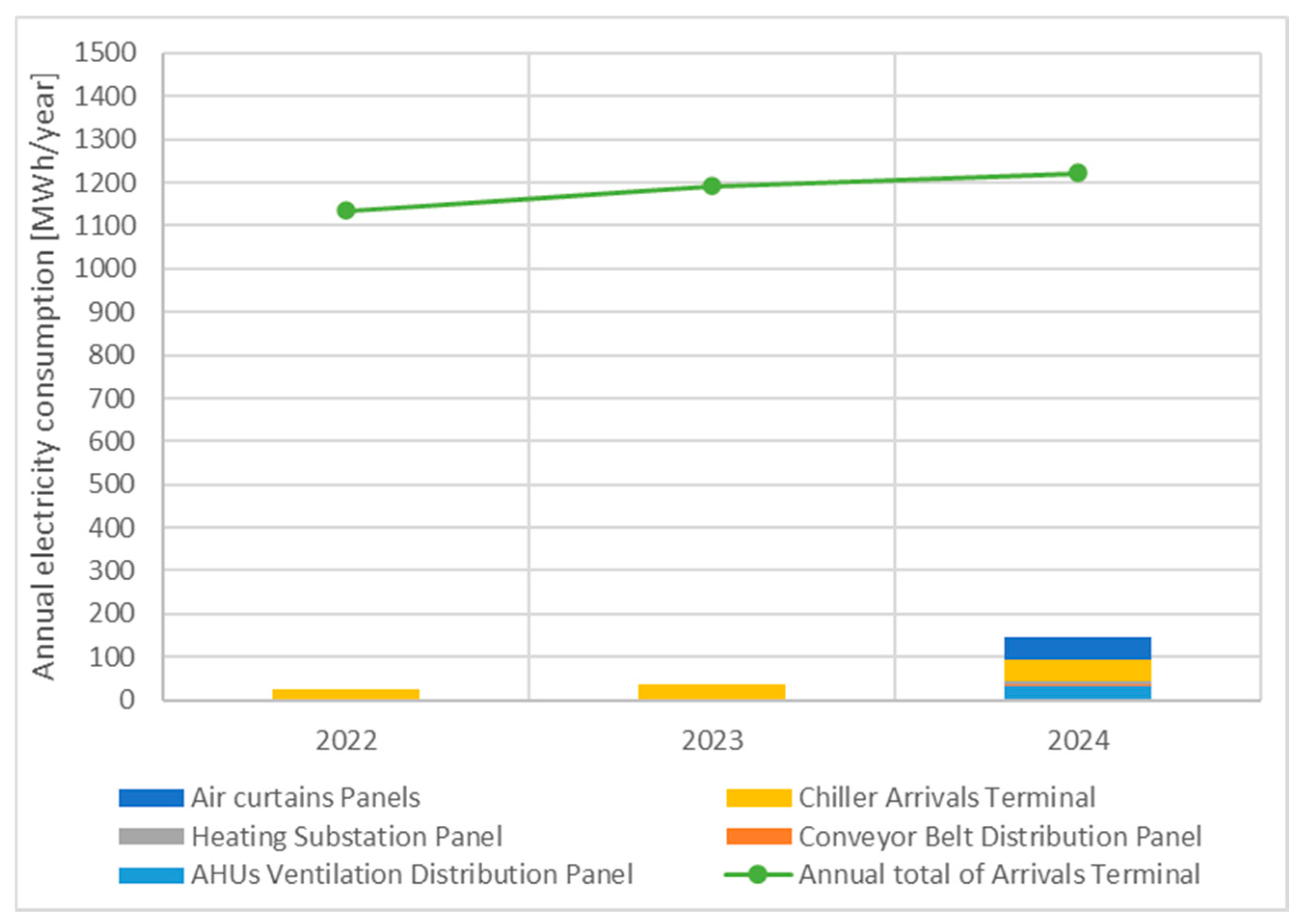
Monthly electricity consumption was extracted from the Building Management System (BMS) for the interval 2022–2024, exclusively for the Arrivals Terminal and several consumer categories. However, following the analysis of the data provided, it was found that for the years 2022–2023 reported data for certain consumer categories were missing, as shown in
Figure 3, due to technical issues within the BMS’ server. Thus, the electricity consumption monitored in the Arrivals Terminal in 2024 is considered representative data to provide a consumption pattern in relation to the current use of the building.
In addition, several consumer categories were missing from the monitoring system, of which the most important was the lighting as an electricity consumer.
It should be noted that no other reliable datasets were available for this study, and it is strongly recommended to use datasets for the same year in the process, both for thermal energy and electricity.
2.3.4. Real Consumption History Analysis
For the disaggregation of methane gas consumption, the weights of the building GFAs in the building complex served by the same metre were considered in this study. The largest share (85.9%) within the assembly is attributed to the two active terminals, which have similar destinations and operating conditions.
Thus, the breakdown of the methane gas history, in conjunction with the GFA of each building or building body of the assembly, was considered. In addition, it is emphasised that the share of other buildings in the metered assembly that do not have the current terminal functional use is rather reduced (14.1%), which is expected to introduce a limited error, as complementary judgement.
Regarding electricity consumption, data monitored through the BMS were received—as shown in
Figure 3, and as justified previously, the year 2024 is considered representative. In addition, the analysis of the measured electricity consumption at the terminal over the three years analysed revealed that the consumption profile remained similar across all three years, indicating a rather stable electricity consumption pattern at the terminal level.
Furthermore, within the analysis of electricity consumption history, it was found that the total reported electricity consumption was much higher than the sum of the consumption by the electricity consumer category, as shown in the figure below.
This may be due to the following:
(1) There are types of consumers for which no reporting was recorded at all in certain years, for example: HVAC and air curtains in 2022 and 2023 have a 0.00 kWh/year report, although they most likely operated under normal conditions. This was due to technical issues with the BMS’s server.
(2) There are other consumers of electricity which are not included in the monitoring system, such as lighting, which is as a distinct and important category of consumers.
Regarding the monitored energy consumers, for 2024, the air curtain panels, which are located above the automated outer doors, represent 4.1% of the total electricity consumption, whereas the circulation pumps of the thermal agent distributed in the terminal, which are located in the heating substation of the terminal represent 3.6%. The auxiliary electrical consumption for the operation of mechanical ventilation represents 2.5% of the yearly recorded consumption. However, based on
Figure 3, it is emphasised that there is a significant value of unmonitored electricity consumption concerning the specific electricity consumers within the terminal. These electricity consumers are located inside the building; therefore, they might be used as heat gains in the thermal balance for heating and cooling intrinsic energy demand calculation.
The above-identified aspect allowed the proposal of the calibration approach developed in this work, by using a calibration input that reflects measured but unmonitored electricity consumption by consumer categories. Moreover, the variable proposed as a calibration input (namely “Miscellaneous equipment”), is simultaneously used as an internal gain in the heat balance for calculating the thermal energy consumption.
2.4. Uncertainty Considerations
Regarding the elements that introduce uncertainty in the model, the following were identified as relevant:
- -
the use of datasets from different years for measured methane gas and electricity consumption at the terminal level.
- -
methane gas disaggregation due to the lack of independent metering of the terminal.
- -
the use of Typical Meteorological Year (TMY) versus Actual Meteorological Year (AMY).
- -
natural ventilation due to air infiltration and the opening of access doors, especially the access doors from the terminal to the airport exit.
The identified rather stable electricity consumption pattern at the terminal level, based on the three consecutive years analysed in the previous section, introduces a low level of uncertainty in the developed model regarding the use of different datasets from different years for the two consumption vectors (data from 2021 for methane gas consumption and data from 2024 for electricity consumption).
The GFA-weighted apportionment introduces unquantified uncertainty regarding the thermal energy consumption and input data for calibration, which is a clear limitation of the data available in situ for the current application. To eliminate this error source, it is strongly recommended to use the building’s own consumption history, recorded by a thermal energy metre located in the building under analysis (in the case of future replications).
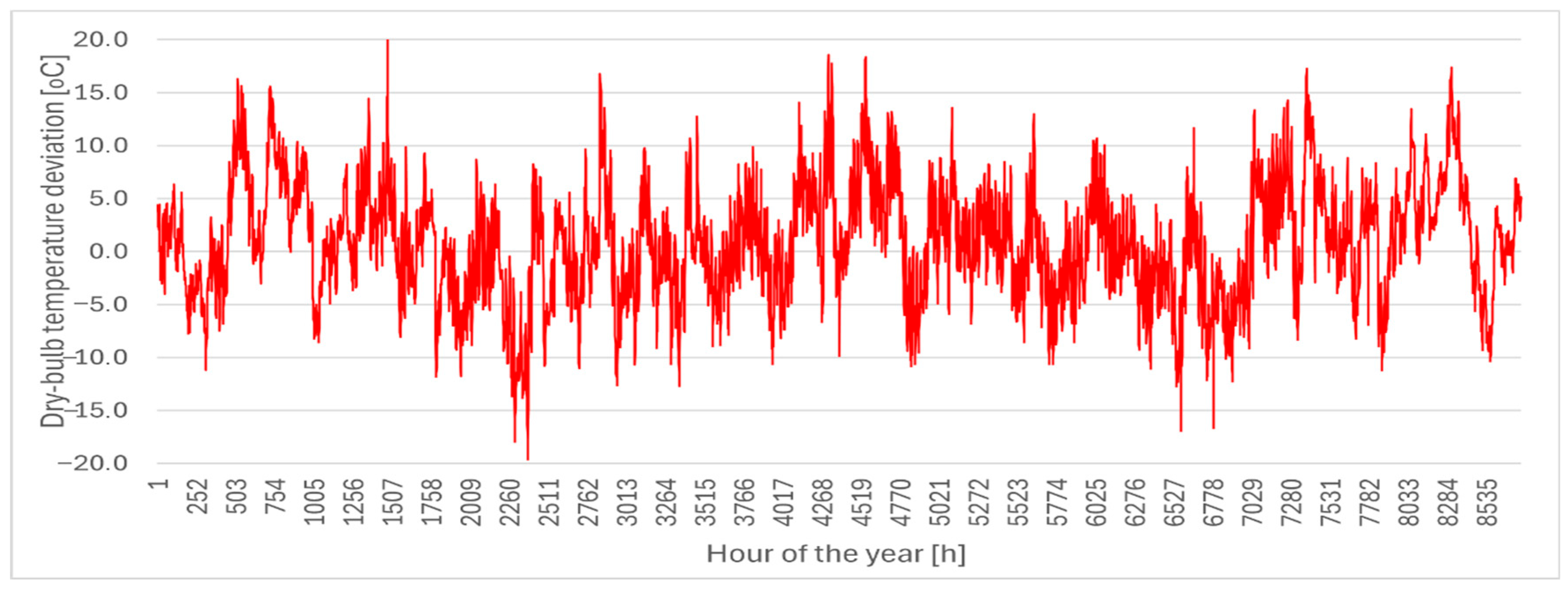
The use of TMY versus AMY for the same location, Cluj-Napoca airport, was considered (
Figure 4), and the errors introduced by TMY versus AMY were investigated. Thus, TMY was used, versus AMY for the year 2021. The use of AMY for 2021 was considered relevant because this is the year used for the methane gas history in calibrating the hourly dynamic model for calculating thermal energy for heating, as a major consumer of the building. The average annual dry bulb temperature was 8.3 °C for TMY and 9.4 °C for AMY, 2021 being a slightly warmer year than TMY. It is noteworthy to mention that the median value of this input variable is 8.3 °C for both datasets. In addition, AMY datasets for 2023 and 2024 were investigated. The average annual dry bulb temperature for the considered coordinates was 10.8 °C for the year 2023 and 11.5 °C for the year 2024. The comparison of AMY 2021 with the TMY dataset reveals a mean outdoor air temperature difference of less than 1 °C, indicating that 2021 closely represents the typical climatic conditions of TMY. In contrast, AMY 2023 and 2024 showed consistently higher temperatures, reflecting recent warming trends rather than long-term typical conditions. Therefore, and for this reason, the AMY 2021 climate dataset was chosen as the reference year for model calibration and TMY comparison.
Another typical input parameter with high uncertainty in the energy analysis of buildings is the air change rate due to air infiltration and the use of outdoor access doors, which cause additional energy consumption. Air infiltrations driven by wind and stack effects were considered in conjunction with the technical condition of the terminal (good airtightness). For the automated access doors, patterns of their usage were identified, based on the passenger history and the time required to open/close the main automated doors (5 s to open/5 s fully open/5 s to close), also considering the work developed by Yuill et al. [
26], in relation to air leakage modelling through high-use automatic doors.
3. Results
It is used as an assumption that model calibration is critical for buildings with complex uses, such as airport terminals. Furthermore, reliance solely on data typically collected in energy simulations, such as building characteristics, equipment specifications, and occupancy profiles, although extensive, is not exhaustive and can lead to important errors in the results. The results refer both to the energy simulation of the initial situation of the existing building, as well as to the predictions of energy savings based on the initial model, in the case of implementing specific solutions to improve the energy efficiency of the building.
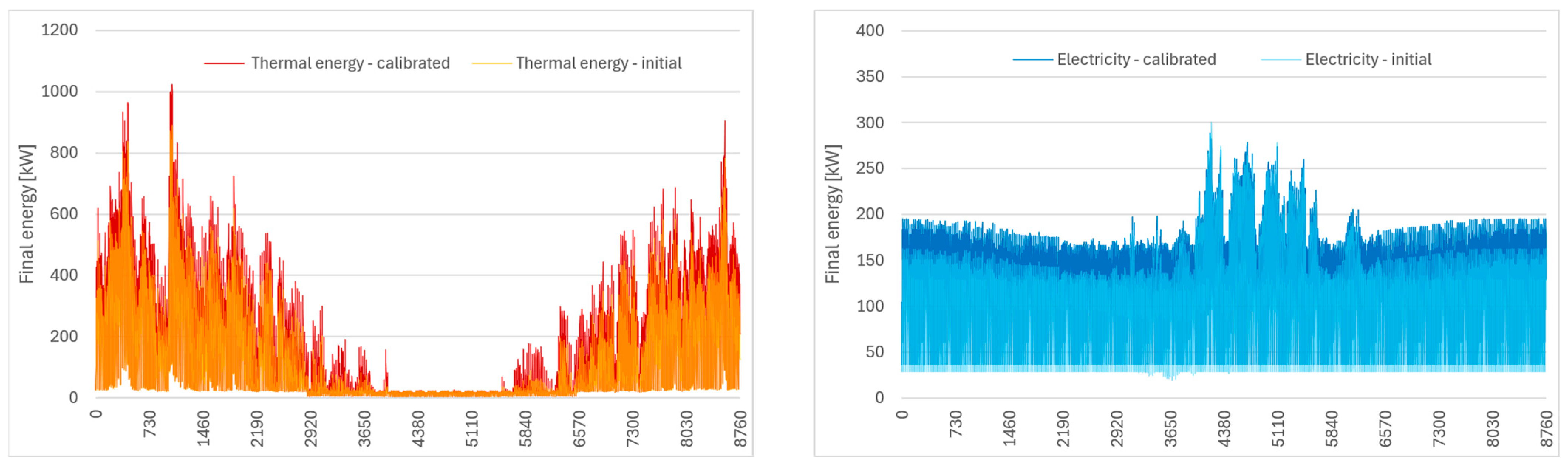
This assumption is supported by the undertaken work results, as can be seen in
Figure 5, and also by current research that demonstrates that errors can be significant in numerical energy calculation models for this type of building [
27].
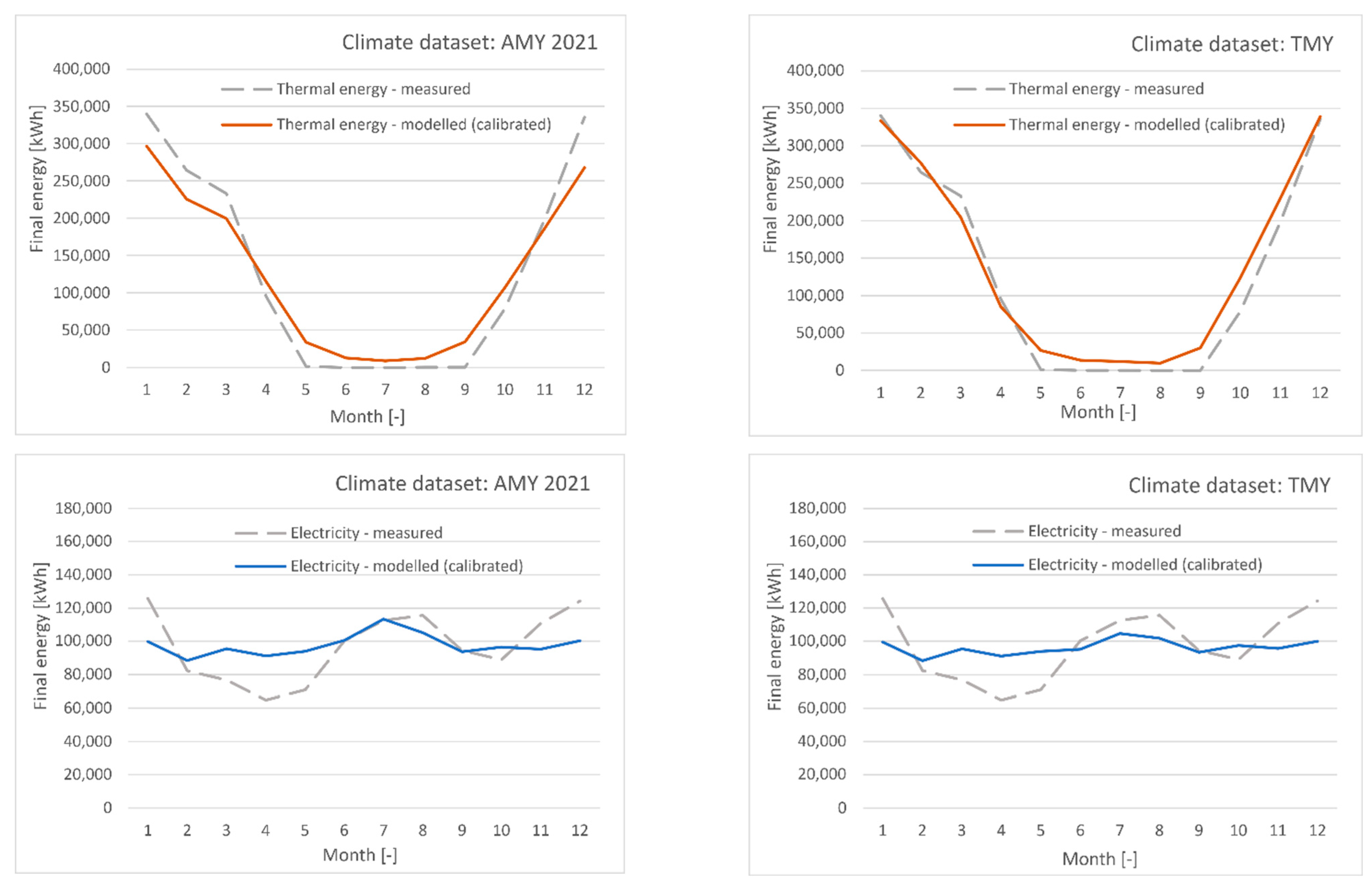
The calibration of the model is closely related to the consumption history of the terminal, both for thermal energy and for the electricity actually used in the normal operation of the building, as can be seen in
Figure 6, for both the AMY 2021 and TMY climate datasets. In addition, the RMSE calculated for the monthly results for the AMY dataset is 3.13 kWh/m
2∙yr for thermal energy and 1.57 kWh/m
2∙yr for electricity (see also
Table 7).
The calibration process focused on key input variables related to the specific occupancy mode of the building that impact on the energy analysis (real passenger flow and occupant history, actual heating and cooling setpoints, and actual process equipment). This approach is fundamentally different from the case of performing the energy analysis under standard design conditions, which is currently mandatory for all types of buildings in several countries, including Romania [
22]. Furthermore, given the highly dynamic and transient occupancy patterns specific to airport terminals, particularly those associated with disembarking passengers, the application of standardised occupancy conditions becomes methodologically inconsistent and insufficient to accurately represent the real operating conditions of such a complex facility. In this regard, the proposed calibration process allows the model to capture certain very specific elements of that building, which can vary from one year to another independently of the initial design occupancy scenario of the building. For example, Cluj-Napoca Airport has gradually become a busy airport (with currently 1.6 million passengers disembarking per year). This approach eliminates a structural error in the energy analysis for this type of building.
In addition, within the calibration process, a new variable, “Miscellaneous equipment”, directly associated with the historical electricity measured and consumed inside the building, was identified and introduced. This indoor electricity consumption represents heat gains in the thermal balance for heating and cooling intrinsic energy demand calculations.
The lack of monitoring by consumer category of all electricity consumers leads to cumbersome calibration exposed to large uncertainties for the input variables in the simulation model. This is a shortcoming for the terminal analysed as a case study, in particular, but also reveals that it depends on the expansion of the BMS, in general.
Another important element to be considered in relation to the numerical model calibration is the climate dataset used. For this model, the hourly climate dataset AMY for the year 2021, for the airport coordinates (latitude 46.78, longitude 23.69), extracted from Copernicus platform (ERA5 hourly data on single levels) was used [
23].
In addition, for comparative scope and error evaluation, hourly climatic data (TMY) available in the Design Builder database was used. Design Builder uses Climate Analytics, a comprehensive set of global climate data, to simulate building performance. This data is available in EPW format (EnergyPlus Weather File). Typical years are representative of long-term weather compiled from 20 to 30 years of data and match the long-term data from a particular location. Typical weather files use “real” data but may not be a contiguous year. The data are composed of months from multiple years across two or more decades. IWEC is a typical year format available through Climate Analytics, which was used for the location of Cluj-Napoca Airport.
It is emphasised that the calibration of the model allows increasing the accuracy of the consumption predictions resulting from the implementation of different solutions for the energy efficiency of the building, the resulting energy savings, and the operational carbon footprint over the considered analysis interval (hourly, monthly or annual results).
Regarding the two-stage simulation model, the results obtained for the calibration of thermal energy consumption were satisfactory, as can be seen in
Table 7.
To assess model calibration, the performance indicators recommended by ASHRAE Guideline 14 (NMBE and CV(RMSE)) [
28] were calculated, complemented by absolute error, relative error, and RMSE to ensure a comprehensive validation of model accuracy. Although the simulation was performed at an hourly time step, the evaluation was conducted using monthly aggregated values, which is consistent with the resolution of the available measured data. The monthly NMBE values (3.32% for thermal energy and −0.56% for electricity) are well within the ±5% acceptance threshold prescribed for monthly calibration, indicating the absence of significant systematic bias. The CV(RMSE), calculated for monthly data, reflects the model’s ability to reproduce the seasonal consumption variability. Although hourly validation was not feasible due to the lack of measured hourly data, the consistently low error metrics (absolute error, relative error, and RMSE) confirmed a strong agreement between the simulated and measured consumption. Therefore, the calibration assessment is based on relevant indicators for the type of data available.
To address the uncertainty in relation to the usage of AMY or TMY, the simulation was redone using TMY instead of AMY for the year 2021. The results obtained for the calibrated model developed with AMY but verified for the TMY climatic dataset are detailed in
Table 8.
In addition, regarding the qualitative analysis of
Figure 3, it was observed that most of the consumers related to building utilities (for HVAC operation) were monitored individually by category. This, together with the evaluation of the electricity consumption due to lighting in the numerical model, which was carried out considering the existing lighting fixtures (which were fully replaced with LED technology in 2022 and 2023) in the terminal and the duration of use of the zones, leads to the pertinent conclusion that the difference obtained in the calibration process for the electricity consumption in the terminal is due to other types of consumers (e.g., refrigerators, coffee machines and electric ovens in the restaurant open area of the terminal or other electricity consumers, which are not related to the building utilities). Thus, the input of internal gains was corrected in the calibration stage with a calibration input, namely the “Miscellaneous equipment” of 8.0 W/m
2 assigned to the largest calculation zone of the model (Zone 1); see
Table 6. The introduction of this calibration input is a consequence of the limitation of the data recorded in the BMS by consumer category. In conclusion, the need for a qualitative increase in the recorded consumption data required for the systematic calibration of the numerical model is identified.
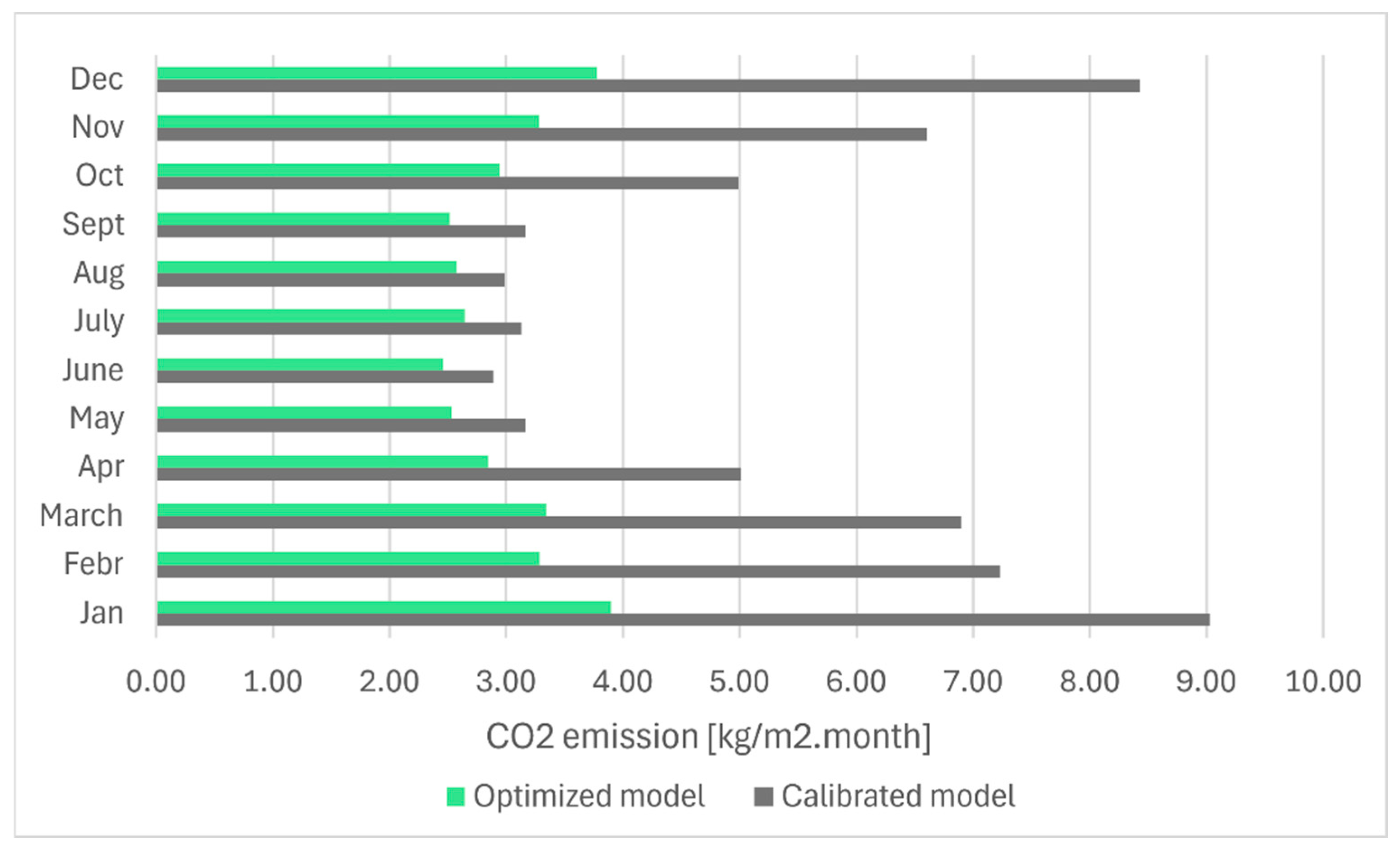
After calibrating the model, it was used to simulate the effect of the introduction of Variable Refrigerant Flow (VRF) heat pumps, which were chosen as key technology and as an effective solution to reduce CO
2 emissions for heating and cooling (thermal energy consumption for heating has the highest share among utilities). The key technical characteristics of the equipment used in the model are the Seasonal Coefficient of Performance (SCOP) with a value of 4.3 [-], and the European Energy Efficiency Ratio (ESEER) with a value of 6.4 [-]. The results are presented in
Figure 7.
The CO
2 values are obtained from final energy calculated values by considering the current in force Romanian conversion factors from final energy to primary energy, which for methane gas is 1.17 [-] and for electricity is 2.50 [-], respectively, conversion factors from primary energy to CO
2 emissions, which for methane gas is 0.202 kgCO
2/kWh and for electricity is 0.107 kgCO
2/kWh, according to the Romanian buildings performance calculation methodology [
22]. The value for the conversion factor of the primary energy into CO
2 emissions for electricity is based on the national energy mix in 2020, which was 54.72% from conventional sources (coal—16.51%, nuclear—20.19%, methane gas—15.92%, fuel oil—0.01%, other—2.10%) and 45.28% from renewable sources (hydroelectric—29.08%, wind—12.66%, biomass—0.84%, solar—2.69%, other—0.01%) [
29].
The global reduction in CO2 emissions for the terminal after implementing the selected key technology was 43.15%, with a base value of 63.5 kgCO2/m2∙yr for the calibrated model, and a value of 36.1 kgCO2/m2∙yr after the simulation of the implementation of the VRF heat pumps.
Nevertheless, the choice of certain solutions for the energy efficiency of the building to better predict the energy savings using the obtained model, is not exhaustive within this work. The selection of comprehensive packages of solutions to increase the energy performance of the building or to target specific design concepts, such as nearly Zero Energy Building or Zero Emission Building is beyond the scope of the current work. Based on the developed model, it is possible to evaluate and compare packages of multiple measures, such as optimised energy conservation measures or exhaustive equipment solutions with higher energy performance and reduced CO2 impact in use, which is expected to lead to accurate prediction of energy savings when implementing dedicated solutions.
4. Discussion
4.1. Discussion and Limits of the Actual Study
The limitations of the undertaken study refer to the substantial number of input variables required for the physics-based hourly dynamic simulation to develop a calibrated model, with a reliable correspondence in the actual use of the building. Thus, to develop a calculation model based on existing data, extensive data collection is required, requesting multiple sources of data, including multiple site inspections, consultation of the technical project, and technical documentation developed for subsequent modifications to the building construction. Furthermore, for the calibration of the model, interviews with the technical staff are required, as well as consulting and analysing data monitored and collected through the BMS, together with fuel (e.g., methane gas) and electricity consumption history.
An important discussion regards the climatic dataset type used for the calibration of the data-based model. Regarding the choice of using an actual meteorological year dataset (for the particular year in which the fuel history was used for thermal energy calibration) versus a typical meteorological year, the results (
Figure 6,
Table 7 and
Table 8) reveal that it is a reduced RMSE for both choices (3.13 kWh/m
2∙yr for thermal energy and 1.57 kWh/m
2∙yr for electricity—for AMY climate dataset results, versus 2.15 kWh/m
2∙yr for thermal energy and 1.61 kWh/m
2∙yr for electricity—for TMY climate dataset results). However, when analysing the absolute and relative errors, the errors obtained with the AMY climate dataset were lower than those obtained with the TMY climate dataset, for both thermal energy and electricity consumption. The errors difference is 10.9 kWh/m
2∙yr for the absolute errors and 7.4% for the relative error for thermal energy, and both are negligible for electricity, which indicates that using the AMY dataset leads to more accurate results, in relation to the measured values.
Furthermore, an analysis of the results presented in
Figure 6 indicates that the TMY dataset more accurately represents the thermal energy consumption during the peak months of the heating season (December and January) than the AMY dataset.
The sensitivity of the model to the selection of the climate set was calculated using AMY as a reference, which represents the actual year used in the calibration. This is quantified by the relative difference between the results calculated with TMY versus AMY and is 12.35% for thermal energy and −1.45% for electrical energy.
Another observation based on the obtained results is that although the annual thermal energy consumption differs by 7.4%, peak powers of heating demand may be overestimated by 15.8% when using TMY, also considering that AMY for 2021 is slightly warmer than TMY for this study. Regarding the calibration process, the limitations of this study refer to the impossibility of obtaining data for all energy consumers in the analysed terminal, by category, through BMS. However, this aspect does not influence the scalability of the proposed model or its replication potential. It is possible that other terminals may have more monitored data that would contribute more effectively to the calibration of the model. Subsequently, the value of the “Miscellaneous equipment” variable would be simply adjusted accordingly. The validation of the energy consumption obtained for the calibrated model with historical measured consumption significantly limits the level of uncertainty regarding the predictability of the accuracy of future savings and CO2 reductions.
Another specific discussion relates to the number of calculations zones considered in the building energy simulation. Given the significant diversity of functions within a terminal (from passenger areas to open commercial spaces, offices, baggage handling areas, and security areas), the current model considered grouping large zones by categories of main functions. Increasing the number of zones, including a breakdown of the specific functions of a zone (e.g., toilets or meeting rooms in the office area), would eventually increase the level of accuracy of the simulation, but would also significantly increase the computational effort (simulation time and required computational memory) as well as a time increase required for model development, assuming that the model is applied in real projects. In addition, this zoning was considered necessary and appropriate because of both the intention and to ensure the possibility of using the calibrated model as input data for optimisation with genetic algorithms (NSGA-II). Practically, efficiency and decarbonisation solutions should be selected from a multitude of possible combinations, and optimal solution packages should be highlighted using a Pareto front. A calibrated model that is too large would make it cumbersome to run the model obtained using genetic algorithms. However, the optimisation part is not the subject of the current work. Therefore, this model proposes a balance of resource use in relation to the objectives pursued, of developing a digital computational hourly energy model, based on real building data and consumption history. The model can be further used for computationally intensive optimisation processes to facilitate its potential replication in real projects.
Finally, regarding the disaggregation of methane gas consumption at the building level, it was assumed that the performance of the buildings served by the methane gas metre is similar. As a process refinement and error mitigation, it is strongly recommended to use the methane gas history recorded directly at the building level under study, if available. The indicated approach effectively minimises uncertainty associated with disaggregating methane gas consumption among buildings served by a common metre.
4.2. Possible Future Improvements
To undertake a more precise and comprehensive calibration, the need for a qualitative increase in the recorded consumption data required for the systematic calibration of the numerical model is identified.
Another possible improvement relates to the number of calculation thermal zones within the model. A higher number of thermal zones in the model is expected to increase the accuracy, but also to increase computational effort. Considering the use of the model in a following stage of optimising potential solutions to be implemented, the size of the model used becomes critical.
Nevertheless, as a process refinement of the calibration, it is strongly advised to use the same year for the measurements, both for thermal and electrical energy.
5. Conclusions and Perspectives
This work aimed to develop a calibrated dynamic hourly energy simulation model for a complex building typology, considering the case study of an airport terminal in Cluj-Napoca, Romania. The purpose of such a calibration process is to increase the accuracy of predictions regarding potential savings and the impact on reducing the carbon footprint, considering the major investments required to renovate an airport terminal, in the context of decarbonisation targets by 2050.
The novelty and originality of the proposed model consist of the development of the digital model, with the integration of real data such as the existing building’s geometry, the technical specifications of the existing materials and equipment—which is the common practice currently, but also with the enhancement of the numerical model by calibrating it based on the consumption history recorded both by the BMS and by the fuel usage (methane gas consumption) and electricity consumption history. The overall novelty of the calibration methodology consists of the introduction of a calibration input (namely, a “Miscellaneous equipment”), which reflects measured but unmonitored indoor electricity consumption by consumer categories, and is simultaneously used as an internal gain in the heat balance for determining the thermal energy consumption.
The methodology used consists of four major steps: (i) extensive data collection regarding the existing building and the building site, (ii) hourly dynamic simulation using the energy simulation engine Energy Plus, through the graphical user interface Design Builder, (iii) two-stage model development consisting of developing an initial data-based model using the collected data (first stage), followed by the calibration of the initial model (second stage), and (iv) using the obtained model to accurately predict the effect of implementing potential technical measures to increase energy performance of the terminal.
The calibrated model was validated against real energy consumption measurements, for both thermal energy and electricity consumption. The agreement of the developed model with the measurements is high, and the model is suitable for accurate energy savings predictions associated with future decarbonisation measures. The proposed calibration methodology enhances the model’s predictive robustness and establishes it as a reliable decision-support tool for energy performance analyses. By systematically integrating measured operational data into the calibration process, the approach enables a realistic simulation of the impact of new equipment and retrofit solutions aimed at improving energy performance and reducing operational carbon emissions. This methodological advancement supports multi-objective decision-making for airport facility managers, energy auditors, and designers, facilitating the identification and prioritisation of decarbonisation strategies aligned with defined targets, such as nZEB or ZEB, in existing terminals.
Also, the developed framework represents a consistent approach to reduce the building performance gap between building performance simulation and the effect of the current implementation of different solutions to increase the energy performance of the existing building and to reduce its carbon footprint.
The practical implications of this methodology for airport renovation strategies and alignment with EU decarbonisation and ZEB targets rely on its innovative character. This work emphasises that the approach to energy calculation under standard design conditions is inadequate for this category of buildings. Therefore, an approach oriented towards real energy consumption profile was proposed, through a calibration methodology that reflects and effectively uses the specific elements of an airport terminal building. This model, with high replicability potential, allows for an increase in the level of accuracy of energy saving prediction when implementing energy efficiency measures, and is adaptable to various airport terminal profiles, regardless of the dynamics of their past, actual, or future use.