


Abstract
Background: Upgrading existing housing, particularly affordable housing in China’s high-altitude cold regions, to near-zero energy standards requires balancing three key considerations: carbon reduction, life-cycle cost, and residents’ affordability. Methods: We developed a simulation-based multi-objective optimization framework to evaluate repair-and-retrofit packages involving the building envelope, ventilation, heating electrification, on-site renewables, and control strategies, subject to social feasibility and affordability constraints. Results: The Pareto-optimal solutions revealed a clear knee region in which substantial operational carbon reductions and acceptable thermal safety could be achieved at moderate investment levels. Further decarbonization was enabled by strong system-level synergies among heat recovery ventilation, heat pumps, and photovoltaic systems. Affordability-constrained optimization shifted the feasible solution space toward options associated with lower household energy burdens and more favorable distributional outcomes. Conclusions: Policy scenario analysis indicates that grid decarbonization and targeted financial support can expand the feasible space for low-carbon pathways and improve equity, thereby enabling scalable near-zero energy upgrading strategies.
1. Introduction
In the context of global efforts to combat climate change, China’s proposed “dual carbon” goals have become a core driving force for the green transformation of society as a whole. As one of the major sectors in terms of energy consumption and carbon emissions, the construction industry plays a crucial role in achieving the country’s emission reduction targets [1,2]. As a substantial component of urban renewal and upgrading, the energy-efficient renovation of existing buildings is an inevitable pathway, as it can help close the energy-efficiency gap in the building stock while also promoting more sustainable urban development [3]. However, in the process of advancing near-zero energy upgrading, affordable housing, as a special type of housing stock, has revealed the complex tension between low-carbon transition and social welfare. Affordable housing mainly serves middle- and low-income groups, and its residents are highly sensitive to changes in both energy costs and initial renovation expenses. If retrofit strategies place excessive emphasis on technical performance while neglecting economic burden, the risk of energy poverty is likely to increase. Therefore, how to balance low-carbon goals with the social affordability of affordable housing retrofits has become an urgent social concern and an important scientific problem to be addressed [4].
The harsh geographical environment of high-altitude cold regions imposes severe physical and resource constraints on building retrofits in these areas [5]. These regions, characterized by extremely low temperatures, low air pressure, and strong ultraviolet radiation, differ substantially from conventional climatic contexts in terms of heat transfer processes and material degradation mechanisms. This unique physical environment not only increases the difficulty of simulating near-zero energy technologies, but also raises the durability requirements for building envelopes. In addition, the remoteness of high-altitude areas often leads to high logistics costs, while the extremely short construction period caused by severe weather conditions further increases the overall cost of retrofit projects. Moreover, local communities generally lack sufficient technical skills and operational capacity for the maintenance of energy-saving facilities, resulting in advanced systems failing to sustain their expected long-term performance after installation, and consequently limiting the achievement of intended long-term retrofit goals [6].
Current research on near-zero energy retrofitting is gradually shifting from single-technology optimization toward multi-objective collaborative evaluation. Although many studies have explored the use of genetic algorithms to improve building energy efficiency, their practical application in this field remains insufficient. Although recent international scholarship has increasingly deployed multi-objective optimization to address building retrofits, the majority of models remain heavily skewed toward physical performance and environmental mitigation [7]. While emerging studies in European and North American contexts have begun to integrate socio-economic limitations—such as fuel poverty thresholds and occupant affordability—into retrofit decision-making, transferring these frameworks to developing or geographically extreme contexts remains challenging [8,9]. This methodological gap is particularly pronounced in high-altitude cold regions. In these areas, fragile social conditions and severe climatic stressors compound the tension between ambitious low-carbon objectives and the economic realities of vulnerable demographics, a nexus that has not yet been adequately conceptualized in the existing literature [10].
This study develops an integrated strategic framework based on structural repair and energy-efficient retrofitting, providing a decision-making basis for multi-objective optimization. The evaluation of existing building performance now increasingly relies on intelligent monitoring and multi-source data fusion to provide precise structural diagnostics and early safety warnings [11]. Acknowledging these methodological advancements in structural safety assessment, our hybrid framework departs from traditional single-focus energy-saving models. It places greater emphasis on the synergistic effect between structural safety restoration and energy-efficiency improvement. This integrated perspective aims to enhance the overall system resilience of aging public housing in high-altitude region. Through simulation analysis of different technical pathways under extreme environmental conditions, this study seeks to identify Pareto-optimal solutions that can significantly reduce life-cycle carbon emissions while remaining consistent with local fiscal support capacity and residents’ affordability [12].
2. Case Study
2.1. Study Area and Climate–Governance Context
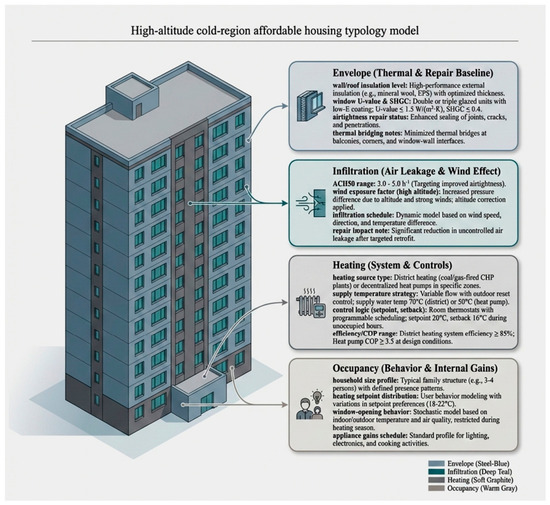
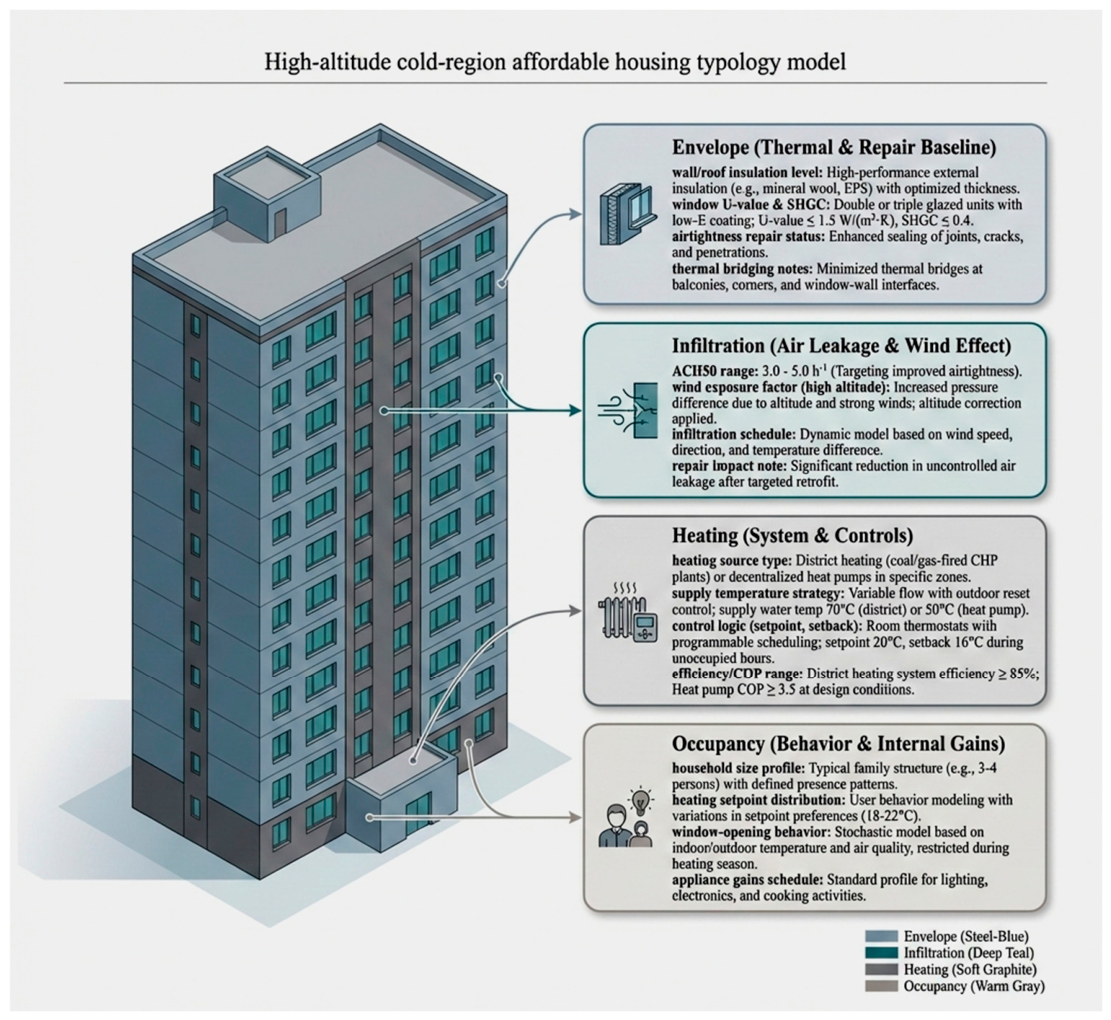
This study focuses on the near-zero energy upgrading of existing affordable housing in China’s high-altitude cold regions as the research object [13]. In these areas, climatic conditions and the governance context jointly define the practical boundaries of low-carbon building retrofitting. In general, high-altitude regions are characterized by lower outdoor temperatures, longer heating seasons, and stronger wind conditions, all of which are more likely to increase heating loads through air infiltration and envelope heat transfer. At the same time, intense solar radiation offers opportunities for passive heating and renewable energy utilization, whereas larger daily temperature fluctuations make the indoor thermal environment more variable, thereby increasing the requirements for window and door performance, thermal bridge control, and heating regulation [14,15]. Under such climatic conditions, existing affordable housing often suffers from deficiencies in envelope thermal performance, inadequate airtightness, low equipment efficiency, crude control systems, and high levels of energy consumption, all of which result in insufficient indoor comfort. For low-income households, heating demand is rigid, and residents are often unable to compensate for indoor cold exposure and its associated health risks through increased spending. Elderly people and children are more likely to be the main groups affected by cold exposure. Based on these characteristics, this study constructs and calibrates a typology model of affordable housing in the case area. This analytical framework integrates specific parameters concerning envelope thermal performance, altitude-adjusted infiltration characteristics, heating system efficiencies, and stochastic occupancy schedules to establish consistent boundary conditions for subsequent comparative analyses (Figure 1) [16]. To ensure full computational reproducibility without compromising the narrative flow, a comprehensive inventory of these baseline simulation inputs and detailed daily schedules is provided in Table S1 of the Supplementary Materials.
Figure 1.
Calibrated building typology model and parameterization for high-altitude cold-region affordable housing: envelope, infiltration, heating, and occupancy profiles.
From the perspective of the governance framework, the feasibility of upgrading the affordable housing system also depends on financial viability, implementation capacity, and long-term maintenance capability. These housing projects are generally constrained by rent control and fiscal budgets, and operators face clear upper limits with respect to initial investment scale, construction disturbance management, and subsequent maintenance. Given residents’ limited purchasing power, energy costs are highly sensitive to price fluctuations and equipment efficiency [17]. If retrofit strategies focus primarily on improving technical performance while neglecting cost and the sustainability of operation and maintenance, they may increase the burden associated with major renovations and undermine the fairness and operability of the policy. Therefore, this study treats climatic boundaries and governance constraints as essential case-specific contexts in defining affordability thresholds, controllable construction disruptions [18], supply chain accessibility, and property management capacity. This ensures that the multi-objective optimization not only meets the goals of carbon reduction and energy saving, but also takes into account implementation feasibility under real institutional conditions, thereby achieving a more balanced distribution of public benefits.
2.2. Building Stock Typology and Baseline Conditions
To ensure the comparability and generalizability of the optimized results derived from the “integrated low-carbon renovation and upgrading plan,” this study focuses on existing affordable housing in high-altitude cold regions. A typological system of the existing building stock was established to describe baseline building conditions under consistent boundary conditions [19]. The conceptual framework of this typological system is that morphological characteristics determine thermal boundaries, system structures determine energy consumption pathways, and residential behaviors determine operational deviations. The research subjects were classified according to key dimensions, including building type and shape coefficient, the number of floors and orientation, envelope structure and material age, door and window systems and the degree of airtightness deterioration, heating methods and terminal forms, and common household structures [20]. This stratification not only captures differences in the physical characteristics of buildings, but also distinguishes disparities in the practical feasibility of retrofitting different types of affordable housing in terms of funding limits, tolerance to construction disturbance, and post-project operation and maintenance capacity. It thus provides a structured basis for subsequent cluster-specific policies and phased implementation.
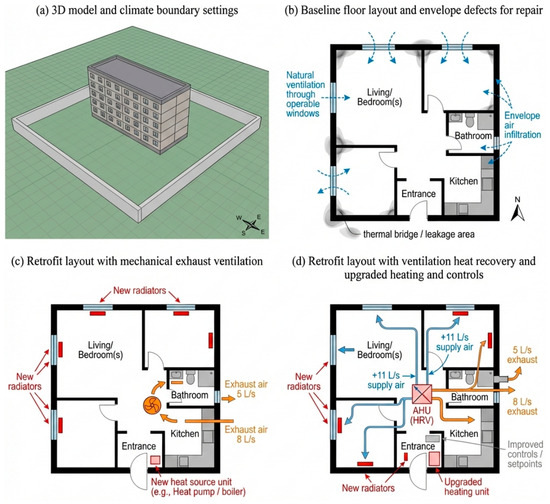
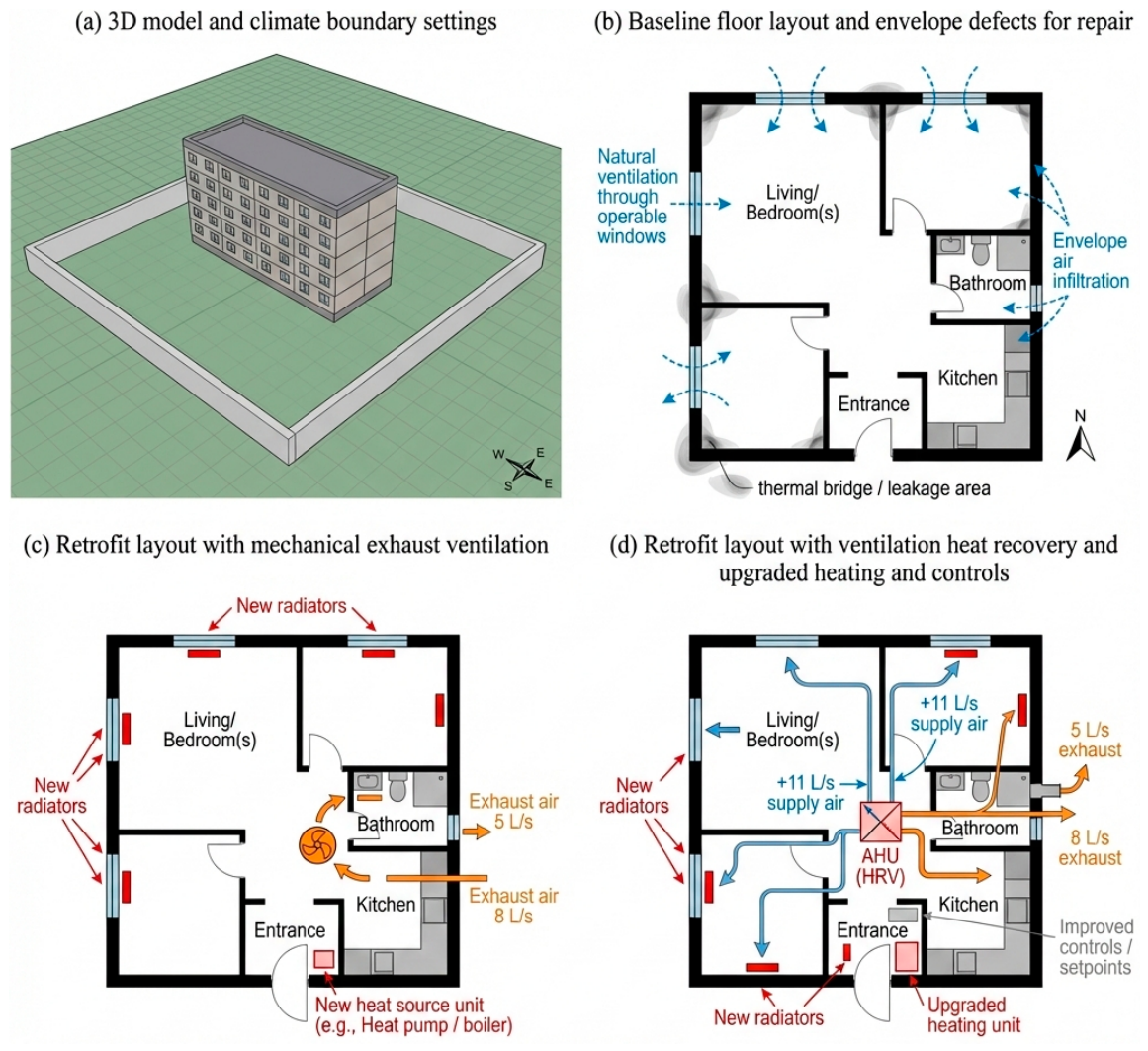
In the baseline evaluation, this study focuses on the coupled starting point of repair and retrofitting. On the one hand, existing affordable housing is generally characterized by poor envelope insulation, pronounced thermal bridges, aging doors and windows with air leakage gaps, and local defects in roofs and exterior walls. These problems intensify heat loss through both transmission and infiltration under cold and windy conditions, resulting in high heating loads and large indoor temperature variations [21]. On the other hand, heating systems often exhibit low heat-source efficiency, uneven terminal heat distribution, simple control strategies, and a lack of metering feedback, leading to a clear mismatch between energy consumption levels and thermal comfort. Baseline ventilation generally relies on natural ventilation and window opening to satisfy air exchange requirements, which creates a trade-off between heat loss and indoor air quality during winter. As a result, residents are forced to passively choose between “insulation” and “ventilation,” thereby increasing the instability of the indoor thermal environment and the health risks associated with cold exposure. To visually present this “baseline dilemma” caused by envelope defects and system inefficiency, the study provides typological models, baseline floor plans, and renovation-oriented illustrations of envelope defects for representative sample buildings. It also presents schematic diagrams of ventilation and heating system upgrades aimed at improvement targets, thereby forming a visual expression from baseline conditions to retrofit directions (Figure 2).
Figure 2.
Representative affordable housing typology and baseline conditions: (a) 3D model and climate boundary settings, (b) baseline F. L and envelope defects to be repaired, (c) retrofit F. L with ventilation heat recovery, and (d) retrofit F. L with upgraded heating and controls.
The baseline indicator system ensures the interpretability of the intervention plans while placing greater emphasis on the public welfare and equity dimensions of affordable housing [22]. From a technical perspective, the core variables of interest include terminal energy consumption during the heating season, peak load characteristics, indoor temperature compliance rates, and the duration of low-temperature exposure, with sources of variation interpreted through infiltration levels and envelope thermal parameters. From a social perspective, annual energy cost and energy burden are used as the main diagnostic outputs to identify differences in payment pressure across building types and resident groups during the heating period, thereby providing a reference for affordability constraints and equity assessment in the subsequent multi-objective optimization [23]. By integrating typological stratification with baseline characterization, this study establishes a baseline system for the case area that simultaneously reflects the physical conditions imposed by the high-altitude cold climate and the governance conditions of affordable housing. This system provides a consistent basis for subsequent multi-objective trade-off analysis and interpretation of the Pareto solution set (Figure 2).
2.3. Stakeholders, Constraints, and Data Sources
This study treats the near-zero energy upgrading of existing affordable housing in high-altitude cold regions as a typical socio-technical system decision-making problem for in-depth investigation. The barriers to technical feasibility include inconsistencies among multiple objectives, constraints arising from both resource limitations and implementation capacity, and decision-making based on non-uniform data standards. In response to these challenges, the study first clarifies the stakeholder structure, defines the scope of action, and establishes a cross-validated data-source framework [24]. These measures ensure that the assessment of the “repair-and-retrofit package” remains practically feasible.
At the stakeholder level, local government departments formulate policy goals and allocate fiscal instruments at the macro level, with particular emphasis on carbon reduction performance, public health benchmarks, and the efficiency of fund utilization, while local commercial banks are also relevant actors [25]. Housing management organizations or property management units are responsible for project organization as well as long-term maintenance; therefore, they must pay close attention to construction disturbance, equipment reliability, maintenance costs, and complaint-related risks. Construction contractors and equipment suppliers determine the availability of retrofit measures and the quality of delivery, while in high-altitude regions, factors such as transport distance, seasonal construction windows, and labor organization costs also play an important role. As direct beneficiaries and risk bearers, residents’ behavioral choices and comfort preferences directly affect post-retrofit operational performance. Given their limited financial capacity, affordable housing residents are more sensitive to fluctuations in energy prices and declines in equipment efficiency. To address these issues, affordability, fairness, and sustainability are adopted as the guiding principles for identifying the “best solutions in practice.”
In terms of constraint design, this study classifies constraints into three categories. The first category is fiscal and affordability constraints [26], including the annual capital expenditure ceiling for operators, the retrofit cost ceiling per unit area, and the upper limit of the ratio of household energy expenditure to income, in order to ensure that the upgrade does not shift additional burdens onto low-income groups. The second category is engineering implementation constraints, which involve minimizing construction interruption or disturbance, ensuring the adequate supply of materials and equipment, and accounting for the seasonal constraints of high-altitude cold regions, so as to ensure that bundled packages can be delivered on schedule and that the supply chain remains unobstructed. The third category is long-term operational constraints, which focus on maintenance difficulty, spare-parts interchangeability, and compatibility with property management capacity. In addition, performance deviations caused by differences in resident usage are incorporated into the scenario model and sensitivity analysis framework to improve the robustness of the analytical results.
In terms of the data system, this study adopts four data sources for cross-validation: audit and ledger records, metering and monitoring data, household surveys, and model parameter databases. Audit and operational records are used to extract fundamental building information, including geometric characteristics, envelope and structural features, door and window types, as well as equipment configuration and maintenance records, in order to determine the required level of repair [27]. Energy metering and billing data reflect actual operational energy use and cost expenditure, and after conversion into annual household-level energy consumption and costs, these results can be interpreted from the household perspective. Indoor environmental monitoring and sample temperature measurements are used to construct the baseline distribution of the winter thermal environment, while questionnaire data on occupancy patterns, temperature settings, and window-opening habits help reduce the bias associated with any single data source. Through this data integration process, typological baseline performance and equity diagnostics are generated. These findings not only reflect differences in energy consumption across buildings with different typologies and system configurations, but also describe the energy burden and low-temperature exposure risks faced by low-income groups, thereby providing a basis for setting constraint thresholds and for subsequent multi-objective optimization, as shown in Table 1.
Table 1.
Baseline performance and equity diagnostics of existing affordable housing typologies.
3. Methodology
3.1. Package Measure Library: Repair vs. Rewrite
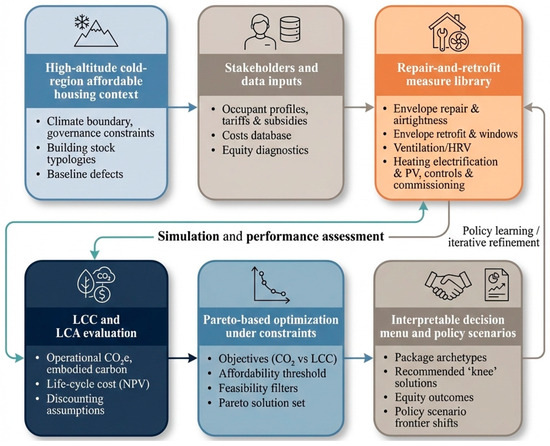
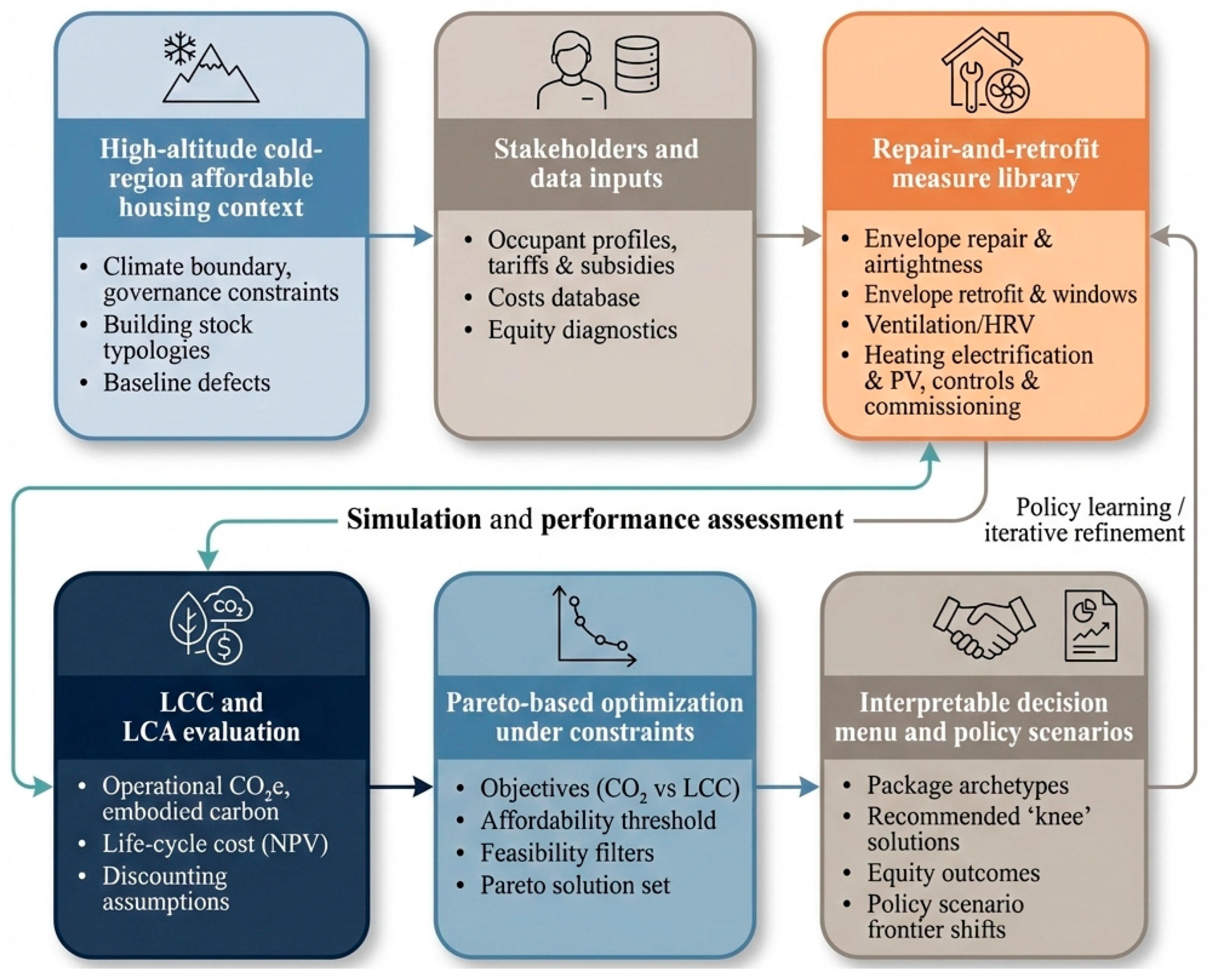
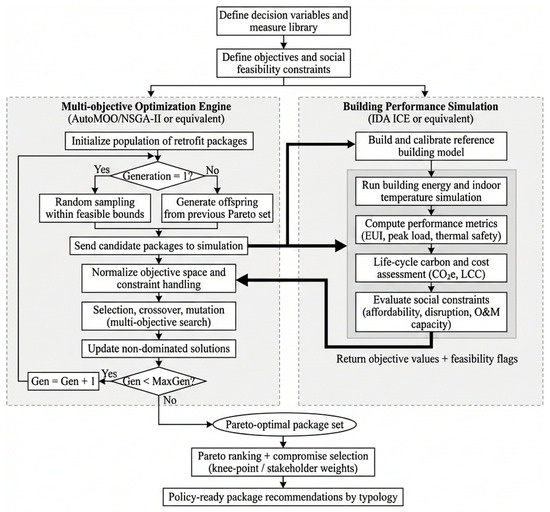
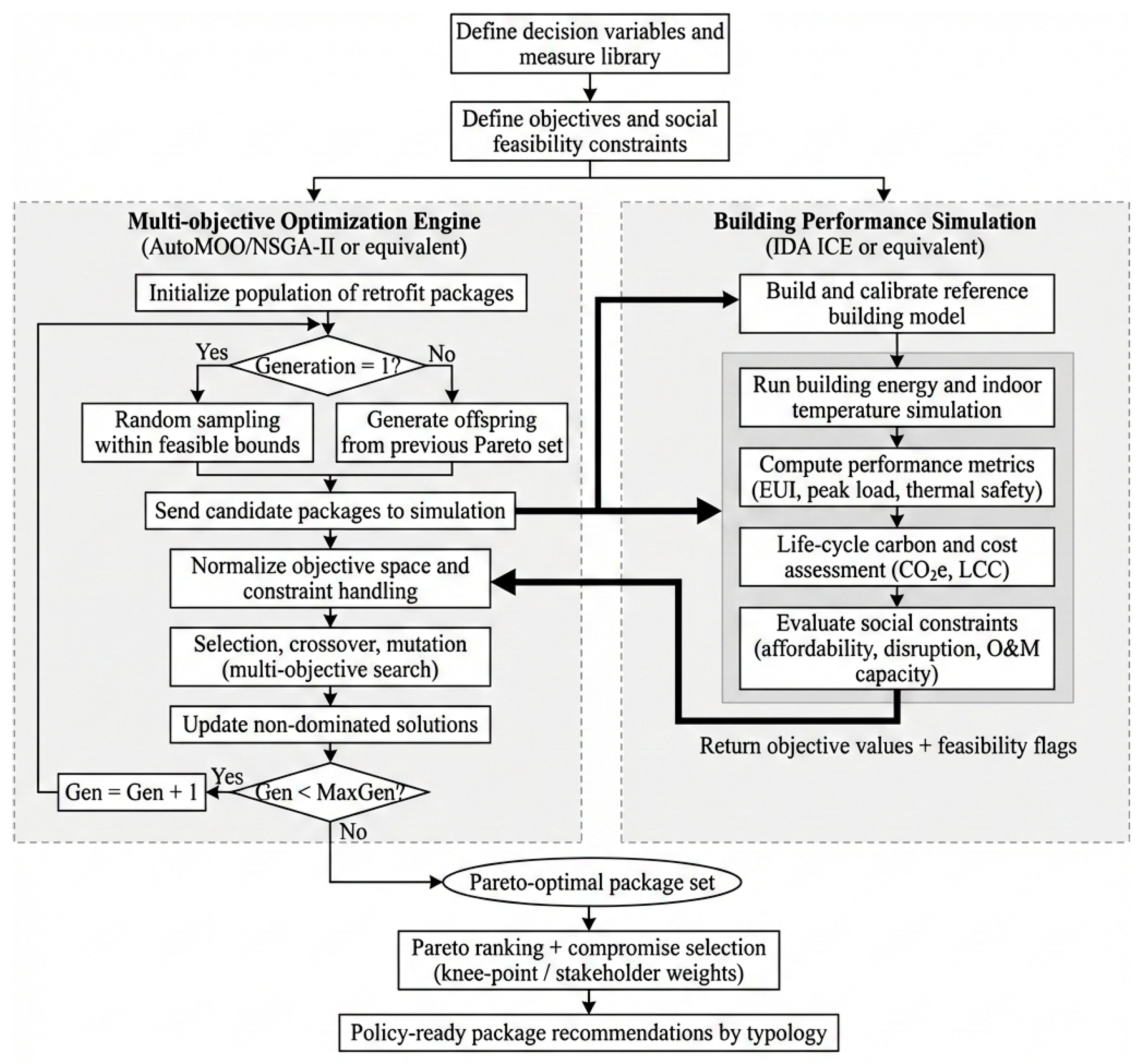
This study focuses on the demand for near-zero energy upgrading of existing affordable housing in China’s high-altitude cold regions and proposes a multi-objective decision-making framework centered on a “low-carbon repair-and-retrofit package,” as shown in Figure 3. Unlike single-measure energy-saving renovation approaches, this study integrates envelope defect repair and airtightness improvement, envelope and window upgrading, ventilation and heat recovery, heating system electrification, on-site renewable energy configurations, and control and commissioning strategies into a unified package library. Through building performance simulation, life-cycle cost accounting, carbon emission accounting, and related evaluations, a multi-objective optimization problem is constructed, with household affordability and social feasibility treated as constraints for screening and interpreting the solution set. The final output is an interpretable set of package prototypes and a decision menu based on the Pareto frontier, thereby supporting informed choices under different building typologies and policy scenarios and forming a replicable and scalable upgrading pathway for carbon reduction, cost control, thermal safety improvement, and equitable acceptance.
Figure 3.
Research workflow for multi-objective optimization of low-carbon repair-and-retrofit packages for near-zero energy upgrading of affordable housing in high-altitude cold regions of China.
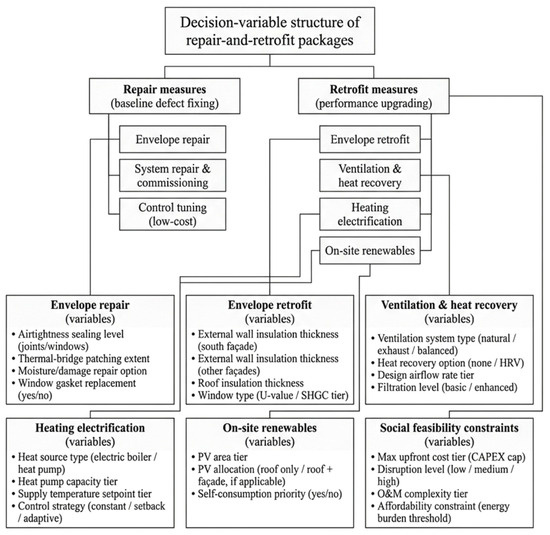
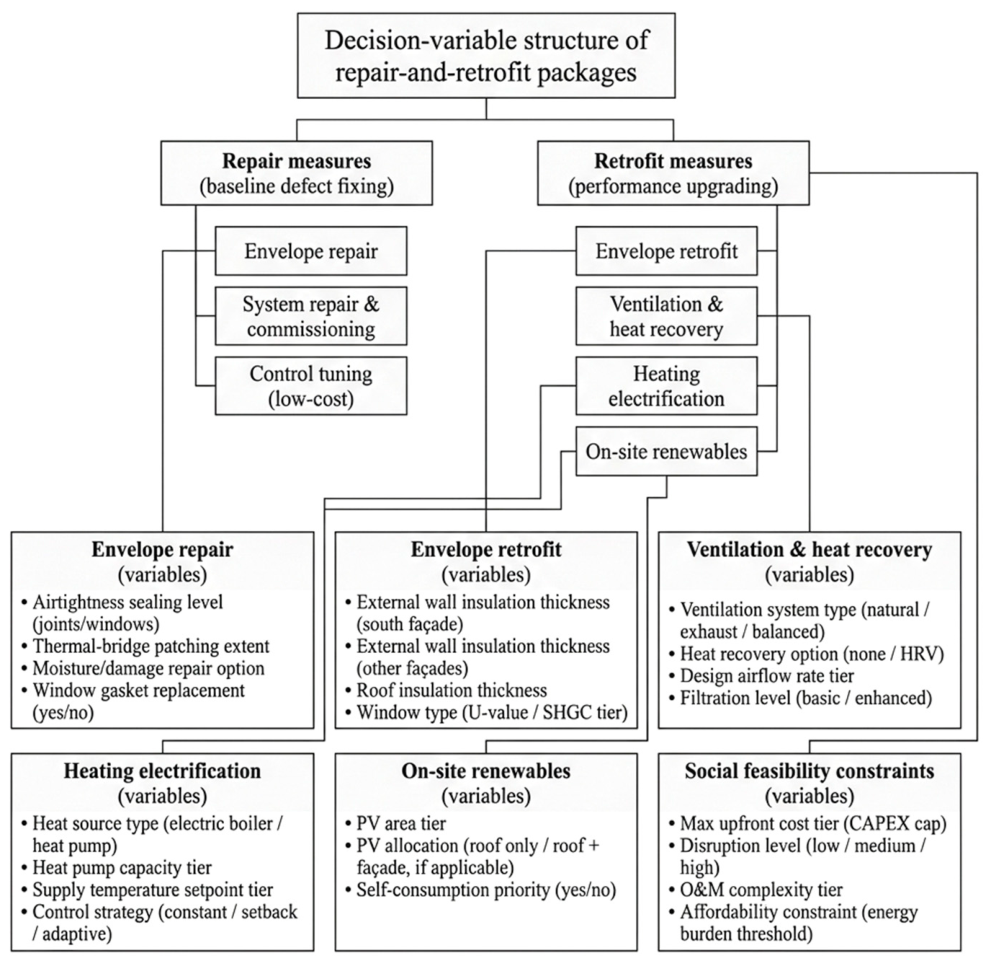
This study organizes existing intervention measures for the near-zero energy upgrading of affordable housing into a combined strategy of “repair priority + simultaneous performance enhancement,” ensuring that the optimization search covers both deep decarbonization pathways and low-disruption, rapidly implementable improvement options. In general, repair focuses on addressing existing defects and reducing operational losses, whereas retrofit aims to improve envelope performance and system efficiency through the integration of renewable energy. In real projects, these two types of measures are often implemented in combination. For example, airtightness repair and thermal bridge treatment can significantly improve the effective thermal performance of the building envelope, thereby reducing the required heating system capacity and alleviating peak-load pressure in high-altitude cold regions. To improve the implementability of the proposed packages, factors such as construction disturbance, supply chain availability, and operational complexity are also considered during the development of the measure library, allowing the resulting Pareto solution set to be directly translated into a combination menu. The modular structure and decision-variable framework of this measure library are illustrated in Figure 4.
Figure 4.
Decision variable structure of repair-and-retrofit packages: envelope repair, envelope retrofit, ventilation with heat recovery, heating electrification, on-site renewables, and control strategies.
In the decision variable setting, this study adopts a hybrid model combining discrete categories with continuous bounds. Discrete variables are used to describe standardized and deliverable specification items, such as insulation thickness levels, window type classifications, ventilation system configurations, and control strategy options, in order to avoid unreasonable procurement and implementation combinations that would be difficult to obtain or operate in practice. Continuous variables are mainly used to describe variations in equipment capacity and efficiency parameters within reasonable ranges, thereby reflecting the flexibility that must be considered in system selection under high-altitude cold-climate conditions. The measure library is further divided into six categories: envelope repair, envelope retrofitting, ventilation and heat recovery, heating electrification and terminal regulation, on-site renewable energy deployment, and control and commissioning strategies. Social feasibility metrics, specifically disruption levels and O&M complexity, were quantified using a five-point Likert scale grounded in semi-structured interviews with local housing managers and construction experts. Disruption scores reflect the estimated duration of onsite work and the degree of resident relocation required, while O&M complexity was assessed based on the technical skills required for routine maintenance and the availability of local spare parts. All variable definitions, category classifications, and constraint threshold settings are systematically listed in Table 2, providing a uniform and reproducible input standard for subsequent simulation and multi-objective optimization.
Table 2.
Decision variables and levels for repair-and-retrofit packages and social feasibility constraints in multi-objective optimization.
3.2. Performance Simulation and Assessment Metrics
In order to examine the actual operational performance differences among different “repair-and-retrofit packages” under consistent boundary conditions, this study adopts a simulation-based evaluation framework focusing on building energy consumption and the thermal environment, linking the results to carbon accounting, economic accounting, and equity indicators. Dynamic building performance simulations were executed using IDA ICE 4.8 (EQUA Simulation AB, Stockholm, Sweden), a validated tool known for its accuracy in modeling complex HVAC systems and envelope air leakage. To account for the unique climate of high-altitude cold regions, typical meteorological year (TMY) data for the specific case study area were utilized, with atmospheric pressure adjusted to reflect the decreased air density at high elevations. This pressure correction directly influences the calculation of convective heat transfer coefficients and mass flow rates for ventilation systems. Air leakage rates at 50 Pa (ACH50) were converted into hourly infiltration values using the Sherman–Grimsrud model, which incorporates local wind exposure factors and height-dependent pressure differences. The reliability of the baseline models for T1–T4 was verified through calibration against measured utility bills and indoor temperature snapshots. The resulting mean bias error (MBE) and coefficient of variation of the root mean square error (CV(RMSE)) remained within 5% and 15%, respectively, ensuring that the simulation results accurately represent the physical reality of the building stock. In this way, the model is able to capture the marginal benefits brought by “repair-first” measures that reduce hidden heat losses. To avoid masking residential risks by relying solely on annual-scale energy consumption, this study also outputs indoor temperature time series and low-temperature exposure characteristics, which are used to characterize compliance with thermal comfort and health baseline requirements.
In the evaluation framework, this study establishes four categories of indicators, namely performance, carbon, cost, and distribution, which are consistent with the computational requirements of multi-objective optimization. Performance indicators mainly focus on heating energy consumption and peak seasonal load, while also including risk indicators such as indoor temperature compliance rate and low-temperature exposure duration, thereby emphasizing thermal safety constraints for the protection of vulnerable groups in affordable housing projects. The carbon evaluation focuses on operational CO2e emissions over a projected 30-year building lifespan. While the embodied carbon of insulation materials is recognized, this study prioritizes the mitigation of operational emissions, which dominate the carbon footprint in heating-intensive plateau climates. The accounting includes carbon offsets from on-site PV generation and considers the degradation of equipment efficiency over time. Scenario analysis allows for the use of time-varying grid emission factors to evaluate the robustness of electrification and photovoltaic configurations under future decarbonization pathways. Life-cycle costs (NPVs) are calculated over a 30-year horizon, incorporating initial capital expenditure (CAPEX), annual energy costs, and scheduled maintenance. A real discount rate of 3% and an annual energy price escalation rate of 2% were assumed to reflect the long-term economic context of public housing. Replacement schedules for shorter-lived components, such as HRV filters (every 2 years) and heat pump inverters (every 15 years), were explicitly included. To address the remote high-altitude context, a logistics and labor cost multiplier was applied to all maintenance-related inputs to account for the increased difficulty of servicing systems in these regions. At the household level, annual heating cost and energy burden are further used as policy-interpretable variables that can be directly incorporated into the discussion of equity.
3.3. Objective Functions and Social Feasibility Constraints
The multi-objective optimization aims to establish an interpretable trade-off space among carbon reduction, economic efficiency, and residential safety. In this research, near-zero energy upgrading is specifically defined as a holistic retrofit strategy that achieves at least a 60% reduction in operational CO2e intensity relative to the baseline typology. This performance target is evaluated over a 30-year operational time horizon, utilizing operational CO2e emissions and life-cycle cost (NPV) as the primary compliance metrics to ensure both environmental stringency and economic viability. The objective functions are designed according to the principle of “public value priority,” which means pursuing lower operational carbon emissions and optimized life-cycle economics at the technical level, while highlighting thermal comfort thresholds and affordability at the social level so as to avoid imposing additional financial pressure on low-income groups through near-zero energy upgrades. Specifically, the core objectives include minimizing operational CO2e emissions and life-cycle costs of the system, while optional extensions such as reducing thermal safety risks or maximizing comfort standards may also be included to address rigid heating demand and health-related risks. In order to enhance the openness of decision-making, the study further translates frontier solutions into “portfolio packages” through post-processing of the Pareto solution set, with communication focused on changes in annual household costs and energy burden. In this way, the optimization results are transformed from engineering metrics into governance-oriented policy language.
Social feasibility constraints are incorporated into the optimization process and are divided into three categories. The first is the affordability constraint, which is mainly reflected in the upper limit of energy burden for low-income groups, together with responses to subsidies, interest subsidies, or cost-sharing mechanisms under different policy scenarios, so as to ensure that household payment burdens do not systematically increase after upgrading through different technical pathways. The second category consists of implementation constraints, including investment ceilings per unit area, construction disturbance levels, and supply chain availability, all of which reflect practical boundaries under the conditions of short construction windows, high organizational costs, and the requirement of “occupied renovation” in high-altitude cold regions. The third category comprises operation and maintenance constraints, which are based on matching property management capacity with system complexity in order to avoid introducing high-maintenance and failure-sensitive system configurations that may lead to performance gaps and long-term operational risks. The thermal safety threshold was fixed at 16 °C, referencing the minimum indoor temperature recommended for vulnerable groups in extreme climates to mitigate respiratory and cardiovascular risks. While the World Health Organization suggests 18 °C for general health, 16 °C represents a critical survival baseline in high-altitude plateau regions where heating energy is scarce. Sensitivity analysis indicated that tightening this threshold to 18 °C significantly constricts the feasible solution set, often excluding more affordable repair-first options. Conversely, a relaxed threshold would undermine the social welfare objectives of the near-zero energy upgrade.
3.4. Optimization and Decision Analytics
After establishing the package measure library and indicator system, this study further develops a simulation-driven multi-objective optimization and decision analysis process to identify package combinations that achieve a balance among carbon reduction, economic performance, and social outcomes within a large-scale discrete decision space. The main idea is to treat each candidate package as a decision vector, with building performance simulation generating outputs such as energy consumption and thermal safety, which are then linked to life-cycle carbon emission and cost calculations. Based on affordability and implementability constraints, a feasible solution set is derived, after which Pareto frontier-based optimization and policy interpretation are carried out. The complete simulation–optimization closed loop and constraint gating logic are shown in Figure 5.
Figure 5.
Simulation–optimization loop with social constraints: building performance simulation; life-cycle carbon and cost assessments; affordability and feasibility constraints; and Pareto-based package selection.
The optimization process utilized the NSGA-II algorithm with a population size of 100 and a maximum of 200 generations, ensuring sufficient exploration of the discrete decision space. Crossover and mutation probabilities were set at 0.9 and 0.1, respectively, to maintain a balance between convergence and population diversity. Given the high dimensionality of categorical variables, five independent optimization runs with different random seeds were executed. The consistency of the resulting Pareto frontiers and the stability of the identified knee-point solutions across these runs confirmed that the selected package prototypes are robust and not artifacts of algorithmic randomness. At the initial stage, candidate solutions are sampled within the feasible range of each decision variable, and each solution then passes through a unified “simulation–evaluation–feedback” computation chain to obtain objective-function values and an indication of whether the relevant constraints are satisfied. Subsequently, nondominated sorting and crowding-distance retention strategies are employed to preserve nondominated solutions, thereby maintaining the diversity of the Pareto frontier while also retaining alternatives of similar quality across different technical pathways. For variables with rigid social-feasibility thresholds, such as investment limits, disturbance intensity, operational difficulty, and energy-consumption baselines, a gating strategy of “pre-screening by prior constraints + subsequent objective comparison” is adopted. Infeasible solutions that violate baseline thresholds are eliminated in advance, and nondominated sorting is performed only within the feasible region, so as to avoid pseudo-optimal solutions that may show superior performance but fail to meet practical requirements. At the same time, for constraints that may allow room for negotiation, such as investment limits or energy-burden thresholds under subsidy conditions, multiple Pareto frontiers are generated by varying scenario parameters in order to examine the sensitivity and robustness of the optimal package structure with respect to adjustments in policy instruments.
Within the decision analysis framework, this study does not regard a single “optimal solution” as the final output, but instead emphasizes the interpretable selection and synthesis of the Pareto solution set. First, frontier solutions are segmented and clustered according to key trade-off dimensions, particularly operational carbon emissions and life-cycle costs, thereby yielding a number of representative “package prototypes” from which modular solutions that can be reproduced in engineering practice may be selected. Second, compromise selection principles, such as knee-point solutions and multi-criteria scores, are introduced to identify trade-off recommendations that do not excessively sacrifice any one criterion. Third, engineering metrics are translated into governance-oriented outputs. For example, fairness is interpreted through changes in annual household heating costs and reductions in energy burden for residents, while disturbance levels and operational complexity are used to indicate implementation feasibility. In this way, the recommended solutions can be jointly understood and adopted by government agencies, operators, and end users.
3.5. Policy Scenario Design and Robustness Settings
To enhance the policy feasibility and cross-scenario transferability of the optimization results, this study introduces policy scenarios and robustness settings at the methodological level and conducts systematic disturbance tests on key exogenous conditions and governance parameters. The policy scenarios focus on financial support and equity benchmarks, with the investment ceiling per unit area and the cost-sharing structure adjusted through capital subsidies or interest–subsidy schemes of different intensities. The stringency of the affordability constraint is represented by changes in the energy-burden threshold for low-income households, allowing for observation of changes in the morphology of the Pareto frontier and in the recommended portfolio patterns resulting from different combinations of policy instruments. Concurrently, long-term uncertainties surrounding grid decarbonization and energy pricing are evaluated through explicitly parameterized scenarios to facilitate reproducible frontier shift analyses. For instance, the grid decarbonization trajectory assumes a progressive reduction in the marginal emission factor from a baseline of 0.58 kg CO2e/kWh to 0.35 kg CO2e/kWh by 2030. Similarly, targeted electricity price support is modeled as a 30% reduction in winter heating tariffs specifically for the lowest income quartile. Defining these parameters explicitly enables a clear distinction between the robust physical energy savings inherent to the retrofits and the variable economic benefits driven by external policy interventions.
The robustness evaluation further examines implementation practicability and deviation by varying construction disturbance thresholds and operation-and-maintenance complexity parameters, thereby simulating differences in “occupied renovation” conditions and property management capacity. It also introduces sensitivity perturbations to key behavioral parameters, such as resident temperature settings, occupancy periods, and ventilation patterns, in order to avoid overestimating performance under idealized assumptions. In addition, the evaluation considers whether candidate packages remain within acceptable ranges under the most common scenario conditions and whether their relative superiority is highly sensitive to scenario changes. This provides a basis for subsequent policy-oriented package recommendations classified by type and intervention intensity.
4. Results
4.1. Pareto Frontier and Trade-Off Patterns by Key Measures
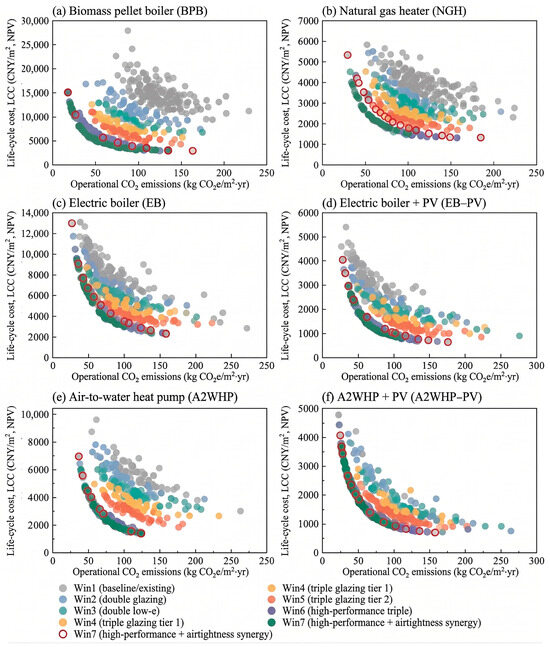
This study applies a nondominated sorting method to evaluate feasible solutions for the dual objectives of operational carbon emissions and life-cycle costs across different repair-and-retrofit packages, thereby generating a set of Pareto frontiers with policy relevance. The frontiers generally exhibit a pattern of diminishing marginal returns, in which the incremental cost required for each additional reduction in operational emissions increases progressively. Under the heating demand conditions of high-altitude cold regions, this pattern indicates the need to combine building envelope measures, heat recovery ventilation, and clean heating systems in near-zero energy upgrading. Systematic changes in the morphology and position of the frontiers across different heating systems further show that the system pathway itself constitutes the primary structure shaping the carbon–cost trade-off curve. Within the same system pathway, the selection of envelope and ventilation measures further determines the distribution of solution sets along the frontier and the lowest achievable values.
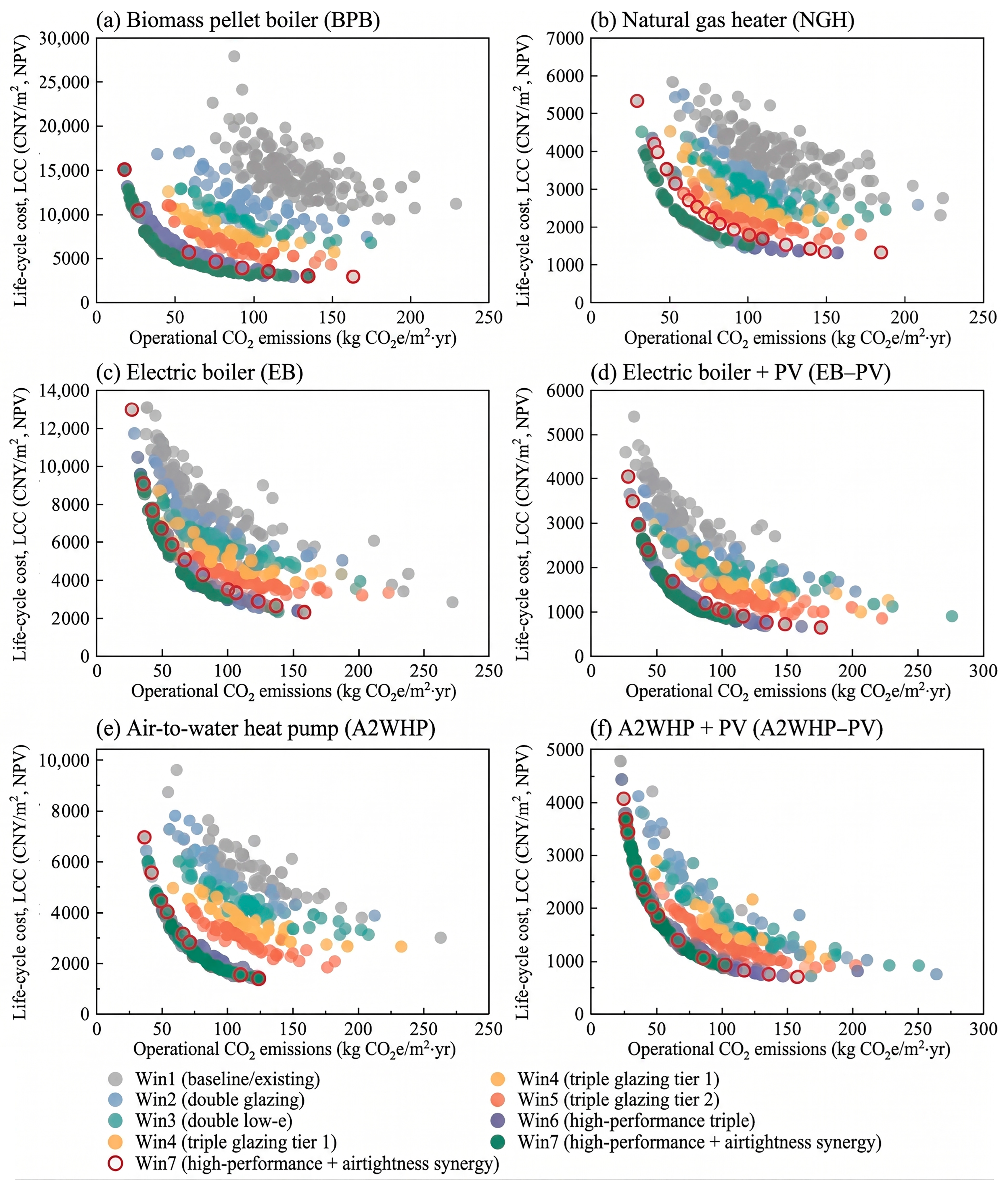
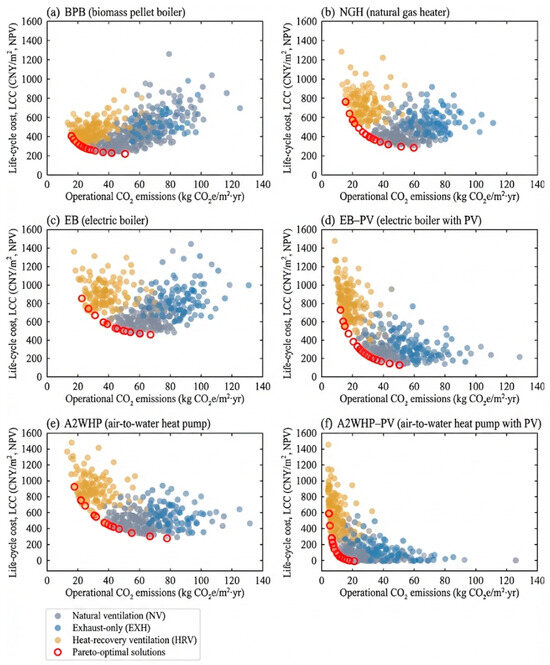
As shown in Figure 6, a stable stratification pattern can be observed across the envelope and window/door classification dimensions. The integration of high-performance windows and wall insulation shifts the solution set toward the low-carbon side, accompanied by a nonlinear increase in cost. Specifically, mid-level envelope upgrades usually achieve substantial carbon emission reductions at relatively low cost, thereby forming a dense segment of high cost-effectiveness near the frontier. When the upgrades move toward high-performance windows and thicker insulation layers, the improvement in carbon reduction decreases because of diminishing marginal returns, and the frontier becomes steeper. This indicates that, under the current cost structure and construction conditions, deep envelope improvement is more suitable as a sprint configuration for integration with clean heating systems, rather than as a universal option for all building types and funding scenarios. At the same time, the relative position of the frontier under different heating systems shows that the optimal degree of envelope improvement is not determined independently, but jointly by the degree of envelope upgrading, heating system efficiency, power-supply carbon intensity, and terminal temperature settings.
Figure 6.
Objective space of solutions for envelope/window retrofit levels: Pareto solutions by heating system options for high-altitude cold-region climate.
Figure 7 further illustrates the relationship between thermal safety and energy loss under different ventilation strategies. Although natural ventilation and exhaust-only modes generally have a cost advantage, they are more prone to greater ventilation-related heat loss in high-altitude cold regions, thereby limiting the lower boundary of the carbon-emission frontier. In contrast, balanced ventilation with heat recovery is more likely to shift solutions toward the low-carbon direction. This tendency becomes more evident when combined with electrified heating or photovoltaic systems, demonstrating the structural carbon-reduction effect of heat recovery ventilation in heating-dominated climates. The additional cost associated with heat recovery ventilation does not necessarily lead to suboptimal solutions, as the reduction in operational energy consumption can partially offset the initial investment over the life-cycle, thereby creating a compromise zone between carbon emissions and costs.
Figure 7.
Objective space of solutions by ventilation strategy: natural ventilation, exhaust-only, and HRV options in repair and retrofit packages.
4.2. Package Archetypes and Interpretable Decision Menu
To enhance the interpretability and practical applicability of the Pareto solution set, this study clusters the nondominated solutions into six categories: envelope retrofitting and airtightness improvement, envelope and window upgrades, ventilation pathways, heating system pathways, photovoltaic configurations, and control and commissioning strategies. These clusters form a set of “package prototypes” that can be directly referenced for engineering selection and policy communication, together with a decision menu. The menu presents different technical configurations alongside their performance characteristics, enabling users to make intuitive trade-offs among carbon reduction, cost, safety, and implementation. The representative technical profiles and performance metrics of these prototypes are shown in Table 3.
Table 3.
Composition and technical profiles of representative Pareto-optimal repair-and-retrofit package archetypes.
The prototype framework exhibits a gradual gradient structure. The low-intervention “repair-first” prototype focuses on defect repair and basic system calibration, and represents the most cost-saving and operationally convenient solution. With the addition of moderate envelope and window improvements together with appropriate ventilation enhancement, more economical intermediate prototypes emerge, generally corresponding to the knee-point region of the frontier. Further combinations of heat recovery ventilation, electrified heating systems, and photovoltaic installations can achieve lower operational carbon emissions and improved thermal safety, but they also increase the capital investment and operational complexity of the project.
4.3. Affordability and Equity Outcomes of Optimal Packages
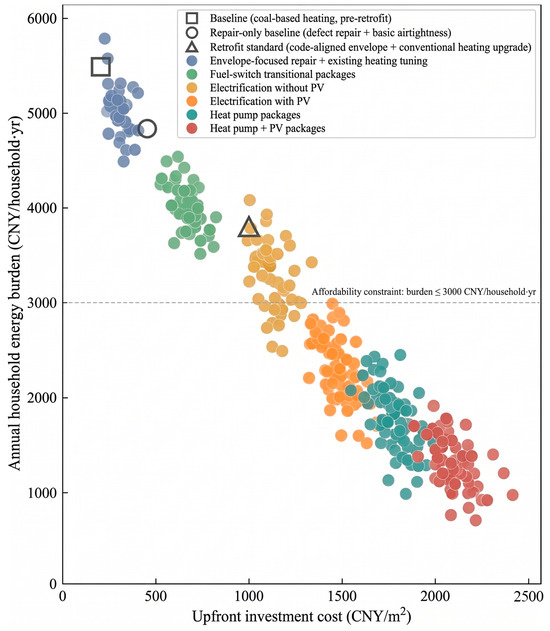
In the near-zero energy upgrading of affordable housing in high-altitude cold regions, technical optimality does not necessarily imply implementation optimality. This study assesses the implications of Pareto-optimal packages on household energy expenditure and thermal safety. To quantify affordability and distributional equity, a synthetic population model was formulated utilizing regional statistical yearbooks, stratifying households into four discrete income quartiles. Recognizing the inherent variability in occupant behavior and utility pricing, the subsequent metrics are framed as scenario-based estimations under stated income and tariff distributions rather than deterministic predictions. Figure 8 shows the relationship between upfront investment and annual household energy burden. After the affordability constraint is applied, the optimal solutions do not follow a simple monotonic line of “higher investment, lower burden,” but instead form several interpretable trade-off clusters, indicating structural coupling among capital intensity, system pathway selection, and operational cost improvement.
Figure 8.
Upfront investment versus annual household energy burden: baseline and Pareto-optimal affordable packages.
Seen from the perspective of building stock typology, as shown in Table 4, there are considerable differences in baseline energy consumption and carbon emissions across scenarios. Older and infiltration-sensitive typologies tend to exhibit greater deficiencies in thermal comfort and safety. After the application of Pareto-optimal packages, all typologies achieved significant reductions in both delivered energy consumption and operational carbon emissions, while cold-period exposure also declined. These results show that, under heating-dominated climatic conditions, the integration of envelope retrofitting, airtightness improvement, ventilation heat recovery, and heating system electrification can reduce energy consumption and carbon emissions while maintaining thermal safety. In addition, life-cycle cost performance did not exhibit an overall worsening trend. Some typologies showed a clear knee-point characteristic in the trade-off solutions, with relatively small cost increases associated with large emission reductions, thereby providing a more interpretable economic basis for large-scale application.
Table 4.
Multi-objective outcomes of baseline vs. Pareto-optimal packages across typologies.
As shown in Table 5, the optimal package combinations yield the most significant marginal benefits for low-income and vulnerable household groups. These packages produce greater annual energy savings, clearly reduce the incidence of energy poverty, and substantially improve thermal conditions. Under the same technical framework, the introduction of affordability-based constraint screening and menu-style package selection allows a greater share of the benefits to be directed toward the most disadvantaged groups, rather than merely optimizing the average level. At the same time, the overall decline in energy-burden inequality metrics indicates that the optimal packages not only improve overall efficiency, but also reduce burden inequality, thereby demonstrating the compatibility of carbon reduction and equity.
Table 5.
Scenario-based estimations of affordability and distributional equity impacts by household income group under optimal package implementation.
4.4. Policy Scenario Effects on Feasible Set and Frontier Shifts
This study conducts a comparative evaluation of the proposed policy scenarios by using the size of the feasible solution set and the overall shift in the Pareto frontier under different policy settings as reference points. The policy scenarios include grid decarbonization, household electricity price support, carbon emission constraints, and investment subsidies. The results show that the effects of these policies are not limited to changing the ranking of optimal solutions, but also involve changing the boundaries of the feasible region, thereby driving a systematic shift in the frontier boundary. Table 6 presents the quantitative comparison of scenario effects.
Table 6.
Policy scenario effects on the feasible solution set and Pareto frontier shifts under parameterized assumptions.
Overall, the grid decarbonization scenario provides structural advantages for electrification and heat pump pathways in terms of operational carbon emissions, showing a broader transition toward low-carbon solutions. At the same time, residential electricity price support and investment subsidies significantly increase the proportion of affordable options, expand the feasible solution set, and make more low-carbon alternatives feasible. The carbon-pricing scenario makes fossil fuel-based pathways relatively more expensive, thereby shifting the solution set toward lower-carbon alternatives and potentially excluding budget-sensitive options.
5. Discussion
The results of this study indicate that the near-zero energy upgrading of existing affordable housing in China’s high-altitude cold regions cannot be achieved simply by stacking individual technologies [28]. Rather, it constitutes a systematic optimization problem involving envelope defect repair and airtightness improvement, ventilation pathways, heating system electrification, and the integration of local renewable energy [29]. From a multi-objective perspective, a typical pattern of diminishing marginal returns can be observed between cost and carbon reduction: the more the solution approaches the low-carbon boundary, the greater the additional investment required per unit of emission reduction. Therefore, instead of pursuing a single extreme optimum, this study seeks to identify a compromise interval within the solution set and thereby form a replicable and scalable upgrading pathway. In line with recent trends in the retrofitting of existing buildings, it is also reasonable to simultaneously consider energy consumption, carbon emissions, and economic feasibility, and to present the results through an interpretable decision menu that is more conducive to real-world engineering choices and policy communication [30].
From a mechanistic perspective, the recurring cost–performance knee-point solutions identified in this study indicate that, in plateau cold climates dominated by heating demand, measures targeting major sources of heat loss generally yield greater marginal benefits. For example, infiltration control, thermal bridge repair, window upgrading, and system optimization can achieve substantial reductions in energy consumption and carbon emissions at relatively low cost. When envelope retrofitting reaches high-performance standards, further decarbonization relies heavily on system-level synergies [31]. However, it is crucial to separate robust physical interactions from benefits contingent upon dynamic economic and emission assumptions. The thermodynamic synergy between high airtightness and heat recovery ventilation, which directly diminishes the thermal load processed by heat pumps, represents a universally robust physical advantage. Conversely, the overarching carbon and economic superiority of integrating heat pumps with photovoltaic generation is highly sensitive to the parameterized grid decarbonization rates and regional tariff structures. Thus, while the physical collaboration among building envelope and active systems is fundamental, their absolute life-cycle performance remains inherently coupled to broader infrastructural transitions. The integrated package model developed in this study derives its explanatory strength from embedding these synergistic relationships into operable technical bundles [32].
More importantly, optimal solutions for affordable housing must be screened not only in terms of technical performance, but also in terms of affordability and implementability. This study shows that, after introducing household energy-burden limits and construction disturbance constraints, the solution set can remain technically sound while also being financially bearable and governance-feasible. This shifts optimization from serving average efficiency alone toward the joint consideration of equity and sustainable diffusion. Results across different income groups show that the constrained optimal packages can effectively reduce the energy burden on vulnerable groups while improving thermal safety indicators. This suggests that decarbonization and equity are not fundamentally conflicting goals, but can instead be translated into equity criteria or explicit selection rules within the model. In other words, if distributional effects are ignored, the algorithm may favor high-input solutions that are less friendly to lower-income groups, thereby undermining the legitimacy and long-term stability of policy implementation [33].
Policy scenario analysis further indicates that policy intervention mainly works by shifting the boundary of the feasible region rather than merely fine-tuning the optimal solution. Grid decarbonization enhances the emission reduction benefits of electrification and heat pump pathways, allowing low-carbon portfolios to move more steadily toward the frontier. Electricity price support and investment subsidies increase the proportion of affordability-constrained feasible solutions, expand the feasible solution set, and reduce the burden spillover borne by vulnerable groups. Although single punitive instruments can force high-carbon pathways out of the solution space, they may also compress the space for budget-sensitive solutions [34], and are therefore more suitable when combined with compensatory policy instruments. Based on these findings, a tiered implementation logic is recommended: low-disruption retrofits should be prioritized as the entry point for widespread adoption; building envelope optimization combined with heat recovery ventilation should serve as the main driver for large-scale advancement; and heat pump electrification combined with photovoltaic systems should be treated as the sprint configuration for achieving near-zero energy targets. Despite the robustness of the identified trade-off patterns, the recommended package archetypes must be interpreted with a critical understanding of their boundary conditions. The economic ranking of these solutions is inherently sensitive to macroeconomic assumptions, particularly the adopted discount rates and projected energy price escalations. For instance, a systemic delay in grid decarbonization or a disproportionate surge in electricity tariffs could severely erode the life-cycle cost advantages of heat pump electrification pathways. Furthermore, regarding geographic transferability, while the proposed multi-objective optimization framework is universally applicable, the specific optimal configurations are deeply tethered to the high-altitude cold context. Applying these archetypes to regions with distinct climatic drivers—such as those characterized by significant cooling loads or lacking intense plateau solar radiation—would require a fundamental recalibration of both the measure library and the baseline typologies [35].
6. Conclusions
This study addresses the demand for near-zero energy upgrading of affordable housing in China’s high-altitude cold regions by establishing a multi-objective optimization model that balances life-cycle carbon emissions and costs, while incorporating affordability and social feasibility as constraints and conducting screening and decision interpretation through package-based analysis. Bounded by the specific climatic conditions, demographic parameters, and grid emission trajectories assumed in this case study, the results demonstrate that the optimal low-carbon repair-and-retrofit pathway relies on a systematic integration of envelope repair, airtightness improvement, heat recovery ventilation, and heating electrification, rather than isolated interventions. A stable compromise knee point exists on the Pareto frontier, at which substantial emission reductions and thermal safety can be achieved within an affordable investment range. Further policy scenario analysis shows that grid decarbonization and subsidy support can expand the feasible solution space for deep retrofitting and shift the overall frontier downward, thereby improving the affordability and equity of deep retrofits. This study provides an operational quantitative basis for tiered retrofit pathways, package menu-based promotion, and the integration of policy instruments for affordable housing in plateau cold regions.
Supplementary Materials
The following supporting information can be downloaded at: https://www.mdpi.com/article/10.3390/buildings16112265/s1, Table S1: Comprehensive baseline simulation inputs and schedule parameterization for the high-altitude affordable housing typology model.
Funding
This research received no external funding.
Data Availability Statement
Data are contained within the article. The data presented in this study can be requested from the author.
Conflicts of Interest
The author declares no conflicts of interest.
References
- Han, Y.; Yang, S.; Sun, Z.; Li, J. Research on the green retrofitting strategies of existing residential buildings in cold areas. Energy Build. 2025, 347, 116320. [Google Scholar] [CrossRef] [Scilit]
- Hu, X.; Jokisalo, J.; Kosonen, R.; Lehtonen, M. Cost-effective and low-carbon solutions for holistic rural building renovation in severe cold climate. Energy Build. 2025, 336, 115609. [Google Scholar] [CrossRef] [Scilit]
- Wu, D.; Zhang, Y.; Zhang, J.; Lv, H.; Fu, M. Robust retrofits for rural house envelope considering construction quality and occupant behavior uncertainties: A MOO-integrated Taguchi method. Energy Build. 2024, 323, 114832. [Google Scholar] [CrossRef] [Scilit]
- Mo, W.; Yao, X.; Liu, Z.-A.; Chen, S.; Li, Q.; Jiang, J.; Zhang, G.; Dewancker, B.J. Towards sustainable living in high radiation cold climates: A two-phase genetic algorithm approach for residential building optimization. Build. Environ. 2024, 266, 112133. [Google Scholar] [CrossRef] [Scilit]
- Calama-González, C.M.; Escandón, R.; Suárez, R.; Ascione, F. Decision-making for renovating the Mediterranean social housing: A practical approach through an interactive open access tool. Energy Build. 2025, 336, 115629. [Google Scholar] [CrossRef] [Scilit]
- Yang, Q.; Xu, F.; Lu, W.Z.; Yang, Z.; Bai, Y.; Wen, B. Green renovation and multi-objective optimization of Tibetan courtyard dwellings. Build. Environ. 2025, 279, 113071. [Google Scholar] [CrossRef] [Scilit]
- Margiotta, F.; Bandera, C.F. Energy retrofit optimization by means of genetic algorithms as an answer to fuel poverty mitigation in social housing buildings. Atmosphere 2023, 14, 1. [Google Scholar] [CrossRef] [Scilit]
- Soto, G.; Gonzalez, B. Multi-objective optimization of an industrialized wall system for sustainable housing. Build. Environ. 2024, 245, 110960. [Google Scholar] [CrossRef] [Scilit]
- Al-Sallal, K.A.; Al-Omari, A. Life cycle cost assessment and retrofit in community scale: A case study. Energy Build. 2023, 290, 113110. [Google Scholar] [CrossRef] [Scilit]
- Shao, T.; Wang, J.; Wang, R.; Chow, D.; Nan, H.; Zhang, K.; Fang, Y. Multi-Objective Optimization for the Energy, Economic, and Environmental Performance of High-Rise Residential Buildings in Areas of Northwestern China with Different Solar Radiation. Appl. Sci. 2024, 14, 6719. [Google Scholar] [CrossRef] [Scilit]
- Wang, Y.; Shi, Y.; Yang, T.; Wang, W.; Sun, Z.; Zhang, Y. Structural performance warning based on computer intelligent monitoring and fractional-order multi-rate Kalman fusion method. Fractal Fract. 2026, 10, 186. [Google Scholar] [CrossRef] [Scilit]
- Zhao, W.; Wu, Z.; Zhao, P.; Li, L. Energy-saving retrofitting of traditional dwellings in the Hehuang region via multiobjective optimization. Front. Phys. 2025, 13, 1635301. [Google Scholar] [CrossRef] [Scilit]
- Duan, Z.; Li, B.; Zi, Y.; Yao, G. Building retrofit multiobjective optimization using neural networks and genetic algorithm three for energy carbon and comfort. Sci. Rep. 2025, 15, 38076. [Google Scholar] [CrossRef] [Scilit]
- Citadini de Oliveira, C.; Catão Martins Vaz, I.; Ghisi, E. Retrofit strategies to improve energy efficiency in buildings: An integrative review. Energy Build. 2024, 321, 114624. [Google Scholar] [CrossRef] [Scilit]
- Luo, L.; Wei, H.; Lin, Z.; Wu, J.; Wang, W.; Sun, Y. Multi-objective optimal energy-efficient retrofit determination using hybrid urban building energy model: Considering uncertainties between models. Build. Simul. 2025, 18, 183–206. [Google Scholar] [CrossRef] [Scilit]
- Zhang, T.; Wang, F.; Gao, Y.; Liu, Y.; Guo, Q.; Zhao, Q. Optimization of a solar-air source heat pump system in the high-cold and high-altitude area of China. Energy 2023, 268, 126653. [Google Scholar] [CrossRef] [Scilit]
- Rossi, V.A.; Howard, B.; Wright, J. Fuel-poverty-constrained retrofit optimization: A socio-technical approach to decarbonising the UK building stock. Energy Build. 2026, 351, 116628. [Google Scholar] [CrossRef] [Scilit]
- Kadrić, D.; Aganović, A.; Kadrić, E. Multi-objective optimization of energy-efficient retrofitting strategies for single-family residential homes: Minimizing energy consumption, CO2 emissions and retrofit costs. Energy Rep. 2023, 10, 1968–1981. [Google Scholar] [CrossRef] [Scilit]
- Xu, J.; Wang, J.; Gao, S.; Liu, C.; Wang, J.; Wei, M.; Zhou, L.; Tian, L. Research on path selection and flow scheduling of time-sensitive networks for power substations. Energy Rep. 2023, 9, 1042–1048. [Google Scholar] [CrossRef] [Scilit]
- Li, R.; Shari, Z.; Ab Kadir, M.Z.A. A review on multi-objective optimization of building performance—Insights from bibliometric analysis. Heliyon 2025, 11, e42480. [Google Scholar] [CrossRef] [Scilit]
- Ibrahim, M.; Biwole, P.; Harkouss, F.; Fardoun, F.; Ouldboukhitine, S.E. Retrofitting Towards Net-Zero Energy Building Under Climate Change: An Approach Integrating Machine Learning and Multi-Objective Optimization. Buildings 2026, 16, 537. [Google Scholar] [CrossRef] [Scilit]
- Nolan, T.; Saeedian, A.; Taherpour, P.; Aghamolaei, R. Integrated Life Cycle Assessment of Residential Retrofit Strategies: Balancing Operational and Embodied Carbon, Lessons from an Irish Housing Case Study. Sustainability 2025, 17, 8173. [Google Scholar] [CrossRef] [Scilit]
- Wang, G.; Luo, T.; Luo, H.; Liu, R.; Liu, Y.; Liu, Z. A comprehensive review of building lifecycle carbon emissions and reduction approaches. City Built Environ. 2024, 2, 12. [Google Scholar] [CrossRef] [Scilit]
- Ardiani, N.A.; Mohammadpourkarbasi, H.; Sharples, S. A Systematic Review of Multi-Objective Optimisation Building Energy Retrofit, with a Focus on Hot-Humid Climate Regions. Energies 2026, 19, 122. [Google Scholar] [CrossRef] [Scilit]
- Zhou, Y.; Tam, V.W.Y.; Le, K.N. Developing a multi-objective optimization model for improving building’s environmental performance over the whole design process. Build. Environ. 2023, 246, 110996. [Google Scholar] [CrossRef] [Scilit]
- Shwashreh, L.; Taki, A.; Kagioglou, M. Retrofit Strategies for Alleviating Fuel Poverty and Improving Subjective Well-Being in the UK’s Social Housing. Buildings 2024, 14, 316. [Google Scholar] [CrossRef] [Scilit]
- Shen, P. Building retrofit optimization considering future climate and decision-making under various mindsets. J. Build. Eng. 2024, 96, 110422. [Google Scholar] [CrossRef] [Scilit]
- Liu, C.; Sharples, S.; Mohammadpourkarbasi, H. A Review of Building Energy Retrofit Measures, Passive Design Strategies and Building Regulation for the Low Carbon Development of Existing Dwellings in the Hot Summer–Cold Winter Region of China. Energies 2023, 16, 4115. [Google Scholar] [CrossRef] [Scilit]
- Croon, T.M.; Hoekstra, J.S.C.M.; Dubois, U. Energy poverty alleviation by social housing providers: A qualitative investigation of targeted interventions in France, England, and the Netherlands. Energy Policy 2024, 192, 114247. [Google Scholar] [CrossRef] [Scilit]
- De Simone, Z.; Arcaya, M.; Reinhart, C. Energy transition and equity: Quantifying pathways to building decarbonization based on notions of fairness. Energy Policy 2025, 206, 114798. [Google Scholar] [CrossRef] [Scilit]
- Lu, K.; Deng, X. Comprehensive carbon cost of building projects: Optimization and relationship. Build. Environ. 2025, 280, 113157. [Google Scholar] [CrossRef] [Scilit]
- Ryan, D.; Tiffany, Q.; Ryley, M.; Bianca, H. How optimal building decarbonization pathways differ when considering energy burden and job creation. In Proceedings of the Building Simulation 2025: 19th Conference of IBPSA, Brisbane, Australia, 24–27 August 2025. [Google Scholar]
- Bavarsad, F.S.; Mohajerani, M.; Tywoniak, J.; Yuan, J. Multi-objective optimization framework to achieve near-zero energy building in the Czech Republic for future climatic conditions. Sustain. Futures 2026, 11, 101599. [Google Scholar] [CrossRef] [Scilit]
- Haneef, F. Multi-Objective Optimization for Retrofitting on a District Scale Towards the Development of Near-Zero Energy Districts. Ph.D. Thesis, Free University of Bozen-Bolzano, Bolzano, Italy, 2021. [Google Scholar]
- Fan, G.; Liu, Z.; Liu, X.; Shi, Y.; Wu, D.; Guo, J.; Zhang, S.; Yang, X.; Zhang, Y. Energy management strategies and multi-objective optimization of a near-zero energy community energy supply system combined with hybrid energy storage. Sustain. Cities Soc. 2022, 83, 103970. [Google Scholar] [CrossRef] [Scilit]

Disclaimer/Publisher’s Note: The statements, opinions and data contained in all publications are solely those of the individual author(s) and contributor(s) and not of MDPI and/or the editor(s). MDPI and/or the editor(s) disclaim responsibility for any injury to people or property resulting from any ideas, methods, instructions or products referred to in the content. |
© 2026 by the author. Licensee MDPI, Basel, Switzerland. This article is an open access article distributed under the terms and conditions of the Creative Commons Attribution (CC BY) license.