Article

Design for Disassembly Strategies in Panelized Light Timber Framing: Analysis of Solutions Through Reuse and Recycling Potential Indices


by
Valentina Torres
1,2,*,
Guillermo Íñiguez-González
3,
Pierre Blanchet
4 and
Catalina Miranda
5
1
Advanced Forest Research Doctorate Program, Universidad Politécnica de Madrid (UPM), 28040 Madrid, Spain
2
Department of Architecture, University of Concepcion, Concepcion 4070386, Chile
3
Timber Construction Research Group, Escuela Técnica Superior de Ingeniería de Montes, Forestal y del Medio Natural, Universidad Politécnica de Madrid (GICM-UPM), 28040 Madrid, Spain
4
Canada Research Chair on Sustainable Buildings (CRC-BD), Université Laval, Québec City, QC G1V 0A6, Canada
5
Joint Centre for Disaster Research (JCDR), Massey University, Wellington 6140, New Zealand
*
Author to whom correspondence should be addressed.
Buildings 2026, 16(11), 2238; https://doi.org/10.3390/buildings16112238
Submission received: 16 April 2026 / Revised: 26 May 2026 / Accepted: 28 May 2026 / Published: 2 June 2026

Abstract

Design for Disassembly (DfD) is often assessed theoretically, with limited empirical evaluation of operational effort at the component level. This paper proposes an empirical assessment framework to evaluate DfD strategies in panelized light timber systems by disaggregating disassembly into individual actions and calculating performance indices. A Disassembly Effort Factor is introduced and, combined with reuse and recycling outcomes, used to calculate a Reuse Potential Index and a Recycling Potential Index. The framework was evaluated through experimental disassembly tests of two full-scale (1:1) assemblies with different DfD strategies. Results showed comparable total disassembly times between Model A (181 min) and Model B (186 min), but contrasting recovery outcomes: Model B achieved a higher average ReuPI (35% versus 16%), whereas Model A showed a higher average RecPI (35% versus 20%). These findings demonstrate that the proposed framework enables empirical comparison of DfD strategies by linking operational effort with recovery potential, supporting DfD-oriented design decision-making in panelized timber systems.

1. Introduction

The construction sector faces increasing pressure to meet growing housing demand while addressing its substantial environmental impact. It accounts for 39% of global energy-related CO2 emissions [1] and over 30% of total global waste generation [2], equivalent to approximately 3 billion tons annually [3]. More than 35% of Construction and Demolition Waste (CDW) is landfilled each year on average [4]. In response, the Circular Economy (CE) proposes a regenerative system in which waste and emissions are minimized, while products, components, and materials retain their value and utility for as long as possible [5]. Within this framework, preserving components in their original condition represents the highest-value recovery pathway, followed by direct reuse when preservation is no longer feasible [6]. Enabling high-value component recovery requires early design decisions, as choices regarding materials, connections, and construction systems largely determine the potential for future component recovery and waste reduction [7,8].
Given the significant influence of early-stage design decisions on component recovery and reuse potential across the building life cycle, circular design strategies have gained increasing relevance [9]. Among these, Design for Adaptability (DfA) extends building service life by enabling future modifications in use or configuration [10]. Design for Disassembly (DfD), in turn, focuses on facilitating non-destructive disassembly at the end of a building’s service life, enabling component recovery for reuse, recycling, or further valorization through design decisions related to materials, connections, and assembly systems [11]. While DfA and DfD operate at different but complementary scales—where DfA targets the building level based on the separation between long-lasting structures and short-lasting infills, and DfD targets the component and connection level—DfD plays a key enabling role in operationalizing circular economy strategies by facilitating component recovery, reuse, recycling, or other valorization pathways throughout the building life cycle [12].
Consistent with the principles of DfA and DfD, ISO 20887:2020 Sustainability in buildings and civil engineering works—Design for disassembly and adaptability—Principles, requirements and guidance provides a conceptual basis for evaluating disassembly and recovery across multiple scales, ranging from system-level considerations to material recovery [13]. In the context of this study, particular attention is given here to the component and assembly level, where design decisions related to connections and assembly configurations directly influence disassembly performance and recovery potential, an area where empirical assessment remains limited.
Light timber framing (LTF) systems provide a relevant context for DfD due to their compatibility with prefabrication and industrialized construction processes, which rely on defined assembly sequences and component-based construction logic [14]. In particular, panelized LTF systems offer a suitable context for evaluating how connection strategies and assembly configurations influence disassembly performance and component recovery potential [15].
From an evaluation perspective, dos Santos Gonçalves et al. [16] reviewed quantitative methods for assessing circularity in buildings and identified three approaches: material flow tracking, disassemblability assessment, and hybrid methods combining multiple indicators. The Material Circularity Indicator (MCI), developed by the Ellen MacArthur Foundation, assesses circularity based on material reuse, recycling rates, and product utility; however, it is not specific to the construction sector [17]. The Building Circularity Indicator extends this approach to the built environment, broadening the analysis from materials and products to system and whole-building scales, while incorporating the differentiated functional layers of buildings based on Brand’s “shearing layers” concept [18,19].
Within this broader context, DfD constitutes a technically focused dimension of circularity assessment. DfD-related assessment approaches examine technical factors that directly influence component recoverability, including connection types, accessibility, layer independence, and material geometry, thereby addressing aspects that are typically beyond the scope of broader circularity metrics [20]. These approaches support design decision-making by assessing whether building components can be physically recovered at the end of their service life, enabling circular strategies to be operationalized in practice [17,21].
Existing DfD-related instruments span different levels of abstraction and operational specificity, ranging from prescriptive or conceptual guidance to quantitative metrics and executable assessment tools that support design and decision-making at different scales. Accordingly, Table 1 presents a selection of the most representative instruments relevant to this study. These are organized into three categories: frameworks and standards, which establish conceptual principles and normative guidance; indices and indicators, which translate multiple technical variables into quantitative performance measures; and systems and tools, which operationalize these principles through executable, rule-based, or software-based assessment procedures.
Despite their methodological differences, the instruments summarized in Table 1 operate at distinct analytical boundaries. While metrics such as the 3DR Index focus on aggregated mass-weighted building scores, and the DEI isolates technical complexity, executable systems such as D-DAS leverage BIM for early-stage predictive modeling. Even material-specific solutions, such as the tool by Ottenhaus et al. [25] for timber structures, remain limited to inferential assessments based on connection design attributes. Consequently, a critical research gap persists: none of these existing quantitative frameworks benchmark theoretical disassembly potential against empirically executed, action-by-action deconstruction processes. By not incorporating operational effort, execution times, and tools used under physical testing conditions, existing approaches cannot establish a robust relationship between disassembly complexity and actual component recovery outcomes.
To address this gap, the present study proposes an integrated comparative assessment framework that combines action-level empirical disassembly measurement through the Disassembly Effort Factor (DEF) with component recovery evaluation through the Reuse Potential Index (ReuPI) and Recycling Potential Index (RecPI), enabling a direct assessment of the relationship between physical disassembly effort and recovery outcomes in full-scale panelized LTF systems. The framework is intended to support comparative decision-making by researchers and practitioners involved in DfD-oriented design evaluation and disassembly planning.

2. Materials and Methods

An experimental study was conducted to compare the disassembly performance of two full-scale (1:1) light timber-frame corner assemblies (Models A and B) under controlled laboratory conditions at the Renewable Materials Research Centre, Université Laval, Québec, Canada. Environmental conditions were maintained at an ambient temperature of approximately 20 °C and a relative humidity of 50–60%, minimizing moisture-related dimensional variations in timber that could influence disassembly resistance. The comparison considered disassembly duration, operational complexity, and the recovery potential of components in terms of reuse and recycling.

2.1. Conceptual Framework and Experimental Context

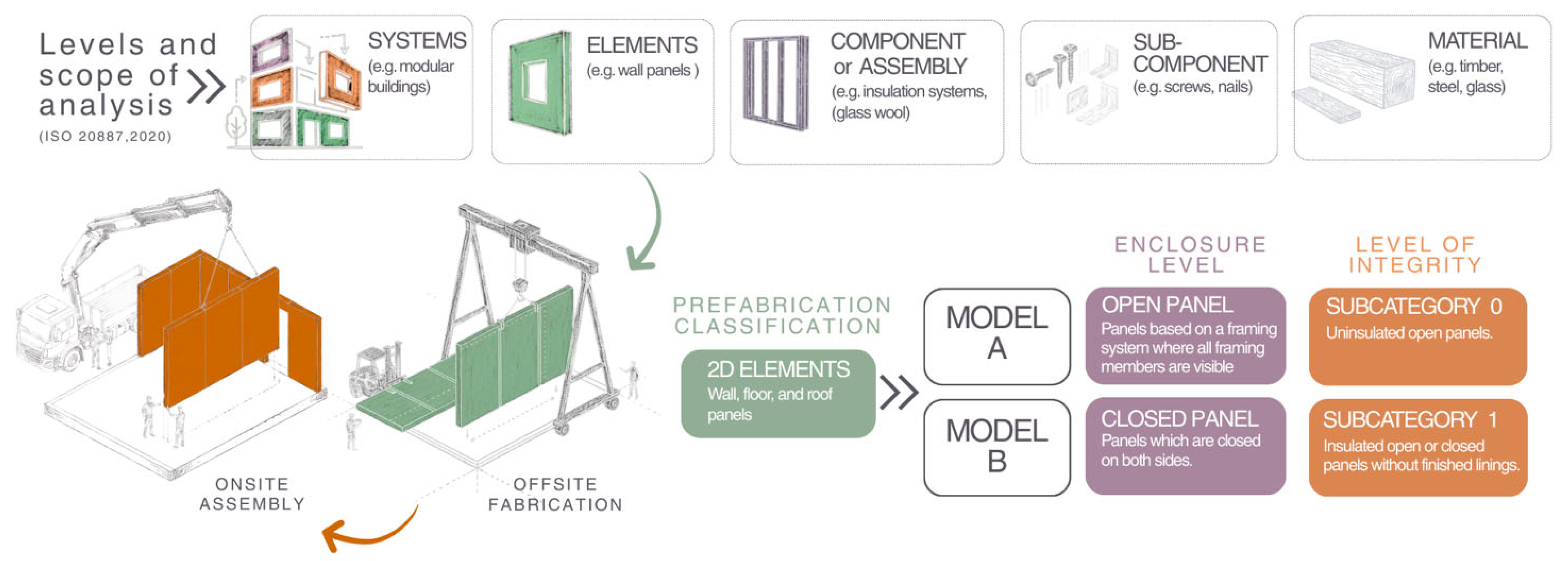
ISO 20887:2020 defines five hierarchical levels for design for disassembly and adaptability: system, element, component or assembly, sub-component, and material [13]. In this study, this hierarchy is used to define the analytical scope of the methodology. As shown in Figure 1, the experimental assessment focuses on the element level, represented by prefabricated wall panels, while disassembly outcomes are evaluated through recovered components and materials.
Within this scope, prefabricated panelized light timber framing corresponds to the category of two-dimensional (2D) elements, in which wall, floor, or roof assemblies are manufactured offsite in controlled environments and subsequently transported for onsite installation [27]. These 2D elements may be differentiated according to their degree of enclosure, ranging from open panels, where the structural framing remains partially exposed, to closed panels, where additional layers are incorporated during prefabrication [15]. To further characterize their degree of completion, Hairstans and Sanna [28] propose integrity levels ranging from Subcategory 0, representing elements with little to no pre-assembly, to Subcategory 3, comprising fully finished modules or elements ready for site assembly. In this study, this classification was used to define the experimental panel configurations, where Model A corresponds to Subcategory 0 and Model B to Subcategory 1.
In panelized systems, the placement of connections plays a key role in defining disassembly pathways. Torres et al. [9] distinguish two connection categories according to their location: inter-panel connections, positioned between separate 2D elements such as walls, floors, or roofs, and intra-panel connections, located between the layers composing a single 2D element. Both connection categories were incorporated into the experimental design to assess their influence on disassembly performance.
The experimental models were developed from a previously tested reference configuration (Model 0), based on the methodology, dimensions, and layer composition reported by Torres et al. [29]. This baseline represented a conventional North American light timber-frame solution assembled with pneumatic nails, without incorporating DfD strategies. Previous disassembly assessment of this configuration showed that nailed connections hindered layer separation, substantially limiting material reuse potential.
To enable a controlled comparison, Models A and B were designed with identical dimensions and layer compositions, differing only in the DfD strategies applied. As shown in Figure 1, the comparison focused on two experimental variables: the configuration of the 2D element in terms of enclosure and integrity level, and the connection strategy at both intra-panel and inter-panel levels. These variables were selected to evaluate how panel configuration and connection strategy influence disassembly performance and recovery outcomes.
Regarding the panel configurations, Model A was configured as an insulated open panel corresponding to Subcategory 0, composed of the structural frame and OSB sheathing on one side. Model B corresponded to Subcategory 1 and was configured as an insulated closed panel without interior finishes.

2.2. Full-Scale Models Description

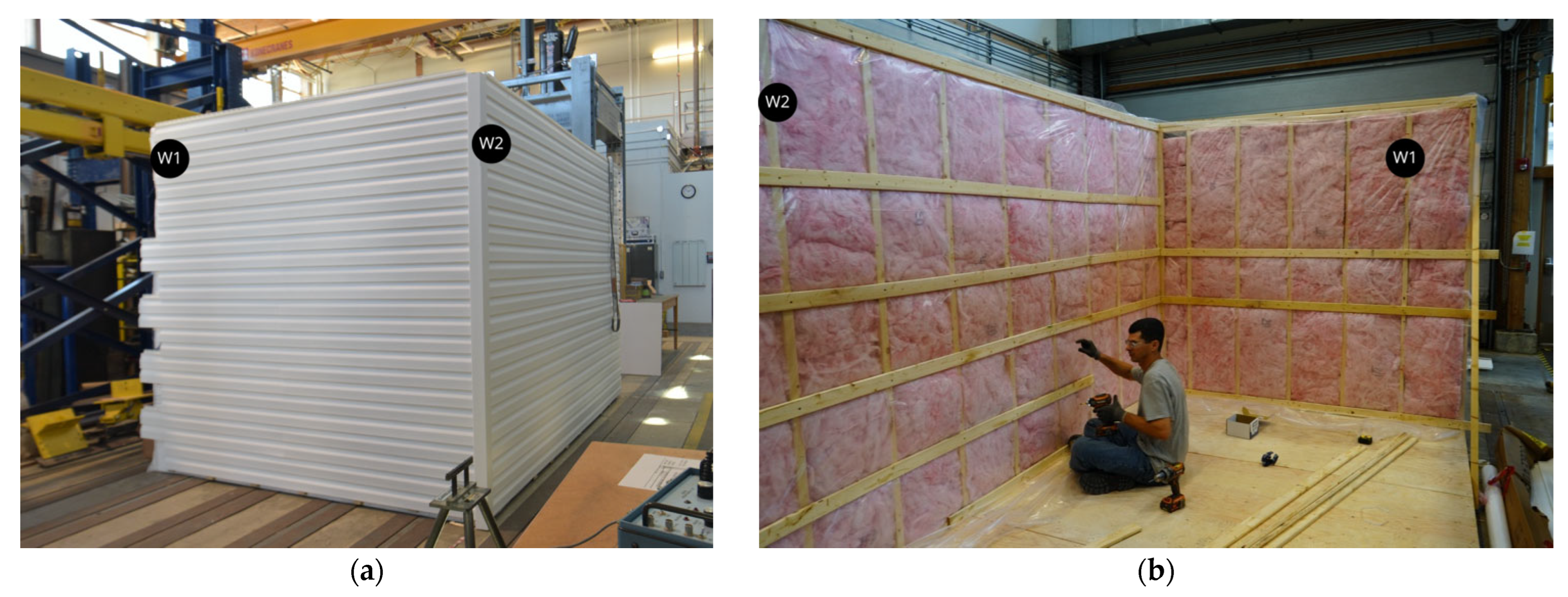
Models A and B represented the junction between two light-frame timber walls arranged at a 90° corner angle, as shown in Figure 2. The wall assemblies followed a layer configuration of light-frame construction systems typically designed for cold climates, incorporating continuous exterior insulation to enhance thermal performance. Both corner walls of each model (W1 and W2) were fixed to a timber platform of 3.66 m × 2.44 m (12 ft × 8 ft).
Both models A and B had wall lengths of 2.40 m (W1) and 3.60 m (W2) and were 2.40 m high. Figure 2a illustrates the exterior view with the cladding installed, where W1 and W2 are identified, and Figure 2b shows the interior view during the installation of the battens that support the internal cladding.
The components used in both models are listed in Table S1. The components were classified by wall layers; for example, the structure layer is formed by sawn timber (0.05 m × 0.15 m × 2.44 m) and Oriented Strand Board (OSB) (1.22 m × 0.01 m × 2.44 m). Table S1 also indicates the connections used in both models to connect each layer. For example, to fix the extruded polystyrene XPS to the structure, plastic cap nails were used.
As DfD strategies, Model A and Model B adopted different mechanical connection systems, as shown in Table S2. Connections were classified into two primary groups relative to the walls: (1) intra-panel and (2) inter-panel. Intra-panel connections included the connections between the different materials that make up each wall, and inter-panel connections included the connections between walls or to the platform.
Sawn timber framing connections were made using carpentry connections, such as mortise and tenon in Model A, also shown in Figure S1; while Model B used dowel-type fasteners, specifically 76 mm × ϕ 3 mm carbon steel screws with ACQ-compatible coating. OSB to timber frame connection was made with screws, 45 mm × ϕ 4 mm Carbon steel with phosphate coating for Model A, and 25 mm × ϕ 5 mm (LBS 525, Rothoblaas, Cortaccia, Italy) for Model B. The corner joint configuration was made with screws, 45 mm × ϕ 4 mm for Model A, and a concealed timber-to-timber connector (Lock T, 50 × 135 × 22 mm, Rothoblaas) for Model B, as shown in Figure S2c. Wall-to-platform connection used screws, 76 mm × ϕ3 mm in Model A, while Model B used a Universal angle bracket for shear and tensile loads (Nino15080, 146 × 55 × 77 mm, Rothoblaas), as shown in Figure S2.

2.3. Disassembly Actions

After the models were built, the disassembly process began. Different disassembly actions were identified and coded, and as Model A was constructed first, coding followed the execution sequence defined for Model A.
Table 2 shows the disassembly actions for Models A and B. Actions were broadly classified into two main categories based on where they occurred: off-site or on-site. A greater number of off-site actions typically reflected a higher level of prefabrication in the model, as shown in Model B. Each disassembly action was linked to the corresponding walls involved.
Table 2 shows that the total number of actions in Model B was higher than in Model A, not because new actions were added, but because some were performed twice. Hence, repeated actions were identified using the wall designation (W1 or W2), followed by a letter indicating the side where the action was performed (a) for one side and (b) for the opposite side. For example, W1(a) refers to an action performed on side “a” of wall W1. Since Model B was conceived as a closed panel, certain actions were duplicated during off-site fabrication, since W1 and W2 were mainly completed in a horizontal position to simulate prefabrication. For instance, action D8, corresponding to the removal of glass wool, was carried out twice: first on panel W2, and then again on panel W1. In contrast, in Model A, this action was performed only once, with the walls already placed vertically on the platform, executing it simultaneously on W1 and W2.

2.4. Assessment Framework

An assessment framework was developed to evaluate each disassembly action, incorporating dependent and independent variables.

2.4.1. Independent Variables

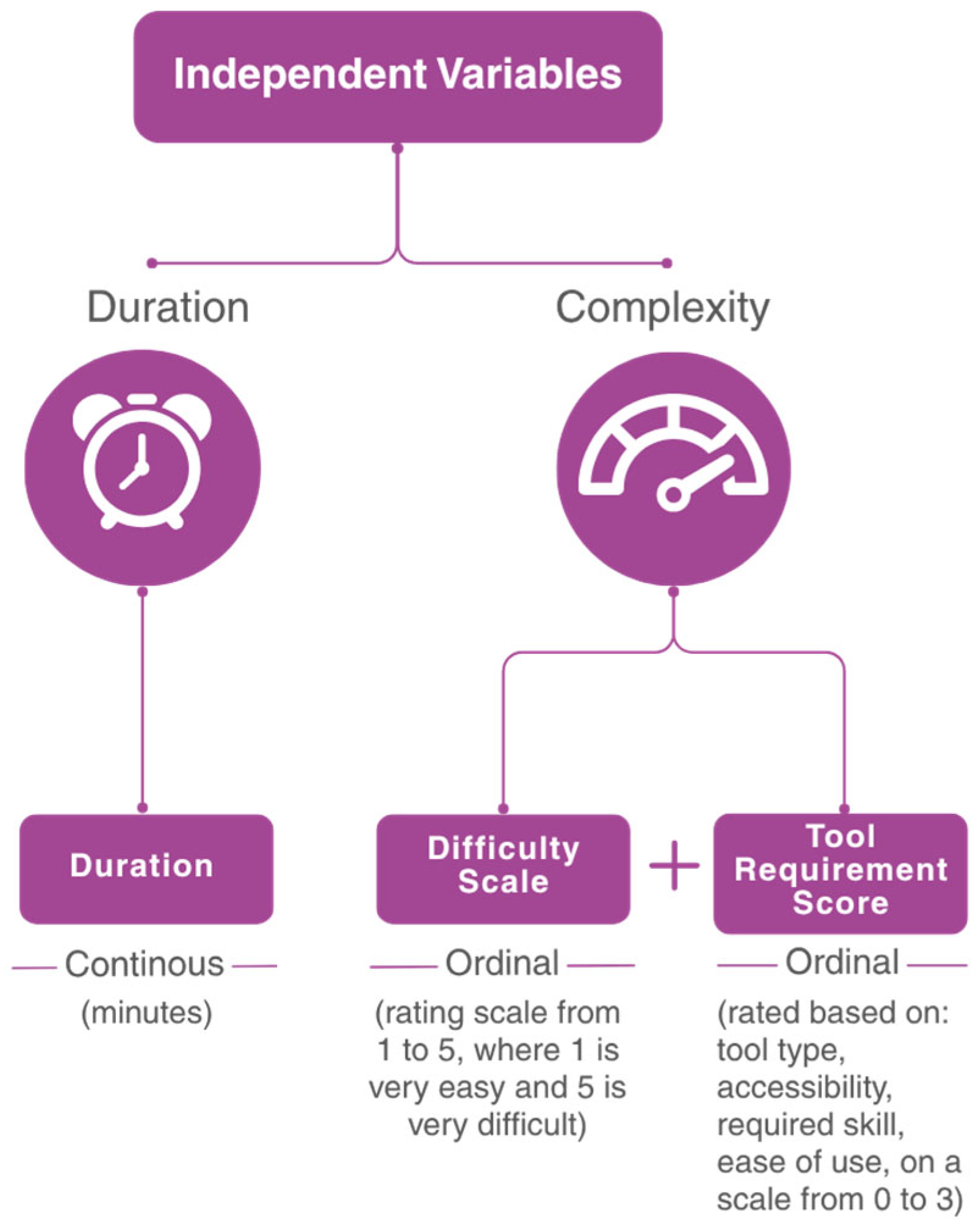
Figure 3 illustrates the independent variables, which correspond to the operational aspects of the disassembly process: Duration and Complexity of the disassembly action. Duration was the direct measure of the time spent on each action, in minutes. Complexity was assessed using two parameters: difficulty (scale presented in Table S3) and tool requirement (scale presented in Table S4).
Difficulty was assessed using an ordinal scale designed to capture observable differences in execution complexity between disassembly actions. The scale ranges from 1 (“very easy”) to 5 (“very difficult”), according to the predefined criteria described in Table S3. Similarly, the tool requirement score was defined as an ordinal classification reflecting increasing levels of operational intervention, ranging from manual disassembly to equipment-assisted removal. The scale ranges from 0, representing the use of bare hands, to 3, corresponding to more complex equipment such as an overhead crane. To reduce operator-related variability and maintain consistency in the comparative assessment, all disassembly actions were performed by the same laboratory technician, who also assigned the difficulty scores for both models.

2.4.2. Dependent Variables

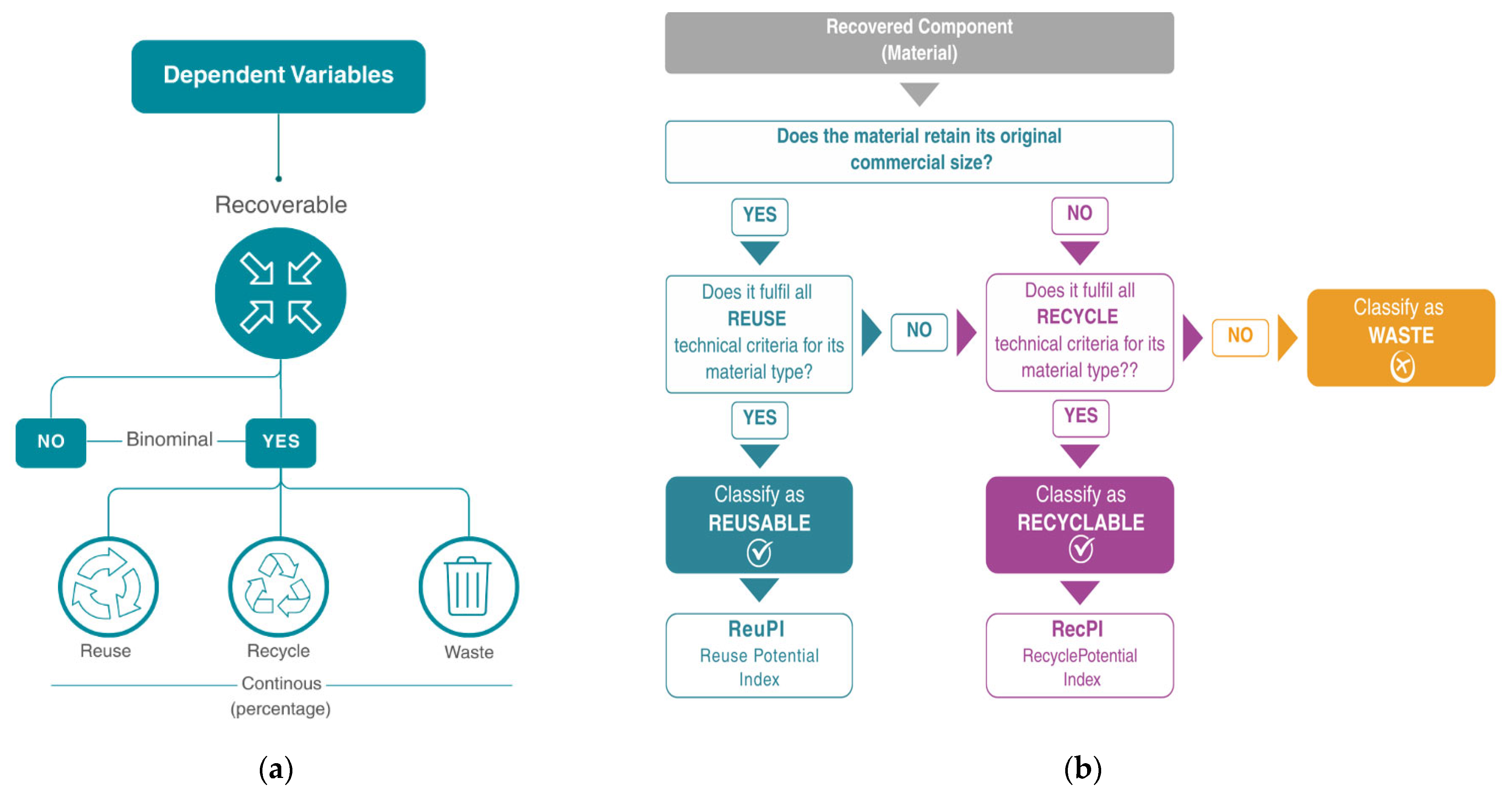
The dependent variable corresponds to the recovery outcome of each component obtained from a disassembly action, classified as reusable, recyclable, or waste according to the assessment protocol shown in Figure 4b. The classification follows a sequential decision process in which direct reuse is assessed first, based on predefined technical criteria for materials and connections (Tables S5 and S6), including dimensional preservation, visible damage, deformation, moisture exposure, contamination, and connection integrity, depending on the component type. Maintaining original commercial dimensions was considered the first evaluation filter, as materials may lose their form during fabrication or disassembly. For example, if an OSB panel no longer retains its standard dimensions (1.22 m × 2.44 m), direct reuse is excluded.
If reuse criteria are not met, recycling potential is subsequently assessed under the technological and operational conditions of the study context. Components that do not meet either criterion are classified as waste.
This three-category classification was adopted as a comparative decision framework to assign each recovered component to its most plausible recovery pathway under the assessed conditions. Since recycling feasibility depends on available infrastructure, waste management systems, and technological context, these classifications should be interpreted as context-dependent comparative assumptions rather than universally applicable end-of-life outcomes. Although alternative or intermediate recovery routes may emerge under different regional conditions or future technological developments, the simplified categorization was used to operationalize the empirical assessment consistently across both models.
To support this classification process, Tables S5 and S6 provide structured decision matrices for recovered materials and reversible connections, respectively. These matrices organize the evaluation criteria according to wall layer, disassembly action, component type, and corresponding reuse or recycling conditions, ensuring a transparent and consistent classification process across both experimental models.

2.5. Disassembly Effort Factor (DEF)

A Disassembly Effort Factor (DEF) was defined as a comparative indicator to estimate the relative operational effort required to recover a component during a disassembly action, based on the independent variables Duration and Complexity. DEF is intended to support comparative design assessment within a controlled experimental framework, rather than as an absolute measure of operational effort. Since multiple actions may be required to recover a given component, a Disassembly Effort per action (DEi) was first calculated.
Each DEi was calculated using Equation (1), where the complexity value corresponds to the sum of the Difficulty and the Tool Requirement scores, ranging from 1 to 8, with higher values indicating greater execution complexity. DEF was then derived from DEi and DEmax using Equation (2), resulting in a normalized dimensionless score ranging from 0 to 1, where 1 represents the least demanding action and 0 the most demanding.
Normalization by DEmax allows comparison between disassembly actions with different absolute effort values. Quadratic normalization was intentionally adopted to increase differentiation between low- and high-effort actions, avoiding a linear treatment of operational burden that could underestimate the practical impact of complex or tool-intensive disassembly steps. Accordingly, increases in duration, difficulty, or tool requirements systematically reduce the resulting DEF score.
At the element level, such as a full panel wall, the overall DEF value was calculated as the average of the DEF scores corresponding to all disassembly actions required to recover its constituent materials and connections.
DEi = Durationi × Complexity ratesi = Durationi × (Difficulty Scalei + Tool Requirement Scorei)
where:
Durationi: Time required, in minutes, to disassemble the component in action (i).
Complexity ratesi: Sum of the difficulty scale and the tool requirement score for each action (i).
Difficulty Scalei: Perceived difficulty scale for action (i) according to Table S3, ranging from 1 (very easy) to 5 (very difficult).
Tool Requirement Scorei: Tool requirement score for action (i) according to Table S4, ranging from 0 (bare hands) to 3 (overhead crane).
DEFi = (1 (DEi)/(DEmax))2
where:
DEi: Disassembly Effort (DE) for action (i), calculated as the product between the action duration and the sum of the difficulty level and the tool requirement score for that action.
DEmax: Maximum Disassembly Effort, calculated separately for each analyzed full-scale model, obtained by multiplying the highest complexity value (i.e., 8) by the longest execution time recorded among all disassembly actions performed within that model.

2.6. Reuse Potential Index (ReuPI)

To calculate the reuse potential of a component from an empirical perspective, a Reuse Potential Index (ReuPI) was defined, as shown in Equation (3). The ReuPI is based on the percentage of reusable components and the DEF.
Although ReuPI is primarily intended to be calculated at the component level (i.e., the material or connection recovered in a specific disassembly action), it can also be used for a two-dimensional element or even for a three-dimensional module. However, in these cases, both the DEF and the reuse percentage should reflect the results of all actions involved in the disassembly of the analyzed elements.
ReuPIi = Reusei (%) × DEFi
where:
Reuse: Percentage of material or connection recovery for action (i), classified as reusable according to the technical criteria in Table 3 (materials) or Table 4 (connections).
DEFi: Disassembly Effort Factor (DEF) obtained for action (i).

2.7. Recycle Potential Index (RecPI)

Following the same philosophy used to define ReuPI, a Recycle Potential Index (RecPI) was developed to assess the potential for recycling components (materials or connections) that are not suitable or have a low probability of reuse. The RecPI incorporates data related to the feasibility of recycling and is calculated using Equation (4).
Although primarily intended for component-level calculation, the RecPI can also be extrapolated to larger scales using the same approach as the ReuPI.
RecPIi = Recyclei (%) × DEFi
where:
Recyclei: Percentage of material or connection recovery for action (i), classified as recyclable according to the technical criteria in Table 3 (materials) or Table 4 (connections).
DEFi: Disassembly Effort Factor (DEF) obtained for action (i).

3. Results and Discussion

3.1. Disassembly Performance

The comparative analysis of total disassembly duration between the two models indicated only minor differences in overall time performance. Model A recorded a cumulative disassembly time of 181 min, while Model B reached 186 min, corresponding to a marginal increase of 2.7%. Given the exploratory nature of this full-scale comparative assessment and the absence of replicated trials, this difference is reported descriptively rather than interpreted as statistically significant. However, this apparent equivalence at the system level concealed notable differences at the action level, in tasks influenced by connection design and handling requirements, as detailed in Table S7.
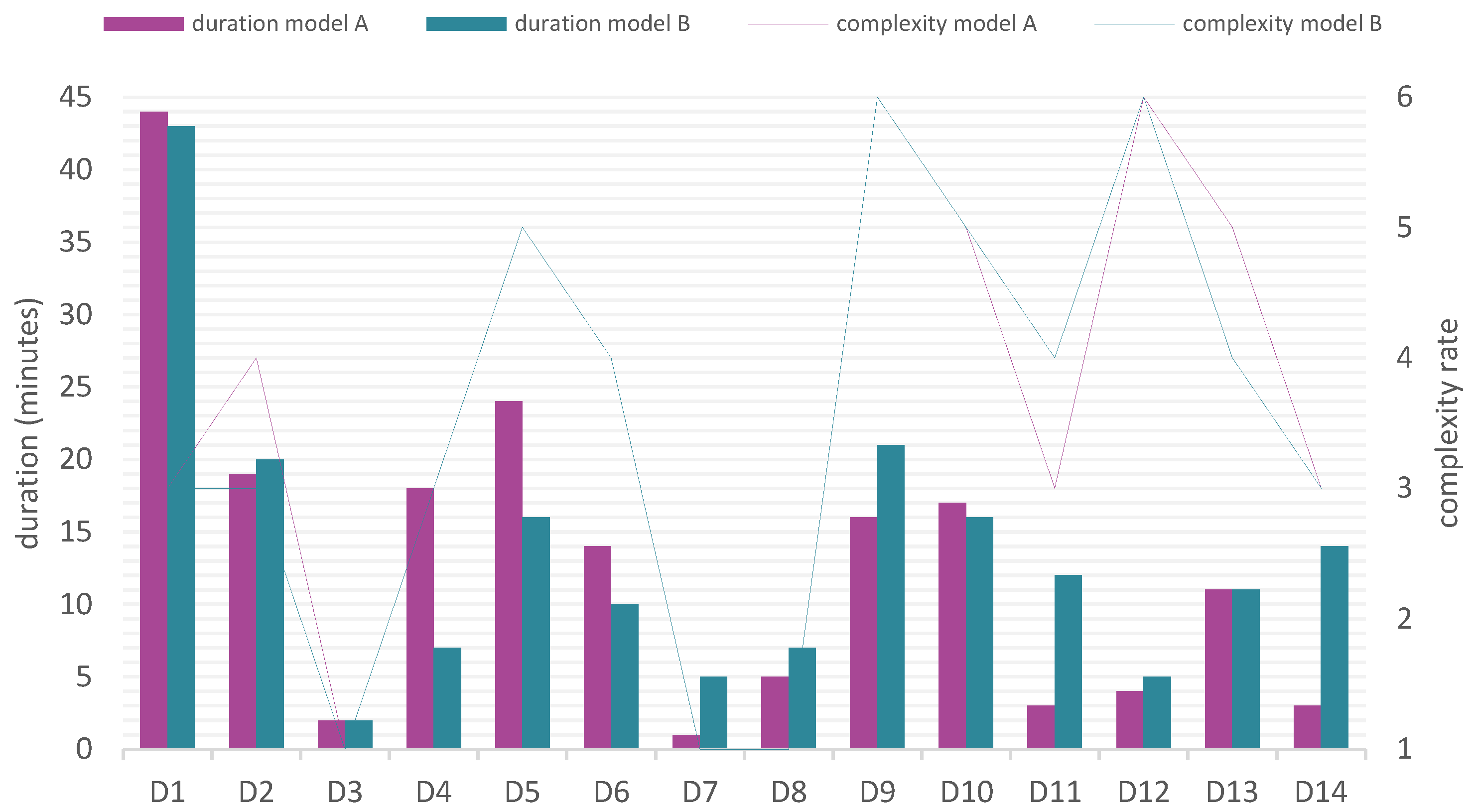
Figure 5 presents the execution time in relation to the associated complexity score for each action in both models. To enable direct action-by-action comparison, repeated actions in Model B were averaged for the primary analysis; the individual duration and complexity values for these repeated actions are reported in Table S7.
The differences observed in individual disassembly actions reveal how execution conditions and connection strategies influence task duration beyond overall system performance. Model A required approximately 8 additional minutes to remove gypsum boards (D5) compared to Model B. This difference likely reflects the inherently variable and time-intensive nature of gypsum board removal, which is strongly influenced by handling conditions and fixing characteristics. Finch and Marriage [30] similarly identified gypsum board disassembly as inefficient due to high fixing density, while the difficulty of locating concealed screws under real building conditions further limits the feasibility of non-destructive removal [31]. From a design perspective, these findings suggest that the disassembly performance of interior linings is strongly conditioned by material selection and connection detailing. Alternative solutions have been proposed, including mechanically connected prefabricated gypsum systems [32] and panelized lining systems designed for easier separation [7]. From a fire-resistance standpoint, this alternative would be less effective than gypsum board. Alternatively, Roxas et al. [32] indicated that prefabricated gypsum boards in modular panel formats can achieve improved DfD performance when appropriate mechanical connections are incorporated from the outset of the design process.
The most significant variation in duration was identified in actions D11 and D14, corresponding to the disassembly of the timber structure. In both actions, Model B required approximately four times longer than Model A. This difference highlights the influence of connection design on disassembly performance. The use of traditional mortise-and-tenon joints in Model A enabled faster separation due to the absence of mechanical fasteners, whereas the screw-based connections in Model B required more repetitive fastening operations, substantially increasing disassembly time. The longer duration of screw removal was consistent with previous studies showing that, while mechanical fixing through screws supports reversibility, it increases disassembly time due to the sequence of operations required [26]. It is important to note that the duration of actions might vary. Results presented herein were documented under a controlled disassembly scenario, and the estimated extraction duration may differ under disassembly of an existing structure, as hygroscopic shrinkage and swelling of timber, together with thermal effects generated during screw insertion, can increase resistance to removal over time [33]. Another factor influencing duration is the type of screws. For example, self-tapping screws, which are widely used in industry, tend to be more difficult to extract and may fracture or shear during disassembly when the timber has hardened or when excessive torque is applied, thereby affecting disassembly duration [25].
Regarding structural connections, carpentry connections in Model A required approximately one-quarter the time of the screw-based connections used in Model B. Although Model A exhibited a shorter disassembly time, this type of connection presents lower structural performance. As reported by Yan et al. [34], it shows relatively low stiffness and strength when compared to modern engineered connections. While such joints are considered highly demountable in the Japanese context, their performance relies primarily on friction and gravity [26], and their application is generally limited to heavy timber framing systems with cross-sections significantly larger than those used in LTF. The load-bearing capacity and structural behavior of the two connection types differ; therefore, a detailed preliminary study under equivalent conditions would be required to properly compare and validate these results.
The cross-analysis of disassembly duration and action complexity shows no direct correlation between the two. However, actions with moderate or low complexity levels showed extended execution times. In the dismantling of vinyl cladding (D1), despite a medium complexity level, execution time exceeded 40 min in both models, constituting the longest action and doubling the duration of the second most time-consuming action. This behavior is explained by the material form and fixation method: the size of the cladding slats and the need to release individual fixations per component increase the number of repetitive operations, extending execution time independently of procedural complexity. The observed relationship highlights a technical trade-off between component size and disassembly time, in line with the literature. The larger the cladding components, the more the disassembly time can be optimized. Similarly, disassembly using smaller individual components reduces the need for specialized or heavy equipment. However, using smaller individual components exponentially increases labor hours due to the high density of fixings per square meter [23].
Based on the analysis of both models, it can be inferred that disassembly duration is primarily determined by the component type and format, as well as the number of connections that must be removed in each action. The level of complexity and the required effort are also correlated, with the latter defined in terms of physical force, cognitive demand, and access to tools or specialized equipment, integrating a subjective dimension related to the operator’s perception and an objective dimension directly linked to the use of specialized machinery. Consequently, reducing the number of connections per action directly affects disassembly duration by decreasing the need for repeated tool changes and the associated sequence of operations, thereby improving temporal efficiency [13]. This relationship becomes evident when contrasting the obtained results with previous evidence. Finch and Marriage [30] reported that the complete disassembly of a conventional light timber framing system requires approximately 47 min/m2, whereas Models A and B showed substantially lower normalized disassembly times of 12.57 and 12.92 min/m2, respectively, due to their incorporation of DfD strategies. The difference is mainly explained by the use of nails in traditional LTF. This difference increases the time and effort required both to release the connections and to clean the timber components afterward. In addition, while the referenced study considered the disassembly of 1 m2 of panel, the study presented herein evaluated a corner junction involving 14.9 m2 of panels, enabling greater operational optimization and a direct improvement in disassembly efficiency.
At the element-level analysis, actions D9 and D12 associated with the disassembly of wall panels W1 and W2 showed longer execution times in Model B. Specifically, disassembling panel W2 required 30% more time, while panel W1 required 25% more time compared to Model A.
Although Model B exhibits an increase in mass relative to Model A (15% for wall W1 and 16% for wall W2), associated with a higher level of integrity, this factor was not considered determinative of the increased disassembly time. The additional time was mainly associated with the removal of brackets and plates anchored to the platform, as well as with the level of skill required to achieve a clean detachment at the corner junction, in contrast to the screw-based disassembly observed in Model A.
The literature provides limited quantitative evidence on disassembly times for complete panels in industrialized systems, limiting direct comparisons. It has been noted that panelized systems designed for disassembly incorporate material redundancy that allows panels to be removed without affecting adjacent elements, optimizing the in-situ sequence [31], and that the use of prefabricated panels enables the removal of large-format units, reducing onsite time compared to the disassembly of individual components [15]. Daly [21] indicated that dismantling structures down to individual fasteners is highly time-intensive and can result in greater material degradation than recovering complete panels, revealing a trade-off between material purity and time efficiency in recovery processes. However, when such systems rely on highly specialized or hydraulic tools, operational complexity and costs increase, often leading contractors to favor destructive demolition practices [25]. In addition, the recovery of highly integrated panels may shift time demands to off-site phases, where the disassembly of internal layers can remain time-intensive [10].

3.2. Recovery Performance

3.2.1. Recovered Components

The disassembly process was designed to maximize component recovery, achieving a component recovery rate close to 100%. Using the Assessment Framework described in Section 2.3, components were classified as reusable (Reu), recyclable (Rec), or waste (W). Table 3 and Table 4 present the percentage distribution of these categories for Model A and Model B, respectively. Actions D9 and D12 were excluded from the analysis, as they correspond to wall panel elements recovered as complete units rather than as individual components.
In general terms, Model B showed a superior performance, with an increase of approximately 50% in the proportion of reusable components and a reduction of around 15% in the waste fraction compared to Model A.
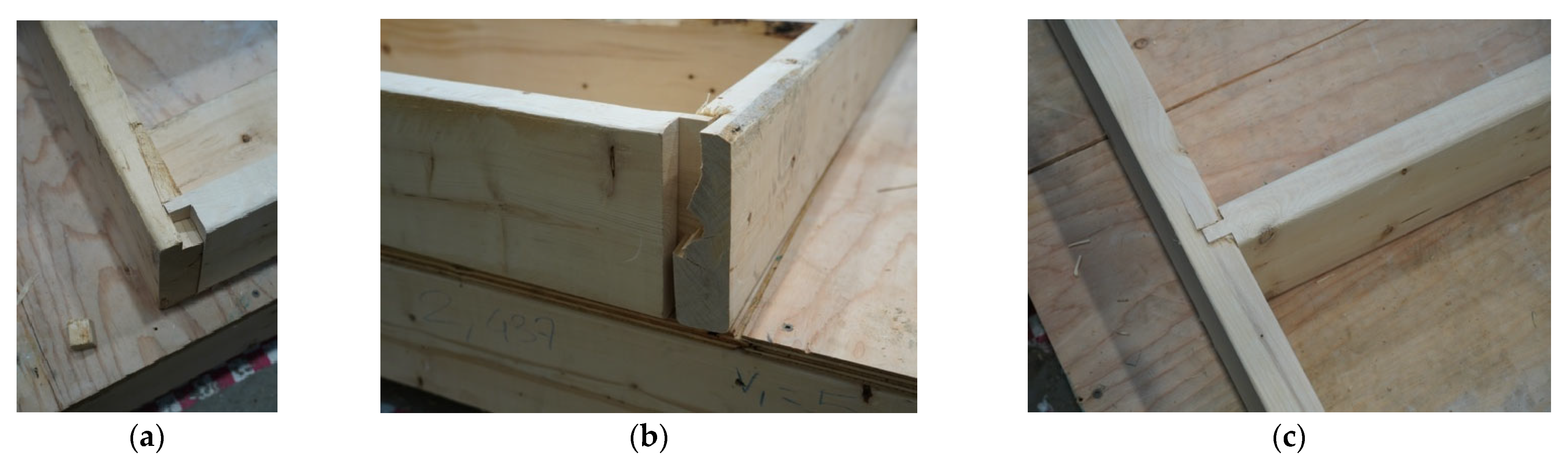
In both models, most components were recovered without significant damage. However, in Model A, the sawn timber frame was classified as recyclable because it did not retain its original dimensions due to the machining required for the mortise-and-tenon joint. This process involved a reduction in cross-sectional area and the fracture of some elements, as shown in Figure 6.
This outcome is consistent with the literature, which indicates that components with small cross sections (less than 80 × 80 mm) are much more prone to critical damage during extraction, thereby invalidating their potential for reuse and relegating them to low-value recycling [30]. Specifically, carpentry joints tend to generate stresses perpendicular to the grain, increasing the risk of splitting or shear failures that render the component unsuitable for reuse [33]. In contrast, Model B maintained the dimensional integrity of its structural components, both sawn timber and OSB, which were recovered without relevant damage, allowing them to be classified as reusable. This contrasts with the position of Walsh and Shotton [10], who did not consider OSB to be a reusable component due to uncertainties regarding its service life and the risk of loss of its performance properties during recovery.
The layer-by-layer disassembly actions, as shown in Table S8, indicated that the environmental control layers (membranes) were classified exclusively as recyclable or waste in both models. They cannot be reused, as vapor or moisture membranes must remain intact, and the fixings leave perforations when removed, which means they can no longer perform their function properly. The literature acknowledges the technical recyclability of these membranes [31], and their reuse remains limited in conventional construction configurations. In this context, Incelli et al. [17] identified the use of pressure joints with sealing elements as a strategy to enable the disassembly of panelized systems while preserving the integrity of air and vapor membranes.
Complementarily, other approaches suggest designing layers as Brand’s shearing layers, where layers are decoupled from the load-bearing structure, thereby facilitating their periodic renewal (20–50 years) without affecting the structural system [33].
The results of this study showed that the insulation layer ended up as a combination of partial reuse and waste generation, mainly due to its loss of original form. However, under real operating conditions, it would be difficult to anticipate the long-term performance of recovered insulation, limiting the potential for reuse, particularly if the insulation layer has been exposed to thermal stresses or moisture affecting the building envelope [33].
Vinyl siding, extruded polystyrene (XPS), gypsum board, polyethylene, and glass wool were classified as waste in this assessment. This classification reflects practical recovery constraints under the study context rather than an inherent lack of technical recyclability. Recycling feasibility depends not only on material properties but also on the maturity of local waste management infrastructure and available recovery pathways.
In the Canadian context, recovery limitations for construction materials remain influenced by infrastructure availability, contamination in mixed demolition waste, logistical constraints associated with geographically dispersed material streams, and the economic feasibility of material recovery processes [35]. Although isolated recycling initiatives exist, such as specialized polystyrene recovery programs in Ontario [35], these pathways are not yet broadly established within the study context. In Quebec specifically, landfill disposal rates remain particularly high for certain construction materials, reaching close to 100% for insulation materials and over 98% for gypsum board [36]. Accordingly, the classification adopted in this study reflects current practical conditions rather than universal recyclability assumptions.

3.2.2. Recovered Connections

Most of the connections were recovered in both models. This outcome reflects the controlled disassembly conditions adopted in the experimental assessment. The only connections that were not recovered were the staples used to fix the membranes, which remained embedded in the timber after the membranes were removed. These embedded staples were intentionally left in place, since their extraction would have required a highly demanding operation and does not reflect standard practice in real demolition or disassembly scenarios. Previous studies have reported that pneumatic nails and staples are particularly difficult to remove without causing additional damage [26]. In timber structures, metallic fasteners that remain embedded in the wood (e.g., staples) can also pose risks during subsequent reuse or processing, as they can damage cutting tools and processing machinery [10].
Applying the same criteria used for the components in Section 3.2.1, Table S9 presents the corresponding percentages for Models A and B, organized according to the disassembly actions from which each connection was recovered. A distinction is made between connections recovered from within a panel (intra-panel) and those recovered between panels (inter-panel).
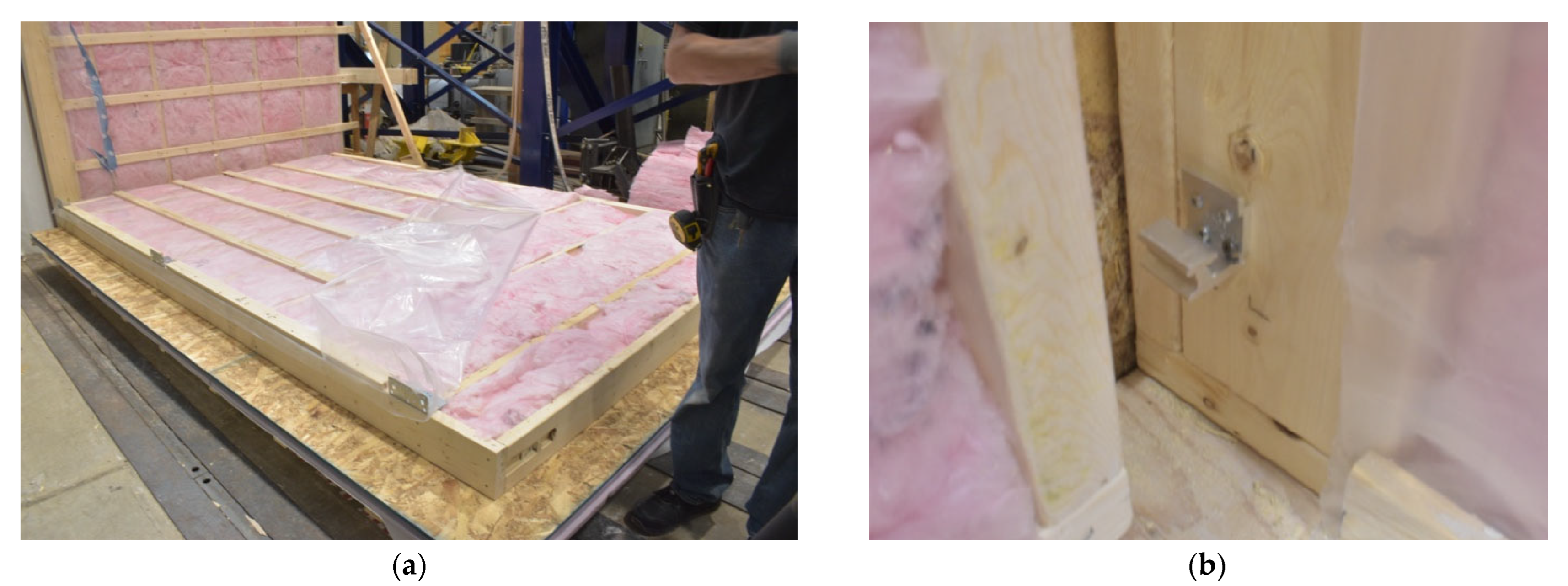
All recovered screws, including models A and B, were classified as 100% reusable according to the criteria established in Table S6, although it should be noted that this classification reflects the controlled experimental context, in which all materials were new and had not been subject to prior service exposure; under real building conditions, factors such as corrosion, torque-induced deformation, or thread wear may reduce fastener reusability. The same applies to the Nino plates in Model B, as shown in Figure 7a. Regarding the two Lock-T connectors used in model B, one was completely damaged during disassembly with the overhead crane, as shown in Figure 7b. Consequently, the classification resulted in 50% reusable and 50% recyclable: one connector remained suitable for reuse, while the damaged connector was classified as recyclable.
The classification of the mortise-and-tenon connections was primarily influenced by dimensional alteration and material loss. First, the intentional cross-sectional reduction introduced by the connection geometry led to 14% of the associated timber elements being classified as recyclable rather than reusable. Second, after machining the joints, all timber elements no longer retained their original commercial dimensions and were therefore excluded from direct reuse in their original structural function. A similar limitation was observed for the OSB panels discussed previously. This interpretation aligns with previous studies indicating that structural timber elements with reduced dimensions often present limited direct reuse potential, as trimming or damage associated with dismantling may prevent reinstatement in their original application [10]. Moreover, Ottenhaus et al. [33] reported that carpentry joints rely on precise tolerances that may be irreversibly altered over time due to moisture-induced swelling or fiber densification, limiting the safe reassembly of mortise-and-tenon systems.
The analysis of connection systems revealed contrasting trade-offs between disassembly speed and component preservation. Model A, which employed traditional mortise-and-tenon joints, enabled faster disassembly but caused material damage due to the reduced cross-sections and the timber components’ inherent fragility. In contrast, Model B incorporated reversible mechanical connectors with mixed outcomes: while the Lock T connector, specifically designed for reuse, was damaged during disassembly due to precision constraints, the Nino15080 bracket maintained its integrity during recovery, indicating greater potential for repeated reuse.
The operational speed advantage observed for the carpentry joints in Model A should not be interpreted as evidence of superior DfD performance under structural reuse criteria, as the mechanical capacity, stiffness, and code compliance of recovered elements were outside the scope of this study. While mortise-and-tenon joints facilitated faster physical separation, the associated material removal and localized damage may reduce the suitability of timber elements for direct structural reuse. Moreover, visual inspection and physical recovery alone are insufficient to fully verify structural reuse potential, as internal damage mechanisms may not be externally detectable [37]. These findings highlight the need for future research combining recovery-based assessment with non-destructive mechanical verification before certifying recovered structural components for reuse.
These observations partially align with findings reported by Yan et al. [34], who demonstrated that the use of reversible connectors in light timber framing panelized construction supports circular design principles by enabling modularity, reuse, and adaptability. Their study showed that connectors such as the IdeFix IF304 and SHERPA M20 can achieve favorable mechanical performance when screw configurations are optimized to ensure adequate ductility and withdrawal strength. However, the authors also highlighted the importance of incorporating sufficient clearances in the design stage, as overly tight fits may hinder disassembly when timber undergoes dimensional changes due to moisture-induced swelling or shrinkage. Adequate clearance should therefore be considered a key design parameter to ensure long-term reversibility of connection systems [34].

3.3. DfD Metrics and Implications

3.3.1. Disassembly Effort Factor (DEF)

Table 5 reports the DEF values obtained per action for both models. The results indicate that Models A and B exhibit comparable disassembly effort, with similar average values across the set of analyzed actions. However, a more detailed examination shows that these global similarities mask localized differences, which are concentrated at specific stages of the disassembly sequence.
When analyzed by action, the most relevant differences between the models are confined to a limited set of operations. Actions D4, D5, and D6, associated with the removal of insulation and interior finishes, show higher DEF values in Model B, indicating a lower disassembly effort compared to Model A. This behavior is associated with a more direct removal sequence and a lower accumulation of operations per action. In contrast, actions D11 and D14, corresponding to the disassembly of the sawn timber frame, present consistently higher DEF values in Model A, reflecting a lower operational effort derived from the use of carpentry joints that enable direct separation of components.
These differences indicate that the DEF is not determined solely by the type of component, but by the combined effect of the number of layers involved, connection typology, and the sequence of operations within each disassembly action. In line with studies showing that disassembly assessment cannot be reduced to the sum of execution times, but is conditioned by edge geometry, overlaps or obstructions, and the disassembly sequence, these factors directly affect process feasibility and the ability to avoid damage to adjacent components [25].
When DEF values are grouped by wall layers, as shown in Table S10, differences emerge that are not apparent at the individual action. In Model B, the insulation layer and the supporting substructure exhibit higher average DEF values, indicating lower disassembly effort for their removal. In contrast, the structural layer exhibits lower average DEF values in this model, reflecting a higher disassembly effort than in Model A, consistent with the better performance of the carpentry joints used in Model A. The environmental control layer shows high DEF values in both models and is consistently among the layers with the lowest relative effort demand.
This result confirms that the DEF allows the identification of layers whose contribution to the overall disassembly effort is limited, due to the combination of low operational complexity and short action durations. This behavior is consistent with published disassembly evaluation methods, which show that layers with lower levels of integration and reduced sequential dependency have a marginal impact on the total system effort. In this sense, the logic underlying the DEF aligns with the DEI, an index that assigns greater weight to connection type and required tools than to layers with low operational complexity [23]. However, other metrics qualify this interpretation by noting that, in the absence of weighting by mass or volume, components with lower material significance may distort the aggregated index value [21]. In contrast, approaches based on more restrictive aggregation methods challenge this compensatory logic by preventing highly complex layers from being offset by the performance of the rest of the system [20].
The combined analysis of DEF results and the classification of recovered components, as shown in Table S11, indicates that low disassembly effort does not necessarily result in a higher rate of reusable components, while actions involving moderate effort may preserve a greater reuse potential. This lack of relationship shows that reducing operational effort alone does not ensure preservation of component value and must be evaluated alongside dimensional and functional integrity. Tools such as the 3DR index indicate that maximum circularity is achieved only when ease of disassembly is combined with sustained performance across multiple reuse cycles [7]. Other studies show that systems with high theoretical disassembly scores may experience a reduction in effective reuse value due to post-occupancy modifications or the incorporation of non-recoverable finishes, which can cause cumulative damage to base components [20].
From a methodological perspective, the analysis shows that the DEF characterizes disassembly effort using practical variables recorded in situ. It captures differences that are not evident when disassemblability is assessed solely through formal criteria of reversibility or constructive configuration. In this sense, the DEF aligns with approaches that question predominantly theoretical metrics, noting that most current calculation methods do not incorporate process-related factors or real execution conditions, such as financial aspects or material degradation caused by external agents, which limits their ability to represent effective disassembly [20]. Other studies identify a critical gap in the scope of existing indicators, as they exclude essential process factors such as transport, handling, and the equipment required for real disassembly [21]. Metrics such as the DEI advance this field by explicitly incorporating operational variables, including required tools and worker skills, thus going beyond indicators focused exclusively on prefabrication or the theoretical reusability of components [23]. In contrast, other approaches argue that material composition and product structure defined at the design stage are sufficient to explain inherent recyclability or circularity, prioritizing typological attributes and mass flows over the operational complexity of disassembly [22]. Along these lines, Incelli et al. (2023) note that indicators such as the Ellen MacArthur Foundation’s MCI prioritize mass flows and material use criteria, assigning dominant weight to the typological design of material mixtures and relegating the operational burden of disassembly [17].
The DEF also presents limitations that must be considered. As all disassembly actions were performed by a single technician to maintain consistency between the comparative cases, reproducibility across different operators, skill levels, or field conditions was not assessed. Furthermore, because the DEF is based on in situ measurements, it incorporates variability inherent to execution context and worker performance, a condition widely documented in operational disassembly assessments. Previous studies indicate that evaluating disassemblability is not a purely automatic process but depends on the evaluator’s judgment when auditing barriers and the technical details of connections on site [26], as well as on the impact of the human factor, including worker skills and the tools employed [23]. Other studies indicate that this variability can be mitigated through standardization strategies, such as step-by-step disassembly instructions, universally recognized tools, and repetitive processes [13], as well as with BIM models and digital twins that reduce reliance on tacit operator knowledge [26]. The DEF should be understood as a relative and comparative indicator, suitable for analyzing trends and relationships within a consistent experimental framework rather than as an absolute or normative value. Accordingly, the reproducibility of the subjective difficulty ratings across different technicians or under real field conditions remains to be validated. Under this logic, the DEF provides an operational basis to examine, in the following sections, the relationship between disassembly effort and the potential for reuse and recycling of components.

3.3.2. Reuse Potential Index (ReuPI) and Recycle Potential Index (RecPI)

Table 6 shows the ReuPI and RecPI values per action and the corresponding overall average for each model. In Model A, ReuPI values are concentrated in a limited number of actions (4 out of 12 actions), indicating a low potential (average of 16%) for direct reuse. This low direct reuse was mainly associated with the loss of commercial dimensional format and the final condition of the recovered components. When it comes to recycling, RecPI reached higher values (5 out of 12 actions), within a medium range (35%), confirming that recycling constitutes the main valorization pathway for the materials.
In contrast, Model B showed a greater number of actions (7 out of 12 actions) with potential for reuse (i.e., ReuPI non-zero), and higher ReuPI values (35% on average). Consequently, model B showed higher reuse than model A. This higher reuse potential was due to the sawn timber structure reuse, as it used an intra-panel connection, which allowed the commercial dimensions of the recovered sawn timber structure components to be preserved. Regarding recycling, Model B exhibited a low RecPI value (20% on average) as only 3 out of 12 actions showed non-zero values, resulting in an overall low performance.
The comparison between models showed that as the ReuPI increases in Model B, the RecPI decreases, due to a higher proportion of components being diverted from recycling streams, as direct reuse is feasible. Nevertheless, the results also revealed limitations associated with the type of material and the territorial context. In the case of gypsum boards (D5), both ReuPI and RecPI values remain zero in both models, due to operational constraints related to the non-commercial dimensions of the recovered components and the limited recycling infrastructure available in the analyzed context.
None of the models reached full ReuPI or RecPI, despite incorporating DfD strategies. This result is partly explained by the evaluation approach adopted, which considers each component individually and averages the performance of the twelve actions without differentiating between structural and non-structural components.
Accordingly, the current formulation of ReuPI and RecPI should be interpreted as a comparative component-based assessment in which all evaluated components contribute equally, regardless of differences in mass, service life, or embodied carbon. While this approach ensures methodological consistency between the experimental configurations, alternative weighted formulations could provide complementary perspectives on circular recovery performance and should be explored in future research.

4. Conclusions

This study aimed to evaluate the performance of DfD in panelized light timber framing systems through a practical evaluation framework focused on empirical disassembly performance. The proposed methodology combined the Disassembly Effort Factor (DEF) with the Reuse Potential Index (ReuPI) and Recycling Potential Index (RecPI) to assess operational recovery potential based on disassembly duration, execution effort, and recovery outcomes.
The comparative analysis of two full-scale models revealed a gap between the theoretical recovery potential and the practical feasibility of disassembly. Although both models incorporated DfD strategies, differences in specific disassembly actions significantly influenced recovery outcomes. In particular, connection design and material characteristics strongly affected whether components remained suitable for reuse or were diverted toward recycling.
The proposed indices should be interpreted as comparative decision-support tools rather than absolute measures of recovery performance. Since the assessment was conducted under controlled experimental conditions using new materials and trained personnel, the numerical results are specific to the tested configurations and are not intended to represent universally applicable performance values for LTF systems. Furthermore, the current formulation applies a non-weighted comparison across disassembly actions, meaning that long-life structural components and short-lived elements contribute equally to the overall indices; alternative weighting strategies based on component mass, service life, or embodied carbon could therefore produce different outcomes and should be explored in future research.
The main contribution of this work lies in providing an operational perspective on DfD performance by linking disassembly effort with empirically observed recovery outcomes. However, the framework remains a practical comparative assessment tool rather than a predictive or certification-oriented methodology. It does not account for accumulated degradation across multiple reuse cycles, nor does it verify the structural, mechanical, durability, or code-compliance suitability of recovered components for direct reuse. Similarly, reuse and recycling classifications should not be interpreted as proxies for environmental benefit, as the environmental impacts associated with different recovery pathways were outside the scope of this study. Recycling outcomes are also context-dependent, as feasibility depends on regional infrastructure, available technologies, and waste management practices.
Future research should evaluate the framework under less controlled conditions by incorporating repeated disassembly cycles, material aging effects, operator-related variability, and alternative weighting approaches based on component service life. Integrating operational recovery assessment with non-destructive structural verification and environmental impact evaluation would further strengthen the applicability of the proposed methodology.

Supplementary Materials

The following supporting information can be downloaded at: https://www.mdpi.com/article/10.3390/buildings16112238/s1, Table S1: Components used in both models and intra-panel connections; Table S2: Proposed assembly strategies for each model by panel connection (intra-panel/inter-panels); Figure S1: Proposed assembly strategy (intra-panel): Model A mortise and tenon traditional joinery; Figure S2: Proposed assembly strategy (inter-panel): Model B brackets and plates connection system; Table S3: Complexity difficulty scale; Table S4: Complexity tool requirement score; Table S5: Criterion for reuse and recycling by component; Table S6: Criterion for reuse and recycling by connection type; Table S7: Disassembly duration and complexity values by action for Models A and B; Table S8: Percentage results grouping the actions by wall layer for both models; Table S9: Categorization of reversible connection strategies by connected parts for each model; Table S10: Average DEF per wall layer for Models A and B; Table S11: Average DEF per wall layer and percentage classification of recovered components for Models A and B.

Author Contributions

Conceptualization, V.T. and G.Í.-G.; methodology, V.T. and G.Í.-G.; software, V.T.; validation, G.Í.-G., P.B. and C.M.; formal analysis, V.T.; investigation, V.T.; resources, P.B.; data curation, V.T.; writing—original draft preparation, V.T.; writing—review and editing, G.Í.-G., P.B. and C.M.; visualization, V.T.; supervision, G.Í.-G.; project administration, P.B.; funding acquisition, V.T. All authors have read and agreed to the published version of the manuscript.

Funding

This research was funded by the Natural Sciences and Engineering Research Council of Canada (NSERC) under the Canada Research Chairs program (CRC-2022-00114) and the Luksic Scholars Fund from the Luksic Foundation.

Data Availability Statement

The data are not publicly available due to privacy concerns.

Conflicts of Interest

The authors declare no conflicts of interest.

References

  1. International Energy Agency. World Energy Outlook 2024; IEA: Paris, France, 2024; Available online: https://www.iea.org/reports/world-energy-outlook-2024 (accessed on 6 May 2025).
  2. Soto-Paz, J.; Arroyo, O.; Torres-Guevara, L.E.; Parra-Orobio, B.A.; Casallas-Ojeda, M. The Circular Economy in the Construction and Demolition Waste Management: A Comparative Analysis in Emerging and Developed Countries. J. Build. Eng. 2023, 78, 107724. [Google Scholar] [CrossRef]
  3. Kumbhar, S.; Kulkarni, N.; Rao, A.B.; Rao, B. Environmental Life Cycle Assessment of Traditional Bricks in Western Maharashtra, India. Energy Procedia 2014, 54, 260–269. [Google Scholar] [CrossRef]
  4. Purchase, C.K.; Al Zulayq, D.M.; O’Brien, B.T.; Kowalewski, M.J.; Berenjian, A.; Tarighaleslami, A.H.; Seifan, M. Circular Economy of Construction and Demolition Waste: A Literature Review on Lessons, Challenges, and Benefits. Materials 2022, 15, 76. [Google Scholar] [CrossRef]
  5. Ellen MacArthur Foundation. Completing the Picture: How the Circular Economy Tackles Climate Change; Ellen MacArthur Foundation: Isle of Wight, UK, 2019. [Google Scholar]
  6. Kitek Kuzman, M.; Zbašnik-Senegačnik, M.; Kosanović, S.; Miloshevska Janakieska, M.; Novaković, N.; Rajković, I.; Grošelj, P. Architectural Perspectives on Wood Reuse within Circular Construction: A South–Central European Study. Buildings 2024, 14, 560. [Google Scholar] [CrossRef]
  7. O’Grady, T.; Minunno, R.; Chong, H.-Y.; Morrison, G.M. Design for Disassembly, Deconstruction and Resilience: A Circular Economy Index for the Built Environment. Resour. Conserv. Recycl. 2021, 175, 105847. [Google Scholar] [CrossRef]
  8. Piccardo, C.; Hughes, M. Design Strategies to Increase the Reuse of Wood Materials in Buildings: Lessons from Architectural Practice. J. Clean. Prod. 2022, 368, 133083. [Google Scholar] [CrossRef]
  9. Torres, V.; Lara, A.; Íñiguez-González, G. Design for Disassembly in Panelized Light Timber Framing towards Carbon Neutrality: The 4PROTRU Showhouse. In Proceedings of the 14th World Conference on Timber Engineering (WCTE 2025): Advancing Timber for the Future Built Environment, Brisbane, Australia, 22–26 June 2025; pp. 610–619. [Google Scholar]
  10. Walsh, S.J.; Shotton, E. Integrating Design for Adaptability, Disassembly, and Reuse into Architectural Design Practice. Sustainability 2024, 16, 7771. [Google Scholar] [CrossRef]
  11. Dams, B.; Maskell, D.; Shea, A.; Allen, S.; Driesser, M.; Kretschmann, T.; Walker, P.; Emmitt, S. A circular construction evaluation framework to promote designing for disassembly and adaptability. J. Clean. Prod. 2021, 316, 128122. [Google Scholar] [CrossRef]
  12. Montalbano, G.; Martino, M. Methodological Approach to Renovate Buildings through Circular Design Strategies: A BIM Workflow for DfA, DfF and DfD. Sustain. Mediterr. Constr. 2024, 20, 123–131. [Google Scholar]
  13. ISO 20887; Sustainability in Buildings and Civil Engineering Works—Design for Disassembly and Adaptability—Principles, Requirements and Guidance. International Organization for Standardization: Geneva, Switzerland, 2020.
  14. Camacho Leyva, V.P. Propuesta de un Sistema de Entramado Ligero de Madera para la Vivienda de Interés Social en Lima, Perú. Master’s Thesis, Universidad Politécnica de Cataluña, ETSAB, Barcelona, Spain, 2021. [Google Scholar]
  15. Mañes-Navarrete, D.; Redón-Santafé, M.; Paya-Zaforteza, I. Timber Structures Designed for Disassembly: A Cornerstone for Sustainability in 21st Century Construction. J. Build. Eng. 2024, 96, 110619. [Google Scholar] [CrossRef]
  16. dos Santos Gonçalves, J.; Claes, S.; Ritzen, M. Measuring Circularity of Buildings: A Systematic Literature Review. Buildings 2025, 15, 548. [Google Scholar] [CrossRef]
  17. Incelli, F.; Cardellicchio, L.; Rossetti, M. Circularity Indicators as a Design Tool for Design and Construction Strategies in Architecture. Buildings 2023, 13, 1706. [Google Scholar] [CrossRef]
  18. Khadim, N.; Agliata, R.; Marino, A.; Thaheem, M.J.; Mollo, L. Critical Review of Nano and Micro-Level Building Circularity Indicators and Frameworks. J. Clean. Prod. 2022, 357, 131859. [Google Scholar] [CrossRef]
  19. Khadim, N.; Agliata, R.; Thaheem, M.J.; Mollo, L. Whole Building Circularity Indicator: A Circular Economy Assessment Framework for Promoting Circularity and Sustainability in Buildings and Construction. Build. Environ. 2023, 241, 110498. [Google Scholar] [CrossRef]
  20. Attia, S.; Al-Obaidy, M.; Mori, M.; Campain, C.; Giannasi, E.; van Vliet, M.; Gasparri, E. Disassembly calculation criteria and methods for circular construction. Autom. Constr. 2024, 165, 105521. [Google Scholar] [CrossRef]
  21. Daly, P. A Critical Review of Circularity—‘Design for Disassembly’ Assessment Methods Applied in the Development of Modular Construction Panels—An Irish Case Study. e-Prime—Adv. Electr. Eng. Electron. Energy 2023, 5, 100252. [Google Scholar] [CrossRef]
  22. Roithner, C.; Cencic, O.; Honic, M.; Rechberger, H. Recyclability Assessment at the Building Design Stage Based on Statistical Entropy: A Case Study on Timber and Concrete Building. Resour. Conserv. Recycl. 2022, 184, 106407. [Google Scholar] [CrossRef]
  23. Hernández, H.; Díaz, L.; Rodríguez-Grau, G. Examining Building Deconstruction: Introducing a Holistic Index to Evaluate the Ease of Disassembly. Resour. Conserv. Recycl. 2025, 218, 108215. [Google Scholar] [CrossRef]
  24. Akanbi, L.A.; Oyedele, L.O.; Omoteso, K.; Bilal, M.; Akinade, O.O.; Ajayi, A.O.; Davila Delgado, J.M.; Owolabi, H.A. Disassembly and deconstruction analytics system (D-DAS) for construction in a circular economy. J. Clean. Prod. 2019, 223, 386–396. [Google Scholar] [CrossRef]
  25. Ottenhaus, L.-M.; Hernández-Aldaz, M.; Davies, A.; Cabrero, J.M. Evaluating the Disassembly Potential of Timber Buildings: Development of Calculation Tool and Proof of Concept. Wood Mater. Sci. Eng. 2025, 20, 1–30. [Google Scholar] [CrossRef]
  26. Guy, B.; Ciarimboli, N. Design for Disassembly in the Built Environment: A Guide to Closed-Loop Design and Building. Available online: https://www.lifecyclebuilding.org/docs/DfDseattle.pdf (accessed on 13 April 2025).
  27. Minunno, R.; O’Grady, T.; Morrison, G.M.; Gruner, R.L.; Colling, M. Strategies for applying the circular economy to prefabricated buildings. Buildings 2018, 8, 125. [Google Scholar] [CrossRef]
  28. Hairstans, R.; Sanna, F. A Scottish Perspective on Timber Offsite Construction. In Offsite Architecture: Constructing the Future; Smith, R.E., Quale, J.D., Eds.; Routledge: Abingdon, UK, 2017; pp. 224–249. [Google Scholar]
  29. Torres, V.; Íñiguez-González, G.; Blanchet, P.; Giorgio, B. Challenges in the Design for Disassembly of Light Timber Framing Panelized Components. Buildings 2025, 15, 321. [Google Scholar] [CrossRef]
  30. Finch, G.; Marriage, G. Reducing Building Waste through Light Timber Frame Design: Geometric, Assembly and Material Optimisations. In Proceedings of the PLEA 2018—Smart and Healthy Within the 2-Degree Limit, Hong Kong, China, 10–12 December 2018; pp. 244–249. [Google Scholar]
  31. Finch, G.; Marriage, G.; Pelosi, A.; Gjerde, M. Building Envelope Systems for the Circular Economy: Evaluation Parameters, Current Performance and Key Challenges. Sustain. Cities Soc. 2021, 64, 102561. [Google Scholar] [CrossRef]
  32. Roxas, C.L.C.; Bautista, C.R.; Dela Cruz, O.G.; Dela Cruz, R.L.C.; De Pedro, J.P.Q.; Dungca, J.R.; Lejano, B.A.; Ongpeng, J.M.C. Design for Manufacturing and Assembly (DfMA) and Design for Deconstruction (DfD) in the Construction Industry: Challenges, Trends and Developments. Buildings 2023, 13, 1164. [Google Scholar] [CrossRef]
  33. Ottenhaus, L.M.; Yan, Z.; Brandner, R.; Leardini, P.; Fink, G.; Jockwer, R. Design for adaptability, disassembly and reuse–A review of reversible timber connection systems. Constr. Build. Mater. 2023, 400, 132823. [Google Scholar] [CrossRef]
  34. Yan, Z.; Ottenhaus, L.M.; Leardini, P.; Jockwer, R. Performance of reversible timber connections in Australian light timber framed panelised construction. J. Build. Eng. 2022, 61, 105244. [Google Scholar] [CrossRef]
  35. Santos, G.; Esmizadeh, E.; Riahinezhad, M. Recycling Construction, Renovation, and Demolition Plastic Waste: Review of the Status Quo, Challenges and Opportunities. J. Polym. Environ. 2024, 32, 479–509. [Google Scholar] [CrossRef]
  36. Hosseini, Z.; Blanchet, P.; Laratte, B.; Cogulet, A. Evaluating Circular Economy Strategies at the End-of-Life Stage of a Mass Timber Building: Pathways for Sustainable Construction. Archit. Eng. Des. Manag. 2025, 21, 1520–1540. [Google Scholar] [CrossRef]
  37. Saleem, F.; Li, S.; Cui, S.; Yao, Z.; Liu, X.; Xu, T.; Bian, Y.; Zhang, Y.; Wang, S.; Yao, X.; et al. Microstructural Influence on Compressive Behavior and Strain Rate Sensitivity of Open-Cell Nickel Foam. Eur. J. Mech. A Solids 2025, 109, 105445. [Google Scholar] [CrossRef]
Figure 1. Levels and Scope of Analysis based on ISO 20887, and classification of panel Enclosure Level and panel Integrity Level for each model.
Buildings 16 02238 g001
Figure 2. Full-scale model A: (a) external view of W1 and W2; (b) internal view of W1 and W2 before installing the lining.
Buildings 16 02238 g002
Figure 3. Assessment Framework illustrating the independent variables employed to evaluate each disassembly action.
Buildings 16 02238 g003
Figure 4. Assessment Framework (a) Dependent variables employed to assess each disassembly action (b) Classification protocol for recovered components, materials and connections assessed separately.
Buildings 16 02238 g004
Figure 5. Disassembly duration and complexity of both Models A and B for each action.
Buildings 16 02238 g005
Figure 6. Damage to the structural timber in Model A is associated with the reduced cross-section generated by the mortise and tenon connection. (a) Corner joint showing material loss, top view. (b) Same corner joint, lateral view. (c) Stud–plate connection with a longitudinal crack along the timber grain.
Buildings 16 02238 g006
Figure 7. Model B: brackets and plates connection system after disassembly (a) W2 dismantled and placed horizontally (off-site assembly), with NINO connectors in perfect condition (b) LockT connector completely damaged during the disassembly.
Buildings 16 02238 g007
Table 1. DfD assessment tools: comparative summary.
CategoryRef.Instrument NameYearAuthorHighlighted
Frameworks and Standards[13]ISO 20887
Sustainability in buildings and civil engineering works. Design for disassembly and adaptability Principles, requirements and guidance
2020ISO/TC 59/SC 17Prescriptive normative standard establishing principles and guidance for design for disassembly and adaptability. It defines conceptual levels of analysis and key design principles but does not provide a quantitative or executable assessment of disassembly performance.
Frameworks and Standards[11]CCEF
Circular Construction Evaluation Framework
2021Dams et al.Framework-based evaluation method derived from ISO 20887, providing a semi-quantitative scoring system to assess circular construction strategies at building and component levels, mainly supporting early-stage design comparisons.
Indices and Indicators[7]3DR Index
Design for Disassembly, Deconstruction and Resilience
2021O’Grady et al.Quantitative index that aggregates mass-weighted indicators related to disassembly, deconstruction, and resilience. The assessment integrates aspects such as connection types, required tools, and material destinations into an overall performance score.
Indices and Indicators[22]RPR Assessment Method
Relative Product-inherent Recyclability
2022Roithner et al.Quantitative indicator-based method assessing building recyclability through material distribution and concentration using statistical entropy. It integrates material composition and construction configuration across building, component, and subcomponent levels.
Indices and Indicators[23]DEI
Disassembly Ease Index
2025Hernández et al.Index specifically focused on the technical complexity of disassembly processes. It assesses the ease of disassembly by integrating qualitative and quantitative variables related to connections and disassembly operations, without addressing broader circularity or material flow performance.
Tools and systems[24]D-DAS
Disassembly and Deconstruction Analytics System
2019Akanbi et al.BIM-based executable assessment system that operationalizes DfD principles through automated analysis of design parameters, connections, and material properties. It generates quantitative indicators supporting early-stage evaluation of end-of-life performance.
Tools and systems[25]Disassembly Potential Calculation Tool2024Ottenhaus et al.Quantitative tool grounded in ISO 20887 that computes a Disassembly Potential Index for timber buildings. The assessment focuses on the technical feasibility of disassembly at connection and building levels, enabling early-stage comparison of design alternatives.
Tools and systems[26]DeCon
Expert System
2025Al-Obaidy et al.Rule-based expert decision-support system evaluating the technical disassembly potential of construction connections. The system computes quantitative indices at connection, system, and building levels based on standardized inspection criteria.
Table 2. Disassembly actions for each model are categorized by the process assembly.
Model AModel B
Process
Assembly
CodeWallActionsProcess
Assembly
CodeWallActions
OnsiteD1W1Dismantling claddingOnsiteD1W1,W2Dismantling cladding
D2W1,W2Removing exterior battensD5W1,W2Removing gypsum boards
D3W1,W2Dismantling the moisture barrier D9 *W2Dismantling W2 from W1 and platform (2D element level)
D4W1,W2Removing insulation (XPS) D6W2(a)Removing interior battens
D5W1,W2Removing gypsum boards D7 W2(a)Removing vapor barrier
D6W1,W2Removing interior battens D8 W2(a)Removing insulation
D7W1,W2Removing the vapor barrier Rotation of the element with the overhead crane
D8W1,W2Removing insulation (glass wool) D2 W2(b)Removing exteriors battens
OffsiteD9 *W2Dismantling W2 from W1 and platform (2D element level) D3 W2(b)Dismantling moisture barrier
D10W2Removing bracing panel D4 W2(b)Removing insulation (XPS)
D11W2Removing sawn timber frameOffsiteD10 W2(b)Removing bracing panel
D12 *W1Dismantling W1 from platform D11W2(b)Removing sawn timber frame
D13W1Removing bracing panel D12 *W1Dismantling W1 from platform
D14W1Removing sawn timber frame D6 W1(a)Removing interior battens
D7 W1(a)Removing vapor barrier
D8 W1(a)Removing insulation (glass wool)
Rotation of the element with the overhead crane
D2 W1(b)Removing exteriors battens
D3 W1(b)Dismantling moisture barrier
D4 W1(b)Removing insulation (XPS)
D13W1(b)Removing bracing panel
D14W1(b)Removing sawn timber frame
* This action is allocated as an off-site construction process for chronological consistency, but in a real case, it would be performed onsite; (a): one side of the 2D element (wall); (b): opposite side.
Table 3. Percentage classification of recovered components as reusable, recyclable, and waste in Model A.
ActionWallComponentReu (%)Rec (%)W (%)
D11,2Vinyl siding41059
D21,2Sawn timber01000
D31,2High-density polyethylene (HDPE)01000
D41,2Extruded polystyrene (XPS)00100
D51,2Gypsum board00100
D61,2Sawn timber01000
D71,2Polyethylene00100
D81,2Glass wool53047
D102Oriented Strand Board (OSB)10000
D112Sawn timber01000
D131Oriented Strand Board (OSB)10000
D141Sawn timber01000
x ¯ 254234
Reu: Reuse; Rec: Recycle; W: Waste.
Table 4. Percentage classification of recovered component as reusable, recyclable, and waste in Model B.
ActionWallComponentReu (%)Rec (%)W (%)
D11,2Vinyl siding55045
D51,2Gypsum board00100
D62aSawn timber01000
D72aPolyethylene00100
D82aGlass wool52048
D22bSawn timber01000
D32bHigh-density polyethylene (HDPE)01000
D42bExtruded polystyrene (XPS)67033
D102bOriented Strand Board (OSB)10000
D112bSawn timber10000
D61aSawn timber01000
D71aPolyethylene00100
D81aGlass wool56044
D21bSawn timber01000
D31bHigh-density polyethylene (HDPE)01000
D41bExtruded polystyrene (XPS)50050
D131bOriented Strand Board (OSB)10000
D141bSawn timber10000
x ¯ 383329
Reu: Reuse; Rec: Recycle; W: Waste.
Table 5. DEF per action for Models A and B, with color-coded classification of effort levels.
ActionModel AModel Bδ (B–A)
D1Dismantling cladding 0.39 0.39 0.00
D2Removing exterior battens 0.61 0.68+0.07
D3Dismantling the moisture barrier 0.99 0.990.00
D4Removing insulation (XPS) 0.72 0.88+0.16
D5Removing gypsum boards 0.43 0.59+0.16
D6Removing interior battens 0.71 0.78+0.07
D7Removing the vapor barrier 0.99 0.97−0.02
D8Removing insulation (glass wool) 0.97 0.96−0.01
D9Dismantling W2 from W1 and platform 0.53 0.48 −0.05
D10Removing bracing panel 0.58 0.59 +0.01
D11Removing sawn timber frame 0.95 0.74−0.21
D12Dismantling W1 from platform 0.87 0.89+0.02
D13Removing bracing panel 0.71 0.76+0.05
D14Removing sawn timber frame 0.95 0.82−0.13
DEF ≥ 0.90 → Low effort 0.70 ≤ DEF < 0.90 → Medium effort DEF < 0.70 → High effort.
Table 6. ReuPI and RecPI values by action for Model A and B.
Model AModel B
ActionReuPIRecPIReuPIRecPI
D1Dismantling cladding 16 0 210
D2Removing exterior battens0 610 68
D3Dismantling the moisture barrier0 990 99
D4Removing insulation (XPS)00 520
D5Removing gypsum boards0000
D6Removing interior battens0 710 78
D7Removing the vapor barrier0000
D8Removing insulation (glass wool) 510 520
D10Removing bracing panel 580 590
D11Removing sawn timber frame0 95 740
D13Removing bracing panel 710 760
D14Removing sawn timber frame0 95 820
x ¯ 16 35 35 20
High potential: ReuPI/RecPI ≥ 67% Medium potential: 34% ≤ ReuPI/RecPI < 67%. Low potential: ReuPI/RecPI < 34%.
Disclaimer/Publisher’s Note: The statements, opinions and data contained in all publications are solely those of the individual author(s) and contributor(s) and not of MDPI and/or the editor(s). MDPI and/or the editor(s) disclaim responsibility for any injury to people or property resulting from any ideas, methods, instructions or products referred to in the content.