Static and Fatigue Performance of UHPC-Strengthened Steel–Concrete Transition Segment



Abstract
1. Introduction
2. Experimental Program
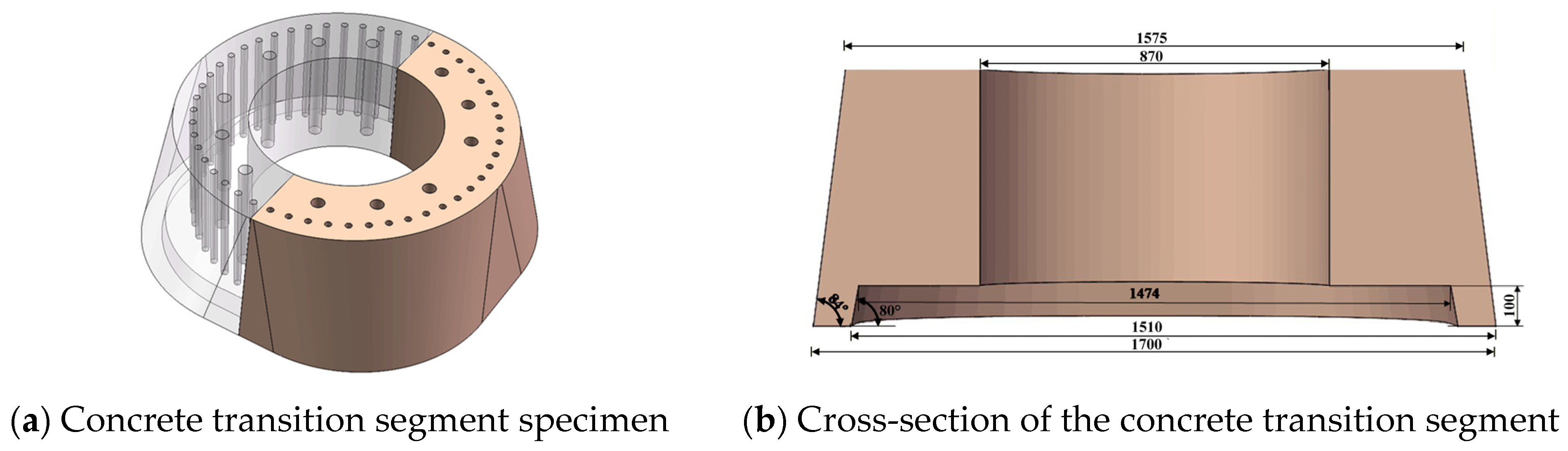
2.1. Specimen Design
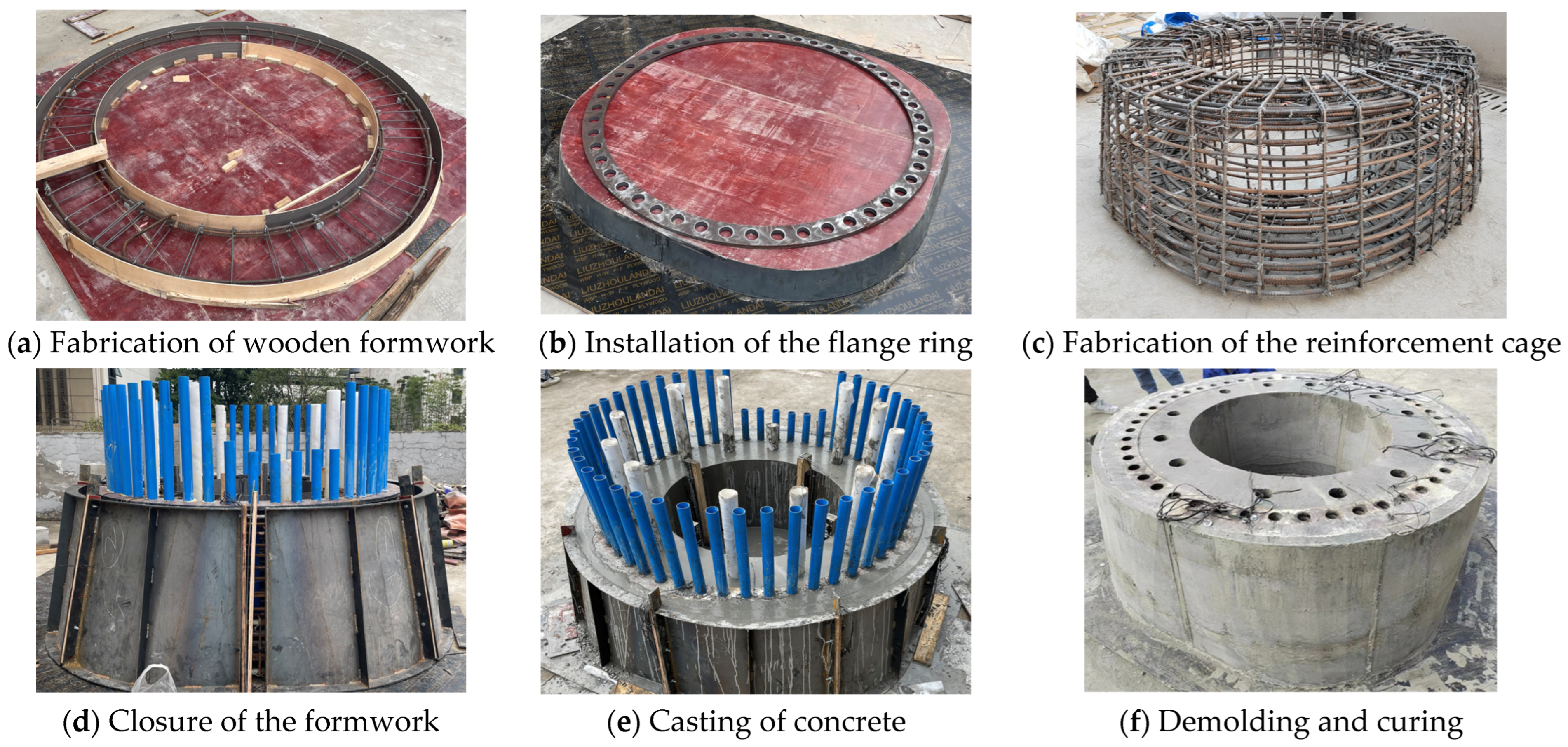
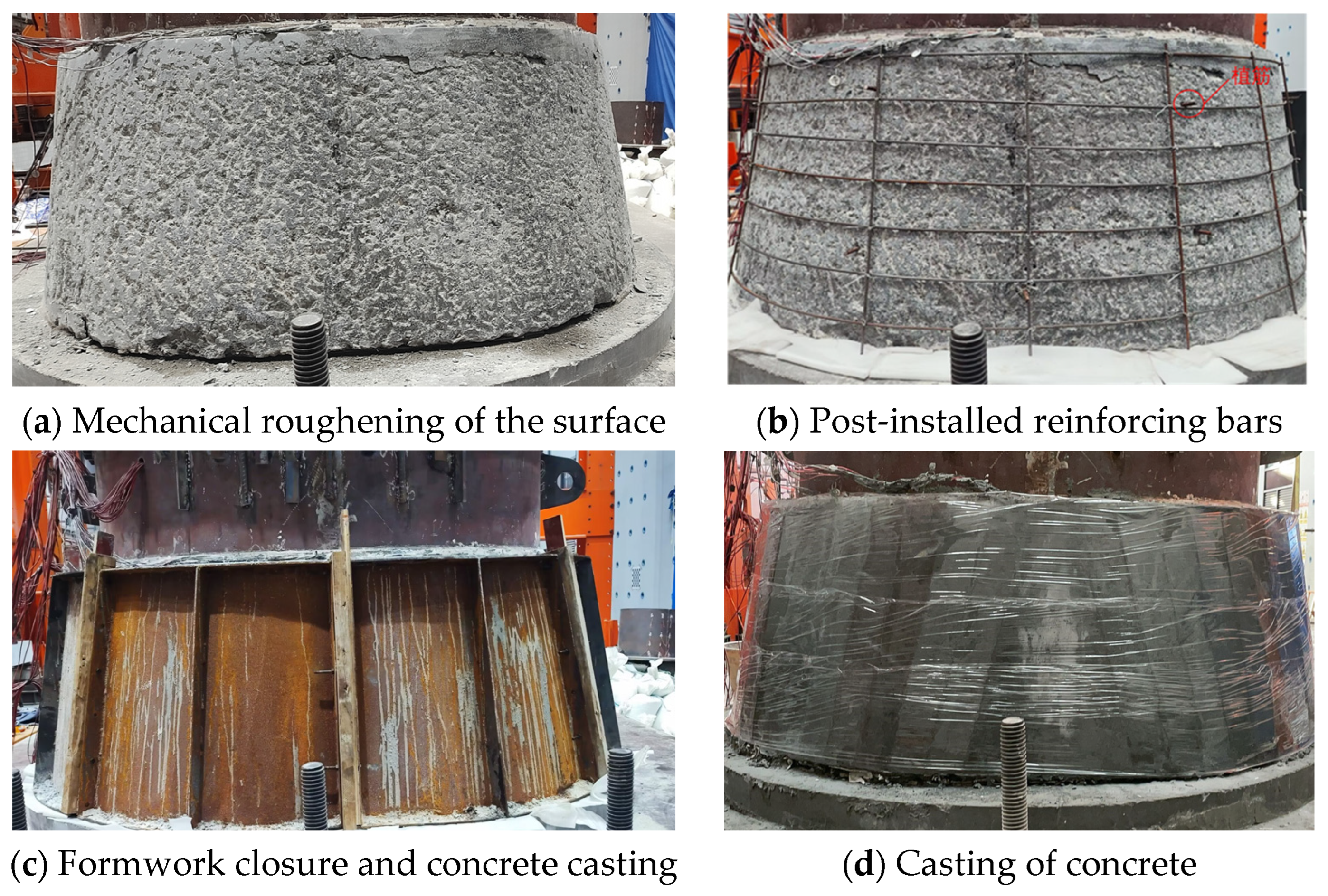
2.2. Specimen Preparation
2.3. Material Properties
2.4. Loading and Measuring Methods
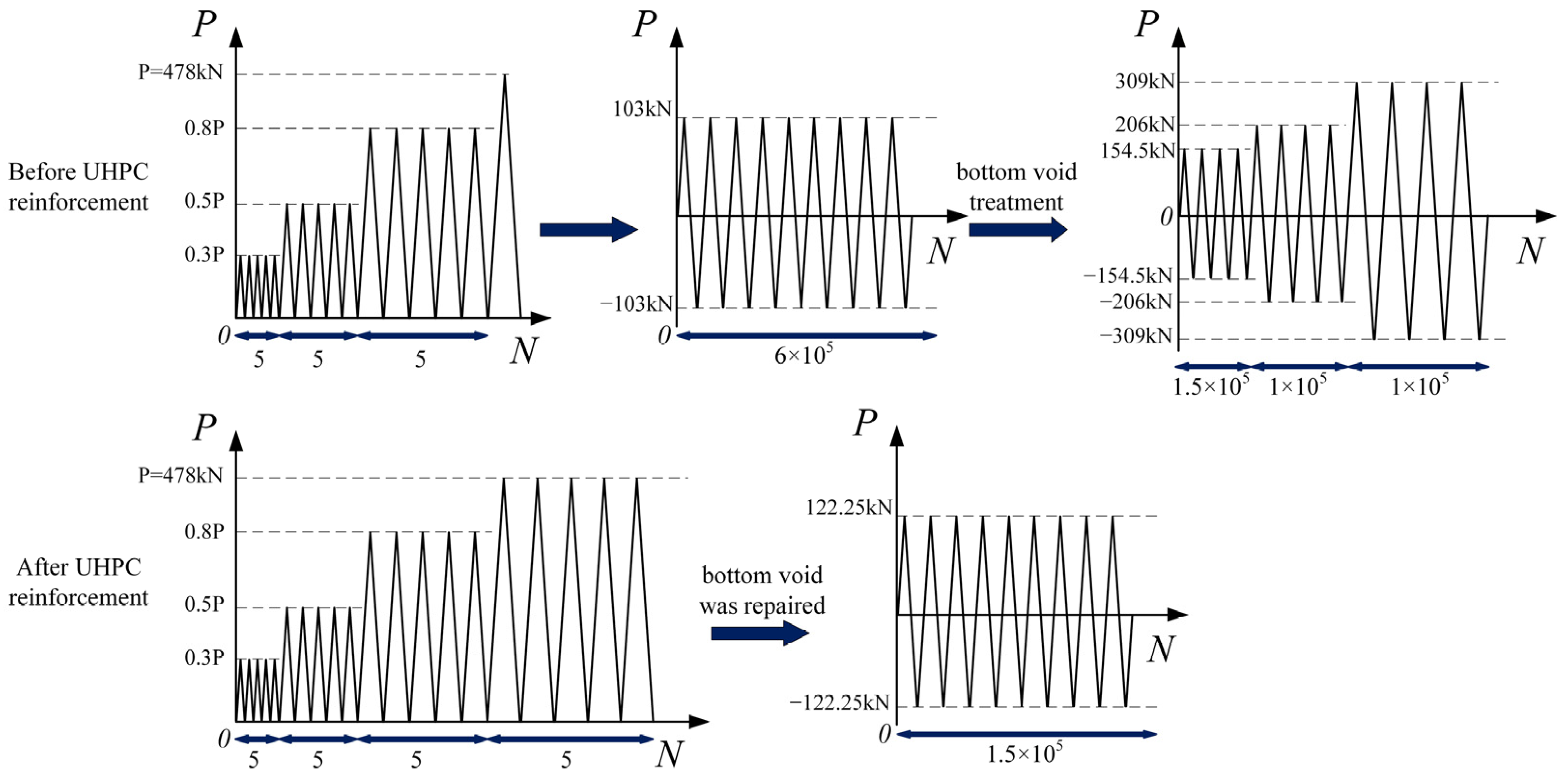
2.4.1. Loading Procedure
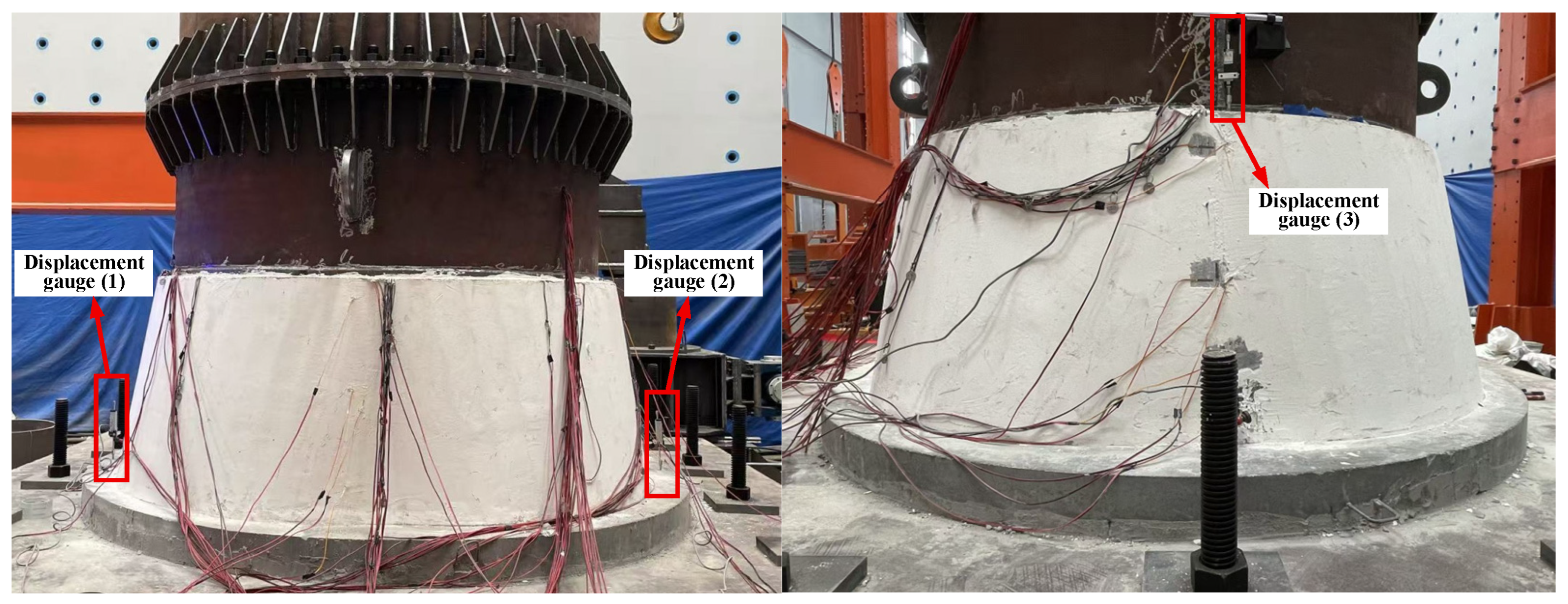
2.4.2. Measuring Procedure
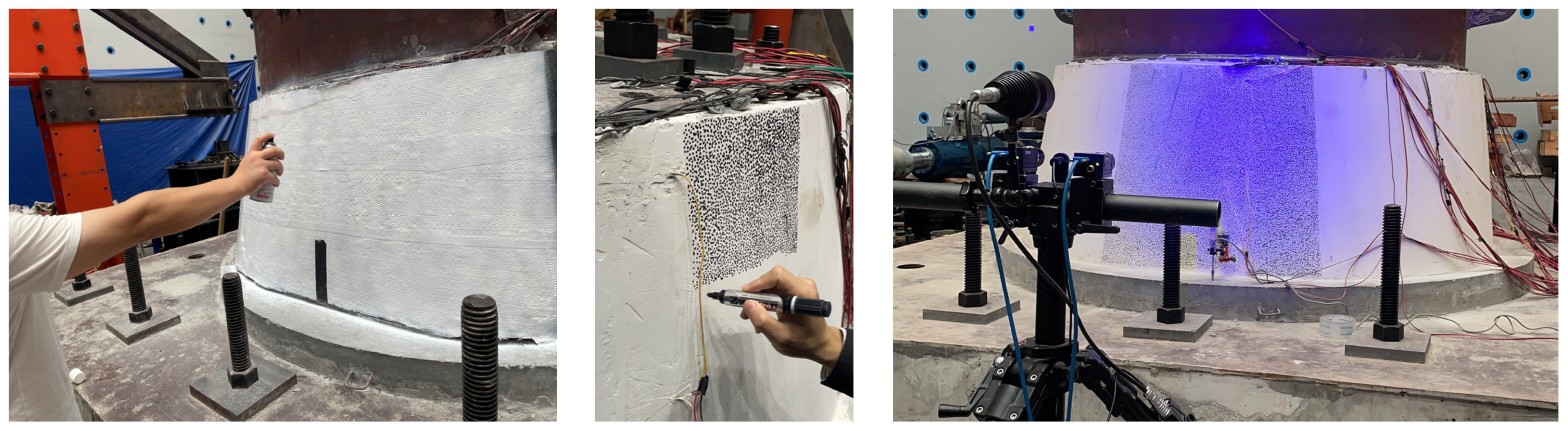
2.4.3. Digital Image Correlation Method
3. Experimental Results
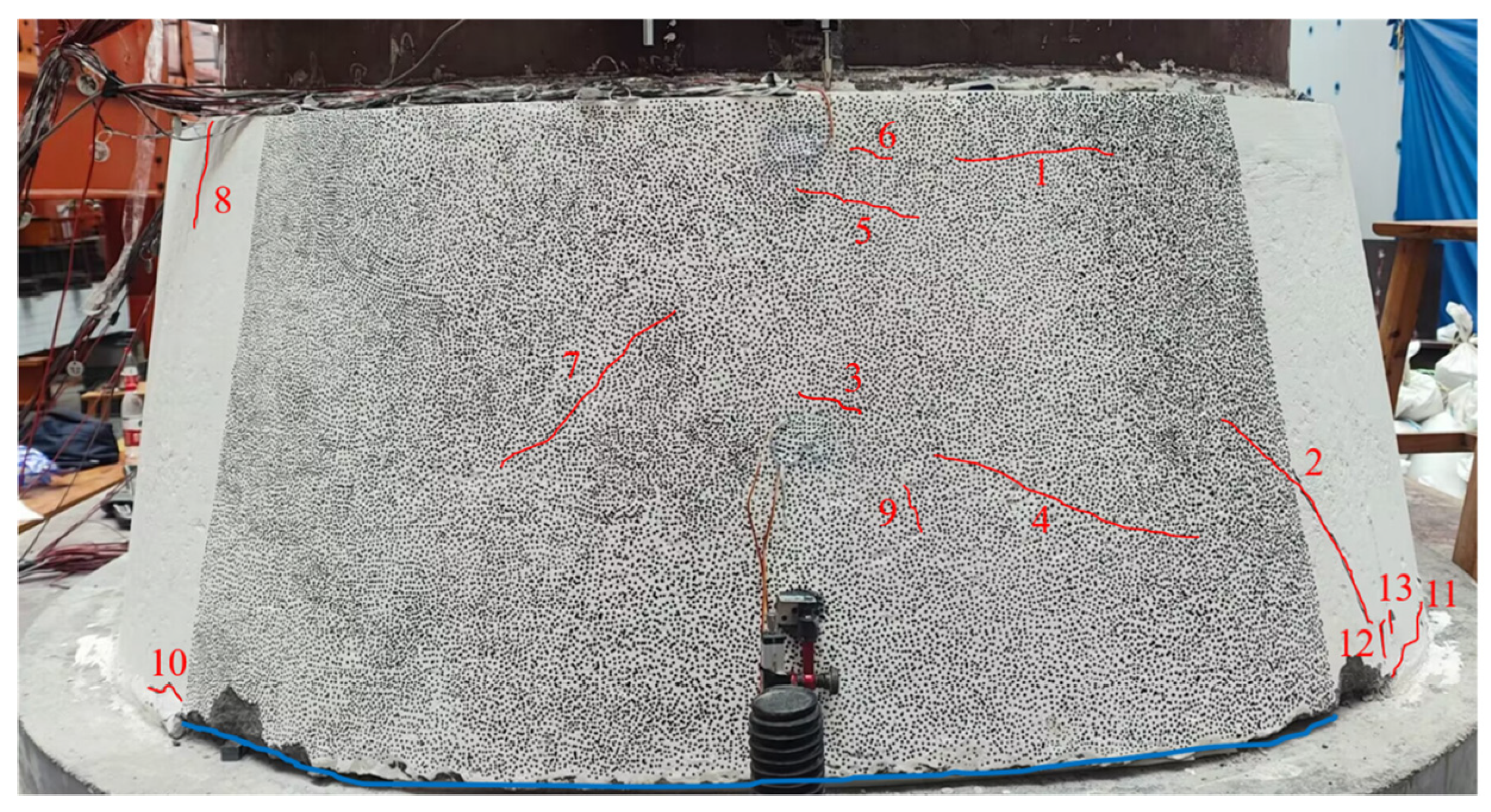
3.1. Failure Modes
3.2. Load–Displacement Curve
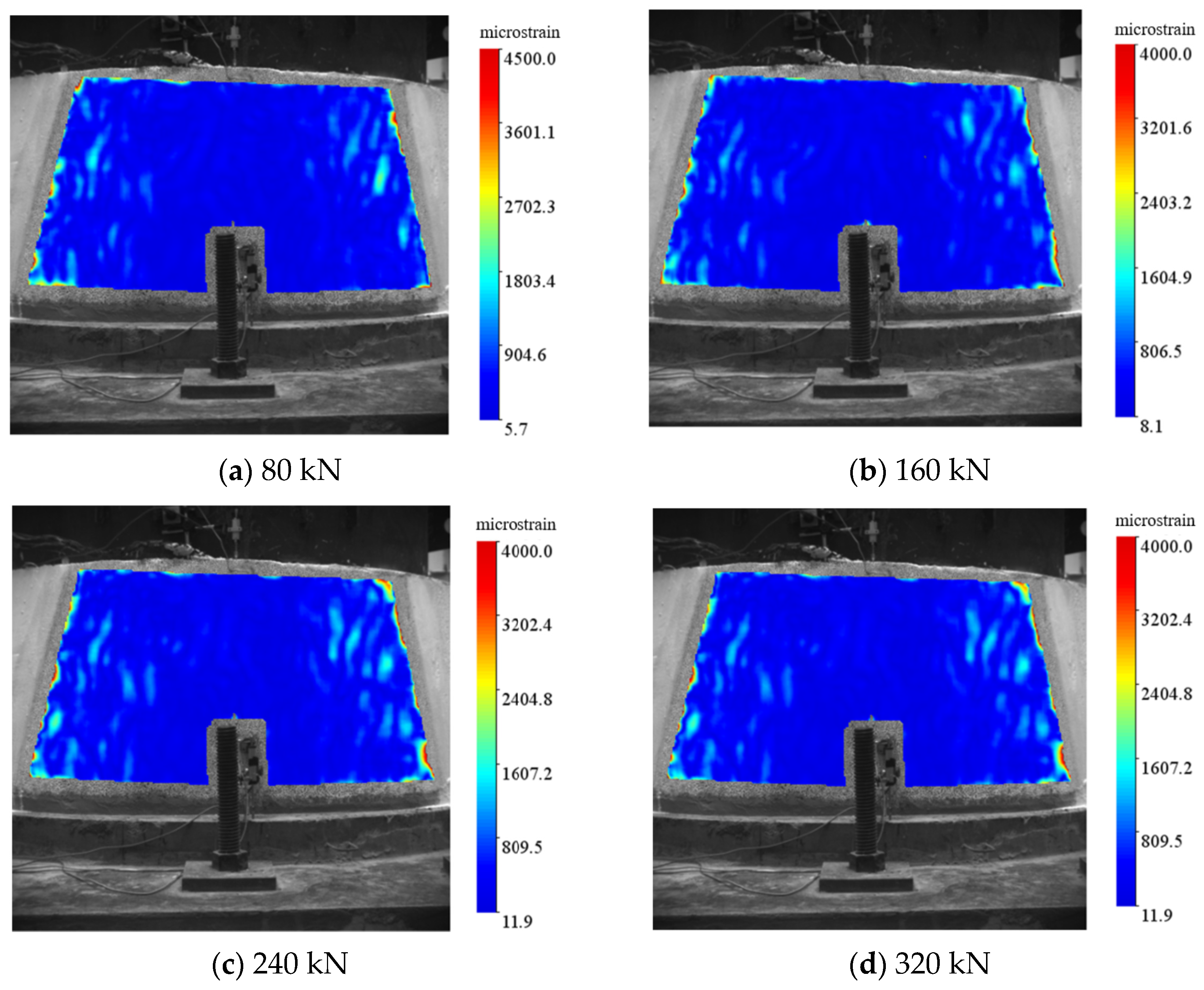
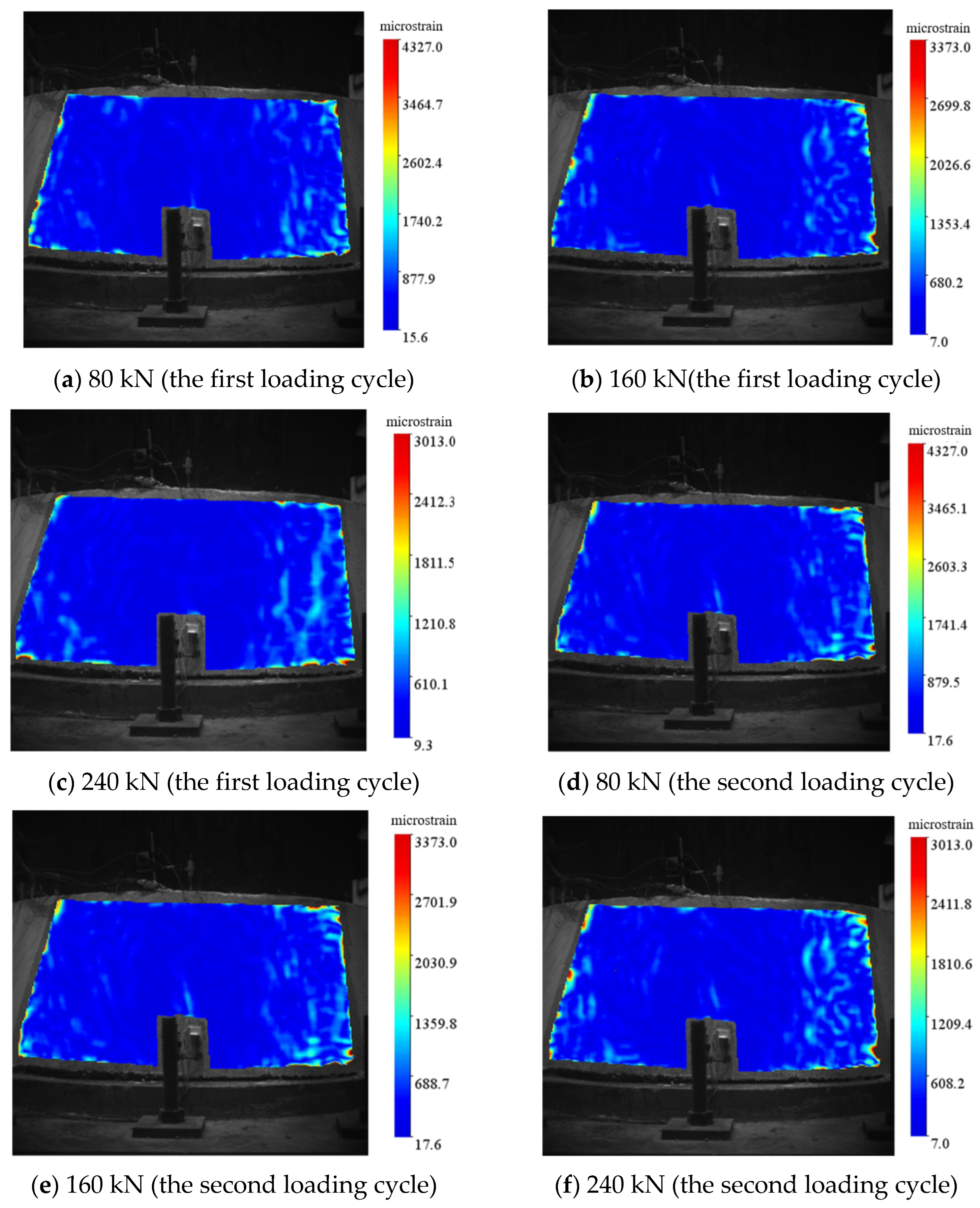
3.3. Results of DIC Strain Field
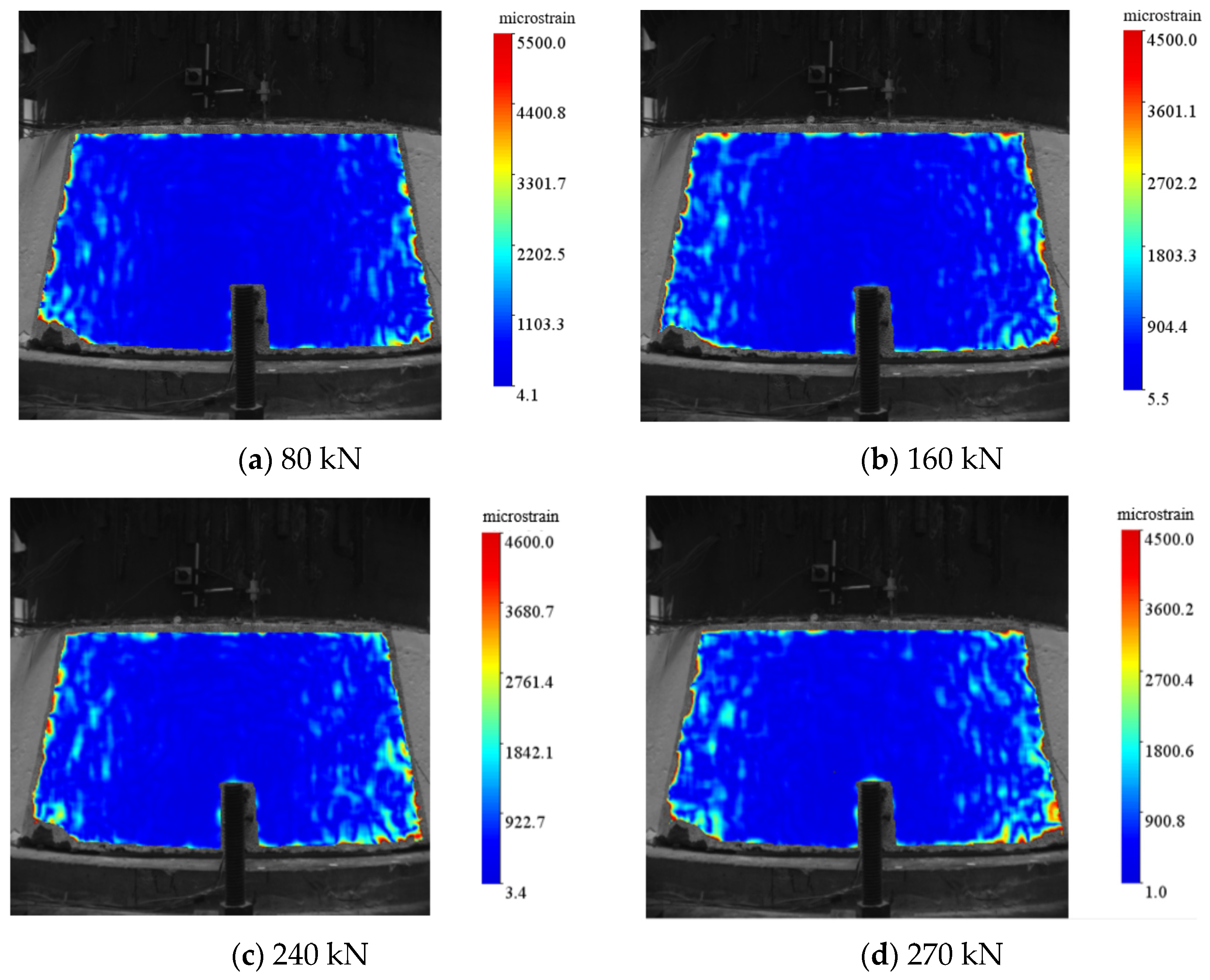
3.3.1. The Static Strain Field Before UHPC Strengthening
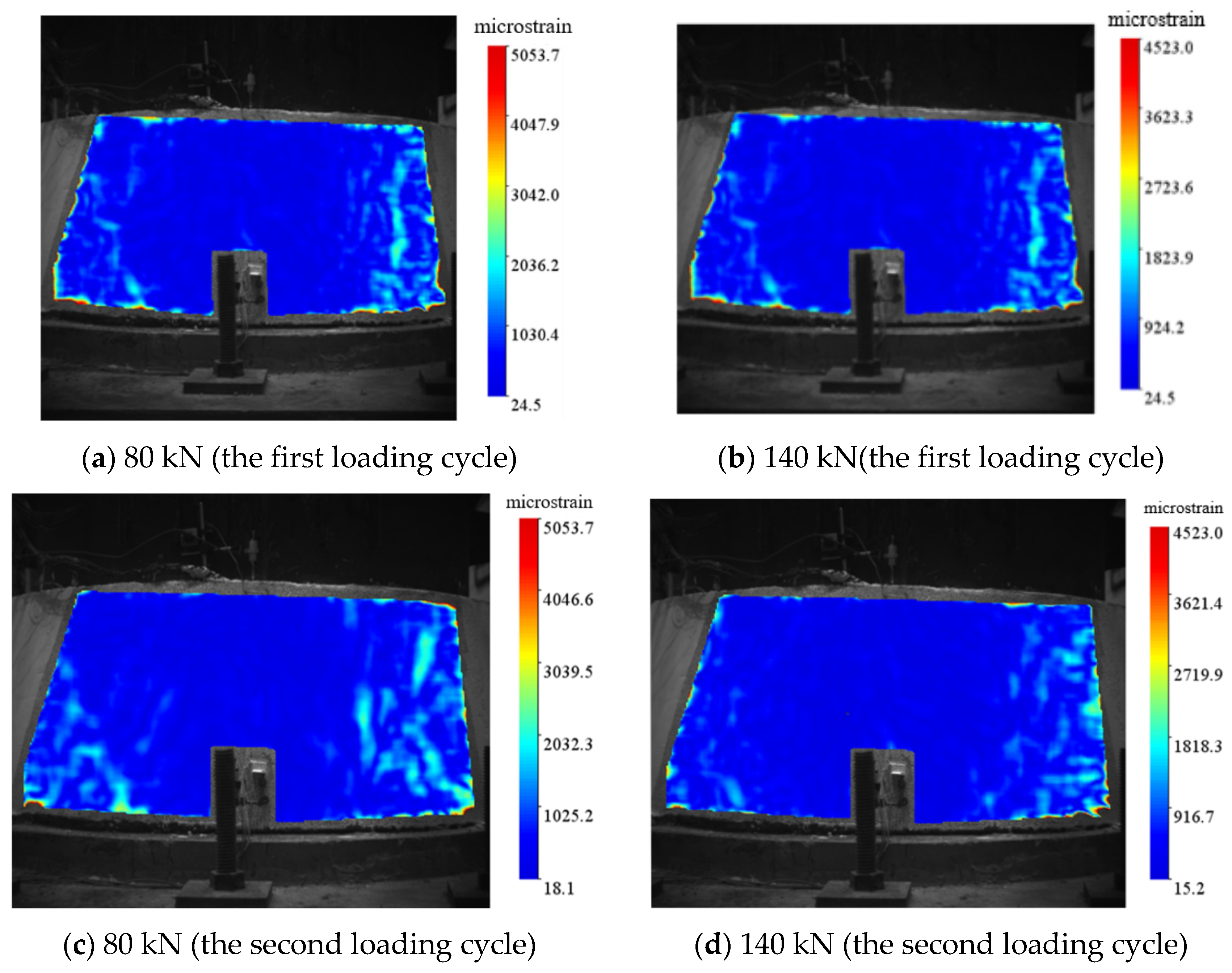
3.3.2. Strain Field of UHPC-Strengthened Damaged Transition Segment Under 0.3 P Static Cyclic Loading
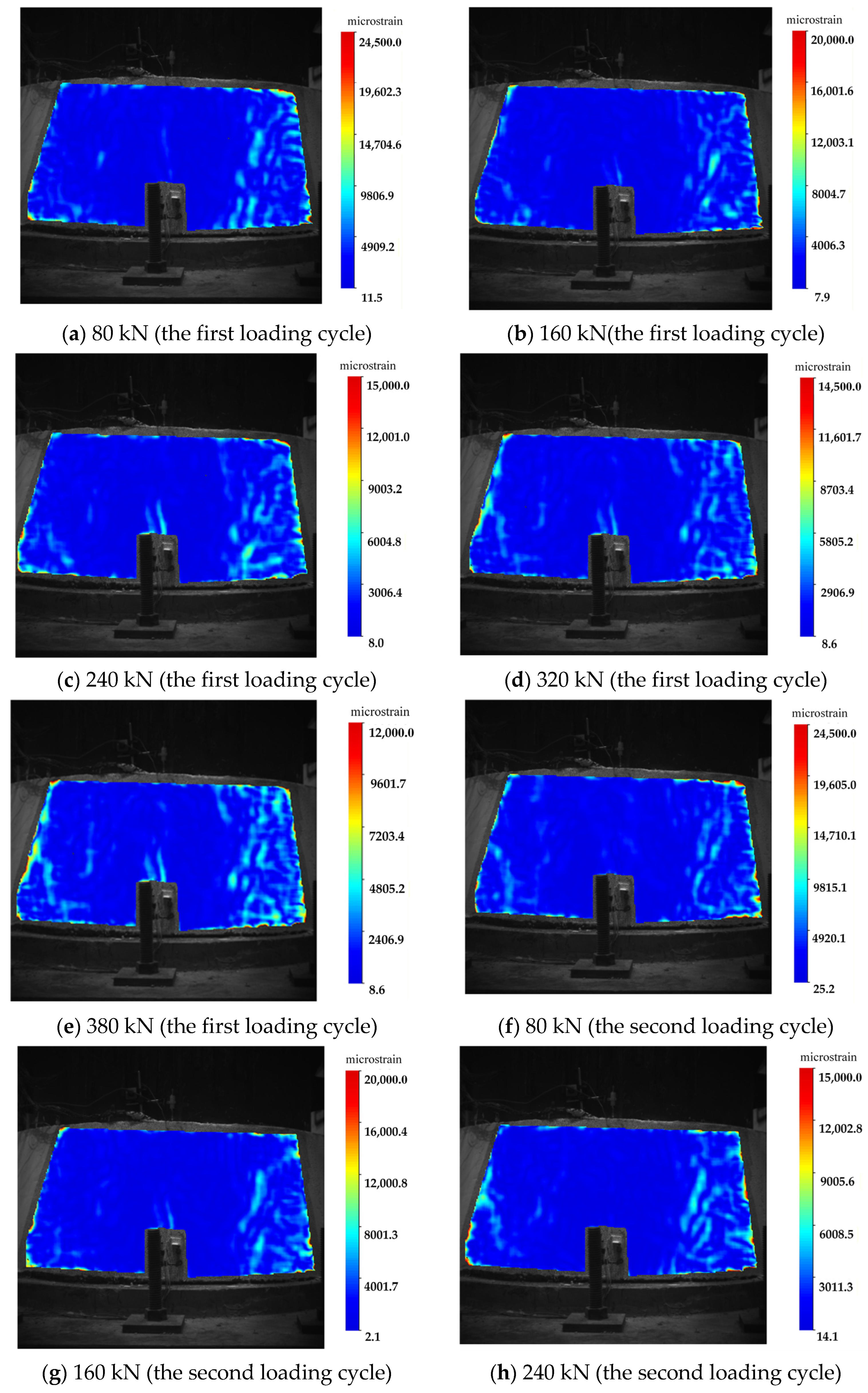
3.3.3. Strain Field of UHPC-Strengthened Damaged Transition Segment Under 0.5 P Static Cyclic Loading
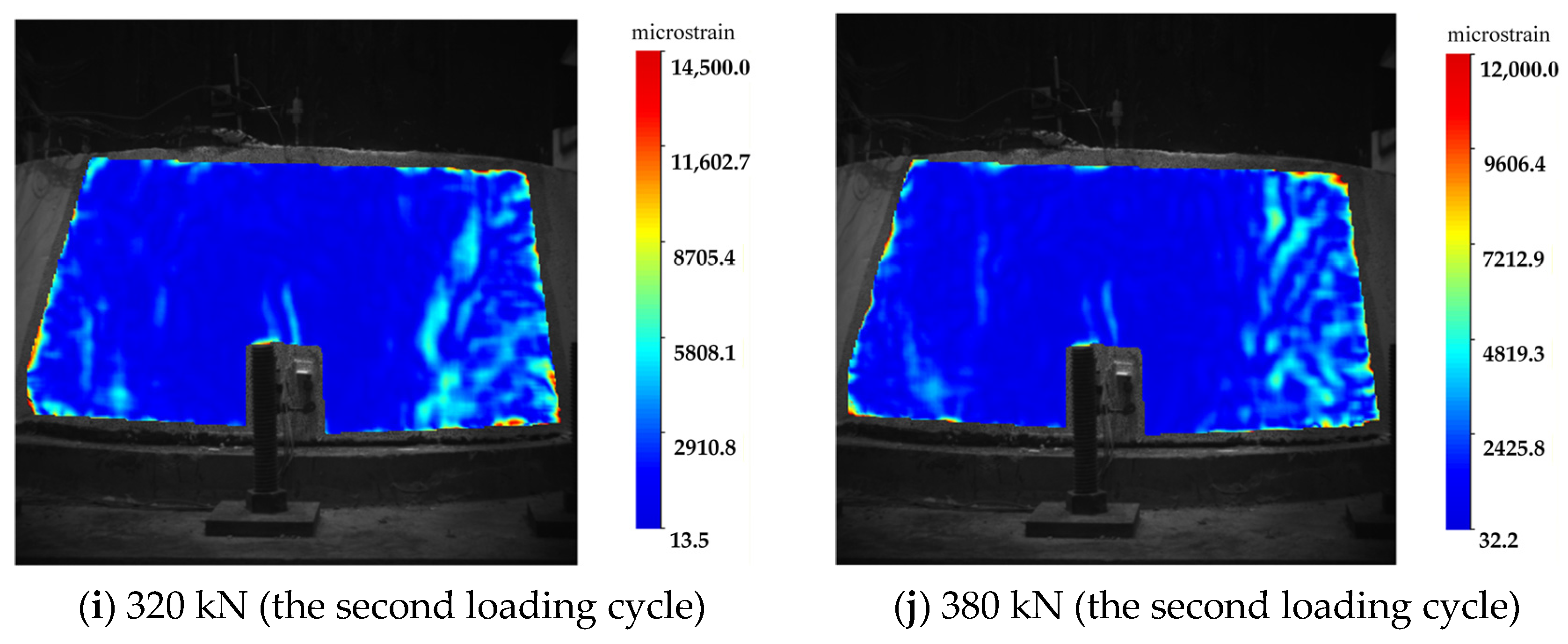
3.3.4. Strain Field of UHPC-Strengthened Damaged Transition Segment Under 0.8 P Static Cyclic Loading
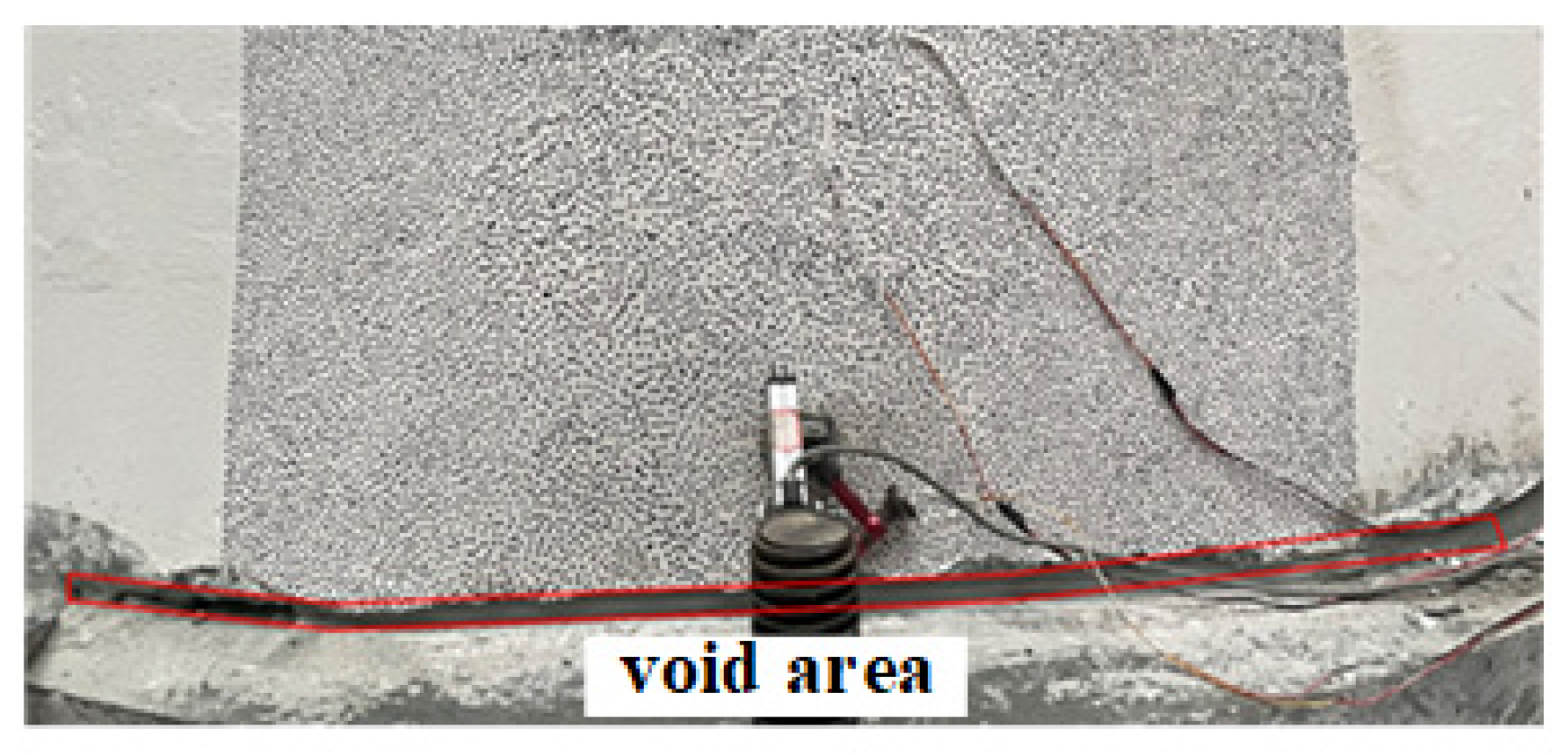
3.3.5. Analysis of DIC Results for Void Repair
3.3.6. Analysis of DIC Results Under Different Operating Conditions
4. Finite Element Analysis
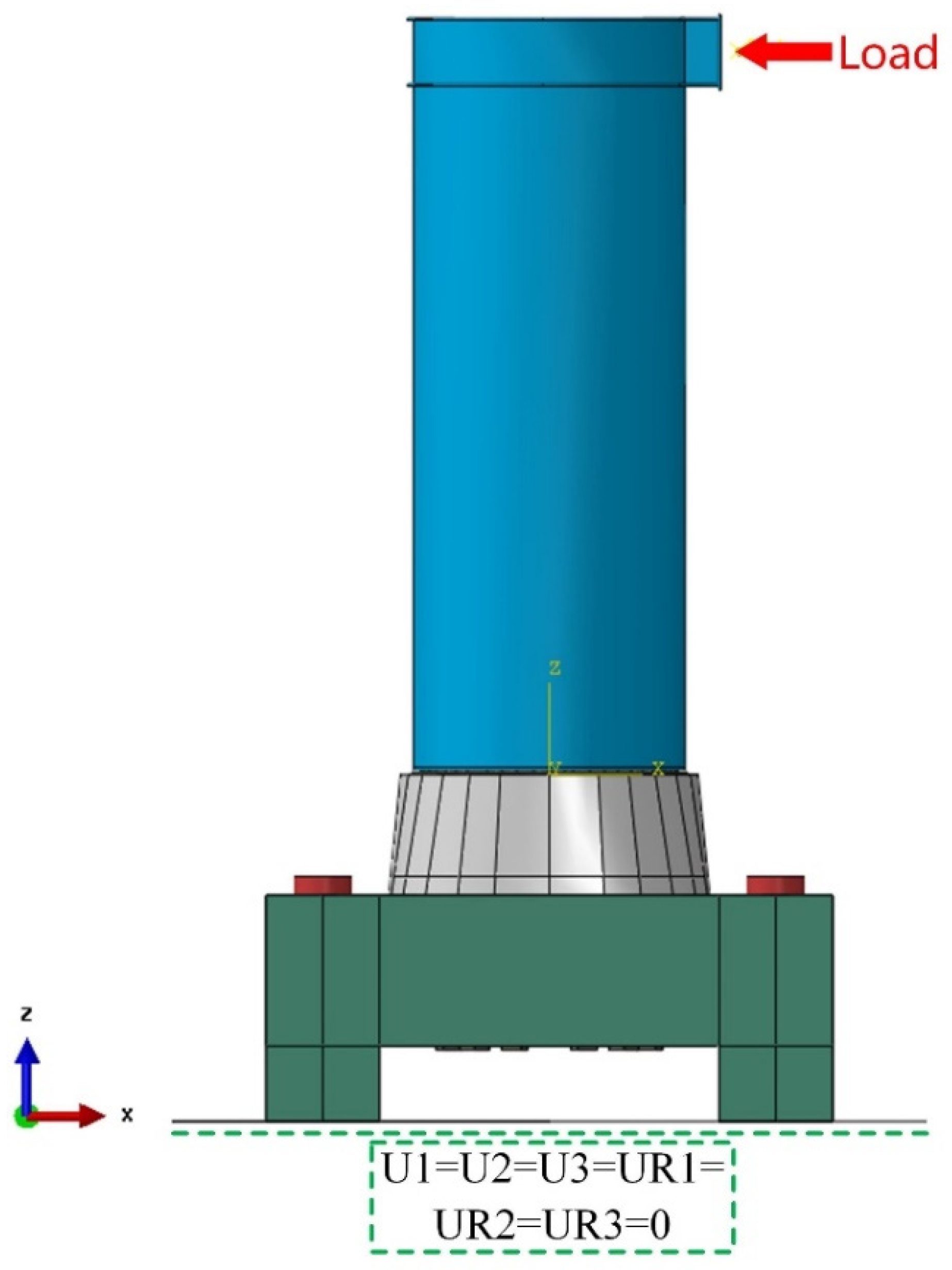
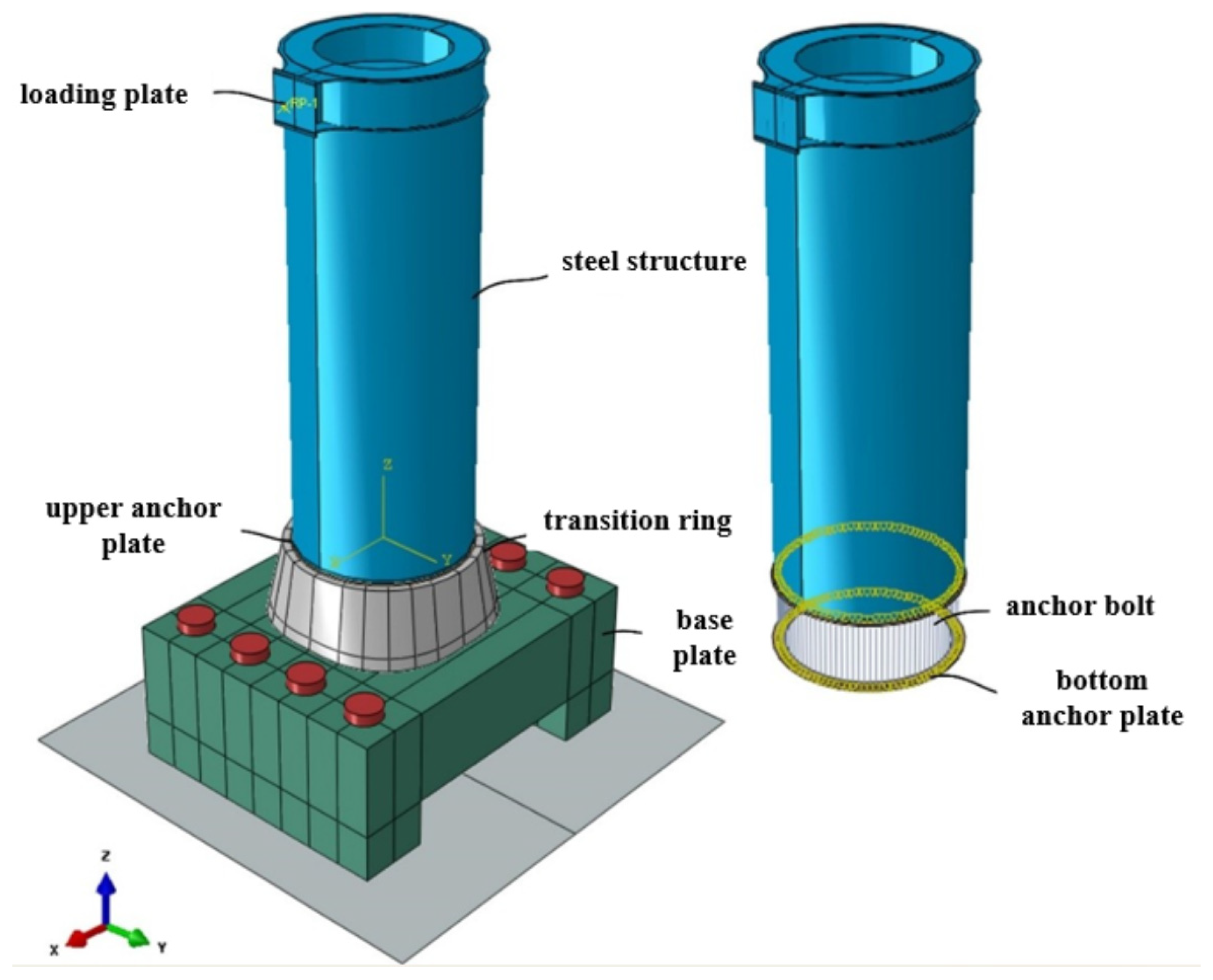
4.1. Model Construction
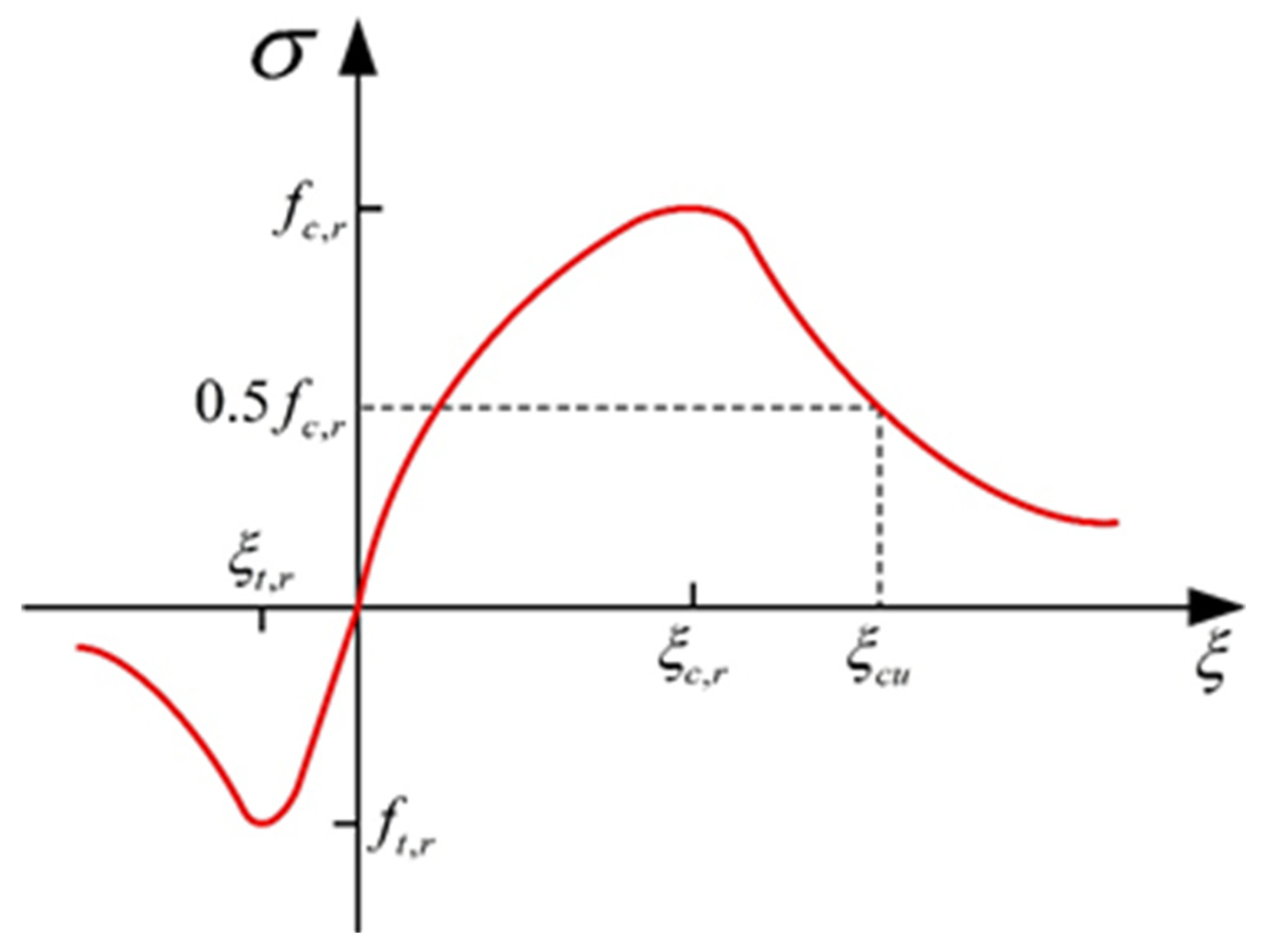
4.2. Constitutive Model
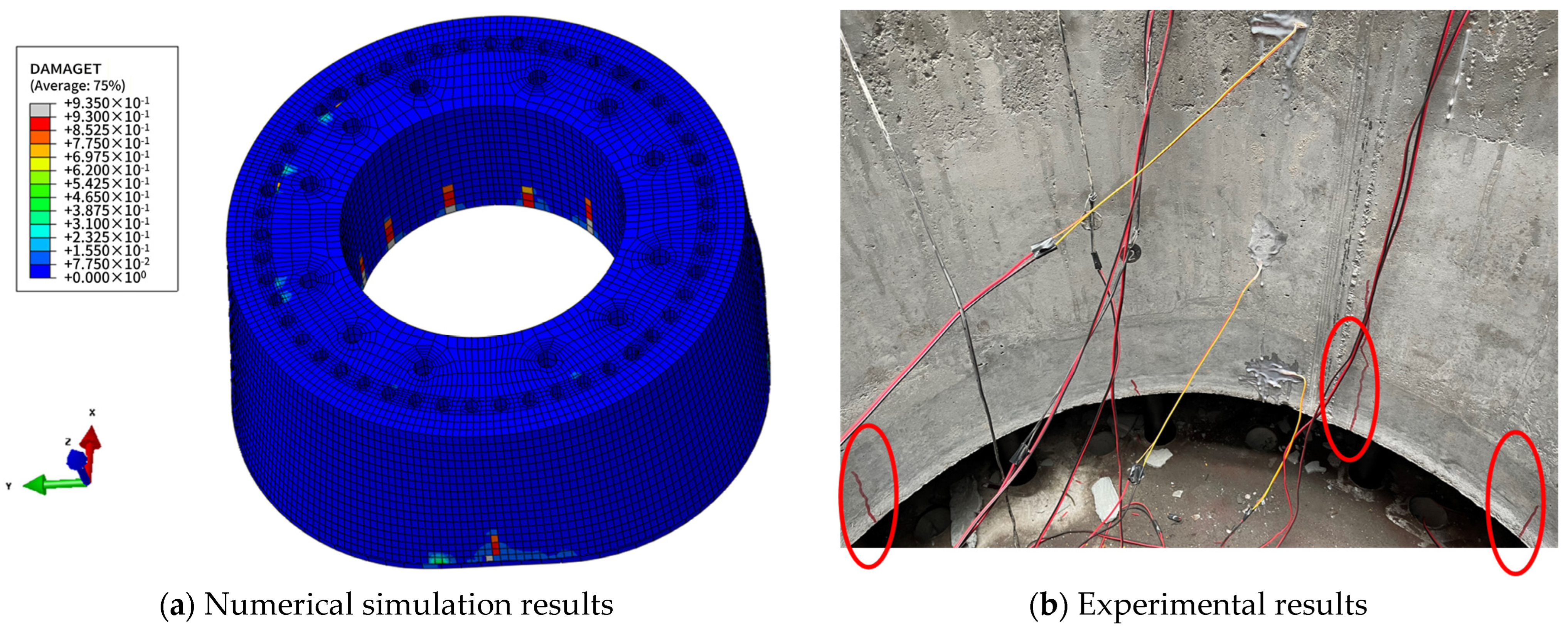
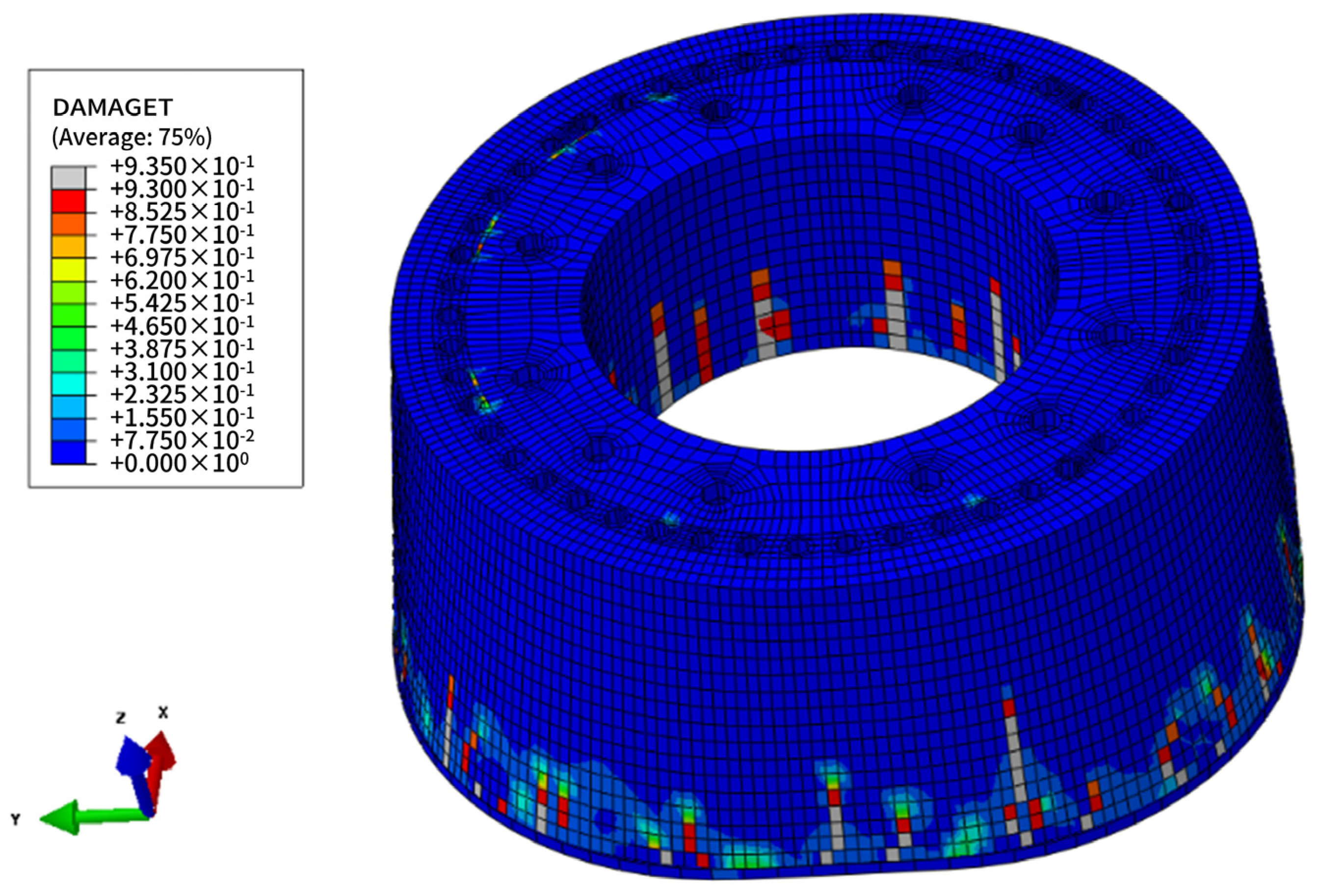
4.3. Damage Results of the Transition Segment Model
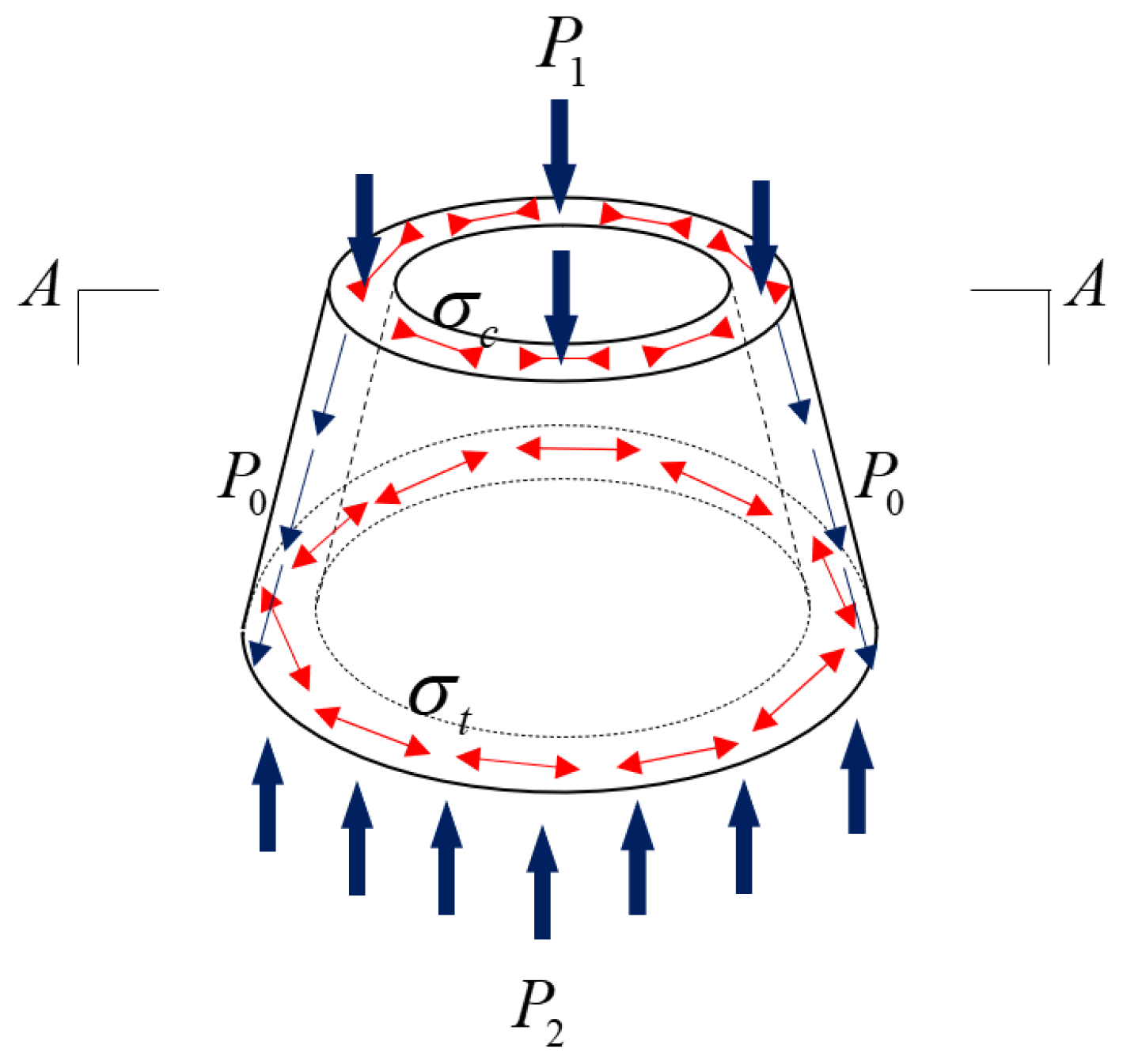
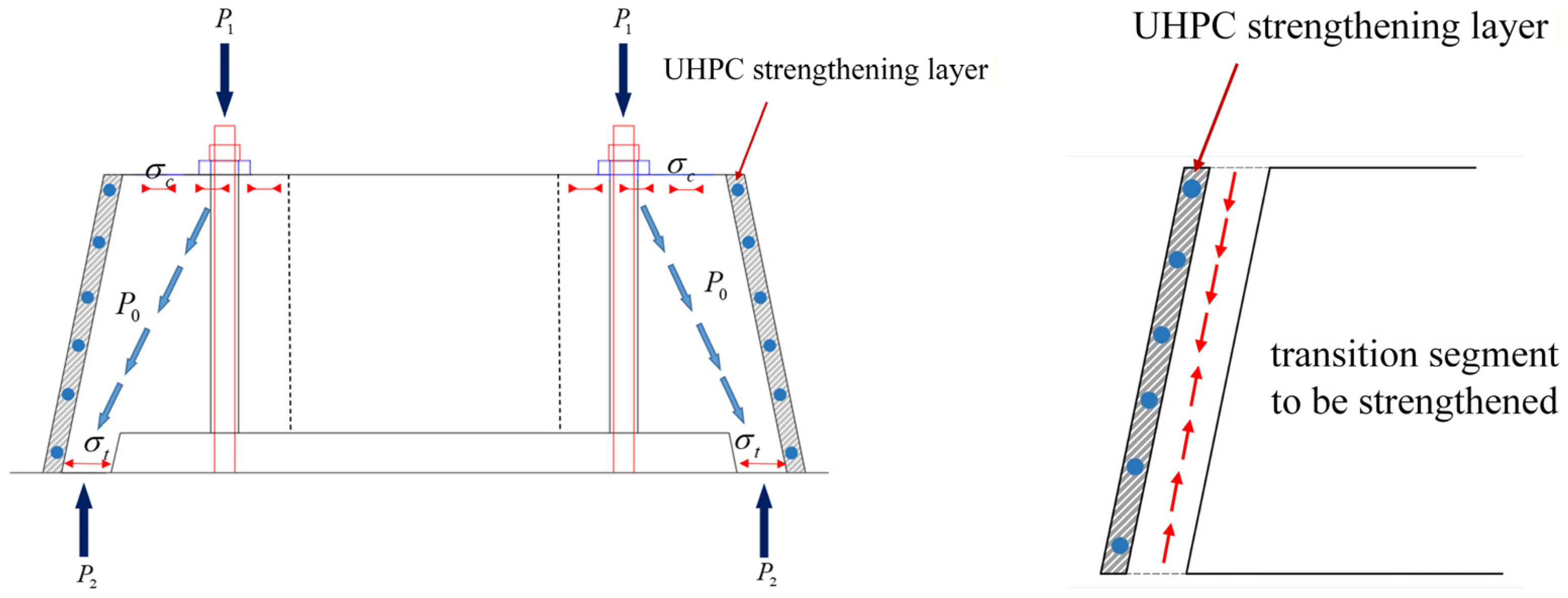
5. Strengthening Mechanism of UHPC-Strengthened Transition Segments and Hoop Tensile Stress Calculation Method
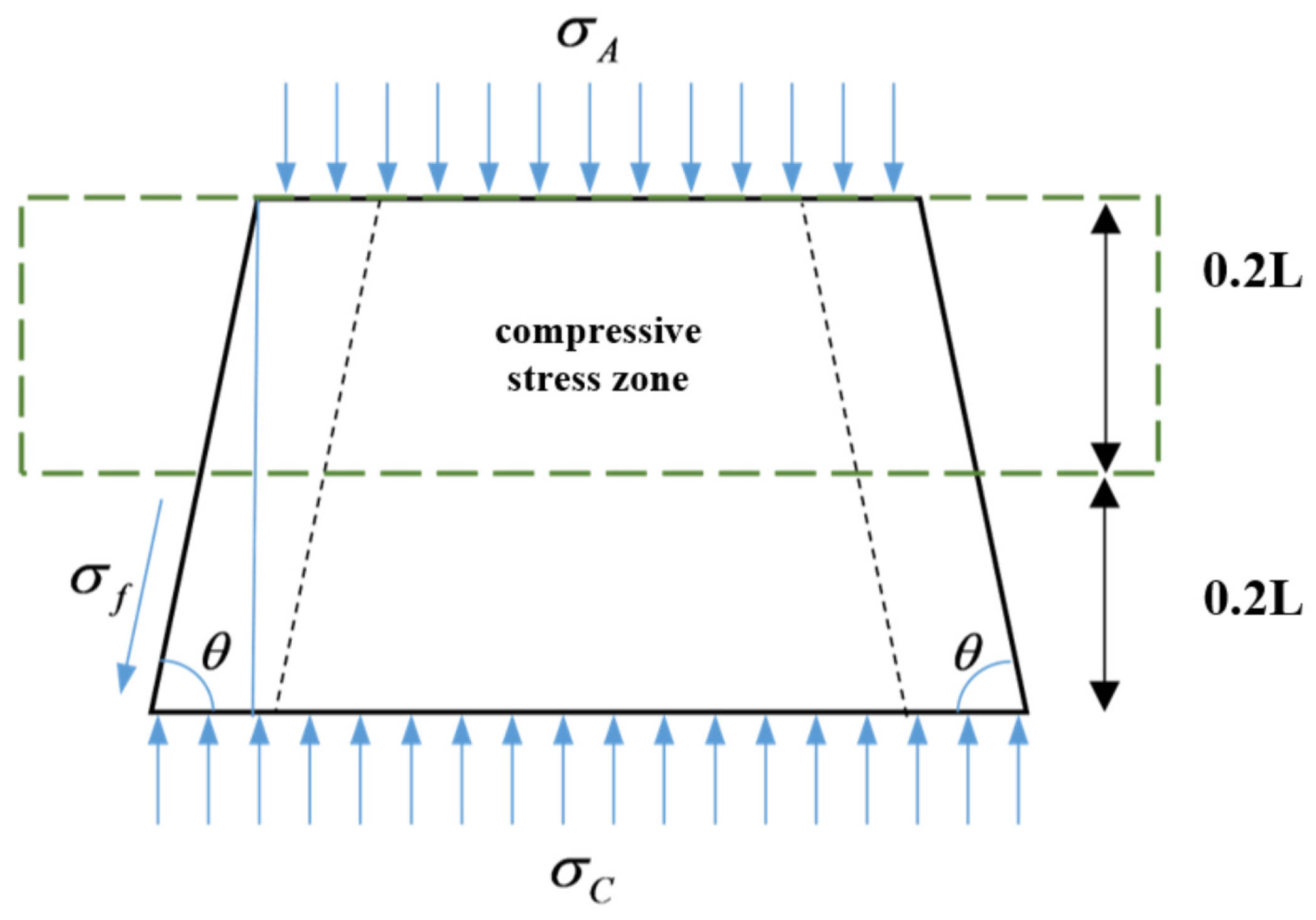
5.1. Mechanism Analysis of UHPC-Strengthened Transition Segments
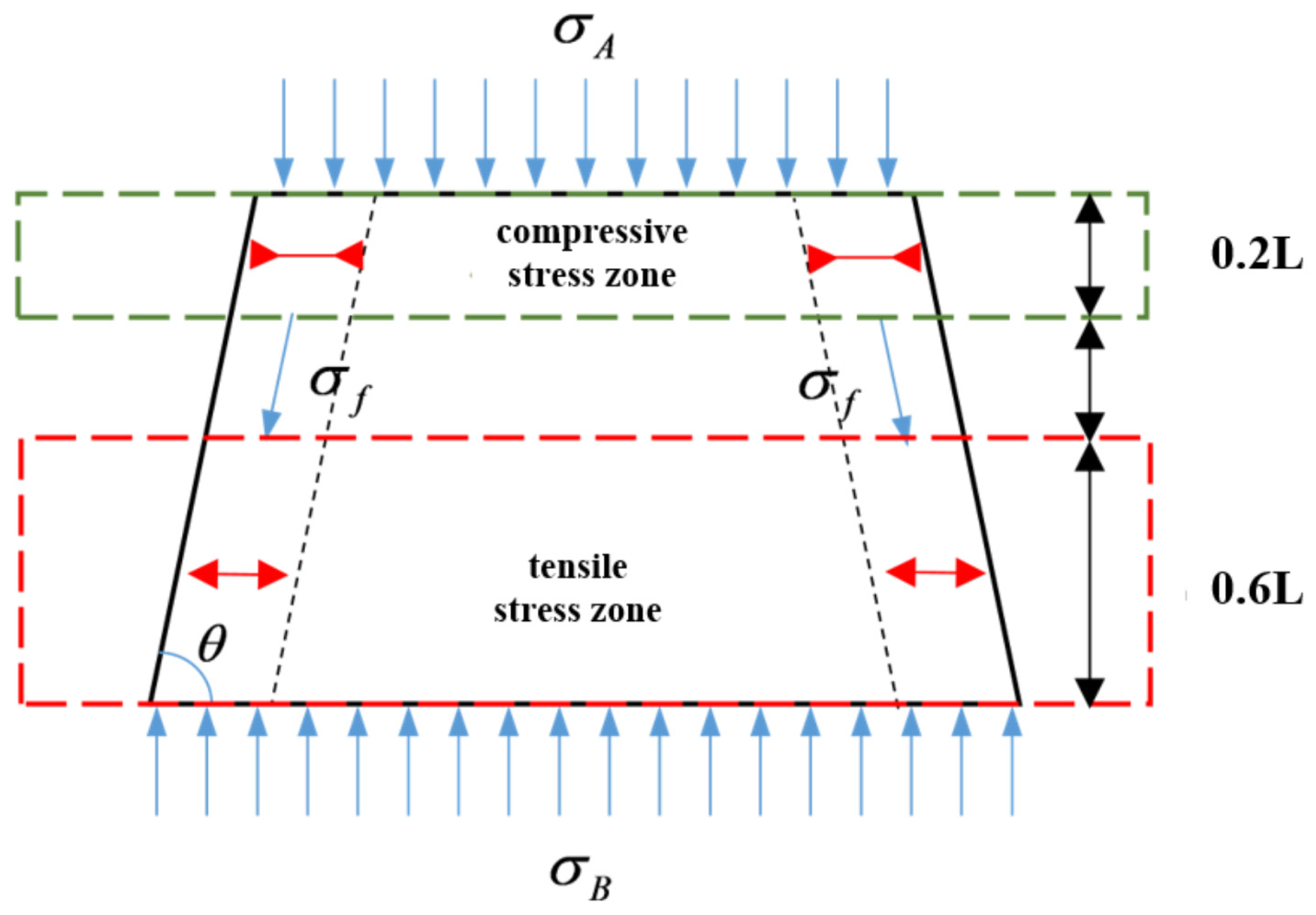
5.2. Basic Assumptions
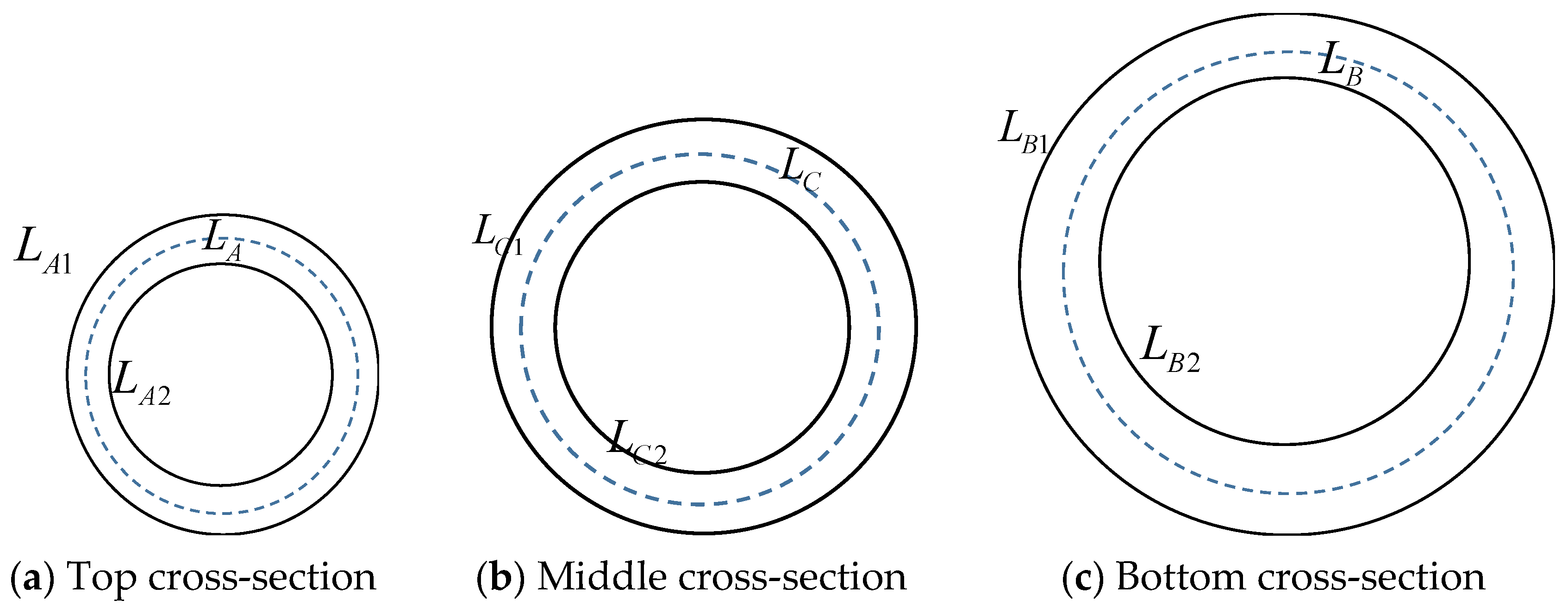
5.3. Calculation Formula
5.4. Validation of the Calculation Results
6. Conclusions
- (1)
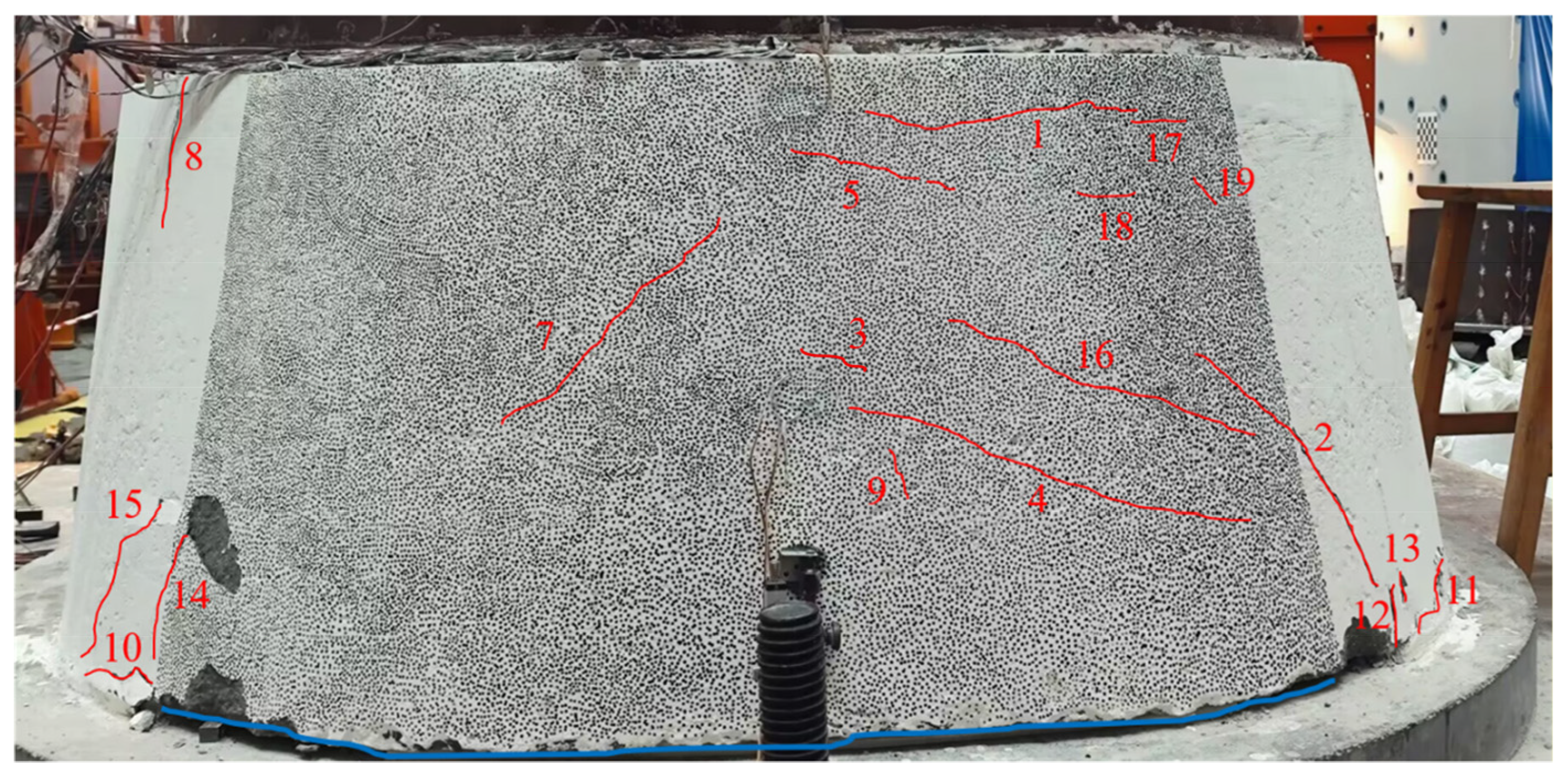
- In the 0.8 P static cycle, no crack propagation was observed in the transition segment during the 0.8 P static cyclic loading test, demonstrating satisfactory static performance. After 1.0 P loading, only a few internal cracks appeared, with no cracks on the external surface. During the fatigue loading stage, cracks further propagated, and the maximum crack width increased to 0.09 mm.
- (2)
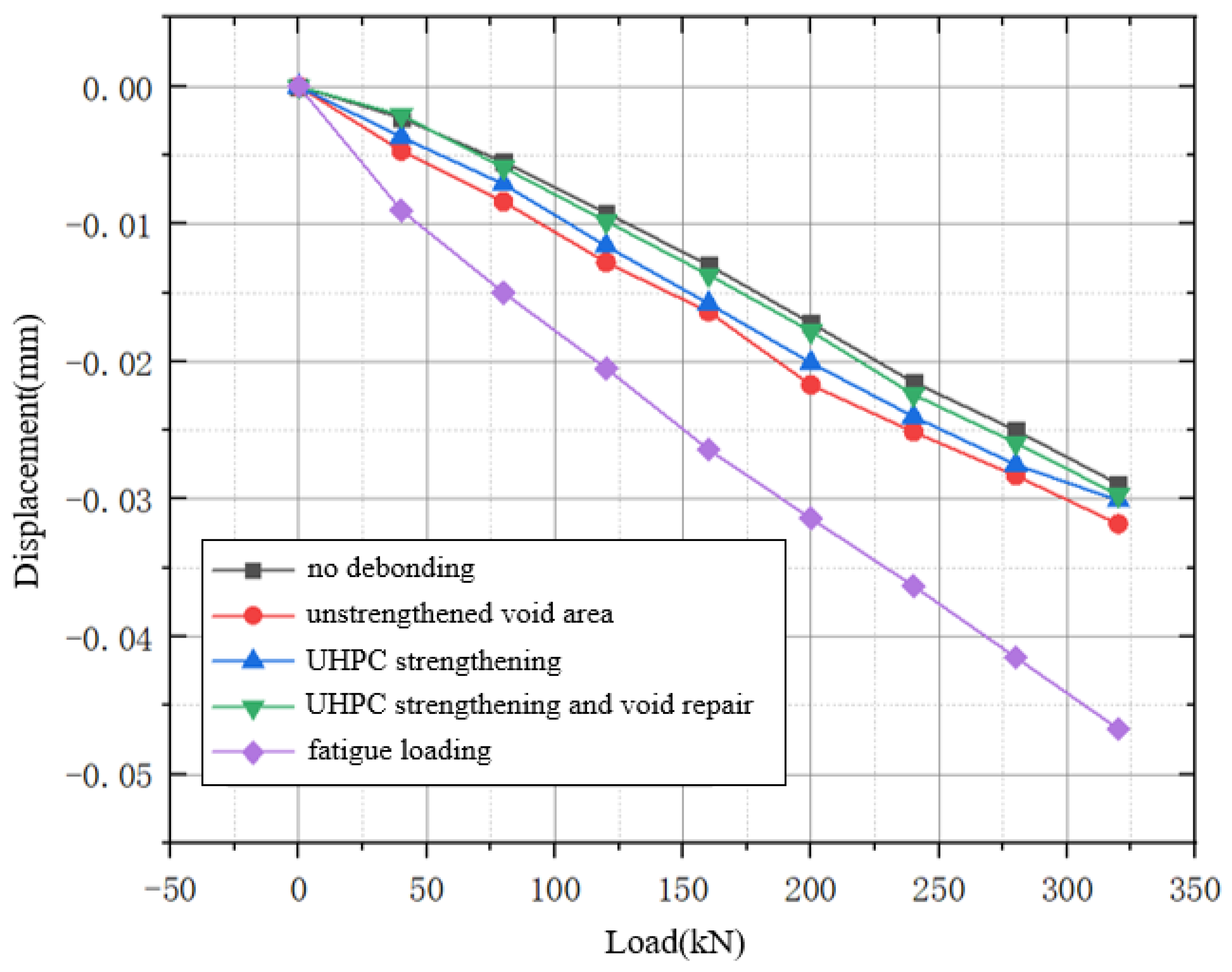
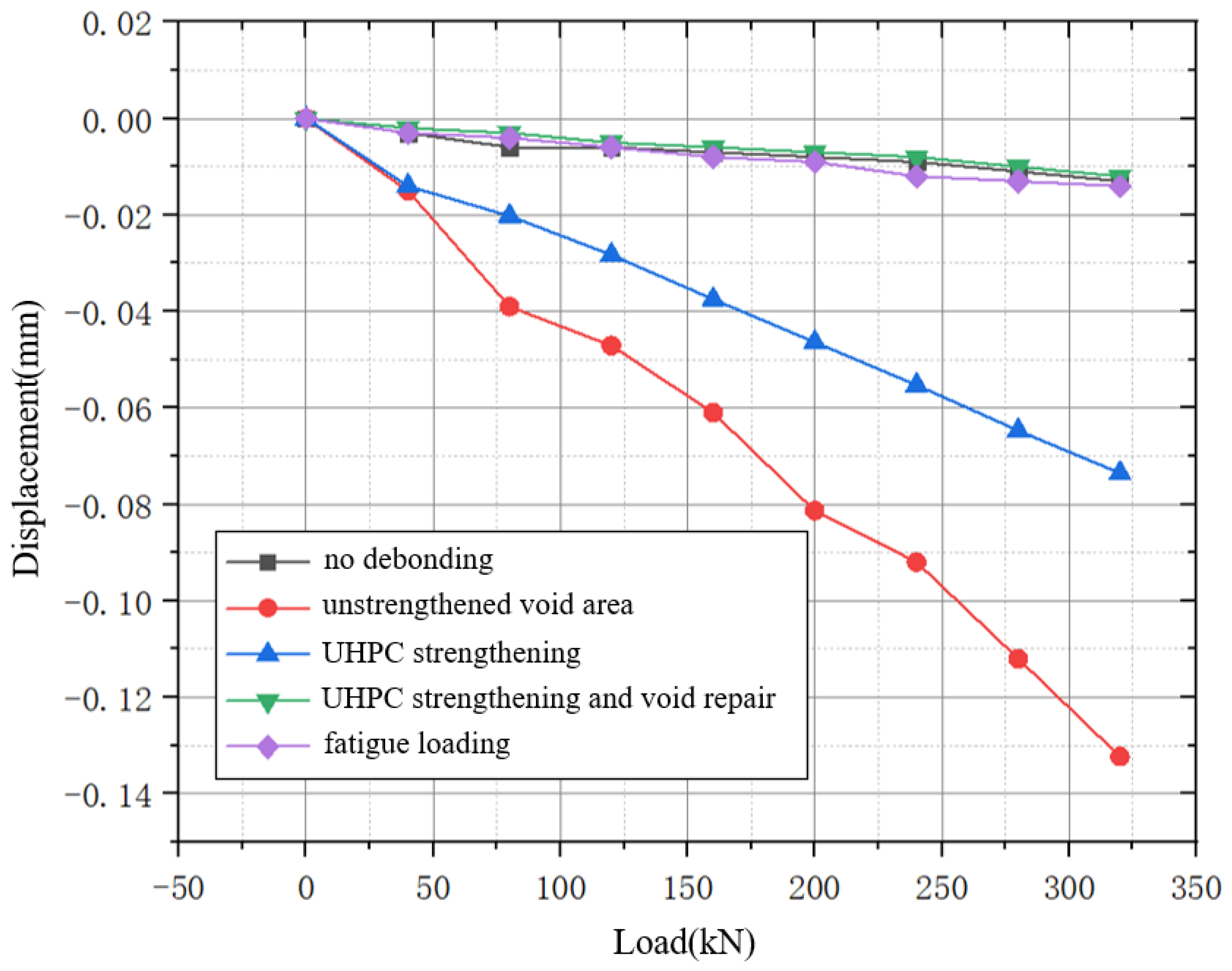
- Compared to the unreinforced group, the relative displacement after UHPC reinforcement decreased by 0.06 mm (46.2%), and after UHPC reinforcement with void repair, the relative displacement decreased by 0.13 mm (96%). UHPC reinforcement can suppress the relative displacement between the transition segment and the bottom ring, but bottom compaction is more effective in reducing the relative displacement between the transition segment and the bottom ring.
- (3)
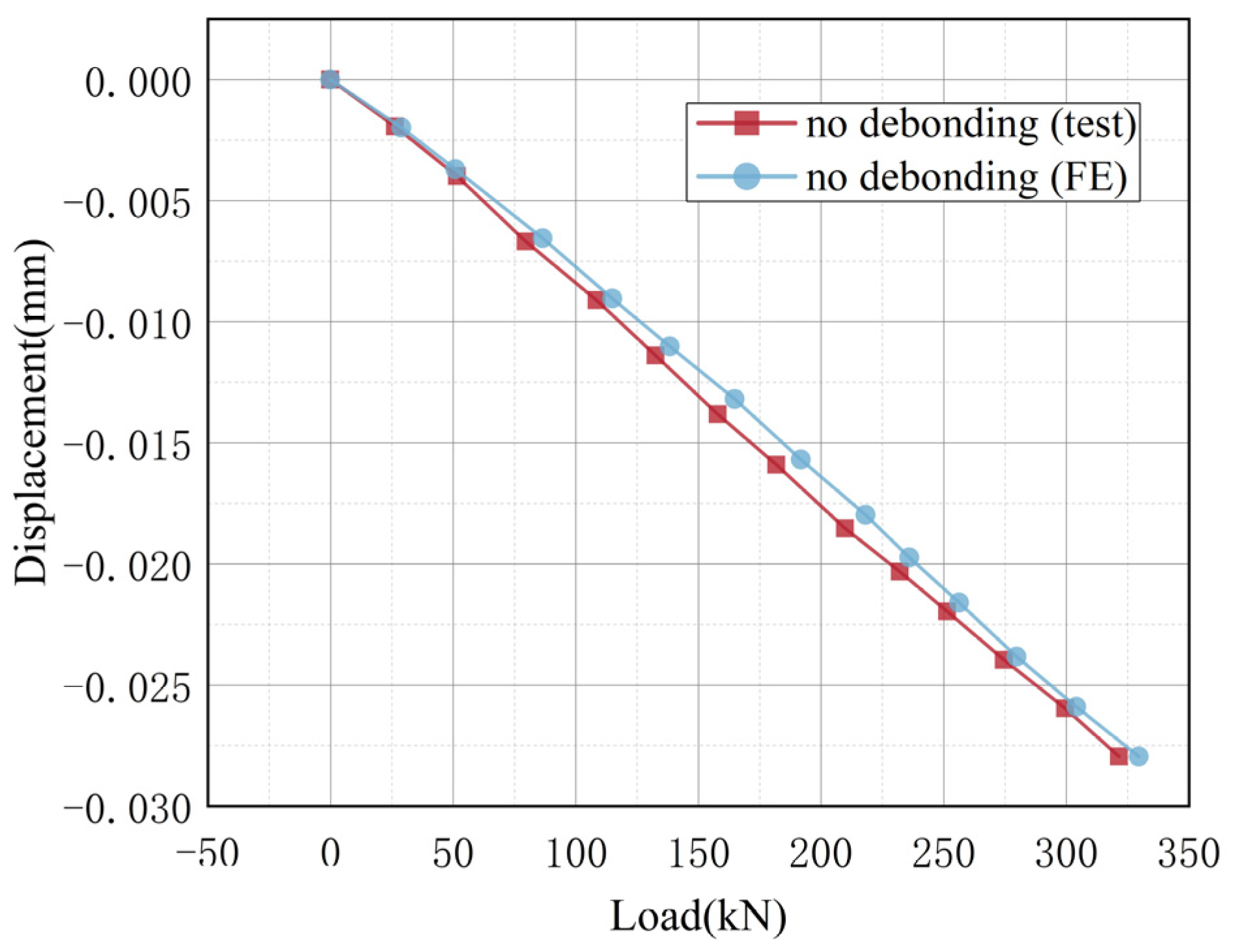
- Finite element analyses were conducted for the structure under 1.0 P and 1.3 P load levels. The numerical results show that the predicted load–deflection curves and damage patterns are in good agreement with the experimental observations. At the same displacement level, the difference between the calculated and measured loads is only 2.5%. Under the 1.3 P overload condition, the simulation indicates that although localized stresses slightly exceed the allowable limits, the majority of stresses remain below tensile and compressive strengths.
- (4)
- After externally reinforcing the damaged transition segment with UHPC, the DIC key data results for the transition segment under various conditions show that, compared to the unreinforced segment, the average strain at key points decreased by 76.2% after UHPC reinforcement, and by 86.5% after UHPC reinforcement with void repair. This indicates that cracks were effectively suppressed after UHPC reinforcement. Strain reduction at key points after void repair increased by 15.9% compared to UHPC reinforcement alone, demonstrating that adding void repair further improves the crack suppression effect.
- (5)
- The load transfer mechanism of the transition segment was analyzed, and a calculation method for the circumferential tensile stress of the transition segment with external UHPC strengthening was proposed. The calculated results showed that external UHPC strengthening of the damaged transition segment reduced the local circumferential tensile stress by 12.5%. The formula results were compared with the numerical model, and the results showed that the error of the proposed formula was 5%, which indicated that the formula could reasonably predict the circumferential tensile stress.
- (6)
- Future research can further focus on the influence of mechanisms and optimization design of different UHPC-strengthening parameters. Key aspects include the effects of parameters such as UHPC strengthening layer thickness, compressive strength of UHPC, reinforcement ratio, and strengthening extent on the static and fatigue performance of structures, thereby providing a theoretical basis for engineering applications.
Author Contributions
Funding
Data Availability Statement
Conflicts of Interest
References
- Wang, D.; Zhang, F.; Xu, J.; He, G.; Wu, Q.; Wang, M. Nonlinear fatigue analysis of onshore wind turbines with steel–concrete hybrid tower using a co-simulation method and enhanced kernel density estimation. Mech. Syst. Signal Process. 2025, 239, 113243. [Google Scholar] [CrossRef]
- Wang, D.; Xu, J.; He, Z.; Yu, Q.; Tang, W.; He, G.; Wu, Q. High-fidelity integrated co-simulation model for dynamic analysis of onshore wind turbines with steel–concrete hybrid tower. Mech. Syst. Signal Process. 2025, 230, 112583. [Google Scholar] [CrossRef]
- Liew, J.Y.R.; Chua, Y.S.; Dai, Z. Steel concrete composite systems for modular construction of high-rise buildings. Structures 2019, 21, 135–149. [Google Scholar] [CrossRef]
- Qiao, W.T.; Li, W.; Yan, B.; Zhang, S.; Zhang, J. Experimental study on compression performance of I-shaped column of modular wall light steel concrete composite frame structure. J. Build. Eng. 2025, 104, 112310. [Google Scholar] [CrossRef]
- Du, Y.; Yu, Z.; Chen, Y.; Ma, N.; Wang, R. Experimental study on the force mechanism of internal composite connectors in steel–concrete composite sections of bridge towers. Buildings 2025, 15, 2284. [Google Scholar] [CrossRef]
- Xu, J.; He, Z.; Wang, D.; He, G.; Wu, Q.; Zhang, Z. Nonlinear dynamic response analyses of Onshore Wind Turbines with Steel–Concrete Hybrid Tower using a co-simulation approach. Renew. Energy 2025, 243, 122475. [Google Scholar] [CrossRef]
- Liu, J.; Liu, Y.; Zhang, Z. Numerical simulation on thermomechanical coupling behavior of early-age concrete in the large-scale steel–concrete connecting segment of a hybrid-girder cable-stayed bridge. J. Bridge Eng. 2020, 25, 05020009. [Google Scholar] [CrossRef]
- Jin, K.Y.; Zhou, X.H.; Ren, W.; Wang, Y.-H.; Luo, W. Research on hexagonal concrete-filled steel tubular transition pieces for wind turbine hybrid towers under axial compression. Thin-Walled Struct. 2024, 200, 111956. [Google Scholar] [CrossRef]
- Dong, Y.; He, M.; Zeng, K.; Fu, H.; Tu, Z.; Peng, W.; Wang, Z. Structural Analysis Methods and Key Influencing Factors on the Performance of Segmented Steel–Concrete Hybrid Wind Turbine Towers. Buildings 2025, 15, 3786. [Google Scholar] [CrossRef]
- Qiu, M.; Sun, Y.; Qian, Y. Impact of groove-and-tongue parameters on the bonding behavior between 3d-printed UHP-SHCC and cast normal concrete. J. Sustain. Cem.-Based Mater. 2025, 14, 496–505. [Google Scholar] [CrossRef]
- Zhang, B.; Yu, J.; Chen, W.; Chen, J.; Li, H.; Niu, J. Interface shear failure behavior between normal concrete (NC) and ultra-high performance concrete (UHPC). Int. J. Concr. Struct. Mater. 2024, 18, 18. [Google Scholar] [CrossRef]
- Cosgun, C. Machine learning for the prediction of evaluation of existing reinforced concrete structures performance against earthquakes. Structures 2023, 50, 1994–2003. [Google Scholar] [CrossRef]
- Lazaridis, P.C.; Kavvadias, I.E.; Demertzis, K.; Iliadis, L.; Vasiliadis, L.K. Structural damage prediction of a reinforced concrete frame under single and multiple seismic events using machine learning algorithms. Appl. Sci. 2022, 12, 3845. [Google Scholar] [CrossRef]
- Gonzalez-Libreros, J.H.; Sneed, L.H.; D’Antino, T.; Pellegrino, C. Behavior of RC beams strengthened in shear with FRP and FRCM composites. Eng. Struct. 2017, 150, 830–842. [Google Scholar] [CrossRef]
- Zhu, J.; Wen, Z.; Li, Y.; Hou, X.; Lu, Y. Experimental and Numerical Study on Reinforced Concrete Columns Strengthened with Lightweight Alkali-Activated Slag Concrete and X-Type Encased Steel. Buildings 2025, 15, 1692. [Google Scholar] [CrossRef]
- Aslam, M.; Shafigh, P.; Jumaat, M.Z.; Shah, S.N.R. Strengthening of RC beams using prestressed fiber reinforced polymers—A review. Constr. Build. Mater. 2015, 82, 235–256. [Google Scholar] [CrossRef]
- Tanarslan, H.M. The effects of NSM CFRP reinforcements for improving the shear capacity of RC beams. Constr. Build. Mater. 2011, 25, 2663–2673. [Google Scholar] [CrossRef]
- Faria, D.M.V.; Einpaul, J.; Ramos, A.M.P.; Ruiz, M.F.; Muttoni, A. On the efficiency of flat slabs strengthening against punching using externally bonded fibre reinforced polymers. Constr. Build. Mater. 2014, 73, 366–377. [Google Scholar] [CrossRef]
- Yoo, D.Y.; Chun, B.; Choi, J.; Min, K.-H.; Shin, H.-O. Enhancing the flexural capacity of RC beams under various loading rates through strengthening with ultra-high-performance fiber-reinforced concrete. Dev. Built Environ. 2024, 20, 100581. [Google Scholar] [CrossRef]
- Liu, Y.; Hao, Y.; Hao, H.; Zhou, Y. Fragility assessment of FRP-strengthened RC beams with chloride-induced corrosion damage under impact loads. Reliab. Eng. Syst. Saf. 2025, 266, 111728. [Google Scholar] [CrossRef]
- Birchall, J.D.; Howard, A.J.; Kendall, K. Flexural strength and porosity of cements. Nature 1981, 289, 388–390. [Google Scholar] [CrossRef]
- Yu, X.; Yang, J.; Zhang, Z.; Leng, J.; Chen, R.; Zhou, J.; Zou, Y. Shear performance and degradation mechanism of UHPC-NC interface under composite salts freeze-thaw cycles. Case Stud. Constr. Mater. 2025, 22, e04408. [Google Scholar] [CrossRef]
- Amran, M.; Huang, S.S.; Onaizi, A.M.; Makul, N.; Abdelgader, H.S.; Ozbakkaloglu, T. Recent trends in ultra-high performance concrete (UHPC): Current status, challenges, and future prospects. Constr. Build. Mater. 2022, 352, 129029. [Google Scholar] [CrossRef]
- Yang, J.; Chen, R.; Zhang, Z.; Zou, Y.; Zhou, J.; Xia, J. Experimental study on the ultimate bearing capacity of damaged RC arches strengthened with ultra-high performance concrete. Eng. Struct. 2023, 279, 115611. [Google Scholar] [CrossRef]
- Zou, Y.; Zheng, K.; Zhou, Z.; Zhang, Z.; Guo, J.; Jiang, J. Experimental study on flexural behavior of hollow steel-UHPC composite bridge deck. Eng. Struct. 2023, 274, 115087. [Google Scholar] [CrossRef]
- Lin, L.; Zhang, X.; Zhang, D.; Wu, X.; Liu, Y.; Wang, X.; Wang, H.; Wang, F.; Yang, T. Damage evolution and failure analysis of the advanced transition segment behavior of wind turbine tower. Eng. Fail. Anal. 2023, 152, 107527. [Google Scholar] [CrossRef]
- Ji, H.; Liu, C. Ultimate shear resistance of ultra-high performance fiber reinforced concrete-normal strength concrete beam. Eng. Struct. 2020, 203, 109825. [Google Scholar] [CrossRef]
- Nugroho, L.; Haryanto, Y.; Hsiao, F.P.; Hu, H.-T.; Weng, P.-W.; Lin, C.-C.; Kristiawan, S.A.; Sangadji, S. Effectiveness of UHPC reinforced with steel rebars for flexural strengthening of RC T-beams in an idealized negative moment region. Structures 2025, 80, 109728. [Google Scholar] [CrossRef]
- Lu, Y.; Li, G.; Di, J. Experimental scheme for a model test on the connection segment of steel–concrete composite beams. J. Highw. Transp. Res. Dev. (Appl. Technol. Ed.) 2012, 8, 196–203. [Google Scholar]
- GB/T 50081-2002; Standard for Test Method of Mechanical Properties on Ordinary Concrete. China Architecture & Building Press: Beijing, China, 2002.
- T/CECS 864-2021; Standard Test Method for Ultra-High Performance Concrete. China Planning Press: Beijing, China, 2021.
- GB/T 228.1-2010; Metallic Materials—Tensile Testing—Part 1: Method of Test at Room Temperature. China Standards Press: Beijing, China, 2010.
- GL-2010; Rules for Classification and Construction—Ship Technology—Hull Structures. Germanischer Lloyd SE: Hamburg, Germany, 2010.
- Niu, Y.; Fan, J.; Shi, X.; Wei, J.; Jiao, C.; Hu, J. Application of the J-Integral and Digital Image Correlation (DIC) to Determination of Multiple Crack Propagation Law of UHPC under Flexural Cyclic Loading. Materials 2022, 16, 296. [Google Scholar] [CrossRef]
- Xu, J.; Wang, T.; Du, D.; Su, C.; Shi, X. Damage model of NC-UHPC interface zone in UHPC wet joint based on DIC. J. Build. Eng. 2024, 98, 111045. [Google Scholar] [CrossRef]
- Cao, J.; Shao, X. Finite element analysis of headed studs embedded in thin UHPC. J. Constr. Steel Res. 2019, 161, 355–368. [Google Scholar] [CrossRef]
- GB 50010-2010; Code for Design of Concrete Structures. China Architecture & Building Press: Beijing, China, 2010.
- Li, B.; Jiang, J.; Xiong, H.; Zhan, Y.; Wu, Z.; Cunningham, L.S. Improved concrete plastic-damage model for FRP-confined concrete based on true tri-axial experiment. Compos. Struct. 2021, 269, 114051. [Google Scholar] [CrossRef]
- Abed, F.; Oucif, C.; Awera, Y.; Mhanna, H.H.; Alkhraisha, H. FE modeling of concrete beams and columns reinforced with FRP composites. Def. Technol. 2021, 17, 1–14. [Google Scholar] [CrossRef]
- Xia, J.; Zhou, J.; Yang, J.; Zhang, Z.; Zou, Y. Damage evolution and residual shear resistance of toughness-improved UHPC-NSC interface under high-stress level of fatigue shear loading. Constr. Build. Mater. 2024, 430, 136403. [Google Scholar] [CrossRef]
















| Research Phase | Condition of the Specimen | Bottom Void Treatment | Research Content |
|---|---|---|---|
| Static properties | Intact, unreinforced | N | Static cycle + Static loading |
| Fatigue properties | Damaged, unreinforced | N | 6 × 10⁵ cycles |
| Damaged, unreinforced | Y | 4.5 × 10⁵ cycles | |
| Damaged, reinforced with UHPC | Y | Static cycle | |
| Damaged, reinforced with UHPC, void was repaired | Void was repaired | 1.5 × 10⁵ cycles | |
| FEA | - | - | Mechanism Analysis |
| Component | UHPC Dry Premix | Admixture | Steel Fiber | Water Reducing Agent |
|---|---|---|---|---|
| Cementitious material content (kg/m3) | 2114 | 13 | 185 | 188 |
| The volume content | / | / | 2% | / |
| Materials | fc (MPa) | fct (MPa) | ft (MPa) | Ec (MPa) |
|---|---|---|---|---|
| UHPC | 116.8 | 20.2 | 12.7 | 42,100 |
| C70 | 72.3 | / | 3.36 | 37,100 |
| Materials | fy (MPa) | fu (MPa) | Es (GPa) |
|---|---|---|---|
| Q345 | 359.5 | 494.0 | 210.0 |
| HRB400 | 439.3 | 577.1 | 210.0 |
| Loading Phase | Load Amplitude | Load Range | Number of Cycles |
|---|---|---|---|
| Fatigue validation | 1.0 | −103 kN~103 kN | 60 |
| Fatigue overload | 1.5 | −154.5 kN~154.5 kN | 85 |
| Fatigue overload | 2.0 | −206 kN~206 kN | 95 |
| Fatigue overload | 3.0 | −309 kN~309 kN | 105 |
| Performance Metrics | Un-Strengthened (Void) | UHPC Strengthened (Void) | UHPC Strengthened (Void Repaired) |
|---|---|---|---|
| Average strain | 312 | 74 | 42 |
| Average strain reduction rate | - | down 76% | down 86.5% |
| Dilation Angle ψ | Eccentricity λ | Yield Stress Ratio σb0/σc0 | Constant Stress Ratio Kc | Viscosity Coefficient |
|---|---|---|---|---|
| 30° | 0.1 | 1.16 | 0.6667 | 0.0005 |
| Interfacial Roughness | Rt | k1 | k2 | u | |
|---|---|---|---|---|---|
| fck ≥ 20 | fck ≥ 35 | ||||
| High roughness | ≥3 mm | 0.5 | 0.9 | 0.8 | 1.0 |
| Relatively rough | ≥1.5 mm | 0.5 | 0.9 | 0.7 | |
| Smooth | ≤1.5 mm | 0.5 | 1.1 | 0.6 | |
| Very smooth | unable to measure | 0 | 1.5 | 0.5 | |
| Calculated Results | Tensile Stress (MPa) | Difference (%) |
|---|---|---|
| Numerical model | 2.25 | / |
| Circumferential tensile Stress | 2.14 | 5 |
| UHPC-reinforced transition segment circumferential Tensile Stress | 1.87 | / |
Disclaimer/Publisher’s Note: The statements, opinions and data contained in all publications are solely those of the individual author(s) and contributor(s) and not of MDPI and/or the editor(s). MDPI and/or the editor(s) disclaim responsibility for any injury to people or property resulting from any ideas, methods, instructions or products referred to in the content. |
© 2026 by the authors. Licensee MDPI, Basel, Switzerland. This article is an open access article distributed under the terms and conditions of the Creative Commons Attribution (CC BY) license.
Share and Cite
Wang, X.; Liu, Z.; Liu, R.; Zou, R.; Liu, W.; Zhou, X.; Zhang, Z. Static and Fatigue Performance of UHPC-Strengthened Steel–Concrete Transition Segment. Buildings 2026, 16, 2031. https://doi.org/10.3390/buildings16102031
Wang X, Liu Z, Liu R, Zou R, Liu W, Zhou X, Zhang Z. Static and Fatigue Performance of UHPC-Strengthened Steel–Concrete Transition Segment. Buildings. 2026; 16(10):2031. https://doi.org/10.3390/buildings16102031
Chicago/Turabian StyleWang, Xifeng, Ziwei Liu, Ruifeng Liu, Ruxuan Zou, Wei Liu, Xuan Zhou, and Zhongya Zhang. 2026. "Static and Fatigue Performance of UHPC-Strengthened Steel–Concrete Transition Segment" Buildings 16, no. 10: 2031. https://doi.org/10.3390/buildings16102031
APA StyleWang, X., Liu, Z., Liu, R., Zou, R., Liu, W., Zhou, X., & Zhang, Z. (2026). Static and Fatigue Performance of UHPC-Strengthened Steel–Concrete Transition Segment. Buildings, 16(10), 2031. https://doi.org/10.3390/buildings16102031