1. Introduction
The rapid expansion of coastal transportation infrastructure has led to a growing number of long-span bridges in recent years [
1]. The structural integrity and flexible performance inherent in the long-span bridges are sensitive to wind-induced hazards and the statistical characteristics of the wind field [
2,
3]. As span lengths increase, nonlinear structural behavior becomes more outstanding, and the interaction between the wind field and the structure grows significantly more influential [
4]. Therefore, a comprehensive probability density function (PDF) model of wind field forms the basis for a robust probabilistic assessment, enables accurate evaluation of structural safety, and directly supports the long-term management strategies.
Owing to the highly fluctuating and nonlinear nature of measured wind field data, the accurate characterization of the wind field in various terrains and climate regions necessitates the application of multiple statistical probability models for fitting analysis [
5]. Ozay and Celiktas applied the maximum likelihood (ML) to estimate the two parameters of the Weibull distribution for modeling the wind speed distribution in the Alaçatı region [
6]. Wang et al. utilized several classic parametric probability distributions, including the Lognormal, Gamma, and Loglogistic, to fit the wind field [
7]. Ding et al. adopted three parametric distribution functions for modeling wind speed on the long-span bridge: the Gumbel distribution, Weibull distribution, and Rayleigh distribution [
8]. Despite advantages such as computational efficiency and parameter transparency, the single parametric models are limited by their predefined forms, which often result in systematic errors and an inability to resolve the multimodal structures of the wind field. Hence, for complex wind fields or high-precision applications, these simple models should be superseded by more flexible mixture models or nonparametric models [
9]. Kollu et al. conducted a comparative study of three mixture distributions (Weibull-GEV, Weibull-Lognormal, GEV-Lognormal) against single parametric models and other mixture models for characterizing the wind field [
10]. Mazzeo et al. proposed the Mixture of Two Truncated Normal Distributions (MTTNDs) based on a linear combination of two normal distributions for modeling bimodality or asymmetry of the wind speed distribution [
11]. Wang et al. assessed the applicability of the mixture Weibull distribution (2W2W) in modeling the probability distribution of wind fields in engineering and compared it with the traditional single-component Weibull distribution [
12]. Khamees et al. pointed out that the two-component mixed distribution is not the best choice in wind field modeling, and then introduced the three-component mixture Weibull distribution and the meta-heuristic optimization method to construct a more optimal wind speed probability model [
13]. Wang et al. extended the limited-components of mixture model for estimating wind field PDF to the Bayesian infinite Gaussian mixture model, but still needed to set an upper limit for the number of components [
14]. Wu et al. developed a truncated Gaussian mixture model for wind speed probability distribution by using the continuous ranked probability score (CRPS) loss function and the False Discovery Rate (FDR) algorithm [
15]. Furthermore, the nonparametric density estimation methods (such as the maximum entropy theory and kernel density estimation) have the ability to adaptively fit complex wind speed distributions without any prior assumptions about the parameter model; thus, the advantages have been extensively studied by researchers [
16,
17,
18].
A comprehensive analysis of statistical properties of the wind field requires moving beyond a single-parameter approach. The joint probability density function (JPDF) is a key statistical characteristic model for characterizing the dependence between random variables, with broad applications in wind engineering [
19,
20]. Carta et al. employed an Angular-linear (AL) model to construct a joint probability distribution for wind speed and direction by combining a Normal–Weibull mixture for wind speed with a finite mixture of von Mises distributions for wind direction [
21]. Han et al. adopted the classic Johnson-Wehrly (JW) model structure to estimate the JPDF of wind speed and wind direction for characterizing their dependence in wind field analyses [
22]. While the JW model can overcome the symmetry restriction that limits the AL method in complex scenarios, its reliance on subjective judgment for model selection and its limited capacity for explaining complex dependencies present significant drawbacks [
23].
In the wind-resistant design of large-span bridges, the wind attack angle is a critical parameter influencing structural behavior [
24]. The Copula method offers both flexible marginal fitting and accurate simulation of the complex interdependencies among all wind field parameters. Chen et al. proposed two Copula-based strategies to estimate the JPDF of wind speed, wind direction and wind attack angle at typical mountain bridge sites: Strategy I employed the Vine Copula framework in combination with the modified binary Bernstein Copula for modeling; Strategy II directly utilized the modified ternary Bernstein Copula for estimation [
25]. Ding et al. characterized the marginal distribution (univariate PDF) of each variable by the finite mixture (FM) model, and used the copula model to integrate wind speed, direction, and attack angle into a unified trivariate JPDF at the bridge site [
26]. Zhang et al. (2022, 2024) developed trivariate joint probability models for wind speed, direction, and angle of attack using on-site measurement data from a deep-cut gorge bridge site, employing distinct Copula structures in each study [
27,
28]. The 2022 model utilized a D-Vine structure with a Frank Copula, while the 2024 model was based on a C-Vine structure with Gumbel, mixed von Mises, and Logistic marginal distributions [
27,
28].
In general, the above studies have revealed different advantages of frameworks for JPDF of wind field, such as “more suitable”, “better fit”, “better performance”, or “is proposed”. However, for large-span bridges located in coastal areas with distinct seasonal climates, there are relatively few joint probability modeling systems for wind speed, wind direction, and wind attack angle. Most of the research pays more attention to the JPDF of wind speed with other factors in the coastal areas of bridges [
29,
30,
31], but the wind horizontal and vertical components should be further considered. Consequently, the joint probability modeling of wind fields for large-span bridges in coastal areas demands a framework capable of both elucidating the intrinsic physical structure of the wind and fulfilling the requirements for computational efficiency in engineering. The development of methods specifically towards real engineering applications has been a shared emphasis in other structural engineering fields [
32,
33].
In this study, a JPDF modeling framework based on Copula theory is proposed for statistical characteristics analysis of wind fields. For marginal distribution modeling, the Dirichlet process mixture model (DPMM) is adopted: a Gaussian mixture model is used for wind speed and wind attack angle to capture their continuous multimodal characteristics, while a von Mises mixture distribution is employed for wind direction to strictly preserve the periodic nature of circular variables. In terms of dependency structure modeling, a parametric Vine Copula method is applied to effectively capture complex nonlinear dependencies among multiple variables. The framework achieves a balance between data-driven physical mechanism representation and computational efficiency optimization, avoiding both the oversimplified assumptions of purely physical models and the high computational costs of fully nonparametric methods, while strictly respecting the physical nature of each variable, which includes the periodicity of wind direction and the non-negativity of wind speed. Compared with existing Copula-based models that predominantly adopt single parametric distributions or finite mixtures with prespecified component counts, the DPMM adopted here adaptively infers the number of wind regimes directly from the data. Each resulting component corresponds to a physically interpretable meteorological state, enabling data-driven regime discovery without prior assumptions on the underlying wind climate structure. The research outcome provides a comprehensive solution for wind field characteristic modeling in coastal bridge engineering, combining physical rigor with computational feasibility.
4. Goodness-of-Fit Test
This study employs a two-stage modeling framework comprising marginal PDF fitting for wind field variables, followed by the construction of the JPDF to capture their interdependencies [
46]. To ensure rigorous evaluation across distinct modeling objectives and error sources, a hierarchical assessment scheme aligned with the DPMM-Copula structure is adopted, spanning three layers: univariate margins, bivariate copula dependence, and the JPDF.
At the univariate marginal distribution layer, Root Mean Square Error (
), Coefficient of Determination (
), and Mean Absolute Error (
) are adopted to evaluate the fitting accuracy of the PDF and CDF. Their mathematical formulations are given below:
where
is the number of data samples;
is the
-th measured value of the data sample;
is the
-th output value of the model;
is the sample mean of the measured value.
At the bivariate copula dependence structure layer, the
is employed to evaluate the statistical validity and parsimony of the selected copula structure. The
is defined as follows:
where
is the model likelihood, and
is the number of model parameters.
At the JPDF layer,
,
, and the Index of Agreement (
) are utilized to quantify Copula model accuracy. The
formula is as follows:
5. Case Study
5.1. Instrument and Data
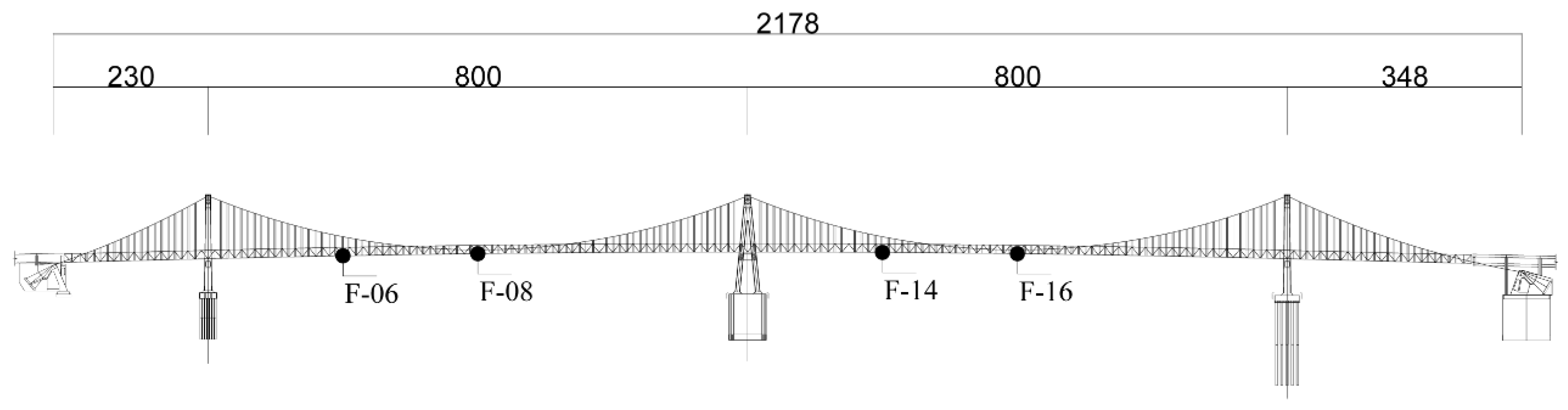
This study is bases on the Beikou Bridge at the Oujiang River in Wenzhou, Zhejiang, China—a three-tower four-span double-layer continuous steel truss girder suspension bridge with a 2178 m main cable span (230 + 800 + 800 + 348). Its main cable is 1/10, with north and south spans measuring 213.6 m and 273.6 m, respectively. Wind speed, direction, and attack angle were recorded by sensors installed at four positions on the main girder. Refer to
Figure 2 for further details.
It should be noted that this bridge is located in a coastal area with predominantly flat estuarine terrain and gentle hills to the north and south, resulting in relatively unobstructed wind flow from seaward directions. The region experiences strong seasonal influences, with wind field variations significantly affecting the structural behavior of the bridge.
In this study, the JPDF is constructed using 2023 wind data collected at 10 Hz from four 3-axis ultrasonic anemometers (F-06, F-08, F-14, and F-16). The main technical parameters of anemometers are presented in
Table 1.
The wind speed, direction, and angle of attack are analyzed based on 10 min mean values, a standard averaging interval in engineering applications. Prior to JPDF modeling, the raw data (sample size 10 Hz) is preprocessed to address missing values and outliers. Outliers are identified and removed using the Pauta criterion (3σ rule), which assumes that residual errors follow a normal distribution and defines a safety interval of ±3σ, beyond which the probability of occurrence is less than 0.3% [
47]. Following outlier elimination, missing and excised data points are imputed by cubic spline interpolation [
48], a method selected for its high smoothness and continuity, which are particularly well suited to the fluctuating components of wind field data. While this preprocessing procedure enhances the reliability and temporal consistency of the dataset, it does not distort the tails or the dependence structure.
5.2. Marginal PDFs for Wind Field
In this study, the DPMM is adopted for marginal density estimation of each variable (wind speed, wind direction, and wind attack angle). This step constitutes the first stage in the construction of the JPDF.
Specifically, a Gaussian mixture model is employed for wind speed and wind attack angle to capture their continuous multimodal characteristics, while a von Mises mixture model is applied to wind direction to strictly preserve the periodicity inherent in circular variables. This mixture model within the DPMM framework can adaptively determine the number of mixture components without a predefined structure. This advantage can avoid the functional form constraints and selection biases typical of conventional parametric models. As a benchmark for comparison, kernel density estimation (KDE) is also implemented and evaluated.
For the quantitative assessment of goodness-of-fit metrics, the continuous probability density estimates are compared against the empirical probabilities derived from the discretized bins. Accordingly, the domain of each variable is partitioned into intervals (bins), a procedure that balances statistical resolution with computational efficiency. The wind speed at the observation points is discretized in 0.5 m/s bins between site-specific minimum and maximum values. The wind direction is discretized into 36 bins (0° to 360°, 10° interval, measured clockwise from true north) [
49]. For wind attack angle, the theoretical range spans from −90° to 90°; however, practical observations are typically more concentrated. To preserve statistical fidelity while maintaining valid bin coverage, a 2° bin spacing is adopted throughout this interval.
As wind direction belongs to circular data, the application of linear mixture models ignores periodicity. Therefore, the wind direction observations should be transformed onto the two-dimensional Euclidean plane, and a DP mixture of von Mises models (DPMM-vM) is adopted as the marginal model. For wind speed and wind attack angle, DP Gaussian mixture models (DPGMMs) are employed. The fitted PDFs and CDFs are compared with the actual bin values, enabling a quantitative assessment of the goodness-of-fit between the DPMM-based marginals (DPGMM and DPMvMM) and the KDE benchmark.
5.2.1. Marginal Model for Wind Speed
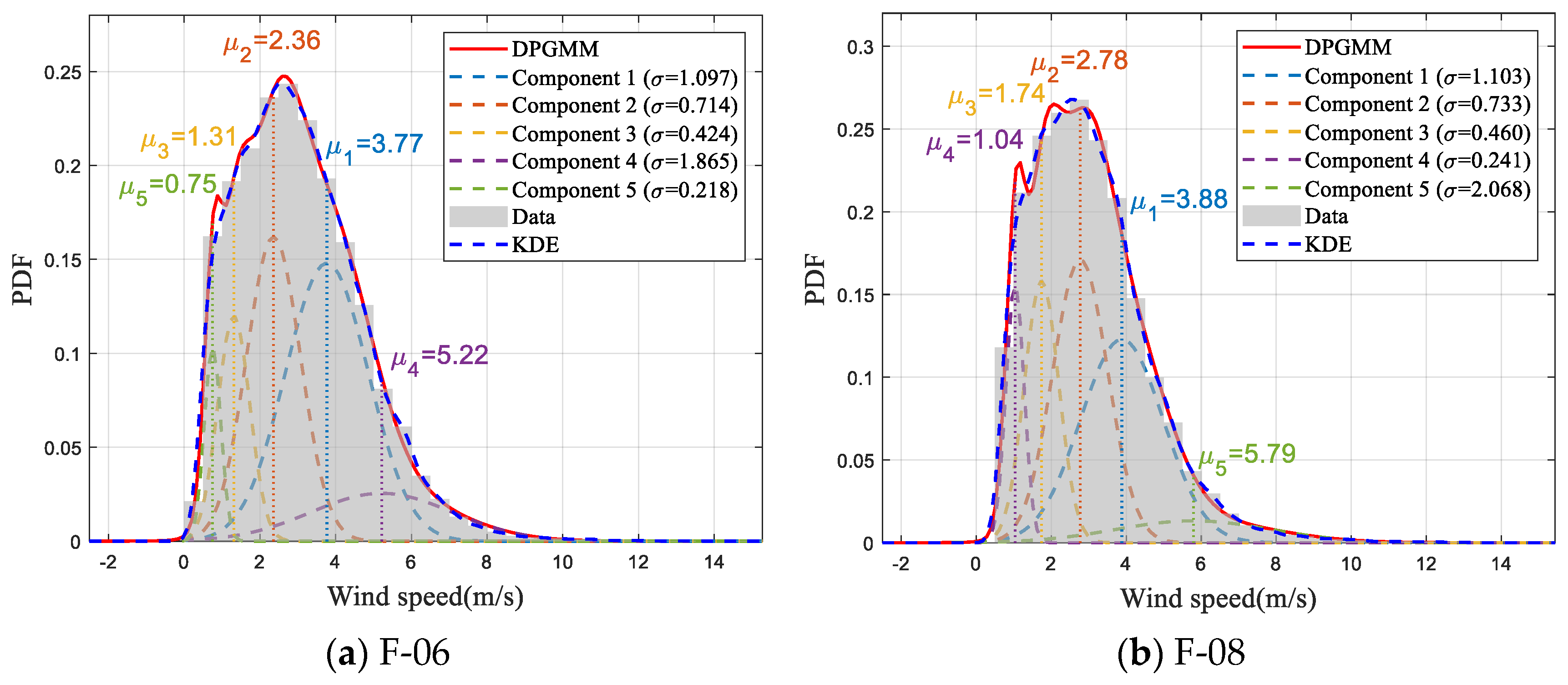
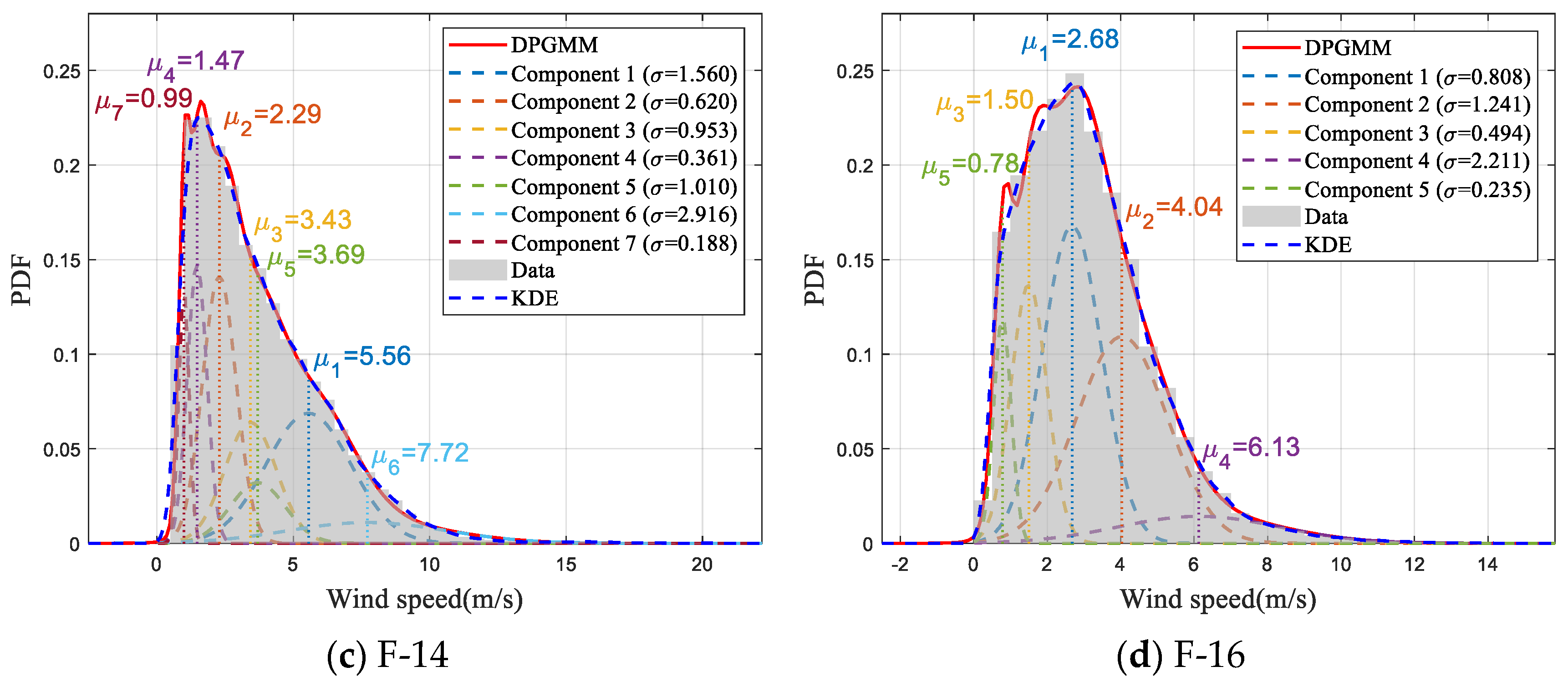
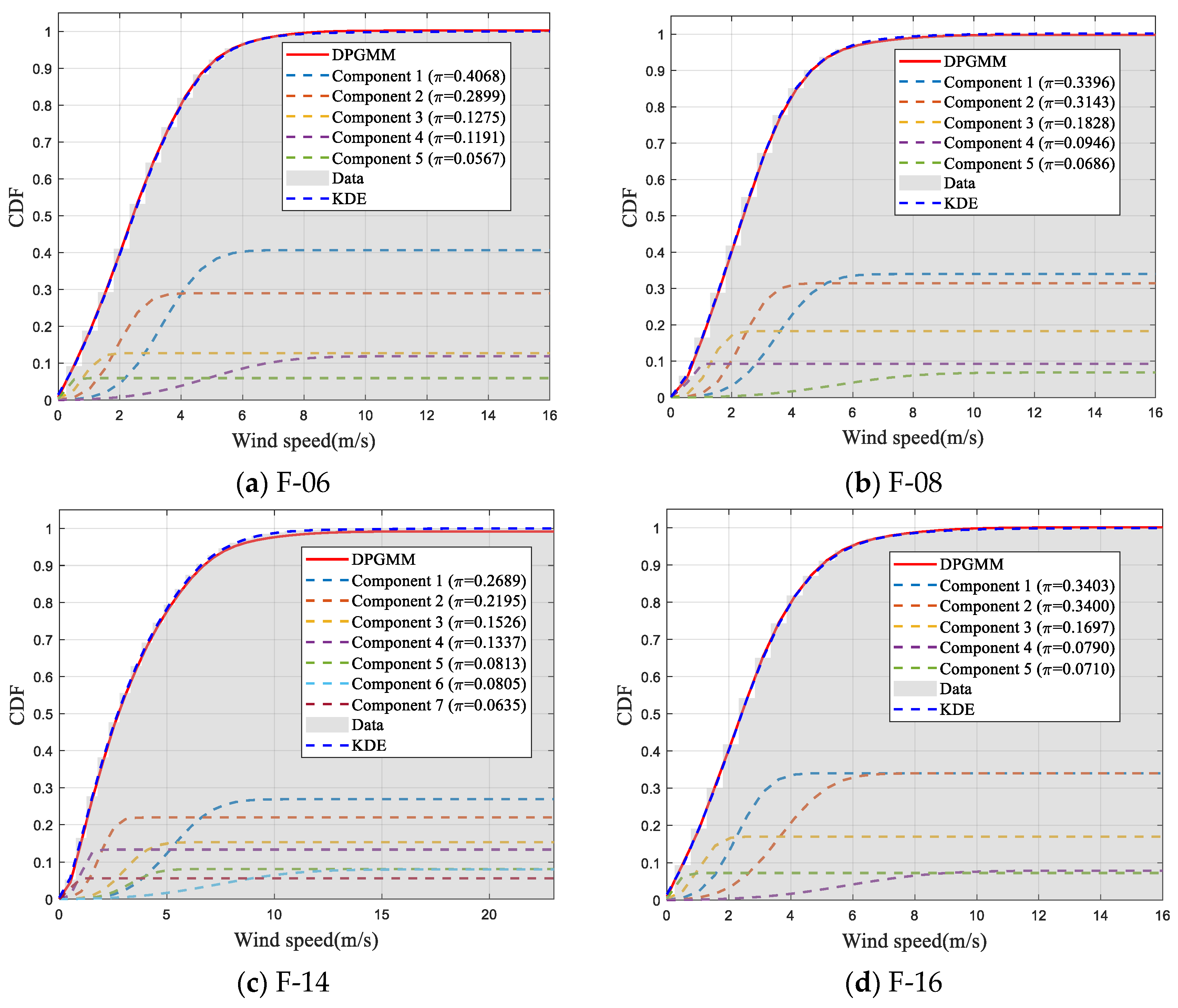
The marginal model of wind speed at the four positions (F-06, F-08, F-14, and F-16) is fitted respectively using DPGMM and KDE. The corresponding PDF and CDF estimates are displayed in
Figure 3 and
Figure 4.
Table 2 and
Table 3 show the goodness-of-fit results for marginal models of wind speed.
As indicated by the goodness-of-fit metrics presented in
Table 2 and
Table 3, both methods yield low
and
values, with
values close to 1, confirming satisfactory overall fit. It is worth mentioning that while KDE achieves slightly lower
and
in some PDF fitting cases, the DPMM is still retained as the marginal model. Unlike KDE, which yields a nonparametric estimate without structural interpretability, the DPMM provides explicit parametric components that correspond to physically meaningful wind regimes and form the basis for the analysis of seasonal variation.
Table 4 shows the model parameters for the marginal PDFs of wind speed. The variation in the number of DPGMM components along the bridge span, seven at F-14 versus four or five at the remaining positions, reflects pronounced spatial heterogeneity in the wind speed distribution. F-14 is located at the mid-span of the main girder (
Figure 2). While the wind field at F-14 is subject to aerodynamic interference from the bridge towers and cables, it is largely unaffected by the surrounding terrain due to its distance from the shoreline. This observation confirms the effectiveness of the DPGMM in adaptively determining the required model complexity and providing high-quality marginal foundations for the subsequent Vine copula modeling.
5.2.2. Marginal Model for Wind Direction
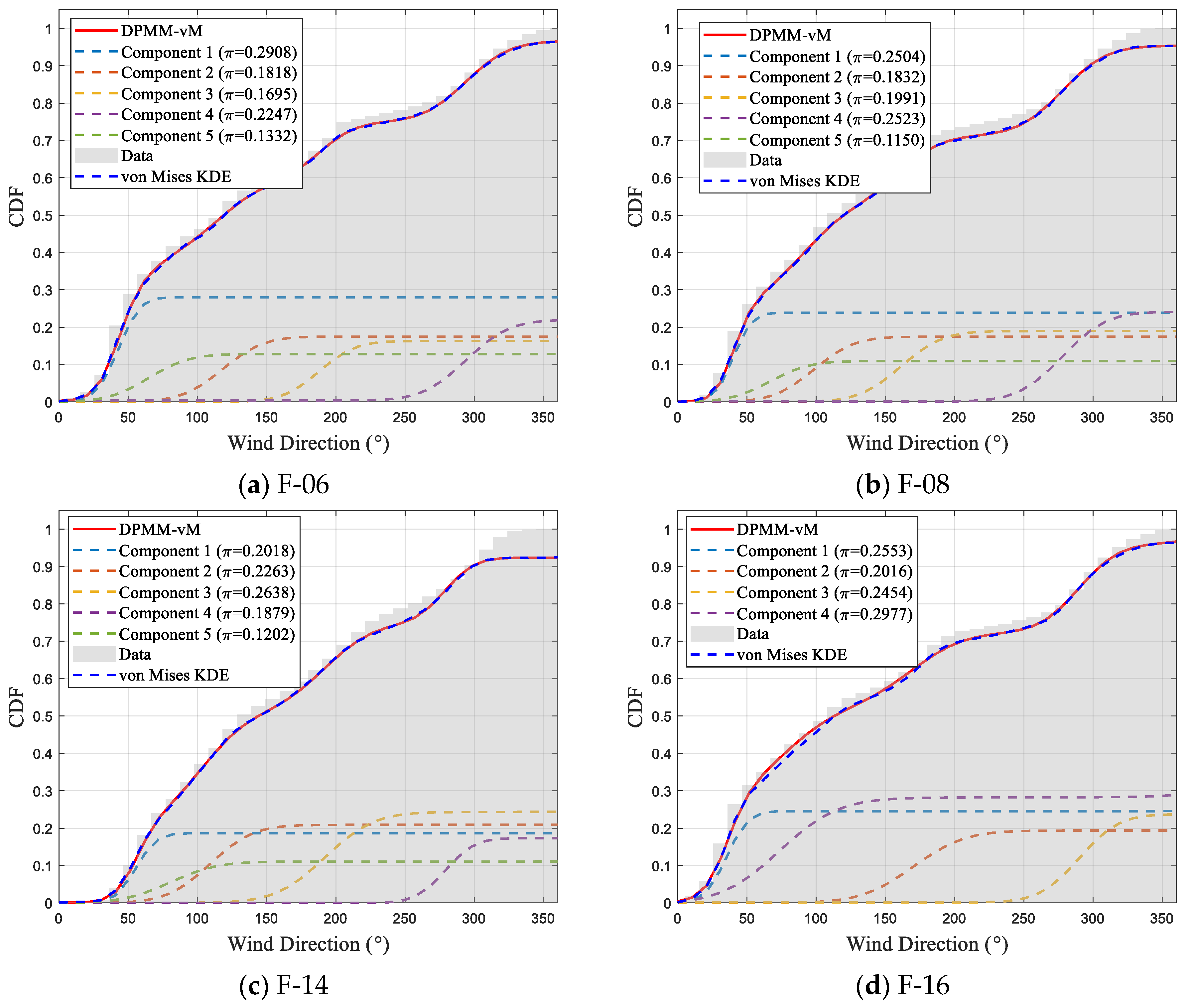
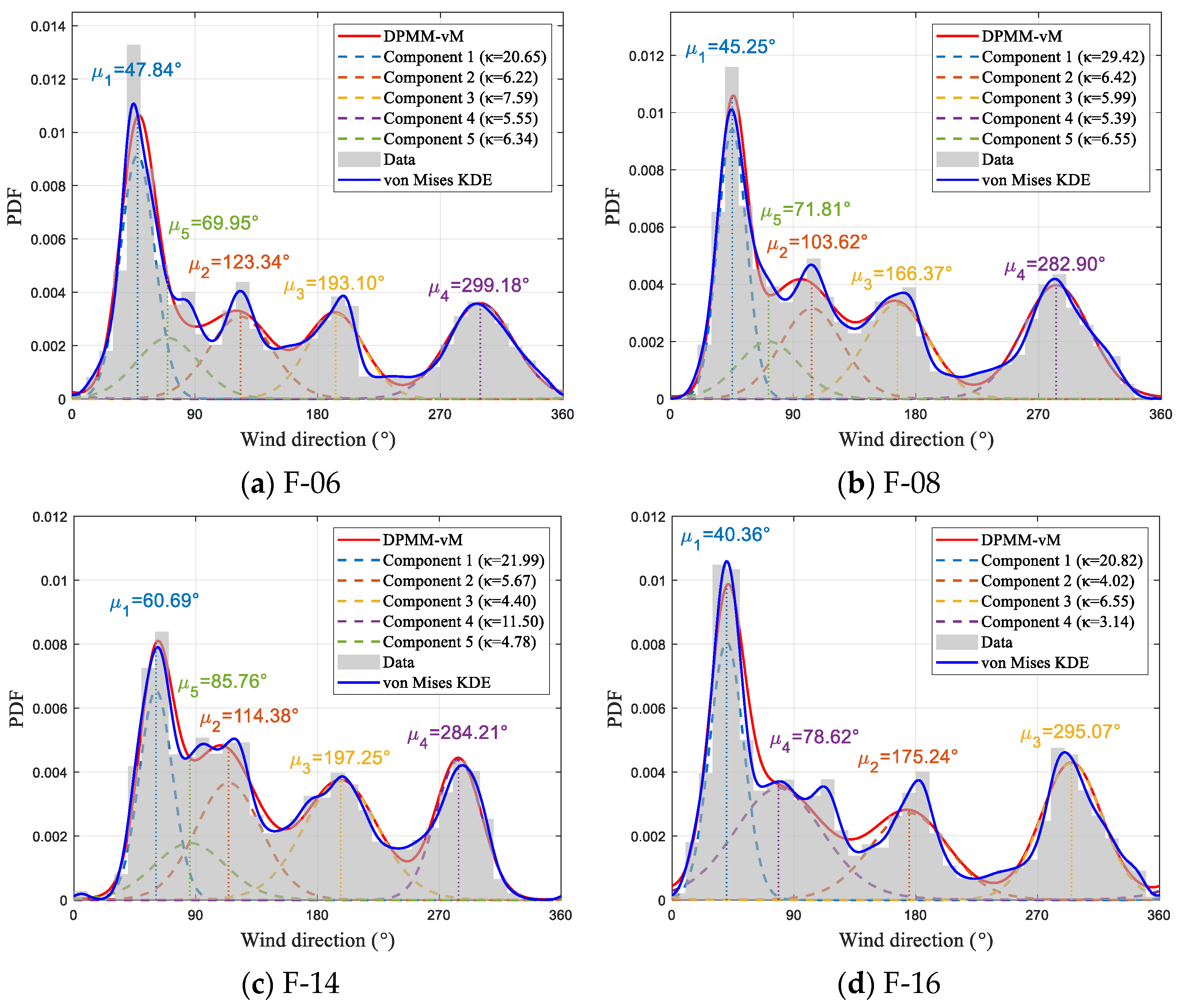
Since the wind direction is circular data, the application of linear mixture models would ignore its inherent periodicity. Therefore, the DPMM-vM is adopted as the marginal model, with the number of components adaptively determined from the data. Each von Mises component is parameterized by a mean direction and a concentration parameter, naturally satisfying the periodic boundary condition
. For the integration purpose in the copula framework, the fitted DPMM-vM cumulative distribution function is used to transform wind direction to uniform pseudo-observations. Since the CDF satisfies
, observations near 0° and 360° map consistently to values near 0 and 1. The corresponding PDF and CDF estimates are displayed in
Figure 5 and
Figure 6.
Table 5 and
Table 6 show the goodness-of-fit results for marginal models of wind direction.
As summarized in
Table 5 and
Table 6, the goodness-of-fit metrics indicate that the DPMM-vM preserves the inherent periodicity of wind direction while maintaining a robust characterization of the global distributional form.
Table 7 provides the estimated mean direction, concentration parameter
, and mixture weight for each component of the DPMM-vM. The prevailing wind direction intervals and their corresponding directional concentration are distinctly observable at each measurement site within the bridge area. For example, the dominant directional components at sites F-06 and F-08 are centered at approximately 0.84 rad and 0.79 rad, respectively, and are associated with notably high
. These estimates indicate the presence of stable, well-defined prevailing wind directions within the study region.
5.2.3. Marginal Model for Wind Attack Angle
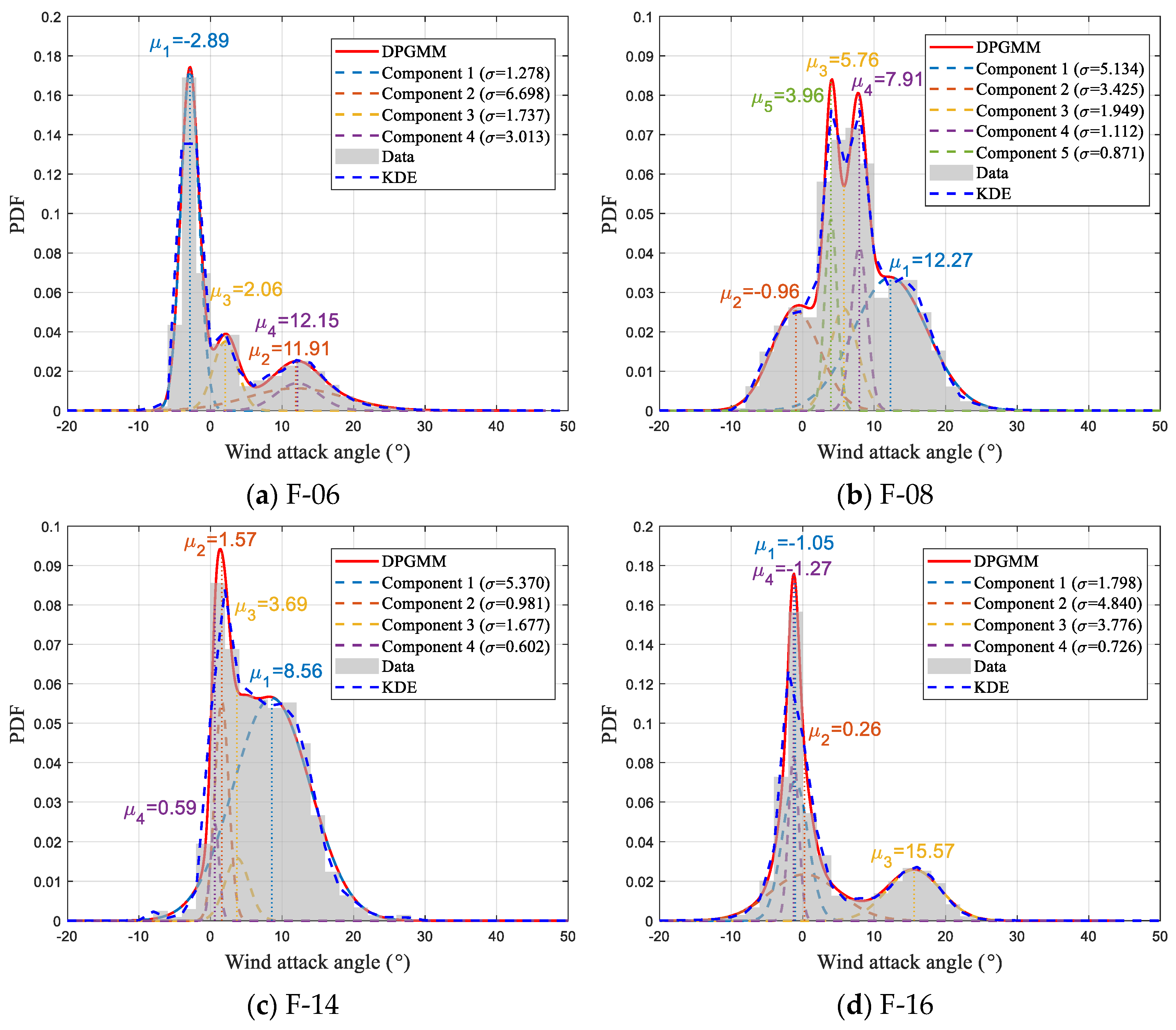
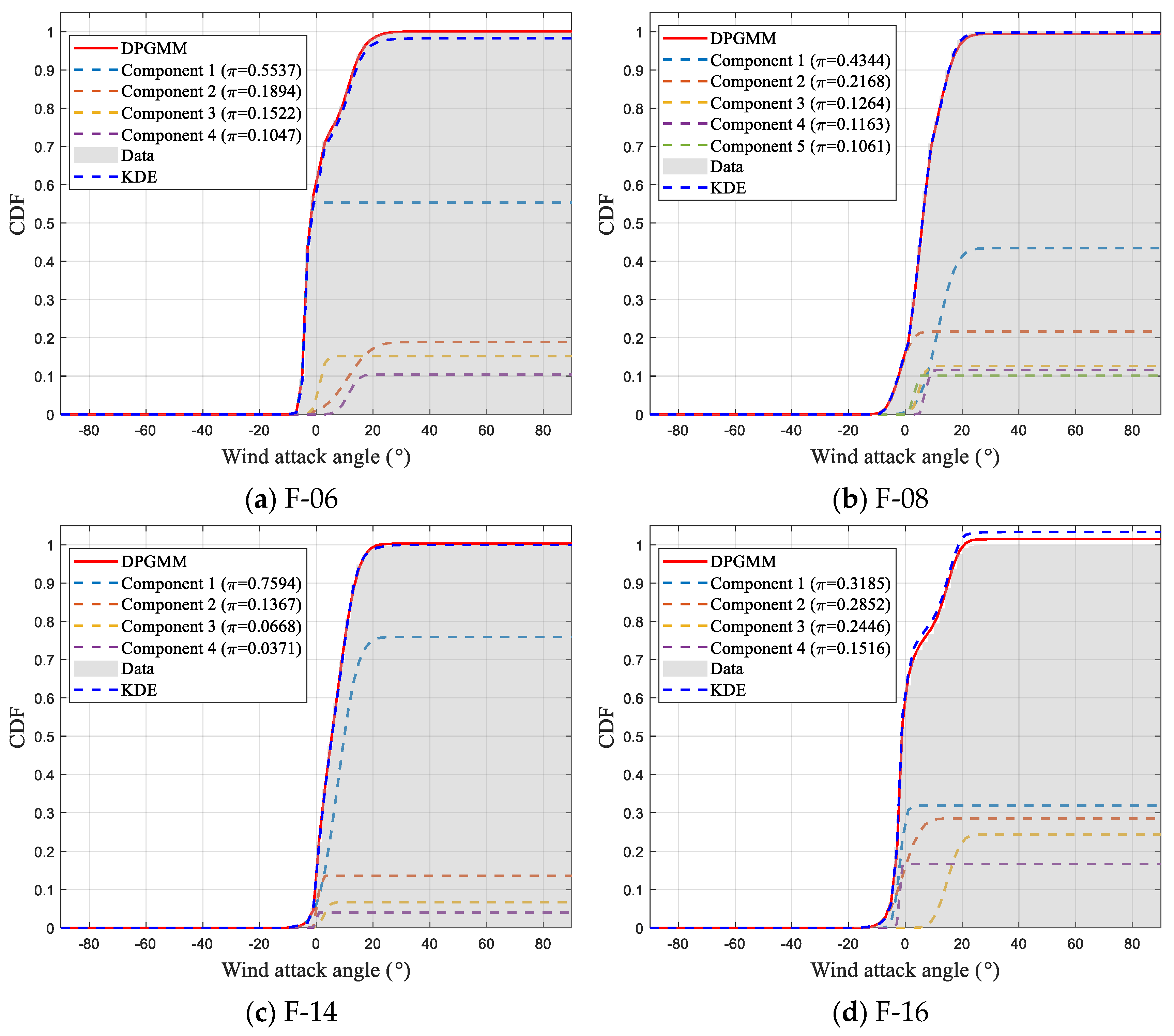
The marginal models of wind attack angle are modeled using the DPGMM. The corresponding PDF and CDF estimates are displayed in
Figure 7 and
Figure 8.
Table 8 and
Table 9 show the goodness-of-fit results for marginal models of wind attack angle.
Figure 8 illustrates the pronounced central tendency evident in the measured wind attack angle data.
As shown in
Table 10, the relatively small estimated means and standard deviations of the individual mixture components indicate that the observed wind attack angle exhibits a limited range of fluctuation, concentrated within a considerably narrower interval than the theoretical bounds of −90° to 90°.
5.3. Seasonal Variation in the Wind Field
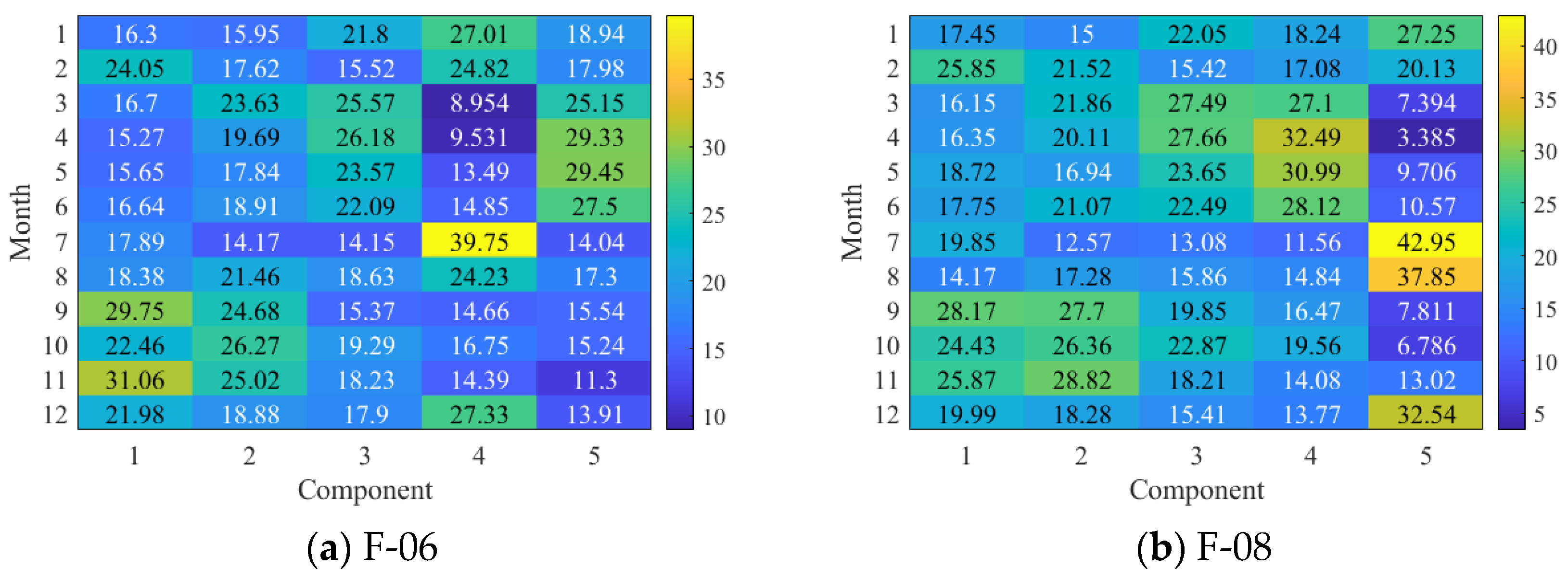
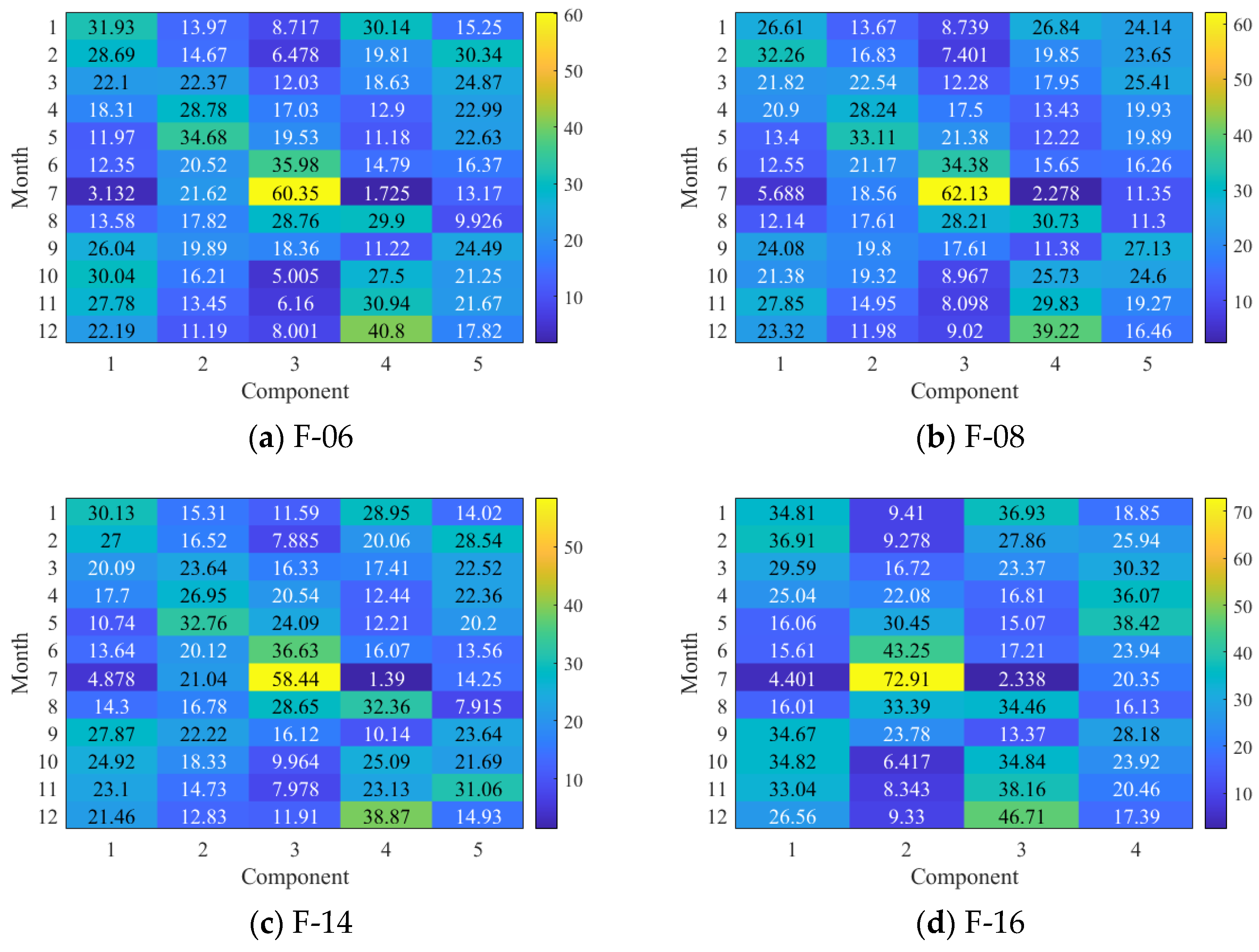
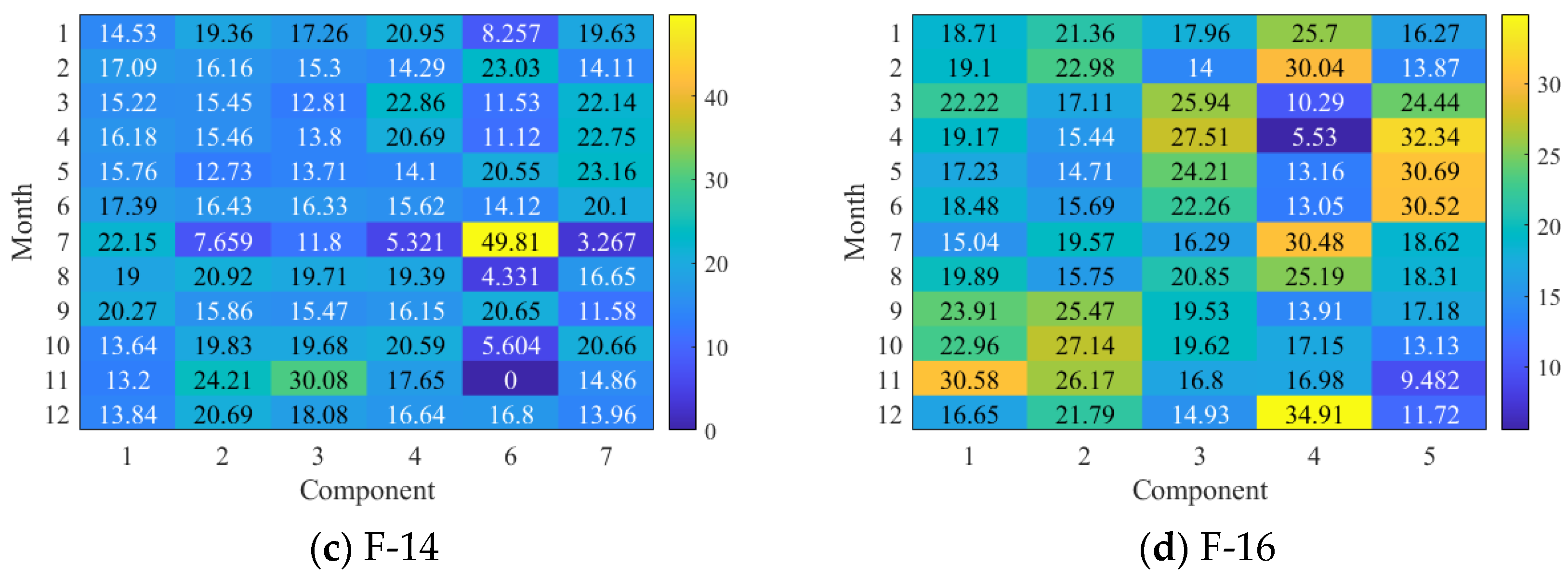
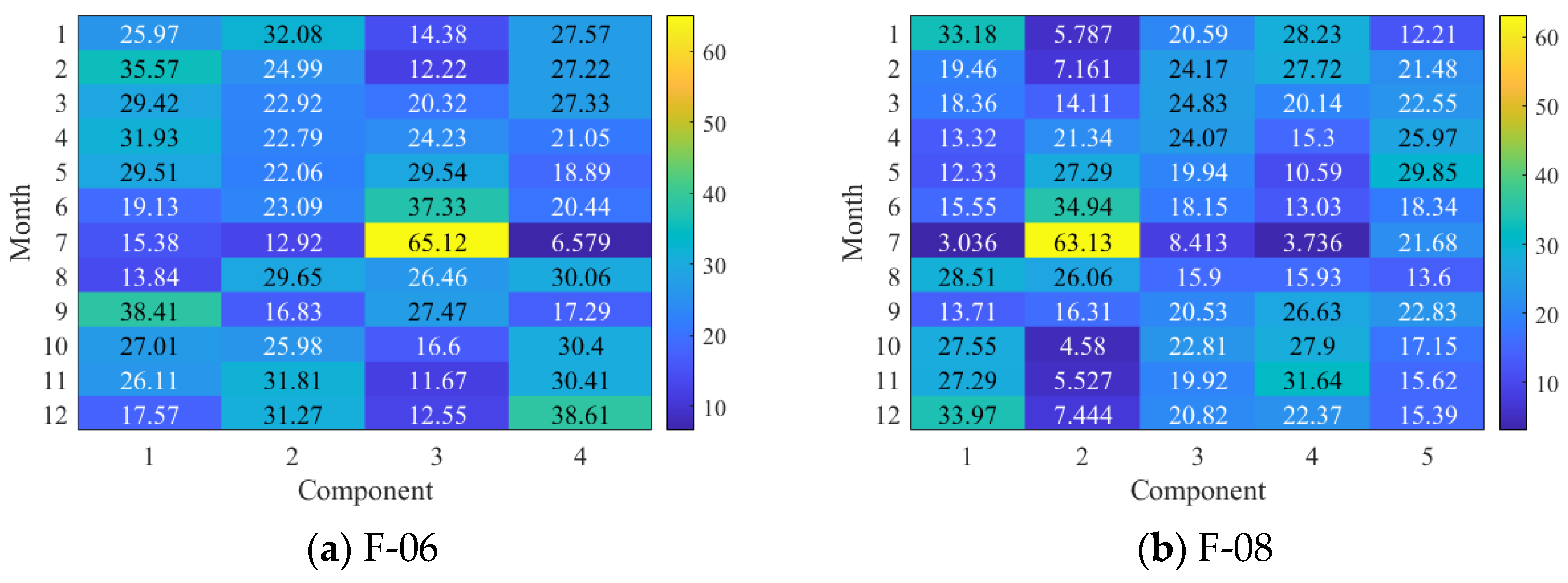
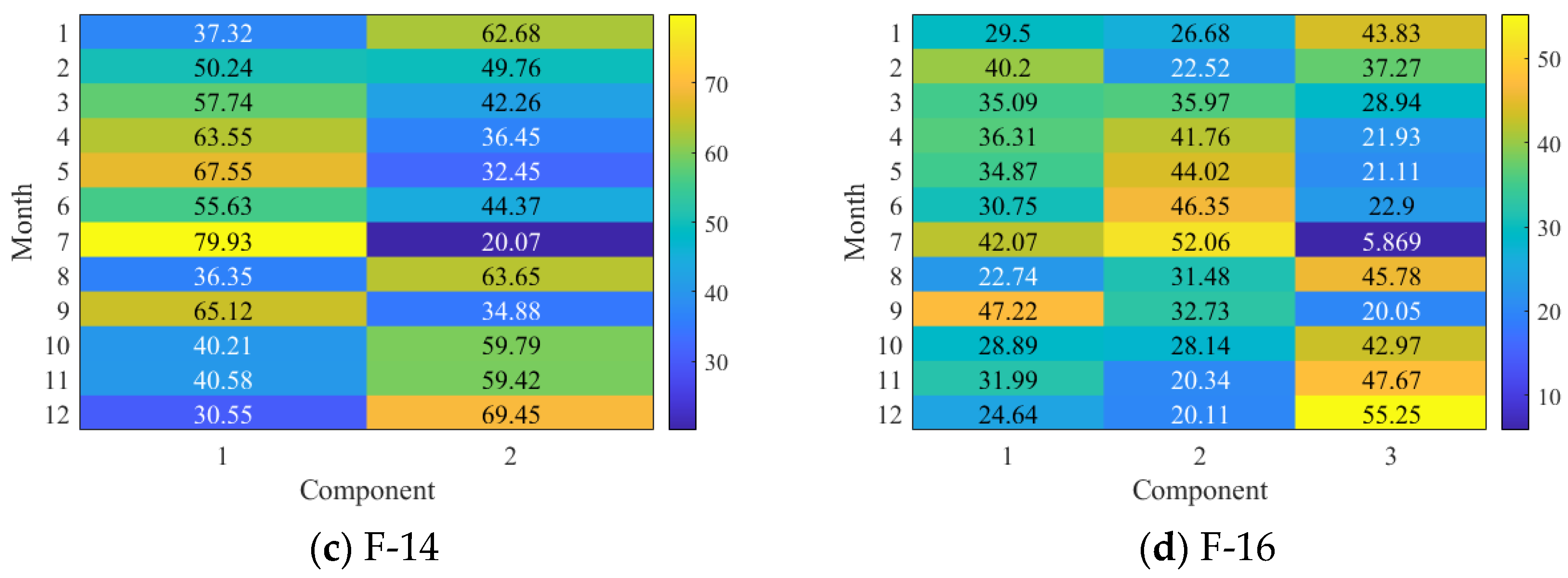
Bayesian inference in the DPMM framework provides the posterior component-assignment probabilities for each observation. These quantities serve as the basis for a seasonal analysis of the wind field. The monthly occurrence probabilities of the mixture components for wind speed, wind direction, and wind attack angle are shown in
Figure 9,
Figure 10 and
Figure 11, respectively. This probabilistic decomposition reveals the seasonal variability of the wind climate at the bridge site and illustrates the annual progression of the dominant regional weather regimes.
As shown in
Figure 3a and
Figure 10a, at position F-06, the fourth Gaussian component of wind speed (characterized by the highest mean value of approximately 5.22 m/s) reaches its peak monthly probability of 39.75% in July, indicating that winds of this intensity dominate during this month.
Located within the subtropical monsoon climate of southeastern China, the bridge site exhibits a pronounced seasonal shift in wind direction components, as shown in
Figure 10a. Specifically, the third wind direction component (mean direction: 194.01°, concentration parameter: 7.95) emerges as the dominant regime in July, accounting for a notably high occurrence probability of 60.35%. Concurrently, the third Gaussian component of the wind attack angle (mean: 2.06°, standard deviation: 1.74°) attains its maximum probability of 65.11% during the same month.
It is noteworthy that the highest mean wind speeds also have markedly elevated probabilities at the other locations in July: the fifth component at F-08 (mean: 5.79 m/s, 42.95%), the sixth at F-14 (mean: 7.72 m/s, 49.81%), and the fourth at F-16 (mean: 6.13 m/s, 30.48%). During the same month, the prevailing wind direction and wind attack angle components exhibit strong concentration, each dominated by a single regime.
The probabilistic decomposition identifies seasonal wind regimes and their annual progression, which are meaningful for the vulnerability assessment in the construction phase during the dominant wind period, maintenance scheduling during low-wind months, reliability assessment with regime-conditional limit states, and wind-traffic control decision-making.
5.4. Construction of JPDF Based on Vine Copula
Based on Sklar’s theorem, the JPDF can be decomposed into the marginal distributions of each variable and a Copula function that describes the dependency structure among the variables.
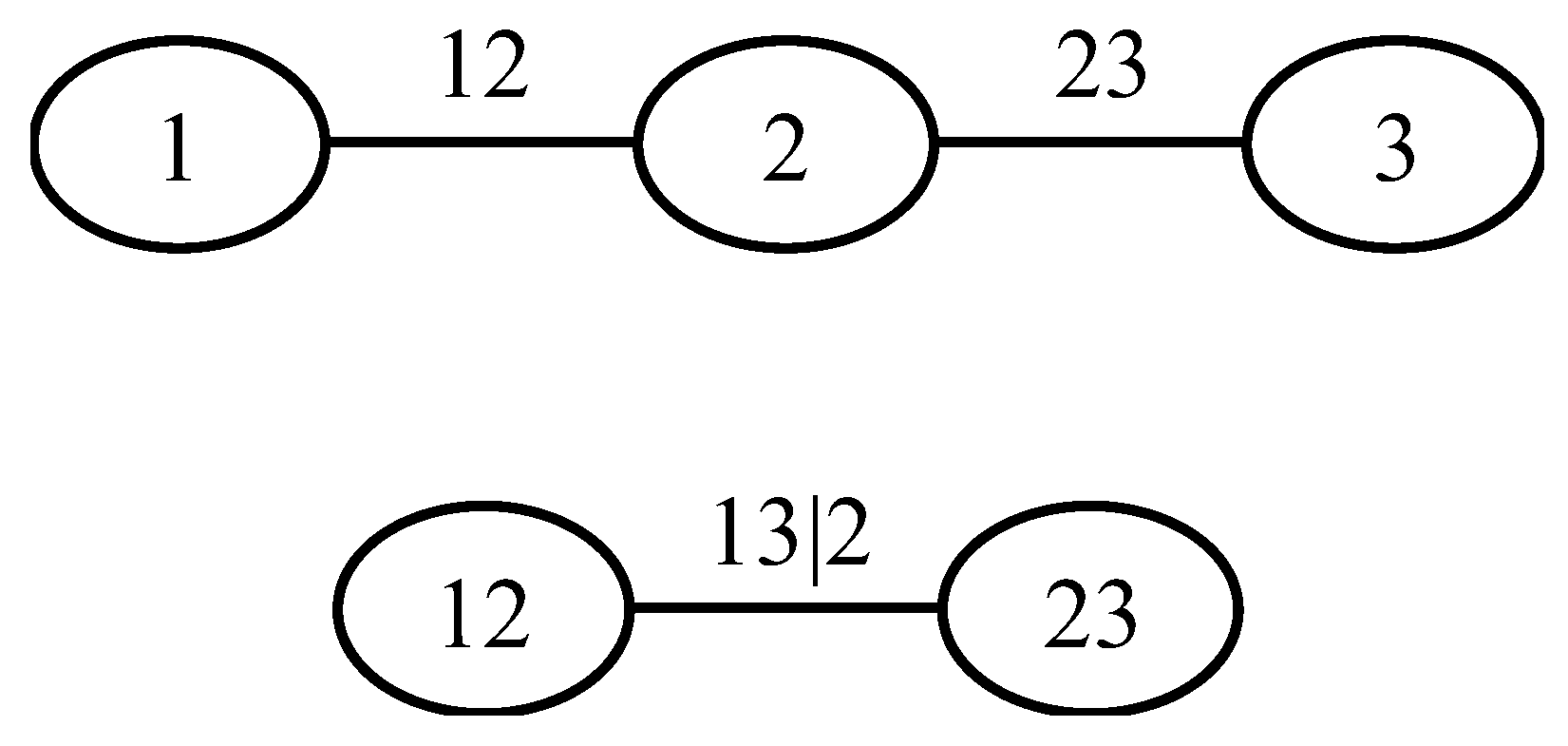
Section 5.2 has already obtained the precise marginal models of wind speed, wind direction, and wind attack angle using a mixture model. Thus, the JPDF of the three variables is constructed by selection and fitting of the optimal R-vine structure and bivariate copulas, following the sequential algorithm of Dißman. The bivariate copula families employed in this study are listed in
Table 11.
Table 12 presents the optimal R-vine structure, the selected bivariate copula families, their corresponding parameter estimates, and the associated
values for the JPDF of wind parameters at the four positions (F-06, F-08, F-14, and F-16).
The bivariate copula selection results show that there are differences in the optimal Copula types at each position, which reflects pronounced spatial heterogeneity in the wind field dependence structure at the bridge site. All selected optimal bivariate copulas return low values, which indicates a favorable balance between goodness-of-fit and model complexity. These models provide a reliable dependence skeleton for JPDF construction.
Table 13 and
Table 14 report the goodness-of-fit test for the JPDF and the joint CDF derived from the fitted R-vine copula models.