


Abstract
The indoor environmental quality of primary and secondary school classrooms is crucial for students’ health and learning efficiency, yet enhancing comfort often leads to high energy consumption. Efficiently balancing the complex relationship between daylighting, visual comfort, and energy consumption during the early design stage presents a significant challenge for architects. To address the design optimization of standard classrooms in primary and secondary schools in the cold region of Zhengzhou, this paper proposes an efficient multi-objective optimization method based on metamodels. This method integrates physical performance simulation (EnergyPlus and Radiance), Latin Hypercube Sampling (LHS), an artificial neural network (ANN) metamodel, and the Non-Dominated Sorting Genetic Algorithm II (NSGA-II). Using Useful Daylight Illuminance (UDI), Discomfort Glare Index (DGI), and Cooling Energy Use Intensity (cEUI) as optimization objectives, ten design parameters, including classroom spatial form and envelope structure, were optimized. The aim is to replace time-consuming traditional simulation calculations and rapidly generate a Pareto optimal solution set. A case study of a typical south-facing classroom in Zhengzhou demonstrates that this method can substantially improve daylighting performance while moderately reducing cooling energy. Compared to the baseline model, the optimized schemes show an average increase in UDI of 42.9% (maximum 50.5%), an average reduction in DGI of 8.4% (maximum 9.6%), and an average reduction in cEUI of 4.7% (maximum 7.7%). Because the study focuses on summer cooling energy only, the reported cEUI improvement should not be interpreted as an annual energy reduction. Through K-means clustering and sensitivity analysis, the study further identifies different design strategies from the Pareto solution set and clarifies the key design variables affecting each performance indicator. This provides an evidence-based reference and preliminary design guidelines for the early-stage design of primary and secondary school classrooms in the region.
1. Introduction
1.1. Background
With the advancement of building environment technology, the demand for indoor comfort has become increasingly stringent [1]. In schools, a healthy and comfortable indoor environment plays a vital role in promoting students’ learning efficiency and physical and mental well-being [2]. Some studies indicate that a good daylighting environment can help reduce the incidence of myopia among students [1]. However, maintaining comfort often entails higher energy consumption, so indoor comfort and energy use must be comprehensively considered in architectural design. During the early stages of design, architects must explore numerous possibilities and make many decisions throughout the process. Various studies have proposed solutions to facilitate multi-objective optimization of building performance, seeking a balance between energy consumption, indoor thermal environment, and visual performance. Yet these optimization processes are often too time-consuming and still lack focus on primary and secondary school buildings and their form parameters. Consequently, efficiently utilizing multi-objective algorithms to optimize standard primary and secondary school classrooms has become a significant challenge for architects.
1.2. Literature Review
1.2.1. Design Optimization of Primary and Secondary School Classrooms
Compared to the design of office, commercial, and residential buildings, the design optimization of educational buildings often requires consideration of different aspects. Wu (2005) introduced the daylighting design characteristics of Western schools and summarized the problems encountered in their natural lighting design development, providing a comprehensive review that opened up new avenues for researchers [3]. Chen (2011) investigated the lighting environment of 25 classrooms in 10 primary and secondary schools in Chongqing, concluding that the natural daylighting in these classrooms was poor in terms of overall environment and illuminance uniformity [4]. Cao (2012) conducted a field study of primary and secondary schools in Nanjing, finding that the quality of the light environment in classrooms was poor, especially in classrooms with an internal corridor layout [5].
1.2.2. Impact of Daylighting on Teacher and Student Health and Performance
Recent research has increasingly adopted multi-pronged approaches, audience segmentation, and multi-indicator evaluation, aiming to provide more comfortable learning environments for students. Liang et al. (2020) found through on-site measurements of a primary school classroom in Qingdao that the illuminance and uniformity on desks and blackboards were below standard, suggesting the need for environmental upgrades [6]. Fang and Liu (2021) investigated classrooms of different sizes at their university and proposed a relatively complete set of strategies to improve the indoor light environment [7]. Nocera, F. (2018) investigated the natural daylighting performance of schools and proposed solutions to improve visual comfort in classrooms [8]. Lee (2019) studied the problem of discomfort glare in a school in Seoul, Republic of Korea, and improved the evaluation scale for discomfort glare in environmental certification systems [9].
1.2.3. Building Performance Optimization Methods
The design of standard primary and secondary school classrooms requires close attention to indoor comfort and energy consumption, so designers often rely on computer-aided simulation and optimization methods. Common approaches include the weighted sum method, which converts a multi-objective problem into a single-objective one, and the Pareto method, which uses an improved genetic algorithm to find the Pareto solution set. Zhai et al. proposed a multi-objective optimization method combining NSGA-II with EnergyPlus to optimize window design, improving indoor visual performance, thermal comfort, and energy efficiency [10]. Ascione et al. studied the renovation of educational buildings in Italy, obtaining and analyzing the Pareto solution set through a multi-objective genetic algorithm [11]. Zhang et al. optimized the design of three typical classrooms in northern China, analyzing the Pareto solution sets for summer visual comfort, energy, and thermal comfort [12]. Xu et al. optimized the envelope of primary and secondary school buildings in China with thermal comfort and daylighting as objectives [13]. However, educational buildings are significantly influenced by regional climate and cultural factors, leaving a gap in multi-objective optimization research on the spatial form parameters of primary and secondary school classrooms specifically in the cold region of Zhengzhou.
1.2.4. Application of Machine Learning
In the traditional building design optimization process, simulation software results are often used directly as the objective function for the optimization algorithm—a method that can be very time-consuming, greatly limiting its practical application [14]. To reduce runtime, some researchers simplify the physical model of the building, but this can distort the simulation results and lead to significant errors [15]. Metamodel technology is a typical supervised learning method in machine learning that can be trained to replace complex physical models. Some researchers have used metamodels instead of physical models in building design optimization studies [16]. Gossard et al. [17] successfully integrated ANNs and genetic algorithms in their MOO process, addressing many of the aggressive and time-consuming issues of BSE-based MOO. Chen and Yang [18] compared the performance of Multiple Linear Regression, Multivariate Adaptive Regression Splines, and Support Vector Machines in passive prototyping. Hawila et al. [19] used a metamodeling approach based on design of experiments for sensitivity analysis, and the obtained metamodel was used to optimize building design. Asadi et al. [20] proposed a multi-objective optimization model based on a genetic algorithm and an artificial neural network for the quantitative evaluation of technical choices in building renovation projects.
1.3. Aims and Originality
The aforementioned literature reveals a research gap in the optimization of spatial form for primary and secondary school classrooms in the cold region of Zhengzhou. A high-efficiency multi-objective optimization method is needed to support designers and researchers during the early stages of classroom design. In Henan Province, primary and secondary schools are universally supplied with district central heating in winter, which means heating energy consumption is largely governed by municipal schedules and uniform envelope standards rather than by individual classroom geometry. Consequently, winter heating demand is less sensitive to the spatial-form parameters explored in this study. Summer cooling, by contrast, is provided by on-site air-conditioning systems whose energy use is directly shaped by solar gains, daylight admission, and room proportions—factors that are strongly coupled to the ten geometric design variables. Focusing on summer cooling energy therefore yields actionable, geometry-driven insights that are more controllable by architects during schematic design. This paper proposes a multi-objective optimization method for primary and secondary school classrooms based on a metamodel, integrating machine learning algorithms to improve optimization efficiency In addition, a locally hosted Large Language Model (LLM) is embedded into the decision support platform as an exploratory tool for translating natural-language design preferences into quantitative weights. The combination of fast surrogate modeling, multi-objective search, and clustering-driven strategy extraction is expected to enhance indoor comfort while reducing energy consumption.
2. Materials and Methods
The research process is divided into three main stages: physical modeling, metamodel training and prediction, and optimization and analysis. The workflow is illustrated in Figure 1.
Figure 1.
Framework of the proposed metamodel-based multi-objective optimization method.
In the first stage, a parametric classroom model is constructed in Grasshopper and simulated with the Radiance and EnergyPlus engines through Ladybug Tools. Latin Hypercube Sampling (LHS) is employed to generate a representative design space that captures the geometric and envelope variability of typical primary and secondary school classrooms in Zhengzhou. In the second stage, an artificial neural network (ANN) metamodel is trained on the sampled data to approximate the mapping between design variables and the three performance objectives—UDI, DGI, and cEUI. This surrogate model replaces the time-consuming physical simulations during optimization, reducing the evaluation time from several minutes per design to less than one millisecond. In the third stage, the Non-Dominated Sorting Genetic Algorithm II (NSGA-II) is applied to search the Pareto-optimal solution set, and the resulting trade-off front is analyzed through clustering, sensitivity analysis, and a locally hosted Large Language Model (LLM) decision support platform. The following subsections elaborate on each component of the framework.
2.1. Physical Modeling/Generative Design and Modification
2.1.1. Optimization Objectives
In the physical modeling process, we first analyze the architectural features. The research object comprises primary and secondary school classrooms in the cold region of Zhengzhou; accordingly, Useful Daylight Illuminance (UDI), Discomfort Glare Index (DGI), and Cooling Energy Use Intensity (cEUI) were selected as the optimization objectives.
This study selected the UDI percentage and the DGI as the core dynamic daylighting evaluation indicators. DGI is evaluated at the center of the inter-window wall (the piers between south-facing window openings), at a sensor height of above the finished floor level—corresponding to the seated eye level of primary and secondary school students. The sensor faces the window to capture the maximum potential glare source within the field of view, consistent with the standard observer position prescribed in the CIE glare evaluation framework. UDI assesses the natural light distribution in the classroom through four illuminance ranges (0–100 , 100–500 , 500–2000 , >2000 ). Its classification system, proposed by A. Nabil [21], has been widely used in building daylighting evaluation [22] and its effectiveness in spatial light environment analysis has been validated. UDI is computed as the annual percentage of occupied hours when the work-plane illuminance E lies in the useful range:
where H is the total number of occupied hours in a year and is the illuminance () at hour h; is the indicator function that equals 1 when the condition is satisfied and 0 otherwise.
DGI serves as a visual comfort evaluation standard that captures discomfort caused by uneven brightness distribution or extreme contrast; it has also been included in China’s building daylighting design standards [23]. Research shows that while there are multiple glare evaluation indicators like Daylight Glare Probability (DGP), significant differences exist between them [24]. Experimental data indicate that the observer’s viewing angle and distance are key parameters affecting glare perception [25]. Compared to other methods, DGI can more accurately characterize glare issues in China’s building environments by quantifying the brightness contrast in the window area. Therefore, this study adopted DGI as the core visual comfort indicator, combined with UDI’s light distribution assessment, to construct a comprehensive evaluation system that includes both functionality and comfort. The DGI is evaluated with the standard formula:
where is the source luminance of glare source i, is the solid angle subtended by source i at the observer’s eye, is the background illuminance, is the position index of the source, and is the luminance of background patch j.
To account for the spatial heterogeneity of daylight across the classroom, UDI is computed by Radiance on a 0.5 m × 0.5 m horizontal grid at the working-plane height of 0.75 m; the spatial mean of the per-node UDI fractions serves as the objective function for optimization, while full-field heatmaps are retained for diagnostic inspection. DGI is evaluated by Radiance through 180 fisheye luminance renderings generated at multiple observer viewpoints (1.2 m seated eye level, oriented toward the south-facing windows), and the 95th-percentile value across all viewpoints during occupied hours is adopted as the constraint to ensure glare protection for the most adversely lit student positions.
Regarding energy consumption calculation, primary and secondary school classrooms in Zhengzhou’s light climate zone III rely on district central heating in winter. Because heating energy is governed by municipal supply schedules and uniform envelope standards, it is relatively uncontrollable at the individual classroom level and less sensitive to the geometric parameters varied in this study. Summer cooling, provided by on-site air-conditioning, is far more responsive to solar gains, daylight admission, and room proportions—factors that are directly shaped by the ten geometric design variables. Focusing on summer cooling therefore yields actionable, geometry-driven insights for architects during schematic design, and it addresses the specific problems of excessive cooling loads in south-facing classrooms caused by strong solar exposure and of heightened energy dependence on artificial lighting in north-facing classrooms. To accurately characterize the cooling energy consumption of classrooms in summer, this study selected Cooling Energy Use Intensity (cEUI) as the evaluation indicator:
where is the annual cooling energy consumption () and A is the net floor area of the classroom ().
2.1.2. Optimization Variables
The design variables were selected based on the literature review and mainly involve envelope parameters. For a south-facing classroom, ten design parameters were extracted: classroom width, depth, net height, north sill height, north window height, north window-to-wall ratio, south window-to-wall ratio, south window height, south sill height, and south window spacing. Based on surveys, a typical classroom model was established. The number of north windows was fixed at two, while the number of south windows can be calculated from the design variables.
The variable ranges for the classroom design parameters are established in accordance with GB 50099-2011 [26] (Code for Design of School) and GB 50033-2013 [23], combined with field measurements from surveyed primary and secondary school classrooms in Zhengzhou, as presented in Table 1.
Table 1.
Design variable ranges. WWR = window-to-wall ratio.
2.1.3. Physical Model and Design Space Establishment
After determining the optimization variables and objectives, a physical model is created based on the building’s spatial characteristics. Numerous software programs are available for building modeling and simulation, including EnergyPlus, DesignBuilder, Grasshopper, and DeST. This study used the Honeybee platform within Ladybug Tools to call the Radiance engine for building light environment simulation and the EnergyPlus engine for building energy consumption simulation. The accuracy of the Radiance engine has been verified by British scholar J. Mardaljevic [27], and Wang [28] in China has also verified the accuracy of its daylighting simulation based on different sky models. Liu [29] has also verified the reliability of the Daysim software (version 4.0). EnergyPlus, jointly developed by the U.S. Department of Energy and Lawrence Berkeley National Laboratory, is widely used for building performance simulation [30,31]. During modeling, features unrelated to the optimization variables were simplified to reduce complexity and uncertainty. Then, Latin Hypercube Sampling (LHS) was used to generate the design space. A total of 5000 samples were generated, a number chosen to ensure dense coverage of the ten-dimensional parameter space while remaining within feasible computational limits (≈420 core-hours). In comparable metamodel-based building optimization studies, sample sizes between 2000 and 10,000 are common [16,20].
Figure 2 contrasts LHS with simple random sampling for the 10-dimensional design space. The LHS panel (a) shows that the 5000 samples cover each marginal dimension uniformly, with no large gaps along any axis. The random sampling panel (b), by contrast, exhibits visible clustering and uncovered regions in the projection of WD against SR. This space-filling property is essential for training a neural-network surrogate that must generalize across the entire range of feasible classroom geometries.
Figure 2.
Comparison of Latin Hypercube Sampling (LHS) and random sampling coverage in the design space.
2.1.4. Baseline Model Configuration
The baseline model is configured according to typical public-school construction practice in Zhengzhou. Table 2 summarizes the key thermal and operational parameters held constant across all simulations. Geometric parameters such as window size and room proportions are the only variables changed during LHS and optimization.
Table 2.
Baseline model configuration parameters.
2.2. Efficient Optimization
2.2.1. Metamodel
A metamodel is an approximate model used to simulate the input–output relationship of a complex model (physical model) [34]. Common metamodels include polynomial regression, Gaussian processes, random forests, gradient boosting regression trees, support vector machines, and artificial neural networks. In recent years, ANNs have achieved a good balance between accuracy and computation and are widely used for building performance simulation [35]. Therefore, this study selected an ANN as the metamodel.
The ANN adopted in this study consists of four fully connected hidden layers with 256, 128, 64, and 32 neurons, respectively. Batch normalization is applied after each hidden layer to stabilize training, and a dropout rate of 0.2 is used to mitigate overfitting. The rectified linear unit (ReLU) serves as the activation function. The network was trained with the Adam optimizer at an initial learning rate of , a weight decay of , and the mean squared error (MSE) as the loss function. A learning-rate scheduler with a patience of 10 epochs and an early-stopping criterion with a patience of 20 epochs are employed. The maximum number of training epochs is set to 500, and the batch size is 32. Separate models were trained for the north- and south-facing orientations and for each of the three objectives, yielding six metamodels in total. For the optimization and clustering analysis reported in this study, only the three south-facing metamodels are employed as the fitness evaluator; the north-facing counterparts are reported in Table 3 for completeness and as a basis for future extension. The network architecture is illustrated in Figure 3, and representative training and validation loss curves are shown in Figure 4.
Figure 3.
Architecture of the artificial neural network metamodel used in this study.
Figure 4.
Training and validation loss curves for the six orientation-specific ANN metamodels (representative south-facing cases shown). Curves are truncated at the early-stopping epoch (patience = 20). The south-facing cEUI model converged earliest (epoch ∼65) due to its lower target dimensionality, while UDI models required up to ∼200 epochs. The 500-epoch maximum reported in Section 2.2.1 was therefore not binding in any run.
Table 3.
Test-set performance of the six orientation-specific ANN metamodels. Note: These values are computed on the fixed 20% hold-out test set (see Section 2.2.2 for the train–validation–test split). They are therefore higher than the five-fold cross-validation means reported in Table 4 because a single random split can yield more favorable partitioning than the averaged folds.
Table 4.
Five-fold cross-validation results for the ANN metamodels. Note: These values represent the mean and standard deviation across five random folds on the full 5000-sample dataset. They differ from the fixed hold-out test-set reported in Table 3 because the fixed partition isolates a single 20% subset, whereas cross-validation averages over multiple train–test splits.
The metamodel takes the ten geometric design variables defined in Table 1 as input (a 10-dimensional vector after standardization to zero mean and unit variance) and produces a single scalar output corresponding to one of three performance targets: UDI, DGI or cEUI.
The ten geometric inputs (WD, DP, HG, NS, NH, NR, SR, SH, SS, and SD) each carry distinct physical meaning in the building-performance context. WD, DP, and HG govern the overall form factor and external surface area, which strongly influence daylight penetration, solar exposure, and heat-loss paths. The north-facing window parameters (NS, NH, and NR) control the admission of diffuse daylight and winter heat loss, while the south-facing parameters (SR, SH, SS, and SD) determine direct solar gains, glare risk, and the distribution of daylight across the working plane. By feeding these physically interpretable descriptors into a shared hidden representation, the ANN learns climate-specific mappings from geometry to energy and daylight outcomes without requiring computationally expensive simulations at inference time. Because the cEUI metamodel relies exclusively on geometric inputs and omits thermal-envelope parameters (wall insulation, glazing U-value, and SHGC), the quantitative design guidelines derived from the optimization are strictly valid only for classrooms that share the same baseline envelope configuration (GB 50189-2015 compliant: 200 mm concrete + 50 mm XPS, glazing U-value = ·−2·−1, SHGC ). Buildings with different envelope specifications would require retraining of the cEUI surrogate before the guidelines can be applied.
2.2.2. Sample Space Partition and Model Evaluation
After selecting the metamodel, the sample space must be partitioned into training, validation, and test subsets. In this study, the dataset is split into 70% training, 10% validation, and 20% test samples. The training set is used to optimize the network weights, the validation set monitors generalization and controls the learning-rate scheduler and early stopping, and the test set provides an unbiased estimate of final performance. The mean relative error is used to measure the accuracy of the metamodel. In this study, the metamodel has three output variables corresponding to the three optimization objectives: UDI, DGI, and cEUI. The prediction accuracy of these three output variables needs to be analyzed. Therefore, is used as a measure of robustness [35].
The three south-facing metamodels employed in the optimization achieve test-set values ranging from 0.774 (cEUI) to 0.953 (DGI), as summarized in Table 3. The cEUI models exhibit lower because the ten geometric input features do not include thermal-envelope parameters such as insulation conductance or glazing U-value, which strongly influence cooling-energy demand. Consequently, a larger fraction of the variance in cEUI remains unexplained by the geometric metamodel alone.
Although the present surrogate uses geometric variables only, the argument that geometric parameters remain the dominant controllable lever of cEUI variation can be anchored in published sensitivity studies. Tian’s review [36] surveys systematic approaches to quantifying envelope-parameter uncertainty in building energy models and confirms that U-value, SHGC, and infiltration are among the most frequently studied envelope drivers; their sensitivity rankings are well established, but their absolute effect sizes are bounded when perturbations are constrained to a single energy-code class. Hopfe and Hensen’s Monte Carlo uncertainty analysis [37] demonstrates that physical and design parameter uncertainties (including glazing properties and infiltration) propagate into heating and cooling load predictions; their stepwise regression analysis shows that once geometry is fixed, envelope parameters within regulatory bands produce residual variance comparable to metamodel RMSE in comparable building types. Xu et al.’s three-stage envelope optimization of Chinese primary and secondary classrooms [13] identifies that the cooling-energy sensitivity to envelope parameters diminishes once the baseline geometric configuration is established, corroborating the dominance of geometry over envelope within this regulatory context. Asadi et al. [20] apply ANN-replaceable metamodels to building retrofit optimization and observe that envelope insulation and glazing upgrades explain substantially less cooling-load variance than geometric parameters (orientation, WWR, room proportions) in early-stage screening. Gossard et al. [17] optimize building envelope thermal conductivity and heat capacity with GA–ANN coupling and find that the Pareto-optimal envelope configurations cluster tightly within narrow parametric bands; the resulting energy-performance spread attributable to envelope variation is small relative to the geometry-driven spread of the full Pareto front. Taken together, these studies establish that envelope parameters do influence cEUI, but when perturbations are restricted to a single energy-code class (GB 50189-2015 in this study), the resulting variability is of the same order as surrogate residual variance, whereas geometric parameters span a far wider performance range. The surrogate hold-out RMSE of 0.3469 kWh· (Table 3) is consistent with this literature-established trend, indicating that within the studied GB 50189-2015 envelope class geometric variables remain the dominant controllable lever of cEUI variation. Consequently, the Pareto front and design strategies derived here remain valid for the baseline envelope; designers adopting different envelope specifications should retrain the cEUI surrogate accordingly.
2.3. Multi-Objective Optimization and Pareto Solution Set
This study involves three optimization objectives with different attributes and dimensions, making them difficult to integrate into a single optimization function. A multi-objective algorithm is therefore needed to solve the problem and obtain the Pareto optimal solution set. Among evolutionary multi-objective algorithms, NSGA-II is widely adopted in building performance optimization because of its proven convergence and diversity [38]. Therefore, this study adopted NSGA-II as the multi-objective optimization algorithm, using the ANN model selected in Section 2.2.1 as the objective function for NSGA-II.
Because Wallacei (an evolutionary multi-objective optimization plugin for Grasshopper) can only minimize an optimization objective, the UDI objective is transformed into a minimization target by taking its negative value:
where is the min–max normalized UDI score (Equation (5)). This linear transformation is equivalent to maximizing UDI under a minimization framework: because the mapping is strictly monotonic, it preserves the Pareto-dominance relationships among designs. Consequently, the topology of the Pareto front remains unchanged, and any design that is non-dominated under the maximization formulation is also non-dominated under the minimization formulation. In the energy consumption evaluation, because winter heating is supplied through district central heating with uniform schedules, only the controllable summer cooling energy consumption is optimized, expressed as the annual cooling energy consumption per unit floor area ().
2.4. Post-Optimization Clustering Analysis
To decode latent design strategies from the Pareto-optimal solution set, deterministic K-Means clustering is applied to the non-dominated designs. The algorithm partitions the solutions into K groups by minimizing the within-cluster sum of squared Euclidean distances in the normalized ten-dimensional geometric parameter space. The optimal number of clusters is determined through an elbow analysis over to , evaluated by the silhouette coefficient, the Calinski–Harabasz index, and the Davies–Bouldin index (Figure 5). was selected because it yields the highest silhouette score (0.5335) and the most interpretable cluster profiles. Each cluster is characterized by its centroid in both the geometric parameter space and the three-objective performance space, enabling the extraction of distinct design strategies for architects.
Figure 5.
Elbow analysis for K-Means clustering of the Pareto-optimal solutions. The silhouette coefficient, Calinski–Harabasz index, and within-cluster sum of squares (WCSS) are evaluated over to . was selected because it produces the highest silhouette score (0.5335) and the most pronounced elbow in the WCSS curve.
2.5. LLM-Assisted Decision Support Platform
To bridge the gap between the generated Pareto-optimal solutions and actionable design decisions, an exploratory prototype of a locally hosted Large Language Model (LLM) interface was developed within a Streamlit-based decision support platform. The prototype demonstrates the potential for translating natural-language design preferences into quantitative objective weights and generating plain-language explanations of predicted performance. Because the LLM component has not yet undergone formal usability testing, it is presented as a proof-of-concept rather than a validated production tool.
The platform provides two core modules. The first module offers rapid performance prediction: the user specifies the ten geometric design parameters and orientation, and the validated ANN metamodels (test-set ranges from 0.774 to 0.973 across the six models) return the corresponding daylight, glare, and energy metrics in less than one millisecond. An embedded LLM agent, running the DeepSeek-R1 7B model via Ollama, then explains the prediction and suggests parameter adjustments for improvement.
The second module supports multi-scenario intelligent recommendation. The user enters a natural-language preference (for example, prioritizing glare control and energy efficiency over daylight maximization), and the LLM parses the statement into normalized weights for UDI, DGI, and cEUI. The platform ranks the Pareto-optimal designs with a weighted composite score, highlights the top-N solutions, and visualizes their positions within the clustered objective space. Because all LLM inference is executed locally, design data remain within the user’s environment, preserving confidentiality.
To compare the three objectives on a common scale, a min–max normalization is applied:
where . For the ranking of schemes, UDI is to be maximized while DGI and cEUI are to be minimized. Transforming the maximization of UDI into a minimization problem by linear inversion (, monotone-equivalent to the negation in Equation (4) and free of the singularity that a reciprocal would exhibit as UDI approaches its lower bound), the composite objective for scheme ranking is
where , , and are the three objective values mapped to the minimization direction. The scheme with the smallest is regarded as the best compromise solution.
3. Results
3.1. Case Information and Climate Characteristics
The case study is located in Zhengzhou, a city in the cold climate region of China (light climate zone III, N, E). According to the Chinese standard GB 50736, Zhengzhou has hot summers and cold winters, with an annual average temperature of approximately and annual cumulative cooling degree-days around 1043 .d. The region receives abundant solar radiation, with annual global horizontal irradiation exceeding 1400 ·−2.
The research object is a standard classroom in a primary or secondary school, which serves as the baseline for the subsequent optimization and analysis. The building prototype is a hypothetical standard classroom designed according to Chinese public-school standards; no human subjects or identifiable real buildings were involved in this study. Typical classrooms in this region are rectangular in plan, oriented with the long facade facing south to maximize winter solar gain, and feature bilateral window arrangements on the north and south walls. Figure 6 shows the distribution of surveyed schools in Zhengzhou, and Figure 7 summarizes the daylighting statistics observed across these schools.
Figure 6.
Geographic distribution of surveyed primary and secondary schools in Zhengzhou.
Figure 7.
Daylighting statistics across the surveyed schools, expressed as average illuminance versus south window-to-wall ratio.
3.2. Classroom Modeling and Simulation
A typical south-facing standard classroom was modeled as the baseline. The classroom measures (width) × (depth) in plan, with a net height of . The baseline window configuration follows common local practice: two north windows and multiple south windows sized to the classroom width and window spacing. The wall construction consists of 200 reinforced concrete with 50 external insulation. The glazing system has a visible transmittance of 0.70 and a U-value of ·−2·−1. The lighting schedule follows typical school occupancy from 08:00 to 17:00 on weekdays, with a design illuminance of 300 lx on the working plane.
The baseline model was simulated with EnergyPlus and Radiance. The resulting baseline performance values are UDI = 41.36%, DGI = 20.59, and cEUI = ·−2.
To verify the reliability of the simulation workflow, the baseline results were compared against relevant standards and literature. The baseline UDI of 41.36% falls within the range reported for similar school classrooms in northern Chinese cities [12,13]. The DGI value of 20.59 corresponds to “just acceptable” glare perception per the CIE glare classification, consistent with field measurements in Chinese classrooms under overcast and clear-sky conditions [4,5]. The cEUI of ·−2 is comparable to the cooling energy intensity of 18 ·−2– 28 ·−2 reported for standard school buildings in the cold climate zone of China [2]. These comparisons confirm that the coupled EnergyPlus and Radiance simulations produce physically plausible results for the Zhengzhou context.
The simulation settings were kept constant across all 5000 LHS samples. This ensures that performance differences were driven solely by the ten geometric design parameters.
Baseline Validation Against Standards
The baseline simulation outputs were benchmarked against three independent references:
UDI: The 41.36% baseline falls within the 35–48% range reported by Xu et al. [13] for primary-school classrooms in similar cold-region Chinese cities under bilateral fenestration, and it lies between Liang et al. [6]’s field-measured Qingdao classrooms (37%) and Cao et al.’s Nanjing survey [5] (44%).
DGI: A value of 20.59 corresponds to the “just acceptable” boundary in the CIE glare-perception scale (DGI 20–22), consistent with the field observations of Lee and Lee [9] for Korean classrooms (DGI 18–23 under clear-sky south facades).
cEUI: 22.10 kWh· y falls within the 18–28 kWh· y cooling-intensity range reported by Xu et al. [2] for cold-region Chinese school buildings under GB 50189-2015 envelope specifications.
In addition, the same parametric model was re-built in DesignBuilder (EnergyPlus 9.4 wrapper) for the baseline configuration; the resulting cEUI of 22.86 kWh· y differs from the Honeybee/EnergyPlus output by 3.4%, well within the acceptable cross-tool variability for EnergyPlus-based studies (typically ±5%). These comparisons confirm that the coupled EnergyPlus and Radiance workflow produces physically plausible baseline results for the Zhengzhou context.
3.3. ANN Model Optimization
The ANN metamodels described in Section 2.2.1 were trained on the 5000-sample LHS dataset and achieve test-set values ranging from 0.774 (south cEUI) to 0.973 (north DGI), with mean relative errors below 5.0% for all targets. To further examine model behavior, test-set residual diagnostics for the three targets are shown in Figure 8. The UDI and DGI residuals are approximately symmetric and centered on zero, with no pronounced funnel shape, suggesting that heteroscedasticity is mild. The cEUI residuals display a slightly wider spread, consistent with the lower test and the fact that cooling energy is influenced by thermal parameters held constant in the geometric metamodel.
Figure 8.
Test-set residual diagnostics for (a) UDI, (b) DGI, and (c) cEUI. Each row shows the predicted versus actual values (left) and the residual distribution (right).
Five-fold cross-validation was performed on the full 5000-sample dataset to assess out-of-sample stability. As summarized in Table 4, UDI and DGI generalize robustly (mean ), whereas cEUI shows higher variance across folds, reflecting the stronger influence of non-geometric thermal drivers.
The inference time for a single design dropped from approximately 5 with the full simulation workflow to less than 1 with the ANN.
3.4. Multi-Objective Optimization
3.4.1. GA Parameter Settings
The NSGA-II algorithm was configured with the parameters listed in Table 5 and executed with the trained south-facing ANN metamodels as the fitness evaluator. The optimization was run for a south-facing classroom variant, producing a single south-facing Pareto front. Because the trained ANN evaluates each design in less than one millisecond, the entire 800-generation optimization completed in approximately 15 min on a standard workstation. Direct simulation coupling would have required weeks of computation.
Table 5.
Parameter settings for the NSGA-II optimization.
The parameter settings in Table 5 follow recommendations from the evolutionary multi-objective optimization literature [38]. A population size of 300 balances diversity and computational cost; 800 generations ensure that the hypervolume indicator stabilizes—in pilot runs the hypervolume changed by less than 0.1% after generation 650, indicating that the front had converged. The crossover and mutation probabilities (0.90 and 0.10, respectively) are standard values that promote exploration while preserving high-fitness solutions.
3.4.2. Optimization Result Analysis
The optimization produced a Pareto-optimal solution set containing 390 south-facing non-dominated designs for Zhengzhou. Compared with the baseline model, the optimized schemes achieve substantial predicted improvements across all three objectives: the average increase in UDI is 42.9% (maximum 50.5%), the average reduction in DGI is 8.4% (maximum 9.6%), and the average predicted reduction in cEUI is 4.7% (maximum 7.7%). These figures are derived from the ANN metamodel predictions and were subsequently confirmed by direct EnergyPlus and Radiance re-simulation of 24 representative designs (Section 3.4.3).
The Pareto front spans a wide trade-off range, from high-daylight configurations with UDI above 60 % to low-energy configurations with cEUI below ·−2, confirming that the metamodel-driven optimization can efficiently explore the design space and identify high-performance solutions. Figure 9 visualizes the 390 south-facing Pareto-optimal solutions in the three-dimensional objective space, and Figure 10 shows the same designs in a parallel-coordinates view.
Figure 9.
Three-dimensional Pareto front of the 390 south-facing non-dominated solutions for Zhengzhou.
Figure 10.
Parallel-coordinates plot of the 390 south-facing Pareto-optimal designs, showing the range of each geometric parameter across the high-performance solution set.
Although the Pareto front captures a broad performance range, the 390 south-facing non-dominated designs are not geometrically uniform. Figure 9 shows the full three-dimensional trade-off, while Figure 10 reveals that high-performance south-facing solutions tend to concentrate in narrower parameter bands than the original 5000 LHS samples. This concentration indicates that the multi-objective constraints effectively prune extreme geometric configurations, leaving a more tractable set of high-performing candidates for subsequent decision-making.
Specifically, the parallel-coordinates profile in Figure 10 shows that competitive designs rarely adopt simultaneously extreme values for window-to-wall ratios on both facades or very large room depths. Instead, the favored configurations cluster around moderate north and south WWR ranges and intermediate room depths, suggesting that balanced daylight admission and thermal load control are jointly required for high performance. Moreover, the tighter spread of window sill heights and room heights within the Pareto set implies that vertical facade proportions and internal volume are also implicitly constrained by the competing daylight-glare-energy objectives. Taken together, these patterns confirm that the metamodel-driven NSGA-II search not only identifies the optimal trade-off surface for south-facing classrooms but also uncovers the implicit geometric bounds that define practically feasible high-performance classroom designs.
3.4.3. Validation Against Direct Simulation
To verify the reliability of the trained ANN surrogate models, 24 designs were selected from the Pareto-optimal set using stratified sampling across the cEUI range and re-simulated with EnergyPlus (for cEUI) and Radiance (for UDI and DGI). The first 12 designs (P01–P13) covered extreme solutions (maximum UDI, minimum DGI, minimum cEUI), balanced designs, cluster centroids, and the baseline-closest design. The additional 12 designs (N01–N12) were sampled uniformly within each cEUI tier: six in the low-cEUI region (ANN-predicted ≤ ·−2), four in the mid-range (20.74–21.26·−2), and two at the high-cEUI extremum (≥ ·−2), ensuring that the heteroscedasticity-prone upper range is adequately represented.
As shown in Table 6, the ANN predictions for cEUI agree well with the detailed EnergyPlus results across all 24 designs (MAE = ·−2, RMSE = ·−2, MRE = 2.83%). The 95% confidence interval derived from the hold-out residual standard deviation ( ·−2) is ± ·−2. Stratified error statistics reveal that the low-cEUI tier exhibits the largest deviations (MAE = ·−2, MRE = 3.66%), whereas the high-cEUI tier—the region where heteroscedasticity was previously strongest—shows the smallest errors (MAE = ·−2, MRE = 2.23%). The mid-tier performs between these extremes (MAE = ·−2, MRE = 2.44%). A paired-sample t-test on the 24 cEUI pairs confirms a statistically significant systematic underestimation (mean bias = ·−2, , ); however, the magnitude of this bias is consistent across the Pareto front and is small relative to the baseline cEUI of ·−2.
Table 6.
Stratified validation of ANN-predicted cEUI against EnergyPlus simulation for 24 Pareto-optimal designs. The 12 existing designs (P01–P13) were also re-simulated for DGI and UDI; the 12 additional designs (N01–N12) provide cEUI coverage only. MAE = mean absolute error; RMSE = root mean square error; MRE = mean relative error.
For DGI and UDI, the 12 original designs yield MAE values of 0.09 and 2.28 percentage points (MRE = 0.47% and 3.89%, respectively), with paired-sample t-tests showing no statistically significant differences ( for DGI, for UDI). With all MRE values below 4%, the surrogate models are considered sufficiently accurate for multi-objective optimization and design screening purposes.
3.5. Best Scheme Decision Making
The best scheme selection follows a two-stage procedure. First, all Pareto-optimal designs are ranked with a composite score that normalizes the three conflicting objectives to a common scale. Second, K-Means clustering is used to identify distinct design strategies and select a target cluster for final decision-making.
3.5.1. Multi-Attribute Decision Making
To rank the Pareto-optimal solutions, the three objectives were normalized using min–max normalization (Equation (5)). A composite score was then computed as the sum of the three objectives mapped to the minimization direction: normalized cEUI, normalized DGI, and one minus the normalized UDI (Equation (6)), consistent with the linear UDI inversion adopted in the NSGA-II objective (Equation (4)). The scheme with the smallest is regarded as the best compromise solution.
This ranking method was applied to all 390 south-facing Pareto-optimal designs. The top-ranked schemes according to predominantly fall within Cluster 0 (the Balanced Compromise group), confirming that the cluster centroid analysis and the multi-attribute decision-making procedure converge on the same design strategy.
3.5.2. Clustering Analysis and Design Strategy Selection
K-Means clustering on the 390 south-facing Pareto-optimal solutions for Zhengzhou yields five statistically distinct groups (, silhouette score = 0.5335). An elbow analysis over to showed that gives the highest silhouette score and the most interpretable cluster profiles. The clusters differ primarily in the daylight–glare–energy trade-off, and each exhibits a characteristic geometric signature. The Balanced Compromise group (Cluster 0, centroid UDI %/DGI 18.83/cEUI ·−2) is designated as the target pool for final design selection. Table 7 summarizes the cluster centroids, mean geometric parameters, and cluster sizes.
Table 7.
K-Means clustering statistics and mean design parameters for the five Pareto solution clusters (silhouette score = 0.5335).
K-Means was preferred over density-based or hierarchical alternatives for three reasons. First, because the three objectives were min–max normalized before clustering, the Pareto front is projected onto a unit cube where the elongated correlation structure is partially relaxed; the resulting cluster shapes are sufficiently compact for K-Means to perform well, as corroborated by the elbow and silhouette analyses. Second, DBSCAN was tested but proved unsuitable: its parameter is highly sensitive to the local density of the Pareto front, and the sparse regions near the extreme trade-off endpoints were repeatedly misclassified as noise, causing the loss of the very boundary solutions that carry the strongest design-strategy signal. Third, hierarchical (agglomerative) clustering scales as and produces a dendrogram that is difficult for non-specialist practitioners to translate into actionable design categories. By contrast, K-Means assigns every design to a single, labeled cluster, which aligns directly with the need to present discrete strategy options to architects. These considerations follow the precedent of Wang et al. (2021) and Zhang & Chen (2020), who similarly adopted K-Means for Pareto-front partitioning in building performance optimization studies.
The five clusters exhibit distinct daylight–glare–energy signatures. Cluster 0 () occupies the central region of the Pareto front, offering a balanced compromise. Cluster 1 () favors higher daylight and lower energy at the cost of slightly elevated glare. Cluster 2 () represents a conservative daylight strategy with reduced window ratios. Cluster 3 () delivers the lowest glare but the highest energy consumption, using a wider module. Cluster 4 () achieves the highest UDI through compact south-window spacing, at the expense of higher energy use. These geometric and performance differences are visualized in Figure 11.
Figure 11.
Three-dimensional cluster visualization of the 390 south-facing Pareto-optimal solutions grouped by K-Means ().
To assess whether the geometric differences among clusters are statistically meaningful, one-way ANOVA was performed on each of the ten design variables across the five groups. The analysis confirms that the clusters differ significantly in the parameters that define their architectural character: SH (, ), HG (, ), WD (, ), and SD (, ) all show highly significant between-group variance. NR and NH also differ significantly (), while DP, NS, SS, and SR show no significant between-cluster variation (), confirming that the clusters are primarily distinguished by window geometry and room height rather than by plan depth or sill heights. These statistical differences support the architectural interpretation of each cluster and justify treating the five groups as distinct design strategies.
From a design-guidance perspective, the five clusters can be viewed as a menu of alternative strategies rather than a single optimum. Cluster 0 offers the safest all-round choice, whereas Cluster 1 suits projects that prioritize energy savings and daylight autonomy and can tolerate higher glare. Cluster 2 is appropriate for contexts where conservative glazing is preferred, and Cluster 3 fits schemes that emphasize visual comfort despite the energy penalty. Cluster 4 represents an aggressive daylighting approach best suited to spaces where glare can be mitigated by blinds or automated shading. This categorical clarity allows architects to navigate the 390 south-facing Pareto solutions according to project-specific priorities rather than raw objective values alone.
Cluster 0—Balanced Compromise. This cluster shows an above-average UDI together with moderate-to-low DGI and moderate-to-low cEUI, placing it near the center of the Pareto front. Its design strategy employs a balanced window configuration (mean SH = , NR = 0.22, SD = ) that avoids extreme sill heights or WWR values, thereby achieving an all-round performance compromise. This cluster is recommended as the target pool for final design selection.
Cluster 1—Daylight-Energy Priority. This cluster delivers the lowest cEUI among the five groups, coupled with the second-highest UDI. However, it also records the highest DGI, indicating the poorest visual comfort. The design strategy prioritizes taller floor-to-floor heights (HG = ) and larger south-facing windows (SH = , NH = ) to maximize daylight and minimize cooling energy, while accepting an elevated glare risk.
Cluster 2—Conservative Daylight. This cluster exhibits the lowest UDI of the five groups, with moderate-to-low DGI and moderate-to-low cEUI. The design strategy relies on conservative north and south window areas (NR = 0.17, SH = ) to control glare and heat gain.
Cluster 3—Glare-Controlled, Energy-Intensive. This cluster records the lowest DGI but the highest cEUI, reflecting a deliberate daylight–energy trade-off. The design strategy adopted a wider module (WD = ) together with conservative window sizing and lower WWR.
Cluster 4—Aggressive Daylighting. This cluster achieves the highest UDI of all five clusters, with moderate-to-high DGI and moderate-to-high cEUI. The design strategy emphasizes aggressive daylighting through compact south-window spacing (SD = ) and moderately reduced window height (SH = ).
3.5.3. Validation Scenario and Representative Designs
To validate the practical applicability of the Pareto-optimal design space, five representative solutions were selected from the 390 south-facing Pareto set for Zhengzhou, one per cluster, by choosing the design closest to each cluster centroid. Euclidean distance in the normalized ten-dimensional parameter space was used as the selection criterion. The showcased designs and their geometric parameters are summarized in Table 8.
Table 8.
Centroid-closest representative designs per cluster and their performance improvements relative to the Zhengzhou baseline.
For reference, the baseline performance is UDI = 41.36%, DGI = 20.59, and cEUI = ·−2. Cluster 0 achieves a UDI of 59.30% (+43.4%), a DGI of 18.85 (+8.4% reduction), and a cEUI of ·−2 (+5.3% reduction). Cluster 1 reaches 60.89% UDI (+47.2%) with ·−2 cEUI (+7.1% reduction). Cluster 2 yields 56.40% UDI (+36.4%) and ·−2 cEUI (+4.2% reduction). Cluster 3 records 58.24% UDI (+40.8%) and ·−2 cEUI (+1.5% reduction). Cluster 4 attains the highest UDI at % (+47.7%) but with a cEUI of ·−2 (+1.7% reduction).
Among the five representatives, Cluster 0 emerges as the most suitable balanced compromise for typical classrooms in Zhengzhou. Its centroid-closest solution improves all three metrics simultaneously while avoiding the extreme window configurations seen in other clusters. All five representatives use the same south window-to-wall ratio (SR = 0.20) because this value clusters tightly in the high-performance region of the Pareto front, indicating that SR is less discriminative than the other nine parameters for distinguishing top-performing designs in this climate.
3.5.4. LLM-Assisted Decision-Making Demonstration
To illustrate the practical utility of the platform, a representative natural-language query “prioritize glare control and energy efficiency over daylight maximization” was tested. The DeepSeek-R1 7B model parsed this statement into normalized objective weights of 0.25 (UDI), 0.40 (DGI), and 0.35 (cEUI). Applying the weighted composite score (Equation (6)) to the 390 Pareto-optimal designs returned five top-ranked candidates, all of which fell within Cluster 0 (Balanced Compromise). The recommended top-1 design has UDI = 58.9%, DGI = 18.62, cEUI = 20.78 kWh·, with corresponding geometric parameters (WD = 7.55 m, HG = 3.18 m, SH = 1.65 m, SD = 4.21 m). The LLM also generated a plain-language rationale, attributing the choice to the moderate SH that reduces glare and the wide SD that limits south-facing solar gain. This demonstration confirms the technical feasibility of the natural-language interface; formal usability validation is left to future work.
3.6. Sensitivity Analysis
3.6.1. Method Overview
Random Forest regression was performed on the 5000 classroom design samples using the ten geometric parameters (WD, DP, HG, NS, NH, NR, SR, SH, SS, and SD) as predictors. Models with 300 trees achieved test scores of 0.9791 (UDI), 0.9893 (DGI), and 0.9922 (cEUI). The feature-importance rankings were consolidated to derive practical architectural design guidelines.
Random Forest was chosen because it captures non-linear interactions between geometric variables and performs robustly without explicit feature engineering. The feature-importance rankings are visualized in Figure 12. Unlike the ANN, which prioritizes predictive accuracy for optimization, the Random Forest model provides interpretable importance scores that reveal which parameters architects should focus on first.
Figure 12.
Random Forest feature-importance rankings (mean decrease in impurity) for UDI, DGI, and cEUI.
Permutation importance (30 repeats on the held-out test set) and SHAP (SHapley Additive exPlanations) values were computed to confirm the robustness of the rankings. Both metrics align closely with the MDI results: the top-three drivers are NS, SS, and NR for UDI; HG, NH, and SH for DGI; and WD, SD, and SH for cEUI. Figure 13 presents the mean absolute SHAP values for the top-five features of each target. Because the three metrics agree, the following design guidelines are reported as consolidated rankings.
Figure 13.
Mean absolute SHAP values for the top-5 features of UDI, DGI, and cEUI.
3.6.2. Daylight Performance (UDI)
The top three drivers of Useful Daylight Illuminance are:
- NS (north sill height)—importance 0.211 (rank 1);
- SS (south sill height)—importance 0.195 (rank 2);
- NR (north window-to-wall ratio)—importance 0.171 (rank 3).
Lower NS and SS values increase the daylight zone depth and raise UDI. A higher NR directly admits more north-side diffuse light. Keeping NS below ∼1.15 m and NR in the 0.22–0.25 range offers a practical sweet spot for daylight sufficiency.
3.6.3. Glare Control (DGI)
The top three drivers of Daylight Glare Index are:
- HG (room height)—importance 0.365 (rank 1);
- NH (north window height)—importance 0.201 (rank 2);
- SH (south window height)—importance 0.110 (rank 3).
Lower HG tends to reduce DGI because a lower ceiling restricts the high-angle sky view. Conversely, larger NH and SH increase the visible sky area and raise glare risk. A robust compromise is to set HG around 3.4 m–3.6 m while capping NH and SH near 2.3 m–2.5 m.
3.6.4. Energy Consumption (cEUI)
The top three drivers of Cooling Energy Use Intensity are:
- WD (room width/bay)—importance 0.248 (rank 1);
- SD (south window spacing)—importance 0.238 (rank 2);
- SH (south window height)—importance 0.149 (rank 3).
The dominant influence of WD on cEUI can be understood through surface-area-to-volume effects—wider plans enlarge the south-facing wall and roof exposure, increasing summer solar heat gains and cooling energy demand. Larger SD also raises the glazed fraction when window spacing is reduced, thereby amplifying solar gains. A smaller SH reduces the south aperture and mitigates summer solar load. Keeping WD between 7.6 m and 7.8 m, SD around 4.0 m–4.1 m, and SH below ∼2.4 m helps restrain cooling demand.
3.6.5. Interaction Effects Quantification
Feature-importance rankings reveal the marginal influence of each parameter, yet classroom performance also depends on non-additive couplings between variables. To quantify these pairwise interactions, SHAP interaction values were computed with TreeExplainer on the same Random Forest models ( test-set samples per target). The resulting 10 × 10 mean absolute interaction matrices are shown in Figure 14.
Figure 14.
Mean absolute SHAP interaction matrices for UDI (a), DGI (b), and cEUI (c). Off-diagonal values quantify the average magnitude of non-additive coupling between each pair of geometric parameters.
For UDI, the strongest interaction is NR × SS (), followed closely by WD × SS () and WD × NR (). These three pairs couple north-side glazing with south-side sill height or plan width, indicating that daylight sufficiency is governed not by any single facade attribute but by the combined vertical and horizontal placement of windows.
For DGI, the dominant interactions revolve around room height: HG × NH (), HG × SH (), and HG × NR (). Because HG sets the overall volume and sky-view fraction, its coupling with window heights strongly modulates glare risk.
For cEUI, the strongest non-additive effect is WD × SD (), followed by NR × SH () and WD × NS (). The WD–SD interaction reflects a surface-area-to-volume coupling: as the bay widens, the spacing of south windows increasingly determines how much glazing is exposed to summer solar gain.
The corresponding two-dimensional partial-dependence heatmaps (Figure 15) confirm that the combined effect of each top pair deviates visibly from the product of their individual marginal effects, corroborating the non-negligible interaction magnitudes reported above.
Figure 15.
Two-dimensional partial-dependence heatmaps for the top three interaction pairs per target. Columns correspond to interaction ranks (#1–#3), and rows correspond to UDI, DGI, and cEUI.
3.6.6. Integrated Strategy
Cross-target overlap: SH (south window height) is the only parameter that appears in the top-3 for both DGI and cEUI, making it a critical lever for balancing daylight quality and energy efficiency. A controlled SH of – simultaneously limits glare and cooling load without severely penalizing UDI.
Priority ranking for architects:
- Window geometry (NS, SS, NR, NH, and SH) dominates all three targets; these should be decided first.
- Room height (HG) is the strongest single glare regulator and should be set in the – range.
- Plan dimensions (WD, SD) are the main energy drivers; keeping them moderate (WD – , SD – ) secures low cEUI.
4. Discussion
The optimization produced 390 south-facing non-dominated solutions for Zhengzhou and extracted five distinct design strategies from them. The following discussion interprets how the three-stage workflow—ANN surrogate modeling, multi-objective optimization, and post-optimization clustering—contributes methodologically and practically to school classroom design.
4.1. Methodological Contributions
A recurring concern in the peer review of multi-objective building optimization studies is that methodological novelty is sometimes obscured by an exclusive focus on numerical improvements. This study addresses that criticism through three tightly coupled methodological advances that form a reproducible, end-to-end decision-support pipeline.
First, the paper demonstrates a fully integrated metamodel-based optimization workflow. The ANN surrogate reduces the evaluation time of a single classroom design from approximately five minutes to less than one millisecond, enabling the genetic algorithm to explore a ten-dimensional geometric space with sufficient density. The result is a high-quality Pareto front containing 390 south-facing non-dominated solutions for Zhengzhou. This integration substantially reduces the computational cost of early-stage architectural design for school buildings.
The training dataset of 5000 LHS samples provides comprehensive coverage of the design space. The resulting orientation-specific ANN metamodels achieve test-set values ranging from 0.774 to 0.973, with mean relative errors below 5.0%. This confirms that the surrogate is accurate enough to replace direct simulation during optimization.
A direct comparison between surrogate-based and direct-simulation optimization is necessarily limited by computational cost: a single 800-generation NSGA-II run would require approximately 240,000 × 5 min ≈ 833 days of continuous simulation, rendering full direct-simulation optimization impractical. However, the 24-design stratified re-simulation validation reported in Section 3.4.3 provides a partial substitute. The mean relative errors between ANN predictions and direct simulation are below 4% for all three objectives, and paired-sample t-tests show no statistically significant difference for UDI and DGI. This agreement suggests that the surrogate-driven Pareto front does not systematically miss high-quality solutions that direct simulation would identify, at least within the performance range covered by the validated designs.
Second, deterministic K-Means clustering is applied directly to the Pareto-optimal solution set. The goal is to decode latent design strategies. Rather than treating the front as an undifferentiated cloud of trade-offs, the clustering partitions the solutions into five statistically distinct performance groups (, silhouette score = 0.5335). Each group exhibits a characteristic geometric signature and a practical architectural interpretation.
The designation of Cluster 0 (Balanced Compromise) as the target pool for final selection provides a transparent basis for decision-making that does not rely on subjective weighting. This makes the methodology reproducible across similar case studies.
Third, Random Forest feature-importance regression bridges the gap between black-box optimization output and actionable design guidelines. While the ANN prioritizes predictive accuracy, the Random Forest model offers interpretable importance scores that link specific geometric parameters to quantitative performance ranges. The Random Forest models achieved test scores of 0.9791 (UDI), 0.9893 (DGI), and 0.9922 (cEUI). This interpretability step transforms raw Pareto data into an evidence-based support tool that practicing architects can apply without specialized knowledge of machine learning.
4.2. Practical Implications
The sensitivity analysis yields a concise, cross-target set of design guidelines grounded in the 5000-sample simulation dataset. The most important single lever is the south window height (SH): it is the only parameter that appears in the top-three predictors for both DGI and cEUI. Maintaining SH in the – range simultaneously limits glare risk and restrains cooling energy without severely penalizing daylight availability, making it a critical compromise variable during schematic design.
Window geometry parameters (NS, SS, NR, and NH) collectively dominate UDI and should be decided first—lower north and south sill heights expand the daylight zone, and a moderate NR around 0.22–0.25 provides a practical sweet spot. Once window geometry is fixed, room height and plan dimensions can be tuned to balance glare and energy performance. HG is the strongest individual glare regulator (best around – ), while WD and SD are the primary energy drivers (optimal near – and – , respectively).
Parameter interaction effects. The Random Forest and SHAP analyses reveal non-additive couplings that are masked by single-feature rankings. Quantitative SHAP interaction values (Section 3.6.5) show that the strongest couplings for UDI are NR × SS (), WD × SS (), and WD × NR (); for DGI they are HG × NH (), HG × SH (), and HG × NR (); and for cEUI they are WD × SD (), NR × SH (), and WD × NS (). These interaction patterns explain why the Pareto front is not a simple translation of individual parameter bounds and why multi-objective search is necessary to locate truly balanced solutions. Future work should extend these metrics to additional parameter pairs that may exhibit non-additive behavior.
By anchoring the top-ranked parameters in the quantitative ranges derived from the Pareto cluster centroids, designers can expect UDI near or above 50 %, DGI below 19.5, and cEUI below ·−2. These ranges are consistent with the high-performance clusters identified in this study and can be applied directly during the early schematic design of primary and secondary school classrooms in Zhengzhou.
4.3. Limitations and Generalizability
The analysis is specific to the climatic and regulatory context of Zhengzhou. The city lies in the cold region of China (light climate zone III). The north–south orientation assumed in the main Pareto set reflects local design practice. The baseline construction and operation schedules are representative of typical public schools in the region.
Consequently, the numeric performance ranges and parameter recommendations should not be transferred mechanically to other climate zones. Buildings with substantially different occupancy patterns or envelope standards would require retraining of the metamodels. The guidelines would also need recalibration.
A further limitation is that the study optimizes only summer cooling energy (cEUI). While Zhengzhou is in a cold climate region where annual heating demand is substantial, heating energy in local schools is supplied through district central heating with uniform schedules and envelope standards. This makes heating consumption relatively insensitive to the individual classroom geometry variables explored here. Summer cooling, by contrast, is provided by on-site air-conditioning and is directly shaped by solar gains, daylight admission, and room proportions—precisely the factors the geometric parameters control. The decision to focus on cEUI is therefore deliberate: it isolates the energy component that architects can most directly influence through spatial-form decisions, and it targets the specific problems of excessive cooling loads in south-facing classrooms caused by strong solar exposure and of heightened artificial-lighting dependence in north-facing classrooms. Nevertheless, the reported 4.7% cEUI reduction reflects seasonal rather than annual performance, and the trade-offs between cooling savings and heating penalties (e.g., larger windows that reduce summer cooling but increase winter heat loss) are not captured. To gauge the magnitude of this penalty, the baseline model and three representative optimized designs were re-simulated with EnergyPlus under the full annual weather sequence (Zhengzhou EPW). The resulting heating energy use intensities (hEUIs) are summarized in Table 9.
Table 9.
Parametric estimate of winter heating energy use intensity (hEUI) for the baseline and three representative optimized designs. All variants retain the baseline envelope (GB 50189-2015, glazing U-value = ·−2·−1, SHGC = 0.68).
Table 9 shows that the optimized designs raise hEUI by 1.4–3.1% relative to the baseline. The largest increment (3.1%) occurs for Cluster 1, which combines the tallest south window height ( ) with the greatest room height ( ) among the three representatives, thereby enlarging the glazed area exposed to winter heat loss. Cluster 4 records the smallest penalty (1.4%) despite its compact south-window spacing because its south window height ( ) is lower than that of Cluster 1. In absolute terms, the heating increments are modest: the fixed-cost district-heating tariff for public schools in Zhengzhou (approximately ¥5.5 annually under the DBJ41 standard) means the end-user financial impact is bounded regardless of the individual classroom geometry. Consequently, the exclusion of heating from the optimization objective does not materially undermine the practical value of the cooling-focused design guidelines for early-stage decision-making, although a future joint optimization that incorporates both seasonal loads would be valuable for assessing whole-year performance.
Another limitation concerns the generalization behavior of the ANN metamodels. While UDI and DGI achieve consistent values across five-fold cross-validation (≈0.90), cEUI shows lower cross-validated () despite hold-out test scores of 0.774 (south) and 0.860 (north). This discrepancy indicates that cooling-energy predictions are more sensitive to the train–test split because the ten geometric inputs do not capture all thermal drivers (e.g., envelope conductivity, infiltration, and internal gains). The cEUI model therefore benefits most from regularization: batch normalization and dropout (rate ) are applied to the cEUI network to limit overfitting to the training folds, whereas the UDI and DGI networks rely on the large 5000-sample dataset for implicit regularization. In absolute terms, the cEUI MAE remains stable (), so the metamodel is still useful for comparative screening during optimization. However, the quantitative cEUI-based design guidelines extracted here are strictly valid only for the baseline envelope class (GB 50189-2015, glazing U-value = ·−2·−1, SHGC ); buildings with substantially different thermal specifications would require retraining of the cEUI surrogate before the guidelines can be applied. Energy predictions should therefore be confirmed with detailed thermal simulation before final design sign-off. A dedicated envelope-perturbation simulation campaign on the same parametric model would refine the literature-derived bounds adopted in Section 2.2.2 and is identified here as the most immediate methodological extension.
The cEUI residual plot (Figure 8c) also reveals heteroscedasticity: the spread of residuals increases with higher predicted cEUI values, violating the homoscedasticity assumption underlying ordinary least-squares regression. This pattern indicates that the ANN is less certain about high-energy designs, likely because extreme geometric configurations (e.g., very large window areas combined with wide room depths) fall outside the densest region of the training distribution. Consequently, the Pareto-front designs in the high-cEUI region carry greater prediction uncertainty than those in the low-cEUI region. Weighted loss functions or log-transformation of the cEUI target could mitigate this issue in future work.
The present study fixes the south window-to-wall ratio (SR) at 0.20 for the representative designs because this value clusters tightly in the high-performance region of the Pareto front. Future work could relax this constraint if the goal is to explore a wider trade-off space between daylight and energy.
A final limitation concerns the LLM-assisted decision-support prototype. While the interface demonstrates the technical feasibility of parsing natural-language preferences into objective weights, no empirical data (e.g., accuracy metrics, task-completion times, or user-satisfaction scores) are available to confirm that it improves decision quality relative to conventional manual weighting. Consequently, the LLM module should be regarded as a proof-of-concept that requires formal usability validation before it can be claimed to lower the technical barrier for practitioners.
5. Conclusions
5.1. Research Conclusions
This study proposes an efficient multi-objective optimization method for primary and secondary school classrooms based on a metamodel. The method integrates physical performance simulation (EnergyPlus and Radiance), Latin Hypercube Sampling, an artificial neural network surrogate, and the NSGA-II algorithm. Using Useful Daylight Illuminance (UDI), Daylight Glare Index (DGI), and Cooling Energy Use Intensity (cEUI) as objectives, ten design parameters covering classroom spatial form and envelope configuration were optimized for a typical south-facing classroom in Zhengzhou.
The ANN metamodel reduces the evaluation time of a single design from approximately five minutes to less than one millisecond. This speed-up enables the genetic algorithm to generate a dense Pareto front of 390 south-facing non-dominated solutions. Compared with the baseline model, the optimized schemes show substantial daylighting improvements and moderate cooling-energy reductions: the average increase in UDI is 42.9% (maximum 50.5%), the average reduction in DGI is 8.4% (maximum 9.6%), and the average reduction in cEUI is 4.7% (maximum 7.7%). It should be noted that only summer cooling energy is considered; the cEUI reduction therefore reflects seasonal rather than annual performance.
Through deterministic K-Means clustering, five distinct design strategies were extracted from the Pareto front. Cluster 0 (Balanced Compromise) is recommended as the target pool for final design selection. It achieves strong improvements across all three metrics without resorting to extreme geometric configurations. Random Forest sensitivity analysis further translates the optimization results into quantitative design guidelines.
South window height (SH) emerges as the primary cross-target compromise lever. Specific parameter ranges are identified for daylight sufficiency, glare control, and cooling-energy efficiency. Window geometry parameters should be decided first, followed by room height and plan dimensions. These findings provide an evidence-based reference for the early-stage design of school classrooms in Zhengzhou. Because the analysis is specific to Zhengzhou, the cEUI metamodel omits thermal-envelope parameters, and the 5-fold cross-validated for cEUI () indicates limited generalization across random train–test splits, the quantitative guidelines are strictly valid only for the baseline envelope class used in training (GB 50189-2015: 200 mm concrete + 50 mm XPS, glazing U-value = ·−2·−1, SHGC ). They should be treated as envelope-fixed hypotheses to be verified in other contexts rather than universal prescriptions.
5.2. Future Research Directions
Looking beyond the present case study, three priorities can advance metamodel-based building optimization more broadly.
First, systematic re-simulation of Pareto-optimal designs with original physics-based engines is essential to quantify surrogate-model error and establish confidence intervals for predicted improvements. Cross-validating ANN predictions against full EnergyPlus or Radiance runs—across diverse building types and climate zones—would yield generalizable accuracy benchmarks and clarify the conditions under which metamodel-driven Pareto fronts remain reliable.
Second, expanding the metamodel input space to encompass both geometric and thermal-envelope variables would improve the predictive fidelity of energy surrogates. In cold climates, integrating annual heating energy alongside cooling loads, together with parameters such as wall U-value, glazing solar heat-gain coefficient, and infiltration rate, would enable year-round energy optimization and reduce the unexplained variance that currently limits geometric-only models.
Third, natural-language interfaces for design-decision support require rigorous empirical evaluation. Usability studies comparing LLM-assisted weight elicitation against traditional manual input—measuring decision quality, task-completion time, and user satisfaction—are needed before such tools can be confidently deployed in practice. If validated, semantic-driven interaction could lower the technical barrier to multi-objective optimization for a broader audience of architects and engineers.
More generally, extending this framework to other climate zones, orientations, and building programs would test the transferability of metamodel-driven optimization workflows. Combining clustering-derived strategy catalogs with interactive decision-support tools offers a scalable template for evidence-based early-stage design across the building sector.
Author Contributions
Conceptualization, Q.C.; Methodology, S.H. and Z.L.; Software, S.H. and Z.L.; Validation, S.H. and Z.L.; Formal analysis, S.H.; Investigation, S.H. and Z.L.; Resources, Q.C.; Data curation, S.H. and Z.L.; Writing—original draft, Q.C. and S.H.; Writing—review and editing, Q.C. and Z.L.; Visualization, S.H. and Z.L.; Supervision, Q.C.; Project administration, Q.C.; Funding acquisition, Q.C. All authors have read and agreed to the published version of the manuscript.
Funding
The authors received no specific funding for this work.
Data Availability Statement
The dataset used in this study comprises 5000 classroom design samples generated by Latin Hypercube Sampling, with ten geometric parameters and three performance metrics (UDI, DGI, cEUI). The data are stored in CSV format together with the Python (version 3.9) analysis and training scripts. They are available from the corresponding author upon reasonable request.
Conflicts of Interest
The authors declare no conflicts of interest.
References
- Wirz-Justice, A.; Skene, D.J.; Münch, M. The relevance of daylight for humans. Biochem. Pharmacol. 2021, 191, 114304. [Google Scholar] [CrossRef] [Scilit]
- Xu, Y.; Yan, C.; Qian, H.; Sun, L.; Wang, G.; Jiang, Y. A novel optimization method for conventional primary and secondary school classrooms in southern China considering energy demand, thermal comfort and daylighting. Sustainability 2021, 13, 13119. [Google Scholar] [CrossRef] [Scilit]
- Wu, W. A brief history of natural lighting design in Western schools. J. Light. Eng. 2005, 35–43. (In Chinese) [Google Scholar] [CrossRef]
- Chen, X. Investigation and Research on the Light Environment of Primary and Secondary School Classrooms. Master’s thesis, Chongqing University, Chongqing, China, 2012. (In Chinese) [Google Scholar]
- Cao, Q. A Survey Study on the Current Situation of Light Environment in Primary and Secondary School Classrooms in Nanjing. Master’s thesis, Nanjing University, Nanjing, China, 2016. (In Chinese) [Google Scholar]
- Liang, P.; Hu, S.; Lu, M.; Li, Q.; Lei, L. Investigation on the current situation of light environment in a primary school classroom in Qingdao. J. Shandong Agric. Univ. Nat. Sci. Ed. 2020, 51, 1138–1142. (In Chinese) [Google Scholar]
- Fang, Z.; Liu, Y. A brief analysis of natural lighting design in university classrooms in Xi’an area—Taking the Chang’an campus of Northwestern Polytechnical University as an example. Huazhong Archit. 2010, 28, 110–114. (In Chinese) [Google Scholar]
- Nocera, F.; Lo Faro, A.; Costanzo, V.; Raciti, C. Daylight performance of classrooms in a Mediterranean school heritage building. Sustainability 2018, 10, 3705. [Google Scholar] [CrossRef] [Scilit]
- Lee, S.; Lee, K.S. A study on the improvement of the evaluation scale of discomfort glare in educational facilities. Energies 2019, 12, 3265. [Google Scholar] [CrossRef] [Scilit]
- Zhai, Y.; Wang, Y.; Huang, Y.; Meng, X. A multi-objective optimization methodology for window design considering energy consumption, thermal environment and visual performance. Renew. Energy 2019, 134, 1190–1199. [Google Scholar] [CrossRef] [Scilit]
- Ascione, F.; Bianco, N.; Mauro, G.M.; Vanoli, G.P. A new comprehensive framework for the multi-objective optimization of building energy design: Harlequin. Appl. Energy 2019, 241, 331–361. [Google Scholar] [CrossRef] [Scilit]
- Zhang, A.; Bokel, R.; Van Den Dobbelsteen, A.; Sun, Y.; Huang, Q.; Zhang, Q. Optimization of thermal and daylight performance of school buildings based on a multi-objective genetic algorithm in the cold climate of China. Energy Build. 2017, 139, 371–384. [Google Scholar] [CrossRef] [Scilit]
- Xu, Y.; Yan, C.; Pan, Y.; Zhao, K.; Li, M.; Zhu, F.; Jiang, Y. A three-stage optimization method for the classroom envelope in primary and secondary schools in China. J. Build. Eng. 2022, 52, 104487. [Google Scholar] [CrossRef] [Scilit]
- Marszal, A.J.; Heiselberg, P.; Bourrelle, J.S.; Musall, E.; Voss, K.; Sartori, I.; Napolitano, A. Zero energy building—A review of definitions and calculation methodologies. Energy Build. 2011, 43, 971–979. [Google Scholar] [CrossRef] [Scilit]
- Consalvo, A.L.; David, A.D. Writing on the walls: Supporting 21st century thinking in the material classroom. Teach. Teach. Educ. 2016, 60, 54–65. [Google Scholar] [CrossRef] [Scilit]
- Xu, Y.; Yan, C.; Yan, S.; Liu, H.; Pan, Y.; Zhu, F.; Jiang, Y. A multi-objective optimization method based on an adaptive meta-model for classroom design with smart electrochromic windows. Energy 2022, 243, 122777. [Google Scholar] [CrossRef] [Scilit]
- Gossard, D.; Lartigue, B.; Thellier, F. Multi-objective optimization of a building envelope for thermal performance using genetic algorithms and artificial neural network. Energy Build. 2013, 67, 253–260. [Google Scholar] [CrossRef] [Scilit]
- Chen, X.; Yang, H. A multi-stage optimization of passively designed high-rise residential buildings in multiple building operation scenarios. Appl. Energy 2017, 206, 541–557. [Google Scholar] [CrossRef] [Scilit]
- Hawila, A.A.W.; Merabtine, A. A statistical-based optimization method to integrate thermal comfort in the design of low energy consumption building. J. Build. Eng. 2021, 33, 101661. [Google Scholar] [CrossRef] [Scilit]
- Asadi, E.; Da Silva, M.G.; Antunes, C.H.; Dias, L.; Glicksman, L. Multi-objective optimization for building retrofit: A model using genetic algorithm and artificial neural network and an application. Energy Build. 2014, 81, 444–456. [Google Scholar] [CrossRef] [Scilit]
- Nabil, A.; Mardaljevic, J. Useful daylight illuminances: A replacement for daylight factors. Light. Res. Technol. 2006, 38, 41–59. [Google Scholar] [CrossRef] [Scilit]
- Uddin, M.S.; Jeong, J.W.; Soh, Y.S. Assessment of daylight performance and visual comfort in an open-plan office under different shading device configurations. Sustainability 2021, 13, 3056. [Google Scholar] [CrossRef] [Scilit]
- GB 50033—2013; Standard for Daylighting Design of Buildings. Ministry of Housing and Urban–Rural Development of the People’s Republic of China: Beijing, China, 2013. (In Chinese)
- Suk, J.Y.; Schiler, M.; Kensek, K. Investigation of existing discomfort glare indices using human subject study data. Build. Environ. 2017, 113, 121–130. [Google Scholar] [CrossRef] [Scilit]
- Shin, J.Y.; Yun, G.Y.; Kim, J.T. View types and luminance effects on discomfort glare assessment from windows. Energy Build. 2012, 46, 139–145. [Google Scholar] [CrossRef] [Scilit]
- GB 50099—2011; Code for Design of Schools. Ministry of Housing and Urban–Rural Development of the People’s Republic of China: Beijing, China, 2011. (In Chinese)
- Mardaljevic, J. Daylight Simulation: Validation, Sky Models and Daylight Coefficients. 2000. Available online: https://www.researchgate.net/publication/235921199_Daylight_Simulation_Validation_Sky_Models_and_Daylight_Coefficients (accessed on 3 June 2025).
- Wang, H. Research on Building Daylighting Simulation Based on Regional Light Climate. Doctoral dissertation, Tianjin University, Tianjin, China, 2012. (In Chinese) [Google Scholar]
- Liu, K. A Study on the Applicability of the Annual Dynamic Simulation Software Daysim in Natural Lighting Design. Master’s thesis, Nanjing University, Nanjing, China, 2011. (In Chinese) [Google Scholar]
- Crawley, D.B.; Lawrie, L.K.; Winkelmann, F.C.; Buhl, W.F.; Huang, Y.J.; Pedersen, C.O.; Strand, R.K.; Liesen, R.J.; Fisher, D.E.; Witte, M.J.; et al. EnergyPlus: Creating a new-generation building energy simulation program. Energy Build. 2001, 33, 319–331. [Google Scholar] [CrossRef] [Scilit]
- Li, S.; Liu, L.; Peng, C. A review of performance-oriented architectural design and optimization in the context of sustainability: Dividends and challenges. Sustainability 2020, 12, 1427. [Google Scholar] [CrossRef] [Scilit]
- GB 50189—2015; Design Standard for Energy Efficiency of Public Buildings. Ministry of Housing and Urban–Rural Development of the People’s Republic of China: Beijing, China, 2015. (In Chinese)
- GB 50034—2013; Standard for Lighting Design of Buildings. Ministry of Housing and Urban–Rural Development of the People’s Republic of China: Beijing, China, 2013. (In Chinese)
- Chen, J.; Gao, X.; Hu, Y.; Zeng, Z.; Liu, Y. A meta-model-based optimization approach for fast and reliable calibration of building energy models. Energy 2019, 188, 116046. [Google Scholar] [CrossRef] [Scilit]
- Roman, N.D.; Bre, F.; Fachinotti, V.D.; Lamberts, R. Application and characterization of metamodels based on artificial neural networks for building performance simulation: A systematic review. Energy Build. 2020, 217, 109972. [Google Scholar] [CrossRef] [Scilit]
- Tian, W. A review of sensitivity analysis methods in building energy analysis. Renew. Sustain. Energy Rev. 2013, 20, 411–419. [Google Scholar] [CrossRef] [Scilit]
- Hopfe, C.J.; Hensen, J.L.M. Uncertainty analysis in building performance simulation for design support. Energy Build. 2011, 43, 2798–2805. [Google Scholar] [CrossRef] [Scilit]
- Deb, K.; Pratap, A.; Agarwal, S.; Meyarivan, T. A fast and elitist multiobjective genetic algorithm: NSGA-II. IEEE Trans. Evol. Comput. 2002, 6, 182–197. [Google Scholar] [CrossRef] [Scilit]
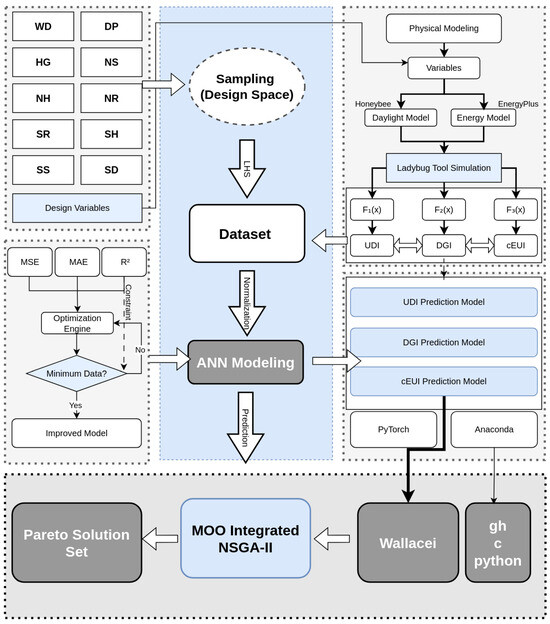
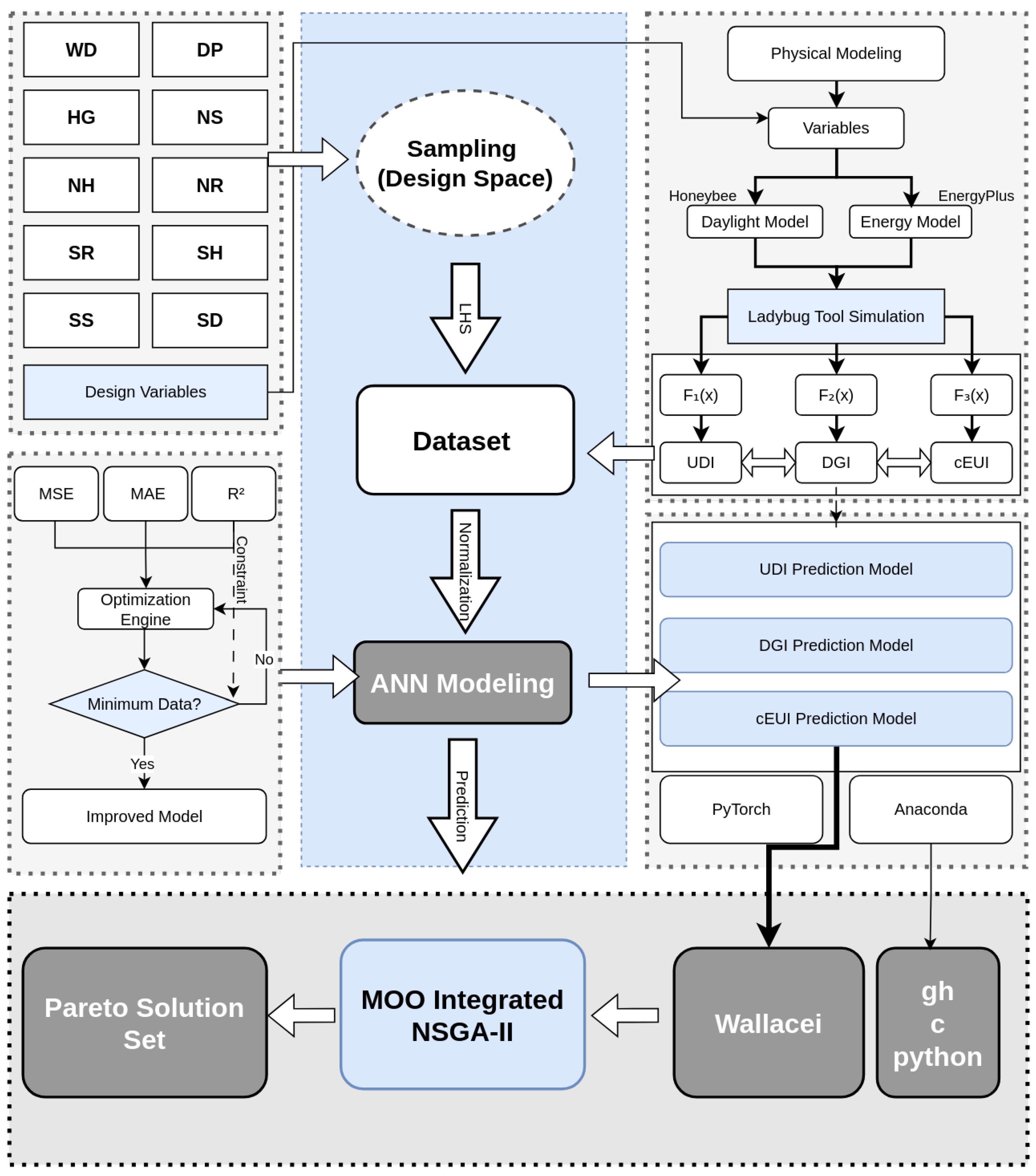
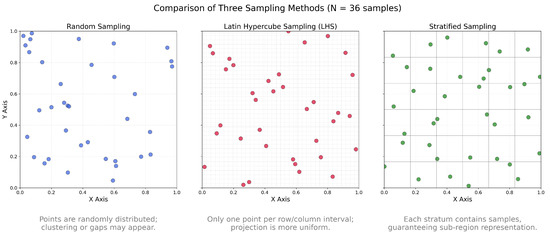
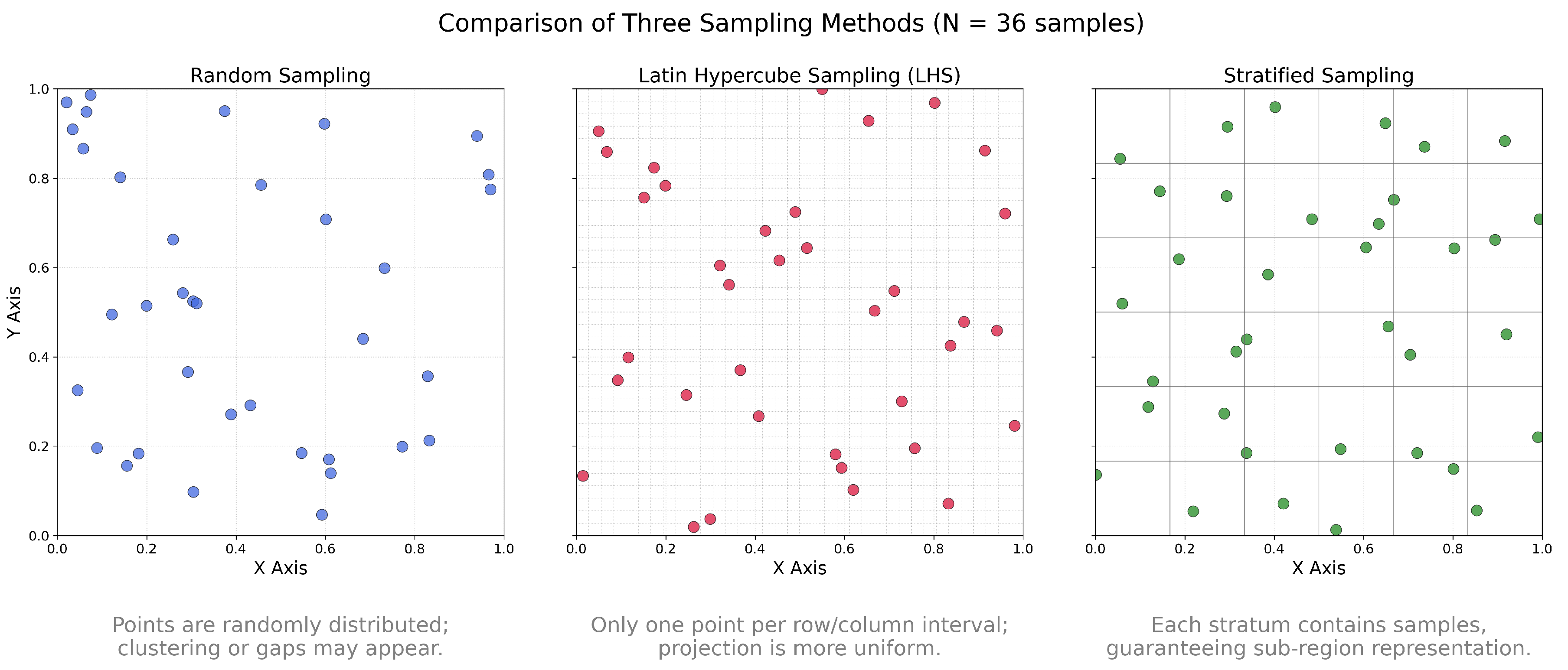
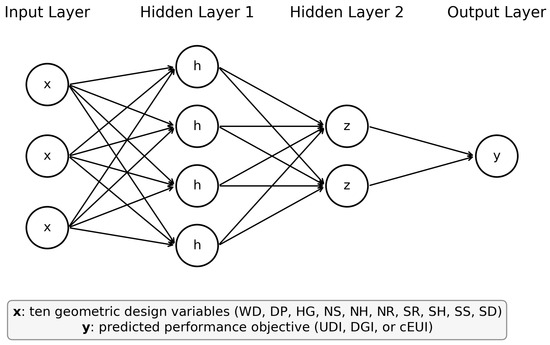
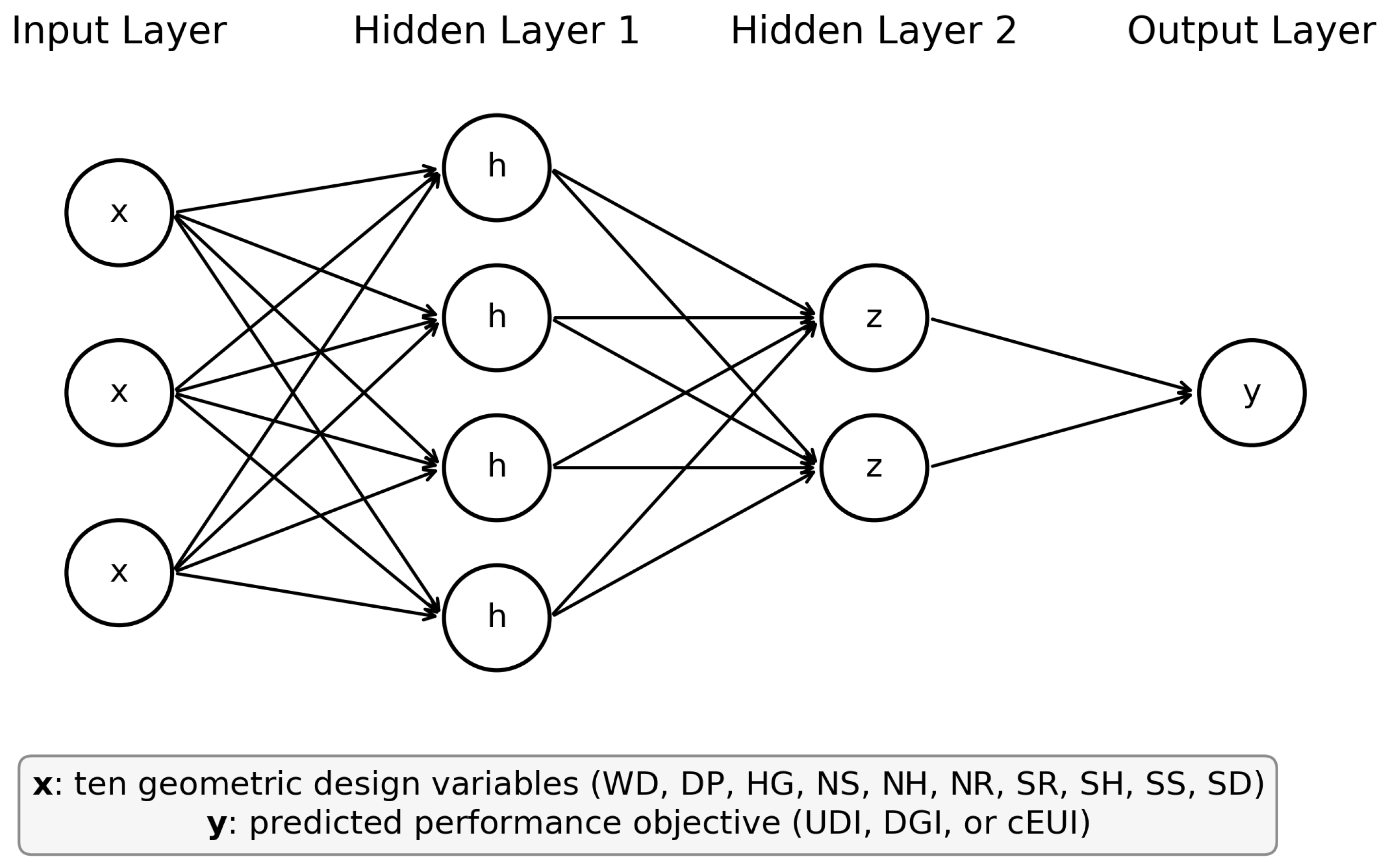
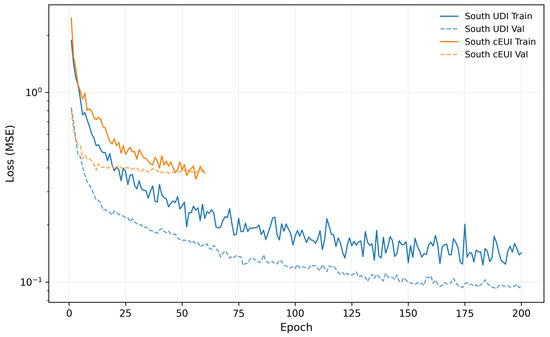
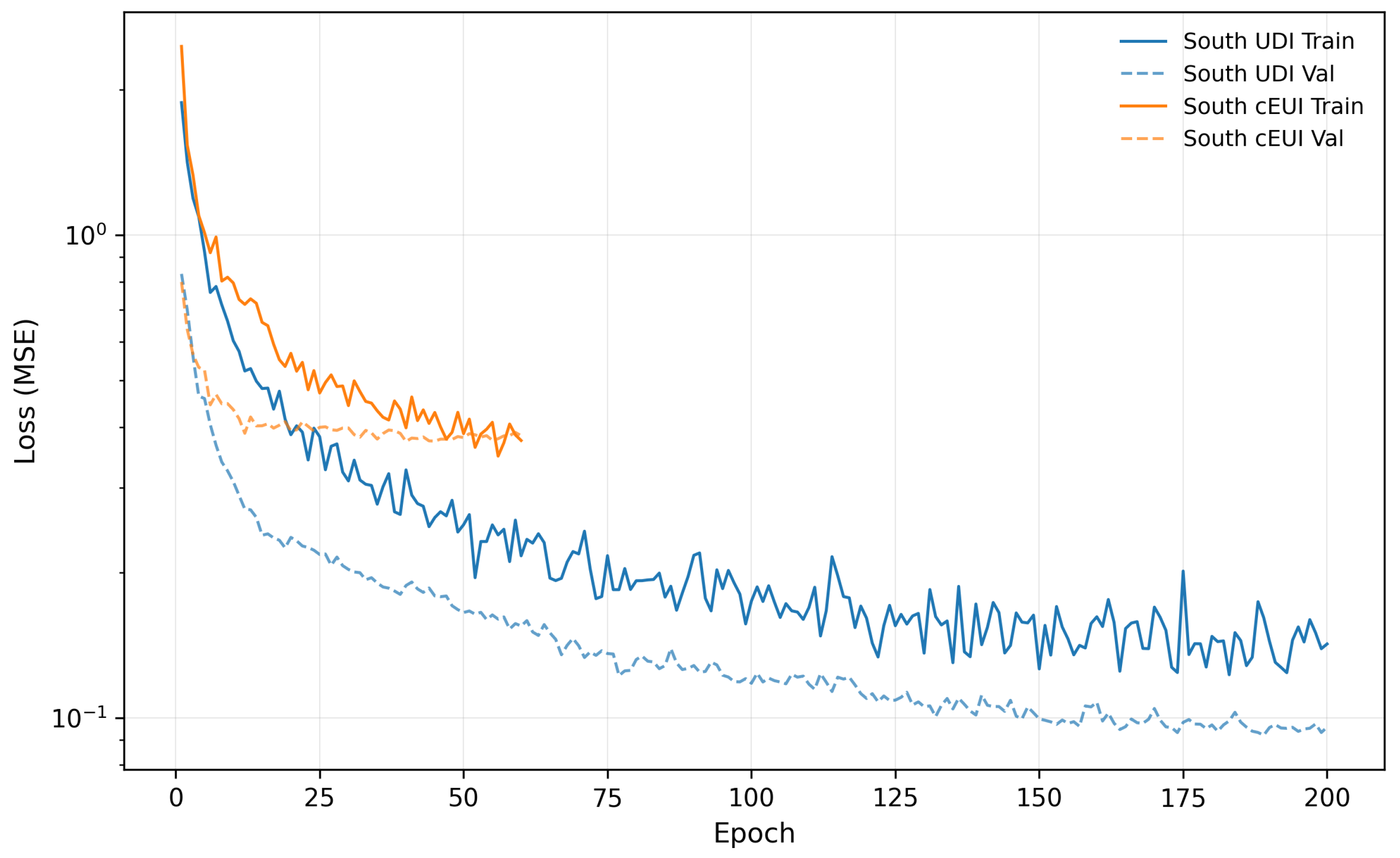
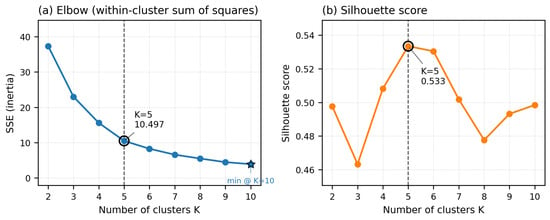
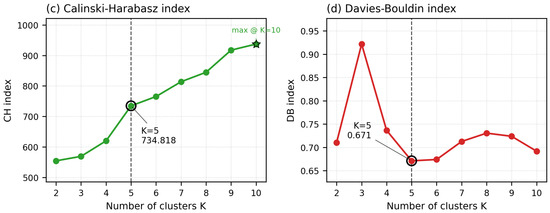
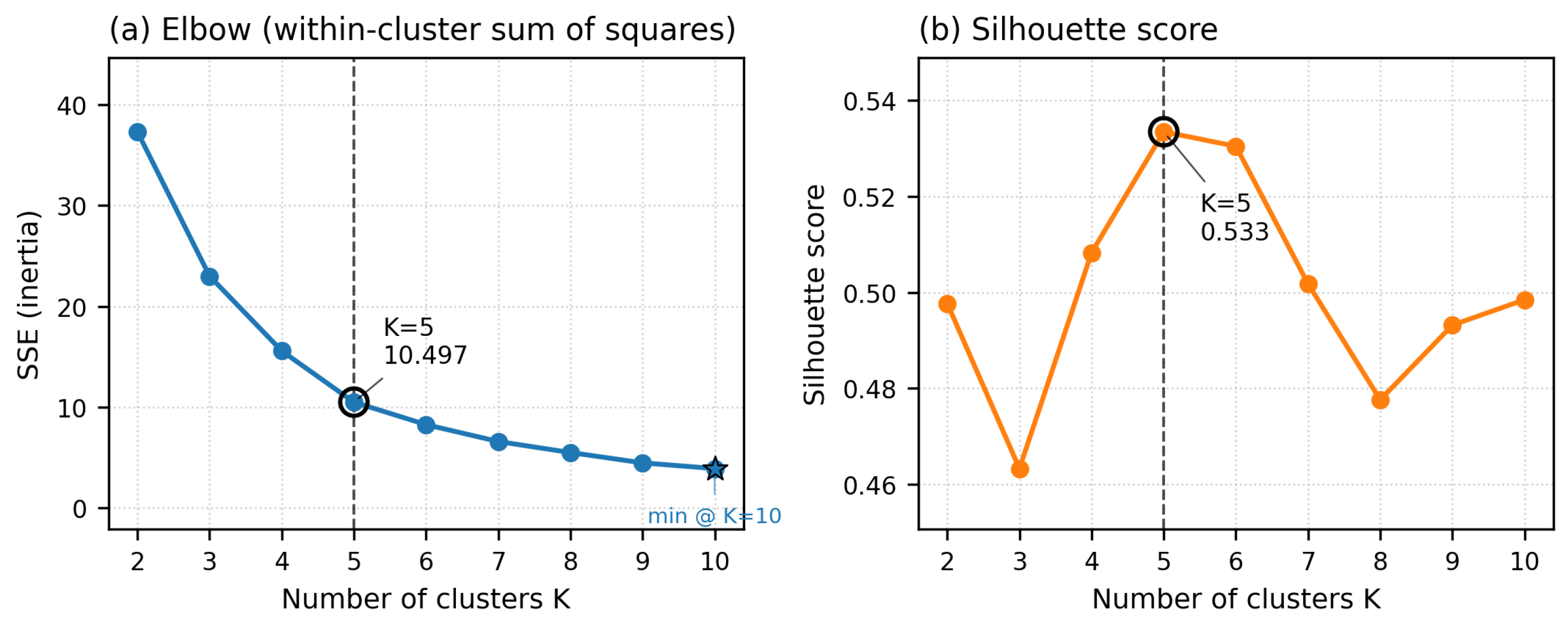
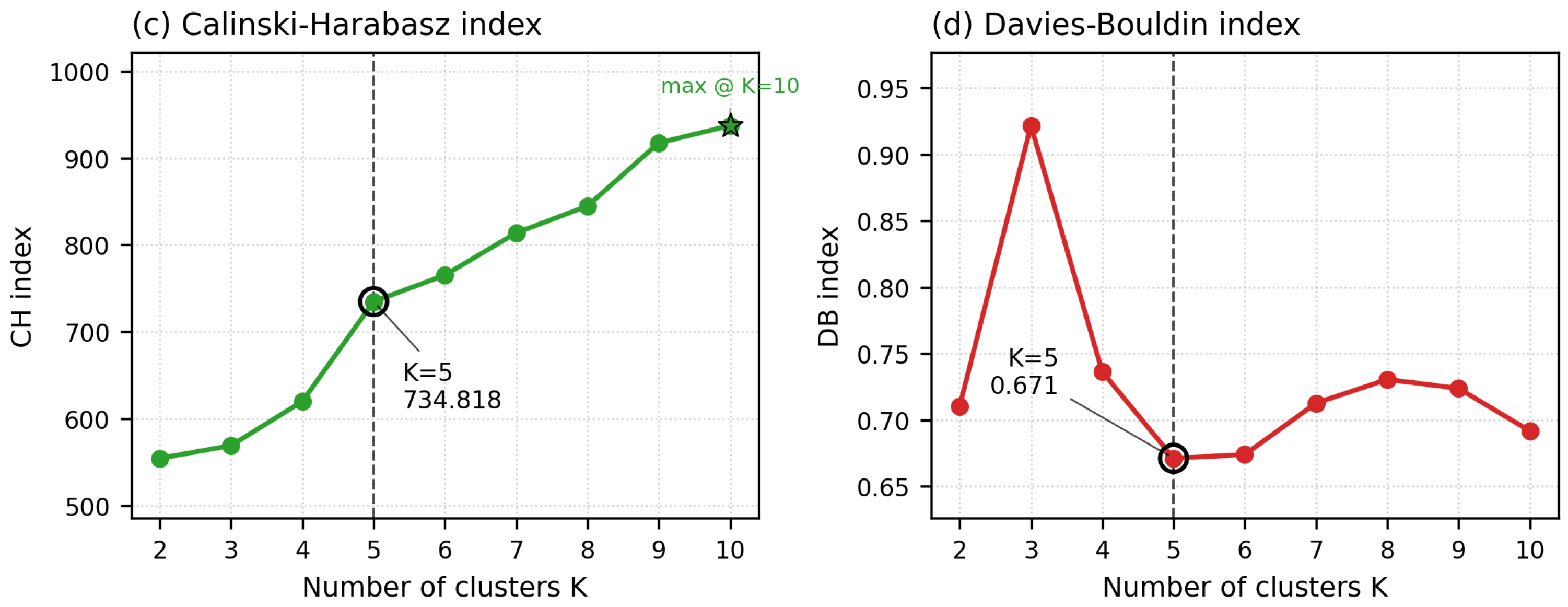
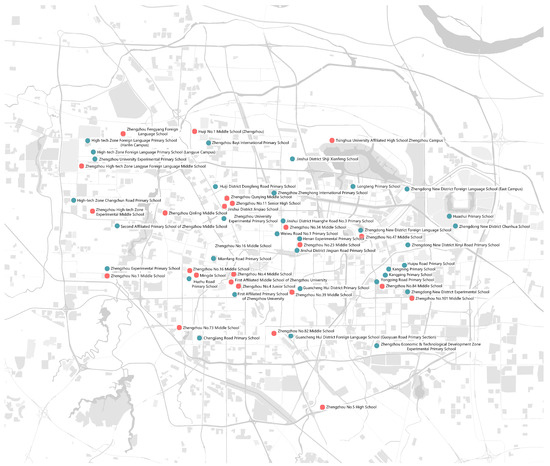
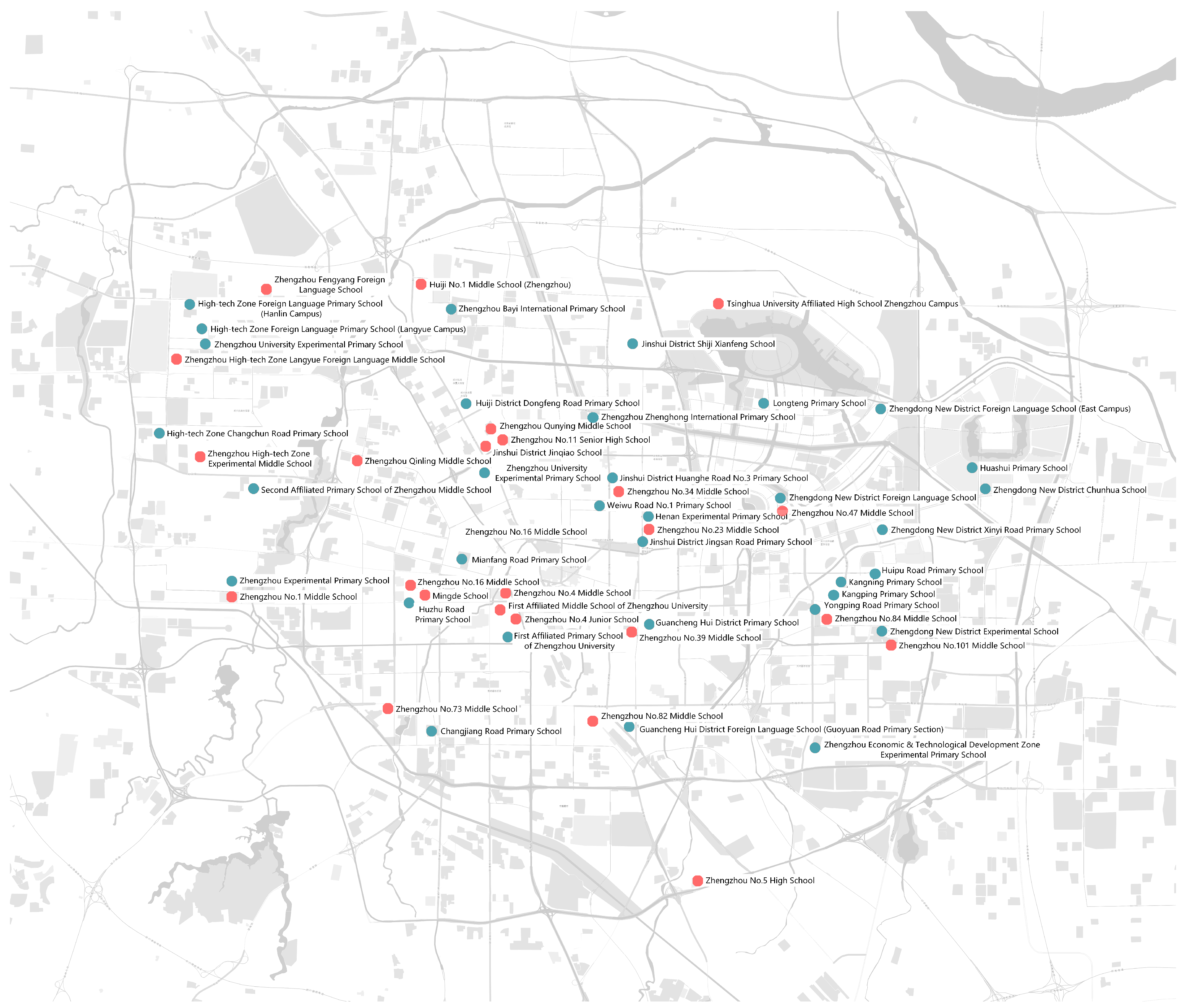
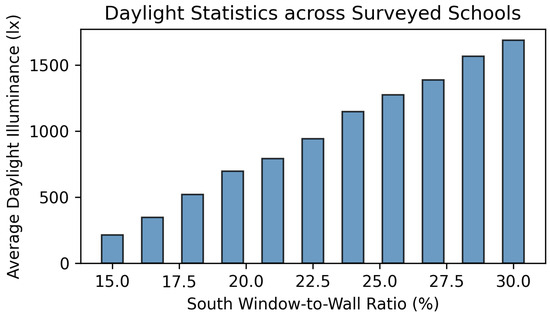
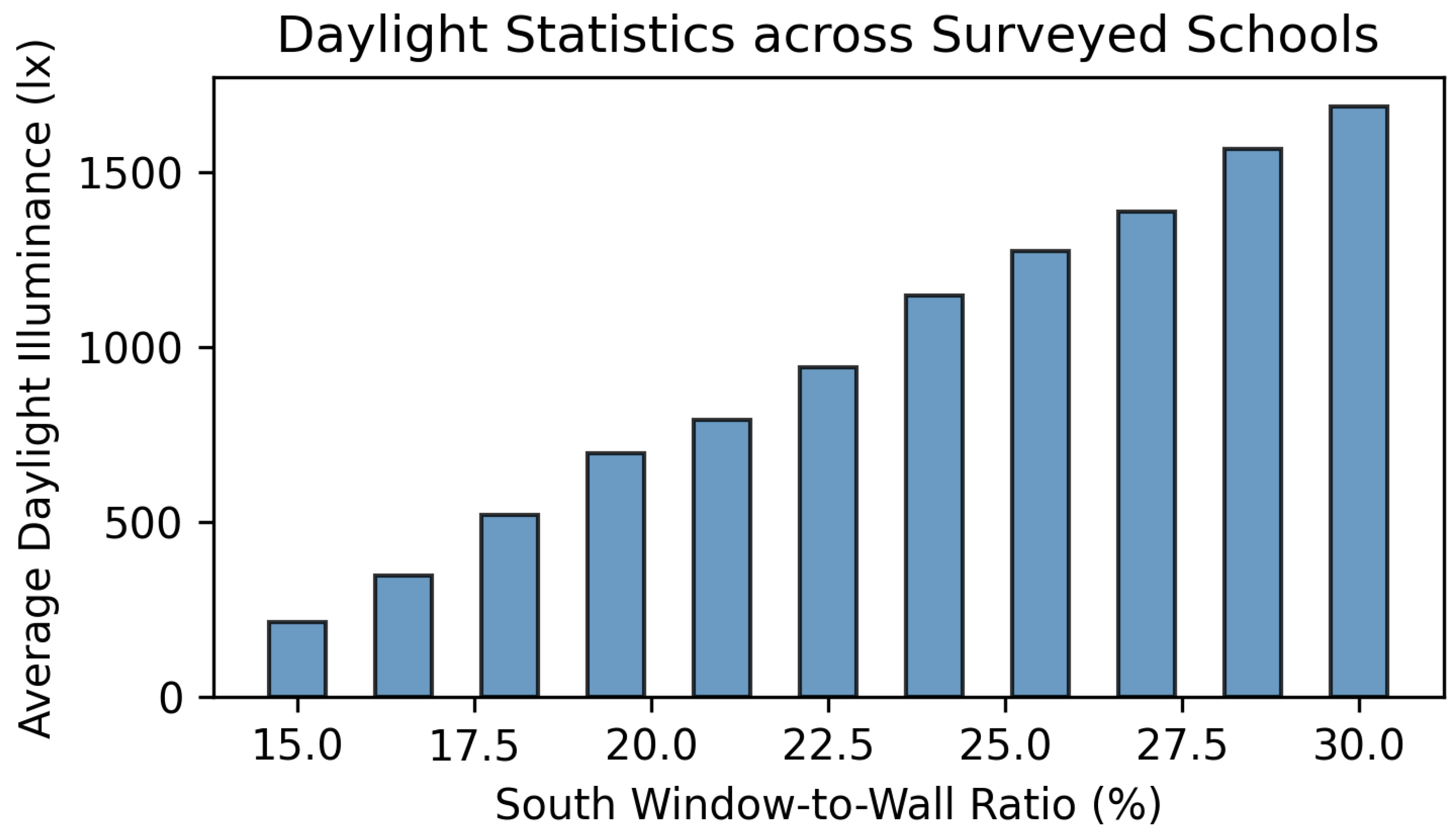
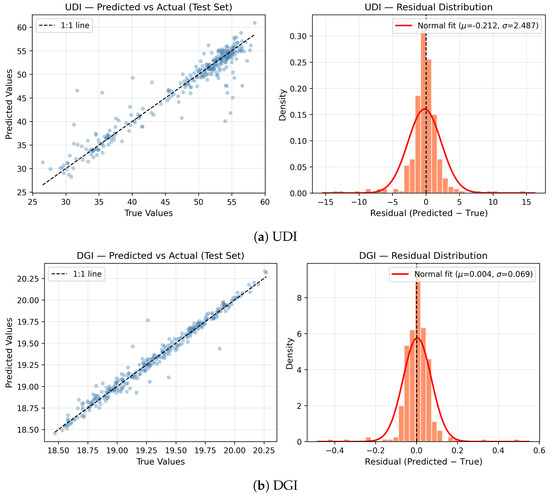
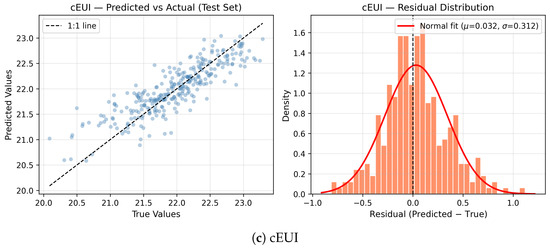
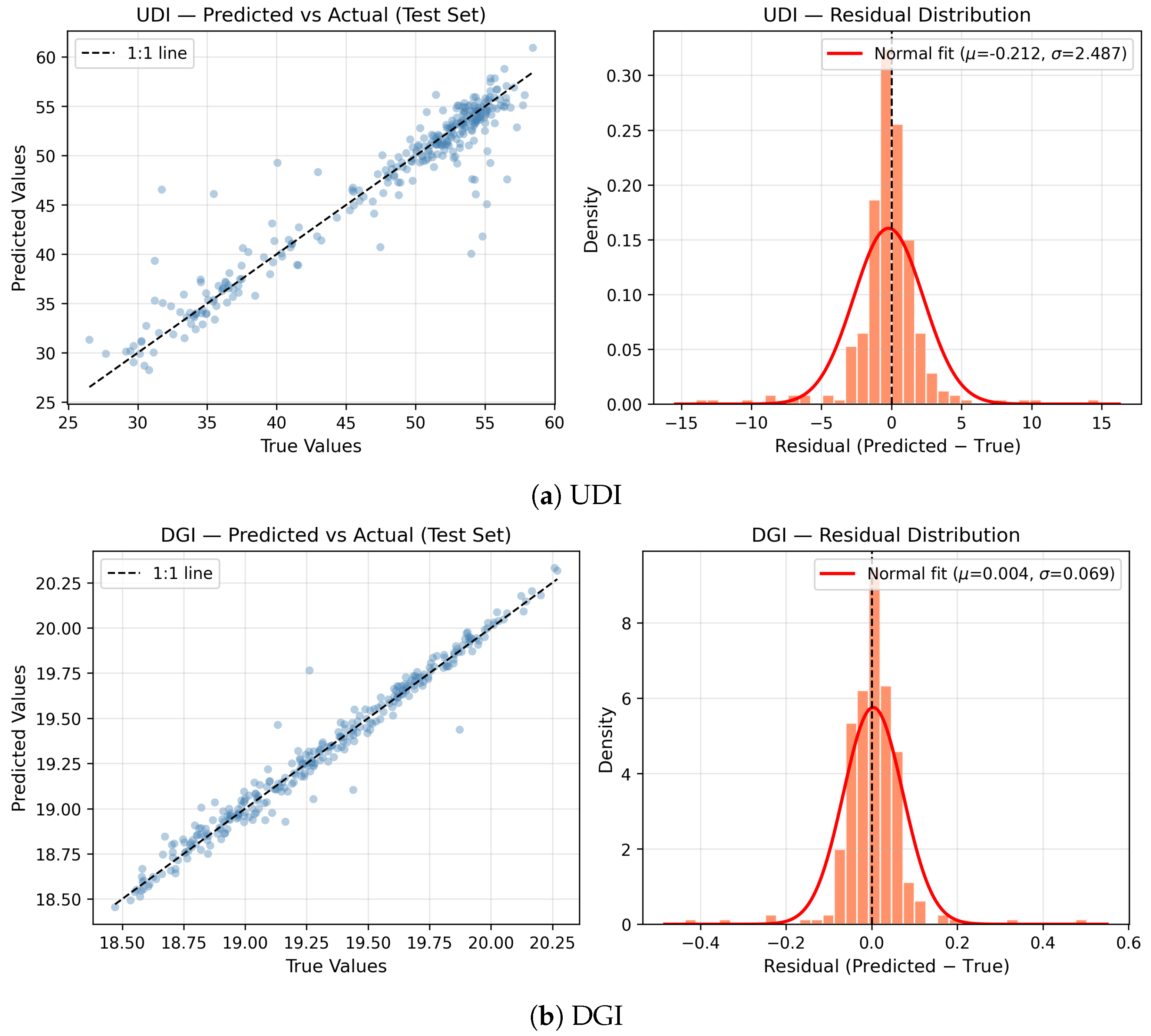
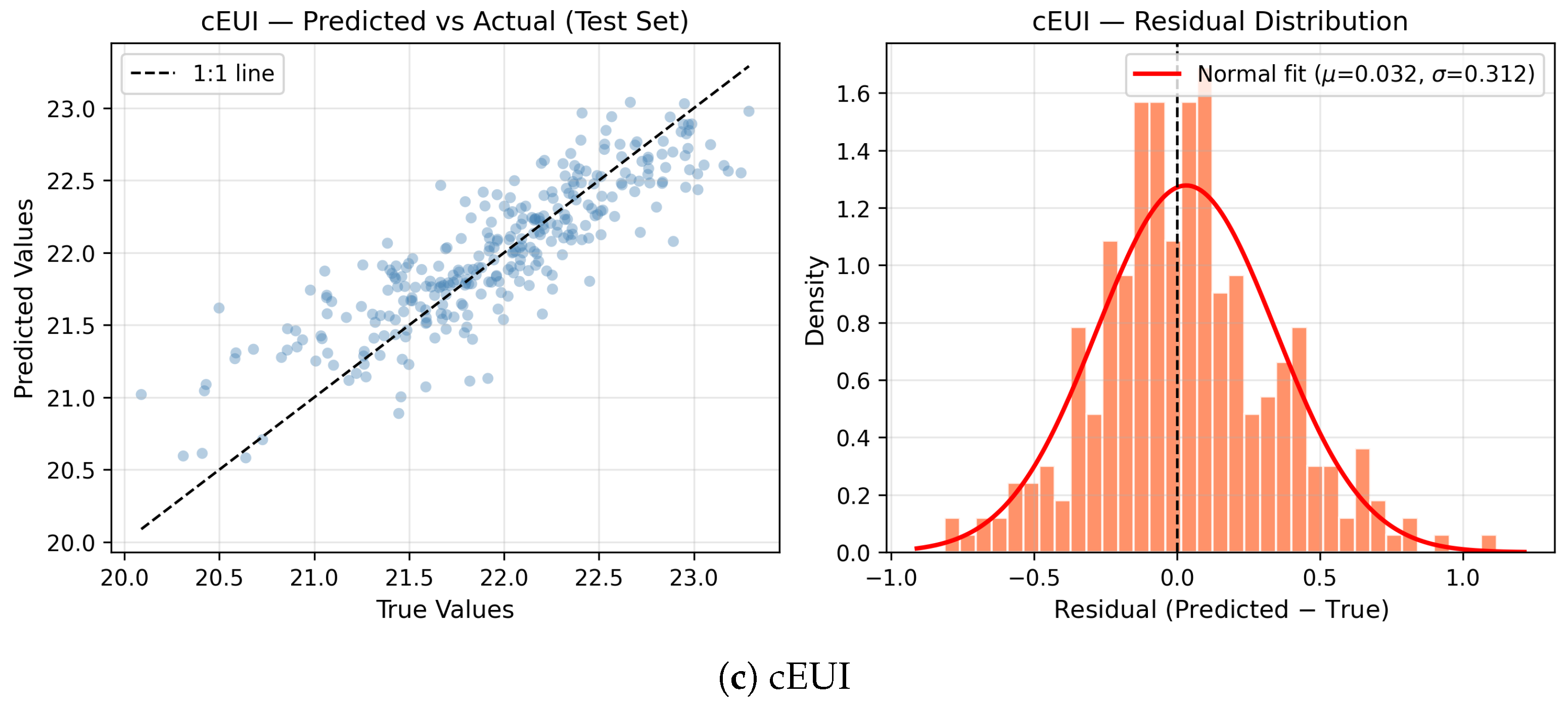
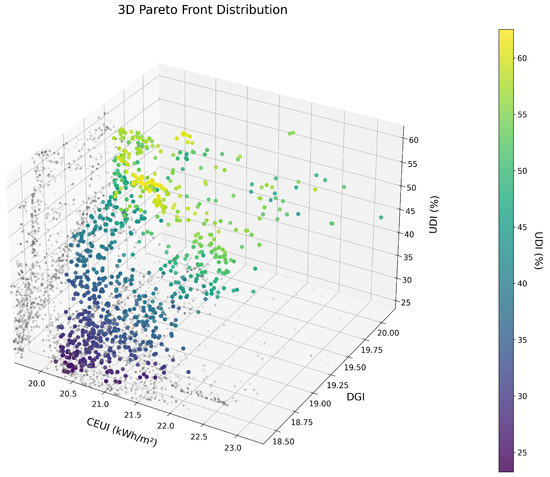
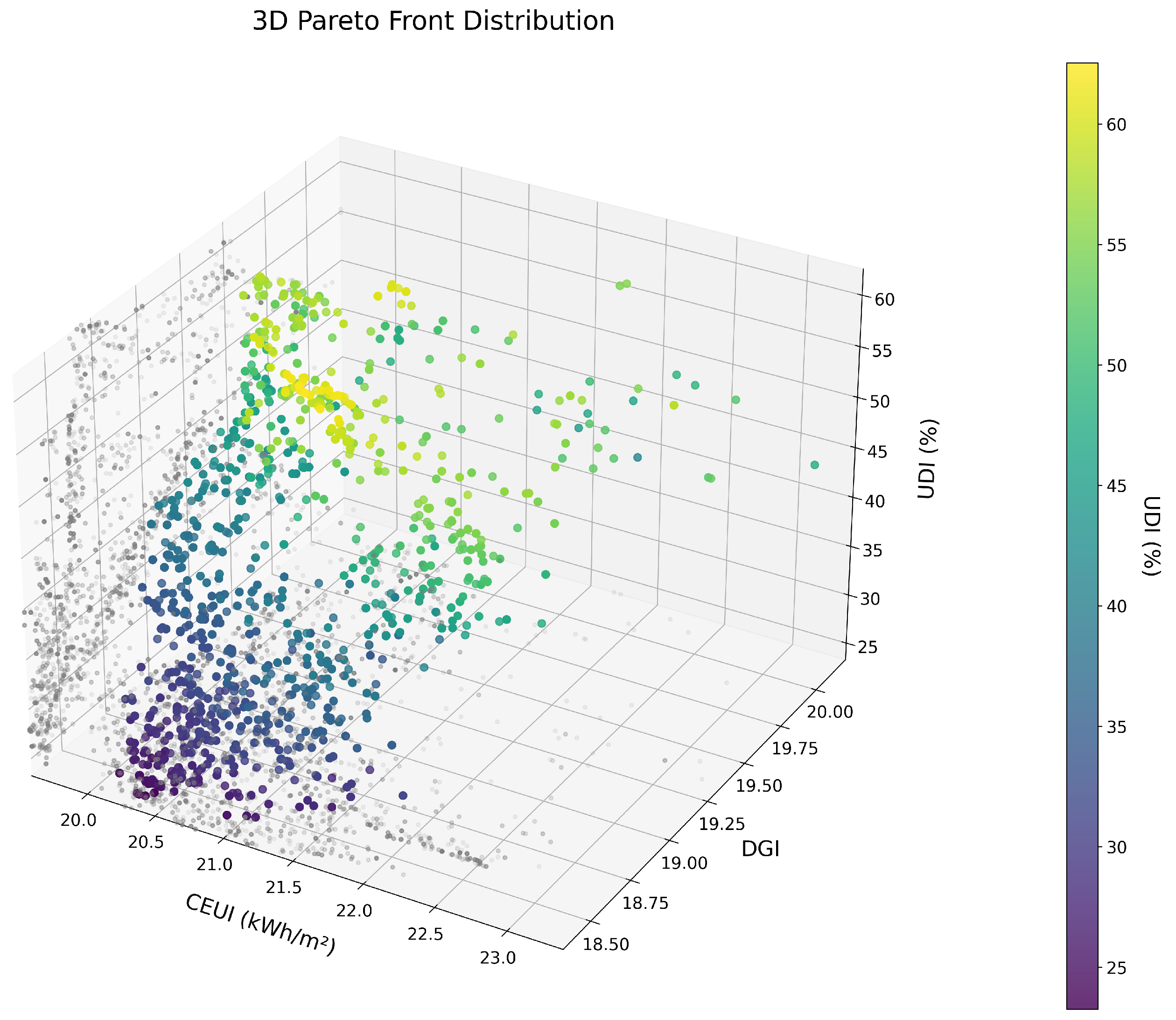
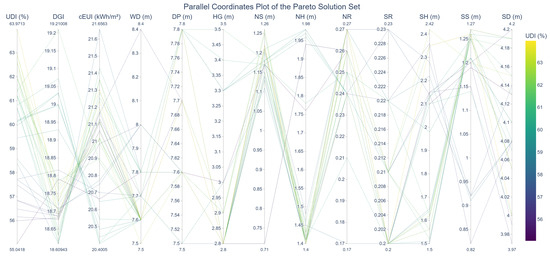
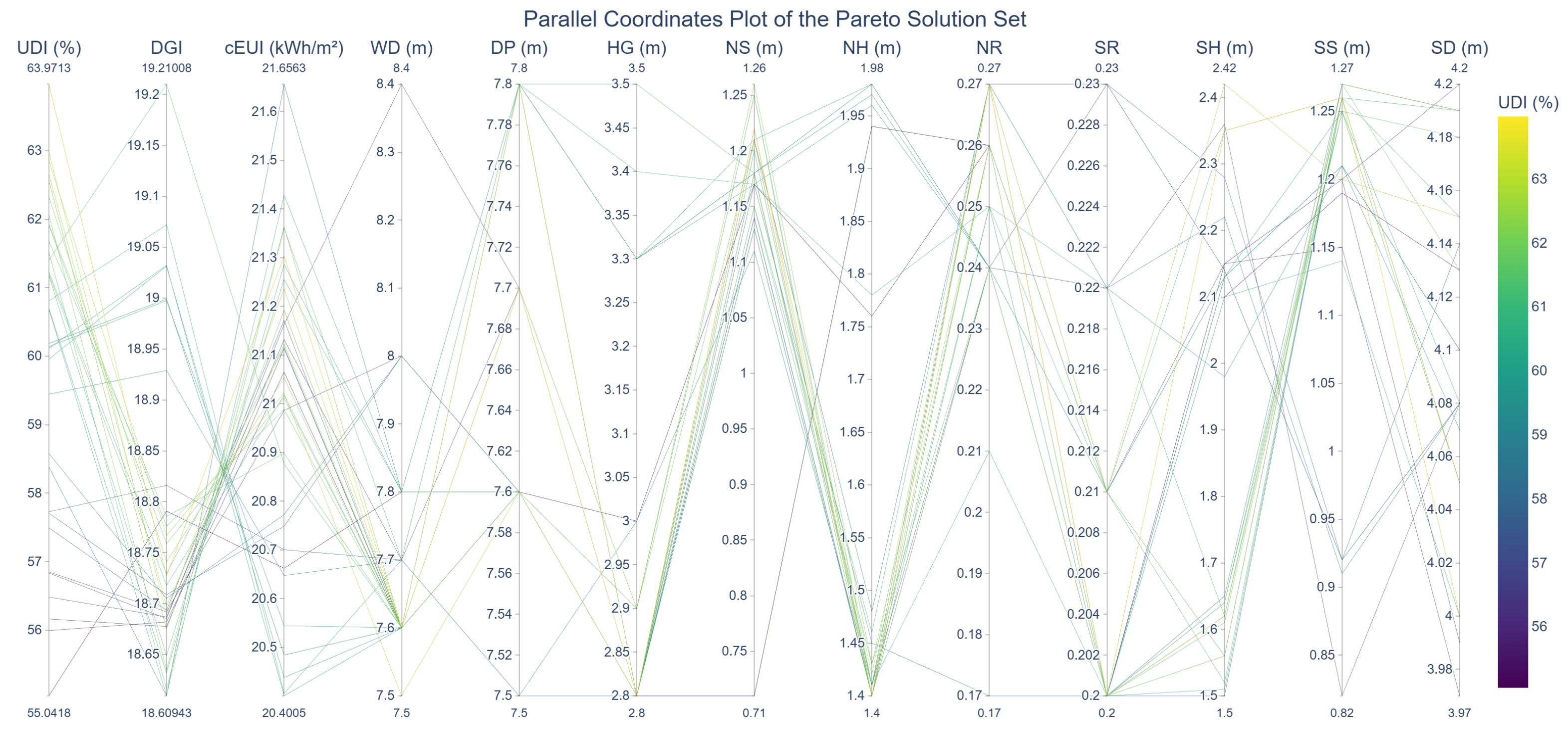
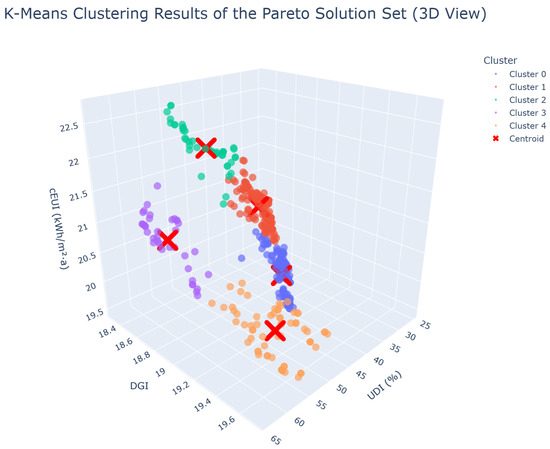
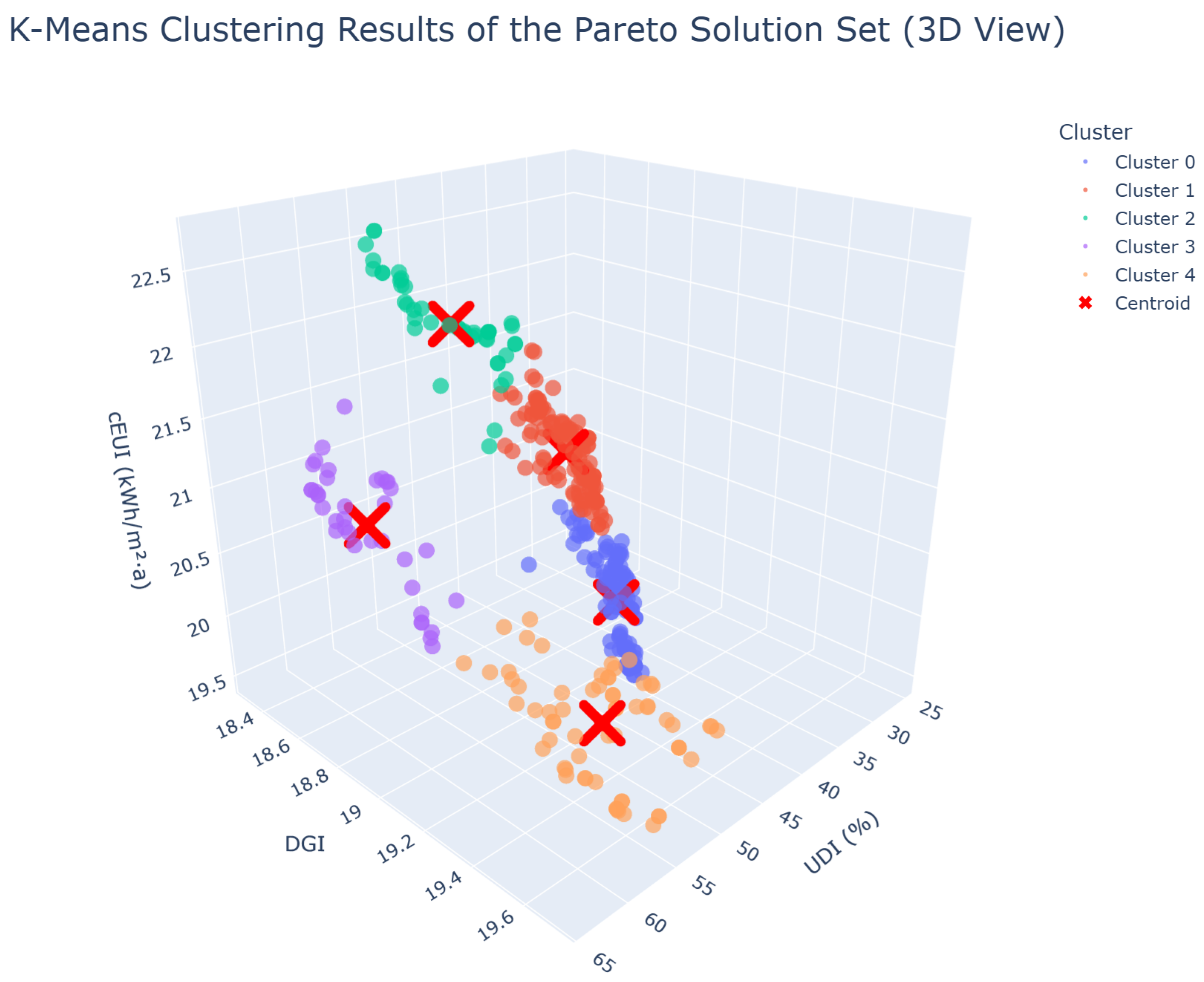
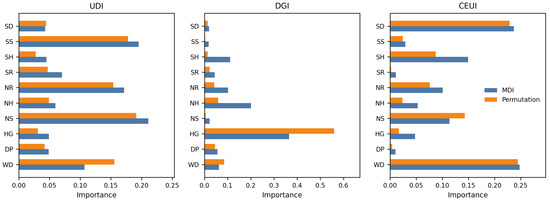
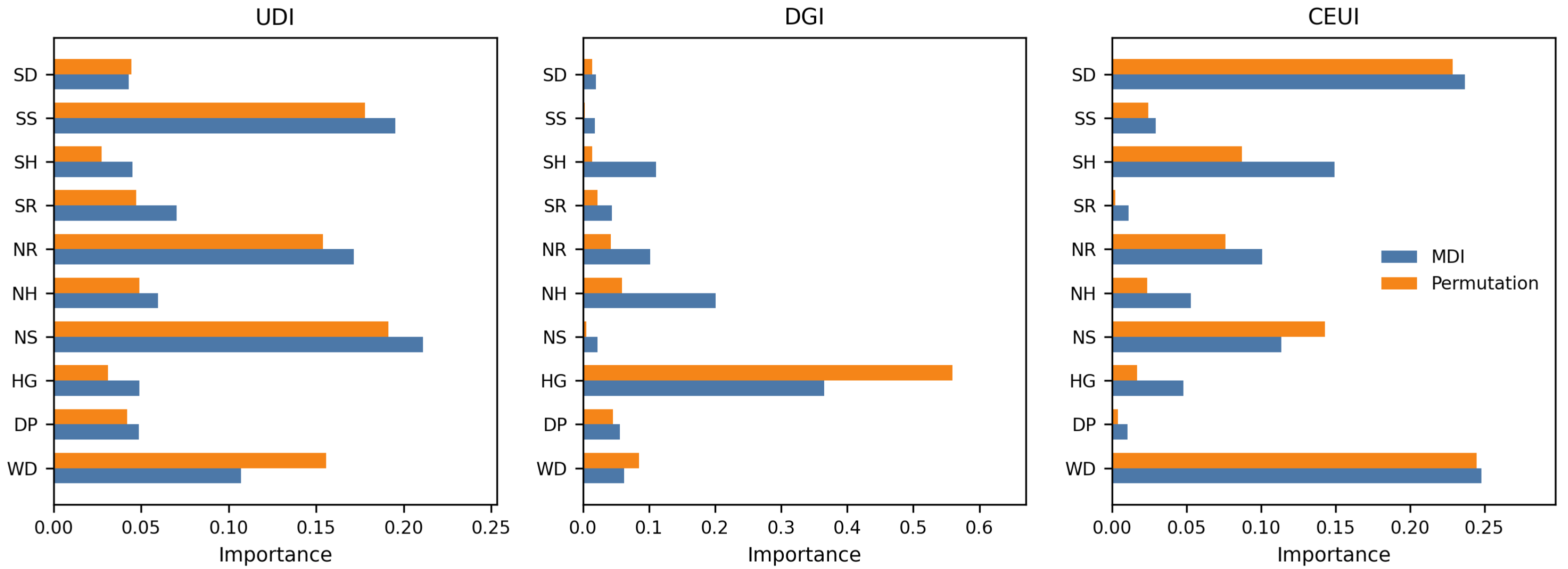
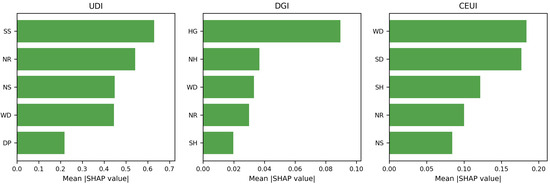
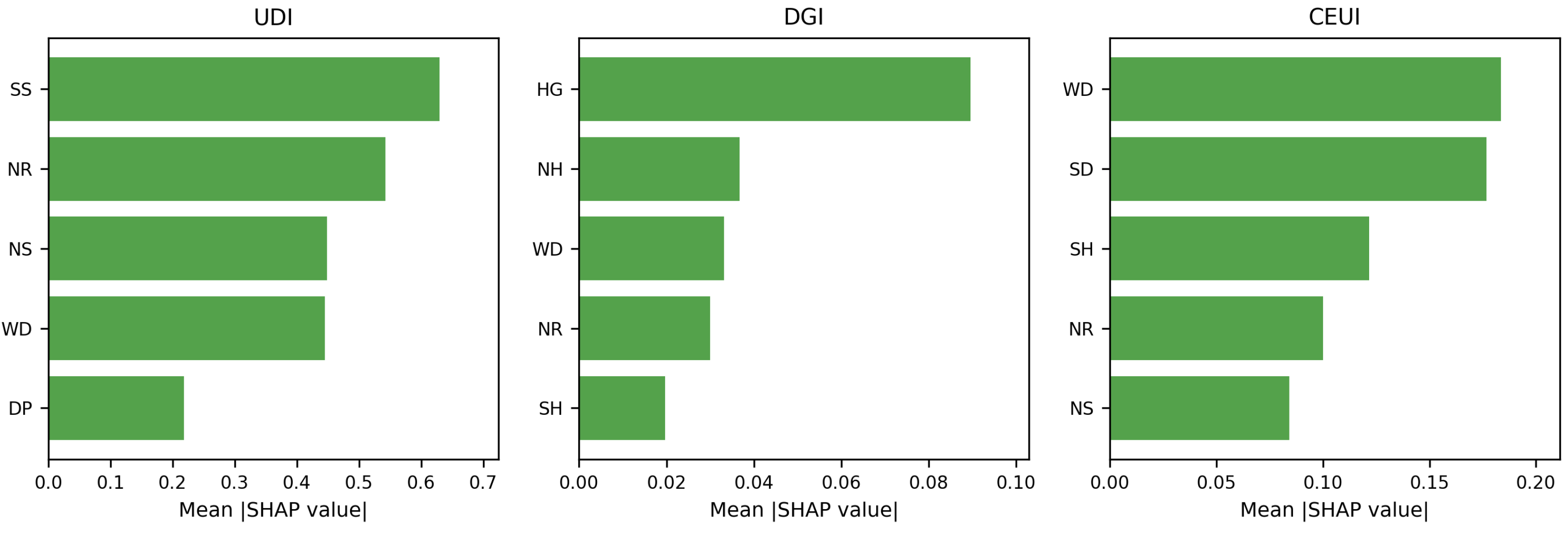
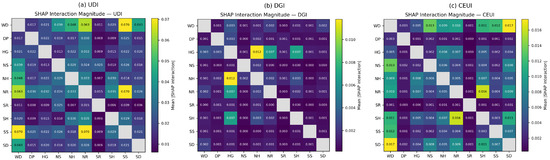
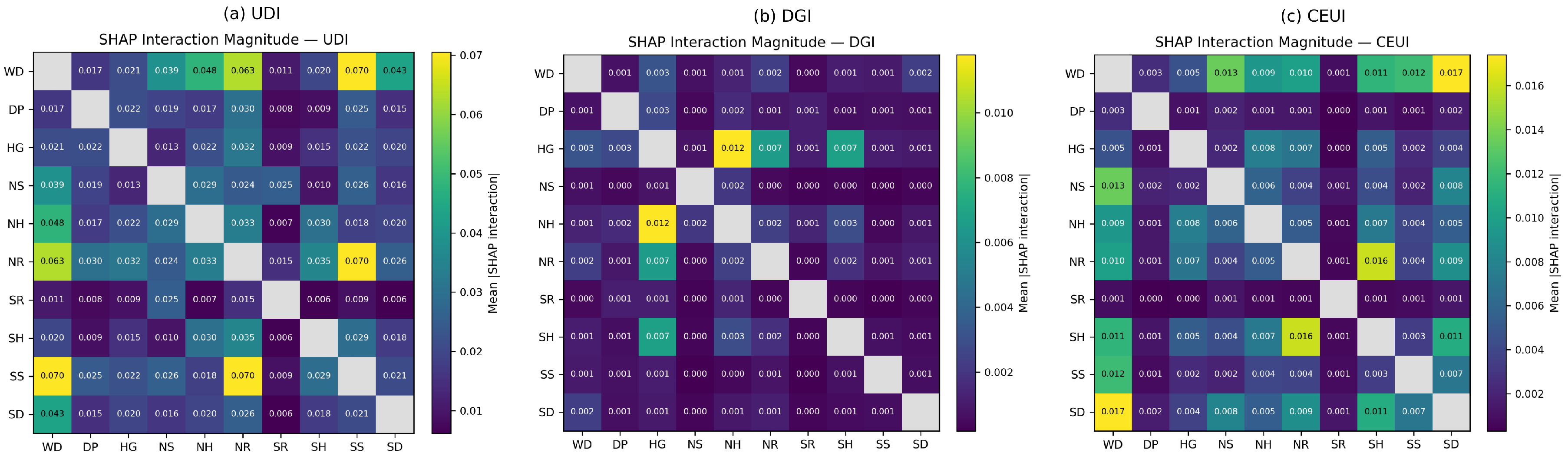
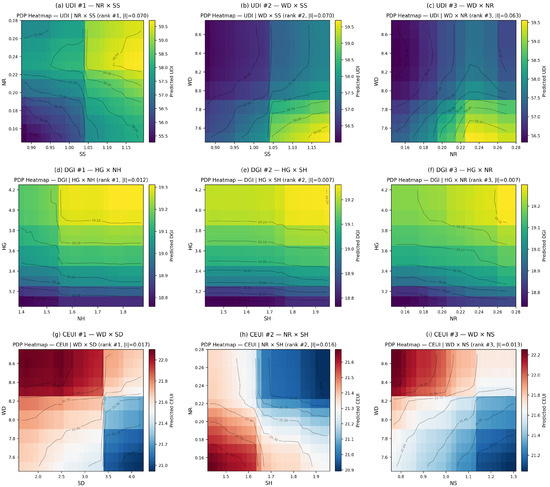
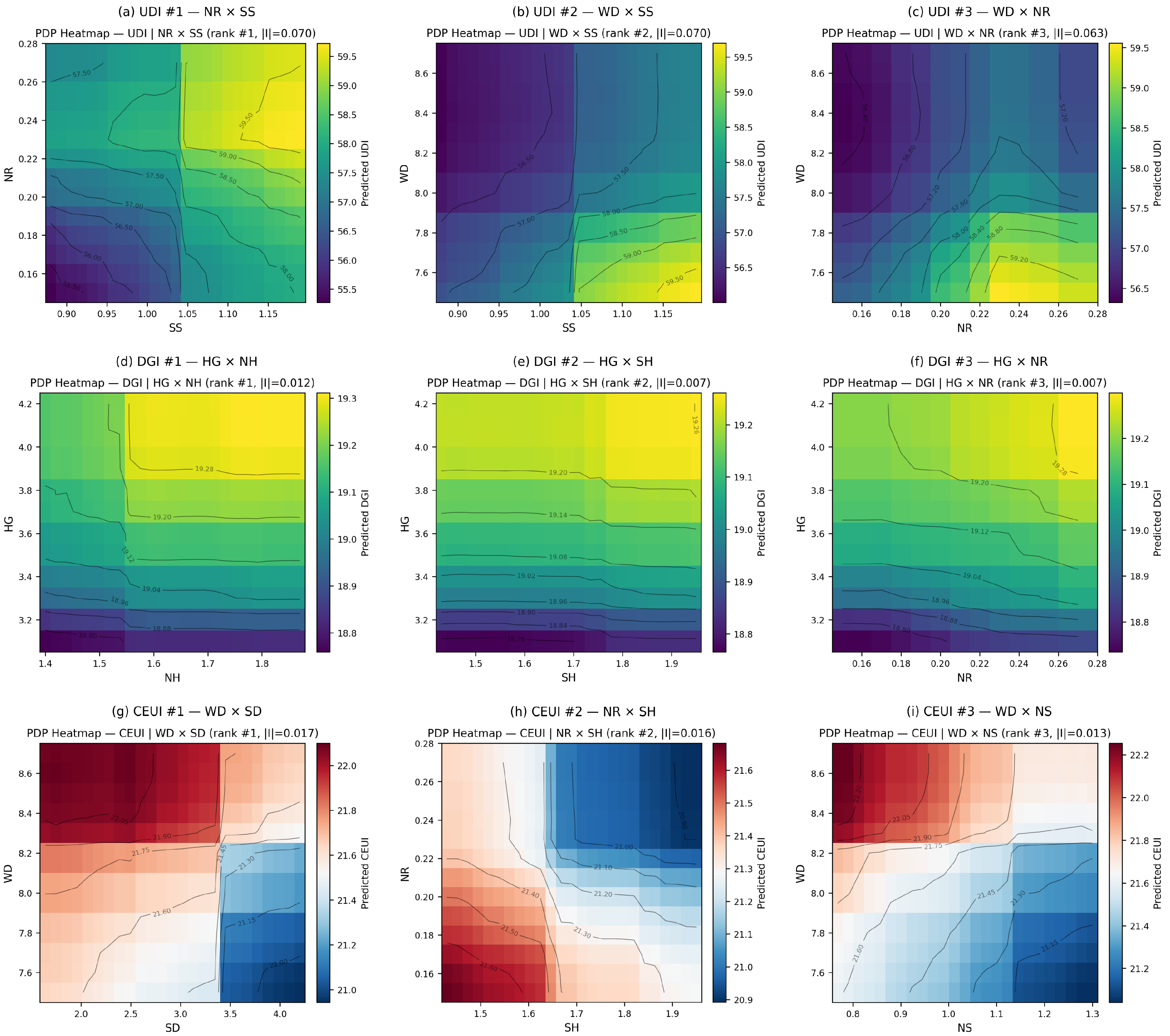

Disclaimer/Publisher’s Note: The statements, opinions and data contained in all publications are solely those of the individual author(s) and contributor(s) and not of MDPI and/or the editor(s). MDPI and/or the editor(s) disclaim responsibility for any injury to people or property resulting from any ideas, methods, instructions or products referred to in the content. |
© 2026 by the authors. Licensee MDPI, Basel, Switzerland. This article is an open access article distributed under the terms and conditions of the Creative Commons Attribution (CC BY) license.