


Abstract
Reinforced concrete (RC) buildings in coastal seismic regions are exposed to coupled deterioration processes driven by chloride-induced corrosion and earthquake loading. This interaction is particularly critical along the Mexican Pacific coast, where persistent marine exposure coincides with high seismic hazard. Nevertheless, current models lack a consistent multi-physics framework that integrates chloride transport, electrochemical heterogeneity (including galvanic interactions), and seismic structural response. This study quantifies the influence of corrosion on seismic collapse probability by explicitly modeling the coupled mechanisms of moisture transport, chloride ingress, and electrochemical potential distribution in RC members. A three-dimensional mechanistic framework is adopted to capture the spatial variability in corrosion, including galvanic interactions between passive and active reinforcement regions. A representative scenario is examined in which a corner column remains in continuous contact with seawater, promoting localized chloride accumulation and sustained corrosion activity. The resulting nonuniform section loss is incorporated into nonlinear structural models subjected to mainshock–aftershock sequences. The results show that corrosion-induced heterogeneity, amplified by galvanic coupling between passive and active zones, accelerates strength and stiffness degradation. Compared to conventional uniform corrosion assumptions, this effect leads to a significant increase in early collapse probability, with values increasing from near-zero levels to approximately – at moderate seismic intensity levels. These findings emphasize the need to account for coupled transport and electrochemical processes, as well as localized exposure conditions, in the seismic assessment of RC structures in aggressive coastal environments.
1. Introduction
Reinforced concrete (RC) has been the defining construction material of the twentieth century, enabling a wide range of architectural and engineering achievements. However, the longstanding perception of inherent robustness and durability attributed to RC structures has frequently resulted in an overestimation of their true long-term performance. As a consequence, many buildings designed under the assumption of minimal maintenance now exhibit advanced deterioration, primarily due to reinforcement corrosion induced by chloride ingress and moisture penetration. This misjudgment has led to the premature degradation of both emblematic modern constructions and ordinary infrastructure, raising significant concerns regarding structural safety and serviceability [1,2].
The problem is particularly severe in coastal and seismic regions, where environmental exposure and repeated earthquake demands coexist. Chloride-induced corrosion compromises the passive oxide layer protecting steel reinforcement, promoting localized pitting and progressive section loss. Previous studies have described the depassivation behavior of steel in chloride-containing environments, highlighting the critical role of chloride ions in destabilizing the passive film [3,4,5]. Owing to their small size and high mobility, they can readily penetrate the passive film on steel, which inherently contains defects and pores. Once within the film, chlorides react with ferrous ions to form soluble ferrous chloride [6,7]. Subsequently, ferrous chloride undergoes hydrolysis in aqueous solution, leading to the formation of ferrous hydroxide and the release of acidity [6,7]. The generation of HCl induces a localized decrease in pH, promoting further dissolution of the passive film and hindering repassivation. Simultaneously, the regeneration of chloride ions sustains a cyclic process that enhances metal dissolution. This localized acidification, coupled with the depletion of ferrous ions near anodic regions, leads to the formation of weak points at the steel–concrete interface [6,8,9]. These heterogeneities give rise to localized anodic sites, generating potential gradients that drive chloride migration and accumulation. When their concentration exceeds a critical threshold at the cover depth, the passive layer that protects the steel is disrupted. From this point on, electrochemical reactions are triggered, leading to the formation of corrosion products, such as iron oxides and hydroxides, in the presence of oxygen and moisture. This process persists over time, progressively deteriorating the material and compromising the structural integrity, with steel corrosion being one of the main causes of the end of its service life [10,11,12,13].
In addition to chloride-induced corrosion, sulfate attack constitutes a significant degradation mechanism affecting the durability of concrete. Sulfate ions penetrate the concrete matrix and react with cement hydration products to form expansive phases such as ettringite and gypsum, leading to cracking, mass loss, and progressive deterioration [14,15]. These effects are often intensified under wetting–drying cycles, which promote ion transport and concentration gradients within the pore structure. Furthermore, the coexistence of sulfates with other aggressive species, including chlorides, may accelerate degradation processes, highlighting the importance of considering coupled chemical mechanisms when assessing the long-term performance of reinforced concrete structures [16,17]. Also, crystallization processes resulting from these reactions exert internal pressures on the pore walls, promoting the initiation and evolution of damage, and leading to the progressive degradation of the material’s macroscopic properties [18,19,20,21].
The degradation caused by chlorides reduces strength, stiffness, and ductility, while also interacting with cumulative seismic damage. Recent studies have demonstrated that mainshock–aftershock (MS–AS) sequences can substantially increase fragility and expected losses in corroded RC buildings, compared to their undamaged counterparts [22,23,24]. The interaction between time-dependent corrosion and seismic accumulation thus represents a critical dual hazard affecting the life-cycle performance of RC structures.
Accurate assessment of this combined deterioration requires physically consistent modeling of water transport, chloride ingress, and electric potential distribution within RC elements. Earlier approaches relied on simplified diffusion models or gravimetric techniques, which lacked spatial resolution and could not capture transient wetting–drying effects. Experimental advances, including magnetic resonance imaging, have revealed the heterogeneous nature of moisture uptake in cementitious materials, distinguishing permeability- and sorptivity-controlled regimes [25,26]. Building on these insights, numerical formulations based on Darcy’s law, Richards’ equation, and mass transport theory have been developed to simulate coupled water–chloride processes under realistic boundary conditions [27,28,29].
Beyond transport mechanisms, corrosion’s progression is strongly influenced by electrochemical interactions along the reinforcement network. In real structures, spatially nonuniform chloride exposure may lead to galvanic (macrocell) coupling between actively corroding steel in chloride-rich zones and passive reinforcement in less exposed regions. Such galvanic effects could significantly accelerate localized corrosion rates, producing irregular steel loss, premature cracking, and earlier stiffness degradation compared to uniform corrosion assumptions [30,31,32,33,34]. Neglecting these mechanisms may therefore result in non-conservative estimates of structural reliability, particularly in marine or splash-zone environments.
Field investigations following the 2023 Kahramanmaraş earthquakes (Mw 7.7 and 7.6) have clearly demonstrated that reinforcement corrosion is a key factor contributing to the collapse and severe damage of reinforced concrete structures. Detailed assessments of heavily damaged buildings show that inadequate concrete quality and high permeability promote corrosion, resulting in reinforcement cross-section loss, cover spalling, and significant bond deterioration. These mechanisms, often combined with the use of smooth reinforcement, poor detailing, and insufficient mechanical properties, lead to reduced confinement and increased susceptibility to brittle seismic failure. Recent findings further underline that reinforcement corrosion diminishes structural capacity and exacerbates seismic damage in reinforced concrete buildings, highlighting the need for corrosion-resistant reinforcement solutions and improved seismic design and retrofitting strategies [35,36].
The present study extends previous work on cumulative seismic damage in RC buildings [22] by incorporating a physics-based, three-dimensional chloride ingress and corrosion model that explicitly captures spatial variability, moisture exchange (evaporation) boundary conditions, and the potential formation of galvanic coupling between passive and active steel regions. The model is implemented in an RC building whose geometry is defined according to architectural plans representative of typical constructions along the Mexican Pacific coast, allowing the corrosion processes to be evaluated within a realistic structural configuration. This approach allows the identification of critical chloride concentrations at the steel–concrete interface that trigger corrosion initiation and progressive reinforcement section loss. This degradation is directly linked to reductions in stiffness and strength, as well as changes in fundamental vibration periods, thereby altering the structural resistance against seismic demand. The time-dependent deterioration of these properties is subsequently introduced into nonlinear dynamic analyses under MS–AS sequences, enabling the evaluation of state-dependent fragility and the evolution of collapse capacity.
By explicitly connecting electrochemical deterioration mechanisms with structural response under seismic loading, this work provides a mechanistic basis for understanding how corrosion accelerates the progression toward structural failure in RC buildings exposed to aggressive coastal environments. The results demonstrate that localized potential galvanic effects can significantly hasten the loss of structural integrity. These findings underscore the importance of incorporating physically based corrosion modeling in seismic failure assessments and long-term maintenance planning of coastal RC infrastructure.
2. Modeling
2.1. Chloride Penetration Model Description
The modeling framework employed in this study builds on two previously published formulations addressing (i) transient moisture transport in cementitious materials and (ii) chloride ingress with binding effects. Specifically, we adopt and adapt the capillary water absorption model of Van Belleghem et al. [28] and the coupled water–chloride transport formulation developed by Montoya and Nagel [29]. This choice ensures continuity with our earlier developments (governing equations, parameter definitions, and calibration protocols), facilitates direct reuse of validated code and datasets, and preserves consistency in how moisture-dependent transport coefficients and binding kinetics are represented. In contrast to prior lab-scale applications, here we apply the same mathematical framework to a real reinforced concrete (RC) structure. Moreover, the spatiotemporal fields obtained from this hygro-ionic model are subsequently exported to a companion analysis in a different domain, namely, the assessment of seismic events, where material degradation maps inform structural vulnerability under dynamic loading.
As discussed in the following subsections, the water uptake model is formulated to be fully sensitive to environmental conditions applied over the external boundaries of the three-dimensional domain. In particular, spatial and temporal variations in temperature and relative humidity govern capillary suction, moisture redistribution, and evaporation processes throughout the structure. These environmental factors also play a key role in controlling the ingress and transport of chlorides.
Within the present framework, chloride penetration is introduced through a localized exposure condition, corresponding to the specific case study considered, whereas the moisture field evolves globally under both global and localized boundary conditions. This coupling provides the physical driving mechanism for the transport of aggressive agents within the concrete.
2.1.1. Water Uptake Model
Let denote the volumetric water content, with the saturated value. Transient capillary uptake in an unsaturated porous matrix is modeled as a nonlinear diffusion process:
where is an effective transport coefficient (capillary diffusivity) that captures the strong dependence of permeability on saturation. Following [28], is taken as a monotone function of the normalized saturation:
with a characteristic capillary transport coefficient, the initial water content, and an empirical exponent.
The boundary and initial conditions read
where represents a surface in persistent contact with liquid water (saturation imposed), a no-flux boundary, and a partially exposed surface subjected to a prescribed moisture flux that, depending on the absolute humidity of the external environment, may result in either evaporation or condensation of water at the boundary.
In Equations (4) and (5), denotes the outward normal derivative of the moisture content at the boundary, where is the unit outward normal vector to the surface of the domain . Thus, Equation (4) enforces zero moisture flux across , while Equation (5) prescribes a normal moisture flux through , consistent with Fick-type transport [28].
The parameter denotes the experimentally determined initial water content, and is the global domain (concrete structure) in which Equation (1) is solved.
2.1.2. Chloride Transport Model
Let denote the concentration of free chlorides in the pore solution and the concentration of bound chlorides within the solid matrix. The free-chloride balance accounts for moisture-dependent diffusion, potential advective drift associated with capillary flow, and a sink/source term due to binding:
where is the moisture-dependent effective chloride diffusivity, as adopted from [29], and is the Darcy-scale advective velocity inferred from the moisture solution.
Binding is modeled with a first-order kinetic law, which recovers linear equilibrium in the steady limit:
with a binding rate constant and an effective capacity relating the equilibrium bound content to the free concentration [29].
The chloride boundary and initial conditions are
where denotes the imposed surface chloride concentration on the exposed face (where salty water is in permanent contact with the concrete surface), and represents the initial concentration of chloride ions in the global building.
2.1.3. Model Coupling and Scope
Equations (1)–(11) define a coupled, nonlinear initial–boundary value problem capturing the mutual interaction between moisture transport and chloride ingress. The coupling operates through (i) the dependence of ionic diffusion on the moisture field and (ii) the advective velocity derived from the solution of the moisture equation. Building upon prior mortar-scale validation [28,29], the present work extends the formulation to a full structural reinforced concrete configuration. The computed fields over time and space subsequently inform (i) corrosion initiation analyses and (ii) cross-domain studies of structural performance under seismic actions, where degradation patterns (e.g., spatial chloride distributions, moisture states) are used to parameterize damage and stiffness-reduction models at the structural scale.
2.2. Electrical Potential Field and Activation of Corrosion
As soon as the chloride concentration at any point of the steel surface surpasses a critical value , depassivation occurs and active corrosion sites form. From this stage onward, the distribution of electrical potential in the electrolyte becomes essential, because it determines the magnitude and distribution of the corrosion current density and, hence, the progression of steel degradation.
Assuming electroneutrality in the electrolyte, absence of charge accumulation, and negligible ohmic drop inside the steel, the electrical potential in concrete is governed by Laplace’s equation, a formulation widely used in cathodic protection and galvanic corrosion modeling [37,38,39]:
where k is the effective electrical conductivity of the pore solution.
The solution of Equation (12) has been approximated using different numerical methods, including finite elements [40,41], boundary elements [42,43,44], and hybrid or optimization approaches [45,46,47]. These classical works provide the theoretical foundation for modeling the potential distribution around metallic structures embedded in electrolytes of variable resistivity, including reinforced concrete [48].
2.2.1. Boundary Conditions at the Steel Surface
At the steel–electrolyte interface , the normal current density is defined as follows:
In active corrosion, is related to the metal potential through a polarization law. In this work, we employ an anodic polarization curve for AISI 1020 steel obtained experimentally by Paredes Jarquín [49], who digitized the data and produced a continuous representation suitable for numerical simulations.
The experimental current–potential data were fitted using a polynomial:
a practice consistent with classical cathodic protection modeling, where smooth nonlinear relations are required at the interface [38,42,50].
Before corrosion initiation, when , the rebar surface is assumed to remain passive. Depending on the specific case being analyzed (see Section 3.4), this passive condition is represented either as an electrically insulated boundary (Equation (15)) or as a fixed-potential boundary (Equation (16)), as follows:
This switch in boundary condition from insulated to active is consistent with previous important studies on corrosion analysis in reinforced concrete [51,52].
2.2.2. External Boundaries
The remaining boundaries of the concrete domain are assumed to be electrically insulated, consistent with the treatment of finite cathodic protection domains in classical modeling studies [39,45]:
2.2.3. Initial Condition
At , the system is assumed to be in a non-corroding passive condition. The initial potential on the steel surface is
which is consistent with positive values reported in the literature for passivated rebar in reinforced concrete structures [53]. The evolving potential field is then computed by solving Equation (12) with the passive or active boundary conditions, depending on the local chloride concentration. This result directly informs the corrosion–mechanical coupling described in the next section.
2.3. Variational Formulation
Since the numerical implementation was developed in-house using a finite element framework written in Python 3.5 and built upon the open-source library FEniCS 2019, a variational (weak) formulation of the governing equations was required. The variational approach provides a mathematically consistent route to approximate the strong form of the coupled partial differential equations and allows the use of standard function-space constructs (FunctionSpace, TrialFunction, TestFunction) within the FEniCS environment. Furthermore, it facilitates the treatment of nonlinearities in and through automatic differentiation capabilities and iterative solvers.
2.4. Weak Formulations for and C
Let denote the trial and test function space for the moisture field, defined as
and let represent an admissible test function that vanishes on . Multiplying Equation (1) by and integrating over yields
Equation (19) represents the weak formulation used for direct discretization in FEniCS.
Similarly, the trial and test function spaces for the free-chloride concentration are denoted by , with as the corresponding test function. Multiplying Equation (7) by , integrating over , and applying the divergence theorem leads to
where is the prescribed flux associated with the boundary concentration . In the present study, the Dirichlet condition on was enforced strongly, so the right-hand side vanishes in most cases.
The time derivative of the bound-chloride concentration, from Equation (8), is substituted directly into Equation (20), leading to the final weak formulation employed for discretization.
Coupled Solution Strategy
The coupled system described by Equations (19) and (20) is solved sequentially at each time increment. The water uptake problem is first advanced to obtain , which is then used to update the moisture-dependent transport properties in the chloride equation. The chloride transport problem is subsequently solved to compute and . This staggered scheme (loosely coupled in time) has been found to be stable for the range of nonlinearities typical of cementitious materials.
All simulations were carried out using the FEniCS finite element library (v2019.1) with implicit Euler time integration and nonlinear iterations handled via Newton–Raphson updates. Spatial discretization employed continuous Lagrange elements of order 1 for all fields. Convergence criteria were based on the -norm of the residual falling below .
The variational formulation presented here provides a unified, flexible, and numerically robust foundation for modeling coupled hygro-ionic processes in reinforced concrete. Its direct compatibility with FEniCS allows for the leveraging of symbolic differentiation, automated Jacobian assembly, and advanced solvers, ensuring both transparency and reproducibility of the simulations conducted in this study.
2.5. General Conditions
For completeness and reproducibility, the governing equations, constitutive relationships, and input parameters adopted in the present simulations for water uptake and chloride models are those reported in our previous work [29]. The reader is referred to that publication for a detailed description of the material properties, transport coefficients, and boundary conditions employed in the numerical implementation, whereas Table 1 lists the key parameter values adopted in the present work.
Table 1.
Diffusion and hygro-ionic model parameters based on the structural configuration and exposure scenario.
The structural domain analyzed in this paper corresponds to the same six-story reinforced concrete building located in Acapulco, Guerrero, previously evaluated under the combined action of corrosion and strong-motion sequences [22]. The building characteristics adopted from the earlier study are summarized below.
2.5.1. Geometry and Structural Configuration
The building is a six-story, 24 m high, plane-symmetric RC moment-resisting frame designed in accordance with the CFE Earthquake Design Manual [56]. The structural configuration and member dimensions correspond to a prototype building previously adopted by Jaimes et al. [22] for seismic vulnerability assessment under strong-motion sequences. Therefore, the selected geometry is both code-compliant and representative of typical mid-rise office buildings located in coastal seismic regions of the Mexican Pacific.
Each story has a height of 4.0 m, and the structural system consists of a four-bay frame with spans of 8 m in both principal directions. The total structural weight is 12,288 kN.
The main structural elements include the following:
- Columns: C1: 70 × 70 cm; C2: 60 × 60 cm;
- Beams: B1: 40 × 70 cm; B2: 30 × 70 cm;
- Concrete compressive strength: MPa;
- Elastic modulus: MPa;
- Reinforcing steel yield strength: MPa.
Modal analysis of the undamaged building indicates that the first vibration mode, with a period of approximately 1.0 s, contributes over 80% of the participating mass and, therefore, governs the global seismic response.
2.5.2. Environmental Exposure Conditions
In contrast with the earlier formulation reported in [22], where corrosion was treated as uniform and independent of moisture and chloride transport, the present work incorporates a more realistic description of environmental exposure and boundary conditions. Specifically, a Dirichlet boundary condition is applied only at the bottom surface of one corner column, representing the region where seawater directly enters the concrete together with dissolved chlorides. All remaining external concrete surfaces are subjected to moisture exchange through evaporation and condensation, allowing the model to capture the varying degrees of saturation typical of atmospheric marine exposure. This combination of localized chloride ingress and global moisture exchange enables the initiation and spatial evolution of corrosion to be governed by the coupled transport–electrochemical response of the system, rather than being imposed a priori as a uniform process. At this point, it is important to note that the interior boundaries of the building were assumed to be effectively insulated with respect to moisture content, chloride ion transport, and electric potential. This assumption is justified by considering that the void spaces shown in Figure 1 and Figure 2 correspond to areas provided with windows, which limit direct exposure to external aggressive agents. In addition, the internal surfaces of beams and columns are typically finished (e.g., painted), significantly reducing the flux of moisture and chlorides. Consequently, these surfaces were modeled as no-flux boundaries within the mechanistic framework.
Figure 1.
Geometric representation and computational domain used to simulate the coupled transport of moisture and chloride ions, together with the associated electrical potential distribution. The computational mesh was locally refined in the lower region of the building to accurately capture the ingress of water and chlorides.
Figure 2.
Elevation view of the six-story reinforced concrete office building located in Acapulco, Guerrero, Mexico. (a) The corrosion damage was simulated in a single ground-level column, specifically at its lower section (first 10 cm above the foundation), representing cross-sectional reinforcement loss due to chloride-induced corrosion. (b) Detailed geometry and cross-sectional dimensions of beams and columns.
2.5.3. Galvanic Coupling Effects
The coexistence of submerged and atmospheric exposure conditions induces galvanic coupling between actively corroding reinforcement in chloride-rich zones and passive reinforcement in drier regions. This leads to the following:
- Accelerated corrosion at the anodic (wet) region, partial cathodic protection in the upper (dry) reinforcement zones, nonuniform steel loss profiles along the height of the affected column, localized cracking, spalling, and earlier stiffness degradation.
The structural model incorporates these effects by modifying the fiber-section properties of affected columns and beams as a function of height and exposure severity, as described in Section 2.7.
The resulting multi-hazard domain couples a three-dimensional nonlinear frame model with a spatially variable chloride diffusion model and realistic seismic loading histories, enabling a refined assessment of state-dependent seismic vulnerability over the building’s service life.
2.6. Description of the Computational Domain
As previously described, the developed numerical model was implemented in a representative structural configuration based on architectural plans of reinforced concrete buildings commonly found along the Mexican Pacific coastline, specifically in the state of Guerrero. There, the structural systems are normally subjected simultaneously to aggressive marine environments and seismic actions. The combination of chloride exposure, high humidity, and cyclic loading provides a challenging scenario for both service life and structural performance.
2.6.1. Geometrical and Computational Domain
Figure 1 illustrates the architectural floor plan used to define the computational domain. The original structural drawings of the prototype building served as the geometric basis for constructing the finite element mesh. The geometry was generated using the open-source pre-processor Gmsh 4.13 (see Figure 1), from which the mesh was exported and incorporated into the in-house Python code developed within the FEniCS framework. The mesh resolution was locally refined in regions of high expected gradients of moisture and chloride concentration, particularly near the concrete cover surrounding the reinforcement.
Each floor slab, column, and beam element was represented by its corresponding concrete subdomain, ensuring an accurate reproduction of the diffusion paths relevant for the hygro-ionic transport analysis. The rebar positions were included as embedded line entities for post-processing of the chloride concentration and potential fields.
2.6.2. Geometric and Mesh Parameters
The overall dimensions of the analyzed building are in plan and in total height, with typical story heights of . The main column cross–sections measure at the base, while the main beams have a rectangular section of (see Figure 2). The structural configuration and member dimensions correspond to a reinforced concrete building originally designed according to the CFE Earthquake Design Manual [56]. The same prototype structure was previously adopted by Jaimes et al. [22] for seismic vulnerability assessment under strong-motion sequences. Therefore, the selected geometry is both code-compliant and representative of typical mid-rise office buildings located in coastal seismic regions of the Mexican Pacific.
The mesh was composed of three-dimensional tetrahedral elements generated through an unstructured meshing strategy. The average element size in the bulk concrete was , refined up to in the near-surface zone (≈ from the outer boundary) to capture the steep gradients of moisture and chloride concentration. The final discretization comprised approximately elements and nodes.
Boundary segments were labeled consistently with the following mathematical formulation:
- : Boundary in permanent contact with seawater (continuous moisture and chloride supply);
- : Internal faces and interstory surfaces assumed to be impermeable;
- : External vertical faces exposed to cyclic marine atmosphere.
These labels were imported into FEniCS as boundary markers to assign the corresponding Dirichlet or Neumann conditions in the variational problem.
2.6.3. Boundary Conditions and Exposure Scenario
As an extreme exposure condition (worst-case scenario), it was assumed that the base of one corner column remained in permanent contact with a seawater source, representing continuous wetting and chloride supply. On this boundary, both the saturation water content and the surface chloride concentration were maintained constant over the entire simulation time. This configuration reflects realistic conditions for structures built on saturated coastal soils or foundations near the water table.
The remaining external surfaces were exposed to a marine atmosphere characterized by cyclic wetting and drying. Although such conditions can be represented through fully time-dependent boundary conditions for moisture and chloride fluxes [57], the present study adopts an equivalent boundary formulation based on the average relative humidity of the environment. This approximation provides a computationally efficient representation of the long-term exposure scenario and is consistent with the fact that, over extended periods, chloride ingress is primarily governed by cumulative moisture availability rather than short-term atmospheric fluctuations. Figure 3 schematically depicts both the global 3D domain located in a zone of the Mexican Pacific Coast and the boundary configuration, highlighting the corner column in direct contact with the seawater source and the remaining external faces under cyclic marine exposure. For completeness, Table 2 provides a summary of the boundary condition types applied at the domain boundaries, together with the corresponding initial conditions within the domain.
Figure 3.
(a) Three-dimensional configuration of a typical building located on the Mexican Pacific coast, with one column base directly exposed to seawater. (b) Two-dimensional schematic representation of the building showing the boundary conditions explicitly defined in the numerical model.
Table 2.
Boundary conditions used in the proposed mechanistic model, including water content, chloride concentration, and electrical potential.
2.6.4. Relevance of the Selected Scenario
This case study represents a critical but realistic configuration for coastal infrastructure in seismic regions. The continuous chloride ingress from the seawater-contacting boundary allows for assessing the long-term degradation pattern of the most vulnerable structural element, while the presence of seismic demands links the material-level deterioration to the structural response. By applying the previously developed hygro-ionic transport model to this domain, the present work establishes a quantitative basis for coupling service-life and seismic-resilience analyses in reinforced concrete structures exposed to marine environments.
2.7. Integration with the Structural and Seismic Model
To capture the effects of seismic damage accumulation, we employed recorded mainshock–aftershock (MS–AS) ground-motion pairs from Mexican subduction earthquakes. Each sequence was scaled to different intensity levels to represent a range of seismic demands. This approach allows for the evaluation of structural performance under realistic conditions of sequential strong motions. The full formulation of the probabilistic seismic demand model (PSDM) and the collapse probability function used in this study has been previously detailed by Jaimes et al. [22]. In this work, we summarize the essential aspects: nonlinear dynamic analyses were conducted using the MS–AS sequences, and collapse was defined according to two criteria—(1) numerical instability of the structural model, and (2) exceedance of maximum interstory drift limits.
2.7.1. Structural Model and Corrosion Scenarios
The case study examines a six-story reinforced concrete office building in Acapulco, Mexico. The 24 m high structure exhibits plan symmetry in both directions and a fundamental period of 1.0 s. It comprises four-bay moment-resisting frames with square columns (70 × 70 cm and 60 × 60 cm) and rectangular beams (40 × 70 cm and 30 × 70 cm). Corrosion damage is modeled in a single ground-level column at its lower section (first 10 cm above the foundation), representing cross-sectional loss of steel reinforcement due to chloride-induced corrosion. This location was selected because base columns in moment-resisting frames often control global stability and axial load redistribution, making them particularly sensitive to localized strength reduction (see Figure 2 and Figure 3).
Two corrosion scenarios were introduced into the model:
- Galvanic corrosion, leading to rapid steel cross-section loss during the first years of exposure.
- Non-galvanic corrosion, characterized by a slower degradation process evolving over several decades.
For each scenario, the reduced reinforcement cross-section obtained from the corrosion model was directly implemented in the structural analysis, allowing us to evaluate how localized degradation modifies the seismic response. The corrosion current density predicted by the electrical model was converted into reinforcement mass loss using Faraday’s law. The corresponding reduction in steel cross-sectional area was then calculated assuming corrosion along the affected reinforcement segment and implemented in the fiber-section representation of the column.
These corrosion scenarios modify the effective reinforcement area and, thus, the strength and stiffness of the affected column section, directly influencing the nonlinear dynamic response used to estimate collapse probabilities.
2.7.2. Probabilistic Collapse Analysis
This section describes the probabilistic framework used to link corrosion-induced deterioration with the collapse probability of RC buildings under MS–AS seismic sequences. Nonlinear dynamic analyses provided structural responses across intensity levels, from which demand models and collapse functions were derived.
2.7.3. Definition of Seismic Demand Parameters
To define the predictors used in the collapse probability function, two key engineering demand parameters (EDPs) were defined:
- Maximum Interstory Drift Ratio:
- Cumulative Period Degradation:
Here, and are relative floor displacements at level l; is the story height; and T, , and are the fundamental periods before, after the MS, and after the AS, respectively. These parameters quantify both drift-related damage and stiffness degradation, and they are subsequently incorporated into the collapse probability formulation.
2.7.4. Collapse Probability Function
Collapse was defined according to two criteria: (i) numerical instability during the nonlinear time-history analysis, or (ii) exceedance of a prescribed maximum interstory drift threshold under either mainshock (MS) or aftershock (AS) excitation. The probability of collapse, , where denotes the damage state after the mainshock, was modeled using a generalized logistic formulation [58], with and acting as predictors:
where the parameter A is defined as
In this formulation, , , , and are regression parameters, while represents the threshold drift beyond which the probability of collapse approaches unity. Equation (23) thus defines a logistic regression surface that is dependent on both , capturing MS-induced damage, and , representing aftershock intensity.
Model calibration follows a two-step procedure proposed by Gentile and Galasso [58]. First, setting in Equation (23) isolates the MS-only case, from which and are estimated using logistic regression on . Second, setting yields the AS-only case, enabling the estimation of parameters and using regression on .
To facilitate the understanding of the sequence of steps followed in the different models and their interconnection within the proposed framework, two flowcharts are provided in Appendix A. These diagrams offer a structured overview of the computational procedure and the coupling between transport and electrochemical processes, supporting a clearer interpretation of the results presented in the following section.
3. Results and Discussion
This section presents the main numerical results obtained from the coupled water uptake and chloride ingress simulations, as well as the subsequent evaluation of electrochemical and structural implications. The results are organized to highlight first the transient evolution of the hygro-ionic fields, then the electrochemical response associated with the active–passive rebar interfaces, and finally the impact of these degradation processes on the global structural performance of the reinforced concrete (RC) building under seismic loading.
3.1. Moisture Distribution and Water Uptake Dynamics
Figure 4 illustrates the three-dimensional distribution of the volumetric water content within the structural system at different exposure times, while Figure 5 shows a magnified view of the lower region of the exposed column for the same configuration. The results highlight the strong localization of water ingress at the corner column directly subjected to the Dirichlet boundary condition at . At early ages (1–10 years), the increase in is confined to a narrow vertical region adjacent to the base, indicating capillary-dominated upward transport with limited lateral redistribution into beams and adjacent columns.
Figure 4.
Three-dimensional spatial distribution of the volumetric water content within the building simulated after (a) 1 year, (b) 10 years, (c) 50 years, and (d) 100 years.
Figure 5.
Magnified view of a corner column section highlighting the spatial distribution of volumetric water content (). The plots show the ingress of moisture after (a) 1 year, (b) 10 years, (c) 50 years, and (d) 100 years, providing a detailed perspective of the macro-scale results shown in Figure 4.
As time progresses (50–100 years), the wetted region extends further along the height of the exposed column, while the remainder of the structural frame remains close to the initial residual condition . The progressive evolution from steep near-base gradients to smoother profiles at later times reflects the transition from capillary suction-controlled rise to diffusion-controlled moisture redistribution under the Richards formulation (Equation (1)).
Importantly, even after 100 years of continuous exposure, the elevated water content remains primarily concentrated within the first story of the structure. The second story exhibits only marginal increases in , consistent with the attenuation of hydraulic driving forces with elevation. This spatial pattern indicates that long-term durability concerns will be concentrated in the lower structural levels.
To quantify this behavior, one-dimensional water content profiles were extracted along the height of the critical corner column. These profiles, discussed below, provide a clearer representation of the temporal evolution of and allow for direct assessment of the elevations at which significant increases in volumetric water content occur.
The temporal evolution of the volumetric water content along the column height is shown in Figure 6. The profiles indicate a progressive redistribution of pore water driven by the permanent saturated boundary condition imposed at the column base.
Figure 6.
Numerical water content profiles measured from the base of the exposed column.
At the base, the water content remains close to , while the initial far-field condition corresponds to a residual value of approximately . The total available pore water variation is therefore .
Rather than referring generically to a “moisture front,” penetration can be quantified by tracking specific water content thresholds. According to Figure 6, the elevation corresponding to a high capillary saturation level () reaches approximately m at 10 years, m at 50 years, and m at 100 years. For a moderate unsaturated state (), the corresponding elevations increase to about m, m, and – m at 10, 50, and 100 years, respectively. Even slight deviations from residual moisture content () extend further, reaching approximately m at 10 years, m at 50 years, and m at 100 years.
Considering a story height of 4 m, the results indicate the following:
- 1.
- During the first 25 years, water redistribution remains largely confined below mid-height of the first story for .
- 2.
- After 50 years, a significant pore water increase () affects most of the first story.
- 3.
- After 100 years, the elevation m (base of the second story) may experience a measurable increase above residual water content (), although full or high saturation levels () remain well below that elevation.
These results demonstrate that the Dirichlet boundary condition at the column base induces a long-term, quasi-stationary vertical gradient in volumetric water content. Although complete capillary saturation does not reach the second-floor elevation even after one century of continuous exposure, measurable increases in occur near m. However, this sustained partial saturation is sufficient to enable the ingress and accumulation of chloride over time. As will be shown in the following sections, the resulting chloride concentration profiles can trigger reinforcement depassivation within the first story and progressively compromise structural capacity through corrosion-induced cross-sectional loss and stiffness degradation. Thus, even moderate long-term increases in volumetric water content have direct implications for the service life and seismic reliability of the building.
3.2. Chloride Ingress and Accumulation Patterns
Figure 7 illustrates the three-dimensional evolution of chloride concentration within the structural system at different exposure times, while Figure 8 provides a magnified view of the lower region of the exposed column for the same configuration. The results reveal a highly localized ingress mechanism initiated at the seawater-exposed boundary, with progressive upward propagation along the corner column subjected to the Dirichlet chloride condition (Equation (9)). The red zones correspond to elevated chloride concentrations approaching the boundary value, while the blue regions indicate areas where concentrations remain near the initial condition. The gradual smoothing of concentration gradients over time reflects the transition from early-stage gradient-driven diffusion to a more diffusion–advection equilibrium regime controlled by moisture-dependent transport properties.
Figure 7.
Three-dimensional spatial distribution of chloride concentration within the building simulated after (a) 1 year, (b) 10 years (c) 50 years, and (d) 100 years.
Figure 8.
Magnified view of the chloride concentration distribution within a representative structural joint at different simulation stages. Panels (a–d) demonstrate the long-term penetration depth and concentration increase (from 1 to 100 years), providing a closer look at the diffusion patterns simulated in Figure 7.
At early exposure times (1–10 years), chloride accumulation remains confined to a narrow region near the base, reflecting the dominance of diffusion under steep concentration gradients and limited advective transport. At intermediate and long-term stages (50–100 years), the chloride front advances significantly along the height of the exposed column. The coupling between moisture and chloride transport is clearly manifested in the spatial correspondence between high volumetric water content regions and accelerated chloride ingress. Since the effective diffusivity increases with , the capillary-induced elevation of water content in the lower story directly enhances chloride mobility. Consequently, the chloride penetration depth is strongly controlled by the previously established water content distribution, reinforcing the importance of solving the fully coupled Richards–advection–diffusion system.
Importantly, even after 100 years of continuous exposure, significant chloride accumulation remains concentrated within the first structural level, with progressively attenuated concentrations toward the second story. This spatial pattern suggests that corrosion risk will be highly localized in the lower columns, where chloride thresholds for depassivation are most likely to be exceeded.
For quantitative evaluation of penetration depths and threshold exceedance, one-dimensional chloride concentration profiles were extracted along the height of the critical corner column. These profiles, presented and analyzed below, allow for the direct assessment of the elevations at which critical chloride concentrations are reached over time.
Figure 9 compares the time evolution of the chloride concentration at representative points located at varying cover depths. The model successfully reproduces the nonlinear penetration kinetics typically observed in marine-exposed concrete. These data were used to determine the time to corrosion initiation at the reinforcement level, based on the critical chloride threshold criterion.
Figure 9.
Numerical chloride concentration profiles measured from the water-unsaturated base of the chloride-exposed column, under convection-dominated transport conditions.
A critical chloride threshold () of was adopted in the numerical model, consistent with the criteria proposed by Ožbolt et al. [54]. Analysis of the concentration profiles shown in Figure 9 indicates that this threshold is exceeded within the first year of exposure at an elevation of almost from the column base. This result implies that localized reinforcement depassivation may initiate at a very early stage of the service life. Moreover, the spatiotemporal evolution of the chloride front reveals a progressive upward expansion of the active corrosion zone, which reaches approximately over the long-term simulation period.
It is important to emphasize that this relatively rapid chloride penetration is strongly influenced by the coupled boundary conditions imposed in the model. In particular, the presence of continuous evaporation along the external surfaces of both columns and beams induces a sustained upward hydraulic gradient. This evaporation-driven flow maintains a non-negligible advective flux of pore solution, thereby enhancing chloride transport beyond what would be expected under purely diffusive conditions. Additionally, the initially low volumetric water content of the concrete amplifies capillary suction, promoting rapid water uptake from the seawater-contacting boundary and accelerating the early-stage ingress of dissolved chlorides.
In contrast, if the structural element were initially close to saturation, the hydraulic gradients would be substantially reduced and the advective contribution would diminish accordingly. Under such conditions, chloride transport would be predominantly diffusion-controlled, leading to significantly slower penetration rates. However, the sustained evaporation imposed at the external surfaces maintains persistent moisture gradients, thereby promoting advective transport and accelerating chloride ingress, as illustrated in Figure 10.
Figure 10.
Numerical chloride concentration profiles measured from the water-saturated base of the chloride-exposed column, for an initially saturated building with advection driven solely by the imposed boundary conditions.
On the other hand, to conclude the presentation of the results obtained with the proposed mechanistic model, Table 3 provides a comparison with representative studies from the literature, including the present work. The comparison allows for assessment of the evolution of both moisture and chloride penetration as a function of time.
Table 3.
Comparative summary of representative chloride transport models in concrete, highlighting key features, modeling assumptions, and coupling level/dimensionality.
Regarding moisture transport, the results obtained in this work show a similar trend to those reported in [54,59], particularly in terms of penetration depth evolution at different time scales, despite differences in boundary conditions and modeling assumptions. This agreement provides confidence in the ability of the proposed framework to reproduce realistic water ingress behavior.
In the case of chloride penetration, the high results are in the order of those reported in [60], even though that study does not explicitly account for moisture transport. This indicates that, at larger time scales, the overall chloride profiles should be larger when the convective effect of water ingress is taken into account.
It is important to note that the results presented in this work incorporate key aspects that have typically been neglected in previous studies, including (i) the use of a realistic three-dimensional structural domain, (ii) the explicit consideration of convective transport driven by capillary water absorption, and (iii) the inclusion of evaporative boundary conditions at exposed surfaces. These features enhance the representation of moisture dynamics and significantly amplify the convective contribution to chloride ingress, particularly during the early stages of exposure.
While direct comparison with experimental results is limited due to the multi-scale and coupled nature of the proposed model, relevant experimental and modeling studies have been referenced to support the adopted assumptions and trends.
3.3. Electrochemical Response and Galvanic Interaction
Using the chloride concentration results, the local corrosion potentials along the reinforcement were evaluated. Figure 11 presents the electric potential field distribution corresponding to the chloride profile shown in Figure 9, while Figure 12 provides a magnified view of the potential distribution in the lower region of the exposed column. Similarly, Figure 13 presents the electric potential field distribution corresponding to the chloride profile shown in Figure 10, and Figure 14 provides the corresponding magnified view in the lower region of the exposed column.
Figure 11.
Three-dimensional electrical potential distribution in the building under diffusion-dominated chloride transport, after (a) 1 year, (b) 15 years, (c) 100 years, and (d) 150 years of simulation.
Figure 12.
Detailed cross-sectional views of the electrical potential (V) distribution within a corner column–beam joint at different simulation intervals: (a) 1 year, (b) 15 years, (c) 100 years, and (d) 150 years. The results illustrate the evolution of the potential field under diffusion-dominated chloride transport.
Figure 13.
Three-dimensional electrical potential distribution in the building under convection-dominated chloride transport, after (a) 1 year, (b) 15 years, (c) 100 years, and (d) 150 years of simulation.
Figure 14.
Magnified view of the electrical potential evolution at a critical structural junction. These close-up cross-sections correspond to the global building simulations shown in Figure 13, illustrating the impact of convective chloride transport on the potential V at (a) 1 year, (b) 15 years, (c) 100 years, and (d) 150 years.
After depassivation of the most exposed steel region, a distinct potential gradient appears between the active (chloride-contaminated) and passive (chloride-free) zones, confirming the feasibility of localized galvanic coupling, as discussed previously.
The computed potential differences reach values large enough to drive measurable macrocell currents under the assumed concrete resistivity. This behavior corroborates the theoretical argument that active–passive interfacial coupling can occur along a single rebar when nonuniform chloride contamination develops.
The main difference between Figure 11 and Figure 13 lies in the anodic potential obtained at the bottom region of the reference corner column. Counterintuitively, the scenario characterized by faster chloride ingress exhibits less aggressive potentials in the affected region. This behavior arises because, at a given exposure time, slower chloride penetration leads to depassivation of only a limited portion of the reinforcement, thereby creating a relatively small anodic area. As is well established, galvanic corrosion is governed by the potential gradient between anodic and cathodic regions. When chloride ingress is slow, the large cathodic surface area relative to the small anodic area significantly amplifies this potential gradient, intensifying the localized electrochemical driving force.
The anodic zones correspond to nearby regions where the passive film of the steel has been fully destabilized due to the exceedance of the critical chloride ion concentration, causing the potential to shift toward values characteristic of active corrosion. However, the coexistence of active and passive regions along the same reinforcing bar leads to the formation of localized galvanic couples, resulting in a nonuniform potential field.
The galvanic effects resulting from the anodic-to-cathodic surface area ratio become particularly evident when the potential fields are presented as extracted profiles along the vertical reinforcement bar of the exposed column. Figure 15 and Figure 16 illustrate these profiles at different exposure times for the cases of chloride ingress governed solely by diffusion and by combined diffusion and water uptake (convection), respectively.
Figure 15.
Rebar potential profiles measured from the water-saturated base of the chloride-exposed column, under chloride diffusion-dominated transport conditions.
Figure 16.
Rebar potential profiles measured from the base of the column exposed to water-chloride penetration, under chloride convection-dominated transport conditions.
In the purely diffusive case, during the first year of exposure, the anodic region remains extremely small relative to the surrounding cathodic surface. This pronounced area imbalance leads to strong polarization of the anodic zone, with potentials at the bottom of the rebar reaching values close to 0.15 V. Such intense polarization results in extremely high localized corrosion rates, as shown in Figure 17.
Figure 17.
Rebar corrosion rate profiles measured from the water-saturated base of the chloride-exposed column, under chloride diffusion-dominated transport conditions.
As chloride ingress progresses and the critical concentration is reached at higher elevations within the column, the anodic area gradually increases. Consequently, the anodic polarization decreases, reaching values of approximately V after 100 years of exposure. This evolution indicates that the most severe corrosion conditions occur during the early years, particularly at the bottom region of the column, which may critically compromise structural integrity.
A similar overall trend is observed when water uptake (convection) is considered in addition to diffusion. However, in this case, chloride ingress occurs more rapidly, leading to larger anodic regions at earlier stages. As a result, the anodic polarization is significantly less severe. As shown in Figure 16, the potentials at the bottom of the rebar remain approximately V from the first year up to 100 years of exposure. This behavior corresponds to relatively low corrosion rates in the lower segment for the convection-dominated case under the assumed resistivity, with the maximum current density occurring near the active–passive interface (Figure 18).
Figure 18.
Rebar corrosion rate profiles measured from the base of the column exposed to water–chloride penetration, under chloride convection-dominated transport conditions.
It is also important to emphasize that galvanic effects are strongly influenced by spatial position. The potential at a given point within the anodic region depends on its distance from the galvanic coupling interface; the closer the location to the anodic–cathodic transition zone, the stronger the galvanic interaction. Furthermore, the position of this transition zone is not fixed but evolves over time, governed by the location at which the critical chloride concentration is reached. In the present study, because seawater remains in continuous contact with the base of the exposed column, this transition zone progressively migrates upward.
The general increase in corrosion rate toward positions closer to the galvanic interface is abruptly interrupted at the elevation where the critical chloride concentration is attained. Beyond this point, the reinforcement remains in the passive state, and no corrosion current is considered (Figure 17 and Figure 18).
This behavior is often simplified or omitted in the literature, where it is commonly assumed that passive regions are electrochemically insulated and that the steel exhibits a uniform corrosion potential. Under this assumption, the potential profiles would be nearly constant, corresponding to a single corrosion potential. Nevertheless, the results obtained in this study clearly demonstrate that such an approximation fails to capture the actual galvanic coupling. The electrochemical basis of this phenomenon and its support in the literature are discussed in greater detail in Section 3.5.
3.4. Implications for Structural and Seismic Performance
The collapse probability functions derived for the six-story RC building highlight the contrasting roles of galvanic and non-galvanic corrosion (Figure 19). Galvanic Corrosion: When galvanic effects are present (the worst-case scenario discussed in Section 3.3), even localized damage in a single ground-level column triggers a dramatic vulnerability increase. After only one year (26.63 % section loss), the collapse probability functions shift noticeably upward, and by the second year (46.52% section loss), the likelihood of collapse under moderate seismic intensities is significantly elevated (details of the calculated procedure used to establish the 23.63% and the 46.52 % section losses are provided in Appendix B). For instance, at a representative aftershock intensity level (– g), the probability of collapse increases from values close to zero in the uncorroded and non-galvanic cases to approximately – under galvanic corrosion after two years. This represents a substantial amplification in collapse likelihood at moderate seismic demand levels, clearly demonstrating the non-conservative nature of neglecting galvanic effects. This rapid deterioration demonstrates how galvanic coupling accelerates reinforcement loss and concentrates seismic demand, compromising structural stability within a very short time frame. From a structural standpoint, this level of section loss (up to ∼) implies a significant reduction in axial load capacity, stiffness, and confinement effectiveness of the affected column. These changes lead to increased interstory drift demands and reduced energy dissipation capacity, which directly contribute to the observed increase in collapse probability. Non-Galvanic Corrosion: In the uniform case, vulnerability progression is much slower. At 7.26% section loss (minimum corrosion rate), the collapse probabilities remain close to the uncorroded baseline. This level of deterioration is reached only after approximately 100 years of exposure, and even then, the impact on structural reliability remains limited, indicating a delayed transition toward critical risk. The derivation of the 7.26% section loss under constant uniform corrosion conditions is presented in Appendix C. Overall, the results demonstrate that galvanic mechanisms drive short-term seismic vulnerability, whereas non-galvanic corrosion governs the long-term deterioration trajectory. This distinction is particularly relevant for coastal infrastructure, where galvanic conditions may develop due to localized activated regions generated by slow chloride diffusion and spatial exposure gradients. From a structural perspective, these findings indicate that such levels of deterioration may lead to premature instability of critical load-bearing elements, particularly base columns, potentially triggering soft-story mechanisms and rapid progression toward global collapse.
Figure 19.
Probabilistic collapse functions for the six-story RC building under different corrosion scenarios: (top left) uncorroded condition (0%), (top right) 7.26% section loss after 100 years (non-galvanic, minimum corrosion rate), (bottom left) 26.63% section loss after one year (galvanic corrosion), and (bottom right) 46.52% section loss after two years (galvanic corrosion). Red circles denote survival cases, while blue circles indicate collapse outcomes.
3.5. Galvanic Coupling Along a Single Reinforcing Bar
The numerical results obtained in this work strongly suggest the development of an important galvanic coupling mechanism between locally active and passive regions of the same reinforcing bar, particularly in the vicinity of the chloride-induced depassivation front. Although this phenomenon is not extensively emphasized in the classical literature on reinforced concrete corrosion, both electrochemical principles and available experimental evidence indicate that its occurrence under realistic environmental conditions is not merely possible but highly plausible.
In chloride-contaminated concrete, corrosion typically initiates at discrete sites where the local chloride concentration exceeds the critical threshold required to destabilize the passive film [31,33]. Once this threshold is exceeded, localized anodic dissolution of iron begins, while adjacent steel regions that remain below the critical chloride content and embedded in highly alkaline pore solution preserve their passive state and, therefore, behave cathodically. The electrochemical potential difference established between these active (anodic) and passive (cathodic) zones provides a direct driving force for electron flow along the metallic continuity of the rebar and ionic current through the surrounding pore solution, effectively forming an internal macrocell or galvanic couple.
This mechanism is analogous to classical macrocell corrosion between dissimilar metals or between rebar segments exposed to different environmental conditions [30]. The distinction here is that the electrochemical heterogeneity arises internally, from spatial variations in chloride concentration and local depassivation state along a single steel surface. Given that potential differences between active and passive steel in concrete can reach several hundred millivolts, the thermodynamic driving force for galvanic interaction is substantial [31]. When the moisture content is sufficient to reduce concrete resistivity, such potential gradients are fully capable of sustaining measurable galvanic currents.
Experimental studies further reinforce this interpretation. Dong et al. [33] demonstrated that coupling an active steel specimen with a passive one in synthetic pore solution significantly modified the corrosion kinetics of both electrodes, confirming effective galvanic current exchange between zones of different electrochemical states. Similarly, Andrade and co-workers [31] reported measurable galvanic currents between corroding and passive regions, highlighting that even when such currents represent a fraction of the total corrosion rate, they remain electrochemically significant. Moreover, macrocell corrosion models routinely incorporate potential differences between different portions of the same reinforcing network as valid corrosion-driving mechanisms [30,34]. From this perspective, the internal coupling mechanism discussed here should be viewed as a natural extension of already-accepted macrocell concepts, rather than as an exceptional case.
The limited explicit reporting of internal galvanic coupling in the literature likely reflects practical rather than physical constraints. The localized nature of the phenomenon, the high polarization resistance of passive steel, and the measurement challenges associated with resolving small internal currents along a single rebar segment have historically limited direct experimental observation [31]. However, the absence of frequent direct measurement does not imply low probability of occurrence. On the contrary, in structures subjected to nonuniform chloride ingress—particularly under convection-dominated transport, sharp chloride gradients, or partial saturation—the spatial coexistence of active and passive zones along a single bar is almost unavoidable. Under such conditions, galvanic interaction becomes not an exception but an expected electrochemical response of the system.
Several factors can further amplify this internal galvanic action: elevated moisture content (reducing concrete resistivity), steep chloride concentration gradients, close spatial proximity between depassivated and passive regions, and limited buildup of corrosion products that would otherwise increase ohmic resistance. When these conditions coincide, the passive region may act as an efficient cathode, intensifying anodic dissolution at the depassivated front and accelerating localized metal loss. The spatial distributions of potential and current density predicted by the present numerical model are fully consistent with this mechanism and provide indirect but coherent evidence of its development.
The structural implications of this process are nontrivial. Findings shown in Figure 19 demonstrate that galvanic corrosion can significantly influence seismic vulnerability. The results indicate that localized galvanic amplification of corrosion at early stages can lead to disproportionately high cross-sectional loss in critical reinforcement regions. Such localized degradation reduces ductility, confinement effectiveness, and energy dissipation capacity—parameters that are essential for seismic performance.
Neglecting internal galvanic coupling would therefore lead to systematic underestimation of corrosion rates at the depassivation front and, consequently, of the probability of structural collapse in chloride-exposed environments. By directly linking corrosion levels derived from the electrochemical model to structural collapse functions, this study establishes a framework in which chemical and electrochemical heterogeneity translates into quantifiable mechanical vulnerability.
In this context, the galvanic interaction between active and passive regions along a single reinforcing bar should not be regarded as a secondary effect. Under realistic coastal exposure conditions, it represents a credible and potentially dominant acceleration mechanism. If sustained over time, such localized galvanic amplification may promote rapid section loss at critical structural locations, triggering premature yielding, instability, and ultimately brittle or catastrophic failure of load-bearing members. From the perspective of structural safety and failure assessment, the mechanism is therefore not only electrochemically sound but mechanically consequential, warranting explicit consideration in service life and seismic vulnerability analyses of reinforced concrete buildings.
Despite the advances introduced by the proposed framework, several limitations and remaining challenges should be acknowledged. First, the model relies on input parameters obtained from the literature or laboratory studies, which may introduce uncertainties when applied to specific field conditions. Second, although the three-dimensional formulation enables the representation of spatial variability and galvanic interactions, it also entails a significant computational cost, which may limit its applicability for large-scale or real-time assessments.
Furthermore, the electrochemical formulation, while more comprehensive than in most previous studies, still involves simplifying assumptions regarding material homogeneity and boundary conditions, which may influence the accuracy of the predicted current densities and corrosion rates. The representation of corrosion-induced damage is based on section loss and does not explicitly account for more complex phenomena such as cracking patterns, bond degradation, or localized pitting morphology.
Finally, direct validation against long-term experimental data remains limited due to the scarcity of fully coupled datasets capturing moisture transport, chloride ingress, electrochemical behavior, and structural response simultaneously. These aspects represent important directions for future research.
4. Conclusions
This study investigated the coupled influence of chloride-induced corrosion and seismic strong-motion sequences on the failure probability of reinforced concrete (RC) buildings. The main scientific findings can be summarized as follows:
- 1
- Galvanic corrosion, even when localized in a single ground-level column and restricted to its lower region, can produce a disproportionate increase in collapse probability within only two years of exposure. For moderate seismic intensity levels, collapse probabilities may increase from near-zero values in uncorroded conditions to values exceeding 0.6 under galvanic corrosion after two years. In contrast, non-galvanic (uniform) corrosion evolves more gradually, with comparable vulnerability levels arising only after several decades. This distinction highlights the critical role of electrochemical heterogeneity as a trigger for accelerated structural degradation and early-stage failure.
- 2
- By explicitly integrating corrosion progression into probabilistic collapse analyses under mainshock–aftershock sequences, this study establishes a direct mechanistic link between localized electrochemical deterioration and global structural failure. Galvanic coupling intensifies section loss at critical reinforcement locations, reducing strength, ductility, and energy dissipation capacity. This behavior highlights the potentially catastrophic consequences of localized galvanic corrosion in critical structural components.
- 3
- Early corrosion stages—often considered structurally insignificant—may govern short-term collapse risk when galvanic effects are present, underscoring the importance of explicitly accounting for electrochemical heterogeneity in structural assessment.
- 4
- This study bridges the gap between electrochemical degradation modeling and structural failure assessment by providing a unified multi-physics framework that consistently couples transport processes, electrochemical heterogeneity, and nonlinear structural response, advancing the theoretical understanding of deterioration-induced seismic failure.
From an engineering perspective, and consistent with the identified scientific gap, the following implications can be drawn:
- 5
- The results demonstrate the necessity of explicitly accounting for galvanic corrosion mechanisms in seismic risk assessments, particularly in chloride-laden coastal environments where nonuniform ingress and moisture gradients are common. Neglecting internal macrocell effects may lead to systematic underestimation of early vulnerability and, consequently, unconservative failure predictions.
- 6
- The proposed framework is most applicable under real-world conditions characterized by localized chloride exposure, persistent moisture, and strong electrochemical gradients, such as coastal structures subjected to direct seawater contact or pronounced wet–dry cycles. Under these conditions, explicitly capturing coupled transport and galvanic interactions enables a more realistic estimation of early-stage deterioration and collapse risk than conventional uniform corrosion approaches.
To contextualize these findings, it is important to recognize certain scope and implementation aspects:
- 7
- Practical implementation requires careful definition of boundary conditions, material properties, and electrochemical parameters, which may not always be readily available and may introduce uncertainty. In addition, the computational cost associated with fully three-dimensional multi-physics simulations may limit their routine application to detailed assessments rather than large-scale screening. Nevertheless, the framework is well suited for scenario-based analyses, including inspection prioritization and resilience-oriented design.
- 8
- The adopted water–chloride–potential framework is fully three-dimensional and can be extended to more complex exposure scenarios involving multiple members and spatially varying boundary conditions. The present study considers a controlled worst-case scenario, and ongoing work is extending the methodology to more widespread contamination patterns and additional structural configurations.
In light of these considerations, further developments are required to consolidate the proposed approach:
- 9
- Future research should incorporate broader exposure scenarios and experimental validation to further refine predictive reliability and strengthen confidence in long-term seismic risk assessments.
In summary, localized galvanic corrosion may act as an early-stage failure accelerator in RC buildings subjected to seismic sequences, whereas uniform corrosion governs long-term degradation. The integration of multi-physics corrosion modeling with probabilistic collapse assessment provides a robust framework for identifying critical deterioration scenarios and supporting more realistic safety predictions.
Author Contributions
Conceptualization, R.M., F.A.G. and M.J.; methodology, R.M., F.A.G. and M.J.; software, R.M., M.J. and J.A.V.; validation, R.M., J.A.V. and M.J.; formal analysis, R.M., F.A.G., J.A.V. and M.J.; investigation, R.M., F.A.G., J.A.V. and M.J.; resources, R.M. and M.J.; data curation, R.M., F.A.G., J.A.V. and M.J.; writing—original draft preparation, R.M. and M.J.; writing—review and editing, R.M., J.A.V. and M.J.; visualization, R.M., F.A.G. and M.J.; supervision, R.M., F.A.G. and M.J.; project administration, R.M. and M.J.; funding acquisition, R.M. and M.J. All authors have read and agreed to the published version of the manuscript.
Funding
This research was funded by UNAM-DGAPA-PAPIIT, project number IG100623.
Data Availability Statement
The data supporting the findings of this study are available from the corresponding author upon reasonable request, due to size and computational constraints associated with the simulation outputs.
Acknowledgments
This work was supported by the UNAM-DGAPA-PAPIIT IG100623 program. J.A. Villafranca acknowledges his Ph.D. grant Elisa Acuña provided by UNAM-CGEP. The authors gratefully acknowledge the invaluable assistance of Irene Sosa Santiago in completing the final details of the manuscript.
Conflicts of Interest
The authors declare no conflicts of interest.
Appendix A. Flowcharts of the Computational Framework and Model Coupling
Figure A1 outlines the computational procedure of the proposed coupled transport–electrochemical model. It describes the sequence followed to solve the governing equations for moisture transport, chloride ingress, and electric potential distribution, as well as their mutual interactions. Particular emphasis is placed on the dependency of chloride transport on water content and the activation of electrochemical processes once a critical chloride threshold is reached. The diagram also highlights the role of galvanic coupling between active and passive regions, providing a clear overview of how the different physical processes are integrated within the three-dimensional framework.
Figure A1.
Flowchart of the coupled transport–electrochemical modeling framework, illustrating the solution sequence for moisture transport, chloride ingress, and electric potential distribution, including the activation of corrosion processes and the role of galvanic coupling between active and passive steel regions.
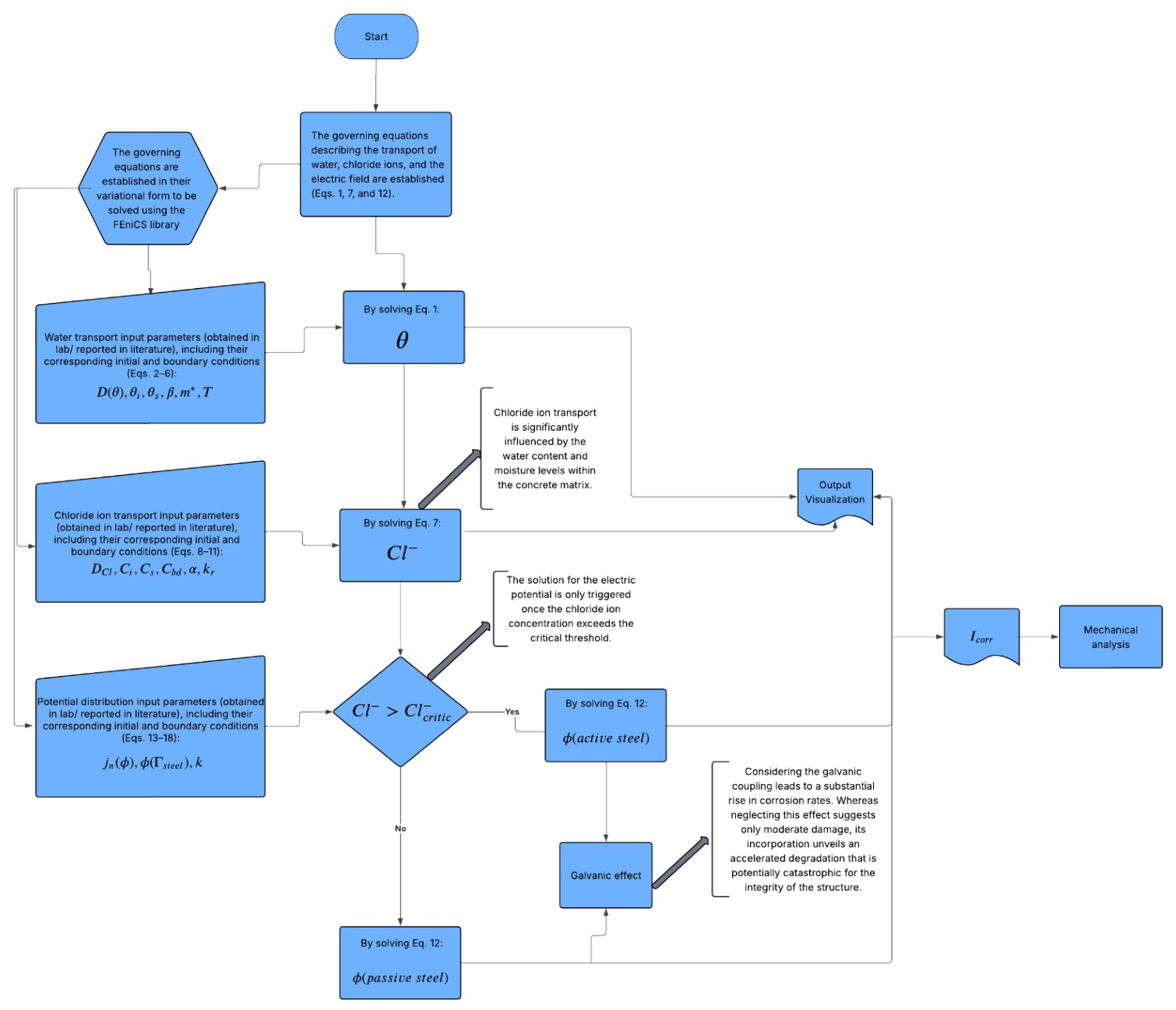
Figure A2 presents the procedure used to incorporate corrosion effects into the structural and seismic assessment. Starting from the corrosion current density obtained from the electrochemical model, the framework distinguishes between localized (galvanic) and uniform corrosion scenarios and evaluates the corresponding time-dependent section loss. This degradation is then introduced into the structural model, allowing for nonlinear dynamic analyses under mainshock–aftershock sequences. The flowchart summarizes how corrosion-induced deterioration propagates through the structural response and ultimately influences collapse probability and its evolution over time.
Figure A2.
Flowchart of the integrated corrosion–structural–seismic assessment framework, describing the propagation of corrosion-induced damage into structural degradation and its impact on collapse probability under mainshock–aftershock loading.
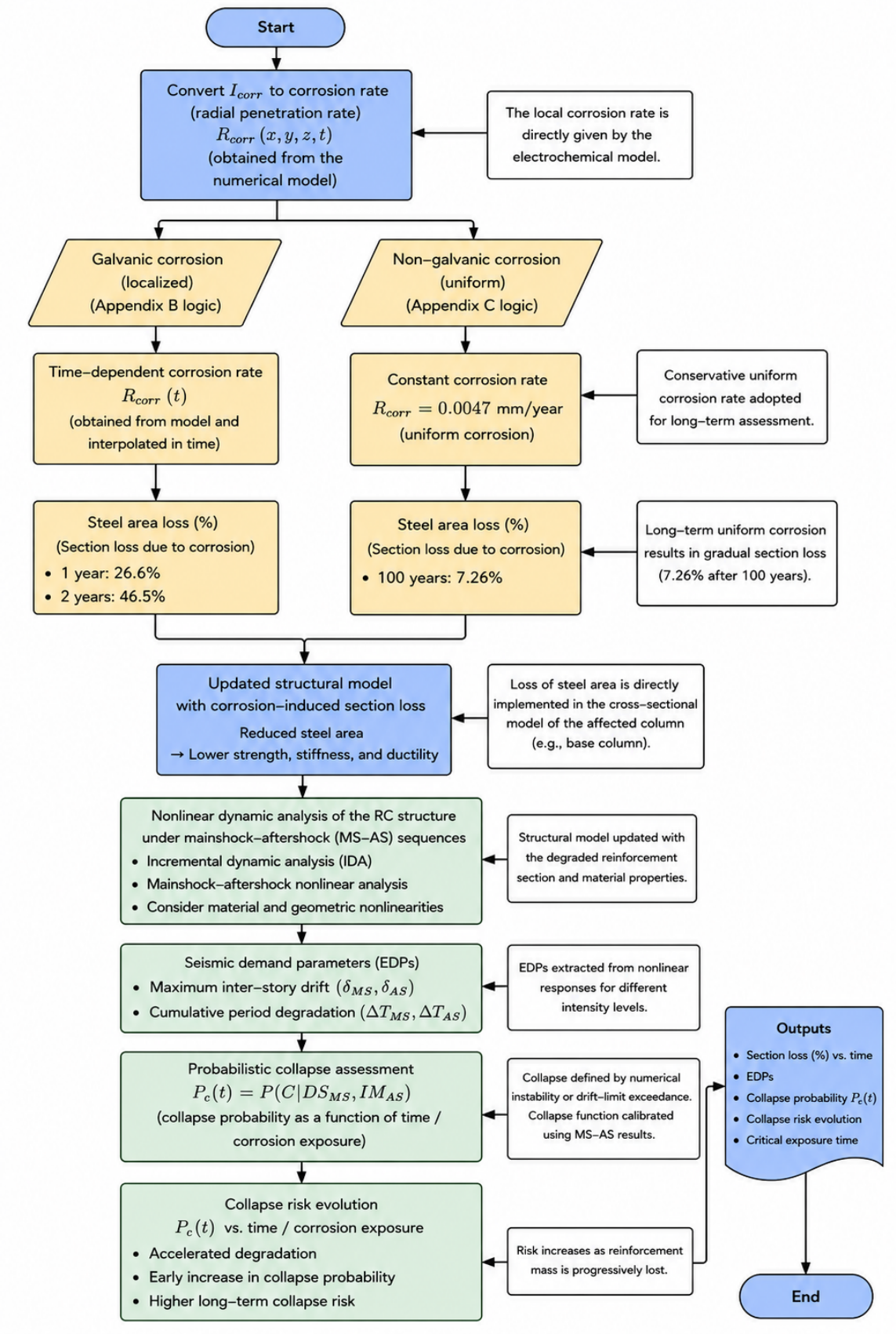
Appendix B. Determination of Reinforcement Section Loss for the Galvanic Case
This appendix details the procedure used to compute the reinforcement cross-sectional area loss for the first and second years under galvanic corrosion conditions.
Appendix B.1. First-Year Section Loss
The corrosion rate at one year was directly obtained from Figure 13 at the base of the ground-level column (distance = 0 m):
Assuming an initial reinforcing bar diameter
the radial penetration after the first year is
The corresponding reduction in diameter is
The remaining diameter is
The percentage cross-sectional area loss is computed as follows:
This matches the reported 26.63% section loss after one year.
Appendix B.2. Second-Year Corrosion Rate
The corrosion rate at two years was obtained by linear interpolation between
and
where the 5-year value was obtained from the numerical electrochemical model outputs.
The interpolated corrosion rate is
Appendix B.3. Section Loss After Two Years (Incremental Accumulation)
Corrosion penetration is accumulated incrementally, year by year. Therefore, the total penetration after two years is
The corresponding total diameter reduction is
The remaining diameter after two years is
The percentage cross-sectional area loss is therefore
This reproduces exactly the reported 46.5% section loss after two years.
Appendix B.4. Remark
The structural model accumulates corrosion penetration incrementally, rather than assuming a constant corrosion rate over the entire two-year duration. This procedure ensures full consistency with the corrosion simulation outputs and explains the difference between simplified constant-rate calculations and the reported 46.5% value.
Appendix C. Determination of Reinforcement Section Loss for the Non-Galvanic Case
This appendix presents the calculation of reinforcement cross-sectional area loss under the non-galvanic (uniform corrosion) scenario.
Appendix C.1. Assumed Constant Corrosion Rate
For the non-galvanic case, a constant corrosion rate was adopted:
This value corresponds to a conservative uniform corrosion rate used for long-term durability assessment.
Appendix C.2. Service Life Considered
The section loss reported in the manuscript (7.26%) corresponds to
Thus, corrosion penetration is accumulated assuming a constant rate over 100 years.
Appendix C.3. Radial Penetration After 100 Years
The total radial penetration is computed as follows:
Appendix C.4. Diameter Reduction
The total diameter reduction is
Assuming an initial reinforcing bar diameter
the remaining diameter after 100 years becomes
Appendix C.5. Cross-Sectional Area Reduction
The initial cross-sectional area is
The area after 100 years is
Appendix C.6. Percentage Section Loss
The percentage loss of reinforcement area is
Appendix C.7. Interpretation
The 7.26% reinforcement cross-sectional loss corresponds to the following:
- A constant uniform corrosion rate of 0.0047 mm/year;
- Applied over a 100-year service life;
- Assuming purely uniform (non-galvanic) corrosion.
This scenario represents the long-term deterioration trajectory under conservative uniform corrosion conditions and contrasts with the accelerated short-term degradation observed under galvanic coupling.
References
- Bertolini, L.; Elsener, B.; Pedeferri, P.; Redaelli, E.; Polder, R.B. Corrosion of Steel in Concrete: Prevention, Diagnosis, Repair; John Wiley & Sons: Hoboken, NJ, USA, 2013. [Google Scholar]
- Tuutti, K. Corrosion of Steel in Concrete. Doctoral Thesis, Swedish Cement and Concrete Research Institute, Stockholm, Sweden, 1982. [Google Scholar]
- Wen, Y.; Wang, X.; Li, M.; Xie, J.; Liu, Q.-F. Passivation and de-passivation behavior of low-alloy steel in UHPC under chloride attack. Constr. Build. Mater. 2026, 527, 146475. [Google Scholar] [CrossRef] [Scilit]
- Li, H.; Nie, Q.; Wang, C.; Wang, G.; Zhang, L.; Yuan, L. Durability investigation of fractured coal-gasified ash slag concrete eroded by sulfate and chlorine salts. Case Stud. Constr. Mater. 2024, 20, e02745. [Google Scholar] [CrossRef] [Scilit]
- Zhang, L.; Niu, D.; Wen, B.; Peng, G.; Sun, Z. Corrosion behavior of low alloy steel bars containing Cr and Al in coral concrete for ocean construction. Constr. Build. Mater. 2020, 258, 119564. [Google Scholar] [CrossRef] [Scilit]
- Lliso-Ferrando, J.R.; Valcuende-Payá, M.O. Difusión de Cloruros en el Hormigón Armado: Estimación del Riesgo de Corrosión de las Armaduras; Online Teaching Material; Universitat Politècnica de València: Valencia, Spain, 2025. [Google Scholar]
- Sandberg, P.; Tang, L.; Andersen, A. Recurrent studies of chloride ingress in uncracked marine concrete at various exposure times and elevations. Cem. Concr. Res. 1998, 28, 1489–1503. [Google Scholar] [CrossRef] [Scilit]
- Saleh, S.; Mahmood, A.H.; Hamed, E.; Zhao, X.L. The mechanical, transport and chloride binding characteristics of ultra-high-performance concrete utilising seawater, sea sand and SCMs. Constr. Build. Mater. 2023, 372, 130815. [Google Scholar] [CrossRef] [Scilit]
- Martín-Pérez, B. Service Life Modelling of R.C. Highway Structures Exposed to Chlorides. Ph.D. Thesis, University of Toronto, Toronto, ON, Canada, 1999. [Google Scholar]
- Sun, J.; Jin, Z.; Chang, H.; Zhang, W. A review of chloride transport in concrete exposed to the marine atmosphere zone environment: Experiments and numerical models. J. Build. Eng. 2024, 84, 108591. [Google Scholar] [CrossRef] [Scilit]
- Wang, Q.; Wang, Z.; Li, C.; Qiao, X.; Guan, H.; Zhou, Z.; Song, D. Research progress in corrosion behavior and anti-corrosion methods of steel rebar in concrete. Metals 2024, 14, 862. [Google Scholar] [CrossRef] [Scilit]
- Poursaee, A.; Ross, B. The role of cracks in chloride-induced corrosion of carbon steel in concrete. Corros. Mater. Degrad. 2022, 3, 258–269. [Google Scholar] [CrossRef] [Scilit]
- De Weerdt, K. Chloride binding in concrete: Recent investigations and recognised knowledge gaps: RILEM Robert L’Hermite Medal Paper 2021. Mater. Struct. 2021, 54, 214. [Google Scholar] [CrossRef] [Scilit]
- Zhai, W.; Jin, D.; Xie, Y.; He, Z.; Tao, H. Shrinkage and creep behavior evolution of concrete containing metakaolin under the coupled action of sulfate attack and dry-wet cycles. Constr. Build. Mater. 2026, 525, 146334. [Google Scholar] [CrossRef] [Scilit]
- Chen, F.; Gao, J.; Qi, B.; Shen, D.; Li, L. Degradation progress of concrete subject to combined sulfate-chloride attack under drying-wetting cycles and flexural loading. Constr. Build. Mater. 2017, 151, 164–171. [Google Scholar] [CrossRef] [Scilit]
- Jiang, L.; Niu, D. Study of deterioration of concrete exposed to different types of sulfate solutions under drying-wetting cycles. Constr. Build. Mater. 2016, 117, 88–98. [Google Scholar] [CrossRef] [Scilit]
- Yuan, J.; Liu, Y.; Tan, Z.; Zhang, B. Investigating the failure process of concrete under the coupled actions between sulfate attack and drying–wetting cycles by using X-ray CT. Constr. Build. Mater. 2016, 108, 129–138. [Google Scholar] [CrossRef] [Scilit]
- Wu, M.; Zhang, Y.; Liu, Z.; She, W.; Sui, S. Research progress on thaumasite form of sulfate attack in cement-based materials. J. Chin. Ceram. Soc. 2022, 50, 2270–2283. [Google Scholar]
- Niu, S.; Luo, J.; Chen, M.; Chen, Z.; Wang, X.; Bai, X.; Li, J. Experimental study of cement-based materials under sulfate attack environment using Electrochemical Impedance Spectroscopy. Int. J. Electrochem. Sci. 2023, 18, 100133. [Google Scholar] [CrossRef] [Scilit]
- Wagner, M.; Heisig, A.; Machner, A.; Beddoe, R.; Heinz, D. External sulfate attack on cementitious binders: Limitations and effects of sample geometry on the quantification of expansion stress. Materials 2022, 15, 3677. [Google Scholar] [CrossRef] [Scilit]
- Zhang, C.; Li, J.; Yu, M.; Lu, Y.; Liu, S. Mechanism and performance control methods of sulfate attack on concrete: A review. Materials 2024, 17, 4836. [Google Scholar] [CrossRef] [Scilit]
- Jaimes, M.A.; Godínez, F.A.; Montoya, R. State-Dependent Seismic Vulnerability Under Strong-Motion Sequences and Corrosion Effects Based on Structural Period Degradation of Reinforced Concrete Buildings. J. Earthq. Eng. 2025, 29, 1924–1950. [Google Scholar] [CrossRef] [Scilit]
- Alipour, A.; Shafei, B.; Shinozuka, M. Performance evaluation of deteriorating highway bridges located in high seismic areas. J. Bridge Eng. 2011, 16, 597–611. [Google Scholar] [CrossRef] [Scilit]
- Kordtabar, B.; Dehestani, M.; Yazdanpanah, O.; Hasanzadeh, A. Time dependent seismic fragility and serviceability assessment of reinforced concrete frames under chloride induced corrosion. Sci. Rep. 2025, 15, 40575. [Google Scholar] [CrossRef] [Scilit]
- Beyea, S.; Balcom, B.; Bremner, T.; Prado, P.; Green, D.; Armstrong, R.; Grattan-Bellew, P. Magnetic resonance imaging and moisture content profiles of drying concrete. Cem. Concr. Res. 1998, 28, 453–463. [Google Scholar] [CrossRef] [Scilit]
- Zhao, H.; Wu, X.; Huang, Y.; Zhang, P.; Tian, Q.; Liu, J. Investigation of moisture transport in cement-based materials using low-field nuclear magnetic resonance imaging. Mag. Concr. Res. 2021, 73, 252–270. [Google Scholar] [CrossRef] [Scilit]
- Ožbolt, J.; Oršanić, F.; Balabanić, G.; Kušter, M. Modeling damage in concrete caused by corrosion of reinforcement: Coupled 3D FE model. Int. J. Fract. 2012, 178, 233–244. [Google Scholar] [CrossRef] [Scilit]
- Van Belleghem, B.; Montoya, R.; De Belie, N.; Maes, M. Modeling capillary water absorption in cementitious materials: Influence of the saturation degree. Constr. Build. Mater. 2016, 110, 24–35. [Google Scholar] [CrossRef] [Scilit]
- Montoya, R.; Nagel, V. Capillary Water Absorption and Chloride Transport Into Mortar Samples: A Finite Element Analysis. Front. Mater. 2020, 7, 28. [Google Scholar] [CrossRef] [Scilit]
- Wang, J.; Wang, Q.; Zhao, Y.; Li, P.; Ji, T.; Zou, G.; Qiao, Y.; Zhou, Z.; Wang, G.; Song, D. Research Progress of Macrocell Corrosion of Steel Rebar in Concrete. Coatings 2023, 13, 853. [Google Scholar] [CrossRef] [Scilit]
- Andrade, C.; Maribona, I.R.; Feliu, S.; González, J.A.; Feliu, S., Jr. The effect of macrocells between active and passive areas of steel reinforcements. Corros. Sci. 1992, 33, 237–249. [Google Scholar] [CrossRef] [Scilit]
- Castro, P.; Pazini, E.J.; Andrade, C.; Alonso, C. Macrocell activity in slightly chloride-contaminated concrete induced by reinforcement primers. Corrosion 2003, 59, 535–546. [Google Scholar] [CrossRef] [Scilit]
- Dong, Z.; Poursaee, A. Corrosion behavior of coupled active and passive reinforcing steels in simulated concrete pore solution. Constr. Build. Mater. 2020, 240, 117955. [Google Scholar] [CrossRef] [Scilit]
- Lliso-Ferrando, J.R.; Gasch, I.; Martínez-Ibernón, A.; Valcuende, M. Macrocell corrosion currents in simulated concrete pore solution and reinforced concrete. Int. J. Concr. Struct. Mater. 2023, 17, 15. [Google Scholar] [CrossRef] [Scilit]
- Turan, A.I.; Celik, A.; Kumbasaroglu, A.; Yalciner, H. Assessment of reinforced concrete building damages following the Kahramanmaraş earthquakes in Malatya, Turkey (February 6, 2023). Eng. Sci. Technol. Int. J. 2024, 54, 101718. [Google Scholar] [CrossRef] [Scilit]
- Yön, B.; Dedeoğlu, İ.Ö.; Yetkin, M.; Erkek, H.; Calayır, Y. Evaluation of the seismic response of reinforced concrete buildings in the light of lessons learned from the February 6, 2023, Kahramanmaraş, Türkiye earthquake sequences. Nat. Hazards 2025, 121, 873–909. [Google Scholar] [CrossRef] [Scilit]
- Deconinck, J. Current Distributions and Electrode Shape Changes in Electrochemical Systems; Lecture Notes in Engineering; Springer: Berlin/Heidelberg, Germany, 2012; Volume 75. [Google Scholar] [CrossRef] [Scilit]
- Brichau, F.; Deconinck, J. A numerical-model for cathodic protection of buried pipes. Corrosion 1994, 50, 39–49. [Google Scholar] [CrossRef] [Scilit]
- Telles, J.; Mansur, W.; Wrobel, L.; Marinho, M. Numerical simulation of a cathodically protected semisubmersible platform using the PROCAT system. Corrosion 1990, 46, 513–518. [Google Scholar] [CrossRef] [Scilit]
- Montoya, R.; Rendón, O.; Genescà, J. Mathematical simulation of a cathodic protection system by finite element method. Mater. Corros. 2005, 56, 404–411. [Google Scholar] [CrossRef] [Scilit]
- Montoya, R.; Galván, J.; Genescà, J. Using the right side of Poisson’s equation to save on numerical calculations in FEM simulation of electrochemical systems. Corros. Sci. 2011, 53, 1806–1812. [Google Scholar] [CrossRef] [Scilit]
- Aoki, S.; Amaya, K. Optimization of cathodic protection system by BEM. Eng. Anal. Bound. Elem. 1997, 19, 147–156. [Google Scholar] [CrossRef] [Scilit]
- Aoki, S.; Kishimoto, K.; Miyasaka, M. Analysis of potential and current-density distributions using a boundary element method. Corrosion 1988, 44, 926–932. [Google Scholar] [CrossRef] [Scilit]
- Brasil, S.; Miranda, L.; Telles, J. A boundary element study of cathodic protection systems in high resistivity electrolytes. In Cathodic Protection: Modeling and Experiment; Orazem, M., Ed.; NACE International: Houston, TX, USA, 1999; pp. 153–172. [Google Scholar]
- Miltiadou, P.; Wrobel, C. Optimization of cathodic protection systems using boundary elements and genetic algorithms. Corrosion 2002, 58, 912–921. [Google Scholar] [CrossRef] [Scilit]
- Rabiot, D.; Dalard, F.; Rameau, J.; Caire, J.; Boyer, S. Study of sacrificial anode cathodic protection of buried tanks: Numerical modeling. J. Appl. Electrochem. 1999, 29, 541–550. [Google Scholar] [CrossRef] [Scilit]
- Strømmen, R. Computer modeling of offshore cathodic protection systems: Method and experience. In Computer Modeling in Corrosion; Munn, R., Ed.; ASTM STP 1154; American Society for Testing and Materials: Philadelphia, PA, USA, 1992; pp. 229–247. [Google Scholar] [CrossRef] [Scilit]
- Montoya, R.; Aperador, W.; Bastidas, D.M. Influence of conductivity on cathodic protection of reinforced alkali-activated slag mortar using the finite element method. Corros. Sci. 2009, 51, 2857–2862. [Google Scholar] [CrossRef] [Scilit]
- Paredes Jarquín, J.P. Polarización Catódica de una Estructura de Acero Utilizando ánodos de Zinc, Magnesio y Aluminio: Un Estudio Numérico y Experimental. Bachelor’s Thesis, Universidad Nacional Autónoma de México, Mexico City, Mexico, 2024. [Google Scholar]
- Munn, R. A mathematical-model for a galvanic anode cathodic protection system. Mater. Perform. 1982, 21, 29–36. [Google Scholar]
- Izquierdo, D.; Alonso, C.; Andrade, C.; Castellote, M. Potentiostatic determination of chloride threshold values for rebar depassivation: Experimental and statistical study. Electrochim. Acta 2004, 49, 2731–2739. [Google Scholar] [CrossRef]
- González, J.; Benito, M.; Feliú, S.; Rodriguez, P.; Andrade, C. Suitability of assessment methods for identifying active and passive zones in reinforced concrete. Corrosion 1995, 51, 145–152. [Google Scholar] [CrossRef] [Scilit]
- Andrade, C. Propagation of reinforcement corrosion: Principles, testing and modelling. Mater. Struct. 2019, 52, 2. [Google Scholar] [CrossRef] [Scilit]
- Ožbolt, J.; Balabanić, G.; Periškić, G.; Kušter, M. Modelling the effect of damage on transport processes in concrete. Constr. Build. Mater. 2010, 24, 1638–1648. [Google Scholar] [CrossRef] [Scilit]
- Castro Borges, P. Difusión y Corrosión Por Iones Cloruro en el Concreto Reforzado. Ph.D. Thesis, Universidad Nacional Autónoma de México, Facultad de Química, Mexico City, Mexico, 1995. [Google Scholar]
- Instituto de Investigaciones Eléctricas; Comisión Federal de Electricidad. CFE Earthquake Design Manual of Mexico (CFE-EDMM); Technical Report; Comisión Federal de Electricidad: Cuernavaca, Mexico, 2016. [Google Scholar]
- Shafei, B.; Alipour, A.; Shinozuka, M. Prediction of corrosion initiation in reinforced concrete members subjected to environmental stressors: A finite-element framework. Cem. Concr. Res. 2012, 42, 365–376. [Google Scholar] [CrossRef] [Scilit]
- Gentile, R.; Galasso, C. Hysteretic energy-based state-dependent fragility for ground-motion sequences. Earthq. Eng. Struct. Dyn. 2021, 50, 1187–1203. [Google Scholar] [CrossRef] [Scilit]
- Damrongwiriyanupap, N.; Limkatanyu, S.; Xi, Y. A Thermo-Hygro-Coupled Model for Chloride Penetration in Concrete Structures. Adv. Mater. Sci. Eng. 2015, 2015, 682940. [Google Scholar] [CrossRef] [Scilit]
- Dashti, P.; Moodi, F.; Ramezanianpour, A.A.; Banar, R. Finite element analysis of chloride ion penetration and service life prediction in concrete with supplementary cementitious materials. Sci. Rep. 2025, 15, 30023. [Google Scholar] [CrossRef] [Scilit] [PubMed]
- Jain, A.; Gencturk, B. Multiphysics and multiscale modeling of coupled transport of chloride ions in concrete. Materials 2021, 14, 885. [Google Scholar] [CrossRef] [Scilit]
- Ayinde, O.O.; Zuo, X.B.; Yin, G.J. Numerical analysis of concrete degradation due to chloride-induced steel corrosion. Adv. Concr. Constr. 2019, 7, 203–210. [Google Scholar]
- Zhou, L.; Huang, G.; Chen, R. Fractional-order numerical modeling to study chloride ion transport in concrete with fly ash or slag additions. PLoS ONE 2023, 18, e0294858. [Google Scholar] [CrossRef] [Scilit] [PubMed]
- Tong, L.Y.; Liu, Q.f.; Xiong, Q.; Meng, Z.; Amiri, O.; Zhang, M. Modeling the chloride transport in concrete from microstructure generation to chloride diffusivity prediction. Comput.-Aided Civ. Infrastruct. Eng. 2025, 40, 1129–1149. [Google Scholar] [CrossRef] [Scilit]
- Yang, P.; Dhandapani, Y.; Santhanam, M.; Neithalath, N. Simulation of chloride diffusion in fly ash and limestone-calcined clay cement (LC3) concretes and the influence of damage on service-life. Cem. Concr. Res. 2020, 130, 106010. [Google Scholar] [CrossRef] [Scilit]
- Khitab, A.; Lorente, S.; Ollivier, J. Predictive model for chloride penetration through concrete. Mag. Concr. Res. 2005, 57, 511–520. [Google Scholar] [CrossRef] [Scilit]
- Henchi, K.; Samson, E.; Chapdelaine, F.; Marchand, J. Advanced finite-element predictive model for the service life prediction of concrete infrastructures in support of asset management and decision-making. In Proceedings of the Computing in Civil Engineering 2007; Soibelman, L., Akinci, B., Eds.; American Society of Civil Engineers: Reston, VA, USA, 2007; pp. 870–880. [Google Scholar] [CrossRef] [Scilit]
- Sleiman, H.; Amiri, O.; Ait-Mokhtar, A.; Loche, J.M. Chloride transport through unsaturated concrete: Chloride profile simulations and experimental validation. Mag. Concr. Res. 2012, 64, 351–359. [Google Scholar] [CrossRef] [Scilit]
- Redaelli, E.; Bertolini, L.; Peelen, W.; Polder, R. FEM-models for the propagation period of chloride induced reinforcement corrosion. Mater. Corros. 2006, 57, 628–635. [Google Scholar] [CrossRef] [Scilit]
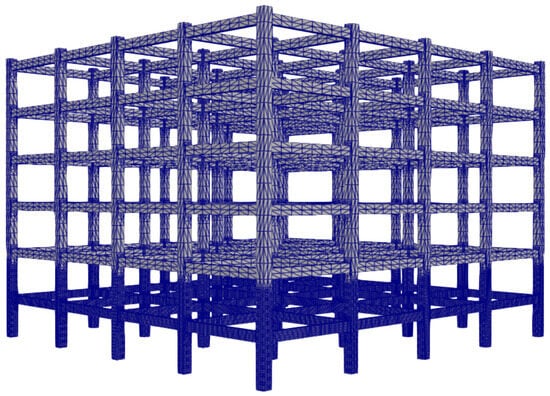
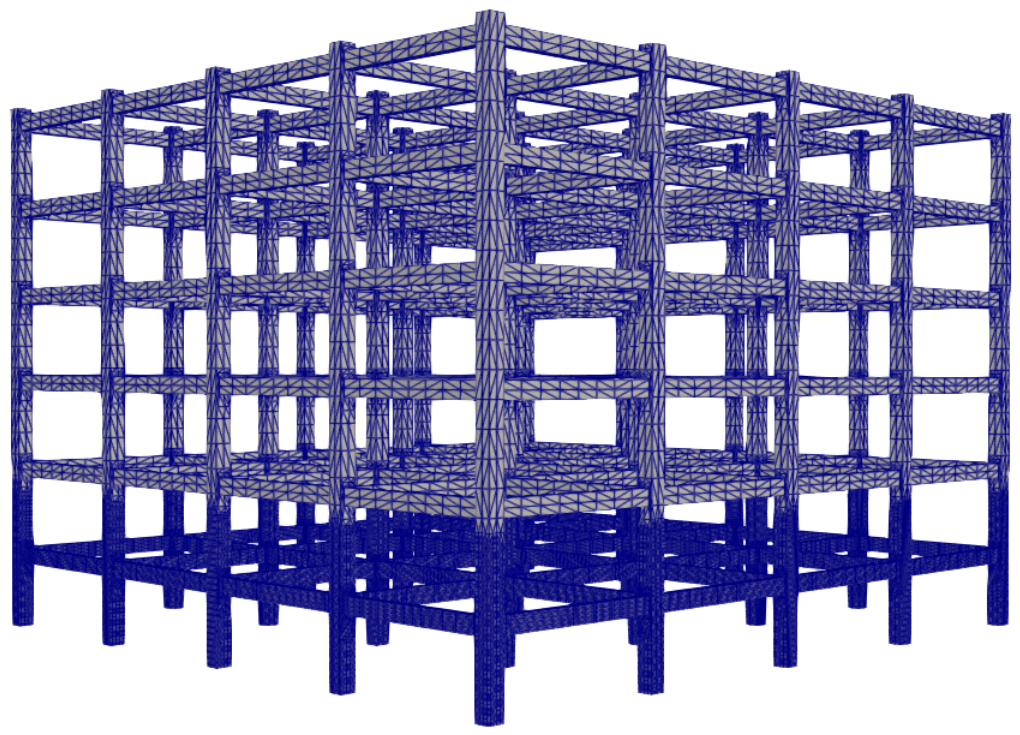
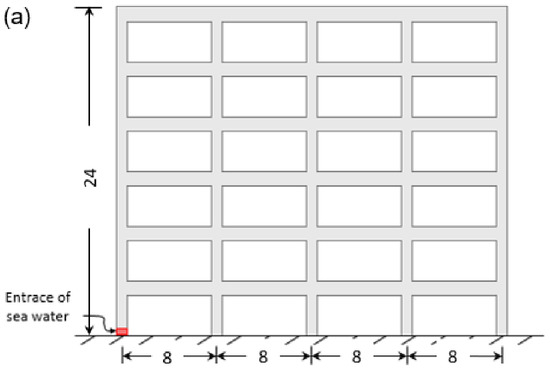
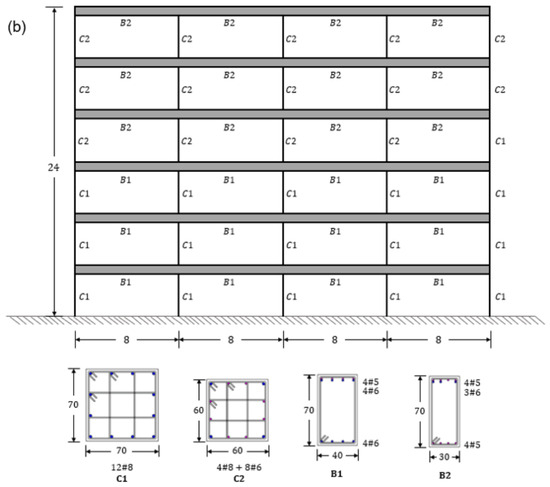
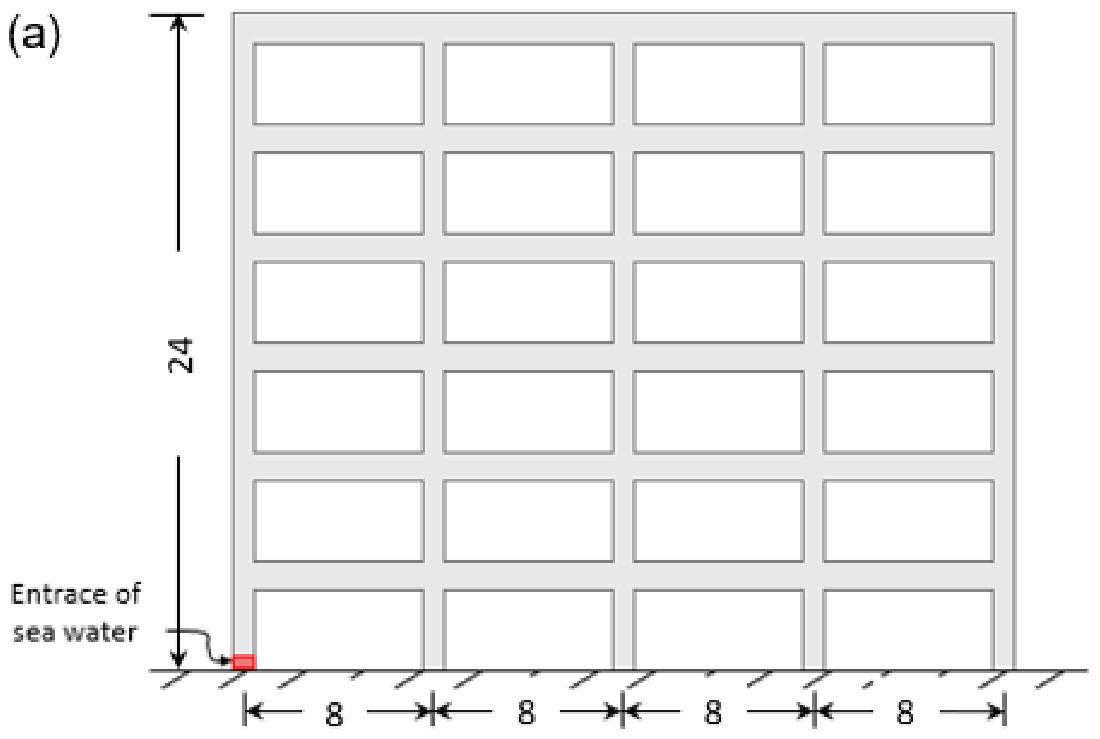
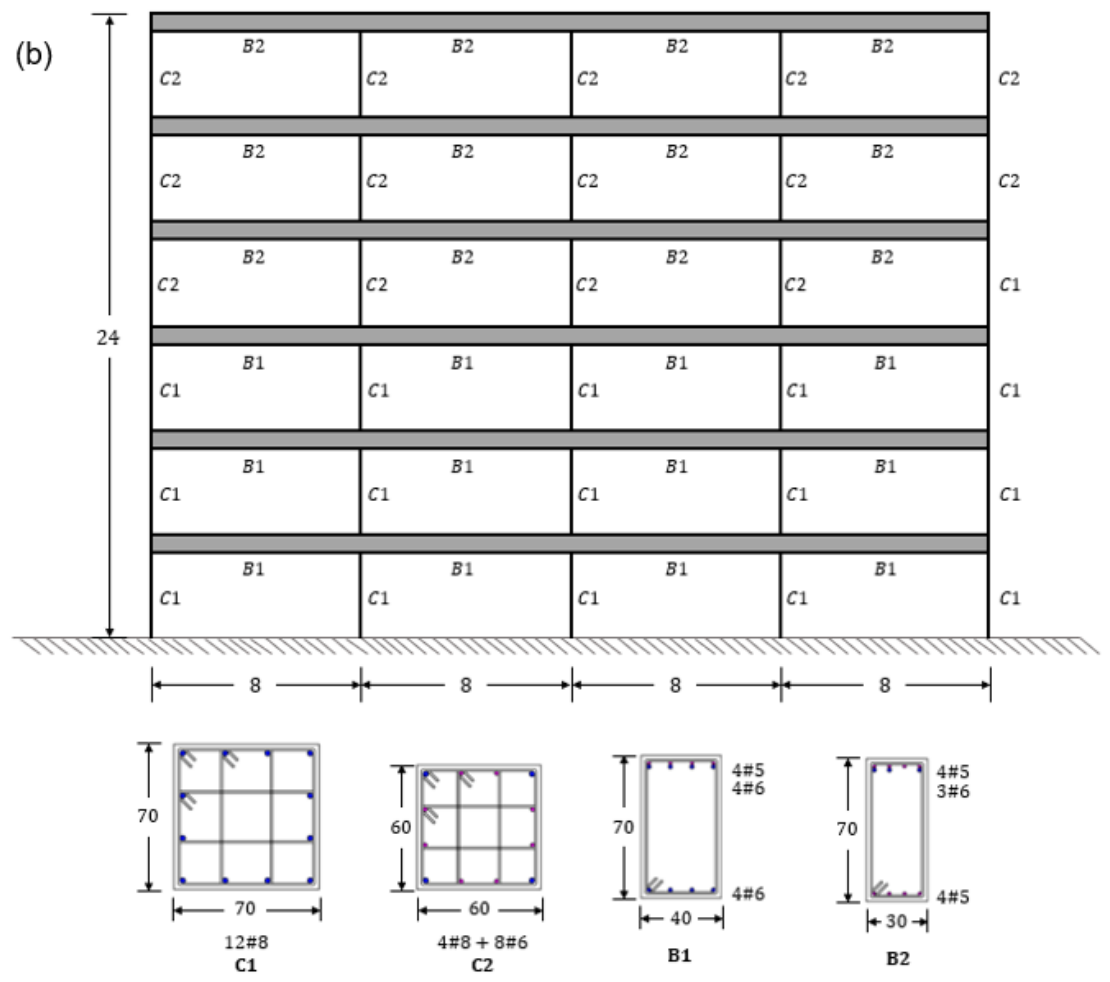
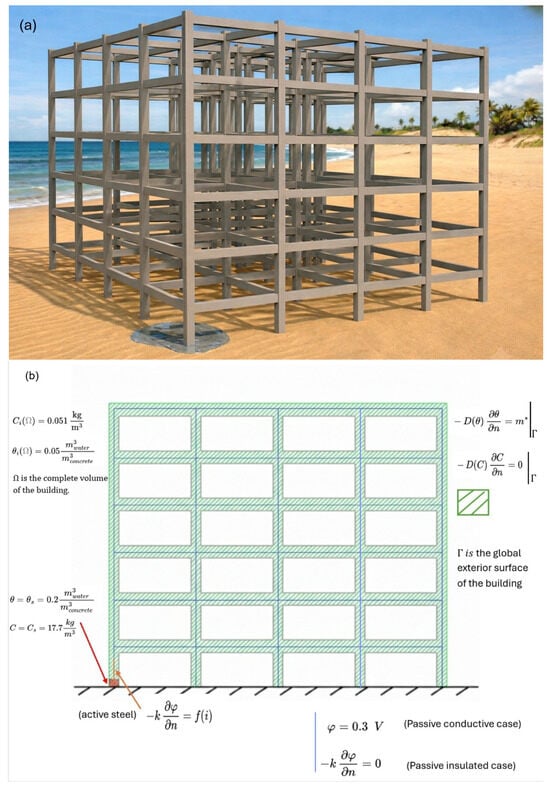
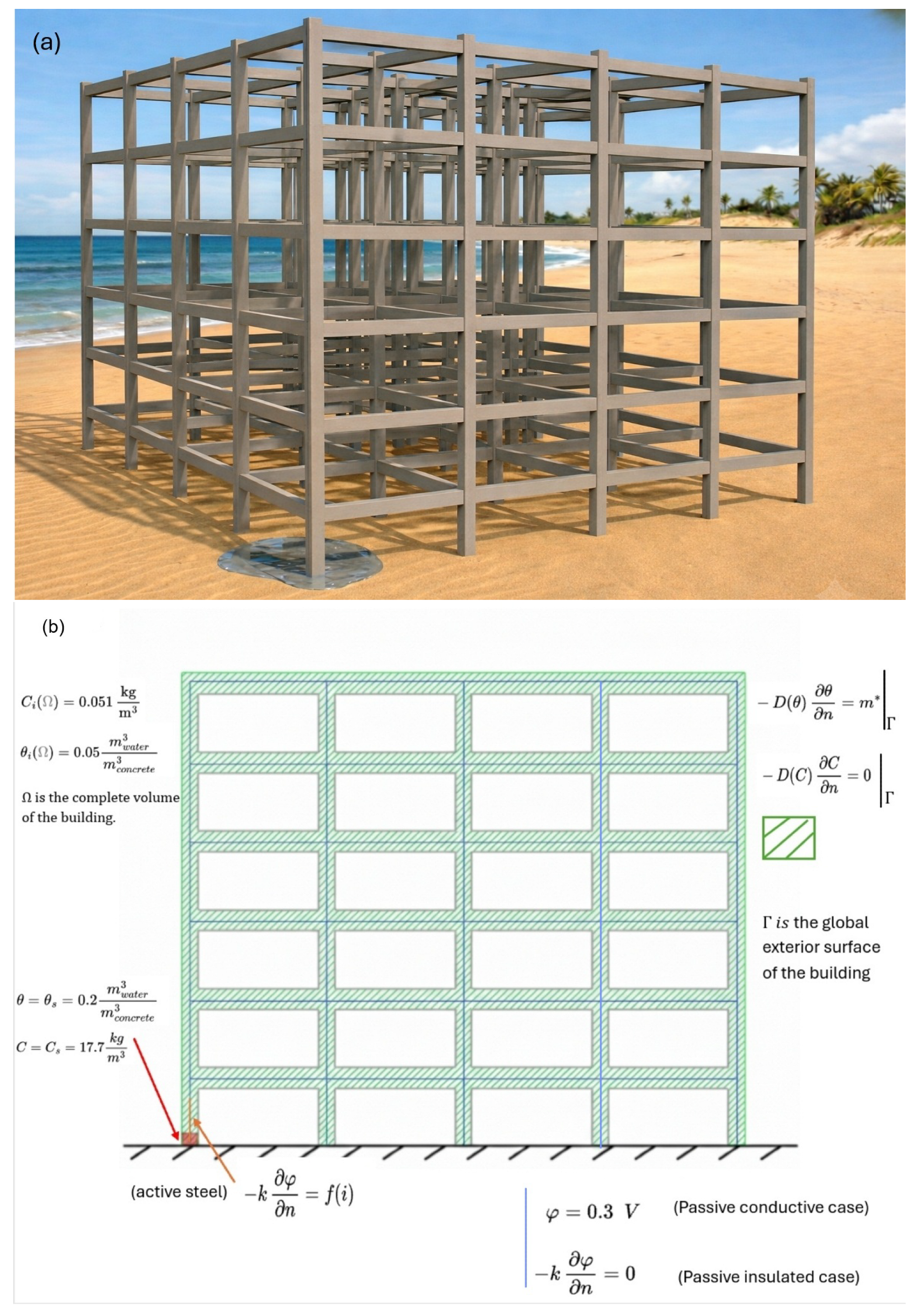
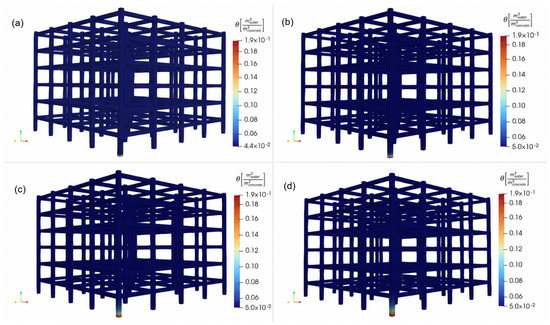
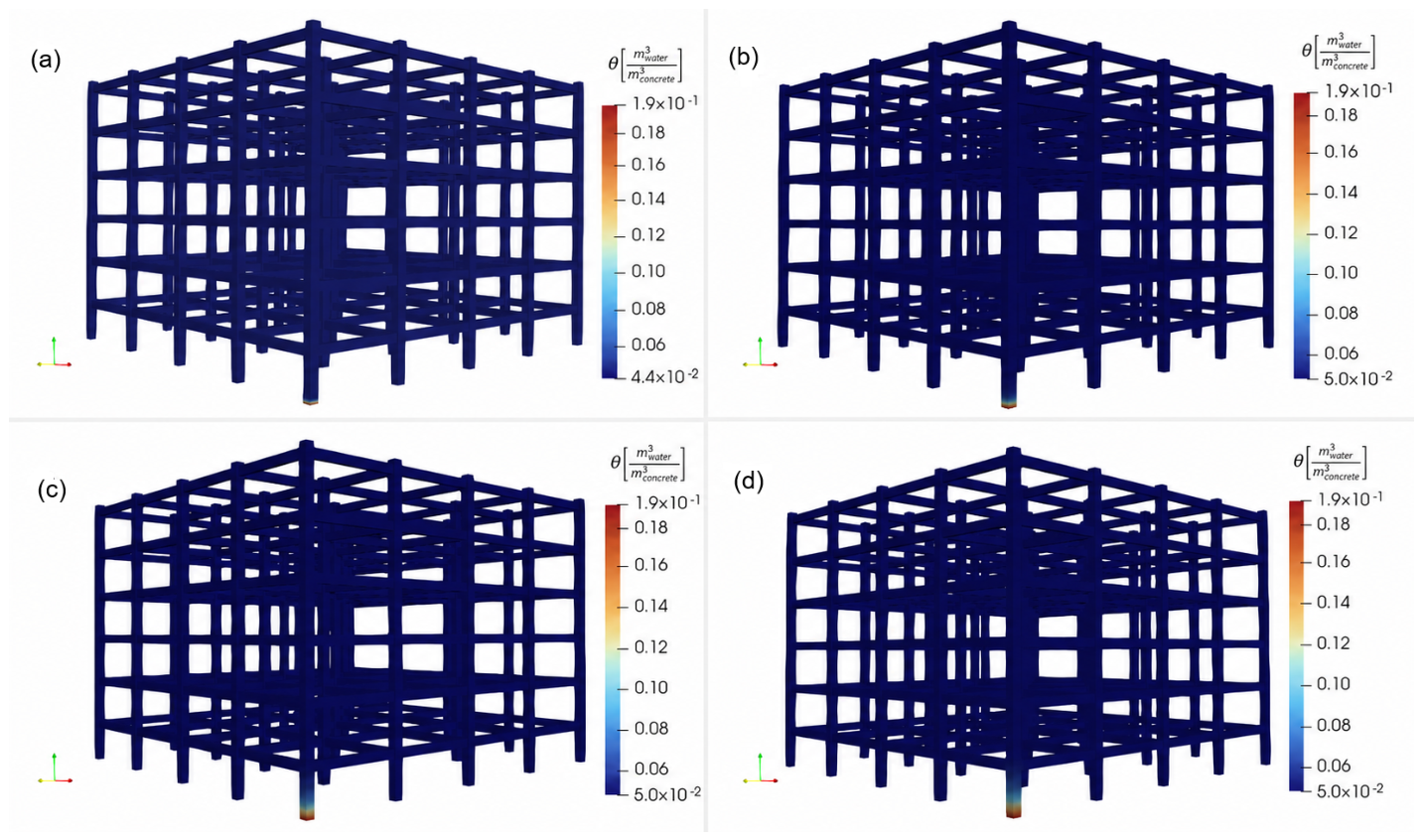
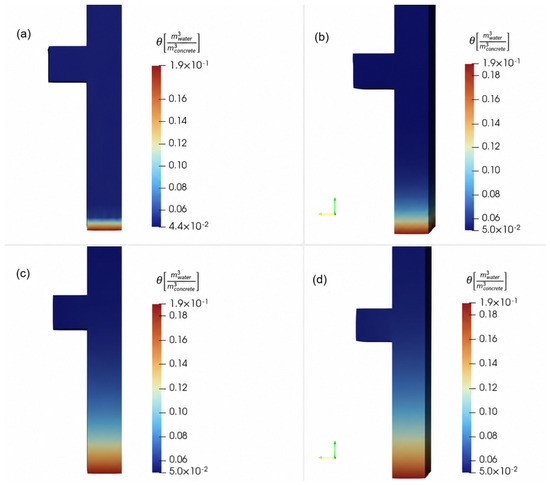
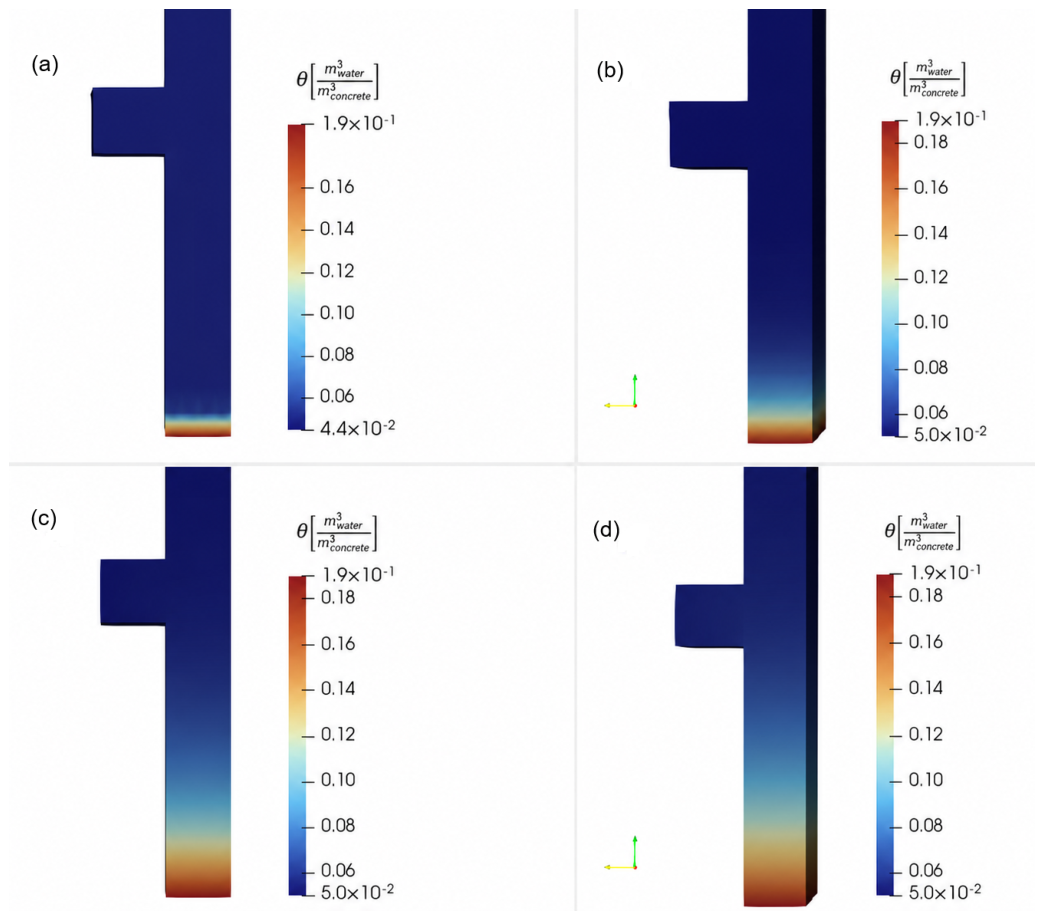
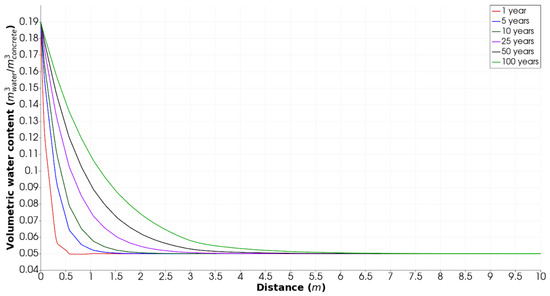
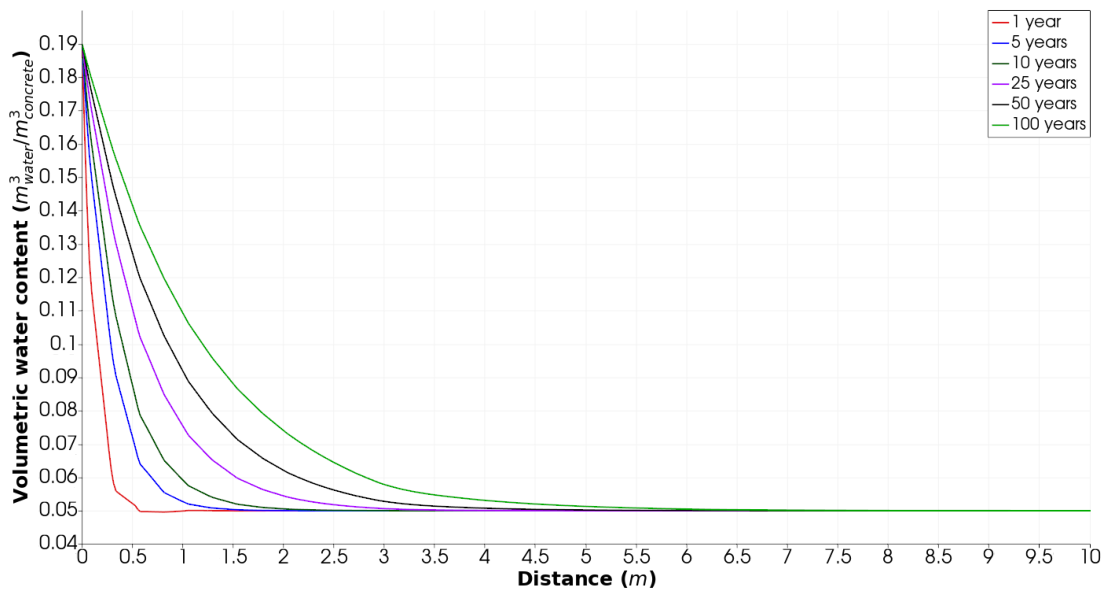
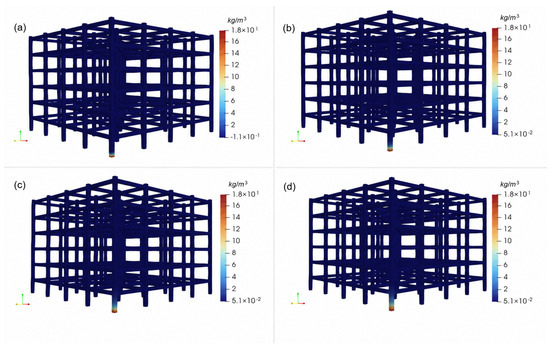
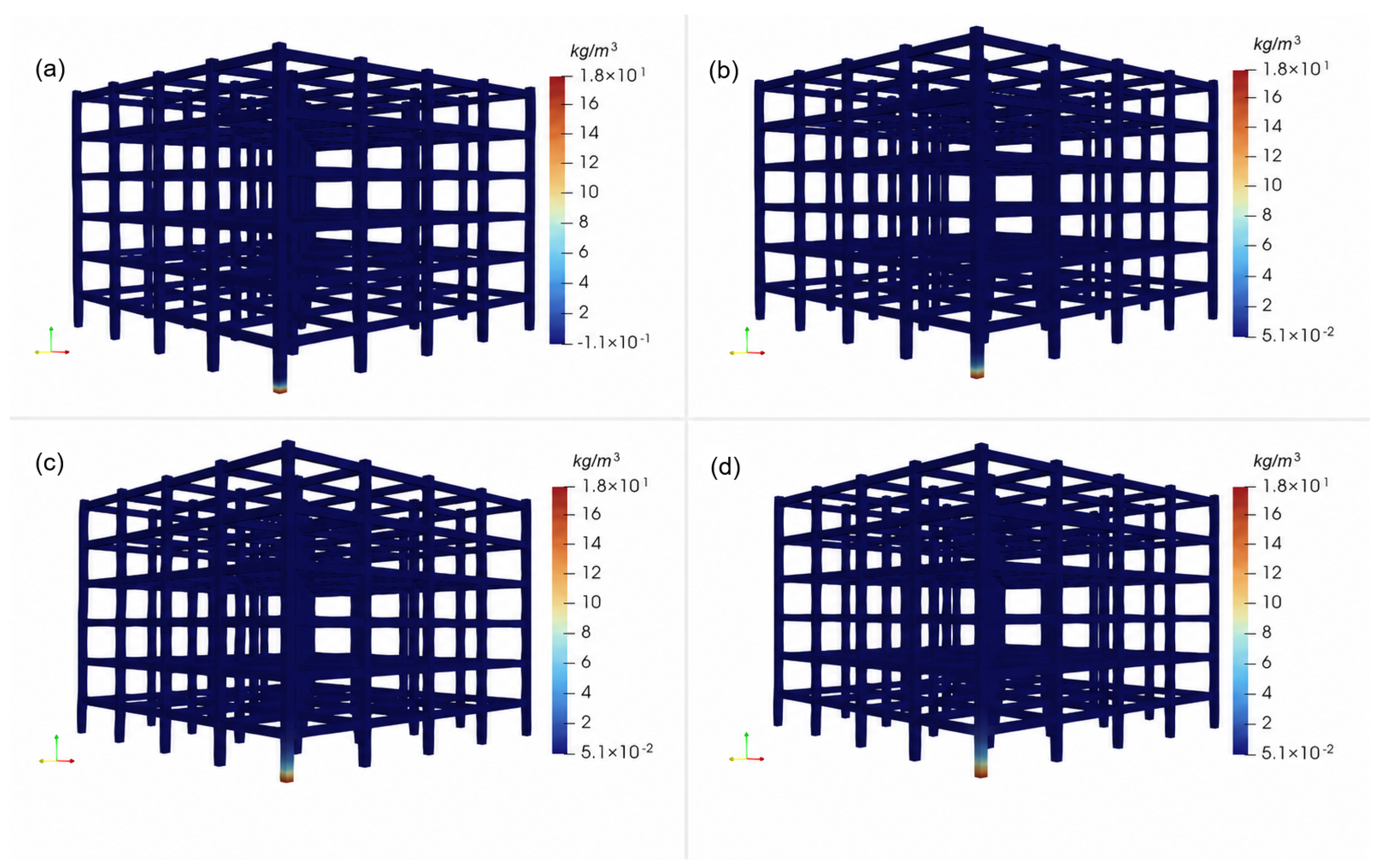
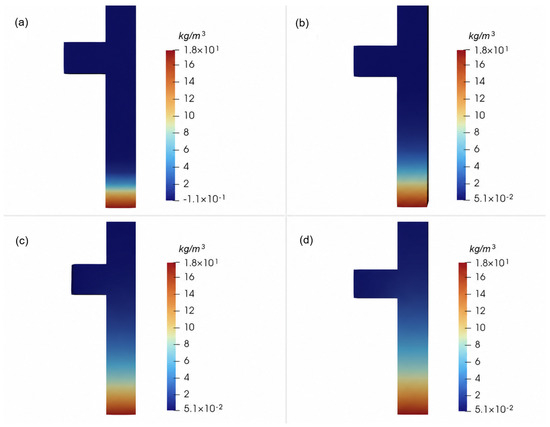
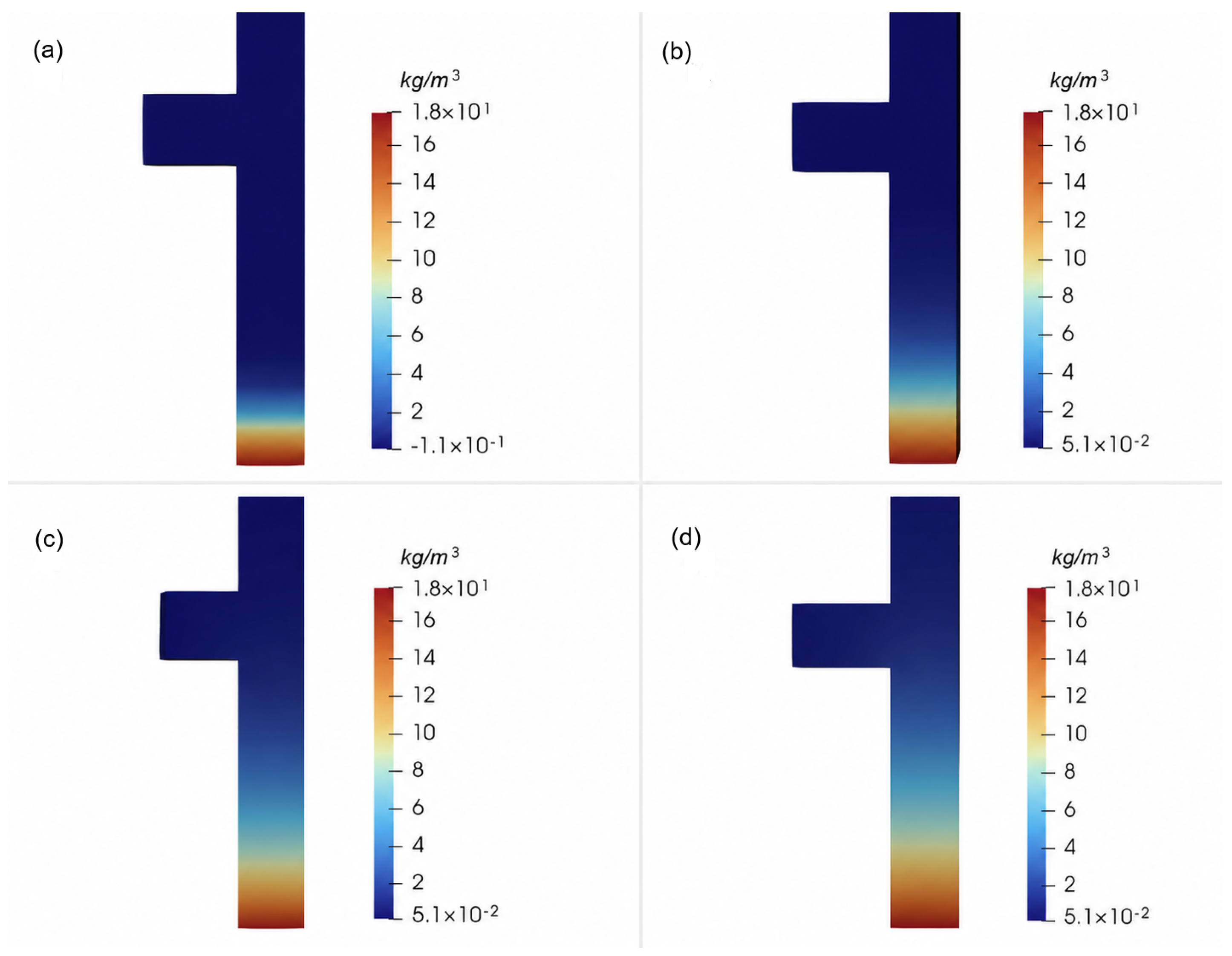
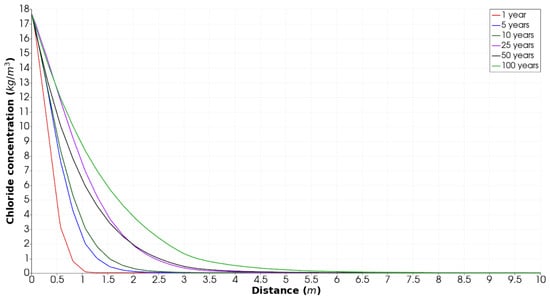
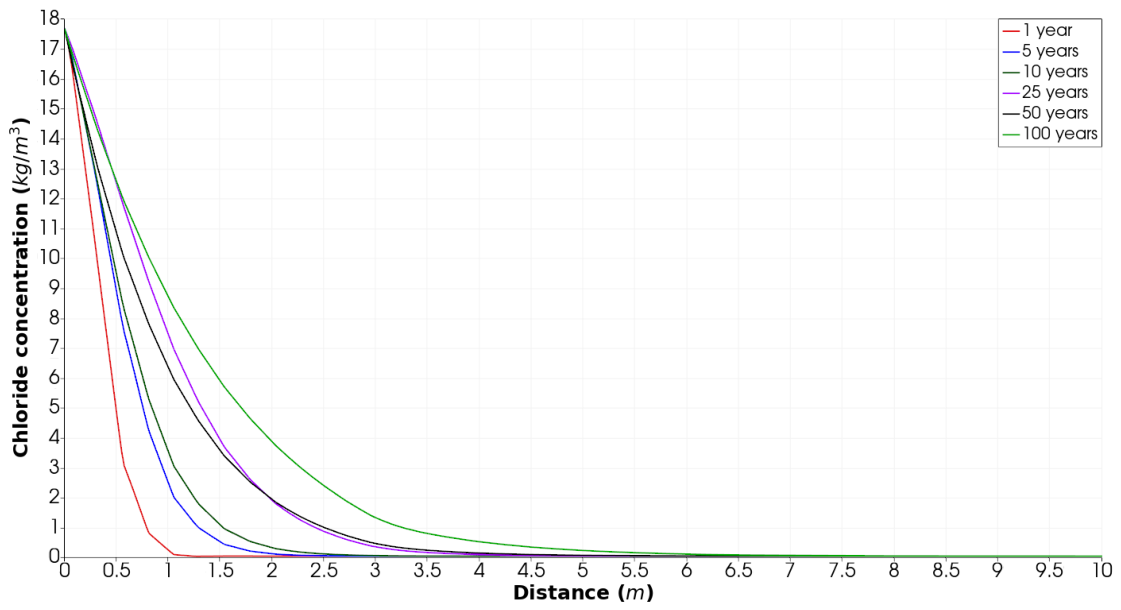
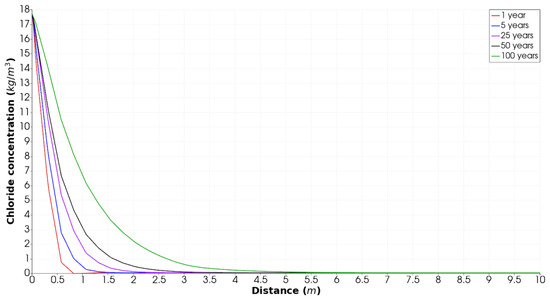
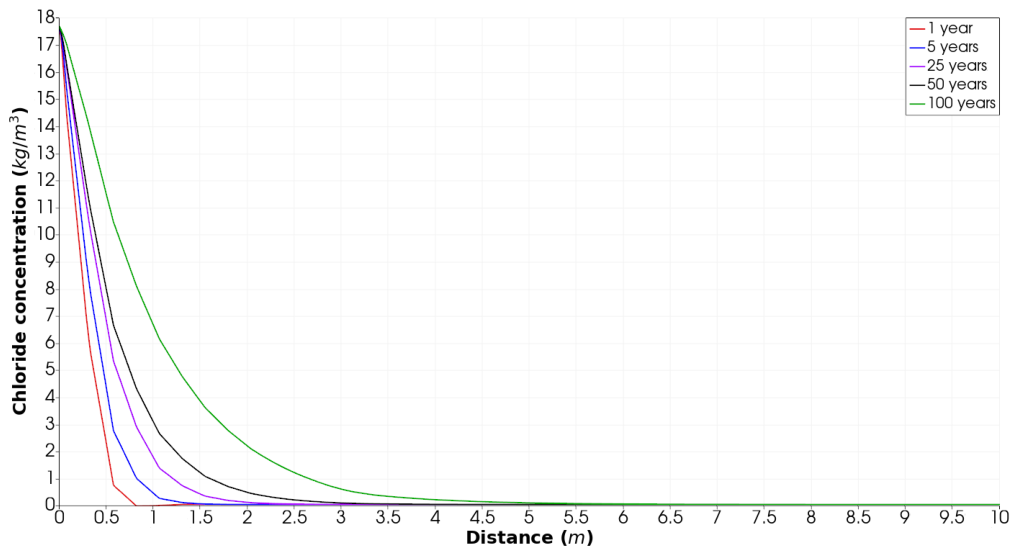
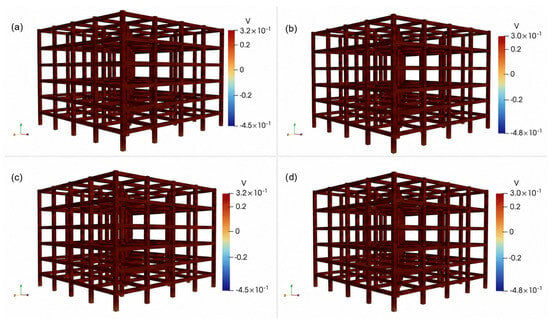
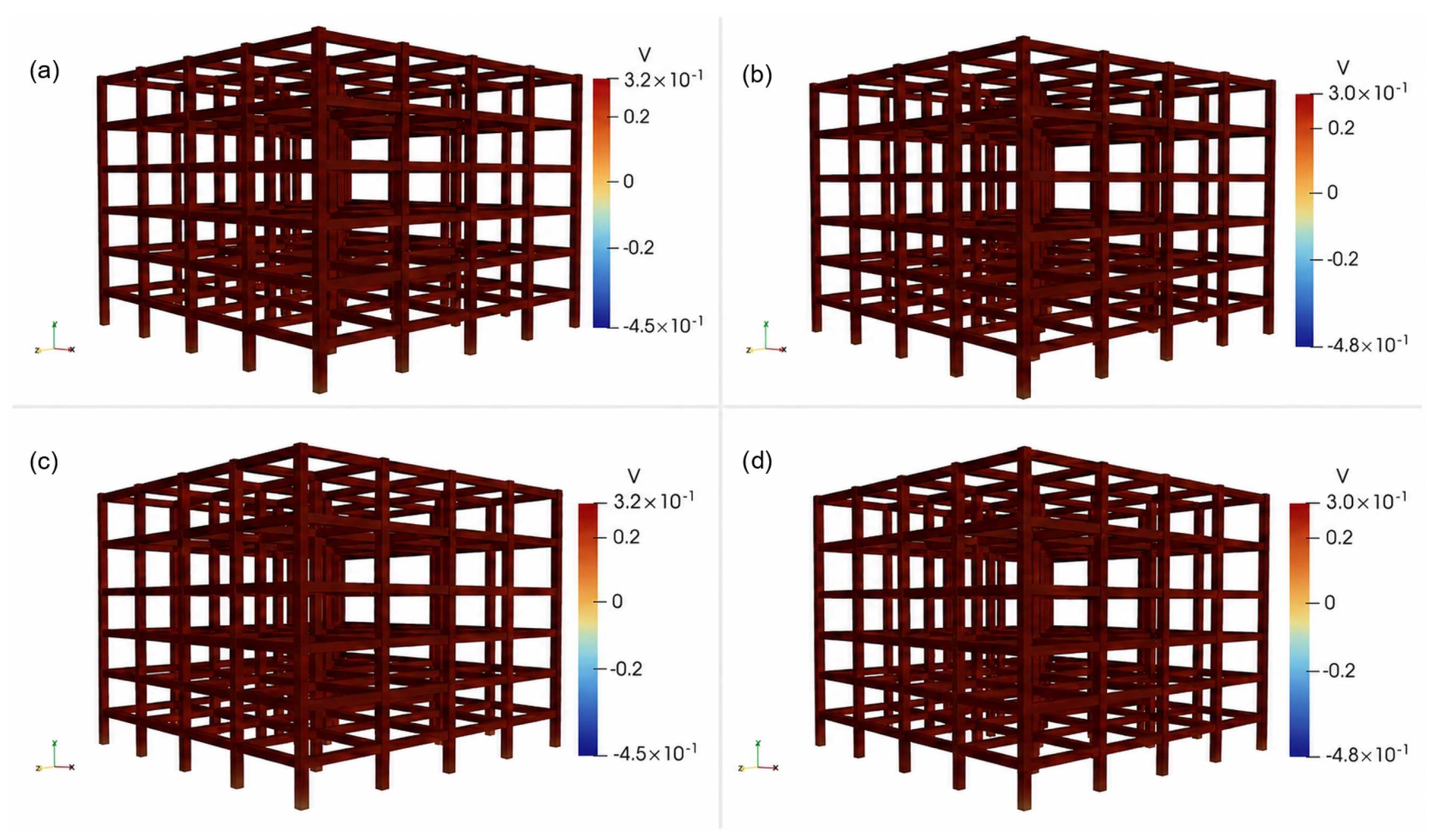
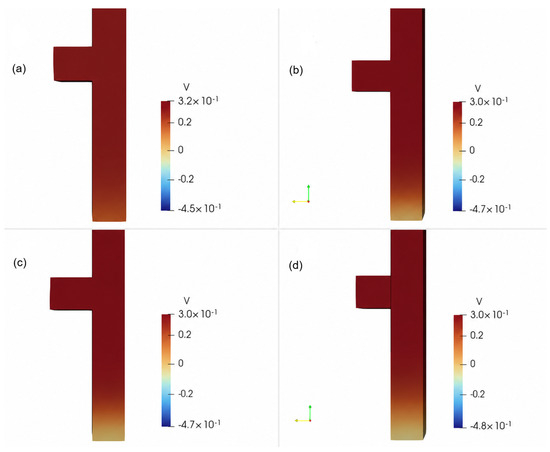
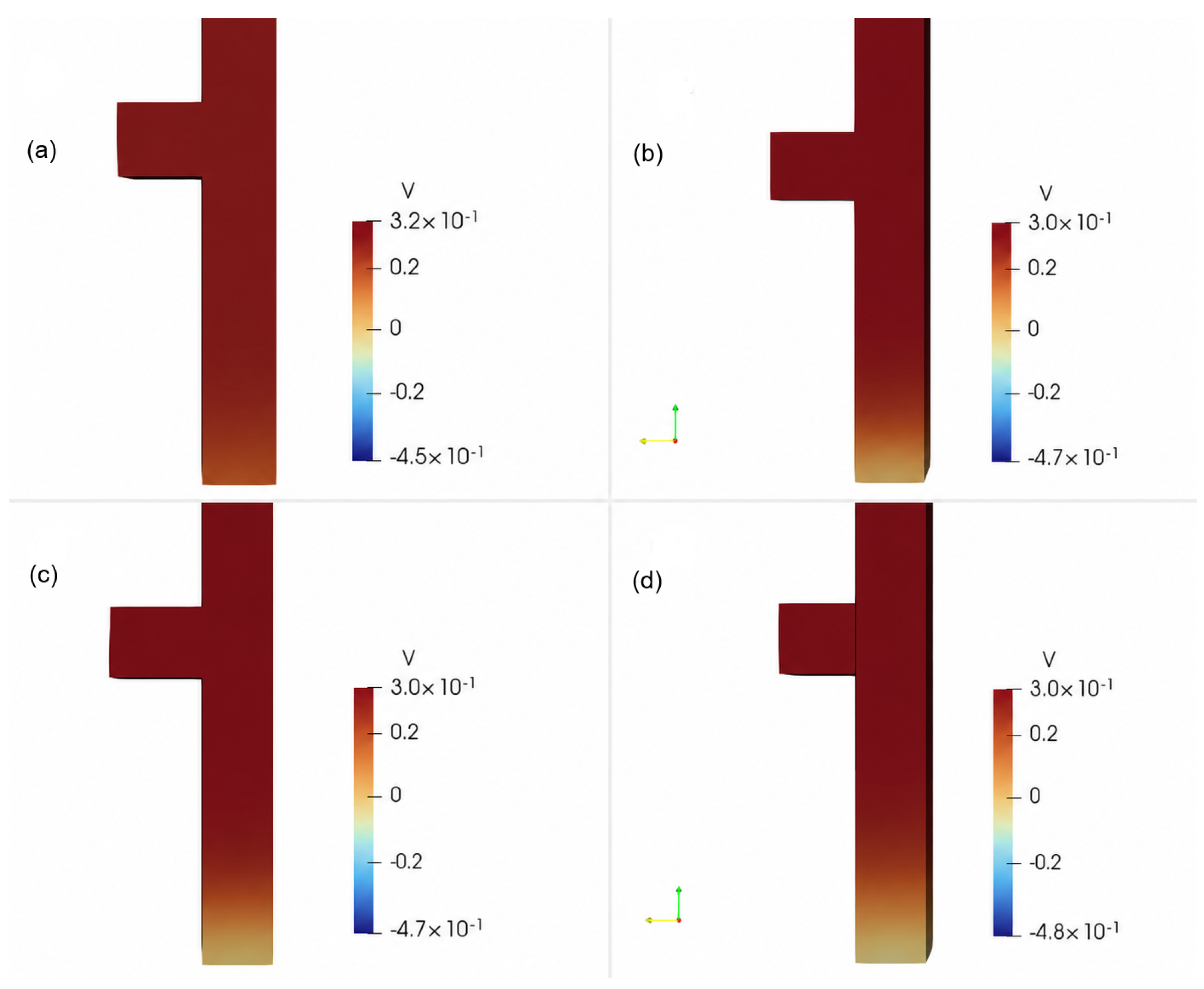
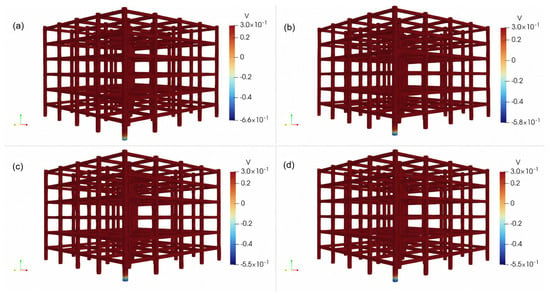
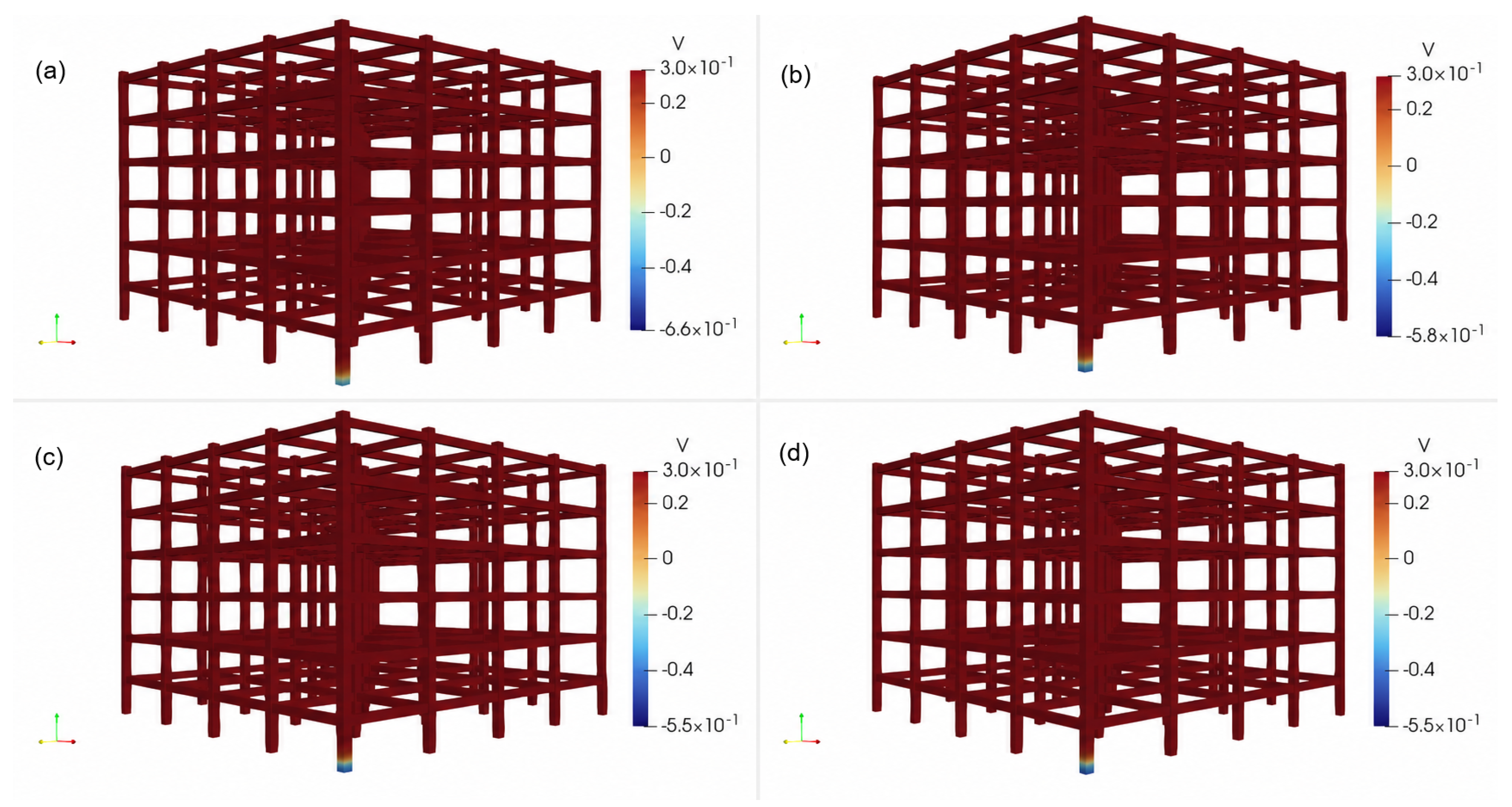
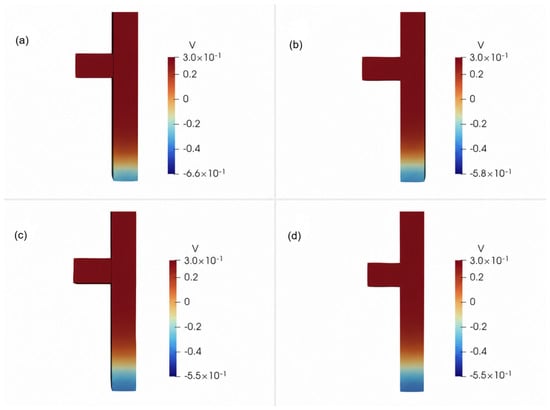
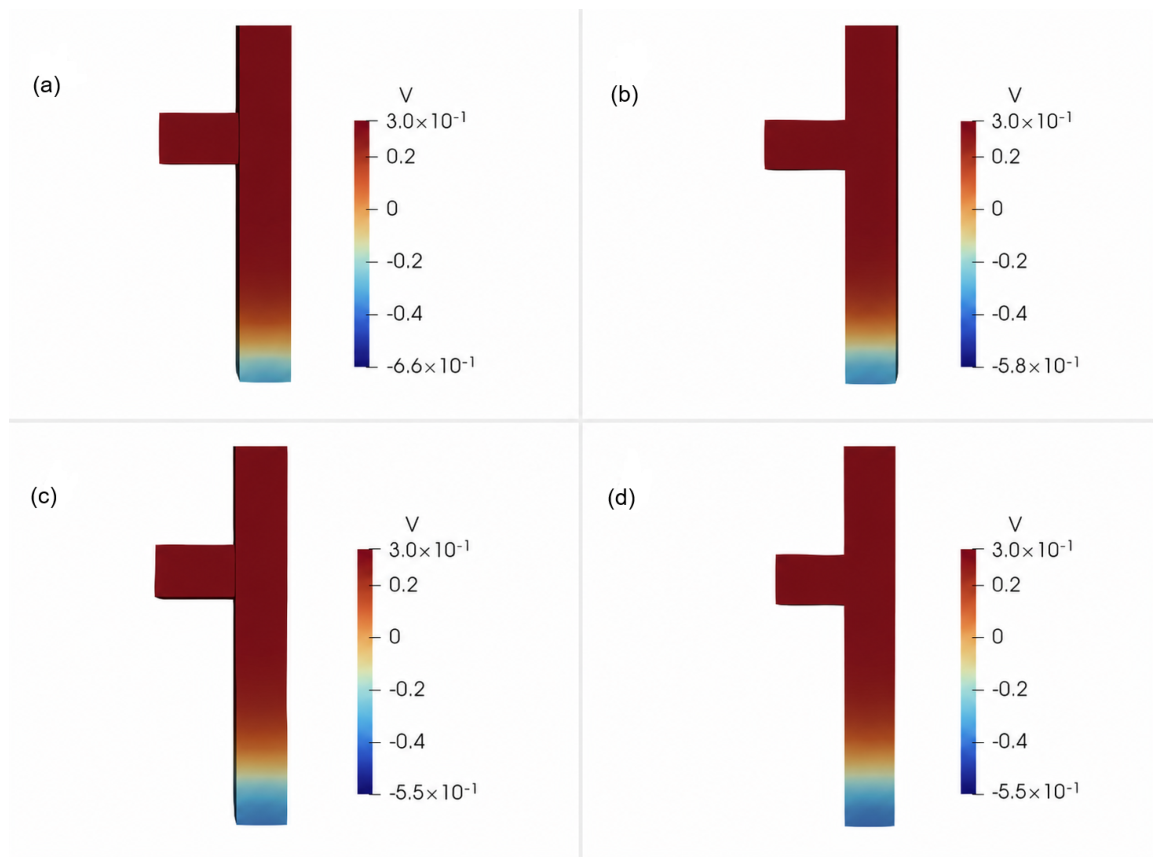
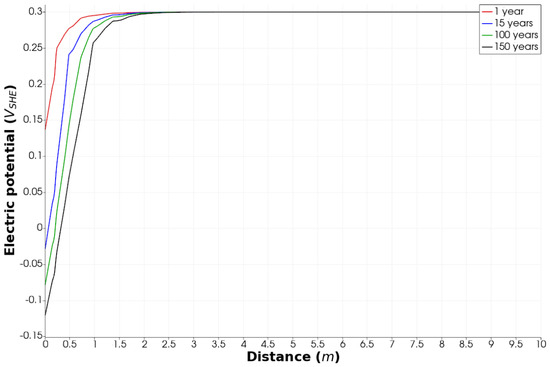
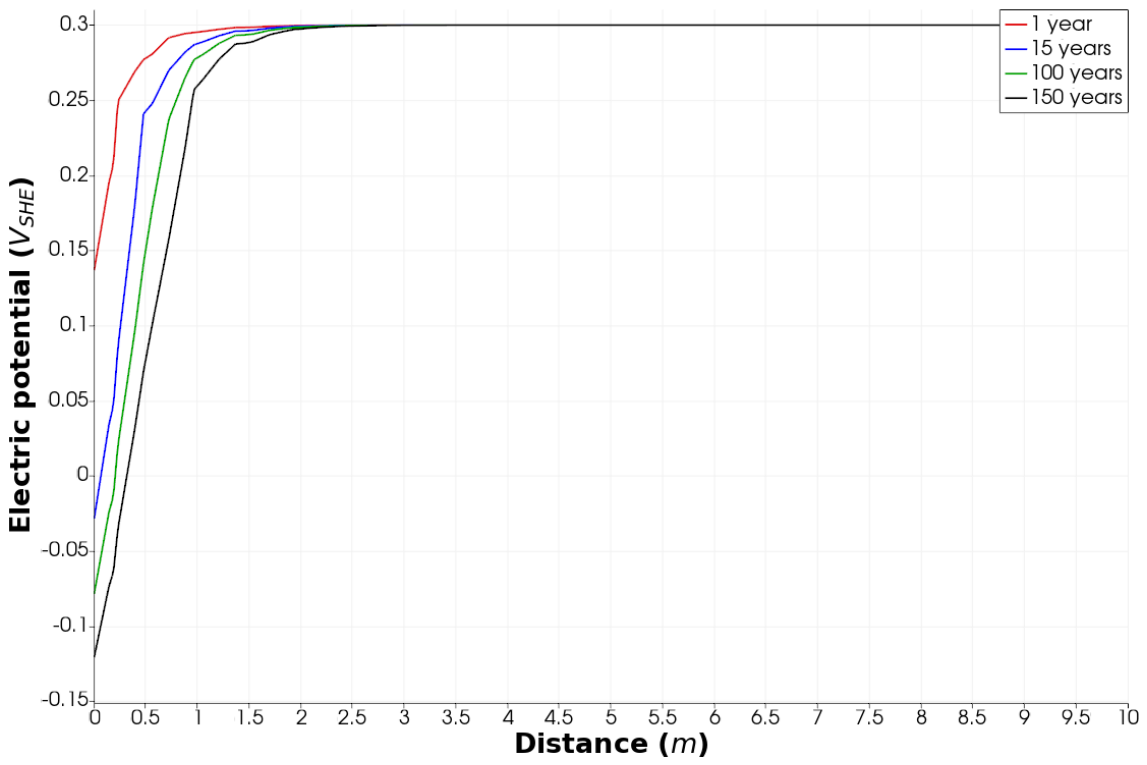
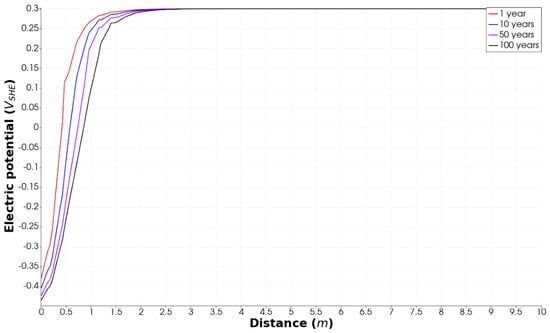
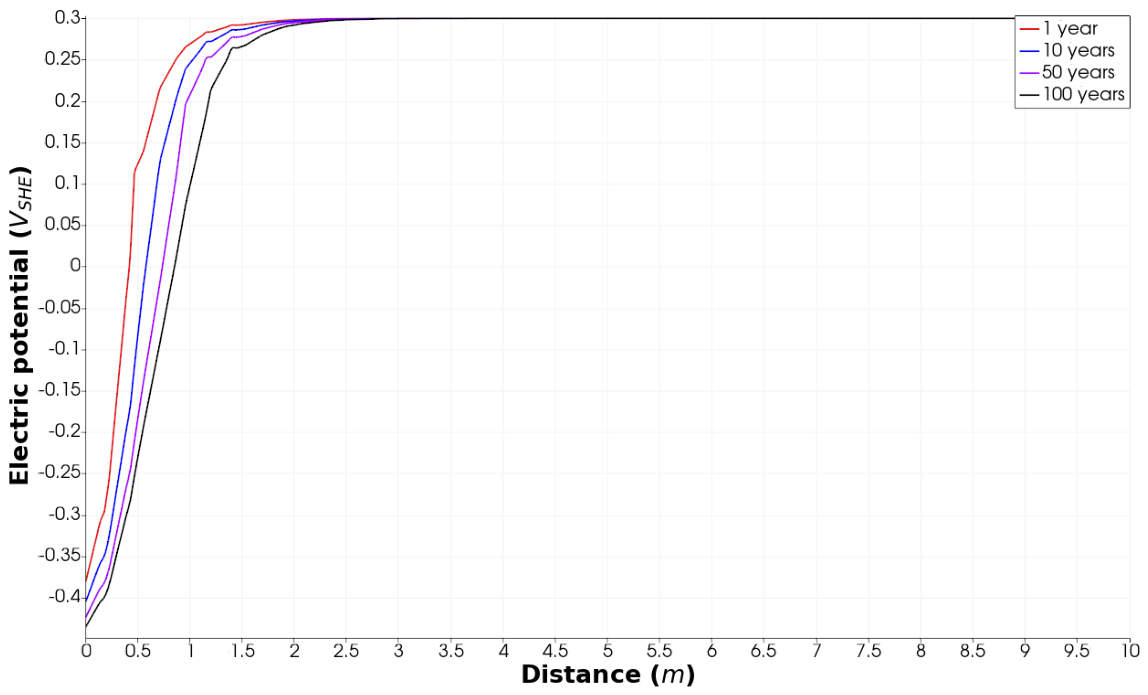
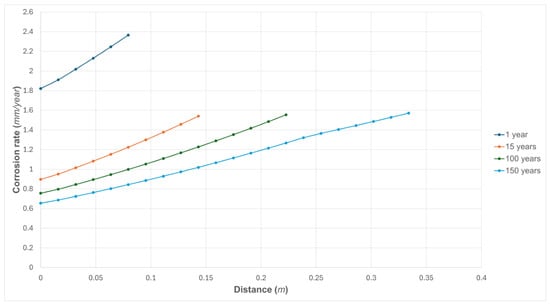
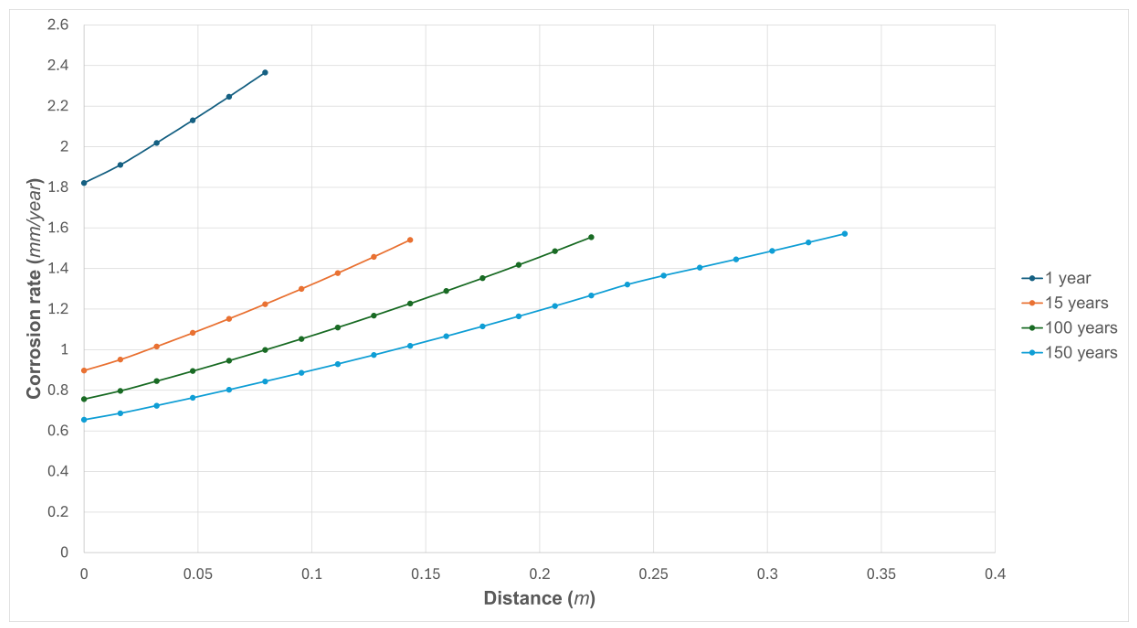
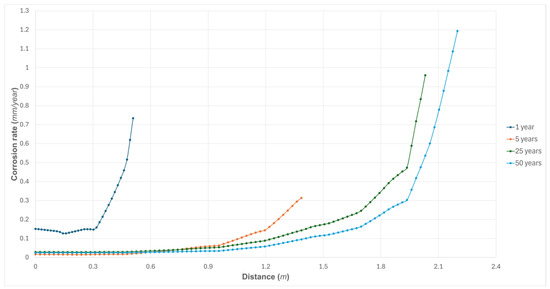
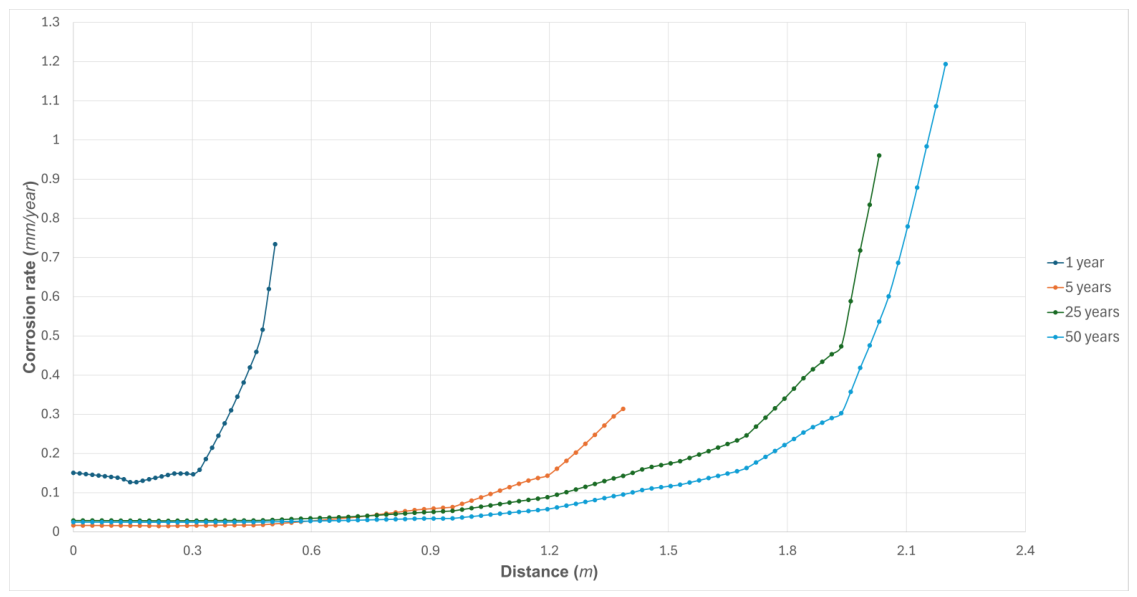
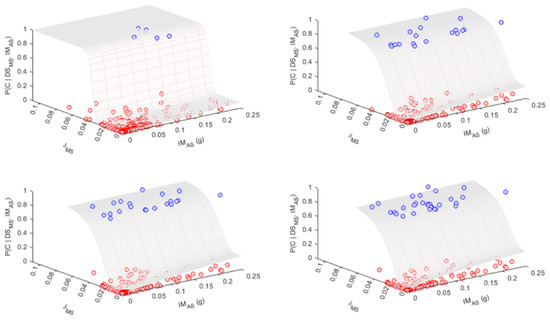
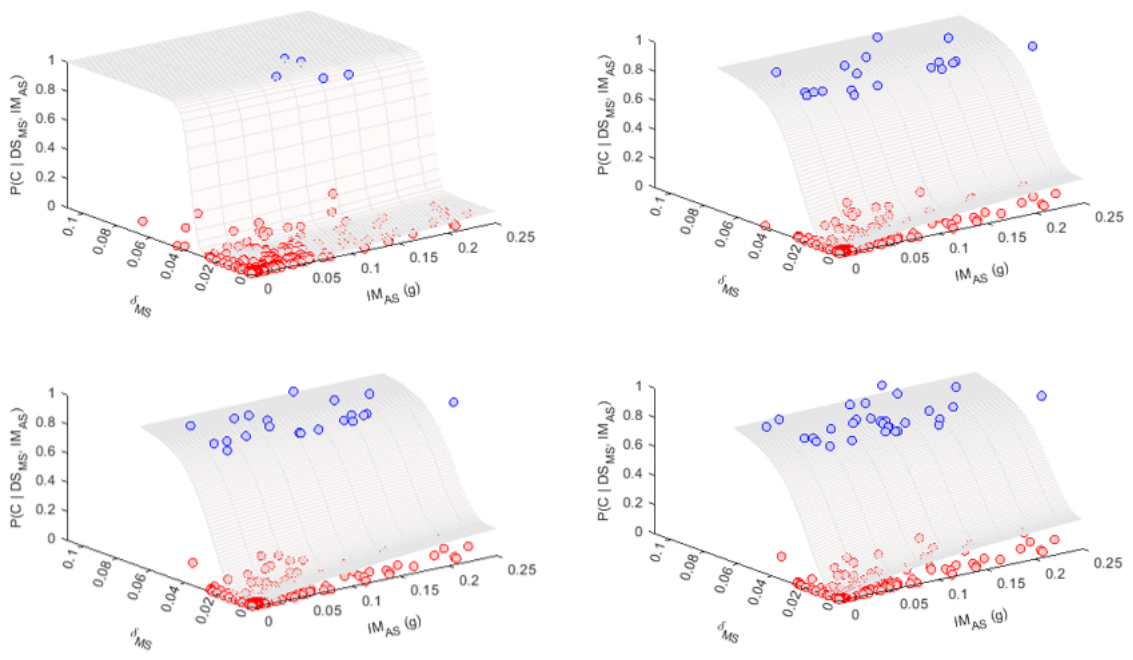

Disclaimer/Publisher’s Note: The statements, opinions and data contained in all publications are solely those of the individual author(s) and contributor(s) and not of MDPI and/or the editor(s). MDPI and/or the editor(s) disclaim responsibility for any injury to people or property resulting from any ideas, methods, instructions or products referred to in the content. |
© 2026 by the authors. Licensee MDPI, Basel, Switzerland. This article is an open access article distributed under the terms and conditions of the Creative Commons Attribution (CC BY) license.