Article

Synergistic Effects of Multi-Source Solid Waste in Low-Carbon Cementitious Materials: Mechanical Properties, Physical Properties and Microstructures

1
School of Civil and Ocean Engineering, Jiangsu Ocean University, Lianyungang 222005, China
2
Centre for Climate–Resilient and Low–Carbon Cities, Key Laboratory of New Technology for Construction of Cities in Mountain Area (Ministry of Education), School of Architecture and Urban Planning, Chongqing University, Chongqing 400045, China
*
Authors to whom correspondence should be addressed.
Buildings 2026, 16(10), 1951; https://doi.org/10.3390/buildings16101951

Submission received: 7 April 2026 / Revised: 28 April 2026 / Accepted: 12 May 2026 / Published: 14 May 2026

Abstract

The global challenge of effectively using and treating solid wastes in an environmentally sustainable way is significant. This study explores the creation of ternary low-carbon gelling materials made from red mud (RM), mineral powder (MP), and soda residue (SR). Using techniques such as SEM-ED, XRD, and FTIR, the microstructure of the red mud–mineral powder–alkaline slag (RM-MP-SR) mixture was analyzed, and the mechanical and physical properties of the material, as well as the leaching behavior of heavy metals, were investigated. The MRS16 sample, containing a 16% SR replacement, exhibited the best properties: compared with the control sample MRS0 (without replacement), its 28-day compressive strength increased by 43.7% to 51.3 MPa, the drying shrinkage rate decreased by 43.2%, and the mass loss rate reduced by 73.9%. After 100 freeze–thaw cycles, the mass loss was only 3.7%. The addition of SR can decrease the porosity in ternary materials, enhancing their mechanical properties; this is mainly due to SR promoting the increase in C-S-H, C-A-S-H gel, and ettringite. Meanwhile, MRS16 showed excellent freeze–thaw resistance, and the leaching levels of Cu, As, Pb, Cr, and Ni were within China’s non-hazardous limits. This study emphasizes the potential of combining RM, MP, and SR, providing useful scientific and theoretical insights for the joint use of alkaline, silica–aluminum, and calcium-based solid wastes.

1. Introduction

Solid waste has emerged as a major environmental challenge worldwide [1]. Among them, red mud (RM) is a waste product generated during the extraction of alumina from bauxite. It is known for its high basicity, complex structure, tiny particles, and high toxicity [2]. Each ton of alumina production results in around 1.0 to 1.8 tons of RM. In Western countries alone, approximately 35 million tons of RM are generated annually [3]. China produces around 79.76 million tons of alumina per year, which results in the generation of up to 1.6 billion tons of red mud [4]; however, the utilization rate of red mud is less than 5%, meaning it not only occupies land and farmland but also incurs high maintenance costs [5]. Furthermore, mineral powder (MP) is a fine-grained solid waste generated during industrial production, primarily composed of silicon dioxide and trace heavy metal elements [6]. Soda residue (SR) is a waste product generated during the reaction of alkaline substances, mainly containing calcium salts such as calcium sulphate, calcium chloride, and calcium carbonate, as well as trace amounts of sulfur dioxide and other elements. The accumulation of SR alters the soil pH in affected areas, leading to soil salinization and alkalization [7]. Furthermore, chloride ions in SR can cause varying degrees of pollution to surface water sources. To address this issue, Alam [8] offered a new way to control the spread of solid waste by accelerating sedimentation. However, this approach overlooks the risk of secondary pollution caused by the leaching of heavy metals from different types of solid waste.
Under the background of the dual carbon strategy and solid waste resource utilization, alkali-activated cementitious materials, as a new type of low-carbon cementitious material, have a core mechanism that involves the use of alkali activators to promote the depolymerization, gelation, and repolymerization of siliceous and aluminous precursors, forming a three-dimensional network cementitious structure with excellent mechanical and durability properties [9]. Meanwhile, the application of bulk solid wastes such as red mud, mineral powder, and alkali residue as precursors in the alkali-activated system is an important approach to achieving high-value utilization of solid wastes. Subsequently, Luo et al. [10] proposed an innovative approach to modify RM by incorporating it with gelling materials. Their findings revealed that the modified RM minimized the delivery of OH− during water cleavage and deterioration. Haha et al. [11] discovered that MP activated by sodium hydroxide (NaOH) could react more quickly in the initial stages and substantially improve the initial compressive strength of MP. Yang et al. [12] utilized sodium carbonate to modify SR in order to reduce the chloride ion content, and the results indicated a 12.8% increase in the flexural strength of 10% modified SR, while the compressive strength of 20% modified SR increased by 36.4%. Although these studies have explored the resource utilization of RM, MP, or SR individually, these recycling routes have not achieved large-scale utilization of solid waste. Furthermore, the collaborative effects of SR, MP, and RM on the performance of gelling elements have received limited attention. Recent studies have discovered that synergistic utilization is an effective approach to minimizing energy use and carbon dioxide emissions [13].
Using various kinds of solid waste collectively is an effective way to boost recycling rates. Hu et al. [14] mixed red mud (RM) with flake NaOH for alkaline preheating treatment, and then blended it with fly ash to prepare gelling material. The research revealed that the composite binding material containing 5% NaOH achieved a peak strength of 23.8 MPa. Hu [15] also pointed out that when using only 2.5% NaOH to activate RM-fly ash-based gelling materials, a compressive strength of approximately 15 MPa was attained at 28 days, whereas activation with sodium silicate led to a strength reaching up to 30 MPa. Krivenko et al. [16] mixed RM, MP, and Portland cement in a 6:3:1 ratio with sodium silicate as an activator, achieving a pressure resistance of 39.4 MPa after 28 days. Chen [17] prepared ternary gelling materials using RM, fly ash, and recycled concrete, achieving a 28-day pressure resistance of 46 MPa. They also found that RM provides good thermal conductivity but increases the drying shrinkage rate. Lemougna et al. [18] found that when RM accounted for 50%, the RM-MP-based gelling materials achieved a 7-day compressive strength reaching up to 54 MPa. Zakira et al. [19] investigated a ratio of RM to MP as 1:9, and when the modulus of solid sodium silicate (WG) was 1.2 with a 3% WG solution addition, the resulting composite gelling material exhibited a pressure resistance value of 69.2 MPa after 28 days and showed early strength characteristics. Yuan et al. [20] mixed metakaolin and fly ash and used orthogonal experiments to prepare gelling materials, achieving a peak strength of 76.74 MPa. These studies have made significant contributions to the effective use of RM, MP, and different kinds of solid waste. Nevertheless, the main challenge is boosting the strength of gelling materials by adding RM, MP, and SR. Specifically, the combined effect of SR, MP, and RM on gelling materials is not fully clear. Therefore, an additional investigation is required to assess the viability of producing gelling materials through the combined use of RM, SR, and MP.
In conclusion, many previous studies have focused on exploring the feasibility of preparing gelling materials by synergizing red mud (RM) with slag (SS), metakaolin (MP), and iron tailings (IR). However, research on the impact of alkaline residue (SR) on gelling materials is relatively scarce. Therefore, this study aims to develop low-carbon gelling materials by investigating the synergistic effects between RM, MP, and SR. This study seeks to thoroughly analyze the mechanical properties of solid wastes, address the challenges of complex and variable waste components with low cementing activity, reveal their basic cementing activity and activation mechanisms, and identify synergistic approaches among different solid wastes. The research also seeks to establish the mixed-design approach for composite gelling materials, evaluate how various preparation parameters influence hydration products, and thoroughly assess the influence of the interaction between RM, MP, and SR on structural performance, structural characteristics, freeze–thaw durability, and toxic metal release characteristics in ternary gelling materials. Additionally, the mechanism of strength formation in alkali-activated multi-source solid waste solidification is studied. SEM-EDS, XRD, and FTIR methods are used to examine and evaluate the ternary low-carbon gelling materials. This study offers fresh insights into the combined use of various solid wastes, such as RM, MP, and SR, in composite gelling materials.

2. Materials and Methods

2.1. Raw Materials

The main raw materials used in this study are SR, MP, and RM. The RM employed in the experiments was obtained from a manufacturing company located in Liaocheng City, Shandong Province, China; the SR was sourced from Lianyungang Alkali Industry Co., Ltd., Lianyungang, China; and the MP was procured from Lianyungang Hanjiang Mining Technology Co., Ltd., Lianyungang, China. The alkaline reagents used were NaOH and WG (34% Na2SiO3·9H2O, SiO2:Na2O:H2O = 3.4:1:5.6), and both were purchased from Sinopharm Group Shanghai Co., Ltd., Shanghai, China. The water used in the experiments was tap water from the laboratory.
The main chemical composition of the raw material was analyzed; the detailed results are shown in Table 1. The analysis revealed that the Na2O content in RM is 10.95%, indicating a high alkalinity. The main component of RM is Fe2O3, with a content of 38.96%. Additionally, the CaO content in MP is 35.17%, indicating potential reactivity, while the CaO content in SR is as high as 47.96%, demonstrating strong cementing properties. The loss on ignition (LOI) values at 950 °C show that the loss on ignition for RM is 9.42%, whilst that for SR is 1.76%.
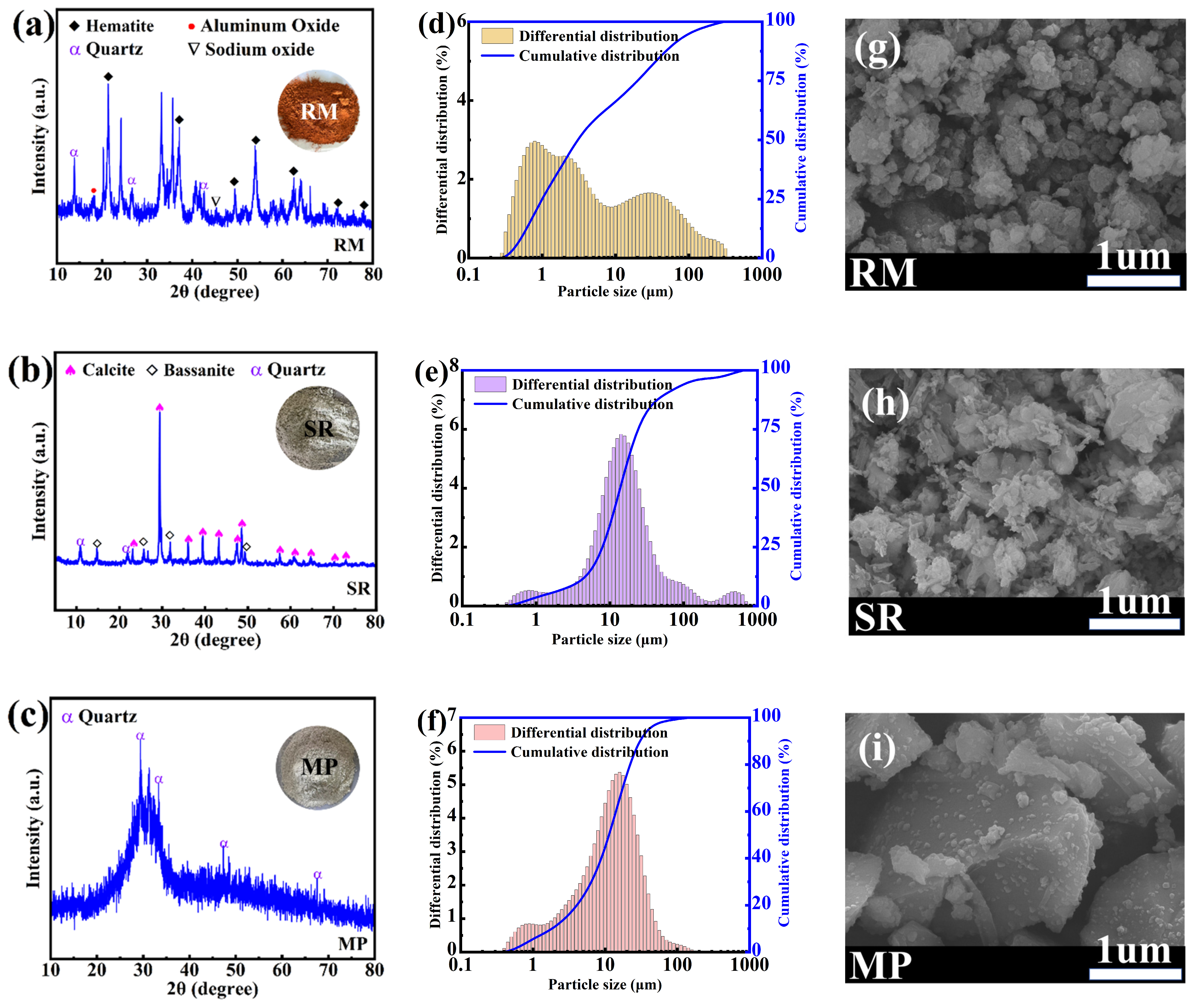
Figure 1 shows the microstructural analysis of the raw material. Figure 1a indicates that hematite and quartz are the main minerals in RM. The particle size distribution ranges from 0.5 to 500 µm, with a d50 value of 1.21 µm (Figure 1d). RM features a loose microstructure with irregularly aggregated particles. These aggregates have a well-developed pore structure, contributing to RM’s high water absorption and retention [21]. As shown in Figure 1b, calcite is the primary mineral in SR, with minor amounts of bassanite and quartz. The particle size profile of SR spans from 0.2 to 970 µm, with a d50 value of 10.45 µm. Furthermore, SR has extremely fine particles, a porous surface structure, and exhibits colloidal properties. However, its microstructure is relatively loose, with numerous pores, and is composed of many aggregates, showing high water absorption. MP is primarily composed of quartz, and its microstructure is irregular and block-like (see Figure 1i). The spectrum of MP is denser compared to RM and SR, and its pozzolanic activity is stronger. The particle size distribution of MP varies from 0.2 to 350 µm, with a maximum of 15.7 µm and a d50 value of 10.22 µm.

2.2. Preparation Method of the Gelling Material

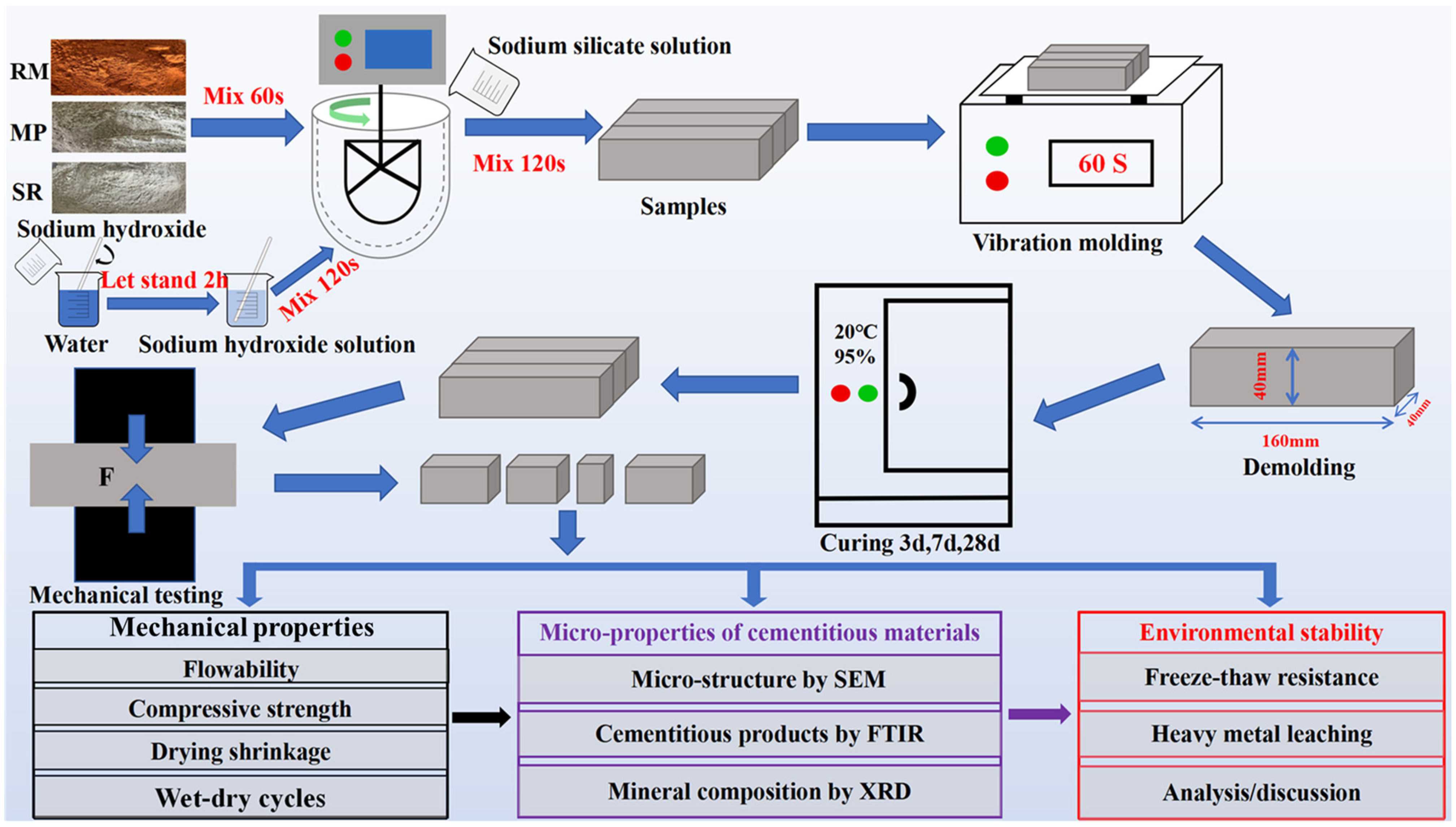
Figure 2 presents the process of producing a ternary gelling material. First, determine the required quantities of MP, RM and RB materials based on the optimised mix proportions in Table 2 (the effect of the strength of the binary cementitious material mix is shown in Figure S1), then add them to the mortar mixer and mix for 60 s. The NaOH solution is then incorporated into the mixture and blended for 120 s. After that, the WG solution is added, mixed gently for 60 s, and then rapidly mixed for 60 s until a flowing plastic state is achieved, preventing particle aggregation. The mixture is transferred into molds coated with oil and set on a shaking table for 1 min to expel gas bubbles. After vibration, the samples are kept in a shady place and demolded after 12 h. Eventually, the models are transferred to a developing room for further development, with curing carried out on days 3, 7, and 28 sustained at 20 ± 2 °C, with air moisture above 95%.

2.3. Test Methods

2.3.1. Fluidity

In this study, a frustum of a conical mold was used to evaluate the flowability of the gelling material, in accordance with GB/T 2419-2005 Test method for fluidity of cement mortar [22]. First, the mixed material was placed into the mold and smoothed using a scraper. After 2 s, the mold was lifted 5–10 cm upward and held in place for 10–15 s to enable the sample to flow. The largest diameters in two orthogonal directions were subsequently measured using a caliper, and the mean value was recorded. The flowability test was repeated three times on the same sample, and the average result, accurate to 0.1 mm, was adopted.

2.3.2. Compressive Strength Testing

The compressive strength of the specimens was evaluated using 40 mm × 40 mm × 160 mm specimens in accordance with the GB/T 17671-2021 Test method of cement mortar strength [23].

2.3.3. Drying Shrinkage and Mass Loss Testing

The drying shrinkage test in this study was performed in accordance with JGJ/T 70-2009, Standard for test methods for basic properties of construction mortar [24]. After molding, the specimens were subjected to standard curing for 24 h and then demolded. Subsequently, the specimens continued to be cured under standard conditions for 7 days, and their initial length was measured. Afterwards, the specimens were transferred to a controlled environment with a temperature of (20 ± 2) °C and relative humidity of (60 ± 5)% for drying. The length of the specimens was measured at different drying times. The drying shrinkage rate at each testing age T was calculated according to Equation (1). In addition, the mass loss of specimens at corresponding ages was calculated using Equation (2).
S t = L 0 L t L × 100 %
M l = M 0 M t M 0 × 100 %
The formula defines St as the drying shrinkage rate (%), with L0 representing the original dimension (mm), Lt as the specimen distance at age T (mm), and L as the productive distance, assumed to be 160 mm. Ml signifies the loss of mass rate (%), with M0 as the original size (g) and Mt as the size at age T (g).

2.3.4. Dry–Wet Cycle Testing

The alternating wet–dry cycle test was performed according to GB/T 50082-2009, Standard test methods for durability and long-term performance of ordinary concrete [25]. Prior to the test, the test specimens, cured for 28 days under standard curing conditions, were pretreated. During each cycle, specimens were immersed in a constant-temperature aqueous solution at (25 ± 2) °C for 15 h. After solution draining, the specimens were dried at (80 ± 5) °C in an electric forced-air oven for 6 h. Afterwards, the specimens were cooled down to room temperature in a temperature-controlled indoor environment. For every cycle, the morphological changes in specimens were recorded. After cleaning surface detritus and drying surface moisture, the mass of the specimens was measured, and the mass loss rate relative to the initial mass was calculated.
Δ M n i = M 0 i M n i M 0 i × 100 %
In the formula, ΔMni represents the loss of mass rate (%) of the i-th specimen upon N wet–dry rounds, where M0i is the size after 2 days of air-drying prior to the test, and Mni is the mass after N cycles.

2.3.5. Freeze–Thaw Cycle Testing

The rapid freeze–thaw test was conducted in accordance with GB/T 50082-2009 Standard for Test Methods of Long-term Performance and Durability of Ordinary Concrete [25]. Prior to the test, the test specimens were fully saturated by immersion in water at (20 ± 2) °C for 96 h. After surface moisture was wiped off, the initial mass of each specimen was weighed. Subsequently, the specimens were placed into a rapid freeze–thaw testing apparatus. The freeze–thaw cycle was performed with a freezing temperature of (−18 ± 2) °C and a thawing temperature of (5 ± 2) °C. Mass loss was measured at specified intervals of cycles. In detail, the surface spalling debris of specimens was cleaned, surface water was blotted up, and the mass was weighed to calculate the mass loss rate relative to the initial mass.
Δ W n i = W 0 i W n i W 0 i × 100 %
In the formula, ∆Wni symbolizes the loss of mass rate (%) of the i-th model after N freeze–thaw rounds, while W0i and Wni denote the masses of the specimen before and after the test, respectively (g).

2.3.6. Testing of Massive Aluminum Leaching Characteristics

This study analyzed the release of heavy metals from composite gelling material using Inductively Coupled Plasma Optical Emission Spectrometry (ICP-OES). The procedure followed the Leaching toxicity testing methods for solid waste–horizontal shaking method (HJ557-2010) [26]. After 28 days of curing, 100 g of the dried material was ground to <3 mm and placed in a glass flask. Purified water was added at a 10:1 fluid–solid balance (L/kg). The container was shaken in a shaking machine for 8 h at 110 oscillations per minute and 40 mm magnitude. After standing for 16 h, the effluent was pulled for the analysis of massive metal release.

2.4. Materials Characterization

The compressive strength of the test specimens was determined using a computer-controlled automatic compression testing machine (YAW-300, Jinan Hensgrand Instrument Co., Ltd., Jinan, China). Surface morphological analysis was carried out using a JSM-7900F field-emission scanning electron microscopy (FE-SEM, Ltd., JEOL Ltd., Akishima, Japan) from JEOL, while energy-dispersive X-ray spectroscopy (EDS), which was integrated into the FE-SEM system, was employed for determining the elemental composition of the materials. The particle size of raw materials was tested using a laser particle size analyzer (Mastersizer 2000, Malvern Panalytical, Malvern, UK). An analysis of crystalline phases of the samples was conducted via a D8 ADVANCE X-ray diffraction (XRD) from (Bruker AXS, Karlsruhe, Germany). Fourier transform infrared spectroscopy (FTIR, Nicolet iS50, Thermo Fisher Scientific, Waltham, MA, USA) was employed for characterizing the surface functional moieties of the obtained specimens. The elemental composition of the samples was determined via an S8 TIGER X-ray fluorescence spectroscopy (XRF) setup from Bruker.

3. Results and Discussion

3.1. Flowability

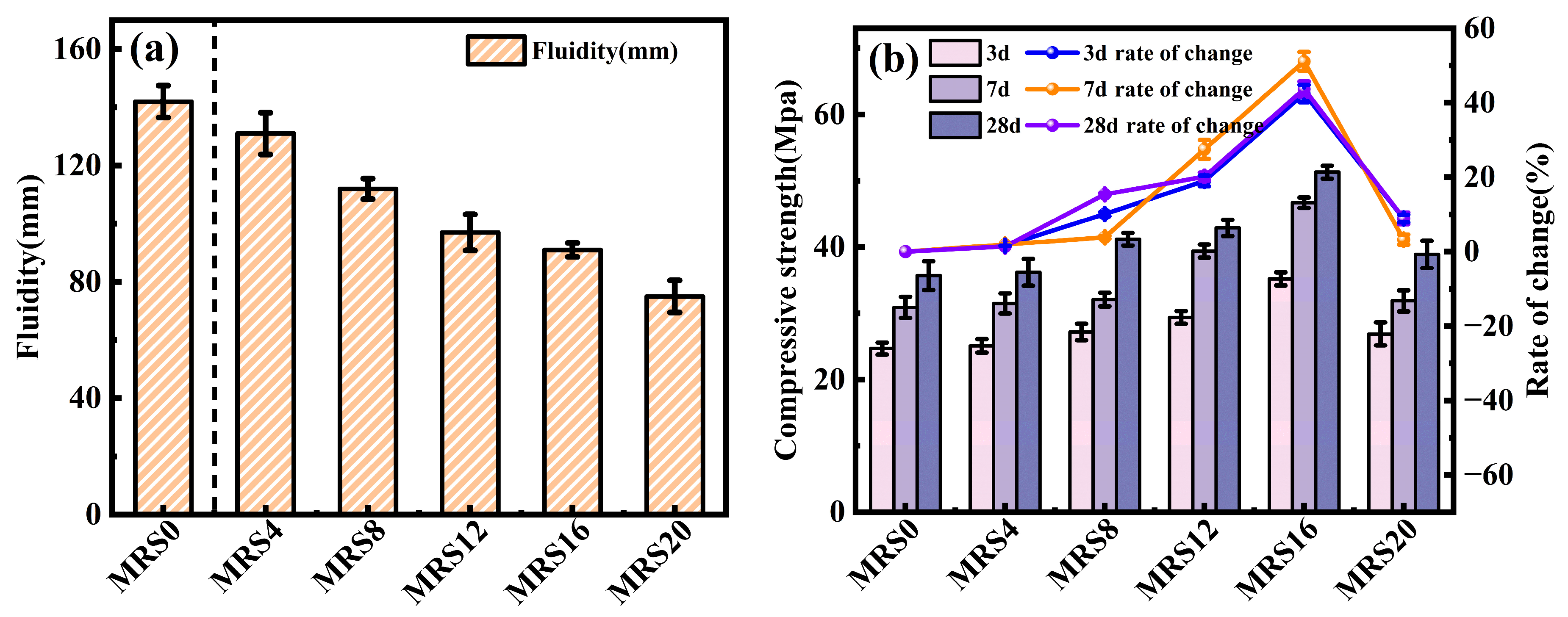
Figure 3 shows the results of the material’s flow test. When there was 0% SR content, the ternary gelling material exhibited its highest flowability of 142 mm, while at 20% SR content, the flowability decreased to its lowest value of 79 mm. Moreover, as the SR content increased, the flowability of the ternary gelling material showed a decreasing trend, as shown in Figure 3a. This indicates a negative correlation between SR content and flowability, which may be associated with the loose structure, high porosity, large surface area density, and strong water absorption of SR. When the SR content ranged from 12% to 16%, the flowability of the ternary gelling material only decreased by 4 mm. Additionally, the flowability of the MRS4 sample decreased by only 9 mm compared to MRS0, a reduction of 2.98%. This may be because the smooth MP particles filled the pores between the ternary gelling material particles and released the water trapped in the pores, thus alleviating the reduction in flowability [27]. However, when 8%, 12%, and 20% SR were incorporated, the flowability decreased by 25 mm, 43 mm, and 63 mm. This phenomenon can be clarified by two major elements: firstly, RM is irregularly shaped with a rough surface and high water absorption, and its relatively low reactivity at room temperature, when replacing more reactive MP, delays the hydration process of the ternary gelling material; secondly, SR particles are finer and possess a greater surface area density compared to MP particles. During mixing, the SR particles adsorb more water molecules on their surface, leading to an increased water demand, which is consistent with the findings of Li [28].

3.2. Compressive Strength

Figure 3b shows the pressure resistance of the ternary gelling material at different stages of development. As demonstrated in Figure 3b, when the SR essence was enhanced from 4% to 16%, the compressive resistance of the ternary gelling material showed an upward trend at 3d, 7d, and 28d. The compressive strength reached its optimum value at 16% SR content. Notably, with an increase in SR content from 8% to 16%, the 7-day power of the gelling material rose, ranging between 32.1 MPa and 46.7 MPa. The rate of increase in compressive strength is faster at 7 days compared to 28 days. This effect is likely due to the effect of SR on RM, which enhances the early response of quartz and alumina in the material, promoting the formation of additional amorphous alumino-silicate gel structures. These gels helped fill the internal pores, thus enhancing the material’s structure and mechanical strength [29]. Additionally, MP can accelerate the hydration rate of gelling materials in an alkaline environment, which creates sufficient space for moisturizing products, ultimately boosting the mechanical attributes of the materials.
Nevertheless, when the SR content surpassed 16%, the constraining resistance in the ternary gelling material dropped to 31.53 MPa, 34.21 MPa, and 40.23 MPa at 3, 7, and 28 days, respectively. This phenomenon indicates that excessively high SR content leads to excessive hydration products, causing expansion, which damages the structural network, increases porosity, and ultimately reduces the power of the gelling material [30]. Moreover, as the curing time increased, the gelling material’s ability to stabilize salts in the alkaline slag gradually decreased, leading to alkali-related issues and significant shrinkage in strength [31]. Additionally, the high alkalinity of RM and the continuous decrease in MP content are also unfavorable for improving compressive strength. Therefore, the appropriate incorporation of SR can effectively enhance the constraining resistance in the gelling material.

3.3. Drying Shrinkage and Mass Loss

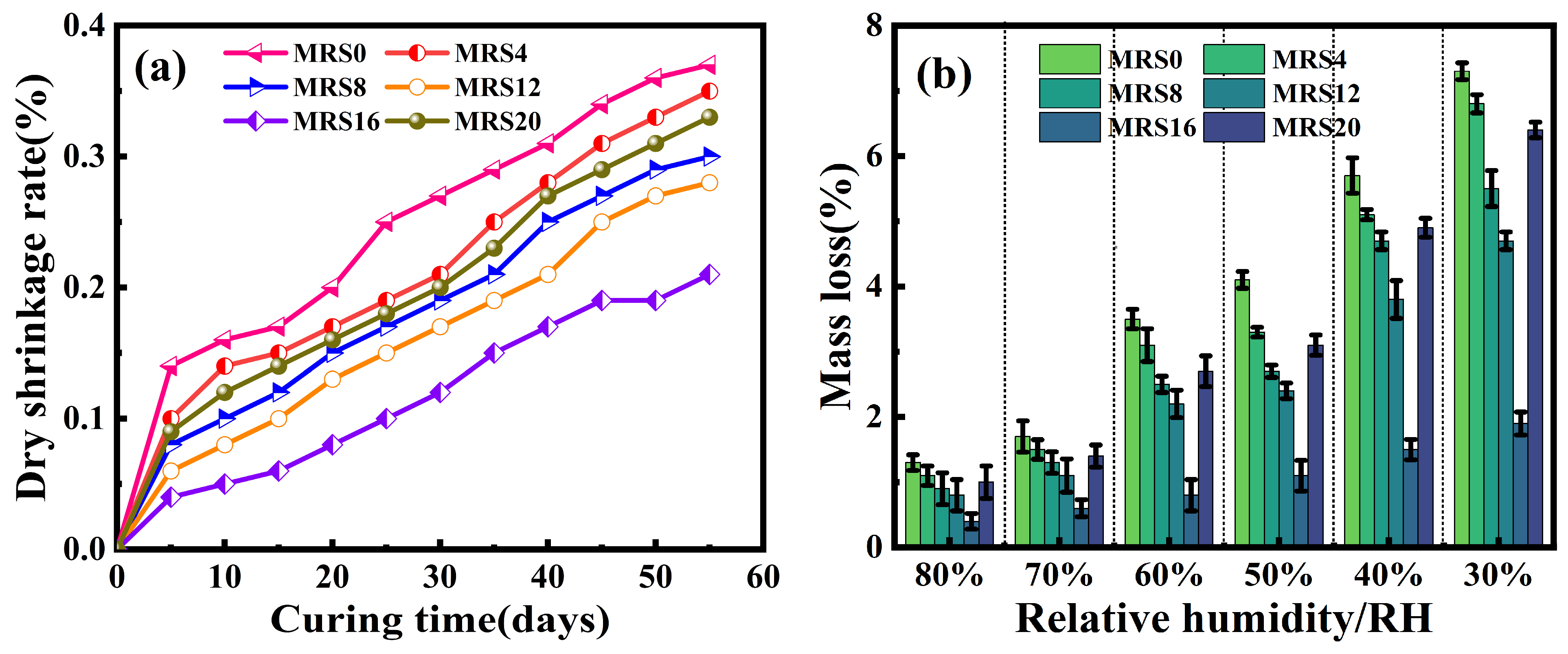
Figure 4 shows the shrinkage and decrease in the amount of ternary gelling materials since the humidity gradient diminishes. As seen in Figure 4a, at the same relative humidity (RH) level, the shrinkage rate of MRS16 is significantly lower than that of MRS0, indicating that the interaction between SR, RM, and MP provides a favorable environment for the shrinkage of the gelling material. The shrinkage of MRS0 varies significantly at 60% relative humidity, whereas the shrinkage pattern of the ternary gel material is relatively gradual; this may be due to differences in their pore size distributions [32]. Additionally, compared to MRS0, the ternary gelling material is denser and does not exhibit significant shrinkage under drying conditions. Within a relative humidity range of 40% to 70%, the shrinkage rate of MRS16 is lower than that of MRS4, MRS8, MRS12, and MRS20. This indicates that an appropriate SR content slows down the shrinkage of ternary gel materials, with the shrinkage rate reaching its lowest level when the SR content is 16%. However, when the SR content exceeds 16%, the shrinkage of the ternary gelling material begins to increase, which could be associated with the amount of hydration products [33].
The loss of mass of the ternary gelling material increases as the humidity decreases, as shown in Figure 4b. When RH decreases from 80% to 30%, the mass loss of MRS16 increases by only 1.48%, while the mass loss of MRS0, MRS4, MRS8, MRS12, and MRS20 increases by 5.99%, 5.71%, 4.59%, 3.86%, and 5.39%, respectively. This is mainly because the Ca2+, Al3+, and Si4+ in MRS16 reacted sufficiently, generating gels like C-A-S-H and C-S-H, which consume moisture and convert it into bound water [34]. This reduces the loss of moisture through steam during the drying process. Therefore, the ternary gelling material with 16% SR content shows the least mass loss, which is consistent with its shrinkage rate results. However, as the SR content increases, the ternary gelling material exhibits a lag phenomenon, where no significant drying shrinkage occurs at 70% RH, but the mass loss sharply increases at 60% RH. This is caused by the existence of a significant quantity of unhydrated moisture in the ternary gelling material. As the humidity decreases, this free water evaporates in large quantities.

3.4. Dry–Wet Cycle

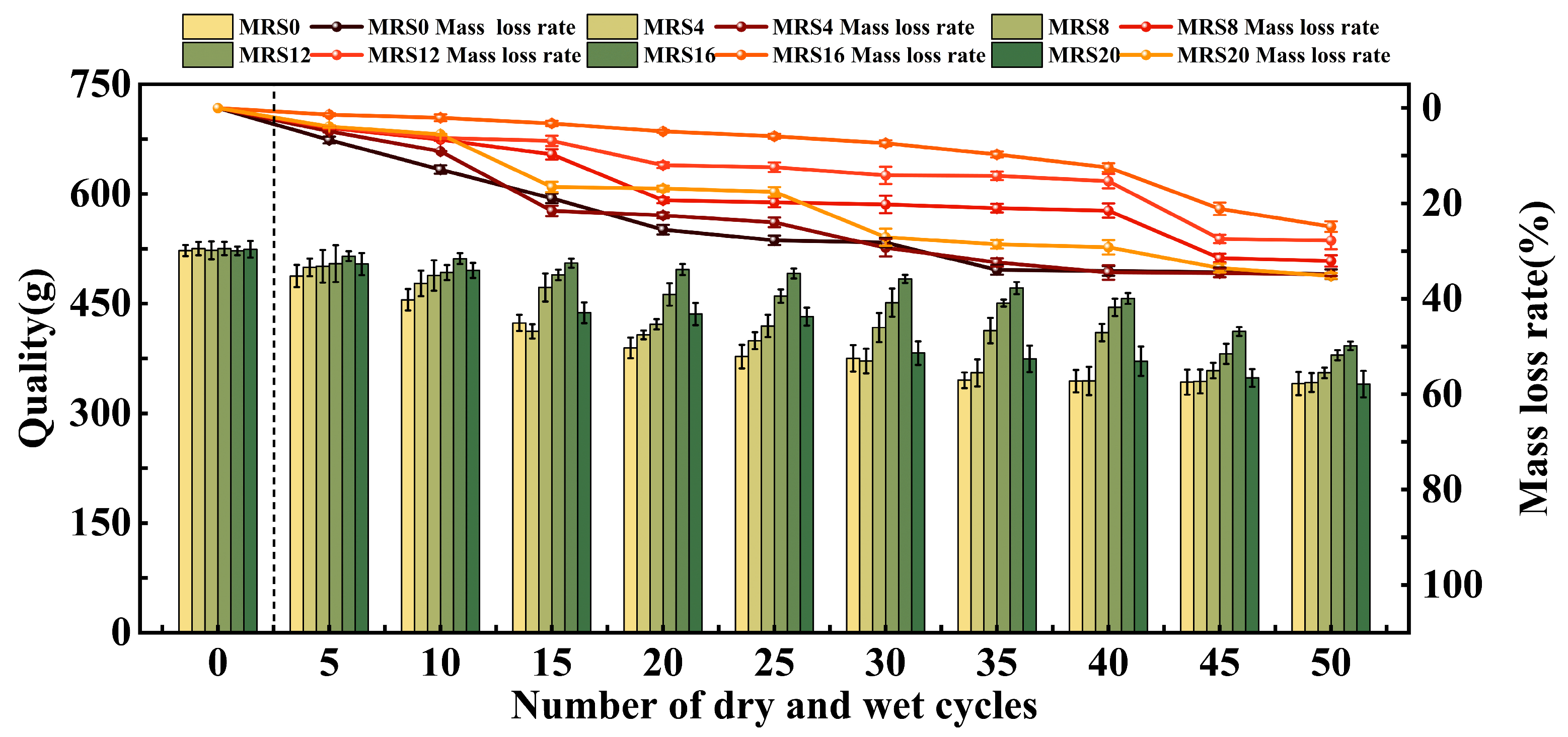
Figure 5 depicts the changes in the mass depletion and loss rate of ternary gelling materials throughout the wet–dry riding process. As shown in Figure 5, the weight of the ternary gelling materials decreases as the amount of wet–dry riding increases. The loss of mass in each sample group is similar during the first five cycles, with the difference in loss rates between adjacent groups not exceeding 0.5%. After 20 cycles, the mass loss rates for MRS0, MRS4, MRS8, MRS12, MRS16, and MRS20 are 25.47%, 22.48%, 19.33%, 11.95%, 4.88%, and 16.86%. This suggests that the combined effects of RM, MP, and SR in MRS16 enhance hydration, creating a more effective gelling system and reducing cracks. As the wet–dry cycling progresses, the ternary gelling material gradually stabilizes internally, and its overall mass loss rate increases slowly, primarily due to the hydration reaction approaching saturation, resulting in a new balance of its structure and integrity [35]. However, when the number of wet–dry cycles exceeds 40, moisture enters the internal structure of the ternary gelling material through deepened cracks, causing the synergistic effect of RM, MP, and SR to occur only at the exterior of the samples, bringing on a 24.86% boost in the overall mass loss rate. Simultaneously, the hydration reaction inside the material weakens, resulting in irreversible shrinkage, which disrupts its structural integrity and breaks the original balance. Zhang et al. [36] observed that when wet–dry cycles exceed 50, the internal structure of the samples stabilizes, but by the 65th cycle, equilibrium is disrupted. Thus, wet–dry cycling is closely associated with both the chemical makeup of the raw materials and the samples’ microscopic structure. Thus, wet–dry cycling is closely associated with both the chemical makeup of the raw materials and the samples’ microscopic structure.

3.5. Microscopic Analysis of Materials

3.5.1. SEM

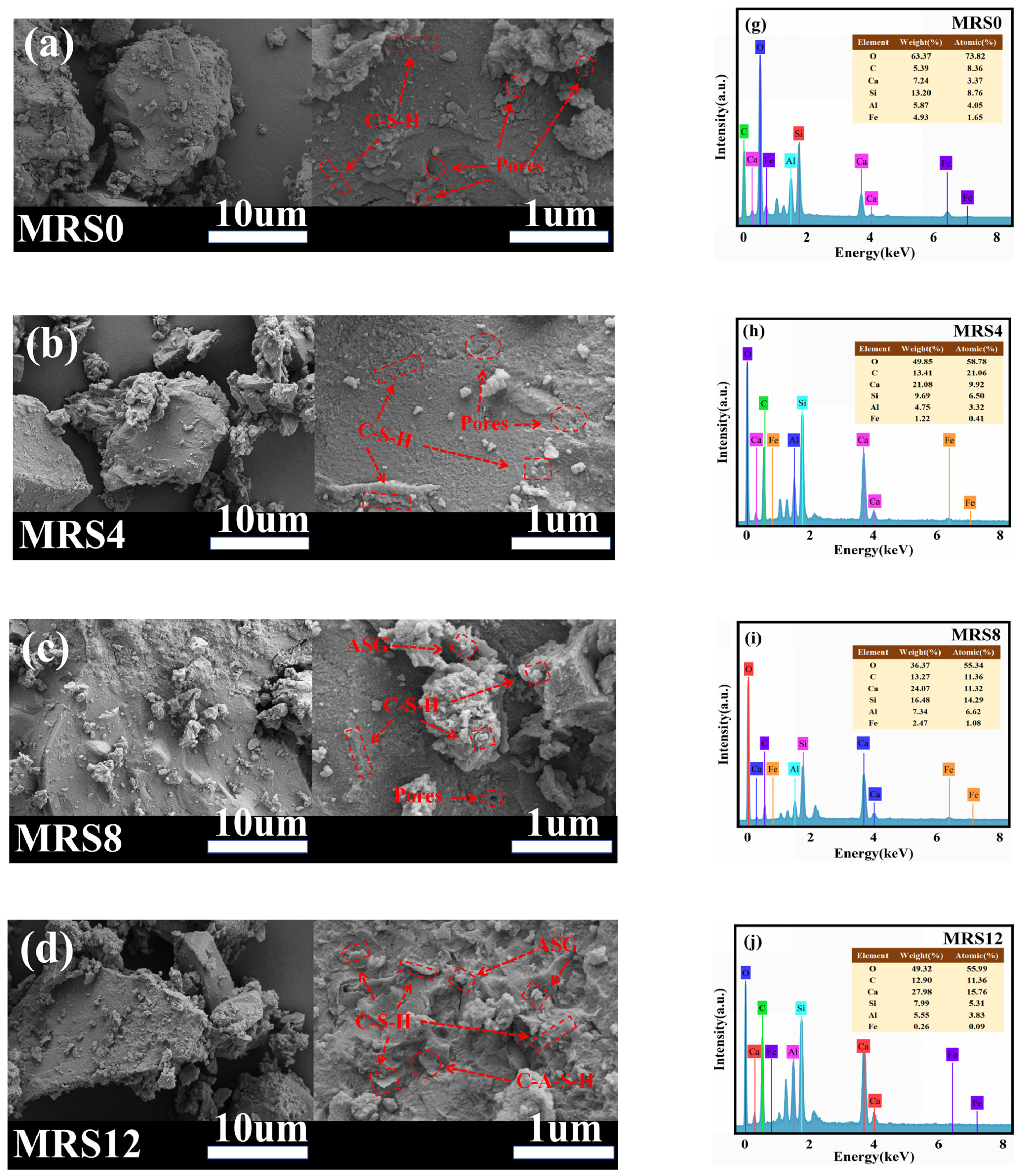
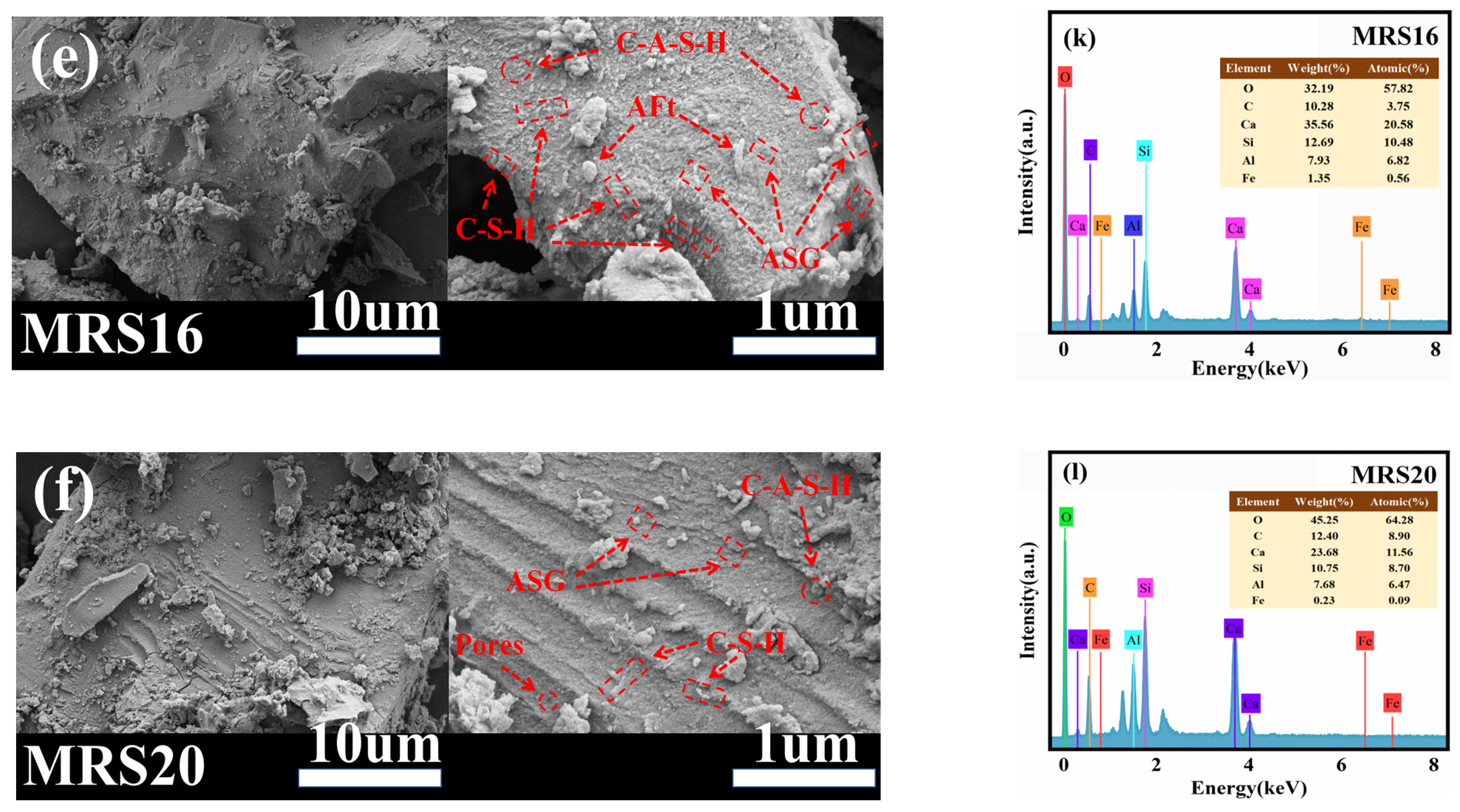
Figure 6a indicates that the structure of MRS0, without SR, is unfastened and porous, with deep cracks caused by the alkaline environment. These cracks, however, enhance the reactivity of Al-Si materials, boosting the development of C-S-H gel. Compared to MRS0, MRS4 exhibits numerous unreacted raw material particles on its surface. The accretion of SR reduces the amount of loose hydration materials by facilitating interactions between RM, MP, and SR, filling gaps, minimizing bubbles, and reducing cracks (Figure 6b). As SR content increases, MRS8 forms an amorphous aluminosilicate gel (ASG) due to more raw materials participating in the hydration process, which boosts the gelling activity. The quantity of C-S-H and C-A-S-H gels increases in MRS12 as well. Figure 6e shows that MRS16 has a dense, uniform microstructure, with tightly connected raw material particles. Hydration materials like C-S-H, C-A-S-H, and ettringite (AFt) create a compact structure, attributed to the collaborative effects of RM, MP, and SR, which offers an alkaline environment for hydration, resulting in increased gel products and reduced heavy metal leaching. However, MRS20, as shown in Figure 6f, has a looser microstructure with visible cracks, indicating that when SR exceeds 16%, it hampers the development of C-S-H gel, increasing porosity and reducing the compactness of the gel materials [37]. EDS clearly reveals that as the SR content increases, the system becomes enriched with Ca(OH)2 or CaCO3, which significantly raises the calcium ion concentration in the system, directly leading to an increase in the Ca/Si ratio measured by EDS [38]. On the other hand, an abundance of Ca2+ ions can bind with the silicate and aluminate anions released during depolymerization, driving the formation of C-A-S-H gel and thereby making the structure more dense [5].

3.5.2. XRD

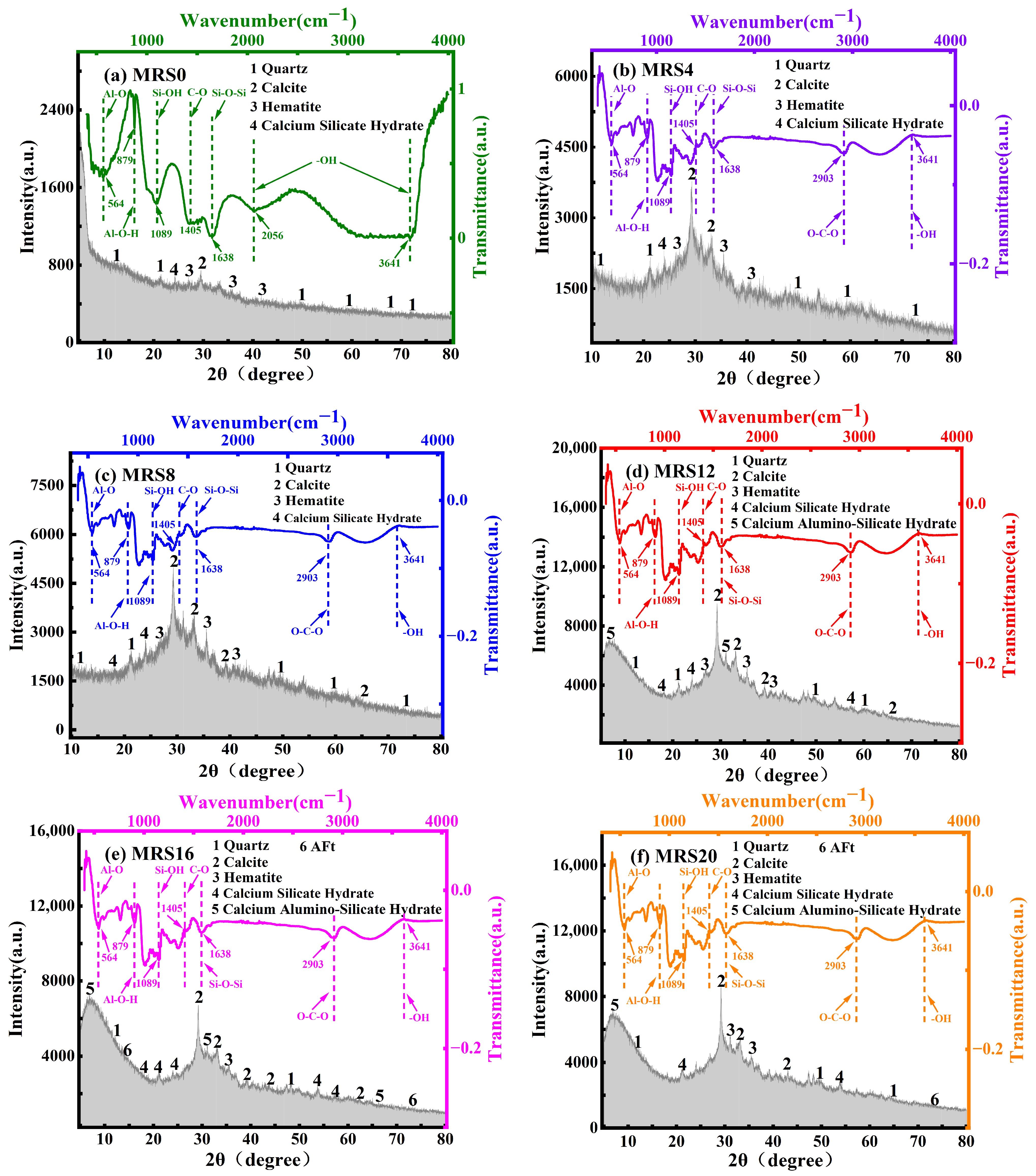
Figure 7 displays the X-ray diffraction (XRD) patterns of ternary gelling materials, showing three main mineral forms: calcite (CaCO3), quartz (SiO2), and hematite (Fe2O3). Comparing Figure 7a with Figure 7b, the diffraction peak intensity of MRS0 is lower than MRS4, indicating that SR incorporation accelerates the formation of gel products on raw material particle surfaces, enhancing hydration. As SR content rises, the diffraction peaks intensify, reflecting an increase in gel phase quantity following the polymerization process (Figure 7d). The combined effect of RM, MP, and SR boosts OH− activity towards Si-Al substances, leading to hydration reactions that form aluminosilicate compounds like C-A-S-H and amorphous gels. In Figure 7e, MRS16 shows a marked increase in aluminosilicate hydrate intensity and the formation of new crystalline products (AFt), suggesting that more SR accelerates MP and RM hydration. The diffraction intensities of calcite and quartz decrease due to their dissolution by Ca2+ and OH−, releasing active silica and further aiding C-(A)-S-H gel formation. [39]. In comparison to MRS16, the diffraction peak intensity of aluminosilicate hydrates in MRS20 decreases, while that of calcite and quartz increases. This indicates that when the SR content exceeds 16%, the hydration reaction weakens, leading to fewer crystalline and gel-type products and an increase in unreacted SR particles, consistent with the SEM-EDS results [40]. In conclusion, 16% SR content incorporation not only aids in the formation of amorphous gels but also strengthens the gelling material.

3.5.3. FTIR

Figure 7 presents the FTIR ranges of the ternary gelling materials. The peak at 3641 cm−1 depicts the extension vibration of the -OH group, as reported by Pradhan et al. [41]. The 2056 cm−1 peak, associated with the deformation vibration of -OH, disappears in the MRS4 sample, suggesting a reaction between SR and RM [42]. The inclusion of SR raises the alkalinity of the materials, aiding in SiO2 dissolution. The 2093 cm−1 peak, associated with the O-C-O structure from SR [43], diminishes as SR is incorporated, indicating the breakdown of this structure and its participation in hydration. Peaks at 1638 cm−1, 1405 cm−1, and 1089 cm−1 relate to asymmetric vibrations in Si-O-Si, C-O, and Si-OH bonds, respectively, expressing the presence of C-(A)-S-H gel in the materials [44]. The 879 cm−1 peak strengthens with SR incorporation, reflecting an increase in the complexity and polymerization degree of the C-S-H gel. The 564 cm−1 peak, linked to Al-O stretching, sharpens with SR addition. Compared to MRS0, MRS4, MRS8, and MRS12, MRS16 shows tougher peaks at 2093 cm−1, 1089 cm−1, and 879 cm−1, while MRS20 exhibits weaker overall absorption peaks. This suggests that as hydration progresses, the amount of C-S-H and C-A-S-H gels increases. Additionally, Ca2+ plays a role in secondary hydration, converting free water into bound water. The cooperative effect of RM, MP, and SR enhances this process over time; although, excessive CaO and amorphous phases may hinder polymerization [45]. Thus, the hydration rate in MRS16 accelerates with longer hydration times, matching the XRD analysis data.

3.6. Freeze–Thaw Resistance

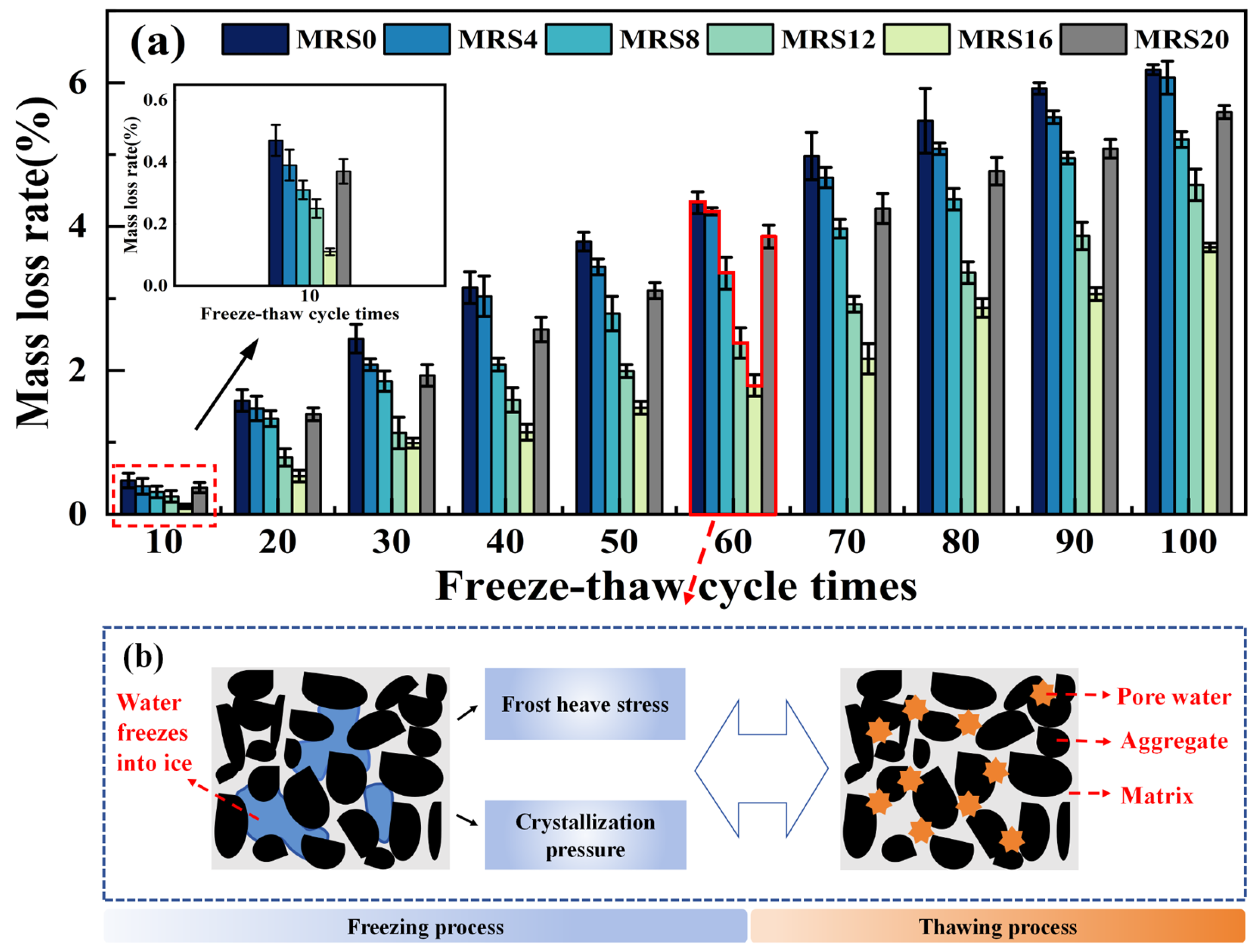
Figure 8a shows the mass loss of the gel material after different numbers of freeze–thaw cycles. After 60 cycles, MRS0 experienced a mass loss of 4.33%. In contrast, the addition of SR reduced the losses of mass in the ternary materials by 2.77%, 22.63%, 45.03%, 58.66%, and 10.85%. After 100 cycles, the mass losses for MRS0, MRS4, MRS8, MRS12, MRS16, and MRS20 were 6.18%, 6.07%, 5.21%, 4.58%, 3.71%, and 5.59%. The mass loss of MRS0 is substantially higher than that of other samples after the same number of freeze–thaw rounds, with MRS16 showing the lowest mass loss. This suggests that SR particles may have filled the micropores and microcracks in the cementitious matrix, reducing the free water content within the pores and thereby improving freeze–thaw resistance [46]. However, with the enhancement of SR, the loss of mass MRS20 increases by 5.59%, indicating that an excessive amount of SR weakens the freeze–thaw resistance of the ternary gelling materials. Similar findings were observed by Burke et al. [47] in the preparation of alkali-activated gelling materials using solid waste. This phenomenon could be explained by the agglomeration of excess SR particles, which creates defective weak surfaces within the ternary gelling materials [48]. The repeated action of water and ice phases can cause the detachment of the weak surface matrix. Additionally, freeze expansion stress and crystallization pressure may lead to micro-cracks on the gelling material surface, as shown in Figure 8b. Thus, incorporating an appropriate size of SR can boost the freeze–thaw resistance of the gelling materials.

3.7. The Potential for Heavy Metal Release

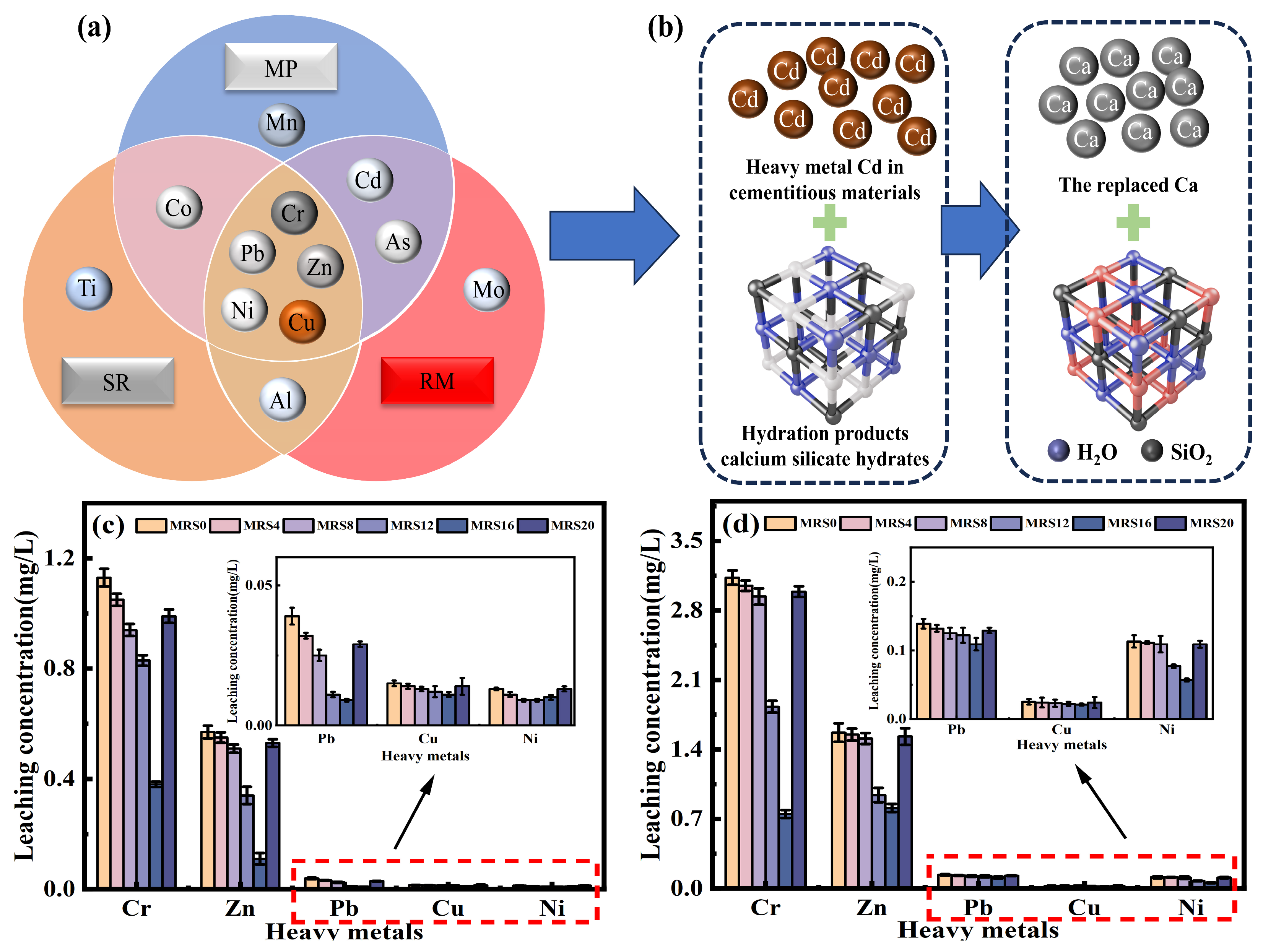
The leaching toxicity of the ternary gel material was assessed under freeze–thaw and non-freeze–thaw conditions; the results are shown in Figure 9. As shown in Figure 9a, Cr, Zn, Pb, Ni, and Cu are the primary heavy metals associated with leaching risks [49]. Figure 9b shows that Cd ions can fully replace Ca sites in the calcium silicate hydrate (C-S-H) crystals. According to Pomiès et al. [50], this reaction only takes place when the Cd content is below 30% of the Ca content.
Under non-freeze–thaw conditions, Cr has the highest leaching concentration in ternary gelling materials, ranging from 1.13 mg/L to 0.38 mg/L, while Ni shows the lowest (Figure 9c). Under freeze–thaw conditions, Cr still leaches at the highest concentration but at a faster rate. In contrast, nickel (Ni) leaches the least in non-freeze–thaw conditions, with concentrations between 0.113 μg/L and 0.057 μg/L; under freeze–thaw conditions, these concentrations increased by a factor of 6 to 10. This difference may be due to variations in heavy metal intensity in the materials. According to the Chinese Hazardous Waste Identification Standard (GB 5085.3-2007) [51], the leaching intensities of Ni (<5 mg/L), Cu (<100 mg/L), Cr (<15 mg/L), Pb (<5 mg/L), and Zn (<5 mg/L) in both conditions are below the regulatory limits for non-hazardous substance release.

3.8. Synergistic Mechanism

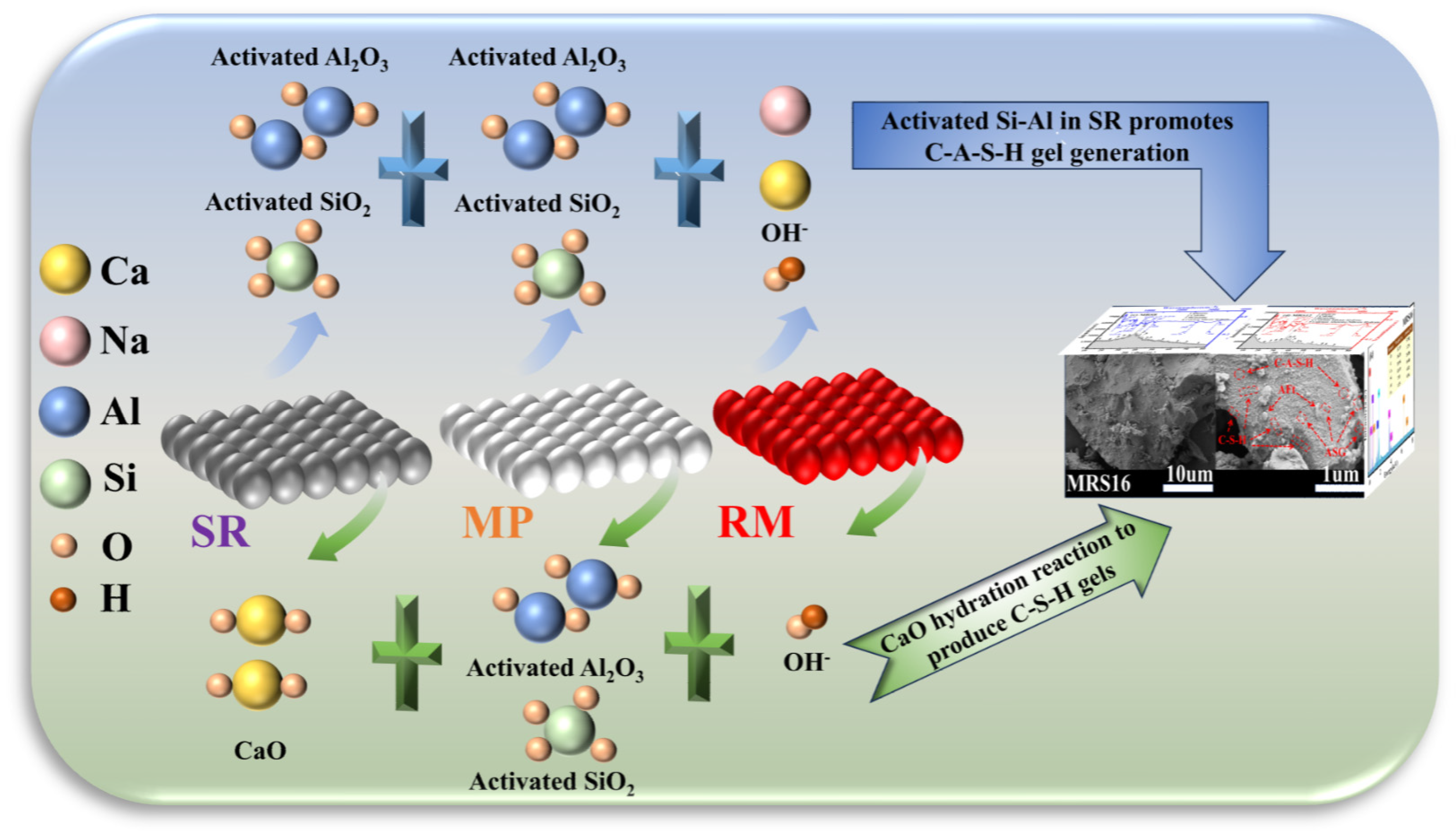
The synergistic mechanism of the RM-MP-SR system is shown in Figure 10. When OH ions in RM come into contact with water, an alkaline solution forms, promoting the hydration reaction. The addition of an alkaline activator enhances interactions between RM, MP, and SR, accelerating the dissolution of Si-Al compounds. With SR (≤16 wt%) added, aluminum oxide–silicate participates in the polymerization of RM and MP. Ca2+ also aids in the structure of C-S-H [32]. Hydroxide ions (OH) facilitate the formation of hydration products in the RM-MP-SR system. This synergistic effect promotes the dissolution of silicon and aluminum from the raw materials, generating additional products such as C-A-S-H gel and Aft. These gels encapsulate reagents and products, filling air voids and creating a denser gel network, which enhances performance [52].

4. Conclusions

This study presents a novel method to improve gelling material performance by utilizing alkaline substances and calcium components in SR. It addresses environmental challenges linked to solid waste utilization and aims to develop a low-carbon, eco-friendly gelling material that meets performance standards. The key findings are summarized below:
(1)
Under standard curing conditions, MRS16, containing 16% SR, performed the best. Compared with MRS0, which contains no SR, its 28-day compressive strength reached 51.3 MPa, representing an increase of 43.7%; the drying shrinkage rate was reduced by 43.2%; and the mass loss rate was reduced by 73.9%.
(2)
XRD, FTIR, and microstructural analysis confirmed the synergistic effect of hydration products in the ternary gelling material, resulting in increased C-S-H and C-A-S-H gels, with MRS16 showing the highest content.
(3)
Under standard curing, MRS16 exhibited the best frost resistance, with only 3.7% mass loss after 100 freeze–thaw cycles.
This study presents a composite gelling material that exhibits environmental sustainability and high efficiency but is limited by maximum SR content and long-term durability. Future research should focus on optimizing mix proportions, improving long-term performance, and broadening application areas to increase SR content and explore new uses.

5. Further Studies

Although this study has opened up new avenues for the resource recovery of multi-source solid waste through the use of alkali activation technology, it nevertheless has certain limitations. While the correlation between material porosity and mechanical strength was addressed, intricate pore structure characteristics and textural properties remain underexplored—hindering elucidation of the intrinsic link between pore architecture and material performance. Future work will address these shortcomings by: (1) using SEM for detailed observations of pore morphology; (2) combining with mercury intrusion porosimetry (MIP) to characterize pore connectivity, thereby supplementing pore-related testing; (3) expanding the research scope and deepening investigations into underlying mechanisms to enhance the robustness of the findings.

Supplementary Materials

The following supporting information can be downloaded at: https://www.mdpi.com/article/10.3390/buildings16101951/s1, Figure S1: Mechanical Properties of Low-Carbon Gel Materials in Binary Systems.

Author Contributions

Conceptualization, H.L.; Methodology, B.H.; Software, Formal analysis, Resources and Data curation, Data curation, and Writing—original draft, Y.Z. All authors have read and agreed to the published version of the manuscript.

Funding

This study was supported by the Postgraduate Research & Practice Innovation Program of Jiangsu Province, grant number (SJCX25_2103).

Data Availability Statement

The original contributions presented in this study are included in the article. Further inquiries can be directed to the corresponding authors.

Conflicts of Interest

The authors declare no conflicts of interest.

References

  1. Seng, B.; Kaneko, H.; Hirayama, K.; Katayama-Hirayama, K. Municipal solid waste management in Phnom Penh, capital city of Cambodia. Waste Manag. Res. 2011, 29, 491–500. [Google Scholar] [CrossRef]
  2. Mi, H.; Yi, L.; Wu, Q.; Xia, J.; Zhang, B. A review of comprehensive utilization of red mud. Waste Manag. Res. 2022, 40, 1594–1607. [Google Scholar] [CrossRef]
  3. Mohamed, M.A.; Harun, M.; Al-Fakih, A.; Chen, B. A review on the utilization of red mud in concrete: Effects on fresh, mechanical, and durability properties. J. Build. Eng. 2026, 123, 115757. [Google Scholar] [CrossRef]
  4. Lin, S.; Zhang, T.; Zhang, B.; Chao, X. Research on Bayer red mud slurry electrolysis. Bull. Environ. Contam. Toxicol. 2022, 109, 101–109. [Google Scholar] [CrossRef]
  5. Wang, Y.; Liu, X.; Tang, B.; Li, Y.; Zhang, W.; Xue, Y. Effect of Ca/(Si+ Al) on red mud based eco-friendly revetment block: Microstructure, durability and environmental performance. Constr. Build. Mater. 2021, 304, 124618. [Google Scholar] [CrossRef]
  6. Qi, Y.; Zhou, P.; Wang, J.; Ma, Y.; Wu, J.; Su, C. Groundwater pollution model and diffusion law in Ordovician limestone aquifer owe to abandoned red mud tailing pit. Water 2022, 14, 1472. [Google Scholar] [CrossRef]
  7. Qiu, Y.; Zhao, Q.; Pan, H.; Guo, W. Freeze-thaw resistance performance of alkaline residue-blast slag based low carbon binder material: Supplementary study. Constr. Build. Mater. 2023, 409, 133950. [Google Scholar] [CrossRef]
  8. Alam, S.; Das, B.K.; Das, S.K. Dispersion and sedimentation characteristics of red mud. J. Hazard. Toxic Radioact. Waste 2018, 22, 04018025. [Google Scholar] [CrossRef]
  9. Song, Y.; Zhang, J.; Wu, H.; Yang, C.; Jia, D.; Wei, W. All-solid-waste alkali-activated materials: A critical review of multi-waste synergy, heavy metal stabilization, and sustainable engineering applications. J. Environ. Chem. Eng. 2025, 13, 119204. [Google Scholar] [CrossRef]
  10. Luo, H.-l.; Huang, S.-s.; Luo, L.; Wu, G.-y.; Liu, Y. Modified granulation of red mud by weak gelling and its application to stabilization of Pb. J. Hazard. Mater. 2012, 227, 265–273. [Google Scholar] [CrossRef]
  11. Haha, M.B.; Lothenbach, B.; Le Saout, G.; Winnefeld, F. Influence of slag chemistry on the hydration of alkali-activated blast-furnace slag—Part I: Effect of MgO. Cem. Concr. Res. 2011, 41, 955–963. [Google Scholar] [CrossRef]
  12. Yang, T.; Gao, X.; Zhang, J.; Zhuang, X.; Wang, H.; Zhang, Z. Sulphate resistance of one-part geopolymer synthesized by calcium carbide residue-sodium carbonate-activation of slag. Compos. Part B-Eng. 2022, 242, 110024. [Google Scholar] [CrossRef]
  13. Taki, G.; Grierson, P.F.; Scullett-Dean, G.; Brand, H.E.; Murphy, D.V.; Santini, T.C. Blending bauxite residues with multiple byproducts improves capping materials for tailings storage facilities. J. Environ. Manag. 2023, 338, 117852. [Google Scholar] [CrossRef] [PubMed]
  14. Hu, Y.; Liang, S.; Yang, J.; Chen, Y.; Ye, N.; Ke, Y.; Tao, S.; Xiao, K.; Hu, J.; Hou, H. Role of Fe species in geopolymer synthesized from alkali-thermal pretreated Fe-rich Bayer red mud. Constr. Build. Mater. 2019, 200, 398–407. [Google Scholar] [CrossRef]
  15. Hu, W.; Nie, Q.; Huang, B.; Shu, X. Investigation of the strength development of cast-in-place geopolymer piles with heating systems. J. Clean. Prod. 2019, 215, 1481–1489. [Google Scholar] [CrossRef]
  16. Krivenko, P.; Kovalchuk, O.; Pasko, A.; Croymans, T.; Hult, M.; Lutter, G.; Vandevenne, N.; Schreurs, S.; Schroeyers, W. Development of alkali activated cements and concrete mixture design with high volumes of red mud. Constr. Build. Mater. 2017, 151, 819–826. [Google Scholar] [CrossRef]
  17. Chen, K.; Lin, W.-T.; Liu, Q.; Chen, B.; Tam, V.W. Micro-characterizations and geopolymerization mechanism of ternary cementless composite with reactive ultra-fine fly ash, red mud and recycled powder. Constr. Build. Mater. 2022, 343, 128091. [Google Scholar] [CrossRef]
  18. Lemougna, P.N.; Wang, K.-t.; Tang, Q.; Cui, X.-m. Study on the development of inorganic polymers from red mud and slag system: Application in mortar and lightweight materials. Constr. Build. Mater. 2017, 156, 486–495. [Google Scholar] [CrossRef]
  19. Zakira, U.; Zheng, K.; Xie, N.; Birgisson, B. Development of high-strength geopolymers from red mud and blast furnace slag. J. Clean. Prod. 2023, 383, 135439. [Google Scholar] [CrossRef]
  20. Yuan, L.; Ma, Y.; Zhang, J.; Men, J.; Sun, T.; Zhao, H.; Wu, H.; Wang, H.; Dai, S. Orthogonal analysis and mechanism of compressive strength and microstructure of the metakaolin-fly ash geopolymer. Case Stud. Constr. Mater. 2022, 17, e01154. [Google Scholar] [CrossRef]
  21. Ruan, W.; Zhang, Z.; Tang, H.; Liu, J.; Jiao, Y.; He, X.; Guo, Y. Effect of red mud on water resistance of magnesium phosphate cement and its hydration mechanism. J. Build. Eng. 2025, 103, 112242. [Google Scholar] [CrossRef]
  22. GB/T 2419-2005; Test Method for Fluidity of Cement Mortar. Standards Press of China: Beijing, China, 2005.
  23. GB/T 17671-2021; Test Method of Cement Mortar Strength (ISO Method). Standards Press of China: Beijing, China, 2021.
  24. JGJ/T 70-2009; Standard for Test Methods for Basic Properties of Construction Mortar. China Architecture & Building Press: Beijing, China, 2009.
  25. GB/T 50082-2009; Standard Test Methods for Durability and Long-Term Performance of Ordinary Concrete. China Architecture & Building Press: Beijing, China, 2009.
  26. HJ 557-2010; Solid Waste—Extraction Procedure for Leaching Toxicity—Horizontal Vibration Method. China Environmental Science Press: Beijing, China, 2010.
  27. Wang, Y.; Liu, X.; Zhu, X.; Zhu, W.; Yue, J. Synergistic effect of red mud, desulfurized gypsum and fly ash in cementitious materials: Mechanical performances and microstructure. Constr. Build. Mater. 2023, 404, 133302. [Google Scholar] [CrossRef]
  28. Li, Z.; Zhang, J.; Li, S.; Lin, C.; Gao, Y.; Liu, C. Feasibility of preparing red mud-based cementitious materials: Synergistic utilization of industrial solid waste, waste heat, and tail gas. J. Clean. Prod. 2021, 285, 124896. [Google Scholar] [CrossRef]
  29. Chen, S.; Jiang, J.; Ou, X.; Tan, Z. Analysis of the synergistic effect on the strength characteristics of modified red mud-based stabilized soil. Materials 2023, 16, 6104. [Google Scholar] [CrossRef] [PubMed]
  30. Zhang, C.; Hu, Z.; Cheng, G.; Wu, C.; Li, J.; Jiang, W.; Wang, X.; Yang, S.; Wang, W. Collaborative recycling of red mud and FGD-gypsum into multi-shell cold bonded lightweight aggregates: Synergistic effect, structure design and application in sustainable concrete. Constr. Build. Mater. 2023, 379, 131134. [Google Scholar] [CrossRef]
  31. Nie, Q.; Hu, W.; Huang, B.; Shu, X.; He, Q. Synergistic utilization of red mud for flue-gas desulfurization and fly ash-based geopolymer preparation. J. Hazard. Mater. 2019, 369, 503–511. [Google Scholar] [CrossRef]
  32. Wong, L.S. Durability performance of geopolymer concrete: A review. Polymers 2022, 14, 868. [Google Scholar] [CrossRef]
  33. Sukmak, P.; Horpibulsuk, S.; Shen, S.-L. Strength development in clay–fly ash geopolymer. Constr. Build. Mater. 2013, 40, 566–574. [Google Scholar] [CrossRef]
  34. Zhang, Y.; Wang, R.; Ni, J. Study on the preparation, performance, and mechanism for solid waste cementitious materials. Case Stud. Constr. Mater. 2024, 20, e03408. [Google Scholar] [CrossRef]
  35. Yin, S.; Zheng, S.; Li, X.; Wang, Z.; Yan, P.; He, Y.; Li, Y. Strength characteristics and microstructure of silty sand improved by red mud, lime and fly ash under dry-wet cycle. Case Stud. Constr. Mater. 2025, 22, e04116. [Google Scholar] [CrossRef]
  36. Zhang, J.; Gao, Y.; Han, Y. Interior humidity of concrete under dry-wet cycles. J. Mater. Civ. Eng. 2012, 24, 289–298. [Google Scholar] [CrossRef]
  37. Zhang, Y.; Liu, X.; Xu, Y.; Tang, B.; Wang, Y.; Mukiza, E. Synergic effects of electrolytic manganese residue-red mud-carbide slag on the road base strength and durability properties. Constr. Build. Mater. 2019, 220, 364–374. [Google Scholar] [CrossRef]
  38. Qi, W.; Duan, G.; Han, Y.; Zhao, Q.; Huang, Y.; Zhu, W.; Pang, H.; Zhang, J. Comparison of mechanical properties and microstructure of GGBS-based cementitious materials activated by different combined alkaline wastes. Constr. Build. Mater. 2024, 422, 135784. [Google Scholar] [CrossRef]
  39. Hou, H.; Su, L.; Guo, D.; Xu, H. Resource utilization of solid waste for the collaborative reduction of pollution and carbon emissions: Case study of fly ash. J. Clean. Prod. 2023, 383, 135449. [Google Scholar] [CrossRef]
  40. Wang, J.; Liu, X.; Zhang, Z.; Liu, Y. Synergistic utilization, critical mechanisms, and environmental suitability of bauxite residue (red mud) based multi-solid wastes cementitious materials and special concrete. J. Environ. Manag. 2024, 361, 121255. [Google Scholar] [CrossRef]
  41. Pradhan, P.; Dwibedy, S.; Pradhan, M.; Panda, S.; Panigrahi, S.K. Durability characteristics of geopolymer concrete-Progress and perspectives. J. Build. Eng. 2022, 59, 105100. [Google Scholar] [CrossRef]
  42. Kong, D.L.; Sanjayan, J.G. Effect of elevated temperatures on geopolymer paste, mortar and concrete. Cem. Concr. Res. 2010, 40, 334–339. [Google Scholar] [CrossRef]
  43. Detphan, S.; Chindaprasirt, P. Preparation of fly ash and rice husk ash geopolymer. Int. J. Miner. Metall. Mater. 2009, 16, 720–726. [Google Scholar]
  44. Wang, Y.; Liu, X.; Zhang, W.; Li, Z.; Zhang, Y.; Li, Y.; Ren, Y. Effects of Si/Al ratio on the efflorescence and properties of fly ash based geopolymer. J. Clean. Prod. 2020, 244, 118852. [Google Scholar] [CrossRef]
  45. Ryu, G.S.; Lee, Y.B.; Koh, K.T.; Chung, Y.S. The mechanical properties of fly ash-based geopolymer concrete with alkaline activators. Constr. Build. Mater. 2013, 47, 409–418. [Google Scholar] [CrossRef]
  46. Tian, X.; Rao, F.; Leon-Patino, C.A.; Song, S. Co-disposal of MSWI fly ash and spent caustic through alkaline-activation: Immobilization of heavy metals and organics. Cem. Concr. Comp. 2020, 114, 103824. [Google Scholar] [CrossRef]
  47. Burke, I.T.; Peacock, C.L.; Lockwood, C.L.; Stewart, D.I.; Mortimer, R.J.; Ward, M.B.; Renforth, P.; Gruiz, K.; Mayes, W.M. Behavior of aluminum, arsenic, and vanadium during the neutralization of red mud leachate by HCl, gypsum, or seawater. Environ. Sci. Technol. 2013, 47, 6527–6535. [Google Scholar] [CrossRef]
  48. Qin, T.; Luo, H.; Han, R.; Zhao, Y.; Chen, L.; Liu, M.; Gui, Z.; Xing, J.; Chen, D.; He, B.-J. Red mud in combination with construction waste red bricks for the preparation of low-carbon binder materials: Design and material characterization. Buildings 2024, 14, 3982. [Google Scholar] [CrossRef]
  49. Jiang, Q.; He, Y.; Wu, Y.; Dian, B.; Zhang, J.; Li, T.; Jiang, M. Solidification/stabilization of soil heavy metals by alkaline industrial wastes: A critical review. Environ. Pollut. 2022, 312, 120094. [Google Scholar] [CrossRef]
  50. Pomiès, M.-P.; Lequeux, N.; Boch, P. Speciation of cadmium in cement: Part I. Cd2+ uptake by CSH. Cem. Concr. Res. 2001, 31, 563–569. [Google Scholar] [CrossRef]
  51. GB 5085.3-2007; Identification Standards for Hazardous Wastes—Part 3: Identification of Leaching Toxicity. China Standards Press: Beijing, China, 2009.
  52. Xu, J.; Chen, P. Synergistic effect of iron tailings, steel slag and red mud cementitious materials on mechanical and microstructure properties. J. Build. Eng. 2024, 95, 110131. [Google Scholar] [CrossRef]
Figure 1. The XRD, particle size distribution, and SEM images of the feedstock are shown: (a,d,g) for RM, (b,e,h) for SR, and (c,f,i) for MP.
Buildings 16 01951 g001
Figure 2. Preparation flowchart of low-carbon gelling material.
Buildings 16 01951 g002
Figure 3. (a) Flowability; (b) compressive strength.
Buildings 16 01951 g003
Figure 4. (a) Drying shrinkage; (b) mass loss.
Buildings 16 01951 g004
Figure 5. Mass loss and loss rate of ternary gelling materials during the wet–dry cycling process.
Buildings 16 01951 g005
Figure 6. (af) SEM images of ternary gelling materials at different magnifications; (gl) EDS images showing the distribution of elements within these materials.
Buildings 16 01951 g006aBuildings 16 01951 g006b
Figure 7. XRD patterns and FTIR spectra.
Buildings 16 01951 g007
Figure 8. Freeze–thaw resistance of ternary gelling materials: (a) loss of mass ternary gelling materials at different freeze–thaw cycle counts; (b) damage mechanism of ternary gelling materials during freeze–thaw cycles.
Buildings 16 01951 g008
Figure 9. Heavy metal leaching characteristics of ternary gelling materials: (a) schematic diagram of heavy metals in raw materials; (b) heavy metal solidification/stabilization in C-S-H; (c) non-freeze–thaw; (d) freeze–thaw.
Buildings 16 01951 g009
Figure 10. Synergistic effect mechanism of RM-MP-SR.
Buildings 16 01951 g010
Table 1. Substance composition in RM, SR, and MP.
Chemical
Constituent (wt%)
SiO2MgOSO3Na2OTiO2CaOAl2O3Fe2O3LOI
RM19.520.170.7210.954.541.1723.9738.969.42
SR14.9212.9714.961.241.3447.963.443.171.76
MP40.678.752.740.771.0929.1816.520.28-
Table 2. Design of mix proportions for ternary cementitious materials.
SampleRM (%)MP (%)SR (%)Water-to-Binder RatioAlkali Activation
MRS08416-0.351.3
MRS48415.360.64
MRS88414.721.28
MRS128414.081.92
MRS168413.442.56
MRS208412.803.20
Disclaimer/Publisher’s Note: The statements, opinions and data contained in all publications are solely those of the individual author(s) and contributor(s) and not of MDPI and/or the editor(s). MDPI and/or the editor(s) disclaim responsibility for any injury to people or property resulting from any ideas, methods, instructions or products referred to in the content.