Article

Comparative Structural Analysis and Applicability Evaluation of Wrought and 3D-Printed Aluminium Alloys for Load-Bearing Structural Applications


by
Evangelos Efthymiou
* and
Charalampos Gkountas
Institute of Metal Structures, Aristotle University of Thessaloniki, 54124 Thessaloniki, Greece
*
Author to whom correspondence should be addressed.
Buildings 2026, 16(10), 1876; https://doi.org/10.3390/buildings16101876
Submission received: 4 March 2026 / Revised: 25 April 2026 / Accepted: 6 May 2026 / Published: 8 May 2026
(This article belongs to the Special Issue Advances in Aluminium Alloy Structural Applications)

Abstract

Indisputably, the evolution of innovative manufacturing methods such as additive manufacturing (AM) or 3D printing in the last decade has started gradually to influence the construction field, offering significant benefit potential, particularly in the field of metallic materials. In the case of aluminium alloys, the implementation of the wire arc additive manufacturing (WAAM) method, an AM sub-type, has recently emerged as a promising alternative to conventional rolling and extrusion, enabling unprecedented geometric flexibility, lower energy demand, and reduced tooling costs. However, the selection of an appropriate feedstock alloy poses a major challenge, as inherent trade-offs between strength, ductility, and printing-induced anisotropy arise. In this context, this study presents a thorough multi-scale numerical investigation, spanning from the cross-sectional to the global structural scale. The structural performance of several two-story moment-resisting frames was evaluated, comparing frames featuring WAAM-fabricated columns against conventional extruded and rolled benchmarks. The assessment included three 3D-printed alloys (Al-Mg, Al-Cu, Al-Mg-Si), differing in ductility levels, featuring topology-optimized and internal lattice-reinforced cross-sectional geometries. Linear elastic analyses reveal that global lateral stiffness heavily governs the response of slender frames, where WAAM was able to efficiently decrease the corresponding inter-story drifts by maximizing cross-sectional inertia without necessitating the utilization of larger external member dimensions. Furthermore, nonlinear static (pushover) analyses provided valuable insight into critical design considerations, exposing a profound strength-ductility trade-off in printed aluminium alloy load-bearing members.

1. Introduction

Driven by the contemporary demand for both durable and sustainable materials, aluminium and its alloys have gained significant attention across various industries, such as aerospace, automotive, and construction [1,2]. They represent lightweight, nontoxic, and durable metallic materials, distinguished by their high strength-to-weight ratio and recyclability, while their significant corrosion resistance makes them particularly suitable for use in aggressive environments, such as coastal or industrial regions [3,4]. In addition, one of the most significant advantages of aluminium as a structural material is its extrudability [5]. In fact, extrusion allows for the production of complex cross-sectional geometries, enabling the production of a broad range of products, such as tubes, plates, and profiles, through well-established industrial routes [5,6].
However, these cross-sections are constant, and the process is considered energy-intensive and is subject to constraints, such as the avoidance of sharp internal corners and the economic unfeasibility of producing tailored sections for small batches [7,8]. Therefore, extrusion is often economically prohibitive for customized, low-volume structural components [9,10]. Moreover, although extensive research has been devoted to aluminium structural members, most of the existing studies focus primarily on the axial load-bearing capacity or cross-sectional resistance of isolated components manufactured through traditional shaping processes such as extrusion or rolling. For instance, Li et al. [11] evaluated the axial load-bearing capacity of H-section stocky 6061-T6 and 6063-T6 aluminium alloy components through a comprehensive experimental and numerical program. Moreover, slender 6061-T6 aluminium alloy column sections were examined by Li et al. [12], focusing on the global buckling behavior of such components. Similarly, Kong et al. [13] confirmed through the conducted experimental evaluation of the structural performance of 21, in total, Al-Mg aluminium alloy columns that global buckling heavily governs the load-bearing capacity of such elements. Studies have also investigated whether different types of reinforcement can improve the structural behavior of isolated aluminium alloy members. For instance, Tang et al. [14] investigated the load-carrying capacity of 6064-T5 alloys where bamboo scrimber was added in the alloy mixture through a comprehensive experimental program, while Mi et al. [15] evaluated the structural behavior of concrete-filled 6061-T6 aluminium alloy tubular under eccentric axial load. On the numerical side, Ziemian et al. [16] evaluated, through finite element analyses, several 6061-T6 aluminium alloy parts utilized as columns, which featured transverse welds, whereas Ning et al. [17] studied more than 260 Al-Mg aluminium alloy columns under compressive loading. The long-term structural reliability of aluminium alloys has also received significant research interest [18,19]. For instance, through their experimental program, Zhang et al. [20] examined the effect of water jet peening on fatigue crack growth οf 7075 aluminium alloys. They found that crack propagation was mitigated due to water jet strengthening. Nevertheless, it is evident that the global structural system behavior under realistic loading scenarios has received limited attention by the engineering research community to date.
In parallel, in the last decade, the evolution of innovative manufacturing methods has started gradually to influence the construction field, offering measurable benefits and potential in the value chain [21]. Regarding structural applications, additive manufacturing (AM), commonly referred to as 3D printing, characterized by its layer-by-layer material deposition based on digital model information [22], has been widely implemented in aerospace, automotive, and biomedical industries [23,24,25], while its deployment in construction and structures is still at an early yet promising stage [26,27,28,29,30,31]. In the case of metallic materials (e.g., aluminium alloys, steel) the wire arc additive manufacturing (WAAM) stands out among existing AM technologies due to its capability to generate large-scale metallic parts with increased precision. For aluminium alloys specifically, WAAM can be considered as a promising alternative capable of overcoming extrusion’s limitations, offering improved geometric flexibility, material efficiency and adaptability, as well as environmental performance [32,33,34,35]. The necessity of high-performance and tailor-made components to ensure structural resilience has been highlighted by the broader structural engineering in both design and rehabilitation applications [36,37]. In these domains, innovative material integration has been found to be vital [38,39,40]. However, available research is considered to be limited, focusing heavily on printing process-related parameters and their effect on the mechanical properties of 3D-printed aluminium alloy components [41,42,43]. Recent studies emphasize the critical role of thermomechanical effects and the subsequent need for welding optimization and microstructural evolution in metallic-material joints [44]. For instance, Li et al. [45] proposed a multistage heat treatment methodology to assess the microstructural evolution of aluminium alloys and successfully enhanced alloys’ hardness and corrosion resistance.
Additive manufacturing (AM) of aluminium alloys has recently received noticeable attention, where the combination of different alloy compositions and AM technologies has been thoroughly investigated [46,47,48]. Among existing AM techniques, only two can be effectively applied to aluminium alloys. Specifically, powder bed fusion (PBF) and directed energy deposition (DED) are the most suitable for aluminium alloy-based components since both offer sufficient energy density and controlled thermal gradients to effectively overcome aluminium’s inherent thermal conductivity and high porosity susceptibility [32,33]. Wire arc additive manufacturing (WAAM), a DED subcategory, stands out among metallic material-oriented AM technologies as it has allowed for successful structural applications and has enabled reliable bonding and load transfer under several conditions [33]. WAAM also demonstrates significant economic and environmental performance, due to its high material efficiency and low energy consumption. WAAM has been found to increase energy efficiency by up to 50.0%,while limiting carbon dioxide emissions (CO2) by up to 45.0%, compared to traditional machining methods such as rolling or extrusion [49].
However, process-related challenges are present since hot cracking phenomena, anisotropic mechanical performance, and residual stresses may occur due to steep thermal gradients. Although 6xxx and 7xxx series alloys are widely used in rolling and extrusion, they are susceptible to solidification cracking during the cooling process that follows the printing process [50,51,52,53]. In general, the metallurgical characteristics of the used feedstock wire heavily govern the implementation of WAAM in structural aluminium applications [54]. In conventional manufacturing using rolling or extrusion, material properties are homogenized, and the final component is deemed to be highly isotropic. In contrast, WAAM-fabricated alloys are subject to complex thermal cycles, solidification kinetics, and directional cooling rates [50]. These result in anisotropic material properties, residual stresses, and porosity, which significantly affect the structural performance of load-bearing elements [55]. Aiming to evaluate the influence of these phenomena on the cross-sectional and global response of structural frames, three aluminium alloys widely used in structural applications were assumed to be fabricated via WAAM and were compared against conventional frameworks (rolled and extruded aluminium alloys).
The 5xxx series (Al-Mg) alloys have been traditionally used for WAAM applications primarily due to their excellent processability and resistance to hot cracking. Experimental studies have extensively investigated the microstructural evolution and mechanical response of WAAM-fabricated Al-Mg alloys. For instance, Su et al. [56] examined how heat input affects the geometry, microstructure, and mechanical properties of printed ER5356 components, noting that process parameter control refines grain structure and heavily influences strength. Liu et al. [57] proposed optimized WAAM parameters utilizing printed walls from ER5556 alloy, evaluating the effects of current, speed, gas flow, and interlayer time on microstructure, texture, and properties. Arana et al. [58] also investigated ER5356 WAAM-fabricated walls, concluding that optimized parameters can reduce porosity below 0.035%, refine grains, and produce particularly ductile parts with yield strength f y exceeding 110.0 MPa, ultimate tensile strength f u exceeding 270.0 MPa, elongation capacity greater than 27.0%, and insignificant anisotropy (below 11.0%). Moreover, among process parameters, porosity control has been highlighted as a critical factor for achieving high-performance ER5356 WAAM components [59]. In an experimental study, Horgar et al. [60] thoroughly investigated the mechanical properties of WAAM-fabricated 5183 alloys. They reported a mean yield strength f y of 145.0 MPa and an ultimate tensile strength f u of 293.0 MPa, and the provided mechanical properties were used for the conducted numerical investigation described below. They found that these alloys exhibit high ductility, with elongation at fracture reaching values up to 25.0% in the horizontal direction (parallel to the printed layers), which is in agreement with other studies [58]. In the vertical direction (perpendicular to the printed layers), the authors note decreased ultimate strain capacity of approximately 20.0%. However, it is expected that the relatively low yield strength of Al-Mg alloys significantly limits their effectiveness in highly stressed structural members, necessitating the use of larger cross-sections to satisfy safety and serviceability criteria.
Furthermore, the 2xxx series (Al-Cu) alloys offer superior mechanical strength (i.e., yield and fracture strength) but present significant challenges regarding printability and isotropy. In a comprehensive review of WAAM for Al-Cu alloys, Fan et al. [61] highlighted that although the optimization of welding parameters and alloy composition can improve microstructure, reduce porosity, and improve performance in general, challenges remain with anisotropy. The anisotropic mechanical properties of Al-Cu WAAM-fabricated alloys have also been investigated by Ren et al. [62], where the authors found that for Cu contents greater than the optimal ( 5.65%), printed components exhibit increased precipitate size and highly anisotropic mechanical behavior. Also, brittle failure mechanisms (i.e., fracture) were observed in the vertical direction. In an experimental study, Jin et al. [63] successfully mitigated both the mechanical anisotropy and heterogeneity associated with Al-Cu WAAM-fabricated components by homogenizing the printed parts through heat treatment at 510 °C for 24 h. In their experimental study, Gu et al. [64], reported that although heat-treated WAAM Al-Cu-Mg alloys offer pronounced yield strengths that exceed 390.0 MPa, these alloys are susceptible to significant directional dependency due to the formation of coarse columnar grains along the build direction. More specifically, the authors note that the elongation in the vertical direction did not exceed 2.0%, thus indicating a brittle failure mechanism that is critical for vertical load-bearing elements such as columns. This trade-off between high strength and low vertical ductility clearly suggests a potentially critical design pitfall in structural applications and design.
The gap between the ductile but low-strength 5xxx series and the strong but brittle 2xxx series alloys has been recently bridged by recent advancements in nanotechnology [65,66,67]. As discussed earlier, while widely used in extrusion [11,12,68,69], the 6xxx (Al-Mg-Si) and 7xxx (Al-Zn-Mg) series alloys are historically difficult to process and 3D-print via WAAM, due to high susceptibility to anisotropic mechanical properties and solidification cracking during the cooling process [55,70]. To overcome these challenges, Chi et al. [71] investigated the addition of titanium carbide nanoparticles during the WAAM process of 6061 alloys, and they reported that these particles act as a grain refiner, promoting the transition from columnar to fine equiaxed grains. Notably, this microstructural modification was found to eliminate hot cracking and resulted in near-isotropic mechanical performance. Specifically, a balanced profile was achieved, with the NT6061-T6 alloys exhibiting a yield strength of approximately 300.0 MPa, an ultimate strength of approximately 350.0 MPa, and an ultimate elongation of 11.0%.
Despite the extensive research devoted to the use of aluminium alloys for structural applications, as well as the wire arc additive manufacturing of aluminium alloys, current literature predominantly focuses on material-level characterization rather than system-level performance. As of today, there is no comprehensive study that addresses simultaneously all of the following critical aspects:
(a)
Suitability of AΜ aluminium members for real-world, large-scale structural load-bearing applications;
(b)
Incorporation of reinforcement strategies or novel material treatments aimed at mitigating inherent printing-related challenges, such as hot cracking, residual stresses, and mechanical anisotropy;
(c)
Assessment at both the cross-sectional and global structural levels, particularly regarding seismic behavior;
(d)
Verification in accordance with the existing regulatory framework.
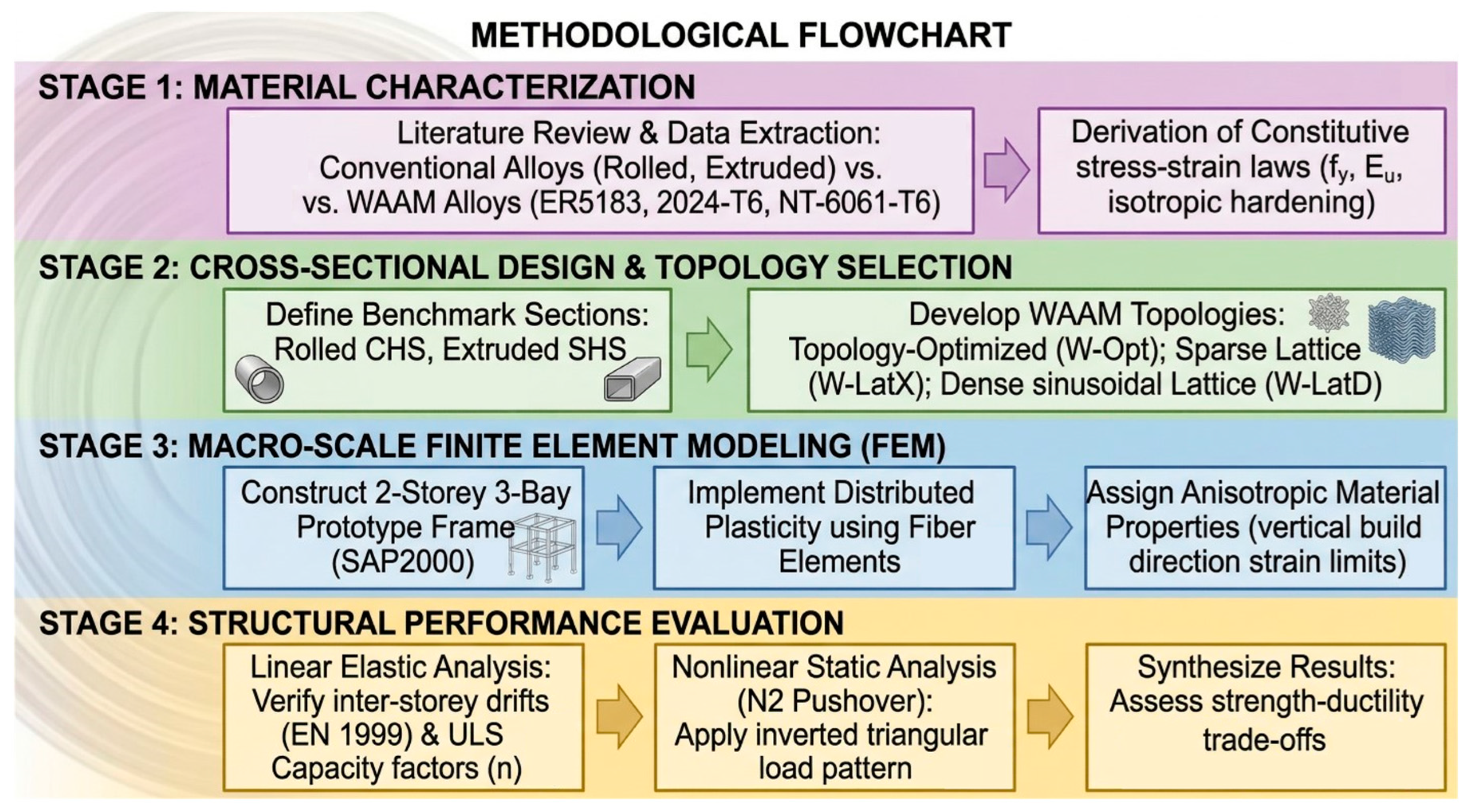
In this context, the innovation of this study lies in its multi-scale approach, aiming to bridge the existing research gap by investigating the mechanical and structural performance of additively manufactured aluminium members. Enhanced material configurations, including conventional, high-strength, and novel nano-treated WAAM alloys, are coupled with topology-optimized geometries. The evaluation is conducted at both cross-sectional and building frame scales by simulating traditional moment-resisting frames. By effectively addressing Eurocode-based elastic design verification and additionally applying advanced nonlinear static pushover analysis, this research quantifies the strength–ductility trade-offs and serviceability limitations of AM aluminium structural systems. Ultimately, these findings provide a pioneering framework for the safe integration of 3D-printed aluminium alloys in seismic-resilient structural engineering. A methodological flowchart of the multi-scale numerical investigation is shown in Figure 1, illustrating the sequential transition from material characterization and topology selection to the macro-scale finite element modeling and global seismic performance evaluation.

2. Materials and Methods

2.1. Wire Arc Additive Manufacturing Parameters and Aluminium Alloy Mechanical Properties

For the purposes of this numerical investigation, all 3D-printed components are assumed to be manufactured using WAAM. Specifically, the selected printing process is assumed to be gas metal arc welding-pulsed (GMAW-P), a WAAM variant requiring lower heat input, thus minimizing heat-affected zone (HAZ) formation and hot cracking [72]. This method enables the fabrication of large-scale, complex, and high-quality components while maintaining generally manageable production costs [73]. To reasonably assume the absence of significant printing process-induced defects (such as excessive porosity or detrimental residual stresses) that would critically compromise the components’ structural integrity, optimized values are assumed for critical process parameters, in accordance with the existing literature (Table 1) [74,75,76,77].
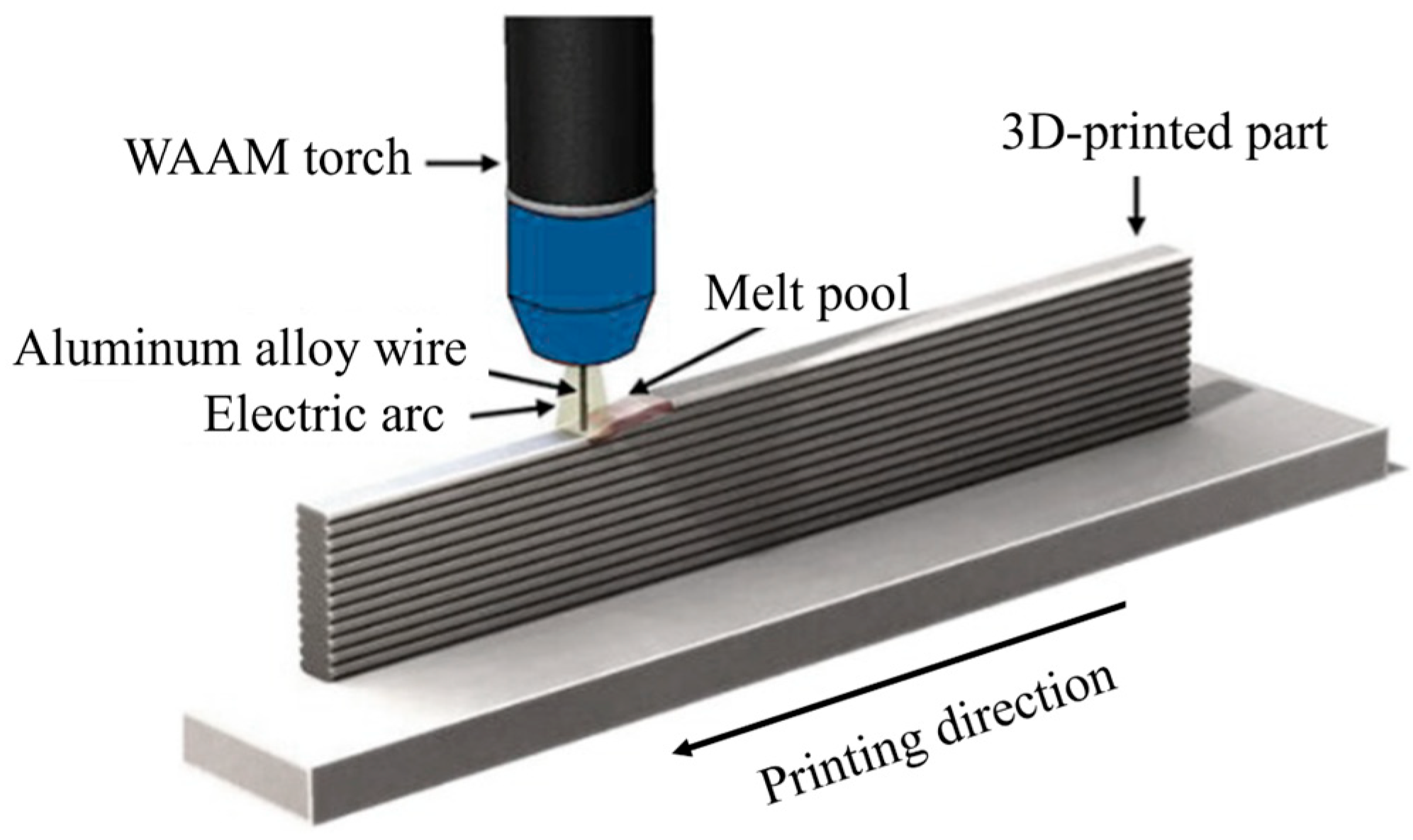
The presence of an inert shielding gas (e.g., Argon) is required to protect the melt pool from oxidation, whereas an optimal welding voltage ( 20.0 V) ensures adequate strength and ductility [74]. Proper fusion is achieved by carefully controlling the heat input (0.3–0.5 kJ/mm), while interlayer cooling (e.g., via thermoelectric cooling, air jet, or ultrasonic peening) is applied to prevent localized thermal accumulation [74,75]. Moreover, the wire feed speed (10.0–16.0 cm/s) and the nozzle travel speed ( 1.0 cm/s) must be kept within specific margins to ensure stable bonding and optimal bead geometry [76,77]. By adopting these optimized printing process parameters within a highly controlled environment, it is therefore assumed that challenges such as severe HAZ formation, residual stresses, and hot cracking are significantly minimized. It must be noted that the present study does not aim to optimize WAAM process parameters; instead, it focuses on the structural implications of WAAM-enabled typologies, reasonably assuming that the adopted material mechanical properties are representative of adequately manufactured, defect-free aluminium WAAM components (Figure 2).
To quantify and evaluate the impact of the intrinsic alloy material behavior on structural response and capacity, five constitutive models were defined for the numerical analysis, as presented in Table 2. Two reference materials representing conventional rolling and extrusion were included in order to establish a baseline. The selected alloys for rolling and extrusion are widely used for structural applications. Specifically, the 5083-H111 and the 6063-T6 were considered for through-rolling and extrusion manufacturing, respectively [78]. For the WAAM models, the mechanical properties of ER5183, 2024-T6, and NT-6061-T6, provided by the experimental studies of Horgar et al. [60], Gu et al. [64], and Chi et al. [71], respectively, were adopted.

2.2. Aluminium Alloys’ Constitutive Laws and Nonlinear Modeling

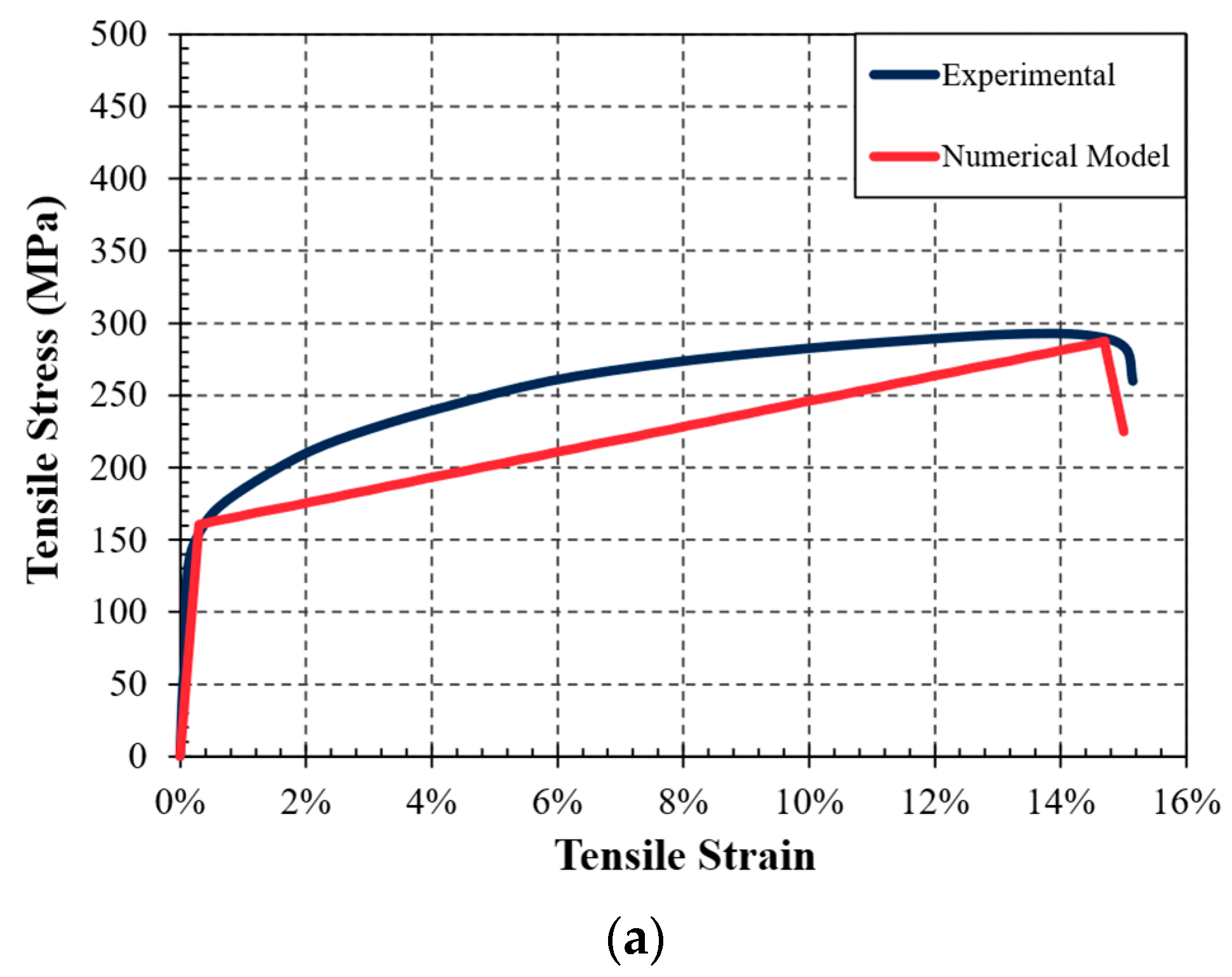
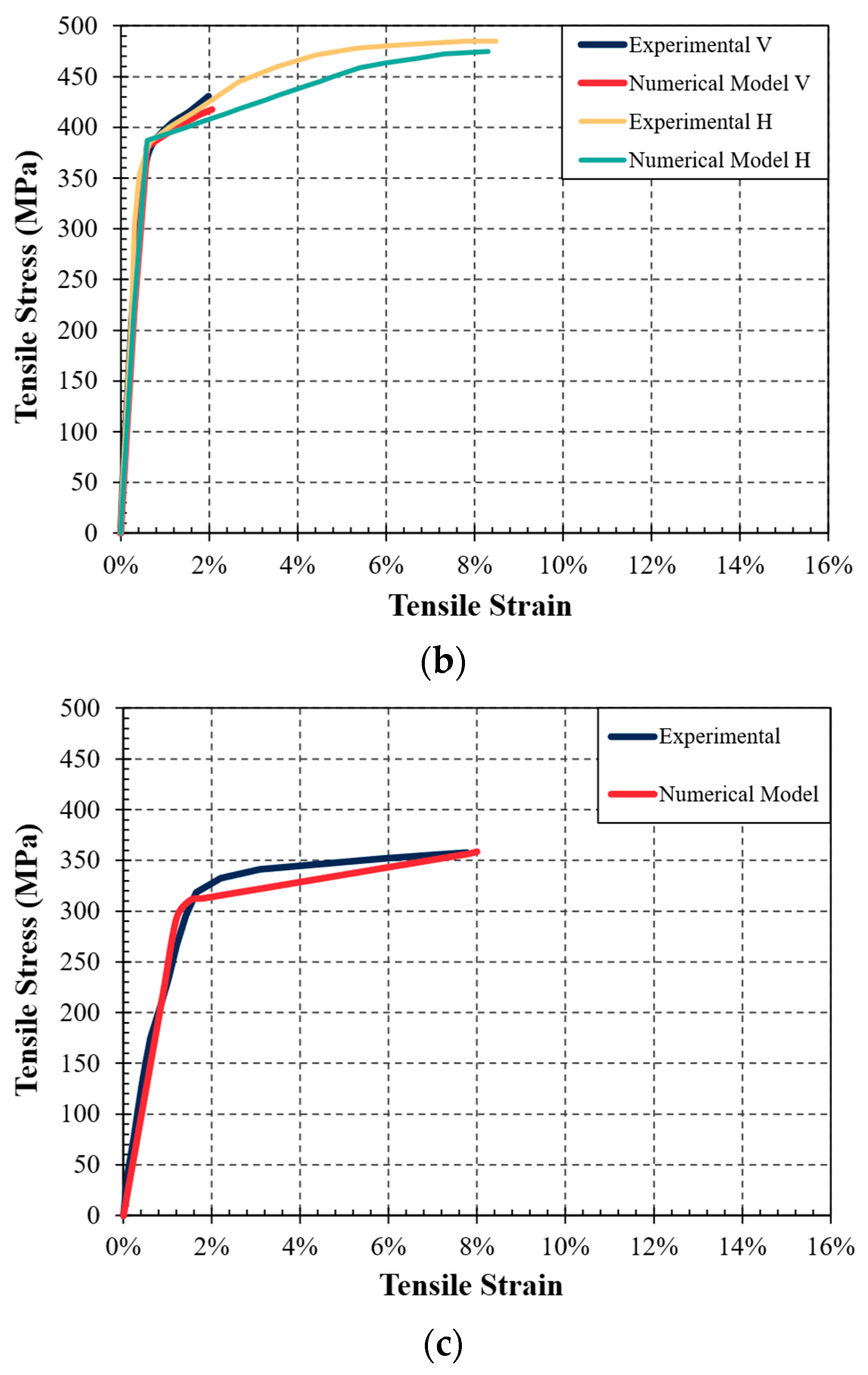
The numerical investigation was performed using the finite element software SAP2000 Ultimate (v26.0.0). Τhe constitutive stress–strain relationships for each printed alloy were explicitly defined within the software by calibrating the material models against the experimental data discussed above. It is important to clarify that the numerical material models were not calibrated by recreating the experimental coupon tests via FEA. Instead, the macroscopic engineering stress–strain curves, derived directly from the cited experimental literature, were utilized as the constitutive backbone relationships. Also, the fundamental mechanical properties, such as the Young’s modulus ( E     70.0   GPa ) and Poisson ratio ( ν     0.30 ), are expected to be generally constant across different aluminium alloys and only marginally affected by WAAM. Regarding the post-yield behavior, a multilinear isotropic hardening rule was adopted for all printed alloys, aiming to achieve an accurate representation. This approach allows the numerical model to continuously track the variation of the tangent hardening modulus E t from the onset of yielding up to the ultimate tensile strength, thus matching the real material characteristics, as they were reported in the literature. Moreover, it is worth highlighting that the numerical constitutive laws were calibrated to be slightly more conservative than the raw experimental data, aiming to account for inherent printing inconsistencies and to ensure a safe lower-bound estimation of the structural capacity in general. For the two reference alloys, i.e., EN-AW 5083-H111 and EN-AW 6063-T6, standardized Eurocode stress–strain curves were used. Figure 3 illustrates the defined numerical stress–strain curves for the investigated aluminium alloys.
Furthermore, to simulate the nonlinear inelastic behavior of the structural members with high fidelity, a distributed plasticity approach was adopted. Specifically, each cross-section was discretized into a dense array of fiber elements capable of capturing coupled axial-flexural yielding [79]. This modeling strategy was selected since it allows for the direct integration of the uniaxial stress–strain response of individual fibers over the cross-sectional area [80,81]. Therefore, it accurately captures the plasticity spread, the interaction between axial force and bi-axial bending, and the post-yield strain hardening or softening mechanisms. To address the anisotropic nature of the WAAM 2024-T6 alloy, material properties were assigned directionally within the finite element model. Brittle mechanical properties and fracture limits were assigned to the vertical components (columns), which constitute the primary focus of this study, as presented later. This macro-scale assignment of a strict 2.0% vertical elongation limit implicitly accounts for severe anisotropy, grain orientation, and interlayer delamination potential inherent to the WAAM process. Here, it must be clarified that since the structural analysis includes solely monotonic rather than cyclic loading, the constitutive models do not incorporate the Bauschinger effect or nonlinear kinematic hardening, which would be strictly required only for cyclic or hysteretic loading assessments.

2.3. Cross-Sectional and Two-Story Prototype Frame Geometries

To evaluate the influence of the cross-sectional geometry and fabrication method on the structural response, a parametric investigation was conducted involving several cross-sectional configurations. The primary classification criterion is the outer dimension of the members. Specifically, all components are doubly symmetric and can be categorized into two distinct size categories: (i) Series 120 (120.0 mm outer dimensions) and (ii) Series 160 (160.0 mm outer dimensions). These two dimensions were selected as they represent typical column sizes for compact and robust structural applications, respectively. For each size category, distinct cross-sectional typologies were examined. These typologies were selected in a way that they reflect the inherent capabilities and limitations of each manufacturing process.
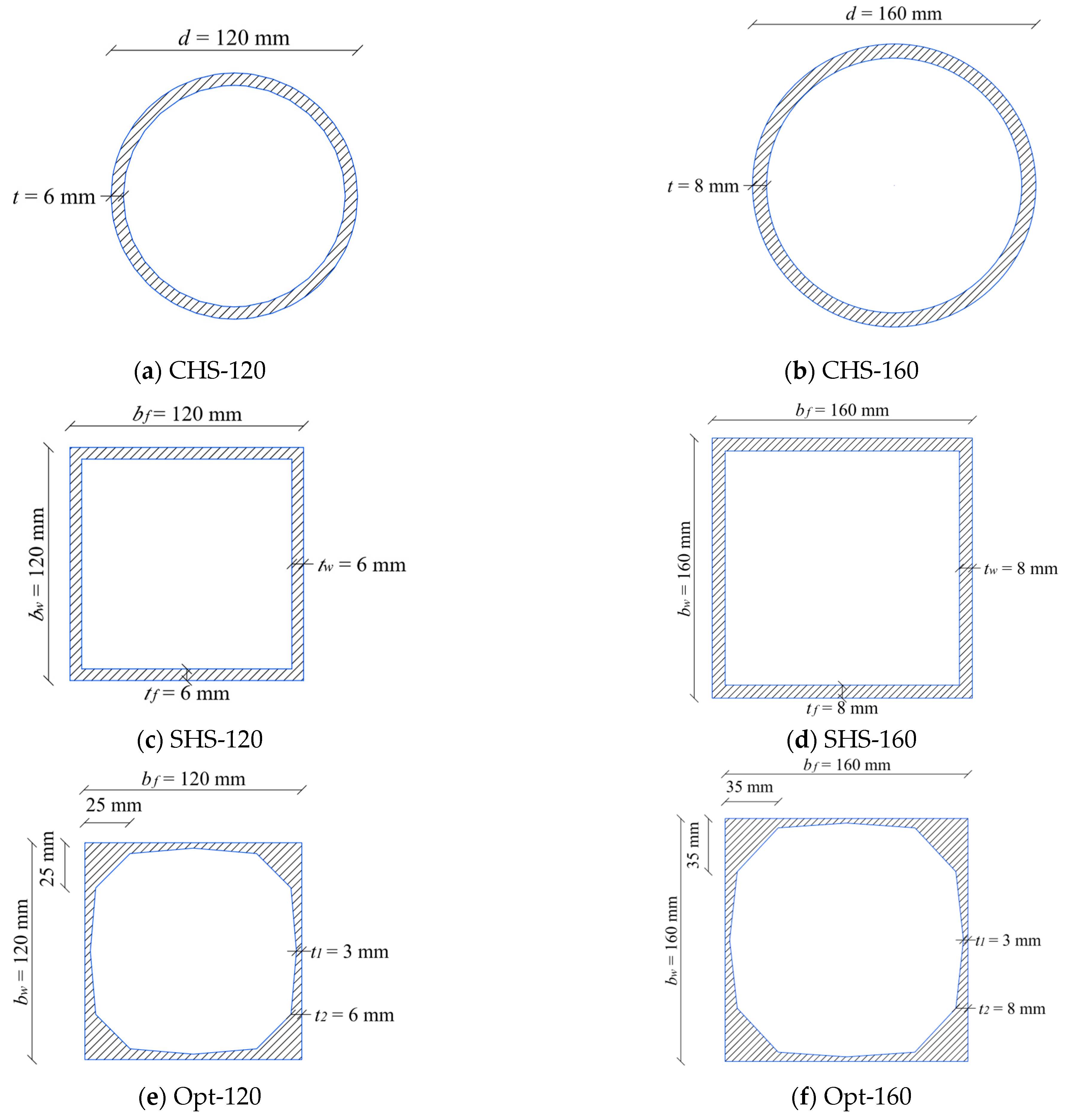
Traditionally, rolling is associated with the production of aluminium alloy sheets and plates [82,83]. In this context, the representative rolled section (material M1) was selected as a typical circular hollow section (CHS) since this type of section is fabricated by cold-forming a rolled sheet into a tubular shape, requiring only a single longitudinal weld (Figure 4a,b). Given the high ductility of the 5083-H111 alloy, it is considered a reasonable assumption that the formation of the heat-affected zone (HAZ) is localized and does not critically compromise the member’s performance.
One of the most significant advantages of aluminium as a structural material is its extrudability [5]. In fact, extrusion allows for the production of complex cross-sectional geometries [5,6]. However, these cross-sections are constant, the process is considered energy-intensive and is subject to constraints, such as the avoidance of sharp internal corners and the economic unfeasibility of producing tailored sections for small batches [7,10,84,85]. Therefore, extrusion is economically prohibitive in most cases for customized, low-volume structural components [9]. To represent this manufacturing process, a standard square hollow section (SHS) was selected for the extruded alloy (material M2), which is representative of this conventional construction practice (Figure 4c,d) [86].
WAAM and 3D printing generally offer distinct advantages over conventional rolling and extrusion as they enable the fabrication of complex, topology-optimized geometries with high material efficiency [27,34,50]. Furthermore, WAAM allows for rapid prototyping as it can be utilized to fabricate small batches of members, whereas the total cost is reduced since the process is die-free and requires fewer tools when compared with extrusion. To demonstrate the design freedom that the process offers, three WAAM-specific cross-sections were developed for materials M3, M4, and M5. Firstly, an optimized square hollow section (W-Opt) was derived using fundamental topology optimization principles (Figure 4e,f). In this section, material usage is increased toward the corners of the cross-section, where stress concentrations due to bi-axial bending and warping are highest. In contrast, material usage is significantly reduced toward the middle of the flanges and the webs, which are in close proximity to the local neutral axes. Since normal stresses are less significant in these regions, a uniform thickness section would result in suboptimal material utilization. To ensure the feasibility of the printing process, the minimum wall thickness was set to 3.0 mm, which is feasible for fabrication using the currently available WAAM technology.
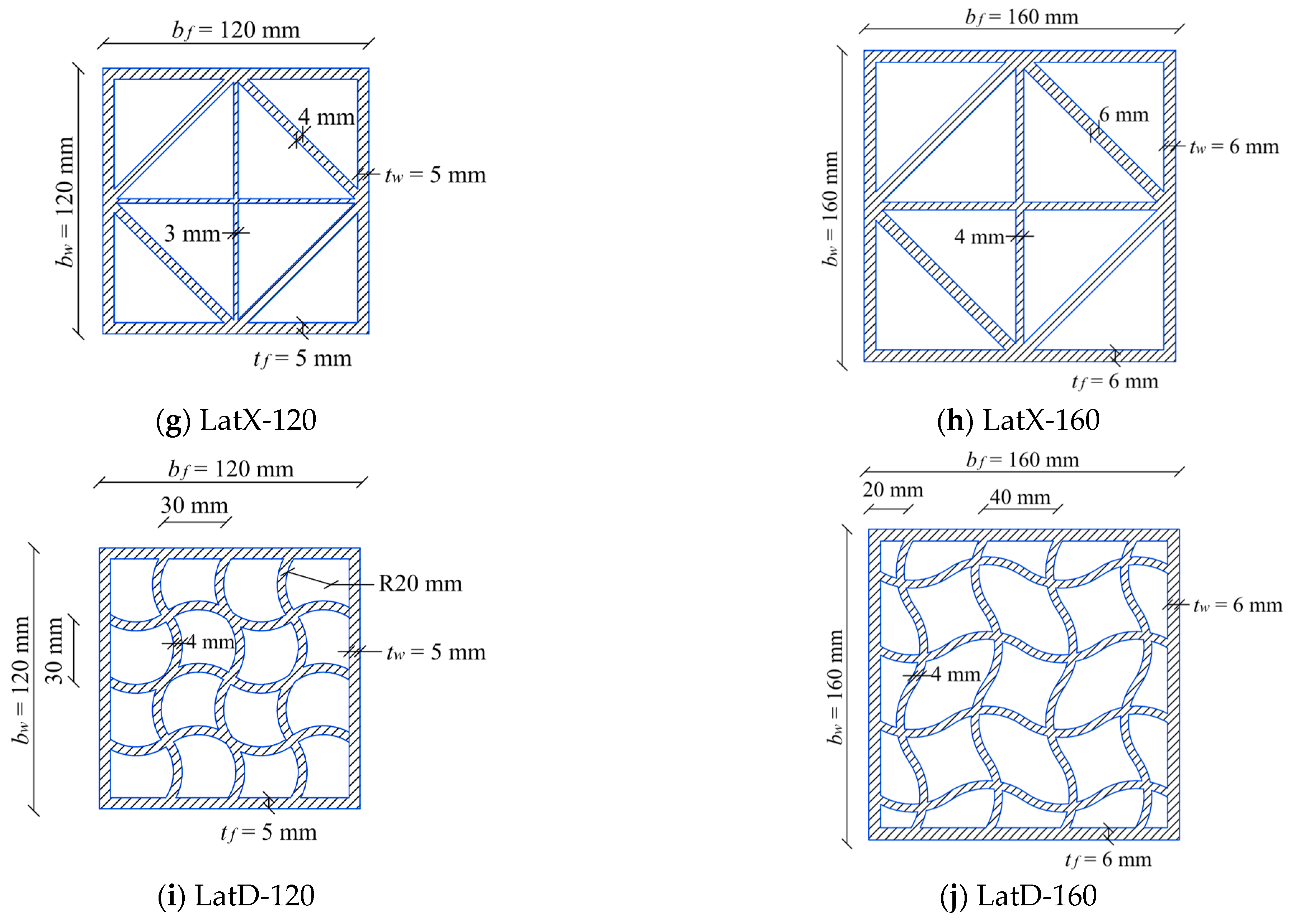
Secondly, a sparse lattice square hollow section with uniform outer wall thickness (W-LatX) was developed (Figure 4g,h). This section incorporates internal X-shaped thin links designed to mitigate local buckling phenomena [87,88]. Likewise, the internal links are not thinner than 3.0 mm, aiming to ensure printability without defects.
Lastly, a uniform outer wall thickness section, which features a dense grid of sinusoidal (wavy) internal links (W-LatD), was considered (Figure 4i,j). These sinusoidal internal links are particularly favorable to the continuous deposition path of WAAM [89]. It is important to emphasize that the addition of these internal lattice structures is not expected to significantly increase the plastic moment resistance M R of the cross-section compared to the solid counterpart. However, their structural contribution is critical in ensuring global structural stability since they provide significant restraint against local buckling of the cross-sectional walls and global buckling of the member, therefore improving the post-yield stability and energy dissipation capacity of the structure [90]. Here, it should be noted that, as this is a preliminary numerical feasibility study, these complex large-scale components were not physically manufactured. The structural FEA evaluation utilizes these geometric models to establish a theoretical performance baseline, with WAAM fabrication and experimental testing representing the next critical phase of this research.
The geometric properties of each evaluated section, including cross-sectional area A cs and elastic section moduli W el , are summarized in Table 3, along with the area variation compared to the benchmark extruded section. It should be noted that although the WAAM configurations result in an increased cross-sectional area compared to the reference extruded hollow section, this additional material is strategically distributed to mitigate local instabilities. Therefore, the expected capacity gain, namely, in strength, stiffness, and ductility, is considered to justify the increased material usage, as will be validated in the Results section.
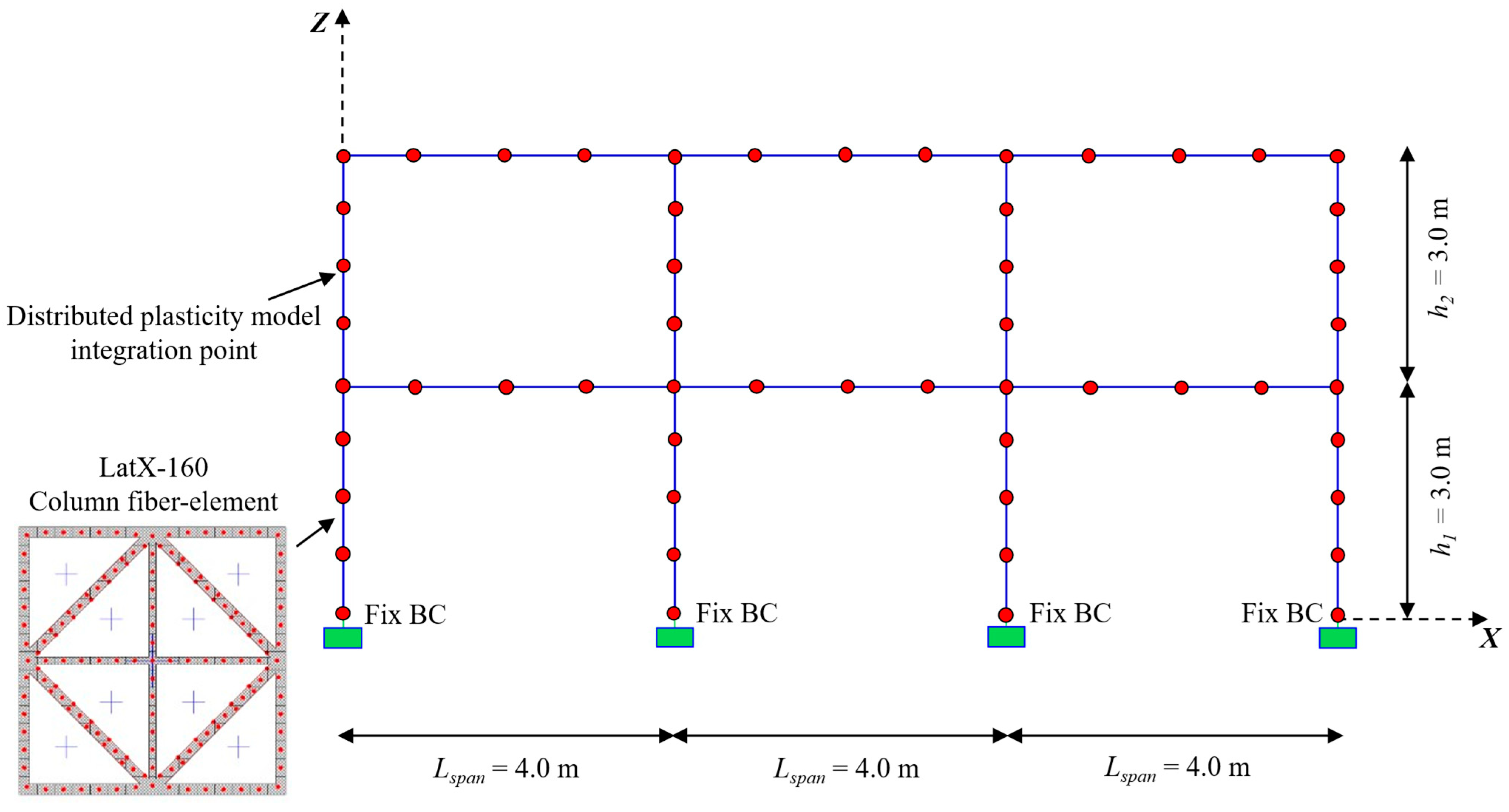
To assess the influence of the different cross-sectional geometries and aluminium alloy material properties on the global structural performance, a numerical finite element model of a two-story, three-bay moment-resisting frame (MRF) was developed (Figure 5). This frame is considered to be representative of a typical low-rise commercial or even residential building. The prototype frame features three bays with a span length of 4.0 m each and a uniform story height of 3.0 m. The base of each column is considered to be fully fixed, aiming to realistically represent the column-to-foundation interaction of typical MRFs. To isolate the effect of the column typology, the beam cross-sections remained constant throughout the conducted analyses. A typical stiff rectangular hollow section (RHS 140.0 × 100.0 × 10.0 mm) was adopted for the beams. The column sections were alternated between the ten distinct typologies previously defined in Table 3 (Series 120 and Series 160), allowing for a direct comparison of their impact on the global stiffness, strength, and ductility of the system. Here, it is necessary to note that in order to explicitly isolate the structural performance and failure mechanisms induced by the WAAM-fabricated columns, all beam-to-column connections were modeled as fully rigid. Although the intricate physical behavior of printed metallic joints is a critical aspect of structural integrity, the assumption of rigid connections allows for a comparative assessment of the column capacities without introducing joint-specific premature failures in the finite element models.

2.4. Numerical Analysis Strategy and Parameters

A multi-phase numerical approach framework was adopted using SAP2000, aiming to comprehensively investigate the structural response from the cross-sectional to the global scale.
At the cross-sectional level, moment–curvature (M-φ) analyses were conducted to investigate both the bending moment resistance, MR, and the local ductility capacity of each section. All analyses were performed under a constant compressive axial load equal to 20.0% of the cross-section’s yield axial capacity, NR, without considering global buckling effects. The yield axial load capacity NR is given by the following Equation (1).
N R = f y A cs
where fy is the material’s yield stress, and A cs is the gross cross-sectional area.
The selected axial load ratio is representative of typical compression levels in columns of low-rise aluminium structures and is consistent with values that are commonly used in parametric cross-sectional investigations [91]. In contrast, the ultimate bending moment capacity, MR, was extracted directly from the numerical integrations. An analytical derivation of MR was considered to be impractical due to the intricate WAAM geometries and nonlinear material hardening.
At the global structural level, the frame was analyzed under a thorough set of loading scenarios defined in accordance with the Eurocode standards. All of the vertical load cases were derived from EN 1991-1-1 [92]. Specifically, the defined dead loads (G) include the self-weight of the aluminium members, which was automatically computed by SAP2000, and an imposed dead load, which represents floor/roof finishing systems. Moreover, live loads (Q) were defined based on typical occupancy categories for commercial buildings, whereas snow and wind loads were calculated for the region of Thessaloniki, Greece, according to the provisions described in EN 1991-1-3 [93] and EN 1991-1-4 [94], respectively.
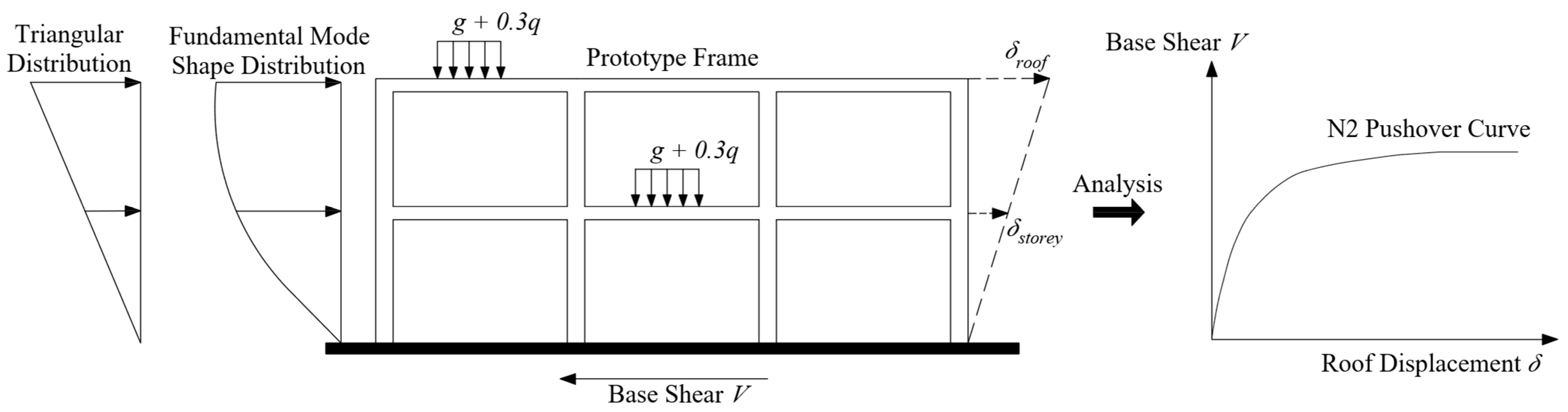
Seismic action was considered through the lateral force method (equivalent static analysis), according to EN 1998-1 [95]. To impose a severe seismic demand on the structure, the EC8 Type 1 design response spectrum was used to derive the seismic demand. In this context, a peak ground acceleration of 0.36 g and a soil type D were considered. Regarding energy dissipation capacity and the value of the behavior factor q, a conservative value of 2.0 was considered. The resulting lateral loads were distributed along the frame’s height following an inverted triangular profile, which practically corresponds to the fundamental mode shape of the two-story prototype structure. Table 4 summarizes the load cases defined in the finite element model. Finally, all design load combinations for the serviceability limit state (SLS) and the ultimate limit state (ULS) were generated as per EN 1990 [96].
Specific performance criteria were monitored to evaluate the structural efficiency of each structural variation. To assess the lateral stiffness, the maximum lateral displacements of the story and the roof, denoted as δ 1 and δ 2 , respectively, were extracted for each different structural configuration variation. Also, corresponding drift ratios, denoted as dr 1 and dr 2 , were also derived to verify compliance with the serviceability limits.
In terms of strength and stability, the structural adequacy of the columns was evaluated by determining the utilization factor for these members that experience the most critical combination of axial force and bending moment. The axial load and bending moment utilization factors were computed in accordance with EN 1999-1-1 (Equation (2)).
n   = N Ed ω 0 N b , Rd ξ + M Ed ω 0 M Rd     1.0
where N Ed and M Ed are the design axial force and bending moment, ω 0 is taken as 1.0 (no HAZ reduction due to T6 heat treatment), and ξ is an interaction exponent taken as 1.0.
Design bending resistance M Rd was calculated according to EN 1999-1-1, through the following Equation (3).
M Rd = W el   f y γ M 1
where W el is the elastic section modulus, and γ M 1 is a safety factor coefficient equal to 1.10.
It should be clarified that the above expression corresponds to the elastic design bending resistance as per Eurocode 9. At this stage, an initial linear elastic verification was intentionally performed to evaluate code compliance under ultimate limit state conditions. Subsequently, a nonlinear distributed plasticity analysis was conducted to capture the actual inelastic post-yield behavior and failure mechanisms of the structural system. Design buckling resistance N b , Rd was evaluated following the general Eurocode stability framework for slender structural members, as expressed in the following Equation (4).
N b , Rd = χ   f y   A cs γ M 1
where χ is the global buckling coefficient.
The reduction factor χ was determined based on the elastic critical buckling load N cr , which was calculated using Euler’s formulation, as expressed in Equation (5).
N cr = π 2 EI L eff 2
where Ε is the Young’s modulus, I is the cross-sectional second moment of area about the critical axis, L eff is the effective buckling length considering fixed boundary conditions at the structure’s base.
Subsequently, the nondimensional slenderness parameter λ was evaluated, and the corresponding Eurocode reduction factor χ was derived. This approach is consistent and compatible with established European structural design practices.
The cross-sectional area A cs , elastic section modulus W el , yield stress f y , and the reduction factor χ for each evaluated cross-sectional geometry are summarized in the following Table 5.
Finally, to capture the post-yield behavior, the failure mechanisms were identified, the global capacity and ductility of each structural frame variation were derived, and a nonlinear static pushover analysis was conducted using the N2 method [97,98]. For this analysis, the frame was subjected to a monotonically increasing lateral load following an inverted triangular force distribution (Figure 6). This specific loading pattern was selected because it corresponds to the fundamental (first) mode shape of the two-story prototype structure, which is the standard assumption in European seismic design provisions (EN 1998-1) for regular low-rise buildings where the fundamental mode dominates the dynamic response. The nonlinear static analysis was initiated from the deformed shape of the structure under the seismic combination of gravity loads (g + 0.3q), in accordance with EN 1998-3 [99].
Given the intricate cross-sectional geometries of the optimized and lattice WAAM sections, standardized plastic hinge properties (i.e., moment versus rotation relations from EN 1998-3 or ASCE 41/17 [100]) cannot be applied here. To address this issue, a distributed plasticity approach was used, and each cross-section was discretized into nonlinear fiber elements. Through this modeling approach, superior computational accuracy in capturing the spread of plasticity compared to lumped hinge models is ensured. Furthermore, geometric nonlinearities (e.g., P-Delta effects) were explicitly included in the finite element model in order to account for second-order effects during large lateral displacements.
The pushover analysis proceeded until structural collapse was observed, ultimately allowing for the derivation of the global capacity curves (base shear versus roof displacement). Here, it is important to note that the capacity curves were transformed into acceleration–displacement response spectrum (ADRS) for performance point evaluation since the primary objective of this study is a comparative preliminary assessment of the enhanced ductility and strength provided by the different WAAM configurations, rather than the determination of a performance point for a specific seismic hazard scenario.

3. Results

3.1. Cross-Sectional Scale Results

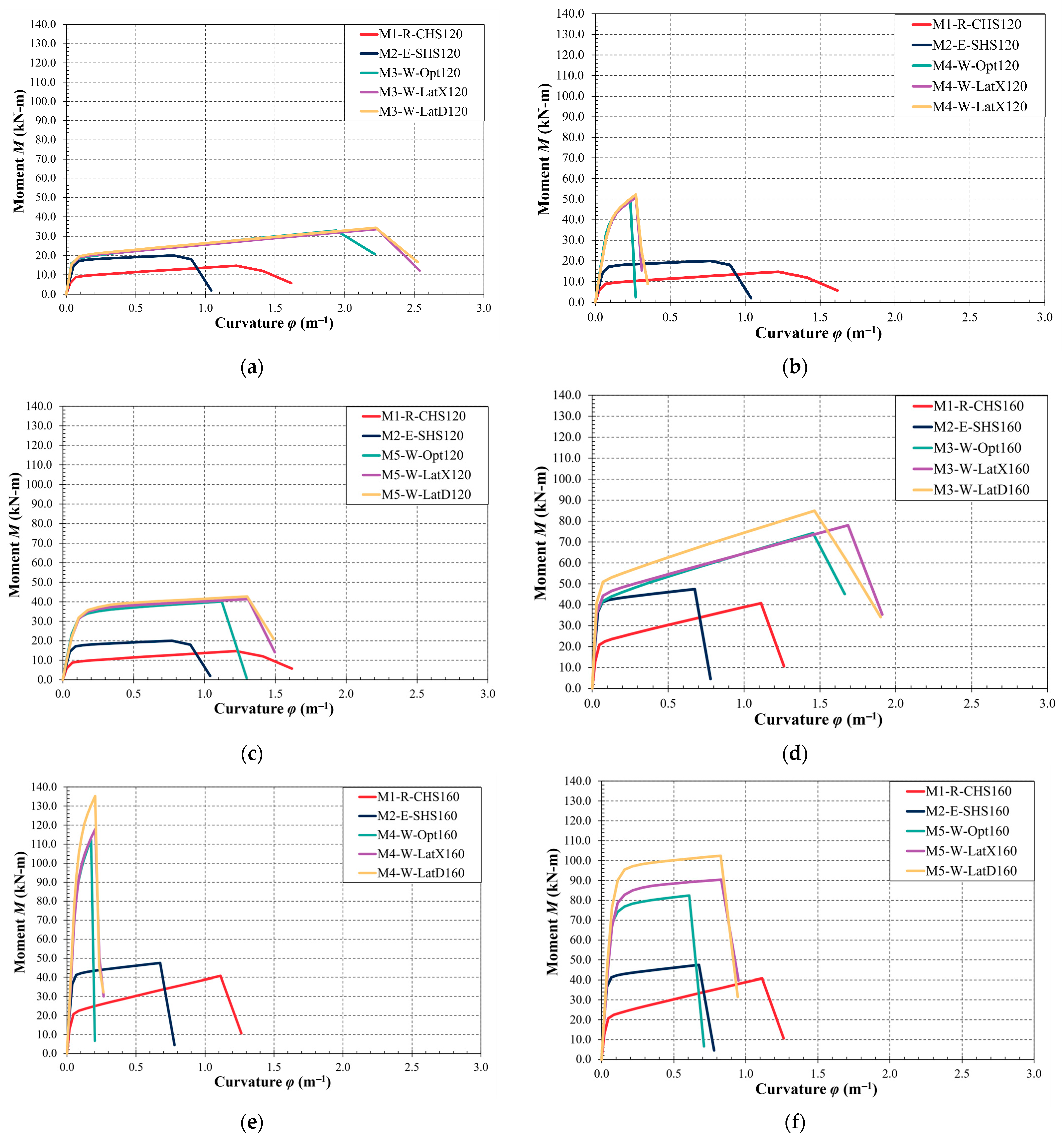
The finite element moment–curvature (M-φ) curves for all investigated cross-sectional geometries and different manufacturing methods are presented in Figure 7. The structural performance at the cross-sectional scale is evaluated in terms of axial load capacity NR and bending moment resistance MR. Τhe extruded sections (M2-SHS120 and M2-SHS160) serve as the reference benchmark.
The results are also summarized in Table 6. Regarding Series 120, the reference extruded section (M2-E-SHS120) yielded an axial load capacity of NR = 437.8 kN and a moment resistance of MR = 20.0 kN-m. As an even lower bound, the conventional rolled circular section (M1-R-CHS120) exhibited the lowest capacity values (NR = 266.87 kN, MR = 14.74 kN-m) due to the low yield strength of the 5083-H111 alloy and the section’s geometry, which resulted in suboptimal material distribution. Nevertheless, it should be noted that the rolled section demonstrates superior local ductility, without sudden and brittle degradation.
By examining the WAAM-fabricated counterparts, the favorable impacts of geometry optimization and material yield strength enhancement are demonstrated. Specifically, a critical finding is observed in the M3-W-Opt120 section, where although the feedstock material (ER5183) possesses a lower yield strength compared to the 6063-T6 alloy (160.0 versus 215.0 MPa), the optimized section achieved an identical axial load capacity and, most importantly, a noteworthy 64.70% increase in bending moment resistance. Moreover, section M3-W-Opt120 demonstrates superior ductility compared to both reference benchmarks. The efficiency of the optimization process is highlighted; by redistributing the material away from the neutral axis and toward the corners, the geometry compensates for the lower material strength, ultimately resulting in a superior structural element overall.
The performance gain is even more pronounced when the advanced materials (M4 and M5) are introduced. The high-strength M4 components exhibited the highest values of axial and moment capacity, with increases up to 163.72% and 149.85%, respectively, for section M4-W-Opt120. Their potential for high-demand applications is confirmed; however, their response is brittle and should be carefully managed during design. The M5 variants, which combine balanced strength with adequate ductility, demonstrate an important capacity increase as the optimized section M5-W-Opt120 exhibited a 100.79% increase in moment resistance MR.
Lattice-type sections (LatX and LatD) demonstrate a constant increase in both NR and MR across all materials. For instance, M5-W-LatD exhibits an axial load and bending moment capacity increase of 185.16% and 113.35%, respectively. Although a portion of this performance gain is due to the increased cross-sectional area, the performance gain and capacity increase are significantly greater compared to the mass addition. It is also emphasized that the primary motivation for introducing internal lattice structures is not solely to increase axial and bending capacity but to enhance the post-yield stability by suppressing local buckling phenomena.
The trends observed in the smaller series are thoroughly validated in the larger Series 160 group. The reference extruded section (M2-E-SHS160) provides a baseline performance of MR = 40.52 kN-m. Notably, the scaling effect, along with topology optimization, resulted in even more significant performance gains. Similarly to the 120 Series, M3-W-Opt160 outperforms the reference extruded section by 83.09% in bending, despite utilizing the softer ER5183 alloy. The highest performance gain is observed in M4-W-LatD160, where the calculated bending moment resistance equals MR = 135.24 kN-m, which corresponds to a significant 233.76% increase compared to the conventional SHS extruded section.
Overall, the cross-sectional scale results confirm that the combined effect of high-performance alloys (which provide high yield strength fy) and topology-optimized design (which maximizes the moment of inertia I) facilitates the production of WAAM components that outperform traditional rolled or extruded sections.

3.2. Linear Structural Scale Results

3.2.1. Lateral Displacements and Drift Ratios

The global structural response under the critical seismic-dominated load combination (G + 0.3Q ± E) was evaluated in order to compare lateral displacements (δ1 and δ2) and the corresponding drift ratios (dr1 and dr2), across the distinct frame variations. The finite element analysis results are summarized in Table 7. The assessment was conducted in accordance with the provisions of EN 1999-1-1, according to which, for aluminium structures, the maximum generalized story displacement must not exceed h/300, where h is the respective story height. Therefore, the maximum allowable inter-story drift limit, d r , lim , is defined by the following Equation (6).
d r , lim   ( % ) = δ max h = h / 300 h = 1 300 = 0.33 %
Upon conducting the finite element numerical analysis, the maximum inter-story drift ratio d r , i for each story i was computed utilizing the following Equation (7).
d r , i   ( % ) = δ i δ i - 1 h i   ·   100  
where δ i is the maximum lateral displacement at the i-th floor level, δ 0   =   0 at the base, and h i   = 3000.0 mm.
The numerical analysis results of the 120.0 mm profile group demonstrate that for slender moment-resisting frames, the design is heavily governed by the provided lateral stiffness rather than the material strength. As observed in Table 7, all structural variations within the 120 Series failed to satisfy the maximum allowable inter-story drift of EC9. As initially expected, the frame featuring the conventional rolled section (M1-R-CHS120) exhibited the most flexible structural response, with drift ratios up to 1.72%. The frame featuring the extruded counterpart (M2-E-SHS120) reduced the maximum drift ratio to approximately 1.08%, which is, however, still well above the allowable limit. The integration of WAAM-fabricated sections featuring topology-optimized variable thickness (W-Opt) and dense internal lattices (W-LatD) resulted in a notable improvement in lateral stiffness. For instance, the M3-W-LatD120 frame achieved the lowest drift in this category (equal to 0.66%), reflecting that the integration of the internal wavy links efficiently improves the structure’s lateral stiffness. However, it must be noted that despite the geometric improvement that WAAM-fabricated columns offer, all of the frames remained excessively flexible (dr > 0.33%) and, therefore, did not satisfy Eurocode standards. This finding validates that in linear elastic analysis, where the response is primarily governed by the Young’s modulus E 70.0 GPa (which is generally constant across different aluminium alloys and only marginally affected by WAAM-induced anisotropy) and the geometry, improved material yield strength, fy, alone cannot compensate for an inherently insufficient cross-sectional size.
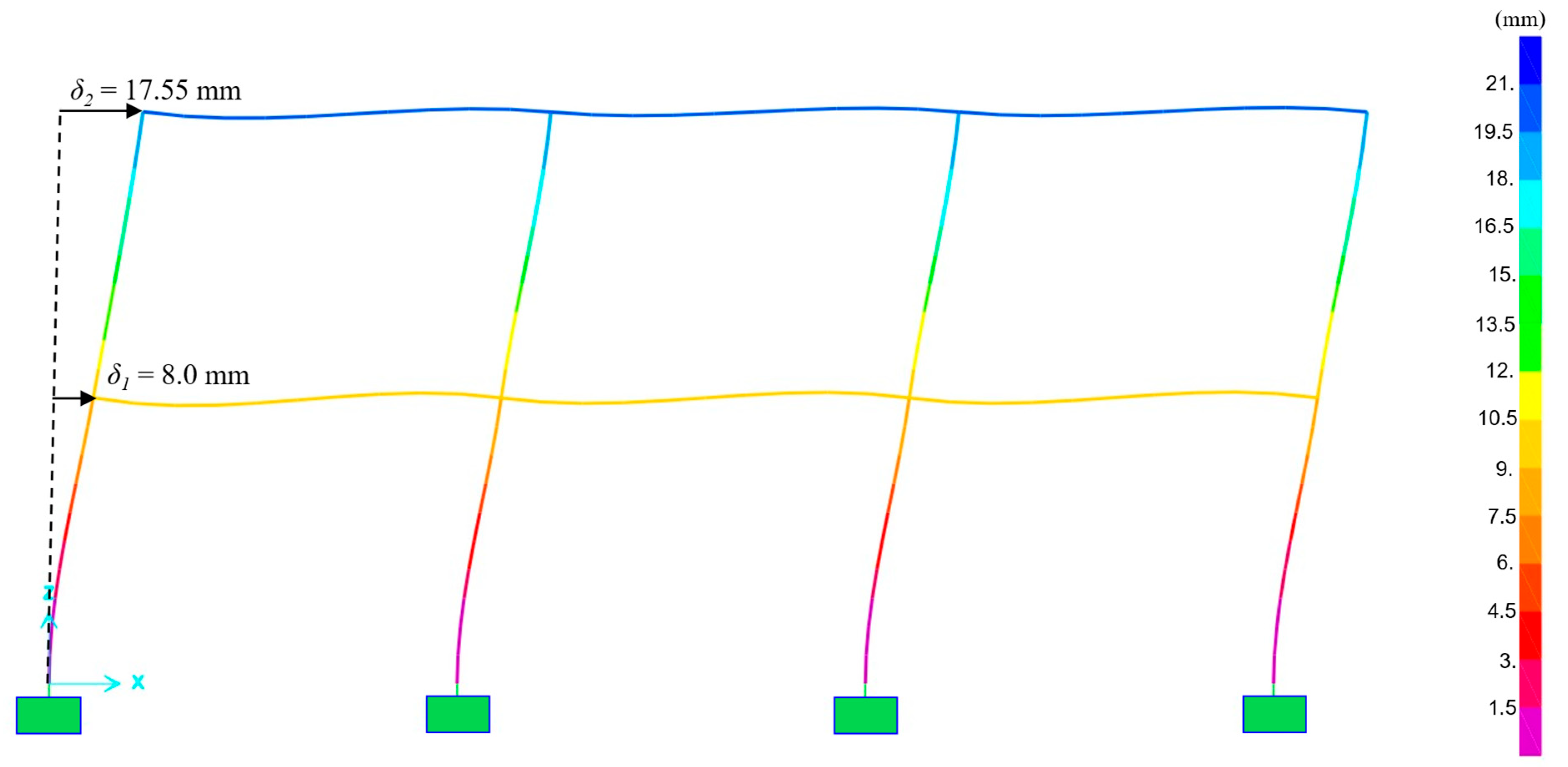
The utilization of the 160.0 mm profile group mitigated the excessive lateral displacements as the scaling of the outer dimensions significantly increased the global lateral stiffness, fundamentally altering the structural response. The extruded benchmark (M2-E-SHS160) satisfied the inter-story drift limit, yielding drift ratios of 0.29% and 0.30%, for the first and second stories, respectively. Although the WAAM-fabricated sparse lattice configuration (W-LatX) provided sufficient lateral stiffness in the first story, all materials’ variants failed to limit the second-story drift below 0.33% (e.g., dr2 = 0.38% for M5-W-LatX), possibly due to the fact that sparse links do not provide sufficient flexural stiffness to the upper segments of the frame. In contrast, optimized (W-Opt) and dense lattice (W-LatD) WAAM-fabricated sections not only satisfied the code limit but also outperformed the reference extruded section in most cases. For instance, the M4-W-LatD160 section exhibited the minimum drift ratios of 0.24% and 0.31%, for the first and second stories, respectively. The deformed shape of the prototype frame featuring M5-W-LatD160 column sections is illustrated in the following Figure 8.
In general, these findings confirm a significant advantage of WAAM over conventional manufacturing processes; it allows for fine-tuning of the structure’s lateral stiffness by strategically altering the internal cross-sectional geometry, therefore achieving compliance with Eurocode standards, without increasing the external member dimensions.

3.2.2. Bending and Axial Force Utilization Factors

The assessment of the structural adequacy of the column sections under the ultimate limit state was conducted through the calculation of the capacity utilization factor n. The critical ULS combination was the seismic-dominated one, which, in fact, resulted in the maximum combined axial compression and bending moment demand (NEd and MEd). The most stressed column of each frame was identified, and the capacity factor n was calculated as per the interaction criterion of EN 1999-1-1 (Equation (2) of Section 2.3), utilizing the determined design buckling resistance N b , R d and design bending resistance M R d . Table 8 summarizes the calculated capacities, critical design actions, and the resulting utilization factor for all examined column cross-sectional variations, where a column is considered structurally adequate and reliable if the utilization factor n 1.0.
By observing Table 8, both the critical role of high-performance aluminium alloys and the geometric efficiency achieved through WAAM are highlighted. Regarding the 120 Series group, the rolled benchmark (M1-R-CHS120) failed to satisfy the design check, exhibiting a capacity factor of n = 1.76. The extruded reference (M2-E-SHS120) successfully satisfied the Eurocode limit, with a n = 0.76. Nevertheless, the implementation of the WAAM-fabricated and topology-optimized geometries further reduced the resulting capacity factors, thereby increasing structural safety. Even the softer 5183 alloy (M3-W-Opt120) led to a capacity factor of n = 0.84, which satisfies the Eurocode limit. The utilization of the high-strength alloys (M4 and M5) significantly increased structural safety as the corresponding capacity factors range between 0.34 and 0.45. However, it is deemed important to highlight that although several 120 mm configurations satisfy the ULS strength verification (n ≤ 1.0), they fail to satisfy the serviceability drift requirements. This finding confirms that for slender aluminium MRFs, serviceability limit states govern the design rather than strength criteria, necessitating cross-sectional scaling despite adequate resistance capacity.
The transition to the 160 Series group resulted in an even more pronounced trend. It is worth reminding that since these profiles were selected to satisfy the inter-story drift limit, their resulting capacity factors are initially expected to be remarkably low. The initial expectations are validated as the extruded reference is structurally sufficient (n = 0.37), whereas the WAAM-fabricated components led to significant capacity factor reductions. For instance, the dense lattice section featuring the high-strength 2024 alloy (M4-W-LatD-160) yielded the lowest utilization of factor of just 0.16, while the nano-treated optimized section (M5-W-Opt160) yielded a capacity factor of n = 0.21. Notably, the minimal resulting capacity factors suggest that the 160.0 mm WAAM columns possess significant reserve capacity. This reserve capacity can be significantly favorable from an engineering perspective since it could allow for the construction of additional stories, the accommodation of heavier live loads, or the ability to withstand unexpected and more severe seismic actions. Consequently, the robust nature of optimized 3D-printed load-bearing elements is being demonstrated.
Here, it should be noted that the structural adequacy at the macro-scale level is evaluated in terms of global internal forces and cross-sectional capacities rather than localized stress tensors, since all the assessments conducted in this study are in strict accordance with Eurocode 9. However, it is considered important to underscore that due to direct proportionality in the linear elastic regime, these utilization factors practically represent the physical stress state of the material under ultimate loading. For instance, a utilization factor of n = 0.21 for the high-strength M4-W-LatD160 section implies that the maximum normal stresses developed under the ULS seismic combination reach only 16.0% of the alloy’s yield stress. Given that the 2024-T6 alloy exhibits a yield strength of 390.0 MPa, the maximum physical stress level experienced by the critical printed column is approximately 62.4 MPa. This physical quantification directly highlights the massive elastic stress reserve capacity that the topology-optimized WAAM columns possess prior to yielding.

3.3. Nonlinear Static Pushover Analysis Results

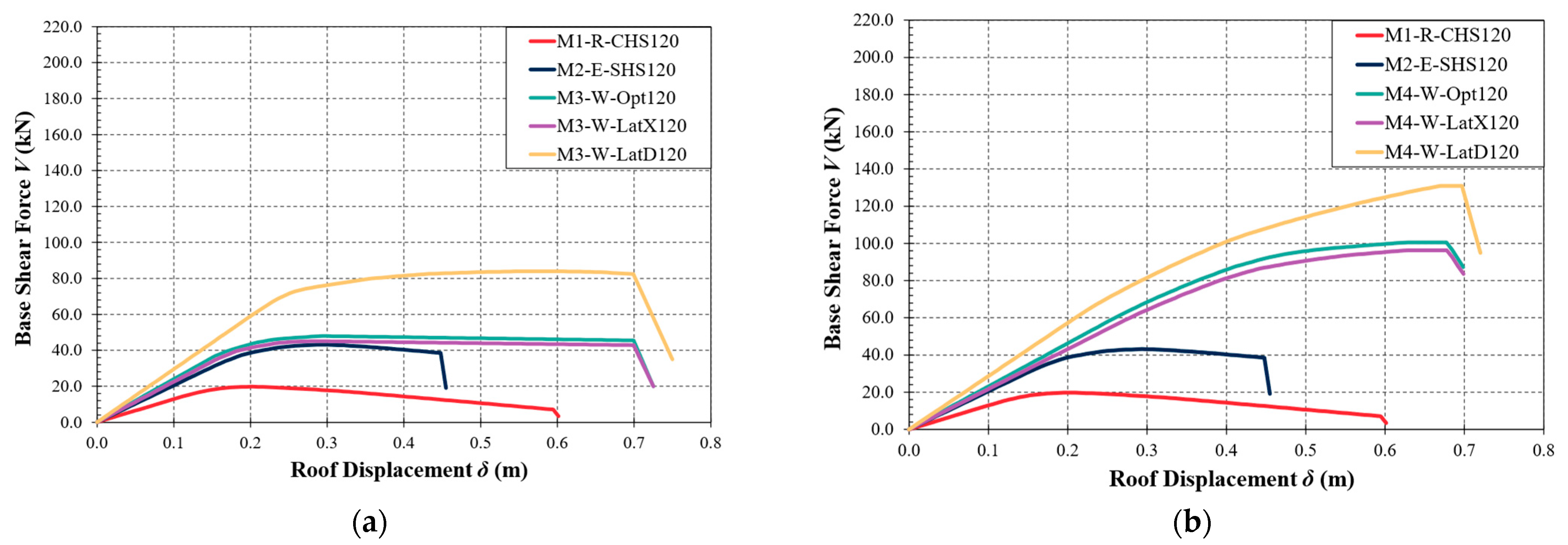
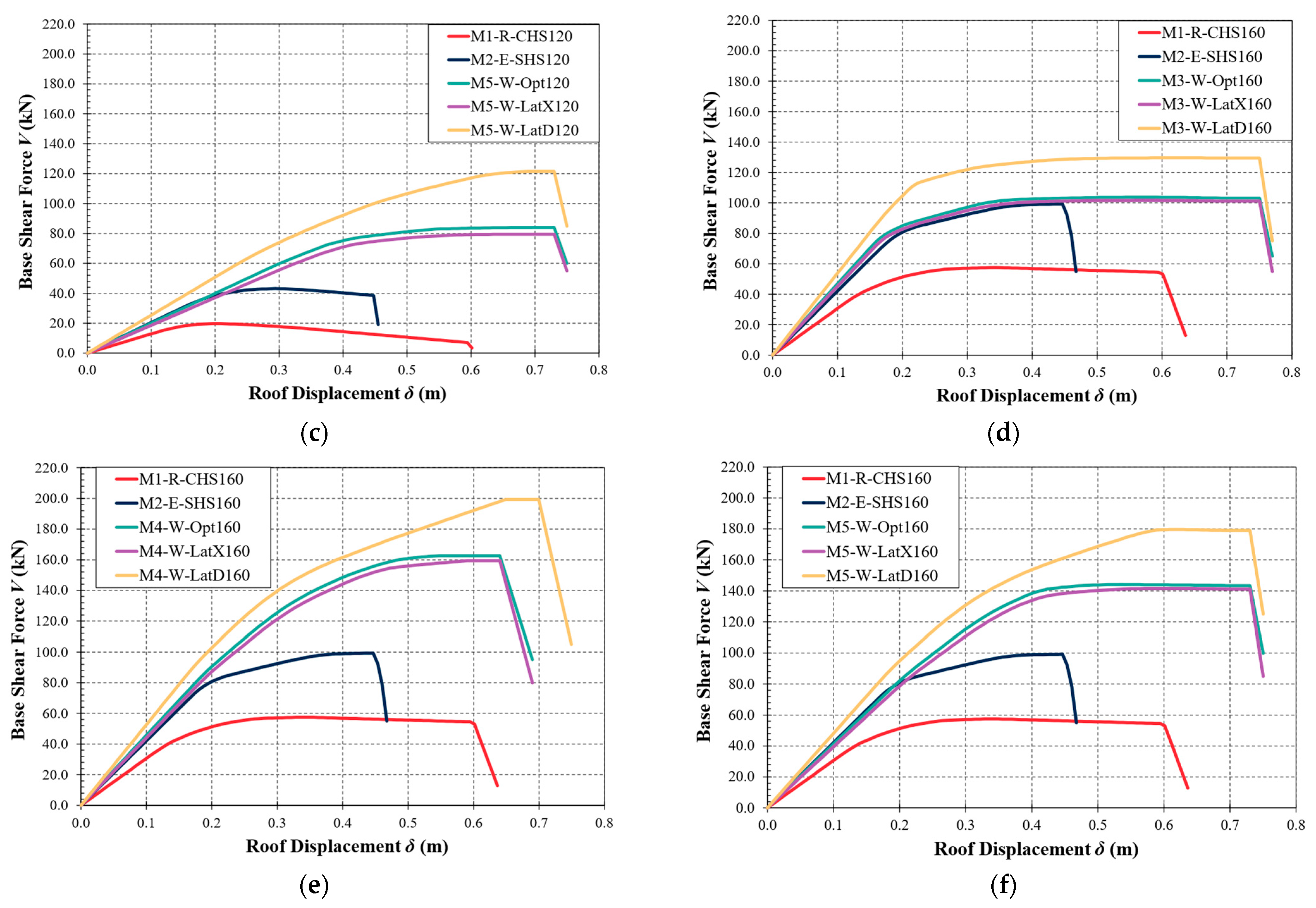
The nonlinear static (pushover) analysis was conducted, aiming to evaluate the post-yield behavior, energy dissipation capacity, and inherent ductility of the investigated frames, featuring different column cross-sections. The analysis was conducted up to the point of structural collapse for both profile series. Although the 120.0 mm profile group did not satisfy the linear elastic inter-story drift limits, their nonlinear response was evaluated along the 160.0 mm profile group to thoroughly investigate and understand the scaling effects and failure mechanisms of each distinct frame structural variation. The resulting pushover curves for each different frame configuration are presented in Figure 9, where the benchmark frames are compared to the different WAAM alternatives, for each size category.
Furthermore, to quantitatively compare the structural performance, the capacity curves (base shear V versus roof displacement δ) were analyzed. The most critical and high-significance performance metrics include (a) the maximum base shear V, (b) the effective yield roof displacement δ y , (c) the ultimate roof displacement δ u , and (d) the global displacement ductility factor μ δ =   δ u / δ y , which provides a metric regarding the deformation capacity of each frame configuration beyond first yield. It is worth clarifying that δ y was determined from the pushover capacity curve as the point corresponding to the transition from the initial linear elastic branch to the onset of stiffness degradation (practically the point where the first significant deviation from linearity occurs, indicating the initiation of distributed plasticity). Also, the ultimate roof displacement δ u corresponds to the point where either an abrupt strength loss (i.e., fracture) occurs (e.g., 2024-T6 variants) or the base shear V degrades to 80% of the maximum base shear capacity. The results for all the examined cross-sectional variations are summarized in Table 9.
The capacity curves reveal a wide variation in global strength, stiffness, and ductility, all of which heavily depend on the profile size and chosen alloy. The transition from the 120 to the 160 Series results in a significantly increased maximum base shear capacity across all the different materials evaluated. For instance, the reference extruded frame (M2-E-SHS) exhibited an increase in base shear force V from 43.14 kN to 99.29 kN (approximately a 130.16% increase). By observing the pushover curves, it is clear that the utilization of advanced alloys combined with internal lattice link structures resulted in noteworthy overstrength. The frame featuring the M4-W-LatD160 sections achieved the highest base shear capacity of V = 192.31 kN, which is almost double that of the extruded benchmark (M2-E-SHS160). Notably, M5 configurations also achieved significant strength enhancements (e.g., M5-W-LatD160 reached 179.54 kN). Therefore, the importance of the dense wavy internal links (LatD) is demonstrated, as they delay local buckling and allow the cross-section to maximize its plastic resistance.
While the increase in strength is significant, the evaluation of the displacement ductility μ δ is also deemed of high necessity as it yields fundamental inferences about the failure mechanisms of each frame variation. The standard extruded frames (M2) exhibited moderate ductility equal to 2.00 and 2.27 for the 120 Series and 160 Series, respectively. Although the frames featuring rolled columns exhibited lower base shear capacities, they demonstrated higher ductility than the extruded frames (i.e., 2.34 and 3.04).
The implementation of the 5183 alloy (M3 variants) led to an impressive displacement ductility μ δ (Figure 9a,d). Specifically, M3-W-LatX160 and M3-W-Opt160 frames achieved the highest displacement ductility ratios μ δ in the study (4.21 and 4.03, respectively), sustaining extensive plastic deformations up to a large roof displacement of approximately 75 cm without experiencing severe load degradation. Frames featuring the particularly ductile 5183 alloy exhibited gradual plastic hinge formation at the column bases, resulting in a generally stable post-yield behavior.
In sharp contrast, the high-strength 2024-T6 alloy configurations exhibited a highly problematic post-yield response. Despite achieving the highest maximum shear forces V, all the frames featuring M4 columns exhibited abrupt capacity drops (Figure 9b,e). For instance, the displacement ductility of the M4-W-LatD160 frame (which possesses the highest base shear force capacity), which fractured rapidly upon yielding, resulted in a remarkably low value of μ δ = 1.10. The observed brittle failure mechanisms are directly attributed to the inherent characteristics of the printed Al-Cu alloy, which, as noted in Section 2.1 features a limited ultimate elongation in the vertical direction (approximately 2.0%), therefore significantly preventing the development of a prolonged plastic plateau. From a seismic engineering perspective, this suggests a critical hazard as in earthquake-prone areas, most structures rely on their plastic deformation capacity to dissipate seismic energy. Despite the massive reserve capacity of the M4 printed columns (e.g., utilization factors as low as n   =   0.16 ), they are incapable of withstanding vertical elongation, resulting in brittle catastrophic collapse under strong ground motions. Consequently, using them in primary seismic force-resisting systems must be considered highly impractical and unsafe.
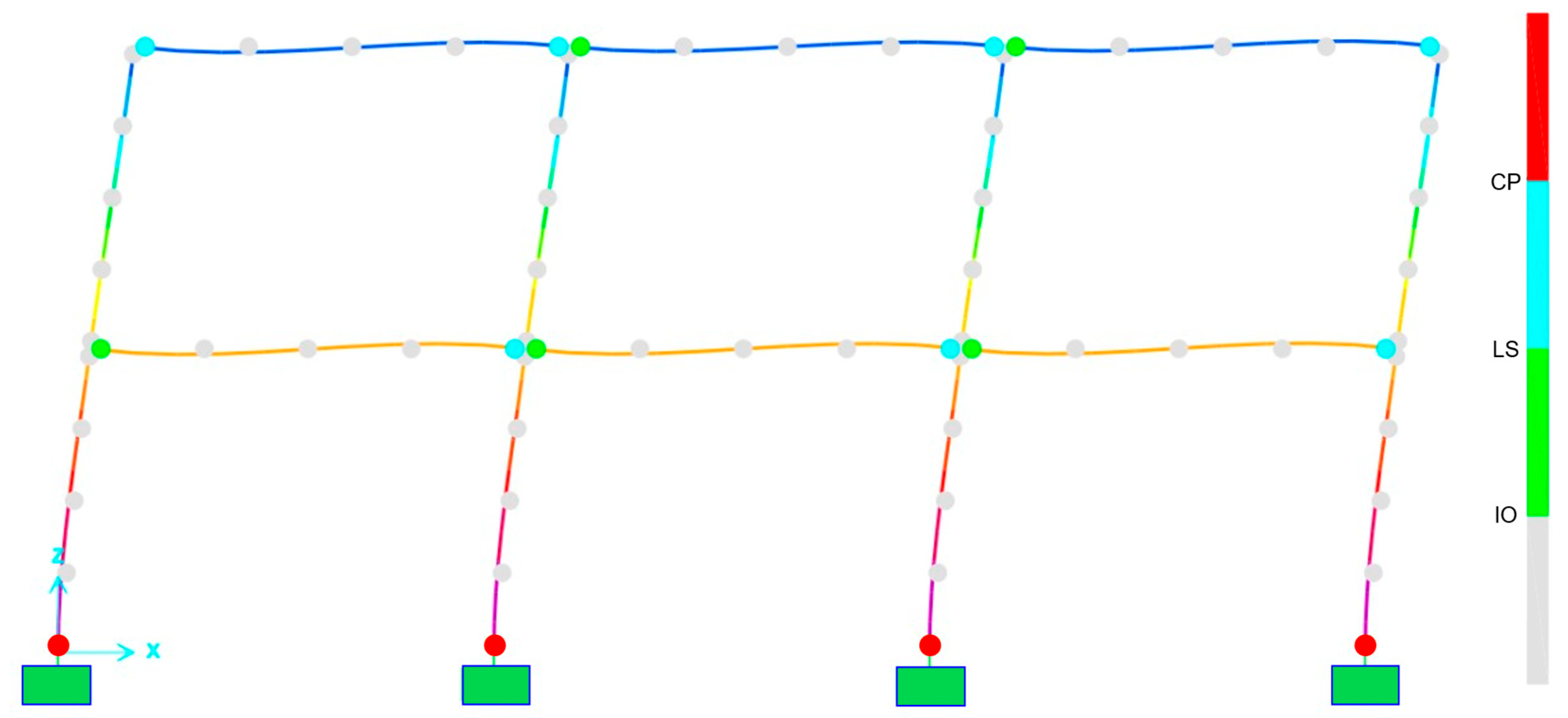
The nano-treated 6061 (M5) variants (Figure 9c,f) successfully offer an optimal balance between the extreme ductility (but low strength) of the M3 alloy and the high strength (but brittleness) of the M4 alloy. The frame featuring the M5-W-Opt160 columns reached a base shear of 144.13 kN while maintaining a ductility factor of μ δ = 1.70. Therefore, an enhanced deformation capacity compared to the M4 series is provided. The addition of nanoparticles (titanium carbide) allows the prototype two-story frame to reach demanding load-bearing capacities while avoiding the extreme brittleness associated with standard high-strength Al-Cu alloys. To visually illustrate the global deformation mechanisms discussed above, Figure 10 presents the deformed shape of the prototype frame featuring M5-W-LatD160 at the ultimate limit state during the nonlinear static pushover analysis. The figure captures the extensive lateral displacements characterizing the fundamental failure mode of the frame.

4. Discussion

The comprehensive numerical evaluation conducted in this study highlights the transformative potential of the wire arc additive manufacturing (WAAM) in structural aluminium engineering. Τhis study exposed critical design considerations that arise when making the transition from conventional manufacturing (e.g., rolling, extrusion) to 3D printing.
A primary and recurring observation was consistent across the conducted analyses; the behavior of slender aluminium alloy structures is primarily governed by their global lateral stiffness rather than the utilized material’s yield strength. Indeed, the linear elastic analysis results of the 120.0 mm profile group demonstrate this behavior (Section 3.2). Despite utilizing high-strength printed alloys (e.g., M4 with f y = 390.0 MPa), the resulting prototype frames were excessively flexible, failing to satisfy Eurocode’s inter-story drift limits. Since the Young’s modulus E remains practically constant across all the aluminium alloys investigated, an increase in the material’s yield strength makes no contribution to the frame’s elastic lateral stiffness. Therefore, designers are forced to increase the dimensions of the structural components (i.e., utilize the 160 Series profile group) in order to achieve serviceability compliance.
Within this dimensional constraint, WAAM proves its superiority over conventional rolling and extrusion. While extrusion is capable of producing hollow sections (e.g., M2-E-SHS), the process is strictly limited to prismatic and uniform-thickness cross-sectional geometries. In sharp contrast, WAAM enables true topology optimization. By strategically redistributing more material toward the corners of the cross-section (e.g., W-Opt) or introducing internal lattices (e.g., W-LatX, W-LatD), WAAM allows for a significant increase in the section’s effective moment of inertia without altering the external dimensions of the column. The results presented in Table 7 and Table 8 validate this argument. Indeed, optimized WAAM sections not only achieved minimal inter-story drift ratios but also demonstrated massive excess capacities (i.e., utilization factors as low as n = 0.16), providing engineers with unprecedented design freedom to fine-tune global structural performance.
The nonlinear static pushover analysis (Section 3.3) revealed a major challenge that is inherent to WAAM aluminium alloys: the inverse relationship between load-bearing capacity and post-yield ductility. For instance, frames utilizing the high-strength 2024-T6 aluminium alloy exhibited impressive maximum base shear values. In fact, their maximum base shear was more than double that of the conventional extruded frames. However, high load-bearing capacity alone cannot guarantee adequate structural safety. These frames exhibited minimal displacement ductility ratios (up to μ δ = 1.24), due to the alloy’s anisotropic microstructure. Specifically, the limited ultimate elongation capacity in the vertical direction ( 2.0%) resulted in brittle failures upon yielding. In structural and seismic engineering, such brittle failure mechanisms are strictly prohibited, preventing the structure from dissipating seismic energy through plastic deformation. Contrarily, frames featuring WAAM-fabricated 5183 columns exhibited impressive displacement ductility ratios ( μ δ > 4.0), sustaining large lateral displacements without fracture. However, these frames suffered from their inherently low yield strength and demonstrated low maximum base shear forces. Therefore, larger cross-sections are required to support heavier gravity loads and withstand severe seismic demands.
Ultimately, the nanoparticle (titanium carbide)-reinforced 6061-T6 alloy (M5) is identified as the optimal solution. Additionally, in this study, this alloy was combined with optimized or lattice cross-sectional geometries, yielding even more superior results. The addition of titanium carbide nanoparticles is necessary to mitigate printing process-related defects, such as hot cracking, anisotropy, and residual stresses. The integration of nanoparticles into the feedstock wire mitigated these phenomena and enabled the manufacturing of a high-performance alloy that successfully bridges the gap between the extremes of M3 and M4. Indeed, frames featuring M5 columns reached high base shear values (e.g., 144.13 kN for the M5-W-Opt160 frame) and maintained a sufficiently prolonged plastic plateau (e.g., μ δ = 1.70). While M5-W-LatD frames exhibited slightly lower ductility, this was primarily due to the fact that their effective yield displacement δ y occurred at a remarkably high base shear force V. Generally, all M5 frame configurations, except M5-W-LatX160 in the second story, successfully satisfied the serviceability drift limits, whereas all of the configurations provided sufficient strength for ultimate limit state design. Most importantly, they exhibited ductile and predictable failure mechanisms, demonstrating that nano-reinforced wire arc additive manufacturing can serve as a viable and superior alternative to conventional structural aluminium fabrication.

5. Conclusions

In this study, the structural performance of several aluminium alloy cross-sectional typologies was evaluated through finite element analysis. These sections were assumed to be manufactured via rolling, extrusion, and WAAM, and their evaluation was conducted at the cross-sectional and global structural scale, utilizing them as primary vertical load-bearing elements (columns) in MRFs. By evaluating different geometric typologies, including topology-optimized and lattice-reinforced sections, across distinct alloy classes, this study highlighted the significant advantages and potential limitations of 3D printing compared to conventional rolling and extrusion. The following primary conclusions are drawn based on the comprehensive multi-phase analysis:
-
The linear elastic analysis results showcased that global lateral stiffness governs the behavior of slender MRFs and that high material yield strength alone cannot compensate for insufficient cross-sectional inertia. This is evidenced by the fact that all 120.0 mm profile configurations were unable to satisfy Eurocode’s inter-story drift limits.
-
Wire arc additive manufacturing enables strategic material redistribution, without altering the external dimensions of the profile. The utilization of topology-optimized WAAM-fabricated sections resulted in superior structural performance at both the cross-sectional and global scale. Indeed, they successfully minimized lateral displacements, satisfying serviceability criteria while outperforming the conventional rolled or extruded hollow sections.
-
The utilization of larger WAAM-fabricated cross-sections (i.e., 160 Series) led to significantly low utilization factors under the ULS combination (e.g., n = 0.16 for the M4-W-LatD160 frame). This massive reserve capacity suggests that these frames could accommodate heavier gravity loads or additional stories without necessitating an increase in column dimensions.
-
The pushover analysis provided invaluable insight into the risks associated with using high-strength but brittle 3D-printed aluminium alloys in seismic engineering. Despite achieving impressive base shear capacities (up to 192.3 kN for M4-W-LatD160), these frames exhibited abrupt and brittle failure mechanisms ( μ δ = 1.10 for M4-W-LatD160) due to the alloy’s inherent anisotropic performance and its significantly limited ultimate elongation in the vertical direction (≈2.0%). Conversely, the 5183 alloy (M3) offered extensive ductility but limited ultimate strength.
-
The implementation of the nano-treated 6061-T6 alloy (M5), combined with optimized or lattice cross-sectional geometries, emerged as the structural configuration that offers optimal balance between strength and ductility. Frames utilizing NT6061-T6 WAAM-fabricated columns demonstrated serviceability compliance, sufficient utilization factors, excellent ultimate capacity, and the ability to maintain a stable and a prolonged plastic plateau to safely dissipate seismic energy.
Through this work, a fundamental comparative framework that strongly supports the implementation of WAAM in future structural aluminium applications has been configured in a reliable fashion, adopting macro-scale finite element modeling techniques and using data from existing experimental activities regarding material properties. This way, the primary necessary step has been taken to facilitate the subsequent research on this emerging field, referring to the required experimental studies to complement the produced numerical results, interpreted herein as an idealized baseline. That includes physical testing on the cross-sectional designs and the dynamic behavior of large-scale WAAM frames, including the seismic implications evaluation of high-strength alloys (e.g., Al-Cu series), which exhibit particularly brittle behavior with reduced elongation capacity (~2.0%). It is also deemed to acknowledge that assumptions were made related to the behavior of 3D-printed beam-to-column connections, as their intricate behavior warrants advanced examination beyond the scope of the implemented herein global frame analysis.

Author Contributions

Conceptualization, E.E. and C.G.; methodology, E.E. and C.G.; software, C.G.; validation, E.E. and C.G.; formal analysis, C.G.; investigation, E.E.; resources, E.E. and C.G.; data curation, C.G.; writing—original draft preparation, C.G.; writing—review and editing, E.E.; visualization, C.G.; supervision, E.E. All authors have read and agreed to the published version of the manuscript.

Funding

This research received no external funding.

Data Availability Statement

The original contributions presented in the study are included in the article; further inquiries can be directed to the corresponding author.

Acknowledgments

The authors would like to gratefully thank all the members of the Institute of Metal Structures at Aristotle University of Thessaloniki for their valuable support and collaboration.

Conflicts of Interest

The authors declare no conflicts of interest.

Abbreviations

The following abbreviations are used in this manuscript:
AMAdditive manufacturing
WAAMWire arc additive manufacturing
PBFPowder bed fusion
DEDDirected energy deposition
MRFMoment-resisting frame
ULSUltimate limit state
SLSServiceability limit state
ADRSAcceleration–displacement response spectrum
LatXLattice configuration with cross-pattern topology
LatDLattice configuration with diagonal-pattern topology
ENEuro norm
ECEurocode
ASCEAmerican Society of Civil Engineers

References

  1. Clinton Aluminium. Why Is Aluminium Such A Good Energy Reflector? Available online: https://clintonaluminum.com/ (accessed on 5 May 2026).
  2. Totten, G.E.; Tiryakioglu, M.; Kessler, O. Encyclopedia of Aluminium and Its Alloys, 1st ed.; CRC Press: Boca Raton, FL, USA, 2018. [Google Scholar]
  3. Xhanari, K.; Finšgar, M. Organic Corrosion Inhibitors for Aluminium and Its Alloys in Chloride and Alkaline Solutions: A Review. Building 2019, 12, 4646–4663. [Google Scholar] [CrossRef]
  4. Cui, T.; Wu, J.; Song, J.; Meng, D.; Jin, X.; Tian, H.; Cui, Z. Atmospheric Corrosion Behavior of Typical Aluminium Alloys in Low-Temperature Environment. Metals 2025, 15, 277. [Google Scholar] [CrossRef]
  5. Støren, S. The Theory of Extrusion—Advances and Challenges. Int. J. Mech. Sci. 1993, 35, 1007–1020. [Google Scholar] [CrossRef]
  6. Chanda, T.; Zhou, J.; Duszczyk, J. FEM Analysis of Aluminium Extrusion through Square and Round Dies. Mater. Des. 2000, 21, 323–335. [Google Scholar] [CrossRef]
  7. Ya Ji Aluminium. Aluminium Extrusion Cost per Kg in 2025: Price Overview and Cost Breakdown. Available online: https://yajialuminum.com/aluminum-extrusion-cost-per-kg-in-2025/ (accessed on 5 May 2026).
  8. U.S. Energy Information Administration. Energy Needed to Produce Aluminium. Available online: https://www.eia.gov/todayinenergy/detail.php?id=7570 (accessed on 23 September 2025).
  9. Zhang, D.; Xu, H.; Xu, S.; Tong, F.; Chen, K.; Li, Z.; Zuo, J.; Shu, X. Metal Flow Behavior and Energy Consumption Model during the Extrusion Process of a 6063 Aluminium Alloy Profile with Complex Cross-Section. J. Mater. Res. Technol. 2024, 33, 9911–9925. [Google Scholar] [CrossRef]
  10. Hydro Aluminium Design Manual by Hydro. Available online: https://www.hydro.com/en/global/aluminium/products/extruded-profiles/education-in-aluminium/digital-design-manual/ (accessed on 23 September 2025).
  11. Li, P.; Chen, G.; Qiu, J.; Qian, J.; Ding, D.; Jian, B.; Zhang, X.; Xiong, G. Experimental and Numerical Investigation into the Load-Carrying Capacity of Aluminium Alloy H-Sectional Stocky Columns under Axial Compression. J. Build. Eng. 2024, 87, 108777. [Google Scholar] [CrossRef]
  12. Li, P.; Chen, G.; Ding, H.; Huang, Y.; Zhang, T.; Xiong, G.; Jian, B. An Improved CSM-Based Design Method for H-Section Aluminium Slender Columns under Eccentric Compression. Eng. Struct. 2024, 317, 118673. [Google Scholar] [CrossRef]
  13. Kong, W.; Li, Z.; Yang, H.; Wang, Z.; Chen, Y.; Guo, Z.; Fang, Z. Stability Analysis of Square Hollow Section Aluminium Alloy Slender Columns with Cross Openings. Structures 2025, 72, 108280. [Google Scholar] [CrossRef]
  14. Tang, A.; Wei, Y.; Lin, Y.; Zhu, B.; Ding, M. Axial Compression Performance of Recombinant Bamboo Scrimber-Filled Aluminium Alloy Columns: An Experimental Analysis. Structures 2025, 74, 108636. [Google Scholar] [CrossRef]
  15. Mi, Q.; Shu, Q.; Wang, F.; Liu, P.; Zhu, M.; Wang, W. Experimental Study on Eccentric Compressive Behaviors of 6061-T6 Aluminium Tubular Long Columns Filled with Concrete. Eng. Struct. 2024, 299, 117040. [Google Scholar] [CrossRef]
  16. Ziemian, C.W.; Ziemian, R.D. Numerical Investigation of the Influence of Transverse Welds on the Strength of Aluminium Alloy I-Shaped Members—Columns. Structures 2024, 60, 105856. [Google Scholar] [CrossRef]
  17. Ning, Q.; Lu, J.; Lu, X.; Chen, X. Study on the Stability Bearing Capacity of 6061-T6 Aluminium Alloy Axial Compression Members Based on Direct Strength Method. Structures 2024, 68, 107242. [Google Scholar] [CrossRef]
  18. Dada, M.; Popoola, P. Recent Advances in Joining Technologies of Aluminium Alloys: A Review. Discov. Mater. 2024, 4, 86. [Google Scholar] [CrossRef]
  19. Sukiman, N.L.; Zhou, X.; Birbilis, N.; Hughes, A.E.; Mol, J.M.C.; Garcia, S.J.; Zhou, X.; Thompson, G.E. Durability and Corrosion of Aluminium and Its Alloys: Overview, Property Space, Techniques and Developments. Alum. Alloys-New Trends Fabr. Appl. 2012, 5, 47–97. [Google Scholar]
  20. Zhang, P.; Gao, Y.; Zhang, J.; Yue, X.; Zhou, H.; Sun, Y. The Influence Mechanism of Water Jet Peening on the Fatigue Crack Growth Behavior of 7075 Aluminium Alloy. Int. J. Fatigue 2024, 187, 108429. [Google Scholar] [CrossRef]
  21. Cor, A. Fundamentals of Construction 3D Printing; C3D-1100. Available online: https://apis-cor.com (accessed on 5 May 2026).
  22. ASTM International ISO/ASTM 52900; Additive Manufacturing-General Principles-Terminology. ASTM International: West Conshohocken, PA, USA, 2015.
  23. Joshi, S.C.; Sheikh, A.A. 3D Printing in Aerospace and Its Long-Term Sustainability. Virtual Phys. Prototyp. 2015, 10, 175–185. [Google Scholar] [CrossRef]
  24. Montanari, R.; Palombi, A.; Richetta, M.; Varone, A. Additive Manufacturing of Aluminium Alloys for Aeronautic Applications: Advantages and Problems. Metals 2023, 13, 716. [Google Scholar] [CrossRef]
  25. Lim, C.W.J.; Le, K.Q.; Lu, Q.; Wong, C.H. An Overview of 3-D Printing in Manufacturing, Aerospace, and Automotive Industries. IEEE Potentials 2016, 35, 18–22. [Google Scholar] [CrossRef]
  26. Gkountas, C. Numerical Investigation of the Seismic Response of a Two-Story 3D-Printed Concrete Building; Aristotle University of Thessaloniki: Thessaloniki, Greece, 2025. [Google Scholar]
  27. Chortis, A.; Gkountas, C.; Melidis, L.; Katakalos, K. Seismic Performance Evaluation of 3D-Printed Concrete Walls Through Numerical Methods. Buildings 2025, 15, 3205. [Google Scholar] [CrossRef]
  28. Gkountas, C.; Dimoulas, G.; Efthymiou, E. Structural Credentials of Wire-Arc Additive Manufacturing Fabricated Nano-Reinforced Aluminium Alloys. In Proceedings of the International Conferences on Digital Technology Driven Engineering; Springer: Cham Switzerland, 2025. [Google Scholar]
  29. Aghajani Delavar, M.; Chen, H.; Sideris, P. Analysis and Design of 3D Printed Reinforced Concrete Walls under In-Plane Quasi-Static Loading. Eng. Struct. 2024, 303, 117535. [Google Scholar] [CrossRef]
  30. Sharma, S.; El Tahlawi, M.; Aghajani Delavar, M.; Sideris, P. Structural Design Methodology for Low-Rise 3D Printed Concrete (3DPC) Buildings Subjected to Non-Seismic Loading: Description, Application and Validation. J. Build. Eng. 2025, 105, 112200. [Google Scholar] [CrossRef]
  31. Mercimek, Ö.; Akkaya, S.T.; Bıçakçıoğlu, K.; Çelik, A.; Özdoğru, E.; Yıldırım, F.N.; Yakut, Ş.B.; Arslantürk, Y.; İlcan, H.; Anıl, Ö. Diagonal Tension Testing of 3D Printed Concrete Walls: Benchmarking against Conventional Masonry. J. Build. Eng. 2026, 121, 115603. [Google Scholar] [CrossRef]
  32. Gibson, I.; Rosen, D.; Stucker, B.; Khorasani, A. Additive Manufacturing Technologies; Springer: Cham, Switzerland, 2020; ISBN 978-3-030-56127-7. [Google Scholar]
  33. Mao, H.; Li, X.; Zhang, J. Experimental Study on Mechanical Properties and Bond Mechanism of WAAM Natural Roughness Steel Bar and Profiled Corrugated Steel Bar. Constr. Build. Mater. 2023, 369, 130418. [Google Scholar] [CrossRef]
  34. Martin, J.; Yahata, B.; Hundley, J.; Schaedler, T.A.; Pollock, T.M. 3D printing of high-strength aluminium alloys. Nature 2017, 549, 365–369. [Google Scholar] [CrossRef]
  35. Bock, M.; Bawazeer, J.; Robinson, J.; Theofanous, M.; Skalomenos, K. Structural Performance of Additive Manufactured Aluminium Tubular Stub Columns. Eurosteel 2023, 6, 751–756. [Google Scholar]
  36. Chakravarthula, S.K.; Das, D.; Sideris, P.; Kreiger, E. Topology Optimization for 3D Printing-Driven Anisotropic Components Accounting for Stress and Displacement Constraints. Eng. Struct. 2025, 328, 119656. [Google Scholar] [CrossRef]
  37. Hua, H.; Min, H.; Wei, Z.; Stanislav, P.; Tao, W. Experimental Investigation on Rehabilitation of Corroded RC Columns with BSP and HPFL under Combined Loadings. J. Struct. Eng. 2020, 146, 04020157. [Google Scholar] [CrossRef]
  38. Huang, X.; Su, S.; Xu, Z.; Miao, Q.; Li, W.; Wang, L. Advanced Composite Materials for Structure Strengthening and Resilience Improvement. Buildings 2023, 13, 2406. [Google Scholar] [CrossRef]
  39. Watson, S.S.; Ferraris, C.F.; Averill, J.D. Role of Materials Selection in the Resilience of the Built Environment. Sustain. Resilient Infrastruct. 2018, 3, 165–174. [Google Scholar] [CrossRef]
  40. Hao, X.K.; Zhang, H.Y.; Deng, T.; Zhou, Y.; Shi, T.; Corr, D.J. Experimental and Theoretical Investigation of Low-Shrinkage Alkali-Activated Materials Permanent Formwork Reinforced Concrete Prisms under Axial Load. Constr. Build. Mater. 2025, 500, 144156. [Google Scholar] [CrossRef]
  41. Roberts, C.E.; Bourell, D.; Watt, T.; Cohen, J. A Novel Processing Approach for Additive Manufacturing of Commercial Aluminium Alloys. Phys. Procedia 2016, 83, 909–917. [Google Scholar] [CrossRef]
  42. Ding, Y.; Muñiz-Lerma, J.A.; Trask, M. Microstructure and Mechanical Property Considerations in Additive Manufacturing of Aluminium Alloys. MRS Bull. 2016, 41, 745–751. [Google Scholar] [CrossRef]
  43. Ren, X.; Jiang, X.; Yuan, T.; Zhao, X.; Chen, S. Microstructure and Properties Research of Al–Zn–Mg–Cu Alloy with High Strength and High Elongation Fabricated by Wire Arc Additive Manufacturing. J. Mater. Process. Technol. 2022, 307, 117665. [Google Scholar] [CrossRef]
  44. Peng, J.; Xie, S.; Chen, T.; Wang, X.; Yu, X.; Yang, L.; Ni, Z.; Ling, Z.; Yuan, Z.; Shi, J.; et al. Numerical Simulation and Process Optimization of Laser Welding in 6056 Aluminium Alloy T-Joints. Crystals 2025, 15, 35. [Google Scholar] [CrossRef]
  45. Li, Z.; Gou, J.; Gao, J.; Zhu, J.; Kou, W.; Wang, J. Microstructural Evolution and Corrosion Resistance of Additively Manufactured Ti–6Al–4V Alloy Annular Shaped Components Using Multistage Heat Treatment. Mater. Chem. Phys. 2025, 346, 131414. [Google Scholar] [CrossRef]
  46. Lehmhus, D.; Busse, M.; Herrmann, A.S. Structural Materials and Processes in Transportation. In Structural Materials and Processes in Transportation; Wiley-VCH Verlag GmbH & Co. KGaA: Weinheim, Germany, 2013. [Google Scholar]
  47. Li, D.; Li, S.; Tang, H.; Dong, T.; Lin, Y.; Li, Y.; Zhang, Z. Effect of Printing Parameters on the Microstructure, Mechanical Properties and Fatigue Crack Growth Behavior of Al–Zn–Mg–Cu–Si–Zr–Er Alloy Prepared by Laser Powder Bed Fusion. Mater. Sci. Eng. A 2025, 922, 147649. [Google Scholar] [CrossRef]
  48. Casati, R.; Coduri, M.; Riccio, M.; Rizzi, A.; Vedani, M. Development of a High Strength Al–Zn–Si–Mg–Cu Alloy for Selective Laser Melting. J. Alloys Compd. 2019, 801, 243–253. [Google Scholar] [CrossRef]
  49. Priarone, P.C.; Campatelli, G.; Montevecchi, F.; Venturini, G.; Settineri, L. A Modelling Framework for Comparing the Environmental and Economic Performance of WAAM-Based Integrated Manufacturing and Machining. CIRP Ann. 2019, 68, 37–40. [Google Scholar] [CrossRef]
  50. Wang, Z.; Zhang, Y. A Review of Aluminium Alloy Fabricated by Different Processes of Wire Arc Additive Manufacturing. Mater. Sci. Eng. A 2021, 27, 18–26. [Google Scholar]
  51. Kaufmann, N.; Imran, M.; Wischeropp, T.M.; Emmelmann, C.; Siddique, S.; Walther, F. Influence of Process Parameters on the Quality of Aluminium Alloy EN AW 7075 Using Selective Laser Melting (SLM). Phys. Procedia 2016, 83, 918–926. [Google Scholar] [CrossRef]
  52. Aboulkhair, N.T.; Simonelli, M.; Parry, L.; Ashcroft, I.; Tuck, C.; Hague, R. 3D Printing of Aluminium Alloys Using Selective Laser Melting. Prog. Mater. Sci. 2019, 106, 100578. [Google Scholar] [CrossRef]
  53. Zhou, B.; Liu, B.; Zhang, S. The Advancement of 7XXX Series Aluminium Alloys for Aircraft Structures: A Review. Metals 2021, 11, 718. [Google Scholar] [CrossRef]
  54. Li, D.; Li, S.; Zhang, Z.; Chen, J.; Zhang, Y.; Yang, J.; Li, W.; Li, Y.; Ojo, O.A. Regulate the Microstructure, Tensile Properties and Fatigue Crack Growth Behavior of an Al–Zn–Mg–Cu Alloy Fabricated by Laser Powder Bed Fusion via Post-Heat Treatment. J. Mater. Res. Technol. 2023, 27, 6947–6960. [Google Scholar] [CrossRef]
  55. Opprecht, M.; Garandet, J.P.; Roux, G.; Flament, C.; Soulier, M. A Solution to the Hot Cracking Problem for Aluminium Alloys Manufactured by Laser Beam Melting. Acta Mater. 2020, 197, 40–53. [Google Scholar] [CrossRef]
  56. Su, C.; Chen, X.; Gao, C.; Wang, Y. Effect of Heat Input on Microstructure and Mechanical Properties of Al-Mg Alloys Fabricated by WAAM. Appl. Surf. Sci. 2019, 486, 431–440. [Google Scholar] [CrossRef]
  57. Liu, Y.; Liu, Z.; Zhou, G.; He, C.; Zhang, J. Microstructures and Properties of Al-Mg Alloys Manufactured by WAAM-CMT. Materials 2022, 15, 5460. [Google Scholar] [CrossRef]
  58. Arana, M.; Ukar, E.; Rodriguez, I.; Iturrioz, A.; Alvarez, P. Strategies to Reduce Porosity in Al-Mg WAAM Parts and Their Impact on Mechanical Properties. Metals 2021, 11, 524. [Google Scholar] [CrossRef]
  59. Jeon, M.S.; Huang, Y.; Kam, D.H.; Oh, M.S.; Lee, K.A. Interlayer Integrity and Mechanical Anisotropy of WAAM-Processed Al-Mg Alloys. J. Alloys Compd. 2025, 1042, 184124. [Google Scholar] [CrossRef]
  60. Horgar, A.; Fostervoll, H.; Nyhus, B.; Ren, X.; Eriksson, M.; Akselsen, O.M. Additive Manufacturing Using WAAM with AA5183 Wire. J. Mater. Process. Technol. 2018, 259, 68–74. [Google Scholar] [CrossRef]
  61. Fan, S.; Guo, X.; Li, Z.; Ma, J.; Li, F.; Jiang, Q. A Review of High-Strength Aluminium-Copper Alloys Fabricated by Wire Arc Additive Manufacturing: Microstructure, Properties, Defects, and Post-Processing. J. Mater. Eng. Perform. 2023, 32, 8517–8540. [Google Scholar] [CrossRef]
  62. Ren, L.; Wang, Z.; Wang, S.; Li, C.; Wang, W.; Ming, Z.; Zhai, Y. The Effect of Cu Content on the Microstructure and Properties of the Wire Arc Additive Manufacturing Al-Cu Alloy. Materials 2023, 16, 2694. [Google Scholar] [CrossRef]
  63. Jin, S.; Li, Y.; Shah, A.W.; Sun, J.; Wan, B.; Xu, X.; Li, W.; Zhang, L. Insightful Investigation for the Strengthening Mechanisms of Al–Cu Alloy Prepared by Wire Arc Additive Manufacturing. J. Mater. Res. Technol. 2024, 33, 9394–9404. [Google Scholar] [CrossRef]
  64. Gu, J.; Gao, M.; Yang, S.; Bai, J.; Zhai, Y.; Ding, J. Microstructure, Defects, and Mechanical Properties of Wire + arc Additively Manufactured Al[Sbnd]Cu4.3-Mg1.5 Alloy. Mater. Des. 2020, 186, 108357. [Google Scholar] [CrossRef]
  65. Fu, R.; Guo, Y.; Cui, Y.; Wang, J.; Lei, H.; Liu, C. Large-Size Ultra-High Strength-Plasticity Aluminium Alloys Fabricated by Wire Arc Additive Manufacturing via Added Nanoparticles. Mater. Sci. Eng. A 2023, 864, 144582. [Google Scholar] [CrossRef]
  66. Chi, Y.; Murali, N.; Zheng, T.; Liu, J.; Li, X. Wire-Arc Additive Manufacturing of Nano-Treated Aluminium Alloy 2024. 3D Print. Addit. Manuf. 2024, 11, E529–E536. [Google Scholar] [CrossRef] [PubMed]
  67. Chi, Y.; Pan, S.; Liese, M.; Liu, J.; Murali, N.; Soemardy, E.; Li, X. Wire-Arc Directed Energy Deposition of Aluminium Alloy 7075 With Dispersed Nanoparticles. J. Manuf. Sci. Eng. 2022, 145, 031010. [Google Scholar] [CrossRef]
  68. Mazzolani, F.M. Structural Applications of Aluminium in Civil Engineering. Struct. Eng. Int. 2006, 16, 280–285. [Google Scholar] [CrossRef]
  69. Formisano, A.; Naqash, M. Numerical Studies on Innovative Prestressed Aluminium Alloy Profiles for Curtain Wall Systems. In International Conference on the Behaviour of Steel Structures in Seismic Areas; Springer Nature: Cham, Switzerland, 2024; pp. 863–871. ISBN 978-3-031-62887-0. [Google Scholar]
  70. Stopyra, W.; Gruber, K.; Smolina, I.; Kurzynowski, T.; Kuznicka, B. Laser Powder Bed of AA7075 Alloy: Influence of Process Parameters on Porosity and Hot Cracking. Addit. Manuf. 2020, 35, 101411. [Google Scholar] [CrossRef]
  71. Chi, Y.; Murali, N.; Liu, J.; Liese, M.; Li, X. Wire Arc Additive Manufacturing (WAAM) of Nanotreated Aluminium Alloy 6061. Rapid Prototyp. J. 2023, 29, 1341–1349. [Google Scholar] [CrossRef]
  72. Wahsh, L.M.; ElShater, A.E.; Mansour, A.K.; Hamdy, F.A.; Turky, M.A.; Azzam, M.O.; Salem, H.G. Parameter Selection for Wire Arc Additive Manufacturing (WAAM) Process. In Proceedings of the Materials Science &Technology 2018 Conference, Columbus, OH, USA, 14–18 October 2018. [Google Scholar]
  73. Semenchuk, V.M.; Chumaevskii, A.V.; Nepomnyaschiy, A.S.; Zykova, A.P.; Nikolaeva, A.V.; Rubtsov, V.E. Influence of 3D Printing Parameters of Aluminium–Manganese Bronze by Wire-Arc Additive Manufacturing on the Microstructure and Mechanical Properties. Russ. Phys. J. 2023, 65, 9. [Google Scholar] [CrossRef]
  74. Gierth, M.; Henckell, P.; Ali, Y.; Scholl, J.; Bergmann, J.P. Wire Arc Additive Manufacturing (WAAM) of Aluminium Alloy AlMg5Mn with Energy-Reduced Gas Metal Arc Welding (GMAW). Mater 2020, 13, 2671. [Google Scholar] [CrossRef]
  75. Shah, A.; Aliyev, R.; Zeidler, H.; Krinke, S. A Review of the Recent Developments and Challenges in Wire Arc Additive Manufacturing (WAAM) Process. J. Manuf. Mater. Process. 2023, 7, 97. [Google Scholar] [CrossRef]
  76. Yildiz, A.S.; Davut, K.; Koc, B.; Yilmaz, O. Wire Arc Additive Manufacturing of High-Strength Low Alloy Steels: Study of Process Parameters and Their Influence on Bead Geometry and Mechanical Characteristics. Int. J. Adv. Manuf. Technol. 2020, 108, 3391–3404. [Google Scholar] [CrossRef]
  77. Spinasa, A.; Chen, L.; Wang, J. Influence of Process Parameters on the Physical and Mechanical Properties of Wire Arc Additively Manufactured Steels. Constr. Build. Mater 2025, 479, 141078. [Google Scholar] [CrossRef]
  78. European Committee for Standardization. EN 1999-1-1 Eurocode 9: Design of Aluminium Structures-Part 1-1: General Structural Rules; CEN: Brussels, Belgium, 2002. [Google Scholar]
  79. Mirmiran, A.; Zagers, K.; Yuan, W.; Moore, W.P. Nonlinear Finite Element Modeling of Concrete Confined by Fiber Composites. Finite Elem. Anal. Des. 2000, 35, 79–96. [Google Scholar] [CrossRef]
  80. Xiong, X.; Shen, S.Z.; Hua, L.; Liu, J.Z.; Li, X.; Wan, X.; Miao, M. Finite Element Models of Natural Fibers and Their Composites: A Review. J. Reinf. Plast. Compos. 2018, 37, 617–635. [Google Scholar] [CrossRef]
  81. Terrenzi, M.; Spacone, E.; Camata, G. Comparison Between Phenomenological and Fiber-Section Non-Linear Models. Front. Built Environ. 2020, 6, 38. [Google Scholar] [CrossRef]
  82. Band, P.; Harris, J.G. Rolling of Aluminium Alloy Plate. Met. Technol. 1975, 2, 287–293. [Google Scholar] [CrossRef]
  83. Adhikari, S.; Tathavadkar, V.; Basu, B. Aluminium As a Structural Material. In Future Landscape of Structural Materials in India; Bhattacharjee, D., Chakrabarti, S., Eds.; Springer Nature: Singapore, 2022; pp. 25–43. ISBN 978-981-16-8523-1. [Google Scholar]
  84. States Department of Energy, United States. Bandwidth Study on Energy Use and Potential Energy Saving Opportunities in the Manufacturing of Lightweight Materials: Aluminium. 2017. Available online: https://www.energy.gov/sites/prod/files/2019/05/f62/GFRP_bandwidth_study_2017.pdf (accessed on 5 May 2026).
  85. Bertram, M.; Ramkumar, S.; Rechberger, H.; Rombach, G.; Bayliss, C.; Martcheck, K.J.; Müller, D.B.; Liu, G. A Regionally Linked, Dynamic Material Flow Modelling Tool for Rolled, Extruded and Cast Aluminium Products. Resour. Conserv. Recycl. 2017, 125, 48–69. [Google Scholar] [CrossRef]
  86. Cosmos Aluminium. Standard Profiles Catalogue. Available online: https://www.cosmosaluminium.gr/wp-content/uploads/2019/04/Cosmos-Catalogue-3.pdf (accessed on 23 September 2025).
  87. Köhnen, P.; Haase, C.; Bültmann, J.; Ziegler, S.; Schleifenbaum, J.H.; Bleck, W. Mechanical Properties and Deformation Behavior of Additively Manufactured Lattice Structures of Stainless Steel. Mater. Des. 2018, 145, 205–217. [Google Scholar] [CrossRef]
  88. Gümrük, R.; Mines, R.A.W. Compressive Behaviour of Stainless Steel Micro-Lattice Structures. Int. J. Mech. Sci. 2013, 68, 125–139. [Google Scholar] [CrossRef]
  89. Cao, X.; Duan, S.; Liang, J.; Wen, W.; Fang, D. Mechanical Properties of an Improved 3D-Printed Rhombic Dodecahedron Stainless Steel Lattice Structure of Variable Cross Section. Int. J. Mech. Sci. 2018, 145, 53–63. [Google Scholar] [CrossRef]
  90. Guzmán, M.; Roldan, V. Equivalent Properties for Analysis as Beam-Column of steel Spatial Lattices of Rectangular Cross-Section. Adv. Steel Constr. 2021, 17, 95–103. [Google Scholar] [CrossRef]
  91. Mei-Ni, S.; Ben, Y.; Leroy, G. Testing and Design of Aluminium Alloy Cross Sections in Compression. J. Struct. Eng. 2014, 140, 04014047. [Google Scholar] [CrossRef]
  92. European Committee for Standardization. EN 1991-1-1 Eurocode 1: Actions on Structures-Part 1-1: General Actions-Densities, Self-Weight, Imposed Loads for Buildings; CEN: Brussels, Belgium, 2002. [Google Scholar]
  93. European Committee for Standardization. EN 1991-1-3 Eurocode 1: Actions on Structures-Part 1-3: General Action—Snow Loads; CEN: Brussels, Belgium, 2003. [Google Scholar]
  94. European Committee for Standardization. EN 1991-1-4 Eurocode 1: Actions on Structures-Part 1-4: General Action—Wind Actions; CEN: Brussels, Belgium, 2005. [Google Scholar]
  95. European Committee for Standardization (CEN). EN 1998-1 Eurocode 8: Design of Structures for Earthquake Resistance—Part 1: General Rules, Seismic and Rules for Buildings; CEN: Brussels, Belgium, 2004. [Google Scholar]
  96. European Committee for Standardization (CEN). EN 1990 Eurocode: Basis of Structural Design; CEN: Brussels, Belgium, 2002. [Google Scholar]
  97. Faal, H.N.; Poursha, M. Applicability of the N2, Extended N2 and Modal Pushover Analysis Methods for the Seismic Evaluation of Base-Isolated Building Frames with Lead Rubber Bearings (LRBs). Soil Dyn. Earthq. Eng. 2017, 98, 84–100. [Google Scholar] [CrossRef]
  98. Lagaros, N.D.; Fragiadakis, M. Evaluation of ASCE-41, ATC-40 and N2 Static Pushover Methods Based on Optimally Designed Buildings. Soil Dyn. Earthq. Eng. 2011, 31, 77–90. [Google Scholar] [CrossRef]
  99. European Committee for Standardization (CEN). EN 1998-3 Eurocode 8: Design of Structures for Earthquake Resistance—Part 3: Assessment and Retrofitting of Buildings; CEN: Brussels, Belgium, 2005. [Google Scholar]
  100. American Society of Civil Engineers (ASCE). Seismic Evaluation and Retrofit of Existing Buildings (Standard ASCE/SEI 41-17); American Society of Civil Engineers (ASCE): Reston, Virginia, 2017. [Google Scholar]
Figure 1. A methodological flowchart of the multi-scale numerical investigation.
Buildings 16 01876 g001
Figure 2. A schematic representation of the process of the wire arc additive manufacturing.
Buildings 16 01876 g002
Figure 3. Calibrated engineering stress–strain constitutive models defined in SAP2000 for the investigated WAAM alloys: (a) ER5183, (b) 2024-T6 (presenting both horizontal and vertical behavior), and (c) NT6061-T6.
Buildings 16 01876 g003aBuildings 16 01876 g003b
Figure 4. Different cross-sectional geometries that were examined throughout this study.
Buildings 16 01876 g004aBuildings 16 01876 g004b
Figure 5. A schematic representation of the numerical finite element model for the two-story, three-bay prototype frame, highlighting the fixed boundary conditions at the column bases. The fiber mesh discretization of the LatX-160 cross-section is indicatively presented, alongside the allocation of 5 integration points along the length of the beam and column frame elements.
Buildings 16 01876 g005
Figure 6. A schematic representation of the N2 pushover analysis method adopted in this study.
Buildings 16 01876 g006
Figure 7. Finite element moment–curvature curves for the investigated cross-sectional geometries and manufacturing methods.
Buildings 16 01876 g007
Figure 8. Lateral displacement contours of the prototype frame featuring M5-LatD-160 column sections.
Buildings 16 01876 g008
Figure 9. Pushover capacity curves for each investigated prototype frame structural variation, obtained from the finite element numerical analysis.
Buildings 16 01876 g009aBuildings 16 01876 g009b
Figure 10. The deformed shape of the prototype structural frame (M5-W-LatD160 variant) at the ultimate limit state during the nonlinear static pushover analysis.
Buildings 16 01876 g010
Table 1. Optimal assumed parameters for the WAAM GMAW-P process.
Shielding
Gas
Heat Input
(kJ/mm)
Welding
Voltage (V)
Interlayer CoolingWire Feed
Speed (cm/s)
Nozzle Travel Speed (cm/s)
Argon (Ar)0.3–0.5 20.0Thermoelectric cooling, air jet,
or ultrasonic peening
10.0–16.0 1.0
Table 2. A summary of the mechanical properties adopted for the constitutive modeling of the aluminium members.
Material
ID
Alloy
Designation
Fabrication
Method
Yield Stress f y (MPa)Tensile Strength
f u (MPa)
Ultimate Strain
ε u (%)
M1EN-AW 5083-H111Rolling125.0275.011.0
M2EN-AW 6063-T6Extrusion160.0195.08.0
M3ER5183WAAM145.0293.020.0
M42024-T6WAAM390.0430.02.0
M5NT-6061WAAM300.0350.011.0
Table 3. Geometric properties of the investigated cross-sections for the two size categories (Series 120 and Series 160).
SeriesSection IDFabrication
Method
TypologyCross-Sectional
Area Acs (mm2)
Area
Variation (%)
Elastic Modulus
Wel (cm3)
120R-CHS120RollingCircular
hollow
2135.0N/A57.6
E-SHS120ExtrusionSquare
hollow
2736.0-99.0
W-Opt-120WAAMSquare
optimized
3038.011.0115.3
W-LatX-120WAAMSquare lattice sparse (X)3882.041.9107.1
W-LatD-120WAAMSquare dense
wavy
4161.052.1120.4
160R-CHS160RollingCircular
hollow
3796.0N/A136.5
E-SHS160ExtrusionSquare
hollow
4864.0-234.8
W-Opt-160WAAMSquare
optimized
5412.011.3269.5
W-LatX-160WAAMSquare lattice sparse (X)7134.046.7245.6
W-LatD-160WAAMSquare dense
wavy
8063.065.7290.2
Table 4. Defined load cases in the numerical finite element model of the prototype frame.
Load CaseLoad TypeValue (kN/m2)Notes
Self-weightDead load-Generated by SAP2000
Floor finishing loadDead load1.5EN 1991-1-1/Aluminium panels
Roof finishing loadDead load1.0EN 1991-1-1/Aluminium panels
Floor occupancy loadLive load2.0EN 1991-1-1/Floor systems
Roof occupancy loadLive load0.5EN 1991-1-1/Category H (roofs)
Snow loadImposed load0.8EN 1991-1-3/Thessaloniki, GR
Wind loadLive load1.2EN 1991-1-4/Thessaloniki, GR
Seismic actionAccidental load-EN 1998-1/Design response spectrum
Table 5. Geometric and mechanical properties of each examined cross-section.
SeriesMaterial and
Section ID
Cross-Sectional Area Acs (mm2)Elastic Modulus
Wel (cm3)
Yield Stress
fy (MPa)
Reduction Factor
χ
120M1-R-CHS1202135.057.6125.00.65
M2-E-SHS1202736.099.0160.00.67
M3-W-Opt1203038.0115.3145.00.72
M3-W-LatX1203882.0107.1145.00.61
M3-W-LatD1204161.0120.0145.00.63
M4-W-Opt1203038.0115.3380.00.38
M4-W-LatX1203882.0107.1380.00.29
M4-W-LatD1204161.0120.0380.00.30
M5-W-Opt1203038.0115.3300.00.46
M5-W-LatX1203882.0107.1300.00.36
M5-W-LatD1204161.0120.0300.00.37
160M1-R-CHS1603796.0136.5125.00.81
M2-E-SHS1604864.0234.8160.00.82
M3-W-Opt1605412.0269.5145.00.84
M3-W-LatX1607134.0245.6145.00.77
M3-W-LatD1608063.0290.0145.00.78
M4-W-Opt1605412.0269.5380.00.60
M4-W-LatX1607134.0245.6380.00.45
M4-W-LatD1608063.0290.0380.00.46
M5-W-Opt1605412.0269.5300.00.68
M5-W-LatX1607134.0245.6300.00.53
M5-W-LatD1608063.0290.0300.00.55
Table 6. Finite element results of the cross-sectional capacity analysis and comparison against the reference extruded alloy sections.
Material and
Section ID
Axial Load
Capacity NR (kN)
ΔNR Compared to
Ref. Extruded Section (%)
Bending Moment Capacity MR (kN-m)ΔMR Compared to
Ref. Extruded Section (%)
M1-R-CHS120266.87N/A14.74N/A
M2-E-SHS120437.76-20.00-
M3-W-Opt120440.510.6332.9464.70
M3-W-LatX120562.8928.5833.7268.60
M3-W-LatD120603.3537.8334.3471.70
M4-W-Opt1201154.44163.7249.97149.85
M4-W-LatX1201475.16236.9850.87154.35
M4-W-LatD1201581.18261.2052.19160.95
M5-W-Opt120911.45108.2040.157100.79
M5-W-LatX1201164.65166.0441.35106.75
M5-W-LatD1201248.31185.1642.67113.35
M1-R-CHS160474.52N/A40.78N/A
M2-E-SHS160778.24-40.52-
M3-W-Opt160784.740.8474.1983.09
M3-W-LatX1601034.4332.9277.9892.45
M3-W-LatD1601169.13450.2384.94109.62
M4-W-Opt1602056.56164.26112.29177.12
M4-W-LatX1602710.92248.34118.00191.21
M4-W-LatD1603063.94293.70135.24233.76
M5-W-Opt1601623.65108.6282.45103.48
M5-W-LatX1602140.21175.0190.46123.25
M5-W-LatD1602418.92210.82102.48152.91
Table 7. Maximum lateral displacements and inter-story drift ratios for the investigated frames under the seismic load combination, evaluated against the EN 1999-1-1 allowable drift limit.
Material and
Section ID
δ1 (mm)δ2 (mm)dr1 (%)dr2 (%)dr1,lim (%) = 0.33dr2,lim (%) = 0.33
M1-R-CHS12051.7087.451.721.19FailureFailure
M2-E-SHS12032.4557.751.080.84FailureFailure
M3-W-Opt12027.5050.050.920.75FailureFailure
M3-W-LatX12029.1553.350.970.81FailureFailure
M3-W-LatD12021.4541.250.720.66FailureFailure
M4-W-Opt12028.6051.700.950.77FailureFailure
M4-W-LatX12030.8055.001.030.81FailureFailure
M4-W-LatD12022.5542.350.750.66FailureFailure
M5-W-Opt12032.4557.751.080.84FailureFailure
M5-W-LatX12034.6561.601.160.90FailureFailure
M5-W-LatD12024.7546.200.830.72FailureFailure
M1-R-CHS16024.7046.800.820.74FailureFailure
M2-E-SHS1608.5817.490.290.30AdequacyAdequacy
M3-W-Opt1607.5416.510.250.30AdequacyAdequacy
M3-W-LatX1608.9118.850.300.33AdequacyFailure
M3-W-LatD1607.4116.320.250.30AdequacyAdequacy
M4-W-Opt1607.8716.840.260.30AdequacyAdequacy
M4-W-LatX1608.6519.500.290.36AdequacyFailure
M4-W-LatD1607.3516.580.240.31AdequacyAdequacy
M5-W-Opt1609.1718.660.310.32AdequacyAdequacy
M5-W-LatX1608.7820.150.290.38AdequacyFailure
M5-W-LatD1608.0017.550.270.32AdequacyAdequacy
Table 8. Design capacities, critical ULS design actions, and utilization factors (n) for the investigated column cross-sections.
Material and
Section ID
N Rd  (kN) N b , Rd  (kN) M Rd  (kN-m) N Ed  (kN) M Ed  (kN-m)Utilization Factorn
M1-R-CHS120266.88158.746.5510.3030.301.76 (Failure)
M2-E-SHS120437.76266.6114.4110.9029.700.87 (Adequacy)
M3-W-Opt120440.51286.3415.2011.2029.500.84 (Adequacy)
M3-W-LatX120562.89312.3714.1211.1029.700.88 (Adequacy)
M3-W-LatD120603.35343.4415.8211.5029.900.81 (Adequacy)
M4-W-Opt1201154.44400.7839.8311.1029.600.35 (Adequacy)
M4-W-LatX1201475.16388.7837.0011.0029.800.37 (Adequacy)
M4-W-LatD1201581.18433.4241.4511.4029.300.34 (Adequacy)
M5-W-Opt120911.40382.5631.4511.0029.800.43 (Adequacy)
M5-W-LatX1201164.60377.1529.2110.9030.000.45 (Adequacy)
M5-W-LatD1201248.30419.7132.7311.3029.500.42 (Adequacy)
M1-R-CHS160474.50347.8615.5111.8029.100.84 (Adequacy)
M2-E-SHS160778.24576.7634.1510.9029.700.37 (Adequacy)
M3-W-Opt160784.74596.9235.5311.4028.600.37 (Adequacy)
M3-W-LatX1601034.43719.7532.3713.2028.900.45 (Adequacy)
M3-W-LatD1601169.14824.3138.2313.9028.700.40 (Adequacy)
M4-W-Opt1602056.561083.6193.1013.3028.600.17 (Adequacy)
M4-W-LatX1602710.921097.8384.8413.1028.900.18 (Adequacy)
M4-W-LatD1603063.941283.65100.1813.8028.700.16 (Adequacy)
M5-W-Opt1601623.60978.1373.5013.1028.800.21 (Adequacy)
M5-W-LatX1602140.201032.6666.9812.9029.000.22 (Adequacy)
M5-W-LatD1602418.901202.6279.0913.6028.800.20 (Adequacy)
Table 9. Global structural performance metrics obtained from the conducted nonlinear static (pushover) analyses.
Material and
Section ID
Maximum Base Shear
V(kN)
Yield Roof Displ.
δ y (cm)
Ultimate Roof Displ.
δ u (cm)
Displacement Ductility
μ δ = δ u / δ y
M1-R-CHS12019.7617.4340.812.34
M2-E-SHS12043.1422.6745.292.00
M3-W-Opt12047.9119.5870.343.59
M3-W-LatX12045.1219.1270.933.71
M3-W-LatD12083.9725.7670.482.74
M4-W-Opt120100.5758.3967.151.15
M4-W-LatX12096.3458.8467.621.15
M4-W-LatD120130.8967.2170.571.05
M5-W-Opt12084.1150.9573.181.44
M5-W-LatX12079.5750.3373.741.47
M5-W-LatD120121.5566.4772.091.08
M1-R-CHS16057.4819.8860.523.04
M2-E-SHS16099.2920.1445.632.27
M3-W-Opt160103.7818.6975.274.03
M3-W-LatX160101.7918.0575.914.21
M3-W-LatD160129.6323.7276.443.22
M4-W-Opt160162.6552.3664.831.24
M4-W-LatX160159.3552.9164.21.21
M4-W-LatD160192.3164.1770.661.10
M5-W-Opt160144.1342.5872.311.70
M5-W-LatX160141.5542.0372.881.73
M5-W-LatD160179.5459.6473.551.23
Disclaimer/Publisher’s Note: The statements, opinions and data contained in all publications are solely those of the individual author(s) and contributor(s) and not of MDPI and/or the editor(s). MDPI and/or the editor(s) disclaim responsibility for any injury to people or property resulting from any ideas, methods, instructions or products referred to in the content.