Review

A Review of Grout Diffusion Mechanisms and Quality Assessment Techniques for Backfill Grouting in Shield Tunnels

1
School of Civil Engineering, Central South University, Changsha 410075, China
2
National Engineering Research Center for High-Speed Railway Construction Technology, Central South University, Changsha 410075, China
3
College of Civil and Transportation Engineering, Shenzhen University, Shenzhen 518060, China
*
Author to whom correspondence should be addressed.
Buildings 2026, 16(1), 97; https://doi.org/10.3390/buildings16010097
Submission received: 19 October 2025 / Revised: 15 December 2025 / Accepted: 17 December 2025 / Published: 25 December 2025
(This article belongs to the Section Building Structures)

Abstract

Ground settlement is readily induced by shield–tail gaps formed during tunneling, where soil loss must be compensated through backfill grouting. However, improper grouting control may trigger tunnel uplift, segment misalignment, and, after solidification, problems such as voids, cracking, and water ingress. Ensuring construction safety and long-term serviceability requires both reliable detection of grouting effectiveness and a mechanistic understanding of grout diffusion. This review systematically synthesizes sensing technologies, diffusion modeling, and intelligent data interpretation. It highlights their interdependence and identifies emerging trends toward multimodal joint inversion and real-time grouting control. Non-destructive testing techniques can be broadly categorized into geophysical approaches and sensor-based methods. For synchronous detection, vehicle-mounted GPR systems and IoT-based monitoring platforms have been explored, although studies remain sparse. Theoretically, grout diffusion has been investigated via numerical simulation and field measurement, including the spherical diffusion theory, columnar diffusion theory, and sleeve-pipe permeation grouting theory. These theories decompose the diffusion process of the slurry into independent movements. Nevertheless, oversimplified models and sparse monitoring data hinder the development of universally applicable frameworks capable of capturing diverse engineering conditions. Existing techniques are further constrained by limited imaging resolution, insufficient detection depth, and poor adaptability to complex strata. Looking ahead, future research should integrate complementary non-destructive methods with numerical simulation and intelligent data analytics to achieve accurate inversion and dynamic monitoring of the entire process, ranging from grout diffusion and consolidation to defect evolution. Such efforts are expected to advance both synchronous grouting detection theory and intelligent and digital-twin tunnel construction.

1. Introduction

With the acceleration of population growth and urbanization, transportation infrastructure and underground space development have expanded at an unprecedented scale [1,2,3,4]. According to industry reports [5], the combined value of tunnel projects under construction and planning stages has reached USD 1.26 trillion worldwide. In 2025 alone, global expenditure on tunnel projects is expected to reach USD 80.9 billion, rising to USD 107.6 billion in 2026 and USD 123.5 billion in 2027, underscoring the immense global demand for tunnel infrastructure [6,7,8].
Within this context, shield tunneling has become a dominant construction method owing to its high efficiency, minimal disturbance to surrounding environments, and strong adaptability to varying ground conditions. It is widely applied in urban metro systems [9,10], railway tunnels [11], and subaqueous tunnels (e.g., subsea or river-crossing) [12,13,14]. Representative projects include the Chunfeng Tunnel in Shenzhen (China), the Jianning Road Yangtze River Tunnel, currently under construction, in Nanjing (China), the Silvertown Tunnel in the United Kingdom, Chennai Metro Corridor 5 in India, and the River Torrens to Darlington project in South Australia.
Tunneling creates an annular gap behind the shield tail, which alters the surrounding soil structure. This change often leads to ground settlement. To mitigate this, the gap must be compensated through backfill grouting. Studies have shown [15,16,17,18,19,20] that insufficient grouting increases the average horizontal displacement, settlement, and convergence of shield tunnels by 39%, 11%, and 22%, respectively. Conversely, excessive grouting can lead to uneven uplift of segments, elevate initial stresses on segments and bolts, and ultimately cause cracking, damage, misalignment, or even deviation of the tunnel axis beyond safe construction tolerances. Ensuring the quality of backfill grouting is therefore vital for construction safety and the long-term service performance of shield tunnels. However, owing to the concealed nature of underground works, the spatial distribution of grout cannot be directly observed directly. In practice, indirect assessments are performed using instruments. However, these assessments are complicated by grout shrinkage during solidification, incomplete understanding of diffusion mechanisms, groundwater intrusion, and complex interface conditions [21,22], unclear diffusion mechanisms [23,24], groundwater intrusion [25,26], and the complexity of working interfaces [23,27,28].
Current methods for evaluating backfill grouting are diverse, yet their assessment criteria remain unclear. Traditional approaches, such as borehole coring [29,30], provide direct evidence of grout filling but are destructive, inefficient, and limited to localized sampling, making them unsuitable for long-distance, continuous detection. Geophysical methods, such as ground-penetrating radar (GPR) [31,32], offer non-contact advantages but suffer from electromagnetic shielding caused by segment reinforcement meshes, resulting in severe attenuation of reflection signals at grout–soil interfaces. Similarly, acoustic transmission and resistivity methods [33,34,35] encounter difficulties in interpreting signals under multiphase coupling effects. During synchronous grouting, dual-parameter control models based on pressure and flow [26,36,37,38] are widely used, yet they fail to provide real-time feedback on grout diffusion and consolidation. Their applicability is constrained by delayed responses and the absence of mechanisms to compensate for grout shrinkage during solidification.
Recent advances in intelligent sensing, multi-source data fusion [39,40], and machine learning [41,42] have introduced new opportunities for grouting quality detection and evaluation. For example, distributed optical fiber sensing (BOTDA) has been applied to infer grout distribution from strain data obtained via embedded electrodes [43]; smart sensors transmitting resistivity variations through Zigbee networks provide real-time information on grout evolution [44]; and machine learning algorithms have been used to construct prediction models for grout density and thickness based on multimodal detection data [45,46]. Nevertheless, existing studies remain largely focused on improving the accuracy and generalization of individual methods. Systematic analyses of detection mechanisms and applicability boundaries are lacking, particularly under diverse geological conditions (e.g., water-bearing sands versus clays) and conditions. As a result, a comprehensive understanding of grouting detection and diffusion mechanisms has yet to be achieved.
Unlike previous surveys that typically treat quality assessment (NDT) and grout mechanics (diffusion theories) in isolation. We systematically bridge the gap between phenomenological observation and mechanistic causes. Specifically, this paper articulates how NDT diagnostics provide boundary conditions and validation data for diffusion models, while theoretical models, in turn, offer physical interpretation for ambiguous NDT signals. By synthesizing advances in sensing, modeling, and control, that views grouting quality not as a static post-construction outcome, but as a dynamic process. This integrative perspective is crucial for the industry’s transition from empirical, corrective approaches to predictive, digital-twin-based intelligent tunneling.

2. Construction and Quality Control Techniques for Backfill Grouting in Shield Tunnels

2.1. Backfill Grouting Construction in Shield Tunneling

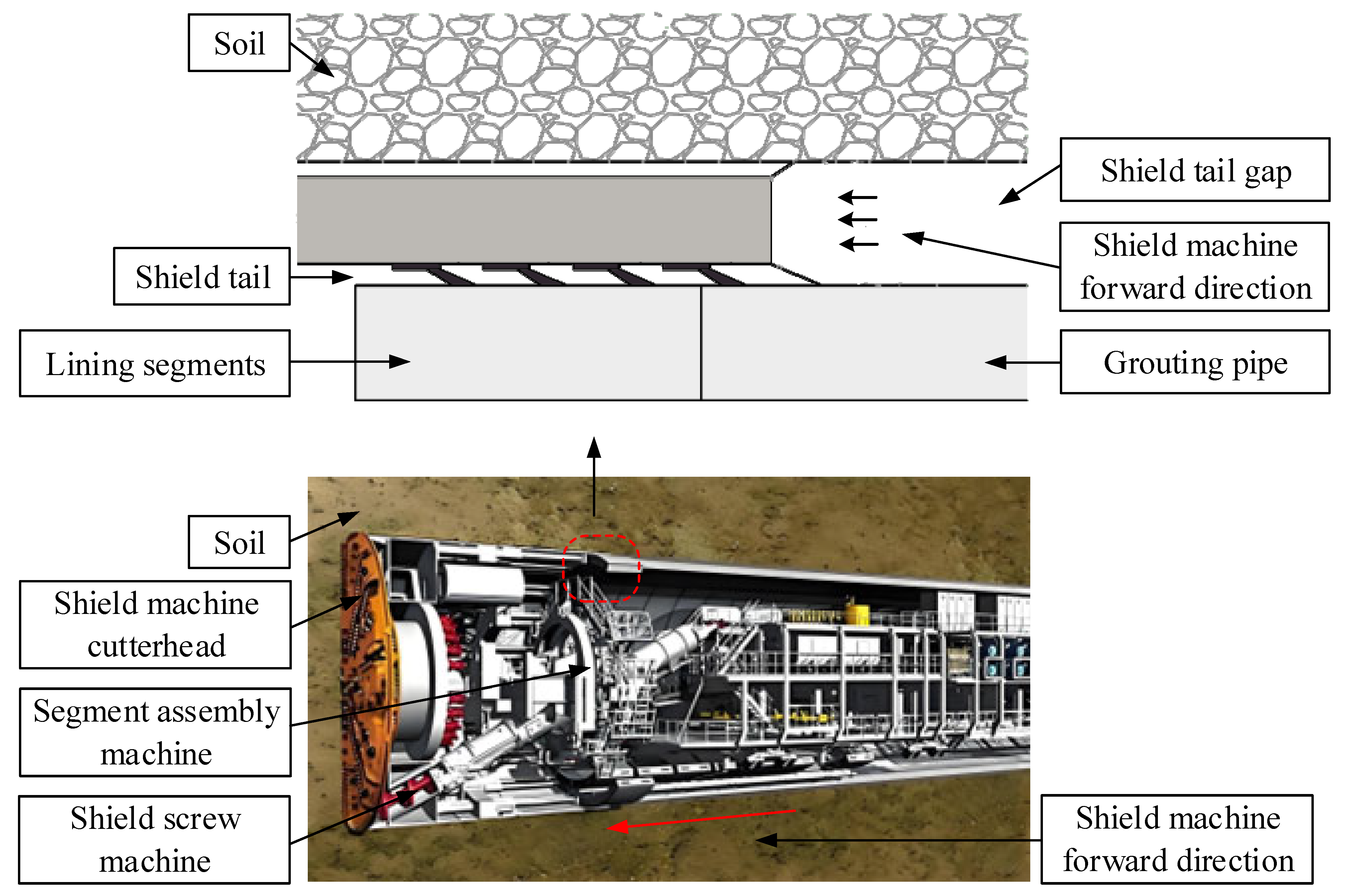
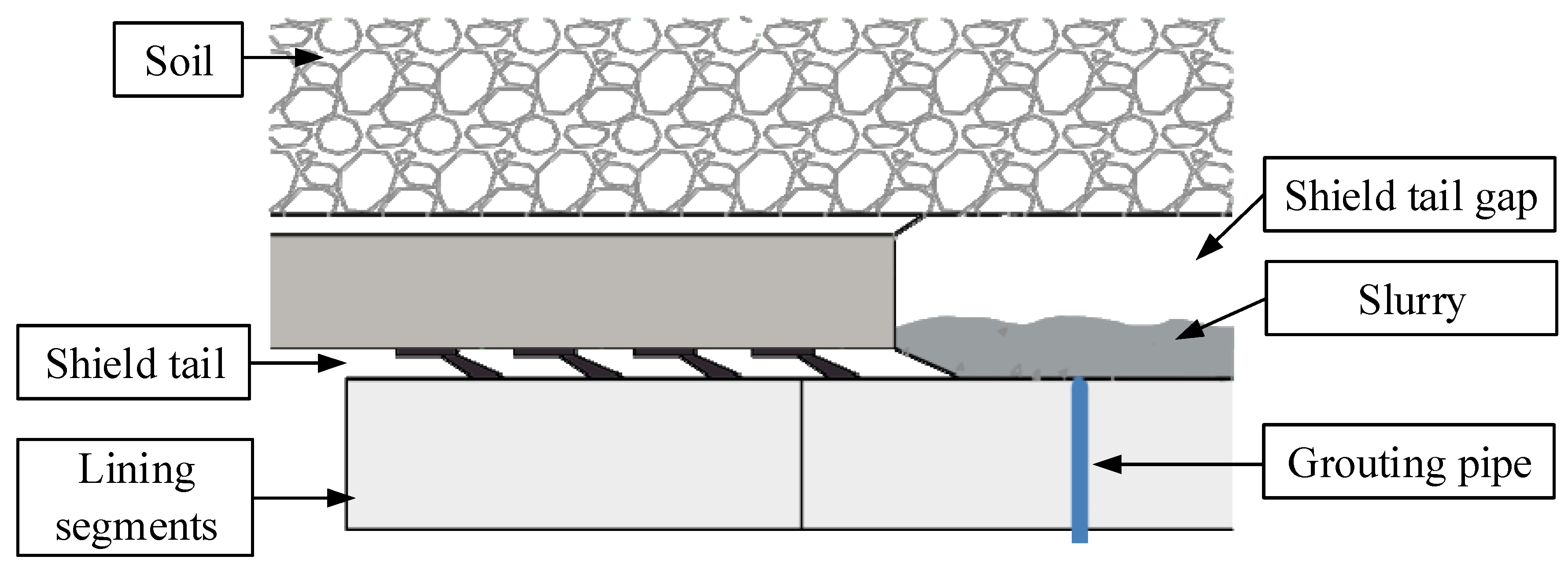
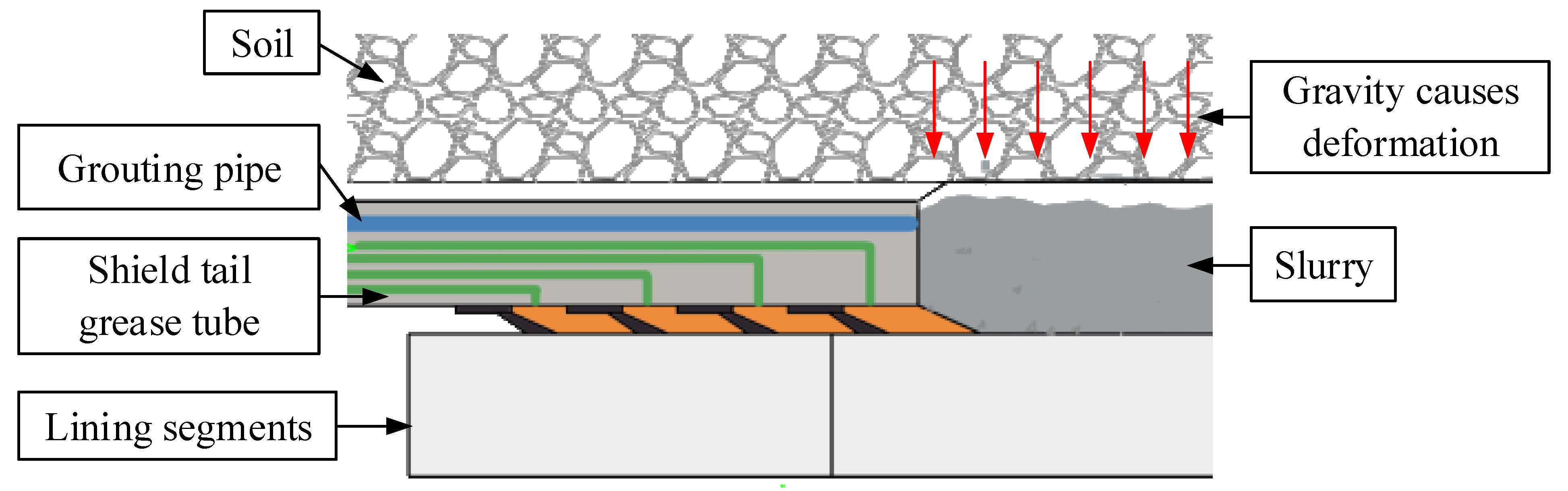
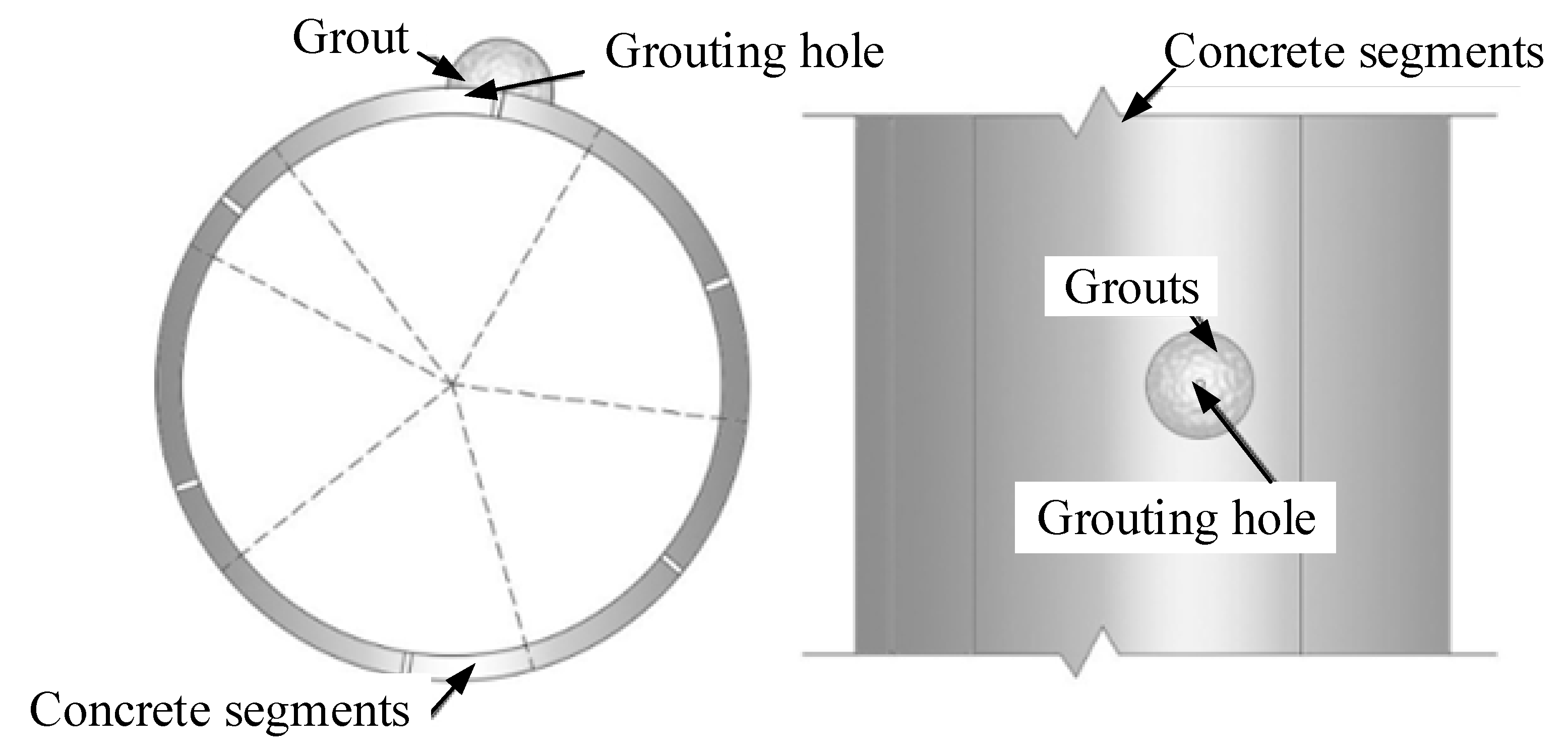
During shield tunneling, factors such as over-excavation, the difference between the inner diameter of the shield shell and the outer diameter of the lining segments, as well as the thickness of the shield shell, inevitably create a tail void between the lining segments and the surrounding ground once the segments detach from the shield tail. This void may induce soil disturbance, ground deformation, and groundwater inflow [47,48,49]. A schematic diagram of the tail void formed during shield tunneling is shown in Figure 1. To mitigate these adverse effects and enhance the integrity of the tunnel structure, backfill grouting is commonly employed to fill the tail void by injecting grouting materials (e.g., cement slurry or chemical grout) into the void, a compacted layer forms between the lining and the ground after diffusion and solidification, thereby preventing groundwater infiltration, suppressing soil settlement and displacement, and ultimately improving tunnel safety and long-term performance [50].
Backfill grouting in shield tunneling can be categorized, according to the timing of injection, into synchronous grouting [51] and secondary grouting [52]. Synchronous grouting refers to the immediate filling of the annular gap between the lining segments, the ground, and the shield tail during excavation. Its purpose is to control ground deformation, reduce surface settlement, and improve both the impermeability of the tunnel and the early stability of the lining. By promptly filling the void, synchronous grouting effectively controls deformation and settlement, while increasing the strength of the consolidated layer after hardening. However, local deficiencies may remain due to insufficient compaction or voids generated by grout shrinkage upon curing [53]. To further enhance waterproofing and compactness, secondary grouting may be employed to fill residual voids and form a denser waterproof layer, while also improving the strength and integrity of the lining. Secondary grouting is generally carried out when insufficient filling of the surrounding voids leads to poor settlement control or when severe leakage occurs in the lining [23,54]. Construction practice typically relies on surface settlement monitoring [55], supplemented by internal detection of possible voids behind the lining, to determine the necessity of secondary grouting.
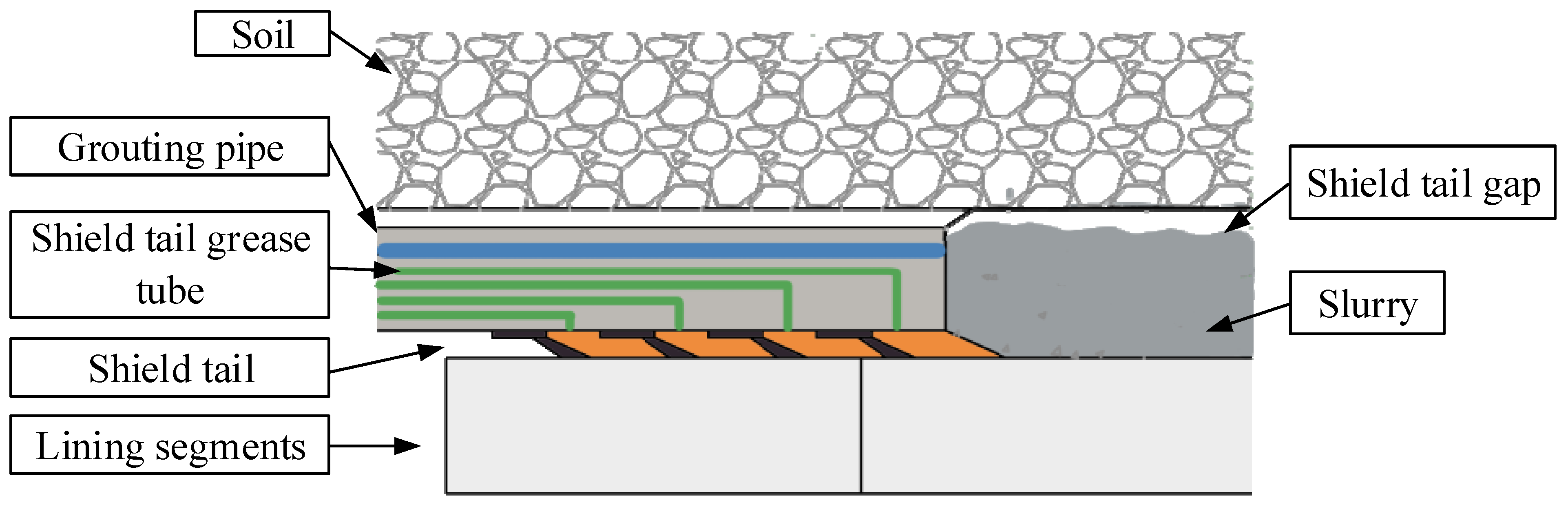
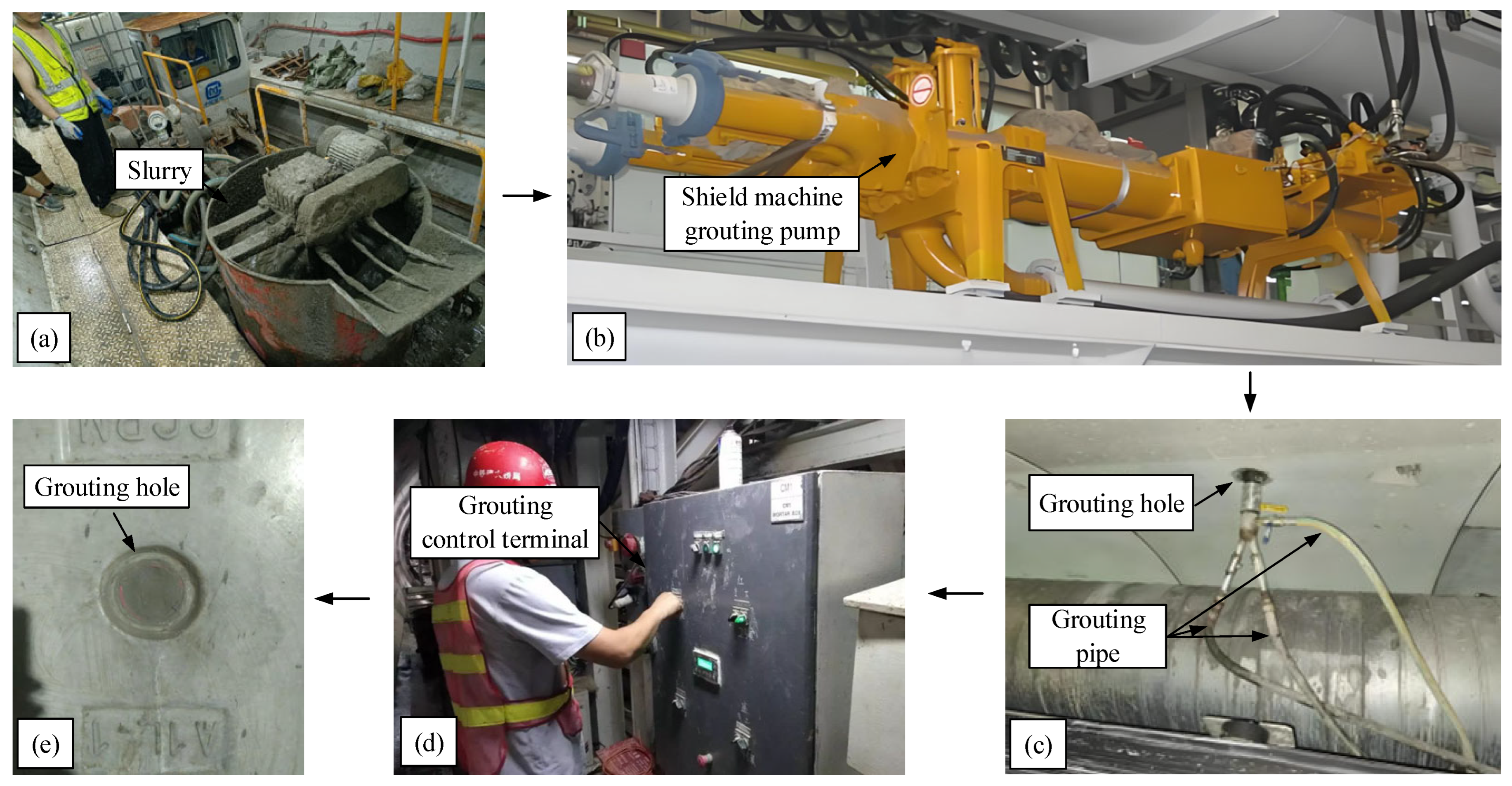
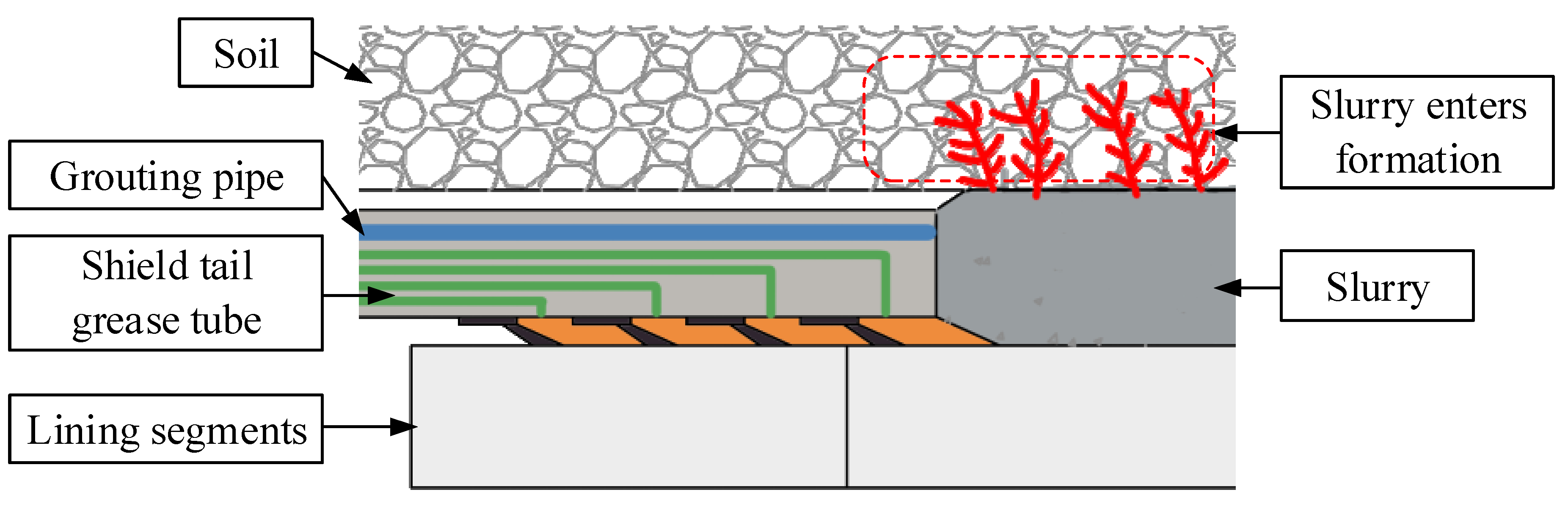
Synchronous grouting itself can be further classified into tail grouting and segmental grouting, depending on the injection location. Tail grouting is performed during shield advance, whereby grout is injected from the shield tail to fill the ground voids in real time, thereby reinforcing the surrounding strata. Segmental grouting, in contrast, is conducted by injecting grout through reserved ports in the lining segments to fill the gap between the segmental lining and the surrounding ground. Compared with segmental grouting, tail grouting provides more immediate filling of the tail void, ensuring higher timeliness; however, segmental grouting is generally simpler to implement. Schematics of tail grouting and segmental grouting are presented in Figure 2 and Figure 3, respectively.
The basic procedure of synchronous grouting typically includes: (i) preparing the grout mixture according to soil type and design requirements; (ii) activating the grouting pump to inject the grout into the tail void via grouting pipes; (iii) adjusting the grouting pressure and flow rate based on real-time performance; and (iv) terminating grouting once the target pressure is achieved, followed by sealing the injection ports. The overall process of synchronous backfill grouting in shield tunneling is illustrated in Figure 4. The critical aspects of this process lie in the formulation of grout materials and the control of grouting parameters. The grout formulation directly determines the mechanical and durability properties of the solidified layer, whereas the control of construction parameters governs the effectiveness and reliability of the backfill operation.

2.2. Slurry Preparation of Backfill Grouting

Prior to executing backfill grouting, the preparation of grout mixtures is essential, as the composition directly governs the diffusion, setting behavior, and ultimate performance of the material. In shield tunneling, backfill grouts are generally selected based on their broad material availability, high injectability, durability, and ability to achieve sufficient compressive strength, while remaining environmentally benign, cost-effective, and non-toxic to groundwater and surrounding ecosystems [56,57,58,59].
Grout formulations are tailored to ground conditions and engineering requirements, with distinct mix designs applied for synchronous and secondary grouting. During shield advancement, continuous and uninterrupted synchronous grouting is required. Once each ring is completed, the grout must not only set rapidly and achieve adequate strength, but also exhibit controlled expansion to mitigate subsequent shrinkage. Accordingly, synchronous grouts typically employ cement–sand-based suspensions with short setting times, high strength, long-term durability, and strong resistance to chemical attack. To fine-tune the setting characteristics, site-specific trials are conducted to adjust admixture types and mix proportions, including the addition of accelerators, depending on geological conditions and tunneling rates [60]. In highly permeable strata, or beneath sensitive structures and sharp curves, further optimization is performed by incorporating early-strength agents or water reducers [61,62,63], thereby accelerating gelation, achieving rapid strength gain, and ensuring reliable grouting performance.
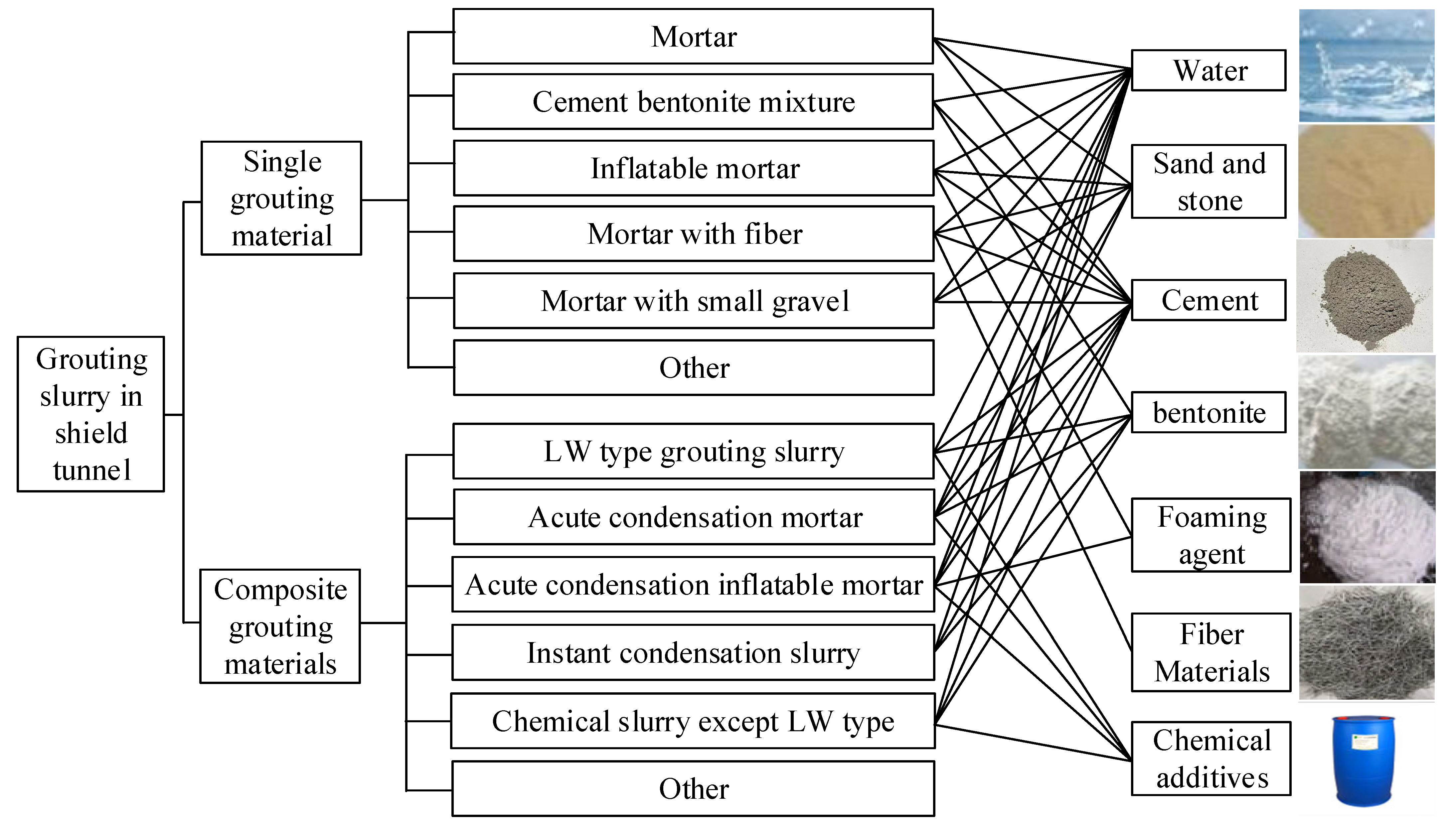
Secondary grouting is employed to remedy deficiencies in synchronous grouting, serving as a supplemental filling process that requires enhanced injectability. This is commonly achieved using two-component grout systems: solution A (cement + water) and solution B (sodium silicate + water). In practice, solution A is first injected to fill voids and defects around the lining, followed by solution B to seal injection ports. Under conditions of abundant groundwater, additional sealing measures are required. To ensure rapid development of grout viscosity—facilitating void filling while simultaneously displacing groundwater into deeper strata—the gelation time of the two solutions is typically controlled within 60 s. The specific classification of backfill grout mixtures is illustrated in Figure 5.

2.3. Operational Parameters Control of Backfill Grouting

In shield tunnel construction, improper control of backfill grouting can result in serious issues such as segmental misalignment [64,65], tunnel uplift [66], and ground collapse [67,68]. To mitigate these risks, the grouting process must be adaptively designed and adjusted in response to both project-specific requirements and real-time feedback from ongoing operations. Effective execution of backfill grouting is therefore essential. Among the various influencing factors, grouting pressure, volume, injection rate, and duration are the primary controllable parameters, each exerting a direct impact on the overall effectiveness of the grouting process.

2.3.1. Grouting Pressure

During synchronous grouting, the grout pressure in the ground must exceed the sum of the local static water pressure and the overlying soil pressure, ensuring that the voids are adequately filled without inducing ground splitting. Excessive grouting pressure can disturb the surrounding soil around the segments, leading to subsequent ground and tunnel settlement, as well as grout leakage (Figure 6). Conversely, insufficient pressure results in slow grout penetration and incomplete filling, which can lead to surface deformation (Figure 7). In practice, the grouting pressure is typically set 0.05~0.1 MPa above the combined external water and soil pressures. Given the variability of overburden conditions, the pressure should be adjusted according to site-specific conditions to achieve optimal grouting performance.

2.3.2. Grouting Volume

The volume of synchronous grouting must fill the annular void behind the shield tail. However, during the grouting process, additional factors must be considered, including shield jacking and alignment corrections, grout infiltration (which depends on geological conditions), and shrinkage of the grout upon setting. The required grouting volume can be calculated using the following formula [59]:
q = v λ
where q is the volume of grouting (m3); λ is grouting coefficient (generally, 1.4~2.0 is taken, for curved sections and sections with fine sand, a larger value is adopted); v is the void volume of the shield tail (m3) which is generated by v = π ( D 2 d 2 ) l / 4 ; D is diameter of the soil cut by the shield machine; d is outer diameter of the segment; l is width of segment lining.

2.3.3. Control of Backfill Grouting

The grouting rate is determined based on the shield machine’s advancement speed, with the total target volume evenly distributed across each cycle. Grouting begins simultaneously with shield propulsion and concludes upon completion of the advance. During synchronous grouting, pressure sensors are installed at the outlets of each injection port to monitor and control both the grouting pressure and volume, ensuring symmetrical and uniform injection behind the segments. To prevent uneven loading on the segments which could lead to misalignment, step deformation, or surface settlement synchronous grouting must be conducted symmetrically. Furthermore, grouting strategies should be dynamically adjusted based on real-time feedback. In secondary grouting, injection should initially target areas with potentially larger voids to achieve balanced pressure distribution.

3. Quality Assessment Techniques for Backfill Grouting in Shield Tunnels

Because the lining hides the grouted area, direct inspection of grout behavior is impossible. However, understanding grout diffusion, setting behavior, and defect distribution is crucial for both construction control and long-term maintenance. As the lining is the primary load-bearing component of a shield tunnel, backfill defects may compromise structural performance and pose safety risks [69,70]. Consequently, non-destructive methods are typically employed to evaluate backfill grouting quality in practice.
Extensive research on shield tunnel inspection has produced a variety of evaluation methods [71,72,73]. For instance, deep learning and machine vision techniques have been applied to identify cracks and leakage defects in subway shield tunnels [72]; three-dimensional laser scanning of tunnel linings enables point-cloud-based 3D modeling to detect deformations [74]; and multi-sensor data fusion has been employed for real-time deformation monitoring of large-diameter shield tunnels [75]. However, due to the inherent concealment of backfill grouting, the actual grouting effect cannot be directly observed. Moreover, grout infiltration, diffusion, setting, defect formation, and their spatial distribution vary significantly with project-specific conditions, making accurate prediction challenging [76,77].
Most current detection practices rely on indirect monitoring feedback to reconstruct grout conditions and characterize defects. Although widely used, such approaches remain limited by interpretation uncertainty, shallow observation depth, and difficulties in correlating measured signals with actual spatial grout distribution [34,52,78,79]. Each sensing technology captures a specific manifestation of grout diffusion, consolidation, or defect evolution, filtered through its own physical measurement principle. As a result, the diagnostic capability of any method is inherently coupled with the temporal state of the grout (fresh, setting, hardened) and the surrounding geological and structural conditions. To establish a coherent conceptual thread, this review organizes grouting quality assessment methods according to their dominant sensing mechanisms and explicitly links each technique to the aspects of grout behavior it can—and cannot—reliably capture. The following sections therefore emphasize not only methodological performance, but also the interdependencies between sensing physics, grout evolution, and practical field constraints such as reinforcement density, water content, and material heterogeneity. The following sections classify and analyze the recent advances in defect detection techniques for backfill grouting in shield tunnels, organized according to the underlying detection technologies.

3.1. Ground-Penetrating Radar (GPR) Method

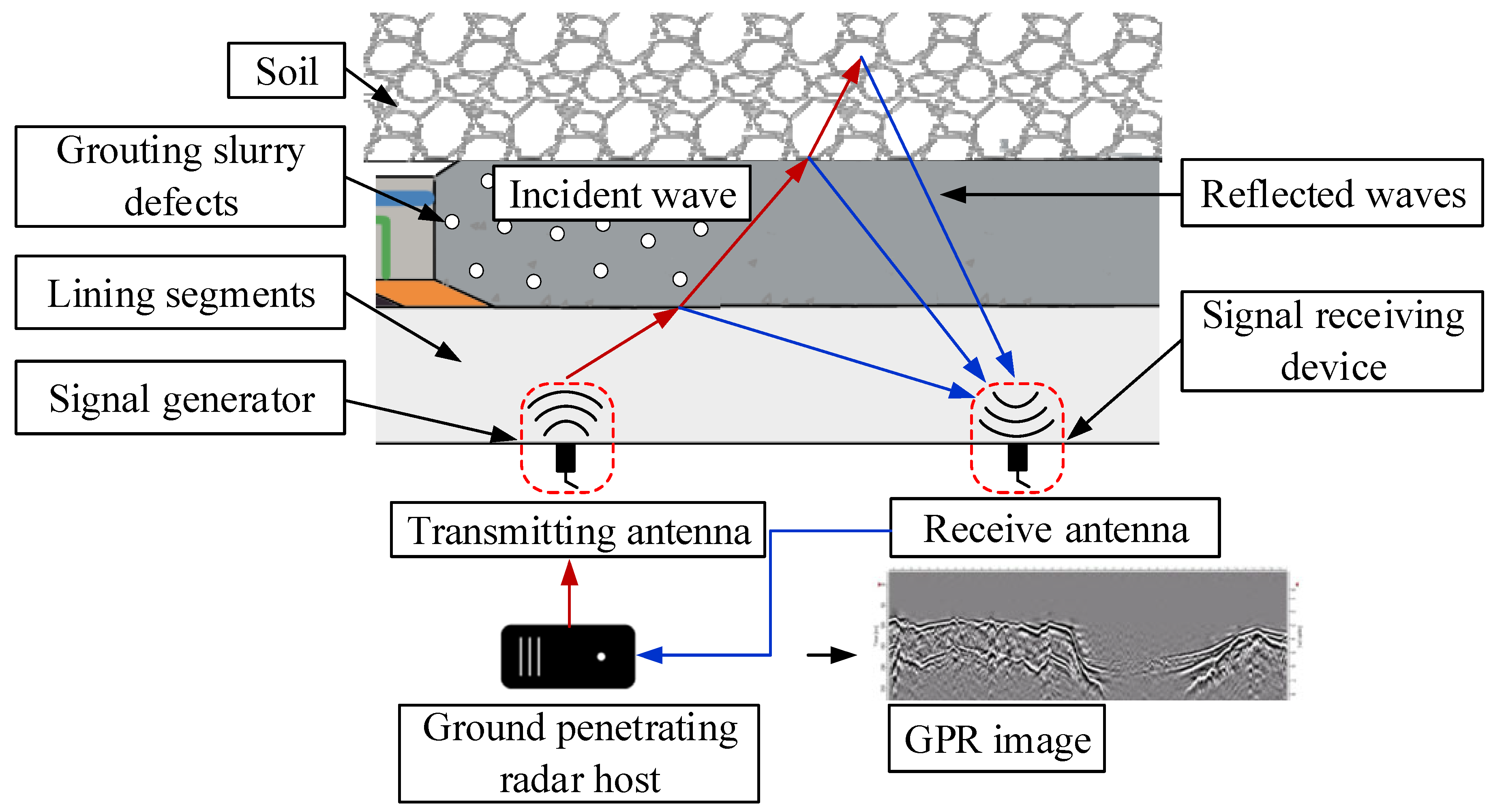
Ground-penetrating radar (GPR) is a commonly employed technique for assessing backfill grouting quality in shield tunnel projects [80,81,82]. GPR operates by transmitting high-frequency electromagnetic waves and receiving the echoes reflected and propagated through the material, thereby evaluating the effectiveness of the grout behind the lining. When the waves encounter different media, such as soil, grout layers, or voids, the variations in reflection intensity, travel time, and frequency can be used to identify defects including grout inhomogeneity, voids, or cracks [83,84,85,86]. The principle of defect detection using GPR is illustrated in Figure 8. However, GPR performance is fundamentally governed by a trade-off among antenna frequency, spatial resolution, and penetration depth. High-frequency antennas provide the spatial resolution necessary to detect thin grout layers or small voids but suffer from rapid signal attenuation, severely limiting detection depth. Conversely, lower frequencies penetrate deeper but often yield resolutions insufficient for characterizing fine interface defects. Furthermore, the widespread presence of dense rebar meshes within shield segments presents a critical obstacle. These metallic grids effectively act as a Faraday cage, causing strong reflection and scattering of electromagnetic waves before the signals reach the backfill material. This ‘shielding effect’ not only attenuates the target signal energy but also introduces significant clutter noise, which frequently masks the reflection characteristics of the grout–soil interface.
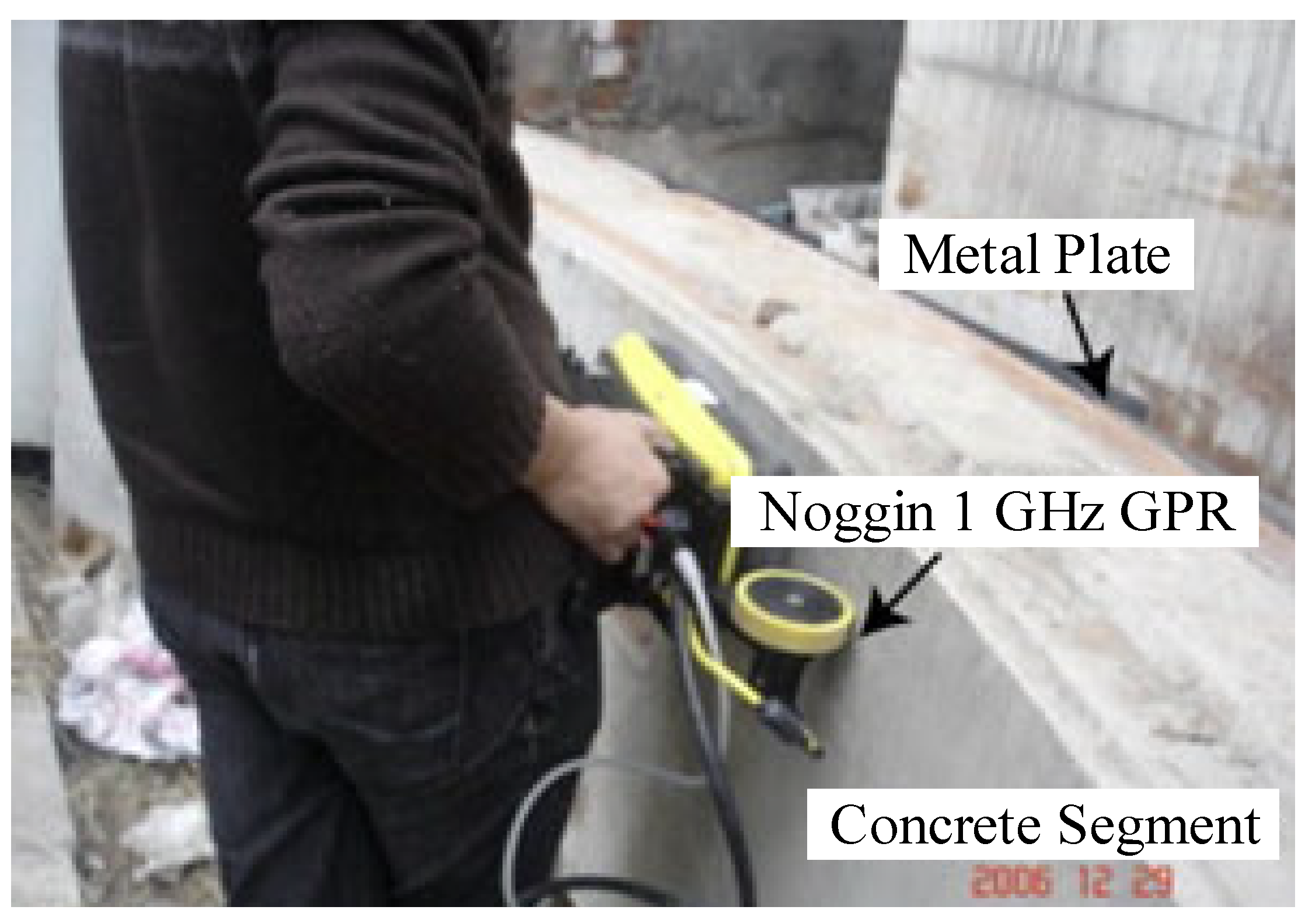
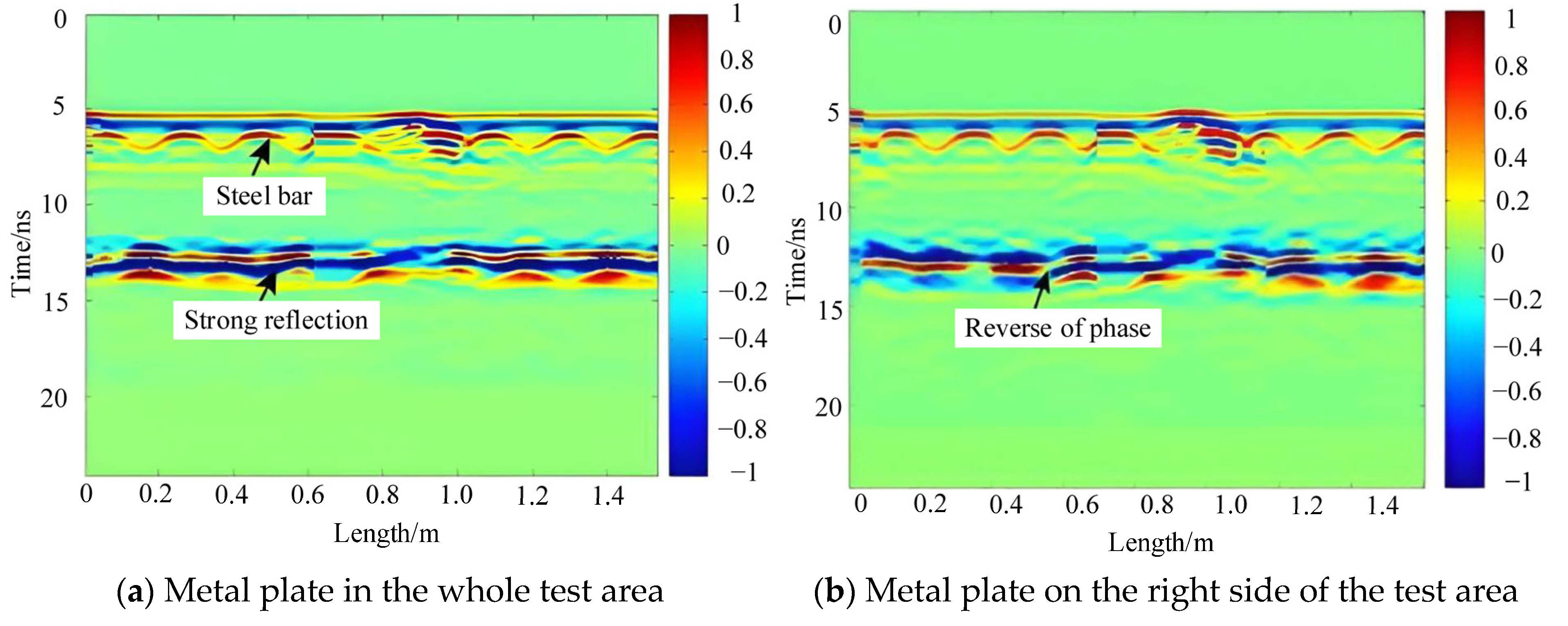
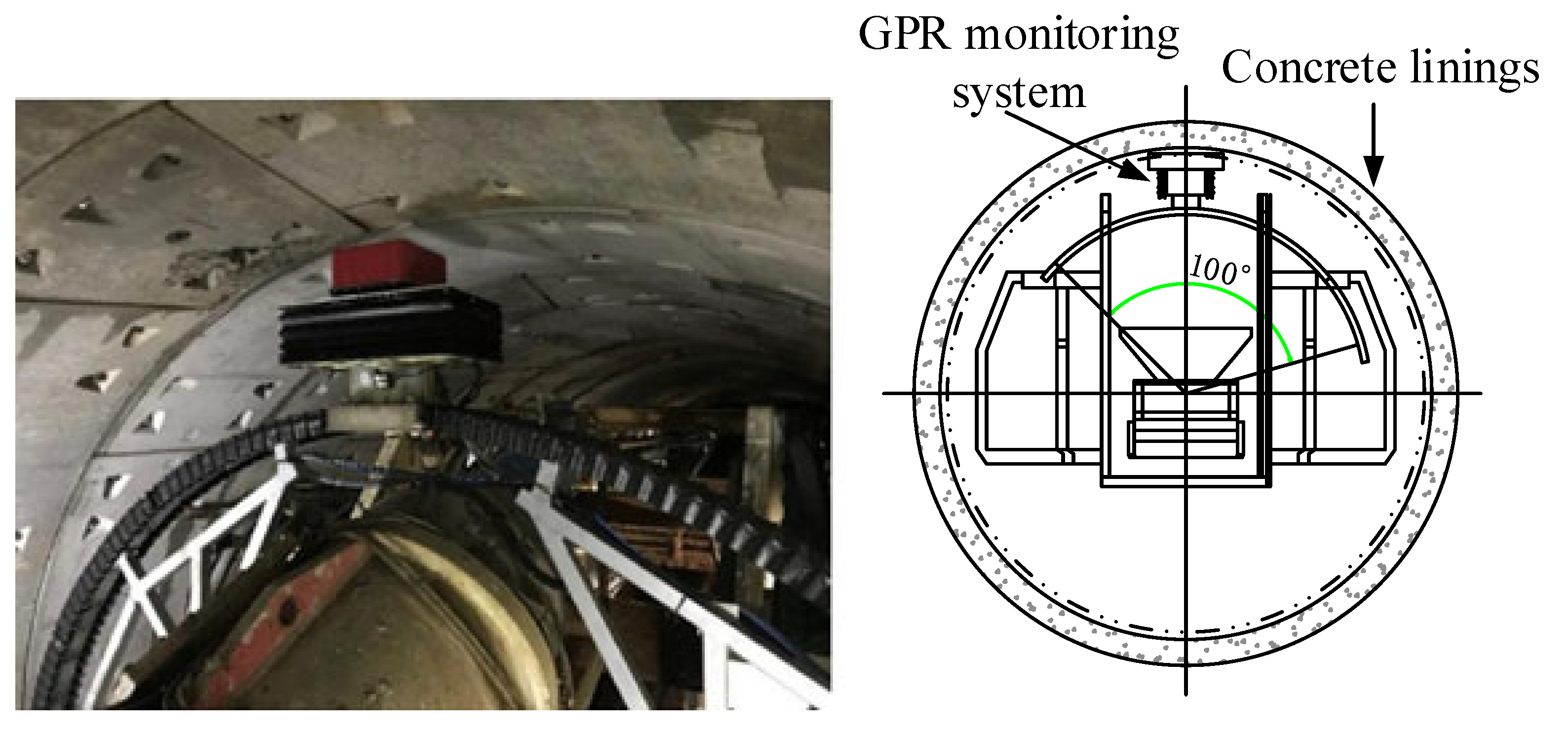
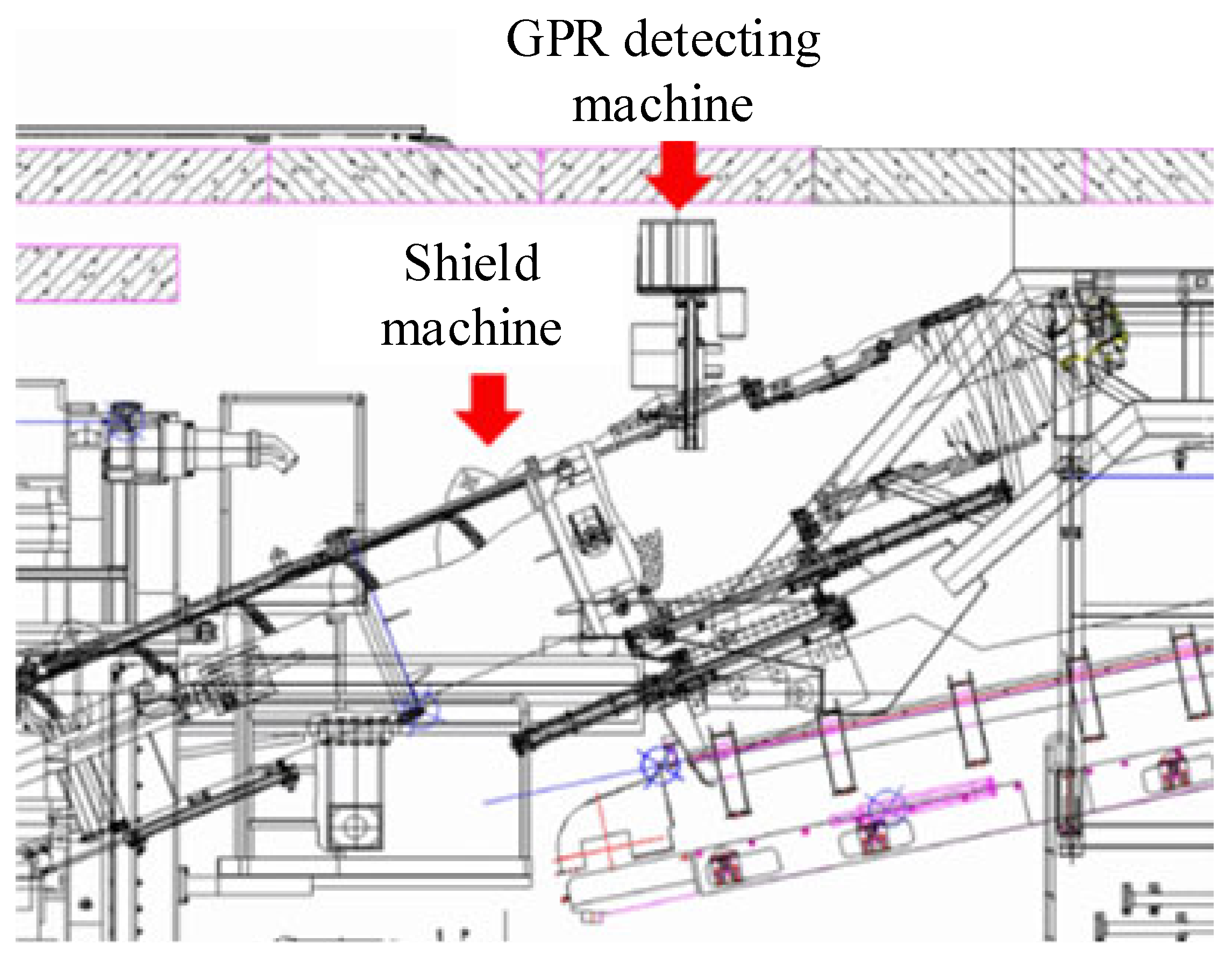
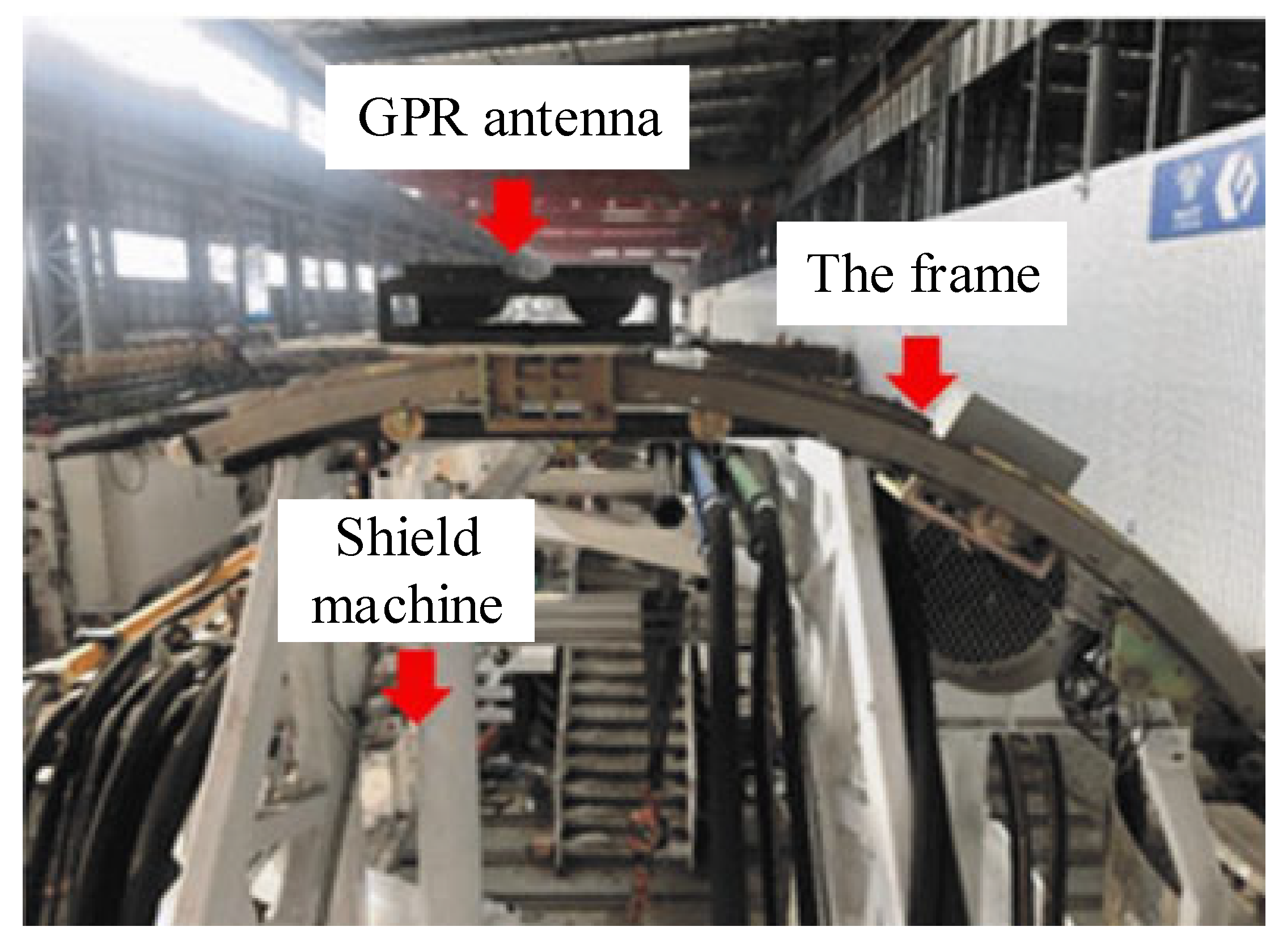
Numerous studies have explored GPR for detecting grouting defects, and representative findings are summarized in Table 1. In field applications, Zhang et al. [87] employed GPR to evaluate grouting effectiveness in Shanghai Metro Line 9, determining the optimal operating frequency and measuring the electromagnetic wave velocity within the lining segments (Figure 9 and Figure 10). Similarly, Zeng et al. [88] applied a GPR detection system combined with the BBP-XGBoost algorithm to assess the annular thickness of backfill grout in Tianjin Metro tunnels, achieving high detection accuracy. Furthermore, they integrated the GPR system directly into the shield tunneling machine [89] (installation schematic shown in Figure 11) and applied three-dimensional finite-difference time-domain (FDTD) analysis to simulate electromagnetic wave propagation in the backfill grout, which was subsequently used to monitor grout settlement in Jinan Metro Line R3. Xie et al. [90], during Shanghai Metro Line 12 construction, utilized GPR to determine the position of reinforcing bars, grout layer thickness, and grouting defects. Although GPR can detect defects, the technique faces challenges in imaging interpretation, relies heavily on operator experience, and lacks a fully developed theoretical framework.
While GPR is established as the primary non-contact technique for layer thickness measurement, its utility is strictly defined by the trade-off between penetration depth and resolution. The above work confirms that high-frequency antennas offer the resolution needed for thin grout layers but fail in water-rich or clay-heavy strata due to signal attenuation. A critical, often under-discussed limitation is the “masking effect” in heavily reinforced segments, where dense rebar meshes act as a Faraday cage, obscuring the grout-soil interface. Consequently, while GPR excels in detecting large voids in dry, unreinforced linings, it is increasingly viewed as insufficient as a standalone method for complex hydro-geological conditions, necessitating fusion with other methods.
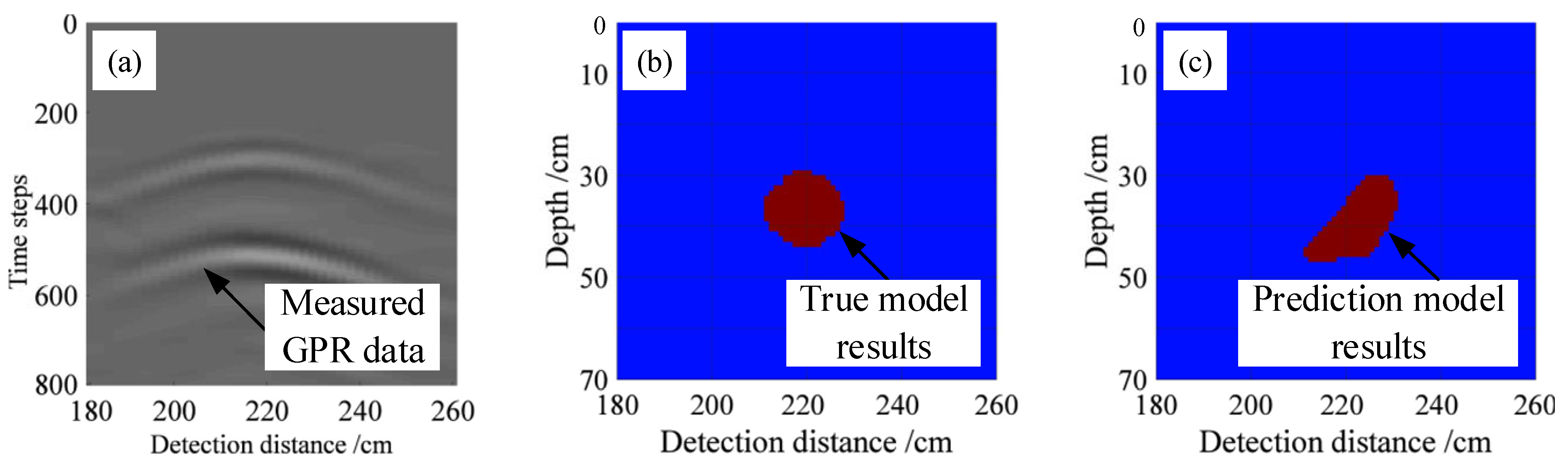
In efforts to improve GPR-based detection, Wang et al. [98] addressed the issue of blurred boundaries in GPR images, which complicates defect delineation. They developed an automated framework combining a rotational region-adaptive convolutional neural network with GPR imaging to detect defects and rebar distributions within tunnel linings in arbitrary orientations. Liu et al. [99] further advanced GPR image interpretation using a multi-task deep neural network to identify defect shapes, categories, and lining thickness from GPR images. By incorporating post-processing with curve fitting, they automatically estimated defect depth and lining thickness based on hyperbolic patterns, and validated the approach through numerical simulations, sandbox experiments, and field trials. Yang et al. [100] combined convolutional neural networks (CNNs) to address data interpretability issues and verified the method using both synthetic and real datasets (results shown in Figure 12). GPR represent s a trade-off between efficiency and depth. High-frequency antennas provide the resolution needed for thin layers but lack penetration, whereas low frequencies penetrate deeper but blur interface definitions. Consequently, GPR is optimal for rapid, large-area screening of unreinforced or lightly reinforced segments but requires supplementary methods for detailed verification in complex strata.
A key methodological tension, insufficiently addressed in earlier studies, lies in the electromagnetic shielding effect caused by dense reinforcement meshes in segment linings. Acting as a Faraday cage, the rebar network reflects and scatters incident waves before they reach the grouted annulus, fundamentally limiting detectability regardless of post-processing or algorithmic enhancement. Recent machine-learning-based approaches significantly reduce operator dependency and improve pattern recognition in radargrams; however, they primarily compensate for interpretational uncertainty rather than overcoming the intrinsic physical limitations of wave propagation. The literature converges on the conclusion that GPR is most effective for rapid, large-area screening in dry, lightly reinforced environments, while its reliability deteriorates sharply under complex hydro-geological conditions. Consequently, GPR should be regarded as a front-end diagnostic tool whose results require validation or supplementation by mechanically based or sensor-driven methods in demanding ground conditions.
In existing studies, ground-penetrating radar (GPR) has not only been the subject of extensive research on signal processing and imaging enhancement methods, but has also been validated through laboratory model tests, numerical simulations, and full-scale field measurements. In terms of calibration strategies, most studies rely on three primary validation approaches: (1) Numerical simulation: electromagnetic wave propagation models are established to perform waveform inversion under different dielectric constants, moisture contents, and defect geometries. (2) Laboratory model testing: some studies construct controlled environments, such as sandboxes, scaled tunnel segments, or specimens containing artificial defects, to investigate the relationship between defect depth, geometry and corresponding electromagnetic responses. (3) Engineering field verification: a large body of work applies GPR in operational metro and municipal tunnels, where results are calibrated against core drilling, measured grouting thickness, or construction records.
With respect to applicability, GPR tends to show high imaging reliability under the following conditions: (1) backfill thickness typically within 0.5–1.2 m; (2) significant dielectric contrast between lining concrete and grouting materials; (3) relatively low density of reinforcement and limited concealed pipework; (4) moderate soil moisture content and stable electromagnetic properties.
However, the detection performance may degrade significantly under adverse conditions, such as: (1) highly saturated sands or water-rich strata causing strong electromagnetic attenuation; (2) shielding effects produced by reinforcing bars, grouting pipes and other metallic structures; (3) complex stratification of dielectric media leading to overlapping reflections.
Overall, GPR is the most widely adopted non-contact technique for rapid evaluation of grout distribution and void detection, offering high efficiency in dry, unreinforced environments. Its effectiveness, however, is critically limited by electromagnetic shielding from segment rebar and signal attenuation in water-saturated or clay-rich strata. Future advances should prioritize multi-frequency antenna design, model-based inversion to compensate for shielding effects, and deep-learning-assisted image interpretation to reduce operator dependency.

3.2. Ultrasonic Testing (UT) Method

While GPR offers rapid scanning capabilities, its effectiveness is severely compromised in electrically conductive environments, particularly where dense reinforcement meshes create shielding effects. To overcome this electromagnetic limitation, acoustic-based methods, such as Ultrasonic Testing (UT), which depend on mechanical stress waves rather than dielectric properties, have been adopted for deeper penetration in reinforced linings. Ultrasonic testing evaluates grout quality in shield tunnels by analyzing the propagation velocity and reflection characteristics of ultrasonic waves within the backfill material, thereby assessing grout uniformity and compaction. Ultrasonic waves are elastic waves generated when a piezoelectric transducer converts electrical pulses into mechanical vibrations, producing ultrasonic waves with frequencies ranging from 0.5 to 15 MHz. The waves propagate through the medium via mechanical interactions, and when encountering defects or heterogeneous interfaces, the propagation path and signal characteristics change. By analyzing the reflected signals, internal defects can be inferred [101,102].
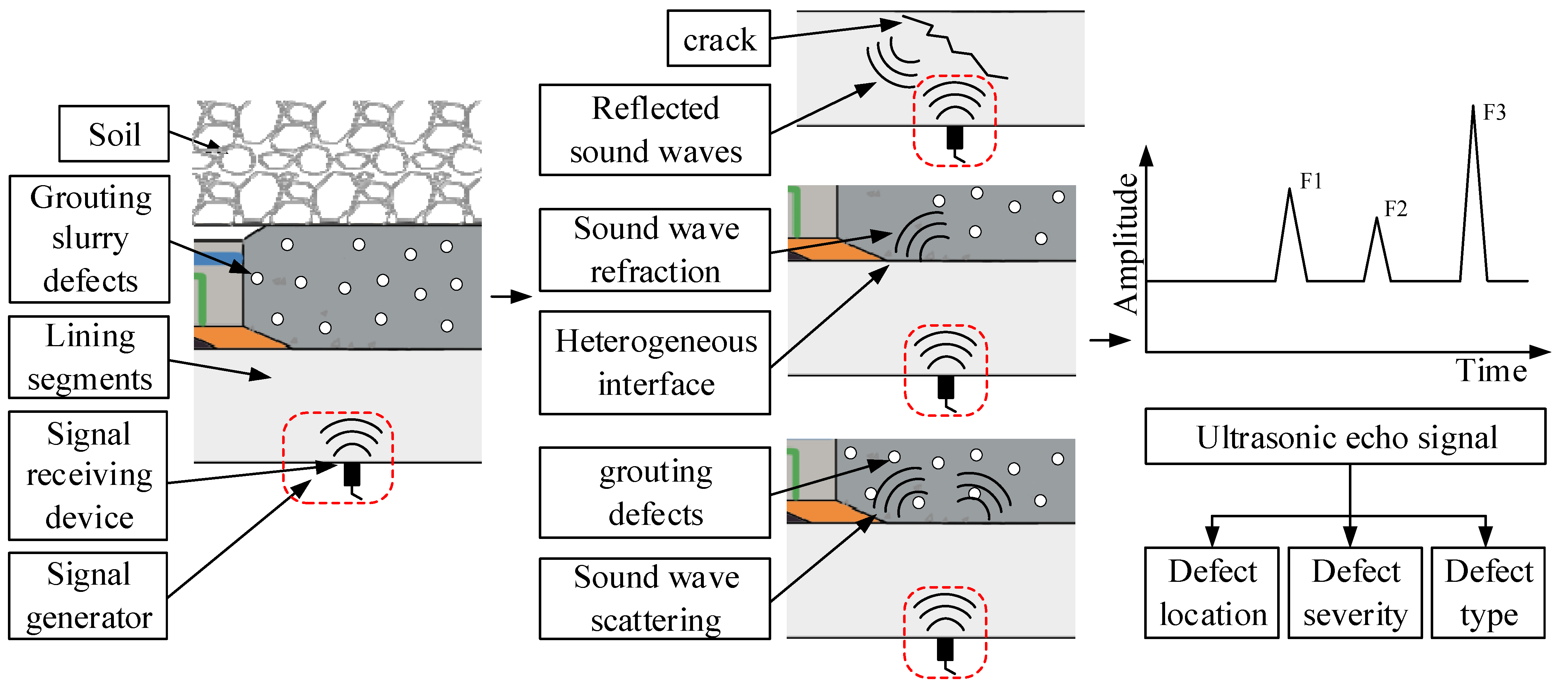
Ultrasonic waves are unaffected by material dielectric properties, making them effective for detecting defects in complex environments, such as behind-lining rebar networks. As illustrated in Figure 13, defect depth can be determined by calculating the time difference between the reflected wave and the initial wave, while amplitude attenuation provides an estimate of defect severity. Waveform features, including phase inversion and frequency shifts, are further analyzed to identify defect types. Despite its immunity to electromagnetic interference, ultrasonic testing still faces significant acoustic challenges in shield tunnel applications. The detection environment essentially constitutes a multi-layer medium characterized by significant acoustic impedance mismatches. As stress waves propagate across multiple interfaces, substantial energy is lost through reflection and mode conversion, resulting in rapid signal attenuation. This attenuation is exacerbated by the scattering effects of coarse aggregates in the concrete segments. Consequently, the method exhibits high sensitivity to SNR. In practice, weak echo signals from deep defects are easily overwhelmed by boundary interface reflections and coherent structural noise, making the distinction between actual void defects and normal layer interfaces a complex interpretative challenge.
Recent studies have primarily focused on evaluating the effectiveness of ultrasonic testing for detecting backfill grouting defects and have proposed various improvements to address limitations encountered during measurement. Research on ultrasonic detection of grouting defects can be broadly categorized into two approaches. The first approach directly analyzes the reflected ultrasonic signals, extracting information such as wavelength, frequency-domain characteristics, travel time, and dominant frequency shifts to locate defects. The second approach incorporates imaging techniques, converting the reflected signals into detection maps to inversely reconstruct the backfill grouting condition. This enables defect visualization, and by establishing an interpretation framework, defects can be more intuitively characterized and localized within the monitoring maps.
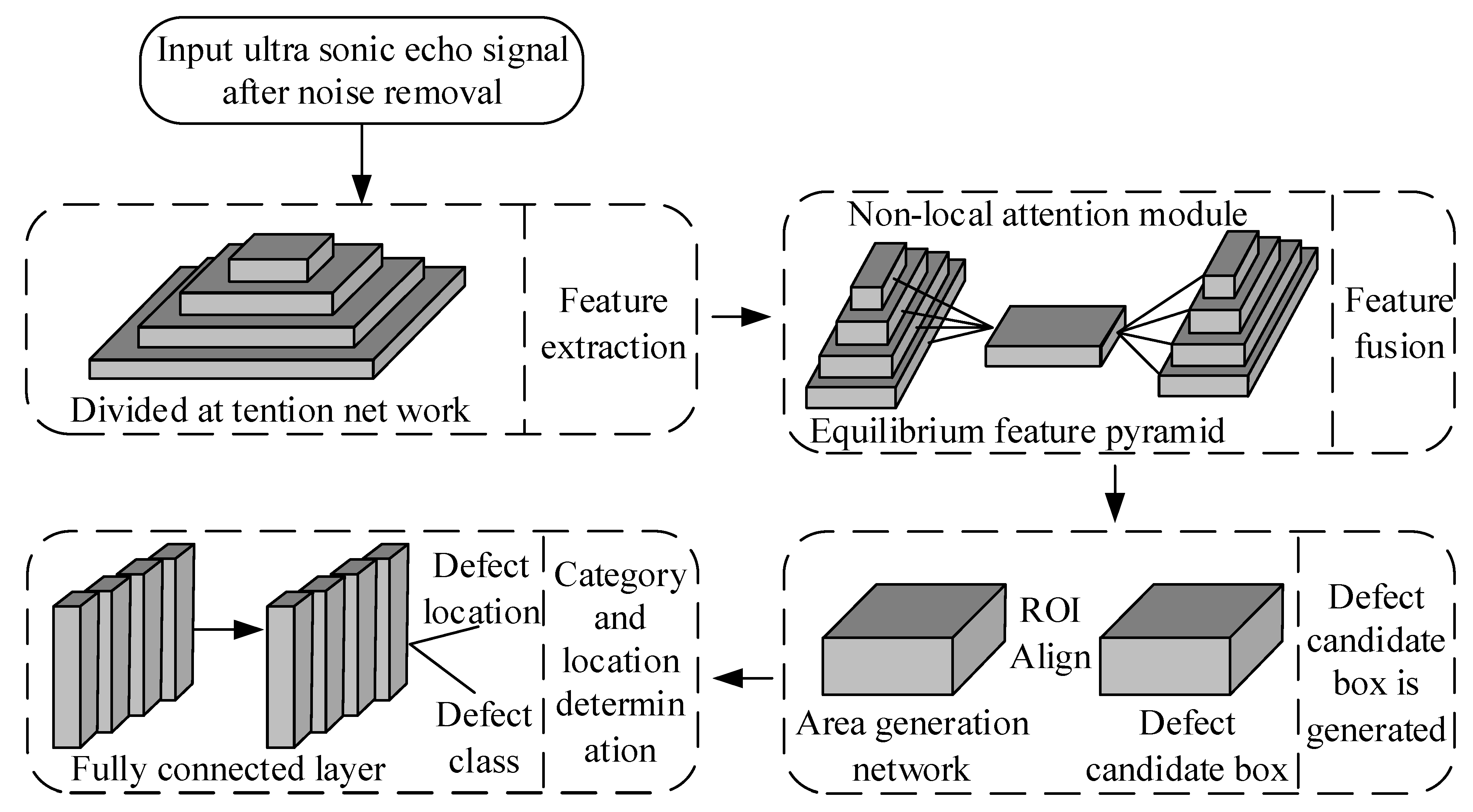
In the direct signal analysis approach, Wimsatt et al. [103] developed a linear array shear-wave tomographic scanning technique. Initial tests were conducted on laboratory-prepared tunnel models with known defects, followed by application to existing tunnels with uncertain defects, yielding results comparable to those obtained using GPR and visual inspections. However, this method relies on direct signal computation to infer defect information and demonstrates limited robustness in complex tunnel environments. To overcome this limitation, researchers have turned to data-driven methods. For example, Wang et al. [104] proposed a hybrid approach that combines ultrasonic echoes with convolutional neural networks (CNNs) to localize tunnel defects. This method incorporates signal denoising, defect model construction, and feature extraction, and predicts defect characteristics via fully connected layers, enabling reliable detection of structural damage in high-noise underwater tunnel environments. The overall neural network architecture for damage detection is illustrated in Figure 14. By leveraging deep learning to capture intrinsic relationships between echo signals and defects, this approach replaces traditional signal analysis computations, greatly simplifying the prediction process, reducing analytical workload, and enhancing the applicability and robustness of ultrasonic detection methods.
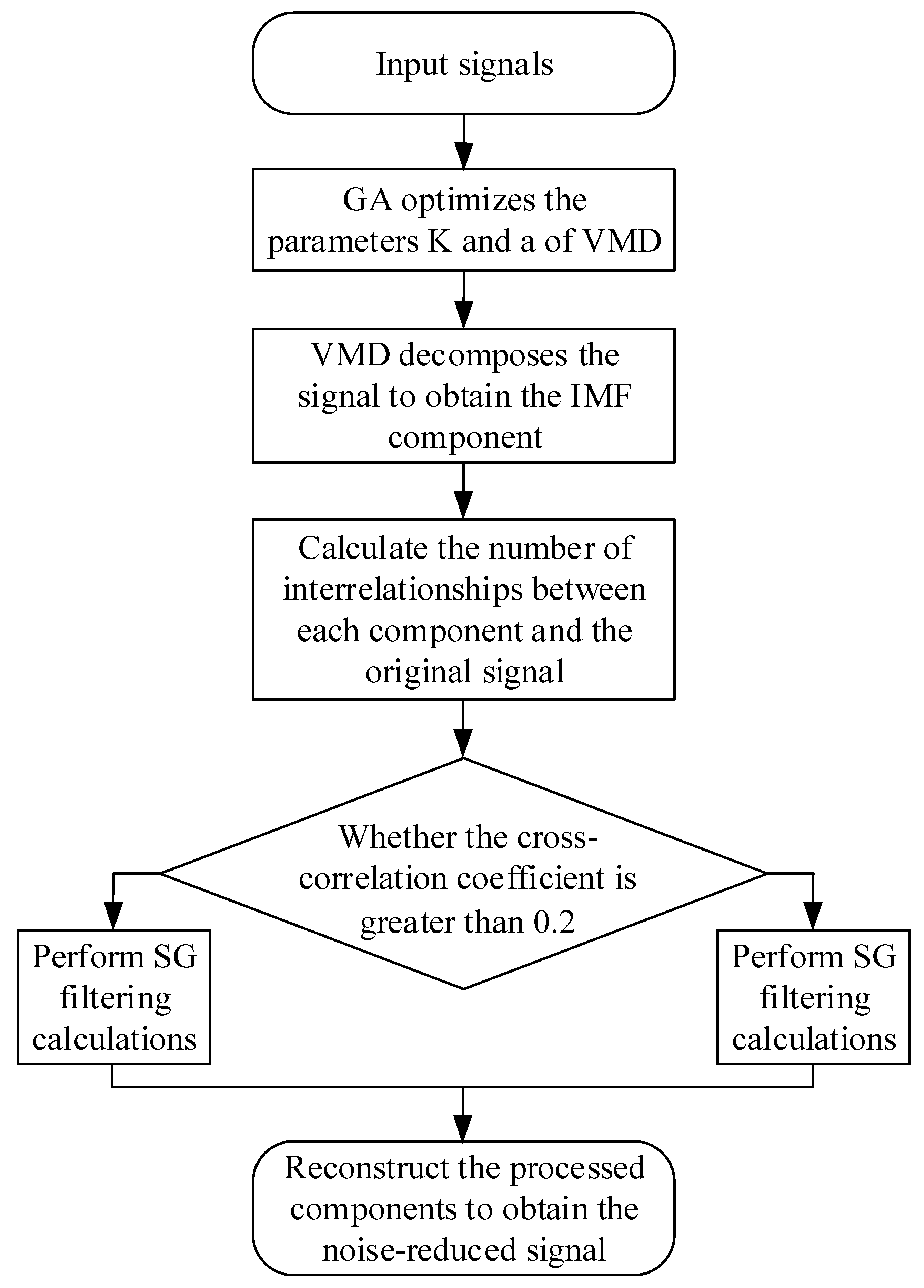
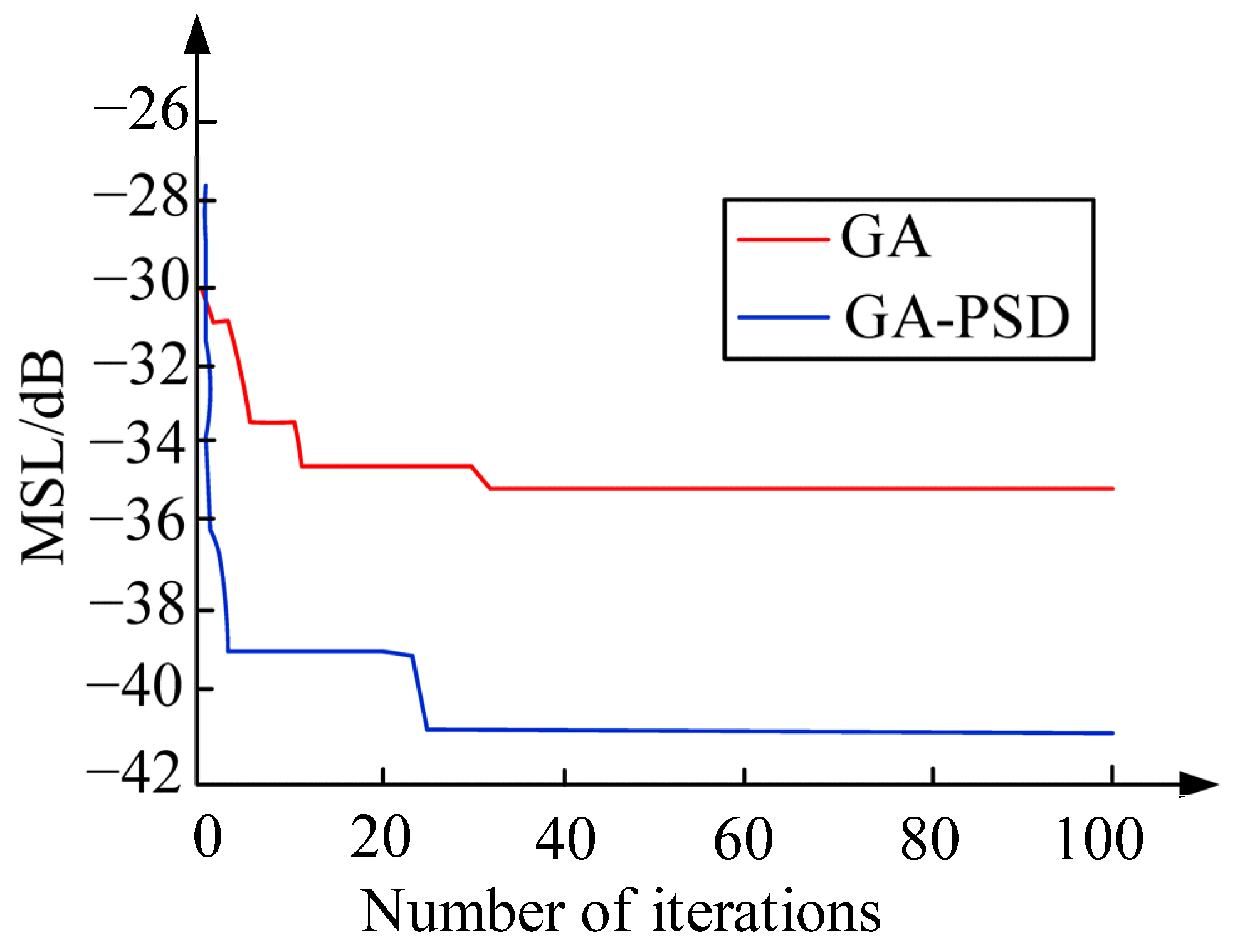
In ultrasonic testing, the generated waves are produced by a phased array, and the configuration parameters of the array significantly influence detection performance. Wang et al. [105] proposed an improved genetic algorithm–particle swarm optimization (GA-PSO) approach to optimize the sparse configuration of the phased array, combined with a GA-VMD-SG (Variational mode decomposition) hybrid algorithm for ultrasonic signal denoising to enhance detection effectiveness. The workflow of the GA-VMD-SG signal denoising procedure is illustrated in Figure 15. Following parameter optimization, data acquired by the ultrasonic phased array exhibit improved convergence characteristics, as shown in Figure 16. By integrating array parameter optimization with advanced signal denoising, the direct analysis of ultrasonic echo signals achieves enhanced accuracy and reliability in defect detection.
To quantify the severity of backfill grouting defects, Li et al. [99] established damage indices based on differences between guided-wave signals from healthy and defective structures, enabling a quantitative assessment of grout defects. Cao et al. [106,107] analyzed signal energy variations, using changes in frequency-domain energy ratios and wavelet energy ratios for non-destructive evaluation of grout quality. They also developed three-dimensional multipoint detection models and two-dimensional planar single-point detection models based on the piezoelectric effect for validation. Although extensive research has been conducted and some practical applications explored, challenges remain. In existing shield tunnels with grouting defects, ultrasonic echo signals often contain environmental noise, which contaminates the defect information. Conventional direct denoising techniques are typically employed, but these methods reduce the entropy of echo signals, weakening the effectiveness of defect detection. To date, few studies have systematically analyzed this limitation.
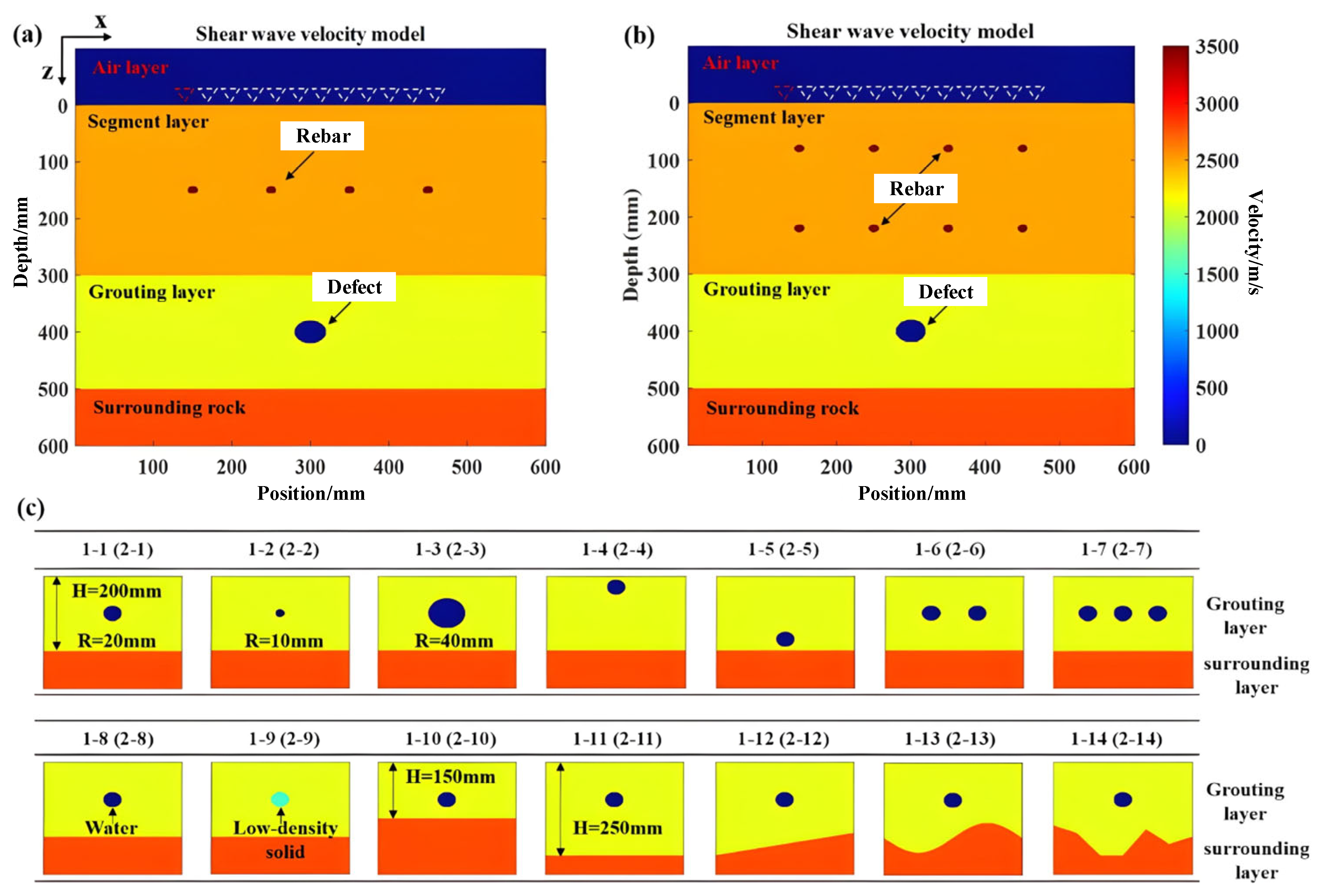
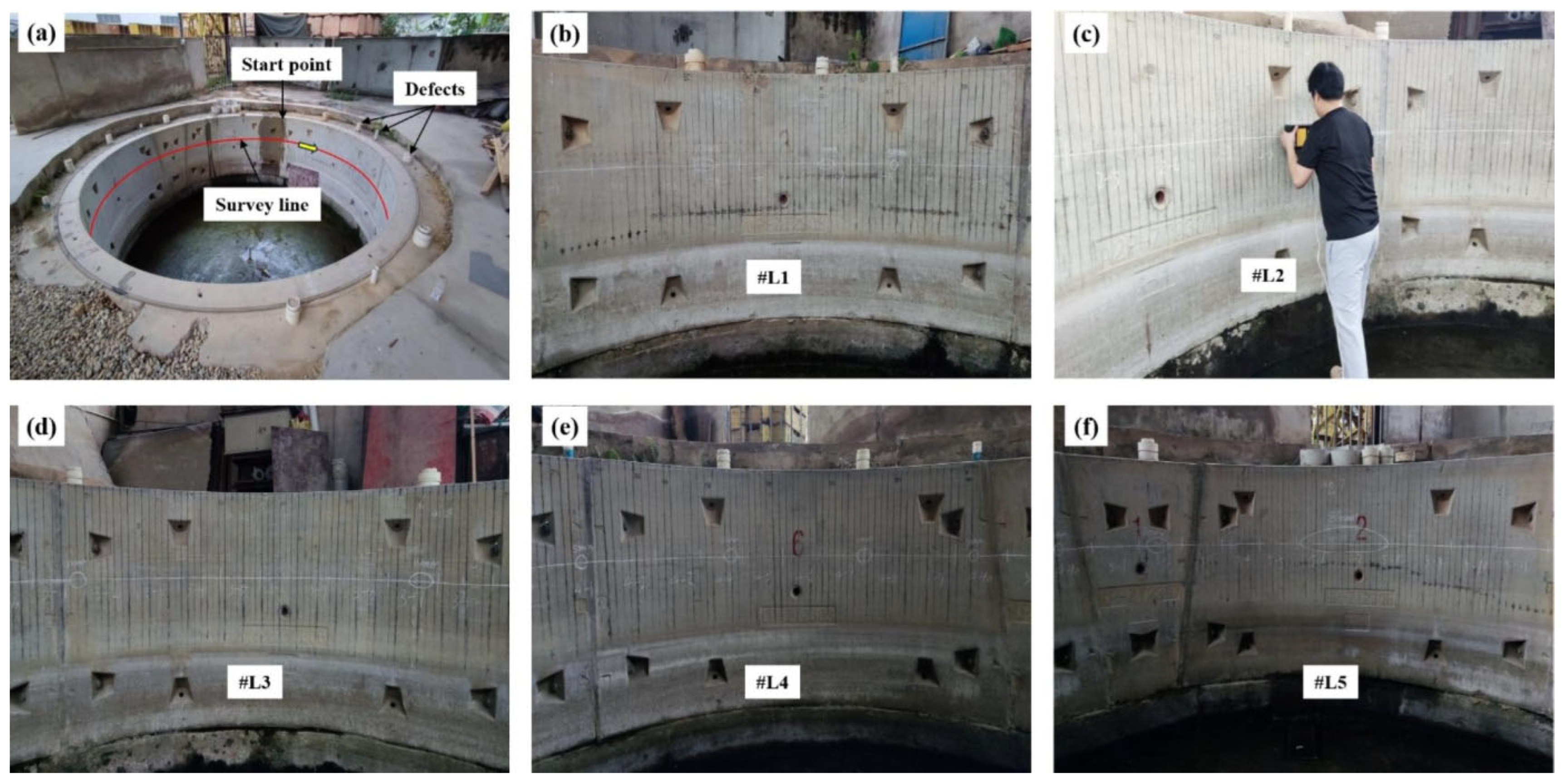
Ultrasonic testing provides a fundamentally different diagnostic perspective compared to GPR, as it relies on mechanical wave propagation rather than electromagnetic contrast. This distinction renders UT immune to electromagnetic shielding from reinforcement, making it inherently advantageous for detecting defects behind densely reinforced linings. In this respect, UT effectively compensates for one of the most critical shortcomings of GPR. However, this advantage is counterbalanced by pronounced acoustic attenuation and scattering in multilayer media consisting of concrete, unset grout, and surrounding soil. Early-age grout, characterized by high water content and suspended particles, is particularly dissipative to high-frequency ultrasonic waves, resulting in low signal-to-noise ratios precisely during the most critical phase of grouting quality control. Furthermore, strong impedance mismatches at layer interfaces cause dominant reflections that may mask weaker echoes from deeper defects, complicating signal interpretation. Existing studies collectively indicate that ultrasonic testing excels in localized, high-confidence verification of grouting conditions rather than continuous tunnel-scale scanning. Its reliability depends strongly on coupling conditions, noise suppression strategies, and calibration accuracy. As such, UT is best positioned as a complementary technique for validating suspicious zones identified by GPR or sensor-based monitoring, rather than a standalone replacement for large-area detection. In the research on the inversion imaging of ultrasonic detection information, Wang et al. [108] applied a dual-ray coverage shear-horizontal phased array ultrasonic imaging approach for backfill grouting defect detection, conducting both numerical simulations and full-scale experiments. The numerical model conditions and full-scale model schematic are shown in Figure 17 and Figure 18. In the numerical simulations, SAFT (Synthetic Aperture Focusing Technique) imaging clearly delineated the reflections from the grout–surrounding rock interface and visualized defects. Comparisons between single-layer and double-layer rebar conditions indicated that double-layer reinforcement had minimal impact on imaging the grout–surrounding rock interface but affected imaging of the grout–segment interface to some extent. In the field experiments, typical defects within the grout layer, such as voids and low-density solids, were successfully identified (Figure 19). However, imaging of the grout–segment interface still exhibited interference, indicating that further optimization is required.
Based on existing research findings, ultrasonic testing performs well under the following conditions: (1) The post-grouting layer has a moderate thickness, providing a clear propagation path for ultrasonic waves; (2) The density of reinforcement bars and embedded pipelines is relatively low, minimizing obstruction of wave transmission; (3) Environmental noise is limited or can be effectively mitigated through denoising algorithms. However, the reliability of detection may decrease under the following circumstances: (1) Significant underground noise leads to blurred echo signals; (2) Dense distribution of reinforcement bars or pipelines results in wave scattering or shielding; (3) Lack of on-site velocity calibration may introduce errors in defect depth estimation.
Ultrasonic testing excels in penetrating reinforced linings and is immune to electromagnetic interference, making it suitable for complex tunnel environments. However, its performance is constrained by high signal attenuation in unset grout, sensitivity to coupling conditions, and difficulty in isolating interface echoes from structural noise. Research should focus on phased-array imaging, advanced denoising algorithms, and hybrid approaches combining UT with complementary modalities to improve interface resolution and quantitative defect characterization.

3.3. Impact-Echo (IE) Method

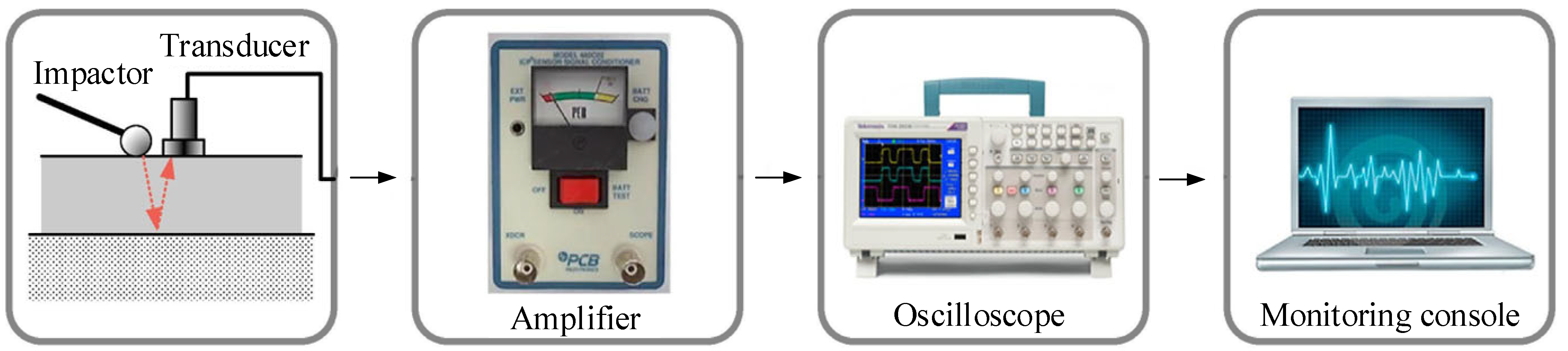
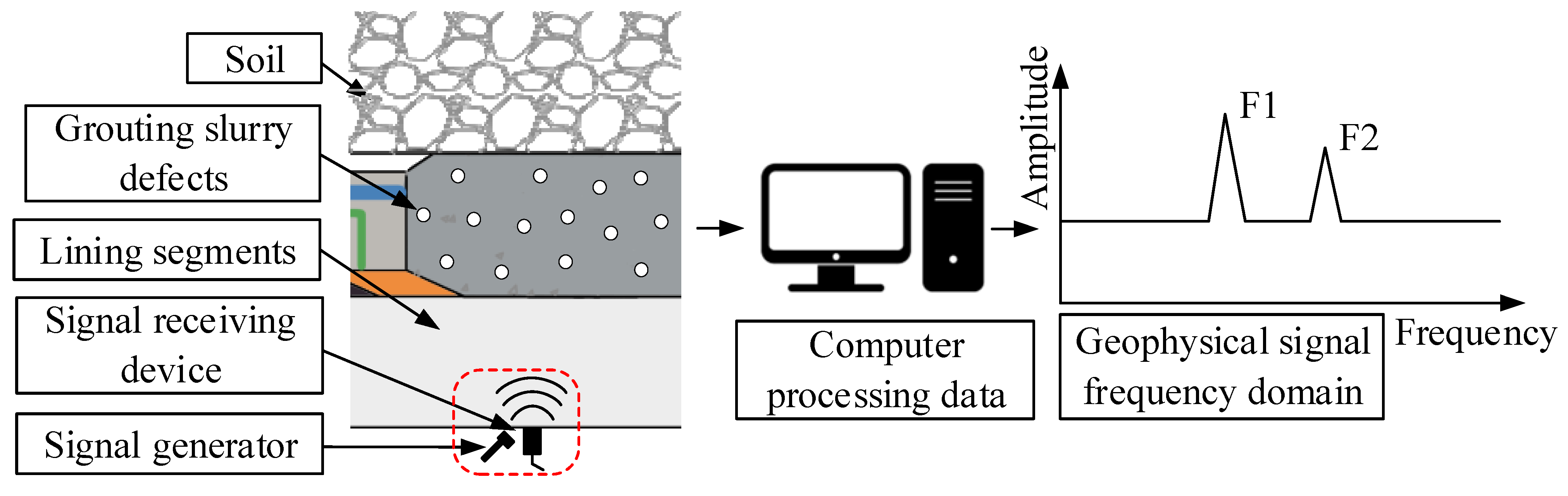
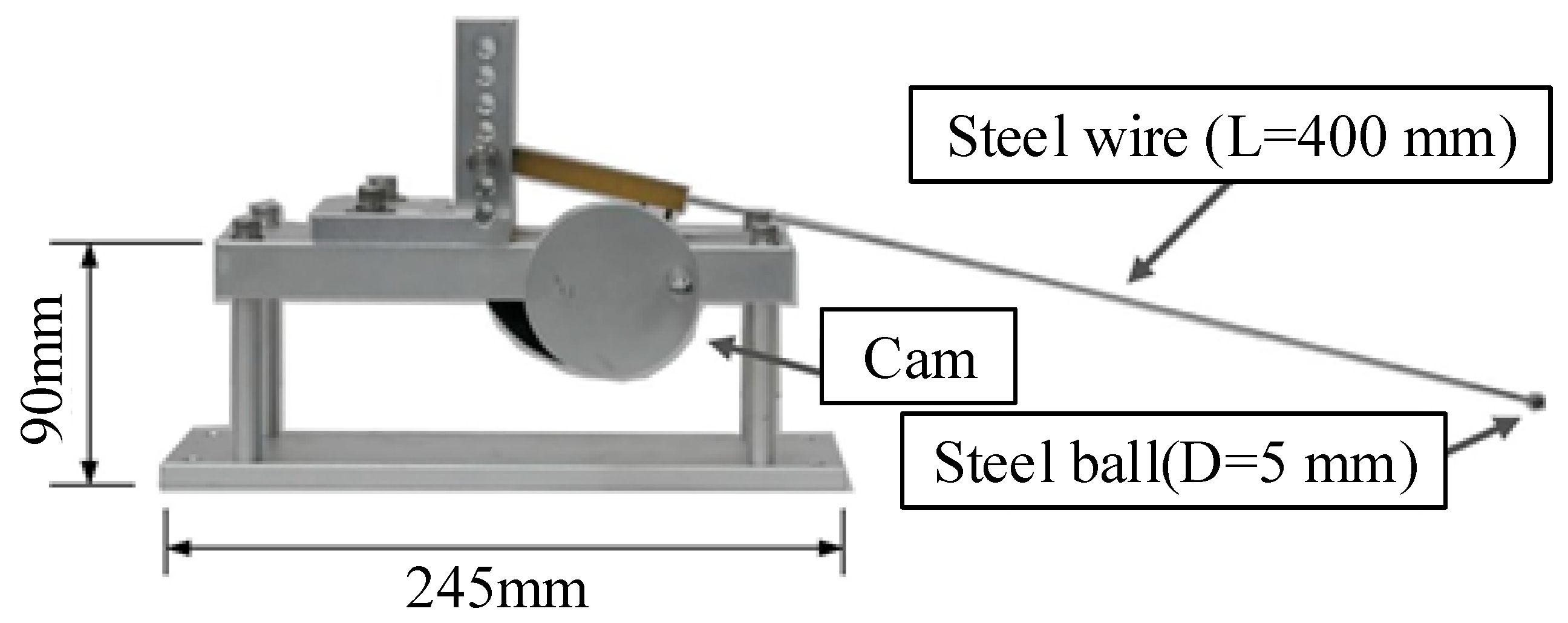
Although Ultrasonic Testing excels in penetrating reinforcement, its high-frequency signals suffer from rapid attenuation in loose materials. For assessing the broader stiffness and low-frequency response of the grout-structure system, the Impact-Echo (IE) method provides a complementary approach by utilizing lower-frequency stress waves generated by mechanical impact. The impact-echo (IE) method evaluates backfill grouting quality by applying an impact load to excite vibrations within the structure. These stress waves propagate through the material and are reflected or scattered when encountering different media or defects [109]. By analyzing the travel time, amplitude, and frequency characteristics of the reflected signals, the method can assess grout layer density, uniformity, and identify the presence and location of voids, cracks, or other defects [110]. Although the principle of IE is similar to ultrasonic testing (Figure 20), the key difference lies in the excitation: ultrasonic testing uses a piezoelectric transducer to convert electrical pulses into high-frequency mechanical vibrations, whereas the IE method relies on manually or mechanically applied impact loads, resulting in lower frequency waves.
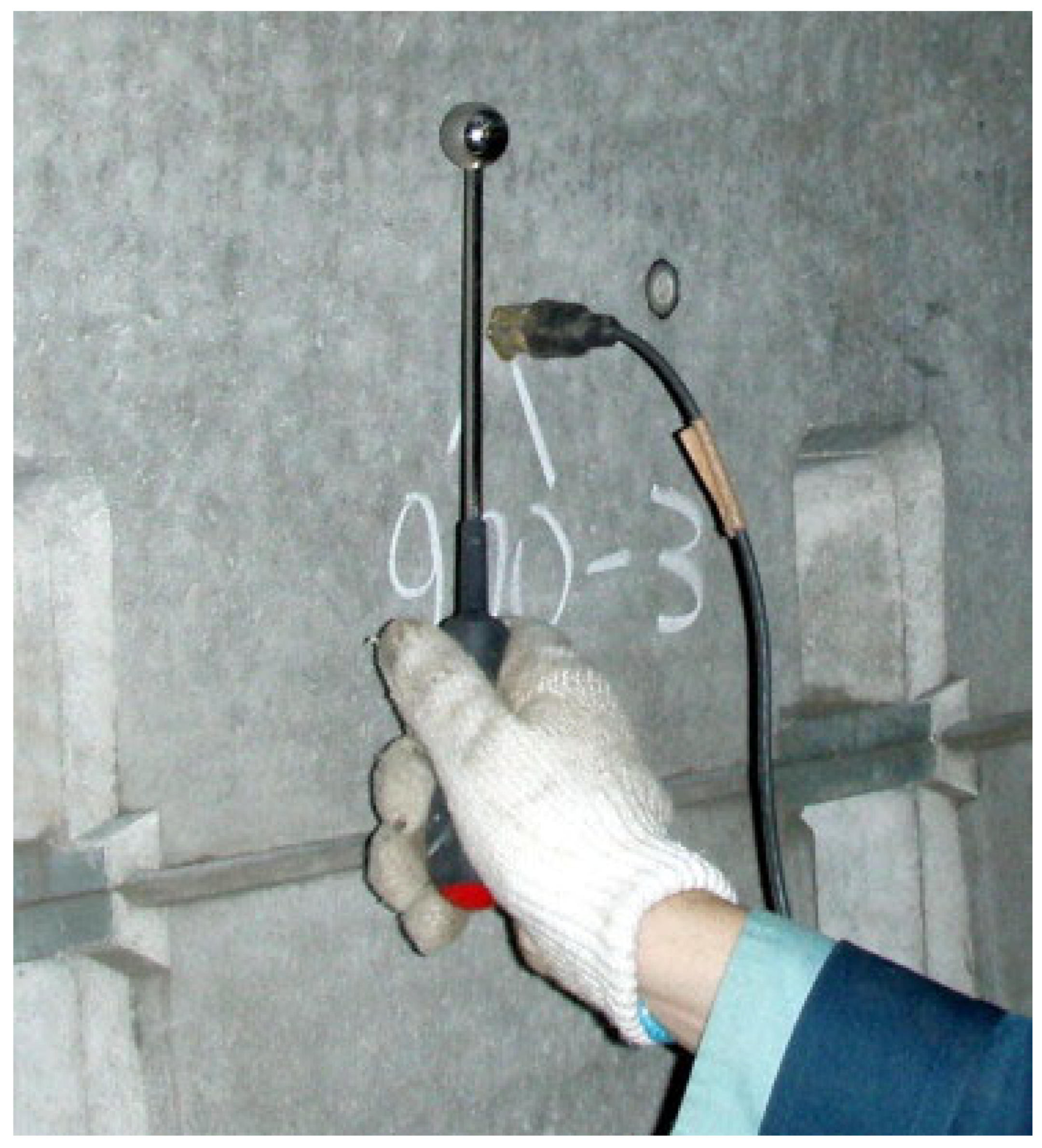
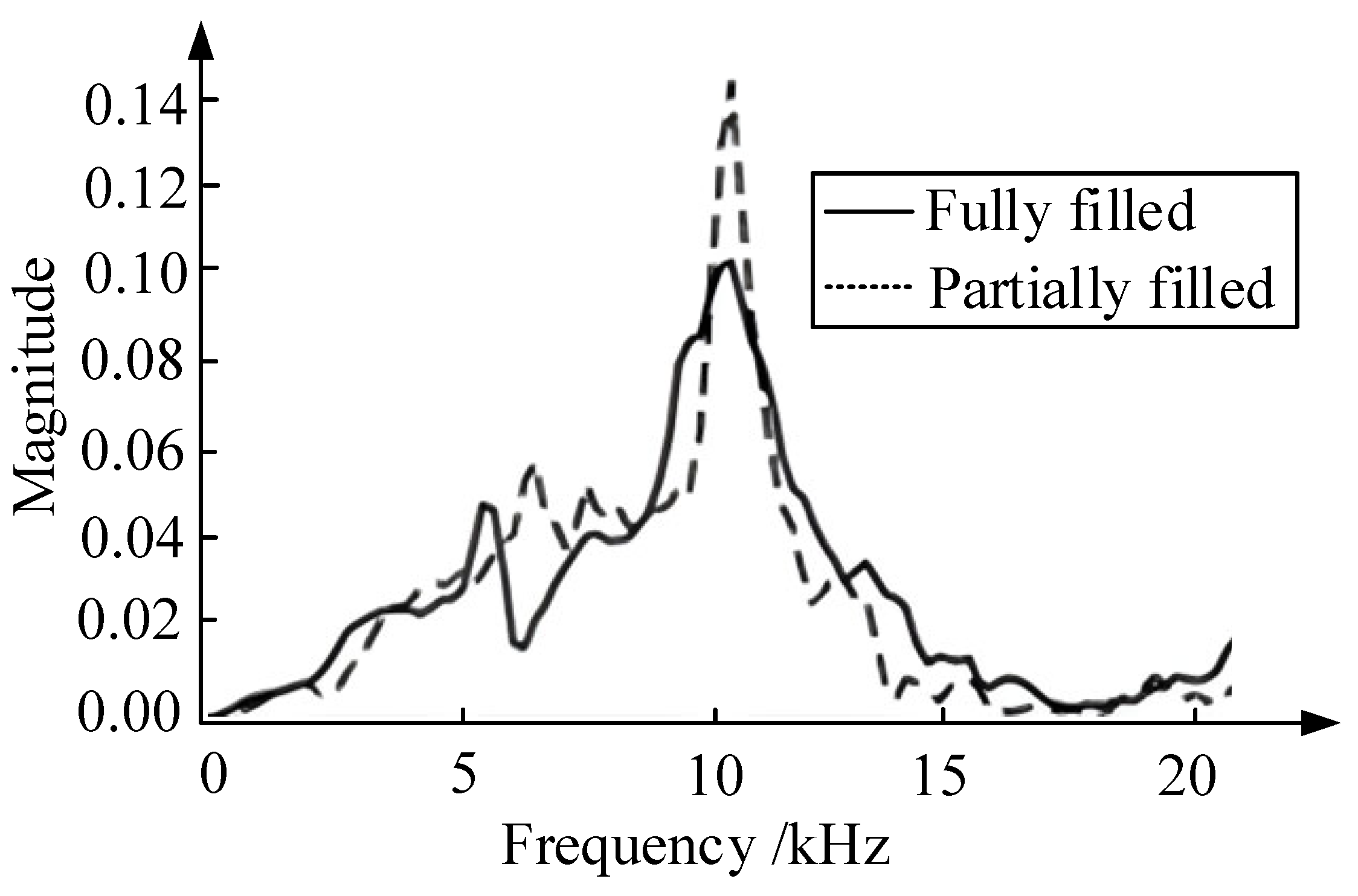
Aggelis et al. [78] were among the first to apply IE for evaluating backfill grouting effectiveness, with data acquisition and analysis workflows illustrated in Figure 21 and Figure 22. By analyzing the time-domain features and frequency spectra of reflected signals, rapid assessment of grouting quality was achieved. To extend the application of IE, Aleksandr et al. [111] analyzed echo frequency characteristics and material-dependent reflection differences to identify behind-lining cavities filled with grout. Kang et al. [112] proposed qualitative indices based on impedance contrast and developed a novel impact-loading device for detecting voids behind the lining (device shown in Figure 23; IE detection workflow in Figure 24).
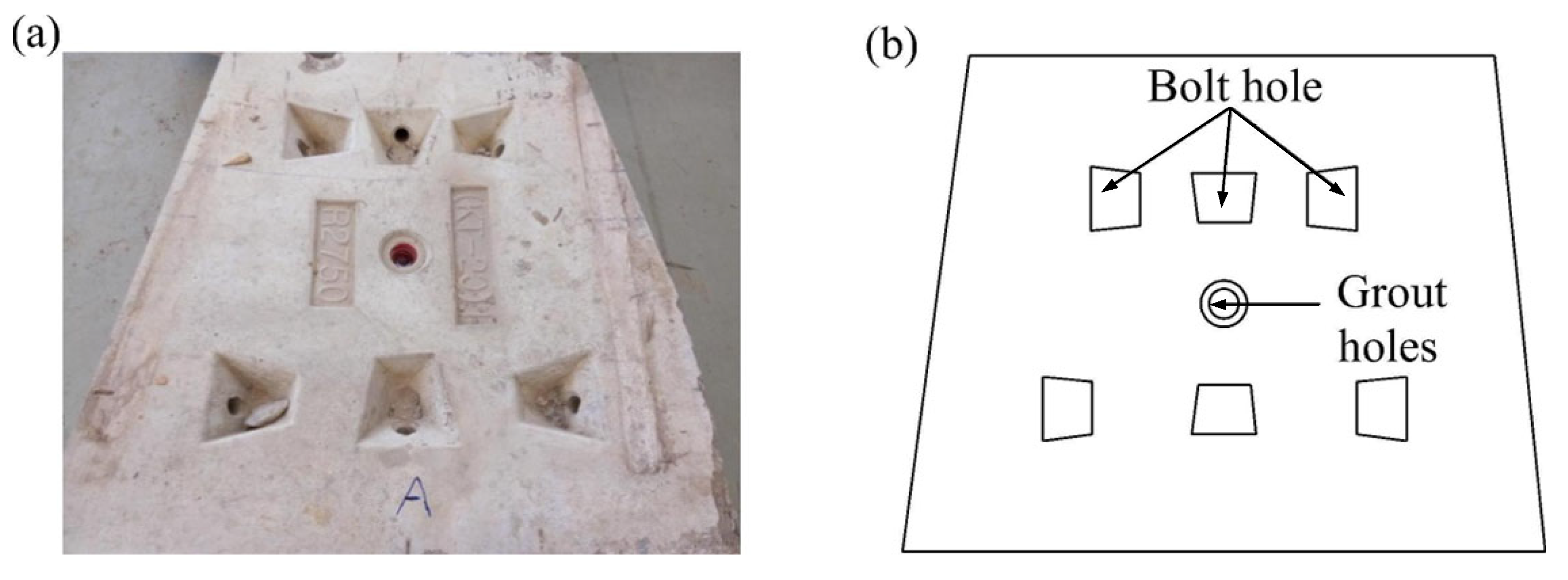
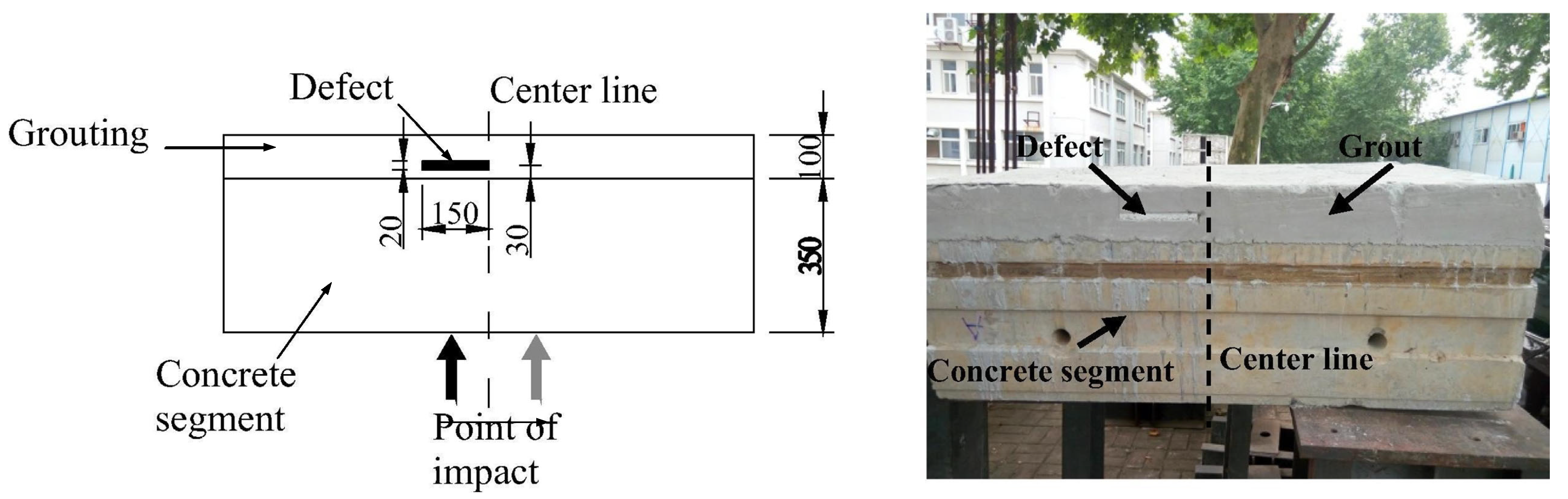
For optimization of IE detection, Yao et al. [113] conducted signal processing studies on tunnel segment-grout structures using laboratory simulations (Figure 25 and Figure 26), introducing prefabricated defects in the grout layer and determining defects based on time–frequency features of the echoes. Chen et al. [114] investigated IE-based assessment of backfill grouting in shield tunnels and proposed a correction formula for grouting thickness (Equation (2)), validated through both model and field experiments. To address insufficient grouting, Sung et al. [34] developed an evaluation method using IE signal features, establishing indices such as geometric damping ratio, primary resonance duration, and post-peak amplification counts, which were successfully verified in field applications. Equation (2) is given as follows:
D j = δ ( 1 f 2 D g V g ) β V g 2
where D j is the thickness of the grouting layer behind wall; δ is an empirical correction coefficient, with a value range of (0.90~0.98), and generally 0.95 is taken; f is the frequency of the segments; D g is the thickness of the segment; V g is longitudinal wave velocity of the segment; β is the ratio of the longitudinal wave velocity of the grouting layer V j behind the wall to that of the segment V g .
In practice, conventional impact-echo methods often exhibit issues such as multiple peaks and spurious frequencies when detecting grout defects in tunnels. Menglu et al. [115] introduced a combined approach of Variational Mode Decomposition (VMD) and Hilbert–Huang Transform (HHT), with the raw signals preprocessed using a genetic algorithm that optimizes a composite objective function based on fuzzy entropy and correlation coefficients. This method overcomes the inherent limitations of Fourier analysis for non-stationary IE signals and was validated using both simulated signals and physical tunnel models. For assessing the curing and stiffness of grout layers, Yao et al. [116] developed a reliable and convenient IE-based method to detect stiffness-related defects. Finite element simulations were conducted to analyze the frequency spectrum characteristics of the impact response under grout layers of varying stiffness, providing a theoretical reference for identifying low-stiffness grout layers using IE in the future.
The impact-echo method offers a distinct advantage by probing the low-frequency dynamic response and stiffness characteristics of the grout–lining system, which cannot be directly captured by either GPR or ultrasonic testing. This makes IE particularly sensitive to large voids and zones of insufficient compaction, providing valuable mechanical insight into grouting effectiveness. Nevertheless, the interpretability of IE signals is inherently challenged by their non-stationary nature and high sensitivity to boundary conditions. Segment joints, geometric discontinuities, and reinforcement can generate spurious resonance peaks that are difficult to distinguish from defect-induced reflections. Moreover, the point-load nature of impact excitation limits spatial continuity, making large-scale scanning inefficient and highly dependent on operator consistency. The reviewed literature consistently suggests that IE is most effective as a targeted verification tool rather than a primary screening method. Its strength lies in confirming stiffness anomalies at specific locations identified by broader detection techniques. Without standardized automated excitation and advanced signal interpretation frameworks, IE remains constrained by subjectivity and limited reproducibility for quantitative tunnel-wide assessment. Since the introduction of the impact-echo method for backfill grouting evaluation, extensive research has been conducted. Subsequent studies have incorporated additional techniques to improve IE performance, addressing detection challenges and varying evaluation objectives. Based on existing studies, the impact-echo method performs well under the following conditions: (1) The applied impact load is uniform and stable, resulting in clear echo signals; (2) The grouting layer has a moderate thickness, and the impedance contrast between structural layers is significant; (3) The echo signals are processed using established methods, such as time-domain or frequency-domain analysis, or signal filtering, to improve the signal-to-noise ratio. However, the reliability of detection may decrease under the following circumstances: (1) The impact load is applied unevenly or with insufficient intensity, leading to blurred signals or spurious frequencies; (2) The structure is complex or the impedance contrast between layers is small, which can cause interference and multiple peak signals; (3) On-site or model calibration is lacking, potentially resulting in errors in defect depth or layer thickness estimations.
Overall, the IE method provides a rapid assessment of grout density and stiffness by analyzing the frequency response and time-domain characteristics of stress waves, supported by established theoretical corrections for thickness estimation. However, detection reliability is often hindered by the non-stationarity of signals, which produces spurious frequencies, and a high reliance on the consistency of manually applied impact loads. Future work needs to prioritize the standardization of automated impact sources to ensure repeatability and the integration of advanced signal processing methods to accurately extract defect features from complex, noisy signals.

3.4. Sensor-Based Monitoring Method

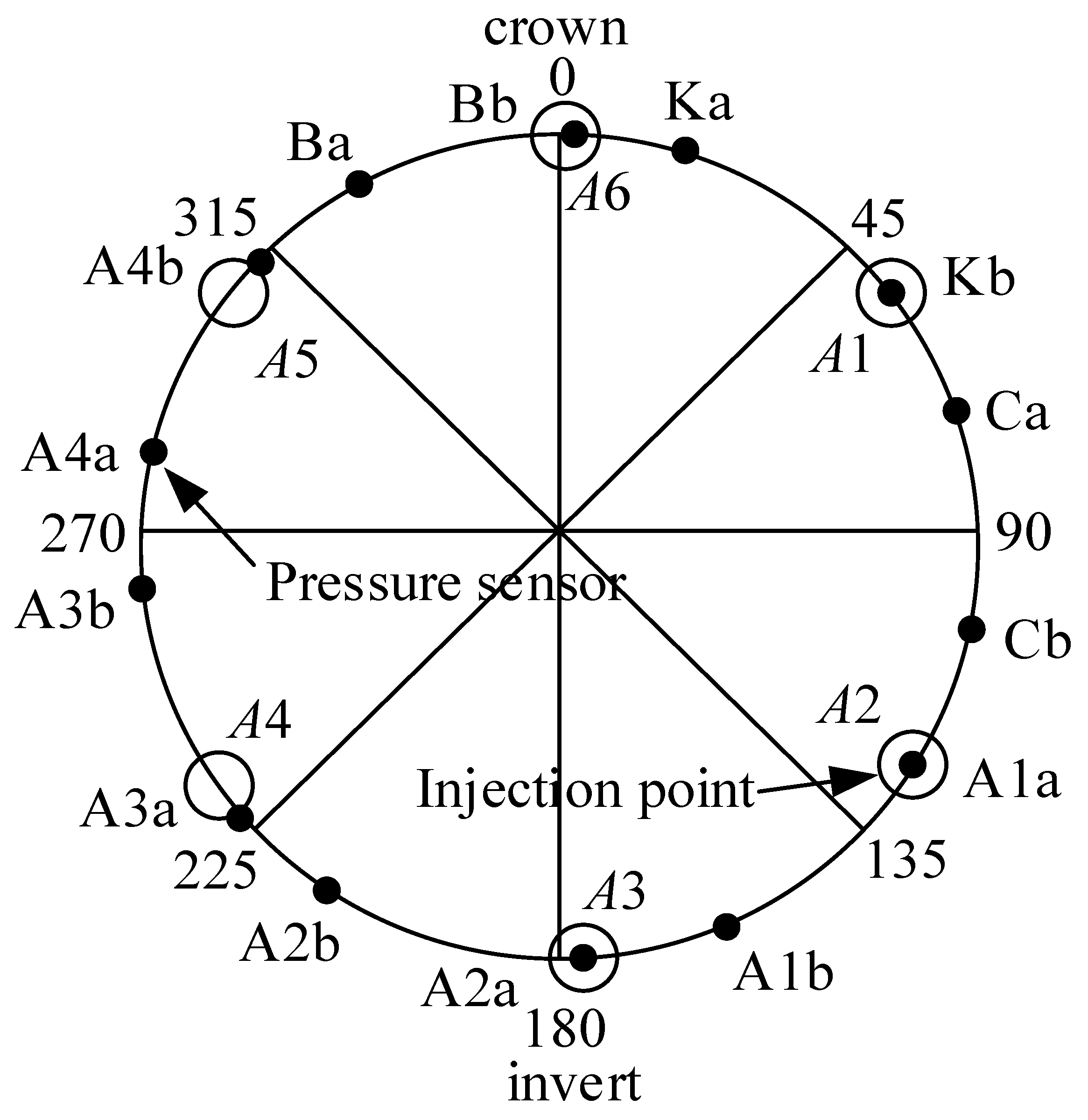
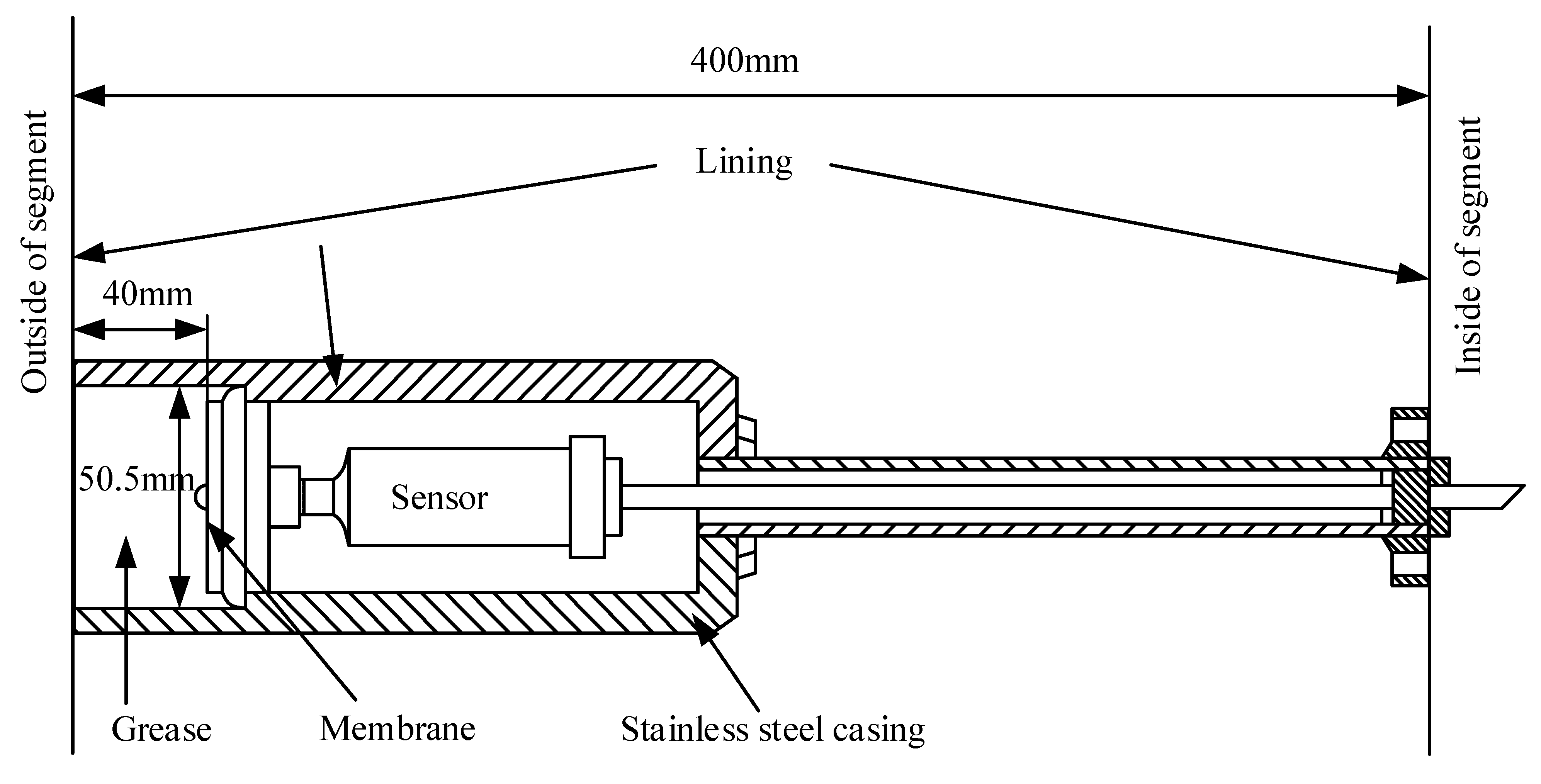
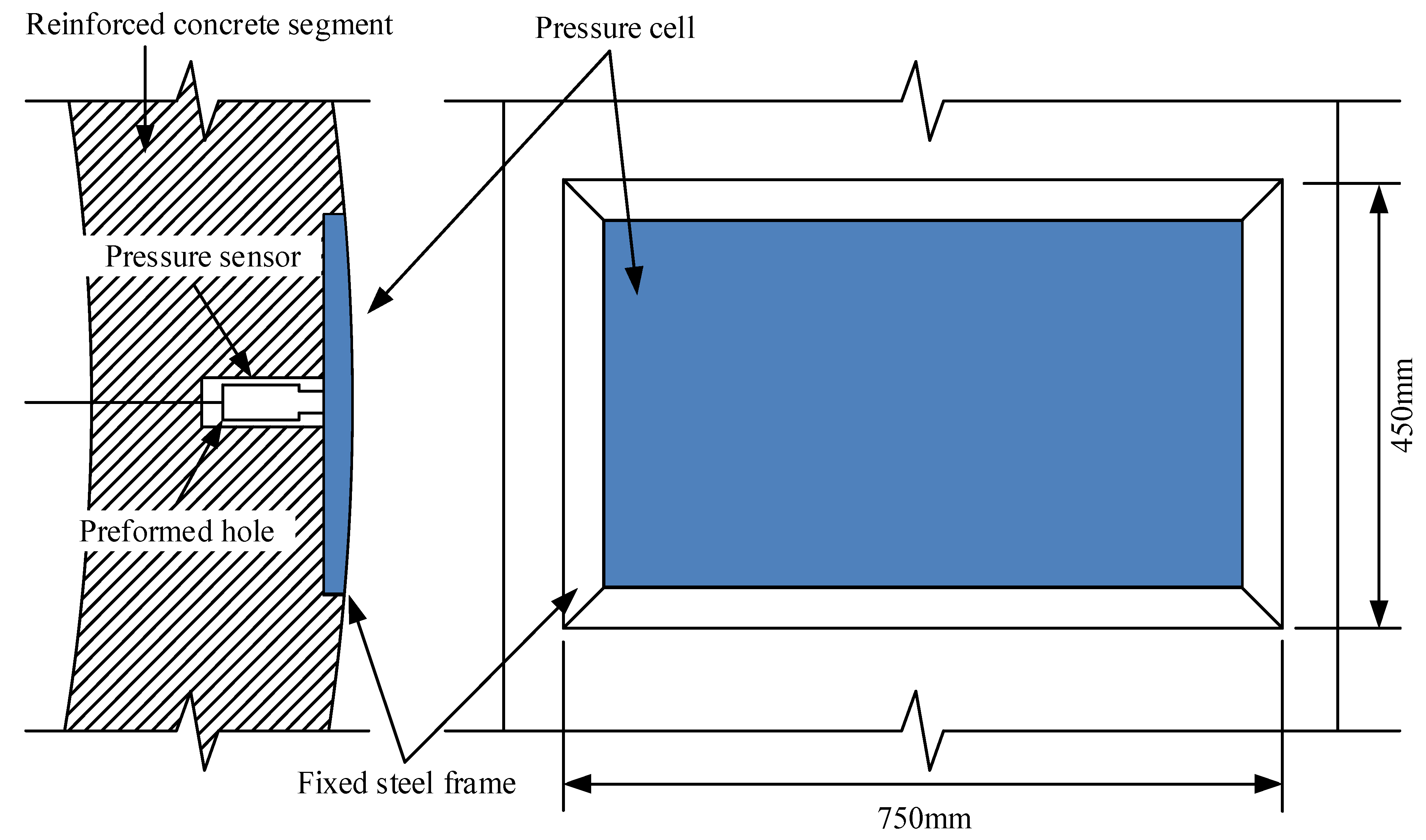
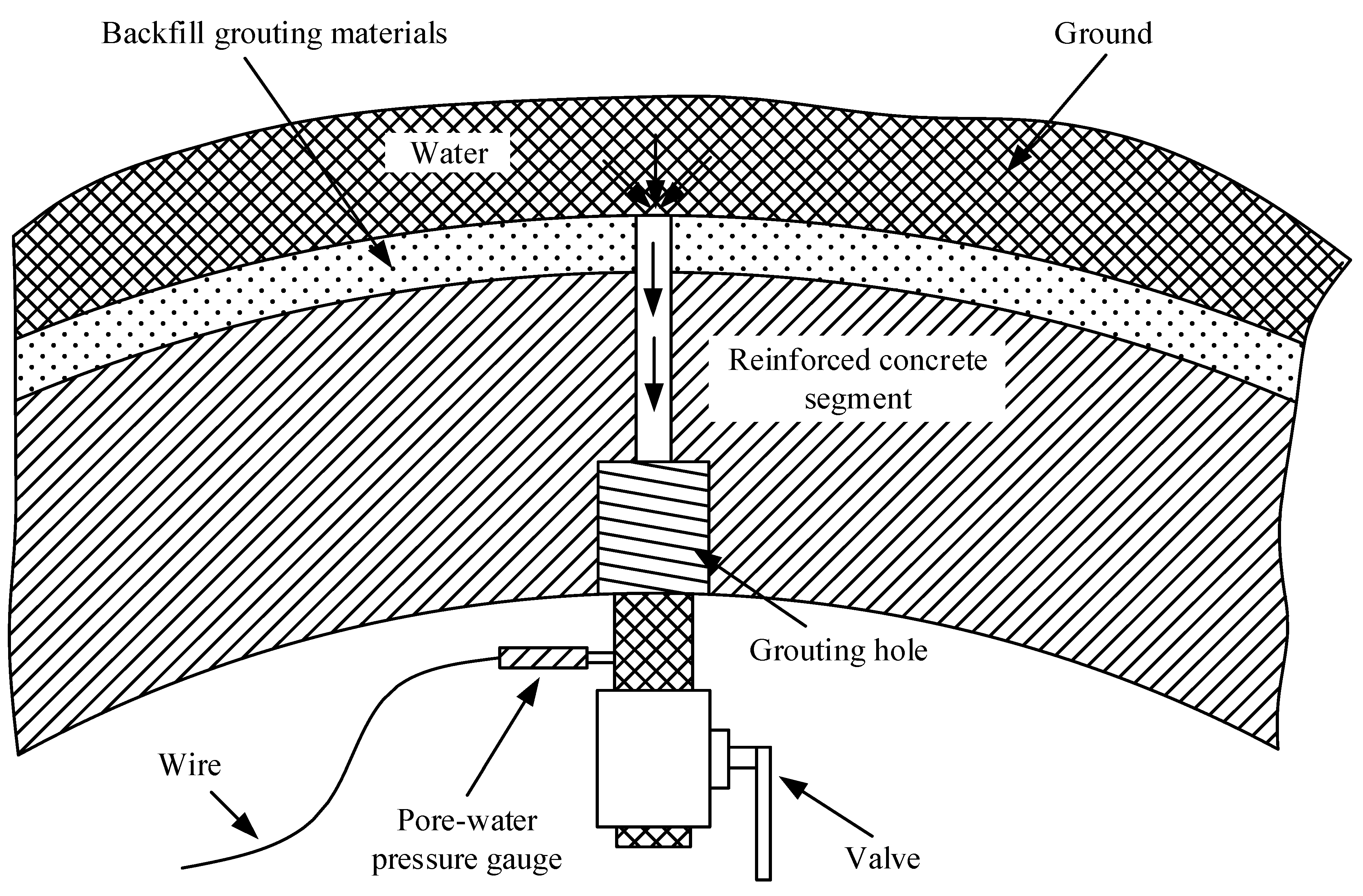
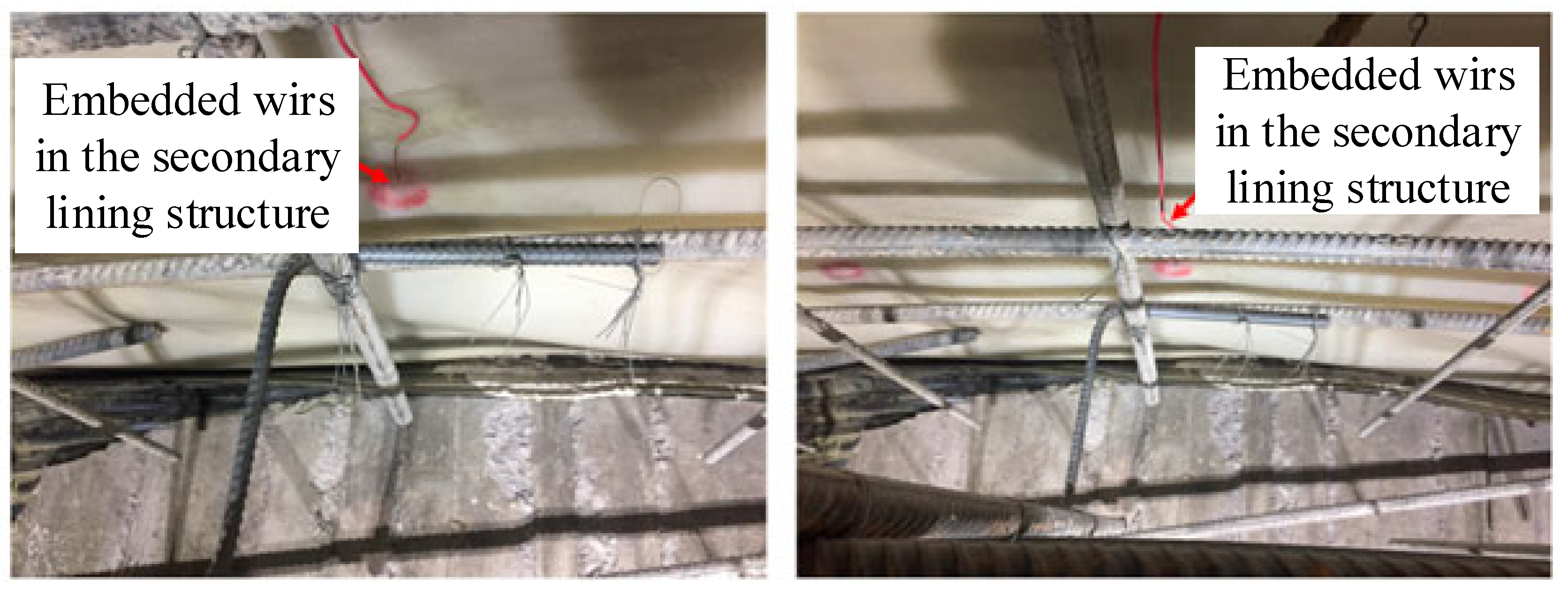
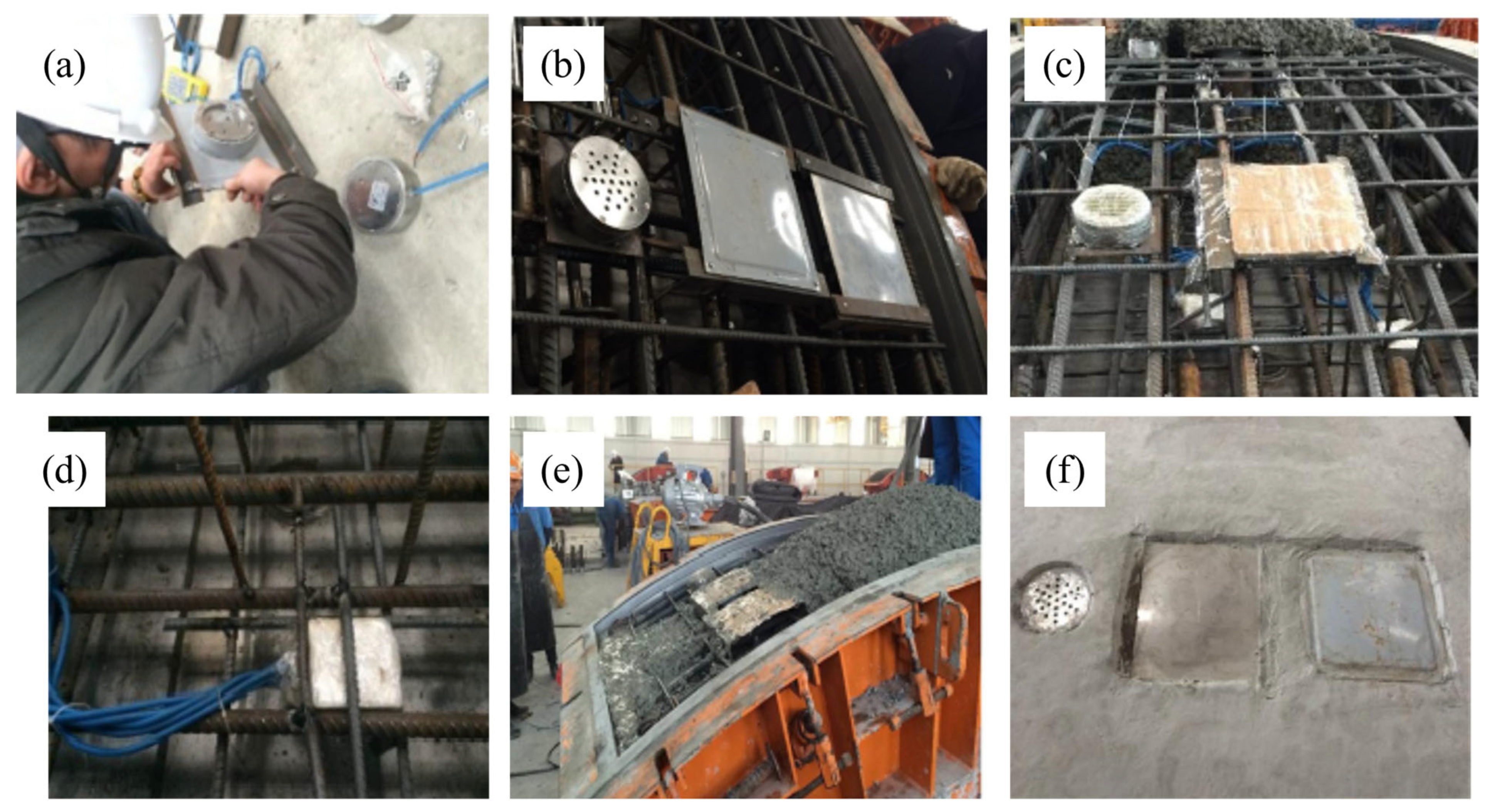
By embedding pressure sensors, pressure cells, or similar devices behind the lining segments, the grout pressure acting on the segments can be directly measured, allowing indirect analysis of grout diffusion characteristics. Bezuijen et al. [117] monitored the pressure on segments of a 9.5 m diameter shield tunnel, with installation schematics and sensor principle diagrams shown in Figure 27 and Figure 28. Han et al. [118], in the Chengjiang West Road Tunnel, used earth pressure cells and pore water pressure gauges to measure pressures on segments during shield tunneling, including tail brush pressure, grouting pressure, ground pressure, and pore water pressure (Figure 29 and Figure 30). Luo et al. [119] proposed an IoT-based grouting monitoring solution, employing embedded wires in auxiliary linings to measure conductivity as an indicator of voids, with data continuously uploaded to a cloud platform to provide real-time feedback and enable long-term monitoring.
Sensor-based approaches, utilizing embedded pressure cells and IoT-enabled conductivity wires, provide superior accuracy by directly measuring grouting pressure and void distribution in real-time, offering a distinct advantage over geophysical inversion. Their application is currently constrained by high installation and maintenance costs, as well as limited spatial coverage resulting from discrete data points. Future directions lie in developing low-cost, durable, and wireless sensor networks that permit economical, large-scale integration into tunnel linings to enable continuous, holistic monitoring.
Unlike geophysical inversion methods (GPR, UT, IE) which infer quality indirectly, sensor-based monitoring offers high accuracy and real-time direct data regarding pressure and void distribution. However, this comes at the cost of spatial coverage and economic feasibility. Sensors only provide discrete point data and entail higher installation costs compared to non-destructive scanning, limiting their use to high-risk zones rather than full-tunnel coverage. Embedded sensors provide unparalleled accuracy in measuring grout pressure and void presence in real time, offering direct validation for theoretical models. Their high cost, limited spatial coverage, and vulnerability during construction constrain widespread deployment. Emerging trends include wireless, low-cost sensor networks, self-powered sensing elements, and integration with Building Information Modeling (BIM) for lifecycle monitoring, which could expand their role from localized validation to distributed structural health assessment.

3.5. Comparative Evaluation of Grouting Quality Assessment Methods

While each nondestructive testing method offers distinct advantages, their application often reveals fundamental trade-offs that underscore the absence of a universally optimal solution. A prominent tension exists between spatial resolution and penetration depth, most evident in GPR versus UT. GPR provides high-resolution imaging of near-surface defects but suffers severe attenuation in conductive or reinforced environments. Conversely, UT penetrates dense rebar networks but struggles to resolve thin grout layers or fluid–solid interfaces due to acoustic impedance mismatches and signal scattering. This dichotomy necessitates a hybrid approach, yet integrated hardware platforms and unified data fusion frameworks remain underdeveloped.
Another conflict arises between point-wise accuracy and spatial coverage. Embedded sensors deliver direct, real-time measurements of grout pressure and filling state, but their discrete nature limits holistic assessment of the annular space. Geophysical methods offer continuous profiles but infer material properties indirectly, introducing interpretation uncertainty. Bridging this gap requires scalable sensor networks coupled with inverse modeling capable of interpolating between sparse point measurements. The apparent variability in reported detection performance across studies is therefore not contradictory, but a direct consequence of differing grout states, sensing physics, and site-specific constraints. A comprehensive comparison of these techniques is presented in Table 2.

4. Real-Time Evaluation Techniques for Simultaneous Grouting in Shield Tunnels

For techniques that rely on post-construction evaluation, the next step is to extend them toward real-time diagnostics during shield tunneling. Grouting quality assessment is regarded as a post-construction evaluation. However, during shield tunneling, the ability to accurately assess the degree of grout filling, initial setting state, and the distribution of voids in real time enables immediate corrective actions through compensatory backfill grouting, thereby improving overall grouting quality. Real-time detection during grouting, combined with subsequent corrective grouting, can effectively reduce defects such as voids behind the lining.
In simultaneous grouting operations during shield tunnel excavation, it is essential to perform real-time monitoring to provide immediate feedback and guide grouting execution. Zeng et al. [89] developed a novel system for real-time measurement of annular grouting thickness during simultaneous backfill, integrating a GPR system into the shield machine and employing three-dimensional finite-difference time-domain (FDTD) analysis to track electromagnetic wave propagation in the backfill. The monitoring process requires only 3~4 min, allowing timely feedback on grout thickness. Similarly, Xie et al. [26] integrated GPR and structural frameworks to monitor grouting quality and control synchronous backfill grouting in the Nanning Metro Line 3. By adjusting grouting parameters based on real-time monitoring feedback, over-grouting was significantly reduced, enhancing construction safety and lowering grouting costs. Installation schematics and monitoring results are shown in Figure 31 and Figure 32.
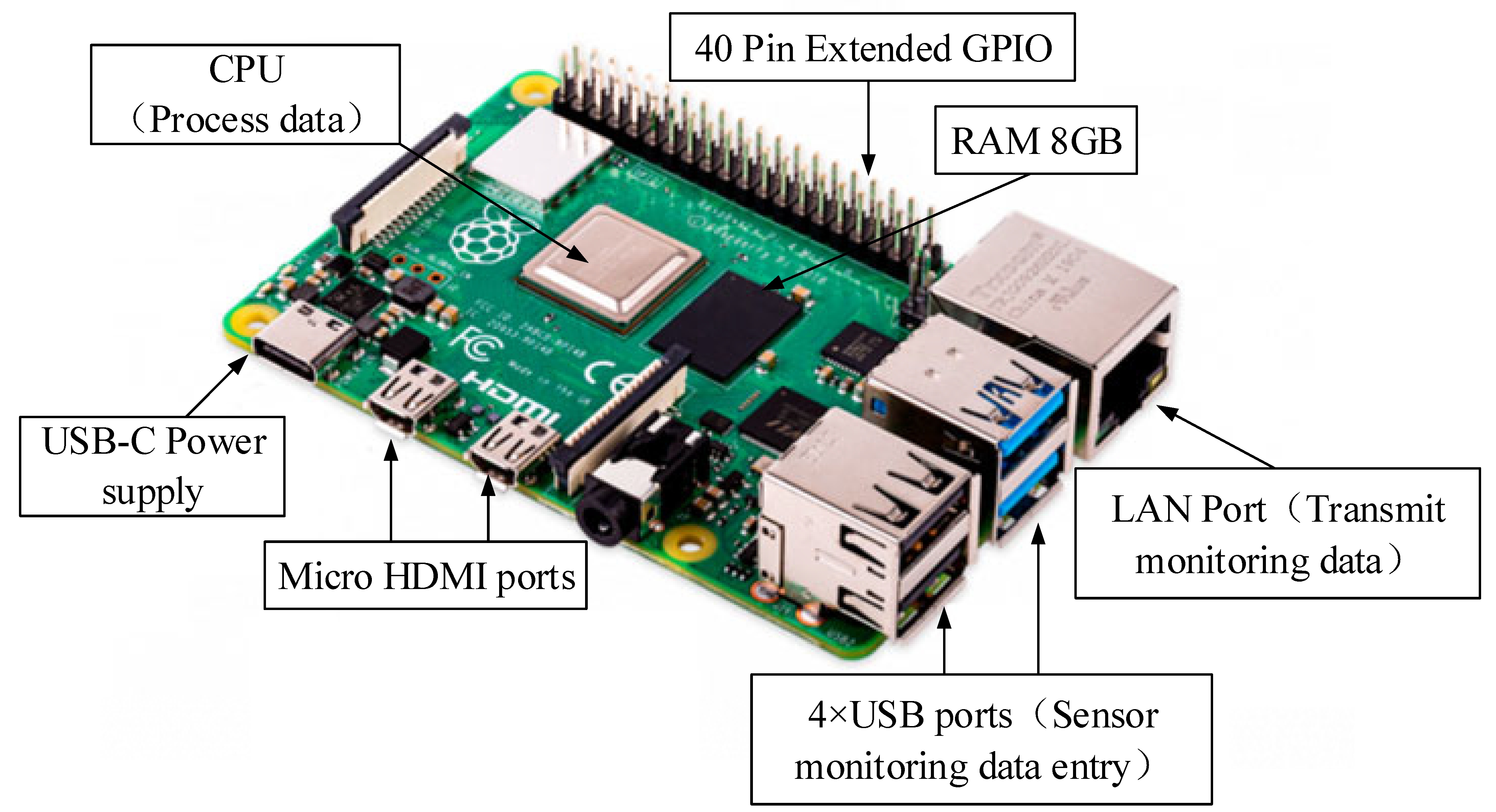
Luo et al. [119] employed a Raspberry Pi microcomputer to monitor grouting quality during tunnel construction. By measuring the conductivity of embedded wires in real time, voids were detected through interrupt signals representing unfilled gaps, with data uploaded to a cloud platform to enable synchronous monitoring of backfill grouting. The system was applied in a 600 m-long tunnel, where the maximum detected void after monitoring was 1.8 cm, demonstrating satisfactory detection performance. The Raspberry Pi hardware, embedded wire installation, and IoT-based monitoring setup are illustrated in Figure 33, Figure 34, and Figure 35, respectively.
Li et al. [120] developed a mobile frame-mounted system capable of automated and rapid GPR-based detection of backfill grout quality assessment. Using this system, a series of experiments under different working conditions were conducted to collect data and construct an intelligent model for identifying grout thickness behind lining segments. Furthermore, data are collected at terminal devices (also known as the end), undergo rapid on-site processing at the edge device (the edge), and are then transmitted to the cloud for more powerful analysis and storage (the cloud).a “cloud–edge–end” architecture was established for intelligent detection of backfill grouting in shield tunnels and subsequently applied in practice. Based on applications in 16 different shield tunnel projects, the system effectively enabled real-time intelligent monitoring of backfill grout thickness. The cloud–edge–end architecture, automated real-time analysis results, detection device, and on-site application of the detection method are shown in Figure 36, Figure 37, and Figure 38, respectively.

5. Diffusion Mechanics of Backfill Grouting Behind Lining Segments in Shield Tunnels

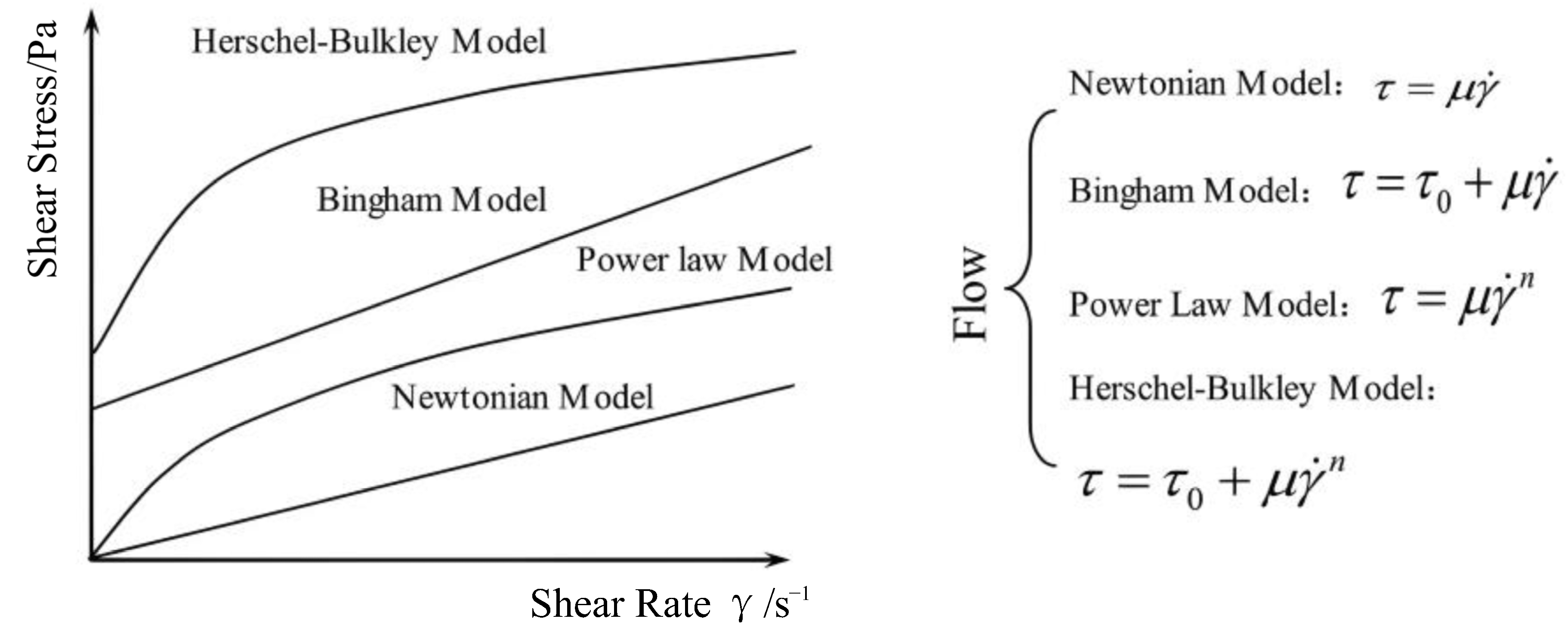
Shield tunnel excavation can cause soil loss in the surrounding strata, necessitating timely grouting to fill voids. During backfill grouting, the grout fills the annular gap at the shield tail, and the hydrostatic pressure of the grout disturbs the original stress equilibrium of the surrounding soil. Meanwhile, the diffusion of grout into adjacent soils, along with the flow–solidification–volume change behavior of the grout, affects the stability of the tail void [117,121,122,123]. Therefore, it is essential to elucidate the diffusion mechanisms of grout in shield tunnels and develop reliable theoretical models to address these challenges [124]. While real-time sensing improves observational capability, understanding grout behavior still relies on robust diffusion modeling. Recent studies have proposed several theoretical approaches by treating grout as a Newtonian fluid with shear stress to analyze its diffusion characteristics [125,126,127,128]. The primary grout diffusion models currently adopted [129,130,131,132] include the spherical diffusion theory, columnar diffusion theory, and sleeve-pipe permeation grouting theory. Typical rheological models [131]. of grout fluids and their analytical expressions are illustrated in Figure 39. Existing diffusion frameworks can be conceptually categorized into three stages of evolution: (1) Steady-state Analytical Models, which treat grout as a time-independent fluid to estimate pressure distribution in simplified geometries; (2) Time-dependent Rheological Models, which incorporate the ‘flow-solidification’ transition and viscosity variations; and (3) Advanced Numerical Simulations, which tackle complex boundary conditions and heterogeneity. This taxonomy provides a structured framework for interpreting the diverse diffusion models reported in the literature and clarifies the assumptions under which each approach remains valid. The following contents review these model categories sequentially, with emphasis on their underlying assumptions, applicability boundaries, and relevance to observed field performance in metro tunneling projects.
(1) Temporal Dimension: Models are categorized as Steady-State (assuming constant grout properties during injection) or Time-Dependent (incorporating viscosity evolution, filtration, and consolidation). Time-dependent models are further divided into Rheological (focusing on fluid constitutive laws) and Hydro-Mechanical Coupled models (considering soil deformation and pore pressure dissipation).
(2) Spatial Dimension: Models are conceptualized based on their geometric simplification: Spherical/Hemispherical (for point injection into porous media), Columnar/Planar (for flow along fractures or the shield tail gap), and Sleeve-Pipe Permeation (for grout penetration from a cylindrical source). Advanced Numerical Models (e.g., CFD, SPH, FEM) transcend these analytical geometries to handle complex boundaries and material heterogeneity. A critical limitation of traditional analytical models lies in their assumption of isotropic and homogeneous soil conditions. In urban tunneling, however, stratigraphy is rarely uniform. The disturbance caused by TBM excavation alters local porosity and permeability, creating preferential flow paths that homogeneous models fail to predict. This discrepancy is particularly pronounced in stratified soils where grout may fracture clay layers while permeating sandy lenses, a complexity that necessitates the shift toward numerical modeling.
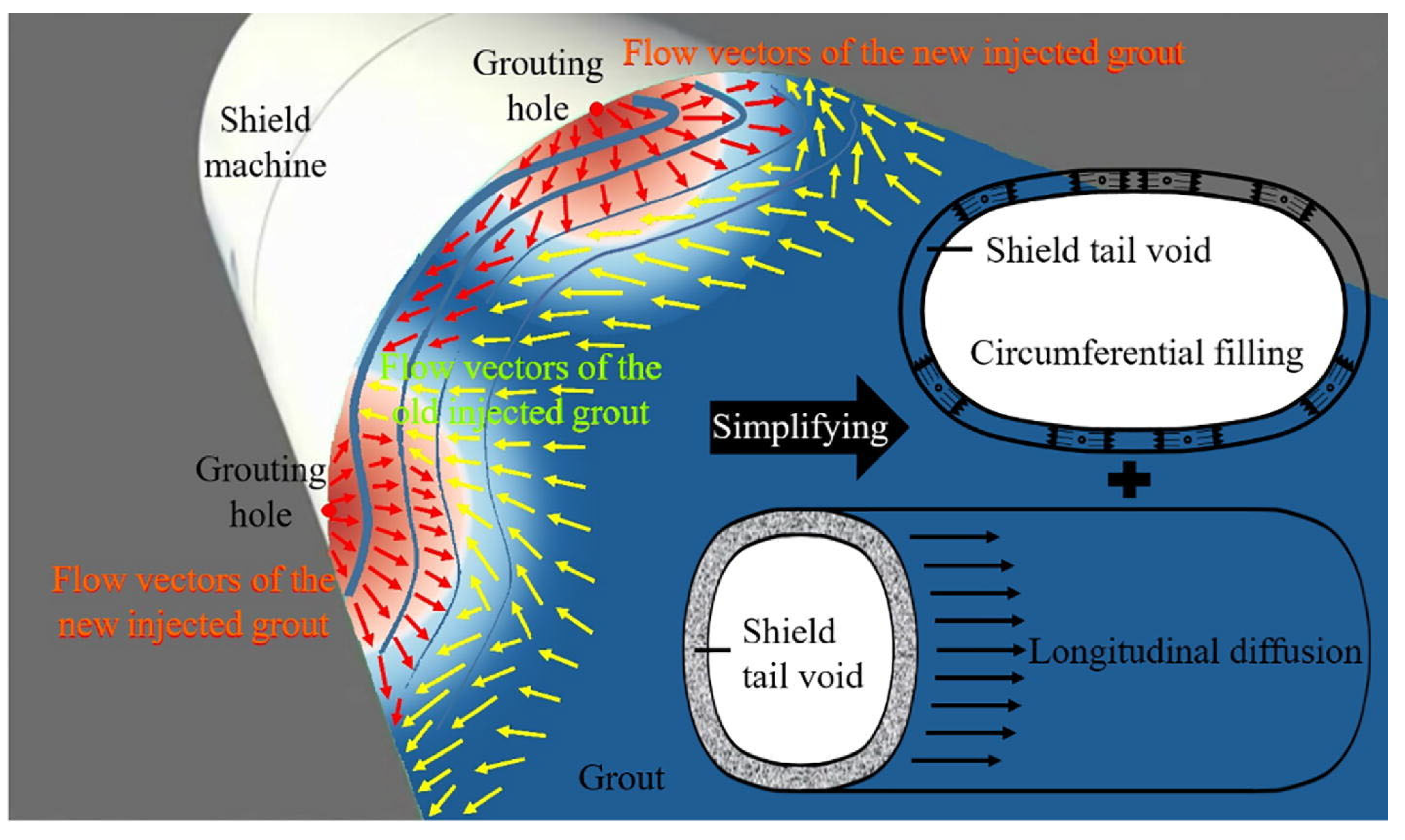
During backfill grouting, grout diffusion can be decoupled into two independent processes: circumferential diffusion along the tunnel ring and longitudinal diffusion along the tunnel axis. While undergoing this dual-phase diffusion, the grout simultaneously exhibits complex rheological behavior and experiences significant solidification transitions from liquid to solid [133] resulting in pronounced time-dependent physical and mechanical properties, which greatly increase the complexity of analytical modeling. Furthermore, the heterogeneity of the surrounding strata, the segmented lining structure, and their complex interactions with the grouting process pose additional challenges for developing more accurate and adaptable grout diffusion models.
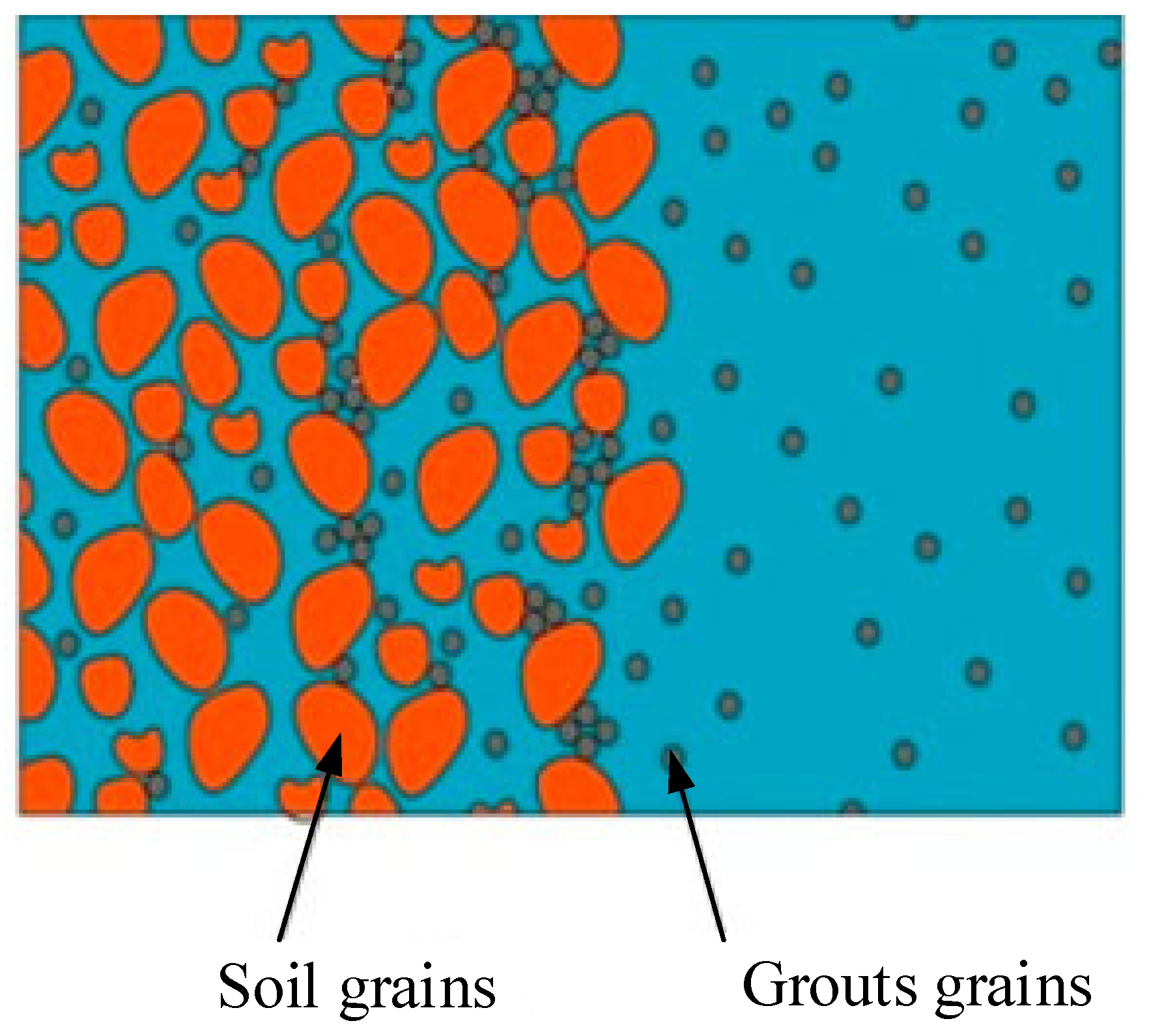
Ye et al. [134] addressed the limitations of previous studies. These studies typically treated soil and grout as homogeneous single-phase media, neglecting the interactions between soil porosity and grout solidification-induced volumetric expansion. By considering soil infiltration effects, they established a hemispherical diffusion model to investigate the influence of various parameters on grouting performance (Figure 40 and Figure 41). Their study revealed that due to soil infiltration, particulate matter in the grout is trapped within soil pores, preventing migration with the grout, which consequently results in higher grouting pressures compared with cases that neglect infiltration effects. The classic spherical diffusion model, while elegant, fails under several common field conditions. It assumes isotropic, homogeneous soil permeability, which is rarely valid in stratified alluvial deposits or TBM-disturbed zones where preferential flow paths develop. It neglects time-dependent grout hardening, making it unsuitable for predicting the final consolidation pressure or grout loss in highly permeable sands where filtration rapidly alters rheology. Consequently, its predictions often diverge from field measurements in metro projects involving mixed face conditions or significant groundwater flow.
In rectangular shield tunnels, grout diffusion exhibits more complex behavior than in circular tunnels. Liu et al. [135] developed a theoretical model for the spatial distribution of grouting pressure in rectangular shield tunnels based on fluid mechanics principles (Figure 42), and validated the model using field measurements (Figure 43). The results indicate that grout pressure loss is positively correlated with grout flow rate and is highly sensitive to the shear yield stress of the grout. After being injected into the shield tail via the grouting pipes, the grout spreads along the central grouting ports, forming a semi-circular front as it fills the tail gap. With continued grouting, the diffusion range of the grout expands, representing a coupled circumferential and longitudinal fluid filling and diffusion process. Li et al. [136] further investigated the synchronous grouting diffusion mechanism in China’s first quasi-rectangular shield tunnel using the Smoothed Particle Hydrodynamics (SPH) method, revealing the diffusion patterns in non-circular tunnels. The grout exhibits coupled longitudinal–circumferential extrusion and filling flow characteristics, with lower filling efficiency observed at the crown and invert of the tunnel. Grouts with high fluidity, early strength, and high shear resistance demonstrated superior diffusion front curvature, lower pressure loss, and more uniform full-ring filling compared to conventional liquid grouts and shear-resistant grouts. Time-dependent rheological models better capture early-stage grout hardening and pressure dissipation; however, their reliance on simplified boundary conditions often leads to deviations from field measurements in shield tail zones characterized by moving interfaces and asymmetric loading.
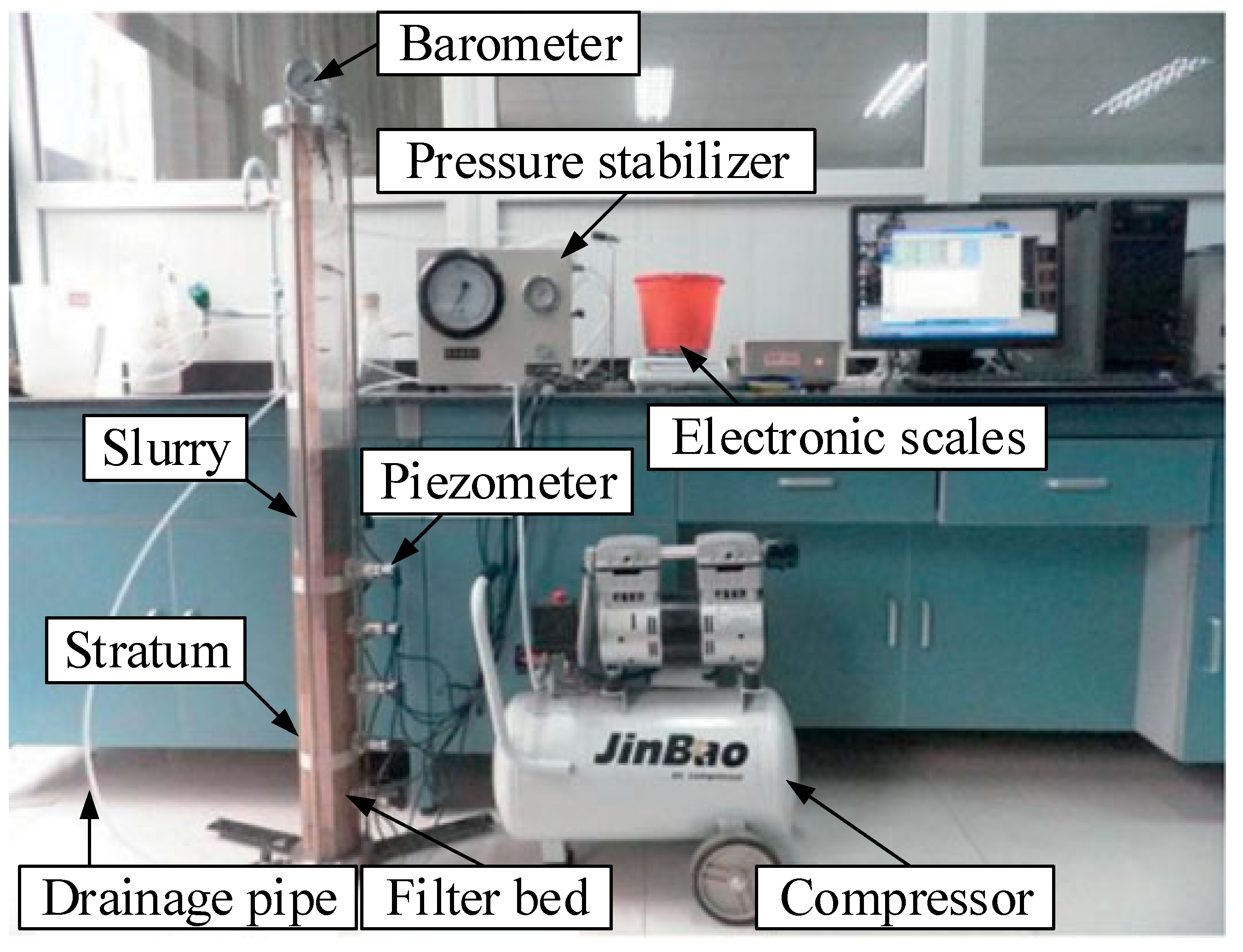
During grouting, particularly in highly permeable sandy strata, fine particles in the grout tend to migrate into and become trapped within the soil matrix. To investigate this phenomenon, Min et al. [131] conducted infiltration tests using a custom-designed permeability apparatus (Figure 44) and performed nine sets of slurry rheological measurements. Their results indicate that the yield stress of the grout is the primary factor generating the initial hydraulic gradient during infiltration in sandy soils.
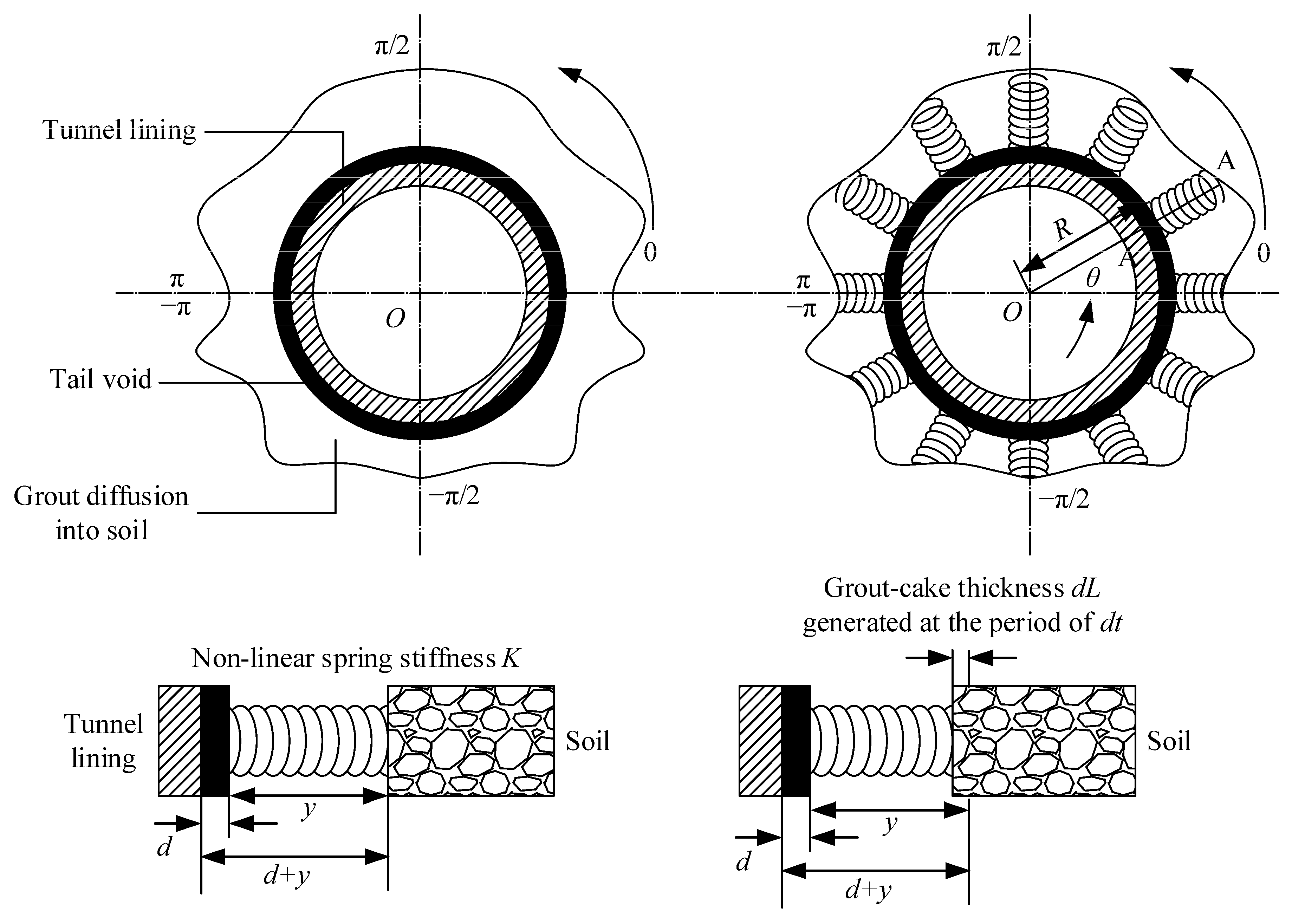
Understanding grout diffusion is critical, Liu et al. [137] proposed a nonlinear spring model. This model revealed that both the diffusion of grout within the soil and the initial pressure distribution critically influence grout consolidation, with diffusion dissipating grout pressure faster than solidification. A schematic of the spring model is shown in Figure 45. Dai et al. [138], tackling the challenge of unobservable grout filling behind the shield, developed a grout pressure diffusion model based on actual grouting hole designs and the principle of superimposed motion, which was validated against field measurements.
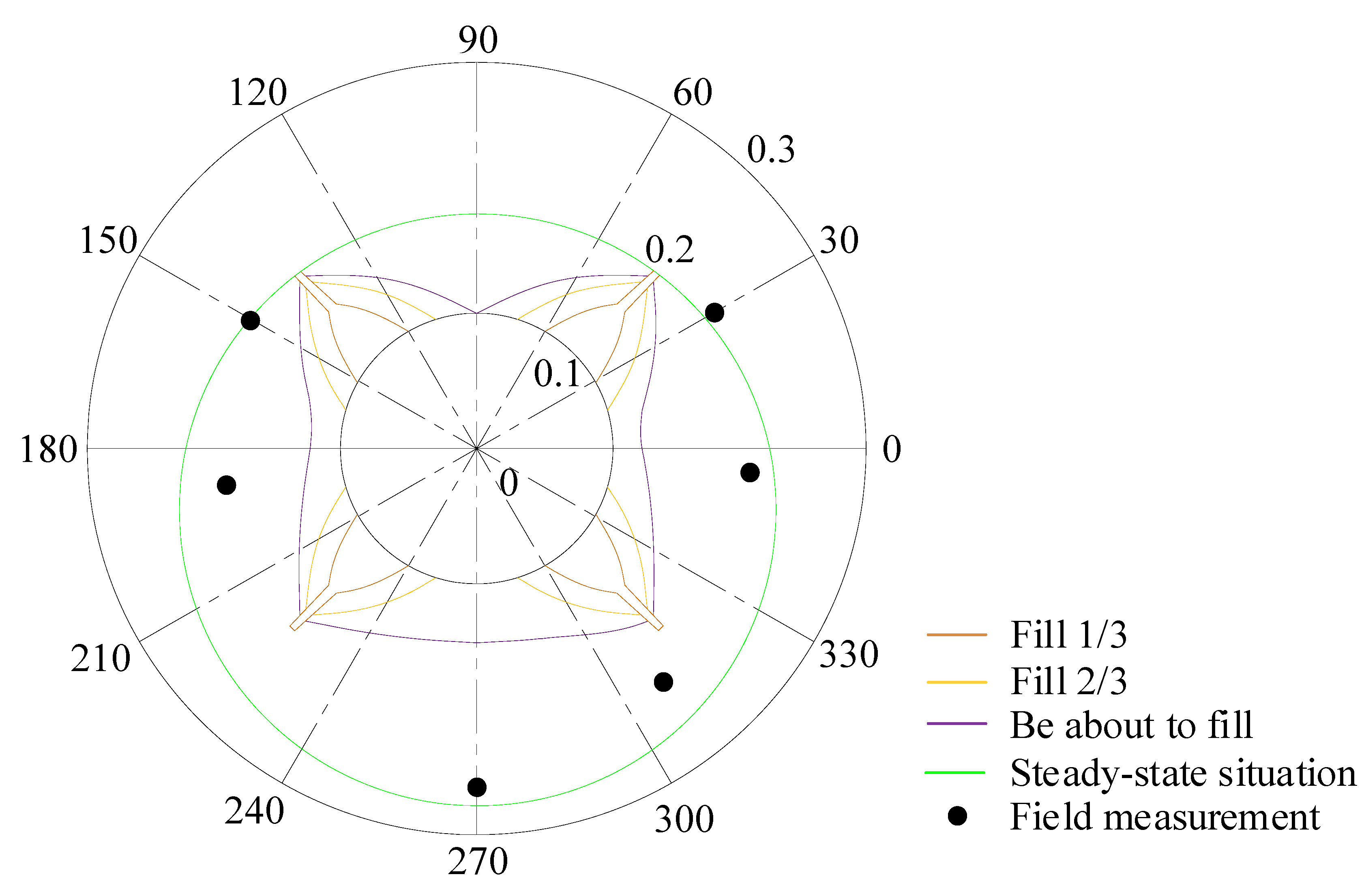
To further elucidate grout loss mechanisms caused by mortar intrusion and seepage, Yang et al. [139] proposed a novel hydro-mechanical coupled modeling approach based on mixed mechanics theory. Implemented in a finite element framework, the model considers key variables such as grouting pressure, duration, rheology, soil filtration properties, and soil permeability, allowing qualitative simulation of grout displacement around the tail void and prediction of ground deformation induced by excavation and backfill grouting. Hu et al. [140] developed an improved free-surface lattice Boltzmann model to simulate the temporal and spatial evolution of grout diffusion during synchronous grouting. Validation against field measurements demonstrated the distribution of grout pressure during the process (Figure 46). As the backfill progresses, the annular void is gradually filled, accompanied by a rise in grouting pressure. The results indicate that grout pressure near the injection port predominantly governs local pressure distribution, whereas gravity increasingly influences pressure farther from the port. The pressure distribution is generally symmetric, with maximum pressure at the tunnel invert and minimum at the crown, resulting in a vertical pressure gradient dominated by gravitational effects once the annular gap is fully filled.
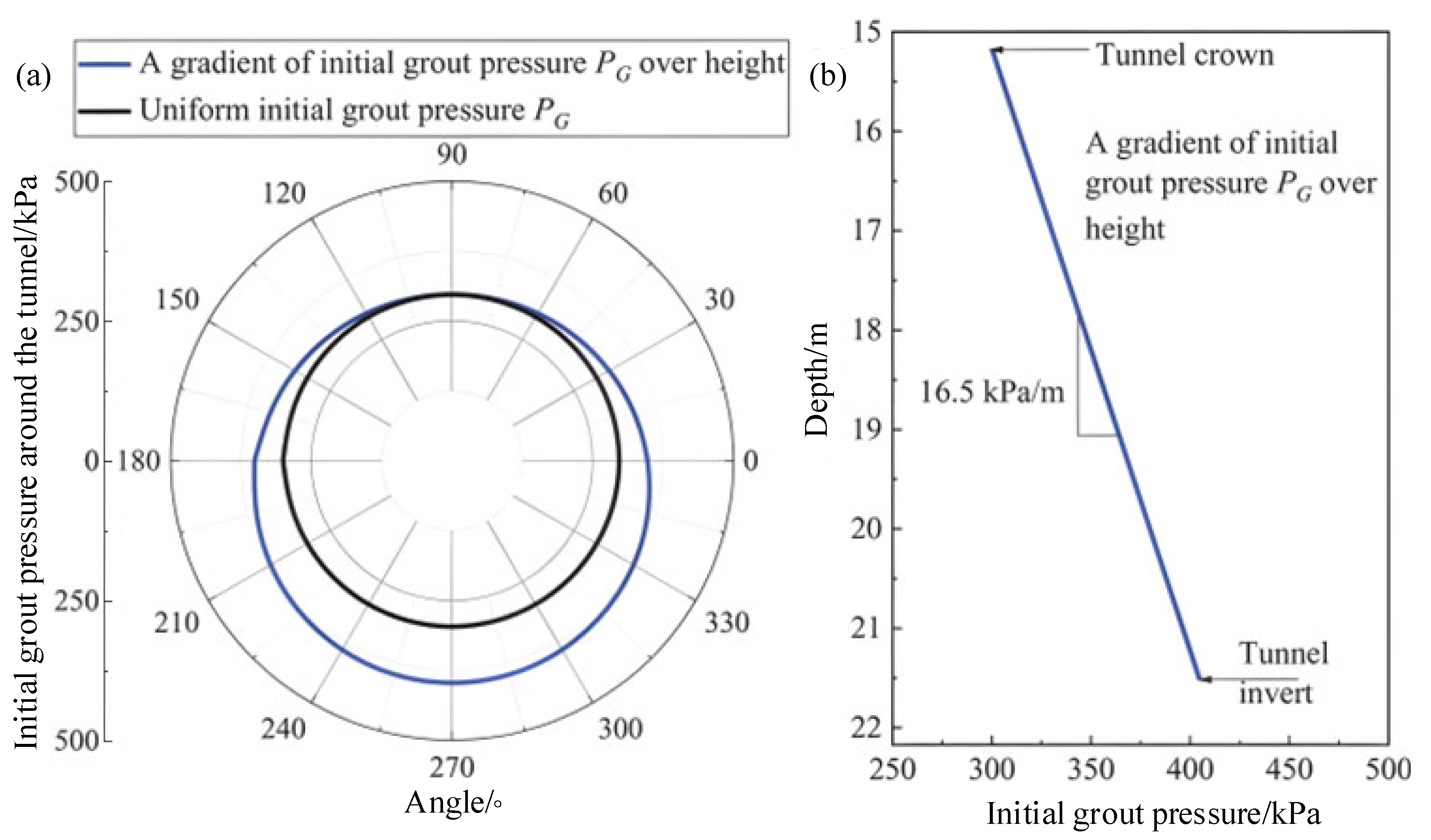
Research on the evolving characteristics of grout during the diffusion process is of significant importance for refining the theoretical understanding of backfill grouting. Zeng et al. [141] investigated the full process of crack-induced diffusion during synchronous grouting and the corresponding surrounding rock response. Based on a semi-elliptical planar diffusion model, they provided analytical solutions for spatial distributions of grout velocity, flow rate, crack diffusion depth, and crack channel width, indicating that the waist regions on both sides of tunnels in faulted and fractured zones are prone to cracking. Zhang et al. [142] substituted the original sand and gravel with silt fine sand as the filler and studied the effects of water-reducing agents and optimized mix proportions on grout seepage and diffusion performance. Ma et al. [143] developed a theoretical model incorporating the time-dependent viscosity of Bingham-type grout, revealing that higher grout viscosity reduces pressure loss during the diffusion process. Li et al. [129] proposed a grout diffusion equation considering infiltration effects under constant-rate and constant-pressure grouting conditions, constructing a numerical model for grout infiltration and elucidating the interaction between seepage effects and grout diffusion, as well as the effective range of soil reinforcement. Liu et al. [144] treated grout as a Bingham fluid and, based on the principles of force equilibrium, Darcy’s law, and conservation of momentum for grouting, derived an analytical model of grout diffusion. This model was applied to the Shanghai Metro Lines 4 and 9. The initial grout pressure distributions around the tunnel for two models of Line 9 are shown in Figure 47. Results indicate that the radial diffusion distance of the grout along the tunnel lining is directly proportional to hydraulic conductivity or initial grout pressure and inversely proportional to the yield stress of the backfill grout. Numerical and multiphysics simulations offer the highest fidelity in reproducing complex diffusion patterns observed in metro tunnels, yet their practical application is constrained by parameter uncertainty and the difficulty of calibrating microscale properties against sparse field data. The comparison and summary of typical grouting diffusion models in shield tunnels are shown in Table 3.
Furthermore, in theoretical analyses of grout diffusion, the surrounding strata are often assumed to be homogeneous [145,146,147], or equivalent porosity models are employed to simplify the grouting model [121]. However, the mechanical strength and porosity characteristics of soils are not uniformly distributed, thus neglecting the influence of heterogeneous porous media on grout diffusion. To address this issue, some studies have analyzed grout flow considering aspects such as hydro-mechanical coupling induced by seepage forces [148], roughness of seepage paths [149], and irregularity of flow channels [150]. Nevertheless, the heterogeneity of the strata is influenced not only by natural conditions but also by the disturbance induced by TBM excavation. During tunneling, surrounding rock disturbance alters the structural properties of the soil, further complicating theoretical analyses of grout diffusion, and no existing model adequately accounts for these effects.
Field observations from metro tunneling projects consistently reveal phenomena such as asymmetric grout filling, rapid pressure loss in sandy strata, and persistent void formation at the crown or invert. These behaviors cannot be adequately explained by steady-state analytical models alone. Instead, they align more closely with predictions from transient rheological and numerical models that account for filtration effects, gravity-driven segregation, and moving boundary conditions at the shield tail. The divergence between theoretical predictions and field performance in many reported cases is therefore not contradictory, but rather indicative of mismatches between model assumptions and site-specific conditions. Establishing explicit links between diffusion theory and non-destructive testing data provides a promising pathway for calibrating models and improving their predictive capability in real metro tunnel projects. Backfill grout diffusion is inherently complex, especially in stratified soils where multiple factors interact, further increasing the difficulty of analyzing diffusion mechanisms. Existing studies often rely on simplified numerical models or limited sensor layouts in actual grouting projects to investigate diffusion characteristics. However, numerical models may oversimplify key factors, resulting in predictions that do not accurately reflect grout diffusion patterns, while sensor-based monitoring is constrained by cost and spatial coverage, yielding only partial information from which global diffusion behavior must be inferred, potentially introducing significant errors. As discussed above, ultrasonic detection is not affected by the dielectric constant of materials and demonstrates favorable performance in complex environments such as reinforced lining interfaces. Wang et al. [108] have preliminarily validated the method through full-scale and in situ experiments. Therefore, ultrasonic detection holds promise for elucidating the diffusion mechanism of backfill grout in TBM tunnels and can enable the development of more accurate and adaptive diffusion models, providing a theoretical foundation for high-quality tunnel construction.
Despite these theoretical advancements, existing models frequently fail to remain robust across diverse geological conditions. This limitation stems primarily from an inadequate representation of the inherent coupling between grout rheology, stratum infiltration, and structural boundary constraints. In sandy strata, the ‘filtration effect’ causes rapid water loss and particle trapping, drastically altering the local rheology from a fluid to a semi-solid state. This phenomenon is often neglected in pure fluid mechanics models. Conversely, in cohesive soils, the interaction is dominated by fracturing and splitting rather than permeation. Furthermore, the shield tail acts as a dynamic moving boundary, creating a complex shearing environment that traditional static boundary models cannot fully capture. Future breakthroughs require integrated frameworks that can dynamically link the time-dependent hardening of grout with the spatial heterogeneity of the surrounding rock. Furthermore, validating these models against non-destructive testing data will be essential for closing the loop between theoretical predictions and practical engineering applications.

6. Conclusions and Prospects

In shield tunneling, ensuring the effectiveness of backfilling grouting requires timely knowledge of grout diffusion behind the lining to enable dynamic control of grouting parameters. However, due to the intrinsic invisibility of grout migration in this confined space, direct observation is not feasible. Instead, indirect approaches such as Nondestructive testing (NDT) techniques and grout diffusion theories are typically employed. This study provides a comprehensive review of the mechanisms governing grout diffusion and the state-of-the-art methods for assessing grouting quality behind tunnel linings, and reinforces the trend toward multi-modal joint inversion and machine-learning-assisted interpretation, supporting the transition from post-construction evaluation to real-time diagnostic control and future tunnel automation and digital-twin systems.
This review therefore highlights the close interdependence among sensing, modeling, and decision-making processes, where multi-modal monitoring provides data input, theoretical modeling interprets grout diffusion behavior, and the resulting knowledge supports real-time construction control. The main findings and outlook are summarized as follows:
(1) Among NDT methods, most existing studies focus on echo-signal analysis, identifying defects through characteristic features of the signal. If, in the context of backfill grouting quality assessment, these echo signals could be transformed into directly interpretable diagnostic images or maps, reliance on specialized expertise would be reduced and detection efficiency significantly improved. However, current research on echo-based imaging techniques remains underdeveloped. The imaging mechanisms for defects such as fissures, voids, and insufficient compaction are not yet well understood, and systematic investigations in this area are still limited.
(2) GPR assessments are often compromised by interference from site-specific factors such as cables, rebar within segments, and overlapping reflection interfaces. As a result, defect signatures in radargrams are frequently ambiguous, and the delineation of interfaces behind the lining remains indistinct. Moreover, GPR is inherently limited to probing within approximately 1 m behind the lining. This constraint is particularly problematic in challenging geological settings such as karst formations, weak soils, or water-bearing strata—where the excavation face may enlarge, rendering GPR ineffective for evaluating grout quality at greater depths.
(3) Elastic waves exhibit strong resistance to environmental interference. Compared with GPR, ultrasonic testing shows better adaptability in complex conditions involving cables and reinforcement. However, current ultrasonic techniques remain insufficient for imaging voids, low-density solids, and interfaces between grout and lining segments. Future efforts should prioritize improving resolution and stability, developing multiparameter joint inversion, and integrating multisource data to strengthen interface recognition. With advances in transducer design and data algorithms, ultrasonic methods are poised to evolve from auxiliary tools to core technologies for timely, qualitative evaluation of grout quality.
(4) Achieving synchronous detection and real-time evaluation during shield tunneling would shift grouting quality control from “post-remediation” to “process optimization.” Future research should focus on sensing technologies and control algorithms capable of dynamically capturing critical parameters such as filling density, initial setting state, and void distribution. Real-time feedback could then be used to adjust grouting volume, pressure curves, or even mix proportions, thereby ensuring effective backfilling and reducing the need for corrective measures.
(5) Advancing grout diffusion theory requires addressing the highly nonlinear and time-dependent coupling of flow, rheology, and solidification processes. Next-generation models should integrate multiphysics coupling with data-driven approaches such as machine learning to achieve adaptive parameter identification and dynamic correction. Developing more universal and precise models will deepen understanding of grout migration, providing a reliable basis for optimizing tunneling processes and mitigating risks.
(6) Beyond static evaluation, NDT has the potential to dynamically capture the entire lifecycle of grout evolution—including diffusion, hardening, and defect formation. Future research should explore synergistic use of multiple modalities, such as ultrasound, radar, and electromagnetic methods, to leverage their complementary strengths. Such multi-angle, multi-scale sensing, validated through field applications, would enable the direct observation of grout diffusion–consolidation–defect formation processes. This, in turn, would reveal the mechanisms of grout migration and phase transitions in complex strata, further refining grout diffusion theory.
(7) Future development should also focus on establishing a unified framework that couples sensing data, diffusion modeling, and construction control into a closed-loop system. By integrating real-time monitoring with adaptive parameter adjustment, shield tunneling can gradually shift from experience-based operation to data-driven and automated grouting management, improving both construction safety and long-term tunnel performance.

Author Contributions

Conceptualization—C.Z. and J.F.; methodology—C.Z.; software—C.Z.; validation—C.Z., Y.X. and H.W.; formal analysis—C.Z.; investigation—C.Z., Y.X. and H.W.; resources—J.F.; data curation—H.W.; writing—original draft preparation—C.Z.; writing—review and editing—C.Z., J.Y. and S.W.; visualization—C.Z.; supervision—J.F.; project administration—J.F.; funding acquisition—J.F. All authors have read and agreed to the published version of the manuscript.

Funding

This work was supported by the National Natural Science Foundation of China (Grant Number 52378423), the Open Foundation of National Engineering Laboratory for High-Speed Railway Construction (HSR202105) and China Railway Science and technology research and development plan project (2022-Key projects-46).

Data Availability Statement

The original contributions presented in this study are included in the article. Further inquiries can be directed to the corresponding author.

Acknowledgments

During the preparation of this manuscript, the authors used Grammarly Pro for the purposes of English language editing. The authors have reviewed and edited the output and take full responsibility for the content of this publication.

Conflicts of Interest

The authors declare no conflicts of interest.

References

  1. Meng, F.-Y.; Chen, R.-P.; Xu, Y.; Wu, K.; Wu, H.-N.; Liu, Y. Contributions to responses of existing tunnel subjected to nearby excavation: A review. Tunn. Undergr. Space Technol. 2022, 119, 104195. [Google Scholar] [CrossRef]
  2. Liu, D.J.; Zhong, F.; Huang, H.W.; Zuo, J.P.; Xue, Y.D.; Zhang, D.M. Present status and development trend of diagnosis and treatment of tunnel lining diseases. China J. Highw. Transp. 2021, 34, 178–199. [Google Scholar] [CrossRef]
  3. Cui, J.; Broere, W.; Lin, D. Underground space utilisation for urban renewal. Tunn. Undergr. Space Technol. 2021, 108, 103726. [Google Scholar] [CrossRef]
  4. Qian, Q.H. Present state, problems and development trends of urban underground space in China. Tunn. Undergr. Space Technol. 2016, 55, 280–289. [Google Scholar] [CrossRef]
  5. Ltd. R and M. Project Insight-Global Tunnel Construction Projects (Q1 2025), 2025. (Research Report). Available online: https://www.researchandmarkets.com/reports/6064748/project-insight-global-tunnel-construction?srsltid=AfmBOoqux3AmDVInkSZPrXHAfeq2w4qw80XUCmhNsECJq3vR1bNm0apy (accessed on 16 December 2025).
  6. Zhao, Y.; Li, P. A statistical analysis of China’s traffic tunnel development data. Engineering 2018, 4, 3–5. [Google Scholar] [CrossRef]
  7. Zhu, H.; Yan, J.; Liang, W. Challenges and Development Prospects of Ultra-Long and Ultra-Deep Mountain Tunnels. Engineering 2019, 5, 384–392. [Google Scholar] [CrossRef]
  8. Lombardi, M.; Berardi, D.; Galuppi, M.; Barbieri, M. Green Tunnel Solutions: An Overview of Sustainability Trends in the Last Decade (2013–2022). Buildings 2023, 13, 392. [Google Scholar] [CrossRef]
  9. Wu, H.-N.; Shen, S.-L.; Liao, S.-M.; Yin, Z.-Y. Longitudinal structural modelling of shield tunnels considering shearing dislocation between segmental rings. Tunn. Undergr. Space Technol. 2015, 50, 317–323. [Google Scholar] [CrossRef]
  10. Nakamura, H.; Kubota, T.; Furukawa, M.; Nakao, T. Unified construction of running track tunnel and crossover tunnel for subway by rectangular shape double track cross-section shield machine. Tunn. Undergr. Space Technol. 2003, 18, 253–262. [Google Scholar] [CrossRef]
  11. Li, F.; Luo, J.; Wang, D.; Wang, L. Aerodynamic Characteristics When Trains Pass Each Other in High-Speed Railway Shield Tunnel. Appl. Sci. 2022, 12, 6244. [Google Scholar] [CrossRef]
  12. Zhang, Z.; Chen, J.; Han, Y.; Zhu, Z.; Zhang, M.; Pan, Y. Analytical solution for seepage pressure of multilayered sand seabed considering interaction between wave-current action and shield tunnel. Comput. Geotech. 2024, 165, 105840. [Google Scholar] [CrossRef]
  13. Jiao, F.; Du, Z.; Chen, G.; Zheng, H.; Tang, Z.; Wang, S. Entrance zone length of extra-long undersea tunnels based on vision adaptation. Tunn. Undergr. Space Technol. 2021, 113, 103970. [Google Scholar] [CrossRef]
  14. Xu, X.; Tong, L.; Liu, S.; Li, H. Evaluation model for immersed tunnel health state: A case study of honggu tunnel, jiangxi province, china. Tunn. Undergr. Space Technol. 2019, 90, 239–248. [Google Scholar] [CrossRef]
  15. Han, T.; Wu, G.; Lu, Y.; Yu, B.; Gao, Y. Behavior of overdeformed shield tunnel lining under grouting treatment: Field experiment. J. Perform. Constr. Facil. 2021, 35, 4021082. [Google Scholar] [CrossRef]
  16. Sharghi, M.; Chakeri, H.; Ozcelik, Y. Investigation into the effects of two component grout properties on surface settlements. Tunn. Undergr. Space Technol. 2017, 63, 205–216. [Google Scholar] [CrossRef]
  17. Zhu, M.; Gong, X.; Gao, X.; Liu, S.; Yan, J. Remediation of damaged shield tunnel using grouting technique: Serviceability improvements and prevention of potential risks. J. Perform. Constr. Facil. 2019, 33, 4019062. [Google Scholar] [CrossRef]
  18. Wang, X.; Wang, S.; Lin, Z.; Zhong, M.; Chen, P.; Chen, J. Calculation Model and Verification of Shield Tunnel Segment Flotation Based on Grout Buoyancy Dissipation Characteristics. Chin. J. Geotech. Eng. 2025, 1–9. Available online: https://www.cgejournal.com/cn/article/doi/10.11779/CJGE20240857 (accessed on 16 December 2025).
  19. Ji, C.; Zhou, S.H.; Xu, K.; Li, X.L. Field test research on influence factor of upward moving of shield tunnel segments during construction. Chin. J. Rock. Mech. Eng. 2013, 32, 3619–3626. [Google Scholar]
  20. Cheng, Y.; Liu, X. Research on the pressure distribution law of synchronous grouting in shield tunnels and the force on segments. Buildings 2024, 14, 1099. [Google Scholar] [CrossRef]
  21. Yang, P.; Liu, Y.-H.; Gao, S.-W.; Xue, S. Experimental investigation on the diffusion of carbon fibre composite grouts in rough fractures with flowing water. Tunn. Undergr. Space Technol. 2020, 95, 103146. [Google Scholar] [CrossRef]
  22. Xu, Z.; Pan, D.; Li, S.; Zhang, Y.; Bu, Z.; Liu, J. A grouting simulation method for quick-setting slurry in karst conduit: The sequential flow and solidification method. J. Rock. Mech. Geotech. Eng. 2022, 14, 423–435. [Google Scholar] [CrossRef]
  23. Liu, C.; Zhu, D.; Liu, H.; Cui, J.; Zhang, X.; Rehman, M.U.; Huang, X. Influence of synchronous grouting on surrounding sandy cobbles during shield tunnelling process: Insights from a scaled model test. Tunn. Undergr. Space Technol. 2024, 147, 105728. [Google Scholar] [CrossRef]
  24. Du, X.; Li, Z.; Fang, H.; Li, B.; Zhao, X.; Zhai, K.; Xue, B.; Wang, S. A State-of-the-Art Review on the Study of the Diffusion Mechanism of Fissure Grouting. Appl. Sci. 2024, 14, 2540. [Google Scholar] [CrossRef]
  25. Liu, J.-Q.; Chen, W.-Z.; Yuen, K.-V.; Zhou, X.-S. Groundwater-mud control and safety thickness of curtain grouting for the Junchang Tunnel: A case study. Tunn. Undergr. Space Technol. 2020, 103, 103429. [Google Scholar] [CrossRef]
  26. Xiongyao, X.; Li, Z.; Biao, Z. Real-time detection technology of synchronous grouting for shield tunnel and analysis of grouting effect. In Proceedings of the 2018 17th International Conference on Ground Penetrating Radar (GPR), Rapperswil, Switzerland, 18–21 June 2018; Available online: https://ieeexplore.ieee.org/abstract/document/8441649 (accessed on 24 February 2025). [CrossRef]
  27. Yang, Q.; Geng, P.; Wang, J.; Chen, P.; He, C. Research of asphalt–cement materials used for shield tunnel backfill grouting and effect on anti-seismic performance of tunnels. Constr. Build. Mater. 2022, 318, 125866. [Google Scholar] [CrossRef]
  28. Zhang, D.-M.; Ye, Z.-W.; Zhang, J.-Z.; Li, J.-P.; Jia, J.-W. Influence of grouting on rehabilitation of an over-deformed shield tunnel lining in spatially variable soil. Comput. Geotech. 2022, 152, 104999. [Google Scholar] [CrossRef]
  29. Zhu, J.; Li, L.; Du, W. Research on shield machine construction with pouring mortar simultaneously and mortar materials in Beijing subway. Constr. Mech. 2004, 11, 26–29. [Google Scholar] [CrossRef]
  30. Ding, Z.; Zhang, X.; Yin, X.; Jiang, J. Analysis of the influence of soft soil grouting on the metro tunnel based on field measurement. Eng. Comput. 2019, 36, 1522–1541. [Google Scholar] [CrossRef]
  31. Wang, D.; Peng, M.; Liu, L.; Xie, X.; Shi, Z.; Liang, Y.; Shen, J.; Wu, Q. Automatic GPR detection of grouting defects behind the tunnel shield segments based on wavelet coherence analysis combined with modified res-RCNN. Case Stud. Constr. Mater. 2025, 22, e04245. [Google Scholar] [CrossRef]
  32. Hong, W.-T.; Kang, S.; Lee, S.J.; Lee, J.-S. Analyses of GPR signals for characterization of ground conditions in urban areas. J. Appl. Geophys. 2018, 152, 65–76. [Google Scholar] [CrossRef]
  33. Wu, Y.; Wang, Y.; Li, D.; Zhang, J. Two-step detection of concrete internal condition using array ultrasound and deep learning. NDT E Int. 2023, 139, 102945. [Google Scholar] [CrossRef]
  34. Sung, W.; Song, K.-I.; Kim, K.-Y.; Ryu, H.-H. Development of grouting quality evaluation system for a shield TBM tunnel using the impact-echo method. KSCE J. Civ. Eng. 2024, 28, 5335–5345. [Google Scholar] [CrossRef]
  35. Ye, Z.; Ye, Y. Comparison of Detection Effect of Cavities Behind Shield Tunnel Segment Using Transient Electromagnetic Radar and Ground Penetration Radar. Geotech. Geol. Eng. 2019, 37, 4391–4403. [Google Scholar] [CrossRef]
  36. Luo, G.; Xiao, C.; Liu, Y.; Feng, K.; Ren, Q. Research on the reuse of discharged soil from EBP shield tunnels in synchronous grouting material. Adv. Civ. Eng. 2022, 2022, 8102488. [Google Scholar] [CrossRef]
  37. Liang, Y.; Huang, X.; Gao, S.; Yin, Y. Study on the floating of large diameter underwater shield tunnel caused by synchronous grouting. Geofluids 2022, 2022, 2041924. [Google Scholar] [CrossRef]
  38. Peng, L.; He, L.; Kai, W.; Qian, W.; Zhang, Q.; Xiao, Z. Pressure monitoring in tunnel Grouting Simulation test. Pol. J. Environ. Stud. 2022, 31, 2787–2794. [Google Scholar] [CrossRef]
  39. Wu, B.; Qiu, W.; Huang, W.; Meng, G.; Nong, Y.; Huang, J. A Multi-Source Information Fusion Evaluation Method for the Tunneling Collapse Disaster Based on the Artificial Intelligence Deformation Prediction. Arab. J. Sci. Eng. 2022, 47, 5053–5071. [Google Scholar] [CrossRef]
  40. Liu, B.; Li, Q.; Zheng, Z.; Huang, Y.; Deng, S.; Huang, Q.; Liu, W. A Review of Multi-Source Data Fusion and Analysis Algorithms in Smart City Construction: Facilitating Real Estate Management and Urban Optimization. Algorithms 2025, 18, 30. [Google Scholar] [CrossRef]
  41. Flah, M.; Nunez, I.; Ben Chaabene, W.; Nehdi, M.L. Machine Learning Algorithms in Civil Structural Health Monitoring: A Systematic Review. Arch. Comput. Methods Eng. 2021, 28, 2621–2643. [Google Scholar] [CrossRef]
  42. Vadyala, S.R.; Betgeri, S.N.; Matthews, J.C.; Matthews, E. A review of physics-based machine learning in civil engineering. Results Eng. 2022, 13, 100316. [Google Scholar] [CrossRef]
  43. Ding, L.; Sun, Y.-J.; Zhang, W.-Z.; Bi, G.; Xu, H.-Z. Stress monitoring of segment structure during the construction of the small-diameter shield tunnel. Sensors 2023, 23, 8023. [Google Scholar] [CrossRef]
  44. Wang, X.; Wang, T.; Gao, J.; Yang, M.; Lin, F.; Jia, Y. A Novel Grouting Diffusion Monitoring System Based on ZigBee Wireless Sensor Network. Sensors 2025, 25, 2693. [Google Scholar] [CrossRef] [PubMed]
  45. Li, K.; Xie, X.; Zhou, B.; Huang, C.; Lin, W.; Zhou, Y.; Wang, C. Thickness regression for backfill grouting of shield tunnels based on GPR data and CatBoost & BO-TPE: A full-scale model test study. Undergr. Space 2024, 17, 100–119. [Google Scholar] [CrossRef]
  46. Zhou, C.; Gao, Y.; Chen, E.J.; Ding, L.; Qin, W. Deep learning technologies for shield tunneling: Challenges and opportunities. Autom. Constr. 2023, 154, 104982. [Google Scholar] [CrossRef]
  47. Liu, D.; Wang, F.; Hu, Q.; Huang, H.; Zuo, J.; Tian, C.; Zhang, D. Structural responses and treatments of shield tunnel due to leakage: A case study. Tunn. Undergr. Space Technol. 2020, 103, 103471. [Google Scholar] [CrossRef]
  48. Jin, D.; Yuan, D.; Li, X.; Zheng, H. Analysis of the settlement of an existing tunnel induced by shield tunneling underneath. Tunn. Undergr. Space Technol. 2018, 81, 209–220. [Google Scholar] [CrossRef]
  49. Xie, X.; Yang, Y.; Ji, M. Analysis of ground surface settlement induced by the construction of a large-diameter shield-driven tunnel in Shanghai, China. Tunn. Undergr. Space Technol. 2016, 51, 120–132. [Google Scholar] [CrossRef]
  50. Zou, J.; Zuo, S. Similarity Solution for the Synchronous Grouting of Shield Tunnel Under the Vertical Non-Axisymmetric Displacement Boundary Condition. Adv. Appl. Math. Mech. 2017, 9, 205–232. [Google Scholar] [CrossRef]
  51. Wang, S.; Lin, Z.; Peng, X.; Wang, X.; Tu, G.; Song, Z. Research and evaluation on water-dispersion resistance of synchronous grouting slurry in shield tunnel. Tunn. Undergr. Space Technol. 2022, 129, 104679. [Google Scholar] [CrossRef]
  52. Liu, J.-L.; Hamza, O.; Davies-Vollum, K.S.; Liu, J.-Q. Repairing a shield tunnel damaged by secondary grouting. Tunn. Undergr. Space Technol. 2018, 80, 313–321. [Google Scholar] [CrossRef]
  53. Liang, X.; Ying, K.; Ye, F.; Su, E.; Xia, T.; Han, X. Selection of backfill grouting materials and ratios for shield tunnel considering stratum suitability. Constr. Build. Mater. 2022, 314, 125431. [Google Scholar] [CrossRef]
  54. Wang, M.; Zhao, C.; Yang, S.; Xu, J. Optimizing Grouting Parameters to Control Ground Deformation in the Shield Tunneling. Buildings 2024, 14, 2799. [Google Scholar] [CrossRef]
  55. Wang, H.-B.; Zhang, R.-J.; Tao, F.-J.; Zheng, J.-J. Study on long-term surface settlement induced by shield tunneling in under-consolidated soft ground. Tunn. Undergr. Space Technol. 2024, 148, 105772. [Google Scholar] [CrossRef]
  56. Cui, Y.; Tan, Z.; Wang, J.; Shi, Y.; Bai, Z.; Cao, Y. Research on reuse of shield soil dregs on synchronous grouting materials and its application. Constr. Build. Mater. 2023, 408, 133700. [Google Scholar] [CrossRef]
  57. Zhang, G.; Liu, J.; Li, Y.; Liang, J. A pasty clay–cement grouting material for soft and loose ground under groundwater conditions. Adv. Cem. Res. 2016, 29, 54–62. [Google Scholar] [CrossRef]
  58. Toniolo, N.; Rincon, A.; Roether, J.; Ercole, P.; Bernardo, E.; Boccaccini, A.; Toniolo, N.; Rincon, A.; Roether, J.; Ercole, P.; et al. Extensive reuse of soda-lime waste glass in fly ash-based geopolymers. Constr. Build. Mater. 2018, 188, 1077–1084. [Google Scholar] [CrossRef]
  59. Zhu, D.; Miao, L. Metro Shield Construction Technology; Chemical Industry Press: Beijing, China, 2021; Available online: https://thinker.cnki.net/bookstore/book/bookdetail?bookcode=9787122392817000&type=book (accessed on 24 February 2025).
  60. Song, W.; Zhu, Z.; Pu, S.; Wan, Y.; Huo, W.; Peng, Y. Preparation and engineering properties of alkali-activated filling grouts for shield tunnel. Constr. Build. Mater. 2022, 314, 125620. [Google Scholar] [CrossRef]
  61. Baltazar, L.G.; Henriques, F.M.; Jorne, F.; Cidade, M. Combined effect of superplasticizer, silica fume and temperature in the performance of natural hydraulic lime grouts. Constr. Build. Mater. 2014, 50, 584–597. [Google Scholar] [CrossRef]
  62. Xu, S.; Ma, Q.; Wang, J.; Wang, L. Grouting performance improvement for natural hydraulic lime-based grout via incorporating silica fume and silicon-acrylic latex. Constr. Build. Mater. 2018, 186, 652–659. [Google Scholar] [CrossRef]
  63. Zhang, J.; Guan, X.; Li, H.; Liu, X. Performance and hydration study of ultra-fine sulfoaluminate cement-based double liquid grouting material. Constr. Build. Mater. 2017, 132, 262–270. [Google Scholar] [CrossRef]
  64. Cui, H.; Mao, Q.; Li, J.; Hu, Q.; Tao, Y.; Ma, J.; Li, Z. Shield tunnel dislocation detection method based on semantic segmentation and bolt hole positioning of MLS point cloud. IEEE Trans. Geosci. Remote Sens. 2024, 62, 1–15. [Google Scholar] [CrossRef]
  65. Nabipour, M.; Rezapour, S.; Mohajeri, S.H. A parametric study on friction-loss in water conveyance tunnels considering misalignment of precast concrete segments. Tunn. Undergr. Space Technol. 2020, 96, 103221. [Google Scholar] [CrossRef]
  66. Geng, D.; Hu, Y.; Jiang, Y.; Wang, N.; Hu, W. Modified Calculation Model for Segment Floating in Slurry Shield Tunnel. J. Perform. Constr. Facil. 2021, 35, 04021068. [Google Scholar] [CrossRef]
  67. Yao, Q.; Di, H.; Ji, C.; Zhou, S. Ground collapse caused by shield tunneling in sandy cobble stratum and its control measures. Bull. Eng. Geol. Environ. 2020, 79, 5599–5614. [Google Scholar] [CrossRef]
  68. Zheng, G.; Cui, T.; Cheng, X.; Diao, Y.; Zhang, T.; Sun, J.; Ge, L. Study of the collapse mechanism of shield tunnels due to the failure of segments in sandy ground. Eng. Fail. Anal. 2017, 79, 464–490. [Google Scholar] [CrossRef]
  69. Chen, X.; Shen, J.; Bao, X.; Wu, X.; Tang, W.; Cui, H. A review of seismic resilience of shield tunnels. Tunn. Undergr. Space Technol. 2023, 136, 105075. [Google Scholar] [CrossRef]
  70. Huang, H.; Shao, H.; Zhang, D.; Wang, F. Deformational responses of operated shield tunnel to extreme surcharge: A case study. Struct. Infrastruct. Eng. 2017, 13, 345–360. [Google Scholar] [CrossRef]
  71. Jiang, Y.; Wang, L.; Zhang, B.; Dai, X.; Ye, J.; Sun, B.; Liu, N.; Wang, Z.; Zhao, Y. Tunnel lining detection and retrofitting. Autom. Constr. 2023, 152, 104881. [Google Scholar] [CrossRef]
  72. Huang, H.-W.; Li, Q.-T.; Zhang, D.-M. Deep learning based image recognition for crack and leakage defects of metro shield tunnel. Tunn. Undergr. Space Technol. 2018, 77, 166–176. [Google Scholar] [CrossRef]
  73. Bai, X.-D.; Cheng, W.-C.; Wu, B.; Li, G.; Ong, D.E.L. Shield machine position prediction and anomaly detection during tunnelling in loess region using ensemble and deep learning algorithms. Acta Geotech. 2023, 18, 6175–6199. [Google Scholar] [CrossRef]
  74. Xu, J.; Ding, L.; Luo, H.; Chen, E.J.; Wei, L. Near real-time circular tunnel shield segment assembly quality inspection using point cloud data: A case study. Tunn. Undergr. Space Technol. 2019, 91, 102998. [Google Scholar] [CrossRef]
  75. Ding, N.; Zhou, Y.; Li, D.; Zeng, K. Real-time deformation monitoring of large diameter shield tunnel based on multi-sensor data fusion technique. Measurement 2024, 225, 114061. [Google Scholar] [CrossRef]
  76. Zhou, Z.; Liu, Z.; Zhang, B.; Gao, W.; Zhang, C. Grouting Pressure Distribution Model for the Simultaneous Grouting of Shield Tunneling While Considering the Diffusion of Slurry. In Advances in Environmental Vibration and Transportation Geodynamics; Springer: Singapore, 2020; pp. 793–809. [Google Scholar]
  77. Yin, Z.; Lei, Z.; Zheng, A.; Zhu, J.; Liu, X.-Z. Automatic Detection and Association Analysis of Multiple Surface Defects on Shield Subway Tunnels. Sensors 2023, 23, 7106. [Google Scholar] [CrossRef] [PubMed]
  78. Aggelis, D.; Shiotani, T.; Kasai, K. Evaluation of grouting in tunnel lining using impact-echo. Tunn. Undergr. Space Technol. 2008, 23, 629–637. [Google Scholar] [CrossRef]
  79. Xie, X.; Zeng, C.; Wang, Z. GPR signal enhancement using band-pass and K-L filtering: A case study for the evaluation of grout in a shielded tunnel. J. Geophys. Eng. 2013, 10, 34003. [Google Scholar] [CrossRef]
  80. Peng, M.; Wang, D.; Liu, L.; Shi, Z.; Shen, J.; Ma, F. Recent advances in the GPR detection of grouting defects behind shield tunnel segments. Remote Sens. 2021, 13, 4596. [Google Scholar] [CrossRef]
  81. Liu, H.; Yue, Y.; Lai, S.; Meng, X.; Du, Y.; Cui, J.; Spencer, B.F. Evaluation of the antenna parameters for inspection of hidden defects behind a reinforced shield tunnel using GPR. Tunn. Undergr. Space Technol. 2023, 140, 105265. [Google Scholar] [CrossRef]
  82. Liu, H.; Yue, Y.; Lai, S.; Meng, X.; Du, Y.; Cui, J.; Spencer, B.F. Reverse-time migration of GPR data for imaging cavities behind a reinforced shield tunnel. Tunn. Undergr. Space Technol. 2024, 146, 105649. [Google Scholar] [CrossRef]
  83. Wang, X.; Wang, P.; Zhang, X.; Wan, Y.; Shi, H.; Liu, W. Target Electromagnetic Detection Method in Underground Environment: A Review. IEEE Sens. J. 2022, 22, 13835–13852. [Google Scholar] [CrossRef]
  84. Puntu, J.M.; Chang, P.-Y.; Lin, D.-J.; Amania, H.H.; Doyoro, Y.G. A Comprehensive Evaluation for the Tunnel Conditions with Ground Penetrating Radar Measurements. Remote Sens. 2021, 13, 4250. [Google Scholar] [CrossRef]
  85. Lai, W.W.; Chang, R.K.; Sham, J.F. Detection and imaging of city’s underground void by GPR[C/OL]. In Proceedings of the 2017 9th International Workshop on Advanced Ground Penetrating Radar (IWAGPR), Edinburgh, UK, 28–30 June 2017; pp. 1–6. [Google Scholar] [CrossRef]
  86. Lombardi, F.; Podd, F.; Solla, M. From Its Core to the Niche: Insights from GPR Applications. Remote Sens. 2022, 14, 3033. [Google Scholar] [CrossRef]
  87. Zhang, F.; Xie, X.; Huang, H. Application of ground penetrating radar in grouting evaluation for shield tunnel construction. Tunn. Undergr. Space Technol. 2010, 25, 99–107. [Google Scholar] [CrossRef]
  88. Zeng, L.; Zhang, X.; Xie, X.; Zhou, B.; Xu, C.; Lambot, S. Measuring annular thickness of backfill grouting behind shield tunnel lining based on GPR monitoring and data mining. Autom. Constr. 2023, 150, 104811. [Google Scholar] [CrossRef]
  89. Zeng, L.; Zhou, B.; Xie, X.; Zhao, Y.; Liu, H.; Zhang, Y.; Shahrour, I. A novel real-time monitoring system for the measurement of the annular grout thickness during simultaneous backfill grouting. Tunn. Undergr. Space Technol. 2020, 105, 103567. [Google Scholar] [CrossRef]
  90. Xie, X.; Zhai, J.; Zhou, B. Back-fill grouting quality evaluation of the shield tunnel using ground penetrating radar with bi-frequency back projection method. Autom. Constr. 2021, 121, 103435. [Google Scholar] [CrossRef]
  91. Xie, X.; Liu, Y.; Huang, H.; Du, J.; Zhang, F.; Liu, L. Evaluation of grout behind the lining of shield tunnels using ground-penetrating radar in the shanghai metro line, china. J. Geophys. Eng. 2007, 4, 253–261. [Google Scholar] [CrossRef]
  92. Lin, C.; Wang, X.; Li, Y.; Zhang, F.; Xu, Z.; Du, Y. Forward modelling and GPR imaging in leakage detection and grouting evaluation in tunnel lining. KSCE J. Civ. Eng. 2020, 24, 278–294. [Google Scholar] [CrossRef]
  93. Qin, H.; Tang, Y.; Wang, Z.; Xie, X.; Zhang, D. Shield tunnel grouting layer estimation using sliding window probabilistic inversion of GPR data. Tunn. Undergr. Space Technol. 2021, 112, 103913. [Google Scholar] [CrossRef]
  94. Yu, Q.-M.; Zhou, H.-L.; Wang, Y.-H.; Duan, R.-X. Quality monitoring of metro grouting behind segment using ground penetrating radar. Constr. Build. Mater. 2016, 110, 189–200. [Google Scholar] [CrossRef]
  95. Lalagüe, A.; Lebens, M.A.; Hoff, I.; Grøv, E. Detection of rockfall on a tunnel concrete lining with ground-penetrating radar (GPR). Rock. Mech. Rock. Eng. 2016, 49, 2811–2823. [Google Scholar] [CrossRef]
  96. Hu, S.; Xu, G.; Tang, F.; Ma, F.; Rong, J. Optimization Research on GPR Detecting of Grouting behind Shield Tunnel S in Water-Soaked Sand and Pebble Stratum. In Proceedings of the 2016 International Conference on Intelligent Transportation, Big Data & Smart City (ICITBS), Rio de Janeiro, Brazil, 1–4 November 2016; pp. 141–146. [Google Scholar] [CrossRef]
  97. Kravitz, B.; Mooney, M.; Karlovsek, J.; Danielson, I.; Hedayat, A. Void detection in two-component annulus grout behind a pre-cast segmental tunnel liner using Ground Penetrating Radar. Tunn. Undergr. Space Technol. 2019, 83, 381–392. [Google Scholar] [CrossRef]
  98. Wang, J.; Zhang, J.; Cohn, A.G.; Wang, Z.; Liu, H.; Kang, W.; Jiang, P.; Zhang, F.; Chen, K.; Guo, W.; et al. Arbitrarily-oriented tunnel lining defects detection from ground penetrating radar images using deep convolutional neural networks. Autom. Constr. 2022, 133, 104044. [Google Scholar] [CrossRef]
  99. Li, D.; Liu, H. Detection of sleeve grouting connection defects in fabricated structural joints based on ultrasonic guided waves. Smart Mater. Struct. 2019, 28, 85033. [Google Scholar] [CrossRef]
  100. Yang, S.; Wang, Z.; Wang, J.; Cohn, A.G.; Zhang, J.; Jiang, P.; Nie, L.; Sui, Q. Defect segmentation: Mapping tunnel lining internal defects with ground penetrating radar data using a convolutional neural network. Constr. Build. Mater. 2022, 319, 125658. [Google Scholar] [CrossRef]
  101. Chen, H.; Sun, K.; Ke, C.; Shang, Y. Simulation of ultrasonic testing technique by Finite Element Method. In Proceedings of the IEEE 2012 Prognostics and System Health Management Conference (PHM-2012 Beijing), Beijing, China, 23–25 May 2012; pp. 1–5. [Google Scholar] [CrossRef]
  102. Moura, M.A.D.N.; Moreno, A.L.; Ferreira, G.C.d.S. Ultrasonic testing on evaluation of concrete residual compressive strength: A review. Constr. Build. Mater. 2023, 373, 130887. [Google Scholar] [CrossRef]
  103. White, J.; Hurlebaus, S.; Shokouhi, P.; Wimsatt, A. Use of Ultrasonic Tomography to Detect Structural Impairment in Tunnel Linings. Transp. Res. Rec. 2014, 2407, 20–31. [Google Scholar] [CrossRef]
  104. Wang, W.; Li, Y.; Li, Y. A method for detecting defects in reinforced concrete structures of underwater tunnels based on ultrasonic echo signal and CNN. AIP Adv. 2024, 14, 115213. Available online: https://pubs.aip.org/adv/article/14/11/115213/3319220/A-method-for-detecting-defects-in-reinforced (accessed on 14 January 2025). [CrossRef]
  105. Wang, Y.; Li, G.; Zhou, L.; Wang, R. Optimization of tunnel grouting detection technology based on ultrasonic phased array. Meas. Sci. Technol. 2024, 35, 86126. [Google Scholar] [CrossRef]
  106. Cao, D.; Pan, Z.; Zhang, Z.; Zeng, B. Study on non-destructive testing method of grouting sleeve compactness with wavelet packet energy ratio change. Constr. Build. Mater. 2023, 389, 131767. [Google Scholar] [CrossRef]
  107. Cao, D.; Pan, Z.; Zhang, Z.; Zeng, B. Defect detection of grouting sleeve connection with energy ratio change in frequency domain. Appl. Acoust. 2024, 221, 110037. [Google Scholar] [CrossRef]
  108. Wang, B.; Zhou, X.; Liu, L.; Liu, T. Detection of grouting defects behind shield segments via shear wave ultrasound arrays: Numerical and full-scale model experiments. Tunn. Undergr. Space Technol. 2025, 157, 106287. [Google Scholar] [CrossRef]
  109. Carino, N.J. The Impact-Echo Method: An Overview. In Structures; American Society of Civil Engineers: Reston, VA, USA, 2001; pp. 1–18. Available online: https://ascelibrary.org/doi/abs/10.1061/40558%282001%2915 (accessed on 20 January 2025). [CrossRef]
  110. Lu, X.; Sun, Q.; Feng, W.; Tian, J. Evaluation of dynamic modulus of elasticity of concrete using impact-echo method. Constr. Build. Mater. 2013, 47, 231–239. [Google Scholar] [CrossRef]
  111. Voznesenskii, A.S.; Nabatov, V.V. Identification of filler type in cavities behind tunnel linings during a subway tunnel surveys using the impulse-response method. Tunn. Undergr. Space Technol. 2017, 70, 254–261. [Google Scholar] [CrossRef]
  112. Kang, J.M.; Song, S.; Park, D.; Choi, C. Detection of cavities around concrete sewage pipelines using impact-echo method. Tunn. Undergr. Space Technol. 2017, 65, 1–11. [Google Scholar] [CrossRef]
  113. Yao, F.; Chen, G.; Abula, A. Research on signal processing of segment-grout defect in tunnel based on impact-echo method. Constr. Build. Mater. 2018, 187, 280–289. [Google Scholar] [CrossRef]
  114. Cheng, D.; Li, L.; Wang, S.; Wang, S.; Ba, X.; Fang, D.; Zhang, T. Research on back-fill grouting quality detection of shield tunnel based onimpact-echo method. J. Southeast Univ. 2025, 55, 213–221. [Google Scholar] [CrossRef]
  115. Lu, M.; Xu, W.; Song, L.; Yang, X. Research on Tunnel Lining Void Detection Technology Based on Improved VMD-HHT Impact Echo Method. J. Railw. Eng. Soc. 2023, 40, 75–82. [Google Scholar]
  116. Yao, F.; Su, J.; Liu, K.; Chen, G.Y. Numerical simulation study on identifying grouting layer of different stiffness in shield tunnel by impact-echo method. J. Railw. Eng. Soc. 2015, 12, 1420–1426. [Google Scholar] [CrossRef]
  117. Bezuijen, A.; Talmon, A.; Kaalberg, F.; Plugge, R. Field measurements of grout pressures during tunnelling of the sophia rail tunnel. Soils Found. 2004, 44, 39–48. [Google Scholar] [CrossRef]
  118. Han, L.; Ye, G.-L.; Chen, J.-J.; Xia, X.-H.; Wang, J.-H. Pressures on the lining of a large shield tunnel with a small overburden: A case study. Tunn. Undergr. Space Technol. 2017, 64, 1–9. [Google Scholar] [CrossRef]
  119. Luo, W.; Zheng, J.; Miao, Y.; Gao, L. Raspberry pi-based IoT system for grouting void detection in tunnel construction. Buildings 2024, 14, 3349. [Google Scholar] [CrossRef]
  120. Li, K.; Xie, X.; Zhou, B.; Zeng, L.; Huang, C. Cloud-edge-end architecture and application for intelligent detection of backfill grouting in shield tunnels. J. Civ. Environ. Eng. 2025, 47, 67–76. [Google Scholar] [CrossRef]
  121. Ye, F.; Qin, N.; Han, X.; Liang, X.; Gao, X.; Ying, K. Displacement infiltration diffusion model of power-law grout as backfill grouting of a shield tunnel. Eur. J. Environ. Civ. Eng. 2022, 26, 1820–1833. [Google Scholar] [CrossRef]
  122. Ye, F.; Liang, X.; Liang, X.; Zhang, W.; Liu, C.; Feng, H. Grouting technology and construction schemes of a tunnel in aeolian stratum: A case study of Shenmu No. 1 tunnel. Sci. Rep. 2021, 11, 23552. [Google Scholar] [CrossRef] [PubMed]
  123. Gan, X.; Yu, J.; Gong, X.; Hou, Y.; Liu, N.; Zhu, M. Response of operating metro tunnels to compensation grouting of an underlying large-diameter shield tunnel: A case study in Hangzhou. Undergr. Space 2022, 7, 219–232. [Google Scholar] [CrossRef]
  124. Jiang, X.; Zhu, H.; Yan, Z.; Zhang, F.; Ye, F.; Li, P.; Zhang, X.; Dai, Z.; Bai, Y.; Huang, B. A state-of-art review on development and progress of backfill grouting materials for shield tunneling. Dev. Built Environ. 2023, 16, 100250. [Google Scholar] [CrossRef]
  125. Jiang, D.; Cheng, X.; Luan, H.; Wang, T.; Zhang, M.; Hao, R. Experimental Investigation on the Law of Grout Diffusion in Fractured Porous Rock Mass and Its Application. Processes 2018, 6, 191. [Google Scholar] [CrossRef]
  126. Liang, J.; Du, X.; Fang, H.; Du, M.; Shi, M.; Gao, X.; Han, Y. Numerical and experimental study of diffusion law of foamed polymer grout in fracture considering viscosity variation of slurry. Tunn. Undergr. Space Technol. 2022, 128, 104674. [Google Scholar] [CrossRef]
  127. Liu, J.; Zhang, Q.; Zhang, L.; Peng, F.; Li, Z.; Weng, X. Model Test on Segmental Grouting Diffusion Process in Muddy Fault of Tunnel Engineering. Geofluids 2020, 2020, 6698011. [Google Scholar] [CrossRef]
  128. Wu, Y.; Ren, G.; Zhang, X.; Zhao, C.; Zhao, C. Spherical permeation grouting model of a power-law fluid considering the soil unloading effect. Int. J. Geomech. 2024, 24, 4023266. [Google Scholar] [CrossRef]
  129. Li, S.; Zheng, Z.; Liu, R.; Feng, X.; Sun, Z.; Zhang, L. Analysis of diffusion of grout in porous media considering infiltration effects. Yanshilixue Yu Gongcheng Xuebao/Chin. J. Rock. Mech. Eng. 2015, 34, 2401–2409. [Google Scholar] [CrossRef]
  130. Fu, Y.; Wang, X.; Zhang, S.; Yang, Y. Modelling of Permeation Grouting considering Grout Self-Gravity Effect: Theoretical and Experimental Study. Adv. Mater. Sci. Eng. 2019, 2019, 7968240. [Google Scholar] [CrossRef]
  131. Min, F.; Song, H.; Zhang, N. Experimental study on fluid properties of slurry and its influence on slurry infiltration in sand stratum. Appl. Clay Sci. 2018, 161, 64–69. [Google Scholar] [CrossRef]
  132. Ariaratnam, S.T.; Harbin, B.C.; Stauber, R.L. Modeling of annular fluid pressures in horizontal boring. Tunn. Undergr. Space Technol. 2007, 22, 610–619. [Google Scholar] [CrossRef]
  133. Li, Y.; Liu, B.; Li, S.; Zhang, Q.; Zhang, X.; Yang, L. Forward simulation and engineering application of borehole ground penetrating radar for grouting effect detection. Electron. J. Geotech. Eng. 2016, 21, 4895–4909. [Google Scholar]
  134. Ye, F.; Yang, T.; Mao, J.-H.; Qin, X.-Z.; Zhao, R.-L. Half-spherical surface diffusion model of shield tunnel back-fill grouting based on infiltration effect. Tunn. Undergr. Space Technol. 2019, 83, 274–281. [Google Scholar] [CrossRef]
  135. Liu, J.; Li, P.; Shi, L.; Fan, J.; Kou, X.; Huang, D. Spatial distribution model of the filling and diffusion pressure of synchronous grouting in a quasi-rectangular shield and its experimental verification. Undergr. Space 2021, 6, 650–664. [Google Scholar] [CrossRef]
  136. Li, P.N.; Huang, D.Z.; Zhu, Y.F.; Ding, W.Q. Diffusion Mechanism and Parameters Acquisition of Quasi-rectangular Shield Synchronous Grouting using SPH Method. Tongji Daxue Xuebao/J. Tongji Univ. 2017, 45, 1592–1601. Available online: https://link.cnki.net/urlid/31.1267.N.20171207.1629.002 (accessed on 27 January 2025).
  137. Liu, X.-X.; Shen, S.-L.; Xu, Y.-S.; Zhou, A. Non-linear spring model for backfill grout-consolidation behind shield tunnel lining. Comput. Geotech. 2021, 136, 104235. [Google Scholar] [CrossRef]
  138. Dai, Z.; Bai, Y.; Peng, F.; Liao, S. Study on Mechanism of Simultaneous Backfilling Grouting for Shield Tunneling in Soft Soils. In Deep and Underground Excavations; American Society of Civil Engineers: Washington, DC, USA, 2012; pp. 182–190. [Google Scholar] [CrossRef]
  139. Yang, J.; Yin, Z.-Y.; Liu, Y.-J.; Laouafa, F. Multiphysics modelling of backfill grouting in sandy soils during TBM tunnelling. Acta Geotech. 2023, 18, 553–571. [Google Scholar] [CrossRef]
  140. Hu, C.-M.; Guo, J.-X.; Wang, Z.-Y. Lattice Boltzmann simulation for grout filling process during simultaneous backfill grouting of shield in tunnel construction. Eur. J. Environ. Civ. Eng. 2022, 26, 4039–4054. [Google Scholar] [CrossRef]
  141. Zeng, Y.; Zhang, Y.; Wang, B.; Xu, Y.; Yelv, G.; Xiong, W.; Lu, A.; Gao, Y.; He, Z.; Fu, Y.; et al. A Splitting Diffusion Model for Synchronous Grouting during Shield Tunnelling in Fault Fracture Zone. In Proceedings of the ICCREM 2024, Guangzhou, China, 23–24 November 2024; pp. 892–915. [Google Scholar] [CrossRef]
  142. Zhang, J.; Lu, S.; Feng, T.; Yi, B.; Liu, J. Research on reuse of silty fine sand in backfill grouting material and optimization of backfill grouting material proportions. Tunn. Undergr. Space Technol. 2022, 130, 104751. [Google Scholar] [CrossRef]
  143. Ma, J.; Sun, A.; Jiang, A.; Guo, N.; Liu, X.; Song, J.; Liu, T. Pressure Model Study on Synchronous Grouting in Shield Tunnels Considering the Temporal Variation in Grout Viscosity. Appl. Sci. 2023, 13, 10437. [Google Scholar] [CrossRef]
  144. Liu, X.; Shen, S.; Xu, Y.; Zhou, A. A diffusion model for backfill grout behind shield tunnel lining. Int. J. Numer. Anal. Methods Geomech. 2021, 45, 457–477. [Google Scholar] [CrossRef]
  145. Wu, Z.; Ye, C.; Cao, F. Performance and Microstructure of Grouting Materials Made from Shield Muck. Materials 2024, 17, 4074. [Google Scholar] [CrossRef]
  146. Hao, Y.; Guo, C.; Shi, M.; Wang, F.; Xia, Y.; Wang, C. Application of polymer split grouting technology in earthen dam: Diffusion law and applicability. Constr. Build. Mater. 2023, 369, 130612. [Google Scholar] [CrossRef]
  147. Ye, Z.; Zhang, D.; Chen, X.; Zhang, J.; Shao, H.; Jiang, R. Field test insights on soil-structural response to unilateral light-disturbance grouting on a shield tunnel lining. Tunn. Undergr. Space Technol. 2025, 165, 106892. [Google Scholar] [CrossRef]
  148. Bouchelaghem, F.; Vulliet, L. Mathematical and numerical filtration–advection–dispersion model of miscible grout propagation in saturated porous media. Int. J. Numer. Anal. Methods Geomech. 2001, 25, 1195–1227. [Google Scholar] [CrossRef]
  149. Mu, W.; Li, L.; Yang, T.; Yu, G.; Han, Y. Numerical investigation on a grouting mechanism with slurry-rock coupling and shear displacement in a single rough fracture. Bull. Eng. Geol. Environ. 2019, 78, 6159–6177. [Google Scholar] [CrossRef]
  150. Qin, N.; Ye, F.; He, B.; Liang, X.; Han, X.; Su, E. Model study on backfill grouting in shield tunnels based on fractal theory. Eur. J. Environ. Civ. Eng. 2022, 26, 5901–5911. [Google Scholar] [CrossRef]
Figure 1. Formation mechanism of the shield tail gap during shield tunneling.
Buildings 16 00097 g001
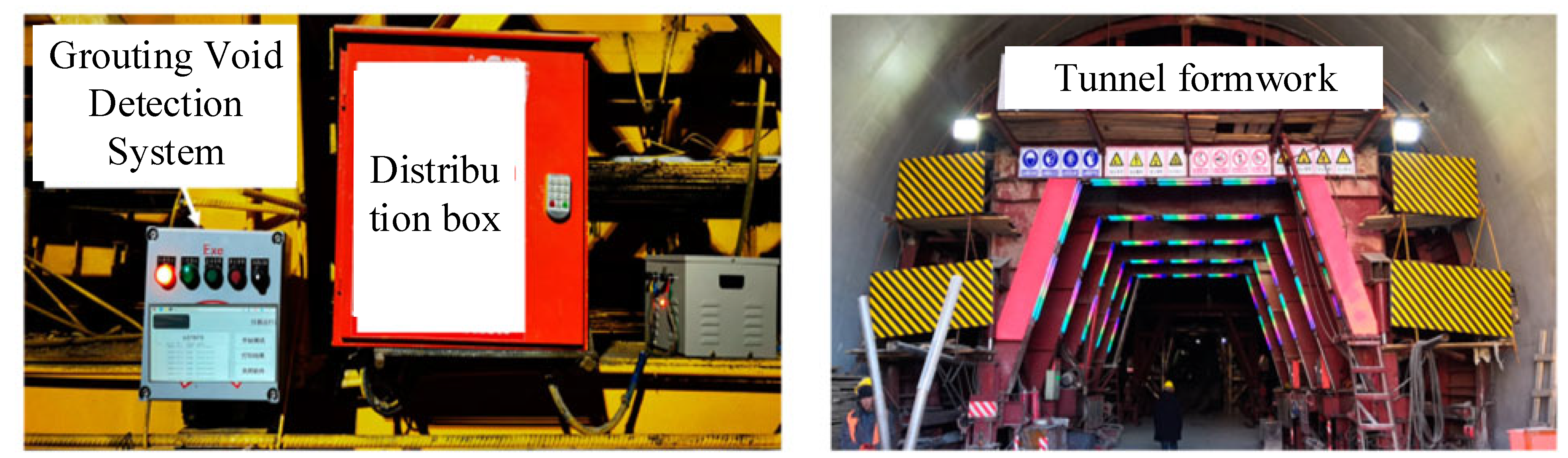
Figure 2. Schematic of tail grouting in shield tunnel construction.
Buildings 16 00097 g002

Figure 3. Schematic of segment grouting in shield tunnel construction.
Buildings 16 00097 g003
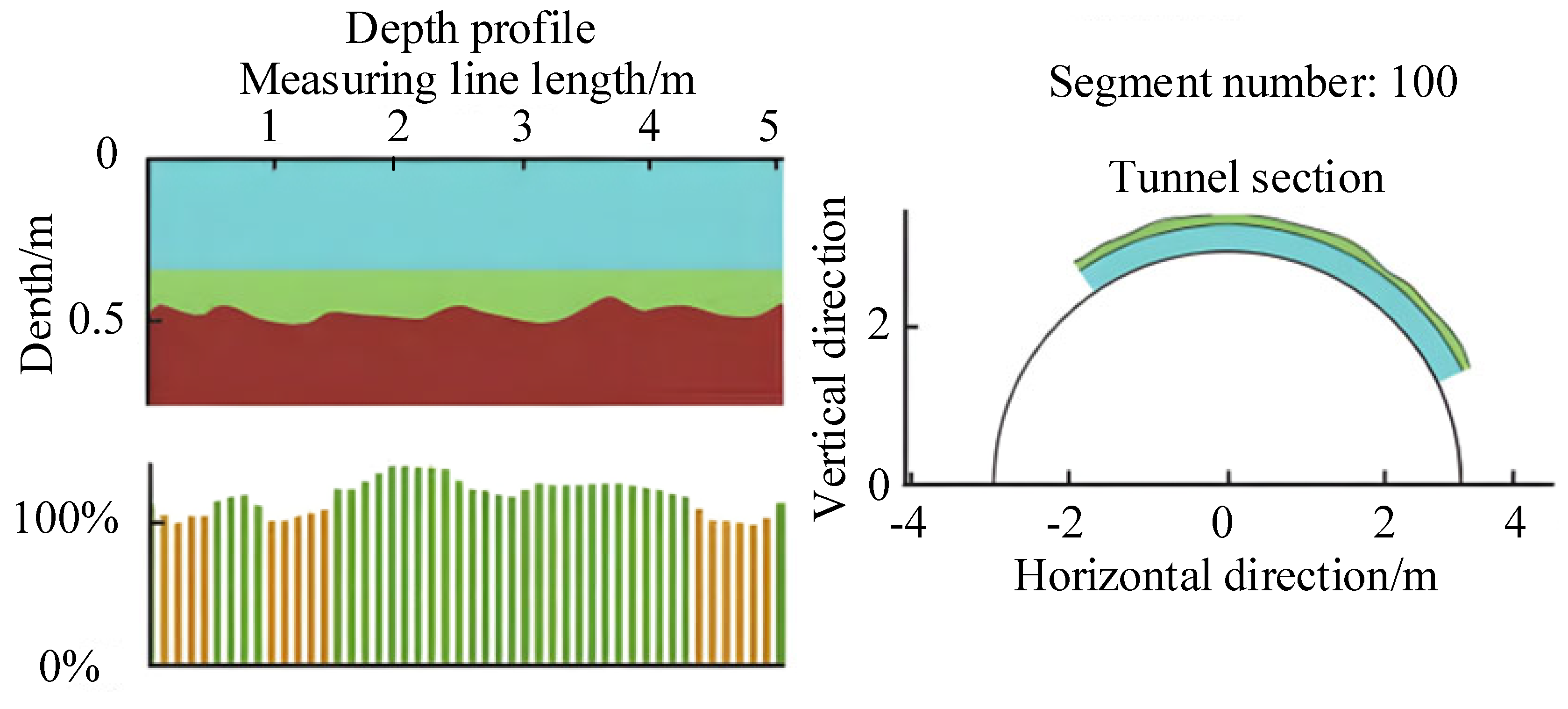
Figure 4. Schematic of the grouting construction process behind the wall. (a) Slurry preparation; (b) Shield machine grouting pump started; (c) Grouting shield tail gap; (d) Synchronous grouting adjustment (e) Sealing of grouting holes.
Buildings 16 00097 g004
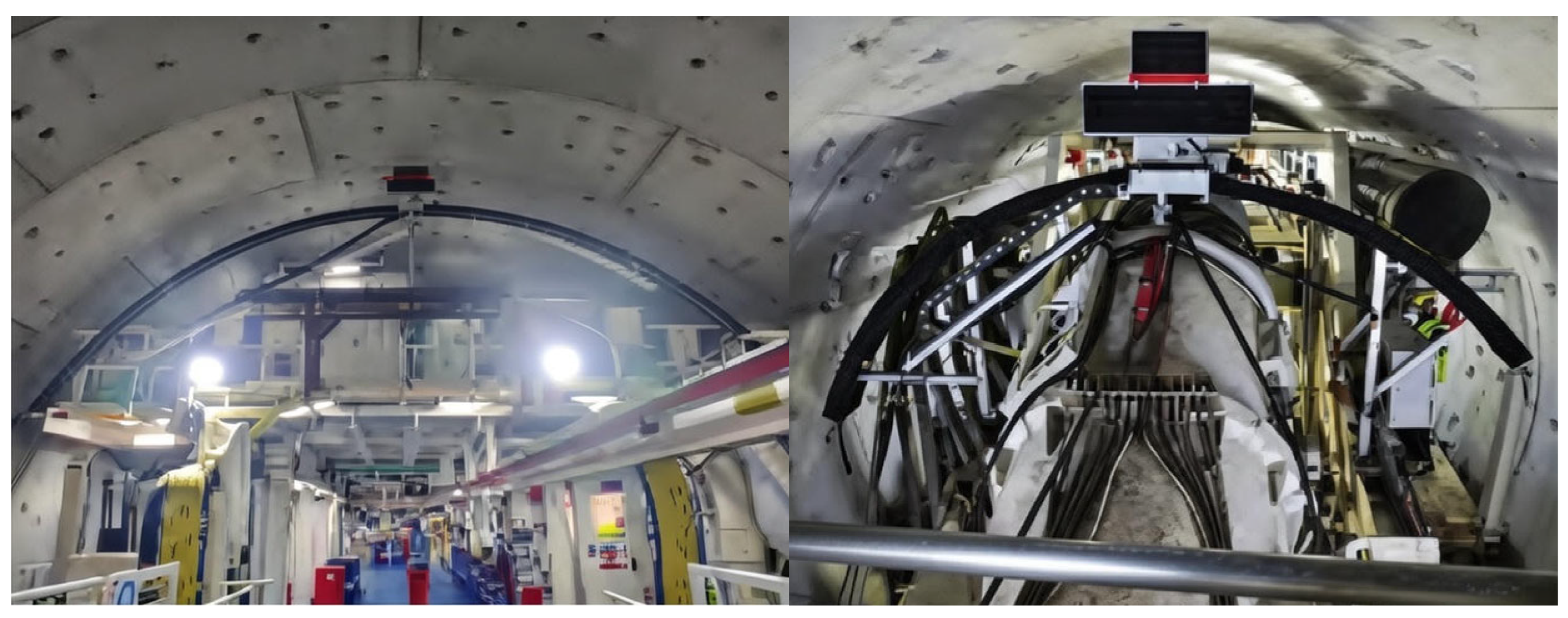
Figure 5. Schematic of the classification of grouting slurry.
Buildings 16 00097 g005
Figure 6. Schematic of grouting leakage during grouting construction.
Buildings 16 00097 g006
Figure 7. Schematic of stratum deformation during grouting construction.
Buildings 16 00097 g007
Figure 8. Principle of ground-penetrating radar (GPR) for grouting quality detection based on electromagnetic wave reflection. The red arrow indicates the transmission path, while the blue arrow indicates the reception path.
Buildings 16 00097 g008
Figure 9. Schematic of electromagnetic wave velocity measurement for segment lining [87].
Buildings 16 00097 g009
Figure 10. Schematic of numerical simulation inversion of metal plate reflection based on data [87].
Buildings 16 00097 g010
Figure 11. Figure of the application of GPR monitoring system in metro tunnel construction [89].
Buildings 16 00097 g011
Figure 12. Results of the real GPR data. (ac) represent measured GPR data, corresponding model, and the model prediction, respectively [100]. (a) GPR detection waveform; (b) Actual defect indication; (c) Predicted defect indication.
Buildings 16 00097 g012
Figure 13. Schematic of the principle of ultrasonic detection of post-wall grouting quality. Circular holes in the grout represent void defects, while F1, F2, and F3 denote echo peaks.
Buildings 16 00097 g013
Figure 14. Overall architecture of the tunnel structural defect detection network integrating sensing, data transmission, and analysis modules [104].
Buildings 16 00097 g014
Figure 15. Flowchart of the GA-VMD-SG noise reduction algorithm [105].
Buildings 16 00097 g015
Figure 16. The convergence result graph of the 32 optimized array elements [105].
Buildings 16 00097 g016
Figure 17. Schematic of the working condition of the numerical simulation model [108]. (a) single-layer reinforcement model; (b) double-layer reinforcement model; (c) different working conditions.
Buildings 16 00097 g017
Figure 18. Ultrasound detection of full-scale contrast-enhanced models [108]. (a) Full-scale segment model; (b) First ring segment in the clockwise direction; (c) Second ring segment in the clockwise direction; (d) Third ring segment in the clockwise direction; (e) Fourth ring segment in the clockwise direction; (f) Fifth ring segment in the clockwise direction.
Buildings 16 00097 g018
Figure 19. Contrast-enhanced ultrasound detection results of the full-size model [108].
Buildings 16 00097 g019
Figure 20. Schematic of the principle of impact-echo method detection of post-wall grouting quality. F1, F2, and F3 denote echo peaks.
Buildings 16 00097 g020
Figure 21. Impact-echo data acquisition for grouting quality evaluation [78].
Buildings 16 00097 g021
Figure 22. Impact echo data analysis [78].
Buildings 16 00097 g022
Figure 23. New type of impact load application device [112].
Buildings 16 00097 g023
Figure 24. The detection process of the impact echo method [112]. Model to be tested and simplified structural diagram of the model to be tested.
Buildings 16 00097 g024
Figure 25. Schematic of prefabricated defective specimens [113]. (a) Actual structural model; (b) Structural model diagram.
Buildings 16 00097 g025
Figure 26. Schematic of the structure of the prefabricated defective specimen [113]. The dashed line represents the central axis of the structure.
Buildings 16 00097 g026
Figure 27. Schematic of the lining effect of the sensor installation segment [117].
Buildings 16 00097 g027
Figure 28. Schematic of sensor principle [117].
Buildings 16 00097 g028
Figure 29. Schematic of the pad type ground pressure gauge installation diagram [118].
Buildings 16 00097 g029
Figure 30. Schematic of pore water pressure gauge installation [118].
Buildings 16 00097 g030
Figure 31. Schematic of the monitoring device installation [26].
Buildings 16 00097 g031
Figure 32. Schematic of the monitoring device [26].
Buildings 16 00097 g032
Figure 33. Schematic of Raspberry PI device [119].
Buildings 16 00097 g033
Figure 34. Schematic of the wire embedded in the lining structure [119].
Buildings 16 00097 g034
Figure 35. Internet of things system for synchronous grouting gap detection in tunnels [119].
Buildings 16 00097 g035
Figure 36. Schematic of cloud-edge-device architecture [120].
Buildings 16 00097 g036
Figure 37. Intelligent real-time analysis results of grouting behind the wall [120].
Buildings 16 00097 g037
Figure 38. On-site application of the frame-traveling inspection device [120].
Buildings 16 00097 g038
Figure 39. Representative rheological models and constitutive equations of typical fluids relevant to grouting slurries [131].To systematically analyze the diverse theoretical approaches, we classify existing grout diffusion models along two primary dimensions: temporal treatment and spatial representation.
Buildings 16 00097 g039
Figure 40. Schematic of grouting penetration effect [134].
Buildings 16 00097 g040
Figure 41. Slurry hemispherical diffusion model [134].
Buildings 16 00097 g041
Figure 42. A semi—circular and leading edge combined diffusion model of grouting slurry for rectangular shield tunnels [135].
Buildings 16 00097 g042
Figure 43. On-site installation of pressure sensors [135]. (a) pressure sensor assembly; (b) sensor fixed to a segment of reinforcement; (c) sensor welding and protection; (d) cable access box; (e) test segment pouring; (f) three types of pressure gauges in the segment of the external arc outside of the mould.
Buildings 16 00097 g043
Figure 44. Schematic of grouting infiltration in the stratum [131].
Buildings 16 00097 g044
Figure 45. Nonlinear spring model for grouting consolidation after tunnel lining [137].
Buildings 16 00097 g045
Figure 46. Spatial distribution of grout pressure during the grouting process around the tunnel [140].
Buildings 16 00097 g046
Figure 47. Two distributions of initial grout pressure PG around the tunnel for Metro Lines No. 9 [144]. (a) Hydraulic pressure gradient around the tunnel; (b) Variation of grouting pressure with depth.
Buildings 16 00097 g047
Table 1. Comparative table of GPR-based nondestructive testing for grouting quality.
LiteratureApplication/Simulation/ExperimentTechnical DetailsObjectiveEffect
[91]2 × 1.8 × 1 m numerical model,
Shanghai Metro, China
GPR detection and data experienceDetect grouting and prevent settlementClassified three grouting states, linked to settlement
[92]Kaiyuan Tunnel, ChinaGPR and FDTD methodAssess reinforcement, defectsreinforcement, defects
Identified dielectric changes
[89]Jinan Metro R3 line, ChinaThe GPR monitoring system in shield machineReal-time grouting checkMinute-level monitoring, timely feedback
[93]1.0 × 1.2 m numerical modelGPR detection, Markov chain and Bayesian inferenceEstimate layer thicknessAccurate estimation, parameters converged
[87]Shanghai Metro 9 line, ChinaMulti-frequency GPR (250–1000 MHz) detectionMonitor grouting, prevent settlement500 MHz gave best balance of depth and resolution
[88]Full scale model, Tianjin Metro 6 line, ChinaGPR and BBP-XGBoost algorithmMeasure annular grout thicknessAccurate and efficient
[94]Numerical simulation and Nanchang Metro 1 line, ChinaGPR and FDTDThickness and defect detectionMost layers about 30 cm, cracks need regrouting
[90]Shanghai Metro 12, ChinaBi-frequency back-projectionGrout distribution mappingLocated rebar, thickness, and defects
[95]Highway tunnel, NorwayGround-coupled GPRDetect defects1.5 GHz for large blocks; 2.6 GHz for smaller
[96]Full scale 5.4 m tunnel modelOptimized antenna spacingImprove resolution5~10 cm spacing best for detection
[97]Numerical simulation and
Rondout tunnel, The United States
Inversion test and GPRDetect voids and leakage900 MHz most effective
[45]Full scale model and
Yangtze River Tunnel, China
Catboost & BO-TPE model and GPRPredict grout thicknessHigh accuracy, works in complex strata
[79]Yingbin No. 3 Tunnel, ChinaBand-pass algorithm and K-L transform algorithmMeasure grout thicknessBetter signal, clearer imaging
[31]3 m scaled segment modelGPR and Res-RCNN algorithmAuto defect recognitionDetected voids, cracks automatically
Table 2. Comparative analysis table of monitoring and evaluation methods for backfill grouting effectiveness in shield tunnels.
MethodPhysical PrincipleKey StrengthsCritical WeaknessesOperational Constraints
Ground-Penetrating Radar (GPR)Electromagnetic wave reflection (Dielectric constant)High efficiency; Continuous scanning; Non-contactShielding effect from rebar; High attenuation in water-rich clay; Limited depth vs. resolution trade-offRequires skilled interpretation of radargrams; Best for unreinforced or lightly reinforced linings
Ultrasonic (UT)Elastic wave propagation (Acoustic impedance)Immune to EM interference; Penetrates dense rebar; Can use phased arrays for imagingHigh signal attenuation in loose materials; Requires coupling agent; Slow point-by-point data acquisitionSensitive to environmental noise; Interpretation of interface echo is complex
Impact-Echo (IE)Low-frequency stress wave reflectionEvaluates stiffness/mechanical properties; Deep penetration; Simple equipmentOperator dependent (manual impact); Non-stationary signals; Spurious frequencies“Point-load” nature makes large-area scanning difficult; Relies on consistent impact force
Sensor MonitoringDirect measurement (Pressure/Conductivity)Real-time feedback; High accuracy; Direct detection of voids/pressureHigh installation & maintenance cost; Discrete data points (low spatial resolution); Vulnerable to survival rateSensors must be pre-installed; Cannot detect defects formed after sensor lifespan
Table 3. Comparative summary of representative grout diffusion models in shield tunneling.
Model CategoryAssumptions and MechanicsApplicable ConditionsKey Limitations
Hemispherical/Spherical DiffusionAssumes isotropic porous mediaHigh permeability sandy strataNeglects anisotropy of soil permeability
Analytical/Steady State FlowBingham fluid modelRectangular or circular tunnels in homogeneous soilIgnores time dependent viscosity hardening
NumericalLagrangian or Mesoscopic kinetics; Handles complex boundariesComplex void geometries.High computational cost; difficult to calibrate micro parameters against field data.
Multi field CouplingConsiders consolidation and effective stress transferDeformable soft soils; Post grouting consolidation phaseRequires complex parameter input often unavailable in situ
Disclaimer/Publisher’s Note: The statements, opinions and data contained in all publications are solely those of the individual author(s) and contributor(s) and not of MDPI and/or the editor(s). MDPI and/or the editor(s) disclaim responsibility for any injury to people or property resulting from any ideas, methods, instructions or products referred to in the content.