Article

Influence of Nano-Silica and Porosity on the Strength and Permeability of Permeable Concrete: An Experimental Study


1
Department of Architectural Engineering, Jiangxi Polytechnic University, Jiujiang 332007, China
2
School of Civil Engineering, Shenyang Jianzhu University, Shenyang 110168, China
3
Department of Mechanical Engineering, The University of Western Australia, Perth, WA 6009, Australia
*
Author to whom correspondence should be addressed.
Buildings 2026, 16(1), 148; https://doi.org/10.3390/buildings16010148

Submission received: 5 December 2025 / Revised: 23 December 2025 / Accepted: 24 December 2025 / Published: 29 December 2025

Abstract

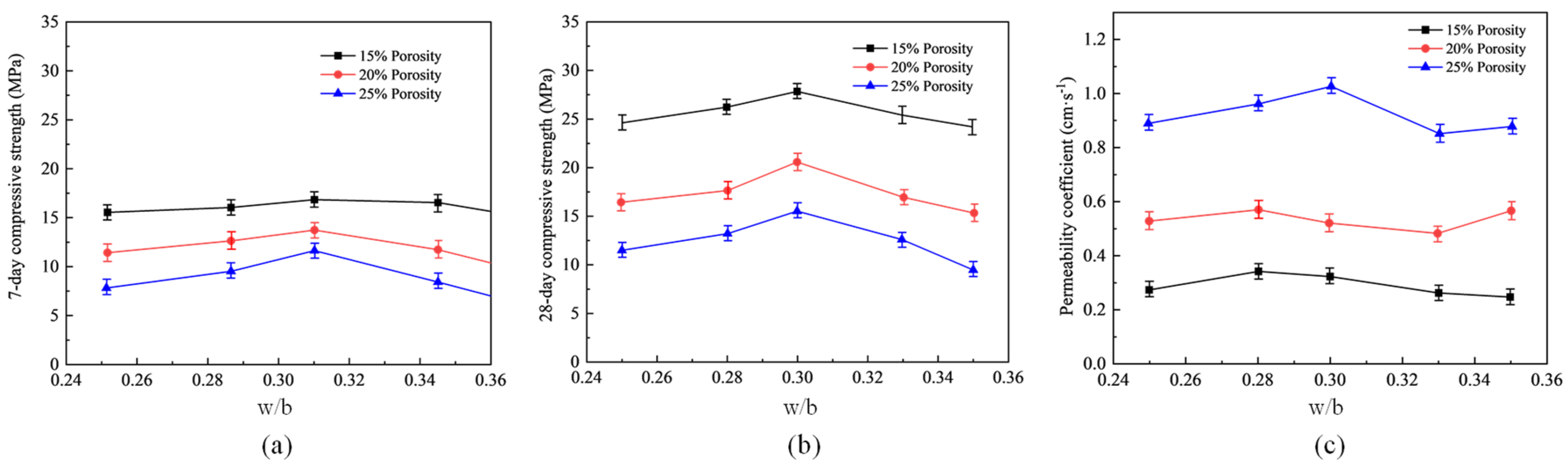
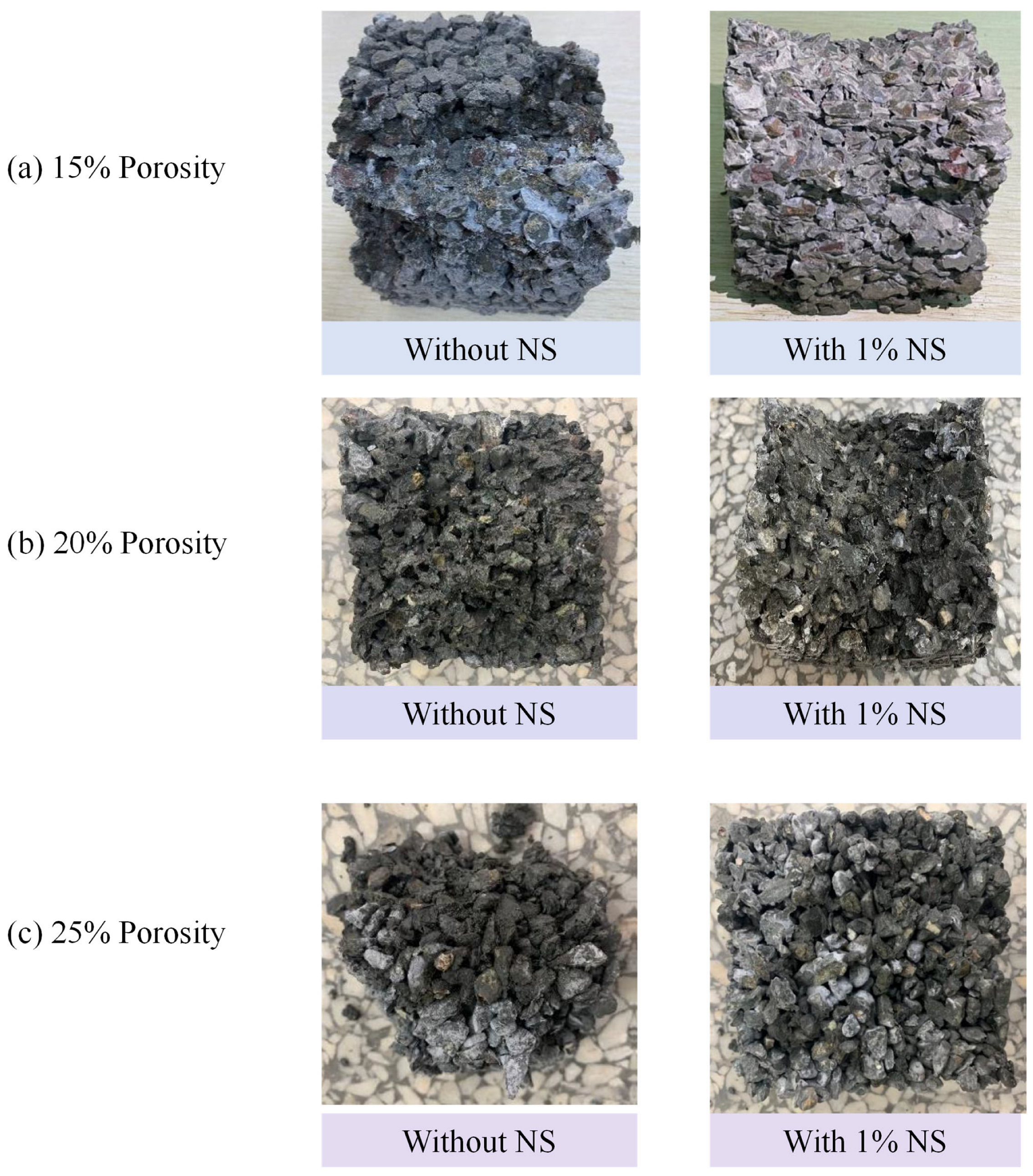
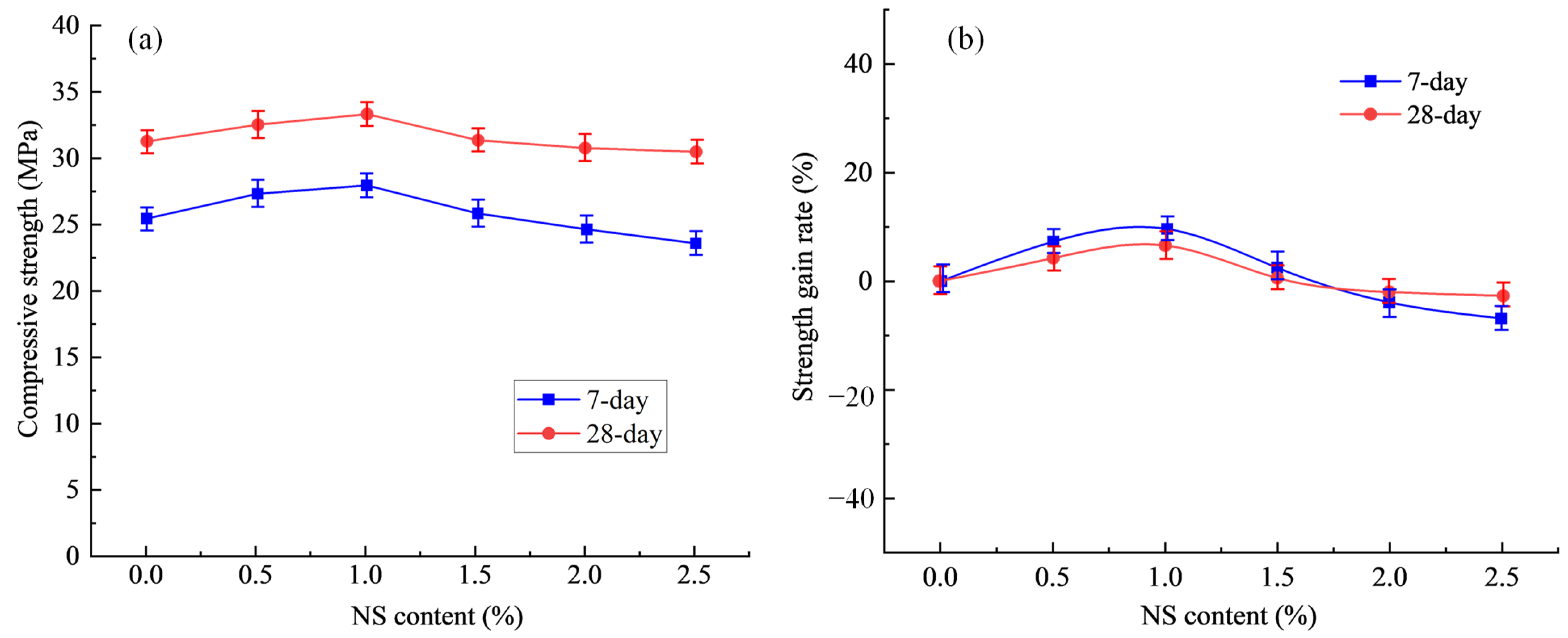
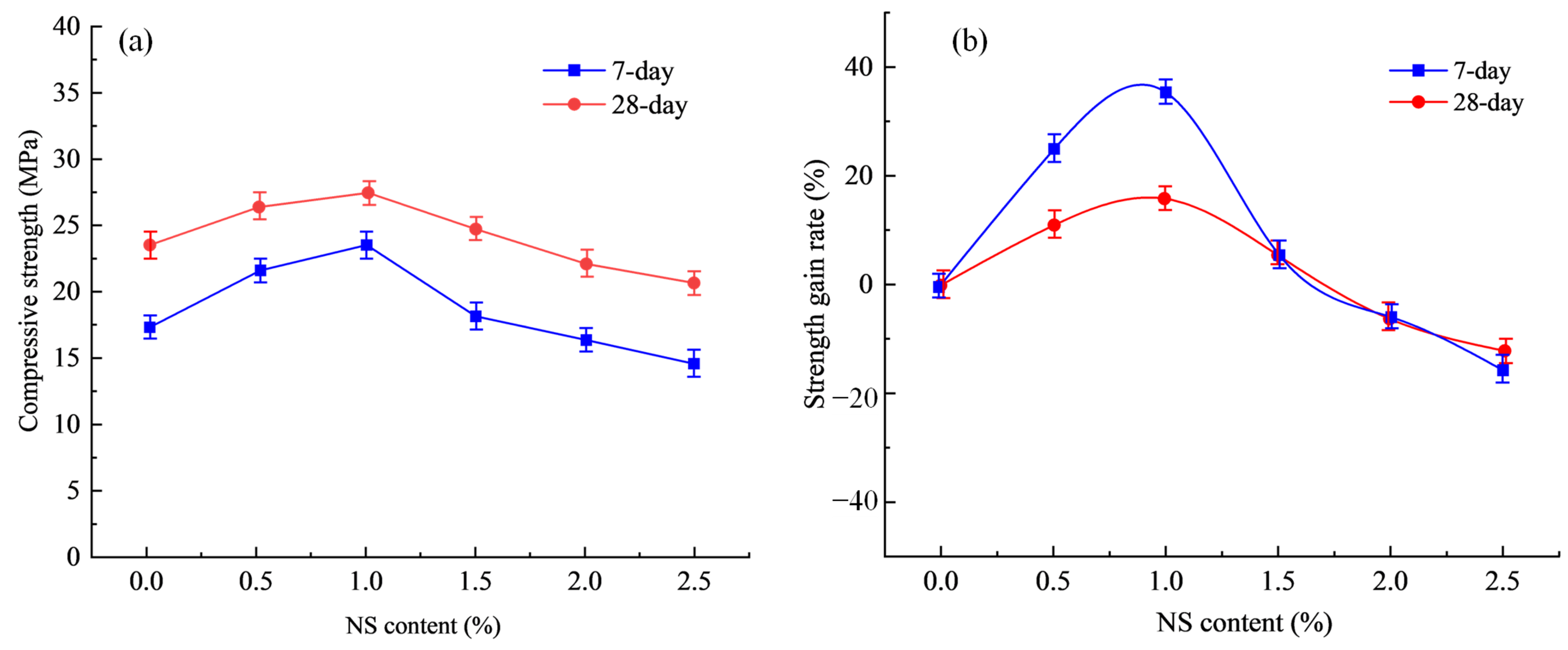
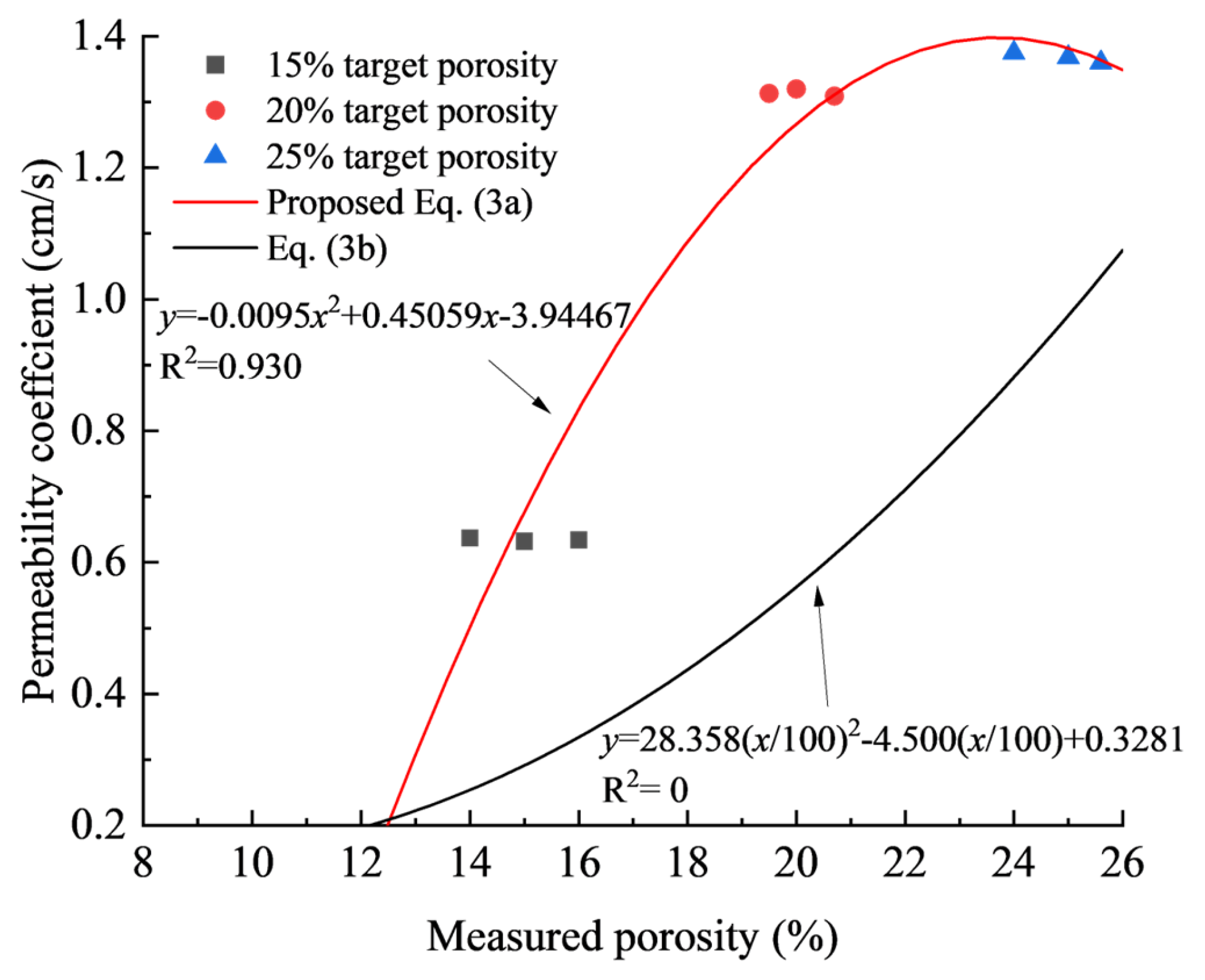
Strength and the permeability coefficient are recognized as the two main design parameters for permeable concrete. Although adding an appropriate amount of nano-silica (NS) can enhance the slurry strength and enhance the bond between the aggregate and cementitious material, research on the combined effects of porosity and NS on the behavior of permeable concrete is limited. An experimental program was carried out to demonstrate the impact of NS on the permeability (K) and strength (fc) of permeable concrete. The tested variables included the NS content (0, 0.5, 1.0, 1.5, 2.0, and 2.5%) and the porosity (p = 15, 20, and 25%), following the identification of an optimal water-to-binder (w/b) ratio of 0.3. It was found that the addition of NS alters the failure mechanism by transferring the critical failure location from the cementitious matrix to aggregate particles. An additive of 1% NS shows the most significant enhancement in the concrete strength, with improvement efficacy increasing substantially with the porosity. Specifically, the 28-day strength of permeable concrete modified with 1% NS increased by 6.4%, 16.1%, and 38.5% for mixes with 15%, 20%, and 25% porosity, respectively. Meanwhile, NS improves the permeability with 0.5% dosage, providing the most effective enhancement. Finally, an empirical expression between permeability and porosity was developed based on the test results, which allows engineers to calculate the required porosity (e.g., p ≈ 17% for K = 1.0 cm/s) to meet specific permeability in pavement applications.
Keywords: NS modified permeable concrete; porosity; permeability coefficient; failure mode; experimental study NS modified permeable concrete; porosity; permeability coefficient; failure mode; experimental study