


Abstract
This study proposes and evaluates a prefabricated steel-fiber-reinforced concrete (SFRC) wall-panel system for flexural performance. Material tests were used to calibrate and validate a compression stress–strain model for SFRC with good predictive accuracy. Finite element analyses quantify the panels’ flexural capacity and the effects of wythe thickness, connector spacing, and connector layout. Results show that adding glass-fiber grids produces synergy with steel fibers, improving the composite wall system’s flexural performance. Relative to plain-concrete panels, SFRC panels exhibit 29.5% lower peak strain and 27.2% higher peak stress. FE analyses indicate that shortening the connector length reduces flexural capacity. Within the studied range, a 200 mm connector spacing delivers the best structural performance. A full-height connector layout is recommended to ensure structural integrity.
1. Introduction
Prefabricated components are a major research focus [1,2,3,4,5]. Owing to shorter construction time, improved quality, and reduced energy use, prefabricated systems are widely adopted across diverse structural applications [6,7,8,9,10]. As key building envelope components, concrete wall panels are evolving toward lower weight, higher energy and environmental performance, and greater load-carrying capacity and toughness [11,12]. Common insulated wall types include interior insulation, exterior insulation, and sandwich panels.
Prefabricated concrete sandwich panels comprise two precast concrete wythes and a core insulation layer connected by mechanical connectors. These panels deliver economic, social, and environmental benefits and align with the trends of industrialized construction and building energy efficiency [13]. The flexural performance of sandwich wall panels has received extensive attention, and numerous studies have been reported. Yu et al. [14] developed an ECC–RC composite sandwich panel and conducted four-point bending tests and FE analyses; ECC markedly improved flexural performance, and maximum crack width remained well below the serviceability limit. Mugaged Amran et al. [15] demonstrated that precast foamed concrete sandwich panels can serve as an alternative to conventional concrete slab systems. Morcous et al. [16] experimentally investigated composite UHPC sandwich wall panels and found that UHPC can enhance panel performance while reducing thickness and mass. Mahdi et al. [17] conducted experimental and theoretical studies on a new composite sandwich wall panel, showing that partially replacing the core with EPS reduces self-weight without compromising flexural capacity. Meng et al. [18] performed experimental and mechanical studies on FRP-fabric-reinforced UHPC panels and reported that GFRP fabrics can further increase flexural capacity. Abeysinghe et al. [19] examined an innovative hybrid composite floor plate system (HCFPS); it showed high stiffness and excellent flexural performance, with self-weight reduced by 50–70% compared with conventional slabs. These studies primarily optimize concrete materials in composite panels, advancing lighter and stronger designs.
Connectors in sandwich panels tie the exterior and interior wythes into a single unit and carry the exterior wythe’s self-weight as well as wind and seismic actions. Therefore, the composite action of sandwich wall panels primarily depends on the type and layout of the connectors [13]. O’Hegarty et al. [20] tested and performed FE analyses on FRC sandwich panels with foam insulation and FRP connectors; all panels failed in ductility, showing high strain energy and large displacements before ultimate failure. Huang et al. [21] confirmed that FRP connectors enhance the composite action of sandwich wall panels. Shin et al. [22] reported that composite action depends on the number of shear connectors; increasing the number improves load-carrying and deformation capacities. Jiang et al. [23] examined the effects of the number and layout of W-shaped steel–GFRP shear connectors on performance. Gombeda et al. [24] experimentally showed that increasing the amount of shear reinforcement improves overall flexural capacity and ductility.
This study combines low-conductivity, low-density XPS with SFRC, incorporates glass-fiber grids, and employs steel-truss connectors to propose a prefabricated SFRC wall-panel system. A constitutive model for SFRC is calibrated from material tests, and FE analyses quantify the effects of wythe thickness, connector spacing, and connector layout on the panels’ structural response. Design recommendations are provided to inform subsequent design and application.
2. Experiment on Steel-Fiber-Reinforced Concrete
An experimental program was conducted to characterize the mechanical properties of SFRC with varying fiber contents. Four groups (12 specimens in total) were cast to evaluate SFRC compressive strength versus fiber content.
2.1. Experimental Program
2.1.1. Materials
Raw materials for SFRC included cement, water, fine aggregate (sand), coarse aggregate, a water-reducing admixture, and steel fibers. The mixtures incorporated P.O 42.5R cement, Grade II fly ash, and silica fume as the primary cementitious materials (Sibirskiy Cement Holding Co., Krasnoyarsk, Russia). Material properties are summarized in Table 1, Table 2 and Table 3.
Table 1.
Technical parameters of cement.
Table 2.
Chemical composition of fly ash (%).
Table 3.
Chemical composition of silica fume (%).
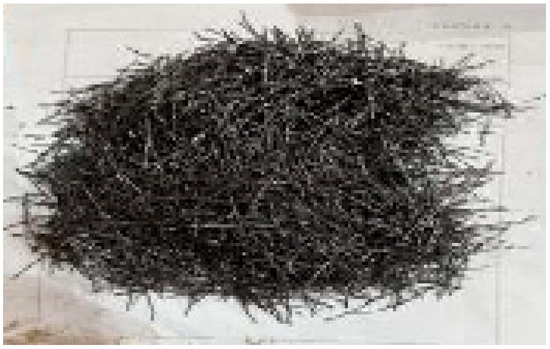
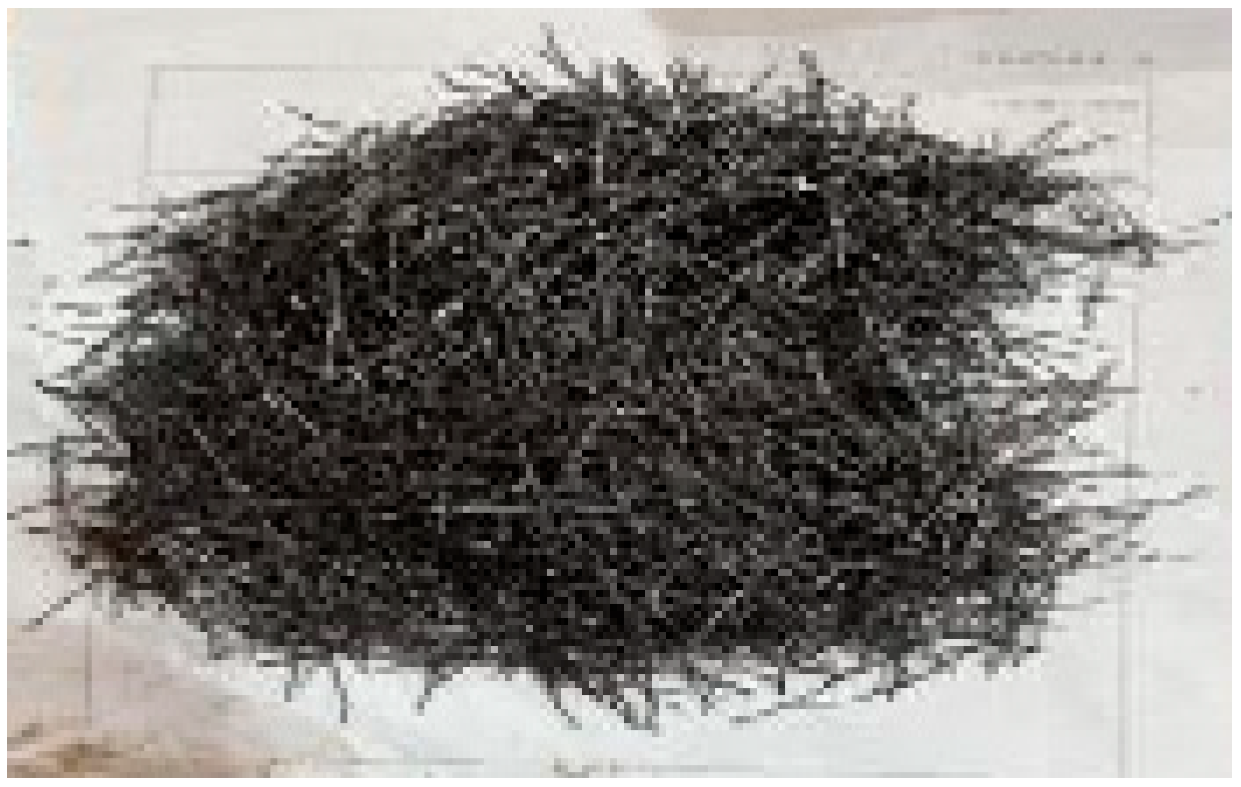
Straight steel fibers (Bekaert Lipetsk LLC, Lipetsk, Russia) were used; geometry and properties are shown in Figure 1 and Table 4. Specimens were cast by pouring the fresh mix into molds and compacting them on a standard vibrating table to achieve density; fiber orientation in the matrix was assumed to be random and three-dimensional.
Figure 1.
Steel fibers.
Table 4.
Properties of steel fibers.
2.1.2. Mix Design
According to ACI 544.1R-96 [25], the fiber volume fraction in concrete is typically not greater than 2%. Consequently, four mixtures were designed with fiber volume fractions of 0%, 0.5%, 1.0%, and 1.5%. The mixture proportions are listed in Table 5.
Table 5.
Mix proportions by group/(kg/m3).
2.2. Experimental Results
2.2.1. Failure Modes
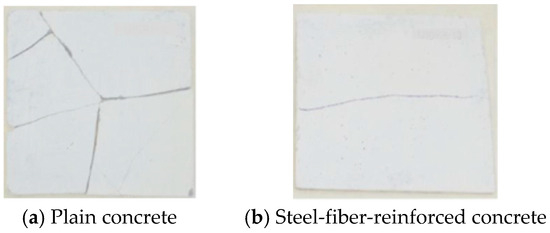
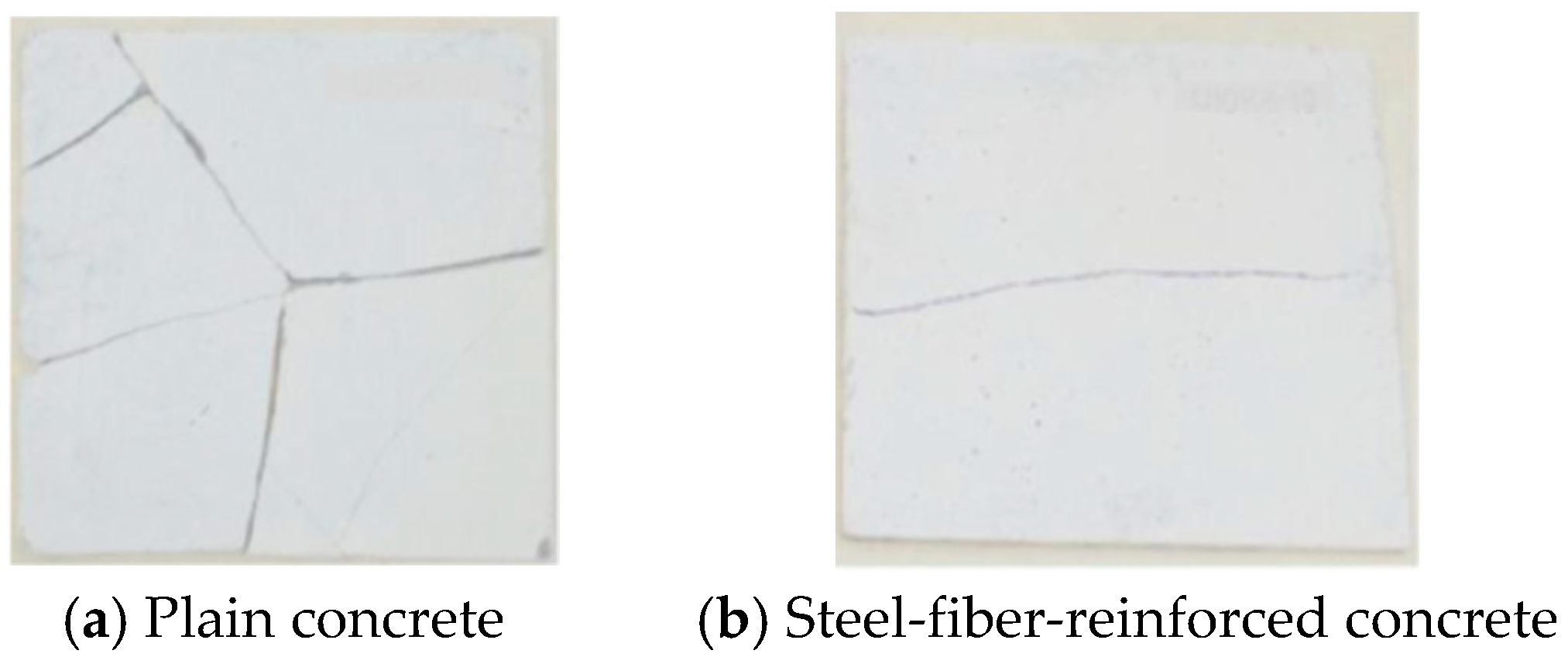
Figure 2 illustrates the failure modes of the specimens. Plain concrete specimens (0% fiber) developed multiple diagonal surface cracks at early loading stages. As loading continued, crack widths increased. This response was characteristic of brittle failure. Compared with plain concrete, SFRC specimens exhibited delayed crack initiation under compression. SFRC specimens ultimately exhibited fewer cracks, indicating effective fiber bridging and crack restraint.
Figure 2.
Failure modes of concrete specimens.
2.2.2. Experimental Results and Analysis
In accordance with GB/T 50081–2019 [26], the reported strength is the arithmetic mean of three replicate specimens, rounded to the nearest 0.1 MPa. As summarized in Table 6, the cube compressive strength increased with the steel-fiber volume fraction (Vf). Relative to Vf = 0.0%, the increases were 5.7%, 7.8%, and 9.4% for Vf = 0.5%, 1.0%, and 1.5%, respectively. The strength gain exhibited diminishing returns with increasing Vf. This trend is consistent with prior reports [27,28]. The conclusion regarding fiber content is confined to material-level results for the tested mix design and was used solely to calibrate the compressive constitutive parameters of SFRC; it is not extrapolated to member-level flexural analysis.
Table 6.
Compressive performance of cube specimens.
2.2.3. Fitting of Axial Compression Stress–Strain Curves
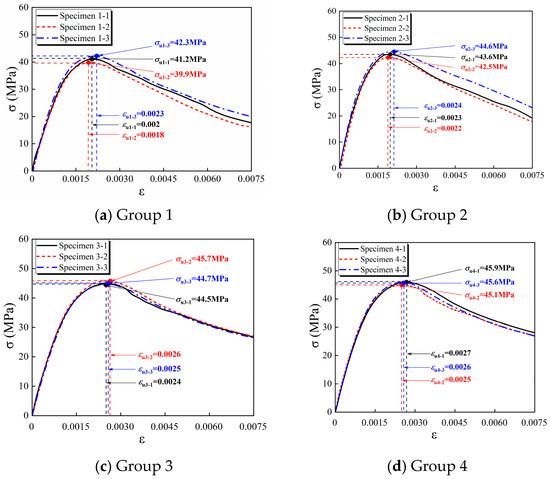
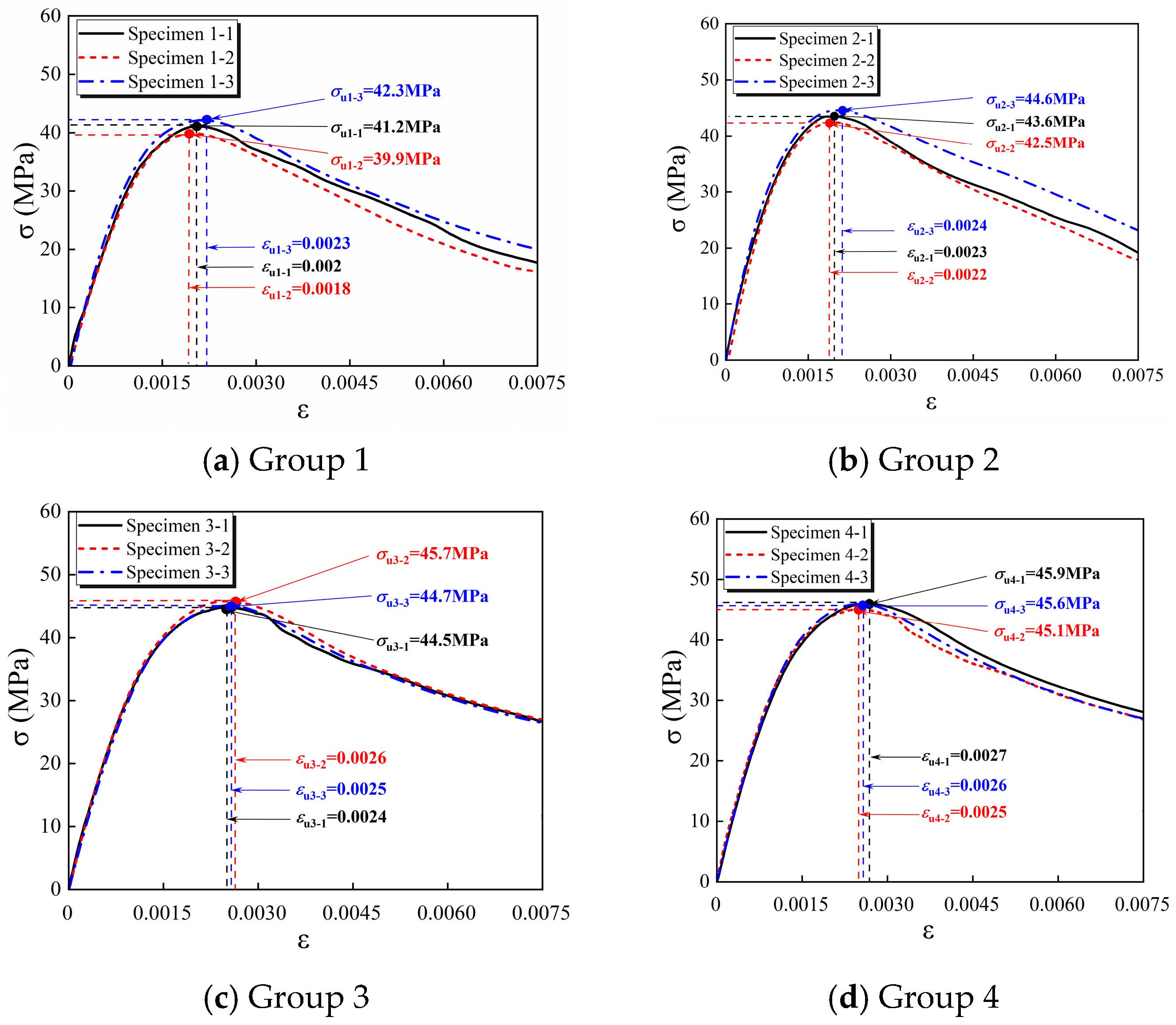
Following the mix proportions in Table 5, four groups (12 total) of standard 150 × 150 × 300 mm prismatic specimens were prepared. Per CECS 13:2009 [29], a YAW-5000 (Jinan Hansen Precision Instrument Co., Ltd., Jinan, China) electro-hydraulic servo testing machine (500 t) was used to record complete SFRC stress–strain responses under uniaxial compression. Figure 3 shows representative axial stress–strain curves for the four mix groups.
Figure 3.
Axial stress–strain curves of concrete specimens.
Building on Guo Zhenhai’s concrete model, a piecewise axial compression stress–strain law was adopted and calibrated for the SFRC mixture used herein, as given in Equation (1) [30]:
where σ is compressive stress; fc is the uniaxial compressive strength; ε is axial compressive strain; εc is the peak strain at fc; parameters a and b control the pre-peak curvature and post-peak softening, respectively.
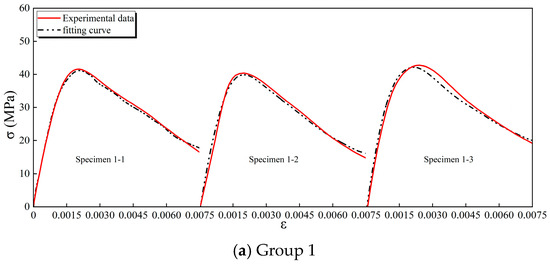
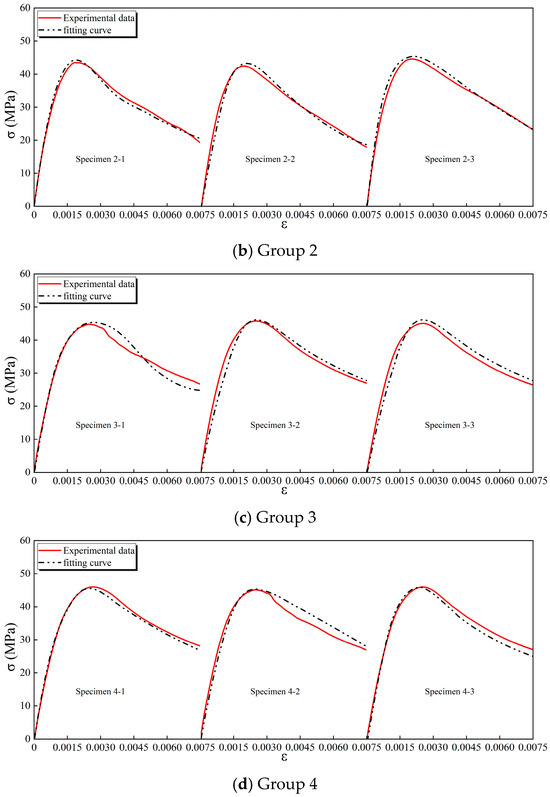
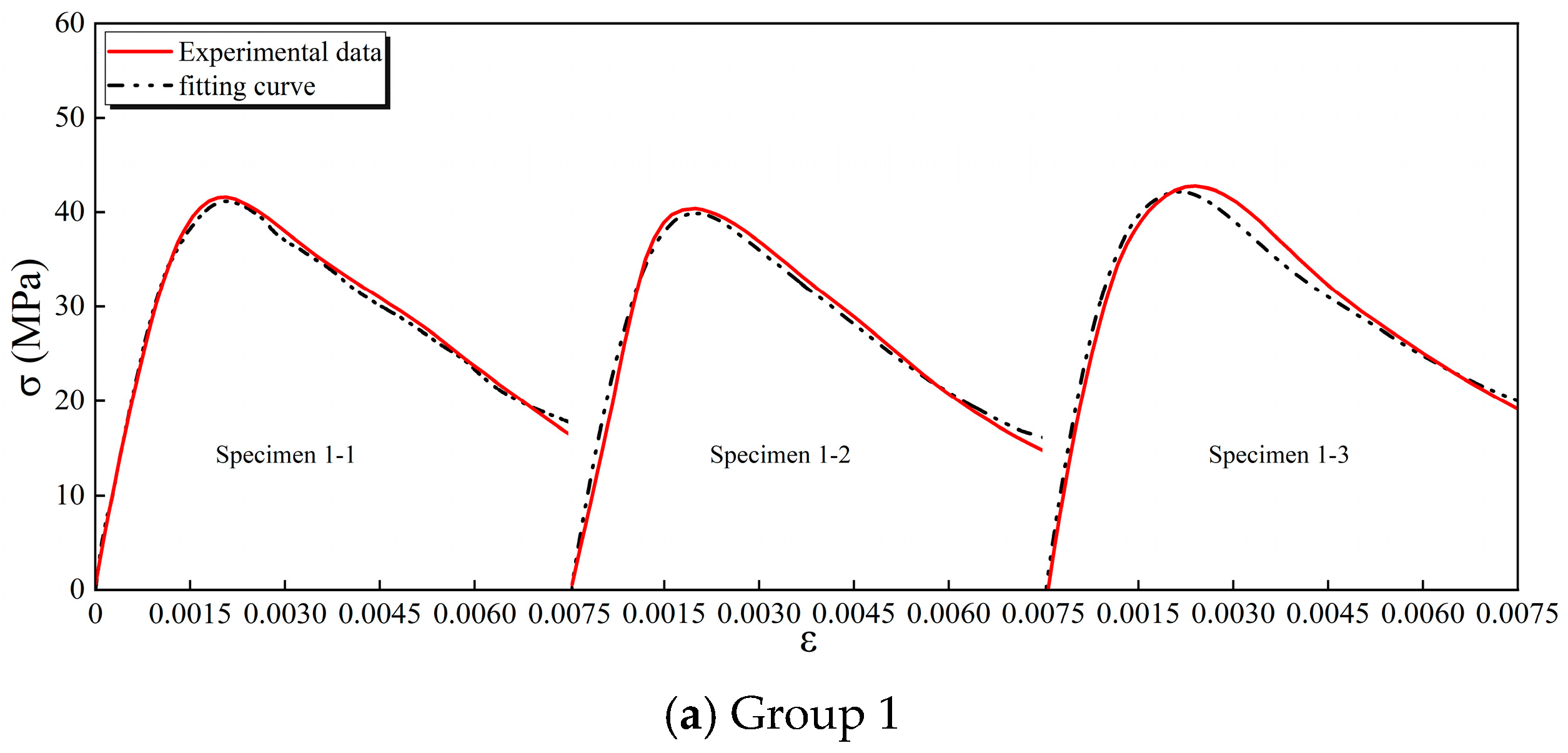
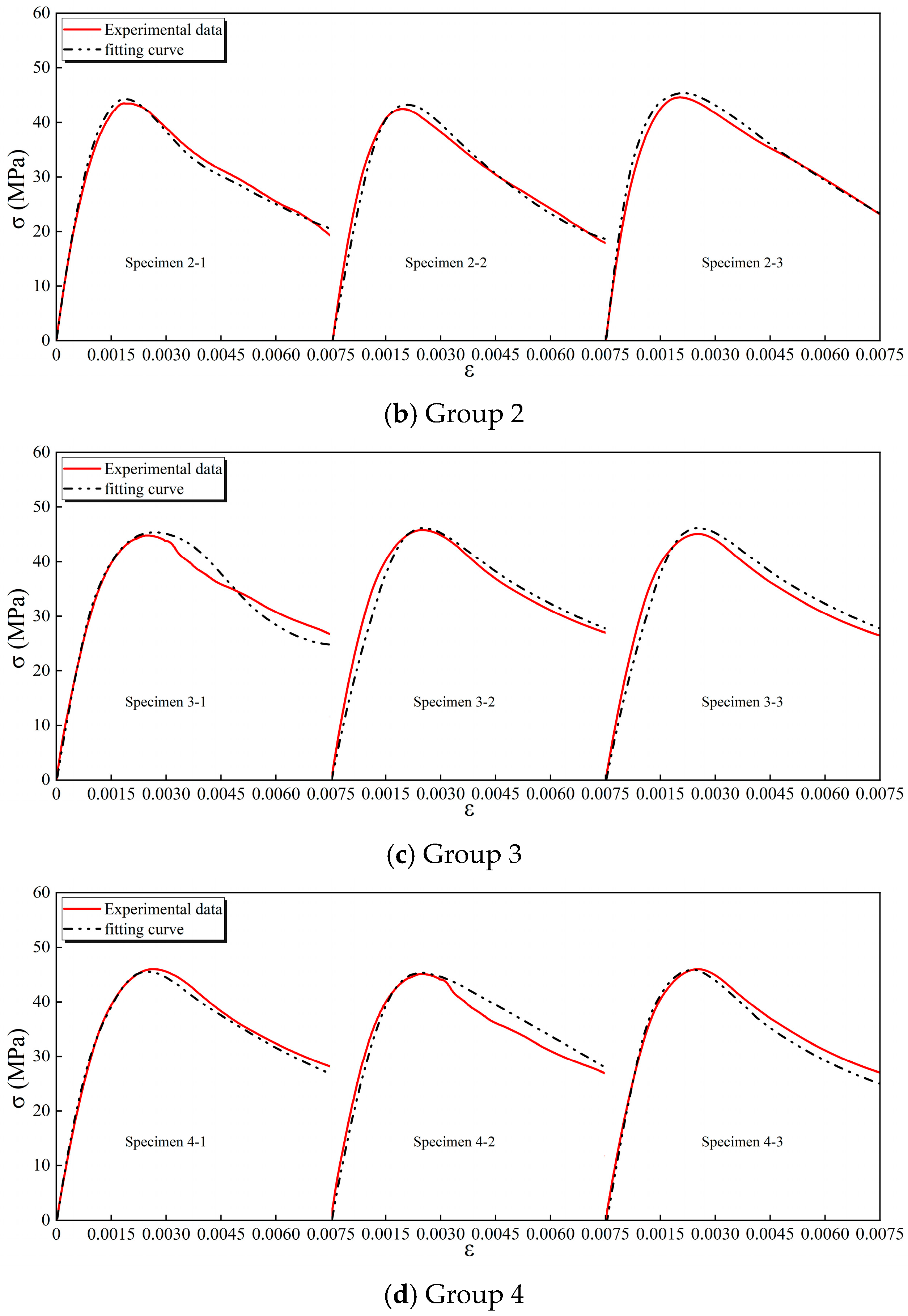
The experimental stress–strain data are fitted to Equation (1) via nonlinear regression, and the fitted curves are shown in Figure 4. The fitted curves agree well with the test data and capture the constitutive response of the concrete used.
Figure 4.
Model fits to concrete stress–strain data.
To quantify relations between the model’s shape parameters and key material properties, least-squares regression was used to derive predictive expressions for parameters a and b as functions of compressive strength and fiber variables:
where f is the uniaxial compressive strength, λf is a fiber characteristic value, ρf is the steel-fiber volume fraction (by volume), and lf/df is the fiber aspect ratio. For zero fiber content (λf = 0), the calibrated parameters are a = 1.50728 and b = 2.51253.
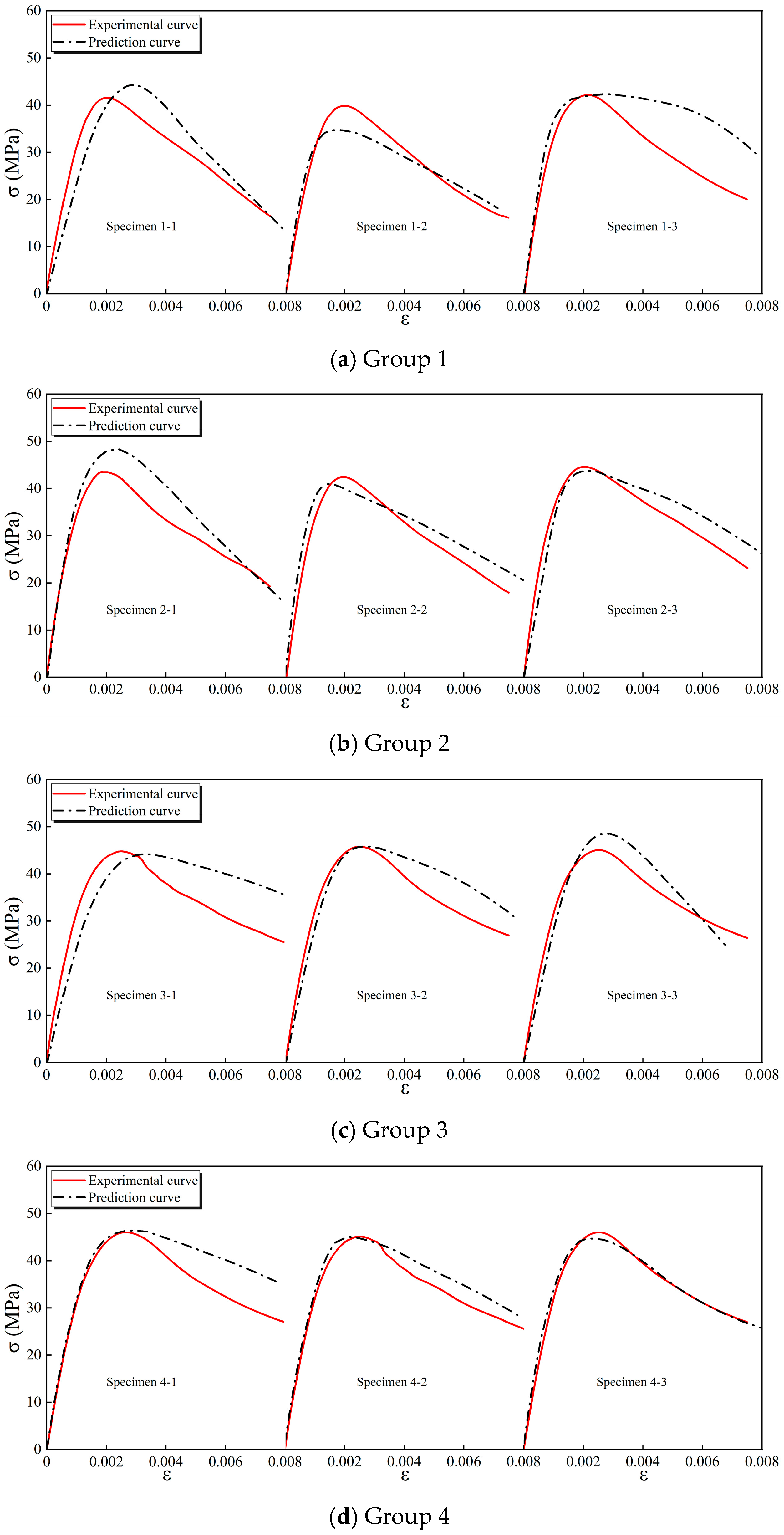
For validation, the fitted shape-parameter relations were used to compute a and b, which were substituted into Equation (1). The resulting curves were compared with the experimental data (Figure 5). Statistically, the predicted-to-measured strength ratio had a mean of 0.97, a standard deviation of 0.025, and a coefficient of variation of 0.017. These validations indicate that the proposed shape-parameter relations and the calibrated constitutive model reproduce the SFRC response with high accuracy. The model is suitable for nonlinear FE analysis (ABAQUS 2020) of SFRC wall panels.
Figure 5.
Comparison of predicted and experimental stress–strain curves.
3. Finite Element Analysis
3.1. Wall-Panel Design
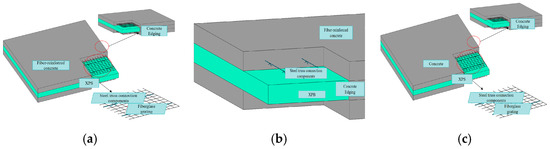
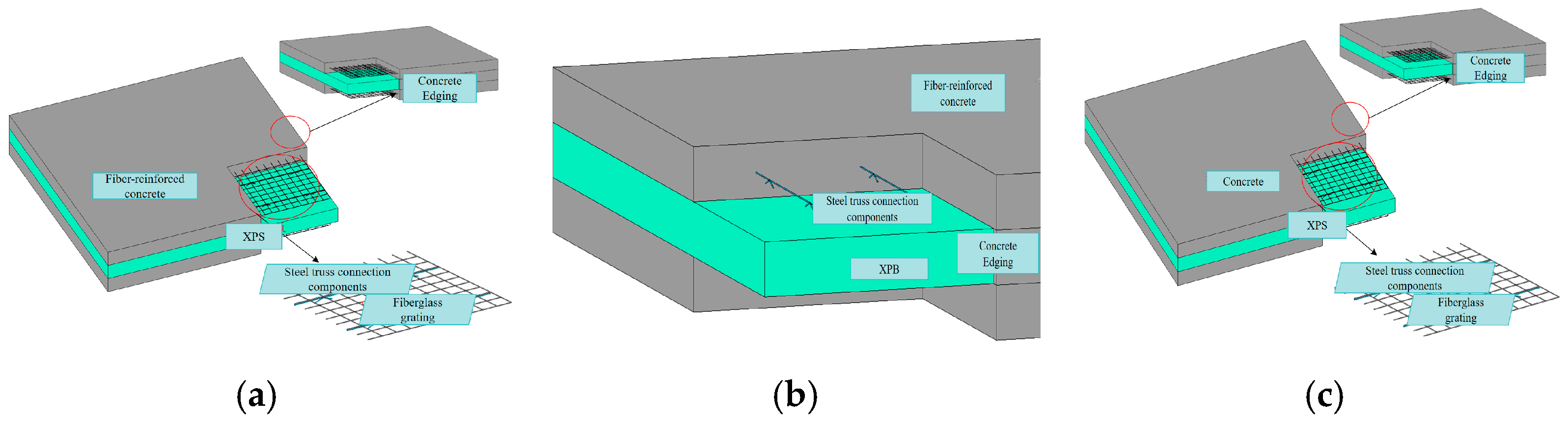
Three wall-panel types were designed: (i) SFRC panels, (ii) SFRC panels with glass-fiber grids, and (iii) plain-concrete panels with glass-fiber grids. Plain-concrete panels with glass-fiber grids served as the control. These three panel types isolate the contributions of steel fibers and glass-fiber grids to sandwich-panel mechanics and enable comparison with plain-concrete and non-grid configurations at the macro scale. To ensure consistency, all finite element (FE) models (ABAQUS 2020) used panels with overall dimensions of 4000 × 3000 × 150 mm (length × height × thickness). The glass-fiber grids used a uniform 25.4 mm square mesh. Per Chinese standard 08SJ110-2 [31] for prefabricated concrete façades, these dimensions fall within the full-span panel classification. The vertical edges incorporate 20 mm-thick concrete ribs that protect the integral thermal-insulation layer. The three-dimensional configuration of the wall-panel assembly is illustrated in Figure 6.
Figure 6.
Wall panel schematic. (a) G-FCSP (SFRC with glass-fiber grids); (b) FCSP (SFRC); (c) G-CSP (plain concrete with glass-fiber grids).
3.2. Constitutive Models
3.2.1. Steel-Fiber-Reinforced Concrete (SFRC)
The concrete damage plasticity (CDP) model was adopted to represent the constitutive response of concrete. CDP parameters were as follows: dilation angle ψ = 30°, eccentricity e = 0.1, fb0/fc0 = 1.16, ratio on the tensile/compressive meridians Kc = 0.667, and viscosity parameter μ = 0.005. The calibrated compressive stress–strain law from tests (Section 2.2.3) was input as the material model in the FE simulations (ABAQUS 2020). For tension, the uniaxial tensile stress–strain curve proposed by Moradi et al. [32] was adopted. Extensive studies show that fibers enhance concrete tensile capacity, toughness, and crack resistance [33,34,35]. Fibers also enable post-cracking load carrying [36]. Accordingly, fiber pull-out behavior is critical to wall-panel flexural performance. Given the limitations of macro-scale models, only the fiber-induced enhancements in compressive and tensile behavior were considered in the constitutive model, while explicit pull-out mechanisms were not modeled. This simplification may overpredict stiffness and underestimate crack localization [37].
3.2.2. Steel Trusses and Glass-Fiber Grids
Steel-truss members (CRB550 grade) were modeled with the following properties: elastic modulus Es = 190 GPa, Poisson’s ratio ν = 0.30, and 0.2% proof strength fy = 510 MPa. An elastic–perfectly plastic law was adopted due to the absence of a distinct yield plateau:
where Es is the steel elastic modulus, ε is strain, εy is yield strain, and fy is yield strength.
The glass-fiber grid (type GGA5050) was modeled with a uniform 25.4 mm square mesh. The longitudinal and transverse breaking strengths were 50 kN/m; elongation at break ≤ 3%; elastic modulus E = 35 GPa; and Poisson’s ratio ν = 0.25. Glass-fiber grids exhibited approximately linear-elastic behavior up to brittle rupture [38,39]; therefore, an ideal elastic model was used.
3.3. Element Types and Meshing
Concrete and XPS insulation were modeled with linear eight-node, reduced-integration solid elements (C3D8R). The global mesh size was 100 mm. Steel trusses were modeled with beam elements at a 25 mm nodal spacing. Glass-fiber grids, embedded in concrete due to their small thickness, were modeled with T3D2 truss elements (25 mm mesh).
3.4. Boundary Conditions and Contacts
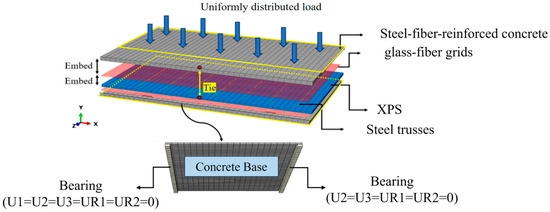
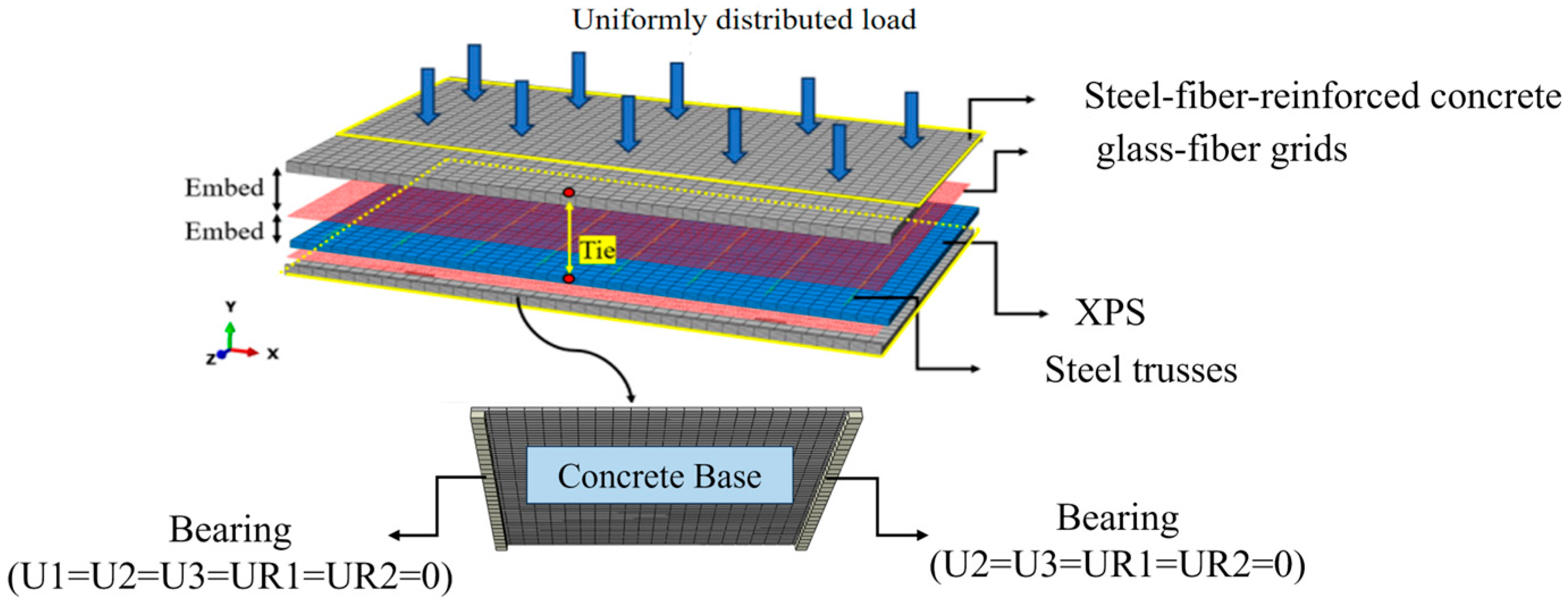
Figure 7 illustrates the support configuration between the panel and the primary structure. Boundary conditions were simplified to one roller support and one pin support in the FE model [40,41]. Adhesion–debonding effects at supports and at insulation–concrete interfaces were neglected, and a constrained (tied) contact formulation was applied. Prior studies indicate negligible slip between steel trusses or glass-fiber grids and concrete [42,43]. Accordingly, the steel trusses and glass-fiber grids were coupled to the concrete using the embedded-element technique.
Figure 7.
FE modeling schematic (ABAQUS 2020).
3.5. Finite Element Model Verification
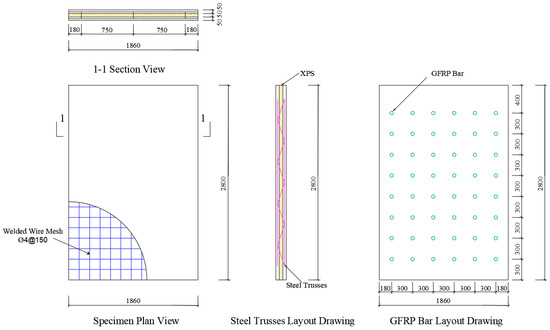
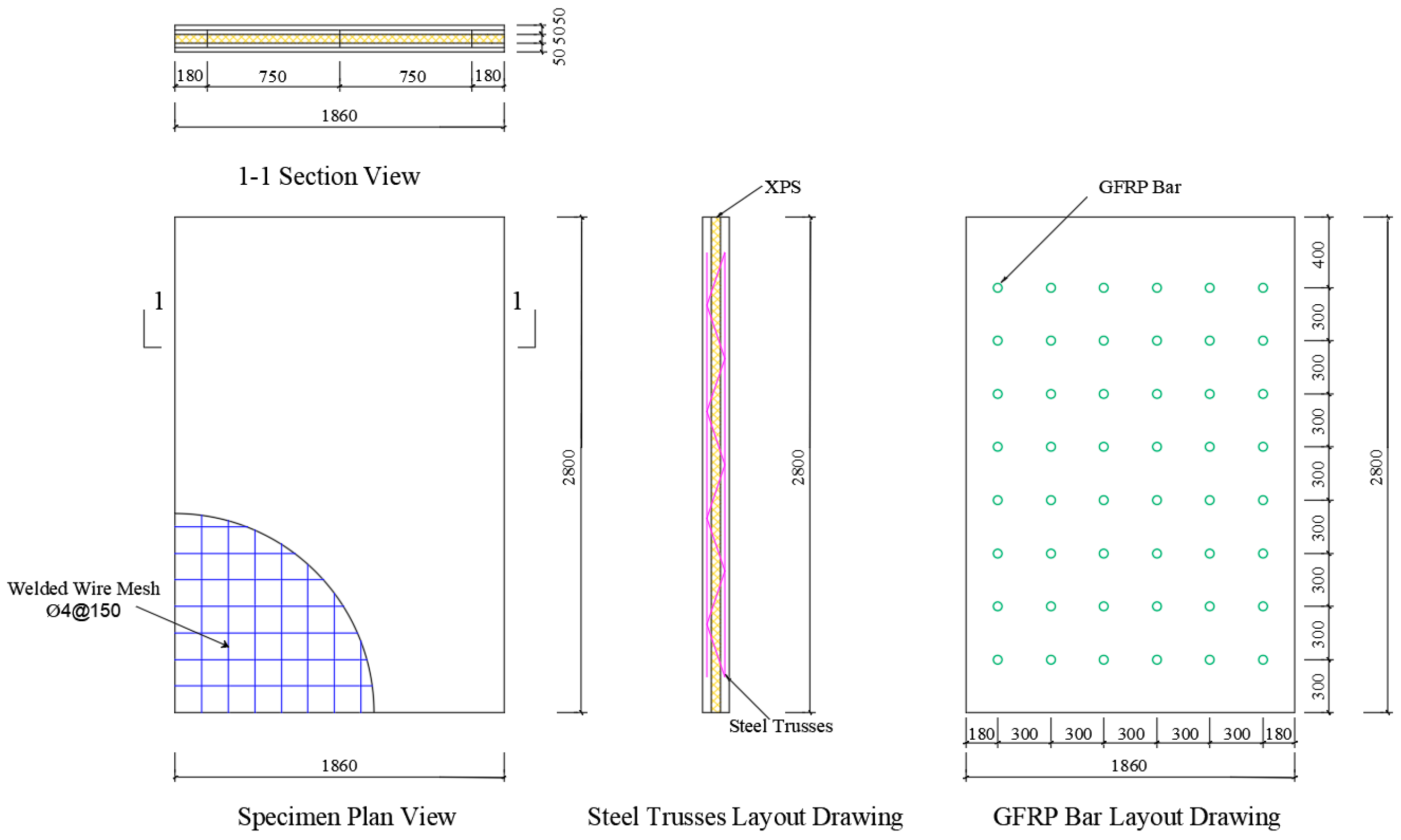
To verify the FE model, the bending test of the wall-panel specimen QB1 reported in [44] was simulated. QB1 comprised plain-concrete wythes, XPS insulation, and steel-truss plus GFRP connectors, with welded wire mesh in concrete; it was selected for validation due to similarity to the present sandwich panel system. The test panel measured 2800 × 1860 × 150 mm, with inner and outer concrete slabs each 50 mm thick. Concrete was C50, and the XPS insulation layer was 50 mm thick. The panel configuration is shown in Figure 8.
Figure 8.
Internal configuration of validation panel QB1.
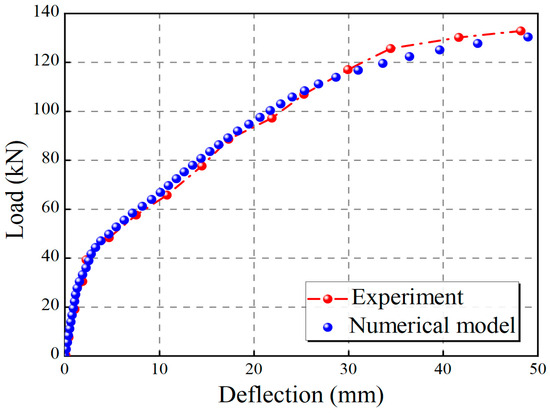
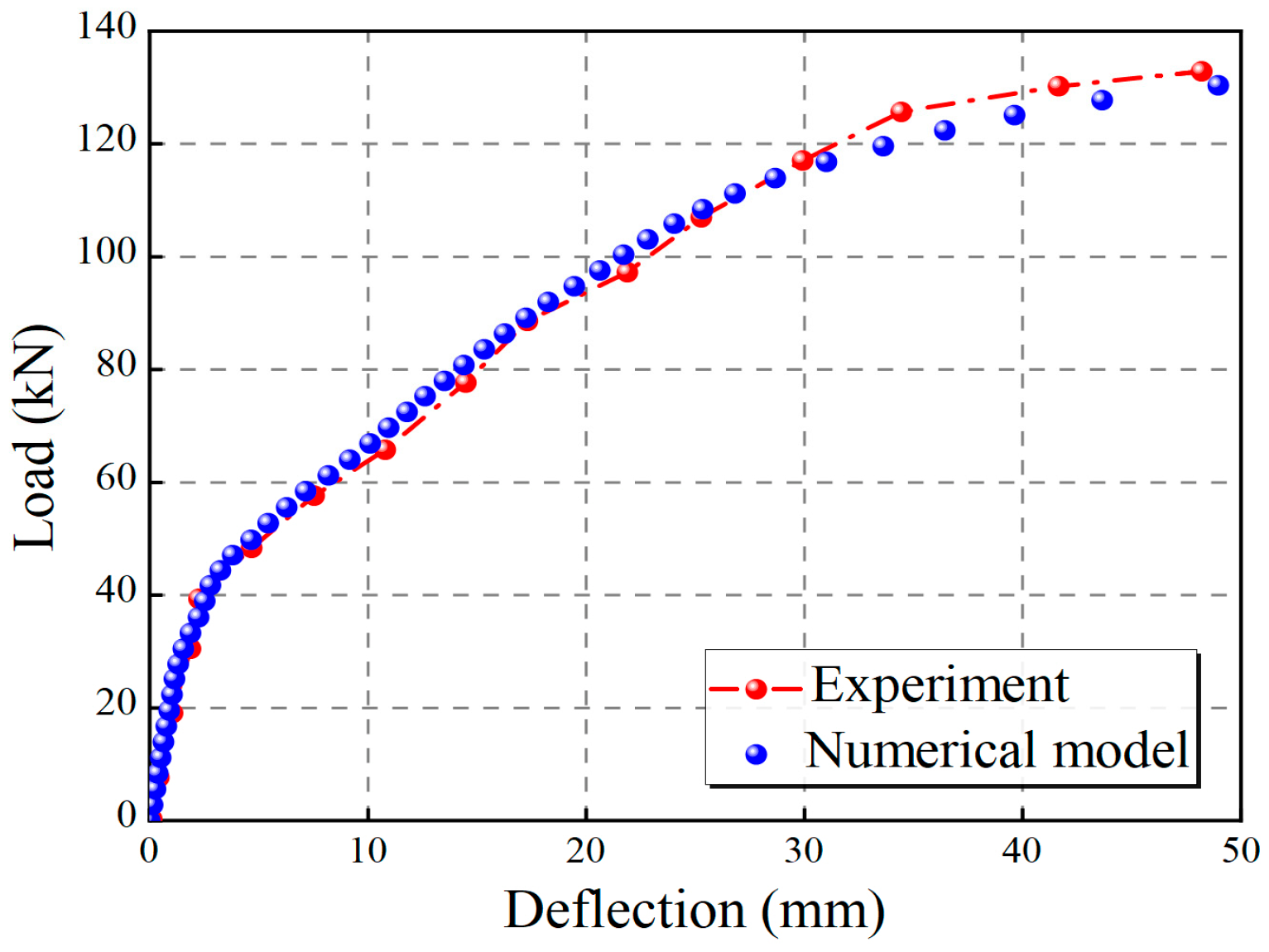
Figure 9 compares the experimental and FE load–displacement curves. The simulated response agrees closely with the test data, validating the model for assessing wall-panel flexural behavior.
Figure 9.
Comparison of experimental results and FE simulation (load–displacement).
3.6. Analysis of Typical Members
3.6.1. Load–Displacement Curves
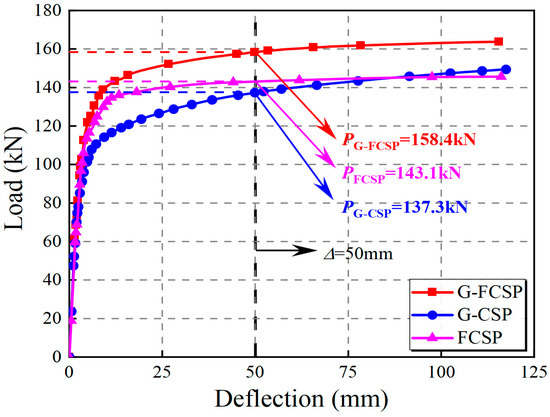
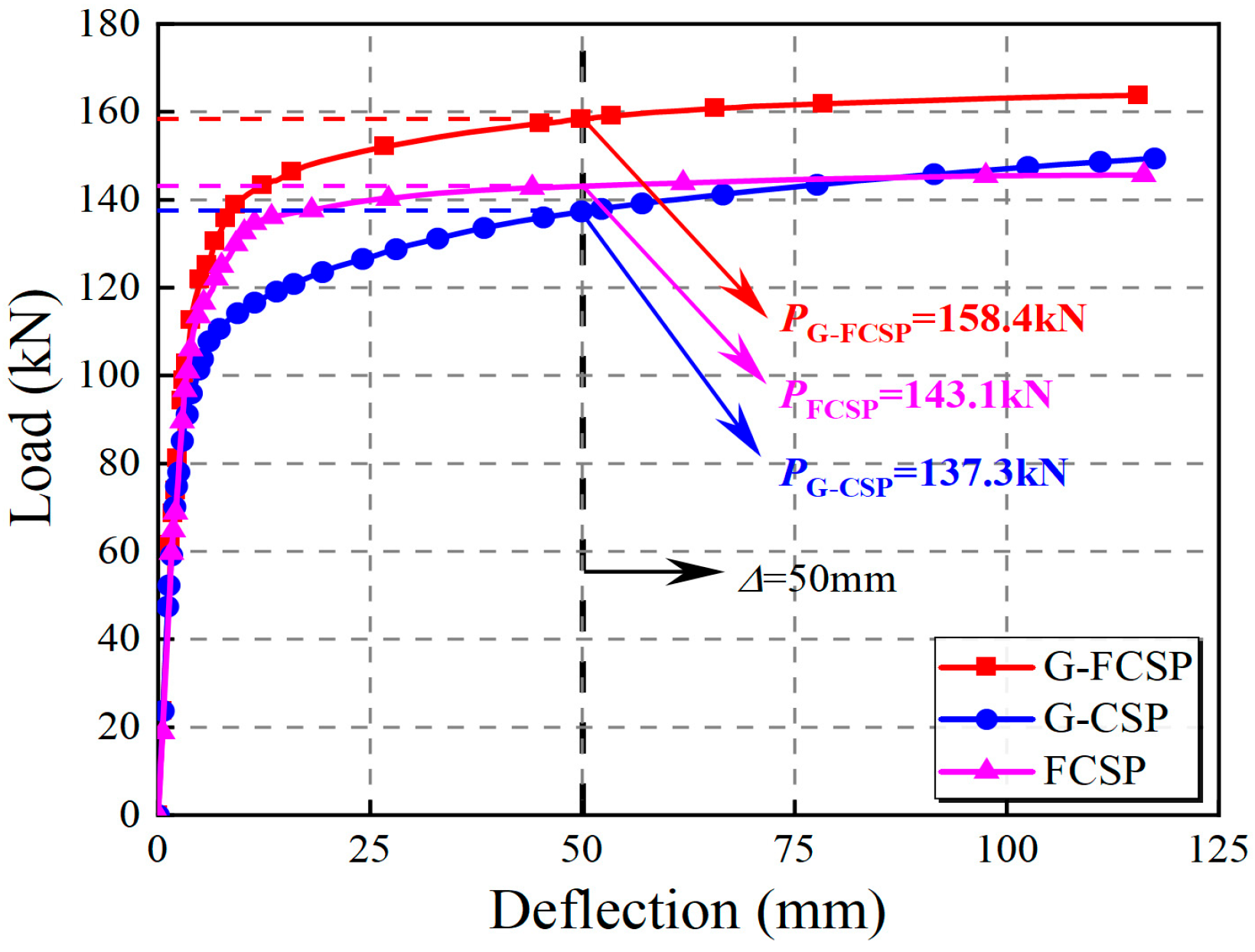
Three wall-panel types are considered: SFRC with glass-fiber grids (G-FCSP), plain concrete with glass-fiber grids (G-CSP), and SFRC without grids (FCSP). All typical panel models used a 50 mm concrete wythe, a 50 mm insulation layer, 500 mm connector spacing, and a longitudinal full-height connector layout. Figure 10 shows the load–displacement curves of the three wall-panel types. The 50 mm marker in Figure 10 indicates the code-based limit deflection of the panels (serviceability limit state, GB 50204-2015) [45].
Figure 10.
Load–displacement curves of G-FCSP, FCSP, and G-CSP panels.
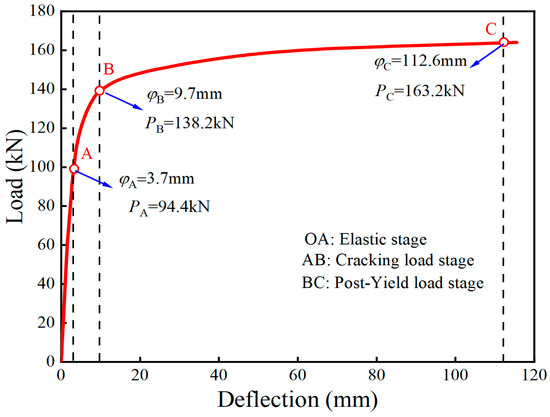
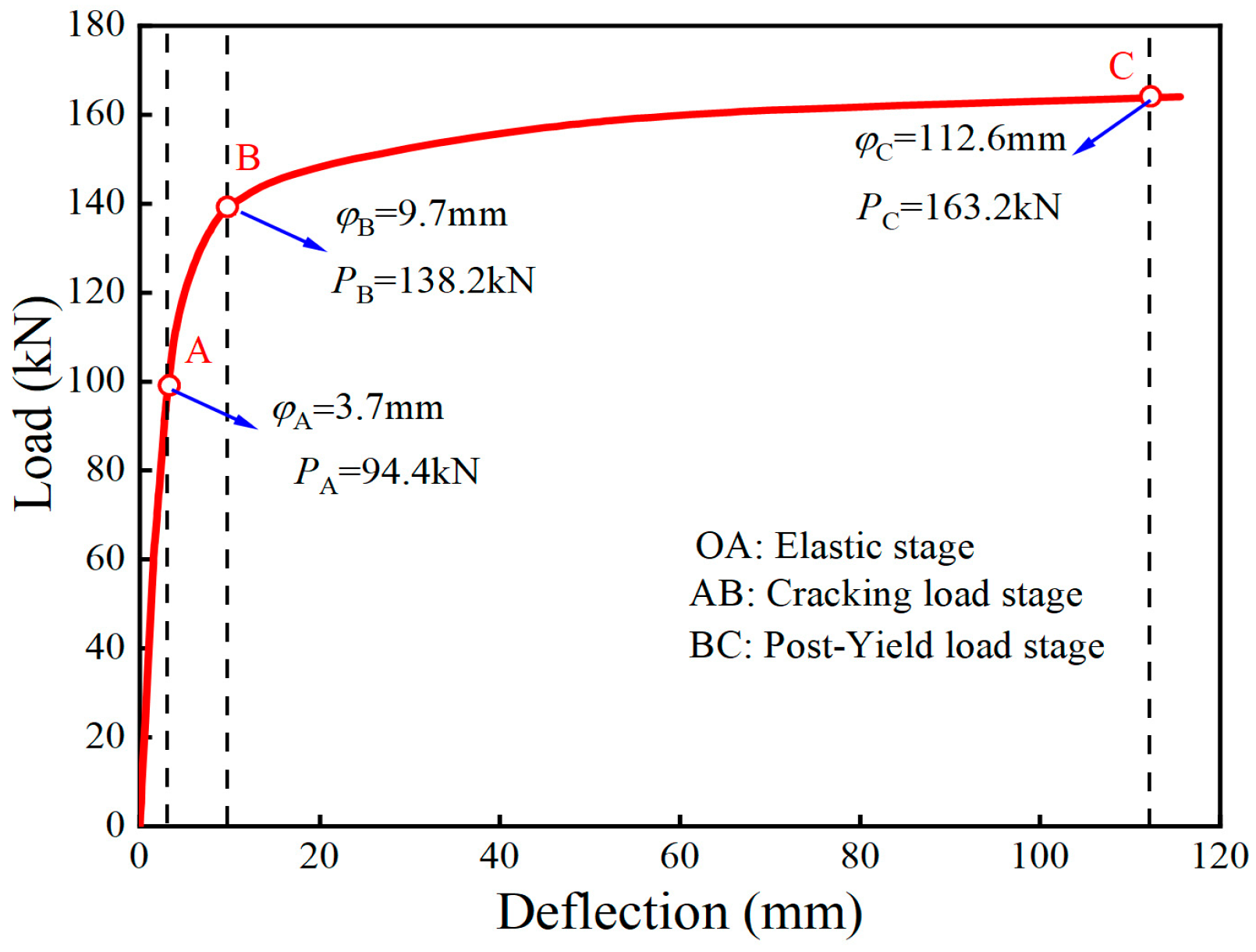
Figure 11 illustrates the division of the load–displacement curve of model G-FSCP into different stages. Initially, the panels respond elastically, and the load–displacement curves are linear. The initial stiffness of all three panels is nearly identical, indicating that the grids have no significant effect on initial stiffness. Based on the tensile-stress criterion, the cracking loads are 94.4 kN (G-FCSP), 89.6 kN (FCSP), and 70.1 kN (G-CSP), confirming the contribution of steel fibers to flexural capacity. At the serviceability-limit deflection, the loads are 158.4 kN (G-FCSP), 143.1 kN (FCSP), and 137.3 kN (G-CSP); G-FCSP exceeds FCSP and G-CSP by 10.7% and 15.4%, respectively, demonstrating synergy between the glass-fiber grids and steel fibers.
Figure 11.
Load–displacement curves of G-FCSP.
3.6.2. Contour-Plot Analysis
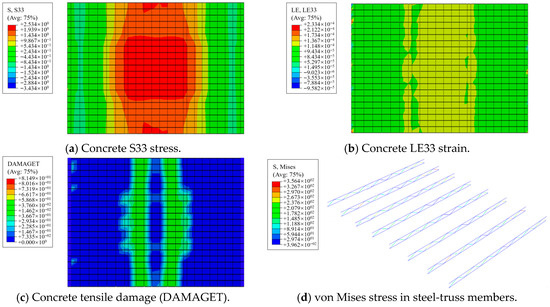
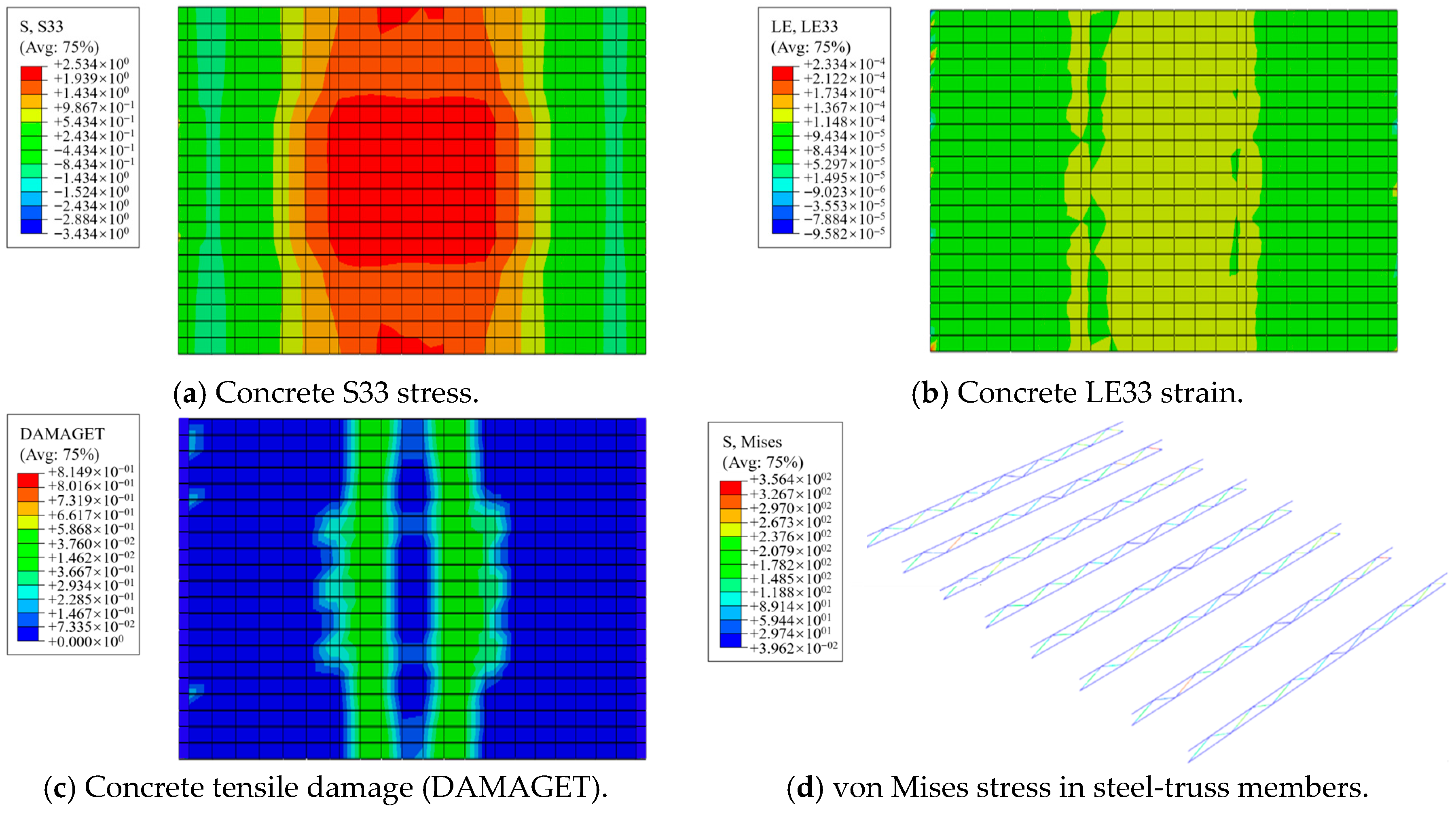
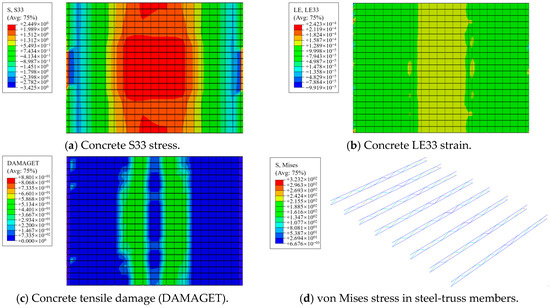
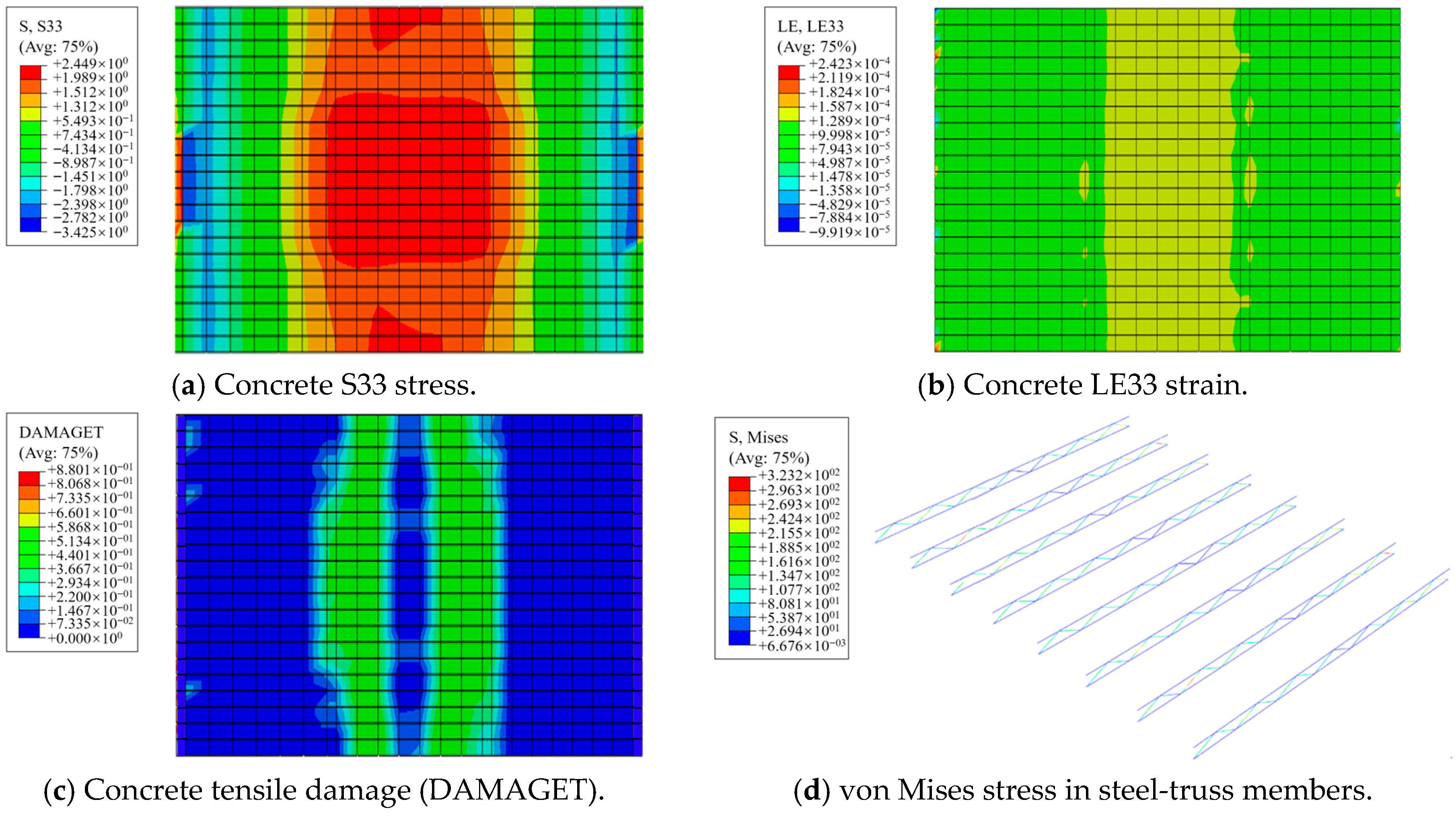
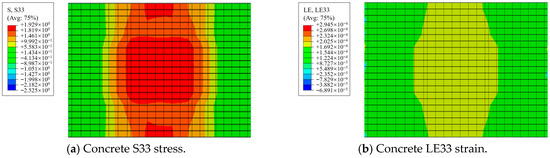
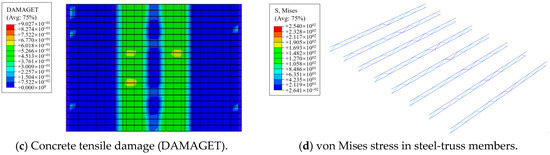
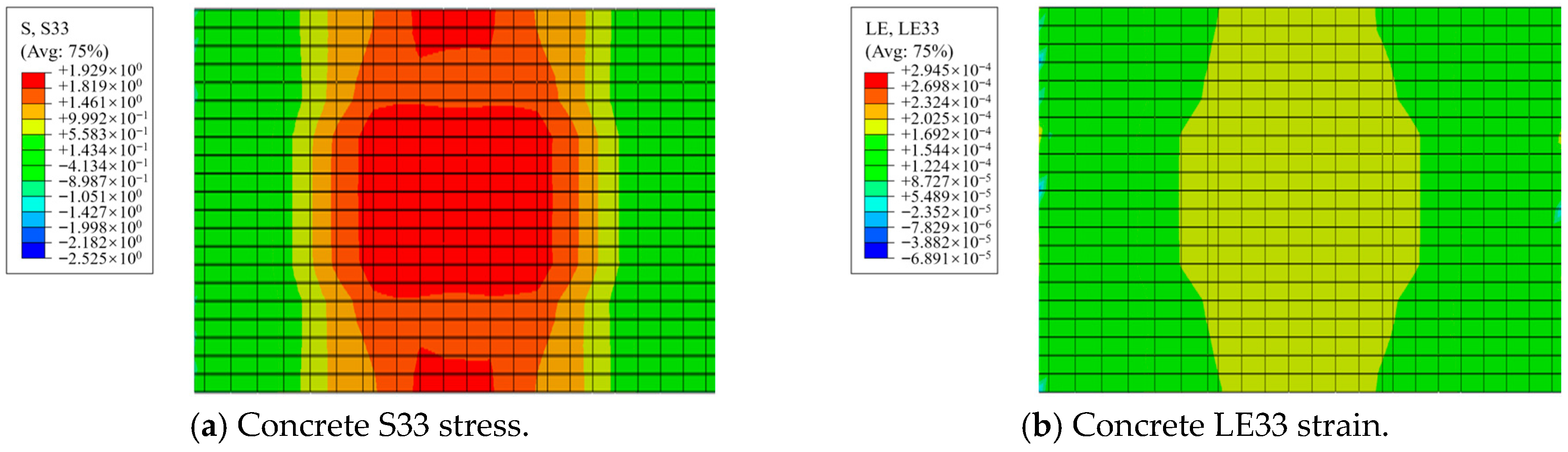
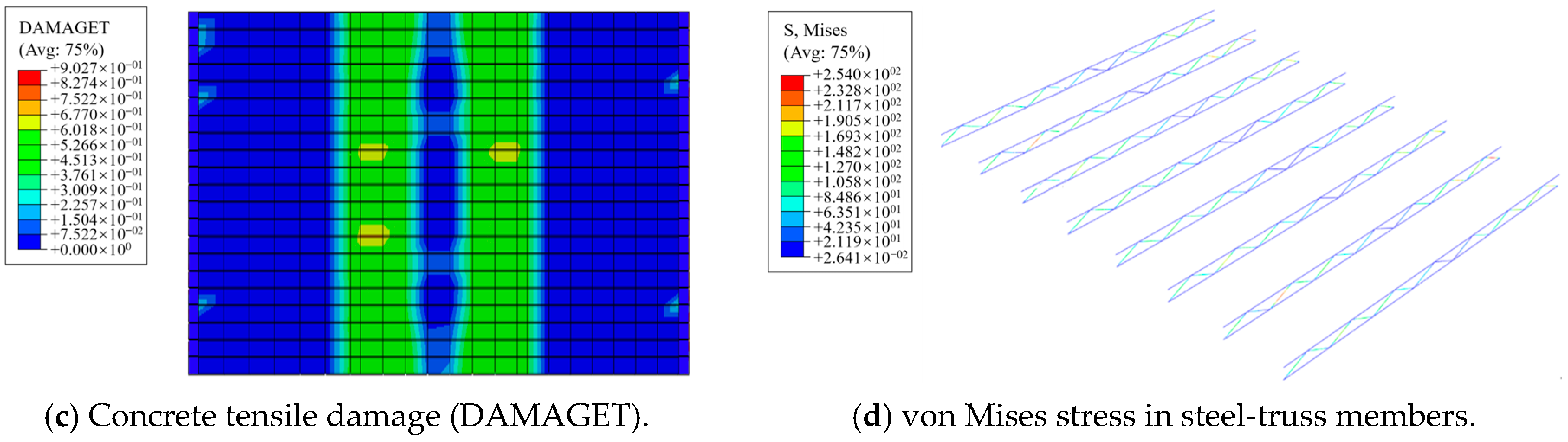
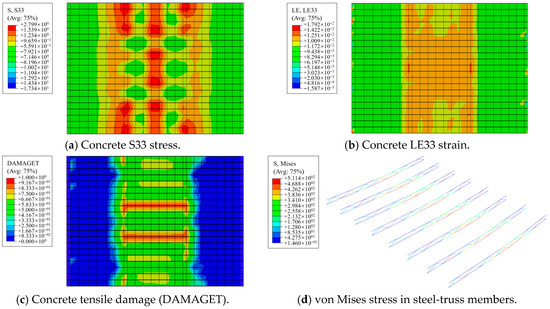
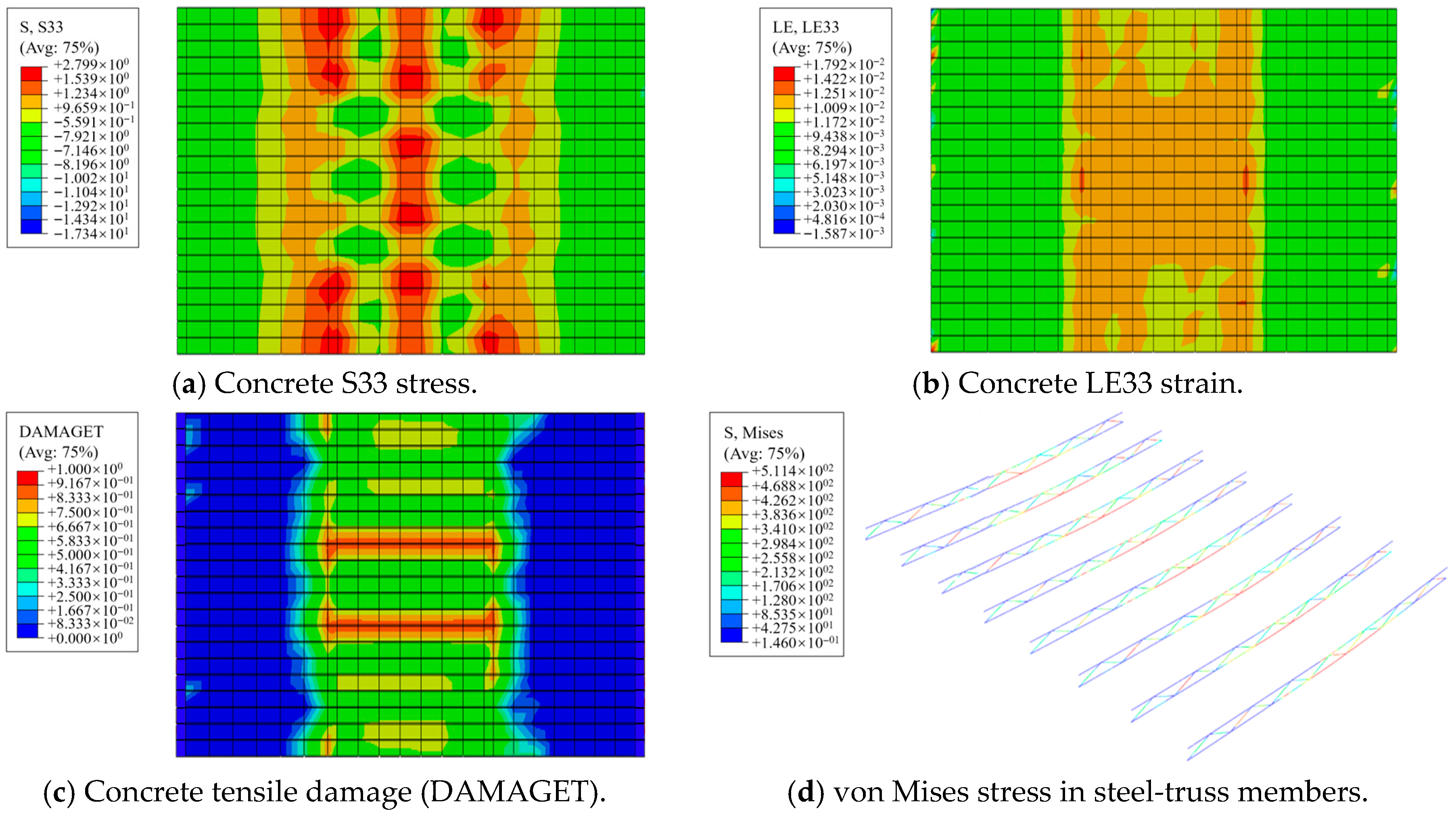
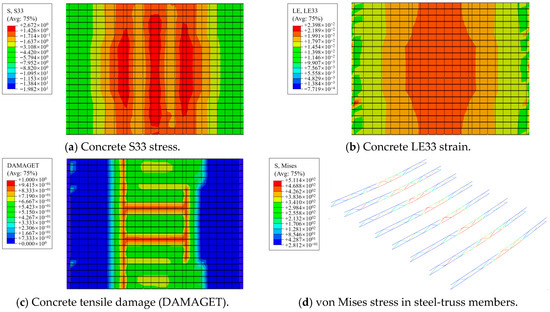
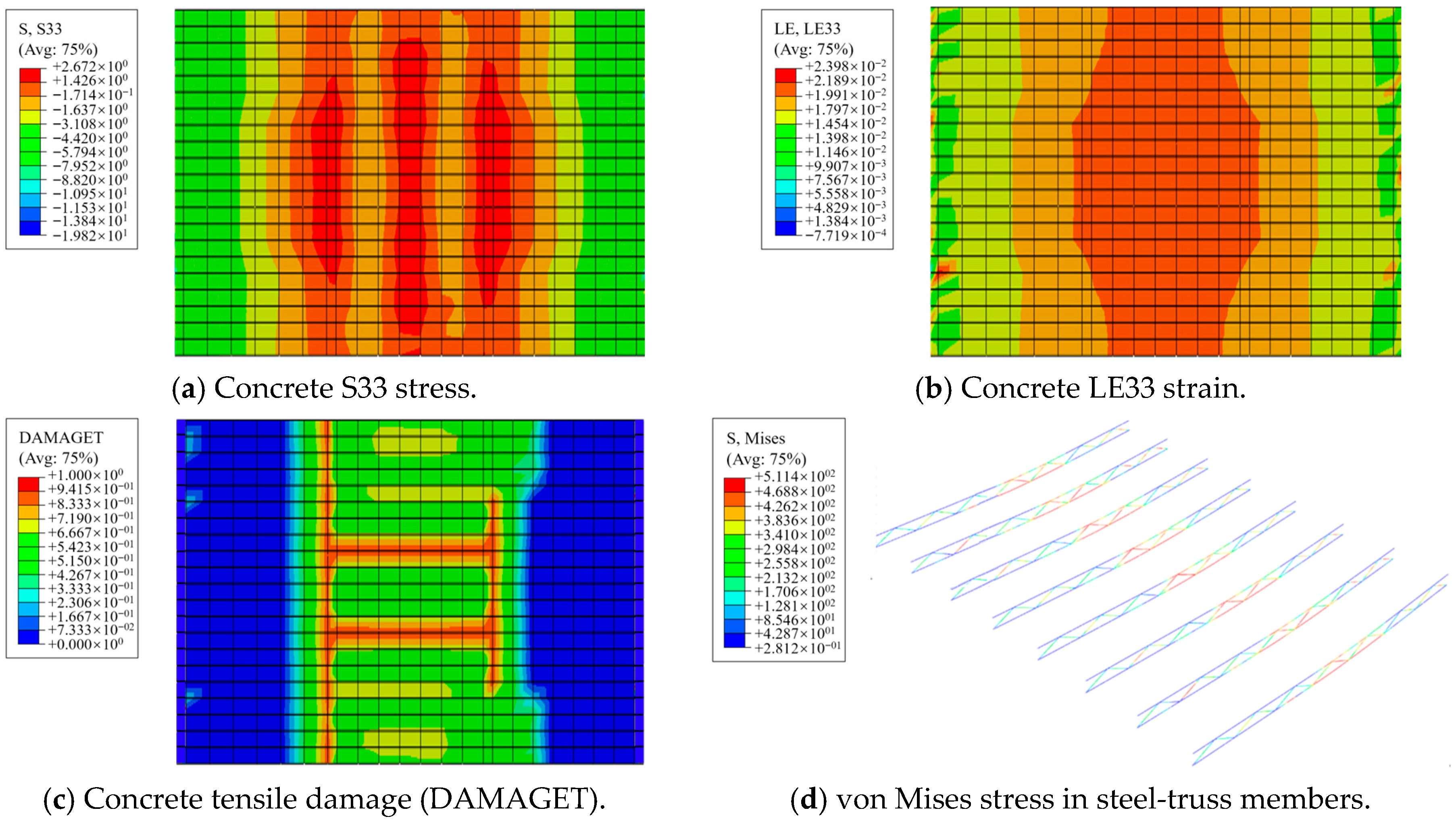
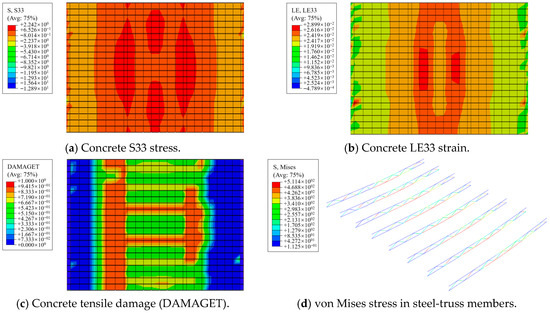
A comparative analysis of damage evolution in G-FCSP, FCSP, and G-CSP at the cracking- and ultimate-load states is presented to elucidate the influence of glass-fiber grids and steel fibers on failure modes. Figure 12, Figure 13, Figure 14, Figure 15, Figure 16 and Figure 17 present contour plots of S33 stress, LE33 strain, tensile damage, and truss von Mises stress for the three wall-panel types at both states. At the cracking load, G-FCSP exhibits pronounced local tensile stress and strain concentrations (S33, LE33) at the mid-span of the bottom face. Meanwhile, the magnitude and extent of tensile damage at the bottom face are smaller than in FCSP and G-CSP. With continued loading, the concrete damage in G-FCSP propagates slowly from mid-span toward both sides of the bottom face. Compared with FCSP and G-CSP, G-FCSP develops a finer and narrower tensile-damage band, indicating effective crack-width control by the glass-fiber grid and high-toughness SFRC. At the ultimate load, the bottom-face damage zone in G-FCSP further enlarges, and the mid-span segment of the truss bottom chord yields.
Figure 12.
Contour plots of G-FCSP at the cracking-load state.
Figure 13.
Contour plots of FCSP at the cracking-load state.
Figure 14.
Contour plots of G-CSP at the cracking-load state.
Figure 15.
Contour plots of G-FCSP at the ultimate-load state.
Figure 16.
Contour plots of FCSP at the ultimate-load state.
Figure 17.
Contour plots of G-CSP at the ultimate-load state.
S33 stress, LE33 strain, and truss von Mises stress are quantified for the three panel types at the cracking and ultimate load states. As shown in Figure 12a,b, Figure 13a,b, Figure 14a,b, Figure 15a,b, Figure 16a,b, Figure 17a,b, at cracking, the G-FCSP cracking stress exceeds that of FCSP and G-CSP by 5.2% and 26.2%, respectively; the corresponding cracking strain is 5.8% and 26.7% lower. At the ultimate load, the maximum tensile stress in G-FCSP is the largest, 5.4% and 24.8% higher than that of FCSP and G-CSP, respectively. These results indicate that the combined use of steel fibers and glass-fiber grids effectively reduces deformation and alleviates local strain concentration.
4. Parameter Analysis
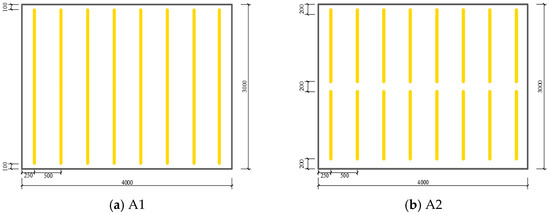
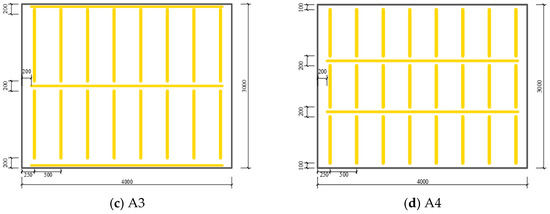
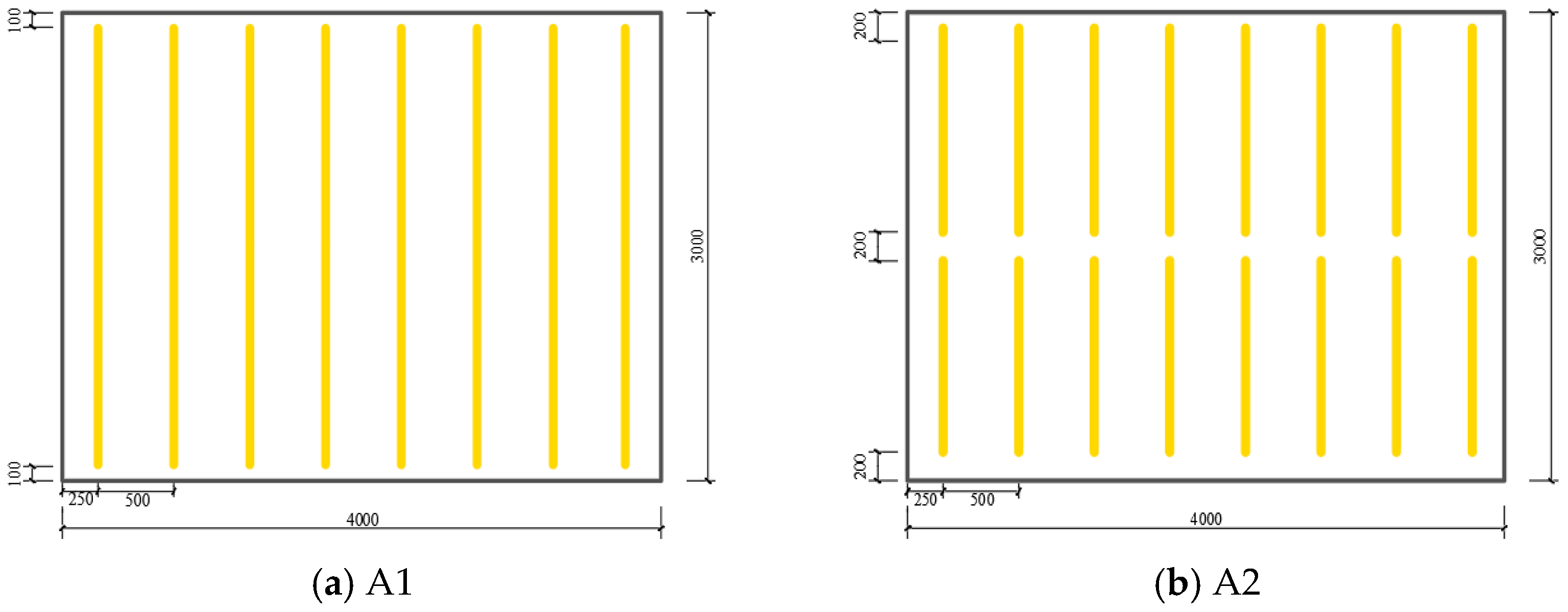
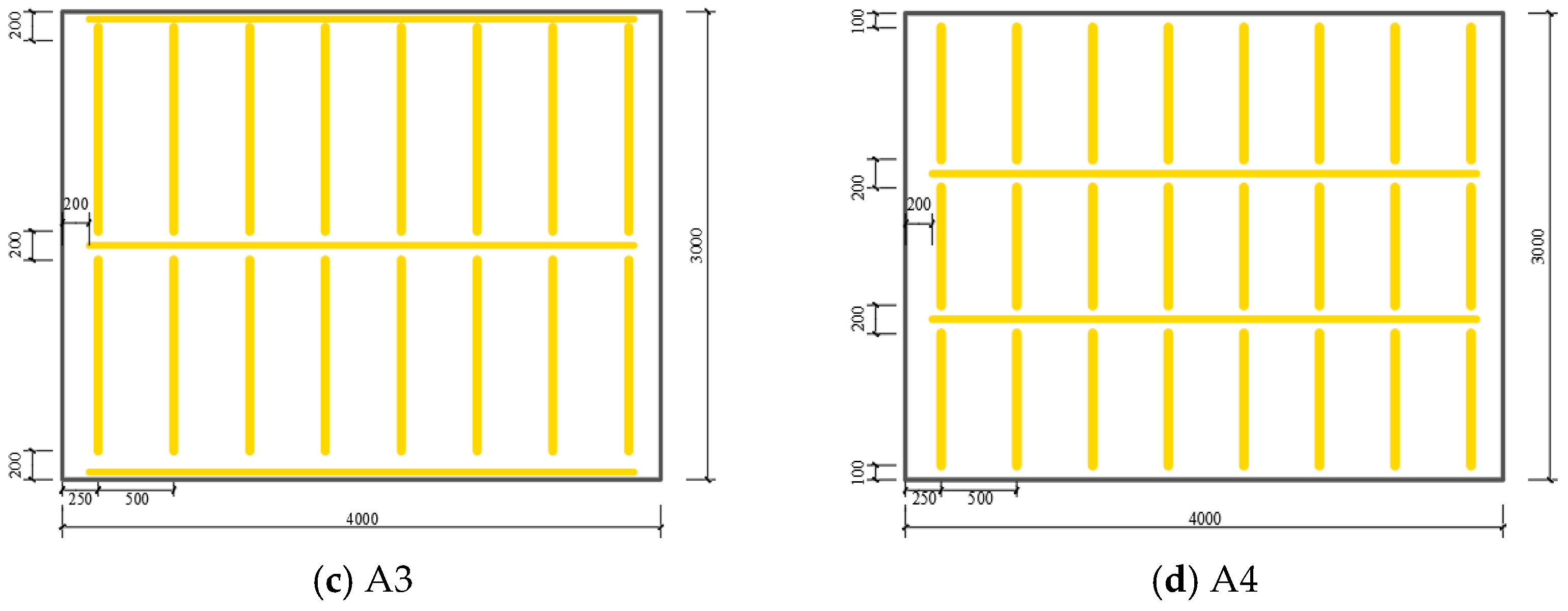
This section analyzes the effects of wythe thickness and connector arrangement on cracking load, ultimate load, and flexural stiffness to inform engineering design. Four concrete wythe thicknesses were considered: 50, 55, 60, and 65 mm. Connector spacings were 200, 350, 500, and 650 mm. As shown in Figure 18, connector arrangements are denoted A1–A4 and illustrated in the schematic. A1 used full-height vertical connectors (length 2800 mm); A2 used segmented vertical connectors (1200 mm per row at 200 mm spacing); A3 followed A2 with added horizontal connectors between two rows (total horizontal length 3600 mm); and A4 used three rows of 800 mm vertical connectors plus two rows of horizontal connectors.
Figure 18.
Connector layout schemes (A1–A4).
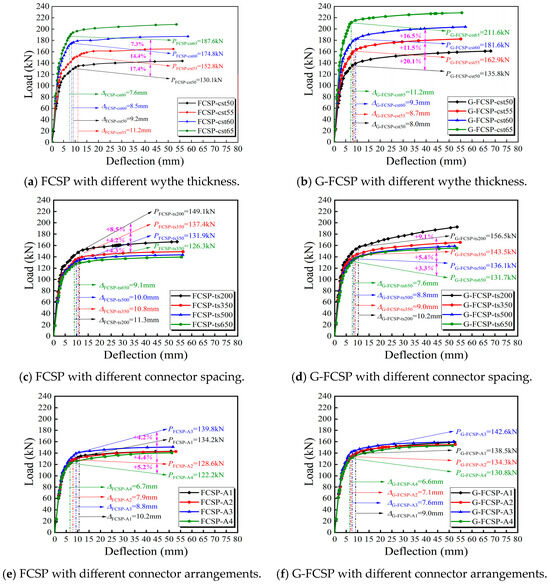
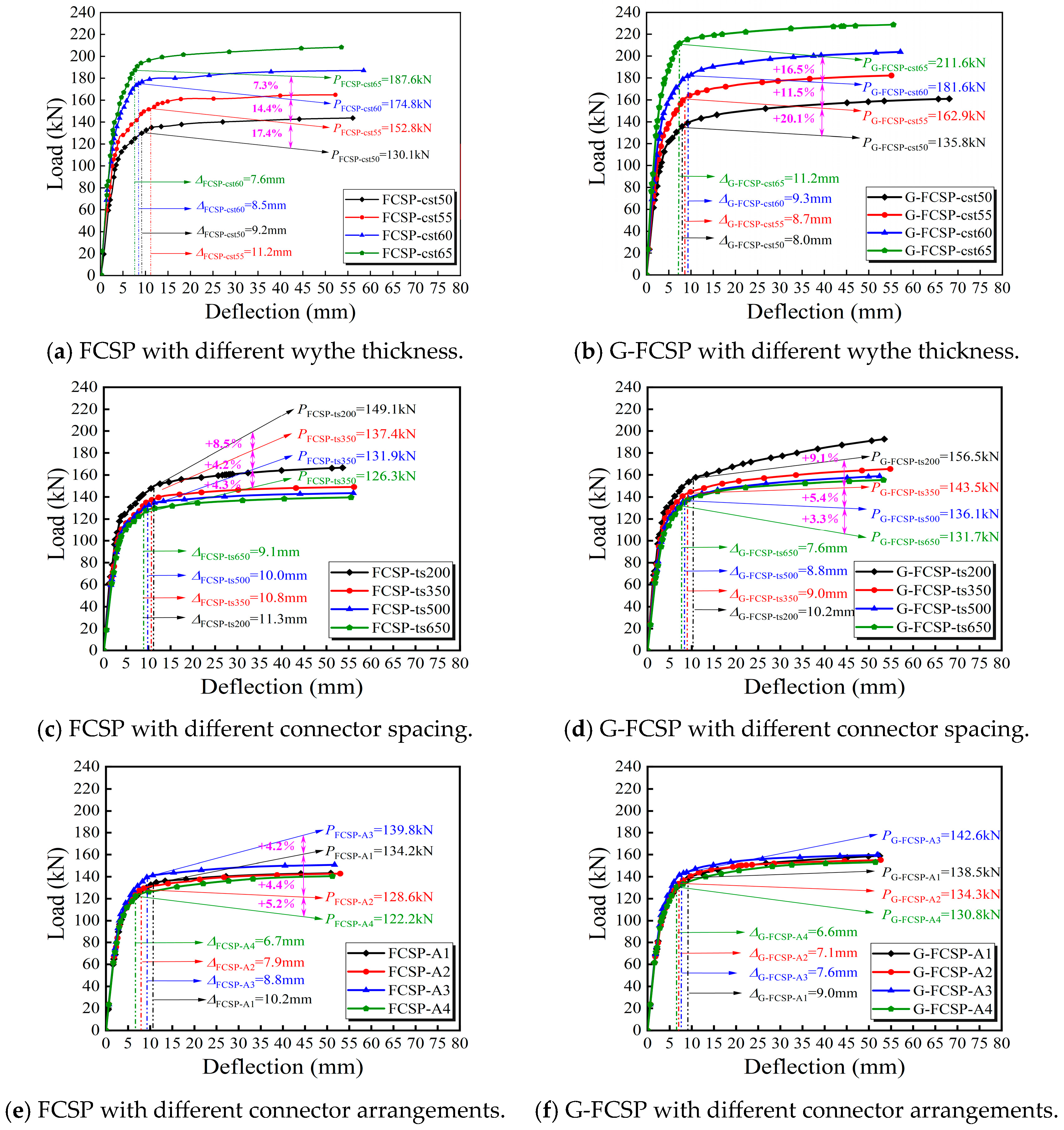
Figure 19 presents load–deflection curves for FCSP and G-FCSP panels under different parameter sets. The analysis focuses on the cracking load and ultimate load extracted from these curves.
Figure 19.
Load–displacement curves under parameter variations.
4.1. Cracking and Ultimate Load
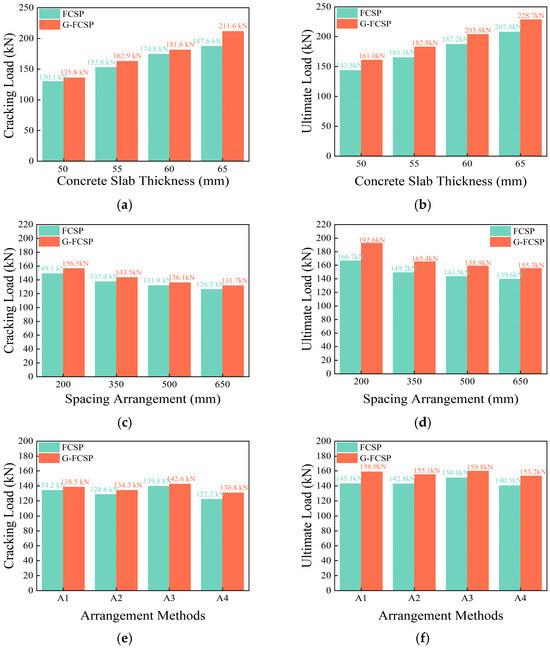
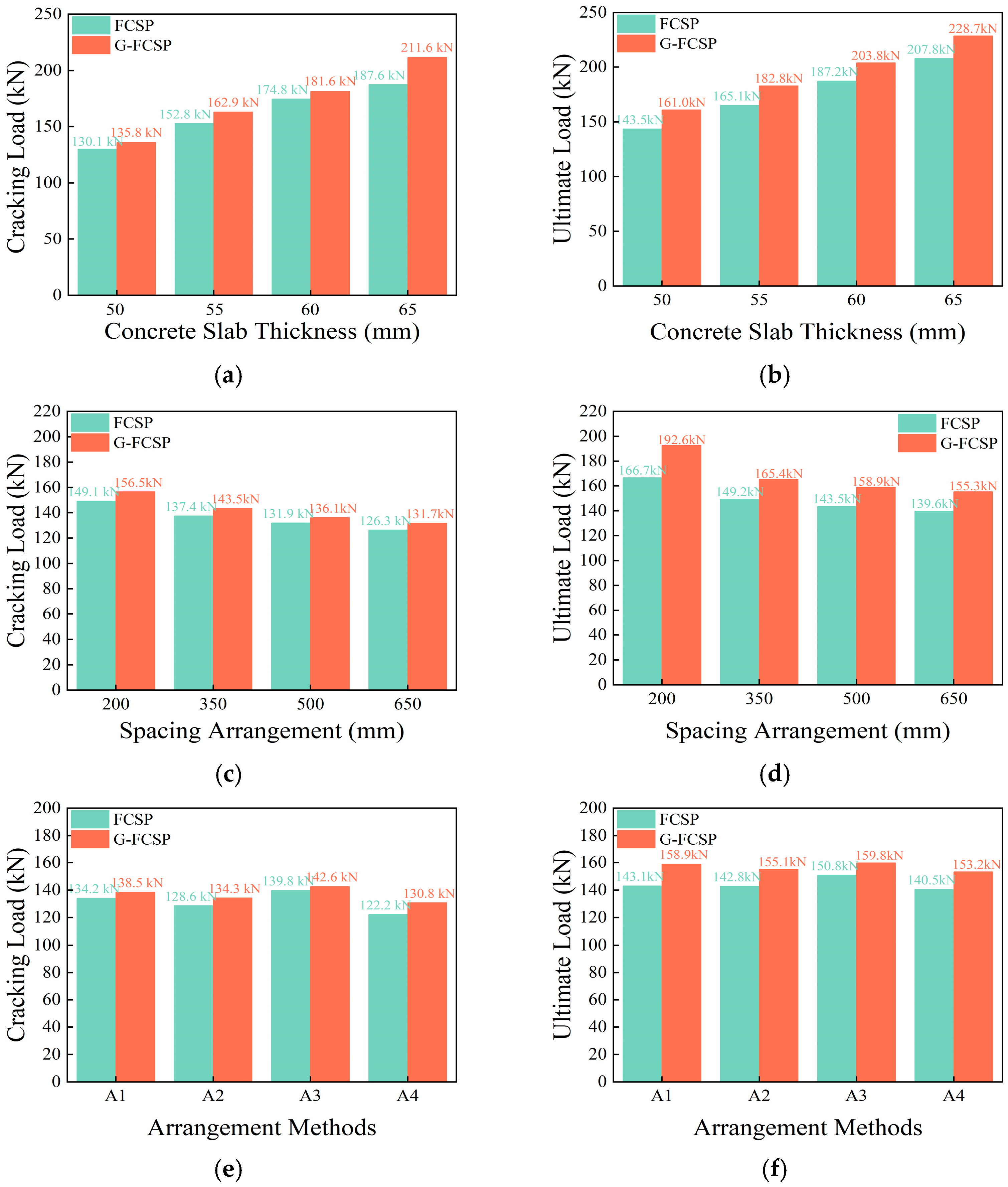
To quantify the enhancement from glass-fiber grids, Figure 20 compares the cracking and ultimate loads of G-FCSP and FCSP panels under various parameters. Figure 20a,b, Figure 20c,d, and Figure 20e,f compare the two panel types for wythe thickness, connector spacing, and connector arrangement, respectively. In Figure 20a,b, G-FCSP shows average increases of 6.9% in cracking load and 10.5% in ultimate load relative to FCSP across the thickness range. With increasing thickness, the ultimate load of G-FCSP rises by 13.5%, 11.5%, and 12.2%, respectively. Glass-fiber grids act synergistically with steel trusses to share tensile demand. When self-weight and cost are not governing design, increasing wythe thickness effectively enhances flexural performance. In Figure 20c,d, for the same spacing, G-FCSP shows average increases of 4.2% in cracking load and 12.1% in ultimate load compared with FCSP. Reducing spacing increases the ultimate load of G-FCSP. Densifying spacing from 500 mm to 200 mm yields a maximum ultimate-load gain of 20.6% (compared with the 14.4% at 350 mm). The improvement arises because smaller spacing increases connector participation, enhancing ultimate capacity. FE results indicate that a 200 mm spacing delivers superior flexural performance via more effective material synergy. In Figure 20e,f, comparing A1 and A2 shows no notable changes in cracking or ultimate load. Thus, changing truss length alone does not materially improve panel bending performance. A3 adds transverse trusses (3600 mm total), increasing the cracking and ultimate loads by 7.8% and 4.3%, respectively, relative to A2. A4 (three longitudinal rows plus two transverse rows) reduces the cracking and ultimate loads by 8.6% and 4.5% relative to A1. Overly short connectors disrupt continuous load transfer, reducing both cracking and ultimate loads. Therefore, a full-height connector layout is recommended.
Figure 20.
Cracking and ultimate loads. (a) Cracking load with different wythe thickness; (b) ultimate load with different wythe thickness; (c) cracking load with different connector spacing; (d) ultimate load with different connector spacing; (e) cracking load with different connector arrangements; (f) ultimate load with different connector arrangements.
4.2. Stiffness at Cracking
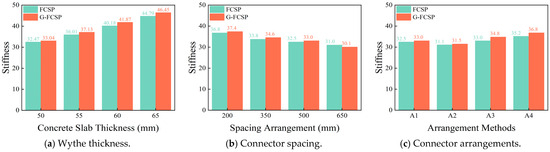
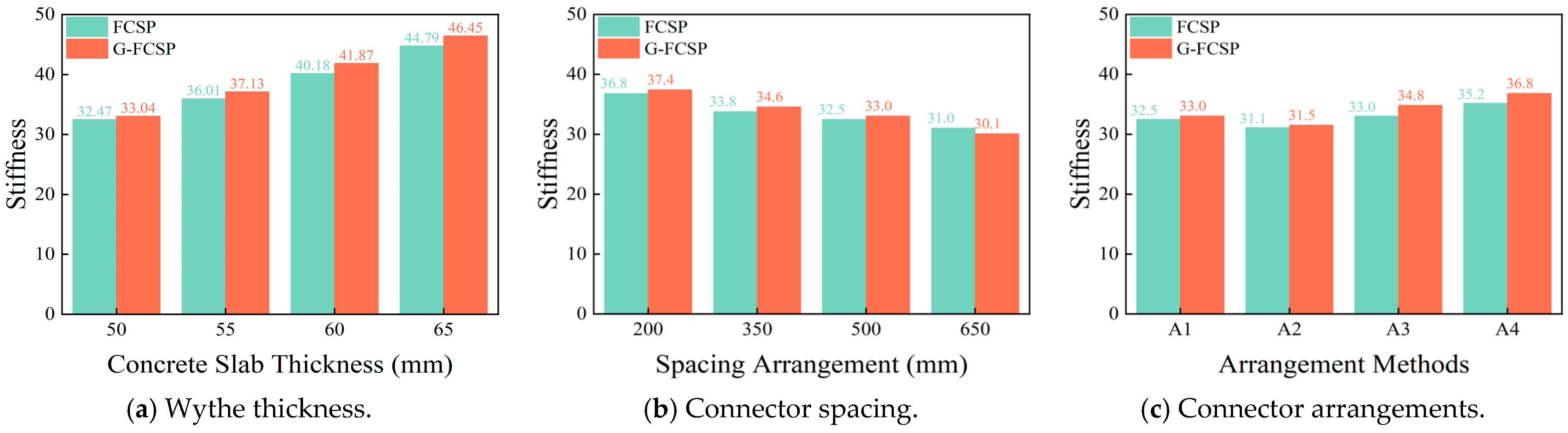
As shown in Figure 21, the thickness strongly affects overall panel stiffness. Stiffness increases with thickness. For G-FCSP, relative to 50 mm, 5 mm step increments raise stiffness by 12.4%, 24.2%, and 40.5%. FCSP shows a similar trend. Greater stiffness reduces bending deformation for a given load, so a higher load is required to reach cracking deformation. Accordingly, increased stiffness indirectly elevates both cracking stress and ultimate load. Reducing spacing from 500 mm to 350 or 200 mm increases stiffness by 4.3%/13.5% (FCSP) and 4.5%/13.3% (G-FCSP). Although wider spacing (fewer connectors) lowers elastic stiffness, the overall effect is moderate. Altering layout, e.g., adding horizontal connectors, can improve elastic stiffness, though the effect is limited. A2 (two vertical rows) has a negligible effect relative to A1, with a 4.5% reduction in elastic stiffness. Consequently, a full-height connector distribution is preferred to ensure structural integrity.
Figure 21.
Stiffness at cracking under parameter variations.
5. Conclusions
This study develops a precast SFRC composite wall-panel system that attains superior flexural capacity relative to plain-concrete panels. Based on material tests and finite element (FE) analyses, the following conclusions are drawn:
- At a 1% steel-fiber volume fraction, the compressive strength increases by 7.8% relative to plain concrete. The strength gain diminishes at higher fiber contents, indicating 1% as the optimum content within this study. A compressive stress–strain law for the present SFRC mix was formulated based on Guo Zhenhai’s concrete model. The law agrees well with the measured curves. The fitted shape-parameter relations and the segmented law accurately predict the compressive behavior of SFRC.
- Analyses of typical panels show that steel fibers enhance overall integrity. Steel fibers provide effective restraint and delay crack initiation. At lower strain levels, SFRC panels sustain higher stress. Relative to plain-concrete panels, SFRC panels exhibit a 29.5% lower peak strain and 27.2% higher peak stress.
- Increasing wythe thickness markedly enhances panel load capacity. From 50 to 65 mm, the cracking load increases by 40.4%, with a concurrent 40.5% rise in panel stiffness. At the same thickness, G-FCSP exceeds FCSP by 6.9% in cracking load and 10.5% in ultimate load, confirming the synergy between grids and steel fibers. Greater wythe thickness is recommended where self-weight and cost permit. Connector spacing has a significant effect on overall stiffness. Reducing spacing from 500 to 200 mm raises G-FCSP ultimate load by 20.6%, mainly by mobilizing the steel-truss tension system. A full-height vertical connector layout is recommended to ensure structural integrity.
Further Studies
Develop a macro–micro multiscale modeling framework based on fiber volume fraction and pull-out test data. Explicitly account for fiber orientation and fiber–matrix interfacial debonding/bridging to capture their effects on crack propagation and energy dissipation, thereby providing a mechanistic basis for member-level behavior. In parallel, assess how glass-fiber grids and steel-truss connectors influence the spatial distribution of fibers.
Subject to a fixed steel-quantity constraint, extend the parametric study to truss bar diameter/grade and anchorage length, and perform parametric optimization to identify connector layouts that maximize wall-panel performance.
Conduct component tests to validate and calibrate the numerical model and the proposed design recommendations, thereby demonstrating performance advantages and applicability.
Author Contributions
Conceptualization, Q.L. and Y.C.; methodology, Q.L.; software, Y.C.; validation, Q.L., Y.C. and Z.W.; formal analysis, Y.C.; investigation, Y.C., Q.L. and Y.C.; resources, S.Z.; data curation, Y.C.; writing—original draft preparation, Q.L., Y.C. and Z.W.; writing—review and editing, Q.L., Y.C. and Z.W.; visualization, Y.C. and S.Z.; supervision, Z.W. and S.Z.; project administration, Q.L. and S.Z. All authors have read and agreed to the published version of the manuscript.
Funding
This research received no external funding.
Data Availability Statement
The data presented in this study is available on request from the corresponding author. The data is not publicly available due to privacy concerns.
Acknowledgments
We acknowledge the seven authors of this study.
Conflicts of Interest
The authors declare no conflicts of interest.
References
- Nam, S.; Yoon, J.; Kim, K.; Choi, B. Optimization of prefabricated components in housing modular construction. Sustainability 2020, 12, 10269. [Google Scholar] [CrossRef] [Scilit]
- Chen, X.; Su, S.; Yuan, J.; Li, J.; Lou, F.; Wang, Q. Analyzing the environmental, economic, and social sustainability of prefabricated components: Modeling and case study. Sustainability 2024, 16, 342. [Google Scholar] [CrossRef] [Scilit]
- Liu, L.; Tai, H.W.; Wang, T.; Qiao, L.; Cheng, K. Analyzing cost impacts across the entire process of prefabricated building components from design to application. Sci. Rep. 2025, 15, 9300. [Google Scholar] [PubMed]
- Su, S.; Li, L.; Sun, A.; Cao, X.; Yuan, J. How to combine different types of prefabricated components in a building to reduce construction costs and carbon emissions. J. Build. Eng. 2024, 98, 111114. [Google Scholar] [CrossRef] [Scilit]
- Liu, C.; Wu, J.; Jiang, X.; Gu, Y.; Xie, L.; Huang, Z. Automatic assembly of prefabricated components based on vision-guided robot. Autom. Constr. 2024, 162, 105385. [Google Scholar] [CrossRef] [Scilit]
- Gunawardena, T.; Mendis, P. Prefabricated building systems–design and construction. Encyclopedia 2022, 2, 70–95. [Google Scholar] [CrossRef] [Scilit]
- Baghchesaraei, A.; Kaptan, M.V.; Baghchesaraei, O.R. Using prefabrication systems in building construction. Int. J. Appl. Eng. Res. 2015, 10, 44258–44262. [Google Scholar]
- Hao, J.; Sun, X.; Xue, Q.; Fan, C. Research and applications of prefabricated steel structure building systems. Eng. Mech. 2017, 34, 1–13. [Google Scholar]
- Masood, R.; Roy, K. Review on prefabricated building technology. Technology 2022, 4, 24–30. [Google Scholar] [CrossRef] [Scilit]
- Khaled, Z.S.M. Implementation of prefabricated building systems in Iraq. Al Nahrain J. Eng. Sci. 2020, 23, 371–382. [Google Scholar] [CrossRef] [Scilit]
- Pozo-Lora, F.F.; Sorensen, T.J.; Al-Rubaye, S.; Maguire, M. State-of-the-art and practice review in concrete sandwich wall panels: Materials, design, and construction methods. Sustainability 2025, 17, 3704. [Google Scholar] [CrossRef] [Scilit]
- Anbu, H.K.; Kothandapani, K. Enhancing impact resistance of concrete slabs. Adv. Sci. Technol. Res. J. 2025, 19, 30–43. [Google Scholar] [CrossRef] [Scilit]
- O’Hegarty, R.; Kinnane, O. Review of precast concrete sandwich panels and their innovations. Constr. Build. Mater. 2020, 233, 117145. [Google Scholar] [CrossRef] [Scilit]
- Yu, B.; Xiong, F.; Liu, Y.; Ge, Q. Flexural performance of novel ECC-RC composite sandwich panels. Eng. Struct. 2023, 292, 116547. [Google Scholar] [CrossRef] [Scilit]
- Mugahed Amran, Y.H.; Rashid, R.S.M.; Hejazi, F.; Safiee, N.A.; Abang Ali, A.A. Response of precast foamed concrete sandwich panels to flexural loading. J. Build. Eng. 2016, 7, 143–158. [Google Scholar] [CrossRef] [Scilit]
- Morcous, G.; Kodsy, A.; El-Khier, M.A. Flexural behavior of composite ultrahigh-performance concrete sandwich wall panels. J. Archit. Eng. 2024, 30, 04024007. [Google Scholar] [CrossRef] [Scilit]
- Mahdi, S.; Ali, M.S.M.; Sheikh, A.H.; Elchalakani, M.; Xie, T. An investigation into the feasibility of normal and fibre-reinforced ultra-high performance concrete multi-cell and composite sandwich panels. J. Build. Eng. 2021, 41, 102728. [Google Scholar] [CrossRef] [Scilit]
- Meng, W.; Khayat, K.H.; Bao, Y. Flexural behaviors of fiber-reinforced polymer fabric reinforced ultra-high-performance concrete panels. Cem. Concr. Compos. 2018, 93, 43–53. [Google Scholar] [CrossRef] [Scilit]
- Abeysinghe, C.M.; Thambiratnam, D.P.; Perera, N.J. Flexural performance of an innovative hybrid composite floor plate system comprising glass–fibre reinforced cement, polyurethane and steel laminate. Compos. Struct. 2013, 95, 179–190. [Google Scholar] [CrossRef] [Scilit]
- O’Hegarty, R.; West, R.; Reilly, A.; Kinnane, O. Composite behaviour of fibre-reinforced concrete sandwich panels with FRP shear connectors. Eng. Struct. 2019, 198, 109475. [Google Scholar] [CrossRef] [Scilit]
- Huang, J.Q.; Dai, J.G. Flexural performance of precast geopolymer concrete sandwich panel enabled by FRP connector. Compos. Struct. 2020, 248, 112563. [Google Scholar] [CrossRef] [Scilit]
- Shin, D.H.; Kim, H.J. Composite effects of shear connectors used for lightweight-foamed-concrete sandwich wall panels. J. Build. Eng. 2020, 29, 101108. [Google Scholar] [CrossRef] [Scilit]
- Jiang, H.; Guo, Z.; Liu, J. Composite behavior of sandwich panels with w-shaped SGFRP connectors. KSCE J. Civ. Eng. 2018, 22, 1889–1899. [Google Scholar] [CrossRef] [Scilit]
- Gombeda, M.J.; Naito, C.J.; Quiel, S.E. Flexural performance of precast concrete insulated wall panels with various configurations of ductile shear ties. J. Build. Eng. 2021, 33, 101574. [Google Scholar] [CrossRef] [Scilit]
- ACI 544.1R-96; Report on Fiber Reinforced Concrete. American Concrete Institute: Farmington Hills, MI, USA, 1996.
- GB/T 50081-2019; Standard for Test Methods of Concrete Physical and Mechanical Properties. China Architecture and Building Press: Beijing, China, 2019. (In Chinese)
- Meng, S.Q.; Jiao, C.J.; Ouyang, X.W.; Niu, Y.F.; Fu, J.Y. Effect of steel fiber-volume fraction and distribution on flexural behavior of Ultra-high performance fiber reinforced concrete by digital image correlation technique. Constr. Build. Mater. 2022, 320, 126281. [Google Scholar] [CrossRef] [Scilit]
- Song, P.S.; Hwang, S. Mechanical properties of high-strength steel fiber-reinforced concrete. Constr. Build. Mater. 2004, 18, 669–673. [Google Scholar] [CrossRef] [Scilit]
- CECS 13:2009; Standard Test Methods for Fiber Reinforced Concrete. China Planning Press: Beijing, China, 2010. (In Chinese)
- Guo, Z.H. Strength and Constitutive Relation of Concrete-Principle and Application; China Architecture and Building 541 Press: Beijing, China, 2004. (In Chinese) [Google Scholar]
- 08SJ110-2; Precast Concrete Exterior Wall Panels. China Planning Press: Beijing, China, 2008. (In Chinese)
- Moradi, M.; Bagherieh, A.R.; Esfahani, M.R. Constitutive modeling of steel fiber-reinforced concrete. Int. J. Damage Mech. 2020, 29, 388–412. [Google Scholar] [CrossRef] [Scilit]
- Shafighfard, T.; Cender, T.A.; Demir, E. Additive manufacturing of compliance optimized variable stiffness composites through short fiber alignment along curvilinear paths. Addit. Manuf. 2021, 37, 101728. [Google Scholar] [CrossRef] [Scilit]
- Shafighfard, T.; Mieloszyk, M. Experimental and numerical study of the additively manufactured carbon fibre reinforced polymers including fibre Bragg grating sensors. Compos. Struct. 2022, 299, 116027. [Google Scholar] [CrossRef] [Scilit]
- Shafighfard, T.; Asgarkhani, N.; Kazemi, F.; Yoo, D.Y. Transfer learning on stacked machine-learning model for predicting pull-out behavior of steel fibers from concrete. Eng. Appl. Artif. Intell. 2025, 158, 111533. [Google Scholar] [CrossRef] [Scilit]
- Abdallah, S.; Fan, M.; Rees, D.W.A. Predicting pull-out behaviour of 4D/5D hooked end fibres embedded in normal-high strength concrete. Eng. Struct. 2018, 172, 967–980. [Google Scholar] [CrossRef] [Scilit]
- Vrech, S.; Etse, G.; Meschke, G.; Caggiano, A.; Martinelli, E. Meso- and macroscopic models for fiber-reinforced concrete. In Computational Modelling of Concrete Structures, Proceedings of EURO-C 2010, Schladming, Austria, 15–18 March 2010; Bicanic, N., de Borst, R., Mang, H., Meschke, G., Eds.; CRC Press: Leiden, The Netherlands; Balkema: Leiden, The Netherlands, 2010; pp. 241–250. [Google Scholar]
- Anandamurthy, A.; Guna, V.; Ilangovan, M.; Reddy, N. A review of fibrous reinforcements of concrete. J. Reinf. Plast. Compos. 2017, 36, 519–552. [Google Scholar] [CrossRef] [Scilit]
- Ksouri, I.; De Almeida, O.; Haddar, N. Long term ageing of polyamide 6 and polyamide 6 reinforced with 30% of glass fibers: Physicochemical, mechanical and morphological characterization. J. Polym. Res. 2017, 24, 133. [Google Scholar] [CrossRef] [Scilit]
- Liu, F.; Zhao, L.; Yuan, L.X.; Wu, G.; Zheng, R.; Mu, Y.S. Research on Flexural Performance of Basalt Fiber-Reinforced Steel–Expanded Polystyrene Foam Concrete Composite Wall Panels. Buildings 2025, 15, 285. [Google Scholar] [CrossRef] [Scilit]
- Avudaiappan, S.; Saavedra Flores, E.I.; Araya-Letelier, G.; Thomas, W.J.; Raman, S.N.; Murali, G.; Amran, M.; Karelina, M.; Fediuk, R.; Vatin, N. Experimental investigation on composite deck slab made of cold-formed profiled steel sheeting. Metals 2021, 11, 229. [Google Scholar] [CrossRef] [Scilit]
- Zhang, T.S.; Yuan, J.M.; Pang, H.X.; Huang, Z.M.; Guo, Y.Q.; Wei, J.X.; Yu, Q.J. UHPC-XPS insulation composite board reinforced by glass fiber mesh: Effect of structural design on the heat transfer, mechanical properties and impact resistance. J. Build. Eng. 2023, 75, 106935. [Google Scholar] [CrossRef] [Scilit]
- Zhao, B.Y.; Du, L.F.; Chen, G.X.; Yue, L.F.; Cui, C.X.; Ge, M.M. Experimental and numerical study on the shear performance of stainless steel-GFRP connectors for use in precast concrete sandwich panels. Sci. Rep. 2024, 14, 13814. [Google Scholar] [CrossRef] [Scilit]
- Han, P.T. Study on the Effect of Connectors on the Structural Performance of Prefabricated Concrete Sandwich Thermal Insulation External Wall Panel; Hefei University of Technology: Hefei, China, 2019. (In Chinese) [Google Scholar]
- GB 50204-2015; Code for Quality Acceptance of Concrete Structure Engineering Construction. Architecture & Building Press: Beijing, China, 2015. (In Chinese)

Disclaimer/Publisher’s Note: The statements, opinions and data contained in all publications are solely those of the individual author(s) and contributor(s) and not of MDPI and/or the editor(s). MDPI and/or the editor(s) disclaim responsibility for any injury to people or property resulting from any ideas, methods, instructions or products referred to in the content. |
© 2025 by the authors. Licensee MDPI, Basel, Switzerland. This article is an open access article distributed under the terms and conditions of the Creative Commons Attribution (CC BY) license (https://creativecommons.org/licenses/by/4.0/).