Article

Three-Dimensional Numerical Analyses of a Monitored Deep Excavation Pit: A Case Study in the Guangzhou Metro

1
Guangzhou Metro Design & Research Institute Co., Ltd., Guangzhou 510010, China
2
China Railway Seventh Bureau Group Co., Ltd., Zhengzhou 450016, China
3
School of Civil Engineering, Xi’an University of Architecture and Technology, Xi’an 710055, China
*
Author to whom correspondence should be addressed.
Buildings 2025, 15(22), 4018; https://doi.org/10.3390/buildings15224018
Submission received: 6 September 2025 / Revised: 17 October 2025 / Accepted: 5 November 2025 / Published: 7 November 2025

Abstract

This paper focuses on a deep foundation pit project of a metro shaft constructed by the cover-and-excavation reverse method in a section of Guangzhou Metro Line 13. This study integrates field monitoring data, three-dimensional finite element simulations, and parametric analyses to propose a systematic optimization design framework, providing a more comprehensive and reliable quantitative basis for the design of support structures for deep metro foundation pits constructed using the cut-and-cover top-down method. The study examines the effects of pile diameter, pile spacing, embedment depth, and types of retaining structures on pit deformation. The results indicate that increasing the pile diameter from 800 mm to 1000 mm reduces the maximum lateral displacement of the retaining structure by 30.7%, while decreasing the pile spacing from 2000 mm to 1600 mm results in a 17.5% reduction in deformation. However, beyond these thresholds, the marginal improvement becomes less significant. An embedment depth of 4 m for shallow sections and 2.5 m for deep sections is recommended to balance deformation control and construction economy. Diaphragm walls outperform bored piles and secant piles in deformation control. The optimized design achieves an estimated cost reduction of approximately 15% while maintaining safety requirements. The optimized parameters and comparative conclusions derived from this study can be directly applied to the design of deep foundation pits for metro stations under similar geological conditions. These findings provide crucial data support and theoretical reference for formulating more economical and safer design codes and standards.

1. Introduction

As urban rail transit develops vigorously, metro systems, serving as a crucial approach to ease urban traffic congestion, are witnessing a continuous expansion in construction scale [1,2,3]. The metro shaft, being a critical component of deep foundation pit projects, has construction safety and structural stability that directly affect both project progress and long-term service safety. Owing to its merits of minimal disturbance to the surrounding environment and high construction efficiency, the cover-and-excavation reverse method has increasingly emerged as a predominant technique for constructing metro deep foundation pit shafts.
Current studies on the cut-and-cover method for deep foundation pits primarily emphasize the deformation behavior of the strata and adjacent structures during construction. A number of researchers have explored the changes in internal forces throughout the construction of deep foundation pits by the cover-and-excavation reverse method, mainly from the standpoint of theoretical analysis. Liu Zhiming et al. [4] applied both the incremental method and the total method to comparatively calculate the internal force changes throughout the construction process of a large metro transfer station by the cover-excavation reverse method. The results indicated that the most unfavorable condition for structural internal forces occurred before the construction of the bottom slab, with significant negative bending moments at the joints between the retaining structure and the intermediate slab, and the results from the incremental method were larger than those from the total method. Ma Yaoling [5] through theoretical calculations based on two-dimensional plane analysis, quantified the adverse impact of installation posture deviations of steel pipe columns during cover-and-excavation reverse deep foundation pit construction on bearing capacity. Wang [6] focusing on the bearing capacity of pile groups in reverse construction projects, investigated the effective length factor using both linear eigenvalue stability analysis and nonlinear stability analysis methods, and obtained the bearing capacity considering buckling effects. Mohamed Nabil Houhou and colleagues [7] conducted a monitored excavation project of a 24 m-deep cover-excavation reverse construction deep foundation pit in a dense building cluster in Shanghai. By comparing the performance of this excavation method with historical global case studies, they evaluated its effectiveness. A series of numerical analyses were performed and validated through calibration with field data. Based on the validated model, multiple numerical analyses were conducted to investigate the deformation characteristics of the foundation pit under different construction scenarios. Yang Z [8] conducted a study based on a monitored excavation project of a 24 m-deep cover-excavation reverse construction deep foundation pit located in a dense building cluster in Shanghai. By comparing the performance of this excavation method with historical global case studies, the study evaluated its effectiveness and carried out a series of numerical analyses. Russo G [9] established a three-dimensional (3D) finite element model based on the Chiaia station to conduct a comprehensive analysis of the monitoring data and examine the effects of several key features. The study discussed and analyzed the impact of the bending and shear stiffness of the structures, the stiffness of soft rock, as well as the effects of factors such as water infiltration and the prestressing of ground anchors. Another group of scholars monitored construction sites of deep foundation pits built with the cover-and-excavation reverse method to obtain and summarize the deformation patterns of the strata. To investigate the excavation deformations at depths ranging from 13.9 to 15.2 m, Bai Ting and colleagues [10] conducted a three-dimensional finite element method (FEM) analysis. The excavation had a planar dimension of approximately 189 m in width and 251 m in length, and it was constructed using the top-down frame method (FTDM) in a soft clay area of downtown Shanghai. Field monitoring results indicated that the wall deflections, ground settlements, and uplift differences in the columns were relatively small, all remaining below the specified protection levels. Therefore, FTDM is deemed a feasible method for large-scale excavation construction. Koltuk S [11] provided design charts based on the results of three-dimensional steady-state groundwater flow analysis to assess the uplift safety of circular support excavation pits constructed in homogeneous isotropic soil layers. Li Xian [12] revealed the coupled relationship between deep excavation of foundation pits and drainage effects on soil response, and developed empirical formulas to estimate ground deformation. Using a deep foundation pit at a subway station as a case study, the estimated values of surface settlement were calculated through formula analysis and numerical modeling. Under excavation and drainage conditions, the settlement results obtained from the analytical formulas were linearly superimposed onto the total settlement. Koltuk S [13] conducted a hydro-mechanical coupled axisymmetric finite element (FE) analysis to investigate the uplift seepage failure of circular support excavation pits constructed in homogeneous cohesionless soil layers. The results of the finite element analysis were compared with Terzaghi’s classical failure method. Fernández F [14] presented the results of analyzing the uplift of the base of a hypothetical circular shaft using three numerical methods: Finite Element Method (FEM), Numerical Limit Analysis (NLA), and Material Point Method (MPM). Under both dry and saturated conditions, the stability of the structure was analyzed using the Strength Reduction Factor (SRF) method in conjunction with MPM, NLA, and FEM. Tan [15] summarized the deformation patterns of the reverse construction method based on statistics of 11 circular foundation pits, 92 conventional basement pits, and 8 long-narrow metro station pits in soft soil areas. Huang Zhiqiang [16] taking Shenyang North Station of Metro Line 4 as an example, analyzed the impact of deep foundation pit construction on the deformation of aboveground buildings, underground structures, pipelines, and power corridors through construction monitoring. He Yunbiao [17] taking the Kang du xue fu Station project of Hohhot Metro Line 2 as the background, systematically analyzed ground settlement, building settlement, and pipeline settlement during metro foundation pit excavation based on field monitoring results. Another group of scholars conducted numerical simulations on deep foundation pits constructed by the cover-and-excavation reverse method. Li Wenwu [18], using ANSYS 2021R2 finite element simulation, analyzed the bearing capacity and settlement deformation of a cover-and-excavation reverse structure in a reclaimed area with soft silt layers. Jamsawang [19] explored the influence of wall thickness on lateral deformation and bearing capacity of walls through a parametric study using numerical calculations. Li Pengfei [20] relying on a cover-and-excavation reverse metro station foundation pit project in Beijing, established a refined three-dimensional numerical model based on the Modified Cambridge Model to analyze the influence of changes in retaining structure parameters on pit deformation and on the redundancy of the retaining structure in resisting progressive failure. Despite substantial research efforts on deep foundation pit construction using the cover-and-excavation reverse method, studies on parameter sensitivity and optimization design remain relatively scarce. In China, foundation pit design and construction often suffer from being excessively conservative, economically inefficient, and with insufficient safety factors. Thus, it is essential to optimize the design of cover-and-excavation reverse deep foundation pits to balance both safety and cost-effectiveness.
In summary, this study is based on a deep foundation pit project of a metro shaft along a section of Guangzhou Metro Line 13. A three-dimensional finite element model was developed to simulate the entire excavation process of the cover-and-excavation reverse deep foundation pit, and its validity was verified through comparative analysis with field measurements. Building on this, the study focuses on two key research questions: (1) how pile diameter, pile spacing, and soil penetration depth influence the deformation of the retaining wall and surface settlement; and (2) how to balance deformation control effectiveness and cost differences among various retaining structure types under safety constraints. An impact analysis of the parameters of the retaining structure is conducted to identify the optimal parameter values. Subsequently, the design selection and detailed optimization of the deep foundation pit retaining structure for cut-and-cover reverse construction of metro projects are carried out. This research aims to provide a reference for the design and construction of deep foundation pits using cut-and-cover reverse methods under similar conditions.

2. Project Overview

2.1. Study Area

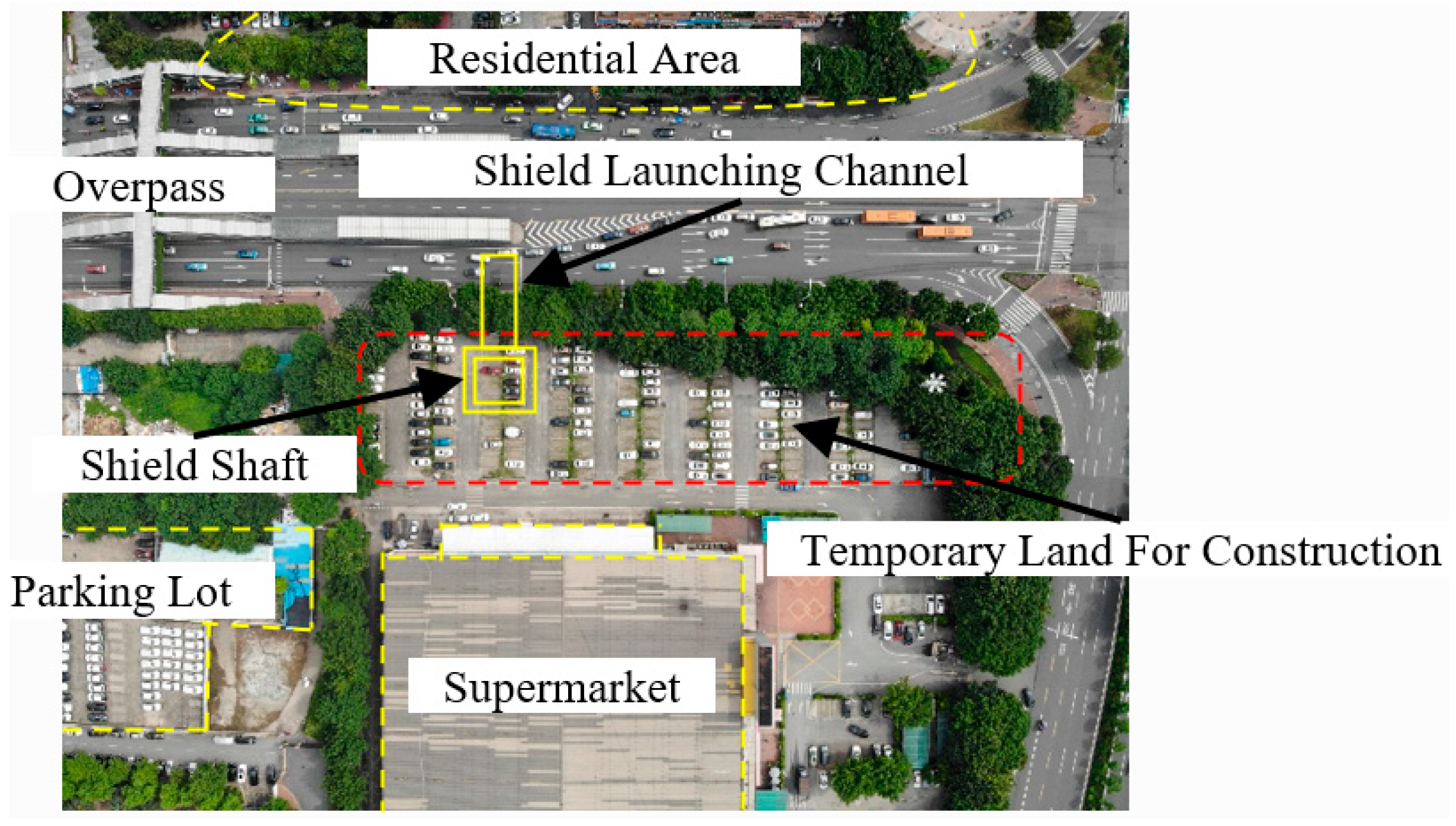
The shield receiving and extraction shaft combined with an intermediate ventilation shaft for a section of Guangzhou Metro Line 13 is located 200 m west of the intersection of Zhongshan Avenue Central and Guangzhou Ring Expressway, with a chainage ranging from YCK33 + 854.213 to YCK33 + 894.260. The metro shaft foundation pit has a total length of 40 m and a total width of 15.7 m, with a plan view in the shape of a chamfered rectangle (as shown in Figure 1). The metro shaft is divided into a three-story structure and a five-story structure. The three-story section, serving as the shaft evacuation exit, is 19 m long, 15.7 m wide, and has a pit depth of 18.53 m. The five-story section, constituting the main east shaft, is 21 m long, 15.7 m wide, and 35.89 m deep, equipped with five concrete struts, classifying it as a deep excavation pit project. The planning around the subway shaft mainly consists of commercial and residential land use. To the north, it is adjacent to a major city road with heavy traffic flow. To the south, it is close to commercial buildings and shops, with dense surrounding structures and complex environmental conditions.

2.2. Geological and Hydrogeological Conditions

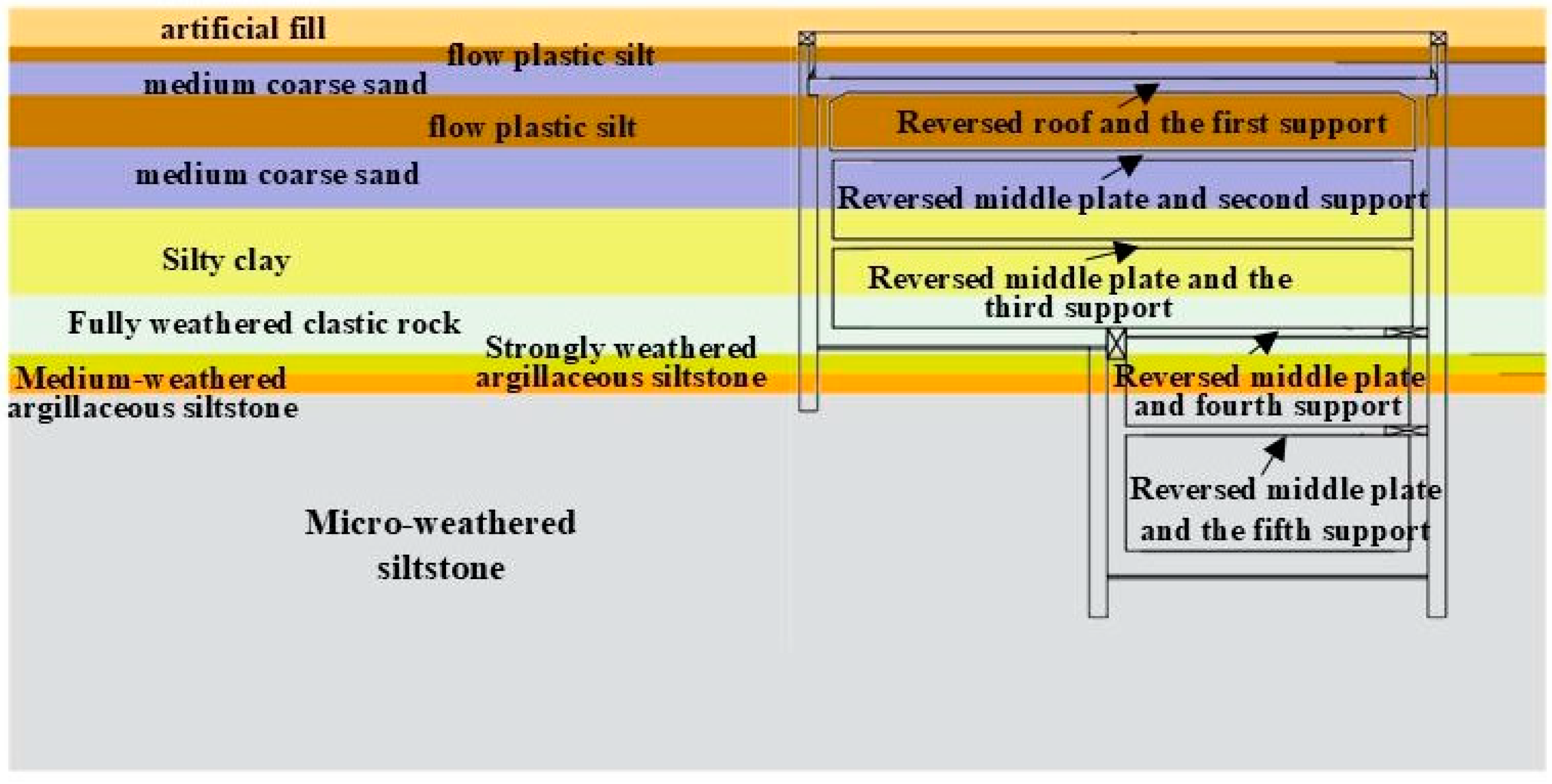
According to the geotechnical survey report, the foundation pit is located in the alluvial plain region of the Pearl River Delta, with ground elevations ranging from approximately 8.04 to 10.74 m. The strata within the excavation depth consist of a typical soft-over-hard soil-rock composite, with surface deposits comprising marine-terrestrial interbedding and alluvial-floodplain sands and cohesive soils, and underlying bedrock of Cretaceous clastic rocks. The detailed stratigraphic distribution is shown in Figure 2. Pre-construction investigation revealed that the stable groundwater table ranges from 1.4 m to 4.8 m in depth, with an annual fluctuation of approximately 1 to 1.5 m, indicating a relatively shallow and overall high groundwater level. During construction, the influence of groundwater must be fully considered, and effective dewatering and seepage control measures should be implemented to ensure the safety and stability of the project. Based on the geological survey findings, it can be observed that the upper soft soil layer is characterized by low strength, high compressibility, and poor stability, which may lead to significant lateral deformation of the retaining structure and noticeable surface settlement during excavation. Conversely, the underlying strongly weathered and moderately weathered bedrock provides higher bearing capacity but makes it difficult for the retaining system to achieve effective anchoring. The abrupt change in stiffness between the overlying soft soil and the underlying hard rock may cause stress concentration and potential differential settlement, thereby increasing the risk of structural damage. Additionally, the relatively high and shallow groundwater level not only exerts extra hydrostatic pressure on the retaining structure but also raises concerns about seepage erosion and potential instability at the excavation bottom. These complex geological and hydrological conditions necessitate precise optimization of the retaining structure parameters to ensure the safety and economic efficiency of the construction project.

2.3. Construction Sequence of the Excavation Pit

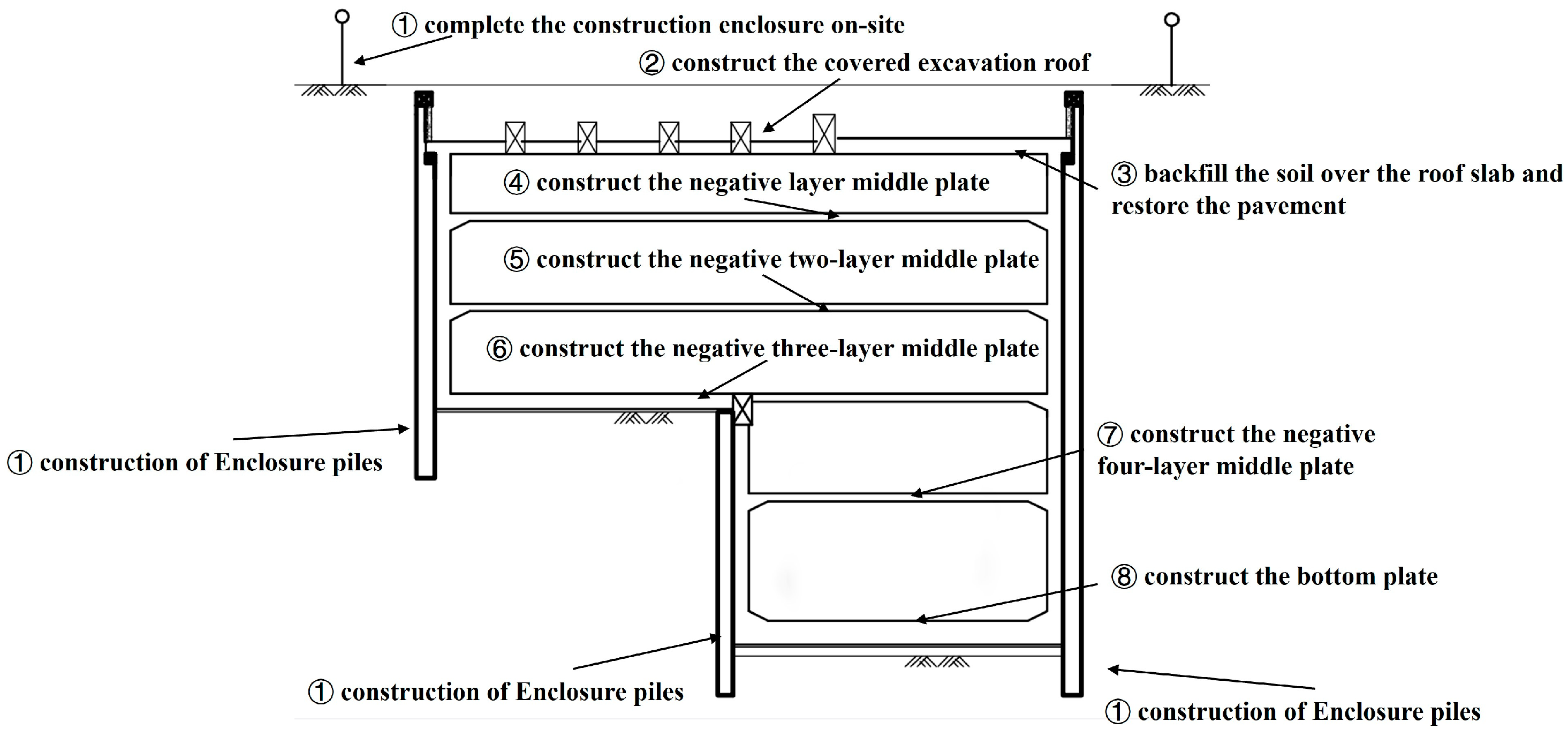
Compared to traditional open-cut methods, the cut-and-cover reverse construction method allows for the early formation of the upper cover slab and successive middle slabs, with internal supports being installed and stabilized at an earlier stage. This approach is advantageous for controlling wall displacement and surface settlement in conditions of high groundwater, weak overlying layers, and sensitive surrounding environments. Additionally, the cut-and-cover reverse method enables the rapid restoration of surface traffic after the completion and backfilling of the top slab, thereby minimizing disturbances to the surrounding environment and municipal pipelines. Moreover, layered downward construction facilitates material and equipment organization, as well as monitoring feedback, reducing the complexity of organization during the deep excavation phase. Considering the project’s deformation control and schedule requirements, this project adopts the cut-and-cover reverse construction method. The specific steps of the deep foundation pit construction using this method are illustrated in Figure 3, with detailed descriptions as follows:
Complete site enclosure and pipeline relocation, while constructing the bored piles and cutoff walls for the retaining structures.
Excavate the pit to the underside of the top slab and build the cover-and-excavation top slab, leaving openings for soil removal, while constructing floor slabs for each level.
Once the top slab attains the required strength, pour concrete and apply waterproofing, backfill the top slab with soil, and reinstate the road surface.
Excavate further to the underside elevation of the Level-1 intermediate slab, pour the Level-1 slab, and complete the reinforcement connections with the retaining piles.
Once the Level-1 intermediate slab meets the design strength, excavate to the underside of the Level-2 slab, construct it, and finalize reinforcement connections.
Following the attainment of design strength in the Level-2 slab, excavate to the bottom of the Level-3 slab (with shallow pits using the base slab), build the slab and sidewall waterproofing, and complete reinforcement connections.
After the Level-3 slab and sidewalls attain design strength, excavate to construct the Level-4 intermediate slab and finalize the reinforcement connections.
Once the Level-4 slab achieves design strength, continue excavation to the pit bottom, perform waterproofing at the bottom of the ventilation shaft, and construct the base slab along with the remaining sidewall structures.

3. Field Monitoring

3.1. Monitoring Scheme

3.1.1. Monitored Parameters

During foundation pit excavation, the complex influence of factors such as geological conditions, surrounding environment, excavation, support, and loading makes it difficult to accurately predict or assess potential issues using empirical or semi-empirical methods. Moreover, deformations predicted by empirical formulas often involve considerable errors. Therefore, it is necessary to carry out comprehensive, all-weather on-site monitoring during the excavation of cover-and-excavation reverse foundation pits. During excavation of the foundation pit, the complex influences of engineering geology, surrounding environment, excavation, support, and loading make it difficult to accurately predict or assess potential issues using empirical or semi-empirical methods, and deformations predicted by empirical formulas often have significant errors. Therefore, it is essential to implement comprehensive, continuous on-site monitoring throughout the excavation of cover-and-excavation reverse foundation pits. The monitoring items and control limits of this study are shown in Table 1.

3.1.2. Monitoring Points

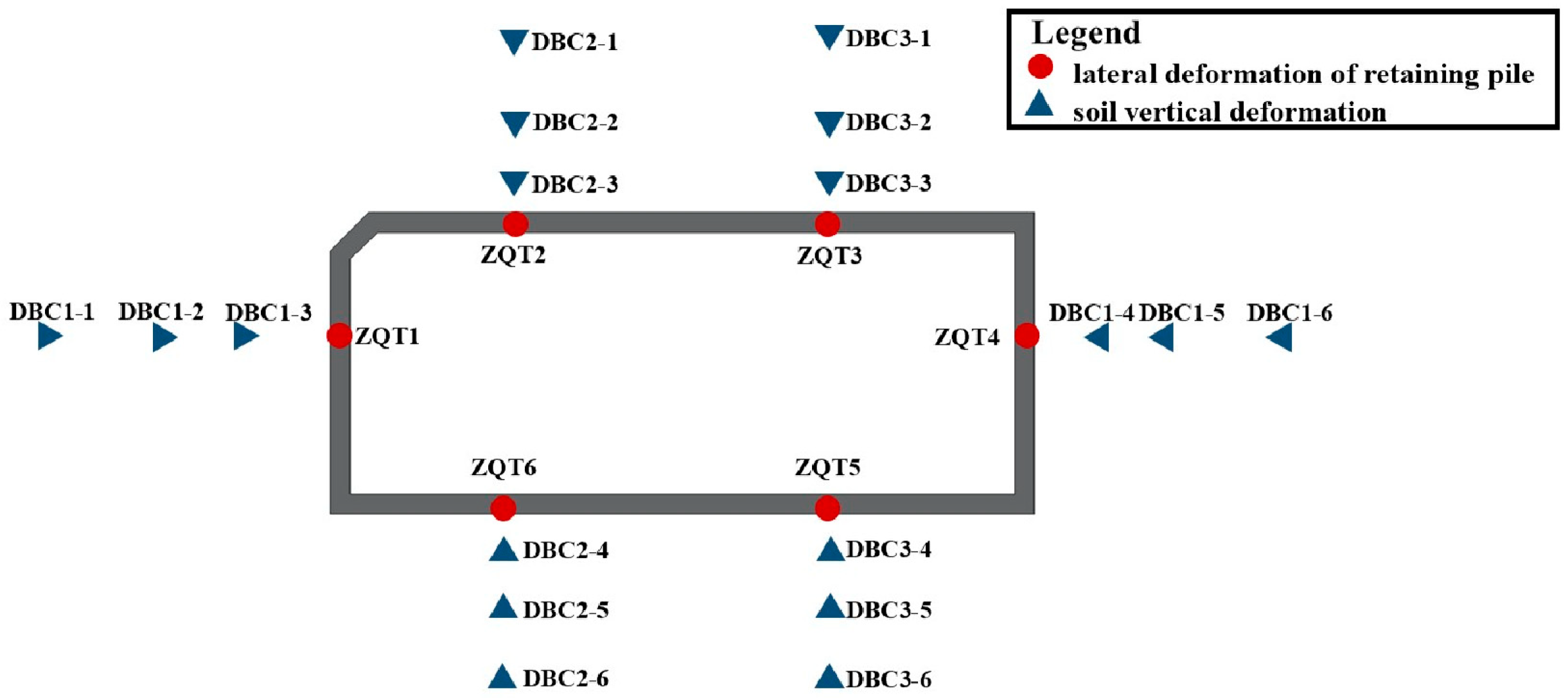
In the deep and shallow foundation pit sections of the metro shaft constructed using the cover-and-excavation reverse method, one monitoring point is arranged on each side of the retaining structures, with a total of six monitoring points designated as ZQT1 to ZQT6.
To effectively capture the typical settlement curves caused by deep excavation of the foundation pit, based on the standards outlined in “Technical Specification for Monitoring of Building Foundation Pit Engineering” (GB 50497-2019) and experience from similar metro projects, three surface vertical deformation monitoring points were arranged at each of the six typical cross-sections surrounding the foundation pit. These monitoring points were positioned at distances of 2.5 m, 10 m, and 15 m from the pit edge, respectively, ensuring comprehensive monitoring of both primary and secondary influence zones of the excavation, as shown in Figure 4. During the excavation of the foundation pit, all monitoring instruments were calibrated and verified for accuracy before use to ensure data reliability. The specific instruments and their accuracies are as follows:
(1)
inclinometer: used to measure the horizontal displacement of retaining piles, with an accuracy of ±2 mm/30 m;
(2)
level Instrument: used to measure settlement at pile tops and ground surface, with an accuracy of ±0.5 mm;
(3)
theodolite: used to measure horizontal displacement at pile tops, with an accuracy of ±1 mm.
With the monitoring scheme established, data were systematically collected throughout the excavation process. The following section presents an analysis of this data, focusing on the deformation behavior of the retaining structure and the surrounding ground.

3.2. Monitoring Data Analysis

3.2.1. Lateral Deformation of Retaining Piles

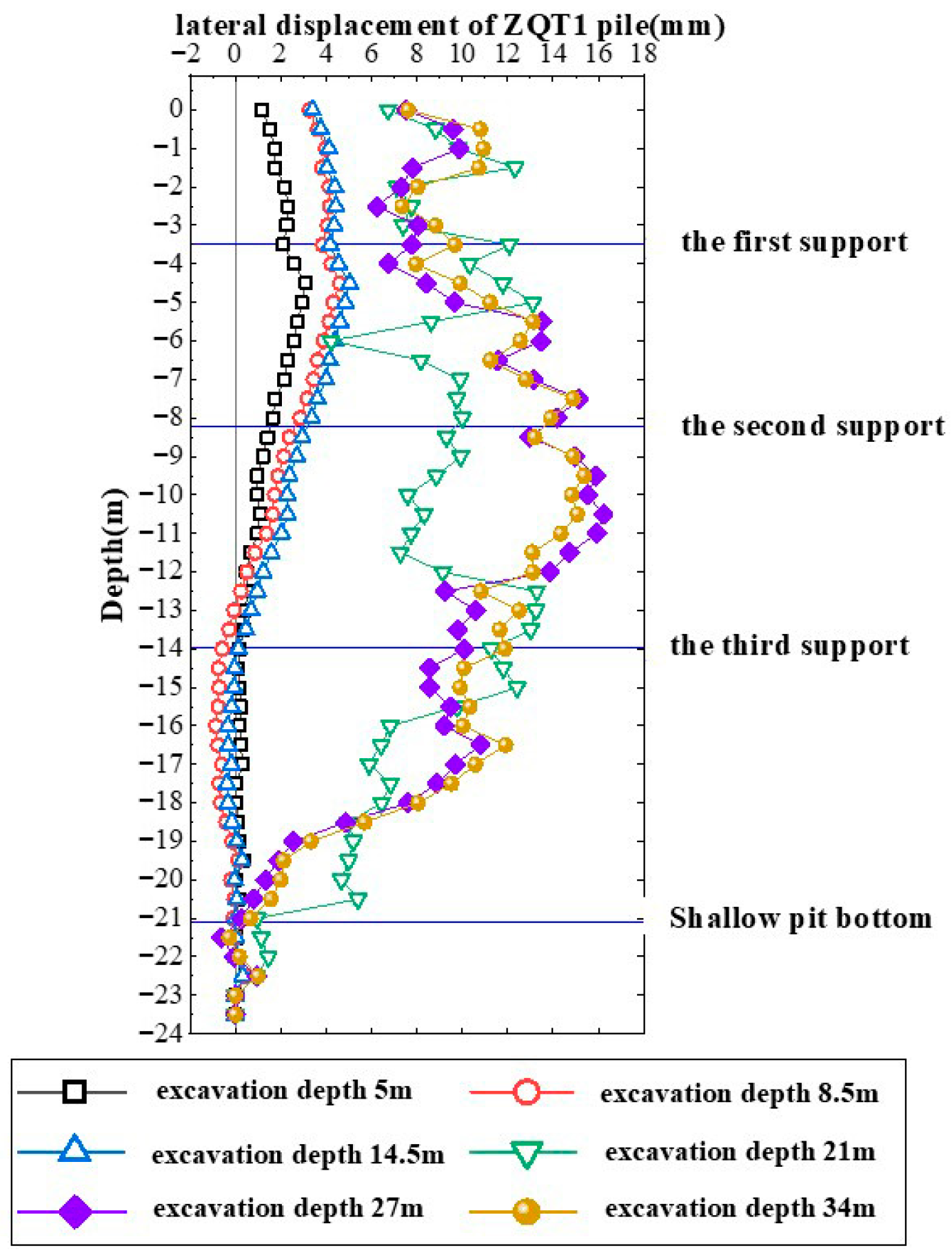
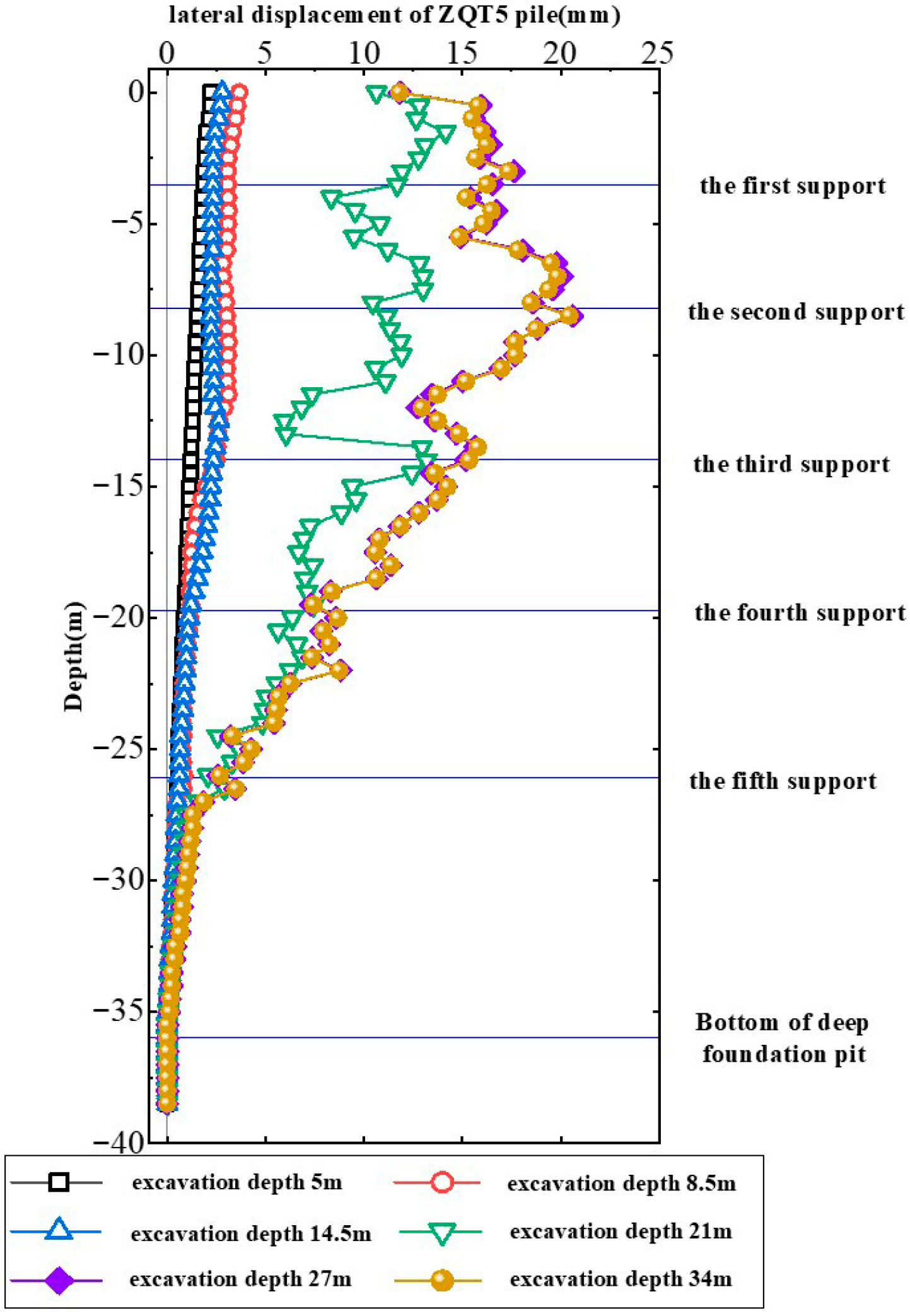
The inclinometer holes in this project were symmetrically arranged along the foundation pit, and during the monitoring process, the cumulative displacements at all monitoring points did not exceed the early-warning threshold of 24 mm, indicating that the foundation pit remained in a safe state. Typical section monitoring points ZQT1 and ZQT5 were selected, and their measured data were processed and analyzed. The variation curves of retaining pile horizontal displacement with excavation depth were plotted, as shown in Figure 5 and Figure 6.
As shown in Figure 6 and Figure 7, the lateral deformation of the foundation pit retaining structure is mainly characterized by horizontal displacement toward the inside of the pit. In the early stage of excavation, due to the shallow depth and the constraints of the reverse concrete top and intermediate slab supports, the deformation is small, with a maximum of about 5 mm. At the long side measuring point ZQT5, the lateral deformation shows a cantilever shape, with the maximum deformation at the pile top gradually decreasing downward. At the short side point ZQT1, the deformation appears as a “bulging shape,” with the maximum deformation occurring at a depth of −4.5 m. In the mid-excavation stage, as the depth increases and soil unloading occurs, the difference in earth pressure between the inside and outside enlarges, leading to intensified lateral deformation of the retaining structure. At this stage, reinforced concrete floor slabs were gradually constructed, serving as internal supports and working synergistically with the retaining structure to maintain stability. When excavation reached the fourth basement level (27 m deep), the lateral deformation reached its maximum, which was close to that observed at the fifth basement level (34 m). The deformation curves of pile bodies at the three typical monitoring sections all exhibited a “bulging shape,” with larger deformation in the middle and smaller at both ends, while inflection points appeared at the depths where concrete supports were installed. Due to the constraint of floor supports and crown beams, the pile deformation tended to stabilize or even shift outward, while significant soil pressure was concentrated on the midspan of the piles between supports, resulting in a “concave” lateral displacement profile. The maximum lateral deformation of pile ZQT1 was 16.22 mm (≈0.087% H) at a depth of −10.5 m, while that of pile ZQT5 was 20.59 mm (≈0.057% H) at −8.5 m. The lateral deformation of the retaining piles along the long side of the foundation pit is significantly greater than that along the short side. This is attributed to the longer unsupported span along the long side, which reduces the overall structural stiffness, thereby increasing flexibility and deformation under soil pressure. Additionally, the larger excavation area amplifies the space effect, exacerbating stress redistribution and concentration near the mid-span region of the long side. Consequently, this results in a notable difference in deformation behavior between the long and short sides [21].

3.2.2. Vertical Soil Deformation Outside the Pit

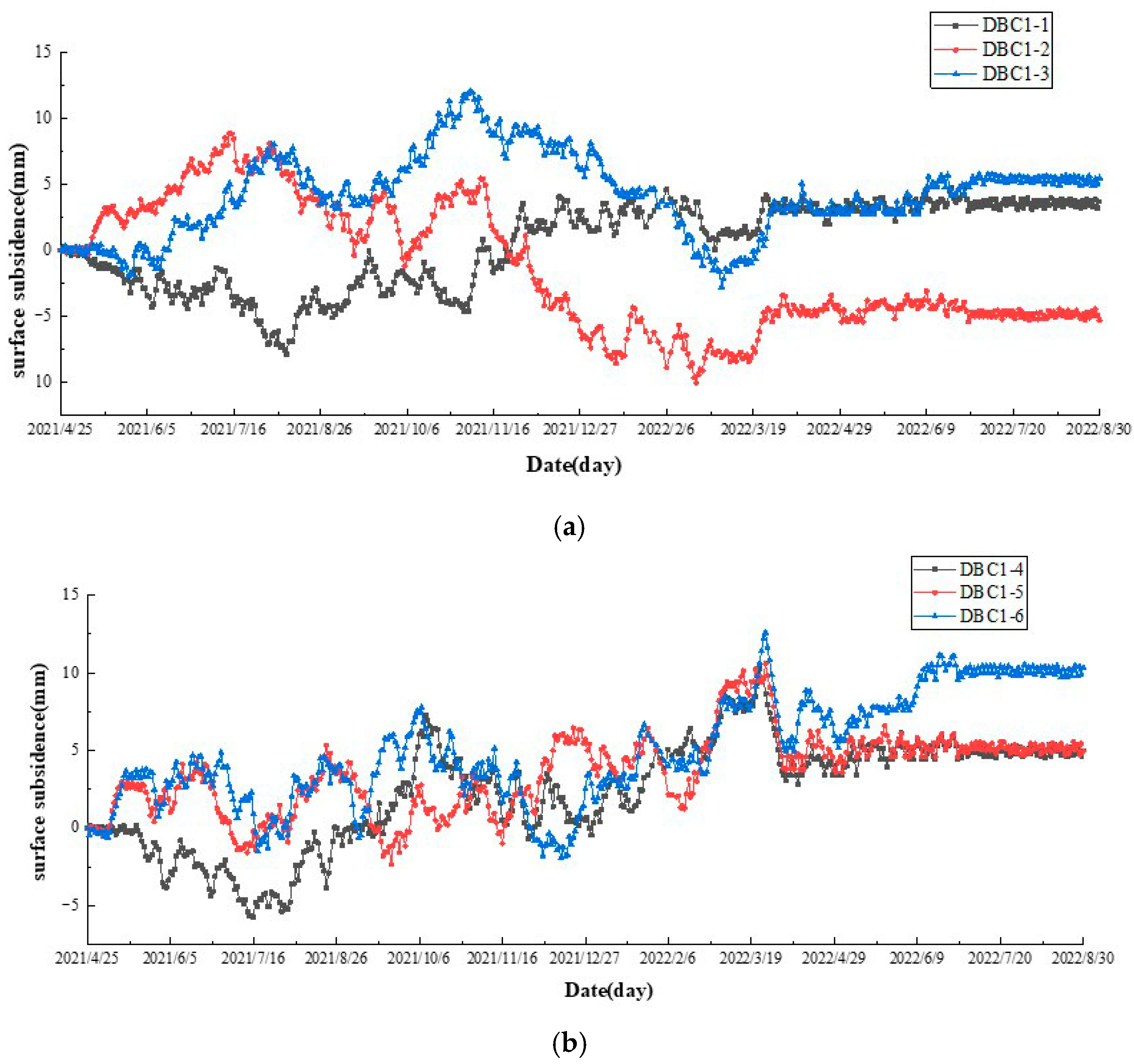
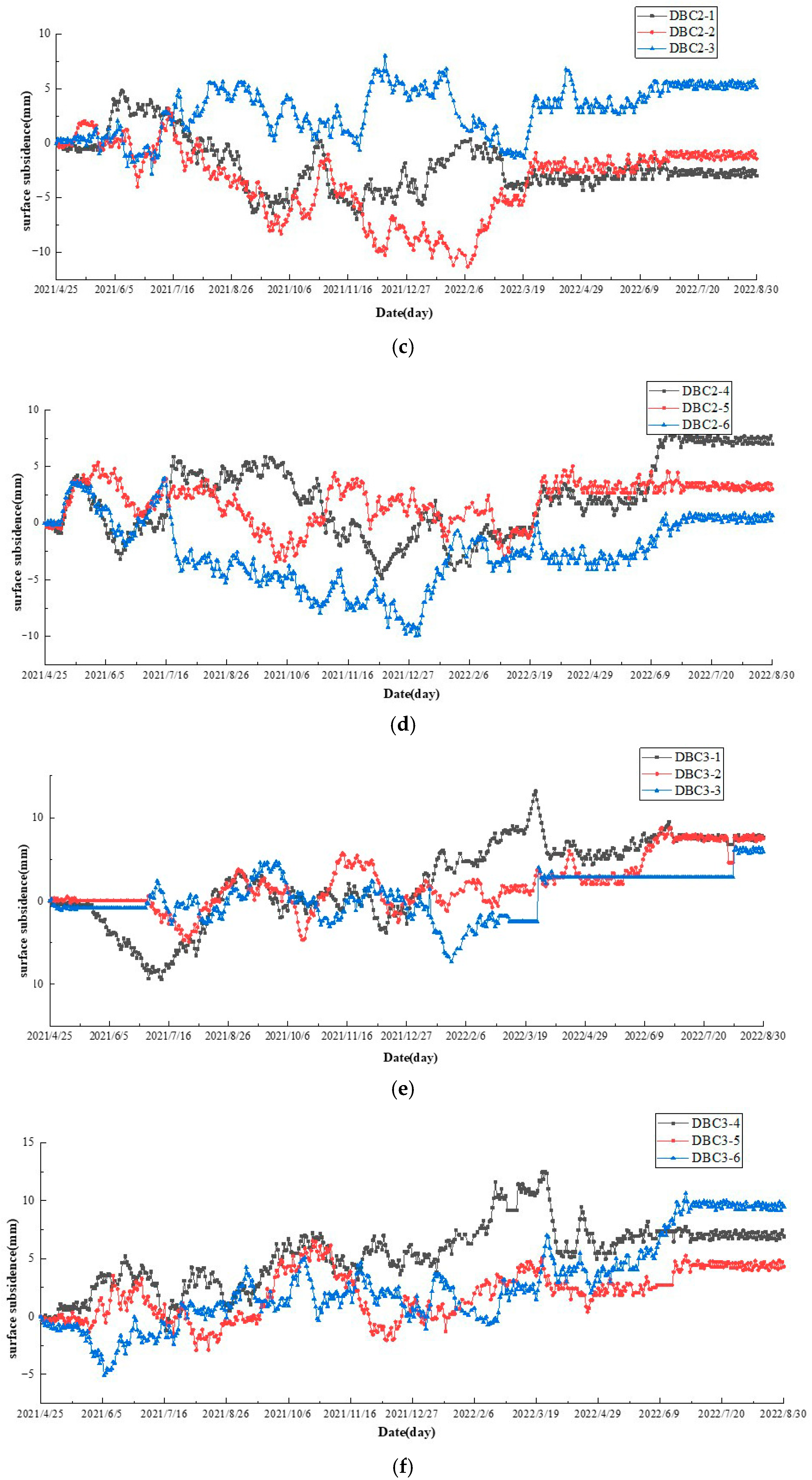
The processing and analysis of the monitoring data yielded the time-dependent curves of surface vertical deformation, as shown in Figure 7.
Analysis of Figure 7 indicates that the ground surface vertical deformation outside the metro deep excavation pit constructed using the cover-and-excavation reverse method is mainly characterized by settlement and heave, with both forms coexisting under multiple working conditions. The maximum settlement is concentrated in the north-side monitoring points DBC2-1 to DBC2-3, with a magnitude of approximately 11 mm, indicating notable surface subsidence in this area. The greatest ground surface heave occurred at the eastern monitoring points DBC1-4 to DBC1-6, with an uplift of approximately 13 mm, indicating that the eastern surface uplift is the most pronounced. Moreover, except for monitoring points DBC1-4 to DBC1-6 and DBC3-1 to DBC3-3, the maximum settlement at other points was not at the locations nearest to the pit, indicating that the deformation of the perimeter retaining piles induces a trough-shaped surface settlement distribution, with the maximum settlement typically occurring at a certain distance from the pit edge. Although the external ground surface vertical deformation fluctuated considerably during construction due to multiple influencing factors, the monitored deformations throughout the entire construction phase remained within safe limits, ensuring the stability of the areas surrounding the pit.

4. Numerical Analyses

4.1. Finite Element Model

4.1.1. Basic Assumptions

Considering the difficulty level of modeling geological parameters and the effective drainage measures already implemented in this project, the following assumptions were made when establishing the numerical model for this study to balance computational efficiency and model complexity [22]:
(1)
The soil and rock mass is considered as a continuous, homogeneous, and isotropic medium;
(2)
The rock strata are treated as homogeneously layered, and the initial stress field considers only the self-weight stress;
(3)
The retaining and main structural materials are simplified as linear elastic materials for simulation;
(4)
The influence of groundwater is not considered;
(5)
The time-dependent deformation of soil and rock and the influence of time-related factors on surrounding rock stability are not taken into account.

4.1.2. Constitutive Model and Material Parameters

This paper uses Abaqus finite element analysis software for modeling. Considering both the engineering characteristics of the in situ soil and the ease of obtaining constitutive model parameters, the Mohr-Coulomb model was selected as the constitutive model in this study. Based on geotechnical survey data and the parameters required for the Mohr-Coulomb model in ABAQUS 6.13 numerical simulation software, the parameter values for each soil layer are listed in Table 2.
In this numerical simulation analysis, a linear elastic constitutive model was used, and the stiffness of reinforced concrete components was calculated considering the entire cross-section as concrete. Additionally, for modeling convenience, the bored piles were equivalently treated as diaphragm walls based on equal flexural stiffness; the calculation parameters for reinforced concrete structures are detailed in Table 3.

4.1.3. Model Dimensions and Mesh Discretization

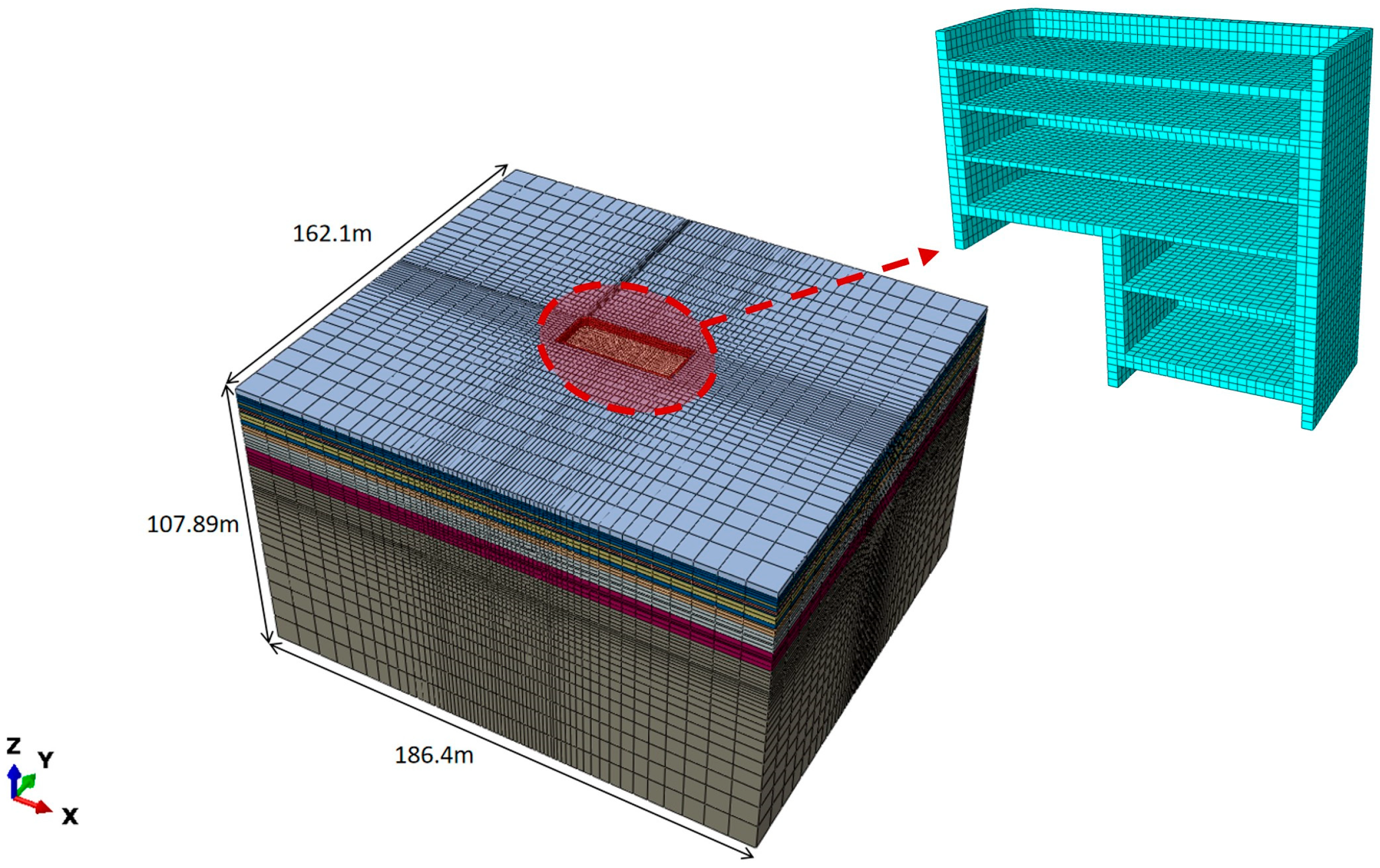
According to Saint-Venant’s principle and to ensure adequate coverage of the computational model, the numerical model dimensions were set to 162.1 m × 186.4 m × 107.89 m. In the numerical simulation, both the soil and reinforced concrete structures were discretized using hexahedral solid elements. Denser meshing was applied near the excavation to improve computational accuracy, while the soil mesh farther from the pit was gradually coarsened to save computational resources. To ensure that the simulation results were not mesh-dependent, a mesh sensitivity analysis was conducted. Three mesh configurations with varying levels of refinement around the excavation and retaining structures were tested. The key output parameters, namely the maximum lateral displacement of the retaining pile and the maximum surface settlement, were compared across these meshes. The results showed that the differences in these outputs between the medium and fine mesh configurations were less than 5%, indicating that the solution had converged. Therefore, Therefore, a medium mesh density, as illustrated in Figure 8, was selected for all subsequent parametric analyses in order to strike an optimal balance between computational accuracy and efficiency. The soil layers are modeled with 8-node brick trilinear displacement/pore pressure elements (C3D8P). The mesh is refined near the wall to ensure computational accuracy. The number of elements in the models is chosen such that its effect on the results is negligibly small. Accordingly, the number of elements was about 20,000.

4.1.4. Boundary Conditions and Load Application

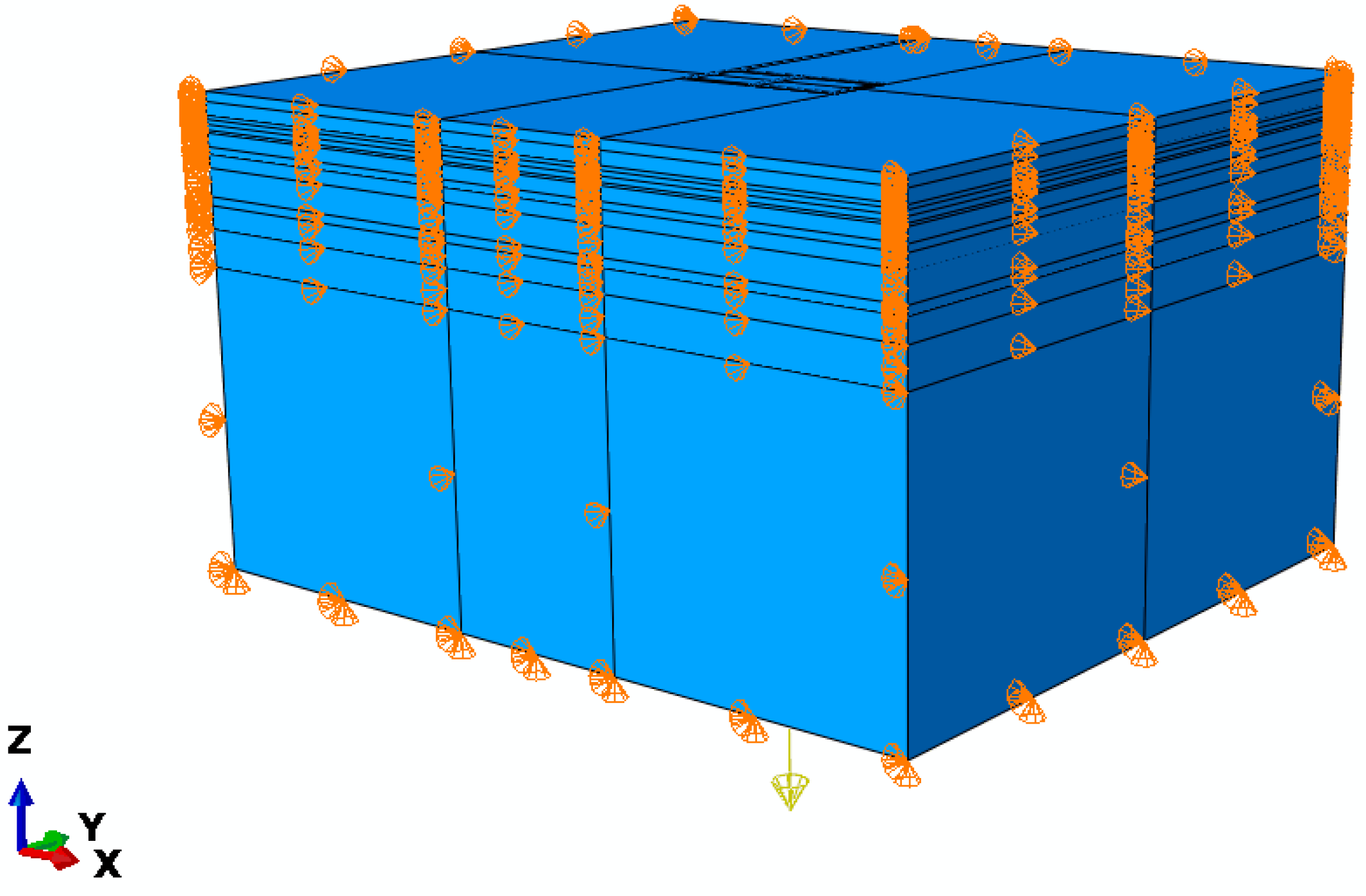
The model was constrained in the X-direction on the left and right sides, in the Y-direction on the front and back sides, with the bottom fixed and the top left free. In addition to the self-weight of the soil and structures, the boundary load conditions also considered the overlying soil, cement cushion, and construction machinery loads on the structural top slab, which were activated during the backfilling analysis phase after the top slab was completed. Contact elements were employed to accurately simulate the interaction between the retaining pile walls and surrounding soil, including contact, friction, and sliding behavior. The contact surfaces of the retaining pile walls were defined as slave surfaces and those of the soil as master surfaces, with normal hard contact and a tangential friction coefficient of 0.1 to achieve a realistic interface mechanical response, as shown in Figure 9.

4.1.5. Simulation Steps

The construction process was set as shown in Table 4.

4.2. Verification of Model Rationality

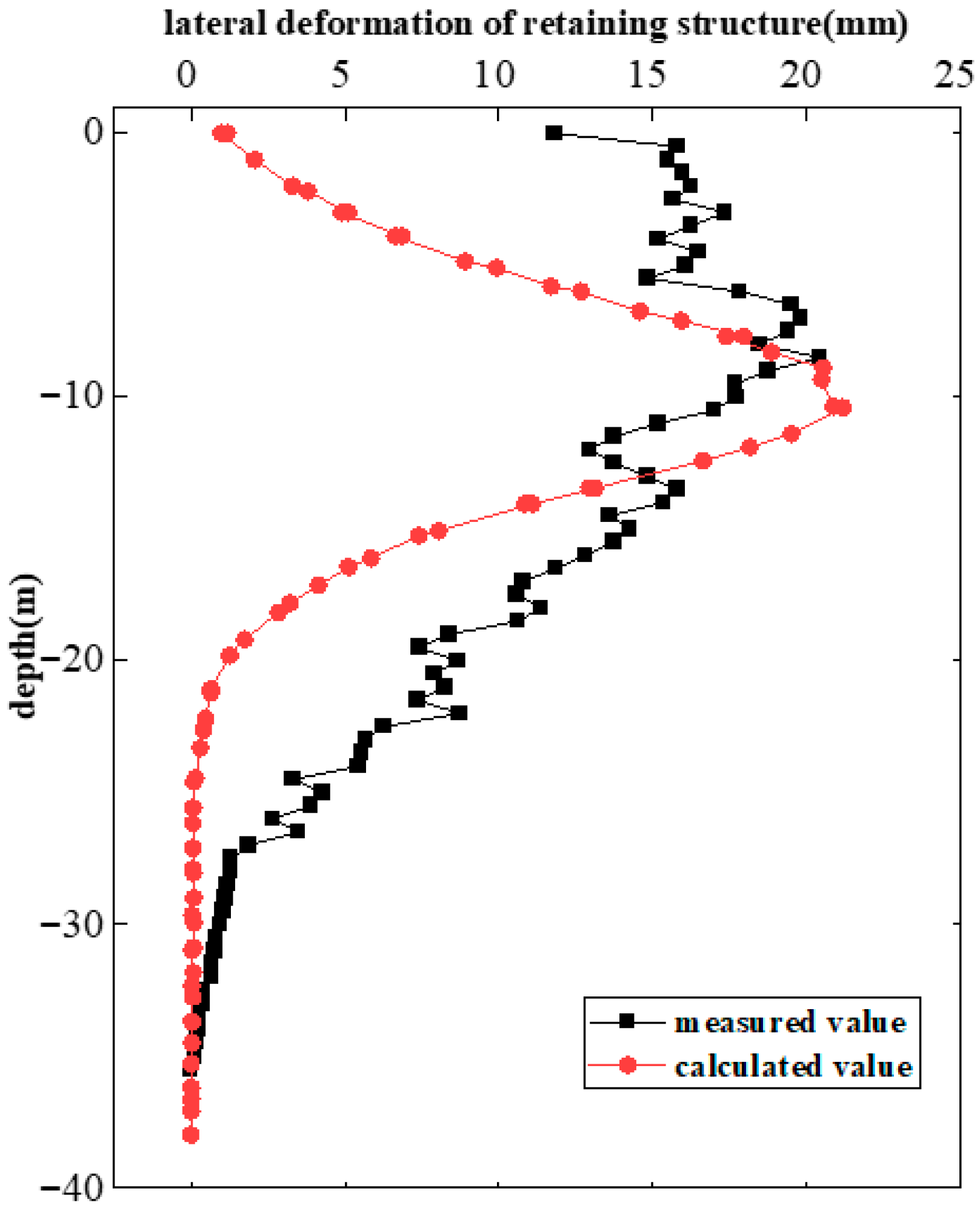
The field monitoring results at the ZQT5 pile were compared with the corresponding section results from the numerical model to validate the model. The curves shown in the figure represent the final condition data of the excavation to the pit base, with the comparison charts presented in Figure 10.
Observing the lateral deformation comparison of the retaining pile shown in Figure 10, both the measured and simulated curves exhibit a “bulging” pattern with depth: lateral deformation is small at both ends and larger in the middle, reaching a maximum at a certain depth. The maximum lateral deformation measured in the field at ZQT5 was 20.43 mm at a depth of −8.7 m, while the corresponding maximum lateral deformation in the numerical model was 21.17 mm at a depth of −10.4 m. The difference between the simulated and measured maximum deformation was 0.74 mm, accounting for 3.6% of the measured value, indicating a small discrepancy. The measured curve shows significant lateral displacement at the top of the pile in the 0~−5 m range, while the simulated curve shows smaller displacement. The difference in maximum deformation can reach about 13 mm, likely due to surface construction loads and external stockpiles affecting the pile top in reality, which were not considered in the numerical model.
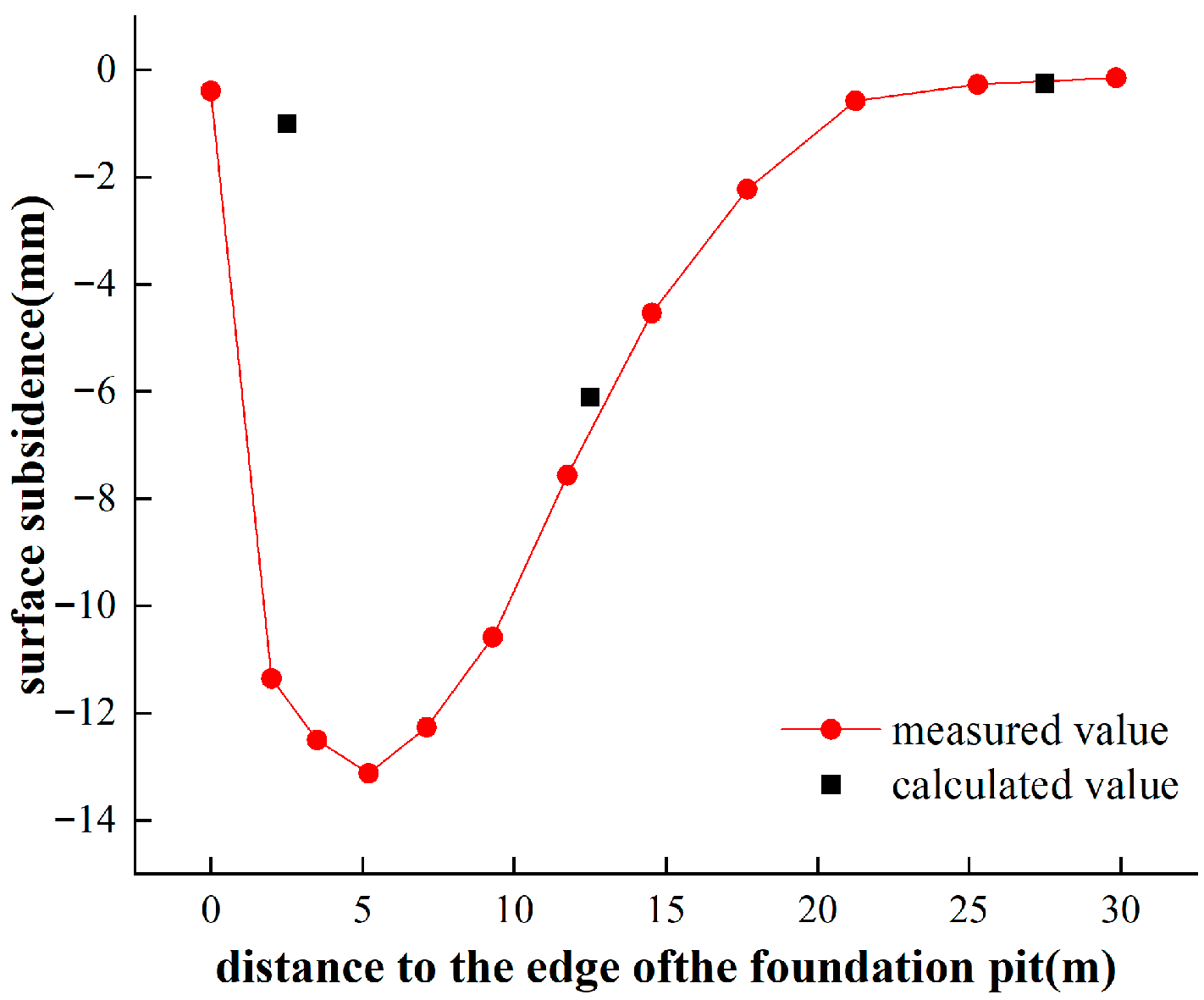
Based on the numerical simulation in cross-sections DBC2-4 to 6 shown in Figure 11, the maximum surface settlement outside the pit is 12.76 mm, with the maximum settlement point located 5.19 m from the edge of the foundation pit. On-site monitoring data indicate that the maximum surface settlement at points DBC2-4 to 6 is 10.19 mm, so the simulated maximum surface settlement is slightly larger than the measured value. Additionally, because the actual on-site vertical surface deformation monitoring set only three measurement points with relatively large spacing, the monitoring data exhibit discrete characteristics, making it difficult to directly compare with the simulation results and the actual maximum surface settlement and its location. However, the surface settlement curve inferred from the data in the previous chapter, which shows how the surface deformation varies over time, has a “groove-shaped” form, indicating that the simulated curve shape is consistent with the on-site situation.

5. Optimization Study of the Retaining Structure for the Excavation Pit

5.1. Effect of Retaining Structure Parameters on the Deformations of the Excavation Pit

Based on statistical analysis of measured data from typical deep metro foundation pit projects in the soil-rock composite strata of Guangzhou and engineering experience, the stiffness of the support system and the embedment ratio of the retaining structure have a certain influence on pit deformation. This section uses numerical calculations based on a finite element model to analyze the influence of key retaining structure parameters—pile diameter, pile spacing, embedment depth, and structural type—on pit deformation. Each parameter has at least three levels, and the evaluation indicators are surface settlement and lateral deformation of the retaining structure to further investigate the impact of these parameters on deep metro pit deformation in top-down excavation projects.

5.1.1. Effect of Pile Diameter on the Deformations of the Excavation Pit

Bored cast-in-place piles, as a pile-row retaining system, serve to resist earth and water pressures generated during excavation unloading, thereby ensuring pit stability. During the design of retaining piles, increasing or decreasing the pile diameter directly alters the overall stiffness of the retaining structure. However, increasing the pile diameter, while enhancing the overall stiffness of the retaining structure and further ensuring the safety and stability of the foundation pit, also leads to higher construction costs and reduced economic benefits. Therefore, this section, based on the requirements of the “Technical Code for Building Foundation Pit Support” (JGJ 120-2012) and typical engineering practices, assumes pile diameters of 800 mm, 1000 mm, 1200 mm, and 1400 mm for calculation and analysis, with other original design conditions unchanged, to provide reference for the design of retaining piles.
(1)
Influence of Pile Diameter on the Horizontal Lateral Displacement of Retaining Structures
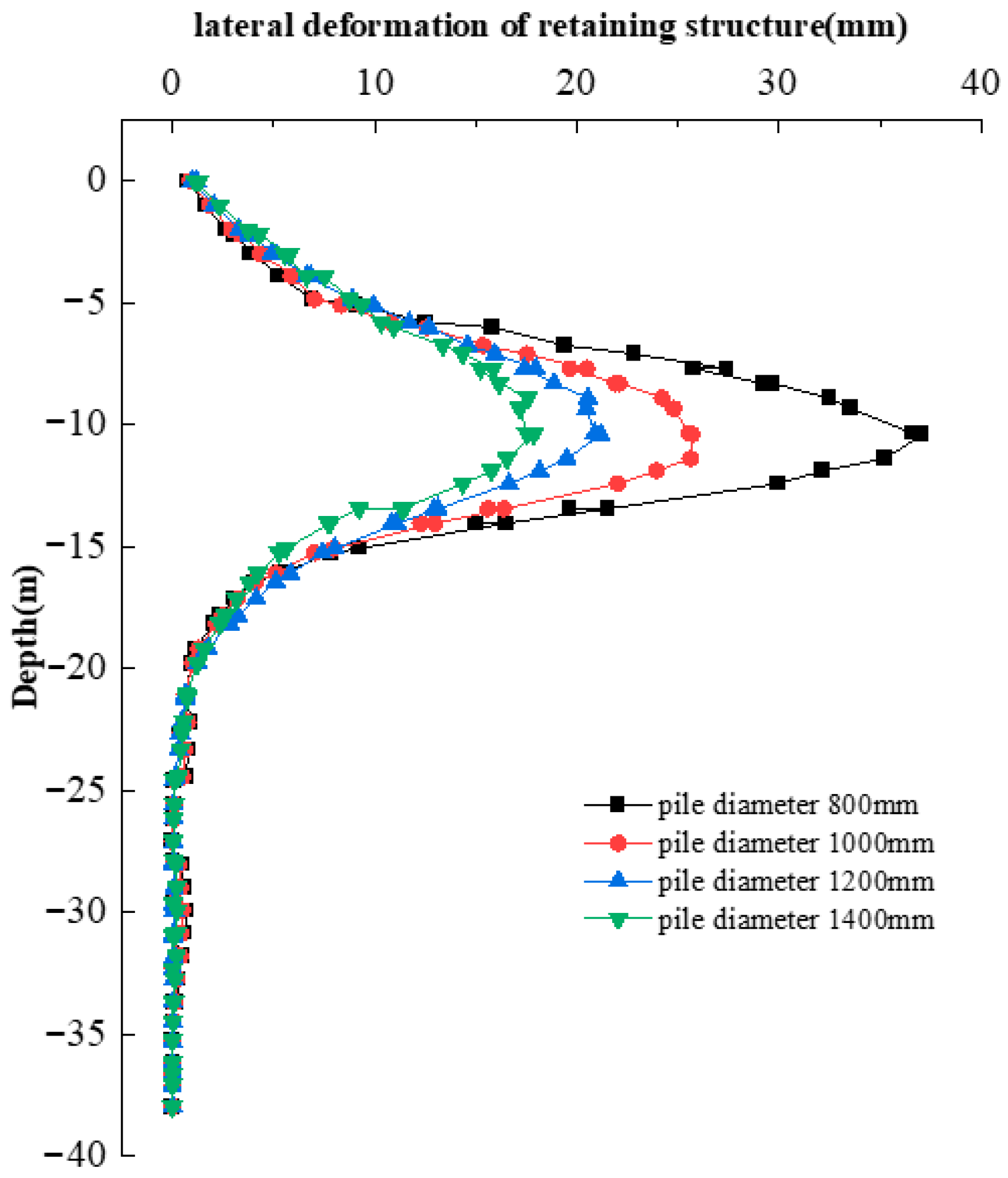
Figure 12 shows the effect of pile diameter on the horizontal lateral displacement of retaining piles. As shown, as the pile diameter increases from 800 mm to 1400 mm, the horizontal lateral displacement curves of the retaining piles exhibit similar shapes, indicating that changes in pile diameter do not alter the lateral deformation pattern of the piles. The depth at which the maximum lateral displacement occurs is unaffected by pile diameter changes and is generally around 10.4 m. As the pile diameter increases, the overall horizontal lateral displacement of the retaining piles decreases, with the reduction magnitude gradually diminishing.
As shown in Table 5, when the pile diameter increases from 800 mm to 1400 mm, the maximum lateral displacement of the pile decreases from 37.081 mm to 17.87 mm, a reduction of 19.211 mm. This indicates that increasing the pile diameter thickens the pile-row retaining body, enhances the overall stiffness of the retaining structure, effectively reduces the horizontal lateral displacement of the piles, and controls pit deformation. When the pile diameter increases in increments of 200 mm, the increment in lateral displacement of the retaining structure decreases, and the relative change also diminishes, indicating that at smaller pile diameters, increasing the diameter effectively reduces pile lateral displacement. However, as the thickness increases, the effectiveness of this method in controlling pit deformation gradually diminishes. When the pile diameter reaches 1000 mm, the stiffness of the retaining structure is sufficient to meet pit deformation control requirements, and further increasing pile diameter to control deformation would significantly raise project costs, causing waste.
(2)
Effect of Pile Diameter on Horizontal Lateral Displacement of Retaining Structures
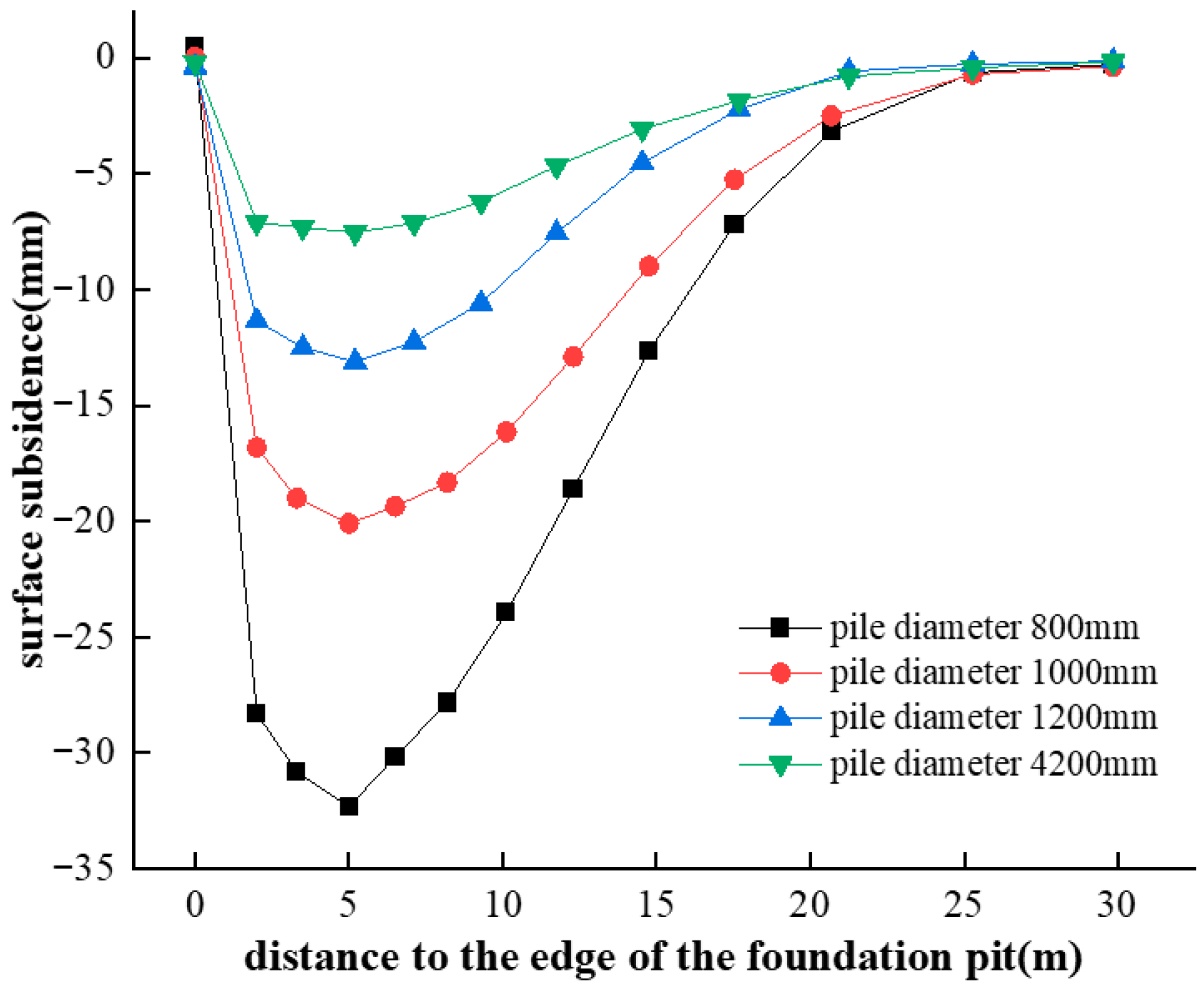
Figure 13 shows the effect of pile diameter on surface settlement outside the pit. As shown, as the pile diameter increases from 80 mm to 1400 mm, the pattern of surface settlement outside the pit consistently exhibits a concave shape. The location of maximum surface settlement outside the pit is nearly the same for all pile diameters, generally around 5 m behind the wall. The affected range of surface settlement outside the pit remains nearly unchanged, from 0 to 30 m (about 0.84 times the excavation depth). As the pile diameter increases, the surface settlement outside the pit decreases.
As shown in Table 6, when the pile diameter increases from 800 mm to 1400 mm, the maximum surface settlement outside the pit decreases from 32.32 mm to 8.89 mm, a reduction of 23.43 mm. Increasing the pile diameter can effectively reduce the impact of retaining structure deformation on the surrounding soil, thereby decreasing surface settlement. From the numerical change in settlement-to-diameter ratio, it can be seen that the effect of pile diameter on external surface settlement gradually diminishes as the diameter increases. In particular, once the pile diameter reaches 1000 mm, the reduction in settlement per unit increase in diameter becomes significantly smaller.

5.1.2. Effect of Pile Spacing on the Deformations of the Excavation Pit

When bored cast-in-place piles are used as the retaining structure, the overall stiffness is primarily determined by the pile diameter and spacing. The «Technical Specification for Building Foundation Pit Support» (JGJ120-2012) [23] states that the center-to-center spacing of piles should not exceed twice the pile diameter. Based on the original design of the retaining piles in the reference deep foundation pit, and keeping other parameters unchanged, numerical simulations were performed with pile center spacing set to 1400 mm, 1600 mm, 1800 mm, and 2000 mm to investigate the effect of pile spacing on pit deformation.
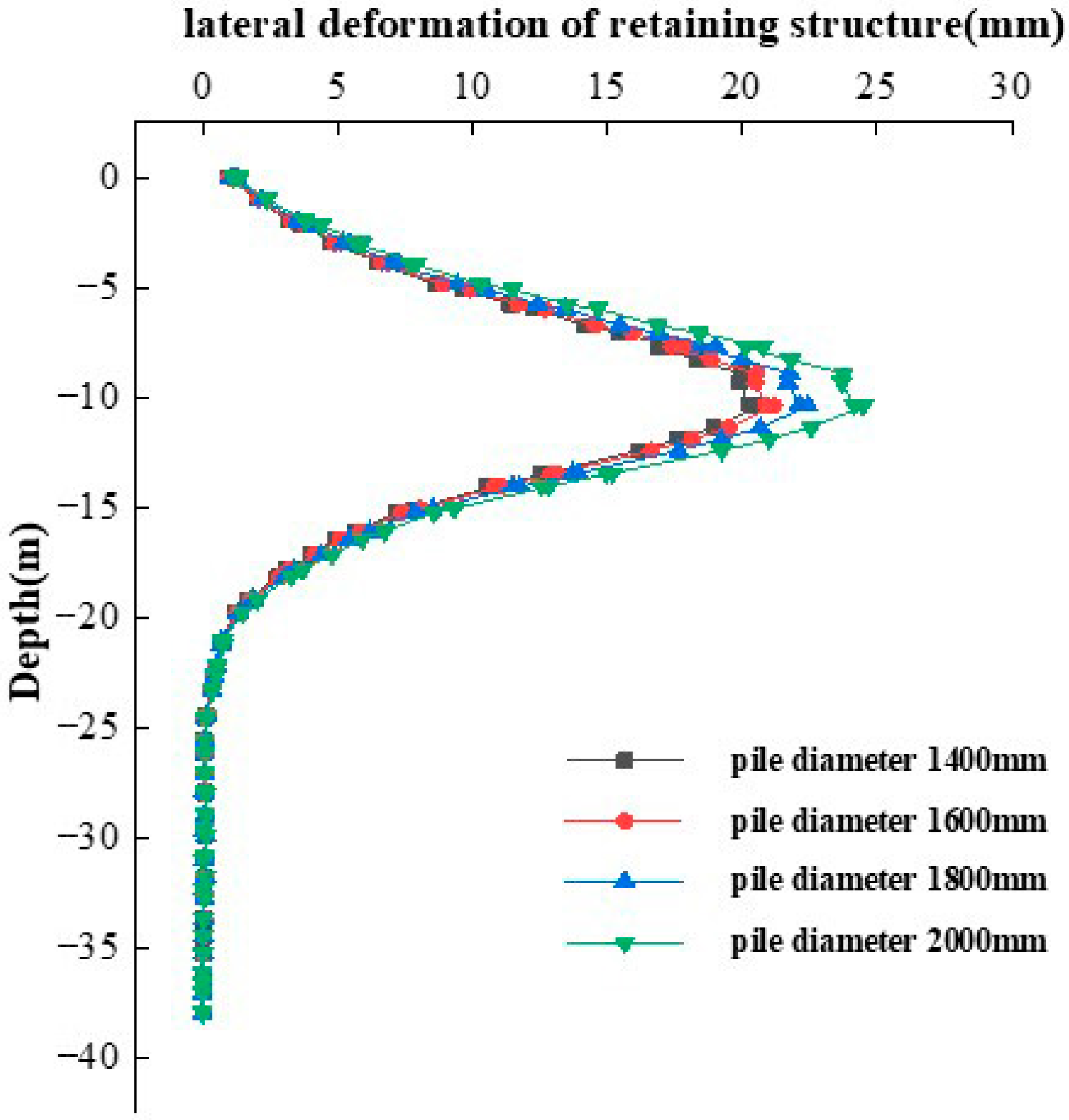
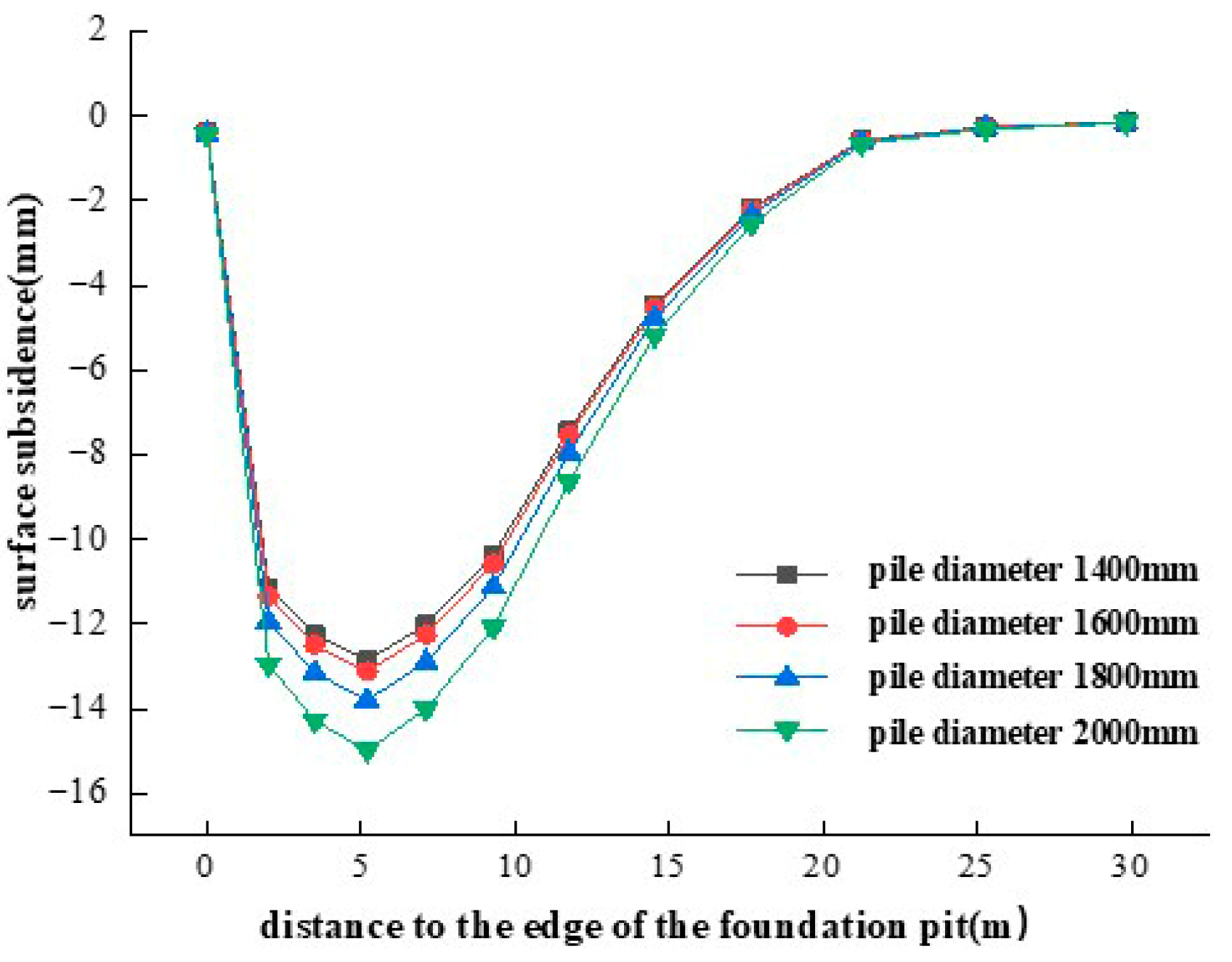
Figure 14 and Figure 15 show the effects of pile spacing on the lateral deformation of the retaining structure and surface settlement, respectively. The curves indicate that as the pile spacing increases, both the lateral displacement of the piles and the external surface settlement gradually increase, while the distribution and shape of pit deformation curves remain unchanged. When the pile spacing increases from 1400 mm to 2000 mm, the maximum lateral displacement of the piles rises from 20.26 mm to 24.49 mm, an increase of 4.23 mm, and the maximum surface settlement outside the pit increases from 12.86 mm to 14.99 mm, a rise of 2.13 mm. From another perspective, as the pile spacing decreases, the stiffness of the retaining structure gradually increases, and pit deformation decreases. When the spacing is 1600 mm, further reduction in spacing has a diminishing effect on controlling deformation. Excessive reduction in pile spacing to control pit deformation is not effective; therefore, retaining structure design should consider both stability and economic efficiency, ensuring coordination with other support systems for optimal performance.

5.1.3. Effect of Embedment Depth on the Deformations of the Excavation Pit

The influence of retaining structure embedment ratio on subway pit deformation under the soil-rock composite strata in Guangzhou was investigated through statistical analysis of engineering case studies. The results indicate that in Guangzhou, the relationship between embedment ratio and pit deformation is not clearly linear. This study focuses on the effect of embedment ratio (retaining structure embedment depth) on the deformation of the cover-excavation reverse method subway deep pit, aiming to clarify their relationship.
Based on the construction conditions of the reference project, five levels of embedment depth for the retaining structures were set for analysis: ① shallow pit 3 m, deep pit 1.5 m; ② shallow pit 4 m, deep pit 2.5 m; ③ shallow pit 5 m, deep pit 3.5 m; (original design) ④ shallow pit 6 m, deep pit 4.5 m; ⑤ shallow pit 7 m, deep pit 5.5 m.
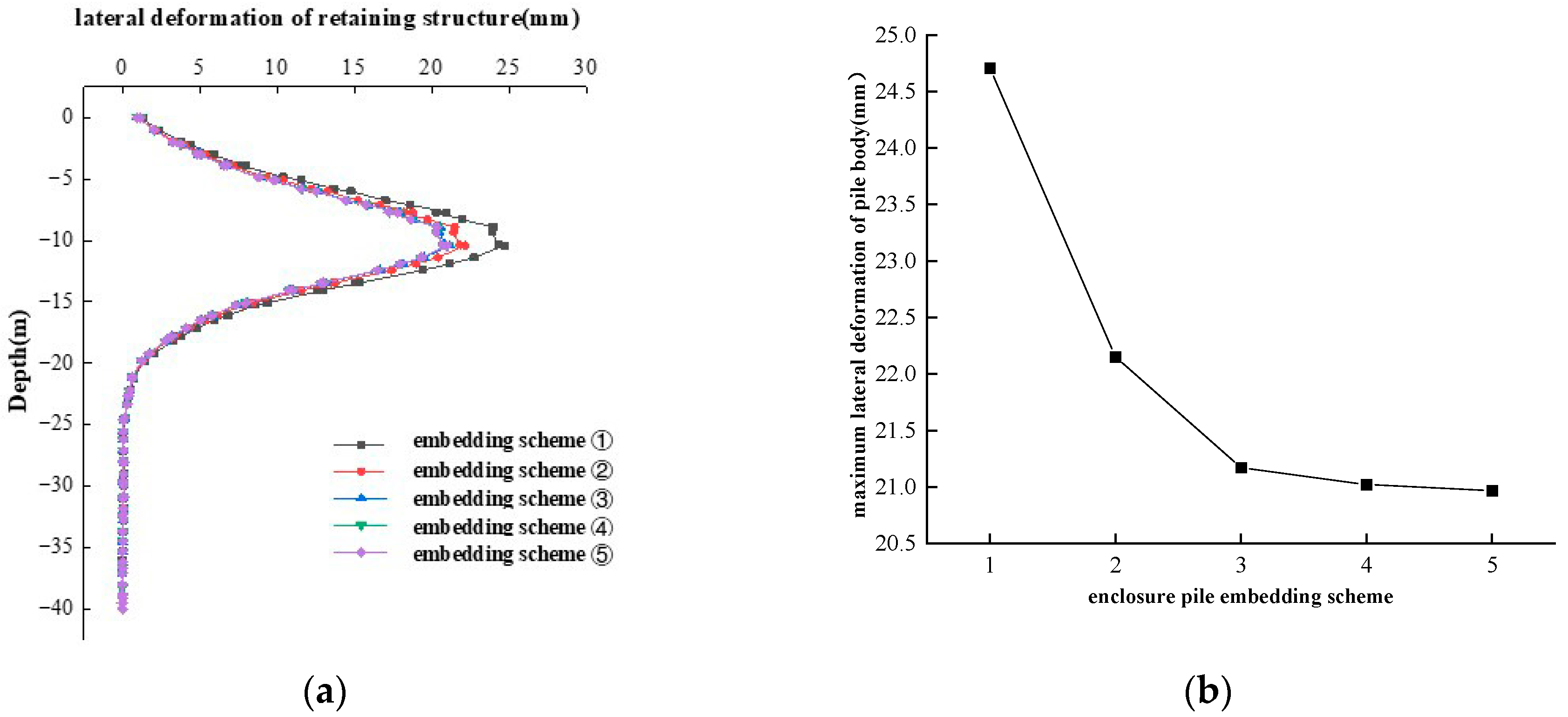
Influence of embedment depth on the lateral deformation of the retaining structure—Figure 16 shows the variation in lateral deformation of the retaining structure in the cover excavation reverse construction of the reference project with different pile embedment depths. Figure 16a presents the lateral displacement curves of the retaining structure when the pit is excavated to the bottom under different embedment depths. As shown, when the embedment depth is smaller than the original design, increasing the pile embedment depth can effectively reduce the horizontal lateral displacement of the piles. This indicates that under embedment depths of schemes ① and ②, the medium-weathered bedrock provides relatively weak embedment resistance, weakening the piles’ constraint on soil deformation, thereby increasing pit deformation. Once the embedment depth reaches a certain level, further increasing it has a negligible effect on the lateral deformation of the piles.
Figure 16b shows the variation in maximum lateral displacement of the retaining piles under different embedment depth schemes. As shown, from Scheme ① to Scheme ② (embedment depth increased from 3 m, 1.5 m to 4 m, 2.5 m), the maximum lateral displacement of the retaining structure decreased from 24.709 mm to 22.1531 mm, a reduction of 2.556 mm; from Scheme ② to Scheme ③ (embedment depth increased from 4 m, 2.5 m to 5 m, 3.5 m), it decreased from 22.153 mm to 21.1728 mm, a reduction of 0.983 mm; from Scheme ③ to Scheme ④ (embedment depth increased from 5 m, 3.5 m to 6 m, 4.5 m), it decreased from 21.1728 mm to 21.022 mm, a reduction of only 0.15 mm. This indicates that increasing pile embedment depth has a limited effect on lateral pile deformation, and there is an effective range for controlling pit deformation. Beyond an embedment depth of 5 m and 3.5 m, further increasing embedment depth does not significantly reduce lateral displacement of the piles.
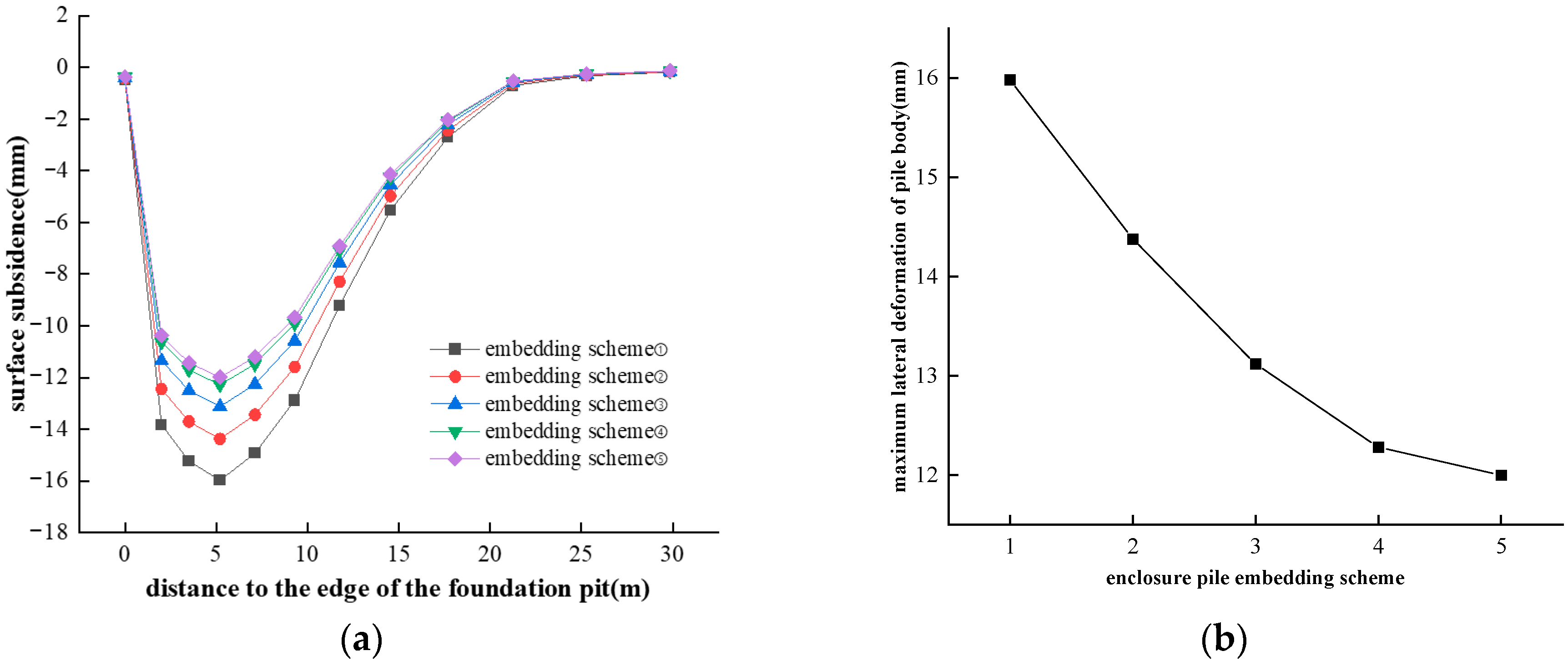
Effect of Embedded Depth on Ground Surface Settlement Outside the Excavation Pit.
Figure 17 shows the variation in ground surface settlement outside the excavation pit with different embedded depths of the retaining piles during the cover excavation reverse construction of the project. As shown in Figure 16a, the influence ranges of ground settlement for the different embedding schemes are similar, and when the embedded depth is less than that of the original design, increasing the embedded depth of the retaining piles can reduce the ground settlement outside the pit. Figure 17b indicates that from Scheme ① to Scheme ③ (embedded depth increased from 3 m, 1.5 m to 5 m, 3.5 m), the maximum surface settlement changes relatively rapidly. When the embedded depth exceeds 5 m, 3.5 m, the rate of change slows down, indicating that increasing the embedded depth to control ground settlement outside the pit also exhibits diminishing marginal returns. The maximum ground settlement in Scheme ① increases by approximately 21.7% compared to the original design, whereas in Scheme ⑤ (embedded depth 6 m, 4.5 m) it only decreases by 8% relative to the original design.
The curves in Figure 17a,b, showing the deformation of the foundation pit with increasing pile embedment depth, approximately exhibit a quadratic parabola. This indicates that as the embedment depth increases, the maximum deformation of the pit decreases, but the rate of reduction slows down. Within a certain range, increasing the embedment depth enhances the stability of the retaining structure and strengthens its constraint on the surrounding soil. However, once the embedment depth reaches a certain point, the external soil pressure can be considered as at-rest pressure, and further increasing the embedment depth will have little effect on stability. Therefore, blindly increasing embedment depth does not effectively reduce pit deformation. Additionally, increasing the depth of piles in the bedrock inevitably raises construction difficulty and cost, so design must balance deformation control safety and construction economy.

5.1.4. Analysis of the Influence of Retaining Structure Types on Foundation Pit Deformation

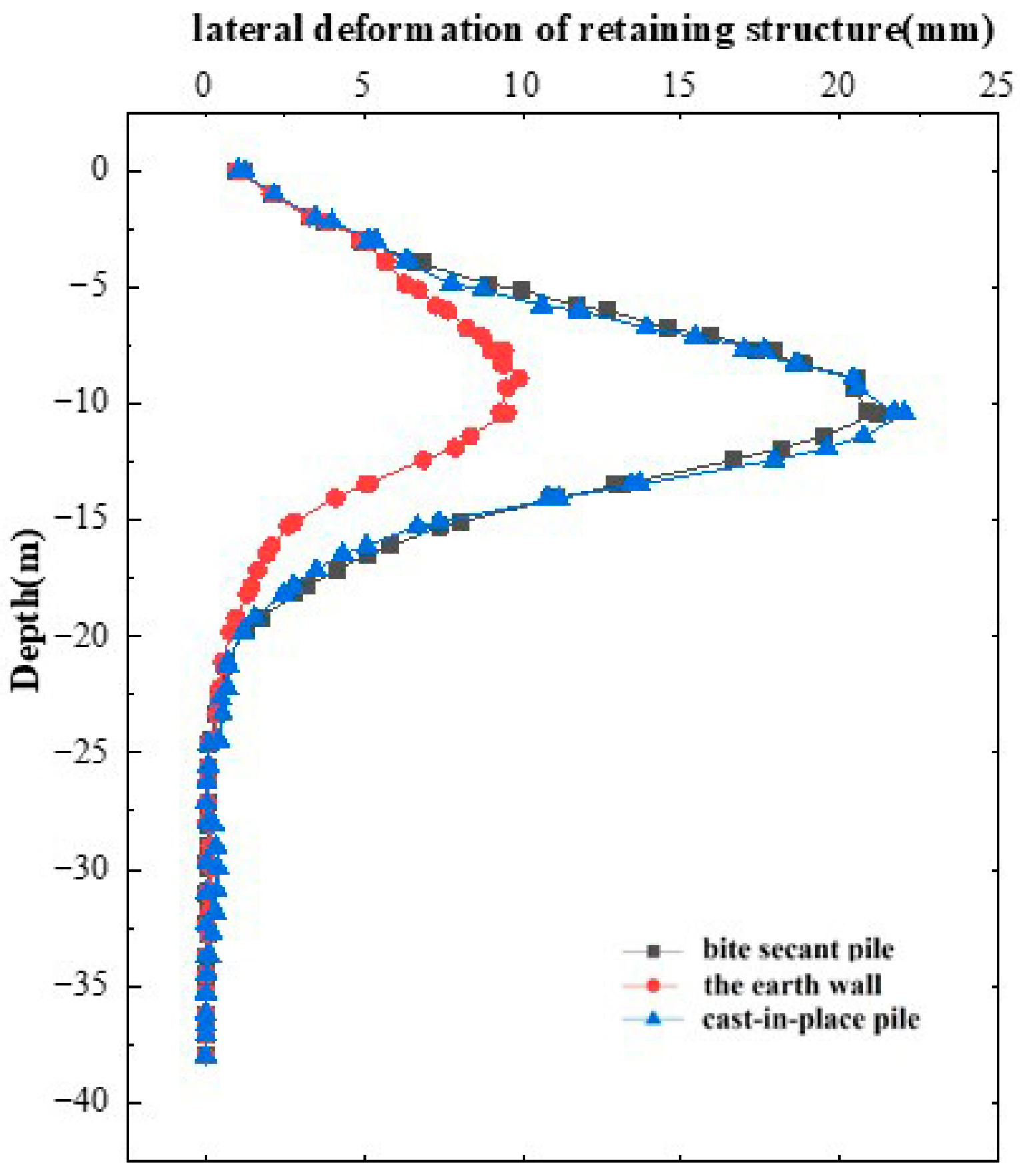
When designing a cover-and-excavation reverse method deep metro foundation pit, the selection of an appropriate retaining structure type should be based on a comprehensive analysis of the site’s geotechnical conditions, surrounding environment, safety, and economic considerations. Since the choice of different retaining structure types significantly affects project cost, research on the applicability of retaining structure types should be strengthened while ensuring engineering safety requirements are met. Engineering case statistics indicate that under the soil-rock composite stratum conditions in Guangzhou, metro foundation pits generally adopt either diaphragm walls or bored pile retaining structures. Based on the actual project conditions, this section analyzes the influence of different retaining structure types—bored interlocking piles, bored cast-in-place piles, and diaphragm walls—on pit deformation. In the numerical analysis, interlocking piles and cast-in-place piles are modeled as equivalent diaphragm walls based on equal bending stiffness. According to the foundation pit engineering manual, when calculating the deformation of interlocking pile rows, the stiffness contribution of plain concrete piles is appropriately considered, with the stiffness of reinforced concrete piles multiplied by a 1.2 enhancement factor [24]. The structural parameters of the interlocking and cast-in-place piles are listed in Table 7.
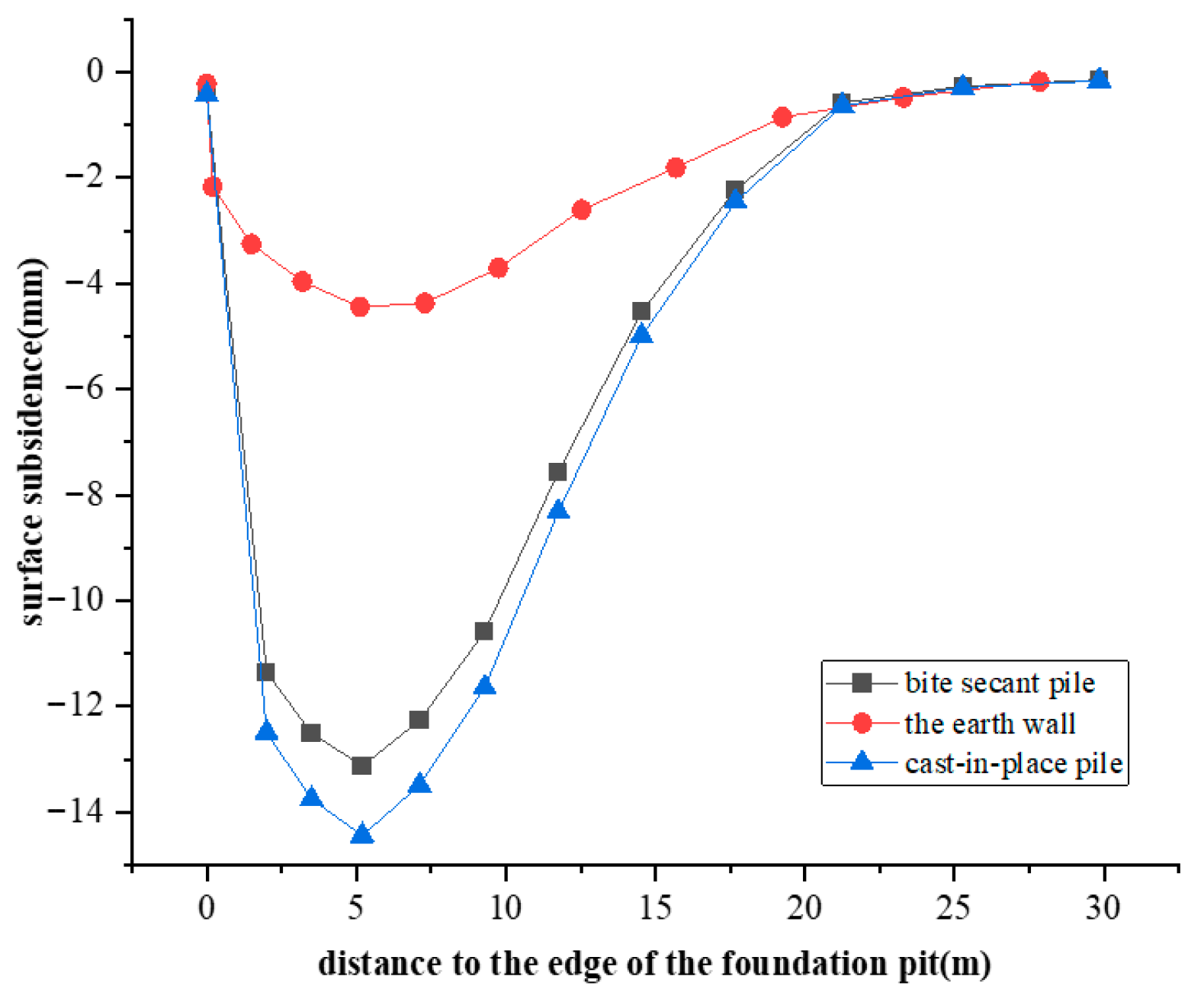
Figure 18 and Figure 19 show the lateral deformation of the retaining structures and the surface settlement under different types of retaining structures at the final stage of the excavation. Simulation results indicate that the calculated deformations under all three types of retaining structures are below the warning limits. Considering only the excavation deformation, when a diaphragm wall is used as the retaining structure under the given site conditions, the excavation exhibits the smallest deformation, and the diaphragm wall controls excavation deformation much more effectively than interlocking piles or bored piles. Under the same design parameters, such as pile diameter and center-to-center spacing, interlocking piles have slightly higher stiffness than bored piles, resulting in somewhat better control of excavation deformation, although overall, the two types exhibit similar performance in controlling excavation deformation.
Diaphragm walls feature high stiffness and strong overall integrity but come at a high cost; for deep and large excavations located in urban centers with dense surrounding buildings and high deformation control requirements, diaphragm walls can be selected as the retaining structure type. In contrast, bored piles used as a row pile retaining system are technically mature and cost-effective; however, in areas with high groundwater levels, a separate cutoff wall must be installed. Interlocking piles, composed of plain concrete and reinforced concrete piles, combine the advantages of row pile retaining systems while offering better overall integrity than separate piles. They function both as earth-retaining and impermeable structures, with flexible construction methods. For urban subway excavations with limited construction space, an interlocking pile scheme that occupies less site area can be adopted. In summary, all three types of retaining structures can effectively control excavation deformation and are feasible under the given site conditions. During excavation design, specific analyses of site conditions and surrounding environments should be conducted to ensure the rationality of the selected type.

5.2. Comparison Between the Optimized Design and the Original Design of the Retaining Structure

In Guangzhou’s soil-rock composite strata, metro deep excavations generally adopt diaphragm wall retaining systems. The designs tend to be conservative, excessively meeting safety requirements and resulting in over-engineered safety performance. Considering multiple factors, this paper proposes an optimized method for selecting retaining structures to improve the choice of retaining systems for cover excavation reverse metro deep excavations.
Changing the pile diameter, pile spacing, and embedment depth can help control excavation deformation within a certain range; however, excessively increasing the pile diameter and embedment depth or decreasing the pile spacing yields diminishing returns in controlling foundation deformation. This section conducts a detailed optimization design after the optimized selection of retaining structures for cover excavation reverse metro deep excavations, formulates the optimized retaining structure scheme, and compares, analyzes, and evaluates its safety and economic performance against the original design.
Since changes in pile diameter and embedment depth have a relatively significant impact on excavation deformation, while changes in pile spacing have a relatively minor effect, the pile embedment depth and diameter are set as the main optimization variables for orthogonal calculations, as shown in Table 8.
The maximum deformation of the foundation pit for each combination of pile embedment depth and pile diameter was obtained through numerical simulation, as shown in Table 9.
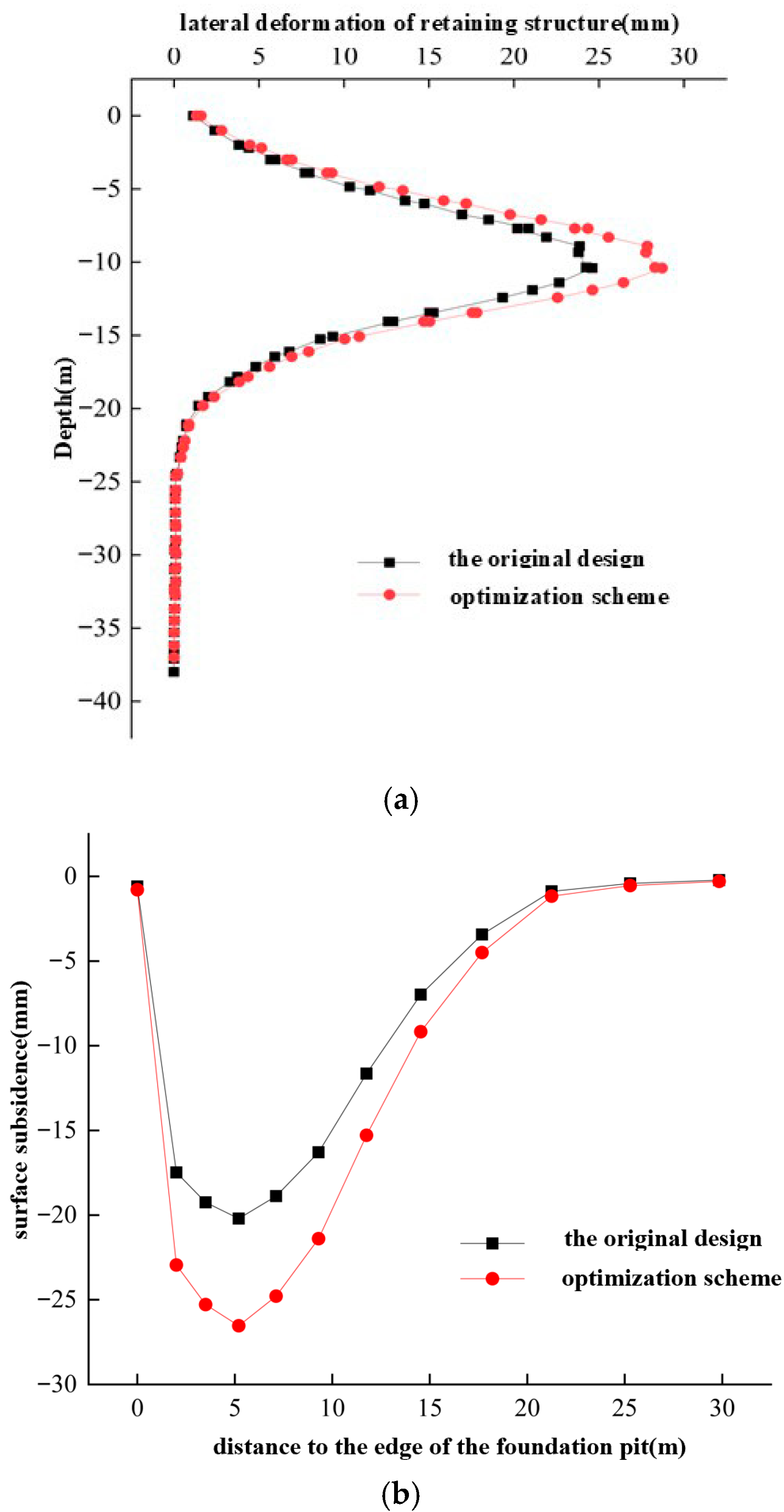
Reviewing the calculation results in Table 9, out of the 16 combinations of retaining pile embedment depth and diameter, 11 schemes meet the deformation control requirements of the excavation pit. Among them, combination No. 16 provides the best control of pit deformation, with the minimum maximum lateral displacement of the retaining structure and maximum surface settlement outside the pit during the entire cover excavation of the deep subway pit, which are 17.11 mm and 20.19 mm, respectively. However, this scheme has excessive pile embedment depth and diameter, resulting in the largest retaining structure dimensions and project volume, high cost, and poor economic efficiency. Considering both deformation control and cost, scheme No. 6 is regarded as moderate. With a pile embedment depth of 4 m and 2.5 m and a pile diameter of 1 m, the maximum surface settlement outside the pit is Uvmax = 26.54 mm, and the maximum lateral displacement of the retaining structure is Uhmax = 28.71 mm, which is below the deformation control value of 30 mm. The pile diameter and embedment depth in this scheme are lower than the subsequent numbered schemes, and the deformation control performance is better than the previous schemes, balancing economic efficiency and deformation control. Therefore, the pile diameter and embedment depth of scheme No. 6 can be adopted as design parameters for the optimized retaining structure of the underpinning project.
After selection optimization and detailed refinement, the final proposed optimized underpinning retaining structure scheme is presented in Table 10.

5.2.1. Comparison of Deformations

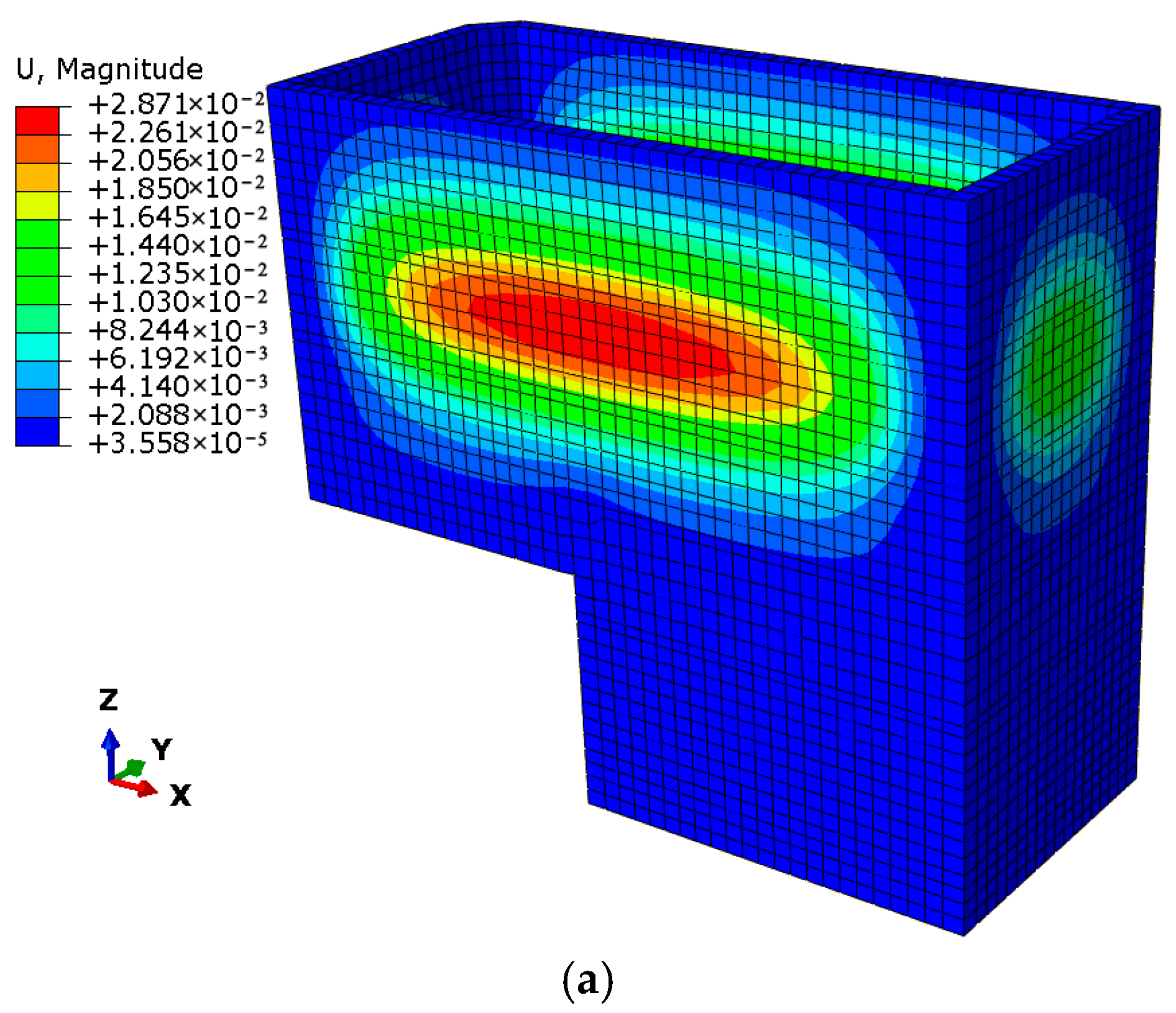
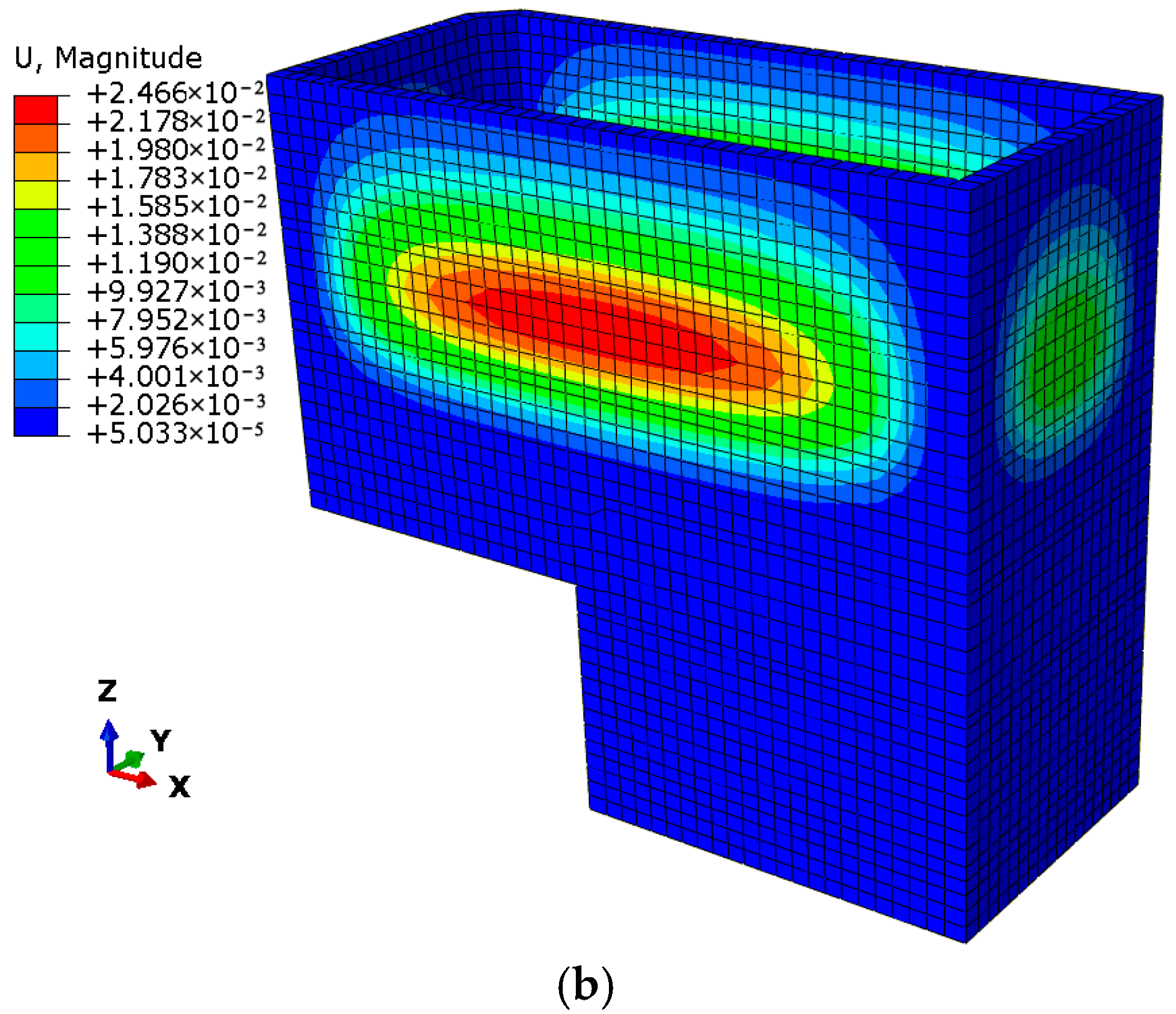
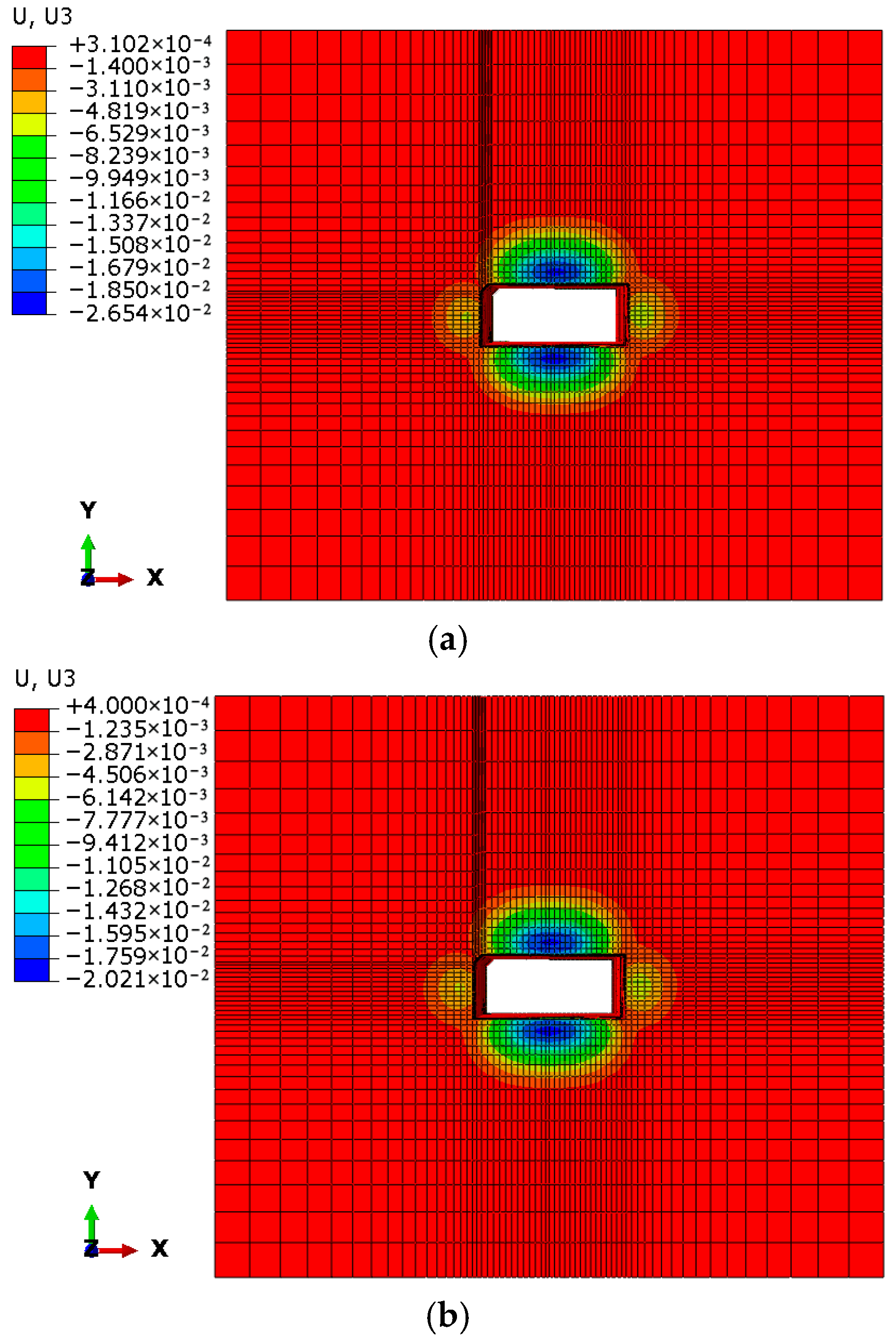
The numerical simulation results comparing the optimized scheme and the original design scheme are shown in Figure 20 and Figure 21.
As shown in Figure 22, the deformation curve shapes of the optimized retaining structure design and the original design are consistent; the maximum lateral deformation of the retaining structure occurs at a depth of approximately −10 m to −11 m, and the maximum surface settlement outside the pit occurs at a location about 5 m from the pit edge. The maximum lateral deformation of the retaining structure in the optimized scheme and the original design are 28.71 mm and 24.66 mm, respectively, indicating that the optimized scheme has an increase of 16.4% over the original design. The maximum surface settlements for the optimized and original schemes are 26.54 mm and 20.21 mm, respectively, with the optimized scheme showing a 31.3% increase compared to the original design. Overall, in terms of pit deformation control, the original scheme performs better than the optimized scheme; however, the optimized scheme meets the pit deformation control requirements, with maximum deformations below the control limit of 30 mm, providing a certain safety margin.

5.2.2. Comparison of Overall Stability

The overall stability of the cover-excavated reverse-construction metro deep pit is verified using the strip method in accordance with the “Technical Code for Building Foundation Pit Support” (JGJ120-2012) [24]. The formula for the overall stability safety factor is as follows:
K = c i k l i + ( q 0 b i + w i ) cos θ i tan φ i k + p s ( q 0 b i + w i ) sin θ i + p e
In the formula: K —Overall stability safety factor;
c i k , φ i k —Standard values of the consolidated drained shear cohesion (kPa) and internal friction angle (°) of the soil slice on the most critical slip surface;
l i —Arc length (m) of the sliding surface of the i-th soil slice;
b i —Width (m) of the i-th soil slice;
w i —Weight of the i-th soil slice acting on the sliding surface, calculated using the natural unit weight above the water table and saturated unit weight below the water table (kN/m3);
θ i —Angle (°) between the tangent at the midpoint of the i-th soil slice arc and the horizontal;
q 0 —Load acting on the slope surface (kPa);
p s —Anti-sliding moment generated by the reinforcement strap (kN·m);
p e —Moment generated by seismic forces (kN·m).
According to the calculation based on Equation (1), the overall safety factors of the deep foundation pit and the shallow foundation pit in the original design scheme are 4.146 and 3.207, respectively. After the optimized design, the overall stability safety factors of the deep and shallow foundation pits are 4.043 and 3.141, respectively, both satisfying the regulatory requirements.
(1)
Stability Check of the Excavation against Overturning
(1)
Overturning Stability Check (Moment taken about the base of the support:
K o v = M p M a
In the formula: M p —Overturning-resisting moment at the pile base due to passive earth pressure and support reactions;
M a —Overturning moment at the pile base due to active earth pressure.
(2)
Overturning (toe failure) stability check:
K t = M E p M E a
In the formula: K t —Safety factor for overturning stability;
M E p —Sum of overturning-resisting moments from the passive zone (kN·m);
M E a —Sum of overturning-driving moments from the active zone (kN·m)
According to the calculations based on Equations (2) and (3), the safety factors under the most unfavorable conditions for the support bottom in the deep and shallow foundation pits of the original design scheme are 3.158 and 2.759, respectively. After the optimized design, the safety factors for the deep and shallow foundation pits under the most unfavorable conditions are both 3.063, both exceeding the minimum safety factor control value of 1.25, thus meeting safety requirements. Additionally, in the footing failure verification, the safety factors for the deep and shallow foundation pits in the original scheme are 59.343 and 6.435 under the most unfavorable conditions, respectively. After optimization, the safety factors are 53.163 and 4.452, respectively, both greater than the minimum safety factor control value of 1.25.
(2)
Verification of Basal heave
According to the ‘Technical Specification for Building Foundation Pit Support’ JGJ120-2012 [24], the stability against uplift is checked from the bottom of the support.
γ m 2 l d N q + c N c γ m 1 ( h + l d ) + q 0 K b
N q = tan 45 + φ 2 2 e π tan φ
N c = ( N q 1 ) 1 tan φ
In the formula: K b —Uplift safety factor;
γ m 1 , γ m 2 —Are the natural unit weights (kN/m3) of the soil above the outer and inner bottom surfaces of the support structure; for multilayered soil, the weighted average based on layer thickness is used;
l d —Embedment depth (m);
h —Excavation depth (m);
q 0 —Uniformly distributed load on the ground (kPa);
N c , N q —Bearing capacity factors;
c , φ —Are the cohesion (kPa) and internal friction angle (°) of soil below the support base, respectively.
Based on the calculations using Equations (4)–(6), the uplift resistance safety factors of the deep and shallow foundation pits in the original design scheme are 26.081 and 10.127, respectively. After the optimized design, the uplift resistance safety factors for the deep and shallow foundation pits are 25.977 and 9.925, respectively, both exceeding the minimum safety factor control value of 1.8, thereby meeting safety requirements.
From the stability verification results, although the safety factors of the original design scheme are generally higher than those of the optimized design scheme, both the optimized and original schemes have safety factors for overall stability, overturning stability, and Basal heave in the deep and shallow pit sections exceeding the code-required safety factor limits. Therefore, the optimized cover-excavation reverse-construction metro deep foundation pit support scheme and the original design scheme both meet the regulatory requirements, and from the perspective of foundation pit stability, the optimized scheme can be considered successful.

5.2.3. Cost Comparison

Based on comprehensive unit price data from Guangzhou, the quantities and costs per meter of the support structures in the optimized and original design schemes were estimated using the unit price method, allowing a comparison of their economic performance. The results are shown in the table.
As shown in Table 11, the cost per meter of the optimized retaining structure is 37,200 CNY, which is 8600 CNY lower than the original design scheme at 45,800 CNY per meter, representing a reduction of 18.8% per meter. Overall, the optimized retaining structure scheme for the project makes full use of the optimization potential, enhancing economic efficiency while ensuring foundation pit stability and deformation control, thereby achieving the intended optimization goals.

6. Conclusions

In summary, this study develops a validated 3D FEM model based on a metro deep foundation pit project in Guangzhou, conducts a comprehensive parametric study on the effects of pile diameter, spacing, and embedment depth, and proposes an optimized retaining structure scheme that achieves a significant cost reduction while maintaining required safety margins, providing valuable insights for the design of similar projects. The specific conclusions are as follows:
(1)
Field monitoring of the cover excavation reverse deep foundation pit indicates that the lateral deformation of the retaining piles along the long sides of the pit is greater than that along the short sides. The maximum deformation on the short sides is 16.22 mm, while the long sides reach 20.59 mm. Within the monitored area, the maximum surface settlement outside the pit is approximately 11 mm, and the maximum heave is about 13 mm.
(2)
Increasing pile diameter and reducing pile spacing can effectively reduce foundation pit deformation. However, when the pile diameter reaches 1000 mm and the spacing is 1600 mm, further adjustments have limited effect on deformation control. An appropriate embedding depth of the retaining structure is beneficial for deformation control, but excessive depth increases construction difficulty and cost. In terms of deformation control, diaphragm walls outperform bored piles and composite piles, and all three types of structures are feasible in the Guangzhou soil-rock composite strata, offering practical applicability.
(3)
Orthogonal tests on retaining structure embedding depth and pile diameter determined the optimal embedding depth as 4 m for shallow pits and 2.5 m for deep pits, with an optimal pile diameter of 1000 mm. Performance evaluation of the optimal scheme showed that it significantly improves economic efficiency while ensuring that pit stability and deformation control meet the required standards.
The Mohr-Coulomb elastoplastic model used in this study’s modeling process was unable to accurately capture the small-strain hardening behavior and the nonlinear stress path effects of the soil, which imposes certain limitations on deformation prediction accuracy. Additionally, the model did not explicitly consider the effects of groundwater seepage. Future research will incorporate more advanced constitutive models, such as the HSS constitutive model, and perform coupled hydro-mechanical analyses to more realistically simulate the impacts of water level fluctuations and seepage on the deformation and stability of the foundation pit. This will provide a more comprehensive basis for engineering design under complex hydrogeological conditions.

Author Contributions

Methodology: N.Z.; software: Y.Z. and H.Y.; formal analysis: W.X.; investigation: L.L. and N.Z.; resources: H.Y.; data curation: W.X. and Y.M.; writing—original draft preparation: Y.M. and D.Z.; writing—review and editing: D.Z.; supervision: Y.Z.; funding acquisition: L.L. All authors have read and agreed to the published version of the manuscript.

Funding

The research described in this paper was financially supported by the National Natural Science Foundation of China (Grant No. 52178302), the Key R&D Projects in Shaanxi Province (2024SF-YBXM-650) and the Key R&D Projects in Shaanxi Province (No. 2020SF-373).

Data Availability Statement

The original contributions presented in this study are included in the article. Further inquiries can be directed to the corresponding author.

Conflicts of Interest

Authors Wentian Xu, Lifen Lin and Nengwen Zhu were employed by the company Guangzhou Metro Design & Research Institute Co., Ltd. Authors Yan Zhao and Hong Yang were employed by the company China Railway Seventh Bureau Group Co., Ltd. The remaining authors declare that the research was conducted in the absence of any commercial or financial relationships that could be construed as a potential conflict of interest.

References

  1. Zhou, D.; Mei, Y.; Ke, X.; Liu, Z.; Xu, W. Study on the structural behavior and reinforcement design of openings in subway station floor slabs. J. Build. Eng. 2024, 98, 110994. [Google Scholar] [CrossRef]
  2. Wang, X.; Chen, C. Vibration Table Test of Prefabricated L-Shaped Column Concrete Structure. Buildings 2025, 15, 2329. [Google Scholar] [CrossRef]
  3. Wang, X.; Wang, B.; Yuan, Y.; Yang, T.; Dong, G.; Shi, C. Study on the Effect of EICP Combined with Nano-SiO2 and Soil Stabilizer on Improving Loess Surface Strength. Buildings 2025, 15, 1998. [Google Scholar] [CrossRef]
  4. Liu, Z.; Zhu, J. Numerical simulation of construction mechanics for cut-and-cover reverse metro interchange stations. Low Temp. Archit. Technol. 2021, 43, 94–97. [Google Scholar]
  5. Ma, Y.; Ling, T. Research on attitude control technology of steel pipe columns in metro stations constructed by the cover-and-cut method. Eng. Constr. 2021, 53, 56–61. [Google Scholar]
  6. Wang, Z.; Zhao, Y.; Yang, X.; Ding, Z.; Zhu, W.; Wang, Q. Study on Bearing Capacity of the Existing Engineering Pile Group without Lateral Displacement during Dynamic Top-Down Construction. Adv. Civ. Eng. 2022, 2022, 4034227. [Google Scholar] [CrossRef]
  7. Houhou, M.N.; Emeriault, F.; Belounar, A. Three-Dimensional Numerical Back-Analysis of a Monitored Deep Excavation Retained by Strutted Diaphragm Walls. Tunn. Undergr. Space Technol. 2019, 83, 153–164. [Google Scholar] [CrossRef]
  8. Yang, Z.; Chen, Y.; Azzam, R.; Yan, C. Performance of a top-down excavation in shanghai: Case study and numerical exploration. Eur. J. Environ. Civ. Eng. 2021, 26, 7932–7957. [Google Scholar] [CrossRef]
  9. Russo, G.; Nicotera, M.V.; Esposito, I. 3D FEM Back Analysis of the Observed Performance of a Very Deep Excavation in the Historical Center of Naples, Italy. J. Geotech. Geoenviron. Eng. 2024, 150, 4024010. [Google Scholar] [CrossRef]
  10. Bai, T.; Xie, D. The Deformation Analysis of a Deep Frame Top-down Excavation in Downtown Shanghai Based on the 3D FEM. Adv. Civ. Eng. 2021, 2021, 2947544. [Google Scholar] [CrossRef]
  11. Koltuk, S.; Azzam, R. Design Charts for Circular-Shaped Sheeted Excavation Pits against Seepage Failure by Heave. Period. Polytech. Civ. Eng. 2016, 60, 421–426. [Google Scholar] [CrossRef]
  12. Li, X.; Zhou, T.; Wang, Y.; Han, J.; Wang, Y.; Tong, F.; Li, D.; Wen, J. Response Analysis of Deep Foundation Excavation and Dewatering on Surface Settlements. Adv. Civ. Eng. 2020, 2020, 8855839. [Google Scholar] [CrossRef]
  13. Koltuk, S.; Fernandez-Steeger, T. Evaluation of seepage failure by heave in homogeneous cohesionless soils using finite element method. Int. J. Geotech. Eng. 2022, 16, 1201–1210. [Google Scholar] [CrossRef]
  14. Fernández, F.; Juajinoy, D.S.C.; Vargas, E.; Velloso, R.Q.; Dias, D. Basal Heave Stability Analysis of a Circular Shaft Excavation Considering FEM, NLA, and MPM Approaches. Geotech. Geol. Eng. 2024, 42, 2601–2622. [Google Scholar] [CrossRef]
  15. Yong, T.; Wang, D. Characteristics of a Large-Scale Deep Foundation Pit Excavated by the Central-Island Technique in Shanghai Soft Clay. II: Top-Down Construction of the Peripheral Rectangular Pit. J. Geotech. Geoenviron. Eng. 2013, 139, 1894–1910. [Google Scholar]
  16. Huang, Z.; Liu, C.; Zhang, N.; Wang, G.; Yu, F. Influence of cover-and-cut construction of deep foundation pits in water-rich sandy strata on surrounding environment. Urban Rail Transit Res. 2024, 27, 188–195. [Google Scholar]
  17. He, Y.; Li, H.; He, Y.; Chen, C.; Zhao, P.; Xu, Y.; Zhang, X.; Cheng, H. Measured analysis of excavation deformation of deep foundation pits in metro stations constructed by cover-and-cut method. Build. Struct. 2021, 51, 1940–1944. [Google Scholar]
  18. Li, W.; Zhang, C. Key technologies in design and construction of pile foundations for underground structures constructed by cover-and-cut method in reclaimed silt strata. Build. Technol. Dev. 2022, 49, 154–158. [Google Scholar]
  19. Jamsawang, P.; Jamnam, S.; Jongpradist, P.; Tanseng, P.; Horpibulsuk, S. Numerical Analysis of Lateral Movements and Strut Forces in Deep Cement Mixing Walls with Top-down Construction in Soft Clay. Comput. Geotech. 2017, 88, 174–181. [Google Scholar] [CrossRef]
  20. Li, P.; Li, Z.; Ge, H.; Guo, F. Deformation characteristics and redundancy analysis of deep foundation pit excavation of metro stations constructed by the cover-and-cut method in sandy strata. Tunn. Constr. 2023, 43, 98–108. [Google Scholar]
  21. Hsiung, B.C.B.; Phan, H.K. Exploration of Maximum Wall Deflection and Stability for Deep Excavation in Loose to Medium-Dense Sand. Acta Geotech. 2024, 19, 531–547. [Google Scholar] [CrossRef]
  22. Lin, Z.; Xie, S.; Xia, C.; Dou, H. Design and Practice of Deep Foundation Pits for Large Storage Ponds in Complex Environments. Sustainability 2022, 14, 14046. [Google Scholar] [CrossRef]
  23. JGJ 120-2012; Technical Specification for Retaining and Protection of Building Foundation Excavations. China Architecture & Building Press: Beijing, China, 2012.
  24. Chen, Y. Study on Excavation Deformation and Optimization Design of Supporting Structure of Ultra-Large Deep Foundation Pit of Pazhou Station of Guangzhou Metro. Master’s Thesis, Changsha University of Science and Technology, Changsha, China, 2021. [Google Scholar]
Figure 1. Satellite map of the project location.
Buildings 15 04018 g001
Figure 2. Cross-sectional view of the metro shaft and surrounding strata.
Buildings 15 04018 g002
Figure 3. Excavation sequence diagram of the cover-and-excavation reverse foundation pit.
Buildings 15 04018 g003
Figure 4. View of Monitoring Points.
Buildings 15 04018 g004
Figure 5. Lateral Deformation of Retaining Pile at Monitoring Point ZQT1.
Buildings 15 04018 g005
Figure 6. Lateral Deformation of Retaining Pile at Monitoring Point ZQT5. Note: (1) Displacements towards the foundation pit are considered positive, while displacements away from the pit are considered negative; (2) Excavation depths of 5 m, 8.5 m, 14.5 m, 21 m, and 27 m correspond to the working conditions after the installation of the five levels of concrete struts.
Buildings 15 04018 g006
Figure 7. Time-Variation Curves of Surface Vertical Deformation at Each Monitoring Point. (a) DBC1-1 to DBC1-3. (b) DBC1-4 to DBC1-6. (c) DBC2-1 to DBC2-3. (d) DBC2-4 to DBC2-6. (e) DBC3-1 to DBC3-3. (f) DBC3-4 to DBC3-6.
Buildings 15 04018 g007aBuildings 15 04018 g007b
Figure 8. Meshed numerical model.
Buildings 15 04018 g008
Figure 9. Boundary conditions in the numerical model.
Buildings 15 04018 g009
Figure 10. Lateral deformation at the monitoring point ZQT5.
Buildings 15 04018 g010
Figure 11. Surface settlement comparison.
Buildings 15 04018 g011
Figure 12. Effect of pile diameter on the lateral displacement of retaining structure.
Buildings 15 04018 g012
Figure 13. Effect of Pile Diameter on Surface Settlement.
Buildings 15 04018 g013
Figure 14. Effect of pile spacing on the lateral displacement of retaining structure.
Buildings 15 04018 g014
Figure 15. Effect of pile spacing on surface settlement.
Buildings 15 04018 g015
Figure 16. Relationship between lateral deformation of the retaining structure and embedment depth. (a) Lateral displacement of the pile. (b) Relationship between maximum lateral displacement and embedment depth.
Buildings 15 04018 g016
Figure 17. Relationship between Surface Settlement and Embedded Depth. (a) Ground Surface Settlement Outside the Excavation Pit. (b) Relationship between Maximum Surface Settlement and Embedded Depth.
Buildings 15 04018 g017
Figure 18. Lateral deformations for different type of retaining structures.
Buildings 15 04018 g018
Figure 19. Ground Surface Settlement for different type of retaining structures.
Buildings 15 04018 g019
Figure 20. Contour map of lateral deformations. (a) Optimized design scheme. (b) Original design scheme.
Buildings 15 04018 g020aBuildings 15 04018 g020b
Figure 21. Contour map of ground surface settlement. (a) Optimized design scheme. (b) Original design scheme.
Buildings 15 04018 g021
Figure 22. Comparison of lateral deformation and surface settlement of retaining structures. (a) Comparison of lateral deformation of retaining structures. (b) Comparison of surface settlement.
Buildings 15 04018 g022
Table 1. Monitoring properties.
Monitored ParametersLocation of InstrumentationInstrumentationMonitoring Limits
Design ValueAlarm ValueRate of Change
Horizontal and vertical displacement at pile topsTop of bored pileTheodolite, Level Instrument30 mm80% of design value3 mm/d
Surface settlementAround the pit perimeteLevel Instrument30 mm80% of design value3 mm/d
Table 2. Model Material properties and soil and rock layers.
No.Soil TypeDensity ρ/(g/cm3)Young’s Modulus (MPa)Cohesion (kPa)Internal Friction Angle (°)Poisson’s RatioThickness of Layer (m)
1Artificial Fill1.871010150.32.2
2Silty Clay1.92614.010.20.42.9
3Medium-Coarse Sand1.95123260.300.9
4Silty Clay1.92614.010.20.41.1
5Silty Fine Sand1.7783220.351.201
6Silty Clay1.92614.211.40.40.6
7Medium-Coarse Sand1.95252340.303
8Silty Clay1.92623.918.00.41.55
9Completely Weathered Clastic Rock2.026026.7230.303
10Highly Weathered (Gravelly) Siltstone2.058028250.256.2
11Moderately Weathered (Gravelly) Siltstone2.292000150280.207
12Slightly Weathered Gravelly Sandstone2.6607500480340.201.5
13Moderately Weathered (Gravelly) Siltstone2.292000150280.201.4
14Slightly Weathered Gravelly Sandstone2.6607500480340.20/
Table 3. Calculation Parameters of Reinforced Concrete Structures.
Structure NameUnit Weight (kN/m3)Elastic Modulus (MPa)Poisson’s Ratio
Retaining Pile Equivalent Diaphragm Wall (1.2 m Thickness)2513,9140.2
Top Slab2532,5000.2
Middle Slab, Base Slab, Side Walls2531,5000.2
Table 4. Description of Construction Steps for Analysis.
Analysis StepsSimulation Process
Step 1Geostatic stress equilibrium to eliminate displacements caused by the self-weight of soil
Step 2Excavation of soil around the retaining structure and construction of the retaining system
Step 3Excavation of the foundation pit to the bottom of the top slab
Step 4Construction of the top-down excavation top slab
Step 5Backfill soil above the top slab and excavate the pit to the bottom of the first basement middle slab
Step 6Construction of the first basement middle slab
Step 7Excavation of the pit to the bottom of the second basement middle slab
Step 8Construction of the second basement middle slab
Step 9Excavation of the pit to the bottom of the third basement middle slab
Step 10Construction of the third basement middle slab and the side walls above it
Step 11Excavation of the pit to the bottom of the fourth basement middle slab
Step 12Construction of the fourth basement middle slab
Step 13Excavation of the pit to the foundation bottom
Step 14Construction of the base slab and the side walls of the fourth and fifth basement levels
Table 5. Effect of Pile Diameter on Lateral Displacement of Retaining Piles.
Pile Diameter (mm)800100012001400
Maximum Displacement (mm)37.08125.70120.8717.86
Deformation Change Value (mm) Change in Dislacement/mm013.684.8313.005
Relative Change30.69%18.79%14.4%
Displacement-to-Diameter Ratio0.0460.02570.017390.01276
Table 6. Effect of Pile Diameter on Surface Settlement Outside the Pit.
Pile Diameter (mm)800100012001400
Maximum Displacement (mm)32.3220.0913.128.89
Deformation Change Value (mm)012.236.974.2352
Relative Change37.84%34.69%32.28%
Displacement-to-Diameter Ratio0.04040.020090.010930.0064
Table 7. Material properties for Two Types of Row Pile Retaining Structures.
Retaining Structure TypePile Diamete (mm)Pile Spacing (mm)Flexural Stiffness EI/kN·m2Equivalent Diaphragm Wall Thickness (mm)
Bored Interlocking Pile120016003.852 × 106971
Bored Cast-in-Place Pile120016003.21 × 106914
Notes: Based on the principle of equal bending stiffness (EI), the bored cast-in-place pile is equivalent to an underground diaphragm wall. The formula for calculating the equivalent thickness is as follows: t e q = π D 4 64 , where D is the diameter of the pile.
Table 8. Values of Main Optimization Parameters.
Embedded Depth of Retaining PilesPile Diameter (m)
① Embedment depth of the shallow excavation section: 3 m; embedment depth of the deep excavation section: 1.5 m0.8
② Embedment depth of the shallow excavation section: 4 m; embedment depth of the deep excavation section: 2.5 m1
③ Embedment depth of the shallow excavation section: 5m; embedment depth of the deep excavation section: 3.5 m1.2
④ Embedment depth of the shallow excavation section: 6m; embedment depth of the deep excavation section: 4.5 m1.4
Table 9. Orthogonal calculation results.
Pile Embedment SchemePile Diameter (m)Uvmax (mm)Uhmax (mm)
0.839.1944.41
129.4631.8
1.224.5828.76
1.421.0223.97
0.836.4839.83
126.5428.71
1.222.1525.79
1.418.9321.50
0.833.2938.08
124.2227.29
1.220.2124.66
1.417.2820.56
0.832.6837.26
124.0126.82
1.219.8123.57
1.417.1120.19
Table 10. Comparison between the optimized underpinning retaining structure scheme and the original design scheme.
Retaining Structure ParametersOptimized SchemeOriginal Design Scheme
Type of retaining structureBored combi-pileBored cast-in-place pile
Pile diameter (mm)10001200
Embedment depth (m)Embedment depth: 4 m for shallow pit, 2.5 m for deep pitEmbedment depth: 5 m for shallow pit, 3.5 m for deep pit
Table 11. Economic comparison between the optimized and original design schemes.
ItemUnitUnit Price (CNY)Quantity
Optimized SchemeOriginal Design Scheme
C35 Concretem385042.38152.314
Reinforcementt60000.1920.218
TotalYuan37,175.8545,774.9
Disclaimer/Publisher’s Note: The statements, opinions and data contained in all publications are solely those of the individual author(s) and contributor(s) and not of MDPI and/or the editor(s). MDPI and/or the editor(s) disclaim responsibility for any injury to people or property resulting from any ideas, methods, instructions or products referred to in the content.