


The Effects of Window Geometry Parameters on Indoor Thermal and Visual Comfort of Thermochromic Windows in Office Building




Abstract
1. Introduction
1.1. Background
1.2. Research Gaps
- (1)
- The current studies on the effects of window geometry parameters (like orientation, WWR, and sill height) on indoor environments seldom incorporate solar-induced thermal comfort while considering the seasonal comfort thresholds of solar radiation intensity on indoor occupants. The previous work by the researchers [34] partly explored this topic, but the seasonal thresholds of indoor solar intensity for thermal comfort were not involved. The ignorance of the above-stated issue may result in an inaccurate evaluation of window performance.
- (2)
- Although many studies have explored thermochromic windows’ effectiveness, no studies clearly answer how solar-induced thermal comfort and daylight change under different thermochromic window geometry parameters, compared with normal windows. For example, a question remains as to how the ability of thermochromic windows to eliminate solar-causing thermal and visual discomfort changes when the WWR decreases. Further work on the above-stated issue can help to determine the real effects and the application feasibility of thermochromic windows under different window designs.
- (3)
- In addition to the second research gap, although many studies have investigated the performance of thermochromic windows, few provide a clear conclusion regarding the window geometry parameters that are proper for evaluating thermochromic windows’ indoor environmental performance. For example, a small thermochromic window may have negligible thermal and visual discomfort, but it may result from the small window area rather than the regulation ability of thermochromic windows. However, the existing studies have no clear answer to the above-stated issue.
1.3. The Work of This Study
- (1)
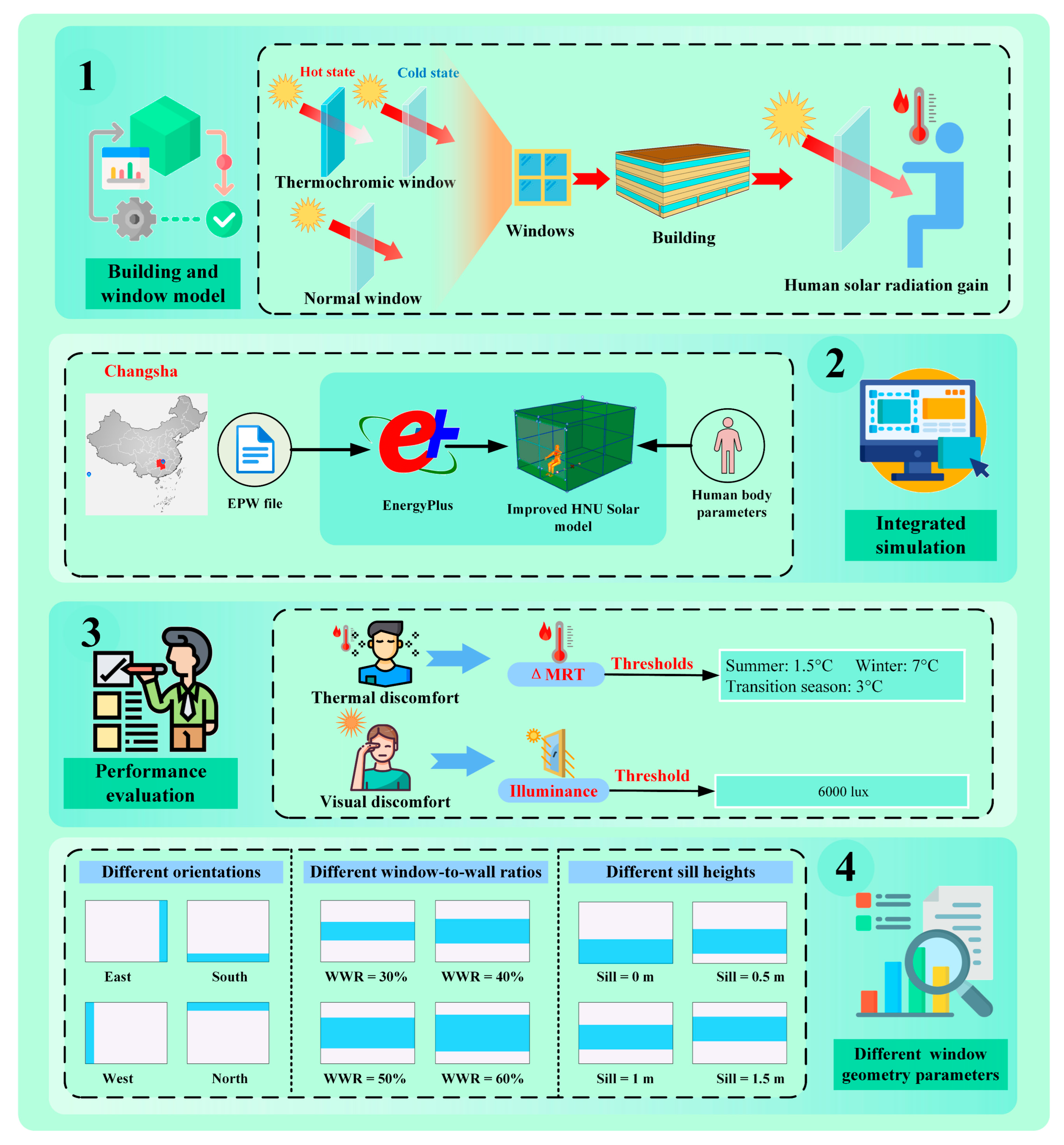
- To incorporate the intensity calculation and seasonal comfort thresholds of solar radiation falling on indoor occupants into building environment simulation with thermochromic windows under different window geometry parameters;
- (2)
- To investigate the effects of WWR and sill height on the thermal and visual comfort performance of thermochromic windows, which are ignored in the existing studies;
- (3)
- To identify the range of window geometry parameters for thermochromic windows’ accurate performance evaluation.
2. Methods
2.1. Workflow
2.2. Thermochromic Window
2.3. Building Model
2.4. Solar-Related Thermal Comfort Evaluation
2.5. Indoor Daylight Performance Evaluation
2.6. Window Geometry Parameters
3. Results
3.1. Example of Calculating Thermochromic Windows’ Comfort Performance
3.2. Thermal Comfort and Daylight Performance of Thermochromic Windows Under Different Window-to-Wall Ratios
3.3. Thermal Comfort and Daylight Performance of Thermochromic Windows Under Different Sill Heights
3.4. Performance Comparison of Thermochromic Windows Under Different Window Geometry Parameters
4. Discussion
4.1. Advantages of This Work
- (1)
- This study comprehensively investigates thermal and visual discomfort induced by solar radiation with seasonal comfort thresholds and illuminance limits, thereby enabling more accurate performance assessments of the impact of window geometry parameters on thermal and daylight environments indoors.
- (2)
- This study investigates the changes in the solar thermal discomfort and excessive daylight durations of thermochromic windows under different window geometry parameters. This study aids the determination of the ability of thermochromic windows to improve indoor environments and the evaluation of their applicability across various window designs.
- (3)
- This study recommends the window geometry parameters for evaluating the thermal and visual comfort performance of thermochromic windows, reducing the evaluation deviations caused by improperly selected window geometry parameters.
4.2. Limitations
- (1)
- Herein, only the discomfort caused to indoor occupants when solar radiation intensity and daylight illuminance exceed threshold levels was examined, without consideration of the cumulative harm of prolonged exposure to solar radiation.
- (2)
- This study was conducted with one climate type, without further systematic investigation into other climate zones (such as cold, arid, or extreme environments). Future research should be conducted under diverse climatic conditions to ensure broader applicability.
- (3)
- This study primarily focuses on indoor environments, without systematically assessing building energy consumption, which is another large topic and may be investigated in the future.
- (4)
- While thermochromic windows demonstrate clear benefits in enhancing indoor thermal and visual comfort, currently, their relatively high manufacturing costs [57,58] may constrain large-scale applications, especially when compared to the existing low-e or spectrally selective coatings with lower costs. Therefore, future studies should aim to reduce the manufacturing cost of thermochromic windows and further lower the life-cycle cost by including the energy saving benefits, to support their practical implementation.
5. Conclusions
- (1)
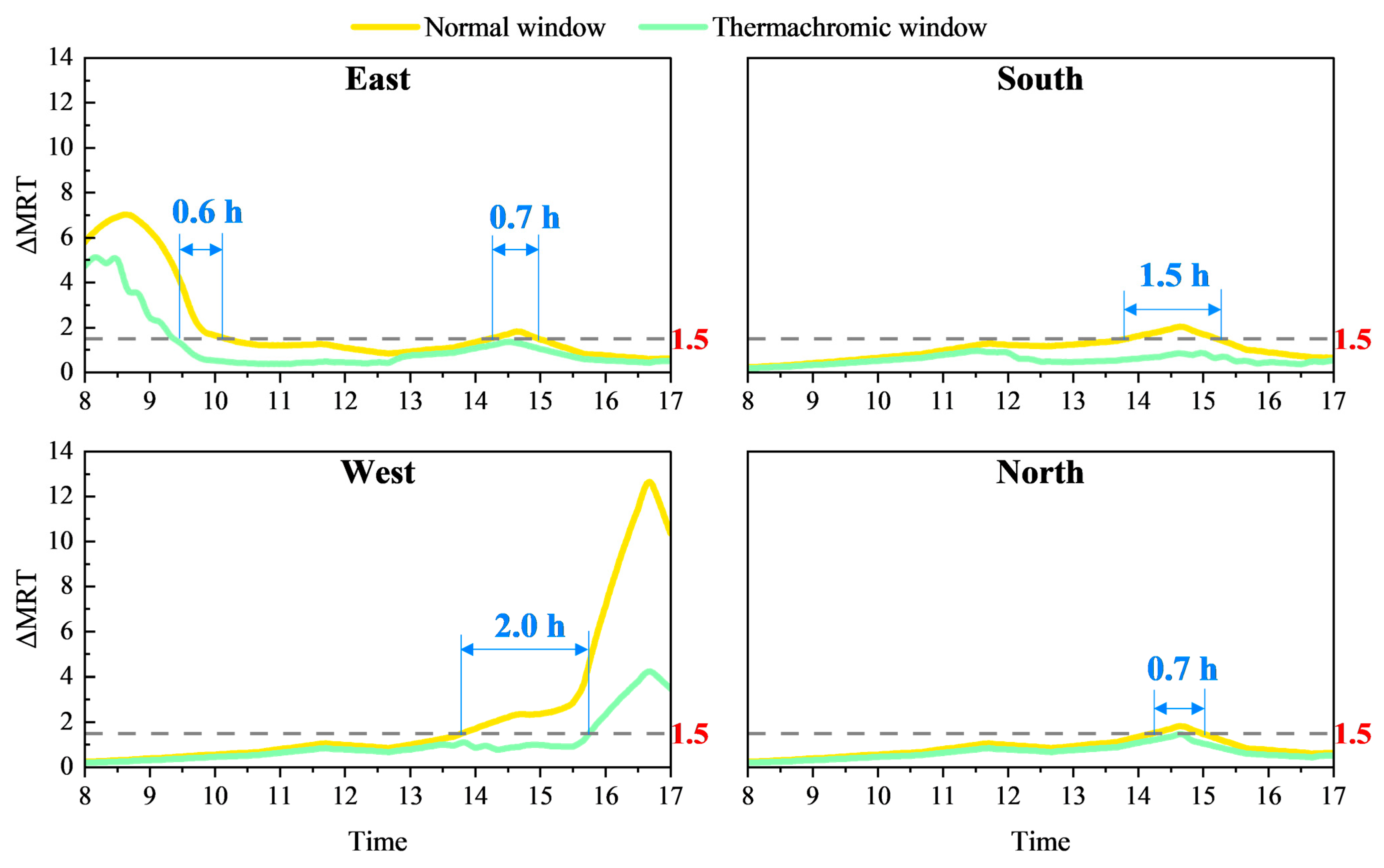
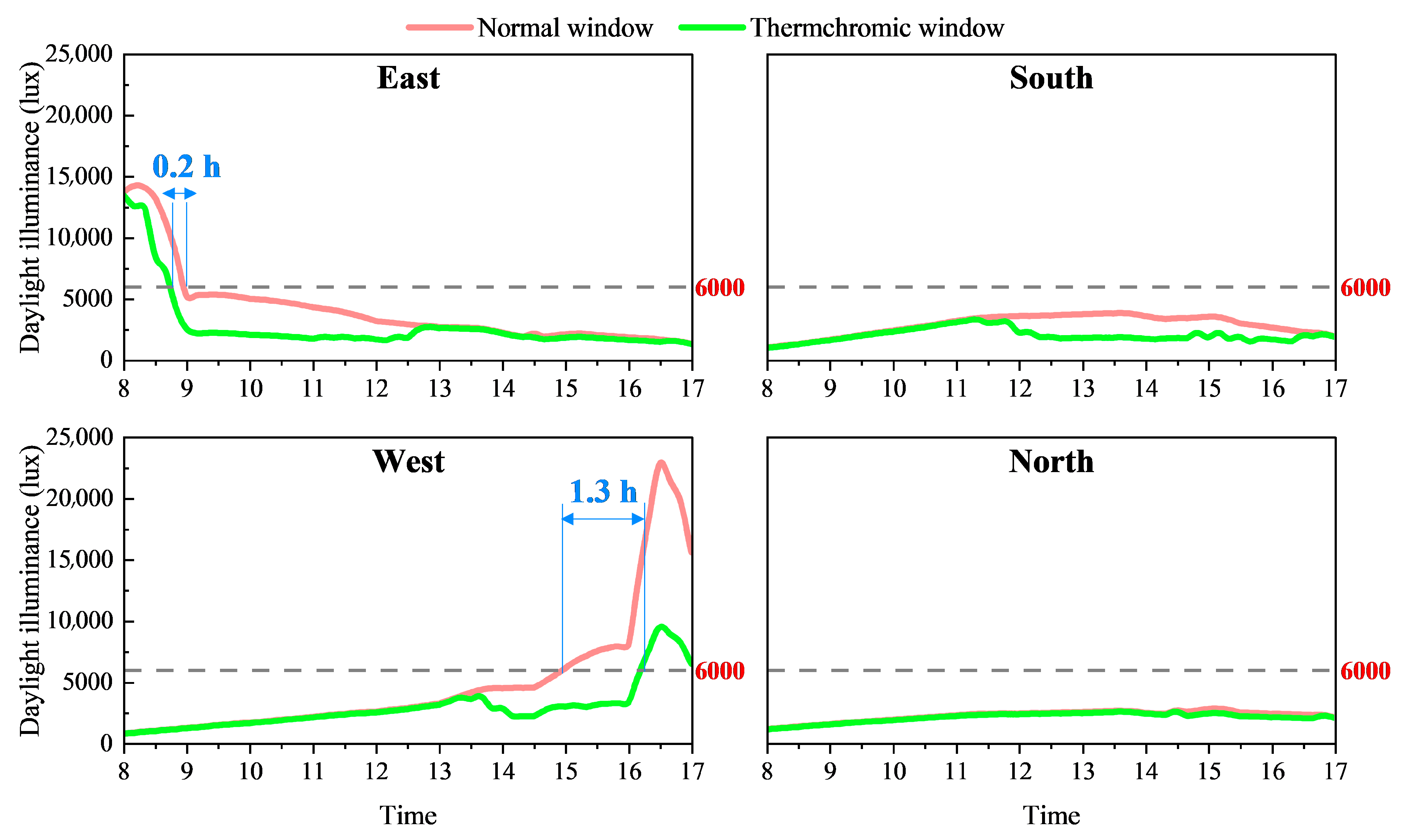
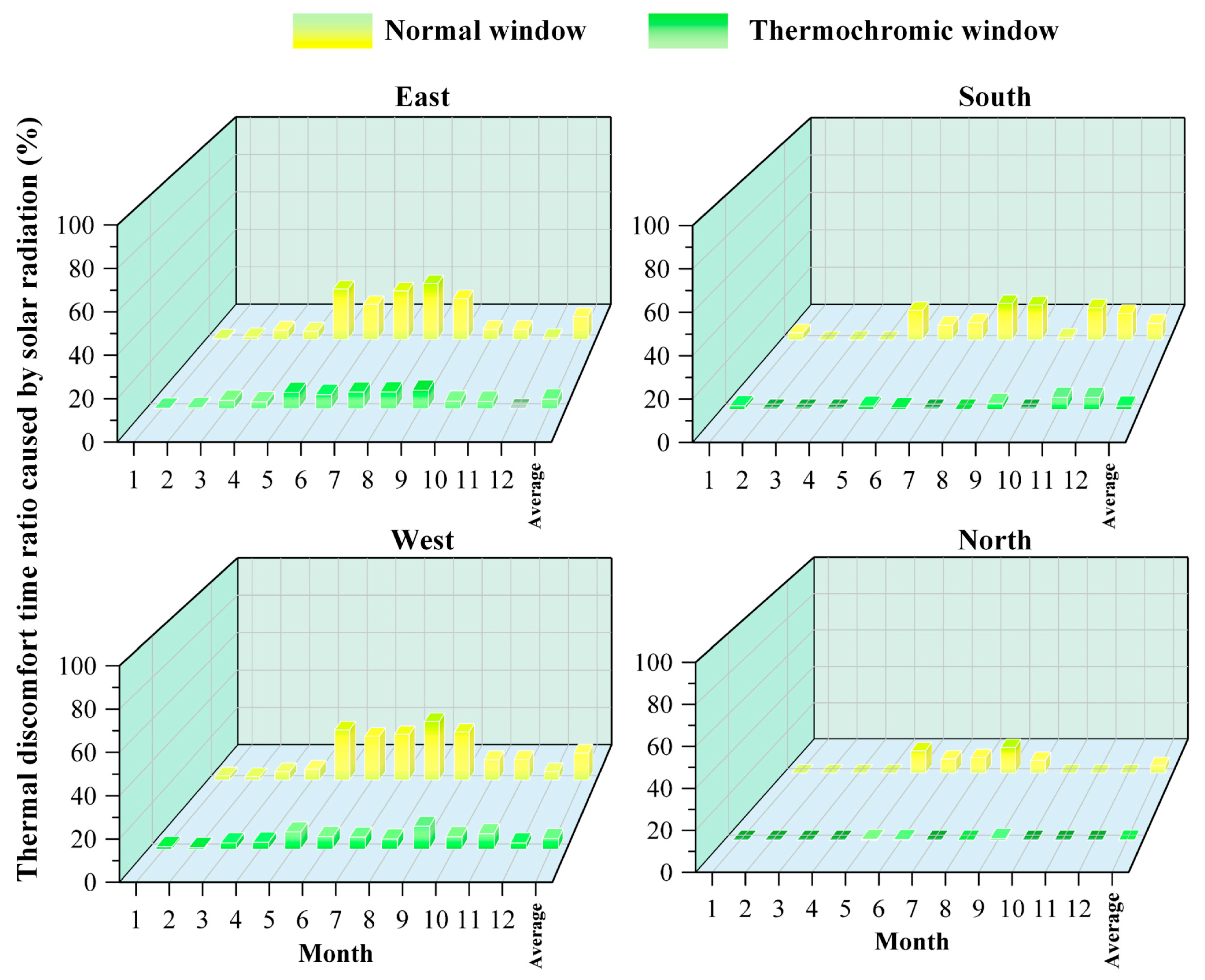
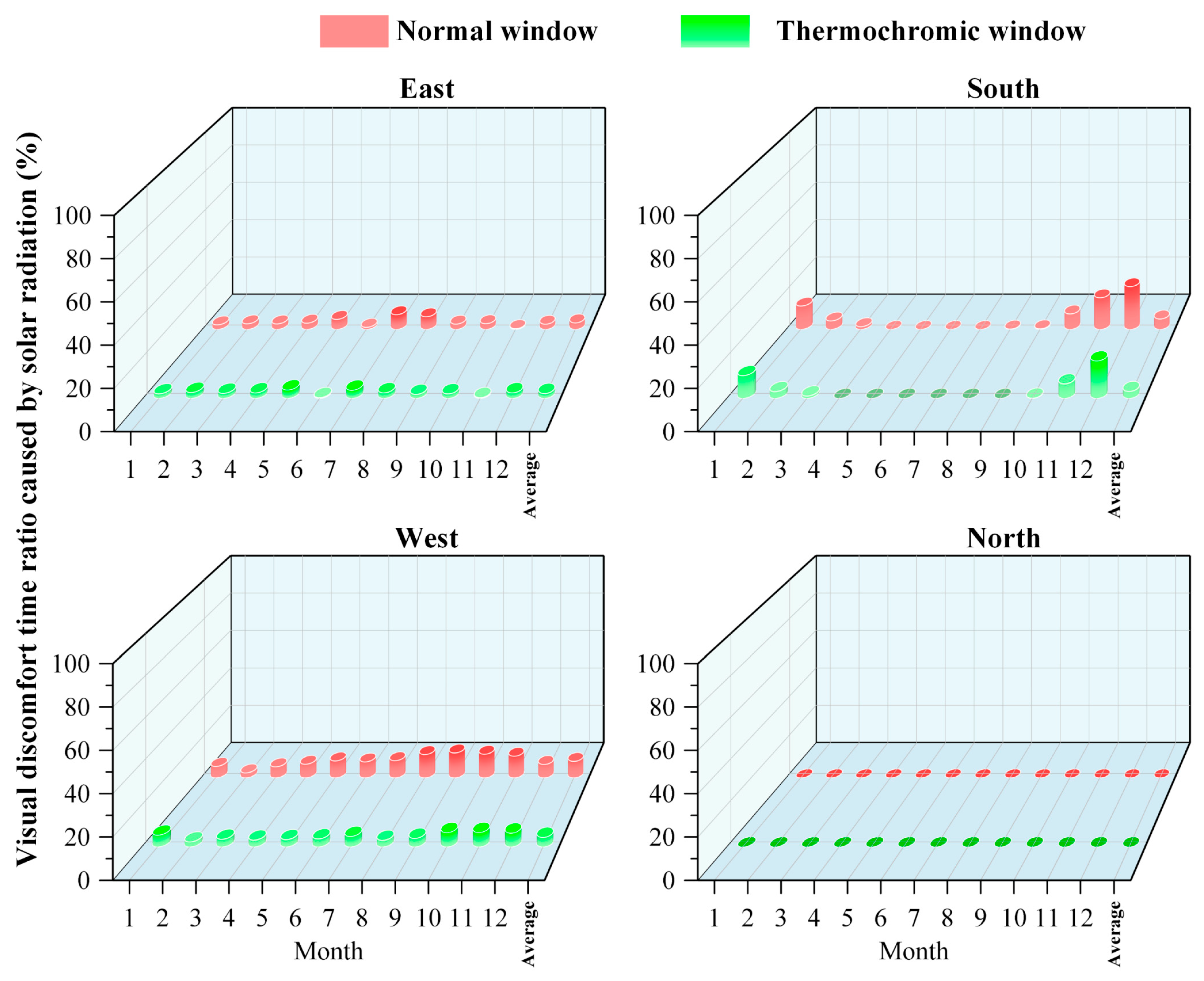
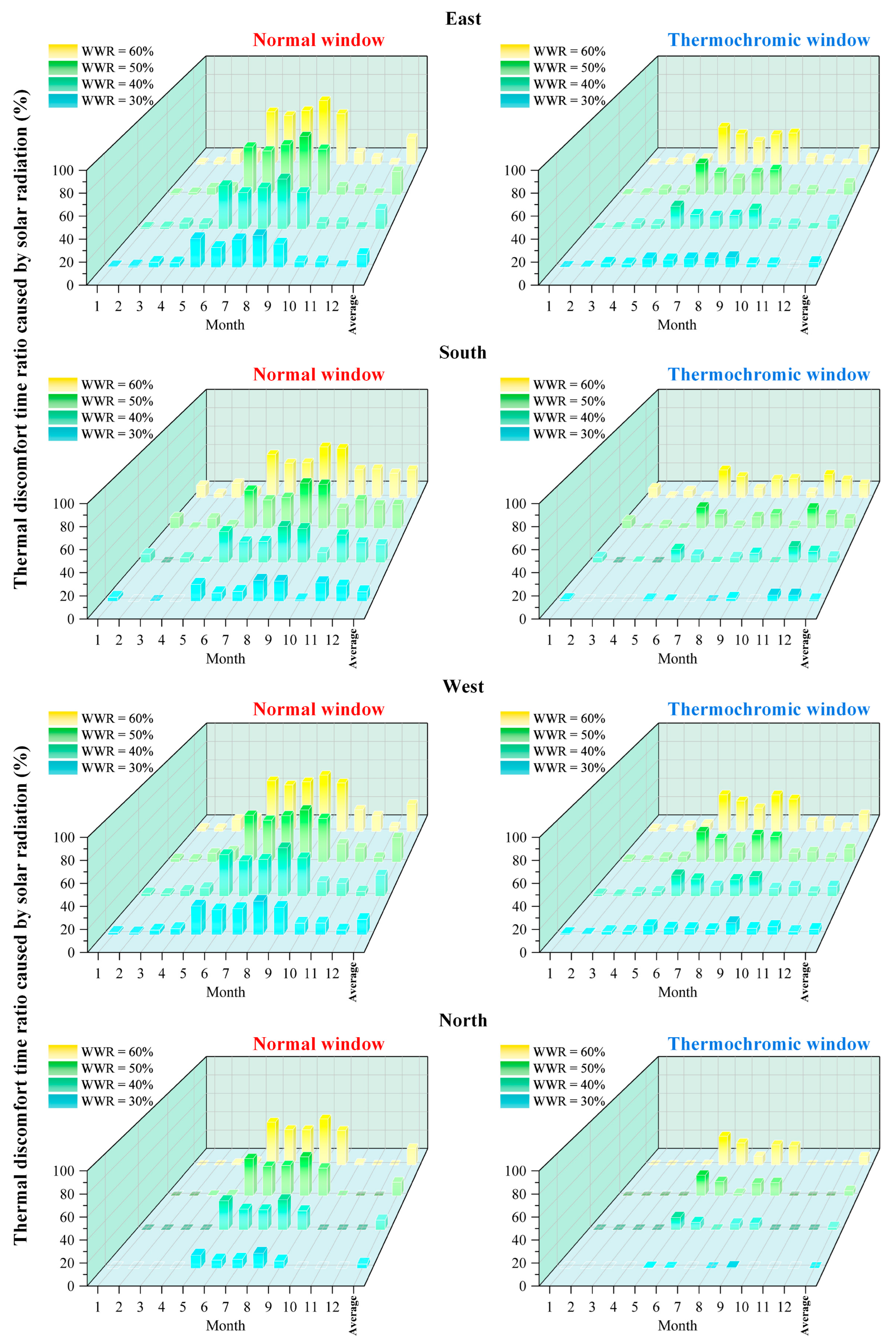
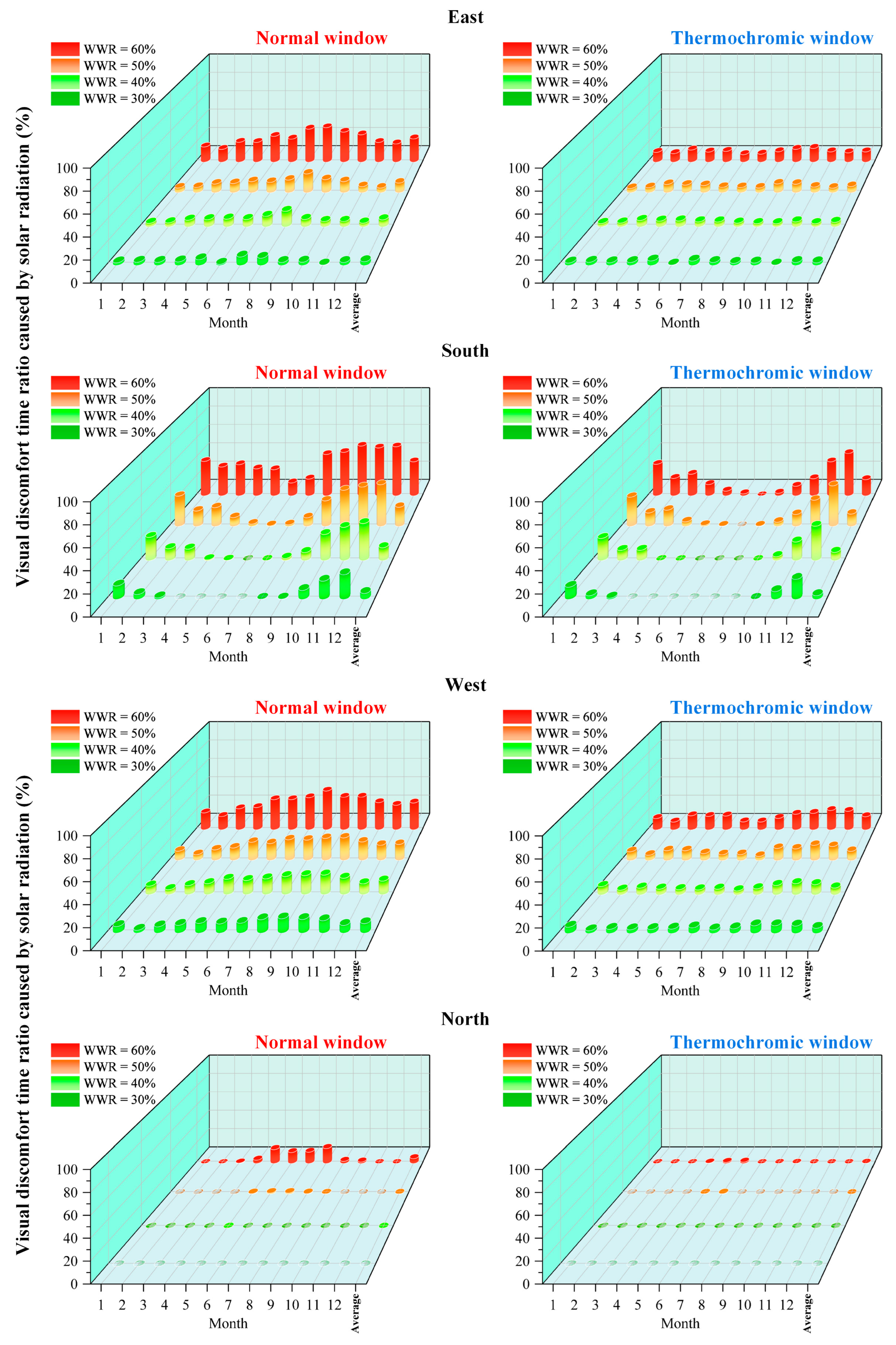
- Thermochromic windows exhibit varying reductions in the durations of solar-induced thermal and visual discomfort under different orientations. For the east, south, west, and north orientations, thermochromic windows lower the annual thermal discomfort durations by 60.9%, 82.4%, 63.7%, and 96.4%, respectively. In the east, south, and west orientations, thermochromic windows can reduce the annual visual discomfort durations by 28.6%, 37.4%, and 45.4%, respectively, while in the north orientation, no significant visual discomfort is observed, whether with normal or thermochromic windows.
- (2)
- Increasing WWR weakens the ability of thermochromic windows to improve thermal comfort but enhances the ability to improve visual comfort. When thermochromic windows are in the east, south, west, and north orientations, as WWR increases from 30% to 60%, the reductions in thermal discomfort duration decrease from 60.9%, 82.4%, and 63.7% to 43.3%, 51.2%, and 37.8%, respectively, while the reductions in visual discomfort duration by thermochromic windows increase from 28.6%, 35.6%, and 42.1% to 55.8%, 52.4%, and 50.5%, respectively.
- (3)
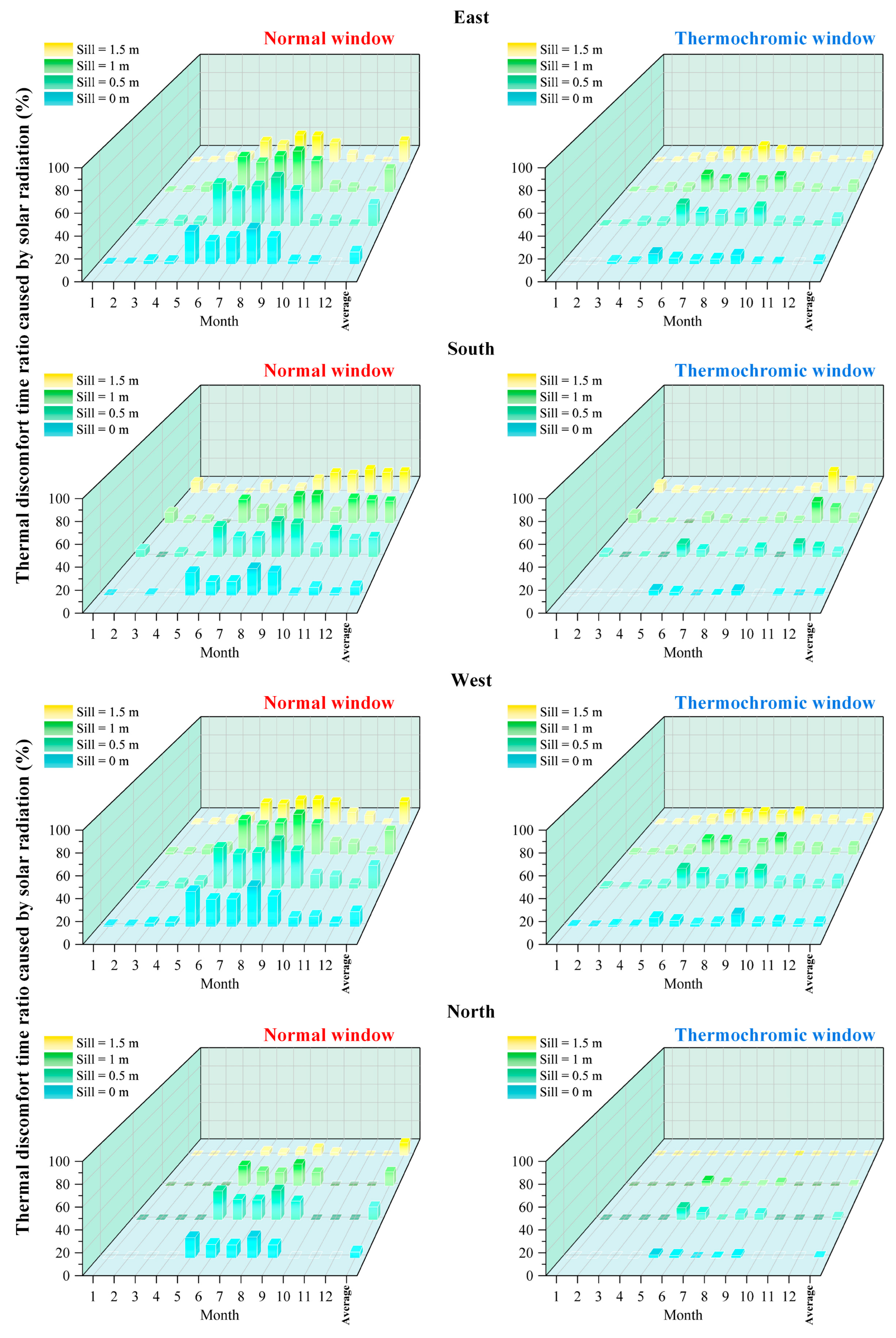
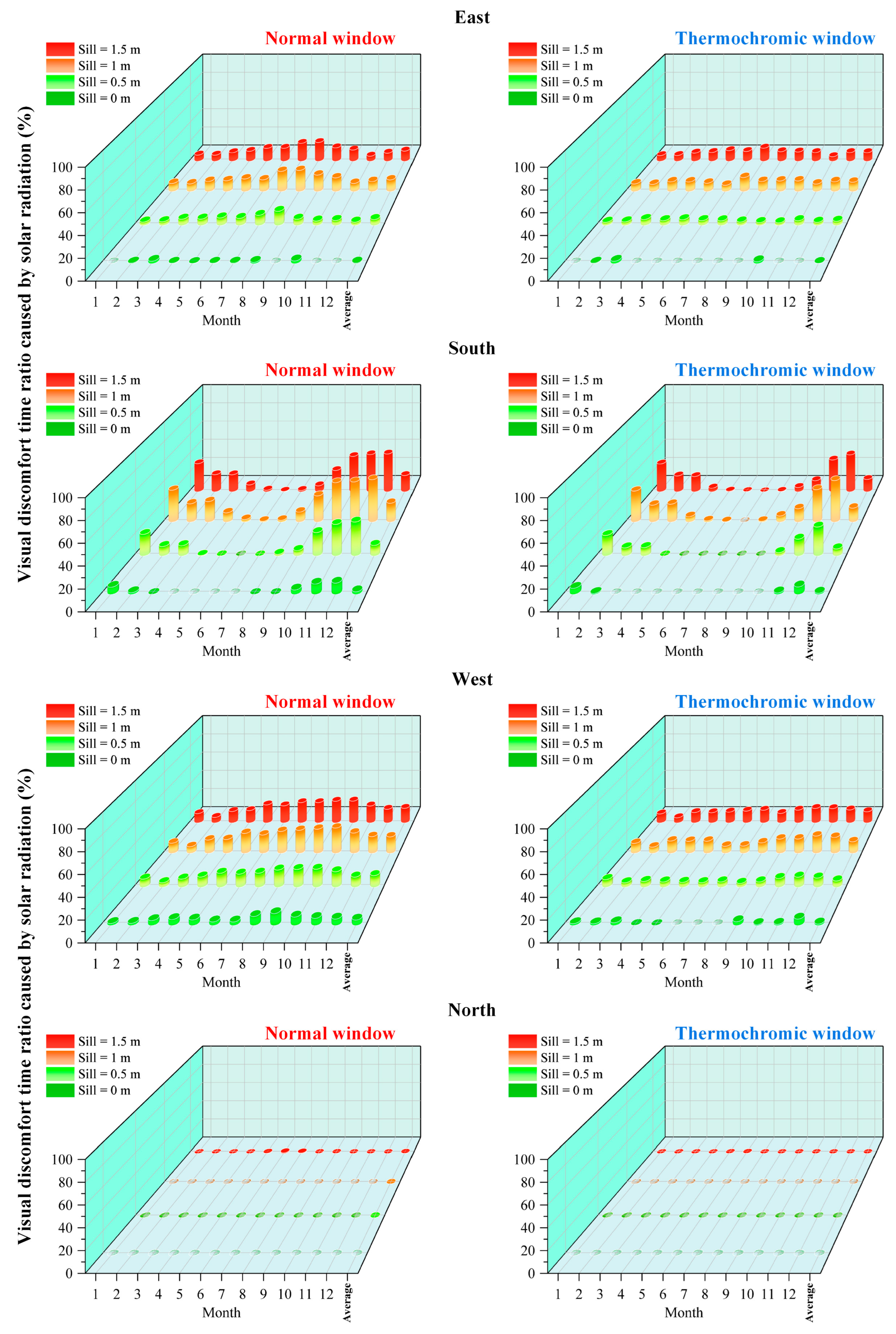
- Sill height also exerts significant effects on thermochromic windows. When thermochromic windows are in the east, south, west, and north orientations, as the sill height increases from 0 to 1.5 m, the reductions in thermal discomfort duration increase from 60.9%, 73.4%, and 63.7% to 70.0%, 91.6%, and 90.7%, respectively, and the reductions in visual discomfort duration decrease from 42.5%, 49.9%, and 70.1% to 15.9%, 24.2%, and 23.4%, respectively.
- (4)
- To ensure the accurate evaluation of thermochromic windows’ comfort performance, the window geometry parameters should be maintained within proper ranges. In this study, the proper WWR range is from 40% to 50%, and the sill height range is from 0.5 to 1 m, when the thermal and visual discomfort is obvious without thermochromic windows, and meanwhile, the discomfort elimination by thermochromic windows is significant and thermochromic windows can keep the annual discomfort time below 15% or even 10%. In addition, the north orientation should be avoided.
Supplementary Materials
Author Contributions
Funding
Data Availability Statement
Conflicts of Interest
Abbreviations
| WWR | Window-to-wall ratio |
| ΔMRT | The increase in mean radiant temperature of indoor occupants caused by solar radiation |
| U-values | The heat transfer coefficients |
| SHGC | The solar heat gain coefficient |
| VT | The visible light transmittance |
| Pthermal_discomfort | The thermal discomfort time ratio caused by solar radiation |
| tthermal_discomfort | The thermal discomfort caused by solar radiation |
| toccupied | The total occupied hours |
| Pthermal_reduction | The reduction ratio of thermal discomfort duration by thermochromic window |
| tthermal_discomfort_Normal | The thermal discomfort duration caused by solar radiation with normal windows |
| tthermal_discomfort_TC | The thermal discomfort duration caused by solar radiation with thermochromic windows |
| Pvisual_discomfort | The visual discomfort time ratio caused by solar radiation |
| tvisual_discomfort | The visual discomfort caused by solar radiation |
| Pvisual_reduction | The reduction ratio of visual discomfort duration by thermochromic windows |
| tvisuall_discomfort_Normal | The visual discomfort duration caused by solar radiation with normal windows |
| tvisuall_discomfort_TC | The visual discomfort duration caused by solar radiation with thermochromic windows |
References
- Wang, L.; Greenberg, S. Window operation and impacts on building energy consumption. Energy Build. 2015, 92, 313–321. [Google Scholar] [CrossRef]
- Ghosh, A. Diffuse transmission dominant smart and advanced windows for less energy-hungry building: A review. J. Build. Eng. 2023, 64, 105604. [Google Scholar] [CrossRef]
- Alghoul, S.K.; Rijabo, H.G.; Mashena, M.E. Energy consumption in buildings: A correlation for the influence of window to wall ratio and window orientation in Tripoli, Libya. J. Build. Eng. 2017, 11, 82–86. [Google Scholar] [CrossRef]
- González-Torres, M.; Pérez-Lombard, L.; Coronel, J.F.; Maestre, I.R.; Yan, D. A review on buildings energy information: Trends, end-uses, fuels and drivers. Energy Rep. 2022, 8, 626–637. [Google Scholar] [CrossRef]
- Liu, Q.; Li, N.; He, Y.; Pan, J.; Chen, Y. Quantifying the effects of indoor non-uniform solar radiation on human thermal comfort and work performance in warm season. Energy Build. 2024, 306, 113962. [Google Scholar] [CrossRef]
- Wang, N.; Wang, J. A spectrally-resolved method for evaluating the solar effect on user thermal comfort in the near-window zone. Build. Environ. 2021, 202, 108044. [Google Scholar] [CrossRef]
- Khamporn, N.; Chaiyapinunt, S. An Investigation on the Human Thermal Comfort from a Glass Window. Eng. J. 2014, 18, 25–44. [Google Scholar] [CrossRef]
- Liu, X.; Sun, Y.; Wei, S.; Meng, L.; Cao, G. Illumination distribution and daylight glare evaluation within different windows for comfortable lighting. Results Opt. 2021, 3, 100080. [Google Scholar] [CrossRef]
- Feng, F.; Kunwar, N.; Cetin, K.; O’Neill, Z. A critical review of fenestration/window system design methods for high performance buildings. Energy Build. 2021, 248, 111184. [Google Scholar] [CrossRef]
- Goia, F. Search for the optimal window-to-wall ratio in office buildings in different European climates and the implications on total energy saving potential. Sol. Energy 2016, 132, 467–492. [Google Scholar] [CrossRef]
- Xue, P.; Li, Q.; Xie, J.; Zhao, M.; Liu, J. Optimization of window-to-wall ratio with sunshades in China low latitude region considering daylighting and energy saving requirements. Appl. Energy 2019, 233, 62–70. [Google Scholar] [CrossRef]
- Alwetaishi, M. Investigation of the use of external insulation materials in domestic buildings in hot regions considering various window-to-wall ratios (WWR). Case Stud. Therm. Eng. 2025, 74, 106900. [Google Scholar] [CrossRef]
- Fallahtafti, R.; Mahdavinejad, M. Window geometry impact on a room’s wind comfort. Eng. Constr. Archit. Manag. 2021, 28, 2381–2410. [Google Scholar] [CrossRef]
- Mangkuto, R.A.; Rohmah, M.; Asri, A.D. Design optimisation for window size, orientation, and wall reflectance with regard to various daylight metrics and lighting energy demand: A case study of buildings in the tropics. Appl. Energy 2016, 164, 211–219. [Google Scholar] [CrossRef]
- Cuce, E.; Riffat, S.B. A state-of-the-art review on innovative glazing technologies. Renew. Sustain. Energy Rev. 2015, 41, 695–714. [Google Scholar] [CrossRef]
- Sorooshnia, E.; Rashidi, M.; Rahnamayiezekavat, P.; Mahmoudkelayeh, S.; Pourvaziri, M.; Kamranfar, S.; Gheibi, M.; Samali, B.; Moezzi, R. A novel approach for optimized design of low-E windows and visual comfort for residential spaces. Energy Built Environ. 2025, 6, 27–42. [Google Scholar] [CrossRef]
- Nur-E-Alam, M.; Vasiliev, M.; Yap, B.K.; Islam, M.A.; Fouad, Y.; Kiong, T.S. Design, fabrication, and physical properties analysis of laminated Low-E coated glass for retrofit window solutions. Energy Build. 2024, 318, 114427. [Google Scholar] [CrossRef]
- Shaker, L.M. Evaluating UV-Protective Low-Emissivity Window Films: Implications for Thermal and Visual Comfort in Luminous Office Buildings. AUIQ Complement. Biol. Syst. 2024, 1, 46–60. [Google Scholar] [CrossRef]
- Jia, Z.; Xiang, C. Smart solar windows for an adaptive future: A comprehensive review of performance, methods and applications. Energy Build. 2025, 346, 116227. [Google Scholar] [CrossRef]
- Mustafa, M.N.; Mohd Abdah, M.A.A.; Numan, A.; Moreno-Rangel, A.; Radwan, A.; Khalid, M. Smart window technology and its potential for net-zero buildings: A review. Renew. Sustain. Energy Rev. 2023, 181, 113355. [Google Scholar] [CrossRef]
- Teixeira, H.; Gomes, M.G.; Moret Rodrigues, A.; Pereira, J. Thermal and visual comfort, energy use and environmental performance of glazing systems with solar control films. Build. Environ. 2020, 168, 106474. [Google Scholar] [CrossRef]
- Qiu, C.; Yang, H.; Dong, K. Energy and Thermal Comfort Performance of Vacuum Glazing-Based Building Envelope Retrofit in Subtropical Climate: A Case Study. Buildings 2025, 15, 2038. [Google Scholar] [CrossRef]
- Es-sakali, N.; Idrissi Kaitouni, S.; Ait Laasri, I.; Oualid Mghazli, M.; Cherkaoui, M.; Pfafferott, J. Static and dynamic glazing integration for enhanced building efficiency and indoor comfort with thermochromic and electrochromic windows. Therm. Sci. Eng. Prog. 2024, 52, 102681. [Google Scholar] [CrossRef]
- Casini, M. Active dynamic windows for buildings: A review. Renew. Energy 2018, 119, 923–934. [Google Scholar] [CrossRef]
- Wu, S.; Sun, H.; Duan, M.; Mao, H.; Wu, Y.; Zhao, H.; Lin, B. Applications of thermochromic and electrochromic smart windows: Materials to buildings. Cell Rep. Phys. Sci. 2023, 4, 101370. [Google Scholar] [CrossRef]
- Bai, T.; Li, W.; Fu, G.; Zhang, Q.; Zhou, K.; Wang, H. Dual-band electrochromic smart windows towards building energy conservation. Sol. Energy Mater. Sol. Cells 2023, 256, 112320. [Google Scholar] [CrossRef]
- Zhang, Z.; Zhang, L.; Zhou, Y.; Cui, Y.; Chen, Z.; Liu, Y.; Li, J.; Long, Y.; Gao, Y. Thermochromic Energy Efficient Windows: Fundamentals, Recent Advances, and Perspectives. Chem. Rev 2023, 123, 7025–7080. [Google Scholar] [CrossRef]
- Meng, W.; Wang, J.; Jiang, L. Recent advances in photochromic smart windows based on inorganic materials. Responsive Mater. 2024, 2, e20240001. [Google Scholar] [CrossRef]
- Aburas, M.; Soebarto, V.; Williamson, T.; Liang, R.; Ebendorff-Heidepriem, H.; Wu, Y. Thermochromic smart window technologies for building application: A review. Appl. Energy 2019, 255, 113522. [Google Scholar] [CrossRef]
- Wijewardane, S.; Santamouris, M. Smart glazing systems: An industrial outlook. Sol. Compass 2025, 14, 100114. [Google Scholar] [CrossRef]
- Hidalgo-Araujo, A.C.; Salomão, R.; Berardi, U.; Dornelles, K.A. Thermochromic materials for building Applications: Overview through a bibliometric analysis. Sol. Energy 2025, 293, 113491. [Google Scholar] [CrossRef]
- Shen, N.; Chen, S.; Huang, R.; Huang, J.; Li, J.; Shi, R.; Niu, S.; Amini, A.; Cheng, C. Vanadium dioxide for thermochromic smart windows in ambient conditions. Mater. Today Energy 2021, 21, 100827. [Google Scholar] [CrossRef]
- Acosta, I.; Campano, M.Á.; Molina, J.F. Window design in architecture: Analysis of energy savings for lighting and visual comfort in residential spaces. Appl. Energy 2016, 168, 493–506. [Google Scholar] [CrossRef]
- Xiang, X.; He, Y.; Li, N. Evaluating annual thermal discomfort time ratio of indoor occupants caused by solar radiation using a novel model. Archit. Intell. 2024, 3, 26. [Google Scholar] [CrossRef]
- Ashrafian, T.; Moazzen, N. The impact of glazing ratio and window configuration on occupants’ comfort and energy demand: The case study of a school building in Eskisehir, Turkey. Sustain. Cities Soc. 2019, 47, 101483. [Google Scholar] [CrossRef]
- Song, B.; Yang, L.; Bai, L. Field experimental study of the impact of solar radiation on the thermal comfort of occupants near the glazing area in an office building. Energy Build. 2025, 332, 115422. [Google Scholar] [CrossRef]
- Song, B.; Bai, L.; Yang, L. Analysis of the long-term effects of solar radiation on the indoor thermal comfort in office buildings. Energy 2022, 247, 123499. [Google Scholar] [CrossRef]
- Xie, X.; Chen, X.-N.; Xu, B.; Pei, G. Investigation of occupied/unoccupied period on thermal comfort in Guangzhou: Challenges and opportunities of public buildings with high window-wall ratio. Energy 2022, 244, 123186. [Google Scholar] [CrossRef]
- Zhang, Y.; Zhu, Y.; Yang, J.; Zhai, X. Energy saving performance of thermochromic coatings with different colors for buildings. Energy Build. 2020, 215, 109920. [Google Scholar] [CrossRef]
- Liu, D.; Wu, Y. Evaluating coloured thermochromic windows for energy efficiency and visual comfort in buildings. Adv. Appl. Energy 2025, 18, 100225. [Google Scholar] [CrossRef]
- Costanzo, V.; Evola, G.; Marletta, L. Thermal and visual performance of real and theoretical thermochromic glazing solutions for office buildings. Sol. Energy Mater. Sol. Cells 2016, 149, 110–120. [Google Scholar] [CrossRef]
- Liu, S.; Li, Y.; Wang, Y.; Yu, K.M.; Huang, B.; Tso, C.Y. Near-Infrared-Activated Thermochromic Perovskite Smart Windows. Adv. Sci. 2022, 9, e2106090. [Google Scholar] [CrossRef] [PubMed]
- Yang, C.; He, Y.; Liu, S.; Li, N.; Na, E.; Jia, Y. Daylight and energy performance optimization of thermochromic windows based on solar-related thermal comfort. J. Build. Eng. 2025, 112, 113655. [Google Scholar] [CrossRef]
- Jiao, Y.; Li, Z.; Li, C.; Cao, C.; Huang, A.; He, P.; Cao, X. Flexible tri-state-regulated thermochromic smart window based on WxV1-xO2/paraffin/PVA composite film. Chem. Eng. J. 2024, 497, 154578. [Google Scholar] [CrossRef]
- Curcija, D.C.; Zhu, L.; Czarnecki, S.; Mitchell, R.D.; Kohler, C.; Vidanovic, S.V.; Huizenga, C. Berkeley Lab Window; Lawrence Berkeley National Lab (LBNL): Berkeley, CA, USA, 2015.
- EnergyPlus 22.1.0. 2022. Available online: https://energyplus.net/ (accessed on 20 October 2024).
- Xiang, X.; He, Y.; Li, N.; Chen, W.; Zhang, W. A novel method for calculating solar radiation on indoor human body under different weather conditions. Build. Environ. 2024, 254, 111397. [Google Scholar] [CrossRef]
- Hu, J.; Jiang, Y.; He, Y.; Li, N.; Shen, X.; Han, Y.; Han, X.; Lu, N. An experimental study on the threshold of indoor solar radiation intensity for thermal comfort and work performance in warm season. Build. Environ. 2025, 272, 112703. [Google Scholar] [CrossRef]
- Prototype Building Models. Available online: https://www.energy.gov/eere/buildings/new-construction-commercial-reference-buildings (accessed on 21 July 2025).
- Steven, M.D.; Unsworth, M. Standard distributions of clear sky radiance. Q. J. R. Meteorol. Soc. 1977, 103, 457–465. [Google Scholar] [CrossRef]
- He, Y.; Liu, S.; Tso, C.Y. A novel solar-based human-centered framework to evaluate comfort-energy performance of thermochromic smart windows with advanced optical regulation. Energy Build. 2023, 278, 112638. [Google Scholar] [CrossRef]
- ANSI/ASHRAE Standard 55-2017; Thermal Environmental Conditions for Human Occupancy. American Society of Heating, Refrigerating and Air-Conditioning Engineering: Atlanta, GA, USA, 2017.
- Nabavi-Pelesaraei, A.; Rafiee, S.; Hosseini-Fashami, F.; Chau, K.-w. Artificial neural networks and adaptive neuro-fuzzy inference system in energy modeling of agricultural products. In Predictive Modelling for Energy Management and Power Systems Engineering; Elsevier: Amsterdam, The Netherlands, 2021; pp. 299–334. [Google Scholar]
- Jiang, Y. Study on Indoor Human Thermal Comfort and Work Performance with the Effect of Solar Radiation Heat. Master′s Thesis, Hunan University of Science and Technology, Xiangtan, China, 2025. (In Chinese, Expected to Be Published in 2026). [Google Scholar]
- Bian, Y.; Luo, T. Investigation of visual comfort metrics from subjective responses in China: A study in offices with daylight. Build. Environ. 2017, 123, 661–671. [Google Scholar] [CrossRef]
- Suk, J.Y. Luminance and vertical eye illuminance thresholds for occupants’ visual comfort in daylit office environments. Build. Environ. 2019, 148, 107–115. [Google Scholar] [CrossRef]
- Zeng, K.; Xue, C.; Wu, J.; Wen, W. Assessment of Gel-Based Thermochromic Glazing for Energy Efficiency in Architectural Applications. Materials 2024, 17, 4047. [Google Scholar] [CrossRef] [PubMed]
- Smart Windows Market Size & Outlook, 2024–2032. Available online: https://straitsresearch.com/report/smart-windows-market (accessed on 17 October 2025).

| Case | WWR | Sill (m) | Window Type |
|---|---|---|---|
| 1 | 30% | - | Normal window |
| 2 | 30% | - | Thermochromic window |
| 3 | 40% | - | Normal window |
| 4 | 40% | - | Thermochromic window |
| 5 | 50% | - | Normal window |
| 6 | 50% | - | Thermochromic window |
| 7 | 60% | - | Normal window |
| 8 | 60% | - | Thermochromic window |
| 9 | 40% | 0 | Normal window |
| 10 | 40% | 0 | Thermochromic window |
| 11 | 40% | 0.5 | Normal window |
| 12 | 40% | 0.5 | Thermochromic window |
| 13 | 40% | 1 | Normal window |
| 14 | 40% | 1 | Thermochromic window |
| 15 | 40% | 1.5 | Normal window |
| 16 | 40% | 1.5 | Thermochromic window |
| The Reduction in Thermal Discomfort Duration by Thermochromic Windows | ||||
|---|---|---|---|---|
| WWR | 30% | 40% | 50% | 60% |
| E | 11.8%→4.6% (−60.9%) | 18.8%→8.6% (−54.4%) | 23.6%→12.1% (−48.9%) | 28.0%→15.9% (−43.3%) |
| S | 8.7%→1.5% (−82.4%) | 17.1%→5.6% (−67.4%) | 23.8%→9.5% (−60.1%) | 29.4%→14.3% (−51.2%) |
| W | 13.9%→5.0% (−63.7%) | 20.2%→9.6% (−52.5%) | 24.7%→13.4% (−45.5%) | 28.8%→17.9% (−37.8%) |
| N | 4.0%→0.1% (−96.4%) | 9.5%→2.7% (−71.8%) | 13.7%→5.3% (−61.7%) | 17.7%→8.7% (−50.6%) |
| The reduction in visual discomfort duration by thermochromic windows | ||||
| E | 3.4%→2.4% (−28.6%) | 6.9%→4.5% (−35.6%) | 9.8%→6.4% (−34.6%) | 24.7%→10.9% (−55.8%) |
| S | 5.4%→3.4% (−37.4%) | 12.4%→8.0% (−35.6%) | 19.3%→12.5% (−35.1%) | 36.1%→17.2% (−52.4%) |
| W | 8.5%→4.7% (−45.4%) | 13.0%→6.6% (−48.7%) | 16.2%→9.4% (−42.1%) | 28.4%→14.0% (−50.5%) |
| N | 0.0%→0.0% (0%) | 0.0%→0.0% (0%) | 0.3%→0.1% (−80.5%) | 5.2%→0.3% (−94.3%) |
| The Reduction in Thermal Discomfort Duration by Thermochromic Windows | ||||
|---|---|---|---|---|
| Sill | 0 m | 0.5 m | 1 m | 1.5 m |
| E | 11.2%→3.4% (−70.0%) | 20.9%→8.2% (−60.9%) | 23.6%→8.3% (−64.7%) | 22.5%→7.2% (−68.1%) |
| S | 8.0%→1.2% (−84.8%) | 19.2%→5.1% (−91.6%) | 22.3%→5.9% (−73.4%) | 22.5%→5.0% (−77.8%) |
| W | 13.8%→4.0% (−90.7%) | 22.3%→9.2% (−70.4%) | 24.5%→8.9% (−63.7%) | 24.0%→7.3% (−69.6%) |
| N | 5.7%→0.7% (−87.5%) | 12.6%→2.6% (−79.1%) | 14.3%→1.1% (−92.2%) | 13.3%→0.0% (−100%) |
| The reduction in visual discomfort duration by thermochromic windows | ||||
| E | 0.7%→0.4% (−42.5%) | 5.9%→4.2% (−29.7%) | 12.0%→9.6% (−19.9%) | 11.0%→9.2% (−15.9%) |
| S | 2.5%→1.2% (−49.9%) | 10.3%→7.0% (−32.6%) | 19.2%→14.3% (−25.6%) | 17.4%→13.2% (−24.2%) |
| W | 5.0%→1.5% (−70.1%) | 11.3%→6.2% (−45.1%) | 16.8%→11.9% (−29.3%) | 15.7%→12.0% (−23.4%) |
| N | 0.0%→0.0% (-%) | 0.0%→0.0% (-%) | 0.1%→0.0% (−100%) | 0.3%→0.0% (−100%) |
Disclaimer/Publisher’s Note: The statements, opinions and data contained in all publications are solely those of the individual author(s) and contributor(s) and not of MDPI and/or the editor(s). MDPI and/or the editor(s) disclaim responsibility for any injury to people or property resulting from any ideas, methods, instructions or products referred to in the content. |
© 2025 by the authors. Licensee MDPI, Basel, Switzerland. This article is an open access article distributed under the terms and conditions of the Creative Commons Attribution (CC BY) license (https://creativecommons.org/licenses/by/4.0/).
Share and Cite
Yang, C.; He, Y.; Chen, Y.; Li, N. The Effects of Window Geometry Parameters on Indoor Thermal and Visual Comfort of Thermochromic Windows in Office Building. Buildings 2025, 15, 3963. https://doi.org/10.3390/buildings15213963
Yang C, He Y, Chen Y, Li N. The Effects of Window Geometry Parameters on Indoor Thermal and Visual Comfort of Thermochromic Windows in Office Building. Buildings. 2025; 15(21):3963. https://doi.org/10.3390/buildings15213963
Chicago/Turabian StyleYang, Chengzhi, Yingdong He, Yu Chen, and Nianping Li. 2025. "The Effects of Window Geometry Parameters on Indoor Thermal and Visual Comfort of Thermochromic Windows in Office Building" Buildings 15, no. 21: 3963. https://doi.org/10.3390/buildings15213963
APA StyleYang, C., He, Y., Chen, Y., & Li, N. (2025). The Effects of Window Geometry Parameters on Indoor Thermal and Visual Comfort of Thermochromic Windows in Office Building. Buildings, 15(21), 3963. https://doi.org/10.3390/buildings15213963

