Article

Mechanical Analysis and Prototype Testing of Prestressed Rock Anchors

1
Department of Engineering Mechanics, Nanchang University, 999 Xuefu Avenue, Nanchang 330031, China
2
Project Management Office of Shanghai-Kunming Expressway, Liyuan to Dongxiang Section Reconstruction and Expansion, 13 Xingye Avenue, Shangrao 334100, China
3
Jiangxi Gandong Road & Bridge Construction Group Ltd., 1288 Yingbin Avenue, Fuzhou 344000, China
4
Jiangxi Province Traffic Construction Engineering Quality Supervision Administration, 218 Gaoxin Third Road, Nanchang 330069, China
5
College of City Construction, Jiangxi Normal University, 99 Ziyang Avenue, Nanchang 330022, China
*
Author to whom correspondence should be addressed.
Buildings 2025, 15(21), 3952; https://doi.org/10.3390/buildings15213952

Submission received: 14 September 2025 / Revised: 22 October 2025 / Accepted: 29 October 2025 / Published: 2 November 2025
(This article belongs to the Section Building Structures)

Abstract

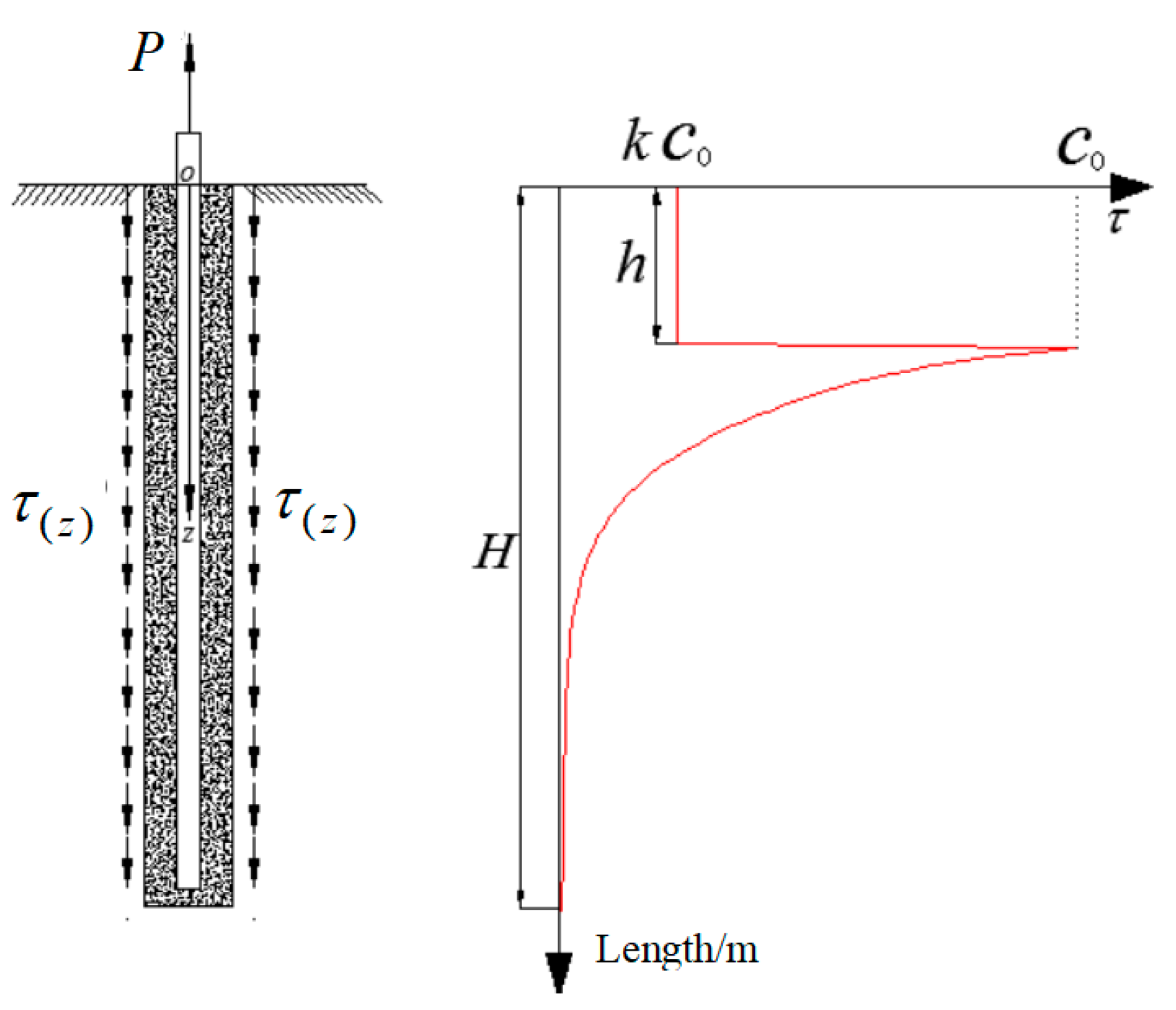
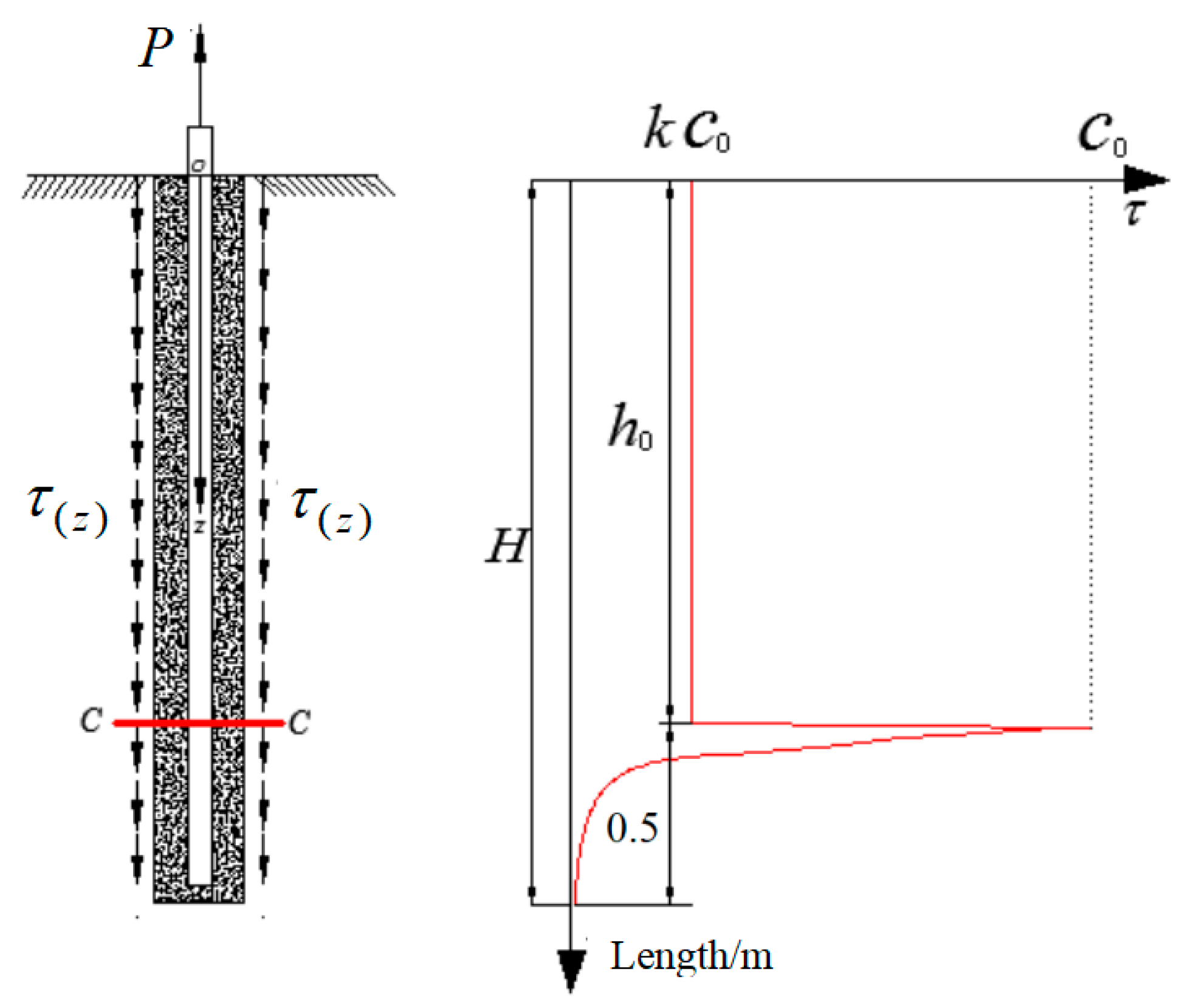
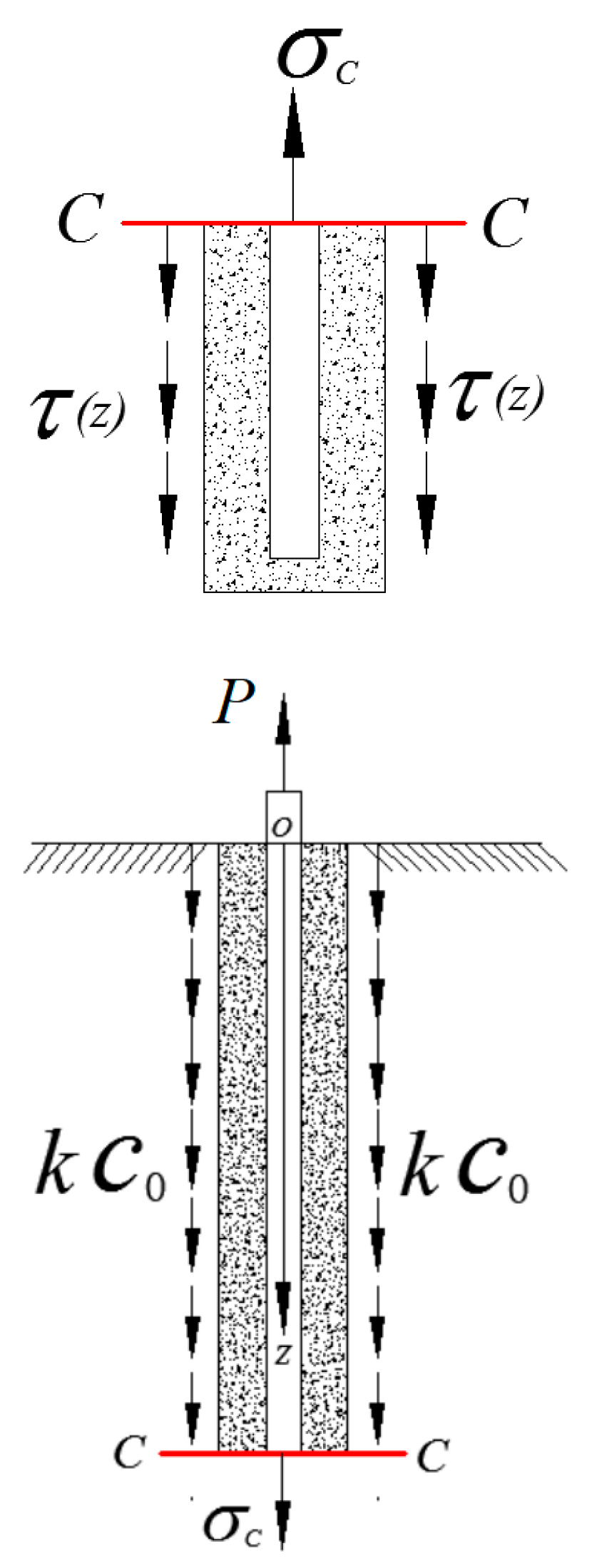
This study primarily investigates the mechanical performance of prestressed anchor foundations. Based on the assumptions of continuity, homogeneity, and isotropy of the anchor foundation and anchoring materials, a simplified elastic analysis model was developed. Using the superposition principle, the working stresses under vertical loads and bending moments were calculated, allowing for the determination of the maximum working stresses within the anchors and the foundation. Additionally, the distribution of bond strength of the prestressed tendons was analyzed, and the concept of effective anchorage length was introduced. The reliability of the model was validated through prototype testing, with the measured free segment strain values showing a high degree of consistency with theoretical calculations, with errors within 6.5%. Empirical data on ultimate bearing capacity and bond characteristics were also obtained. By integrating numerical calculations with experimental results, the performance of the anchoring system under extreme and specialized loading conditions was analyzed. The experimental results indicated that the failure modes of all anchor foundations were characterized by bond failure at the interface between the anchor and the surrounding rock mass. Based on the experimental data, a reasonable anchorage length satisfying design strength requirements was proposed. The findings provide a theoretical foundation and practical guidance for the design and application of prestressed anchor foundations in structures such as wind turbine towers.
Keywords: prestressed rock anchors; prototype testing; pullout capacity; bond strength; optimal anchorage length prestressed rock anchors; prototype testing; pullout capacity; bond strength; optimal anchorage length