


Abstract
Among renewable energy generation technologies, photovoltaics has a pivotal role in reaching the EU’s decarbonization goals. In particular, building-integrated photovoltaic (BIPV) systems are attracting increasing interest since they are a fundamental element that allows buildings to abate their CO2 emissions while also performing functions typical of traditional building components, such as sealing against water. In such a context, since one of the main challenges to decarbonizing the building sector lies in the retrofitting of existing buildings, the current paper is focused on the design, development, and testing of a novel roofing BIPV system. The entire research was carried out as part of the Horizon 2020 HEART project. In more detail, the research analyzed the requirements of typical pitched tile roofs, which are currently the most common type in Europe, and developed a universal photovoltaic tile that can be easily and quickly integrated into such a type of roof. The research was also aimed at minimizing the embodied energy of the component and promoting disassembly and recycling at the end of life, fully in line with a circular economy perspective. The adopted design and development processes are described in detail in the present paper, along with the results of several tests performed in the field. In addition, further development prospects of the component, aimed at meeting the integration requirements in historic buildings, are finally presented.
1. Introduction
Installed photovoltaic power has rapidly grown in the last 20 years, with a compound annual growth rate (CAGR) of cumulative PV installations equal to 30% between 2011 to 2021 and a global capacity that exceeded 1.6 TWp at the end of 2023 [1].
In the future, to set the world on a pathway towards meeting the aim of the Paris Agreement of limiting the global temperature rise to below 1.5 °C, the electricity sector will have to be thoroughly decarbonized by the mid-21st century, with solar and wind leading the transformation [2]. The achievement of this goal cannot be separated from the continuous and substantial growth of worldwide PV power. In fact, currently, solar PV has the highest annual growth rate and the lowest LCOE among all renewables [3], proving its future predominant role in a decarbonized energy generation sector. As outlined by the International Renewable Energy Agency (IRENA), the 1.5 °C scenario implies that over 3,500 GWp of PV power will be installed by 2030 and that the global PV capacity will exceed 15,000 GWp by 2050 [4].
In such a framework, besides utility-scale systems growing fast in many countries, until now, rooftop systems have covered the largest share of solar installations in the EU, with a quota of around 60% of the total installed power [5]. Similar trends have also been recorded in countries with a fast growth of PV power, e.g., China, where rooftop systems cover more than 50% of the total installations.
The recent energy crises obviously have been playing a large role in increasing demand for rooftop PV systems, as the technology promises a hedge against rising retail power prices. To confirm this, worldwide rooftop solar systems added 118 GWp in 2022, 39 GWp more than in 2021 [4].
In general, there is a huge increase in residential and commercial photovoltaic systems on buildings, as investment decisions and installation of these small systems can be quick, usually with a lean or even no authorization process. In this respect, it should be noted that roof surfaces are typically more suitable to integrate PV systems rather than facades, since the latter have a limited potential. In fact, first of all, the available vertical area for PV installation is limited mainly due to the building’s shape, which is often characterized by overhangs, loggias, balconies, etc., to the presence of more significant historical and aesthetic constraints and the prevalence of glazed surfaces [6]. Lastly, the surrounding environment typically casts shadows on facades, further reducing the actual PV production. On the contrary, the potential offered by rooftops in many contexts is sufficient to cover a building’s energy demands. For instance, a recent study [7] demonstrated that in Italy, PV systems installed on 30% of rooftops could meet the residential sector’s entire electricity needs. As a consequence, in the future, rooftop PV systems are expected to play a key role, as also confirmed by the EU Solar Rooftops Initiative [8], which aims to accelerate the vast and under-utilized potential of rooftops to produce clean energy.
Regarding the possible rooftop configurations, technical solutions can be divided into two macro-categories, i.e., building-integrated photovoltaic (BIPV) and building-attached photovoltaic (BAPV). In BAPV installations, PV modules do not replace the construction/envelope components, can be rack-mounted (e.g., on flat roofs) or overlapped (e.g., on pitched roofs), and are only used for power generation and do not contribute to any function of the building envelope materials, except for reducing heat gain by shading the roof from direct solar radiation [9]. In BIPV configurations, instead, PV modules are an integral part of the building, which substitutes the traditional materials or envelopes and concomitantly generates electricity [10].
Among the two abovementioned categories, market perspectives for BIPV become promising as past obstacles are progressively overcome; in fact, in many countries, the regulatory pressure to improve the energy performance of buildings and decarbonize their energy supply must be combined with demanding architectural/aesthetic requirements that can be met by well-designed BIPV solutions. Moreover, awareness is rising in the construction sector and costs have been steadily decreasing. However, BIPV risks remaining a niche of both the construction and PV sectors (the total global share reached 2 GWp in 2022), as the competition is fierce with other traditional solutions. Nevertheless, it could significantly expand its share given that it combines unique characteristics, allowing it to fill gaps that other technical solutions cannot whilst responding to regulatory mandates for positive energy buildings [11]. This is in full agreement with the current aims of the New European Bauhaus, which trigger sustainable solutions responding to needs beyond functionality [12].
In such a framework, the present work describes the design, development, and testing of a novel roofing BIPV system made with PV tiles that can be easily adapted to existing tiles’ roofs but are equally suitable for new pitched roofs. In fact, pitched roofs have a considerable share (around 53% in the EU) and are the most widespread solutions in residential buildings (62%) [13]. In addition, a pitched roof is usually the most prevalent configuration in historical buildings in the EU, excluding hot and dry climates [14].
2. The Building Integration of PV Technology in Pitched Roofs
The ideal photovoltaic roofing system is one that has the same weathering and aesthetic properties as a traditional roof [15]. As a consequence, to fully integrate PV technology into roofs means to reach the following:
- (i)
- Functional integration, i.e., as previously introduced, the PV elements must have the same function as traditional roofing elements that are being substituted. Firstly, they must ensure waterproofing and, more in general, protection against weathering and, secondly, they must be coplanar with the surrounding roof parts. In some cases, they can also provide thermal insulation and/or protection from the heat (i.e., providing a ventilated layer);
- (ii)
- Chromatic and/or textural integration, i.e., to have an aesthetic appearance compatible with the architectural design of the building and the context. This is mostly relevant for the installation of existing buildings and, in particular, historical ones.
In the following section, these two topics are discussed in detail.
2.1. Functional Integration
Among the roofing BIPV solutions that ensure functional integration in pitched tiled surfaces, two main categories can be identified as follows.
- A.
- Solutions based on photovoltaic modules. Various aluminum framings were developed to allow laminates of different types (usually having a size similar to that of traditional PV modules) to be hooked onto the roof structure, ensuring waterproofing, thanks to systems that allow the overlapping of modules and/or sealing of gaps between modules with seals or special profiles. In many cases, the installation does not provide the stepped roof tile effect or, in options where this is the case, the significantly larger module size does not allow for a similar effect to that of traditional roof tiles. Thermal insulation and back ventilation must be typically ensured by layers/technical solutions independent of the PV modules.As reported in Table 1, some products are characterized by a medium size, generally with a width similar to that of existing clay tiles and a longer length in order to increase the integrability in existing roofs while containing the cost. However, such components are generally too stiff and fail to absorb the unevenness/irregularities typical of existing roofs.
 Table 1. Main market products belonging to category A.
 - B.
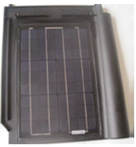
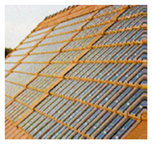
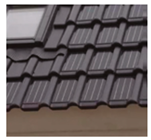
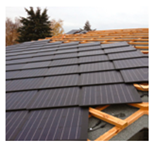
- Solutions based on photovoltaic tiles or shingles. PV tiles or PV shingles are typically small, square/rectangular solar components that can be installed alongside conventional tiles or slates using a traditional racking system for this type of building product. Protection against weathering is usually ensured just by the proper juxtaposition of the tiles, therefore using a principle similar to that used in traditional roof tiles. In most of the cases the tiles are fixed by gravity, as is the case with traditional tiles, without a real mechanical anchorage to the roof substrate. This solution ensures a stepped roof tile effect analogous to that of traditional tiles. The main market products of this category are illustrated in Table 2.
Table 2. Main market products belonging to category B.
In addition, a third category can be identified, which is represented by metal roofing with a PV surface (usually thin-film modules) directly attached to the metal sheets. This category is not considered since the PV modules do not provide any functional integration, as the waterproofing is guaranteed by the metal sheets/panels.
Most of the abovementioned components available on the market integrate crystalline silicon (c-Si) cells, few of them adopted thin-film silicon cells, while none of them were developed using organic and polymeric cells (OPV) or dye-sensitized solar cells (DSSC).
Solutions belonging to the A-type are usually the cheapest ones since they use standard PV laminates but allow limited flexibility because the big size of the modules hardly fits the layout of the pitches, which often have irregular shapes and/or contain obstructive elements such as skylights or chimneys. Moreover, the use of sealing of many solutions may compromise the watertightness after several years of exposure to the elements. Type B, instead, allows a higher flexibility in terms of layout, but both manufacturing and installation costs increase due to the small/custom size of the elements and the higher complexity of the installation procedure.
2.2. Chromatic and/or Textural Integration
The BIPV involves changing the building’s image and the way in which it relates to the context. In many cases, for example, the application of BIPV to existing buildings leads to an alteration of the architectural identity, which may be considered unacceptable in many contexts. Generally, the most critical issues arise in relation to color.
In fact, color plays a multifaceted role in BIPV systems, encompassing both the aesthetic and technical aspects. The ability to customize colors enables architects and designers to seamlessly incorporate solar panels into diverse architectural styles and environments, fostering a harmonious blend in the context and enhancing public perception and acceptance of solar technology. Beyond aesthetics, however, the color of BIPV modules directly affects their energy performance and efficiency. Traditional solar panels typically integrate dark-colored cells to optimize the absorption of solar wavelengths that mostly affect the PV’s generation. However, advancements in solar cell technology have paved the way for the development of colored PV laminates. These innovations offer the architects a wider palette of options to tailor BIPV systems according to specific design requirements.
Different customization techniques can be currently identified to obtain colored or textured BIPV modules [31], as follows:
- Anti-reflection coatings on solar cells, where colors are obtained by variations in the thickness and type of anti-reflective coating [32];
- Special solar filters can be used as interlayers with colors or patterns, which are placed on the internal surface of the protection layer and are also able to increase the durability of the pigment [33].
- Colored polymeric encapsulant films, where the pigments are applied directly onto the encapsulants, such as PVB, EVA, or TPO [34]
- Modified front glass can be obtained with different methods like spectrally selective coating, colored enameled or fritted glass, sandblasting, digital glass printing, satin finishes and glass printing, mineral coating, and glass bulking [31].
It should be noted that color perception changes according to the relative position of the observer as well as to the light source. The deviation from the color observed at normal incidence is very noticeable, and on a large PV array, a continuous change in color can be perceived throughout the BIPV arrangement. At higher angles of incidence, in fact, there is a change in the optical thickness in which light travels through the layers within the filter. This causes a shift in the wavelength which produces constructive interference and, therefore, the observed color changes [35].
Few research papers address color perception according to observation and acceptance angles, as well as according to surface texturing. In more detail, McIntosh et al. [36] showed that under sunlight irradiation, when direct sunlight is reflected from the traditional PV module toward the observer, who sees the reflection of the sun, the color results close to white. Of course, when the viewer no longer detects the specular reflectance from the glass, the cells look traditional blue. Moreover, it was noticed that the blue color becomes lighter at higher angles of observation. On the contrary, Ortiz Lizcano [37] compared the effects on the color perception of an anti-reflective coating applied to solar cells laminated with clear glass with its application on the frontal glass directly. According to the authors, the change in color appearance of the first solution is much less affected by the incidence angle than the second one. It was found that only for incident angles larger than 50° that a noticeable change in the color perception can be observed.
The main advantages and weak points of each above-described solution are summarized hereafter (Table 3).
Table 3.
Comparison among different customization coloring techniques.
3. Development of a PV Roofing System
As already introduced, traditional PV systems often face challenges related to aesthetics, efficiency, and integration with architectural design. Designing a novel PV component specifically tailored for building integration requires a multifaceted approach that considers not only the technical performance but also aesthetic appeal, cost-effectiveness, and ease of installation. In such a way, it is possible to overcome these main issues (e.g., cost, size, and assembly) that typically hold back the market spread of these products.
In the following paragraph, the methodology adopted to design and prototype a novel roofing PV component developed in the Horizon 2020 HEART (Holistic Energy and Architectural Retrofit Toolkit) project is described [38].
In detail, the design and development process has been organized according to a circular and iterative method that, through multi-criteria analysis and requirements analysis, allowed for the progressive refinement of implementation hypotheses until we converged on the best solution in terms of performance, cost, and sustainability (Figure 1).
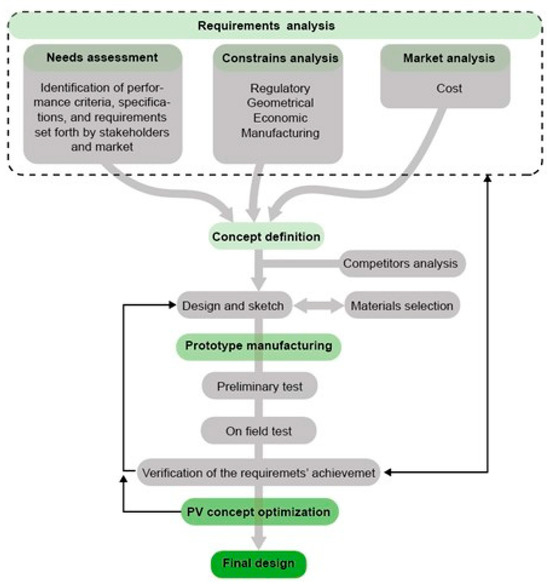
Figure 1.
Flow chart of the applied methodology.
The application of the abovementioned methodology is described in detail in the following sections.
3.1. Requirements Analysis
First of all, a detailed examination of the expected performance criteria, specifications, aesthetical requirements, application contexts, as well as the willingness to pay costs set by the market, must be carried out. By systematically analyzing this information, it is possible to obtain a clear understanding of the product’s requirements and constraints that need to be addressed during the optimization process. In such a respect, within the project, an analysis of the traditional roofing systems (generally made with clay tiles), in combination with a market analysis of the commercial roofing PV components, has been performed. According to the latter, it should be noted that the visible panel’s width is often chosen to be equal to the roof tile’s row height (40 cm in typical roof tiling). This ensures a perfect optical blending of the solar tiles with conventional tiles.
Regarding the width, smaller sizes have the advantages of greater roof filling and better aesthetics, yet a higher cost that anneals the attractiveness of the component, while bigger components reduce flexibility and handleability. A further issue that the design of the new PV tiles has taken into account is related to the potential irregularities and non-planarity of the roof substrate, typical of existing roofs, which can pose challenges to the installation of traditional PV systems. In this context, modular and flexible mounting solutions, as well as lightweight materials, minimize the need for structural modifications, thus reducing the installation’s cost and complexity.
The main requirements defined for the novel system were based on those provided by UNI 9460 [39] and EN 50583 [40], as summarized in Table 4.
Table 4.
PV roofing system requirements.
3.2. Concept Definition
According to the abovementioned assessment, the design of the system has been defined step by step. In detail, the component was designed with a modular size compared to traditional standard tiles and split into two main elements: the photovoltaic laminate and the supporting frame. The latter represents the interface between the photovoltaic laminate and the building’s roof and, therefore needs to perfectly match the traditional tiles in the middle of which it is inserted. In order to meet the expected requirements in terms of flexibility and lightness but also to minimize the embodied carbon, it was decided to manufacture the supporting frame with a specific plastic blend made from up to 80% recycled material, which is UV-resistant and self-extinguishing (classified as V2-UL 94).
The adopted plastic material consists of a mixture of linear and low-density polyethylene (LLDPE/LDPE—30%), high-density polyethylene (HDPE—30%), and polypropylene (PP—40%). The latter provides a certain stiffness and strength, while LDPE and LLDPE guarantee good impact resistance.
More specifically, it consists of a filled perimeter frame with intermediate stiffening to make it light and resistant. This choice enabled us to contain costs and embody the energy and weight of the final product compared to existing market solutions. In this sense, the solutions adopted to minimize the embodied energy and promote disassembly and recycling at the end of life are summarized in Table 5.
Table 5.
Circular economy strategies.
The profiles, shapes, ribs, structural stability, joints, and connections of the frame are specially designed to obtain a versatile and flexible product suitable for practically any application context.
As can be seen from the axonometric view in Figure 2, waterproofing is ensured by the overlapping of both laminates, which create a main water flow plane, and modular plastic elements, which constitute the waterproofing layer.
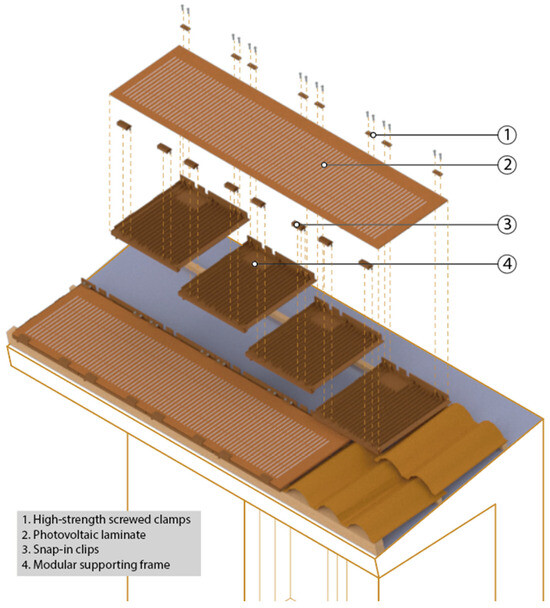
Figure 2.
Axonometric view of the component.
It should also be noted that the support system allows relative sliding with respect to the roof structure to make it possible to adjust the component in the three directions of space. To make this sliding action possible, the supporting frame combines elongated bolt holes and sliding grooves and tongues obtained with a formed (pressed) process.
Regarding the size, the same width as traditional tiles (about 0.4 m) and a length of about 1.5 m were selected as the best compromise between flexibility, handleability, and cost. Nevertheless, the supporting frame of each PV laminate is manufactured with the same width of the laminate and 1/4 of its total length. This choice aims to facilitate the manufacturing phase of the component, made with the formed process, allowing a higher absorption of thermal expansion by means of special flexible joints and increasing the modularity.
3.3. PV Concept Optimization
Once the main concept has been defined, the optimization of the electrical configuration can be carried out. The aim is to maximize the power production of the system while reducing the manufacturing cost. Thus, monocrystalline cells were considered the starting point for further developments. In this respect, four different configurations made with three different sizes of cells were considered, as shown below (Figure 3).
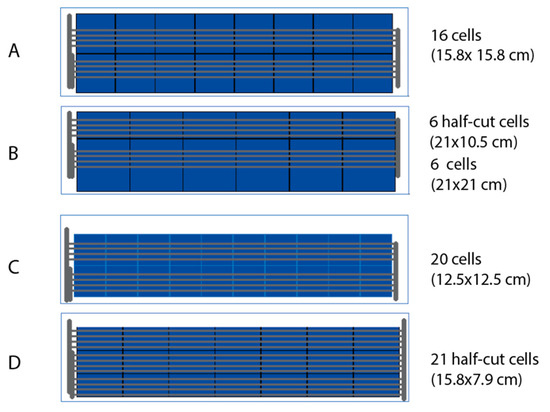
Figure 3.
Cells configurations of the laminate ((A): 16 cells 15.8 × 15.8 cm; (B): 6 half-cut cells 21 × 10.5 cm + 6 cells 21×21 cm; (C): 20 cells 12.5 × 12.5 cm; (D): 21 half-cut cells 15.8 × 7.9 cm).
Options A and B aim at maximizing the power density of the module. In detail, configuration A, arranged using 16 common 15.8 × 15.8 cm cells, can achieve an active surface equal to 81% of the overall laminate, while configuration B, arranged with 21 × 21 cm cells and half-cut cells, allows an increase to such a share of 83%. However, due to the modules overlapping, which causes the shadow projections on the active part of the cells, such solutions have been discarded.
Then, an arrangement with the 12.5 × 12.5 cm cells was tested. It has the advantage of leaving the upper part of the modules free from shadows, whereas the share of active area decreases by 64%. However, such a configuration penalizes the power density and thus negatively affects the cost of the component. Thus, a further configuration has been designed with three rows of 15.8 × 15.8 cm half-cut cells. Such a solution achieved an active area of 73% and has been considered the best option.
Finally, in order to increase the aesthetic integration to different types of roofs and contexts, two different colors of laminate were studied and then manufactured: black and terracotta/clay. While the first one was designed to allow perfect integration into gray or black roofs (e.g., slate tiles) and to maximize PV efficiency, the latter is more suitable for historic buildings, often characterized by traditional terracotta tiles.
3.4. Prototyping and Preliminary Testing
Once the concept design was defined, the prototyping phase of the system was carried out to assess the assembly process, the interaction between the PV laminate and the substructure, the thermal behavior, and the water tightness under operative conditions. Thus, different components were preliminary manufactured by rapid prototyping (3D printing). The iterative nature of rapid prototyping allowed us to gather feedback from the testing and validation activities and incorporate it into subsequent design iterations. This iterative design process enabled continuous improvement and refinement of the system design, leading to better performance, reliability, and manufacturability over time (Figure 4).
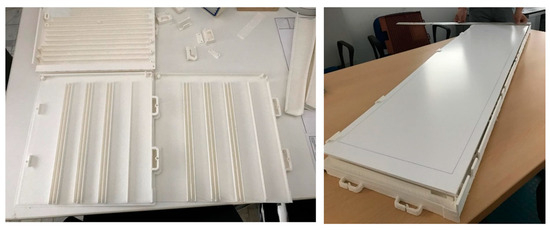
Figure 4.
View of the 3D-printed prototypes.
In the second prototyping phase, some further samples of the substructure were manufactured with a provisional mold. Such a test was aimed to test the molding process and to evaluate the quality of components adopting the actual plastic mixture that will be used during large-scale production.
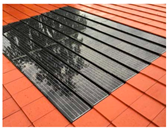
Then the manufactured components were also tested under operative conditions in order to verify the differential thermal expansion between the PV laminate and the plastic supporting frame. The test was performed in outdoor conditions on a mock-up of a tilted roof in Milano during one week in the summer season (July), with an average irradiation on the tiles’ surface between 600 and 950 W/m2 and a daily temperature ranging between 24 °C and 34.5 °C. The maximum temperature reached by the front side of the laminate was 61.5 °C, while that of the back side of the plastic substrate was 45.3 °C. No deformation of the plastic layer nor the laminated was recorded, proving that the differential elongation between the two components (reaching a maximum value of 4 mm in the tested condition) was fully managed by the adopted solution (Figure 5).
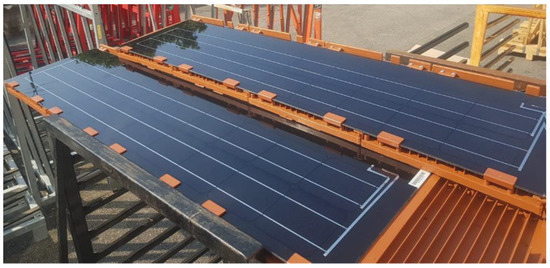
Figure 5.
View of the mock-up used for outdoor testing.
The test also demonstrated the capability of the plastic structure with vertical ribs to allow back ventilation and limit the PV laminate’s operative temperature.
4. Testing on Real Case Studies and Discussion
At the end of the prototyping and first testing phase, the solution was further tested in real environments (TRL7) and precisely on three different case-study buildings. The scope of this phase was to perform a large testing campaign in real operative conditions. In more detail, the following three different case studies were selected; the installation on the three buildings was carried out progressively from 2021 to 2024, testing subsequent versions of the PV roofing system, as described below.
- Residential building in Bagnolo in Piano (Italy), 2021—the first version of the system;
- Residential building in Lyon (France), 2022—a second version of the system;
- Tertiary historical building in Milan (Italy), 2024—the final version of the system.
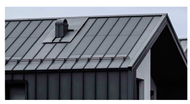
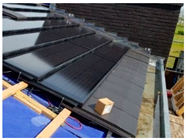
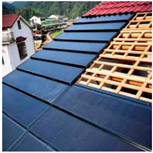
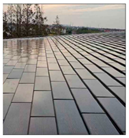
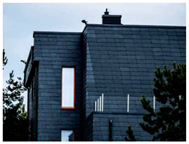
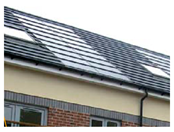
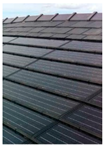
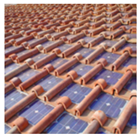
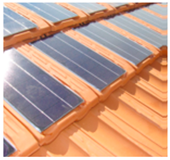
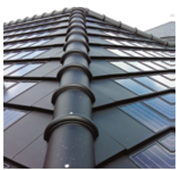
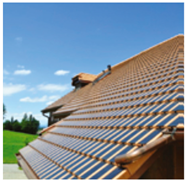
Specific features and some relevant views of the three demo plants are summarized in Table 6 and Figure 6, respectively.
Table 6.
Main features of the three demo plants.
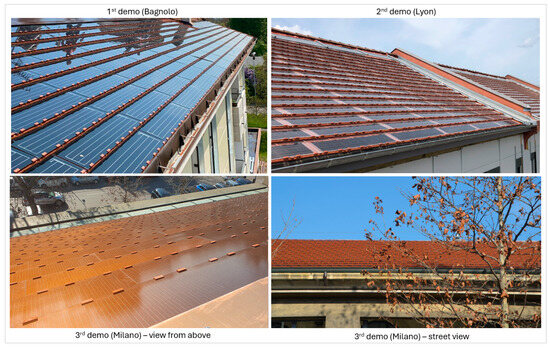
Figure 6.
View of the three demo plants.
As can be noticed, the incremental optimization process was mainly aimed at maximizing the aesthetic integration of the component (with particular reference to the view from the street), going from the version with a completely black photovoltaic laminate of the first installation through to the one with a transparent backsheet that increases the visibility of the terracotta color of the plastic substrate, and finally, the last version made with a color-optimized laminate to achieve the perfect chromatic integration, without excessively penalizing performance. As can be seen, in fact, the slightly lower performance of the colored laminate was compensated for by the optimized layout of the photovoltaic cells as well as by the use of cells with higher efficiency. It must be underlined that the third demo is a historical building for which the installation had to obtain permission from the local superintendent; thus, the obtained result can be considered particularly relevant.
The testing on real case studies also allowed to:
- A.
- Confirm the goodness of the technological choices made under actual installation and operational conditions, including collecting feedback from the installers regarding the ease and speed of the installation. In more detail, three different teams worked on the three case studies. Thus, each team foreman was interviewed at the end of the installation process. The feedback gathered (mainly in the first and the second case studies) and proposed improvements are summarized in Table 7. Most of the improvements were already positively tested in the third case study.
Table 7. Main feedback collected from the installers.
- B.
- Verify the expected performance in the field, with particular reference to water tightness and producibility. In particular, regarding this last aspect, the first demo was connected to the grid in April 2022 and, to date, has recorded an average annual production of about 9400 kWh, thus confirming the expected producibility. For the other two plants, however, data for at least 1 year of production are not yet available, so they are currently still being monitored.
The obtained results demonstrate that the adopted methodology allowed us to successfully design, develop, and test a new PV component that has competitive features compared to the current market products. Furthermore, the developed solution proves that the R&D activities carried out within Horizon research programs could effectively lead to market products (e.g., TRL9) in a short timeframe. For these reasons, the same methodology can be replicated for other PV products.
The testing phase proved that the features of the obtained components achieve the defined requirements, ensuring competitiveness compared to existing market products. In detail, the intermediate size between traditional PV modules and small tiles, as well as the lightness, the flexibility to adapt to irregular existing roofs, the high functional/visual integration level, and the reduced environmental impact, represent the main novel characteristics.
However, some limitations of the study must be highlighted, as follows:
- The study focused on pitched roofs with the tiles’ typologies mentioned in UNI 9460;
- Although the literature review of the market products is exhaustive, it is possible that some niche products with limited distribution were not analyzed;
- The development only considered crystalline cells because the aim was to have good power densities and a limited cost;
- The on-field testing activity was carried out in a quite limited timeframe (less than 3 years), and more long-term results are needed to prove the stability of the system’s features under real operating conditions.
5. Conclusions
This work describes the results of an articulated research project focused on the design, development, and testing of a novel roofing PV system based on photovoltaic tiles that were specially designed for pitched roofs. The research analyzed the requirements/constraints of typical pitched tile roofs and the market’s needs and, through a methodological process, developed a universal photovoltaic tile for easy and quick integration into such a type of roof, ensuring an excellent compromise with flexibility, costs, power density, and aesthetic performances. The research also aimed at minimizing the embodied energy of the component and promoting disassembly and recycling at the end of life, fully in line with a circular economy perspective.
The developed component has undergone several testing phases and a related optimization process. The obtained results, demonstrated through three different representative case studies, confirm the achievement of the research objectives and show promising features for future development. In particular, additional research on the color and texture of the laminate, also considering different observation angles, is forecasted for the prosecution of the work, along with further optimization of the plastic parts to decrease the amount of material for each tile and further speed up the on-site assembly process.
Author Contributions
Conceptualization, N.A.; Methodology, C.D.P.; Software, F.L.; Writing—original draft, C.D.P. and F.L.; Supervision, N.A. All authors have read and agreed to the published version of the manuscript.
Funding
This study and project is financially supported by EU Research and Innovation programme Horizon 2020 through number 768921—HEART. The authors would like to thank the European Commission to enable the funding of this project.
Data Availability Statement
Data is contained within the article.
Acknowledgments
The authors would like to thank REVET for the LCA information related to the plastic components.
Conflicts of Interest
The authors declare no conflicts of interest.
References
- IEA. PVPS: Snapshot of Global PV Markets 2024; Report IEA-PVPS T1-42; IEA: Paris, France, 2024. [Google Scholar]
- Bouckaert, S.; Pales, A.F.; McGlade, C.; Remme, U.; Wanner, B.; Varro, L.; Spencer, T. Net Zero by 2050: A Roadmap for the Global Energy Sector; Transportation Research Board: Washington, DC, USA, 2024. [Google Scholar]
- SolarPower Europe. Global Market Outlook for Solar Power 2023–2027; SolarPower Europe: Brussels, Belgium, 2023. [Google Scholar]
- IRENA. World Energy Transitions Outlook 2023: 1.5 °C Pathway; International Renewable Energy Agency: Abu Dhabi, United Arab Emirates, 2023. [Google Scholar]
- SolarPower Europe. Annual Rooftop and Utility Scale Installations in the EU. Available online: www.solarpowereurope.org/advocacy/solar-saves/fact-figures/annual-rooftop-and-utility-scale-installations-in-the-eu (accessed on 21 May 2024).
- IEA. Potential for Building Integrated Photovoltaics; Report IEA-PVPS T7-4; IEA: Paris, France, 2002. [Google Scholar]
- ENEA. Italy, Photovoltaics Systems Installed on 30% Rooftops Could Meet Residential Sector’s Entire Electricity Needs. Available online: www.media.enea.it/en/press-releases-and-news/years-archive/year-2023/energy-italy-photovoltaics-systems-installed-on-30-rooftops-could-meet-residential-sector-s-entire-electricity-needs.html (accessed on 21 May 2024).
- EU. Solar Energy. Available online: https://energy.ec.europa.eu/topics/renewable-energy/solar-energy_en (accessed on 21 May 2024).
- Peng, C.; Huang, Y.; Wu, Z. Building-integrated photovoltaics (BIPV) in architectural design in China. Energy Build. 2011, 43, 3592–3598. [Google Scholar] [CrossRef]
- Ding, L.; Zhu, Y.; Zheng, L.; Dai, Q.; Zhang, Z. What is the path of photovoltaic building (BIPV or BAPV) promotion?—The perspective of evolutionary games. Appl. Energy 2023, 340, 121033. [Google Scholar]
- IEA. PVPS: Trends in Photovoltaic Applications; IEA: Paris, France, 2023. [Google Scholar]
- EU. New European Bauhaus. Available online: https://new-european-bauhaus.europa.eu/index_en (accessed on 21 May 2024).
- Interconnecting Consulting. Available online: www.interconnectionconsulting.com/en/news/roofing-in-europe-2022/ (accessed on 21 May 2024).
- Lopez, C.P.; Lucchi, E.; Franco, G. Acceptance of Building-Integrated (BIPV) in Heritage Buildings and Landscapes: Potentials, Barrier and Assessment Criteria. 2020. Available online: https://www.rehabend.unican.es/2020/wp-content/uploads/sites/2/2019/12/Libro-RES%C3%9AMENES_v2-1.pdf (accessed on 21 May 2024).
- Bahaj, A.S. Photovoltaic roofing: Issues of design and integration into buildings. Renew. Energy 2003, 28, 2195–2204. [Google Scholar] [CrossRef]
- Available online: http://www.brandonisolare.com (accessed on 15 July 2024).
- Available online: http://www.wienerberger.it (accessed on 15 July 2024).
- Available online: https://metsolar.eu (accessed on 15 July 2024).
- Available online: https://solarstone.com/ (accessed on 15 July 2024).
- Available online: https://solinso.nl (accessed on 15 July 2024).
- Available online: http://www.sangsolar.com (accessed on 15 July 2024).
- Available online: https://edilians.it/ (accessed on 15 July 2024).
- Available online: https://www.kts.solar/it/pannelli-fotovoltaici/RomagPowerGlaz-880/RI632125-52217 (accessed on 15 July 2024).
- Available online: https://www.renugen.co.uk/solarcentury-c21e-50-watt-slate-roof-solar-tile/ (accessed on 15 July 2024).
- Zanetti, I.; Bonomo, P.; Frontini, E.; Saretta. Building Integrated Photovoltaics: Product Overview for Solar Building Skins; Status Report 2017; SUPSI: Manno, Switzerland, 2017. [Google Scholar]
- Available online: https://www.solteq.eu/SolteQ_PowerRoof-Energiestall-v11.pdf (accessed on 15 July 2024).
- Available online: https://www.fornacefonti.it/ (accessed on 15 July 2024).
- Available online: https://www.cottopossagno.com/ (accessed on 15 July 2024).
- Available online: https://gasserceramic.ch/ (accessed on 15 July 2024).
- Available online: https://www.giellenergy-tile.eu/ (accessed on 15 July 2024).
- IEA. PVPS: Coloured BIPV Market, Research and Development; Report IEA-PVPS T15-07; IEA: Paris, France, 2019. [Google Scholar]
- Shanmugam, N.; Pugazhendhi, R.; Madurai Elavarasan, R.; Kasiviswanathan, P.; Das, N. Anti-reflective coating materials: A holistic review from PV perspective. Energies 2020, 13, 2631. [Google Scholar] [CrossRef]
- Kuhn, T.E.; Erban, C.; Heinrich, M.; Eisenlohr, J.; Ensslen, F.; Neuhaus, D.H. Review of technological design options for building integrated photovoltaics (BIPV). Energy Build. 2021, 231, 110381. [Google Scholar] [CrossRef]
- Kutter, C.; Bläsi, B.; Wilson, H.R.; Kroyer, T.; Mittag, M.; Höhn, O.; Heinrich, M. Decorated building-integrated photovoltaic modules: Power loss, color appearance and cost analysis. In Proceedings of the 35th European PV Solar Energy Conference and Exhibition, Brussels, Belgium, 24–28 September 2018; pp. 1488–1492. [Google Scholar]
- Ristau, D.; Ehlers, H. Thin Film Optical Coatings. In Handbook of Lasers and Optics; Springer: New York, NY, USA, 2012. [Google Scholar]
- McIntosh, K.R.; Amara, M.; Mandorlo, F.; Abbott, M.D.; Sudbury, B.A. Advanced simulation of a PV module’s color. In AIP Conference Proceedings; AIP Publishing: Long Island, NY, USA, 2018. [Google Scholar]
- Ortiz Lizcano, J.C.; Procel, P.; Calcabrini, A.; Yang, G.; Ingenito, A.; Santbergen, R.; Isabella, O. Colored optic filters on c-Si IBC solar cells for building integrated photovoltaic applications. Prog. Photovolt. Res. Appl. 2022, 30, 401–435. [Google Scholar] [CrossRef]
- EU. HEART Project. Available online: https://heartproject.eu/ (accessed on 21 May 2024).
- UNI 9460; Coperture Discontinue—Istruzioni per la Progettazione, L’esecuzione e la Manutenzione di Coperture Realizzate con Tegole di Laterizio o Calcestruzzo. UNI: Milano, Italy, 2023.
- EN 50583; Photovoltaics in Buildings. BSI: London, UK, 2016.
- UNI 14040:2021; Gestione Ambientale—Valutazione del ciclo di vita—Principi e Quadro di Riferimento. UNI: Milano, Italy, 2021.
Disclaimer/Publisher’s Note: The statements, opinions and data contained in all publications are solely those of the individual author(s) and contributor(s) and not of MDPI and/or the editor(s). MDPI and/or the editor(s) disclaim responsibility for any injury to people or property resulting from any ideas, methods, instructions or products referred to in the content. |
© 2024 by the authors. Licensee MDPI, Basel, Switzerland. This article is an open access article distributed under the terms and conditions of the Creative Commons Attribution (CC BY) license (https://creativecommons.org/licenses/by/4.0/).