



A BIM-Based Method for Structural Stability Assessment and Emergency Repairs of Large-Panel Buildings Damaged by Military Actions and Explosions: Evidence from Ukraine


 ,
,
Abstract
1. Introduction
- (1)
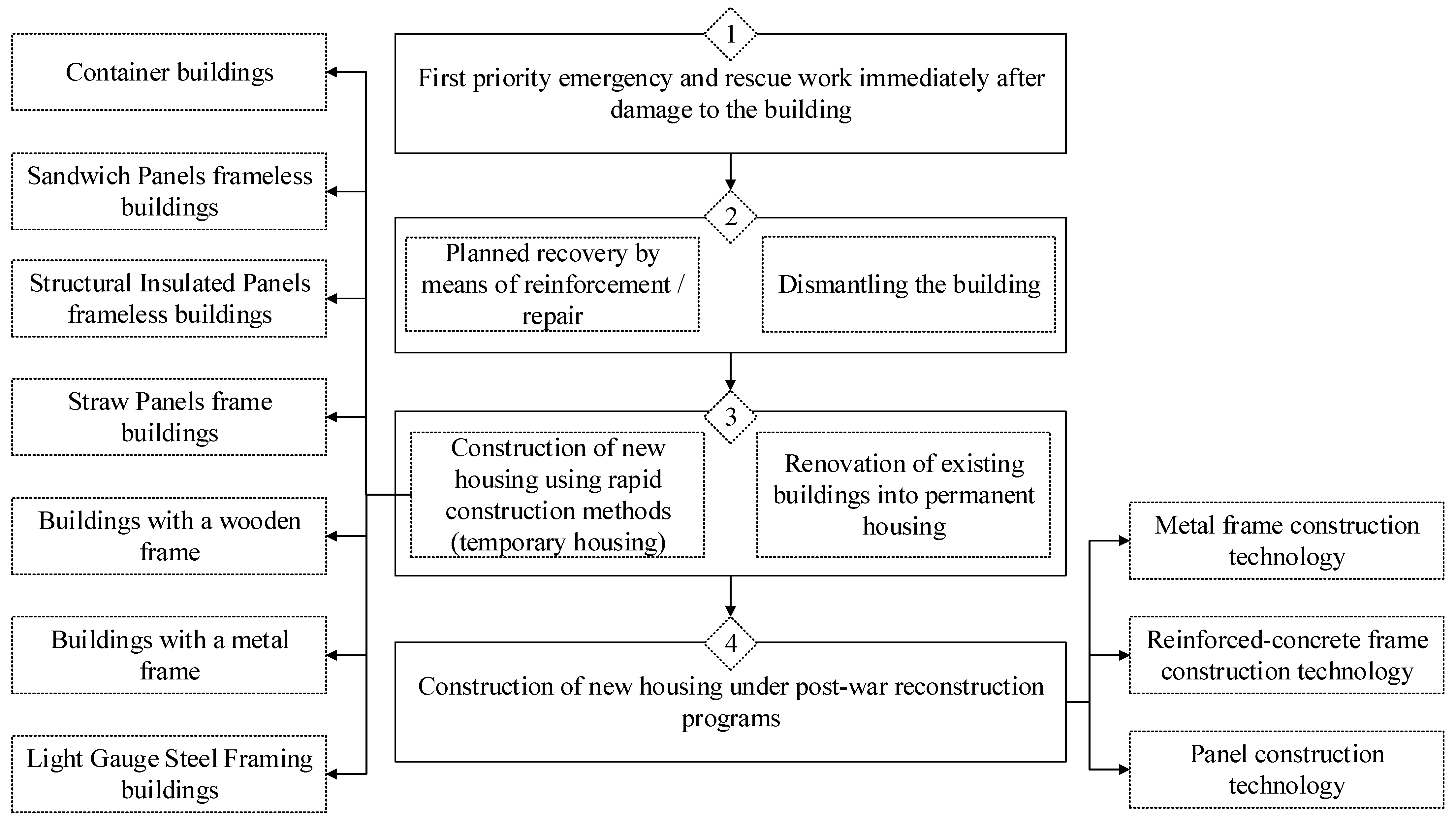
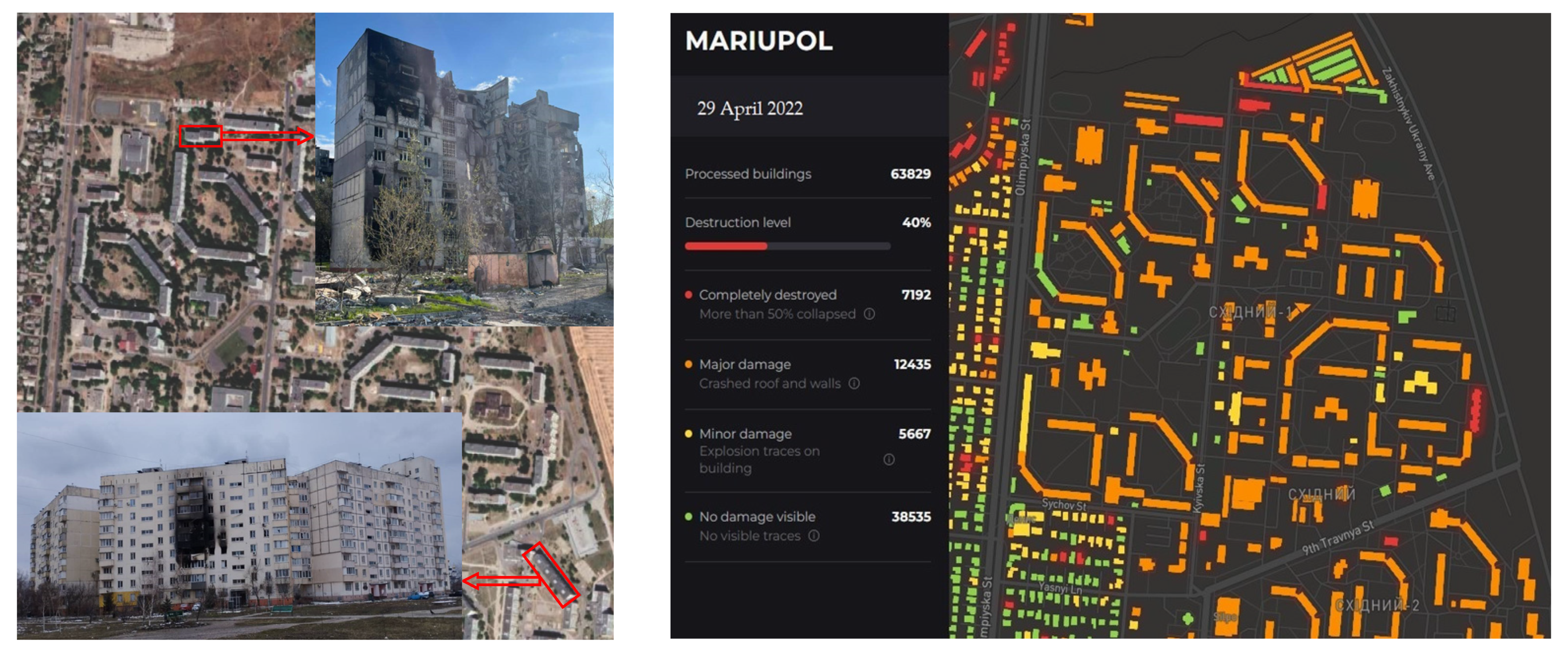
- Priority emergency and rescue operations immediately after the rocket-bomb attacks that destroyed the building;
- (2)
- Planned restoration of objects damaged as a result of military actions employing strengthening, repair, and reconstruction;
- (3)
- Construction of temporary housing by methods of rapid construction taking the peculiarities of the construction market of Ukraine into account; renovation of existing non-residential buildings and changing their function into residential [2];
- (4)
- Construction of new housing under post-war rebuilding programs.
- -
- Frameless panels with transverse load-bearing walls: with a small step between the load-bearing walls (2.4–4.2 m), with a large step between the load-bearing walls (4.8–7.2 m), or with a mixed step between the load-bearing walls;
- -
- Frameless panels with longitudinal load-bearing walls: with load-bearing internal and external longitudinal walls or with two load-bearing external longitudinal walls;
- -
- Frame-panel: with a full frame or with a non-full frame;
- -
- Block-panel (modular);
- -
- Panel and frame-panel houses with a monolithic stiffness diaphragm.
2. Methods and Results of On-Site Measurements and Predictions
- -
- Overpressure in the impact zone;
- -
- Thermal effects that may occur as a result of projectile rupture or fire;
- -
- Debris damage, which can be primary, secondary, or both;
- -
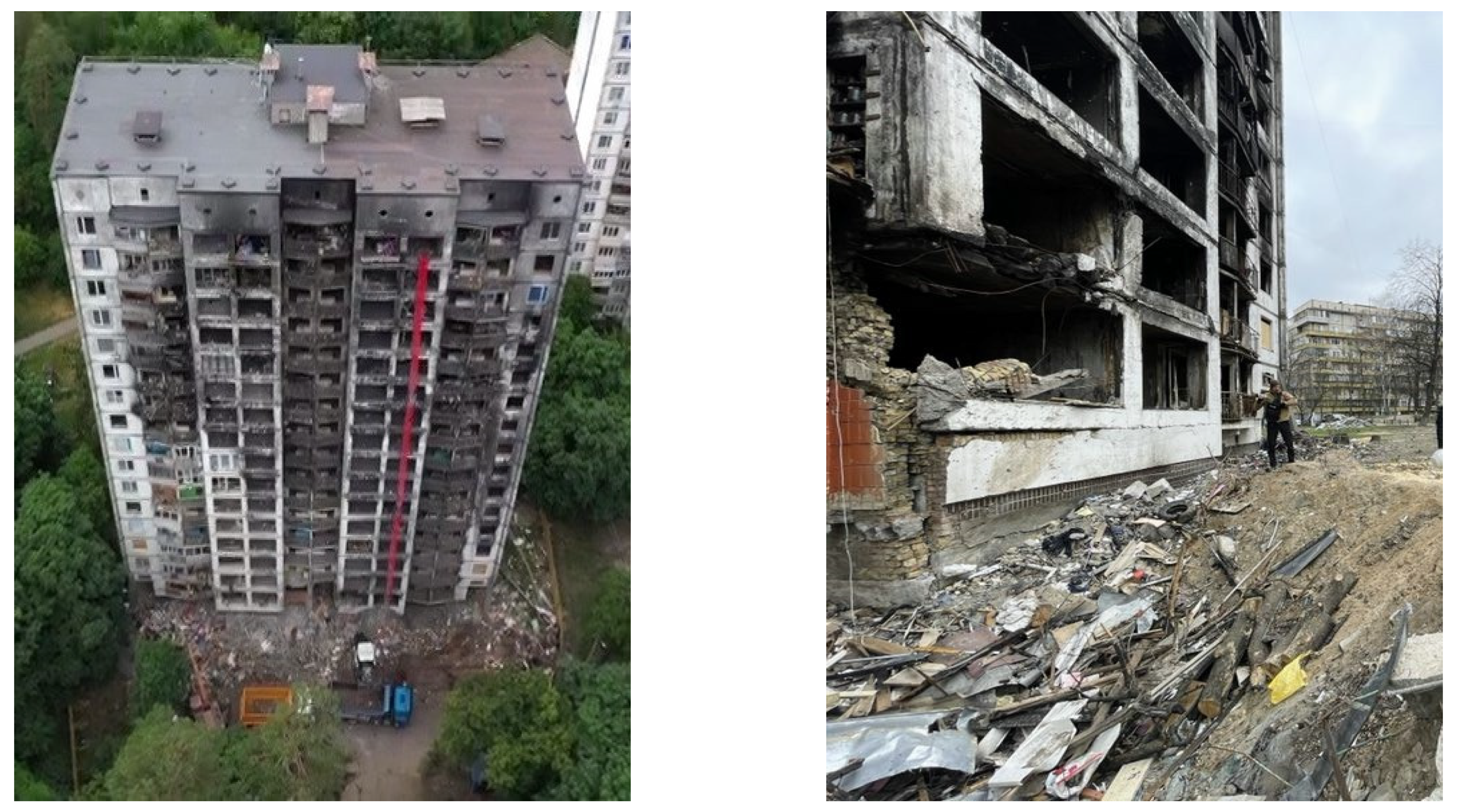
- Energized projectiles that can trigger a further explosion. For most large-panel residential buildings, these are household gas appliances. This was observed after a rocket hit an apartment building on Chornobylska Street, Kyiv city, where a secondary fire broke out (Figure 5). As a result, 64 apartments out of 126 were severely damaged [13];
- -
- Cratering and ground shock, which can provoke the further displacement and collapse of structures.
- -
- Joints placed in the external walls of the building exposed to atmospheric phenomena, placed between the panels of the external and internal walls and ceilings;
- -
- Joints inside the building, between panels of internal walls and ceilings, and between internal walls.
3. A Method for BIM-Based Structural Assessment
4. Discussion
- -
- A lack of up-to-date statistics on the actual number of damaged buildings in each of the regions of Ukraine;
- -
- The introduction of military actions, a change in the dynamics of the situation, which prevents a full assessment;
- -
- Information on the structural schemes of large-panel buildings and their technical conditions before the start of hostilities is fragmented, incomplete, and, in most cases, on paper;
- -
- The lack of a sufficient number of qualified personnel who can be involved in the inspection of damaged buildings in the region, as a result of forced relocation to safer regions of Ukraine or abroad. The complicated work of state authorities and state institutions as a result of martial law in Ukraine;
- -
- The determination of technical requirements for the information database, and criteria for assessing the quality and duration of works.
5. Conclusions
- The prerequisites for the development of the BIM-based method for the structural stability assessment and emergency repairs of large-panel buildings damaged by military actions were analyzed. It was established that existing methods of surveying damaged buildings can only partially be employed to solve the current problem. Accordingly, the development of a method that will allow for a reduction in the time of surveying, modeling, and decision-making regarding the reconstruction or dismantlement of the building, under the conditions of massive damage to residential large-panel buildings in Ukraine, is an issue that needs to be resolved.
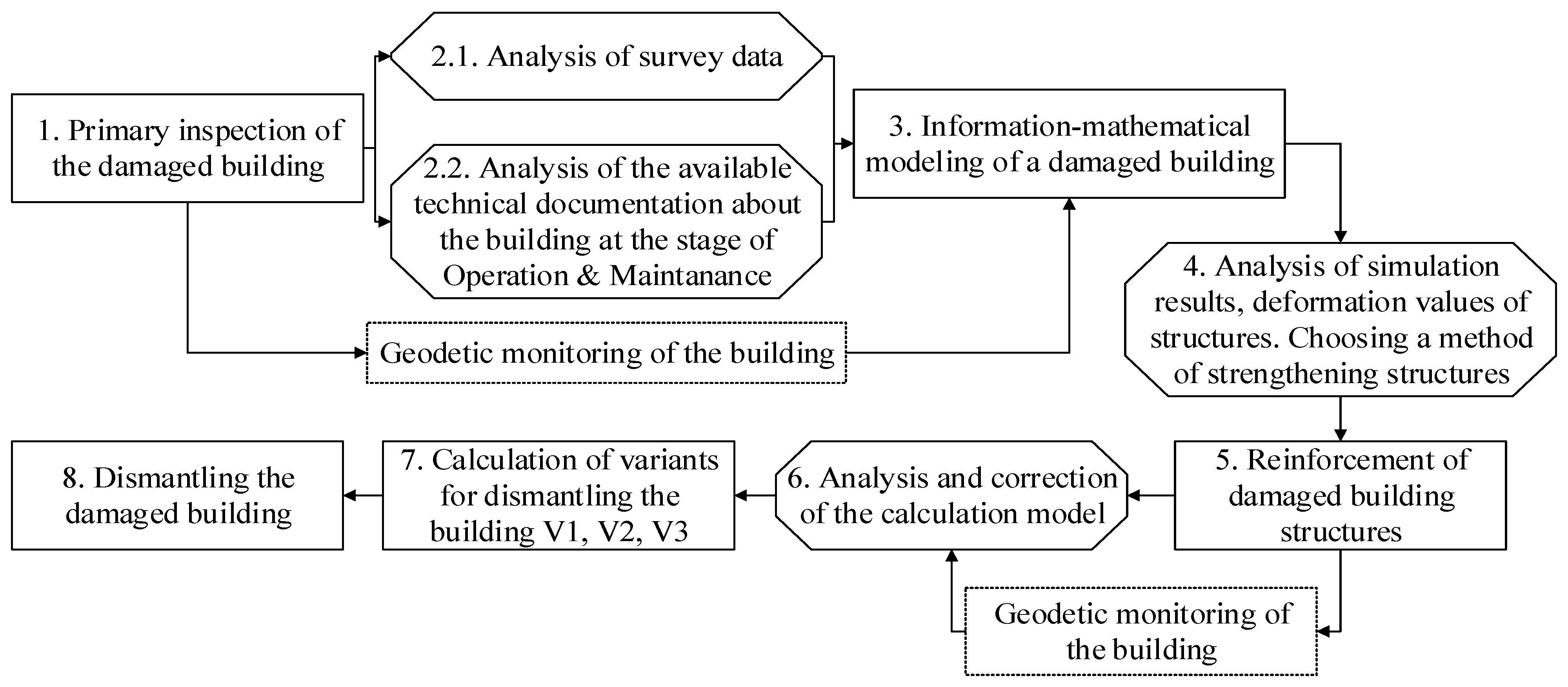
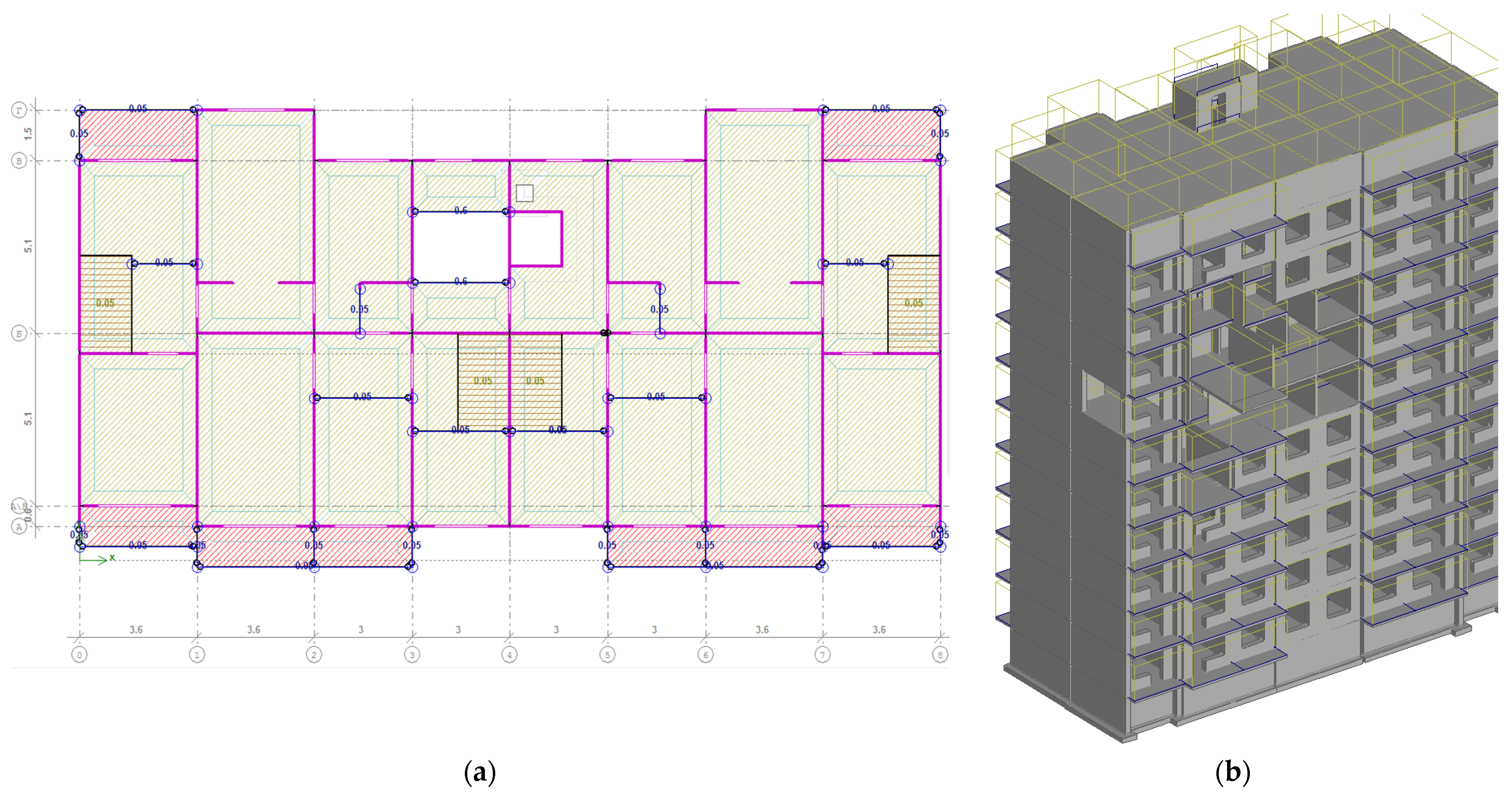
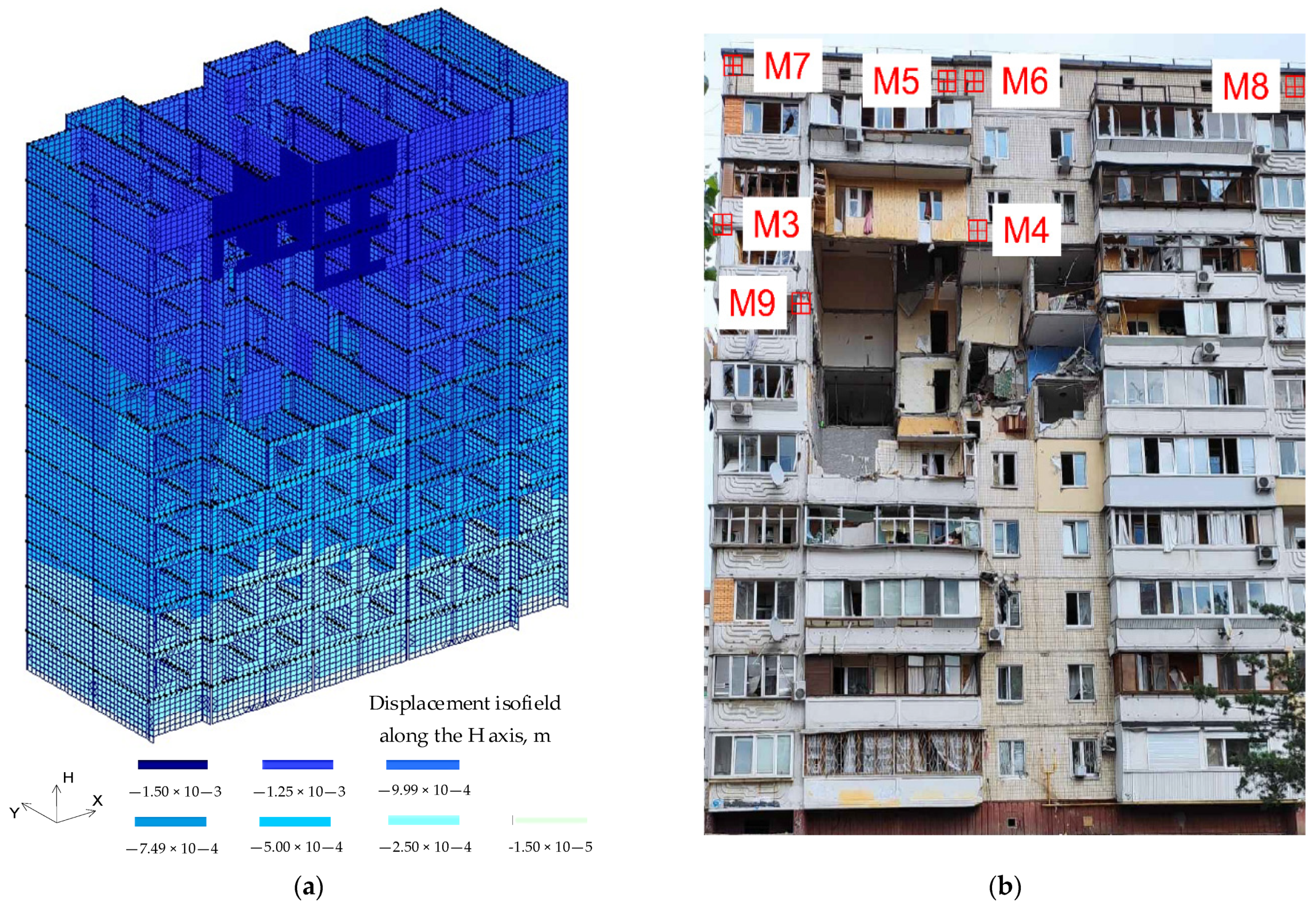
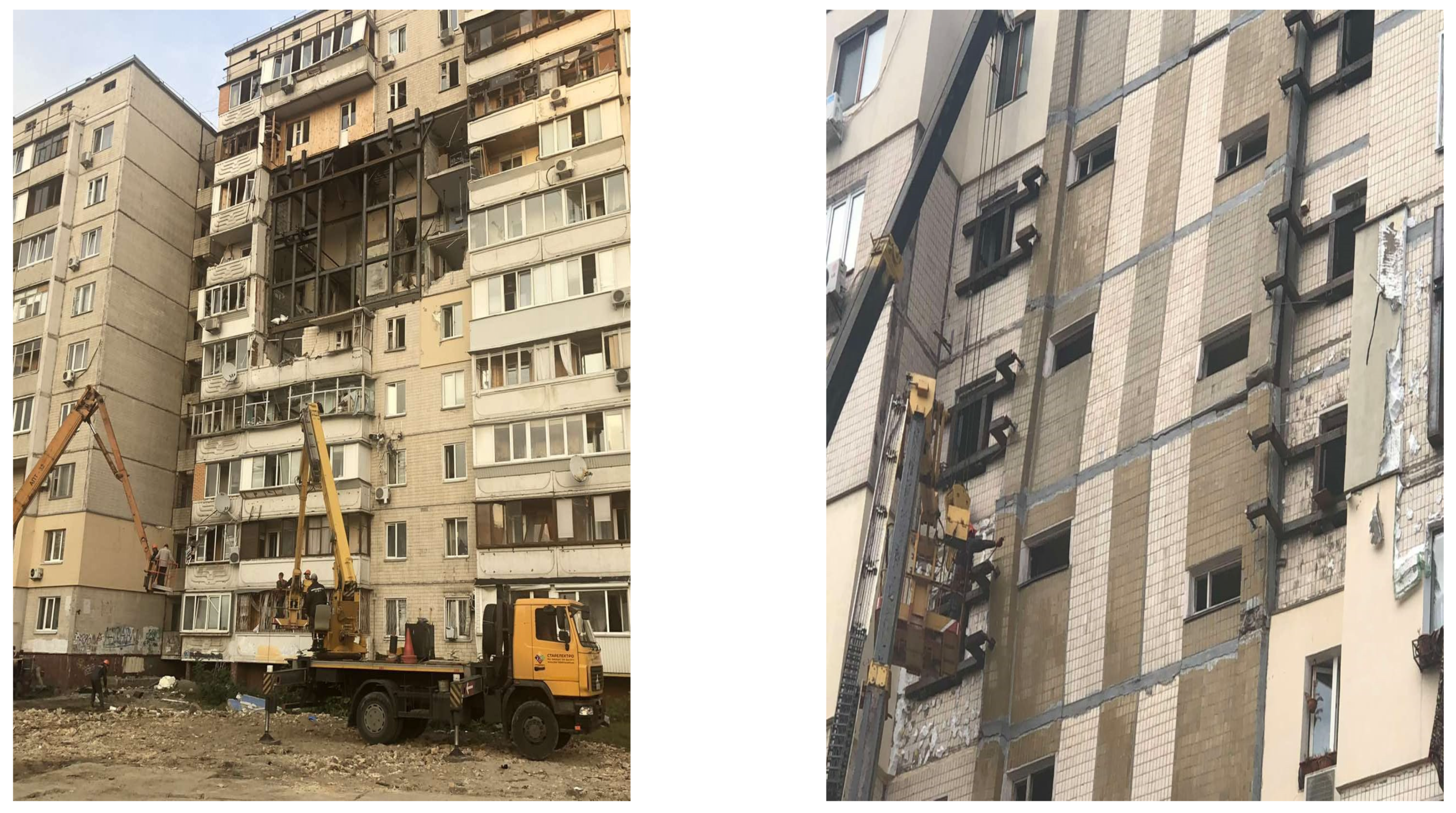
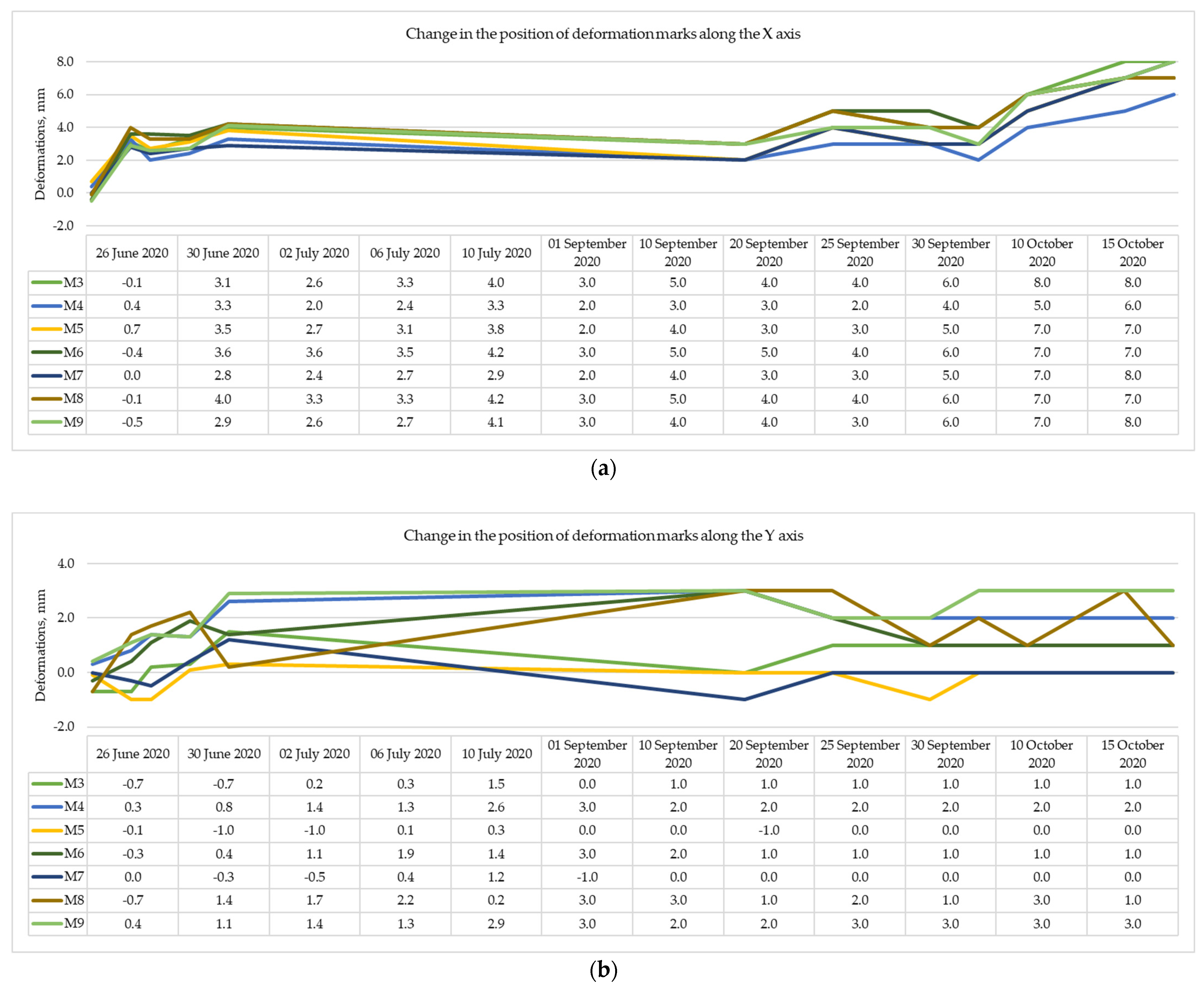
- Using the example of a large-panel building damaged as a result of a gas explosion, the possibility of using information–mathematical modeling to assess the technical condition and make a decision about the stability of the building was considered. The main stages of the method applied in the case study were determined.
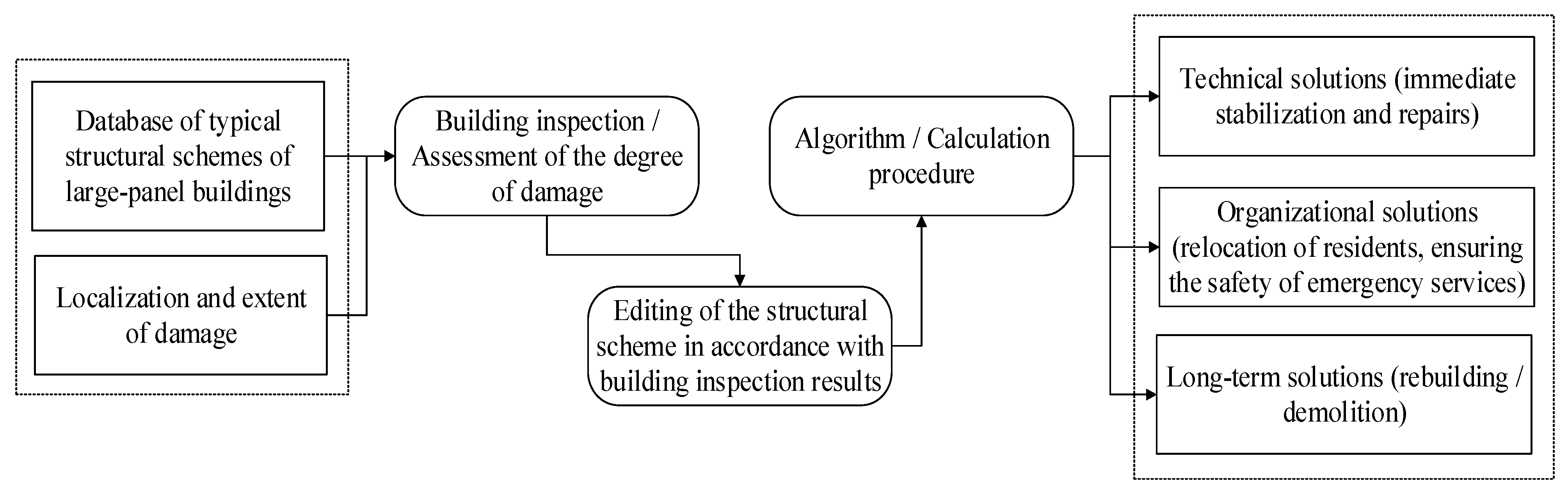
- It was proposed to supplement the stage of the urgent inspection of the building after the explosion with remote inspections in order to reduce the duration and increase the safety of works. It was determined that, under the conditions of mass damage to buildings, it is expedient to develop a database of typical structural schemes of large-panel buildings, which will reduce the time of simulation.
- A novel BIM-based workflow for the assessment of damaged large-panel buildings with identified processes that could potentially be automated was proposed. The key issues requiring further research have been identified, the first of which is the development of requirements for data description and database structure (database of typical structural schemes of large-panel buildings and typical solutions for their stabilization and structural strengthening). In post-war times, the development of BIM models could feed into the methodology proposed in this paper. Strengthening solutions can be standardized and constantly updated models could be used for monitoring their technical conditions. This will be considered in further research.
Author Contributions
Funding
Institutional Review Board Statement
Informed Consent Statement
Data Availability Statement
Acknowledgments
Conflicts of Interest
Appendix A
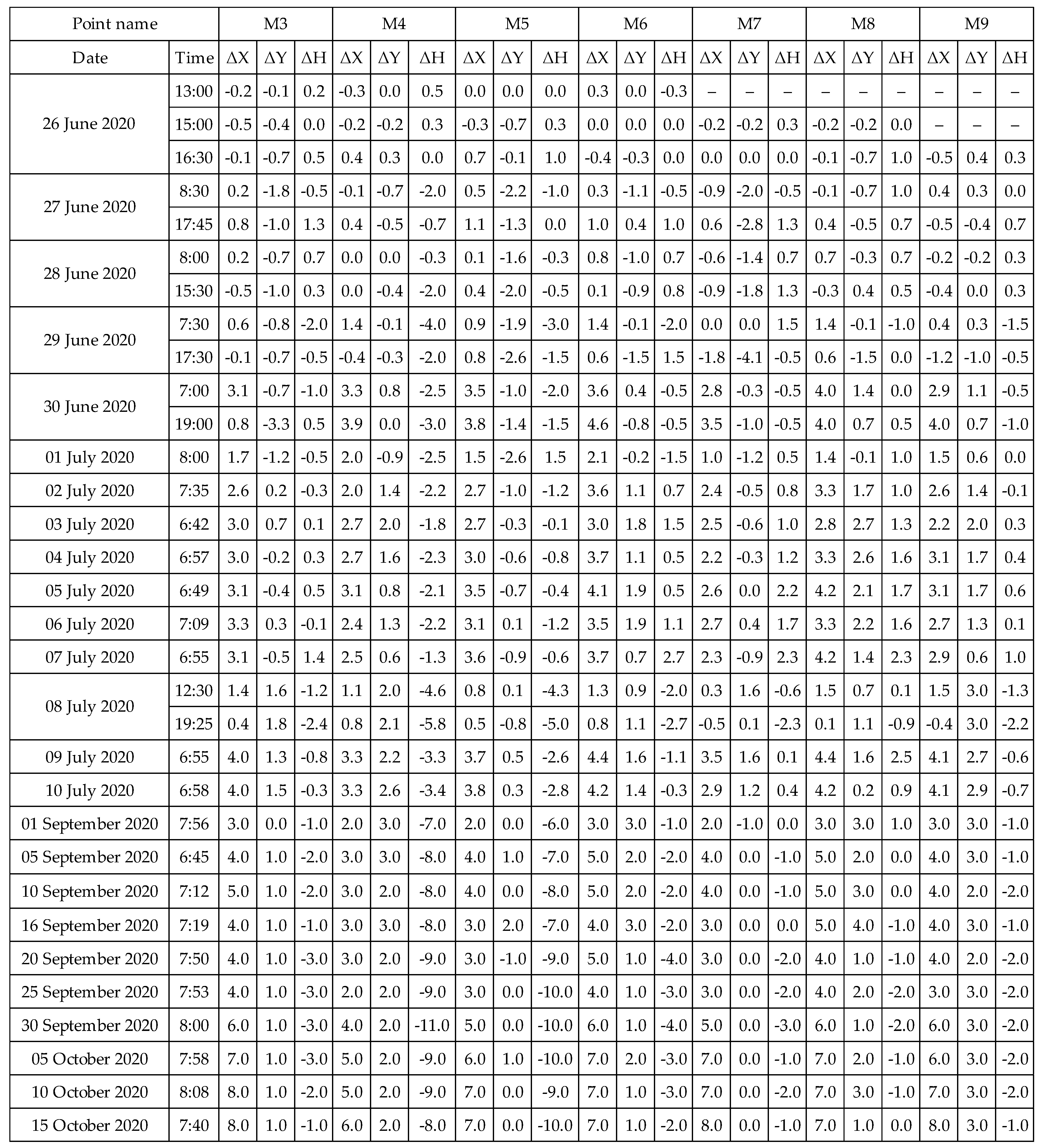
References
- Ukraine Rapid Damage and Needs Assessment (English). World Bank Group: Washington, DC, USA. Available online: http://documents.worldbank.org/curated/en/099445209072239810/P17884304837910630b9c6040ac12428d5c (accessed on 22 October 2022).
- Rapid Construction Technologies. ProPM Construction. Available online: https://propm.pro/pmo-for-ukrainian-communities (accessed on 15 July 2022).
- Savyovskyi, V.; Molodid, O. Study of the features of reinforcement of reinforced concrete beam structures with external reinforcement. Bull. Dnipro State Acad. Constr. Archit. 2017, 4, 29–36. [Google Scholar]
- Rozanov, N. Large-Panel Housing Construction; Stroyizdat: Moscow, Russia, 1982; p. 224. [Google Scholar]
- Panteleev, P. Typification, classification and technical and economic characteristics of apartment buildings. Econ. State 2014, 5, 88–92. [Google Scholar]
- Onyshchuk, G. Housing reconstruction in Ukraine: Experience, problems, and ways to solve them. Communal Manag. City 2004, 59, 3–10. [Google Scholar]
- Pleshkanovska, A.; Biriuk, S. Outdated housing stock as an object of complex reconstruction programs and projects (on the example of Kyiv city). J. Urban Reg. Anal. 2020, 13, 257–280. [Google Scholar]
- Molodchenko, T.G.; Prasol, V.M. Analysis of the Technical State of the Housing Ukraine and Proposals for Evaluation. Econ. Bull. Donbas 2014, 1, 51–55. [Google Scholar]
- Draft Ukraine Recovery Plan Materials of the “Construction, Urban Planning, Modernization of Cities and Regions”. The National Council for the Recovery of Ukraine from the Consequences of the War. Available online: https://www.urc2022.com/urc2022-recovery-plan (accessed on 18 July 2022).
- National Recovery Plan as of 13 June 2022. Kyiv School of Economics. Available online: https://kse.ua/ua/about-the-school/news/zagalna-suma-pryamih-zadokumentovanih-zbitkiv-stanovit-95-5-mlrd-minimalni-potrebi-u-vidnovlenni-zruynovanih-aktiviv-165-1-mlrd/ (accessed on 25 July 2022).
- UaDamage Map. Available online: https://uadamage.info/ (accessed on 19 July 2022).
- Map of Destruction. Available online: https://reukraine.shtab.net/ (accessed on 19 July 2022).
- Suprun, M. The Rocket-Damaged High-Rise on Chornobylskaya Is Being Restored According to Modern Standards. Available online: https://bigkyiv.com.ua/poshkodzhenu-raketoyu-bagatopoverhivku-na-chornobylskij-vidnovlyuyut-za-suchasnymy-standartamy/ (accessed on 27 July 2022).
- Cook, I.R.; Ward, S.V.; Ward, K. Post-war planning and policy tourism: The international study tours of the Town and Country Planning Association 1947–1961. Plan. Theory Pract. 2015, 16, 184–205. [Google Scholar] [CrossRef] [Scilit]
- Rudnicka-Bogusz, M. The Genius loci Issue in the Revalorization of Post-Military Complexes: Selected Case Studies in Legnica (Poland). Buildings 2022, 12, 232. [Google Scholar] [CrossRef] [Scilit]
- Evans, M.; Barakat, S. Post-war reconstruction, policy transfer and the World Bank: The case of Afghanistan’s National Solidarity Programme. Policy Stud. 2012, 33, 541–565. [Google Scholar] [CrossRef] [Scilit]
- Barakat, S.; Chard, M.; Jones, R. Attributing Value: Evaluating success and failure in post-war reconstruction. Third World Q. 2005, 26, 831–852. [Google Scholar] [CrossRef] [Scilit]
- Ali, S.H.; Sherzad, M.F.; Alomairi, A.H. Managing Strategies to Revitalize Urban Cultural Heritage after Wars: The Center of the Old City of Mosul as a Case Study. Buildings 2022, 12, 1298. [Google Scholar] [CrossRef] [Scilit]
- Tortorici, G.; Fiorito, F. Building in Post-war Environments. Procedia Eng. 2017, 180, 1093–1102. [Google Scholar] [CrossRef] [Scilit]
- Saeed, Z.O.; Almukhtar, A.; Abanda, H.; Tah, J. BIM Applications in Post-Conflict Contexts: The Reconstruction of Mosul City. Buildings 2021, 11, 351. [Google Scholar] [CrossRef] [Scilit]
- Kumari, V.; Harirchian, E.; Lahmer, T.; Rasulzade, S. Evaluation of Machine Learning and Web-Based Process for Damage Score Estimation of Existing Buildings. Buildings 2022, 12, 578. [Google Scholar] [CrossRef] [Scilit]
- Kaminosono, T.; Kumazawa, F.; Nakano, Y. Quick Inspection Manual for Damaged Reinforced Concrete Buildings Due to Earthquakes. Based on the Disaster of 1999 Kocaeli Earthquake in Turkey; Technical Note of National Institute of Land and Infrastructure Management; Ministry of Land, Infrastructure and Transport: Tokyo, Japan, 2002; Volume 40. [Google Scholar]
- Post-Disaster Building Safety Evaluation Guidance. Report on the Current State of Practice, Including Recommendations Related to Structural and Nonstructural Safety and Habitability. Available online: https://www.fema.gov/sites/default/files/2020-07/fema_p-2055_post-disaster_buildingsafety_evaluation_2019.pdf (accessed on 2 August 2022).
- Kamat, V.; El-Tawil, S. Rapid Post-Disaster Evaluation of Building Damage Using Augmented Situational Visualization. Available online: https://www.researchgate.net/publication/254441646_Rapid_Post-Disaster_Evaluation_of_Building_Damage_Using_Augmented_Situational_Visualization (accessed on 5 August 2022).
- Saeidi, A.; Deck, O.; Verdel, T. Comparison of Building Damage Assessment Methods for Risk Analysis in Mining Subsidence Regions. Geotech. Geol. Eng. 2013, 31, 1073–1088. [Google Scholar] [CrossRef] [Scilit]
- Harirchian, E.; Lahmer, T.; Buddhiraju, S.; Mohammad, K.; Mosavi, A. Earthquake Safety Assessment of Buildings through Rapid Visual Screening. Buildings 2020, 10, 51. [Google Scholar] [CrossRef] [Scilit]
- Nepal, M.P.; Hon, C.; Lee, J.; Xiang, Z. Towards an Integrated Approach to Infrastructure Damage Assessment in the Aftermath of Natural Hazards. Buildings 2021, 11, 450. [Google Scholar] [CrossRef] [Scilit]
- Minafò, G.; Rusticano, G.; La Mendola, L.; Pennisi, S. Procedure for Safety Assessment and BIM Modelling of an Historical Complex Structure through a Macroelement Approach: The Building “Molino-Pastificio Soresi” of Partinico (Italy). Buildings 2022, 12, 1408. [Google Scholar] [CrossRef] [Scilit]
- Khattra, S.K.; Rai, H.S.; Singh, J. Towards Automated Structural Stability Design of Buildings—A BIM-Based Solution. Buildings 2022, 12, 451. [Google Scholar] [CrossRef] [Scilit]
- Park, E.; Seo, H. Risk Analysis for Earthquake-Damaged Buildings Using Point Cloud and BIM Data: A Case Study of the Daeseong Apartment Complex in Pohang, South Korea. Sustainability 2021, 13, 456. [Google Scholar] [CrossRef] [Scilit]
- Nowak, R.; Orłowicz, R.; Rutkowski, R. Use of TLS (LiDAR) for Building Diagnostics with the Example of a Historic Building in Karlino. Buildings 2020, 10, 24. [Google Scholar] [CrossRef] [Scilit]
- Kerle, N.; Nex, F.; Gerke, M.; Duarte, D.; Vetrivel, A. UAV-Based Structural Damage Mapping: A Review. ISPRS Int. J. Geo-Inf. 2020, 9, 14. [Google Scholar] [CrossRef] [Scilit]
- Fernandez Galarreta, J.; Kerle, N.; Gerke, M. UAV-Based Urban Structural Damage Assessment Using Object-Based Image Analysis and Semantic Reasoning. Nat. Hazards Earth Syst. Sci. 2015, 15, 1087–1101. [Google Scholar] [CrossRef] [Scilit]
- Liu, C.; Sui, H.; Huang, L. Identification of Building Damage from UAV-Based Photogrammetric Point Clouds Using Supervoxel Segmentation and Latent Dirichlet Allocation Model. Sensors 2020, 20, 6499. [Google Scholar] [CrossRef] [Scilit]
- Li, Y.; Wang, H.; Dang, L.M.; Song, H.-K.; Moon, H. Vision-Based Defect Inspection and Condition Assessment for Sewer Pipes: A Comprehensive Survey. Sensors 2022, 22, 2722. [Google Scholar] [CrossRef] [Scilit] [PubMed]
- Ozbek, M. Smart Maintenance and Health Monitoring of Buildings and Infrastructure Using High-Resolution Laser Scanners. Buildings 2022, 12, 454. [Google Scholar] [CrossRef] [Scilit]
- Berman, J.; Warn, G.; Whittaker, A.; Bruneau, M. Reconnaissance and Preliminary Assessment of a Damaged Building Near Ground Zero; Multidisciplinary Centre for Earthquake Engineering Research: Buffalo, NY, USA, 2002. [Google Scholar] [CrossRef]
- Jahromi, H.Z.; Izzuddin, B.A.; Nethercot, D.A.; Donahue, S.; Hadjioannou, M.; Williamson, E.B.; Engelhardt, M.D.; Stevens, D.; Marchand, K.A.; Waggoner, M. Robustness Assessment of Building Structures under Explosion. Buildings 2012, 2, 497–518. [Google Scholar] [CrossRef] [Scilit]
- Valluzzi, M.R.; Sbrogiò, L.; Saretta, Y. Intervention Strategies for the Seismic Improvement of Masonry Buildings Based on FME Validation: The Case of a Terraced Building Struck by the 2016 Central Italy Earthquake. Buildings 2021, 11, 404. [Google Scholar] [CrossRef] [Scilit]
- Munmulla, T.; Navaratnam, S.; Thamboo, J.; Ponnampalam, T.; Damruwan, H.-G.H.; Tsavdaridis, K.D.; Zhang, G. Analyses of Structural Robustness of Prefabricated Modular Buildings: A Case Study on Mid-Rise Building Configurations. Buildings 2022, 12, 1289. [Google Scholar] [CrossRef] [Scilit]
- baDemyanov, V. Reconstruction of Ukraine. Experience of Chornobyl Resettlement. Available online: https://zn.ua/ukr/internal/vidbudova-ukrajini-dosvid-chornobilskoho-pereselennja.html (accessed on 15 August 2022).
- Chornobyl Disasterster in Numbers. Infographics. UkrInform. Available online: https://www.ukrinform.ua/rubric-society/2005521-cornobilska-katastrofa-u-cifrah-infografika.html. (accessed on 12 August 2022).
- BIM Information Modeling Technologies in Construction. Available online: https://www.timb.org.ua/ (accessed on 5 August 2022).
- Eskew, E.; Jang, S. Impacts and Analysis for Buildings under Terrorist Attacks. Available online: https://www.researchgate.net/publication/311517061_Impacts_and_Analysis_for_Buildings_under_Terrorist_Attacks (accessed on 10 August 2022).
- Methods of Inspection of Buildings and Structures Damaged as a Result of Emergencies, Hostilities, and Acts of Terrorism. Ministry of Development of Communities and Territories of Ukraine. Available online: https://zakon.rada.gov.ua/rada/show/v0065914-22#Text (accessed on 28 July 2022).
- Grigorovskyi, P.; Chervyakov, Y.; Basanskyi, V.; Kroshka, Y.; Murasyova, O.; Chukanova, N. Information modeling of organizational and technological solutions of instrumental measurements in the creation and maintenance of construction objects. Constr. Prod. Sci. Technol. 2019, 67, 7–16. [Google Scholar]
- Mikhailenko, V.; Rusan, I.; Hryhorovskyi, P.; Terentiev, O.; Sviderskyi, A.; Horbatyuk, E. Models and Methods of the Information System for Diagnosing the Technical Condition of Construction Objects; Comprint: Kyiv, Ukraine, 2018; p. 325. [Google Scholar]
- Demenov, A.; Artamonov, A. Information modeling in the operation of buildings and structures. Science 2015, 7, 1–9. [Google Scholar]
- Ivanyk, I.; Vikhot, S.; Pozhar, R.; Ivanyk, Y.; Vybranets, Y. Basics of Reconstruction of Buildings and Structures; Publishing House of the National University “Lviv Polytechnic”: Lviv, Ukraine, 2010; p. 276. [Google Scholar]
- Havrylyak, A. Basics of Technical Operation of Buildings and Engineering Systems; Publishing House of the National University “Lviv Polytechnic”: Lviv, Ukraine, 2009; p. 292. [Google Scholar]
- Adam, J.M.; Parisi, F.; Sagaseta, J.; Lu, X. Research and practice on progressive collapse and robustness of building structures in the 21st century. Eng. Struct. 2018, 173, 122–149. [Google Scholar] [CrossRef] [Scilit]
- Izzuddin, B.A.; Vlassis, A.G.; Elghazouli, A.Y.; Nethercot, D.A. Progressive collapse of multi-storey buildings due to sudden column loss—Part I: Simplified assessment framework. Eng. Struct. 2008, 30, 1308–1318. [Google Scholar] [CrossRef] [Scilit]
- Kokot, S.; Solomos, G. Progressive Collapse Risk Analysis: Literature Survey, Relevant Construction Standards and Guidelines; Joint Research Centre, European Commission: Ispra, Italy, 2012. [Google Scholar]
- Ellingwood, B.R. Mitigating risk from abnormal loads and progressive collapse. J. Perform. Constr. Facil. 2006, 20, 315–323. [Google Scholar] [CrossRef] [Scilit]
- Ellingwood, B.R.; Dusenberry, D.O. Building design for abnormal loads and progressive collapse. Comput.-Aided Civ. Infrastruct. Eng. 2005, 20, 194–205. [Google Scholar] [CrossRef] [Scilit]
- Starossek, U.; Haberland, M. Measures of structural robustness—Requirements and applications. In Proceedings of the ASCE SEI 2008 Structures Congress—Crossing Borders, Vancouver, BC, Canada, 24–26 April 2008. [Google Scholar]
- Starossek, U. Typology of progressive collapse. Eng. Struct. 2007, 29, 2302–2307. [Google Scholar] [CrossRef] [Scilit]
- Chistyakov, E.; Zenin, S.; Sharipov, R.; Kudinov, O. The accounting of a deformability of structural discrete connections in calculation of constructive systems of large-panel buildings. Constr. Sci. 2017, 2, 123–127. [Google Scholar]
- Ye, Z.; Giriunas, K.; Sezen, H.; Wu, G.; Feng, D.-C. State-of-the-art review and investigation of structural stability in multi-story modular buildings. J. Build. Eng. 2020, 33, 10184. [Google Scholar] [CrossRef] [Scilit]
- Inamdar, S. Joints and Connections in Precast Concrete Buildings. Int. J. Sci. Res. 2018, 7, 881–883. Available online: https://www.ijsr.net/archive/v7i6/ART20183152.pdf (accessed on 7 October 2022).
- Gunawardena, T.; Mendis, P. Prefabricated Building Systems—Design and Construction. Encyclopedia 2022, 2, 70–95. [Google Scholar] [CrossRef] [Scilit]
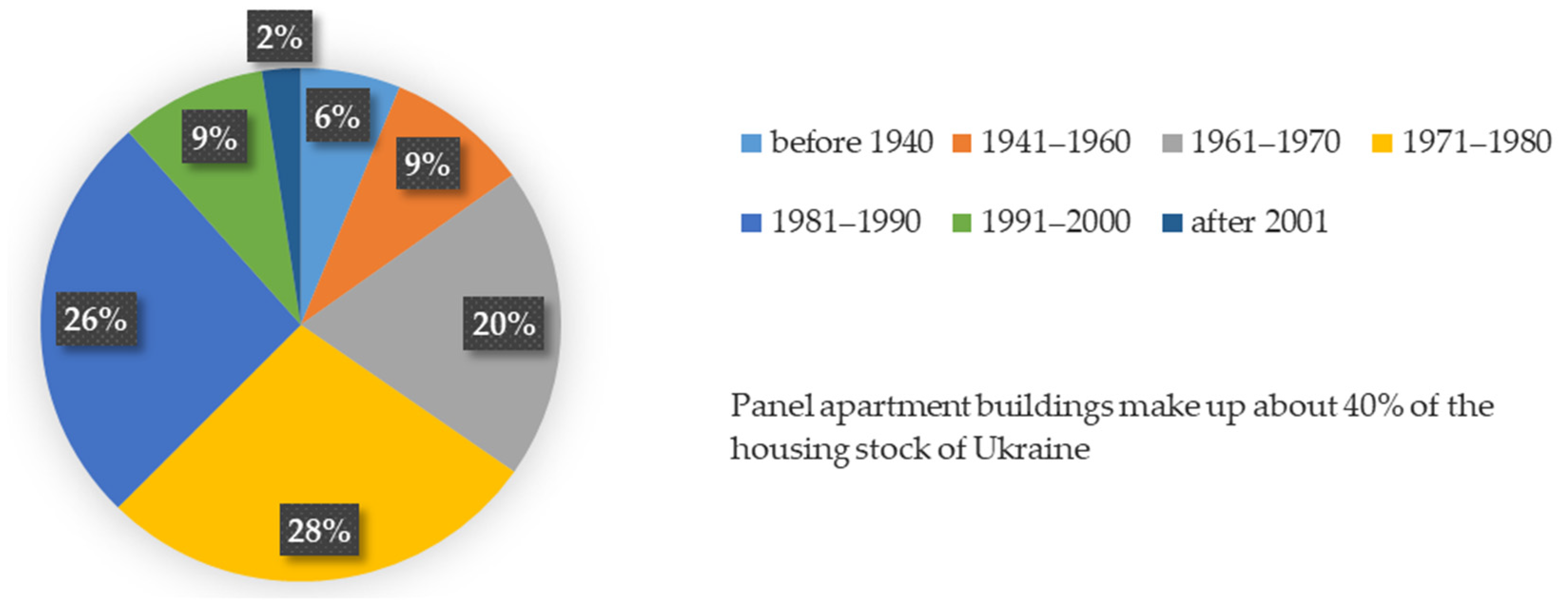

| Years of Construction | Share of the Housing Stock within Ukraine | Type and Short Description of Construction | Abbreviations of the Most Common Types (Series) of Panel Buildings |
|---|---|---|---|
| Before 1940 | 6.2% | Historical buildings | – |
| 1941–1960 | 8.9% | Buildings of the early Soviet period (“Stalinky”) | – |
| 1961–1970 | 19.6% | Buildings of the first mass series of the period of industrial buildings’ construction (“Khrushchovky”) | 1–438, 1–464, 1–164–A, 1–480 |
| 1971–1980 | 27.7% | Buildings of typical series | I–515/9 m, I–515/9sh, 1605/9, II–18/9, II–29, II–32, II49, 504, BPS, KT, I–134, S–96 |
| 1981–1990 | 26.1% | ||
| 1991–2000 | 9.1% | Modern buildings | APPS, B–5, ES, KTU |
| After 2001 | 2.4% |
Publisher’s Note: MDPI stays neutral with regard to jurisdictional claims in published maps and institutional affiliations. |
© 2022 by the authors. Licensee MDPI, Basel, Switzerland. This article is an open access article distributed under the terms and conditions of the Creative Commons Attribution (CC BY) license (https://creativecommons.org/licenses/by/4.0/).
Share and Cite
Hryhorovskyi, P.; Osadcha, I.; Jurelionis, A.; Basanskyi, V.; Hryhorovskyi, A. A BIM-Based Method for Structural Stability Assessment and Emergency Repairs of Large-Panel Buildings Damaged by Military Actions and Explosions: Evidence from Ukraine. Buildings 2022, 12, 1817. https://doi.org/10.3390/buildings12111817
Hryhorovskyi P, Osadcha I, Jurelionis A, Basanskyi V, Hryhorovskyi A. A BIM-Based Method for Structural Stability Assessment and Emergency Repairs of Large-Panel Buildings Damaged by Military Actions and Explosions: Evidence from Ukraine. Buildings. 2022; 12(11):1817. https://doi.org/10.3390/buildings12111817
Chicago/Turabian StyleHryhorovskyi, Petro, Iryna Osadcha, Andrius Jurelionis, Vladyslav Basanskyi, and Andrii Hryhorovskyi. 2022. "A BIM-Based Method for Structural Stability Assessment and Emergency Repairs of Large-Panel Buildings Damaged by Military Actions and Explosions: Evidence from Ukraine" Buildings 12, no. 11: 1817. https://doi.org/10.3390/buildings12111817
APA StyleHryhorovskyi, P., Osadcha, I., Jurelionis, A., Basanskyi, V., & Hryhorovskyi, A. (2022). A BIM-Based Method for Structural Stability Assessment and Emergency Repairs of Large-Panel Buildings Damaged by Military Actions and Explosions: Evidence from Ukraine. Buildings, 12(11), 1817. https://doi.org/10.3390/buildings12111817



