Next Article in Journal
Influence of the Final Annealing Temperature on Al-Fe-Si Alloy Foil Microstructure and Properties
Previous Article in Journal
Effect of Pre-Deformation on Microstructure and Mechanical Properties of a Mg-Rich High-Cu Al-Mg-Si-Cu Alloy
Previous Article in Special Issue
Roasting of Spodumene with Calcite at Atmospheric Pressure—Implications of Trace Potassium
 
 
Due to scheduled maintenance work on our servers, there may be short service disruptions on this website between 11:00 and 12:00 CEST on March 28th.
Article

Thermodynamic and Kinetic Analysis of Lead Leaching from Pretreated Pb–Ag Jarosite Sludge by Chloride Solution


1
Institute for Technology of Nuclear and Other Mineral Raw Materials, Bulevar Franšea d’Eperea 86, 11000 Belgrade, Serbia
2
Innovation Center of the Faculty of Technology and Metallurgy in Belgrade Ltd., University of Belgrade, Karnegijeva Str. 4, 11000 Belgrade, Serbia
3
Innovation Center of the Faculty of Chemistry in Belgrade Ltd., University of Belgrade, Studentski trg 12–16, 11000 Belgrade, Serbia
4
Faculty of Technology and Metallurgy, University of Belgrade, Karnegijeva Str. 4, 11000 Belgrade, Serbia
*
Author to whom correspondence should be addressed.
Metals 2026, 16(4), 367; https://doi.org/10.3390/met16040367
Submission received: 27 February 2026 / Revised: 19 March 2026 / Accepted: 23 March 2026 / Published: 26 March 2026

Abstract

Waste products of zinc hydrometallurgy, such as Pb–Ag jarosite sludge, represent a significant environmental problem due to toxic properties associated with elevated lead content. At the same time, this material has economic value, making its valorization beneficial from both ecological and financial perspectives. This study investigates the chloride leaching of pretreated Pb–Ag jarosite sludge, which underwent sulphation roasting followed by water leaching. The experiments were conducted with a constant solid/liquid ratio of 1:20, a stirring rate of 150 rpm, and using a 4 mol dm3 MgCl2 solution as the leaching agent, while temperature (40–80 °C) and leaching time (up to 120 min) were varied. The results showed that temperature significantly affects the lead leaching degree, with the highest (95%) achieved at 80 °C after 60 min. Kinetic analysis revealed a diffusion-controlled mechanism, with an activation energy of 18.40 kJ mol−1. Due to the characteristics of the leaching curve, the process was divided into four segments, with corresponding activation energies determined for each segment (16.48, 11.80, 13.88, and 20.50 kJ mol−1). The proposed MgCl2 system enables efficient lead leaching with a reduced amount of leaching agent, thus representing a more sustainable approach to the valorization of Pb–Ag jarosite sludge.

1. Introduction

Lead represents a strategically important metal due to its wide and diverse applications in various industrial and energy sectors, including the production of lead batteries, utilization in medicine, as well as in nuclear technology [1,2]. However, the valorization of lead from primary mineral raw materials, mainly galena, can no longer fully satisfy the growing market demand [3,4]. Therefore, it is necessary to direct research and technological efforts towards the development of processes for obtaining lead from different non-conventional raw materials. Among others, this group of raw materials includes jarosite sludge, a by-product generated during the hydrometallurgical processing of zinc sulphide ores. Sourced from various industrial plants (approximately 6.6 million tons per year worldwide), jarosite is disposed of in landfills as waste, although it contains significant amounts of lead, which can reach up to 10% [5,6]. Consequently, the valorization of lead from jarosite sludge is of particular importance, both from an economic perspective (due to rising global demand and the corresponding increase in lead prices) and from an ecological point of view, since the removal of lead and other toxic elements (such as As) reduces the toxicity of the material, thereby ensuring greater chemical stability and safer long-term disposal in landfills [7,8].
In recent years, hydrometallurgical processing of jarosite sludges has gained an advantage over pyrometallurgical processes, primarily due to higher economic efficiency and a lower environmental impact [8,9,10,11]. Previous research has shown that alkaline leaching of this raw material can be effective for the valorization of certain metals, such as silver and nickel, with high leaching efficiencies achieved using NaOH, Ca(OH)2, KOH, and NH4OH solutions, often in the presence of complexing and reducing agents [12,13]. However, these systems have not demonstrated satisfactory performance for lead extraction. Furthermore, sulfuric acid leaching has been shown to be effective in decomposing the jarosite structure, yet the degree of lead leaching remains limited [14,15]. Alternative approaches, such as sulphation roasting followed by water leaching, enable the successful extraction of zinc and copper, but still do not provide efficient lead removal. Accordingly, additional efforts are required to develop processes that enable both selective and efficient lead extraction [16,17,18].
The potential of chloride solutions in the hydrometallurgical treatment of jarosite sludge was first recognized in the patent of Noelene Ahern and Jozef Maria Schaekers [19]. In that paper, efficient valorization of silver was achieved by leaching jarosite sludge with a sodium chloride solution, while lead leaching was not systematically investigated. In this context, Ju et al. [20] examined the jarosite sludge formed during the hydrometallurgical production of zinc. After thermal treatment at 650 °C for 1 h, the sludge was subjected to leaching with a highly concentrated NH4Cl solution, whereby a high degree of lead leaching was achieved. However, such conditions involve relatively high reagent concentrations and an additional thermal pre-treatment step. Similar effectiveness of chloride solutions was shown by Zeng et al. [21], where the precipitate, after washing with distilled water, was leached in an autoclave using a concentrated NaCl solution at elevated temperatures. At 200 °C, the leaching degree of this metal exceeded 90%. Nevertheless, the requirement for autoclave conditions and high temperatures may limit the broader applicability of this approach.
Although the above-mentioned results confirm the high potential of chloride systems for lead recovery from the indicated material, the applied process conditions require substantial chemical consumption to prepare concentrated solutions, as well as high energy input to maintain elevated temperatures during the leaching experiments. These issues limit their broader application from the perspective of energy efficiency and economic sustainability. Therefore, understanding the influence of chloride ion concentration in the reaction solution is a key issue. Since the amount of chloride likely has a dominant effect on the degree of lead valorization from jarosite sludge, this can be explained by the following chloride complexation reactions [22]:
Pb2+ + Cl → PbCl+
PbCl+ + Cl → PbCl2 (s)
PbCl2 (s) + Cl → PbCl3
PbCl3 + Cl → PbCl42−
The equilibrium constants for Reactions (1)–(4) have the following values: 101.8, 100.18, 10−0.1 and 10−0.3, respectively. The cumulative formation constant reaches its maximum value for PbCl2 (101.98), whereas the lowest value is observed for PbCl42− (101.58). These results indicate a pronounced tendency toward chloro-complex formation in chloride media. At elevated chloride concentrations, higher-order complexes such as PbCl42− may become increasingly significant, which can further enhance the dissolution of lead-bearing phases.
Starting from this mechanism, Sinadinović et al. [22] subjected synthesized PbSO4 to leaching with CaCl2 and MgCl2 solutions to examine its behavior in different chloride environments. Although the material was synthetically prepared, the lead phase is identical to that observed in the sample investigated in the present study. These reagents provide two chloride ions per molecule, thus allowing efficient formation of the PbCl42− complex at lower solution concentrations. As a result, a high degree of lead leaching was achieved at a temperature of 80 °C. The significance of the increased concentration of chloride ions was additionally confirmed by the application of CaCl2 and FeCl3 solutions for leaching jarosite sludge, yielding exceptionally high lead valorization (over 90%) [23,24]. This phenomenon further encouraged Lorenzo-Tallafigo et al. [25] to introduce HCl into the NaCl solution during the leaching of a concentrate with a composition similar to jarosite sludge, where lead is present as sulphate. The addition of HCl increased the chloride ion concentration, resulting in a significantly higher lead leaching degree. A similar effect, increasing the efficiency of the process, was achieved by adding MgCl2 solution to an NH4Cl solution during PbSO4 leaching, further confirming the key role of chloride concentration in lead valorization [26]. However, some of the mentioned systems require high concentrations in order to achieve an effective degree of leaching. The use of CaCl2 can lead to the formation of a CaSO4 precipitate, which can potentially interfere with metal leaching, while FeCl3 introduces iron into the solution and complicates subsequent separation steps. For these reasons, MgCl2 was chosen in this study as an optimal compromise, as it provides a high concentration of chloride ions without forming secondary precipitates and without the need for complex or economically unfavorable reagent systems.
The aim of this paper is to evaluate the degree of the applied MgCl2 solution in the process of lead extraction from previously treated jarosite sludge, a material of complex chemical and phase composition. Special emphasis is placed on the influence of process temperature and reaction time on lead leaching, as well as on the determination of the leaching mechanism through kinetic and thermodynamic analyses. Upon achieving satisfactory outcomes, the tested system demonstrates potential for industrial application, both to reduce toxicity and stabilize the jarosite sludge, and to address the economic significance of lead as a strategically important metal.

2. Materials and Methods

2.1. Chemicals and Preparation of Starting Material

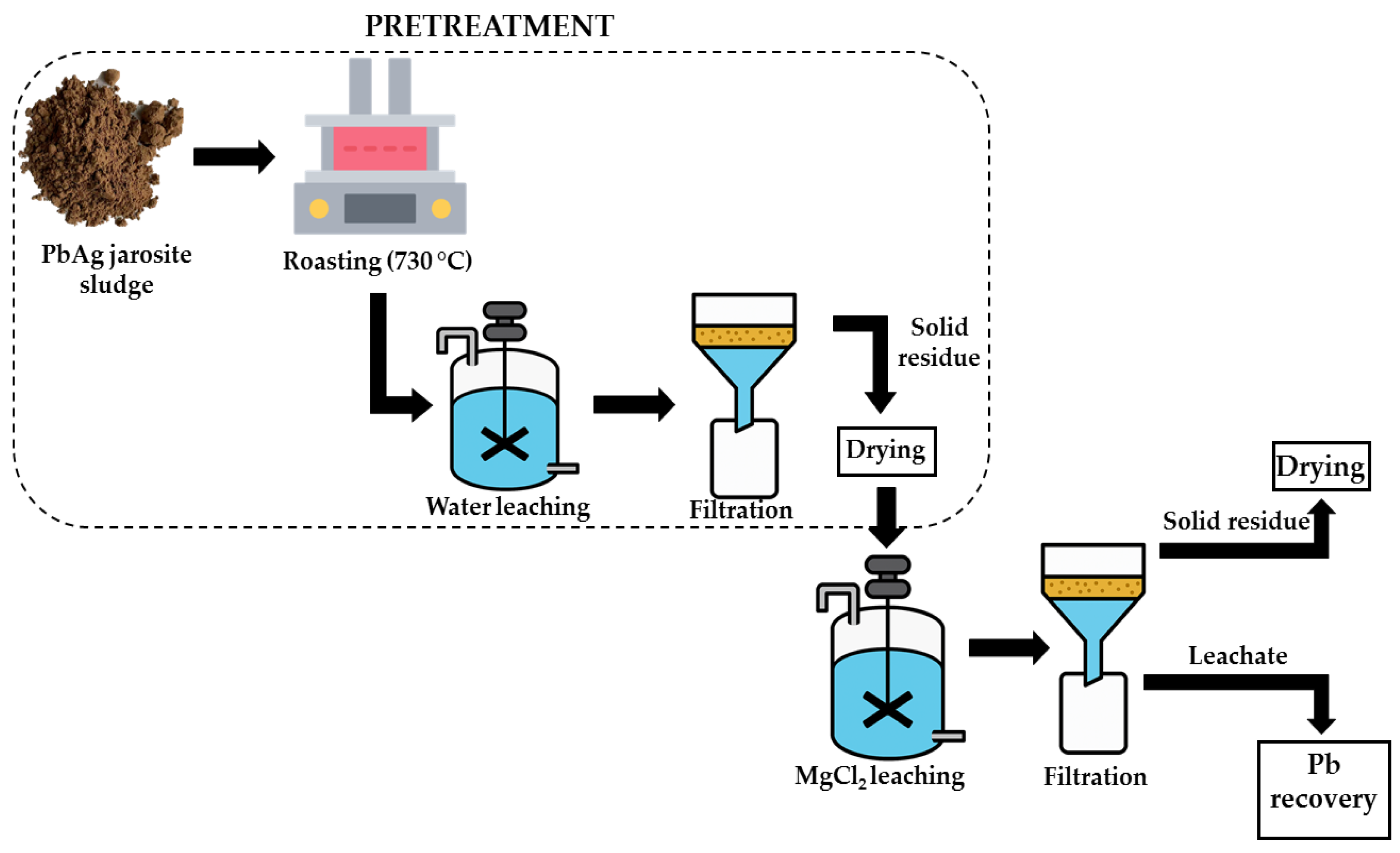
The basic material used in the leaching process in this study was Pb–Ag jarosite sludge, which originates from the industrial landfill of the former zinc production facility “Zorka” in Šabac (Serbia). The sample was collected from a borehole at an approximate depth of 2000 m, after which it was mixed and homogenized. The homogenized material was then subjected to deagglomeration in a steel ball mill for 1 h and sieved. The particle fraction smaller than 100 µm was separated for experimental purposes. Before leaching, the sample underwent pretreatment according to the method of Kamberović et al. [16]. This included roasting at 730 °C for 30 min, with a heating rate of 10 °C min−1. After roasting, the material was washed with distilled water at a stirring rate of 250 rpm, a temperature of 50 °C, and a solid/liquid ratio of 1:5, for 60 min in order to remove soluble sulphates. The objective of the roasting process is to convert lead present in the insoluble sulfide form (PbS) into the soluble sulfate form (PbSO4) in chloride solutions. Water leaching facilitated the removal of soluble phases, such as ZnSO4 and CuSO4. Another objective is to convert iron into its insoluble form (hematite), in order to prevent its dissolution during the leaching process. In this study, jarosite sludge identical (same chemical and phase composition and morphology) to that employed in our previous research [16] was used in the pretreatment stage. The sample obtained after pretreatment served as the starting material in the chloride leaching experiments and will hereafter be referred to as the initial sample.

2.2. Structural Characterization of the Initial Sample and Leaching Products

X-ray diffraction (XRD) analysis was employed to identify and monitor the phase composition of the initial sample, as well as the solid residues obtained after the leaching process. The measurements were carried out using a PHILIPS PW-1820/1710 X-ray diffractometer (Almelo, The Netherlands) equipped with a curved graphite monochromator and a scintillation counter. Diffraction patterns were recorded using CuKα radiation (λ = 1.54178 Å) at room temperature, with a step size of 0.02° 2θ and a counting time of 1 s per step, over a 2θ range from 4° to 65°. The X-ray tube was operated at an accelerating voltage of 40 kV and a current of 30 mA, while the divergence slit and the receiving slit were set to 1° and 0.1 mm, respectively. A JCPDS card number was entered for each identified phase.
The surface morphology of the samples and the distribution of elements on their surfaces were examined by scanning electron microscopy (SEM, JEOL JSM-7001F, Tokyo, Japan), equipped with an energy-dispersive spectrometer (EDS, Oxford Xplore 15, High Wycombe, UK).
Optical microscopy analysis of the initial sample and final leaching products was performed using a polarizing microscope (Carl Zeiss-Jena Axioscope 5 Pol, Jena, Germany) under reflected light, while a digital camera (Axiocam 105 color, Jena, Germany) was used for color recording. For the acquisition and processing of microscopic images, the “Multiphase” module within the Carl Zeiss AxioVision SE64 Rel software package 4.9.1 was used.

2.3. Thermodynamic Analysis

The changes in Gibbs free energy of the observed leaching processes were of primary importance for a better understanding of the leaching mechanisms. Therefore, a thermodynamic analysis of the chloride leaching process of the initial sample was performed using HSC Chemistry Software® v. 9.9.2.3 and Hydra/Medusa software (version 2010).

2.4. Leaching Experiments

The leaching experiments were performed in a sealed borosilicate glass reactor (Zhengzhou Great Wall, Zhengzhou, China), adapted with a spiral stirrer, reflux condenser, and a device for precise temperature control. A solution of MgCl2 × 6H2O (Dead Sea Works Ltd., Beer Sheva, Israel) was used as the leaching agent. The stirring rate during all experiments was constant (150 rpm), and the solid/liquid ratio was 1:20. Key process parameters were varied, including temperature (40, 60, 70, and 80 °C) and leaching time (0–120 min). Aliquots were taken at predefined time intervals (2.5, 5, 7.5, 10, 20, 30, 40, 50, 60, 75, 90, 105, and 120 min), after which the lead concentration was determined by atomic absorption spectrophotometry (PerkinElmer PinAAcle 900 T, PerkinElmer, Inc., Shelton, CT, USA) in order to calculate the lead leaching degree (%). The experimental scheme used in this investigation is shown in Figure 1.
At the end of each experiment, the suspension was filtered (filter paper, 10 µm) to separate the solid and liquid phases. The separated solid residues were rinsed with distilled water to remove residual ionic species from the solution and then dried in a laboratory dryer at 105 °C. The resulting solid residues were used for further structural, chemical, and morphological characterization.

2.5. Kinetic Analysis

The kinetic analysis was carried out using the modified Sharp’s method, which linearized the experimental data using a number of different kinetic models [27]. In order to determine the activation energy, the process was further analyzed using the Arrhenius equation:
k = A × exp(−Ea/RT)
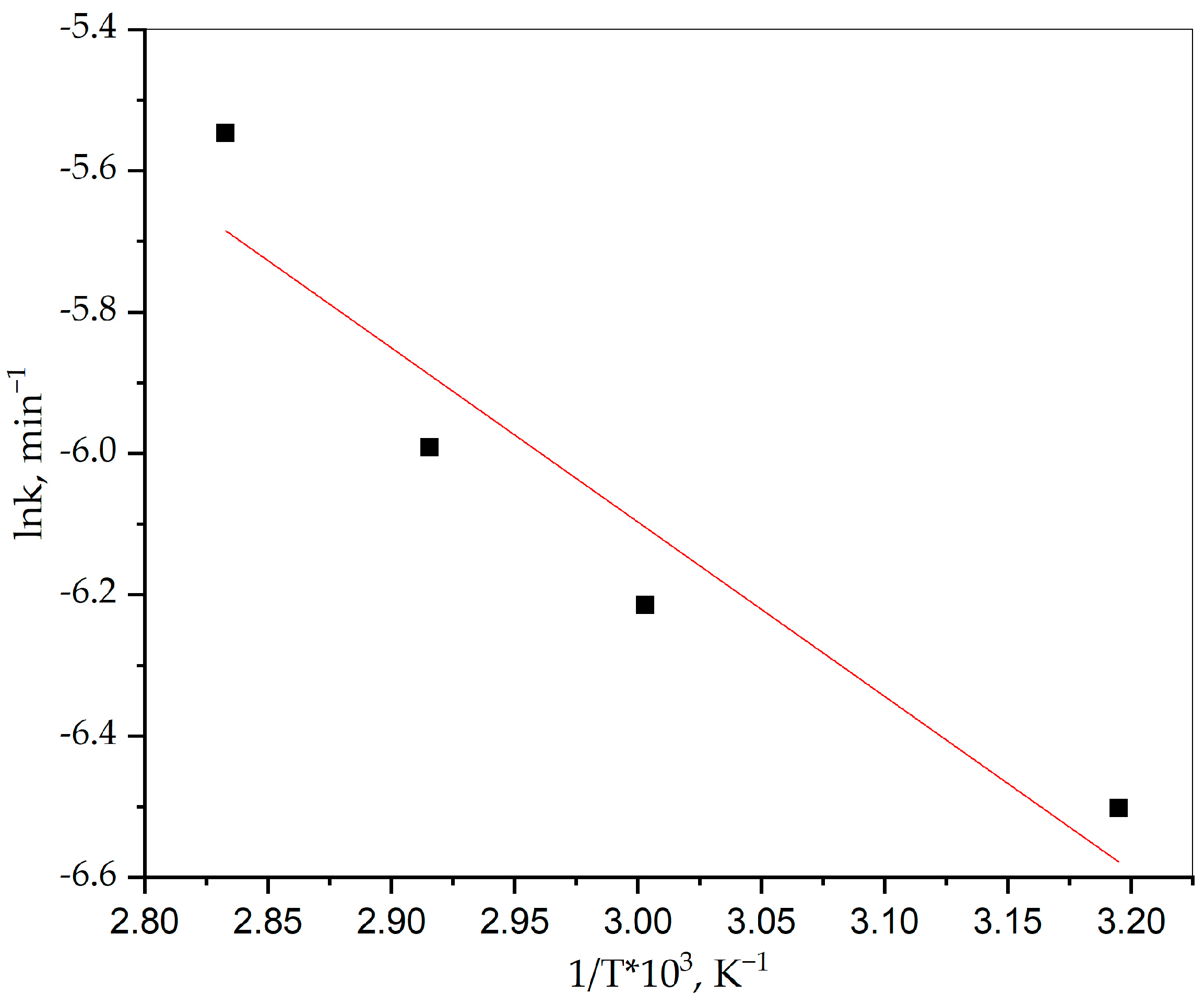
where k is the rate constant (min−1), A is the pre-exponential factor, Ea is the activation energy (J mol−1), R is the universal gas constant (8.314 J mol−1 K−1), and T represents the reaction temperature (K). The activation energy is calculated from the slope of the curve in the plot of dependence of ln(k) (y-axis) versus 1/T (x-axis).

3. Results and Discussion

3.1. Structural and Mineralogical Characterization of the Initial Sample

Table 1 presents the results of the analysis of the chemical and phase (based on chemical analysis) composition of the initial sample.
Based on the chemical composition analysis, iron was identified as the dominant element in the initial sample. In addition to iron, significant amounts of oxygen, lead, silicon, aluminum, and zinc were detected. The contents of other elements were below 0.5 wt. % and can be regarded as trace impurities. Chemical analysis showed that the mineral phase hematite (Fe2O3) is by far the most abundant phase in the sample, while anglesite (PbSO4), silicon dioxide (SiO2), aluminum oxide (Al2O3), and zinc ferrite (ZnFe2O4) were present in significant, but much smaller, amounts compared to hematite.
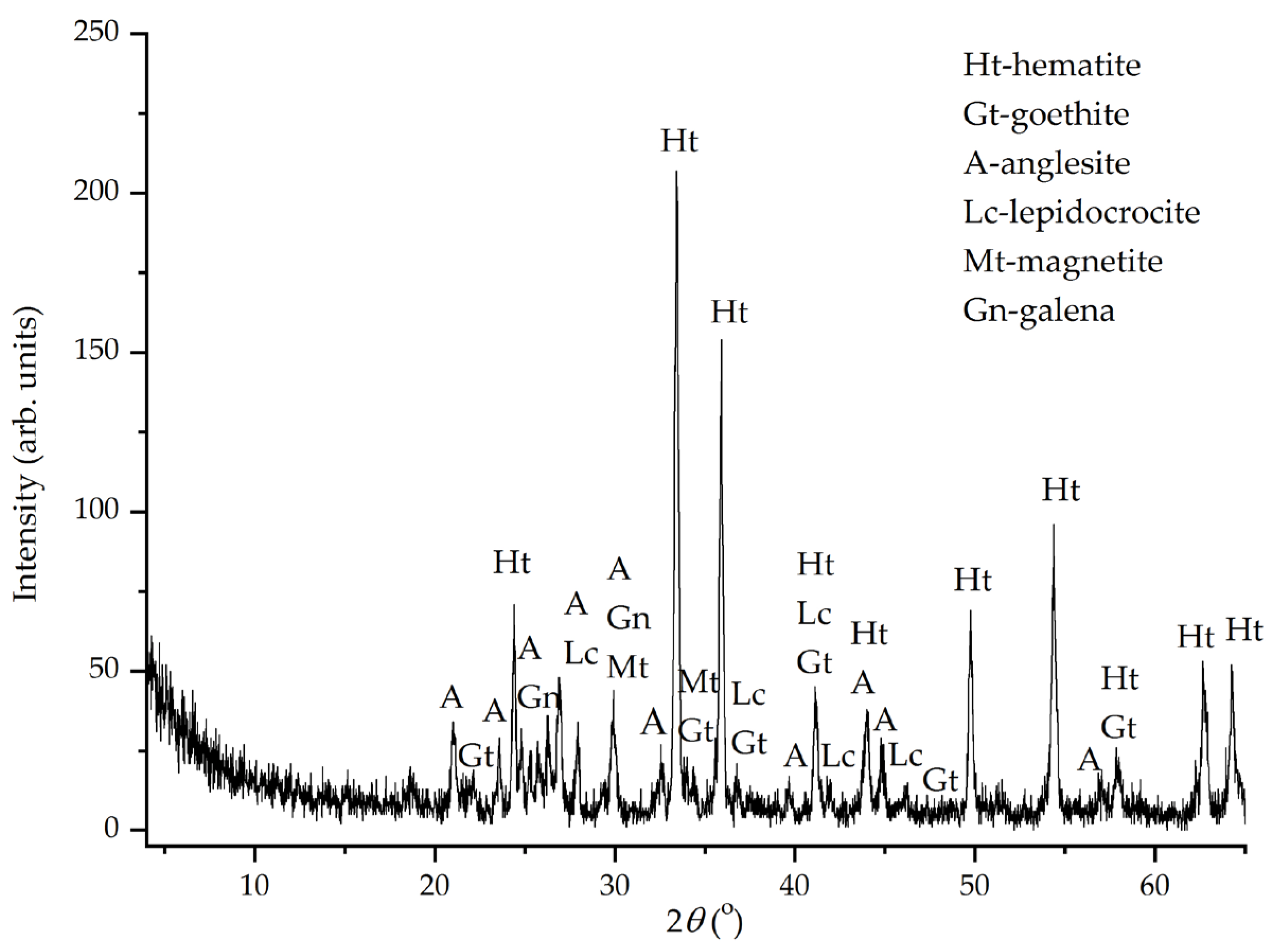
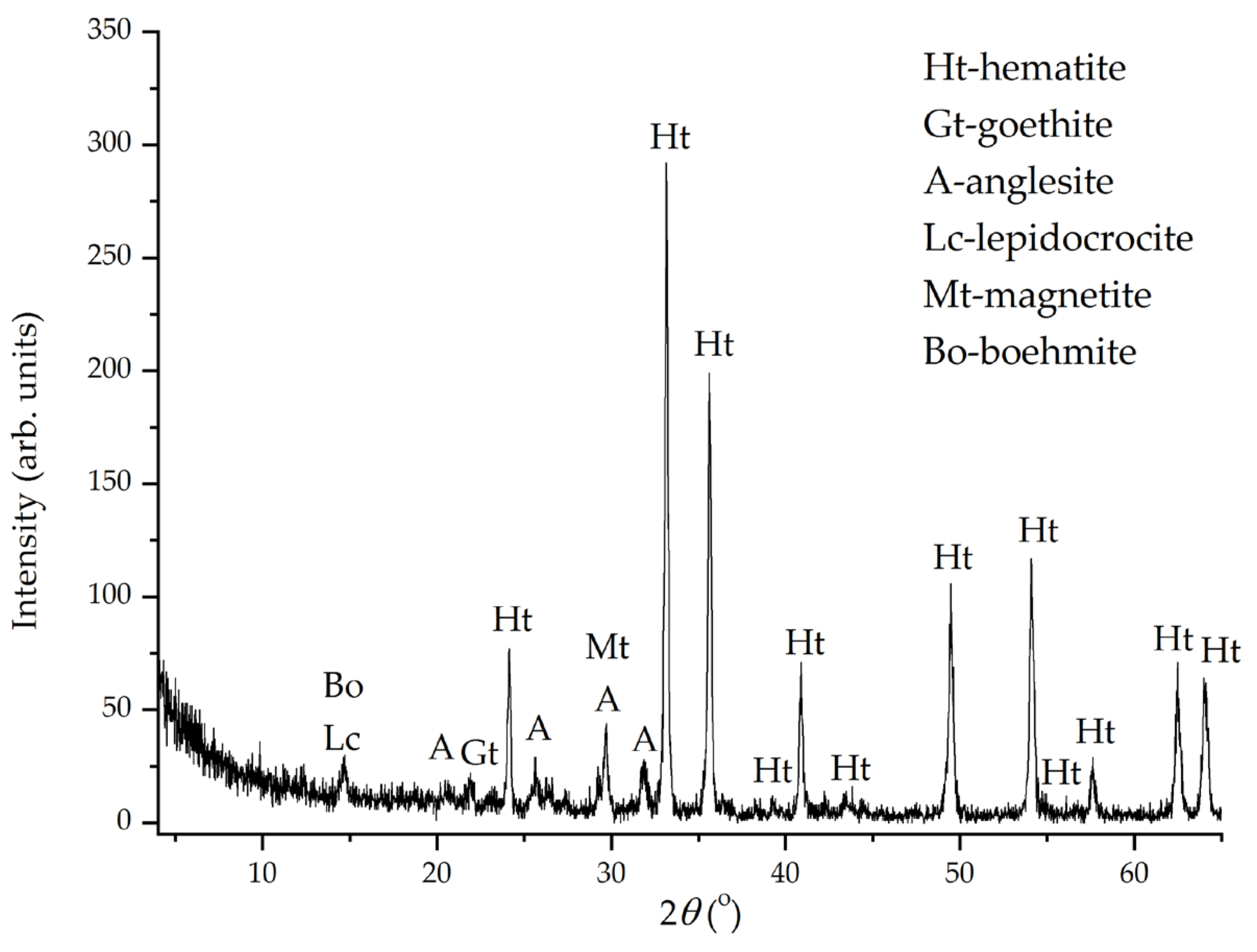
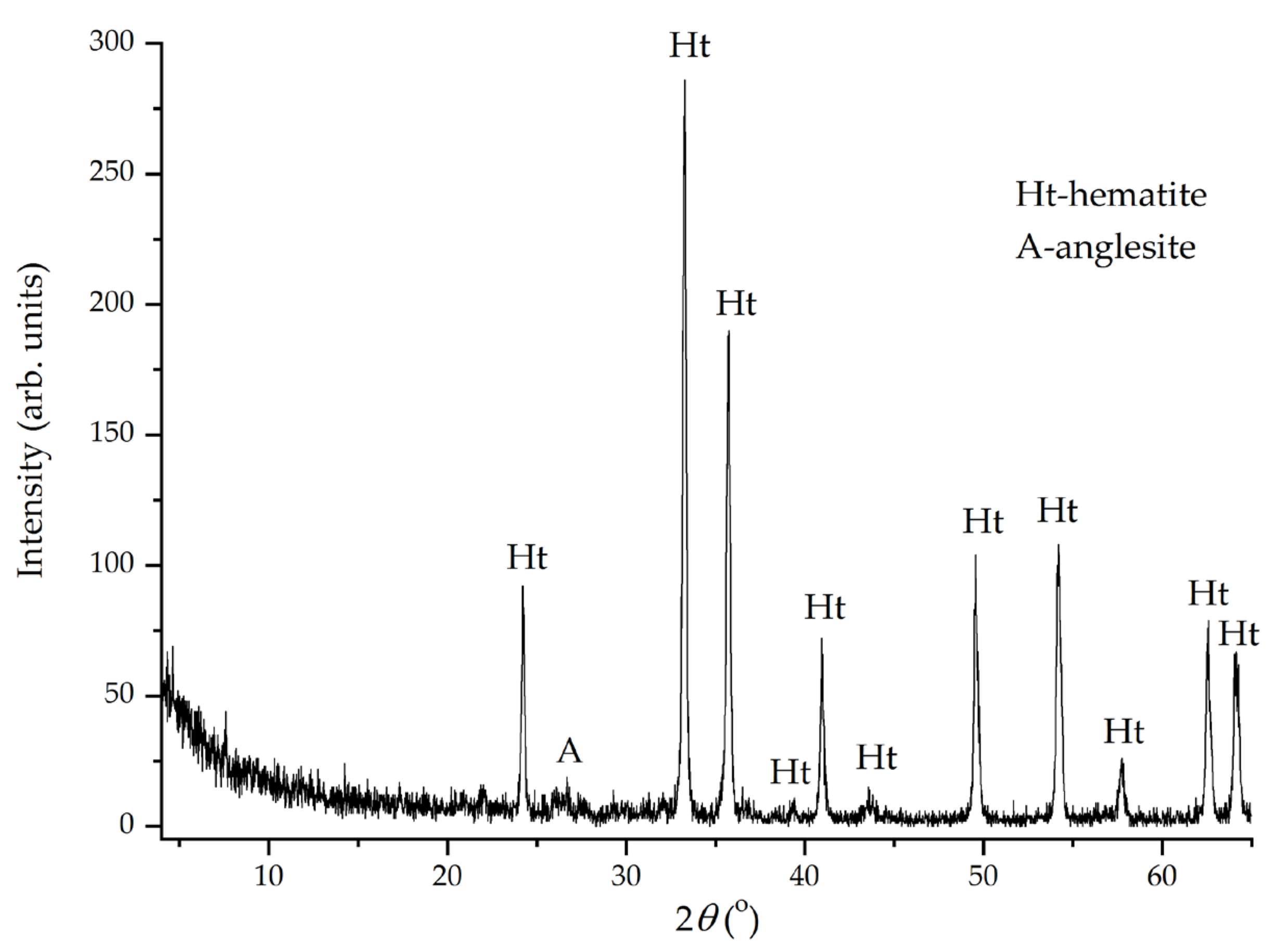
XRD analysis of the initial sample revealed the presence of the following mineral phases: hematite (JCPDS No. 33-0664), goethite (JCPDS No. 81-0464), anglesite (JCPDS No. 89-3750), lepidocrocite (JCPDS No. 74-2301), magnetite (JCPDS No. 89-0950), and galena (JCPDS No. 01-078-1056) (Figure 2). Quantitative evaluation of the diffractogram indicates that hematite is the dominant mineral phase in the examined specimen, while anglesite is represented to a significant, but considerably smaller, extent. Other identified mineral phases are present in trace amounts. These results are in accordance with the previously determined phase composition.
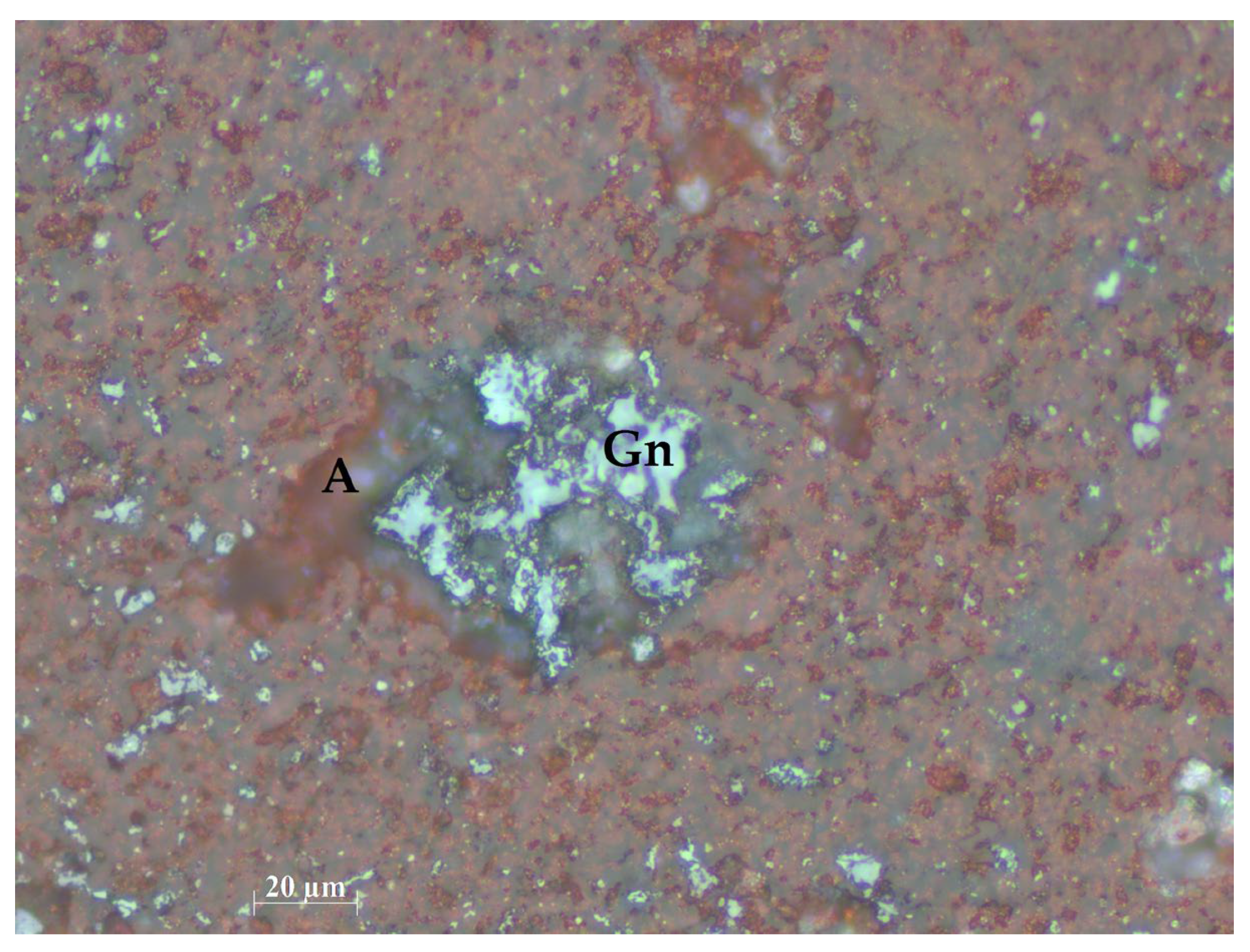
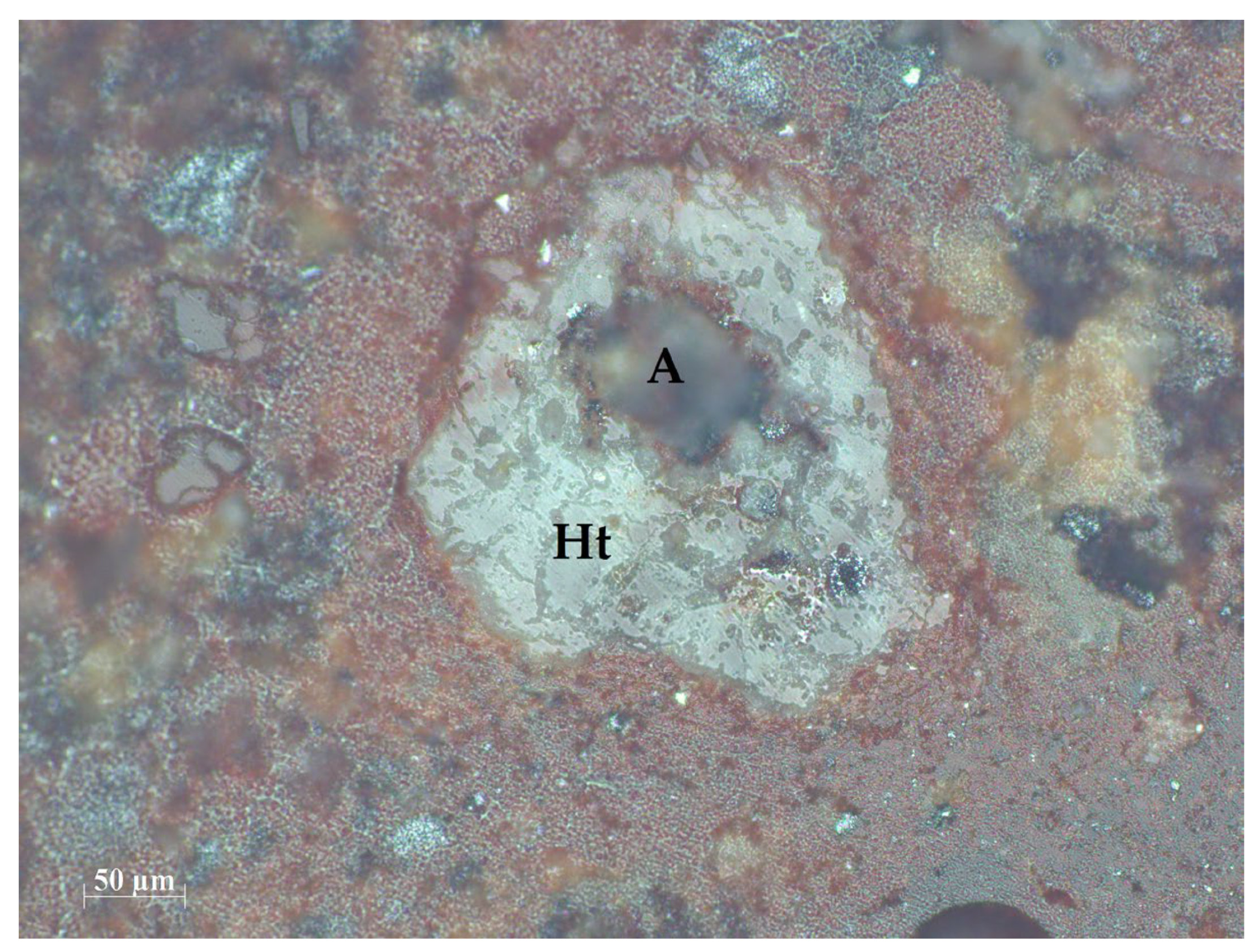
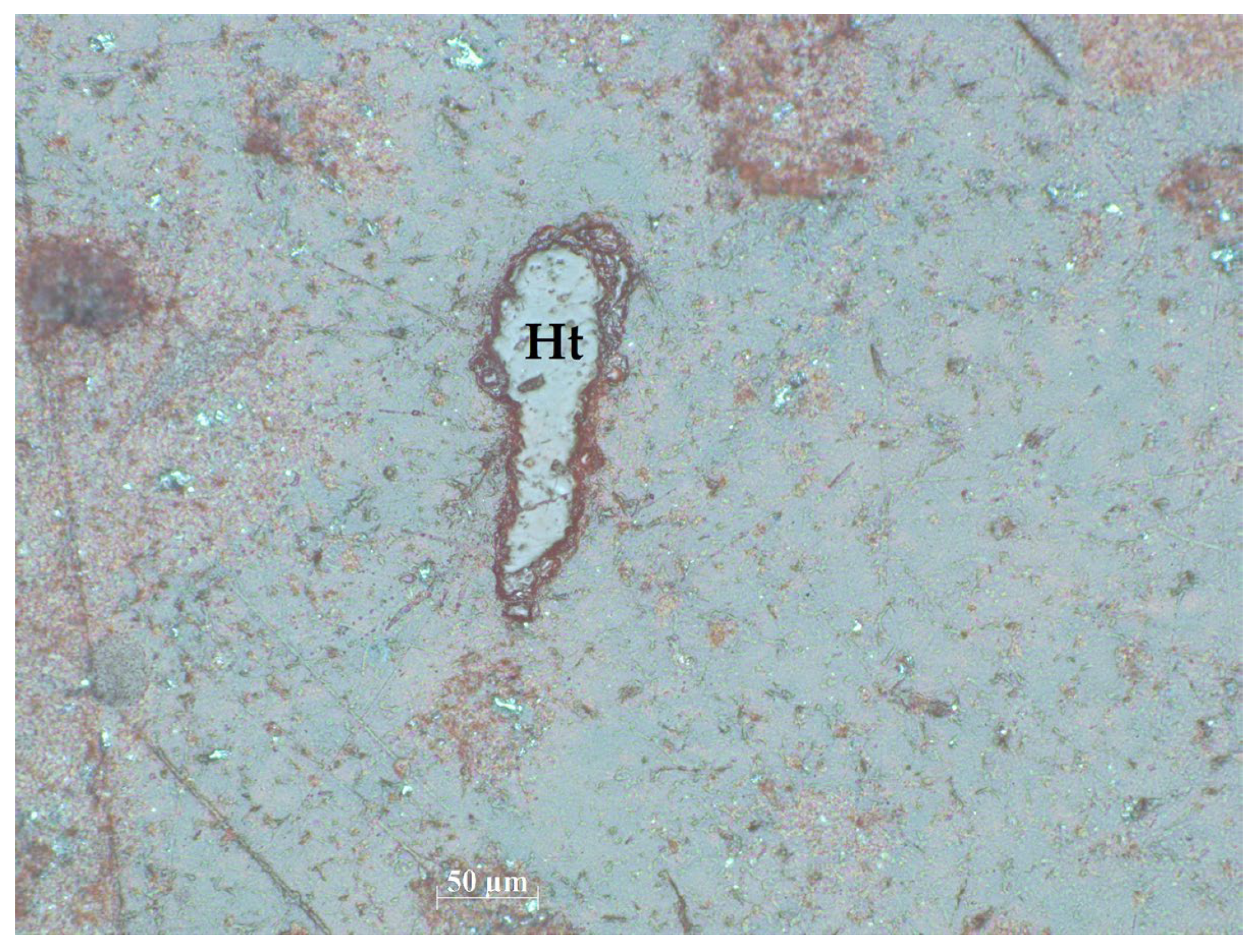
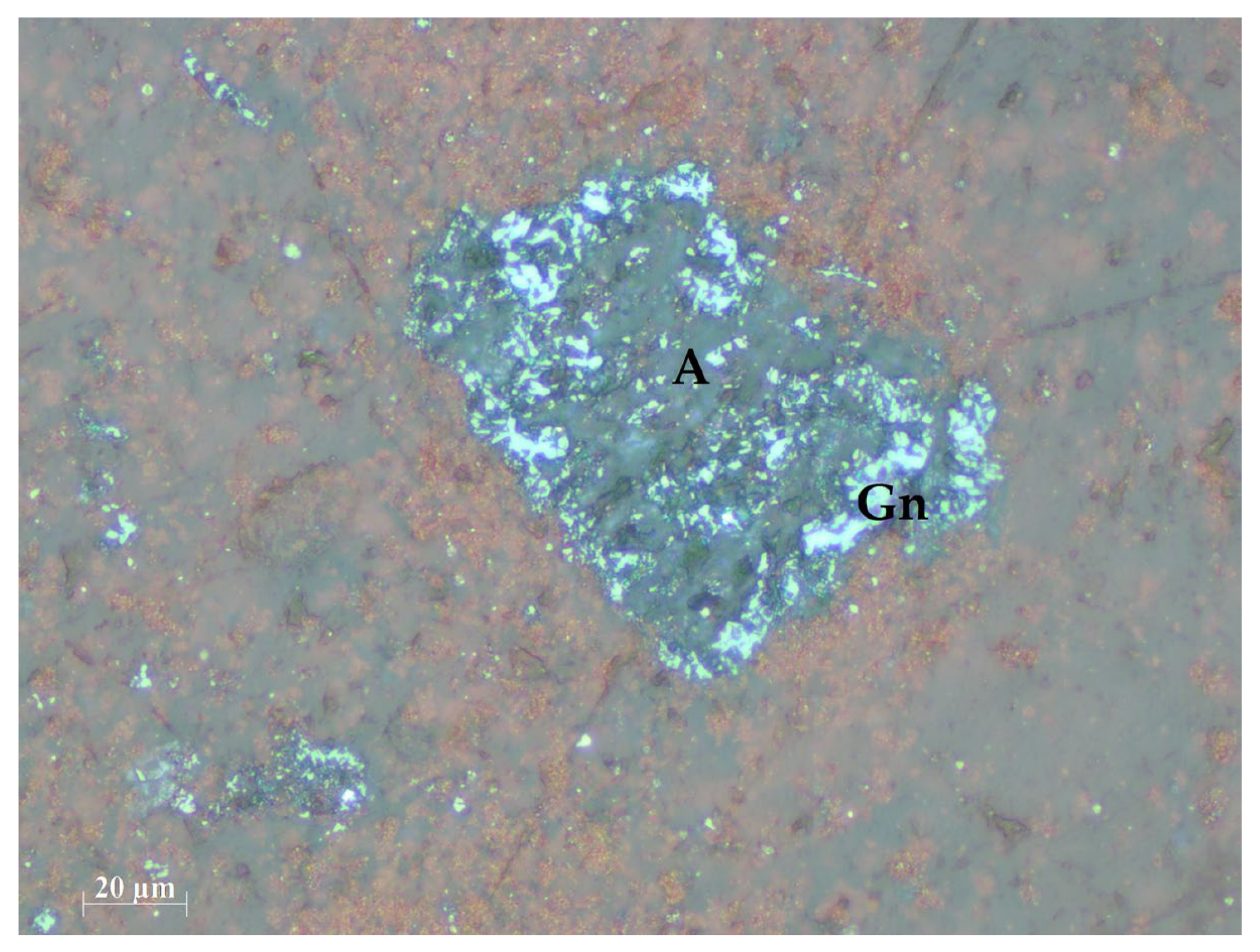
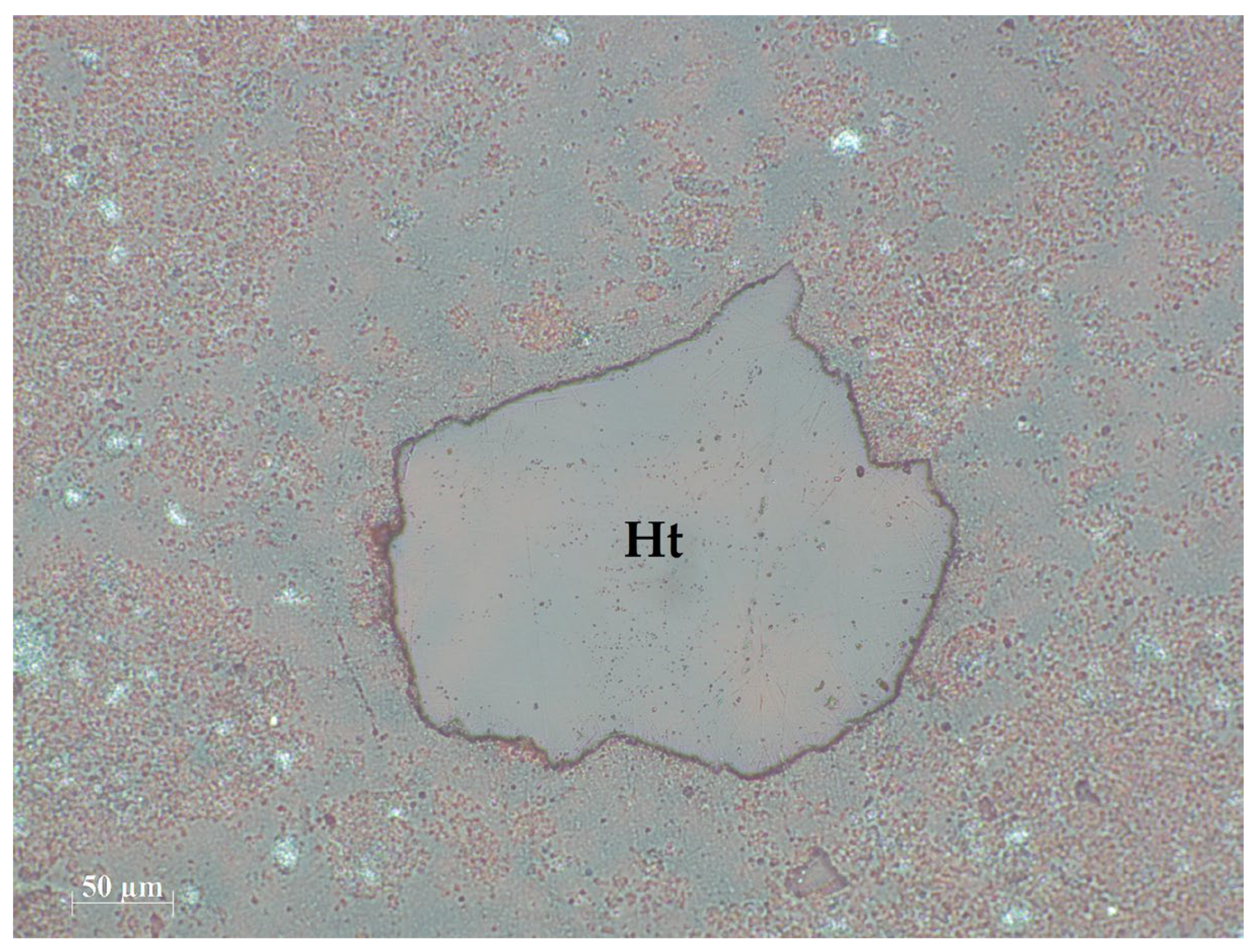
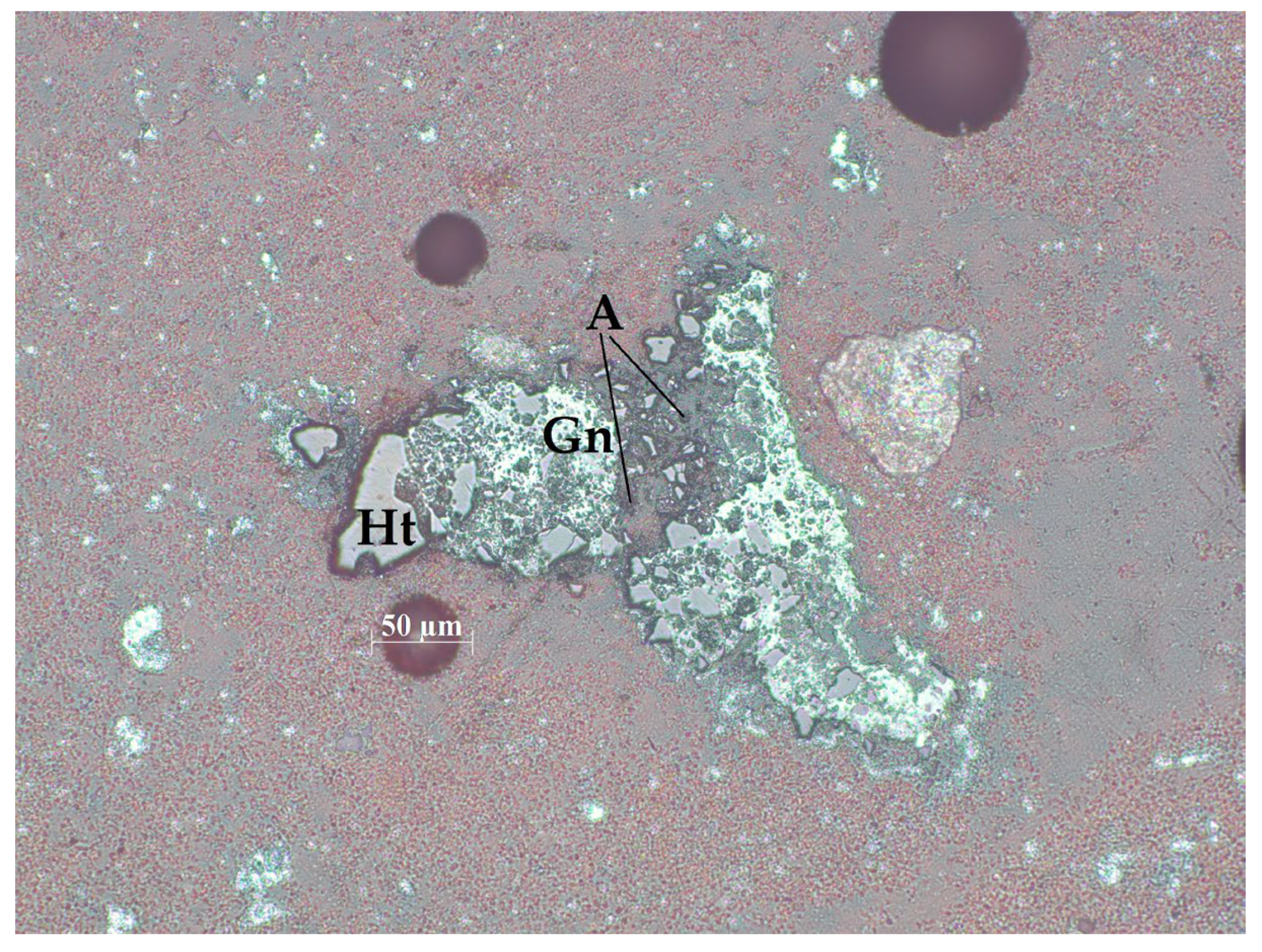
Optical micrographs of the initial sample are shown in Figure 3 and Figure 4. Microscopic analysis revealed that most of the hematite occurs as simple intergrowths with anglesite (Figure 3). The size of hematite grains varied between 100 and 250 µm. Anglesite was observed mainly as intergrowths with hematite or galena, where the phase transformation of galena to anglesite is clearly visible, reflecting the prior processing to which the initial sample was subjected. The size of anglesite grains ranged from 10 to 50 µm (Figure 4).
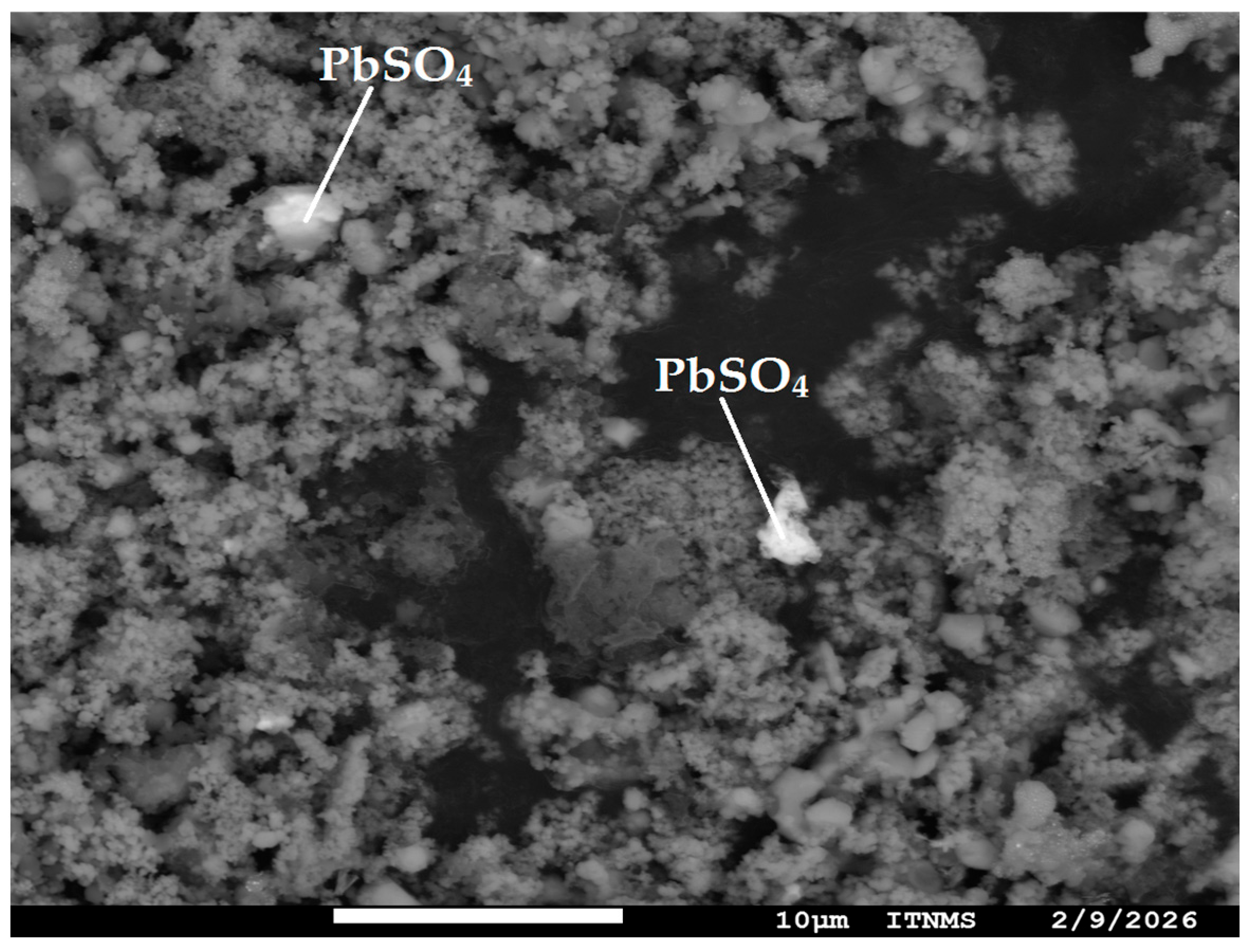
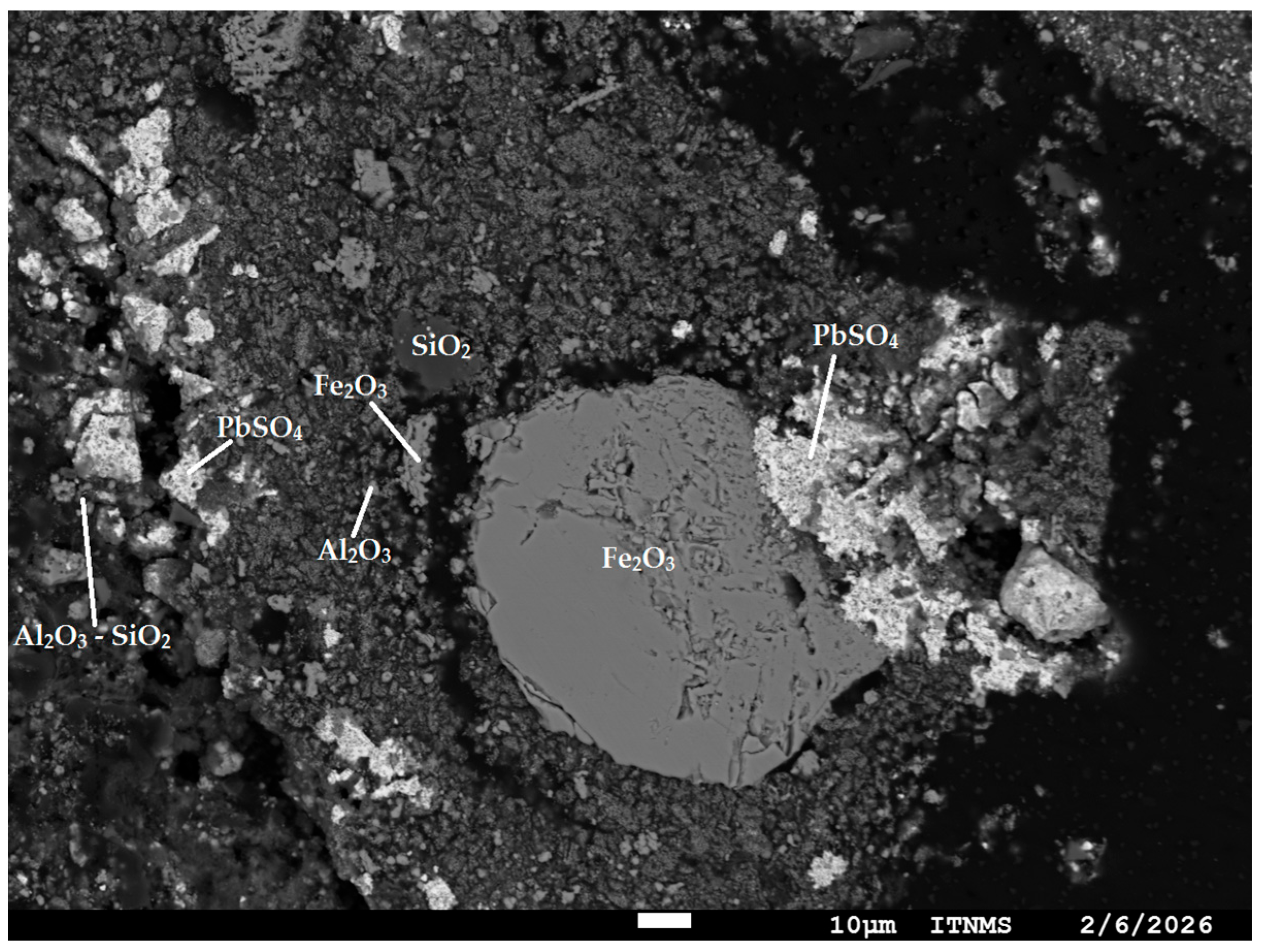
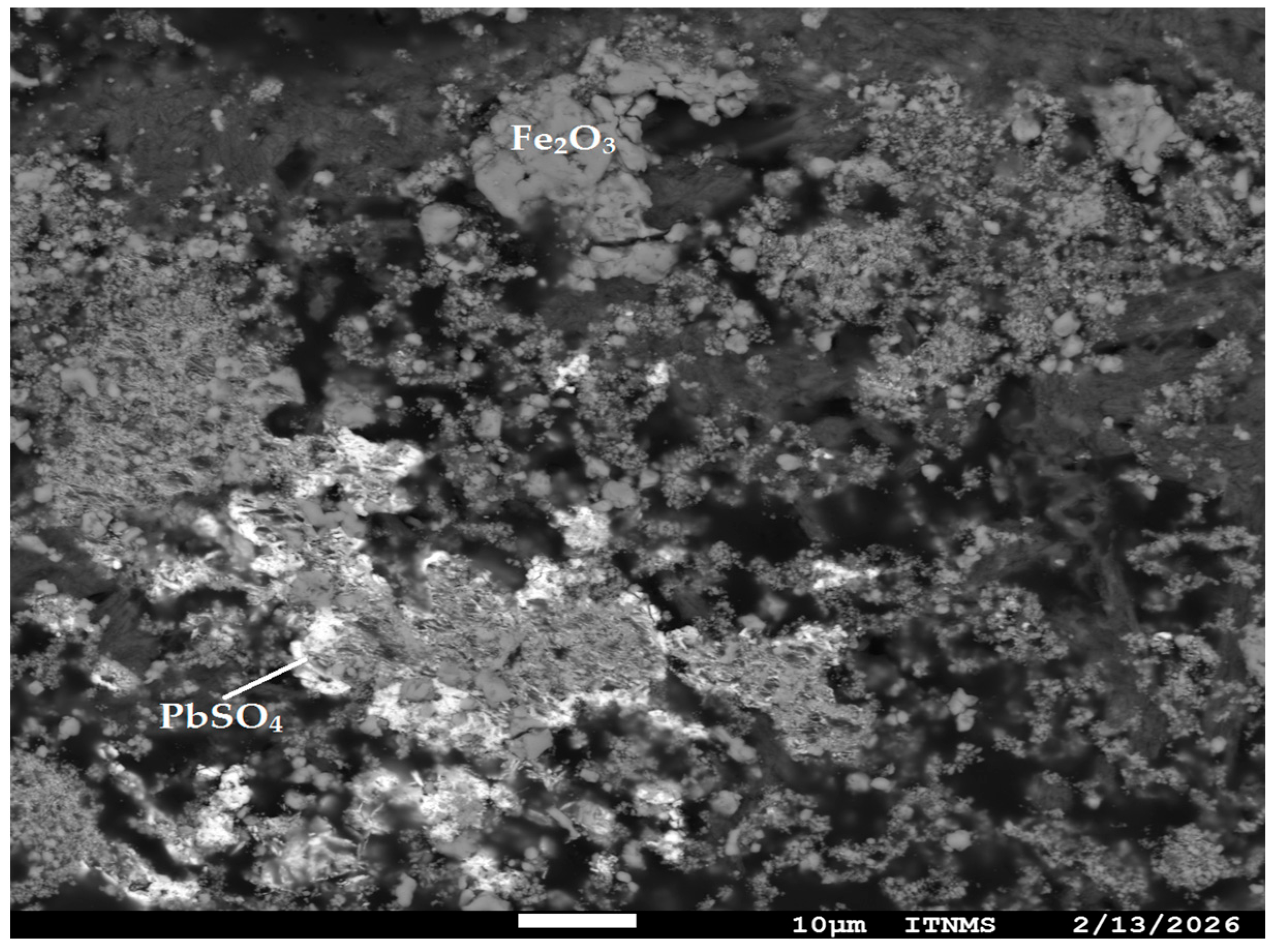
Performed EDS analysis (Supplementary Figures S1–S4) indicates the pronounced presence of hematite (Fe2O3) in the initial sample, as well as the occurrence of anglesite (PbSO4), aluminum oxide (Al2O3), and silicon dioxide (SiO2). Based on the SEM microphotograph of the initial sample (Figure 5), hematite was observed as irregularly shaped grains with a distinctly rough surface, with particle sizes ranging from approximately 16 × 4 to 73 × 65 µm. Anglesite grains also exhibited irregular morphology and rough surface texture, with dimensions ranging from about 8 × 9 to 28 × 22 µm. Silicon dioxide occurs as particles of a similar irregular shape, but with a much smoother surface, and an average size of about 13 × 12 µm. Aluminum oxide occurred as very small particles, measuring approximately 3 × 2 µm. In addition, intergrowths between Al2O3 and SiO2 particles were observed, which can be attributed to the applied pretreatment of the initial sample. The SEM and EDS results are fully consistent with the findings from XRD and optical microscopy analyses of the investigated material.

3.2. Thermodynamic Analysis

Before conducting the experimental tests within the framework of this study, a detailed thermodynamic analysis of the investigated system was carried out. This analysis has a crucial role, as it allows for predicting the behavior of the initial sample under defined process conditions and provides insight into key border parameters for optimizing the leaching process. Table 2 presents potential reactions of anglesite in the presence of MgCl2.
Reaction (6) represents the conversion of lead sulfate into chloride form in the presence of magnesium chloride, while Reaction (7) describes further stabilization of lead through the formation of chloride species. These reactions outline the fundamental pathway of lead transformation in the MgCl2 leaching system. Negative values of the standard Gibbs free energy change (∆Gθ) for the considered reactions indicate that they are thermodynamically favorable under standard state conditions. Thermodynamic analysis further indicated that Fe2O3, SiO2, Al2O3, and ZnFe2O4 do not tend to dissolve in chloride solutions, as their ∆Gθ values are positive (316.86 kJ mol−1, 454.34 kJ mol−1, 198.89 kJ mol−1, and 25.12 kJ mol−1, respectively).
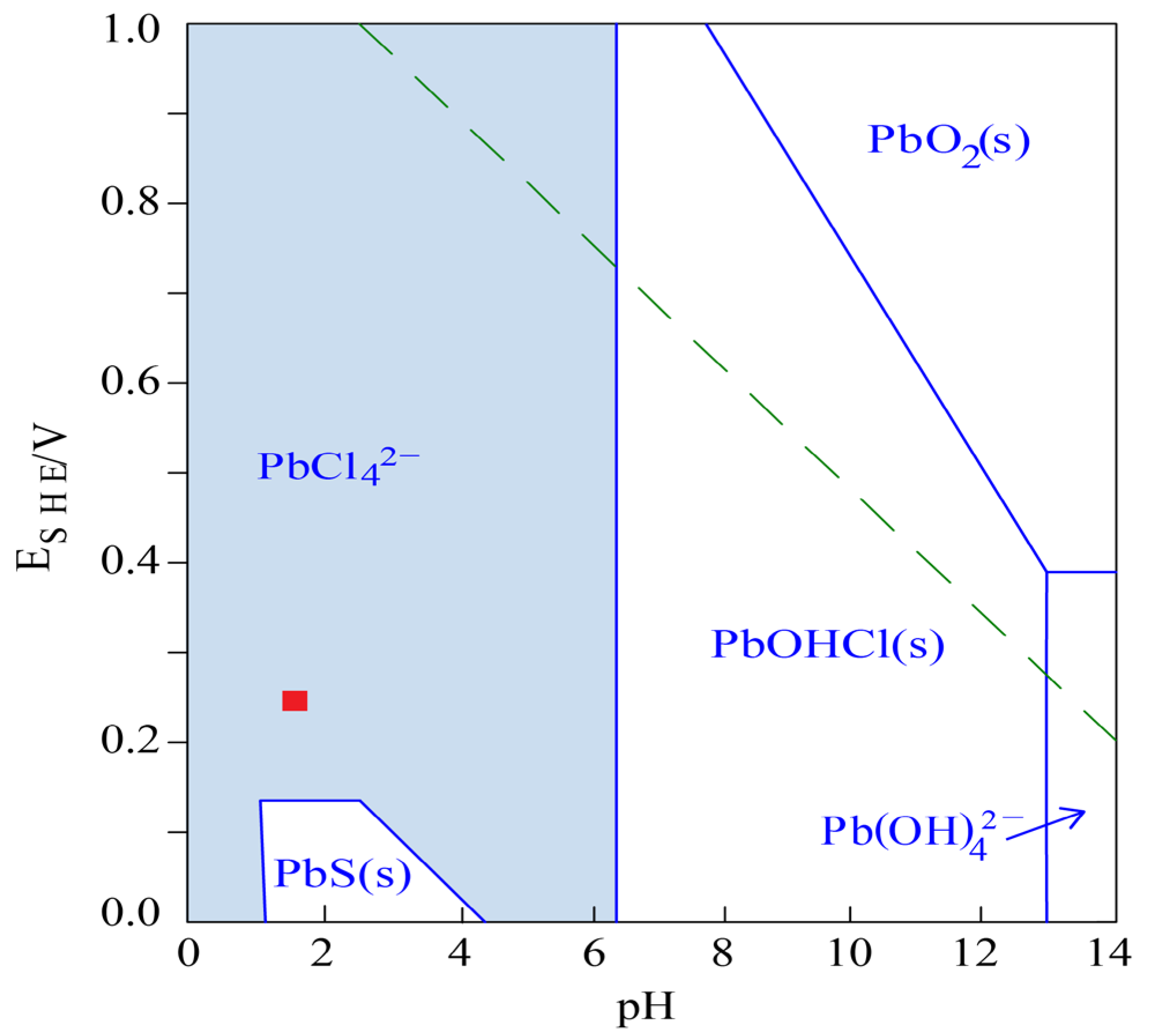
The Pourbaix diagram, shown in Figure 6, was used to analyze the stability of lead-bearing phases in the investigated system as a function of pH and redox potential (Eh). This approach allows identification of the conditions under which lead dissolution or precipitation occurs, providing a critical basis for the interpretation of the experimental results. The diagram was constructed assuming a chloride ion concentration of 8 mol dm−3, corresponding to the experimental leaching solution containing 4 mol dm−3 MgCl2, since MgCl2 dissociates into Mg2+ and two Cl ions in aqueous solution. Analysis of the diagram indicates that complete lead dissolution requires oxidizing conditions, corresponding to Eh values above 0.1 V. On the other hand, under alkaline conditions (pH > 7.5), the stability of dissolved lead species decreases, leading to the formation of solid phases such as PbOHCl, PbO2, and Pb(OH)2, which are thermodynamically stable. As the stability region shifts to lower pH values, lead is expected to occur as the dissolved chloride complex PbCl42−. The formation of PbS occurs under conditions where the Eh value is below 0.15 V and the pH ranges from 1 to 4. The region where pH and Eh conditions simultaneously favor efficient lead dissolution is clearly highlighted and indicated in blue on the diagram (Figure 6).
These results were verified experimentally. Prior to the completion of the leaching process, the pH and Eh of the resulting solution were measured. It was determined that the pH of the resulting solution was 1.6, while the Eh was 0.25 V (red square on the diagram). According to the Pourbaix diagram (Figure 6), these conditions fall within the stability domain of PbCl42−, indicating that dissolved lead is predominantly stabilized as a Pb–chloride complex. This observation is consistent with the thermodynamic evaluation presented in Figure 6. The absence of stability domains for solid Pb phases under these conditions further supports the experimentally observed transfer of lead into solution.
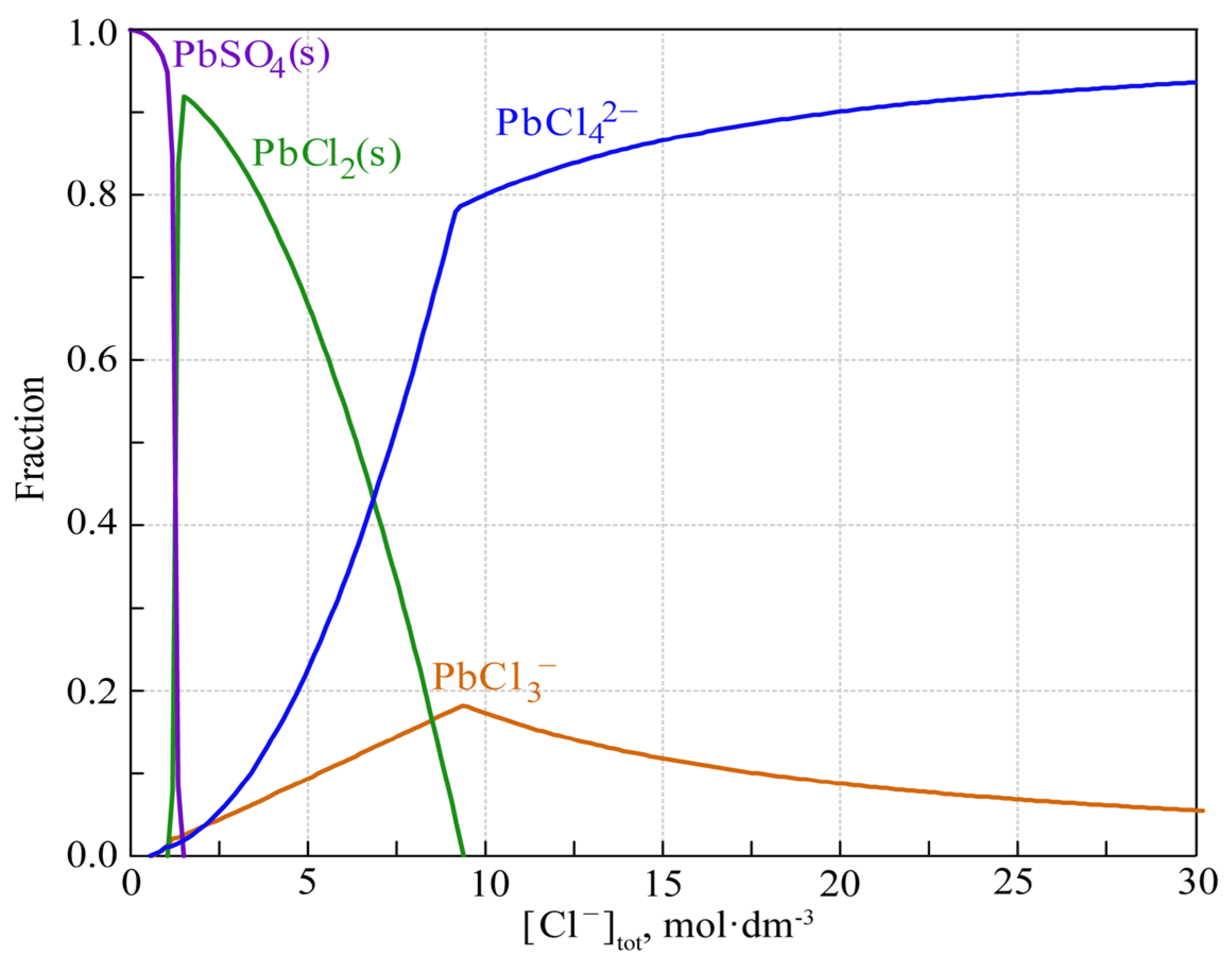
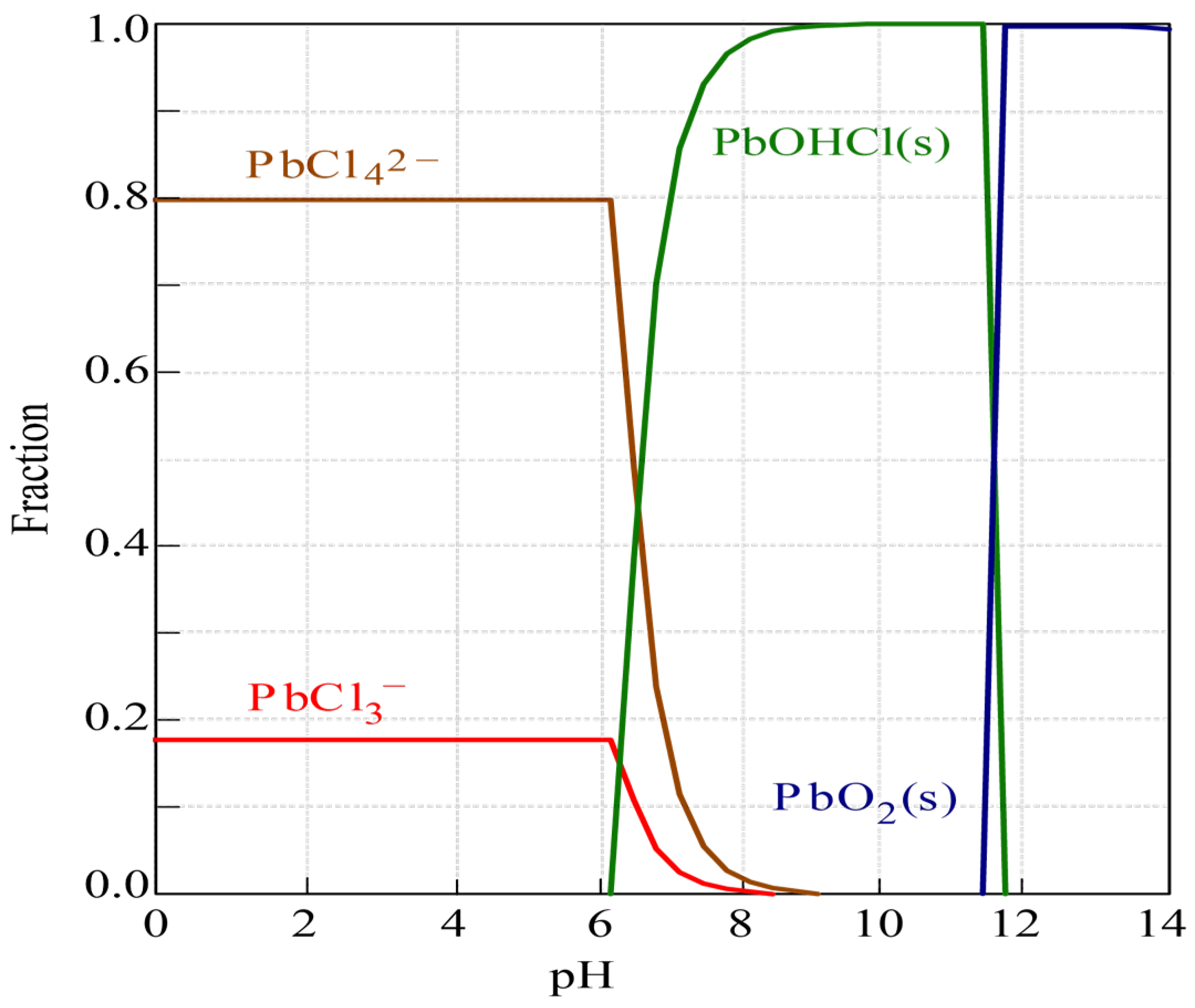
The consistency between the Gibbs free energy analysis (Table 2) and the Eh–pH stability diagram (Figure 6) supports the thermodynamic interpretation of selective lead dissolution in the MgCl2 system. The diagrams shown in Figure 7 and Figure 8, generated using Hydra/Medusa software, illustrate the distribution of lead phases in solution after the leaching process. Variations in the chloride ion concentration (Figure 7) and the solution pH (Figure 8), under predefined experimental conditions, are presented. These diagrams provide detailed insight into the behavior of lead in a chloride environment and constitute a basis for optimizing the leaching solution concentration. Analysis of the influence of chloride ion concentration shows that in the range from 1 to 7 mol dm−3, Pb2+ ions are predominantly bound to chloride, forming PbCl2. At exactly 7 mol dm−3, a uniform distribution between PbCl2 and the PbCl42− complex is observed. Further increase in chloride concentration shifts the equilibrium in favor of PbCl42− complex formation, reaching its maximum prevalence in the system at chloride concentrations of 10 mol dm−3 and above. These results were crucial in selecting the MgCl2 × 6H2O leaching solution concentration, with 4 mol dm−3 identified as optimal, corresponding to a chloride ion concentration of 8 mol dm−3 under the experimental conditions, which ensures the stability of dissolved lead complexes.
The influence of pH on lead phase distribution indicates that in the acidic to mildly acidic region (pH 0–6), the PbCl42− complex exhibits maximum predominance. As pH increases further, the stability of dissolved complexes is altered and precipitation occurs. This is reflected by a gradual decline in the fraction of PbCl42− and the formation of solid PbOHCl precipitate. At pH values around 8, the chloride complexes are completely destabilized, resulting in the undesirable precipitation of lead as solid phases, predominantly PbOHCl or PbO2.

3.3. Leaching Experiments

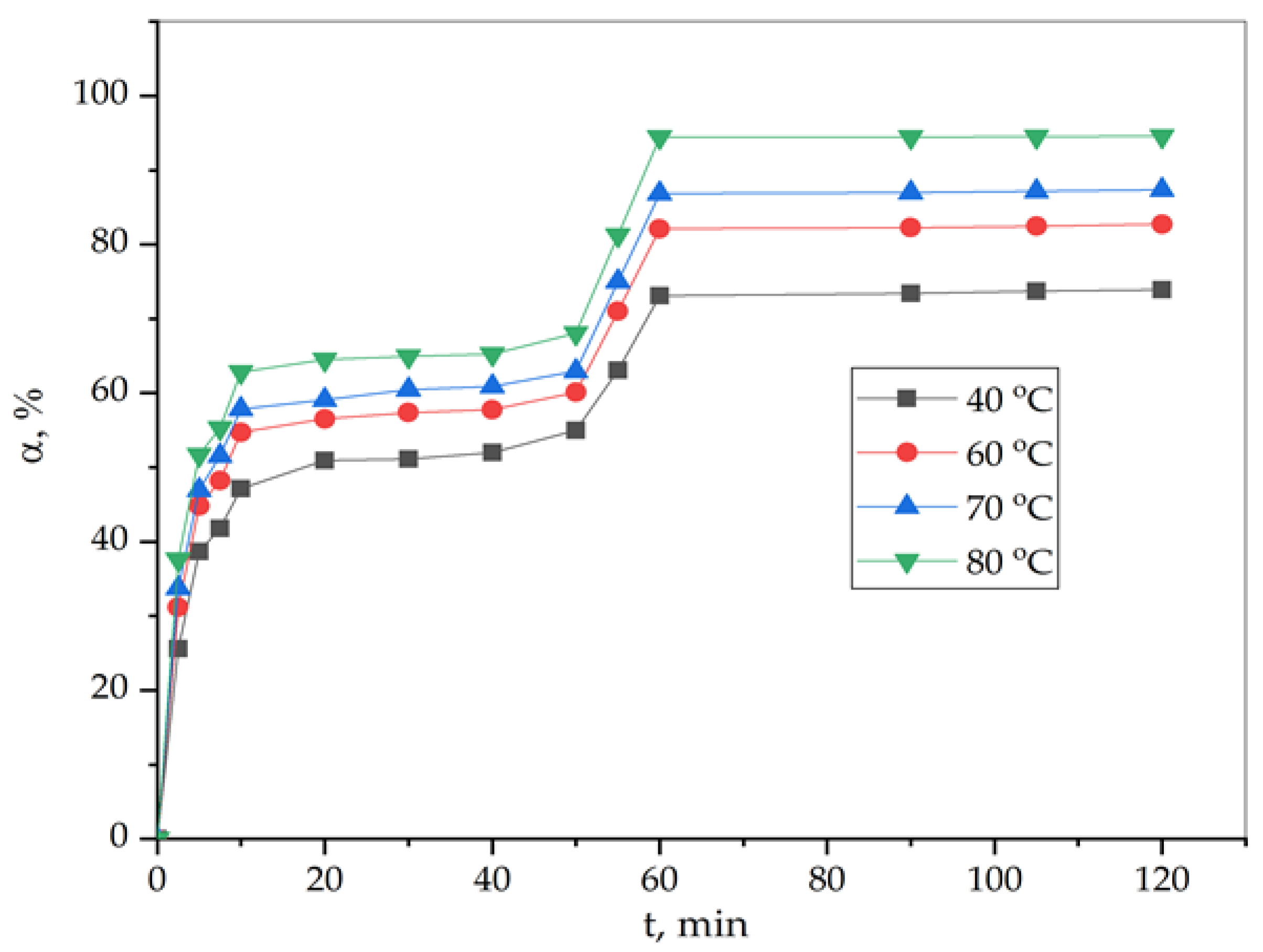
Recovery of lead ions from pretreated Pb-Ag sludge was performed. The leaching degree of lead from the initial sample shows a pronounced increase with increasing temperature in the examined range from 40 °C to 80 °C. Solution samples were taken at predefined time intervals, and the results were used to construct diagrams illustrating the variation in leaching degree as a function of time at different temperatures (Figure 9). It can be seen that the leaching trend can be divided into four distinct phases: sudden increase (0–10 min), stagnation (10–50 min), resurgence (50–60 min), and final stagnation (60–120 min)—plateau reaching. These segments correspond to distinct changes in the apparent leaching rate during the process. In this context, the lead leaching plateau was achieved at 80 °C after 1 h (about 95%). At the other investigated temperatures—40, 60, and 70 °C, the same trend as previously described is observed, yet lower leaching degrees are achieved (73.94, 82.72, and 87.34%, respectively).
XRD analysis of the residue obtained after leaching the starting specimen for 2 h at a temperature of 40 °C showed the presence of the following mineral phases: hematite (JCPDS No. 33-0664), goethite (JCPDS No. 81-0464), anglesite (JCPDS No. 89-3750), lepidocrocite (JCPDS No. 74-2301), magnetite (JCPDS No. 89-0950), and boehmite (JCPDS No. 83-2384) (Figure 10). Hematite remains the dominant phase, with a relative share even higher compared to the initial sample, which clearly indicates its stability and negligible dissolution during the leaching process. Following hematite, anglesite is the most abundant lead-bearing phase, although in a significantly reduced amount compared to the initial sample, confirming its partial dissolution during leaching. The other identified mineral phases occur only in traces and do not have a significant impact on the overall course of the process.
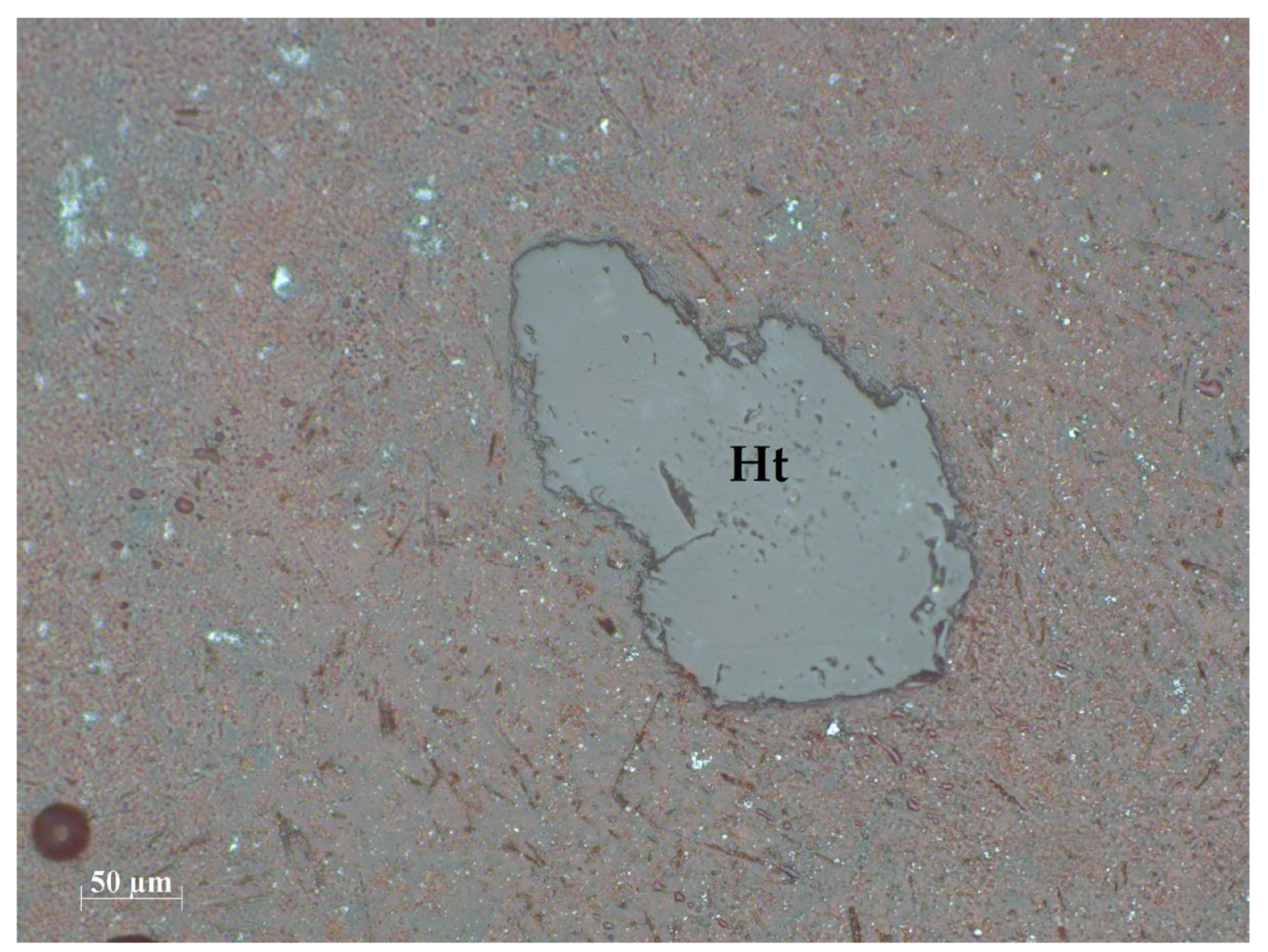
Hematite in the residue formed after leaching for 2 h at a temperature of 40 °C is present in the form of free grains of irregular morphology (Figure 11 and Figure 12). The grains show marked variability in dimensions, with their width ranging from 41 to 133 µm, while their length varies from 175 to 271 µm. Unlike hematite, anglesite occurs in the form of intergrowths with galena, where the transformation of galena into anglesite is still clearly visible, which is a consequence of the previously applied treatment of the initial sample (Figure 13). The dimensions of these intergrowths are approximately 87 × 99 µm.
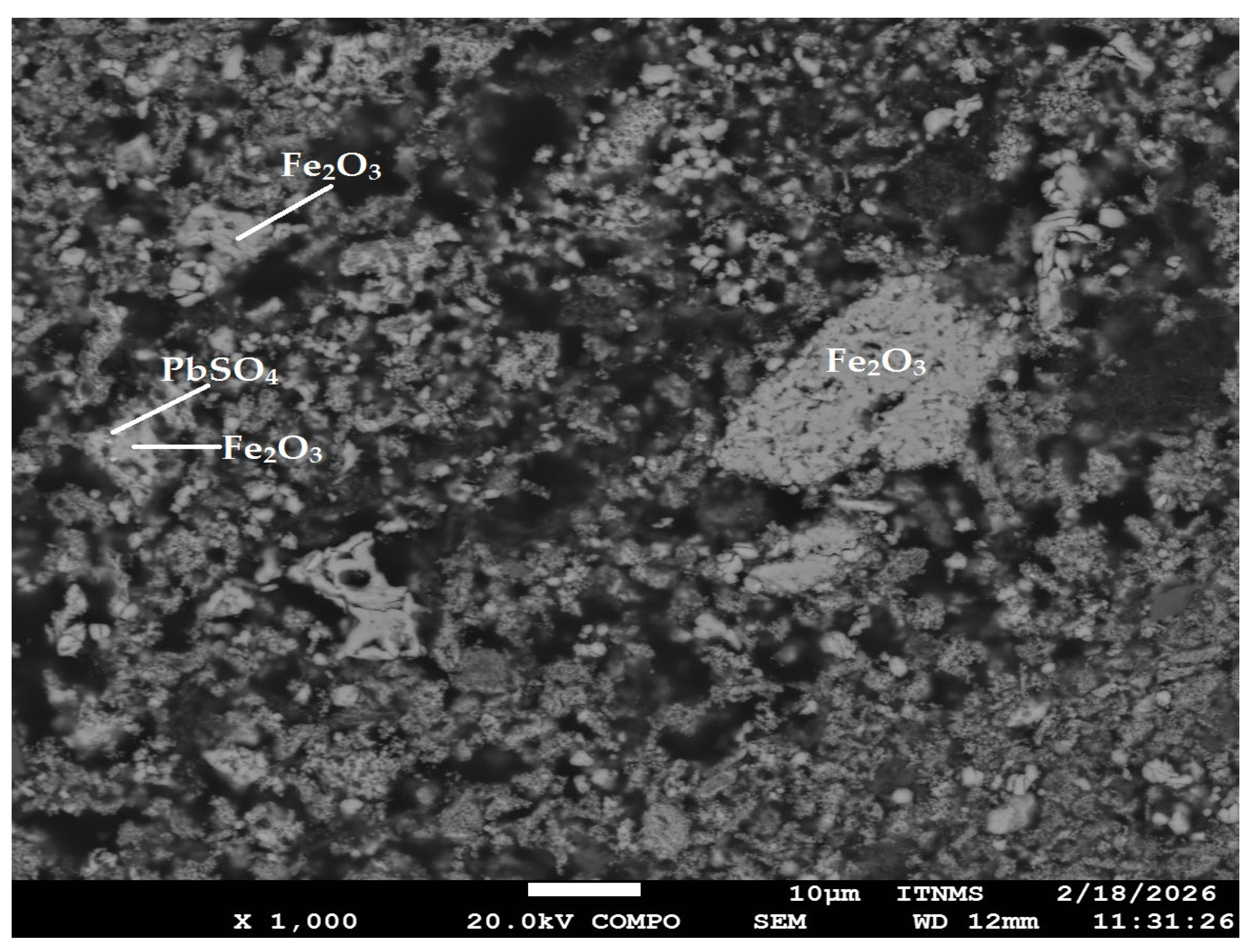
SEM analysis of the residue obtained after 2 h of leaching at 40 °C (Figure 14) confirms the observations from optical microscopy. The sample is dominated by hematite and anglesite phases, with the content of hematite being significantly higher than that of anglesite. Hematite grains appear as free particles with a markedly irregular morphology, while anglesite occurs in the form of intergrowths with galena. EDS analysis indicates a significant decrease in anglesite content compared to the initial sample, confirming its partial dissolution during the leaching process (Supplementary Figures S5 and S6).
When the reaction temperature was increased to 80 °C, only hematite (JCPDS No. 33-0664) and anglesite (JCPDS No. 89-3750) were identified in the residue formed after 2 h of leaching. Based on the intensity of the characteristic diffraction peaks obtained by XRD analysis (Figure 15), it can be concluded that hematite is the dominant phase in this residue, while anglesite is present in traces.
Hematite is predominantly present in the investigated residue as grains with irregular morphology, the dimensions of which are approximately 275 × 202 µm (Figure 16). A smaller fraction of hematite occurs only in traces as complex intergrowths with anglesite and galena. These intergrowths are characterized by a distinctly irregular morphology, and their dimensions are approximately 240 × 150 µm (Figure 17).
EDS analysis of the residue after 2 h of leaching at a temperature of 80 °C (Supplementary Figures S7 and S8) shows that the dominant phase is hematite, while anglesite is present only in traces. Based on this, it can be concluded that anglesite was almost completely leached during the process at 80 °C. SEM analysis confirms that hematite grains are present in the form of phases with a distinctly irregular morphology and different sizes (Figure 18). The remaining anglesite occurs in the form of intergrowths with hematite, which indicates that the unleached part of this phase is mechanically trapped within the hematite matrix, thus limiting its further contact with the leaching agent.
Given that the intensities of the characteristic diffraction peaks of anglesite on the XRD diffractogram of the residue formed after leaching at 40 °C are higher compared to the corresponding peaks obtained after leaching at 80 °C, it can be assumed that a higher degree of lead leaching from the initial sample was achieved at the elevated temperature. The presumed reduced presence of anglesite in the residue obtained at 80 °C, compared to the residue formed at 40 °C, was confirmed by optical microscopy observations, SEM, and EDS analyses.

3.4. Leaching Kinetics

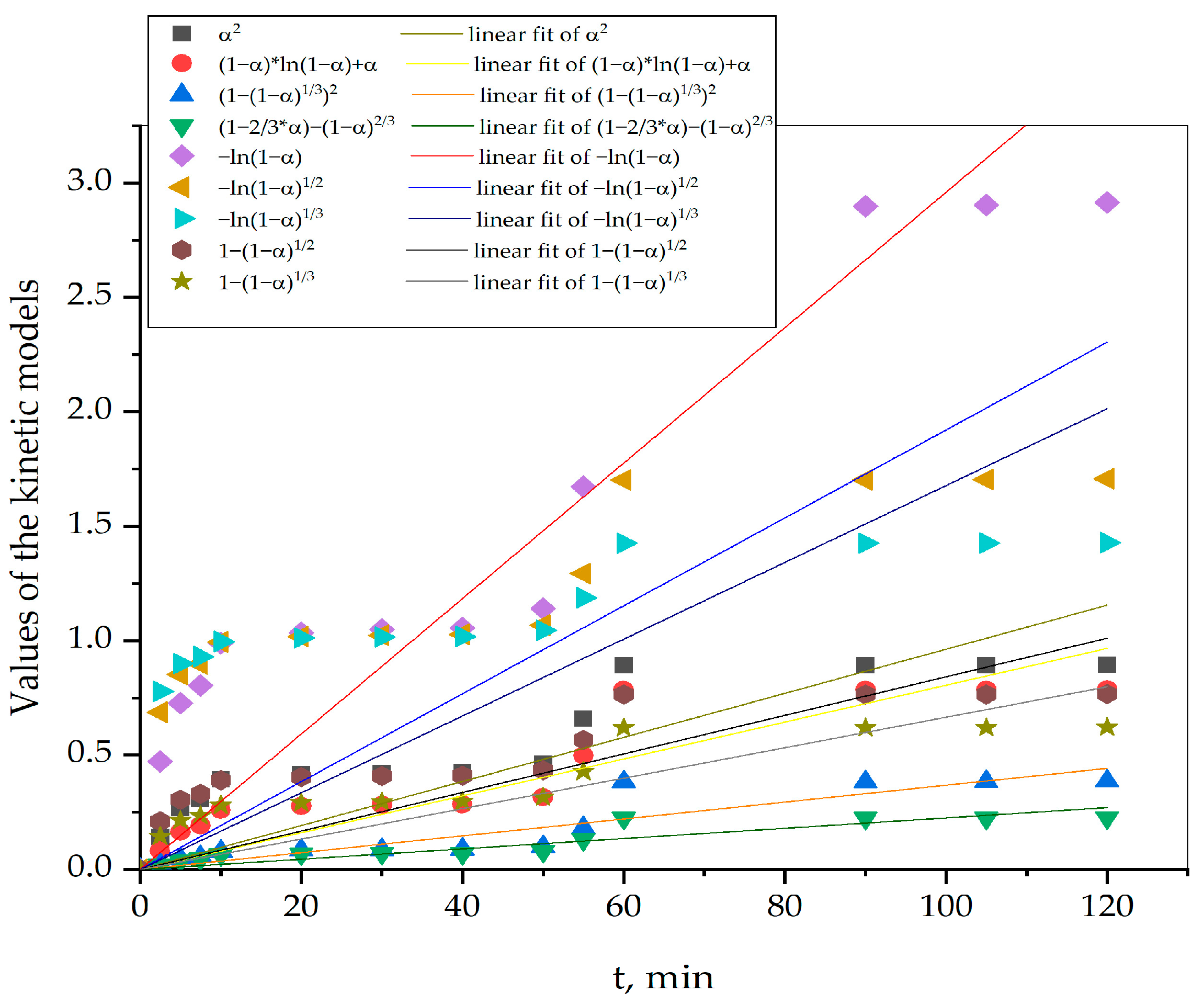
To describe the kinetics of the leaching process, a set of kinetic models analyzed within the modified Sharp’s method was applied, in order to adequately interpret the behavior of the optimized reaction system (MgCl2 × 6H2O concentration of 4 mol dm−3, solid/liquid ratio 1:20, and stirring rate of 150 rpm). Among the examined approaches, the Ginstling–Brounshtein model for diffusion through a solid layer, without the strict assumption of ideal geometry, showed the highest degree of agreement with experimental results at a temperature of 80 °C, with a coefficient of determination (R2) of 0.93 [28,29]. This expressed correlation indicates that a diffusion-controlled mechanism, described by the Ginstling–Brounshtein model, dominantly determines the speed of the process under the examined conditions. For this reason, the specified model was adopted as representative for the processing and adjustment of the complete experimental data obtained at different leaching temperatures (Figure 19). Table 3 summarizes all used kinetic models applied to experimental data along with their coefficients of determination (R2) with experimental results.
The results indicate that the kinetics of the leaching process are controlled by the diffusion of lead ions through the solid layer, which is most likely built of geometrically irregular grains of Fe2O3, Al2O3, SiO2, ZnFe2O4, as well as PbCl2 that is formed during the leaching process in accordance with Reaction (6). Lead dissolves in chloride solutions first by forming the complex PbCl42−. As the concentration of Cl increases, the solubility of lead also increases. However, when the concentration of Pb2+ increases, supersaturation and precipitation of PbCl2 can occur, which can slow down leaching by forming a layer on the particle surface. A further increase in the concentration of Cl leads to the re-dissolution of PbCl2 due to the formation of stable chloride complexes [30]. Due to the low solubility of hematite under acidic conditions, this phase, which represents the basis of the formed layer, remains present throughout the process as a dense and compact solid structure. Hence, the hematite phase significantly limits the transport of ions through the layer. The resulting layer exhibits characteristics of a typical passivation layer, representing the dominant mass transfer barrier and determining the overall speed of the leaching process [31].
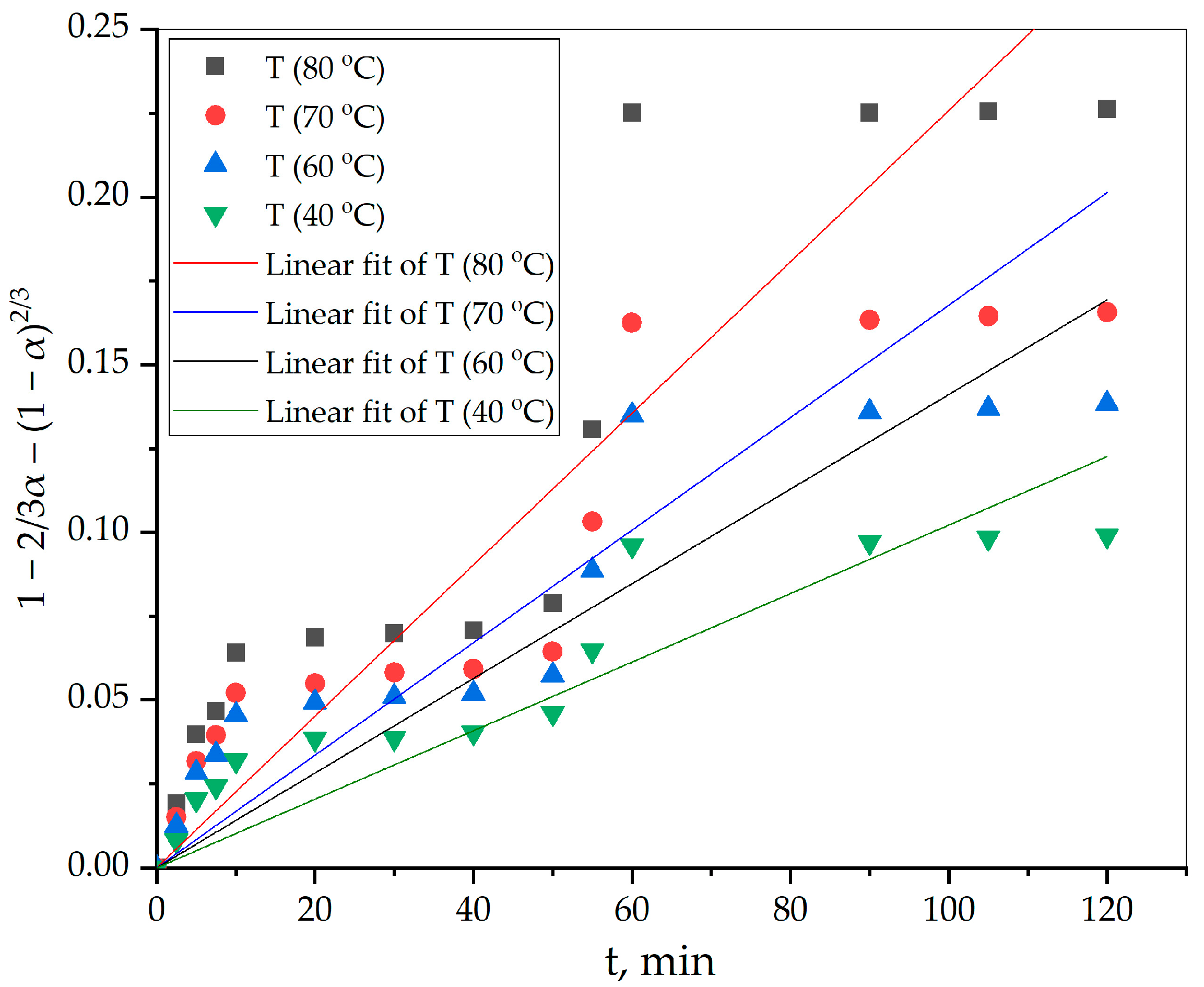
Figure 20 presents the results of experimental measurements from this study, interpreted through the application of the Ginstling–Brounshtein kinetic model in the temperature range from 40 to 80 °C. Excellent agreement between the experimental results and the applied theoretical model was confirmed by high coefficients of determination (R2 > 0.90) obtained at all investigated temperatures. The pronounced influence of temperature on the dynamics of lead leaching was additionally confirmed by determining the reaction rate constant, where the value at 80 °C (2.3 × 10⁻³ min−1) is more than twofold higher compared to the value determined at 40 °C (1.0 × 10⁻³ min−1).
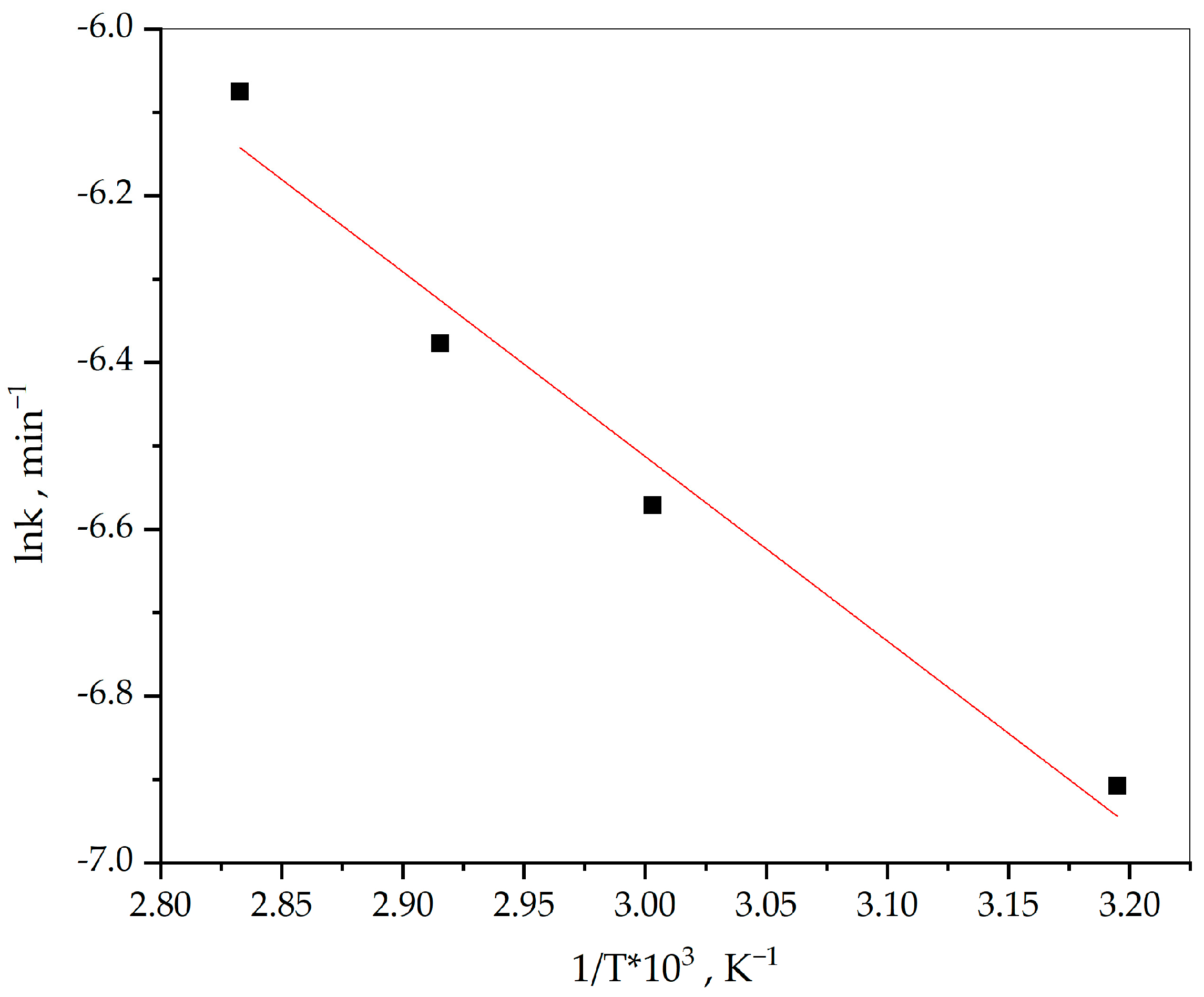
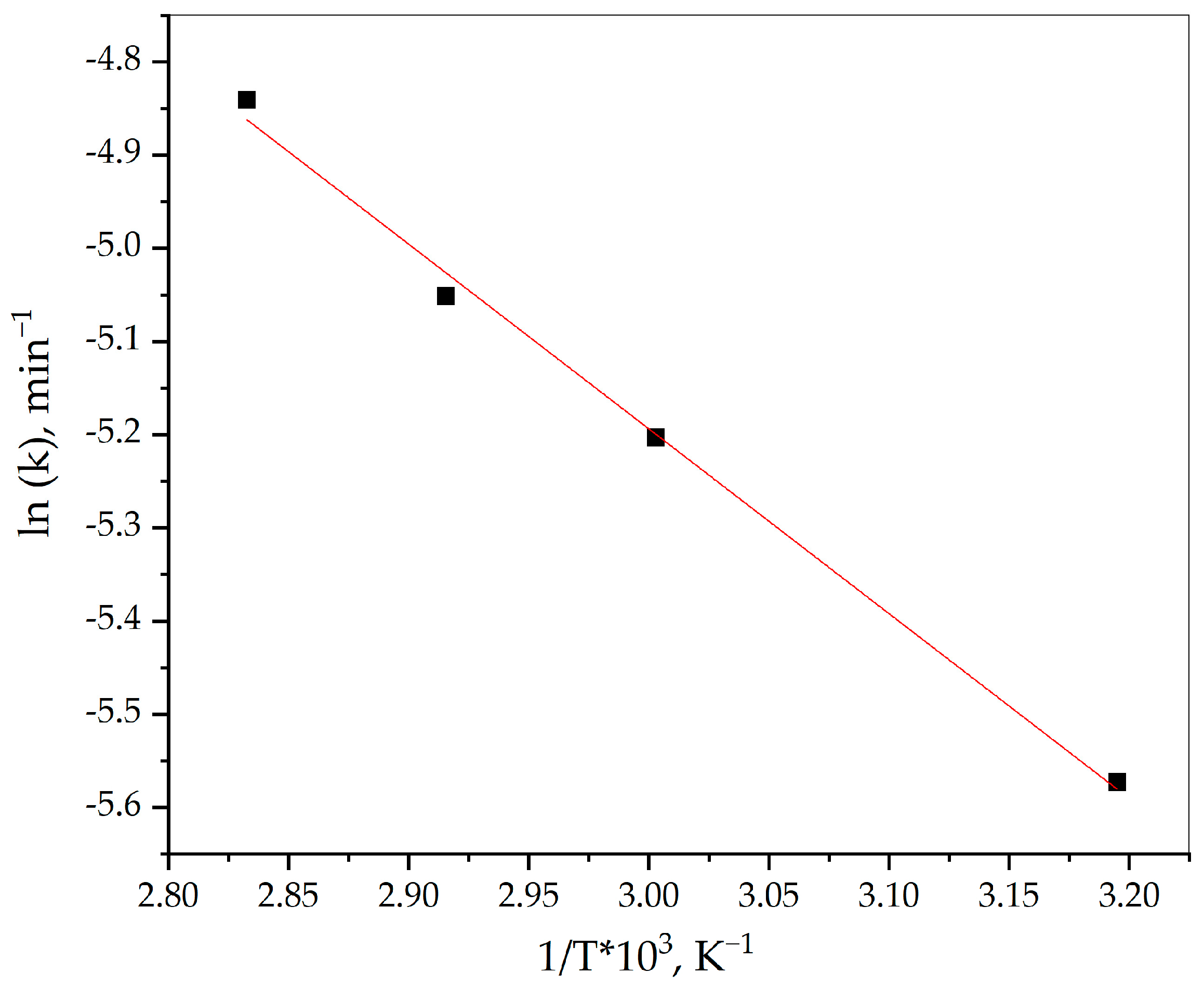
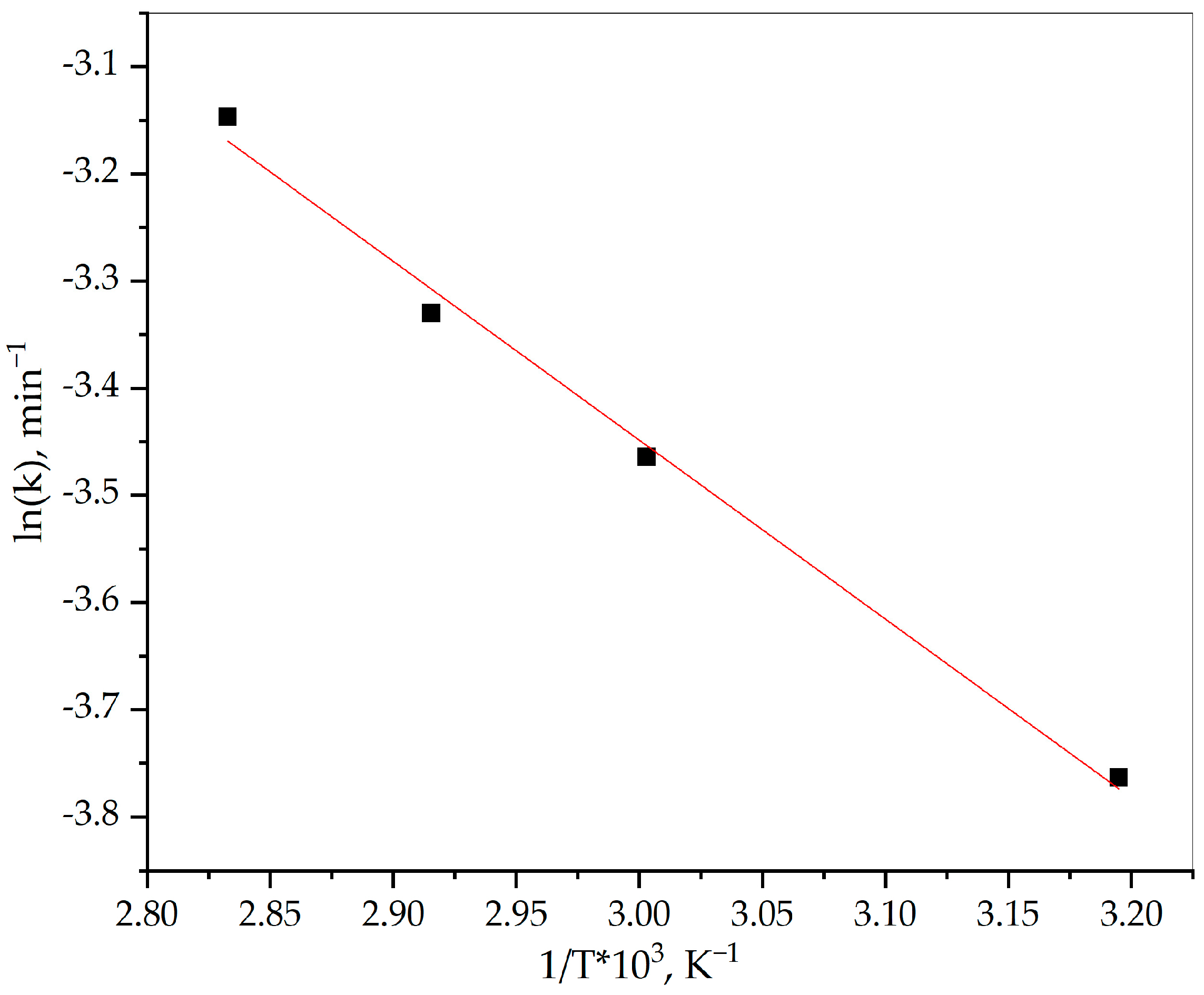
The activation energy was determined using the linearized form of the Arrhenius equation, where the dependence of ln(k) on 1/T is graphically presented in Figure 21. The obtained linear dependence shows a high degree of agreement with the experimental data (R2 = 0.97). The activation energy value was calculated based on the slope of the obtained dependence curve, as stated in our previous paper by Jovanovic et al. [32]. The obtained activation energy (18.41 kJ∙mol−1), together with the excellent agreement with the Ginstling–Brounshtein model, confirms that the kinetics of the process are dominated by diffusion, governing the overall leaching rate under the investigated conditions. The relatively low activation energy indicates that lead leaching from the initial sample proceeds with a small energy barrier, enabling a relatively rapid process. This value is fully consistent with the assumptions of the Ginstling–Brounshtein kinetic model, which describes diffusion-controlled processes. A similar kinetic regime was observed for ultrasonic leaching of zinc metallurgy residue in a chloride medium, where an activation energy of 7.57 kJ∙mol−1 was reported [33], also suggesting a diffusion-controlled mechanism. The lower value of the activation energy in that case can be attributed to the effect of ultrasound, which intensifies mass transfer and reduces the energy barrier of the process. In contrast, the kinetic analysis of chloride leaching of pure PbSO4 conducted by Sinadinović et al. [22] showed that the process has a mixed mechanism, i.e., that the overall rate is influenced by diffusion transport and chemical reaction at the phase boundary. In comparison with the mentioned system, the observed differences in the reaction mechanism within this study primarily arise from the fact that the kinetic analysis was performed on a real sample, which represents a relatively uncommon approach and significantly contributes to the relevance of the obtained results. The complex phase composition of the initial sample, particularly due to the presence of identified insoluble phases, significantly hinders the diffusion of lead ions, thereby governing the kinetics of the overall process.
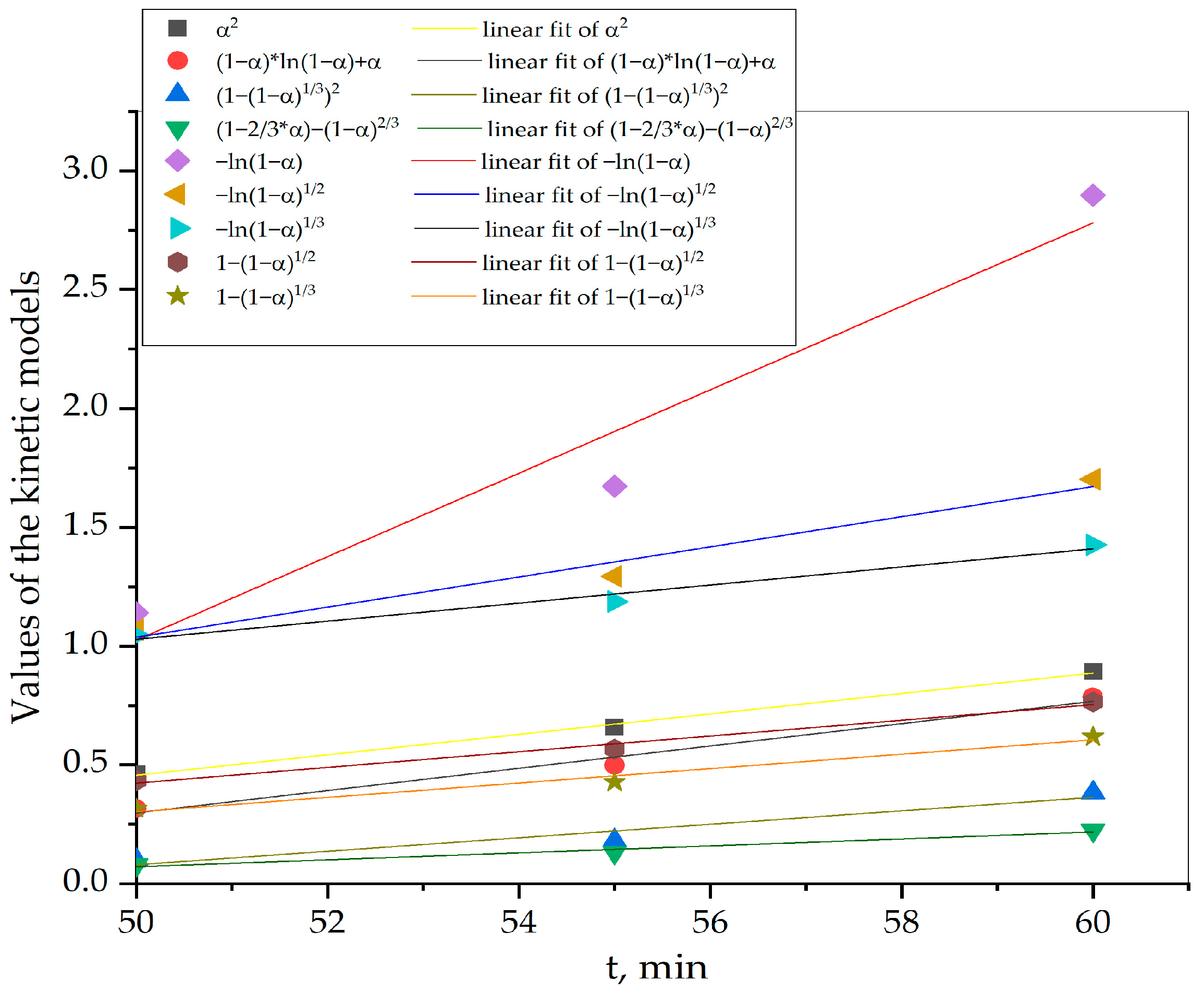
However, due to the specific shape of the lead leaching curve (Figure 10), the entire process can be divided into four characteristic sections, as previously described. The classification was based on the characteristic shape of the curve, which exhibits a rapid initial increase in the degree of leaching, followed by a plateau, then a subsequent rise, and finally a terminal plateau. Kinetic analysis of each of these segments allows a more detailed insight into the dominant mechanisms that take place within each interval, as well as a more comprehensive understanding of the mechanism of the entire process of lead chloride leaching from the base specimen. During the kinetic analysis of individual segments, as well as in the analysis of the entire process, a set of kinetic models considered within Sharp’s modified method was applied.
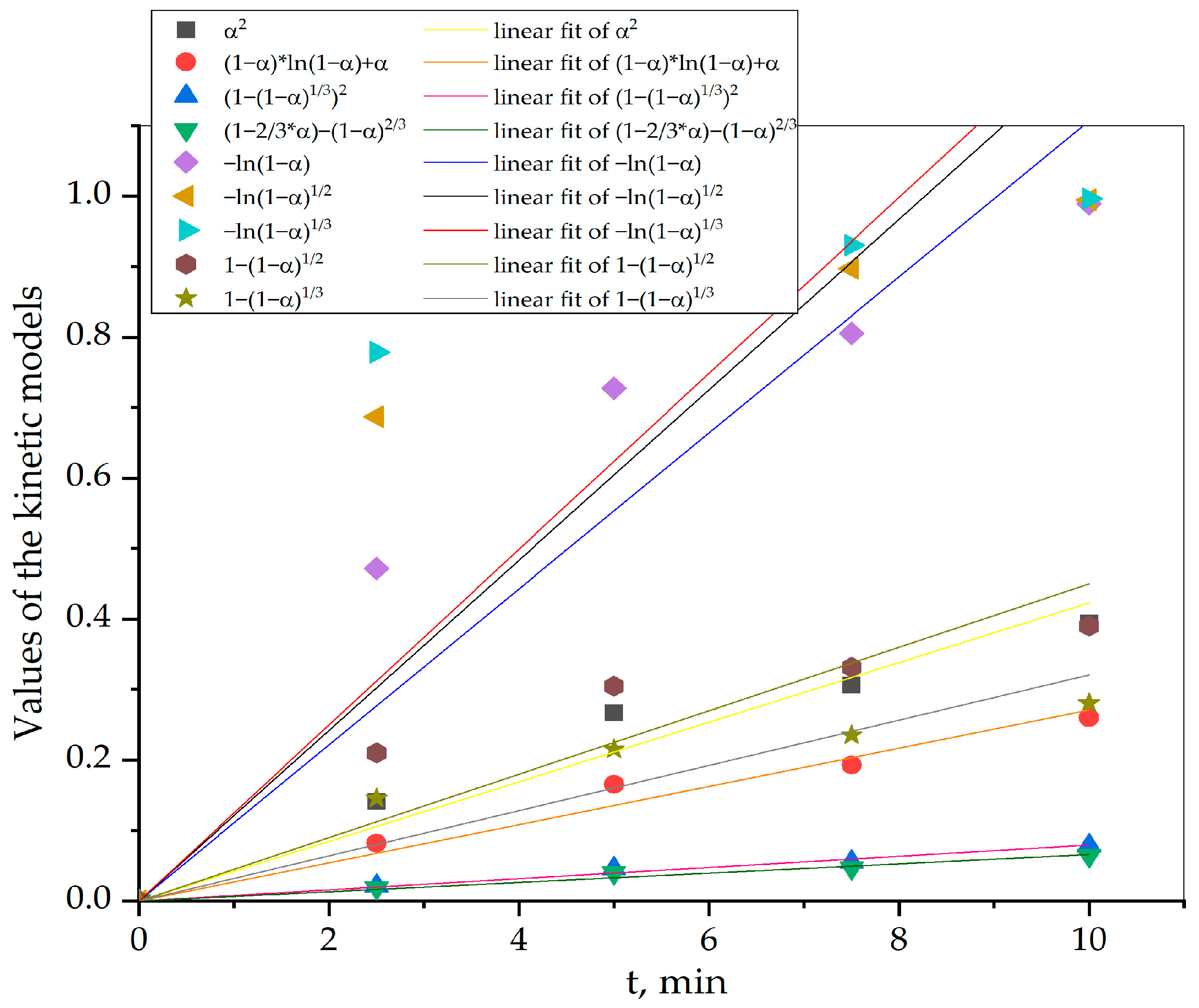
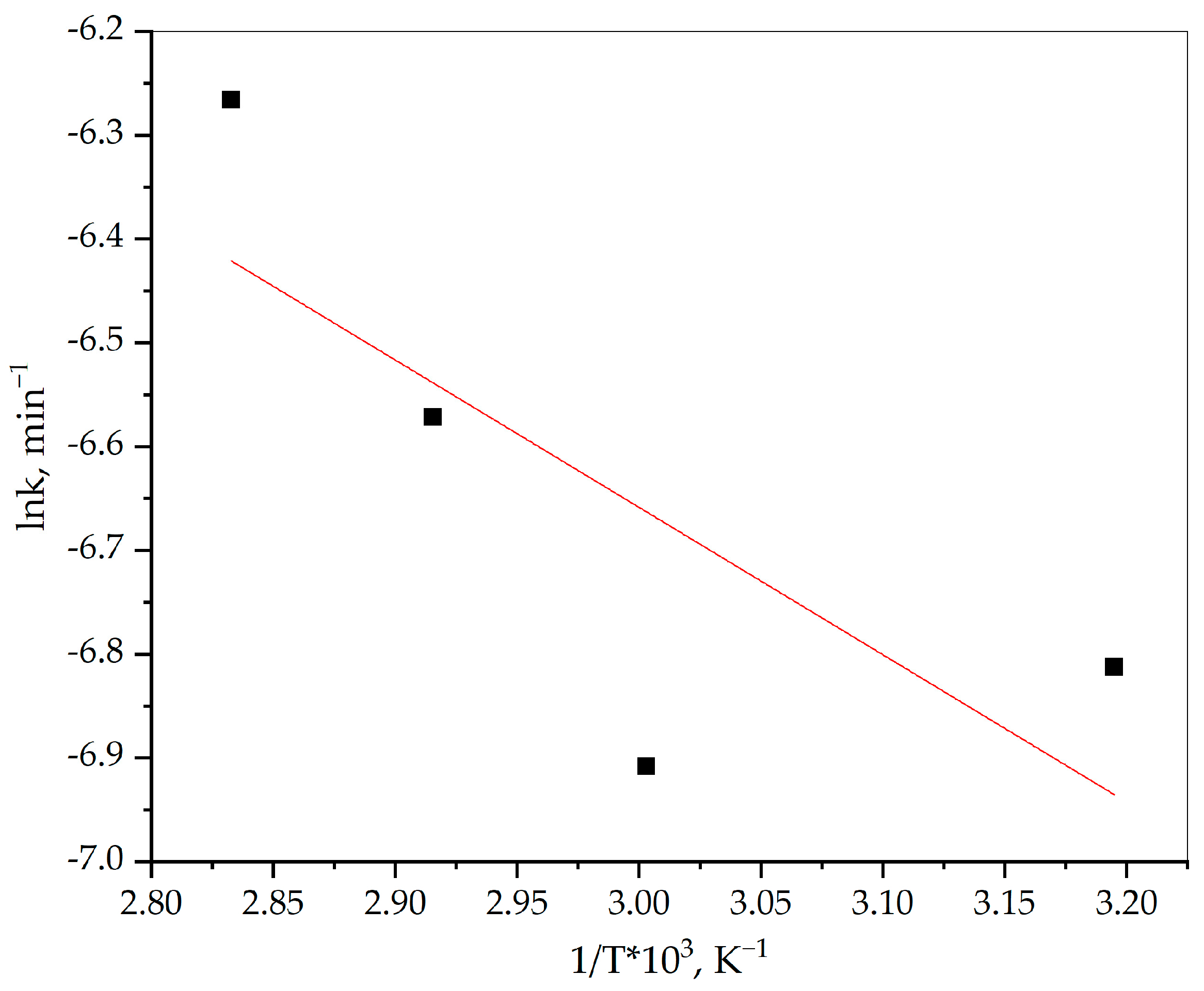
The first segment of the process is characterized by a sudden increase in the degree of leaching of lead, i.e., a pronounced steepness of the curve, from the beginning of the process to the 10th min of reaction (Figure 9). Within this segment, the best agreement with experimental results was shown by Jander’s diffusion model, where the coefficient of determination (R2) obtained is greater than 0.98 (Figure 22).
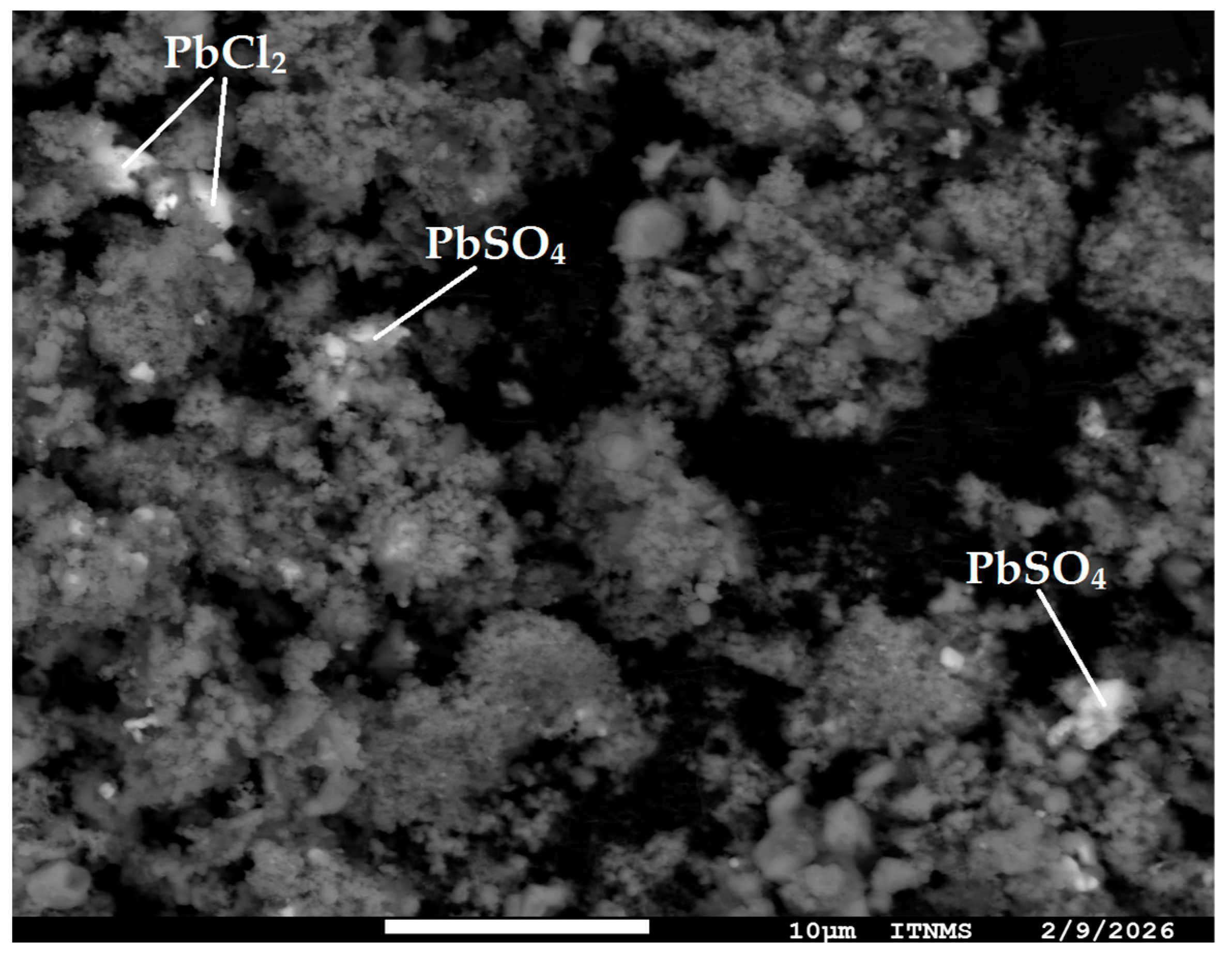
Jander’s diffusion model describes the kinetics of heterogeneous processes in which the reaction rate is limited by the diffusion of reagents through a three-dimensional layer of solid products (passivation layer) that forms around the unreacted particle core [34]. Based on the SEM image (Figure 23) and EDS analysis (Supplementary Figure S9) of the precipitate after 10 min of leaching, it can be concluded that in the initial phase of the process, no PbCl2 particles are formed that could further limit the diffusion of lead ions through the already present layer made of Fe2O3, Al2O3, SiO2 and ZnFe2O4. The absence of additional passivation during this time interval results in relatively low diffusion resistance, which is reflected in the pronounced steepness of the leaching curve and the high reaction rate observed in the first segment.
The activation energy was calculated in the same way as for the entire process, and for this segment it is 16.48 kJ mol−1, which additionally confirms that in this time interval the diffusion of lead ions through the passivation layer is the limiting step of the process (Figure 24).
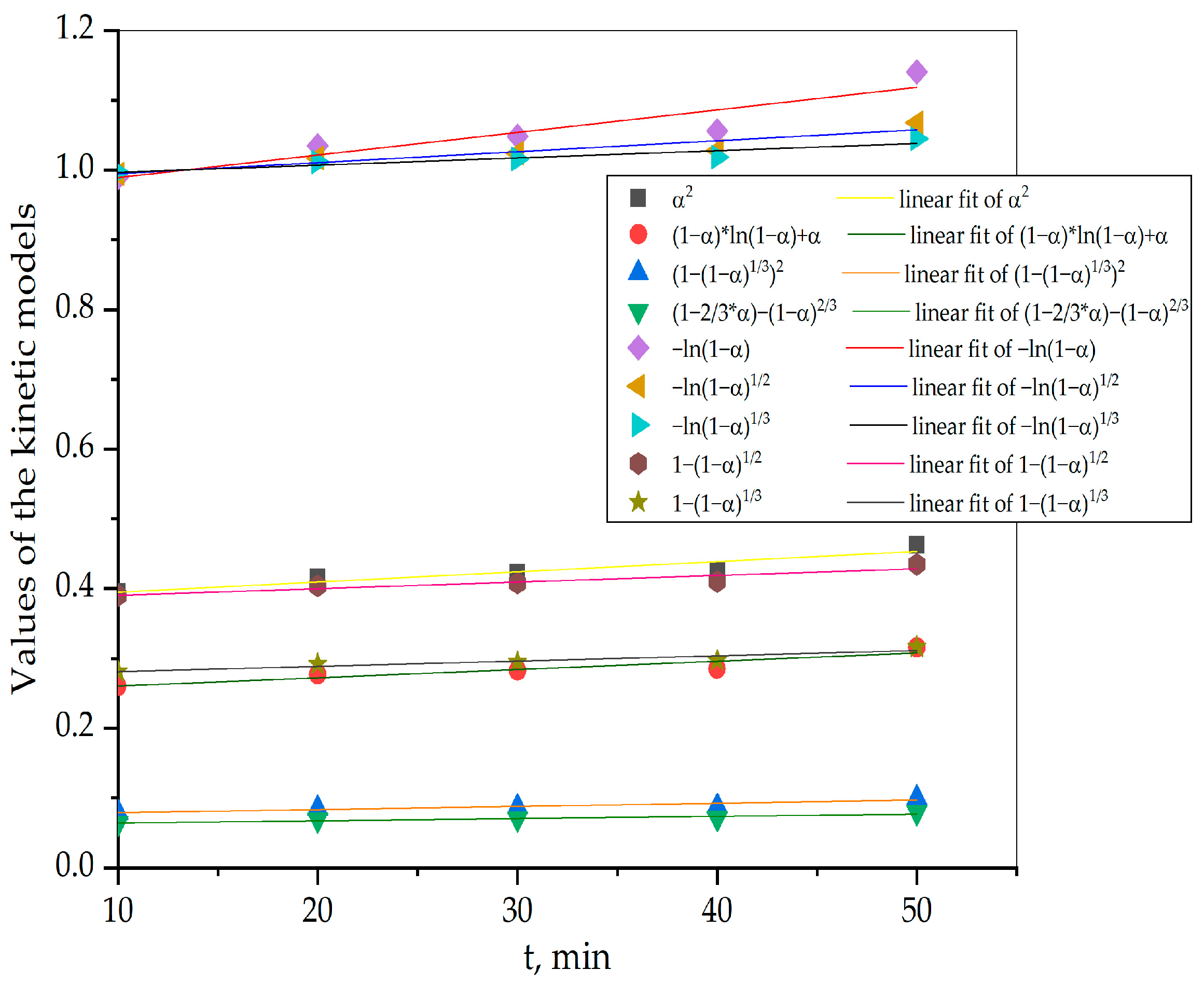
The second segment of the process begins after 10 min and lasts up to 50 min of reaction, characterized by a pronounced plateau of the curve and stagnation of lead leaching (Figure 9). The experimental data in this time interval show the best agreement with the Avrami–Erofee kinetic model (R2 > 0.90), which describes processes controlled by the progressive transformation of the active surface due to nucleation and three-dimensional growth of the new phase (Figure 25).
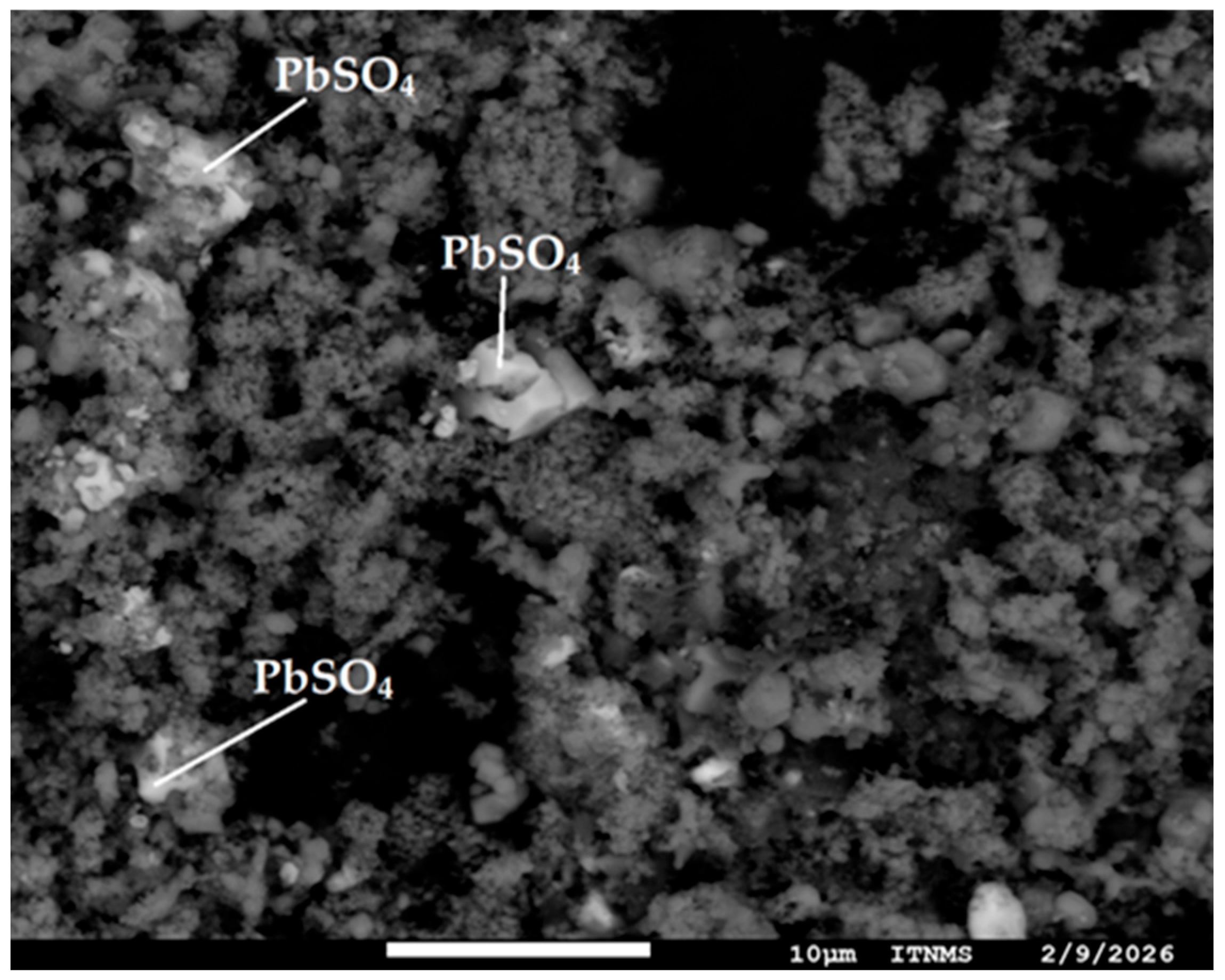
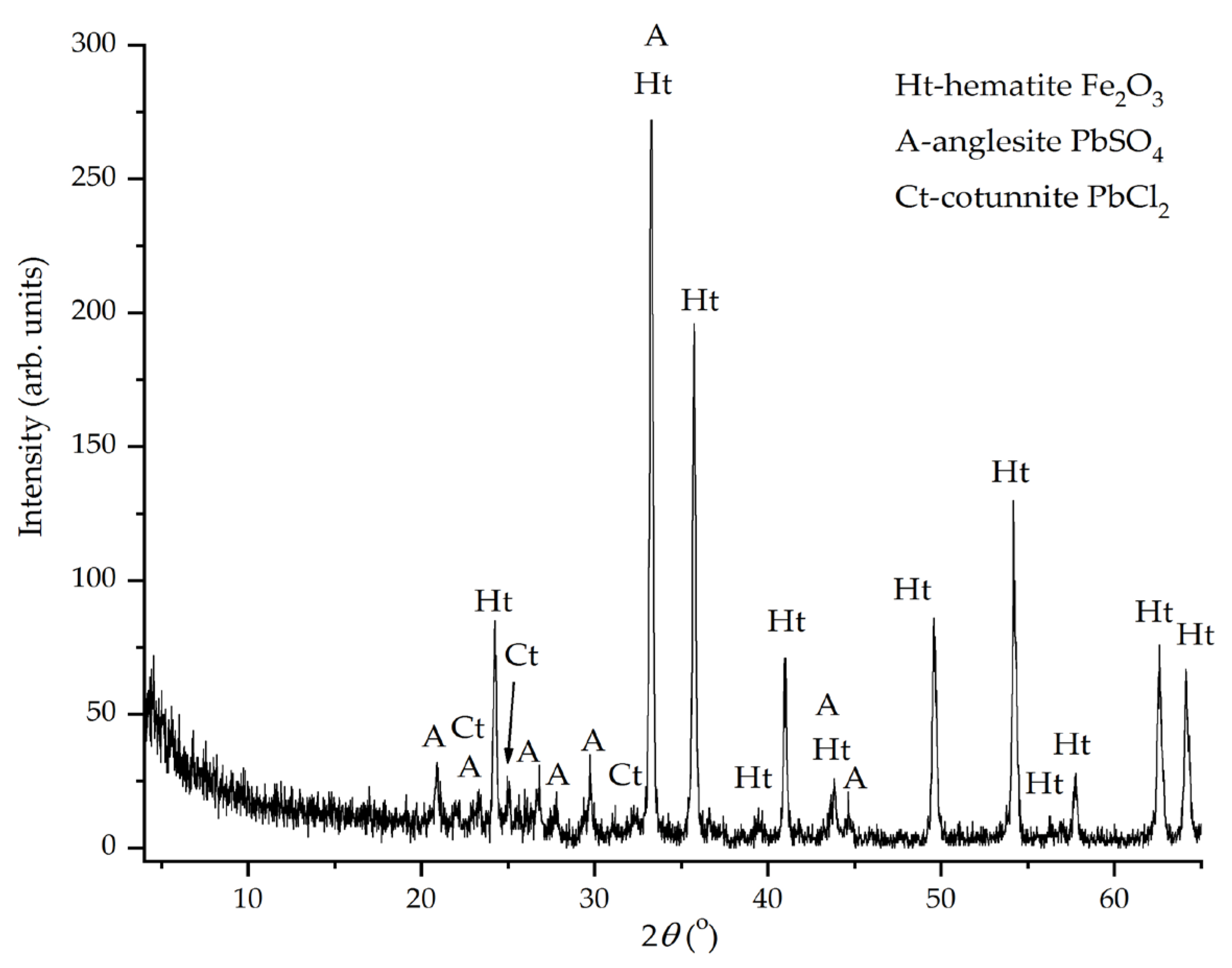
The formation and expansion of the reaction products lead to a reduction in the available reaction surface, which results in a significant slowing down of the process and the appearance of a plateau region on the leaching curves [35]. In this segment, PbCl2 particles are formed according to Reaction (6), completely blocking the pores within the layer composed of insoluble phases of Fe2O3, Al2O3, SiO2, and ZnFe2O4, which was confirmed by SEM (Figure 26) and EDS analysis (Supplementary Figures S10 and S11). The newly formed PbCl2 particles are characterized by smooth surfaces, with dimensions of approximately 1.2 × 1.5 µm. The formation of this phase is in accordance with the thermodynamic analysis of the system, i.e., the equilibrium diagram (Figure 8), which indicates PbCl2 as a possible solid phase under the tested temperature and chloride ion concentration conditions. This experimentally confirms the thermodynamic feasibility of PbCl2 formation, although its stability depends on the local reaction conditions. EDS analysis additionally confirms the stagnation of the degree of leaching, since a similar anglesite content was registered in the residue after 50 min of leaching as after 10 min, which indicates limited transport of dissolved lead ions through the formed passivation layer. The presence of PbCl2 (JCPDS No. 84-1177) particles was also confirmed by XRD analysis of the precipitate formed after 50 min of leaching at 80 °C (Figure 27).
The activation energy for this segment is 11.8 kJ mol−1 (Figure 28), which is characteristic of processes controlled by diffusion through a compact product layer and additionally confirms that the reaction rate is determined by transport limitations within the passivation layer.
In the third segment, covering the time interval from 50 to 60 min of the process, a sudden increase in lead leaching, i.e., a pronounced rise in the leaching curve, is observed (Figure 9). The kinetic analysis of this segment indicated that the experimental data best fit the one-dimensional diffusion model (Figure 29), with the obtained coefficient of determination being approximately 0.99.
The one-dimensional diffusion model describes processes in which the rate is limited by diffusion in one dominant direction, which is typical for transport through cracks, channels, or locally open diffusion pathways in the product layer [36]. After 50 min of leaching, PbCl2 particles react with unreacted MgCl2, resulting in the formation of a PbCl42− complex, in accordance with Reaction (7). The formation of the PbCl42− complex leads to the reopening of pores in the already existing layer made of Fe2O3, Al2O3, SiO2 and ZnFe2O4, which enables the diffusion of dissolved lead ions through locally open channels. In the SEM scan (Figure 30) of the residue obtained after 60 min of leaching, the presence of PbCl2 particles is not observed, which was additionally confirmed by EDS analysis (Supplementary Figure S12). These observations confirm the stated assumption about the removal of PbCl2 from the passivation layer and the reopening of diffusion pathways during this segment of the process. The mechanism defined in this way is fully consistent with the assumptions of the one-dimensional diffusion model.
The activation energy for this segment is 13.88 kJ mol−1 (Figure 31), which is characteristic of diffusion-controlled processes and additionally confirms the validity of the applied kinetic model in this time interval.
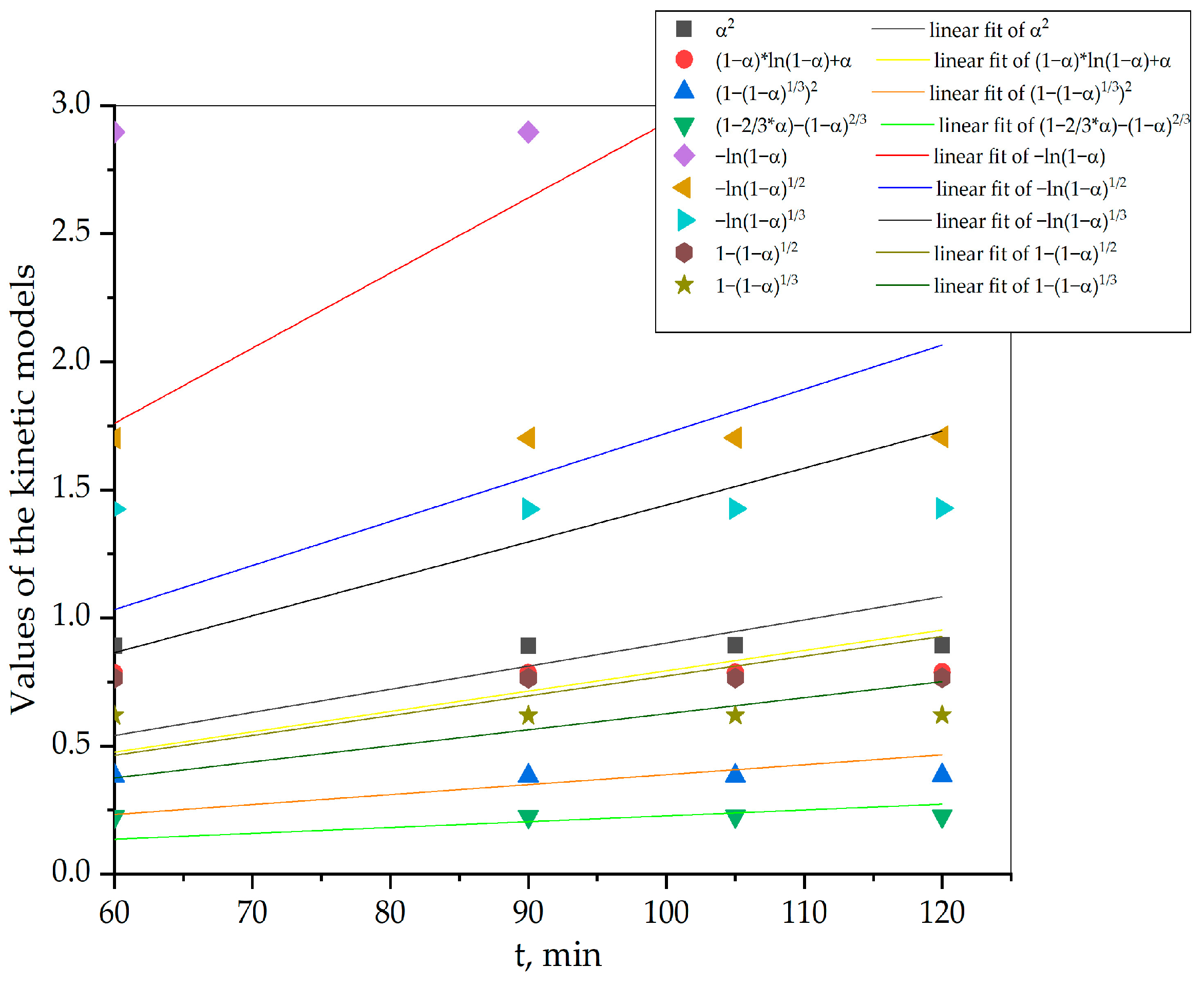
The fourth segment represents the final stage of the leaching process. Its beginning marks the reaching of the maximum degree of lead leaching after 60 min, after which there are almost no further changes until the end of the process, i.e., up to 120 min. This segment manifests as a pronounced plateau on the leaching curve (Figure 9). Experimental data in this time interval showed the best agreement with Jander’s diffusion model (Figure 32), with a coefficient of determination greater than 0.94.
Within this segment, the process transitions to a stable diffusion regime, in which the rate is limited by diffusion through a continuous layer composed of insoluble phases of Fe2O3, Al2O3, SiO2, and ZnFe2O4, which is in accordance with the basic assumptions of the Jander model (Figure 18). The activation energy for this segment is 20.5 kJ mol−1 (Figure 33). This value further confirms the diffusion-controlled mechanism of the process. The higher activation energy compared to the previous segments can be attributed to mass transport occuring through a thicker, more compact, and stable diffusion layer. Such a layer imposes greater resistance to mass transfer, thereby requiring higher energy input compared to the unstable or partially open diffusion regimes characteristic of the earlier stages of the process.
Figure 31. Determination of activation energy—the third leaching segment.
Metals 16 00367 g031
Figure 32. Fitting experimental data from the fourth segment with kinetic models at 80 °C (model selection).
Metals 16 00367 g032
Figure 33. Determination of activation energy—the fourth leaching segment.
Metals 16 00367 g033

4. Conclusions

Lead recovery from jarosite is highly important from both environmental and economic perspectives. In this study, the mechanism of lead leaching using the chloride agent (MgCl2) from pretreated jarosite sludge was examined. XRD analysis of the initial sample showed a significant content of Fe2O3, Al2O3, and SiO2, while lead was identified in the form of anglesite (PbSO4). Thermodynamic analysis indicated that the formation of the soluble complex PbCl42− requires an elevated concentration of chloride ions—above 7 mol dm−3. The influence of temperature on the leaching degree was investigated, and it was found that at 80 °C, 95% of lead is leached. This is significantly higher compared to other tested leaching temperatures (40–60 °C, 74–82%, respectively), which clearly indicates that temperature has a significant impact on the degree of lead leaching. Experimental results are in agreement with the predictions derived from the conducted thermodynamic analysis. Furthermore, the phase assemblages predicted based on the Eh–pH conditions within the thermodynamic analysis were confirmed by characterization of the leaching products. The main conclusion of the thermodynamic analysis indicates that the formation of lead chloride complexes occurs under mildly oxidizing and acidic conditions (Eh > 0 and pH < 6). Furthermore, the analysis suggests that the formation and stabilization of these complex species require the chloride ion concentration in the leaching agent to exceed 7 mol dm−3.
The mechanism of the leaching process of the real sample, under experimentally optimized conditions, was determined by kinetic analysis carried out in two ways. The first approach includes the analysis of the process as a whole, while the second considers a separate analysis of the four observed leaching segments, which proved to be in accordance with the change in the kinetic regime.
Based on the kinetic analysis of the leaching process, the following conclusions can be drawn:
The experimental data for the overall leaching process are best described by the Ginstling–Brounshtein kinetic model, indicating that the process is predominantly controlled by diffusion through a solid product layer.
The diffusion barrier limiting the process consists of insoluble phases such as Fe2O3, Al2O3, SiO2, and ZnFe2O4, together with the formed PbCl2 particles, which additionally hinder the transport of reactants and reaction products.
The calculated activation energy for the overall process is 18.41 kJ mol−1, confirming that the rate of the process is primarily governed by diffusion-controlled mechanisms.
In the initial stage of the process (0–10 min), the kinetics follow the Jander diffusion model, which corresponds to diffusion through a three-dimensional passivation layer and results in a rapid increase in the degree of leaching.
In the intermediate stage (10–50 min), the kinetic behavior is described by the Avrami–Erofeev model, indicating transformation of the active surface due to nucleation and growth of the PbCl2 phase, which contributes to the slowdown of the leaching process.
In the third stage (50–60 min), the leaching degree increases again, with the mechanism corresponding to one-dimensional diffusion through microcracks, channels, and pores, accompanied by a decrease in PbCl2 particles due to the formation of the soluble PbCl42− complex.
In the final stage of the process (60–120 min), the process becomes limited again due to the formation of a continuous diffusion layer composed of Fe2O3, Al2O3, SiO2, and ZnFe2O4, which represents the main factor controlling the further progress of leaching.
The main conclusion of the kinetic analysis indicates that the formation of PbCl2 particles, which penetrate into the pores of the previously formed layer composed of Fe2O3, Al2O3, SiO2, and ZnFe2O4, significantly reduces diffusion through the solid layer. As a consequence, a plateau appears in the kinetic curve, resulting in stagnation of the leaching degree in the time interval from 10 to 50 min. Defining the mechanism of chloride leaching of lead from pretreated jarosite sludge represents a significant contribution to the optimization of the process and its potential industrial application. The obtained results indicate that, with the correct selection of the parameters of the leaching process, efficient lead extraction can be achieved. This approach provides both environmental benefits, through the reduction in the amount and toxicity of waste, and economic benefits, due to the valorization of lead as a metal with stable market demand and a high price. The proposed leaching treatment could also be promising for other critical raw materials from natural or waste stream sources.

Supplementary Materials

The following supporting information can be downloaded at: https://www.mdpi.com/article/10.3390/met16040367/s1, Figure S1. EDS analysis of SiO2 grains in the initial sample from Figure 5; Figure S2. EDS analysis of Fe2O3 grains in the initial sample from Figure 5; Figure S3. EDS analysis of Al2O3 grains with ZnFe2O4 impurities in the initial sample from Figure 5; Figure S4. EDS analysis of PbSO4 grains in the initial sample from Figure 5; Figure S5. EDS analysis of Fe2O3 grains in the residue after 2 h of leaching at 40 °C from Figure 14; Figure S6. EDS analysis of PbSO4 grains in the residue after 2 h of leaching at 40 °C from Figure 14; Figure S7. EDS analysis of Fe2O3 grains in the residue after 2 h of leaching at 80 °C from Figure 18; Figure S8. EDS analysis of PbSO4 grains in the residue after 2 h of leaching at 80 °C from Figure 18; Figure S9. EDS analysis of PbSO4 grains in the residue after 10 min of leaching from Figure 23; Figure S10. EDS analysis of PbCl2 grains in the residue after 50 min of leaching from Figure 26; Figure S11. EDS analysis of PbSO4 grains in the residue after 50 min of leaching from Figure 26; Figure S12. EDS analysis of PbSO4 grains in the residue after 60 min of leaching from Figure 30.

Author Contributions

Conceptualization, D.A., Ž.K. and M.S.; methodology, D.A. and M.K.; software, D.A. and N.G.; validation, Ž.K. and M.S.; formal analysis, N.G., J.D. and M.K.; investigation, D.A., A.J. and J.D.; resources, Ž.K.; data curation, D.A., M.K. and J.D.; writing—original draft preparation, D.A.; writing—review and editing, A.J., M.K. and J.D.; visualization, D.A. and A.J.; supervision, Ž.K. and M.S.; project administration, Ž.K. and M.S.; funding acquisition, Ž.K. All authors have read and agreed to the published version of the manuscript.

Funding

This paper was supported by the Ministry of Science and Technological Development and Innovation of the Republic of Serbia (Contract No. 451-03-33/2026-03/200023, 451-03-33/2026-03/200288, 451-03-33/2026-03/200287 and 451-03-34/2026-03/200135).

Data Availability Statement

The original contributions presented in this study are included in the article/Supplementary Materials. Further inquiries can be directed to the corresponding author.

Conflicts of Interest

Author Nataša Gajić was employed by the company Innovation Center of the Faculty of Technology and Metallurgy in Belgrade Ltd. Author Jovana Djokić was employed by the Innovation Center of the Faculty of Chemistry in Belgrade Ltd. The remaining authors declare that the research was conducted in the absence of any commercial or financial relationships that could be construed as a potential conflict of interest.

References

  1. Meija, J.; Coplen, T.B.; Berglund, M.; Brand, W.A.; De Bièvre, P.; Gröning, M.; Holden, N.E.; Irrgeher, J.; Loss, R.D.; Walczyk, T.; et al. Atomic Weights of the Elements 2013 (IUPAC Technical Report). Pure Appl. Chem. 2016, 88, 265–291. [Google Scholar] [CrossRef]
  2. Abdelbasir, S.M.; Dina, C.T.E. Green Processes for Electronic Waste Recycling: A Review. J. Sustain. Metall. 2018, 4, 295–311. [Google Scholar] [CrossRef]
  3. Roca, A.; Cruells, M. Jarosites: Formation, Structure, Reactivity and Environmental. Metals 2022, 12, 802. [Google Scholar] [CrossRef]
  4. Jiao, F.; Cui, Y.; Wang, D.; Hu, C. Research of the Replacement of Dichromate with Depressants Mixture in the Separation of Copper-Lead Sulfides by Flotation. Sep. Purif. Technol. 2022, 278, 119330. [Google Scholar] [CrossRef]
  5. Linsong, W.; Peng, Z.; Yu, F.; Sujun, L.; Yue, Y.; Li, W.; Wei, S. Recovery of Metals from Jarosite of Hydrometallurgical Nickel Production by Thermal Treatment and Leaching. Hydrometallurgy 2020, 198, 105493. [Google Scholar] [CrossRef]
  6. Palden, T.; Regadío, M.; Onghena, B.; Binnemans, K. Selective Metal Recovery from Jarosite Residue by Leaching with Acid-Equilibrated Ionic Liquids and Precipitation-Stripping. ACS Sustain. Chem. Eng. 2019, 7, 4239–4246. [Google Scholar] [CrossRef]
  7. Han, H.; Sun, W.; Hu, Y.; Jia, B.; Tang, H. Anglesite and Silver Recovery from Jarosite Residues through Roasting and Sulfidization-Flotation in Zinc Hydrometallurgy. J. Hazard. Mater. 2014, 278, 49–54. [Google Scholar] [CrossRef]
  8. Chen, M.; Wang, R.; Fan, W.; Wang, J.; Zeng, X.; Han, Y.; Liang, Q.; Huang, R.; Zhou, S.; Shu, J. Advances on jarosite residue detoxification and reutilization: A Review. Environ. Sci. Pollut. Res. 2025, 32, 3571–3592. [Google Scholar] [CrossRef]
  9. Kamberović, Ž.; Gajić, N.; Korać, M.; Jevtić, S.; Sokić, M.; Stojanović, J. Technologically Sustainable Route for Metals Valorization from Jarosite-Pbag Sludge. Minerals 2021, 11, 255. [Google Scholar] [CrossRef]
  10. Höber, L.; Witt, K.; Steinlechner, S. Selective Chlorination and Extraction of Valuable Metals from Iron Precipitation Residues. Appl. Sci. 2022, 12, 3590. [Google Scholar] [CrossRef]
  11. Radovanovic, D.; Kamberovic, Z.; Andjic, Z.; Ranitovic, M.; Markovic, B. The Effect of CaO and MgO Addition and Cooling Rate on Stability of Slag Obtained after Jarosite and Neutral Leaching Residue Treatment in the Waelz Process. Physicochem. Probl. Miner. Process. 2018, 54, 484–495. [Google Scholar] [CrossRef]
  12. González-Ibarra, A.A.; Nava-Alonso, F.; Fuentes-Aceituno, J.C.; Uribe-Salas, A. Hydrothermal decomposition of industrial jarosite in alkaline media: The rate determining step of the process kinetics. J. Min. Metall. Sect. B Metall. 2016, 52, 135–142. [Google Scholar] [CrossRef]
  13. Malenga, E.N.; Mulaba-Bafubiandi, A.; Nheta, W. Alkaline Leaching of Nickel Bearing Ammonium Jarosite Precipitate Using KOH, NaOH and NH4OH in the Presence of EDTA and Na2S. Hydrometallurgy 2015, 155, 69–78. [Google Scholar] [CrossRef]
  14. Reyes, I.A.; Patiño, F.; Flores, M.U.; Pandiyan, T.; Cruz, R.; Gutiérrez, E.J.; Reyes, M.; Flores, V.H. Dissolution Rates of Jarosite-Type Compounds in H2SO4 Medium: A Kinetic Analysis and Its Importance on the Recovery of Metal Values from Hydrometallurgical Wastes. Hydrometallurgy 2017, 167, 16–29. [Google Scholar] [CrossRef]
  15. Zhou, S.; Han, Y.; Huang, R.; Huang, Y.; Dong, Q.; Gang, H.; Qin, J.; Yu, X.; Zeng, X.; Cao, W.; et al. Making waste profitable: Efficient recovery of metallic iron from jarosite residues. Chin. J. Chem. Eng. 2024, 71, 66–76. [Google Scholar] [CrossRef]
  16. Kamberović, Ž.; Ranitović, M.; Manojlović, V.; Jevtić, S.; Gajić, N.; Štulović, M. Thermodynamic and Kinetic Analysis of Jarosite Pb–Ag Sludge Thermal Decomposition for Hydrometallurgical Utilization of Valuable Elements. J. Therm. Anal. Calorim. 2023, 148, 11799–11810. [Google Scholar] [CrossRef]
  17. Liu, C.; Ju, S.H.; Zhang, L.B.; Srinivasakannan, C.; Peng, J.H.; Le, T.Q.X.; Guo, Z.Y. Recovery of Valuable Metals from Jarosite by Sulphuric Acid Roasting Using Microwave and Water Leaching. Can. Metall. Q. 2017, 56, 1–9. [Google Scholar] [CrossRef]
  18. Jiang, G.-M.; Peng, B.; Liang, Y.-J.; Chai, L.-Y.; Wang, Q.-W.; Li, Q.-Z.; Hu, M. Recovery of Valuable Metals from Zinc Leaching Residue by Sulfate Roasting and Water Leaching. Trans. Nonferrous Met. Soc. China 2017, 27, 1180–1187. [Google Scholar] [CrossRef]
  19. Ahern, N.; Schaekers, J.M. Recovery of Metals from Jarosite-Containing Materials. U.S. Patent 7,037,357 B2, 2 May 2006. [Google Scholar]
  20. Ju, S.; Zhang, Y.; Zhang, Y.; Xue, P.; Wang, Y. Clean Hydrometallurgical Route to Recover Zinc, Silver, Lead, Copper, Cadmium and Iron from Hazardous Jarosite Residues Produced during Zinc Hydrometallurgy. J. Hazard. Mater. 2011, 192, 554–558. [Google Scholar] [CrossRef]
  21. Zeng, Y.; Zhang, W.; Wu, J.; Wei, Y.; Ke, Y.; Shi, M.; Yan, X.; Lin, Z. Simultaneous Recovery of Fe2O3 and PbCl2 from Hazardous Jarosite Residues via Hydrothermal Phase Transformation with NaCl. Hydrometallurgy 2023, 221, 106150. [Google Scholar] [CrossRef]
  22. Sinadinović, D.; Kamberović, Ž.; Šutić, A. Leaching Kinetics of Lead from Lead (II) Sulphate in Aqueous Calcium Chloride and Magnesium Chloride Solutions. Hydrometallurgy 1997, 47, 137–147. [Google Scholar] [CrossRef]
  23. Xing, P.; Wang, C.; Wang, L.; Ma, B.; Chen, Y. Hydrometallurgical Recovery of Lead from Spent Lead-Acid Battery Paste via Leaching and Electrowinning in Chloride Solution. Hydrometallurgy 2019, 189, 105134. [Google Scholar] [CrossRef]
  24. Behnajady, B.; Moghaddam, J. Chloride leaching of lead and silver from refractory zinc plant residue. Res. J. Chem. Environ. 2011, 15, 473–480. [Google Scholar]
  25. Lorenzo-Tallafigo, J.; Romero-García, A.; Iglesias-González, N.; Mazuelos, A.; Romero, R.; Carranza, F. A Novel Hydrometallurgical Treatment for the Recovery of Copper, Zinc, Lead and Silver from Bulk Concentrates. Hydrometallurgy 2021, 200, 105548. [Google Scholar] [CrossRef]
  26. Liao, C.; Li, Z.; Liu, L.; Li, X.; Li, Y.; Zhang, W.; Li, Y.; Cao, X. Recyclable Recovery of Lead from Zinc Hydrometallurgy Residue: By NH4Cl-MgCl2 Leaching and Novel Cyclone-Electrowinning. Ind. Eng. Chem. Res. 2024, 63, 942–954. [Google Scholar] [CrossRef]
  27. Bugarčić, M.; Jovanović, A.; Anđić, D.; Jelić, I.; Miletić, M.; Marković, B.; Sokić, M. Kinetics of Sphalerite Leaching by MnO2-KI Oxidation System in Sulfuric Acid. Metals 2025, 15, 50. [Google Scholar] [CrossRef]
  28. Faraji, F.; Alizadeh, A.; Rashchi, F.; Mostoufi, N. Kinetics of leaching: A review. Rev. Chem. Eng. 2020, 38, 113–148. [Google Scholar] [CrossRef]
  29. Xie, H.; Liu, Y.; Rao, B.; Wu, J.; Gao, L.; Chen, L.; Tian, X. Selective Passivation Behavior of Galena Surface by Sulfuric Acid and a Novel Flotation Separation Method for Copper-Lead Sulfide Ore without Collector and Inhibitor. Sep. Purif. Technol. 2021, 267, 118621. [Google Scholar] [CrossRef]
  30. Hou, Y.; Liu, X.; Yang, R.; Luo, J.; Li, G. A Circulation Process for Leaching and Crystallization Separation of Lead from Molybdenum Concentrate Based on the Theory of Phase Equilibrium. Sep. Purif. Technol. 2025, 361, 131245. [Google Scholar] [CrossRef]
  31. Vehmaanperä, P.; Salmimies, R.; Häkkinen, A. Thermodynamic and kinetic studies of dissolution of hematite in mixtures of oxalic and sulfuric acid. Min. Metall. Explor. 2021, 38, 69–80. [Google Scholar] [CrossRef]
  32. Jovanović, A.; Anđić, D.; Bugarčić, M.; Jelić, I.; Vujović, N.; Anderson, C.; Sokić, M. Recovery of Cu and Fe from a sphalerite concentrate by the MnO2–KI leaching oxidation system. Metals 2025, 15, 1039. [Google Scholar] [CrossRef]
  33. Xie, H.; Xiao, X.; Guo, Z.; Li, S. One-Stage Ultrasonic-Assisted Calcium Chloride Leaching of Lead from Zinc Leaching Residue. Chem. Eng. Process.—Process Intensif. 2022, 176, 108941. [Google Scholar] [CrossRef]
  34. Petrovski, A.; Načevski, G.; Dimitrov, A.T.; Paunović, P. Kinetic models of nickel laterite ore leaching process. Mach. Technol. Mater. 2019, 13, 487–490. [Google Scholar]
  35. Vyazovkin, S.; Burnham, A.K.; Criado, J.M.; Pérez-Maqueda, L.A.; Popescu, C.; Sbirrazzuoli, N. ICTAC Kinetics Committee recommendations for performing kinetic computations on thermal analysis data. Thermochim. Acta 2011, 520, 1–19. [Google Scholar] [CrossRef]
  36. Khawam, A.; Flanagan, D.R. Solid-state kinetic models: Basics and mathematical fundamentals. J. Phys. Chem. B 2006, 110, 17315–17328. [Google Scholar] [CrossRef]
Figure 1. Schematic representation of pretreatment and chloride leaching of Pb-Ag jarosite sludge.
Metals 16 00367 g001
Figure 2. XRD pattern of the initial sample.
Metals 16 00367 g002
Figure 3. Anglesite (A) and hematite (Ht) intergrowth in the initial sample.
Metals 16 00367 g003
Figure 4. Phase transformation of galena (Gn) to anglesite (A) in the initial sample.
Metals 16 00367 g004
Figure 5. SEM microphotograph of the initial sample (magnification × 500).
Metals 16 00367 g005
Figure 6. Pourbaix stability diagram ([Pb2+]tot = 0.04 mol dm−3, [Cl]tot = 8 mol dm−3, T = 80 °C) for the system Pb–S–Mg–Cl.
Metals 16 00367 g006
Figure 7. Influence of the concentration of chloride ions on the stability of lead phases in solution.
Metals 16 00367 g007
Figure 8. Influence of pH on the stability of lead phases in solution.
Metals 16 00367 g008
Figure 9. Effect of time and temperature on the lead leaching degree from the initial sample.
Metals 16 00367 g009
Figure 10. XRD pattern of the residue after leaching for 2 h at a temperature of 40 °C.
Metals 16 00367 g010
Figure 11. Hematite (Ht) grain in the residue after leaching for 2 h at a temperature of 40 °C.
Metals 16 00367 g011
Figure 12. Hematite (Ht) grain in the residue after leaching for 2 h at a temperature of 40 °C.
Metals 16 00367 g012
Figure 13. Intergrowth of anglesite (A) and galena (Gn) in the residue after leaching for 2 h at a temperature of 40 °C.
Metals 16 00367 g013
Figure 14. SEM microphotograph of the residue obtained after 2 h of leaching at a temperature of 40 °C (magnification × 1000).
Metals 16 00367 g014
Figure 15. XRD pattern of the residue after leaching for 2 h at a temperature of 80 °C.
Metals 16 00367 g015
Figure 16. Hematite (Ht) grain in the residue after leaching for 2 h at a temperature of 80 °C.
Metals 16 00367 g016
Figure 17. Intergrowth of hematite (Ht), anglesite (A) and galena (Gn) in the residue after leaching for 2 h at a temperature of 80 °C.
Metals 16 00367 g017
Figure 18. SEM microphotograph of the residue after 2 h of leaching at 80 °C (magnification × 1000).
Metals 16 00367 g018
Figure 19. Fitting experimental data with kinetic models at 80 °C (model selection).
Metals 16 00367 g019
Figure 20. Fitting experimental data at different temperatures with a Ginstling–Brounshtein model.
Metals 16 00367 g020
Figure 21. Determination of activation energy.
Metals 16 00367 g021
Figure 22. Fitting experimental data within the first segment with kinetic models at 80 °C (model selection).
Metals 16 00367 g022
Figure 23. SEM microphotograph of the residue after leaching for 10 min at a temperature of 80 °C—the first leaching segment (magnification × 2500).
Metals 16 00367 g023
Figure 24. Determination of activation energy—the first leaching segment.
Metals 16 00367 g024
Figure 25. Fitting experimental data with kinetic models (model selection)—the second leaching segment.
Metals 16 00367 g025
Figure 26. SEM microphotograph of the residue after leaching for 50 min at a temperature of 80 °C—the second leaching segment (magnification × 2500).
Metals 16 00367 g026
Figure 27. XRD pattern of the residue after leaching for 50 min at a temperature of 80 °C.
Metals 16 00367 g027
Figure 28. Determination of activation energy—the second leaching segment.
Metals 16 00367 g028
Figure 29. Fitting experimental data from the third segment with kinetic models at 80 °C (model selection).
Metals 16 00367 g029
Figure 30. SEM microphotograph of the residue after leaching for 60 min at a temperature of 80 °C—the third leaching segment (magnification × 2500).
Metals 16 00367 g030
Table 1. Chemical and phase composition of the initial sample.
ElementContent (wt. %)PhaseContent (wt. %)
Fe41.99Fe2O354.55
Pb9.96PbSO414.57
Zn2.24SiO211.25
Al5.21Al2O39.85
Si5.26ZnFe2O48.27
Bi0.02Cr2O30.03
Sb0.21Bi2O30.02
Sn0.06Sb2O30.25
Ga6.73 × 10−3P2O50.16
P0.07As2O30.72
Ti0.12Ga2O30.01
Cr0.02TiO20.20
Ag0.03SnO20.07
As0.55Ag0.03
Au1.32 × 10−4Au1.32 × 10−4
S1.54  
O32.71  
Table 2. Possible chemical reactions within the examined system.
Equation∆Gθ, kJ mol−1No.
40 °C80 °C
PbSO4(s) + MgCl2 × 6H2O(aq) → PbCl2(s) + Mg2+(aq) + SO42−(aq) + 6H2O(l)−6.64−9.79(6)
PbCl2(s) + MgCl2 × 6H2O(aq) → PbCl42−(aq) + Mg2+(aq) + 6H2O(l)−43.18−45.61(7)
Table 3. Applied kinetic models and their coefficients of determination (R2) with experimental results.
Kinetic ModelThe FormulaCoefficient of Determination (R2)
One-dimensional diffusion modelkt = α20.89
Two-dimensional diffusion modelkt = (1 − α)ln(1 − α) + α0.92
Jander diffusion modelkt = (1 − (1 − α)1/3)20.92
Ginstling–Brounshtein diffusion modelkt = 1 − 2 3 α − (1 − α)2/30.93
First-order reaction modelkt = −ln(1 − α)0.92
Avrami–Erofeev nucleation modelkt = (−ln(1 − α))1/20.82
Avrami–Erofeev modelkt = (−ln(1 − α))1/30.75
Contracting area modelkt = 1 − (1 − α)1/20.86
Contracting sphere modelkt = 1 − (1 − α)1/30.87
Disclaimer/Publisher’s Note: The statements, opinions and data contained in all publications are solely those of the individual author(s) and contributor(s) and not of MDPI and/or the editor(s). MDPI and/or the editor(s) disclaim responsibility for any injury to people or property resulting from any ideas, methods, instructions or products referred to in the content.