Article

Numerical Study on Heat Transfer, Deformation, and Breakup of Flying Droplets During Gas Atomization of Molten Aluminum


1
Key Laboratory for Ferrous Metallurgy and Resources Utilization of Ministry of Education, Wuhan University of Science and Technology, Wuhan 430081, China
2
School of Metallurgy and Energy, Wuhan University of Science and Technology, Wuhan 430081, China
3
Department of Industrial and Systems Engineering, The Hong Kong Polytechnic University, Hong Kong 100872, China
*
Authors to whom correspondence should be addressed.
Metals 2026, 16(1), 37; https://doi.org/10.3390/met16010037
Submission received: 9 November 2025 / Revised: 15 December 2025 / Accepted: 16 December 2025 / Published: 28 December 2025

Abstract

The heat transfer behavior of flying molten droplets during gas atomization significantly impacts the performance of metal powders, and the cooling, deformation, breakup, and defect formation processes of these flying droplets are closely interrelated. In this study, a mathematical model was developed by combining the k-ε turbulence model, the VOF model, and the solidification/melting model to determine the cooling and solidification process of a flying molten droplet. The relationship between the atomization parameters and the cooling rate of the molten droplet, as well as the mechanisms of hollow powder formation, was investigated. The results indicate that an increase in the initial temperature of the molten droplet resulted in a delay in its initial solidification time, while its cooling rate remained essentially unchanged. The cooling rate of the molten droplet increased with the increase in the gas velocity but decreased with the increase in the droplet diameter and gas temperature. Among these factors, the droplet diameter had the greatest impact on the cooling rate. During the solidification process, when the droplet’s surface layer was fully solidified, the trapped gas failed to escape and eventually became encapsulated within the solidified particle, resulting in the formation of hollow powder.

1. Introduction

The rapid development of metal additive manufacturing technology in recent years can be attributed to its advantages in near-net shaping, rapid construction, and cost-effectiveness [1,2]. Aluminum and its alloys, as the second most utilized metallic materials worldwide after steel, now see extensive additive manufacturing applications across the aerospace, defense, biomedical, and rail transport sectors [3,4]. This expanding adoption demands stringent powder characteristics—including high sphericity, controlled oxygen content, optimized particle size distribution, and enhanced flowability—because low-sphericity powders induce uneven spreading (promoting porosity and melt pool instability), elevated oxygen forms crack-initiating inclusions, inadequate flowability causes interlayer defects, and hollow particles trigger gas pores/splattering that degrades the material’s mechanical properties [5,6]. Collectively, these defects synergistically compromise the precision, strength, and service reliability of a part. Currently, gas atomization is considered the most effective and energy-efficient method for producing metal powders for 3D printing applications [7]. It involves various physical processes, such as the primary atomization, secondary atomization, and cooling solidification of molten droplets [8]. During the gas atomization process, flying molten droplets are initially formed after breaking up the liquid metal; their heat transfer behavior significantly impacts the performance of the metal powder, and their cooling, deformation, breakup, and defect formation processes are closely interrelated. For instance, the formation of satellite powder and hollow powder is directly related to the solidification behavior of these molten droplets [9]. Therefore, it is crucial to study the basic cooling laws and main influencing factors impacting flying molten droplets and explore the breakup of droplets and the formation process of hollow powder to master the use of atomizing technology and inhibit the formation of defective powder.
Due to the rapid heat transfer characteristics of atomized droplets and the sealing property of the atomization system, numerical simulation is the most suitable and cost-effective approach to study the cooling and solidification behaviors of flying molten droplets during the gas atomization process. The Euler–Lagrange method, whereby gas and droplets are treated as continuous and discrete phases, respectively, is commonly employed to simulate such behavior [10,11,12,13]. This method enables the recording of key parameters, including the position, temperature, velocity, and solidification fraction of the atomized droplets. Grant et al. [11,12] employed the discrete phase model and energy equation to investigate the flight process and heat transfer behavior of molten droplets, revealing that the droplet diameter and gas momentum exert significant influence on the trajectory of a single droplet. Zeoli et al. [13] integrated the secondary breakup model with the solidification model to investigate the heat transfer behavior of droplets. The findings revealed that the thermal history of an individual droplet was closely associated with its initial diameter: larger droplets did not experience supercooling, while smaller ones exhibited noticeable supercooling and recalescence phenomena. However, the Euler–Lagrange method fails to capture essential thermal information such as interactions between droplets and gas, the microscopic deformation of droplets, the temperature distribution within droplets, and the distribution of solid-phase fraction. The aforementioned information is crucial to comprehending the mechanisms of the heat transfer, deformation, and breakup of flying molten droplets during gas atomization. Therefore, it is imperative to try alternative simulation methods in order to comprehensively investigate the behaviors of atomized droplets during gas atomization.
The Euler–Euler simulation is a widely employed method for calculating the interfacial behavior of two-phase flow, enabling the accurate capture of the deformation and internal thermal characteristics of droplets [14,15,16]. In recent years, numerous researchers have utilized this approach to investigate droplet heat transfer phenomena across various research domains, including evaporation, cooling, and solidification [17,18,19]. Reutzsch et al. [20] conducted a direct numerical simulation of the evaporation process of an n-hexane droplet to simulate the real-time deformation of and temperature change in the supercooled droplet in a gas stream. The simulation was based on the heat transfer equation and the Volume of Fluid (VOF) model, allowing for the evaluation of both the vapor and temperature fields. Kumar et al. [21] developed a cooling and solidification model for Al–33Cu droplet collision on a 304 stainless steel matrix; the model considers fluid flow and heat transfer within the droplet and surrounding gas, as well as heat conduction within the matrix. Alavi et al. [22] conducted a numerical investigation on the heat transfer behavior of tin and nickel droplets on a steel matrix during thermal spraying using the VOF method and an energy equation that incorporates phase transition. Peng et al. [23] integrated a VOF model with evaporation and solidification models to numerically study the solidification behavior of flying slag droplets in humid air during centrifugal atomization, analyzing parameters such as the solidification time, temperature distribution, and phase transition interface movement. The above studies employed the Euler–Euler method to investigate the heat transfer process of molten droplets, which falls outside the scope of research in the field of molten metal gas atomization. Currently, there are limited numerical simulation studies utilizing the Euler–Euler method to study the cooling solidification behavior of flying molten droplets during gas atomization, particularly regarding research on the formation of defects such as hollow powder. Therefore, the Euler–Euler method was employed in this study to investigate the heat transfer, deformation, breakup, and defect formation occurring during the cooling and solidification process of atomized molten droplets.
By integrating the k–ε turbulence model, the VOF model, and the solidification/melting model, this study developed a mathematical model to address the cooling and solidification process of flying molten droplets during the gas atomization of molten aluminum. This study aimed to elucidate the effect of factors such as the droplet diameter, gas velocity, gas temperature, and initial droplet temperature on the heat transfer of flying molten droplets. Furthermore, it explored the deformation and breakup behavior of these droplets while analyzing the mechanisms of hollow powder formation.

2. Model Descriptions

2.1. Basic Assumptions

Transient simulations were conducted to investigate the cooling and solidification behavior of flying molten droplets during the gas atomization process of molten aluminum. In order to observe the solidification process of a molten droplet and the latter’s interaction with the surrounding gas in real time, a coupled model was established by combining the k-ε turbulence model, the VOF model, and the solidification/melting model. The solidification and breakup process of flying molten droplets during gas atomization are extremely complex; thus, the following assumptions were made for the model:
(1) The computational domain model was a two-dimensional axisymmetric model, with the initial shape of the molten droplet assumed to be spherical.
(2) Both the gas and molten droplet were considered to be incompressible fluids.
(3) The radiative heat transfer process of the droplet was neglected.
(4) The gas velocity at the inlet of the computational domain was assumed to be a constant.

2.2. Governing Equations

2.2.1. Turbulence Model

The molten droplet and gas exhibit transient and incompressible turbulent flow. The continuity equation and momentum conservation equation for fluid flow are described in Equations (1) and (2):
· u   =   0
ρ u t + · ρ uu = p + · μ u + u T 2 3 μ · uI + ρ g + F T + S p
where u is the fluid velocity vector, m/s; p is the fluid pressure, Pa; ρ is the fluid density, kg/m3; g is the acceleration of gravity, m/s2; μ is the fluid viscosity, Pa‧s; and F T is the surface tension, N. The mushy zone is treated as a porous medium according to the enthalpy–porosity method, and the source term Sp in Equation (2) is calculated using the following formula:
S p   =   ( 1     f l ) 2 ( f l 3   +   η ) A mush ( u il     u is )
where u il and u is represent the velocities of the liquid phase and solid phase in the i direction, respectively, m/s, and η is a very small constant value, chosen to avoid division by zero. A mush is the mushy zone constant, typically ranging from 105 to 108 and being determined by the physical properties of the fluid; its value is taken as 4 × 10⁷ in this study. f l represents the liquid fraction within a computational cell and can be expressed as
f l = 0 T   <   T s T     T s T l   T s T s   <   T   <   T l 1 T   >   T l
where T s represents the solidus temperature of the molten droplet, K, and T l represents the liquidus temperature of the molten droplet, K.
The standard k − ε turbulence model is chosen to simulate the turbulent flow within the computational domain. The k-ε equations are given in Equations (5) and (6):
( ρ k ) t   +   · ( ρ u i k )   +   ρ ε   =   · μ   +   μ t σ k k +   G k
( ρ ε ) t + · ( ρ u i ε ) = · μ + μ t σ ε ε + 1 k ( ε C 1 ε G k     ε 2 C 2 ε ρ )
μ t = ρ C μ k 2 ε
where k represents the turbulent kinetic energy, J; ε represents the turbulent dissipation rate, %; u i represents the fluid velocity in the i direction, m/s; μt represents the turbulent viscosity, Pa‧s; and Gk represents the turbulent kinetic energy generated by the mean velocity gradient, J. C, C, and Cμ are constants with values of 1.44, 1.92, and 0.09, respectively. σk and σε are the Prandtl numbers corresponding to k and ε, with values of 1.3 and 1.0, respectively.

2.2.2. Multiphase Flow

The VOF model defines parameter γ, which represents the volume fraction of the phase in a computational cell. The two-phase interface can be tracked by solving the fluid volume function, whose transport equation is given in Equation (8):
γ t   +   · γ u   =   0
The interfacial cell consists of both nitrogen and molten aluminum, with volume fraction values (γ) ranging from 0 to 1. Nitrogen is set as the primary phase, and the volume fraction is calculated based on the following constraint:
q = 1 n γ q   =   γ 1 +   γ 2   =   1
where the variables γ1 and γ2 represent the volume fractions of nitrogen (phase 1) and molten aluminum (phase 2), respectively, and the variable n represents the number of phases, which is 2.
The physical properties of the fluid within each cell can be calculated based on the weighted values of the volume fractions γ of each phase, as shown in Equation (10):
C   =   γ 1 C 1   +   1     γ 1 C 2
where C can represent parameters such as the density, viscosity, specific heat, and thermal conductivity.
For multiphase flow, the surface tension acting on the phase interface can be expressed as a volumetric force by using the divergence theorem, where it corresponds to the source term FT added to the momentum equation shown in Equation (2). If only two phases exist in the cell, the surface tension can be simplified as
F T = σ ρ α γ 0 . 5 ( ρ 1 + ρ 2 )
α = · n n
where σ represents the coefficient of the surface tension, N/m; α denotes the interface curvature, 1/m; and n represents the interface normal vector.

2.2.3. Heat Transfer

For the solidification of molten aluminum droplets, the heat transfer equation is defined in Equation (13):
( ρ h ) t   +   · ρ u h   =   · K T   +   S h
h = h ref + T ref T C p d T + β L
where h represents the enthalpy, J; K is the thermal conductivity, W/(m‧K); Sh denotes the heat source, with a value of 0 in this study; C p is the specific heat, J/(kg‧K); β represents the liquid-phase fraction; and L is the latent heat of solidification, J.

2.3. Model Building and Parameters

A two-dimensional grid model was established, with a computational domain measuring 5D × 120D, where D represents the diameter of a molten droplet. As illustrated in Figure 1a, the left boundary is the inlet for the gas, while the right boundary corresponds to the outlet of the computational domain. The entirety of the computational domain was partitioned into approximately five hundred thousand quadrilateral structured meshes. The initial distribution of nitrogen and the molten droplet in the calculation domain is illustrated in Figure 1b.
In order to calculate the solidification process of a molten droplet more accurately, this study took into account the relationship between the temperature and the thermophysical properties of the droplet, i.e., the density, viscosity, thermal conductivity, and surface tension.
The relationship between the density of a molten droplet and temperature is expressed in Equation (15) [24,25]:
ρ   = 2591 800   <   T   <   933 2377 . 23     0 . 311 T     933 . 47 T   >   933
The relationship between the viscosity of a molten droplet and temperature is depicted in Equation (16) [24]:
μ   =   0 . 1852   ×   10 3 exp ( 1850 . 1 / T )
The relationship between the thermal conductivity of a molten droplet and temperature is depicted in Equation (17) [26]:
λ   = 217 800   <   T   <   933 48 . 226   +   0 . 057 T     1 . 21   ×   10 5 T 2 T   >   933
The relationship between the surface tension of a molten droplet and temperature is represented in Equation (18) [27]:
σ   =   0 . 883     1 . 85   ×   10 4   ( T     933 )
The physical parameters of a molten aluminum droplet and nitrogen are presented in Table 1.
The effects of the gas velocity, gas temperature, droplet size, and initial droplet temperature on the cooling and solidification behavior of a flying molten droplet were investigated. The values of each variable are presented in Table 2. We considered the baseline values of a velocity of 100 m/s, a gas temperature of 300 K, a molten droplet diameter of 100 μm, and an initial droplet temperature of 1033 K; when studying the influence of a certain factor on the heat transfer behavior of the droplet, we only altered the value of that factor and kept the remaining parameters at their baseline values.

2.4. Initial and Boundary Conditions

Velocity inlet boundary conditions were used for the calculation domain, with the gas velocity and gas temperature being set according to Table 2. For the computational domain outlet, fully developed flow conditions were used, whereby the normal gradient of all variables was set to zero. Axis boundary conditions were employed for the other boundaries of the calculation domain. Initially, the droplet was positioned in 3D at a certain distance from the computational domain inlet. Nitrogen was regarded as the primary phase, while the molten droplet was considered the secondary phase. The initial velocity of the fluid in the computational domain was set as the velocity of nitrogen; for the molten droplet, the initial temperature was determined based on Table 2, and the initial velocity was 0 m/s.
The governing equations were solved using a pressure-based solver. The SIMPLE algorithm was used to solve the non-deterministic N–S equations; the Least Squares Cell-Based method, the PRESTO method, the Second-Order Upwind method, the Geo-Reconstruct method, and the Second-Order Upwind method were used for the spatial discretization of the gradient, pressure, momentum, volume fraction, and energy, respectively. The relaxation factors for the variables pressure, density, volume force, momentum, turbulence kinetic energy, turbulence dissipation rate, turbulence viscosity, liquid fraction, and energy were 0.3, 1, 1, 0.7, 0.8, 0.8, 1, 0.8, and 0.9, respectively.

3. Results and Discussion

3.1. Heat Transfer Behavior of Static Molten Droplet

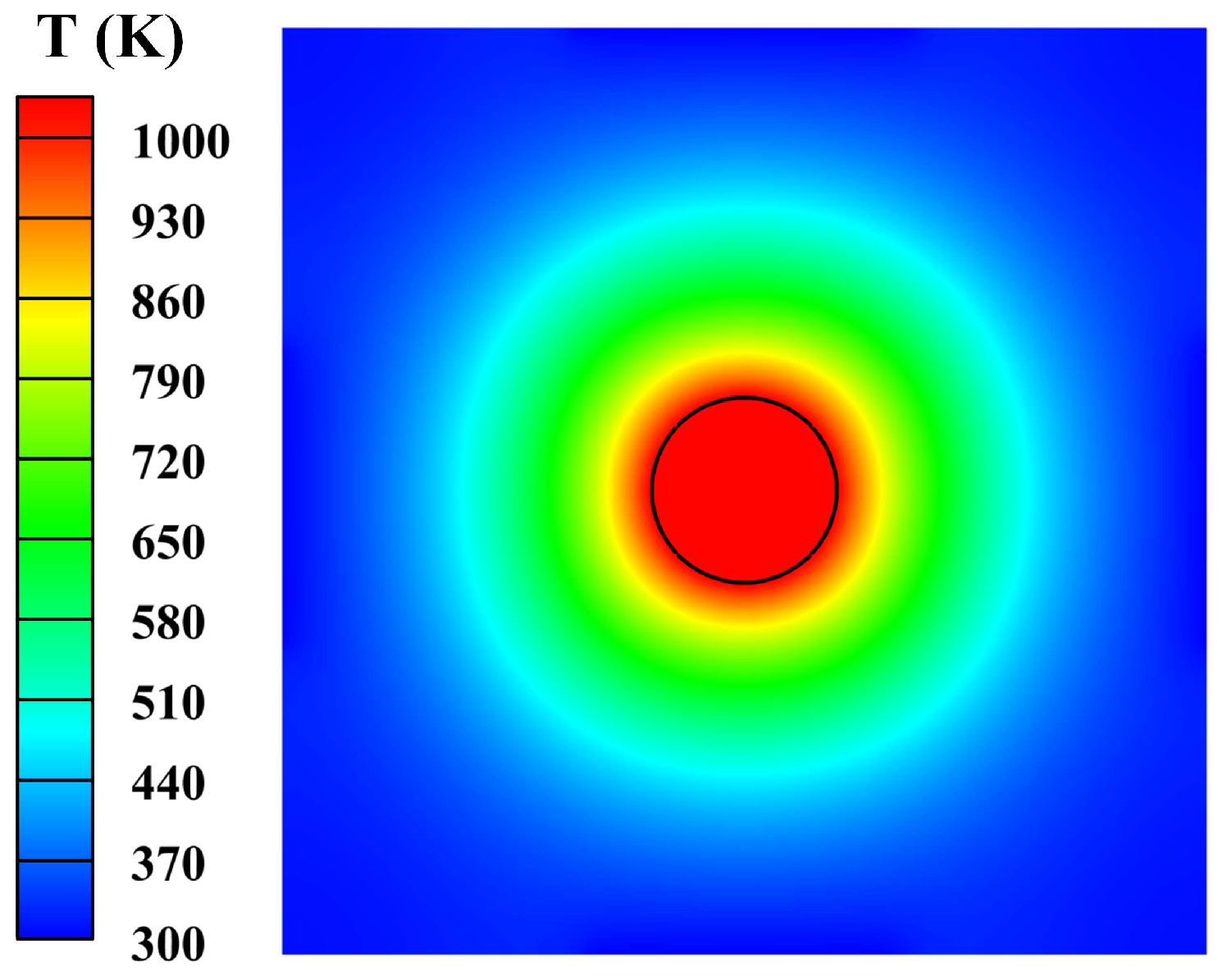
Initially, a two-dimensional simulation was conducted to analyze the heat transfer process of stationary molten droplets in static nitrogen gas. The initial droplet diameter was 100 μm, and the computational domain was 5D × 5D, with a grid size of 200 × 200. The initial droplet temperature was 1033 K, while the gas temperature was 300 K. Figure 2 displays the temperature distribution within and around the stationary molten aluminum droplet at 0.3 ms. The black circle represents the gas–liquid interface, with the inner region corresponding to the molten droplet and the outside region representing the gas. It can be observed that the temperature field surrounding the droplet exhibited an axisymmetric distribution, with the internal heat transfer within the droplet resulting in a gradual rise in the temperature of the surrounding gas.
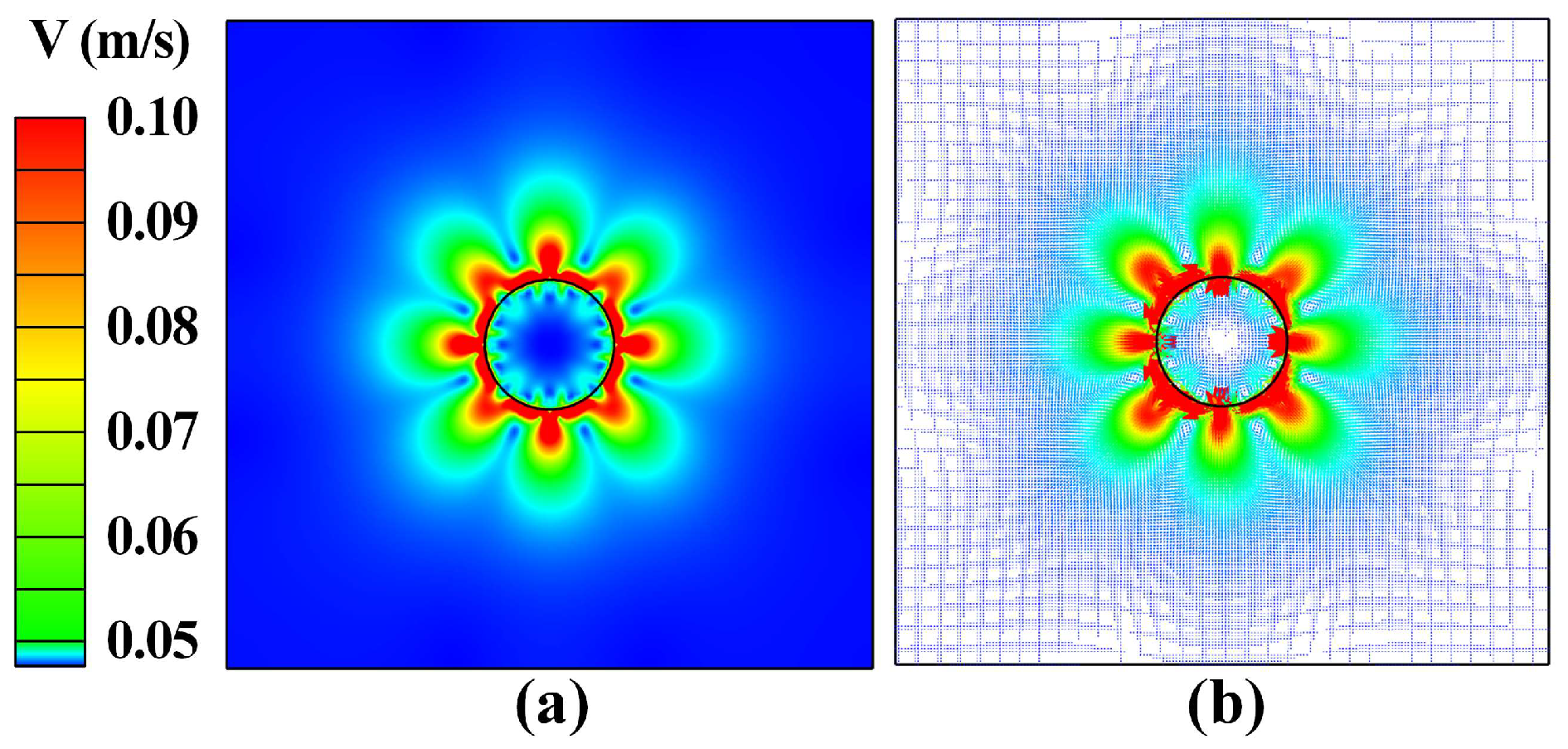
Figure 3 depicts the flow field of the gas near the high-temperature stationary droplet at 0.3 ms, a consequence of the natural convection phenomenon arising from the heat transfer between the droplet and the surrounding gas. The latter exhibited a velocity direction perpendicular to the gas–liquid interface, with motion predominantly in the radial direction, facilitating the transfer of heat from the high-temperature region to the low-temperature region.

3.2. Cooling and Solidification Characteristics of Flying Molten Droplet

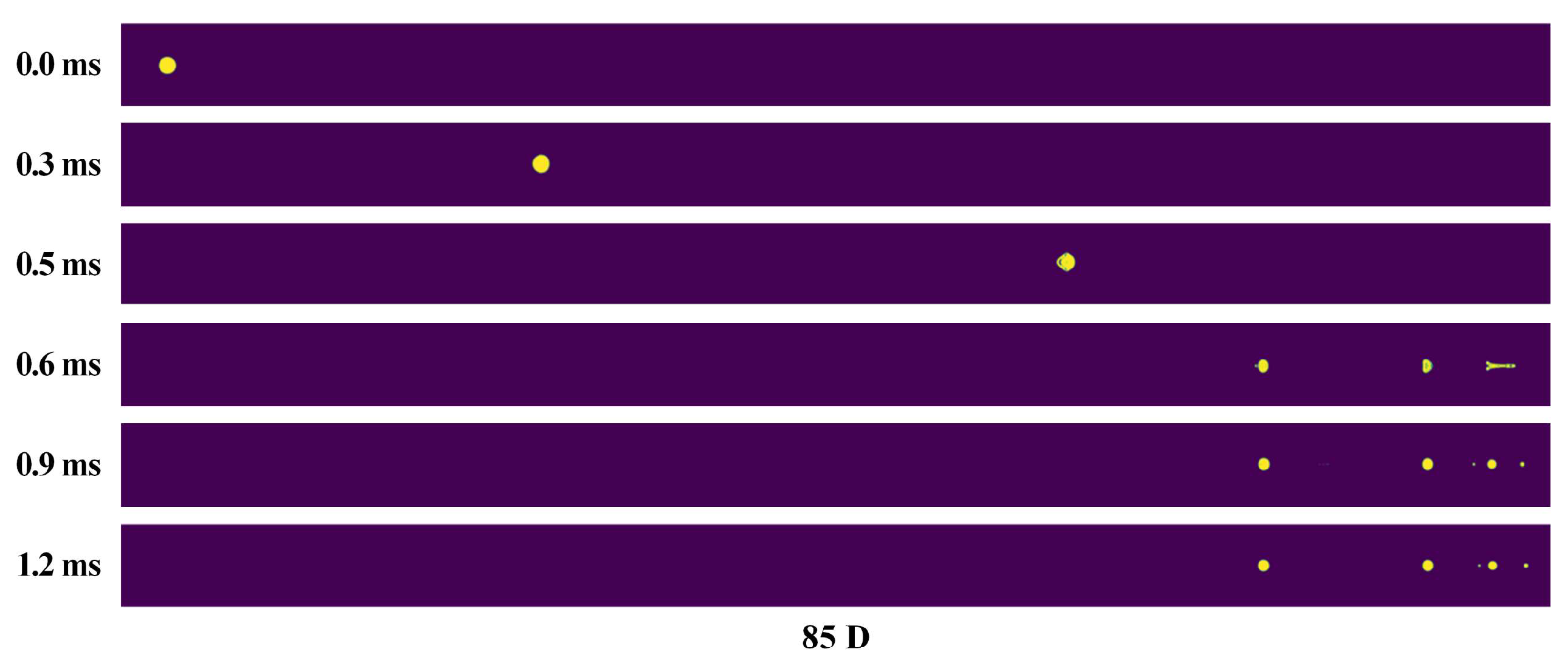
We considered a case with specific conditions as an example to investigate the cooling and solidification characteristics of the molten droplet in the moving gas. The fundamental parameters were as follows: a gas velocity of 100 m/s, a gas temperature of 300 K, a droplet diameter of 100 μm, and an initial droplet temperature of 1033 K. Figure 4 illustrates the motion and breakup process of the droplet within the computational domain, with the yellow region representing the droplet phase and the purple region representing the gas phase. As time progressed, the stationary molten droplet was transported downstream by the flowing gas. At 0.3 ms, the molten droplet showed no discernible deformation. However, at 0.5 ms, the droplet underwent significant deformation, and the gas phase was entrapped within the droplet. By 0.6 ms, the original molten droplet had broken up into smaller droplets. After 0.6 ms, the newly formed sub-droplets gradually assumed a spherical shape while maintaining their position within the calculation domain relatively unchanged. The specific reasons for these observations are discussed below.
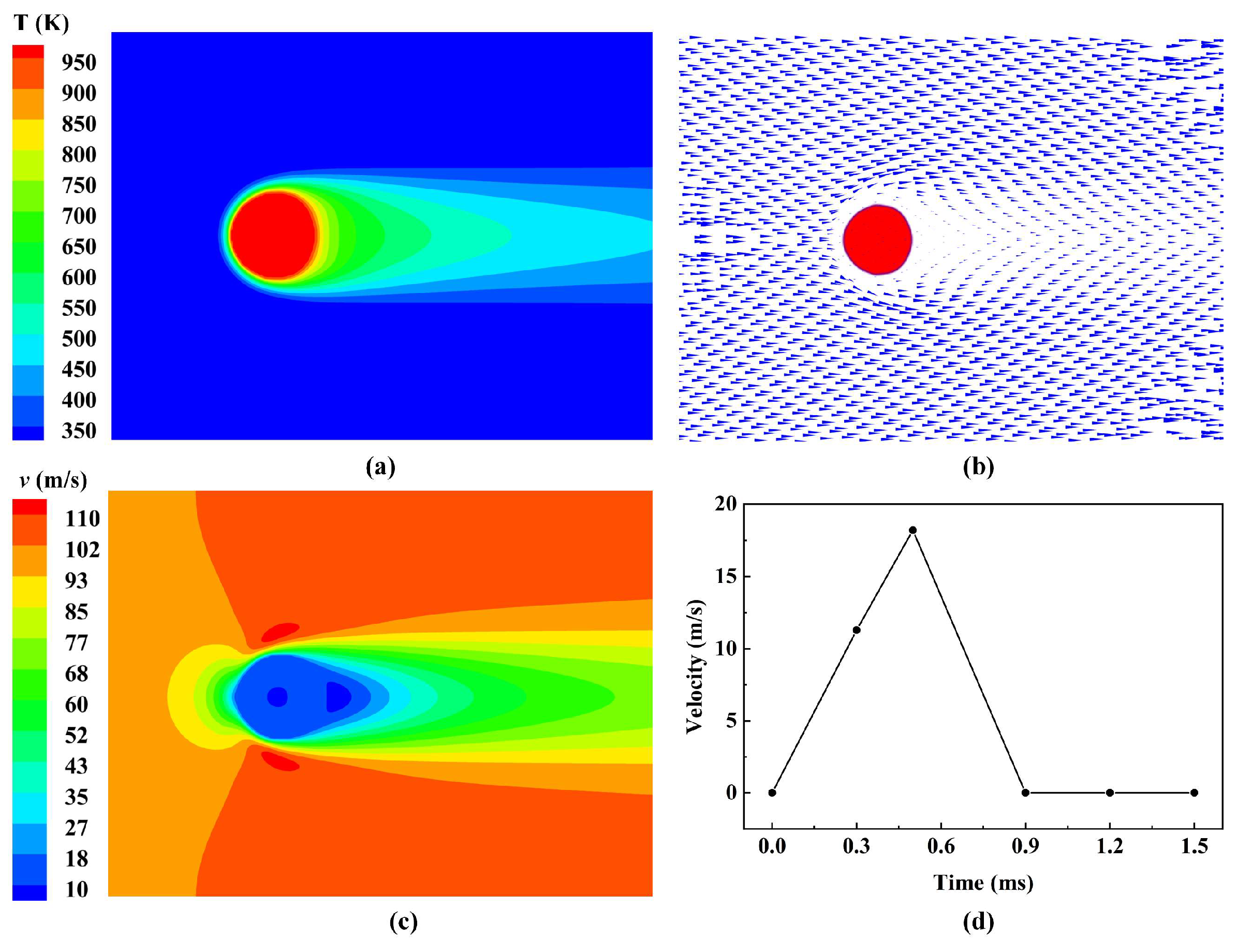
Figure 5a–c depict the temperature contour, velocity vector, and velocity contour of the flying droplet and its surrounding region at 0.3 ms. The temperature of the droplet was above 950 K, and gas flowed towards it from the left side at a certain velocity, exchanging thermal energy with the droplet (Figure 5a). Over time, this convection heat exchange between the droplet and the flowing gas continued, causing the temperature of the droplet itself to decrease and the temperature of nearby gas to increase, particularly on the right side of the droplet, where a discernible temperature gradient formed. Meanwhile, an exchange of momentum also took place: under the influence of the moving gas, the droplet transitioned from a static state at the initial moment to a moving state (with a velocity above 10 m/s) at the current moment, as depicted in Figure 5c. Furthermore, as the heat transfer process between the gas and the molten droplet continued, the latter gradually solidified (after 0.6 ms), and the velocity of the solidified particles tended towards 0 m/s, as determined with the algorithm of Fluent 2020 R2 (Figure 5d).
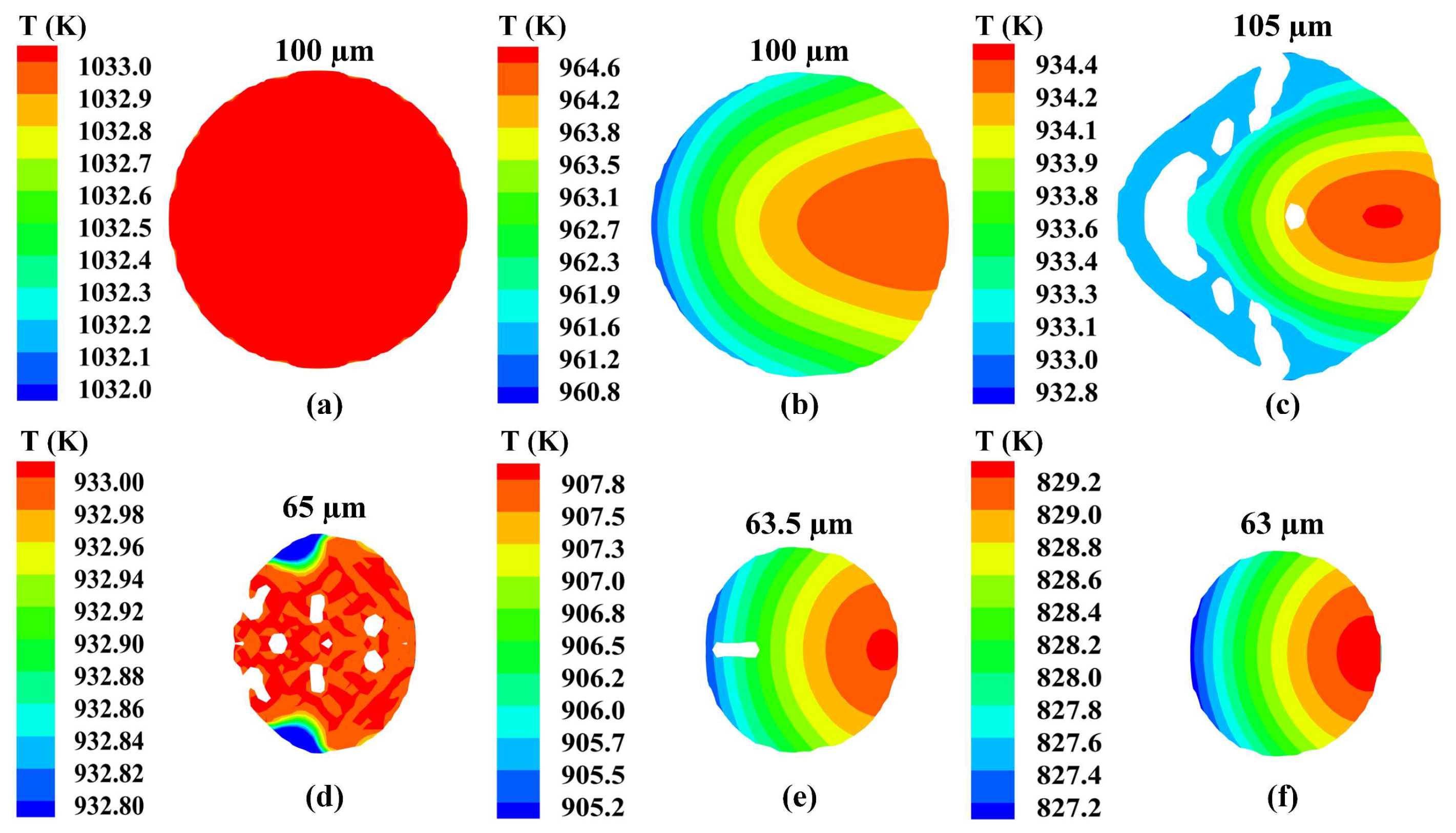
Figure 6 illustrates the temporal evolution of the temperature and size of the molten droplet during the flight heat transfer process, while Figure 7 demonstrates the variation in the liquid-phase fraction of the molten droplet over time, providing a visual insight into the solidification process of the molten droplet. Based on Figure 6, it is evident that at the initial moment, the temperature of the droplet was 1033 K, indicating its liquid state (with a liquid-phase fraction of 1), and its diameter was 100 µm, assuming a circular shape. With the convective heat transfer occurring between the gas and the droplet, the temperature of the latter decreased, resulting in an internal temperature gradient. The gas velocity near the left side of the droplet was greater, facilitating a more efficient heat exchange between the droplet and the gas, i.e., leading to a lower temperature, on this side. Additionally, due to the influence of the gas, the droplet underwent continuous shape deformation. At 0.3 ms, the molten droplet experienced a temperature decrease to approximately 960 K with slight deformation, yet maintained a size of 100 µm. At this moment, its temperature had not yet reached the liquidus temperature. At 0.5 ms, the temperature range of the droplet was 932.8 K to 934.4 K, with certain areas on the left side of the droplet exhibiting lower temperatures than the liquidus temperature (933 K), indicating the initiation of solidification (as shown in Figure 7c). Additionally, there was trapped gas within the molten droplet. At this stage, the droplet had not yet broken up, but due to the presence of internal gas, the size of the droplet had increased to 105 µm. With time progression, at 0.6 ms, the droplet underwent breakup into multiple smaller droplets (refer to Figure 4) among which the larger one is depicted in Figure 6 and Figure 7, measuring approximately 65 µm in size. At this point, the internal temperature of the droplet remained at around 933 K. However, compared with the conditions at 0.5 ms, the liquid phase within the droplet further decreased, and solidification occurred at the edges of the droplet. In the time interval of 0.5~0.6 ms, there was no significant decrease in the temperature of the droplet due to the substantial release of latent heat during its solidification. Once the latent heat was entirely released, the droplet solidified completely and transformed into a solid particle, continuing to exchange heat with the surrounding gas and further cooling, as indicated by the conditions at 0.9 ms and 1.2 ms depicted in Figure 6 and Figure 7.

3.3. Effect of Gas–Liquid Parameters on Flight Heat Transfer of Molten Droplet

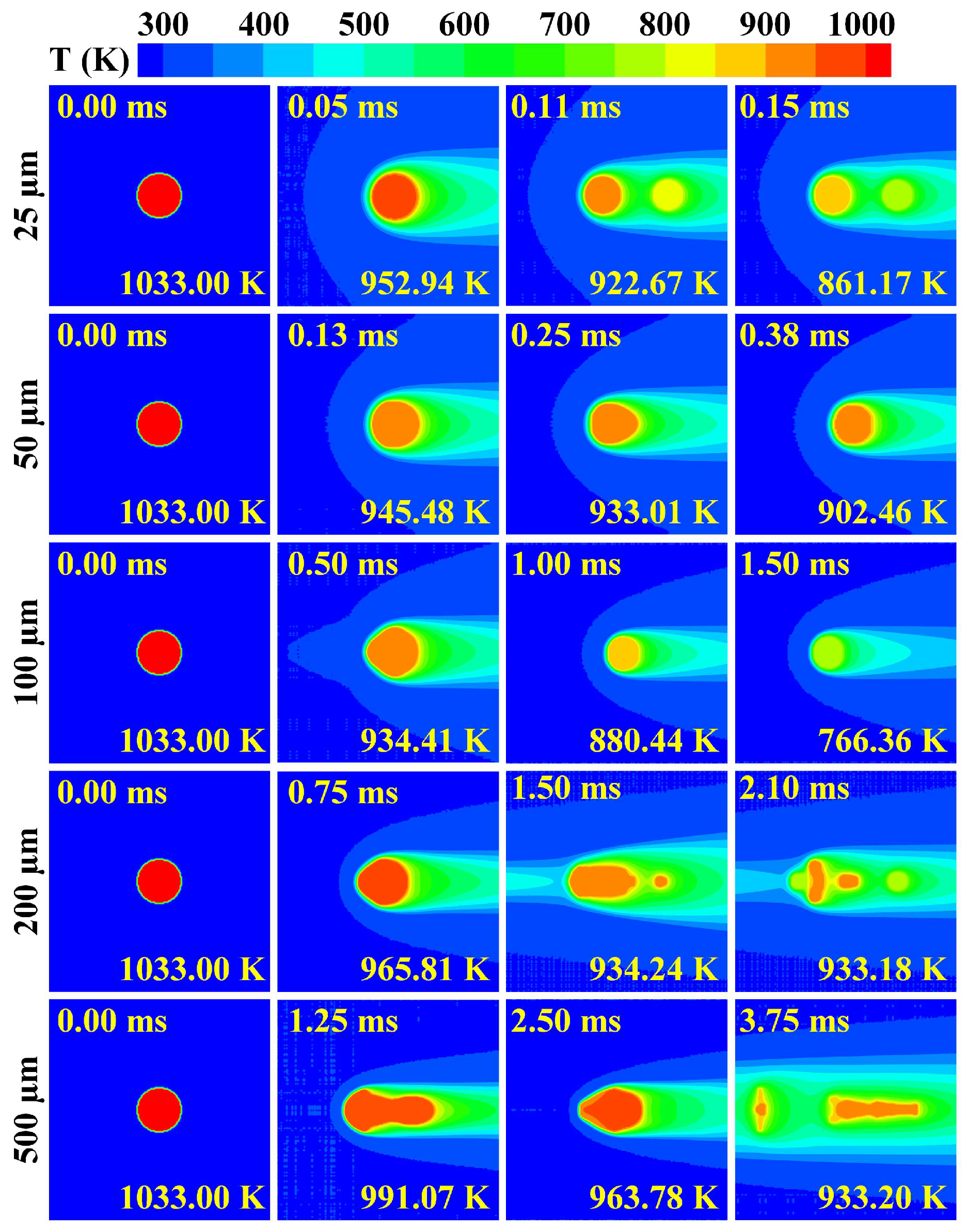
The influence of the droplet diameter on the evolution of temperature distribution within and around the flying molten droplet is depicted in Figure 8. The temperature value displayed in the bottom-right corner of each subfigure represents the temperature at the center of the molten droplet. It is evident that the droplet diameter played a crucial role in the flight heat transfer of the droplet. For instance, when the droplet size was 25 µm, the temperature at the center of the droplet decreased from 1033 K to 952.94 K in just 0.05 ms. At 0.10 ms, the temperature at the droplet center was 922.67 K, signifying complete solidification of the molten droplet (the liquidus temperature of aluminum was 933 K). With the increase in droplet size, the rate of temperature reduction in the droplet slowed down. As depicted in Figure 8, for droplet sizes of 50, 100, 200, and 500 µm, it took approximately 0.25 ms, 0.50 ms, 2.10 ms, and 3.75 ms, respectively, for the molten droplet to cool from a temperature of around 1033 K to about 933 K. It can be observed that a larger droplet size results in slower cooling rates. This phenomenon can be attributed to the fact that as the droplet diameter increases, the volume of the molten droplet increases, as does its enthalpy, leading to enhanced heat exchange between the droplet and gas during the cooling and solidification process. Furthermore, larger droplets required a longer time for complete solidification, as the latter required the release of more latent heat. Moreover, by comparing the temperature reduction and deformation during the flight process of molten droplets with different diameters, it can be observed that the droplets with a temperature exceeding 933 K underwent deformation under the influence of atomizing gas without breaking up. However, if their temperature was below 933 K, they broke up into multiple sub-droplets of different sizes. This indicates that the breakup process of flying molten droplets mainly occurs during the phase of latent heat release.
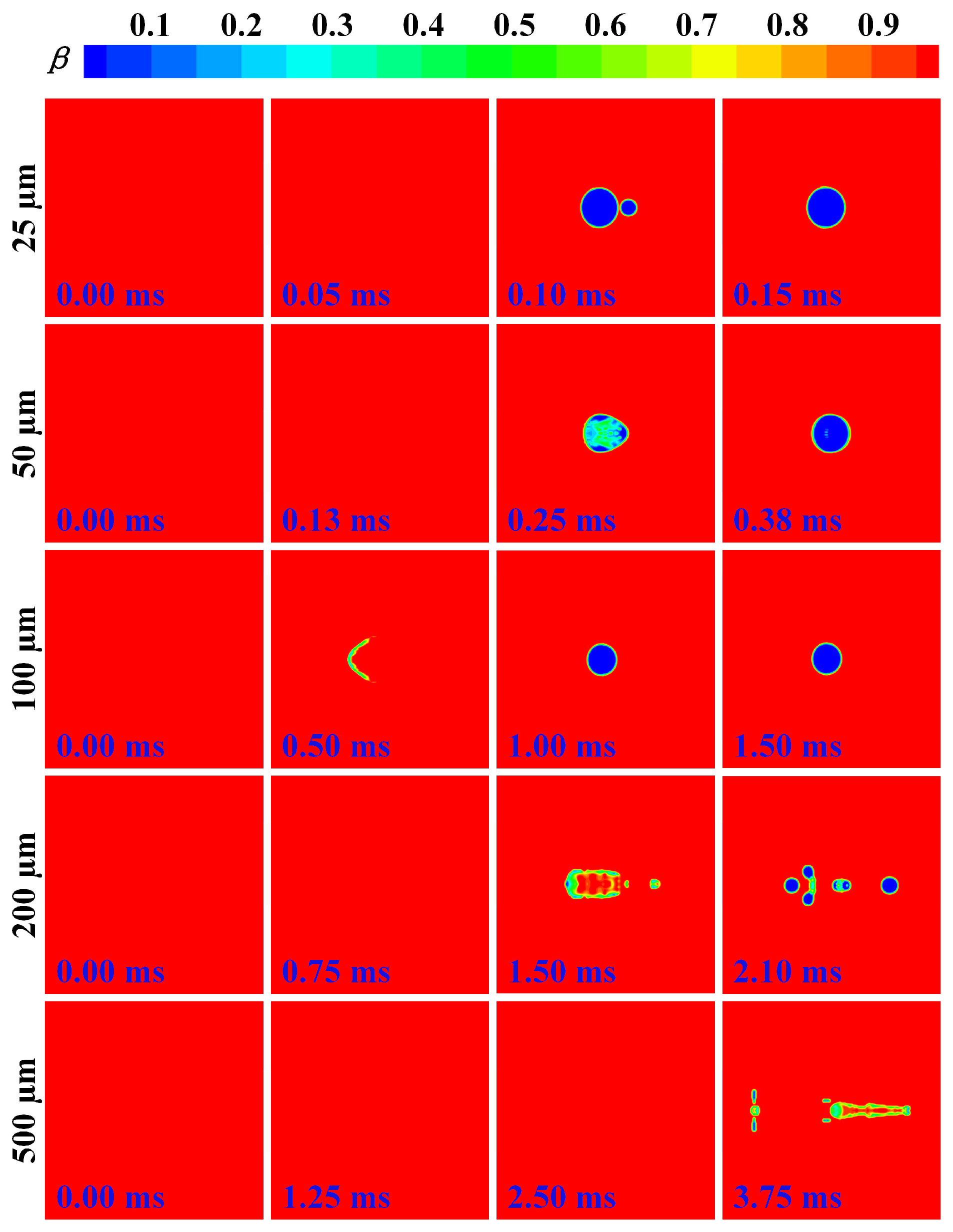
Figure 9 illustrates the temporal evolution of the liquid-phase fraction during the flight heat transfer of droplets with different diameters. It is evident that the droplet with a diameter of 25 µm had solidified completely by 0.10 ms, whereas for the droplet with a diameter of 50 µm, only a thin shell had formed on the surface by 0.25 ms, leaving a significant portion of the droplet’s interior in a liquid state; the complete solidification of the latter occurred within the time interval of 0.25–0.38 ms. As the droplet diameter increased, the duration needed for complete solidification also increased. When the droplet diameter was 100 µm, solidification only occurred on the left surface after 0.50 ms, and it took around 1.00 ms for the entire droplet to fully solidify. For the droplet with a diameter of 200 µm, severe deformation and breakup occurred after 1.50 ms, accompanied by observable liquid structures such as droplets and liquid ligaments in the solidification process; at 2.10 ms, the liquid ligament structure disappeared, and spherical droplets of varying sizes formed, indicating complete solidification. However, for the droplet with a diameter of 500 µm, even after 3.75 ms had passed, the droplet had not yet completed the solidification process and had instead broken up into complex liquid ligament structures that had started to solidify.
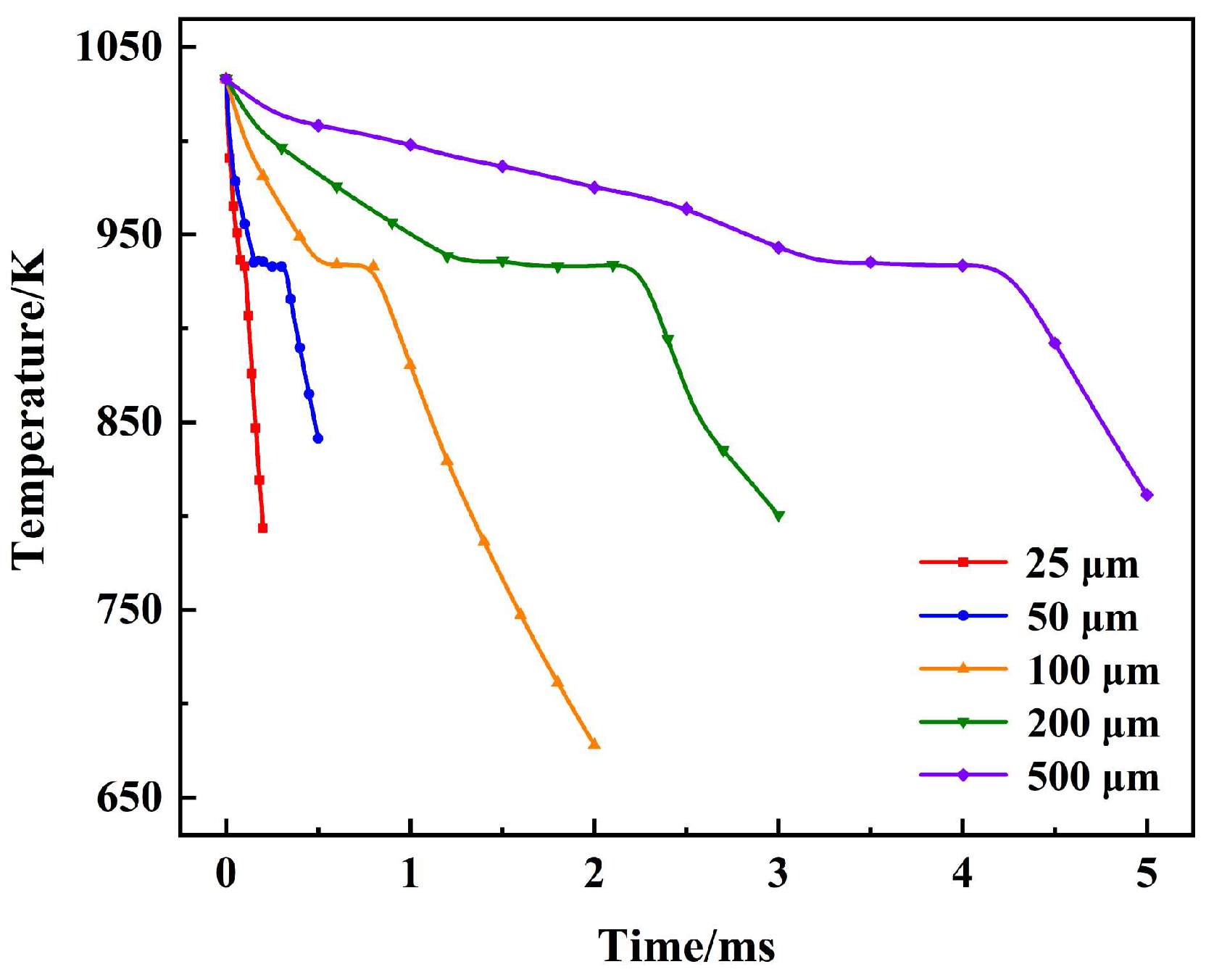
The variation in the central temperature of the molten droplet with time for different droplet diameters is depicted in Figure 10. It can be observed that as time progressed, the temperature at the center of the droplet decreased. Furthermore, an increase in the droplet diameter led to a longer cooling duration for the droplet to reach the liquidus temperature, resulting in a reduction in its cooling rate. The molten droplets with the diameters of 25 µm and 500 µm took 0.08 ms and 3.5 ms, respectively, to cool down to a temperature of 935 K. The latter required approximately 43.75 times more time to reach this temperature than the former.
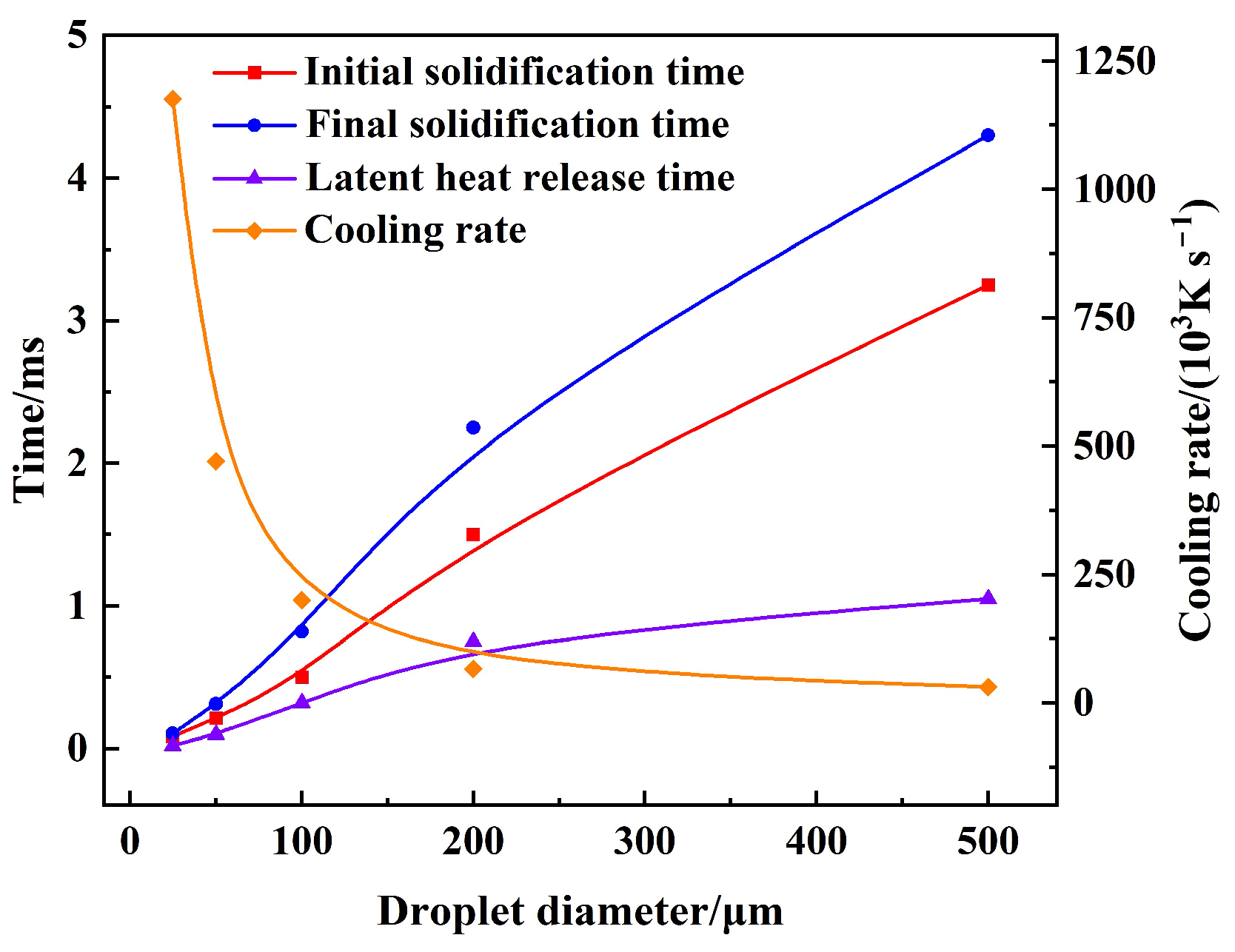
Figure 11 illustrates the trend in the initial and final solidification times, latent heat release time, and cooling rate as a function of the droplet diameter. To avoid interference from droplet breakup when determining the averaged droplet cooling rates, this study focused on the cooling rate of droplets within the range from the initial temperature to the liquidus temperature (when droplets start to solidify). It was evident that as the droplet size increased, both the initial and final solidification times were delayed, the latent heat release time increased, and the cooling rate decreased. For the droplet diameters of 25, 50, 100, 200, and 500 µm, the initial solidification times were 0.09, 0.21, 0.5, 1.5, and 3.25 ms, respectively, and the final solidification times were 0.11, 0.31, 0.85, 2.25, and 4.30 ms, respectively. Correspondingly, the latent heat release times were 0.02, 0.10, 0.35, 0.75, and 1.05 ms, and the cooling rates were measured as 1.18 × 10⁶, 4.71 × 10⁵, 2.00 × 10⁵, 6.67 × 10⁴, and 3.08 × 10⁴ K/s, respectively. Clearly, the droplet size had a significant impact on the cooling rate. In comparison with a droplet measuring 500 µm in diameter, the cooling rate for one measuring 25 µm was approximately 38.31 times faster. This phenomenon can be attributed to both the larger volume and higher enthalpy within the larger droplets, which necessitate more latent heat release during their solidification process. As such, the cooling rates of larger molten droplets were relatively slow.
Table 3 compares the cooling rates for different droplet sizes between our model and the model proposed by Zhang et al. [28]. In their work, aluminum droplets were considered a solid substance. Therefore, under the action of gas, the aluminum droplets only exchanged heat with the gas without moving, deforming, or breaking up. Their numerical framework was validated against experimental data from peer studies, establishing its credibility. The higher cooling rates (the cooling rate here refers to the average cooling rate of the droplet from its initial temperature to complete solidification) in our model compared with Zhang et al.’s [28] primarily resulted from accounting for droplet deformation and breakup processes. The post-breakup acceleration of cooling increases the mean cooling rate throughout the thermal history. Crucially, for the same particle size, the discrepancy in the cooling rate that we predicted and the one that Zhang et al. predicted remains within a relatively reasonable range. To a certain extent, this indicates the reasonable accuracy of our model.
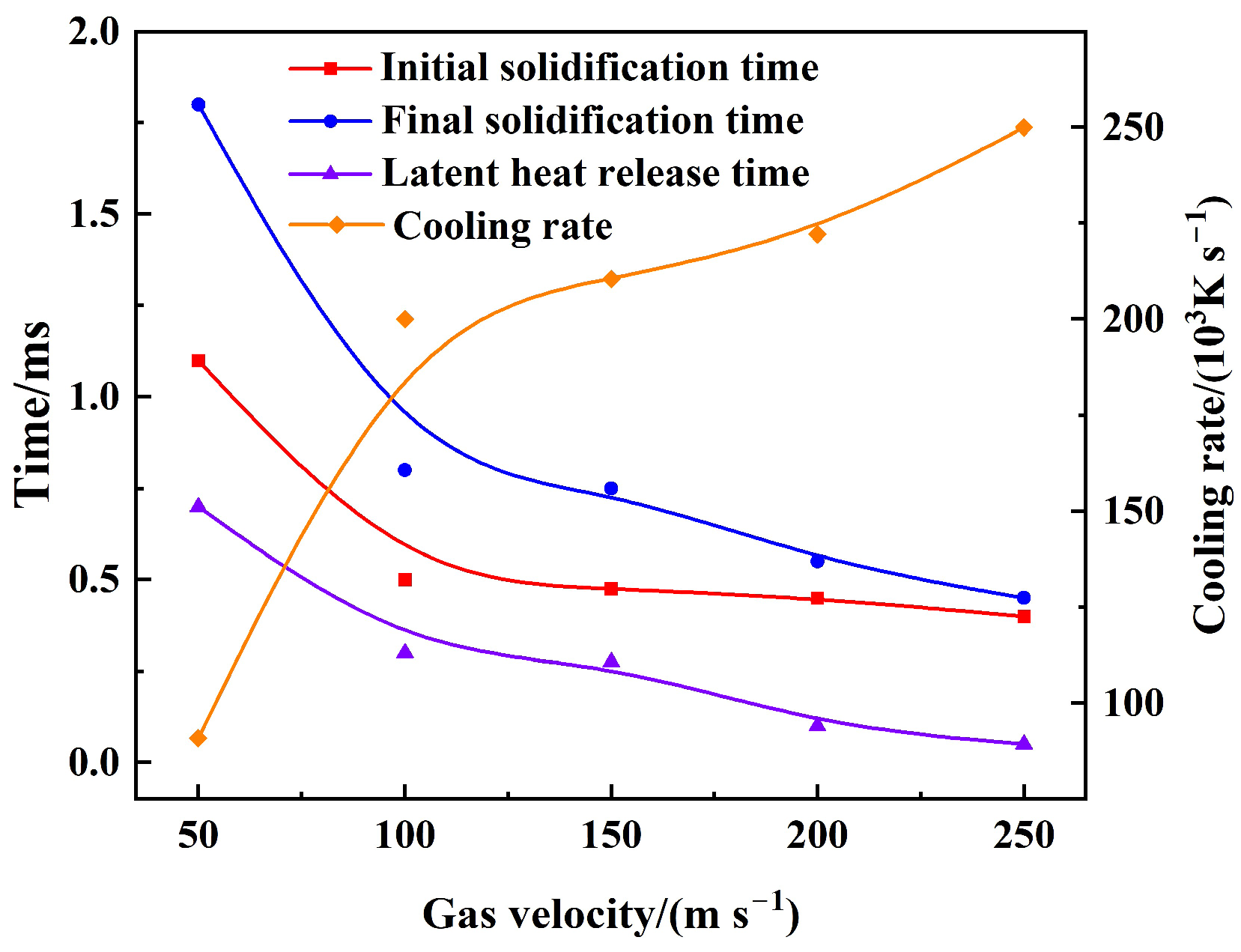
The influence of the gas velocity on the cooling and solidification behavior of flying molten droplets is depicted in Figure 12. It can be observed that as the gas velocity increased, both the initial and final solidification times of the droplet occurred earlier, resulting in a shortened duration for latent heat release and an accelerated cooling rate. When the gas velocity was increased from 50 m/s to 250 m/s, the initial solidification time of the droplets was brought forward from 1.10 ms to 0.40 ms, reducing the duration for latent heat release from 0.7 ms to 0.05 ms and increasing the cooling rate from 9.09 × 10⁴ K/s to 2.50 × 10⁵ K/s. Notably, when the gas velocity was increased from 50 m/s to 250 m/s, the cooling rate increased by 2.75 times. Furthermore, as the gas velocity continued to increase, its impact on the cooling rate gradually diminished.
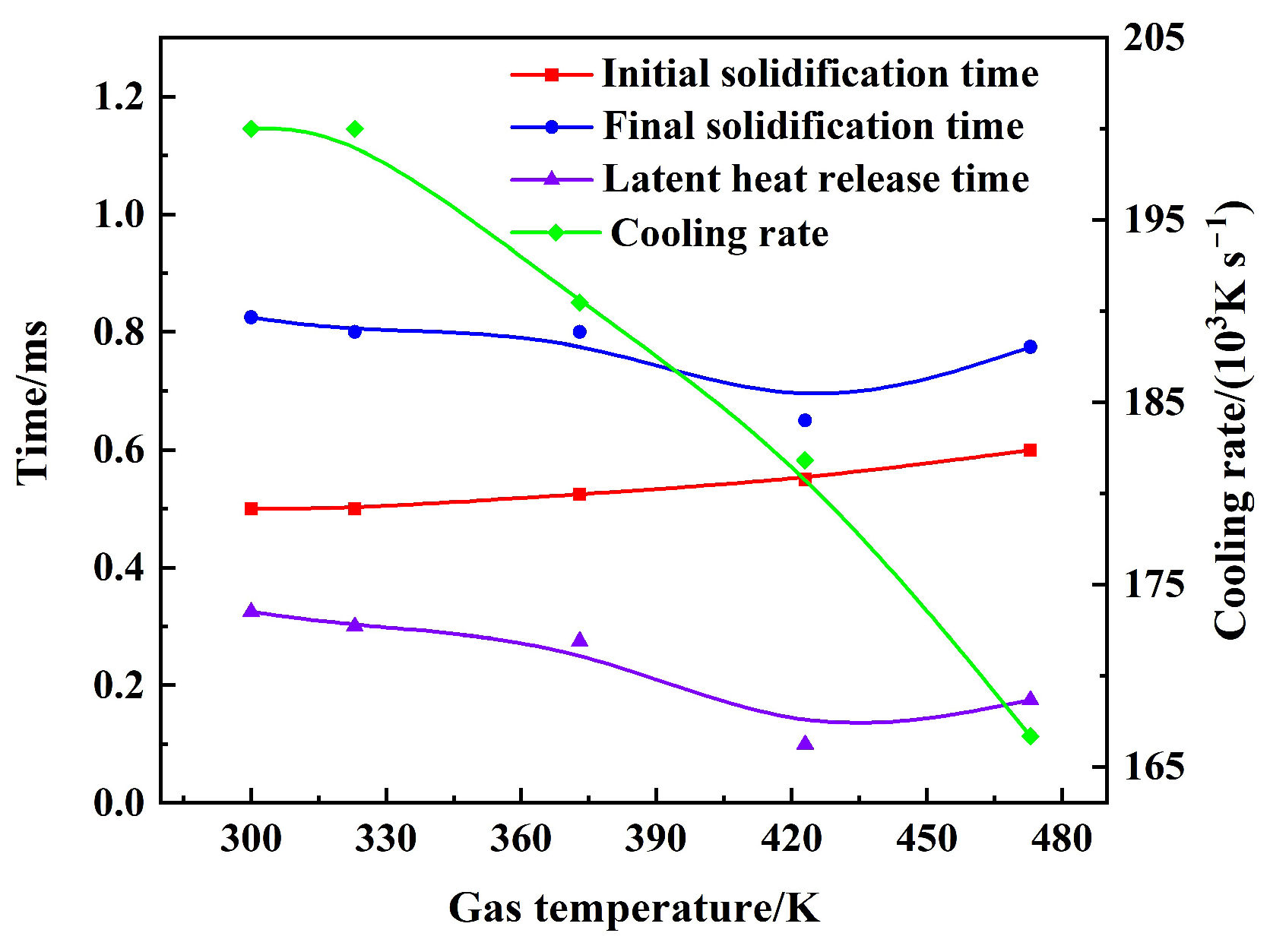
Figure 13 illustrates the influence of the gas temperature on the cooling and solidification process of flying molten droplets. It is apparent that as the gas temperature increased, the initial solidification time of the droplets was delayed. Specifically, at gas temperatures of 300, 323, 373, 423, and 473 K, the initial solidification times were 0.50, 0.51, 0.53, 0.55, and 0.60 ms, respectively. This can be attributed to the decrease in the heat transfer rate before solidification as the gas temperature increased. Furthermore, the cooling rate of the droplet decreased with the increase in the gas temperature. Specifically, at 300 K and 473 K, the cooling rate was approximately 2 × 10⁵ K/s and 1.67 × 10⁵ K/s, respectively. It can be concluded that the effect of the gas temperature on the cooling rate was limited.
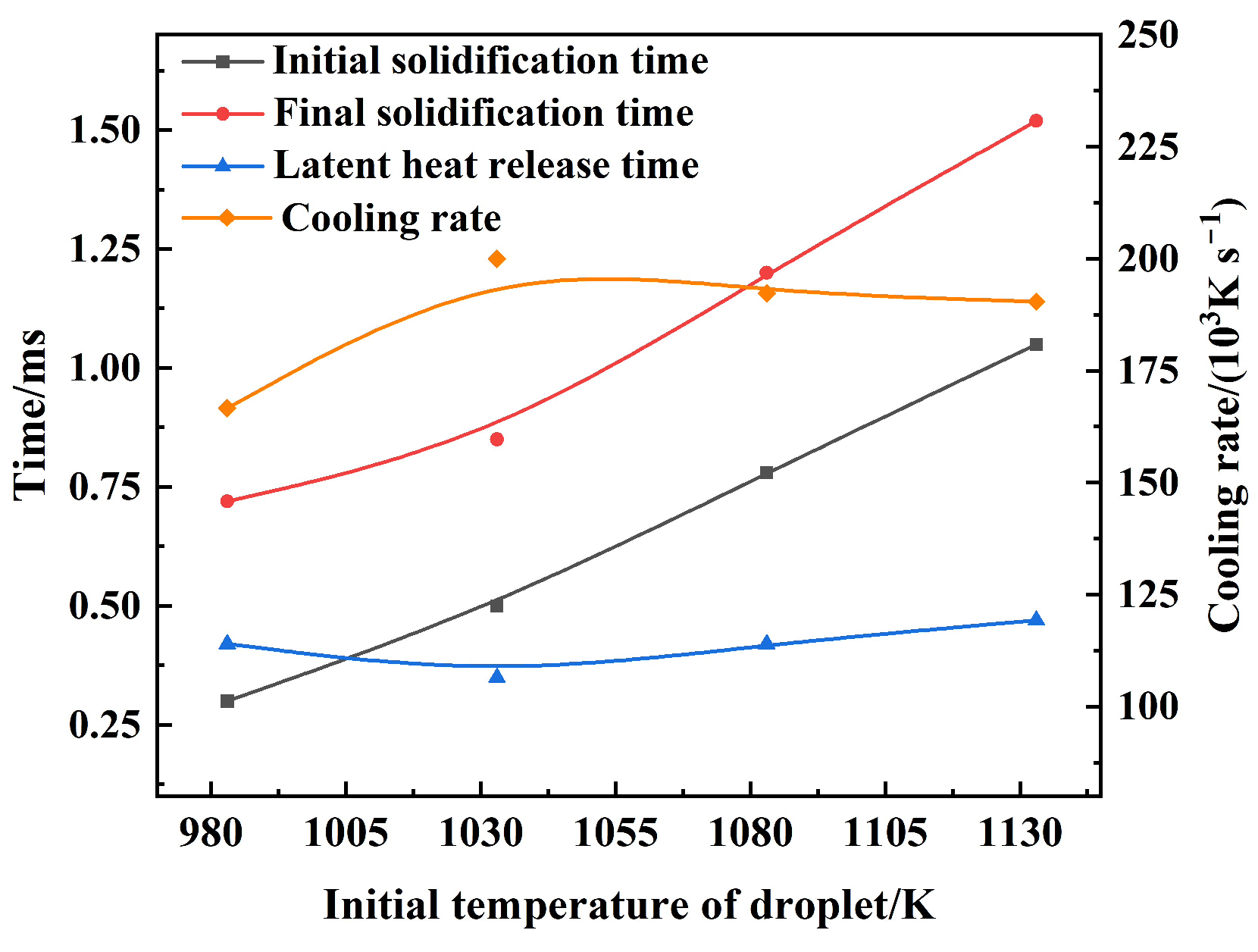
Figure 14 depicts the influence of the initial droplet temperature on the cooling and solidification process of flying molten droplets. It can be observed that as the initial droplet temperature increased from 983 K to 1133 K, the initial solidification time was delayed from 0.30 ms to 1.05 ms, and the final solidification time was delayed from 0.72 ms to 1.52 ms. The cooling rate also changed from 1.67 × 10⁵ K/s to 1.90 × 10⁵ K/s. This phenomenon was attributed to the increase in thermal energy within the droplet with the increase in the initial droplet temperature. Under constant gas velocity and droplet diameter conditions, there was minimal variation in heat exchange between the droplet and the gas over unit time. Consequently, the cooling rate of the droplet remained relatively unchanged, while the initial and final solidification times were both delayed.

3.4. Deformation and Breakup Behavior of Flying Molten Droplet

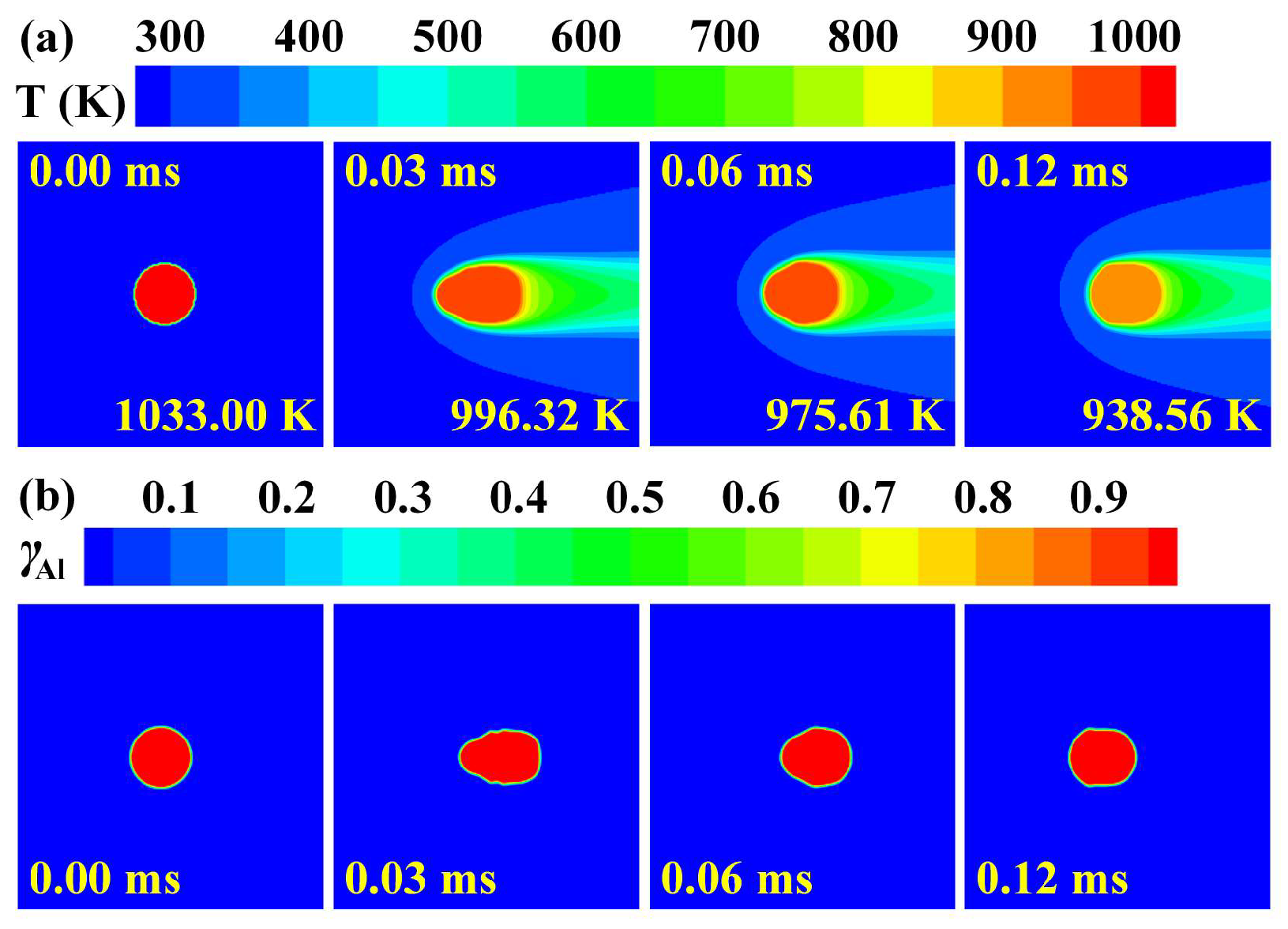
The evolution of the temperature and shape of flying molten droplets prior to solidification under specific operating conditions is depicted in Figure 15. The parameters corresponding to the considered conditions were as follows: a gas velocity of 100 m/s, a gas temperature of 300 K, a droplet diameter of 200 μm, and an initial droplet temperature of 1033 K. Figure 15a illustrates the temporal variation in the temperature of the molten droplet before solidification. Specifically, the temperatures of the molten droplet at 0.00, 0.03, 0.06, and 0.12 ms were recorded as 1033.00, 996.32, 975.61, and 938.56 K, respectively; notably, at the last time point (0.12 ms), the droplet temperature exceeded the liquidus temperature threshold but remained in its liquid state without initiating solidification. The change in droplet shape over time is depicted in Figure 15b. It can be observed that the droplet underwent continuous deformation prior to solidification while maintaining an elliptical shape. It is worth noting that no gas was entrapped within the droplet, and the latter remained intact without breaking up. This phenomenon occurred because when the temperature of the droplet slightly exceeded the liquidus temperature, the surface tension of the droplet increased, facilitating maximum spheroidization during deformation. Additionally, the molten droplet exhibited relatively low viscosity at this stage, ensuring the continuous microflow of the fluid within the droplet and preventing the ingress of gas. Consequently, the droplet maintained its continuity and resisted breakup more effectively.
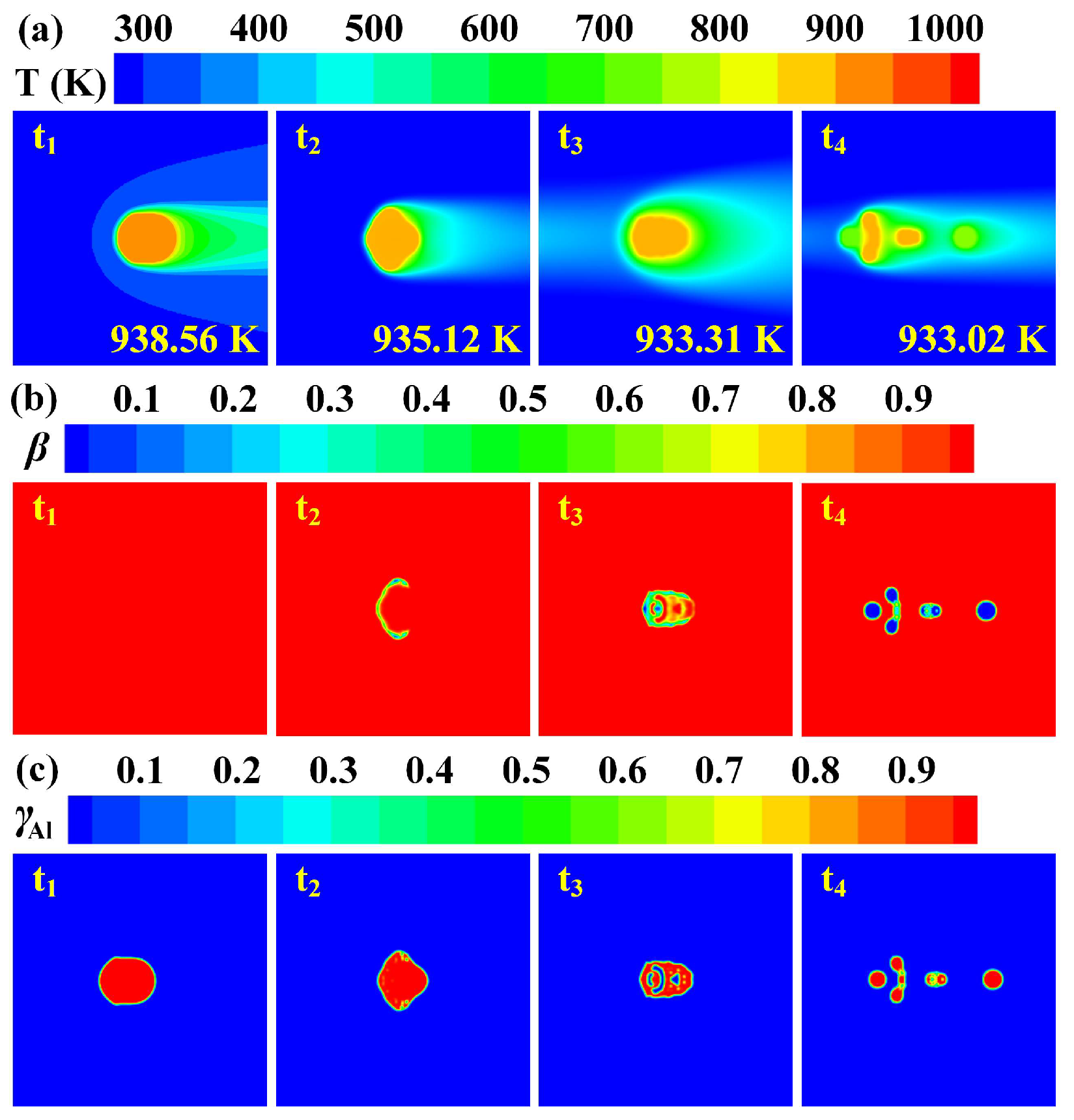
The evolution of the breakup process of a flying molten droplet during solidification is illustrated in Figure 16. Specifically, Figure 16a represents the temperature contour, Figure 16b the contour of the liquid-phase fraction distribution, and Figure 16c the volume fraction distribution of the droplet. Based on Figure 16a, it can be observed that the molten droplet underwent solidification during the time interval from t1 to t4, where at t1, the droplet had not yet initiated solidification and was assumed to have an elliptical shape with no gas entrapment. Subsequently, at t2, the upwind side of the droplet’s surface started to solidify, resulting in a small amount of gas being entrapped in the droplet’s surface layer (t2 in Figure 16c). As the heat transfer between the gas and the droplet progressed, certain regions on both the surface layer and interior of the droplet started to solidify at moment t3 (t3 in Figure 16b), accompanied by an increased amount of gas becoming entrapped inside the droplet (t3 in Figure 16c). The uneven distribution of the gas mixed into the droplet can be attributed to the following reasons: At t2, a solidified shell formed on the upwind side of the droplet, impeding gas flow from upstream and leading to complex turbulent flow and heat transfer between the gas and liquid surrounding the solidified shell. During this process, the gas penetrated inside the droplet. Subsequently, under the turbulent flow interaction between the liquid phase of the droplet and the internal and external gases, the molten droplet broke up into multiple smaller sub-droplets at t4. Furthermore, these sub-droplets rapidly solidified into solid spherical particles due to the effects of surface tension and gas cooling.

3.5. Formation of Hollow Powder

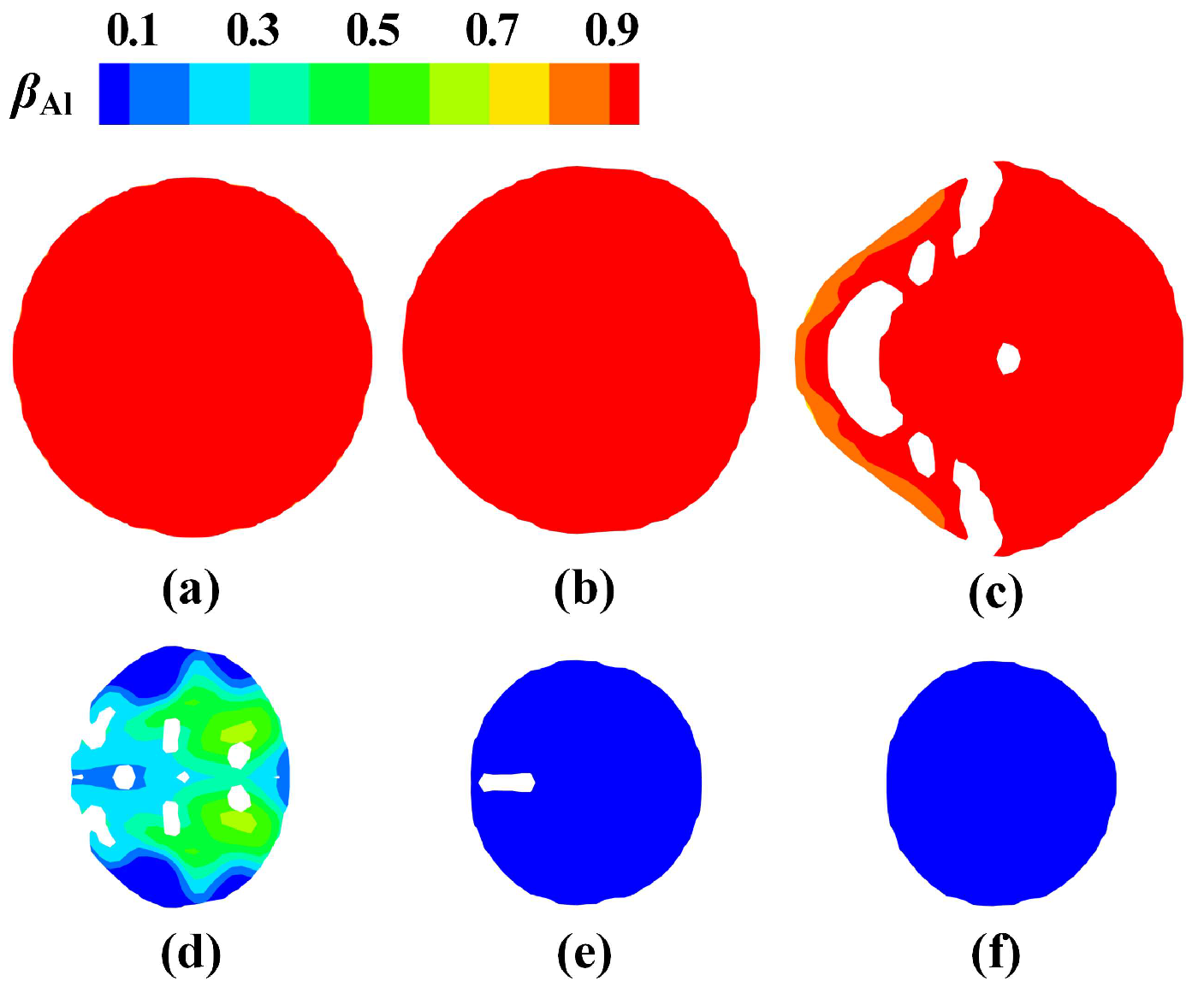
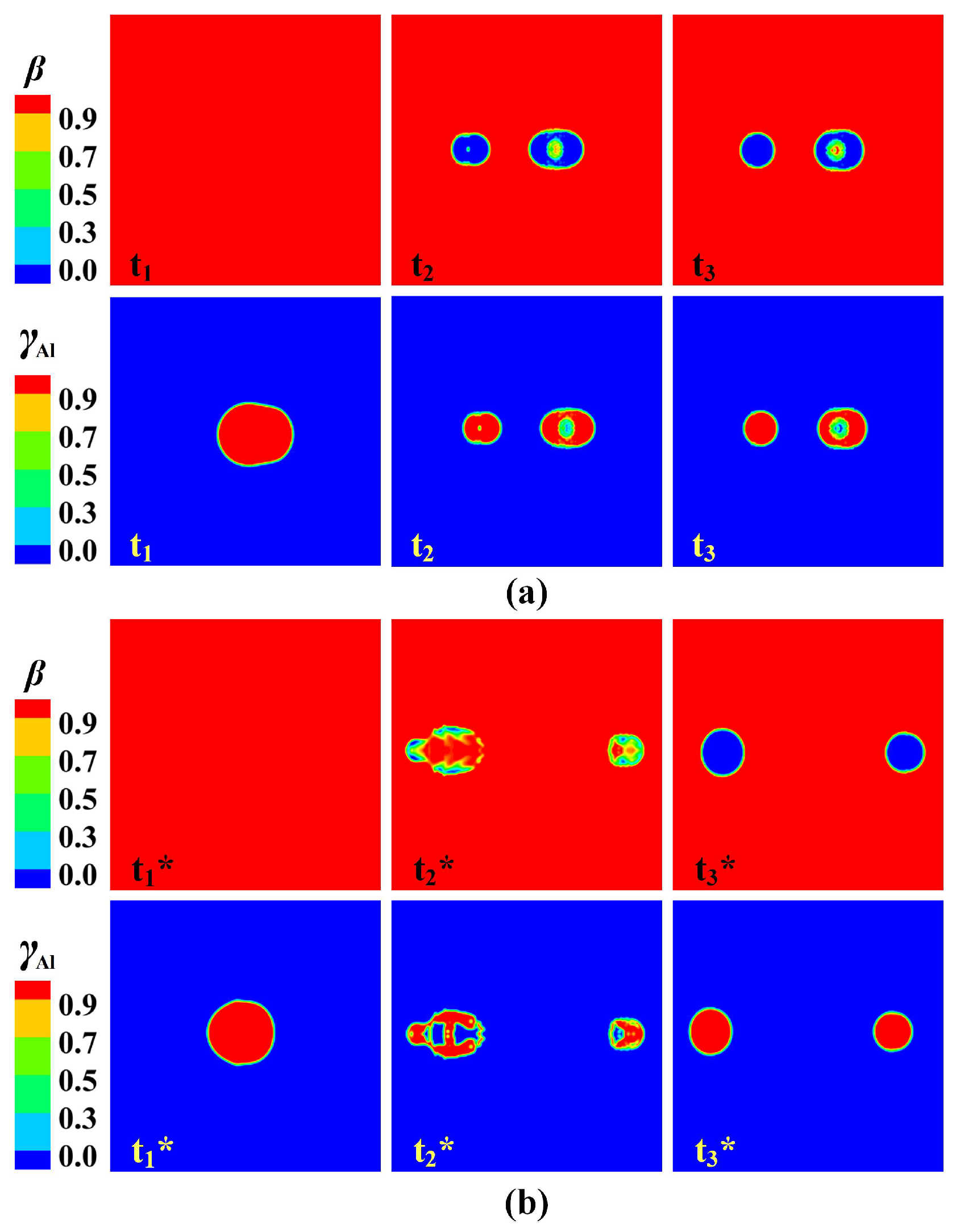
The formation of hollow powder is illustrated in Figure 17, where β represents the liquid-phase fraction and γAl represents the volume fraction of the droplet. In the figure, t1, t2, and t3 correspond to the three time points of hollow powder formation, while t1*, t2*, and t3* denote those of non-hollow powder, with the asterisk (*) distinguishing the cases, as they occurred at different time points. Figure 17a depicts the process of the molten droplet transforming into hollow powder during solidification. Specifically, in the process of heat exchange with the moving gas, the molten droplet was cooled to a temperature near the liquidus temperature and initiated solidification. During solidification, gas was entrapped within the droplet. Once fully solidified, the trapped gas remained within the solidified particle, resulting in the formation of hollow powder. However, during the solidification process of the droplet, if there is incomplete closure of the solidification layer on the droplet surface (at t2* in Figure 17b), gas may escape from inside the droplet, resulting in a failure to ultimately form hollow powder, as depicted at t3* in Figure 17b.
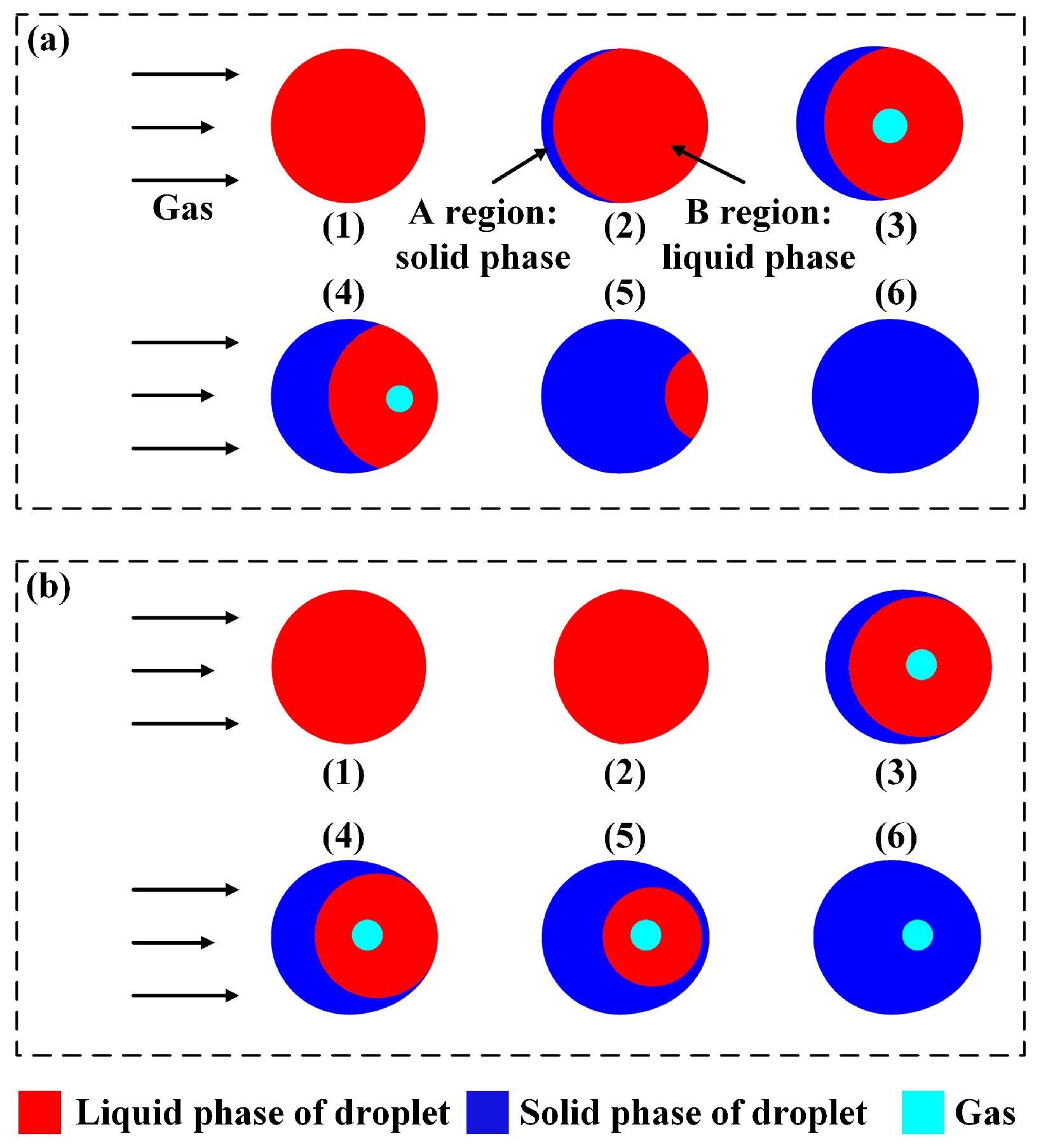
The formation mechanism of hollow powder is illustrated in Figure 18. As depicted in Figure 18(a1), the initial temperature of the droplet exceeded the liquidus temperature. Through heat exchange with the moving gas, the upwind side of the droplet solidified first, as shown in Figure 18(a2). With ongoing heat transfer, the solidified region (A) acted as a solid obstacle for the incoming gas. The incoming gas circumvented region A and interacted with the fluid in region B (liquid-phase region). Under complex turbulence, it was possible for the gas to be entrapped within the liquid phase of region B, as demonstrated in Figure 18(a3). As solidification progressed, the solidification zone expanded towards the right and inside the droplet. The complex turbulent flow and gas–liquid interaction in region B may result in the potential expulsion of gas in the molten droplet, depending on the solidification state of the liquid surface layer within this zone. If such solidification proceeds at a slow rate, there is a possibility that gas escapes prior to the formation of a fully closed solidification shell on the surface layer of the droplet, resulting in the failure of hollow powder formation, as depicted in Figure 18(a4–a6). The formation of the hollow powder is illustrated in Figure 18b. Under the effect of the gas flow, the droplet gradually moved downstream within the computational domain. During this process, the windward side of the droplet progressively solidified while gas was entrapped within the liquid phase region (Figure 18(b1–b3)). As heat exchange between the gas and droplet continued, the solid phase region of the droplet gradually expanded (Figure 18(b4)). If the liquid in the surface layer of region B solidifies rapidly, a closed solidification shell forms on the surface layer of the droplet, preventing gas from escaping (Figure 18(b5)). Once the droplet fully solidifies, the gas is trapped inside the solid particle, resulting in the formation of hollow powder (Figure 18(b6)).

4. Conclusions

(1) As the droplet diameter increased, the cooling rate of the droplet decreased. Specifically, the cooling rate of a 25 µm droplet was 38.24 times higher than that of a 500 µm droplet. The cooling rate was influenced by the gas velocity, with a higher gas velocity resulting in a greater cooling rate. The influence of both the gas temperature and the initial droplet temperature on the cooling rate of the molten droplet was limited. In conclusion, the droplet diameter has the greatest impact on the cooling rate of a molten droplet, followed by the gas velocity.
(2) After being cooled to the liquidus temperature, the flying molten droplet underwent deformation without easily breaking up. However, during the process from initial solidification to complete solidification, the droplet did break up.
(3) During the solidification process, when gas infiltrated into the droplet and subsequently became encapsulated within the solidified particle, hollow powder formed. If gas escapes from the droplet prior to the complete closure of the solidification layer on its surface, this precludes the formation of hollow powder.

Author Contributions

Conceptualization, J.Z.; methodology, Y.W.; software, Y.W.; validation, S.H. and Y.W.; formal analysis, Y.W.; investigation, Y.W.; resources, B.W. and J.Z.; data curation, S.H. and C.C.; writing—original draft preparation, Y.W.; writing—review and editing, B.W. and C.C. All authors have read and agreed to the published version of the manuscript.

Funding

This research received no external funding.

Data Availability Statement

The original contributions presented in this study are included in the article. Further inquiries can be directed to the corresponding authors.

Acknowledgments

The authors would like to express their gratitude for the numerical calculation support by the High-Performance Computing Center of Wuhan University of Science and Technology.

Conflicts of Interest

The authors declare no conflicts of interest.

Abbreviations

The following abbreviations are used in this manuscript:
VOFVolume of Fluid

References

  1. Khanna, N.; Salvi, H.; Karaş, B.; Fairoz, I.; Shokrani, A. Cost modelling for powder bed fusion and directed energy deposition additive manufacturing. J. Manuf. Mater. Process. 2024, 8, 142. [Google Scholar] [CrossRef]
  2. Boretti, A. Metal additive manufacturing for internal combustion engine components: A narrative review of applications, materials, processes, challenges, and future directions. Int. J. Adv. Manuf. Technol. 2025, 139, 6355–6397. [Google Scholar] [CrossRef]
  3. Bhat, C.; Jiang, C.P.; Romario, Y.S.; Paral, S.K.; Toyserkani, E. Critical review of metal-ceramic composites fabricated through additive manufacturing for extreme condition applications. Mech. Adv. Mater. Struct. 2025, 32, 2153–2180. [Google Scholar] [CrossRef]
  4. Mohd, Y.S.; Cutler, S.; Gao, N. The impact of metal additive manufacturing on the aerospace industry. Metals 2019, 9, 1286. [Google Scholar] [CrossRef]
  5. Lanzutti, A.; Marin, E. The challenges and advances in recycling/re-using powder for metal 3D printing: A comprehensive review. Metals 2024, 14, 886. [Google Scholar] [CrossRef]
  6. Sun, X.; Chen, M.; Liu, T.; Zhang, K.; Wei, H.; Zhu, Z.; Liao, W. Characterization, preparation, and reuse of metallic powders for laser powder bed fusion: A review. Int. J. Extreme Manuf. 2023, 6, 012003. [Google Scholar] [CrossRef]
  7. Soong, S.Z.; Lai, W.L.; Lup, A.N.K. Atomization of metal and alloy powders: Processes, parameters, and properties. AIChE J. 2023, 69, e18217. [Google Scholar] [CrossRef]
  8. Liu, L.; Zhang, J.; Zhang, Q.; Zhai, C.; Zheng, H. Computational insights into gas atomization of FeCoNiCrMoBSi high-entropy alloy: From droplet formation to rapid solidification. Int. J. Heat Mass Transfer 2024, 228, 125628. [Google Scholar] [CrossRef]
  9. Luo, S.; Wang, H.; Gao, Z.; Wu, Y.; Wang, H. Interaction between high-velocity gas and liquid in gas atomization revealed by a new coupled simulation model. Mater. Des. 2021, 212, 110264. [Google Scholar] [CrossRef]
  10. Hattel, J.H.; Pryds, N.H.; Thorborg, J.; Ottosen, P. A quasi-stationary numerical model of atomized metal droplets. I: Model formulation. Modell. Simul. Mater. Sci. Eng. 1999, 7, 413–430. [Google Scholar] [CrossRef]
  11. Grant, P.S.; Cantor, B.; Katgerman, L. Modelling of droplet dynamic and thermal histories during spray forming—I. Individual droplet behaviour. Acta Metall. Mater. 1993, 41, 3097–3108. [Google Scholar] [CrossRef]
  12. Grant, P.S.; Cantor, B.; Katgerman, L. Modelling of droplet dynamic and thermal histories during spray forming—II. Effect of process parameters. Acta Metall. Mater. 1993, 41, 3109–3118. [Google Scholar] [CrossRef]
  13. Zeoli, N.; Gu, S. Computational simulation of metal droplet break-up, cooling and solidification during gas atomisation. Comput. Mater. Sci. 2008, 43, 268–278. [Google Scholar] [CrossRef]
  14. Gorokhovski, M.; Herrmann, M. Modeling primary atomization. Annu. Rev. Fluid Mech. 2008, 40, 343–366. [Google Scholar] [CrossRef]
  15. Fuster, D.; Bagué, A.; Boeck, T.; Moyne, L.L.; Leboissetier, A.; Popinet, S.; Ray, P.; Scardovelli, R.; Zaleski, S. Simulation of primary atomization with an octree adaptive mesh refinement and VOF method. Int. J. Multiphase Flow 2009, 35, 550–565. [Google Scholar] [CrossRef]
  16. Shao, C.; Luo, K.; Yang, J.; Chen, S. Accurate level set method for simulations of liquid atomization. J. Fan. Chin. J. Chem. Eng. 2015, 23, 597–604. [Google Scholar] [CrossRef]
  17. Orazzo, A.; Sébastien, T. Direct numerical simulations of droplet condensation. Int. J. Heat Mass Transfer 2019, 129, 432–448. [Google Scholar] [CrossRef]
  18. Luo, K.; Shao, C.; Chai, M. Level set method for atomization and evaporation simulations. J. Fan. Prog. Energy Combust. Sci. 2019, 73, 65–94. [Google Scholar] [CrossRef]
  19. Wang, J.; Wang, Y.; Liu, J.; Zhang, L.; Gao, L.; Zheng, G.; Shen, H. Microstructure and flight behaviors of droplet and its solidification in twin-wire arc sprayed Ni-Al composite coatings. J. Sun. Mater. Res. 2018, 21, e20170394. [Google Scholar] [CrossRef]
  20. Reutzsch, J.; Kieffer-Roth, C.; Weigand, B. A consistent method for direct numerical simulation of droplet evaporation. J. Comput. Phys. 2020, 413, 109455. [Google Scholar] [CrossRef]
  21. Kumar, A.; Ghosh, S.; Dhindaw, B.K. Simulation of cooling of liquid Al–33 wt.% Cu droplet impinging on a metallic substrate and its experimental validation. Acta Mater. 2010, 58, 122–133. [Google Scholar] [CrossRef]
  22. Alavi, S.; Passandideh-Fard, M. Numerical simulation of droplet impact and solidification including thermal shrinkage in a thermal spray process. Int. Heat Transf. Conf. 2010, 49415, 731–739. [Google Scholar] [CrossRef]
  23. Peng, H.; Hu, Z.; Shan, X.; Ling, X.; Liu, L. Study on the solidification characteristics of molten slag droplets cooled by mixed cooling medium. Appl. Therm. Eng. 2019, 149, 939–949. [Google Scholar] [CrossRef]
  24. Assael, M.J.; Kakosimos, K.; Banish, R.M.; Brillo, J.; Egry, I.; Brooks, R.; Quested, P.N.; Mills, K.C.; Nagashima, A.; Sato, Y.; et al. Reference data for the density and viscosity of liquid aluminum and liquid iron. J. Phys. Chem. Ref. Data 2006, 35, 285–300. [Google Scholar] [CrossRef]
  25. Xia, S.; Hu, C. Review of physical property calculations of liquid aluminum and alumina. J. Propul. Technol. 2019, 40, 961–969. [Google Scholar] [CrossRef]
  26. Hatch, J.E. Aluminum: Properties and Physical Metallurgy; American Society for Metals: Cleveland, OH, USA, 1984. [Google Scholar]
  27. Molina, M.; Voytovych, R.; Louis, E.; Eustathopoulos, N. The surface tension of liquid aluminium in high vacuum: The role of surface condition. Int. J. Adhes. Adhes. 2007, 27, 394–401. [Google Scholar] [CrossRef]
  28. Zhang, M.; Zhang, Z. Numerical simulation study on cooling of metal droplet in atomizing gas. Mater. Today Commun. 2020, 25, 101423. [Google Scholar] [CrossRef]
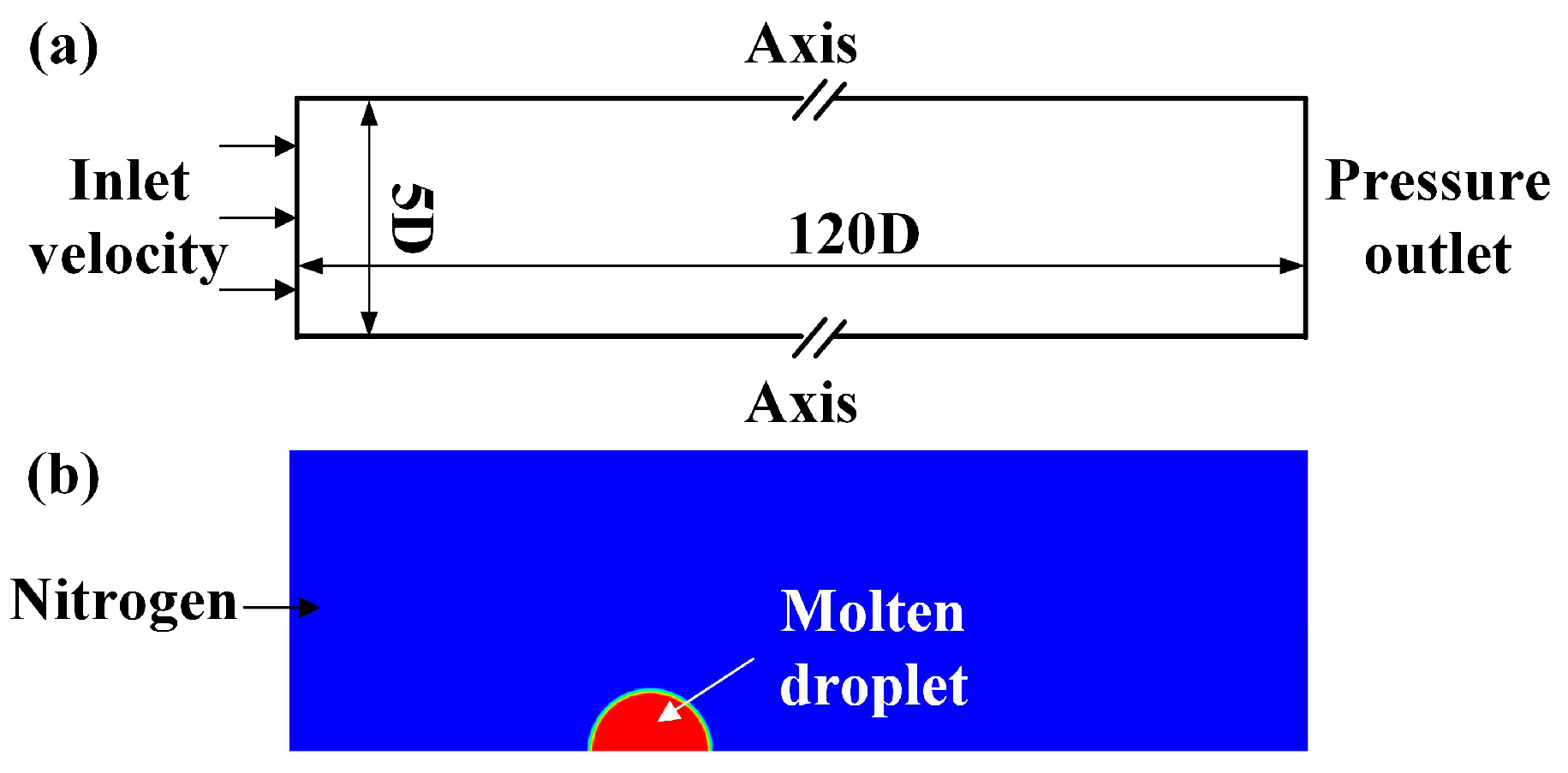
Figure 1. Schematic diagram of calculational domain size (a) and initial distribution of nitrogen and molten droplet (b).
Metals 16 00037 g001
Figure 2. Temperature field of static high-temperature molten droplet and surrounding gas (the black circle represents the gas–liquid interface).
Metals 16 00037 g002
Figure 3. Velocity contour (a) and velocity vector (b) of gas near static high-temperature droplet (the black circle represents the gas–liquid interface).
Metals 16 00037 g003
Figure 4. Motion and breakup process of droplet in computational domain (the yellow phase represents droplet of molten aluminum).
Metals 16 00037 g004
Figure 5. Temperature contour (a), velocity vector (b), velocity contour of droplet and its surrounding area at 0.3 ms (c), and change in droplet velocity with time (d).
Metals 16 00037 g005
Figure 6. Evolution of temperature and size of molten droplet over time during flight heat transfer: (a) 0.0 ms; (b) 0.3 ms; (c) 0.5 ms; (d) 0.6 ms; (e) 0.9 ms; (f) 1.2 ms.
Metals 16 00037 g006
Figure 7. Change in liquid fraction of droplet over time during flight heat transfer: (a) 0.0 ms; (b) 0.3 ms; (c) 0.5 ms; (d) 0.6 ms; (e) 0.9 ms; (f) 1.2 ms.
Metals 16 00037 g007
Figure 8. Effect of droplet diameter on evolution of temperature distribution of molten droplet.
Metals 16 00037 g008
Figure 9. Effect of droplet diameter on evolution of liquid fraction of molten droplet.
Metals 16 00037 g009
Figure 10. Variation in central temperature of droplet with time for different droplet diameters.
Metals 16 00037 g010
Figure 11. Change in initial and final solidification times, latent heat release time, and cooling rate of flying molten droplet with droplet diameter.
Metals 16 00037 g011
Figure 12. Influence of gas velocity on cooling and solidification behavior of flying molten droplet.
Metals 16 00037 g012
Figure 13. Influence of gas temperature on cooling and solidification process of flying molten droplet.
Metals 16 00037 g013
Figure 14. Effect of initial droplet temperature on cooling and solidification process of flying molten droplet.
Metals 16 00037 g014
Figure 15. Change in temperature (a) and volume fraction of molten aluminum (b) of flying molten droplet over time prior to solidification.
Metals 16 00037 g015
Figure 16. Breakup process evolution of flying molten droplet during solidification: changes in temperature of aluminum droplet (a), liquid-phase fraction (b), and volume fraction of molten aluminum (c).
Metals 16 00037 g016
Figure 17. Cases of hollow powder formation (a) and non-hollow powder formation (b).
Metals 16 00037 g017
Figure 18. Schematic diagram of hollow powder formation mechanism: without hollow powder formation (a); with hollow powder formation (b).
Metals 16 00037 g018
Table 1. Physical properties of a molten aluminum droplet and nitrogen.
ParameterValue
Molten Aluminum DropletNitrogen
Density (kg/m3)Equation (15)1.205
Viscosity (Pa·s)Equation (16)1.511 × 10⁻⁵
Thermal conductivity (W·m−1·K−1)Equation (17)0.0242
Specific heat (J·kg−1·K−1)1176.81040.67
Latent heat of solidification (J/kg)3.98 × 105-
Liquidus temperature (K)933-
Solidus temperature (K)933-
Surface tension (N/m)Equation (18)-
Table 2. Factors of influence and parameter settings for simulation calculations.
Factor of InfluenceValues
Gas velocity (m/s)50, 100, 150, 200, 250
Gas temperature (K)300, 323, 373, 423, 473
Droplet diameter (μm)25, 50, 100, 200, 500
Initial droplet temperature (K)983, 1033, 1083, 1133
Table 3. Comparative cooling rates of aluminum droplet: our model vs. the model proposed by Zhang et al. (Adapted from Ref. [28]).
Droplet Size/(μm)2550100
Cooling rate (K/s)Our model9.10 × 1053.23 × 1051.17 × 105
Reference [28]6.59 × 1052.20 × 1057.55 × 104
Disclaimer/Publisher’s Note: The statements, opinions and data contained in all publications are solely those of the individual author(s) and contributor(s) and not of MDPI and/or the editor(s). MDPI and/or the editor(s) disclaim responsibility for any injury to people or property resulting from any ideas, methods, instructions or products referred to in the content.