Article

Multilayer Cr/CrC Coatings as a Sustainable Alternative to Cadmium in Aerospace Applications

by
Willian Aperador
1,* and
Giovany Orozco-Hernández
2
1
Department of Engineering, Universidad Militar Nueva Granada, Bogotá 110111, Colombia
2
Postgraduate Department, Universidad ECCI, Bogotá 111311, Colombia
*
Author to whom correspondence should be addressed.
Metals 2025, 15(12), 1332; https://doi.org/10.3390/met15121332
Submission received: 28 October 2025 / Revised: 25 November 2025 / Accepted: 27 November 2025 / Published: 3 December 2025
(This article belongs to the Special Issue Advances in Corrosion and Protection of Materials (Third Edition))

Abstract

This study investigates the development of multilayer Cr/CrC coatings as a sustainable alternative to cadmium (Cd) for corrosion protection in aerospace components exposed to aggressive environments. The coatings were deposited on AISI 4130 steel and silicon (100) substrates using unbalanced magnetron sputtering, a physical vapor deposition (PVD) technique. Advanced characterization was performed using SEM, AFM, XRD, and TEM, revealing the formation of nanocomposite structures whose characteristics depend on the carbon content and the deposition conditions. The electrochemical performance of the coatings was evaluated through electrochemical impedance spectroscopy (EIS) in a 3.5 wt.% NaCl solution, and the results showed a significant improvement in corrosion resistance, particularly when a Cr anchor layer was incorporated. These findings confirm that Cr/CrC coatings represent a viable and environmentally friendly alternative to cadmium for aerospace applications.

1. Introduction

The protection of metallic components against corrosion is a top priority in the aerospace sector, where structural reliability, flight safety, and operational durability are critical factors [1,2]. Traditionally, metallic cadmium has been used as a protective coating for steels due to its excellent galvanic corrosion resistance and lubricating properties [3,4]. However, its high toxicity and carcinogenic nature—together with the environmental impact associated with its electrodeposition in cyanide-based solutions—have led to international restrictions and the urgent need to develop alternative technologies capable of providing effective protection without compromising sustainability or the safety of technical personnel [5,6,7].
AISI 4130 is a chromium molybdenum low-alloy steel extensively used in the aerospace industry for structural components such as landing gear shafts, fuselage fittings, and hydraulic systems due to its excellent combination of high strength to weight ratio, toughness, and weldability [8]. Despite these advantages, this steel is particularly susceptible to corrosion and hydrogen embrittlement when exposed to humid or saline environments, which can lead to premature surface degradation and a reduction in fatigue life. Consequently, the application of protective coatings is essential to ensure long-term performance and reliability under demanding operational conditions, especially in components subjected to cyclic mechanical and corrosive stresses [9,10].
In this context, hard coatings produced by physical vapor deposition (PVD), particularly those based on chromium carbides and nitrides, are emerging as promising substitutes for Cd in aerospace environments [8,9,10,11,12]. The unbalanced magnetron sputtering technique enables the deposition of high-purity coatings with excellent adhesion and precise microstructural control, operating at moderate temperatures (250–400 °C) and with a significantly lower environmental impact compared with conventional electrochemical processes [11,12,13,14]. Moreover, its ability to produce multilayer structures enhances the combination of hardness, toughness, and resistance to delamination through interfaces that interrupt crack-propagation paths and reduce the diffusivity of corrosive species [13,14,15,16].
Compared to conventional Cr or CrN coatings, Cr/CrC multilayers offer a distinctive combination of hardness, toughness, and corrosion resistance. The incorporation of carbon promotes the formation of an amorphous carbon-rich phase that provides self-lubricating behavior, reduces friction, and hinders crack propagation, while the Cr-rich sublayers ensure strong adhesion and maintain a compact passive oxide film that protects the substrate from corrosion [17,18,19,20]. This dual-phase nanocomposite structure, consisting of hard nanocrystalline carbide domains embedded in a compliant amorphous carbon matrix, allows the coating to better accommodate mechanical stresses and prevent delamination during sliding or impact conditions. As a result, Cr/CrC multilayers achieve a superior wear–corrosion balance compared with monolithic Cr or CrN coatings, making them a technically viable and environmentally sustainable replacement for cadmium in aerospace applications [21]. In particular, chromium carbide (CrC)-based coatings stand out due to their high hardness, wear resistance, and outstanding corrosion behavior [22,23,24,25,26]. In multilayer Cr/CrC configurations deposited via unbalanced sputtering or filtered cathodic arc, the microstructure can be precisely tailored by controlling the partial pressure of the reactive gas, the bias voltage, and the Cr/C ratio of the target, yielding nc-CrC/a-C nanocomposites with optimized tribological and mechanical properties [27,28,29].
AISI 4130 steel—widely used in aerospace components such as landing gear systems—represents an ideal substrate for assessing the adhesion and stability of protective coatings under realistic operational conditions [24,30,31]. This study presents a systematic evaluation of the morphological, structural, mechanical, and electrochemical performance of multilayer Cr/CrC coatings deposited on AISI 4130 steel, analyzing the influence of deposition parameters on crystalline phase formation, surface roughness, hardness, and corrosion resistance. Advanced characterization techniques including SEM, AFM, XRD, nanoindentation, and electrochemical testing in a 3.5 wt.% NaCl solution were employed.
The central hypothesis of this work is that Cr/CrC coatings provide superior protection compared with bare steel and constitute a technically and environmentally viable alternative to cadmium for critical aerospace applications.

2. Materials and Methods

2.1. Substrate Preparation

Disks of AISI 4130 steel (Goodfellow Metals Ltd., Cambridge, UK) and silicon (100) wafers (UniversityWafer Inc., Boston, MA, USA) were used as substrates for the coating deposition. Prior to the process, the metallic substrates were mechanically polished using abrasive papers (3M™, Saint Paul, MN, USA) of progressively decreasing grit size, followed by final polishing with 0.05 µm alumina paste (Buehler®, Lake Bluff, IL, USA).
Ultrasonic cleaning was performed using acetone, ACS grade (Sigma-Aldrich/Merck, St. Louis, MO, USA) for 15 min, followed by rinsing with ethanol (Fisher Scientific™, Waltham, MA, USA) and deionized water (Milli-Q System, Millipore, Burlington, MA, USA). Finally, the samples were dried with oil-free compressed air. To improve surface activation, a mild chemical etching was carried out using 10% nitric acid (Merck®, Darmstadt, Germany) for 30 s, followed by rinsing with deionized water and immediate drying.

2.2. Cr/CrC Coating Deposition

Multilayer chromium/carbon (Cr/CrC) coatings were deposited via radiofrequency-assisted reactive magnetron sputtering in a vacuum chamber with a base pressure below 5 × 10⁻⁶ Torr. A high-purity chromium target (99.95%) and a controlled atmosphere of argon and methane were used. During deposition, the total pressure was maintained at 0.06 Pa, the substrate temperature at 300 °C, and a bias voltage of −50 V was applied. The target-to-substrate distance was set to 5 cm. The process involved alternating between pure argon (for Cr layers) and an Ar/CH4 mixture (for CrC layers), generating multilayer structures with bilayer periods (Λ) of approximately 100 nm and a total thickness of 1.5 µm. The first deposited layer was Cr (serving as an adhesion layer), and the final layer was CrC. Single-layer coatings of Cr and CrC were also produced as references.
Nominal compositions of Cr0.78C0.22, Cr0.61C0.39, Cr0.45C0.55, and Cr0.22C0.78 were designed to evaluate the effect of carbon content on the microstructure and functional properties of the films. These compositions allowed the formation of microstructures evolving from crystalline carbides to nanocomposites with carbon-rich amorphous matrices of the nc-CrC/a-C type. All compositions are expressed as atomic ratios (at.%), determined from the relative sputtering times and gas flow control during deposition. The selection of these four compositions was based on both thermodynamic and microstructural considerations of the CrC binary system. Previous studies have demonstrated that variations in the metallic-to-carbon ratio strongly influence the transition from crystalline Cr rich carbides (Cr3C2 and Cr7C3) to amorphous carbon-rich matrices [18,20,21]. Increasing the Cr content generally enhances coating hardness and adhesion due to the higher fraction of carbide phases, while higher carbon concentrations promote the formation of lubricious amorphous carbon, improving toughness and corrosion resistance.

2.3. Structural and Morphological Characterization

The crystalline structure of the coatings was evaluated by X-ray diffraction (XRD) in θ–2θ mode using a PANalytical diffractometer (Malvern Panalytical B.V., Almelo, The Netherlands) with Cu Kα radiation (λ = 1.5406 Å). XRD analysis was performed to identify the crystalline phases formed during deposition, determine the degree of amorphisation as a function of the Cr/C ratio, and evaluate the structural evolution from metallic chromium to chromium carbides and amorphous carbon-rich phases.
Complementary observations were carried out using transmission electron microscopy (TEM, JEM-2100, 200 kV, JEOL Ltd., Akishima, Tokyo, Japan) on cross-sectional samples thinned to <100 nm and mounted on copper grids. TEM allowed detailed examination of the multilayer morphology and layer interfaces.
Additionally, scanning electron microscopy (SEM, JSM-IT300, JEOL Ltd., Akishima, Tokyo, Japan) was used to analyse both the cross-sectional architecture and the post-corrosion/post-wear surfaces of the coatings. SEM micrographs were acquired at 15–20 kV to assess coating thickness, adhesion at the coating-substrate interface, wear track morphology and corrosion-induced surface degradation.

2.4. Mechanical and Tribological Characterization

The mechanical properties of the coatings, particularly hardness (H) and elastic modulus (E), were determined by instrumented nanoindentation using a Nano Indenter G200 (Agilent Technologies, Santa Clara, CA, USA) equipped with a Berkovich diamond indenter. Measurements were performed under a maximum load of 10 mN, ensuring that the penetration depth remained below 10% of the coating thickness to minimise substrate influence. The load–displacement curves were analysed using the Oliver and Pharr method for the extraction of H from the maximum applied load and projected contact area, and E from the slope of the unloading segment.
Tribological tests were performed using a Nanovea T200 Tribometer (Nanovea Inc., Irvine, CA, USA) in a ball-on-disk configuration, following the ASTM G99-17 standard (ASTM International, West Conshohocken, PA, USA) [32]. Alumina spheres (6 mm, 1800 HV; Goodfellow Ltd., Cambridge, UK) and steel spheres (6 mm, 700 HV; McMaster-Carr Supply Co., Elmhurst, IL, USA) were employed as counterbodies. All tests were conducted under controlled ambient conditions (23 ± 2 °C, 45–55% RH) with a constant normal load of 5 N, linear sliding speed of 10 cm/s, and a total sliding distance of 5000 cycles.

2.5. Electrochemical Testing

The electrochemical impedance spectroscopy (EIS) measurements were carried out to evaluate the corrosion protection efficiency and electrochemical stability of the multilayer Cr/CrC coatings. EIS was chosen because it enables a non-destructive characterization of the electrochemical processes occurring at the coating/electrolyte interface and allows the separation of resistive and capacitive contributions associated with corrosion protection mechanisms. The analysis of Nyquist and Bode diagrams provides information about charge-transfer resistance, coating capacitance, and diffusional behavior, which are essential for understanding the barrier and passivation properties of the coatings. Similar EIS-based evaluations have been successfully used in Cr-based and nanocomposite coatings to assess the integrity and protective performance of multilayer structures. The electrochemical impedance spectroscopy (EIS) results are presented through Nyquist and Bode diagrams, corresponding to both the coated samples and the uncoated substrate. The Nyquist plots provide information on the charge-transfer resistance and double-layer capacitance, while the Bode plots reveal the frequency-dependent response of the system, allowing evaluation of the coating integrity and barrier performance. The experimental curves were fitted using equivalent electrical circuits (EECs) that represent the electrochemical processes occurring at the coating/electrolyte interface. The fitted curves are shown together with the experimental data to demonstrate the quality of the fitting and the reliability of the selected model. Additionally, the equivalent circuit and the corresponding fitting parameters are included to describe the solution resistance, charge-transfer resistance, coating capacitance, and diffusion processes, respectively. This analysis enables a quantitative assessment of the corrosion resistance of the coatings and allows for a direct comparison between the protective behavior of the coatings and that of the substrate.

3. Results and Discussion

3.1. X-Ray Diffraction

3.1.1. X-Ray Diffraction (XRD) Structural Analysis of Electrodeposited Cadmium

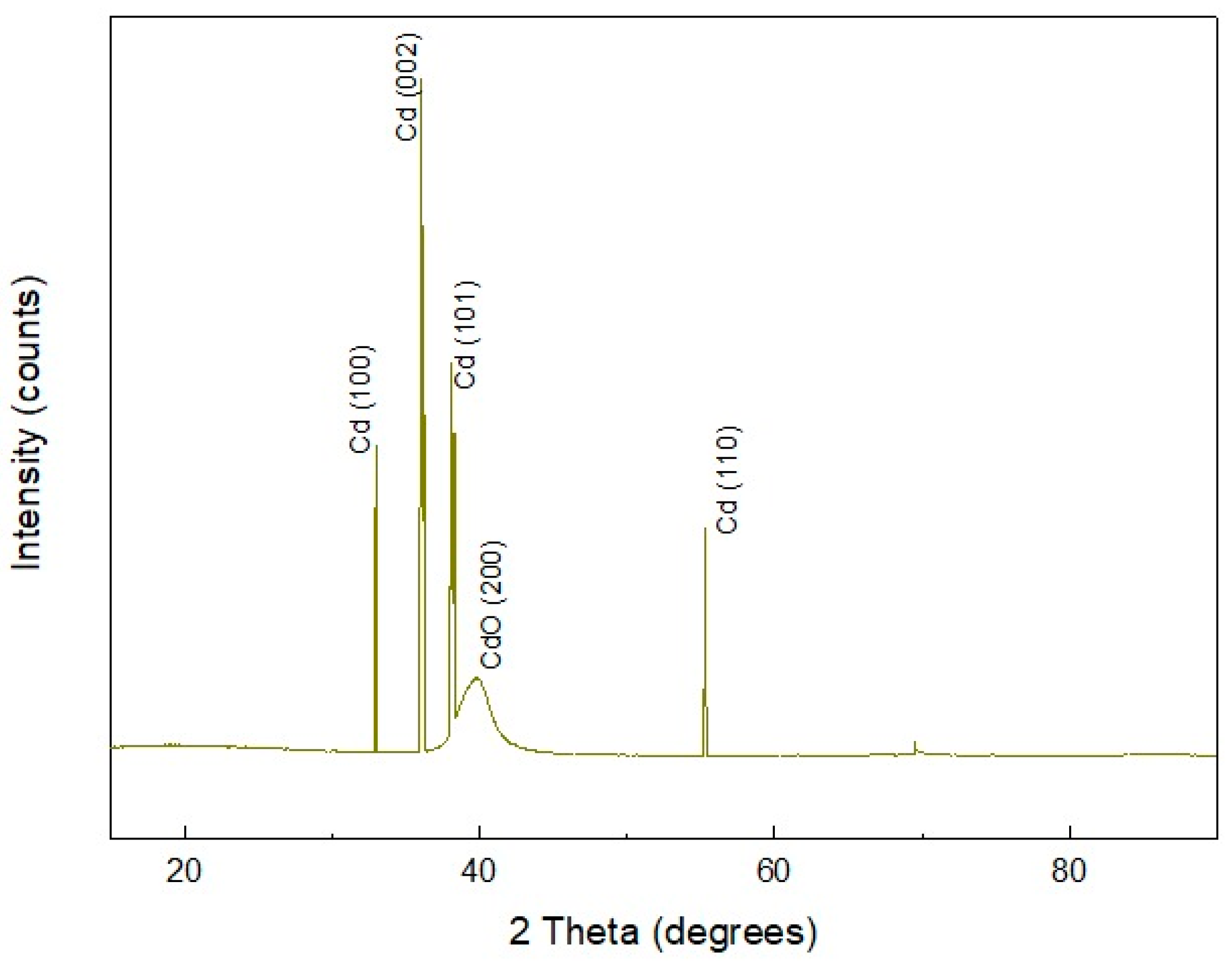
The X-ray diffraction (XRD) analysis of the electrodeposited cadmium coating revealed distinct diffraction peaks corresponding to metallic cadmium with a hexagonal close-packed (hcp) structure [26,33]. The diffractogram (Figure 1) shows prominent reflections at 2θ ≈ 32.9°, 36.3°, 38.4°, and 55.3°, which are indexed to the (100), (002), (101), and (110) crystallographic planes, respectively. These results are consistent with standard reference data from JCPDS card No. 05-0674, confirming the presence of crystalline metallic Cd.
Notably, the (002) reflection exhibits a significantly higher intensity compared with the other peaks, indicating a pronounced preferential orientation along the c-axis. This type of basal texture is characteristic of hcp-structured materials and is commonly observed in electrodeposited coatings, where the electrochemical bath composition and the applied current density govern anisotropic crystal growth [34]. No additional peaks related to cadmium oxide (CdO) or other secondary phases were detected, indicating a high chemical purity of the coating. Alternatively, the absence of such signals may suggest that any surface oxide layers are extremely thin and below the detection limit of the θ–2θ XRD configuration. Furthermore, the lack of noticeable diffraction from the steel substrate indicates that the coating thickness is sufficient to fully attenuate the substrate signal [35]. Overall, the XRD analysis confirms that the cadmium coating is predominantly composed of highly crystalline metallic Cd with a strong (002) basal orientation. These structural features are consistent with the requirements for aerospace-grade cadmium coatings as specified in the AMS-QQ-P-416B standard [36].

3.1.2. Structural Evolution of Cr/CrC Coatings as a Function of Carbon Content

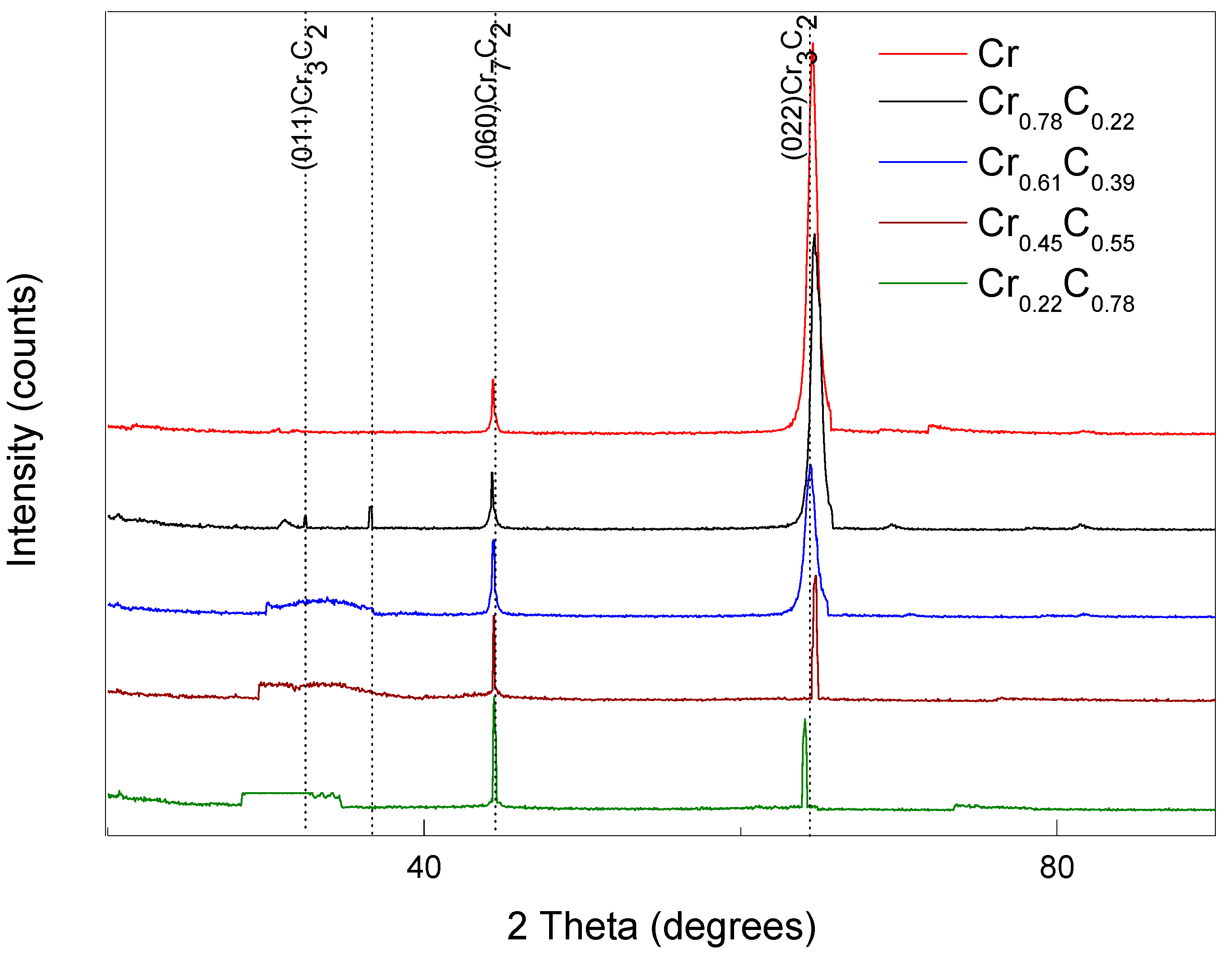
Figure 2 X-ray diffraction (XRD) analysis revealed a progressive structural evolution in the Cr/CrC coatings as a function of carbon content, showing a gradual transition from a crystalline metallic phase to a predominantly amorphous microstructure.
The single layer Cr coating exhibited intense diffraction peaks at 2θ ≈ 44.4° (110) and 64.6° (200), corresponding to a body centered cubic (BCC-Cr) structure. The sharpness and symmetry of these peaks indicate a high degree of crystallinity, typical of a well-ordered metallic phase with minimal lattice distortion [37].
In the Cr0.78C0.22 sample, the metallic Cr diffraction pattern was preserved; however, an additional peak appeared at ~36.5°, assigned to the (011) plane of Cr3C2. This signal marks the onset of interaction between the incorporated carbon and the Cr matrix, leading to the initial formation of chromium carbide phases. The coexistence of both patterns suggests a heterogeneous structure dominated by excess Cr, which limits the full conversion into well-developed carbides.
As the carbon content increased particularly in the Cr0.61C0.39 and Cr0.45C0.55 compositions the diffractograms revealed a progressive decrease in the intensity of the metallic Cr peaks, together with enhanced reflections attributed to Cr3C2 [(011) ~36.5°, (002) ~66°] and Cr7C3 [(060) ~41.6°] [38].
This transformation denotes an advanced structural evolution in which carbide phases become dominant. Concurrently, a broad band appears in the 22–25° range, characteristic of amorphous carbon (a-C), indicating the emergence of a disordered matrix coexisting with crystalline phases. This configuration is indicative of a nanocomposite (nc-CrC/a-C), in which Cr3C2 and Cr7C3 nanocrystals are embedded within a carbon rich amorphous matrix.
In the Cr0.22C0.78 sample, the diffraction pattern is characterized by the near-complete disappearance of metallic Cr peaks and the dominance of the amorphous carbon band (22–25°), with only residual Cr3C2 (011) signals remaining [39]. This behavior suggests carbon supersaturation, which inhibits the nucleation of ordered carbide phases and promotes the development of a continuous amorphous matrix.
The stoichiometric CrC sample exhibited a pattern similar to that of the Cr0.22C0.78 coating, with a dominant amorphous band and an absence of well-defined Cr or carbide peaks. These results confirm that at high carbon contents, the structure tends toward full amorphization, forming a carbon-rich matrix that suppresses the crystallization of discrete domains [40].
Taken together, the structural evolution observed across the Cr/CrC series demonstrates a clear correlation between increasing carbon content and the degree of structural order: from a crystalline metallic BCC-Cr phase, through intermediate states involving the formation of crystalline carbide phases within amorphous matrices, to fully amorphous configurations at the highest carbon levels. To improve clarity according to the reviewer’s comment, all diffraction peaks in Figure 1 have been explicitly identified and indexed following JCPDS reference patterns. In Figure 2, the XRD profiles have been enhanced by increasing the resolution and contrast, and the main reflections associated with Cr, Cr3C2, Cr7C3, and the amorphous carbon band have been labeled directly on the diffractograms. These improvements ensure that all crystalline and amorphous features are clearly visible and easily distinguishable across the Cr/CrC composition range.
The compositional variation also has a direct impact on the adhesion strength of the Cr/CrC coatings. At low carbon content (Cr0.78C0.22), the coating exhibits a predominantly metallic Cr matrix with limited amounts of undissolved carbon, which favors strong interfacial anchoring due to the continuity of the BCC-Cr lattice and the formation of a dense columnar structure. As the carbon content increases, however, the fraction of amorphous carbon grows, and a larger amount of undissolved C tends to accumulate at grain boundaries and layer interfaces. This excess amorphous carbon reduces the continuity of crystalline domains and weakens interfacial cohesion, making the coating more prone to localized decohesion under mechanical loading. At high carbon levels (Cr0.22C0.78), the fully amorphous structure exhibits reduced mechanical interlocking with the substrate and higher intrinsic residual stresses, which can further decrease adhesion strength. These effects are consistent with the morphological observations, where Cr-rich coatings show sharper interfaces and improved adhesion, while carbon-rich coatings display less compact structures with a greater tendency toward interfacial weakening.
It should be noted that the noise level observed in some XRD patterns is associated with intrinsic characteristics of thin-film diffraction. The nanometric thickness of the coatings limits the absolute intensity of the reflections, increasing the relative noise. In addition, the presence of amorphous carbon-rich regions, especially in compositions with high carbon content, produces broad halos that reduce the contrast of crystalline peaks. The nanocrystalline nature of the carbide domains further contributes to peak broadening and low-intensity features, and the overlap between these signals can degrade the overall signal to noise ratio. Although these factors may obscure some fine structural differences, they do not modify the overall trends in phase evolution observed across the Cr/CrC series.

3.2. Microstructural Evolution as a Function of Carbon Content

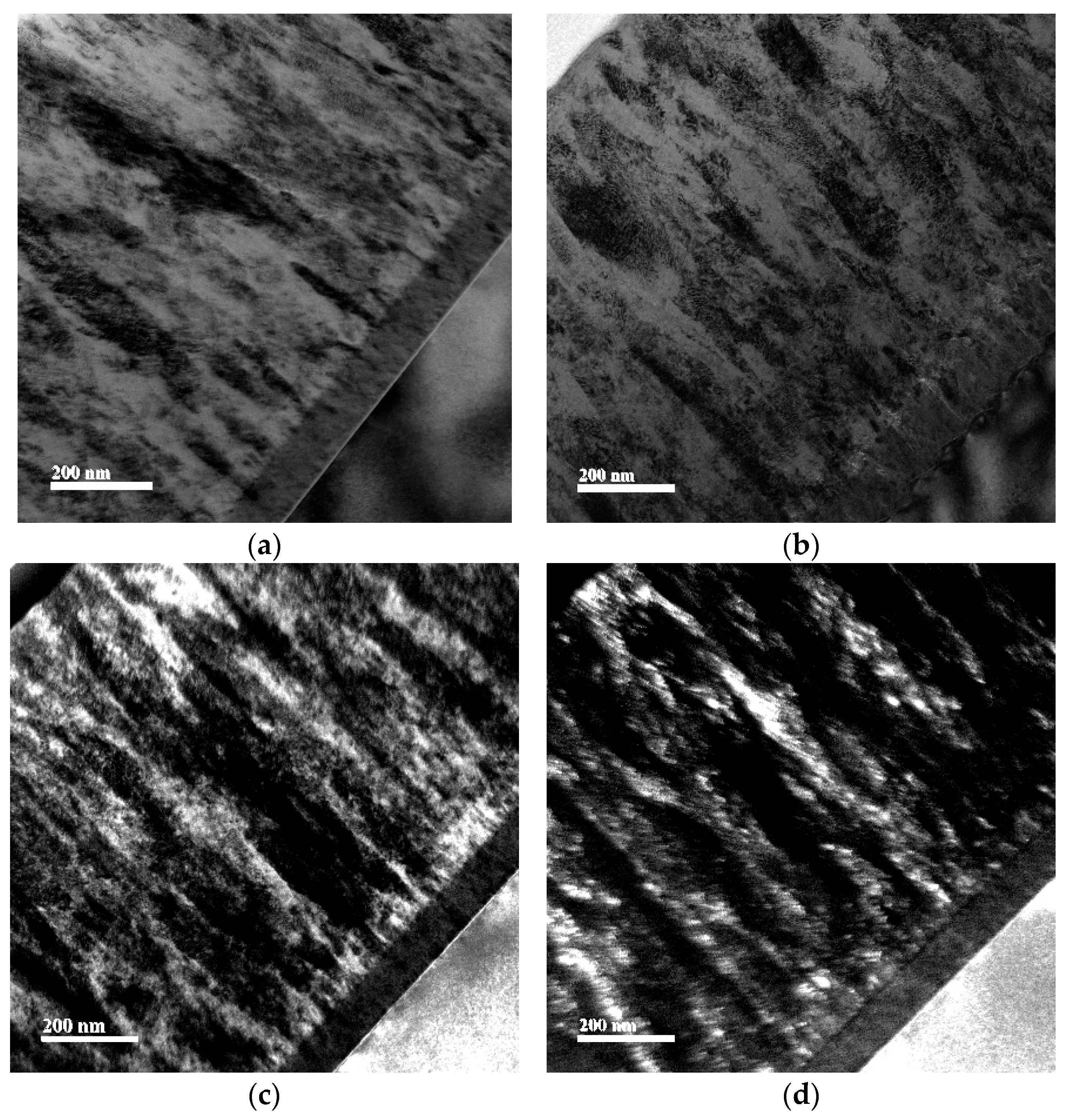
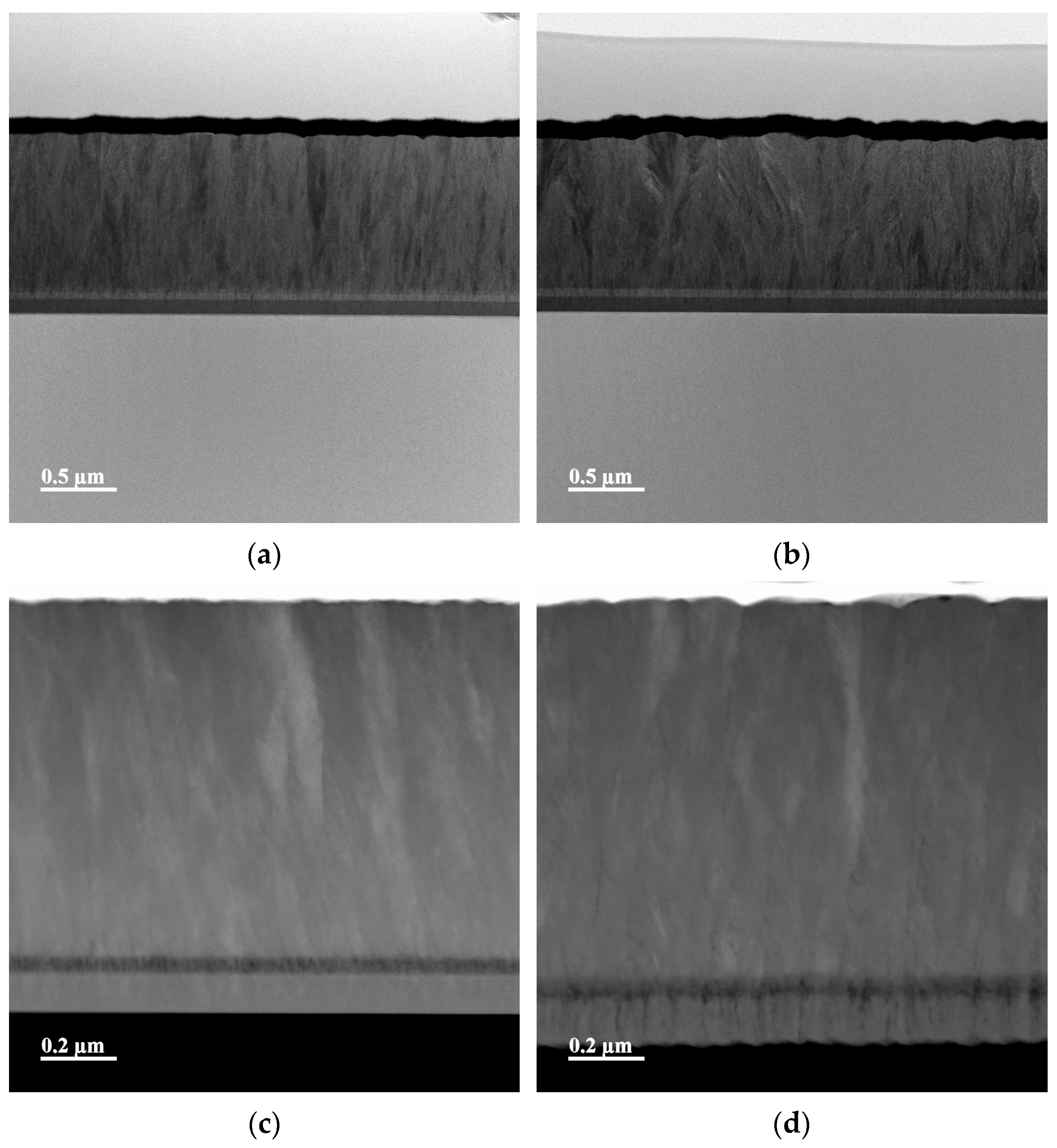
Cross-sectional transmission electron microscopy (TEM) and scanning electron microscopy (SEM) analyses were carried out to investigate the evolution of the microstructure in Cr/CrC coatings with varying Cr/C atomic ratios. TEM micrographs were acquired in bright-field mode at a constant magnification scale of 200 nm, while SEM images were taken at higher contrast to better visualize the coating–substrate interface. This combined approach allowed a detailed evaluation of the lamellar architecture, growth texture, and the relative distribution of crystalline and amorphous regions within the multilayer structure.
Figure 3 presents representative TEM images of the coatings deposited on Si(100) substrates. The samples were prepared using dual substrate rotation and include an intermediate Cr sublayer that promotes nucleation and adhesion. Across all compositions, three regions can be distinguished: (i) a bottom Cr anchoring layer exhibiting columnar growth, (ii) a transition interface, and (iii) an upper Cr–C layer. Variations in image contrast within the upper region indicate structural evolution associated with the progressive incorporation of carbon.
At low carbon content (Cr0.78C0.22), the coating exhibits a relatively ordered microstructure with alternating bright and dark contrasts. These variations suggest compositional fluctuations between Cr-rich and C-enriched regions, consistent with early-stage carbide formation. XRD confirms the presence of initial Cr3C2 formation, while the metallic Cr phase remains predominant, giving rise to a dense and highly crystalline coating.
For intermediate compositions (Cr0.61C0.39), the columnar features become less defined, and the TEM contrast appears finer and more diffuse. This behavior indicates increased structural heterogeneity, associated with the dispersion of carbide nanocrystals (Cr3C2/Cr7C3) within a more disordered matrix. The growth of darker regions suggests a higher fraction of amorphous carbon. These observations align with the corresponding XRD patterns, which show attenuation of the metallic Cr peaks and enhanced carbide reflections, characteristic of a transitional nc-Cr3C2/Cr7C3/a-C microstructure.
At higher carbon content (Cr0.45C0.55), the coating displays a more uniform and diffuse contrast with no clear columnar morphology. The microstructure is dominated by finely dispersed carbide nanocrystals embedded within an amorphous carbon matrix, indicative of an advanced nanocomposite configuration (nc-CrC/a-C). This structure is associated with more isotropic behavior and can contribute to improved toughness.
Finally, at the highest carbon concentration (Cr0.22C0.78), the microstructure exhibits a disordered morphology with high contrast between dark and bright regions. No crystalline domains or columnar growth are observed, indicating a fully amorphous structure. This observation is in agreement with XRD data, which show the disappearance of metallic and carbide peaks and the presence of a broad amorphous band in the 22–25° range. Carbon supersaturation inhibits the nucleation of ordered phases, promoting the formation of a continuous amorphous carbon network with potential lubricating or dielectric properties.
To provide a broader and more coherent picture of the coating architecture, Figure 4 presents complementary SEM cross-sectional images, offering a mesoscale perspective that bridges the nanoscale observations obtained by TEM. These SEM images reveal the continuity of the multilayer structure, the quality of the coating–substrate interface, and the overall integrity of the deposited architecture, thereby validating the microstructural trends identified at higher resolution.
Additional cross-sectional TEM and SEM analyses were performed to further assess the effects of different Cr/C atomic ratios on the coating microstructure. While TEM continued to provide high-resolution imaging of internal features at 200 nm scale, the SEM images offered complementary contrast enhancements to examine interfacial characteristics. These observations supported previous findings and offered deeper insight into the distribution of crystalline and amorphous phases throughout the layered architecture.

3.3. Mechanical Response from Nanoindentation

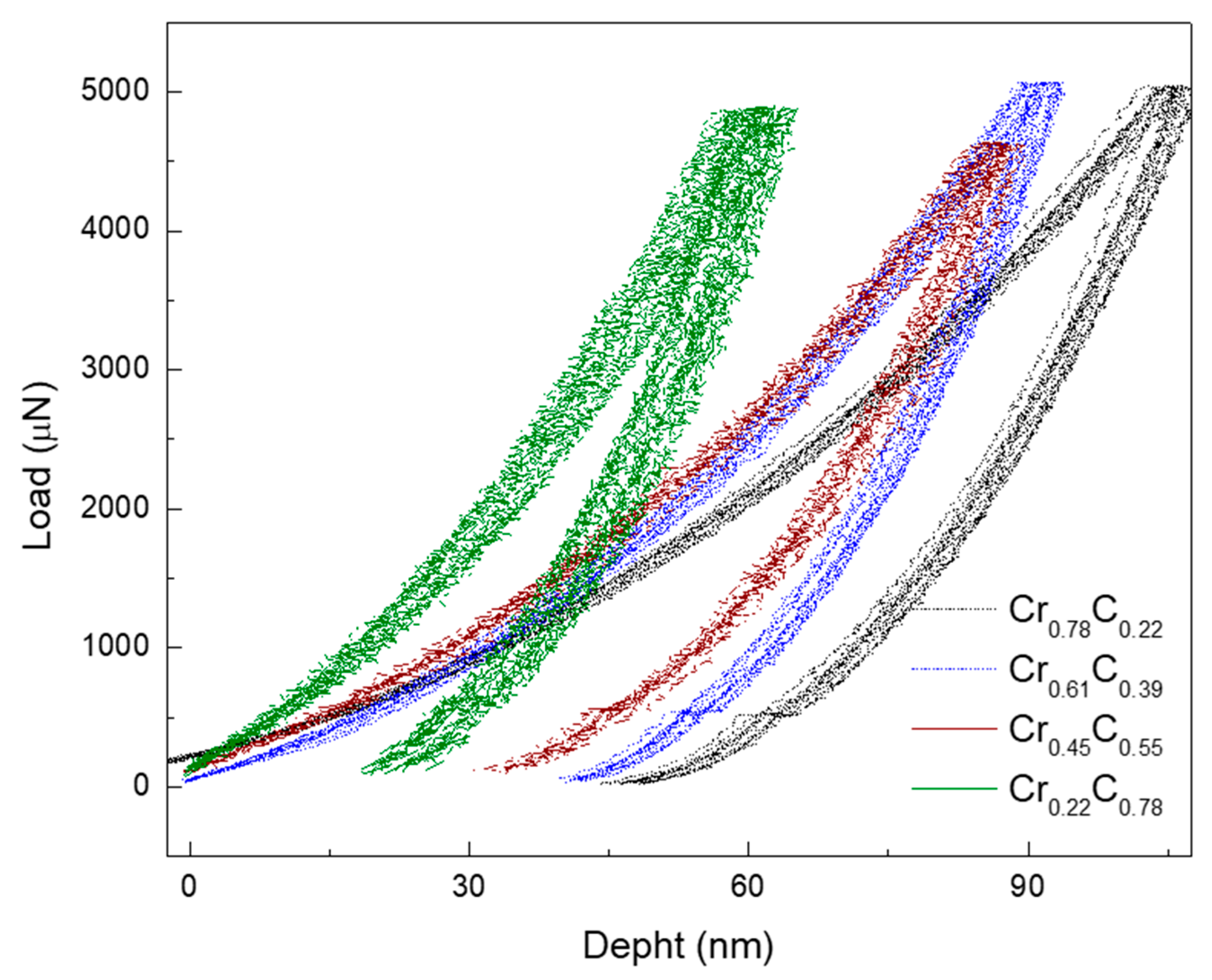
Figure 5 shows load displacement curves obtained by instrumented nanoindentation for CrC coatings with varying carbon atomic fractions, measured to a maximum indentation depth of ~100 nm. These curves clearly illustrate the influence of chemical composition on resistance to plastic deformation.
According to ASTM E2546-15 [41], the indentation depth under a constant applied load is inversely proportional to the hardness (H) of the material. In this context, the Cr0.78C0.22 coating exhibited the shallowest penetration and, consequently, the highest hardness, whereas the Cr0.22C0.78 coating showed the greatest indentation depth, corresponding to the lowest mechanical resistance. The measured hardness values were 27 GPa for Cr0.78C0.22, 22 GPa for Cr0.61C0.39, 16 GPa for Cr0.45C0.55, and 12 GPa for Cr0.22C0.78, confirming a progressive decline in hardness with increasing carbon content. This trend is attributed to a microstructural transition from a columnar crystalline network of Cr and chromium carbides (Cr3C2, Cr7C3) to a less dense, carbon-rich amorphous matrix (a-C:Cr) with a lower effective elastic modulus [42].
From a microstructural standpoint, the addition of carbon reduces the volume fraction of load-bearing crystalline phases and promotes the formation of an amorphous nanocomposite matrix dominated by covalent C–C and Cr–C bonding. While this configuration improves elastic recovery, it simultaneously decreases resistance to plastic penetration, accounting for the observed reduction in hardness.
According to the Oliver and Pharr elastic–plastic contact theory, hardness is governed by the unloading stiffness (the slope of the unloading curve) and the projected contact area and is higher in systems dominated by reversible elastic deformation [43]. Coatings with higher Cr content exhibited steeper unloading slopes, indicating greater local stiffness and reduced residual plastic deformation.
These results are consistent with previous studies on CrC nanocomposite coatings, which report that progressive carbon incorporation decreases hardness and elastic modulus but enhances tribological stability and self-lubricating behavior under ASTM G133-05 conditions [44]. This trade-off between hardness and tribological performance suggests that intermediate compositions—such as Cr0.61C0.39—offer the best overall mechanical performance by balancing relatively high hardness, adequate toughness, and excellent wear resistance under reciprocating sliding.

3.4. Tribological Performance of Cr/CrC Coatings Compared to Cadmium

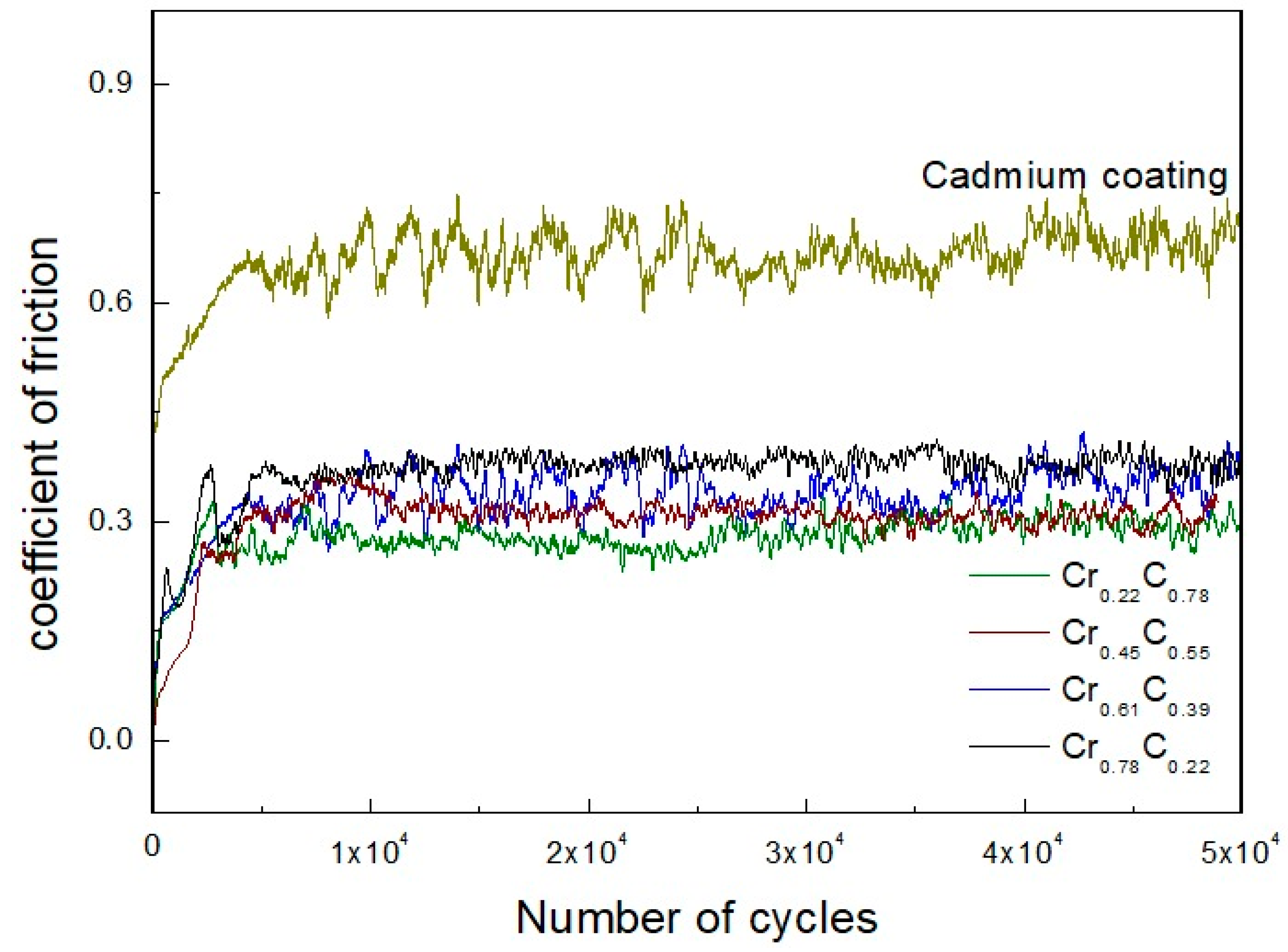
Figure 6 shows the evolution of the coefficient of friction (COF) as a function of the number of cycles for CrC coatings with different carbon atomic fractions and for a metallic cadmium coating, obtained from reciprocating sliding tests conducted under a constant normal load according to ASTM G133-05 [44].
The friction curves exhibit the characteristic behavior of tribological systems containing both metallic and amorphous phases: an initial increase in COF during the running in stage, followed by the establishment of a steady state regime. The metallic cadmium coating displayed a significantly higher average COF (~0.70), accompanied by large fluctuations, indicating lower tribological stability and a mechanical response dominated by plastic deformation and interfacial adhesion.
In contrast, the CrC coatings demonstrated much lower and more stable friction values (~0.32) over 50,000 cycles, suggesting superior load-bearing capacity and enhanced wear resistance. However, the wear behavior did not follow the conventional correlation between hardness and abrasion resistance: the hardest coating (Cr0.78C0.22) exhibited higher wear rates, whereas coatings with higher carbon content (Cr0.22C0.78) and thus a greater amorphous fraction and higher elastic compliance showed reduced wear [45]. This seemingly counterintuitive behavior can be explained by considering the local elasticity and elastic recovery capacity inferred from the unloading curves of the nanoindentation tests (ASTM E2546-15). Carbon-rich coatings exhibit lower elastic moduli but a higher proportion of reversible deformation, enabling the surface to accommodate contact stresses without fracturing or detaching, which in turn reduces the abrasive wear rate.
Conversely, coatings with higher Cr content and predominantly crystalline structures show increased stiffness and lower tolerance to deformation, facilitating the formation of microcracks and localized delamination under repetitive shear stresses, thereby increasing wear [46].
Overall, the intermediate compositions (Cr0.61C0.39 and Cr0.45C0.55) provide the optimal balance between hardness, elasticity, and tribological stability. They combine the rigidity of the crystalline CrCx domains with the self-lubricating behavior of the carbon rich amorphous matrix. This synergistic behavior leads to stable COF values, low wear rates, and high surface integrity—key attributes for coatings designed for controlled friction environments.

3.5. Wear Rate and Wear Track Analysis

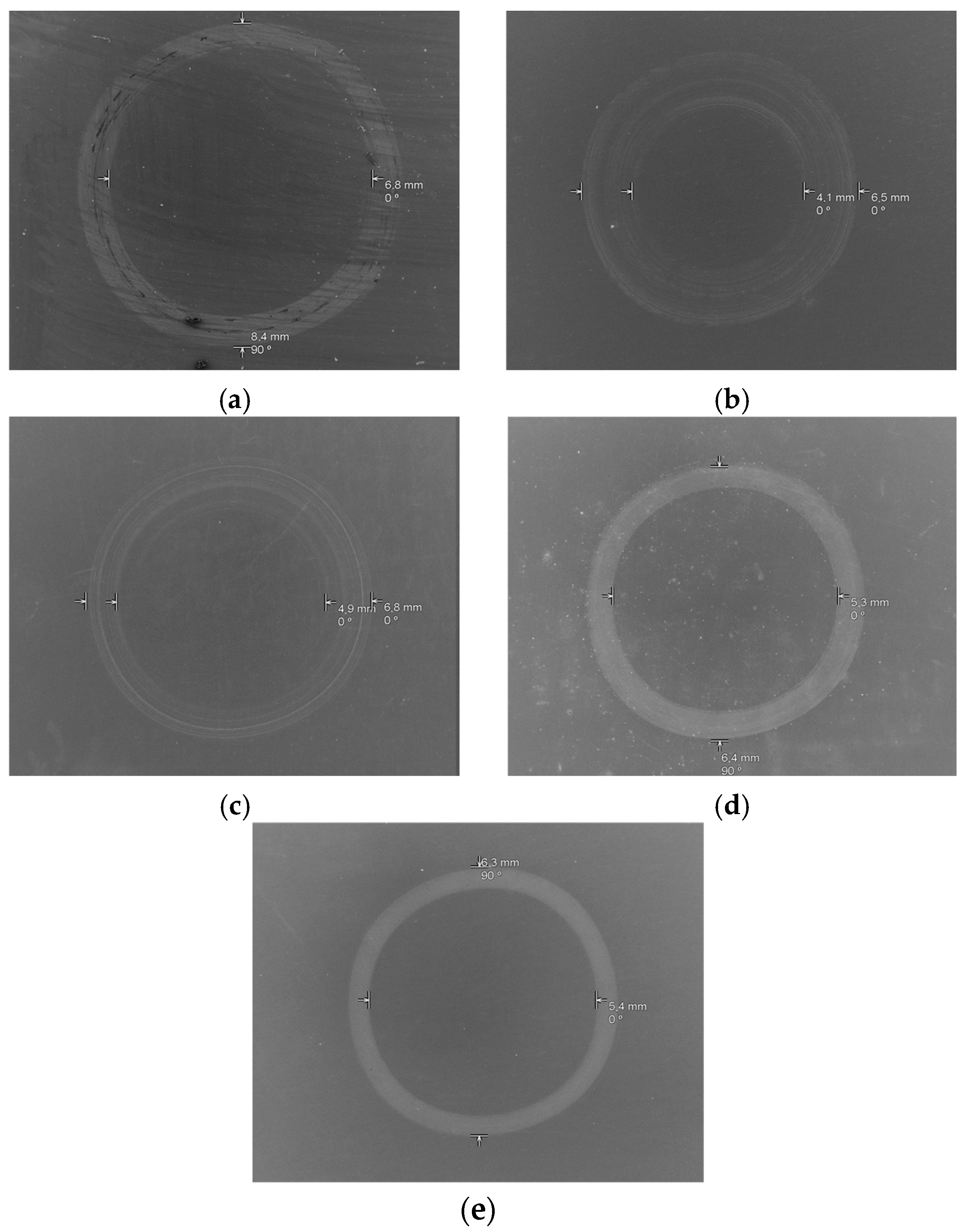
The wear behavior of the Cd and Cr/CrC coatings was evaluated through reciprocating sliding tests, and the resulting wear tracks were examined by SEM. Figure 7a–e shows representative wear tracks for all coatings, where clear differences can be observed in both the wear rate and the surface morphology. These variations reflect the strong influence of chemical composition and microstructural architecture on the tribological response.
The Cd coating (Figure 7a) exhibited the most severe wear damage. Its wear track appears wide and irregular, with deep grooves and evident material transfer, indicating a wear mechanism dominated by adhesion and severe plastic deformation. This morphology is consistent with the unstable friction response and with the high wear rate typically associated with metallic Cd under reciprocating sliding conditions. Extensive plastic flow and localized adhesion explain the large fluctuations observed in its friction curve.
In contrast, all Cr/CrC coatings showed substantially lower wear. Their wear tracks were narrower, more uniform, and characterized by shallow, continuous abrasive marks. As observed in Figure 7, the width of the wear scar decreases progressively with increasing carbon content, indicating enhanced resistance to material loss. This trend correlates with the microstructural transition from Cr rich, predominantly crystalline coatings toward nanocomposite structures composed of CrCx nanocrystals. The amorphous phase promotes elastic recovery and reduces interfacial shear, limiting wear severity during repeated sliding.
The intermediate compositions, Cr0.61C0.39 (Figure 7c) and Cr0.45C0.55 (Figure 7d), offered the best balance between mechanical stiffness and elastic compliance, resulting in low and stable wear. Although the Cr0.78C0.22 coating (Figure 7b) is the hardest, it exhibited a wider wear track than the carbon-rich coatings, which is consistent with its lower elastic recovery and higher susceptibility to microcrack initiation under cyclic shear.
Finally, the coating with the highest carbon content, Cr0.22C0.78 (Figure 7e), exhibited the narrowest and most uniform wear track, confirming the lubricating and stress dissipating role of the amorphous carbon rich matrix.
Overall, the wear morphology shown in Figure 6, together with the friction behavior and wear rate trends, confirms that all Cr/CrC coatings significantly outperform Cd in terms of wear resistance. The progressive reduction in wear damage with increasing carbon content highlights the tribological advantages of the nanocomposite Cr/CrC architecture.

3.6. Electrochemical Performance of CrC and Cd Coatings

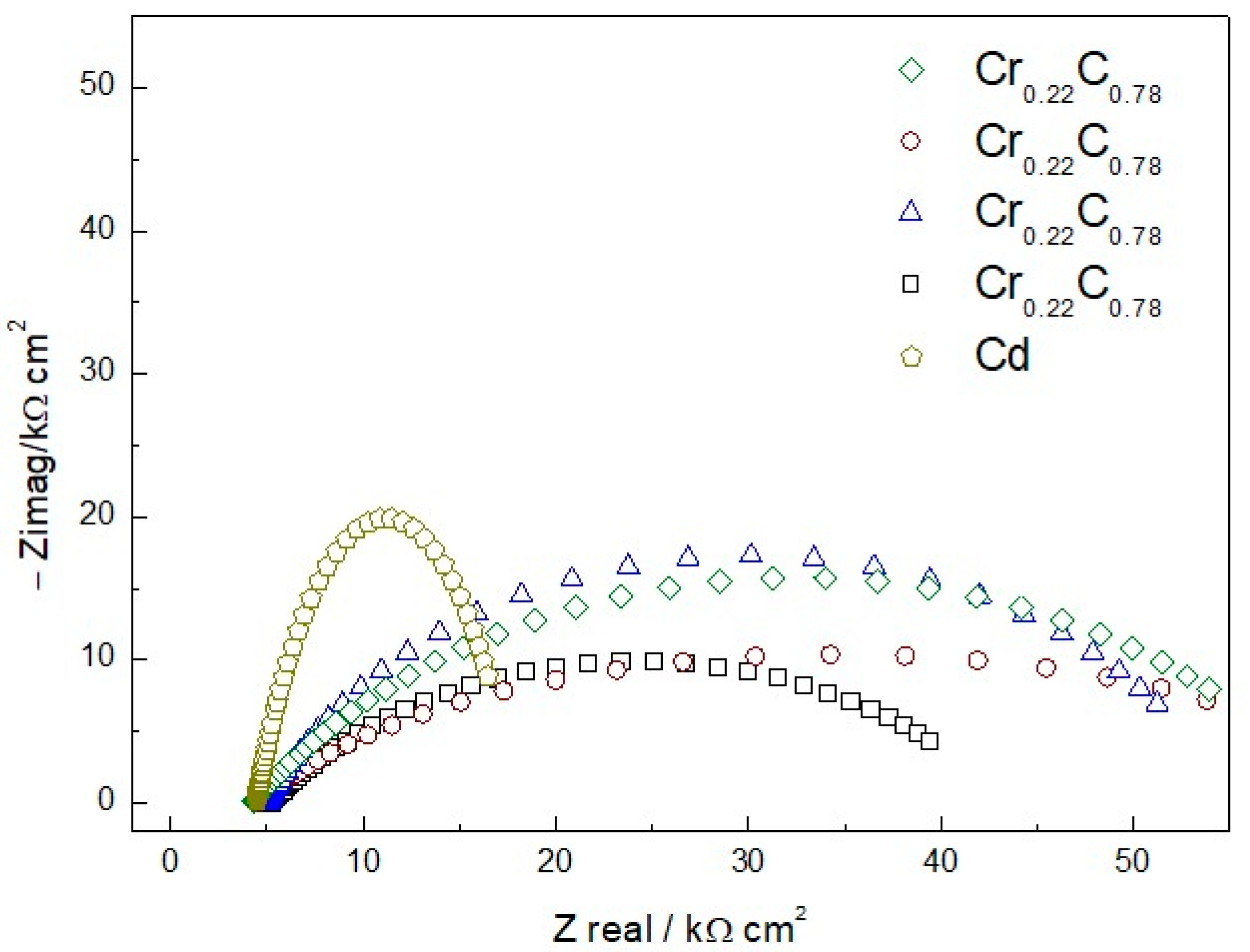
Electrochemical impedance spectroscopy (EIS) was performed under aerated conditions at open circuit potential (OCP) to evaluate and compare the corrosion protection performance of the Cr–C coatings and the Cd reference coating. The Nyquist diagrams shown in Figure 8 reveal clear differences in electrochemical behavior as a function of the coating composition.
The Cd coating displays a single, low-diameter semicircle characteristic of a system governed by a single time constant and low polarization resistance, as expected for an active metal with limited barrier properties [47]. In contrast, the Cr–C coatings exhibit larger semicircles with extended curvature, consistent with a more resistive and capacitive response. These features indicate the presence of multiple interfacial processes, attributed to the combined contribution of the protective Cr–C film and the underlying electrochemical interface, resulting in significantly higher corrosion resistance.
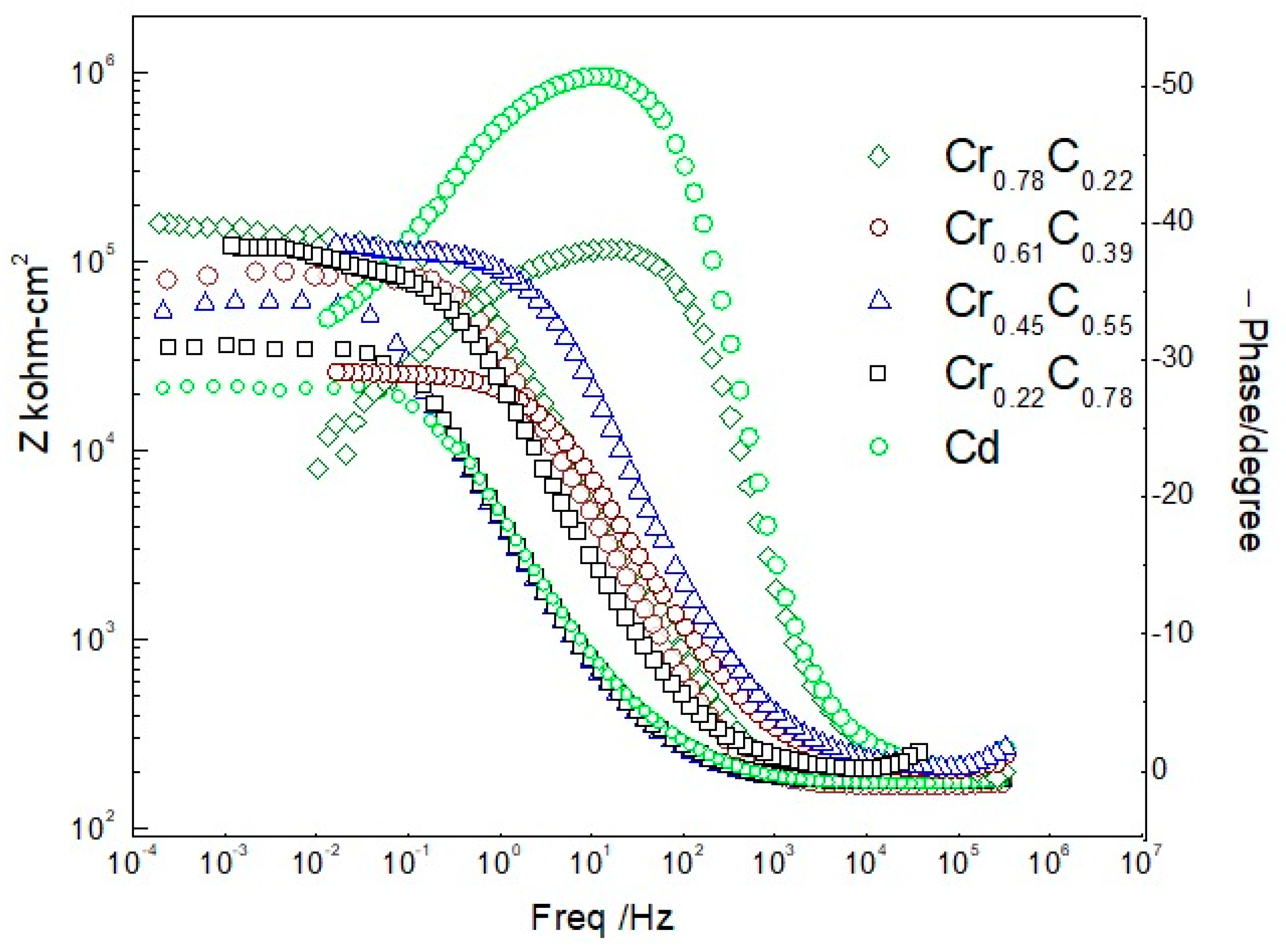
To complement the Nyquist analysis, Figure 9 presents the corresponding Bode plots (impedance magnitude and phase angle). These plots provide additional clarity on the number of electrochemical processes involved. The CrC coatings exhibit two well-defined features in both |Z| and phase angle curves, evidencing the presence of two distinct time constants: a high-frequency response associated with the coating layer and a low-frequency response related to the charge-transfer reaction. Conversely, the Cd coating shows a single broad peak in the phase angle plot and a monotonic decrease in |Z|, confirming the presence of only one dominant electrochemical process. Together, the Nyquist and Bode plots clearly justify the use of different equivalent circuits for the CrC and Cd coatings.
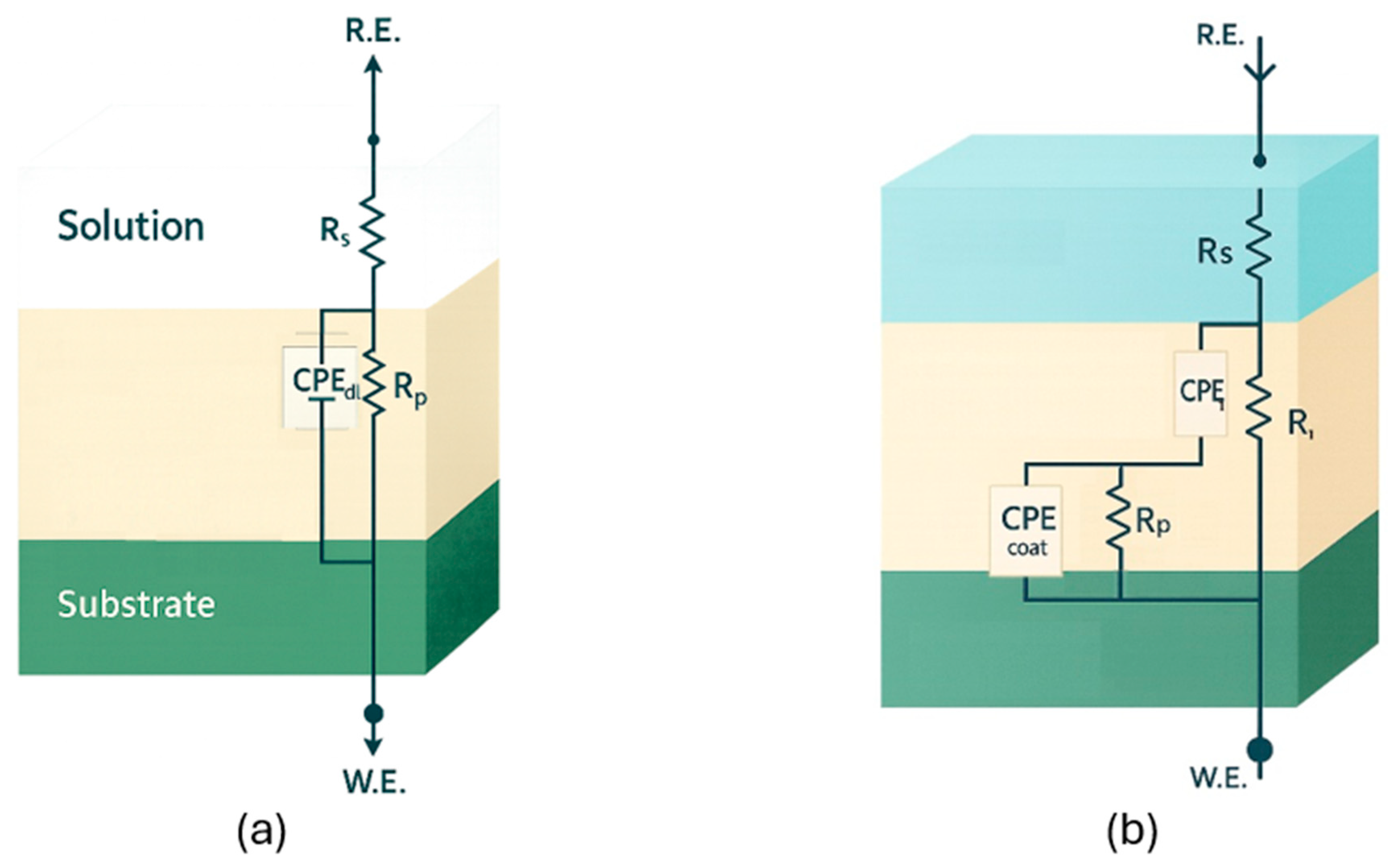
Based on these observations, the electrochemical responses were modeled using the equivalent electrical circuits presented in Figure 10. For the Cd coating, a simple single time constant model (Rs − (Rp ‖ CPE2)) was sufficient to describe the impedance behavior, reflecting a direct charge transfer process occurring at an active metallic interface [48]. In contrast, the CrC coatings required a more complex model consisting of the solution resistance (Rs), a high-frequency coating resistance (R1) associated with the protective film, and a low frequency parallel element (Rp ‖ CPE2) describing the electrode/electrolyte interface. Constant phase elements (CPE) were incorporated to account for the non-ideal capacitive response, typically arising from surface roughness, microstructural heterogeneity, and dispersion in relaxation times.
The excellent quality of the fittings characterized by low χ2 values, small residuals, and stable parameter convergence confirms that the selected circuits accurately represent the underlying electrochemical processes. The significantly higher values of Rp and total impedance observed in the CrC coatings demonstrate a superior barrier effect compared to Cd, highlighting their potential as sustainable and high-performance alternatives for corrosion protection in aerospace applications.
Although the Nyquist plots display only one depressed semicircle, this is the result of two electrochemical processes whose semicircles overlap in the complex plane representation. The Bode plots (Figure 9) clearly separate these processes, revealing two distinct time constants associated with the coating layer and the charge transfer reaction. For this reason, the equivalent circuit includes two branches (R1/CPE1 and Rp/CPE2), and the corresponding fitting parameters listed in Table 1 reflect the contribution of each process. The presence of CPE also introduces the Q and n parameters, which further explains the multiple fitting values required to accurately model the full impedance response.
The electrochemical parameters extracted from the fitting of the EIS spectra (Table 1) clearly demonstrate the superior performance of the Cr–C coatings compared with the Cd coating. The Cd coating exhibited a polarization resistance (Rp) of only 8.93 kΩ·cm2, along with a dispersion exponent of n = 0.85, indicating highly non ideal behavior and a vulnerable electrochemical interface.
In contrast, the CrC coatings showed a progressive increase in Rp and R1 values as the carbon atomic fraction decreased. Notably, the Cr0.78C0.22 coating achieved the highest Rp (52.7 kΩ·cm2) and R1 (32.5 kΩ·cm2), accompanied by a low CPE1 value (19.8 μF·cm−2) and a dispersion exponent close to unity (n1 ≈ 0.94) [49]. These parameters reflect the formation of a dense and homogeneous surface film with excellent dielectric characteristics.
Although the Nyquist diagrams visually display only one depressed semicircle, this does not imply the presence of a single electrochemical process. In thin films such as the CrC coatings, two time constants may overlap in the Nyquist representation when their characteristic frequencies are close, causing the semicircles to merge into a single arc [50]. However, the Bode plots (Figure 9) clearly separate these two processes, as evidenced by two distinct features in both the impedance magnitude and the phase angle curves. The high frequency contribution corresponds to the response of the coating layer (R1/CPE1), while the low-frequency contribution is associated with the charge transfer reaction at the electrolyte interface (Rp/CPE2). For this reason, the equivalent circuit includes two branches, and Table 1 reports multiple parameters (Rs, R1, Rp, CPE1, CPE2, n1, n2) that represent the contributions of each time constant. The combination of Nyquist and Bode analyses confirms that these parameters are required to accurately describe the full impedance behavior of the CrC coatings.
The intermediate compositions, Cr0.61C0.39 and Cr0.45C0.55, exhibited similarly high impedance values (Rp = 36.9 and 28.5 kΩ·cm2, respectively), although these were accompanied by higher CPE values and slightly lower n exponents. This behavior suggests a more heterogeneous microstructure in which crystalline carbide domains coexist with amorphous carbon regions. In contrast, the coating with the highest carbon content, Cr0.22C0.78, showed the lowest electrochemical performance within the Cr–C series (Rp = 18.6 kΩ·cm2; R1 = 8.25 kΩ·cm2; CPE1 = 48 μF·cm−2; n1 = 0.91). This response is associated with a more porous and discontinuous structure, promoted by the predominance of the carbon-rich amorphous matrix (a-C) and the reduction in compact crystalline phases [51].
The protection efficiency relative to Cd was calculated from the Rp values, yielding efficiencies of 83.1% (Cr0.78C0.22), 75.8% (Cr0.61C0.39), 68.7% (Cr0.45C0.55), and 52.2% (Cr0.22C0.78). This trend confirms that all CrC coatings significantly outperform Cd in terms of barrier protection against corrosion. Furthermore, the evolution of electrochemical parameters (↑R1, ↑Rp, ↓CPE1, ↑n1 with decreasing carbon content) indicates a continuous improvement in film compactness and dielectric quality, supported by the formation of dense columnar structures enriched in Cr and crystalline carbides. Conversely, excessive carbon incorporation increases the amorphous fraction, promotes porosity, and facilitates the formation of percolation pathways, thereby reducing the electrochemical resistance.
Notably, unlike many protective coating systems, no inverse correlation between hardness and electrochemical resistance was observed in this study. In fact, the Cr-rich composition (Cr0.78C0.22) simultaneously exhibits high hardness (~27 GPa), high corrosion resistance (Rp > 50 kΩ·cm2), and a compact columnar structure—highlighting its potential as a multifunctional coating. Although carbon-rich coatings benefit from lower friction due to their lubricating amorphous phase, this tribological improvement comes at the expense of reduced electrochemical protection efficiency. In this context, the intermediate compositions (Cr0.61C0.39 and Cr0.45C0.55) provide the best overall compromise between mechanical, tribological, and electrochemical performance, surpassing Cd in all critical aspects.

3.7. Post-Corrosion Surface Analysis

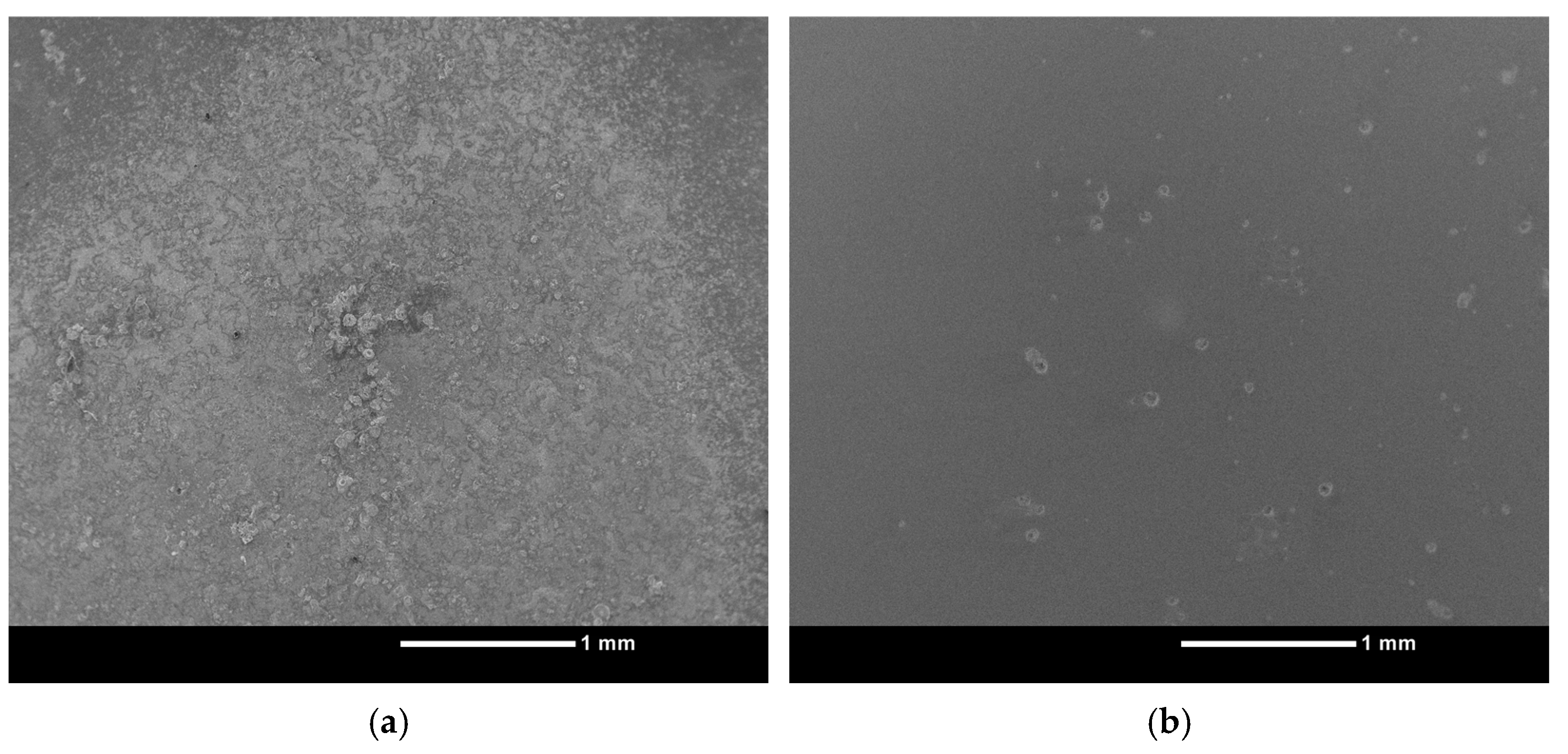
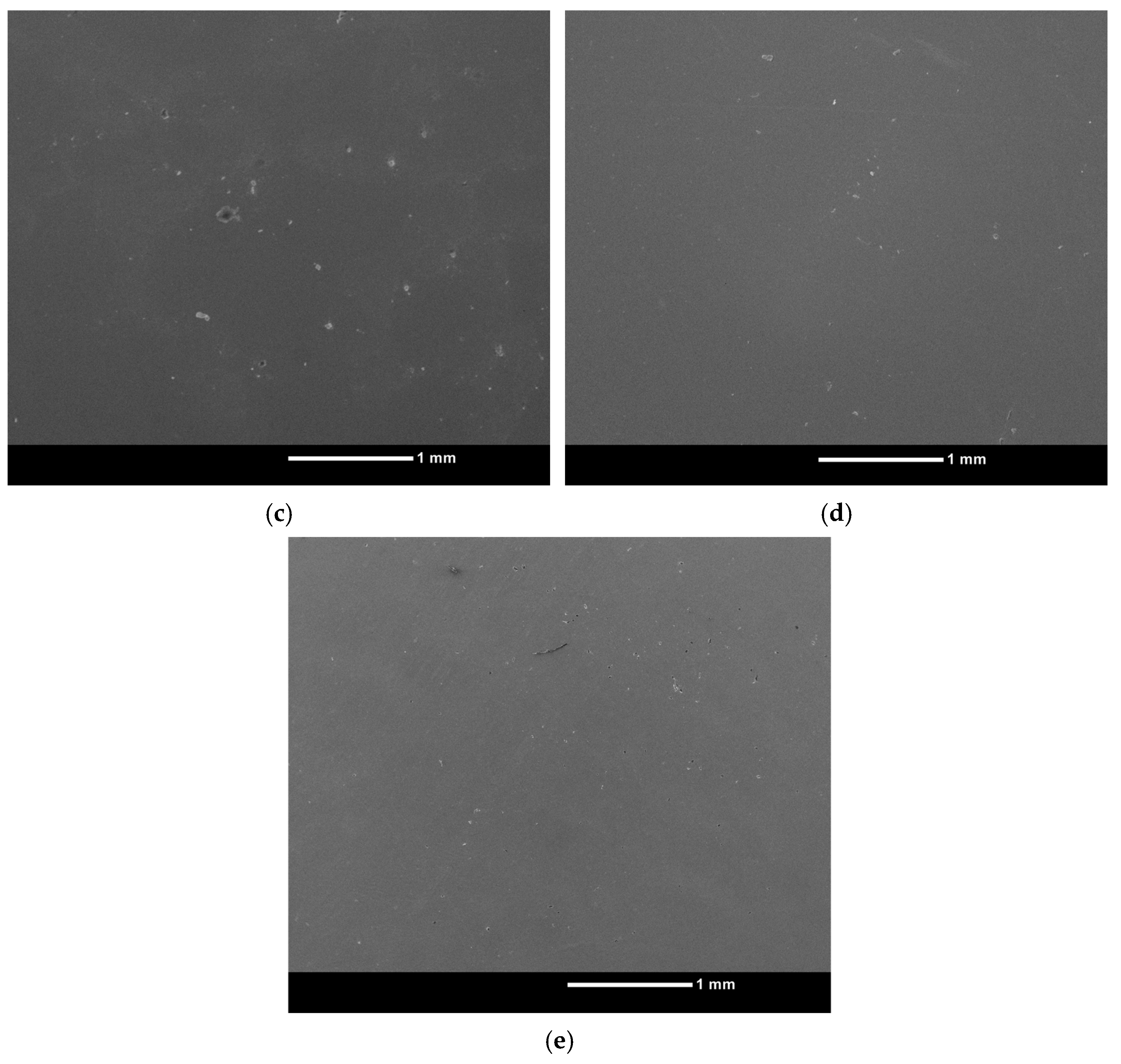
The corrosion behavior of the Cd and Cr/CrC coatings was further examined by observing the surfaces after electrochemical testing [52]. Figure 11a–e shows representative post-corrosion SEM images for all coatings, where clear differences can be observed in the extent and nature of the surface degradation. These variations reflect the strong influence of chemical composition and microstructural architecture on the corrosion protection mechanisms.
The Cd coating (Figure 11a) exhibited the most severe corrosion damage. Its surface appears highly degraded, with extensive pitting, generalized surface attack, and regions of material detachment. This morphology indicates an active dissolution mechanism dominated by localized anodic breakdown and the absence of a stable passive layer. Such behavior aligns with the low Rp values and unstable impedance response previously observed, confirming the poor corrosion resistance of metallic Cd under the tested conditions.
In contrast, all Cr/CrC coatings showed markedly reduced corrosion damage. Their post-corrosion surfaces were smoother, more compact, and characterized by shallow corrosion marks [53]. As seen in Figure 11, the degree of surface degradation decreases progressively with increasing carbon content, indicating enhanced barrier properties and reduced electrochemical activity. This trend corresponds to the microstructural transformation from Cr-rich crystalline coatings to nanocomposite structures consisting of CrCx nanocrystals embedded in an amorphous carbon matrix.
The intermediate compositions Cr0.61C0.39 (Figure 11c) and Cr0.45C0.55 (Figure 11d) exhibited the most stable and homogeneous surfaces after corrosion. Only minimal localized corrosion features were observed, confirming that these nanocomposite architectures provide the best balance between passive film formation, structural compactness, and chemical inertness. Their behavior is consistent with the highest Rp and lowest CPE values obtained from the EIS fitting.
Although the Cr0.78C0.22 coating (Figure 11b) is the most crystalline, it displayed slightly greater surface damage compared with the carbon-rich coatings, which reflects its reduced amorphous fraction and lower capacity to suppress localized attack. Nevertheless, its surface remained significantly more preserved than that of Cd.
Finally, the highest-carbon coating Cr0.22C0.78 (Figure 11e) exhibited a smooth, uniform surface with the least evidence of corrosion. The predominance of the amorphous carbon phase provides a chemically inert and dense barrier that effectively restricts ion transport and hinders pit propagation [53].
Overall, the post-corrosion morphology shown in Figure 11, together with the EIS parameters and circuit-model trends, confirms that all Cr/CrC coatings significantly outperform Cd in corrosion protection. The progressive reduction in surface damage with increasing carbon content highlights the superior barrier efficiency and chemical stability offered by the nanocomposite Cr/CrC architecture.

4. Conclusions

The Cr/CrC multilayer coatings developed via unbalanced magnetron sputtering demonstrate strong potential as a technically viable and environmentally sustainable alternative to cadmium, exhibiting significant improvements in corrosion resistance for metallic components operating in harsh aerospace environments. The electrochemical tests confirmed that the multilayer architecture reduces charge transfer processes and increases film stability, indicating that the corrosion protection mechanism is directly linked to the compactness and barrier efficiency provided by the Cr anchoring layer.
By adjusting the Cr/C atomic ratio, the microstructural evolution of the coatings can be precisely tailored from crystalline structures dominated by metallic chromium to nanocomposite architectures of the nc-CrxCγ/a-C type. These tunable structures, strongly influenced by carbon incorporation, enable the optimization of mechanical and tribological properties. The structural transitions observed by XRD and TEM demonstrate that higher carbon contents promote the formation of amorphous-rich matrices, which correlates with enhanced toughness and improved energy dissipation mechanisms within the coating.
Cr-rich compositions exhibit higher hardness and stiffness, while carbon-rich coatings display self-lubricating behavior and reduced friction coefficients. The intermediate compositions (Cr0.61C0.39 and Cr0.45C0.55) provide the best overall balance, combining mechanical robustness, tribological stability, and reduced wear. These performance trends confirm that mechanical and tribological behavior arise from the interplay between crystalline phase content and amorphous carbon fraction, allowing the coatings to reach an optimal compromise between resistance to deformation and friction reduction.
All evaluated Cr–C coatings outperformed Cd in corrosion resistance, with protection efficiencies exceeding 80% for Cr-rich configurations. The electrochemical response correlates strongly with film compactness, crystallinity, and continuity of the protective layer. This enhanced performance indicates that the multilayer Cr/CrC design effectively suppresses localized corrosion mechanisms, providing a more stable passive behavior than conventional cadmium coatings.
The use of PVD techniques—particularly unbalanced magnetron sputtering—enables the reproducible and environmentally benign fabrication of high-performance functional coatings. This approach represents an effective technological pathway for the progressive replacement of cadmium in critical aerospace applications, fully aligned with international safety, environmental, and sustainability regulations. The reproducibility of the deposition process and the consistent microstructural features observed across samples confirm that this PVD route is sufficiently robust for industrial scale-up and long-term implementation.

Author Contributions

G.O.-H.: Conceptualization, methodology, investigation, formal analysis, data curation, writing—original draft preparation, and validation; W.A.: conceptualization, resources, supervision, project administration, funding acquisition, writing—review and editing, and validation. All authors have read and agreed to the published version of the manuscript.

Funding

This research received no external funding. The APC was funded by Universidad ECCI.

Data Availability Statement

The original contributions presented in the study are included in the article, further inquiries can be directed to the corresponding author.

Acknowledgments

The authors acknowledge the technical support provided by the Surface Engineering Laboratory at Universidad Militar Nueva Granada.

Conflicts of Interest

The authors declare no conflicts of interest. The funders had no role in the design of the study; in the collection, analyses, or interpretation of data; in the writing of the manuscript; or in the decision to publish the results.

References

  1. Liu, Y.-C.; Hsiao, S.-N.; Chen, Y.-H.; Hsieh, P.-Y.; He, J.-L. High-Power Impulse Magnetron Sputter-Deposited Chromium-Based Coatings for Corrosion Protection. Coatings 2023, 13, 2101. [Google Scholar] [CrossRef]
  2. Borowski, P.; Myśliwiec, J. Recent Advances in Magnetron Sputtering: From Fundamentals to Industrial Applications. Coatings 2025, 15, 922. [Google Scholar] [CrossRef]
  3. Cihangir, S. Greening Industrially Applied Toxic Cadmium Plating with γ-Ni2Zn11 Alloy in Deep Eutectic Solvents: Promising Electroplating Efficiency and Chemical Corrosion Resistance. Adv. Eng. Mater. 2023, 25, 2300731. [Google Scholar] [CrossRef]
  4. Yi, L.; Wang, S.; Wood, R.J.K. Controlled Compositions in Zn–Ni Coatings by Anode Material Selection for Replacing Cadmium. Coatings 2024, 14, 1119. [Google Scholar] [CrossRef]
  5. Cornet, A.J.; Homborg, A.M.; Anusuyadevi, P.R.; ‘t Hoen-Velterop, L.; Mol, J.M.C. Unravelling Corrosion Degradation of Aged Aircraft Components Protected by Chromate-Based Coatings. Eng. Fail. Anal. 2024, 159, 108070. [Google Scholar] [CrossRef]
  6. Pinheiro, X.L.; Oliveira, K.; Santos, J.; Girão, A.V.; Bastos, A.C.; Sousa, M.; Baptista, D.; Gomes, S.; Lobo, R.; Oliveira, P.; et al. The Combination of Electrodeposited Chromium (III) and PVD as an Industrial Viable Solution for the Replacement of Electrodeposited Chromium (VI). Process Saf. Environ. Prot. 2024, 182, 727–739. [Google Scholar] [CrossRef]
  7. Gopal, L.; Sudarshan, T. Cadmium Replacement in Coatings. Surf. Eng. 2025, 41, 295–301. [Google Scholar] [CrossRef]
  8. Buck, Z.N.; Connolly, M.J.; Martin, M.L.; Lauria, D.; Killgore, J.P.; Bradley, P.E.; Chen, Y.; An, K.; Slifka, A.J. Effects of mechanical deformation on dislocation density and phase partitioning in 4130 steel. Mater. Sci. Eng. A 2023, 885, 145592. [Google Scholar] [CrossRef]
  9. Nascimento, M.P.; Voorwald, H.J.C. Considerations on corrosion and weld repair effects on the fatigue strength of a steel structure critical to flight safety. Int. J. Fatigue 2010, 32, 1200–1209. [Google Scholar] [CrossRef]
  10. Nascimento, M.P.; Voorwald, H.J.; Filho, J.d.C.P. Fatigue strength of tungsten inert gas–repaired weld joints in airplane critical structures. J. Mater. Process. Technol. 2011, 211, 1126–1135. [Google Scholar] [CrossRef][Green Version]
  11. Carneiro, E.; Castro, J.D.; Lima, M.J.; Ferreira, J.; Carvalho, S. Corrosion Resistance in Artificial Perspiration of Cr-Based Decorative Coatings. Nanomaterials 2023, 13, 2346. [Google Scholar] [CrossRef]
  12. Su, Y.-L.; Chiu, S.-M.; Kao, W.-H.; Hsueh, H.-C.; Hsieh, T.-Y. Mechanical, Tribological, and Corrosive Properties of NbCrCx and NbCrCxNy Coatings with Various Nitrogen and Carbon Contents. Metals 2023, 13, 1488. [Google Scholar] [CrossRef]
  13. Wang, X.; Wang, Q.; Zhou, F.; Kong, J.; Zhou, Z. The Improved Mechanical and Tribological Properties of CrN Coatings Sealed via Electrochemical Polarization Treatment. Tribol. Int. 2024, 198, 109892. [Google Scholar] [CrossRef]
  14. Pan, D.; Liu, C.; Sun, Y.; Yang, H.; Li, Z. Microstructure and Oxidation Properties of Cr/CrAl Multilayer Coatings Prepared via Magnetron Sputtering. Surf. Coat. Technol. 2025, 503, 132004. [Google Scholar] [CrossRef]
  15. Altaf, S.F.; Rahman, A.; Wani, M.F. Nanostructured Thermal Barrier Coatings via Magnetron Sputtering: A Review of Enhanced Performance and Durability. Int. J. Ceram. Eng. Sci. 2025, 4, 70018. [Google Scholar] [CrossRef]
  16. Mukhtar, Z.; Dey, A.; Kundan, N.; Mir, F.A. Advancements in Biomedical Coatings: A Comprehensive Review of DC Magnetron Sputtering on Ti–6Al–4V Alloy. Proc. Inst. Mech. Eng. Part J J. Eng. Tribol. 2024, 1, 1–15. [Google Scholar] [CrossRef]
  17. Chen, Q.; Su, M.; Pang, G.; Zhou, Q.; Liang, D.; Zhang, E. Improving the corrosion resistance and conductivity of 316L bipolar plates used for PEMFCs by applying Cr/CrN multilayer coating. Appl. Surf. Sci. 2025, 689, 162573. [Google Scholar] [CrossRef]
  18. Chen, X.; Zhang, P.; Wei, D.; Ding, F.; Li, F.; Wei, X.; Ma, S. Preparation and characterization of Cr/CrC multilayer on γ-TiAl alloy by the double glow plasma surface alloying technology. Mater. Lett. 2018, 215, 292–295. [Google Scholar] [CrossRef]
  19. Zhang, E.; Jiang, J.; Liang, D.; Chen, Q.; Yang, L.; Zhou, Q.; Chen, X.; Shen, J. Fabrication and erosion performance of Fe-based amorphous/CrN composite coating. Surf. Coat. Technol. 2025, 513, 132431. [Google Scholar] [CrossRef]
  20. Rubino, F.; Merino, D.; Silvestri, A.T.; Munez, C.; Poza, P. Mechanical Properties Optimization of Cr3C2–NiCr Coatings Produced by Compact Plasma Spray Process. Surf. Coat. Technol. 2023, 465, 129570. [Google Scholar] [CrossRef]
  21. Poirier, D.; Legoux, J.-G.; Lima, R.S. Engineering HVOF-Sprayed Cr3C2–NiCr Coatings: The Effect of Particle Morphology and Spraying Parameters on the Microstructure, Properties, and High Temperature Wear Performance. J. Therm. Spray Technol. 2012, 22, 280–289. [Google Scholar] [CrossRef]
  22. Wang, Y.-W.; Sun, X.-W.; Wang, L.; Yang, Y.; Ren, X.-X.; Ma, Y.-D.; Cui, Y.-H.; Sun, W.-W.; Wang, X.-Y.; Dong, Y.-C. Microstructure and Properties of CrB2–Cr3C2 Composite Coatings Prepared by Plasma Spraying. Surf. Coat. Technol. 2021, 425, 127693. [Google Scholar] [CrossRef]
  23. Yang, S.; Teer, D.G. Investigation of Sputtered Carbon and Carbon/Chromium Multi-Layered Coatings. Surf. Coat. Technol. 2000, 131, 412–416. [Google Scholar] [CrossRef]
  24. Jurkevičiūtė, A.; Dolmantas, P.; Vasiliauskas, A.; Tamulevičienė, A.; Meškinis, Š.; Poplausks, R.; Prikulis, J.; Tamulevičius, S.; Tamulevičius, T. Magnetron Sputtering Process for Deposition of Multilayered Thin Diamond-Like Carbon Films with Silver Nanoparticles for Anti-Reflective Coatings and Refractometric Sensing. Mater. Chem. Phys. 2023, 309, 128425. [Google Scholar] [CrossRef]
  25. Ni, J.; Li, J.; Jian, J.; He, J.; Chen, H.; Leng, X.; Liu, X. Recent Studies on the Fabrication of Multilayer Films by Magnetron Sputtering and Their Irradiation Behaviors. Coatings 2021, 11, 1468. [Google Scholar] [CrossRef]
  26. Pole, M.; Srivastava, A.; Escobar, J.; Silverstein, J.; Gwalani, B.; Ross, K.; Smith, C. Enhancing Cold Spray Coatings: Microstructural Dynamics and Performance Attributes of Inconel 625 with Chromium Carbide Incorporation for Hydropower Applications. Surf. Coat. Technol. 2025, 500, 131932. [Google Scholar] [CrossRef]
  27. Martínez, E.; Romero, J.; Lousa, A.; Esteve, J. Wear Behavior of Nanometric CrN/Cr Multilayers. Surf. Coat. Technol. 2003, 163–164, 571–577. [Google Scholar] [CrossRef]
  28. Chen, K.; He, T.; Du, X.; Vereschaka, A.; Sotova, C.; Ding, Y.; Li, J. Corrosion Resistance of Ti/Cr Gradient Modulation Period Nanomultilayer Coatings Prepared by Magnetron Sputtering on 7050 Aluminum Alloy. Inorganics 2025, 13, 242. [Google Scholar] [CrossRef]
  29. Álvarez-Barajas, R.; Cuadri, A.A.; Delgado-Sánchez, C.; Navarro, F.J.; Partal, P. Non-Bituminous Binders Formulated with Bio-Based and Recycled Materials for Energy-Efficient Roofing Applications. J. Clean. Prod. 2023, 393, 136350. [Google Scholar] [CrossRef]
  30. Xu, X.; Sun, J.; Xu, Z.; Li, Z.; Su, F. Microstructure, Electrochemical and Tribocorrosion Behaviors of CrCN Nanocomposite Coating with Various Carbon Content. Surf. Coat. Technol. 2021, 411, 126997. [Google Scholar] [CrossRef]
  31. Winowlin Jappes, J.T.; Brintha, N.C.; Khan, M.A.; Christo, N.J. Effect of Modified Method of Coating on Particle Incorporation and Wear Resistance of Nickel–Phosphorus–Diamond Composite Coatings. Mater. Today Proc. 2021, 45, 1509–1513. [Google Scholar] [CrossRef]
  32. ASTM G99-17; Standard Test Method for Wear Testing with a Pin-on-Disk Apparatus. ASTM International: West Conshohocken, PA, USA, 2017.
  33. Ascensão, C.; Ciríaco, L.; Pacheco, M.J.; Lopes, A. Metal Recovery from Aqueous Solutions. Port. Electrochim. Acta 2011, 29, 349–359. [Google Scholar] [CrossRef]
  34. Jiang, L.; Tian, Z.-Q.; Ren, B. Structures and Their Influence Factors of Three-Dimensional Fractal Cadmium Layer Formed by Electrodeposition. Chin. J. Chem. 2010, 19, 1184–1189. [Google Scholar] [CrossRef]
  35. Kanthiah, A.; Manimaran, E.I.; Pactulingam, R. Microstructural and Magnetic Properties of Cadmium Incorporated Magnetic Alloys as Monolayer and Multilayer Coatings. J. Mater. Sci. Mater. Electron. 2020, 31, 19332–19342. [Google Scholar] [CrossRef]
  36. Huttunen-Saarivirta, E.; Kuokkala, V.-T.; Kokkonen, J.; Paajanen, H. Corrosion Effects of Runway De-Icing Chemicals on Aircraft Alloys and Coatings. Mater. Chem. Phys. 2011, 126, 138–151. [Google Scholar] [CrossRef]
  37. Akhtar, M.J.; Singari, R.M.; Murtaza, Q. Wear and Microstructure Analysis of Cr–Ni Multilayer Functionally Graded Coatings on SS304 by High Velocity Oxygen Fuel (HVOF) Spraying. J. Adhes. Sci. Technol. 2025, 39, 1–26. [Google Scholar] [CrossRef]
  38. Yang, Y.-S.; Huang, W.-Y. Phase Evolution and Mechanical Properties of Cr–C Coatings Deposited by Reactive Unbalanced Magnetron Sputtering Process. Adv. Mater. Res. 2013, 690–693, 2155–2170. [Google Scholar] [CrossRef]
  39. Neves, A.M.; Severo, V.; Cvrček, L.; Polcar, T.; Louro, C.; Cavaleiro, A. In Situ Structural Evolution of Arc-Deposited Cr-Based Coatings. Surf. Coat. Technol. 2008, 202, 5550–5555. [Google Scholar] [CrossRef]
  40. Yate, L.; Martínez-de-Olcoz, L.; Esteve, J.; Lousa, A. Effect of the Bias Voltage on the Structure of nc-CrC/a-C:H Coatings with High Carbon Content. Surf. Coat. Technol. 2012, 206, 2877–2883. [Google Scholar] [CrossRef]
  41. ASTM E2546-15; Standard Guide for Fire Prevention for Photovoltaic Panels. ASTM International: West Conshohocken, PA, USA, 2015.
  42. Singh, V. Synthesis, Structure, and Tribological Behavior of Nanocomposite DLC-Based Thin Films. Ph.D. Thesis, Louisiana State University, Baton Rouge, LA, USA, 2022. [Google Scholar] [CrossRef]
  43. Cui, C.Q.; Yang, C.Y. Study of Structural, Mechanical, and Corrosion Resistance of a Nanocomposite CrSiN/CrN/Cr Coating Deposited on AZ31: Effects of Deposition Time. Coatings 2023, 13, 678. [Google Scholar] [CrossRef]
  44. ASTM G133-05(2016); Standard Test Method for Linearly Reciprocating Ball-on-Flat Sliding Wear. ASTM International: West Conshohocken, PA, USA, 2016. [CrossRef]
  45. Soleimani, M.; Fattah-alhosseini, A.; Elmkhah, H.; Babaei, K.; Imantalab, O. A Comparison of Tribological and Corrosion Behavior of PVD-Deposited CrN/CrAlN and CrCN/CrAlCN Nanostructured Coatings. Ceram. Int. 2023, 49(3), 5029–5041. [Google Scholar] [CrossRef]
  46. Xu, H.; Zang, J.; Yuan, Y.; Tian, P.; Wang, Y. In Situ Preparation of Graphene Coating Bonded to Stainless Steel Substrate via CrC Bonding for Excellent Anticorrosion and Wear Resistant. Appl. Surf. Sci. 2019, 492, 199–208. [Google Scholar] [CrossRef]
  47. Li, Y.; Ren, J.; Cao, Z.; Zhao, S.; Tian, Z.-Q.; Wu, X.; Ran, G. Understanding of the Irradiation Response of Cr-Based ATF Coatings Using In-Situ TEM. Nano Today 2024, 58, 102467. [Google Scholar] [CrossRef]
  48. Wang, L.; Wu, Y.; Chen, H.; Liu, Y.; Meng, Y.; Zhang, Z. Modulation-Ratio-Dependent Deformation Mechanisms in Cr/CrN/Cr-DLC Multilayer Triggered by Nanoindentation. J. Alloys Compd. 2024, 1004, 175922. [Google Scholar] [CrossRef]
  49. Zhao, D.; Jiang, X.; Wang, Y.; Duan, W.; Wang, L. Microstructure Evolution, Wear and Corrosion Resistance of CrC Nanocomposite Coatings in Seawater. Appl. Surf. Sci. 2018, 457, 914–924. [Google Scholar] [CrossRef]
  50. Geng, J.; Yao, Q.; Yang, L.; Guo, Y.; Yang, R. Enhancing Tribological Performance of Graphene Sheet-Embedded Carbon Films on Steel Substrates via Texture Engineering and Chromium Doping. Surf. Coat. Technol. 2023, 475, 130196. [Google Scholar] [CrossRef]
  51. Aperador, W.; Caballero-Gómez, J.; Delgado, A. Erosion corrosion evaluation of CrN/AlN multilayer coatings, by varying the velocity and impact angle of the particle. Int. J. Electrochem. Sci. 2013, 8, 6709–6721. [Google Scholar] [CrossRef]
  52. Correa, J.; Aperador, W.; Caicedo, J.; Alba, N.; Amaya, C. Structural, mechanical and tribological behavior of TiCN, CrAlN and BCN coatings in lubricated and non-lubricated environments in manufactured devices. Mater. Chem. Phys. 2020, 252, 123164. [Google Scholar] [CrossRef]
  53. Macías, H.A.; Yate, L.; Coy, E.; Aperador, W.; Olaya, J.J. Insights and optimization of the structural and mechanical properties of TiWSiN coatings using the Taguchi method. Appl. Surf. Sci. 2021, 558, 149877. [Google Scholar] [CrossRef]
Figure 1. X-ray diffraction (XRD) pattern of the electrodeposited cadmium coating.
Metals 15 01332 g001
Figure 2. X-ray diffraction (XRD) patterns of the Cr/CrC coating series with varying Cr/C atomic ratios.
Metals 15 01332 g002
Figure 3. Cross-sectional TEM micrographs of CrC coatings with different Cr/C atomic ratios. In (a), Cr0.78C0.22 exhibits a columnar crystalline structure dominated by metallic Cr; in (b,c), Cr0.61C0.39 and Cr0.45C0.55 show the development of nc-CrC/a-C nanocomposite architectures; in (d), Cr0.22C0.78 reveals a fully amorphous morphology associated with carbon supersaturation.
Metals 15 01332 g003
Figure 4. SEM cross-sectional images of Cr/CrC coatings showing the multilayer integrity, uniform thickness (~1.5 µm), and strong coating–substrate adhesion. (a) Cr0.78C0.22, (b) Cr0.61C0.39, (c) Cr0.45C0.55, and (d) Cr0.22C0.78.
Metals 15 01332 g004
Figure 5. Load displacement curves obtained via instrumented nanoindentation for CrC coatings with different Cr/C atomic ratios.
Metals 15 01332 g005
Figure 6. Evolution of the coefficient of friction (COF) as a function of the number of cycles for CrC coatings with different atomic compositions, compared to a metallic cadmium coating.
Metals 15 01332 g006
Figure 7. SEM images of the wear tracks produced after wear tests for the Cd coating and the Cr/CrC coatings with different Cr/C ratios. (a) Cd; (b) Cr0.78C0.22; (c) Cr0.61C0.39; (d) Cr0.45C0.55; (e) Cr0.22C0.78.
Metals 15 01332 g007
Figure 8. Nyquist plots obtained via electrochemical impedance spectroscopy (EIS) at open circuit potential in aerated solution for Cr–C coatings with different carbon atomic fractions, compared to a Cd coating used as reference.
Metals 15 01332 g008
Figure 9. Bode plots illustrating the evolution of impedance magnitude and phase angle across the frequency range for CrC coatings and Cd, evidencing differences in time constants and corrosion behavior.
Metals 15 01332 g009
Figure 10. Equivalent electrical circuits used for fitting the EIS spectra. (a) Model applied to the Cd coating, characterized by a single time constant associated with the electrode/electrolyte interface. (b) Model applied to the CrC coatings, incorporating two time constants corresponding to the passive film and the active electrode/electrolyte interface.
Metals 15 01332 g010
Figure 11. Post-corrosion SEM micrographs of Cd and Cr/CrC coatings after electrochemical testing, showing representative surface degradation morphologies. (a) Cd; (b) Cr0.78C0.22; (c) Cr0.61C0.39; (d) Cr0.45C0.55; (e) Cr0.22C0.78.
Metals 15 01332 g011aMetals 15 01332 g011b
Table 1. Electrochemical parameters obtained from the fitting of EIS spectra for CrC coatings with different Cr/C atomic ratios and for the Cd coating, using the corresponding equivalent circuit models.
CoatingRc+s
Ω cm2
R1
Ω cm2
CPE1
μF cm−2
n1
 
Rp
Ω cm2
CPE2
μF cm−2
n2
 
Cd22---89255830.85
Cr0.22C0.78208254480.9118,6523560.90
Cr0.45C0.551814,65233.80.8828,5477100.84
Cr0.61C0.391722,10225.40.9236,8756580.89
Cr0.78C0.221932,54119.80.9452,6506450.94
Disclaimer/Publisher’s Note: The statements, opinions and data contained in all publications are solely those of the individual author(s) and contributor(s) and not of MDPI and/or the editor(s). MDPI and/or the editor(s) disclaim responsibility for any injury to people or property resulting from any ideas, methods, instructions or products referred to in the content.