Adaptation by the Brown Planthopper to Resistant Rice: A Test of Female-Derived Virulence and the Role of Yeast-like Symbionts
by
 , , and
Finbarr G. Horgan
1,2,* ,
,
Ainara Peñalver Cruz
3,4 ,
,
Arriza Arida
3, 
Jedeliza B. Ferrater
3,5 and
and
Carmencita C. Bernal
3 1
EcoLaVerna Integral Restoration Ecology, Bridestown, Kildinan, T56 P499 Country Cork, Ireland
2
Escuela de Agronomía, Facultad de Ciencias Agrarias y Forestales, Universidad Católica del Maule, Casilla 7-D, Talca 3460000, Maule, Chile
3
International Rice Research Institute, Makati 1226, Metro Manila, Philippines
4
Institut de Génétique, Environnement et Protection des Plantes (UMR), Agrocampus-Ouest, 2 Rue André le Nôtre, 49045 Angers, France
5
Department of Entomology, University of California Riverside, 3401 Watkins Drive, Riverside, CA 92507, USA
*
Author to whom correspondence should be addressed.
Insects 2021, 12(10), 908; https://doi.org/10.3390/insects12100908
Submission received: 16 September 2021
/
Revised: 29 September 2021
/
Accepted: 2 October 2021
/
Published: 6 October 2021
(This article belongs to the Collection Biology and Management of Sap-Sucking Pests)
Simple Summary
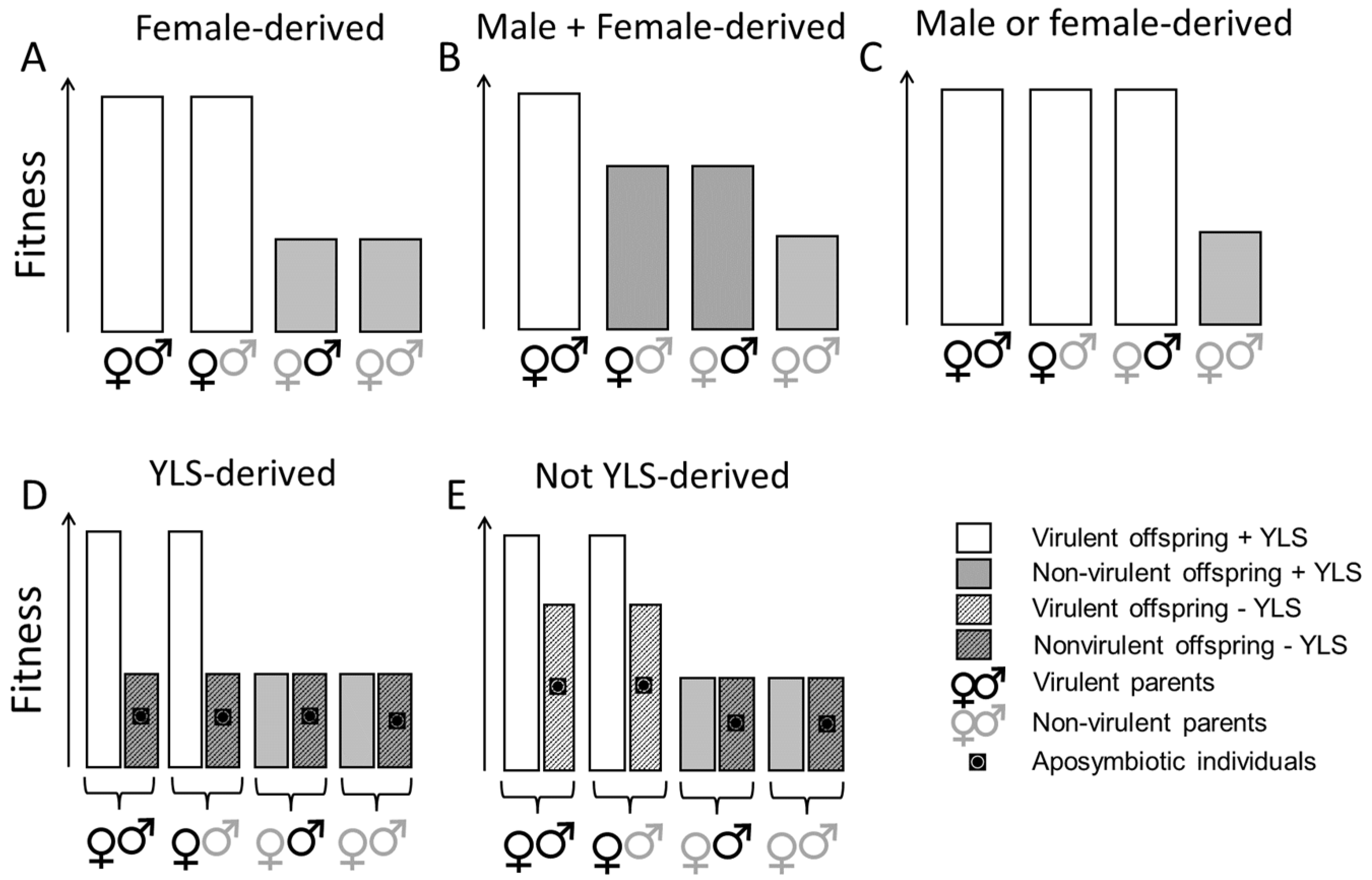
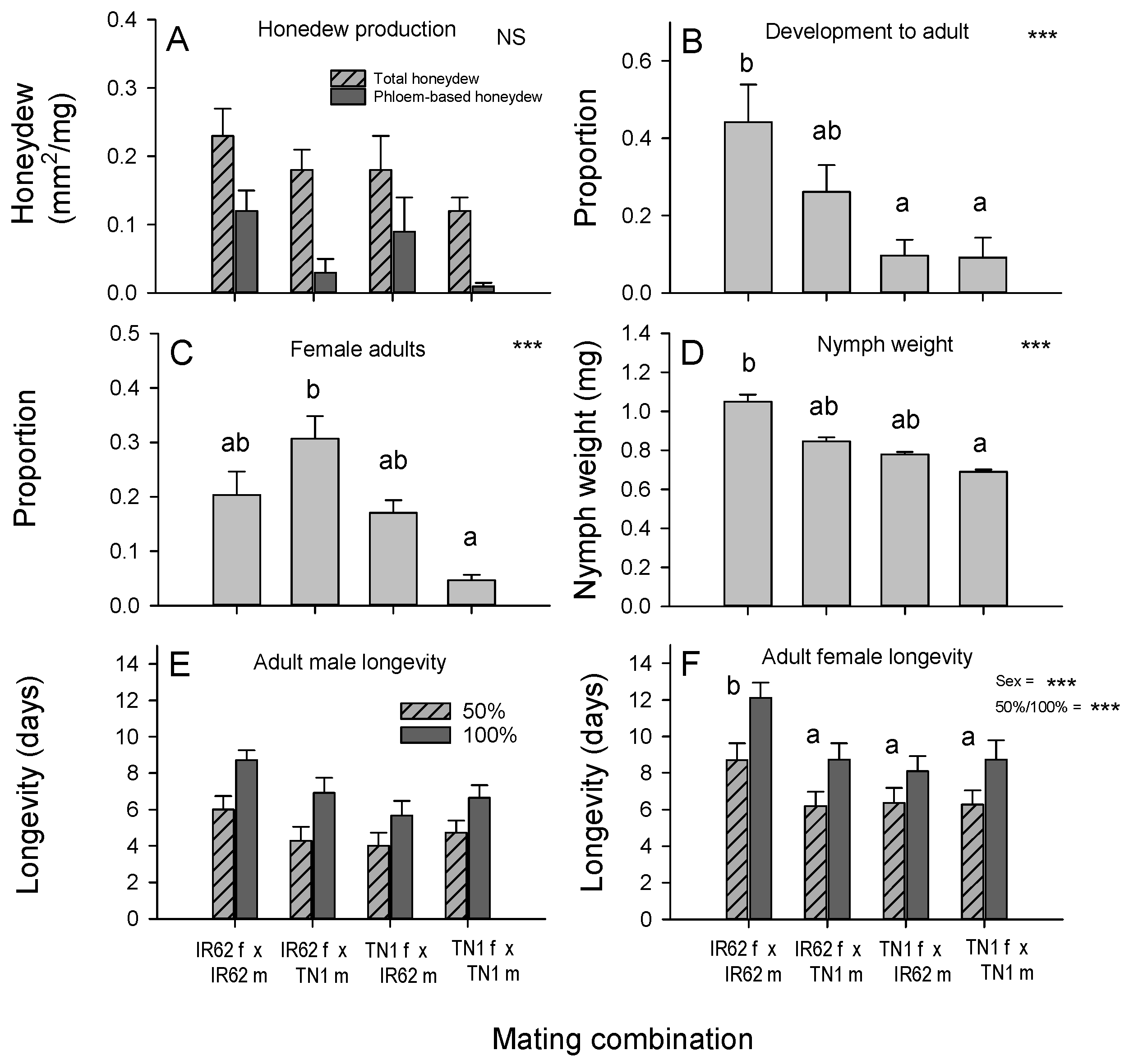
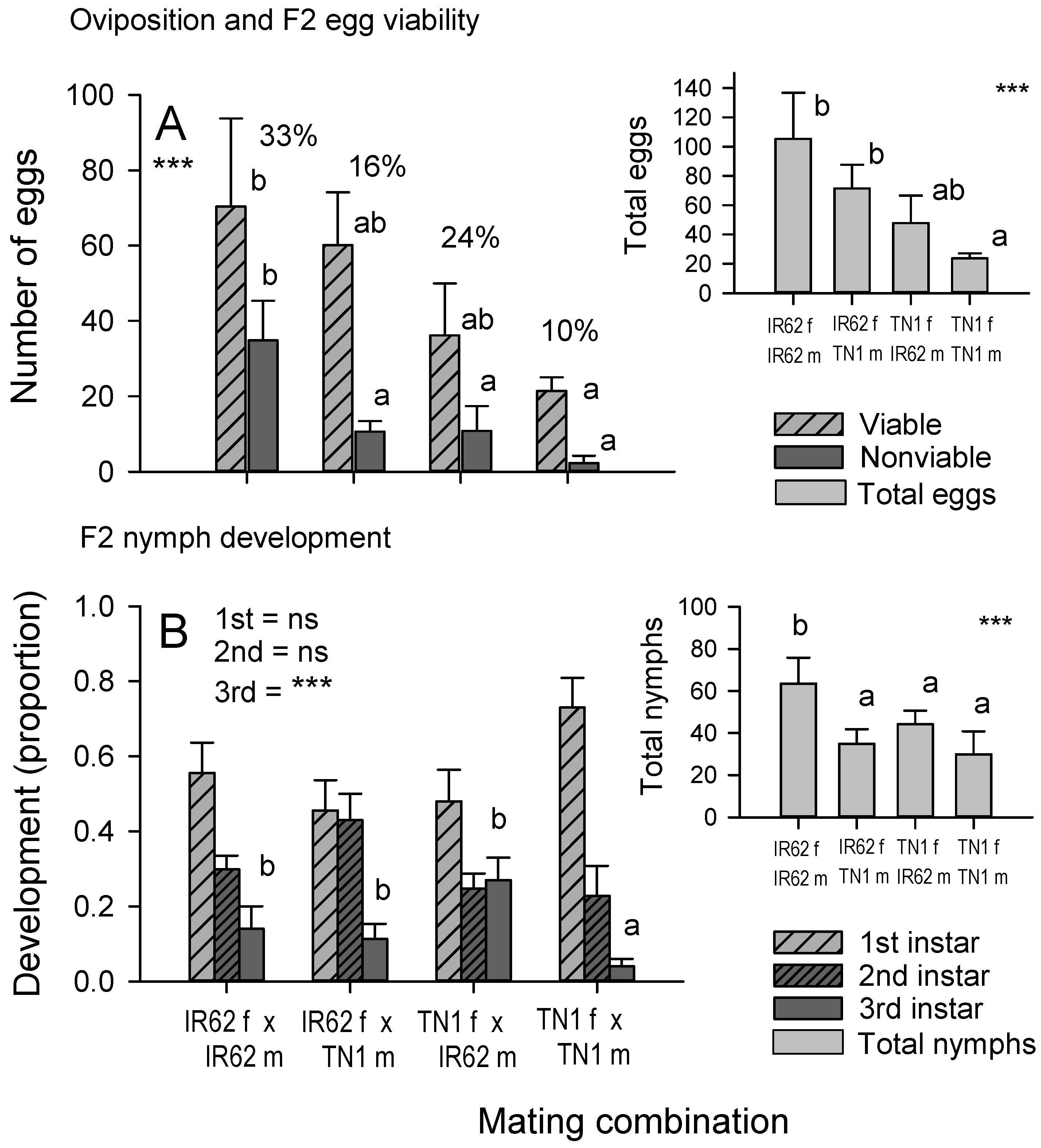
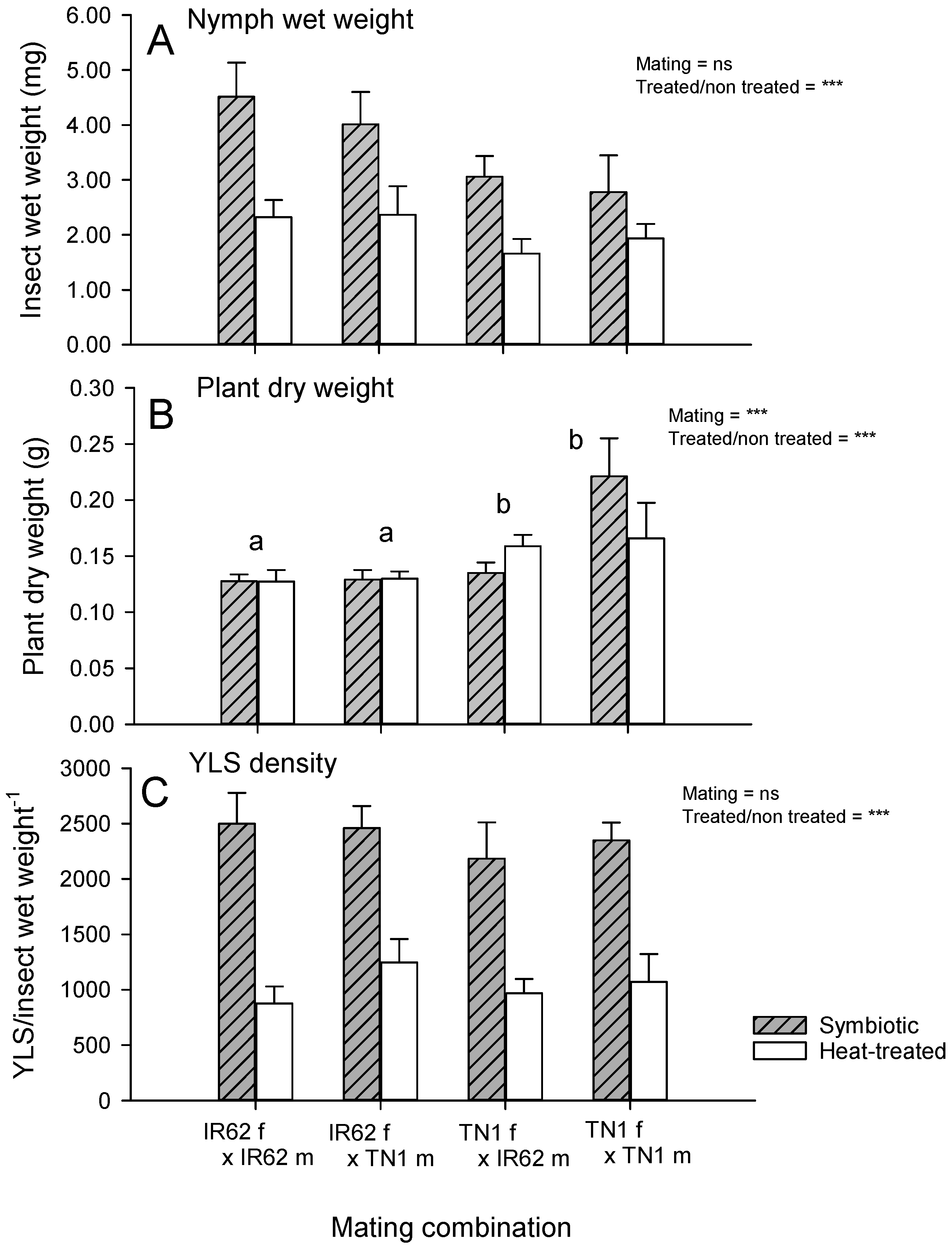
The brown planthopper (Niliparvata lugens [Stål]) feeds on rice in Asia. Rice breeders have developed varieties with resistance to the planthopper; however, planthoppers quickly adapt to these varieties (called ‘virulence adaptation’). We examined the potential role during adaptation of endosymbionts that are passed by the female through the egg. We adapted planthoppers by exposure to resistant rice (IR62) for >20 generations, and crossed males or females from these adapted populations with non-adapted males and females that were reared on susceptible rice. Virulent males and females contributed to the virulence of their offspring as revealed through faster development rates, higher growth rates, greater numbers of female offspring, and an increased longevity of progeny on IR62 compared to the progeny of avirulent planthoppers on IR62; however, the female contribution to virulence was greater than that of the male. Reducing densities of YLS in adult planthoppers through heat treatment reduced their capacity to gain weight on IR62, irrespective of the virulence of parents, thereby suggesting that YLS derived from the female parent play a role in the vertical transfer of virulence; however, the effects were weak and IR62 seedlings were still more affected by heat-treated planthoppers with a virulent female parent than by heat-treated planthoppers with a virulent male parent or with avirulent parents only. Virulence is a complex state with multiple underlying mechanisms, some of which are derived only from the female parent.
Abstract
The adaptation by planthoppers to feed and develop on resistant rice is a challenge for pest management in Asia. We conducted a series of manipulative experiments with the brown planthopper (Nilaparvata lugens (Stål)) on the resistant rice variety IR62 (BPH3/BPH32 genes) to assess behavioral and bionomic changes in planthoppers exhibiting virulence adaptation. We also examined the potential role of yeast-like symbionts (YLS) in virulence adaptation by assessing progeny fitness (survival × reproduction) following controlled matings between virulent males or females and avirulent males or females, and by manipulating YLS densities in progeny through heat treatment. We found virulence-adapted planthoppers developed faster, grew larger, had adults that survived for longer, had female-biased progeny, and produced more eggs than non-selected planthoppers on the resistant variety. However, feeding capacity—as revealed through honeydew composition—remained inefficient on IR62, even after 20+ generations of exposure to the resistant host. Virulence was derived from both the male and female parents; however, females contributed more than males to progeny virulence. We found that YLS are essential for normal planthopper development and densities are highest in virulent nymphs feeding on the resistant host; however, we found only weak evidence that YLS densities contributed more to virulence. Virulence against IR62 in the brown planthopper, therefore, involves a complex of traits that encompass a series of behavioral, physiological, and genetic mechanisms, some of which are determined only by the female parent.