Star Formation in the Ultraviolet


Armagh Observatory and Planetarium, College Hill, Armagh BT61 9DG, UK
Galaxies 2020, 8(2), 43; https://doi.org/10.3390/galaxies8020043
Submission received: 15 April 2020
/
Revised: 3 May 2020
/
Accepted: 7 May 2020
/
Published: 17 May 2020
(This article belongs to the Special Issue Star Formation in the Ultraviolet)
Abstract
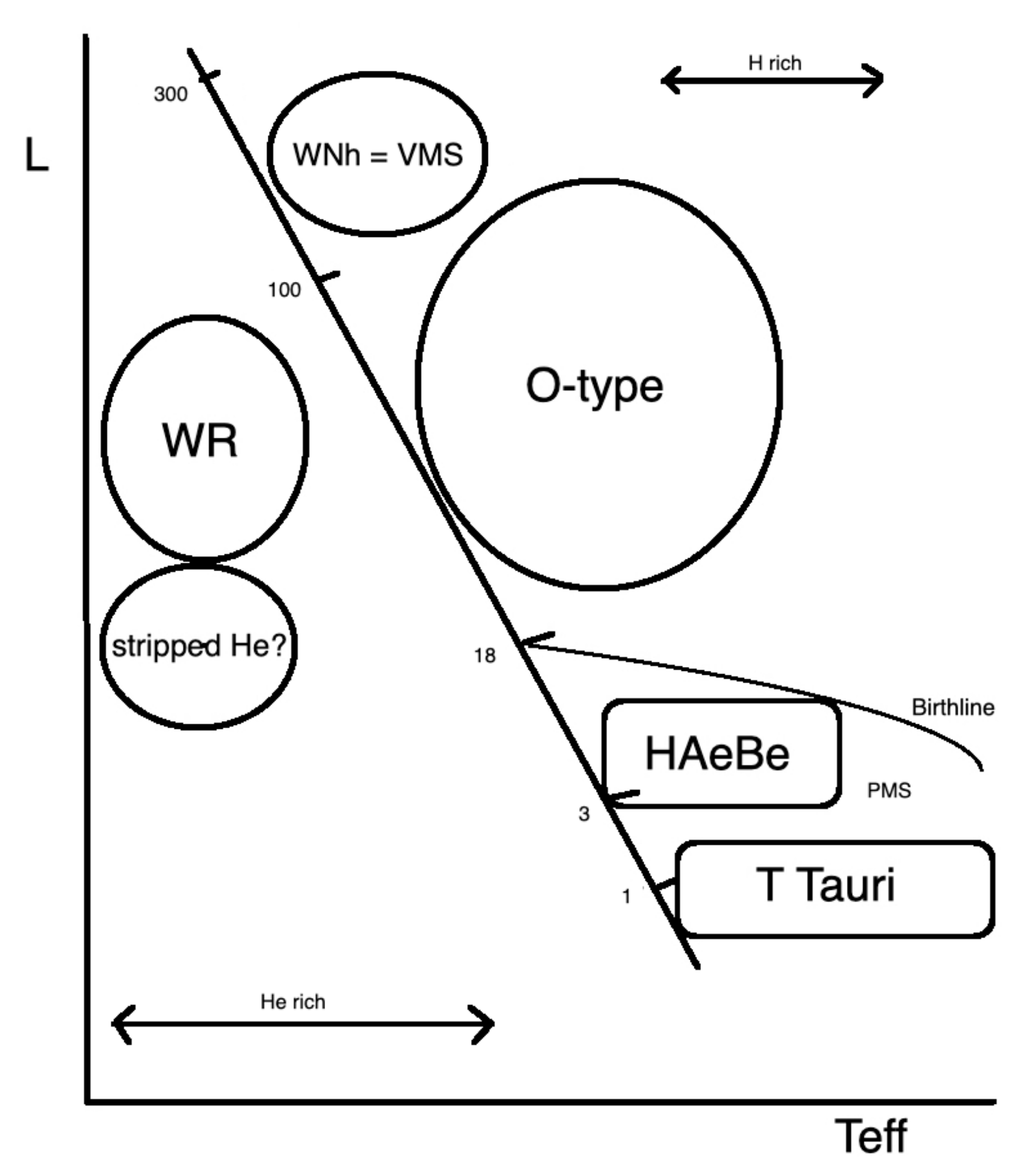
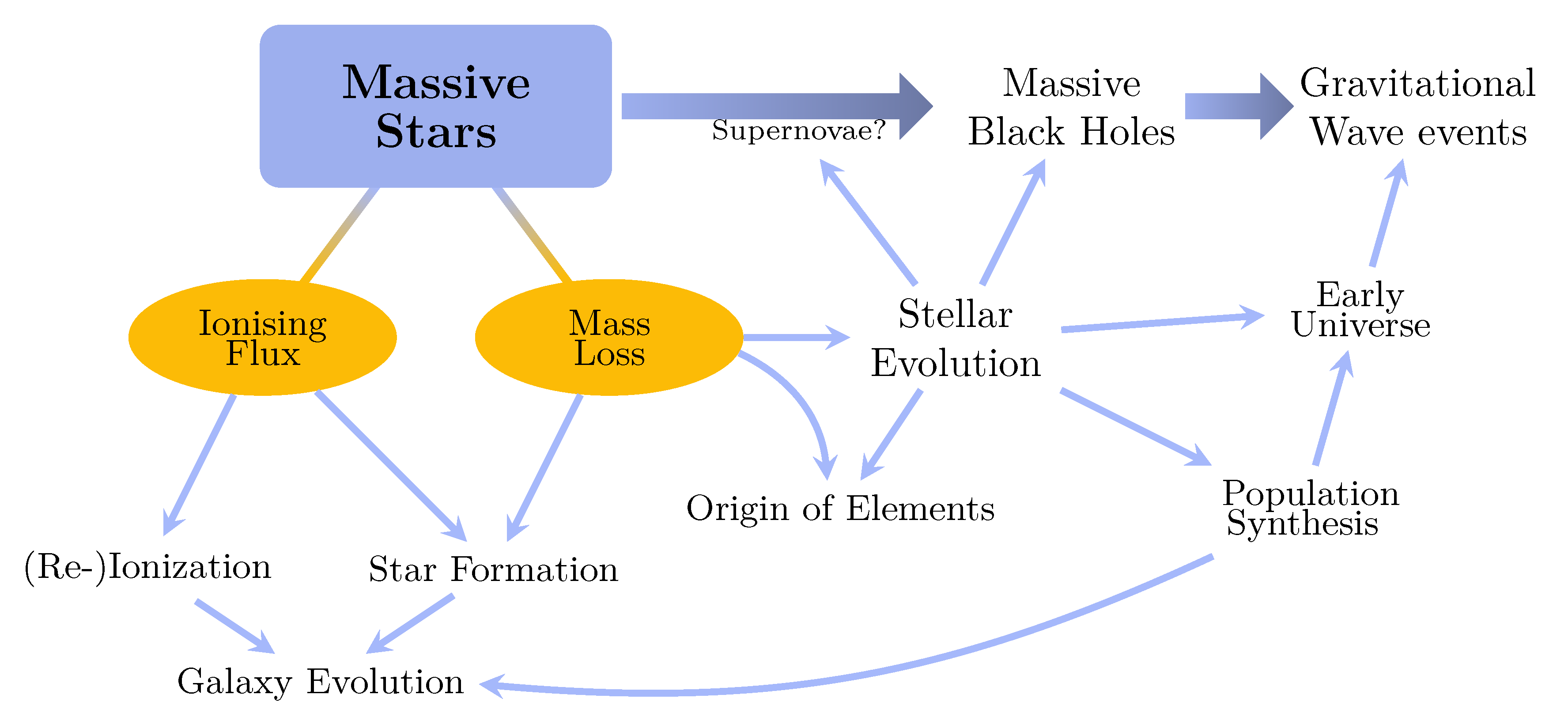
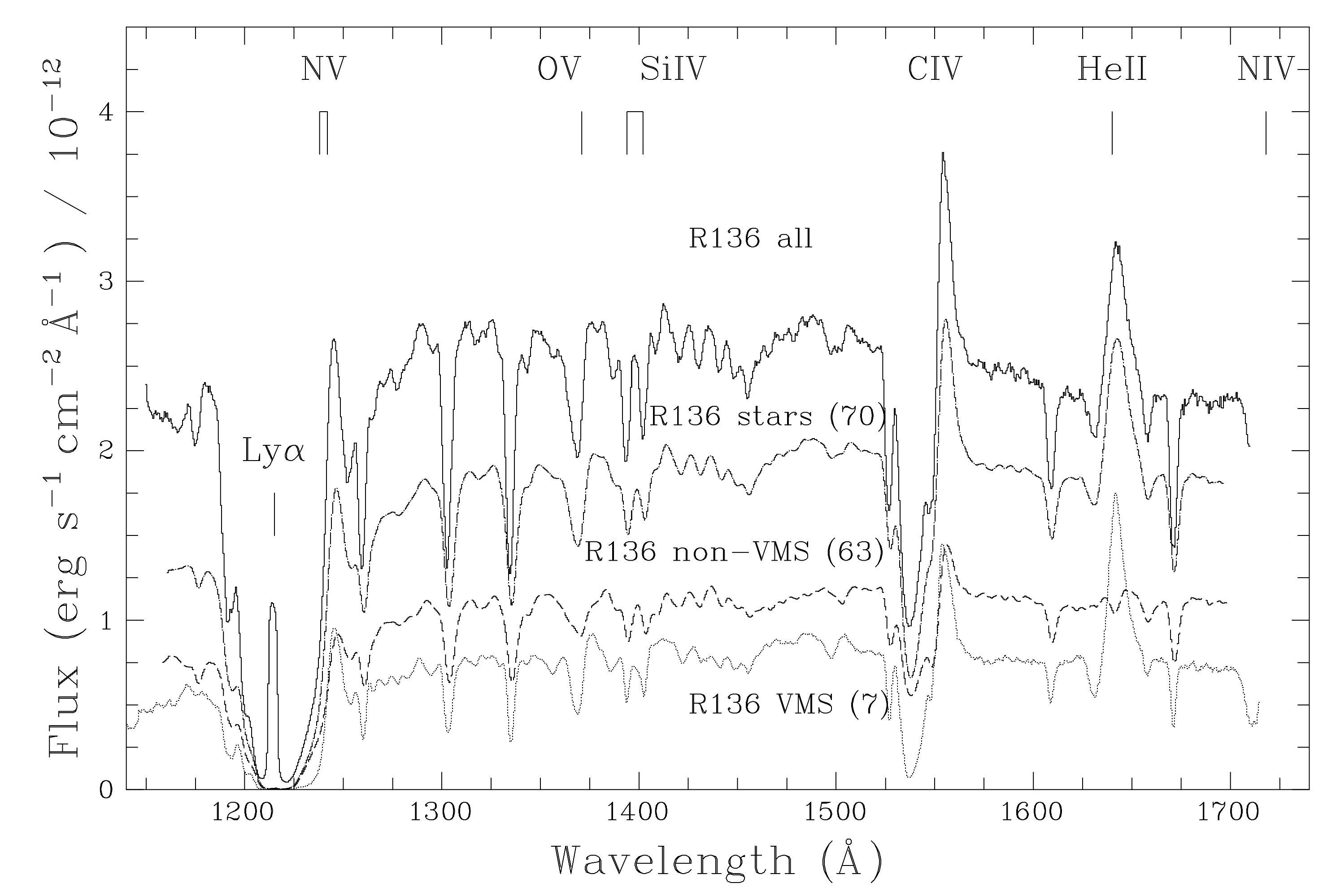
With the launch of JWST and the upcoming installation of extremely large telescopes, the first galaxies in our Universe will finally be revealed. Their light will be dominated by massive stars, which peak in in the ultra-violet (UV) part of the electromagnetic spectrum. Star formation is the key driver of the evolution of our Universe. At young ages, within 10 Million years, both high and low mass stars generate complex UV emission processes which are poorly understood yet are vital for interpreting high red-shift line emission. For these reasons, the Hubble Space Telescope (HST) will devote 1000 orbits to obtaining a UV Legacy Library of Young Stars as Essential Standards (ULLYSES). The purpose of this Overview is to outline the basic physical principles driving UV emission processes from local (within 100 parsecs of) star formation, ranging from huge star-forming complexes containing hundreds of massive and very-massive stars (VMS), such as 30 Doradus (the Tarantula Nebula) in the neighboring Magellanic Clouds (only 50 kpc away), to galaxies near and far, out to the epoch of Cosmic Reionization.
Share and Cite
MDPI and ACS Style
Vink, J.S. Star Formation in the Ultraviolet. Galaxies 2020, 8, 43. https://doi.org/10.3390/galaxies8020043
AMA Style
Vink JS. Star Formation in the Ultraviolet. Galaxies. 2020; 8(2):43. https://doi.org/10.3390/galaxies8020043
Chicago/Turabian StyleVink, Jorick S. 2020. "Star Formation in the Ultraviolet" Galaxies 8, no. 2: 43. https://doi.org/10.3390/galaxies8020043
APA StyleVink, J. S. (2020). Star Formation in the Ultraviolet. Galaxies, 8(2), 43. https://doi.org/10.3390/galaxies8020043
Note that from the first issue of 2016, this journal uses article numbers instead of page numbers. See further details here.