Article

Time-Optimal and Collision-Free Trajectory Generation for Large Cranes with Load Sway and Tower Torsion Suppression


1
Department of Mechatronics Engineering, Faculty of Engineering, Assiut University, Assiut 71516, Egypt
2
Department of Mechatronics Engineering, Faculty of Engineering, Sphinx University, New Assiut 71515, Egypt
3
Department of Mechanical Engineering, Toyohashi University of Technology, Toyohashi 441-8580, Japan
4
Kobelco Construction Machinery Co., Ltd., Hiroshima 731-5161, Japan
*
Author to whom correspondence should be addressed.
Machines 2026, 14(4), 430; https://doi.org/10.3390/machines14040430

Submission received: 26 February 2026 / Revised: 21 March 2026 / Accepted: 23 March 2026 / Published: 11 April 2026

Abstract

Tower torsion in large cranes poses a significant challenge to achieving precise control of load motion, as it amplifies oscillations of the crane load during motion and after reaching a destination. Therefore, tower torsion should be incorporated into crane motion control strategies to improve load sway suppression and enhance overall operational stability. This study proposes a time-optimal trajectory generation method for large cranes with addressing tower torsion challenges and load swaying angles. The time-optimal trajectory is able to provide smooth motion with sufficient time while navigating around obstacles. The proposed approach integrates two distinct algorithms: the A* algorithm is employed to determine the shortest collision-free load path, and an optimization method that generates time-optimal trajectories along the A* path while considering the constraints of tower torsion and load sway angles. The desired trajectory is modeled using a polynomial function, ensuring practical motion for each crane joint. The proposed method’s effectiveness is validated both computationally and experimentally, demonstrating its capability to suppress load sway and tower torsion in the crane system without collision.

1. Introduction

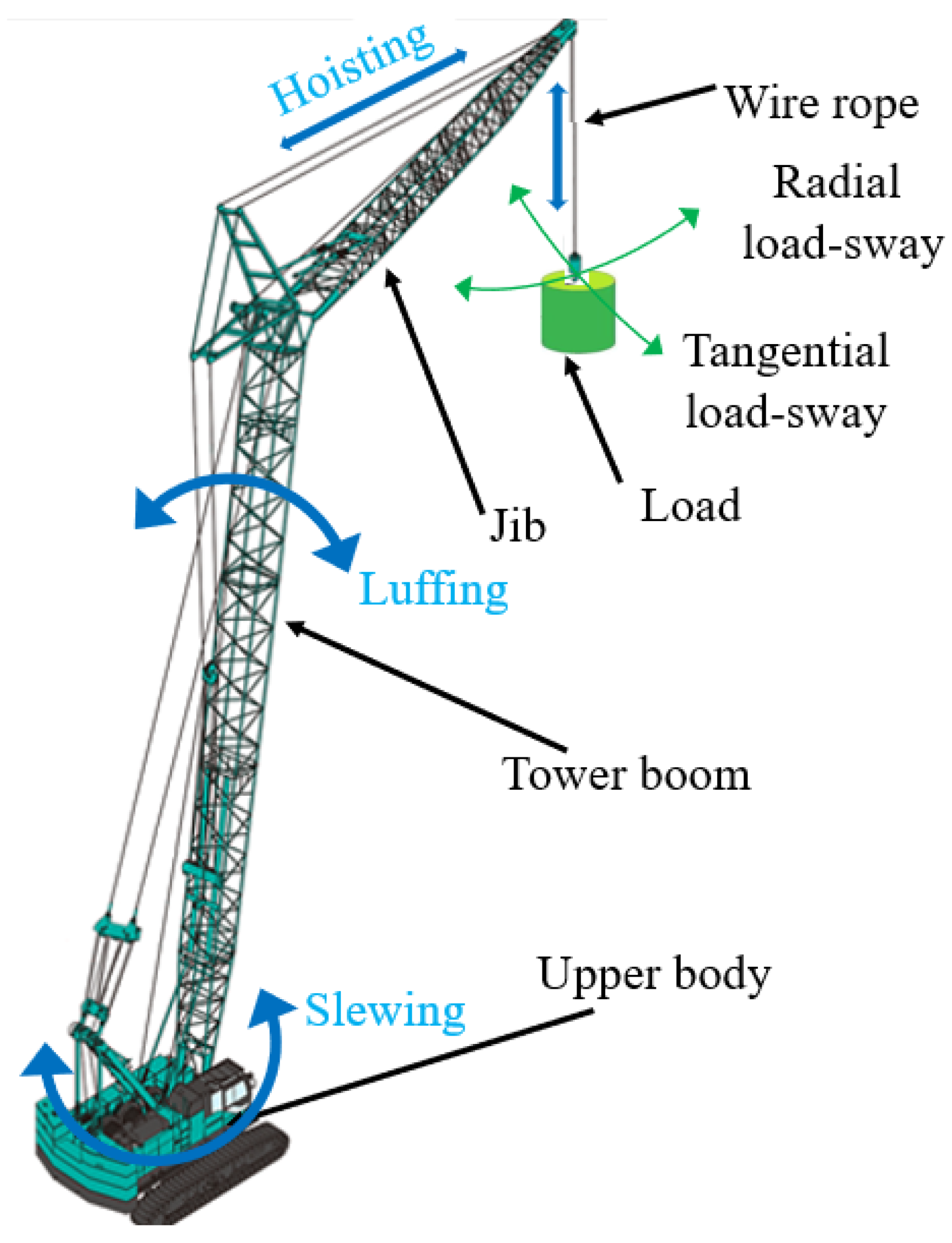
Large crawler cranes offer significant advantages, including high lifting capacity, efficient load transportation, versatile boom configurations, excellent climbing capability, and outstanding overall stability [1,2]. Consequently, they play a vital role in handling heavy loads across a wide range of industrial applications. A typical crawler crane consists of lower and upper structural units, a counterweight system, and a boom equipped with a vertically moving jib, as illustrated in Figure 1. The crane operation generally involves a combination of three primary motions—slewing, luffing, and hoisting—to transport the load to its desired position while avoiding potential collisions [3,4]. The boom structure is a critical load-bearing component of crawler cranes, designed to withstand substantial vertical loads in addition to its own self-weight. It plays a key role in determining the crane’s lifting performance and overall structural reliability [5,6,7]. Consequently, lattice structures are widely adopted in boom design due to their high compressive rigidity and relatively low torsional stiffness.
Although lattice boom structures offer aforementioned advantages, their flexibility generates tower torsion, which increases jib oscillations, especially during the horizontal boom rotation [8,9,10]. Moreover, the load hangs from the boom jib tip by a wire rope, allowing it to freely oscillate. Load oscillation during movement often reduces the operational efficiency, prolongs cycle time, and heightens the risk of safety hazards and accidents.
Tower torsion often complicates the control and suppression of load sway during motion, as these both phenomena (tower torsion and load sway) interact and influence each other. Hence, suppression of tower torsion and load sway in large cranes is a primary concern, especially when high-speed operation is required to enhance time efficiency. Numerous studies were conducted to enhance load travel attitude and suppress swaying angles without the need to install additional sensors. For instance, a model reference command-based controller has been utilized to achieve precise trolley positioning while minimizing hook and payload oscillations [11,12,13]. Controllers based on input-shape strategy approaches have been also presented to lower crane swaying angles [14,15].
Although the studied mentioned above do not require feedback sensors to measure load sway angles, sophisticated controllers have been installed due to limitations of crane dynamics and actuators. For instance, the optimal approaches are preferred because they can account for various constraints, such as load sway and crane dynamics. Consequently, many works have been conducted to generate optimal reference trajectories for the crane system without hardware modifications and relying only on existing classical controllers. For example, a polynomial chaos-based framework for crane motion and swaying angles suppression under uncertain conditions [16], the time optimality trajectory for horizontal boom motion to minimize free load sway in rotary cranes [17], suppressing sway angles in a double-pendulum system by implementing a globally time-optimal trajectory that adheres to various constraints [18], optimized trajectory has been introduced to avoid obstacles using double-pendulum cranes during load hoisting and lowering operations [19], while a path planning method for real-time obstacle recognition in overhead crane system has been created [20].
Although the aforementioned studies reduced the motion time and load sway in the presence of obstacles, they did not consider the elasticity of the crane tower, which effectively affects swaying angles of the crane load. Therefore, several studies have focused on reducing the impact of tower torsion in crane systems. For example, Cibicik et al. proposed a modeling framework for planar flexible cranes, in which both rigid-body and elastic motion velocities are represented using twist coordinates [21]. Kong and Qi investigated load instability in lattice-boom crane structures, identifying it through trajectory (path) generation techniques [6]. Furthermore, a cycloidal motion profile has been employed to effectively suppress load sway and tower torsion, eliminating the need for additional vibration sensors [8]. This study aims to generate a three-dimensional trajectory for a rotary crane that can simultaneously suppress load sway, tower torsion, and prevent collisions. The tower elasticity is represented by integrating a tower torsion generator into the crane system, which includes a spring-damper subsystem. The tower torsion generator is applied only to the horizontal boom direction because the bending moment produced in the jib can be neglected due to its lattice structure [8]. Furthermore, simultaneously suppressing load sway and tower torsion while avoiding collisions in a time-optimization problem require significant computational effort to generate a visible solution. Therefore, the proposed approach generates a time-optimal trajectory by decoupling the calculations of obstacle avoidance. The proposed trajectory is achieved by combining the A* algorithm (hereafter, A*) and time-optimization techniques. The A* algorithm generates a shortest-distance load path with considering collisions conditions, and the inverse crane kinematics can be employed to determine the corresponding boom rotations and rope length. Then, the optimization approach is utilized to minimize motion time while adhering to tower torsion and load sway constraints. The proposed trajectories are represented using sixth-order polynomial functions to ensure practical and smooth motion. These trajectories have to closely follow the A* points to guarantee no collision occurred. One main disadvantage of the approach in [22] is that it does not have an explicitly modeling for the tower torsional effect in the rotary crane system. In contrast, the present study considers a more realistic crane dynamic model, including tower torsion, which has been validated through on-site crane testing. Comparative computational and experimental results validate the effectiveness of a desired approach in suppressing swaying load angles and tower torsion of the crane without collision.
The rest of the paper is organized as follows: Section 2 briefly states the crane dynamics, obstacle avoidance scheme, and the methodology of a proposed optimal trajectory generation. Section 3 provides the results of the proposed trajectory, and it includes Section 3.1 for the computational results while the experimental validations with our laboratory crane are included in Section 3.2 The conclusions are described in Section 4.

2. Rotary Crane Dynamics, Obstacle Avoidance, and Optimal Trajectory [8,22]

2.1. Dynamics Model with Tower Torsion [8]

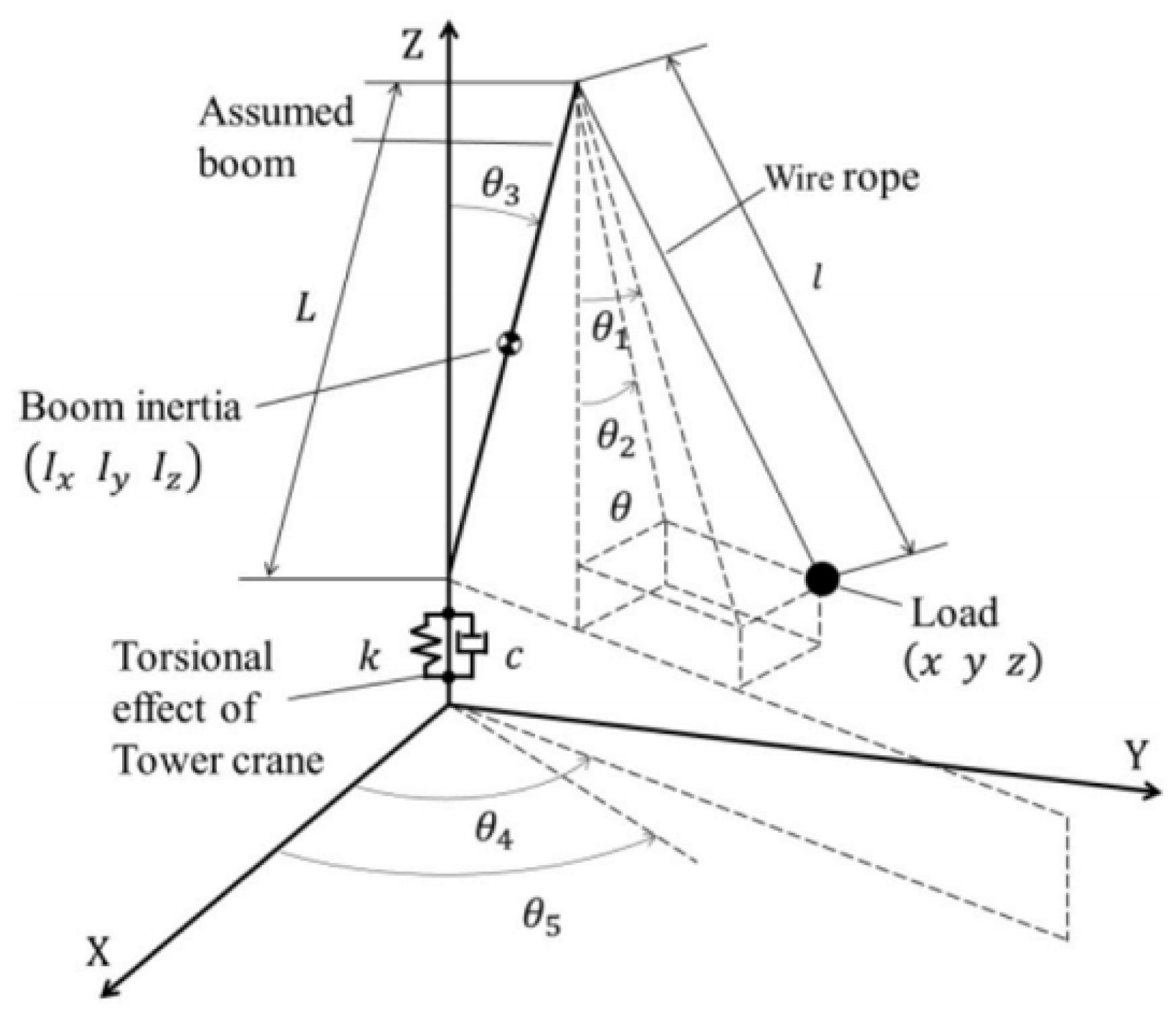
A schematic model of the crane model with tower torsion is depicted in Figure 2. In this model, the boom’s tip and the hanging load are connected by a rope of length l. Load sway is characterized by two-dimensional angular displacements: θ 1 (radial direction) and θ 2 (tangential direction) relative to horizontal jib motion. The jib and tower boom are simply represented as a straight-line body (hereafter the boom of length L), which rotates with θ 3 and θ 5 vertically and horizontally, respectively. The latticed boom elasticity is represented by a spring-damper subsystem, which is applied exclusively to the horizontal rotation of the boom. Therefore, the input and output rotations of the tower torsion generator are θ 5 and θ 4 , respectively. The output rotation θ 4 directly influences the load sway dynamics of the crane system.
The original dynamics crane model in [17] is updated to incorporate the tower torsion effect, and is represented as below:
l ( l + l θ 1 2 ) θ ¨ 1 + l l ˙ ( 2 θ ˙ 1 2 θ 2 θ ˙ 4 + 2 θ 1 2 θ ˙ 1 + 2 θ 1 θ 2 θ ˙ 2 ) + l 2 ( θ 2 θ ¨ 4 2 θ ˙ 2 θ ˙ 4 θ 1 θ ˙ 4 2 + θ 1 θ ˙ 1 2 + θ 1 θ ˙ 2 2 ) + L l ( θ ¨ 3 cos θ 3 θ ˙ 3 2 sin θ 3 θ 1 θ ¨ 3 sin θ 3 θ 1 θ ˙ 3 2 cos θ 3 θ ˙ 4 2 sin θ 3 )   +   L l ˙ sin θ 3 ( θ 1 θ ˙ 3 + θ ˙ 3 ) + g l θ 1 = 0 l ( l + l θ 2 2 ) θ ¨ 2 + l l ˙ ( 2 θ ˙ 2 + 2 θ 1 θ ˙ 4 + 2 θ 2 2 θ ˙ 2 + 2 θ 1 θ 2 θ ˙ 1 ) + l 2 ( θ 1 θ ¨ 4 θ 2 θ ˙ 4 2 + 2 θ ˙ 1 θ ˙ 4 + θ 2 θ ˙ 2 2 + θ 2 θ ˙ 1 2 ) + L l ( θ ¨ 4 sin θ 3 + 2 θ ˙ 3 θ ˙ 4 cos θ 3 θ 2 θ ˙ 3 2 cos θ 3 θ 2 θ ¨ 3 sin θ 3 )     0.5 l ˙ 2 θ 2 + g l θ 2 = 0 I ( θ ¨ 5 θ ¨ 4 ) + c ( θ ˙ 5 θ ˙ 4 ) + k ( θ 5 θ 4 ) = 0
where I and g represent the boom inertia and gravitational acceleration, respectively. The spring and damping coefficients for a tower torsion generator are represented by k and c, respectively. The first two equations in the previous model describe swaying angles profiles, which are integrated into the optimization problem to suppress the crane’s load sway [17], and the third equation simulates the tower torsion generator dynamics of a latticed boom [8]. By considering the dynamics model in Equation (1), the proposed approach simultaneously suppresses both load sway and tower torsion magnitudes during crane motion. Moreover, the original dynamics in Equation (1) has been simplified by neglecting smaller effect terms according to the computational viewpoint, therefore the simple model is expressed as follows:
l ( l + l θ 1 2 ) θ ¨ 1 + l 2 ( θ 2 θ ¨ 4 2 θ ˙ 2 θ ˙ 4 θ 1 θ ˙ 4 2 ) + L l ( θ ¨ 3 cos θ 3 θ ˙ 3 2 sin θ 3 θ 1 θ ¨ 3 sin θ 3 θ 1 θ ˙ 3 2 cos θ 3 θ ˙ 4 2 sin θ 3 )   +   L l ˙ sin θ 3 ( θ 1 θ ˙ 3 + θ ˙ 3 ) + g l θ 1 = 0 l ( l + l θ 2 2 ) θ ¨ 2 + l 2 ( θ 1 θ ¨ 4 + 2 θ ˙ 1 θ ˙ 4 θ 2 θ ˙ 4 2 ) + L l ( θ ¨ 4 sin θ 3 + 2 θ ˙ 3 θ ˙ 4 cos θ 3 θ 2 θ ˙ 3 2 cos θ 3 θ 2 θ ¨ 3 sin θ 3 )   +   g l θ 2 = 0 I ( θ ¨ 5 θ ¨ 4 ) + c ( θ ˙ 5 θ ˙ 4 ) + k ( θ 5 θ 4 ) = 0

2.2. Obstacle Avoidance Using the A* Algorithm

A primary objective is generating an optimal trajectory for the crane with minimizing motion time in the presence of obstacles. However, obstacle avoidance calculations are excluded from the time optimization process to reduce the computational cost. Hence, collision-free paths for the vertical and horizontal boom angles, as well as rope motion are separately generated by the A* algorithm ensures avoiding collision by excluding the obstacle nodes from the paths of the load, boom, and the rope. As a result, the algorithm guarantees obstacle avoidance for both the load and the crane body [23]. Furthermore, in practical implementation, obstacles are slightly enlarged to account for minor deviations in the load path and further enhancing safety. The three-dimensional load positions illustrated in Figure 2 are given by
x = L S 3 C 4 + l θ 1 C 4 l θ 2 S 4 y = L S 3 S 4 + l θ 1 S 4 + l θ 2 C 4 z = L C 3 l cos θ 1 2 + θ 2 2
where S and C represent sin and cos. x, y, and z represent the Cartesian coordinates within the working area of the A* algorithm. The corresponding values of boom rotations and rope length with assuming no sway are expressed as follows:
θ 3 = sin 1 x 2 + y 2 L 2 , θ 4 = cos 1 x L S 3 l = L C 3 z
Then, the optimization explained in Section 2.3 can be applied for the above shortest-paths of the crane joints to generate the desired trajectory considering swaying angles and tower torsion effects.

2.3. Optimal Trajectory Generation

Tower torsion in rotary cranes is a significant factor that amplifies load sway both during motion and after reaching the destination. To address these effects, the study incorporates tower torsion constraints when generating the proposed trajectory. After determining the shortest-load paths using the A* algorithm, a time-optimization approach is applied along collision-free paths algorithm to minimize motion time while suppressing both load sway and tower torsion. The proposed trajectories are generated with considering the dynamics formulated in Equation (2) to reduce the computational time, and these trajectories are represented by the following polynomial function to provide practical motion [22]:
l = i = 2 6 r i T o i + l i n t θ 3 = i = 2 6 v i T o i + θ 3 i n t θ 5 = i = 2 6 h i T o i + θ 5 i n t
where r i , v i , and h i , for i = 2 , , 6 are coefficients of the polynomial determined through the optimization process. The initial rope and boom positions are denoted as l i n t , θ 3 i n t , and θ 5 i n t , respectively. The motion time is denoted as T o , and is given by T o = o T , where o represents discrete values ( 0 o 1 ), and T is the final motion time. To the best of our knowledge, the sixth-order polynomial effectively provides a time-optimal trajectory for each crane joint. As a result, only five variables ( i = 2 , , 6 ) are sufficient to be achieved each trajectory in Equation (5). Four of these variable are associated with the maximum load sway angles and velocities, while the fifth variable corresponds to the total time required to reach the load to its destination. The generated six-order trajectories must satisfy the constraints following the collision-free A* via-points. Therefore, the optimization cost function can be formulated as follows:
f = w t T + w r o p = 1 P ( l p * l p ) 2 + w t h 3 p = 1 P ( θ 3 p * θ 3 p ) 2 + w t h 5 p = 1 P ( θ 5 p * θ 5 p ) 2
where P is the collision-free A* via-points number and w t is the time weight. l * is the A* rope length, and its weights is represented by w r o . The boom angles derived from the A* are denoted by θ 3 * and θ 5 * , and the corresponding weights are represented by w t h 3 and w t h 5 , respectively. The weight w t is set to 1, while others weights are formulated as below:
w r o = 1 / ( l max * l min * ) 2 w t h 3 = 1 / ( θ 3 max * θ 3 min * ) 2 w t h 5 = 1 / ( θ 5 max * θ 5 min * ) 2
where l max * and l min * represent the A* maximum and minimum rope lengths. The limited boom angles are represented by θ 3 max * , θ 3 min * , θ 4 max * , and θ 4 min * . The optimization problem in this study is formulated as follows:
min T , r i , v i , h i f s . t . θ q ( T ) = θ q f | θ ˙ q ( t ) | θ ˙ max q θ ˙ q ( t ) = θ ˙ q * | θ i ( T ) | θ f | θ ˙ i ( T ) | θ ˙ f | θ i ( t ) | θ sw | θ ˙ i ( t ) | θ ˙ sw i = 1 , 2 | θ 5 ( i ) θ 4 ( i ) | θ s t | θ ˙ 5 ( i ) θ ˙ 4 ( i ) | θ ˙ s t
where q represents boom angles 3 or 5, or rope lenght l, and a f is the final value of a. The maximum boom velocities are represented by θ ˙ max 3 and θ ˙ max 5 , respectively, while l ˙ max is the maximum velocity of the rope motion. The swaying angles and velocities are represented by θ sw and θ ˙ sw , respectively. The difference between boom rotations θ 5 and θ 4 represents the tower torsion angle. θ s t and θ ˙ s t are angular position and velocity limits of the allowable tower torsion magnitudes, respectively.

3. Optimization Results

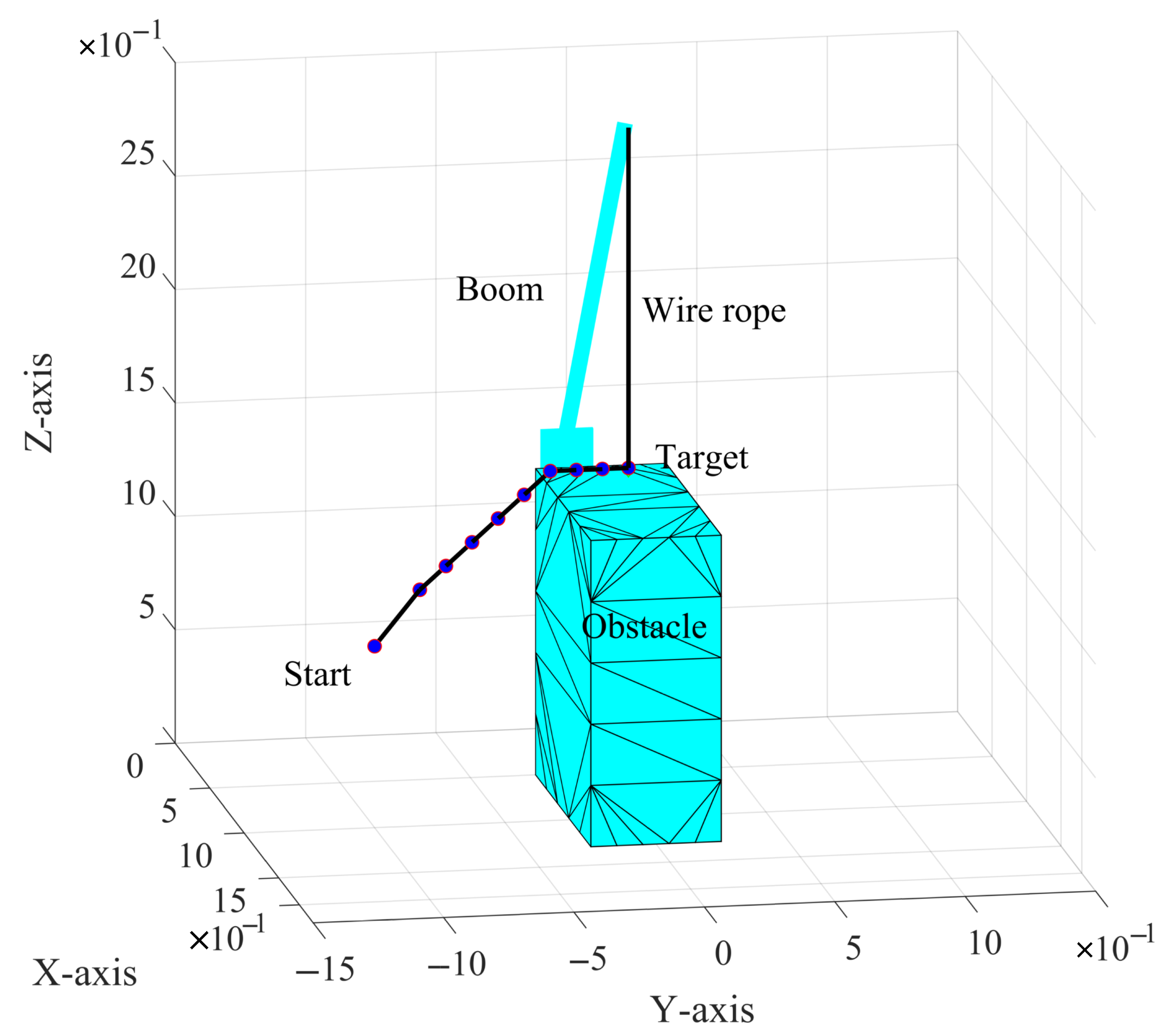
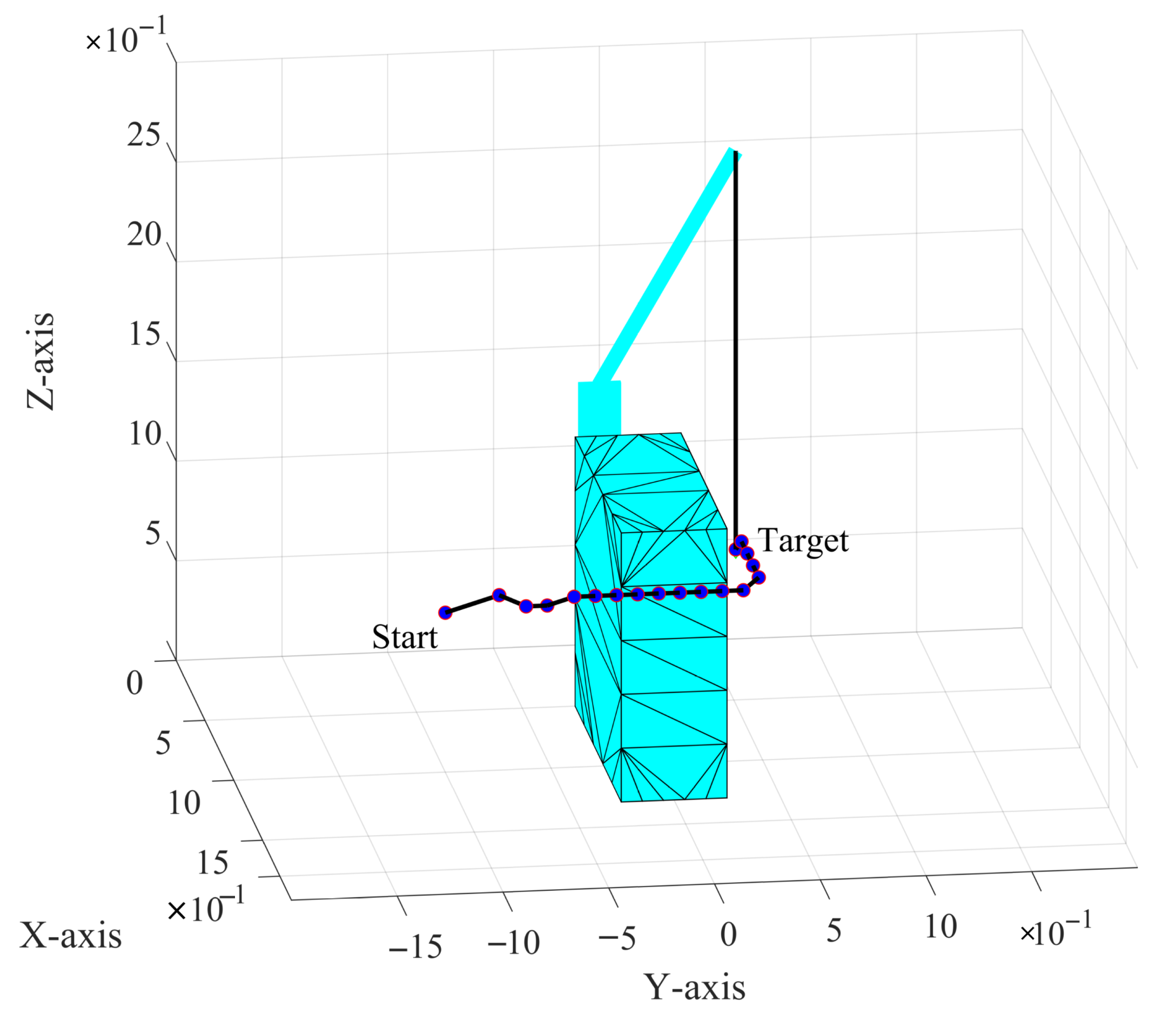
The crane shown in Figure 3 and Figure 4 is located at the original coordinates. The crane boom length is 2 m, with the head located at a height of z = 1.3 m. The obstacle illustrated in Figure 3 and Figure 4 has dimensions of 0.8   ×   0.5   ×   1.35 m (length, width, and height) respectively, and the obstacle corner locates at x = 0.5 , y = 0.25 , and z = 0.0 m. The optimization is implemented in the MATLAB® software (https://www.mathworks.com/) environment (CPU: 3.40 GHz, and 8 GB RAM). The fmincon function used in optimization with a sampling time 10 ms, is able to effectively handle complex dynamic constraints, including load sway, tower torsion, and obstacle avoidance. In addition, the fmincon’s gradient-based optimization approach can be used to generate smooth and continuous trajectories for crane motion.

3.1. Computational Results

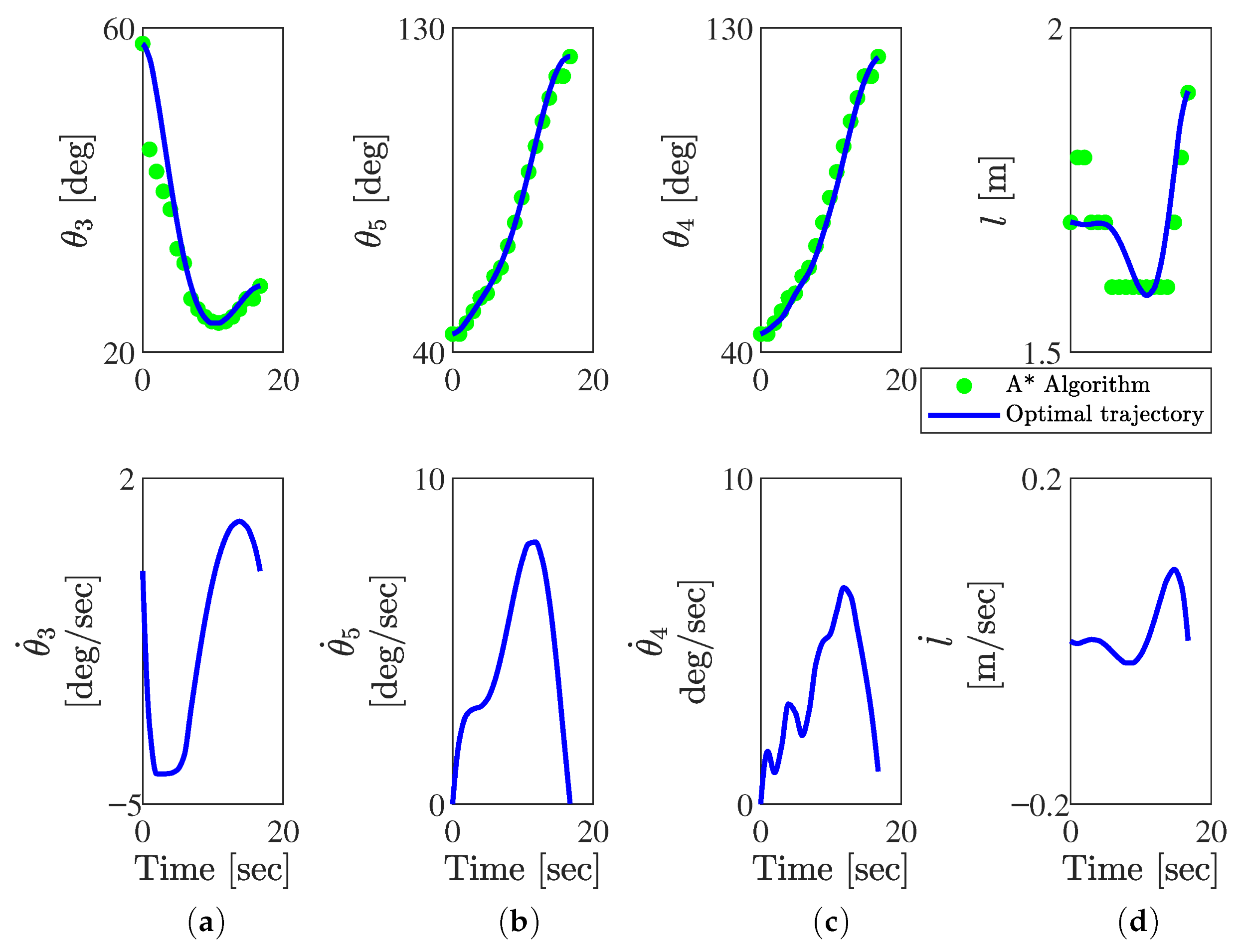
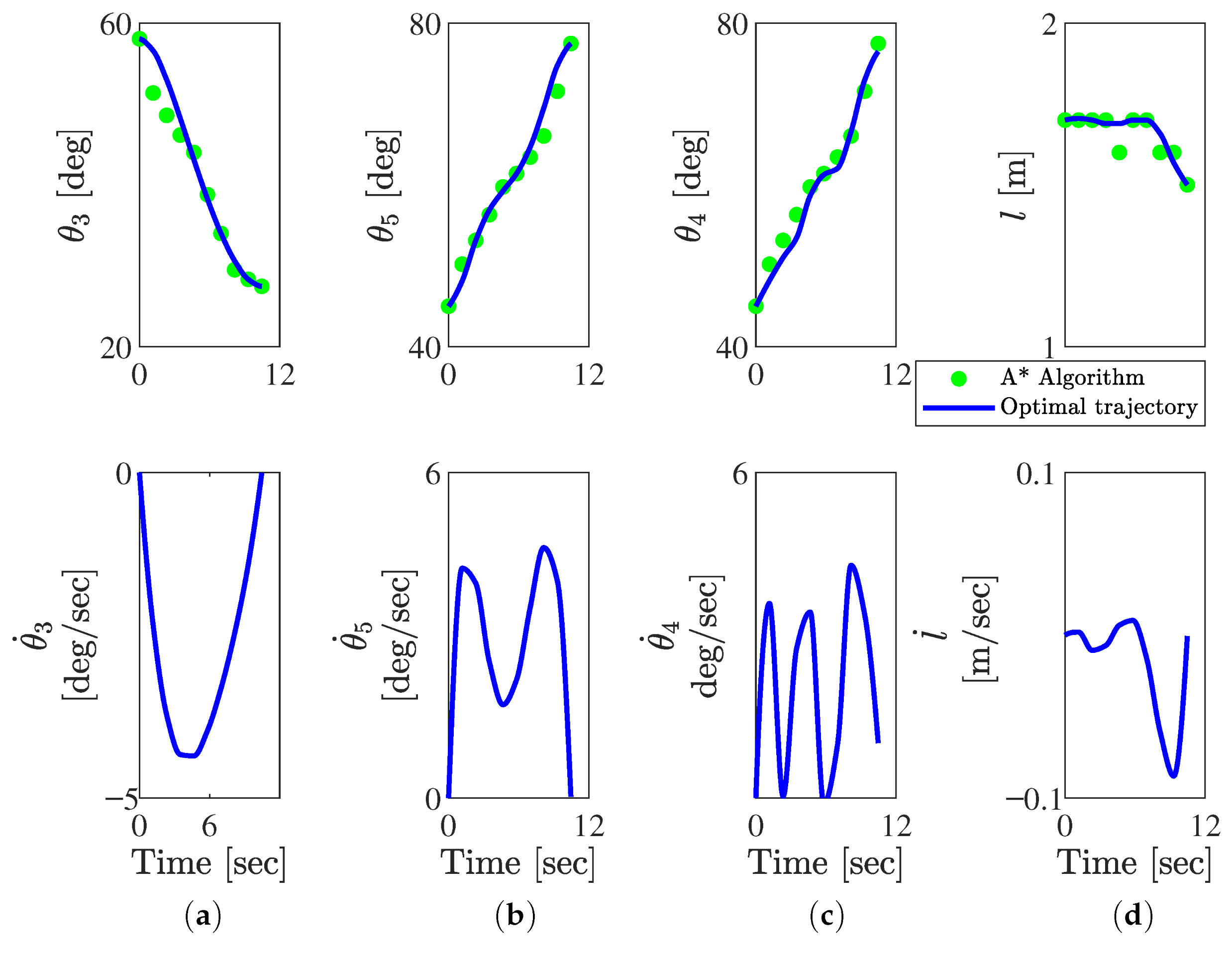
In order to generate the proposed trajectories, the A* algorithm is first employed to generate the shortest-ways for two different paths in the presence of obstacles. The initial locations for the two paths are set at x = 1.0 , y = 1.0 , and z = 0.8 m, while their destinations are located at x = 0.9 , y = 0.4 , and z = 1.0 m for the first path, and x = 0.9 , y = 0.0 , and z = 1.5 m for the second path shown in Figure 3 and Figure 4, respectively. Subsequently, the optimization approach described in Equation (8) is implemented to the collision-free A* via-points to achieve the time-optimality for boom and rope trajectories.
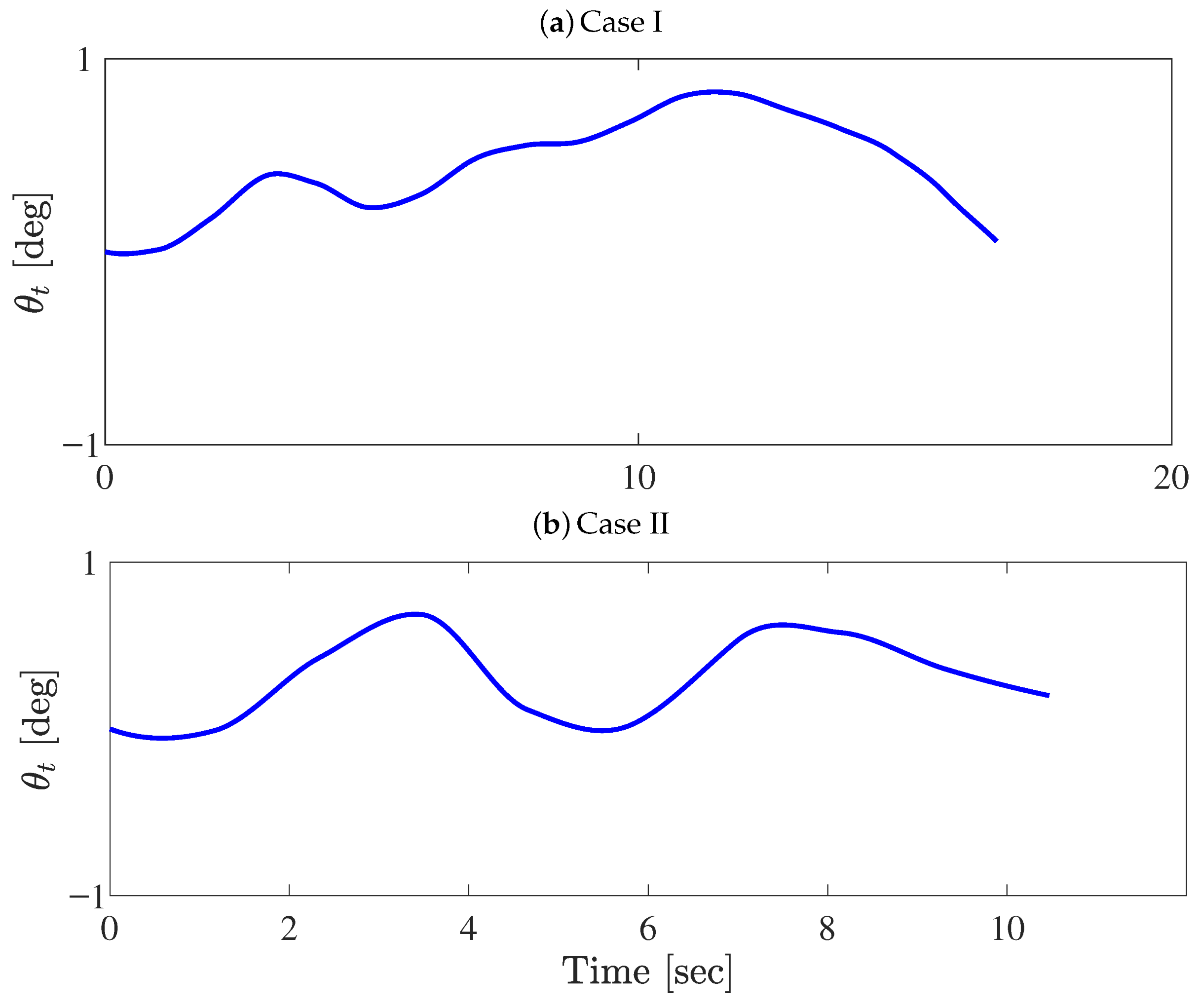
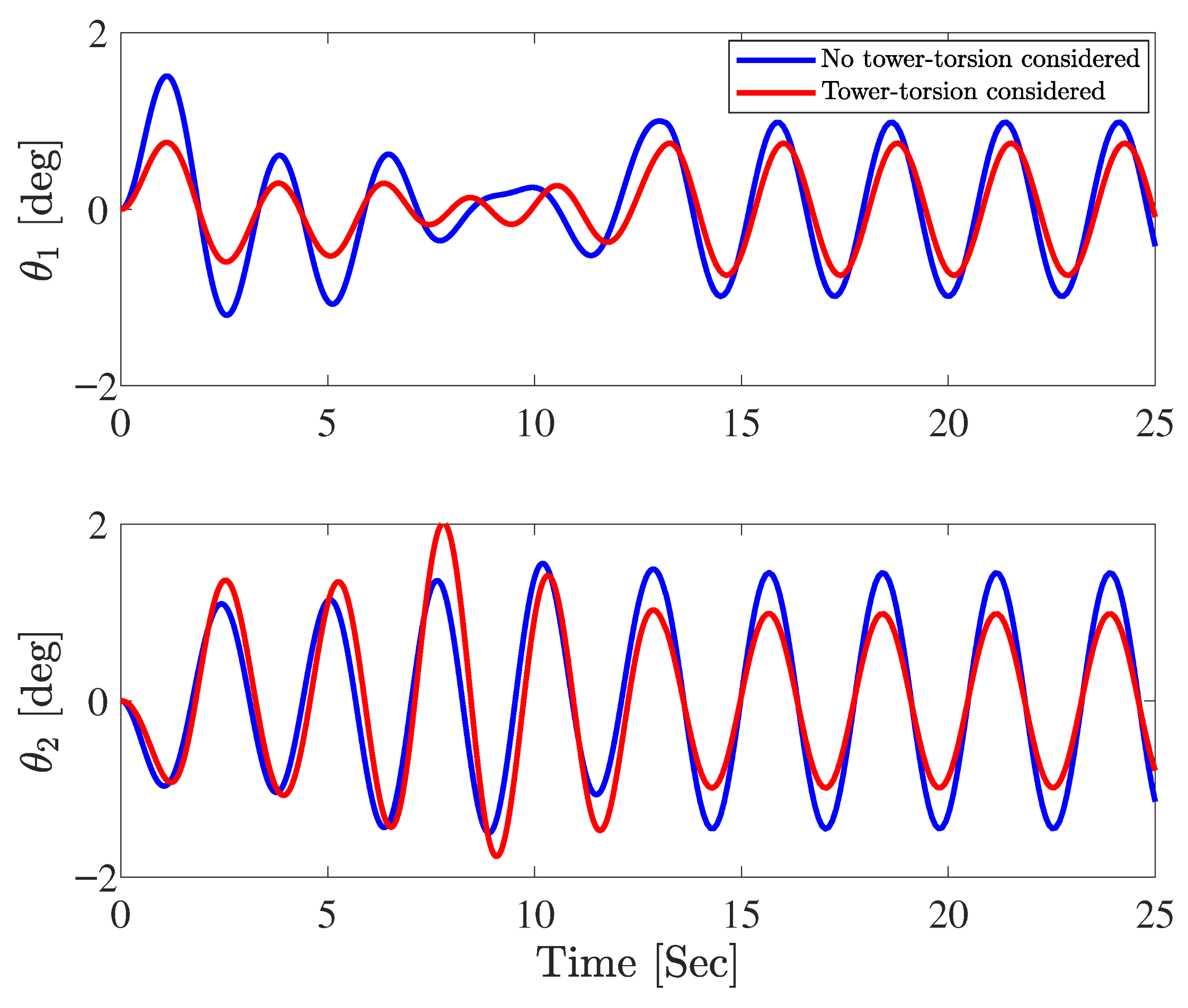
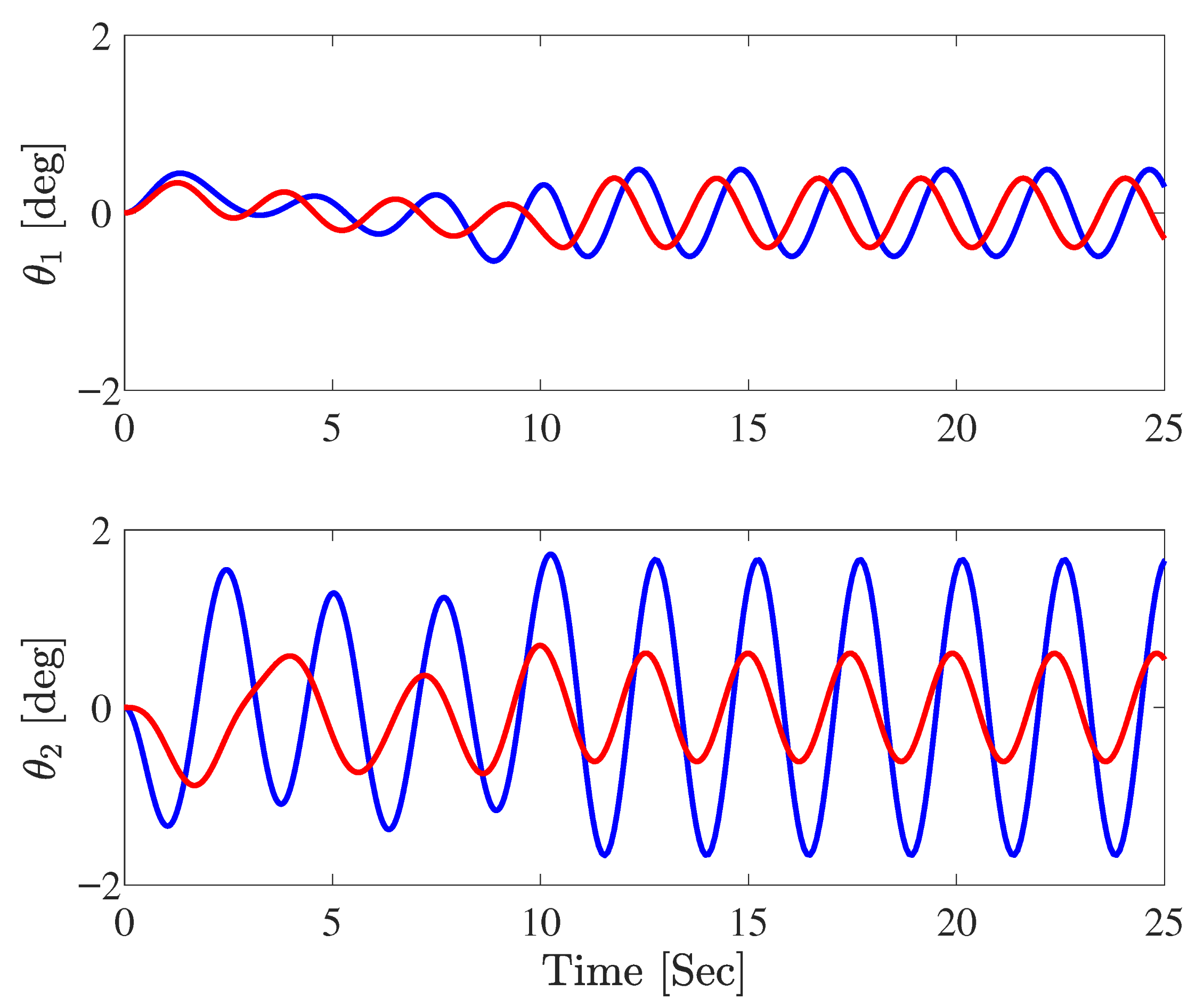
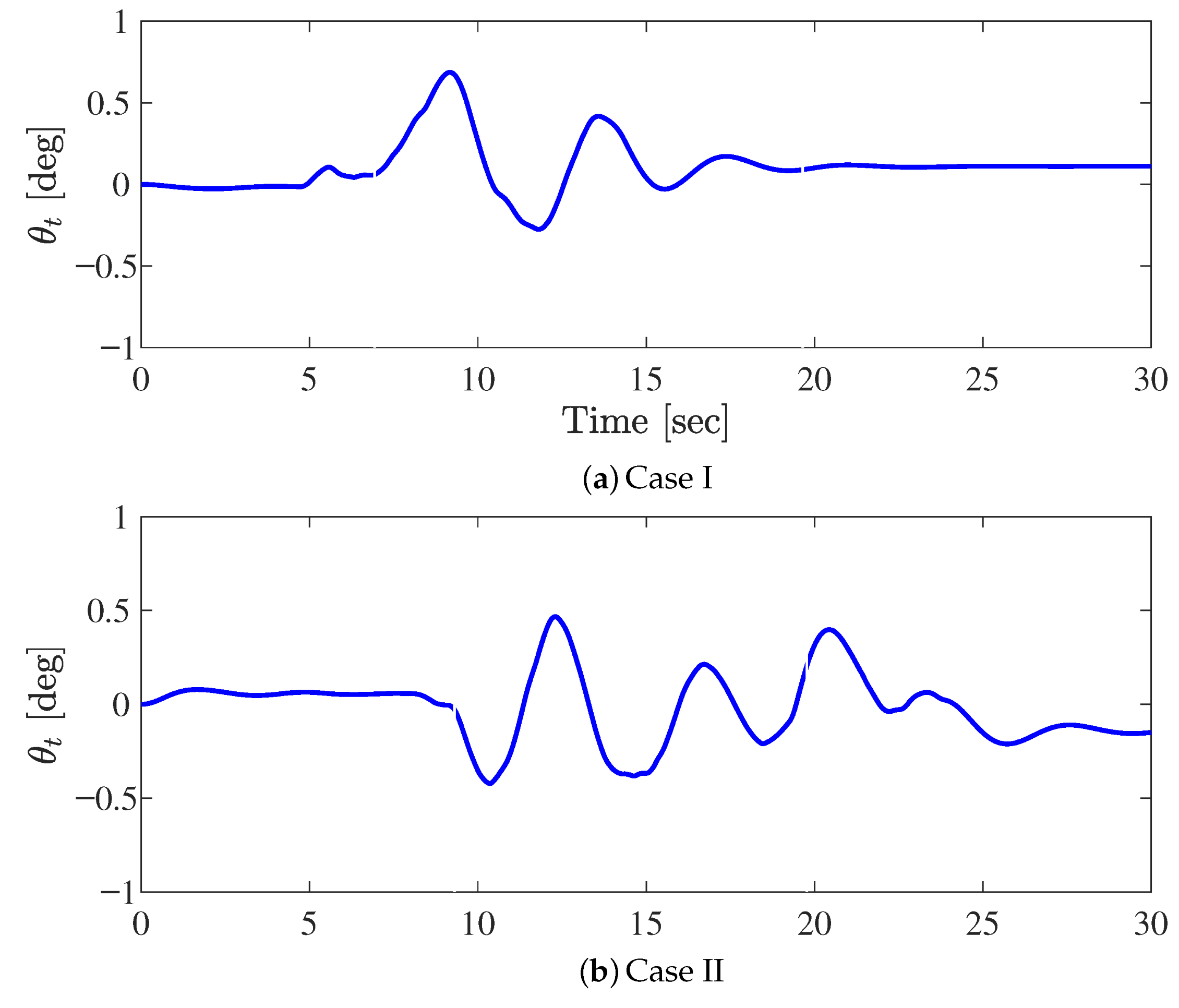
The proposed trajectories represented in Equation (5) are generated under tower torsion and load sway constraints. Then, they are implemented to the original dynamic model in Equation (1) and compared with a rigid model that excludes tower torsion effect. The optimization process is executed using the parameters given in Table 1 and Table 2. The resulting polynomial trajectories are illustrated in Figure 5 and Figure 6 for the two paths, respectively. These trajectories closely adhere to the collision-free paths to guarantee collision avoidance conditions, while their corresponding velocity profiles comply with the maximum velocity limits specified in Table 1. As described above, the tower torsion generator is modeled as a spring-damper subsystem. Therefore, the optimized horizontal boom rotation θ 5 is shown in Figure 5b and Figure 6b for the two paths, and the corresponding boom rotation θ 4 produced by the tower torsion generator is illustrated in Figure 5c and Figure 6c. The tower torsion angles defined as θ t = θ 5 θ 4 , are shown in Figure 7 for both paths. Consequently, the proposed approach effectively suppresses tower torsion during crane motion while satisfying the torsional angle constraints within the allowable range specified for optimization. The verification results comparing the flexible dynamics model (the crane dynamic model including the tower torsion generator) with the rigid model (the crane dynamic model without the tower torsion generator), where the horizontal boom rotation before and after the tower torsion generator are equal θ 5 = θ 4 using the proposed trajectories are presented in Figure 8 and Figure 9. These results indicate that incorporating tower torsion constraints in the original dynamics model significantly reduces load sway compared to the rigid model without considering tower torsion.

3.2. Experimental Results

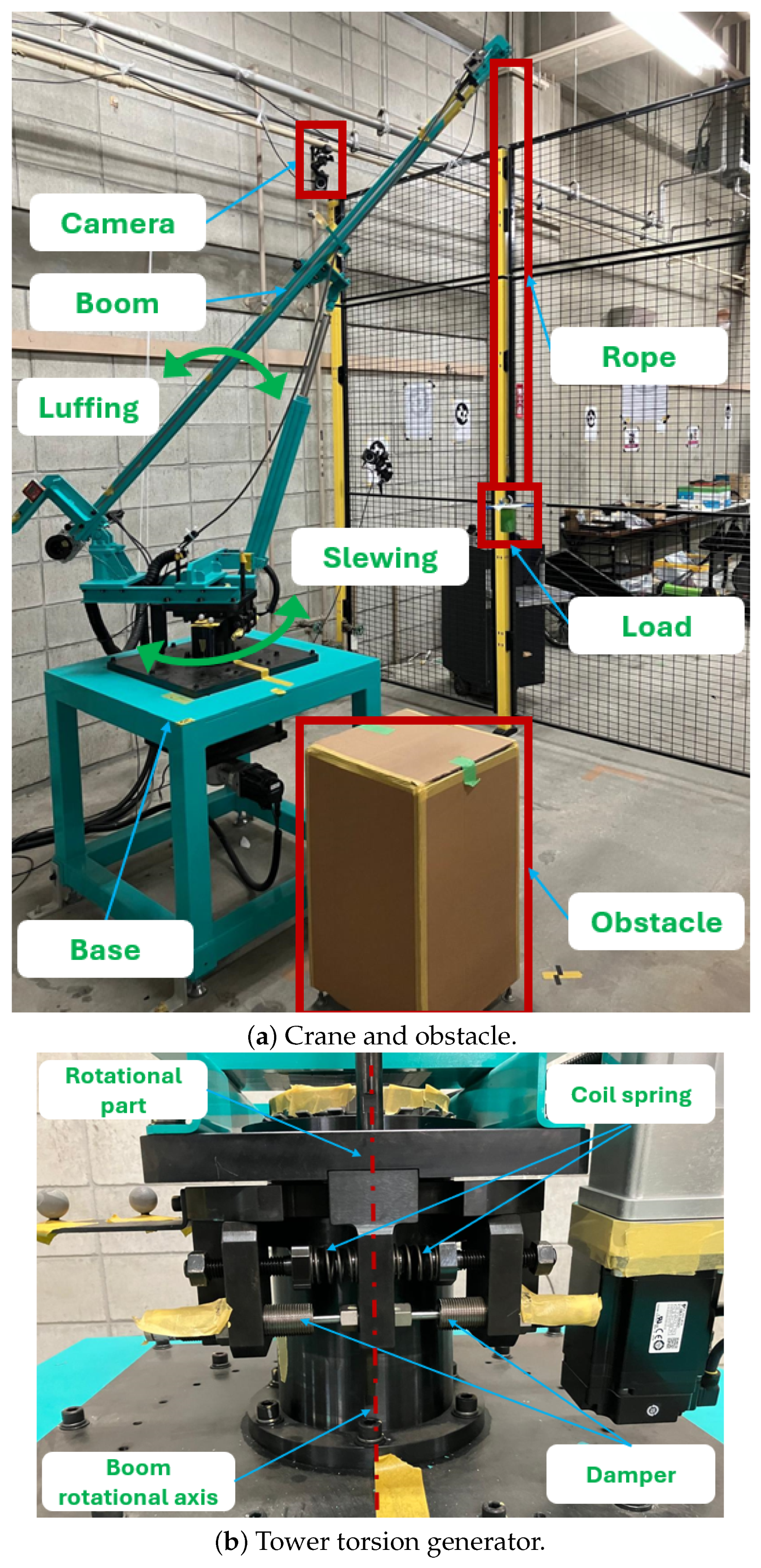
In order to represent the elasticity of the latticed boom, a tower torsion generator modeled as a spring–damper system is used. The tower torsion generator is applied exclusively to the horizontal rotation of the boom, as the bending effects in the jib can be neglected due to its lattice structure. The generator output is θ 4 , which directly influences the load sway dynamics of the crane system. The optimization approach is experimentally validated using the lab-scale crane setup shown in Figure 10a, which is a 1/20 scale model of a commercial crane. The experimental setup includes 3 AC motors to drive motions of rope and boom angles. To simulate the tower elasticity of the crane, a tower torsion generator shown in Figure 10b is installed only in the horizontal boom direction because the jib bending can be neglected due to the latticed structure of the crane boom. The setup involves eight cameras with a resolution of 1280 × 1024 pixels and a frame rate ranging from 30 to 240 fps to capture rope motion, tower torsion, swaying, and boom angles in real time. For this study, a frame rate of 100 fps is used with an average shutter speed of 0.25 ms. Moreover, the obstacle is represented by a cardboard box as shown in Figure 10.
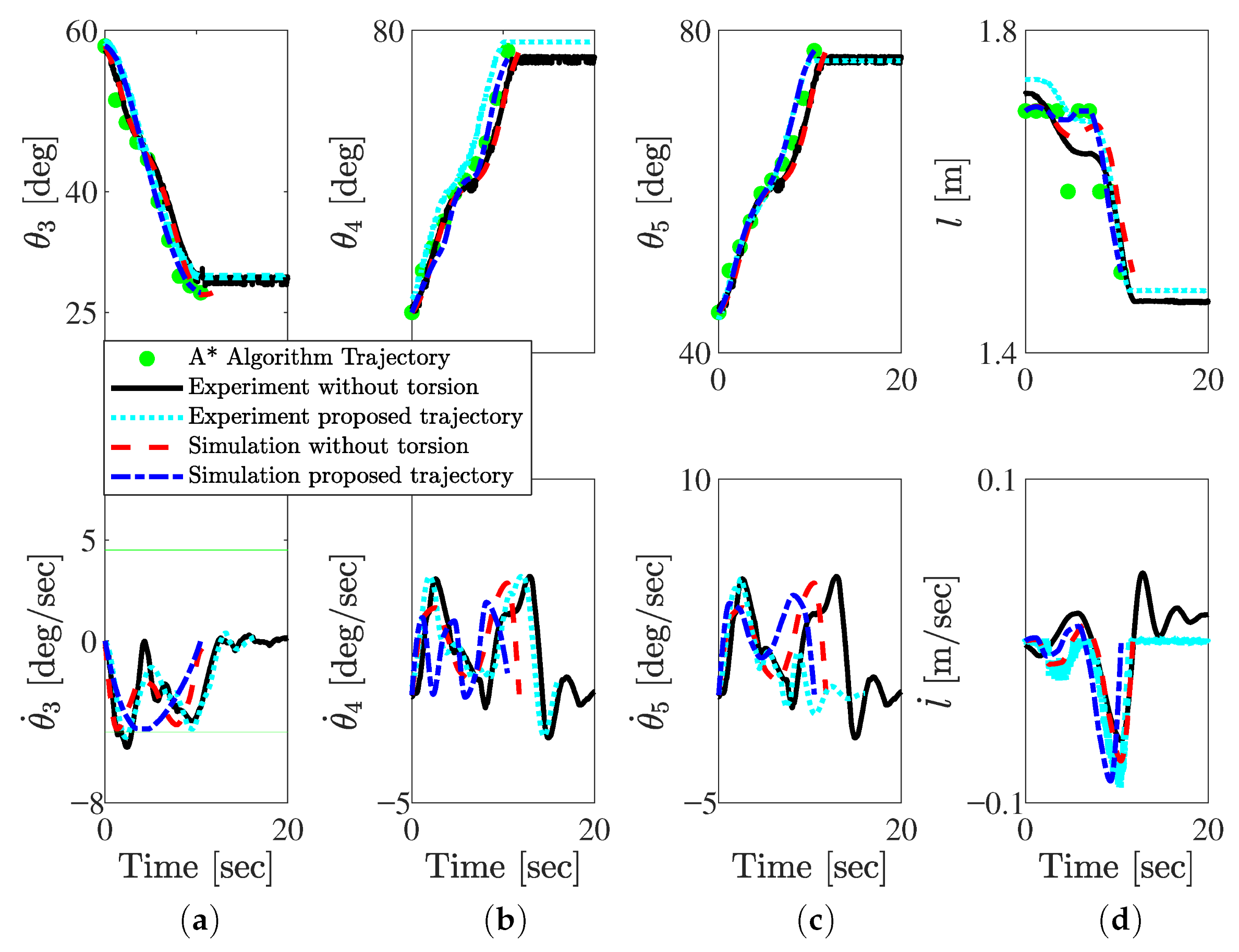
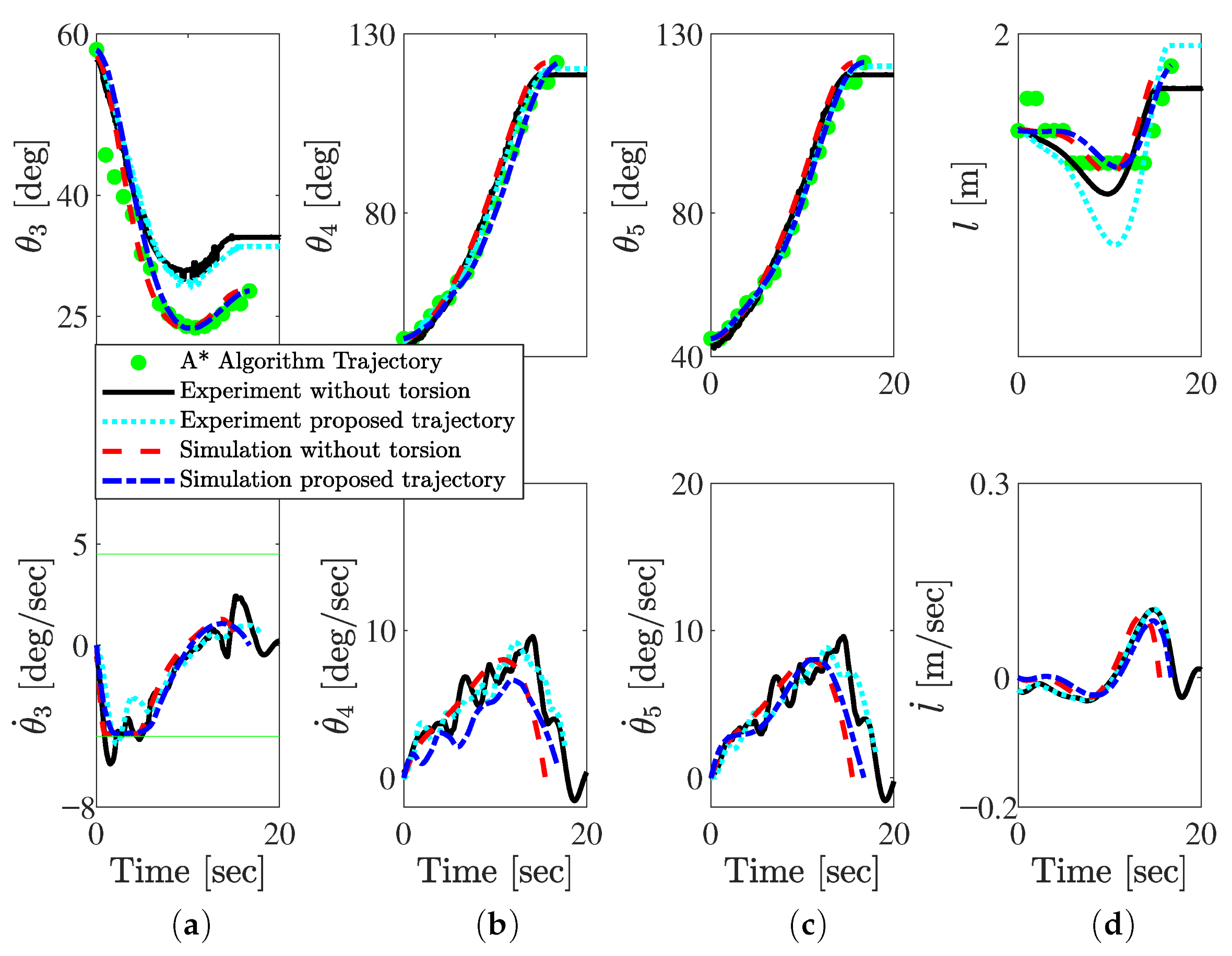
The optimal trajectories in Equation (5) are generated with and without tower torsion constraints for the two collision-free paths derived by the A* algorithm. Each trajectory is then applied to the experimental setup including the tower torsion generator to demonstrate the effectiveness. Figure 11 and Figure 12 compare the simulation and experimental time-optimal trajectories, generated with and without tower torsion constraints for the two paths. The simulation and experimental trajectories for both cases closely follow the collision-free A* paths to confirm obstacle avoidance. The experimental results were filtered using a low-pass filter to more accurately capture the performance. The performances of the vertical boom angle θ 3 and rope length l are shown in (a) and (d) of Figure 11 and Figure 12, respectively. According to the figures, the offset between the simulation and experimental results in the vertical boom motion is mainly attributed to the real inertia of the boom. This inertia has a more significant influence on the vertical motion than on the horizontal movement and was not considered in the simulation model. Figure 11b and Figure 12b display the optimal horizontal boom rotations, while Figure 11c and Figure 12c show the boom rotations generated by the tower torsion generator. For the optimal trajectories generated without considering tower torsion, the horizontal boom rotations before and after the tower torsion generator shown in (b) and (c) of Figure 11 and Figure 12 are identical, and they are represented by dashed red and black lines for the simulation and experiments, respectively.
Moreover, the horizontal velocity magnitudes of the generated trajectories that consider tower torsion are smaller than those generated without tower torsion constraints for the experimental setup incorporating the tower torsion generator as shown in (b) and (c) of Figure 11 and Figure 12, respectively. In addition, the experimental vertical boom velocity θ 3 for the trajectory without tower torsion constraints as shown in Figure 11a and Figure 12a for the two paths exceeds the allowable limits compared to that with tower torsion constraints in the same figures. The experimental tower torsion magnitudes for the proposed trajectories are shown in Figure 13, and they remain within the constrained limits given in Table 2.
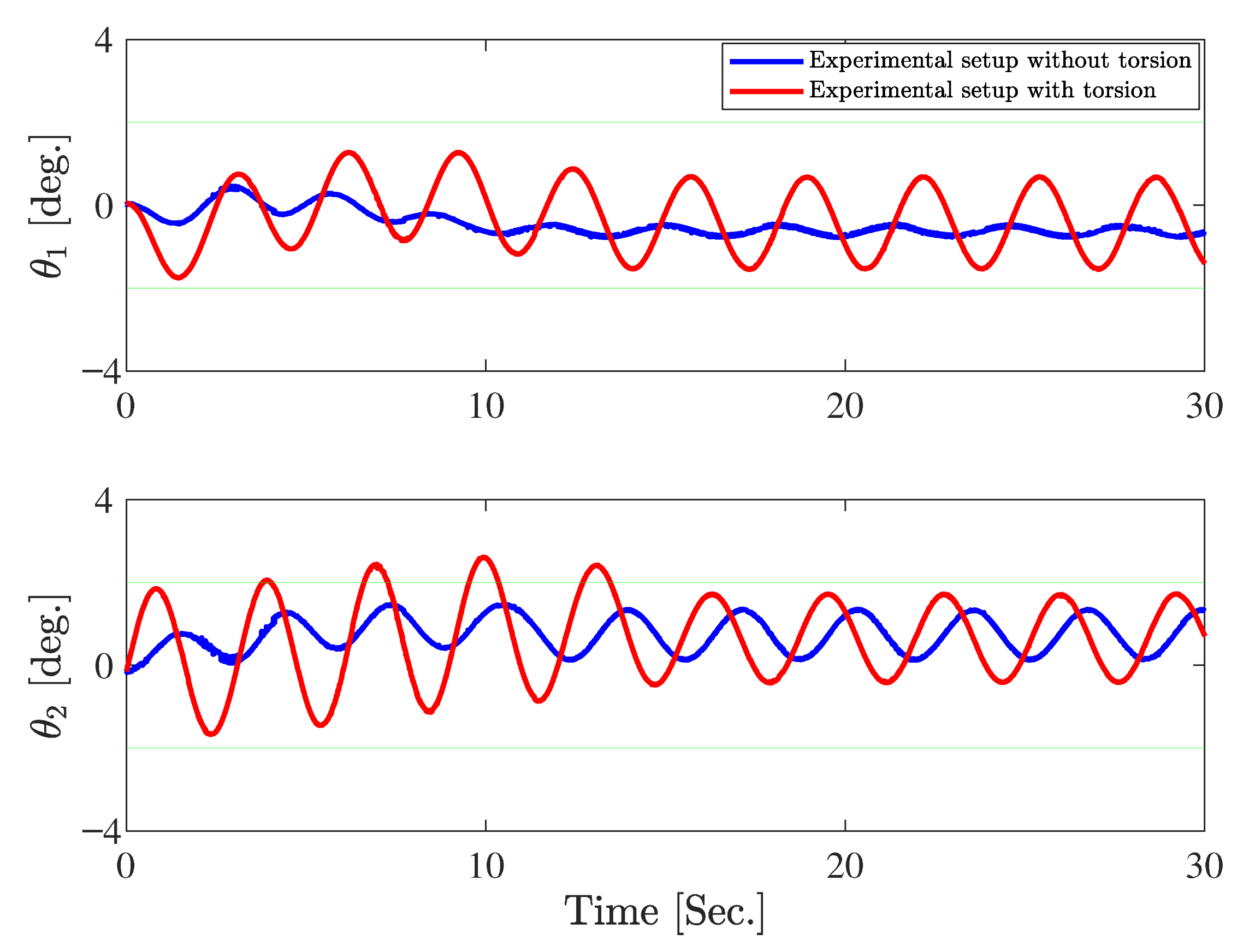
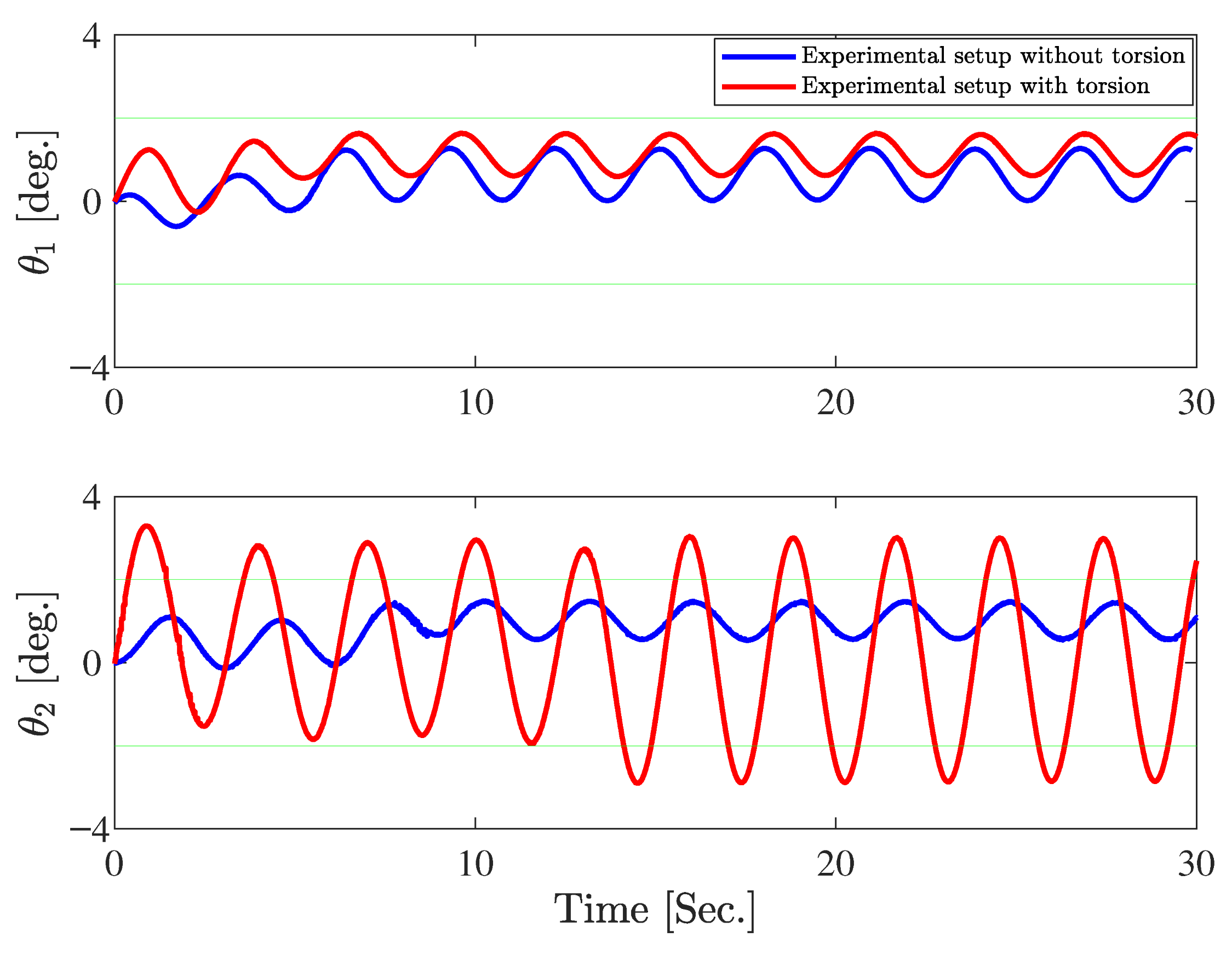
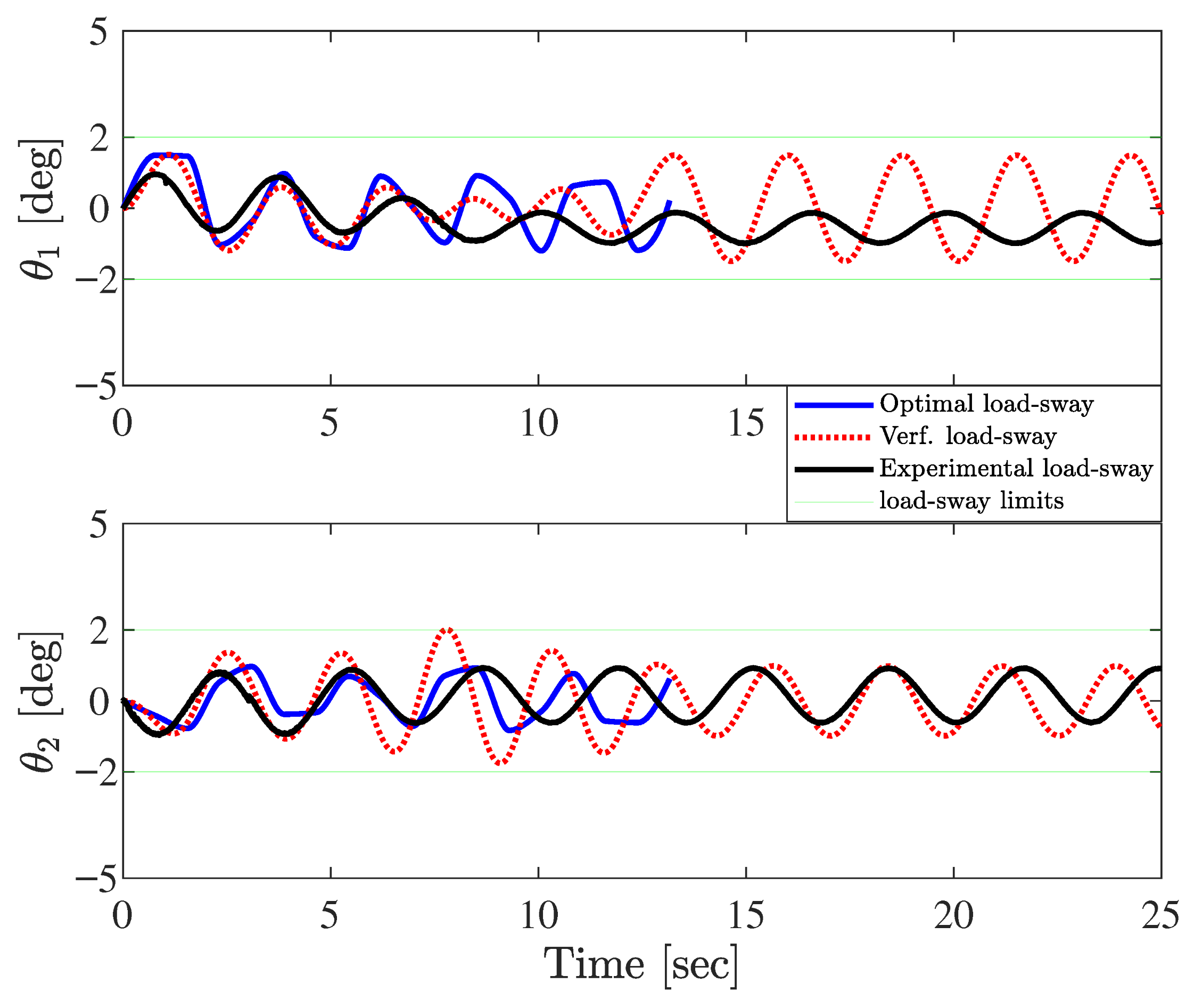
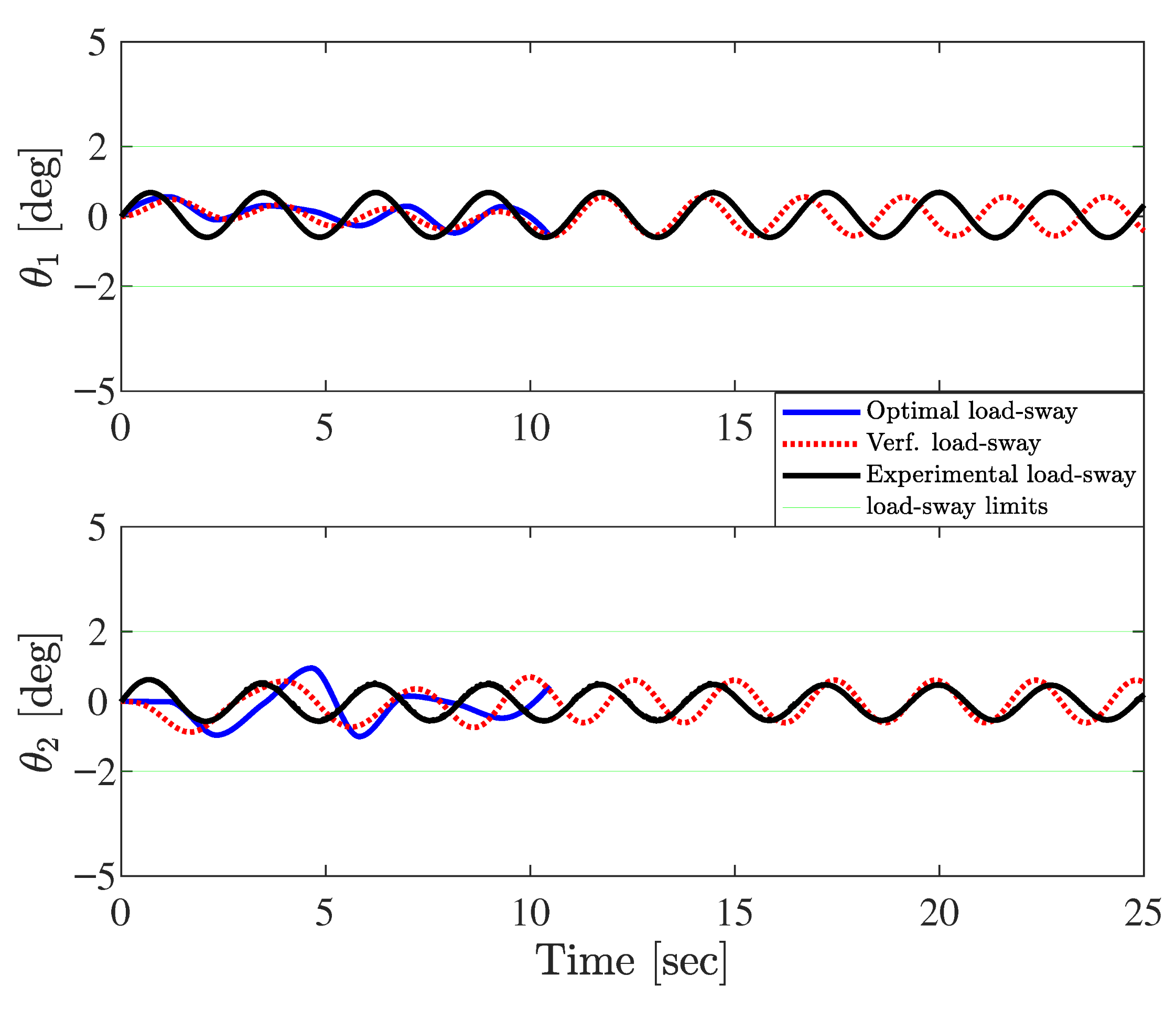
An additional validation of the effectiveness of considering tower torsion is demonstrated using the optimal trajectories generated without tower torsion constraints (illustrated by dashed red and black lines in Figure 11 and Figure 12 for the two paths). These trajectories are tested on the experimental system both with and without the tower torsion generator. The resulting load sway in each case is compared in Figure 14 and Figure 15 for the two collision-free A* paths. Since the trajectories were generated without tower torsion constraints, the resulting load sway in the system without the tower torsion generator is significantly reduced compared to that in the system where tower torsion is considered. This demonstrates that tower torsion should be incorporated when generating optimal trajectories to suppress the lattice boom elasticity during crane motion. Finally, the time-optimal sixth-order trajectories are applied to the experimental system that includes the tower torsion generator. According to the obtained behavior, the load swaying angles produced by the proposed trajectories are compared with the computational ones based on the simplified dynamics model in Equation (2) as shown in Figure 16 and Figure 17, respectively. Based on these figures, the time-optimal sixth-order trajectories are able to suppress tower torsion and additionally improve load sway suppression during motion.

4. Conclusions

Since tower torsion in large cranes affects load sway both during motion and after the load reaches its target position, this study proposes a novel optimal trajectory generation method to mitigate tower torsion and suppress load sway in the presence of obstacles. A tower torsion generator is installed only in the horizontal boom direction, as jib bending can be neglected due to the lattice structure. The proposed scheme integrates two distinct algorithms: the A* algorithm, which calculates the shortest-load path under collision constraints, and an optimization approach that generates time-optimal trajectories for the collision-free paths generated by the A* algorithm while considering various constraints such as crane kinematics, tower torsion, and swaying angles suppression. The proposed trajectory is formulated with a sixth-order polynomial function to provide practical motion while effectively reducing tower torsion and load sway without collision. The proposed approach was computationally verified by two different trajectories. For the longest path, the proposed trajectory could reduce load sway by 12.8% and 1.6% for θ 1 and θ 2 , and for the shortest path by 7.8% and 54.2%, respectively. Both computational and experimental results validate the effectiveness.

Author Contributions

A.F. developed the optimization scheme, performed simulations and experiments, analyzed the results, and wrote the manuscript. N.U. supervised the study, guided the methodology, verified the results, and revised the manuscript. N.A.A. contributed to data interpretation and manuscript editing. H.T., S.S., H.S. and M.O. contributed to methodology development, data interpretation, and conceptual design. All authors have read and agreed to the published version of the manuscript.

Funding

This research received no external funding

Data Availability Statement

The data presented in this study are available on request.

Conflicts of Interest

Authors Hideki Takahashi, Shintaro Sasai, Hitoshi Sakurai and Masaki Okubo were employed by the company Kobelco Construction Machinery Co., Ltd. The remaining authors declare that the research was conducted in the absence of any commercial or financial relationships that could be construed as a potential conflict of interest.

References

  1. Li, Y.; Xi, X.; Xie, J.; Liu, C. Study and implementation of a cooperative hoisting for two crawler cranes. J. Intell. Robot. Syst. 2016, 83, 165–178. [Google Scholar] [CrossRef]
  2. Tuan, L.A.; Lee, S.-G. Modeling and advanced sliding mode controls of crawler cranes considering wire rope elasticity and complicated operations. Mech. Syst. Signal Process. 2018, 103, 250–263. [Google Scholar] [CrossRef]
  3. Araya, H.; Kakuzen, M.; Kinugawa, H.; Arai, T. Level luffing control system for crawler cranes. Autom. Constr. 2004, 13, 689–697. [Google Scholar] [CrossRef]
  4. Korytov, M.; Shcherbakov, V.; Titenko, V.; Belyakov, V. Study of the crawler crane stability affected by the length of compensating ropes and platform rotation angle in the mode of movement with payload. J. Phys. 2020, 1546, 119–135. [Google Scholar] [CrossRef]
  5. Li, J.; Bai, L.; Gao, W.; Shi, N.; Wang, N.; Ye, M.; Gu, H.; Xu, X.; Liu, J. Reliability-based design optimization for the lattice boom of crawler crane. Structures 2021, 29, 1111–1118. [Google Scholar] [CrossRef]
  6. Kong, X.; Qi, Z.; Wang, G. Elastic instability analysis for slender lattice-boom structures of crawler cranes. J. Constr. Steel Res. 2015, 115, 206–222. [Google Scholar] [CrossRef]
  7. Sakawa, Y.; Shindo, Y.; Hashimoto, Y. Optimal control of a rotary crane. J. Optim. Theory Appl. 1981, 35, 535–557. [Google Scholar] [CrossRef]
  8. Takahashi, H.; Farrage, A.; Terauchi, K.; Sasai, S.; Sakurai, H.; Okubo, M.; Uchiyama, N. Sensor-less and time-optimal control for load-sway and boom-twist suppression using boom horizontal motion of large cranes. Autom. Constr. 2022, 134, 104086. [Google Scholar] [CrossRef]
  9. Jin, L.; Liu, H.; Zheng, X.; Chen, S. Exploring the impact of wind loads on tower crane operation. Math. Probl. Eng. 2020, 2020, 2807438. [Google Scholar] [CrossRef]
  10. Loveikin, V.; Romasevych, Y.; Loveikin, Y.; Kadykalo, I. Optimisation of tower crane rotation mechanism force acceleration mode at steady payload hoisting. Mach. Energet. 2025, 16, 1–31. [Google Scholar] [CrossRef]
  11. Jaafar, H.; Mohamed, Z.; Ahmad, M.; Wahab, N.; Ramli, L.; Shaheed, M. Control of an underactuated double-pendulum overhead crane using improved model reference command shaping: Design, simulation and experiment. Mech. Syst. Signal Process. 2021, 151, 107358. [Google Scholar] [CrossRef]
  12. Butler, H.; Honderd, G.; Van, A. Model reference adaptive control of a gantry crane scale model. IEEE Control Syst. Mag. 1991, 11, 57–62. [Google Scholar][Green Version]
  13. Schaper, U.; Arnold, E.; Sawodny, O.; Schneider, K. Constrained real-time model-predictive reference trajectory planning for rotary cranes. In 2013 IEEE/ASME International Conference on Advanced Intelligent Mechatronics; IEEE: Piscataway, NJ, USA, 2013; pp. 680–685. [Google Scholar]
  14. Garrido, S.; Abderrahim, M.; Gimenez, A.; Diez, R.; Balaguer, C. Anti-swinging input shaping control of an automatic construction crane. IEEE Trans. Autom. Sci. Eng. 2008, 5, 549–557. [Google Scholar] [CrossRef]
  15. Al-Fadhli, A.; Khorshid, E. A smooth optimized input shaping method for two-dimensional crane systems using Bezier curves. Trans. Inst. Meas. Control 2021, 43, 2512–2524. [Google Scholar] [CrossRef]
  16. Peng, H.; Zhao, H.; Wang, X.; Li, Y. Robust motion trajectory optimization of overhead cranes based on polynomial chaos expansion. ISA Trans. 2021, 110, 71–85. [Google Scholar] [CrossRef] [PubMed]
  17. Farrage, A.; Takahashi, H.; Terauchi, K.; Sasai, S.; Sakurai, H.; Okubo, M.; Uchiyama, N. Time-Optimal Trajectory Generation of Rotary Cranes with Load Sway Reduction Using Only Horizontal Boom Motion. In IEEE 30th International Symposium on Industrial Electronics (ISIE); IEEE: Piscataway, NJ, USA, 2021; pp. 1–6. [Google Scholar]
  18. Chen, H.; Fang, Y.; Sun, N. A time-optimal trajectory planning strategy for double pendulum cranes with swing suppression. In IEEE 35th Chinese Control Conference; IEEE: Piscataway, NJ, USA, 2016; pp. 4599–4604. [Google Scholar]
  19. Zhang, W.; Chen, H.; Chen, H.; Liu, W. A Time Optimal Trajectory Planning Method for Double-Pendulum Crane Systems with Obstacle Avoidance. IEEE Access 2021, 9, 13022–13030. [Google Scholar] [CrossRef]
  20. Kaneshige, A.; Akamatsu, T.; Fujimoto, H.; Terashima, K. The on-line obstacle recognition, path planning and transferring of an overhead carne system. IFAC Proc. Vol. 2006, 39, 655–660. [Google Scholar] [CrossRef]
  21. Cibicik, A.; Pedersen, E.; Egeland, O. Dynamics of luffing motion of a flexible knuckle boom crane actuated by hydraulic cylinders. Mech. Mach. Theory 2020, 143, 103616. [Google Scholar] [CrossRef]
  22. Farrage, A.; Takahashi, H.; Terauchi, K.; Sasai, S.; Sakurai, H.; Okubo, M.; Uchiyama, N. Trajectory generation of rotary cranes based on A* algorithm and time-optimization for obstacle avoidance and load-sway suppression. Mechatronics 2023, 94, 103025. [Google Scholar] [CrossRef]
  23. Duchoň, F.; Babinec, A.; Kajan, M.; Beňo, P.; Florek, M.; Fico, T.; Jurišica, L. Path planning with modified a star algorithm for a mobile robot. Procedia Eng. 2014, 96, 59–69. [Google Scholar] [CrossRef]
Figure 1. Rotary crane model.
Machines 14 00430 g001
Figure 2. Schematic crane model with tower-torsion.
Machines 14 00430 g002
Figure 3. Collision-free A* way for path I in [ m ] .
Machines 14 00430 g003
Figure 4. Collision-free A* way for path II in [ m ] .
Machines 14 00430 g004
Figure 5. Simulation results of the proposed trajectories with tower torsion for path I in Figure 3. (a) vertical boom motion, (b) horizontal boom motion generated by a tower torsion generator, (c) optimal boom motion, and (d) rope motion.
Machines 14 00430 g005
Figure 6. Simulation results of the proposed trajectories with tower torsion for path II in Figure 4. (a) vertical boom motion, (b) horizontal boom motion generated by a tower torsion generator, (c) optimal boom motion, and (d) rope motion.
Machines 14 00430 g006
Figure 7. Simulation results of the tower torsion profiles for the two paths in Figure 3 and Figure 4.
Machines 14 00430 g007
Figure 8. Simulation effectiveness of the proposed trajectories with tower torsion on load sway suppression for path I in Figure 3.
Machines 14 00430 g008
Figure 9. Simulation effectiveness of the proposed trajectories with tower torsion on load sway suppression for path II in Figure 4.
Machines 14 00430 g009
Figure 10. Experimental system.
Machines 14 00430 g010
Figure 11. Time-optimal trajectories with/without tower torsion constraints for path I in Figure 3. (a) vertical boom motion, (b) horizontal boom motion generated by a tower torsion generator, (c) optimal boom motion, and (d) rope motion.
Machines 14 00430 g011
Figure 12. Time-optimal trajectories with/without tower torsion constraints for path II in Figure 4. (a) vertical boom motion, (b) horizontal boom motion generated by a tower torsion generator, (c) optimal boom motion, and (d) rope motion.
Machines 14 00430 g012
Figure 13. Experimental tower torsion angle for the two paths in Figure 3 and Figure 4.
Machines 14 00430 g013
Figure 14. Experimental results of the optimal trajectories generated without tower torsion constraints on load sway suppression for path I in Figure 3.
Machines 14 00430 g014
Figure 15. Experimental results of the optimal trajectories generated without tower torsion constraints on load sway suppression for path II in Figure 4.
Machines 14 00430 g015
Figure 16. Simulation and experimental load sway of the proposed trajectories generated with tower torsion constraints for path I in Figure 3.
Machines 14 00430 g016
Figure 17. Simulation and experimental load sway of the proposed trajectories generated with tower torsion constraints for path II in Figure 4.
Machines 14 00430 g017
Table 1. Parameter values.
ParameterUnitsValue
L[m]2
I x [ kg m 2 ]54.95
I z [ kg m 2 ]2.19
g[ m / s 2 ]9.8
m[kg]1
l[m]2.8
l ˙ max [ m / s ]0.43
θ ˙ 3 max [ deg / s ]4.35
θ ˙ 5 max [ deg / s ]33.97
Table 2. Terminal boom angles and rope length.
ParameterPath IPath II
θ 3 i n t                 [deg]58.058.0
θ 4 i n t                 [deg]45.045.0
l i n t                  [m]1.71.7
θ 3 f                    [deg]28.127.5
θ 4 f                    [deg]122.077.5
l f                     [m]1.91.5
θ sw                 [deg]2.02.0
θ ˙ sw                 [ deg / s ]1.01.0
θ f                   [deg]1.01.0
θ ˙ f                   [ deg / s ]0.50.5
θ t                    [deg]11
Disclaimer/Publisher’s Note: The statements, opinions and data contained in all publications are solely those of the individual author(s) and contributor(s) and not of MDPI and/or the editor(s). MDPI and/or the editor(s) disclaim responsibility for any injury to people or property resulting from any ideas, methods, instructions or products referred to in the content.