1. Introduction
Professional basketball is characterized by a high frequency of explosive and multidirectional actions that require rapid transitions among acceleration, deceleration, jumping, and landing tasks [
1,
2]. These repeated high-intensity movements generate substantial mechanical load on the musculoskeletal system and demand precise management of both external and internal training loads to sustain performance and minimize injury risk [
3,
4,
5]. In fact, the competitive calendar, which often includes multiple weekly games and frequent travel, further challenges recovery processes and contributes to cumulative fatigue and neuromuscular imbalance [
6,
7,
8]. Consequently, monitoring players’ performance and identifying potential sources of imbalance have become central components of high-performance programmes [
9,
10]. Among the factors influencing performance and injury risk, inter-limb asymmetries have emerged as a critical area of investigation [
11,
12]. Differences between limbs in structure or function may alter mechanical efficiency and increase susceptibility to overuse injuries [
13,
14]. Prospective studies in elite team-sport athletes have shown that greater interlimb asymmetries are associated with a higher incidence of injury across competitive seasons, supporting the relevance of asymmetry monitoring as a potential injury-related factor [
15]. This growing recognition of asymmetry as both a diagnostic and preventive indicator provides a valuable framework for analyzing morphological and functional adaptations in professional basketball players [
16]. However, it remains unclear whether structural asymmetries, which reflect morphological differences between limbs, translate into functional asymmetries during movement, as neuromuscular control and coordination mechanisms may compensate for such imbalances. To address this gap, the present study integrates structural assessments based on bioelectrical impedance analysis (BIA) with functional asymmetry measurements from inertial measurement units (IMUs), providing a novel approach to understanding how morphological imbalances affect functional performance in basketball players.
Professional basketball players typically exhibit distinct anthropometric and body composition profiles, characterized by high stature, low fat mass, and well-developed lean tissue, which collectively support the biomechanical demands of the game [
17]. A favourable body composition, specifically, a lower percentage of body fat, is associated with improved execution of high-intensity actions such as changes in direction, jumping, and sprinting [
18]. Likewise, greater lean or muscle mass is strongly linked to force and power production, making it a key determinant of performance in basketball [
19]. However, the sport’s repetitive and unilateral nature, particularly through jumping, pivoting, directional changes and dominant member, can lead to progressive side-to-side imbalances in muscular development and load distribution [
20]. These asymmetries are not inherently detrimental; moderate differences may reflect sport-specific specialization or mechanical adaptation [
21]. Yet, when asymmetries exceed certain thresholds (e.g., >10% differences), they have been associated with reductions in performance efficiency, altered motor control, and a greater risk of musculoskeletal injury [
22]. Therefore, evaluating the degree and nature of inter-limb asymmetry has become essential for both performance optimization and injury prevention in elite basketball [
23]. In consequence, the assessment of asymmetries can be approached from a structural perspective, focused on body composition and tissue distribution, or from a functional perspective, based on dynamic motor actions. In this context, bioelectrical impedance analysis (BIA) represents a useful tool for examining the structural dimension of asymmetry, as gold standard [
24].
Body composition assessment through BIA is a reliable method for evaluating muscle and fat mass in athletes, enabling the identification of inter-limb differences and structural asymmetries [
24,
25]. In professional basketball, where players frequently perform unilateral actions such as jumps and direction changes, these analyses are valuable for detecting cumulative morphological imbalances [
26]. Despite its non-invasive and practical nature, BIA-derived asymmetry assessment has received less attention compared with gold-standard techniques such as dual-energy X-ray absorptiometry (DXA) or magnetic resonance imaging (MRI) [
27]. While BIA offers significant advantages in terms of portability, reproducibility, and cost-efficiency, it is crucial to recognize that structural asymmetries do not always translate directly into functional imbalances [
28,
29]. Neuromuscular adaptations can mitigate the effects of these asymmetries, allowing athletes to maintain coordinated and efficient movement patterns [
30]. For example, research has shown that athletes often develop compensatory mechanisms that adjust movement strategies to maintain performance despite asymmetrical limb loading [
31]. This highlights the importance of complementing morphological assessments with dynamic evaluations of functional asymmetry, such as those provided by inertial measurement units (IMUs), to capture the full expression of asymmetry during movement [
32].
In this sense, the use of inertial measurement units (IMUs) has expanded considerably in recent years, providing a practical and reliable method for quantifying the functional expression of asymmetry under real training and competition conditions [
33]. In this study, WIMU Pro™ IMUs were used to measure functional asymmetry, with specific focus on variables related to acceleration, deceleration, and load distribution between limbs during multidirectional tasks [
34,
35]. The Step Balance variable was derived from the continuous data collected by the IMUs, representing the relative load distribution between the left and right limbs during dynamic movements, such as changes in direction. This variable was calculated as the difference in acceleration and force application between limbs, normalized to total body mass, with values exceeding ±0.10 indicating asymmetry [
33]. Filtering procedures were applied to remove noise from the accelerometer and gyroscope signals, ensuring accurate detection of limb load contributions. Functional asymmetry reflects the dynamic interplay of strength, coordination, and neuromuscular control, offering complementary insights to structural assessments based on body composition. Validation studies have demonstrated the reliability of WIMU Pro™ for tracking these variables in basketball and other team sports [
36,
37]. Recent studies in team sports have highlighted that even small asymmetries in movement load or limb contribution may accumulate over time, potentially affecting mechanical efficiency or increasing injury risk if not identified early (e.g., in landing mechanics or change-of-direction tasks) [
15]. Despite this progress, none investigations have combined structural and functional monitoring approaches to determine whether morphological asymmetries translate into measurable differences in functional load distribution for the best of the author’s knowledge. Such an integrated approach is essential to understand how asymmetries detected at the structural level are expressed during athletic performance and to what extent they may influence player readiness or physical condition.
Despite the growing interest in monitoring asymmetries in team sports, there remains a lack of studies integrating structural assessments derived from bioimpedance with functional analyses obtained through inertial devices in professional basketball for the best of the author’s knowledge. Most existing research has examined these dimensions separately, which limits the understanding of how morphological differences between limbs may influence the functional distribution of mechanical load during sport-specific actions. The main objective of this study was to compare structural asymmetries of the lower limbs, obtained through segmental BIA, with functional asymmetries, derived from inertial devices during training sessions in professional basketball players. A secondary aim was to examine the degree of individual variability in asymmetry expression and identify potential groupings based on their magnitude and behaviour.
2. Materials and Methods
2.1. Design
The present study employed an observational, cross-sectional and exploratory design aimed at examining the relationship between structural and functional asymmetries of the lower limbs in professional basketball players [
38]. This design allows for the analysis of naturally occurring differences without manipulating any experimental variables.
The present study was conducted under non-experimental, ecologically valid conditions, in which the coaching staff and players followed their usual training routines without any intervention or influence from the research team. Training data, competitive schedules, and match outcomes were provided directly by the coaching staff [
39].
2.2. Participants
Twenty-five professional male basketball players from two Spanish professional teams (ACB and LEB Oro leagues) participated in this study during the 2022–2023 season (mean ± SD: height = 196.21 ± 8.01 cm; body mass = 94.58 ± 17.92 kg; fat mass = 10.40 ± 3.67%). A non-probabilistic sampling strategy was used due to the inherent challenges of accessing elite basketball teams, as the number of professional clubs is limited and many restrict data sharing for research purposes [
38]. Specifically, a convenience sampling approach was applied, selecting participants based on accessibility and geographical proximity.
All players and coaching staff were informed about the purpose, procedures, potential benefits, and risks of the study. Participation was voluntary, and written informed consent was obtained from all players, coaches, and staff members involved. The study was conducted in accordance with the Declaration of Helsinki [
40] and the Ethical Standards in Sport and Exercise Science Research [
41]. Ethical approval was granted by the University Bioethics Committee (protocol code: 233/2019). Furthermore, the study was aligned with the United Nations Sustainable Development Goal No. 3 (Good Health and Well-Being) and complied with the provisions of Organic Law 3/2018 of 5 December on Personal Data Protection and the Guarantee of Digital Rights, as well as with the General Data Protection Regulation applicable within the European Union (Regulation (EU) 2016/679 of the European Parliament and of the Council, 2016).
Exclusion Criteria
Participants were excluded if they: (i) sustained a mild or severe lower-limb injury during the two weeks prior to or throughout the monitoring period; (ii) failed to complete all bioelectrical impedance measurements; or (iii) did not regularly participate in training sessions (i.e., <80% attendance). Of the 28 initially recruited players, three were excluded, two for criterion (ii) and one for criterion (iii).
2.3. Sample
A total of 43 training sessions and 4 bioelectrical impedance assessments were recorded for each player over a 2-month monitoring period. In total, 347 individual cases were analyzed across both teams. Each case represented a single player’s data from a given training session and/or bioelectrical impedance assessment.
2.4. Instruments and Variables
Morphological asymmetries in lower-limb composition were assessed using a multi-frequency segmental bioelectrical impedance analyser (TANITA MC-780MA
®; TANITA Corp., Tokyo, Japan). This technology has been shown to be valid and reliable for estimating body composition in athletes when using foot-to-hand multi-frequency systems and predictive equations specifically developed for sport populations [
25]. In particular, BIA demonstrates good agreement with reference methods such as dual-energy X-ray absorptiometry (DXA) for the estimation of fat-free mass, total body water, and intra- and extracellular water, although some underestimation of fat-free mass may occur when using generalized predictive equations. Regarding reliability, good within-day reliability has been reported for body mass index (ICC = 0.881) and extracellular water (ICC = 0.850), while excellent reliability was observed for the remaining parameters (ICC > 0.900). Likewise, excellent between-day reliability has been documented for all BIA-derived measures (ICC > 0.900) [
42]. The device provided separate estimates of muscle mass and fat mass for each leg. The device provided separate estimates of muscle mass and fat mass for each leg. Based on these values, two continuous variables were calculated: Muscle Mass Asymmetry and Fat Mass Asymmetry. Asymmetry was computed as the relative percentage difference between limbs using the following expression: (Left leg − Right leg)/((Left leg + Right leg)/2). Values were expressed in decimal form, such that a value of 0.10 corresponded to a 10% inter-limb difference. Negative values indicate greater mass in the right leg, whereas positive values indicate greater mass in the left leg. Asymmetry was operationally defined as values ≥±0.10, with values below −0.10 denoting right-leg dominance and values above 0.10 indicating left-leg dominance.
Functional asymmetries were assessed using WIMU
® Pro™ inertial measurement units (RealTrack Systems
®, Almería, Spain), worn by each player during all training sessions. The WIMU Pro™ system has demonstrated excellent validity and reliability for measuring external load and neuromuscular parameters in sport contexts. Reliability analyses have reported very low coefficients of variation (0.23–0.78% under static and dynamic conditions; 2.20–2.96% during running tests) and nearly perfect correlations between devices (r = 0.99–1.00), confirming high within- and between-device and between-session consistency. In addition, high intraclass correlation coefficients have been observed across multiple anatomical locations (ICC = 0.96–0.99), supporting the system’s robustness for field applications [
43]. Regarding validity, the WIMU Pro™ has shown nearly perfect convergent validity with physiological measures such as average heart rate (r = 0.99) and moderate correlations with muscle oxygen saturation (r = −0.69), indicating strong agreement between mechanical and physiological load indicators [
44]. These findings confirm the WIMU Pro™ as a valid and reliable tool for quantifying external load and asymmetry-related metrics in professional team-sport settings. The integrated triaxial accelerometers and gyroscopes continuously recorded step-related data throughout each session (with a sampling rate of 100 Hz), enabling the quantification of lower-limb force distribution during locomotor activities. From these data, the Balance variable was extracted as an indicator of functional asymmetry. This variable reflects the relative load applied by each leg during movement, also expressed on a continuous scale from −1 to 1. As with morphological asymmetry, thresholds of ±0.1 were used to define dominance: values below −0.1 indicated right-leg dominance, and values above 0.1 indicated left-leg dominance.
2.5. Procedure
Data collection was conducted over two months during the competitive season and was fully integrated into the teams’ natural training processes. Training sessions were not designed or manipulated by the research team; instead, all sessions were planned and supervised by the same coaching and performance staff throughout the entire monitoring period. Importantly, data collection took place within a single mesocycle, during which training objectives and workload structure remained consistent, ensuring comparable exposure across sessions. Players were already familiarized with the use of the inertial measurement units, as these devices were routinely employed within the teams’ monitoring systems prior to the study. Functional asymmetry data were extracted from complete training sessions without imposing standardized tasks or researcher-led instructions, reflecting the natural execution of sport-specific actions under real training conditions.
Players were continuously monitored in all training sessions using WIMU® Pro™ inertial measurement units. Since all sessions took place indoors, eight ultra-wideband (UWB) antennas were installed around the court to ensure accurate tracking. The antennas were positioned in opposing pairs along each side of the court and calibrated before the measurement to minimize signal interference and optimize spatial precision. Antennas were positioned in opposing pairs along each side of the court and calibrated on the first day of data collection following a standardized validation procedure. Calibration involved placing two devices together and systematically covering all court lines; positional data were then analyzed to calculate the average inter-device error. If mean error exceeded 10 cm, antenna positioning was adjusted and the calibration process repeated until acceptable accuracy was achieved.
Each player wore the device in a custom-made harness positioned at the level of the thoracic spine (T2–T4), which is considered the optimal location for reliable inertial measurement. Additionally, two bioelectrical impedance assessments were conducted using the TANITA® MC-780MA analyser: one at the beginning and another at the midpoint of the monitoring period. All assessments were performed under standardized conditions and scheduled at the same time of day, during the morning, for every participant to minimize diurnal variation. All procedures were integrated into the teams’ regular training routines, with the full cooperation of the coaching and medical staff, ensuring minimal disruption to performance and preserving the ecological validity of the data.
2.6. Statistical Analysis
All statistical analyses were performed using Jamovi software® (version 2.3.28), with the level of statistical significance set at p < 0.05.
Descriptive analyses were conducted for the structural and functional asymmetry variables, including mean, standard deviation, minimum, and maximum values. The normality of the data distribution was examined using the Shapiro–Wilk test, while homogeneity of variances was assessed using Levene’s test. The results indicated that the data did not meet the assumptions of normality and homoscedasticity; therefore, non-parametric procedures were applied in the subsequent analyses. Violin plots were created to provide a visual representation of pairwise comparisons between both teams.
Subsequently, Spearman’s rank correlation tests were performed to examine the associations between structural and functional asymmetry variables. Correlations that did not meet the significance threshold (
p < 0.05) were marked with an “X”. Both the significance and magnitude of the correlations were considered, with stronger associations represented by more intense colour gradients in the visualization. The qualitative probabilistic terms was assigned using the following scale: <0.5%, most unlikely or almost certainly not; 0.5–5%, very unlikely; 5–25%, unlikely or probably not; 25–75%, possibly; 75–95%, likely or probably; 95–99.5%, very likely; >99.5%, most likely or almost certainly [
45].
Next, a two-step cluster analysis was carried out including the three analyzed variables. Differences among clusters were examined using one-way ANOVA (p < 0.05). Two graphical representations were generated to illustrate (i) the trends of each variable within the identified clusters and (ii) the dispersion of data points for all analyzed variables.
Finally, linear mixed-effects models were employed to analyze repeated measures of asymmetries within both teams, with the player identifier included as a random factor. Model fit was evaluated using the Akaike Information Criterion, the Bayesian Information Criterion, and both marginal and conditional coefficients of determination (R2). Marginal R2 represents the proportion of variance explained by the fixed effects alone, whereas conditional R2 reflects the variance explained by both fixed and random effects, thereby indicating the contribution of inter-individual variability to the model. Additionally, intra-class correlation coefficients (ICC) and their significance levels were reported to assess whether random effects varied significantly across participants. Bonferroni post hoc tests were applied for pairwise comparisons of fixed effects.
3. Results
Table 1 displays the descriptive statistics for all analyzed variables.
On average, no meaningful structural or functional asymmetries were observed, while maximum and minimum values showed that slight asymmetry was present in fat mass distribution and functional asymmetry. Overall, the asymmetry values appeared relatively homogeneous and centred around zero. However, one player showed a clear right-leg dominance in functional asymmetry, while six players exhibited structural fat mass asymmetries (three with right-leg and three with left-leg dominance).
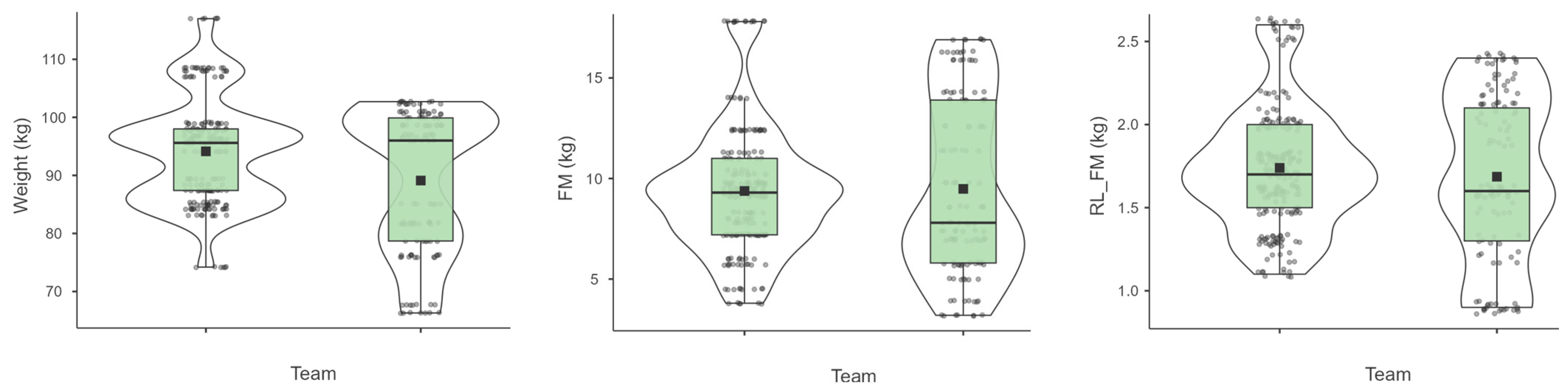
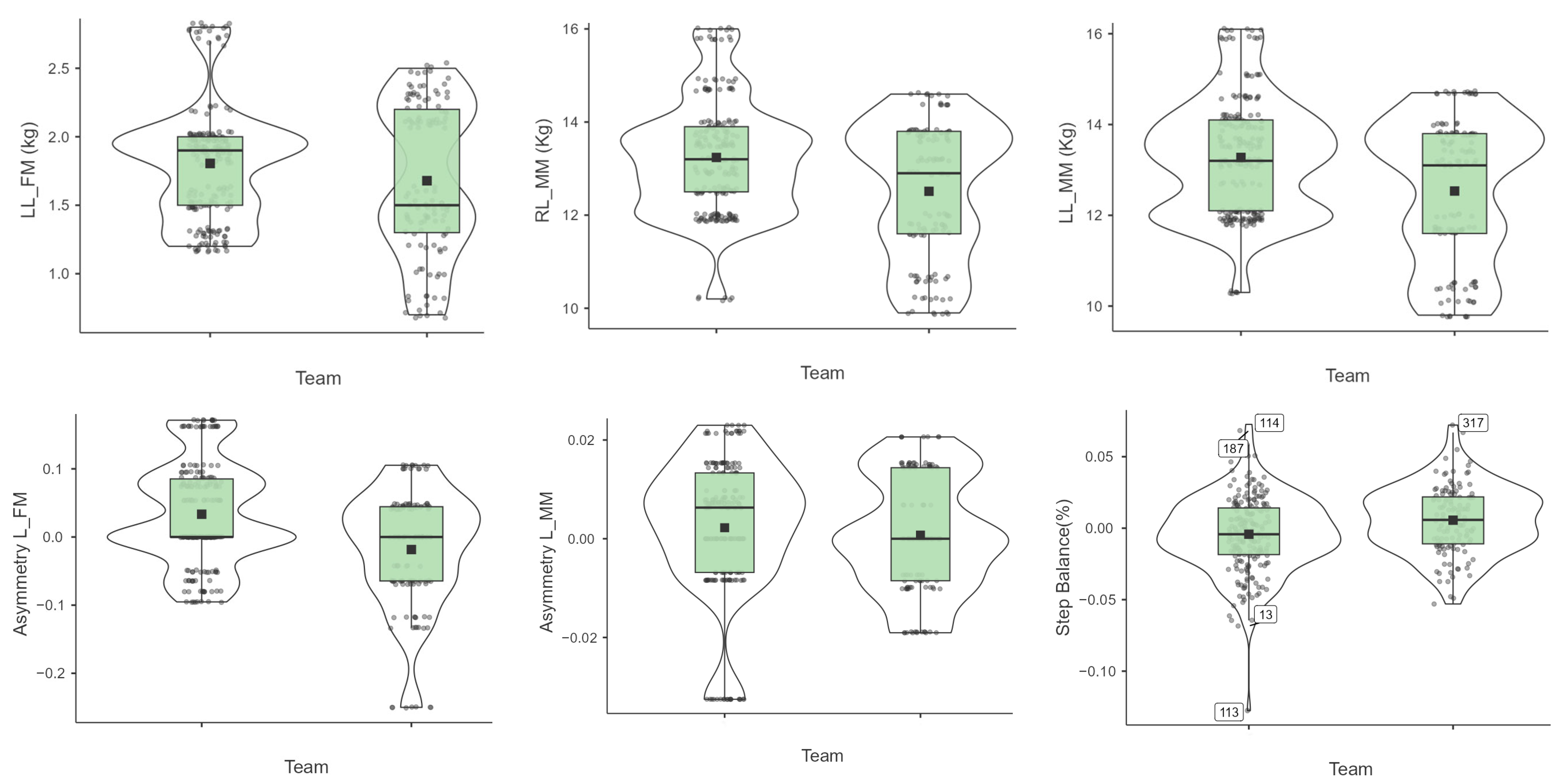
Figure 1 displays violin plots illustrating the distribution, mean, and standard deviation of the analyzed variables, comparing both professional basketball teams.
The violin plots displayed in
Figure 1 illustrate the distribution and variability of all analyzed dependent variables for both teams. Between-group differences were analyzed using the Mann–Whitney U test. Statistically significant differences between teams were observed in body mass (
p = 0.040), right and left leg muscle mass (
p < 0.001), fat mass asymmetry (
p < 0.001), muscle mass asymmetry (
p = 0.018), and functional asymmetry (Step Balance;
p < 0.001). No significant differences were found for total fat mass or segmental fat mass in either limb (
p > 0.05). Fat mass tended to be slightly higher in the LEB Oro team (right), whereas the ACB team (left) exhibited a narrower distribution around the mean. Structural asymmetries in muscle and fat mass, as well as functional asymmetry, remained close to zero at the group level, indicating no systematic dominance toward one limb. Nevertheless, individual variability was evident in specific measures, with one player showing marked right-leg dominance in functional asymmetry and six players displaying structural fat mass asymmetry (three right-dominant and three left-dominant).
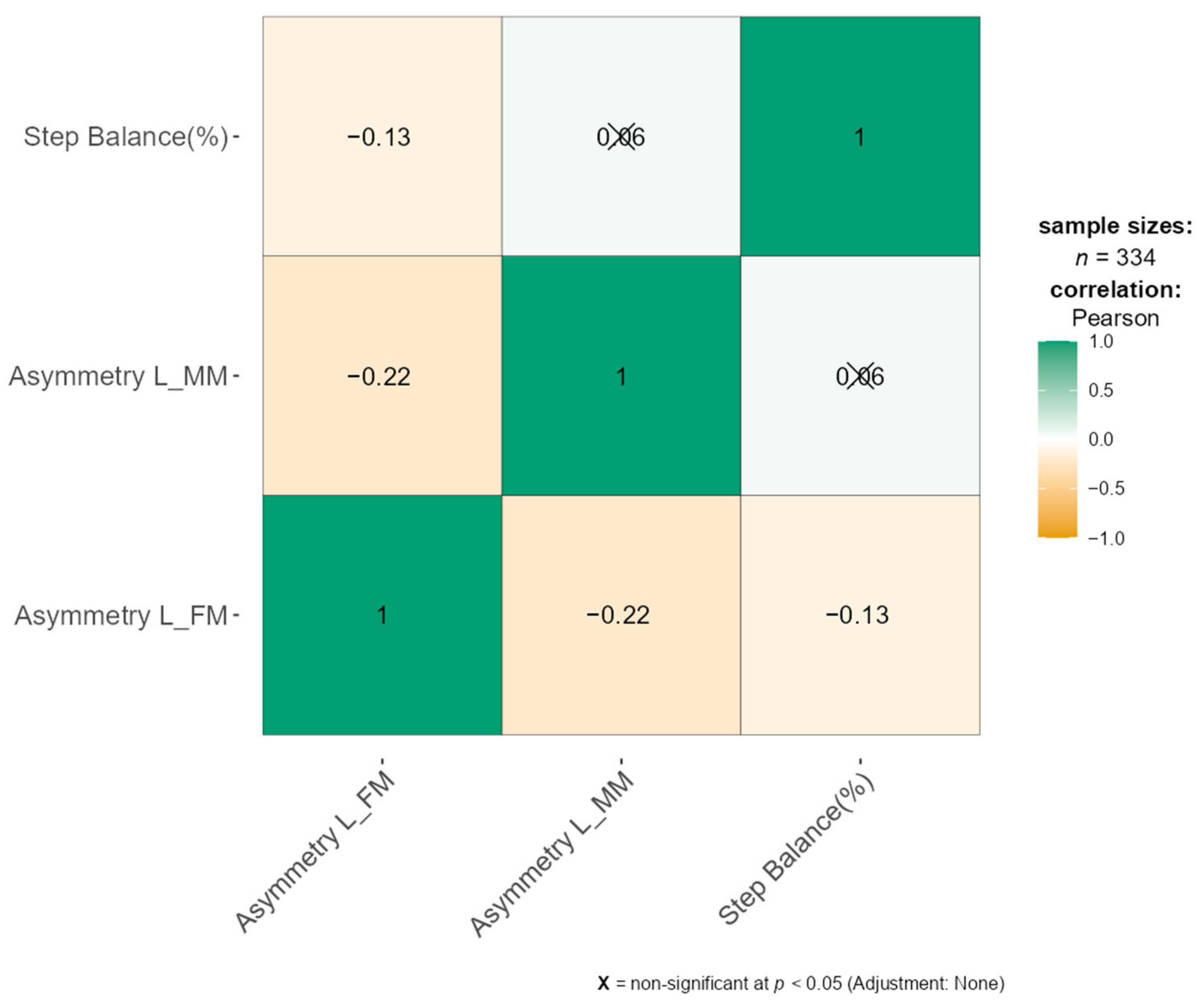
Figure 2 shows the results of the correlation analysis performed between the structural and functional asymmetry variables.
Table 2 shows the outcomes of the cluster analysis based on the structural and functional asymmetry variables considered in this study.
The cluster analysis identified two distinct groups: Cluster 1, which included structural muscle and functional asymmetries, and Cluster 2, characterized by structural fat mass asymmetries.
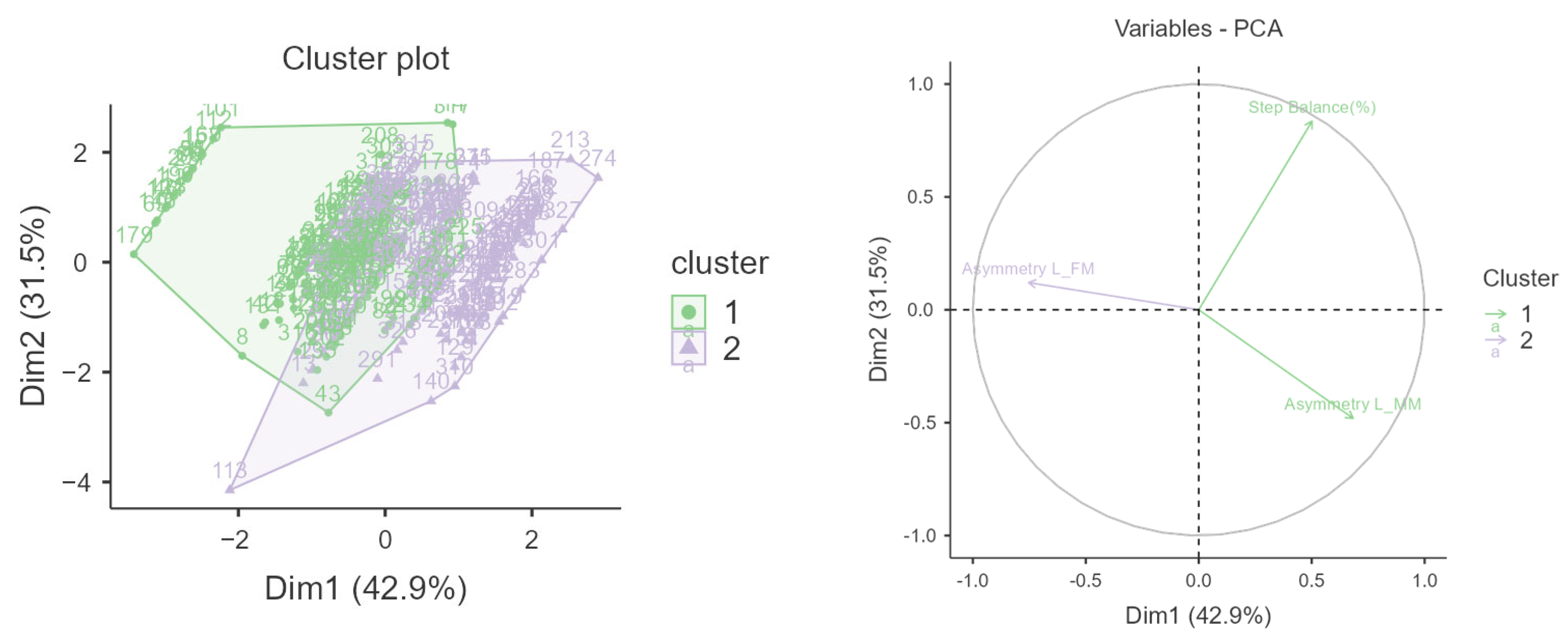
Figure 3 illustrates the distribution of the cluster points and the relationship between the identified groups.
The left panel shows a clear separation between Cluster 1 and Cluster 2, with Cluster 1 encompassing a greater number of cases distributed mainly along positive values of Dim1, while Cluster 2 occupies a distinct region characterized by negative Dim1 and lower Dim2 values. The right panel displays the main component analysis (PCA), indicating that functional asymmetry (Step Balance) and muscle mass asymmetry are closely related and contribute primarily to the definition of Cluster 1, whereas fat mass asymmetry aligns more strongly with Cluster 2. Together, both components (Dim1 and Dim2) explain approximately 74% of the total variance, supporting a coherent and interpretable clustering solution.
Table 3 shows the results of the linear mixed-effects models used to assess differences among the analyzed variables, structural muscle and fat asymmetries, and functional asymmetries, together with the degree of individual variability associated with each measure.
The models showed moderate explanatory power for the fixed effects, as indicated by the marginal R2 values, and a greater proportion of variance explained when accounting for random effects, as reflected in the conditional R2 values. The intra-class correlation coefficients (ICC) revealed a substantial degree of inter-individual variability across players, indicating that asymmetry expression differed meaningfully between athletes rather than following a uniform group pattern. This effect was particularly evident in the comparison between fat mass structural asymmetries and functional asymmetries (ICC = 0.35), suggesting that individual-specific factors strongly influenced these responses. Post hoc comparisons indicated significant differences in muscle mass asymmetry, whereas fat mass asymmetry did not reach statistical significance (p > 0.05), reinforcing the heterogeneous nature of asymmetry behaviour across players. Moreover, the significant individuality p-values confirmed that random responses varied across participants in all analyzed variables.
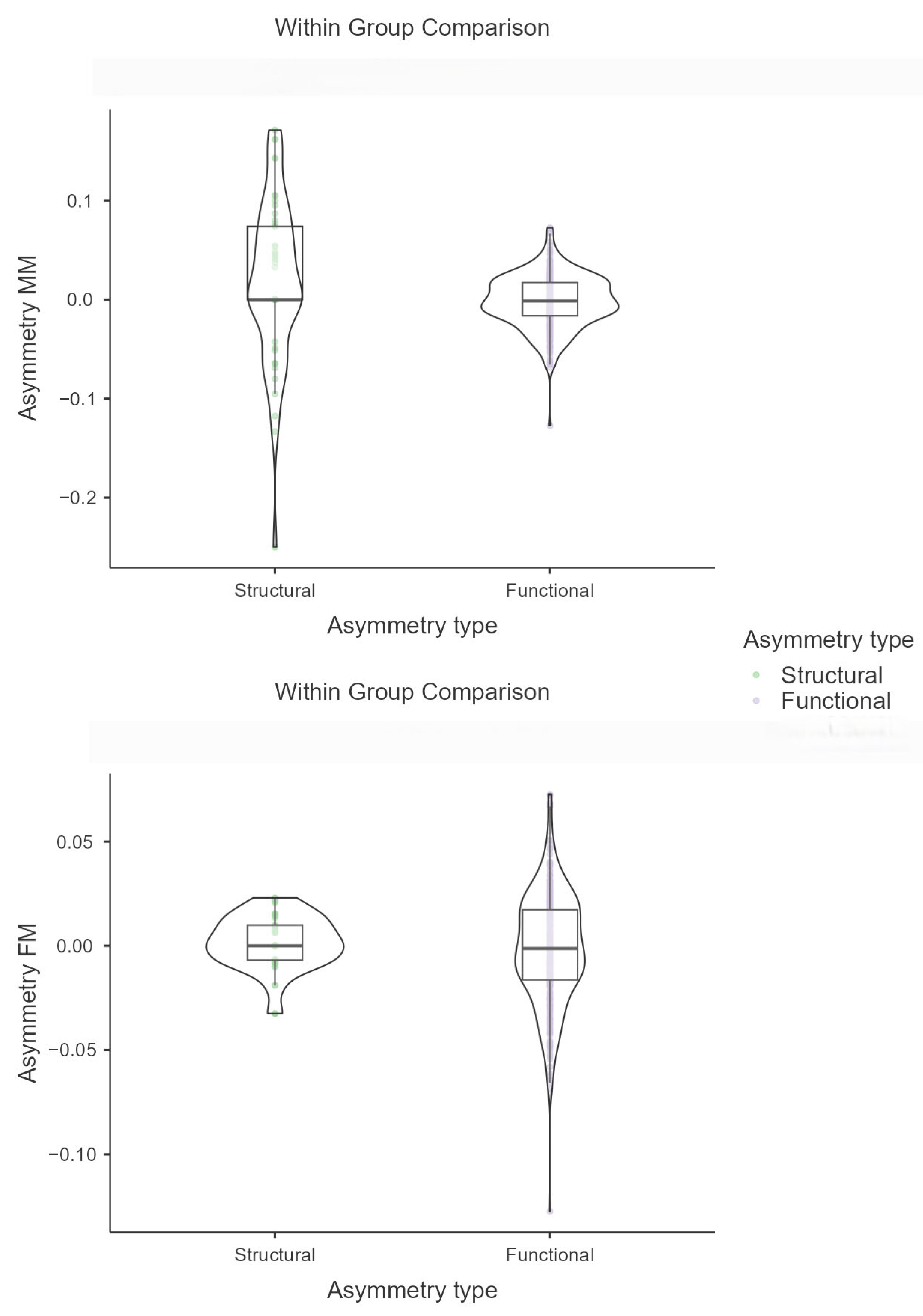
Figure 4 illustrates the pairwise comparisons derived from the linear mixed-effects models, represented through violin plots.
Figure 4 displays the within-group comparisons between structural and functional asymmetries for muscle mass (upper panel) and fat mass (lower panel). The visual distributions indicate greater variability and dispersion in structural muscle mass asymmetry compared with its functional counterpart, suggesting that morphological imbalances are more pronounced at the muscular level. Conversely, both structural and functional fat mass asymmetries showed limited dispersion and similar distributions, reflecting a more homogeneous pattern of asymmetry in adipose tissue.
4. Discussion
The main objective of this study was to examine the relationship between structural and functional asymmetries in professional basketball players by comparing BIA-derived morphological asymmetries with functional asymmetries obtained from inertial devices during training sessions, while also assessing inter-individual variability in these patterns. The results revealed limited associations between structural and functional asymmetries, with differences mainly observed in muscle mass asymmetry. These findings highlight the distinct behaviour of morphological and functional parameters to emphasize the importance of individual variability when assessing asymmetry in high-performance athletes.
The descriptive analysis revealed generally low-fat mass values among players, confirming the lean anthropometric profile typically reported in elite male basketball athletes, around 10–11% of whole-body fat mass [
46]. Mean values indicated the absence of notable asymmetries in both muscle mass and functional load distribution, proposing a balanced development between limbs that is likely promoted by the symmetrical and multidirectional nature of basketball performance [
47]. However, a slight asymmetry was detected in fat mass distribution, with higher variability across players, which may reflect individual differences in positional demands or recovery habits [
48,
49]. These results align with previous evidence showing that morphological asymmetries in highly trained athletes are usually small and not necessarily associated with performance deficits unless they exceed functional thresholds [
50,
51,
52]. Nevertheless, the relatively high range observed in both structural and functional asymmetry variables underscores the importance of considering inter-individual variability when interpreting group averages. These findings highlight the need to complement team-level assessments with individual monitoring strategies, as subtle but consistent asymmetries may predispose specific players to differential mechanical loading or compensatory adaptations over time [
33].
The comparison of the analyzed variables between both professional teams revealed largely homogeneous profiles in structural and functional asymmetries, indicating that team affiliation or competitive level (ACB vs. LEB Oro) did not exert a meaningful influence on asymmetry behaviour. Although the LEB Oro team players presented slightly higher and more variable fat mass values, these differences did not extend to the muscular or functional domains, suggesting that the observed variation is likely attributable to body-composition characteristics rather than neuromuscular imbalance. Similar findings have been reported in previous research comparing professional basketball teams competing in different leagues, where body-composition differences were observed [
18,
19]. This consistency supports the notion that training methodologies and physiological demands in high-level basketball may converge across divisions, producing comparable adaptations in symmetry and load distribution [
53]. These results emphasize that morphological or functional asymmetry patterns should be interpreted primarily at the individual level rather than between teams, as organizational or contextual factors appear to have limited impact on asymmetry profiles among elite players, and in many cases, remain consistent across competitive categories.
The correlation analysis revealed weak or non-significant associations between fat mass asymmetry and functional asymmetry, indicating that morphological imbalances in adipose tissue are not directly reflected in functional load distribution during movement. These findings suggest that variations in fat mass between limbs have limited mechanical implications and do not necessarily translate into asymmetrical force application or load absorption during training, although in other professional sports such as football or volleyball, training and competition demands have been shown to induce greater lower-limb asymmetries [
16]. Previous research has reported a poor correspondence between morphological parameters and dynamic performance indicators, particularly when asymmetries are derived from passive tissue components rather than from muscle-related variables [
54]. This dissociation supports the idea that functional asymmetry arises primarily from neuromuscular and coordinative factors rather than from the absolute distribution of tissue mass [
55,
56]. These results highlight the need to interpret morphological asymmetry cautiously [
57], as differences in fat mass between limbs may have minimal influence on sport-specific performance and should be monitored mainly as part of long-term body composition control rather than as indicators of functional imbalance. Moreover, heterochronic recovery among tissues and physiological systems may also contribute to transient asymmetries, underscoring the importance of considering recovery timing when interpreting individual responses to training load [
58].
The cluster analysis revealed two distinct groupings among the asymmetry variables. Cluster 1 comprised muscle mass and functional asymmetries, while Cluster 2 was characterized exclusively by fat mass asymmetry. This distribution suggests that muscle-related and functional asymmetries share similar behavioural patterns, likely due to their common dependence on neuromuscular control and load production mechanisms [
57], whereas fat mass asymmetry behaves independently, reflecting passive morphological differences rather than performance-oriented adaptations. This pattern can be explained by the distinct physiological roles of the tissues involved: muscle mass is an active component of movement that contributes directly to force production and mechanical load distribution, so morphological imbalances in muscle are likely to translate into functional asymmetries. In contrast, fat mass acts as a passive tissue with limited involvement in motor control or mechanical efficiency, and its distribution depends largely on metabolic and circulatory factors, which explains its weak association with functional outcomes. Comparable distinctions have been reported in studies examining structural-functional relationships in elite athletes, where lean tissue asymmetries were found to influence movement efficiency and mechanical load distribution, while adipose tissue asymmetries showed minimal functional relevance [
18,
59]. The strong clustering coherence and the explained variance exceeding 70% further confirm the internal consistency of these findings. This differentiation indicates that asymmetry monitoring should prioritize muscle and function-based indicators over fat mass metrics, as these provide more meaningful information on neuromuscular balance and athletic performance.
The linear mixed-effects models revealed moderate explanatory power for the fixed effects and substantial random variability among players, confirming that asymmetry expression in professional basketball is highly individual. Significant differences were identified only in muscle mass asymmetry, whereas fat mass asymmetry did not show statistical significance. This pattern indicates that muscle-related asymmetries are more sensitive to training and competition stimuli, as they arise from dynamic adaptations to repeated unilateral loading and sport-specific movement patterns [
60]. Conversely, differences in fat mass between limbs appear to have a more static and morphological origin, unrelated to the functional adaptations derived from performance. It is important to note that inter-limb asymmetry can manifest across multiple dimensions, encompassing functional (e.g., strength, power, and speed), morphological (e.g., muscle mass, bone mineral content, and fat mass), and kinematic domains [
52]. The high ICC values observed in all variables further highlight the individuality of asymmetry responses, a finding consistent with previous studies emphasizing subject-specific variability in neuromuscular performance, interlimb coordination, and recovery dynamics [
50,
61]. These results underscore that asymmetry management should be approached individually rather than collectively, using longitudinal monitoring to distinguish stable morphological patterns from transient, training-induced asymmetries that may influence injury risk or performance efficiency.
The violin plots confirmed that structural muscle mass asymmetry exhibited greater variability and magnitude compared with functional asymmetry, whereas fat mass asymmetry showed a more homogeneous distribution between limbs. These findings support the results obtained in the mixed models, reinforcing the idea that muscular asymmetry is more dynamically expressed and functionally relevant than fat mass imbalance. Previous studies have shown that muscle-related asymmetries tend to manifest in response to repetitive unilateral actions, particularly those involving acceleration, deceleration, or change-of-direction demands typical of basketball [
62,
63]. In contrast, fat mass distribution tends to remain stable, showing minimal responsiveness to training load or neuromuscular activity [
64]. The absence of significant differences in functional asymmetry despite measurable structural variation may reflect the capacity of athletes to compensate for minor morphological imbalances through neuromuscular adaptation and motor control efficiency [
65]. These suggest that the detection of asymmetries in muscle mass, rather than fat mass, may serve as a more sensitive indicator of functional imbalance and should be prioritized in performance monitoring and individualized load management programmes.
The findings of this study provide a comprehensive view of structural and functional asymmetries in professional basketball players, highlighting the independent behaviour of morphological and functional parameters and the high degree of individual variability in their expression. Despite these strengths, several limitations must be acknowledged. The sample was limited to 25 players from two professional teams, which restricts the generalization of the results to other contexts or competitive levels. In addition, although bioelectrical impedance analysis was conducted under standardized conditions, this technique is inherently sensitive to hydration status and physiological fluctuations, which may influence measurement accuracy. Likewise, the use of WIMU devices may restrict the comparability of the present findings with those obtained using other measurement systems. Given the observational nature of the study, the findings describe associations between structural and functional asymmetries rather than causal relationships. Nevertheless, the integration of morphological and functional measurements under real training conditions represents a methodological strength, offering valuable ecological validity and a novel contribution to the applied understanding of asymmetry in team sports Future studies may benefit from combining both approaches.
6. Practical Applications
From an applied standpoint, the findings highlight the need for individualized monitoring strategies that differentiate stable structural asymmetries from functional imbalances risk. Coaches and strength and conditioning staff members should avoid relying solely on group averages and instead focus on the evolution of each player’s asymmetry profile throughout the season. Fat mass asymmetry appears to be more stable and can be evaluated periodically to track general body composition balance. Integrating bioimpedance assessments with functional asymmetry tests, such as unilateral jump or change-of-direction evaluations, can provide a more comprehensive understanding of interlimb balance, particularly relevant in the rehabilitation field. This approach allows practitioners to identify early compensatory patterns, adjust workload personal distribution, and design personalized corrective or strength programmes aimed at optimizing performance while reducing the risk of injury.
To apply these findings in daily practice, coaches and performance staff are encouraged to incorporate asymmetry assessments as part of regular athlete monitoring. Structural evaluation can be easily implemented using bioimpedance analysis to detect variations in lower-limb muscle mass distribution. Functional asymmetry should be assessed through field-based tests such as unilateral countermovement jumps, single-leg hop tests, or change-of-direction drills measured with inertial sensors. When asymmetries exceed thresholds commonly used in applied practice and supported by scientific evidence (>10%), targeted interventions should be introduced, including unilateral strength training, eccentric exercises (Nordic hamstring, single-leg squats), and stability or proprioceptive drills to restore balance between limbs. Combining these methods enables practitioners to translate asymmetry monitoring into individualized training prescriptions that optimize player readiness and minimize the risk of overuse or compensatory injuries.