Article

WebGIS Dynamic Framework for AHP+Random Forest Landslide Susceptibility Mapping with Open-Source Technologies


by
Marcello La Guardia
1,*,
Emanuela Genovese
2,
Clemente Maesano
3,
Giuseppe Mussumeci
1 and
Vincenzo Barrile
2
1
Department of Engineering, University of Messina, 98158 Messina, Italy
2
Department of Civil Engineering, Energy, Environment and Materials (DICEAM), Mediterranea University of Reggio Calabria, Via Zehender, 89124 Reggio Calabria, Italy
3
Department of Civil, Building and Environmental Engineering (DICEA), Sapienza University of Rome, Via Eudossiana, 18, 00184 Rome, Italy
*
Author to whom correspondence should be addressed.
Land 2026, 15(3), 356; https://doi.org/10.3390/land15030356
Submission received: 29 January 2026 / Revised: 20 February 2026 / Accepted: 21 February 2026 / Published: 24 February 2026
(This article belongs to the Special Issue Ground Deformation Monitoring via Remote Sensing Time Series Data)

Abstract

Landslides triggered by extreme events, such as heavy rainfall, are often unpredictable and cause significant damage to people and infrastructure. Calculating landslide susceptibility and associated risk in real time is challenging on several fronts, but it would provide valuable assistance in the event of major disasters. In this context, this research project aims to present a cutting-edge system for dynamic landslide susceptibility estimation based on open-source software, open data, and Open Geospatial Consortium (OGC) standards. Using real-time precipitation and geospatial data, the system allows for the calculation of susceptibility following extreme rainfall events, combining Analytic Hierarchy Process (AHP) and Random Forest processing. The proposed framework represents a prototypical, Digital Twin-ready terrain system, where dynamic geospatial data and real-time precipitation data are integrated in a predictive machine learning model and published within a WebGIS-based architecture. The system dynamically updates landslide susceptibility information, supporting local authorities and planners in identifying critical areas and enabling timely intervention in the event of imminent danger. The automated WebGIS processing and visualization environment provides a scalable and extensible foundation for future integration of physically based simulations and bidirectional feedback mechanisms, oriented to Digital Twinning Twinning solutions.

1. Introduction

Climate change represents today one of the main topics of interest due to the relevant implications in natural systems [1]. The increase in temperature firstly involved Arctic and Antarctic ecosystems [2] and the diffusion of unstable permafrost events [3], but it also generated hydrological instability with the run-off of snow rivers and run-off of glacier structures [4] and risks for underwater biological life with the warming of seas, lakes, and rivers [5].
At the same time, climate change has caused unpredictable heavy rainfall events that contributed to inducing problems of hydrogeological risk [6] that led to a serious deep impact in terms of natural disasters, human lives, and economic loss [7,8]. The risk is defined with the mutual dynamic action between the natural hazard and the territorial and social asset [9]. The presence of natural hazards generates preventive actions by the territory. At the same time, preventive actions contribute to modifying the frequency of natural disasters and territorial vulnerability. Preventing actions can be the change in urban configuration [10] or the construction of protective infrastructures [11]. The territorial vulnerability can be reduced, for instance, with the design of monitoring Digital Twin systems [12] or early warning systems [13]. In the realm of geospatial data, Digital Twin technology generates a digital replica of a real geospatial asset, integrating geospatial digital 3D models, sensor technologies, and simulation algorithms to real-time connect the real and virtual worlds [14,15,16,17,18,19].
Considering the Italian geomorphological configuration, the relationship between natural hazard and territorial asset represents a sensitive factor to focus on [20,21], with a particular focus on landslide events [22,23,24]. The geotechnical aspects represent the main factors that influence the risk of landslides [25]. For this reason, with the aim of reducing territorial vulnerability, in recent decades, many studies focused their interest on the development of different geotechnical terrain models to evaluate the levels of susceptibility [26], starting from the first pioneer works for San Mateo County in California [27] and the ZERMOS plan in France [28]. Landslide susceptibility assessments strictly depend on the choice of the statistical method to use, the terrain mapping unit to represent the phenomenon, and the choice of the geospatial unit to represent the landslide (polygon, point, and 3D cell) [29]. The concept of landslide susceptibility represents the evaluation of the possibility of landslide occurrence in a territorial asset on the basis of local territorial conditions, without the inclusion of return period or probability calculations regarding instability processes [30]. In other words, susceptibility is the probability that slope failures will occur in a spatial asset on the basis of geoenvironmental conditions [31]. Susceptibility represents the spatial component of the landslide hazard, which also includes the time, dimension, and frequency of the event [32]. Taking into account that this calculation needs to consider different factors that influence the landslide’s instability, many specialists recently adopted the Analytic Hierarchy Process (AHP) for the determination of the relative weights and the calculation of the weighted function of susceptibility [33,34,35]. The recent diffusion of machine learning technologies allowed specialists to experiment with AHP strategies integrated with Random Forest (RF) models to improve the susceptibility evaluation method [36,37].
Considering that susceptibility represents the spatial component of the landslide hazard, the geospatial analysis represents the main process to follow with the aim of understanding the vulnerability of the considered territorial asset. In fact, the use of GIS (Geographic Information System) technology was defined by the Joint Technical Committee on Landslides and Engineered Slopes (JTC-1) as a key tool to analyze the risk of landslides [30].
These technologies today offer the possibility to integrate different levels of geospatial sources (orthophotos, land use maps, weather station data, and satellite images) in 3D WebGIS platforms, allowing specialists to make dynamic raster analysis on the basis of sensor network acquisitions [38], with the possibility to overlap and analyze all the factors that join for the identification of landslide susceptibility maps [39,40,41] and the experimentation of early warning mechanisms [42,43]. The possibility of real-time management of natural disasters [44,45] and, in particular, landslide events [46], now represents an interesting Digital Twin application to assist in hazard evaluation.
Considering the relevance of risk prediction based on real-time analysis, which is useful to identify possible critical areas and prevent possible disasters caused by landslide events, the presented work shows the development of a low-cost WebGIS platform for the dynamic mapping of terrain susceptibility. The model is developed using open data provided by municipalities, sensor network acquisitions, and public actors. The framework integrates different open-source dynamically connected modules (sensor network, relational database, Python 3.12 platform, geospatial server, and WebGIS visualizer). The system allows users to dynamically visualize the susceptibility map on the web, employing geospatial data and sensor network acquisitions stored in the relational database. The framework was tested with a basic susceptibility calculation model based on AHP and a Random Forest model. The area of study is located in the Municipality of Scilla (Italy), characterized by several landslide events. The dynamic susceptibility model was tested by analyzing dataset information relative to a landslide event that occurred in 2009.
Concerning geospatial risk analysis, Digital Twin Systems are often implemented progressively, starting from data integration and real-time spatial updating up to more complete systems that allow for more complex physical simulations and continuous, bidirectional data exchange between the physical entity and the Digital Twin. In this context, the proposed framework should be interpreted as an automated WebGIS processing and visualization environment, focusing on real-time data ingestion, dynamic susceptibility mapping, and web-based visualization. The system does not represent a full digital twin implementation but an early-stage infrastructure supporting data integration and dynamic updating. The susceptibility mapping was based on an integrated AHP+Random Forest model, orienting the research also on the quality of the landslide prediction as well as on the construction of the framework. The adopted solution represents an operational and low-cost framework, suitable for early warning and decision support applications, while preserving the flexibility required for future extensions toward fully coupled Digital Twin-ready implementations.
The primary contribution of this work is the design and implementation of a dynamic, open-source WebGIS framework for automated landslide susceptibility mapping. The AHP and AHP+Random Forest models are adopted as a demonstrative application to validate the operational capabilities of the architecture and to illustrate how the system can support dynamic geospatial risk assessment workflows.
The article is organized as follows: the first paragraph introduces the area of study, the second describes the materials and methods adopted, the third contains the discussion of the results, and the fourth concludes the manuscript.

2. The Area of Study

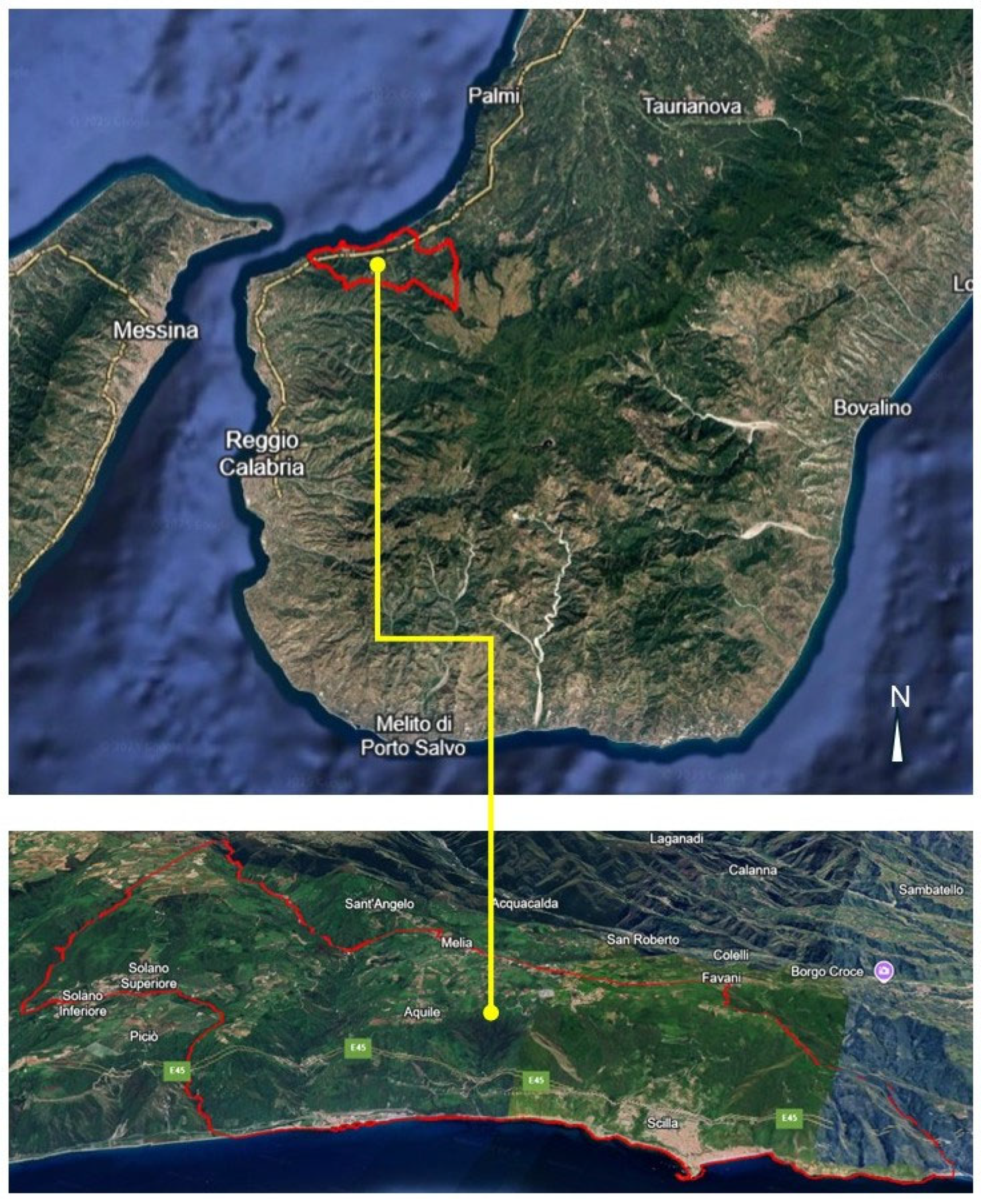
The study area considered in this work is in the municipality of Scilla, in Southern Italy (Figure 1). The area has been affected in time by several landslide events that have caused damage to structures, service infrastructure, roads, and railways downslope from the initiation zones of shallow landslides. The Idrogeo portal provided by ISPRA (Italian Institute for Environmental Protection and Research) [47] allowed the visualization, download, and sharing of datasets, reports, and documents related to hydrogeological risk in the Italian territorial asset, and, in this case, was a precious source of information for acquiring landslide documentation. According to the Idrogeo portal, the main causes associated with these movements may be attributed to weathered material, poor maintenance of drainage systems, tectonic uplift, as well as short and intense rainfall events.
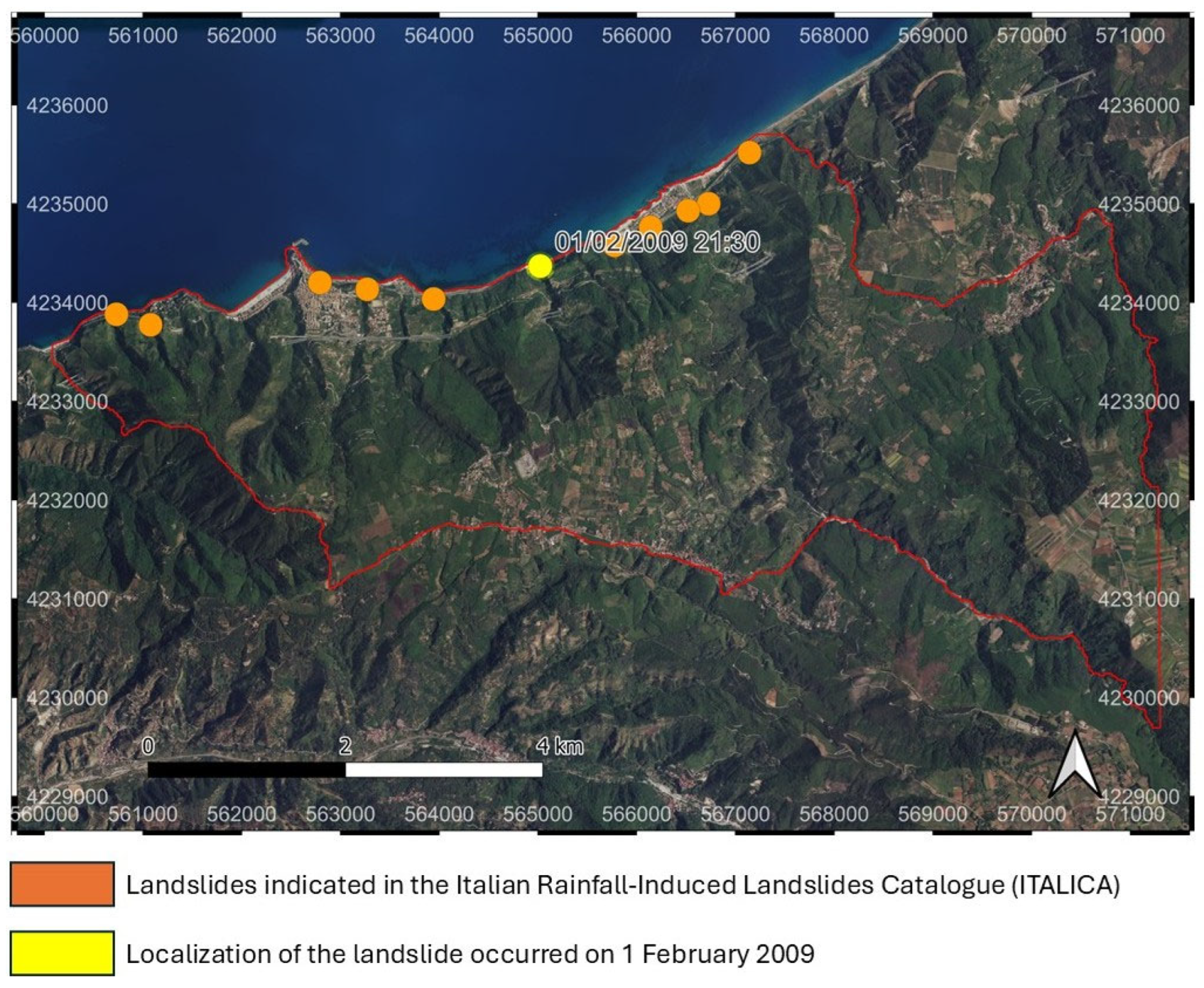
This analysis was integrated with the localization of landslides that occurred in the last decades, including 11 landslide events registered from 2001, with the consultation of the Italian Landslide Inventory (IFFI) [48] and the Italian Rainfall-Induced Landslides Catalogue (ITALICA) [49], testing the susceptibility model with the landslide event that occurred on 1 February 2009 (Figure 2). This research highlighted that the area has been particularly prone to similar phenomena and is therefore considered of special concern from a hazard perspective.
Regarding the geological context of the site, the bedrock consists of Paleozoic acidic metamorphic rocks (paragneiss and orthogneiss), unconformably overlain by Plio–Pleistocene sediments. Outcrops show gneiss with varying degrees of weathering, pervasive foliation, and discontinuity systems (joints and fractures), whose orientation and continuity—locally variable—control preferential weakness planes.
The slope has an average inclination of about 35°, locally reaching up to 60°. It features terracing, gullies, and deeply incised channels, as well as anthropogenic factors that increase susceptibility to landslide initiation. The landslides affecting the area share similar characteristics, namely shallow translational slides in weathered materials that subsequently evolved into rapid mud and debris flows. Naturally, the individual events differed in the number and position of the source areas, the initial mobilized volume, the thickness of the soil cover in the initiation zones, and the rainfall conditions associated with each event.

3. Materials and Methods

The developed platform integrates a susceptibility calculation model based on an AHP inside a framework that dynamically stores the geospatial dataset in the relational database, elaborates the susceptibility map, and finally visualizes the results on the web map.

3.1. The Susceptibility Calculation Model (AHP+Random Forest)

As previously anticipated, the susceptibility to shallow landslides in the study area was evaluated using the AHP, a multi-criteria decision-making method widely applied in landslide susceptibility mapping based on geospatial information [29,30,31]. The AHP framework allows the derivation of quantitative weights from expert-based pairwise comparisons of the conditioning factors.
For n factors, a positive reciprocal comparison matrix A = [a_ij] is constructed, where each entry expresses the relative importance of factor i with respect to factor j. The matrix values follow Saaty’s fundamental scale [50], where 1 indicates equal importance, 3 moderate importance, 5 strong importance, 7 very strong importance, and 9 extreme importance. Intermediate values represent intermediate judgments. The reciprocity conditions are:
a i j = 1 a j i i , j
The weights of the factors are obtained through the eigenvector method by solving:
A w = λ m a x w
where λmax is the principal eigenvalue and w is the corresponding normalized eigenvector. The normalized weights are:
w i = w i j = 1 n w j
To assess the coherence of the pairwise judgments, the Consistency Index (CI) and the Consistency Ratio (CR) are computed as:
C I = λ m a x n n 1
C R = C I R I
where RI is the Random Index for matrices of size n. A matrix is considered consistent when CR < 0.10. The final susceptibility index is obtained through a weighted linear combination of the standardized conditioning factors:
S x = i = 1 n w i c i x
where S(x) is the susceptibility for the spatial unit x, wi is the weight of factor i, and ci(x) is the normalized factor value.
In this study, seven conditioning factors commonly associated with rainfall-induced shallow landslides were selected, considering recent AHP models developed in similar cases of study [51,52,53]: rainfall, slope, lithology, land use, aspect, river distance, and road distance. The pixel size of 10 × 10 m was chosen as the dimension of reference in a UTM WGS 84 map zone 33 (EPSG:32633) reference system. The pairwise comparison AHP matrix adopted and the relative AHP weights adopted in this case study are reported in Table 1 and Table 2.
The consistency measures obtained are CI = 0.109 and CR = 0.082. Both values are below the threshold of 0.10, indicating an acceptable level of consistency in the expert judgments and supporting the reliability of the resulting factor weights.
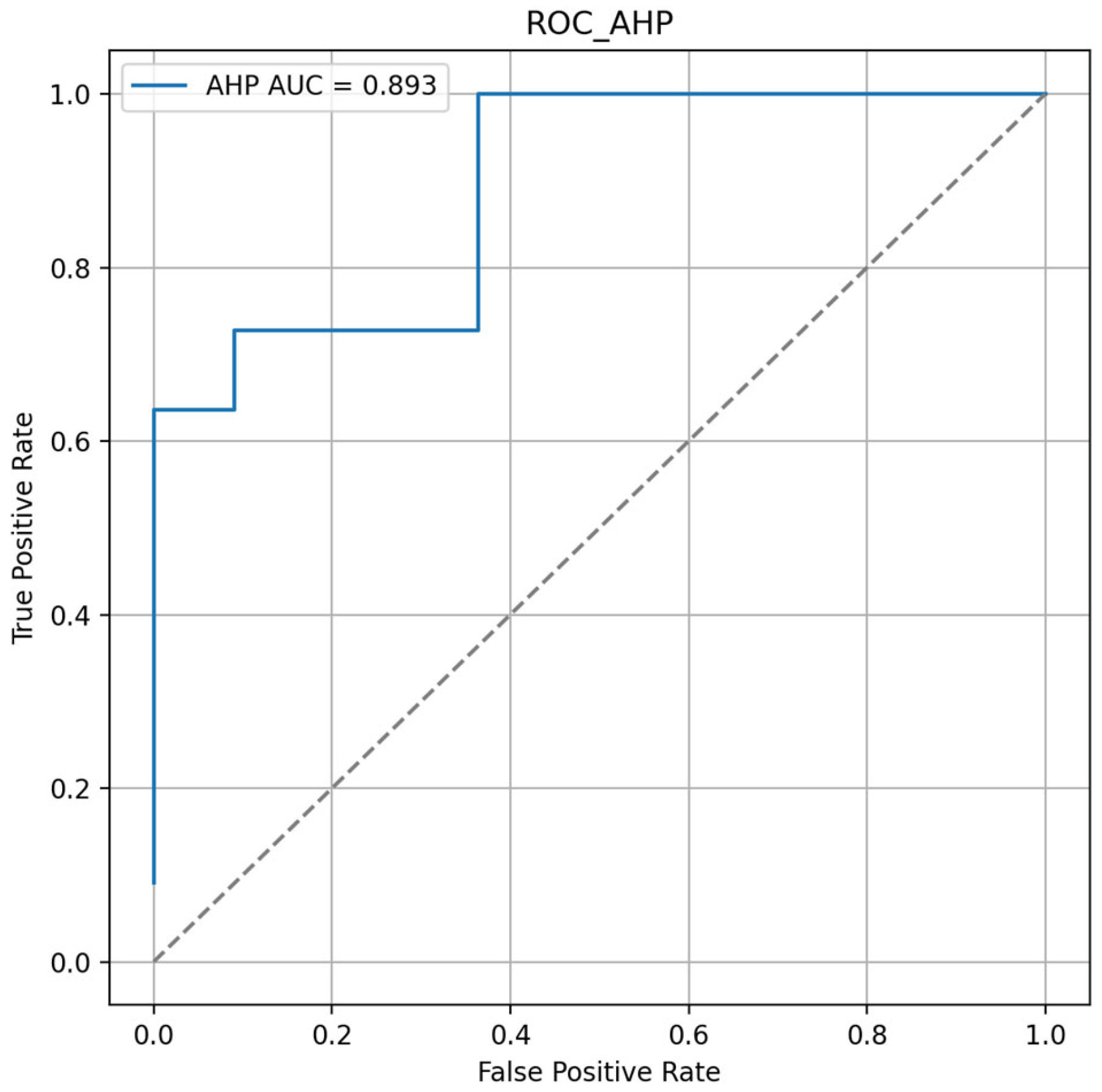
The susceptibility map obtained was analyzed with a Receiver Operating Characteristic (ROC) analysis (as will be shown in the Results paragraph), creating a curve that shows the trade-offs in classification accuracy (by plotting true positive rate against false positive rates), with the Area Under the Curve (AUC) that indicates the overall performance. The ROC analysis used a set of positive landslide points (the 11 landslide events registered from 2001) and a set of negative ones (randomly obtained inside the area).
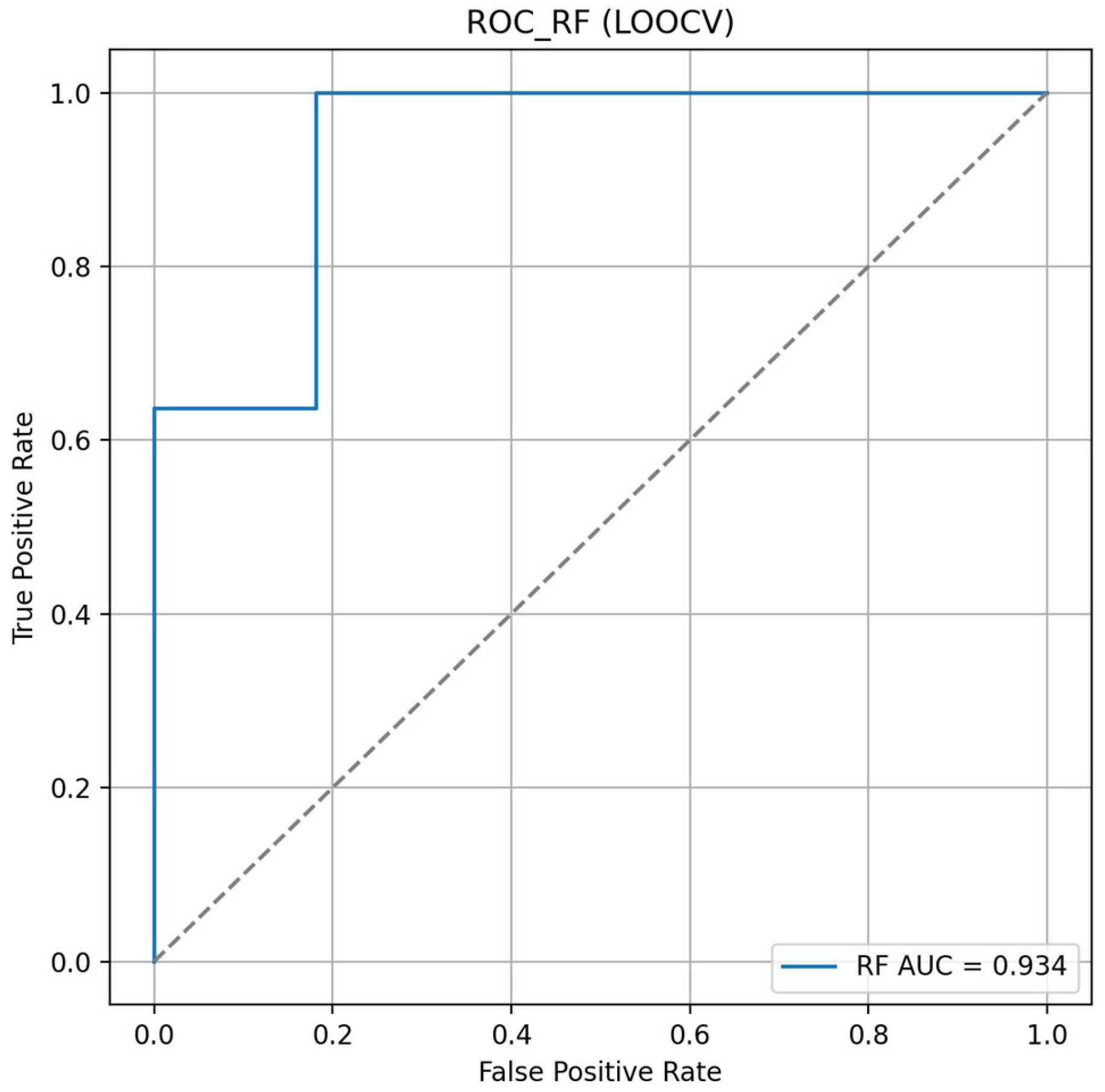
Due to the limited number of observed landslide events, a Random Forest model was implemented in an exploratory framework using leave-one-out cross-validation. The prediction based on the Random Forest model was obtained by training the model on the basis of the seven conditions, plus the AHP susceptibility map of the positive and negative landslide points. The Random Forest model, described in Table 3, was implemented using 300 decision trees (n_estimators = 300) to ensure stable and robust ensemble predictions. Tree complexity was intentionally constrained by setting a maximum depth of 2 (max_depth = 2) to reduce the risk of overfitting. A minimum of three samples per terminal node was imposed (min_samples_leaf = 3) to avoid too specific splits (avoiding tree learning from single points) and to improve model generalization. Class imbalance between landslide and non-landslide samples was addressed using automatic weighting (class_weight = “balanced”), which adjusts the contribution of each class according to its frequency. Finally, a fixed random seed was set to ensure full reproducibility of the results.

3.2. The Input Dataset

The susceptibility calculation model considers seven conditions that participate in the extraction of the susceptibility index: rainfall, slope, lithology, land use, aspect, distance to rivers, and distance to roads. Each condition represents an input of the susceptibility calculation model. Input can be static or dynamic, depending on the nature of geospatial information. Static geospatial information can be directly stored in the relational database; instead, dynamic geospatial information should be acquired in real time and dynamically stored into the database employing a web framework (like Flask) inside a Python platform, able to load client data from the sensor network, and then validate, transform, and store it into the database [45].
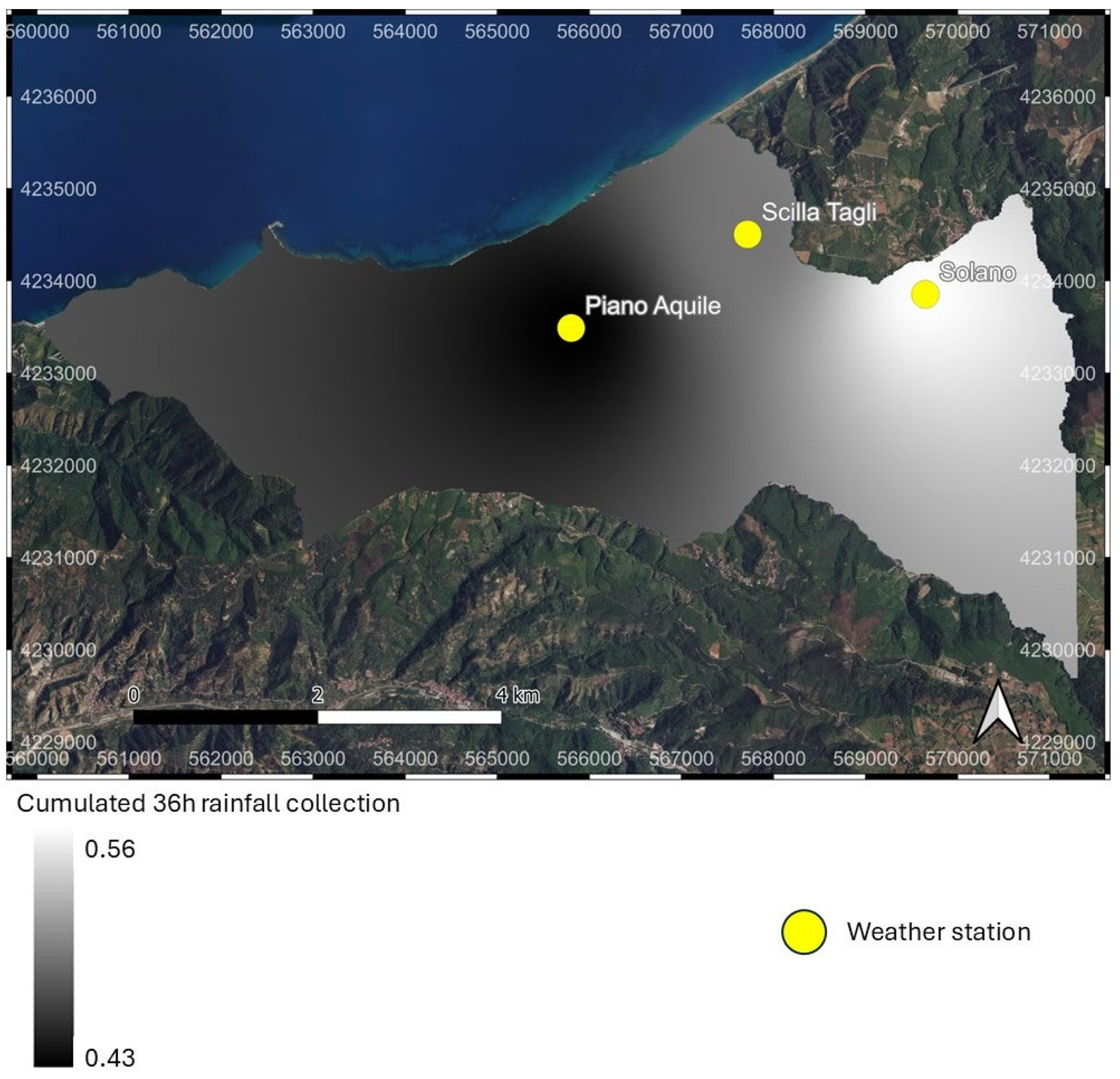
In this specific case, the only dynamic component of the input dataset is represented by the rainfall information, which employs the cumulative precipitation data obtained through the interpolation of the nearest weather stations, considering the last 2 days of water collection. Specialists suggested this interval to provide an exhaustive reliability of rainfall input information. In order to validate the framework, we used historical precipitation data acquired in correspondence with a landslide event recorded on 1 February 2009, from the ITALICA stored information [50], considering the data collected from the weather stations of Solano, Piano Aquile, and Scilla Tagli. For each weather station, a corresponding table in the Postgres open-source database was built, geospatially referred to (using the PostGIS 3.3 extension). In this way, the precipitation data acquisitions of the interested time interval were stored in the Postgres database. The final rainfall rasterization was obtained through a dynamic process that adopted a Python script working in the Anaconda open-source platform [33]. This script was extracted from Postgres and contained the last 2 days of water collection before the landslide event (Table 4), generated an interpolated normalized raster map (Figure 3), and stored the result in the Postgres database. The rainfall surface was generated using an Inverse Distance Weighting (IDW) interpolation method implemented in Python. The interpolated precipitation values were normalized using a fixed physical reference, assuming 0 mm as the absence of precipitation and 100 mm as a representative maximum rainfall event. This approach allows consistent comparison across different rainfall events and avoids dataset-dependent rescaling.
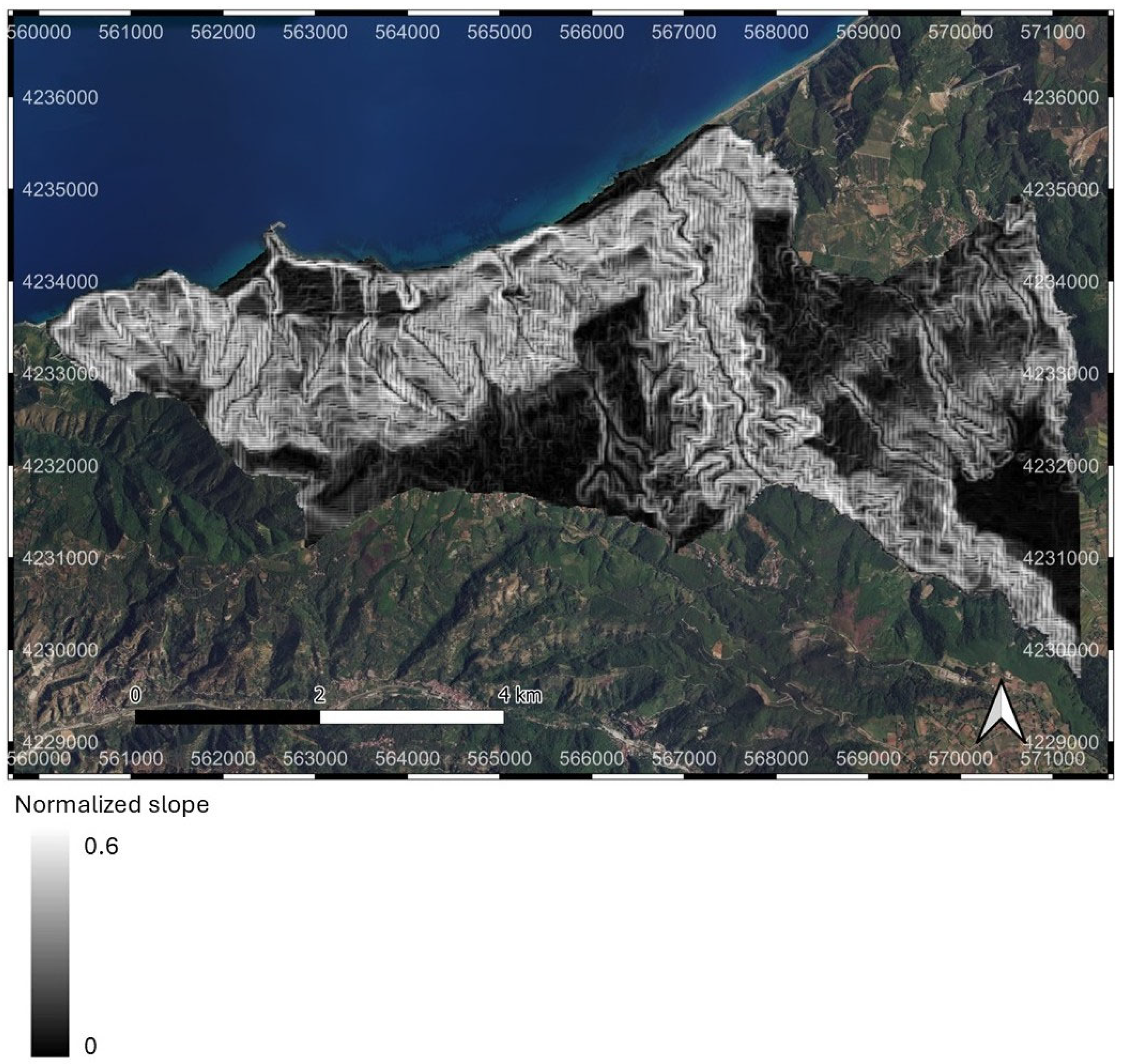
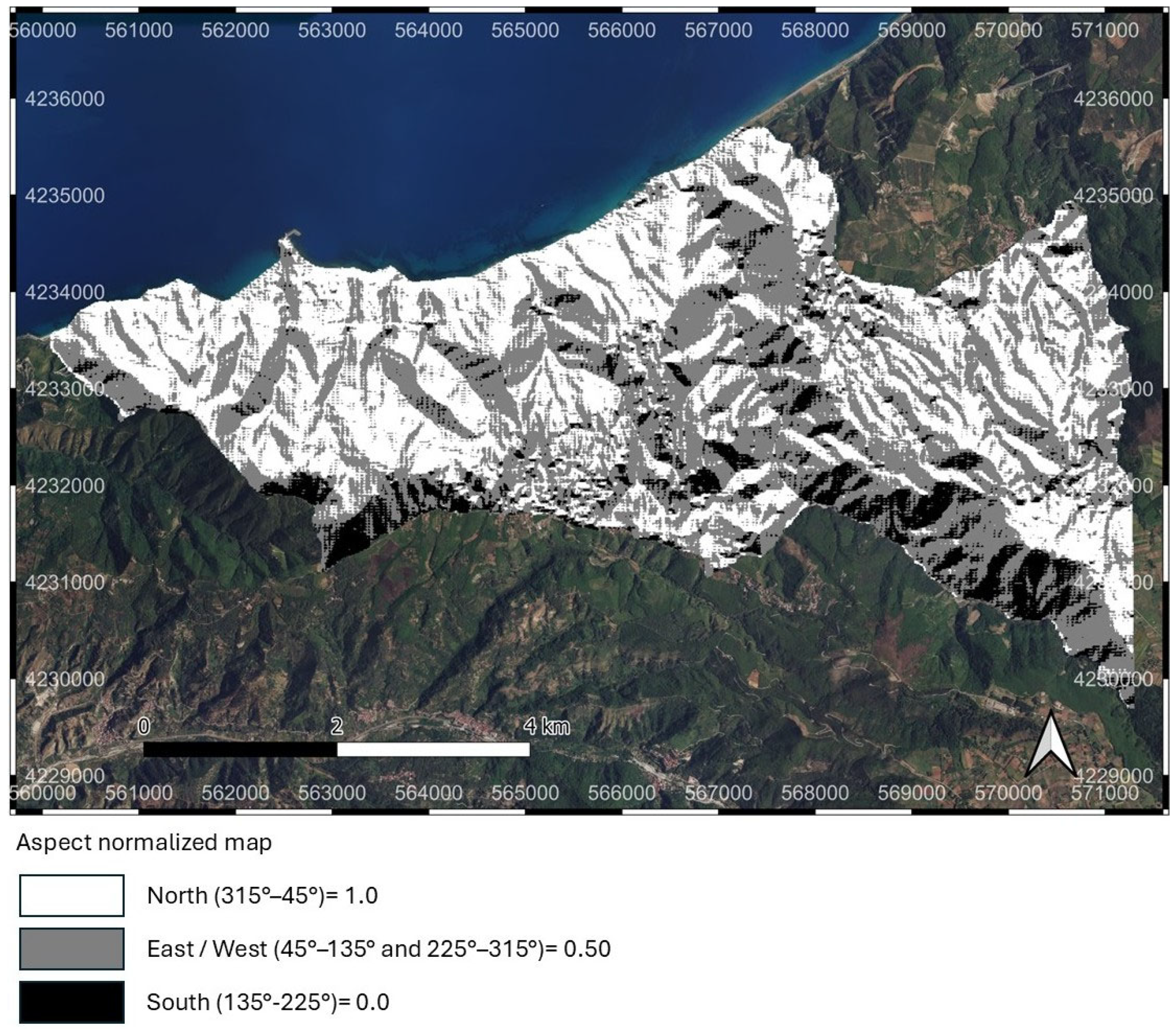
The slope and the aspect were obtained from a Digital Elevation Model (DEM) with 10 m of resolution freely available on the Copernicus website, on the basis of the integration of different datasets provided by MapZen [54]. The slope factor was normalized using a fixed physical range between 0° and 90°, corresponding to values between 0 and 1, in order to ensure comparability with other criteria within the AHP framework and independence from local terrain variability. Both of these raster maps were obtained by processing the DEM map in the QGIS 3.6 open-source software. The slope results were normalized (between 0 and 1 values) as visualized in Figure 4, while the aspect (Figure 5) was classified, attributing a susceptibility attitude value to each angular interval based on the degree of sun exposure and the resulting water retention capacity. Less sunny, typically wetter exposures were considered more susceptible to the triggering of shallow landslides. On the basis of this principle, the following values were adopted:
  • North (315–345°): 1.0;
  • East/West (45–135° and 225–315°): 0.50;
  • South (135–225°): 0.0.
The aspect raster was then reclassified according to these values and subsequently normalized.
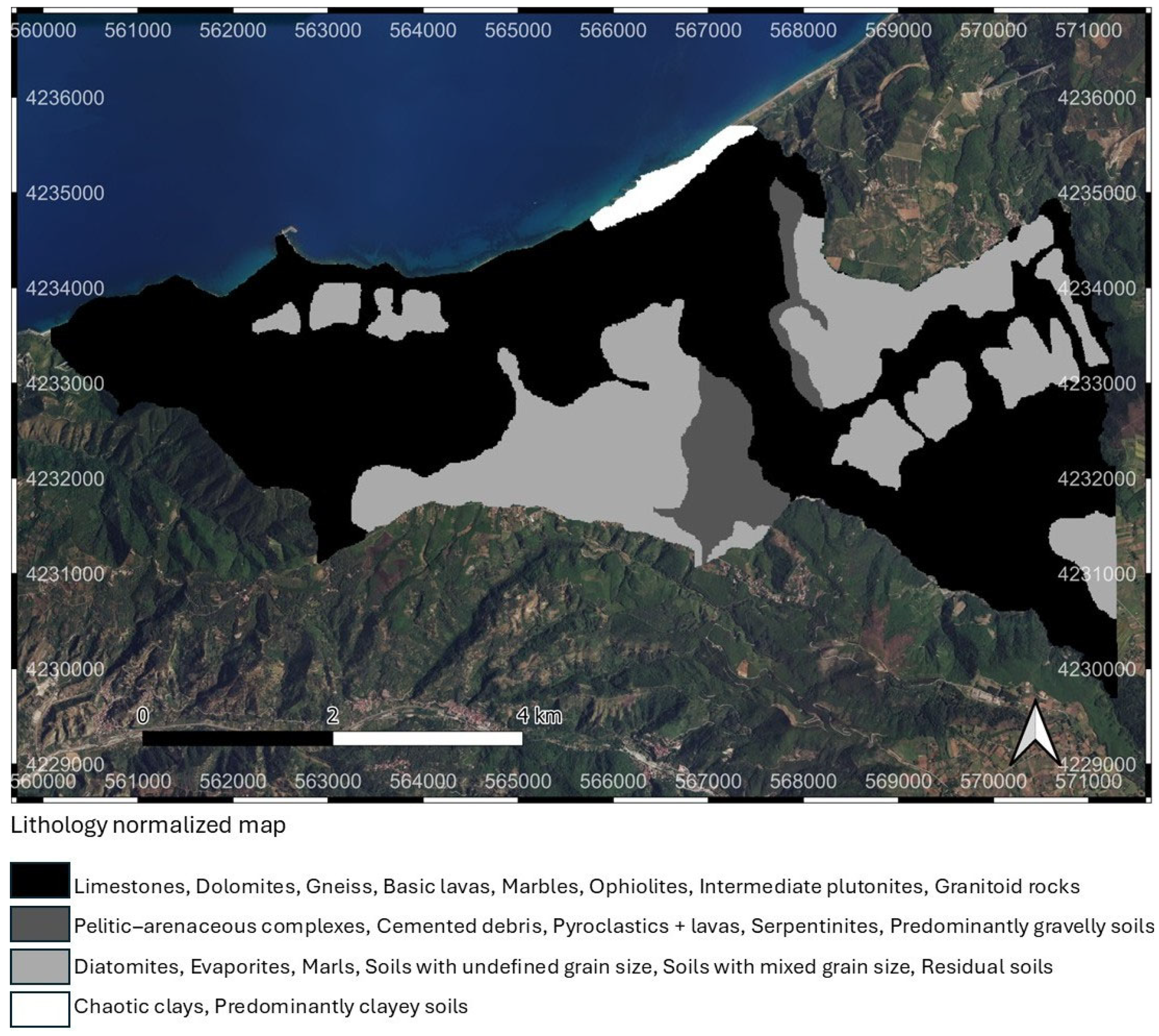
The lithology map was obtained with a specific request to the Geoportal of the Calabria Region. The assignment of susceptibility values to lithological classes follows common practice in landslide susceptibility studies, where mechanical resistance, weathering degree, and soil composition are considered key conditioning factors [26,29,30]. In particular, it was attributed a value between 0 and 1 of susceptibility attitude of the terrain to the pixels of the raster on the basis of the values present inside the attribute Lito_TY of the vectorial reference source (Table 5). The raster file was then clipped to the Region of Interest (ROI), normalized, and aligned (Figure 6).
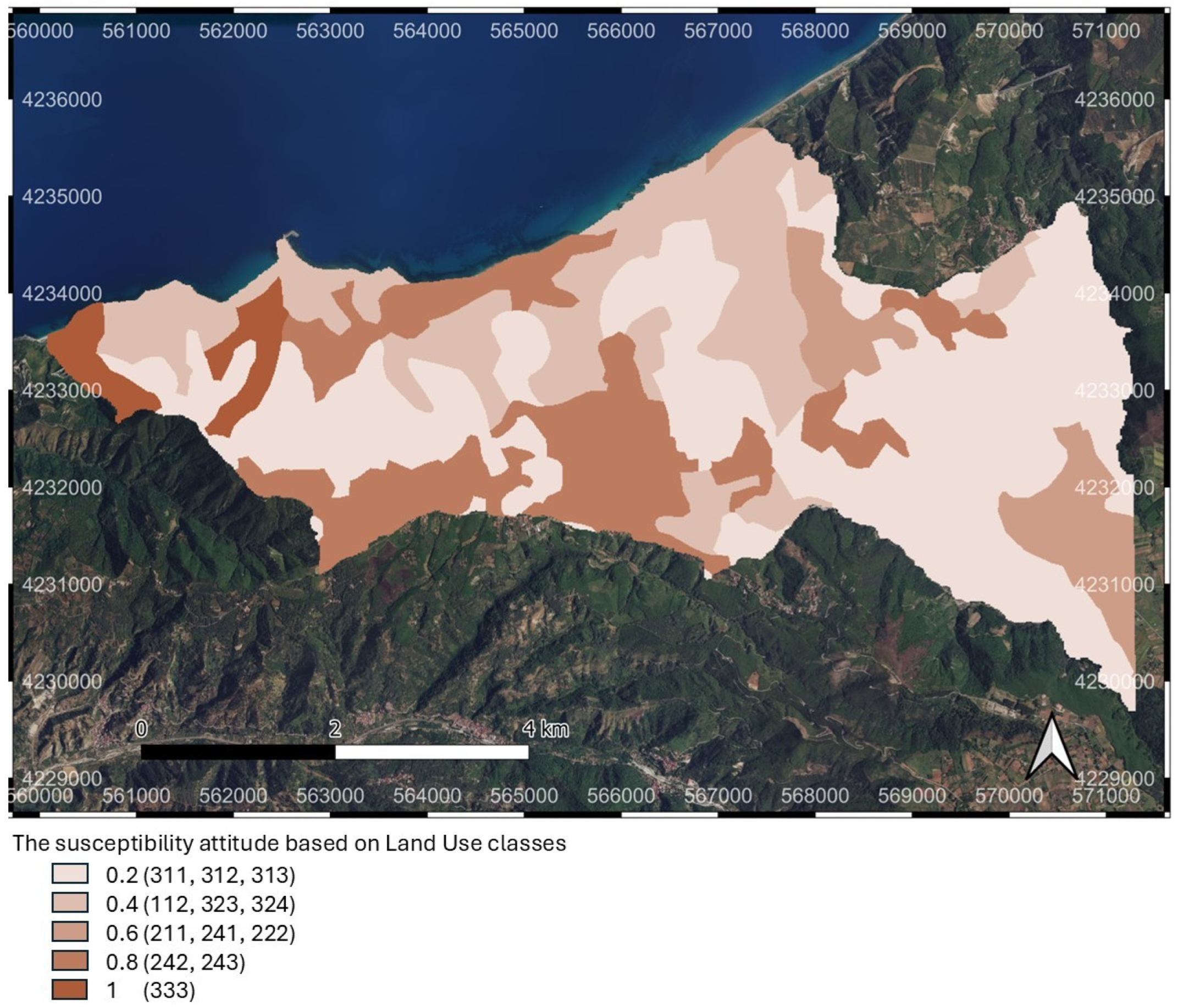
The land use map was generated on the basis of the Corine (Coordination of Information on the Environment) land use map of 2018 provided by the European Environment Agency’s Copernicus Land Monitoring Service [55]. Corine land cover classes were reclassified into five landslide susceptibility levels based on their expected influence on slope stability and subsequently rasterized at 10 m resolution to ensure consistency with the other conditioning factors.
The original legend was simplified, dividing the territorial assets into buildings, land, and vegetation (Figure 7), and, also in this case, a susceptibility attitude index with a range between 0 and 1 was attributed to each Corine Class (Table 6). The final raster was then normalized and aligned. Land use classes were weighted according to their expected influence on slope stability, as commonly adopted in susceptibility mapping studies, where vegetation cover, urbanization, and soil exposure significantly affect infiltration and erosion processes [26,31].
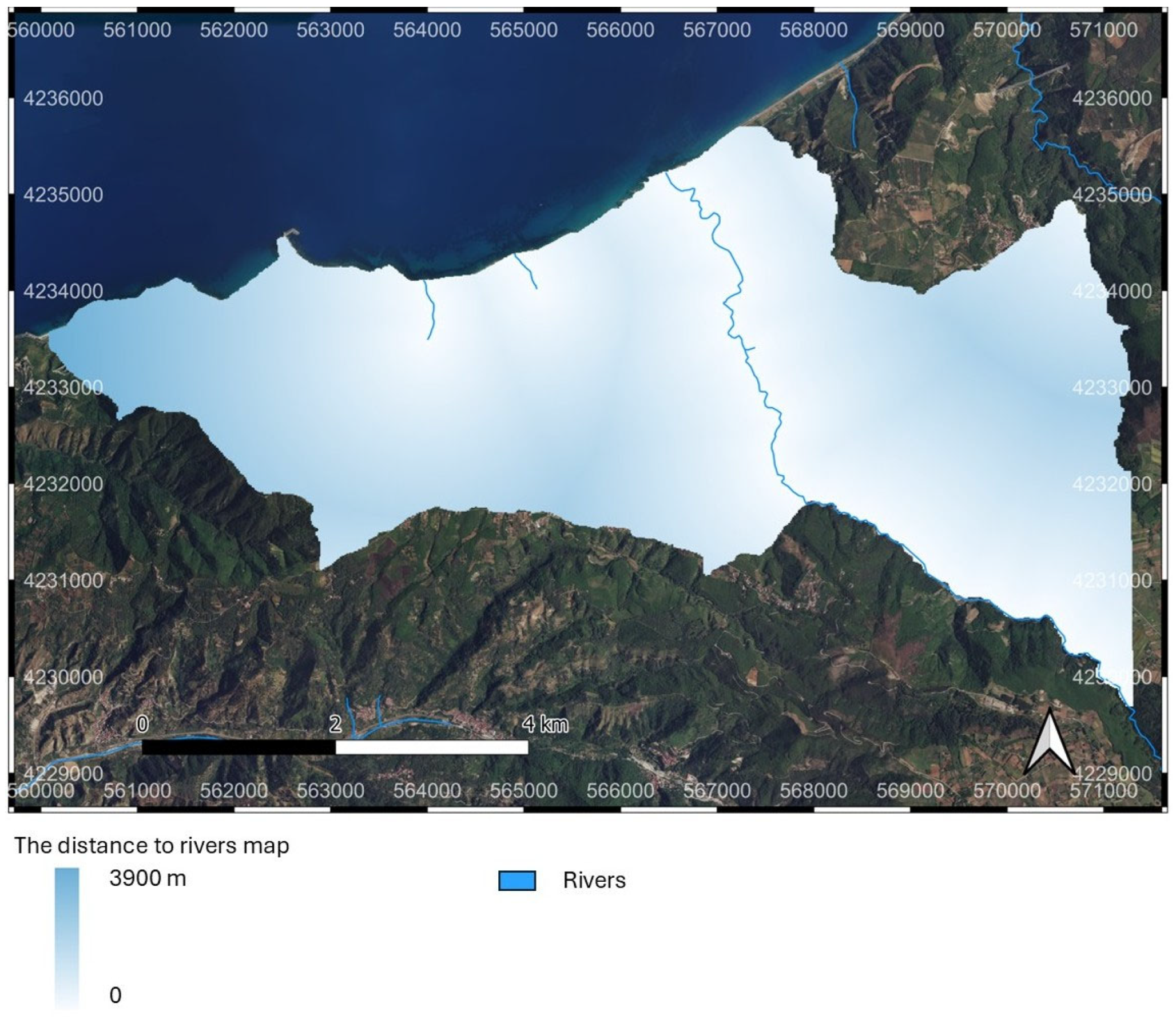
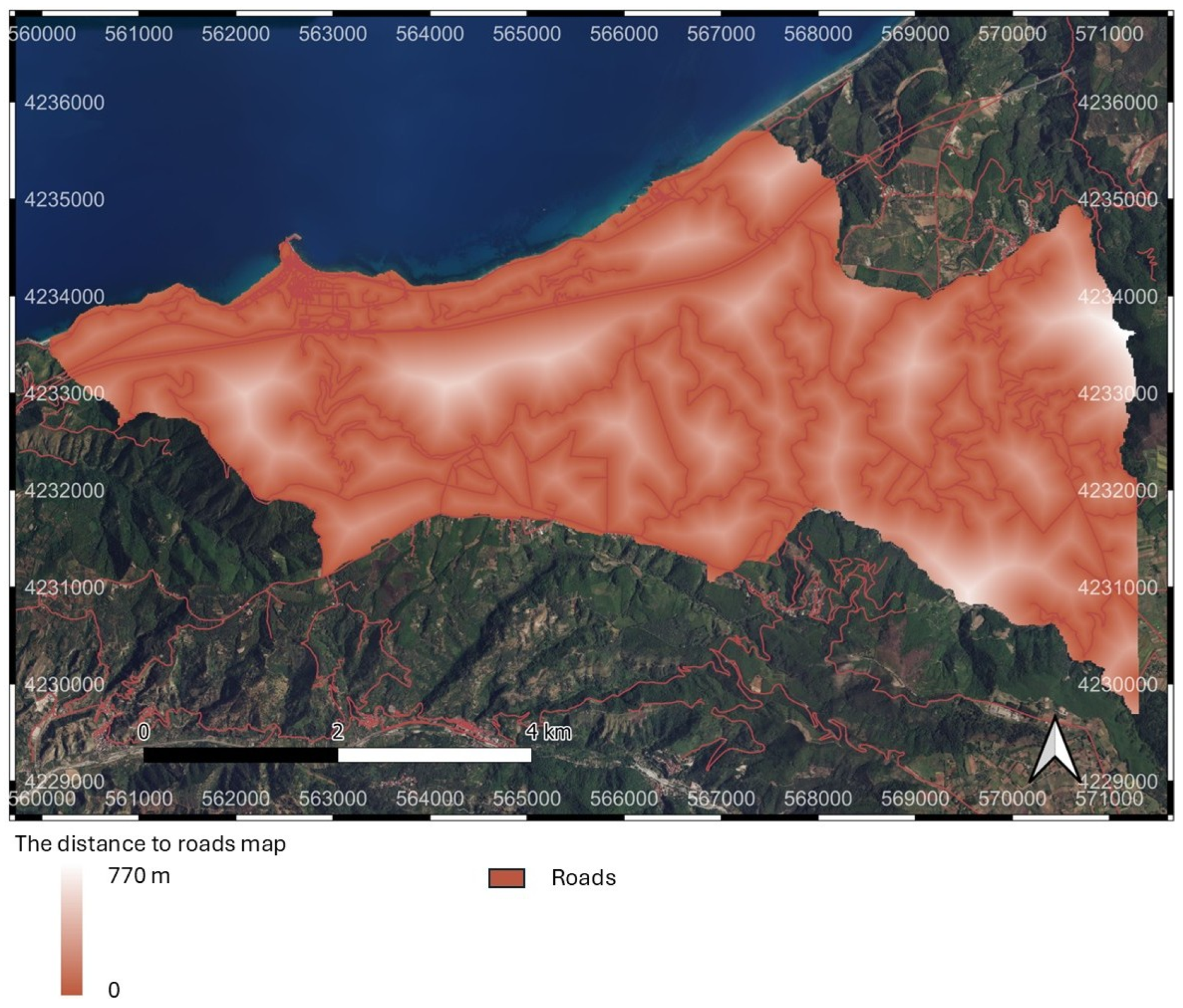
The last two maps considered the distance to rivers (Figure 8) and the distance to roads (Figure 9) on the basis of the road map and the rivers map provided by OpenStreetMap using the quick OSM plugin in QGIS. The distance map was obtained using the GDAL proximity algorithm in QGIS (using the same raster grid of 10 m × 10 m as the other maps). From this map, a normalized interval map was extracted as follows:
  • 1 = nearer 100 m;
  • 0.8 = between 100 m and 200 m;
  • 0.6 = between 200 m and 400 m;
  • 0.4 = between 400 m and 800 m;
  • 0.2 = far than 800 m.

3.3. The WebGIS Framework

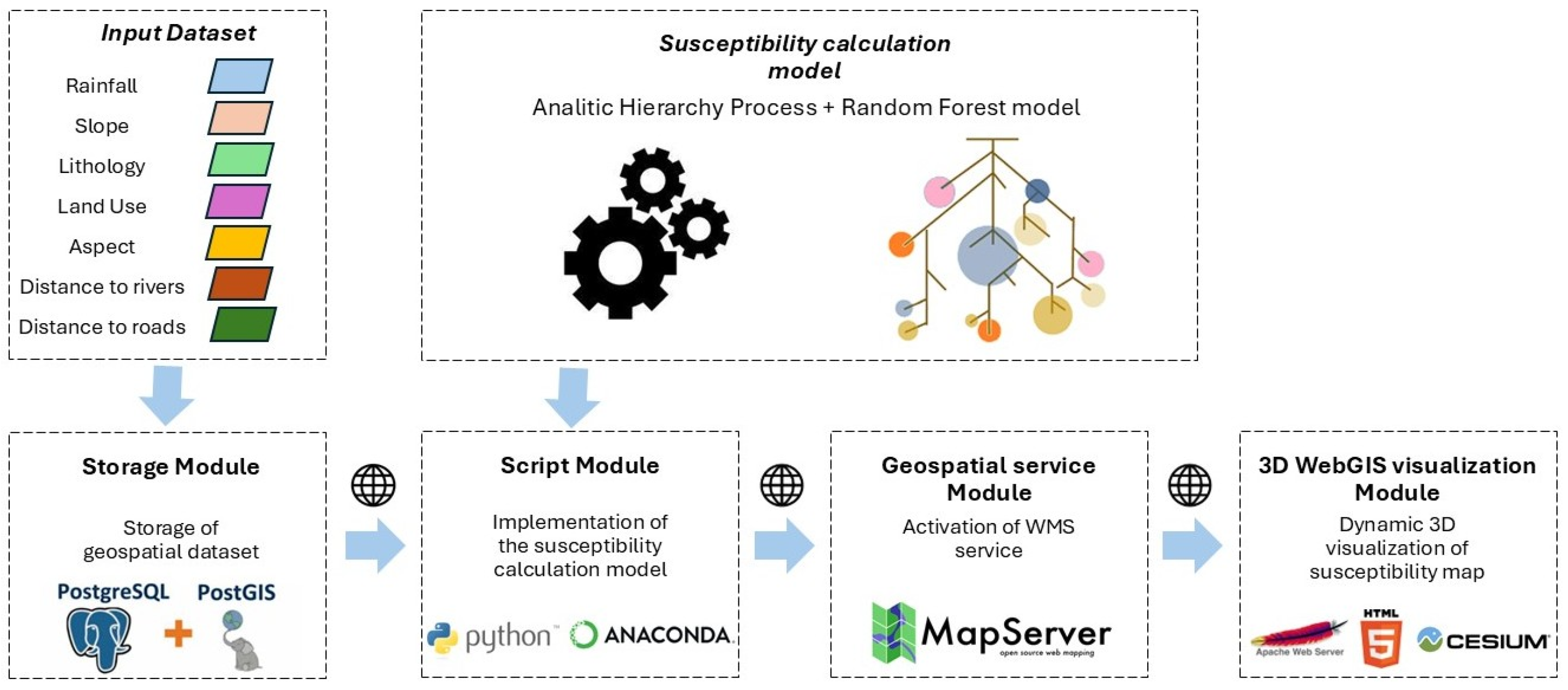
All the input geospatial raster maps were stored in a Postgres database with PostGIS extension, adopting the EPSG:32633 UTM WGS84 projection. The entire WebGIS framework connected different open-source modules able to provide dynamic geospatial information on the web (Figure 8). In detail, the storage module was a Postgres database with a PostGIS extension, able to store a geospatial raster dataset. The script module was the Anaconda platform, able to host Python environments with the necessary libraries to make dynamic operations with rasters, such as gdal_translate and raster2pgsql. The geospatial service module was Mapserver, necessary to activate WMS (Web Map Services) from Postgres datasets. The 3D WebGIS visualization module was an HTML environment integrated with Cesium.js JavaScript libraries inside an Apache web server. The susceptibility calculation model was implemented in a Python script running in the Anaconda platform in order to automatically generate the susceptibility map and store it in the Postgres database. The dynamic WebGIS visualization was obtained by connecting the susceptibility map, stored in the Postgres database, with the Mapserver open-source platform. In this way, Mapserver allowed the activation of the Web Map Service (WMS), necessary to share the geospatial information regarding the susceptibility map. Finally, the 3D WebGIS visualizer was connected with Mapserver in order to visualize the WMS contents in the Cesium globe platform based on WebGL technologies. In this way, the configuration of the WMS connection with the raster maps allowed the dynamic analysis of the geospatial dataset stored in the Postgres database.
Thanks to its architecture (Figure 10), the WebGIS component does not act only as a visualizer but also acts as an interface between the physical environment and its digital counterpart. The continuous update of geospatial layers and susceptibility outputs allows the system to function as an evolving digital representation of the terrain, consistently aligned with observed environmental conditions and suitable for the development of any territorial Digital Twin-ready platform.

4. Discussion and Results

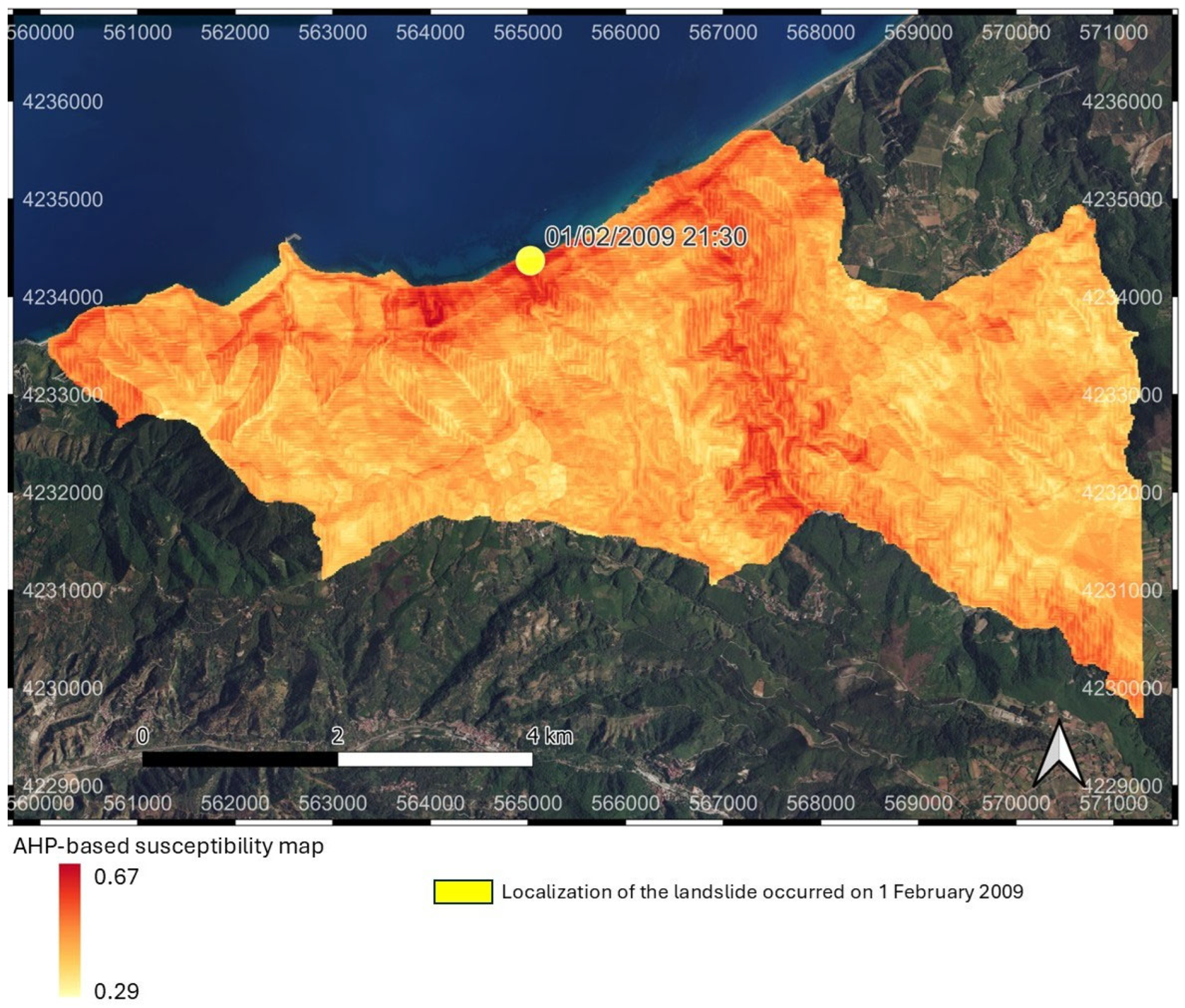
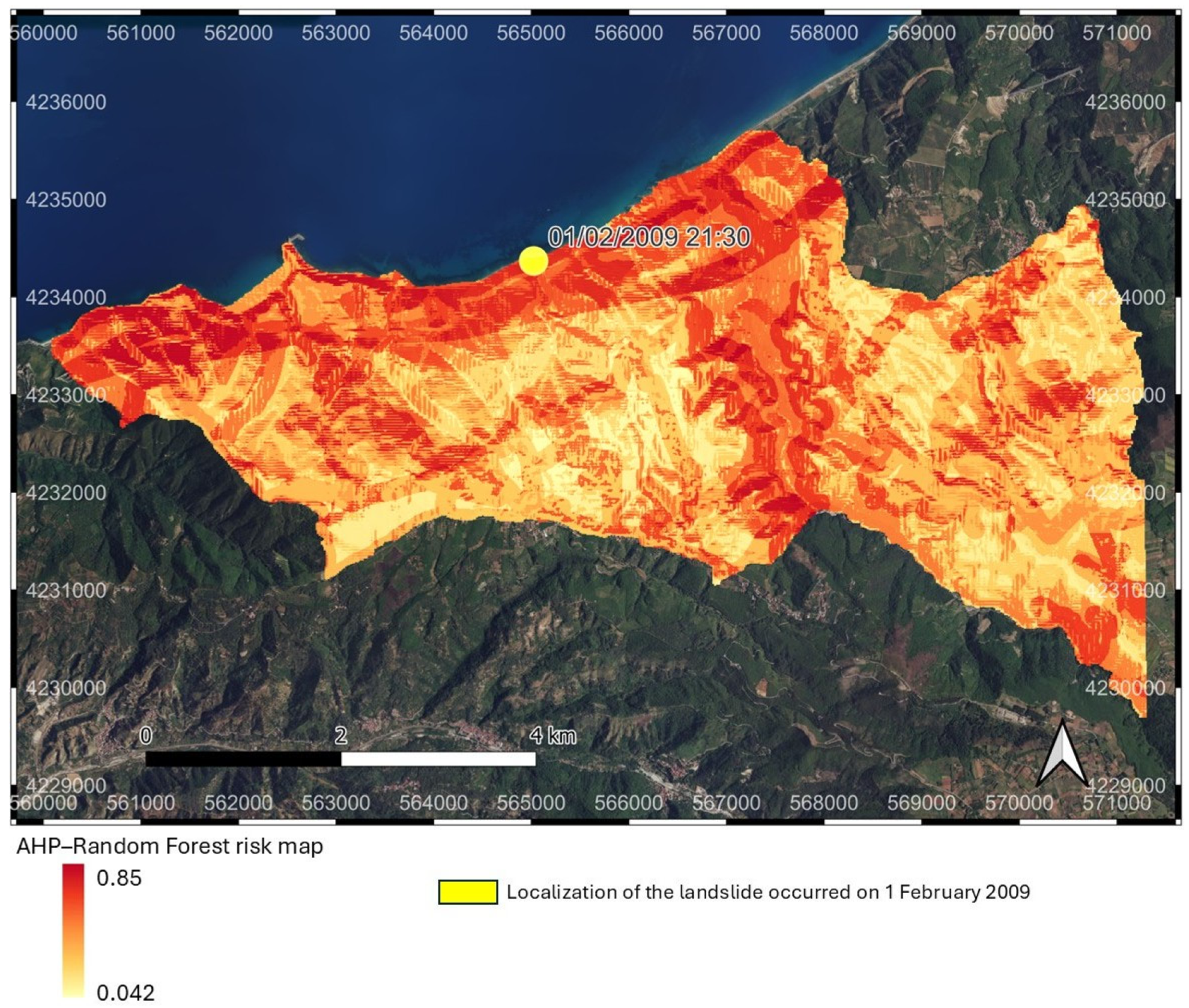
The present study focuses on computing landslide susceptibility for the event that occurred on 1 February 2009 and is reported in the ITALICA catalog. Following the methodology described above and using rainfall input for the two-day cumulative precipitation preceding the landslide, we obtained a susceptibility map that displays a critical area around the location of the 2009 event recorded in the catalog (Figure 11). Furthermore, the integrated AHP–Random Forest approach allowed us to obtain a predictive map regarding the landslide risk (Figure 12). The susceptibility results are presented as continuous indices to preserve the spatial variability of the model outputs and avoid introducing subjective classification thresholds.
The analysis of the AHP was analyzed with the ROC curve, obtaining AUC = 0.893 as seen in Figure 13. This result proves that the susceptibility mapping reflects the spatial distribution of the landslide historical dataset in a nice way.
The AHP-based susceptibility model showed very good predictive capability (AUC = 0.893), while the hybrid AHP–Random Forest approach further improved the results (AUC = 0.934), confirming the robustness of the expert-based weighting scheme and the effectiveness of machine learning refinement (Figure 14).
The susceptibility calculation model, implemented in Python, allowed users to dynamically refresh and store the susceptibility map in a Postgres database.
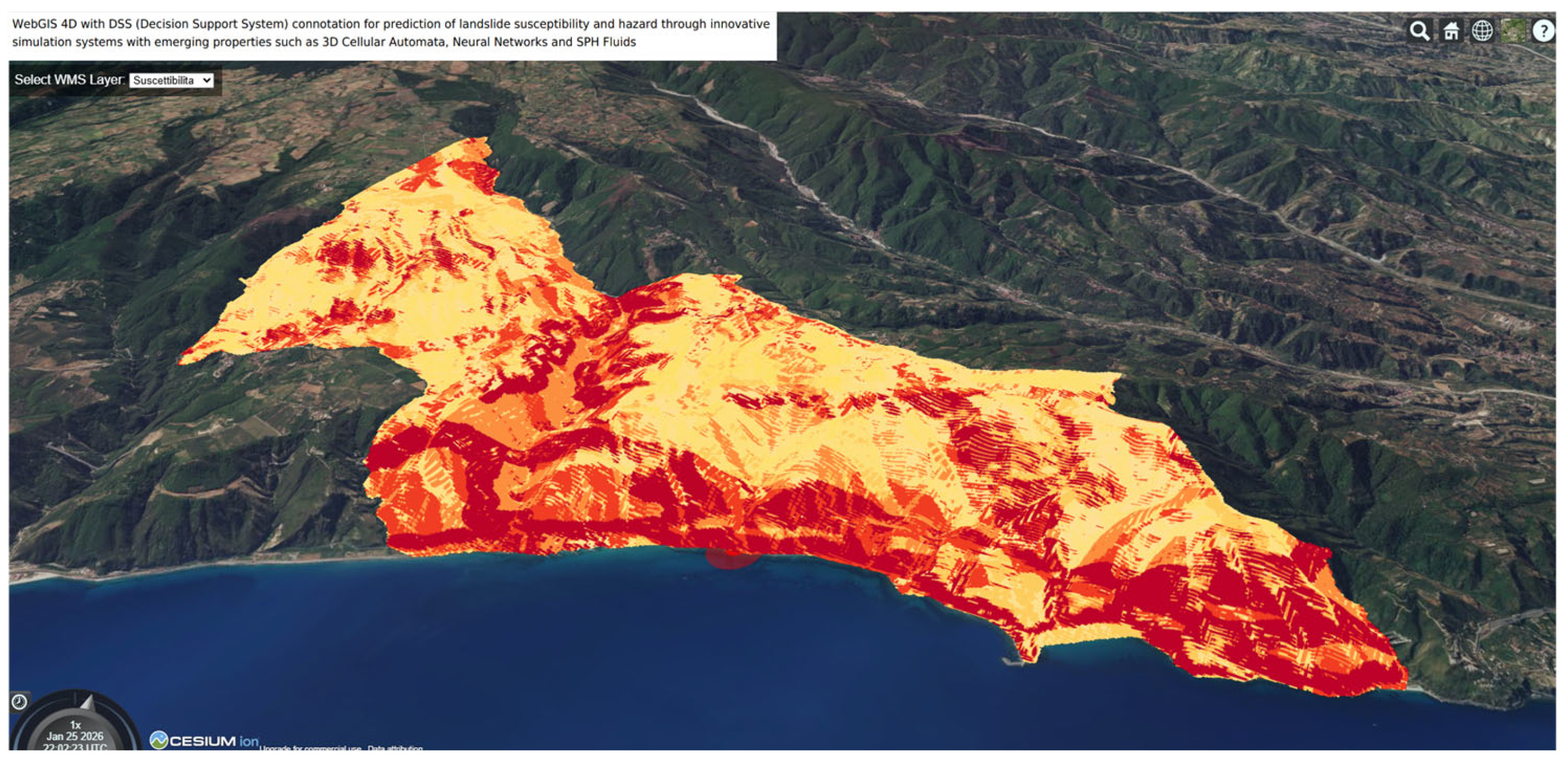
Since Mapserver was real-time connected to Postgres, the framework automatically generated the susceptibility map in the 3D WebGIS visualization module (Figure 15) using Cesium.js JavaScript libraries. In this way, dynamic and static geospatial data can provide real-time 3D WebGIS visualization, employing the functionalities of Mapserver, Postgres, and the Anaconda Python platform.
The proposed methodology, therefore, allows the assessment of susceptibility following intense rainfall episodes. It is worth noting that, according to the ISPRA Idrogeo portal, the area affected by the aforementioned landslides is not classified as a landslide-risk zone in the PAI (Hydrogeological Setting Plan) but only as a flood-risk area; conversely, the PAI mapping highlights nearby zones characterized by diffuse and complex landslide phenomena. In light of this, the adopted methodology demonstrates promising predictive capability in identifying areas with high propensity to landslide initiation and can serve as a valuable decision-support tool for civil protection authorities, both for identifying at-risk areas and for planning pre-event and post-event mitigation actions.
The platform was tested on a historical landslide dataset but is designed to load real-time data provided by a weather station through the employment of the Anaconda open-source platform and Postgres database. In fact, the Python scripts can stay active, allowing the dynamic raster generation of the input and output datasets. This framework represents a further step of research that integrated previous preliminary results [38,42] and can be considered a terrain susceptibility analysis model based on open data input information, which can be integrated, once the critical areas are found, with landslide mobility simulation models [44].
The main innovation of the proposed approach lies not in the specific susceptibility model, but in the dynamic integration of heterogeneous data sources within an automated WebGIS environment. The system continuously connects sensor-derived inputs, geospatial databases, and processing scripts, enabling the automatic update of susceptibility scenarios. In this sense, the framework can be interpreted as an early-stage intelligent geospatial infrastructure capable of supporting near-real-time decision-making processes.

4.1. Qualitative Evaluation of the WebGIS Framework

In addition to the validation of the susceptibility models, it is important to discuss the contribution of the proposed WebGIS framework from an operational perspective. While the quantitative evaluation presented in this work focuses on the predictive performance of the AHP and AHP–Random Forest models, the framework itself represents a methodological advancement in terms of geospatial data integration and process automation. Compared to traditional GIS-based workflows, which typically require manual execution of multiple sequential steps (data acquisition, preprocessing, raster generation, and visualization), the proposed architecture enables a partially automated and dynamically connected processing chain. The integration of database storage, Python-based raster processing, geospatial services, and WebGIS visualization allows the system to automatically regenerate susceptibility maps when updated input data becomes available.
From an operational standpoint, the framework offers several advantages. First, it reduces manual intervention in repetitive geospatial processing tasks, increasing efficiency and reproducibility. Second, the modular structure supports the integration of additional datasets, models, and sensor networks without requiring substantial modifications to the overall architecture. Third, the possibility of periodically updating dynamic inputs, such as rainfall data, makes the system suitable for near-real-time scenario generation and decision-support contexts.
Rather than being evaluated through classical performance metrics, the value of the proposed framework lies in its ability to connect heterogeneous components into a unified and scalable environment for dynamic susceptibility mapping. In this sense, the system should be interpreted as an operational prototype that demonstrates the feasibility of automating geospatial risk assessment workflows using open-source technologies.

4.2. Limitations of the Study

Despite the encouraging results obtained, some limitations of the present study must be acknowledged.
First, the susceptibility model was calibrated using a limited number of observed landslide events (11 cases). Although leave-one-out cross-validation was adopted to maximize the use of available information, the small sample size may influence the stability of the performance metrics. In particular, the AUC values obtained should be interpreted with caution, as they may be sensitive to spatial clustering effects and may not fully represent the predictive capability of the model in different geomorphological contexts. For this reason, the results should be considered exploratory and indicative rather than universally generalizable.
Second, the Random Forest model was implemented using, among the predictors, the susceptibility map derived from the AHP approach. This introduces a methodological dependency between the knowledge-driven and data-driven components. Therefore, the improvement observed in the AUC values should be interpreted as a refinement within an integrated modeling framework rather than as a fully independent validation of the AHP model.
Third, the rainfall normalization was performed using a fixed reference range between 0 and 100 mm, representing an operational upper threshold typical of intense precipitation events in Mediterranean environments. While this choice allows consistency and comparability across scenarios, it remains a simplified assumption. Future developments may include sensitivity analyses based on alternative normalization thresholds or physically based rainfall–soil interaction models.
Finally, although the proposed architecture supports dynamic data ingestion and automated processing, the system should be interpreted as an early-stage, Digital Twin–oriented geospatial infrastructure rather than a complete Digital Twin implementation. In its current configuration, the platform focuses on data integration, automated susceptibility mapping, and web-based visualization, while real-time bidirectional synchronization and fully sensor-driven simulations remain part of future developments.
Despite these limitations, the proposed framework demonstrates the feasibility of integrating heterogeneous geospatial data, expert-based models, and machine learning approaches within a dynamic WebGIS environment, providing a solid foundation for future methodological and operational improvements.

5. Conclusions

This scientific contribution represents a solid starting point toward the development of a Digital Twin-oriented framework for the evaluation and dynamic analysis of terrain susceptibility, entirely developed with open-source solutions. The proposed platform does not represent a full Digital Twin implementation, but an early-stage infrastructure supporting dynamic data integration and automated geospatial analysis. The system represents a scalable and open-source foundation for the development of a complete terrain monitoring platform, thanks to future integration of predictive models, bidirectional data flows, and physically based simulations within the same framework, which is a natural and coherent evolution of the proposed approach. The AHP model was used as a knowledge-driven baseline, while a Random Forest classifier was employed to derive a data-driven susceptibility map and assess predictive improvement.
The framework adopts an AHP based on geospatial raster information provided by an open dataset containing different aspects and characteristics that contribute to evaluating the susceptibility attitude. The system was tested by analyzing a historical case study regarding the coast of Calabria (Italy), and the results highlighted the presence of critical susceptibility areas near the location of a landslide event. This model, tested with historical datasets, is compliant for use with real-time data integration, providing a useful low-cost tool for experts and specialists to reduce the impact of landslide events. The integration of the AHP and Random Forest model provided preliminary but consistent results as reported in ROC curves. The structure developed in this work represents a low-cost WebGIS dynamic framework able to host geospatial digital twinning solutions for monitoring territorial assets. In the future, this model, tested in this case study with a simple AHP, can be implemented with more complex geotechnical models, employing the same framework that considers the remote communication between sensor networks, geospatial databases, geospatial servers, Python platforms, and WebGIS visualizers. From an operational perspective, the proposed WebGIS dynamic framework is designed to be scalable and adaptable to different spatial and application contexts. At the local scale (municipality level), the system can support civil protection activities by dynamically identifying critical zones during extreme rainfall events. At the regional scale, the same architecture can integrate multiple sensor networks and geospatial datasets to support territorial planning and risk monitoring over larger areas. The modular structure of the framework also makes it suitable for multi-site implementation, where different municipalities or regions can deploy independent instances connected to local data sources.

Author Contributions

Conceptualization, M.L.G., E.G., C.M., G.M. and V.B.; methodology, M.L.G., E.G., C.M., G.M. and V.B.; software, M.L.G., E.G., C.M., G.M. and V.B.; validation, M.L.G., E.G., C.M., G.M. and V.B.; formal analysis, M.L.G., E.G., C.M., G.M. and V.B.; investigation, M.L.G., E.G., C.M., G.M. and V.B.; resources, M.L.G., E.G., C.M., G.M. and V.B.; data curation, M.L.G., E.G., C.M., G.M. and V.B.; writing—original draft preparation, M.L.G., E.G., C.M., G.M. and V.B.; writing—review and editing, M.L.G., E.G., C.M., G.M. and V.B.; visualization, M.L.G., E.G., C.M., G.M. and V.B.; supervision, M.L.G., E.G., C.M., G.M. and V.B.; project administration, M.L.G., E.G., C.M., G.M. and V.B.; funding acquisition, M.L.G., E.G., C.M., G.M. and V.B. All authors have read and agreed to the published version of the manuscript.

Funding

PRIN_2022PNRR project “WebGIS 4D with DSS (Decision Support System) connotation for prediction of landslide susceptibility and hazard through innovative simulation systems with emerging properties such as 3D Cellular Automata, Neural Networks and SPH Fluids” (CUP C53D23010170001) funded by Italian Ministry of University and Research—MUR (PRIN_2022PNRR_P2022CK8F9).

Data Availability Statement

A demo version of the source codes is available at this link: https://github.com/marcellolg1987/WebGIS-Dynamic-Framework-for-AHP-Random-Forest-Susceptibility-Mapping (accessed on 20 February 2026).

Conflicts of Interest

The authors declare no conflicts of interest.

References

  1. Broome, J. The ethics of climate change. Sci. Am. 2008, 298, 96–102. [Google Scholar] [CrossRef] [PubMed]
  2. Turner, J.; Barrand, N.E.; Bracegirdle, T.J.; Convey, P.; Hodgson, D.A.; Jarvis, M.; Jenkins, A.; Marshall, G.; Meredith, M.P.; Roscoe, H. Antarctic climate change and the environment: An update. Polar Rec. 2014, 50, 237–259. [Google Scholar] [CrossRef]
  3. Patton, A.I.; Rathburn, S.L.; Capps, D.M. Landslide response to climate change in permafrost regions. Geomorphology 2019, 340, 116–128. [Google Scholar] [CrossRef]
  4. Escanilla-Minchel, R.; Alcayaga, H.; Soto-Alvarez, M.; Kinnard, C.; Urrutia, R. Evaluation of the Impact of Climate Change on Runoff Generation in an Andean Glacier Watershed. Water 2020, 12, 3547. [Google Scholar] [CrossRef]
  5. Jeppesen, E.; Brucet, S.; Naselli-Flores, L.; Papastergiadou, E.; Stefanidis, K.; Nõges, T.; Nõges, P.; Attayde, J.L.; Zohary, T.; Coppens, J.; et al. Ecological impacts of global warming and water abstraction on lakes and reservoirs due to change in water level and related changes in salinity. Hydrobiologia 2015, 750, 201–227. [Google Scholar] [CrossRef]
  6. Sapriza-Azuri, G.; Jódar, J.; Navarro, V.; Slooten, L.J.; Carrera, J.; Gupta, H.V. Impacts of rainfall spatial variability on hydrogeological response. Water Resour. Res. 2015, 51, 1300–1314. [Google Scholar] [CrossRef]
  7. Aceto, L.; Pasqua, A.A.; Petrucci, O. Effects of damaging hydrogeological events on people throughout 15 years in a Mediterranean region. Adv. Geosci. 2017, 44, 67–77. [Google Scholar] [CrossRef]
  8. Sawada, Y.; Takasaki, Y. Natural disaster poverty and development: An Introduction. World Dev. 2017, 94, 2–15. [Google Scholar] [CrossRef]
  9. Di Baldassarre, G.; Nohrstedt, D.; Mård, J.; Burchardt, S.; Albin, C.; Bondesson, S.; Breinl, K.; Deegan, F.M.; Fuentes, D.; Lopez, M.G.; et al. An Integrative Research Framework to Unravel the Interplay of Natural Hazards and Vulnerabilities. Earth’s Future 2018, 6, 305–310. [Google Scholar]
  10. Mård, J.; Di Baldassarre, G.; Mazzoleni, M. Nighttime light data reveal how flood protection shapes human proximity to rivers. Sci. Adv. 2018, 4, eaar5779. [Google Scholar] [CrossRef]
  11. Jongman, B.; Winsemius, H.; Aerts, J.C.J.H.; de Perez, E.C.; van Aalst, M.K.; Kron, W.; Ward, P.J. Declining vulnerability to river floods and the global benefits of adaptation. Proc. Natl. Acad. Sci. USA 2015, 112, E2271–E2280. [Google Scholar] [CrossRef] [PubMed]
  12. Tucci, G.; Fiorini, L.; Meucci, A.; Conti, A. Integrated Geomatic Solutions for the Digital Twin of Florence: Protecting the Arno River and Its Historic Urban Landscape from Climate Risks. Int. Arch. Photogramm. Remote Sens. Spat. Inf. Sci. 2025, XLVIII-G-2025, 1463–1470. [Google Scholar] [CrossRef]
  13. Kreibich, H.; Di Baldassarre, G.; Vorogushyn, S.; Aerts, J.C.J.H.; Apel, H.; Aronica, G.T.; Arnbjerg-Nielsen, K.; Bouwer, L.M.; Bubeck, P.; Caloiero, T.; et al. Adaptation to flood risk: Results of international paired flood event studies. Earth’s Future 2017, 5, 953–965. [Google Scholar] [CrossRef]
  14. Cárdenas-León, I.; Morales-Ortega, R.; Koeva, M.; Atún, F.; Pfeffer, K. Digital Twin-based Framework for Heat Stress Calculation. ISPRS Ann. Photogramm. Remote Sens. Spat. Inf. Sci. 2024, X-4-2024, 67–74. [Google Scholar] [CrossRef]
  15. Naderi, H.; Shojaei, A. digital twinning of civil infrastructures: Current state of model architectures, interoperability solutions, and future prospects. Autom. Constr. 2023, 149, 104785. [Google Scholar] [CrossRef]
  16. La Guardia, M. 3D Urban Digital Twinning on the Web with Low-Cost Technology: 3D Geospatial Data and IoT Integration for Wellness Monitoring. Big Data Cogn. Comput. 2025, 9, 107. [Google Scholar] [CrossRef]
  17. Gaspari, F.; Fascia, R.; Barbieri, F.; Roman, O.; Carrion, D.; Pinto, L. A 3D WebGIS Open-Source Prototype for Bridge Inspection Data Management. Geomatics 2025, 5, 68. [Google Scholar] [CrossRef]
  18. Bilotta, G.; Genovese, E.; Citroni, R.; Cotroneo, F.; Meduri, G.M.; Barrile, V. Integration of an innovative atmospheric forecasting simulator and remote sensing data into a geographical information system in the frame of agriculture 4.0 concept. AgriEngineering 2023, 5, 1280–1301. [Google Scholar] [CrossRef]
  19. Barrile, V.; Meduri, G.M.; Bilotta, G. Laser scanner technology for complex surveying structures. WSEAS Trans. Signal Process. 2011, 7, 65–74. [Google Scholar]
  20. Mondino, E.; Scolobig, A.; Borga, M.; Albrecht, F.; Mård, J.; Weyrich, P.; Di Baldassarre, G. Exploring changes in hydrogeological risk awareness and preparedness over time: A case study in northeastern Italy. Hydrol. Sci. J. 2020, 65, 1049–1059. [Google Scholar] [CrossRef]
  21. Maesano, C.; Genovese, E.; Calluso, S.; Manti, M.P.; Barrile, V. Sensor-based slope stability prediction using a digital twin and AI-driven stability forecasting. Int. Arch. Photogramm. Remote Sens. Spat. Inf. Sci. 2025, 48, 183–188. [Google Scholar] [CrossRef]
  22. Barrile, V.; Genovese, E.; Maesano, C.; Calluso, S.; Manti, M.P. Developing an Urban Digital Twin for Environmental and Risk Assessment: A Case Study on Public Lighting and Hydrogeological Risk. Future Internet 2025, 17, 110. [Google Scholar] [CrossRef]
  23. Bernello, G.; Mondino, E.; Bortolini, L. People’s Perception of Nature-Based Solutions for Flood Mitigation: The Case of Veneto Region (Italy). Sustainability 2022, 14, 4621. [Google Scholar]
  24. Ponziani, F.; Pandolfo, C.; Stelluti, M.; Berni, N.; Brocca, L.; Moramarco, T. Assessment of rainfall thresholds and soil moisture modeling for operational hydrogeological risk prevention in the Umbria region (central Italy). Landslides 2012, 9, 229–237. [Google Scholar] [CrossRef]
  25. Li, Y.; Mo, P. A unified landslide classification system for loess slopes: A critical review. Geomorphology 2019, 340, 67–83. [Google Scholar] [CrossRef]
  26. Reichenbach, P.; Rossi, M.; Malamud, B.D.; Mihir, M.; Guzzetti, F. A review of statistically-based landslide susceptibility models. Earth-Sci. Rev. 2018, 180, 60–91. [Google Scholar] [CrossRef]
  27. Brabb, E.E.; Pampeyan, E.H.; Bonilla, M.G. Landslide Susceptibility in San Mateo County, California; Miscellaneous Field Studies Map MF-360; U.S. Geological Survey: Reston, VA, USA, 1972. [Google Scholar]
  28. Chazan, W. Le plan Zermos, Prévision des risques liés aux mouvements du sol et du sous-sol et prévention de leurs effets. Ann. Des. Mines 1974, 37–46, EID2-s2.0-0016037466. [Google Scholar]
  29. Zêzere, J.L.; Pereira, S.; Melo, R.; Oliveira, S.C.; Garcia, R.A.C. Mapping landslide susceptibility using data-driven methods. Sci. Total Environ. 2017, 589, 250–267. [Google Scholar] [CrossRef]
  30. Fell, R.; Corominas, J.; Bonnard, C.; Cascini, L.; Leroi, E.; Savage, W.Z. Guidelines for landslide susceptibility, hazard and risk zoning for land-use planning. Eng. Geol. 2008, 102, 85–98. [Google Scholar] [CrossRef]
  31. Guzzetti, F.; Reichenbach, P.; Cardinali, M.; Galli, M.; Ardizzone, F. Probabilistic landslide hazard assessment at the basin scale. Geomorphology 2005, 72, 272–299. [Google Scholar] [CrossRef]
  32. Guzzetti, F. Landslide Hazard and Risk Assessment. Ph.D. Thesis, Mathematisch-Naturwissenschaftliche Fakultät der Rheinischen Friedrich-Wilhelms-Universität, University of Bonn, Bonn, Germany, 2006; 389p. [Google Scholar]
  33. Leoni, G.; Barchiesi, F.; Catallo, F.; Dramis, F.; Fubelli, G.; Lucifora, S.; Puglisi, C. GIS Methodology to Assess Landslide Susceptibility: Application to a River Catchment of Central Italy. J. Maps 2009, 5, 87–93. [Google Scholar] [CrossRef]
  34. Psomiadis, E.; Papazachariou, A.; Soulis, K.X.; Alexiou, D.-S.; Charalampopoulos, I. Landslide Mapping and Susceptibility Assessment Using Geospatial Analysis and Earth Observation Data. Land 2020, 9, 133. [Google Scholar] [CrossRef]
  35. Kebeba, O.; Shano, L.; Chemdesa, Y.; Jothimani, M. Integration of geospatial analysis, frequency ratio, and analytical hierarchy process for landslide susceptibility assessment in the Maze catchment, Omo Valley, southern Ethiopia. Quat. Sci. Adv. 2024, 15, 100203. [Google Scholar] [CrossRef]
  36. Zhang, X.; Xie, H.; Xu, Z.; Li, Z.; Chen, B. Evaluating landslide susceptibility: An AHP method-based approach enhanced with optimized random forest modeling. Nat. Hazards 2024, 120, 8153–8207. [Google Scholar] [CrossRef]
  37. Mao, Z.; Shi, S.; Li, H.; Zhong, J.; Sun, J. Landslide susceptibility assessment using triangular fuzzy number-analytic hierarchy processing (TFN-AHP), contributing weight (CW) and random forest weighted frequency ratio (RF weighted FR) at the Pengyang County, Northwest China. Environ. Earth Sci. 2022, 81, 86. [Google Scholar] [CrossRef]
  38. La Guardia, M.; Angrisano, A.; Mussumeci, G. A Framework for the Dynamic Mapping of Precipitations Using Open-Source 3D WebGIS Technology. Geographies 2025, 5, 40. [Google Scholar] [CrossRef]
  39. Truong, X.Q.; Tran, N.D.; Dang, N.H.D.; Yordanov, V.; Brovelli, M.A.; Duong, A.Q.; Khuc, T.D. WebGIS and Random Forest Model for Assessing the Impact of Landslides in Van Yen District, Yen Bai Province, Vietnam. In Advances in Research on Water Resources and Environmental Systems; Springer: Cham, Switzerland, 2023; pp. 445–464. [Google Scholar] [CrossRef]
  40. Rossi, M.; Guzzetti, F.; Reichenbach, P.; Mondini, A.; Peruccacci, S. Optimal landslide susceptibility zonation based on multiple forecasts. Geomorphology 2010, 114, 129–142. [Google Scholar] [CrossRef]
  41. Myronidis, D.; Papageorgiou, C.; Theophanous, S. Landslide susceptibility mapping based on landslide history and analytic hierarchy process (AHP). Nat. Hazards 2016, 81, 245–263. [Google Scholar] [CrossRef]
  42. Barrile, V.; Bibbò, L.; Bilotta, G.; Meduri, G.M.; Genovese, E. Geomatics Innovation and Simulation for Landslide Risk Management: The Use of Cellular Automata and Random Forest Automation. Appl. Sci. 2024, 14, 11853. [Google Scholar] [CrossRef]
  43. Podolszki, L.; Karlović, I. Remote Sensing and GIS in Landslide Management: An Example from the Kravarsko Area, Croatia. Remote Sens. 2023, 15, 5519. [Google Scholar]
  44. Phoon, K.-K.; Zhang, W. Future of machine learning in geotechnics. Georisk Assess. Manag. Risk Eng. Syst. Geohazards 2023, 17, 7–22. [Google Scholar] [CrossRef]
  45. Ford, D.N.; Wolf, C.M. Smart cities with digital twin systems for disaster management. J. Manag. Eng. 2020, 36, 04020027. [Google Scholar] [CrossRef]
  46. Ju, L.Y.; Xiao, T.; He, J.; Xu, W.F.; Xiao, S.H.; Zhang, L.M. A simulation-enabled slope digital twin for real-time assessment of rain-induced landslides. Eng. Geol. 2025, 353, 108116. [Google Scholar] [CrossRef]
  47. ISPRA—Istituto Superiore per la Protezione e la Ricerca Ambientale. IdroGEO—La Piattaforma Italiana sul Dissesto Idrogeologico. Available online: https://idrogeo.isprambiente.it/app/ (accessed on 29 November 2025).
  48. ISPRA—Istituto Superiore per la Protezione e la Ricerca Ambientale. Progetto IFFI—Inventario dei Fenomeni Franosi in Italia. Available online: https://www.progettoiffi.isprambiente.it (accessed on 29 November 2025).
  49. CNR-IRPI. ITALICA—Il più Accurato Catalogo di Frane Indotte da Pioggia in Italia. Available online: https://www.cnr.it/it/news/12098/pubblicato-italica-il-piu-accurato-catalogo-di-frane-indotte-da-pioggia-in-italia (accessed on 29 November 2025).
  50. Saaty, T.L. Decision making with the Analytic Hierarchy Process. Int. J. Serv. Sci. 2008, 1, 83–98. [Google Scholar] [CrossRef]
  51. Leonardi, G.; Palamara, R.; Manti, F.; Tufano, A. GIS-Multicriteria Analysis Using AHP to Evaluate the Landslide Risk in Road Lifelines. Appl. Sci. 2022, 12, 4707. [Google Scholar] [CrossRef]
  52. Bahrami, Y.; Hassani, H.; Maghsoudi, A. Landslide susceptibility mapping using AHP and fuzzy methods in the Gilan province, Iran. GeoJournal 2021, 86, 1797–1816. [Google Scholar] [CrossRef]
  53. Zighmi, K.; Zahri, F.; Faqeih, K.; Al Amri, A.; Riheb, H.; Moshrif Alamri, S.; Alamery, E. AHP multi-criteria analysis for landslide susceptibility mapping in the Tellian Atlas chain. Sci. Rep. 2025, 15, 25747. [Google Scholar] [CrossRef]
  54. Sentinel Hub. Digital Elevation Model (DEM) Data—API Documentation. Available online: https://docs.sentinel-hub.com/api/latest/data/dem/ (accessed on 29 November 2025).
  55. CORINE Land Cover (CLC). Copernicus Land Monitoring Service. Available online: https://land.copernicus.eu/en/products/corine-land-cover (accessed on 2 December 2025).
Figure 1. The area of study (in red) based on a Google Earth map visualization.
Land 15 00356 g001
Figure 2. The area of interest (in red) and the localization of the landslides in EPSG:32633.
Land 15 00356 g002
Figure 3. The interpolated raster that represents the precipitation data acquisition before the landslide event in EPSG:32633.
Land 15 00356 g003
Figure 4. The slope normalized map in EPSG:32633.
Land 15 00356 g004
Figure 5. The aspect normalized map in EPSG:32633.
Land 15 00356 g005
Figure 6. The lithology normalized map in EPSG:32633.
Land 15 00356 g006
Figure 7. The land use map follows the Corine classification in EPSG:32633.
Land 15 00356 g007
Figure 8. The distance to rivers map in EPSG:32633.
Land 15 00356 g008
Figure 9. The distance to the roads map in EPSG:32633.
Land 15 00356 g009
Figure 10. The WebGIS framework.
Land 15 00356 g010
Figure 11. The susceptibility map extracted from the susceptibility calculation model implemented in Python and visualized in QGIS.
Land 15 00356 g011
Figure 12. The predictive map extracted from the AHP–Random Forest approach implemented in Python and visualized in QGIS.
Land 15 00356 g012
Figure 13. The ROC curve related to the AHP-based susceptibility model.
Land 15 00356 g013
Figure 14. The ROC curve related to the AHP-Random Forest approach.
Land 15 00356 g014
Figure 15. The susceptibility risk map visualized in the 3D WebGIS, with the indication of the landslide event (in red) that occurred on 1 February 2009.
Land 15 00356 g015
Table 1. The AHP weights that were adopted in the study.
AHP Weights
Rainfall (A)0.22
Slope (B)0.26
Lithology (C)0.14
Land use (D)0.10
Aspect (E)0.06
Distance to rivers (F)0.12
Distance to roads (G)0.10
Table 2. The AHP matrix that was adopted in the study.
AHP Matrix
ABCDEFG
A1.000.503.005.003.003.007.00
B2.001.007.007.005.004.009.00
C0.330.141.000.252.000.253.00
D0.200.144.001.002.000.335.00
E0.330.200.500.501.000.501.00
F0.330.254.003.002.001.005.00
G0.140.110.330.201.000.201.00
Table 3. The Random Forest parameters adopted in the model.
Random Forest Parameters
Number of estimators300
Maximum depth2
Minimum sample leaf3
Class weightbalanced
Random statefixed
Table 4. The 2 days cumulated precipitation values registered on the weather station.
Weather StationDaysPrecipitation (mm)
Piano Aquile30–31 January 200943.4
Scilla Tagli//49.4
Solano//56.6
Table 5. The susceptibility attitude of the terrain based on lithological classes.
CodeLithologySusceptibility Attitude
01Sandstones0.4
02Chaotic clays1
03Limestones0.2
04Marly limestones0.4
05Calcareous–arenaceous
complexes
0.4
06Pelitic–arenaceous complexes0.6
07Conglomerates0.4
08Cemented debris0.6
09Diatomites0.8
10Dolomites0.2
11Evaporites0.8
12Phyllites and mica schists0.4
13Gneiss0.2
14Basic lavas0.2
15Marbles0.2
16Marls0.8
17Low-grade metamorphites0.4
18Ophiolites0.2
19Pyroclastics + lavas0.6
20Intermediate plutonites0.2
21Granitoid rocks0.2
22Serpentinites0.6
23Soils with undefined grain size0.8
24Soils with mixed grain size0.8
25Predominantly clayey soils1
26Predominantly gravelly soils0.6
27Residual soils0.8
28Travertines0.4
Table 6. The simplified adopted land use domain. We divided buildings (orange), lands/soils (yellow) and vegetation (green).
Simplified ClassClass Corine 2018Susceptibility Attitude
Buildings112—Discontinuous urban asset0.4
Lands/soils211—non-irrigated arable land0.6
241—annual and permanent crops0.6
242—complex cultivation patterns0.8
243—agricultural areas with natural vegetation0.8
Vegetation222—fruit trees and berry plantations0.6
311—broad-leaved forest0.2
312—coniferous forest0.2
313—mixed forest0.2
323—sclerophyllous vegetation0.4
324—transitional woodland-shrub0.4
333—sparsely vegetated areas1
Disclaimer/Publisher’s Note: The statements, opinions and data contained in all publications are solely those of the individual author(s) and contributor(s) and not of MDPI and/or the editor(s). MDPI and/or the editor(s) disclaim responsibility for any injury to people or property resulting from any ideas, methods, instructions or products referred to in the content.