Article

Trade-Off/Synergy Relationships of Ecosystem Services and Their Driving Mechanisms Based on Land Use Change Analysis


School of Earth and Planetary Sciences, East China University of Technology, Nanchang 330013, China
*
Author to whom correspondence should be addressed.
These authors contributed equally to this work.
Land 2026, 15(3), 357; https://doi.org/10.3390/land15030357
Submission received: 20 January 2026 / Revised: 13 February 2026 / Accepted: 21 February 2026 / Published: 24 February 2026
(This article belongs to the Special Issue Land Degradation: Global Challenges and Sustainable Solutions)

Abstract

Land use transformation directly affects the stability and sustainability of regional ecosystems. Clarification of the trade-off/synergy dynamics among ecosystem services (ESs) provides a theoretical foundation to understand the transition of ES interactions from trade-offs to synergies, thereby facilitating the achievement in ecological sustainability in the ecoregion. This study, taking Jiangxi Province, China, as an example, utilized the InVEST model, Theil–Sen estimator, Mann–Kendall test, bivariate spatial autocorrelation, ecosystem service bundles (ESBs), and Random Forest (RF) models to conduct such an ecosystem-focused integrated analysis. According to land use changes from 1980 to 2020, the time-series spatiotemporal patterns of water yield (WY), soil conservation (SC), habitat quality (HQ), and carbon storage (CS) were analyzed. Differences in ES trade-off/synergy relationships and their underlying motivating factors were examined using a 3 km spatial grid framework. Compared with previous studies that mainly focused on typical subregions and of which driver analyses often remained at the individual ES level, this study introduced an explainable RF-SHAP framework based on the cooperative game theory at the grid scale, to quantitatively characterize the relative contributions of every motivating factor to ES trade-off/synergy relationships. The results indicate that from 1980 to 2020, forests and croplands constituted the predominant land use types, taking up 88% of the studied area. Throughout this period, forests, croplands, and grasslands decreased markedly, while built-up areas expanded notably, with a rise of 2876.65 km2. Over the same time span, WY increased on average by 0.50% whereas SC, HQ, and CS declined by 0.50%, 0.98%, and 1.30%, respectively. Overall, these ESs demonstrated a geographical distribution characterized by low levels in SC, HQ and CS in the central area and high levels towards the provincial boundary. At the grid scale, the four ESs demonstrated predominantly a synergistic relationship while WY&HQ and WY&SC pairs were characterized by trade-offs. The constraint effect analysis revealed U-shaped relationships for SC&HQ, WY&HQ, and WY&SC, and inverted U-shaped relationships for SC&CS and HQ&CS, with clear threshold effects among these ES pairs. Based on self-organizing maps, the study area is partitioned into six ESBs, and the trade-off/synergy linkages of ESs are affected by the interplay of natural and societal forces. Elevation, slope, and rainfall emerge as the primary driving variables accompanied by population density and proximity to urban centers. These results are anticipated to offer reference to governments for their sustainable management in environmental resources to achieve United Nations Sustainable Development Goal (SDG) 15 (Life on Land: Protect, restore and promote sustainable use of terrestrial ecosystems). The methods used in this paper provide a replicable framework for exploring ES interactions and driving mechanisms in other ecologically sensitive regions in the world.

1. Introduction

Ecosystem services (ESs) constitute a crucial link between the natural environment and human socioeconomic systems, encompassing the goods and benefits that ecosystems directly or indirectly provide to sustain human survival, well-being, and development [1]. As per the United Nations Millennium Ecosystem Assessment, ESs are broadly categorized into four groups, specifically, delivering services, regulating services, cultural services, and supporting services [2]. These services are interconnected through complex interaction mechanisms and manifest as trade-off/synergy relationships across different environmental and socioeconomic contexts. Amidst the swift advancement of the socioeconomic landscape, many countries are confronted with problems such as disorderly urban expansion [3] and increasing frequency of geological disasters [4,5,6]. The Global Assessment Report shows that approximately 60% of global ecosystems have deteriorated over the past 50 years [7]. Consequently, a succession of environmental issues, including soil degradation, land degradation, and biodiversity loss, poses substantial threats to human living environments and sustainable development [8].
As human activities increasingly interfere with natural ecosystems, their negative impacts have intensified, making ESs research a central focus across multiple disciplines. ESs are intricately connected to human welfare and the sustainable advancement of socioeconomic systems [9]. Achieving ecosystem sustainability requires a thorough understanding of the intricate relationships among ESs, as well as concerted efforts to reduce avoidable trade-offs and enhance synergies [10]. By the late 20th century, studies on ES trade-off/synergy relationships started to be quantitative, and mainly focused on theoretical aspects, including conceptual clarification and framework construction [11,12]. Statistical methods have been widely applied to assess ecosystem service values and to quantify the trade-off/synergy relationships [13], with most existing studies conducted at different administrative unit levels such as provincial, prefectural, and county levels [14,15]. With widespread application of 3S technologies [16], research perspectives gradually expanded toward long-term and dynamic analyses [17], emphasizing spatiotemporal evolution [18], regional heterogeneity [19], and spatial clustering of ESs trade-off/synergy relationships [20], which were often visualized through spatial mapping. Methodologically, correlation analysis, cluster analysis, machine learning and other related methods have been widely employed [21,22] for achieving such purposes. In addition, techniques such as geographic detector (GeoDetector) [23], principal component analysis (PCA) [24], and scenario simulations [25] have been increasingly applied to explore the determinants, foundational processes, and prospective developments of ESs trade-off/synergy relationships. The study areas have been expanded from relatively homogeneous environments (e.g., a city or a county) to complex geographical systems such as the Yangtze River Basin [26] and karst regions [27]. Available studies in Jiangxi Province have primarily focused on the quantitative assessment of ESs, while quantitative characterization of interactions among different ESs have been rarely reported. Studies on trade-off and synergy relationships of ESs have mostly concentrated on typical areas, such as the Poyang Lake Basin and the surrounding urban agglomerations but fine-scale, grid-based analyses remain underexplored. On the other hand, although some researchers have applied the GeoDetector method to reveal nonlinear driving effects of ESs trade-off/synergy relationships, these studies often focus on drivers of ESs themselves, making it difficult to distinguish the specific effects of drivers on trade-offs or synergies [28,29]. Moreover, as the number of drivers and the complexity of their interactions increase, the GeoDetector technique has limited capacity to interpret the direction and relative contribution of individual variables [30]. The SHAP-based method, grounded in cooperative game theory, partially overcomes this limitation, providing a novel technical pathway to elucidate the relationships between drivers and ESs trade-off/synergy interactions.
However, decades of intensive human activities have exacerbated the tension between urban–rural development and ecological protection [31]. As regions strive to balance ecological security with socioeconomic growth, understanding ecosystem services (ESs) has become essential for achieving sustainable development. This study centers on Jiangxi Province, China, selecting four key ESs, i.e., WY, SC, CS, and HQ, to explore this balance. Using land use data from 1980 to 2020, we examine how these services have changed over space and time and investigate the trade-offs and synergies among them. In line with the goals and analytical structure of the study, we seek to answer three core scientific questions as follows:
  • What are the spatiotemporal patterns of WY, SC, CS, and HQ in the province from 1980 to 2020?
  • How have the spatiotemporal distributions and trade-off/synergy relationships of ESs evolved from 1980 to 2020, and how do these relationships cluster to form ESBs?
  • What are the driving factors of ESs trade-off/synergy relationships in the study area, and what are their relative contributions based on RF-SHAP analysis?

2. Study Area and Data Sources

2.1. Study Area

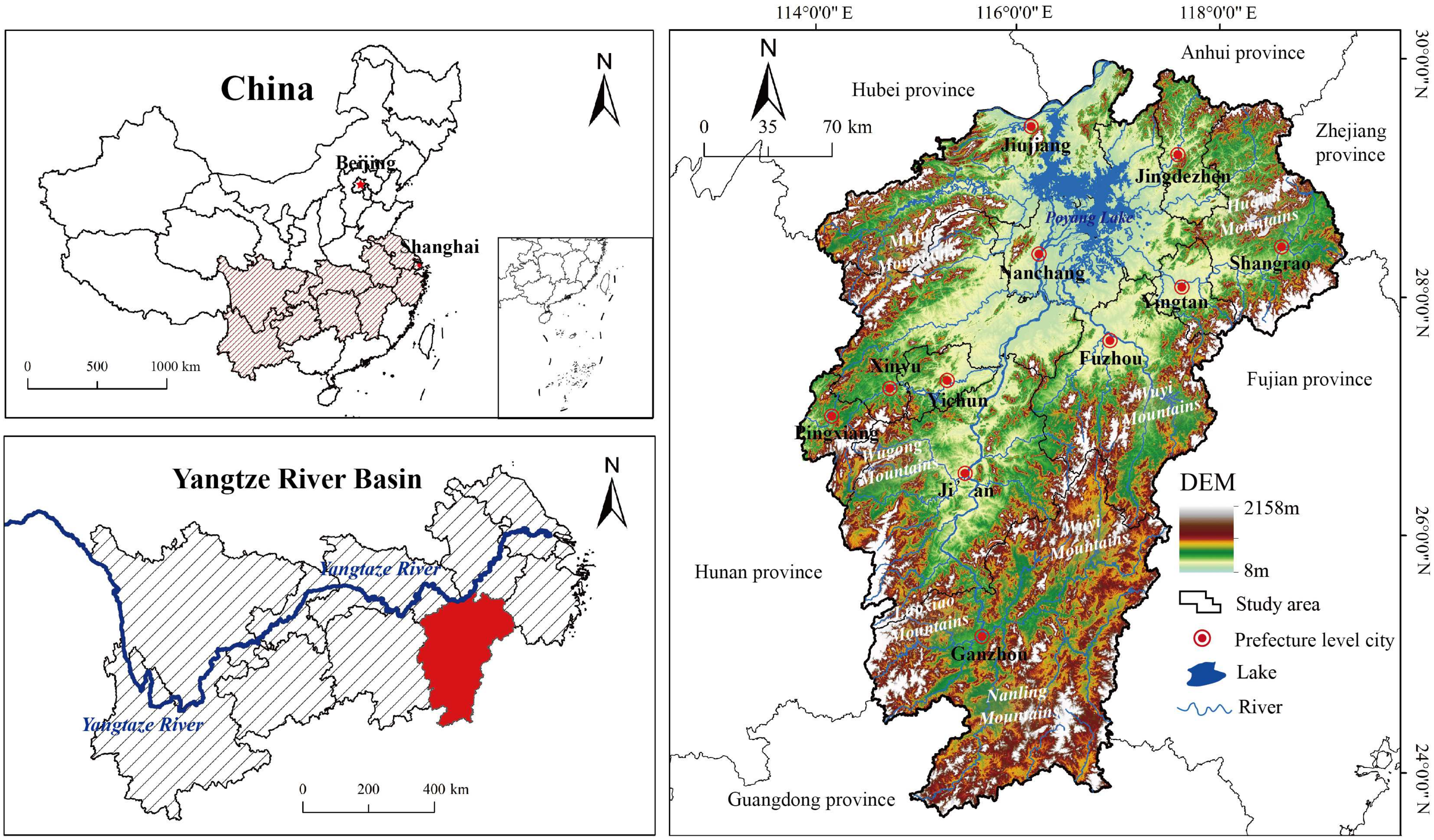
The study area, Jiangxi Province, is located in the central section of the Yangtze River Economic Belt, China (Figure 1), with geographical coordinates spanning from 113° to 118° E in longitude and from 24° to 30° N in latitude. It is composed of 11 prefecture-level cities, i.e., Nanchang, Ganzhou, Fuzhou, Ji’an, Jiujiang, Shangrao, Pingxiang, Jingdezhen, Yingtan and Xinyu, covering an area of 166,900 km2. The study area exhibits a complex and diverse terrain, enclosed by mountains on the east, west, and south and inclining north, forming the Poyang Lake Basin opening north and joining the Yangtze River. The region comprises six landform types: mountains, hills, plains, terraces, and basins. The region is classified inside the subtropical humid monsoon climate zone. Owing to the combined influence of geographical location and landform, there is difference in temperature between north and south of the province. The research region is rich in ecological resources, featuring a diverse array of forest plant species. For many years, forest coverage has exceeded 60%, with evergreen broad-leaved forest as the dominant vegetation type. Moreover, the province encompasses Poyang Lake, the largest freshwater lake in China. The lake basin serves not only as critical water supply source but also as an essential ecological barrier for regulating regional climate and maintaining biodiversity. However, in the past few years, the implementation of the Yangtze River Middle-Reaches Urban Agglomeration Strategy has significantly accelerated urbanization, leading to increasing ecological problems in the province.

2.2. Data Sources

This study utilizes socioeconomic, climatic, land use, and other pertinent data. Details are provided in Table S1 of the Supplementary Information. To ensure consistency, the coordinate system and spatial resolution of all datasets were standardized.

3. Methods

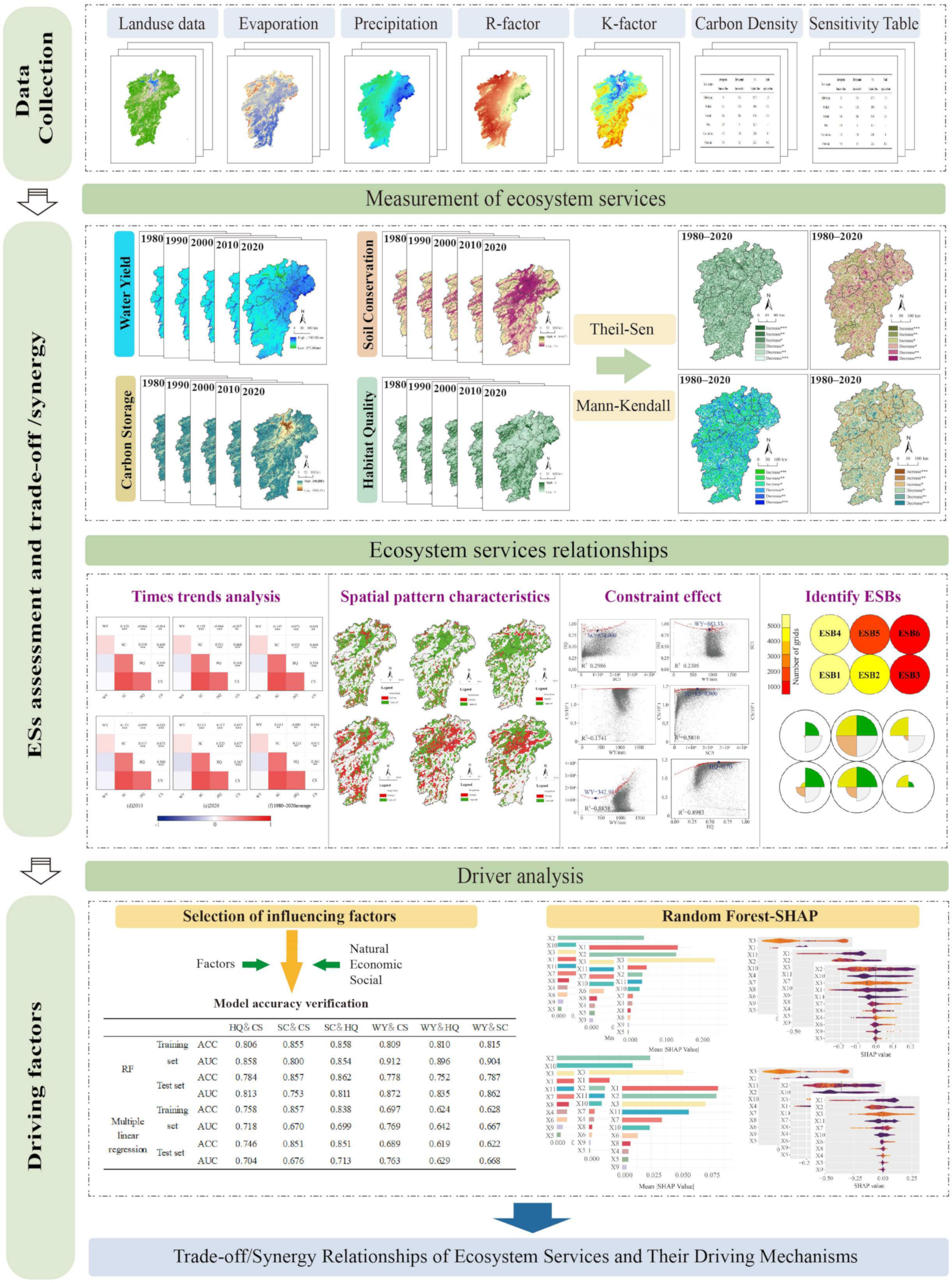
Figure 2 illustrates the full research framework. Initially, the spatiotemporal patterns of four typical ESs in Jiangxi were assessed at a 3 km grid resolution using land use data from 1980 to 2020. Secondly, the interactions among ESs were identified through Spearman correlation analysis, bivariate spatial autocorrelation, constraint line analysis, and ecosystem service bundles (ESBs). Thirdly, an explainable machine learning approach (RF-SHAP) was utilized to quantify the influences of natural, social, and economic factors on ES trade-off/synergy relationships. Finally, region-specific strategies were proposed to support decision-making for sustainable development.

3.1. Division of Research Units

To determine the appropriate grid scale, this study employed the landscape pattern software Fragstats 4.2 to calculate the average patch area of land (2.2012 km2). Based on 2–5 times the average patch area [32], a 3 km grid was generated, resulting in a total of 19,158 units of the study area.

3.2. Ecosystem Services Assessment

This study made use of the InVEST model to quantify four standard ecosystem services from 1980 to 2020. For WY assessment, the Z coefficient was calibrated to 0.52 through multiple iterations, and the simulated total WY differed by only 0.59% from the mean reported in the Water Resources Bulletin of Jiangxi Province (1569 × 108 m3). For CS estimation, carbon densities from regions similar to or adjacent to the studied province were adopted [33]. The mean annual temperature and precipitation of Jiangxi (18.4 °C, 1670 mm) and of the Yangtze River Basin (11.0 °C, 1000 mm) during 1980–2020 were substituted into Notes S1 (1)–(7) in the Supplementary Information to derive a carbon density correction coefficient [34]. Subsequently, the carbon density of the Yangtze River Basin was adjusted using this coefficient to obtain the corrected carbon density for the study area. The parameter settings for SC and HQ were determined based on relevant previous studies [35]. The carbon density correction formulae are provided in Notes S1 (1)–(7) and the specific calculation methodologies for each ES in Table S2, both in the Supplementary Information.

3.3. Theil-Sen Estimator and Mann-Kendall Trend Test

The Theil–Sen trend estimator and the Mann–Kendall trend test were harnessed to calculate the slopes and significance levels of the four ESs from 1980 to 2020, thereby identifying their temporal trends. The significance test criteria were the same as those used by Wang et al. (2024) [36] and the corresponding calculations are provided in the Supplementary Information, Notes S2 (8)–(12).

3.4. Trade-Off/Synergy Relationships Among ESs

3.4.1. Correlation and Spatial Analysis

The Spearman correlation analysis was applied to investigate the trade-off and synergy linkages of ESs from 1980 to 2020, while bivariate local Moran’s I was used to examine the trade-off/synergy relationships of ESs in grid-scale spatial patterns. The detailed calculation formulae and identification criteria for trade-off and synergy are provided in the Supplementary Information, Notes S3 (13) and Notes S4 (14).

3.4.2. Constraint Line Model

Constraint lines were utilized to reveal the overall constraint trends among different ESs from 1980 to 2020. In this study, R packages including “broom”, “dplyr” and “readxl” were applied for modeling. Constraint lines were extracted using the piecewise quantile regression method, and scatter plots illustrating the relationships among ESs were generated [37]. The X-axis was segmented into 100 intervals according to the range of variable values. To reduce the influence of outliers, the 99.9th percentile was selected as the boundary point for each interval [38], and subsequently, the equations with the best-fitting performance were selected from linear, quadratic, cubic, and exponential functions to define the constraint lines [26].

3.5. Identification of ESBs

ESBs are spatially defined combinations of ecosystem services that repeatedly occur based on their synergy. SOM (Self-organizing map) is an unsupervised competitive neural networks, which are more robust than traditional hierarchical clustering methods and has been widely applied in identification of ESBs [39]. The parameters were set using the “kohonen” package in R and following the research conducted in the Poyang Lake basin [40].

3.6. Driving Factors of Trade-Off/Synergistic Relationships Among the ESs

3.6.1. Selection of Driving Factors

ES trade-off/synergy connections arise from the interplay between natural systems and human activity [41]. Their spatial differentiation and temporal evolution are jointly driven by multiple natural and socioeconomic variables. According to prior research studies of ES trade-off/synergy relationships [42], an index system comprising 11 potential driving factors was constructed. These factors were classified into three categories: natural conditions, geographical location, and socioeconomic factors. Natural condition indicators included elevation (X1), slope (X2), average annual precipitation (X3), and NDVI (X4). Geographical location influences the intensity of human activities, resource allocation, and land use patterns [43]. Geographical indicators comprised distances to county-level roads (X5), province-level roads (X6), city centers (X7), county centers (X8), and rivers (X9). Socioeconomic factors, including regional economic development and population size, significantly affect ecosystem structure and function by modulating the intensity of human activities [44], thereby changing the trade-off/synergy relationships of ESs. Population density (X10) and GDP (X11) were selected as representative socioeconomic indicators.

3.6.2. RF Model

As this study aims to identify and elucidate the driving mechanisms of the trade-off/synergy relationships of ESs rather than merely optimizing the model prediction accuracy, the RF model, known for its robustness in handling high-dimensional data, multicollinearity, nonlinear relationships, and complex interactions, was adopted [45]. The ESs trade-off/synergy relationship at the 3 km grid scale was treated as a binary variable (trade-off = 1; synergy = 0), derived from bivariate spatial autocorrelation (bivariate LISA) analysis, with the 2020 pattern used to identify the dominant driving mechanisms given its overall spatial stability from 1980 to 2020. During RF model training, the key parameters ntree and mtry were tuned. Eighty percent of the samples were used as the training set, and the remaining 20% as the test set. RF Model parameters were specified as follows: ntree = 500 (default) and mtry = 11 to ensure that all variables could be considered at each node split, thereby avoiding the random exclusion of potentially important driving factors. To distinguish linear and nonlinear effects, a Multiple Linear Regression (MLR) model was also constructed as a comparison, with model performance evaluated using accuracy (ACC) and the area under the curve (AUC).

3.6.3. SHAP

The RF model can provide a ranking of feature importance to characterize the overall contribution of variables; however, it has limited capability in revealing the functional form and the orientation (positive or negative) of their impacts [46]. SHAP calculates the contribution of each feature to predictions made by machine learning models, utilizing Shapley values derived from the cooperative game theory [47], thereby enabling the identification of dominant factors driving ES trade-off/synergy relationships. It also allows to clearly determine the direction of influence (positive or negative) for each factor, e.g., a Shapley value > 0 indicates a contribution of the factor to ESs trade-off, otherwise, a contribution to synergy.

4. Results

4.1. Temporal and Spatial Variations of Land Use Types

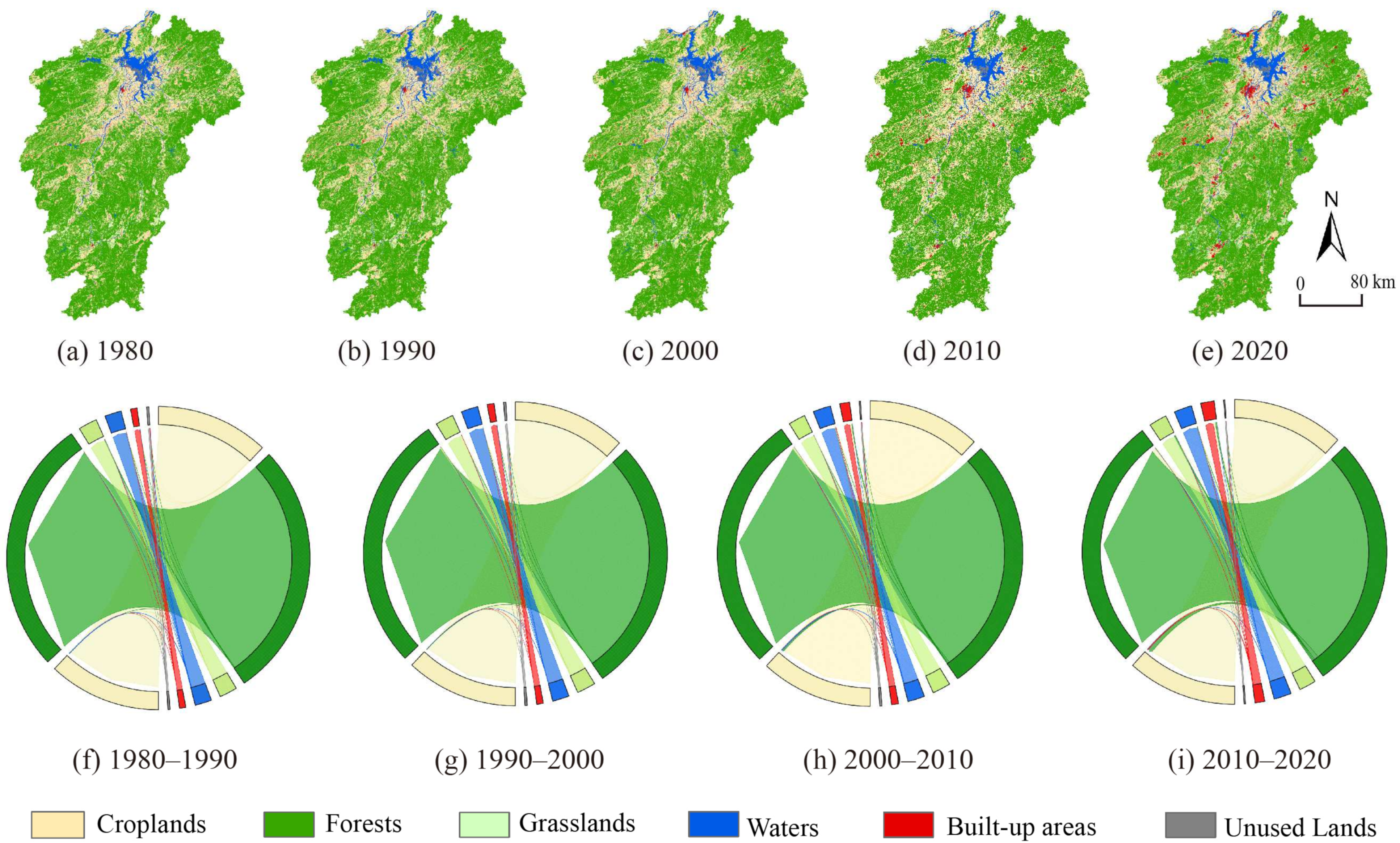
From 1980 to 2020, forests and croplands constituted the predominant land use categories in the study area, comprising almost 88% of the total area (Table 1). From a perspective of spatial distribution, croplands were primarily concentrated in the Poyang Lake Plain and the basins of the five major rivers while forests were dispersed in the elevated and rugged regions surrounding the Poyang Lake. Land use patterns underwent significant changes over the study period, in particular, built-up areas, which expanded most rapidly with an increase of 2876.65 km2. This expansion was a consequence from the conversion of croplands, forests and grasslands into urban agglomeration surrounding the lake such as Nanchang, Jiujiang and Fuzhou. Croplands exhibited a continuous decrease by 1420.98 km2 and changes in forests and grasslands were fluctuated but both with a decrease by 1462.83 km2 and 49.51 km2 respectively. Despite a fluctuating pattern as well, waters mainly gained an increase by 368.76 km2.
The land use transition matrix was employed to analyze the transitions among various land use types from 1980 to 2020 (Figure 3). It is seen that croplands experienced the largest outflow, totaling 4926.67 km2, constituting 38.71% of the overall change. The majority of this outflow is attributed to conversion of croplands into built-up areas, forests, and waters. Ranking second, forests experienced an outflow of 4693.04 km2, constituting 36.88% of the overall change. The majority of which was transformed into croplands, grasslands, and built-up areas, in which the latter expanded rapidly, with a cumulative conversion of 3174.15 km2, primarily sourced from croplands and forests.

4.2. Analysis of Spatiotemporal Changes in ESs

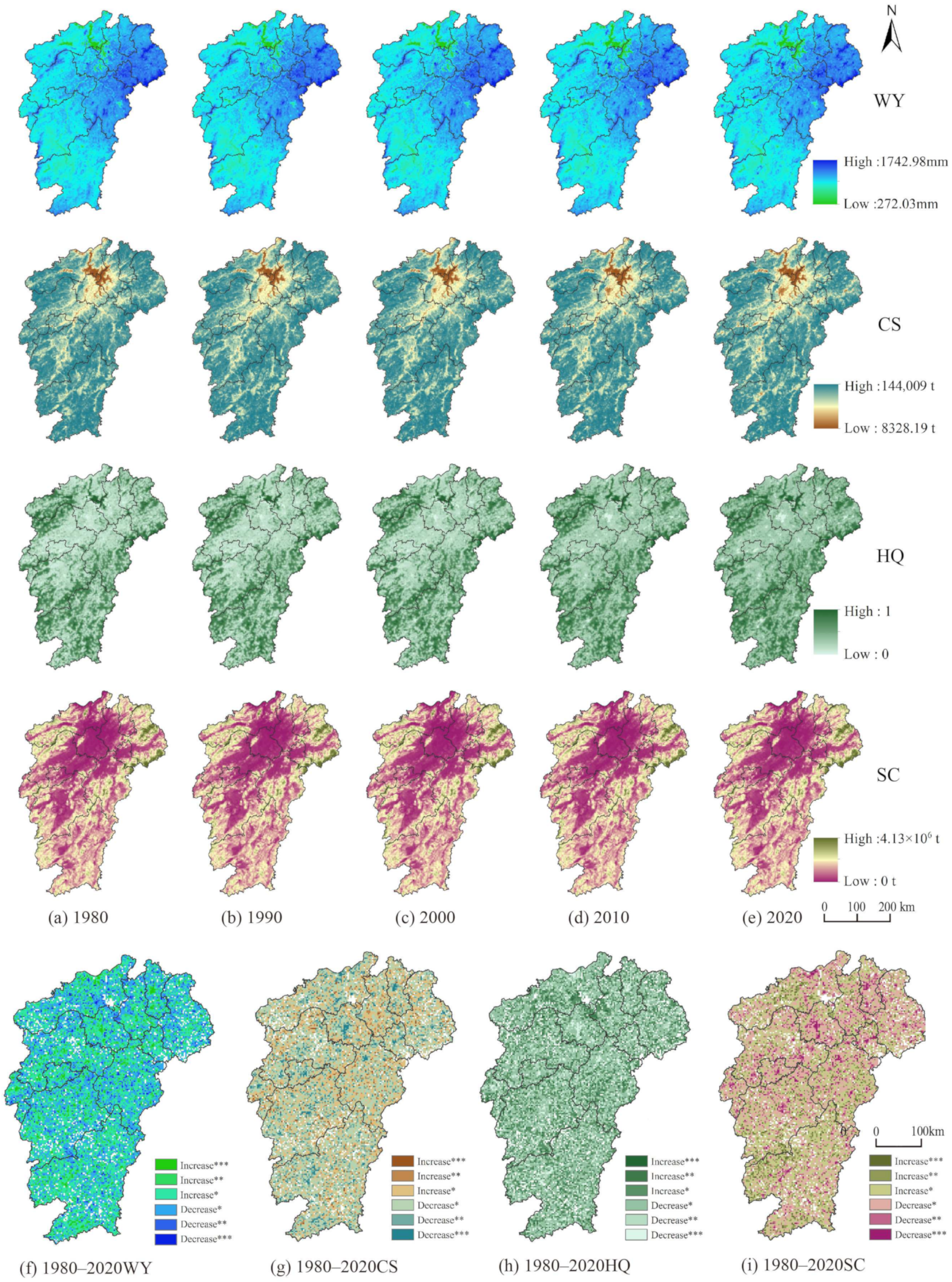
Zonal statistics were performed on four types of ESs using a 3 km grid size, and spatiotemporal trends of ESs from 1980 to 2020 were analyzed (Figure 4 and Table 2). From 1980 to 2020, WY exhibited an increase with an average increase from 997.68 mm to 1002.65 mm, or rather, an increase of 0.50%. The spatial distribution of WY shows that low-value areas are mainly found in the southern part while high-value ones are concentrated near the Poyang Lake Plain and the northeastern parts.
The average CS shows a continuous decline by 1.5 × 10⁶ t over 40 years at a rate of 1.30%. The decline was particularly significant from 2010 to 2020 with a decrease of 7.5%. Spatially, CS exhibits a distinct spatial configuration characterized by low density in the central area, i.e., the Poyang Lake Plain with limited vegetation cover, but high cover in the surrounding mountains including the Wuyi Mountains, Dayu Ridge, and Jiuling Mountains.
The mean HQ value declined from 0.5087 in 1980 to 0.5037 in 2020, indicating a continual decline throughout the research duration. From a spatial standpoint, high HQ values are observed in mountainous and hilly areas at medium to high elevations while low values are associated with urbanized regions characterized by intense human activities.
Changes in SC showed a pattern highly consistent with that of HQ, with both services experiencing a continuous decline. Specifically, the average SC decreased from 8.80 × 10⁵ t in 1980 to 8.76 × 10⁵ t in 2020, corresponding to a net reduction of 4390.50 t or an overall decrease of 0.50% in the province. Spatially, high SC regions are mostly observed in mountainous and hilly landscapes with dense vegetation cover, characterized by forestry environments, while low SC regions are found in the Poyang Lake Plain and regions undergoing rapid urbanization.
Additionally, longitudinal trends of all four kinds of ESs in the research area were further analyzed (Figure 4f–i). From 1980 to 2020, the four types of ESs in Jiangxi demonstrated clear trends but with notable differences in terms of direction, significance level, and spatial distribution characteristics. Specifically, the areas with increased WY are relatively extensive, showing a contiguous distribution in most parts of northeastern, central, and southern Jiangxi. Significant and extremely significant increases are concentrated in some mountainous and hilly areas, accounting for 14.68%. In contrast, HQ and CS showed a downward trend, with a distribution characterized by “continuous declining areas and fragmented increasing areas”. The areas of decline accounted for 63.10% and 62.07%, respectively, and were concentrated in regions with relatively frequent human activities, such as Jiujiang, the vicinity of Nanchang, Yichun, and Shangrao, forming patch-like or band-like areas. In contrast, the distribution of increased areas was more scattered, exhibiting characteristics of isolated points or small patches. The increased and decreased areas of SC display a distinct interlaced spatial distribution pattern.

4.3. Changes in Ecosystem Trade-Off/Synergy Relationships

4.3.1. Temporal Changes in Ecosystem Trade-Offs/Synergies

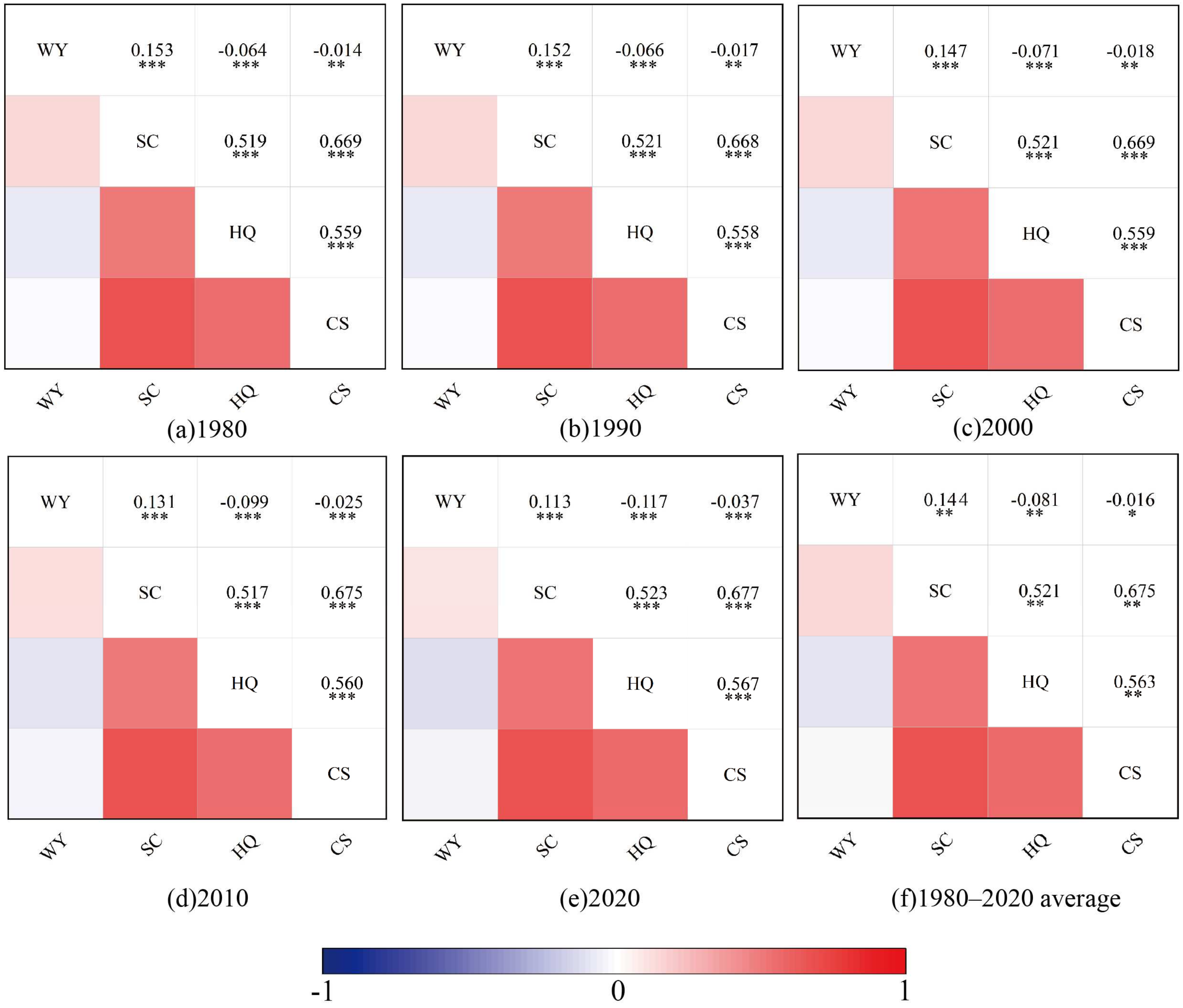
Spearman correlation analysis revealed significant correlations among all pairs of ESs (p < 0.05) (Figure 5), and a synergistic link between WY and SC was observed from 1980 to 2020. The overall synergy among ESs exhibited a gradual decline in correlation coefficient from 0.153 in 1980 to 0.113 in 2020. However, a consistent trade-off was found between WY and HQ with an intensity increase over time. By 2020, this trade-off reached its strongest level, corresponding to an R value of −0.117. Meanwhile, the correlation coefficient between WY and CS is −0.014 throughout the study period, suggesting that the trade-off between these two services was weak and the variation range of the correlation coefficients over the past 40 years was insignificant. The synergy between SC and HQ gained an initial intensification and then got diminished, and finally strengthened again, reaching a maximum R value of 0.523 in 2020. A strong synergistic relationship was also observed between SC and CS with an R value of ≥0.668, followed by that between the pair HQ and CS, with the lowest R value, 0.558 recorded in 1990 while the highest one, 0.567, observed in 2020.

4.3.2. The Spatial Pattern of ESs Trade-Off/Synergy

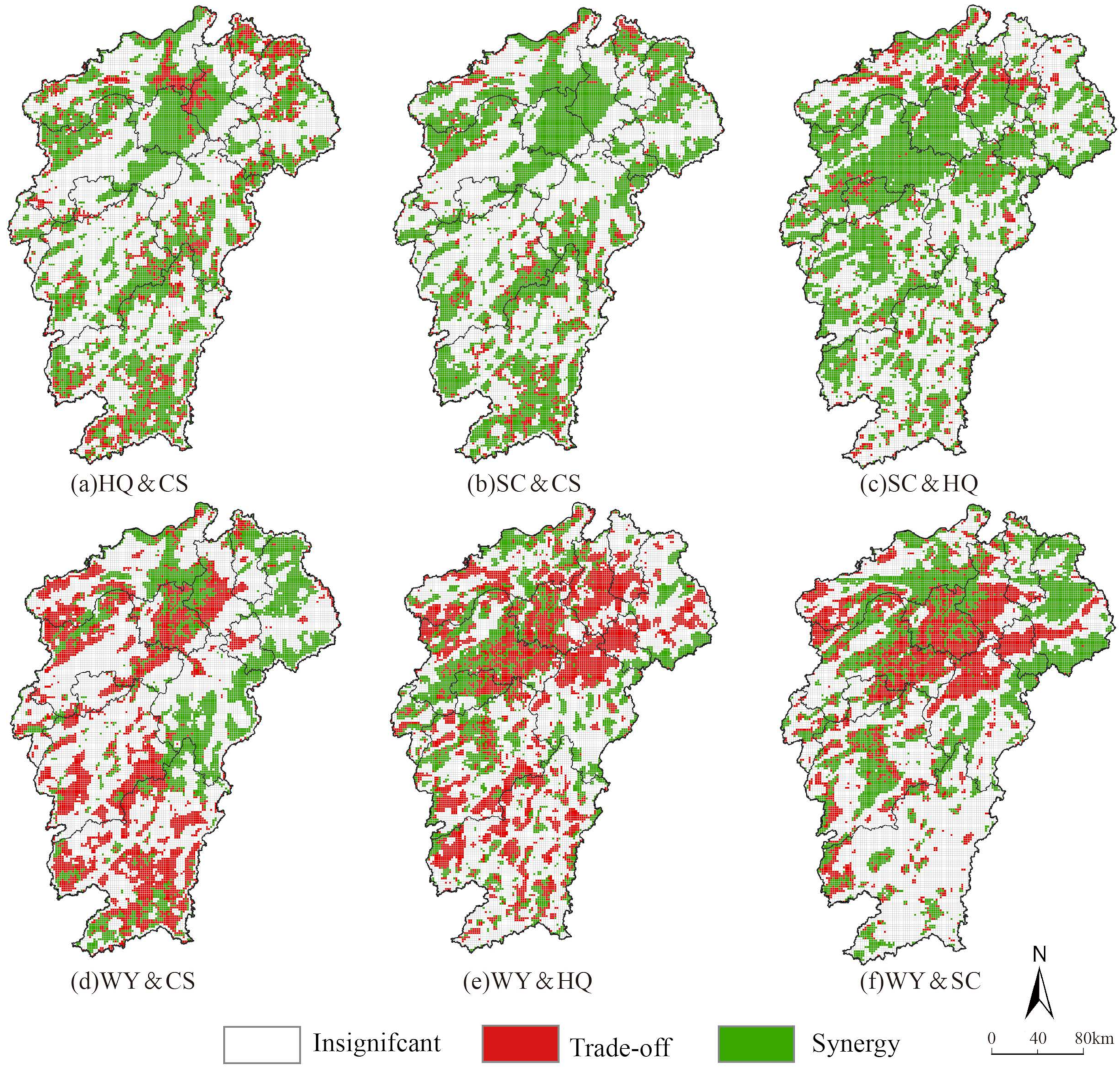
The spatial differentiation of ES trade-off/synergy relationships of the study area is presented in Figure 6 (1980–2020 average). The spatial synergistic zone of WY&SC covers 29.1% of the study area while the trade-off connection occupies 21.51%. Synergy relationships are primarily situated in the mountainous and steep slopes of the northern and northeastern Jiangxi as well as the areas surrounding the Poyang Lake. On the contrary, trade-off connections are primarily situated in the central-northern areas, particularly, around Jiujiang and Nanchang cities. The synergistic area of WY&HQ comprises 23.48% of the province with the trade-off relationship covering 29.64%. The trade-off relationship is widely distributed, spanning the Circum-Poyang Lake Urban Agglomeration and southern Jiangxi, forming continuous or semi-continuous spatial patches. Meanwhile, the synergy is dispersed and exhibits weak spatial agglomeration. The spatial pattern of WY&CS is characterized by the coexistence of balanced and synergistic areas with clear spatial differentiation. The proportion of balanced areas is 24.78%, while synergistic areas account for 22.72%. The trade-off connection is widely prevalent throughout the central and northern prefectural cities of Jiangxi, with the highest concentration around Nanchang. The synergy relationship is more concentrated in the peripheral areas of northeastern and southeastern parts, with a relatively smaller spatial scale. The SC&HQ synergy takes up 44.17% of the entire expanse, compared to the trade-off relationship, occupying 8.95%. Synergy is primarily focused in the Poyang Lake Urban Agglomeration and mountainous ranges such as the Jiuling Mountains in the northwest, the Wugong Mountains in the west, and the Wuyi Mountains in the east while the trade-off relationship is scattered in the southern and northern parts of the province. The proportion of synergy areas in the SC&CS spatial configuration (40.45%) is substantially greater than the trade-off area (7.00%), with a spatial distribution pattern similar to that of SC&HQ. For HQ&CS, the synergy constitutes 34.74% while the balanced area accounts for 12.76% of the entire study region. Overall, this reveals the spatial pattern dominated by the synergy with balanced relationships occurring in some local areas. Synergy is found in the mountains of northeastern Jiangxi, around Poyang Lake, and in the Jinjiang River Basin while balanced relationships mostly take place on Poyang Lake Plain.

4.3.3. Constraint Effects and Thresholds Among ESs

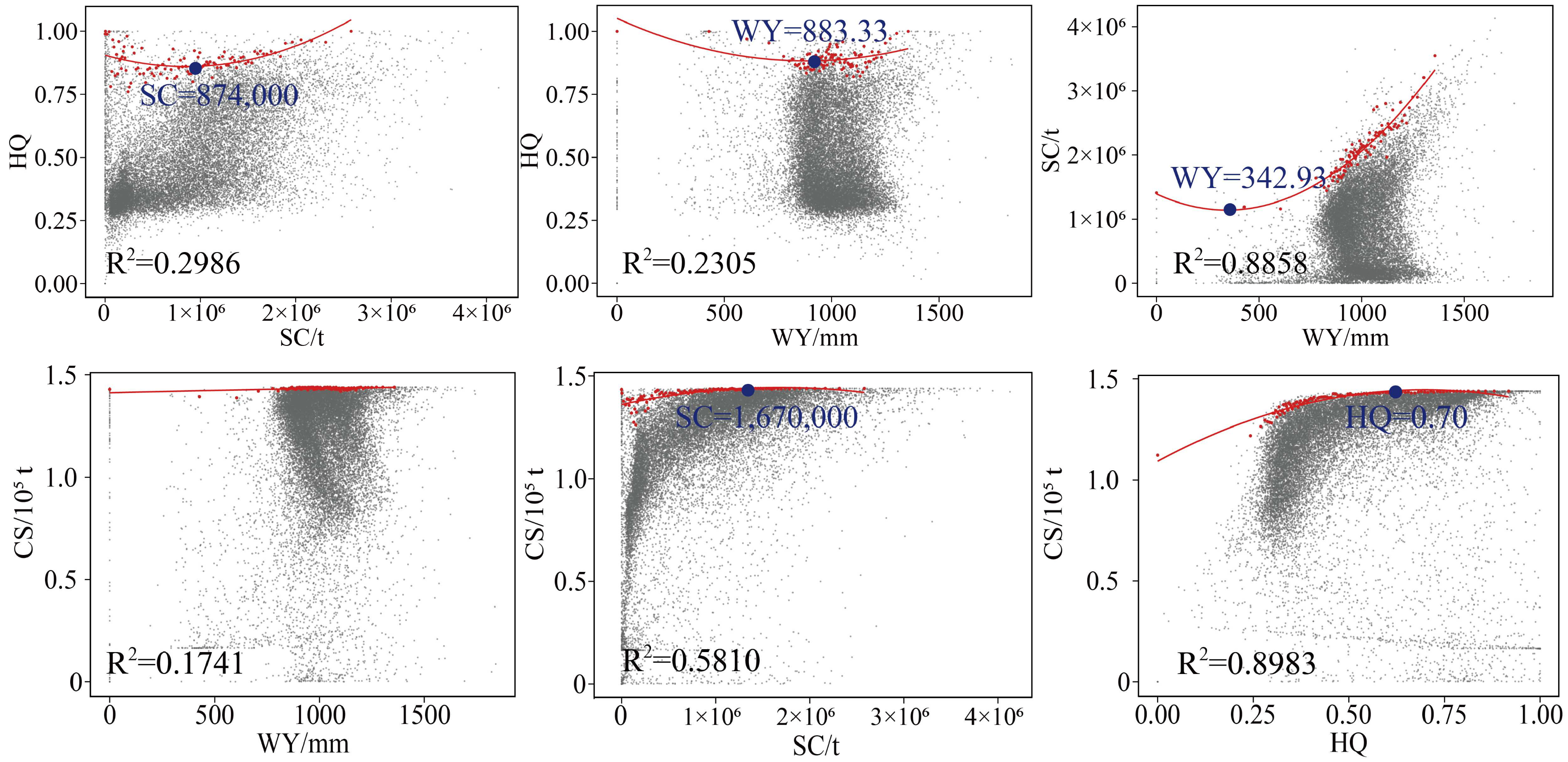
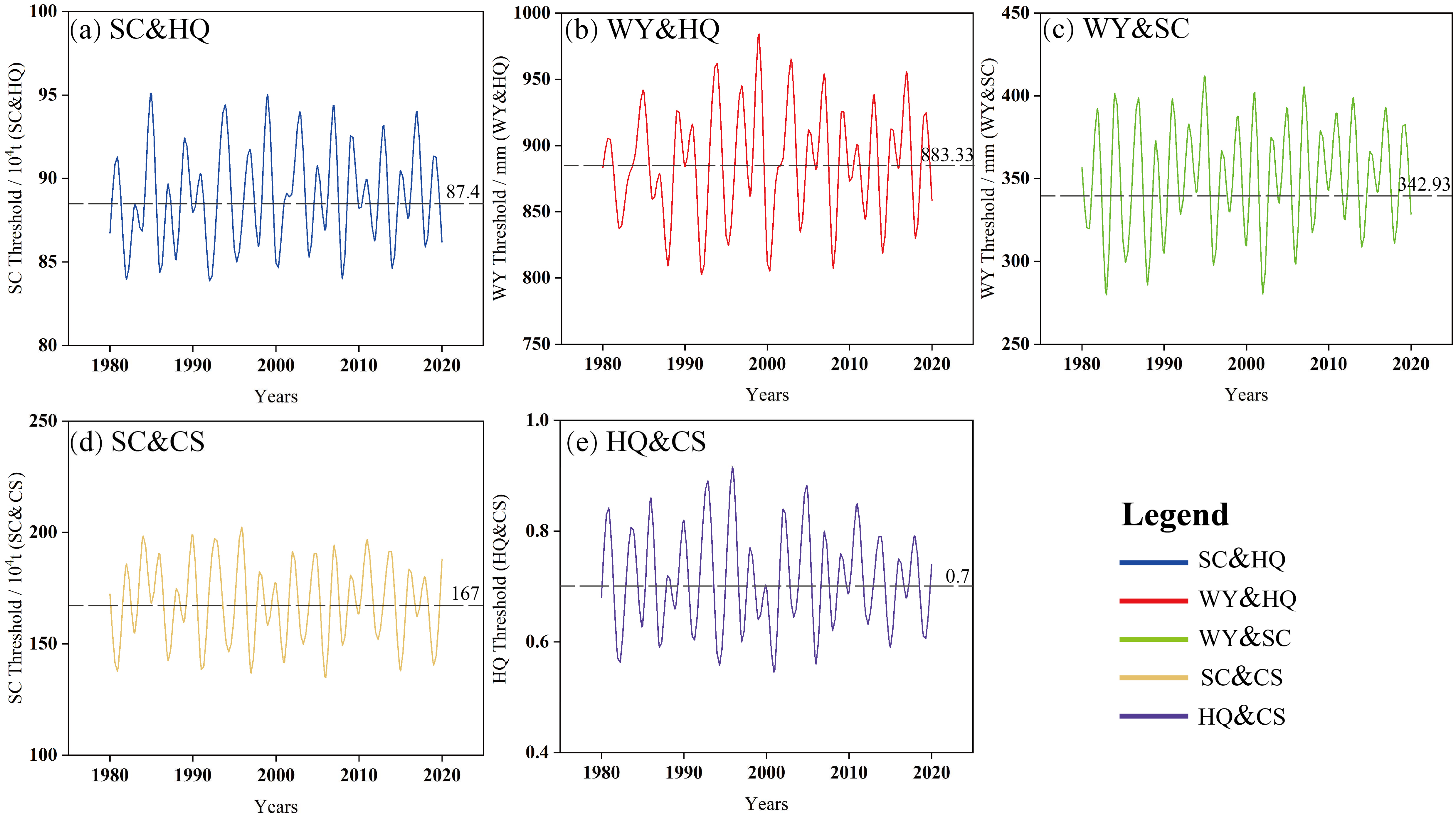
The relationships between the constraint effects and thresholds among ESs were further elucidated by the constraint lines, as shown in Figure 7. The constraint lines for SC&HQ, WY&HQ, and WY&SC follow a U-shaped distribution, while those for SC&CS and HQ&CS exhibit an “inverted U shape”. Among these, the overall variation range of the WY&SC constraint line is relatively narrow as WY increases; its constraining effect on SC is initially strong and then becomes weak. When WY exceeds the threshold of 342.93 mm, its constraint effect on SC diminishes. Similarly, the constraint effect of WY on HQ mirrors that of SC. At 883.33 mm of WY, HQ reaches its minimum threshold. When SC exceeds 8.74 × 10⁴ t, its constraint effect on HQ gets weak. Finally, the constraint trends for SC&CS and HQ&CS are analogous, both exhibiting threshold effects, that is, as SC and HQ increase, their constraint effects on CS become weak at start and then become strong.

4.4. The Spatial Pattern of ESBs

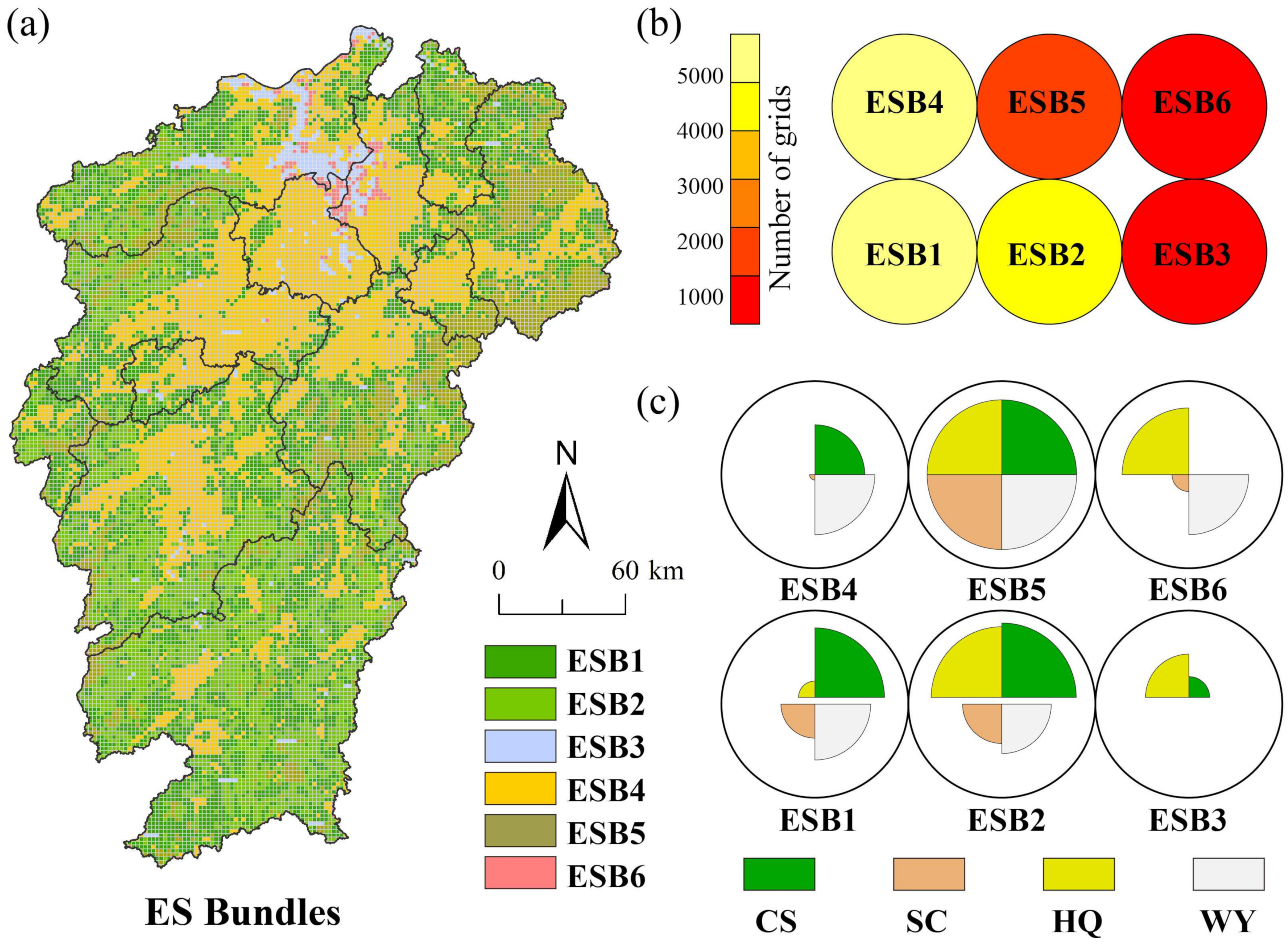
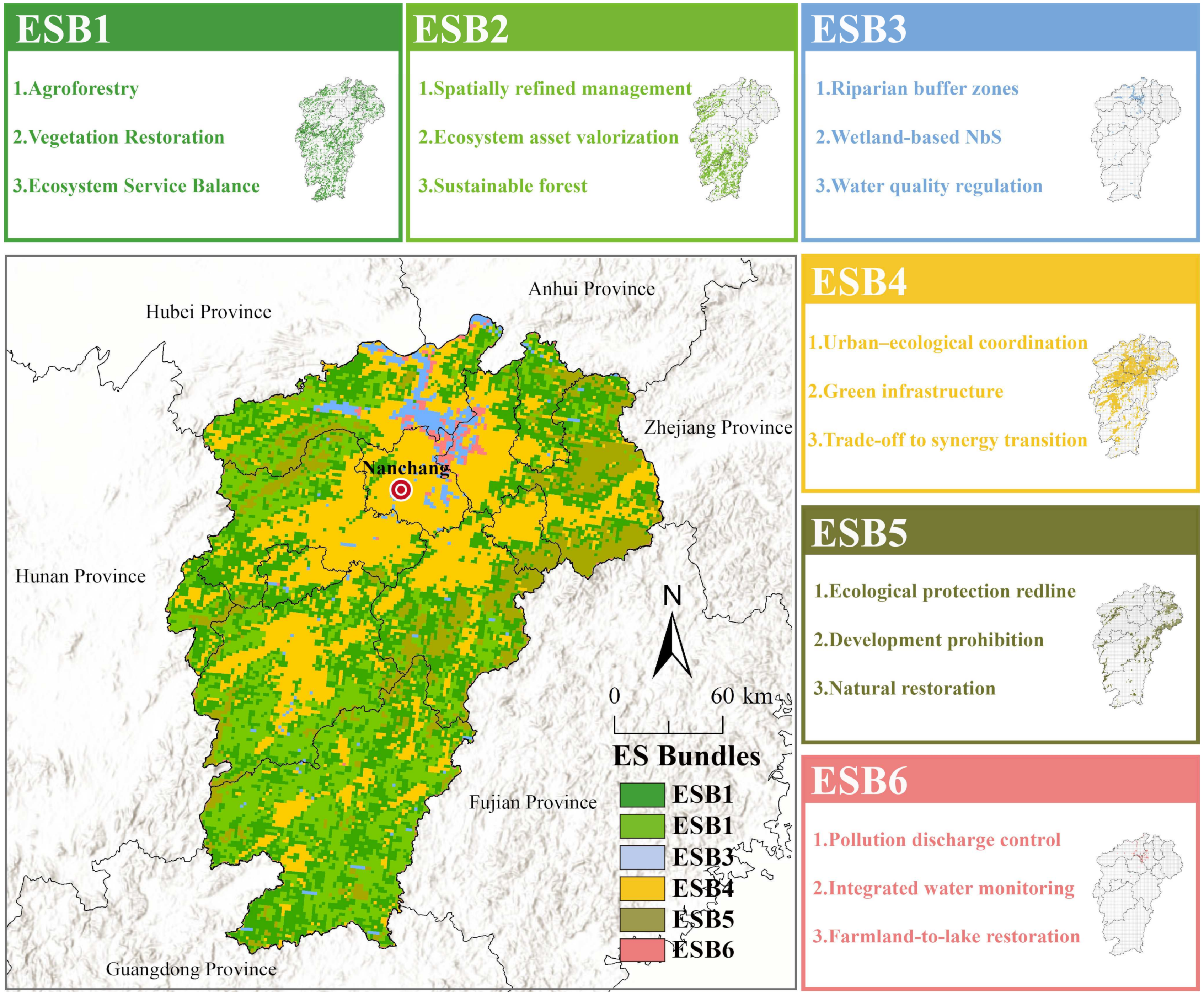
As revealed by the above the trade-off/synergy relationships of ESs, the study area was segmented into six ESBs utilizing the SOM approach (Figure 8). ESB1 is the most widespread type in the study area, containing 5679 grid cells and covering 30.11% of the total area. It is predominantly widespread in the central and southern parts of the province, with scattered patches in cities such as Shangrao and Jiujiang. ESB1 has the highest CS level, reflecting the significant advantage of this type in vegetation carbon sequestration and ecosystem carbon sink functions. Meanwhile, WY is relatively high, and the supply levels of other ESs in this bundle are generally low. The hilly forest bundle (ESB2), including 4264 grid cells and covering 22.26% of the study area, has high levels of CS and HQ, with the main land use types of forests and grasslands. The Poyang Lake water system ecological bundle (ESB3) is the smallest category, accounting for 2.7% of the total area, with 518 grid cells, distributed around the Poyang Lake. The urban–rural development bundle (ESB4) covers 29.66% of the study area, with 5683 grid cells distributed around cities such as Nanchang, Yichun, Jiujiang, and Shangrao. This service bundle has the highest WY supply, followed by CS, with main land use types of built-up areas and croplands. The mountainous forest bundle (ESB5), containing 2154 grid cells and covering 11.24% of the research zone, is distributed encompassing the mountain ranges such as the Wuyi Mountains and Huaiyu Mountains and exhibits a balanced supply structure for all four ESs. The Poyang Lake Eco-Regulation bundle (ESB6) is spatially distributed around Poyang Lake and exhibits strong synergistic interactions between natural hydrological processes and habitat conservation, thereby maintaining high levels of WY and HQ. This bundle occupies 4.02% of the study area, encompassing 770 grid cells.

4.5. Drivers of ES Trade-Offs/Synergies

4.5.1. Model Applicability

The performance comparison of the models shows that RF generally outperforms MLR in identification of various ES trade-off/synergy relationships (Table 3). On the training set, the ACC and AUC of the RF model range from 0.806 to 0.858 and from 0.800 to 0.912 respectively. In contrast, the ACC and AUC values of the MLR model vary from 0.697 to 0.857 and 0.642 to 0.769 respectively, demonstrating a lower overall discriminative ability than RF. On the test set, the ACC and AUC of RF change from 0.752 to 0.862 and from 0.753 to 0.872 respectively, both higher than those of MLR, of which ACC and AUC are from 0.619 to 0.851 and from 0.629 to 0.763 respectively. Furthermore, by comparing the training and test sets, it is evident that the overall differences in ACC and AUC values for the RF model between the two datasets are relatively small, with no clear sign of overfitting, ensuring the reliability of the performance evaluation. Hence, RF is of higher applicability than MLR in this case.

4.5.2. Dominant Factors of ES Trade-Offs/Synergies

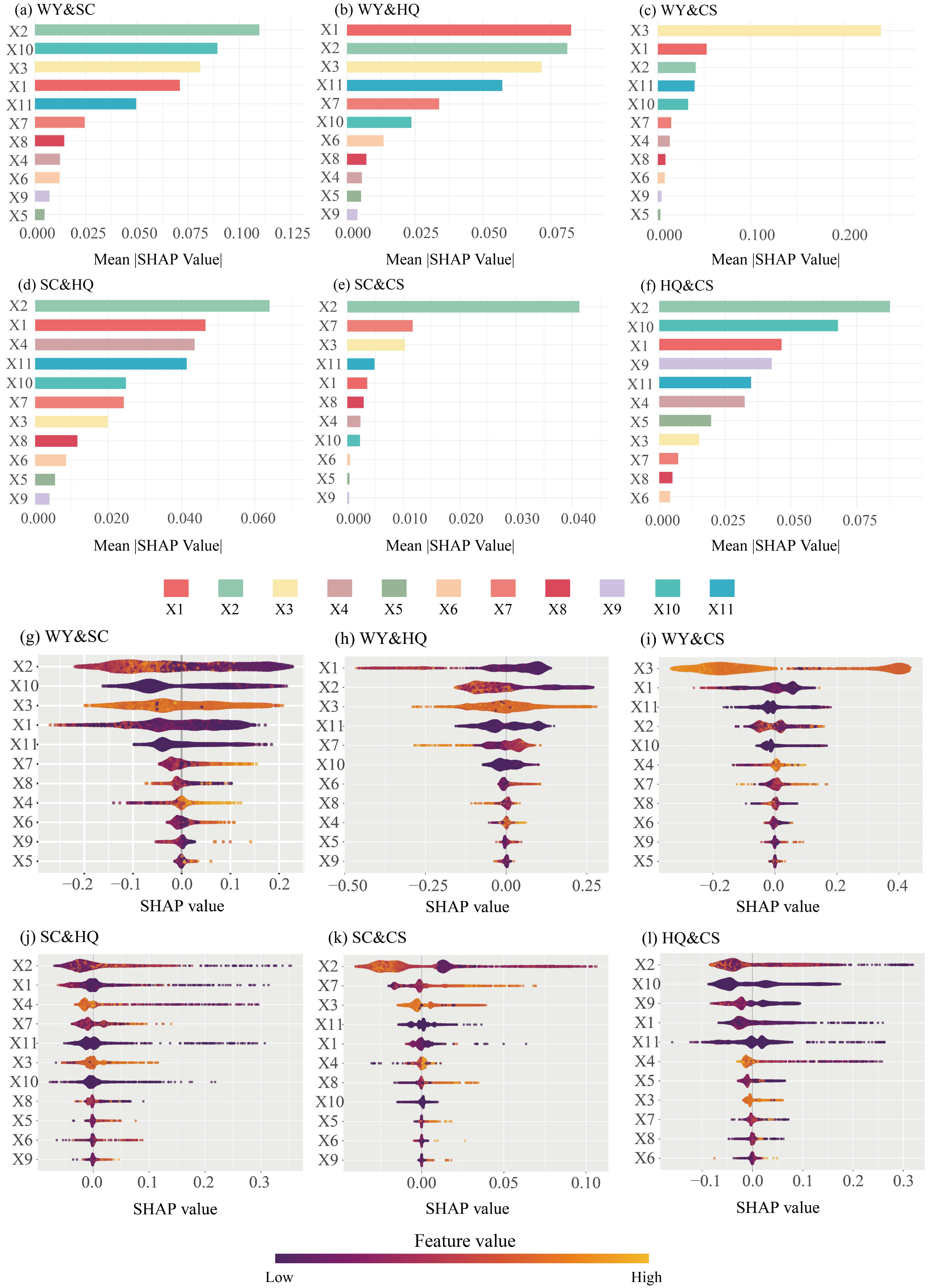
Either positive or negative impacts of each driving factor on the relationships between ESs are illustrated in Figure 9. In general, different ES combinations respond variably to driving forces in their trade-offs, revealing clear combinatorial specificity. It is seen in Figure 9a that the WY&SC trade-off is mainly influenced by X2 (0.1097), X10 (0.0892), and X3 (0.0808). The SHAP dependence results shown in Figure 9g indicate a negative correlation of this trade-off with X2 and X10 but a positive relationship with X3. For the WY&HQ trade-off, X1 (0.0825), X2 (0.0810), and X3 (0.0716) are identified as the primary driving factors in which WY&HQ shows a positive correlation with X1 and X2 but a negative one with X3. Regarding the WY&CS trade-off, X3 contributes most substantially (0.2407), far exceeding the influence of other variables, thereby demonstrating a pronounced dominant effect, followed by X1 (0.0526) and X2 (0.0409). The SHAP results further reveal that the WY&CS trade-off is negatively associated with X1 and X2, while exhibiting a positive association with X3.
Conversely, the SC&HQ synergy is primarily controlled by X2 (0.0640), X1 (0.0465), and X4 (0.0435). With the increase in these factors, the SHAP value decreases, implying a negative correlation between trade-off strength and these factors. The main driving factors of the SC&CS trade-off include X2 (0.0413), X7 (0.0116), and X3 (0.0103). The trade-off correlation demonstrates a negative correlation with X3 and X7 and a positive correlation with X2. The driving factors for the HQ&CS trade-off are X2 (0.0877), X10 (0.0679), and X1 (0.0465); an increase in these factors corresponds to an elevated value in the SHAP, showing a positive link between the intensity of the trade-off and these variables.

5. Discussion

5.1. Changes in ES Functions

In the last fifty years, approximately 60% of global ecosystem services have experienced deterioration or over-exploitation. This wide degradation severely disrupts ecosystem equilibrium and constrains the sustainable management of socio-ecological systems. To safeguard human well-being and achieve sustainable development goals (SDG 15), ESs must be enhanced in a balanced and coordinated manner [48]. Land use change significantly affects ESs [49], and that is why we conducted this comprehensive analysis on land use changes and their impacts on ESs in the study area in the period 1980–2020. As a matter of fact, croplands, forests, grasslands, and unused land had reduced by 3.12%, 1.41%, and 0.69%, respectively, while waters and built-up areas expanded by 5.42% and 113.32%, respectively. The spatiotemporal distribution of ESs in the study area has been drastically modified by the rapid urbanization resulting in notable dynamic shifts. During this period, pronounced changes in ESs were mainly observed in densely populated urban areas and urban–rural fringe zones, whereas high-altitude mountainous areas with relatively low human disturbance maintained comparatively high ES levels. Notably, the mean values of CS, HQ, and SC exhibited an overall declining trend while the average WY showed a continuous increase, particularly in the urban area of Nanchang. This increase in WY was primarily driven by the increase in built-up areas, or rather, urban expansion, which resulted in a rise in impermeable surface coverage. This, in turn, weakened the infiltration of precipitation into the soil and underground, enhancing surface runoff and increasing regional water production. When intense rainfall or short-duration storms coincide with areas of high impervious surface coverage, the runoff response is rapid and the concentration time is shortened, thereby increasing pressure on drainage systems and simultaneously elevating flood risk [50]. Consequently, the observed increase in WY exhibits a clear “dual nature”. From a water balance perspective, it reflects a higher proportion of precipitation being converted into surface runoff, which can be interpreted as an increase in water generation. However, from the perspective of ecological regulation and water security, WY increases driven by impervious surface expansion are associated with reduced water retention and conservation capacity, constrained groundwater recharge, and may amplify flood disaster and urban waterlogging risks. As highlighted by Li et al. (2025) [1], the observed WY increase mainly reflects the “water production effect” induced by enhanced runoff rather than a substantive improvement in the ecosystem’s water retention and conservation capacity. In addition, according to Wang et al. (2023) [51], flood events between 1991 and 2020 in Jiangxi predominantly occurred around Poyang Lake, and the combination of lake water-level fluctuations and uneven spatiotemporal precipitation often caused severe urban waterlogging in Nanchang, which is consistent with our finding, i.e., the relatively high WY in the urban areas of Nanchang. Based on these observations, river dredging and maintenance, sewage interception, and routine upkeep of the main urban drainage networks should be implemented to enhance the flood regulation capacity of urban river–lake systems. Moreover, the construction of sponge cities and deployment of green infrastructure are recommended to mitigate the “disservice” effect caused by rapid runoff concentration.
The observed period can be divided into two stages, 1980–2000 and 2000–2020. During the initial phase, the urbanization process in Jiangxi was in its initial stage. Constrained by a weak economic foundation and limited industrialization, the pace of urbanization was relatively slow, and the responsive changes in ESs were little. During this stage, the mean values of CS, HQ, and SC declined by 0.15%, 0.12%, and 0.06%, separately, whereas WY exhibited a slight increase of 0.07%. However, in the second stage, driven by accelerated urbanization and socioeconomic development, extensive areas of land with high ecological value were converted into non-ecological land use types, particularly artificial surfaces, leading to a significant reduction in ecological supply capacity. Consequently, the mean values of CS, HQ, and SC decreased by 1.15%, 0.84%, and 0.44%, respectively, while the mean WY increased by 0.42%. Overall, the response of ESs to land use change strengthened over time, shifting from weak to pronounced, alongside a clear decline in the provision capacity of ecosystem services.

5.2. Trade-Offs/Synergies Among ESs

At present, research on the trade-off/synergy of ESs is gradually increasing both domestically and internationally. The current research employed the Spearman correlation coefficient approach to examine the trade-off/synergy effect, revealing a generally synergistic relationship among ESs, particularly between SC, HQ, and CS, which show an evident synergy in different years. This reflects, to some extent, the stability of the ecological framework in the studied province. However, in contrast to the research of Chen et al. (2025) in Jiangxi [33], this study identifies a trade-off relationship between CS and WY, indicating a difference in conclusions. This discrepancy may arise from the amplification effect of spatial heterogeneity due to differences in research scales; specifically, there are variations between the municipal and grid scales in depicting land use patterns and ecological processes, which could lead to changes in the manifestation of the ES trade-off/synergy relationship. Moreover, the Spearman correlation coefficient method reflects the trade-offs/synergies among various ESs from a regional perspective, which to some extent overlooks anomalous situations in local areas. Nevertheless, bivariate spatial autocorrelation can present more specific conditions within the study area. For instance, in this study, SC and HQ exhibit a synergy relationship based on the correlation results, yet certain areas show a trade-off relationship in space. This finding is broadly congruent with the conclusions of Yang et al. (2021) [52]. The reasons for these different relationships may be related to spatial variations in vegetation coverage and the intensity of human interference. In areas dominated by natural or semi-natural ecosystems, higher vegetation coverage not only enhances the soil resistance to erosion but also provides a stable habitat for organisms, promoting the simultaneous improvement of both SC and HQ. In suburban transitional zones or areas with intensive agricultural use, although land improvement, construction activities, or intensive farming may maintain soil stability to some extent through engineering or management measures, the intensification of human interference can degrade habitat quality, leading to a trade-off relationship between the two at the local scale.
The trend of the constraint line reveals key thresholds for the coordinated transformation of ESs, which aligns with the conclusions of He et al. (2024) [26] and indicates that interactions among ESs exhibit distinct phased characteristics. Figure 10 illustrates the interannual variations in the thresholds of key ES pairs. The results show that these thresholds fluctuated within ±20% over the 41-year period, indicating relative temporal stability. Although several key thresholds were identified, no distinct threshold was detected for certain ES pairs, such as WY&CS, during 1980–2020. This is because the derivative of the constraint-line curve for WY&CS did not exhibit a pronounced inflection point, suggesting the absence of a clear transition stage, which aligns with the constraint-line findings presented by Li et al. (2025) [1]. Furthermore, the identified thresholds reflect underlying hydrological and ecological processes, supporting their ecological relevance and potential applicability in ecosystem management. Jiangxi exhibits a humid subtropical monsoon climate marked by ample and seasonally concentrated rainfall, coupled with complex hilly and mountainous topography, which results in strong interactions among precipitation, soil water storage, vegetation cover, and runoff processes. When WY is below the threshold 342.93 mm, insufficient precipitation limits soil moisture. This constraint inhibits root system development, preventing vegetation from effectively mitigating soil loss. Under these conditions, SC is constrained, and HQ is strongly limited by water availability. As WY increases to 883.33 mm, soil moisture approaches saturation, canopy interception capacity is exceeded, and additional precipitation rapidly generates surface and subsurface runoff, enhancing hydrological connectivity between slopes and valleys and shifting the dominant ecological processes from vegetation-mediated buffering to runoff-dominated dynamics. The increased water availability improves soil moisture distribution, promotes the growth and stability of vegetation roots and canopy, and enhances the water-holding capacity and nutrient supply of microhabitats [53], thereby increasing HQ. When WY is sufficient to raise SC above 874,000 t, slope soil loss is further reduced, vegetation structure becomes more stable, microtopographic conditions improve, and HQ receives additional enhancement. Ultimately, when SC reaches 1,670,000 t, CS approaches saturation with increasing soil conservation, reflecting the integrated regulatory effects of soil structure, vegetation cover, and hydrological processes.

5.3. The Driving Mechanism of ES Trade-Off/Synergy

The Spearman analysis reveals the dominant ES synergies at grid level, concentrated in large mountainous areas, but the trade-off relationships between HQ&CS, WY&HQ, and WY&SC occur in areas with significant change in land use pattern. This distribution leads to conflicts or resource competition among ESs, thereby triggering the occurrence of trade-off relationships. Consequently, this study places greater emphasis on identification of the specific factors that drive trade-off dynamics, rather than general correlations. X2 is identified as a critical driver, significantly shaping the trade-offs among SC&HQ, SC&CS, and HQ&CS; in particular, the relationship between X2 and the WY&SC trade-off is characterized by a nonlinear negative correlation, highlighting its distinct role in modulating ES interactions. As a matter of fact, when slope (X2) increases, the velocity of surface runoff accelerates, and the conditions for precipitation infiltration deteriorate [54], causing a general downward trend in WY. Meanwhile, an increase in slope intensifies the potential erosion risk. The directions and magnitudes of these changes are inconsistent, thereby creating a nonlinear negative driving effect. Among the pairs of SC&HQ, SC&CS, and HQ&CS, there is a nonlinear positive correlation. The increase in slope is often accompanied by a significant reduction in human interference intensity and an increase in natural vegetation coverage [55], which promotes the improvement of HQ and CS levels. Furthermore, in medium to high-slope areas, a stable vegetation structure can effectively mitigate the amplification effect of slope erosion, ensuring that the SC service level demonstrates a consistent trend with HQ and CS, thus presenting a nonlinear positive correlation. The trade-off relationship between X1 (elevation) and WY&HQ has the greatest impact and shows a nonlinear positive correlation as well. As elevation increases, systematic changes occur in climatic conditions and surface processes. In high-altitude areas, temperatures are comparatively low, resulting in diminished evapotranspiration, which facilitates the retention and accumulation of precipitation. On the other hand, human development intensity decreases significantly with increase in elevation, providing more stable and continuous habitat conditions for wildlife [56], thus promoting the overall improvement of HQ. Rainfall (X3) exerts the greatest effect on the WY&CS trade-off relationship and shows a nonlinear positive correlation. Similarly, as rainfall increases, the abundance of surface water resources augments and helps maintain vegetation stability and production efficiency [52]. Hence, the energy flow, water cycle, and biogeochemical cycle processes of ESs vary with elevation and slope, which, in turn, induces the occurrence of trade-off relationships among the different ESs.

5.4. Implications for Regional Sustainable Development

Delineating ESBs enables the integrated management of various ESs (Figure 11). Based on the six identified ESBs, targeted management strategies are outlined as follows: (1) ESB1 is distributed around croplands and acts as a transitional zone connecting natural ecosystems. For this type of area, agroforestry systems ought to be advocated in areas with appropriate slopes to augment the synergy of ecosystem services. Meanwhile, vegetation restoration projects should be implemented in cropland buffer zones to regulate surface runoff and mitigate soil erosion. These measures are consistent with the requirements of ecological protection and restoration strategies defined by the National Mountain–River–Forest–Farmland–Lake–Grass–Desert Protection Program that has been implemented by the governments in Jiangxi, to achieve ultimately a balance between human activities and ecosystem service. (2) For ESB2 and ESB5, differentiated management strategies should be executed in accordance with the institutional arrangements for ecological civilization construction in the province. In case of ESB2, coordinated development of ecotourism and forestry should be promoted to establish a refined spatial governance framework to alleviate the cumulative impacts of human activities on forest ecosystems. In addition, carbon sink mechanisms, ecological compensation policies and green finance instruments should be utilized to encourage multi-stakeholder participation in the long-term conservation and sustainable use of forest resources. It is to note that a horizontal inter-basin ecological compensation scheme has been implemented in Jiangxi for nine years, with cumulative compensation funds reaching 33.8 billion CNY. For ESB5, a rigorous enforcement of the Ecological Protection Regulations: The Ecological Redlines, is essential for the study area together with strengthened long-term enclosure and natural restoration measures, to enhance the overall protection of critical habitats. (3) For ESB3 and ESB6, the lakeshore buffer zones should be delineated to restrict inappropriate development activities and reduce pressure on lakeshore ecosystems, which is consistent with the key arrangements for wetland protection and Poyang Lake ecological governance. Wetland restoration around the lake should be prioritized as a fundamental nature-based strategy with restoration models integrating natural succession and engineering measures to improve water quality and enhance ecosystem regulatory functions. Meanwhile, the accuracy and early warning capacity for aquatic environmental monitoring should be improved through automation, smart monitoring systems and multi-source data integration. This is in agreement with the Revised Regulations on the Management of Automated Surveillance Data for Pollution Sources and initiatives to establish an ecological environment monitoring network. Specifically for ESB6, phased implementation of farmland-to-lake restoration projects should be carried out to restore lakeshore ecological space and the structure of aquatic–terrestrial transition zones, thereby strengthening aquatic ecological security and regional ecological resilience. (4) For ESB4, within the framework of the Opinions on Further Deepening Rural Reform and Advancing Comprehensive Rural Revitalization of Jiangxi Province, ecological protection and sustainable economic development should be jointly coordinated under the rural revitalization strategy. As the core cities of province, Nanchang and Jiujiang play a critical role in socioeconomic development. To attain a mutually beneficial outcome between ecological sustainability and urban economic development, the northern Jiangxi urban agglomeration around Poyang Lake should optimize land use structure, promote green infrastructure development, and reduce impervious surface expansion. While ensuring economic development, the conversion of forests and grasslands should be strictly controlled to maintain ecosystem health and stability, thereby facilitating a shift in the relationships among WY, HQ, and CS from trade-offs to synergies.

5.5. Limitations and Prospects

Although this study conducted a spatiotemporal analysis of trade-offs/synergies among ESs, the range of ESs considered remains relatively limited. Future studies should integrate high-resolution remote sensing data with field-based observations to evaluate a broader spectrum of ESs and further investigate the spatial effects and dynamic processes of trade-off/synergy interactions, thereby providing more comprehensive support for refined and sustainable ecosystem management. Moreover, the complex topography and climatic variability of the study area, together with the pronounced spatial heterogeneity of ecological processes, make it difficult to define universally applicable thresholds. Therefore, future research should systematically examine ES thresholds across multiple spatial scales to improve the understanding of spatial variability and its linkage with threshold dynamics.

6. Conclusions

This study presents a 3 km grid-based analytical framework to quantify the spatiotemporal patterns of four representative ESs and their trade-off/synergy relationships using land use data from 1980 to 2020 and the RF-SHAP model to identify the nonlinear driving effects of the natural, social, and economic factors on the dynamics of the former taking Jiangxi as an instance. The principal conclusions are encapsulated as follows:
From 1980 to 2020, all four categories of ESs in the study area demonstrated their change trends. With the exception of WY, which showed a general increase, the remaining ESs demonstrated a decreasing trend. The areas with an increased WY are mainly concentrated in places with high intensity of human activity in central and northern Jiangxi such as cities of Nanchang and Jiujiang. The trends for HQ, CS, and SC shared the similar patterns, with decreased WY observed primarily in the Poyang Lake Plain, an area undergoing rapid urbanization with high population density.
From a macroscopic perspective, the relationships among ESs have not experienced significant changes over the past 40 years. WY&HQ and WY&CS exhibit trade-off relationships while the others are in synergy in nature. These relationships show clear spatial differentiation, with evident variations in trade-off and synergy among ESs in the same area. Additionally, there are clear constraint thresholds for SC&HQ, WY&HQ, WY&SC, SC&CS, and HQ&CS.
According to the spatial co-occurrence patterns of certain ESs, the study area was categorized into six ecological subregions as ESBs, including the ecological transition bundle (ESB1), hilly forest bundle (ESB2), Poyang Lake water system bundle (ESB3), urban–rural development bundle (ESB4), mountainous forest bundle (ESB5), and the Poyang Lake Eco-Regulation bundle (ESB6). Therefore, when integrating ecosystem management with sustainable development, distinct spatial management techniques must be developed based on the unique characteristics of each ESB to foster the sustainable development of social–ecological systems and facilitate the attainment of the UNSDGs (15) in China.
The trade-off connections among ESs are predominantly influenced by the nonlinear effects of elevation (X1), slope (X2), and precipitation (X3), while population density (X10) and distance to city centers (X7) play a secondary role. These complex driving factors collectively shape the future change trajectories of ES interactions.
The intensification of climate change and socioeconomic activities is rendering ES dynamics more intricate, posing direct limitations to achieving the UNSDGs. To address this, it is imperative to incorporate these driving factors into spatial planning mechanisms. Such integration is critical for construction of resilient ecological security patterns so as to ensure the sustainable provision of ESs under the changing climate at global scale.

Supplementary Materials

The following supporting information can be downloaded at: https://www.mdpi.com/article/10.3390/land15030357/s1, Notes S1; Notes S2; Notes S3; Notes S4; Table S1: Data sources; Table S2: Calculation formulae for ES assessment.

Author Contributions

K.S.: Software, Methodology, Formal analysis, Writing—original draft, Writing—review and editing, Visualization, Data curation. Y.L.: Conceptualization, Methodology, Software, Formal analysis, Visualization, Writing—original draft, Writing—review and editing. W.W.: Funding acquisition, Supervision, Resources, Writing—original draft, Writing—review and editing. C.Y.: Supervision. W.B.: Data curation. M.C.: Data curation. F.S.: Data curation. M.L.: Data curation. K.Z.: Data curation. Y.R.: Data curation. All authors have read and agreed to the published version of the manuscript.

Funding

This work was supported by Jiangxi Talent Program (No. 900/2120800004).

Data Availability Statement

Data will be made available from the corresponding author upon reasonable request.

Acknowledgments

We would like to thank the Resource and Environmental Science Data Platform, Geospatial Data Cloud, WorldPop, and OpenStreetMap for providing the data support for this study.

Conflicts of Interest

The authors declare that they have no known competing financial interests or personal relationships that could have appeared to influence the work reported in this paper.

Abbreviations

SDGsSustainable Development Goals
ESsEcosystem Services
ESEcosystem Service
ESBsEcosystem Service Bundles
WYWater Yield
CSCarbon Storage
HQHabitat Quality
SCSoil Conservation
ESB1Ecological transition bundle
ESB2Hilly forest bundle
ESB3Poyang Lake water system ecological bundle
ESB4Urban–rural development bundle
ESB5Mountain forest bundle
ESB6Poyang Lake Eco-Regulation bundle

References

  1. Li, Y.; Sun, K.; Zhang, G.; Ye, C. Spatiotemporal Dynamics of Land Use Transformation and Its Impact on Ecosystem Services in the Poyang Lake Urban Agglomeration. Environ. Earth Sci. 2025, 84, 423. [Google Scholar] [CrossRef]
  2. Yang, J.; Chen, Y.; Tian, S.; Xiong, K.; Wang, J.; Luo, L.; Zhang, S.; Chen, J. Progress in Research on the Ecosystem Service Driving Mechanisms: Implications for the Karst World Heritage Sites. Npj Herit. Sci. 2025, 13, 679. [Google Scholar] [CrossRef]
  3. Li, Y.; Ye, C.; Sun, K. Research on the Impact of County Urbanization in Jiangxi Province on Carbon Budget Balance. Environ. Monit. Assess. 2025, 197, 182. [Google Scholar] [CrossRef]
  4. Zhou, C.; Wu, W.; Ke, X.; Song, Y.; He, Y.; Li, W.; Li, Y.; Jing, R.; Song, P.; Fu, L.; et al. Assessment of Flooding and Drought Disaster Risk in Henan, China by a Multiscale Approach. Geomat. Nat. Hazards Risk 2025, 16, 2491474. [Google Scholar] [CrossRef]
  5. Song, Y.; Yang, D.; Wu, W.; Zhang, X.; Zhou, J.; Tian, Z.; Wang, C.; Song, Y. Evaluating Landslide Susceptibility Using Sampling Methodology and Multiple Machine Learning Models. ISPRS Int. J. Geo-Inf. 2023, 12, 197. [Google Scholar] [CrossRef]
  6. He, Y.; Wu, W.; Xie, X.; Ke, X.; Song, Y.; Zhou, C.; Li, W.; Li, Y.; Jing, R.; Song, P.; et al. Land Use/Cover Change Prediction Based on a New Hybrid Logistic-Multicriteria Evaluation-Cellular Automata-Markov Model Taking Hefei, China as an Example. Land 2023, 12, 1899. [Google Scholar] [CrossRef]
  7. Talukder, B.; Ganguli, N.; Matthew, R.; van Loon, G.W.; Hipel, K.W.; Orbinski, J. Climate Change-Accelerated Ocean Biodiversity Loss & Associated Planetary Health Impacts. J. Clim. Change Health 2022, 6, 100114. [Google Scholar] [CrossRef]
  8. Wang, J.; Zhen, J.; Hu, W.; Chen, S.; Lizaga, I.; Zeraatpisheh, M.; Yang, X. Remote Sensing of Soil Degradation: Progress and Perspective. Int. Soil Water Conserv. Res. 2023, 11, 429–454. [Google Scholar] [CrossRef]
  9. Li, J.; Dong, S.; Li, Y.; Li, Z.; Li, F.; Fan, F. Do Ecosystem Service Gains Promote Human Well-Being? Unpacking the Ecosystem–Human Well-Being Link in Fragile Landscapes. Ecol. Indic. 2025, 179, 114177. [Google Scholar] [CrossRef]
  10. Li, S.; Zhang, C.; Liu, J.; Zhu, B.; Ma, C.; Wang, J. The Tradeoffs and Synergies of Ecosystem services: Research Progress, Development Trend, and Themes of Geography. Geogr. Res. 2013, 32, 1379–1390. (In Chinese) [Google Scholar]
  11. Peng, J.; Hu, X.; Zhao, M.; Liu, Y.; Tian, L. Research Progress on Ecosystem Service Trade-Offs: From Cognition to Decision-Making. Acta Geogr. Sin. 2017, 72, 960–973. (In Chinese) [Google Scholar] [CrossRef]
  12. Dai, E.; Wang, X.; Zhu, J.; Zhao, D. Methods, Tools and Research Framework of Ecosystem Service Trade-Offs. Geogr. Res. 2016, 35, 1005–1016. (In Chinese) [Google Scholar]
  13. Fu, B.; Yu, D. Trade-off Analyses and Synthetic Integrated Method of Multiple Ecosystem Services. Resour. Sci. 2016, 38, 1–9. (In Chinese) [Google Scholar] [CrossRef]
  14. Chang, B.; Chen, B.; Chen, W.; Xu, S.; He, X.; Yao, J.; Huang, Y. Analysis of Trade-off and Synergy of Ecosystem Services and Driving Forces in Urban Agglomerations in Northern China. Ecol. Indic. 2024, 165, 112210. [Google Scholar] [CrossRef]
  15. Wang, P.; Li, L.; Gao, Z.; Li, N.; Han, D. Spatiotemporal Differentiation and Trade-off/Synergy Relationships of Ecosystem Service Values in a National Park Pilot Area in China. Humanit. Soc. Sci. Commun. 2025, 12, 863. [Google Scholar] [CrossRef]
  16. Liu, Y.; Ke, X.; Wu, W.; Zhang, M.; Fu, X.; Li, J.; Jiang, J.; He, Y.; Zhou, C.; Li, W.; et al. Geospatial Characterization of Rural Settlements and Potential Targets for Revitalization by Geoinformation Technology. Sci. Rep. 2022, 12, 8399. [Google Scholar] [CrossRef] [PubMed]
  17. Fan, Y.; Wang, K.; Huang, L. Trade-Offs and Synergies of Ecosystem Services in Rural Areas: A Case Study of Huzhou. Acta Ecol. Sin. 2022, 42, 6875–6887. (In Chinese) [Google Scholar] [CrossRef]
  18. Wang, P.; Zhang, L.; Li, Y.; Jiao, L.; Wang, H.; Yan, J.; LÜ, Y.; Fu, B. Spatio-Temporal Characteristics of the Trade-off and Synergy Relationships among Multiple Ecosystem Services in the Upper Reaches of Hanjiang River Basin. Acta Geogr. Sin. 2017, 72, 2064–2078. (In Chinese) [Google Scholar] [CrossRef]
  19. Sun, Y.; Ren, Z.; Zhao, S.; Zhang, J. Spatial and Temporal Changing Analysis of Synergy and Trade-off between Ecosystem Services in Valley Basins of Shaanxi Province. Acta Geogr. Sin. 2017, 72, 521–532. (In Chinese) [Google Scholar] [CrossRef]
  20. Zhang, X.; Han, R.; Yang, S.; Yang, Y.; Tang, X.; Qu, W. Identification of Bundles and Driving Factors of Ecosystem Services at Multiple Scales in the Eastern China Region. Ecol. Indic. 2024, 158, 111378. [Google Scholar] [CrossRef]
  21. Pan, J.; Li, Z. Analysis on Trade-Offs and Synergies of Ecosystem Services in Arid Inland River Basin. Trans. Chin. Soc. Agric. Eng. 2017, 33, 280–289. (In Chinese) [Google Scholar] [CrossRef]
  22. Chawanji, S.; Masocha, M.; Dube, T. Spatial Assessment of Ecosystem Service Trade-Offs and Synergies in Zimbabwe. Trans. R. Soc. S. Afr. 2018, 73, 172–179. [Google Scholar] [CrossRef]
  23. Wei, S.; Hou, J.; Zhang, Y.; Tai, Y.; Huang, X.; Guo, X. Analysis of the Trade-Off/Synergy Effect and Driving Factors of Ecosystem Services in Hulunbuir City, China. Agronomy 2025, 15, 1883. [Google Scholar] [CrossRef]
  24. Schirpke, U.; Candiago, S.; Egarter Vigl, L.; Jäger, H.; Labadini, A.; Marsoner, T.; Meisch, C.; Tasser, E.; Tappeiner, U. Integrating Supply, Flow and Demand to Enhance the Understanding of Interactions among Multiple Ecosystem Services. Sci. Total Environ. 2019, 651, 928–941. [Google Scholar] [CrossRef] [PubMed]
  25. Gong, S.; Zhang, Y.; Pu, X.; Wang, X.; Zhuang, Q.; Bai, W. Assessing and Predicting Ecosystem Services and Their Trade-Offs/Synergies Based on Land Use Change in Beijing–Tianjin–Hebei Region. Sustainability 2024, 16, 5609. [Google Scholar] [CrossRef]
  26. He, L.; Xie, Z.; Wu, H.; Liu, Z.; Zheng, B.; Wan, W. Exploring the Interrelations and Driving Factors among Typical Ecosystem Services in the Yangtze River Economic Belt, China. J. Environ. Manag. 2024, 351, 119794. [Google Scholar] [CrossRef]
  27. Tian, Y.; Zhang, Q.; Tao, J.; Zhang, Y.; Lin, J.; Bai, X. Use of Interpretable Machine Learning for Understanding Ecosystem Service Trade-Offs and Their Driving Mechanisms in Karst Peak-Cluster Depression Basin, China. Ecol. Indic. 2024, 166, 112474. [Google Scholar] [CrossRef]
  28. Gao, C.; Hu, B.; Wang, Z.; Huang, S.; Zhang, L. Study on Spatiotemporal Changes of Ecosystem Service Trade-Offs/Synergies and Driving Mechanisms in the Key Zone of Mountain-River-Sea Coupling: A Case Study of the Southwest Guangxi Karst-Beibu Gulf. Ecol. Indic. 2024, 169, 112892. [Google Scholar] [CrossRef]
  29. Li, Y.; Luo, H. Trade-off/Synergistic Changes in Ecosystem Services and Geographical Detection of Its Driving Factors in Typical Karst Areas in Southern China. Ecol. Indic. 2023, 154, 110811. [Google Scholar] [CrossRef]
  30. Dade, M.C.; Mitchell, M.G.E.; McAlpine, C.A.; Rhodes, J.R. Assessing Ecosystem Service Trade-Offs and Synergies: The Need for a More Mechanistic Approach. Ambio 2019, 48, 1116–1128. [Google Scholar] [CrossRef]
  31. Hu, B.; Xie, M.; He, R.; Shi, Z.; Zhou, Y.; Ni, H.; Li, H. Spatio-Temporal Evolution of Cropland Ecosystem Services Value and Its Spatially Varying Dominate over the Past Two Decades: A Case Study in Jiangxi Province in Southern China. J. Clean. Prod. 2023, 427, 139228. [Google Scholar] [CrossRef]
  32. Sun, K.; Li, Y.; Wu, W.; Li, X. Assessment of Ecological Resilience and Driving Factors in Jiangxi Province Based on Land Use Simulation. Res. Soil Water Conserv. 2025, 32, 370–380. (In Chinese) [Google Scholar] [CrossRef]
  33. Chen, Z.; Chen, Y.; Liu, Z. Spatio-Temporal Simulation of Ecosystem Services, Trade-Offs, and Synergies in Jiangxi Province Based on the SD-PLUS Mode. Environ. Sci. 2025, 46, 7246–7257. (In Chinese) [Google Scholar]
  34. Wu, H.; Yang, Y.; Li, W. Spatial Optimization of Land Use and Carbon Storage Prediction in Urban Agglomerations under Climate Change: Different Scenarios and Multiscale Perspectives of CMIP6. Sustain. Cities Soc. 2024, 116, 105920. [Google Scholar] [CrossRef]
  35. Wang, M.; Wang, X.; Shi, W. Exploring the Response of Trade-Offs and Synergies among Ecosystem Services to Future Land Use Changes in the Hilly Red Soil Region of Southern China. J. Environ. Manag. 2024, 372, 123283. [Google Scholar] [CrossRef]
  36. Wang, Y.; Fu, Q.; Guo, J.; Wang, T.; Chen, J. Unveiling the Dynamics of Urbanization and Ecosystem Services: Insights from the Su-Xi-Chang Region, China. Npj Urban Sustain. 2024, 4, 36. [Google Scholar] [CrossRef]
  37. Mills, A.J.; Fey, M.V.; Gröngröft, A.; Petersen, A.; Medinski, T.V. Unravelling the Effects of Soil Properties on Water Infiltration: Segmented Quantile Regression on a Large Data Set from Arid South-West Africa. Soil Res. 2006, 44, 783. [Google Scholar] [CrossRef]
  38. Hao, R.; Yu, D.; Wu, J. Relationship between Paired Ecosystem Services in the Grassland and Agro-Pastoral Transitional Zone of China Using the Constraint Line Method. Agric. Ecosyst. Environ. 2017, 240, 171–181. [Google Scholar] [CrossRef]
  39. Ren, Q.; Liu, D.; Liu, Y.; Liu, Y. Spatio-Temporal Dynamics and Socio-Ecological Determinants of Ecosystem Service Interplays in Shandong Province’s Coastal Region (2000–2020): Implications for Environmental Protection and Sustainable Ecosystem Management. Environ. Res. 2024, 243, 117824. [Google Scholar] [CrossRef]
  40. Wang, Y.; Zhang, Z.; Chen, X. Identification of Ecosystem Service Bundles and Social-Ecological Driving Factors in the Poyang Lake Basin, China. Environ. Sustain. Indic. 2026, 29, 101095. [Google Scholar] [CrossRef]
  41. Lyu, Y.; Wang, M.; Zou, Y.; Wu, C. Mapping Trade-Offs among Urban Fringe Land Use Functions to Accurately Support Spatial Planning. Sci. Total Environ. 2022, 802, 149915. [Google Scholar] [CrossRef] [PubMed]
  42. Liu, J.; Jin, X.; Li, H.; Zhang, X.; Xu, W.; Fan, Y.; Zhou, Y. Spatial-Temporal Changes and Driving Factors of the Coordinated Relationship among Multiple Land Use Efficiencies Integrating Stakeholders’ Vision in Eastern China. J. Clean. Prod. 2022, 336, 130406. [Google Scholar] [CrossRef]
  43. Zhu, C.; Dong, B.; Li, S.; Lin, Y.; Shahtahmassebi, A.; You, S.; Zhang, J.; Gan, M.; Yang, L.; Wang, K. Identifying the Trade-Offs and Synergies among Land Use Functions and Their Influencing Factors from a Geospatial Perspective: A Case Study in Hangzhou, China. J. Clean. Prod. 2021, 314, 128026. [Google Scholar] [CrossRef]
  44. Xiao, R.; Liu, Y.; Huang, X.; Shi, R.; Yu, W.; Zhang, T. Exploring the Driving Forces of Farmland Loss under Rapidurbanization Using Binary Logistic Regression and Spatial Regression: A Case Study of Shanghai and Hangzhou Bay. Ecol. Indic. 2018, 95, 455–467. [Google Scholar] [CrossRef]
  45. Breiman, L. Random Forests. Mach. Learn. 2001, 45, 5–32. [Google Scholar] [CrossRef]
  46. Wang, M.; Li, Y.; Yuan, H.; Zhou, S.; Wang, Y.; Adnan Ikram, R.M.; Li, J. An XGBoost-SHAP Approach to Quantifying Morphological Impact on Urban Flooding Susceptibility. Ecol. Indic. 2023, 156, 111137. [Google Scholar] [CrossRef]
  47. Tong, Z.; Zhu, Y.; Zhang, Z.; An, R.; Liu, Y.; Zheng, M. Unravel the Spatio-Temporal Patterns and Their Nonlinear Relationship with Correlates of Dockless Shared Bikes near Metro Stations. Geo-Spat. Inf. Sci. 2023, 26, 577–598. [Google Scholar] [CrossRef]
  48. Wang, H.; Zhang, X.; Zhang, J.; Yin, J.; Bao, W. Assessing Ecosystem Service Losses—A Review of Progress and Problems. Resour. Environ. Sustain. 2025, 19, 100194. [Google Scholar] [CrossRef]
  49. Huang, X.; Liu, X.; Jin, Y.; Gao, X.; Chen, Y. Identification and Attribution Analysis of Integrated Ecological Zones Based on the XGBoost-SHAP Model: A Case Study of Chengdu, China. Ecol. Indic. 2025, 177, 113787. [Google Scholar] [CrossRef]
  50. Wang, H.; Lan, J.; Huang, L.; Jiao, X.; Zhao, K.; Guo, W. Longitudinal path analysis of ecosystem water yield effects and its driving forces in the upper Yangtze River basin. Ecol. Indic. 2025, 172, 113273. [Google Scholar] [CrossRef]
  51. Wang, X.; Xia, J.; Li, Q.; Zhou, M.; Dong, B. Spatiotemporal variation of flood distribution and influencing factors in provinces in middle and lower reaches of Yangtze River. Water Resour. Prot. 2023, 39, 78–86. (In Chinese) [Google Scholar]
  52. Yang, D.; Yang, Y.; Xia, J. Hydrological Cycle and Water Resources in a Changing World: A Review. Geogr. Sustain. 2021, 2, 115–122. [Google Scholar] [CrossRef]
  53. Huang, X.; Luo, G.; Han, P.; Liu, J.; Zhang, J. Editorial: Vegetation–soil–hydrology interactions and ecohydrological processes. Front. Environ. Sci. 2025, 13, 1705595. [Google Scholar] [CrossRef]
  54. Hou, F.; Ni, Z.; Wang, S.; Sun, H.; Zhao, F.; Zhong, W.; Zhang, Y. Study on Soil and Water Loss on Slope Surface and Slope Stability Under Rainfall Conditions. Water 2024, 16, 3643. [Google Scholar] [CrossRef]
  55. He, Z.; Yuan, G.; Hao, S.; Tong, H.; Zhang, R. Mechanism Analysis of the Effects of Rainfall Intensity, Grass Coverage, and Slope on Slope Erosion Processes. Water 2025, 17, 1194. [Google Scholar] [CrossRef]
  56. Liu, H.; Fan, J.; Zhou, K.; Xu, X.; Zhang, H.; Guo, R.; Chen, S. Assessing the Dynamics of Human Activity Intensity and Its Natural and Socioeconomic Determinants in Qinghai–Tibet Plateau. Geogr. Sustain. 2023, 4, 294–304. [Google Scholar] [CrossRef]
Figure 1. Location of the study area: Jiangxi in the Yangtze River Basin, China.
Land 15 00357 g001
Figure 2. Technical roadmap of the study.
Land 15 00357 g002
Figure 3. Spatial distribution and transfer matrix of land use in the study area from 1980 to 2020. (a) Land use spatial distribution in 1980; (b) Land use spatial distribution in 1990; (c) Land use spatial distribution in 2000; (d) Land use spatial distribution in 2010; (e) Land use spatial distribution in 2020; (f) Land use transfer matrix from 1980 to 1990; (g) Land use transfer matrix from 1990 to 2000; (h) Land use transfer matrix from 2000 to 2010; (i) Land use transfer matrix from 2010 to 2020.
Land 15 00357 g003
Figure 4. Spatial distribution of ESs and their changes in the research area from 1980 to 2020. (a) Spatial distribution of ESs in 1980; (b) Spatial distribution of ESs in 1990; (c) Spatial distribution of ESs in 2000; (d) Spatial distribution of ESs in 2010; (e) Spatial distribution of ESs in 2020; (f) Changes in WY from 1980 to 2020; (g) Changes in CS from 1980 to 2020; (h) Changes in HQ from 1980 to 2020; (i) Changes in SC from 1980 to 2020. Note: Increase***: β > 0, |Z| > 2.58; Increase**: β > 0, 1.96 < |Z| ≤ 2.58; Increase*: β > 0, 1.65 < |Z| ≤ 1.96; Decrease***: β < 0, |Z| > 2.58; Decrease**: β < 0, 1.96 < |Z| ≤ 2.58; Decrease*: β < 0, 1.65 < |Z| ≤ 1.96.
Land 15 00357 g004
Figure 5. Temporal changes of the ES trade-off/synergy relationship in the study area from 1980 to 2020 (Significance levels: * p < 0.05, ** p < 0.01, *** p < 0.001). (a) ES trade-off/synergy relationship in 1980; (b) ES trade-off/synergy relationship in 1990; (c) ES trade-off/synergy relationship in 2000; (d) ES trade-off/synergy relationship in 2010; (e) ES trade-off/synergy relationship in 2020; (f) Average ES trade-off/synergy relationship from 1980 to 2020.
Land 15 00357 g005
Figure 6. Temporal changes of the ES trade-off/synergy relationship in the study area (significance levels: p < 0.05). (a) Trade-off/synergy spatial relationship between HQ&CS; (b) Trade-off/synergy spatial relationship between SC&CS; (c) Trade-off/synergy spatial relationship between SC&HQ; (d) Trade-off/synergy spatial relationship between WY&CS; (e) Trade-off/synergy spatial relationship between WY&HQ; (f) Trade-off/synergy spatial relationship between WY&SC.
Land 15 00357 g006
Figure 7. The constraint line and thresholds of ESs in the study area based on the average of the period 1980–2020 (significance levels: p < 0.05).
Land 15 00357 g007
Figure 8. Spatial distribution characteristics of six ecosystem service bundles (ESBs) based on the average of the period 1980–2020. ESB1: forest-dominated area; ESB2: forest-dominated area; ESB3: water-dominated area; ESB4: cropland-dominated area; ESB5: forest-dominated area; ESB6: water-dominated area. (a) Spatial distribution of six ESBs; (b) Grid number of each ESB (ESB1–ESB6); (c) ES composition ratio (CS, SC, HQ, WY) in each ESB (ESB1–ESB6).
Land 15 00357 g008
Figure 9. The driving forces and direction of ES trade-offs in the study area. (a) Feature importance ranking of the WY&SC trade-off relationship; (b) Feature importance ranking of the WY&HQ trade-off relationship; (c) Feature importance ranking of the WY&CS trade-off relationship; (d) Feature importance ranking of the SC&HQ trade-off relationship; (e) Feature importance ranking of the SC&CS trade-off relationship; (f) Feature importance ranking of the HQ&CS trade-off relationship; (g) SHAP beeswarm plot of the WY&SC trade-off relationship; (h) SHAP beeswarm plot of the WY&HQ trade-off relationship; (i) SHAP beeswarm plot of the WY&CS trade-off relationship; (j) SHAP beeswarm plot of the SC&HQ trade-off relationship; (k) SHAP beeswarm plot of the SC&CS trade-off relationship; (l) SHAP beeswarm plot of the HQ&CS trade-off relationship.
Land 15 00357 g009
Figure 10. Robustness of ES thresholds from 1980 to 2020. (a) Robustness of the threshold for the SC&HQ; (b) Robustness of the threshold for the WY&HQ; (c) Robustness of the threshold for the WY&SC; (d) Robustness of the threshold for the SC&CS; (e) Robustness of the threshold for the HQ&CS.
Land 15 00357 g010
Figure 11. Ecological zoning and strategies.
Land 15 00357 g011
Table 1. Changes in land use in the study area from 1980 to 2020 (km2).
YearsCroplandsForestsGrasslandsWatersBuilt-Up AreasUnused Lands
198045,615.03103,927.837172.836803.162538.56883.79
199045,504.91103,558.827531.416762.922640.13934.69
200045,245.25103,790.437284.606827.582836.71926.55
201044,924.58103,534.476810.037124.313968.46556.20
202044,194.05102,465.007123.327171.925415.21542.16
Table 2. Annual average values of ESs in the study area from 1980 to 2020.
YearsWY/mmCS/tHQSC/t
1980997.6791115,969.54340.5087880,276.8793
1990998.6354115,796.48220.5083880,245.4965
2000998.4155115,796.33840.5080879,792.0857
2010998.7318115,334.26480.5070878,461.1972
20201002.6532114,462.38430.5037875,886.3831
Table 3. Model accuracy and validation.
ModelsHQ&CSSC&CSSC&HQWY&CSWY&HQWY&SC
RFTraining SetACC0.8060.8550.8580.8090.8100.815
AUC0.8580.8000.8540.9120.8960.904
Test SetACC0.7840.8570.8620.7780.7520.787
AUC0.8130.7530.8110.8720.8350.862
MLRTraining SetACC0.7580.8570.8380.6970.6240.628
AUC0.7180.6700.6990.7690.6420.667
Test SetACC0.7460.8510.8510.6890.6190.622
AUC0.7040.6760.7130.7630.6290.668
Disclaimer/Publisher’s Note: The statements, opinions and data contained in all publications are solely those of the individual author(s) and contributor(s) and not of MDPI and/or the editor(s). MDPI and/or the editor(s) disclaim responsibility for any injury to people or property resulting from any ideas, methods, instructions or products referred to in the content.