Article

Berlin Block Reform: Urban Morphology and Architectural Types for the Young Metropolis

Professorship Architecture and Urban Design, Department of Stadt|Bau|Kultur, Potsdam University of Applied Sciences, Kiepenheuerallee 5, 14469 Potsdam, Germany
Land 2026, 15(2), 286; https://doi.org/10.3390/land15020286
Submission received: 28 December 2025 / Revised: 18 January 2026 / Accepted: 27 January 2026 / Published: 9 February 2026
(This article belongs to the Special Issue Urban Morphology: A Perspective from Space (3rd Edition))

Abstract

This article investigates the potential of the block as a tool for sustainable and inclusive urban design. It aims to identify the morphological and typological principles that make the block a resilient structure, capable of ensuring density, spatial clarity, and a balanced relationship between public, collective, and private spheres. Focusing on reformed urban blocks built in Berlin between 1890 and 1940, this paper examines the intersection of urban morphology, housing reform, and metropolitan architecture, addressing them not primarily as historical objects, but as spatial and typological models relevant to contemporary urban challenges. The research is based on historical and archival sources, morphological analysis, typological classification, and the systematic redrawing of selected case studies at multiple scales, from the urban fabric to apartment layouts and architectural details. Exemplary cases were selected and redrawn in order to allow direct comparison and measurement of spatial and typological features. The results identify recurring block configurations, housing layouts, and architectural solutions that mediate density, livability, and urban clarity, showing the Berlin reform block as a lasting design paradigm that offers enduring lessons for contemporary challenges of density, sustainability, and urban quality.

1. Introduction

The design and future of the European city are central themes of the present time. In particular, in metropolitan contexts characterized by high building density and progressive saturation of available space, there is a growing need to develop integrated housing strategies that do not just respond to immediate demand for housing, but are also capable of integrating coherently into established urban fabrics. Such strategies can reinforce the prospect of large-scale sustainable development of the built environment, while promoting the rational use of resources, the optimization of existing infrastructure, and the overall improvement of the urban landscape. In this perspective, the analysis and knowledge of already completed projects are of fundamental importance because they allow us to understand the value and continuity of architectural and cultural traditions, and also provide concrete tools for addressing current urban challenges.
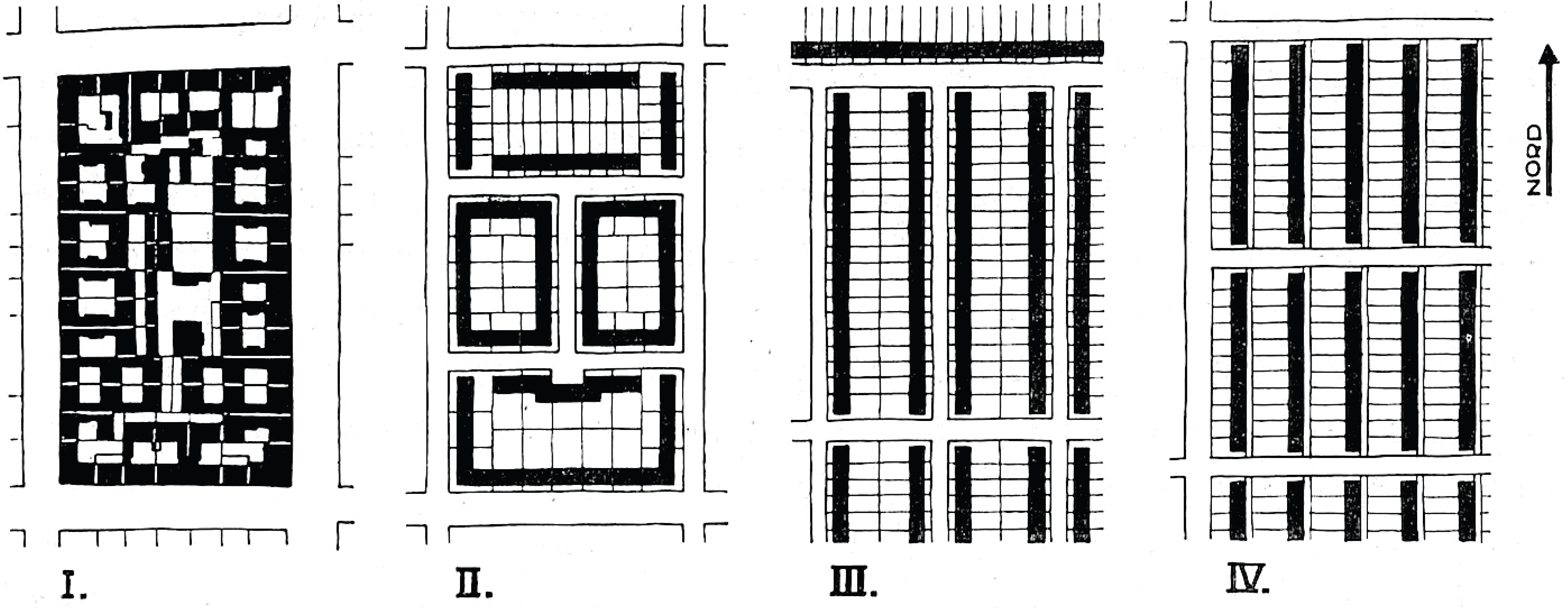
Since a few years ago we have been conducting, with a small research group at the University of Applied Sciences in Potsdam, a project entitled “Block.Reform.Berlin. Stadtraum und Wohnhaustypen für die junge Großstadt/Urban space and housing types for the young metropolis. 1890–1940” [1]. The aim of the project is to promote the search for solutions to large-scale sustainable urban living by documenting and analyzing the spatial and typological traditions of reformed residential housing in major European cities on the basis of completed projects. Concretely, compact urban blocks are analyzed, representing an alternative both to the speculative high-density city of rental barracks (Mietskasernen) and to the sprawling, anti-urban city of low-density settlements (Siedlungen) (Figure 1) [2], with the aim of investigating a historical experience but, above all, of finding answers to today’s questions and providing architects and planners with useful design tools.
Despite the extensive research landscape on Berlin’s late-nineteenth- and early-twentieth-century reformed block, most studies have approached them from historical, regulatory, or socio-political perspectives. What remains insufficiently explored is a systematic architectural and morphological reading of these blocks as spatial and typological models—a gap partly due to the limited availability of analytical drawings, floor plans, and comparable graphic material. Revisiting Berlin’s reformed blocks today is therefore necessary not as an exercise in historical reconstruction, but as a critical investigation aimed at retracing and interpreting the layout of the blocks and dwellings in order to assess how specific morphologies mediated density, habitability, and urban continuity—issues that remain central to contemporary debates on sustainable urban development.
Within this broader research framework, the present article focuses specifically on the morphological and typological analysis of reformed urban blocks in Berlin. Its objective is to identify recurring urban forms, spatial principles, and configurations, rather than to provide a comprehensive historical or policy-based reconstruction.
Methodologically, the study relies on comparative morphological analysis, typological classification, and the critical redrawing of selected case studies, which allow architectural form to be examined as a tool for understanding urban reform processes.
The research field refers chronologically to the period 1890–1940 and geographically to the city of Berlin, and addresses three central themes:
  • The morphology of the block;
  • The housing-reform;
  • The architecture of the big city.
Block: The block, in all its morphological forms, appears to be an effective solution for creating a dense and compact urban fabric, in which the private and public dimensions of life are clearly identified and distinct. The urban design culture of the European city is still based today on the differentiation between public and private spaces and on the constant search for the right balance between these two poles as an expression of a qualitatively livable and socially equitable urban space. This research has produced over the centuries a wide variety of block types, which still today represent the high level of residential culture (urbanity) present in our cities and are, in their spatial reality, an example to refer to for the future [4]. The block remains still today an effective tool for generating density, balance between public and private spaces, functional and formal diversification, social cohesion, and a sense of neighborhood. The block also ensures clarity and quality in the urban space (address/facade) and wideness in the green, planted inner courtyards, which are the basis for a sustainable approach to urban design.
Reform: In the period between 1890 and 1940, architects and urban designers throughout Europe (and even overseas) tackled with particular strictness and determination the issue of transforming/reforming rapidly growing cities, producing innovative approaches to both the morphology of urban spaces and the typology of housing. The search for spatial solutions capable of combining mass housing construction with architectural and urban culture, as well as with the improvement of living conditions, was the central theme of that era. High-quality urban spaces, architecturally characterized and livable, as well as optimized housing types, were the key issues of this “reform” [5,6].
Among the main players in this process were building cooperatives and public housing companies—and their architects. They were able to tackle the most pressing issues posed by living in a densely populated city and implement the concept of reform—accessible, modern, safe, and sustainable housing—with numerous exemplary projects that have strongly shaped city morphologies. These interventions stand out not only for creating significant urban figures and layout solutions for residential buildings, but also for their high architectural value, which cannot be attributed to a single style, but is characterized by different formal expressions. The capability to provide an urban solution to the housing issue, i.e., to look beyond quantitative data and generate a multifunctional, socially differentiated, and culturally integrated spatial structure, has been a great challenge for cooperatives and is still highly relevant today.
Berlin: Between 1890 and 1940, Berlin was, in every sense, a veritable laboratory for experimentation and innovation in the field of social housing, including the issue of the urban block. In current debates, and already in the past—before and after the reunification of the city—Berlin has placed at the center of theoretical discussions and design practices the reflection on the urban block and its relationship with life in the big city. This reflection started with the reform projects between the late nineteenth century and the early decades of the twentieth century, continued through the reconstruction of the 1950s and 1960s and the IBA 1979–1984/87 [7,8], and ended with the critical reconstruction of the 1990s [9,10,11]. These attempts have produced exemplary results, which significantly influenced the national and international architectural debate on the European city. Over the decades, their achievements have been translated into built architectures, becoming a sort of living exhibition of the most advanced urban solutions, showcasing the strengths and weaknesses of urban and architectural block structures for a metropolitan housing culture. When thinking about the city of tomorrow, it is impossible not to question the reasons behind these buildings and their significance in defining a shared idea of urbanity.
Taken together, the three topics block, reform, and Berlin provides a coherent analytical framework: the concept of the urban block illustrates the formal and spatial principles underlying European city morphology; the reform period demonstrates how these principles were adapted, experimented with, and optimized through new housing types and ground floor solutions; and Berlin acts as a concrete historical laboratory where these approaches were realized, tested, and refined. In this way, the three themes collectively structure the article’s argument, showing how urban morphology, architectural typologies, and housing floors interact and evolve over time, offering insights for both the analysis of historical developments and the design of future urban environments.
After this introduction, the paper presents the research materials and methods, including historical documentation, morphological analysis, and typological classification. The results are illustrated with a detailed examination of block forms, apartment plans, architectural features, and photographs. In the final section, the implications of these findings for contemporary urban design are discussed by highlighting the lessons offered by Berlin’s reformed blocks for contemporary, sustainable, and coherent city development.

2. Materials and Methods

2.1. Historical Framework

In the period between 1890 and 1940, Berlin experienced extensive urban and architectural transformations. The increasing industrialization and the resulting migration from rural areas led to an unprecedented demographic growth, with a consequent massive demand for housing for both the working class and the middle class.
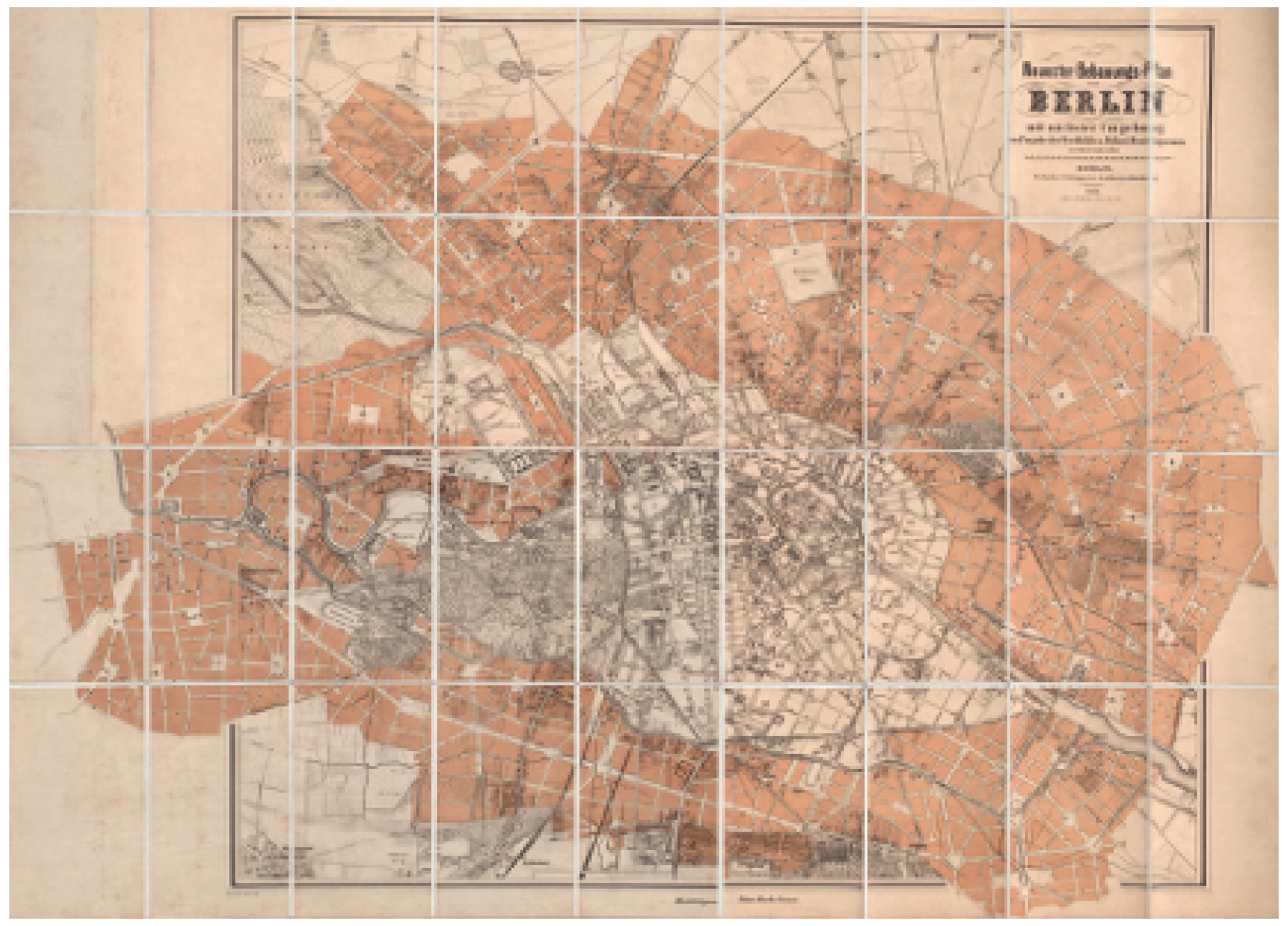
The Hobrecht plan, approved in 1862, provided a solid technical basis for urban development (Figure 2). With its wide, tree-lined streets and ornamental squares, the plan created an efficient infrastructure which, together with the advanced sewage system, was an important prerequisite for the emergence of a modern metropolis [12,13].
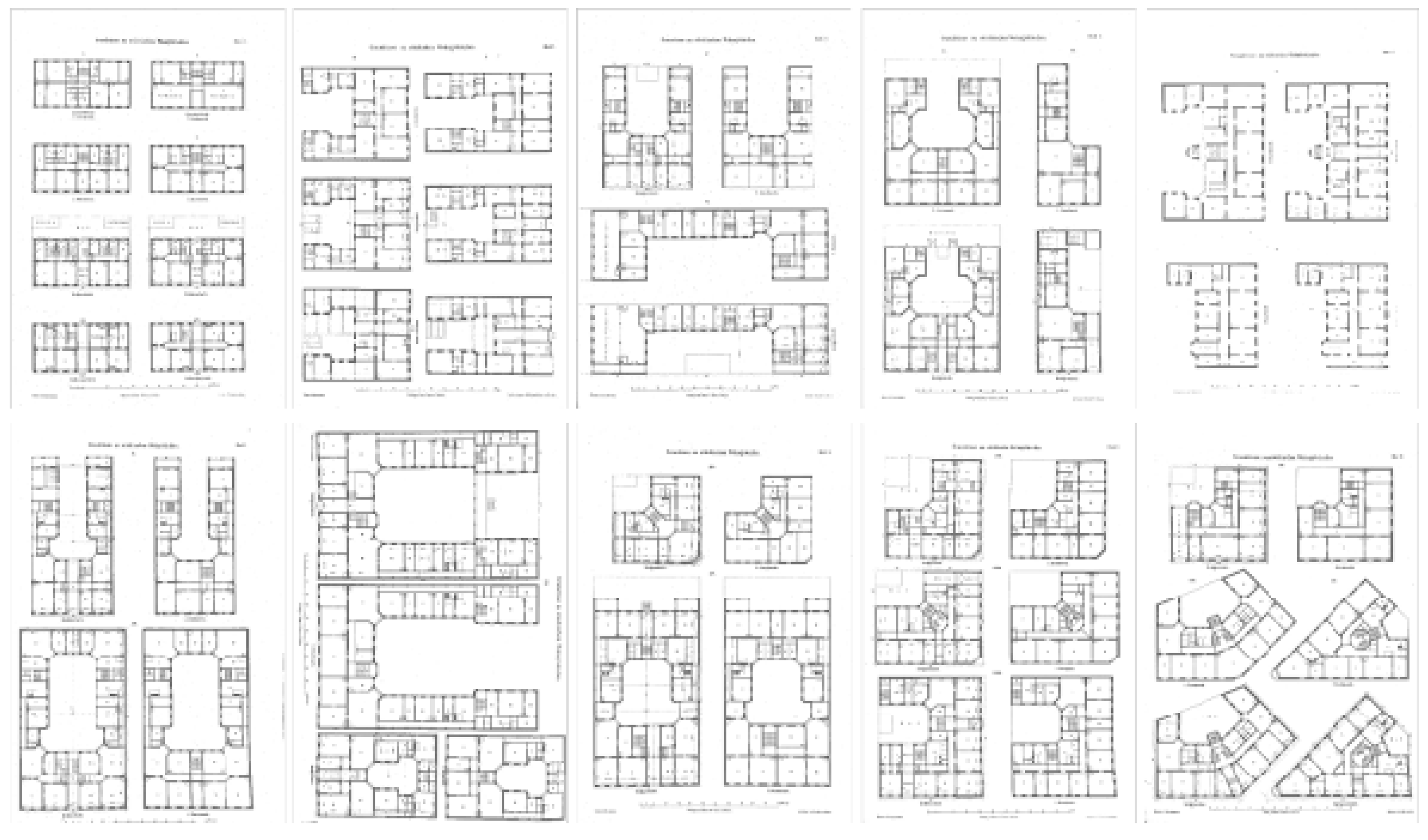
The type of multi-story rental building suitable for perimeter block construction (Blockrandbebauung) was also developed and quickly perfected, offering a wide repertoire of solutions that ensured the efficient development of different plot types for the large and deep blocks of the plan (Figure 3) [14,15,16,17,18,19,20].
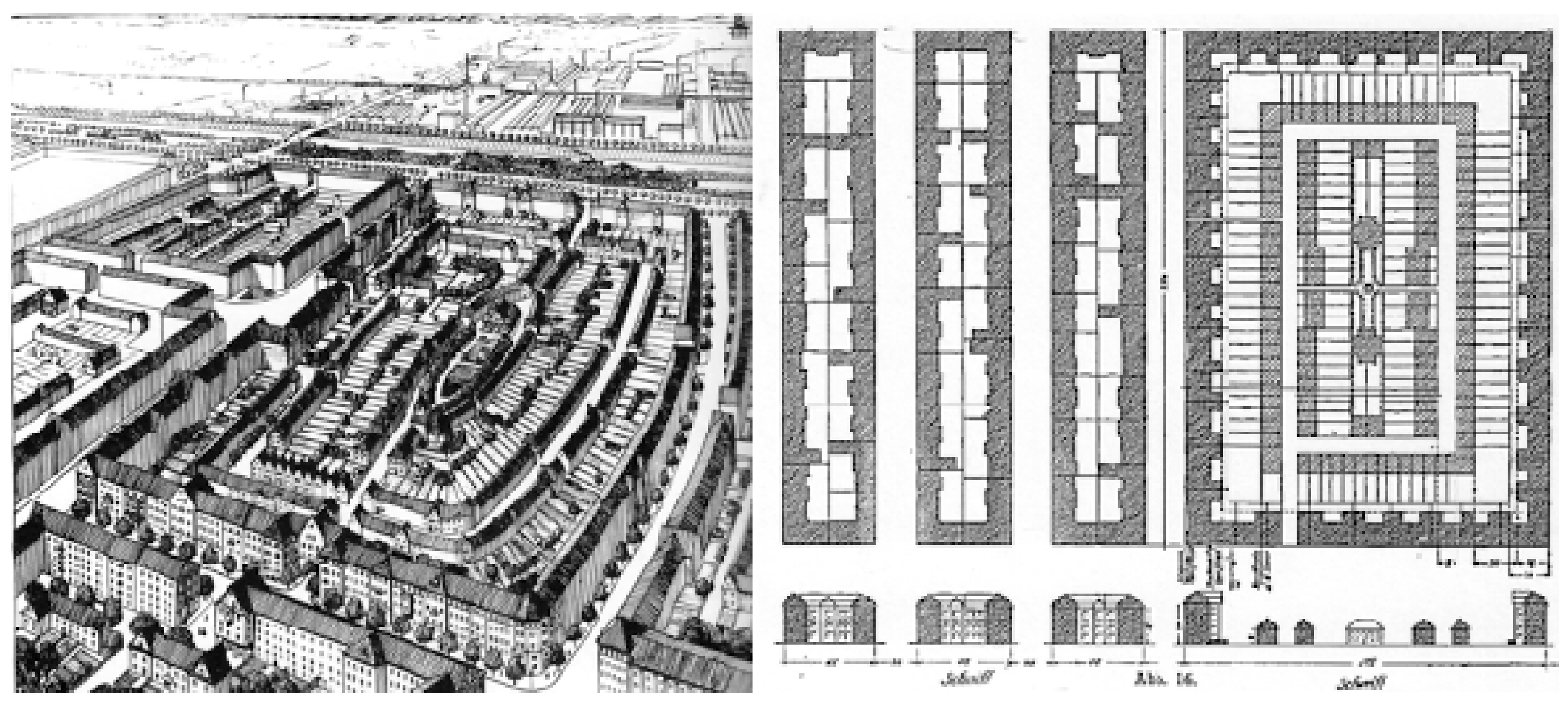
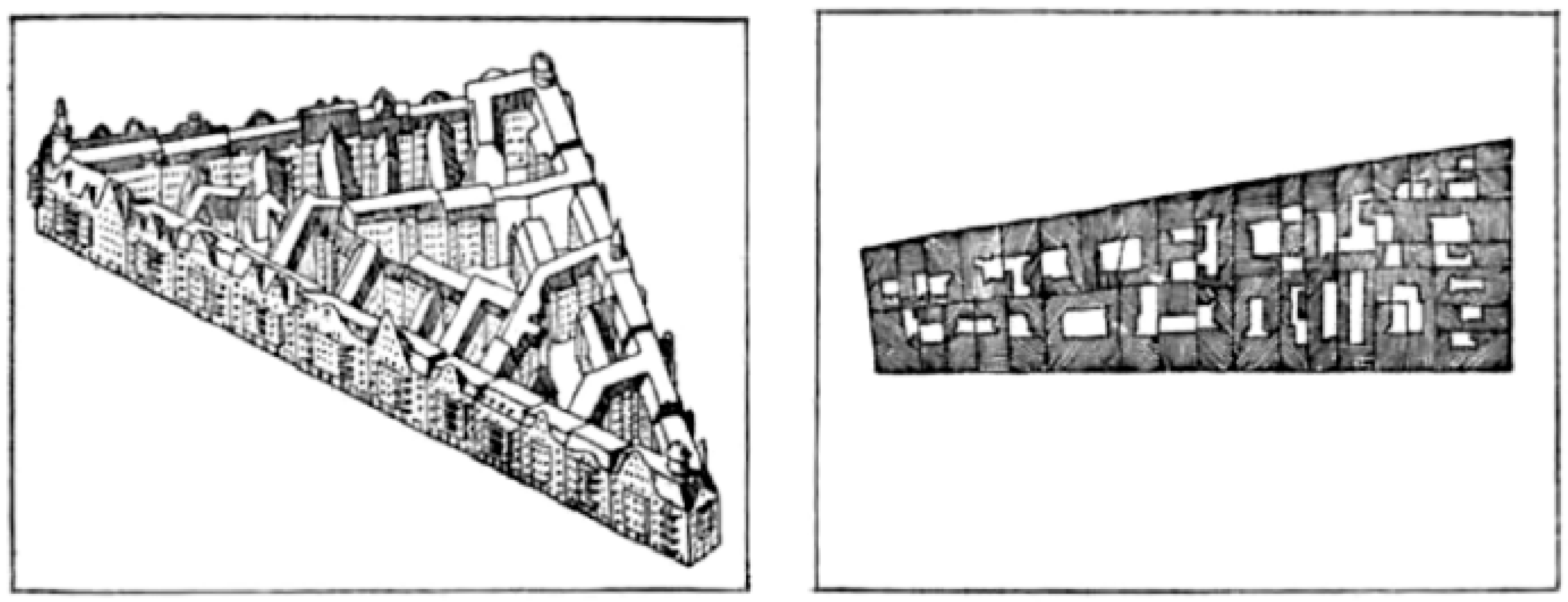
However, the building regulations accompanying the plan provided no guidelines for morphology and land-use density, leading to constructions that extended well beyond the perimeter, sinking deep into the block with side wings, cross-buildings, and long sequences of interconnected internal courtyards. Combined with inadequate hygiene standards and overcrowded apartments, this phenomenon soon drew unilateral criticism [21] and earned Berlin in the 1930s the title of the “largest tenement city in the world” (Figure 4) [22].
The issue of social justice, implied in the response to the problem of mass housing, is indeed here directly linked to the question of the urban and architectural solutions employed to respond to the housing emergency. In this context, the idea of “reform” developed as a movement demanding not only a new organization of life and dwelling in the big city, but also a fundamental review of land policy and the economic aspects of social housing. This was a necessary prerequisite for the spatial and architectural quality of the interventions.
A crucial role was played by building cooperatives and residential construction companies, which—in the complex intertwining of financial capital (private urban developments), real estate companies, and municipal planning—emerged as the new economic player in the construction of the modern metropolis, capable of combining financial sustainability with social challenges as well as spatial and architectural quality. Cooperative architecture can be understood, in this sense, as a synthesis of building policy and living culture, in which urban planning as a “comprehensive” discipline comes up again to play a leading role.
In cooperative design, the debate between private property—focused on land subdivision and maximum profit in central areas—and public housing—deputized to large-scale projects in suburban neighborhoods—is also resolved: it works, in fact, on the intermediate scale of the block with medium-sized housing complexes, which combine integration into the continuity of the built fabric with the theme of functional and social variety and urbanity [23,24].
The possibility of evading real estate speculation combining several parcels and designing large plots with a unified project offered the cooperatives and their architects a new range of solutions—for both urban space and residential housing types—optimizing the interaction between public, collective, and private spaces. Within the existing urban structure, the block could be reinterpreted, opened up, loosened into meanders and sequences of courtyards, fragmented into individual elements, and recomposed into new forms. These new urban and architectural figures, in which the relationship between individual living and collective spaces was renegotiated, gave expression to the new concept of social reform in housing.
Of course, in addition to reformist ambition, this required an adaptation of legal and political conditions. Low land prices and government subsidies for the purchase of plots, as well as favorable credit conditions, were intended to encourage cooperatives to forego the maximum exploitation of land in favor of improving urban and residential quality [25]. Starting from the German unified law on cooperatives of 1889, which opened the way for the establishment of new cooperatives in various economic sectors—including housing—legislative, economic, and fiscal measures followed, enabling an unprecedented period of cooperative design in Berlin [26].
On the origin and development of cooperatives, reference should be made in particular to the studies by Klaus Novy, who explored the subject in depth in the late 1980s and whose work still remains relevant today. Novy emphasized in particular the structural aspects, i.e., the economic, financial, and organizational aspects of cooperatives, while proposing a morphological taxonomy of the different cooperative models [27,28].
The most forward-looking urban and architectural expression of social housing in Berlin was achieved when a successful collaboration between a cooperative and a competent, committed architect was established and strengthened over time. Examples include the collaboration of the Berliner Spar- und Bauverein—today the Berliner Bau- und Wohnungsgenossenschaft von 1892 eG—with Alfred Messel and Paul Kolb, or those of the Beamten-Wohnungsverein zu Berlin with Erich Köhn and Paul Mebes. Alfred Messel (1853–1909) already published proposals and designs for better workers’ tenement buildings in 1890. From 1893 to 1898, he was a member of the executive board, and from 1899 to 1909 he was a member of the supervisory board of the Berliner Spar- und Bauverein (BSBV), for which he designed 4 important residential complexes. Paul Kolb is known only as a student and collaborator of Messel and as an architect working in Berlin. A comprehensive study of his life and work would be very valuable [29,30,31]. Erich Köhn (1870–1945) was a co-founder of the Beamten-Wohnungs-Verein (BWV) in Berlin in 1900, was elected to the board of directors, and headed the technical office until 1906. During this time, he built a total of 10 residential complexes. To date, there has been no comprehensive research on Erich Köhn either. Paul Mebes (1872–1938) was a member of the technical board of the Beamten-Wohnungs-Verein zu Berlin from 1906 to 1917 and was responsible for 15 of its projects [32,33]. Their projects reshaped the body and image of the city, introducing innovative and sustainable solutions for urban space, building types, and housing floor plans.
The reformist residential housing projects carried out between 1890 and 1940 spread across the entire city, from the boundaries of Hobrecht’s plan to the neighboring municipalities, which were then incorporated into Greater Berlin in 1920 (Figure 5).
While large multi-story blocks with shared inner courtyards have proven to be the most suitable form for cooperative housing in the consolidated city—where the street space could gain new qualities from the rhythmically structured large urban figures—in suburban areas, smaller-scale structures and building types have developed in a more open relationship with the landscape, sometimes inspired by the garden city concept.
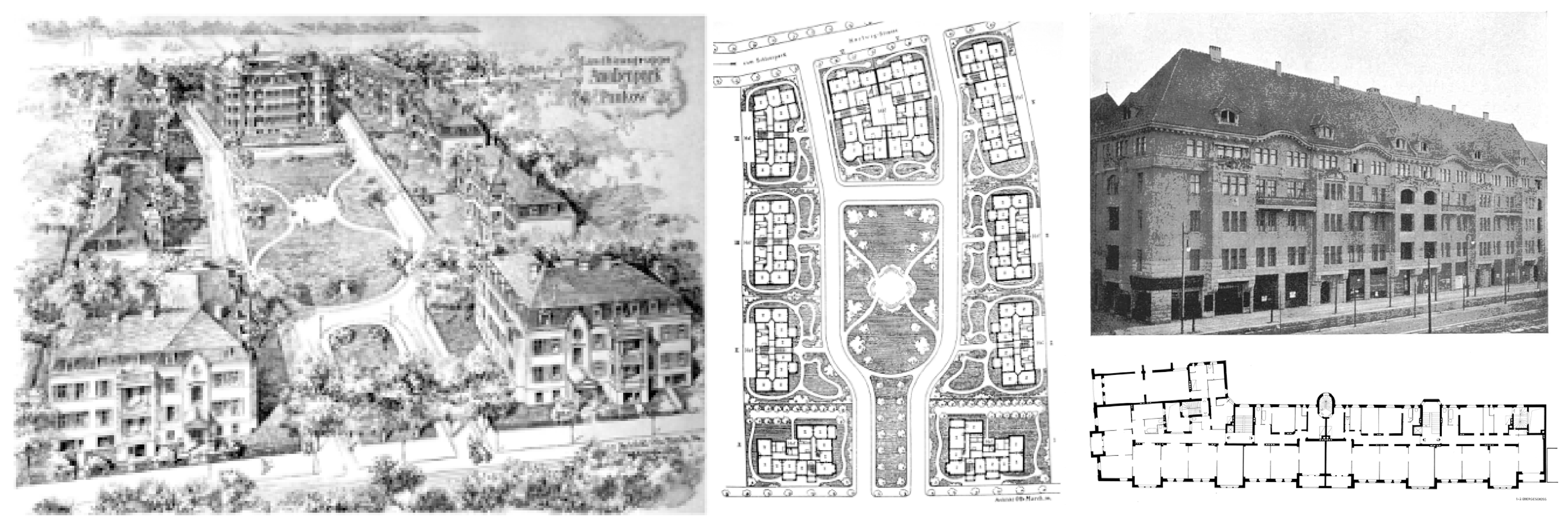
This tendency can be seen, for example, in the work of the architect Otto March, if one compares the group of urban villas in Amalienpark, Pankow (1896–1897) with the five-story apartment and shop complex in Bismarckstraße, Charlottenburg (1905–1906), which is 13.5 m wide and 77 m long (Figure 6) [34,35].
This tension between urban density and landscape dimensions was clearly present, if not in political debates, then certainly in technical and professional discussions. This is evident, for example, in the contributions of the “the Greater Berlin” competition, announced by the Architekten- und Ingenieur-Verein (AIV) in 1908 and concluded in 1910 [35]. Here, design solutions were sought for different urban structures, densities, and building types—from compact blocks in the historic center to reformed blocks in new expansions up to the garden city [38,39,40,41]—including interesting hybridizations, such as that of Eberstadt, Möhring, and Peterson, who proposed to place single-family terraced houses within a metropolitan block (Figure 7) [42].
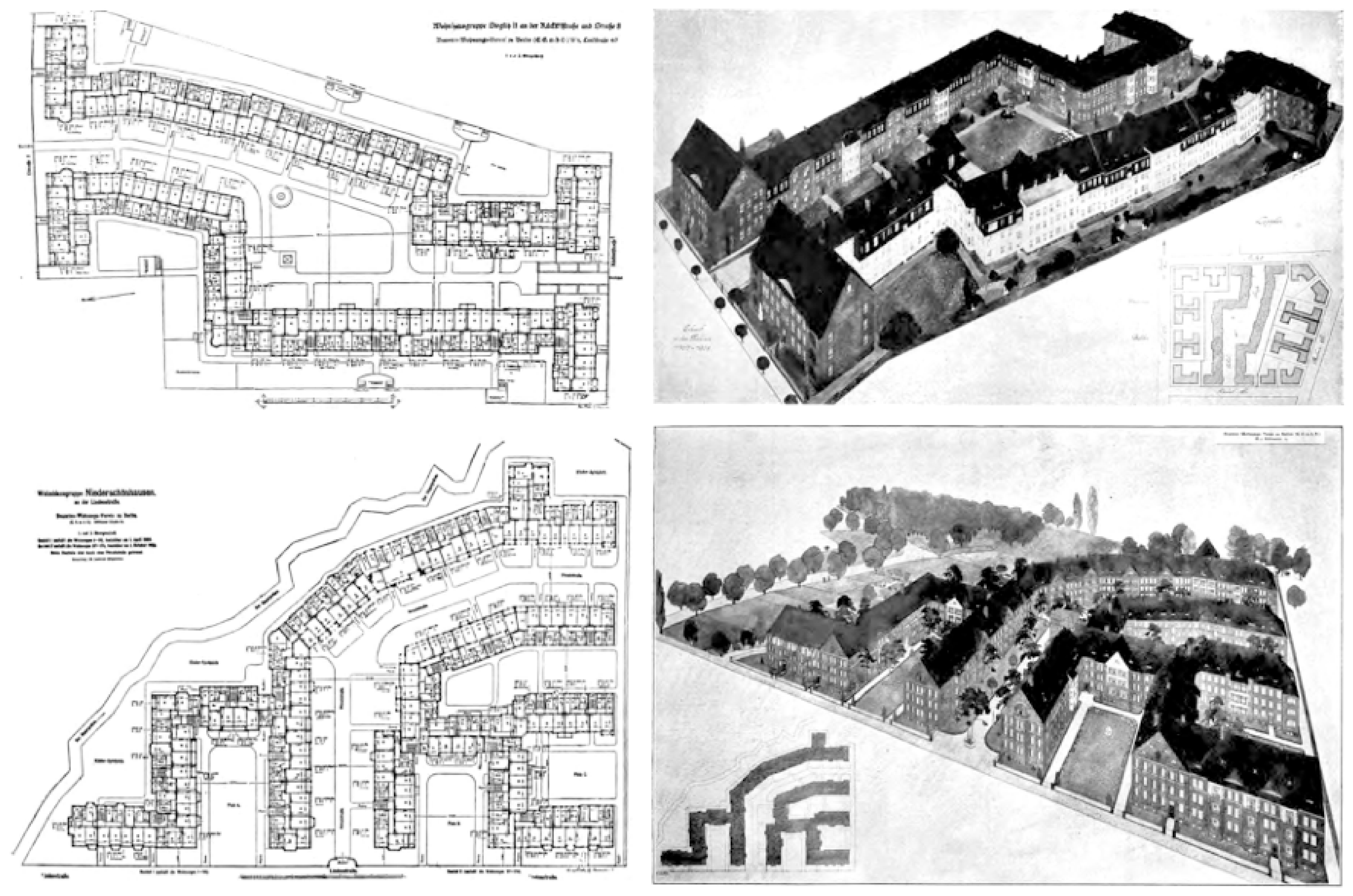
It is therefore not surprising, in this context, that the Fritschweg complex in Steglitz (1907–1908) and the Paul-Francke-Siedlung in Niederschönhausen (1908–1909) by Paul Mebes were exhibited at the 1910 Berlin Urban Planning Exhibition (Figure 8), curated by the young Werner Hegemann, returning from the United States, as relevant examples of reformed housing for the big city [43].
The “reformed” blocks fit into the existing urban fabric, but at the same time they clearly differ from the typical block construction with internal densification of the plot. They are complexes that operate on the scale of urban architecture and, in their various settlement forms, interact with existing structures and integrate and expand them, providing new public or community spaces. On-street courtyards, private ways, and neighborhood squares act as multipliers of the urban space, where public and private realms remain distinct yet are mediated through shared environments that foster connection and continuity.
Despite the large scale and massive volumes, the variation in the facades ensures variety within the unity of the cityscape. The orientation of buildings towards public spaces is considered an essential condition to ensure recognizability, identification, and a sense of belonging. Stairwells and circulation paths are part of the community space and are designed with attention to detail.
Importantly, there is no genealogy, in the sense of a chronological sequence or descent from one model to another. These projects develop in parallel and depend much more on the concrete conditions of the urban context than on the visions of an ideal reformist principle. Reformist movements played a stimulating and inspiring role in the attempts of reforms in urban design and architecture. However, the solutions designed by architects in the young metropolis have much more to do with a concrete reform of the building conditions: the Hobrecht plan, the land policy, and the building and police regulations are the real problems to be solved in order to apply the reformist ideas of urban life.
The main goals were a morphological reform of the block, to enrich and enhance the urban spaces, and a typological reform of the floor plans, to adapt the apartments to the needs of “reformed” life. Thanks to the new urban figures and the access solutions, the floor plans of the apartments vary in size and structure and are rational and efficient, without rooms in “enfilade” or wasted distribution space. In most cases, they guarantee cross-ventilation and have an outdoor space (loggia or balcony).
The private courtyards are designed as gardens and provide opportunities for socializing within the cooperative. This is also supported by the shared facilities present in the majority of the complexes, ranging from a laundry room to a community space or a library, as well as shops on the ground floor overlooking the public space.
The urban and architectural qualities of these complexes make them examples of both forward thinking and resilience: with just a few internal modifications, they have been adapted to different housing needs and are still highly demanded and fully functional today. The cooperative model has also proven its worth, and although Berlin’s cooperatives, due to legal, political, and economical changes, are now mainly focused on managing their existing properties, they remain a point of reference and a source of inspiration for tackling the current housing issue. The urban design and architectural solutions proposed by the cooperatives and their architects at the beginning of the 20th century constitute a precious heritage, which contemporary architects should be looking to more often, as they still have much to teach us.

2.2. Case Study Selection and Analytical Approach

The research was conducted using the designer’s tools:
  • Historical and bibliographic research, also aimed at reconstructing the socio-economic and political context;
  • Analysis of urban morphology, to identify the relationships between building typology and the structure of the built environment;
  • Classification into three macro-type morphological categories: block, on-street courtyard (meander), and ensemble (street/square/housing complex);
  • Redrawing of case studies on a unified scale to ensure comparability and systematic analysis of the design solutions, but also, above all, to gain new insights for contemporary urban design.
The main goals are as follows:
  • To document the history of the selected buildings, their designers and clients (in particular, building cooperatives and real estate companies), the financing methods, and the parcel structure;
  • To analyze the urban design solutions of the housing complexes in relation to the morphological structure of the surrounding city, especially from the perspective of the relationship between public, private, and “collective” space;
  • To verify the consequences of urban “figures” on the choice of architectural types for residential buildings (repetition, variation, and identity) and on the layout solutions for the apartments (distribution, rationalization of floor plans, double exposure, loggias, and balconies);
  • To evaluate architectural and construction choices in relation to the characterization of public and private spaces and relate them to the search for recognizability and identity of places;
  • To provide, through redrawing, an operational tool for contemporary architects and students, with scaled drawings of existing buildings set up as plates of a design manual.
At the beginning of this research, it became clear that the number of known housing complexes, compared to the diffusion of the reform block phenomenon, is extremely small, and floor plans have been published in very few cases. Of the more than 250 blocks analyzed, only about 10 (always the same) were published beyond their construction period, and always with the same few floor plans. The same drawings that Albert Gessner published in 1910 in the volume Das Deutsche Mietshaus can be found identically in 1969 in Julius Posener’s book Berlin auf dem Wege zu einer neuen Architektu and, a few years later (in fragmentary form), in the fourth part of the series Berlin und seine Bauten published by the Architekten- und Ingenieur Verein [37,44,45].
For this reason, a significant part of the research effort focused on collecting the floor plans of selected housing complexes and redrawing them on different scales, appropriate to the research topics: urban space, building types, apartment floor plans, and metropolitan architecture.
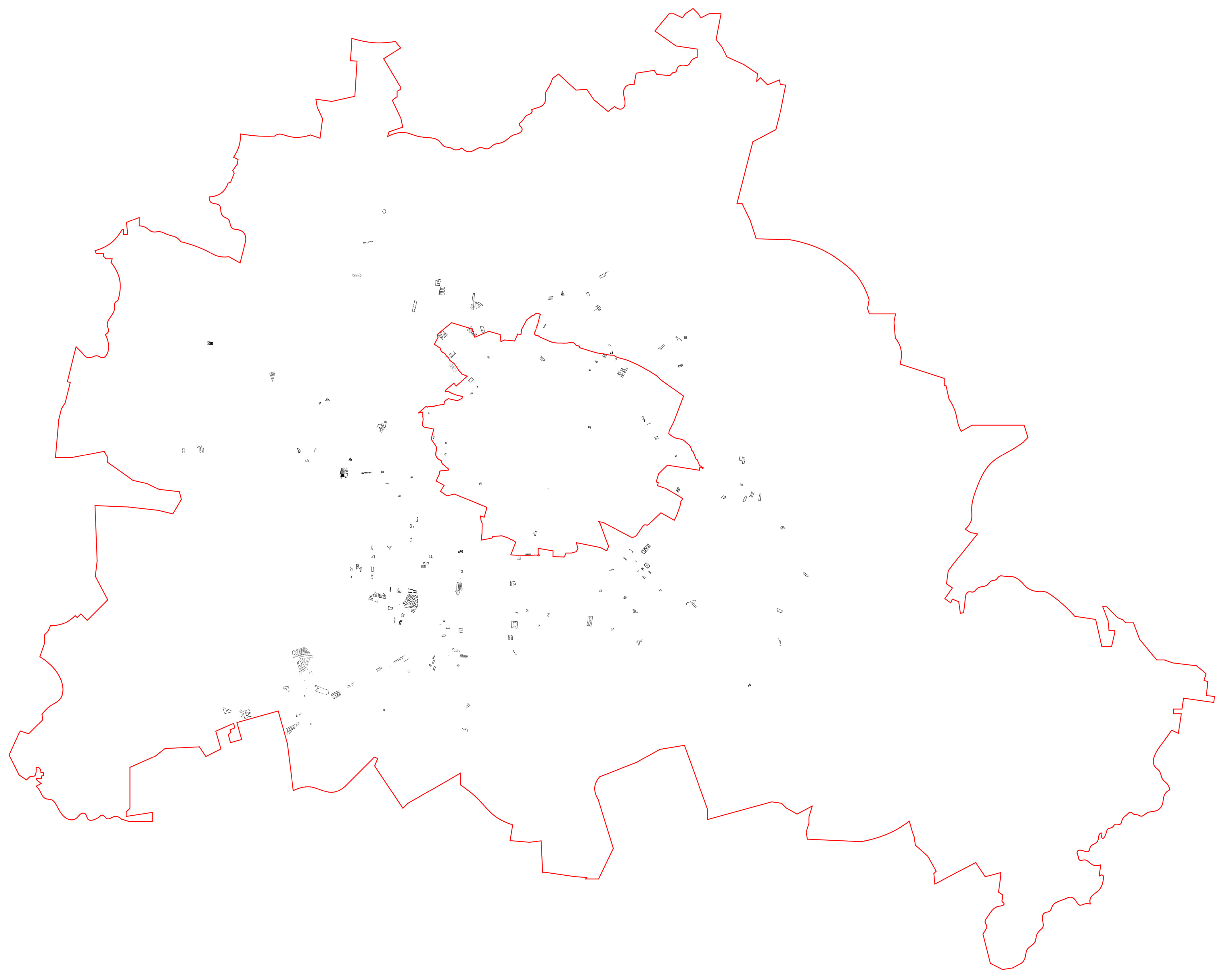
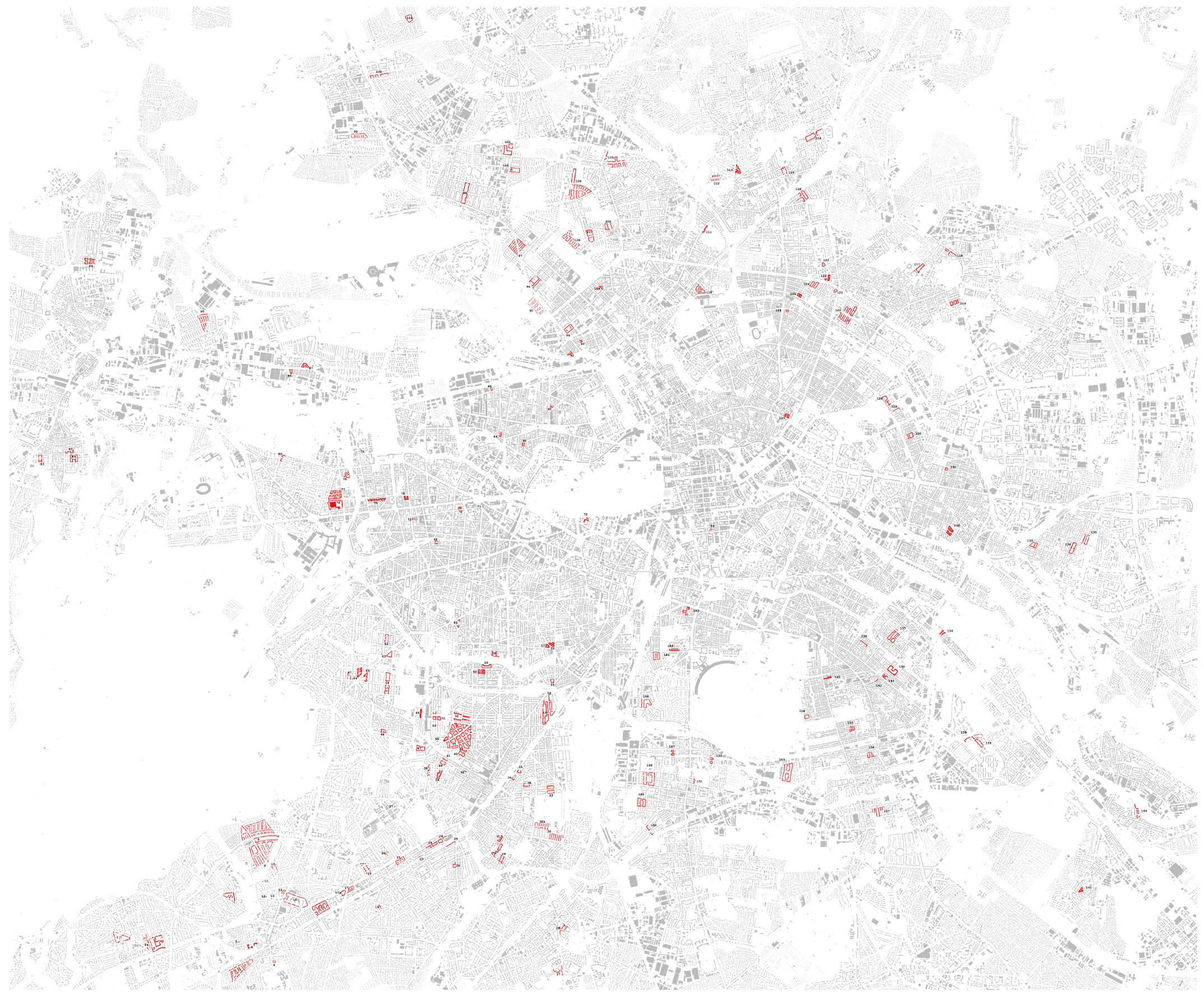
Furthermore, as can be seen in the solid and void plan, the urban design concepts of these housing complexes fit into the existing urban fabric, but at the same time clearly differ from the typical block construction with internal densification of the plot. This is one of the interesting aspects of the phenomenon and also the reason why, after analyzing more than 200 residential complexes built in Berlin between 1890 and 1940 (Figure 9), most of them by cooperatives, we decided to adopt a classification that is not chronological or based on the financing model, but rather on their urban morphology and architectural typology characteristics. The three macro types—block, on-street courtyard (meander), and ensemble (street/square/housing complex)—were defined based on recurring morphological and typological features observed across the broader dataset, providing a coherent structure for comparison and classification.
From the initial dataset of housing complexes built in Berlin between 1890 and 1940, a subset of 36 cases (12 for each macro type) was selected for detailed study and redrawing. The selection process followed multiple criteria aimed at ensuring both representativeness and analytical value. First, cases were chosen for their relevance to the objectives of this study, focusing on block morphology, apartment typology, and metropolitan architecture. Second, cases considered “exemplary” were selected, as they reflect models or types that are repeatedly found within the larger corpus. Third, the availability of archival materials determined which complexes could be analyzed in depth; access was obtained through collaboration with the housing cooperatives and their archives or directly from property owners, allowing consultation of building archives across different districts.
Once the material was collected, it was carefully organized into coherent sets of plans. In many instances, the constructed projects differed from the original designs, and modifications over time—including wartime damage—necessitated redrawing the original plans whenever possible, in order to capture the architects’ intentions accurately. To avoid overrepresentation, no architect was included with more than three cases, and preference was given to lesser-known or less-documented projects, which often required the most extensive archival research.
The analytical framework integrated morphological, typological, and architectural perspectives, allowing the research to bridge historical investigation with systematic analysis.
Planning architects look at the history of the city in a particular way: from a technical perspective. They are interested in urban morphology, i.e., in the urban forms of settlements, in the floor plans of buildings, in their internal distribution, in their spatial structure, and, last but not least, in their construction and architectural form.
The privileged tool for this knowledge is, of course, the direct experience of space, but drawing is also a determinant element: floor plans, elevations, and sections.
A multi-scale drawing methodology was employed as the principal analytical tool. Cases were redrawn at scales appropriate for different aspects of the analysis, from the urban context to parcel configuration, building footprint, and interior apartment layouts, including key architectural details.
This approach allowed for systematic comparison of spatial and typological solutions across cases, and facilitated identification of recurring design principles while maintaining attention to architectural and urban coherence.
By combining archival research, typological classification, morphological analysis, and graphical documentation, this methodology establishes a rigorous and replicable framework. It ensures that the study is not merely descriptive, but capable of revealing operational insights into the design of Berlin’s reform housing, offering lessons that remain relevant for contemporary urban design and architectural practice.

3. Results

We have thus developed a cascade of five different scales:
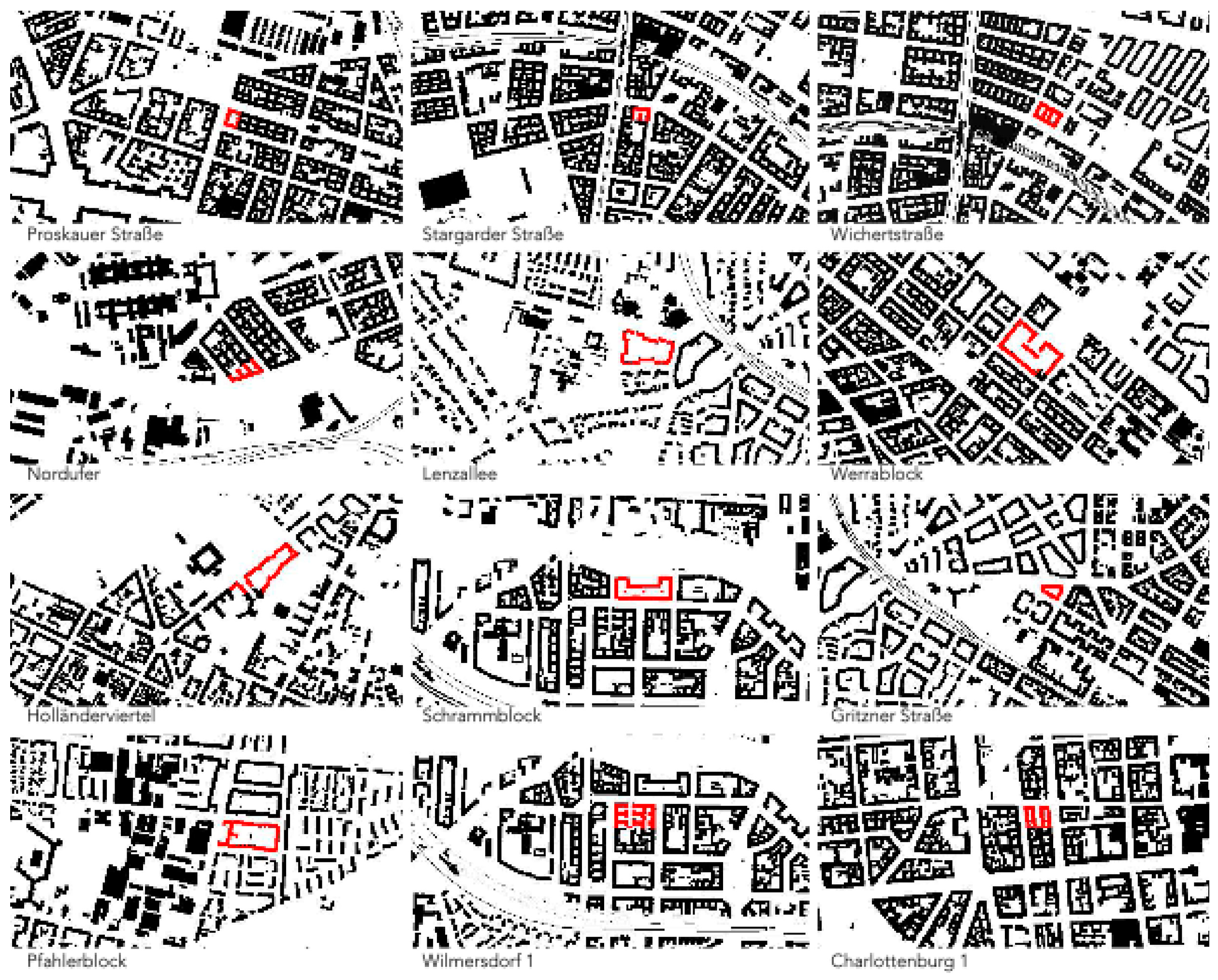
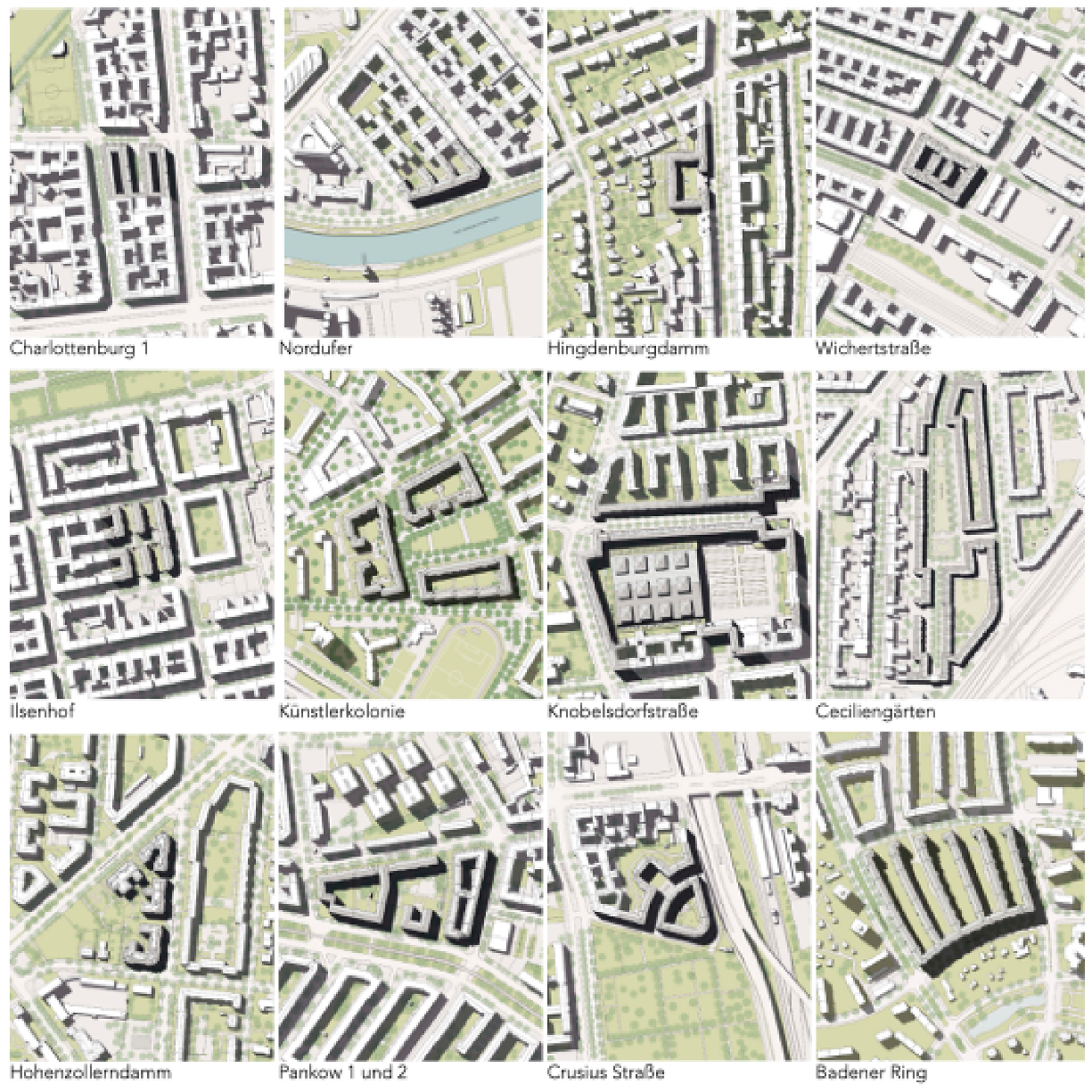
The black plan, in scale 1:10,000, shows the settlement within the urban fabric, highlighting the renewed focus on urban design as a global discipline and the dialectic between urban fabric and architectural objects, as well as between urban neighborhoods and housing estates (Figure 10).
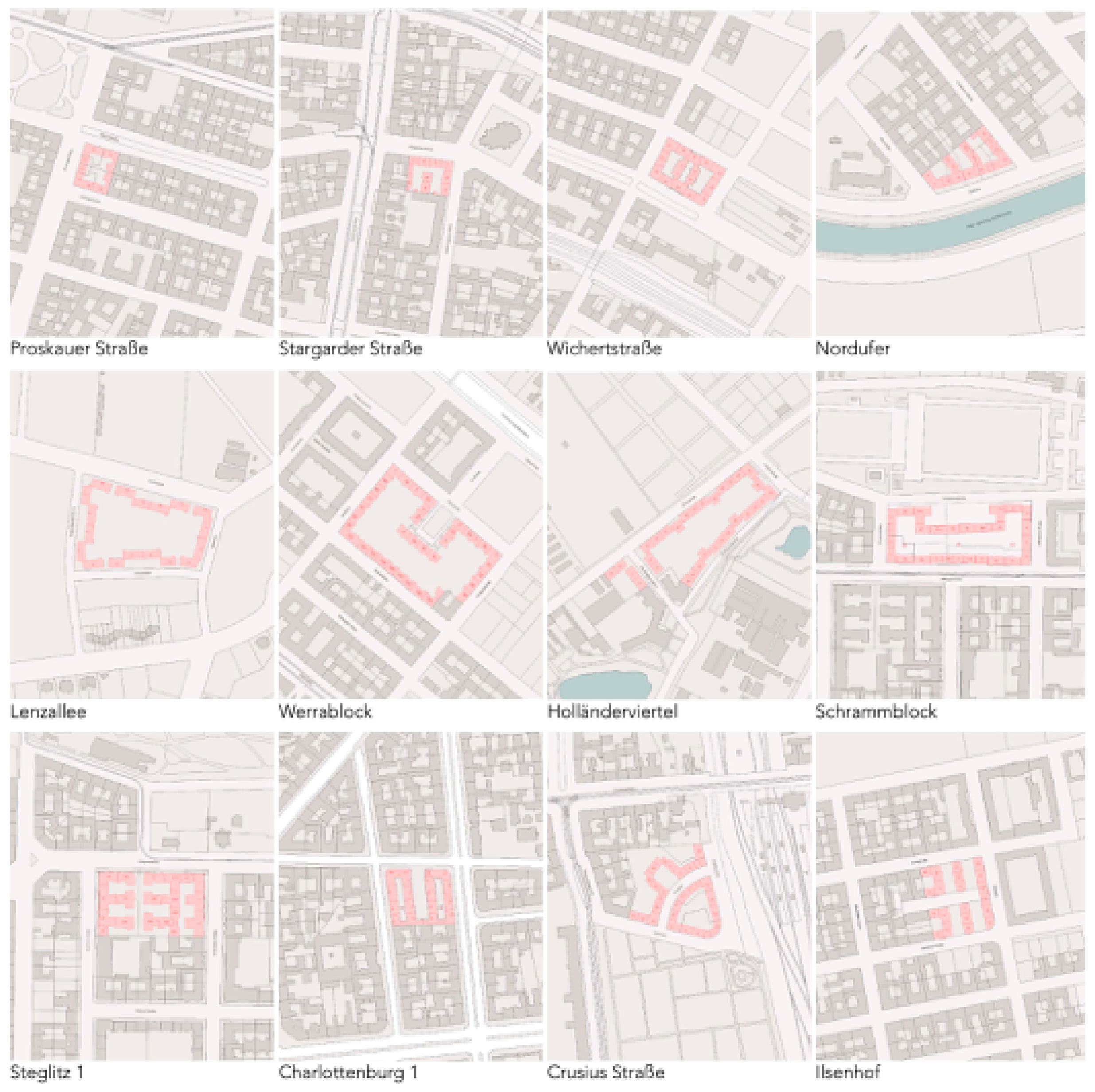
The site plan, in scale 1:2000, highlights the effectiveness of urban forms, the differentiation between public and private spaces, the clear design of public space, and the defined structure of green areas (tree-lined streets, public parks/green courtyards) (Figure 11).
The parcels plan, in scale 1:2000, highlights the issue of land ownership and its subdivision, in particular the merging of two or more parcels within a built block to create more spacious and sunny courtyards, to be used as common areas for residents (Figure 12).
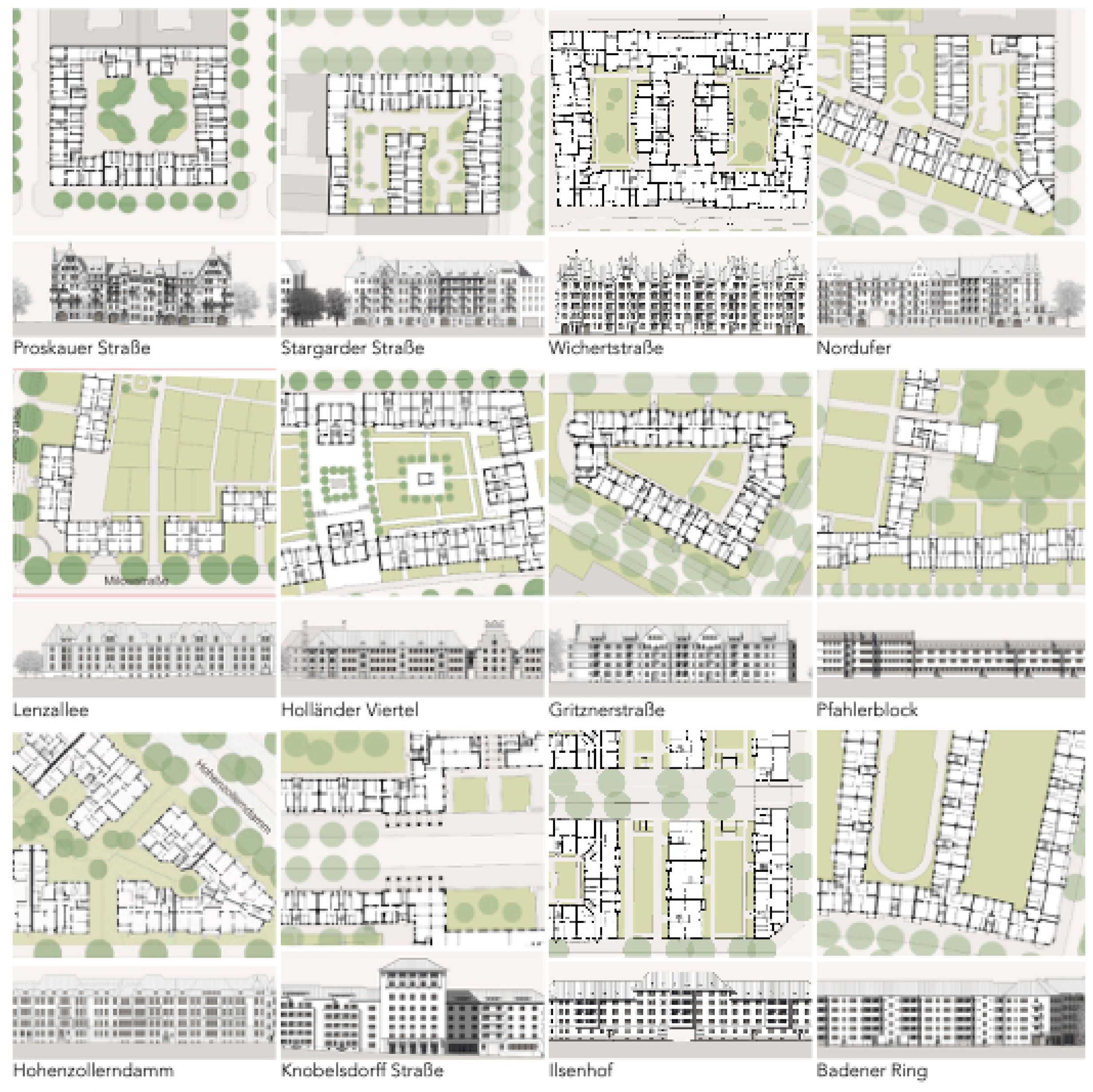
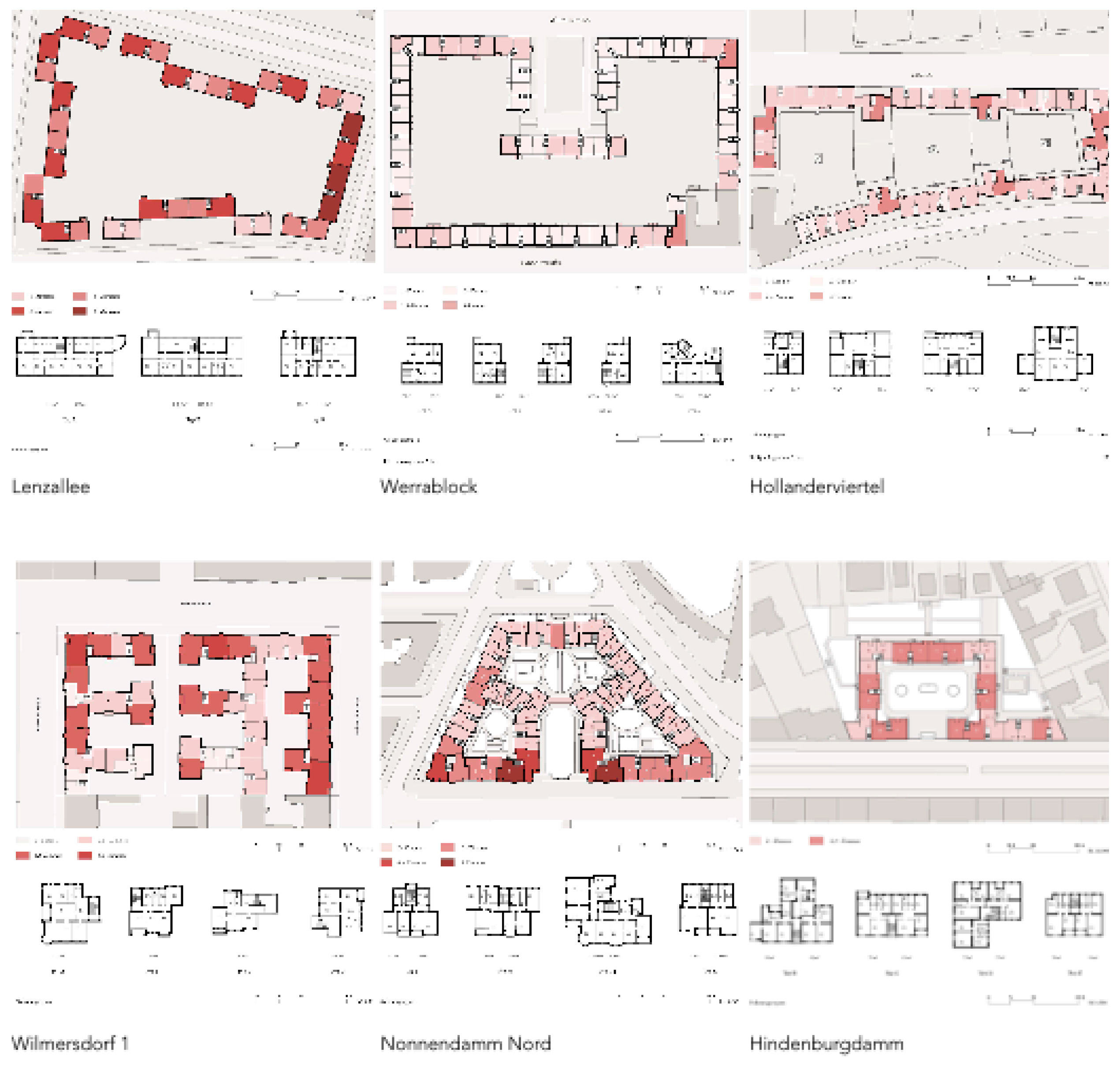
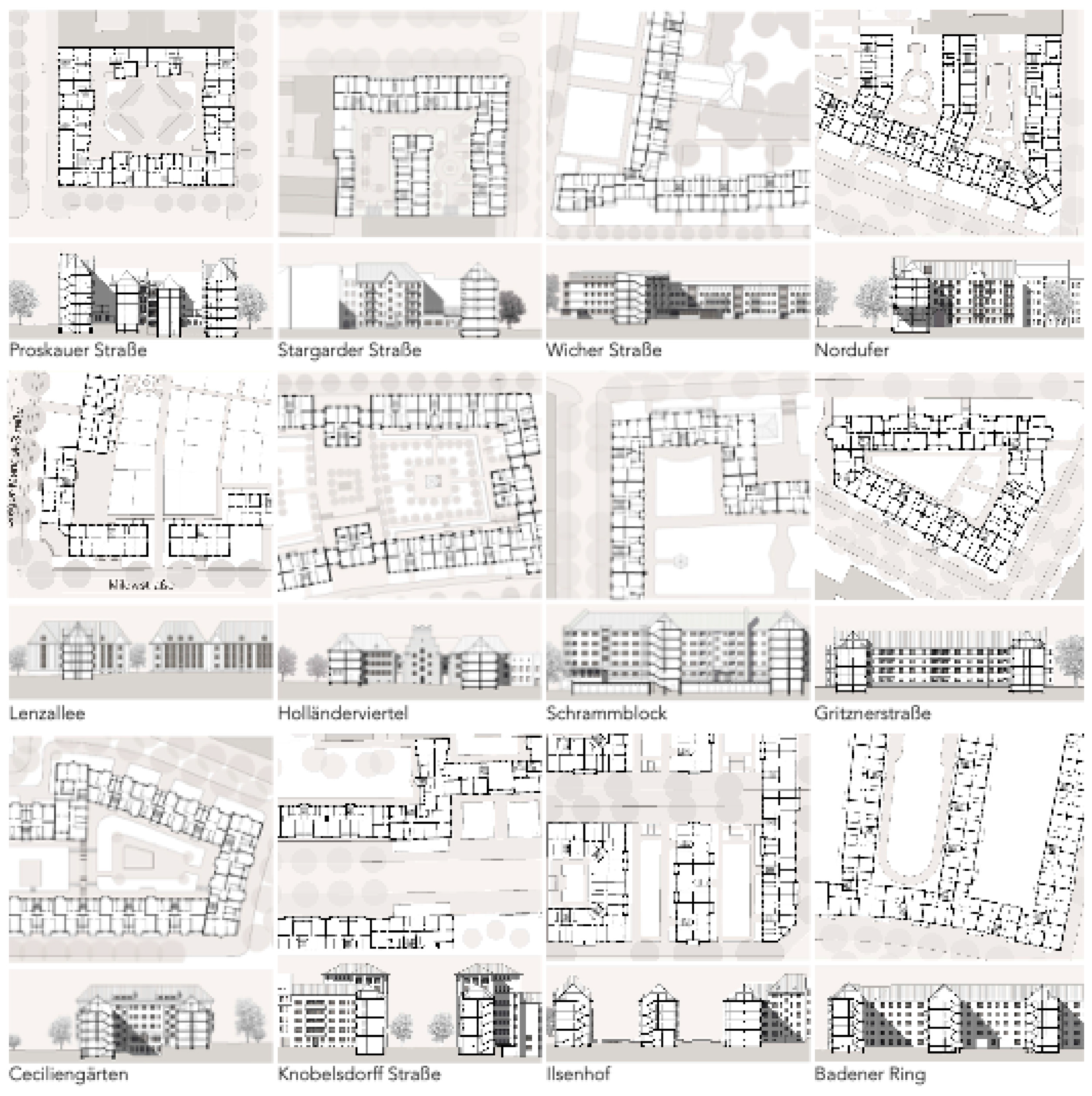
The floor plans of the ground floor and typical floor in scale 1:1000 and 1:500 clarify the building types in combination with the apartment layouts and demonstrate the striving for high-quality solutions for mass housing, as well as the creation of livable urban spaces and, at the same time, affordable, modern, safe, and sustainable apartments (Figure 13 and Figure 14).
The analysis of the floor plan types in scale 1:500 shows the effectiveness of distributive principles and the rationalization in the design of the apartments (Figure 15).
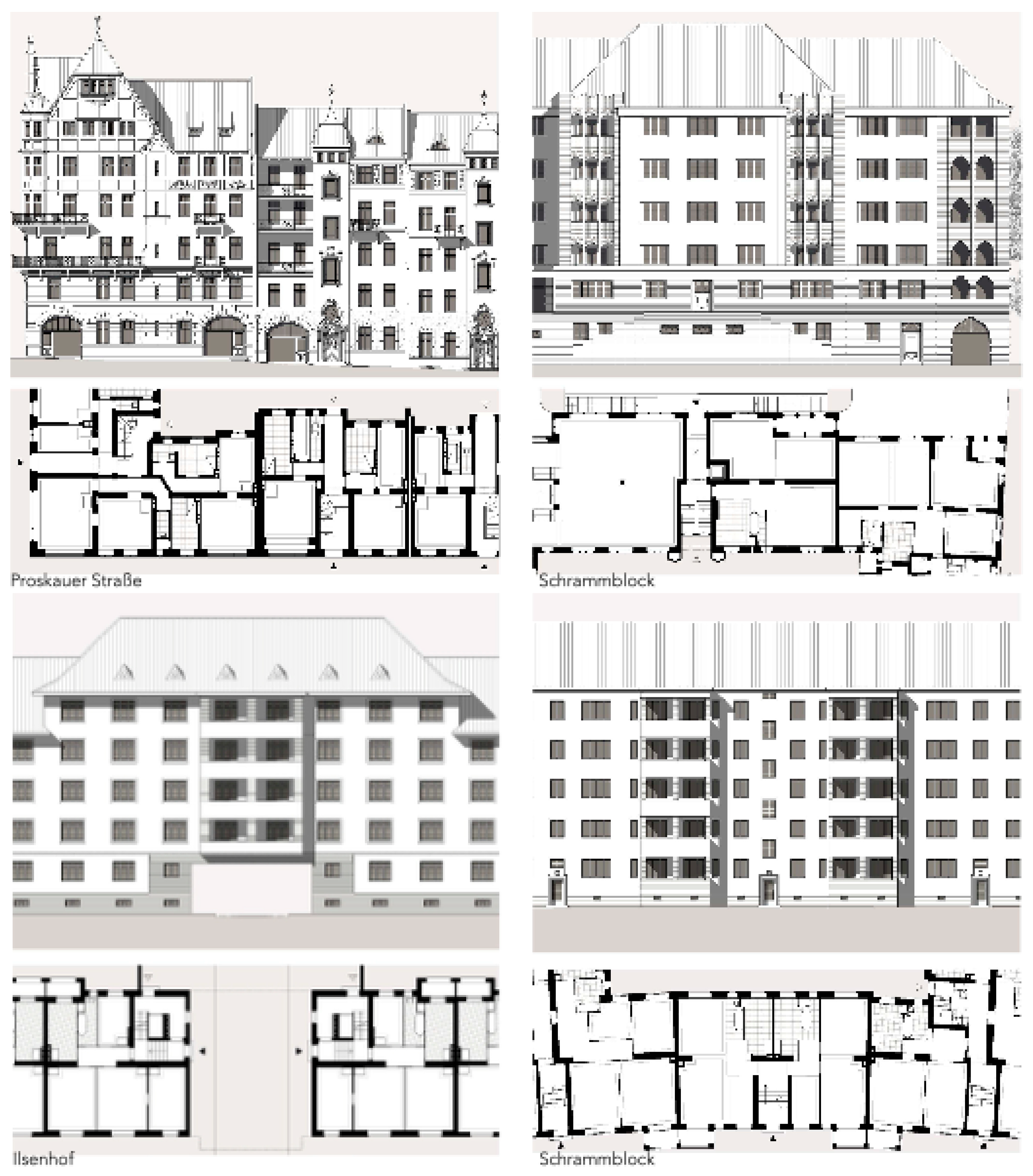
Finally, the facade detail in scale 1:200 represents the architecture in its form and construction (Figure 16). These projects stand out not only for the creation of important urban figures, but also for their high architectural value, which cannot be referred to as one style, but is rather marked by different expressions. They are always linked to their context and have a strong character, even in the 1920s, when modular construction was well established. The architectural design can, despite the homogeneous basic shape, present a wide variety of different features: angular accents, rising points, projections and recesses, bay windows, loggias and balconies, and different materials (plaster, brick, natural stone, wood, etc.).
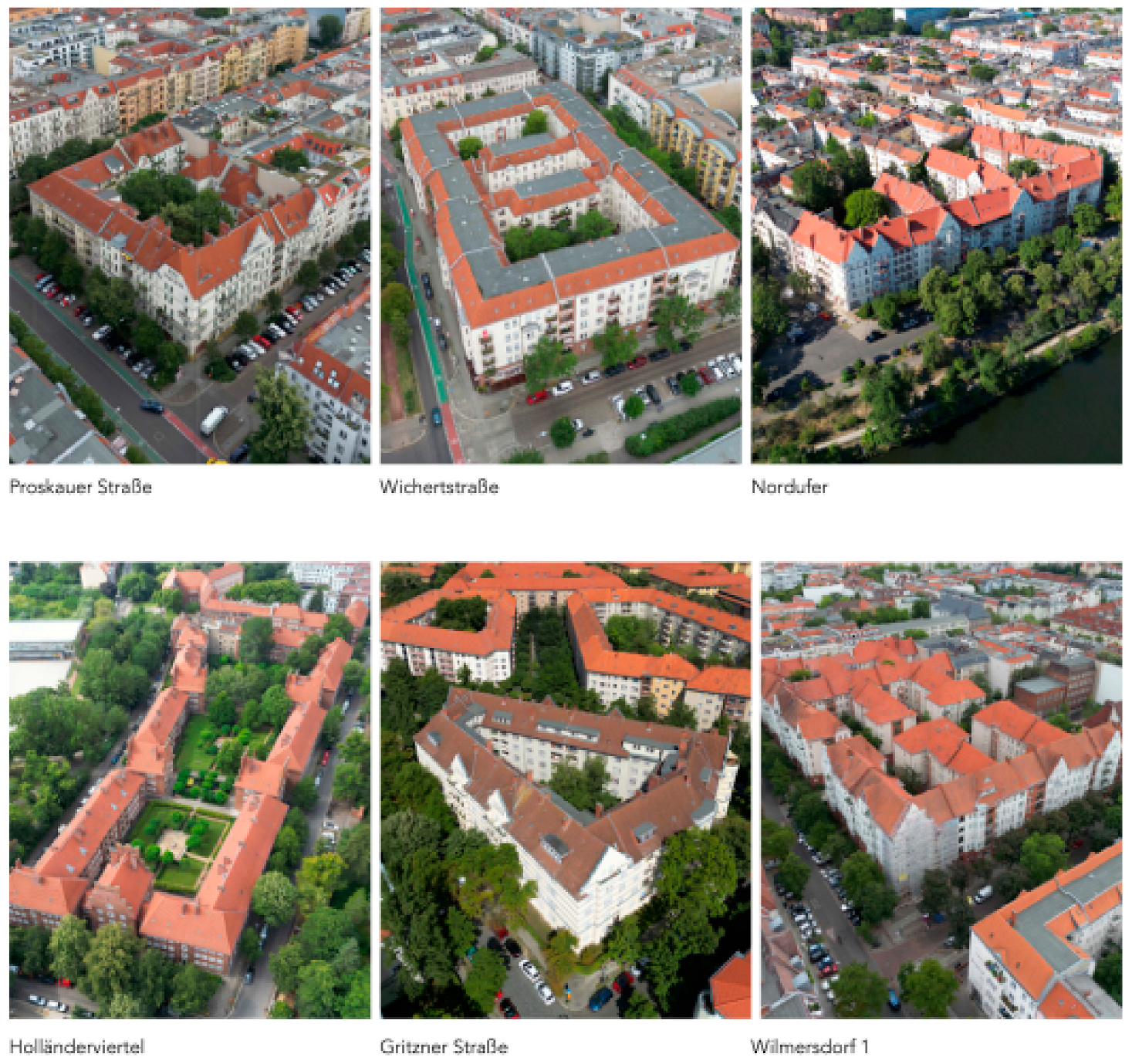
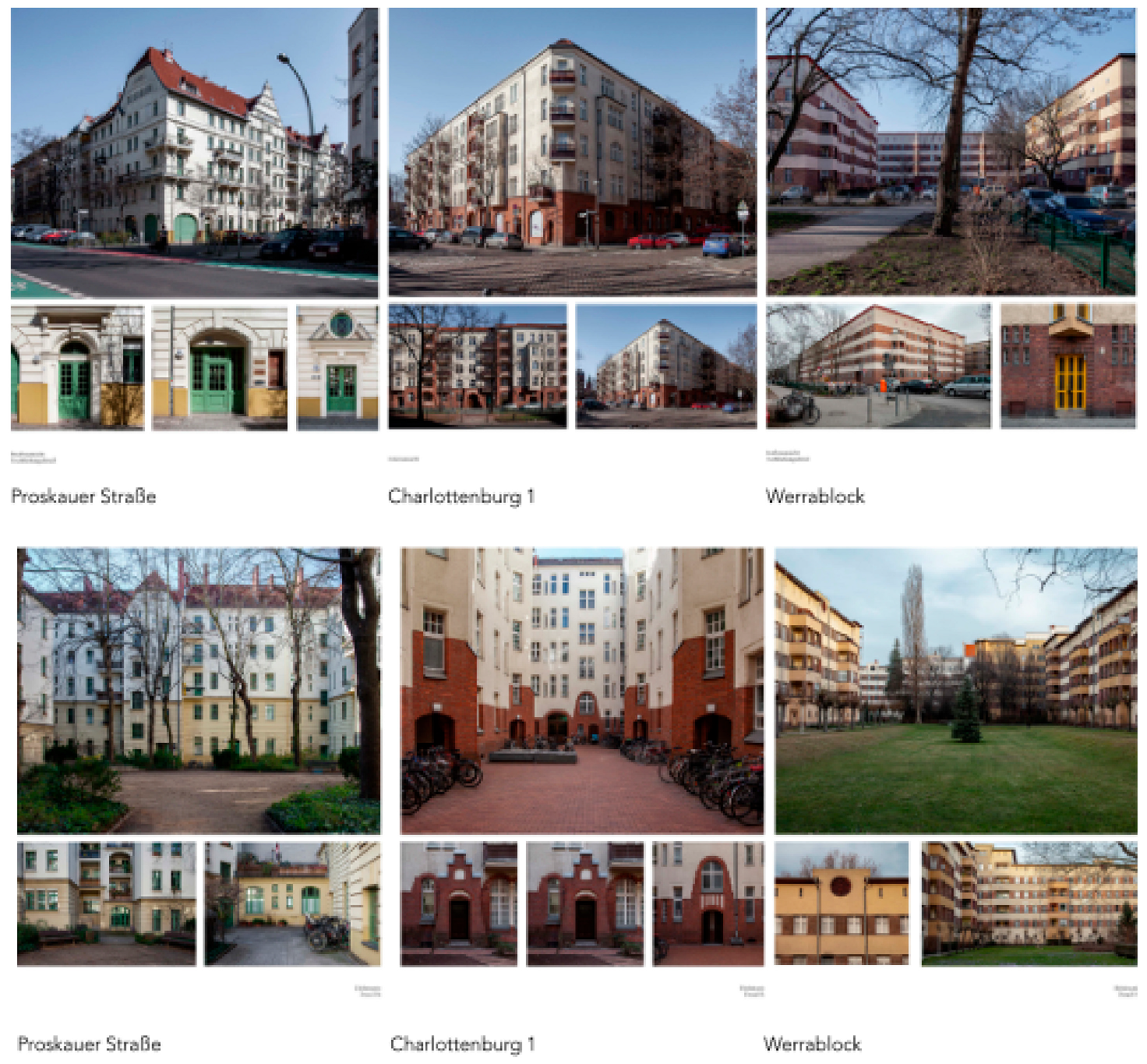
Added to this are aerial views taken by Philipp Meuser (Figure 17), as well as photographs of the residential complexes, including courtyards, taken from scratch by photographer Denis Esakov, also in three scales: city, architecture, and detail (Figure 18).
The redrawings themselves constitute the primary result of this research. Their format in a defined scale makes them a practical tool: they can be measured and allow different examples to be compared with each other. More than providing a single, definitive interpretation, these drawings function as analytical and operational tools for designers and architects, offering a flexible resource from which different spatial, typological, and urban insights can be drawn depending on the perspective or question being explored.

4. Discussion and Conclusions

This research is grounded in the conviction that tradition remains essential for future development—that is, in the possibility, indeed the necessity, for architecture and urban design to learn from examples of the past and to promote innovation based on concrete experience of built spaces and forms.
The heritage of European urban tradition is not only a historical repertoire to be preserved, but also an epistemological and design resource of primary importance for the future development of cities. The analysis of Berlin’s reformed blocks, built between 1890 and 1940, shows that history should not be understood in a static or purely analytical sense, but as a laboratory of concrete experiences from which to extract operational principles capable of guiding contemporary architectural and urban innovation. This means adopting a critical approach that is not simply limited to reproducing historical solutions, but re-elaborates them, identifying principles and tools that are still valid and can be translated into new design practices.
From this perspective, reflecting on the case of Berlin is not merely an exercise in historical memory, but rather a real research platform for the present. The wealth of developed spatial and typological solutions demonstrates how it is possible to combine high housing density with architectural quality and the creation of meaningful and livable public and collective spaces. The clear but balanced distinction between the public, private, and collective spheres is still an extremely relevant principle today, capable of countering both the speculative drifts of the nineteenth-century city and the risks of fragmentation and dispersion inherent in modernist low-density suburban forms. This is a crucial lesson, especially at a time when many European cities are facing challenges similar to those of the early 20th century: housing shortages, the need for social inclusion, affordability, and environmental sustainability.
Through systematic collection, redrawing, and multi-scale analysis of exemplary cases, this study identifies recurring morphological patterns and typological solutions that mediate density, spatial clarity, and the relationship between public, collective, and private spaces. These patterns provide concrete insights into how urban form, architectural typology, and apartment layouts were combined to achieve functional, legible, and resilient neighborhoods.
The findings can be summarized in three main lessons that emerge directly from the evidence:
  • The urban block as a resilient and adaptable typology: The blocks analyzed demonstrate the continuing relevance of the urban block as a structure capable of accommodating both central and peripheral contexts while maintaining high quality of urban space. Density and livability were achieved not only through compactness, but through careful articulation of urban space, orientation of buildings, clear definition of public and private realms, and integration of green and shared courtyards. Apartment layouts are conceived to ensure cross-ventilation, functional circulation, and access to outdoor spaces, supporting a high quality of life even in densely built environments. These results confirm that the urban block remains a flexible and resilient typology, capable of adapting to changing social and spatial requirements over time.
  • The cooperative model as a political and social instrument: The cases demonstrate that cooperative housing was able to translate targeted land policies and unified planning into inclusive, high-quality neighborhoods. Collaboration between architects and cooperatives enabled the creation of residential complexes that were socially responsive, technically efficient, and architecturally articulate. Shared facilities, well-designed courtyards, and functional apartment floors illustrate how cooperative management contributed to livability, social cohesion, and urban legibility. These findings align with historical analyses of cooperative housing, while the redrawn plans provide new evidence of how these principles were physically realized. The cooperative model also highlights the relevance of governance, funding, and institutional frameworks in shaping both urban form and housing quality—a topic that remains pertinent in contemporary European cities facing similar housing challenges.
  • Morphological and typological lessons as design heritage: The variety of forms analyzed—from compact perimeter blocks to on-street courtyards and more complex ensembles—demonstrates the capacity for hybridization and adaptation to different urban contexts. Facade articulation, building orientation, and the organization of internal and external spaces illustrate how architectural quality, identity, and urban recognizability were embedded in typological decisions. The redrawn plans, produced at multiple scales, make it possible to compare and measure these features systematically, highlighting both recurring patterns and unique solutions. This typological and morphological knowledge constitutes a design heritage, offering operational tools for contemporary architects and planners.
The redrawn plans themselves constitute the primary result of this study. Many original plans were either unpublished or only partially available, making the reconstruction and systematic redrawing essential. By presenting the blocks at multiple scales—urban context, parcel structure, building footprint, apartment layout, and facade detail—the drawings allow designers and researchers to explore patterns of density, spatial organization, and architectural articulation in a measurable and comparable way. These drawings function as both analytical and operational tools, providing a bridge between historical knowledge and contemporary design practice. They enable designers to extract different insights depending on the questions or challenges being addressed, offering a flexible and interactive research output rather than a single definitive interpretation.
The study also confirms that the morphological and typological strategies observed in Berlin’s reformed blocks remain highly relevant today. Careful distinction between public, collective, and private spaces, rational apartment layouts, and integration of green and communal areas all contributed to functional, legible, and resilient urban environments. These strategies provide a model for combining density with livability and social integration, offering lessons for contemporary European cities facing pressures similar to those of early 20th-century Berlin: housing shortages, affordability, social inclusion, and environmental sustainability.
The documentation, analysis, and systematic redrawing of these historical examples offers both conceptual and practical tools for contemporary architectural and urban design, bridging the gap between historical knowledge and the challenges of 21st-century urban development.

Potential and Future Research

Although historical studies of Berlin’s reform housing exist, no comprehensive atlases have been produced. The present research will be published in a large-format volume, in which the drawings of the selected case studies are fully visible and accessible, providing a practical resource for designers and researchers [46]. Additional blocks could be redrawn in the future to expand the dataset, which will be available in the form of a digital repository.
Comparative research with other European cases, such as Paris, London, or Swiss cities, would be valuable for contextualizing Berlin’s patterns and examining similarities and divergences in block morphology and housing typologies.
Further research on the economic aspects and the future of cooperative housing in Berlin would complement the morphological analysis, shedding light on governance, funding, and policy mechanisms that influence urban development.

Funding

This research was funded by Architekten und Ingenieurverein zu Berlin-Brandenburg e. V.; Deutscher Baurechtstag e. V.; HansGrohe Deutschland GmbH; Carsten Sellschopf; Hubertus Negwer; and the Senatsverwaltung für Stadtentwicklung und Wohnen Berlin.

Data Availability Statement

No new data were created or analyzed in this study.

Acknowledgments

This research was carried out with the support of Beamten-Wohnungs-Verein zu Berlin eG; Berliner Baugenossenschaft eG; Berliner Bau- und Wohnungsbaugenossenschaft von 1892 eG; Charlottenbuger Baugenossenschaft eG; Wohnungsbau-Verein Neuk.lln eG; Berggruen Holdings GmbH; degewo AG; Deutsche Wohnen SE; Gartenstadt Atlantic AG; GESOBAU AG Howoge—kommunale Wohnungsbaugesellschaft mbH; and Vonovia SE. The author is grateful for the invaluable contribution of Vivien Nowak for the scientific coordination at the University of Applied Sciences in Potsdam and also extends gratitude to Kilian Bruns, Anna Charpali, Seungmin Choi, and Ilaria Maria Zedda, authors of the drawings.

Conflicts of Interest

The author declares no conflicts of interest. The funders had no role in the design of the study; in the collection, analyses, or interpretation of data; in the writing of the manuscript; or in the decision to publish the results.

References

  1. Malcovati, S. (Ed.) Die Wiedergeburt der Städtischen Architektur. Blockreform 1890–1940—Geschichte und Perspektiven; DOM-Publishers: Berlin, Germany, 2024. [Google Scholar]
  2. Castex, J.; Panerai, P.; Depalule, J.-C. Formes Urbaines De L’ilot À La Barre; Dunod: Paris, France, 1980. [Google Scholar]
  3. May, E. Fünf Jahre Bautätigkeit in Frankfurt am Main. Das Neue Frankf. 1930, 2/3, 34. [Google Scholar]
  4. Sonne, W. Urbanity and Density in 20th Century Urban Design; DOM-Publishers: Berlin, Germany, 2017. [Google Scholar]
  5. Bullock, N.; Read, J. The Movement for Housing Reform in Germany and France, 1840–1914; Cambridge University Press: Cambridge, UK, 1985. [Google Scholar]
  6. Rousset, I. The Architecture of Social Reform: Housing, Tradition, and German Modernism; Manchester University Press: Manchester, UK, 2022. [Google Scholar]
  7. Salgo, A. Neue Blöcke für die Innenstadt. Die IBA ‘87 in Berlin und der Wiederaufbau der Südlichen Friedrichstadt; Gebr. Mann Verlag: Berlin, Germany, 2012. [Google Scholar]
  8. Zedda, I.M. Rethinking the Block. The 1970s European Discourses on the City and the IBA Berlin 1979–87. Ph.D. Thesis, RWTH Aachen University, Aachen, Germany, September 2023. in cooperation with Potsdam University of Applied Sciences, Germany and University of Bologna, Italy. [Google Scholar]
  9. Stimman, H. (Ed.) Städtebaulicher Strukturplan. Kritische Rekonstruktion des Bereichs Friederichswerder, Friedrichstadt, Dorotheen-Stadt; Städtebau und Architektur Bericht 6; Senatsverwaltung für Bau- und Wohnungswesen: Berlin, Germany, 1992. [Google Scholar]
  10. Burg, A.; Stimmann, H. (Eds.) Berlin Mitte. Die Entstehung Einer Urbanen Architektur; Birkhäuser Verlag: Basel, Switzerland, 1996. [Google Scholar]
  11. Caja, M.; Malcovati, S. Berlino 1990–2010. La Ricerca Sull’isolato e Sul Quartiere; Libraccio: Milano, Italy, 2009. [Google Scholar]
  12. Bruch, E. Berlin’s Bauliche Zukunft und der Bebauungsplan; Beelitz: Berlin, Germany, 1870. [Google Scholar]
  13. Dolff-Bonekämper, G.; Million, A.; Pahl-Weber, E.; Bentlin, F. (Eds.) Das Hobrechtsche Berlin. Wachstum, Wandel und Wert der Berliner Stadterweiterung; DOM-Publishers: Berlin, Germany, 2018. [Google Scholar]
  14. Assmann, G. Grundrisse für Städtische Wohngebäude mit Rücksicht auf die für Berlin Geltende Bau-Ordnung; Ernst & Korn: Berlin, Germany, 1862. [Google Scholar]
  15. Goecke, T. Das Berliner Arbeiter-Mietshaus. Eine bautechnisch-soziale Studie. Dtsch. Bauztg. 1890, 24, 501–502+508–510+522–523. [Google Scholar]
  16. Voigt, A.; Geldner, P. Kleinhaus und Mietskaserne. Eine Untersuchung der Intensität der Bebauung vom Wirtschaftlichen und Hy-Gienischen Standpunkte; Springer: Berlin/Heidelberg, Germany, 1905. [Google Scholar]
  17. Scheffler, K. Das Mietshaus. In Moderne Baukunst, 2nd ed.; Julius Bard: Berlin, Germany, 1907; Reprint in Julius Zeitler: Leipzig, Germany, 1908; pp. 23–39. [Google Scholar]
  18. Eberstadt, R. Handbuch des Wohnungswesens und der Wohnungsfrage; Fischer: Jena, Germany, 1910. [Google Scholar]
  19. Gut, A. Das Deutsche Mietshaus. Ein Beitrag zur Städtekultur der Gegenwart; Bruckmann: München, Germany, 1909. [Google Scholar]
  20. Geist, J.F.; Kürvers, K. Das Berliner Mietshaus; Bd. 2, 1862–1945; Prestel: München, Germany, 1984; Volume 3. [Google Scholar]
  21. Frank, H.; Schubert, D. Lesebuch zum Wohnungsfrage; Pahl-Rugenstein: Köln, Germany, 1983. [Google Scholar]
  22. Hegemann, W. Das Steinerne Berlin. Geschichte der Grbössten Mietskasernenstadt der Welt; Ullstein: Berlin, Germany, 1930. [Google Scholar]
  23. Eberstadt, R. Städtische Bodenfragen; Heymann: Berlin, Germany, 1894. [Google Scholar]
  24. Kramer, F. Zur Bodenfrage im Städtebau zwischen 1880 und 1930. Stadterweiterung als soziale und räumliche Frage. In Die Wiedergeburt der Städtischen Architektur. Blockreform 1890–1940. Geschichte und Perspektiven; Malcovati, S., Ed.; DOM-Publishers: Berlin, Germany, 2024; pp. 108–117. [Google Scholar]
  25. Bodenschatz, H. Wohnungsfrage und St.dtebau. Form follows regulations. In Die Wiedergeburt der Städtischen Architektur. Blockreform 1890–1940. Geschichte und Perspektiven; Malcovati, S., Ed.; DOM-Publishers: Berlin, Germany, 2024; pp. 98–107. [Google Scholar]
  26. Beuthien, V. Genossenschaftsrecht: Woher–Wohin?: Hundert Jahre Genossenschaftsgesetz 1889–1989; Vandenhoeck & Ruprecht: Göttingen, Germany, 1990. [Google Scholar]
  27. Novy, K. Genossenschafts-Bewegung. Zur Geschichte und Zukunft der Wohnreform; Transit: Berlin, Germany, 1984. [Google Scholar]
  28. Novy, K. Die veralltäglichte Utopie. Richtungen genossenschaftlicher Wohnreform in Berlin vor 1914. In Die Zukunft der Metropolen; Schwarz, K., Ed.; Reimer: Berlin, Germany, 1984; Volume 1, pp. 385–394. [Google Scholar]
  29. Behrendt, W.C. Alfred Messel; Wasmuth: Berlin, Germany, 1911; Reprint in Gebrüder Mann: Berlin, Germany, 1998. [Google Scholar]
  30. Blauert, E.; Habel, R.; Nägelke, H.-D. (Eds.) Alfred Messel (1853–1909). Visionär der Großstadt; Edition Minerva: München, Germany, 2009. [Google Scholar]
  31. Gärtner, A.; Habel, R.; Nägelke, H.-D. (Eds.) Alfred Messel (1853–1909). Ein Führer zu Seinen Bauten; Ludwig: Kiel, Germany, 2010. [Google Scholar]
  32. Meyer, E. Paul Mebes. Miethausbau in Berlin 1906–1938; Verlag Richard Seitz & Co.: Berlin, Germany, 1972. [Google Scholar]
  33. Genossenschaftsforum e. V., Beamten-Wohnungs-Verein zu Berlin eG (Ed.) Paul Mebes und Paul Emmerich. Meister der gemäßigten Moderne; Beamten-Wohnungs-Verein zu Berlin eG: Berlin, Germany, 2015; pp. 24–29. [Google Scholar]
  34. Goecke, T. Ueber Wohnstrassen und die Landhaus-Baugesellschaft Pankow. Dtsch. Bauztg. 1897, 31, 65–67+69. [Google Scholar]
  35. Engel, H.; Albrecht, P.-A.; Wolf, G.; Wolf, C. Der Amalienpark in Pankow und Sein Architekt Otto March; Berliner Wissenschaftverlag: Berlin, Germany, 2007. [Google Scholar]
  36. Behrendt, W.C. Die einheitliche Blockfront als Raumelement im Stadtbau; Bruno Cassirer: Berlin, Germany, 1912. [Google Scholar]
  37. Rentschler, D.; Schirmer, W.; Architekten- und Ingenieur Verein Berlin (Eds.) Berlin und Seine Bauten, Part IV. Wohnungsbau, Vol. B: Die Wohngebäude. Mehrfamilienhäuser; Ernst & Sohn: Berlin, Germany; Munchen, Germany, 1974; pp. 207–209. [Google Scholar]
  38. Tubbesing, M. (Ed.) Gross-Berlin. Anregungen zur Erlangung eines Grundplanes für die städtebauliche Entwicklung von Gross-Berlin; Wasmuth: Berlin, Germany, 2020; Reprint of the original edition from 1907. [Google Scholar]
  39. Bernhardt, C. Bauplatz Groß-Berlin; De Gruyter: Berlin, Germany, 1995. [Google Scholar]
  40. Bodenschatz, H.; Brake, K. (Eds.) 100 Jahre Groß-Berlin. Wohnungsfrage und Stadtentwicklung; Lukas Verlag: Berlin, Germany, 2017. [Google Scholar]
  41. Tubbesing, M. Der Wettbewerb Groß-Berlin 1910. Die Entstehung einer modernen Disziplin Städtebau; Wasmuth: Tübingen, Germany; Berlin, Germany, 2018. [Google Scholar]
  42. Eberstadt, R.; Möhring, B.; Petersen, R. Project ‘Et in terra pax’. In Wettbewerb Gross-Berlin, 1910. Die Preisgekrönten Entwurfe mit Erläuterungsberichten; Ernst Wasmuth: Berlin, Germany, 1911. [Google Scholar]
  43. Hegemann, W. Der Städtebau nach den Ergebnissen der Städtebau-Ausstellungen in Berlin und Düsseldorf 1910–1912; Ernst Wasmuth: Berlin, Germany, 1911. [Google Scholar]
  44. Gessner, A. Das Deutsche Mietshaus; Bruckmann: München, Germany, 1909. [Google Scholar]
  45. Posener, J. Berlin auf dem Wege zu einer neuen Architektur. Das Zeitalter Wilhelms II; Prestel: München, Germany, 1979. [Google Scholar]
  46. Malcovati, S. Block.Reform.Berlin. Stadtraum und Wohnhaustypen für die Junge Großstadt 1890–1940; DOM-Publishers: Berlin, Germany, in the process of being published.
Figure 1. Ernst May, diagram showing the evolution of the modern development plan [3]. License: CC BY-NC.
Land 15 00286 g001
Figure 2. James Hobrecht, “Newest development plan of Berlin with surrounding area, 1863”, scale 1:25,000. Source: Berlin Central and Regional Library, public domain.
Land 15 00286 g002
Figure 3. Gustav Assmann, “Floor plans for urban residential buildings in compliance with Berlin building regulations”, 1862 [14].
Land 15 00286 g003
Figure 4. Housing blocks (view and floor plan) according to the Berlin building regulations of 1897 (drawings by municipal building officer Grobler) from Hegemann (p. 230, [22]).
Land 15 00286 g004
Figure 5. Reform block distribution with urban boundaries in 1899 (Situations-Plan von Berlin von Sinek) and Greater Berlin in 1920 (Overview map of the city of Berlin). Drawing © by the author.
Land 15 00286 g005
Figure 6. Otto March, Amalienepark, Pankow, Berlin, 1896–1897 [34] and residential and commercial complex on Bismarckstraße 79–80, Charlottenburg, Berlin, 1905–1906 [36,37].
Land 15 00286 g006
Figure 7. Eberstadt, R.; Möhring, B.; Petersen, R., layout and development of a city block and example of a block in Wittenau, Greater Berlin competition, 1910 [42].
Land 15 00286 g007
Figure 8. Berlin urbanism exhibition: Steglitz residential complex (on Rückert Strasse) and Niederschönhausen residential complex on Lindenstrasse. Exhibitors: Beamten-Wohnungsverein zu Berlin, architect Paul Mebes [43].
Land 15 00286 g008
Figure 9. Block.Reform.Berlin, black–red plan with analyzed blocks (red), scale 1:25,000. Drawing © by the author.
Land 15 00286 g009
Figure 10. Block.Reform.Berlin, solid–void black–red plan, scale 1:10,000). Drawing © by the author.
Land 15 00286 g010
Figure 11. Block.Reform.Berlin, site plan, scale 1:2000). Drawing © by the author.
Land 15 00286 g011
Figure 12. Block.Reform.Berlin, parcels plan, scale 1:2000. Drawing © by the author.
Land 15 00286 g012
Figure 13. Block.Reform.Berlin, ground floor plan, scale 1:500. Drawing © by the author.
Land 15 00286 g013
Figure 14. Block.Reform.Berlin, typical floor plan, scale 1:500. Drawing © by the author.
Land 15 00286 g014
Figure 15. Block.Reform.Berlin, apartment types, scale 1:500. Drawing © by the author.
Land 15 00286 g015
Figure 16. Block.Reform.Berlin, facade detail, scale 1:200. Drawing © by the author.
Land 15 00286 g016
Figure 17. Block.Reform.Berlin, aerial views. Photographs © by Philipp Meuser.
Land 15 00286 g017
Figure 18. Block.Reform.Berlin. Photographs © by Denis Esakov.
Land 15 00286 g018
Disclaimer/Publisher’s Note: The statements, opinions and data contained in all publications are solely those of the individual author(s) and contributor(s) and not of MDPI and/or the editor(s). MDPI and/or the editor(s) disclaim responsibility for any injury to people or property resulting from any ideas, methods, instructions or products referred to in the content.