Article

Seasonal Trends in Major Pollen Allergens in East Anglia, UK, Ipswich Site, with Comparison to Other UK Regions

by
Janette Bartle
1 and
Beverley Adams-Groom
2,*
1
East Suffolk and North Essex NHS Foundation Trust, Ipswich Hospital, Ipswich IP4 5PD, UK
2
School of Science and Environment, University of Worcester, Worcester WR2 6AJ, UK
*
Author to whom correspondence should be addressed.
Atmosphere 2026, 17(3), 319; https://doi.org/10.3390/atmos17030319
Submission received: 11 February 2026 / Revised: 13 March 2026 / Accepted: 18 March 2026 / Published: 20 March 2026
(This article belongs to the Special Issue Pollen Monitoring and Health Risks)

Abstract

Grass and birch pollen are major allergens in the United Kingdom (UK), responsible for seasonal respiratory diseases between late March and July. East Anglia is an under-represented region in pollen allergy research, while patterns of continuous days of high pollen levels have not been studied at all. Analysis of pollen statistics and trends in East Anglia addresses a regional gap for pollen exposure in the UK and assesses the intensity of the exposure. Trends and statistics for start, end, length, first high day (FH), number of high days (NH), seasonal pollen integral (SPIn) and number of high days occurring in a run together were presented. Birch pollen occurred from late March to late April, with little indication that onset, end or duration were changing temporally. Severity (SPIn) and the number of days in a run together have increased, in line with severity trends in nearby regions. Grass pollen occurred from late May until the third week in July, with almost no indication of changing trends in this region, apart from a likely earlier first high day. These results inform clinicians that the information and advice on when to treat hay fever symptoms and for how long should not change at the present time.

1. Introduction

Pollen monitoring has been carried out at the Ipswich Hospital Site for twenty years for grass and fourteen years for tree pollen. The Pollen Monitor at Ipswich is a Specialist Allergy Nurse who provides allergy skin prick testing services for the Ear, Nose and Throat Department. Allergy assessment history and test result audits collected over the years support research showing that grass and birch are the most significant pollen allergens to be tested [1,2], with most people who have hay fever being allergic to one or both. Very few people have been noted as having oak (Quercus spp.) pollen allergy in this region, despite it being considered a high-production allergen, if only for a short period [3].
Seasonal Allergic Rhinitis, commonly referred to as hay fever, is an immune reaction to exposure and inhalation of pollen or spores, giving rise to symptoms of nasal irritation, increased mucus production and nasal congestion, leading to blockage and causing dysfunction within the upper airway [4]. The lower airways can also be affected, giving rise to symptoms of asthma and adding to the significant impact on human health through co-morbidities and economic impact [5,6,7]. Awareness of the rise and fall of specific pollen levels throughout the seasons has supported correct clinical diagnosis and understanding of the regional climate over the years, which is particularly important for birch pollen, which has very variable seasons over time [8].
It is considered that important changes are occurring within the UK pollen seasons due to weather and climate change [9,10], as well as across Europe [11], with earlier and more severe seasons occurring for some allergenic plant species. Changes in pollen dispersal times and levels will impact allergy sufferers in the UK, potentially changing advice on when to start and finish using medication aimed at preventing troublesome symptoms that reduce quality of life [12]. Following a ten-year phase of no reports about pollen trends in the UK, Adams-Groom et al. [9] produced an up-to-date analysis of the main allergenic pollen seasons over 25 years, focussing on six pollen sites ranging from north to south. The pollen monitoring sites chosen did not include any in the eastern region of the UK, so this research can address that situation, as well as providing seasonal details.
The aim of this research is to present the seasonality and trends in the pollen data from Ipswich pollen monitoring site in East Anglia and compare them to trends in severity from nearby regions.

2. Materials and Methods

2.1. Pollen Monitoring Site

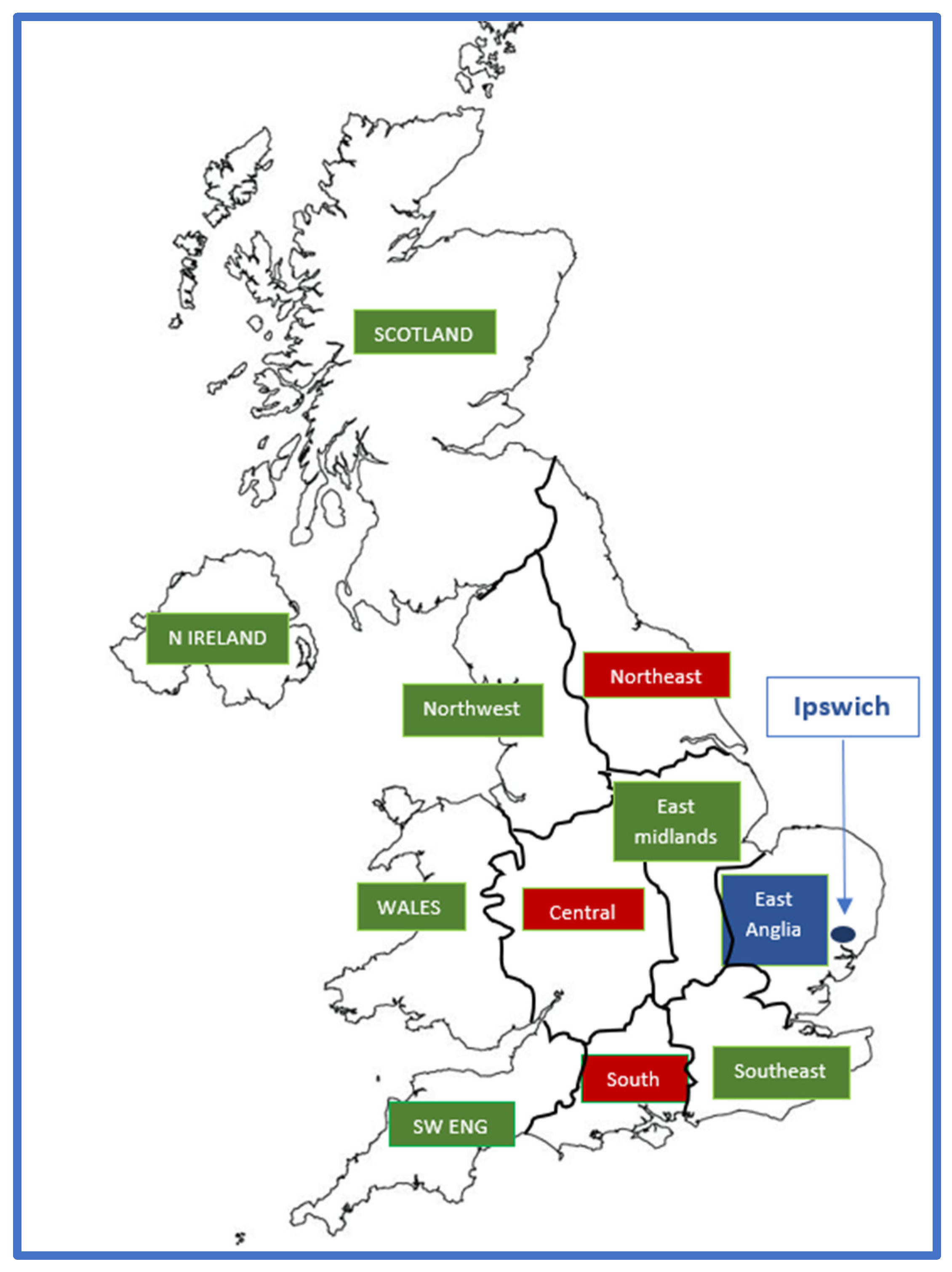
Ipswich Hospital (latitude: 52.05798; longitude: 1.19833), in the East Anglia region of the UK (Figure 1), hosted a Burkard volumetric pollen and spore trap between 2005 and 2024, gathering data on seasonal pollen levels in East Anglia. The East Anglian region of the UK can often be much drier, cooler and less windy than other western and central areas of the UK on the same latitude. It is influenced by the North Sea, and its prevailing onshore winds tend to keep locations generally cooler [13] and with lower pollen counts in comparison to inland areas [14].
Grass pollen was monitored from early May to the end of July until 2010. Tree pollen was added in 2011, when the sampling period extended from mid-March to early September. Twenty years with full sets of data were achieved, and grass and birch, as the important local allergens, were focussed on in this study. There was only one person doing the pollen counting at this site, which supported a consistency in the pollen data gathered. Pollen monitoring at the Ipswich site has recently had to cease, increasing the importance of now analysing the data and discussing the information gathered.

2.2. Pollen Data and Trends

The data, measured as a daily average of grains per cubic metre of air, was collected using Burkard 7-day volumetric spore traps, using the standard UK pollen monitoring method [15]. The term ‘high day’ is used when all hay fever sufferers are likely to be affected and is the terminology used in pollen forecasting in the UK. A high day is classed as a daily average of pollen grains per cubic metre of air of 50+ for Poaceae [16] and 80+ for Betula [17], with all qualitative categories being shown in Table 1.
The data was then assessed for various parameters per year: start, end and length of the seasons were calculated using the 2.5/97.5% method [10], both by day of year from 1st January (DOY) and by date; occurrence of the first high day (FH); the number of high and very high days (NH); the number of days in a continuous sequence of high days (with no more than three lower days in between) and the seasonal pollen integral (SPIn) (or total season catch). Averages of these (mean) and standard deviation from the mean for the whole period, and for each pollen type, were then calculated to determine the general seasonal statistics for the onset, end, length, FH, NH and SPIn. Annual pollen data for birch and grass for South–Central, North-East and West Midlands (see Figure 1) were obtained from the UK Met Office for comparison of SPIn, covering 1995 to 2024.
Using IBM SPSS Statistics version 31.0.0.0, linear regression analysis was applied to assess if any of the pollen season features were showing significant trends over the period.

3. Results

3.1. Seasonal Statistics for Grass and Birch Pollen

The birch and grass pollen season statistics for average start and end, SPIn, duration and number of high/very days at Ipswich are presented in Table 2.
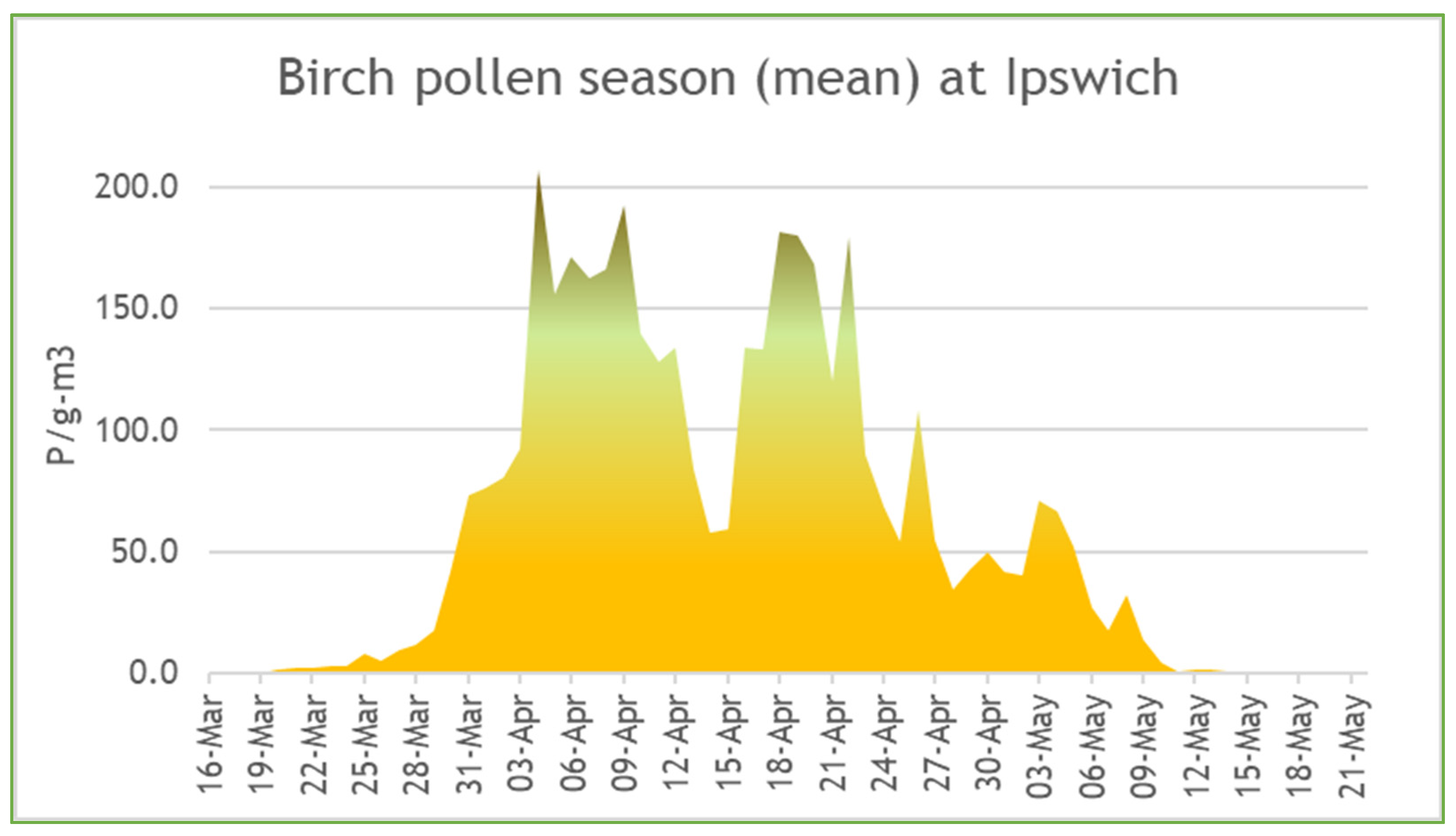
The birch pollen season mean peak period (when high days are most likely) (Figure 2) occurs between 2nd and 23rd April, with moderate days being likely to extend that to between 30th March and 5th May. High days can occasionally occur earlier or later (Table 2).
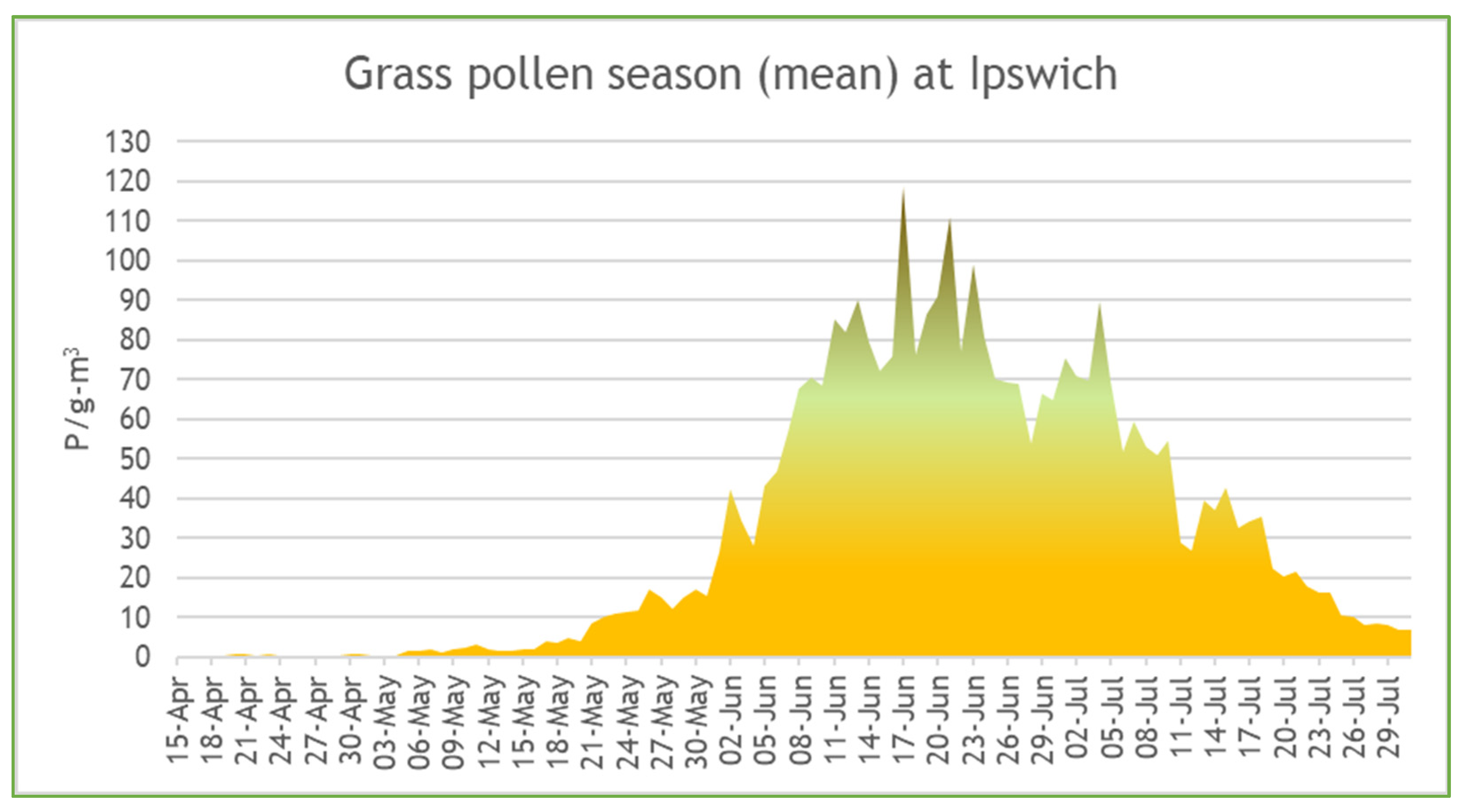
The grass pollen seasonal pattern (Figure 3) reveals that the average peak period occurs from 7th June to 10th July, with moderate days being likely to extend that to 2nd June to 18th July, although high days can occasionally occur earlier and later (Table 2).

3.2. Grass Pollen Seasons

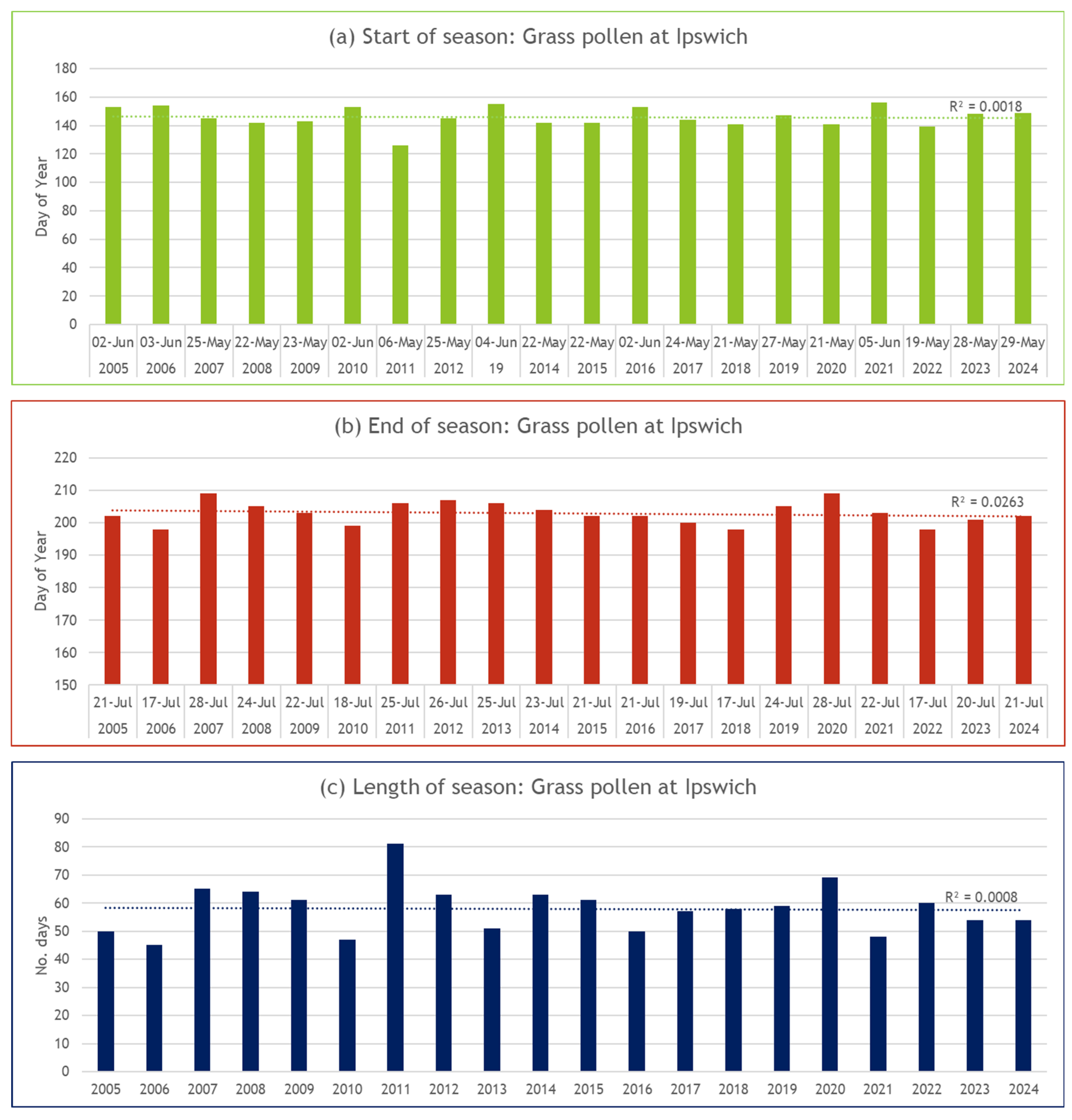
The 20 years of averages for the start, end and length of the grass pollen season reveals year-to-year and cyclical fluctuations, evidenced by low R2 values, but no significant trends for any of these seasonal features were found (Figure 4).
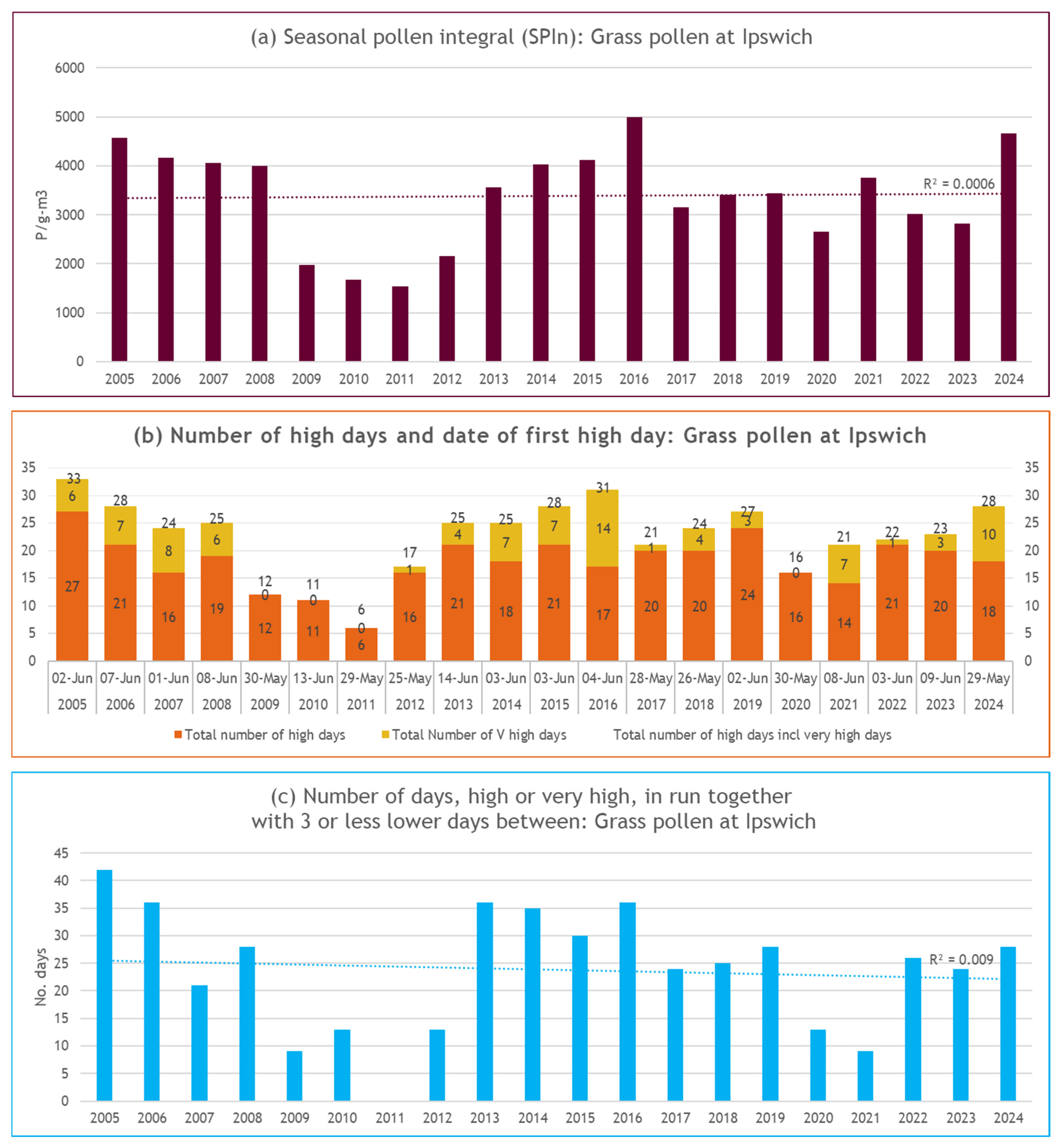
Grass pollen, at a level that is sufficient to stimulate hay fever symptoms, is always captured from the end of May or from early June (Figure 5b; Table 2) and continues through to the third week in July (mean 22nd July) (Table 2). This is the period when symptoms would mainly be expected. The results for SPIn (Figure 5a) and NH (Figure 5b) indicate great variation year on year, with no significant changes in these variables over the twenty years. The average number of recorded high or very high days of grass pollen, likely to cause allergic symptoms, is 22 days (Table 2), with a range from a total of 31 days in 2016 to just six days in 2011 (Table 2; Figure 5b).
When pollen is released consistently day after day, hay fever sufferers are more likely to experience symptoms. Considering the number of high/very high days occurring continuously in sequence (Figure 5c), there is still great variation across the years (evidenced by very low R2 values), with no increase in continuous sequences of grass pollen release to indicate increased stimulus for those with grass pollen allergy, but rather a hint that these runs may be decreasing over time.

3.3. Birch Pollen Seasons

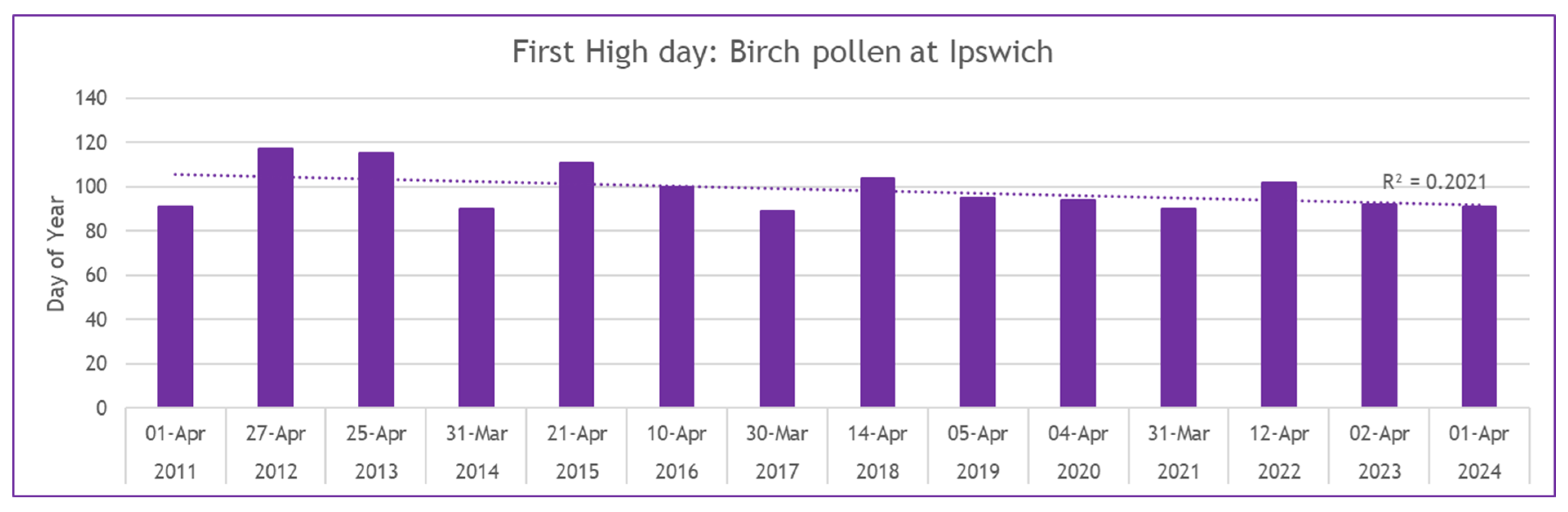
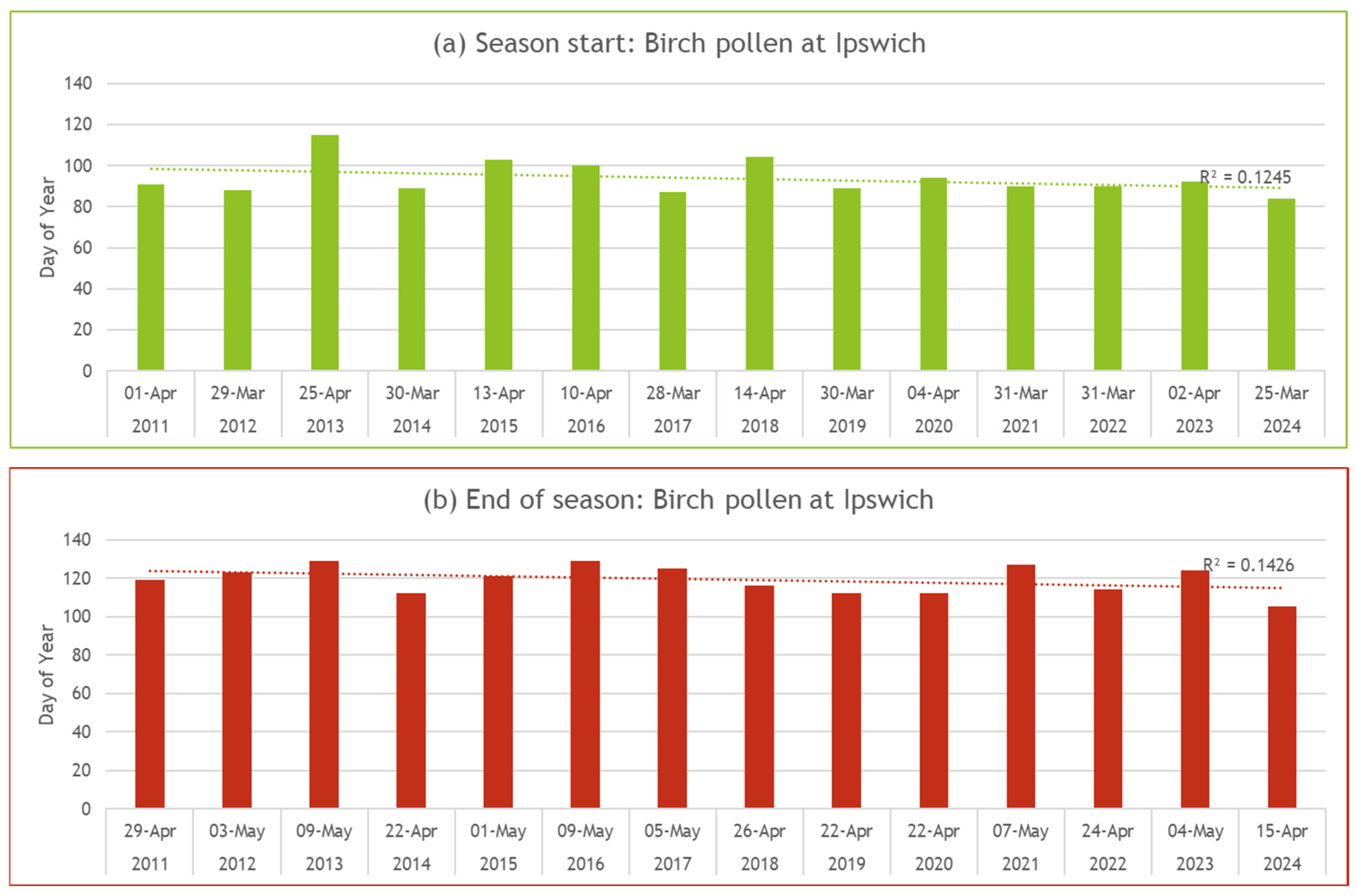
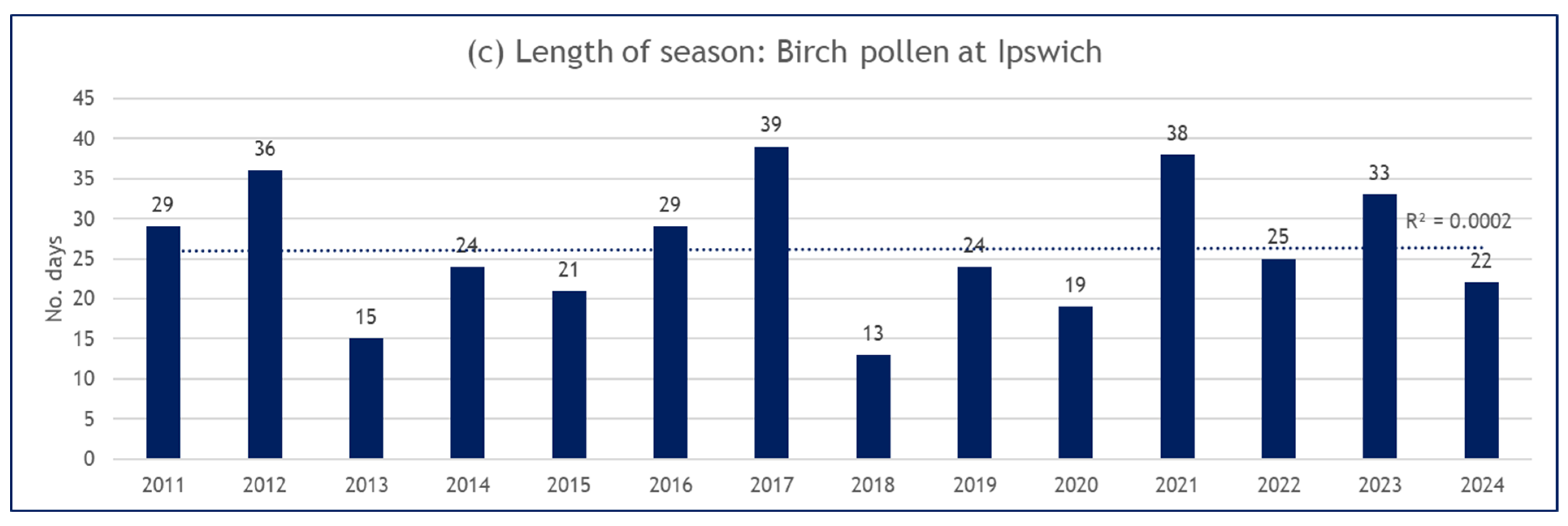
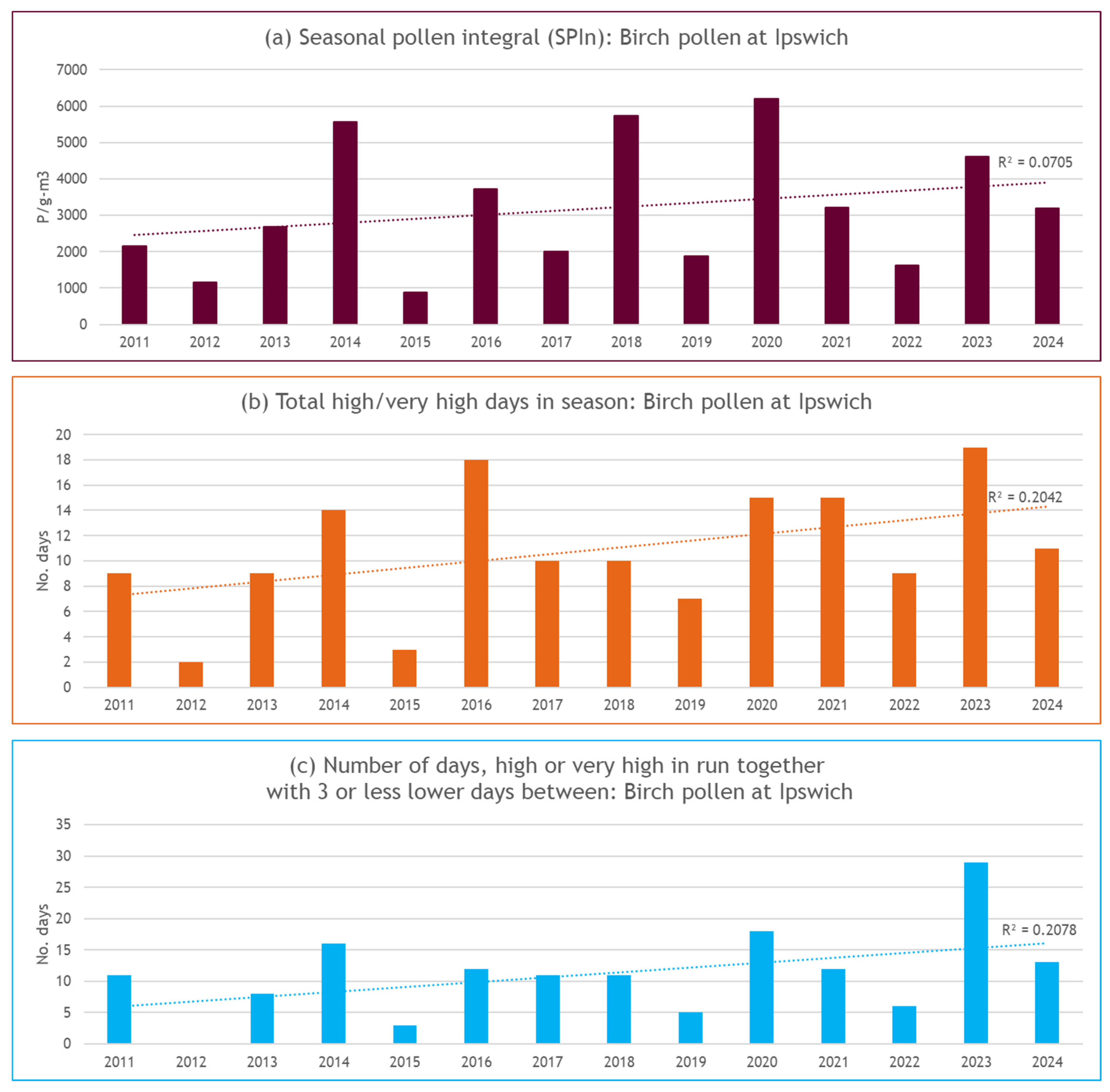
The timeframe of fourteen years is too short to provide clear trends for birch pollen at Ipswich, although trend analysis was included to indicate possible changes. The patterns for occurrence of FH, onset and end of the birch pollen season (Figure 6 and Figure 7a,b), although not significant, suggest that the season may be getting earlier and finishing earlier, but there is no indication that the season length (Figure 7c) is changing at all (p = 0.960). However, the data for SPIn, NH and the length of continuous sequences of high/very high days in a run together suggest that the season severity is quite likely to be increasing (Figure 8a–c), although not statistically significant.

3.4. Birch and Grass Pollen Seasons at Ipswich Compared to Nearby Regions of the UK

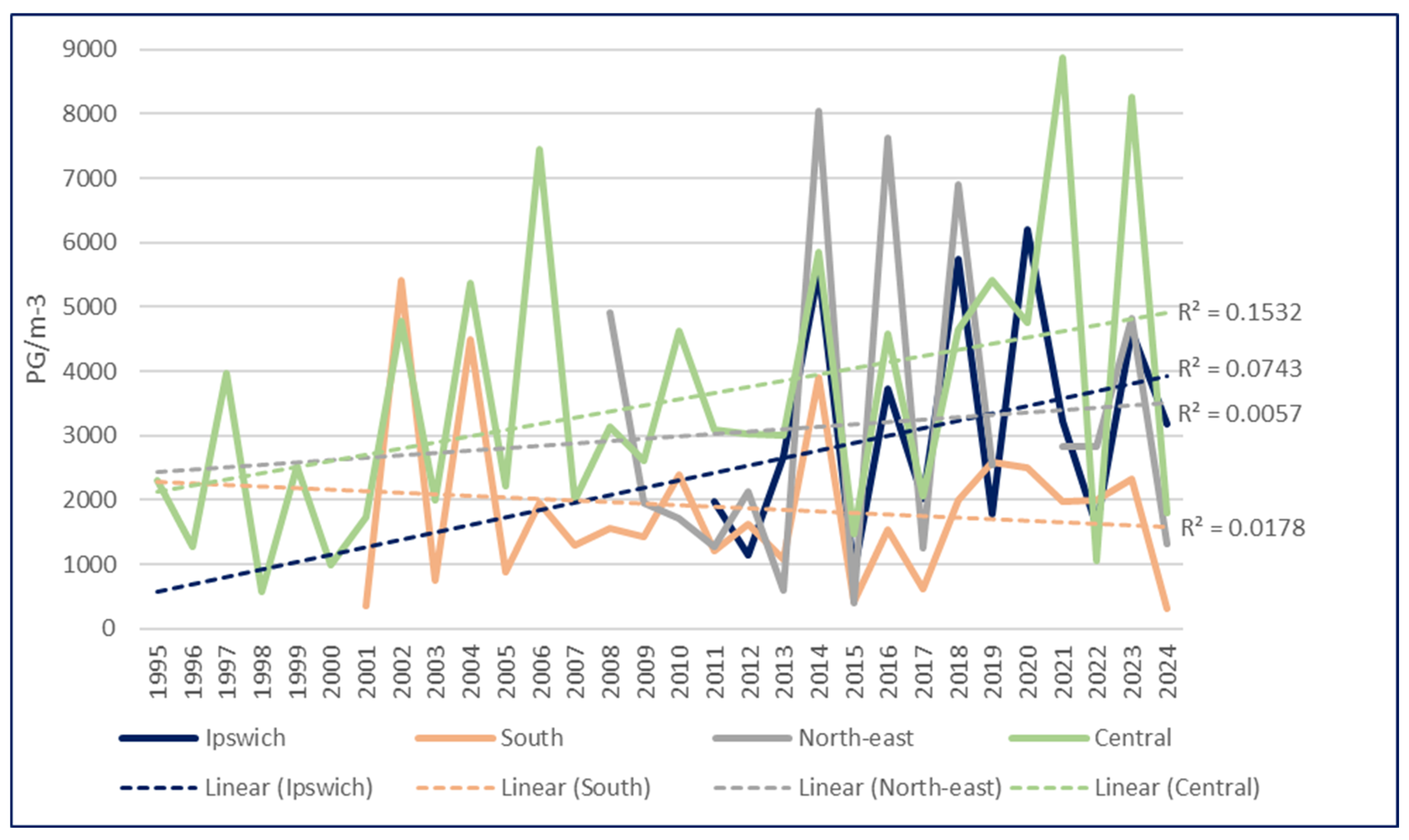
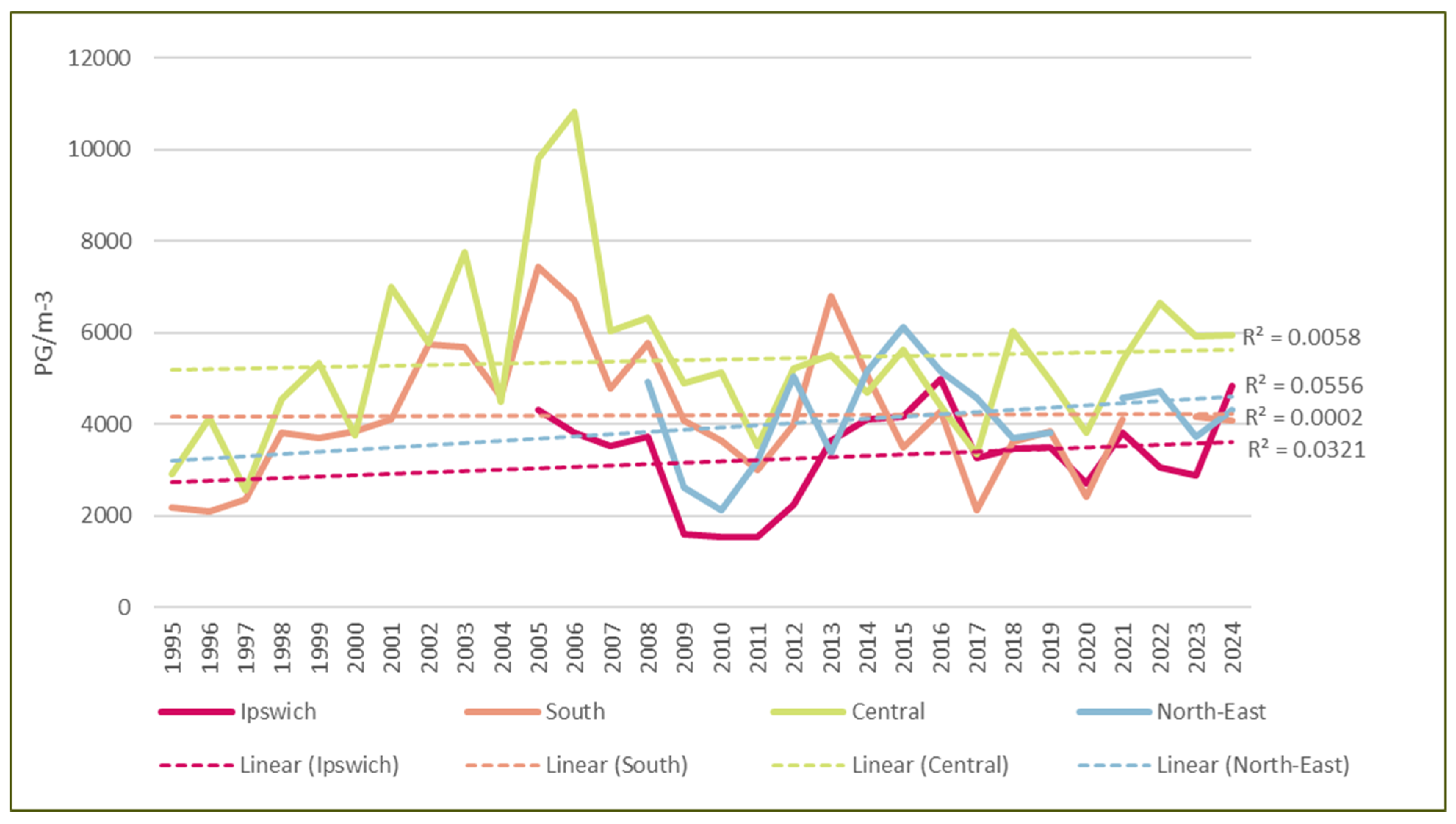
There is a visible similarity between the seasonal pattern and amount of birch pollen at Ipswich and those of north-east and central England, where a significant (p < 0.05), increasing trend can be seen for the central region, which has the longest dataset. There is no similarity with the pattern from the south, however, where a decline is visible, although not significant (Figure 9). The pattern for grass pollen at Ipswich is mainly similar to the north-east region, but all regions show interannual variation and limited, non-significant change over time (Figure 10).

4. Discussion

Detailed pollen season statistics for the eastern side of East Anglia (Ipswich pollen site) have been presented in this study for the first time for grass and birch pollen. A study analysing seasonal pollen averages for the UK, 2004–2013 [14], included data from another site in western East Anglia (now defunct), where the results were very similar to grass pollen at Ipswich (no more than one or two days different for any feature), indicating regional similarity and a lack of change over time for this pollen type. For birch, however, there were differences with all features studied in that article, with on average at least four days earlier onset, end and duration, although for NH, there was an increase of just one day. However, the study periods in Adams-Groom et al. [14] and this study are both short, at ten and fourteen years respectively, so caution must be applied to the interpretation. Moreover, there is a biennial pattern of pollen production in birch trees, which adds to the seasonal variability [8] and, therefore, reliability of any trends.
It had been considered that the start, the first high day and the duration of the grass pollen season were happening earlier in East Anglia, but the findings here show that this is not the case, which is largely similar to other studied regions of the UK [9,10].
Although grass pollen grains have been noted as early as April in Ipswich, the number of grains has not been high enough to affect the human airway, with the onset (calculated at 2.5%) generally not occurring until the last week in May. The indicative measure of pollen levels which trigger symptoms has been calculated as low, medium and high, and when levels are low, symptoms of allergic rhino-conjunctivitis are unlikely to be stimulated [4]. The peak pollen season for grass, and therefore seasonal respiratory conditions, continues to be early to mid-June, while it has long been accepted that in education, summer examination time and pollen seasons clash, to the disadvantage of students [18].
Addressing the number of high days occurring in a continuous sequence has not previously been researched for the UK, despite being a useful indicator of the continuing burden of exposure to pollen during a season. This research has highlighted how high levels of birch pollen tend to be released continuously day after day, likely over increasingly longer periods, particularly in high pollen production years, such that sensitised individuals increasingly do not get respite from the onslaught of pollen during the season. For individuals who are predisposed to developing allergies, long exposure to potent allergens, such as pollen, can encourage the immune system to develop specific allergy antibodies (Immunoglobulin E (IgE)), causing the person to become reactive towards this harmless substance and develop allergic symptoms, often affecting a person’s wellbeing and their ability to carry out daily tasks at all levels [19].
In the past two decades, East Anglia, along with the rest of the UK, has seen an increase in winter rainfall, rising surface sea temperatures around the coast, and more extreme weather conditions in winter and summer. East Anglia has become sunnier over the last decade, and July 2022 was the driest month recorded since 1935 [20]. However, there is no evidence that these changes are notably impacting the grass pollen season in this study area, with most trends remaining flat. In the UK, there are many grass species, with differing flowering times across the season [21] and varying ecological requirements. Some species may benefit from the effects of climate change, while other species are adversely impacted [22], potentially affecting the pollen season severity. The pollen seasons do show great variation, according to the weather in the pre- and in-season periods, which is typical for the UK in general [9]. The results show that the years 2009–2012 and 2020–2021 had relatively low grass pollen levels due to combinations of unsuitable weather for either pollen production (pre-season) or pollen emission (in-season) in the key months that impact the pollen season [9], such as cold pre-season maximum daily temperature, dry April and/or May, or high in-season rainfall in June and/or July [23]. Conversely, this study’s results suggest that these changes are increasing the severity of the birch pollen season and therefore enhancing the risk for seasonal allergy sufferers [24]. Although the number of years in this study for birch pollen is limited for effective analysis, the trends for severity of both birch (possibly increasing) and grass (no trend) at Ipswich are in line with research into the effects of temperature on these pollen types, both in the UK [9,10] and on the near continent [25,26,27,28,29].
In addition to rising temperatures, Adams-Groom et al. [9] in the UK and Verstaeten et al. [29] in Belgium have determined that increasing sunshine totals/radiation during pollen emission periods are increasing the severity of birch pollen. Research into the impact that climate change might have on birch pollen release in the future, according to Rojo et al. [30], suggests that pollen release will vary according to altitude, with trees at a lower altitude becoming stressed and eventually reversing the upward trend by emitting less pollen over time, with only trees at higher altitudes benefitting from the warming climate to produce increased amounts of pollen. East Anglia is a low-altitude area, and therefore, climate change effects could reduce the success of tree pollen production, and indeed survival, in future years, with a corresponding decline in pollen levels. Research by Verstaeten et al. [29] suggests that grass pollen production is being restricted by decreasing rainfall in the summer in Belgium, an effect that is starting to be observed in England. Finally, a recent review by Burbank [31] suggests that more research is required on the complexities surrounding the future impacts of climate change on pollen and respiratory allergy.

5. Conclusions

The birch pollen seasons are variable at Ipswich across the years, with average onset occurring in early April and continuing until late April. There are no indications that the season onset, end or duration are changing, but the severity across all markers is increasing, in line with the severity trends in nearby regions and on the near continent. This trend is likely driven by climate change, although the reasons require further investigation. Grass pollen, at a level that is sufficient to stimulate hay fever symptoms, is always captured from the end of May or from early June and continues through to the third week in July. The grass pollen seasons at Ipswich are also variable across the years but do not show any significant indication of changing over time. These results inform the clinical fraternity that the information and advice on when to treat hay fever symptoms and for how long should not change at this time. The peak pollen season for grass continues to be early June throughout the UK, and the average level of total grass pollen remains consistent over time. This report does not answer all questions raised but stimulates much more thought about changes in our pollen seasons throughout the UK and recognition that not all locations are changing at the same rate and time. Indications are that at some point, public information and treatment regimen advisory dates for hay fever will need to change, and therefore, further data analysis will be required.

Author Contributions

J.B.: Concept; J.B. and B.A.-G. shared the work in all other aspects of the project. All authors have read and agreed to the published version of the manuscript.

Funding

No funding was secured for this project.

Institutional Review Board Statement

Not applicable.

Informed Consent Statement

Not applicable.

Data Availability Statement

The data presented in this study are available on request from the corresponding author due to privacy.

Conflicts of Interest

The authors declare no conflicts of interest.

References

  1. Bousquet, P.J.; Hooper, R.; Kogevinas, M.; Jarvis, D.; Burney, P. Number of allergens to be tested to assess allergenic sensitization in epidemiologic studies: Results of the European Community Respiratory Health Survey I. Clin. Exp. Allergy 2007, 37, 780–787. [Google Scholar] [CrossRef] [PubMed]
  2. Kiewiet, M.B.G.; Lupinek, C.; Vrtala, S.; Wieser, S.; Baar, A.; Kiss, R.; Kull, I.; Melén, E.; Wickman, M.; Porta, D.; et al. A molecular sensitization map of European children reveals exposome- and climate-dependent sensitization profiles. Allergy 2023, 78, 2007–2018. [Google Scholar] [CrossRef]
  3. Grundström, M.; Adams-Groom, B.; Pashley, C.H.; Dahl, Å.; Rasmussen, K.; de Weger, L.A.; Thibaudon, M.; Fernández-Rodríguez, S.; Silva-Palacios, I.; Skjøth, C.A. Oak pollen seasonality and severity across Europe and modelling the season start using a generalized phenological model. Sci. Total Environ. 2019, 663, 527–536. [Google Scholar] [CrossRef] [PubMed]
  4. Scadding, G.K.; Kariyawasam, H.H.; Scadding, G.; Mirakian, R.; Buckley, R.J.; Dixon, T.; Durham, S.R.; Farooque, S.; Jones, N.; Leech, S.; et al. BSACI guideline for the diagnosis and management of allergic and non-allergic rhinitis (Revised Edition 2017; First edition 2007). Clin. Exp. Allergy 2017, 47, 856–889. [Google Scholar] [CrossRef]
  5. Annesi-Maesano, I.; Cecchi, L.; Biagioni, B.; Chung, K.F.; Clot, B.; Collaud Coen, M.; D’Amato, G.; Damialis, A.; Dominguez-Ortega, J.; Galàn, C.; et al. Is exposure to pollen a risk factor for moderate and severe asthma exacerbations? Allergy 2023, 78, 2121–2147. [Google Scholar] [CrossRef]
  6. Diwakar, L.; Anuradhaa, S.; Shah, D.K.; Pelly, V.S.; Greenfield, S.; Moore, D.; Nirantharakumar, K. Prevalence trends and risk factors for allergic rhinoconjunctivitis, asthma and eczema in the UK. Allergy Asthma Clin. Immunol. 2025, 21, 31. [Google Scholar] [CrossRef]
  7. Siddiqui, Z.A.; Walker, A.; Pirwani, M.M.; Tahiri, M.; Syed, I. Allergic rhinitis: Diagnosis and management. Br. J. Hosp. Med. 2022, 83, 1–9. [Google Scholar] [CrossRef] [PubMed]
  8. Ranta, H.; Hokkanen, T.; Linkosalo, T.; Laukkanen, L.; Bondestam, K.; Oksanen, A. Male flowering of birch: Spatial synchronization, year-to-year variation and relation of catkin numbers and airborne pollen counts. For. Ecol. Manag. 2008, 255, 643–650. [Google Scholar] [CrossRef]
  9. Adams-Groom, B.; Selby, K.; Derrett, S.; Frisk, C.A.; Pashley, C.H.; Satchwell, J.; King, D.; McKenzie, G.; Neilson, R. Pollen season trends as markers of climate change impact: Betula, Quercus and Poaceae. Sci. Total Environ. 2022, 831, 154882. [Google Scholar] [CrossRef]
  10. Lam, H.C.Y.; Anees-Hill, S.; Satchwell, J.; Symon, F.; Macintyre, H.; Pashley, C.H.; Marczylo, E.L.; Douglas, P.; Aldridge, S.; Hansell, A. Association between ambient temperature and common allergenic pollen and fungal spores: A 52-year analysis in central England, United Kingdom. Sci. Total Environ. 2024, 906, 167607. [Google Scholar] [CrossRef]
  11. Weber, R.W. Current and Future Effects of Climate Change on Airborne Allergens. Curr. Allergy Asthma Rep. 2024, 24, 373–379. [Google Scholar] [CrossRef]
  12. Landesberger, V.; Huß, J.; Grenzebach, K.; Nowak, D.; Gröger, M.; Oppel, E.; Schaub, B.; French, L.E.; Kutzora, S.; Quartucci, C.; et al. Association of grass pollen concentration and physical symptoms as well as impairments in day-to-day life in pollen allergy patients. Sci. Rep. 2025, 15, 18685. [Google Scholar] [CrossRef]
  13. Met Office. Eastern England Climate. Available online: https://www.metoffice.gov.uk/binaries/content/assets/metofficegovuk/pdf/weather/learn-about/weather/regional-climates/eastern-england_-climate-met-office.pdf (accessed on 31 January 2026).
  14. Adams-Groom, B.; Skjøth, C.; Selby, K.; Pashley, C.; Satchwell, J.; Head, K.; Ramsay, G. Regional calendars and seasonal statistics for the United Kingdom’s main pollen allergens. Allergy 2020, 75, 1492–1494. [Google Scholar] [CrossRef] [PubMed]
  15. British Aerobiology Federation. Airborne Pollen and Spores: A Guide to Trapping and Counting; British Aerobiology Federation: Harpenden, UK, 1995.
  16. Davies, R.R.; Smith, L.P. Forecasting the start and severity of the hay fever season. Clin. Exp. Allergy 1973, 3, 263–267. [Google Scholar] [CrossRef] [PubMed]
  17. Koivikko, A.; Kupias, R.; Makinen, Y.; Pohjola, A. Pollen seasons: Forecasts of the most important allergenic plants in Finland. Allergy 1986, 41, 233–242. [Google Scholar] [CrossRef] [PubMed]
  18. Walker, S.; Khan-Wasti, S.; Fletcher, M.; Cullinan, P.; Harris, J.; Sheikh, A. Seasonal allergic rhinitis is associated with a detrimental effect on examination performance in United Kingdom teenagers: Case-control study. J. Allergy Clin. Immunol. 2007, 120, 381–387. [Google Scholar] [CrossRef]
  19. Bartle, J. Patient education in the effective management of hay fever. Nurs. Stand. 2016, 30, 48–53. [Google Scholar] [CrossRef]
  20. Kendon, M.; Doherty, A.; Hollis, D.; Carlisle, E.; Packman, S.; Jevrejeva, S.; Matthews, A.; Williams, J.; Garforth, J.; Sparks, T. State of the UK climate in 2024. Int. J. Climatol. 2024, 45, e70010. [Google Scholar] [CrossRef]
  21. Rowney, F.M.; Brennan, G.; Skjøth, C.A.; Griffith, G.W.; McInnes, R.N.; Clewlow, Y.; Adams-Groom, B.; Barber, A.; de Vere, N.; Economou, T.; et al. Environmental DNA reveals links between abundance and composition of airborne grass 1 pollen and respiratory health. Curr. Biol. 2021, 31, 1995–2003. [Google Scholar] [CrossRef]
  22. Beierkuhnlein, C.; Thiel, D.; Jentsch, A.; Willner, E.; Kreyling, J. Ecotypes of European grass species respond differently to warming and extreme drought. J. Ecol. 2011, 99, 703–713. [Google Scholar] [CrossRef]
  23. Met Office. UK Actual and Anomaly Maps. Available online: https://www.metoffice.gov.uk/research/climate/maps-and-data/uk-actual-and-anomaly-maps (accessed on 31 January 2026).
  24. D’Amato, G.; D’Amato, M. Climate change, air pollution, pollen allergy and extreme atmospheric events. Curr. Opin. Pediatr. 2023, 35, 356–361. [Google Scholar] [CrossRef] [PubMed]
  25. Besancenot, J.P.; Sindt, C.; Thibaudon, M. Pollen and climate change: Birch and grasses in mainland France. Rev. Fr. Allergol. 2019, 59, 563–575. [Google Scholar] [CrossRef]
  26. D’Amato, G.; Chong-Neto, H.J.; Ortega, O.P.M.; Vitale, C.; Ansotegui, I.; Rosario, N.; Haahtela, T.; Galan, C.; Pawanker, R.; Murrieta-Aguttes, M.; et al. The effects of climate change on respiratory allergy and asthma induced by pollen and mould allergens. Allergy 2020, 75, 2219–2228. [Google Scholar] [CrossRef]
  27. de Weger, L.A.; Bruffaerts, N.; Koenders, M.M.J.F.; Verstraeten, W.W.; Delcloo, A.W.; Hentges, P.; Hentges, F. Long-Term Pollen Monitoring in the Benelux: Evaluation of Allergenic Pollen Levels and Temporal Variations of Pollen Seasons. Front. Allergy 2021, 2, 676176. [Google Scholar] [CrossRef]
  28. Glick, S.; Gehrig, R.; Eeftens, M. Multi-decade changes in pollen season onset, duration, and intensity: A concern for public health? Sci. Total Environ. 2021, 781, 146382. [Google Scholar] [CrossRef]
  29. Verstraeten, W.W.; Bruffaerts, N.; Kouznetsov, R.; de Weger, L.; Sofiev, M.; Delcloo, A.W. Attributing long-term changes in airborne birch and grass pollen concentrations to climate change and vegetation dynamics. Atmos. Environ. 2023, 298, 119643. [Google Scholar] [CrossRef]
  30. Rojo, J.; Oteros, J.; Picornel, A.; Maya-Manzano, J.M.; Damialis, A.; Zink, K.; Werchan, M.; Werchan, B.; Smith, M.; Menzel, A.; et al. Effects of future climate change on birch abundance and their pollen load. Glob. Change Biol. 2021, 27, 5934–5949. [Google Scholar] [CrossRef] [PubMed]
  31. Burbank, A. Climate Change and the Future of Allergies and Asthma. Curr. Allergy Asthma Rep. 2025, 25, 20. [Google Scholar] [CrossRef] [PubMed]
Figure 1. Map of UK meteorological regions, showing sampling location (Ipswich hospital). Locations in red boxes were compared to the Ipswich results from East Anglia (blue box).
Atmosphere 17 00319 g001
Figure 2. Mean daily birch pollen for 2011 to 2024 for Ipswich pollen site.
Atmosphere 17 00319 g002
Figure 3. Mean daily grass pollen for 2005 to 2024 for Ipswich pollen site.
Atmosphere 17 00319 g003
Figure 4. Grass pollen season at Ipswich, showing (a) average start, (b) end and (c) length for 20 years (2005–2024), revealing moderately fluctuating patterns with no clear trends.
Atmosphere 17 00319 g004
Figure 5. Seasonal grass pollen severity at Ipswich, showing (a) the seasonal pollen integral (SPIn), (b) number of high and very high days (NH and NVH) with the first high day date (FH) and (c) number of days in a run together for 20 years (2005–2024), revealing a strongly fluctuating pattern with no clear trends.
Atmosphere 17 00319 g005
Figure 6. Occurrence of the first high day of the birch pollen season at Ipswich, day of year and date for 14 years (2011–2024).
Atmosphere 17 00319 g006
Figure 7. Birch pollen season at Ipswich, showing (a) average start, (b) end and (c) length for 14 years (2011–2024).
Atmosphere 17 00319 g007aAtmosphere 17 00319 g007b
Figure 8. Birch pollen season severity at Ipswich, showing (a) the seasonal pollen integral (SPIn), (b) number of high and very high days (NH and NVH) and (c) the number of days in a run together, for 14 years (2011–2024).
Atmosphere 17 00319 g008
Figure 9. Birch pollen SPIn in the nearby regions of central, north-east and southern England, compared with the Ipswich pollen site, showing years since the first of these started pollen monitoring, 1995–2024.
Atmosphere 17 00319 g009
Figure 10. Grass pollen SPIn in the nearby regions of central, north-east and southern England, compared with the Ipswich pollen site, showing years since the first of these started pollen monitoring, 1995–2024.
Atmosphere 17 00319 g010
Table 1. Qualitative pollen thresholds for UK birch [17] and grass [16].
Birch Pollen  Grass Pollen
LOW0–39 tree pollen grains/m3  0–29 grass pollen grains/m3
MEDIUM40–79 tree pollen grains/m3  30–49 grass pollen grains/m3
HIGH80–199 tree pollen grains/m3  50–149 grass pollen grains/m3
VERY HIGHOver 200 tree pollen grains/m3  Over 150 grass pollen grains/m3
Table 2. Seasonal averages (mean of all years) for start, end, first high day (FH), number of high and very high days combined (NH) and very high days (NVH), season pollen integral (SPIn) and duration, with ranges and standard deviations (SDs), for grass and birch pollen at Ipswich pollen monitoring site (2005 to 2024 for grass, and 2011 to 2024 for birch).
Pollen TypeStart 2.5%
DOY (SD Days)/
Date
FH
DOY (SD Days)/
Date
NH
(NVH)
(SD)
(Range)
SPIn pg/m3
(SD)
(Range)
Duration Days
(SD)
(Range)
End 97.5%
DOY (SD Days)/
Date
Poaceae (Grass
family)
146 (7)/26th May
Earliest:
126/6th May
Latest:
157/6th June
154 (6)/3rd June
Earliest:
145/25th May
Latest:
165/14th June
22
(4)
(7)
(6–33)
3390
(1001)
(1546–4992)
58
(9)
(45–81)
203 (3)/22nd July
Earliest:
198/17th July
Latest:
209/28th July
Betula
Spp
(Birch)
94 (8)/4th April
Earliest:
84/25th March
Latest:
115/25th April
99 (10)/9th April
Earliest:
89/30th March
Latest:
117/27th April
11
(4)
(5)
(2–19)
3187
(1752)
(884–6195)
26
(8)
(13–39)
120 (7)/30th April
Earliest:
105/15th April
Latest:
129/9th May
Disclaimer/Publisher’s Note: The statements, opinions and data contained in all publications are solely those of the individual author(s) and contributor(s) and not of MDPI and/or the editor(s). MDPI and/or the editor(s) disclaim responsibility for any injury to people or property resulting from any ideas, methods, instructions or products referred to in the content.