Article

Nitrogen Oxide Emissions as a Proxy for Simplifying Large-Scale Emission Inventories and Tracking Decarbonization


Faculty of Engineering, University of Windsor, Windsor, ON N9B 3P4, Canada
*
Author to whom correspondence should be addressed.
Atmosphere 2026, 17(3), 320; https://doi.org/10.3390/atmos17030320
Submission received: 31 January 2026 / Revised: 11 March 2026 / Accepted: 14 March 2026 / Published: 20 March 2026
(This article belongs to the Special Issue Emission Inventories and Modeling of Air Pollution)

Abstract

Decarbonizing energy production is critical to slowing the effects of climate change and furthering global sustainability. Progress is often gauged via carbon dioxide (CO2) emissions; however, sources of CO2 vary beyond combustion, presenting a significant challenge to accurate tracking due to these various sources and sinks and the ubiquitous nature of CO2 in the atmosphere. Nitrogen oxide (NOX) emissions have previously been proposed as a surrogate for tracking sustainability, as they are primarily released from combustion processes. Facility-level data from Canada’s National Pollutant Release Inventory and Greenhouse Gas Reporting Program over a six-year period is used to assess the correlation between NOX and CO2 emissions from integrated facilities across Canada. Combustion-related CO2 emissions accounting for approximately 94% of Canadian industrial emissions are examined, targeting eleven industries which together encompass over 90% of combustion emissions. Multiple linear regressions (MLRs) on each industry correlating NOX, CO2, and the inventory methods used (i.e., emission factors (EFs), source monitoring, mass balance, engineering estimates, and speciation) show R2 values ranging from 0.81 to 0.96 for all but one industry. Several industries indicate that the methods used to calculate emissions influence the correlation of CO2 to NOX, highlighting issues in the current inventory techniques. The NOX-to-CO2 ratios calculated for the integrated facilities are similar to the ratios of the published main process-level EFs for NOX to CO2 (where available). These MLR models on NOX could be used to predict CO2 emissions with relative ease and accuracy in other jurisdictions, thereby simplifying large-scale emission inventory compilation while tracking sustainability.

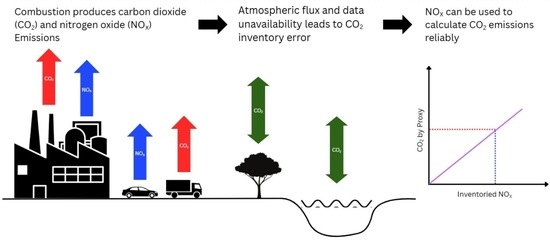
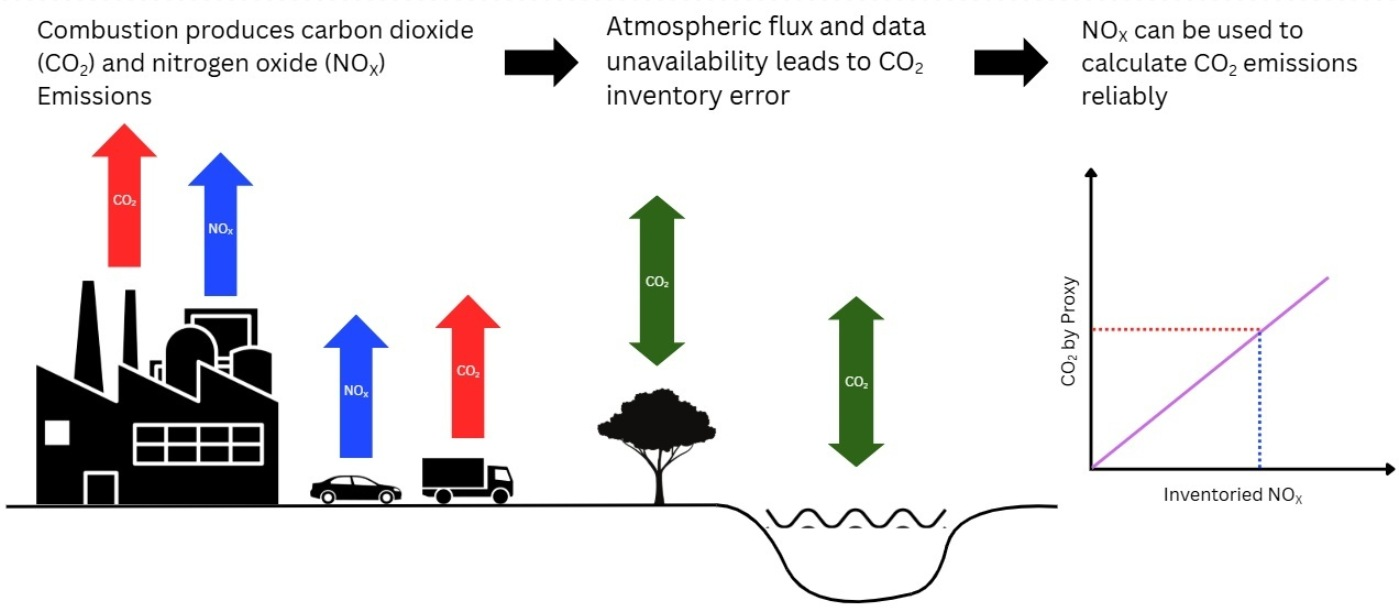
Graphical Abstract

1. Introduction

Carbon dioxide (CO2) is the predominant greenhouse gas causing climate change. While there are a wide variety of anthropogenic CO2 emission sources, combustion of fossil fuels dominates the issue [1]. CO2 is also subject to atmospheric flux, due to various carbon sinks, such as plant respiration, oceans, and wetlands [2]. Such variability makes tracking CO2 to gauge the effectiveness of sustainability efforts a complex issue. Several United Nations Sustainable Development Goals (UN SDGs) relate to sustainability with regard to CO2 emissions [3], with many complex indicators used to track humanity’s progress represented in terms of three pillars: environmental, social, and economic. The combustion of fossil fuels has been linked not only to the environmental pillar of sustainability but to the social and economic pillars as well [4]. While the primary global concern regarding fossil fuel combustion is its production of greenhouse gases (GHGs) causing climate change, it is important to note that many pollutants which are harmful to human health and the environment are produced via combustion, with countries and individuals of lower economic status often being exposed to higher levels of these pollutants [4].

1.1. NOX as a Proposed Indicator for Sustainability

Nitrogen oxides (NOX) are a biproduct of combustion, formed primarily in three ways: thermal NOX, prompt NOX, and fuel NOX [5]. Thermal NOX is produced when high temperatures force the combination of oxygen and nitrogen in air [5]. Prompt NOX is produced when nitrogen in the air combines with fuel, where fuel NOX is produced by fuels which contain nitrogen [5]. Unlike CO2, NOX is not subject to atmospheric flux and is produced almost exclusively via combustion [4,6]. As such, it has previously been proposed to track sustainability from the perspective of burning fossil fuels [4] for its potential to predict CO2 emissions [7]. While NOX is a pollutant of concern by itself, as it is a precursor to ground-level ozone and hence smog, its presence as a product of combustion can be used to more easily track fossil fuel-related CO2 production.
Decarbonization refers to eliminating carbon emissions to the amount which can be stored by nature [8]. This will primarily involve the cessation of fossil fuel combustion as a source of energy [8]. There are many ways to track CO2 emissions, but they are often skewed by biogenic CO2 sources [4]. Previously, NOX has been used as a sustainability indicator from the human health, decarbonization, and air pollution standpoints, as it connects to all three United Nations pillars of sustainability [4]. The authors found that NOX is produced consistently alongside global GHGs and acts as a reliable tracking method [4]. They also found that the manner in which CO2 data is collected can heavily influence the data itself [4], rendering the reliability of CO2 tracking to date questionable.
Only one other prior study could be found which uses NOX directly as a surrogate for CO2 measurement [7]. Yang et al. used a top-down approach to predict CO2 emissions, generating relationships between NOX and CO2 to predict urban CO2 emissions [7]. This study tested three different cities in hot climates around the world using satellite observations, finding that the use of NOX as a predictor reduced grid-cell-level uncertainties [7]. They make the argument for using empirical relationships between CO2 and NOX to calculate CO2 rather than prior established ratios [7]. It should be noted that they found unreliable relationships during stagnation events [7], pointing to a common issue with top-down emission inventorying. Their work points to the possibility of using reliable ratios of NOX to CO2 to calculate CO2 emissions, as they were able to accurately predict CO2 emissions from one hour in the future using their developed ratios [7]. The question remains as to whether the strategy is also usable to replace bottom-up methods, which are commonly used for facility-scale inventories. Other issues arise from the use of proxy variables to disaggregate top-down inventories, and the accuracy is thus directly dependent on the availability of data such as population density and land use [9]. Top-down inventory methods can also lead to emission leakage, as the measurement accuracy is subject to atmospheric variables such as wind.

1.2. Use of National Pollutant Release Inventory Data in Sustainability

National Pollutant Release Inventory (NPRI) data has previously been proposed as an under-utilized resource for tracking sustainability, specifically for United Nations Sustainable Development Goal (UN SDG) 12: Responsible Consumption and Production [10]. This particular UN SDG is heavily linked to the combustion of fossil fuels, as their consumption and eventual combustion is not only unsustainable from a resource standpoint but also regarding the emissions they produce. NPRI data offers the opportunity to track facility-level reported emissions of pollutants rather than rates, commitments, and intensities of participating UN countries [10]. The NPRI is Canada’s constituent in a global network of pollutant release registries, with over 50 participating countries [10]. In Canada, NPRI data is under-utilized in research, with approximately 10 research articles published annually using the data, despite being openly available and containing a wide range of variables [11]. The availability of similar data in other countries makes NPRI data an appealing option for tracking sustainability measures, since any validated methods could be adopted in other jurisdictions, assuming similarity in industrial sources.

1.3. Difficulties in Emission Inventories

On a national level, CO2 and NOX are inventoried by different offices in Canada: the NPRI and the GHGRP. In Canada, 55.8% of GHG emissions are attributed to sectors which report to these programs: heavy industries, oil and gas, waste, and electricity [12]. Data from these programs shows that a single facility may use different techniques for each pollutant [13,14], which unnecessarily convolutes the process for facilities, when in fact the emissions of most air pollutants (particularly those emanating from combustion) are correlated and thus could be inventoried together using the same method. NOX inventory methods are more established, with data available online dating back to 1993 [15], whereas the GHGRP only dates back to 2004 [16]. The number of reporting facilities with respect to each pollutant are also very different, as shown in Table 1. Canadian GHG emissions were reduced by 8.5% from 2005 to 2023 [12]. This result is promising, although longer-term trends show an increase of 14.4% from 1990 to 2023 [12]. While this in and of itself is a major issue reflecting the intensity of lifestyle-related emissions from countries with developed economies [4], another issue that these figures highlight is the time it took to produce them. Many published GHG values from the Government of Canada are from several years prior. The availability of timely published data is a major issue highlighting the need for fast, reliable GHG assessments.
Many emission inventory techniques exist, and the choice of which to use is often dominated by data availability, funds, and time. Monitoring and direct measurement is largely considered the most reliable for facility-level inventories, with uncertainties in larger-scale inventories often being dominated by point sources [17]. The United States Environmental Protection Agency (US EPA)’s AP-42 compilation of EFs does not have very many EFs for CO2, adding another level of difficulty to a bottom-up inventory approach. The most cost-effective method is often the use of activity-level data and EF correlations, a technique with higher uncertainty compared to techniques such as continuous emission monitoring [17]. A strategy which combines the cost-effectiveness and convenience of EFs with the accuracy of continuous emission monitoring could not only fast-track emission publications but also improve accuracy.

1.4. Emission Reporting Variation from Inventory Method

Compiling emission inventories is time-consuming and expensive, resulting in cities and organizations across the world constantly proposing new methods in an attempt to simplify the process [18]. Many city-scale inventories propose new methods rather than follow existing ones, as the lack of consistent data across all regions and industries makes it difficult for every organization to follow the same framework [18]. That being said, a dataset can be heavily influenced by the method used to collect the data [4], indicating an accuracy issue when different methods are used for inventorying emissions.
Traditionally, top-down inventory methods are considered less accurate than bottom-up inventory methods, due to the increased reliance on surrogates and assumptions necessary to complete the inventory that lack site-specific process information [19]. The type of calculations used in the emission inventory preparation affects the accuracy of the inventory, as the calculations are contingent on the implied assumptions as well as the type and quality of data available [19]. Different published emission inventories can provide underestimated and overestimated emissions depending simply on the inventory methods used [20]. Despite the fact that urban spaces account for 70% of emissions [21], urban GHG emissions are often underestimated due to lack of accounting for all sources [22], as well as at a larger scale due to differences in estimation methods [23]. This issue is consistent across sectors and emission sources, as emissions from wildfires, airplanes, and all urban sources vary by dataset and the inventory method used [19,22,23,24].
Table 1. Main data sources. Raw data available in Supplementary Materials.
DataDetailsReporting ThresholdYear ImplementedReporting Facilities (Pollutant-Specific)
GHGRP [16,25]Tonnage of CO2, inventory method used, combustion sources for each facility10,000 tonnes carbon dioxide equivalent (CO2e) [14]2017 [14]1862
NPRI [15,26]Tonnage of NOX, inventory method for NOX20 tonnes NOX
10 tonnes NOX Stack release [13]
2022 [13]22,733

1.5. United Nations Sustainable Development Goals and Global Trends

The UN SDGs provide an all-encompassing view of global sustainability [3]. While the UN SDGs are useful in uniting the globe towards common objectives with concrete milestones, they have been criticized for their sheer complexity, with all 17 goals having numerous indicators to assess progress [4]. NPRI data has previously been used to track these indicators [11], and any opportunity to reduce the complexity of tracking sustainability with respect to these widely accepted UN SDGs should be explored. This coupled with the uncertainty often present in large-scale GHG inventories attributed to point sources presents a clear opportunity.

1.6. Purpose

The purpose of this study is to facilitate country-wide CO2 predictions and reduce the time, energy, and money put into tracking industrial sustainability. The goal is to develop and prove a high-level proxy for CO2 production from industrial sources. NOX is assessed as a surrogate for tracking sustainability specifically with respect to calculating nation-wide industrial emissions disaggregating solely by sector. This study develops high-level relationships with as few variables as possible while maintaining a high R2 value in the correlations. The intent is to find a way to determine, based on NOX emissions, whether Canada is moving towards carbon neutrality. With the scale of required reductions being so large, rapid tracking with a general estimate can be beneficial from a monetary and time perspective.

2. Materials and Methods

Industrial emissions in Canada are inventoried using a combination of EFs, mass balance, engineering estimates, monitoring, and speciation. CO2 and NOX emissions are reported to two separate programs: the GHGRP and the NPRI, respectively. The data sources and reporting thresholds for NOX and CO2 emissions are provided in Table 1. Both datasets specify quantity of emissions, inventory methods used, and industrial sector. NPRI data specifies one inventory method (from EFs, mass balance, engineering estimates, monitoring, and speciation), while GHGRP data often specifies multiple inventory methods, excluding speciation. Records from the GHGRP were matched to NPRI data by NPRI identification number and year in Microsoft Excel, creating a dataset including the quantity of emissions from each facility in each year, inventory methods, and sector. Next, all combustion-related industrial sectors were disaggregated into separate datasets.
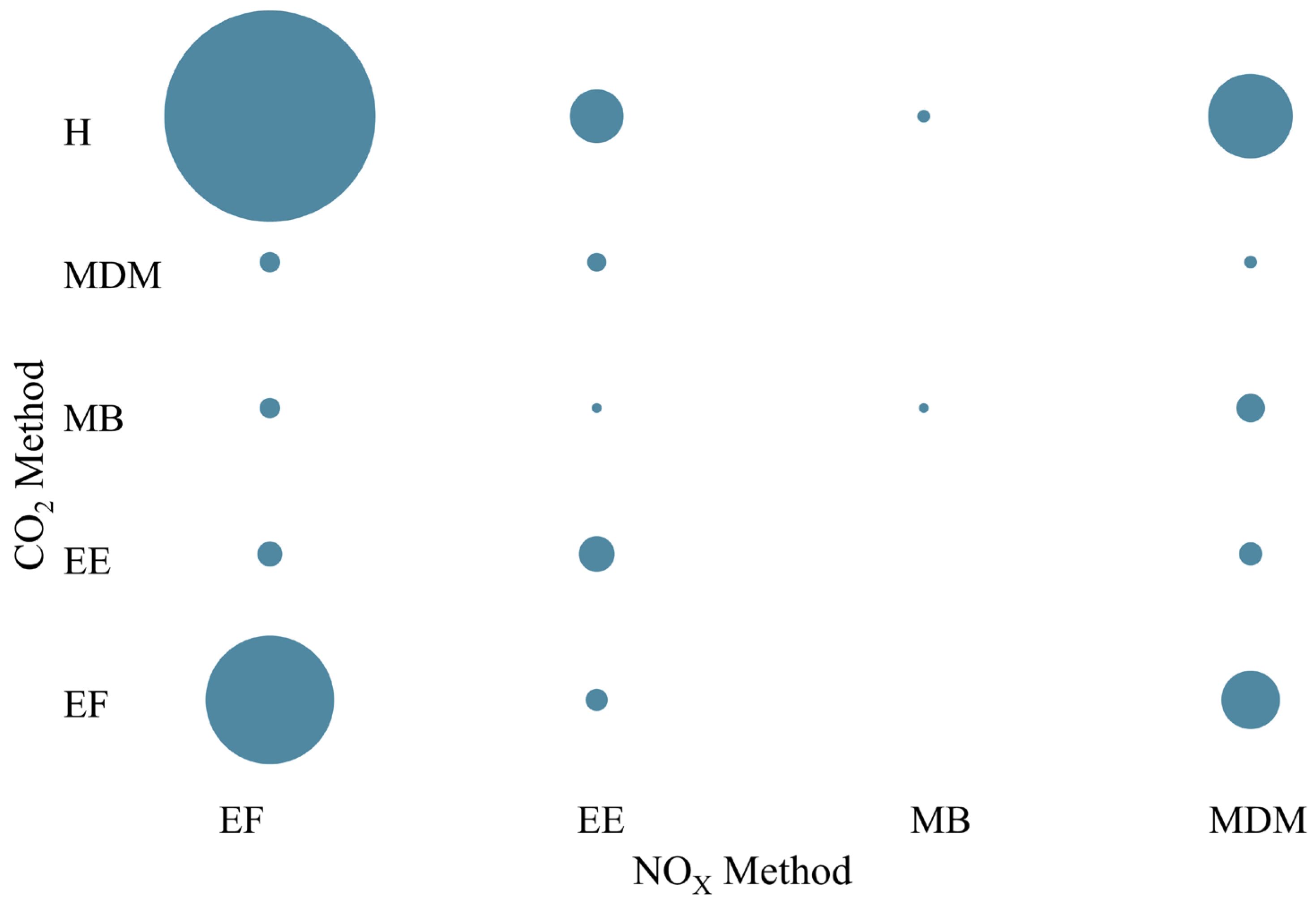
Figure 1 shows which combinations of methods were the most common for all facilities analyzed in this study. The most common combination is a hybrid method for CO2, where some combination of the other methods was employed, and EFs for NOX. Approximately 20% of facilities used exclusively EFs for both pollutants, leaving the vast majority with a variety of methods whose pollutants’ correlations cannot be explained solely by the common use of EFs. A hybrid approach indicates using any combination of monitoring and direct measurement, mass balance, engineering estimates, and emission factors to calculate CO2. There is a lack of CO2 EFs from the US EPA’s AP-42, while Canada’s CO2 EFs are fuel-based, essentially enabling a mass-balance approach based on complete combustion. The correlation being investigated is thus not based on the use of EFs for both pollutants, as EFs are only available for NOX for most pollutants.
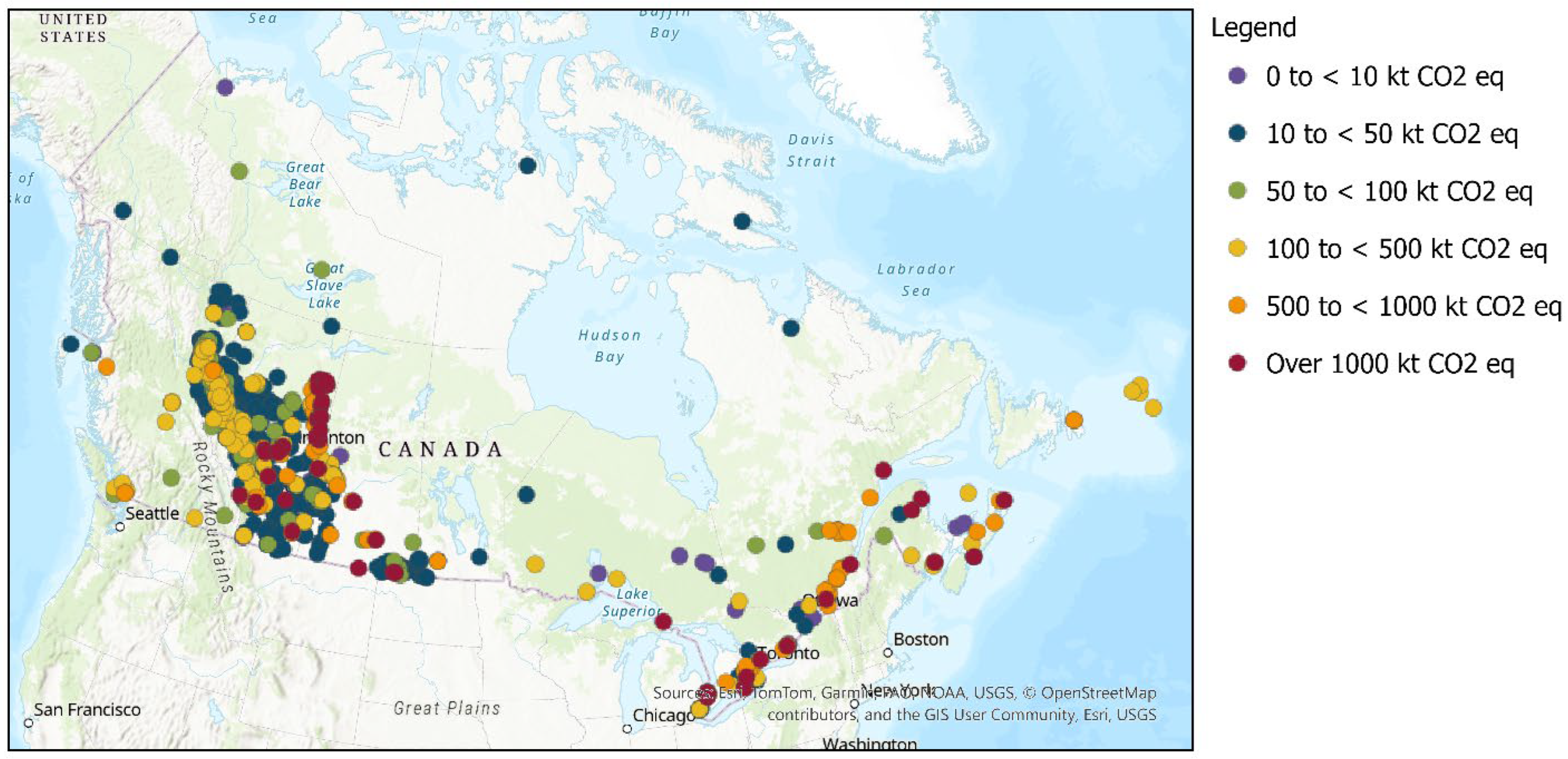
For this study, data was analyzed from 2018 to 2023 from both programs, and the locations of the facilities are shown in Figure 2 [27]. This figure shows an intensity of facilities in Alberta, which are dominated by the oil and gas industry.
From 2022 onward, the GHGRP has provided emissions for each facility broken down by source, including flaring, venting, stationary fuel combustion, industrial activities, on-site transportation, and waste disposal [25]. The fraction of CO2 emissions accounting for the sum of flaring, stationary fuel combustion, and industrial activities was calculated for each facility (these activities were assumed to be combustion). These fractions were then used to estimate combustion CO2 emissions for each facility from previous years. These values were used going forward as combustion-related total CO2 emissions for correlation to NOX.
The total combustion CO2 emissions for each industrial sector were calculated, and the sectors were ranked. Sectors accounting for a total of 90% of CO2 combustion emissions were analyzed, with these facilities shown in Figure 2. The selected industries and their respective combustion emission totals are shown in Table 2, summarizing all available reports for all facilities from 2018 to 2023.
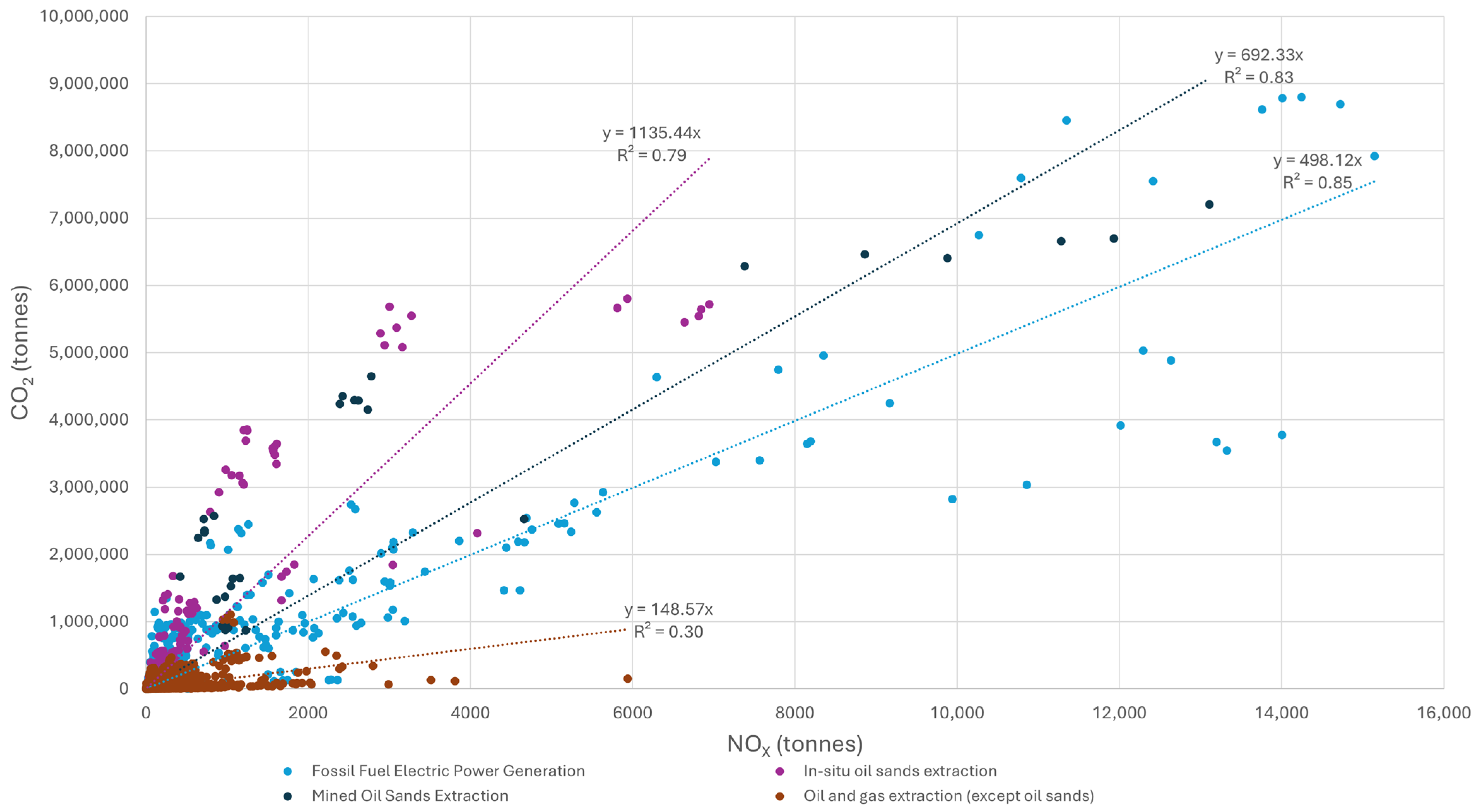
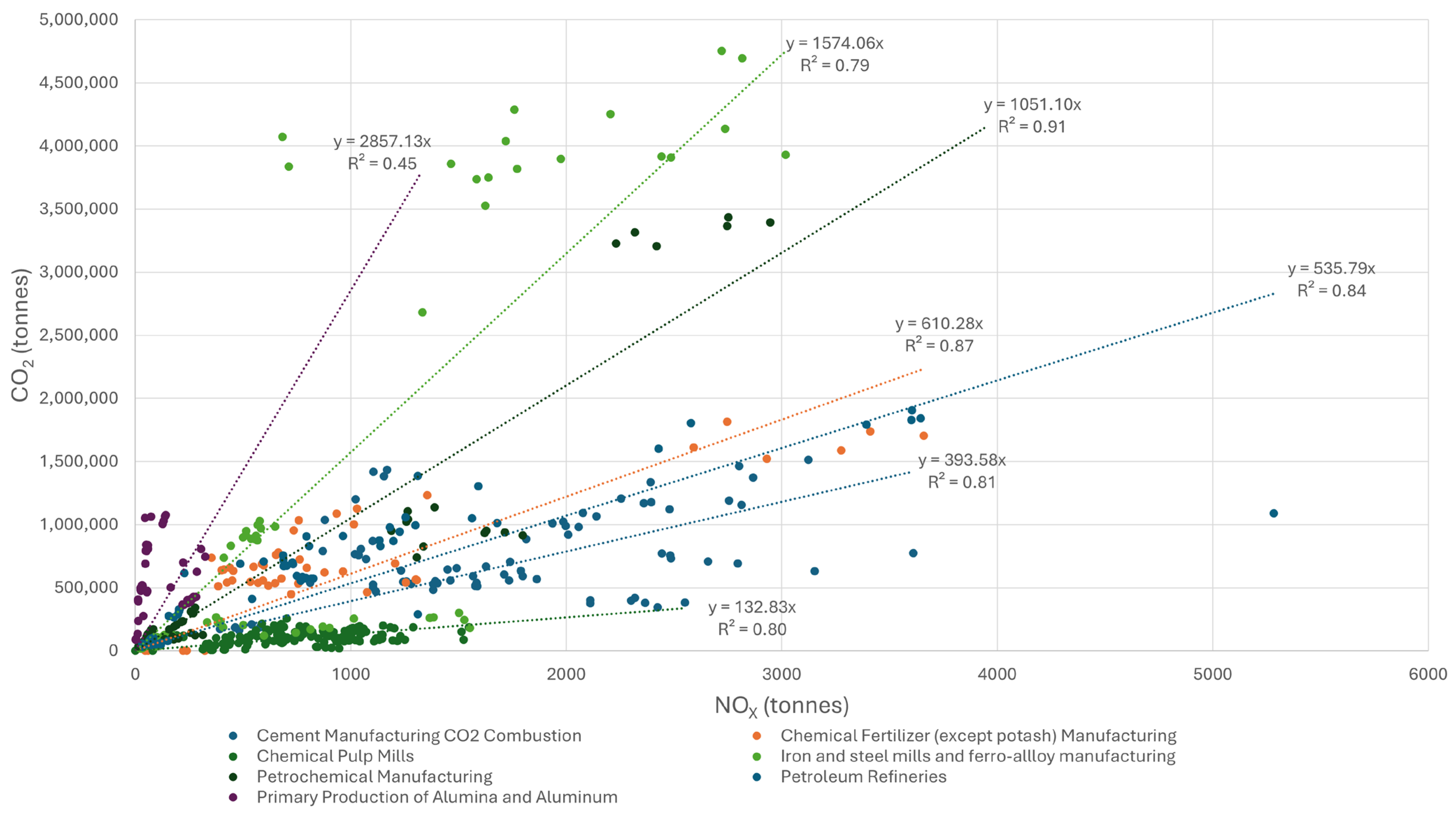
NOX and CO2 for each of the selected sectors are plotted in Figure 3 and Figure 4, along with a simple linear regression with a forced intercept through the origin (i.e., if there is no combustion, then neither CO2 or NOx are produced). In most cases, a reasonable R2 value is obtained. These R2 values generated automatically for the trendlines in Excel are used strictly for initial diagnostic purposes to assess the relative usefulness of linearly correlating NOX and CO2. The hypothesis of this initial comparison is that for all industries, as NOX increases, so too does CO2.
Each industrial sector was then subject to a multiple linear regression (MLR) to find a linear relationship between CO2 and NOX, treating CO2 as the dependent variable and NOX, the CO2 inventory method, and the NOX inventory method as independent variables. All data for each sector from all facilities and years were correlated. Microsoft Excel’s Data Analysis Tools’ Regression was used, with the regression constant (intercept) set to zero. Since NPRI data specifies only one inventory method, n − 1 binary dummy variables were created for the NOX inventory method, with n denoting the number of different inventory methods for the sector being analyzed. For CO2, each of the four inventory methods was given its own binary variable, since often multiple inventory methods were used. Binary variables were created by adding a data column that was equal to 1 if a certain condition was met: the inventory method column was equal to the method specified for that binary variable. Four regressions were run for each sector: one simple regression with CO2 as the dependent variable and NOX as the independent variable, one including each of the inventory methods as independent variables (with the appropriate number of binary variables depending on the industry), and one including both inventory methods as independent variables. The data points were treated independently and not categorized by year, assuming the processes did not change aside from the activity level year to year. Prior to running the models, any data points without a specified inventory method for either pollutant were removed. Outputs from the regressions included Analysis of Variance (ANOVA) tables and regression statistics, including R2 values and p-values, which can be used to determine which independent variables are considered significant.

3. Results

While many of the linear regressions in Figure 3 and Figure 4 show promising R2 values, multiple linear regressions increase the accuracy of the models in all the selected industries. For most industries, the method has about 10% contribution to the variance if using NOX to produce CO2. In some industries, such as the primary production of alumina and aluminum, the prediction is hugely dependent on the inventory method, perhaps pointing to an issue with the methods used to predict emissions with respect to one or both pollutants. Even including the inventory method, approximately 10% of the variance remains unaccounted for by the regression. The best models were for petrochemical manufacturing, mined oil sand extraction, petroleum refineries, and chemical fertilizer, all achieving R2 values higher than 0.9. In each of these sectors, the best model was achieved using both pollutants’ inventory methods in the regression, highlighting the influence of the inventory technique statistically. In practice however, the coefficients for the inventory methods only accounted for up to 4% of overall emissions, so while they may have been statistically significant, they were not critical to an accurate estimate. The R2 values for all regressions run for each industry are shown in Table 3.
The models for each industry using only NOX as an explanatory variable are shown in Table 4. Many models with good R2 values show reasonable similarity to the reported CO2 values. Given the prevalence of data similar to that of the NPRI globally [11], these regression models have potential for transferability to other jurisdictions. The percentage differences from the reported CO2 values shown in Table 4 are mostly positive, indicating an underestimation by the regression models. The percentage differences were calculated from the totals after removing those data points which did not specify the inventory method, since those values were not included in the regression, not from the original sectoral totals.

Case Study: Portland Cement Comparison to US EPA EFs

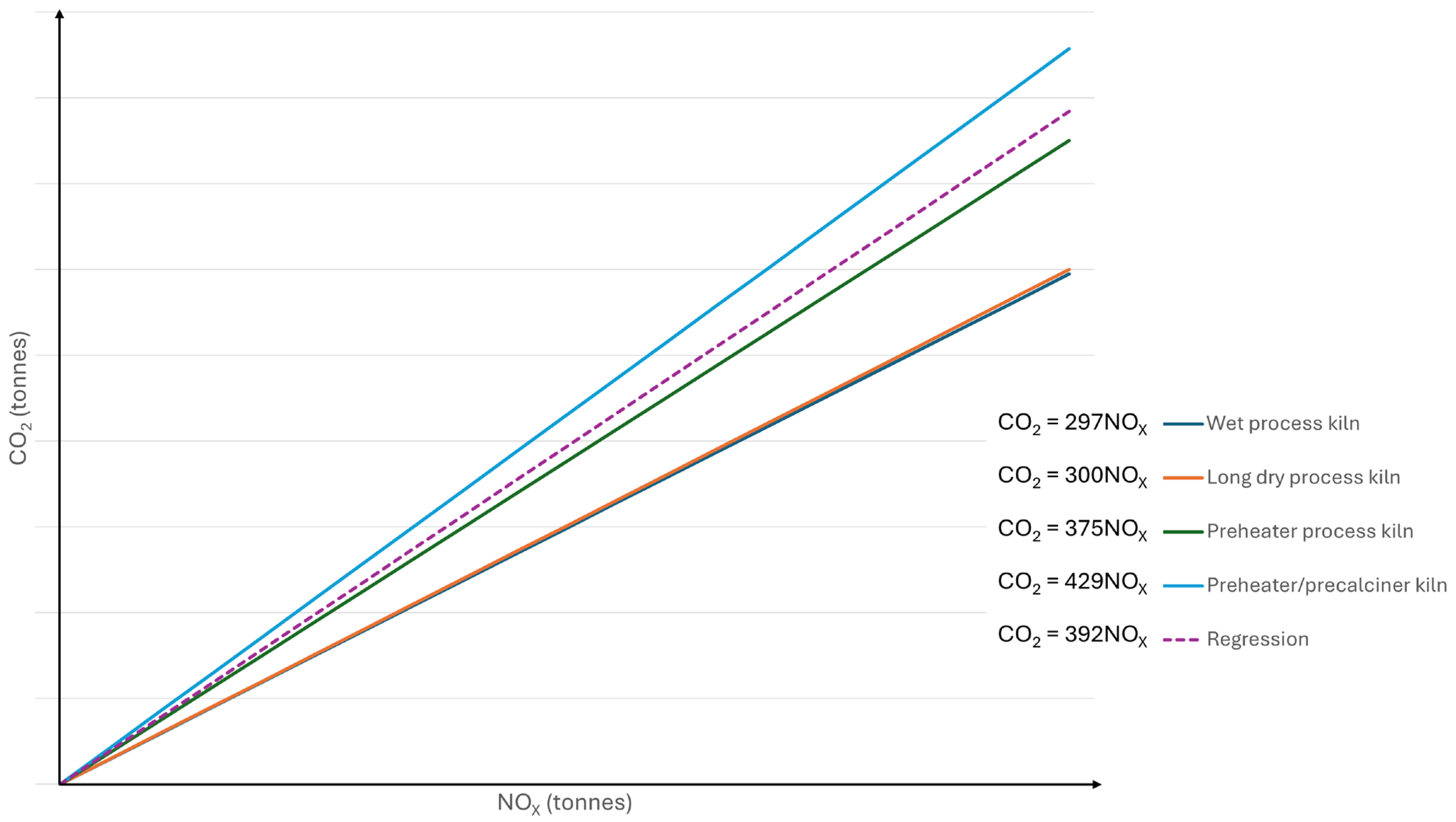
Comparing the regression coefficients in this study to the ratios of CO2 to NOX published EFs from the United States Environmental Protection Agency (US EPA) facilitates validation of the methods presented. The issue, however, is that for most industries evaluated, there are a plethora of US EPA EFs encompassing the variety of processes ongoing in each industry. Without data on which processes are actually used at each facility, the comparison is near impossible, highlighting the complexity of preparing emission inventories. The only industry with enough EFs to compare is that of cement manufacturing, as Portland Cement is a well-established industrial process. The ratio of US EPA CO2 to NOX EFs for Portland Cement is 339:1, which is similar to the regression coefficients found for cement manufacturing shown in Table 4. The combined US EPA EFs would actually underestimate the ratio of CO2 to NOX compared to this study, which is consistent with other studies’ claims of EFs leading to underestimation of emissions [28]. Figure 5 shows the comparison of US EPA EFs for Portland Cement processes, four out of five of which have smaller ratios than the regression. All of the NOX EFs have a quality rating of D (below average). For CO2, two are rated D, while one is rated C (average) and one is rated E (poor). The EF with the worst rating is the only EF whose ratio gives a higher slope than the regression. Thus, these EF representations of the industry may not be the most reliable.

4. Discussion

Of the eleven industrial sectors analyzed, all of them had improved R2 values when one or both inventory methods were included as explanatory variables. The improvement was not significant for all sectors, while for some, the methods explained an additional 35% of the variance. For the primary production of alumina and aluminum, the use of EFs for NOX accounting was the only significant variable according to the p-values of the regression, making it the only sector where tonnes of NOX were not statistically significant to the model. It would be expected for correlations to exist were the same inventory methods consistently used for both CO2 and NOX, as would be the case if EFs were used for both. Most of the time however, EFs are not exclusively used for both pollutants, as shown in Figure 1.
Several sectors had comparable R2 values (rounding to two significant digits) for two of the regressions run. In all sectors with two regressions tied for the highest R2 value, those regressions used both the CO2 and NOX inventory methods and just the CO2 inventory method. Four sectors show models where the CO2 inventory method is more significant than the NOX inventory method, while two show the NOX inventory method as more significant, and the other five have them tied, with both methods together creating the best model. The significance of the inventory method used, for NOX and CO2, thus varies by industrial sector.
All industrial sectors except for the primary production of alumina and aluminum show at least one CO2 inventory method as a statistically significant (p-value < 0.05) explanatory variable in the best model for that industry. The primary production of alumina and aluminum is the only model where the R2 value went from insignificant (under 0.7) to over 0.8 with the addition of inventory methods, and the only statistically significant variable was the use of NOX as an inventory method. Treating this industry as an outlier, all other industries attribute significant variance to the CO2 inventory method used. Furthermore, no industrial sector shows using exclusively the NOX and NOX inventory method as producing the best model. This provides an argument in favor of using NOX as a surrogate to track and calculate CO2. This also indicates that using exclusively NOX values to calculate CO2 may indeed be more accurate than calculating CO2 independently, as it varies with the inventory method much less than it is impacted by the NOX inventory method.
For all industrial sectors, the inventory method accounted for a variation in CO2 emission values of less than 2% of the total emissions for that sector. While this variation is significant in some cases in terms of tonnage of emissions, in terms of variance from the total, it is minimal. NOX could thus be used alone to calculate CO2 emissions (as shown in Table 4), as the coefficients for inventory methods are essentially added on if that method is used, since they are binary variables.
There is a lack of CO2 EFs available from the US EPA’s AP-42 compilation of EFs [29]. This increases the challenge of inventorying CO2 for facilities and highlights that those facilities which use EFs likely use site-specific EFs, which are independent of NOX. Since bottom-up inventory methods are process-specific while the emissions reported are facility-wide, the use of EFs for both NOX and CO2 does not actually increase the chance of correlation. Notably, AP-42 has published EFs for CO2 for aluminum production but not for NOX, highlighting the uniqueness of this process, which could explain the lack of a reliable model produced for this sector. The Government of Canada has some published EFs, which are almost exclusive to fuel combustion [30], varying the type of fuel but not the process of combustion. If these EFs are those used by the industries examined in this study, these would further introduce CO2 uncertainty and remove correlation to NOX EFs, promoting the need for a reliable CO2 estimation strategy and the independence of EFs. Furthermore, of all the methods, monitoring and direct measurement was the second least prevalent after mass balance, despite the fact that it is widely considered the most reliable method. Worth noting is that even when using monitoring and direct measurement for CO2, unlike NOX, there are background concentrations which often go unaccounted for. The argument of using NOX as a surrogate for CO2 tracking is furthered by better reporting for NOX—in 2023, 22,733 Canadian facilities reported their NOX emissions, while only 1862 facilities reported their CO2 emissions [16,26]. Given the US EPA AP-42’s lack of EFs for CO2, this study offers a reliable alternative for those facilities which do not have access to other inventory methods.
The use of NOX abatement technologies will affect the R2 value of the correlation, as they introduce more variability into the data. Correlating NOX and CO2 inclusive of any abatement technologies examines the full Canadian context, which is the goal of this study, rather than facilitating facility-level prediction. Making the prediction as high-level as possible means finding a general average which may be used for rapid large-scale calculations. Most industries do not use NOX abatement technologies, outside of coal-fired power plants implementing low-NOX burners. Since all but two of the correlations show reasonable R2 values, the effects of abatement technologies on most industries are not significant to a large-scale calculation model.
The poor correlation for the oil and gas sector could be due to variation in the level of sweetening (removal of hydrogen sulfide and carbon dioxide) as well as other process variations. The use of flaring can vary from location to location and would substantially affect the ratio of CO2 to NOX. The poor correlation in the aluminum sector likely arises from process differences between bauxite processing and recycled aluminum processing. The data showed high variation among the facilities’ ratios of CO2 to NOX, as the two processes for aluminum production vary greatly. These correlations should not be used for predictive modelling, as more specificity may be required for these sectors to differentiate between each unique process, which defeats the purpose of using the simplified proxy.

5. Conclusions

Inventorying GHG emissions is time-consuming and costly. Each year, facilities report to the GHGRP and NPRI separately, preparing independent documents to submit to each program. The time and money taken to prepare these reports could be better invested were the process to be streamlined. The issue is highlighted by the sheer number of published EFs in the US EPA and the simultaneous lack of EFs for CO2, which only increases uncertainty when specific data is unavailable to make use of these EFs. The MLR models in this study provide an alternative for predicting emissions, and a methodology for other industries and facilities to develop their own. The model variability based on the inventory method used highlights the need for a standard method procedure, while this is limited by facility resources. The results and literature suggest that using direct monitoring for NOX emissions and using models with a simple ratio, such as those suggested here, to calculate CO2 emissions would provide a comparable level of accuracy to the current GHG inventorying while saving time and money. With Canada needing to reduce emissions at a very large scale, rapidly tracking Canada’s move towards carbon neutrality is critical.

Supplementary Materials

The following supporting information can be downloaded at: https://www.mdpi.com/article/10.3390/atmos17030320/s1.

Author Contributions

Conceptualization, B.V.H. and B.L.; methodology, B.V.H. and B.L.; validation, B.L.; formal analysis, B.L.; investigation, B.L.; resources, B.L.; data curation, B.L.; writing—original draft preparation, B.L.; writing—review and editing, B.V.H. and B.L.; visualization, B.L.; supervision, B.V.H. All authors have read and agreed to the published version of the manuscript.

Funding

This research was funded by the University of Windsor and the Government of Ontario (Ontario Graduate Scholarships).

Data Availability Statement

All data used in this study is available from Canada’s National Pollutant Release Inventory and Greenhouse Gas Reporting Program.

Conflicts of Interest

The funders had no role in the design of this study; in the collection, analyses, or interpretation of the data; in the writing of the manuscript; or in the decision to publish the results.

Abbreviations

The following abbreviations are used in this manuscript:
EFEmission factor
MLRMultiple linear regression
MDMMonitoring and direct measurement
EEEngineering estimates
MBMass balance
HHybrid
CO2Carbon dioxide
NOXNitrogen oxides
NPRINational Pollutant Release Inventory
GHGRPGreenhouse Gas Reporting Program

References

  1. United Nations. What Is Climate Change. Available online: https://www.un.org/en/climatechange/what-is-climate-change (accessed on 2 January 2026).
  2. Fu, C.; Xu, M. Achieving carbon neutrality through ecological carbon sinks: A systems perspective. Green Carbon 2023, 1, 43–46. [Google Scholar] [CrossRef]
  3. Department of Economic and Social Affairs. The 17 Goals. United Nations. Available online: https://sdgs.un.org/goals (accessed on 2 January 2026).
  4. Shaw, S.; Heyst, B.V. Nitrogen Oxide (NOx) emissions as an indicator for sustainability. Environ. Sustain. Indic. 2022, 15, 100188. [Google Scholar] [CrossRef]
  5. Wang, Z.; Yang, X. NOx Formation Mechanism and Emissio Prediction in Turbulent Combustion: A Review. Appl. Sci. 2024, 14, 6104. [Google Scholar] [CrossRef]
  6. United States Environmental Protection Agency. Basic Information About NO2. 10 July 2025. Available online: https://www.epa.gov/no2-pollution/basic-information-about-no2 (accessed on 2 January 2026).
  7. Yang, E.G.; Kort, E.A.; Ott, L.E.; Oda, T.; Lin, J.C. Using Space-Based CO2 and NO2 Observations to Estimate Urban CO2 Emissions. J. Geophys. Res. Atmos. 2023, 128, e2022JD037736. [Google Scholar] [CrossRef]
  8. United Nations. For a Livable Climate: Net-Zero Commitments Must Be Backed by Credible Action. Available online: https://www.un.org/en/climatechange/net-zero-coalition (accessed on 2 January 2025).
  9. Marinello, S.; Piccinini, G.; Coruzzolo, A.M.; Lolli, F.; Gamberini, R. Downscaling atmospheric emission inventories with “top–down” approach: The support of the literature in choosing proxy variables. Int. J. Environ. Sci. Technol. 2024, 21, 7353–7366. [Google Scholar] [CrossRef]
  10. Berthiaume, A. Tracking progress toward sustainable development goal 12 using Canadian industrial pollutants in waste. Environ. Sustain. Indic. 2024, 24, 100491. [Google Scholar] [CrossRef]
  11. Berthiaume, A. Use of the National Pollutant Release Inventory in environmental research: A scoping review. Can. Sci. Publ. 2021, 29, 329–339. [Google Scholar] [CrossRef]
  12. Government of Canada. Greenhouse Gas Emissions. 21 March 2025. Available online: https://www.canada.ca/en/environment-climate-change/services/environmental-indicators/greenhouse-gas-emissions.html (accessed on 12 January 2026).
  13. Environment and Climate Change Canada. Guide for Reporting to the National Pollutant Release Inventory. 2022. Available online: https://publications.gc.ca/collections/collection_2022/eccc/En81-1-2022-eng.pdf (accessed on 3 January 2026).
  14. Environment and Climate Change Canada. Technical Guidance on Reporting Greenhouse Gas Emissions—2017 Data. March 2018. Available online: https://www.canada.ca/content/dam/eccc/documents/pdf/climate-change/emissions-inventories-reporting/facility-greenhouse-gas-reporting/technical-guidance-emissions-2017data-en.pdf (accessed on 5 January 2026).
  15. Environment and Climate Change Canada. National Pollutant Release Inventory Data Search. 9 October 2025. Available online: https://pollution-waste.canada.ca/national-release-inventory/ (accessed on 27 December 2025).
  16. Environment and Climate Change Canada. Greenhouse Gas Reporting Program (GHGRP)—Facility Greenhouse Gas (GHG) Data. 1 October 2025. Available online: https://data-donnees.az.ec.gc.ca/data/substances/monitor/greenhouse-gas-reporting-program-ghgrp-facility-greenhouse-gas-ghg-data/PDGES-GHGRP-GHGEmissionsGES-2004-Present.csv (accessed on 27 December 2025).
  17. Kim, D.; Choi, W.; Lee, H. A new technique to measure CO2 mixing ratio at industrial stacks plumes based on Raman Lidar remote sensing. Sci. Total Environ. 2025, 983, 179638. [Google Scholar] [CrossRef] [PubMed]
  18. Arioli, M.S.; D’Agosto, M.d.A.; Amaral, F.G.; Cybis, H.B.B. The evolution of city-scale GHG emissions inventory methods: A systematic review. Environ. Impact Assess. Rev. 2020, 80, 106316. [Google Scholar] [CrossRef]
  19. Wang, J.; Zu, L.; Zhang, S.; Jiang, H.; Ni, H.; Wang, Y. Recent Advances and Implications for Aviation Emission Inventory Compilation Methods. Sustainability 2024, 16, 8507. [Google Scholar] [CrossRef]
  20. Bilgic, E.; Tuygun, G.T.; Gunduz, O. Development of an emission estimation method with satellite observations for significant forest fires and comparison with global fire emission inventories: Application to catastrophic fires of summer 2021 over the Eastern Mediterranean. Atmos. Environ. 2023, 308, 119871. [Google Scholar] [CrossRef]
  21. United Nations Environment Programme. Cities and Climate Change. Available online: https://www.unep.org/explore-topics/resource-efficiency/what-we-do/cities-and-climate-change (accessed on 10 January 2026).
  22. Pitt, J.R.; Lopez-Coto, I.; Karion, A.; Hajny, J.T.K.D.; Kaeser, R.; Jayarathne, T.; Stirm, B.H.; Floerchinger, C.R.; Loughner, C.P.; Cammane, R.; et al. Underestimation of Thermogenic Methane Emissions in New York City. Energy Clim. 2024, 58, 9147–9157. [Google Scholar] [CrossRef] [PubMed]
  23. Kenion, H.C.R.; Davis, K.J.; Miles, N.L.; Roest, G.; Gurney, K.R.; Kato, A. Detection of local-scale changes in greenhouse gas emissions in urban environments using micrometeorological methods and comparison to a high-resolution inventory. Elem. Sci. Anthr. 2025, 13, 00036. [Google Scholar] [CrossRef]
  24. Faulstich, S.D.; Schissler, A.G.; Strickland, M.J.; Holmes, H.A. Statistical Comparison and Assessment of Four Fire Emissions Inventories for 2013 and a Large Wildfire in the Western United States. Fire 2022, 5, 27. [Google Scholar] [CrossRef] [PubMed]
  25. Environment and Climate Change Canada. Greenhouse Gas Reporting Program (GHGRP)—Facility Greenhouse Gas (GHG) Data. 4 April 2025. Available online: https://open.canada.ca/data/en/dataset/a8ba14b7-7f23-462a-bdbb-83b0ef629823/resource/afc61e84-ac2a-40b2-9e1a-9525fc7d5987 (accessed on 27 December 2025).
  26. Environment and Climate Change Canada. Bulk Data Files for All Years—Releases, Disposals, Transfers and Facility Locations. 26 November 2025. Available online: https://data-donnees.az.ec.gc.ca/data/substances/plansreports/reporting-facilities-pollutant-release-and-transfer-data/bulk-data-files-for-all-years-releases-disposals-transfers-and-facility-locations/NPRI-INRP_ReleasesRejets_1993-present.csv (accessed on 13 January 2026).
  27. Government of Canada. Interactive Indicator Maps. 31 July 2025. Available online: https://indicators-map.canada.ca/App/CESI_ICDE?keys=AirEmissions_GHG&GoCTemplateCulture=en-CA (accessed on 10 January 2026).
  28. Karacan, C.O.; Field, R.A.; Olczak, M.; Kasprzak, M.; Ruiz, F.A.; Schwietzke, S. Mitigating climate change by abating coal mine methane: A critical review of status and opportunities. Int. J. Coal Geol. 2024, 295, 104623. [Google Scholar] [CrossRef]
  29. United States Environmental Protection Agency. AP-42: Compilation of Air EMissions Factors from Stationary Sources. United States Government. 28 May 2025. Available online: https://www.epa.gov/air-emissions-factors-and-quantification/ap-42-compilation-air-emissions-factors-stationary-sources (accessed on 28 December 2025).
  30. Environment and Climate Change Canada. Emission Factors and Reference Values Version 3.0. October 2025. Available online: https://publications.gc.ca/collections/collection_2025/eccc/En84-294-2025-eng.pdf (accessed on 28 December 2025).
Figure 1. Bubble plot showing prevalence of each combination of inventory methods. H: hybrid; MDM: monitoring and direct measurement; MB: mass balance; EE: engineering estimate; EF: emission factor.
Atmosphere 17 00320 g001
Figure 2. Map of facilities analyzed in this study, with colours corresponding to GHG emission values [27].
Atmosphere 17 00320 g002
Figure 3. Simple linear regression correlating NOX with CO2 emissions for fossil fuel electric power generation, mined oil sand extraction, in situ oil sand extraction, and oil and gas extraction (except oil sands).
Atmosphere 17 00320 g003
Figure 4. Simple linear regression correlating NOX with CO2 emissions for cement manufacturing, chemical fertilizer (except potash) manufacturing, chemical pulp mills, iron and steel mills and ferro-alloy manufacturing, petrochemical manufacturing, and aluminum.
Atmosphere 17 00320 g004
Figure 5. Slopes of EF ratios for each Portland Cement process next to model regression line.
Atmosphere 17 00320 g005
Table 2. Industries comprising 90% of combustion-related CO2 emissions and their respective tonnages of CO2 alongside the data quantities for each sector. Each report from every facility in each year was treated as an independent observation, with the number of data points representing the total reports for the sector over the entire study period.
IndustrySum of CO2 from Combustion (tonnes)Number of FacilitiesNumber of Data Points
Fossil fuel electric power generation352,990,000107488
In situ oil sand extraction197,010,00028145
Oil and gas extraction (except oil sands)128,210,0007132364
Mined oil sand extraction94,940,000530
Iron and steel mills and ferro-alloy manufacturing89,180,0002290
Cement manufacturing56,750,0001474
Petroleum refineries39,770,0001259
Petrochemical manufacturing35,060,0001146
Chemical fertilizer (except potash) manufacturing34,740,000954
Primary production of alumina and aluminum34,670,0001264
Chemical pulp mills15,520,00036142
Table 3. R2 values for all regressions run to predict CO2 emissions using NOX emissions and CO2 and NOX inventory methods. Inventory methods for both pollutants include mass balance, emission factors, monitoring and direct measurement, and engineering estimates.
IndustryExplanatory VariablesR2
Fossil fuel electric power generationNOX emissions0.85
NOX emissions and NOX inventory method0.86
NOX emissions, NOX inventory method, and CO2 inventory method0.87
NOX emissions and CO2 inventory method0.86
In situ oil sand extractionNOX emissions0.79
NOX emissions and NOX inventory method0.84
NOX emissions, NOX inventory method, and CO2 inventory method0.88
NOX emissions and CO2 inventory method0.88
Oil and gas extraction (except oil sands)NOX emissions0.30
NOX emissions and NOX inventory method0.39
NOX emissions, NOX inventory method, and CO2 inventory method0.40
NOX emissions and CO2 inventory method0.38
Mined oil sand extractionNOX emissions0.83
NOX emissions and NOX inventory method0.91
NOX emissions, NOX inventory method, and CO2 inventory method0.96
NOX emissions and CO2 inventory method0.96
Iron and steel mills and ferro-alloy manufacturingNOX emissions0.79
NOX emissions and NOX inventory method0.84
NOX emissions, NOX inventory method, and CO2 inventory method0.87
NOX emissions and CO2 inventory method0.84
Cement manufacturingNOX emissions0.81
NOX emissions and NOX inventory method0.82
NOX emissions, NOX inventory method, and CO2 inventory method0.84
NOX emissions and CO2 inventory method0.84
Petroleum refineriesNOX emissions0.84
NOX emissions and NOX inventory method0.89
NOX emissions, NOX inventory method, and CO2 inventory method0.92
NOX emissions and CO2 inventory method0.89
Petrochemical manufacturingNOX emissions0.91
NOX emissions and NOX inventory method0.94
NOX emissions, NOX inventory method, and CO2 inventory method0.97
NOX emissions and CO2 inventory method0.94
Chemical fertilizer (except potash) manufacturingNOX emissions0.87
NOX emissions and NOX inventory method0.91
NOX emissions, NOX inventory method, and CO2 inventory method0.93
NOX emissions and CO2 inventory method0.92
Primary production of alumina and aluminumNOX emissions0.45
NOX emissions and NOX inventory method0.80
NOX emissions, NOX inventory method, and CO2 inventory method0.82
NOX emissions and CO2 inventory method0.76
Chemical pulp millsNOX emissions0.80
NOX emissions and NOX inventory method0.82
NOX emissions, NOX inventory method, and CO2 inventory method0.83
NOX emissions and CO2 inventory method0.82
Table 4. Model equations for each industry using only NOX alongside R2 values and percentage changes of model-calculated CO2 from reported CO2.
SectorNOX (tonnes)EquationR2Calculated CO2% Difference from Reported CO2
Fossil fuel electric power generation504,560CO2 = 488 NOX0.85246,330,00022
In situ oil sand extraction122,860CO2 = 1134 NOX0.79139,300,00028
Oil and gas extraction (except oil sands)490,180CO2 = 149 NOX0.3072,820,00043
Mined oil sand extraction 97,960CO2 = 692 NOX0.8367,820,00029
Iron and steel mills and ferro-alloy manufacturing60,260CO2 = 1574 NOX0.7994,840,000−6.3
Cement manufacturing128,320CO2 = 392 NOX0.8150,280,0008.5
Petroleum refineries57,260CO2 = 536 NOX0.8430,680,00023
Petrochemical manufacturing35,600CO2 = 1051 NOX0.9137,420,000−6.7
Chemical fertilizer (except potash) manufacturing46,840CO2 = 610 NOX0.8728,600,00018
Primary production of alumina and aluminum6320CO2 = 2857 NOX0.4518,060,00048
Chemical pulp mills107,100CO2 = 133 NOX0.8014,220,0008.4
Disclaimer/Publisher’s Note: The statements, opinions and data contained in all publications are solely those of the individual author(s) and contributor(s) and not of MDPI and/or the editor(s). MDPI and/or the editor(s) disclaim responsibility for any injury to people or property resulting from any ideas, methods, instructions or products referred to in the content.